

Advances in Rehabilitation and Injury Management

Editor


E-Mail Website
Collection Editor
Physical and Rehabilitative Medicine, Department of Medical and Surgical Sciences, University of Catanzaro “Magna Graecia”, 88100 Catanzaro, Italy
Interests: sport performance; sport rehabilitation; movement analysis; injury prevention; sport medicine; physical therapy
Special Issues, Collections and Topics in MDPI journals

Topical Collection Information

Dear Colleagues,

It is well known that regular participation in sport has a positive effect on reducing cardiovascular risk, diabetes, and obesity and improves mental health and quality of life.

However, repetitive technical exercise, congested training schedules, and match trauma elevate the risk of musculoskeletal injury and articular pain, with a negative effect on athletic performance.

In this context, prevention remains central: early detection of kinematic alterations and neuromuscular or joint deficits can reduce the out-of-competition period. Quantitative movement analysis, wearable sensors, and new technologies refine diagnosis and guide personalized care.

On the other hand, rehabilitation enables safer, faster return-to-sport through evidence-based exercise progressions, neuromuscular retraining, and technology-enabled monitoring. Moreover, advances in physical instrumental therapy and regenerative medicine offer new options for both acute injuries and overuse disorders.

This Topical Collection—Advances in Rehabilitation and Injury Management—welcomes translational studies including new advancements in injury management.

We emphasize studies that link biomechanical insights with clinically meaningful outcomes, return-to-play criteria, and early diagnosis.

Studies on populations often under-represented in research, such as women, youth, and the elderly, are particularly welcome, alongside sport-specific, evidence-based designs.

As Collection Editors, we invite contributions that pair methodological rigor with practical guidance to advance prevention, rehabilitation, and injury management.

Dr. Andrea Demeco
Collection Editor

Manuscript Submission Information

Manuscripts should be submitted online at www.mdpi.com by registering and logging in to this website. Once you are registered, click here to go to the submission form. Manuscripts can be submitted until the deadline. All submissions that pass pre-check are peer-reviewed. Accepted papers will be published continuously in the journal (as soon as accepted) and will be listed together on the collection website. Research articles, review articles as well as short communications are invited. For planned papers, a title and short abstract (about 250 words) can be sent to the Editorial Office for assessment.

Submitted manuscripts should not have been published previously, nor be under consideration for publication elsewhere (except conference proceedings papers). All manuscripts are thoroughly refereed through a single-blind peer-review process. A guide for authors and other relevant information for submission of manuscripts is available on the Instructions for Authors page. Journal of Functional Morphology and Kinesiology is an international peer-reviewed open access quarterly journal published by MDPI.

Please visit the Instructions for Authors page before submitting a manuscript. The Article Processing Charge (APC) for publication in this open access journal is 1800 CHF (Swiss Francs). Submitted papers should be well formatted and use good English. Authors may use MDPI's English editing service prior to publication or during author revisions.

Keywords

  • sports rehabilitation
  • injury prevention
  • return to sport
  • biomechanics
  • movement analysis
  • regenerative medicine
  • neuromuscular control
  • early diagnosis
  • clinical decision support

Published Papers (1 paper)

2025

18 pages, 1196 KB  
Review
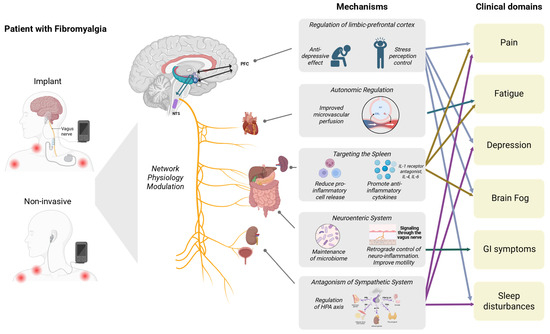
Potential of Vagus Nerve Stimulation to Modulate Fibromyalgia’s Network Physiology: A Systematic Review
by Kevin Pacheco-Barrios, Joao Pedro Perin, Carla Pastora-Sesín, Sungjoon Kang, Alba Navarro-Flores and Felipe Fregni
J. Funct. Morphol. Kinesiol. 2026, 11(1), 15; https://doi.org/10.3390/jfmk11010015 (registering DOI) - 29 Dec 2025
Abstract
Background: Chronic pain conditions such as fibromyalgia syndrome (FMS) reflect maladaptive network physiology across perceptual–autonomic–immune axes, yet most treatments remain symptomatic and incompletely effective. Methods: We conducted a comprehensive systematic review to evaluate vagus nerve stimulation (VNS) and FMS within a [...] Read more.
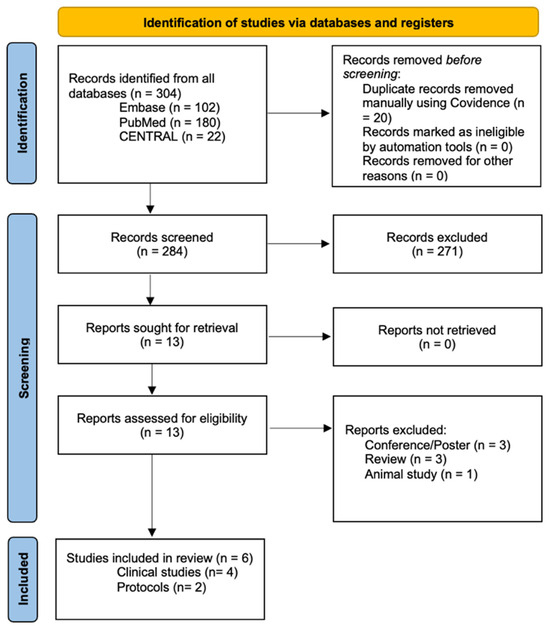
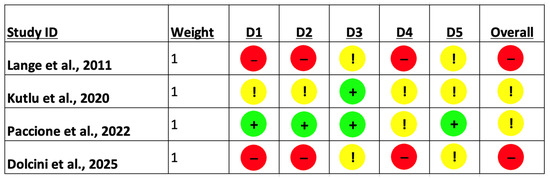
Background: Chronic pain conditions such as fibromyalgia syndrome (FMS) reflect maladaptive network physiology across perceptual–autonomic–immune axes, yet most treatments remain symptomatic and incompletely effective. Methods: We conducted a comprehensive systematic review to evaluate vagus nerve stimulation (VNS) and FMS within a network physiology framework. PubMed, Embase, and Cochrane CENTRAL were searched on October 24, 2025. Risk of bias was assessed using the ROB-2 tool. An iterative thematic synthesis was performed to develop an integrative conceptual framework and to identify knowledge gaps and future research directions. Results: We first summarize physiological evidence showing autonomic imbalance (e.g., decreased heart rate variability), neuroinflammatory activation, and aberrant cortical network connectivity in FMS, supporting a network-dysregulation model. We then included 6 studies (4 clinical studies and 2 protocols) on VNS effects, highlighting improvements in pain, fatigue, sleep disturbance and autonomic regulation, along with emerging mechanistic insights. Key methodological heterogeneity—such as stimulation parameters, outcome metrics, type of control arm, sham definition, and small samples—limits current interpretability. Finally, we outline a research agenda centered on network-based biomarkers, immunophenotyping, adaptive trial designs and stratification of responders, with the aim of validating taVNS as a scalable neuromodulatory intervention for FMS. Conclusions: By reframing FMS from a symptom-centric pharmacologic model to a network-centric neuromodulation approach, taVNS is a promising tool for mechanism-based therapeutics in central sensitization syndromes and chronic pain. Full article
Back to TopTop