
Long-Term Effects of Plant Litter Accumulation and Small Mammal Disturbance on Diversity in Old-Field Succession

 , , , , , and
Abstract
1. Introduction
2. Materials and Methods
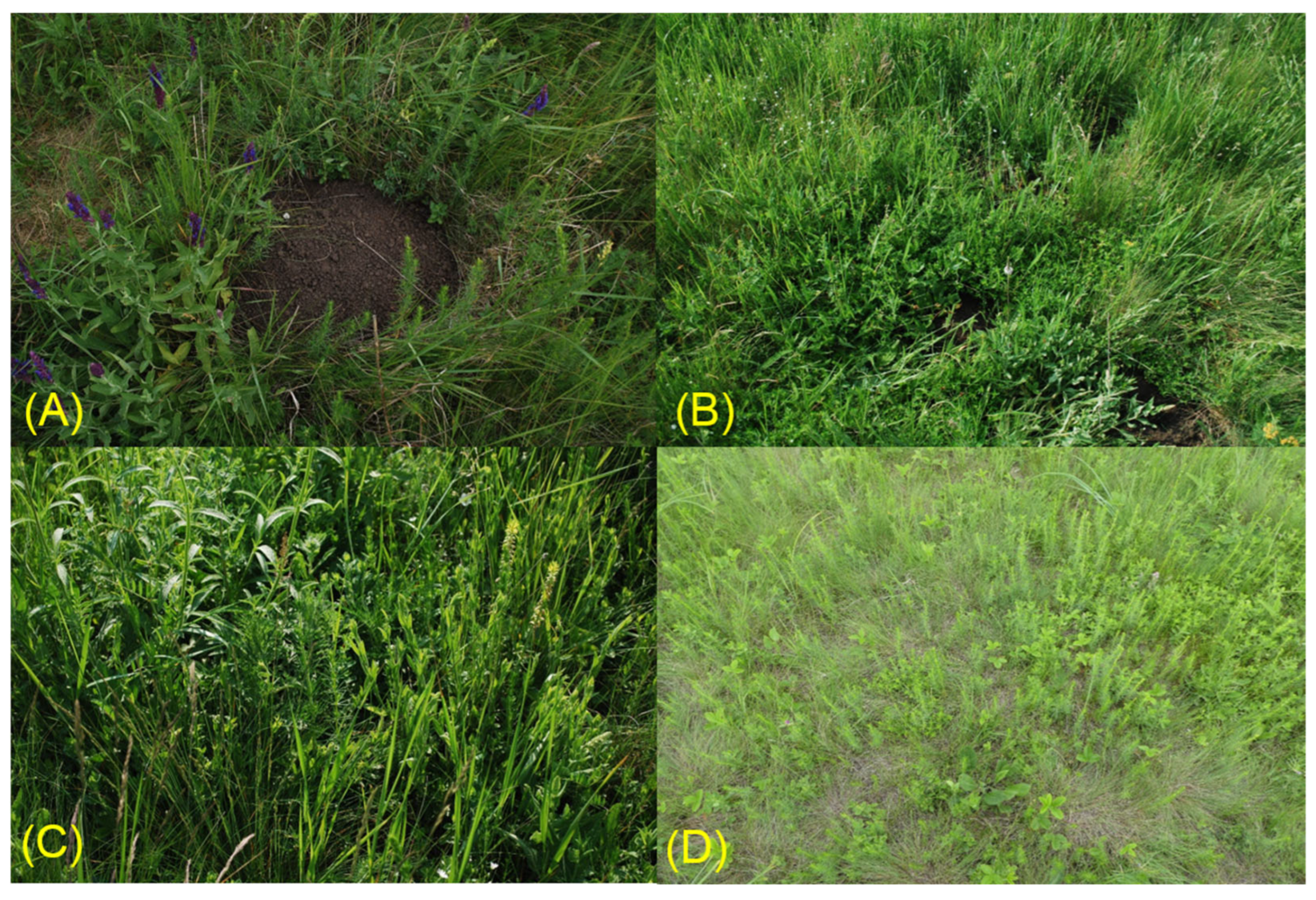
2.1. Study Sites
2.2. Field Sampling
2.3. Detecting Abundances and Temporal Persistence
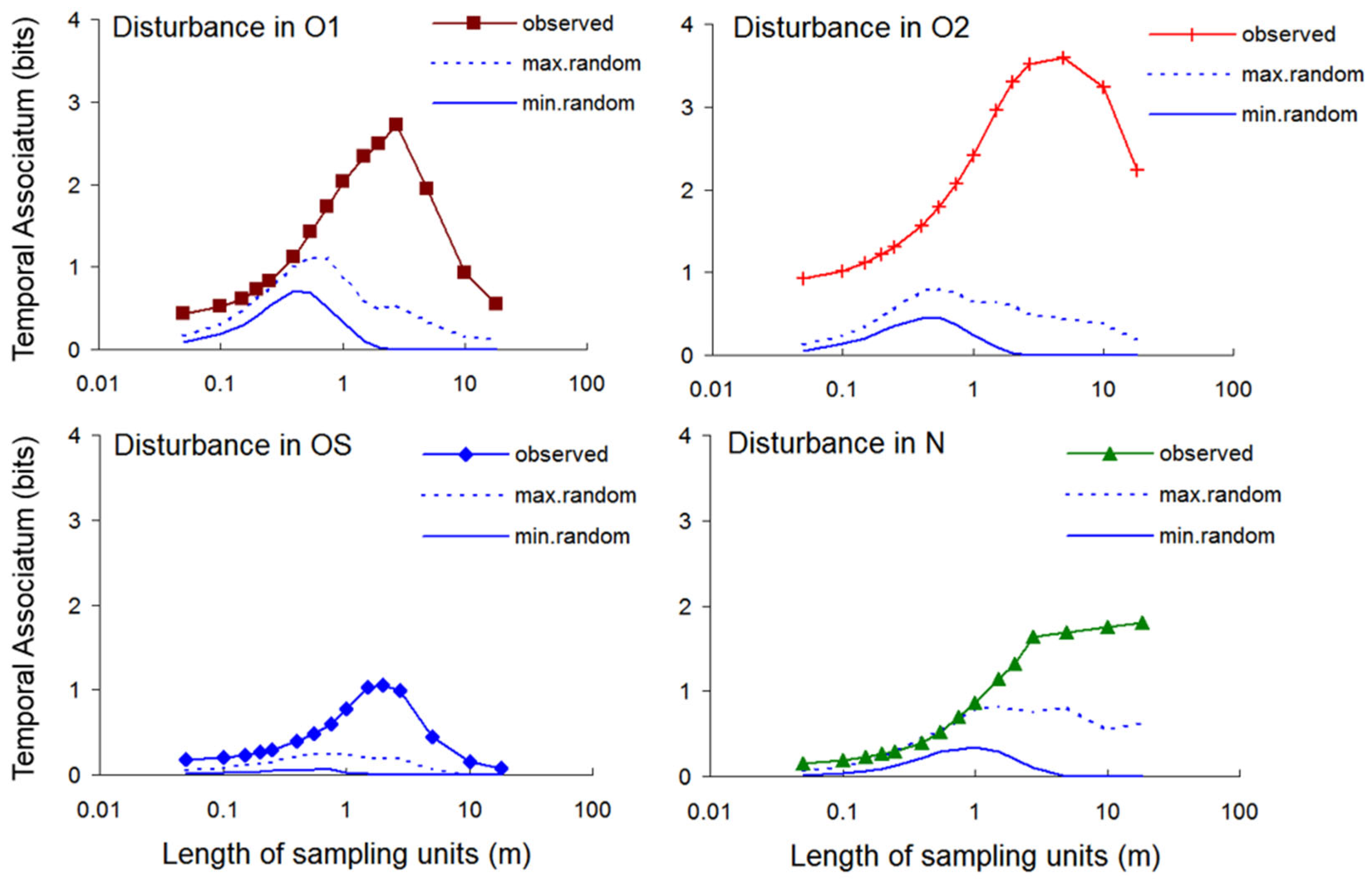
2.4. Detecting Temporal Associations Using Information Theory Models and Spatial Scaling
2.5. Detecting Pairwise Spatial Associations Using Information Theory Models and Spatial Scaling
2.6. Analyses Based on the Concepts of Short Versus Long Diversity
2.7. Other Statistical Analyses
3. Results
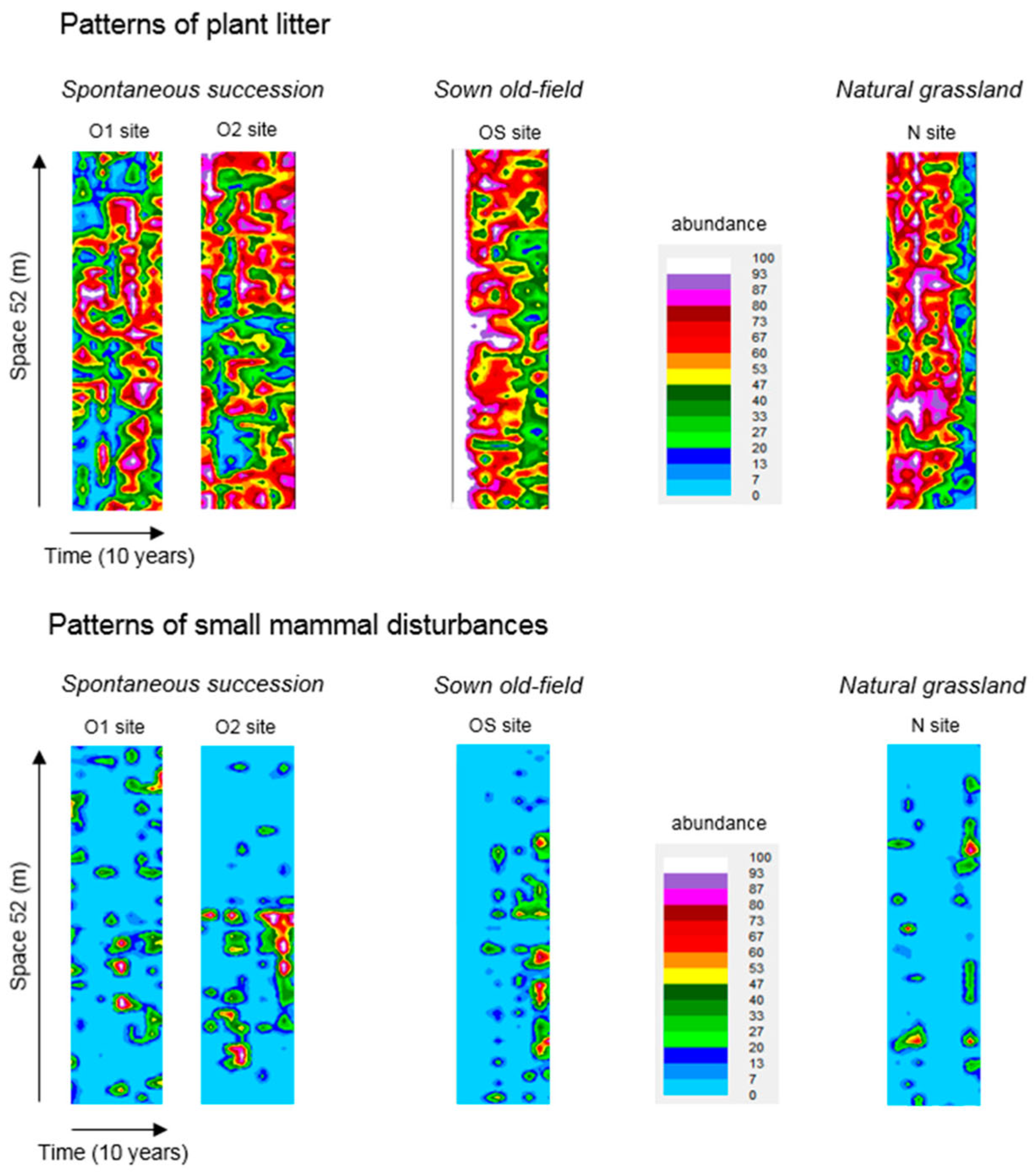
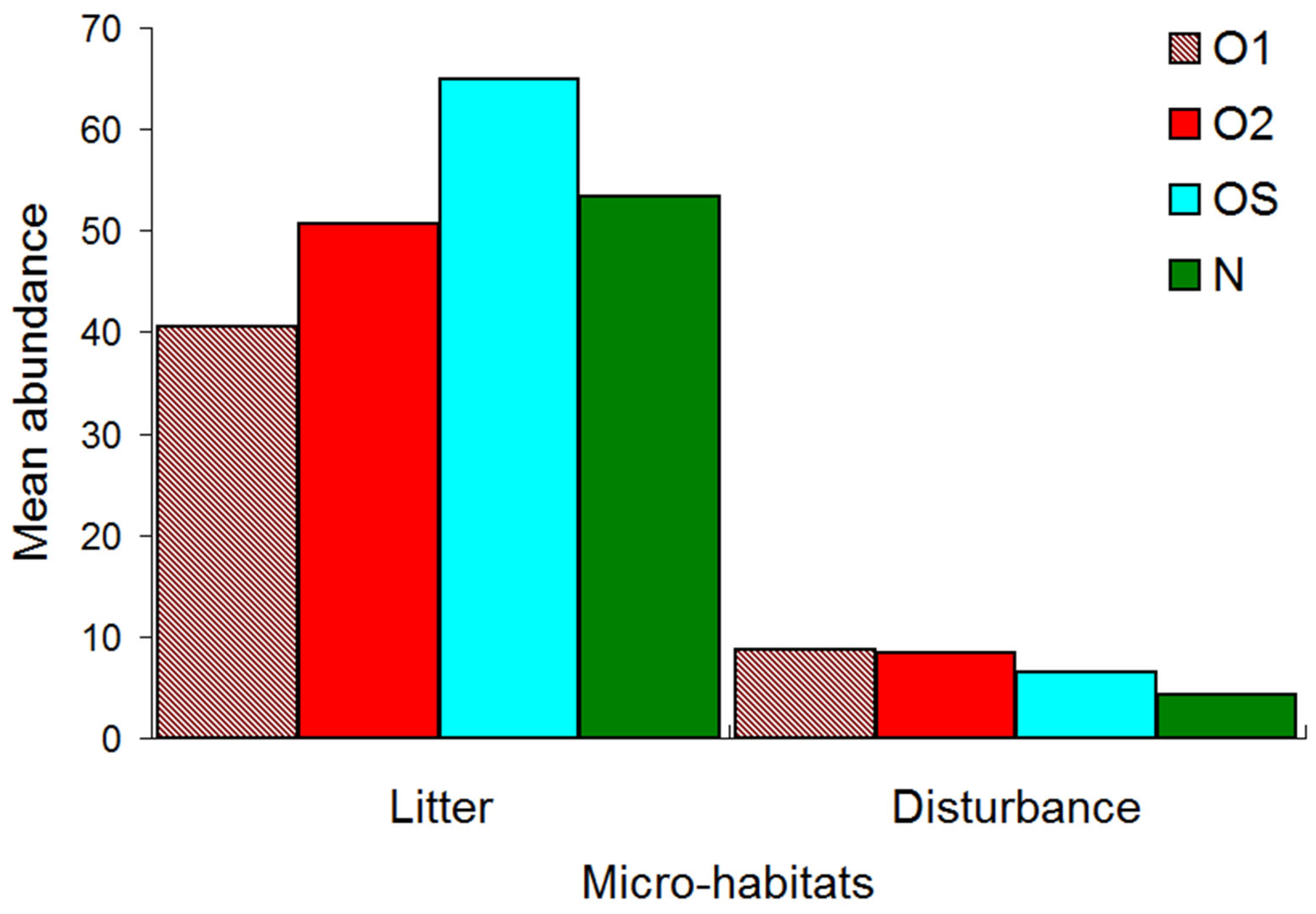
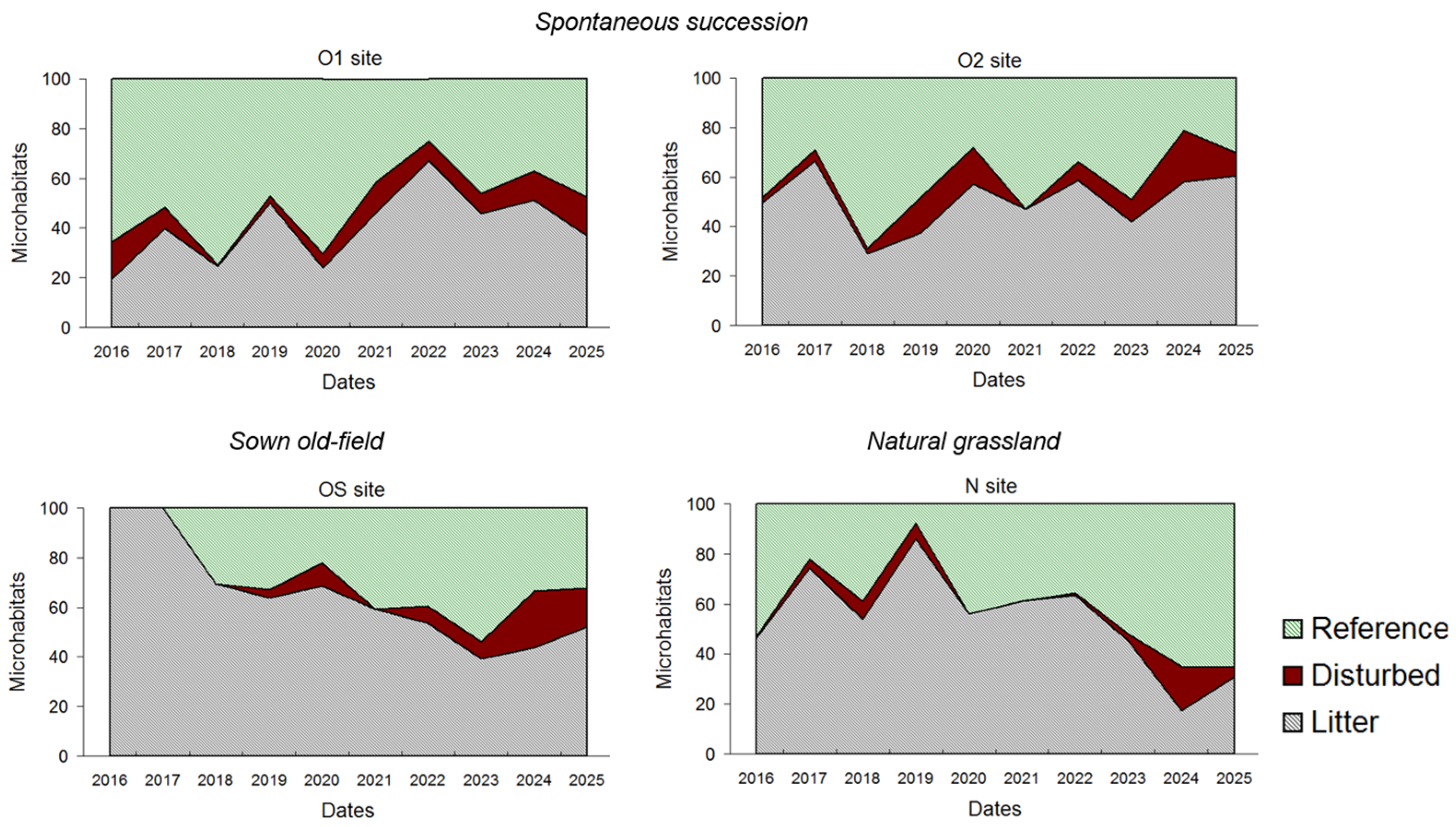
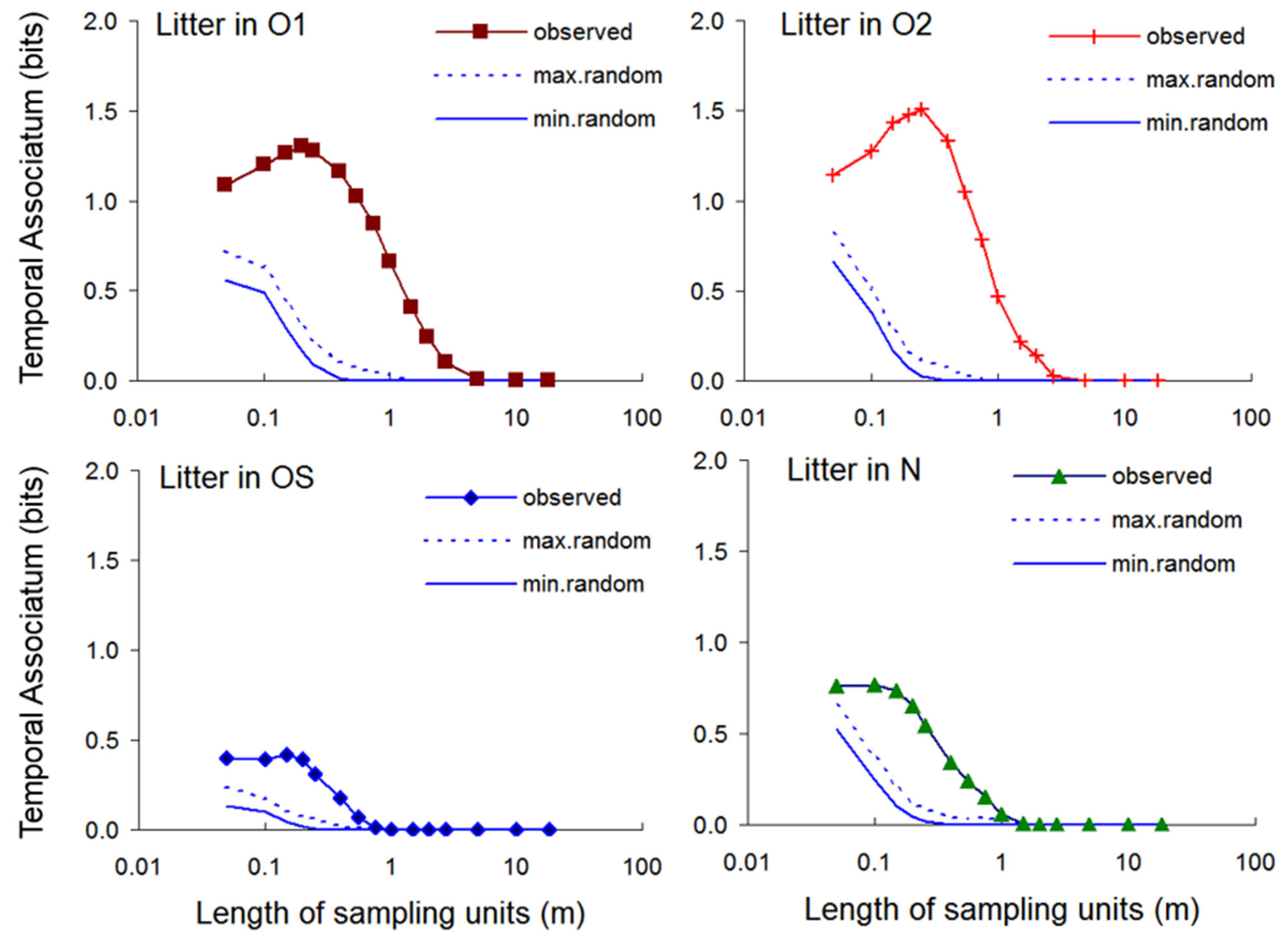
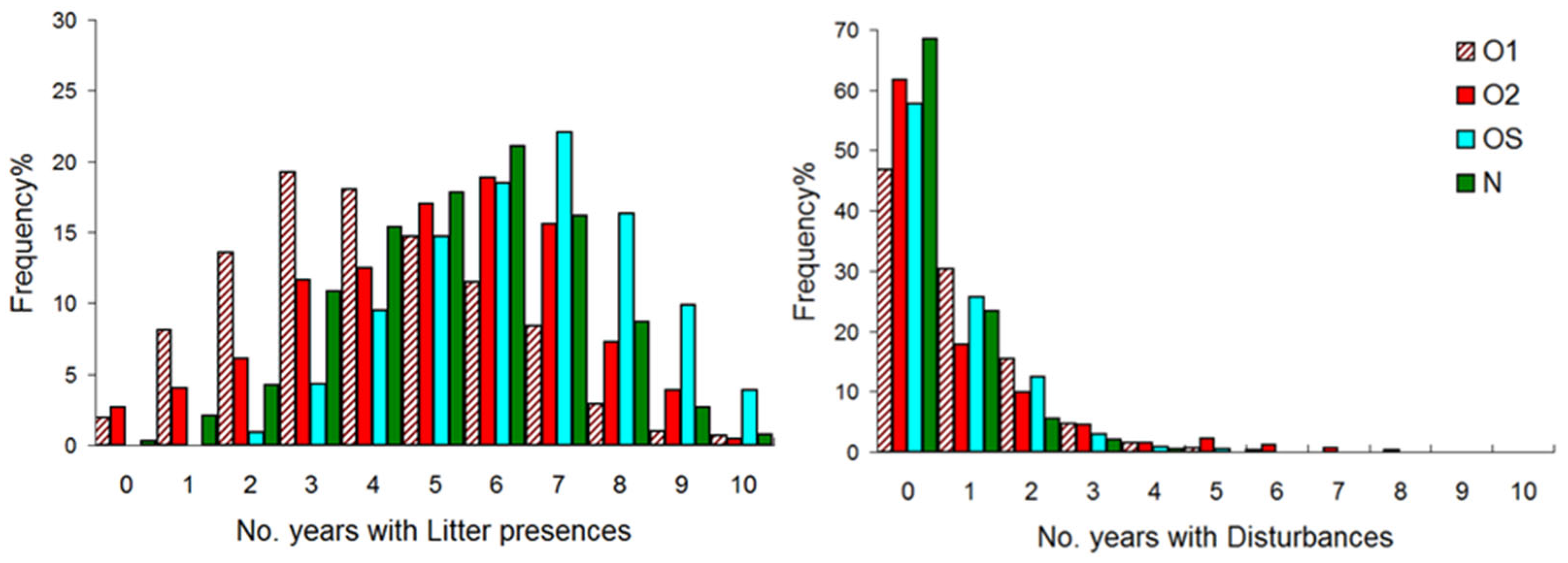
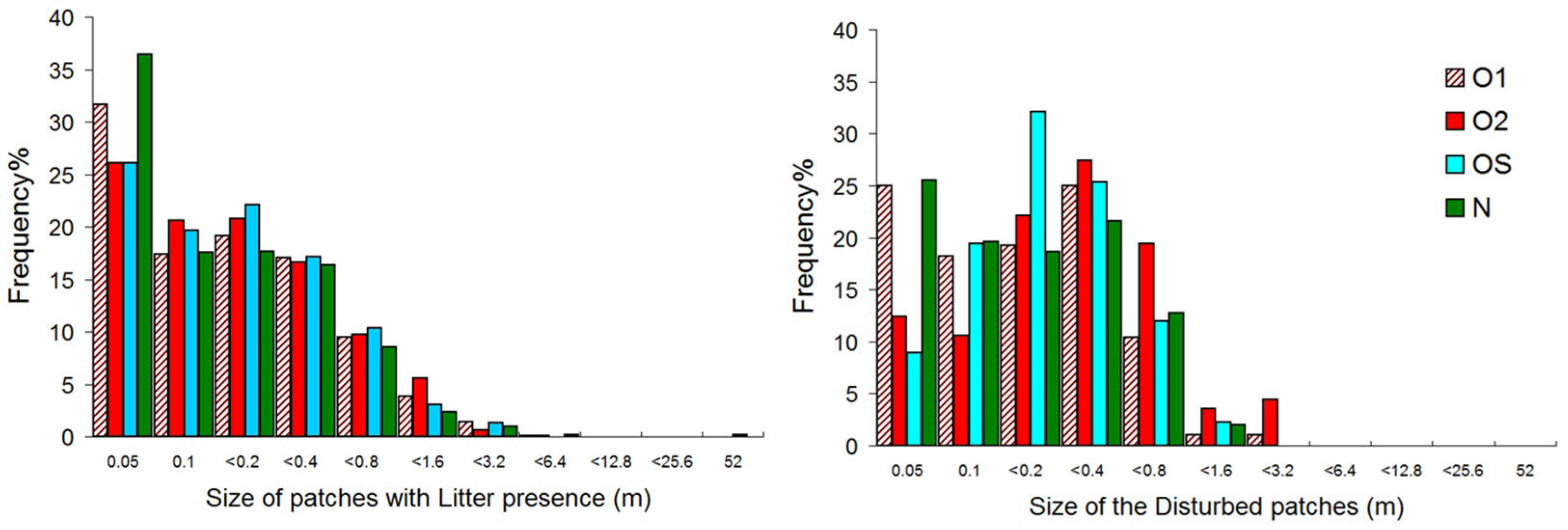
3.1. Patterns of Plant Litter and Disturbances over Space and Time
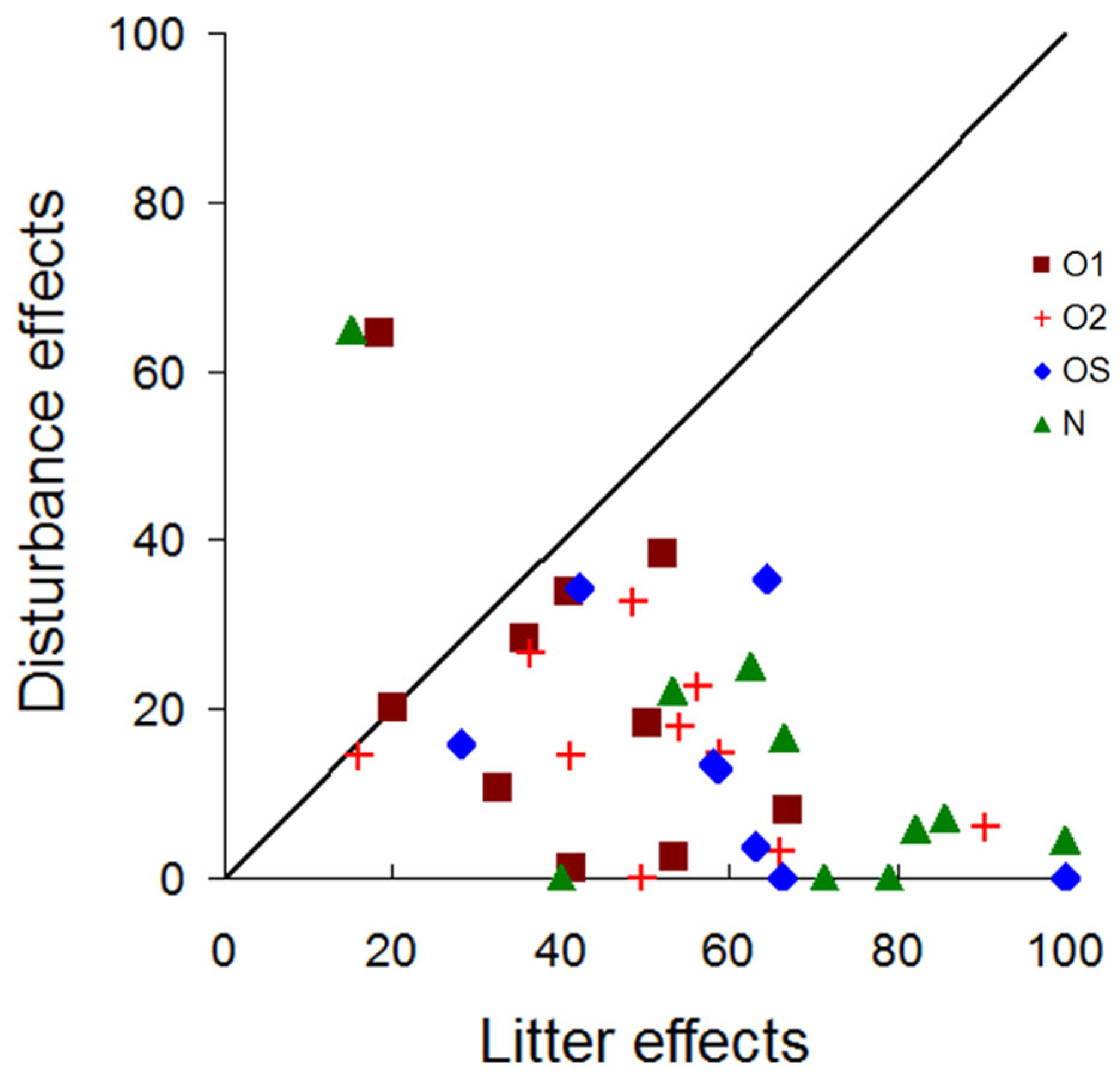
3.2. Spatial Associations Between Plant Litter Accumulations, Small Mammal Disturbances, and Local Diversity Hotspots
3.3. Relationships with Alternative Variables
4. Discussion
4.1. Patterns of Microsites Created by Litter Accumulation
4.2. Disturbance Regimes Induced by Small Mammals
4.3. Effect of Plant Litter and Small Mammal Disturbances on Community Organization and Dynamics
4.4. Limitations and Needs for Future Research
4.5. Implications for Theory and Practice—Short-Term Versus Long-Term Perspectives
5. Conclusions
Supplementary Materials
Author Contributions
Funding
Institutional Review Board Statement
Data Availability Statement
Acknowledgments
Conflicts of Interest
Appendix A

References
- Pickett, S.T.A.; White, P.S. (Eds.) The Ecology of Natural Disturbance and Patch Dynamics; Academic Press: Orlando, FL, USA, 1985. [Google Scholar]
- Collins, S.L.; Glenn, S.M. Disturbance and community structure in North American prairies. In Diversity and Pattern in Plant Communities; During, H.J., Werger, M.J.A., Willems, H.J., Eds.; SPB Academic Publishing bv: The Hague, The Netherlands, 1988; pp. 131–143. [Google Scholar]
- Grubb, P.J. The Maintenance of Species-Richness in Plant Communities: The Importance of the Regeneration Niche. Biol. Rev. 1977, 52, 107–145. [Google Scholar] [CrossRef]
- Fowler, N.L. Microsite requirements for germination and establishment of three grass species. Am. Midl. Nat. 1986, 115, 131–145. [Google Scholar] [CrossRef]
- Facelli, J.M.; Pickett, S.T.A. Plant litter: Its dynamics and effects on plant community structure. Bot. Rev. 1991, 57, 1–32. [Google Scholar] [CrossRef]
- Davidson, A.D.; Detling, J.K.; Brown, J.H. Ecological roles and conservation challenges of social, burrowing, herbivorous mammals in the world’s grasslands. Front. Ecol. Environ. 2012, 10, 477–486. [Google Scholar] [CrossRef]
- Beca, G.; Valentine, L.E.; Galetti, M.; Hobbs, R.J. Ecosystem roles and conservation status of bioturbator mammals. Mamm. Rev. 2022, 52, 192–207. [Google Scholar] [CrossRef]
- Goldberg, D.E.; Werner, P.A. The effects of size of opening in vegetation and litter cover on seedling establishment of goldenrods (Solidago spp.). Oecologia 1983, 60, 149–155. [Google Scholar] [CrossRef]
- Lavorel, S.; Lepart, J.; Debussche, M.; Lebreton, J.-D.; Beffy, J.-L. Small scale disturbances and the maintenance of species diversity in Mediterranean old Fields. Oikos 1994, 70, 455–473. [Google Scholar] [CrossRef]
- Hobbs, R.J.; Mooney, H.A. Spatial and temporal variability in California annual grassland: Results from a long-term study. J. Veg. Sci. 1995, 6, 43–56. [Google Scholar] [CrossRef]
- Kotanen, P.M. Effects of Experiemental Soil Disturbance on Revegetation by Natives and Exotics in Coastal California Meadows. J. Appl. Ecol. 1997, 34, 631–644. [Google Scholar] [CrossRef]
- Foster, B.L.; Gross, K.L. Species richness in a successional grassland: Effects of nitrogen enrichment and plant litter. Ecology 1998, 79, 2593–2602. [Google Scholar] [CrossRef]
- Rotundo, J.L.; Aguiar, M.R. Litter effects on plant regeneration in arid lands: A complex balance between seed retention, seed longevity and soil-seed contact. J. Ecol. 2005, 93, 829–838. [Google Scholar] [CrossRef]
- Ruprecht, E.; Józsa, J.; Ölvedi, T.B.; Simon, J. Differential effects of several “litter” types on the germination of dry grassland species. J. Veg. Sci. 2010, 21, 1069–1081. [Google Scholar] [CrossRef]
- Letts, B.; Lamb, E.G.; Mischkolz, J.M.; Romo, J.T. Litter accumulation drives grassland plant community composition and functional diversity via leaf traits. Plant Ecol. 2015, 216, 357–370. [Google Scholar] [CrossRef]
- Xiong, S.; Nilsson, C. The effects of plant litter on vegetation: A meta-analysis. J. Ecol. 1999, 87, 984–994. [Google Scholar] [CrossRef]
- Mallen-Cooper, M.; Nakagawa, S.; Eldridge, D.J. Global meta-analysis of soil-disturbing vertebrates reveals strong effects on ecosystem patterns and processes. Glob. Ecol. Biogeogr. 2019, 28, 661–679. [Google Scholar] [CrossRef]
- Root-Bernstein, M.; Ebensperger, L.A. Meta-analysis of the effects of small mammal disturbances on species diversity, richness and plant biomass. Austral Ecol. 2013, 38, 289–299. [Google Scholar] [CrossRef]
- Loydi, A.; Eckstein, R.L.; Otte, A.; Donath, T.W. Effects of litter on seedling establishment in natural and semi-natural grasslands: A meta-analysis. J. Ecol. 2013, 101, 454–464. [Google Scholar] [CrossRef]
- Coffin, D.P.; Lauenroth, W.K. The effects of disturbance size and frequency on a shortgrass plant community. Ecology 1988, 69, 1609–1617. [Google Scholar] [CrossRef]
- Whitford, W.G.; Kay, F.R. Biopedturbation by mammals in deserts: A review. J. Arid Environ. 1999, 41, 203–230. [Google Scholar] [CrossRef]
- Rebollo, S.; Pérez-Camacho, L.; Valencia, J.; Gómez-Sal, A. Vole mound effects and disturbance rate in a mediterranean plant community under different grazing and irrigation regimes. Plant Ecol. 2003, 169, 227–243. [Google Scholar] [CrossRef]
- Jackson, E.C.; Krogh, S.N.; Whitford, W.G. Desertification and biopedturbation in the northern Chihuahuan Desert. J. Arid Environ. 2003, 53, 1–14. [Google Scholar] [CrossRef]
- Knapp, A.K.; Briggs, J.M.; Hartnett, D.C.; Collins, S.L. (Eds.) Grassland Dynamics: Long-Term Ecological Research in Tallgrass Prairie; Oxford University Press: New York, NY, USA, 1998. [Google Scholar]
- Galvánek, D.; Lepš, J. The effect of management on productivity, litter accumulation and seedling recruitment in a Carpathian mountain grassland. Plant Ecol. 2011, 213, 523–533. [Google Scholar] [CrossRef]
- Bartha, S. Spatial relationships between plant litter, gopher disturbance and vegetation at different stages of old-field succession. Appl. Veg. Sci. 2001, 4, 53–62. [Google Scholar] [CrossRef]
- Szentes, S.; Sutyinszki, Z.; Szabó, G.; Zimmermann, Z.; Házi, J.; Wichmann, B.; Hufnágel, L.; Penksza, K.; Bartha, S. Grazed Pannonian grassland beta-diversity changes due to C4 yellow bluestem. Cent. Eur. J. Biol. 2012, 7, 1055–1065. [Google Scholar] [CrossRef]
- Arrhenius, O. Species and Area. J. Ecol. 1921, 9, 95–99. [Google Scholar] [CrossRef]
- Storch, D. The theory of the nested species–area relationship: Geometric foundations of biodiversity scaling. J. Veg. Sci. 2016, 27, 880–891. [Google Scholar] [CrossRef]
- Dengler, J.; Matthews, T.J.; Steinbauer, M.J.; Wolfrum, S.; Boch, S.; Chiarucci, A.; Conradi, T.; Dembicz, I.; Marcenò, C.; García-Mijangos, I.; et al. Species–area relationships in continuous vegetation: Evidence from Palaearctic grasslands. J. Biogeogr. 2020, 47, 72–86. [Google Scholar] [CrossRef]
- Biurrun, I.; Pielech, R.; Dembicz, I.; Gillet, F.; Kozub, Ł.; Marcenò, C.; Reitalu, T.; Van Meerbeek, K.; Guarino, R.; Chytrý, M.; et al. Benchmarking plant diversity of Palaearctic grasslands and other open habitats. J. Veg. Sci. 2021, 32, e13050. [Google Scholar] [CrossRef]
- Adler, P.B.; Lauenroth, W.K. The power of time: Spatiotemporal scaling of species diversity. Ecol. Lett. 2003, 6, 749–756. [Google Scholar] [CrossRef]
- Hammond, M.; Kolasa, J. The Long and Short of Biodiversity: Cumulative Diversity and Its Drivers. Diversity 2019, 11, 41. [Google Scholar] [CrossRef]
- Facelli, J.M.; Carson, W.P. Heterogeneity of plant litter accumulation in successional communities. Bull. Torrey Bot. Club 1991, 118, 62–66. [Google Scholar] [CrossRef]
- Li, Z.; Wang, F.; Wen, Y.; Ye, C.; Wang, P.; Bai, T.; Gu, X.; Guo, L.; Qiu, Y.; Zhang, Y.; et al. Temporal dynamics of climate sensitivity of litter decomposition in a semi-arid grassland. Geoderma 2025, 453, 117157. [Google Scholar] [CrossRef]
- Inouye, R.S.; Huntly, N.J.; Tilman, D.; Tester, J.R. Pocket gophers (Geomys bursarius), vegetation, and soil nitrogen along a successional sere in east central Minnesota. Oecologia 1987, 72, 178–184. [Google Scholar] [CrossRef]
- Németh, A.; Mizsei, E.; Laczkó, L.; Czabán, D.; Hegyeli, Z.; Lengyel, S.; Csorba, G.; Sramkó, G. Evolutionary history and systematics of European blind mole rats (Rodentia: Spalacidae: Nannospalax): Multilocus phylogeny and species delimitation in a puzzling group. Mol. Phylogenet. Evol. 2024, 190, 107958. [Google Scholar] [CrossRef] [PubMed]
- Csorba, G.; Moldován, O.; Schneider, V.; Németh, A. Conservation status of the blind mole rat populations in Hungary (Rodentia: Spalacinae: Nannospalax) revisited. Biol. Future 2024, 74, 475–487. [Google Scholar] [CrossRef]
- Moldován, O.; Schneider, V.; Lengyel, S.; Czabán, D.; Csorba, G.; Németh, A. Challenges and opportunities in the translocation of grassland-dwelling subterranean mammals: The case of blind mole rats. Glob. Ecol. Conserv. 2025, 62, e03756. [Google Scholar] [CrossRef]
- Zimmermann, Z.; Szabó, G.; Csathó, A.I.; Sallainé, K.J.; Szentes, S.; Juhász, M.; Házi, J.; Komoly, C.; Virágh, K.; Harkányiné, S.Z.; et al. The impact of the lesser blind mole rat [Nannospalax (superspecies leucodon)] on the species composition and diversity of a loess steppe in Hungary. Appl. Ecol. Environ. Res. 2014, 12, 577–588. [Google Scholar] [CrossRef]
- Goldberg, D.E.; Gross, K.L. Disturbance regimes of midsuccessional old fields. Ecology 1988, 69, 1677–1688. [Google Scholar] [CrossRef]
- Prach, K.; Török, P.; Bakker, J.D. Temperate Grasslands. In Routledge Handbook of Ecological and Environmental Restoration; Routledge: London, UK, 2017; pp. 126–141. [Google Scholar]
- Veldman, J.W.; Buisson, E.; Durigan, G.; Fernandes, G.W.; Le Stradic, S.; Mahy, G.; Negreiros, D.; Overbeck, G.E.; Veldman, R.G.; Zaloumis, N.P.; et al. Toward an old-growth concept for grasslands, savannas, and woodlands. Front. Ecol. Environ. 2015, 13, 154–162. [Google Scholar] [CrossRef]
- Csathó, A.J.; Csathó, A.I. A battonya-tompapusztai Külső-gulya flóralistája [The floralist of the Külső-gulya meadow of Battonya-Tompapuszta (SE Hungary)]. Crisicum 2009, 5, 51–70. [Google Scholar]
- Bartha, S.; Házi, J.; Purger, D.; Zimmermann, Z.; Szabó, G.; Guller, Z.E.; Csathó, A.I.; Csete, S. Fine-Scale Organization and Dynamics of Matrix-Forming Species in Primary and Secondary Grasslands. Land 2025, 14, 1736. [Google Scholar] [CrossRef]
- Bartha, S.; Campatella, G.; Canullo, R.; Bódis, J.; Mucina, L. On the importance of fine-scale spatial complexity in vegetation restoration studies. Int. J. Ecol. Environ. Sci. 2004, 30, 101–116. [Google Scholar]
- Kertész, M.; Lhotsky, B.; Hahn, I. Detection of fine-scale relationships between species composition and biomass in grassland. Community Ecol. 2001, 2, 221–230. [Google Scholar] [CrossRef]
- Juhász-Nagy, P.; Podani, J. Information theory methods for the study of spatial processes and succession. Vegetatio 1983, 51, 129–140. [Google Scholar] [CrossRef]
- Juhász-Nagy, P. Notes on compositional diversity. Hydrobiologia 1993, 249, 173–182. [Google Scholar] [CrossRef]
- Podani, J. Analysis of mapped and simulated vegetation patterns by means of computerized sampling techniques. Acta Bot. Hung. 1984, 30, 403–425. [Google Scholar]
- Podani, J. Computerized sampling in vegetation studies. Coenoses 1987, 2, 9–18. [Google Scholar]
- Tsakalos, J.L.; Chelli, S.; Campetella, G.; Canullo, R.; Simonetti, E.; Bartha, S. Comspat: An R package to analyze within-community spatial organization using species combinations. Ecography 2022, 2022, e06216. [Google Scholar] [CrossRef]
- Bakacsy, L. Invasion impact is conditioned by initial vegetation states. Community Ecol. 2019, 20, 11–19. [Google Scholar] [CrossRef]
- Nagy, K.N.; Bakacsy, L. Mowing and traditional grazing as a conservation strategy: Fine-spatial scale impacts on the invasion of false indigo bush (Amorpha fruticosa L.) in marsh meadows. Plant Species Biol. 2025, 40, 156–166. [Google Scholar] [CrossRef]
- Nagy, K.N.; Bartal, Z.P.; Károlyi, C.E.; Bakacsy, L. Evaluating Conservation Grazing Through Fine-Scale Vegetation Structure in Invaded Marsh Meadows. Diversity 2026, 18, 177. [Google Scholar] [CrossRef]
- Bartha, S.; Czárán, T.; Podani, J. Exploring plant community dynamics in abstract coenostate spaces. Abstr. Bot. 1998, 22, 49–66. [Google Scholar]
- Guller, Z.E.; Molnár, C.; Házi, J.; Purger, D.; Csete, S.; Szabó, G.; Zimmermann, Z.; Tölgyesi, C.; Bartha, S.; Csathó, A.I. What helps in the short term may hinder later: High grass abundance caused by the sowing of a competitive grass species limits meadow steppic grassland regeneration. Glob. Ecol. Conserv. 2026, 66, e04110. [Google Scholar] [CrossRef]
- Whittaker, R.H. Vegetation of the Siskiyou Mountains, Oregon and California. Ecol. Monogr. 1960, 30, 279–338. [Google Scholar] [CrossRef]
- Hammer, D.A.T.; Ryan, P.D.; Hammer, Ø.; Harper, D.A.T. Past: Paleontological Statistics Software Package for Education and Data Analysis. Palaeontol. Electron. 2001, 4, 1–9. [Google Scholar]
- Hassan, N.; Zhong, Z.; Wang, D.; Zhu, Y.; Naeen, I.; Ahungu, A.B.; Wan, H.Y.; Li, X. Effects of long-term mowing on species diversity, biomass and composition of plant community in a semi-arid grassland in northeastern China. Appl. Veg. Sci. 2023, 26, e12743. [Google Scholar] [CrossRef]
- Platt, W.J.; Weis, I.M. Resource Partitioning and Competition within a Guild of Fugitive Prairie Plants. Am. Nat. 1977, 111, 479–513. [Google Scholar] [CrossRef]
- Hobbs, R.J.; Mooney, H.A. Community and population dynamics of serpentine grassland annuals in relation to gopher disturbance. Oecologia 1985, 67, 342–351. [Google Scholar] [CrossRef]
- Rogers, W.E.; Hartnett, D.C.; Elder, B. Effects of Plains Pocket Gopher (Geomys bursarius) Disturbances on Tallgrass-prairie Plant Community Structure. Am. Midl. Nat. 2001, 145, 344–357. [Google Scholar] [CrossRef]
- Carson, W.P.; Peterson, C.J. The role of litter in an old-field community: Impact of litter quantity in different seasons on plant species richness and abundance. Oecologia 1990, 85, 8–13. [Google Scholar] [CrossRef] [PubMed]
- Kelemen, A.; Török, P.; Valkó, O.; Miglécz, T.; Tóthmérész, B. Mechanisms shaping plant biomass and species richness: Plant strategies and litter effect in alkali and loess grasslands. J. Veg. Sci. 2013, 24, 1195–1203. [Google Scholar] [CrossRef]
- Ma, Z.; Wu, J.; Li, L.; Zhou, Q.; Hou, F. Litter-Induced Reduction in Ecosystem Multifunctionality Is Mediated by Plant Diversity and Cover in an Alpine Meadow. Front. Plant Sci. 2021, 12, 773804. [Google Scholar] [CrossRef]
- Szabó, G. A fitomassza térbeli variációjának vizsgálata különböző gyeptípusokban [Comparative Analysis of Spatial Variability of Phytomass Production in Different Grassland Types]. Doctoral Thesis, Hungarian University of Agriculture and Life Sciences, Gödöllő, Hungary, 2023. [Google Scholar]
- Martinsen, G.D.; Cushman, J.H.; Whitham, T.G. Impact of pocket gopher disturbance on plant species diversity in a shortgrass prairie community. Oecologia 1990, 83, 132–138. [Google Scholar] [CrossRef]
- Jones, C.C.; Halpern, C.B.; Niederer, J. Plant Succession on Gopher Mounds in Western Cascade Meadows: Consequences for Species Diversity and Heterogeneity. Am. Midl. Nat. 2008, 159, 275–286. [Google Scholar] [CrossRef]
- Bartha, S.; Zimmermann, Z.; Szabó, G.; Szentes, S.; Virágh, K.; Csathó, A.I. A magyar földikutya (Nannospalax hungaricus) növényzetre gyakorolt hatásának mikrocönológiai monitorozása a Tompapusztai löszgyepben (2011–2014) [Microcoenological monitoring of loess steppe meadow vegetation disturbed by Hungarian blind mole rat [Nannospalax (leucodon) hungaricus] at Tompapuszta loess steppe meadow between 2011 and 2014]. Crisicum 2016, 9, 21–35. [Google Scholar]
- Brown, V.K.; Southwood, T.R.E. Secondary succession: Patterns and strategies. In Colonization, Succession, and Stability: The 26th Symposium of the British Ecological Society Held Jointly with the Linnean Society of London; Gray, A.J., Crawley, M.J., Edwards, P.J., Eds.; Blackwell Scientific Publications: Oxford, UK, 1987; pp. 315–338. [Google Scholar]
- Lamb, E.G. Direct and indirect control of grassland community structure by litter, resources, and biomass. Ecology 2008, 89, 216–225. [Google Scholar] [CrossRef] [PubMed]
- Herrick, J.E.; Schuman, G.E.; Rango, A. Monitoring ecological processes for restoration projects. J. Nat. Conserv. 2006, 14, 161–171. [Google Scholar] [CrossRef]
- Hagenah, N.; Bennett, N.C. Mole rats act as ecosystem engineers within a biodiversity hotspot, the Cape Fynbos. J. Zool. 2013, 289, 19–26. [Google Scholar] [CrossRef]
- Valkó, O.; Tölgyesi, C.; Kelemen, A.; Bátori, Z.; Gallé, R.; Rádai, Z.; Bragina, T.M.; Bragin, Y.A.; Deák, B. Steppe Marmot (Marmota bobak) as ecosystem engineer in arid steppes. J. Arid Environ. 2021, 184, 104244. [Google Scholar] [CrossRef]
- Valkó, O.; Kelemen, A.; Kiss, O.; Deák, B. Patch and matrix characteristics determine the outcome of ecosystem engineering by mole rats in dry grasslands. PeerJ 2022, 10, e14582. [Google Scholar] [CrossRef] [PubMed]
- Chesson, P. Mechanisms of maintenance of species diversity. Annu. Rev. Ecol. Evol. Syst. 2000, 31, 343–366. [Google Scholar] [CrossRef]
- Barabás, G.; D’Andrea, R.; Stump, S.M. Chesson’s coexistence theory. Ecol. Monogr. 2018, 88, 277–303. [Google Scholar] [CrossRef]
- Ellner, S.P.; Snyder, R.E.; Adler, P.B.; Hooker, G. Toward a “modern coexistence theory” for the discrete and spatial. Ecol. Monogr. 2022, 92, e1548. [Google Scholar] [CrossRef]
- Spaak, J.W.; Schreiber, S.J. Building modern coexistence theory from the ground up: The role of community assembly. Ecol. Lett. 2023, 26, 1840–1861. [Google Scholar] [CrossRef] [PubMed]
- Czárán, T. Spatiotemporal Models of Population and Community Dynamics, 1st ed.; Chapman & Hall: London, UK, 1998. [Google Scholar]
- Bolker, B.M.; Pacala, S.W.; Neuhauser, C. Spatial dynamics in model plant communities: What do we really know? Am. Nat. 2003, 162, 135–148. [Google Scholar] [CrossRef] [PubMed]
- Amarasekare, P. Competitive coexistence in spatially structured environments: A synthesis. Ecol. Lett. 2003, 6, 1109–1122. [Google Scholar] [CrossRef]
- Greig-Smith, P.L. Quantitative Plant Ecology, 3rd ed.; Blackwell Scientific Publications: Oxford, UK, 1983. [Google Scholar]
- Podani, J. SYN-TAX-5.0: Computer programs for multivariate data analysis in ecology and systematics. Abstr. Bot. 1993, 17, 289–302. [Google Scholar]
- Horváth, A. INFOTHEM program: New possibilities of spatial series analysis based on information theory methods. Tiscia 1998, 31, 71–84. [Google Scholar]
- Horváth, A. A Mezőföldi Löszvegetáció Términtázati Szerveződése [Organization of Spatial Pattern of Loess Vegetation in the Mezőföld Region]; Scientia Kiadó: Budapest, Hungary, 2002. [Google Scholar]
- Lindenmayer, D.B.; Likens, G.E. Adaptive monitoring: A new paradigm for long-term research and monitoring. Trends Ecol. Evol. 2009, 24, 482–486. [Google Scholar] [CrossRef]
- Prach, K.; Durigan, G.; Fennessy, S.; Overbeck, G.E.; Torezan, J.M.; Murphy, S.D. A primer on choosing goals and indicators to evaluate ecological restoration success. Restor. Ecol. 2019, 27, 917–923. [Google Scholar] [CrossRef]




| Long-Term Cumulative Data | ||
|---|---|---|
| Plant Litter | Small Mammal | |
| Sites | Accumulations | Disturbances |
| Spontaneous old-field O1 | 98.1 | 53.2 |
| Spontaneous old-field O2 | 97.3 | 38.3 |
| Sown old-field OS | 100.0 | 42.3 |
| Natural grassland N | 99.7 | 31.6 |
| Sites/Dates | 2016 | 2017 | 2018 | 2019 | 2020 | 2021 | 2022 | 2023 | 2024 | 2025 |
|---|---|---|---|---|---|---|---|---|---|---|
| Spontaneous old-field O1 | 0 | −1 | −1 | −1 | −1 | 0 | −1 | 0 | 0 | −1 |
| Spontaneous old-field O2 | 0 | −1 | 0 | −1 | 0 | 1 | 0 | −1 | 0 | |
| Sown old-field OS | −1 | −1 | −1 | −1 | 0 | 0 | −1 | −1 | ||
| Natural grassland N | −1 | 1 | −1 | −1 | 0 | −1 | −1 | 0 | 0 | −1 |
| Sites/Dates | 2016 | 2017 | 2018 | 2019 | 2020 | 2021 | 2022 | 2023 | 2024 | 2025 |
|---|---|---|---|---|---|---|---|---|---|---|
| Spontaneous old-field O1 | −1 | 1 | 0 | 0 | 0 | 0 | −1 | 0 | 0 | |
| Spontaneous old-field O2 | 0 | 0 | 0 | 0 | 0 | 1 | 0 | |||
| Sown old-field OS | 0 | 0 | 0 | 0 | 0 | |||||
| Natural grassland N | 0 | 0 | 0 | −1 | −1 | 0 |
| Sites/Dates | 2016 | 2017 | 2018 | 2019 | 2020 | 2021 | 2022 | 2023 | 2024 | 2025 |
|---|---|---|---|---|---|---|---|---|---|---|
| Spontaneous old-field O1 | 28.85 | 38.82 | 20.01 | 11.11 | 15.00 | 11.72 | 7.41 | 34.94 | 18.18 | 29.37 |
| Spontaneous old-field O2 | 10.00 | 15.22 | 80.95 | 25.50 | 23.18 | 33.75 | 42.55 | 31.78 | 26.04 | |
| Sown old-field OS | 18.18 | 25.00 | 20.55 | 30.00 | 21.43 | 13.75 | ||||
| Natural grassland N | 0.00 | 2.63 | 5.33 | 3.08 | 10.00 | 33.33 | 7.07 | 7.69 |
| Litter/Diversity | Litter/Diversity | Disturbance/Diversity | Disturbance/Diversity | |
|---|---|---|---|---|
| Sites/Periods | 2016–2025 (10 Years) | 2019–2025 (7 Years) | 2016–2025 (10 Years) | 2019–2025 (7 Years) |
| Spontaneous old-field O1 | −1 | −1 | −1 | −1 |
| Spontaneous old-field O2 | −1 | −1 | −1 | −1 |
| Sown old-field OS | −1 | −1 | −1 | −1 |
| Natural grassland N | −1 | −1 | 1 | 1 |
| Short-Term (Time-Series) Data | ||
| Litter/Diversity Hotspots | Disturbances/Diversity Hotspots | |
| Positive | 5.0 | 5.0 |
| Negative | 52.5 | 10.0 |
| Neutral | 35.0 | 52.5 |
| Non-detectable | 7.5 | 32.5 |
| Significant all | 57.5 | 15.0 |
| Long-Term Cumulative Data | ||
| Litter/Diversity Hotspots | Disturbances/Diversity Hotspots | |
| Positive | 0.0 | 25.0 |
| Negative | 100.0 | 75.0 |
| Neutral | 0.0 | 0.0 |
| Non-detectable | 0.0 | 0.0 |
| Significant all | 100.0 | 100.0 |
Disclaimer/Publisher’s Note: The statements, opinions and data contained in all publications are solely those of the individual author(s) and contributor(s) and not of MDPI and/or the editor(s). MDPI and/or the editor(s) disclaim responsibility for any injury to people or property resulting from any ideas, methods, instructions or products referred to in the content. |
© 2026 by the authors. Licensee MDPI, Basel, Switzerland. This article is an open access article distributed under the terms and conditions of the Creative Commons Attribution (CC BY) license.
Share and Cite
Bartha, S.; Csete, S.; Purger, D.; Zimmermann, Z.; Szabó, G.; Guller, Z.E.; Csathó, A.I.; Házi, J. Long-Term Effects of Plant Litter Accumulation and Small Mammal Disturbance on Diversity in Old-Field Succession. Diversity 2026, 18, 326. https://doi.org/10.3390/d18060326
Bartha S, Csete S, Purger D, Zimmermann Z, Szabó G, Guller ZE, Csathó AI, Házi J. Long-Term Effects of Plant Litter Accumulation and Small Mammal Disturbance on Diversity in Old-Field Succession. Diversity. 2026; 18(6):326. https://doi.org/10.3390/d18060326
Chicago/Turabian StyleBartha, Sándor, Sándor Csete, Dragica Purger, Zita Zimmermann, Gábor Szabó, Zsófia Eszter Guller, András István Csathó, and Judit Házi. 2026. "Long-Term Effects of Plant Litter Accumulation and Small Mammal Disturbance on Diversity in Old-Field Succession" Diversity 18, no. 6: 326. https://doi.org/10.3390/d18060326
APA StyleBartha, S., Csete, S., Purger, D., Zimmermann, Z., Szabó, G., Guller, Z. E., Csathó, A. I., & Házi, J. (2026). Long-Term Effects of Plant Litter Accumulation and Small Mammal Disturbance on Diversity in Old-Field Succession. Diversity, 18(6), 326. https://doi.org/10.3390/d18060326