Article

Deep-Rooted Tropical Grasses as Preceding Crops Boost Soil Health and Soybean Yield in Brazil—A Meta-Analysis

by
Julierme Zimmer Barbosa
1,
Giovana Poggere
2,
Lourival Vilela
3,
Pedro Luiz de Freitas
4 and
Ieda Carvalho Mendes
3,*
1
Agronomy Departament, Catarinense Federal Institute, Rio do Sul 89163-356, SC, Brazil
2
Biological and Environmental Sciences Department, Federal Technological University of Paraná, Medianeira 85884-000, PR, Brazil
3
Embrapa Cerrados, Planaltina 73310-970, DF, Brazil
4
Embrapa Solos, Rio de Janeiro 22460-000, RJ, Brazil
*
Author to whom correspondence should be addressed.
Agronomy 2026, 16(7), 751; https://doi.org/10.3390/agronomy16070751
Submission received: 9 March 2026 / Revised: 24 March 2026 / Accepted: 30 March 2026 / Published: 1 April 2026

Abstract

Tropical grasses are increasingly present in farming systems in Brazil. However, a national-scale assessment of this practice’s impact on soil health (SH) and soybean yield has been lacking. In this study, we conducted a meta-analysis of 55 studies published until February 2026, comprising field trials run in 33 locations in Brazil, aiming to assess the effects of deep-rooted tropical grasses as preceding crops on biological indicators of SH and soybean yield. Results showed that grasses (Urochloa spp. and Megathyrsus maximus) promote soybean yield by 15%, representing an average increase of 515 kg ha−1 and an additional revenue of US$198 ha−1. The analysis of forage grass species used, management system (single or intercropped), soybean cultivar (growth habit, life cycle, genetic modification), and edaphoclimatic controlling factors revealed positive effects of tropical grasses on soybean yield under all the study conditions and yield ranges. SH indicators also showed sizeable increment, notably the activity of arylsulfatase (+35%) and β-glucosidase (+31%), followed by acid phosphatase activity (+20%), microbial biomass carbon (+24%), and organic carbon (+11%). The results confirmed the beneficial effects of deep-rooted tropical grasses, highlighting their contribution to sustainable intensification in tropical farming systems due to their ability to enhance SH. This, in turn, leads to increased soybean yield under most agronomic and environmental conditions.

1. Introduction

Sustainable intensification in agriculture has been promoted in response to the growing global demand for food, fiber, and energy. Its implementation requires strategies that increase crop yield and the efficient use of agricultural inputs, while ensuring the conservation of non-renewable natural resources [1,2,3]. Over several decades, Brazil has developed practices and technologies aimed at conservation and productivity of agriculture in the tropics [4,5], making it currently one of the main food producers in the world [6]. However, Brazil still has significant growth potential through the increase in crop yield and the recovery of degraded pastures [7,8], which has been carried out mainly through crop-livestock integration [9].
No-tillage, crop rotation, crop succession, the use of cover crops (or service crops), and integrated crop–livestock (ICL) and crop–livestock–forest (ICLF) systems are among the most widely adopted conservation agriculture practices. These practices often incorporate high-biomass forage plants such as deep-rooted tropical grasses, which are used for soil cover or forage production [2,10,11]. In Brazil, the most used deep-rooted tropical grasses in grain production systems belong to the genera Urochloa (syn. Brachiaria spp.), Megathyrsus, and Panicum, primarily preceding soybean crops in the Cerrado (a tropical climate region with two well-defined seasons: rainy and dry [12,13,14]). However, these forage grasses have also been cultivated before soybean in subtropical regions of Brazil [15,16,17,18]. In these production systems, deep-rooted tropical grasses are grown either as sole crops or intercropped with grain crops, particularly maize and sorghum [19,20], either pastured or as a cover crop.
The inclusion of deep-rooted tropical grasses as cover crops in agricultural systems aims to achieve environmental, economic, and productive benefits, contributing to improving the sustainability of these systems. Key benefits of tropical grasses include improved soil health (SH), water erosion control, increased biodiversity, carbon sequestration, and income diversification [2,10,21,22,23]. The use of forage grasses, particularly Urochloa, is considered crucial for the sustainable production of grains and fiber on light-textured soils [24]. Although the great majority of studies indicate a significant positive effect on grain yield [20,25,26,27], a few report some specific situations with null or slightly negative effects (e.g., [19,28,29]). It is also worth highlighting the growing efforts to evaluate the relationship between biological SH indicators and soybean yield, particularly through carbon content and soil enzyme activity [21,30,31]. These efforts have been influenced by Brazil’s strong tradition in SH research [32,33,34,35] and the recent launch of soil bioanalysis technology (SoilBio) [36].
Soybean is the backbone of Brazil’s agribusiness sector: the country is one of the world’s largest producers and exporters, and the crop accounts for a substantial share of national agricultural GDP, export revenues, and global commodity flows [37]. In the 2025/2026 growing season, soybean production occupied approximately 49 million hectares [38], shaping land-use dynamics, input markets, logistics infrastructure, technological innovation in tropical agriculture, and rural development across multiple regions. Therefore, understanding management practices that enhance SH while sustaining or increasing soybean yield is of strategic importance not only at the farm level, but also for national economic stability and the long-term sustainability of Brazilian agriculture.
Conducting a comprehensive assessment of the effects of deep-rooted tropical grasses as preceding crops on soybean yield and SH through conventional experimental approaches would require numerous long-term field studies. However, this challenge can be addressed through meta-analytical approaches [39,40,41,42], which synthesize data from independent studies and allow for robust, large-scale inference. In this context, Souza et al. (2024) [43] demonstrated, through a meta-analysis, that maize—Brachiaria intercropping is an effective strategy for increasing crop residue production (supporting no-tillage systems) or forage supply (supporting integrated crop–livestock systems), thereby promoting diversification of Brazilian production systems. However, the authors also reported a modest reduction in maize grain yield (−5.6%), highlighting potential trade-offs within maize-based systems.
Despite these advances for maize, no comprehensive synthesis has specifically focused on soybean, the most economically important crop in Brazilian agriculture. Thus, despite the growing adoption of deep-rooted tropical grasses in Brazilian production systems, there remains a lack of a comprehensive and quantitative synthesis of their effects on both soil health and soybean yield. This knowledge gap limits the ability to provide evidence-based recommendations for farmers and policymakers.
Accordingly, this study aimed, through a meta-analytical approach, to assess the influence of deep-rooted tropical grasses used as preceding crops on biological indicators of SH and soybean yield in Brazil. We hypothesized that the presence of deep-rooted tropical grasses exerts a predominantly positive effect on SH indicators and soybean yield, with response magnitudes varying according to environmental conditions and agronomic characteristics.

2. Materials and Methods

2.1. Data Compilation

A systematic literature search was conducted to identify publications evaluating soybean yield and SH following the cultivation of deep-rooted tropical grasses. The search was performed in Google Scholar in February 2026. The following terms were used: soybean, Glycine max, tropical grass, Brachiaria, Panicum, Megathyrsus, soil health, soil enzymes, and Brazil. Yet, additional publications were obtained from an expert network and citation searching. Each publication was screened to verify whether it met the following inclusion criteria: (1) comparison between treatments with and without the cultivation of tropical grasses prior to soybean (i.e., tropical grass as a preceding crop vs. fallow or no preceding crop); (2) comparison between grain monoculture (control) and grain cropped in consortium with tropical grasses before soybean (experimental treatment); (3) study conducted under field conditions in Brazil; (4) availability of extractable quantitative data from text, tables, or figures; (5) publication as article in scientific journal, master’s dissertation, doctoral thesis, book chapter, book or technical bulletin. Preferred Reporting Items for Systematic Review and Meta-Analyses (PRISMA) were presented in Supplementary Materials (Figure S1).
After a thorough evaluation based on these criteria, 55 publications were selected, representing field trials conducted in 33 distinct locations across Brazil (Table S1 and Figure S3). For each study, general information including the location, soil texture, soil organic carbon content, soybean cultivar, and fertilization practices was extracted.
Data extraction for obtaining paired comparisons was conducted based on the following criteria: (1) when two publications reported data from the same experiment, only data from the first publication were used; (2) each year was treated as a separate comparison when annual values were reported separately; (3) when results were presented as averages over multiple years, the number of replicates per year was multiplied by the number of years. Then, the mean ( X ¯ ), standard deviation (SD), and number of repetitions (n) were recorded for soybean grain yield, soil carbon content, and biological indicators of SH (arylsulfatase, β-glucosidase, acid phosphatase, and microbial biomass carbon). When data were reported for multiple soil layers, values were extracted only from the surface layer—typically 0–10 cm or 0–20 cm for soil organic matter (SOM) and 0–10 cm for biological indicators. In cases where SOM was reported instead of soil organic carbon (SOC), SOM values were divided by 1.724 to convert them into SOC.
For studies that reported only the coefficient of variation (CV%), Equation (1) was used to calculate the standard deviation (SD):
SD = CV%/100 X
For studies that did not report data variability information, SD was estimated for control and experimental treatments using the global variation of the study. All data were extracted and compiled in an Excel® (2019) spreadsheet.
During the literature search, publications on the effects of tropical grasses on soil chemical, physical, and biological attributes were found. However, due to the low number of comparisons, they could not be included in the meta-analysis. To make use of this valuable information, the main results were compiled separately.

2.2. Data Categorization

For the tropical grass control factor, the species used were considered, as were whether the forage grasses were cultivated alone or intercropped with grain crops. The following species of tropical grasses were analyzed: palisadegrass (Urochloa brizantha, syn. Brachiaria brizantha); ruzigrass (Urochloa ruziziensis, syn. Brachiaria ruziensis), and guinegrass (Megathyrsus maximus, syn. Panicum maximum). Generally, tropical grasses were intercropped with maize, sorghum, millet, and sunflower in the trials included in this meta-analysis, mainly maize (Table S1).
Soybean controlling factors were categorized based on the growth habit (determinate and indeterminate) and cycle type (early and semi-early/medium). The effect of genetic modification was also evaluated, classifying cultivars as conventional, conventional (non-GM), tolerant to herbicide based on glyphosate (e.g., Roundup Ready®—RR), and resistant to glyphosate and certain caterpillars (e.g., Intacta RR2 Pro®—IPRO). Cultivar information was extracted from each study, and publicly available data provided by the companies that registered each cultivar.
Fertilization (P and K) and grain yield were categorized into two groups to balance the number of observations: ≤35 and >35 kg ha−1 for P, ≤66 and >66 kg ha−1 for K, and grain yield lower or higher than 3400 kg ha−1.
Finally, environmental controlling factors were categorized by climate (tropical and subtropical) and surface soil texture (sandy, loamy, clayey, very fine clayey texture grouping).

2.3. Meta-Analysis

The magnitude of the effect of the presence of deep-rooted tropical grasses was calculated using the natural logarithm of the response ratio (LnRR; Equation (2)) as effect size [44]:
lnRR = ln X_e/X_c
where Xe and Xc are the mean values for experimental and control treatments, respectively. Variance (v) was calculated as:
v = (SD_e^2)/(n_e X_e^2) + (SD_c^2)/(n_c X_c^2)
where SDe, Ne, SDc, and Nc represent the standard deviation and the number of replicates for experimental and control treatments, respectively. The response ratio variance was required to obtain balanced response ratio values and 95% of the confidence interval (CI). Thus, the effect of the presence of deep-rooted tropical grasses was considered significant when the 95% CI values of the response ratio did not overlap zero. The average response ratio and CI values were generated using the random-effects method with restricted maximum likelihood estimation. To facilitate the interpretation of the variations between experimental treatments and control, the response ratio and the CI of treatments were transformed:
%change = (e^(lnRR) − 1) × 100
All analyses were performed in OpenMEE software [45].

3. Results

Of the 55 publications evaluated, none were from the period between 2000 and 2010; eighteen studies were published between 2011 and 2020, while 37 were published from 2021 to 2025. This marked increase in the number of publications over time reflects a growing interest in the use of deep-rooted grasses in Brazilian agriculture.

3.1. Overall Effects of Tropical Grasses on Soybean Yield and Soil Biological Indicators of SH

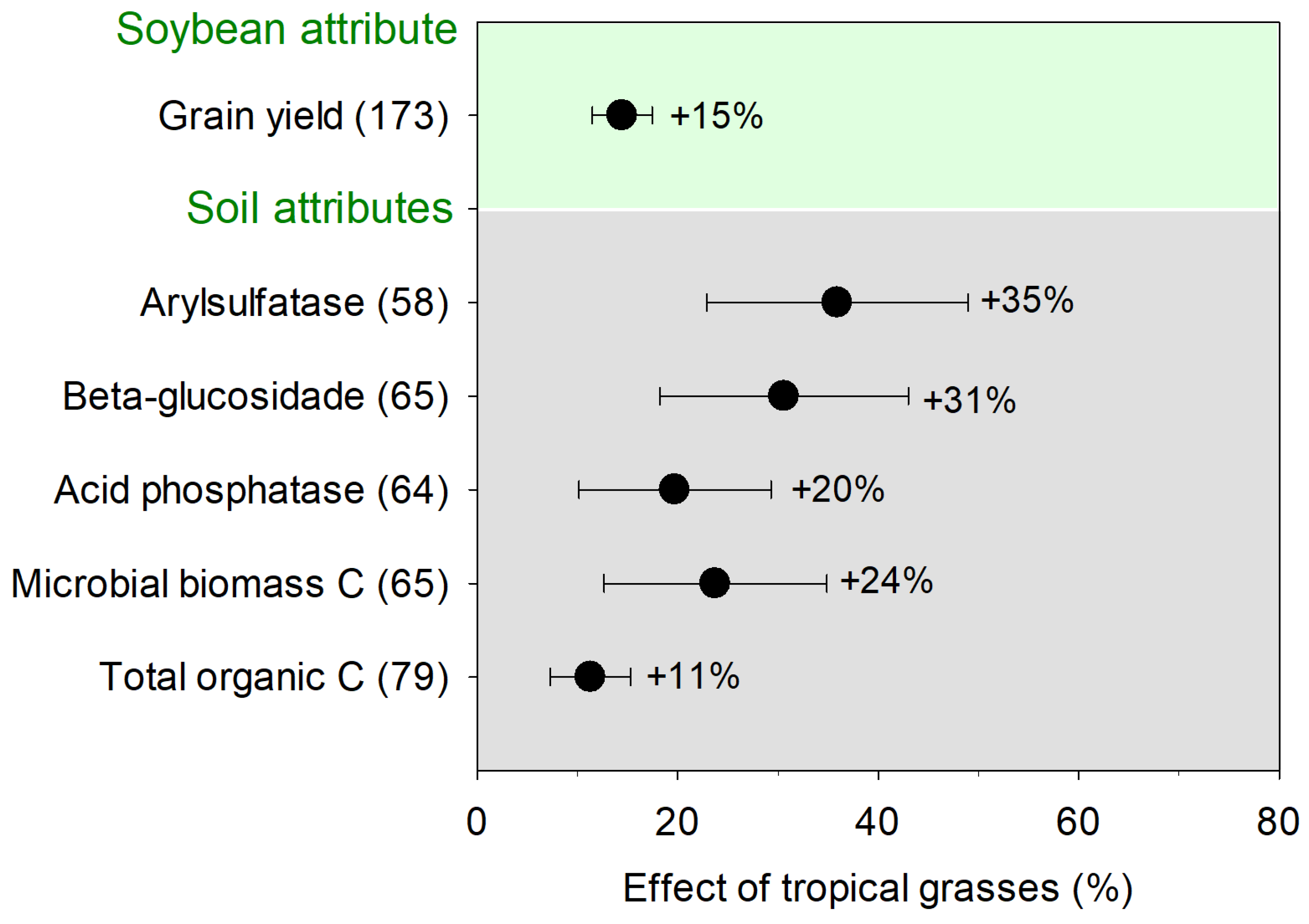
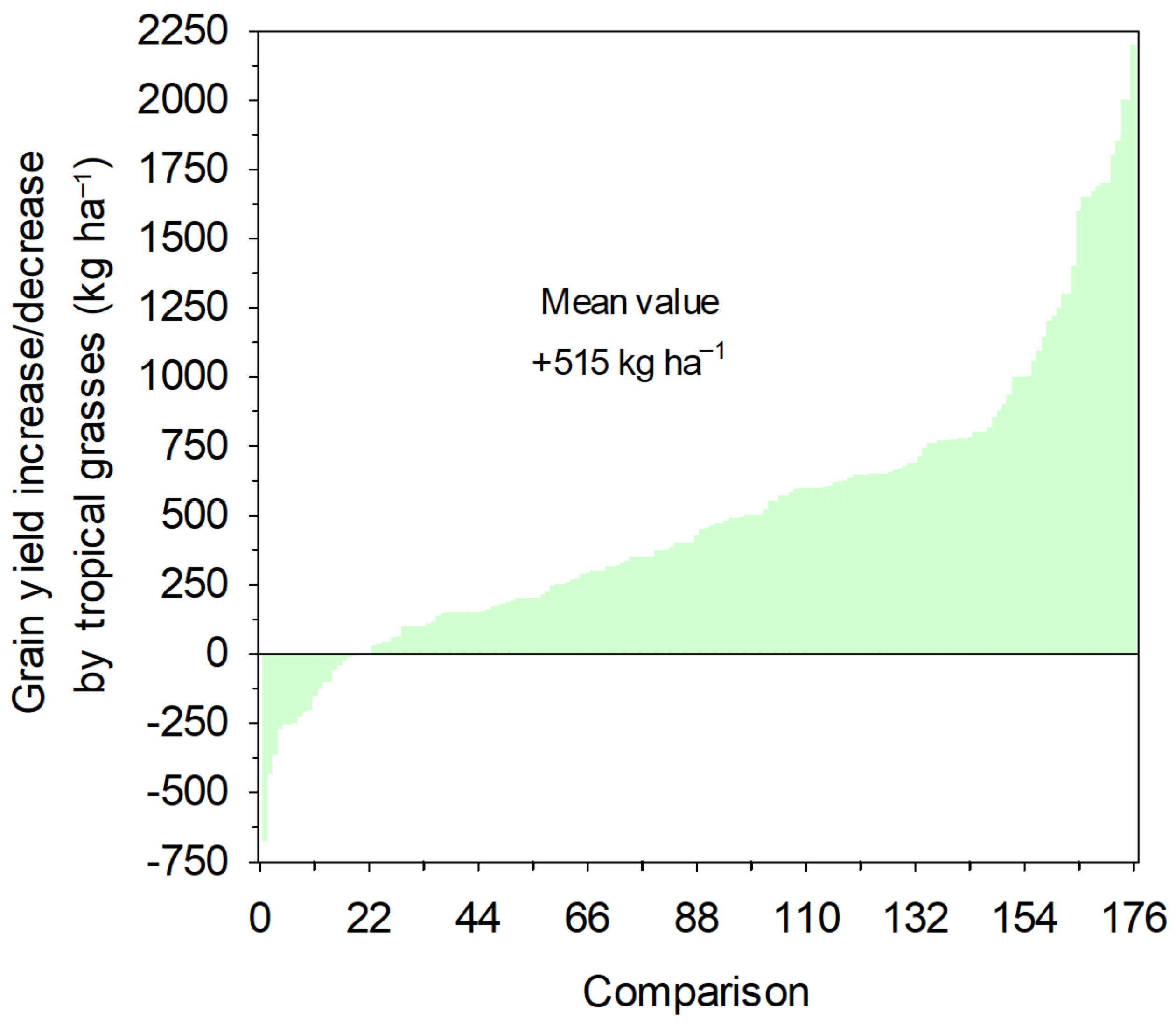
Deep-rooted tropical grasses used as preceding crops increased soybean yield and improved biological indicators of SH (Figure 1). Out of the 173 comparisons evaluated, 154 showed positive yield gains, ranging from as low as 30 kg ha−1 to as high as 2200 kg ha−1. Only nineteen comparisons (11%) reported yield losses in the presence of deep-rooted grasses, with losses ranging from 11 kg ha−1 to 672 kg ha−1, the great majority without statistical significance. On average, grain yield increased by 15%, which, in absolute terms, represents a gain of 515 kg ha−1 (Figure 2). Biological indicators of SH also showed positive increases, particularly arylsulfatase activity (+35%) and β-glucosidase activity (+31%), followed by acid phosphatase activity (+20%), microbial biomass carbon (+24%), and organic carbon (+11%) (Figure 1).
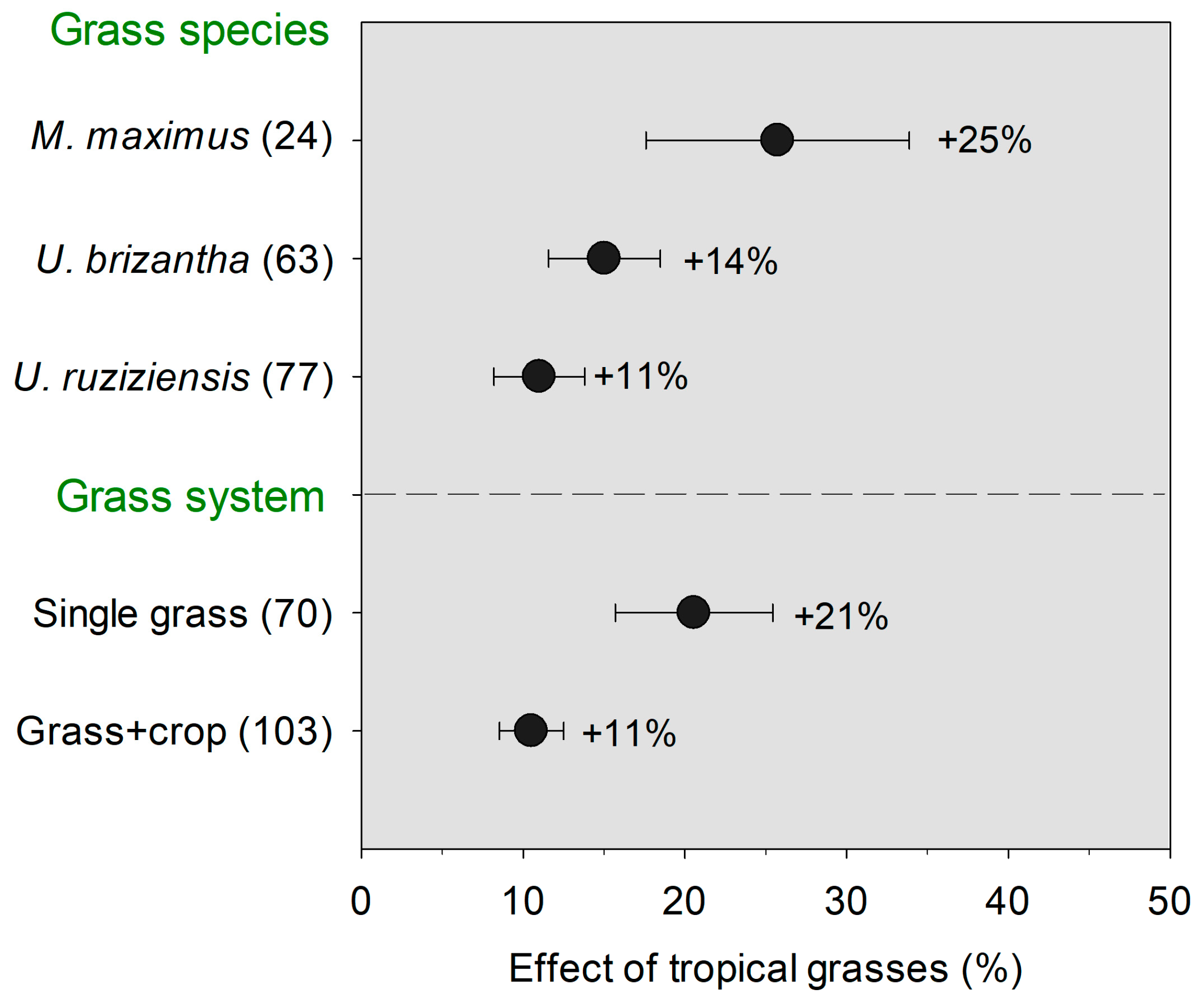
The beneficial effect of deep-rooted tropical grasses on soybean grain yield was observed regardless of the grass species or cultivation system (Figure 3). The highest positive effect on soybean yield was recorded when Megathyrsus maximus was used as a preceding crop, with an average increase of 25%, corresponding to 888 kg ha−1, especially when compared to Urochloa ruziziensis, which showed an average increase of 11% (371 kg ha−1). Urochloa brizantha exhibited an intermediate response, with an average yield increase of 14% (487 kg ha−1). When analyzing the cultivation systems, soybean yield increased more when tropical grasses were grown as sole crops (+21%) compared to intercropped grass systems (+11%).

3.2. Effects of Grass Species, Production Systems, and Soybean Traits

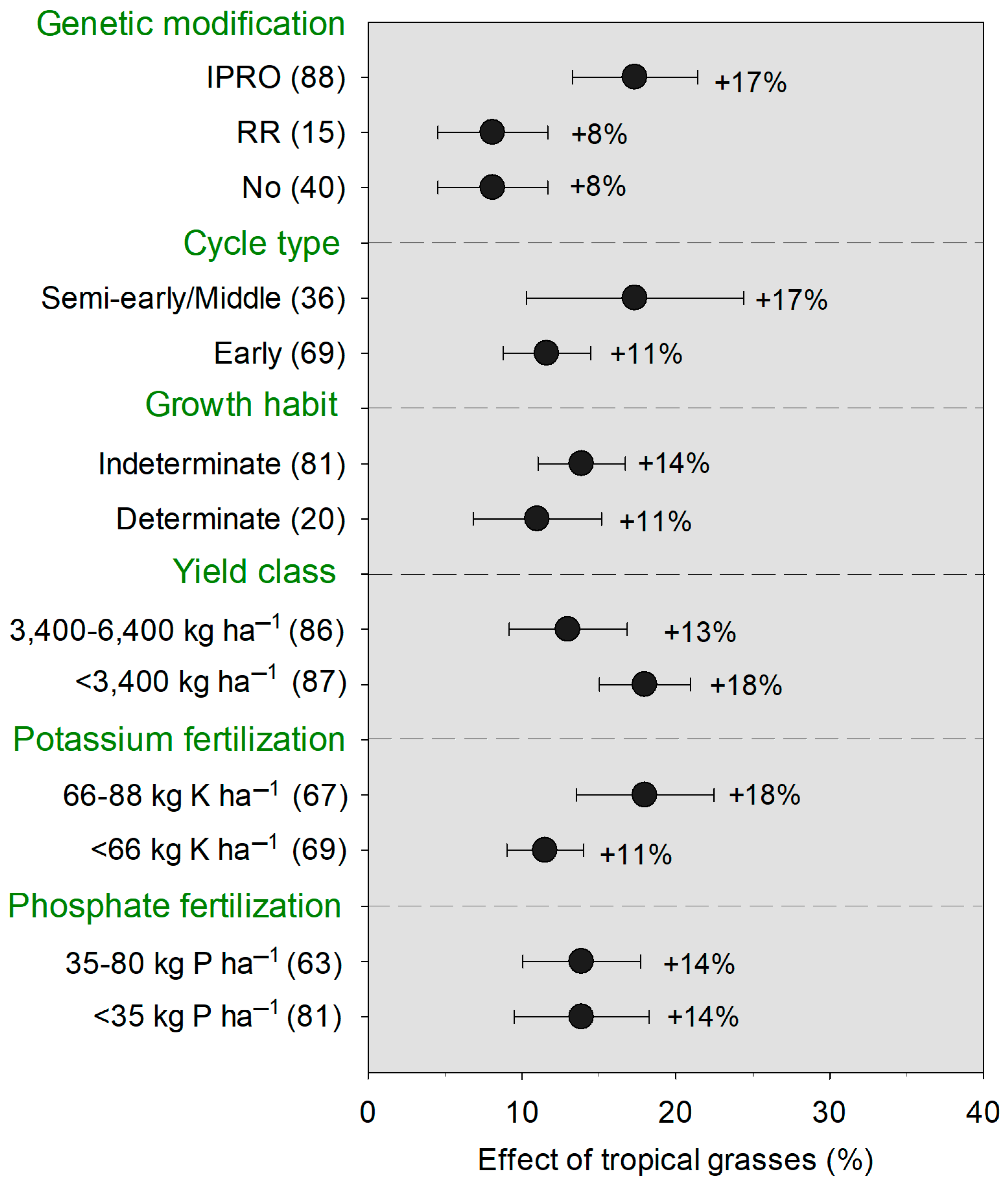
Deep-rooted tropical grasses promoted soybean yield across all controlling factors, including the cultivar characteristics (genetic modification, life cycle, and growth habit), grain yield class, and potassium and phosphate fertilization rates (Figure 4). The most notable difference was the increase in grain yield observed in caterpillar- and glyphosate-resistant cultivars (IPRO; +17%) compared to glyphosate-resistant (RR; +8%) and non-genetically modified cultivars (+8%).

3.3. Influence of Environmental Conditions and Additional Effects of Tropical Grasses on Soil Attributes

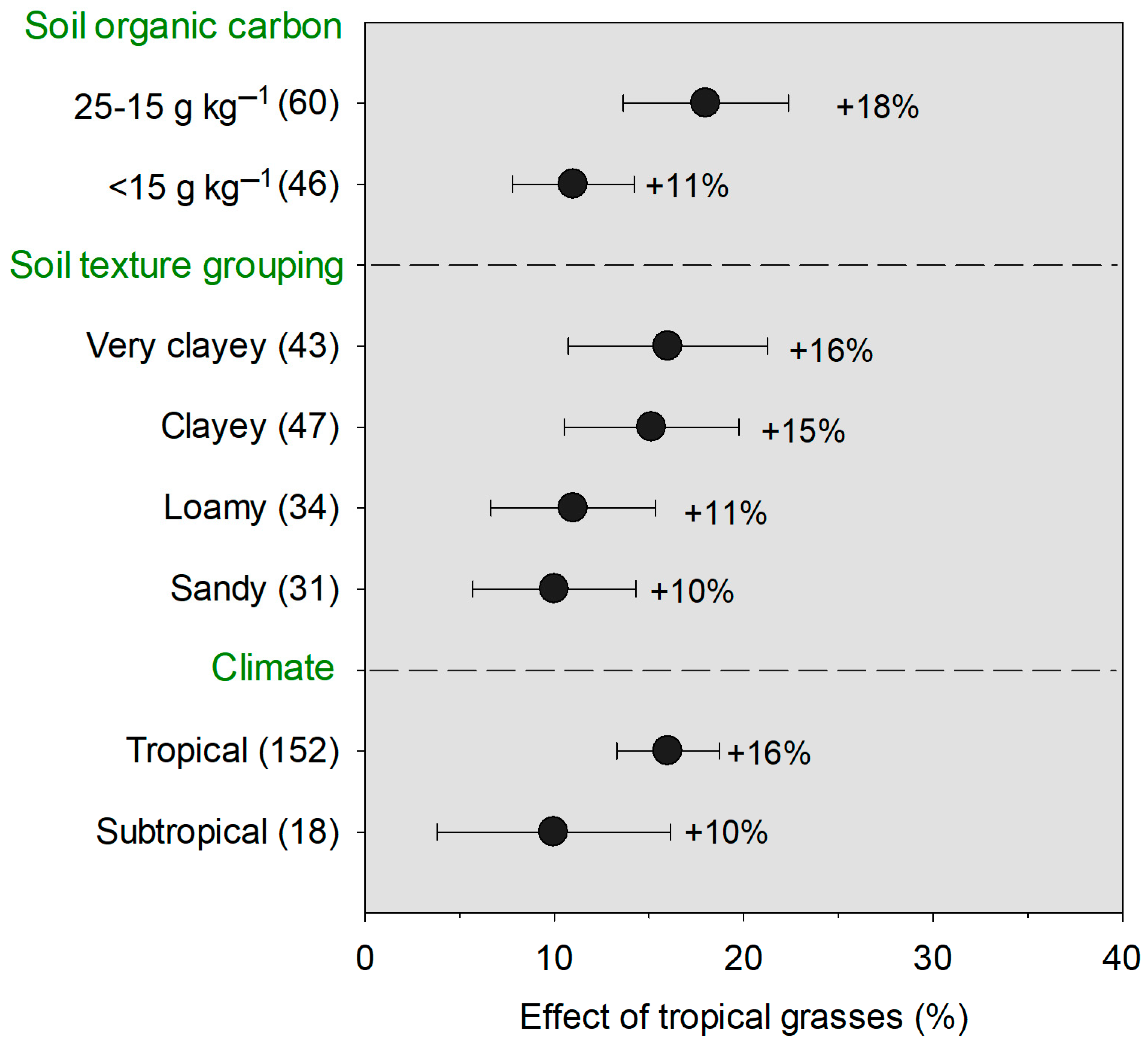
The benefits of deep-rooted tropical grasses for soybean grain yield occurred in both tropical and subtropical climates, despite most field trials in the meta-analysis being conducted in tropical regions (152 observations, Figure 5). Yield increases were observed across soils with contrasting attributes, particularly in soils with high organic carbon content (+18%) (Figure 5) or clayey textured soils (+15%) and very fine clayey textured soils (+16%) (Figure 5).
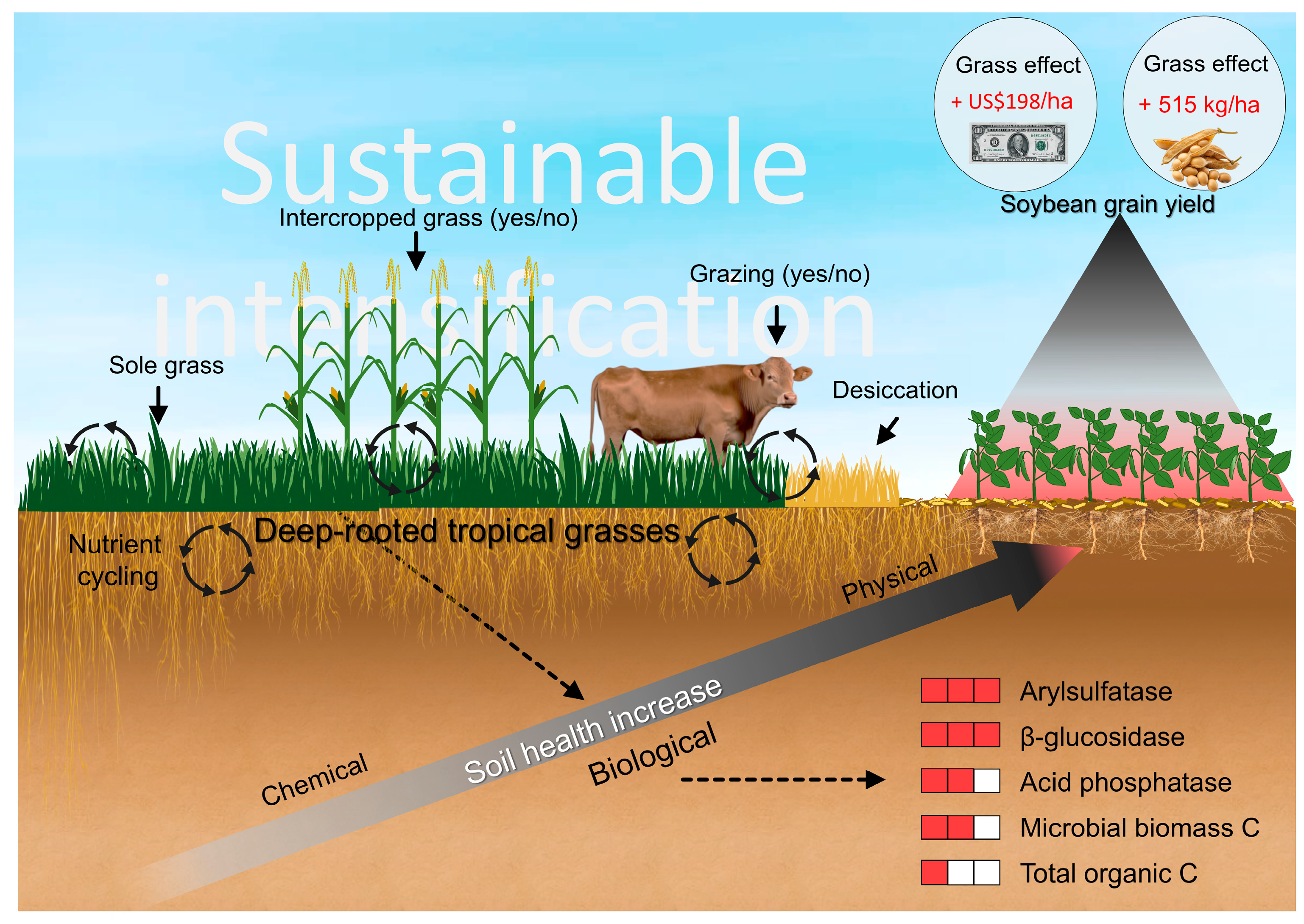
During the literature search, publications on the effects of tropical grasses on soil chemical and physical attributes were found. However, due to the low number of comparisons, they could not be included in the meta-analysis. To make use of this valuable information, the main results were compiled separately, revealing that, in addition to benefits for grain yield and soil enzymatic activity, microbial biomass carbon, and total organic carbon (Figure 1), deep-rooted tropical grasses also positively impacted various soil chemical, physical, and biological attributes (Table 1). These results point to an increase in SH indicators, observed from several soil attributes, favoring a significant increase in soybean yield (Figure 6).

4. Discussion

4.1. Benefits of Tropical Pastures to Soybean and Soil Properties

4.1.1. Agronomic and Economic Benefits

The development of soil management in tropical environments is an ongoing learning process. In this context, the adoption of ICL systems represented a significant paradigm shift in tropical agricultural production in Brazil. Until the early 2000s, grain production systems in the Cerrado region were primarily characterized by low biomass input and inadequate soil cover, with soybean monoculture and soybean–corn double cropping as the predominant practices [2,5]. Consequently, the no-tillage (NT) system was not widely adopted, as its three fundamental principles—multi-year crop rotation, cultivation of cover crops for surface residue maintenance, and minimal soil disturbance—were not fully implemented [50]. One of the main reasons for this partial adoption of NT system principles was the challenge of establishing a cover crop capable of maintaining soil cover during the dry season and providing a diversified crop rotation.
To address this issue, the introduction of deep-rooted forage grasses (primarily Urochloa and Megathyrsus species) after intercropping with maize or sorghum filled this gap [20,51]. This approach provided both soil cover and grazing material for livestock during the dry season (winter) in Cerrado. The extensive root system of these plants (Figure S2) serves as a crucial source of root exudates for soil microorganisms [2,10,52], particularly when tropical grass remains as a living cover crop during the dry season, a period when microbial communities face a severe scarcity of food sources. Additionally, the presence of tropical grass during this period significantly reduces soil temperature and helps maintain a more humid environment [2].
As demonstrated in this meta-analysis, the integration of deep-rooted tropical grasses into farming systems offers multiple benefits (Figure 1). From an economic perspective, the increase in soybean grain yield is particularly noteworthy. In February 2026, the average soybean yield gain of 515 kg ha−1 in Brazil (Figure 2) translates to an additional revenue of US$198 ha−1. This economic estimate was calculated by multiplying the average yield increase observed in the meta-analysis (515 kg ha−1) by the average soybean market price in Brazil at the time of analysis (February 2026). It is important to note that this represents a simplified gross revenue estimate and does not account for potential variations in production costs, management practices, or regional price differences. Nevertheless, it provides a first-order estimate of the economic benefits associated with the adoption of deep-rooted tropical grasses in soybean-based systems.
A previous study by Marchão et al. (2024) [2] reported even higher yield gains of 686 kg ha−1 across 18 experiments in the Cerrados region, following the inclusion of deep-rooted grasses, primarily from the genus Urochloa. However, a precise and quantitative assessment of the yield-enhancing benefits was still lacking. By incorporating a larger dataset, this new and robust set of field trials, conducted across multiple sites and cropping seasons, forms the foundation of the present meta-analysis, providing a more comprehensive and realistic evaluation of these yield benefits. Furthermore, considering that 3 to 10 kg ha−1 of seeds are used for planting tropical grasses [19,26] and that their average price is 3 dollars kg−1, a relatively low cost (9 to 30 dollars kg ha−1) is needed for introducing tropical grasses into the agroecosystem.

4.1.2. Effects of Management Systems, Soybean Traits, and the Influence of Environmental Conditions

The benefits that the cultivation of deep-rooted tropical grasses brought to soybean under contrasting conditions of cultivation system (Figure 3 and Figure 4) were evident, regardless of soybean genetic modification, maturity group, growth habit, yield class, and K and P fertilization. These results are relevant when considering the significant variations in technological level and management specificities at the regional level for soybean cultivation in Brazil [53]. Another notable aspect is the greater response of soybean grain yield to the sole-cropped forage grasses (+21%) compared to intercropped grasses (+11%) (Figure 3). This result is due to the control treatment of single grasses being fallow, while the control treatment of intercropped grasses being single maize or sorghum. In fallow cultivation, there is a low level of addition of crop residue, in addition to greater nutrient losses [20,29], especially by water erosion; thus, a greater beneficial effect is expected with the presence of tropical grasses.
Regarding edaphoclimatic controlling factors, the benefits of deep-rooted tropical grasses were confirmed under all conditions evaluated (Figure 5). Both tropical (+16%) and subtropical (+10%) climates presented significant results for soybean yield cultivated after deep-rooted tropical grasses, highlighting the broad applicability of this response. Although positive responses were observed across all surface soil texture classes, the greater susceptibility of sandy soils to water stress [54,55] may require additional management strategies and can slightly limit the benefits of tropical grasses compared to finer-textured soils. Nevertheless, the role of tropical grasses, particularly Urochloa species, becomes even more critical in soils where sandy texture predominates in surface horizons due to the inherent fragility of these soils in the face of water stress [24]. Their ability to improve soil structure, enhance organic matter accumulation, and reduce water and nutrient losses represents a key strategy for increasing the resilience of production systems in these more vulnerable landscapes.

4.1.3. Soil Biological and Functional Improvements

The positive impact of Urochloa and Megathyrsus species on soybean yield (Figure 3) extends beyond carbon input from aboveground dry matter production. Their vigorous, abundant, and deep root systems play a crucial role in enhancing nutrient cycling and reducing nutrient losses—particularly nitrogen (N) and potassium (K)—by efficiently absorbing them from both surface and deeper soil layers [10,20,56,57]. It is also noteworthy that the aboveground biomass of Urochloa spp. and Panicum spp., when used as mulch, can return substantial amounts of nutrients to the soil. Dias et al. (2020) [25] reported nutrient contributions of 83 kg ha−1 of N, 60 kg ha−1 of P2O5, and 69 kg ha−1 of K2O from Xaraes palisade grass (Urochloa brizantha syn. Brachiaria brizantha) residues. These amounts are equivalent to fertilizer inputs of 185 kg ha−1 of urea, 333 kg ha−1 of single superphosphate, and 115 kg ha−1 of potassium chloride, respectively.
The addition of large quantities of plant residues and vigorous root systems has an important effect on improving soil physical conditions, leading to an increase in the total porosity and structural quality (Table 1). Moreover, as demonstrated in this meta-analysis (Figure 1), the beneficial effects of forage grasses on soybean yield are closely linked to improvements in biological indicators of SH, as evidenced by increased enzymatic activity and microbial biomass in areas cultivated with deep-rooted tropical grasses. This supports literature findings that soil enzymatic activity, as an indicator of biological SH, can effectively reflect edaphic conditions more conducive to plant growth, where yield gains have been observed across diverse agricultural crops [7,36,58].
The effects of tropical grasses on soil enzymes arylsulfatase and β-glucosidase showed an average increase of 31%—nearly three times greater than their impact on SOC, which increased by 11% (Figure 1). This highlights the potential of these enzymes as sensitive indicators of changes in SH [36]. Similarly, Curtright & Tiemann (2021) [40], in a meta-analysis based on 969 observations across 100 studies worldwide, found that intercropping significantly increased enzyme activities by an average of 13% (p < 0.001), with variations depending on the enzyme category. The observed positive impacts of tropical grasses on soil enzymes and microbial biomass carbon clearly demonstrate the potential of Urochloa and Megathyrsus species, when integrated into crop-livestock systems, to act as bioactivators of the soil’s biological machinery.
It is important to highlight that, although Urochloa spp. are recognized as hosts of nematodes such as Pratylenchus brachyurus, their reproduction factors are relatively low, typically ranging from 1.5 to 4.0 [59,60], which is substantially lower than those observed for maize (10 to 60) [59,61,62]. Although tropical grasses may support some level of nematode reproduction (55-56), the results of this meta-analysis indicate that this does not translate into negative effects on subsequent soybean yield. This is because the beneficial effects of tropical grasses on SH—including improved soil aggregation, higher soil organic carbon, enhanced water infiltration, and stimulation of beneficial microbial communities—can mitigate or even offset the potential damage caused by P. brachyurus. As demonstrated by several authors [63,64,65] and further supported by the results of the present meta-analysis, the cultivation of Urochloa spp. during the off-season consistently increases soybean yields in the following crop, even under conditions of high nematode population densities. These results emphasize that soybean yield is influenced not solely by nematode pressure but primarily by the soil conservation practices adopted during the off-season [64]. Furthermore, the positive yield responses are strongly associated with improvements in soil physical, chemical, and biological attributes—particularly reduced compaction, enhanced nutrient cycling, and better aeration [66,67].
These findings reinforce that the main constraints to soybean yield in nematode-infested soils are more closely linked to poor soil conditions than to nematode pressure itself, and that the use of Brachiaria spp. in integrated production systems is an effective strategy to overcome these limitations. In fact, among the seventeen comparisons (11%) in this meta-analysis where yield reductions were reported in the presence of deep-rooted grasses, all were associated with management issues related to grass establishment, rather than biological interactions with P. brachyurus. For instance, Costa et al. (2016) [28] reported significant soybean yield losses (on average 551 kg ha−1) due to the poor establishment of Paiaguás palisadegrass when intercropped with pearl millet under an oversowing system. This condition increased the shading by the pearl millet plants on the Paiaguas palisadegrass during its early germination stages, leading to reduced forage production. Consequently, the lower biomass accumulation compromised the benefits typically associated with the presence of the grass under no-tillage systems, ultimately resulting in soybean yield reduction.

4.1.4. Implications for Sustainable Intensification

This meta-analysis provides robust evidence that deep-rooted tropical grasses, particularly Urochloa species, should be recognized not merely as cover crops but as powerful biological inputs within regenerative and conservation agricultural systems. Their ability to deliver multiple ecosystem services—including the promotion of microbial activity, the improvement of soil aggregation and nutrient cycling, the increase in organic carbon stocks, and boosting water infiltration—places these grasses at the forefront of nature-based solutions for sustainable intensification in agricultural lands. In this sense, deep-root grasses function as living bio-inputs that simultaneously regenerate SH and enhance crop productivity (Figure 6). This perspective calls for a broader understanding of bio-inputs—one that extends beyond formulated products to encompass living organisms that interact with agroecosystems to foster resilience, efficiency, and sustainability. Ultimately, the widespread adoption of deep-rooted tropical grasses as preceding crops in soybean systems represents not only a technological solution but also a strategic investment in soil as a living asset, underscoring the critical role of plant-based biological functionality in driving sustainability, productivity, and agroecosystem resilience.

4.2. Limitations and Future Directions

Some limitations of this meta-analysis should be acknowledged. First, despite the recent increase in publications on soil health (SH) and soybean responses to tropical grasses (37 of the 55 studies were published in the past four years), additional studies are still needed to confirm and refine the understanding of their benefits. In this context, it is important to highlight that the literature search and selection criteria were designed to capture a broad and representative set of field studies conducted in Brazil, including peer-reviewed articles, theses, and technical reports. As a result, the dataset comprises 55 publications based on field trials conducted at 33 distinct locations (Figure S3), representing the majority of available studies that met the inclusion criteria.
Second, the representativeness of the dataset is constrained by the geographical distribution of the studies. Most trials were conducted in tropical regions of Brazil, with approximately 40% concentrated in Goiás state and the Federal District. Meanwhile, relatively few studies were available for subtropical climates or sandy soils, limiting broader extrapolation. However, this concentration reflects both the spatial distribution of research efforts and the widespread adoption of deep-rooted tropical grasses in the Cerrado region, where soybean-based systems and crop–livestock integration are most prevalent. Therefore, the dataset is representative of the main production environments in which this management practice is applied. We acknowledge that the lower number of studies in subtropical regions and certain soil types limits extrapolation to these conditions; however, this also reflects the current state of the literature, where the use of tropical grasses as preceding crops is less common. A map showing the geographical distribution of the studies included in the meta-analysis is presented in Supplementary Materials (Figure S3). It allows readers to visually assess the spatial representativeness of the dataset.
Third, methodological heterogeneity—including differences in grass species, management practices, soybean cultivars, and fertilization regimes—may have contributed to variability in the results. However, the use of random-effects models helped to account for this variability and reduce potential bias.
In addition, the limited number of studies evaluating specific SH attributes prevented a more detailed assessment of controlling factors for these variables. Nevertheless, from a practical perspective, the results of this meta-analysis indicate that increasing soybean yield and enhancing soil microbial indicators in tropical systems can be effectively achieved by incorporating deep-rooted tropical grasses, particularly Urochloa and Megathyrsus species, as preceding crops. Key management practices include ensuring adequate establishment of the grass component, promoting high biomass production during the off-season, and maintaining continuous soil cover. Special attention should be given to sandy soils and environments prone to water stress, where additional management strategies may be required to maximize system resilience and yield gains.
The increasing adoption of these grasses, together with the growing interest in SH research in Brazil, is expected to expand the available dataset, enabling more robust and regionally representative assessments in the future and further supporting the sustainable intensification of tropical and subtropical agriculture.

5. Conclusions

This meta-analysis demonstrates that the use of deep-rooted tropical grasses as preceding crops significantly improves both biological indicators of soil health (SH) and soybean yield in Brazilian production systems. On average, soybean yield increased by 15% (+515 kg ha−1), accompanied by consistent increases in key biological indicators of SH, particularly soil enzyme activities, microbial biomass carbon, and soil organic carbon.
These results highlight the strong link between improvements in soil biological functioning and crop productivity. The positive effects were observed across a wide range of agronomic and environmental conditions, indicating the robustness of this management practice.
Overall, deep-rooted tropical grasses represent an effective strategy to enhance soil health and increase soybean yield, supporting the sustainable intensification of tropical agroecosystems.

Supplementary Materials

The following supporting information can be downloaded at: https://www.mdpi.com/article/10.3390/agronomy16070751/s1. Table S1: General description of the studies included in the meta-analysis, including reference, location (city and state), climate classification, control treatments, and grass management systems. Figure S1: PRISMA 2020 flow diagram illustrating the identification, screening, eligibility, and inclusion of studies used in the meta-analysis. Figure S2: Representative image of the root system of Urochloa ruziziensis under field conditions. Figure S3: Map showing the geographical distribution of the studies included in the meta-analysis across Brazil [12,13,14,17,18,19,20,21,25,26,27,28,29,30,31,46,47,48,49,52,56,68,69,70,71,72,73,74,75,76,77,78,79,80,81,82,83,84,85,86,87,88,89,90,91,92,93,94,95,96,97,98,99,100,101,102].

Author Contributions

Conceptualization, I.C.M. and J.Z.B.; methodology, J.Z.B., G.P., L.V., and P.L.d.F.; validation, J.Z.B. and G.P.; formal analysis, I.C.M. and J.Z.B.; investigation, I.C.M. and J.Z.B.; resources, J.Z.B., G.P., and I.C.M.; data curation, J.Z.B. and I.C.M.; writing—original draft preparation, J.Z.B., I.C.M., G.P., L.V., and P.L.d.F.; writing—review and editing I.C.M. and J.Z.B. All authors have read and agreed to the published version of the manuscript.

Funding

This work was financed by the Brazilian Agricultural Research Corporation (Embrapa; project 22.14.01.026.00) and partially financed by the National Council for Scientific and Technological Development (CNPq; Edital Universal 2022; 407642/2023-4), the Research Support Foundation of the Federal District (FAPDF; Edital Demanda Espontânea 2022; 000193.00001714/2022-1), FINEP/CT-AGRO/FNDCT (01.22.0081.00; Ref. 1218/21—Projeto PronaSolos), and the MCTI/CNPq/CAPES/FAPS (INCT-MPCPAgro 465133/2014-4). I.C. Mendes acknowledges a research fellowship from the CNPq.

Data Availability Statement

The original dataset used in this study is publicly available at https://doi.org/10.6084/m9.figshare.31908139.

Acknowledgments

We thank Donner Lara Resende, Graciele Bellon, and Juliane Alves for their help with the literature references. Artificial intelligence–based tools were used to assist with English-language editing and improve the manuscript’s clarity.

Conflicts of Interest

The authors declare no conflicts of interest.

Abbreviations

The following abbreviations are used in this manuscript:
SHSoil health
ICLIntegrated crop–livestock
ICLF Integrated crop–livestock–forest
SoilBioSoil bioanalysis
SOMSoil organic matter
SOCSoil organic carbon

References

  1. Ajibade, S.; Simon, B.; Gulyas, M.; Balint, C. Sustainable intensification of agriculture as a tool to promote food security: A bibliometric analysis. Front. Sustain. Food Syst. 2023, 7, 1101528. [Google Scholar] [CrossRef]
  2. Marchão, R.L.; Mendes, I.C.; Vilela, L.; Júnior, R.G.; Niva, C.C.; Pulrolnik, K.; Souza, K.W.; Carvalho, A.M. Integrated Crop–Livestock–Forestry Systems for Improved Soil Health, Environmental Benefits, and Sustainable Production. In Soil Health Series: Volume 3 Soil Health and Sustainable Agriculture in Brazil; Mendes, I.C., Cherubin, M.R., Eds.; ASA, CSSA, and SSSA Books; Wiley: Hoboken, NJ, USA, 2024; pp. 19–61. [Google Scholar]
  3. Nath, S. A vision of precision agriculture: Balance between agricultural sustainability and environmental stewardship. Agron. J. 2024, 116, 1126–1143. [Google Scholar] [CrossRef]
  4. Polidoro, J.C.; Freitas, P.L.; Hernani, L.C.; Anjos, L.H.C.D.; Rodrigues, R.D.A.R.; Cesário, F.V.; Andrade, A.G.; Ribeiro, J.L. Potential impact of plans and policies based on the principles of conservation agriculture on the control of soil erosion in Brazil. Land Degrad. Dev. 2021, 32, 3457–3468. [Google Scholar] [CrossRef]
  5. Anghinoni, I.; Vezzani, F.M. Systemic Soil Fertility as product of system self-organization resulting from management. Rev. Bras. Ciência Solo 2021, 45, e0210090. [Google Scholar] [CrossRef]
  6. FAOSTAT. Data. 2025. Available online: https://www.fao.org/faostat/en/#data (accessed on 2 February 2025).
  7. Barbosa, F.R.G.M.; Duarte, V.N.; Staduto, J.A.R.; Kreter, A.C. Land-use dynamics for agricultural and livestock in central-west Brazil and its reflections on the agricultural frontier expansion. Clean. Circ. Bioecon. 2023, 4, 100033. [Google Scholar] [CrossRef]
  8. Feltran-Barbieri, R.; Féres, J.G. Degraded pastures in Brazil: Improving livestock production and forest restoration. R. Soc. Open Sci. 2021, 8, 201854. [Google Scholar] [CrossRef]
  9. Carvalho, P.C.C.; da Silveira Pontes, L.; Barro, R.S.; Simões, V.J.L.P.; Dominschek, R.; dos Santos Cargnelutti, C.; Maurício, R.M.; José, J.F.B.S.; Bremm, C. Integrated crop-livestock-forestry systems as a nature-based solution for sustainable agriculture. Agrofor. Syst. 2024, 98, 2309–2323. [Google Scholar] [CrossRef]
  10. Baptistella, J.L.C.; de Andrade, S.A.L.; Favarin, J.L.; Mazzafera, P. Urochloa in tropical agroecosystems. Front. Sustain. Food Syst. 2020, 4, 119. [Google Scholar] [CrossRef]
  11. Brandan, C.P.; Chavarría, D.; Huidobro, J.; Meriles, J.M.; Brandan, C.P.; Gil, S.V. Influence of a tropical grass (Brachiaria brizantha cv. Mulato) as cover crop on soil biochemical properties in a degraded agricultural soil. Eur. J. Soil Biol. 2017, 83, 84–90. [Google Scholar] [CrossRef]
  12. Alves, M.S.; Nascimento, N.M.; Pereira, L.A.F.; Barbosa, T.A.; da Costa, C.H.M.; Guimarães, T.M.; Bezerra, A.T.P.; Machado, D.L. Long-term effect of crop succession systems on soil chemical and physical attributes and soybean yield. Plants 2024, 13, 2217. [Google Scholar] [CrossRef]
  13. Fortes, D.G.; Rosa, E.J.; Rosa, Y.B.C.J.; Souza, F.R.D.; Gelain, E. Successive Cultivation of Soybean/Corn intercropped with Urochloa brizantha topdressed with nitrogen. Rev. Bras. Ciência Solo 2016, 40, e0140198. [Google Scholar] [CrossRef]
  14. Vilela, L.; Manjabosco, E.A.; Marchão, R.L.; Guimarães Júnior, R. Integrated crop-livestock in western Bahia state: The off-season cattle model. Embrapa Circ. Técnica 2018, 37, 12. [Google Scholar]
  15. Balbinot Junior, A.A.; Santos JCFDos Debiasi, H.; Yokoyama, A.H. Contribution of roots and shoots of Brachiaria species to soybean performance in succession. Pesq. Agrop. Bras. 2017, 52, 592–598. [Google Scholar] [CrossRef]
  16. Balbinot Junior, A.A.; Coelho, A.E.; Sangoi, L.; Debiasi, H.; Franchini, J.C. Soybean-maize off-season double cropping system as affected by maize intercropping with ruzigrass and nitrogen rate. Int. J. Plant Prod. 2023, 17, 715–728. [Google Scholar] [CrossRef]
  17. Charnobay, A.C.R.; Rondina, A.B.L.; Balbinot, A.A., Jr.; Hungria, M.; Nogueira, M.A. Soil microbial attributes and soybean yield response to off-season crop diversification in an Oxisol in Southern Brazil. Appl. Soil Ecol. 2025, 209, 106040. [Google Scholar] [CrossRef]
  18. Debiasi, H.; Balbinot Junior, A.A.; Franchini, J.; Santos, E.L.; Coelho, A. Qualidade Estrutural do Solo e Taxa de Infiltração Estável Influenciadas por Culturas de Entressafra da Soja; Embrapa Soja: Londrina, Brazil, 2023; p. 16. [Google Scholar]
  19. Davi, J.E.; Nogueira, B.K.; Gasques, L.R.; Dalla Côrt, A.S.; Camargo, T.A.D.; Pacheco, L.P.; Silva, L.S.; Souza, E.D.D. Diversified production systems in sandy soils of the Brazilian Cerrado: Nutrient dynamics and soybean productivity. J. Plant Nutr. 2023, 46, 1650–1667. [Google Scholar] [CrossRef]
  20. Silva, J.A.G.; de Pinho Costa, K.A.; da Costa Severiano, E.; da Silva, A.G.; Vilela, L.; Leandro, W.M.; Muniz, M.P.; Silva, L.M.; Mendonça, K.T.M.; Barros, V.M. Efficiency of desiccation, decomposition and release of nutrients in the biomass of forage plants of the genus Brachiaria after intercropping with sorghum in integrated systems for soybean productivity. Commun. Soil Sci. Plant Anal. 2024, 55, 1644–1662. [Google Scholar] [CrossRef]
  21. Anghinoni, G.; Anghinoni, F.B.G.; Tormena, C.A.; Braccini, A.L.; de Carvalho Mendes, I.; Zancanaro, L.; Lal, R. Conservation agriculture strengthen sustainability of Brazilian grain production and food security. Land Use Policy 2021, 108, 105591. [Google Scholar] [CrossRef]
  22. Sekaran, U.; Lai, L.; Ussiri, D.A.; Kumar, S.; Clay, S. Role of integrated crop-livestock systems in improving agriculture production and addressing food security–A review. J. Agric. Food Res. 2021, 5, 100190. [Google Scholar] [CrossRef]
  23. Fernandes, P.B.; do Prado Paim, T.; Ligoski Cabral, B.; Ferreira Gonçalves, L.; Moreira Alves, E.; Lopes Cláudio, F.; Santos, L.J.; Valicheski, R.R. Crop-livestock integrated system and grass-legume intercropping on soil chemical composition and plant production in Brazilian savannah. N. Z. J. Agric. Res. 2025, 68, 1856–1874. [Google Scholar] [CrossRef]
  24. Donagemma, G.K.; Freitas, P.L.D.; Balieiro, F.D.C.; Fontana, A.; Spera, S.T.; Lumbreras, J.F.; Viana, J.H.M.; Araújo Filho, J.C.; Santos, F.C.; Albuquerque, M.R.; et al. Caracterização, potencial agrícola e perspectivas de manejo de solos leves no Brasil. Pesqui. Agropecuária Bras. 2016, 51, 1003–1020. [Google Scholar] [CrossRef]
  25. Dias, M.B.C.; de Pinho Costa, K.A.; da Costa Severiano, E.; Bilego, U.O.; Neto, A.E.F.; Almeida, D.P.; Brand, S.C.; Vilela, L. Brachiaria and Panicum maximum in an integrated crop–livestock system and a second-crop maize system in succession with soybean. J. Agric. Sci. 2020, 158, 206–217. [Google Scholar] [CrossRef]
  26. Muniz, M.P.; de Pinho Costa, K.A.; da Costa Severiano, E.; Bilego, U.O.; Almeida, D.P.; Neto, A.E.F.; Vilela, L.; Lana, M.A.; Leandro, W.M.; de Castro Dias, M.B. Soybean yield in integrated crop–livestock system in comparison to soybean–maize succession system. J. Agric. Sci. 2021, 159, 188–198. [Google Scholar] [CrossRef]
  27. Sodré Filho, J.; Carvalho, A.M.D.; Marchão, R.L.; Carmona, R. Decomposition of sorghum, grass, and sorghum intercropped with grass and soybean performance in integrated systems in the Cerrado. Sci. Agric. 2024, 81, e20230011. [Google Scholar] [CrossRef]
  28. Costa, R.R.G.F.; de Pinho Costa, K.A.; de Assis, R.L.; Santos, C.B.; da Costa Severiano, E.; de Souza Rocha, A.F.; Oliveira, I.P.; Costa, P.H.C.P.; Souza, W.F.; Aquino, M.M. Dynamics of biomass of pearl millet and Paiaguas palisadegrass in different forage systems and sowing periods in yield of soybean. Afr. J. Agric. Res. 2016, 11, 4661–4673. [Google Scholar] [CrossRef]
  29. Wenneck, G.S.; Saath, R.; Wenneck, G.S.; Vila, V.V.E.; Rezende, R.; Ghuidotti, G.C. Yield and economic analysis of soybean cultivation in succession with different autumn/winter crops in Midwest of Paraná, Brazil. Rev. Ceres 2023, 70, 64–72. [Google Scholar] [CrossRef]
  30. Bortolo, L.D.S. Diversificação de Sistemas de Produção Com Forrageiras na Região de Expansão Agrícola do Brasil: Impactos no Carbono, na Saúde do Solo e Na Produtividade de Culturas. Ph.D. Thesis, Universidade de São Paulo, São Paulo, Brazil, 2024. [Google Scholar]
  31. Santos, S.F.D.C.B.; de Souza, H.A.; de Araújo Neto, R.B.; Sagrilo, E.; Ferreira, A.C.M.; Carvalho, S.P.; Brito, L.C.R.; Leite, L.F.C. Soil microbiological attributes and soybean grain yield in succession to corn intercropped with forage in the Maranhão eastern Cerrado. Int. J. Plant Prod. 2021, 15, 669–677. [Google Scholar] [CrossRef]
  32. Barbosa, J.Z.; Poggere, G.; Corrêa, R.S.; Hungria, M.; Mendes, I.C. Soil enzymatic activity in Brazilian biomes under native vegetation and contrasting cropping and management. Appl. Soil Ecol. 2023, 190, 105014. [Google Scholar] [CrossRef]
  33. Cherubin, M.R.; Pinheiro-Junior, C.R.; Souza, L.N.; Canisares, L.P.; Cerri, C.E.P. Exploring soil health research in Brazil: A critical analysis of national challenges, opportunities, and priorities. Land Use Policy 2025, 157, 107677. [Google Scholar] [CrossRef]
  34. Mendes Iêda, C.; Cherubin, M.R. Soil Health and Sustainable Agriculture in Brazil, 1st ed.; Soil Science Society of America: Madison, WI, USA, 2024; Volume 01, 275p. [Google Scholar]
  35. Sobucki, L.; Ramos, R.F.; Meireles, L.A.; Antoniolli, Z.I.; Jacques, R.J.S. Contribution of enzymes to soil quality and the evolution of research in Brazil. Rev. Bras. Ciência Solo 2021, 45, e0210109. [Google Scholar] [CrossRef]
  36. Mendes, I.C.; Chaer, G.M.; dos Reis Junior, F.B.; Dantas, O.D.; Malaquias, J.V.; de Oliveira, M.I.L.; Nogueira, M.A.; Hungria, M. Soil Bioanalysis (SoilBio): A Sensitive, Calibrated, and Simple Assessment of soil health for Brazil. In Soil Health Series: Volume 3: Soil Health and Sustainable Agriculture in Brazil; Mendes, I.C., Cherubin, M.R., Eds.; Wiley: Hoboken, NJ, USA, 2024; pp. 292–326. [Google Scholar] [CrossRef]
  37. U.S. Department of Agriculture, Foreign Agricultural Service. World Market Reports; U.S. Department of Agriculture, Foreign Agricultural Service: Washington, DC, USA, 2023.
  38. CONAB, Companhia Nacional de Abastecimento. 2025. Available online: https://www.gov.br/conab/pt-br/acesso-a-informacao/institucional/publicacoes/perspectivas-para-a-agropecuaria/perspectivas-para-a-agropecuaria-volume-13-safra-2025-2026/projections-for-brazilian-agriculture-202526.pdf (accessed on 3 February 2026).
  39. Barbosa, J.Z.; Hungria, M.; Prior, S.A.; Moura, M.C.; Poggere, G.; Motta, A.C.V. Improving yield and health of legume crops via co-inoculation with rhizobia and Trichoderma: A global meta-analysis. Appl. Soil Ecol. 2022, 176, 104493. [Google Scholar] [CrossRef]
  40. Curtright, A.J.; Tiemann, L.K. Intercropping increases soil extracellular enzyme activity: A meta-analysis. Agric. Ecosyst. Environ. 2021, 319, 107489. [Google Scholar] [CrossRef]
  41. Rodrigues, V.D.S.; Motta, A.C.V.; Barbosa, J.Z.; Ercole, T.M.; Prior, S.A. Wood production and nutritional status of Pinus taeda L. in response to fertilization and liming: A meta-analysis of the Americas. iForest-Biogeosci. For. 2023, 16, 195. [Google Scholar] [CrossRef]
  42. Silva, F.B.; Barbosa, J.Z.; Tiecher, T.; Borin, J.B.M.; Treichel, B.; de Sá, E.L.S. Species-dependent effect of rhizobacteria co-inoculation in legume plants: A global meta-analysis. Rhizosphere 2024, 30, 100869. [Google Scholar]
  43. Souza, L.F.N.; Ciampitti, I.A.; Fernandez, J.A.; Favarin, J.L.; de Oliveira, S.M. Maize-Brachiaria grass intercropping: A meta-analysis of major productivity drivers in Brazil. Field Crops Res. 2024, 306, 109205. [Google Scholar] [CrossRef]
  44. Hedges, L.V.; Gurevitch, J.; Curtis, P.S. The meta-analysis of response ratios in experimental ecology. Ecology 1999, 80, 1150–1156. [Google Scholar] [CrossRef]
  45. Wallace, B.C.; Lajeunesse, M.J.; Dietz, G.; Dahabreh, I.J.; Trikalinos, T.A.; Schmid, C.H.; Gurevitch, J. Open MEE: Intuitive, open-source software for meta-analysis in ecology and evolutionary biology. Methods Ecol. Evol. 2017, 8, 941–947. [Google Scholar] [CrossRef]
  46. Bassegio, D.; Secco, D.; Andrade, D.S.; Júnior, L.A.Z.; Marins, A.C.; Souza, S.N.M.; Chang, P.; Messa, V.R.; Savioli, M.R.; Castro, M.B.S.; et al. Impact of sowing time of maize and ruzigrass intercropping systems on soil chemical, physical and microbiological properties in an Oxisol from southern Brazil. Geoderma Reg. 2025, 40, e00937. [Google Scholar] [CrossRef]
  47. Faccin, F.C.; Marchetti, M.E.; Serra, A.P.; Ensinas, S.C. Frações granulométricas da matéria orgânica do solo em consórcio de milho safrinha com capim-marandu sob fontes de nitrogênio. Pesqui. Agropecuária Bras. 2016, 51, 2000–2009. [Google Scholar] [CrossRef]
  48. Barros, I.B. Plantas de Cobertura Influenciando a Dinâmica do Fósforo em Diferentes Sistemas de Manejo do Solo. Ph.D. Thesis, Universidade de São Paulo, São Paulo, Brazil, 2024. [Google Scholar]
  49. Lemes dos Santos, F.; Barbosa Paulino, H.; Carbone Carneiro, M.A.; Oliveira Caetano, J.; de Melo Benites, V.; Damacena de Souza, E. Atributos bioquímicos do solo sob diferentes sistemas de produção no sudoeste goiano. Glob. Sci. Technol. 2015, 8, 1–13. [Google Scholar] [CrossRef]
  50. Derpsch, R.; Franzluebbers, A.J.; Duiker, S.W.; Reicosky, D.C.; Koelle, K.; Friedrich, T.; Sturny, W.G.; Sá, J.C.M.; Weiss, K. Why do we need to standardize no-tillage research? Soil Tillage Res. 2014, 137, 16–22. [Google Scholar] [CrossRef]
  51. Machado, L.A.Z.; Cecato, U.; Comunello, E.; Concenço, G.; Ceccon, G. Establishment of perennial forages intercropped with soybean for integrated crop-livestock systems. Pesqui. Agropecuária Bras. 2017, 52, 521–529. [Google Scholar] [CrossRef]
  52. Ventura, M.V.A.; Batista-Ventura, H.R.F.; Souchie, E.L.; Carneiro, M.A.C.; Santos, D.D.C. Biological attributes in soils with cover crops in the soybean direct seeding system in Southwest of Goiás, Brazil. Int. J. Agric. Biol. 2023, 30, 301–311. [Google Scholar] [CrossRef]
  53. Monteiro, L.A.; Ramos, R.M.; Battisti, R.; Soares, J.R.; Oliveira, J.C.; Figueiredo, G.K.; Camparelli, R.A.C.; Nendel, C.; Lana, M.A. Potential use of data-driven models to estimate and predict soybean yields at national scale in Brazil. Int. J. Plant Prod. 2022, 16, 691–703. [Google Scholar] [CrossRef]
  54. Fu, Z.; Ciais, P.; Feldman, A.F.; Gentine, P.; Makowski, D.; Prentice, I.C.; Stoy, P.C.; Wigneron, J.P. Critical soil moisture thresholds of plant water stress in terrestrial ecosystems. Sci. Adv. 2022, 8, eabq7827. [Google Scholar] [CrossRef]
  55. Silva, E.H.F.M.; Boote, K.J.; Hoogenboom, G.; Gonçalves, A.O.; Junior, A.S.A.; Marin, F.R. Performance of the CSM-CROPGRO-soybean in simulating soybean growth and development and the soil water balance for a tropical environment. Agric. Water Manag. 2021, 252, 106929. [Google Scholar] [CrossRef]
  56. Benites, V.M.; Caetano, J.O.; Ferreira Filho, W.C.; Menezes, C.C.E.; Polidoro, J.C.; Oliveira, R.P.; Wiendl, T. Influence of brachiaria (Urochloa brizantha) as a winter cover crop on potassium use efficiency and soybean yield under no-tillage in the Brazilian Cerrado. Res. Find. 2014, 39, 24–35. [Google Scholar]
  57. Garcia, R.A.; Crusciol, C.A.C.; Calonego, J.C.; Rosolem, C.A. Potassium cycling in a corn-brachiaria cropping system. Eur. J. Agron. 2008, 28, 579–585. [Google Scholar] [CrossRef]
  58. Lopes, A.A.C.; Sousa, D.M.G.; Chaer, G.M.; Reis Junior, F.B.; Goedert, W.J.; Mendes, I.C. Interpretation of microbial soil indicators as a function of crop yield and organic carbon. Soil Sci. Soc. Am. J. 2013, 77, 461–472. [Google Scholar] [CrossRef]
  59. Inomoto, M.M.; Machado, A.C.Z.; Antedomenico, S.R. Reação de Brachiaria spp. e Panicum maximum a Pratylenchus brachyurus. Fitopatol. Bras. 2007, 32, 341–344. [Google Scholar] [CrossRef]
  60. Dias-Arieira, C.R.; Ferraz, S.; Ribeiro, R.C.F. Reaction of forage grasses to Pratylenchus brachyurus. Nematol. Bras. 2009, 31, 90–93. [Google Scholar]
  61. Inomoto, M.M. Resistance evaluation of 12 maize hybrids to Pratylenchus brachyurus. Trop. Plant Pathol. 2011, 36, 308–312. [Google Scholar] [CrossRef]
  62. Uebel, M.; Garbin, L.F.; Silva, R.A.; Santos, P.S. Reação de cultivares de Brachiaria spp. a Pratylenchus brachyurus. Connect Online 2013, 10, 1–8. [Google Scholar] [CrossRef]
  63. Costa, K.A.P.; Severiano, E.C.; Simon, G.A.; Epifanio, P.S.; Silva, A.G.; Costa, R.R.G.F.; Santos, C.B.; Rodrigues, C.R. Nutritional characteristics of Brachiaria brizantha cultivars subjected to different intensities cutting. Am. J. Plant Sci. 2014, 5, 1961–1972. [Google Scholar] [CrossRef]
  64. Debiasi, H.; Franchini, J.C.; Dias, W.P.; Ramos Junior, E.U.; Balbinot Junior, A.A. Práticas culturais na entressafra da soja para o controle de Pratylenchus brachyurus. Pesqui. Agropecu. Bras. 2016, 51, 1720–1728. [Google Scholar] [CrossRef]
  65. Dias-Arieira, C.R.; Ceccato, F.J.; Marinelli, E.Z.; Vecchi, J.L.B.; Arieira, G.O.; Santana-Gomes, S.M. Correlations between nematode numbers, chemical and physical soil properties, and soybean yield under different cropping systems. Rhizosphere 2021, 19, 100386. [Google Scholar] [CrossRef]
  66. Salton, J.C.; Mercante, F.M.; Tomazi, M.; Zanatta, J.A.; Concenço, G.; Silva, W.M.; Retore, M. Integrated crop-livestock system in tropical Brazil: Toward a sustainable production system. Agric. Ecosyst. Environ. 2014, 190, 70–79. [Google Scholar] [CrossRef]
  67. Dias-Arieira, C.R.; Santana-Gomes, S.M.; Miamoto, A.; Machado, A.C.Z. Manejo Biológico de Nematoides. In Bioinsumos na Cultura da Soja, 1st ed.; Meyer, M.C., de Freitas Bueno, A., Mazaro, S.M., da Silva, J.C., Eds.; Embrapa: Londrina, Brazil, 2022; Volume 1, pp. 345–360. [Google Scholar]
  68. Almeida, K.L.; Ferreira, R.V.; da Silva, A.G.; Ferreira, C.J.B.; Braz, G.B.P.; Tavares, R.L.M. Consórcio do milho e Brachiaria ruziziensis, época de dessecação e desempenho da soja em sucessão. Res. Soc. Dev. 2020, 9, e13791210867. [Google Scholar] [CrossRef]
  69. Alovisi, A.A. Indicadores de Qualidade do Solo, Acúmulo de Carbono e Características Agronômicas da Soja em Sistemas de Manejo de Longa Duração. Ph.D. Thesis, Universidade Federal da Grande Dourados, Dourados, Brazil, 2023. [Google Scholar]
  70. Alves Neto, A.J. Qualidade do Solo E Produtividade da Soja Após Gessagem e Cultivos de Plantas de Cobertura. Ph.D. Thesis, Universidade Estadual do Oeste do Paraná, Cascavel, Brazil, 2021. [Google Scholar]
  71. Capristo, D.P. Atributos Químicos, Físicos e Biológicos do Solo e Produtividade da Soja Após Sistemas de Renovação de Pastagem. Ph.D. Thesis, Universidade Federal da Grande Dourados, Dourados, Brazil, 2022. [Google Scholar]
  72. Carmo, F.F.D.; Figueiredo, C.C.D.; Ramos, M.L.G.; Vivaldi, L.J.; Araújo, L.G. Frações granulométricas da matéria orgânica em Latossolo sob plantio direto com gramíneas. Biosci. J. 2012, 28, 420–431. [Google Scholar]
  73. Ceccon, G.; Staut, L.A.; Sagrilo, E.; Machado, L.A.Z.; Nunes, D.P.; Alves, V.B. Legumes and forage species sole or intercropped with corn in soybean-corn succession in midwestern Brazil. Rev. Bras. Ciência Solo 2013, 37, 204–212. [Google Scholar] [CrossRef]
  74. Charnobay, A.C. Atributos Microbiológicos de Saúde do Solo em Sistemas Diversificados de Produção de Soja. Ph.D. Thesis, UEL, Londrina, Brazil, 2024; 101p. [Google Scholar]
  75. Chaves, V.B.S.; Guimarães, T.M.; Bezerra, A.C.T.P.; da Costa, C.H.M.; Cruz, S.C.S. Enzymatic Activity in Different Crop Succession Systems in the Cerrado Region. Agronomy 2024, 14, 810. [Google Scholar] [CrossRef]
  76. Dalla Côrt, A.S. Cover Crops in Soybean Crop Rotation Systems: Nutrient Cycling and Soil Quality. Ph.D. Thesis, Universidade Estadual Paulista, São Paulo, Brazil, 2022. [Google Scholar]
  77. Diniz, C.V.C. Diversificação de Sistemas de Cultivo Sob Plantio Direto e Bioindicadores de Qualidade do Solo Nas Regiões Centro-Oeste e Sul do Brasil. Ph.D. Thesis, Universidade de São Paulo, São Paulo, Brazil, 2019. [Google Scholar]
  78. Ferreira, R.V.; Tavares, R.L.M.; Medeiros, S.F.D.; Silva, A.G.D.; Silva, J.F.D. Carbon stock and organic fractions in soil under monoculture and Sorghum bicolor–Urochloa ruziziensis intercropping systems. Bragantia 2020, 79, 425–433. [Google Scholar] [CrossRef]
  79. Franchini, R.G. Rotação de Culturas Com Oleaginosas e Gramíneas Na Produção de Soja e Milho. Ph.D. Thesis, UFGD, Dourados, Brazil, 2014; 99p. [Google Scholar]
  80. Froio, L.D.L. Alteração da Qualidade de um Solo Arenoso e Produtividade da Soja em Sistemas de Produção Agropecuários de Longa Duração. Master’s Thesis, Universidade Estadual Paulista, São Paulo, Brazil, 2022. [Google Scholar]
  81. Gazola, B.; Mariano, E.; Andrade, M.G.; Costa, V.E.; Rosolem, C.A. Fate of fertilizer N applied to maize intercropped with forage grass and recovery of residual N by soybean in a double cropping system. Plant Soil 2024, 496, 205–219. [Google Scholar] [CrossRef]
  82. Kintschev, M.R. Biomassa Microbiana e Resistência do Solo À Penetração em Função do Consórcio de Milho e Brachiaria Spp. Na Produtividade da Soja. Ph.D. Thesis, Universidade Federal da Grande Dourados, Dourados, Brazil, 2021. [Google Scholar]
  83. Lima, J.D.P.; Silva, J.F.G.; Linhares, A.J.D.S.; Costa, K.A.D.P.; Ferreira, C.J.B.; Severiano, E.D.C. Crop-livestock integration systems mitigate soil compaction and increase soybean yield. Acta Scientiarum. Agronomy 2025, 47, e69446. [Google Scholar] [CrossRef]
  84. Luz, R.A. Bioindicadores do Solo e Produtividade da Soja Inoculada Com Bradyrhizobium e Azospirillum em Sucessão de Cultivos. Ph.D. Thesis, Universidade Federal da Grande Dourados, Dourados, Brazil, 2018. [Google Scholar]
  85. Mandro, M.A.E. Quantidade e Qualidade da Biomassa de Plantas de Cobertura do Solo e Seus Efeitos Na Soja Sob Semeação Direta. Ph.D. Thesis, Universidade de São Paulo, São Paulo, Brazil, 2024. [Google Scholar]
  86. Neves, J.F. Impacto de Sistemas de Culturas em Atributos do Solo e Produção de Soja em Plantio Direto. Ph.D. Thesis, Universidade Federal da Grande Dourados, Dourados, Brazil, 2021. [Google Scholar]
  87. Oliveira, I.P.; Costa, K.A.D.P.; de Assis, R.L.; Severiano, E.D.C.; Dias, M.B.D.C.; dos Santos, C.B. Agronomic characteristics of soybean under the production and decomposition of sunflower and Paiaguas palisadegrass biomass in different integrated production systems. Aust. J. Crop Sci. 2020, 14, 788–794. [Google Scholar] [CrossRef]
  88. Pacheco, L.P.; Kappes, C.; Côrt, A.S.D.; da Silva, R.G.; de Souza, E.D.; Guedes, T.R.M.; Silva, L.S.; Ratke, R.F.; Petter, F.A.; Ferreira, J.H.S.; et al. Crop rotation and succession in soybean production systems: Cover crop biomass, grain yield and revenue. Plant Soil 2025, 517, 525–542. [Google Scholar] [CrossRef]
  89. Page, M.J.; McKenzie, J.E.; Bossuyt, P.M.; Boutron, I.; Hoffmann, T.C.; Mulrow, C.D.; Shamseer, L.; Tetzlaff, J.M.; Akl, E.A.; Brennan, S.E.; et al. The PRISMA 2020 statement: An updated guideline for reporting systematic reviews. BMJ 2021, 372, n71. [Google Scholar] [CrossRef]
  90. Pinto, L.A.S.R.; Morais, I.S.; Ozório, J.M.B.; de Melo, T.R.; Rosset, J.S.; Pereira, M.G. Soil aggregation and associated organic matter under management systems in sandy-textured soils, subtropical region of Brazil. Environ. Monit. Assess. 2023, 195, 253. [Google Scholar] [CrossRef]
  91. Pires, M.D.F.M.; Medeiros, J.C.; Souza, H.A.D.; Rosa, J.D.; Boechat, C.L.; Mafra, Á.L.; Nolêto, K.C.; Rocha, A.G.D. Conservation system improves soil microbial quality and increases soybean yield in the Northeastern Cerrado. Bragantia 2020, 79, 599–611. [Google Scholar] [CrossRef]
  92. Prado, L.G.; de Pinho Costa, K.A.; da Silva, L.M.; da Costa Severiano, E.; Vilela, L.; Costa, J.V.C.P.; Costa, A.C.; Habermann, E.; Marques, B.S.; Martinez, C.A. Management of Brachiaria ruziziensis biomass affects soybean productivity in integrated crop-livestock system. J. Agric. Food Res. 2025, 20, 101792. [Google Scholar] [CrossRef]
  93. Santos, E.L.; Marin, C.M.; Balbinot, A.A., Jr. Rendimento da soja e componentes de produção em função da quantidade de palha de milho e Urochloa ruziziensis. Rev. Cultiv. Saber 2025, 18, 27–33. [Google Scholar]
  94. Sekiya, B.M.S.; Andreotti, M.; Lupatini, G.C.; Silva, J.R.D.; Marangoni, G.A.O.; Batista, A.R.; Fernandes, F.B.; Coleta, D. Agronomic performance of soybean in succession to off-season pastures with Urochloa mixes. Pesqui. Agropecuária Bras. 2025, 60, e03848. [Google Scholar] [CrossRef]
  95. Silva, J.A.G.; Habermann, E.; de Pinho Costa, K.A.; da Silva, L.M.; da Costa Severiano, E.; Costa, A.C.; Silva, F.G.; Oliveira, T.C.; Dário, B.M.M.; Vilela, L.; et al. Integration crop-livestock system increases the sustainability of soybean cultivation through improved soil health and plant physiology. Agric. Ecosyst. Environ. 2024, 359, 108770. [Google Scholar] [CrossRef]
  96. Silva, J.A.G.; Costa, K.A.D.P.; Maria da Silva, L.; Costa, A.C.; Severiano, E.D.C.; Martinez, C.A.; Habermann, E.; Fernandes, P.B.; Bento, J.C.; Marques, B.S. Soybean performance under the biomass of Quênia guinea grass cover crops after intercropping with maize. J. Plant Nutr. 2024, 48, 358–377. [Google Scholar] [CrossRef]
  97. Silva, L.M.; Habermann, E.; Costa, K.A.D.P.; Carvalho Costa, A.; Silva, J.A.G.; Severiano, E.; Vilela, L.; Silva, F.G.; Silva, A.G.; Marques, B.S.; et al. Integrated systems improve soil microclimate, soybean photosynthesis and growth. Front. Plant Sci. 2025, 15, 1484315. [Google Scholar] [CrossRef]
  98. Simon, C.A. Atributos Microbiológicos do Solo Cultivado Com Soja em Sucessão a Diferentes Coberturas Vegetais No Sistema de Semeadura Direta. Master’s Thesis, Universidade Federal da Grande Dourados, Dourados, Brazil, 2016. [Google Scholar]
  99. Soares, D.D.A. Dinâmica da Matéria Orgânica e Qualidade do Solo em Sistemas de Produção Agropecuários. Ph.D. Thesis, Universidade Estadual Paulista, São Paulo, Brazil, 2021. [Google Scholar]
  100. Souza, V.S.; Canisares, L.P.; Schiebelbein, B.E.; de Castro Santos, D.; Menillo, R.B.; Junior, C.R.P.; Cherubin, M.R. Cover crops enhance soil health, crop yield and resilience of tropical agroecosystem. Field Crops Res. 2025, 322, 109755. [Google Scholar] [CrossRef]
  101. Ubida, R.B. Produtividade da Soja em Sucessão a Gramíneas e Oleaginosas No Sistema Plantio Direto. Master’s Thesis, Universidade Federal da Grande Dourados, Dourados, Brazil, 2017. [Google Scholar]
  102. Vargas, N.B. Desempenho Agronômico da Soja e Qualidade do Solo Sob Rotação e Sucessão de Culturas em Plantio Direto. Master’s Thesis, Universidade Federal da Grande Dourados, Dourados, Brazil, 2023. [Google Scholar]
Figure 1. Effect of deep-rooted tropical grasses as preceding crops on soybean grain yield and soil attributes (enzymatic activity, microbial biomass, and total organic C). Values represent mean effect sizes, and horizontal bars indicate 95% confidence intervals, with the number of comparisons shown in parentheses. Black circles indicate the mean effect size for each variable. The green shading highlights soybean grain yield as the primary agronomic response variable.
Agronomy 16 00751 g001
Figure 2. Effect of deep-rooted tropical grasses as preceding crops on soybean grain yield for each paired comparison. The green shaded area represents the magnitude and direction of yield responses, with positive values indicating yield increases and negative values indicating yield reductions. The mean yield increase (+515 kg ha−1) is indicated in the figure.
Agronomy 16 00751 g002
Figure 3. Effect of deep-rooted tropical grasses as preceding crops on soybean grain yield, considering the selected grass species and grass production system as controlling factors. The values represent the means ± 95% of confidence interval for the effect of tropical grasses, with the number of comparisons for each attribute in parentheses. Black circles indicate the mean effect size for each variable. Maize, sorghum, millet, and sunflower were intercropped with grass in a grass-crop system.
Agronomy 16 00751 g003
Figure 4. Effect of deep-rooted tropical grasses as preceding crops on soybean grain yield, considering selected cultivar characteristics (genetic modification, life cycle type, and growth habit), yield class, and phosphate/potassium fertilization rates as controlling factors (green labels). The values represent the means ± 95% of confidence interval for the effect of tropical grasses, with the number of comparisons for each attribute in parentheses. Black circles indicate the mean effect size for each variable.
Agronomy 16 00751 g004
Figure 5. Influence of soil attributes (organic C and superficial soil texture) and climate on the effect of deep-rooted tropical grasses on soybean grain yield (means ± 95% confidence interval; number of comparisons for each attribute in parentheses). Green labels represent the main controlling factors and black circles indicate the mean effect size for each variable.
Agronomy 16 00751 g005
Figure 6. Conceptual framework illustrating the positive effects of deep-rooted tropical grasses as preceding crops on soil health and soybean grain yield under tropical conditions in Brazil. The scheme integrates improvements in soil biological, chemical, and physical functions associated with tropical grass systems. Red squares indicate the relative magnitude of increase in each soil attribute, with each square representing approximately a 10% increment. Maize (corn) is included as a reference crop for comparison purposes and is not classified as a deep-rooted tropical grass.
Agronomy 16 00751 g006
Table 1. Effect of deep-rooted tropical grasses on soil chemical, physical, and biological attributes reported in field studies conducted in Brazil.
Soil AttributeTreatmentGrass
Effect (%)
Grass SystemReference
ControlGrass
Residue cover (%)5786+51IntercroppedFortes et al. (2016) [13]
Total porosity (%)3249+53IntercroppedBassegio et al. (2025) [46]
SSQI2.84.8+71SingleDebiasi et al. (2023) [18]
Water infiltration (mm h−1)1653+234SingleDebiasi et al. (2023) [18]
Available K (mmolc dm−3)7.59.5+27IntercroppedFortes et al. (2016) [13]
Labile C (dag kg−1)0.210.23+10IntercroppedFaccin et al. (2016) [47]
C stock (Mg ha−1)8289+8SingleBarros (2024) [48]
N stock (Mg ha−1)4.15.1+24SingleBarros (2024) [48]
Microbial biomass N
(mg kg−1)
4265+55SingleCharnobay et al. (2025) [17]
Glutaminase
(mg N-NH4 + g−1 h−1)
225425+89SingleCharnobay et al. (2025) [17]
Alkaline phosphatase
(µg PNP g−1 h−1)
315390+24IntercroppedBassegio et al. (2025) [46]
FDA (µg g−1 h−1)6567+3IntercroppedSantos et al. (2015) [49]
Disclaimer/Publisher’s Note: The statements, opinions and data contained in all publications are solely those of the individual author(s) and contributor(s) and not of MDPI and/or the editor(s). MDPI and/or the editor(s) disclaim responsibility for any injury to people or property resulting from any ideas, methods, instructions or products referred to in the content.