1. Introduction
The accelerated expansion of advanced technologies—particularly artificial intelligence (AI), intelligent systems, and interactive digital environments—is reshaping contemporary media ecosystems. These technologies not only redefine the production, circulation, and consumption of digital content but also reconfigure educational spaces, where AI is increasingly integrated into digitally mediated platforms, resources, and learning experiences [
1,
2,
3,
4]. Recent advances in large-scale models have broadened the possibilities for automation, content generation, and personalization, positioning education within an expanding AI-driven digital media ecosystem. At the same time, their adoption has intensified debates on algorithmic transparency, data protection, and equity in access to emerging technologies [
5,
6,
7].
In this context, AI applied to educational environments can be understood as part of a digital media ecosystem where interactive platforms, adaptive systems, immersive environments, and automation technologies converge. Several studies highlight that these tools can optimize institutional processes, enhance feedback, and support personalized learning pathways through advanced analytics and predictive modeling [
8,
9,
10,
11]. However, there is also evidence that such technologies may amplify pre-existing inequalities, particularly in regions with deep digital divides or with limitations in infrastructure, digital literacy, and access to devices [
12,
13,
14,
15]. This tension between technological innovation and educational justice becomes a critical axis for understanding the impact of these technologies in the digital media era [
4,
16,
17].
Digital vulnerability extends beyond device availability or connectivity; it also includes social, economic, and cultural conditions that shape how students and communities interact with AI-based systems. In such contexts, any technological innovation—including intelligent educational platforms, recommendation systems, or immersive environments—must consider users’ actual capabilities to avoid reproducing structural inequalities [
18,
19].
Despite the rapid growth of literature on AI, algorithmic ethics, and digital inequality, the field exhibits notable conceptual and methodological fragmentation. Existing bibliometric studies on AI in education tend to focus on general trends, pedagogical applications, or isolated ethical debates. Few studies have jointly examined AI, algorithmic ethics, and digital inequality within the broader framework of contemporary media ecosystems, nor explored how these dimensions intersect in research. This lack of integrated analyses limits the development of a comprehensive understanding of recent trends and the challenges posed by the expansion of AI technologies [
3,
20,
21].
In this scenario, bibliometric studies constitute a key tool for mapping scientific production, identifying conceptual patterns, and analyzing the evolution of the field from a systematic perspective [
11,
22,
23]. However, there remains a need for analyses that jointly address technological developments, ethical concerns, and digital inequalities within advanced digital media ecosystems.
This study seeks to address that limitation through a bibliometric analysis of 229 Scopus-indexed documents, complemented by visualization tools such as Biblioshiny and VOSviewer. The aim is to characterize recent scientific production on artificial intelligence applied to educational and media environments, with particular attention to algorithmic ethics and digital inequality. Specifically, the study is guided by the following question:
How is recent research structured around the intersection of artificial intelligence, algorithmic ethics, and digital inequality within contemporary media ecosystems?
The analysis identifies the main sources, authors, countries, and influential documents, as well as the thematic clusters that structure the field. It also examines the tensions between technological innovation, equity, and algorithmic governance, and discusses the implications for research, educational policy, and the design of advanced technologies in the digital media era [
14,
21,
23,
24,
25].
In territories marked by structural inequalities, schools continue to function as key social and cultural reference spaces. For this reason, analyzing how the incorporation of AI-based technologies—now embedded within broader digital platforms—reshapes these dynamics is essential for understanding the challenges and opportunities of educational digitalization within contemporary media ecosystems.
This study is guided by the hypothesis that recent advances in AI technologies have shifted research priorities toward ethical, pedagogical, and distributive concerns within digitally mediated educational environments.
The remainder of this article is structured as follows:
Section 2 describes the materials and methods;
Section 3 presents the descriptive and structural results;
Section 4 discusses the implications of the findings; and
Section 5 outlines the conclusions and limitations of the study.
2. Materials and Methods
2.1. Approach
The study adopts a bibliometric approach aimed at characterizing recent scientific production on artificial intelligence applied to educational and media environments, with particular attention to algorithmic ethics and digital inequality. This approach makes it possible to identify publication patterns, influential authors, relevant sources, and thematic structures through quantitative analysis techniques and data visualization [
11]. Bibliometrics is particularly pertinent in a rapidly expanding field driven by advanced AI technologies and digitally mediated learning environments.
2.2. Participants
The corpus consisted of 229 documents indexed in Scopus (Elsevier, Amsterdam, The Netherlands). This database was selected due to its broad interdisciplinary coverage and the consistency of its metadata, which is especially suitable for bibliometric studies that integrate technological, educational, and ethical dimensions. Scopus was chosen because it provides standardized metadata, high indexing quality, and extensive coverage in computer science, education, and social sciences, ensuring coherence and reproducibility. Its advanced Boolean capabilities were essential for constructing the restrictive search equation required for this study.
A brief discussion of how the inclusion of other databases (e.g., Web of Science or ERIC) might expand coverage has been added to the Limitations section, acknowledging that additional sources could introduce studies addressing only partial aspects of the thematic intersection. This choice ensures internal consistency, although it may reduce coverage of humanities-oriented research.
No duplicates were identified, as the search was conducted in a single database. No records were excluded during title or abstract screening, as the advanced search equation yielded a highly refined and thematically coherent dataset. No additional exclusion criteria were applied and no manual screening was performed, because the objective was to map the conceptual structure of the field rather than evaluate methodological quality, prioritizing thematic exhaustiveness within the limits defined by the search equation. This corpus provides a solid basis for examining the recent evolution of the field and its connections to contemporary digital ecosystems [
3].
2.3. Instrument
Three main tools were used:
Scopus as the primary data source;
Biblioshiny (Bibliometrix, version 5.2.1) for descriptive analysis of the corpus (sources, authors, documents, global and local citations, general indicators);
VOSviewer (version 1.6.20) for co-occurrence analysis and the identification of thematic clusters.
The combined use of these tools enabled an integrated view of the field, bringing together descriptive metrics, impact analysis, and conceptual structure, ensuring transparency and triangulation between quantitative indicators and semantic relationships [
8]. Keyword cleaning, normalization, and synonym merging were performed prior to visualization to ensure consistency across terms. Generic or overly broad keywords were removed when they did not contribute to conceptual differentiation. These preprocessing steps were essential for reducing noise and improving the interpretability of the co-occurrence map.
2.4. Procedure
2.4.1. Search Strategy (Scopus)
The bibliographic search was conducted in the Scopus database using an advanced equation that combined terms related to artificial intelligence in education, algorithmic ethics, and digital inequality. After an iterative refinement process, the final search equation was:
((“artificial intelligence” OR “machine learning” OR “AI in education” OR “educational AI”) AND (“digital learning” OR “technology-enhanced learning”) AND (“AI ethics” OR “algorithmic bias” OR “responsible AI”) AND (“digital divide” OR “educational inequality”)).
The search was performed using the TITLE-ABS-KEY fields, ensuring that documents included the selected terms in their titles, abstracts, or author keywords. The search was executed on 28 January 2026, and the metadata were exported in BibTeX format, including authors, affiliations, citations, keywords, abstracts, and references.
The equation was deliberately designed to be restrictive to ensure a thematically coherent corpus centered on the intersection of artificial intelligence, algorithmic ethics, and digital inequality. This restrictive design was intentional: broader queries were tested but produced heterogeneous corpora that diluted the conceptual intersection required for this study. The implications of this choice are addressed in the Limitations section.
This search yielded a total of 229 documents, which constituted the final corpus of the study. The reduced number of documents indexed for 2026 reflects Scopus’s progressive indexing process, which incorporates records gradually even when the publication year is not yet fully consolidated.
2.4.2. PRISMA Diagram
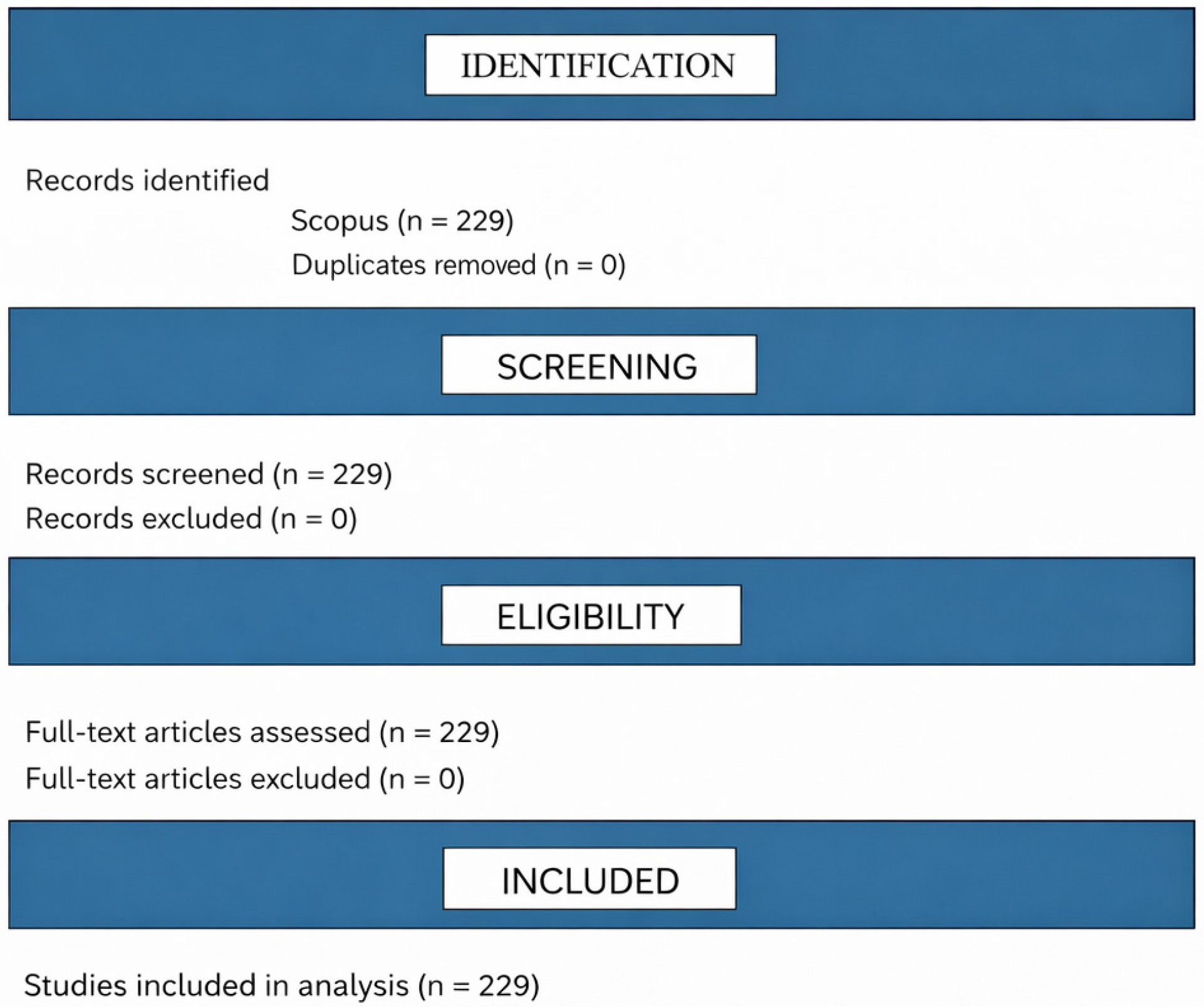
The selection process followed PRISMA guidelines for systematic reviews. Since the advanced search equation used in Scopus produced a highly refined and thematically coherent dataset, all stages retained the same number of documents. In this study, PRISMA is used exclusively as a transparency and reporting framework rather than as a screening protocol, as the search strategy itself functioned as a conceptual filter.
The PRISMA flow is summarized as follows:
Identification: 229;
Screening: 229;
Eligibility: 229;
Inclusion: 229.
Because the search equation already incorporated the conceptual boundaries of the study, no additional screening or exclusion was required. This results in a simplified PRISMA diagram, which is appropriate for highly specific searches based on advanced Boolean equations, as summarized in
Figure 1.
2.5. Analysis
The analysis was conducted at two levels:
Descriptive analysis, using Scopus and Biblioshiny to examine productivity by authors, institutions, countries, document types, and sources.
Structural analysis, using VOSviewer to perform keyword co-occurrence analysis and identify thematic clusters and conceptual relationships within the field [
9]. The minimum occurrence threshold was set at 5, the normalization method was association strength, and clustering was performed using the default resolution parameter (1.00). A total of 71 keywords met the minimum occurrence threshold (5), representing the most frequent and semantically connected terms in the corpus. These parameters ensure reproducibility and align with standard practices in bibliometric mapping.
3. Results
3.1. Evolution of Scientific Production
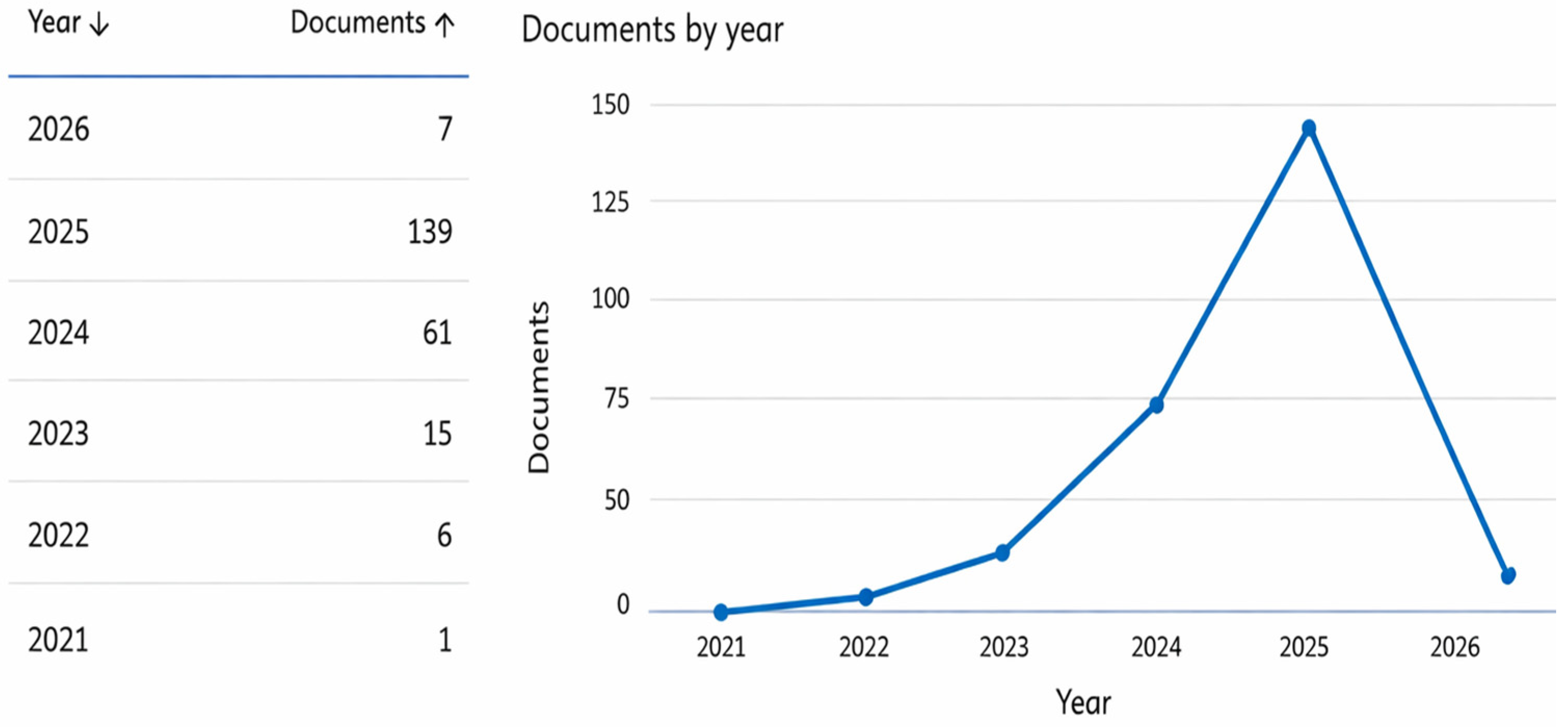
Scientific production on artificial intelligence in education, algorithmic ethics, and digital inequality shows a recent and pronounced increase. Between 2021 and 2023, the presence of the topic is still incipient, while a notable increase is observed from 2024 onward. The year 2025 shows the highest number of publications (139 documents), followed by 2024 (61 documents) and the first contributions already indexed for 2026. As shown in
Figure 2, this upward trend suggests a growing interest in the topic rather than a fully consolidated field.
This trend confirms that the field is emerging, although the growth should be interpreted with caution. Although it coincides temporally with the expansion of advanced AI technologies, it cannot be directly attributed to them. Rather, it reflects a convergence of factors, including technological acceleration, the expansion of ethical debates, and increasing attention to digital inequalities within media ecosystems. The concentration of publications in 2024–2025 also may reflect an active editorial cycle driven by thematic calls and by the rapid incorporation of AI into educational platforms. This pattern aligns with broader dynamics observed in emerging research areas, where publication surges often reflect both technological developments and editorial incentives.
3.2. Descriptive Results of the Corpus (Scopus)
3.2.1. Most Productive Authors
The authors with the highest number of contributions in the corpus are García M.B., Asad M.M., Asrifan A., Baker R.S., and Demircioglu A., each with between two and four publications. The distribution is relatively dispersed, with no hyperconcentration in a small group of researchers, indicating a growing field with multiple active research groups. This dispersion is characteristic of emerging areas where stable epistemic communities have not yet formed. This pattern also reinforces that the field remains in an early stage of thematic and institutional structuring.
3.2.2. Institutions with the Highest Contribution
The most represented institutions include Universiti Sains Malaysia, University of South Africa, Chinese University of Hong Kong, University of Michigan, and California State University. This institutional diversity reinforces the global nature of the field but also highlights the absence of dominant hubs, consistent with the interdisciplinary and distributed character of research on AI, algorithmic ethics, and digital inequality. However, this dispersion should be interpreted alongside the concentration of publications in specific journals (discussed in
Section 3.3), which may influence the visibility of certain institutions. A closer inspection of author affiliations shows that institutions such as Universiti Sains Malaysia and the Chinese University of Hong Kong tend to appear in clusters associated with technical and computational developments, whereas the University of South Africa and California State University more frequently contribute to discussions related to equity, digital divides, and ethical considerations. This distinction is not absolute but provides additional context for understanding institutional orientations within the corpus.
3.2.3. Leading Countries
The United States leads scientific production, followed by India, the United Kingdom, Turkey, China, and Malaysia. The presence of countries beyond the traditional Global North (such as South Africa) is significant, as it suggests that concerns about equity and algorithmic governance are emerging strongly in contexts where digital divides are more visible. This adds a relevant geopolitical dimension to the field and reflects differentiated regional priorities. The coexistence of Global North and Global South contributions indicates that debates on AI and inequality are not geographically isolated but globally distributed. However, the distribution remains uneven, with Global South countries contributing fewer publications overall, which reflects broader disparities in research capacity and access to digital infrastructures.
3.2.4. Document Types
Articles predominate (34.1%), followed by book chapters (27.7%) and books (26.6%). The high presence of books and chapters indicates that the field is still undergoing conceptual consolidation, with substantial weight given to theoretical and review-oriented works. This pattern is consistent with the youth of the corpus and the need for interpretive frameworks in response to rapidly evolving technologies. The distribution also suggests that empirical research is still emerging, which aligns with the thematic emphasis on ethical and distributive concerns.
3.2.5. Research Sponsors
The main funders include CAPES (Brazil), the European Regional Development Fund, the National Natural Science Foundation of China, the National Science Foundation (United States), and the Bill and Melinda Gates Foundation. The diversity of sponsors demonstrates international interest in understanding the impacts of AI on education and equity, while also suggesting differentiated agendas across regions and funding ecosystems. This heterogeneity in funding priorities may influence the thematic orientation of the field, strengthening some lines of inquiry while leaving others comparatively less explored. Notably, sponsors from China and the United States tend to support research with a stronger technological orientation, whereas CAPES and the European Regional Development Fund more frequently appear in studies addressing social, ethical, or distributive dimensions.
3.3. Biblioshiny Results
3.3.1. Main Information
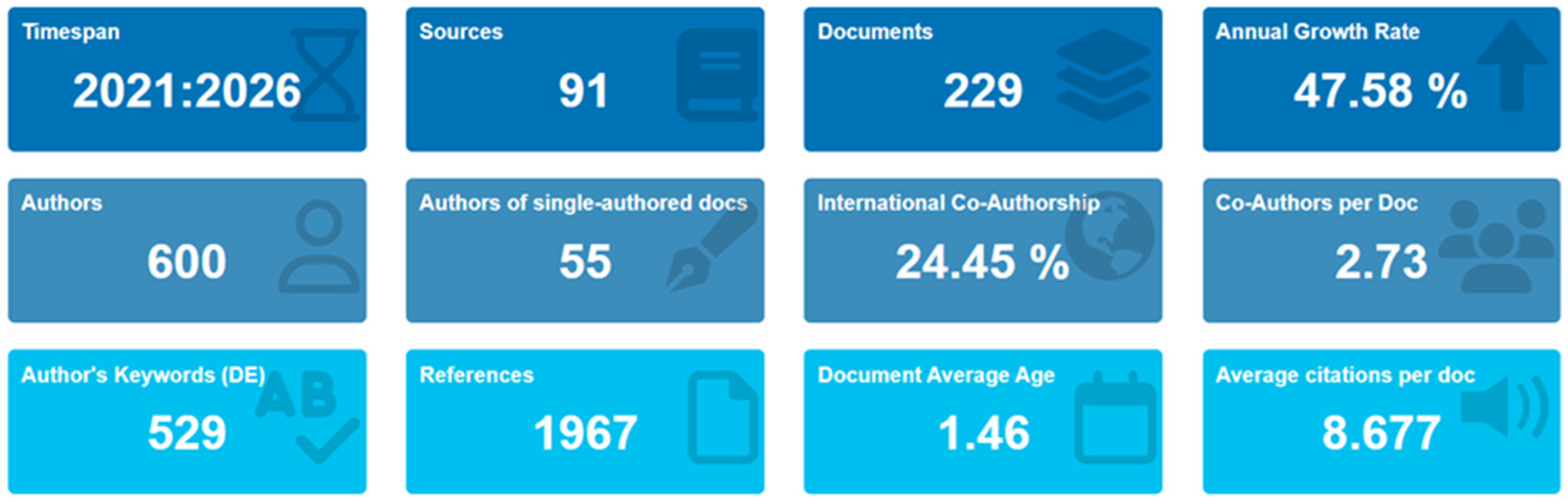
The analyzed corpus (n = 229) covers the period 2021–2026, with an annual growth rate of 47.58%. It includes 91 sources and 600 authors, with an average of 2.73 co-authors per document and 24.45% international collaboration.
As shown in
Figure 3, the average age of the documents is 1.46 years, which explains the low number of local and global citations in many cases. Even so, the average impact (8.68 citations per document) is high for such a recent corpus, suggesting growing academic interest and rapid circulation of the works. The dataset includes 529 author keywords and 1967 references, reflecting a broad thematic structure and a highly dynamic field shaped by the rapid evolution of AI technologies and their integration into educational and media environments. These indicators should be interpreted cautiously, as citation averages in young corpora may be influenced by a small number of highly cited documents.
3.3.2. Most Relevant Sources
The analysis reveals an extraordinary concentration in Discover Education, with 126 articles (more than 55% of the corpus). This pattern indicates not only thematic alignment but also a strong editorial effect, influenced by the search equation and the journal’s policy of publishing numerous special issues on AI and education.
However, this concentration also raises concerns about representativeness, as it may bias the thematic orientation of the corpus toward perspectives prioritized within a single editorial ecosystem. This structural imbalance is addressed in the Limitations section, where we note that such dominance may shape the visibility of specific approaches and underrepresent others.
The remaining journals show marginal participation (2–3 articles each), such as Education Sciences, British Journal of Educational Technology, Computers and Education: Artificial Intelligence, and Education and Information Technologies. This type of concentration is typical of emerging fields, where one journal acts as a central node and others form a dispersed periphery.
3.3.3. Most Relevant Authors
The most productive author is García, Manuel B., with three publications. He is followed by a broad group of authors with two articles each, reflecting a distributed and collaborative production structure. The coexistence of low-productivity authors and wide co-authorship networks suggests that the field has not yet consolidated dominant figures and instead operates through flexible and transitional collaborations. This pattern is consistent with the early stage of the field, where influence is dispersed rather than concentrated. This distribution also reflects the thematic breadth of the corpus, which draws from multiple disciplinary traditions.
3.3.4. Most Global Cited Documents
The most cited document in the corpus is Rasul (2023), with 462 citations and an annual average of 115.5, published in the Journal of Applied Learning and Teaching. It is followed by works by Celik (2023), Kong (2023), Druga (2022), and Dieterle (2024), all with more than 80 citations.
The thematic diversity—digital education, AI-mediated learning, technological governance—shows that the field is structured around broad debates rather than exclusively educational ones. These patterns highlight that the field draws from multiple disciplinary traditions, which contributes to its conceptual heterogeneity. However, the presence of highly cited documents may disproportionately influence citation-based indicators, a limitation discussed later in the manuscript.
3.3.5. Most Local Cited Documents
The article by Celik (2023) is the most cited within the corpus (4 local citations), positioning it as a shared conceptual reference. It is followed by Mohd Amin (2025), with a high proportion of local citations relative to its global impact (14.29%). The low density of local citations is consistent with the youth of the field and its thematic dispersion. This suggests that stable “anchor documents” structuring the debate have not yet emerged, which is typical of early-stage research areas. This lack of consolidation also reflects the rapid evolution of AI-related topics, which limits the formation of long-term canonical references. The limited internal citation network further suggests that the field is still in a formative phase, with conceptual boundaries that remain fluid.
3.4. Co-Occurrence Analysis and Thematic Clusters (VOSviewer)
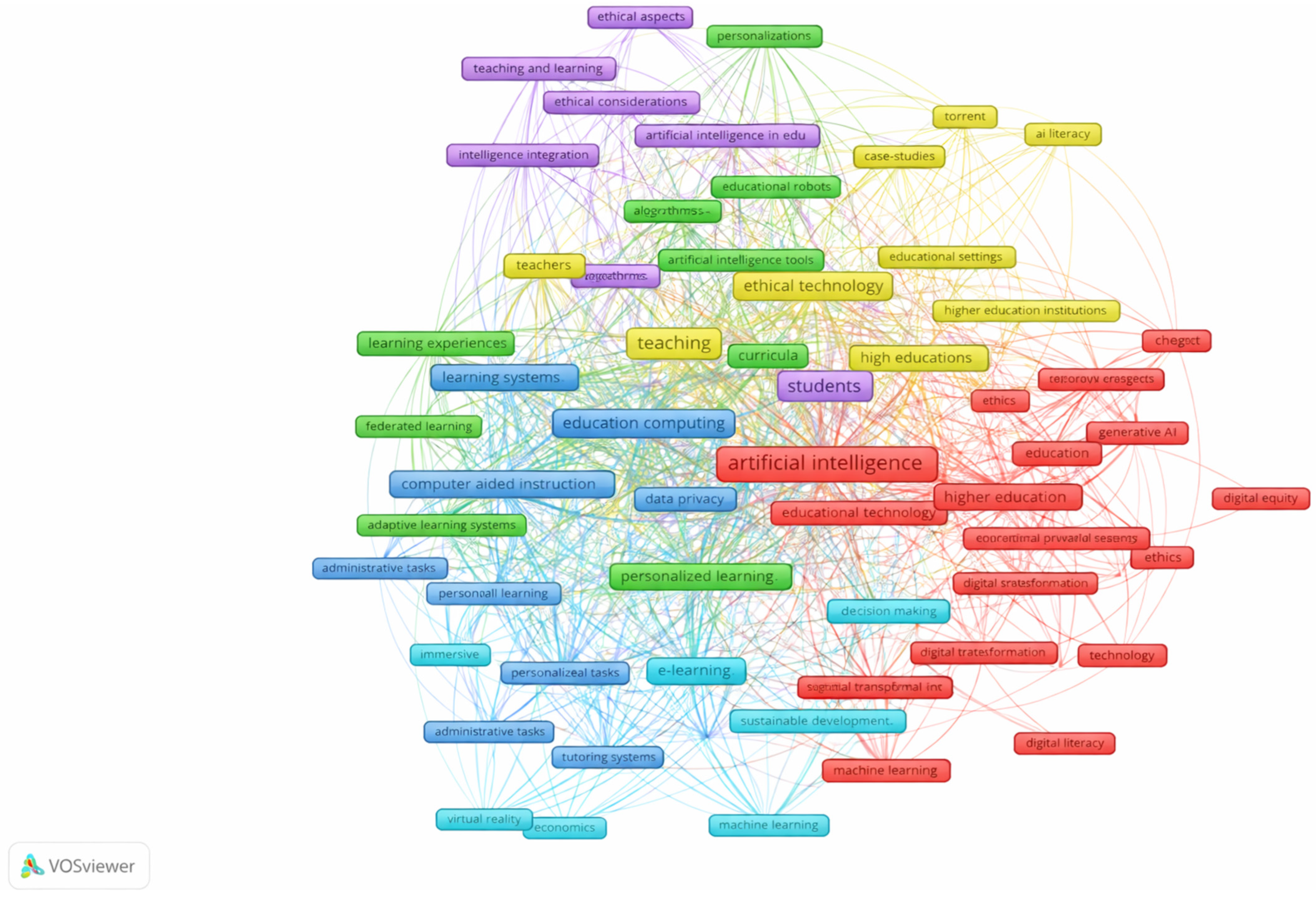
The co-occurrence analysis identified five thematic clusters that structure the field around advanced technologies, digital ecosystems, and emerging debates on artificial intelligence, algorithmic ethics, and digital inequality. Although presented as differentiated groups, the visualization reveals a highly interconnected network in which central terms such as artificial intelligence and education act as high-frequency nodes and function as bridges between different approaches. The overall structure indicates an emerging and still fluid configuration, with permeable conceptual boundaries and a strong orientation toward recent technological developments. The five clusters include a total of 71 keywords: Red (n = 24), Blue (n = 18), Green (n = 11), Yellow (n = 10), and Purple (n = 8).
Red Cluster—Technical and Conceptual Core: This cluster includes terms such as artificial intelligence, machine learning, digital transformation, large language model, generative AI, chatgpt, educational technology, and digital literacy. It represents the technological core of the field, with the highest frequency of co-occurrences. Its prominent position suggests that discussions on AI architectures and computational approaches tend to operate as a main axis connecting the remaining clusters. The presence of terms such as chatgpt, generative AI, and large language models reflects their growing visibility in recent publications, although their influence should be interpreted cautiously given the youth of the corpus. This cluster contains the largest number of nodes (n = 24), which visually reinforces its central role in the map.
Blue Cluster—Digital Environments and Intelligent Systems: This cluster groups concepts such as adaptive learning, e-learning, intelligent tutoring, virtual reality, computer-aided instruction, and immersive environments. It operates as an intermediate space between the technical core and educational applications. Its structure shows strong visual links with the red cluster, suggesting that the adoption of intelligent systems is directly connected to the expansion of immersive digital environments and adaptive platforms. The presence of virtual reality and intelligent tutoring highlights the convergence between automation, personalization, and immersive experiences. This cluster includes 18 keywords.
Green Cluster—Personalization and learning experiences: This cluster includes terms such as learning systems, personalized learning, learning experiences, and federated learning. Although it presents lower density in the visualization, its relevance is increasing. It represents the transition from intelligent systems toward algorithmic personalization models, where AI adjusts learning pathways, content, and pacing. The presence of federated learning indicates emerging interest in privacy-preserving approaches within educational contexts. This cluster includes 11 keywords.
Yellow Cluster—Pedagogical dimension and AI literacy: This cluster brings together concepts such as teaching, students, curricula, AI literacy, higher education institutions, and case studies. It reflects growing concern about the competencies required to critically engage with AI-based technologies. Its peripheral yet connected position indicates that algorithmic literacy is gaining relevance, although it has not yet become a dominant core. The inclusion of curricula suggests a gradual movement toward the formal integration of AI-related content into educational programs. This cluster includes 10 keywords.
Purple Cluster—Ethics and educational robotics: This cluster includes terms such as ethical considerations, educational robots, algorithmics, and teaching and learning. It addresses ethical debates related to the use of AI and robotics in education, highlighting issues of transparency, bias, responsibility, and algorithmic governance. Its smaller size does not imply lower relevance; rather, it introduces normative perspectives that complement the predominantly technical orientation of the field. This cluster includes 8 keywords.
As shown in
Figure 4, the visualization of the five thematic clusters reveals an interconnected structure in which central nodes such as
artificial intelligence and
education connect the field’s different approaches. The presence of terms related to
AI literacy,
ethical considerations,
digital equity, and advanced computational approaches reflects a recent shift toward ethical, pedagogical, and distributive concerns within increasingly complex digital ecosystems. The visual distribution of clusters suggests a predominance of technological terms over equity-oriented concepts, although this interpretation derives from the visualization rather than from numerical centrality metrics. This pattern is examined in greater depth in the
Section 4.
4. Discussion
Scientific production on artificial intelligence, algorithmic ethics, and digital inequality has experienced a notable increase since 2024, reaching its peak in 2025. This rise coincides with the global expansion of advanced AI models, which have influenced educational, media, and communication practices and intensified ethical and social debates [
1,
2]. The prominent presence of terms such as
large language model,
chatgpt, and
AI literacy in the thematic clusters reflects growing visibility in recent publications and their role in stimulating discussions on equity, transparency, and algorithmic governance [
5,
20]. However, the relationship between the growth of the field and these technologies should be interpreted with caution: temporal proximity does not imply direct causality but reflects the convergence of technological, editorial, and social dynamics that increased the visibility of the topic. Beyond quantitative expansion, the most relevant pattern is the thematic reorganization of the field, in which recent AI developments contribute to shifting attention toward ethical, pedagogical, and distributive debates. This reorganization is consistent with the structural patterns observed in the co-occurrence map, where technological terms occupy more central positions in the visualization, while ethical and distributive concepts remain less dense. This interpretation derives from the visual distribution of nodes rather than from numerical centrality metrics.
The co-occurrence analysis reveals a recurring tension between technological innovation and educational justice. Clusters related to
adaptive learning,
intelligent tutoring, and
virtual reality show sustained progress in technologies that expand the possibilities for personalization, automation, and digital mediation, while concepts such as
digital divide,
equity, and
inclusive education indicate that these innovations are not distributed evenly and may deepen pre-existing inequalities if not accompanied by policies on access, critical digital literacy, and robust ethical frameworks [
12,
13]. This tension is reflected in the visual distribution of clusters, where technological clusters exhibit greater density and centrality, whereas those linked to equity and educational justice appear more peripheral. Such contrast illustrates both material inequalities and differences in thematic emphasis, as academic production tends to privilege technical developments over critical analyses, reproducing a gap between innovation and governance. The density contrast between clusters reinforces this reading, suggesting that ethical and equity-oriented research remains underrepresented despite its growing relevance.
In this scenario, AI literacy emerges as a strategic response to promote critical engagement with emerging technologies. The cluster associated with AI literacy, curricula, students, and teaching shows that this approach functions as a bridge between technological and ethical dimensions. However, its lower density indicates that it has not yet become a consolidated core of the field but rather an emerging line that grows more slowly than technological adoption. This gap between innovation and pedagogical adaptation aligns with patterns observed in fields undergoing rapid technological change.
Ethics, in turn, appears as a transversal axis rather than an isolated thematic area. The cluster linked to ethical considerations, ethical aspects, and algorithmics shows a small but consistently connected position, indicating that ethics operates as a cross-cutting reference point that modulates technological developments. Rather than a peripheral topic, it functions as an organizing principle that connects clusters that would otherwise remain isolated—such as technology, pedagogy, and personalization. This cross-cluster positioning suggests that ethical reflection is becoming increasingly visible within academic debate.
A qualitative inspection of the most cited documents within the ethical cluster reinforces this interpretation. Druga (2022) highlights concerns about children’s interactions with AI-driven systems and the risks of opaque decision-making processes. Dieterle (2024) examines the ethical implications of data-intensive learning analytics, emphasizing issues of consent, privacy, and algorithmic accountability. Celik (2023), the most locally cited document, discusses the pedagogical challenges of integrating AI literacy into higher education curricula. Together, these works illustrate that ethical debates are not abstract but grounded in concrete dilemmas related to transparency, responsibility, and the pedagogical implications of AI-mediated environments.
Finally, the results reveal relevant implications for research and educational policy. On the one hand, there is a clear need to develop regulatory frameworks and institutional guidelines that accompany the rapid adoption of advanced AI systems. The strategic position of ethics in the co-occurrence map indicates that regulatory discussions are not external to the field but increasingly integrated into its internal structure, suggesting that algorithmic governance is becoming a central consideration in technological development. On the other hand, the findings highlight the urgency of promoting research situated in vulnerable contexts. The strong concentration of the corpus in a single journal and the low density of local citations indicate that the field has not yet developed a solid empirical base in territories with deep digital divides. This absence is not only geographical but epistemic, as certain contexts produce more knowledge than others, shaping the global agenda. Strengthening empirical studies in underrepresented regions is essential for capturing how infrastructural constraints, linguistic diversity, and socio-economic disparities shape the adoption and impact of AI-based educational technologies.
Taken together, the discussion shows that the field is moving toward a more complex and critical understanding of AI in education. The challenge for the next stage is not merely to expand production but to rebalance the relative weight of the clusters, strengthening lines related to equity, literacy, and governance to prevent the field from being dominated by technical developments without critical counterweights. This requires concrete actions, such as integrating AI literacy into teacher training, developing context-sensitive regulatory guidelines, and promoting interdisciplinary collaborations that bridge technical and ethical expertise.
5. Conclusions
This study provides an updated and systematic overview of scientific production related to artificial intelligence in education, algorithmic ethics, and digital inequality within a context marked by the rapid expansion of advanced technologies. The results show a rapidly expanding field in which recent AI developments have increased scientific output and contributed to a reorientation of thematic priorities, shifting the focus toward ethical, pedagogical, and distributive debates. The descriptive analysis reveals global participation dominated by technologically developed countries, although contributions from regions beyond the traditional Global North indicate that concerns about equity, algorithmic governance, and social impact transcend borders and require context-sensitive approaches. This uneven distribution also reflects broader disparities in research capacity and access to digital infrastructures, which shape the thematic visibility of different regions. The disciplinary diversity of the corpus reflects the hybrid nature of the field, situated at the intersection of educational technology, the social sciences, and critical media studies.
The co-occurrence analysis identified five thematic clusters that structure the field around a technical core, digital environments, learning personalization, AI literacy, and algorithmic ethics. Together, these clusters reveal an architecture marked by recurring tensions between technological innovation, educational justice, and ethical responsibility, particularly in a scenario were algorithmic systems increasingly mediate learning processes and decision-making. The findings underscore the need to advance toward institutional and regulatory frameworks that guide the responsible use of AI in education, as well as to promote research situated in vulnerable contexts where digital divides may be amplified. AI literacy emerges as a strategic line for strengthening the critical capacity of students and teachers in the face of increasingly complex technologies. These results suggest that pedagogical, ethical, and governance-oriented perspectives should continue evolving in parallel with technological innovation to prevent widening disparities.
In sum, the main contribution of this study lies in offering an integrated reading of the field—technological, ethical, and distributive—that helps explain how recent AI developments are shaping research priorities and the tensions of the digital educational ecosystem. This perspective provides a solid foundation for guiding future research, educational policies, and pedagogical practices aimed at integrating AI in a fair and responsible manner. The synthesis of technological, ethical, and distributive dimensions also highlights the need to rebalance the field, strengthening equity-oriented and governance-focused research to counteract the predominance of technical approaches. Concrete actions include incorporating AI literacy into teacher training, developing institutional protocols for algorithmic transparency, and designing evaluation frameworks that consider the socio-technical conditions of different educational contexts.
This study presents several limitations that should be considered when interpreting the results. First, the analysis relied exclusively on documents indexed in Scopus, excluding relevant production available in other databases such as Web of Science, ERIC, or Google Scholar. The inclusion of additional databases could broaden thematic diversity and incorporate studies addressing only partial aspects of the intersection analyzed here. Second, the deliberately restrictive design of the search equation conditioned the composition of the corpus: by requiring the simultaneous presence of all thematic blocks, the query favored highly specialized documents and may have excluded studies addressing these dimensions partially or from broader perspectives. This methodological choice ensured conceptual coherence but reduced the breadth of the corpus. Third, the dynamic nature of the field implies that the data represents a snapshot in time; the rapid evolution of AI systems and the continuous indexing of new documents may modify the trends identified. Fourth, the strong concentration of publications in a single journal may introduce editorial bias, influence the thematic orientation of the corpus and limit representativeness. Future studies could examine whether the observed patterns remain stable when excluding this dominant source or when expanding the analysis to additional databases, thereby strengthening the robustness of the findings. Fifth, the co-occurrence visualizations reflect relational patterns between keywords but do not provide numerical centrality metrics, which limits the depth of structural interpretation. Finally, bibliometric tools allow the identification of general patterns but do not assess the methodological quality or pedagogical impact of the analyzed studies.
Based on these limitations, several avenues for future research emerge: empirical studies situated in vulnerable contexts, evaluations of the real impact of AI literacy, comparative analyses between countries in the Global North and Global South, and the development of regulatory frameworks specific to the educational domain. These lines of inquiry will help us advance toward a more balanced, critical, and equity-oriented field in a digital ecosystem increasingly mediated by algorithmic systems. Future work should also explore how infrastructural constraints, linguistic diversity, and local pedagogical cultures shape the adoption and impact of AI-based educational technologies.




 ,
,