1. Introduction
Today, social networking is an integral part of everyday life for billions of people around the world who use it for interactive, educational, informative or entertainment purposes and for sharing/disseminating information at a high rate [
1]. Wikis where users add, edit, and delete content in collaboration with other users; social media platforms (SMPs) like Facebook, Twitter (as it was called during the period of our research; X since 23 July 2023), Instagram, LinkedIn, etc.; blogs; and tools like Wikipedia and YouTube have changed the way information is shared [
2].
Regarding academic research, various studies have shown that due to the use of social media (SM), research has changed, especially in terms of immediate response [
3], as new parameters for measuring academic impact have been developed [
4]. It is evident that dissemination of studies and research and communication between scientists take place more often through SM, blogs and wikis [
5,
6,
7,
8,
9,
10,
11].
The present study draws on concepts from bibliometrics and citation analysis, which examine patterns in scholarly communication through the quantitative study of publications and references.
The goal of this work was the quantitative and qualitative analysis of the use of SM, wikis and blogs as citations in publications from open access education journals from 2010 to 2019, with 2019 coinciding with the start of the COVID-19 pandemic. The journals were retrieved from the SCImago platform. More specifically, the aim of this work was:
The development of a methodology for the identification and analysis of SM content in journals in the education subject field;
To study the extent to which citations from various websites were used in the Bibliography compared to traditional citations, such as books and journal articles;
To analyze URL characteristics, such as digital standards, which organizations they belong to, most popular domains, most popular words in URLs, and the file types that these URLs were pointing to;
To extensively analyze the use of wikis and blogs but mainly SM citations based on their characteristics, like the frequency with which they were used, their type, the platform (e.g., Facebook, Twitter, Instagram, etc.) and in which section of the articles these citations were used;
The use of social networks as a topic through the analysis of journal articles’ titles;
To make several hypotheses regarding the correlation between the ranking and h-index of the journals and the size of the articles, the number of citations leading to a website or an SM, and the use of DOI;
The practical implications for the design of search interfaces for bibliographic databases and digital libraries.
The structure of the paper is as follows: First, a literature review on SM, related works and the SCImago platform is presented. Then, the research methodology is analyzed, followed by the results. Finally, the results are discussed along with research implications and future work.
2. Bibliographic Review
Initially, the history of SM, wikis and blogs is presented, followed by metrics about publications along with the academic community’s patterns in reading journal articles. Next, similar works and the SCImago platform are discussed and introduced, respectively.
2.1. Social Networks
According to Boyd and Ellison [
12], Social Network Sites (SNSs) are defined as “web-based services that allow individuals to construct a public or semi-public profile within a bounded system, articulate a list of other users with whom they share connection, and view and traverse their list of connections made by others within the system”.
2.1.1. Social Networking Site History
The history of SNSs goes back almost 30 years, as according to the website 1Webdesigner [
13], in 1994 the first SNS, Geocities, was created by David Bohnett and John Rezner. Geocities offered 15 MB of free space, allowing users to create and customize their own websites, grouping them into different “cities” based on the website’s content [
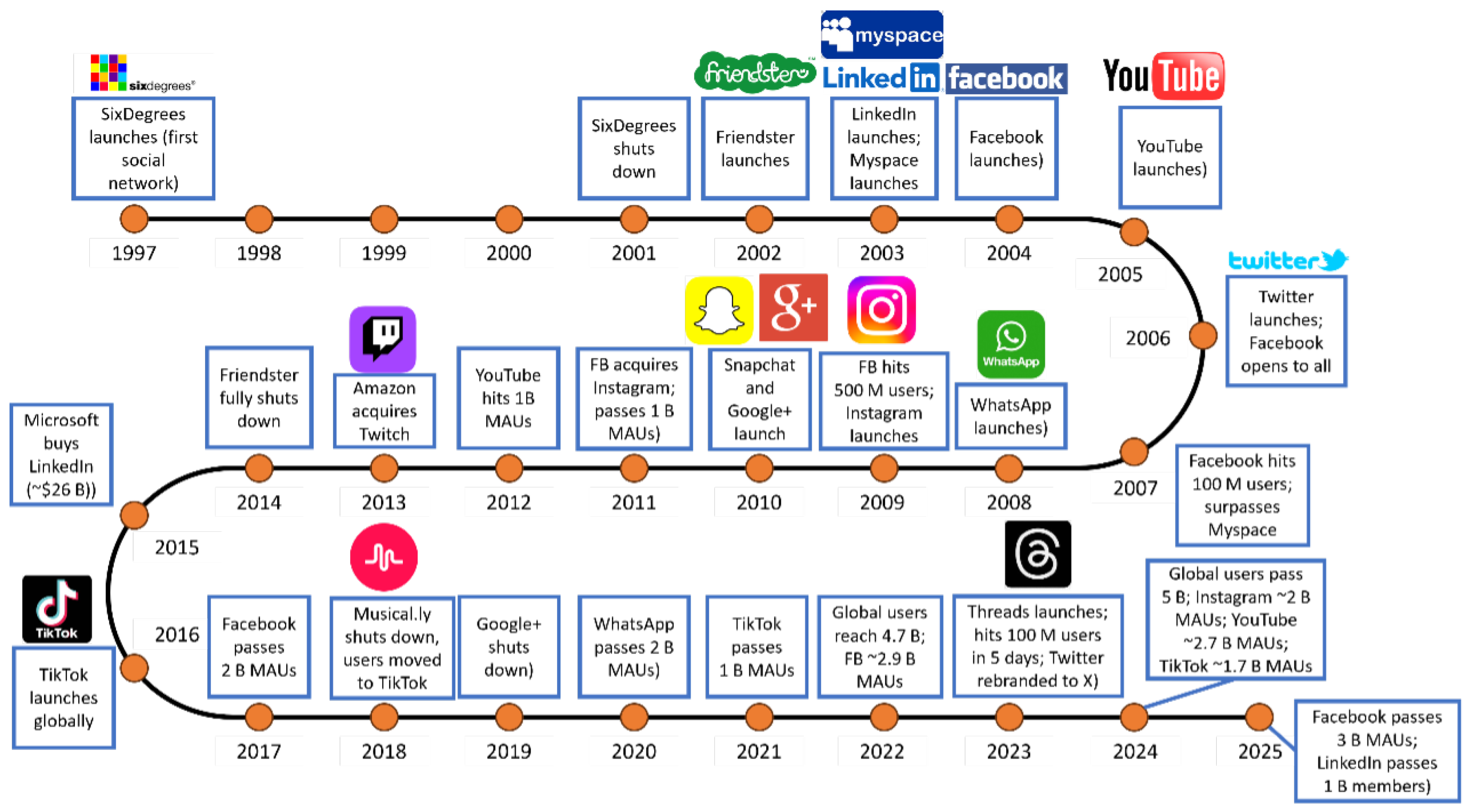
14]. A brief timeline of the history of the most important SMPs and user-count milestones can be seen in
Figure 1.
2.1.2. Development of Social Media over Time
All surveys show that there is an increase in SM users since 2004 [
15,
16]. According to [
16], in 2004, Facebook had 1 million registered users; by 2013 this number skyrocketed to 1.15 billion, while in February 2025, it was above 3 billion [
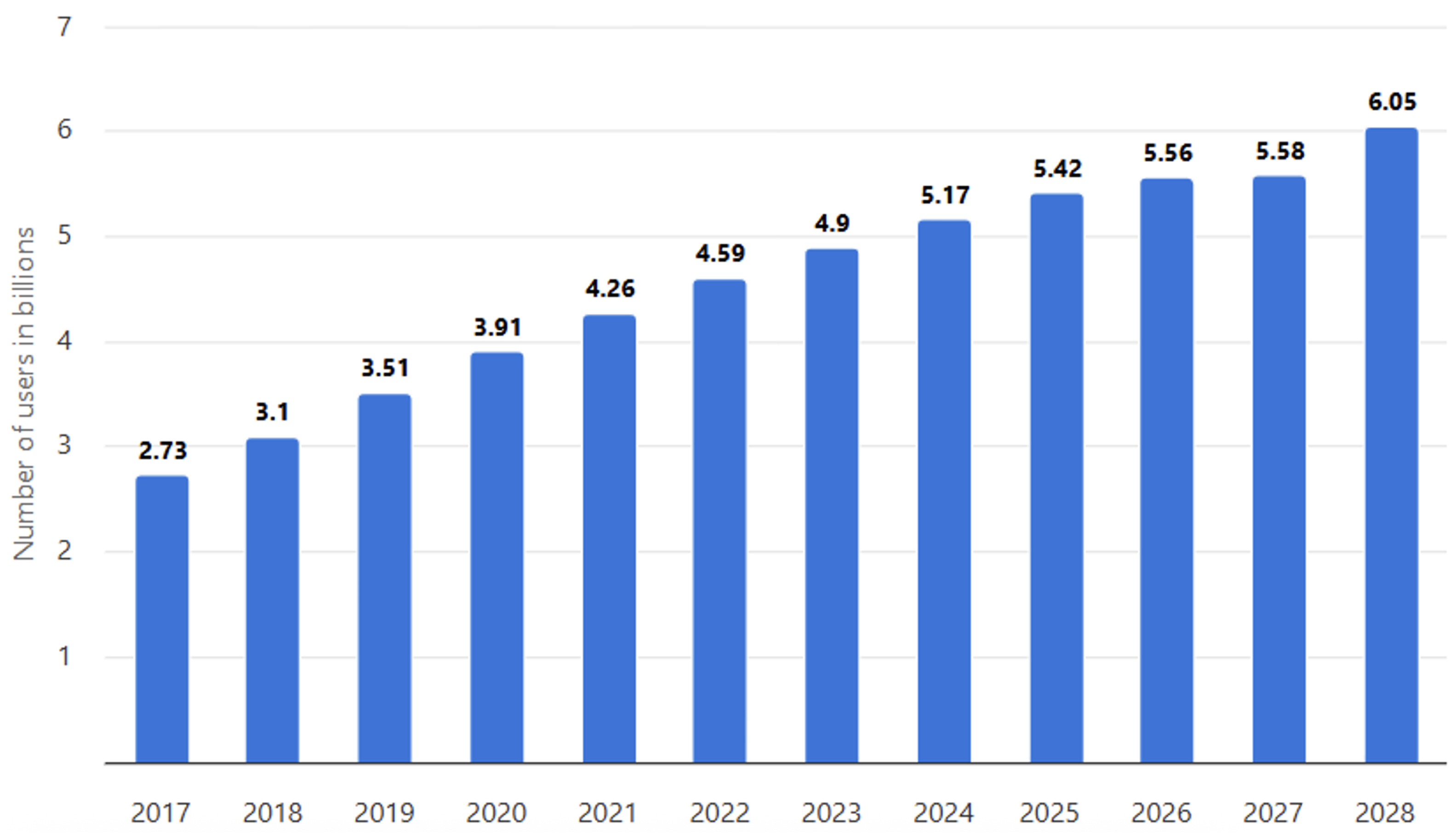
17]. Similar patterns have also been observed in the majority of SM with users steadily increasing, reaching 5.4 billion (accounting for 63.9% of the total world population) [
18] in 2024 and expecting to exceed 6 billion by 2028, as shown in
Figure 2 [
19].
Social media platforms have experienced rapid growth over the past decade [
17] and have become important channels for communication, information exchange, and knowledge dissemination. Platforms such as Facebook, Twitter, LinkedIn, and YouTube enable users to create and share content and interact with large online communities. This growth confirms the important role of social media not only in everyday communication but also in scholarly information practices.
Although YouTube differs from platforms such as Facebook or Twitter as its primary focus is on video content, it is widely recognized in the literature as a video-sharing social media platform [
20,
21] that enables the creation and sharing of user-generated content as well as interaction among users through comments, subscriptions, and community features. Consequently, several studies classify YouTube within the broader definition of social media platforms, while also acknowledging its hybrid nature as both a content hosting and social networking environment [
22,
23]. In the context of this study, YouTube is therefore considered part of the broader category of social media platforms because it facilitates user interaction and the dissemination of information within online communities.
Kemp’s analysis [
18] of SM in early 2025 showed that there was a +4.1% change from the previous year, corresponding to 206 million new users. The average time spent using SM was 2 h and 21 min and each user used on average almost seven SMPs each month. The top three main reasons for using SM were “keeping in touch with friends and family”, with 50.8%; “filling spare time”, with 39%; and “reading new stories”, with 34.5%. Interestingly enough there were a lot of users that utilized SM for researching content, e.g., “for finding content (e.g., articles, videos)”, with 30.5%; for “work-related networking or research”, with 22.1%; and for “sharing and discussing opinions with others”, with 21.9%.
2.2. Electronic Academic Publications
In this section, information from the literature is presented which shows the rapid increase in published scientific/academic articles and the number of electronic journals, as well as the downloading of electronic articles. The reading patterns of scholars are also discussed.
2.2.1. Published Scientific Journals
Even back in 2010, Jinha [
24] tried to estimate the total number of academic articles that have been published since the beginning of academic publications. This estimate was based on the measurement of global scientific publications in 2006 and this method gave an approximate number of almost 50,712,009 articles at the end of 2009. The same findings are presented by Curcic [
25], with the number of academic articles published and the number of academic journals increasing steadily over the past 20 years. More specifically, in 2022, the number of published articles reached 5.14 million, showing 22.78% 5-year growth, with China having a 19.67% share, followed by the US with 17.04% and then by India with 8.05%, whereas the number of academic journals in 2020 was estimated to be 46,736. Indexed articles from academic and scientific journals for the period 1975–2018 demonstrated a continuous increase from 100,000 to around 4 million. In [
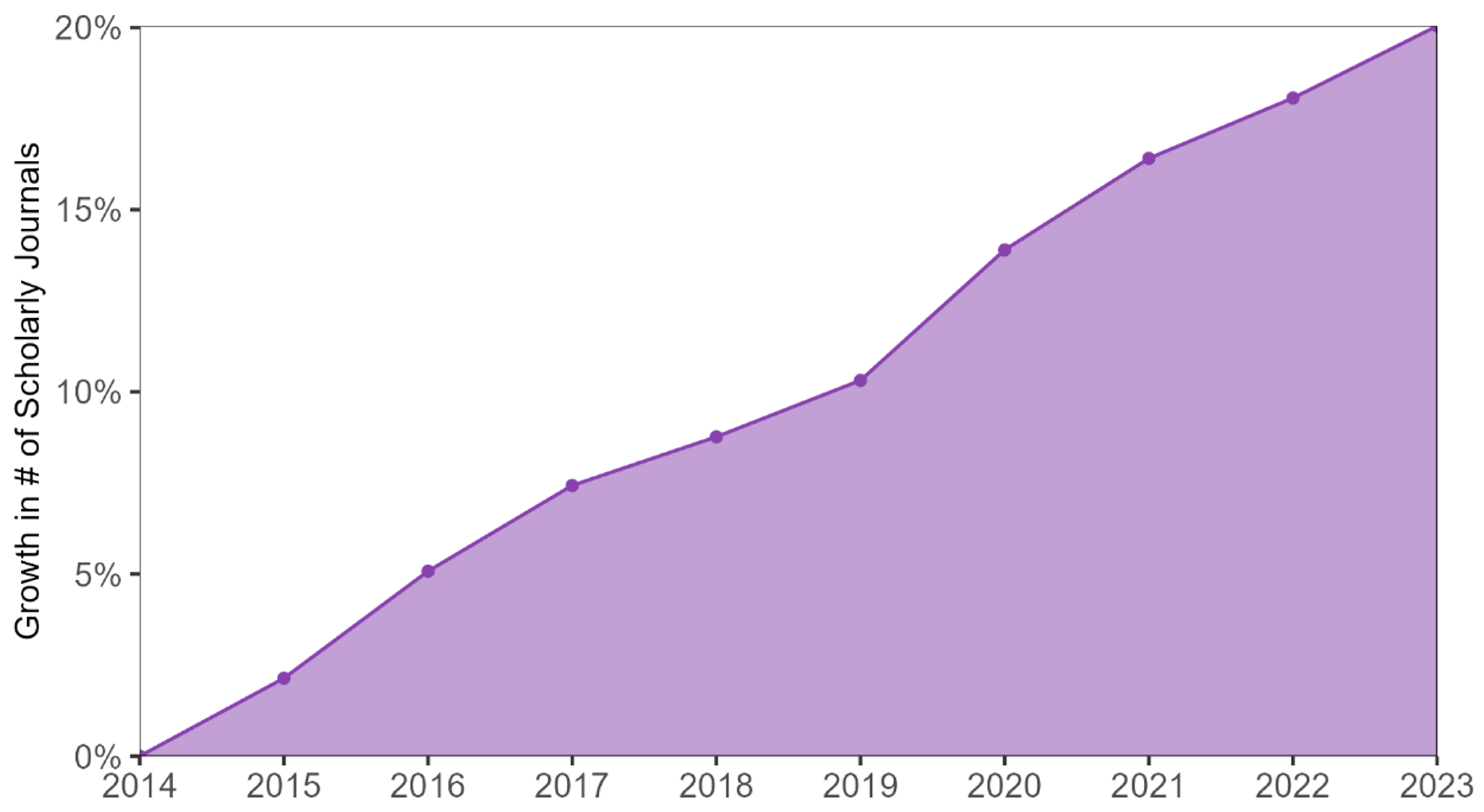
25] it was estimated that by 2022, at least 64 million academic papers would have been published since the year 1996 and that there will be an increase in publication each year since. This growth in the number of scholarly journals and articles was also found by the Academic Analytics Research Center [
26], as shown in
Figure 3.
2.2.2. Publishing and Reading Patterns of Researchers
Carol Tenopir researched a lot of the reading patterns of scholars in the late 2000s. In [
27] Tenopir et al. found that a pediatrician reads on average 145–184 articles per year and that the mean average time spent reading per article was about 20.1 min. They concluded that “Convenience and purpose of reading are key factors that explain reading patterns”. Similarly, significant changes have also been observed in the reading and information-seeking behavior of academic researchers [
28]. According to this study, reading patterns are changing, with researchers reading more articles—an average of 270 articles per year for 2007—but spending less reading time per article. More specifically, in the mid-90s a researcher was spending about 45–50 min reading an article, while in 2007 the minutes were reduced to just over 30. However, Davis [
29] argued with both the findings of Tenopir [
27,
28] as well as those of Van Noorden [
30], stating that, “a 35-year trend of researchers reading ever more scholarly papers seems to have halted”, with faculty members reading less (around 240 articles per year) but with this number still being quite large. Therefore, Davis communicated with Tenopir and she “did reanalyze her data using medians and confidence intervals, and discovered that there was no statistical difference between 2005 and 2012”. Therefore, it seems that after all, faculty were reading about the same number of articles, each year.
There is significant variation in the reading of scientific articles depending on the specialization of university students and the age of the reader [
31]. For example, humanities and social sciences teachers read much more annually (about 440 and 380 articles respectively), than those of mathematics (100 articles) and fine arts (about 10 articles). The time spent reading an article is also related to the age of the readers, and more specifically, the younger the reader, the more time they spend reading. The study by [
32] showed that there are different perceptions of scientific research literature and strategies for reading papers depending on academic career stage. Finally, Rachid [
33] echoed the previous studies and cited that similar reading patterns exist even today, as on average researchers read around 250 papers annually, spending 45 min reading a single article.
2.3. Related Work
The literature investigating the use of SM citations in electronic publications is quite limited and there appears to be space for more extensive research. In bibliometric theory, citations are commonly interpreted as indicators of knowledge dissemination, intellectual impact, and the flow of information within scientific communities [
34]. By analyzing the references included in scholarly articles, researchers can identify emerging sources of information, changes in scholarly communication practices, and the integration of new types of knowledge resources [
35]. In addition, studies on citing behavior have shown that researchers cite works for a variety of reasons, including acknowledging intellectual influence, providing methodological support, offering background information, or placing their work within an existing research context [
36]. Therefore, citation analysis should be interpreted primarily as an indicator of scholarly communication patterns rather than a direct measure of research quality or impact.
Scholars mainly investigate the effect of SM on research impact [
37,
38,
39] and the spread of misinformation and fake news [
40,
41] and use the term altmetrics to define metrics and qualitative data that complement traditional metrics based on references. These may include, but are not limited to, citations to Wikipedia and public policy documents, discussions on research blogs, mainstream media coverage, bookmarking for citation management systems such as Mendeley, and citations on social networks such as Twitter [
42].
Recent research has also examined the societal and psychological implications of social media platform (SMP) usage. Oprea and Bâra [
43] proposed a multiple-option descriptive–predictive framework to assess the impact of SMP use on psychological well-being using survey data from 479 individuals. Various clustering techniques were employed to identify user risk profiles and categorize mental health states according to their need for professional intervention. Among the tested algorithms, K-prototypes produced the best clustering performance (silhouette score: 0.596), while Random Forest and eXtreme Gradient Boosting achieved the highest predictive accuracy (F1 score: 0.993). Two distinct behavioral clusters emerged (“Stable Professionals” and “Vibrant Students”). Regarding SMPs and Social Media Disorders, it was identified that Instagram showed a stronger association with anxiety and depression compared to other platforms, despite YouTube being the most widely used. This study highlights the growing academic interest in the broader impacts of social media platforms.
Research by Priem et al. [
44] investigated SM properties based on metrics (altmetrics) with a sample of 24,331 articles published by the Public Library of Science. The researchers found that about 5% of the items included in the sample were cited in Wikipedia. In [
45] it is stated that SM can play a key role and can be a real tool to achieve an increase in the exposure of published articles and that they can offer a wide range of tools that can help the researcher to find, use and disseminate information.
Research by Haustein et al. [
46] involved librarians, of which 72% reported that they counted numbers of article downloads, while one third of the librarians saw the benefits of tracking the influence of articles on blogs, Wikipedia, citation management tools, and SM. Their research findings suggested that some electronic tools could be utilized by librarians and that they generally presented a valuable source of useful data. Haustein [
47] highlighted the quality issues of data derived from SM, mainly due to the lack of accuracy, consistency and repeatability of various altmetrics, which were greatly influenced by the dynamic nature of SM. In addition, altmetrics are shaped by technical capabilities and are highly dependent on the availability of APIs and DOIs and on data providers, and they are potentially influenced by the technical capabilities of the underlying platforms.
Thomas [
48] in her article titled “Social media is not for clinical reports” was completely against the use of SM in any study or even as a research tool. She cautioned fellow physicians that SM should not be used as a clinical reference. She suggested that clinical queries should be prevented from being posted on SM, and instead, a physician could consult a colleague for help directly or alternatively refer to the official literature or do a quick online search. She concluded her article by advising physicians to use SM only to connect with colleagues and not as a reference tool.
Regarding the importance of the types of publications that the scientists prefer to read, the most preferred ones are in the following order [
31]:
Scholarly journals;
Scholarly books or book chapters;
Conference proceedings;
Textbooks and handbooks;
Professional magazines/trade journals;
Standards;
Government documents or other technical or research reports;
Manuals/spec sheets;
Newspapers/news sites;
Blogs related to your work;
Popular science books;
SM;
Other sources
In the same study the authors asked about the importance of SMPs to scientists’ work and the respondents indicated that SMPs enhanced their work, with institutional repositories, email, cloud services, and research social networks being the most useful. On the contrary, microblogging (Twitter, Tumblr), image sharing (Instagram, Flickr), audio sharing (podcasts) and general social networks (Facebook, Goodreads) were regarded as less important ones.
Finally, in a similar study to this article [
10], an analysis was performed on a sample of 629 journal articles in
Medical Informatics. The findings showed the presence of 109 citations from SM, wikis and blogs in 59 articles (9.38%). From these 109 citations, 35% were from blogs and 22% from wikis. There were 23 citations from Wikipedia, 11 from Facebook posts, six from Flickr and five from YouTube. SM citations were most often used to support the literature review sections of the articles. However, a significant percentage of references were used to document various aspects of the methodological section, such as the data collection and analysis process.
3. SCImago
The SCImago journal rank was used in order to retrieve the journals for this research. SCImago is a research group from the Consejo Superior de Investigaciones Científicas (CSIC) and the Universities of Granada, Extremadura, Carlos III (Madrid) and Alcalá de Henares, dedicated to the analysis, representation and retrieval of information through visualization techniques. It groups journals into 27 subject areas and in 313 subject categories.
According to the description of the platform, Scimago Journal and Country Rank is “a publicly available portal that includes the scientific journals and scientific indices developed from the information contained in the Scopus® database Elsevier B.V.”.
SCImago processes and publishes indicators which can be used for: the evaluation and analysis of scientific fields; comparing or even analyzing journals, either grouped or separate from each other; and the ranking of the countries to which the journals belong, which can be compared and analyzed either by groups or individually.
Ranking Methods
The platform displays the title and type of publications and for its ranking uses the following fields:
Title: Journal title.
Type: Type of publication.
SJR—SCImago Journal Rank: A measure of a journal’s impact, influence or prestige. It expresses the average number of weighted citations received in the selected year by the documents published in the journal in the previous three years.
h-index: A journal’s number of articles (h) that have received at least h citations over the whole period.
Total Docs (year): A journal’s published articles for the given year (default is the previous year). All types of documents are considered.
Total Docs (3 years): A journal’s published articles for the three years prior to the year of the current ranking. All types of documents are considered.
Total Refs (year): Number of references included in the journal’s published articles in the previous year.
Total Cites (3 years): Citations in the previous year received by journal’s documents published in the 3 years prior to the year of the current ranking.
Citable Docs (3 years): A journal’s citable documents in the last three years. Citable documents include: articles, reviews and conference papers.
Cites/Doc (2 years): Average citations per document in a 2-year period. This metric is widely used as an impact index.
Ref./Doc (year): Average number of references per document in the ranking year.
4. Methodology
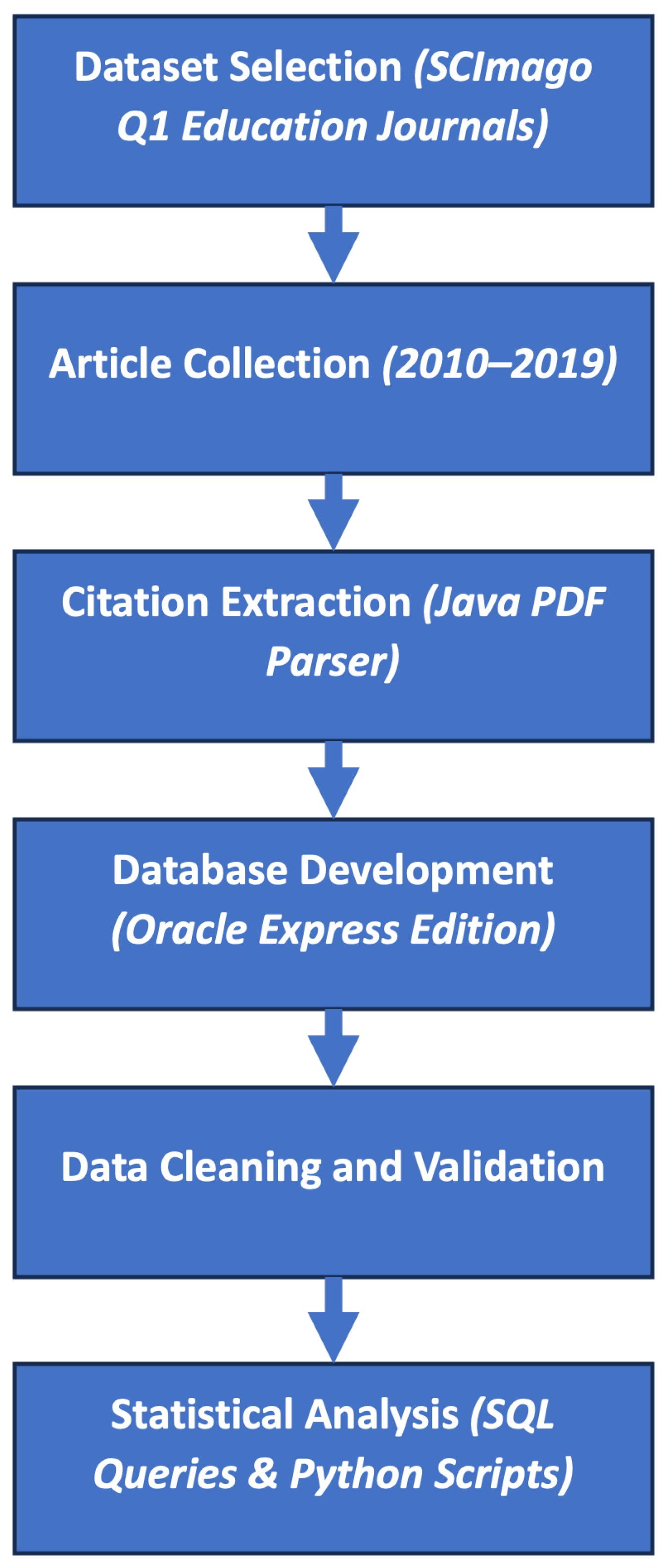
The methodological workflow of this study consists of six sequential stages, beginning with dataset selection and ending with statistical analysis.
Figure 4 illustrates the overall workflow of the process, while the following subsections describe each stage in detail. The goal of this pipeline is to systematically collect, extract, store, preprocess and analyze citation URLs in order to identify references originating from social media platforms.
The methodology used for this study consists of six steps:
Dataset selection: As there was an abundance of journals and articles, the SCImago platform was selected as the source of the dataset and the selection of the journal dataset was based on predefined criteria (open access status, education subject area, English language, SJR score and Q1 ranking).
Articles downloaded: We performed manual retrieval of all articles published between 2010 and 2019 from the selected journals. The year 2019 was selected as the cut-off point to examine citation practices prior to the COVID-19 pandemic, which significantly influenced scholarly communication and publication practices.
Tool implementation (PDF Citation Parser): We performed extraction of citation URLs from the reference lists of the downloaded articles using a custom Java-based citation parser that also runs SQL queries.
Database development: We created a relational database using Oracle Express Edition to store journal data (journal name, Scientific Journal Rankings 2017 and 2018, and country), article information (title, publication year), and extracted URL citations.
Data preprocessing and cleaning: Validation and correction of extracted URLs, removal and correction of erroneous entries, and normalization of the dataset to ensure consistency and reliability.
Statistical analysis: Execution of SQL queries and Python 3.14 scripts to perform descriptive statistics and identify patterns in the use of social media platforms as bibliographic citations.
From the various platforms, SCImago was selected as the source for the dataset. SCImago ranks journals and therefore the rankings from 2017 and 2018 were selected. In January 2020, SCImago ranked 31,971 journals, books, conferences and proceedings and trade journals. Since this number was very big, specific criteria were imposed: (1) the articles should be published in OA journals, (2) the articles should belong to the education subject area (which reduced the number of journals to 199), (3) the language should be English, (4) the journal should be ranked in Q1, (5) the journal should not belong to more than 4 subject categories, and (6) the ranking threshold (SJR 2017 or SJR 2018) should be 0.78. After further review, there were some issues like journals not actually being OA, having very few articles, and not having a reference list section. The final list consisted of 14 journals, with their rankings and SJR scores for 2017 and 2018 shown in
Table 1.
Then, each article was downloaded manually. The dataset consisted of 6432 files, with a total size of 4067 GB. In order to be able to perform statistical analysis, a database was developed with Oracle Database 11g Express Edition.
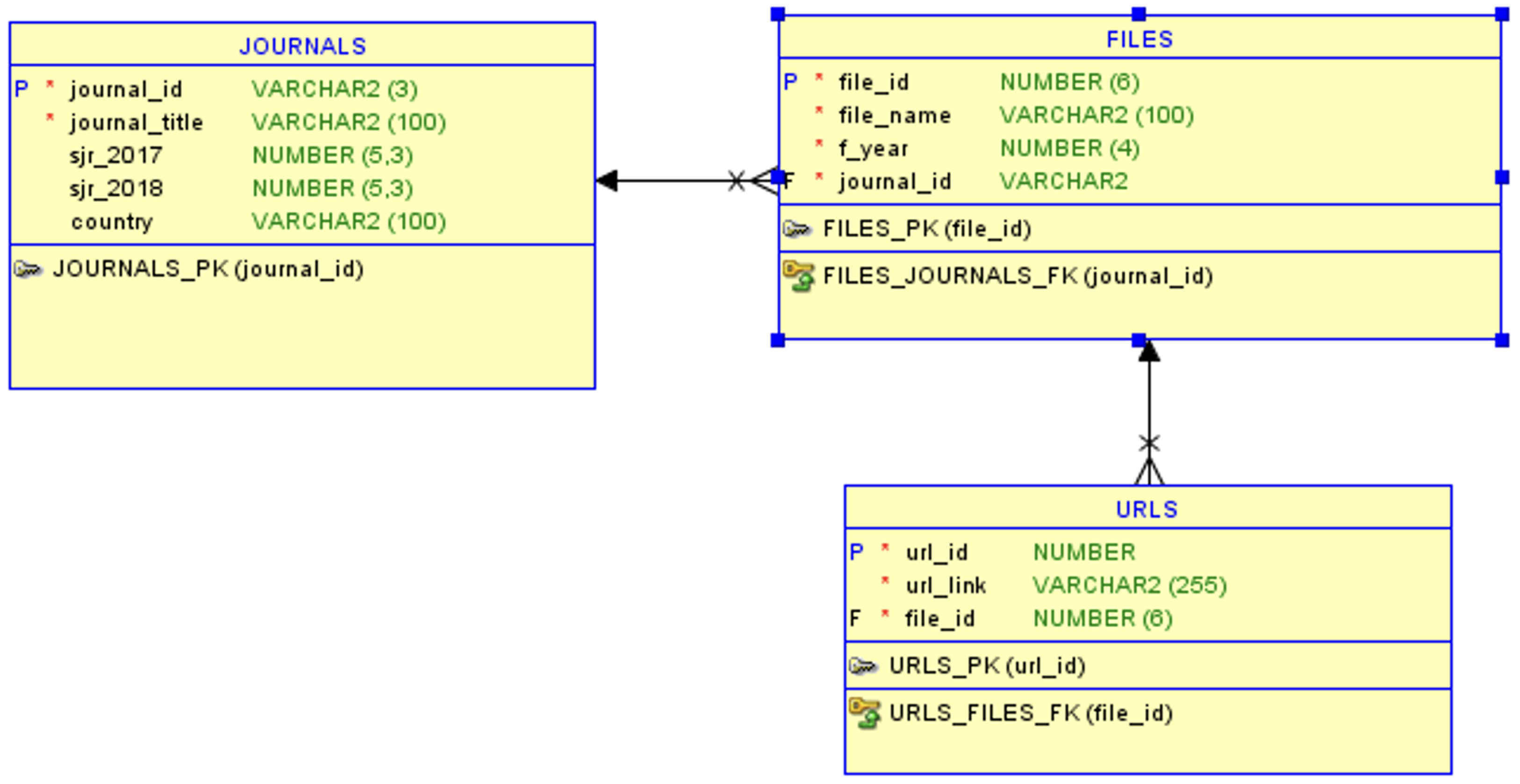
Figure 5 shows the Entity Relational Diagram (ERD) of the database.
4.1. Citation Parser
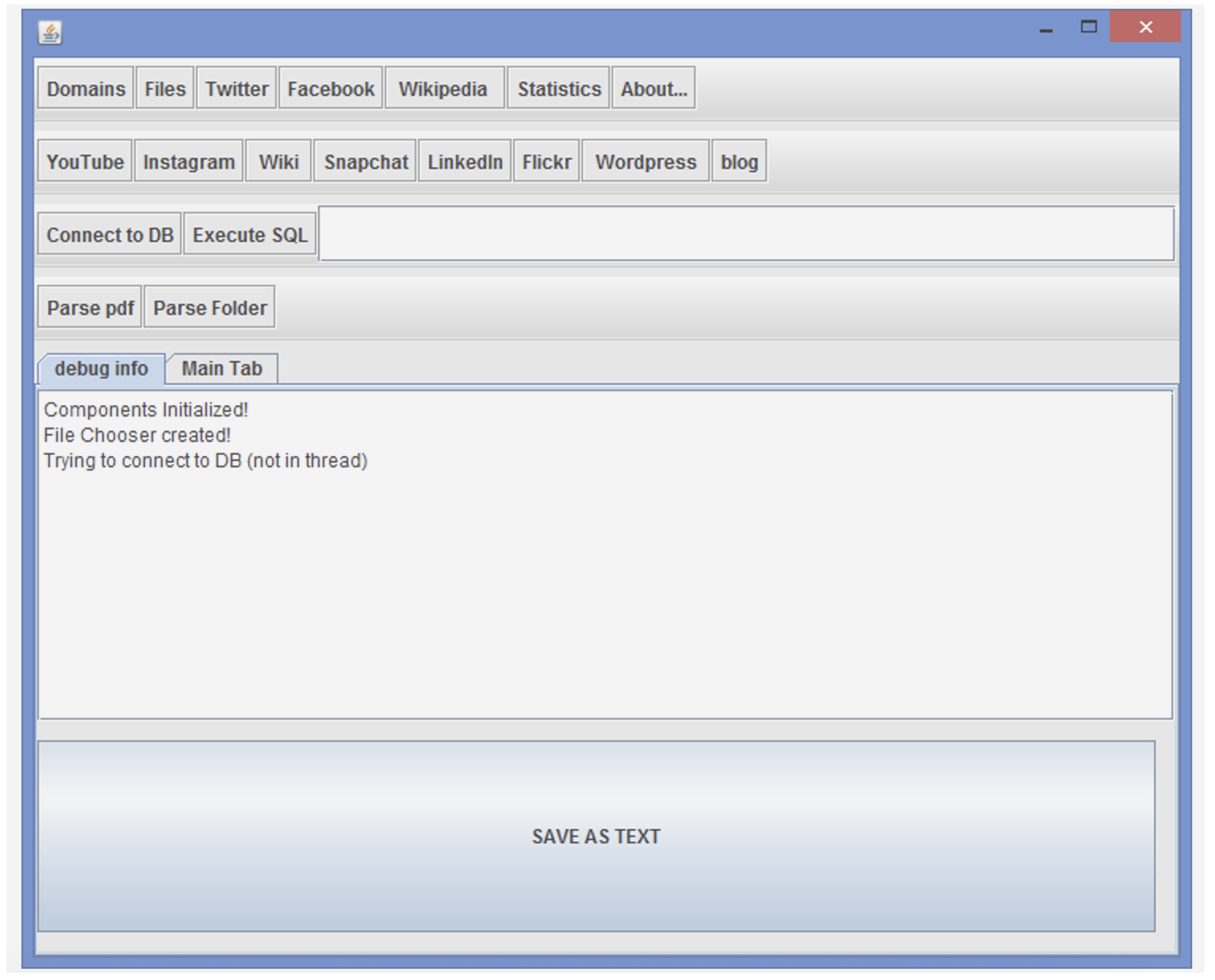
For the research, a tool written in Java called Citation Parser (
Figure 6) was developed. With the help of source code, database software (MySQL 8.4 LTS) and a web development environment (WampServer), the Citation Parser identifies a URL in the citations of the reference list of the article starting with http://, https://, www, or ftp:// and stores them on the WampServer. Although there are similar tools available on the web that provide a satisfactory mechanism for scanning and analyzing academic articles, such as SCOPUS [
49], we decided to build this tool as there were specific functions that the team wanted to implement. The tool has flexibility both in selecting a single pdf file or an entire folder that contains PDF files as well as in extracting data.
Built into the tool are SQL queries that query tables about the SM platform (Facebook, Twitter, YouTube, LinkedIn, Snapchat, Instagram and Flickr) and about wikis, blogs and Wikipedia. There is also the function of running pre-written and custom SQL queries.
Finally, the tool provides statistics, such as the number of articles analyzed, the number of electronic references, the number of references on SM as well as the number of times each SM platform was used as a reference. The tool’s workflow consists of three main functions: (1) parsing the PDF files, (2) saving the names of the scanned files (Files table) and the URLs found in the “Reference List” of the files (Domains table) to the database and (3) applying SQL queries to the database tables.
4.2. Preprocessing and Cleaning—Inserting to Database
After all the electronic references of the articles were retrieved, they were checked for any problems or inconsistencies that would affect the analysis. There were several issues, like references miswritten by the authors and the existence of additional sections after the reference list section of the articles that were falsely retrieved by the tool, as it was configured to retrieve URLs after the last mention of the word “Reference or References” (
Table 2). However, all the problems were identified and fixed.
Data from the Citation Parser were stored at the Wamp Server database in two tables, “Files” with 2 fields, “fileid” and “filename”, and the “Domains” table with three fields, “domainid”, “domainname” and “fileid”. These tables, along with the needed fields like the year of publication, were imported to the final database at Oracle Express. Foreign key constraints were established between the “Domains” and “Files” tables to uphold traceability and guarantee relational integrity, connecting each domain to its relevant file. This enabled effective querying and supported domain-specific filtering throughout the analysis stage. Furthermore, normalization was implemented to reduce duplication and maintain uniformity throughout the dataset. In more detail, database normalization forms were utilized for effective organization and redundancy removal. The design guaranteed adherence to the first three normal forms (1NF–3NF):
The 1NF dictated that every field was atomic, guaranteeing that each value in a column was indivisible, i.e., each file and domain were displayed in their own row.
The 2NF was attained by eliminating partial dependencies, making sure that every non-key attribute in a table relied on the entire primary key.
Finally, 3NF was achieved by removing transitive dependencies, i.e., ensuring that all attributes relied solely on the primary key rather than other non-key fields.
This normalization maintained data uniformity, minimized redundancy, and facilitated effective querying across the Files and Domains tables.
Additionally, scripts for metadata validation were created to verify publication years and domain naming standards and to identify any missing entries within the imported records. These scripts facilitated the automation of quality control throughout the insertion process, decreasing manual labor and guaranteeing the dependability of the final database schema. These cleaning and validation operations ensured reproducibility and transparency in the data preparation process.
4.3. SQL Queries and Python Script
With the aid of SQL queries and python scripts, a thorough statistical analysis was conducted to obtain information for: the journals, the publication year of the articles, the articles, the electronic sources (URLs within the reference lists of the articles, the citations related to SM and the titles of articles related to SM). For this reason, 393 SQL queries were run. A complete list of the queries can be found at:
https://www.ihu.edu.gr/tjortjis/QueriesExport.txt (accessed on 27 February 2026). The Python script that parsed a text and counted the frequency of all words was not written from scratch since the code was found on the internet and more specifically on the w3resource website [
50]. However, due to the large magnitude of this study, it is impossible to thoroughly present and discuss all of the results.
5. Results
5.1. Open Access Journals
Even though the study was focused on the 2010–2019 period, for researching open access journals, the period from 1999 to 2024 was selected.
Table 3 shows the total number of journals and OA journals per year, their change compared to the previous year as well as the ratio of OA journals to all journals.
According to the data, there was an increase in both journals and OA journals from 2000 to 2017. Since then, for journals there have been ups and downs, with 2020 having the maximum number of journals recorded, with 35,026, but with 2021 having a huge decrease, probably due to the COVID-19 pandemic. OA journals had a constant increase until 2021. In 2023, for the first time, the number of OA journals surpassed the 10k mark.
Within these 26 years, we observe that the number of journals increased by 82.8% (from 17,032 to 31,136), while the number of OA journals showed an impressive increase of 552.14%. Finally, it is noteworthy that the ratio of OA journals to the total number of journals increased every year. Whilst in 1999 OA journals made up 9% of journals, in the last four years, around one out of three journals (32.82% in 2024) were OA.
5.2. Articles
A total of 6432 articles were retrieved from the 14 journals. The distribution of the 6432 articles by journal and year is shown in
Table 4.
The “BMC Medical Education” journal (j09) was a major contributor to the dataset with 2330 articles (36.23%), followed by the journals with IDs j03 and j05, with approximately 10.5% of articles each. This distribution of the dataset might affect the analysis, as some journals could have a greater weight in the results. There is a disparity in the number of published articles per journal; in addition, there are journals that published around only seven articles per year and others that published 442 per year.
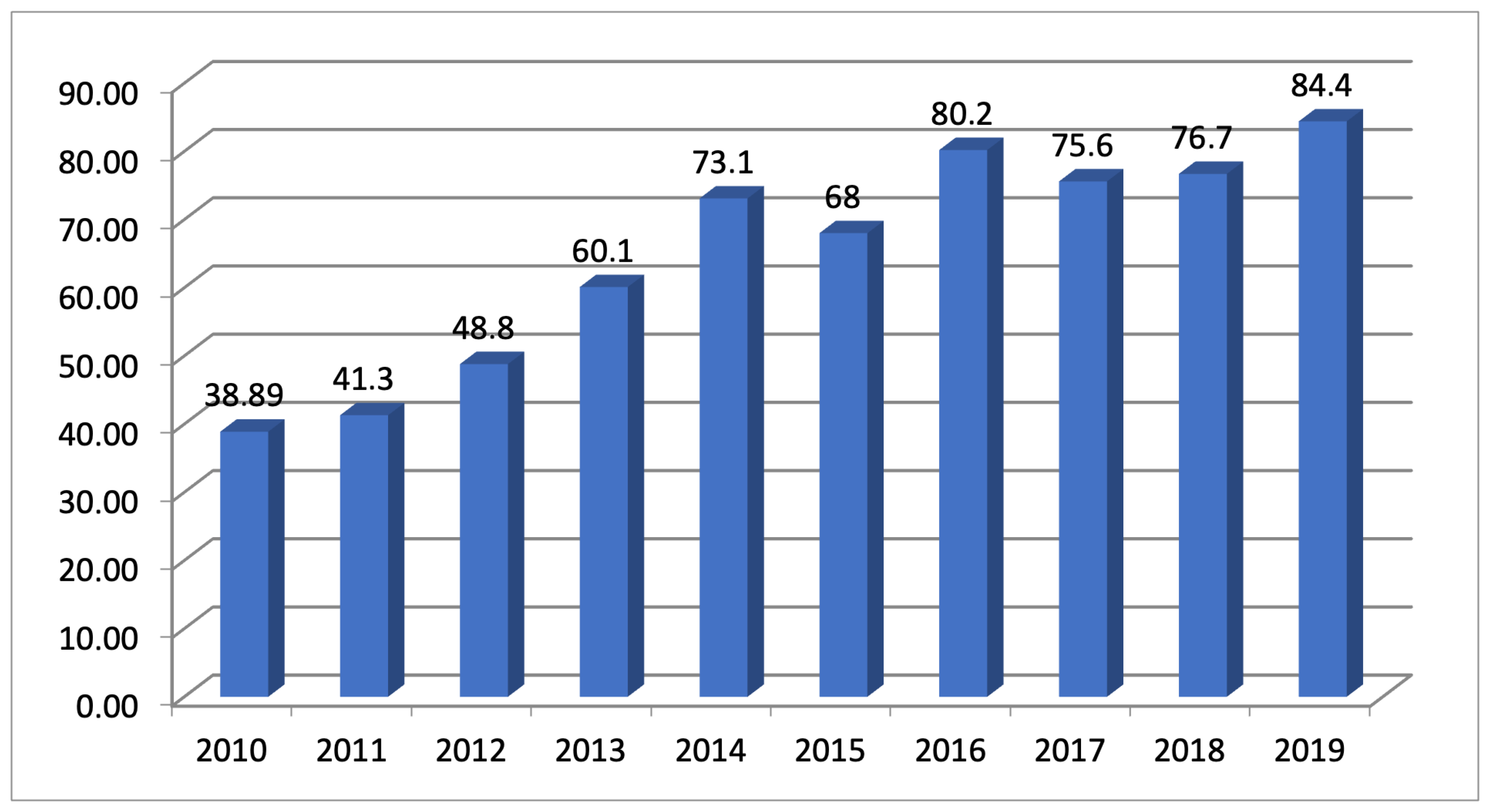
Figure 7 depicts the average number of articles per year for the 14 journals. It is apparent that there is a continuous increase in the number of published articles per year. What is striking is that the journals doubled their annual output within a 10-year period.
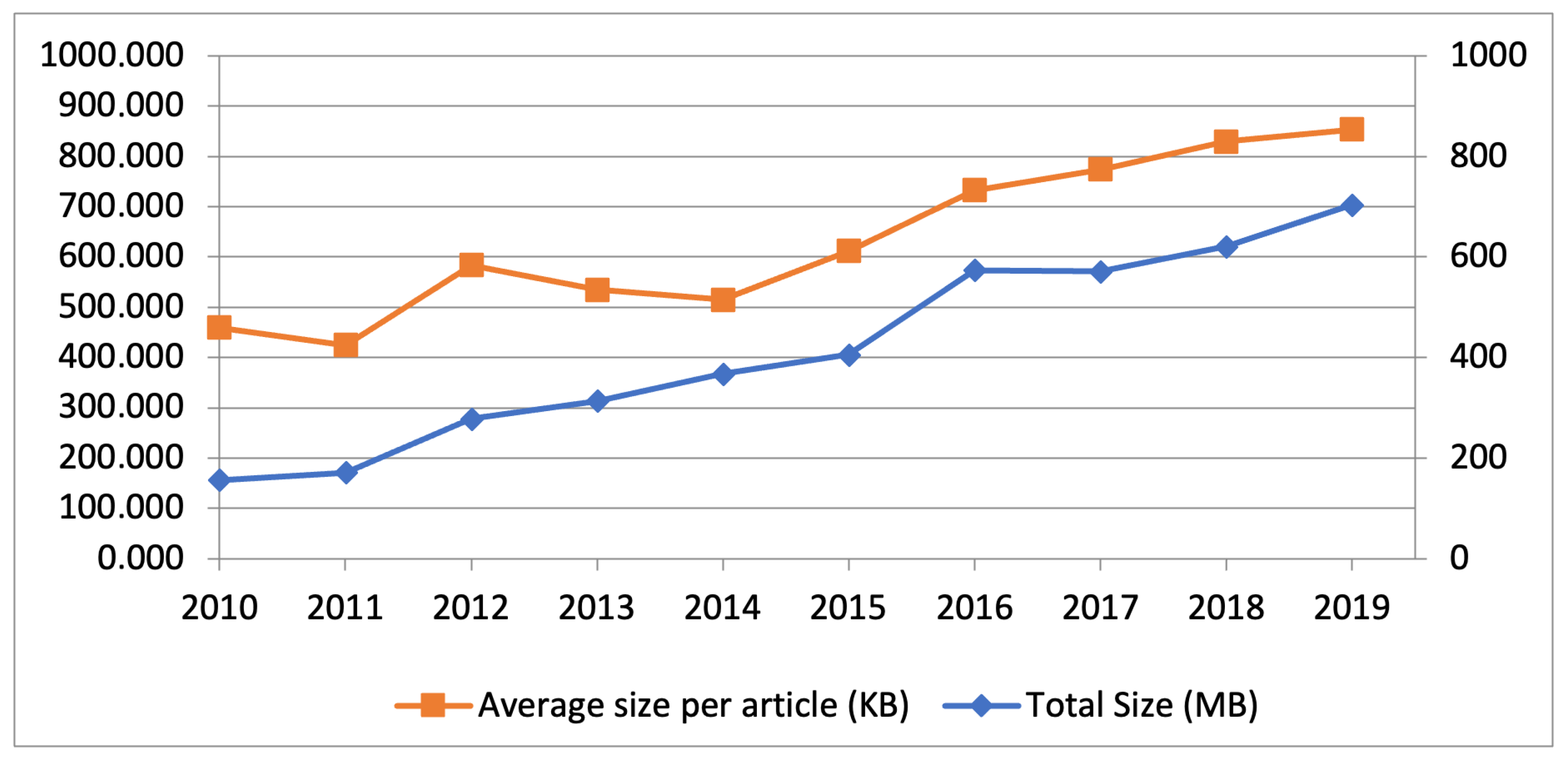
The total size of all the articles was 4164.48 MB (4067 GB), or 663 kB per article. In
Table 5 and
Figure 8 the total size of all articles in MB and the average article size in kB per year for the 10-year period (2010–2019) is demonstrated.
Observing
Figure 8, it is obvious that there is an increase in size (total and per article) over the years which is continuous from 2014 onwards. It is interesting that the average size of the articles from 2010, which is 459.22 kB, almost doubles in 2019 (853.474 kB).
5.3. Electronic References (URLs)
The term “electronic references—URLs” refers to the URLs that were found in the citations of the reference list of the articles that were studied. The tool had a 100% success rate as it managed to open and correctly parse all 6432 articles. However, this was not the case for the retrieval of the URLs, as several problems were identified. Therefore, 4937 incorrect URLs had to be removed from the database. So, finally, the correct dataset consisted of 49,158 URLs.
Table 6 shows the total number of URLs, the total number of articles and the average number of URLs per article.
There were many journals that mostly utilized URLs in the reference list. The Education Policy Analysis Archives Journal (j14) contributed around 28.5% (14,011 out of 49,158) of the total electronic references, having an average of around 24.41 per article. The explanation is that the Digital Object Identifier (DOI) of each journal article cited was mentioned in the reference list. A similar policy is followed by other journals, resulting in them having more than ten URLs per article. On the other hand, there were journals that hardly mentioned URLs in their lists.
Table 7 shows the total number of URLs, the total number of articles, the average number of URLs per year and the differentiation from the previous year.
There is a constant increase in both the total number of URLs in the References Lists per year and the average number of URLs per article. What should be noted is that in 2010 the average number of URLs/article was about 3.4 and in 2019 it nearly quadrupled to around 13 URLs/article. There were one in four articles on average, out of 1641 articles, that did not even have one URL in the citations of their Reference Lists.
According to our findings, more than half of the articles contained five or less citations referring to a URL, with 19.11% having just one URL. In general, around 30% of the articles had between 11 and 30 citations with URLs and five articles had more than 100 citations with URLs.
The self-citations of the journals were also checked in this study, but only via the citations with URLs, meaning that the domains of the URLs were checked to determine whether they corresponded to the domains of any of the 14 journals. The queries retrieved 2809 of such cases and then checked whether these cases occurred within the same journal. The percentage of self-citations was impressive, as they occurred in 93.63% of the cases (2630 out of 2809). This huge self-citation rate was identified in nine out of the 14 journals. The reason that some journals had a very low number of self-citations was probably due to the very small number of citations with URLs.
According to the results of the queries, there were 8851 distinct domains.
Table 8 shows the top 15 domains. Twenty-seven domains were mentioned more than 100 times.
Besides DOI, the most popular domains were those of the U.S. Department of Education (ed.gov) with 1.77%, the Learning Language Learning & Technology Journal (llt.msu.edu) with 1.28%, the International Review of Research in Open and Distributed Learning (Irrodl.org) with 0.97%, the International Association for Statistical Education (iase-web.org) with 0.83% and the American Statistical Association (amstat.org) with 0.6% of the retrieved URLs. The research explored a plethora of analytics for the electronic references, like the use of standards like DOI or the Handle System, the organizations that owned the domains (universities, online learning platforms, government and non-government organizations, unions, libraries, repositories, publishers, journals, newspapers and non-profit organizations), the top-level domain (.com, .org, .net, country codes, etc.), the second-level domains (like .gov, .ac, .edu, etc.), any type of files that the URL was pointing at (.pdf, .doc(x), .xls(x), .ppt(x), etc.), and if the URLs were shortened (bitl.y, goo.gl, tinyurl.com, etc.). These results, due to the lack of space, are simply cited in this section and the goal is to extensively present them in other articles.
Standards: Digital Object Identifier (DOI) was used in 38.1% of the URLs, whilst the Handle System (hdl.handle) was used only in 0.22% of the URLs.
Top-level domains: The three most popular top-level domains were “.org” with 58.7%, “.com” with 10.4% and “.uk” with 4.3%.
Second-level domains: The three most used second-level domains were “.ac” with 3.13%, “.edu” with 1.8% and “.gov” with 1.37%.
Extensions: On many occasions the URLs were leading to an actual file. Leaving aside the webpage extensions like (.htm, .html, .php, .asp, .jsp. etc.), pdfs were the most frequent files in the URLs, with 16.31%. Microsoft Word documents were found in 0.25% and Microsoft PowerPoint Presentation files in only 0.04% of the URLs.
Shortened URLs: The authors preferred the use of shortening URL tools in 4.4% of the retrieved URLs. Out of the most popular tools (bit.ly, goo.gl, tinyurl.com), goo.gl was preferred in approximately 84.4% of the cases.
5.4. Blog and Wiki Queries
Although our research focused on the use of SM as citations, other keywords were investigated as well. Some of the most interesting ones were related to blogs (WordPress, Blogger-Blogspot, and Tumblr) and wikis. The queries searched within the host, the domain and the path of the URLs and excluded the resource of the URL. For instance, at the URL
https://en.wikipedia.org/wiki/List_of_blogs (accessed on 15 January 2026), the query would return a result for the “Wikipedia” found at the host part of the URL, the “wiki” found at the path, but not the “blog”, as it was at the resource. The use of blogs and wikis as sources in the bibliography was relatively limited (
Table 9).
From all of the citations that had a URL within them, approximately 2% of them were pointing to a wiki or a blog. More specifically, the use of wikis, excluding Wikipedia, was quite low (93 times, or around 0.2% of the total URLs), whilst blogs along with the blog hosts accounted for 1.62% of the total URLs.
Table 9 shows the use of wikis (Wikipedia excluded) and blogs (Blogger, WordPress and Tumblr included) per year and article. The most frequent use for the wikis was observed in 2013 and 2014, whilst it was found that the journal with ID j03 utilized them the most (46% of the total occurrences). WordPress was the most popular blog hosting platform (60.9%), followed by Blogger with 38.3% while Tumblr was found only two times. The largest utilization of blogs was observed in the journal with ID j03 (39%) and the most frequent use occurred in the period 2014–2016, as shown in
Table 10.
The use of Wikipedia as a source of information is extremely scarce. Only 0.13% of the citations (about one in 769 URLs) referred to Wikipedia. The use of 64 lemmas in a total of 6432 articles, essentially one in 100 articles, was identified and so it seems that researchers do not trust Wikipedia very much. The largest use was observed in the journals with IDs j03 and j04, but percentage-wise the most frequent use was by the journals j03 and j13, using it in approximately one in 38 articles. Only in 2018 did Wikipedia have more than ten occurrences.
5.5. SM Queries
A total of 41 queries were conducted using various relevant keywords, including the SM shortened domains, like fb.me, youtu.be and t.co, following the methodology as described at the blog and wiki queries regarding the host and path part of the URLs. From the 17 SM researched, eight were found in the citation URLs. Overall, only two of them had more than ten citations: YouTube with 73 out of 112, or 65.2%, followed by Twitter with 16 occurrences, or 14.3%. The remaining six SM had less than ten citations, with Facebook having just seven.
According to the data shown in
Table 11, the use of SM as citations in academic articles is quite limited, as they were found 112 times out of the 49,158 electronic references identified, accounting for 0.23% of them, which corresponds to one in 439 references.
Table 12 shows the SM studied, the number of total references in the reference lists per SM and year and the average number of articles with an SM citation per year.
Overall, despite the fact that the authors do not use SM that much in citations, as only 112 citations in 6432 articles were found (1.74%), or one in 57 articles, even this small use is an indicator that there is a tendency, although minimal, for authors to use sources outside the established/classic bibliography, especially for audiovisual assistance, as YouTube citations occurred in one in 88 articles.
5.5.1. Facebook Queries
The use of Facebook as a source in the citations is extremely limited, as it appeared only seven times in total (approximately 0.016%). The queries returned two results for journals j03 and j05 and three for j12. As for the years, FB was used two times in 2011 and 2012 and once in 2013, 2016 and 2017. Due to the very small number of occurrences, no safe conclusion can be drawn regarding either the journals or the years of publication.
5.5.2. YouTube Queries
The use of YouTube as a citation was somewhat unexpected. The authors used YouTube 73 times, in approximately 1.13% of the articles or one in 88 articles. This shows a small but somewhat significant tendency toward the use of audiovisual material in writing academic articles.
Table 13 depicts the use of the 73 YouTube citations per journal and year.
The largest use of YouTube as citation is observed in the journals with IDs j03 (23.3%), j09 (24.7%) and j14 (15%), while regarding the years, there is relative uniformity, with the use being quite high from 2017 onwards.
5.5.3. Twitter Queries
The use of Twitter as a source in citations, like Facebook, was also negligible, as it was used only 16 times, or in 0.25% of the articles or one in every 400 articles. The journal with ID j01 had the most frequent use with it occurring seven times, and Twitter was used as a citation each year except 2010, with 2015 having five occurrences.
5.5.4. Remaining SM Queries
Reddit was used as a citation five times, four of them in 2019. The use of Flickr as a citation was also essentially non-existent as two uses were found in total over the decade. Citing Google+ was also minimal, with four uses in the journal with ID j03 in the years 2013–2015 and 2018. LinkedIn was expected to be trusted more due to its widespread use by academics and professionals, but in the end its use was very limited, with three citations in total in 2012, 2016 and 2019. Instagram, Vine, Pinterest, Ask.fm, VK, ClassMates, Meetup, Snapchat, and Myspace were also checked, but there were null returns from the queries.
5.5.5. Article Section of the SM Citations
Since the number of SM in-text citations was not that high, it was easy to pinpoint in which section of the article (Introduction, Literature Review, Design—Methodology, Results, Conclusions—Discussion and Future Work) the authors utilized these citations (
Table 14).
The sections of the articles in which the authors used the in-text SM citations more frequently were the introductory sections: Introduction (30.4%) and Literature Review/Background (22.3%). There was also a quite large preference for use in the Methodology section, with approximately 26.8%. In the Conclusions/Discussion sections, 17 in-text SM citations were found (15.2%) and only a few, 5.4%, were found in the Results section. There were no in-text SM citations in the Future Work section.
5.6. Summary of Miscellaneous Results
The titles of the 6432 papers were analyzed for the average number of words per title and the most frequently used words. Also, 11 hypotheses regarding bibliometric correlations were checked.
Article Titles
A Python script was utilized for assessing word counts in the article titles. The results demonstrated that there were 86,943 words in total; 7701 of them were distinct and there was an average of 13.5 words per title. Leaving aside stop words like articles, conjunctions, prepositions and common verbs, the most used words, along with their derivatives, were “learn” in 1.97%, “study” in 2.96%, “medicine” in 1.41%, “educate” in 1.26%, and “teach” in 0.91% of the article titles.
Finally, since the research was about SM, the occurrences of SM words and phrases were checked and it was found that out of the 6432 articles, the words “Social Media” and “Social Network(s)” were encountered 38 and 74 times respectively, whereas SMPs like “Facebook”, “Twitter” and “YouTube” were encountered 20, 19 and 10 times, respectively. There was also one mention each in the articles’ titles of “Instagram”, “reddit” and “Myspace”. All the other SMPs that were checked did not return a result.
6. Discussion
The purpose of the work was to study the use of electronic citations, and specifically the use of ones from SM, in the reference lists of 6432 articles of 14 Q1 OA education journals from 2010 to 2019, with the year 2019 marking the year of the COVID-19 pandemic. The SCImago platform was used for the selection of the journals.
According to the results, there was a constant increase regarding the number of journals and OA journals along with the article size (in kB). The average size of the articles increased by 141% from 350 kB in 2010 to 844 kB in 2019. For the same period, the number of the SCImago platform indexed journals increased by 11% and the number of OA journals doubled (98%) from 4292 to 8498. For a 26-year span (1999–2024) the increase was 82.8% for the number of journals and a massive 552.14% for OA ones. Regarding the countries publishing OA journals, the result of the analysis was a bit unexpected, as in the second and third place there were non-English-speaking countries: Spain with a percentage of about 13% and Brazil with a percentage of 9%. The United Kingdom was only in 4th place with a percentage of 8%, half of that of the USA, which was in first place with 16% of OA journals published there.
For the 14 OA research journals, the number of published articles per journal varied greatly. There were journals that published only seven articles per year and journals that published more than 440 articles. As for the number of articles per year, it was observed that from 2010 to 2016 there was a continuous increase in the publication of articles per journal, with the exception of 2015, and from 2016 onwards there was a relative stabilization.
A tool was used to retrieve the URLs from the citations in the reference lists of the articles. Since each journal had its own structure, this led the tool to initially retrieve more URLs than it should have. It was also observed that one in eight citations were not written correctly by the authors. After correcting the issues with the citations, the final dataset of URLs used in the reference lists of the articles was 49,158 records, or 7.6 URLs per article. However, there was a very large variation in the use of URLs in the reference lists. There were journals with zero URLs per article, while there were four journals with more than ten URLs per article and with a maximum value of 23.5 URLs per article. A continuous increase was observed in both the total number of URLs in the reference list per year and in the average per article. In 2010 the ratio of URLs/article was approximately 3.46 URLs per article and in 2019 the average exceeded 12 URLs/article (12.31), showing an increase of 358.7%. Approximately one in four articles (25.9%) did not have any URLs in their reference lists. From the ones that had more than one, 50.8% of the articles had less than five citations with URLs, with one in five articles having only one URL (19.12%), while approximately 70% had a single-digit number of citations. A total of 1% of the articles had more than 60 URLs, while the largest counted number was 252 URLs.
Noteworthy is the percentage of self-citations. It seems that in the vast majority of cases, articles published by a particular journal had a tendency to use articles published by the journal itself. From all the domains in the URLs that were mentioned in any of the 14 journals, 93.63% of them were self-mentioned by the journal itself.
The analysis of the URLs of the citations was twofold. The domains were analyzed along with the whole URLs. According to the findings, the dominant encounter of the domains was the DOI standard, with 38.1%. Noticeable was the existence of shortened URL tools like goo.gl in 3.75 cases. Other popular domains were those of the U.S. Department of Education (ed.gov) with 1.77%, which was third on the list; the Learning Language Learning & Technology Journal (llt.msu.edu) with 1.28%, which was fourth on the list; the International Review of Research in Open and Distributed Learning (Irrodl.org), which was fifth with 0.97%; the International Association for Statistical Education (iase-web.org) with 0.83% in sixth place; and the American Statistical Association (amstat.org), in eighth place with 0.6% of the retrieved citation URLs. The most frequent top-level domains were those of organizations (.org) in 58.7%, commercial and US-based (.com) in 10.4% and then UK-based websites (.uk) in 4.3% of cases. The most frequent second-level domains, as expected since the journals that were studied belonged to the Education subject field, were the academic (.ac), the educational (.edu) and the government (.gov) ones in 3.13%, 1.8% and 1.37% of instances, respectively. Finally, 16.31% of the URLs led to files with .pdf extensions, whilst only 0.25% led to .doc(x) files and only 0.04% to .ppt(x) files.
6.1. Wikis, Blogs and SM Use
Despite the commonly accepted view that magazines, blogs and websites are usually inappropriate for writing a research/academic paper [
51], there is a deviation by many writers, as according to our research, a writer implemented these tools as a citation more than 1000 times. More specifically, the blogs and wikis were used as sources on 957 occasions, or in approximately 2% of the total URLs retrieved from the articles’ reference lists, with WordPress blogs being the most popular platform. The use of Wikipedia could be characterized as not significant, as it was used as a citations 64 times, or in just one of every 100 articles.
As mentioned before, it seems that researching the use of SM as citations in academic output is an uninvestigated field. Most of the related works, like [
38,
45], researched the use of SM as an exposure, promotion and dissemination tool to enhance the impact of published papers. Therefore, it was quite a surprise to see that on 112 occasions, that is in one in 57 of the studied articles, SM were indeed used as citations in published papers in OA education journals. Out of the 17 SM that were checked, eight of them were found to have been used as sources. YouTube was the most frequently used one with 73 occurrences, followed by Twitter with 13 and Facebook with just seven. Twitter, or X since 2023, had a smaller number of uses, being used six times less than Facebook (324 million versus 2 billion) [
52], and it has less posts, with 500 million tweets per day on Twitter [
53].
On the other hand, there are 4.5 billion likes on Facebook every day, 3,125,000 new likes every minute, 17 billion posts with location tags per day, 250 billion uploaded photos, and an average of 350 million photos uploaded daily [
54]. Despite the heavier use of Facebook compared to Twitter, more usage (double) was measured in terms of journal articles citing Twitter. This may have happened as tweets are more public than Facebook posts, but also because Twitter is popular with journalists, politicians, academics and celebrities and many users turn to Twitter for the daily news [
55]. Reddit, Google+, LinkedIn, Flickr and Tumblr were also used, but their use was extremely limited. Our research found that the most popular section that these SM citations were implemented in was the Introduction section, in 30.36% of cases, with the Design/Methodology section coming close second with 26.78% and with the Literature Review section in the third position with 22.32%. SM citations were also found in the Conclusions/Discussion sections of the papers (15.18%) and the Results section (5.36%).
Overall, there is little trust in the use of SM as citations. However, it seems that writers have started to trust SM, especially for audiovisual material, as shown by the use of 73 videos from YouTube. According to [
56], 500 h of new videos are uploaded to YouTube every minute. This equals 720,000 h or 82.2 years of videos per day. Holmes [
57] argues that YouTube has become an Educational Platform and mentions that “according to a poll by Pearson Learning, 59% of Gen Z respondents agreed that YouTube had the most effect on their learning, which shows the importance of YouTube in education today” [
58]. Universities also utilize YouTube, with Harvard having the top position in the industry, with 2.7m subscribers and a 251m view count on their 3.7k uploaded videos [
59]. This shows that there is a wealth of material that could be used as a means of visualization in research. For this reason, the finding of our research that there is even minimal use of SM in citations in academic articles can be considered quite significant. However, from the checked hypothesis, there is no correlation between the use of SM citations with the ranking of the education journals in the SCImago platform.
Finally, the titles of the 6432 articles were analyzed and it was found that there was also an interest in researching SM, as in 165 occasions (2.6% of all the articles), the phrases “social media” and “social network” and the names of various SM platforms were encountered.
6.2. Implications
Our research may have several implications for the academic community, as well as for companies and organizations that publish scientific articles. Although the dataset used in this research extends from 2010 to 2019, the results can still prove to be relevant in understanding the growth of scholarly communication in the present decade. It can also be said that the period under consideration was the pre-COVID-19 era of research publishing habits, i.e., before the major changes in digital communication and online collaboration that have been seen in the post-2020 era. It can thus be said that the results provide a useful reference in understanding how the use of social media sites as bibliographic tools grew over time. By showing the early adoption of social media in research referencing, this research can provide a useful basis for comparison in the post-pandemic era.
This study showed that bibliography has evolved and does not only include books and journal articles. Researchers are now increasingly using websites, wikis, blogs and even SM. This can lead to various implications, like:
Impacts on academic writing: Wikis, blogs, SM and multimedia have been used more and more frequently in the past years. The use of audiovisual material in particular could upgrade the writing of academic articles. For example, how much more understandable would it be for a reader to see how a framework works, how algorithms are combined in programming language code, and how an innovative operation is performed with the help of a video, instead of multi-page analyses of methodologies and applications. Tweets, Facebook posts or videos could be utilized as sources of information, as well.
Implications for the design of metadata for bibliographic databases: There could be implications in the design of metadata for bibliographic databases and digital libraries. The design of the search mode and search results should enhance the exploitation of the cited SM material along with multimedia and applications in order to improve the information search and to help understand the researchers’ searching behavior.
Linked data—metadata: The application of metadata should not be limited to the description of the bibliographic details of the articles. Instead, metadata could be automatically generated to enable automatic indexing of the content of the SM and multimedia resources cited. For example, the section of the article (Introduction, Literature Review, Methodology, Applications, Conclusions, etc.) could be linked with the SM used.
Lifecycle for sustainable access to the content of the cited SM and multimedia: The maintenance and curation of the content of the cited SM and audiovisual materials are important for the long-term sustainability of the quality of the article itself. Due to the malleable nature of SM content and all electronic references in general, changes that occur over time can affect the reliability of the original citation and therefore the validity of the article itself. For example, an article may cite a website/blog that no longer exists or may cite a section of a Wikipedia article that has been significantly modified. While some Web 2.0 applications can detect changes to the original content, this can be complex and difficult for more dynamic websites or SM where information may have been edited or even deleted, without leaving a trace of its original content. Furthermore, issues related to privacy and GDPR pose significant challenges for the development of curation strategies.
Multifaceted citation-level search mechanisms: There are many tools, especially on the websites of journal publishers, where users can perform complex searches within the citations of the articles. However, as the complexity and diversity of electronic reporting increases, further steps should be taken to allow for queries that focus on specific types and aspects of SM sources. For example, users could be provided with the ability to search for a Wikipedia article, a hashtag on Twitter or Instagram, users on SM, or a specific video on YouTube. In addition, users should be able to search for wikis or blogs, which correspond to specific content that can be derived from categories or tags (such as a blog article that belongs to the “Medicine” category or is tagged as “vaccines”).
6.3. Future Work
The next steps of our work, which is actually ongoing, are to add more subject fields (and expand the dataset to 32+ journals), including education, Library Science, Physics, IT, and more. The study will cover the period from 2020 to the end of 2025, with 2020 marking a post-COVID-19 period, and the intention is to examine whether there is any change in the behavior of the researchers in terms of using SM as citations in their published output, and how COVID-19 may have affected this. All four quartiles (Q1–Q4) will also be investigated and not just Q1. For the Q1 education journals especially, a few will be revisited for this new 5-year period. New SMPs, like TikTok, will be added for examination.
The ongoing study will not focus only on the URLs found in the references of the reference lists of the articles, but it will index all the references so a complete mapping of the references can be performed. With the aid of various analytics and data mining techniques such as Association Rules and clustering, the study will try to identify various patterns. Additional hypotheses will be checked, e.g., the correlation of the words in the titles of the articles with the journal’s ranking. Regarding the SM citations, with the aid of NLP, various tasks like Sentiment Analysis and Text Classification will be performed on their texts. Finally, the use of Artificial Intelligence tools in Library Science processes and the way the authors/writers of academic articles utilize it will also be investigated.
7. Conclusions
This study examined the use of SM as bibliographic citations in 6432 articles published in 14 Q1 OA education journals between 2010 and 2019. The analysis demonstrated that, while the overall occurrence of SM citations remained marginal—112 instances corresponding to 0.23% of all electronic references and appearing in approximately one out of every 57 articles—there was evidence of an emerging trend. YouTube dominated the SM citations with 65% of occurrences, primarily supporting audiovisual content, followed by Twitter (14%) and Facebook (6%). SM citations were in all basic sections of the articles, except for the “Future Work” one, with the majority being found in the “Introduction”, “Literature Review” and “Methodology” sections. The use of blogs and wikis as sources accounted for approximately 2% of all URL citations, whereas Wikipedia appeared in only 1% of articles, showcasing the general caution researchers have towards partially regulated user-generated content. Despite the low percentages, the results suggest a gradual shift towards incorporating more diverse, popular, easily accessible and multimedia-driven sources into academic writing.
These findings could have significant effects on scholarly communication and bibliographic infrastructure. The appearance of SM citations, although limited, shows the need for bibliographic databases and metadata standards to change, evolve and therefore accommodate dynamic and audiovisual content. Additionally, the ephemeral nature of SM emphasizes the need for developing sustainable curation and preservation strategies to ensure the long-term accessibility and validity of their references. Finally, the results point to a possible change in academic publishing, where multimedia and interactive resources may increasingly complement traditional text-based citations. While SM is far from being a major citation source yet, its gradual integration into the academic literature suggests that future research workflows, digital libraries, and metadata frameworks should be prepared to accommodate this growing aspect of scholarly referencing.





 ,
,