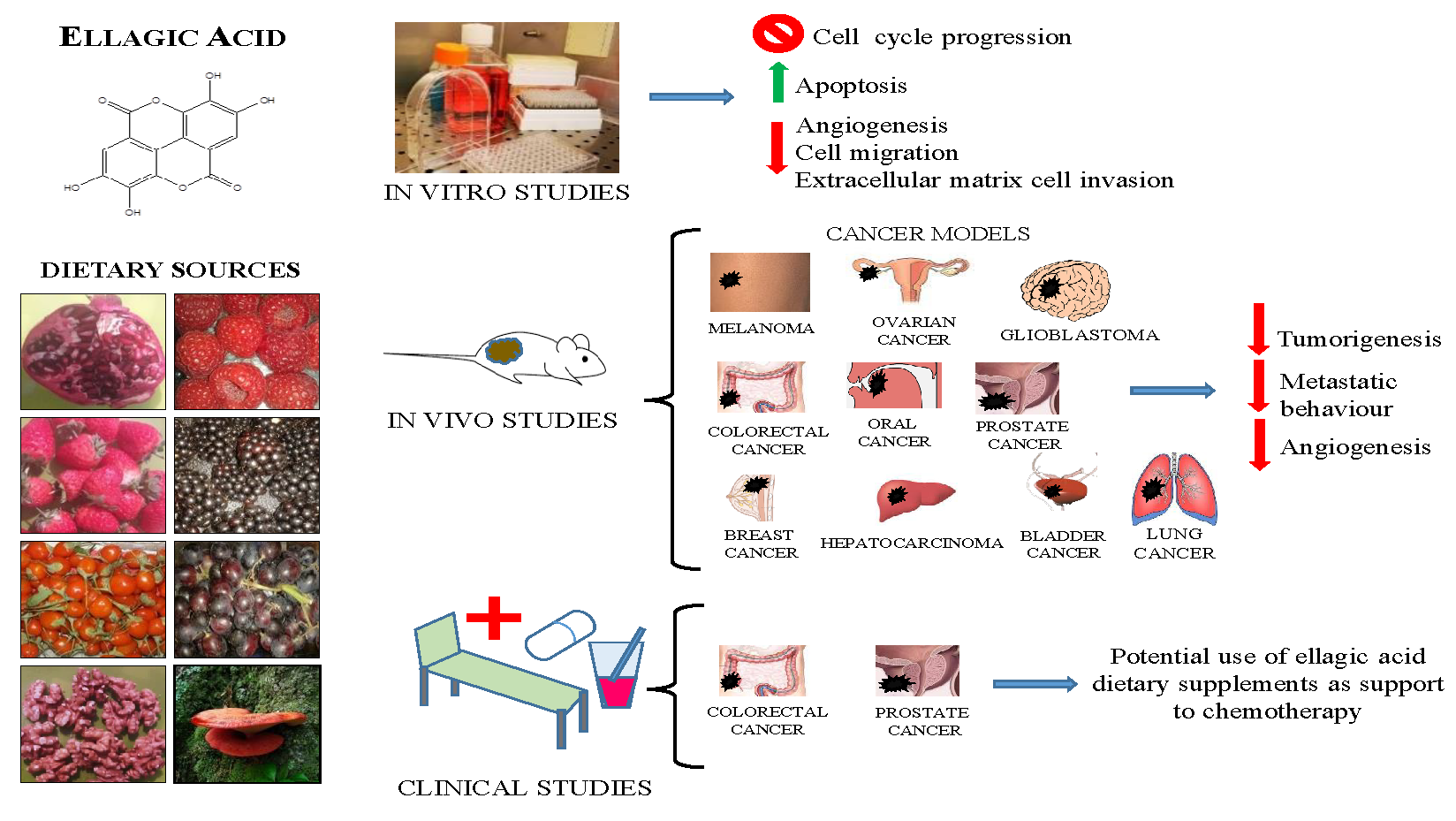
Experimental Evidence of the Antitumor, Antimetastatic and Antiangiogenic Activity of Ellagic Acid

 , ,
, ,
Abstract
1. Introduction
2. In Vitro and In Vivo Activity of Ellagic Acid in Different Tumour Models
2.1. Ellagic Acid and Colorectal Cancer
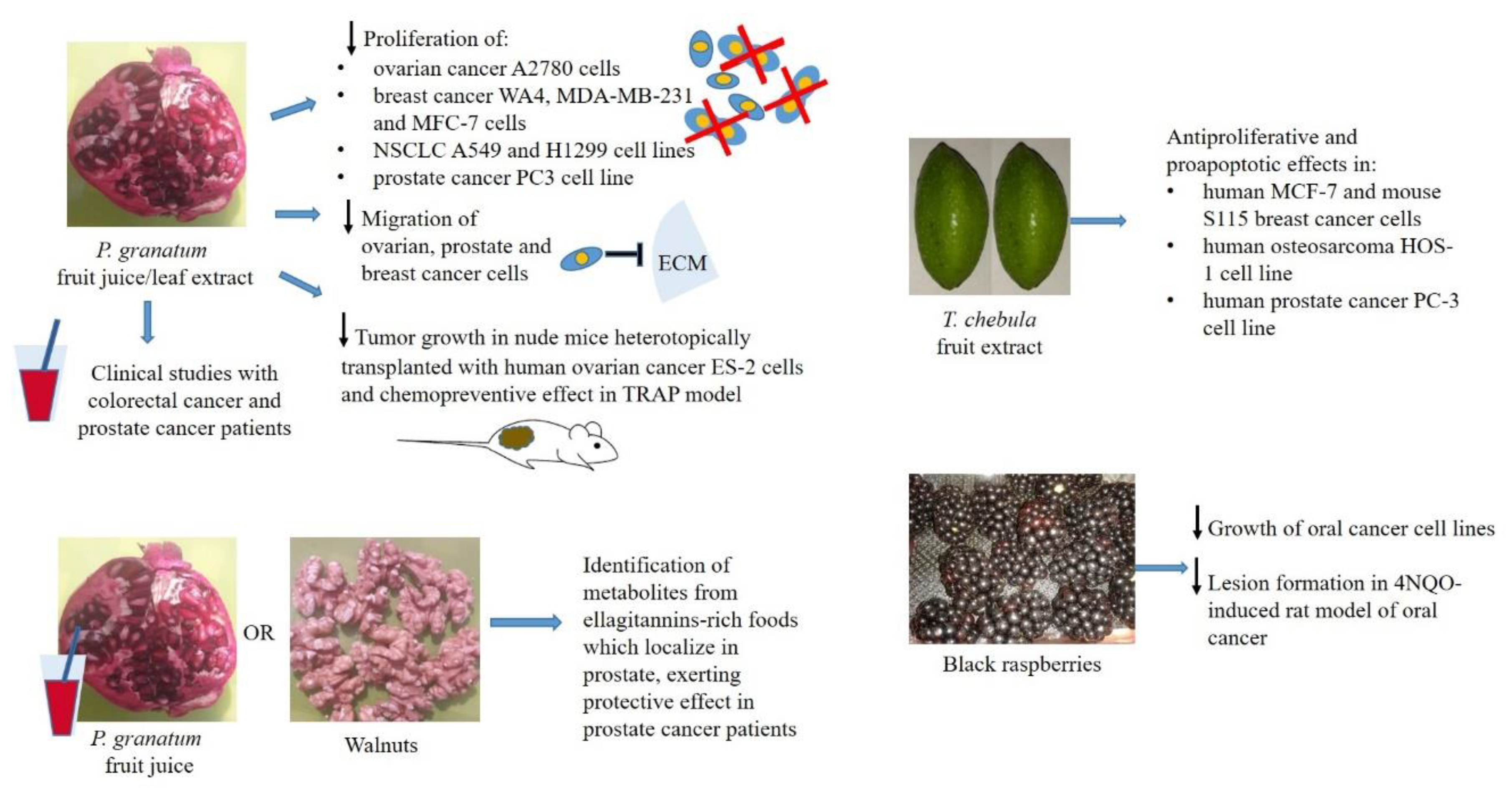
2.2. Ellagic Acid and Breast Cancer
2.3. Ellagic Acid and Prostate Cancer
2.4. Ellagic Acid and Lung Cancer
2.5. Ellagic Acid and Melanoma
2.6. Ellagic Acid and Bladder Cancer
2.7. Ellagic Acid and Hepatocarcinoma
2.8. Ellagic Acid and Ovarian Cancer
2.9. Ellagic Acid and Oral Cancer
2.10. Ellagic Acid and Glioblastoma
2.11. Ellagic Acid and Osteosarcoma
3. Conclusions
Author Contributions
Funding
Conflicts of Interest
References
- Milivojevic, J.; Maksimovic, V.; Nikolic, M.; Bogdanovic, J.; Maletic, R.; Milatovic, D. Chemical and Antioxidant Properties of Cultivated and Wild Fragaria and Rubus Berries. J. Food Qual. 2011, 34, 1–9. [Google Scholar] [CrossRef]
- Ribeiro, B. Phenolic compounds, organic acids profiles and antioxidative properties of beefsteak fungus (Fistulina hepatica). Food Chem. Toxicol. 2007, 45, 1805–1813. [Google Scholar] [CrossRef] [PubMed]
- Cai, Y.; Zhang, J.; Chen, N.G.; Shi, Z.; Qiu, J.; He, C.; Chen, M. Recent Advances in Anticancer Activities and Drug Delivery Systems of Tannins. Med. Res. Rev. 2017, 665–701. [Google Scholar] [CrossRef] [PubMed]
- Lipińska, L.; Klewicka, E.; Sojka, M. The structure, occurrence and biological activity of ellagitannins: A general review. Acta Sci. Pol. Technol. Aliment. 2014, 13, 289–299. [Google Scholar] [CrossRef]
- González-Barrio, R.; Borges, G.; Mullen, W.; Crozier, A. Bioavailability of anthocyanins and ellagitannins following consumption of raspberries by healthy humans and subjects with an ileostomy. J. Agric. Food Chem. 2010, 58, 3933–3939. [Google Scholar] [CrossRef] [PubMed]
- Mao, X.; Wu, L.F.; Zhao, H.J.; Liang, W.Y.; Chen, W.J.; Han, S.X.; Qi, Q.; Cui, Y.P.; Li, S.; Yang, G.H.; et al. Transport of Corilagin, Gallic Acid, and Ellagic Acid from Fructus Phyllanthi Tannin Fraction in Caco-2 Cell Monolayers. Evid. Based Complement. Altern. Med. 2016, 2016, 9205379. [Google Scholar] [CrossRef] [PubMed]
- Seeram, N.P.; Henning, S.M.; Zhang, Y.; Suchard, M.; Li, Z.; Heber, D. Pomegranate juice ellagitannin metabolites are present in human plasma and some persist in urine for up to 48 hours. J. Nutr. 2006, 136, 2481–2485. [Google Scholar] [CrossRef] [PubMed]
- Mertens-Talcott, S.U.; Jilma-Stohlawetz, P.; Rios, J.; Hingorani, L.; Derendorf, H. Absorption, metabolism, and antioxidant effects of pomegranate (Punica granatum L.) polyphenols after ingestion of a standardized extract in healthy human volunteers. J. Agric. Food Chem. 2006, 54, 8956–8961. [Google Scholar] [CrossRef] [PubMed]
- Espín, J.C.; González-Barrio, R.; Cerdá, B.; López-Bote, C.; Rey, A.I.; Tomás-Barberán, F.A. Iberian pig as a model to clarify obscure points in the bioavailability and metabolism of ellagitannins in humans. J. Agric. Food Chem. 2007, 55, 10476–10485. [Google Scholar] [CrossRef] [PubMed]
- World Health Organization. Available online: www.who.int/elena/titles/fruit_vegetables_ncds/en (accessed on 11 November 2018).
- Tennant, D.R.; Davidson, J.; Day, A.J. Phytonutrient intakes in relation to European fruit and vegetable consumption patterns observed in different food surveys. Br. J. Nutr. 2014, 112, 1214–1225. [Google Scholar] [CrossRef] [PubMed]
- Murphy, M.M.; Barraj, L.M.; Herman, D.; Bi, X.; Cheatham, R.; Randolph, R.K. Phytonutrient intake by adults in the United States in relation to fruit and vegetable consumption. J. Acad. Nutr. Diet. 2012, 112, 222–229. [Google Scholar] [CrossRef] [PubMed]
- Mennen, L.I.; Walker, R.; Bennetau-Pelissero, C.; Scalbert, A. Risks and safety of polyphenol consumption. Am. J. Clin. Nutr. 2005, 81, 326S–329S. [Google Scholar] [CrossRef] [PubMed]
- Wada, L.; Boxin, O. Antioxidant activity and phenolic content of Oregon caneberries. J. Agric. Food Chem. 2002, 50, 3495–3500. [Google Scholar] [CrossRef] [PubMed]
- Maatta-Riihinen, K.R.; Kamal-Eldin, A.; Torronen, A.R. Identification and quantification of phenolic compounds in berries of Fragaria and Rubus species (family Rosaceae). J. Agric. Food Chem. 2004, 52, 6178–6187. [Google Scholar] [CrossRef] [PubMed]
- Cordenunsi, B.R.; Genovese, M.I.; Oliveira-do-Nascimento, J.R.; Hassimotto, N.M.A.; Santos, R.J.D.; Lajolo, F.M. Effects of temperature on the chemical composition and antioxidant activity of three strawberry cultivars. Food Chem. 2005, 91, 113–121. [Google Scholar] [CrossRef]
- Zafrilla, P.; Ferreres, F.; Tomas-Barberan, F.A. Effect of processing and storage on the antioxidant ellagic acid derivatives and flavonoids of red raspberry (Rubus idaeus) jams. J. Agric. Food Chem. 2001, 49, 3651–3655. [Google Scholar] [CrossRef] [PubMed]
- Boyle, J.A.; Hsu, L. Identification and quantitation of ellagic acid in muscadine grape juice. Am. J. Enol. Vitic. 1990, 41, 43–47. [Google Scholar]
- Rommel, A.; Wrolstad, R.E. Ellagic acid content of red raspberry juice as influenced by cultivar, processing, and environmental factors. J. Agric. Food Chem. 1993, 41, 1951–1960. [Google Scholar] [CrossRef]
- Gil, M.I.; Tomas-Barberan, F.A.; Hess-Pierce, B.; Holcroft, D.M.; Kader, A.A. Antioxidant activity of pomegranate juice and its relationship with phenolic composition and processing. J. Agric. Food Chem. 2000, 48, 4581–4589. [Google Scholar] [CrossRef] [PubMed]
- Do Carmo Barbosa Mendes de Vasconcelos, M.; Bennett, R.N.; Rosa, E.A.S.; Ventura Ferreira Cardoso, J. Primary and secondary metabolite composition of kernels from three cultivars of Portuguese chestnut (Castanea sativa Mill.) at different stages of industrial transformation. J. Agric. Food Chem. 2007, 55, 3508–3516. [Google Scholar] [CrossRef] [PubMed]
- Li, L.; Tsao, R.; Yang, R.; Liu, C.; Zhu, H.; Young, J.C. Polyphenolic profiles and antioxidant activities of heartnut (Juglans ailanthifolia var. cordiformis) and Persian walnut (Juglans regia L.). J. Agric. Food Chem. 2006, 54, 8033–8040. [Google Scholar] [CrossRef] [PubMed]
- Jakopic, J.; Colaric, M.; Veberic, R.; Hudina, M.; Solar, A.; Stampar, F. How much do cultivar and preparation time influence on phenolics content in walnut liqueur? Food Chem. 2007, 104, 100–105. [Google Scholar] [CrossRef]
- Goldberg, D.M.; Hoffman, B.; Yang, J.; Soleas, G.J. Phenolic constituents, furans, and total antioxidant status of distilled spirits. J. Agric. Food Chem. 1999, 47, 3978–3985. [Google Scholar] [CrossRef] [PubMed]
- World Health Organization. Available online: www.who.int/news-room/fact-sheets/detail/cancer (accessed on 27 October 2018).
- Ferlay, J.; Colombet, M.; Soerjomataram, I.; Dyba, T.; Randi, G.; Bettio, M.; Gavin, A.; Visser, O.; Bray, F. Cancer incidence and mortality patterns in Europe: Estimates for 40 countries and 25 major cancers in 2018. Eur. J. Cancer 2018, 103, 356–387. [Google Scholar] [CrossRef] [PubMed]
- Centers for Disease Control and Prevention. Available online: www.cdc.gov/cancer/colorectal/statistics/index.htm (accessed on 27 October 2018).
- Narayanan, B.A.; Re, G.G. IGF-II down regulation associated cell cycle arrest in colon cancer cells exposed to phenolic antioxidant ellagic acid. Anticancer Res. 2001, 21, 359–364. [Google Scholar] [PubMed]
- Losso, J.N.; Bansode, R.R.; Trappey, A.; Bawadi, H.A.; Truax, R. In vitro anti-proliferative activities of ellagic acid. J. Nutr. Biochem. 2004, 15, 672–678. [Google Scholar] [CrossRef] [PubMed]
- Larrosa, M.; Tomás-Barberán, F.A.; Espín, J.C. The dietary hydrolysable tannin punicalagin releases ellagic acid that induces apoptosis in human colon adenocarcinoma Caco-2 cells by using the mitochondrial pathway. J. Nutr. Biochem. 2006, 17, 611–625. [Google Scholar] [CrossRef] [PubMed]
- Umesalma, S.; Nagendraprabhu, P.; Sudhandiran, G. Ellagic acid inhibits proliferation and induced apoptosis via the Akt signaling pathway in HCT-15 colon adenocarcinoma cells. Mol. Cell. Biochem. 2015, 399, 303–313. [Google Scholar] [CrossRef] [PubMed]
- Zho, J.; Li, G.; Bo, W.; Zhou, Y.; Dang, S.; Wei, J.; Li, X.; Liu, M. Multiple effects of ellagic acid on human colorectal carcinoma cells identified by gene expression profile analysis. Int. J. Oncol. 2017, 50, 613–621. [Google Scholar] [CrossRef] [PubMed]
- González-Sarrías, A.; Espín, J.C.; Tomás-Barberán, F.A.; García-Conesa, M.T. Gene expression, cell cycle arrest and MAPK signalling regulation in Caco-2 cells exposed to ellagic acid and its metabolites, urolithins. Mol. Nutr. Food Res. 2009, 53, 686–698. [Google Scholar] [CrossRef] [PubMed]
- Umesalma, S.; Sudhandiran, G. Differential inhibitory effects of the polyphenol ellagic acid on inflammatory mediators NF-kappaB, iNOS, COX-2, TNF-alpha, and IL-6 in 1,2-dimethylhydrazine-induced rat colon carcinogenesis. Basic Clin. Pharmacol. Toxicol. 2010, 107, 650–655. [Google Scholar] [CrossRef] [PubMed]
- Umesalma, S.; Sudhandiran, G. Ellagic acid prevents rat colon carcinogenesis induced by 1, 2 dimethyl hydrazine through inhibition of AKT-phosphoinositide-3 kinase pathway. Eur. J. Pharmacol. 2011, 660, 249–258. [Google Scholar] [CrossRef] [PubMed]
- Ramírez de Molina, A.; Vargas, T.; Molina, S.; Sánchez, J.; Martínez-Romero, J.; González-Vallinas, M.; Martín-Hernández, R.; Sánchez-Martínez, R.; Gómez de Cedrón, M.; Dávalos, A.; et al. The ellagic acid derivative 4,4′-di-O-methylellagic acid efficiently inhibits colon cancer cell growth through a mechanism involving WNT16. J. Pharmacol. Exp. Ther. 2015, 353, 433–444. [Google Scholar] [CrossRef] [PubMed]
- González-Sarrías, A.; Tomé-Carneiro, J.; Bellesia, A.; Tomás-Barberán, F.A.; Espín, J.C. The ellagic acid-derived gut microbiota metabolite, urolithin A, potentiates the anticancer effects of 5-fluorouracil chemotherapy on human colon cancer cells. Food Funct. 2015, 6, 1460–1469. [Google Scholar] [CrossRef] [PubMed]
- Nuñez-Sánchez, M.A.; González-Sarrías, A.; García-Villalba, R.; Monedero-Saiz, T.; García-Talavera, N.V.; Gómez-Sánchez, M.B.; Sánchez-Álvarez, C.; García-Albert, A.M.; Rodríguez-Gil, F.J.; Ruiz-Marín, M.; et al. Gene expression changes in colon tissues from colorectal cancer patients following the intake of an ellagitannin-containing pomegranate extract: A randomized clinical trial. J. Nutr. Biochem. 2017, 42, 126–133. [Google Scholar] [CrossRef] [PubMed]
- Bray, F.; Ferlay, J.; Soerjomataram, I.; Siegel, R.L.; Torre, L.A.; Jemal, A. Global cancer statistics 2018: GLOBOCAN estimates of incidence and mortality worldwide for 36 cancers in 185 countries. CA Cancer J. Clin. 2018. [Google Scholar] [CrossRef] [PubMed]
- Godet, I.; Gikes, D.M. BRAC1 and BRAC2 mutations and treatment strategies for breast cancer. Integr. Cancer Sci. Ther. 2017, 4. [Google Scholar] [CrossRef]
- Saleem, A.; Husheem, M.; Härkönen, P.; Pihlaja, K. Inhibition of cancer cell growth by crude extract and the phenolics of Terminalia chebula retz. fruit. J. Ethnopharmacol. 2002, 81, 327–336. [Google Scholar] [CrossRef]
- Papoutsi, Z.; Kassi, E.; Tsiapara, A.; Fokialakis, N.; Chrousos, G.P.; Moutsatsou, P. Evaluation of estrogenic/antiestrogenic activity of ellagic acid via the estrogen receptor subtypes ERalpha and ERbeta. J. Agric. Food Chem. 2005, 53, 7715–7720. [Google Scholar] [CrossRef] [PubMed]
- Strati, A.; Papoutsi, Z.; Lianidou, E.; Moutsatsou, P. Effect of ellagic acid on the expression of human telomerase reverse transcriptase (hTERT) alpha+beta+ transcript in estrogen receptor-positive MCF-7 breast cancer cells. Clin. Biochem. 2009, 42, 1358–1362. [Google Scholar] [CrossRef] [PubMed]
- Larrosa, M.; González-Sarrías, A.; García-Conesa, M.T.; Tomás-Barberán, F.A.; Espín, J.C. Urolithins, ellagic acid-derived metabolites produced by human colonic microflora, exhibit estrogenic and antiestrogenic activities. J. Agric. Food Chem. 2006, 54, 1611–1620. [Google Scholar] [CrossRef] [PubMed]
- Zhang, T.; Chen, H.S.; Wang, L.F.; Bai, M.H.; Wang, Y.C.; Jiang, X.F.; Liu, M. Ellagic acid exerts anti-proliferation effects via modulation of Tgf-β/Smad3 signaling in MCF-7 breast cancer cells. Asian. Pac. J. Cancer Prev. 2014, 15, 273–276. [Google Scholar] [CrossRef] [PubMed]
- Chen, H.S.; Bai, M.H.; Zhang, T.; Li, G.D.; Liu, M. Ellagic acid induces cell cycle arrest and apoptosis through TGF-β/Smad3 signaling pathway in human breast cancer MCF-7 cells. Int. J. Oncol. 2015, 46, 1730–1738. [Google Scholar] [CrossRef] [PubMed]
- Shi, L.; Gao, X.; Li, X.; Jiang, N.; Luo, F.; Gu, C.; Chen, M.; Cheng, H.; Liu, P. Ellagic Acid Enhances the Efficacy of PI3K Inhibitor GDC-0941 in Breast Cancer Cells. Curr. Mol Med. 2015, 15, 478–486. [Google Scholar] [CrossRef] [PubMed]
- Dai, Z.; Nair, V.; Khan, M.; Ciolino, H.P. Pomegranate extract inhibits the proliferation and viability of MMTV-Wnt-1 mouse mammary cancer stem cells in vitro. Oncol. Rep. 2010, 24, 1087–1091. [Google Scholar] [CrossRef] [PubMed]
- Dikmen, M.; Ozturk, N.; Ozturk, Y. The antioxidant potency of Punica granatum L. Fruit peel reduces cell proliferation and induces apoptosis on breast cancer. J. Med. Food. 2011, 14, 1638–1646. [Google Scholar] [CrossRef] [PubMed]
- Wang, N.; Wang, Z.Y.; Mo, S.L.; Loo, T.Y.; Wang, D.M.; Luo, H.B.; Yang, D.P.; Chen, Y.L.; Shen, J.G.; Chen, J.P. Ellagic acid, a phenolic compound, exerts anti-angiogenesis effects via VEGFR-2 signaling pathway in breast cancer. Breast Cancer Res. Treat. 2012, 134, 943–955. [Google Scholar] [CrossRef] [PubMed]
- Rocha, A.; Wang, L.; Penichet, M.; Martins-Green, M. Pomegranate juice and specific components inhibit cell and molecular processes critical for metastasis of breast cancer. Breast Cancer Res. Treat. 2012, 136, 647–658. [Google Scholar] [CrossRef] [PubMed]
- Ahire, V.; Kumar, A.; Mishra, K.P.; Kulkarni, G. Ellagic Acid Enhances Apoptotic Sensitivity of Breast Cancer Cells to γ-Radiation. Nutr. Cancer 2017, 69, 904–910. [Google Scholar] [CrossRef] [PubMed]
- Zhang, K.; Bangma, C.H.; Roobol, M.J. Prostate cancer screening in Europe and Asia. Asian J. Urol. 2017, 4, 86–95. [Google Scholar] [CrossRef] [PubMed]
- American Cancer Society. Available online: www.cancer.org/cancer/prostate-cancer/about/key-statistics.html (accessed on 27 October 2018).
- Narayanan, B.A.; Narayanan, N.K.; Stoner, G.D.; Bullock, B.P. Interactive gene expression pattern in prostate cancer cells exposed to phenolic antioxidants. Life Sci. 2002, 70, 1821–1839. [Google Scholar] [CrossRef]
- Malik, A.; Afaq, S.; Shahid, M.; Akhtar, K.; Assiri, A. Influence of ellagic acid on prostate cancer cell proliferation: A caspase-dependent pathway. Asian Pac. J. Trop. Med. 2011, 4, 550–555. [Google Scholar] [CrossRef]
- Eskandari, E.; Heidarian, E.; Amini, S.A.; Saffari-Chaleshtori, J. Evaluating the effects of ellagic acid on pSTAT3, pAKT, and pERK1/2 signaling pathways in prostate cancer PC3 cells. J. Cancer Res. Ther. 2016, 12, 1266–1271. [Google Scholar] [CrossRef] [PubMed]
- Vicinanza, R.; Zhang, Y.; Henning, S.M.; Heber, D. Pomegranate Juice Metabolites, Ellagic Acid and Urolithin A, Synergistically Inhibit Androgen-Independent Prostate Cancer Cell Growth via Distinct Effects on Cell Cycle Control and Apoptosis. Evid. Based Complement. Altern. Med. 2013, 2013. [Google Scholar] [CrossRef] [PubMed]
- Vanella, L.; Di Giacomo, C.; Acquaviva, R.; Barbagallo, I.; Cardile, V.; Kim, D.H.; Abraham, N.G.; Sorrenti, V. Apoptotic markers in a prostate cancer cell line: Effect of ellagic acid. Oncol. Rep. 2013, 30, 2804–2810. [Google Scholar] [CrossRef] [PubMed]
- Lansky, E.P.; Harrison, G.; Froom, P.; Jiang, W.G. Pomegranate (Punica granatum) pure chemicals show possible synergistic inhibition of human PC-3 prostate cancer cell invasion across Matrigel. Investig. New Drugs 2005, 23, 121–122. [Google Scholar] [CrossRef] [PubMed]
- Pitchakarn, P.; Chewonarin, T.; Ogawa, K.; Suzuki, S.; Asamoto, M.; Takahashi, S.; Shirai, T.; Limtrakul, P. Ellagic acid inhibits migration and invasion by prostate cancer cell lines. Asian Pac. J. Cancer Prev. 2013, 14, 2859–2863. [Google Scholar] [CrossRef] [PubMed]
- Wang, L.; Ho, J.; Glackin, C.; Martins-Green, M. Specific pomegranate juice components as potential inhibitors of prostate cancer metastasis. Transl. Oncol. 2012, 5, 344–355. [Google Scholar] [CrossRef] [PubMed]
- Vanella, L.; Di Giacomo, C.; Acquaviva, R.; Barbagallo, I.; Li Volti, G.; Cardile, V.; Abraham, N.G.; Sorrenti, V. Effects of ellagic Acid on angiogenic factors in prostate cancer cells. Cancers 2013, 5, 726–738. [Google Scholar] [CrossRef] [PubMed]
- Wang, L.; Li, W.; Lin, M.; Garcia, M.; Mulholland, D.; Lilly, M.; Martins-Green, M. Luteolin, ellagic acid and punicic acid are natural products that inhibit prostate cancer metastasis. Carcinogenesis 2014, 35, 2321–2330. [Google Scholar] [CrossRef] [PubMed]
- Naiki-Ito, A.; Chewonarin, T.; Tang, M.; Pitchakarn, P.; Kuno, T.; Ogawa, K.; Asamoto, M.; Shirai, T.; Takahashi, S. Ellagic acid, a component of pomegranate fruit juice, suppresses androgen-dependent prostate carcinogenesis via induction of apoptosis. Prostate 2015, 75, 151–160. [Google Scholar] [CrossRef] [PubMed]
- Falsaperla, M.; Morgia, G.; Tartarone, A.; Ardito, R.; Romano, G. Support ellagic acid therapy in patients with hormone refractory prostate cancer (HRPC) on standard chemotherapy using vinorelbine and estramustine phosphate. Eur. Urol. 2005, 47, 449–454. [Google Scholar] [CrossRef] [PubMed]
- González-Sarrías, A.; Giménez-Bastida, J.A.; García-Conesa, M.T.; Gómez-Sánchez, M.B.; García-Talavera, N.V.; Gil-Izquierdo, A.; Sánchez-Alvarez, C.; Fontana-Compiano, L.O.; Morga-Egea, J.P.; Pastor-Quirante, F.A.; et al. Occurrence of urolithins, gut microbiota ellagic acid metabolites and proliferation markers expression response in the human prostate gland upon consumption of walnuts and pomegranate juice. Mol. Nutr. Food Res. 2010, 54, 311–322. [Google Scholar] [CrossRef] [PubMed]
- Freedland, S.J.; Carducci, M.; Kroeger, N.; Partin, A.; Rao, J.Y.; Jin, Y.; Kerkoutian, S.; Wu, H.; Li, Y.; Creel, P.; et al. A double-blind, randomized, neoadjuvant study of the tissue effects of POMx pills in men with prostate cancer before radical prostatectomy. Cancer Prev. Res. 2013, 6, 1120–1127. [Google Scholar] [CrossRef] [PubMed]
- Paller, C.J.; Ye, X.; Wozniak, P.J.; Gillespie, B.K.; Sieber, P.R.; Greengold, R.H.; Stockton, B.R.; Hertzman, B.L.; Efros, M.D.; Roper, R.P.; et al. A randomized phase II study of pomegranate extract for men with rising PSA following initial therapy for localized prostate cancer. Prostate Cancer Prostatic Dis. 2013, 16, 50–55. [Google Scholar] [CrossRef] [PubMed]
- Pantuck, A.J.; Leppert, J.T.; Zomorodian, N.; Aronson, W.; Hong, J.; Barnard, R.J.; Seeram, N.; Liker, H.; Wang, H.; Elashoff, R.; et al. Phase II study of pomegranate juice for men with rising prostate-specific antigen following surgery or radiation for prostate cancer. Clin. Cancer Res. 2006, 12, 4018–4026. [Google Scholar] [CrossRef] [PubMed]
- Vanella, L.; Barbagallo, I.; Acquaviva, R.; Di Giacomo, C.; Cardile, V.; Abraham, N.G.; Sorrenti, V. Ellagic acid: Cytodifferentiating and antiproliferative effects in human prostatic cancer cell lines. Curr. Pharm. Des. 2013, 19, 2728–2736. [Google Scholar] [CrossRef] [PubMed]
- Dorantes-Heredia, R.; Ruiz-Morales, J.M.; Cano-García, F. Histopathological transformation to small-cell lung carcinoma in non small cell lung carcinoma tumors. Transl. Lung Cancer Res. 2016, 5, 401–412. [Google Scholar] [CrossRef] [PubMed]
- Khanduja, K.L.; Gandhi, R.K.; Pathania, V.; Syal, N. Prevention of N-nitrosodiethylamine-induced lung tumorigenesis by ellagic acid and quercetin in mice. Food Chem. Toxicol. 1999, 37, 313–318. [Google Scholar] [CrossRef]
- Li, Y.; Yang, F.; Zheng, W.; Hu, M.; Wang, J.; Ma, S.; Deng, Y.; Luo, Y.; Ye, T.; Yin, W. Punica granatum (pomegranate) leaves extract induces apoptosis through mitochondrial intrinsic pathway and inhibits migration and invasion in non-small cell lung cancer in vitro. Biomed. Pharmacother. 2016, 80, 227–235. [Google Scholar] [CrossRef] [PubMed]
- Liu, Q.; Liang, X.; Niu, C.; Wang, X. Ellagic acid promotes A549 cell apoptosis via regulating the phosphoinositide 3-kinase/protein kinase B pathway. Exp. Ther. Med. 2018, 16, 347–352. [Google Scholar] [CrossRef] [PubMed]
- Zhang, Y.L.; Yuan, J.Q.; Wang, K.F.; Fu, X.H.; Han, X.R.; Threapleton, D.; Yang, Z.Y.; Mao, C.; Tang, J.L. The prevalence of EGFR mutation in patients with non-small cell lung cancer: A systematic review and meta-analysis. Oncotarget 2016, 7, 78985–78993. [Google Scholar] [CrossRef] [PubMed]
- Tetsu, O.; Hangauer, M.J.; Phuchareon, J.; Eisele, D.W.; McCormick, F. Drug Resistance to EGFR Inhibitors in Lung Cancer. Chemother 2016, 61, 223–235. [Google Scholar] [CrossRef] [PubMed]
- Jeong, H.; Phan, A.N.H.; Choi, J.W. Anti-cancer Effects of Polyphenolic Compounds in Epidermal Growth Factor Receptor Tyrosine Kinase Inhibitor-resistant Non-small Cell Lung Cancer. Pharmacogn. Mag. 2017, 13, 595–599. [Google Scholar] [CrossRef] [PubMed]
- World Health Organization. Available online: http://www.who.int/uv/faq/skincancer/en/index1.html (accessed on 28 October 2018).
- Mishra, H.; Mishra, P.K.; Ekielski, A.; Jaggi, M.; Iqbal, Z.; Talegaonkar, S. Melanoma treatment: From conventional to nanotechnology. J. Cancer Res. Clin. Oncol. 2018. [Google Scholar] [CrossRef] [PubMed]
- Shimogaki, H.; Tanaka, Y.; Tamai, H.; Masuda, M. In vitro and in vivo evaluation of ellagic acid on melanogenesis inhibition. Int. J. Cosmet. Sci. 2000, 22, 291–303. [Google Scholar] [CrossRef] [PubMed]
- Jensen, J.D.; Dunn, J.H.; Luo, Y.; Liu, W.; Fujita, M.; Dellavalle, R.P. Ellagic acid inhibits melanoma growth in vitro. Dermatol. Rep. 2011, 3. [Google Scholar] [CrossRef] [PubMed]
- Yoshioka, S.; Terashita, T.; Yoshizumi, H.; Shirasaka, N. Inhibitory effects of whisky polyphenols on melanogenesis in mouse B16 melanoma cells. Biosci. Biotechnol. Biochem. 2011, 75, 2278–2282. [Google Scholar] [CrossRef] [PubMed]
- Ceci, C.; Tentori, L.; Atzori, M.G.; Lacal, P.M.; Bonanno, E.; Scimeca, M.; Cicconi, R.; Mattei, M.; de Martino, M.G.; Vespasiani, G.; et al. Ellagic Acid Inhibits Bladder Cancer Invasiveness and In Vivo Tumor Growth. Nutrients 2016, 8. [Google Scholar] [CrossRef] [PubMed]
- Ruffini, F.; Graziani, G.; Levati, L.; Tentori, L.; D’Atri, S.; Lacal, P.M. Cilengitide downmodulates invasiveness and vasculogenic mimicry of neuropilin 1 expressing melanoma cells through the inhibition of αvβ5 integrin. Int. J. Cancer 2015, 136, E545–E558. [Google Scholar] [CrossRef] [PubMed]
- Ruffini, F.; D’Atri, S.; Lacal, P.M. Neuropilin-1 expression promotes invasiveness of melanoma cells through vascular endothelial growth factor receptor-2-dependent mechanisms. Int. J. Oncol. 2013, 43, 297–306. [Google Scholar] [CrossRef] [PubMed]
- Graziani, G.; Lacal, P.M. Neuropilin-1 as Therapeutic Target for Malignant Melanoma. Front. Oncol. 2015, 5, 125. [Google Scholar] [CrossRef] [PubMed]
- Wang, S.T.; Chang, W.C.; Hsu, C.; Su, N.W. Antimelanogenic Effect of Urolithin A and Urolithin B, the Colonic Metabolites of Ellagic Acid, in B16 Melanoma Cells. J. Agric. Food Chem. 2017, 65, 6870–6876. [Google Scholar] [CrossRef] [PubMed]
- Ren, Y.; Wei, M.; Still, P.C.; Yuan, S.; Deng, Y.; Chen, X.; Himmeldirk, K.; Kinghorn, A.D.; Yu, J. Synthesis and Antitumor Activity of Ellagic Acid Peracetate. ACS Med. Chem. Lett. 2012, 3, 631–636. [Google Scholar] [CrossRef]
- Kim, S.; Liu, Y.; Gaber, M.W.; Bumgardner, J.D.; Haggard, W.O.; Yang, Y. Development of chitosan-ellagic acid films as a local drug delivery system to induce apoptotic death of human melanoma cells. J. Biomed. Mater. Res. B Appl. Biomater. 2009, 90, 145–155. [Google Scholar] [CrossRef] [PubMed]
- Antoni, S.; Ferlay, J.; Soerjomataram, I.; Znaor, A.; Ahemedin, J.; Bray, F. Bladder cancer incidence and mortality: A global overview and recent trends. Eur. Urol. 2017, 71, 96–108. [Google Scholar] [CrossRef] [PubMed]
- Lin, S.S.; Hung, C.F.; Tyan, Y.S.; Yang, C.C.; Hsia, T.C.; Yang, M.D.; Chung, J.G. Ellagic acid inhibits arylamine N-acetyltransferase activity and DNA adduct formation in human bladder tumor cell lines (T24 and TSGH 8301). Urol. Res. 2001, 29, 371–376. [Google Scholar] [CrossRef] [PubMed]
- Li, T.M.; Chen, G.W.; Su, C.C.; Lin, J.G.; Yeh, C.C.; Cheng, K.C.; Chung, J.G. Ellagic acid induced p53/p21 expression, G1 arrest and apoptosis in human bladder cancer T24 cells. Anticancer Res. 2005, 25, 971–979. [Google Scholar] [PubMed]
- Ho, C.C.; Huang, A.C.; Yu, C.S.; Lien, J.C.; Wu, S.H.; Huang, Y.P.; Huang, H.Y.; Kuo, J.H.; Liao, W.Y.; Yang, J.S.; et al. Ellagic acid induces apoptosis in TSGH8301 human bladder cancer cells through the endoplasmic reticulum stress- and mitochondria-dependent signaling pathways. Environ. Toxicol. 2014, 29, 1262–1274. [Google Scholar] [CrossRef] [PubMed]
- Tentori, L.; Vergati, M.; Muzi, A.; Levati, L.; Ruffini, F.; Forini, O.; Vernole, P.; Lacal, P.M.; Graziani, G. Generation of an immortalized human endothelial cell line as a model of neovascular proliferating endothelial cells to assess chemosensitivity to anticancer drugs. Int. J. Oncol. 2005, 27, 525–535. [Google Scholar] [CrossRef] [PubMed]
- Qiu, Z.; Zhou, B.; Jin, L.; Yu, H.; Liu, L.; Liu, Y.; Qin, C.; Xie, S.; Zhu, F. In vitro antioxidant and antiproliferative effects of ellagic acid and its colonic metabolite, urolithins, on human bladder cancer T24 cells. Food Chem. Toxicol. 2013, 59, 428–437. [Google Scholar] [CrossRef] [PubMed]
- Liberal, J.; Carmo, A.; Gomes, C.; Cruz, M.T.; Batista, M.T. Urolithins impair cell proliferation, arrest the cell cycle and induce apoptosis in UMUC3 bladder cancer cells. Investig. New Drugs 2017, 35, 671–681. [Google Scholar] [CrossRef] [PubMed]
- World Cancer Research Fund. Available online: www.wcrf.org/dietandcancer/cancer-trends/liver-cancer-statistics (accessed on 27 October 2018).
- Mohammadian, M.; Soroush, A.; Mohammadian-Hafshejani, A.; Towhidi, F.; Hadadian, F.; Salehiniya, H. Incidence and Mortality of Liver Cancer and Their Relationship with Development in Asia. Asian Pac. J. Cancer Prev. 2016, 17, 2041–2047. [Google Scholar] [CrossRef] [PubMed]
- Vogel, A.; Cervantes, A.; Chau, I.; Daniele, B.; Llovet, J.; Meyer, T.; Nault, J.-C.; Neumann, U.; Ricke, J.; Sangro, B.; et al. ESMO Guidelines Committee. Hepatocellular carcinoma: ESMO Clinical Practice Guidelines for diagnosis, treatment and follow-up. Ann. Oncol. 2018, 29, iv238–iv255. [Google Scholar] [CrossRef] [PubMed]
- Zhang, H.; Guo, Z.J.; Xu, W.M.; You, X.J.; Han, L.; Han, Y.X.; Dai, L.J. Antitumor effect and mechanism of an ellagic acid derivative on the HepG2 human hepatocellular carcinoma cell line. Oncol. Lett. 2014, 7, 525–530. [Google Scholar] [CrossRef] [PubMed]
- Das, U.; Biswas, S.; Chattopadhyay, S.; Chakraborty, A.; Dey Sharma, R.; Banerji, A.; Dey, S. Radiosensitizing effect of ellagic acid on growth of Hepatocellular carcinoma cells: An in vitro study. Sci. Rep. 2017, 7. [Google Scholar] [CrossRef] [PubMed]
- Abd-Rabou, A.A.; Ahmed, H.H. CS-PEG decorated PLGA nano-prototype for delivery of bioactive compounds: A novel approach for induction of apoptosis in HepG2 cell line. Adv. Med. Sci. 2017, 62, 357–367. [Google Scholar] [CrossRef] [PubMed]
- Hussein, R.H.; Khalifa, F.K. The protective role of ellagitannins flavonoids pretreatment against N-nitrosodiethylamine induced-hepatocellular carcinoma. Saudi. J. Biol. Sci. 2014, 21, 589–596. [Google Scholar] [CrossRef]
- Zaazaa, A.M.; Lokman, M.S.; Shalby, A.B.; Ahmed, H.H.; El-Toumy, S.A. Ellagic Acid Holds Promise Against Hepatocellular Carcinoma in an Experimental Model: Mechanisms of Action. Asian Pac. J. Cancer Prev. 2018, 19, 387–393. [Google Scholar] [CrossRef] [PubMed]
- Torre, L.A.; Trabert, B.; DeSantis, C.E.; Miller, K.D.; Samimi, G.; Runowicz, C.D.; Gaudet, M.M.; Jemal, A.; Siegel, R.L. Ovarian cancer statistics, 2018. CA Cancer J. Clin. 2018, 68, 284–296. [Google Scholar] [CrossRef] [PubMed]
- Chung, Y.C.; Lu, L.C.; Tsai, M.H.; Chen, Y.J.; Chen, Y.Y.; Yao, S.P.; Hsu, C.P. The inhibitory effect of ellagic Acid on cell growth of ovarian carcinoma cells. Evid. Based Complement. Altern. Med. 2013, 2013. [Google Scholar] [CrossRef] [PubMed]
- Engelke, L.H.; Hamacher, A.; Proksch, P.; Kassack, M.U. Ellagic Acid and Resveratrol Prevent the Development of Cisplatin Resistance in the Epithelial Ovarian Cancer Cell Line A2780. J. Cancer 2016, 7, 353–363. [Google Scholar] [CrossRef] [PubMed]
- Liu, H.; Zeng, Z.; Wang, S.; Li, T.; Mastriani, E.; Li, Q.H.; Bao, H.X.; Zhou, Y.J.; Wang, X.; Liu, Y.; et al. Main components of pomegranate, ellagic acid and luteolin, inhibit metastasis of ovarian cancer by down-regulating MMP2 and MMP9. Cancer Biol. Ther. 2017, 18, 990–999. [Google Scholar] [CrossRef] [PubMed]
- The Oral Cancer Foundation. Available online: www.report.nih.gov/nihfactsheets/ViewFactSheet.aspx?csid=106 (accessed on 27 October 2018).
- Han, C.; Ding, H.; Casto, B.; Stoner, G.D.; D’Ambrosio, S.M. Inhibition of the growth of premalignant and malignant human oral cell lines by extracts and components of black raspberries. Nutr. Cancer 2005, 51, 207–217. [Google Scholar] [CrossRef] [PubMed]
- Weisburg, J.H.; Schuck, A.G.; Reiss, S.E.; Wolf, B.J.; Fertel, S.R.; Zuckerbraun, H.L.; Babich, H. Ellagic Acid, a Dietary Polyphenol, Selectively Cytotoxic to HSC-2 Oral Carcinoma Cells. Anticancer Res. 2013, 33, 1829–1836. [Google Scholar] [PubMed]
- Arulmozhi, V.; Pandian, K.; Mirunalini, S. Ellagic acid encapsulated chitosan nanoparticles for drug delivery system in human oral cancer cell line (KB). Colloids Surf. B Biointerfaces 2013, 110, 313–320. [Google Scholar] [CrossRef] [PubMed]
- Anitha, P.; Priyadarsini, R.V.; Kavitha, K.; Thiyagarajan, P.; Nagini, S. Ellagic acid coordinately attenuates Wnt/β-catenin and NF-κB signaling pathways to induce intrinsic apoptosis in an animal model of oral oncogenesis. Eur. J. Nutr. 2013, 52, 75–84. [Google Scholar] [CrossRef] [PubMed]
- Kowshik, J.; Giri, H.; Kishore, T.K.; Kesavan, R.; Vankudavath, R.N.; Reddy, G.B.; Dixit, M.; Nagini, S. Ellagic acid inhibits VEGF/VEGFR2, PI3K/Akt and MAPK signaling cascades in the hamster cheek pouch carcinogenesis model. Anticancer Agents Med. Chem. 2014, 14, 1249–1260. [Google Scholar] [CrossRef] [PubMed]
- Oghumu, S.; Casto, B.C.; Ahn-Jarvis, J.; Weghorst, L.C.; Maloney, J.; Geuy, P.; Horvath, K.Z.; Bollinger, C.E.; Warner, B.M.; Summersgill, K.F.; et al. Inhibition of Pro-inflammatory and Anti-apoptotic Biomarkers during Experimental Oral Cancer Chemoprevention by Dietary Black Raspberries. Front. Immunol. 2017, 8. [Google Scholar] [CrossRef] [PubMed]
- Crocetti, E.; Trama, A.; Stiller, C.; Caldarella, A.; Soffietti, R.; Jaal, J.; Weber, D.C.; Ricardi, U.; Slowinski, J.; Brandes, A.; et al. Epidemiology of glial and non-glial brain tumours in Europe. Eur. J. Cancer 2012, 48, 1532–1542. [Google Scholar] [CrossRef] [PubMed]
- Tamimi, A.F.; Juweid, M. Epidemiology and Outcome of Glioblastoma. In Glioblastoma; De Vleeschouwer, S., Ed.; Codon Publications: Brisbane, Australia, 2017. [Google Scholar]
- Wang, D.; Chen, Q.; Liu, B.; Li, Y.; Tan, Y.; Yang, B. Ellagic acid inhibits proliferation and induces apoptosis in human glioblastoma cells. Acta Cir. Bras. 2016, 31, 143–149. [Google Scholar] [CrossRef] [PubMed]
- Wang, D.; Chen, Q.; Tan, Y.; Liu, B.; Liu, C. Ellagic acid inhibits human glioblastoma growth in vitro and in vivo. Oncol. Rep. 2017, 37, 1084–1092. [Google Scholar] [CrossRef] [PubMed]
- Anderson, M.E. Update on survival in osteosarcoma. Orthop. Clin. North Am. 2016, 47, 283–292. [Google Scholar] [CrossRef]
- Saraf, A.J.; Fenger, J.M.; Roberts, R.D. Osteosarcoma: Accelerating Progress Makes for a Hopeful Future. Front. Oncol. 2018, 8. [Google Scholar] [CrossRef] [PubMed]
- Han, D.H.; Lee, M.J.; Kim, J.H. Antioxidant and apoptosis-inducing activities of ellagic acid. Anticancer Res. 2006, 26, 3601–3606. [Google Scholar] [PubMed]
- Xu, W.; Xu, J.; Wang, T.; Liu, W.; Wei, H.; Yang, X.; Yan, W.; Zhou, W.; Xiao, J. Ellagic acid and Sennoside B inhibit osteosarcoma cell migration, invasion and growth by repressing the expression of c-Jun. Oncol. Lett. 2018, 16, 898–904. [Google Scholar] [CrossRef] [PubMed]
- Vlachojannis, C.; Zimmermann, B.F.; Chrubasik-Hausmann, S. Efficacy and safety of pomegranate medicinal products for cancer. Evid. Based Complement. Altern. Med. 2015, 2015. [Google Scholar] [CrossRef] [PubMed]
- Heilman, J.; Andreux, P.; Tran, N.; Rinsch, C.; Blanco-Bose, W. Safety assessment of Urolithin A, a metabolite produced by the human gut microbiota upon dietary intake of plant derived ellagitannins and ellagic acid. Food Chem. Toxicol. 2017, 108, 289–297. [Google Scholar] [CrossRef] [PubMed]

| Food or Beverage | Mean Content | S.D. a | Reference | |
|---|---|---|---|---|
| Berries | Black Raspberry, raw | 38.00 mg/100 g FW b | 0.00 | [14] |
| Blackberry, raw | 43.67 mg/100 g FW | 24.54 | [14] | |
| Cloudberry, raw | 15.30 mg/100 g FW | 0.00 | [15] | |
| Red raspberry, raw | 2.12 mg/100 g FW | 8.35 | [15] | |
| Strawberry, raw | 1.24 mg/100 g FW | 0.80 | [16] | |
| Red raspberry, jam | 1.14 mg/100 g FW | 0.00 | [17] | |
| Berry juices | Black Muscadine grape, pure juice | 0.90 mg/100 mL | 0.95 | [18] |
| Green Muscadine grape, pure juice | 0.93 mg/100 mL | 0.78 | [18] | |
| Red raspberry, pure juice | 0.84 mg/100 mL | 1.10 | [19] | |
| Tropical fruit juices | Pomegranate, pure juice | 2.06 mg/100 mL | 1.53 | [20] |
| Pomegranate, juice from concentrate | 17.28 mg/100 mL | 0.00 | [20] | |
| Nuts | Chestnut, raw | 735.44 mg/100 g FW | 240.69 | [21] |
| Japanese walnut | 15.67 mg/100 g FW | 7.64 | [22] | |
| Walnut | 28.50 mg/100 g FW | 4.95 | [22] | |
| Alcoholic beverages | Walnut, liquor | 1.22 mg/100 mL | 0.42 | [23] |
| Cognac | 1.13 mg/100 mL | 1.42 | [24] | |
| Rum | 0.21 mg/100 mL | 0.00 | [24] | |
| Scotch, whisky | 0.82 mg/100 mL | 0.32 | [24] | |
| Mushrooms | Fistulina hepatica | 2378 mg/kg DB c | 59,3 | [2] |
| Formulation | Concentration | Biological Effect | Experimental Model | Reference |
|---|---|---|---|---|
| Pure EA | 30 µg/mL; 7.5–37.5 µg/mL | Growth inhibition | Human colon cancer cell lines: SW480, HCT-116 | [28,32] |
| 6–36 µg/mL | Cell cycle arrest in: G2/M phase | Human colon HCT-15 cancer cell line | [31] | |
| Pomegranate leaf extract | 6.25–200 µg/mL | Human NSCLC A549 and H1299 cell lines; mouse Lewis lung carcinoma LL/2.cell line | [74] | |
| Pure EA | 0.3–15 µg/mL; 1.5–22.5 µg/mL | G0/G1 phase | Human bladder cancer T24 and TSGH8304 cell lines | [93,94] |
| 3–30 µg/mL | G1 phase | Human ovarian carcinoma ES-2, PA-1 cell lines | [107] | |
| 6 µg/mL | Human osteosarcoma Saos-2, MG63 cell lines | [124] | ||
| 15 µg/mL | Human melanoma 1205Lu, WM852c, A375 cell lines | [82] | ||
| 1.5–6 µg/mL | Human NSCLC A549 cell line | [75] | ||
| 15–30 µg/mL | G1/S phase | Human hepatocarcinoma HepG2 cell line | [101] | |
| 4.5–18 µg/mL | S phase | Human glioblastoma U251, U87, U118 cell lines | [119] | |
| Human prostate cancer PC-3 and DU-145 cell lines | [56] | |||
| 0.3–9 µg/mL; 6–36 µg/mL; 7.5–37.5 µg/mL | Apoptosis induction, via intrinsic apoptotic pathway activation | Human colon cancer cell lines: Caco-2; HCT-15; HCT-116 | [30,31,32] | |
| 3–30 µg/mL | Human ovarian carcinoma ES-2, PA-1 cell lines | [107] | ||
| 15–30 µg/mL | Human glioblastoma U251, U87, U118 cell lines | [119] | ||
| 7.5–30 µg/mL | Human melanoma 1205Lu, WM852c, A375 cell lines | [82] | ||
| 15–45 µg/mL | Human oral carcinoma HSC-2 cell line | [112] | ||
| 0.3–15 µg/mL; 1.5–22.5 µg/mL | Human bladder cancer T24 and TSGH8304 cell lines | [93,94] | ||
| 3–30 µg/mL; 0–30 µg/mL; 4.5–18 µg/mL | Human prostate cancer PC-3, LNCaP, DU-145 cell lines | [56,57,58,59] | ||
| Pomegranate leaf extract | 6.25–200 µg/mL | Human NSCLC A549 and H1299 cell lines; mouse Lewis lung carcinoma LL/2 cell line | [74] | |
| Pure EA | 30 µg/mL | Inhibition of tumour cell migration, invasion, metastasis, due to MMP-2, MMP-9, VEFGs downregulation | Human colon cancer Caco-2 cell line | [30] |
| 6 µg/mL | Human osteosarcoma Saos-2 and MG63 cell lines | [124] | ||
| Pomegranate juice; EA; Lutheolin | 5–10%; 5–15 µg/mL; 5–15 µg/mL | Human ovarian cancer A2780 cell line | [109] | |
| 3–9 µg/mL | Human bladder cancer cell lines: T24, UMUC3,5637, HT-1376 | [84] | ||
| Pure EA | 4 µg/mL; 7.5–30 µg/mL | Human PC-3 and rat PLS-10 prostate cancer lines | [60,61] | |
| 6.25–200 µg/mL | Human NSCLC H1299 cell line | [74] | ||
| 3 µg/mL | Enhanced sensibility to radiotherapy | Human breast cancer MCF7 cell line | [52] | |
| 3 µg/mL | Human hepatocarcinoma HepG2 cell line | [102] | ||
| Pomegranate juice; Lutheolin+EA+ punicic acid | 1–5%; 1–8 µg/mL; 4–8 µg/mL | Inhibition of genes promoting tumour cell migration and up-regulation of genes promoting cell adhesion | Human breast cancer MDA-MB-231 and MCF7 cell lines | [51] |
| Pure EA | 7.5–15 µg/mL | Human prostate cancer DU145, PC3, LNCaP cell lines | [62,63] | |
| 30 µg/mL | DNA damage, p53 and p21 activation, IGF-II downregulation; Increased production of ROS | Human colon cancer SW480 and HCT-115 cell lines | [28,31] | |
| 3–30 µg/mL | Human ovarian carcinoma ES-2 and PA-1 cell lines | [107] | ||
| 0.3–15 µg/mL | Human bladder cancer T24 and TSGH8301 cell lines | [82,83] | ||
| 30–36 µg/mL | Neuroendocrine differentiation of cancer cells | Human prostate cancer LnCap and DU145 cell lines | [57] | |
| 3–30 µg/mL | Overcome of TKI-resistance | Human NSCLC HCC827 clones | [76] | |
| 0.96–3 µg/mL | Enhanced sensibility to doxorubicin and cisplatin | Human ovarian cancer ES-2, PA-1, A2780 cell lines | [107,108] | |
| 1.5–18 µg/mL | Enhanced sensibility to mitomycin C | Human bladder cancer T24, UMUC3, 5637, HT-1376 cell lines | [84] | |
| 0.3–30 ng/ml; 0.3 µg/mL–3 ng/mL | Estrogenic; anti-estrogenic activity | Human breast cancer MCF-7 cell line | [42,43] | |
| 3–9 µg/mL; 15 µg/mL | Modulation of TGF-β; Smads and PI3K pathways | Human breast cancer MCF-7 cell line | [45,46,47] | |
| 6–18 µg/mL | Down-regulation of PDL-1 | Human bladder cancer T24, UMUC3,5637, HT-1376 cell lines | [84] | |
| 30 µg/mL | Changes in gene expression | Human colon cancer HCT-116 and Caco-2 cell lines | [32,33] | |
| EA; metabolites UroA and UroB | 3 µg/mL; 12 µg/mL | Human prostate cancer LNCaP cell line | [58] | |
| EA, UroA, UroB, 8-OMe-urolithin A | 30 µg/mL | Antiproliferative effect by p38-MAPK and/or c-Jun medicated caspase-3 activation | Human bladder cancer T24 and UMUC3 cell lines | [96,97] |
| EA and UroA, UroB, UroC | 0.3–36 µg/mL | Cell cycle arrest, increasing apoptotic cell death and inhibiting PI3K/Akt and MAPK signalling pathway | Human NSCLC A549 cell line | [75] |
| UroA and UroB | 0.15–22.5 µg/mL | Inhibition of viability and tysosinase activity | Murine melanoma B16 cell line | [88] |
| UroA | 0.075–60 µg/mL | Estrogenic activity | Human breast cancer MCF-7 cell line | [44] |
| EA derivative 4,4′-DiOMEA | 3 µg/mL | Inhibition of cell proliferation, enhancing sensibility to 5-FU and 5’DFUR | Human colon cancer SW-620, SW-620-5FuResistant, HT-29, Caco-2, SW-480 cell lines | [36,37] |
| EA-encapsulated chitosan nanoparticles | 0.03–15 µg/mL | Antiproliferative/apoptotic effects | Human oral cancer KB cell line | [113] |
| 3–30 µg/mL | Human hepatocarcinoma HepG2 cell line | [103] | ||
| Chitosan-EA films | 0.3–15 µg/mL | Human melanoma WM115 cell line | [90] | |
| EA-peracetate | 0.2–100 µg/mL | Murine melanoma B16 cell line | [89] | |
| Pomegranate extract | 0.5–1% (w/v); 5–200 µg/mL | Murine breast cancer WA4 cell line | [48] | |
| Human breast cancer MCF-7 cell line | [49] | |||
| T. chebula fruit extract | EA IC50 = 23.5 µg/mL | Human MCF-7 and mouse S115 breast cancer cell lines, human osteosarcoma HOS-1 cell line, human prostate cancer PC-3 cell line | [41] |
| Formulation | Dose | Biological Effect | Experimental Model | Reference | |
|---|---|---|---|---|---|
| Preclinical studies | Pure EA | 60 mg/kg body weight | Chemopreventive effect | DHM-induced colon carcinogenesis in rats | [34] |
| Pomegranate fruit juice (PFJ) | 60 mg/kg body weight | Transgenic rat for adenocarcinoma of prostate (TRAP) model | [65] | ||
| 50 mg/kg body weight | NDEA-induced hepatocarcinogenesis in rats; NDEA induced lung carcinogenesis in mice | [73,104,105] | |||
| 12 µg/mL | DHM-induced colon carcinogenesis in rats | [35] | |||
| 60 mg/kg body weight | Apoptosis induction through AKT-PI3K pathway inhibition | DMBA-induced hamster buccal pouch carcinogenesis model | [115] | ||
| Glioblastoma xenografted mice | [120] | ||||
| 0.1–0.4% of the diet | Suppressed carcinogenesis through Wnt pathway inactivation | Human breast cancer MDA-MB-231 xenograft | [51] | ||
| Pure EA | 40 µg/g body weight | Inhibition of tumour growth and angiogenesis | Bladder cancer xenografts in nude mice | [84] | |
| 50 or 100 mg/kg | Immunodeficient murine model of prostate cancer | [64] | |||
| EA+lutheolin+punicic acid from pomegranate extract | 40 mg/kg | DMBA-induced hamster buccal pouch carcinogenesis model | [115] | ||
| EA; Lutheolin; pomegranate fruit juice | 64 µg/component/day; 50 mg/kg body weight; 20 ml/kg body weight | Nude mice heterotopically transplanted with human ovarian ES-2 cancer cells | [109] | ||
| EA dispersion (1% w/v) in water; propyleneglycol (10:90 v/v) | 20 µL, topically | Suppression of melanogenesis | Brownish-guinea pigs UV light-irradiated; B16 melanoma cells-inoculated C57BL/l mice | [81] | |
| EA and black raspberries | 0.4%; 5–10% of the diet | Inhibition of tumour cell proliferation and reduced levels of pro-inflammatory biomarkers | 4NQO-induced rat oral cancer model | [116] | |
| Clinical studies | Pomegranate extract | 900 mg | Modification in gene expression pattern | Colorectal patients | [38] |
| Pomegranate extract | 2000 mg daily | No change in oxidative damage | Prostate cancer patients | [68] | |
| Pomegranate extract | 1000 or 3000 daily | Prolongation of PSA doubling time | Prostate cancer patients | [69] | |
| Pure EA | Better response to traditional drugs and reduced systemic toxicity | Prostate cancer patients | [66] | ||
| Pomegranate juice | 180 mg daily | Protective effect against cancer | Prostate cancer patients | [67] | |
| Pomegranate juice | 90–450 mL daily | Prolongation of PSA doubling time | Prostate cancer patients | [70] |
© 2018 by the authors. Licensee MDPI, Basel, Switzerland. This article is an open access article distributed under the terms and conditions of the Creative Commons Attribution (CC BY) license (http://creativecommons.org/licenses/by/4.0/).
Share and Cite
Ceci, C.; Lacal, P.M.; Tentori, L.; De Martino, M.G.; Miano, R.; Graziani, G. Experimental Evidence of the Antitumor, Antimetastatic and Antiangiogenic Activity of Ellagic Acid. Nutrients 2018, 10, 1756. https://doi.org/10.3390/nu10111756
Ceci C, Lacal PM, Tentori L, De Martino MG, Miano R, Graziani G. Experimental Evidence of the Antitumor, Antimetastatic and Antiangiogenic Activity of Ellagic Acid. Nutrients. 2018; 10(11):1756. https://doi.org/10.3390/nu10111756
Chicago/Turabian StyleCeci, Claudia, Pedro M. Lacal, Lucio Tentori, Maria Gabriella De Martino, Roberto Miano, and Grazia Graziani. 2018. "Experimental Evidence of the Antitumor, Antimetastatic and Antiangiogenic Activity of Ellagic Acid" Nutrients 10, no. 11: 1756. https://doi.org/10.3390/nu10111756
APA StyleCeci, C., Lacal, P. M., Tentori, L., De Martino, M. G., Miano, R., & Graziani, G. (2018). Experimental Evidence of the Antitumor, Antimetastatic and Antiangiogenic Activity of Ellagic Acid. Nutrients, 10(11), 1756. https://doi.org/10.3390/nu10111756