Review

Audio Watermarking: Review, Analysis, and Classification of the Most Recent Conventional Cutting-Edge Results


by
Carlos Jair Santin-Cruz
* and
Gordana Jovanovic Dolecek
*
Department of Electronics, National Institute of Astrophysics, Optics and Electronics, Puebla 72840, Mexico
*
Authors to whom correspondence should be addressed.
Appl. Sci. 2025, 15(21), 11514; https://doi.org/10.3390/app152111514
Submission received: 18 September 2025 / Revised: 10 October 2025 / Accepted: 25 October 2025 / Published: 28 October 2025

Abstract

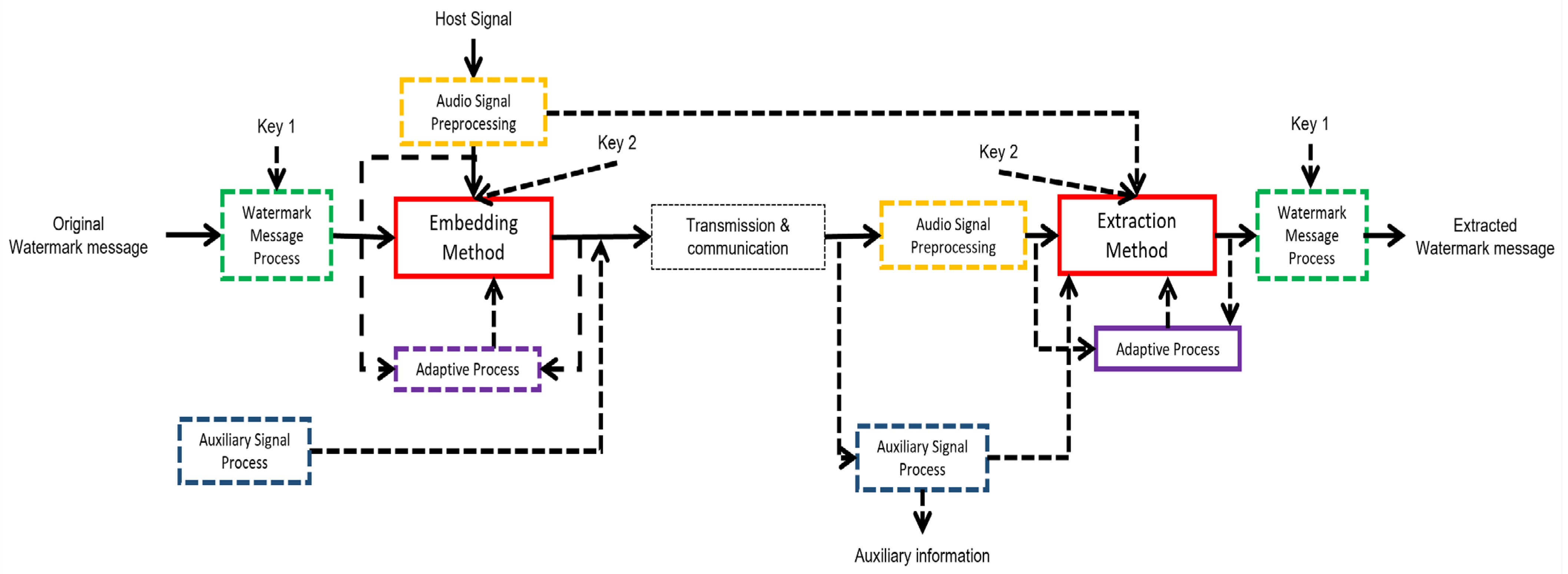
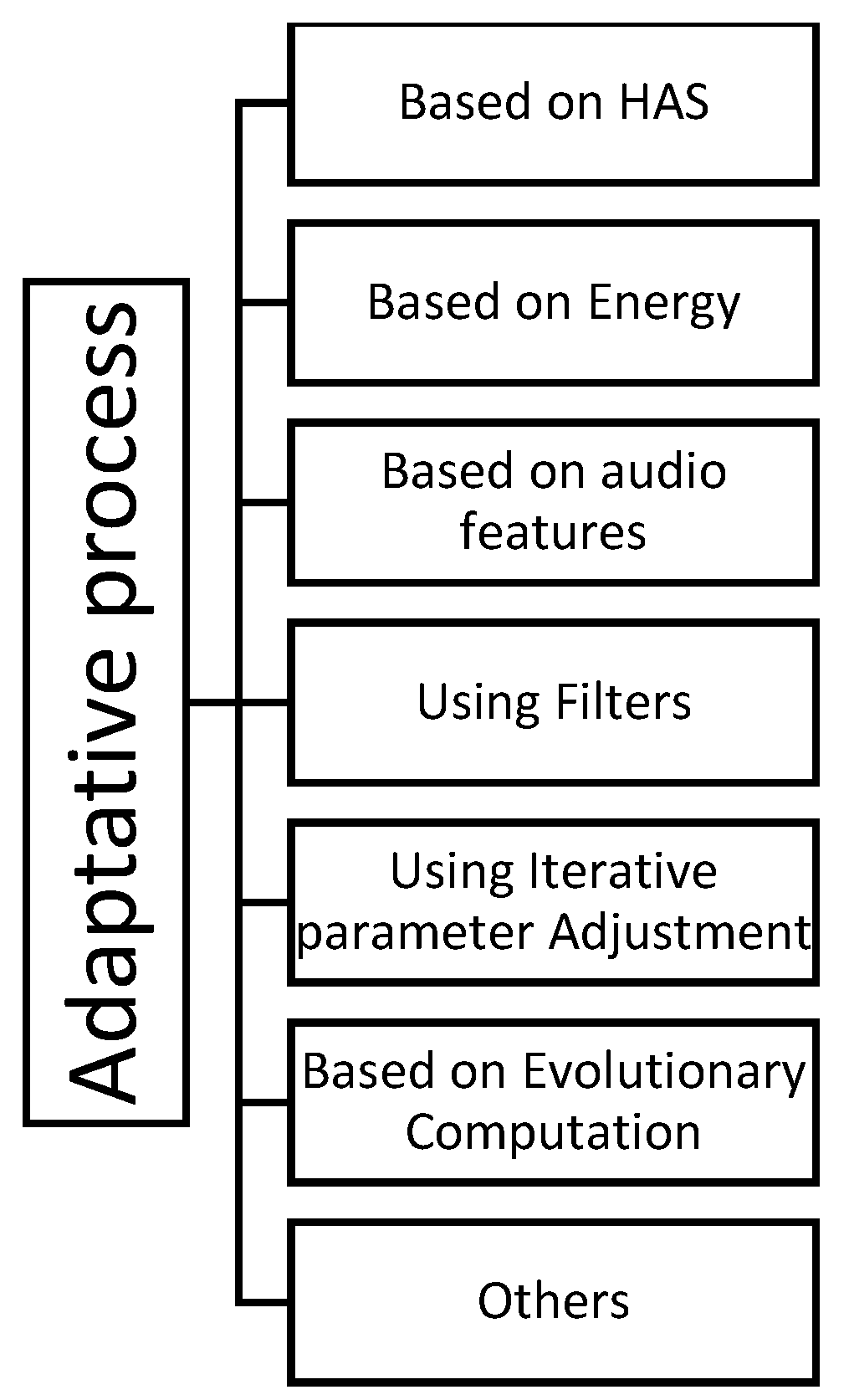
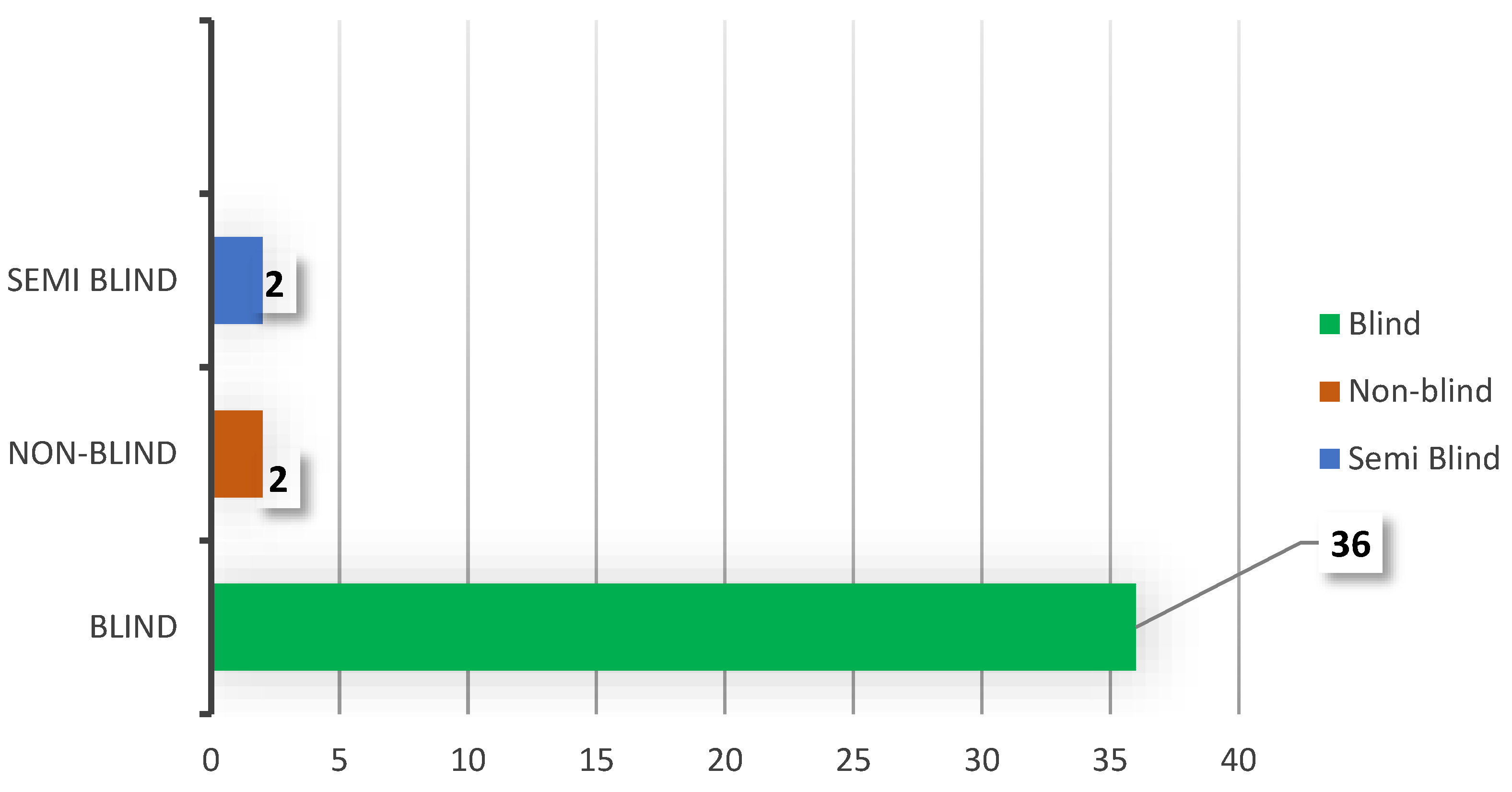
Audio watermarking has been introduced to give authors and owners control over the use of audio signals. The need for control has increased with advances in digital communications. Due to the diversity of applications and trade-offs in performance, different works on audio watermarking have been reported, and new algorithms have been proposed. Being an active area of research, an updated background on the reported algorithms helps designers understand the trends and tools used in published works. The recent emergence of innovative methods to enhance performance, the need for new requirements due to increased potential attacks, advancements in technology with a tendency toward improved audio quality, and the development of new applications have made it challenging to fit these developments into existing reviews and classifications. This paper fills this gap, presenting a review, analysis, and classification of the most recent conventional watermarking algorithms from 2016 to the present. Our study reveals the predominance of blind watermarking approaches and the widespread adoption of wavelet-domain techniques due to their favorable balance between robustness and imperceptibility. We proposed organizing, discussing, and comparing the methods based on performance criteria, imperceptibility, capacity, security, computational complexity, and robustness, and setting thresholds to categorize them. Additionally, a novel systematization based on the processes involved in the various stages of watermarking is presented. The purpose is to make it easier to identify the performance criteria that could be useful and important for different applications.
Keywords: audio watermarking; copyright protection; security; digital watermarking; codification audio watermarking; copyright protection; security; digital watermarking; codification