


Abstract
Reactive structural adhesives—epoxies, polyurethanes, and acrylics—are essential in high-performance applications, yet their development remains complex due to multiscale adhesion mechanisms, combinatorial formulation spaces, and stringent performance requirements. Traditional trial-and-error approaches are time- and resource-intensive. Machine learning (ML) provides a powerful framework to accelerate adhesive design by capturing nonlinear relationships between formulation, processing, and performance, while enabling predictive modeling, optimization, and experiment prioritization. This review presents a process-oriented guide for ML-assisted adhesive development, covering component selection, feature engineering, initial dataset design, model choice, and iterative workflows integrating classical design-of-experiments, active learning, and Bayesian optimization. Emphasis is placed on interpreting ML outputs through the lens of polymer chemistry, reaction kinetics, and fracture mechanics to extract mechanistic insights and guide rational formulation design. Key challenges—including small, noisy datasets, multi-component interactions, and multi-objective trade-offs—are discussed, along with emerging directions such as collaborative databases, automated knowledge extraction, and hybrid ML–chemistry approaches to further enhance structural adhesive development. The review underscores the potential of integrating ML into adhesive R&D to reduce experimental burden, improve formulation efficiency, and enable data-driven exploration of complex chemistries.
1. Introduction
Reactive material systems such as epoxies, polyurethanes, and acrylics play a central role as structural adhesives in industries including automotive, aerospace, wind energy, and electronics [1,2,3]. Adhesive bonding offers several advantages over mechanical fastening or welding: reduced weight, more uniform stress distribution within the joint, and the ability to join dissimilar materials [4,5]. As technological demands increase, structural adhesives must achieve improved toughness, faster cure speeds, enhanced environmental resistance, and greater sustainability and recyclability [6,7,8].
Adhesion is a complex, multiscale phenomenon involving mechanics, materials science, and chemistry [9,10]. Classical theories—mechanical interlocking [11,12], electronic theory [13], boundary layer and interphase concepts [14], adsorption theory [15], diffusion theory [16], and chemical bonding theory [17]—each describe individual contributions to adhesion. However, none can reliably predict bond strength for arbitrary combinations of adhesives, substrates, and processing conditions. Consequently, extensive experimental testing of adhesive-substrate combinations remains essential for product development [18].
The challenge of developing structural adhesives arises from three intertwined sources of complexity. First, adhesion depends on numerous interacting factors such as adhesive layer thickness, adherend surface treatment, and joint configuration [19]. Second, structural adhesives must meet stringent processability requirements, including suitable viscosity, cure speed, green strength, and long-term thermo-mechanical and chemical resistance [20,21]. Third, increasing performance demands drive the incorporation of more diverse components—resins, curing agents, fillers, toughening agents, catalysts, and additives—resulting in a vast combinatorial design space [22,23,24]. Together, these factors render traditional trial-and-error optimization and classical design of experiments (DoE) increasingly inefficient and costly.
Machine learning (ML) offers a promising route to address this complexity [25,26]. Conventional formulation development of structural adhesives has historically relied on empirical trial-and-error strategies and classical DoE, which remain widely applied in industrial practice. However, the increasing dimensionality and nonlinearity of reactive adhesive systems limit the scalability of these approaches. ML methods can model nonlinear relationships between formulation variables (e.g., weight fractions, stoichiometric ratios, and component chemistries), cure conditions, and resulting adhesive performance [27,28,29]. By constructing surrogate models that capture structure–property–processing relationships, ML enables accelerated formulation design while reducing experimental effort compared to conventional empirical workflows [30,31,32]. The integration of ML into adhesive development therefore represents a natural methodological progression toward the broader digitalization of materials design [33].
This review examines the application of ML techniques across the formulation development process for reactive structural adhesives. It is intended as a process-oriented guide for data-driven adhesive design. The focus lies on thermosetting systems—epoxies, polyurethanes, acrylics, and relevant hybrid materials—while thermosets used solely as coatings or sealants are excluded except where methodological concepts overlap. Reactive systems not explicitly designed as adhesives may be referenced when useful for illustrating ML strategies. Emphasis is placed on property prediction and formulation optimization, with a critical assessment of the ML techniques that enable accelerated material development using minimal experimental effort.
Literature Search and Selection
The literature considered in this review was identified primarily through searches in Google Scholar using combinations of keywords including adhesive, epoxy, polyurethane, acrylic, machine learning, active learning, and optimization. In addition to direct keyword searches, relevant articles were identified by examining the reference lists of key publications and by screening studies that cited these works. The review focuses on peer-reviewed journal articles that report the application of ML methods to the design, formulation, or optimization of adhesive systems. No strict temporal cut-off was applied, although emphasis was placed on recent studies reflecting current methodological developments. The selection was intended to be representative rather than exhaustive, with emphasis on studies that provide methodological insight or practical relevance for adhesive development workflows.
2. The Structural Adhesive Development Pipeline
A basic structural adhesive development process can be conceptualized as a sequence of interconnected steps (see Figure 1):
Figure 1.
Schematic workflow for ML-assisted development of reactive structural adhesives, illustrating the progression from defining application-specific performance targets and selecting adhesive chemistry and formulation components, through virtual experiment design, data generation, and ML model training, to iterative optimization and experimental validation.
The development process begins with defining the application and its corresponding performance targets. These targets determine the required mechanical behavior, cure kinetics, environmental resistance, and allowable processing constraints. Based on these needs, one or more suitable adhesive chemistries are selected to meet the mechanical, thermal, chemical, and economic requirements of the problem.
Once the adhesive chemistry is chosen, an appropriate set of formulation components must be identified. This typically includes the reactive constituents—such as epoxy resins and amine curing agents, polyols and isocyanates, or acrylic monomers and initiators—as well as fillers, toughening agents, adhesion promoters, catalysts, rheology modifiers, and other additives. Each component influences both the curing behavior and the final adhesive performance, contributing to a large and highly multidimensional design space.
The next step is to define the pool of virtual experiments, meaning all plausible combinations of component types, weight fractions, stoichiometric ratios, and process conditions that could yield adhesives with the desired performance profile. Because this space is typically enormous, only a selected subset of these virtual experiments is used to generate the initial dataset. These selected formulations are prepared and tested experimentally to establish the first structure–processing–property relationships.
Once experimental data are available, ML models can be trained on the acquired results. These models serve as surrogate predictors for adhesive properties and enable exploration of the remaining virtual design space. At this point, the core of the data-driven development process begins: the trained model is applied to infer the performance of untested formulations within the virtual experiment pool.
To refine predictions and identify improved formulations efficiently, active learning (AL) and Bayesian optimization (BO) are commonly employed [34,35]. These techniques balance exploration of uncertain regions with exploitation of promising formulations, allowing the developer to identify optimal adhesive compositions and cure conditions with a minimal number of additional experiments.
Finally, the ML models must be validated using new experimental data. The resulting findings are interpreted by establishing structure–processing–property relationships, identifying key formulation variables, and uncovering mechanistic or chemistry-based explanations for trends in performance. This iterative process ultimately accelerates the design of high-performance reactive structural adhesives.
3. Choosing the Adhesive Chemistry
3.1. Conceptual Overview
The adhesive chemistry must be chosen according to the processing, mechanical, thermal, environmental, and economic requirements of the intended application. The most widely used reactive structural adhesives by market share are epoxies, polyurethanes, acrylics, and cyanoacrylate systems [36]. Each of these chemistries offers distinct advantages and limitations with respect to processing and curing behavior, mechanical and thermal performance, and cost [37]. Hybrid systems provide additional flexibility by combining two reactive chemistries to counteract the weaknesses of one system with the strengths of another [38,39,40,41,42]. In some cases, such combinations yield synergistic effects that cannot be achieved by either chemistry alone [43].
Epoxy adhesives are widely considered the benchmark for structural bonding (see Figure 2). Their key advantages include very high tensile, shear, and peel strength, excellent stiffness, and outstanding chemical and thermal resistance [22]. They bond well to metals, composites, and many plastics, and exhibit minimal cure shrinkage, which results in low curing and thermally induced stresses and helps preserve dimensional accuracy. However, epoxies also have drawbacks: they often require careful surface preparation, may exhibit relatively long cure times, and are prone to brittleness due to their high crosslink density [44]. It should be noted that both brittleness and crosslink density can be adjusted through proper selection of the components, for example using amines with aliphatic regions. Elevated curing temperatures may also be necessary for certain formulations, which can limit compatibility with heat-sensitive substrates.
Figure 2.
Epoxy resins are commonly cured with amines.
Polyurethane adhesives provide a more flexible alternative (see Figure 3). Their inherent elasticity allows them to accommodate movement, vibration, and thermal cycling. They bond well to a broad range of substrates—including metals, plastics, wood, and composites—and generally offer easier handling and fast room-temperature curing [24]. Polyurethanes also exhibit good resistance to moisture. However, they typically provide lower structural strength than epoxies, especially at elevated temperatures, and the isocyanate component is sensitive to humidity during curing [45]. In some systems, such as one-component polyurethanes, curing intentionally occurs via reaction with ambient moisture, which makes humidity a functional part of the curing mechanism rather than solely a source of processing sensitivity. Their long-term chemical and UV resistance may require specialized formulations to meet demanding environments.
Figure 3.
Formation of the urethane group from isocyanate and hydroxyl reactants.
Acrylic adhesives occupy a middle ground (see Figure 4), offering high strength combined with better toughness and impact resistance than many epoxies [23]. They bond well to metals and plastics with minimal surface preparation and cure rapidly at room temperature via free-radical polymerization. However, acrylic systems typically exhibit higher polymerization shrinkage than epoxies, which can lead to increased residual and thermally induced stresses in bonded joints. Their disadvantages further include strong odor, flammability concerns, and lower thermal and chemical resistance compared with high-performance epoxy systems [46].
Figure 4.
Methyl methacrylate, a commonly used monomer in acrylic adhesives.
Overall, the optimal adhesive chemistry depends on the required balance of strength, toughness, environmental resistance, cure conditions, and substrate compatibility.
3.2. Literature Perspective
Although the conceptual landscape includes a wide range of reactive chemistries, ML-driven formulation studies have so far concentrated on only a subset of these systems. Most published work focuses on epoxies and polyurethanes, reflecting their industrial relevance and the presence of well-established formulation paradigms that facilitate systematic investigation [47,48,49,50,51,52,53,54,55,56,57,58,59,60,61,62,63]. In contrast, ML applications involving acrylic adhesives, cyanoacrylates, or other specialty systems remain scarce. A few exceptions exist—for example, studies on acrylic systems in the context of coatings and additive manufacturing [64,65,66,67], BO and modeling of cyanate-ester thermosets [68,69] or design of silicon-containing systems [70]—but these are generally not framed explicitly as adhesive-development problems. This uneven distribution highlights that most ML-driven formulation research is still concentrated on a limited subset of chemistries, pointing to clear opportunities for future work on alternative and hybrid adhesive systems.
4. Selecting Components of the Formulation
4.1. Conceptual Overview
Selecting the appropriate components for a structural reactive adhesive is one of the earliest and most consequential decisions in the development workflow. Industrially relevant structural adhesives incorporate multiple classes of constituents—reactive precursors, toughening agents, fillers, catalysts, and processing additives—each contributing distinct chemical or physical functions to the final material (see Figure 5) [71]. From an ML perspective, the formulation space defines the boundaries of the feature space: it determines the chemical diversity available to the model, the dimensionality of the input variables, and the degree of nonlinear coupling between components that the model must capture.
Figure 5.
General overview of component classes central to structural adhesive systems.
In reactive structural adhesive systems, the primary chemistries are typically based on epoxies, polyurethanes, or acrylics, each offering a broad palette of components that can be systematically varied [37]. In epoxy adhesives, for example, the formulation space is defined by the choice of epoxy resin, curing agent, and, where relevant, reactive diluents. Variations in epoxy functionality, backbone rigidity, or curing-agent structure directly influence network architecture and cure kinetics [72]. Polyurethane adhesives exhibit similar tunability, with polyol structure, polyol functionality, polyol molecular weight, diisocyanate structure, and chain-extender selection providing adjustable levers for crosslink density, phase separation, and mechanical performance [73]. Acrylic systems offer yet another design space through combinations of monomers, oligomers, and redox or photoinitiator systems, which govern polymerization kinetics and final network structure [46].
Beyond the primary reactive components, several additional ingredient classes play key roles and introduce further modeling challenges. Catalysts control cure rate and process temperature, but their effects are highly nonlinear and dependent on interactions with other formulation constituents. Toughening agents—such as core–shell rubber particles, carboxyl-terminated butadiene nitrile (CTBN) or amine-terminated butadiene nitrile (ATBN) liquid rubbers, or thermoplastic modifiers—introduce multiphase morphologies that absorb fracture energy and improve impact resistance [43]. Fillers, while often added for cost reduction or rheology control, can markedly affect viscosity, shrinkage, thermal stability, and modulus. Finally, a variety of additives, including defoamers, thixotropic agents, adhesion promoters, UV stabilizers, antioxidants, and moisture scavengers, are incorporated to ensure robust processing and long-term performance. Even at low loadings, these additives can strongly influence cure behavior, durability, and failure mechanisms, making their inclusion in ML models non-trivial.
4.2. Literature Perspective
Different strategies exist in the literature for defining the formulation space, balancing chemical diversity with the practical constraints of data collection and ML modeling. One approach treats families of reactive components (e.g., diisocyanates, polyols, epoxy resins, and curing agents) as categorical variables, deliberately sampling chemically diverse combinations to enable ML models to learn cross-family trends [48,50,59].
For example, a series of diglycidyl ethers of bisphenol A (DGEBA) and amine-terminated polypropylene glycol curing agents (Jeffamines) with different molecular weights have been systematically combined to create an adhesive system [48,50]. Likewise, five different diisocyanates have been paired with five different polyols to generate polyurethane adhesives (see Table 1) [59].
Table 1.
Representative polyols and diisocyanates, along with their stoichiometric ratio (R), cure temperature (T), and cure time (t), which can be combined to formulate polyurethane adhesive systems [59]. For the abbreviations, please see Section Abbreviations at the end of the manuscript.
While chemically diverse, such approaches typically restrict each formulation to a single epoxy resin and a single curing agent, or a single diisocyanate paired with a single polyol. This limits exploration of mixtures of reactive components within the same chemistry class and reduces the representativeness of the resulting datasets for industrially relevant formulations. This limitation is particularly pronounced for polyurethane adhesives, where blends of polyols with different functionalities and molecular weights are commonly employed to tune mechanical properties, cure behavior, and processability. Incorporating multiple reactive components alongside fillers, toughening agents, and additives would dramatically expand the virtual experiment space, posing significant challenges for both data acquisition and ML modeling.
A contrasting approach limits the number of reactive components and instead focuses on exploring the effects of fillers, toughening agents, and additives (see Table 2) [49,55]. This strategy better approximates industrial formulations, though still simplified compared to commercial adhesives that may include ten or more components. Importantly, the number of formulation components directly affects both the combinatorial size of the virtual experiment space and the experimental data volume required to accurately model material properties. Consequently, defining the formulation space is a critical step that shapes not only the adhesive chemistry but also the feasibility and effectiveness of any ML-driven development strategy.
Table 2.
Exemplary compositions of epoxy-based adhesive systems, including resin, curing agent, filler, toughening agent, additives, and catalyst.
5. Target Properties for Adhesive Modeling
Adhesive performance is commonly characterized by a set of key properties that capture both bulk and interfacial behavior. Lap shear strength (LSS) is the most widely reported measure of joint performance, reflecting the shear resistance of the adhesive layer under load [48,49,50,55,58,59,60]. Peel strength is particularly important for applications involving flexible substrates or thin adhesive layers, where peeling forces dominate over shear [49]. Tensile or cohesive strength represents the intrinsic failure limit of the adhesive itself, distinguishing bulk material failure from interfacial failure [53,55]. Notably, mechanical properties such as LSS and peel strength typically exhibit higher relative standard deviations compared with thermophysical properties like glass transition temperature () [52]. This variability necessitates testing a larger number of specimens per formulation and introduces additional noise into the dataset, which must be accounted for in ML model training and evaluation.
In addition, hybrid target properties can be formulated as functions of multiple material attributes, enabling more nuanced optimization and precise tuning of adhesive performance [53,68]. From an ML perspective, these target properties define the output space for predictive modeling, and their selection strongly influences model complexity, required dataset size, and experimental design strategy.
6. Feature Engineering and Pool of Virtual Experiments
Feature engineering is a critical step in ML workflows for structural adhesives. Well-designed features capture meaningful relationships between formulation, chemistry, processing, and performance, enabling models to learn structure–property–processing trends rather than memorizing noise.
6.1. Formulation-Level Features
Formulation-level features describe the adhesive recipe and processing conditions. Key features include:
- Component ratios (e.g., resin-to-hardener stoichiometry, catalyst content, toughener loading, and filler fraction),
- Additive types and concentrations,
- Cure schedule parameters (isothermal temperature, ramp rate, dwell time, and multi-step cycles),
- Mixing sequence and energy.
6.2. Chemistry-Level Features
Chemistry-level features capture molecular characteristics that link composition to network architecture and reactivity. Relevant descriptors include
- Molecular weight and functionality of reactive species,
- Equivalent weights of functional groups,
- Hansen solubility parameters,
- Topological, electronic, and graph-based descriptors,
- Molecular fingerprints derived from simplified molecular input line entry system (SMILES) [74,75],
- Polar surface area, hydrophobicity, and crosslink functionality,
- Kinetic or activation parameters.
These descriptors enable models to relate chemical structure directly to adhesive performance, independent of specific formulation labels.
6.3. Definition and Constraints of the Formulation Design Space
A critical but sometimes underemphasized step in ML-assisted adhesive development is the definition of the virtual formulation space from which candidate experiments are generated. In many workflows, this space is constructed by specifying ranges for formulation variables such as component weight fractions, curing temperature, and curing time. The choice of these bounds directly determines whether proposed formulations are chemically meaningful and experimentally realizable.
Overly broad or weakly constrained design spaces can lead to virtual candidates that are difficult or impractical to reproduce in the laboratory, or that fall outside the domain of chemical stability of the underlying materials. In particular, constraints informed by chemical knowledge and processing limitations are required to ensure that virtual experiments correspond to feasible adhesive formulations. Examples include physically reasonable weight fraction limits, stoichiometric consistency, and curing conditions compatible with the thermal stability of the involved polymers.
If such constraints are not imposed, AL or BO approaches may exploit mathematically permissible but chemically unrealistic regions of the design space. For instance, unconstrained curing conditions may include combinations of elevated temperatures and extended cure times that risk degradation of temperature-sensitive components, such as aliphatic polyols in polyurethane systems [59]. This illustrates that the construction of the virtual experiment pool is not merely a technical detail but a chemically informed modeling decision that can strongly influence downstream optimization results. Explicit reporting of the chosen variable ranges and constraints also facilitates interpretation, reproducibility, and comparison between different ML studies.
6.4. Literature Perspective
As discussed in Section 4.2, the selection of adhesive components directly defines the feature space available for ML models. Two primary strategies are evident in the literature: In the first approach, reactive components are treated as categorical variables, where one type of reactive species is combined pairwise with another (see Table 1). This limits the virtual design space to the Cartesian product of the available components (i.e., combinations). To increase compositional diversity, several studies encode the stoichiometric ratio (R) between reactive components as a continuous feature. In addition, cure-schedule parameters—such as cure temperature and overall cure duration—are frequently incorporated into the feature set [48,50,59].
The second approach is more relevant for multi-component adhesive systems containing fillers, tougheners, or additives. Here, most studies use the weight fractions of each component as model inputs (see Table 2) [49,55]. This formulation-level representation can also accommodate systems with multiple reactive species, such as mixtures of several epoxy resins and amine curing agents within a single thermoset network [53]. Derived compositional ratios are sometimes computed from the weight percentages of reactive components in multi-component epoxy systems. These engineered features reduce input dimensionality, simplify model training, and accelerate optimization, while retaining chemically relevant information [52,57].
A more advanced strategy involves computing molecular or physicochemical descriptors directly from the chemical structures of reactive components. This includes quantum-chemical parameters, topological descriptors, or fingerprints generated from SMILES representations. Structure-based features have proven effective, for example, in predicting LSS of DGEBA cured with aliphatic, cycloaliphatic, and aromatic amines after water immersion [58], and in predicting the of epoxy–curing agent pairs from SMILES-derived descriptors [51,76].
Finally, some studies have correlated post-conditioning mechanical performance of thermosets (e.g., after thermal aging or chemical exposure) with features derived from spectroscopic characterization, such as infrared spectroscopy [77,78,79]. Although less common, these approaches demonstrate the potential of integrating analytical characterization into ML feature spaces for adhesives.
7. Initial Dataset Design
The design of the initial experimental dataset is foundational in ML workflows for structural adhesives, as it strongly influences model performance, optimization efficiency, and the ability to extract mechanistic insight. Adhesive systems exhibit complex formulation–processing–structure interactions, nonlinear responses, and substrate-dependent effects. A well-designed dataset ensures adequate coverage of the formulation space while respecting experimental cost, chemical feasibility, and categorical variables such as substrate type or resin family.
7.1. Taguchi Orthogonal Arrays
Taguchi designs provide efficient coverage of factor levels with minimal experiments (e.g., L4, L9, and L16, where the number denotes the total number of experimental runs) and enable early identification of dominant factors [80]. They are particularly useful for small-budget studies and support main-effects analysis. However, they poorly capture nonlinear interactions, cannot refine local regions, and require discretization of inherently continuous variables.
7.2. Latin Hypercube Sampling
Latin hypercube sampling ensures uniform coverage of multidimensional continuous spaces and is well suited as a starting point for BO [81]. It accommodates mixed variable types and helps prevent premature convergence of the optimizer. Its limitations include lack of guaranteed coverage of interactions and sensitivity to poorly defined variable bounds.
7.3. Greco-Latin Square Designs
Greco-Latin designs extend Taguchi and Latin square concepts, allowing controlled variation of both categorical (e.g., resin or filler type) and continuous factors [82]. They efficiently reduce the number of required experiments while maintaining balance across factor levels. Challenges include scaling to high-dimensional spaces and imperfect representation of strong nonlinear interactions.
7.4. Expert-Selected and Random Designs
Expert-selected datasets leverage domain knowledge to avoid unrealistic or infeasible formulations but may introduce bias [83]. Random sampling is unbiased and simple to implement but may leave important regions of the feature space sparsely covered. Hybrid strategies combining expert knowledge with random sampling can improve coverage while maintaining feasibility.
7.5. Literature Perspective
A variety of initial dataset-design strategies have been applied in the adhesive and thermoset literature, each offering distinct advantages depending on the study’s objectives. Broadly, studies aim either to (i) develop reliable predictive models for structure–property–processing relationships, or (ii) rapidly optimize an adhesive formulation with minimal experimental effort.
When the goal is mechanistic understanding and predictive accuracy, researchers often accept the higher cost associated with larger initial datasets. Studies employing Taguchi arrays, Greco-Latin square designs, or mixed-variable DoE strategies typically generate medium-sized datasets (n ≈ 30), providing sufficient coverage to train generalizable surrogate models [48,50,59].
Conversely, when rapid optimization is the primary goal, initial datasets are usually smaller (n ≈ 5 to 30), consisting of expert-selected or randomly sampled formulations [61,68]. This approach prioritizes speed and cost efficiency, relying on AL or BO to guide subsequent experiments. Importantly, even structured designs such as Taguchi arrays or Greco-Latin squares remain non-adaptive: although they provide balanced coverage, they do not incorporate information from prior data or model predictions (as AL or BO would) when selecting experimental points.
Traditional DoE strategies are therefore most useful for early feature space mapping rather than full optimization, particularly as the number of factors grows or nonlinear interactions become significant. Figures 8 and 9 illustrate a limitation: many data points generated via Greco-Latin squares or Taguchi arrays exhibit poor adhesive performance. These points occupy regions of the feature space that are not relevant for the developer of high-performance adhesives, resulting in experiments that provide limited actionable insight. While expert knowledge is essential for defining feasible formulation ranges, data-driven selection strategies can further improve efficiency by identifying promising regions that may not be obvious from intuition alone, especially in complex, high-dimensional systems. In contrast, data points selected using AL or BO tend to focus on promising regions, improving experimental efficiency and increasing the average observed performance.
8. ML Model Choices
This section reviews commonly used ML model families and their suitability for adhesive R&D. Selecting an appropriate model depends on dataset size, target property type, mechanistic knowledge, and adhesive complexity. Structural adhesives pose unique challenges: datasets are often small due to the high experimental burden, responses are nonlinear, and measurements exhibit high experimental noise arising from surface preparation, alignment, strain rate, temperature, humidity, and operator variation [84,85]. Performance is strongly substrate- and surface-dependent, with minor changes potentially altering the failure mode [86]. Thickness, stiffness, testing conditions, and cure-state gradients influence stress distribution, while the same formulation may fail cohesively or interfacially. Geometry and adherend stiffness further affect measured outcomes, limiting generalizability across studies [87].
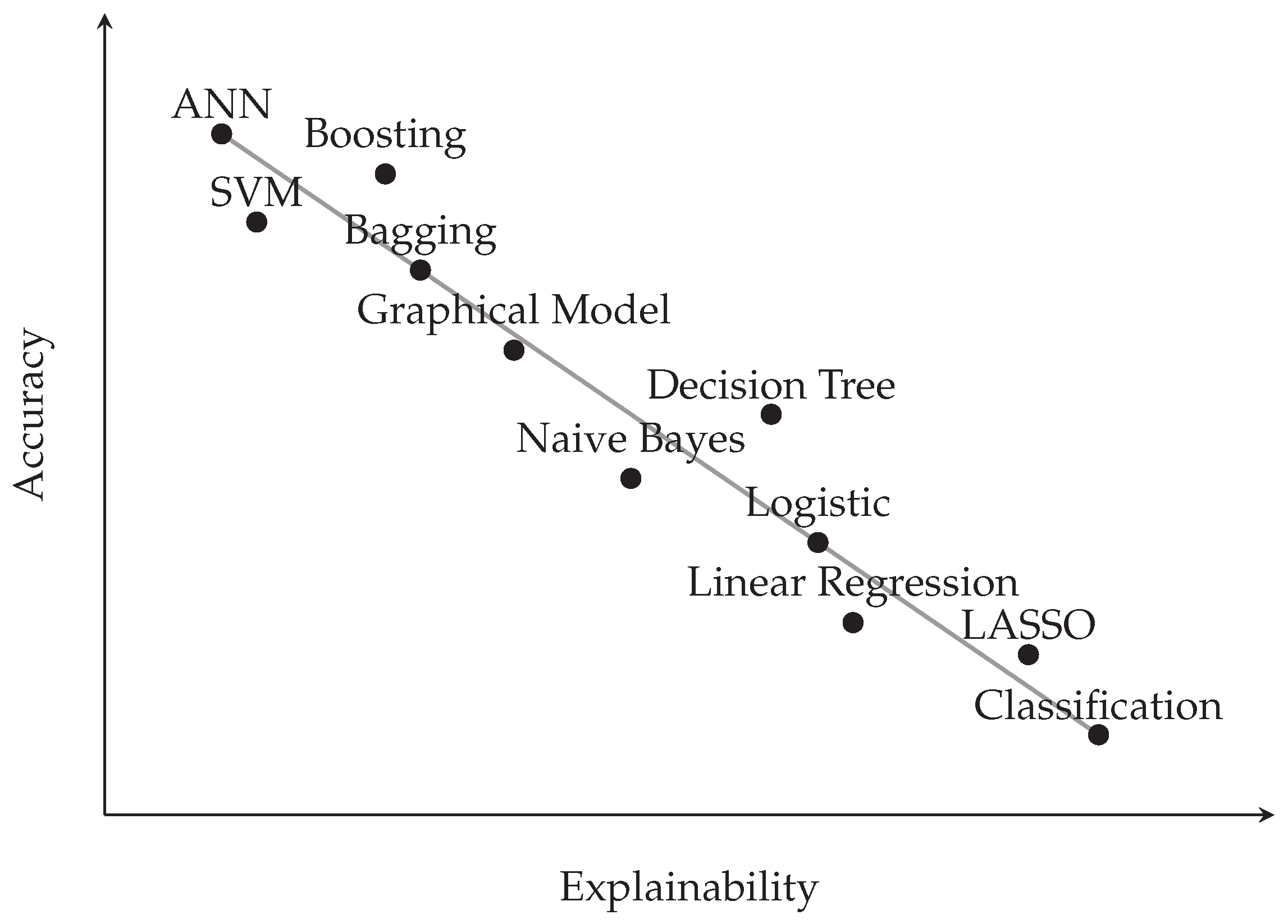
There is an inherent trade-off between interpretability and predictive power. Linear models and simple classifiers (e.g., linear regression, least absolute shrinkage and selection operator (LASSO)) are easily interpretable but often lack the flexibility to capture the nonlinear behavior of multi-component adhesives [88]. Conversely, models such as support vector machines (SVMs), gradient boosting machines (GBMs), and artificial neural networks (ANNs) can model complex relationships but are typically less interpretable (see Figure 6).
8.1. Traditional Machine Learning Models
Linear Models (Ridge, LASSO, and Elastic Net) provide interpretable baselines and are effective for small datasets or approximately linear relationships. Ridge regression applies L2 regularization to stabilize coefficient estimates in the presence of multicollinearity, whereas LASSO (L1) can perform feature selection by potentially driving some coefficients to zero. Elastic Net combines both penalties. Limitations include poor performance on strongly nonlinear interactions and sensitivity to feature scaling [89,90,91].
Random Forests (RFs) handle noisy and heterogeneous features, provide feature importance, and are robust to overfitting. Limitations include smoothing of trends, poor extrapolation, and bias toward features with many levels [92].
Gradient Boosting Models (GBMs, e.g., XGBoost, LightGBM, and CatBoost) capture nonlinearities and interactions more effectively than RFs, and can handle categorical variables (CatBoost). Limitations include sensitivity to hyperparameters, risk of overfitting, and reduced interpretability without SHAP (SHapley Additive exPlanations) analysis [93].
Support Vector Machines (SVMs) are suitable for very small datasets, capturing nonlinearities via kernel functions. Limitations include poor scalability and sensitivity to noise [94].
Gaussian Process Regression (GPR) is ideal for small datasets, provides uncertainty estimates for AL and BO, and excels for smooth properties (e.g., , viscosity). Limitations include poor scalability (>1000 points), kernel sensitivity, and lower performance for discontinuous responses [95].
8.2. Deep Learning Models
Artificial Neural Networks (ANNs) model complex nonlinear behavior for medium-to-large datasets but tend to overfit small datasets [96].
Convolutional Neural Networks (CNNs) extract microstructural features from images (SEM, optical microscopy, and micro-CT) to predict fracture morphology, toughness, or porosity. Limitations include the need for large labeled datasets or transfer learning and sensitivity to imaging conditions [97].
Graph Neural Networks (GNNs) predict performance from molecular structures (SMILES or graphs) and generalize to new chemistries. Limitations include high data requirements and lower effectiveness when processing dominates performance [98].
Figure 6.
Accuracy vs. explainability of commonly used ML algorithms. Reproduced from [99].
8.3. Literature Perspective
Python has become the dominant ecosystem for ML-driven adhesive research due to its accessible syntax, extensive open-source libraries, and strong community support. Tools such as scikit-learn [100], PyTorch [101], and TensorFlow [102] enable rapid development of both traditional ML models (RF, SVM, GPR, and GBM) and advanced architectures (ANN, CNN, and GNN). BO frameworks (BoTorch, GPyOpt, PHYSBO, and GPy) facilitate uncertainty-aware optimization, which is critical for small, expensive datasets [103,104,105,106].
Across studies, RF, GBM, SVM, GPR, and ANN generally outperform linear models, reflecting the strongly nonlinear behavior of adhesives [48,49,50,60,107]. This is especially true when the feature space consists of categorical reactive components or formulation-level descriptors such as weight fractions of resins, hardeners, fillers, and toughening agents. Under these conditions, model performance typically benefits from the nonlinear decision boundaries and interaction-capturing capabilities of tree-based models, kernel methods, and neural networks.
For example, Pruksawan et al. modeled the LSS of epoxy adhesive systems (n = 32) using Elastic Net regression. The input features included the epoxy resin molecular weight, amine curing agent molecular weight, stoichiometric ratio, and cure temperature. Using leave-one-out cross-validation (LOOCV) [108], the model achieved an of 0.42 and a mean absolute error (MAE) of . In comparison, applying GBM to the same dataset improved the predictive performance, yielding an of 0.68 and MAE of [48]. While an of 0.68 indicates only moderate predictive accuracy, this comparison demonstrates the advantage of nonlinear models in better capturing interactions among formulation parameters, even with a small dataset.
Kang et al. modeled the effect of epoxy adhesive component weight fractions on both LSS and impact peel strength using two separate ANNs. With a training set of 30 data points and a test set of 10 points, the ANNs achieved values on the test set of 0.64 and 0.59 for LSS and impact peel strength, respectively [49]. The relatively modest predictive performance likely stems from the high dimensionality of the input feature space combined with the small number of training points, which limits the ability of the ANN to generalize.
In contrast, Schubert et al. evaluated the adhesive strength of 14 different one-component polyurethane prepolymers applied to beech wood, measured at multiple temperatures after various conditioning steps. Using ten-fold cross-validation on a dataset of 2840 experimental points, an ANN achieved an average of 0.92 on the test set [60]. This demonstrates the significant improvement in model performance when larger datasets are available. While the optimal dataset size depends strongly on the complexity of the input features, the degree of nonlinearity, and noise in the measurements, it is clear from the literature that small datasets (tens of points) can limit predictive accuracy, whereas larger datasets (thousands of points) enable models such as ANNs to capture complex patterns effectively. However, a systematic determination of the minimum required dataset size for a given adhesive system is beyond the scope of this review.
Cheng et al. studied polyurethane adhesives by modeling LSS as a function of polyol type, diisocyanate type, stoichiometric ratio, cure temperature, and cure time (see Table 1). They compared linear regression, RF regression, and GB regression using a small dataset of 24 training points and 6 test points. Among the models, random forest performed best, with values of 0.98 on the training set and 0.59 on the test set [59]. The discrepancy between training and test performance illustrates the challenges of overfitting with small datasets and the importance of model choice and cross-validation.
Nevertheless, linear and sparsity-promoting models such as LASSO can achieve impressive predictive performance when the feature space is carefully engineered to capture relevant chemical relationships. Nakamura et al. demonstrated this approach by predicting the LSS of epoxy resin adhesives after immersion in water. Their input features included structure-derived molecular descriptors and solubility-parameter-based features, which encode the chemical and physical characteristics of the resin–curing agent pairs [58]. Using LOOCV on a test set of 14 data points, the LASSO model achieved an of 0.89, indicating strong predictive accuracy despite the small dataset. Furthermore, when validating on an independent set of three data points drawn from the same chemical system, the model achieved an of 0.997 (see Figure 7). These results, as reported in the original study, illustrate the potential of linear models with carefully engineered features; however, it should be noted that validation on very small datasets (e.g., three points) may not fully reflect generalization performance, and the model’s reliability should be interpreted in the context of the original publication’s experimental design and limitations.
Figure 7.
Predicted vs. measured LSS for the training set (gray) and test set (black) using LASSO by Nakamura et al. Reproduced from [58].
This study highlights a broader insight for ML in adhesive R&D: the choice and quality of features can be as important—or even more important—than the inherent complexity of the model. While nonlinear models are often favored for capturing intricate interactions, carefully constructed features can allow simpler, interpretable models to achieve competitive performance, particularly in small or medium-sized datasets.
Some studies lack critical evaluation of model performance metrics or fail to identify overfitting [55,59], likely reflecting the fact that many experiments are conducted by chemists or materials scientists without formal training in statistical methods.
9. Modeling vs. Optimization: When Do You Use What?
ML can support the development of reactive structural adhesives in two fundamentally different ways: (1) building predictive models of structure–processing–property relationships, and (2) employing optimization frameworks—such as AL or BO—to efficiently identify high-performance formulations with minimal experimental effort. While related, these approaches serve distinct purposes and have different requirements in terms of data availability, uncertainty, and research objectives. Understanding when to employ modeling, optimization, or a hybrid strategy is essential for designing an effective data-driven adhesive development workflow.
9.1. When Predictive Models Are Most Appropriate
Predictive modeling is most effective when datasets are sufficiently large to capture variation in adhesive formulations and processing conditions. In practice, this typically requires dozens to hundreds of unique formulations spanning relevant chemistries and process parameters [49,60]. Reactive adhesives follow trends governed by chemistry or polymer physics, which allows models to extract meaningful structure–property relationships. Under these conditions, interpretability and generalization are often more important than identifying a single optimal formulation. Feature-importance metrics, partial dependence plots, or SHAP values can provide mechanistic insights, enabling researchers to understand the effects of individual formulation variables.
Predictive models are particularly valuable for
- Understanding the influence of individual formulation or processing variables on adhesive properties such as LSS, cure parameters, , or viscosity.
- Screening large virtual design spaces to prioritize candidate formulations before experimental testing.
9.2. When Active Learning or Bayesian Optimization Are Preferred
AL and BO are most advantageous when initial datasets are small and experiments are expensive [48,50,61]. Adhesive development often begins with fewer than 10 to 20 formulations due to the time-intensive nature of synthesis and testing, which makes conventional supervised models unreliable [52,53,57]. These frameworks iteratively select the most informative or promising experiments, efficiently guiding exploration of adhesive systems. They excel in high-dimensional formulation and processing spaces with multiple interacting components and mixed variable types [48,50]. Uncertainty-aware acquisition functions, such as expected improvement or upper confidence bound, focus sampling on promising regions while managing complex design spaces [109,110].
AL and BO also naturally support multi-objective optimization, addressing common trade-offs in adhesives, such as maximizing LSS while maintaining toughness, minimizing viscosity while maximizing , or balancing cure kinetics with mechanical performance [111]. Multi-objective frameworks like Pareto front-based expected improvement enable systematic exploration of these trade-offs, which classical predictive models cannot directly achieve [110].
9.3. Comparing Development Workflows
Several archetypal workflows have emerged, each with distinct advantages and limitations:
(a) Classical DoE → Single-Shot ML Modeling:
Initial datasets are generated via DoE (Taguchi, factorial, or Greco-Latin square), followed by a one-time ML model to extract structure–property relationships or rank formulations [49,58]. Advantages: statistically rigorous design, interpretable models, simple implementation. Limitations: can not adapt to unexpected nonlinearities, may require a high number of initial experiments, model accuracy is limited by the initial dataset, and potentially a large number of experiments may fall in low-value regions of the parameter space.
(b) Active Learning → Iterative Refinement:
Models are updated after each batch of experiments, guiding the next formulations to maximize information gain [48,50,61]. Advantages: sample-efficient in low-data regimes, reduces experimental burden, identifies influential features. Limitations: requires close integration of modeling and laboratory workflows, early-model bias can occur if initial data are narrowly distributed.
(c) Bayesian Optimization → Targeted Formulation Discovery:
BO focuses on finding formulations with optimal performance rather than building a globally accurate model [48,50,53,59,68]. Advantages: sample-efficient, handles noisy measurements, supports constraints and multi-objective targets. Limitations: provides limited mechanistic insight; optimization may remain localized without explicit exploration.
9.4. Literature Perspective
In practice, these workflow archetypes are rarely applied in isolation. Most adhesive development studies combine elements of classical DoE, AL, and BO, adjusting the balance between exploration and exploitation as research objectives evolve. Here, “exploration” refers to selecting experiments that probe new or poorly characterized regions of the formulation space to gain broader knowledge, while “exploitation” refers to prioritizing experiments in regions already predicted to yield high performance. The overarching goal is to identify an efficient sequence of experiments that maximizes information gain or performance improvement while minimizing laboratory effort and development cycle time.
A common pattern begins with a structured DoE to establish initial coverage of the formulation space, followed by AL or BO to refine predictions and target high-value experiments. For example, Pruksawan et al. initiated their study with 32 experiments derived from two Greco-Latin squares, then added 15 additional points across three AL rounds, improving the of their GB regressor from 0.68 to 0.85 [48]. Subsequently, four rounds of BO selectively maximized LSS by optimizing the stoichiometric ratio and cure temperature, adding one formulation per iteration. As a result, the LSS increased from to (see Figure 8).
Figure 8.
LSS of the 51 data points gathered by Pruksawan et al. by Greco-Latin squares (gray), AL (blue), and BO (red). Reproduced from [48].
Similarly, Cheng et al. generated 25 initial formulations using Taguchi orthogonal arrays, then conducted five BO iterations, adding one experiment per round to progressively enhance LSS from to 10 [59] (see Figure 9).
Figure 9.
LSS of the 30 data points gathered by Cheng et al. by Taguchi orthogonal arrays (gray) and BO (red). Reproduced from [59].
Other studies employ flexible hybrid strategies, alternating between AL and BO based on project needs. AL is used for additional exploration when multiple local optima are suspected, while BO exploits newly mapped high-performance regions [52,65]. Some workflows even combine AL and BO within each iteration, selecting batches that mix uncertainty-driven exploration with performance-oriented exploitation [53,57]. This approach is especially advantageous when the property landscape is complex or poorly understood.
A key practical consideration is the relative share of data points obtained via classical DoE versus ML-driven strategies such as AL or BO. When large initial datasets are generated using structured DoE approaches—e.g., Taguchi orthogonal arrays, Greco-Latin squares, or other factorial designs—the fraction of formulations subsequently selected through AL or BO tends to be relatively small [48,50,59]. This raises an important question: how many initial experiments are truly necessary before transitioning to ML-guided selection? The answer likely depends on the dimensionality of the formulation space, i.e., the number of features or factors being optimized. In contrast, random sampling or expert-guided initial selection often produces only a limited number of starting points, increasing the relative contribution of AL or BO in shaping the experimental campaign. Understanding this balance is critical for designing an efficient exploration–exploitation workflow while avoiding unnecessary experimental overhead.
Another practical consideration is the number of experiments per iteration. Adhesive testing is labor- and time-intensive, including surface preparation, mixing, degassing, application, cure, conditioning, and mechanical testing. As a result, each experimental iteration may span days or weeks. Running multiple experiments per iteration accelerates data acquisition and shortens the development timeline but increases batch-level experimental burden and may reduce selection efficiency—because AL and BO cannot adapt decisions within the same batch. Conversely, single-experiment iterations maximize model adaptivity and information gain per data point but slow down laboratory throughput (see Figure 10).
Figure 10.
Trade-off between information gain per experiment and laboratory throughput as a function of the number of experiments per iteration.
Thus, a balanced compromise is often needed. One practical strategy is to test small mixed batches per iteration—for example, one BO-selected formulation targeting high performance combined with two or three AL-selected formulations aimed at exploring uncertain regions. This approach maintains an efficient exploration–exploitation trade-off while respecting laboratory constraints and minimizing total experimental cost.
10. Interpreting ML Findings Through Chemistry and Materials Science: Structure–Processing–Property Relationships
While ML can efficiently identify promising adhesive formulations and cure schedules, it does not inherently explain why a given experiment produced a particular outcome. ML uncovers correlations, but the true scientific value arises when these correlations are interpreted through the lens of polymer chemistry, reaction kinetics, and fracture mechanics.
While the interpretation of structure–processing–property relationships is fundamental to all experimental adhesive research, ML provides additional opportunities to model these relationships in a systematic and multivariate manner. Traditional stepwise experimentation, where one parameter is varied while others are held constant, can reveal some cause–effect relationships, but may miss complex interactions among multiple formulation or processing variables. ML methods, through feature importance analysis, surrogate modeling, or predictive trend evaluation, allow researchers to uncover and quantify such interactions, providing a more comprehensive understanding of the underlying mechanisms. In this way, ML complements traditional experimental interpretation by enabling data-driven insights into complex structure–processing–property relationships, helping to guide future experimental design, feature selection, and workflow strategies in adhesive development.
This interpretive step allows ML to become not just a tool for performance prediction, but a framework for rational design. Importantly, the insights derived from structure–processing–property analysis can inform the design of future ML-guided adhesive development pipelines. For example, understanding which formulation variables most strongly influence adhesion or toughness can guide component selection, feature engineering, initial dataset design, and workflow strategies in subsequent projects. In this way, each ML-guided study not only accelerates optimization for the current system but also progressively enhances the efficiency, effectiveness, and scientific rigor of future adhesive development efforts.
11. Summary and Outlook
ML is rapidly transforming the development of structural reactive adhesives, although progress varies across tasks, models, and data availability. ML has demonstrated reliable performance in several areas, including:
- Property prediction and modeling, capturing nonlinear relationships between formulation, processing, and performance;
- Formulation optimization using AL or BO, enabling efficient exploration of small datasets;
- Ranking and prioritizing experiments to guide resource-efficient laboratory work.
Supervised learning and regression models remain the mainstay, often applied iteratively with AL or BO to select, prepare, and test the next set of formulations. Careful feature engineering—including formulation-level descriptors, chemistry-level parameters, and derived compositional ratios—is critical to capture meaningful structure–property relationships. Interpretation of model outputs through the lens of polymer chemistry, reaction kinetics, and fracture mechanics allows ML to provide not only predictions but mechanistic insight.
Data scarcity and experimental noise remain key bottlenecks. Adhesive datasets are typically small (often fewer than 50 points) due to the labor-intensive experimental protocols. Collaborative databases that aggregate experimental results across academia and industry could help overcome these limitations and accelerate ML adoption.
ML is most effective when integrated into structured workflows that balance exploration and exploitation, combining classical DoE, AL, and BO strategies. Practical considerations, including batch size, laboratory throughput, and multi-objective trade-offs, influence the efficiency of ML-guided development in real-world settings.
Next-generation approaches may further transform the field. Large language models, automated knowledge extraction, and hybrid ML–mechanistic frameworks can identify promising formulations, generate synthetic datasets, and highlight key features for modeling. By bridging chemical knowledge with data-driven design, these tools can expand both the scope and efficiency of adhesive development.
Despite this potential, relatively few studies have explored ML-assisted design of reactive structural adhesives. This gap reflects educational and professional barriers: chemists and materials scientists often have limited training in statistical and ML methods, while industrial developers may lack time or resources to implement ML workflows. Addressing these gaps through interdisciplinary training, accessible tools, and collaborative data sharing will be crucial to fully realize the potential of ML in structural adhesive research and development.
Author Contributions
F.R.: conceptualization, writing—original draft, visualization: H.R.: writing–review and editing. All authors have read and agreed to the published version of the manuscript.
Funding
This research received no external funding.
Institutional Review Board Statement
Not applicable.
Informed Consent Statement
Not applicable.
Data Availability Statement
No new data were created or analyzed in this study. Data sharing is not applicable to this article.
Acknowledgments
During the preparation of this manuscript, the authors used ChatGPT-5 (version: GPT-5-mini) for generating text, refining the structure of the review article, and improving the clarity of the text after initial drafting by the authors. The authors have reviewed and edited the output and take full responsibility for the content of this publication.
Conflicts of Interest
The authors declare no conflicts of interest.
Abbreviations
The following abbreviations are used in this manuscript:
| AL | Active learning |
| ANN | Artificial neural network |
| ATBN | Amine-terminated butadiene nitrile |
| BO | Bayesian optimization |
| CNN | Convolutional neural network |
| CTBN | Carboxyl-terminated butadiene nitrile |
| DGEBA | Diglycidyl ether of bisphenol A |
| DoE | Design of experiments |
| GBM | Gradient boosting machine |
| GNN | Graph neural network |
| GPR | Gaussian process regression |
| HMDI | dicyclohexylmethane diisocyanate |
| IPDI | Isophorone diisocyanate |
| LASSO | Least absolute shrinkage and selection operator |
| LDI | Lysine diisocyanate |
| LOOCV | Leave-one-out cross-validation |
| LSS | Lap shear strength |
| MAE | Mean absolute error |
| MDI | Methylene diphenyl diisocyanate |
| ML | Machine learning |
| PCL | Polycaprolactone |
| PDI | Pentamethylene diisocyanate |
| PEG | Polyethylene glycol |
| PLA | Polylactic acid |
| PPG | Polypropylene glycol |
| PTHF | Poly(tetrahydrofuran) |
| RF | Random forest |
| SEM | Scanning electron microscopy |
| SHAP | Shapley additive explanations |
| SMILES | Simplified molecular input line entry system |
| SVM | Support vector machine |
References
- Abbey, K.J.; Zalucha, D.J. The chemistry of structural adhesives: Epoxy, urethane, and acrylic adhesives. In Handbook of Industrial Chemistry and Biotechnology; Springer: Boston, MA, USA, 2012; pp. 549–572. [Google Scholar]
- Mittal, K.L.; Panigrahi, S.K. Structural Adhesives: Properties, Characterization and Applications; John Wiley & Sons: Hoboken, NJ, USA, 2023. [Google Scholar]
- Borges, C.S.P.; Akhavan-Safar, A.; Tsokanas, P.; Carbas, R.J.C.; Marques, E.A.S.; da Silva, L.F.M. From fundamental concepts to recent developments in the adhesive bonding technology: A general view. Discov. Mech. Eng. 2023, 2, 8. [Google Scholar] [CrossRef] [Scilit]
- Marques, E.A.S.; Barbosa, A.S.Q.F.; Carbas, R.J.C.; Akhavan-Safar, A.; da Silva, L.F.M. Benefits, Limitations, and Applications of Adhesive Bonding. In Introduction to Adhesive Bonding; Wiley VCH: Weinheim, Germany, 2021; pp. 1–44. [Google Scholar]
- Malekinejad, H.; Carbas, R.J.C.; Akhavan-Safar, A.; Marques, E.A.S.; Castro Sousa, F.; da Silva, L.F.M. Enhancing fatigue life and strength of adhesively bonded composite joints: A comprehensive review. Materials 2023, 16, 6468. [Google Scholar] [CrossRef] [Scilit]
- Marques, A.C.; Mocanu, A.; Tomić, N.Z.; Balos, S.; Stammen, E.; Lundevall, A.; Abrahami, S.T.; Günther, R.; de Kok, J.M.; Teixeira de Freitas, S. Review on adhesives and surface treatments for structural applications: Recent developments on sustainability and implementation for metal and composite substrates. Materials 2020, 13, 5590. [Google Scholar] [CrossRef] [Scilit]
- Farzanehfar, N.; Taheri, A.; Rafiemanzelat, F.; Jazani, O.M. High-performance epoxy nanocomposite adhesives with enhanced mechanical, thermal and adhesion properties based on new nanoscale ionic materials. Chem. Eng. J. 2023, 471, 144428. [Google Scholar] [CrossRef] [Scilit]
- Baina, E.; Pollumb, M.; Fortmanb, D.; Losadab, M.E.; Jacksonc, C.M.; Jensend, R. Emerging structural adhesive chemistries and innovations. In Advances in Structural Adhesive Bonding; Elsevier: Amsterdam, The Netherlands, 2023. [Google Scholar]
- Israelachvili, J.N. Intermolecular and Surface Forces; Academic Press: Cambridge, MA, USA, 2011. [Google Scholar]
- Kinloch, A.J. Adhesion and Adhesives: Science and Technology; Springer Science & Business Media: Berlin/Heidelberg, Germany, 2012. [Google Scholar]
- McBain, J.W.; Hopkins, D.G. On Adhesives and Adhesive Action. J. Phys. Chem. 1925, 29, 188–204. [Google Scholar] [CrossRef] [Scilit]
- Gent, A.N.; Schultz, J. Effect of wetting liquids on the strength of adhesion of viscoelastic material. J. Adhes. 1972, 3, 281–294. [Google Scholar] [CrossRef] [Scilit]
- Derjaguin, B.V.; Churaev, N.V.; Muller, V.M.; Kisin, V.I. Surface Forces; Springer: Berlin/Heidelberg, Germany, 1987. [Google Scholar]
- Bikerman, J.J. The Science of Adhesive Joints; Elsevier: Amsterdam, The Netherlands, 2013. [Google Scholar]
- Sharpe, L.H.; Schonhorn, H. Surface Energetics, Adhesion, and Adhesive Joints; ACS Publications: Washington, DC, USA, 1964. [Google Scholar]
- Voyutskii, S.S. Autohesion and Adhesion of High Polymers; Wiley-Interscience: Hoboken, NJ, USA, 1963. [Google Scholar]
- Ahagon, A.; Gent, A.N. Effect of interfacial bonding on the strength of adhesion. J. Polym. Sci. Polym. Phys. Ed. 1975, 13, 1285–1300. [Google Scholar] [CrossRef] [Scilit]
- DeVries, K.L.; Borgmeier, P.R. Testing of Adhesives. In Handbook of Adhesive Technology; CRC Press: Boca Raton, FL, USA, 2017. [Google Scholar]
- Kaiser, I.; Richards, N.; Ogasawara, T.; Tan, K.T. Machine learning algorithms for deeper understanding and better design of composite adhesive joints. Mater. Today Commun. 2023, 34, 105428. [Google Scholar] [CrossRef] [Scilit]
- Marques, E.A.S.; Barbosa, A.S.Q.F.; Carbas, R.J.C.; Akhavan-Safar, A.; da Silva, L.F.M. Manufacture. In Introduction to Adhesive Bonding; Wiley VCH: Weinheim, Germany, 2021; pp. 107–126. [Google Scholar]
- Demiral, M. Strength in adhesion: A multi-mechanics review covering tensile, shear, fracture, fatigue, creep, and impact behavior of polymer bonding in composites. Polymers 2025, 17, 2600. [Google Scholar] [CrossRef] [Scilit]
- Schlechte, J.S. Advances in Epoxy Adhesives. In Advances in Structural Adhesive Bonding; Elsevier: Amsterdam, The Netherlands, 2023. [Google Scholar]
- Huang, J.-P.; Lean, J. Advances in Acrylic Structural Adhesives. In Advances in Structural Adhesive Bonding; Elsevier: Amsterdam, The Netherlands, 2023. [Google Scholar]
- Choffata, F.; Corsaroa, A.; Frattab, C.D.; Kelch, S. Advances in Polyurethane Structural Adhesives. In Advances in Structural Adhesive Bonding; Elsevier: Amsterdam, The Netherlands, 2023. [Google Scholar]
- Guo, K.; Yang, Z.; Yu, C.H.; Buehler, M.J. Artificial intelligence and machine learning in design of mechanical materials. Mater. Horizons 2021, 8, 1153–1172. [Google Scholar] [CrossRef] [Scilit]
- Pai, S.M.; Shah, K.A.; Sunder, S.; Albuquerque, R.Q.; Brütting, C.; Ruckdäschel, H. Machine learning applied to the design and optimization of polymeric materials: A review. Next Mater. 2025, 7, 100449. [Google Scholar] [CrossRef] [Scilit]
- Min, K.E.; Jang, J.W.; Kim, J.K.; Yi, S.; Kim, C. Prediction of Curing Time/Shear Strength of Non-Conductive Adhesives Using a Neural Network Model. Appl. Sci. 2022, 12, 12150. [Google Scholar] [CrossRef] [Scilit]
- Butler, K.T.; Davies, D.W.; Cartwright, H.; Isayev, O.; Walsh, A. Machine learning for molecular and materials science. Nature 2018, 559, 547–555. [Google Scholar] [CrossRef] [Scilit]
- Xu, K.; Xiao, X.; Wang, L.; Lou, M.; Wang, F.; Li, C.; Ren, H.; Wang, X.; Chang, K. Data-Driven materials research and development for functional coatings. Adv. Sci. 2024, 11, 2405262. [Google Scholar] [CrossRef] [Scilit]
- Ma, L.; Li, W.; Yuan, J.; Zhu, J.; Wu, Y.; He, H.; Pan, X. Recent Advances in Machine Learning-Assisted Design and Development of Polymer Materials. Macromol. Rapid Commun. 2025, e00361. [Google Scholar] [CrossRef] [Scilit]
- Xu, P.; Chen, H.; Li, M.; Lu, W. New opportunity: Machine learning for polymer materials design and discovery. Adv. Theory Simul. 2022, 5, 2100565. [Google Scholar] [CrossRef] [Scilit]
- Rooney, M.B.; MacLeod, B.P.; Oldford, R.; Thompson, Z.J.; White, K.L.; Tungjunyatham, J.; Stankiewicz, B.J.; Berlinguette, C.P. A self-driving laboratory designed to accelerate the discovery of adhesive materials. Digit. Discov. 2022, 1, 382–389. [Google Scholar] [CrossRef] [Scilit]
- Wang, S.; Duan, Z.; Yang, S.; Li, Y.; Lu, Y. Low-code analysis of glass transition temperatures of structural strengthening adhesives. J. Adhes. 2025, 101, 1652–1679. [Google Scholar] [CrossRef] [Scilit]
- Kim, C.; Chandrasekaran, A.; Jha, A.; Ramprasad, R. Active-learning and materials design: The example of high glass transition temperature polymers. MRS Commun. 2019, 9, 860–866. [Google Scholar] [CrossRef] [Scilit]
- Shahriari, B.; Swersky, K.; Wang, Z.; Adams, R.P.; De Freitas, N. Taking the human out of the loop: A review of Bayesian optimization. Proc. IEEE 2015, 104, 148–175. [Google Scholar] [CrossRef] [Scilit]
- Global Structural Adhesives Market Size, Share, and COVID-19 Impact Analysis, By Product (Urethane, Epoxy, Acrylic), By Technology (Water-based, Solvent-based), By Application (Transportation, Construction), and By Region (North America, Europe, Asia-Pacific, Latin America, Middle East, and Africa), Analysis and Forecast 2023–2033. Technical Report, Verified Market Reports, 2024. Report ID: SI4635. Available online: https://www.sphericalinsights.com/reports/structural-adhesives-market (accessed on 12 December 2025).
- Petrie, E.M. Handbook of Adhesives and Sealants, 1st ed.; McGraw-Hill: New York, NY, USA, 2000; p. 880. [Google Scholar]
- Zheng, J. Studies of PF Resole/Isocyanate Hybrid Adhesives. Ph.D. Thesis, Virginia Polytechnic Institute and State University, Blacksburg, VA, USA, 2003. [Google Scholar]
- Chen, C.F.; Iwasaki, S.; Kanari, M.; Li, B.; Wang, C.; Lu, D.Q. High performance UV and thermal cure hybrid epoxy adhesive. In Proceedings of the IOP Conference Series: Materials Science and Engineering; IOP Publishing: Bristol, UK, 2017; Volume 213, p. 012032. [Google Scholar] [CrossRef] [Scilit]
- Steffen, S.; Bauer, M.; Decker, D.; Richter, F. Fire-retardant hybrid thermosetting resins from unsaturated polyesters and polysilazanes. J. Appl. Polym. Sci. 2014, 131, 40375. [Google Scholar] [CrossRef] [Scilit]
- Song, S.; Xu, X.; Lan, H.; Gao, L.; Lin, J.; Du, L.; Wang, Y. Design of Co-Cured Multi-Component Thermosets with Enhanced Heat Resistance, Toughness, and Processability via a Machine Learning Approach. Macromol. Rapid Commun. 2024, 45, 2400337. [Google Scholar] [CrossRef] [Scilit] [PubMed]
- Jiang, X.; Ye, X.; Zhang, L.; Lin, J. Discovery of Copolymer Resins with Optimal Viscosity–Toughness–Heat Resistance Trade-Offs via the Material Genome Approach. Chem. Mater. 2024, 36, 12034–12043. [Google Scholar] [CrossRef] [Scilit]
- Farooq, U.; Teuwen, J.; Dransfeld, C. Toughening of epoxy systems with interpenetrating polymer network (IPN): A review. Polymers 2020, 12, 1908. [Google Scholar] [CrossRef] [Scilit]
- Goulding, T.M. Epoxy Resin Adhesives. In Handbook of Adhesive Technology; CRC Press: Boca Raton, FL, USA, 2017. [Google Scholar]
- Lay, D.G.; Cranley, P. Polyurethane Adhesives. In Handbook of Adhesive Technology; CRC Press: Boca Raton, FL, USA, 2017. [Google Scholar]
- Damico, D.J. Reactive Acrylic Adhesives. In Handbook of Adhesive Technology; CRC Press: Boca Raton, FL, USA, 2017. [Google Scholar]
- Jin, K.; Luo, H.; Wang, Z.; Wang, H.; Tao, J. Composition optimization of a high-performance epoxy resin based on molecular dynamics and machine learning. Mater. Des. 2020, 194, 108932. [Google Scholar] [CrossRef] [Scilit]
- Pruksawan, S.; Lambard, G.; Samitsu, S.; Sodeyama, K.; Naito, M. Prediction and optimization of epoxy adhesive strength from a small dataset through active learning. Sci. Technol. Adv. Mater. 2019, 20, 1010–1021. [Google Scholar] [CrossRef] [Scilit] [PubMed]
- Kang, H.; Lee, J.H.; Choe, Y.; Lee, S.G. Prediction of lap shear strength and impact peel strength of epoxy adhesive by machine learning approach. Nanomaterials 2021, 11, 872. [Google Scholar] [CrossRef] [Scilit] [PubMed]
- Kraisornkachit, P.; Naito, M.; Kang, C.; Sato, C. Multi-objective optimization of adhesive joint strength and elastic modulus of adhesive epoxy with active learning. Materials 2024, 17, 2866. [Google Scholar] [CrossRef] [Scilit]
- Meier, S.; Albuquerque, R.Q.; Demleitner, M.; Ruckdäschel, H. Modeling glass transition temperatures of epoxy systems: A machine learning study. J. Mater. Sci. 2022, 57, 13991–14002. [Google Scholar] [CrossRef] [Scilit]
- Albuquerque, R.Q.; Rothenhäusler, F.; Ruckdäschel, H. Designing formulations of bio-based, multicomponent epoxy resin systems via machine learning. MRS Bull. 2023, 49, 59–70. [Google Scholar] [CrossRef] [Scilit]
- Albuquerque, R.Q.; Rothenhäusler, F.; Gröbel, P.; Ruckdäschel, H. Multi-objective optimization of sustainable epoxy resin systems through Bayesian optimization and machine learning. ACS Appl. Eng. Mater. 2023, 1, 3298–3308. [Google Scholar] [CrossRef] [Scilit]
- Hu, Y.; Zhao, W.; Wang, L.; Lin, J.; Du, L. Machine-learning-assisted design of highly tough thermosetting polymers. ACS Appl. Mater. Interfaces 2022, 14, 55004–55016. [Google Scholar] [CrossRef] [Scilit]
- Ozankaya, G.; Asmael, M.; Alhijazi, M.; Safaei, B.; Alibar, M.Y.; Arman, S.; Kotrasova, K.; Kvocak, V.; Weissova, M.; Zeeshan, Q.; et al. Prediction of lap shear strength of GNP and TiO2/epoxy nanocomposite adhesives. Nanotechnol. Rev. 2023, 12, 20230134. [Google Scholar] [CrossRef] [Scilit]
- Taniguchi, S.; Uemura, K.; Tamaki, S.; Nomura, K.; Koyanagi, K.; Kuchii, S. Multi-objective optimization of the epoxy matrix system using machine learning. Results Mater. 2023, 17, 100376. [Google Scholar] [CrossRef] [Scilit]
- Rothenhäusler, F.; Ruckdaeschel, H. Strategies for the fast optimization of the glass transition temperature of sustainable epoxy resin systems via machine learning. J. Appl. Polym. Sci. 2024, 141, e55422. [Google Scholar] [CrossRef] [Scilit]
- Nakamura, Y.; Hibi, Y.; Naito, K.; Yamamoto, N.; Hanamura, M. Chemical Structure Evaluations of Amine Hardeners to Ensure and Predict the Performance of Wet Adhesion of Epoxies. Bull. Chem. Soc. Jpn. 2023, 96, 1339–1345. [Google Scholar] [CrossRef] [Scilit]
- Cheng, Y.; Araki, T.; Kamimura, N.; Masai, E.; Nakamura, M.; Manzhos, S.; Michinobu, T. Accelerated Development of Novel Biomass-Based Polyurethane Adhesives via Machine Learning. ACS Appl. Mater. Interfaces 2025, 17, 15959–15968. [Google Scholar] [CrossRef] [Scilit]
- Schubert, M.; Kläusler, O. Applying machine learning to predict the tensile shear strength of bonded beech wood as a function of the composition of polyurethane prepolymers and various pretreatments. Wood Sci. Technol. 2020, 54, 19–29. [Google Scholar] [CrossRef] [Scilit]
- Hoffmann, M.; Pai, S.M.; Albuquerque, R.Q.; Kastl, S.; Ruckdäschel, H. Active Learning-Driven Inverse Design of Polyurethane Foams for EV Battery Applications. J. Polym. Sci. 2025, 63, 4621–4630. [Google Scholar] [CrossRef] [Scilit]
- Zhang, G.; Borgert, T.; Stoffelen, C.; Schmitz, C. High-throughput and explainable machine learning for lacquer formulations: Enhancing coating development by interpretable models. Prog. Org. Coat. 2025, 205, 109265. [Google Scholar] [CrossRef] [Scilit]
- Ye, X.; Lan, H.; Zhang, L.; Lin, J.; Xu, Y.; Du, L.; Tian, X. Discovery of Trade-Off Performance Frontiers of Cross-Linking Polymers through Artificial Intelligence-Driven Multiobjective Bayesian Optimization. Chem. Mater. 2025, 37, 5249–5260. [Google Scholar] [CrossRef] [Scilit]
- Zhao, X.; Li, M.; Li, W.; Yang, K.; Liu, Y. Using Reinforcement Learning to Optimize the Formulation Design of Water-Based Coatings. IAENG Int. J. Comput. Sci. 2025, 52, 1533. [Google Scholar]
- Jain, A.; Armstrong, C.D.; Joseph, V.R.; Ramprasad, R.; Qi, H.J. Machine-guided discovery of acrylate photopolymer compositions. ACS Appl. Mater. Interfaces 2024, 16, 17992–18000. [Google Scholar] [CrossRef] [Scilit] [PubMed]
- Erps, T.; Foshey, M.; Luković, M.K.; Shou, W.; Goetzke, H.H.; Dietsch, H.; Stoll, K.; von Vacano, B.; Matusik, W. Accelerated discovery of 3D printing materials using data-driven multiobjective optimization. Sci. Adv. 2021, 7, eabf7435. [Google Scholar] [CrossRef] [Scilit]
- Indicatti, F.I.; Rädler, M.; Stammen, E.; Dilger, K. Optimizing adhesive rheology for stencil printing of fuel cell sealings using supervised machine learning. Int. J. Adhes. Adhes. 2024, 132, 103693. [Google Scholar] [CrossRef] [Scilit]
- Xu, X.; Zhao, W.; Wang, L.; Lin, J.; Du, L. Efficient exploration of compositional space for high-performance copolymers via Bayesian optimization. Chem. Sci. 2023, 14, 10203–10211. [Google Scholar] [CrossRef] [Scilit]
- Zhao, W.; Xu, X.; Lan, H.; Wang, L.; Lin, J.; Du, L.; Zhang, C.; Tian, X. Designing Multicomponent Thermosetting Resins through Machine Learning and High-Throughput Screening. Macromolecules 2025, 58, 744–753. [Google Scholar] [CrossRef] [Scilit]
- Zhang, S.; Du, S.; Wang, L.; Lin, J.; Du, L.; Xu, X.; Gao, L. Design of silicon-containing arylacetylene resins aided by machine learning enhanced materials genome approach. Chem. Eng. J. 2022, 448, 137643. [Google Scholar] [CrossRef] [Scilit]
- Carolan, D.; He, S.; Taylor, A.C. Advances in toughening strategies for structural adhesives. In Advances in Structural Adhesive Bonding; Elsevier: Amsterdam, The Netherlands, 2023. [Google Scholar]
- Tanaka, Y.; Bauer, R.S. Curing Reactions. In Epoxy Resins–Chemistry and Technology; May, C.A., Ed.; Marcel Dekker, Inc.: New York, NY, USA, 1988; pp. 285–464. [Google Scholar]
- Szycher, M. Structure–Property Relations in Polyurethanes. In Szycher’s Handbook of Polyurethanes; CRC Press: Boca Raton, FL, USA, 1999. [Google Scholar]
- Weininger, D. SMILES, a chemical language and information system. 1. Introduction to methodology and encoding rules. J. Chem. Inf. Comput. Sci. 1988, 28, 31–36. [Google Scholar] [CrossRef] [Scilit]
- Moriwaki, H.; Tian, Y.S.; Kawashita, N.; Takagi, T. Mordred: A molecular descriptor calculator. J. Cheminform. 2018, 10, 4. [Google Scholar] [CrossRef] [Scilit]
- Higuchi, C.; Horvath, D.; Marcou, G.; Yoshizawa, K.; Varnek, A. Prediction of the glass-transition temperatures of linear homo/heteropolymers and cross-linked epoxy resins. ACS Appl. Polym. Mater. 2019, 1, 1430–1442. [Google Scholar] [CrossRef] [Scilit]
- Doblies, A.; Boll, B.; Fiedler, B. Prediction of thermal exposure and mechanical behavior of epoxy resin using artificial neural networks and Fourier transform infrared spectroscopy. Polymers 2019, 11, 363. [Google Scholar] [CrossRef] [Scilit]
- Shimamoto, K.; Akiyama, H. Estimating the mechanical residual strength from IR spectra using machine learning for degraded adhesives. J. Adhes. 2022, 98, 2423–2445. [Google Scholar] [CrossRef] [Scilit]
- Shimamoto, K.; Akiyama, H. Investigation of the quantitative relationship between IR spectra and stress–strain curves of cured adhesives immersed in water. Int. J. Adhes. Adhes. 2024, 132, 103731. [Google Scholar] [CrossRef] [Scilit]
- Taguchi, G. Studies on Mathematical Statistics for Quality Control. Ph.D. Thesis, Kushu University, Fukuoka, Japan, 1962. [Google Scholar]
- McKay, M.D.; Beckman, R.J.; Conover, W.J. A comparison of three methods for selecting values of input variables in the analysis of output from a computer code. Technometrics 1979, 21, 239–245. [Google Scholar] [CrossRef] [Scilit]
- Keedwell, A.D.; Dénes, J. Latin Squares and Their Applications: Latin Squares and Their Applications; Elsevier: Amsterdam, The Netherlands, 2015. [Google Scholar]
- Panzeri, S.; Magri, C.; Carraro, L. Sampling bias. Scholarpedia 2008, 3, 4258. [Google Scholar] [CrossRef] [Scilit]
- Da Silva, L.F.M.; Dillard, D.A.; Blackman, B.; Adams, R.D. Testing Adhesive Joints: Best Practices; John Wiley & Sons: Hoboken, NJ, USA, 2012. [Google Scholar]
- Dillingham, G.; Roberts, R. What went wrong? Solving bonding challenges through surface science. In Advances in Structural Adhesive Bonding; Elsevier: Amsterdam, The Netherlands, 2023. [Google Scholar]
- Wei, Y.; Jin, X.; Luo, Q.; Li, Q.; Sun, G. Adhesively bonded joints–a review on design, manufacturing, experiments, modeling and challenges. Compos. Part B Eng. 2024, 276, 111225. [Google Scholar] [CrossRef] [Scilit]
- Kanani, A.Y.; Liu, Y.; Hughes, D.J.; Ye, J.; Hou, X. Fracture mechanisms of hybrid adhesive bonded joints: Effects of the stiffness of constituents. Int. J. Adhes. Adhes. 2020, 102, 102649. [Google Scholar] [CrossRef] [Scilit]
- Díaz, G.M.; González, R.A.C.; González, D.G. Interpretability Challenges in Machine Learning Models. In Proceedings of the Moving Technology Ethics at the Forefront of Society, Organisations and Governments; Universidad de La Rioja: La Rioja, Spain, 2021; pp. 205–217. [Google Scholar]
- Horel, A.E. Application of ridge analysis to regression problems. Chem. Eng. Prog. 1962, 58, 54–59. [Google Scholar]
- Tibshirani, R. Regression shrinkage and selection via the lasso. J. R. Stat. Soc. Ser. B Stat. Methodol. 1996, 58, 267–288. [Google Scholar] [CrossRef] [Scilit]
- Zou, H.; Hastie, T. Regularization and variable selection via the elastic net. J. R. Stat. Soc. Ser. B Stat. Methodol. 2005, 67, 301–320. [Google Scholar] [CrossRef] [Scilit]
- Breiman, L. Random forests. Mach. Learn. 2001, 45, 5–32. [Google Scholar] [CrossRef] [Scilit]
- Natekin, A.; Knoll, A. Gradient boosting machines, a tutorial. Front. Neurorobot. 2013, 7, 21. [Google Scholar] [CrossRef] [Scilit]
- Cortes, C.; Vapnik, V. Support-vector networks. Mach. Learn. 1995, 20, 273–297. [Google Scholar] [CrossRef] [Scilit]
- Williams, C.K.I.; Rasmussen, C.E. Gaussian Processes for Machine Learning; MIT Press: Cambridge, MA, USA, 2006; Volume 2. [Google Scholar]
- Hornik, K.; Stinchcombe, M.; White, H. Multilayer feedforward networks are universal approximators. Neural Netw. 1989, 2, 359–366. [Google Scholar] [CrossRef] [Scilit]
- Fukushima, K. Neocognitron: A self-organizing neural network model for a mechanism of pattern recognition unaffected by shift in position. Biol. Cybern. 1980, 36, 193–202. [Google Scholar] [CrossRef] [Scilit] [PubMed]
- Gori, M.; Monfardini, G.; Scarselli, F. A new model for learning in graph domains. In Proceedings of the 2005 IEEE International Joint Conference on Neural Networks, Montreal, QC, Canada, 31 July–4 August 2005; IEEE: New York, NY, USA, 2005; Volume 2, pp. 729–734. [Google Scholar] [CrossRef] [Scilit]
- Duval, A. Explainable Artificial Intelligence (XAI). Master’s Thesis, University of Warwick, Coventry, UK, 2019. [Google Scholar] [CrossRef]
- Pedregosa, F.; Varoquaux, G.; Gramfort, A.; Michel, V.; Thirion, B.; Grisel, O.; Blondel, M.; Prettenhofer, P.; Weiss, R.; Dubourg, V.; et al. Scikit-learn: Machine learning in Python. J. Mach. Learn. Res. 2011, 12, 2825–2830. [Google Scholar] [CrossRef] [Scilit]
- Paszke, A.; Gross, S.; Massa, F.; Lerer, A.; Bradbury, J.; Chanan, G.; Killeen, T.; Lin, Z.; Gimelshein, N.; Antiga, L.; et al. Pytorch: An imperative style, high-performance deep learning library. In Proceedings of the 33rd Conference on Neural Information Processing Systems (NeurIPS 2019), Vancouver, BC, Canada, 8–14 December 2019. [Google Scholar]
- Abadi, M.; Barham, P.; Chen, J.; Chen, Z.; Davis, A.; Dean, J.; Devin, M.; Ghemawat, S.; Irving, G.; Isard, M.; et al. TensorFlow: A System for Large-Scale Machine Learning. In Proceedings of the 12th USENIX Symposium on Operating Systems Design and Implementation (OSDI 16), Savannah, GA, USA, 2–4 November 2016; pp. 265–283. [Google Scholar]
- Balandat, M.; Karrer, B.; Jiang, D.; Daulton, S.; Letham, B.; Wilson, A.G.; Bakshy, E. BoTorch: A framework for efficient Monte-Carlo Bayesian optimization. In Proceedings of the 34th Conference on Neural Information Processing Systems (NeurIPS 2020), Vancouver, BC, Canada, 6–12 December 2020. [Google Scholar]
- The GPyOpt Authors. GPyOpt: A Bayesian Optimization Framework in Python. 2016. Available online: http://github.com/SheffieldML/GPyOpt (accessed on 12 December 2025).
- Motoyama, Y.; Tamura, R.; Yoshimi, K.; Terayama, K.; Ueno, T.; Tsuda, K. Bayesian optimization package: PHYSBO. Comput. Phys. Commun. 2022, 278, 108405. [Google Scholar] [CrossRef] [Scilit]
- Wang, Y.; Chen, T.Y.; Vlachos, D.G. NEXTorch: A design and Bayesian optimization toolkit for chemical sciences and engineering. J. Chem. Inf. Model. 2021, 61, 5312–5319. [Google Scholar] [CrossRef] [Scilit]
- Mirmohammadi, S.M.; Jazani, O.M.; Ahangaran, F.; Khademi, M.H. Thermomechanical behavior of a novel hybrid epoxy/ZnO nanocomposite adhesive in structural bonding: Experimental analysis and ANN modeling. Colloids Surfaces A Physicochem. Eng. Asp. 2024, 687, 133495. [Google Scholar] [CrossRef] [Scilit]
- Sammut, C.; Webb, G.I. Leave-one-out cross-validation. In Encyclopedia of Machine Learning; Springer: New York, NY, USA, 2010; pp. 600–601. [Google Scholar]
- Frazier, P.I. A tutorial on Bayesian optimization. arXiv 2018, arXiv:1807.02811. [Google Scholar] [CrossRef] [Scilit]
- Snoek, J.; Larochelle, H.; Adams, R.P. Practical bayesian optimization of machine learning algorithms. In Proceedings of the Advances in Neural Information Processing Systems 25: 26th Annual Conference on Neural Information Processing Systems 2012, Lake Tahoe, NV, USA, 3–6 December 2012. [Google Scholar] [CrossRef] [Scilit]
- Xue, D.; Balachandran, P.V.; Hogden, J.; Theiler, J.; Xue, D.; Lookman, T. Accelerated search for materials with targeted properties by adaptive design. Nat. Commun. 2016, 7, 11241. [Google Scholar] [CrossRef] [Scilit] [PubMed]
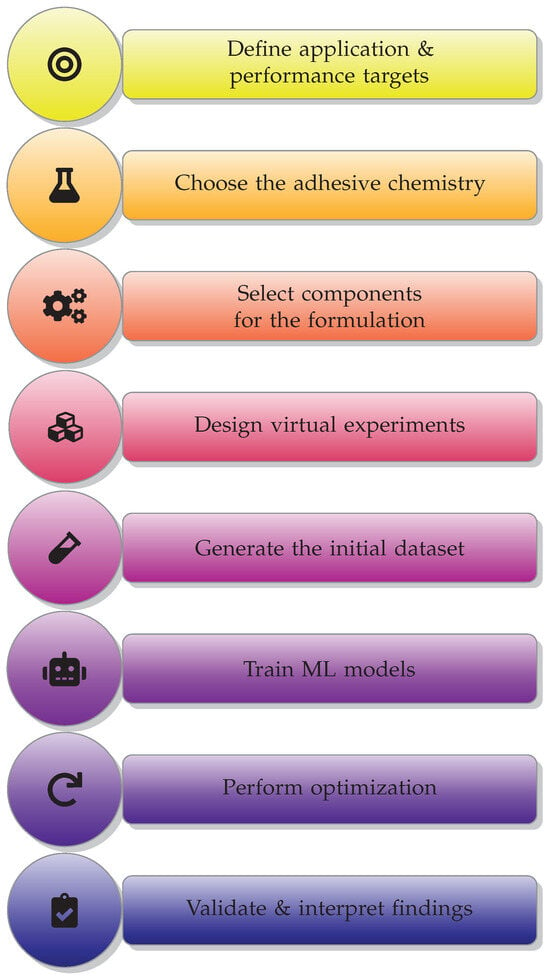
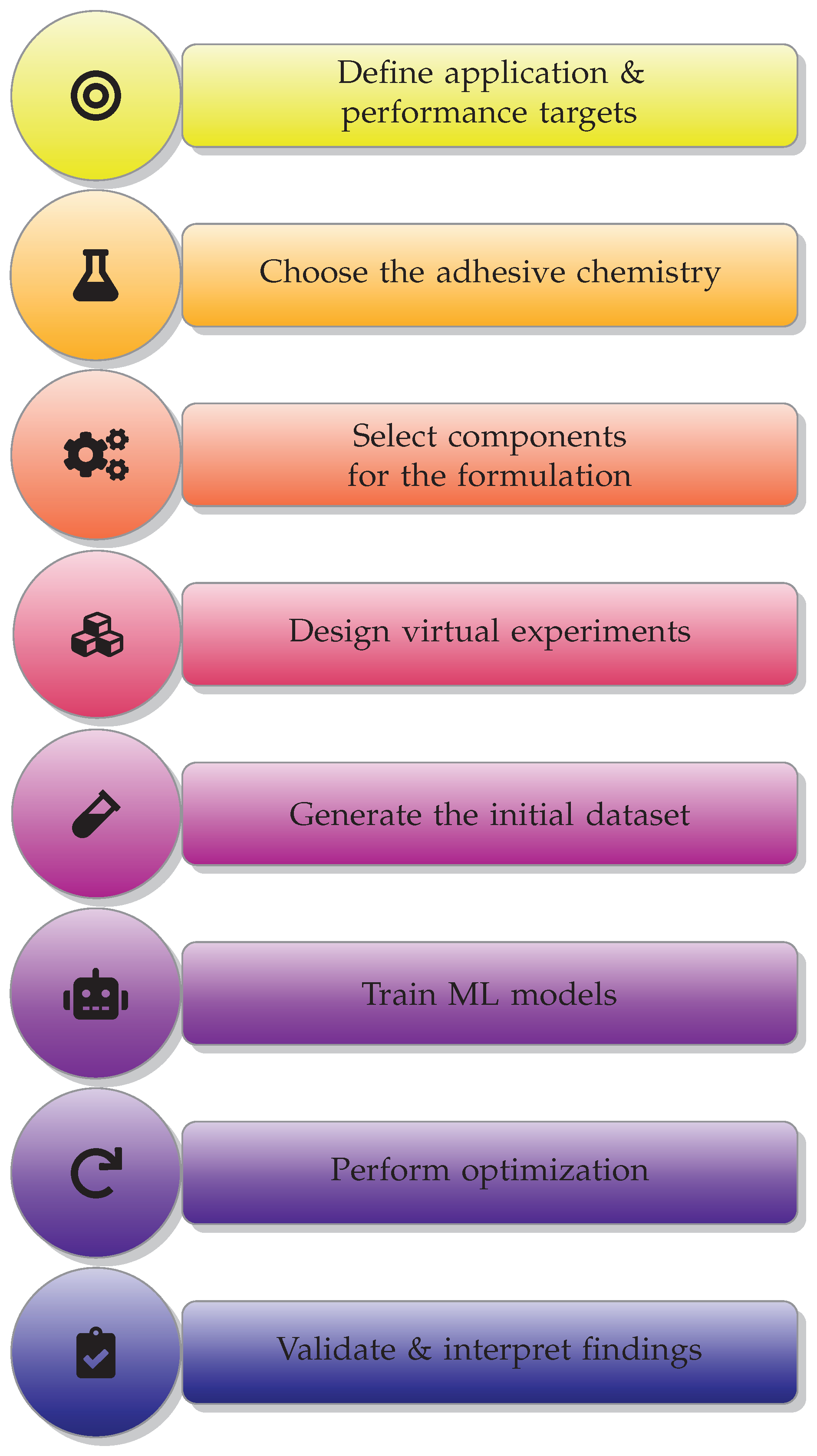




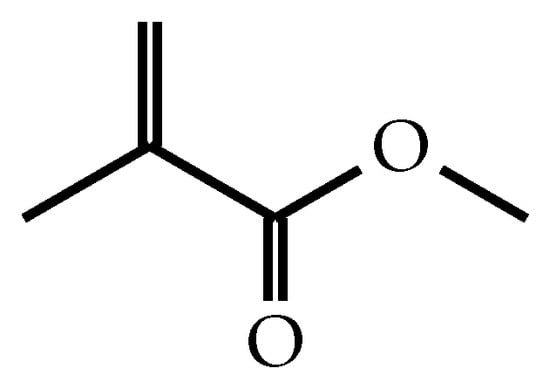
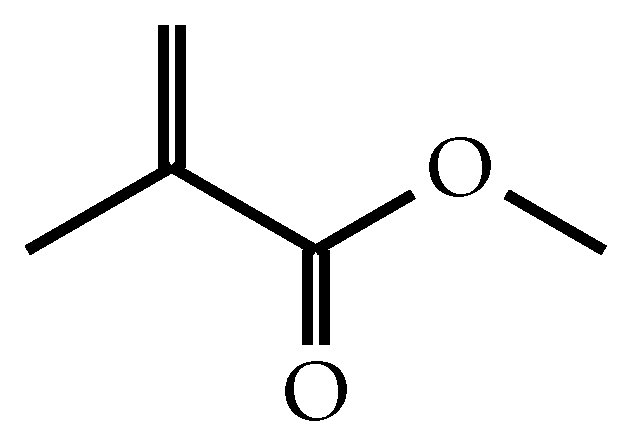
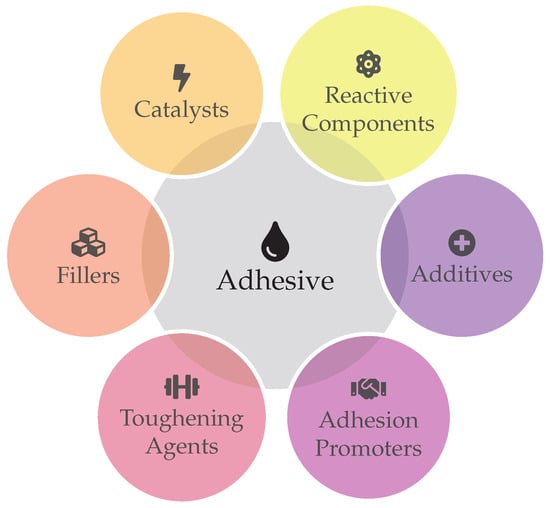
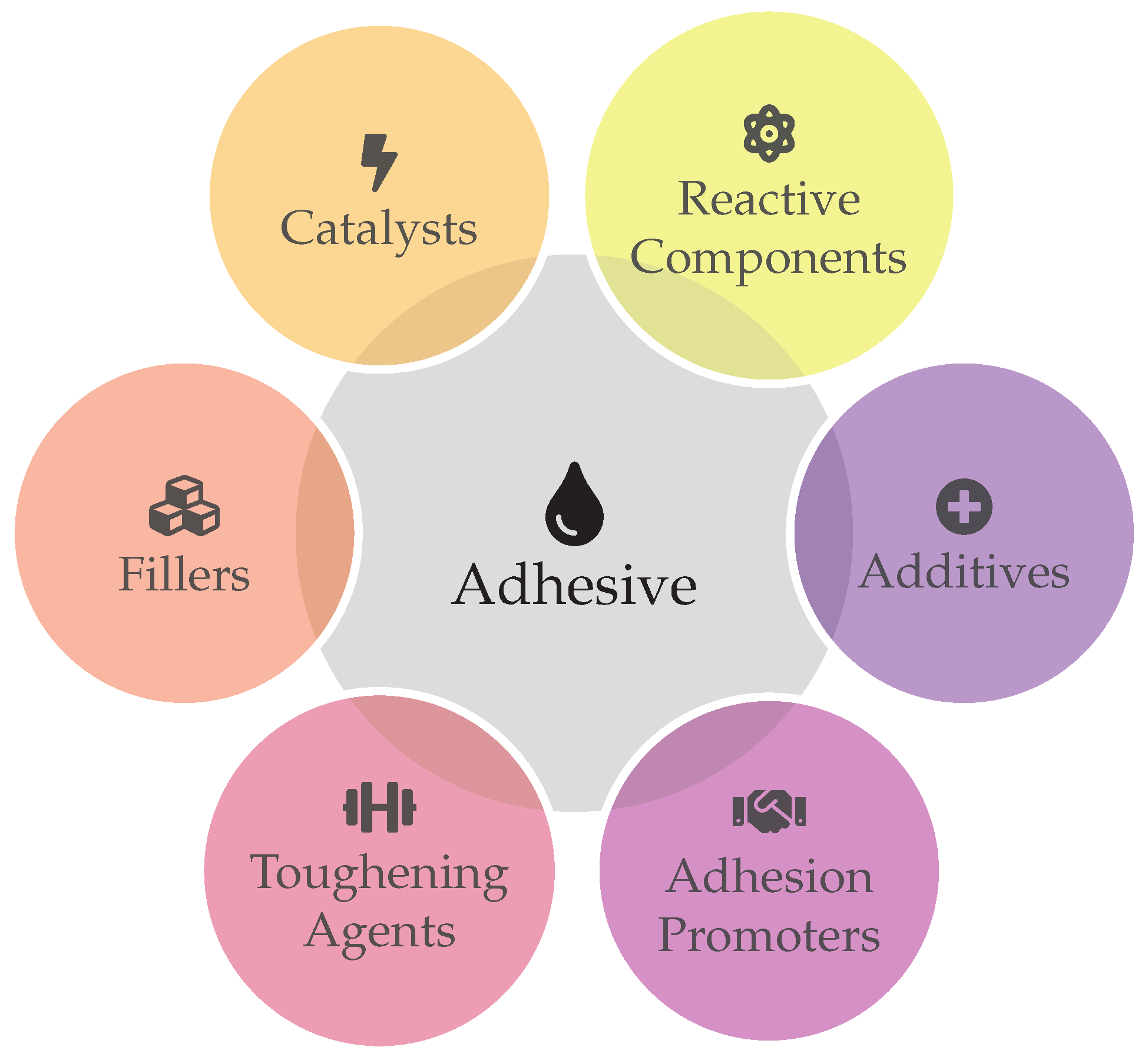
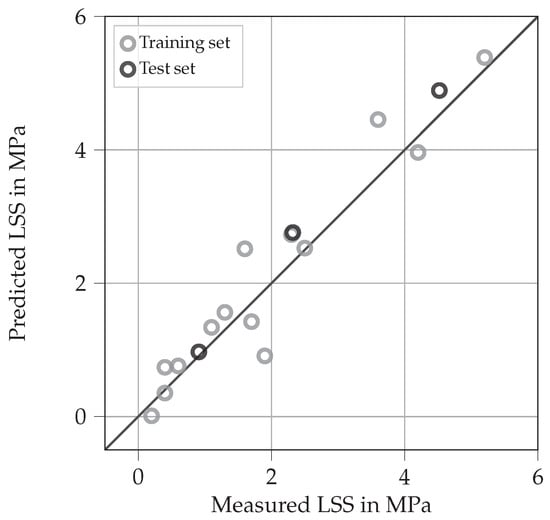
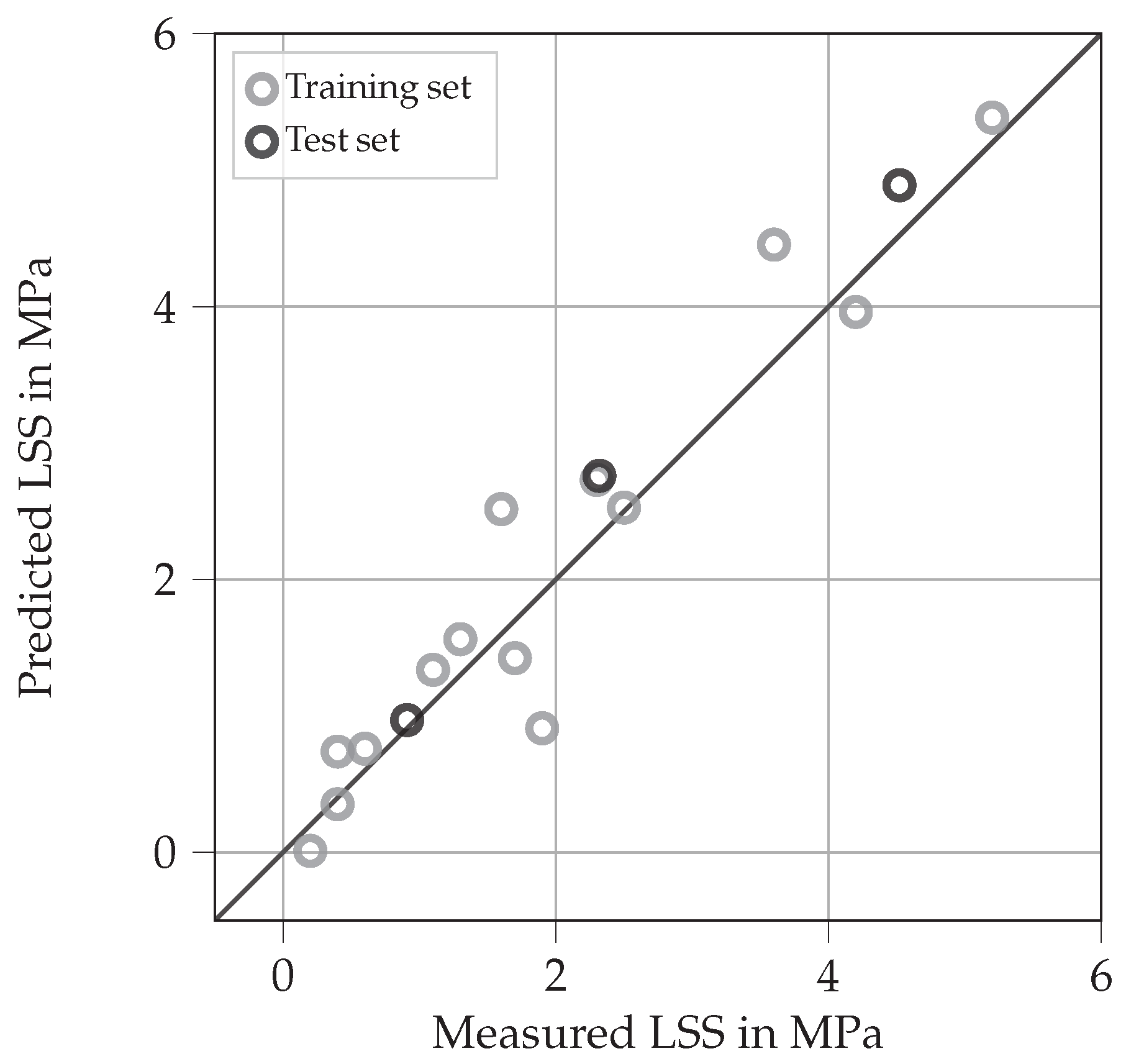
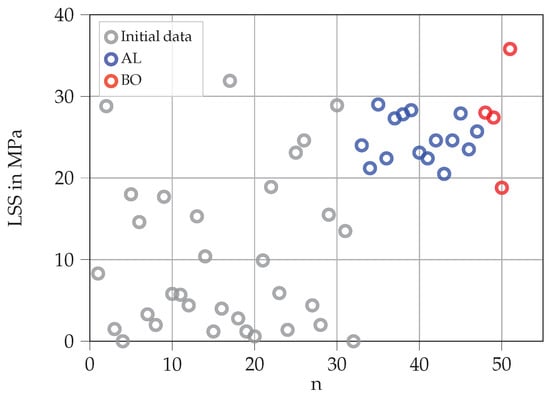
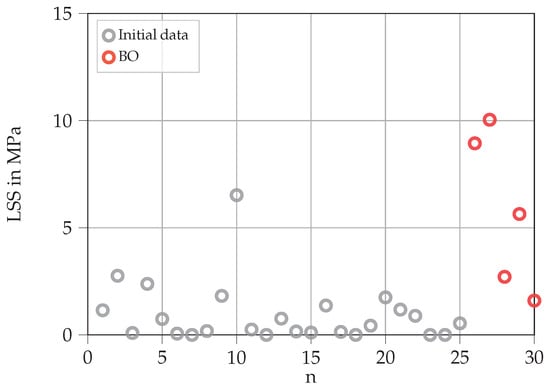
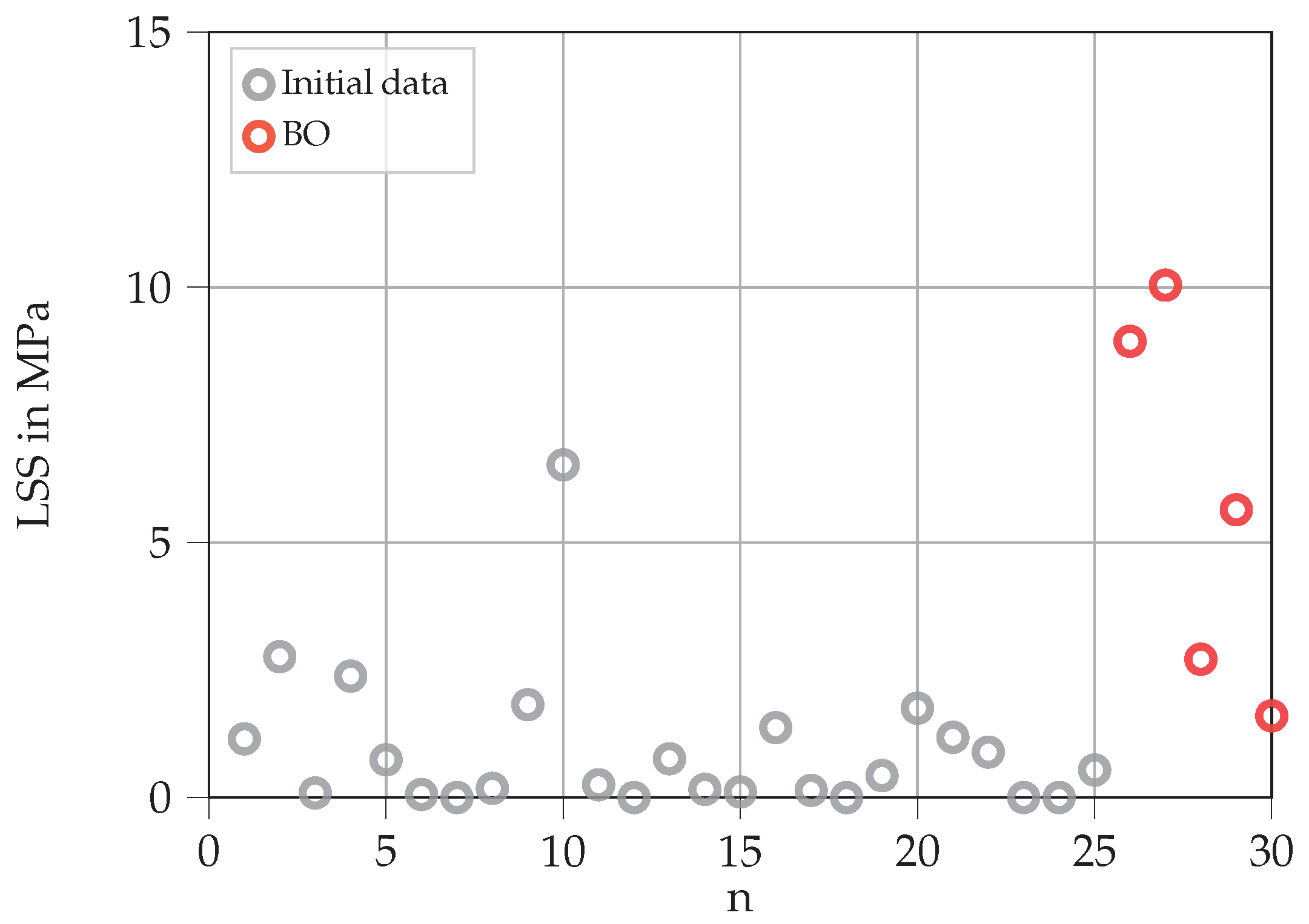
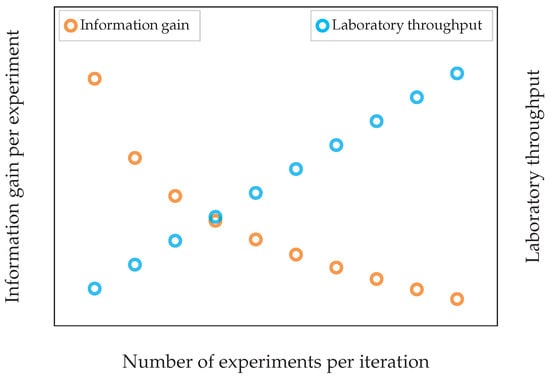
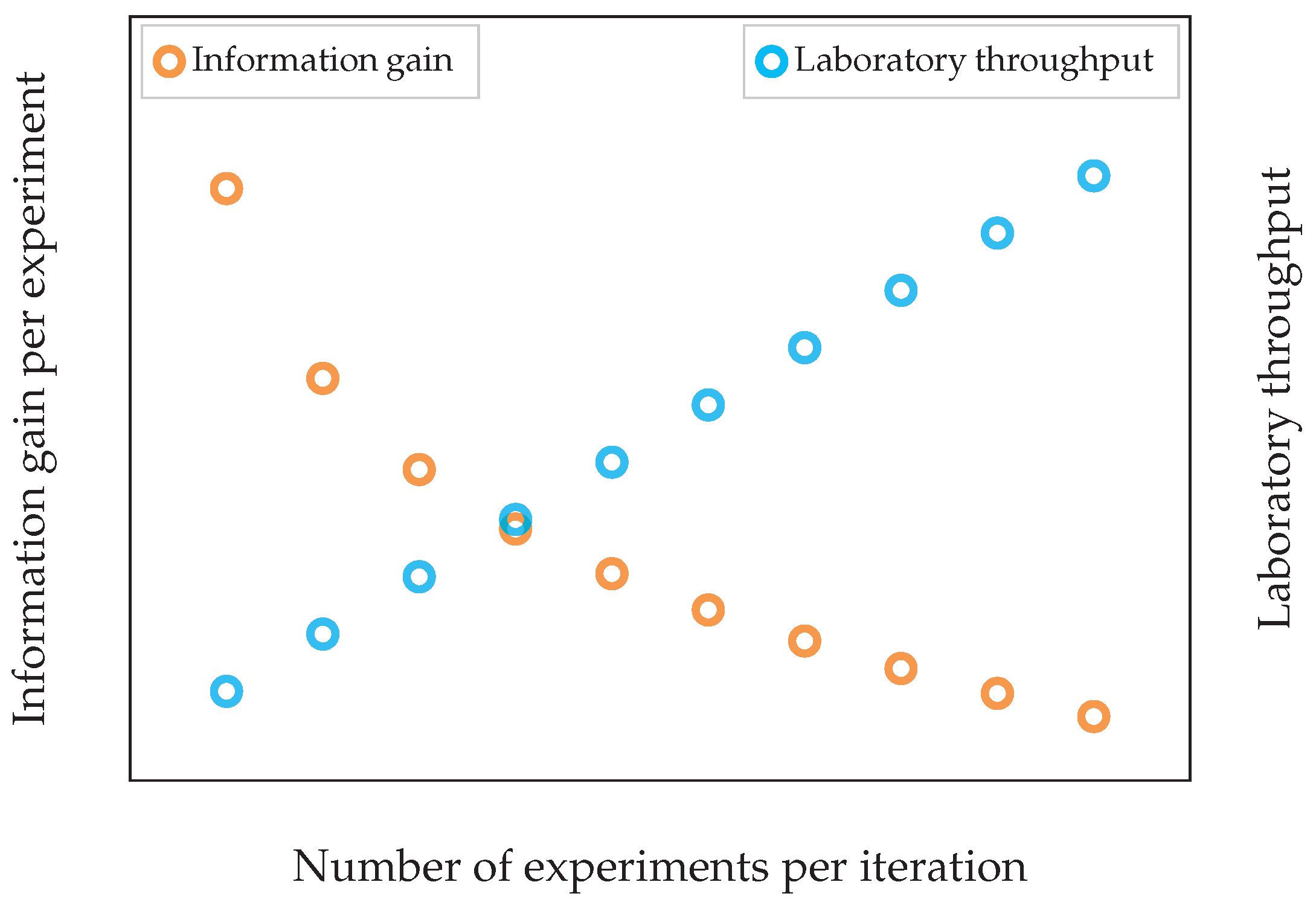

Disclaimer/Publisher’s Note: The statements, opinions and data contained in all publications are solely those of the individual author(s) and contributor(s) and not of MDPI and/or the editor(s). MDPI and/or the editor(s) disclaim responsibility for any injury to people or property resulting from any ideas, methods, instructions or products referred to in the content. |
© 2026 by the authors. Licensee MDPI, Basel, Switzerland. This article is an open access article distributed under the terms and conditions of the Creative Commons Attribution (CC BY) license.