1. Introduction
Expansive soils constitute one of the most problematic materials in geotechnical engineering due to their pronounced swelling and shrinkage behavior associated with moisture variations. This phenomenon can seriously compromise the stability and durability of buildings, pavements, and infrastructure systems, where failures such as cracking, differential heave, and damage to foundations and pavement layers have been documented [
1]. In numerous projects, soil volumetric changes have been identified as the main cause of such deterioration, particularly in pavements and foundations exposed to variable moisture cycles [
2]. The complexity intensifies in linear infrastructures such as roads, embankments, and railways, where the inherently low strength of expansive soils increases the risk of structural deformation and differential settlement [
3].
Various strategies have been proposed to reduce the swelling potential of these soils. Indiramma et al. [
4] evaluated the use of lime combined with fly ash, demonstrating that the addition of these materials decreases the free swell index, consistency limits, and optimum moisture content, thereby improving the soil’s engineering behavior. Similarly, El Majid et al. [
5] analyzed polypropylene fiber reinforcement, observing significant reductions in swelling potential and swelling pressure, as well as a decrease in the liquid limit due to the incorporation of synthetic fibers. Alternatively, Baba et al. [
6] investigated natural fibers such as alfa, jute, and sisal, showing that sisal at high proportions (18%) provides the greatest effectiveness in reducing swelling, followed by jute and alfa.
Despite the progress achieved through lime, synthetic fibers, and natural fibers, the stabilization of expansive soils continues to face challenges related to cost, availability, and the environmental impacts associated with some conventional stabilizers. In this context, the search for accessible materials with low environmental impact and, preferably, residual or waste origin has become a priority to promote more potentially sustainable solutions, subject to further evaluation of long-term performance and environmental impact.
Within this framework, sodium chloride (NaCl) and lime sludge (LS) emerge as promising alternatives. NaCl, as an ionic compound, can modify the structure of the diffuse double layer around clay particles, reducing their tendency to swell. Meanwhile, LS—an industrial by-product generated in large quantities by industries such as sugar production or water treatment—constitutes a residue that, in addition to being low cost, has significant chemical potential to improve soil properties and contributes to reducing the environmental burden associated with its disposal. Recent studies have highlighted the potential of this combination to improve the behavior of expansive soils, reinforcing the opportunity to valorize industrial waste within a circular-economy framework [
7].
Based on this perspective, the present study aims to systematically evaluate the combined effect of different percentages of sodium chloride and lime sludge on the consistency properties and swelling characteristics of an expansive soil. Atterberg limits, free swell, swelling pressure, and infiltration tests were conducted to determine the effectiveness of the treatment and its potential as a technically and environmentally sustainable alternative for expansive-soil stabilization.
2. Materials and Methods
The experimental program was designed to evaluate the combined effect of sodium chloride and lime sludge on the consistency properties and swelling behavior of a natural expansive soil. To this end, a systematic procedure was established, which included the preparation of treated mixtures, determination of the plastic limit (PL), liquid limit (LL), free swell (FS), and plasticity index (PI), as well as the performance of the standard oedometer swelling test and the combined swelling–infiltration test. All the experiments were held in the national water research center.
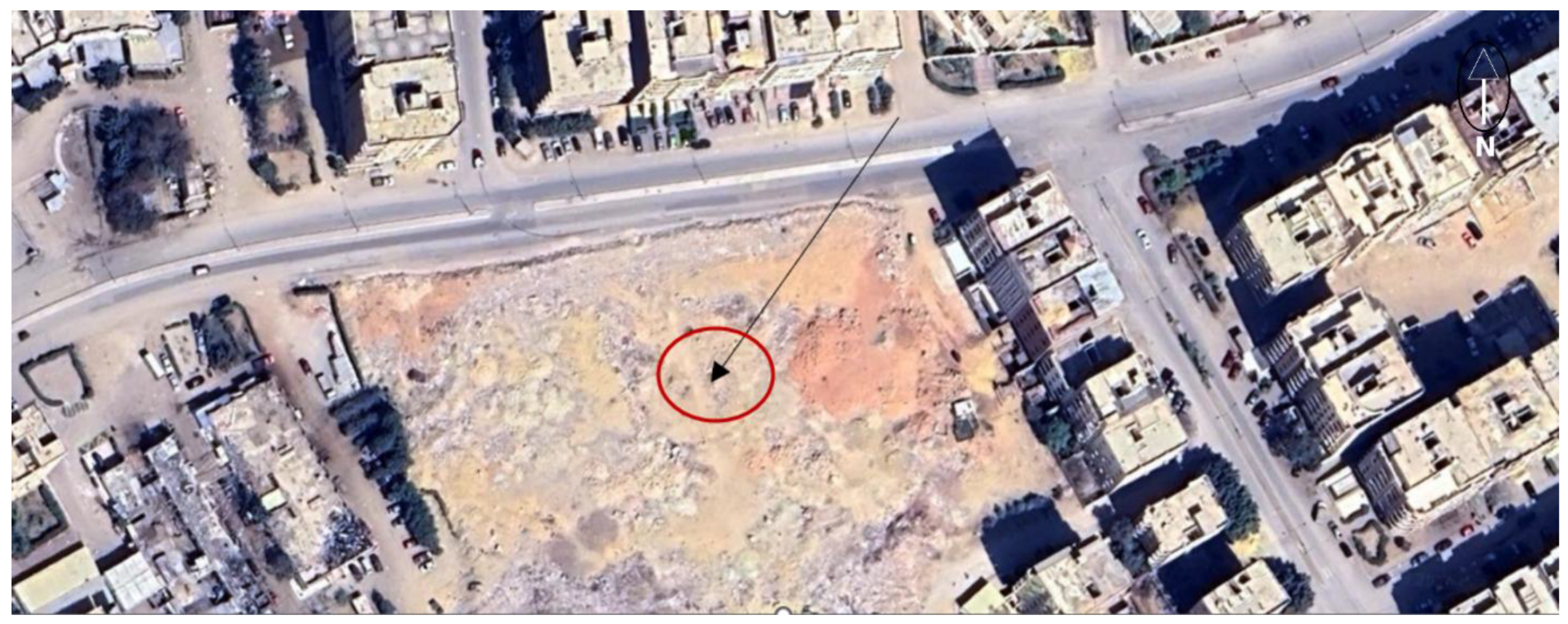
The expansive soil used in this study was collected from 6th of October City (Cairo), Egypt a residential area where such soils have historically caused structural damage to buildings (
Figure 1).
Expansive soils are primarily characterized by the presence of clay minerals such as montmorillonite and vermiculite, which exhibit a high affinity for water and undergo significant volumetric changes upon hydration. In addition, these soils display limited interaction with ionic compounds, which promotes expansion due to the interlayer swelling mechanisms typical of montmorillonite clays [
8]. The general properties of the soil are presented in
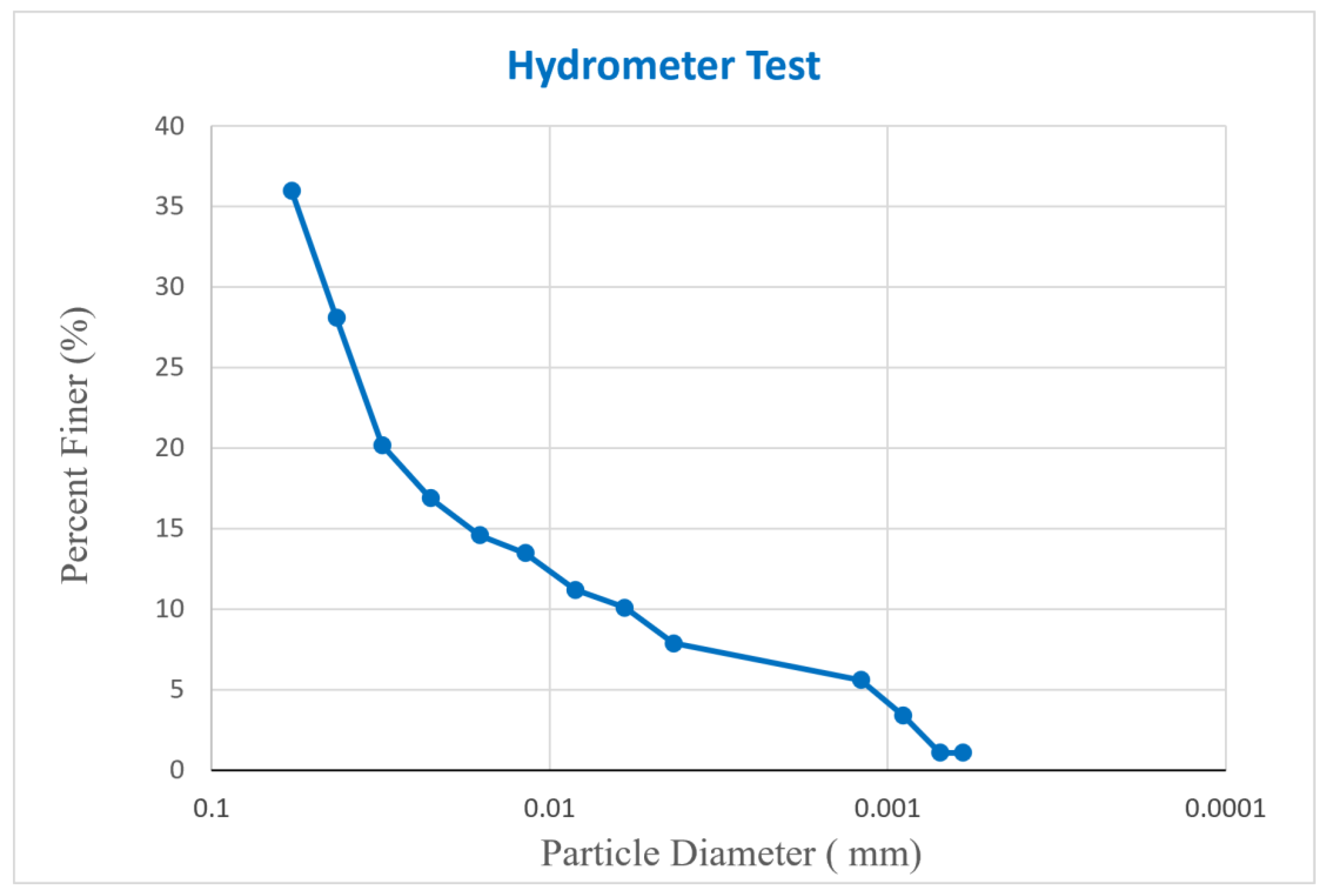
Table 1. In addition, a hydrometer test was performed to determine the grain-size distribution of the soil, and the corresponding results are shown in
Figure 2.
Sodium chloride, an inexpensive and widely available ionic compound, was sourced from Pure crystal salt Sheikh Zayed City (Giza Governorate), Egypt Due to its strong ionic nature and its influence on clay–ion interactions, NaCl is commonly employed in studies related to soil stabilization and swelling control [
9]. Lime sludge (LS) is a waste by-product generated during the sugar cane manufacturing process. Prior to its use, the material is dried and crushed into a fine powder form suitable for mixing with the soil. Since LS is an industrial waste material extracted from Abu korkas sugar factory, Minya, Egypt, it is readily available and can be obtained at a very low cost. Consequently, its utilization as a soil stabilizing additive offers an economical solution while also promoting the beneficial reuse of industrial by-products and reducing disposal-related environmental concerns. LS has been identified as a promising material for improving the swelling resistance of expansive soils [
7].
The expansive soil was treated with NaCl at proportions of 3%, 6%, and 9%, and with LS at proportions of 5%, 10%, and 15%. Distilled water was added to all mixtures during preparation to ensure uniformity prior to testing. Geotechnical characterization—including FS, PL, LL, and PI—was performed following the methodologies described by O’Kelly [
10], who highlights the relevance of these parameters for evaluating the swelling behavior of clay soils. The swelling pressure test was applied only to those mixtures that exhibited the most favorable results in the preliminary FS and consistency tests. Subsequently, the combined swelling–infiltration test was carried out to more thoroughly assess the hydraulic and volumetric behavior of the treated samples.
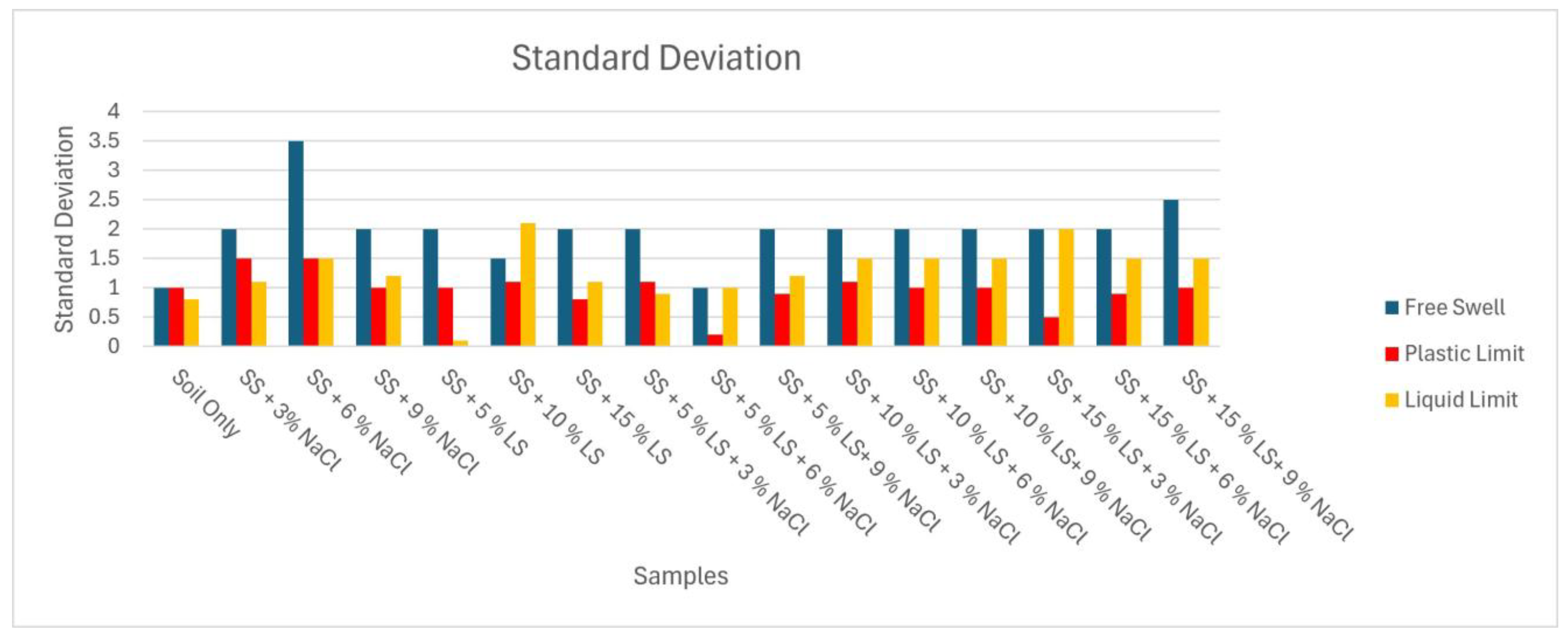
Each sample was tested in triplicate to ensure the reproducibility of the experimental results. The mean values and corresponding standard deviations were calculated for all measured parameters (liquid limit, plastic limit, and free swell index), providing a quantitative assessment of experimental variability and uncertainty.
The relatively low standard deviation values observed across all samples indicate good repeatability of the measurements and support the reliability of the reported trends. The distribution of standard deviations for the different mixtures is presented in
Figure 3.
3. Results
The laboratory tests included the determination of the liquid limit, plastic limit, free swell, and the standard oedometer test, all performed on the expansive soil mixtures at the Construction Research Institute in Cairo. In addition, swelling and infiltration tests were conducted to evaluate the swelling behavior of the soil mixtures.
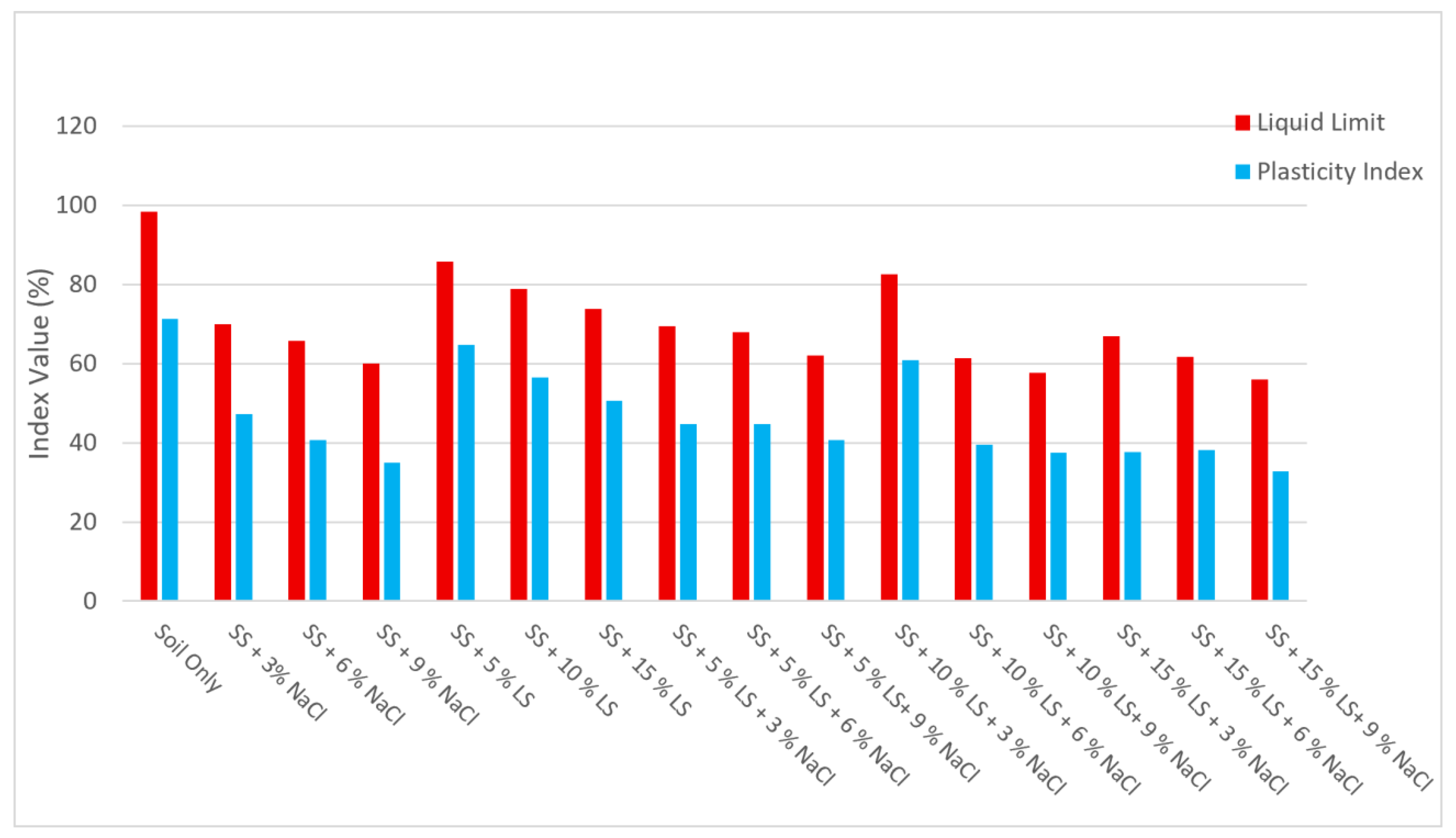
The consistency limits were first determined for the untreated expansive soil as a reference, followed by tests on soils treated with different percentages of sodium chloride (NaCl) and lime sludge (LS) in order to evaluate the effect of increasing additive percentages. Distilled water was used in all tests to ensure consistency. The results presented in
Figure 4 show the variation in the liquid limit and plasticity index for samples treated with different combinations of NaCl and LS. A clear decreasing trend in LL, PL, and PI was observed with increasing NaCl content, indicating a reduction in soil plasticity and, consequently, a decrease in swelling potential. The maximum reductions in LL and PI—35% and 36%, respectively—were obtained for the mixture containing 9% NaCl and 15% LS. Additional tests conducted using LS alone, without NaCl, revealed that increasing the LS content also led to significant reductions in consistency limits. In this case, the highest reductions in LL and PI, equal to 25.3% and 29%, respectively, were recorded at 15% LS, demonstrating the effectiveness of LS as an independent stabilizing agent.
The equation was used to determine the reduction in LL:
α = liquid limit reduction;
LLi = liquid limit of the expansive soil;
LLf = liquid limit after adding the additives.
The swelling behavior of the soil was evaluated using the free swell test, the standard oedometer test, and swelling–infiltration tests. Expansive soils are characterized by volume increase upon water absorption due to the presence of swelling clay minerals, while shrinkage occurs during moisture loss [
11].
The ASTM D5890 [
12] was the reference for performing the free swell index test. The expansive soil was dried at 105 °C; after that it was ground by using a mortar and pestle until it passed through a standard sieve size of 0.02 mm. Added to that, 30 mL of water was poured in a 100 mL graduated cylinder. Moreover, 10 g of expansive soil was placed into the water under free fall in the cylinder. The final volume of expansive soil was measured after 24 h hydration.
The method of free swell index is calculated using the following equation:
FSI = free swell index (%);
Vi = initial volume (mm3);
Vf = final volume (mm3).
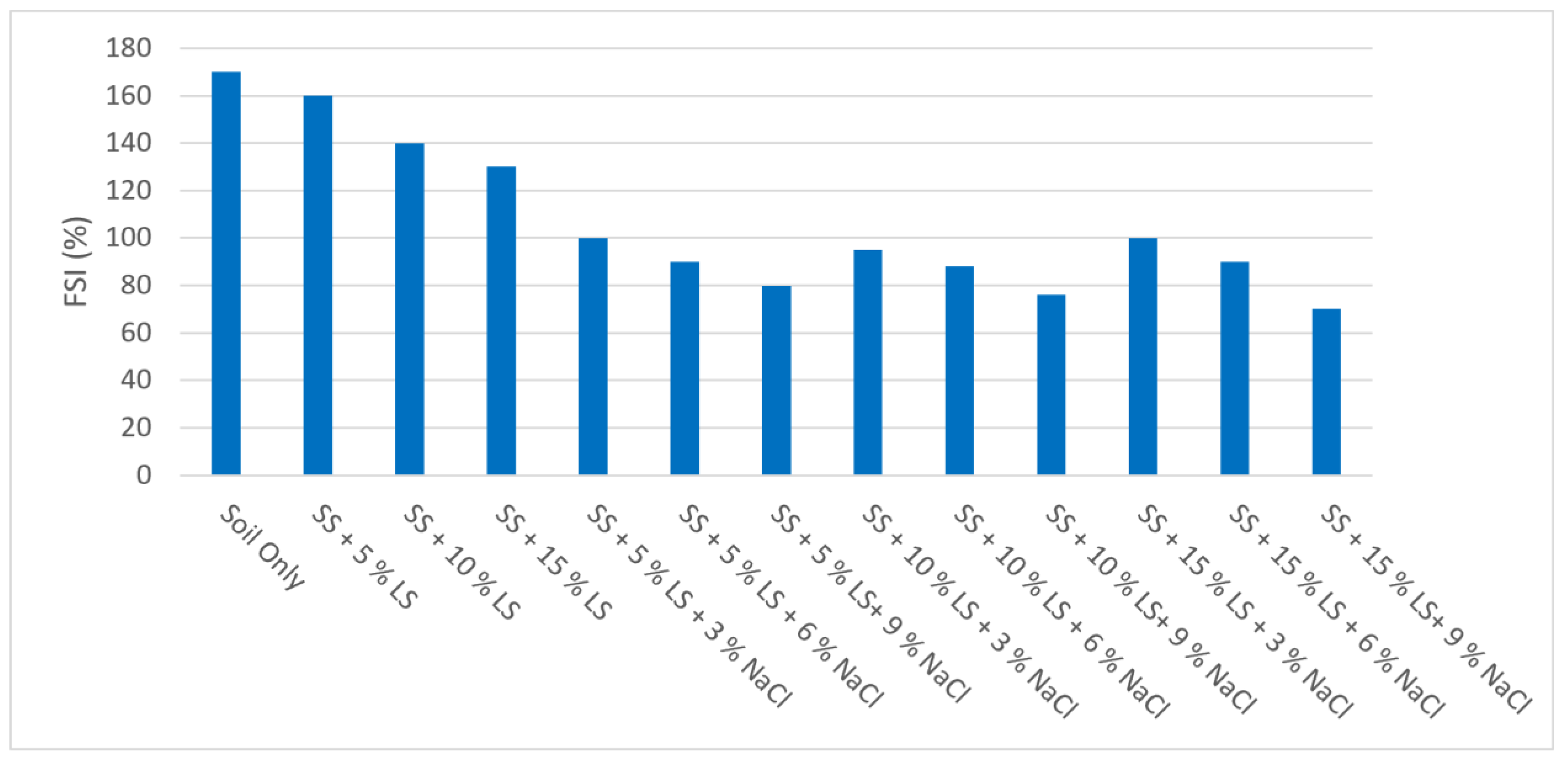
The FSI results for soils treated with different percentages of NaCl and LS are presented in
Figure 5. The results indicate a pronounced reduction in free swell with increasing contents of both additives, with the maximum reduction reaching 65% for the mixture containing 9% NaCl and 15% LS. When LS was used alone, without NaCl, the FSI also decreased progressively with increasing LS content, achieving a maximum reduction of 31% at 15% LS. These findings confirm that both LS addition and the combined use of LS and NaCl are effective in reducing the swelling potential of expansive soils.
The standard oedometer swelling test was conducted in accordance with ASTM D2435 [
13] using a one-dimensional consolidation apparatus. The soil samples were compacted using a fixed stainless-steel ring with a diameter of 75 mm. Incremental vertical stresses of 98 kPa, 196 kPa, and 392 kPa were applied in each case. Each stress increment was applied to the dry sample and maintained until vertical deformation ceased. Subsequently, water was added to the cell while the swelling deformation was recorded as a function of time.
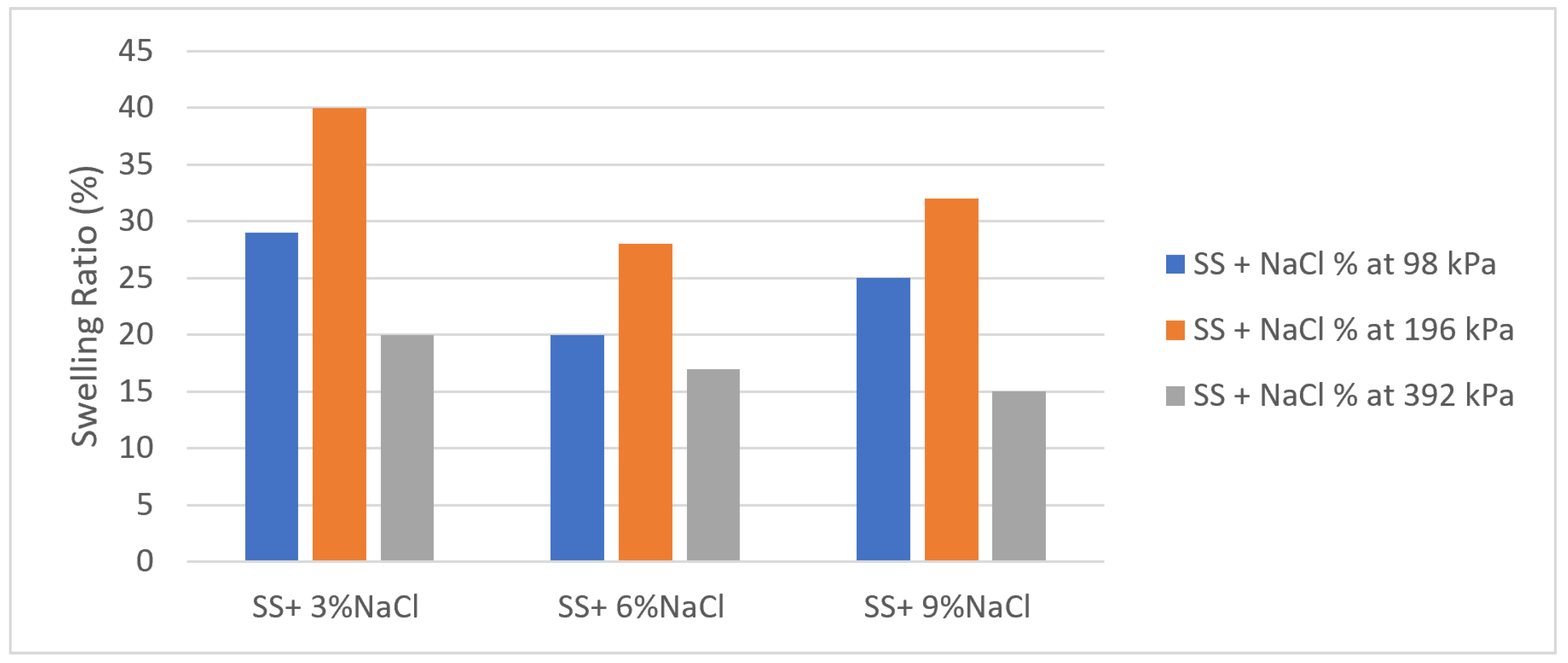
The test was conducted on soil mixtures containing 3%, 6%, and 9% NaCl to evaluate the reduction in swelling ratio. The results of the swelling ratio obtained using different NaCl contents are presented in
Figure 6. At an applied stress of 392 kPa, which corresponds to the minimum swelling condition observed in this study, swelling ratios of 20%, 17%, and 15% were recorded for mixtures containing 3%, 6%, and 9% NaCl, respectively. The lowest swelling response was observed for the mixture containing 9% NaCl under an applied stress of 392 kPa.
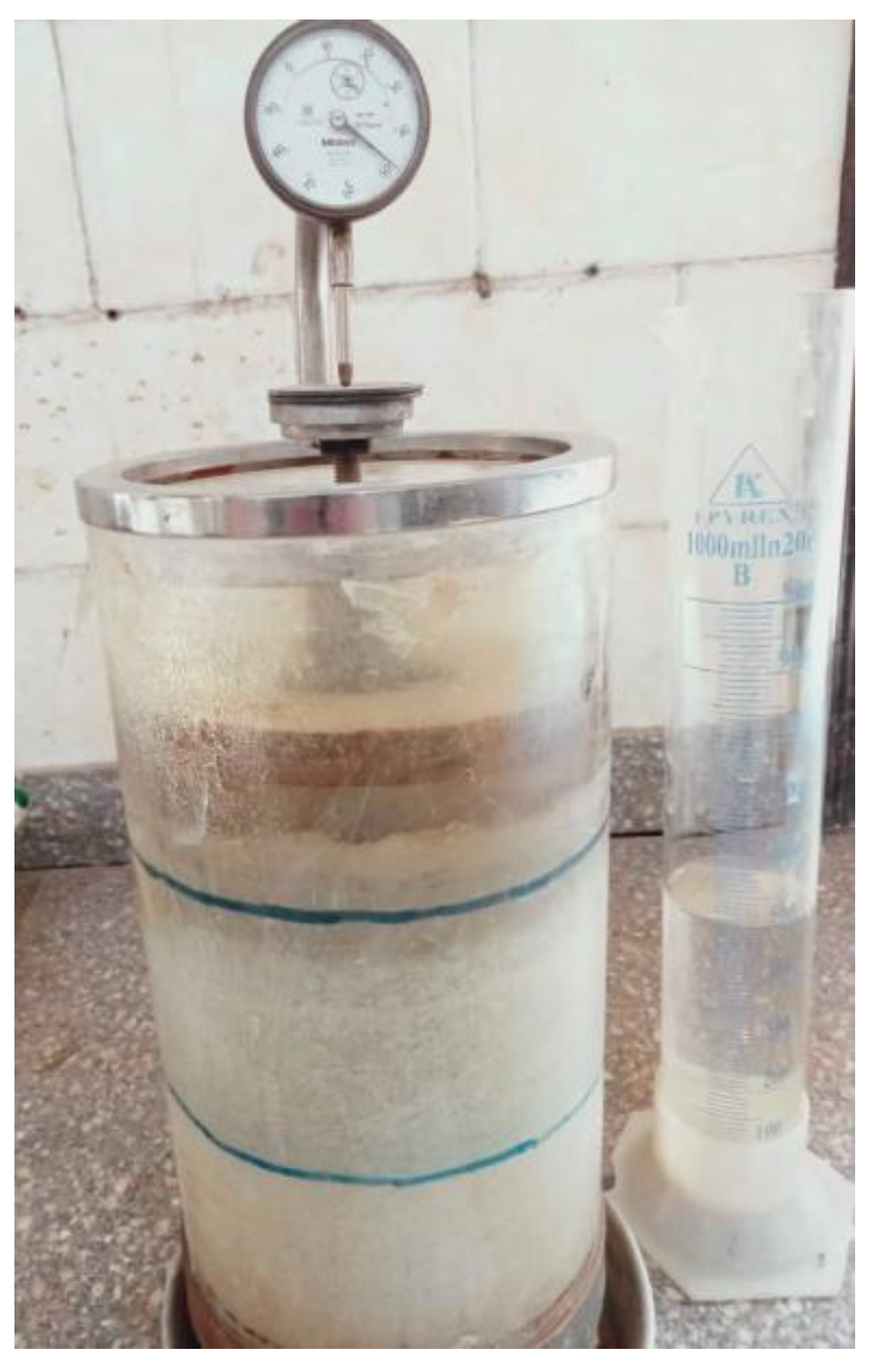
Additional insight into the hydraulic and volumetric response of the treated soils was obtained through the combined swelling–infiltration test, conducted using a transparent Plexiglass column with a total height of 300 mm and a diameter of 150 mm, as illustrated in
Figure 7. A 50 mm thick layer of clean sand was compacted at the bottom of the tube. Subsequently, a dry soil sample with a thickness of 200 mm was placed and compacted in five equal layers. Finally, the soil samples were completely submerged in water, ensuring that the water level remained above the soil surface [
7].
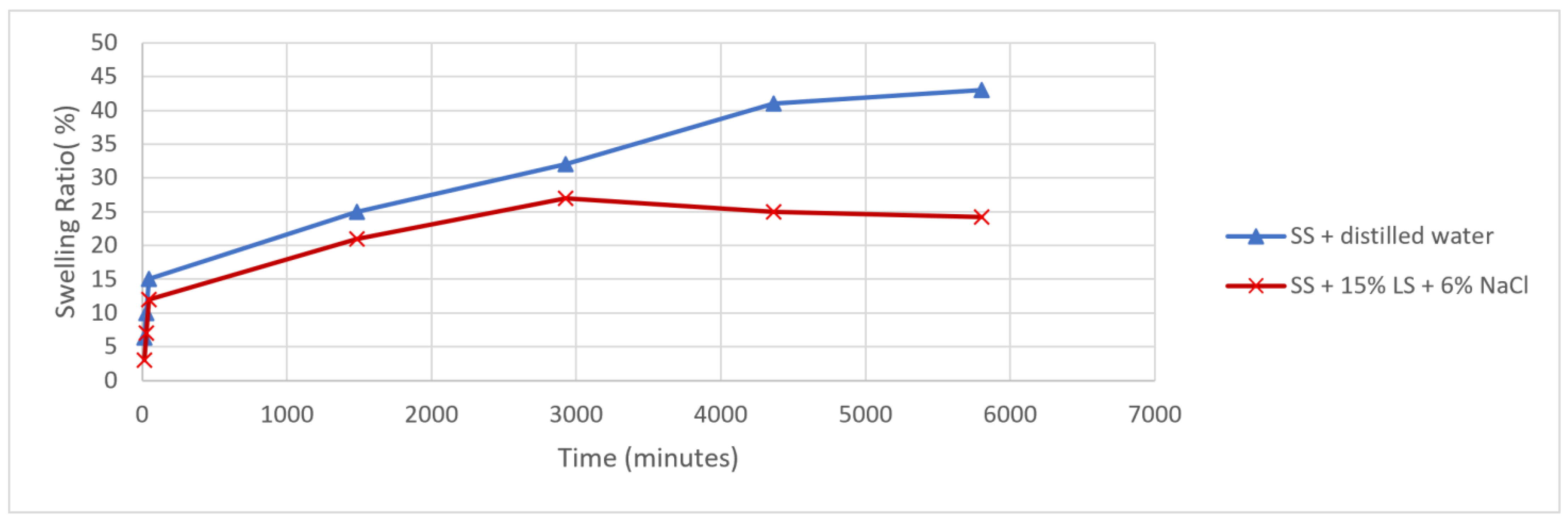
The swelling ratio of the untreated expansive soil was 43%, which decreased to 25% when 6% NaCl was combined with 15% LS, as shown in
Figure 8. This result indicates that the swelling ratio decreases with increasing LS content and the addition of NaCl. Furthermore,
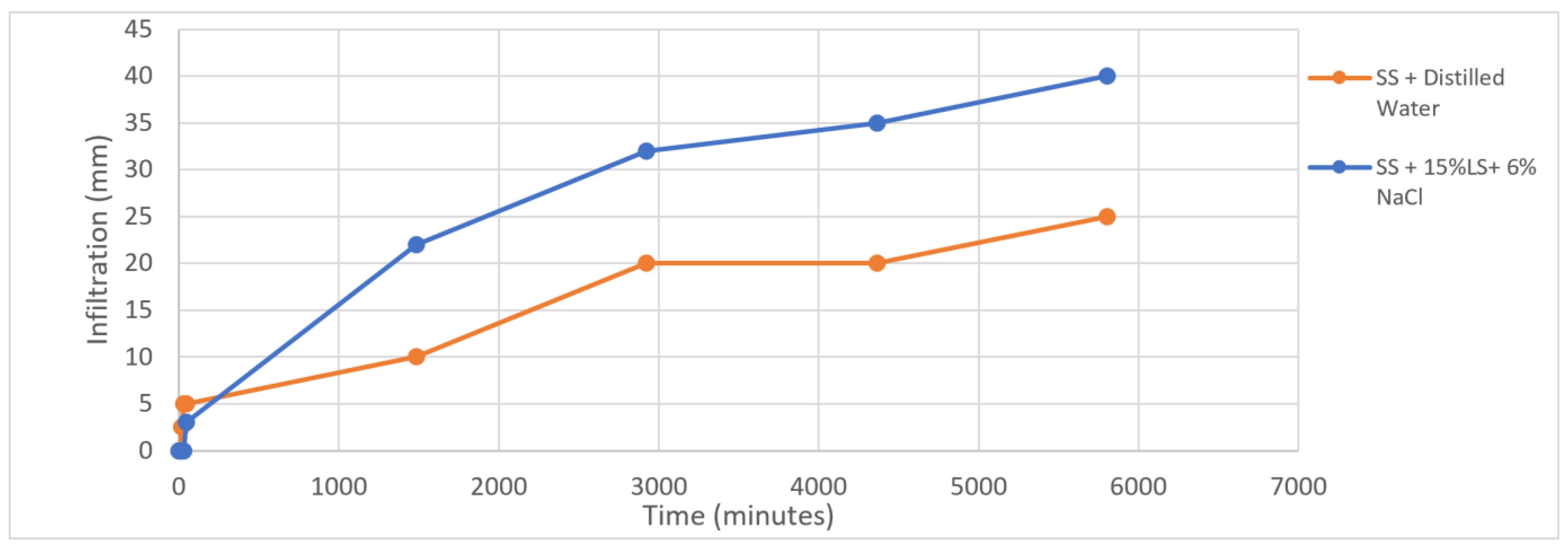
Figure 9 shows that the infiltration depth of the untreated expansive soil was 25 mm, which increased to 40 mm for the mixture containing 15% LS after the combined addition of LS and NaCl.
4. Discussion
The experimental results obtained from the Atterberg limits, the free swell index (FSI), the swelling pressure tests, and the combined swelling–infiltration test confirm the effectiveness of the combined use of sodium chloride (NaCl) and lime sludge (LS) in improving the geotechnical behavior of expansive soils. Overall, the trends observed in the treated samples are consistent with the mechanisms described in previous studies and highlight the dual chemical action generated by both additives.
The reduction in the liquid limit (LL) and the plasticity index (PI) reflects a lower affinity of the soil for water and a reduction in its plastic behavior. This effect is characteristic of clayey soils subjected to cation exchange and flocculation processes. It should be noted that the interpretation of these mechanisms is based on behavior reported in the literature for expansive soils and not on direct mineralogical identification. Such reductions agree with the findings of Indiramma et al. [
4], who attributed decreases in LL and PI to microstructural rearrangement induced by lime-based stabilizers. Similarly, the results are consistent with Balighi et al. [
8], who related the reduction in plasticity to compression of the diffuse electrical double layer in montmorillonite-rich clays. Likewise, El Majid et al. [
5] reported decreases in consistency parameters after modifying the clay microstructure through synthetic fiber additives capable of altering the organization of soil particles.
FSI behavior further supports the stabilizing effect of the treatment. The maximum reduction obtained for the mixture with 9% NaCl and 15% LS demonstrates the synergistic action between ionic compression induced by NaCl and the flocculation promoted by the calcium present in LS. The mechanism associated with NaCl—compression of the diffuse electrical double layer around clay particles and the reduction in repulsive forces—is consistent with the observations of Wijesooriya et al. [
11], who analyzed the behavior of expansive soils subjected to swelling–shrinkage cycles. Moreover, the reduction in FSI when LS was used alone agrees with the findings of Elmashad et al. [
7], who demonstrated that the high Ca
2+ content of LS favors particle aggregation and significantly reduces the expansivity of montmorillonite soils. The greater reduction observed when combining both additives confirms the simultaneous operation of flocculation and ionic compression mechanisms that intensify the decrease in swelling potential.
The results of the oedometer swelling test corroborate the reduction in expansive behavior observed in the FSI and consistency limits. Under the highest applied stress (392 kPa), the treated samples reached swelling ratios of 15–20%, indicating a marked reduction in vertical deformation. This trend is consistent with Yazdi et al. [
3], who reported that chemically stabilized expansive soils exhibit lower deformation under sustained loading due to reduced hydration capacity of clay minerals and increased structural cohesion. The coherence between the reduction in swelling pressure, the consistency limits, and the FSI reinforces the reliability of the combined NaCl and LS treatment, highlighting its ability to simultaneously reduce water absorption and soil expansion.
The combined swelling–infiltration test also revealed significant improvements in the hydraulic behavior of the treated soil, suggesting a more open internal structure and lower susceptibility to blockage from swelling. This observation aligns with Elmashad et al. [
7], who reported the development of flocculated structures in LS-treated soils that enhance water movement. The strong reduction in swelling ratio indicates that reduced expansivity produces a positive effect on hydraulic conductivity. This confirms that the treatment not only improves geotechnical properties but also may contribute to improved resistance to moisture variations under laboratory conditions, although its long-term environmental implications require further investigation.
Overall, the experimental evidence demonstrates that the combined action of NaCl and LS generates a dual mechanism—ionic compression and calcium-induced flocculation—that effectively reduces swelling potential, plasticity, and swelling pressure. Additionally, the use of lime sludge (LS), as an industrial by-product, contributes to waste valorization and represents a more inherently sustainable component of the proposed treatment.
Despite the positive results and the favorable performance of the NaCl–LS mixtures, it is important to note that the results presented in this study are based on short-term laboratory tests. Therefore, the long-term performance and environmental implications of using sodium chloride (NaCl) as a stabilizing agent require further investigation. Potential risks such as salt leaching, groundwater contamination, and corrosion of nearby infrastructure should be carefully evaluated before large-scale application. These aspects were not addressed within the scope of the present study and represent an important area for future research. In addition, mechanical parameters such as unconfined compressive strength, CBR, or shear strength were not included, which will be necessary to fully assess their applicability under field conditions.
The economic feasibility of the proposed method is primarily associated with the use of low-cost and widely available materials. Lime sludge (LS), as an industrial by-product, presents minimal acquisition costs and contributes to waste valorization, while sodium chloride (NaCl) is an abundant and inexpensive additive. Therefore, the combined use of these materials offers a cost-effective alternative to conventional stabilizers.
Nevertheless, the economic analysis presented in this study is preliminary and qualitative. A more comprehensive evaluation, including transportation, processing, and large-scale application costs, as well as environmental considerations, is required in future research.
5. Conclusions
The experimental investigation conducted in this study evaluated the short-term effects of sodium chloride (NaCl) and lime sludge (LS) on the consistency and swelling behavior of an expansive soil. Based on the laboratory results obtained, the following conclusions can be drawn:
The combined addition of NaCl and LS led to a substantial reduction in the soil’s consistency limits. The liquid limit (LL) and plasticity index (PI) decreased, indicating a significant decrease in soil plasticity and swelling potential.
When LS was used as the sole stabilizing agent, notable improvements were also observed. The LL and PI were reduced, with 15% LS producing the highest reduction among all LS contents, confirming the effectiveness of lime sludge as an independent stabilizer.
The free swell index (FSI) decreased markedly with the addition of both NaCl and LS. The maximum reduction in FSI for the mixture containing 9% NaCl and 15% LS demonstrates a strong synergistic effect between the two additives. The reduction observed when using LS alone further confirms its contribution to swelling mitigation.
Results from the standard oedometer swelling test showed that swelling deformation decreased with increasing applied stress. The lowest swelling ratios were recorded under an applied stress of 392 kPa, highlighting the improved swelling resistance of the treated soil under loading conditions.
The combined swelling–infiltration test revealed that stabilization with NaCl and LS not only reduced swelling but also enhanced the hydraulic behavior of the soil, indicating improvement in permeability and reducing susceptibility to moisture-induced damage.
Overall, the results demonstrate that the combined use of sodium chloride and lime sludge provides an effective and economical solution for mitigating the swelling behavior of expansive soils. In addition to improving geotechnical performance, the reuse of lime sludge—an industrial by-product—supports waste valorization within a circular-economy framework, contributing to both environmental sustainability and cost reduction.
Future research, currently underway, focuses on evaluating the long-term geotechnical behavior of treated soils, including their durability under wetting–drying cycles. In addition, future studies should further investigate different dosages of lime sludge and sodium chloride, given that these low-cost materials—particularly lime sludge, as an industrial by-product—exhibit significant potential to enhance environmental sustainability through reuse. Moreover, the application of other industrial waste materials for the stabilization of expansive soils should be explored, as their chemical interactions may further reduce montmorillonite activity and the soil’s swelling potential.