Proceeding Paper

Advancing Nanotoxicology: High-Throughput Screening for Assessing the Toxicity of Nanoparticle Mixtures †

Nano Research Centre, Sylhet 3100, Bangladesh
*
Author to whom correspondence should be addressed.
Presented at The 2nd International Online Conference on Toxics (LOCTO 2025), 8–10 September 2025; Available online: https://sciforum.net/event/IOCTO2025.
Environ. Earth Sci. Proc. 2025, 37(1), 2; https://doi.org/10.3390/eesp2025037002

Published: 3 December 2025
(This article belongs to the Proceedings of The 2nd International Online Conference on Toxics)

Abstract

The widespread application of nanoparticles (NPs) in fields ranging from consumer products to industrial processes has led to increased concerns about their potential toxic effects on human health and the environment. While traditional toxicological studies often evaluate the effects of individual NPs, real-world exposure scenarios typically involve mixtures of NPs, where interactions between particles can significantly alter their toxicological profiles. This study provides an overview of overcoming this gap by possible utilization of high-throughput screening (HTS) for evaluation of the combined effects of NP mixtures under various exposure conditions. This review discusses HTS of metal oxide NPs, which have cytotoxic, genotoxic, and oxidative stress-inducing effects. Using HTS, this review describes multiple studies with multiple mixture ratios and exposure durations using human lung epithelial cells and zebrafish embryo systems. The review also describes a range of interactions, from synergistic effects, where the combined toxicity might be the sum of individual toxicities. Oxidative stress and metal ion release were key drivers of toxicity, particularly in metal oxide-dominant NP mixtures. This theoretical study highlights the importance of integrating HTS into nanotoxicology research to provide a more comprehensive understanding of the toxic behavior of NPs.

1. Introduction

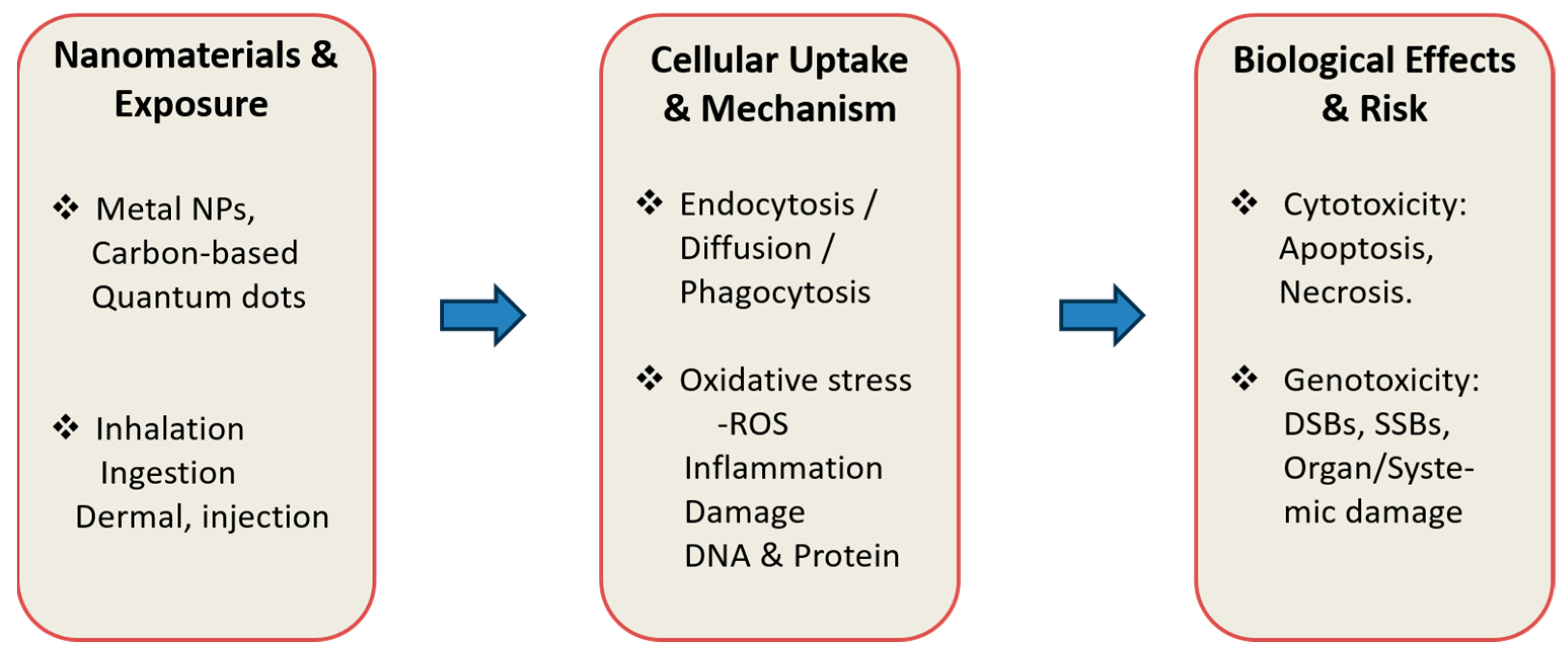
NPs have emerged as a cornerstone of modern technology, finding applications in diverse fields, such as electronics, medicine, cosmetics, textiles, and environmental engineering [1]. Their unique physicochemical properties, particularly their high surface area–to–volume ratio and enhanced reactivity, make them valuable for industrial and biomedical use. However, these same properties also raise significant concerns regarding their potential toxic effects on human health and ecosystems. Nanotoxicology, an evolving branch of toxicology, focuses on understanding how NPs interact with biological systems and the environment, with special emphasis on their size-dependent behaviors and dose-response relationships. Traditional toxicological studies primarily evaluate the effects of individual NPs under controlled conditions. Yet, real-world exposure scenarios often involve mixtures of NPs, where interactions may amplify or reduce toxic responses compared to single-particle exposure. This creates a critical gap in current risk assessment frameworks, which largely overlook mixture effects. Oxidative stress and metal-ion release, especially from metal oxide NPs like ZnO, TiO2, and CeO2, have been identified as key drivers of cytotoxicity, genotoxicity, and inflammatory responses (Figure 1) [2]. To address these challenges, HTS offers a promising solution by enabling rapid, large-scale evaluation of NPs’ effects across different biological systems. By combining cellular models such as human lung epithelial cells with whole-organism models like zebrafish embryos, HTS facilitates mechanistic insights into NP toxicity while generating large datasets suitable for predictive modeling. HTS studies have uncovered previously unrecognized patterns of NP cytotoxicity by simultaneously integrating cellular and whole-organism models, revealing mechanistic insights and predictive biomarkers that enable more accurate risk assessment and the design of safer NPs with unprecedented precision. Emerging approaches employing targeted microinjection and transgenic immune-reporter lines offer promising strategies to better recapitulate human exposure routes and elucidate nanomaterial immunotoxicity [3]. Such integrative approaches not only enhance our understanding of NP interactions but also contribute to the design of safer nanomaterials and the development of more comprehensive regulatory frameworks [4].

2. Traditional and Modern Toxicological Studies

Traditionally, toxicology addresses the study of the adverse effects of chemicals on humans [5]. The oldest and most revered axiom of toxicology in toxicity states that it is the dose that determines toxicity. Based on this principle, toxicologists emphasize that no chemical can be considered inherently safe, as every substance has the potential to cause harm under certain exposure conditions. Conversely, they assert that any chemical can be utilized safely if exposure is kept within safe limits [6].
In present-day toxicology, a substance is deemed toxic if it can induce negative effects on biological systems. Classification of toxicants according to chemical structure includes metals, non-metals, acids and bases, and organic toxicants. From an analytical perspective, they are categorized as volatile toxicants, extractives, metals, and metalloids [7]. Based on recent developments, particle size and size distribution are crucial determinants of the in vivo behavior, toxicity, and targeting effectiveness of NP systems [8]. Nanomaterials find extensive applications across diverse industrial sectors, including agriculture, electronics, cosmetics, food, textiles, and the automotive industry [9]. Nanotoxicology is a scientific field that studies NPs and their interactions with biological systems [10]. It focuses on how the unique physicochemical properties of NPs influence these interactions [11]. Such properties may lead to novel and sometimes unexpected adverse biological effects [12]. The entire science of toxicology rests upon the fundamental paradigm of the dose–response relationship. The choice of dose metric plays a pivotal role in determining the dose–response curve and is typically dictated by the expected mode of action of the toxicant [13].

3. Advanced Risk Assessment by HTS

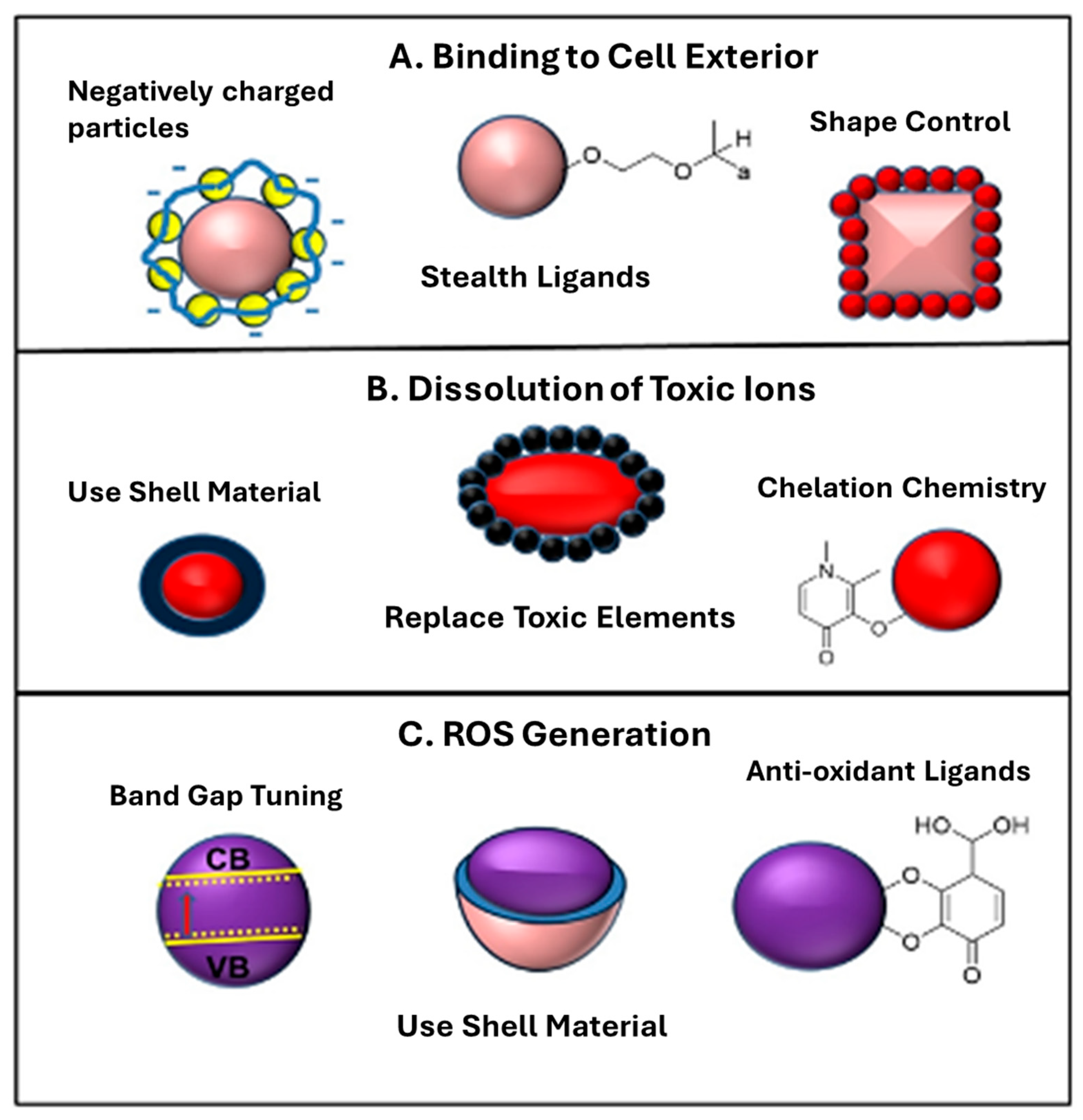
HTS constitutes a cornerstone of contemporary drug discovery, enabling the systematic interrogation of extensive chemical libraries against biological targets through the integration of automated robotics, miniaturized assay formats, and high-dimensional data analytics. Standard HTS platforms allow the testing of 10,000–100,000 compounds per day [4]. Strategies to minimize NP-induced toxicity focus on regulating surface interactions, suppressing toxic ion release, and lowering reactive oxygen species (ROS) generation (Figure 2). Approaches such as ligand modification, shell coating, and band-gap tuning significantly enhance NP stability and biocompatibility [14].
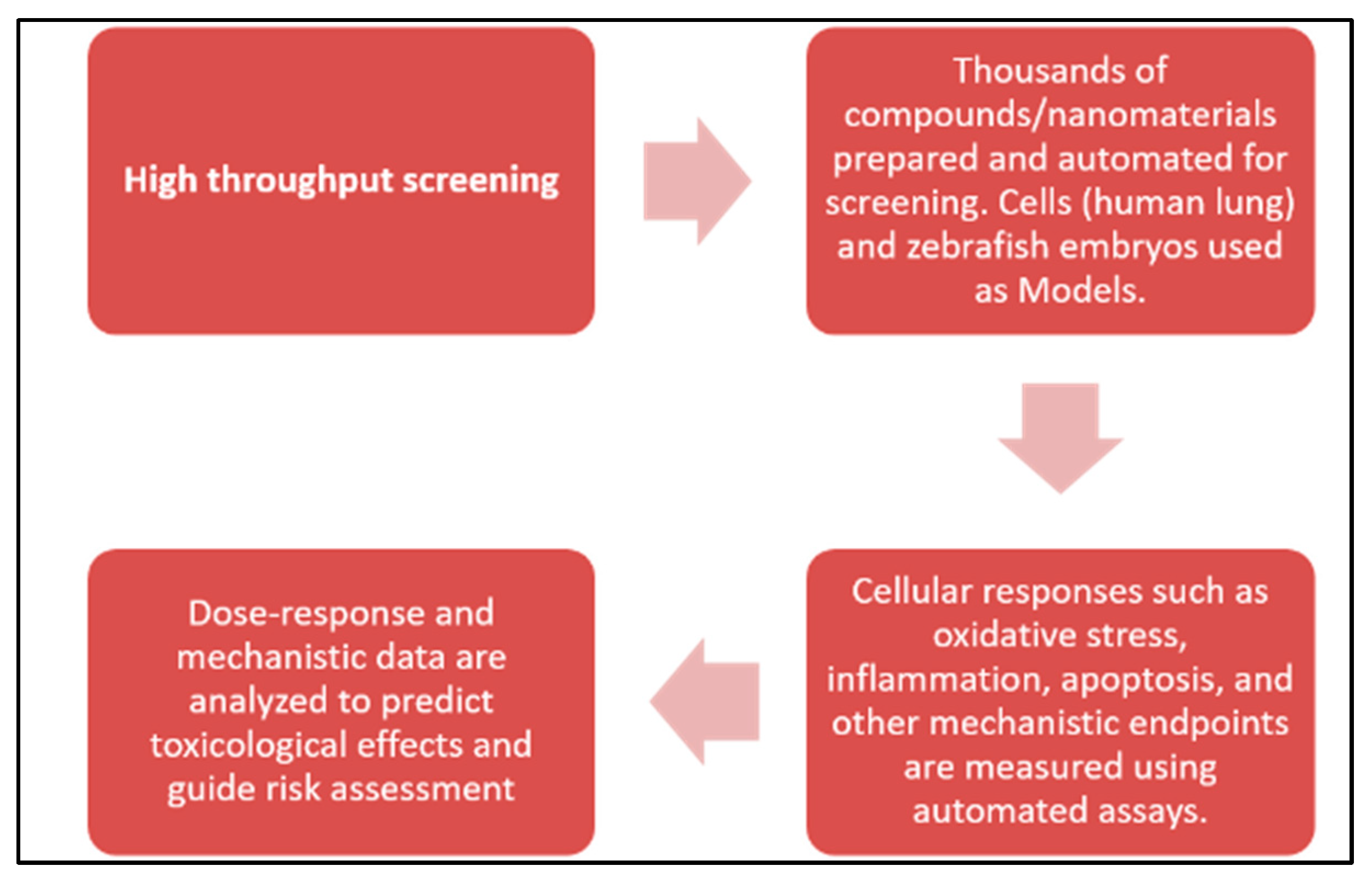
HTS is essential to establish standardized frameworks that integrate conventional testing approaches to fulfill the objectives of advanced risk assessment (Figure 3) [15]. Utilizing models such as human lung epithelial cells and zebrafish embryo systems allows the evaluation of multiple development stages [16]. HTS reveals that ZnO NPs induce oxidative stress and proinflammatory pathways in bronchial epithelial cells. These effects parallel the lung inflammation caused by welding fumes, which can result in metal fume fever [17]. Zebrafish embryos offer a robust platform for HTS of NP toxicity, with their rapid organ development and transparency enabling non-invasive assessment. Measuring oxidative stress and cell death systematically provides mechanistic insights and informs dose–response relationships [18]. The HTS platform was applied to evaluate ZnO NP–induced cytotoxicity, genotoxicity, and oxidative stress using harmonized human cell and zebrafish embryo models. Controlled ZnO exposures were delivered via automated dispensing and imaging systems to ensure precision and reproducibility. Viability metrics, γ-H2AX–based DNA damage signals, and ROS outputs were quantified to define mechanistic toxicity pathways. This integrated approach enabled a rapid and sensitive characterization of ZnO-associated toxicological profiles [19].
HTS expertise encompasses the evaluation of large chemical libraries for potential toxicological interactions, employing automated robotic platforms to simultaneously test thousands of compounds in both biomedical and cell-based assays. This capability enables targeted applications in environmental health. A critical component of HTS implementation is the establishment of rigorous quality control procedures to ensure the identity, purity, and stability of all compounds within the screening library [20]. Genotoxic potential is characterized using comet, micronucleus, and mouse lymphoma assays, capturing DNA strand breaks, chromosomal alterations, and mutation frequency. These complementary assays differentiate direct NP–DNA interactions from ROS-driven effects, while consistently resolving size- and dissolution-dependent genotoxic profiles of ZnO NPs [19].

4. Oxidative Stress and Effects of Metal Ion Interaction

Oxidative stress is defined as the disruption of the balance between antioxidants and oxidants within cellular systems, leading to the activation of diverse cellular responses and redox-sensitive signaling pathways [21]. Cellular redox homeostasis, maintained by a coordinated network of antioxidant enzymes, proteins, and low-molecular-weight scavengers, is vulnerable to perturbation by elevated ROS levels or compromised antioxidant defenses, ultimately resulting in oxidative stress [22]. The zebrafish embryo offers a unique intact organism model for HTS of nanomaterial, capturing system-level toxicological interactions—including biodistribution, vascular effects, and developmental toxicity—unattainable in reductionist in vitro systems. However, its predictive capacity is limited by the aquatic exposure environment that alters NP behavior and an immature immune system that restricts assessment of chronic inflammatory responses relevant to human inhalation exposure [23]. The widespread industrial use of NPs such as ZnO, TiO2, CeO2, and carbon black leads to metal-ion release, creating emerging risks for human health and the environment (Table 1) [2].
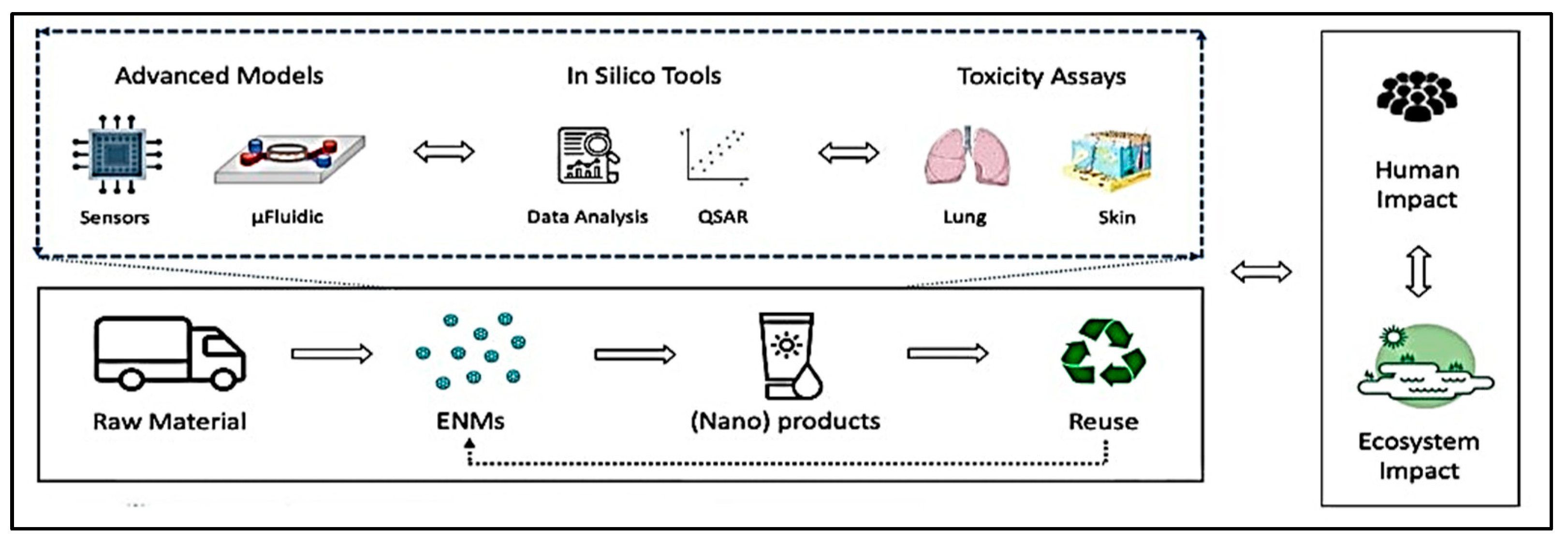
The toxic effects of nano-ZnO are mainly linked to the release of Zn2+ ions [26]. These ions are liberated when nano-ZnO interacts with biological or environmental systems [27]. Studies have reported that the amount of Zn2+ released can range from 16% to 40% [28]. This ion release is considered a key factor driving the toxicity of nano-ZnO [29]. Exposure to Zn2+ significantly increases the levels of intracellular ROS [30]. This elevated ROS causes oxidative damage to DNA, proteins, and lipids [24]. Such damage can ultimately drive mutagenesis and harmful cellular changes [25]. In human lungs, this oxidative stress can initiate proinflammatory responses and amplify allergic inflammation, directly leading to tissue damage and contributing to pulmonary morbidity [22]. Emerging NPs may create serious risks (Figure 4) for both public health and environmental safety. They interact with living organisms at cellular and molecular levels, which can lead to harmful biological effects [29]. Reusing NPs can be a way to reduce impact, though there may be some toxicity. But by reusing NPs and not releasing them into the environment, the negative impact can be lessened (Figure 4).

5. Predictive Modeling for Safer NP Use

Predictive modeling approaches, such as QSAR and QSPR, integrate the chemical composition and structural characteristics of NPs to predict their physicochemical behavior, biological activity, and potential health hazards, thereby facilitating safer and more sustainable material design and application [31]. HTS enhanced by systems biology enables quantitative prediction of dose- and time-dependent cellular injury responses, providing mechanistic insights into in vivo toxicological outcomes [32]. HTS is now widely used in predictive chemical testing because it is rapid, reliable, and cost-efficient [33]. It generates essential data that supports the development of hazard prediction models for NPs [34]. Systems toxicology applies advanced analytical and computational methods to measure molecular changes caused by toxicants [35]. This approach shifts toxicity assessment from focusing on single endpoints to more comprehensive, pathway-based evaluations [36].
The EU-funded NANOSOLUTIONS project was designed to develop a computational algorithm assessing the safety of NPs, employing a minimal but highly informative set of features drawn from multiple data layers. This computational framework leverages transcriptomics-derived signatures to identify potential associations between engineered NPs and diseases, facilitating hazard classification with a limited number of toxicity assays [37].

6. Conclusions

This study demonstrates that NP mixtures can exhibit complex toxicological behaviors, ranging from synergistic to antagonistic effects, depending on their composition and exposure conditions. HTS can provide an efficient platform to rapidly evaluate cytotoxic, genotoxic, and oxidative stress responses in both cellular and whole-organism models. Oxidative stress and metal-ion release are major contributors to the toxicity of NPs. HTS can highlight the potential for developing safer NPs while addressing real-world mixture exposures. Overall, this review emphasizes the need for regulatory frameworks to move beyond single-particle assessments and incorporate mixture effects for accurate NP risk evaluation.

Author Contributions

Conceptualization, N.N.; writing—original abstract, K.P.C.; writing—original draft (introduction), S.H.; writing—original draft (conclusion), I.H.; wrote—original draft (without abstract, introduction, conclusion), M.G.S.; writing—review & editing, N.N.; writing—review, K.P.C.; writing—editing, M.G.S.; project administration, N.N. and K.P.C. All authors have read and agreed to the published version of the manuscript.

Funding

This research received no external funding.

Institutional Review Board Statement

Not applicable.

Informed Consent Statement

Not applicable.

Data Availability Statement

No new data were created or analyzed in this study. Data sharing is not applicable to this article.

Conflicts of Interest

The authors declare no conflict of interest.

References

  1. Nikam, A.P.; Ratnaparkhiand, M.P.; Chaudhari, S.P. Nanoparticles—An Overview. Int. J. Res. Dev. Pharm. Life Sci. 2014, 3, 1121–1127. [Google Scholar]
  2. Xia, T.; Kovochich, M.; Nel, A. The Role of Reactive Oxygen Species and Oxidative Stress in Mediating Particulate Matter Injury. Clin. Occup. Environ. Med. 2006, 5, 817–836. [Google Scholar] [CrossRef]
  3. Kim, S.; Choi, M.-S.; Jegal, H.; Heo, M.B.; Kwak, M.; Shon, H.K.; Song, S.; Lee, T.G.; Park, J.-H.; Lee, D.W.; et al. New Approach Methodologies for in Vitro Toxicity Screening of Nanomaterial Using a Pulmonary Three-Dimensional Floating Extracellular Matrix Model. J. Biol. Eng. 2025, 19, 60. [Google Scholar] [CrossRef]
  4. Feliu, N.; Fadeel, B. Nanotoxicology: No Small Matter. Nanoscale 2010, 2, 2514. [Google Scholar] [CrossRef]
  5. Elsaesser, A.; Howard, C.V. Toxicology of Nanoparticles. Adv. Drug Deliv. Rev. 2012, 64, 129–137. [Google Scholar] [CrossRef] [PubMed]
  6. Rozman, K.K.; Doull, J. Paracelsus, Haber and Arndt. Toxicology 2001, 160, 191–196. [Google Scholar] [CrossRef] [PubMed]
  7. Mu, Q.; Jiang, G.; Chen, L.; Zhou, H.; Fourches, D.; Tropsha, A.; Yan, B. Chemical basis of interactions between engineered nanoparticles and biological systems. Chem. Rev. 2014, 114, 7740–7781. [Google Scholar] [CrossRef]
  8. Jin, Y.; Huan, Y.; Zhao, J.X.; Wu, M.; Kannan, S. Toxicity of Nanomaterials to Living Cells. Proc. North Dak. Acad. Sci. 2005, 59, 42–43. [Google Scholar]
  9. Nel, A.; Xia, T.; Mädler, L.; Li, N. Toxic Potential of Materials at the Nanolevel. Science 2006, 311, 622–627. [Google Scholar] [CrossRef]
  10. Colvin, V.L. The Potential Environmental Impact of Engineered Nanomaterials. Nat. Biotechnol. 2003, 21, 1166–1170. [Google Scholar] [CrossRef]
  11. Oberdörster, G.; Oberdörster, E.; Oberdörster, J. Nanotoxicology: An Emerging Discipline Evolving from Studies of Ultrafine Particles. Environ. Health Perspect. 2005, 113, 823–839. [Google Scholar] [CrossRef]
  12. Donaldson, K.; Stone, V.; Tran, C.L.; Kreyling, W.; Borm, P.J.A. Nanotoxicology. Occup. Environ. Med. 2004, 61, 727–728. [Google Scholar] [CrossRef] [PubMed]
  13. Dhawan, A.; Sharma, V.; Parmar, D. Nanomaterials: A Challenge for Toxicologists. Nanotoxicology 2009, 3, 5390. [Google Scholar] [CrossRef]
  14. Havelikar, U.; Ghorpade, K.B.; Kumar, A.; Patel, A.; Singh, M.; Banjare, N.; Gupta, P.N. Comprehensive Insights into Mechanism of Nanotoxicity, Assessment Methods and Regulatory Challenges of Nanomedicines. Discover Nano 2024, 19, 165. [Google Scholar] [CrossRef]
  15. Shatkin, J.A.; Ong, K.J.; Beaudrie, C.; Clippinger, A.J.; Hendren, C.O.; Haber, L.T.; Hill, M.; Holden, P.; Kennedy, A.J.; Kim, B.; et al. Advancing Risk Analysis for Nanoscale Materials: Report from an International Workshop on the Role of Alternative Testing Strategies for Advancement. Risk Anal. 2016, 36, 1520–1537. [Google Scholar] [CrossRef]
  16. Damoiseaux, R.; George, S.; Li, M.; Pokhrel, S.; Ji, Z.; France, B.; Xia, T.; Suarez, E.; Rallo, R.; Mädler, L.; et al. No Time to Lose—High Throughput Screening to Assess Nanomaterial Safety. Nanoscale 2011, 3, 1345. [Google Scholar] [CrossRef]
  17. George, S.; Pokhrel, S.; Xia, T.; Gilbert, B.; Ji, Z.; Schowalter, M.; Rosenauer, A.; Damoiseaux, R.; Bradley, K.A.; Mädler, L.; et al. Use of a Rapid Cytotoxicity Screening Approach To Engineer a Safer Zinc Oxide Nanoparticle through Iron Doping. ACS Nano 2010, 4, 15–29. [Google Scholar] [CrossRef]
  18. Usenko, C.Y.; Harper, S.L.; Tanguay, R.L. In Vivo Evaluation of Carbon Fullerene Toxicity Using Embryonic Zebrafish. Carbon 2007, 45, 1891–1898. [Google Scholar] [CrossRef] [PubMed]
  19. Pfuhler, S.; Downs, T.R.; Allemang, A.J.; Shan, Y.; Crosby, M.E. Weak Silica Nanomaterial-Induced Genotoxicity Can Be Explained by Indirect DNA Damage as Shown by the OGG1-Modified Comet Assay and Genomic Analysis. Mutagenesis 2017, 32, 5–12. [Google Scholar] [CrossRef]
  20. Kavlock, R.J.; Austin, C.P.; Tice, R.R. Toxicity Testing in the 21st Century: Implications for Human Health Risk Assessment. Risk Anal. 2009, 29, 485–487. [Google Scholar] [CrossRef]
  21. Li, N.; Hao, M.; Phalen, R.F.; Hinds, W.C.; Nel, A.E. Particulate Air Pollutants and Asthma: A Paradigm for the Role of Oxidative Stress in PM-Induced Adverse Health Effects. Clin. Immunol. 2003, 109, 250–265. [Google Scholar] [CrossRef]
  22. Li, N.; Xia, T.; Nel, A.E. The Role of Oxidative Stress in Ambient Particulate Matter-Induced Lung Diseases and Its Implications in the Toxicity of Engineered Nanoparticles. Free Radic. Biol. Med. 2008, 44, 1689–1699. [Google Scholar] [CrossRef]
  23. Wallis, D.J.; La Du, J.; Thunga, P.; Elson, D.; Truong, L.; Kolluri, S.K.; Tanguay, R.L.; Reif, D.M. Leveraging a High-Throughput Screening Method to Identify Mechanisms of Individual Susceptibility Differences in a Genetically Diverse Zebrafish Model. Front. Toxicol. 2022, 4, 846221. [Google Scholar] [CrossRef]
  24. Flandrois, J.-P.; Lina, G.; Dumitrescu, O. MUBII-TB-DB: A Database of Mutations Associated with Antibiotic Resistance in Mycobacterium Tuberculosis. BMC Bioinform. 2014, 15, 107. [Google Scholar] [CrossRef]
  25. Zhang, Y.; Gu, A.Z.; Xie, S.; Li, X.; Cen, T.; Li, D.; Chen, J. Nano-Metal Oxides Induce Antimicrobial Resistance via Radical-Mediated Mutagenesis. Environ. Int. 2018, 121, 1162–1171. [Google Scholar] [CrossRef]
  26. Yu, K.N.; Yoon, T.J.; Minai-Tehrani, A.; Kim, J.E.; Park, S.J.; Jeong, M.S.; Ha, S.W.; Lee, J.K.; Kim, J.S.; Cho, M.H. Zinc Oxide Nanoparticle Induced Autophagic Cell Death and Mitochondrial Damage via Reactive Oxygen Species Generation. Toxicol. Vitr. 2013, 27, 1187–1195. [Google Scholar] [CrossRef]
  27. Song, W.; Zhang, J.; Guo, J.; Zhang, J.; Ding, F.; Li, L.; Sun, Z. Role of the Dissolved Zinc Ion and Reactive Oxygen Species in Cytotoxicity of ZnO Nanoparticles. Toxicol. Lett. 2010, 199, 389–397. [Google Scholar] [CrossRef]
  28. Xu, Y.; Wang, C.; Hou, J.; Dai, S.; Wang, P.; Miao, L.; Lv, B.; Yang, Y.; You, G. Effects of ZnO Nanoparticles and Zn2+ on Fluvial Biofilms and the Related Toxicity Mechanisms. Sci. Total Environ. 2016, 544, 230–237. [Google Scholar] [CrossRef] [PubMed]
  29. Benavides, M.; Fernández-Lodeiro, J.; Coelho, P.; Lodeiro, C.; Diniz, M.S. Single and Combined Effects of Aluminum (Al2O3) and Zinc (ZnO) Oxide Nanoparticles in a Freshwater Fish, Carassius auratus. Environ. Sci. Pollut. Res. 2016, 23, 24578–24591. [Google Scholar] [CrossRef] [PubMed]
  30. Lv, L.; Jiang, T.; Zhang, S.; Yu, X. Exposure to Mutagenic Disinfection Byproducts Leads to Increase of Antibiotic Resistance in Pseudomonas aeruginosa. Environ. Sci. Technol. 2014, 48, 8188–8195. [Google Scholar] [CrossRef] [PubMed]
  31. Wyrzykowska, E.; Mikolajczyk, A.; Lynch, I.; Jeliazkova, N.; Kochev, N.; Sarimveis, H.; Doganis, P.; Karatzas, P.; Afantitis, A.; Melagraki, G.; et al. Representing and Describing Nanomaterials in Predictive Nanoinformatics. Nat. Nanotechnol. 2022, 17, 924–932. [Google Scholar] [CrossRef]
  32. Nel, A.; Xia, T.; Meng, H.; Wang, X.; Lin, S.; Ji, Z.; Zhang, H. Nanomaterial Toxicity Testing in the 21st Century: Use of a Predictive Toxicological Approach and High-Throughput Screening. Acc. Chem. Res. 2013, 46, 607–621. [Google Scholar] [CrossRef]
  33. Richard, A.M.; Judson, R.S.; Houck, K.A.; Grulke, C.M.; Volarath, P.; Thillainadarajah, I.; Yang, C.; Rathman, J.; Martin, M.T.; Wambaugh, J.F.; et al. ToxCast Chemical Landscape: Paving the Road to 21st Century Toxicology. Chem. Res. Toxicol. 2016, 29, 1225–1251. [Google Scholar] [CrossRef]
  34. Marchese Robinson, R.L.; Lynch, I.; Peijnenburg, W.; Rumble, J.; Klaessig, F.; Marquardt, C.; Rauscher, H.; Puzyn, T.; Purian, R.; Åberg, C.; et al. How Should the Completeness and Quality of Curated Nanomaterial Data Be Evaluated? Nanoscale 2016, 8, 9919–9943. [Google Scholar] [CrossRef] [PubMed]
  35. Sturla, S.J.; Boobis, A.R.; FitzGerald, R.E.; Hoeng, J.; Kavlock, R.J.; Schirmer, K.; Whelan, M.; Wilks, M.F.; Peitsch, M.C. Systems Toxicology: From Basic Research to Risk Assessment. Chem. Res. Toxicol. 2014, 27, 314–329. [Google Scholar] [CrossRef]
  36. Hartung, T.; FitzGerald, R.E.; Jennings, P.; Mirams, G.R.; Peitsch, M.C.; Rostami-Hodjegan, A.; Shah, I.; Wilks, M.F.; Sturla, S.J. Systems Toxicology: Real World Applications and Opportunities. Chem. Res. Toxicol. 2017, 30, 870–882. [Google Scholar] [CrossRef] [PubMed]
  37. Fadeel, B.; Farcal, L.; Hardy, B.; Vázquez-Campos, S.; Hristozov, D.; Marcomini, A.; Lynch, I.; Valsami-Jones, E.; Alenius, H.; Savolainen, K. Advanced Tools for the Safety Assessment of Nanomaterials. Nat. Nanotechnol. 2018, 13, 537–543. [Google Scholar] [CrossRef] [PubMed]
Figure 1. Stages of nanomaterial-induced toxicity.
Eesp 37 00002 g001
Figure 2. Mechanisms for toxicity mitigation in NPs [14].
Eesp 37 00002 g002
Figure 3. HTS for advanced risk assessment.
Eesp 37 00002 g003
Figure 4. Integrated predictive modeling framework for NP risk assessment.
Eesp 37 00002 g004
Table 1. Mechanisms underlying NP-induced biological disturbances.
NPsNP Property Associated with ToxicityToxicological Phenomenon Observed/Mode of Action
MetalShedding heavy metal (e.g., Ag, Cu, Pt)DNA cleavage and damage leading to genotoxicity and mutation; heavy metal ions induced oxidative stress and inflammatory responses [24].
Metal OxideDissolution and heavy metal release (e.g., ZnO)Heavy metal ions induced oxidative stress and inflammatory responses [2].
Silica ParticlesSurface defectsBlood platelet, vascular endothelial, and clotting abnormalities [13].
Fullerenes and CNTsHeavy metal contaminationFibrogenesis and tissue remodeling injury, oxygen radical production, Glutathione (GSH) depletion, bio-catalytic mechanisms [25].
Disclaimer/Publisher’s Note: The statements, opinions and data contained in all publications are solely those of the individual author(s) and contributor(s) and not of MDPI and/or the editor(s). MDPI and/or the editor(s) disclaim responsibility for any injury to people or property resulting from any ideas, methods, instructions or products referred to in the content.