


Abstract
As dynamic random-access memory (DRAM) continues to scale down and achieve higher integration density, the cell layout has transitioned to 6F2, resulting in narrower spacing between adjacent word lines (WLs). Consequently, cell-to-cell disturbance has become more severe. In particular, the row-hammer effect (RHE) has emerged as a critical reliability issue that must be mitigated to ensure stable operation in next-generation DRAM devices. In this study, a novel DRAM cell structure is proposed, in which a low-k dielectric material is embedded beneath the storage node (SN) to mitigate the electric field. This structural modification effectively suppresses the RHE compared to the conventional partial-isolation type buried channel array transistor (Pi-BCAT). The feasibility and performance of the proposed structure were verified through 2D Sentaurus technology computer-aided design (TCAD) simulations. The device embedding the low-k dielectric beneath the SN exhibits a mitigation of approximately 20.45% in D0 failure and about 12.12% in D1 failure. This improvement is attributed to the reduced electric field in the region underneath the SN, which suppresses stored charge leakage. These results confirm that the proposed structure not only enhances DRAM reliability in advanced process nodes but also provides an effective design guideline for highly integrated and low-power memory devices.
1. Introduction
Dynamic random-access memory (DRAM) has continuously increased its integration density through cell size scaling to achieve larger storage capacity, higher operation speed, and lower cost per bit [1,2,3,4]. As the integration continues to advance, the spacing between DRAM cells becomes narrower, and the distance between adjacent word lines (WLs) is reduced, aggravating electrical disturbance between neighboring cells [5,6,7,8,9,10]. As one of the major disturbance mechanisms in DRAM, the row-hammer effect (RHE) has emerged as a critical reliability concern. RHE occurs when a WL is repeatedly activated within a short time interval, which induces electromagnetic disturbance between physically adjacent rows and results in unintended bit flips in adjacent cells [11,12,13,14]. In addition, RHE-induced errors are known to depend on the stored data pattern. In particular, it has been reported that cells with stored data ‘0’ tend to be relatively more vulnerable [15]. The study that first introduced the RHE tests on commodity DDR3 DRAM modules from three major DRAM manufacturers showed that more than 80% of the modules were susceptible to RHE [12]. In the last decade, the minimum number of aggressor row activations required to trigger a bit flip has decreased by more than a factor of 10, while the frequency of bit flips occurring with the same number of row activations has increased by a factor of 500 [8]. Studies by Google Project Zero have shown that row hammer can corrupt system memory, trigger system crashes, and be exploited as a serious security threat [15]. Various attack techniques exploiting row-hammer vulnerabilities have also been reported. Accordingly, extensive research has been conducted to mitigate RHE from system-level, circuit-level, and device-level perspectives. At the system level, mitigation schemes such as Per-Row Activation Counting (PRAC) and BlockHammer have been studied, in which the activation count of each row is monitored and ACT commands to frequently activated aggressor rows are delayed or temporarily throttled to prevent exceeding the row-hammer threshold [16,17,18]. However, these approaches can incur performance overhead due to monitoring and throttling, and there is a limitation that detection and throttling may be incomplete due to bypass patterns [19,20]. At the circuit level, techniques such as target row refresh (TRR), which selectively performs additional refreshes on the row adjacent to aggressor rows, and approaches that reduce the impact of row-hammer-induced bit flips by detecting and correcting errors using error code correction Error Correcting Code (ECC), are being studied. However, these approaches can increase peripheral circuit area and power consumption, and ECC remains vulnerable to multi-bit flips due to its limited correction capability [21,22,23,24,25].
Therefore, a fundamental solution through device structure and material optimization is required to effectively suppress the RHE. At the device level, several studies have proposed various device structures, forming buried oxides or airgaps beneath the storage node (SN) and the field region containing the passing WL (PWL), reducing electrical disturbance between adjacent cells [26,27,28,29]. In this study, considering the mechanism of the RHE in DRAM, a structure embedding a low-k dielectric material beneath the SN is proposed. The effectiveness of the proposed structure is verified using technology computer-aided design (TCAD) simulation, demonstrating the proposed structure effectively suppressing the RHE compared to the partial-isolation type buried channel array transistor (Pi-BCAT). Compared to Pi-BCAT, the proposed structure can improve D0 failure by 20.45% and D1 failure by 12.12%, with minimal degradation in electrical performance. Finally, we analyzed the reasons for the disparity in improvement between D1 failure and D0 failure conditions.
2. Device Structure and Physics
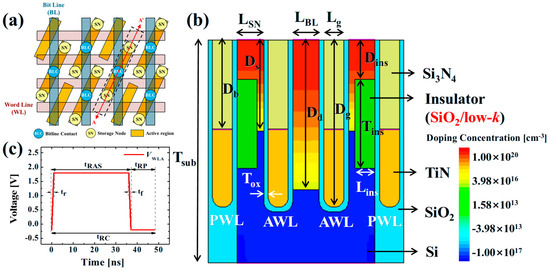
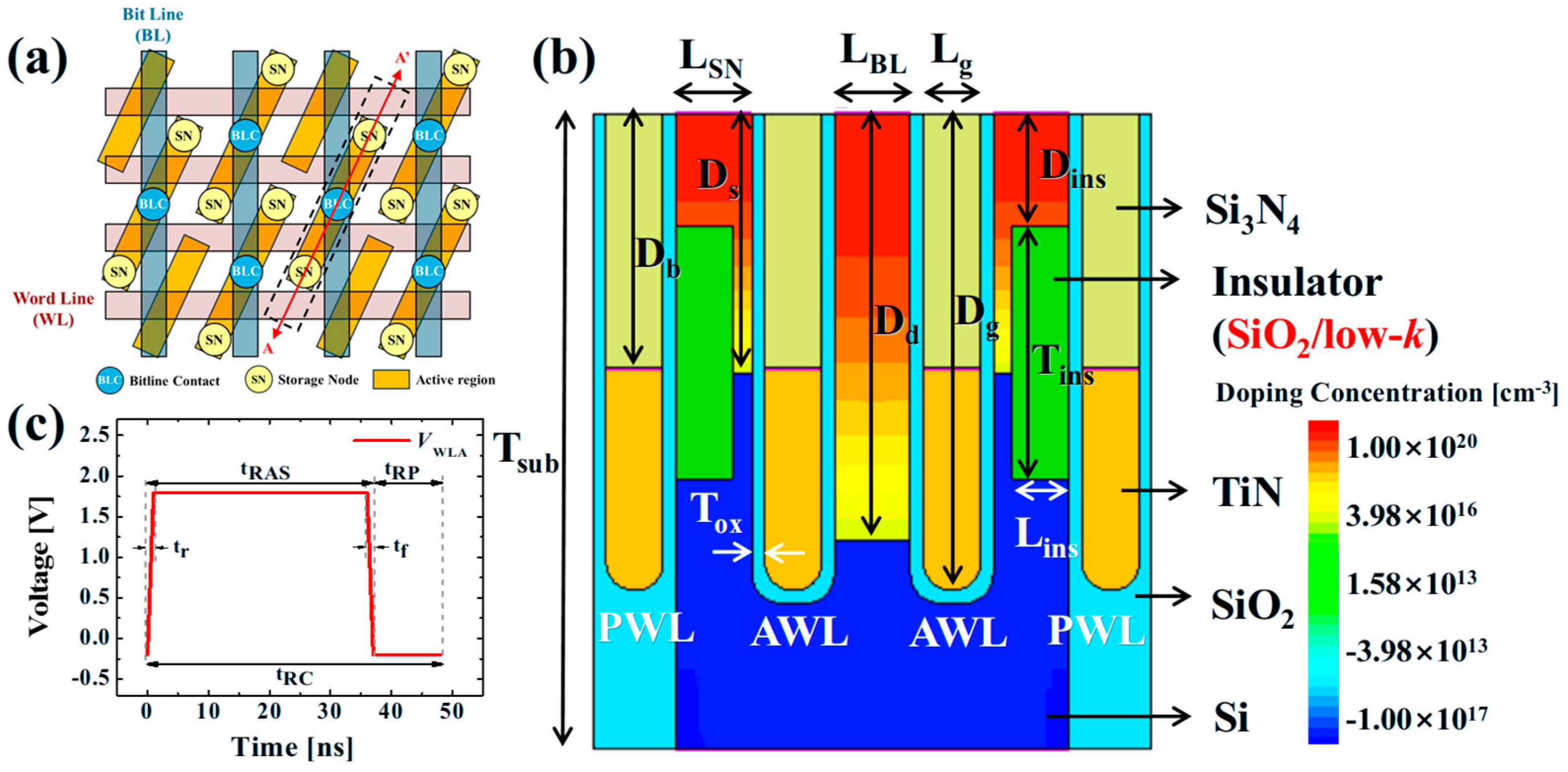
Figure 1a,b shows the open bit-line (BL) structure used in the 6F2 DRAM cell and the corresponding simulated device structure. Two cells are formed within a single active region, and these cells share the same BL. Each cell operation is controlled by the active word line (AWL), while the passing word line (PWL) is placed in the field region as a dummy WL to maintain a constant WL pitch.
Figure 1.
(a) Open BL structure used in the 6F2 DRAM layout; (b) device structure of 6F2 BCAT used in the TCAD simulation; (c) applied bias scheme of WLA and defined timing parameters.
The detailed device parameters and bias conditions are presented in Table 1 [29,30]. In this work, silicon oxycarbide (SiOC) is chosen as the low-k dielectric material, which is reported to exhibit thermal stability up to 550 °C, and the dielectric constant of 2.8 for SiOC is applied for the simulation [31]. The work function of titanium nitride (TiN) is set to 4.5 eV [32]. A Gaussian profile is adopted for the source and drain doping, and acceptor-like interface traps are introduced with a concentration of 1 × 1014 cm−3 in exponential distribution. The simulation is performed based on the timing parameters of DDR5, and additional details are provided in Figure 1c and Table 2 [33].
Table 1.
Device parameters.
Table 2.
Timing parameters.
For accurate calculation of the simulation results, the following models are included: (1) drift-diffusion; (2) doping-dependent mobility (PhuMob) and mobility degradation; (3) velocity saturation; (4) Shockley–Read–Hall recombination (doping and temperature dependent, field enhancement); (5) Auger recombination; (6) Avalanche generation; (7) band-to-band tunneling (Hurkx); and (8) band-gap narrowing (Slotboom). In this study, comprehensive physical models reflecting high-field effects and carrier transport phenomena in actual operating environments were applied to accurately predict the physical behavior of the device and ensure simulation reliability. First, the drift-diffusion model was adopted as the fundamental carrier transport framework, solving the coupled Poisson and continuity equations. As carrier mobility is a key factor determining the driving current, the Philips Unified Mobility (PhuMob) model was employed to precisely simulate scattering effects according to doping concentrations. Additionally, the mobility degradation effect at the interface and velocity saturation under strong electric fields were simultaneously considered to prevent overestimation of current during high-voltage operation. The generation and recombination of charge carriers are critical factors determining the leakage current and breakdown characteristics of the device. Specifically, the Shockley–Read–Hall (SRH) model, which includes doping concentration and field dependence, was used to reflect non-ideal recombination current caused by traps. The Auger recombination model was incorporated to improve physical accuracy under high-injection conditions. Furthermore, an Avalanche generation model was applied to simulate impact ionization in high-field regions, and the Hurkx band-to-band tunneling (BTBT) model was included to analyze leakage current components resulting from strong electric fields at the junctions. Finally, the bandgap narrowing effect based on the Slotboom model was applied to account for energy band contraction in heavily doped regions, thereby minimizing calculation errors in threshold voltage and current density caused by variations in intrinsic carrier concentration [34].
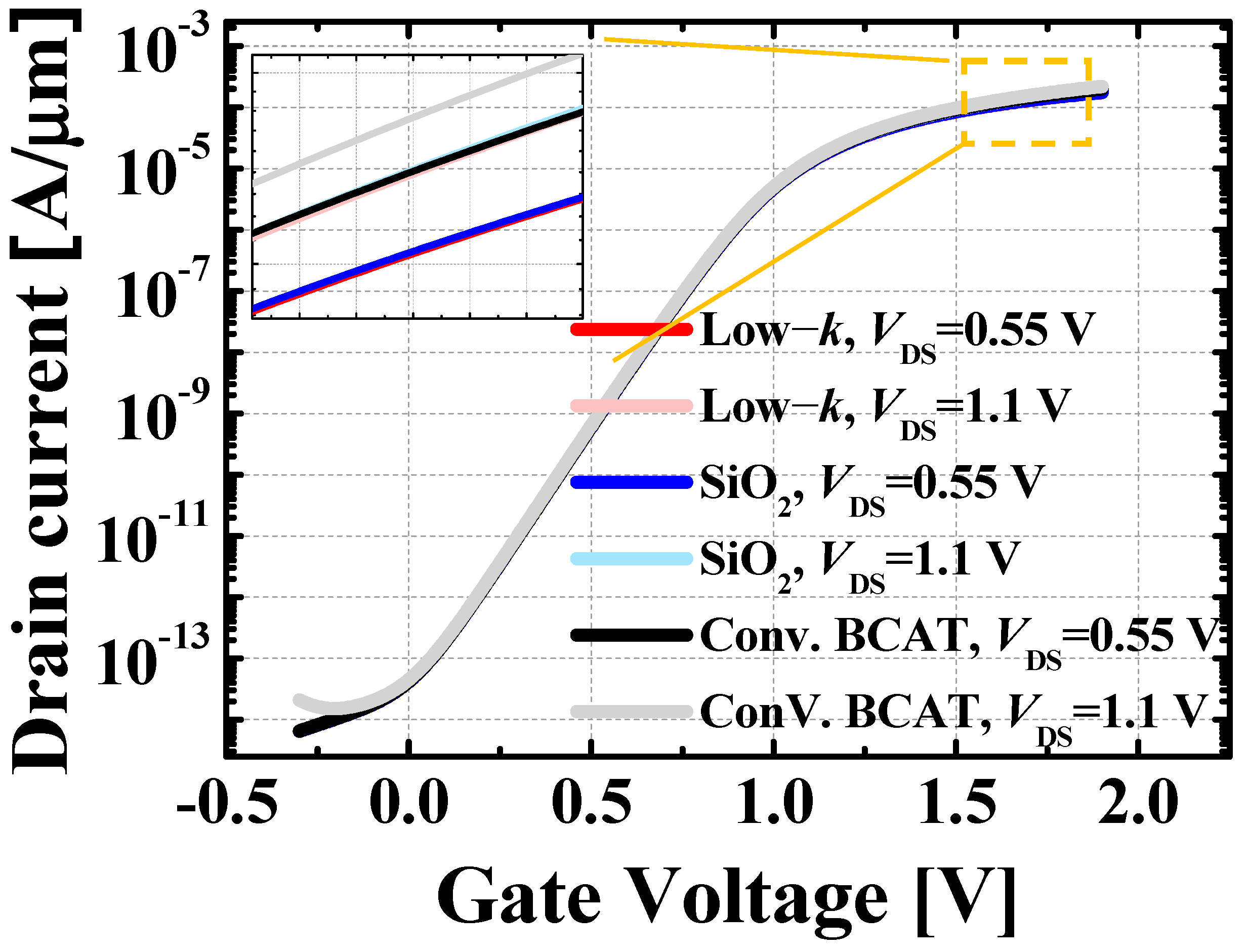
Figure 2 shows the transfer curves of the low-k-embedded structure, the SiO2-embedded structure and the conventional BCAT structure. Detailed electrical characteristics are presented in Table 3. The device characteristics such as subthreshold swing, DIBL, and off current exhibit differences in less than 0.5% among the three structures. Furthermore, no significant difference in electrical characteristics is observed between low-k and SiO2-embedded structures. However, up to ~11.7% degradation of on current is observed in the low-k-embedded structure compared to the conventional BCAT structure, due to the reduced doping region induced by the buried insulator.
Figure 2.
Transfer curves of the low-k-embedded structure, the SiO2-embedded structure and the conventional BCAT structure at VDS = 0.55 V and 1.1 V (log scale).
Table 3.
Device electrical characteristics.
3. Results and Discussion
3.1. Alleviation of the D0 Failure
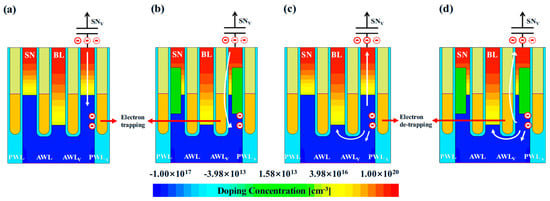
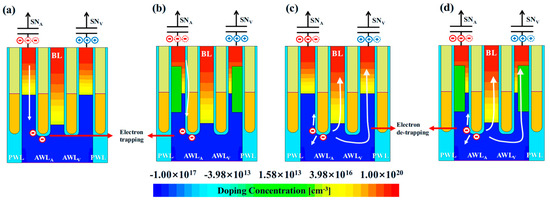
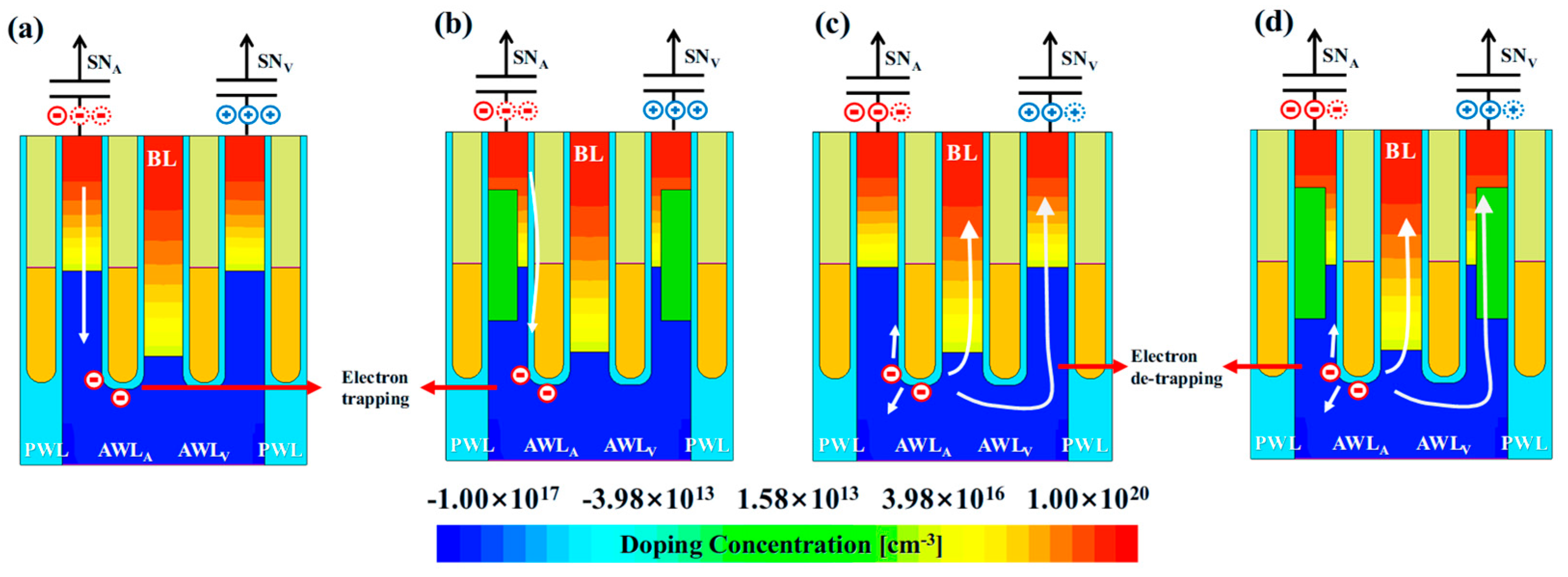
The D0 failure occurs when a PWL acts as an aggressor to induce the bit flip of the stored ‘0’ data in the victim SN (SNV). Figure 3 shows the mechanism of the D0 failure. When the aggressor PWL (PWLA) is activated under the condition that the SNV stores data ‘0’, electrons stored in the victim capacitor are emitted due to the electric field. The emitted electrons are then trapped at the Si/dielectric interface [Figure 3a,b]. Subsequently, when the PWLA is deactivated, the captured electrons are de-trapped. Most of the de-trapped electrons return to the SNV, some move toward the BL or the bulk region [Figure 3c,d]. During this process, the potential of the SNV increases, and when the PWLA is repeatedly accessed, the stored data in the SNV flip from ‘0’ to ‘1’.
Figure 3.
Schematic diagram of the D0 failure in DRAM operation. The arrows indicate the direction of electron migration.: (a) electrons emitted from the SNV as the PWLA is activated in the conventional BCAT and (b) in dielectric-embedded structure. (c) Trapped electrons in the Si/dielectric interface are either de-trapped to BL or SNV as PWLA is deactivated in the conventional BCAT and (d) in dielectric-embedded structure.
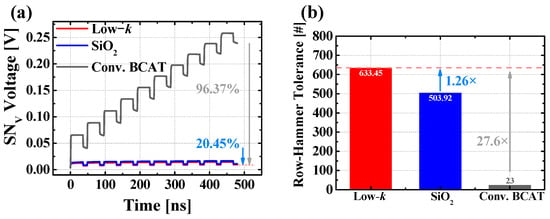
To verify the D0 failure using TCAD simulations, the PWLA is repeatedly toggled in the low-k, SiO2-embedded structures beneath the SN and in the conventional BCAT structure, followed by analysis of the resulting potential drops of SNV. Figure 4a shows the variation in the data stored in the SNV according to the PWLA toggling.
Figure 4.
(a) Evolution of the victim SN voltage with increasing number of aggressor WL activations (up to 10 cycles) under D0 failure condition, comparing the proposed low-k-embedded structure, the SiO2-embedded structure and the conventional BCAT structure. (b) Row-hammer tolerance calculated in the low-k, SiO2-embedded and conventional BCAT structures.
The low-k-embedded structure exhibited approximately 20.45% and 96.37% smaller SNV voltage variation than the SiO2-embedded and the conventional BCAT structures, respectively. The row-hammer tolerance is defined as the number of toggles required for the SNV voltage to reach half of the VCORE, which corresponds to 0.55 V in this study. For D0 failure, it corresponds to the number of toggles needed for the SNV voltage to rise from 0 V to 0.55 V. Based on the calculated SN variation (ΔVSN) per toggle, row-hammer tolerance is obtained in the low-k, SiO2-embedded and conventional BCAT structures. The low-k-embedded structure achieved approximately 1.26 times and 27.6 times higher row-hammer tolerance than the SiO2-embedded and conventional BCAT structures, respectively [Figure 4b].
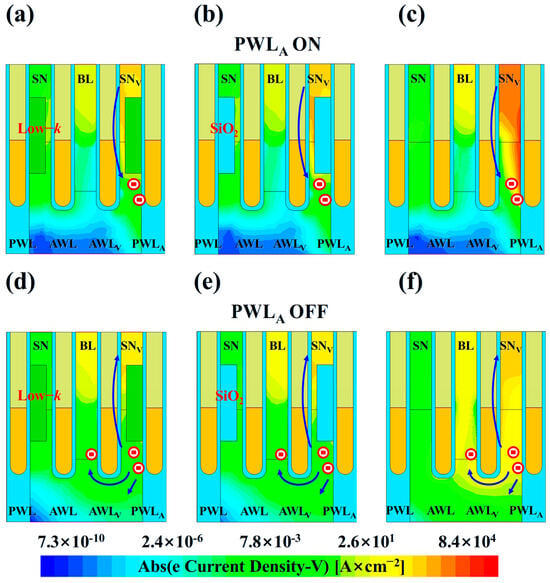
By analyzing the electron behavior with the toggling of the PWLA, the cause of the mitigated RHE in the low-k-embedded structure under the D0 failure is identified. When the PWLA is activated, electrons stored in the SNV are emitted due to the electric field and then trapped at the Si/dielectric interface [Figure 5a–c]. The electron current density is lowest in the low-k-embedded structure, indicating that electrons emitted from the SNV are effectively suppressed in the low-k-embedded structure. Subsequently, when the PWLA is deactivated, the captured electrons are de-trapped, and while most of them return to the SNV, some migrate toward the BL and the bulk region. It is also observed that the number of electrons migrating to the BL and the bulk region after being de-trapped is lowest in the low-k-embedded structure, confirming the alleviation of the RHE in the low-k-embedded structure [Figure 5d–f].
Figure 5.
Electron current density distribution of the device in AWL off-state when (a) PWLA is activated in the low-k, (b) SiO2-embedded and (c) the conventional BCAT structure. Followed by when (d) PWLA is deactivated in the low-k, (e) SiO2-embedded and (f) the conventional BCAT structure. The arrows indicate the direction of electron migration.
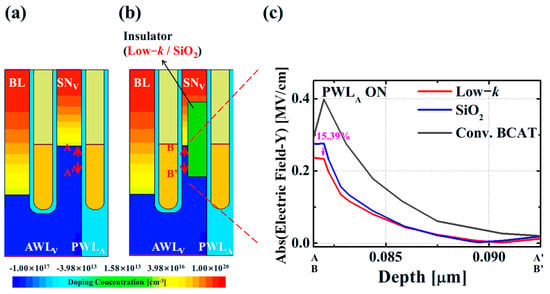
The mitigation of the electric field by the introduction of the low-k material is confirmed by analyzing the electric field distribution beneath the SNV when the AWLV is deactivated [Figure 6]. Since the carrier transport direction and current density are determined by the direction and magnitude of the electric field, the cut line was taken along the dominant current path. As the PWLA is activated, both the number of electrons emitted from the SNV and their migration paths after de-trapping are primarily governed by the electric field. In the low-k-embedded structure, the smallest electric field is formed beneath the SNV, owing to the continuity condition of the electric field at the material interface derived from Gauss’s law. This condition of the electric field at the material interface is expressed as follows.
Figure 6.
(a) Device structure with cut line A-A’ in the conventional BCAT structure, (b) with cut line B-B’ in the dielectric-embedded structure. (c) Electric-field distribution along the depth direction when PWLA is ON in the low-k, SiO2-embedded and conventional BCAT structures.
The dielectric constant of the insulator used in this study is 2.8, and according to Equation (2), the electric field beneath the SNV is expected to decrease by approximately 28%. The simulation results confirm that the electric field beneath the SNV is reduced by up to 15.39%. Accordingly, when the PWLA is activated, the electric field beneath the SNV is lowest in the low-k-embedded structure, resulting in reduced electron pulled toward the PWLA [Figure 6c]. The leakage of storage node induced by row-hammer is related to field enhancement. In this study, the carrier lifetime is determined by SRH recombination, and the Hurkx model is employed. The leakage current is proportional to an exponential term of the inverse electric field. Therefore, the mitigation rate of row hammer exceeds the relaxation rate of the electric field [35,36].
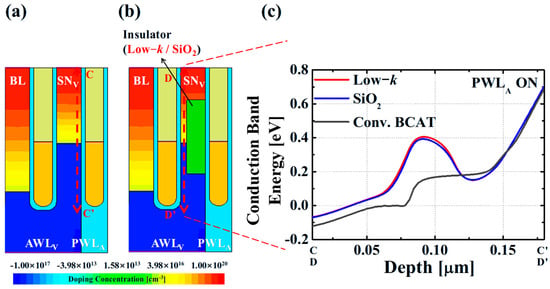
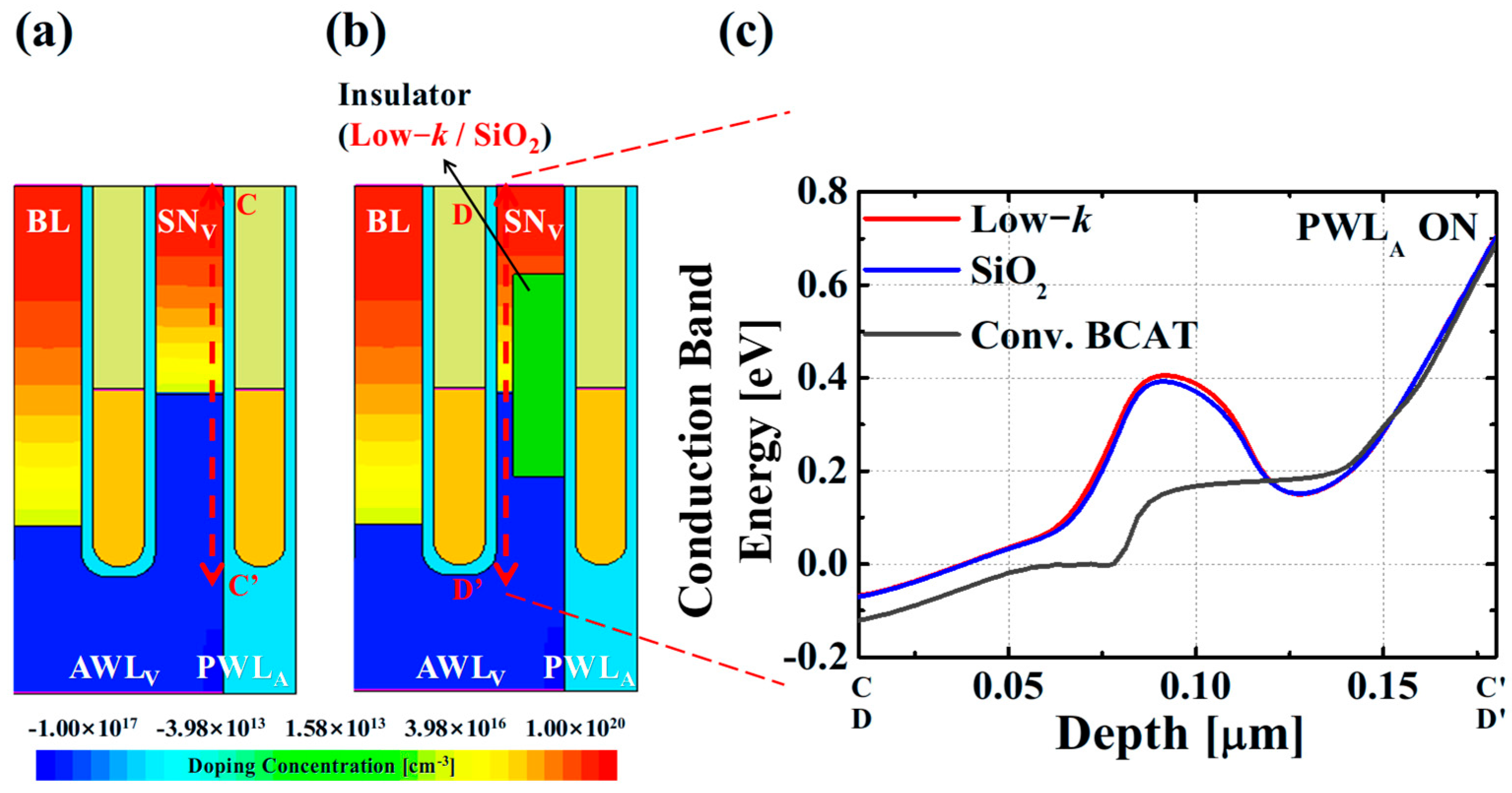
Furthermore, the conduction band energy distribution beneath the SNV is analyzed [Figure 7]. When the PWLA is activated, the conduction band energy is highest in the low-k-embedded structure [Figure 7c]. This indicates that electron emission from the SNV is suppressed in the low-k-embedded structure. The difference in the conduction band energy suppresses the net charge loss of the SNV during the toggling processes and efficiently alleviates the RHE.
Figure 7.
(a) Device structure with cut line C-C’ in the conventional BCAT structure, (b) with cutline D-D’ in dielectric-embedded structure. (c) Conduction band energy distribution along the depth direction when PWLA is ON in the low-k, SiO2-embedded and conventional BCAT structures.
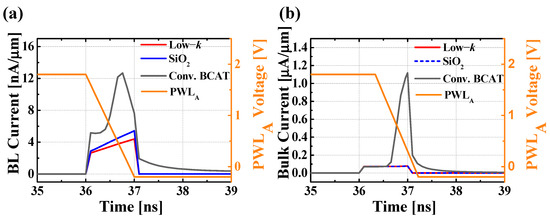
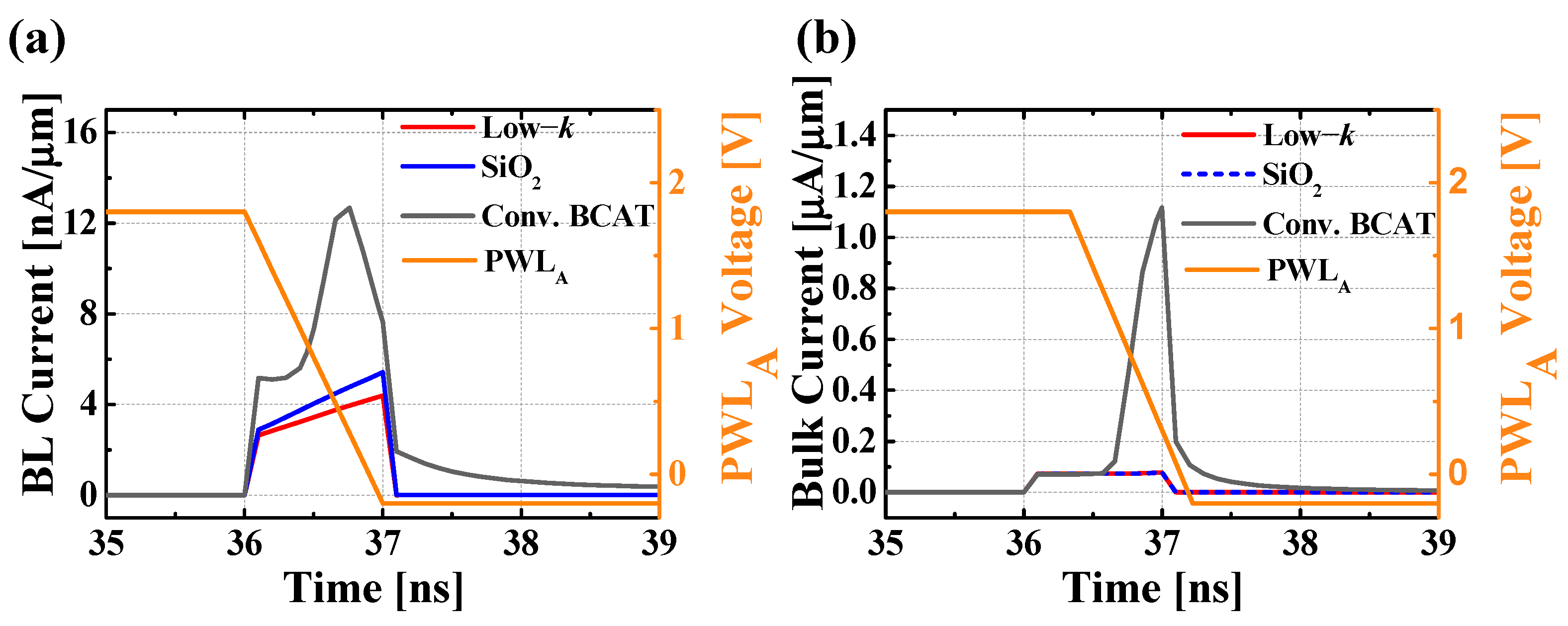
Finally, the mitigation of the RHE by the low-k embedding is verified by analyzing the leakage current flow of the BL and the bulk with PWLA access. When the PWLA is activated, no current flows through the BL or the bulk, whereas transient current flow is observed at the falling edge of the PWLA pulse [Figure 8]. This phenomenon verifies that the electrons trapped at the Si/dielectric interface are released through the de-trapping process when the PWLA is deactivated. Compared to the conventional BCAT structure, the peak value of the BL current is reduced by approximately 57.27% and 65.37% in the SiO2, low-k-embedded structures, respectively [Figure 8a]. In addition, the bulk current results indicate that embedding the dielectric effectively suppresses the leakage current flowing into the substrate [Figure 8b]. These results clearly confirm that the least data loss occurs in the low-k-embedded structure.
Figure 8.
(a) BL current and (b) bulk current of the victim-cell in the falling edge of PWLA access.
3.2. Alleviation of the D1 Failure
D1 failure occurs when the AWL acts as an aggressor, inducing a bit flip of the data ‘1’ stored in the SNV. The mechanism of D1 failure is shown in Figure 9. When data ‘1’ are stored in the SNV and data ‘0’ are stored in the aggressor SN (SNA), electrons in the SNA are emitted due to the electric field when the aggressor AWL (AWLA) is activated. The emitted electrons are then trapped at the Si/dielectric interface [Figure 9a,b]. Subsequently, when the AWLA is deactivated, the captured electrons are de-trapped and migrate toward the BL, the bulk or SNV. As the electrons migrate into the SNV, recombination with the holes stored in the SNV occurs, thereby decreasing the potential of the SNV. As the AWLA is repeatedly accessed, the data stored in the SNV eventually flip from ‘1’ to ‘0’ [Figure 9c,d].
Figure 9.
Schematic diagram of the D1 failure in DRAM operation: (a) electrons emitted from the SNA as the AWLA is activated in the conventional BCAT and (b) in dielectric-embedded structure. (c) Trapped electrons in the Si/dielectric interface are either de-trapped to BL or SNV or substrate as AWLA is deactivated in the conventional BCAT and (d) in dielectric-embedded structure.
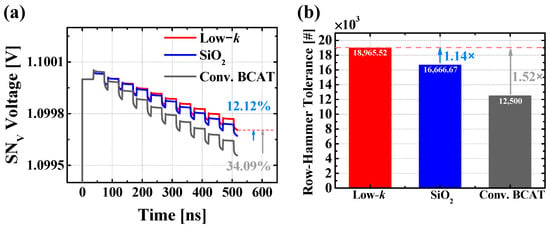
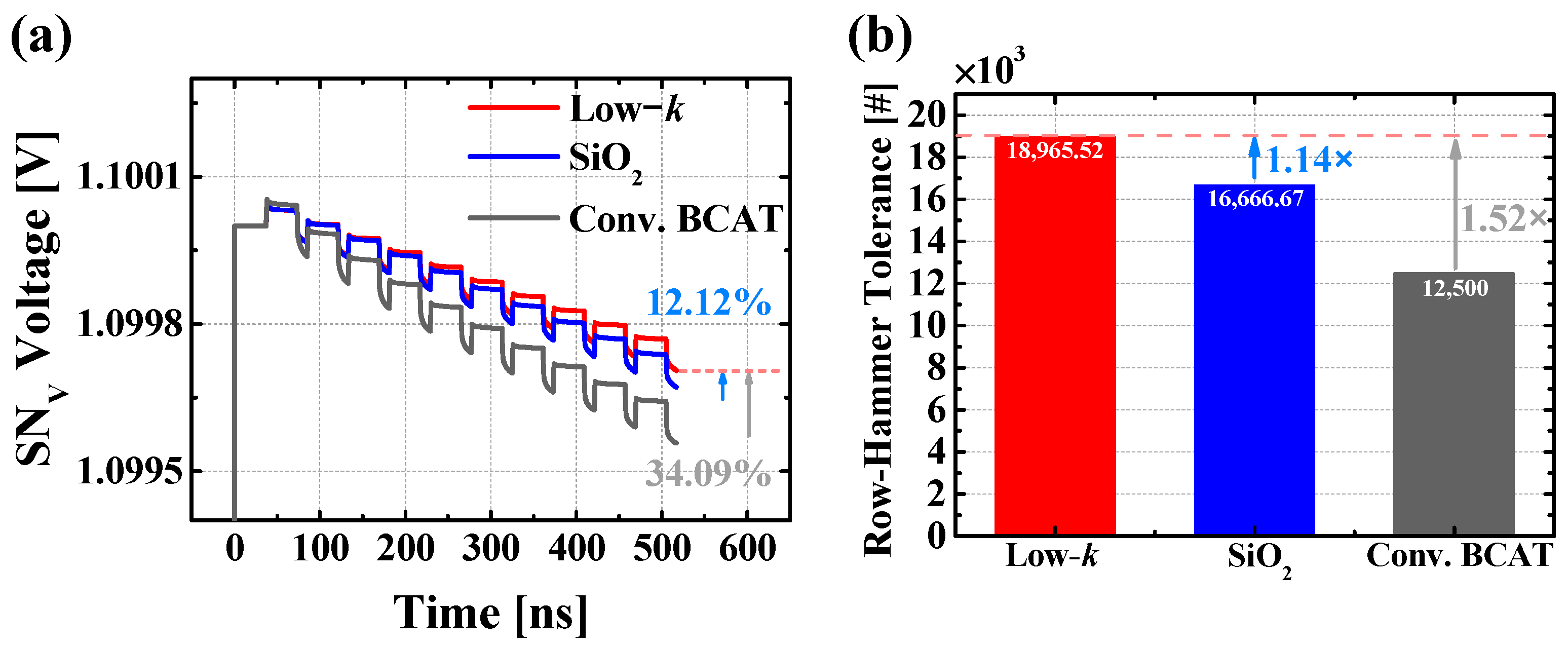
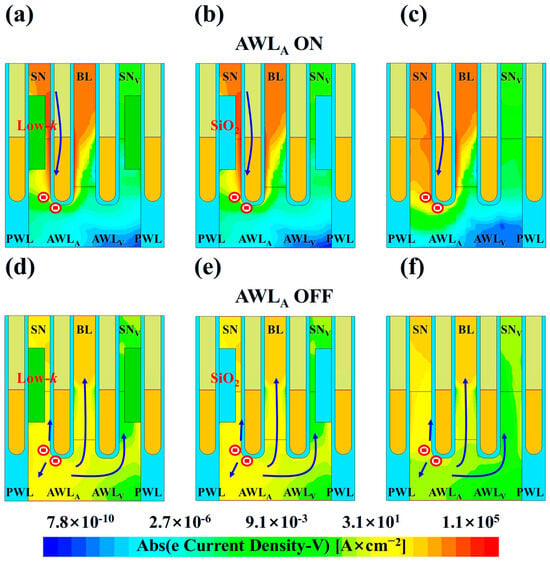
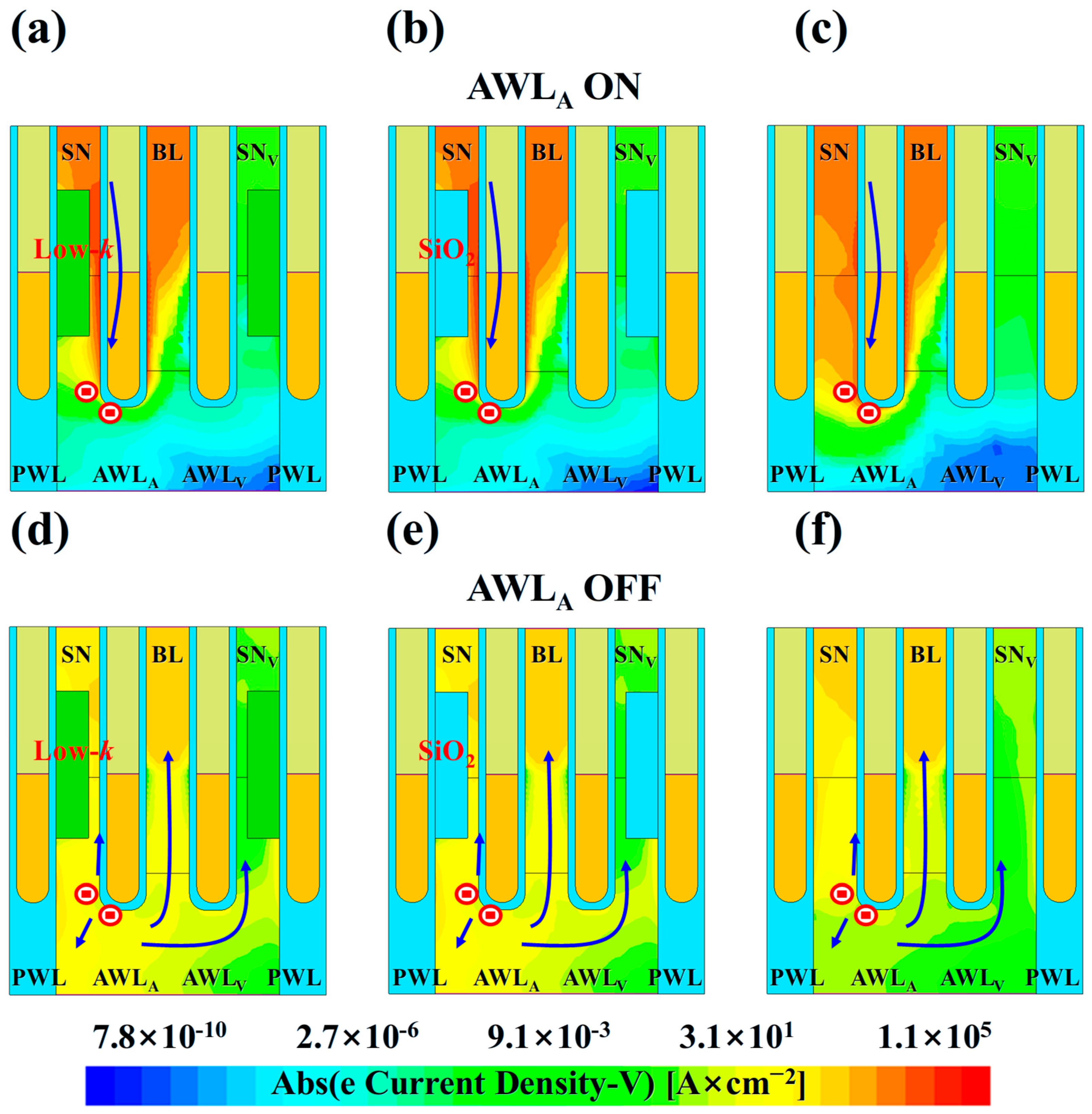
The variation in the data stored in the SNV due to AWLA toggling is observed. When the AWLA is toggled 10 times, the low-k-embedded structure exhibits approximately 12.12% and 34.09% smaller SNV voltage variation than the SiO2-embedded and the conventional BCAT structures, respectively [Figure 10a]. As in the case of D0 failure, the row-hammer tolerance is evaluated as well, and it is confirmed that the low-k-embedded structure achieved approximately 1.14 times and 1.52 times higher row-hammer tolerance than the SiO2-embedded and conventional BCAT structures, respectively [Figure 10b]. Also, the electron behavior during AWLA toggling is analyzed to identify the cause of the alleviation of the RHE in the D1 failure. When the AWLA is activated, electrons stored in the SNA are emitted by the electric field and trapped at the Si/dielectric interface [Figure 11a–c]. The electron current density is lowest in the low-k-embedded structure, indicating that electrons emitted from the SNA are effectively suppressed in the low-k-embedded structure. The electrons emitted from the SNA and trapped at the Si/dielectric interface are de-trapped as the AWLA is deactivated, and most of them migrate between the SNA and the BL, while some move toward the SNV and recombination with holes in SNV occurs. It is also observed that the number of electrons migrating into the SNV is lowest in the low-k-embedded structure, confirming the alleviation of the RHE in the low-k-embedded structure [Figure 11d–f].
Figure 10.
(a) Evolution of victim SN voltage with increasing aggressor WL activations (up to 10 cycles) under the D1 failure condition. The proposed low-k-embedded structure shows reduced ΔVSN degradation compared to the SiO2-embedded and conventional BCAT structures. (b) Row-hammer tolerance calculated in low-k-, SiO2-embedded and conventional BCAT structures.
Figure 11.
Electron current density distribution of the device when (a) AWLA is activated in the low-k and (b) SiO2-embedded and (c) conventional BCAT structure and when (d) AWLA is deactivated in the low-k and (e) SiO2-embedded and (f) conventional BCAT structure.
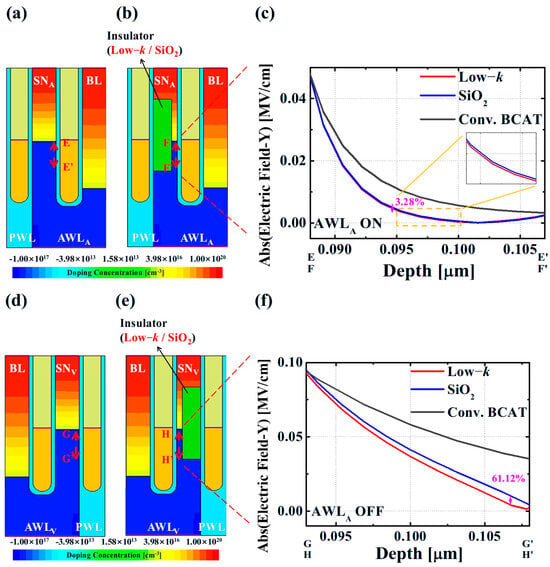
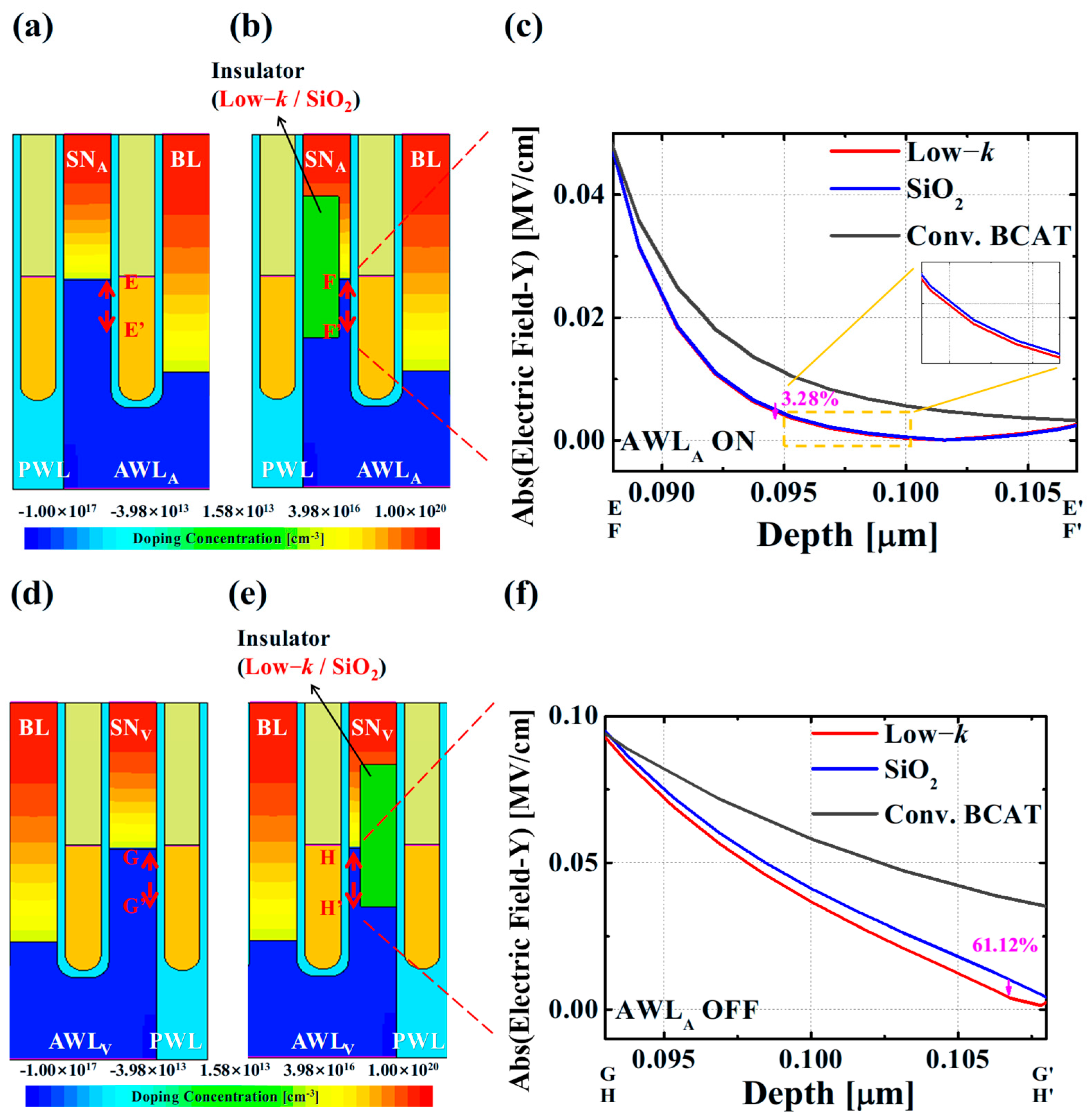
The electric field distribution beneath the SNV when the AWLV is deactivated confirms that the embedding of the low-k material effectively suppresses charge leakage [Figure 12]. When the AWLA is activated, the electric field formed beneath the SNA is weakened in the low-k-embedded structure, resulting in a reduced attractive force pulling electrons toward the AWLA [Figure 12c]. When the AWLA is deactivated, the electric field beneath the SNV is weakened, thereby reducing electron migration toward the SNV after de-trapping [Figure 12f].
Figure 12.
(a) Cross-sectional schematic of the device with the cut lines E-E’ and (b) F-F’. (c) Electric-field distribution along the depth direction when AWLA is ON in the low-k, SiO2-embedded and conventional BCAT structures beneath the SNA. (d) Cross-sectional schematic of the device with the cut lines G-G’ and (e) H-H’ (f) Corresponding distribution when AWLA is OFF beneath the SNV.
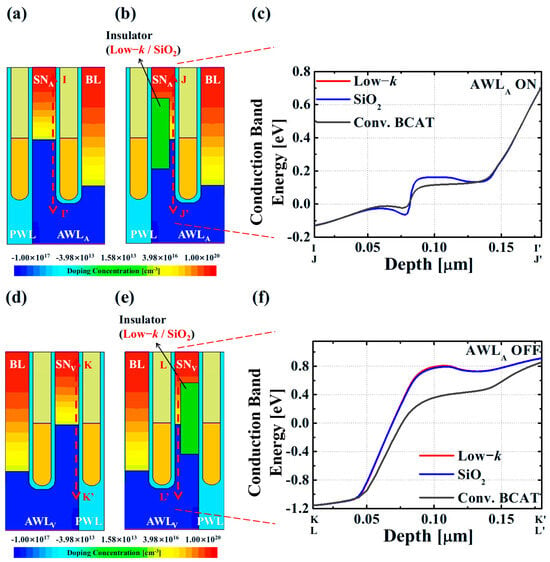
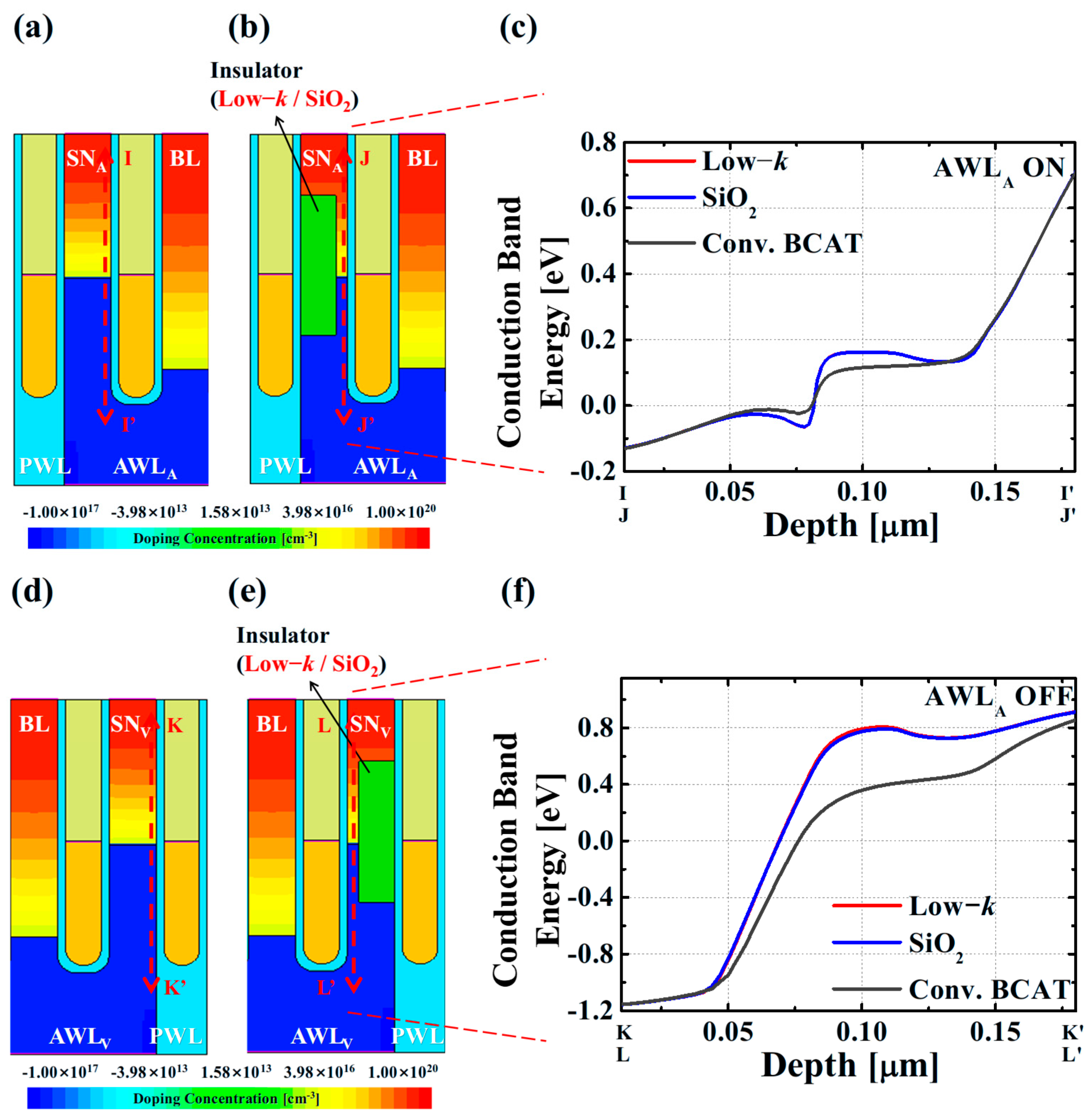
In addition, when the AWLA is activated, the conduction band energy beneath the SNA is highest in the low-k-embedded structure, indicating that electron emission from the SNA is most suppressed in the low-k-embedded structure [Figure 13c]. Subsequently, when the AWLA is deactivated, the conduction band energy beneath the SNV is also highest in the low-k-embedded structure, which suppresses electron migration into the SNV after de-trapping and consequently contributes to the alleviation of the RHE [Figure 13f]. Notably, the RHE mitigation effect in the D1 failure is relatively smaller than that in the D0 failure. This difference arises from the distinct failure mechanisms. In the D0 failure case, data flip occurs as electrons emitted from the SNV are trapped and subsequently migrate toward the BL or the bulk after the de-trapping process. Therefore, the electric field has a dominant influence on charge migration, and the reduction in the electric field achieved by embedding the low-k dielectric effectively suppresses electron movement, resulting in an excellent mitigation of the RHE. In contrast, D1 failure occurs as electrons emitted from the SNA are trapped and subsequently migrate to the SNV after de-trapping, where they recombine with the stored holes. That is, mechanism of D1 failure not only involves electron migration but also the recombination process with holes in the SNV takes place. Therefore, reducing the electric field is relatively insufficient to fully suppress the overall mechanism, and the RHE mitigation in the D1 failure induced by the low-k embedding is relatively smaller than that observed in the D0 failure.
Figure 13.
(a) Cross-sectional schematic of the device with the cut lines I–I′ and (b) J–J′. (c) Conduction band energy profile along the depth direction when AWLA is ON in the low-k, SiO2-embedded and conventional BCAT structures beneath the SNA. (d) Cross-sectional schematic of the device with the cut lines K-K’ and (e) L-L’. (f) Corresponding distribution when AWLA is OFF beneath the SNV.
3.3. Process Compatibility
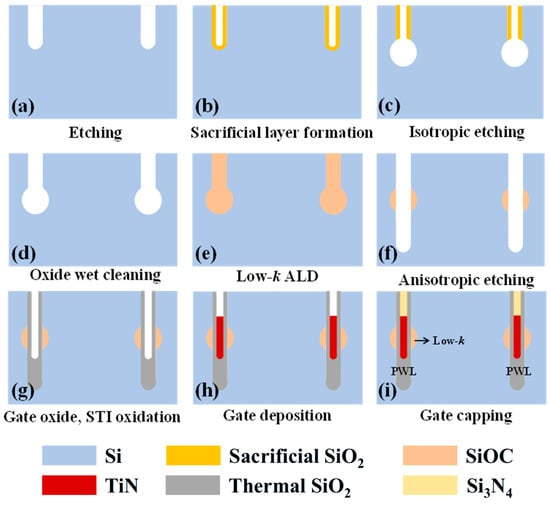
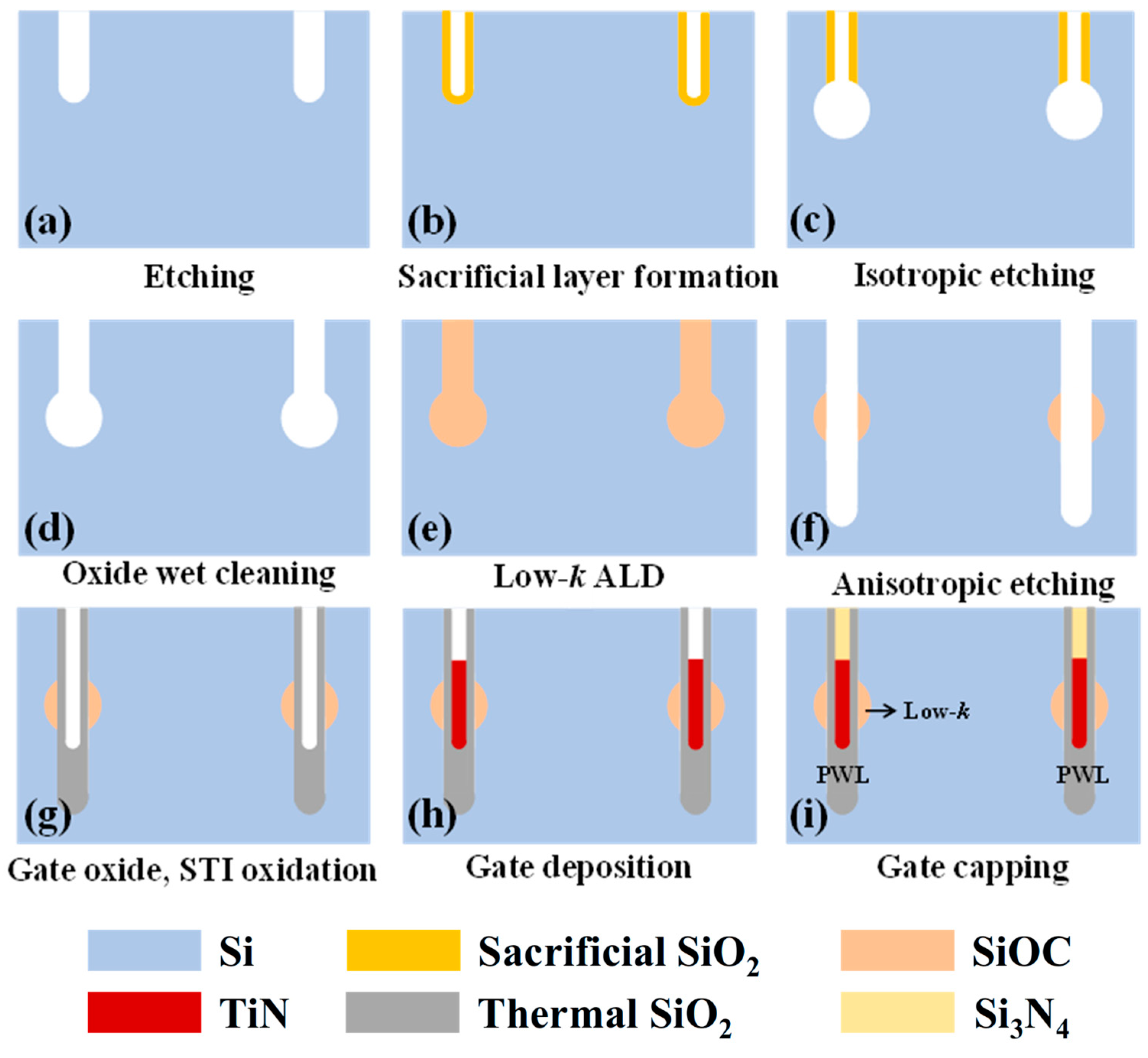
The fabrication of the device proposed in this study can be achieved following the process flow of the Pi-BCAT [29]. A possible process flow for embedding the low-k dielectric is shown in Figure 14. First, the PWL trench patterning is performed through etching process [Figure 14a]. Steps 2–5 correspond to the process module for low-k dielectric embedding. A sacrificial layer is introduced to protect the trench sidewalls [Figure 14b]. Isotropic etching is then performed to create a cavity at the bottom of the trench for low-k dielectric deposition [Figure 14c] [37,38]. Then, the sacrificial layer is removed using an oxide wet cleaning process [Figure 14d]. The low-k dielectric is subsequently deposited using atomic layer deposition (ALD) [Figure 14e]. The low-k material used in this work can exhibit a reduced dielectric constant when it becomes porous, but it may also become vulnerable to mechanical stress [39]. Therefore, conformal deposition is required.
Figure 14.
Process flow for the proposed buried low-k-embedded BCAT structure.
Anisotropic etching is subsequently carried out to achieve the target gate aspect ratio [Figure 14f]. After embedding low-k dielectric, oxidation for gate oxide and STI formation occurs [Figure 14g]. Finally, TiN gate deposition is then performed, followed by gate capping to form the BCAT structure [Figure 14h,i]. Figure 14 indicates that the proposed structure can be realized by adding only additional process modules (Steps 1–5) to the conventional BCAT process flow. In particular, the added process steps are confined to the PWL formation region, where they create the cavity for low-k dielectric embedding and fill it, while the process flow for AWL used for device operation remains identical to that of the conventional BCAT process. Therefore, the proposed structure can maintain compatibility with the current process flow while minimizing process modifications.
4. Conclusions
In this study, we demonstrate that embedding a low-k dielectric beneath the SN in the 6F2 BCAT structure effectively mitigates the RHE. The proposed structure reduces the electric field between adjacent WL through the introduction of low-k material, thereby successfully alleviating the RHE-induced disturbance. Due to the electric-field continuity condition at material interfaces, the embedded low-k dielectric directly reduces the effective electric field applied to the bottom of the SNV. This electric-field mitigation suppresses electron emission and charge trapping during aggressor WL operation and changes the local energy-band profile, thereby facilitating the return of leaked charge. In result, for the D0 failure, the electric field beneath the SNV is reduced, suppressing the emission of electrons stored in the SNV, resulting in approximately 20.45% alleviation in D0 failure compared to the Pi-BCAT structure. In contrast, D1 failure involves a complex mechanism that extends beyond simple charge loss, including trapping, de-trapping, migration, and recombination processes. For the D1 failure, the proposed structure suppresses electron emission from the SNA and reduces the electric field toward the SNV, achieving a 12.12% alleviation in D1 failure compared to Pi-BCAT structure. Notably, the proposed low-k-embedded structure shows effective mitigation of the RHE disturbance caused by the PWL, exhibiting higher suppression efficiency for the D0 failure than the D1 failure. This is because the localized electric-field mitigation region introduced by the low-k dielectric spatially matches the dominant leakage and recovery paths. According to prior studies, the row-hammer phenomenon has been reported to be particularly vulnerable to disturbance when data ‘0’ are stored. Given this background, the proposed structure effectively suppresses D0 failure, which is significant because it improves reliability under the most vulnerable operating condition. Additionally, despite ~11.7% degradation in on current in the low-k-embedded structure compared to the conventional BCAT structure, the ×27.6 and ×1.52 improvement in row-hammer tolerance in D0, D1 failure condition indicates that the reliability gain outweighs the performance degradation. As a result, the proposed low-k-embedded structure provides an effective structural design approach for fundamentally suppressing WL-to-WL disturbance, providing a promising basis for ensuring the reliability and stable operation of next-generation high-density, low-power DRAM devices.
Author Contributions
Conceptualization, J.P., D.O., J.Y.P. and D.J.; methodology, J.P. and D.O.; validation, J.P., D.O. and J.Y.P.; investigation, J.P.; writing—original draft preparation, J.P.; visualization, J.P.; supervision, S.K.; project administration, S.K.; funding acquisition, S.K. All authors have read and agreed to the published version of the manuscript.
Funding
This work was supported in part by the National Research Foundation of Korea (NRF) of Korea funded by the Ministry of Science and ICT under Grant RS-2024-00408115 and NRF-2022R1A2C2092727; and in part by the information Technology Research Center (ITRC) Support Program under Grant IITP-2026-RS-2023-00260091; and in part by the Technology Innovation Program (or Industrial Strategic Technology Development Program-Advanced Technology Center+) (20022821, Development of 532nm Laser Thermal Processing Technology and Equipment Optimized for Semiconductor Process) funded by the Ministry of Trade, Industry and Energy (MOTIE), Korea; and in part by K-CHIPS (Korea Collaborative & High-tech Initiative for Prospective Semiconductor Research) (2410018408, RS-2026-25529654, 26087-45FC) funded by the Ministry of Trade, Industry & Energy (MOTIE, Korea). The EDA tool was supported by the IC Design Education Center (IDEC), Korea.
Data Availability Statement
The original contributions presented in this study are included in the article. Further inquiries can be directed to the corresponding author.
Conflicts of Interest
The authors declare no conflicts of interest.
Abbreviations
The following abbreviations are used in this manuscript:
| WL | Word line |
| RHE | Row-hammer effect |
| SN | Storage node |
| Pi-BCAT | Partial-isolation type buried channel array transistor |
| BCAT | Buried channel array transistor |
| ECC | Error correcting code |
| TRR | Target row refresh |
| PWL | Passing word line |
| BL | Bit line |
| AWL | Active word line |
| SNV | Victim storage node |
| PWLA | Aggressor passing word line |
| AWLV | Victim active word line |
| AWLA | Aggressor active word line |
| SNA | Aggressor storage node |
References
- Chung, S.-W.; Lee, S.-D.; Jang, S.-A.; Yoo, M.-S.; Kim, K.-O.; Chung, C.-O.; Cho, S.Y.; Cho, H.-J.; Lee, L.-H.; Hwang, S.-H.; et al. Highly scalable saddle-fin (S-Fin) transistor for sub-50 nm DRAM technology. In Proceedings of the 2006 Symposium on VLSI Technology, Honolulu, HI, USA, 13–15 June 2006. [Google Scholar] [CrossRef] [Scilit]
- Spessot, A.; Oh, H. 1T–1C dynamic random access memory status, challenges, and prospects. IEEE Trans. Electron Devices 2020, 67, 1382–1393. [Google Scholar] [CrossRef] [Scilit]
- Chang, K.K.; Yağlıkçı, A.G.; Ghose, S.; Agrawal, A.; Chatterjee, N.; Kashyap, A.; Lee, D.; O’Connor, M.; Hassan, H.; Mutlu, O. Understanding Reduced-Voltage Operation in Modern DRAM Devices: Experimental Characterization, Analysis, and Mechanisms. In ACM on Measurement and Analysis of Computing Systems; ACM: New York, NY, USA, 2017; Volume 1, pp. 1–42. [Google Scholar] [CrossRef] [Scilit]
- Chang, K.K.; Kashyap, A.; Hassan, H.; Ghose, S.; Hsieh, K.; Li, T.; Pekhimenko, G.; Khan, S.; Mutlu, O. Understanding Latency Variation in Modern DRAM Chips: Experimental Characterization, Analysis, and Optimization. In Proceedings of the 2016 ACM SIGMETRICS International Conference on Measurement and Modeling of Computer Systems (SIGMETRICS ’16), Antibes Juan-les-Pins, France, 14–18 June 2016. [Google Scholar] [CrossRef] [Scilit]
- Jeong, S.; Lee, J.-S.; Jang, J.; Kim, J.; Shin, H.; Kim, J.H.; Song, J.; Woo, D.; Oh, J.; Lee, J. Investigation of Sub-20 nm 4th generation DRAM cell transistor’s parasitic resistance and scalable methodology for Sub-20 nm era. In Proceedings of the 2023 IEEE International Reliability Physics Symposium (IRPS), Monterey, CA, USA, 26–30 March 2023. [Google Scholar] [CrossRef] [Scilit]
- Gautam, S.K.; Manhas, S.K.; Kumar, A.; Pakala, M.; Yieh, E. Row Hammering Mitigation Using Metal Nanowire in Saddle Fin DRAM. IEEE Trans. Electron Devices 2019, 66, 4170–4175. [Google Scholar] [CrossRef] [Scilit]
- Gautam, S.K.; Kumar, A.; Manhas, S.K. Improvement of Row Hammering Using Metal Nanoparticles in DRAM—A Simulation Study. IEEE Electron Device Lett. 2018, 39, 1286–1289. [Google Scholar] [CrossRef] [Scilit]
- Kim, J.S.; Patel, M.; Yağlıkçı, A.G.; Hassan, H.; Azizi, R.; Orosa, L.; Mutlu, O. Revisiting Rowhammer: An Experimental Analysis of Modern DRAM Devices and Mitigation Techniques. In Proceedings of the 47th Annual ACM/IEEE International Symposium on Computer Architecture (ISCA), Valencia, Spain, 30 May–3 June 2020. [Google Scholar] [CrossRef] [Scilit]
- Yang, C.-M.; Wei, C.-K.; Chang, Y.J.; Wu, T.-C.; Chen, H.-P.; Lai, C.-S. Suppression of Row Hammer Effect by Doping Profile Modification in Saddle-Fin Array Devices for Sub-30-nm DRAM Technology. IEEE Trans. Device Mater. Reliab. 2016, 16, 685–687. [Google Scholar] [CrossRef] [Scilit]
- Redeker, M.; Cockburn, B.F.; Elliott, D.G. An Investigation into Crosstalk Noise in DRAM Structures. In Proceedings of the IEEE International Workshop on Memory Technology, Design and Testing (MTDT), Bendor, France, 12 July 2002; IEEE: Piscataway, NJ, USA, 2002; pp. 123–129. [Google Scholar] [CrossRef] [Scilit]
- Baeg, S.; Yun, D.; Chun, M.; Wen, S.-J. Estimation of the Trap Energy Characteristics of Row Hammer-Affected Cells in Gamma-Irradiated DDR4 DRAM. IEEE Trans. Nucl. Sci. 2022, 69, 558–566. [Google Scholar] [CrossRef] [Scilit]
- Kim, Y.; Daly, R.; Kim, J.; Fallin, C.; Lee, J.H.; Lee, D.; Wilkerson, C.; Lai, K.; Mutlu, O. Flipping Bits in Memory without Accessing Them: An Experimental Study of DRAM Disturbance Errors. ACM SIGARCH Comput. Archit. News 2014, 42, 361–372. [Google Scholar] [CrossRef] [Scilit]
- Yang, Z.; Mourad, S. Crosstalk in Deep Submicron DRAMs. In Proceedings of the IEEE International Workshop on Memory Technology, Design and Testing (MTDT 2000), San Jose, CA, USA, 7–8 August 2000. [Google Scholar] [CrossRef] [Scilit]
- Han, J.-W.; Kim, J.; Beery, D.; Bozdag, K.D.; Cuevas, P.; Levi, A.; Tain, I.; Tran, K.; Walker, A.J.; Palayam, S.V.; et al. Surround Gate Transistor with Epitaxially Grown Si Pillar and Simulation Study on Soft Error and Rowhammer Tolerance for DRAM. IEEE Trans. Electron Devices 2021, 68, 529–534. [Google Scholar] [CrossRef] [Scilit]
- Wang, H.; Peng, X.; Liu, Z.; Huang, X.; Qiu, L.; Li, T.; Yang, B.; Chen, Y. Revisiting row hammer: A deep dive into understanding and resolving the issue. Microelectron. Reliab. 2024, 160, 115467. [Google Scholar] [CrossRef] [Scilit]
- Bennett, T.; Saroiu, S.; Wolman, A.; Cojocar, L. Panopticon: A Complete In-DRAM Rowhammer Mitigation. In Proceedings of the Workshop on DRAM Security (DRAMSec), Virtual Event, 17–18 June 2021. [Google Scholar]
- Qureshi, M.; Qazi, S. MOAT: Securely Mitigating Rowhammer with Per-Row Activation Counters. In Proceedings of the 30th ACM International Conference on Architectural Support for Programming Languages and Operating Systems, Rotterdam, The Netherlands, 30 March–3 April 2025. [Google Scholar] [CrossRef] [Scilit]
- Yağlikçi, A.G.; Patel, M.; Kim, J.S.; Azizi, R.; Olgun, A.; Orosa, L. BlockHammer: Preventing RowHammer at Low Cost by Blacklisting Rapidly-Accessed DRAM Rows. In Proceedings of the 2021 IEEE International Symposium on High Performance Computer Architecture (HPCA), Seoul, Republic of Korea, 27 February–3 March 2021. [Google Scholar] [CrossRef] [Scilit]
- Mutlu, O.; Olgun, A.; Yağlıkcı, A.G. Fundamentally Understanding and Solving RowHammer. In Proceedings of the 28th Asia and South Pacific Design Automation Conference (ASP-DAC ’23), Tokyo, Japan, 16–19 January 2023. [Google Scholar] [CrossRef] [Scilit]
- Vittal, S.; Qazi, S.; Das, P.; Qureshi, M. MoPAC: Efficiently Mitigating Rowhammer with Probabilistic Activation Counting. In Proceedings of the 52nd Annual International Symposium on Computer Architecture (ISCA ’25), Tokyo, Japan, 21–25 June 2025. [Google Scholar] [CrossRef] [Scilit]
- Gautam, S.K.; Manhas, S.K.; Kumar, A.; Pakala, M. Mitigating the Passing Word Line Induced Soft Errors in Saddle Fin DRAM. IEEE Trans. Electron Devices 2020, 67, 1902–1905. [Google Scholar] [CrossRef] [Scilit]
- Park, Y.; Kwon, W.; Lee, E.; Ham, T.J.; Ahn, J.H.; Lee, J.W. Graphene: Strong yet Lightweight Row Hammer Protection. In Proceedings of the 2020 53rd Annual IEEE/ACM International Symposium on Microarchitecture (MICRO), Athens, Greece, 17–21 October 2020. [Google Scholar] [CrossRef] [Scilit]
- Qureshi, M. Rethinking ECC in the Era of Row-Hammer. In Proceedings of the 2021 DRAMSec Workshop, Virtual, 17–18 June 2021. [Google Scholar]
- Frigo, P.; Vannacci, E.; Hassan, H.; van der Veen, V.; Mutlu, O.; Giuffrida, C.; Bos, H.; Razavi, K. TRRespass: Exploiting the Many Sides of Target Row Refresh. In Proceedings of the 2020 IEEE Symposium on Security and Privacy (SP), San Francisco, CA, USA, 18–21 May 2020. [Google Scholar] [CrossRef] [Scilit]
- Hassan, H.; Tugrul, Y.C.; Kim, J.S.; van der Veen, V.; Razavi, K.; Mutlu, O. Uncovering In-DRAM Row Hammer Protection Mechanisms: A New Methodology, Custom RowHammer Patterns, and Implications. In Proceedings of the 54th Annual IEEE/ACM International Symposium Microarchitecture (MICRO-54), New York, NY, USA, 17 October 2021; pp. 1198–1213. [Google Scholar] [CrossRef] [Scilit]
- Kim, Y.S.; Kwon, M.W. Mitigation of 1-Row Hammer in BCAT Structures Through Buried Oxide Integration and Investigation of Inter-Cell Disturbances. Electronics 2024, 13, 4936. [Google Scholar] [CrossRef] [Scilit]
- Kim, Y.S.; Lim, C.Y.; Kwon, M.W. Mitigating WL-to-WL Disturbance in Dynamic Random-Access Memory (DRAM) through Adopted Spherical Shallow Trench Isolation with Silicon Nitride Layer in the Buried Channel Array Transistor (BCAT). Electronics 2024, 13, 681. [Google Scholar] [CrossRef] [Scilit]
- Yoon, J.; Yoon, S.; Ahn, J.; Shin, C. Row hammer-induced D0 failure improvement in sub-20 nm DRAM using an air gap. Semicond. Sci. Technol. 2024, 39, 125016. [Google Scholar] [CrossRef] [Scilit]
- Park, J.H.; Kim, S.Y.; Kim, D.Y.; Kim, G.; Park, J.W.; Yoo; Lee, Y.W. Row Hammer Reduction Using a Buried Insulator in a Buried Channel Array Transistor. IEEE Trans. Electron Devices 2022, 69, 6710–6716. [Google Scholar] [CrossRef] [Scilit]
- Lee, J.-s.; Park, J.-h.; Kim, G.; Choi, H.D.; Lee, M.J. Partial Isolation Type Buried Channel Array Transistor (Pi-BCAT) for a Sub-20 nm DRAM Cell Transistor. Electronics 2020, 9, 1908. [Google Scholar] [CrossRef] [Scilit]
- Chiang, C.-C.; Chen, M.-C.; Li, L.-J.; Wu, Z.-C.; Jang, S.-M.; Liang, M.-S. Physical and Barrier Properties of Amorphous Silicon-Oxycarbide Deposited by PECVD from Octamethylcyclotetrasiloxane. J. Electrochem. Soc. 2004, 151, G612. [Google Scholar] [CrossRef] [Scilit]
- Vitale, S.A.; Kedzierski, J.; Healey, P.; Wyatt, P.W.; Keast, C.L. Work-Function-Tuned TiN Metal Gate FDSOI Transistors for Subthreshold Operation. IEEE Trans. Electron Devices 2011, 58, 419–426. [Google Scholar] [CrossRef] [Scilit]
- Qureshi, M. AutoRFM: Scaling Low-Cost in-DRAM Trackers to Ultra-Low Row Hammer Thresholds. In Proceedings of the 2025 IEEE International Symposium on High Performance Computer Architecture (HPCA 2025), Las Vegas, NV, USA, 1–5 March 2025. [Google Scholar] [CrossRef] [Scilit]
- Synopsys Inc. TCAD Sentaurus Manual; Synopsys Inc.: Mountain View, CA, USA, 2013. [Google Scholar]
- Hurkx, G.A.M.; Klaassen, D.B.M.; Knuvers, M.P.G. A new recombination model for device simulation including tunneling. IEEE Trans. Electron Devices 1992, 39, 331–338. [Google Scholar] [CrossRef] [Scilit]
- Mathew, K.; John, M.V. Tunneling in energy eigenstates and complex quantum trajectories. Quantum Stud. Math. Found. 2015, 2, 403–416. [Google Scholar] [CrossRef] [Scilit]
- Lee, T.Y.; Seok, G.S. Semiconductor Memory Device and Method for Fabricating the Same. KR. Patent10–2020-0131191, 23 November 2020. [Google Scholar]
- Lee, M.J.; Cho, J.H.; Lee, S.D.; Ahn, J.H.; Kim, J.W.; Park, S.W.; Park, Y.J.; Min, H.S. Partial SOI type isolation for improvement of DRAM cell transistor characteristics. IEEE Electron Device Lett. 2005, 26, 332–334. [Google Scholar] [CrossRef] [Scilit]
- Stan, G.; Gates, R.S.; Kavuri, P.; Torres, J.; Michalak, D.; Ege, C.; Bielefeld, J.; King, S.W. Mechanical property changes in porous low-k dielectric thin films during processing. Appl. Phys. Lett. 2014, 105, 152906. [Google Scholar] [CrossRef] [Scilit]

Disclaimer/Publisher’s Note: The statements, opinions and data contained in all publications are solely those of the individual author(s) and contributor(s) and not of MDPI and/or the editor(s). MDPI and/or the editor(s) disclaim responsibility for any injury to people or property resulting from any ideas, methods, instructions or products referred to in the content. |
© 2026 by the authors. Licensee MDPI, Basel, Switzerland. This article is an open access article distributed under the terms and conditions of the Creative Commons Attribution (CC BY) license.