Review

Bullying Victimization: A Comprehensive Overview of Emotional Responses and Psychological Consequences


by
Alejandro Borrego-Ruiz
* and
Saulo Fernández
Departamento de Psicología Social y de las Organizaciones, Universidad Nacional de Educación a Distancia (UNED), 28040 Madrid, Spain
*
Author to whom correspondence should be addressed.
Psychol. Int. 2026, 8(1), 22; https://doi.org/10.3390/psycholint8010022
Submission received: 22 February 2026 / Revised: 11 March 2026 / Accepted: 16 March 2026 / Published: 19 March 2026

Abstract

The emotional responses to bullying victimization are central to its impact on subsequent psychological consequences, but the role of specific emotions is insufficiently defined within a comprehensive framework. In order to enhance the understanding of the emotional experiences of bullying victims, the present review examines the role of self-conscious emotions (i.e., humiliation, shame, and guilt), the role of basic emotions (i.e., anger and fear), and various psychological consequences (e.g., anxiety, depression, suicidal ideation). A non-systematic, narrative approach was employed to synthesize the findings, with a total of 343 articles included in the review. Self-conscious emotions appear to be central to bullying victimization, with humiliation being particularly pivotal due to its link to internalized self-devaluation, perceived injustice, and attribution of cruelty to the perpetrator. In turn, anger and fear seem to constitute crucial basic emotions in response to bullying dynamics. Although anger may escalate aggression, it may also facilitate positive confrontational behaviors when properly channeled, whereas fear may contribute to avoidance and increased victimization if sustained. Adverse psychological consequences such as anxiety, depression, stress, low self-esteem, and suicidal ideation are prevalent among victims of bullying, potentially exacerbated in vulnerable groups. Future research should further explore the role of emotions in the context of bullying victimization, examining their impact on both mental health outcomes and behavioral patterns over time. Exploring how different emotional responses interact and influence each other within bullying dynamics could provide insights into effective intervention strategies, and a more comprehensive understanding of the sociocultural factors influencing emotional responses to bullying might help in customizing prevention and support measures across diverse contexts.

1. Introduction

Bullying represents a severely harmful phenomenon deeply ingrained in social structures across cultures and historical periods, as well as invariably linked to profound negative emotions and long-lasting psychological consequences for its victims, as depicted in canonical literature such as Tom Brown’s School Days (Hughes, 1857), The Confusions of Young Törless (Musil, 1906), Lord of the Flies (Golding, 1954), Carrie (King, 1974), and Ham on Rye (Bukowski, 1982). The academic understanding of bullying emerged with the foundational postulates of Olweus (1978), who defined it as a form of interpersonal aggression characterized by intentionality, recurrence, and an imbalance of power. However, bullying began to gain significant international attention in the late 1990s, partly as a consequence of increased media coverage of tragic events such as the murder of Rina Virk in 1997 and the Columbine massacre in 1998, which raised widespread public concern over youth suicides and violence (Hymel & Swearer, 2015). Since then, the issue has garnered unprecedented focus in both the media and scientific research, consolidating bullying as a significant public health concern with profound implications for psychological development, emotional well-being, and social functioning (Juli et al., 2025; Malaeb et al., 2020).

1.1. Bullying Based on Context

Bullying has been predominantly studied in the school context, as it is more likely to occur in schools than in any other setting (Brewer et al., 2018; Menesini & Salmivalli, 2017). This is likely due to several factors. First, the high density of peers in schools, which creates more opportunities for aggressive behaviors to manifest, with the distribution of students in classrooms playing a key role in the occurrence of bullying dynamics (Ahn et al., 2010; Garandeau et al., 2019). Second, the hierarchical social structure within schools, particularly those in which roles and power imbalances are clearly defined, can contribute to bullying dynamics, with high status and popularity often being more associated with bullying perpetration, whereas low status and unpopularity are more associated with victimization (Ahn et al., 2010; Crochík, 2016; Garandeau et al., 2014). Third, limited adult supervision and passive teacher responses can create environments where bullying can remain unnoticed, unaddressed, or minimized, whereas active teacher interventions and improvements in school design (e.g., increased visibility, safety, and supervision) can help reduce bullying and promote a more prosocial school culture (Demol et al., 2020; Francis et al., 2022; Na et al., 2014). Fourth, childhood and adolescence are critical developmental periods during which individuals are still shaping their values, critical thinking skills, and emotional regulation, making them more vulnerable to peer influence, less likely to question harmful behaviors, and more sensitive to psychosocial experiences and contextual stressors, which may increase their propensity to perpetrate bullying, heighten their susceptibility to victimization, and limit their ability to intervene as bystanders (Higheagle-Strong et al., 2022; Llewellyn et al., 2025; McLaughlin et al., 2009; Thapar et al., 2022). Fifth, the status of being minors may also contribute to the occurrence of both bullying and victimization, as young people may feel that they are less likely to face significant consequences or legal repercussions for their actions, potentially encouraging aggressive behavior, while victims may perceive a lower likelihood of legal success or support if they report the issue, given that all parties involved are underage (Johnson et al., 2020; Petoft et al., 2022). Sixth, schools constitute environments where contact with peers is often inevitable, as students are required to attend and share spaces for extended periods of time, which increases the likelihood of social interactions that can result in hierarchical settings and escalate into bullying dynamics (Kasari et al., 2011). Finally, the normalization of school bullying as a social dynamic over time has contributed to its widespread acceptance and the minimization of both its prevalence and its consequences, often reinforced by societal beliefs that bullying is a natural aspect of socialization or merely a phase of childhood development (Daley et al., 2023; Moody & Stahel, 2025; Y. J. Wang & Chen, 2023a).
Although bullying has traditionally been focused on schools, growing research suggests that this social phenomenon can occur in a range of environments, including the workplace (Colaprico et al., 2023), public spaces (Daley et al., 2023), households (deLara, 2022), and digital domains (Giumetti et al., 2022). While what these contexts have in common is the existence of interpersonal and intergroup interactions, bullying dynamics can differ substantially according to several factors, such as the types of participants, the prevailing social culture, the regulatory frameworks, the degree of personal visibility, the nature of the relationships involved, and the means of communication used. For instance, bullying in schools may involve both minors (e.g., peer bullying) and adults (e.g., teacher-to-student bullying), whereas bullying in the workplace (i.e., mobbing) typically involves only adult participants (Twemlow & Fonagy, 2005). In turn, bullying in schools and workplaces generally operates within a clear regulatory framework, with established policies and consequences, while such frameworks are often less defined in households or digital domains. Regarding visibility, bullying in digital domains (i.e., cyberbullying) is primarily characterized by the high level of anonymity of the perpetrator (Peebles, 2014), in contrast to bullying in other contexts, where interactions are often more personal and identifiable. In addition, bullying in public spaces may be more transient and occur in brief encounters, while bullying within households can be long-term and more surreptitious due to its personal and private nature. Therefore, bullying can be seen as a phenomenon within social systems where individuals in disadvantaged positions are conditioned to accept their roles, thereby reinforcing their status through interpersonal and group dynamics (Lantos & Halpern, 2015).

1.2. The Emotional Dimension in Bullying Victimization

Bullying has been consistently associated with very negative consequences for the victims, including somatic diseases (Luukkonen et al., 2010), psychiatric disorders (Kılıçaslan et al., 2024; Luo et al., 2022; Zhao et al., 2022), risk-taking behaviors (Shah et al., 2022), substance use (Barbero et al., 2023; J. Lee et al., 2023), self-harm (Karanikola et al., 2018), and suicide (H. H. Kim & Chun, 2020; H. Wang et al., 2023), all of which are outcomes potentially mediated by emotional responses to victimization (Borrego-Ruiz & Fernández, 2024; Camodeca & Nava, 2022; Espelage et al., 2016; Karanikola et al., 2018; W. W. Li et al., 2024; Lindert et al., 2023; Luk et al., 2010). Moreover, poor emotional regulation and low self-esteem, which are related to negative affectivity (i.e., a tendency to experience negative emotional reactions to both the environment and oneself), constitute key factors that increase the risk of bullying victimization (Hansen et al., 2012; Juli et al., 2025). In turn, bullying victimization itself can impair emotional regulation, reinforcing negative affectivity over time (Camodeca & Nava, 2022). Interestingly, research using event-related potentials has shown that victims of bullying exhibit greater emotional activation to social stimuli compared to bullies and bystanders, including increased responses to neutral images (Bonilla-Santos et al., 2022). This heightened emotional sensitivity may lead victims to interpret ambiguous social cues as threatening or hostile, which contributes to emotional dysregulation and reinforces the cycle of distress, maladaptive coping, and increased vulnerability to long-term mental health issues (Bonilla-Santos et al., 2022; Franzen et al., 2021).
Being the target of aggression or harassment represents a major stressor, particularly among adolescents, which has damaging effects on psychosocial adjustment and has been associated with adverse emotional consequences, such as anxiety, depression, post-traumatic stress disorder, and even suicidal ideation (W. W. Li et al., 2024; McLaughlin et al., 2010; Moore et al., 2017; Nagamitsu et al., 2020). A symptoms-driven model suggests that anxious or depressed individuals exhibit a distinctive pattern of social behavior that triggers a negative response from others, thereby interfering with social development, leading to difficulties in peer relationships, and making individuals more vulnerable to further victimization (Balluerka et al., 2023; Sentse et al., 2017). In contrast, the interpersonal risk model emphasizes the role of social relationships in the onset and progression of psychopathologies, suggesting that anxiety and depression are not merely consequences of cognitive distortions, but arise within specific social environments where relationships are conflicted and unsupportive (Sentse et al., 2017). Integrating these two models, a transactional approach considers the dynamic interplay between victims and their social context, suggesting that anxiety and depression can provoke negative peer reactions, which in turn may intensify these emotional outcomes, creating a feedback loop (Sentse et al., 2017). Specifically regarding depression, the hopeless theory posits that individuals who interpret negative events (e.g., bullying) as evidence of personal incompetence may develop a sense of hopelessness, which then contributes to depression and subsequently to social withdrawal (Abramson et al., 1989; Balluerka et al., 2023). In turn, social anxiety has been identified as both a precursor and a consequence of victimization, since individuals with this condition often develop maladaptive schemas that can increase their vulnerability to bullying (Balluerka et al., 2023). Building on the aforementioned, research has shown that specific emotions such as shame constitute key mediators between bullying victimization and mental health outcomes (Irwin et al., 2019b; Strøm et al., 2018). However, the potential role that different emotions play in the dynamics of bullying victimization remains underexplored, in contrast to the well-established documentation of long-term mental health consequences such as anxiety and depression (Strøm et al., 2018).
Victims of bullying have been characterized by an emotional profile consisting of heightened negative emotions, latent aggression, and a sense of helplessness, which further intensify their vulnerability to the detrimental effects of victimization (Stepanyan et al., 2022). Emotional responses to bullying are not uniform, as they can vary across different contexts and are deeply connected to the cognitive appraisal that the victim makes of the situation (Ortega et al., 2012). Indeed, the modal model of emotion explains that emotional responses are shaped by the cognitive appraisal of situations (L. F. Barrett et al., 2007). Thus, victims assess their experiences, which in turn influences their emotional reactions and behavior (Poon, 2016), with individual and contextual factors also modulating this process (Fernández et al., 2023). Moreover, the emotional impact of bullying can be shaped by various factors, such as the nature of the aggression (e.g., physical, verbal, social) or the victim’s emotional resilience (Romera et al., 2019). In this context, research suggests that certain emotions, such as humiliation, shame, guilt, anger, and fear, are closely linked to victimization, thereby playing a pivotal role in bullying dynamics (Agudo et al., 2024; Borrego-Ruiz & Fernández, 2024; Fernández et al., 2015; Kar Chan & Ireland, 2009; León-Moreno et al., 2023; Quan et al., 2024; Quiroga-Garza & Cavalera, 2025; Strøm et al., 2018; Wrede & Ask, 2015). However, the current understanding of how these emotions function in such settings remains limited, and further examination is required to fully elucidate their exact roles and impact.

1.3. Aim of the Review

Although the emotional responses to bullying victimization are central to its impact on subsequent psychological consequences, the role of specific emotions is insufficiently defined within a comprehensive framework. In order to enhance the understanding of the emotional experiences of bullying victims, the present review examines: (i) the role of self-conscious emotions in bullying victimization, including humiliation, shame, and guilt, with a particular focus on how these emotional responses relate to various phenomena and conditions across different contexts; (ii) the role of basic emotions in bullying victimization, including anger and fear, with a more concise approach focused on how these emotional responses serve potential adaptive and maladaptive functions; and (iii) various psychological consequences of bullying victimization in diverse settings, including anxiety, depression, stress, low self-esteem, and suicidal ideation.

2. Materials and Methods

A non-systematic, narrative approach was adopted, primarily aimed at providing a comprehensive overview of the role of self-conscious and basic emotions in bullying victimization dynamics, as well as the psychological consequences arising from these dynamics. This methodology was chosen because narrative reviews are particularly effective for synthesizing research on extensive topics or those covering a wide range of issues, offering a detailed interpretation of existing evidence, providing new insights, advancing theoretical understanding, identifying underexplored areas, and allowing greater flexibility in the presentation of the data (Sukhera, 2022). Between October and December 2025, literature searches were conducted through the PubMed, ResearchGate, Scopus, and Web of Science databases. In addition, reference lists of relevant previous works were consulted to identify potentially significant articles, and several preselected studies were included for their pertinence. No language or publication date restrictions were applied. Articles in languages other than English and Spanish were translated using specialized online tools, specifically DeepL Translator and Linguee. The search strategy involved an iterative process, using multiple keywords related to the topics under investigation. The selection process included two main steps. First, articles were screened by title and abstract, and those deemed irrelevant were excluded. Second, the full-text of articles that passed the initial screening were examined, and those that did not meet the established inclusion criteria were excluded. The articles were independently categorized as relevant or irrelevant by the authors, with any discrepancies resolved through discussion. The selection criteria were based primarily on the explicit mention of the psychological constructs of interest (e.g., emotions, consequences of bullying) and closely related phenomena, whether these were addressed in theoretical frameworks, research studies, outcome measures, or other forms of descriptive reporting. No study designs, populations, or outcomes were prioritized or excluded in the selection process. Similarly, empirical and theoretical studies were considered equally in terms of their significance and contribution. Inclusion criteria consisted of studies examining self-conscious and basic emotions, specifically those relating these emotions to bullying dynamics, studies exploring various bullying-related phenomena and factors potentially relevant to the aims of this review, and studies on the psychological consequences of bullying victimization in different contexts. Exclusion criteria included studies that did not provide relevant information related to the objectives of the review, as well as conference abstracts. Relevant information from each article was extracted and synthesized, and subsequently organized into thematic sections of the review. These sections were predefined and established prior to the examination of the articles, based on the key phenomena of interest, so it did not constitute an inductive process. Due to the narrative and descriptive nature of the review, no formal quality assessment of the selected studies was conducted.
Through database searches, a total of 2292 articles were identified. Of these, 255 articles were detected as duplicates and 1468 articles were discarded before screening. Following the first screening, 268 articles were excluded by title and abstract. The 301 articles collected after the initial phase underwent a full-text examination and a total of 16 articles were excluded for failing to meet the established selection criteria. In addition, 58 pre-selected articles were incorporated. Therefore, a final total of 343 articles were included in the review. Among these, 227 (66.18%) were original articles and 116 (33.82%) were non-original. Within the original articles, 174 (50.73%) were cross-sectional, 44 (12.83%) were longitudinal, 4 (1.17%) were between-subject experimental studies, 2 (0.58%) were case–control studies, and 1 (0.29%) corresponded to each of the following methodologies: case-report, lexicographical analysis, and neurophysiological experimental study. Within the non-original articles, 90 (26.24%) were reviews, 10 (2.92%) were books or book chapters, 8 (2.33%) were meta-analyses, 2 (0.58%) were editorials, 2 (0.58%) were commentaries, and 1 (0.29%) corresponded to each of the following categories: bibliometric analysis, opinion article, research letter, and thesis. Regarding the geographical context (i.e., based on the country to which the study participants belong, the country where the intervention was conducted, and/or the institutional affiliation of the authors), 83 (24.2%) articles corresponded to the United States, 30 (8.75%) to Spain, 28 (8.16%) to a cross-national context, 25 (7.29%) to China, 20 (5.83%) to the United Kingdom, 14 (4.08%) to Norway, 12 (3.5%) to Canada, 12 (3.5%) to Italy, 11 (3.21%) to The Netherlands, 11 (3.21%) to Australia, 7 (2.04%) to Greece, 6 (1.75%) to Finland, 6 (1.75%) to India, 6 (1.75%) to Portugal, 5 (1.46%) to Sweden, 4 (1.17%) to France, 4 (1.17%) to Germany, 3 (0.87%) to Bangladesh, 3 (0.87%) to Hungary, 3 (0.87%) to Israel, 3 (0.87%) to Mexico, 3 (0.87%) to Poland, 3 (0.87%) to Switzerland, 3 (0.87%) to Turkey, 2 (0.58%) to Colombia, 2 (0.58%) to Denmark, 2 (0.58%) to Indonesia, 2 (0.58%) to Saudi Arabia, 2 (0.58%) to Vietnam, and 1 (0.29%) to each of the following regions: Argentina, Austria, Belgium, Brazil, Chile, Croatia, Cyprus, Hong Kong, Iran, Ireland, Japan, Korea, New Zealand, Pakistan, Palestine, Peru, Qatar, Romania, Singapore, Sudan, and Taiwan. In terms of language, 332 (96.8%) articles were written in English, 4 (1.17%) in Italian, 3 (0.87%) in French, 1 (0.29%) in Greek, 1 (0.29%) in Polish, 1 (0.29%) in Portuguese, and 1 (0.29%) in Spanish. Table 1 presents the estimates of articles included in each subsection of the review, categorized by methodology, geographical context, and language.

3. Results

The results of this review are organized into three main thematic sections. First, self-conscious emotions associated with bullying victimization are presented (Section 4), focusing on humiliation, shame, and guilt, with particular emphasis on humiliation, as this emotion has been consistently identified in the literature as a pivotal detrimental emotional response linked to victimization dynamics, with profound psychological consequences for victims (Agudo et al., 2024; Borrego-Ruiz & Fernández, 2024; Elison & Harter, 2007; Fernández et al., 2015; Leask, 2013; Meltzer et al., 2011). It should be noted that subsections within this main section are further organized into multiple sub-subsections, examining the potential role of each self-conscious emotion across specific contexts and conditions. Second, basic emotions associated with bullying victimization are presented (Section 5), including anger and fear, underscoring their adaptive and maladaptive roles within the context of bullying. Notably, this review places greater focus on self-conscious emotions compared to basic emotions, given their social nature and direct relevance to the bullying victimization phenomenon. In this respect, basic emotions, although essential within the bullying context, are more universally applicable across a broader range of situations and settings. Finally, the review presents various psychological consequences of bullying victimization by examining recent interventions on conditions such as anxiety, depression, and suicidal ideation (Section 6). Thus, the findings of this review aim to provide a comprehensive overview of both emotional responses and psychological consequences in the context of bullying victimization.

4. Self-Conscious Emotions in Bullying Victimization

The primary distinguishing feature of self-conscious emotions is that they involve an evaluative component in which the self is assessed in relation to societal standards, rules, and objectives (Park & Lewis, 2021). Thus, these emotions play a pivotal role in shaping the sense of self and are often described as social and relational, as others can influence how individuals perceive different aspects of themselves (Salice et al., 2022). On this basis, self-conscious emotions serve an adaptive function by addressing social valuation challenges (Sznycer, 2019). For instance, pride can promote actions and traits that are valued by others, thereby enhancing the individual’s social worth, while both shame and humiliation can limit the risk of devaluation triggered by negative information by signaling a failure to meet social expectations, with the latter representing a more externally driven response to social evaluation. On the other hand, guilt can remedy situations in which insufficient consideration was given to the well-being of a significant other, while envy can underscore perceived deficiencies, motivating individuals to strive for greater social standing or to address gaps in their own status. From an adaptationist perspective, this implies a form-function alignment: a match between the adaptive role of a self-conscious emotion and its underlying information-processing structure (Sznycer, 2019). The manifestation of self-conscious emotions varies depending on the cues present in the interpersonal contexts in which individuals engage. These cues are central to how often these emotions are evoked and, consequently, how they are experienced and distributed over time (Conroy et al., 2015). A key factor influencing these emotional responses is the process of group identification, as the extent to which an individual identifies with a group shapes their emotional reactions to social evaluation (Salice et al., 2022). This dynamic is particularly relevant in the context of bullying victimization, since the frequency and intensity of these emotions can be significantly influenced by the social standing of individuals within the group, as well as by the external pressures of social comparison. Indeed, the experience of bullying victimization often triggers these emotions, as individuals interact with both the internalized and externally imposed evaluations from others, which can exacerbate self-devaluation, social exclusion, and maladaptive behavior (Borrego-Ruiz & Fernández, 2024; León-Moreno et al., 2023; X. Xu et al., 2024).

4.1. The Role of Humiliation

Humiliation has been conceptualized in various ways over time (Collazzoni et al., 2014; Elshout et al., 2017). Initially, it was understood as an aversive experience associated with the internalization of a painful stimulus (Spiegel, 1966). This early view of humiliation as an unpleasant experience aligns with subsequent perspectives (Payne, 1968; Rothstein, 1984), which emphasized the fear of humiliation as a significant barrier to personal achievement, with individuals avoiding potential public ignominy (Hartling & Luchetta, 1999). These initial conceptualizations highlighted both the emotional and social dimensions of humiliation, also underscoring its inherently harmful nature. Currently, humiliation is understood as a particularly intense emotion (Otten & Jonas, 2014), which arises from the perception of being unfairly devalued by others (Fernández et al., 2015). Thus, humiliation represents a complex construct that theoretically has evolved within frameworks of interpersonal and intergroup interactions, constituting a distinctive emotional response experienced by victims positioned in states of inferiority and subjected to social degradation (Borrego-Ruiz & Fernández, 2024; Fernández et al., 2015; Leidner et al., 2012).
Humiliation has been equated with the emotional experience of shame, but it can be regarded as distinct and more intense, particularly when viewed through the lens of its social repercussions, with extreme outcomes such as school shootings serving as evidence (Elshout et al., 2017; Harter et al., 2003). This distinction may stem from the fact that humiliation often arises from a perception of being socially devalued by others in an unfair manner, whereas shame primarily involves a negative self-evaluation resulting from self-attribution of responsibility, without the perception of such unfair treatment (Dorahy, 2017; Elshout et al., 2017; Fernández et al., 2015). In addition, humiliation has been linked to anger, as both emotions involve the attribution of blame to others, with a sense of injustice constituting a shared feature (Elshout et al., 2017). Therefore, humiliation is primarily characterized by two key cognitive appraisals: the internalization of self-devaluation and perceived injustice. This distinguishes it from shame, which lacks the element of perceived injustice, and from anger, which is not linked to self-devaluation (Fernández et al., 2015). Moreover, attributing malice to the perpetrator is considered central to the experience of humiliation, as malicious actions affect the victim’s self-concept by facilitating the internalization of a devalued self-image (Gonzalez-Puerto & Fernández, 2025). In this respect, malicious treatment is frequently viewed as inhuman or cruel, further amplifying the victim’s sense of worthlessness.
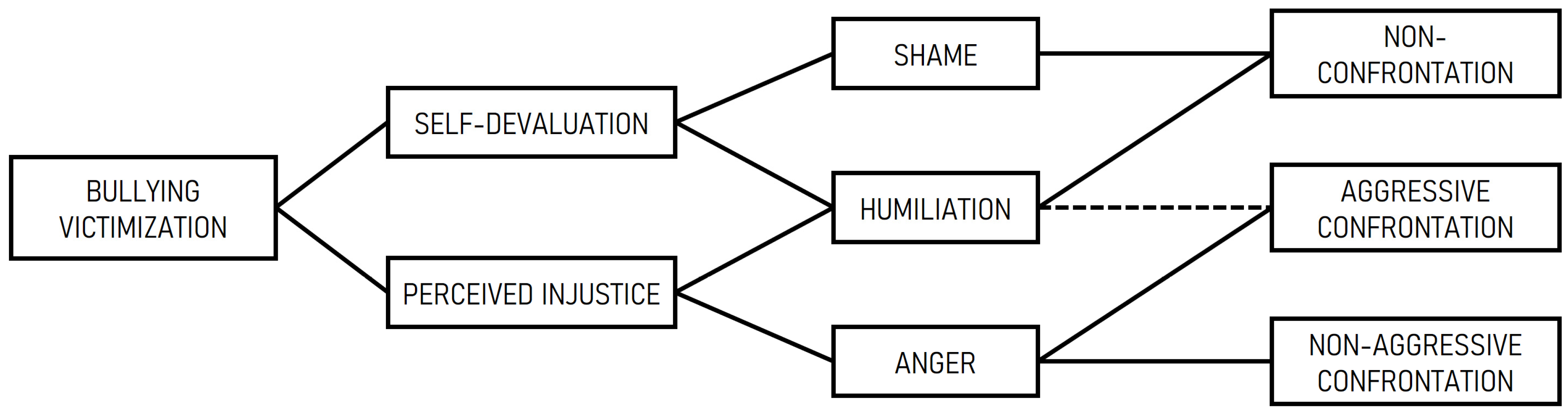
Behaviorally, humiliation is described as ambivalent, combining feelings of powerlessness with suppressed vengefulness, which could potentially lead to destructive consequences, including suicidal and violent ideation (Elison & Harter, 2007; Leask, 2013; Meltzer et al., 2011; Sadath et al., 2024; Torres & Bergner, 2012; Walker & Knauer, 2011). This particular blend of impotence and aggression has been referred to as a “contained rage” in which violent impulses are repressed but could hypothetically be released over time (Ginges & Atran, 2008; Torres & Bergner, 2012). While its pivotal role in the dynamics of victimization has been widely recognized (Agudo et al., 2024; Borrego-Ruiz & Fernández, 2024; Collazzoni et al., 2017; Elison & Harter, 2007; Leask, 2013; Meltzer et al., 2011), humiliation remains a relatively understudied emotion in bullying research. In this respect, victims of bullying who experience humiliation often endure prolonged feelings of helplessness, which may in particular cases manifest as explosive aggression when triggered, as suggested by anecdotal reports, such as those involved in school massacres (Aronson, 2001; Harter et al., 2003; Larkin, 2009). Importantly, active coping strategies (e.g., confronting the bully in a firm but non-violent way, reporting the bullying to an authority) or cognitive reframing (e.g., interpreting the situation as an injustice that is not deserved) may reduce internalized self-devaluation, thereby alleviating humiliation and fostering a transition towards anger, which may serve as a more adaptive emotional response (Fernández et al., 2022). Figure 1 illustrates a hypothetical representation of the role of humiliation in bullying victimization dynamics, together with shame and anger, in relation to their connections with underlying cognitive appraisals and potential behavioral tendencies (modified from Borrego-Ruiz & Fernández, 2024).
In bullying settings, humiliation can thus be viewed as the emotion that arises when an individual’s sense of self is threatened by a degrading exercise of intentional power. Indeed, research has consistently identified humiliation as a key emotional consequence directly linked to practices of bullying, mistreatment, and abuse (Agudo et al., 2024; Borrego-Ruiz & Fernández, 2024; J. Barrett & Scott, 2018; Meltzer et al., 2011). The power imbalance inherent in bullying tends to favor the perpetrators, while exposing and degrading the victims (Collazzoni et al., 2014; Palshikar, 2005). Victims, who are unable to distance themselves from the judgment of others, often remain vulnerable due to their need for acceptance and self-respect (Statman, 2000). In this context, the hostility displayed by the perpetrator increases the perception of injustice underlying the experience of humiliation, which in turn increases the emotional intensity (Fernández et al., 2018). In addition, a higher social status of the perpetrator in relation to the victim can facilitate the internalization of devaluation, further promoting the emotional response of humiliation (Fernández et al., 2018). In fact, research indicates that public humiliation by an authority figure can be particularly impactful if the victim perceives the actions of the perpetrator as being driven by negative intentions (Markman et al., 2019). Consistent with these findings, it has been suggested a positive correlation between being a bully and higher social status, as well as between being a victim of bullying and social rejection (Salmivalli et al., 2021). This may indicate that the threat to the victim’s self-concept is partly shaped by how bystanders perceive the victim within a specific context, thereby constituting a key factor regarding the fear that individuals experience when they face a potentially humiliating situation (Gerson, 2011). However, the presence of bystanders does not constitute a necessary condition for the occurrence of humiliation (Combs et al., 2010; Fernández et al., 2023; McCauley, 2017), but is often considered one of its defining features (Elshout et al., 2017). Indeed, research suggests that victims feel a greater sense of self-devaluation when humiliation occurs in front of an audience (Combs et al., 2010; Elison & Harter, 2007; Walker & Knauer, 2011), particularly if the audience reinforces the act (Mann et al., 2017). Conversely, the influence of bystanders appears to diminish when there is no perceived intentionality behind the public humiliation (Combs et al., 2010), which implies that the perceived injustice plays a pivotal role in the emotional experience (Walker & Knauer, 2011). Thus, bystanders are instrumental in amplifying the emotional impact of humiliation, since the victim perceives the devaluation as more unjust. Furthermore, if the devaluation is accompanied by hostility, the presence of an audience further facilitates the internalization of that devaluation (Fernández et al., 2023). In this respect, victims who actively respond to the humiliating event experience lower levels of this emotion by enhancing the perception of control over the situation and their own behavior (Fernández et al., 2022).

4.1.1. Humiliation at School

Humiliation constitutes a widespread and troubling experience for many students within the school environment, where daily encounters with degrading behaviors contribute to the normalization of such dynamics (Elison & Harter, 2007; Merle, 2005). In this context, humiliation functions as an emotion stemming from a cultural practice in which processes of “superiorization” and “inferiorization” are enacted, leading victims to internalize the disqualifications imposed upon them by others (Kaplan & Mutchinick, 2019). Since school bullying can involve both peer and teacher–student interactions, the experience of humiliation may vary, with distinct emotional and social impacts depending on the source and scenario of the humiliating act. In fact, these forms of victimization may mutually reinforce each other, as students who are victimized by peers are more likely to experience similar treatment from teachers (Khoury-Kassabri, 2011). Furthermore, the observational learning of humiliating acts can foster a collective moral disengagement among students, perpetuating bullying dynamics and reinforcing a culture in which such behavior is increasingly accepted or ignored (Thornberg et al., 2021).
Humiliation in the context of peer bullying has been shown to diminish students’ sense of belonging in school, which in turn reduces peer cooperation (Y. J. Wang & Chen, 2023b). Similarly, humiliation during initiation rites in academic environments has been shown to reduce peer affiliation (Mann et al., 2016). These findings can be explained by the fact that the experience of humiliation often leads to profound feelings of helplessness, potentially followed by a desire for revenge (Leask, 2013). In turn, the trauma caused by bullying partly arises from the victim’s internalized perception of injustice, which might manifest as self-destructive tendencies or violent retaliation (Leask, 2013, Meltzer et al., 2011). Indeed, experiences of humiliation often result in a sense of hopelessness and in depression, potentially trapping victims in a cycle of victimization and emotional devastation (Meltzer et al., 2011). On the other hand, feelings of humiliation in peer interactions have also been linked to aggressive behavior, with social status influencing this relationship (Aslund et al., 2009). The Columbine massacre, for instance, has been reported as potentially driven by the desire of perpetrators to exact revenge for their humiliation at the hands of peers, pointing to how the emotional consequences of bullying could hypothetically escalate into acts of violence as a form of protest (Larkin, 2009).
In the teacher–student relationship, humiliation functions both as a subjective experience for the students and as a social reality within the classroom. Factors such as the lack of effective external support (e.g., administrative sanctions) can lead teachers to engage in behaviors that elicit humiliation in students as a disciplinary tool (Merle, 2002). This emotional response, which may arise from insulting or degrading actions, serves as a symbolic exclusion, marking students as different or lesser, and effectively stripping them of their status as students or individuals. Thus, unlike rational-legal forms of authority, which are grounded in impersonal regulations, humiliation operates as an emotional response to arbitrary discipline, echoing traditional domination where authority is not based on rules, but on the will of the teacher (Merle, 2002). In this context, public humiliation has been acknowledged as a “tool” frequently employed by teachers (J. Barrett & Scott, 2018; Markman et al., 2019), although its potential to cause significant harm to students is well-documented (Cook et al., 2014). Behaviors that teachers employ to cause humiliation often involve aggressive questioning techniques and other forms of emotional intimidation (Scott et al., 2015), which have been associated with mental health issues such as depression, anxiety, substance abuse, and suicidal ideation (Wigg et al., 2024). Research has also highlighted a troubling correlation between students who reported experiencing abuse during their education and the later manifestation of similar behaviors in their professional careers (Moscarello et al., 1994; Twemlow & Fonagy, 2005). Notably, those who have been victimized are often reluctant to report such incidents, driven by fear of retaliation or the desire to avoid other potential negative consequences for themselves (Markman et al., 2019).

4.1.2. Humiliation at Work

The safety and overall health of employees are key elements for the functioning of organizations. However, dynamics related to workplace bullying often share the common purpose of generating a sense of humiliation in individuals (Campos et al., 2012; Żenda et al., 2021). Workplace bullying includes a broad range of behaviors, ranging from physical aggression and verbal outbursts to more subtle forms of harassment, such as unwelcome comments, ongoing unjust criticism, malicious gossip, repeated targeting or undermining of individuals, excessive workload, and denial of training or promotional opportunities (Bunce et al., 2024). In this respect, company changes, organizational conflicts, gender nonconforming behavior of both males and females, and being in the minority have been identified as central antecedents for workplace bullying (Punzi et al., 2011; Salin, 2021). Similar to school settings, the phenomenon of humiliation in workplaces takes places within a very specific hierarchical environment, involving key situational, dispositional, and relational factors, with social status being particularly significant (Żenda et al., 2021). Exposure to workplace humiliation is prevalent, particularly among females and younger employees, and has been associated with negative health and psychosocial outcomes, such as higher levels of depression, anxiety, stress, burnout, poor sleep quality, and general health complaints, as well as decreased job satisfaction, productivity, absenteeism, and increased turnover (Galanis et al., 2024; Lindert et al., 2023; Rincon-Hoyos et al., 2025; Sansone & Sansone, 2015; Żenda et al., 2021).
Not all humiliating behaviors in the workplace are conceived as illegitimate (Calabrò, 2021; Fisk, 2001). In fact, derogatory treatment has become so normalized in certain professional settings that it is often overlooked rather than reported (Kafle et al., 2022). The workplace is recognized as a major source of discrimination for certain groups, particularly women (Ortega-Jiménez et al., 2023). Indeed, research suggests that women report higher rates of workplace bullying compared to men (Salin, 2021). Although behaviors intended as legitimate performance management activities can be perceived as bullying by employees, human resources practitioners may also misinterpret managerial bullying as a legitimate practice in order to protect the organization and absolve managers (Harrington et al., 2013). Women often face negative actions targeting personal values related to emotional and relational factors, while men are more likely to experience attacks related to their work performance (Campanini et al., 2006). Both genders share common risk factors for workplace bullying, such as organizational change and conflicting demands in the work environment. However, gender-specific factors also play a role, with dictatorial leadership, lack of procedural justice, and an attitude of expendability being more prevalent in cases of bullying among men, while the lack of humanity in workplace dynamics is a stronger risk factor for women (Oxenstierna et al., 2012). Importantly, psychological resilience and social support from colleagues have been recognized as crucial protective factors against workplace bullying, demonstrating a strong positive correlation with positive emotional states (Husum et al., 2020; Koinis et al., 2025). In particular, resilience partially mediates the negative impact of such harmful behaviors on professional identity, highlighting its essential role in maintaining mental well-being under the high-pressure conditions common in demanding work environments (Koinis et al., 2025).

4.1.3. Humiliation in Digital Domains

Cyberbullying has been increasingly studied in recent years and consists of the deliberate use of digital platforms to intentionally dominate, harm, or cause discomfort to individuals through mean or manipulative messages, malicious rumors, and the sharing of compromising content, including images, videos, or sexually suggestive material, exploiting the capacity of technology for anonymous harassment across diverse age groups and contexts (von Humboldt et al., 2025). Cyberbullying has profound and lasting psychological effects across different life stages, manifesting as feelings of humiliation, isolation, and negative self-talk, and also leading to a range of mental health issues, including depression, anxiety, low self-esteem, substance use, and disruptions in sleep and eating patterns (von Humboldt et al., 2025). This is particularly concerning, as children and adolescents, being naturally curious and more adept with technology than adults, often lack the maturity to understand the risks and consequences of their actions online (Sathyanarayana Rao et al., 2018). In this context, research suggests that certain behaviors, such as substance use and problematic internet use, can increase the likelihood of becoming a victim of cyberbullying, whereas social support has been identified as a protective factor (Zsila et al., 2019).
Within the framework of cyberbullying, the concept of cyber-humiliation has been coined to define behaviors aimed at undermining the victim’s self-confidence, dignity, and self-respect, primarily characterized by an intentional effort to destroy the victim’s sense of self, driven by a desire to dominate, subjugate, and eliminate their social standing (Dilmaç, 2014). In close relationship with general cyberbullying practices, the forms of cyber-humiliation typically involve sending threatening or mean emails and text messages, excluding individuals from social media circles or blocking them, sharing personal or embarrassing information, compromising email accounts to send false or damaging messages, ridiculing others in online spaces, and engaging in harmful rating practices, such as labeling peers as the “prettiest” or “ugliest” on websites (Dilmaç, 2014).
A cross-sectional study conducted in Spain revealed that experiences of humiliation online were positively associated with problematic smartphone use, which in turn acted as a mediator, linking humiliation to increased aggression and reduced prosocial tendencies in individuals (López-Mora et al., 2024). However, it has been reported that the relationship between cyberbullying victimization and cyberbullying perpetration can be bidirectional, with aggression also serving as a predictor of subsequent cyber-victimization and social responsibility playing a key mediating role (Gini et al., 2018; Zhan et al., 2022). These findings suggest that the emotional and behavioral consequences of online humiliation extend beyond the immediate experience of victimization, potentially fostering a cycle where individuals both perpetuate harmful behaviors toward others and experience similar abuse themselves. In addition, research has shown that traits such as narcissism and extraversion significantly influence how adolescents construct their profiles, particularly in terms of self-generated content such as profile pictures and status updates (Ong et al., 2011). However, victims of cyberbullying may internalize devaluating messages, thereby leading them to feelings of humiliation. In fact, this emotional response may discourage individuals from seeking support or assistance from others due to the internalized self-devaluation and perceived cruelty (Ranjith et al., 2024).
The intentional non-consensual dissemination of sexually explicit images or videos, aimed at causing distress or reputational damage, can be considered a particularly harmful form of cyberbullying, often known as revenge pornography (Veronica & Di Giacomo, 2022). Victims of non-consensual intimate image dissemination experience enduring psychological, personal, and social effects, including elevated levels of humiliation (Murça et al., 2023; Patel & Roesch, 2022). Dodge and Lockhart (2022) explored the barriers that young people face in seeking support for non-consensual intimate image dissemination, identifying fears of adult overreaction and victim-blaming as key factors that hinder individuals from reaching out to criminal justice systems or trusted adults. Although an increasing number of states have recognized the significance of non-consensual intimate image dissemination and enacted laws to criminalize it (Kamal & Newman, 2016), security forces have shown a limited understanding of revenge pornography legislation and lack confidence in investigating cases or supporting victims effectively, which highlights an urgent need for improved training to ensure proper case management, victim protection, and accountability for offenders (Bond & Tyrrell, 2021).

4.1.4. Humiliation in Ethnic–Cultural Bullying

Ethnic identity constitutes a complex and dynamic construct that evolves over time and involves a continuous process of exploration and commitment, reflecting the ongoing development of individuals, affirming their cultural heritage, and shaping their sense of belonging and self-definition (Phinney & Ong, 2007). Both ethnicity and low levels of acculturation have been identified as significant risk factors for bullying victimization, particularly among younger populations (Albdour & Krouse, 2014; Pottie et al., 2015; Smokowski et al., 2009). Ethnic aggressions are often subtle in nature, manifesting through verbal or behavioral insults that convey racial or cultural offenses toward individuals of different racial backgrounds or ethnicities. These acts, which occur in everyday social interactions, contribute to the reinforcement of ethnic and cultural biases, promoting individual marginalization and perpetuating social exclusion (Sue et al., 2007). Ethnic-cultural bullying is therefore a specific form of bullying that targets individuals based on perceived differences related to their country of origin, cultural background, or skin color (Martínez Santiago et al., 2023).
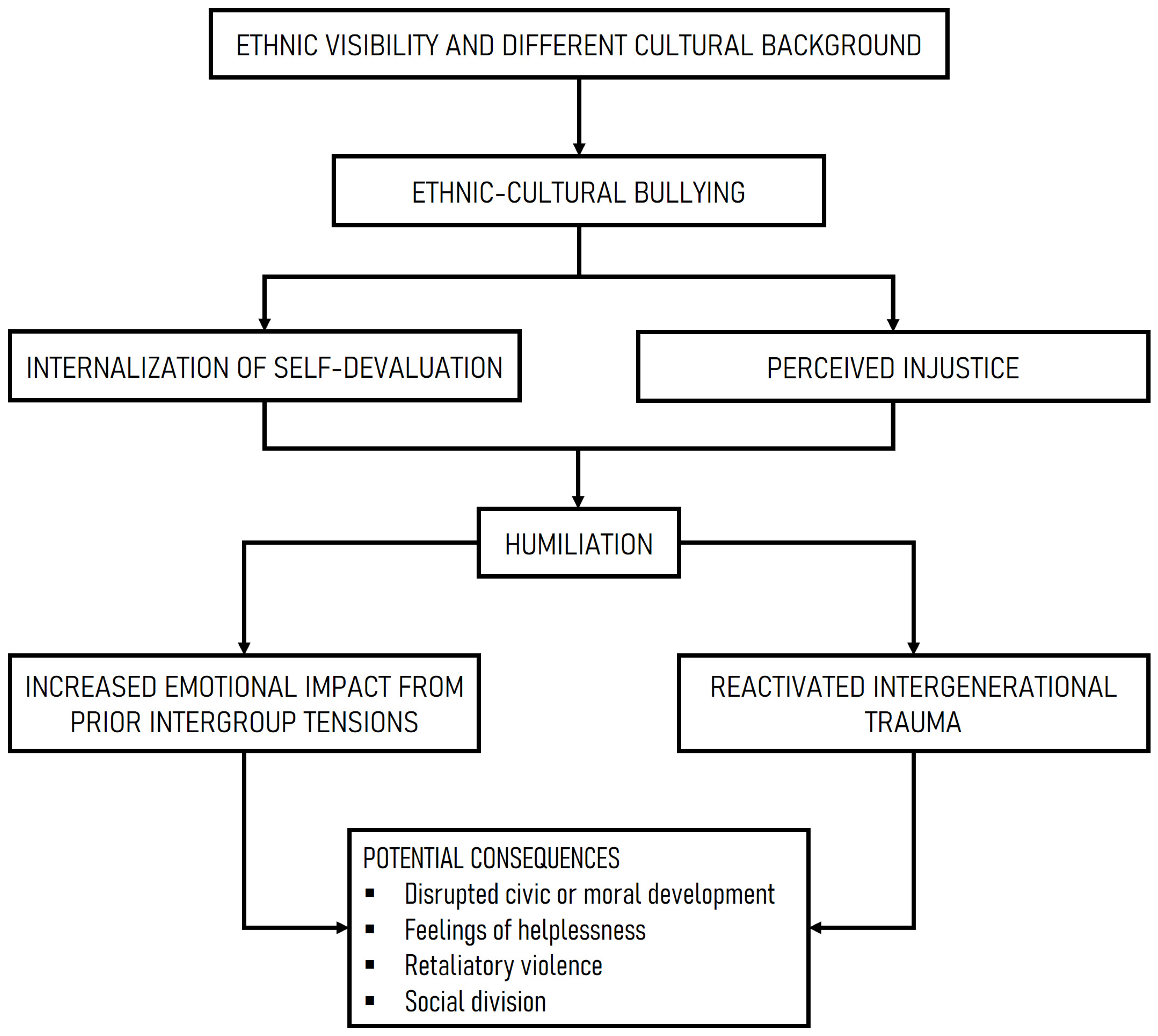
In the context of ethnic–cultural bullying, humiliation may acquire even greater significance in comparison to bullying based on other features, as pre-existing intergroup tensions could amplify the emotional impact of such acts. In this respect, humiliating behaviors become culturally charged, marking victims as “outsiders” and heightening their vulnerability within a larger social context. The experience of humiliation in this setting is often characterized by intense rage directed at others, combined with feelings of helplessness, which underscores its profound psychosocial consequences in intergroup interactions (Leidner et al., 2012). Research on intergroup conflicts among youth populations suggests that humiliation itself constitutes a traumatic event with significant mental health repercussions, regardless of exposure to other forms of violence (Giacaman et al., 2007). When historical animosities or patterns of subjugation persist between groups, the experience of humiliation may be exacerbated, as the targeted groups carry collective memories of past oppression (Cerdeña et al., 2021). This deepens the emotional wounds inflicted by ethnic–cultural bullying, transforming the abuse into a reactivation of intergenerational trauma, which in turn amplifies social divisions and personal suffering (Borrego-Ruiz, 2025a). Consequently, humiliation within the framework of ethnic–cultural bullying can be understood as an interpersonal aggression but also as a culturally charged phenomenon that perpetuates intergroup discrimination and stigmatization. Building on this understanding, it can be hypothetically posited that experiences of humiliation resulting from ethnic–cultural bullying during adolescence may damage self-concept and disrupt broader civic or moral development. When humiliation is interconnected with group identity and occurs within a context of perceived injustice, it may undermine trust in collective norms, breed resentment toward societal institutions, and obstruct the adoption of inclusive values (Borrego-Ruiz, 2025a). Theoretically, such a specific scenario could have troubling implications, as both bullying and its associated humiliation may act as catalysts for extreme retaliatory violence within educational environments or even other contexts, such as public spaces. These violent acts may extend beyond individual targets, suggesting a wider scope of social conflict (Borrego-Ruiz, 2025a). Figure 2 illustrates a hypothetical representation of the role of humiliation in ethnic–cultural bullying victimization (modified from Borrego-Ruiz, 2025a).

4.1.5. Humiliation in Bullying Toward Stigmatized Groups

Stigma is commonly understood as a specific characteristic or attribute that discredits an individual or group in societal perception, thereby resulting in a lower social status (Goffman, 1963). As outlined by Corrigan and Watson (2002), stigma is composed of three key components: (i) stereotypes, which are generalized and often negative beliefs, ingrained within society, leading to quick and prejudiced judgments about certain individuals or groups; (ii) prejudice, which refers to the negative emotional responses triggered by these stereotypes; and (iii) discrimination, which involves actions that create social exclusion and marginalization of those who are stigmatized. It is important to note that stigma is not a universal phenomenon, as it can vary across societies and be influenced by social and cultural factors that are specific to different historical and contextual circumstances. Furthermore, variations in stigma can exist within different social groups even within the same society (Borrego-Ruiz, 2025b). In this context, a recent study comparing the perception of marginalization, exclusion, ritualistic inclusion (i.e., superficial form of inclusion where individuals are included without true acceptance or meaningful participation), and dehumanization across various stigmatized groups identified that transgender individuals and those with functional diversity experience high levels of humiliation (Pandey et al., 2024).
Research indicates that lesbian, gay, bisexual, queer adolescents, those questioning their sexual identity, and transgender individuals are disproportionately victimized compared to their cisgender and heterosexual peers, with this victimization explicitly linked to their identities or their expression of these identities (Lawrence et al., 2023). This is particularly concerning, as transgender adolescents exhibit significantly higher rates of suicidal ideation and depressive symptoms compared to their cisgender counterparts, with bullying being a major contributing factor (Grimm et al., 2025; Sares-Jäske et al., 2023). Research has also revealed notable differences in bullying experiences and mental health outcomes among cisgender girls, cisgender boys, transfeminine youth, and transmasculine youth. While transfeminine youth experienced the highest levels of bullying, transmasculine youth showed the most severe mental health symptoms. In contrast, cisgender boys reported the least bullying and mental health issues (Sares-Jäske et al., 2023). Moreover, both transgender and non-binary identities have been linked to increased likelihood of being bullied and bullying others, even when accounting for factors such as internal stress and involvement in bullying in an opposing role (Heino et al., 2021). This suggests that the process of developing a transgender or non-binary identity may present an additional layer of stress for adolescents, compounding the already complex challenges of transitioning through adolescence toward adulthood (Heino et al., 2021). Regarding humiliation, this emotion in transgender individuals is often rooted in the dominant clinical discourse that labels gender nonconformity as a disorder, reinforcing the idea that males and females must conform to masculinity and femininity, respectively, thereby stigmatizing any deviation from these gender expressions as a failure (Salamon, 2009). Consistent with this, it has stated that the primary basis of the humiliation dynamic between males and females lies in the construct of gender, which inherently assigns women an inferior status and men a superior one, leading to destructive consequences for both sexes, including the humiliation of those who deviate from prescribed gender roles (Swift, 1991). In this respect, power dynamics are pivotal, particularly in terms of how beliefs about the control of the perpetrator of humiliation over the victim influence the emotional experience and how challenging this power may serve as a potential means of preventing such outcomes (Swift, 1991). Evidence suggests that the internalization of a self-devalued image, driven by experiences of dehumanization and discrimination, plays a crucial role in shaping mental health outcomes in transgender individuals, with processes such as internalized transnegativity and self-objectification affecting overall well-being (Cascalheira & Choi, 2023). Moreover, exposure to negative media depictions of transgender individuals intensifies self-devaluation, as social messages contribute directly to the internalization of negative stereotypes, as well as to the onset of mood disorders, including anxiety and depression (Cooper et al., 2020; Hughto et al., 2021).
Among the different types of functional diversity, individuals with skeletal dysplasia causing disproportionate dwarfism experience intense and widespread devaluation of their physical condition from a very young age (Fernández, 2009). This social devaluation exposes them to a heightened risk of social exclusion, discrimination, and bullying victimization, which significantly affect the psychological well-being and quality of life of those impacted, as well as their families (Chaudhary & Bano, 2012; Fernández, 2009). Visibility is a pivotal characteristic of stigma and refers to how noticeable or apparent the stigma is to others. The stigma associated with skeletal dysplasia causing dwarfism is highly visible, making those affected more susceptible to public exposure and potential humiliation. In this specific context, bystanders frequently engage in harassment within public places (e.g., situations in which individuals with skeletal dysplasia are singled out, openly stared at, approached in a disrespectful or intrusive manner, or even recorded by strangers) and the absence or limited capacity of laws to penalize such behaviors trivializes street persecution and mistreatment, potentially legitimizing these actions (Milani & Carbajal, 2023). In fact, exploiting the morbid curiosity that disproportionate dwarfism provokes in many individuals within the show business raises serious ethical concerns. Since the condition of dwarfism is a defining characteristic that profoundly shapes the social identity of affected individuals, it is crucial to question the commercial exploitation of these differences in a derogatory manner (Fernández, 2009). Such exploitation perpetuates harmful stereotypes, reinforces the marginalization, and amplifies the humiliation of those with dwarfism. Furthermore, members of the majority groups, who financially support and enjoy shows that degrade or ridicule individuals with dwarfism, should critically reflect on the ethical implications of their participation, as the enjoyment of entertainment that relies on the denigration of a physical condition fosters the stigmatization of the affected group and also implicitly condones the commodification of their identity for the sake of public amusement (Fernández, 2009). This demonstrates that bystanders play a key role in shaping public bullying and cyberbullying dynamics, as well as in determining the long-term impact on victims (Polanco-Levicán & Salvo-Garrido, 2021). Moreover, this abuse and its consequences can be further exacerbated if the victim is filmed or exposed on social media. Indeed, the effects of bullying in public spaces can be amplified through messages, videos, pictures, and other forms of digital content that socially denigrate and discriminate against the victim (Tao & Fisher, 2022), thereby intensifying the emotional response of humiliation and deepening the psychological impact by publicly reinforcing internalized self-devaluation. In light of these insights, those responsible for programming public entertainment, including television, radio, digital platforms, and cultural agendas, should be particularly sensitive to the potential humiliating effects of exploiting stigmatized conditions or the morbid interest they provoke to generate audience or profit.

4.2. The Role of Shame

Shame constitutes a highly influential negative emotion of a particular private nature, which has been associated with multiple adverse psychological states, such as feelings of uselessness and impotence, submissive tendencies, social withdrawal, substance abuse, anxiety, depression, post-traumatic stress disorder, and suicidal ideation (Garofalo et al., 2025; Gilbert, 2000; Taylor, 2015; Yakeley, 2018). Although shame has been linked to these negative outcomes, it is not inherently dysfunctional, as it can preserve social status and act as an alarm for threats to social belonging. In this respect, shame may become maladaptive when felt excessively, inappropriately, or too frequently (Garofalo et al., 2025). Shame is primarily characterized by a sense of global self-devaluation in which individuals experience profound self-evisceration, often triggered by social events that evoke feelings of rejection or inferiority, particularly related to personal behaviors, physical traits, and aspects of identity (Budiarto & Helmi, 2021). According to Andrews et al. (2002), various dimensions of the emotional response of shame can be differentiated, including shyness-related experiences (e.g., personal habits, interaction styles, or perceived inadequacies in personal skills), behavioral shame (e.g., actions such as making mistakes, saying something inappropriate, or failing in a competitive context), and bodily shame (e.g., self-consciousness and feelings of discomfort regarding physical appearance). In addition, shame manifests in distinct forms, as suggested by social rank theory, which posits that perceptions of one’s own social status, whether superior or inferior, significantly influence emotional responses (Gilbert, 2007; Matos et al., 2013). When individuals perceive themselves as inferior, shame often leads to submissive behaviors, with the emotional response acting as a defensive strategy to cope with this perceived low status. Furthermore, as a moral emotion deeply ingrained in relational contexts, shame reflects societal norms and expectations, with individuals internalizing these values, thereby influencing their level of shame based on their ability to meet social standards and maintain interpersonal connections (Murphy & Kiffin-Petersen, 2017). Shame can also be categorized into internal and external dimensions. On the one hand, internal shame arises from a self-evaluation in which individuals view themselves as inadequate or weak. On the other hand, external shame is driven by the concern of being judged or perceived as morally defective by others (Gilbert, 1997; Taylor, 2015).
In a comparable manner to the similarities previously noted between shame and humiliation, shame has also been linked to embarrassment and guilt, despite notable differences in their related emotional experiences. Shame is primarily associated with the internalization of a self-devaluation and centers on deep self-worth issues. Embarrassment is more related to social exposure or noncompliance of social norms, but its focus is more on self-presentation than self-evaluation, unlike shame. In turn, guilt is linked to moral transgressions and arises from having committed an act contrary to internalized standards, potentially requiring reparative action to alleviate the distress. While shame and guilt are often more intense and involve stronger self-reproach and sense of responsibility, embarrassment arises from more inconsequential events and is usually less intense (Giorgetta et al., 2023; Robertson, 1994; Tangney et al., 1996). It is also important to note that the term shame can encompass different emotional experiences depending on the cultural context. For instance, in Spanish-speaking cultures, shame may be understood as the intense emotion that reflects a deep concern for one’s own self-image and public reputation, but also as a form of embarrassment or shyness (Hurtado de Mendoza et al., 2010; Hurtado-de-Mendoza et al., 2013).
In the context of bullying, shame has been considered as an emotional response underlying its recurrent feature, as it may increase the risk of subsequent victimization (Irwin et al., 2019a). Indeed, longitudinal research has shown that shame can constitute an emotion involved in re-exposure to victimization dynamics, even during adulthood (Aakvaag et al., 2019). In addition, shame has been found to be a key mediator in the relationship between bullying victimization and mental health outcomes, with increased levels of shame contributing to higher levels of social anxiety, depression, eating disorders, self-harm, and externalizing behaviors such as rule breaking (Duarte et al., 2015; Gu et al., 2026; Irwin et al., 2019b). A potential framework for understanding the relationship between abusive behaviors and shame focuses on attribution processes, as individuals who experience mistreatment may develop internal causal attributions, such as believing that their suffering is a result of something inherently wrong with them (Coates & Messman-Moore, 2014). This negative self-assessment might become generalized, stemming from a sense of helplessness that arises from their inability to prevent the distressing events (Alessandri & Lewis, 1996). Thus, internal and global attributions about victimization can contribute to the painful emotional experience of shame and repeated exposure to this emotion can reinforce maladaptive cognitive patterns, which subsequently shape affective responses and behavior (Irwin et al., 2019b). Consistent with these postulates, further research indicates that victims of bullying can internalize a self-devaluation attributing the mistreatment to their own perceived shortcomings, which may foster self-condemnation and disgust, thereby intensifying feelings of shame (X. Xu et al., 2024). In turn, bullying victimization leads individuals to feel rejected, disliked, and socially stigmatized, which subsequently intensifies the experience of shame. Moreover, victims with elevated levels of shame are generally more hesitant to engage with others and often demonstrate withdrawal and avoidance behaviors (X. Xu et al., 2024). Importantly, resilience has been identified as a crucial factor in transforming shame and alleviating the negative consequences of bullying victimization. Specifically, in a cross-sectional study conducted in Mexico, resilience was found to reduce shame in adolescent populations exposed to direct school violence (Quiroga-Garza & Cavalera, 2025).

4.2.1. Shame, Self-Esteem, and Bullying Victimization

Self-esteem can be defined as a multifaceted psychological construct that underpins the development of personality and emotional balance, influencing adaptive processes throughout life and being rooted in complex mental states that encompass self-meaning, self-identity, self-image, and self-concept, which collectively shape how individuals perceive themselves and their value in relation to the world around them (Bailey, 2003; Doré, 2017). Reduced self-esteem has been identified as one of the psychological mechanisms underlying the link between traumatic experiences during childhood and affective disorders (Gathier et al., 2024). In line with this, research has consistently associated bullying victimization with low self-esteem, which may itself serve as a mediating variable between bullying victimization and adverse mental health outcomes (Irwin et al., 2019b; Roques et al., 2022; Strøm et al., 2018). In turn, evidence from a meta-analysis revealed that self-esteem may have a moderate, negative association with bullying victimization, suggesting that individuals with lower self-esteem are more likely to be victimized by others (Tsaousis, 2016). Given the significant negative correlation between shame and self-esteem (Budiarto & Helmi, 2021), and considering that low self-esteem can both foster the onset of mental health conditions and increase susceptibility to victimization (Keane & Loades, 2017; Tsaousis, 2016), it is plausible to assert that the emotional response of shame to bullying victimization could create a harmful cycle of psychological distress in which victims internalize a profound self-devaluation, making them more likely to be victimized again, which in turn worsens their mental health.

4.2.2. Shame in Bullying Toward Individuals with Health-Related Stigma

Health-related stigma refers to the social exclusion and discrimination faced by individuals or groups identified with specific health conditions, often ingrained in cultural norms that historically dictate what is considered “normal” or “abnormal” in terms of health and appearance (Scambler, 2009; Weiss et al., 2006). This stigma extends beyond individual interactions to include structural or institutional discrimination, where societal and systemic factors contribute to a “disabling environment” for those affected. Moreover, this form of stigma operates through labeling, stereotyping, and the subsequent loss of status, which perpetuates a cycle of disadvantage and social marginalization (Scambler, 2009; Weiss et al., 2006). At its core, health-related stigma reflects a dynamic interplay between ingrained cultural norms of shame and the social structures that sustain them, impacting the lives of some individuals more significantly than others (Scambler, 2009). Simultaneously, shame can profoundly affect health, illness, and health-related tendencies through several mechanisms, such as triggering acute avoidance, fostering chronic unhealthy behaviors, threatening social status, and influencing biological processes (Dolezal & Lyons, 2017). Thus, the impact of health-related stigma can be amplified through intersecting factors such as cultural, social, emotional, and institutional determinants, which influence its manifestation at multiple levels (Mol et al., 2023). As previously noted in the case of skeletal dysplasia linked to dwarfism, visibility is a key characteristic of stigma, as it prevents individuals from concealing their condition. Nevertheless, even without any intention to hide it, the condition becomes overtly visible to others, exacerbating the stigma. Regarding health-related stigma, several conditions are highly visible, making individuals who suffer from them more vulnerable to discriminatory behaviors and to bullying victimization dynamics. Among these health conditions associated with health-related stigma, two can be considered particularly relevant in this context due to their particular features: obesity and skin diseases.
Obesity is a medical condition characterized by excessive weight and is not uniquely influenced by unhealthy lifestyle choices (Borrego-Ruiz & Borrego, 2025d). Obesity stigma is deeply ingrained, widespread, and openly expressed, with few social norms preventing weight shaming, beginning early in socialization, and being viewed as culturally non-normative (Stangl et al., 2019). Obesity stigma is characterized by prejudiced, stereotypical, and discriminatory attitudes and behaviors toward individuals with this condition, often driven by misconceptions about its causes, particularly the belief that obesity is unequivocally the result of personal choices (Westbury et al., 2023). Therefore, this stigma is often legitimized and not recognized as a form of discrimination (Westbury et al., 2023). Research has shown that obesity is linked to a decline in quality of life and an increase in negative mental health issues, highlighting the impact of the condition on psychological well-being (Rindler et al., 2023; Steptoe & Frank, 2023). Epidemiological research also reveals that individuals with obesity or overweight report markedly lower quality of life and higher depression scores compared to those of normal weight, with obesity having the most substantial effect (Calcaterra et al., 2024). Bullying victimization interacts with personal vulnerabilities such as obesity status to influence body image (Flores et al., 2019), and the relationship between weight status and susceptibility to bullying can be partly explained by changes in body image (Fowler et al., 2021). In fact, individuals with obesity are at a heightened risk of being targeted by bullying, and this connection is mediated by a decline in body image and an increase in body dissatisfaction, which in turn intensify the likelihood of experiencing bullying (Fowler et al., 2021). In this respect, research has suggested that body dissatisfaction may pose a greater risk for subsequent victimization in comparison to weight status itself (Sutter et al., 2015). Obesity is strongly associated with feelings of shame, and the effects of these shame experiences contribute to the link between obesity and mental health conditions such as depression (Sjöberg et al., 2005). Shame in the context of obesity may stem from societal stigma, bullying victimization, and the internalization of self-devaluation for believing oneself responsible for the condition. The shame associated with obesity can exacerbate feelings of worthlessness and self-blame, which in turn increases vulnerability to bullying, social stigma, and isolation (Czepczor-Bernat et al., 2025). This process creates a detrimental cycle in which the internalization of a negative self-view and feelings of shame about one’s own body contributes to poor mental health outcomes, which then further perpetuate the stigma and discrimination faced by these individuals, particularly in interpersonal contexts (Czepczor-Bernat et al., 2025).
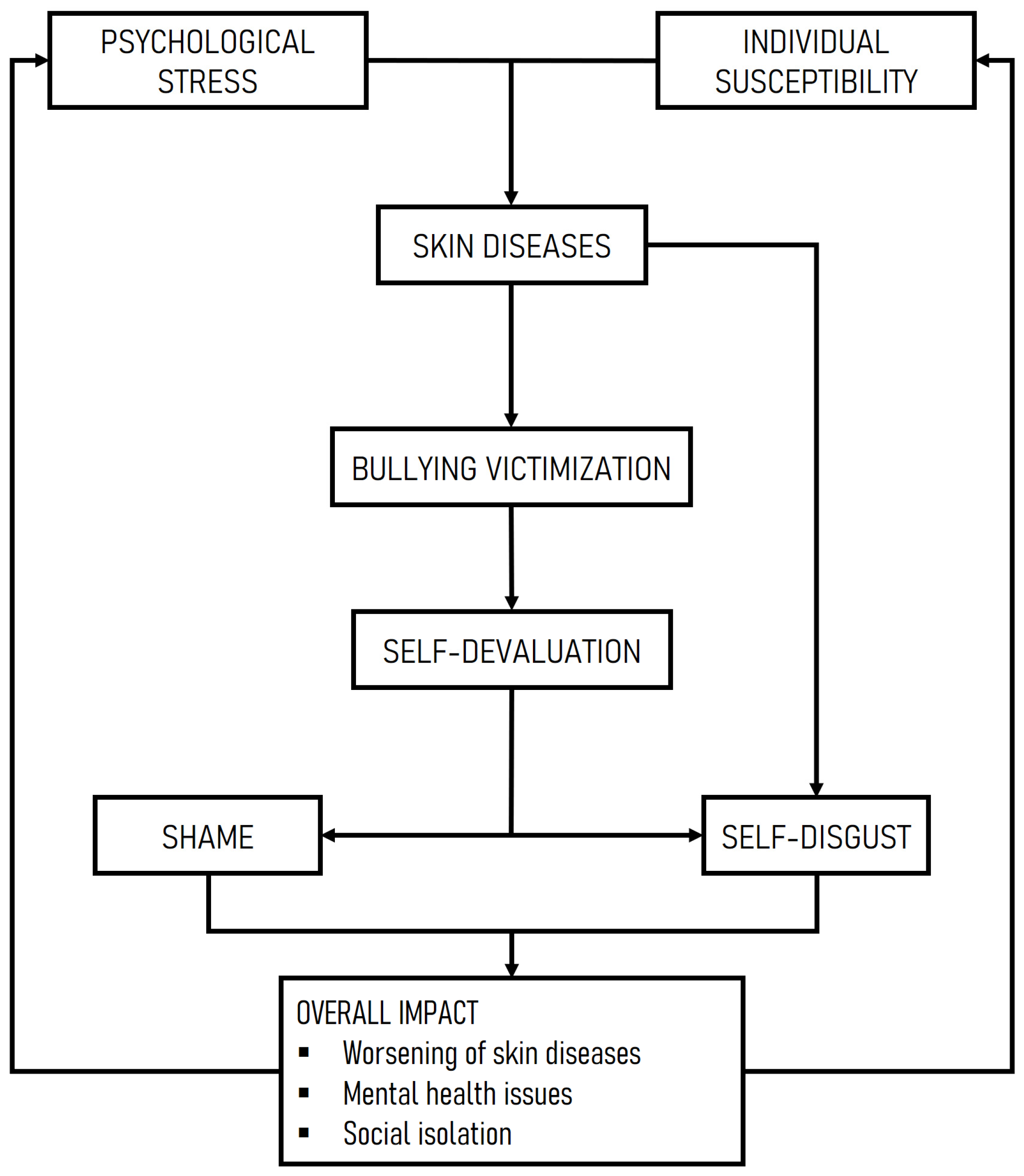
Skin diseases are medical conditions that affect the skin, causing symptoms such as lesions or inflammation (Borrego-Ruiz & Borrego, 2024a). Research has established an interplay between skin diseases, experiences of bullying, and the development of mental health conditions (Balieva et al., 2023; Borrego-Ruiz & Borrego, 2024a; Chernyshov et al., 2024). Indeed, skin diseases have been linked to bullying victimization, with verbal abuse and social isolation as its most prevalent forms (Chernyshov et al., 2024). In turn, the psychological impact of skin disorders, such as acne vulgaris, atopic dermatitis, or psoriasis, frequently manifests as increased prevalence of certain psychiatric conditions, including anxiety, depression, and obsessive–compulsive disorder, which may be due to their emotional and social salience, given their prominent visibility (Balieva et al., 2023; Borrego-Ruiz & Borrego, 2025b). This is particularly concerning in the context of bullying, as the psychological burden of the disease itself is compounded by the social outcomes of being victimized (e.g., rejection, exclusion), which can further exacerbate mental health conditions. Regarding emotional consequences, skin conditions can impact the body image of individuals, leading to shame and subsequently to lower self-esteem and adverse mental states (Mufaddel & Abdelgani, 2014). In fact, individuals with skin diseases often experience shame and self-disgust due to the manifestation of visible skin lesions or abnormalities, and both shame and self-disgust may constitute pivotal factors in the progression of these diseases, in the consolidation of bullying victimization cycles, and in the development of mental health conditions (Chamorro Coneo et al., 2025; Fink-Lamotte et al., 2025; Homayoon et al., 2020; Tsaousis, 2016). Consequently, the fact that both skin diseases and the subsequent shame heighten vulnerability to bullying and cause psychological distress, makes these conditions an overlooked determinant in the context of victimization, potentially leading affected individuals to adopt dysfunctional measures in order to conceal or alleviate their visible symptoms, such as self-harm, unhealthy habits, and risk behaviors (Borrego-Ruiz & Borrego, 2024b). Figure 3 illustrates a hypothetical representation of the role of shame in bullying victimization dynamics involving skin diseases (modified from Fink-Lamotte et al., 2025).

4.3. The Role of Guilt

Guilt constitutes a morally charged emotion that serves to promote prosocial behavior and arises from the recognition of one’s own potential actions or inactions that may have caused, or could cause, harm or inequity to another individual or group (Stewart et al., 2023). However, it should be noted that guilt implies an intense unpleasant feeling toward oneself due to the perception of responsibility and regret over the inflicted harm, whether real or imagined (León-Moreno et al., 2023). The emotional response of guilt can arise from the recognition that a social or moral norm has been violated, as well as from the awareness of both the perceptions and judgments of others regarding the wrongful behavior (Misailidi & Kapsali, 2022). In this context, guilt represents a mechanism that facilitates the repair of damaged relationships and reinforces social connections by preventing behaviors that could undermine or disrupt group cohesion (Gazzillo et al., 2020; León-Moreno et al., 2023; Vaish et al., 2016). Nevertheless, the various conceptualizations of guilt over time, as a complex emotion, have shown both variability and convergence. For instance, many definitions agree that guilt is associated with moral or social transgressions, but there are significant divergences regarding whether guilt inherently serves an adaptive function. Definitions also differ on whether guilt is considered a trait, situation-specific, or a combination of both (Tilghman-Osborne et al., 2010). In addition, some theories suggest that guilt is always linked to the actions or inactions of individuals, but others do not. There is also variability in how much guilt involves self-blame, and some definitions distinguish between subtypes of guilt, while others do not (Tilghman-Osborne et al., 2010).
Building on the aforementioned, it can be stated that guilt dictates how an individual behaves in particular situations, and following episodes of victimization, two types of internal attribution may arise regarding guilt: the characterological type, which attributes negative experiences to internal, stable, and uncontrollable causes, as well as the behavioral type, which is linked to specific controllable actions (León-Moreno et al., 2023). In turn, guilt can be categorized into internal and external forms, each consisting of two components: internal guilt relates to feelings of guilt linked to one’s own role in a situation, while external guilt reflects guilt based on the presence of peers (Younan, 2019). The latter is particularly relevant in bullying contexts, where the presence of others may reduce individual feelings of responsibility and guilt. In fact, it has been suggested that individuals with a higher sense of responsibility to intervene experience greater guilt, while those involved in group dynamics (e.g., bullies or bystanders) may feel less personal responsibility, thereby decreasing their external guilt (Younan, 2019).
Research indicates that individuals who are exposed to bullying report high levels of shame and guilt (Quiroga-Garza & Cavalera, 2025). Contrary to the case of shame, guilt may contribute to the prevention of bullying, since guilt arises after being aware of a norm-transgressing behavior, while shame promotes more victimization due to the appearance of vulnerability (Irwin et al., 2019a; Menesini & Camodeca, 2008; Novin et al., 2019). Nevertheless, recent research suggests just the opposite, indicating that victims of bullying with high levels of guilt exhibit greater physical, verbal, and social victimization, as well as greater levels of loneliness (León-Moreno et al., 2023). Further research on the topic provides additional insights. For instance, a cross-sectional study with 121 children (aged 9–11) reported that in situations involving both shame and guilt, perpetrated-harm scenarios provoked more guilt than neutral situations, whereas in situations involving just shame, neutral scenarios elicited more shame than received-harm situations (Menesini & Camodeca, 2008). Moreover, in situations involving shame and guilt, prosocial children reported higher levels of both guilt and shame compared to bullies and uninvolved children, whereas in situations only involving shame, victims experienced more shame than uninvolved children (Menesini & Camodeca, 2008). Collectively, these findings suggest mixed results regarding the role of guilt, indicating that its impact on victimization ultimately depends on its specific emotional manifestation, as well as on other individual and contextual factors, which together determine whether guilt reduces victimization or, conversely, contributes to it.

4.3.1. Guilt and Bully-Victims

Bully-victims are a distinct subgroup of bullying victims who simultaneously engage in bullying behaviors while also being targeted by their peers, experiencing the psychological and social consequences of both perpetrating and being victimized, which can intensify emotional distress and social isolation (Lin & Lin, 2018; Olweus, 1993; Solberg et al., 2007). Indeed, research indicates that bully-victims, compared to bullies and victims, constitute the most vulnerable subgroup, displaying the highest levels of both externalizing (e.g., rule-breaking, aggression, oppositional defiance) and internalizing symptoms (e.g., anxiety, depression, social withdrawal), which can further exacerbate their mental health issues (Drubina et al., 2023). In addition, self-injurious behaviors have been identified as more prevalent in bully-victims, and these relationships are partially mediated by the negative emotions they experience (Hay & Meldrum, 2010). In this context, guilt may play a pivotal role, as bully-victims are not only impacted by the negative psychological consequences typically associated with victimization (e.g., self-harming behaviors and suicidality), but also engage in bullying behaviors themselves, exerting power over individuals with lower status, potentially including peers or even close family members (Fraga et al., 2022). Thus, these dynamics could generate feelings of guilt on bully-victims, exacerbating the potential mental health consequences of their involvement in bullying behaviors. The synergistic effect of both being victimized, which elicits humiliation, and perpetrating bullying, which elicits guilt, can lead these individuals to engage in maladaptive behaviors, such as self-harm or suicidal tendencies, as they must handle the emotional distress caused by their dual role in the bullying dynamic. Figure 4 illustrates a hypothetical representation of the role of guilt in bully-victims.

4.3.2. Guilt in Bullying Toward Individuals with Mental Health Conditions

Mental health disorders are associated with social stigma, which manifests in negative attitudes toward individuals suffering from psychiatric or psychological conditions across cultures and societies (Hao et al., 2023). This stigma creates significant barriers, leading to exclusion from crucial domains such as social relationships and media representation (Corrigan et al., 2012; Torales et al., 2023). In this respect, misunderstandings about these conditions are common, with many people wrongly assuming that the symptoms can be controlled, which leads to the blaming of individuals for behaviors that are actually symptomatic of their disorders (Borrego-Ruiz, 2025b). Thus, instead of receiving the necessary support, these individuals often face marginalization, as well as negative stereotypes such as perceptions of dangerousness or incompetence, which further contribute to prejudice and discriminatory practices, potentially resulting in bullying victimization and social distancing (Corrigan & Rao, 2012; Economou et al., 2020). Indeed, several mental health conditions have been closely related to bullying victimization and stigmatizing behaviors, such as eating disorders (Day et al., 2022; Lie et al., 2021; Oliveira et al., 2023), attention-deficit/hyperactivity disorder (Stenseng et al., 2025; Voltas et al., 2023), autism spectrum disorder (Forrest et al., 2020; Junttila et al., 2024), psychotic disorders (Trotta et al., 2013), and substance use disorders (Borrego-Ruiz, 2024). Since mental disorders are often socially considered as the responsibility of the individual who suffers from them, the assumption of harmful stereotypes may lead to the internalization of a self-devaluation in which individuals adopt negative views of themselves, potentially resulting in guilt, isolation, and further deterioration of mental health. This, in turn, reduces their quality of life, limits their autonomy, and worsens the trajectory of their condition by undermining hope and self-worth (Borrego-Ruiz, 2025b). Consequently, in the context of bullying victimization, individuals with mental health conditions may experience guilt for their perceived inability to cope with their mental disorders but also due to the societal expectations that they should have control over their symptoms. Importantly, this guilt could be particularly harmful, as it reinforces negative self-judgments and self-blame, leading to other related emotions such as shame, which further promote victimization dynamics (Irwin et al., 2019a).

5. Basic Emotions in Bullying Victimization

Basic emotions have been widely discussed and debated, often distinguished by their distinct and universally recognizable pattern of facial expression, which makes them easily identifiable across cultures and contexts (Ekman, 1999). There is relative agreement on their exact nature and number, and most classifications tend to be brief, typically including emotions such as anger, fear, sadness, and happiness (Mason & Capitanio, 2012a). Indeed, a common assumption in emotion theories is that a small set of basic emotions exists (Ortony & Turner, 1990). Biologically, this idea suggests that specific neurophysiological and anatomical structures may correspond to these basic emotions. Psychologically, basic emotions are typically viewed as the essential foundations of more complex, non-basic emotions (Ortony & Turner, 1990). On the other hand, from an evolutionary perspective, basic emotions provide a framework for understanding the adaptive role of emotional responses in human survival. According to this view, emotions are deeply ingrained in our evolutionary past, having evolved to enhance survival by preparing individuals to respond efficiently to specific environmental challenges (van Heijst et al., 2025). In this sense, basic emotions such as anger and fear are seen as universal, innate, and linked to neurophysiological mechanisms that are common across human populations. Each of these emotions would have evolved to serve distinct survival functions. For instance, anger may serve to protect resources, while fear can serve to avoid danger, ensuring that individuals are able to react in ways that maximize their chances of survival and reproduction (van Heijst et al., 2025). In addition, the theory of constructed emotions focuses on how emotional responses arise from perception and social context, which emphasizes that emotions are also largely shaped by cognitive factors and personal experiences (Celeghin et al., 2017). Therefore, basic emotions cannot be strictly classified as either innate or acquired. Instead, they should be understood as emergent phenomena, arising from the complex interactions between environmental and organismic factors at all levels of organization (Mason & Capitanio, 2012b).
Among basic emotions, anger and fear have been identified as particularly relevant in the context of bullying victimization (Franzen et al., 2021; H. Jiang et al., 2025; Novin et al., 2019; Quan et al., 2024; Randa et al., 2019; Sattler et al., 2019; Vidourek et al., 2016). This can be explained on the basis that both emotions are pivotal responses to perceived threats (Blair, 2012; de Valk et al., 2015; Ford et al., 2010; Rapee, 1997), which are central to the experience of bullying, as the phenomenon itself poses significant threats to physical integrity, psychological well-being, self-concept, and social status (AlBuhairan et al., 2017; Borrego-Ruiz & Fernández, 2024; Salmivalli et al., 2021). Nevertheless, despite the adaptive functions of anger and fear in response to bullying dynamics, these emotions can also be detrimental in this context, as they may exacerbate the emotional distress of victims, contribute to maladaptive coping strategies, and potentially perpetuate the cycle of victimization and aggression, underscoring that these emotions may possess important roles in both defending against and reinforcing bullying behaviors.

5.1. The Role of Anger

Anger typically arises in response to perceived injustices or unfair treatment, motivating individuals to address unfavorable circumstances and improve personal welfare (Sznycer et al., 2022). In this sense, anger serves two key functions: internally, it signals the need to confront obstacles or aversive situations, encouraging individuals to take action in order to restore fairness, and externally, it acts as a communicative signal, establishing differentiation and potentially triggering conflict in interpersonal interactions (Williams, 2017). Anger responses, such as the desire to confront, insult, or even physically attack the offender, correlate with the reputational costs imposed on the victim by the affront (Sznycer et al., 2022). Notably, the intensity of these responses seems to be consistent across cultures, suggesting that the adaptive function of anger operates similarly worldwide (Kövecses, 2000). Although individual and cultural differences in anger expressions exist, the recalibrational theory posits that anger adjusts its intensity based on the severity of the offense and the potential costs to the victim (Sznycer et al., 2022). This recalibration process exemplifies how anger operates as a precisely adjusted emotional mechanism, modulating its intensity to match perceived social threats and ensuring that individuals are treated according to their worth. Therefore, it is plausible to assert that the expression of anger is pivotal for goal achievement, conflict resolution, the defense of personal integrity, the establishment of autonomy, and counteracting vulnerability. However, while anger supports healthy self-assertion, it must be tempered by empathy, ethical considerations, and social norms. In this respect, when anger is mismanaged or confused with excessive self-regard, it can lead to distorted personality development and antisocial behavior (Williams, 2017).
In bullying settings, anger may arise when victims are unable to exert control over the situation, acting as a signal to defend personal conditions. In this sense, anger can help victims assert themselves, set limits, or take action to stop harmful behaviors, potentially preventing further victimization. Indeed, anger plays a significant role in facilitating confrontational problem-solving approaches, which individuals may deliberately adopt in order to achieve favorable results (Tamir & Ford, 2012). For instance, actions such as informing authorities, seeking assistance, or confidently addressing the aggressor can be seen as defensive mechanisms that constitute pivotal tools for victims (McDougall & Vaillancourt, 2015; Šmigelskas et al., 2018). In addition, research on bullying in diverse contexts has identified strong emotional competences as a key protective factor for victims (Zych et al., 2019), which underscores that anger may function as an energizing emotion that encourages victims toward non-aggressive confrontational behaviors when properly channeled, empowering them to recognize and directly address bullying situations. In fact, such a confrontational response may be crucial, given that bullying victims often refrain from disclosing their experiences (Estévez-García et al., 2023), likely due to internalized self-devaluation. In turn, perpetrators often hold a position of power that allows them to conceal their actions (Salmivalli et al., 2021), further hindering intervention efforts. Furthermore, victims who actively confront bullying may tend to feel less humiliation, as their agency helps to mitigate the emotional impact by fostering a greater sense of control (Fernández et al., 2022). These insights suggest that empowering victims to respond assertively could be a key protective factor within bullying dynamics, with anger playing a central role in both activating and mobilizing effective coping strategies.
Despite the aforementioned, anger has often been regarded as a negative emotion, socially condemned due to its association with aggression, maladaptive behaviors, and psychopathologies (Fernandez & Johnson, 2016; Grünebaum et al., 2023; Okuda et al., 2015; Tsikandilakis et al., 2020). This negative perception, as well as these related outcomes, likely stems from the disruptive nature of an unregulated anger, which can lead to harmful consequences both for individuals and their social environments. Thus, the potential of anger to escalate into aggression or conflict frequently overshadows its adaptive functions. Regarding bullying, anger has been suggested as an emotion related to victimization risk (Hanish et al., 2004). Indeed, anger can drive victims to exhibit hostile or aggressive behavior, thus perpetuating the bullying cycle and increasing their likelihood of further victimization (Novin et al., 2019). Such aggressive responses, when perceived as hostile or destructive, may contribute to an environment that escalates conflict and fosters vulnerability, making individuals more susceptible to repeated victimization depending on the context, as well as other negative outcomes, such as emotional dysregulation and maladaptive coping strategies (DeSantis et al., 2025; Swan et al., 2005). In these dynamics in particular, the inherent power imbalance in bullying could play a crucial role, as aggressive responses toward perpetrators may simply provoke them to retaliate more cruelly in future interactions. In addition, although aggressive confrontation may offer a potential solution to bullying, it could also carry significant negative consequences, such as physical harm, social rejection, or even murder (Liu et al., 2013; Shorey & Dzurec, 2016; Vakili et al., 2015). Moreover, anger has been identified as a contributing factor in the transition from being a victim of bullying to becoming a perpetrator (i.e., bully-victims), highlighting its role in the potential reciprocal nature of bullying dynamics (Quan et al., 2024; Ruijne et al., 2024; Walters & Espelage, 2018). In this respect, anger rumination involves repeatedly focusing on the causes and outcomes of this emotion, often accompanied by a desire for vengeance, and has been identified as a cognitive factor that may lead to both reduced self-control and increased aggression (Denson, 2013; Harmon et al., 2019). Research suggests that bullying victimization increases the likelihood of anger rumination, which in turn may mediate the relationship between victimization and later aggression, as rumination can weaken self-control and intensify aggressive reactions (Malamut & Salmivalli, 2021; Spyropoulou & Giovazolias, 2023). Thus, anger constitutes a powerful emotion with potentially harmful consequences for the victim, but it also can serve as a catalyst for personal growth and empowerment, particularly when channeled constructively. Figure 5 illustrates a hypothetical representation of the role of anger in bullying victimization dynamics.

5.2. The Role of Fear

Fear consists of an emotion that primarily triggers survival-oriented behaviors in response to immediate risks, with fearful feelings initiating a “fear response” that activates autonomic functions and defensive actions, while also being understood as a set of instances that can vary in specific characteristics, such as the context or nature of the threat (McVeigh et al., 2024). Fear arises through the interplay of two major psychological components: core affect, which refers to unpleasant feelings and high arousal, and conceptual knowledge of emotion, which refers to the mental frameworks or representations that allow individuals to recognize and categorize fear and how it is triggered (Lindquist & Barrett, 2008). Fear-related behaviors are influenced by estimates of danger probability and consequences, with self-efficacy acting as a mediator in these predictions (Rapee, 1997). However, controlling for self-efficacy may confound the relationship between danger estimates and fear. In addition, the fearful ape hypothesis suggests that individuals may be more prone to experiencing fear in order to elicit affiliative, comforting, and supportive responses from others, thereby potentially enhancing evolutionary success (Grossmann, 2022; Steinkopf, 2023). Thus, understanding fear requires considering the psychological components that underlie it and also the cognitive processes that shape how individuals assess and respond to perceived threats.
Since fear can be triggered when an individual perceives a danger or threat to their safety, which is often the case for victims of bullying who may feel physically or emotionally endangered by the actions of others, this emotion may lead victims to avoid potential harms and adopt precautionary actions that enhance safety (Jackson & Gray, 2010; Vidourek et al., 2016). Nevertheless, given that bullying is a recurring experience, it could be argued that fear responses may only be adaptive in the short term or early stages, when they lead the victim to take decisive action that prevents further victimization. Conversely, a constant fear response based solely on avoidance and emotional distress might ultimately trap the victim in a state of helplessness, hindering their ability to break the cycle of bullying, primarily due to perceived lack of control (Tafet & Ortiz Alonso, 2025). This can be explained on the basis of the learned helplessness model, which posits that prolonged exposure to uncontrollable stress can lead individuals to generalize feelings of helplessness across different situations, making them more likely to fail at escaping aversive circumstances (Landgraf et al., 2015). In the context of bullying, this learned helplessness could manifest as a victim’s inability to break free from the cycle of harassment, even when opportunities for intervention or escape arise, thus perpetuating their vulnerability to repeated victimization. In addition, this dynamic suggests that, similar to other life domains, repeated failure to escape bullying may lead victims to generalize feelings of helplessness, diminishing their motivation to pursue other goals in essential life domains and potentially resulting in depression (Boddez et al., 2022; Pryce et al., 2011).
In turn, fear may also contribute to the relationship between previous victimization and subsequent bullying behavior, motivating victims to engage in aggressive behavior as a coping mechanism or a way to regain a sense of control, as they may perceive bullying as a strategy to protect themselves from further harm or negative evaluation (X. Li et al., 2025). Indeed, research suggests that both male and female students who experienced fear in a context of violence dynamics and bullying victimization were more prone to engaging in fights at school compared to their peers who did not experience fear (Sattler et al., 2019). Furthermore, students who encountered more fear-inducing incidents were at a higher risk of being involved in multiple fights (Sattler et al., 2019). Thus, in addition to its link to avoidance tendencies and helplessness, fear can act as a catalyst for aggressive behavior in victims of bullying, potentially perpetuating the cycle of violence by influencing how victims respond to threats. Figure 6 illustrates a hypothetical representation of the role of fear in bullying victimization dynamics.

6. Psychological Consequences of Bullying Victimization

Several reviews conducted in recent years have examined the impact of traditional bullying (i.e., occurring through direct interpersonal interactions) and cyberbullying on mental health (Agustiningsih et al., 2024; Arif et al., 2024; Bansal et al., 2024; Dailey et al., 2025; Han et al., 2025). These reviews consistently reported that victims of bullying and cyberbullying are at a heightened risk for a range of adverse psychological consequences, such as anxiety, stress, depression, and low self-esteem. In addition, suicide is one of the leading causes of death among young individuals, representing a critical public health concern (Miranda-Mendizabal et al., 2019), and a strong connection has been established between experiencing traditional bullying or cyberbullying and suicidal ideation and attempts (Hinduja & Patchin, 2010). Indeed, bullying victimization is a pivotal risk factor for suicide, but it also includes other critical factors such as mistreatment dynamics, previous suicidal thoughts and behaviors, weak peer relationships, mental disorders, and substance abuse (Miranda-Mendizabal et al., 2019). These factors can, in turn, be directly influenced or exacerbated by the experience of bullying victimization itself. On the other hand, potential protective factors for suicide include family support, purpose in life, psychological resilience, positive relationships, less emotion-oriented coping, positive self-perception, greater levels of physical activity, and favorable social and environmental conditions (Bakken et al., 2024; Ki et al., 2024; Tseng & Yang, 2015). Consequently, both bullying and cyberbullying have a profoundly negative impact on the psychological well-being of victims, potentially resulting in mental health issues and maladaptive behaviors closely associated with reduced quality of life (González-Cabrera et al., 2018, 2020).

6.1. Psychological Impact of Victimization in Traditional Bullying

A meta-analysis conducted by Ye et al. (2023) examined the relationship between bullying and depression in children and adolescents. The findings indicated that individuals who were victims of bullying had a 2.77-fold increased risk of developing depression compared to those who were not bullied. Similarly, those who engaged in bullying behaviors were found to have a 1.73-fold higher risk of depression compared to individuals who were not involved in bullying. The analysis also revealed that individuals who both perpetrated and experienced bullying (i.e., bully-victims) had a 3.19-fold increased risk of depression compared to those who were neither bullied nor involved in bullying. In this context, it has been noted that depression and anxiety are more likely to precede bullying victimization than to result from it, with specific psychosocial factors such as stress, low self-esteem, social anxiety, and loneliness serving as predictors for traditional bullying and cyberbullying (X. W. Chu et al., 2019). In turn, bullying dynamics have a detrimental effect on self-esteem, which may partially mediate the relationship between victimization and the development of mental health issues (Ho et al., 2022; Shahnaz & Ara, 2019). Furthermore, it has been suggested that factors linked to psychological distress may mediate the relationship between being bullied and suicidal ideation (Bao et al., 2020). Table 2 presents the findings from multiple studies conducted between 2015 and 2025. These studies mainly focused on various adverse psychological consequences potentially arising from traditional bullying victimization.
The findings across studies reveal several consistent patterns in the relationship between bullying victimization and various psychological consequences. As a main point to highlight, bullying victimization is strongly associated with elevated risks of mental health issues such as anxiety, depression, post-traumatic stress disorder, and suicidal ideation (Baiden & Tadeo, 2020; Balluerka et al., 2023; Espelage et al., 2016; Islam et al., 2020; Vacca et al., 2023; Y. Xu et al., 2023). Notably, both the victims and perpetrators of bullying exhibited significant emotional and behavioral issues, with victims generally reporting lower positive psychological dispositions and poorer subjective well-being compared to non-involved peers (Arslan et al., 2021). Various key mediators were noted across studies. For instance, self-esteem seems to play an important role in moderating the relationship between bullying victimization and emotional distress, particularly in relation to depression (Zhong et al., 2021). In this respect, it is worth mentioning the potential influence of self-conscious emotions (e.g., humiliation, shame, guilt) in self-esteem, thereby positioning them as pivotal emotional factors in bullying dynamics. In addition, coping strategies were identified as influential in shaping mental health outcomes, with individuals relying on maladaptive coping behaviors, such as rumination, aggression, and avoidance, experiencing heightened psychological difficulties (Guo et al., 2022; Xie et al., 2020; Zou et al., 2023). In contrast, help-seeking behaviors were linked to better psychological well-being (Xie et al., 2020). Suicidal ideation and self-harm appeared to be particularly prevalent among adolescents who experienced bullying, especially when bullying occurred across multiple contexts (Peng et al., 2020). Regarding this, perfectionism has been identified as a potential central factor in suicidal dynamics (Mata et al., 2021; Morales-Rodríguez et al., 2023). Moreover, relational bullying, perpetrated by classmates and teachers, appeared to be a strong predictor of poor mental health (Baier et al., 2019). Notably, depression, anxiety, and stress were significantly associated with bullying involvement (X. W. Chu et al., 2019; Eyuboglu et al., 2021), and family support and peer support were identified as mitigating factors in reducing suicidal ideation and emotional distress (Bao et al., 2020; Plexousakis et al., 2019). However, some variability was found in the studies. For instance, while depression and anxiety were consistently linked to bullying victimization dynamics, physical bullying in particular did not show the same level of association with mental health outcomes compared to other forms of mistreatment (Baier et al., 2019). This may be explained by factors such as the visibility and immediate nature of physical harm, desensitization to repeated aggression, stronger social support in response to physical bullying, and the more insidious impact of psychological forms of bullying on identity, self-esteem, and emotional well-being, as well as the different ways these forms of bullying are perceived, reported, and measured across studies. Furthermore, male and female adolescents exhibited differential responses to bullying victimization, with females experiencing higher levels of suicidal ideation and self-harm (Smith & Reidy, 2021; Yang et al., 2021). This suggests that gender may play a moderating role in the psychological consequences of bullying, a topic that was recurrent across studies. Importantly, cultural and geographical context may shape the manifestation and impact of traditional bullying. Findings from China highlight that coping strategies, feelings of insecurity, and gender differences are key factors in modulating psychological outcomes of bullying victimization, which may reflect features of the educational system and sociocultural expectations (Xie et al., 2020; Y. Xu et al., 2023; Yang et al., 2021). In contrast, studies from the United States and Canada highlight associations between bullying victimization and mental health issues, including suicidal ideation, depressive disorder, and post-traumatic stress, which emphasizes a focus on individual risk factors and public health implications (Baiden & Tadeo, 2020; Espelage et al., 2016; Orri et al., 2020). These differences suggest that societal norms, institutional structures, and cultural expectations can influence how traditional bullying is experienced and addressed. Therefore, caution should be exercised when generalizing findings across diverse regions. Common limitations observed across the studies included challenges in establishing causality due to their cross-sectional design, reliance on self-report instruments, limited generalizability of findings due to sample characteristics, and potential incompleteness of explanatory models. In essence, the evidence underscores that bullying victimization impacts mental health and also affects social support networks, coping strategies, and long-term psychological outcomes. Nevertheless, the heterogeneity in the forms of bullying (e.g., physical, verbal, psychological, social) and the differential impact across gender, age, and coping mechanisms requires further investigation.

6.2. Psychological Impact of Victimization in Cyberbullying

Cyberbullying victimization has been significantly associated with higher rates of psychiatric disorders, particularly major depressive disorder (Mallik & Radwan, 2020). Various studies suggest that individuals subjected to cyberbullying experience higher levels of emotional distress compared to those affected by traditional bullying (Baier et al., 2019; Campbell et al., 2012; X. W. Chu et al., 2019). This may be attributed to several core characteristics of cyberbullying, including the difficulty victims face in escaping this specific type of harassment, the reduced likelihood of perpetrators experiencing empathy or remorse, the broad potential audience, and the lasting nature of bullying incidents (X. W. Chu et al., 2019; S. Kim et al., 2018; van den Eijnden et al., 2014). Interestingly, emotional distress and reactivity are strongly associated with the likelihood of becoming a victim, suggesting that emotional control management in victims may play a protective role, as bullies often obtain satisfaction from eliciting visible emotional vulnerability and reactions from their victims (Livazović & Ham, 2019). Table 3 presents the findings from multiple studies conducted between 2015 and 2025. These studies mainly focused on various adverse psychological consequences potentially arising from cyberbullying victimization.
Based on the results presented across studies, several key points can be highlighted regarding the relationship between cyberbullying victimization and adverse psychological consequences. For instance, victims of cyberbullying consistently report higher levels of psychological distress, with a particularly high risk of developing depressive symptoms, anxiety, and suicidal thoughts (Alrajeh et al., 2021; Cénat et al., 2019; X. W. Chu et al., 2018; Ho et al., 2022; Martínez-Monteagudo et al., 2020). These effects were more pronounced in females, who exhibited higher levels of anxiety and depression compared to males in relation to cyberbullying experiences (Lindsay et al., 2016; Musharraf & Anis-ul-Haque, 2018; Turliuc et al., 2020). Another important point is the potential mediating role of psychological factors such as hopelessness and emotional competence in the relationship between cyberbullying and mental health outcomes. Specifically, high levels of hopelessness were identified as potential mediators (X. W. Chu et al., 2018), while emotional competence had a mixed impact, both moderating and exacerbating distress (Urano et al., 2020). This underscores a complex interplay between individual emotional traits and the impact of cyberbullying victimization on mental health. Research also pointed to the longitudinal impact of cyberbullying, with victimization in earlier years increasing the likelihood of depressive symptoms and suicidal ideation over time (Maurya et al., 2022). However, there are some inconsistencies across studies regarding the long-term psychological consequences, with some findings suggesting that the effects may be more transient for certain individuals or subgroups, such as males or those with higher levels of social support (Turliuc et al., 2020; Wright & Wachs, 2023). In addition, other variables such as gender, internet addiction, and emotional regulation could constitute predictors of cyberbullying involvement, either as a victim or perpetrator (Albikawi, 2023; Alrajeh et al., 2021; X. Chu et al., 2022; Felipe-Castaño et al., 2019; Ho et al., 2022; Huang et al., 2021; Q. Jiang et al., 2022). Notably, some studies suggested a direct relationship between cyberbullying perpetration and problematic alcohol use (Selkie et al., 2015), but others pointed to a lack of significant effects (Giumetti et al., 2022). Regarding geographical context, Asian studies highlighted high prevalence rates of cyberbullying among college students and strong links with academic or game-related factors (Balakrishnan & Fernandez, 2018; Huang et al., 2021; Urano et al., 2020), whereas Western studies mainly emphasized associations with psychosocial and relational outcomes, including mental health, intimate partner dynamics, and substance use (Giumetti et al., 2022; Lindsay et al., 2016; Selkie et al., 2015). These differences suggest that cultural norms and patterns of technology use, which vary geographically, may influence the prevalence of cyberbullying and the psychological outcomes experienced by victims. Consequently, context-specific factors could moderate these relationships, highlighting the need to consider geographic regions when designing interventions. Limitations across the studies involved challenges in establishing causal relationships, dependence on self-reported measures, restricted generalizability, and limited detail on the characteristics of cyberbullying experiences, such as severity or duration. Thus, the studies collectively underscore the need for more targeted interventions, particularly for adolescents, who are most vulnerable to both experiencing and perpetrating cyberbullying, due to their inherent susceptibility in terms of age and also because they are a population that uses new technologies more extensively. In addition, there is a need for further research on the long-term effects of cyberbullying, particularly regarding its cumulative impact over time and across different forms of victimization (e.g., recurring insults, unjustified hurtful criticism, or even non-consensual intimate image distribution). Furthermore, there is a need for a more exhaustive exploration into the specific mechanisms through which cyberbullying affects mental health (e.g., self-conscious and basic emotions), as well as the role of external factors such as family and peer support in amplifying or mitigating the negative effects.

6.3. Psychological Impact of Victimization in Workplace Bullying

Over the past 30 years in European countries, around 3% of employees have experienced severe bullying, while approximately 10% have faced more mild forms of bullying (Zapf et al., 2020). In addition, between 10% and 20% of employees encounter negative social behavior at work that does not meet strict definitions of bullying but still causes significant stress (Zapf et al., 2020). Similar to bullying victimization in other contexts, workplace bullying has been found to be a significant predictor of mental health problems (Einarsen & Nielsen, 2015). Therefore, the persistence of bullying in adult environments, where individuals are expected to have developed strong moral values and empathy, highlights the enduring nature of these harmful dynamics and underscores the need for social and cultural shifts that address the behaviors and the underlying attitudes that enable such victimization in the workplace.
Workplace bullying impacts both direct victims and bystanders, contributing to a range of mental and physical health issues, including anxiety, depression, and somatic problems (Nielsen et al., 2024; Rincon-Hoyos et al., 2025). Bullying-related absenteeism serves as a significant indicator of productivity loss, with workplace bullying linked to higher rates of sick leave, presenteeism, and even suicide, particularly in sectors such as healthcare, where its prevalence is notably high (Rincon-Hoyos et al., 2025). Witnessing bullying at work is also associated with negative health outcomes, although the full extent of these effects remains unclear, emphasizing the complexity of the phenomenon and the importance of considering indirect factors such as proximity to the victim and the bystander’s own experiences with bullying (Nielsen et al., 2024). Thus, both direct victimization and witnessing bullying, together with organizational dynamics such as role ambiguity and poor leadership, significantly contribute to mental health deterioration and should be prioritized in preventive measures aimed at addressing workplace bullying and its far-reaching effects on all employees (Nielsen et al., 2024; Rincon-Hoyos et al., 2025). Table 4 presents the findings from multiple studies conducted between 2015 and 2025. These studies mainly focused on various adverse psychological consequences potentially arising from workplace bullying victimization.
The studies included in the table consistently highlight the significant psychological burden of workplace bullying, particularly in relation to mental health outcomes, such as depression, anxiety, post-traumatic stress disorder, and suicidal ideation (Aarestad et al., 2020; Aristidou et al., 2020; Bonde et al., 2016; Einarsen & Nielsen, 2015; Figueiredo-Ferraz et al., 2015; Kabir et al., 2023; E. S. Kim et al., 2025; Miller et al., 2020; Nielsen et al., 2017). The findings also underscore that these effects are particularly pronounced when workplace bullying experiences are exceptionally persistent, with prolonged exposure linked to more severe and enduring mental health issues (Figueiredo-Ferraz et al., 2015). Several studies suggest that workplace bullying exacerbates existing psychological conditions and also predicts the onset of mental health disorders years after the initial exposure (Bonde et al., 2016; Einarsen & Nielsen, 2015; Figueiredo-Ferraz et al., 2015; Follmer & Follmer, 2021; Loerbroks et al., 2015). In addition, workplace bullying experiences were correlated with a higher risk of subjective health complaints, alcohol use, reduced resilience, burnout, and sensitivity to anxiety (Aarestad et al., 2020; Kabir et al., 2023; Molero Jurado et al., 2021). Anxiety and depression were identified as playing significant roles in the relationship between bullying victimization and adverse health outcomes, with anxiety being a particularly strong mediator between workplace bullying and physical symptoms (Lo Presti et al., 2019). Gender differences were also noted, with males showing a notably stronger psychological response to workplace bullying compared to females, particularly regarding the development of anxiety, depression, insomnia, and other somatic disorders (Lipińska-Grobelny, 2023). In turn, certain factors such as emotional intelligence and psychological capital were found to influence the impact of workplace bullying on mental health (Glavanits et al., 2025; Molero Jurado et al., 2021). Moreover, perceived support from social networks could help mitigate some of the detrimental effects of workplace bullying (Molero Jurado et al., 2021). Despite these consistent findings, some studies pointed to the complexities and variations in the relationship between bullying and its psychological consequences. For instance, while workplace bullying was a significant predictor of mental health issues, not all occupational groups exhibited the same patterns. Employees in certain sectors, such as office workers, were found to be more susceptible to the adverse effects of bullying, whereas workers in other fields showed weaker associations (Clausen et al., 2016). Furthermore, some studies reported that the link between workplace bullying and stress remained unaltered, that there was no significant link between exposure to workplace bullying and the overall risk of staff turnover, and that workplace bullying was not found to affect the long-term progression of post-traumatic stress disorder (Clausen et al., 2016; Glavanits et al., 2025; Nielsen et al., 2017). Regarding geographical contexts, studies from Asia (i.e., Bangladesh, Korea) underscored the high prevalence of workplace bullying, with strong links to burnout and suicidal ideation, which may be partly shaped by hierarchical work structures and collectivist cultural norms (Kabir et al., 2023; E. S. Kim et al., 2025). In the United States, low-grade workplace mistreatment (e.g., incivility, social undermining) affected mental health outcomes among employees with mood disorders, suggesting that individual vulnerability and organizational policies are key factors in Western workplaces (Follmer & Follmer, 2021). European studies (i.e., Spain, Germany), in turn, highlighted the long-term effects of workplace bullying on depressive symptoms, potentially reflecting the importance of stronger labor protections, monitoring systems, and institutional support (Figueiredo-Ferraz et al., 2015; Loerbroks et al., 2015). Overall, these findings suggest that the prevalence, psychological impact, and mediating factors of workplace bullying can be influenced by cultural and organizational features, which differ across geographical regions. Limitations observed across studies included difficulties in establishing causality, reliance on self-report instruments, restricted generalizability, high attrition rates during follow-up, and limited subgroup sample sizes. Thus, the converging evidence from these studies, as well as the discrepant aspects, highlight the critical need for targeted interventions aimed at preventing workplace bullying, exploring its determining and influential factors, and providing psychological support for those affected, particularly in high-risk groups.

7. Discussion

This review primarily aimed to provide a comprehensive overview of the emotional experiences of bullying victims. It highlighted the pivotal roles of several self-conscious and basic emotions in response to bullying victimization, as well as the psychological consequences that follow, such as anxiety, stress, depression, low self-esteem, and suicidal ideation. Importantly, its most distinctive contribution lies in the integration of self-conscious emotions, especially humiliation, within bullying victimization frameworks, which offers an innovative perspective that extends beyond the scope of existing reviews. Thus, by explicitly linking emotional responses to potential psychosocial outcomes, such as behavioral tendencies or mental health issues, the present review advances theoretical understanding and provides a novel conceptual lens for future empirical research addressing bullying victimization dynamics.

7.1. Theoretical Implications

Based on the reviewed and discussed literature, it can be asserted that self-conscious emotions such as humiliation, shame, and guilt may be closely linked to bullying victimization dynamics. Specifically, humiliation appears to be a particularly pivotal emotion, as it is a direct emotional response to unfair treatment by others, which also stems from the internalization of self-devaluation, precisely what bullying itself could represent as an emotional trigger (Borrego-Ruiz & Fernández, 2024). Consequently, it is plausible to consider that humiliation may serve as a central emotion in bullying victimization dynamics, while shame and guilt, although important and prevalent (Irwin et al., 2019a; Quiroga-Garza & Cavalera, 2025; X. Xu et al., 2024), may play more circumstantial roles (e.g., dynamics in which the victim also perpetrates bullying) or be tied to specific individual conditions (e.g., health-related stigma). Despite its significance, humiliation remains one of the least explored emotions in bullying research, underscoring the need to incorporate this perspective into future studies. However, it is important to emphasize that the emotional states of victims should not be perceived categorically, but rather as dimensions in which distinct emotions may be present to varying degrees. In other words, bullying victims are likely to experience humiliation, shame, guilt, and other related emotions simultaneously, at different intensities. These emotions probably manifest together, influencing the victim’s psychological consequences and behavioral tendencies, and are not mutually exclusive. On the other hand, anger and fear are essential emotional responses in the context of bullying victimization, and play varying roles depending on how the victim channels these emotions (Novin et al., 2019; Quan et al., 2024; Sattler et al., 2019; Vidourek et al., 2016). In this regard, anger can be a highly negative emotion that intensifies the adverse consequences of victimization, as it is linked to aggression, hostility, and even harmful psychological states (Fernandez & Johnson, 2016; Grünebaum et al., 2023; Novin et al., 2019). Conversely, it might also constitute a positive emotion by energizing the victim toward non-aggressive confrontational behaviors, such as addressing the bullying assertively but without violence, reporting the situation to authorities, or seeking support from close individuals. Fear, in turn, is an adaptive response to threats that can potentially help the victim in the early stages of victimization, prompting a firm response to these threats. However, it can also be a dangerous emotion if sustained over time, as it leads to constant avoidance, potentially resulting in helplessness and further victimization (Tafet & Ortiz Alonso, 2025), or even to aggressive responses that may reinforce the bullying cycle (Sattler et al., 2019). Regarding the psychological consequences of bullying for victims, the recent literature consistently points to the prevalence of mental health conditions such as anxiety, depression, stress, low self-esteem, and even suicidal tendencies (Agustiningsih et al., 2024; Arif et al., 2024; Bansal et al., 2024; Dailey et al., 2025; Han et al., 2025). This is concerning, given the widespread nature of bullying dynamics across various contexts, and brings forth the issue of vulnerability as a critical factor in relation to these consequences. Therefore, these insights underscore the importance of further research that integrates both self-conscious and basic emotions into the study of bullying victimization, in order to develop a more comprehensive understanding of the emotional dynamics involved. Thus, by acknowledging the complex interplay of emotional responses across various contexts of bullying victimization, future interventions could be more effectively customized to address its psychological consequences.

7.2. Practical Implications

An important consideration stemming from the findings of this review is the potential role that emotional responses may play as mediators of adverse psychological states, which suggests that interventions aimed at preventing and alleviating bullying, as well as improving the well-being of victims, should focus on clinical approaches addressing established mental health issues, but especially on dimensions that encompass social determinants and distinctive emotions. In recent years, bullying dynamics have evolved in terms of new contexts for perpetration, such as cyberbullying, and also regarding how various digital platforms may promote, rather than prevent, such behaviors. For instance, violent video games have been identified as potential facilitators of aggression and bullying behaviors (Borrego-Ruiz & Borrego, 2025a), while social media platforms also play a significant role in this regard, with many young users, who have yet to fully develop their values, engaging in online environments where bullying dynamics and discrimination are often normalized (Craig et al., 2020; Tao & Fisher, 2022). In response to these developments, it is crucial to implement interventions aimed at mitigating bullying in online spaces. In this respect, enhancing digital literacy and emotional regulation education is essential. Such interventions should also emphasize empathy, conflict resolution, and respectful communication in digital contexts. In addition, engaging parents and caregivers is of paramount importance, as they may play a crucial role in identifying signs of bullying and helping their children to address online risks. Stricter regulations on digital platforms are also necessary, with governments and technology companies collaborating to enforce policies that address harmful content, such as bullying and hate speech, while ensuring that platforms offer real-time reporting systems and victim support. In turn, to mitigate the impact of bullying in structured and highly hierarchical contexts, such as schools, workplaces, and other settings with clear power dynamics and defined roles, organizations should implement multilevel policies that promote a safe and supportive environment. This includes clear anti-bullying policies, clearly defined consequences for perpetrators, and confidential reporting mechanisms, which encourage victims to come forward and take action. For all these purposes, schools and workplaces should be open to recognizing the potential existence of bullying and assume the corresponding responsibilities, rather than attempting to conceal such dynamics in order to protect the reputation of their organizations. Furthermore, fostering a positive organizational culture through leadership development, conflict resolution training, team-building initiatives, and practices that address harmful behaviors can reduce interpersonal tensions. For instance, it has been suggested that promoting greater consumption of plant-based diets in schools, particularly vegetarian and vegan diets, could reduce aggressive behaviors and bullying among students, as it would challenge the normalization of violence against other living beings and foster prosocial behaviors, such as those involving empathy and environmental responsibility (Borrego-Ruiz & Borrego, 2025c). Moreover, providing mental health resources and flexible arrangements for victims can aid recovery and prevent potential long-term adverse consequences, including emotional distress, reduced self-esteem, and difficulties in social integration. To enhance these efforts, anonymous surveys can help assess the context climate and identify potential issues early. Effective management of bullying also requires public health and legislative actions, such as clear legal protections for victims and mandatory incident reporting. Given its economic costs, such as absenteeism and healthcare expenses, preventing bullying should be seen as both an ethical obligation and a strategic investment, with long-term benefits for individuals and organizations (Rincon-Hoyos et al., 2025).

7.3. Limitations

This review presents several potential limitations that should be properly acknowledged. First, the review provides a general overview, rather than delving deeply into a specific phenomenon. Although this approach allows for a broader understanding, it also means that some detailed mechanisms might be overlooked. Second, the insights provided in this review regarding emotional responses are largely theoretical, indicating potential subjective or speculative interpretations, and highlighting the need for more empirical studies to confirm the precise role of these emotions under different conditions. Third, due to the narrative and descriptive nature of the review, no quantitative quality analysis of the studies was performed, and there was no in-depth analysis conducted regarding age, gender, or other sociodemographic factors in the samples of the studies examined. In this respect, the absence of formal assessment of the quality of selected studies, including differences in sample size, design, and measurement validity, introduces potential biases, limiting the interpretability and strength of the conclusions drawn. Fourth, the non-systematic approach used in this review introduces potential limitations in terms of transparency, reproducibility, and selection bias, as it does not follow a structured, replicable, and standardized methodology. Fifth, the studies reviewed on psychological consequences of bullying victimization mainly focused on a narrow set of moderating factors, with few considering additional variables such as coping styles. Sixth, most studies were cross-sectional, limiting the ability to draw conclusions about long-term effects. Seventh, some studies had small samples and lacked control groups, which restricts generalizability. Eighth, a significant number of studies relied on self-reported data, which may lead to underreporting of bullying and psychological consequences. Ninth, the heterogeneity in diagnostic assessments for mental disorders across studies complicates the synthesis of results. Finally, some studies focus on perceived exposure to bullying, which is inherently subjective. To address these limitations, future research could adopt more focused and systematic approaches, including targeted investigations of specific mechanisms, longitudinal designs, larger and more representative samples, consideration of key sociodemographic factors, and standardized assessment tools. Incorporating multi-method measurements and examining a broader set of moderating and contextual variables would enhance the validity and generalizability of findings, providing a more comprehensive understanding of the related emotions and the psychological consequences of bullying victimization. Moreover, future studies should explore cross-cultural differences as well as potential risk and protective factors. Developing integrated theoretical models that combine cognitive, emotional, and behavioral dimensions could also guide the design of more effective interventions and prevention programs.

8. Conclusions

Self-conscious emotions such as humiliation, shame, and guilt appear to be central to bullying victimization, with humiliation being particularly pivotal due to its link to internalized self-devaluation, perceived injustice, and attribution of cruelty to the perpetrator. In addition, anger and fear seem to constitute crucial basic emotions in response to bullying victimization dynamics. Although anger may escalate aggression, it may also facilitate positive confrontational behaviors when properly channeled, whereas fear may contribute to avoidance and increased victimization if sustained. Adverse psychological consequences such as anxiety, depression, and suicidal ideation are prevalent among victims of bullying, potentially exacerbated in vulnerable groups. However, it is important to note that many of these conclusions are derived from cross-sectional, observational, or theoretical studies. Therefore, the directional or dynamic relationships suggested must be interpreted cautiously. Future research should further explore the role of emotions in the context of bullying victimization, examining their impact on both mental health outcomes and behavioral patterns over time. Furthermore, exploring how different emotional responses interact and influence each other within the bullying dynamic could provide insights into effective intervention strategies. Finally, a more comprehensive understanding of the sociocultural factors (e.g., gender roles, cultural norms, socioeconomic status, ethnic identity, social stigma) influencing emotional responses to bullying might help in customizing prevention and support measures across diverse contexts.

Author Contributions

Conceptualization, A.B.-R.; methodology, A.B.-R. and S.F.; investigation, A.B.-R.; writing—original draft preparation, A.B.-R.; writing—review and editing, A.B.-R.; supervision, S.F.; project administration, S.F.; funding acquisition, S.F. All authors have read and agreed to the published version of the manuscript.

Funding

This research and the preparation of this article were supported by the Research Fund Grant PID2022-138915NB-I00 from the Spanish State Research Agency, Ministry of Science, Innovation, and Universities. The research is part of the project “The study of humiliation in its context: social rejection, intergroup conflict, sexual harassment, and bullying”. The first author is a beneficiary of the aid for the formation of PhD associated with “Knowledge Generation Projects” [PRE2022-001066], financed by MCIN/AEI/10.13039/501100011033 and by the FSE+.

Institutional Review Board Statement

Not applicable.

Informed Consent Statement

Not applicable.

Data Availability Statement

No new data were created or analyzed in this study. Data sharing is not applicable to this article.

Conflicts of Interest

The authors declare no conflicts of interest.

References

  1. Aakvaag, H. F., Thoresen, S., Strøm, I. F., Myhre, M., & Hjemdal, O. K. (2019). Shame predicts revictimization in victims of childhood violence: A prospective study of a general Norwegian population sample. Psychological Trauma, 11(1), 43–50. [Google Scholar] [CrossRef]
  2. Aarestad, S. H., Einarsen, S. V., Hjemdal, O., Gjengedal, R. G. H., Osnes, K., Sandin, K., Hannisdal, M., Bjørndal, M. T., & Harris, A. (2020). Clinical characteristics of patients seeking treatment for common mental disorders presenting with workplace bullying experiences. Frontiers in Psychology, 11, 583324. [Google Scholar] [CrossRef]
  3. Abramson, L. Y., Metalsky, G. I., & Alloy, L. B. (1989). Hopelessness depression: A theory-based subtype of depression. Psychological Review, 96(2), 358–372. [Google Scholar] [CrossRef]
  4. Agudo, R., Gaviria, E., & Fernández, S. (2024). The humiliation of the abused woman: The internalization of self-devaluation as a key factor in victim inaction. International Journal of Social Psychology, 39(2), 324–346. [Google Scholar]
  5. Agustiningsih, N., Yusuf, A., Ahsan, A., & Fanani, Q. (2024). The impact of bullying and cyberbullying on mental health: A systematic review. International Journal of Public Health Science, 13(2), 513–520. [Google Scholar] [CrossRef]
  6. Ahn, H.-J., Garandeau, C. F., & Rodkin, P. C. (2010). Effects of classroom embeddedness and density on the social status of aggressive and victimized children. The Journal of Early Adolescence, 30(1), 76–101. [Google Scholar] [CrossRef]
  7. Albdour, M., Hong, J. S., Lewin, L., & Yarandi, H. (2019). The impact of cyberbullying on physical and psychological health of Arab American Adolescents. Journal of Immigration and Minority Health, 21(4), 706–715. [Google Scholar] [CrossRef]
  8. Albdour, M., & Krouse, H. J. (2014). Bullying and victimization among African American adolescents: A literature review. Journal of Child and Adolescent Psychiatric Nursing, 27(2), 68–82. [Google Scholar] [CrossRef]
  9. Albikawi, Z. F. (2023). Anxiety, depression, self-esteem, Internet addiction and predictors of cyberbullying and cybervictimization among female nursing university students: A cross sectional study. International Journal of Environmental Research and Public Health, 20(5), 4293. [Google Scholar] [CrossRef]
  10. AlBuhairan, F., Abou Abbas, O., El Sayed, D., Badri, M., Alshahri, S., & de Vries, N. (2017). The relationship of bullying and physical violence to mental health and academic performance: A cross-sectional study among adolescents in Kingdom of Saudi Arabia. International Journal of Pediatrics & Adolescent Medicine, 4(2), 61–65. [Google Scholar]
  11. Alessandri, S. M., & Lewis, M. (1996). Differences in pride and shame in maltreated and nonmaltreated preschoolers. Child Development, 67(4), 1857–1869. [Google Scholar] [CrossRef]
  12. Alrajeh, S. M., Hassan, H. M., Al-Ahmed, A. S., & Alsayed Hassan, D. (2021). An investigation of the relationship between cyberbullying, cybervictimization and depression symptoms: A cross sectional study among university students in Qatar. PLoS ONE, 16(12), e0260263. [Google Scholar] [CrossRef]
  13. Andrews, B., Qian, M., & Valentine, J. D. (2002). Predicting depressive symptoms with a new measure of shame: The experience of shame scale. The British Journal of Clinical Psychology, 41(Pt 1), 29–42. [Google Scholar] [CrossRef]
  14. Arif, A., Qadir, M. A., Martins, R. S., & Khuwaja, H. M. A. (2024). The impact of cyberbullying on mental health outcomes amongst university students: A systematic review. PLoS Mental Health, 1(6), e0000166. [Google Scholar] [CrossRef]
  15. Aristidou, L., Mpouzika, M., Papathanassoglou, E. D. E., Middleton, N., & Karanikola, M. N. K. (2020). Association between workplace bullying occurrence and trauma symptoms among healthcare professionals in Cyprus. Frontiers in Psychology, 11, 575623. [Google Scholar] [CrossRef]
  16. Aronson, E. (2001). Nobody left to hate: Teaching compassion after Columbine. Henry Holt and Company. [Google Scholar]
  17. Arslan, G., Allen, K. A., & Tanhan, A. (2021). School bullying, mental health, and wellbeing in adolescents: Mediating impact of positive psychological orientations. Child Indicators Research, 14, 1007–1026. [Google Scholar] [CrossRef]
  18. Aslund, C., Starrin, B., Leppert, J., & Nilsson, K. W. (2009). Social status and shaming experiences related to adolescent overt aggression at school. Aggressive Behavior, 35(1), 1–13. [Google Scholar] [CrossRef]
  19. Baiden, P., & Tadeo, S. K. (2020). Investigating the association between bullying victimization and suicidal ideation among adolescents: Evidence from the 2017 youth risk behavior survey. Child Abuse and Neglect, 102, 104417. [Google Scholar] [CrossRef]
  20. Baier, D., Hong, J. S., Kliem, S., & Bergmann, M. C. (2019). Consequences of bullying on adolescents’ mental health in Germany: Comparing face-to-face bullying and cyberbullying. Journal of Child and Family Studies, 28(9), 2347–2357. [Google Scholar] [CrossRef]
  21. Bailey, J. A., 2nd. (2003). The foundation of self-esteem. Journal of the National Medical Association, 95(5), 388–393. [Google Scholar]
  22. Bakken, V., Lydersen, S., Skokauskas, N., Sund, A. M., & Kaasbøll, J. (2024). Protective factors for suicidal ideation: A prospective study from adolescence to adulthood. European Child & Adolescent Psychiatry, 33(9), 3079–3089. [Google Scholar] [CrossRef]
  23. Balakrishnan, V., & Fernandez, T. (2018). Self-esteem, empathy and their impacts on cyberbullying among young adults. Telematics and Informatics, 35(7), 2028–2037. [Google Scholar] [CrossRef]
  24. Balieva, F., Abebe, D. S., Dalgard, F. J., & Lien, L. (2023). Risk of developing psychiatric disease among adult patients with skin disease: A 9-year national register follow-up study in Norway. Skin Health and Disease, 3(6), e294. [Google Scholar] [CrossRef]
  25. Balluerka, N., Aliri, J., Goñi-Balentziaga, O., & Gorostiaga, A. (2023). Association between bullying victimization, anxiety and depression in childhood and adolescence: The mediating effect of self-esteem. Revista de Psicodidáctica, 28(1), 26–34. [Google Scholar] [CrossRef]
  26. Bansal, S., Garg, N., Singh, J., & Van Der Walt, F. (2024). Cyberbullying and mental health: Past, present and future. Frontiers in Psychology, 14, 1279234. [Google Scholar] [CrossRef]
  27. Bao, J., Li, H., Song, W., & Jiang, S. (2020). Being bullied, psychological pain and suicidal ideation among Chinese adolescents: A moderated mediation model. Children and Youth Services Review, 109, 104744. [Google Scholar] [CrossRef]
  28. Barbero, C., Vagi, K. J., Clayton, H., Holland, K., Hertz, M., Krause, K. H., Brittingham, R., Bunge, S., Saka, S. M., Marchessault, N., Hynes, N., Green, D., Spell, L., Monteiro, K., Murray, K., Reilly-Chammat, R., Tignor, L., & Mercado, M. C. (2023). Bullying victimization and associations with substance use among US middle school students: 2019 youth risk behavior survey. The Journal of School Health, 93(12), 1111–1118. [Google Scholar] [CrossRef] [PubMed]
  29. Barrett, J., & Scott, K. M. (2018). Acknowledging medical students’ reports of intimidation and humiliation by their teachers in hospitals. Journal of Paediatrics and Child Health, 54(1), 69–73. [Google Scholar] [CrossRef]
  30. Barrett, L. F., Ochsner, K. N., & Gross, J. J. (2007). On the automaticity of emotion. In J. A. Bargh (Ed.), Social psychology and the unconscious: The automaticity of higher mental processes (pp. 173–217). Psychology Press. [Google Scholar]
  31. Blair, R. J. R. (2012). Considering anger from a cognitive neuroscience perspective. Cognitive Science, 3(1), 65–74. [Google Scholar] [CrossRef] [PubMed]
  32. Boddez, Y., Van Dessel, P., & De Houwer, J. (2022). Learned helplessness and its relevance for psychological suffering: A new perspective illustrated with attachment problems, burn-out, and fatigue complaints. Cognition & Emotion, 36(6), 1027–1036. [Google Scholar]
  33. Bond, E., & Tyrrell, K. (2021). Understanding revenge pornography: A national survey of police officers and staff in England and Wales. Journal of Interpersonal Violence, 36(5–6), 2166–2181. [Google Scholar] [CrossRef]
  34. Bonde, J. P., Gullander, M., Hansen, Å. M., Grynderup, M., Persson, R., Hogh, A., Willert, M. V., Kaerlev, L., Rugulies, R., & Kolstad, H. A. (2016). Health correlates of workplace bullying: A 3-wave prospective follow-up study. Scandinavian Journal of Work, Environment & Health, 42(1), 17–25. [Google Scholar]
  35. Bonilla-Santos, G., Gantiva, C., González-Hernández, A., Padilla-García, T., & Bonilla-Santos, J. (2022). Emotional processing in bullying: An event-related potential study. Scientific Reports, 12(1), 7954. [Google Scholar] [CrossRef]
  36. Borrego-Ruiz, A. (2024). A current overview on adolescent alcohol misuse and its potential negative impacts. Alcoholism & Drug Addiction, 37(3), 213–240. [Google Scholar]
  37. Borrego-Ruiz, A. (2025a). Ethnic-cultural bullying among adolescents: Key insights from global evidence. Cultural Conflict and Integration, 2(1), 10–25. [Google Scholar]
  38. Borrego-Ruiz, A. (2025b). Mental disorders and stigma: Contemporary perspectives on epidemiological burden and social impact. Journal of Clinical and Basic Psychosomatics, 025330062, Advance online publication. [Google Scholar] [CrossRef]
  39. Borrego-Ruiz, A., & Borrego, J. J. (2024a). Microbial dysbiosis in the skin microbiome and its psychological consequences. Microorganisms, 12(9), 1908. [Google Scholar]
  40. Borrego-Ruiz, A., & Borrego, J. J. (2024b). Nutritional and microbial strategies for treating acne, alopecia, and atopic dermatitis. Nutrients, 16(20), 3559. [Google Scholar] [CrossRef]
  41. Borrego-Ruiz, A., & Borrego, J. J. (2025a). Adolescent aggression: A narrative review on the potential impact of violent video games. Psychology International, 7(1), 12. [Google Scholar]
  42. Borrego-Ruiz, A., & Borrego, J. J. (2025b). Biological, psychosocial, and microbial determinants of childhood-onset obsessive–compulsive disorder: A narrative review. Children, 12(8), 1063. [Google Scholar]
  43. Borrego-Ruiz, A., & Borrego, J. J. (2025c). Integrating plant-based diets into schools for a healthier and more sustainable future: A contemporary overview. Future, 3(4), 22. [Google Scholar]
  44. Borrego-Ruiz, A., & Borrego, J. J. (2025d). The gut microbiome in human obesity: A comprehensive review. Biomedicines, 13(9), 2173. [Google Scholar]
  45. Borrego-Ruiz, A., & Fernández, S. (2024). Humiliation and its relationship with bullying victimization: A narrative review. Psychology, Society & Education, 16(2), 42–51. [Google Scholar]
  46. Brewer, S. L., Jr., Brewer, H. J., & Kulik, K. S. (2018). Bullying victimization in schools: Why the whole school, whole community, whole child model is essential. The Journal of School Health, 88(11), 794–802. [Google Scholar]
  47. Budiarto, Y., & Helmi, A. F. (2021). Shame and self-esteem: A meta-analysis. Europe’s Journal of Psychology, 17(2), 131–145. [Google Scholar] [CrossRef]
  48. Bukowski, C. (1982). Ham on rye. Black Sparrow Books. [Google Scholar]
  49. Bunce, A., Hashemi, L., Clark, C., Stansfeld, S., Myers, C. A., & McManus, S. (2024). Prevalence and nature of workplace bullying and harassment and associations with mental health conditions in England: A cross-sectional probability sample survey. BMC Public Health, 24(1), 1147. [Google Scholar] [CrossRef]
  50. Calabrò, R. S. (2021). Mobbing at work in Italy: A need for legislation on a growing problem. Giornale Italiano di Medicina del Lavoro ed Ergonomia, 43(4), 352–356. [Google Scholar] [PubMed]
  51. Calcaterra, V., Rossi, V., Magenes, V. C., Baldassarre, P., Grazi, R., Loiodice, M., Fabiano, V., & Zuccotti, G. (2024). Dietary habits, depression and obesity: An intricate relationship to explore in pediatric preventive strategies. Frontiers in Pediatrics, 12, 1368283. [Google Scholar] [CrossRef]
  52. Camodeca, M., & Nava, E. (2022). The long-term effects of bullying, victimization, and bystander behavior on emotion regulation and its physiological correlates. Journal of Interpersonal Violence, 37(3–4), NP2056–NP2075. [Google Scholar]
  53. Campanini, P., Punzi, S., Carissimi, E., & Gilioli, R. (2006). Le differenze di genere nelle situazioni di mobbing [Gender differences in workplace bullying]. La Medicina del Lavoro, 97(5), 699–706. [Google Scholar]
  54. Campbell, M., Spears, B., Slee, P., Butler, D., & Kift, S. (2012). Victims’ perceptions of traditional and cyberbullying, and the psychosocial correlates of their victimisation. Emotional and Behavioural Difficulties, 17(3–4), 389–401. [Google Scholar] [CrossRef]
  55. Campos, I. C., da Silva, L., Trevisan, R. L., & Cruz, R. M. (2012). Moral harassment at work model and inability. Work, 41(Suppl. S1), 2060–2067. [Google Scholar] [CrossRef]
  56. Cascalheira, C. J., & Choi, N. Y. (2023). Transgender dehumanization and mental health: Microaggressions, sexual objectification, and shame. The Counseling Psychologist, 51(4), 532–559. [Google Scholar] [CrossRef]
  57. Celeghin, A., Diano, M., Bagnis, A., Viola, M., & Tamietto, M. (2017). Basic emotions in human neuroscience: Neuroimaging and beyond. Frontiers in Psychology, 8, 1432. [Google Scholar] [CrossRef]
  58. Cerdeña, J. P., Rivera, L. M., & Spak, J. M. (2021). Intergenerational trauma in Latinxs: A scoping review. Social Science & Medicine, 270, 113662. [Google Scholar] [CrossRef] [PubMed]
  59. Cénat, J. M., Smith, K., Hébert, M., & Derivois, D. (2019). Cybervictimization and suicidality among French undergraduate students: A mediation model. Journal of Affective Disorders, 249, 90–95. [Google Scholar] [CrossRef]
  60. Chamorro Coneo, A. M., Navarro, M. C., Hernández Vargas, B., Mebarak, M. C., Serpa Diaz, A. J., & Palencia Londoño, R. I. (2025). Psychosocial predictors of anxiety and depression in individuals with acne and atopic dermatitis (ad): The role of self-disgust. Psychology, Health & Medicine, 1–17, Advance online publication. [Google Scholar] [CrossRef]
  61. Chaudhary, V., & Bano, S. (2012). Imaging in short stature. Indian Journal of Endocrinology and Metabolism, 16(5), 692–697. [Google Scholar] [CrossRef]
  62. Chernyshov, P. V., Tomas-Aragones, L., Manolache, L., Pustisek, N., Darlenski, R., Marron, S. E., Koumaki, D., Pochynok, T. V., Szepietowski, J. C., Wala-Zielinska, K., Wójcik, E., Szepietowska, M., Lisicki, B., Tsidylo, I. G., Chernyshov, A. V., Poot, F., & Magin, P. (2024). Bullying in persons with skin diseases. Journal of the European Academy of Dermatology and Venereology, 38(4), 752–760. [Google Scholar] [CrossRef]
  63. Chu, X., Yang, S., Sun, Z., Jiang, M., & Xie, R. (2022). The association between cyberbullying victimization and suicidal ideation among Chinese college students: The parallel mediating roles of core self-evaluation and depression. Frontiers in Psychiatry, 13, 929679. [Google Scholar] [CrossRef] [PubMed]
  64. Chu, X. W., Fan, C. Y., Lian, S. L., & Zhou, Z. K. (2019). Does bullying victimization really influence adolescents’ psychosocial problems? A three-wave longitudinal study in China. Journal of Affective Disorders, 246, 603–610. [Google Scholar] [CrossRef]
  65. Chu, X. W., Fan, C. Y., Liu, Q. Q., & Zhou, Z. K. (2018). Cyberbullying victimization and symptoms of depression and anxiety among Chinese adolescents: Examining hopelessness as a mediator and self-compassion as a moderator. Computers in Human Behavior, 86, 377–386. [Google Scholar] [CrossRef]
  66. Clausen, T., Hansen, J. V., Hogh, A., Garde, A. H., Persson, R., Conway, P. M., Grynderup, M., Hansen, A. M., & Rugulies, R. (2016). Exposure to negative acts and risk of turnover: A study of a register-based outcome among employees in three occupational groups. International Archives of Occupational and Environmental Health, 89(8), 1269–1278. [Google Scholar] [CrossRef] [PubMed]
  67. Coates, A. A., & Messman-Moore, T. L. (2014). A structural model of mechanisms predicting depressive symptoms in women following childhood psychological maltreatment. Child Abuse & Neglect, 38(1), 103–113. [Google Scholar] [CrossRef] [PubMed]
  68. Colaprico, C., Grima, D., Shaholli, D., Imperiale, I., & La Torre, G. (2023). Workplace bullying in Italy: A systematic review and meta-analysis. La Medicina del Lavoro, 114(6), e2023049. [Google Scholar] [CrossRef] [PubMed]
  69. Collazzoni, A., Capanna, C., Marucci, C., Bustini, M., Riccardi, I., Stratta, P., & Rossi, A. (2014). Humiliation: An excluded emotion. Journal of Pschopathology, 20(3), 252–257. [Google Scholar]
  70. Collazzoni, A., Laloyaux, J., & Larøi, F. (2017). Examination of humiliation and past maladaptive family context in persecutory ideation: An exploratory study. Comprehensive Psychiatry, 78, 19–24. [Google Scholar] [CrossRef]
  71. Combs, D. J. Y., Campbell, G., Jackson, M., & Smith, R. H. (2010). Exploring the consequences of humiliating a moral transgressor. Basic and Applied Social Psychology, 32(2), 128–143. [Google Scholar] [CrossRef]
  72. Conroy, D. E., Ram, N., Pincus, A. L., & Rebar, A. L. (2015). Bursts of self-conscious emotions in the daily lives of emerging adults. Self and Identity, 14(3), 290–313. [Google Scholar] [CrossRef]
  73. Cook, A. F., Arora, V. M., Rasinski, K. A., Curlin, F. A., & Yoon, J. D. (2014). The prevalence of medical student mistreatment and its association with burnout. Academic Medicine, 89(5), 749–754. [Google Scholar] [CrossRef]
  74. Cooper, K., Russell, A., Mandy, W., & Butler, C. (2020). The phenomenology of gender dysphoria in adults: A systematic review and meta-synthesis. Clinical Psychology Review, 80, 101875. [Google Scholar] [CrossRef] [PubMed]
  75. Corrigan, P. W., Morris, S. B., Michaels, P. J., Rafacz, J. D., & Rüsch, N. (2012). Challenging the public stigma of mental illness: A meta-analysis of outcome studies. Psychiatric Services, 63(10), 963–973. [Google Scholar] [CrossRef] [PubMed]
  76. Corrigan, P. W., & Rao, D. (2012). On the self-stigma of mental illness: Stages, disclosure, and strategies for change. Canadian Journal of Psychiatry, 57(8), 464–469. [Google Scholar] [CrossRef] [PubMed]
  77. Corrigan, P. W., & Watson, A. C. (2002). Understanding the impact of stigma on people with mental illness. World Psychiatry, 1(1), 16–20. [Google Scholar]
  78. Craig, W., Boniel-Nissim, M., King, N., Walsh, S. D., Boer, M., Donnelly, P. D., Harel-Fisch, Y., Malinowska-Cieślik, M., Gaspar de Matos, M., Cosma, A., Van den Eijnden, R., Vieno, A., Elgar, F. J., Molcho, M., Bjereld, Y., & Pickett, W. (2020). Social media use and cyber-bullying: A cross-national analysis of young people in 42 countries. The Journal of Adolescent Health, 66(6S), S100–S108. [Google Scholar] [CrossRef]
  79. Crochík, J. L. (2016). Hierarchy, violence and bullying among students of public middle schools. Paidéia, 26(65), 307–315. [Google Scholar] [CrossRef]
  80. Czepczor-Bernat, K., Mikulska, M., & Matusik, P. (2025). Analysis of blame, guilt, and shame related to body and body weight and their relationship with the context of psychological functioning among the pediatric population with overweight and obesity: A systematic review. Nutrients, 17(11), 1763. [Google Scholar] [CrossRef]
  81. Dailey, S. F., Roche, R. R., & Sharkey, M. C. (2025). Addressing bullying and cyberbullying in public health: A systematic review of interventions for healthcare and public health professionals. International Journal of Environmental Research and Public Health, 22(11), 1682. [Google Scholar] [CrossRef]
  82. Daley, S. F., Waseem, M., & Nickerson, A. B. (2023). Identifying and addressing bullying. In StatPearls. StatPearls Publishing. [Google Scholar]
  83. Day, S., Bussey, K., Trompeter, N., & Mitchison, D. (2022). The impact of teasing and bullying victimization on disordered eating and body image disturbance among adolescents: A systematic review. Trauma, Violence & Abuse, 23(3), 985–1006. [Google Scholar]
  84. deLara, E. W. (2022). Family bullying in childhood: Consequences for young adults. Journal of Interpersonal Violence, 37(3–4), NP2206–NP2226. [Google Scholar] [CrossRef]
  85. Demol, K., Verschueren, K., Salmivalli, C., & Colpin, H. (2020). Perceived teacher responses to bullying influence students’ social cognitions. Frontiers in Psychology, 11, 592582. [Google Scholar] [CrossRef]
  86. Denson, T. F. (2013). The multiple systems model of angry rumination. Personality and Social Psychology Review, 17(2), 103–123. [Google Scholar] [CrossRef] [PubMed]
  87. DeSantis, A. J., Eshelman, L. R., & Messman, T. L. (2025). Emotional dysregulation, anger, and masculinity in men who have experienced lifetime sexual violence. Journal of Interpersonal Violence, 40(21–22), 5199–5222. [Google Scholar] [CrossRef]
  88. de Valk, J. M., Wijnen, J. G., & Kret, M. E. (2015). Anger fosters action. Fast responses in a motor task involving approach movements toward angry faces and bodies. Frontiers in Psychology, 6, 1240. [Google Scholar] [CrossRef]
  89. Dilmaç, J. A. (2014). Humiliation in the virtual world: Definitions and conceptualization. International Journal of Human Sciences, 11, 1285–1296. [Google Scholar] [CrossRef]
  90. Dodge, A., & Lockhart, E. (2022). ‘Young people just resolve it in their own group’: Young people’s perspectives on responses to non-consensual intimate image distribution. Youth Justice, 22(3), 304–319. [Google Scholar] [CrossRef] [PubMed]
  91. Dolezal, L., & Lyons, B. (2017). Health-related shame: An affective determinant of health? Medical Humanities, 43(4), 257–263. [Google Scholar] [CrossRef] [PubMed]
  92. Dorahy, M. J. (2017). Shame as a compromise for humiliation and rage in the internal representation of abuse by loved ones: Processes, motivations, and the role of dissociation. Journal of Trauma & Dissociation, 18(3), 383–396. [Google Scholar] [CrossRef]
  93. Doré, C. (2017). L’estime de soi: Analyse de concept [Self esteem: Concept analysis]. Recherche en Soins Infirmiers, 129(2), 18–26. [Google Scholar] [CrossRef]
  94. Drubina, B., Kökönyei, G., Várnai, D., & Reinhardt, M. (2023). Online and school bullying roles: Are bully-victims more vulnerable in nonsuicidal self-injury and in psychological symptoms than bullies and victims? BMC Psychiatry, 23(1), 945. [Google Scholar] [CrossRef]
  95. Duan, S., Duan, Z., Li, R., Wilson, A., Wang, Y., Jia, Q., Yang, Y., Xia, M., Wang, G., Jin, T., Wang, S., & Chen, R. (2020). Bullying victimization, bullying witnessing, bullying perpetration and suicide risk among adolescents: A serial mediation analysis. Journal of Affective Disorders, 273, 274–279. [Google Scholar] [CrossRef] [PubMed]
  96. Duarte, C., Pinto-Gouveia, J., & Rodrigues, T. (2015). Being bullied and feeling ashamed: Implications for eating psychopathology and depression in adolescent girls. Journal of Adolescence, 44, 259–268. [Google Scholar] [CrossRef] [PubMed]
  97. Economou, M., Bechraki, A., & Charitsi, M. (2020). The stigma of mental illness: A historical overview and conceptual approaches. Psychiatriki, 31(1), 36–46. [Google Scholar] [CrossRef]
  98. Einarsen, S., & Nielsen, M. B. (2015). Workplace bullying as an antecedent of mental health problems: A five-year prospective and representative study. International Archives of Occupational and Environmental Health, 88(2), 131–142. [Google Scholar] [CrossRef]
  99. Ekman, P. (1999). Basic emotions. In T. Dalgleish, & M. Power (Eds.), Handbook of cognition and emotion (pp. 45–60). John Wiley & Sons. [Google Scholar]
  100. Elison, J., & Harter, S. (2007). Humiliation: Causes, correlates, and consequences. In J. L. Tracy, R. W. Robbins, & J. P. Tangney (Eds.), The self-conscious emotions: Theory and research (pp. 310–329). The Guilford Press. [Google Scholar]
  101. Elshout, M., Nelissen, R. M. A., & Van Beest, I. (2017). Conceptualising humiliation. Cognition & Emotion, 31(8), 1581–1594. [Google Scholar]
  102. Enriquez Estrada, V. M., Antonio-Villa, N. E., Bello-Chavolla, O. Y., Cuevas-García, C. F., Vargas Gutiérrez, P. L., Noriega, I. S. Y. C., & García-Cortés, L. R. (2023). Assessment of psychological terror and its impact on mental health and quality of life in medical residents at a reference medical center in Mexico: A cross-sectional study. PLoS ONE, 18(12), e0295138. [Google Scholar] [CrossRef]
  103. Espelage, D. L., Hong, J. S., & Mebane, S. (2016). Recollections of childhood bullying and multiple forms of victimization: Correlates with psychological functioning among college students. Social Psychology of Education, 19(4), 715–728. [Google Scholar] [CrossRef]
  104. Estévez-García, J. F., Cañas, E., & Estévez, E. (2023). Non-disclosure and suicidal ideation in adolescent victims of bullying: An analysis from the family and school context. Psychosocial Intervention, 32(3), 191–201. [Google Scholar] [CrossRef]
  105. Eyuboglu, M., Eyuboglu, D., Pala, S. C., Oktar, D., Demirtas, Z., Arslantas, D., & Unsal, A. (2021). Traditional school bullying and cyberbullying: Prevalence, the effect on mental health problems and self-harm behavior. Psychiatry Research, 297, 113730. [Google Scholar] [CrossRef]
  106. Felipe-Castaño, E., León-del-Barco, B., Polo-del-Río, M. I., Mendo-Lázaro, S., Gómez-Carroza, T., & Fajardo-Bullón, F. (2019). Differential analysis of psychopathological impact of cyberbullying in university students. Frontiers in Psychology, 10, 1620. [Google Scholar] [CrossRef] [PubMed]
  107. Fernandez, E., & Johnson, S. L. (2016). Anger in psychological disorders: Prevalence, presentation, etiology and prognostic im-plications. Clinical Psychology Review, 46, 124–135. [Google Scholar] [PubMed]
  108. Fernández, S. (2009). El estigma social del enanismo óseo: Consecuencias y estrategias de afrontamiento [Doctoral thesis, UNED]. [Google Scholar]
  109. Fernández, S., Gaviria, E., Halperin, E., Agudo, R., González-Puerto, J. A., Chas-Villar, A., & Saguy, T. (2022). The protective effect of agency on victims of humiliation. Journal of Experimental Social Psychology, 102, 104375. [Google Scholar] [CrossRef]
  110. Fernández, S., Halperin, E., Gaviria, E., Agudo, R., & Saguy, T. (2018). Understanding the role of the perpetrator in triggering humiliation: The effects of hostility and status. Journal of Experimental Social Psychology, 76, 1–11. [Google Scholar] [CrossRef]
  111. Fernández, S., Saguy, T., Gaviria, E., Agudo, R., & Halperin, E. (2023). The role of witnesses in humiliation: Why does the presence of an audience facilitate humiliation among victims of devaluation? Personality and Social Psychology Bulletin, 49(1), 32–47. [Google Scholar]
  112. Fernández, S., Saguy, T., & Halperin, E. (2015). The paradox of humiliation: The acceptance of an unjust devaluation of the self. Personality & Social Psychology Bulletin, 41(7), 976–988. [Google Scholar]
  113. Figueiredo-Ferraz, H., Gil-Monte, P. R., & Olivares-Faúndez, V. E. (2015). Influence of mobbing (workplace bullying) on depressive symptoms: A longitudinal study among employees working with people with intellectual disabilities. Journal of Intellectual Disability Research, 59(1), 39–47. [Google Scholar]
  114. Fink-Lamotte, J., Wehle, S., Brinkmann, F., Pelzer, M., Exner, C., & Stierle, C. (2025). Shame and disgust in patients with inflammatory skin diseases: A systematic review of psychological correlates and psychotherapeutic approaches. Frontiers in Medicine, 12, 1620940. [Google Scholar] [CrossRef]
  115. Fisk, C. (2001). Humiliation at work. William & Mary Journal of Race, Gender, and Social Justice, 8, 73–95. [Google Scholar]
  116. Flores, Y. N., Contreras, Z. A., Ramírez-Palacios, P., Morales, L. S., Edwards, T. C., Gallegos-Carrillo, K., Salmerón, J., Lang, C. M., Sportiche, N., & Patrick, D. L. (2019). Increased prevalence of psychosocial, behavioral, and socio-environmental risk factors among overweight and obese youths in Mexico and the United States. International Journal of Environmental Research and Public Health, 16(9), 1534. [Google Scholar] [CrossRef]
  117. Follmer, K. B., & Follmer, D. J. (2021). Longitudinal relations between workplace mistreatment and engagement—The role of suicidal ideation among employees with mood disorders. Organizational Behavior and Human Decision Processes, 162, 206–217. [Google Scholar] [CrossRef]
  118. Ford, B. Q., Tamir, M., Brunyé, T. T., Shirer, W. R., Mahoney, C. R., & Taylor, H. A. (2010). Keeping your eyes on the prize: Anger and visual attention to threats and rewards. Psychological Science, 21(8), 1098–1105. [Google Scholar]
  119. Forrest, D. L., Kroeger, R. A., & Stroope, S. (2020). Autism spectrum disorder symptoms and bullying victimization among children with autism in the United States. Journal of Autism and Developmental Disorders, 50(2), 560–571. [Google Scholar] [CrossRef]
  120. Fowler, L. A., Kracht, C. L., Denstel, K. D., Stewart, T. M., & Staiano, A. E. (2021). Bullying experiences, body esteem, body dissatisfaction, and the moderating role of weight status among adolescents. Journal of Adolescence, 91, 59–70. [Google Scholar] [CrossRef]
  121. Fraga, S., Soares, S., Peres, F. S., & Barros, H. (2022). Household dysfunction is associated with bullying behavior in 10-year-old children: Do socioeconomic circumstances matter? Journal of Interpersonal Violence, 37(15–16), NP13877–NP13901. [Google Scholar] [CrossRef] [PubMed]
  122. Francis, J., Trapp, G., Pearce, N., Burns, S., & Cross, D. (2022). School built environments and bullying behaviour: A conceptual model based on qualitative interviews. International Journal of Environmental Research and Public Health, 19(23), 15955. [Google Scholar] [CrossRef] [PubMed]
  123. Franzen, M., de Jong, P. J., Veling, W., & Aan Het Rot, M. (2021). Victims of bullying: Emotion recognition and understanding. Frontiers in Psychology, 12, 729835. [Google Scholar] [CrossRef]
  124. Galanis, P., Moisoglou, I., Katsiroumpa, A., & Mastrogianni, M. (2024). Association between workplace bullying, job stress, and professional quality of life in nurses: A systematic review and meta-analysis. Healthcare, 12(6), 623. [Google Scholar] [CrossRef]
  125. Garandeau, C. F., Lee, I. A., & Salmivalli, C. (2014). Inequality matters: Classroom status hierarchy and adolescents’ bullying. Journal of Youth and Adolescence, 43(7), 1123–1133. [Google Scholar] [CrossRef] [PubMed]
  126. Garandeau, C. F., Yanagida, T., Vermande, M. M., Strohmeier, D., & Salmivalli, C. (2019). Classroom size and the prevalence of bullying and victimization: Testing three explanations for the negative association. Frontiers in Psychology, 10, 2125. [Google Scholar] [CrossRef]
  127. Garofalo, C., Giammarioli, L., Aiolfi, I., Delvecchio, E., & Mazzeschi, C. (2025). Conceptualization and assessment of shame experience and regulation: An umbrella review of synthesis studies. Clinical Psychology & Psychotherapy, 32(4), e70136. [Google Scholar] [CrossRef]
  128. Gathier, A. W., van Tuijl, L. A., Penninx, B. W. J. H., de Jong, P. J., van Oppen, P. C., Vinkers, C. H., & Verhoeven, J. E. (2024). The role of explicit and implicit self-esteem in the relationship between childhood trauma and adult depression and anxiety. Journal of Affective Disorders, 354, 443–450. [Google Scholar] [CrossRef]
  129. Gazzillo, F., Fimiani, R., De Luca, E., Dazzi, N., Curtis, J. T., & Bush, M. (2020). New developments in understanding morality: Between evolutionary psychology, developmental psychology, and control-mastery theory. Psychoanalytic Psychology, 37(1), 37–49. [Google Scholar] [CrossRef]
  130. Gerson, S. (2011). Hysteria and humiliation. Psychoanalytic Dialogues, 21(5), 517–530. [Google Scholar] [CrossRef]
  131. Giacaman, R., Abu-Rmeileh, N. M., Husseini, A., Saab, H., & Boyce, W. (2007). Humiliation: The invisible trauma of war for Palestinian youth. Public Health, 121(8), 563–577. [Google Scholar] [CrossRef]
  132. Gilbert, P. (1997). The evolution of social attractiveness and its role in shame, humiliation, guilt and therapy. The British Journal of Medical Psychology, 70, 113–147. [Google Scholar] [CrossRef] [PubMed]
  133. Gilbert, P. (2000). The relationship of shame, social anxiety and depression: The role of the evaluation of social rank. Clinical Psychology & Psychotherapy, 7(3), 174–189. [Google Scholar] [CrossRef]
  134. Gilbert, P. (2007). The evolution of shame as a marker for relationship security: A biopsychosocial approach. In J. L. Tracy, R. W. Robins, & J. O. Tangney (Eds.), The self-conscious emotions: Theory and research (pp. 283–309). Guilford Press. [Google Scholar]
  135. Ginges, J., & Atran, S. (2008). Humiliation and the inertia effect: Implications for understanding violence and compromise in intractable intergroup conflicts. Journal of Cognition and Culture, 8(3–4), 281–294. [Google Scholar] [CrossRef]
  136. Gini, G., Card, N. A., & Pozzoli, T. (2018). A meta-analysis of the differential relations of traditional and cyber-victimization with internalizing problems. Aggressive Behavior, 44(2), 185–198. [Google Scholar] [CrossRef] [PubMed]
  137. Giorgetta, C., Strappini, F., Capuozzo, A., Evangelista, E., Magno, A., Castelfranchi, C., & Mancini, F. (2023). Guilt, shame, and embarrassment: Similar or different emotions? A comparison between Italians and Americans. Frontiers in Psychology, 14, 1260396. [Google Scholar] [CrossRef] [PubMed]
  138. Giumetti, G. W., Kowalski, R. M., & Feinn, R. S. (2022). Predictors and outcomes of cyberbullying among college students: A two wave study. Aggressive Behavior, 48(1), 40–54. [Google Scholar] [CrossRef]
  139. Glavanits, J., Hengl, K., & Benyák, A. (2025). Psychological capital, workplace stress, and mobbing in the context of workers’ mental health. Societies, 15(9), 244. [Google Scholar] [CrossRef]
  140. Goffman, E. (1963). Stigma: Notes on the management of spoiled identity. Prentice-Hall. [Google Scholar]
  141. Golding, W. (1954). Lord of the flies. Faber and Faber. [Google Scholar]
  142. Gong, Z., Reinhardt, J. D., Han, Z., Ba, Z., & Lei, S. (2022). Associations between school bullying and anxiety in children and adolescents from an ethnic autonomous county in China. Psychiatry Research, 314, 114649. [Google Scholar] [CrossRef]
  143. Gonzalez-Puerto, J. A., & Fernández, S. (2025). The opposite roles of injustice and cruelty in the internalization of a devaluation: The humiliation paradox revisited. The British Journal of Social Psychology, 64(2), e12823. [Google Scholar] [CrossRef]
  144. González-Cabrera, J., León-Mejía, A., Beranuy, M., Gutiérrez-Ortega, M., Alvarez-Bardón, A., & Machimbarrena, J. M. (2018). Relationship between cyberbullying and health-related quality of life in a sample of children and adolescents. Quality of Life Research, 27(10), 2609–2618. [Google Scholar] [CrossRef]
  145. González-Cabrera, J., Machimbarrena, J. M., Ortega-Barón, J., & Álvarez-Bardón, A. (2020). Joint association of bullying and cyberbullying in health-related quality of life in a sample of adolescents. Quality of Life Research, 29(4), 941–952. [Google Scholar] [CrossRef]
  146. Grimm, A. F., Kittle, K. R., & Bertone-Johnson, E. R. (2025). Examining relationships between bullying, social support, and mental health among transgender and other gender-diverse adolescents. Discover Mental Health, 5(1), 121. [Google Scholar] [CrossRef]
  147. Grossmann, T. (2022). The human fear paradox: Affective origins of cooperative care. The Behavioral and Brain Sciences, 46, e52. [Google Scholar] [CrossRef]
  148. Grünebaum, A., McLeod-Sordjan, R., Pollet, S., Moreno, J., Bornstein, E., Lewis, D., Katz, A., Warman, A., Dudenhausen, J., & Chervenak, F. (2023). Anger: An underappreciated destructive force in healthcare. Journal of Perinatal Medicine, 51(7), 850–860. [Google Scholar] [CrossRef] [PubMed]
  149. Gu, J., Liu, L., Wu, X., & Wang, W. (2026). “I can’t overcome it”: Exploring the relationship between bullying victimization and NSSI among college students through the lens of emotion-driven mechanism. Archives of Suicide Research, 30(1), 98–112. [Google Scholar] [CrossRef] [PubMed]
  150. Guo, Y., Tan, X., & Zhu, Q. J. (2022). Chains of tragedy: The impact of bullying victimization on mental health through mediating role of aggressive behavior and perceived social support. Frontiers in Psychology, 13, 988003. [Google Scholar] [CrossRef] [PubMed]
  151. Han, Z. Y., Ye, Z. Y., & Zhong, B. L. (2025). School bullying and mental health among adolescents: A narrative review. Translational Pediatrics, 14(3), 463–472. [Google Scholar] [CrossRef] [PubMed]
  152. Hanish, L. D., Eisenberg, N., Fabes, R. A., Spinrad, T. L., Ryan, P., & Schmidt, S. (2004). The expression and regulation of negative emotions: Risk factors for young children’s peer victimization. Development and Psychopathology, 16(2), 335–353. [Google Scholar] [CrossRef]
  153. Hansen, T. B., Steenberg, L. M., Palic, S., & Elklit, A. (2012). A review of psychological factors related to bullying victimization in schools. Aggression and Violent Behavior, 17(4), 383–387. [Google Scholar] [CrossRef]
  154. Hao, Y., Wu, Q., Wang, X., Ma, Y., Wang, Y., Peng, P., Wang, X., Yang, Q., Liu, Y., Li, M., He, L., Wang, Q., Zhou, Y., Liu, T., & Chen, S. (2023). Stigmatizing attitudes toward mental illness among caregivers of patients with mental disorders in China. Frontiers in Public Health, 11, 1071954. [Google Scholar] [CrossRef] [PubMed]
  155. Harmon, S. L., Stephens, H. F., Repper, K. K., Driscoll, K. A., & Kistner, J. A. (2019). Children’s rumination to sadness and anger: Implications for the development of depression and aggression. Journal of Clinical Child and Adolescent Psychology, 48(4), 622–632. [Google Scholar] [CrossRef]
  156. Harrington, S., Warren, S., & Rayner, C. (2013). Human resource management practitioners’ responses to workplace bullying: Cycles of symbolic violence. Organization, 22(3), 368–389. [Google Scholar] [CrossRef]
  157. Harter, S., Low, S. M., & Whitesell, N. R. (2003). What have we learned from Columbine: The impact of the self-system on suicidal and violent ideation among adolescents. Journal of School Violence, 2, 3–26. [Google Scholar] [CrossRef]
  158. Hartling, L. M., & Luchetta, T. (1999). Humiliation: Assessing the impact of derision, degradation, and debasement. Journal of Primary Prevention, 19, 259–278. [Google Scholar] [CrossRef]
  159. Hasan, A., Alsulami, A., Albadrani, B. O., Babear, A. G., Shadad, A. M., Aljohani, M. M., Almutairi, K. M. H., & Almutairi, B. S. (2025). The psychological effects of bullying behavior on mental health status among adolescents at secondary school. Alexandria Journal of Medicine, 61(1), 1–7. [Google Scholar] [CrossRef]
  160. Hay, C., & Meldrum, R. (2010). Bullying victimization and adolescent self-harm: Testing hypotheses from general strain theory. Journal of Youth and Adolescence, 39(5), 446–459. [Google Scholar] [CrossRef]
  161. Heino, E., Ellonen, N., & Kaltiala, R. (2021). Transgender identity is associated with bullying involvement among Finnish adolescents. Frontiers in Psychology, 11, 612424. [Google Scholar] [CrossRef] [PubMed]
  162. Higheagle-Strong, Z., Frey, K. S., McMain, E. M., Pearson, C. R., & Chiu, Y. (2022). How do victimized youth emotionally and socially appraise common ways third-party peers intervene? Journal of Child and Family Studies, 31(11), 3152–3166. [Google Scholar] [CrossRef]
  163. Hinduja, S., & Patchin, J. W. (2010). Bullying, cyberbullying, and suicide. Archives of Suicide Research, 14(3), 206–221. [Google Scholar] [CrossRef] [PubMed]
  164. Ho, T. T. Q., Gu, C., & Wang, L. (2022). Technology in society coping strategies and depression among cyberbullying victims in Vietnam: Self-esteem as a moderator. Technology in Society, 68, 101827. [Google Scholar]
  165. Ho, T. T. Q., Li, C., & Gu, C. (2020). Cyberbullying victimization and depressive symptoms in Vietnamese university students: Examining social support as a mediator. International Journal of Law, Crime and Justice, 63, 100422. [Google Scholar] [CrossRef]
  166. Homayoon, D., Hiebler-Ragger, M., Zenker, M., Weger, W., Unterrainer, H., & Aberer, E. (2020). Relationship between skin shame, psychological distress and quality of life in patients with psoriasis: A pilot study. Acta Dermato-Venereologica, 100(14), adv00205. [Google Scholar] [CrossRef]
  167. Huang, J., Zhong, Z., Zhang, H., & Li, L. (2021). Cyberbullying in social media and online games among Chinese college students and its associated factors. International Journal of Environmental Research and Public Health, 18(9), 4819. [Google Scholar] [CrossRef]
  168. Hughes, T. (1857). Tom Brown’s school days. Macmillan. [Google Scholar]
  169. Hughto, J. M. W., Pletta, D., Gordon, L., Cahill, S., Mimiaga, M. J., & Reisner, S. L. (2021). Negative transgender-related media messages are associated with adverse mental health outcomes in a multistate study of transgender adults. LGBT Health, 8(1), 32–41. [Google Scholar] [CrossRef]
  170. Hurtado de Mendoza, A., Fernández-Dols, J. M., Parrott, W. G., & Carrera, P. (2010). Emotion terms, category structure, and the problem of translation: The case of shame and vergüenza. Cognition and Emotion, 24(4), 661–680. [Google Scholar] [CrossRef]
  171. Hurtado-de-Mendoza, A., Molina, C., & Fernández-Dols, J. M. (2013). The archeology of emotion concepts: A lexicographic analysis of the concepts shame and vergüenza. Journal of Language and Social Psychology, 32(3), 272–290. [Google Scholar] [CrossRef]
  172. Husum, T. L., Thorvarsdottir, V., Aasland, O., & Pedersen, R. (2020). ‘It comes with the territory’—Staff experience with violation and humiliation in mental health care—A mixed method study. International Journal of Law and Psychiatry, 71, 101610. [Google Scholar] [CrossRef]
  173. Hymel, S., & Swearer, S. M. (2015). Four decades of research on school bullying: An introduction. The American Psychologist, 70(4), 293–299. [Google Scholar] [CrossRef] [PubMed]
  174. Irwin, A., Li, J., Craig, W., & Hollenstein, T. (2019a). The role of shame in chronic peer victimization. School Psychology, 34(2), 178–186. [Google Scholar] [CrossRef]
  175. Irwin, A., Li, J., Craig, W., & Hollenstein, T. (2019b). The role of shame in the relation between peer victimization and mental health outcomes. Journal of Interpersonal Violence, 34(1), 156–181. [Google Scholar] [CrossRef]
  176. Islam, M. I., Khanam, R., & Kabir, E. (2020). Bullying victimization, mental disorders, suicidality and self-harm among Australian high schoolchildren: Evidence from nationwide data. Psychiatry Research, 292, 113364. [Google Scholar] [CrossRef]
  177. Jackson, J., & Gray, E. (2010). Functional fear and public insecurities about crime. British Journal of Criminology, 50(1), 1–22. [Google Scholar] [CrossRef]
  178. Jiang, C., & Shi, J. (2024). The relationship between bullying victimization and problematic behaviors: A focus on the intrapersonal emotional competence and interpersonal social competence. Child Abuse & Neglect, 152, 106800. [Google Scholar] [CrossRef]
  179. Jiang, H., Jin, Y., & Yang, Q. (2025). Traditional bullying victimization and cyberbullying perpetration: The role of anger rumination and self-control. Psychology Research and Behavior Management, 18, 877–886. [Google Scholar] [CrossRef]
  180. Jiang, Q., Zhao, F., Xie, X., Wang, X., Nie, J., Lei, L., & Wang, P. (2022). Difficulties in emotion regulation and cyberbullying among Chinese adolescents: A mediation model of loneliness and depression. Journal of Interpersonal Violence, 37(1–2), NP1105–NP1124. [Google Scholar] [PubMed]
  181. Johnson, L. M., DeTardo-Bora, K. A., & Reddington, F. P. (2020). Juvenile delinquency and justice in the United States. Carolina Academic Press. [Google Scholar]
  182. Juli, R., Sarfika, R., Basmanelly, Saifudin, I. M. M. Y., & Abdullah, K. L. (2025). Predictors of bullying victimization among early adolescents in junior high schools: A cross-sectional study. Belitung Nursing Journal, 11(5), 547–559. [Google Scholar] [CrossRef] [PubMed]
  183. Junttila, M., Kielinen, M., Jussila, K., Joskitt, L., Mäntymaa, M., Ebeling, H., & Mattila, M. L. (2024). The traits of Autism Spectrum Disorder and bullying victimization in an epidemiological population. European Child & Adolescent Psychiatry, 33(4), 1067–1080. [Google Scholar]
  184. Kabir, H., Chowdhury, S. R., Roy, A. K., Chowdhury, S. A., Islam, M. N., Chomon, R. J., Akter, M., & Hossain, A. (2023). Association of workplace bullying and burnout with nurses’ suicidal ideation in Bangladesh. Scientific Reports, 13(1), 14641. [Google Scholar] [CrossRef]
  185. Kafle, S., Paudel, S., Thapaliya, A., & Acharya, R. (2022). Workplace violence against nurses: A narrative review. Journal of Clinical and Translational Research, 8(5), 421–424. [Google Scholar] [PubMed]
  186. Kamal, M., & Newman, W. J. (2016). Revenge pornography: Mental health implications and related legislation. The Journal of the American Academy of Psychiatry and the Law, 44(3), 359–367. [Google Scholar] [PubMed]
  187. Kaplan, C., & Mutchinick, A. (2019). La humillación entre estudiantes: Procesos de superiorización e inferiorización en jóvenes de escuelas secundarias [Humiliation among students: Processes of superiorization and inferiorization in secondary school students]. Perspectiva, 37, 748–766. [Google Scholar] [CrossRef]
  188. Karanikola, M. N. K., Lyberg, A., Holm, A. L., & Severinsson, E. (2018). The association between deliberate self-harm and school bullying victimization and the mediating effect of depressive symptoms and self-stigma: A systematic review. BioMed Research International, 2018, 4745791. [Google Scholar] [CrossRef]
  189. Kar Chan, J. P., & Ireland, J. L. (2009). Fear of bullying among adult, young and juvenile prisoners: Its association with perpetration, victimisation and behavioural predictors. International Journal of Prisoner Health, 5(4), 223–232. [Google Scholar] [CrossRef]
  190. Kasari, C., Locke, J., Gulsrud, A., & Rotheram-Fuller, E. (2011). Social networks and friendships at school: Comparing children with and without ASD. Journal of Autism and Developmental Disorders, 41(5), 533–544. [Google Scholar] [CrossRef]
  191. Keane, L., & Loades, M. (2017). Review: Low self-esteem and internalizing disorders in young people—A systematic review. Child and Adolescent Mental Health, 22(1), 4–15. [Google Scholar] [CrossRef]
  192. Khoury-Kassabri, M. (2011). Student victimization by peers in elementary schools: Individual, teacher-class, and school-level predictors. Child Abuse & Neglect, 35(4), 273–282. [Google Scholar]
  193. Ki, M., Lapierre, S., Gim, B., Hwang, M., Kang, M., Dargis, L., Jung, M., Koh, E. J., & Mishara, B. (2024). A systematic review of psychosocial protective factors against suicide and suicidality among older adults. International Psychogeriatrics, 36(5), 346–370. [Google Scholar] [CrossRef]
  194. Kim, E. S., Oh, D. J., Kim, J., Oh, K. S., Shin, Y. C., Shin, D., Cho, S. J., & Jeon, S. W. (2025). Revealing the confluences of workplace bullying, suicidality, and their association with depression. Scientific Reports, 15(1), 6920. [Google Scholar] [CrossRef]
  195. Kim, H. H., & Chun, J. (2020). Bullying victimization, school environment, and suicide ideation and plan: Focusing on youth in low- and middle-income countries. The Journal of Adolescent Health, 66(1), 115–122. [Google Scholar] [CrossRef] [PubMed]
  196. Kim, S., Colwell, S. R., Kata, A., Boyle, M. H., & Georgiades, K. (2018). Cyberbullying victimization and adolescent mental health: Evidence of differential effects by sex and mental health problem type. Journal of Youth and Adolescence, 47(3), 661–672. [Google Scholar] [CrossRef] [PubMed]
  197. King, S. (1974). Carrie. Doubleday. [Google Scholar]
  198. Kılıçaslan, F., Karataş, H., & Solmaz, A. (2024). Bullying victimization and psychiatric symptoms among Syrian adolescent refugees in Southeast Turkey: A structural equation modeling study. Psychiatry, 87(1), 65–81. [Google Scholar] [CrossRef]
  199. Koinis, A., Papathanasiou, I. V., Kouroutzis, I., Papathanasiou, I., Anagnostopoulou, D., Androutsakos, I., Papandreou, M., Katsaiti, I., Tsioumas, N., Mourtziapi, M., Sarafis, P., & Malliarou, M. (2025). The effect of workplace mobbing on positive and negative emotions: The mediating role of psychological resilience among nurses. Healthcare, 13(15), 1915. [Google Scholar] [CrossRef]
  200. Kövecses, Z. (2000). The concept of anger: Universal or culture specific? Psychopathology, 33(4), 159–170. [Google Scholar] [CrossRef]
  201. Lam, T. N., Jensen, D. B., Hovey, J. D., & Roley-Roberts, M. E. (2022). College students and cyberbullying: How social media use affects social anxiety and social comparison. Heliyon, 8(12), e12556. [Google Scholar] [CrossRef]
  202. Landgraf, D., Long, J., Der-Avakian, A., Streets, M., & Welsh, D. K. (2015). Dissociation of learned helplessness and fear conditioning in mice: A mouse model of depression. PLoS ONE, 10(4), e0125892. [Google Scholar] [CrossRef]
  203. Lantos, J. D., & Halpern, J. (2015). Bullying, social hierarchies, poverty, and health outcomes. Pediatrics, 135(Suppl. S2), S21–S23. [Google Scholar] [CrossRef] [PubMed]
  204. Larkin, R. W. (2009). The Columbine legacy: Rampage shootings as political acts. American Behavioral Scientist, 52, 1309–1326. [Google Scholar] [CrossRef]
  205. Lawrence, S. E., McMorris, B. J., Simon, K. A., Gower, A. L., & Eisenberg, M. E. (2023). Bullying involvement at the intersection of gender identity/modality, sexual identity, race, ethnicity, and disability: Prevalence disparities and the role of school-related developmental assets. LGBT Health, 10(S1), S10–S19. [Google Scholar] [CrossRef]
  206. Leask, P. (2013). Losing trust in the world: Humiliation and its consequences. Psychodynamic Practice, 19(2), 129–142. [Google Scholar] [CrossRef] [PubMed]
  207. Lee, J. (2021). Pathways from childhood bullying victimization to young adult depressive and anxiety symptoms. Child Psychiatry and Human Development, 52(1), 129–140. [Google Scholar] [PubMed]
  208. Lee, J., Choi, M., Holland, M. M., Radey, M., & Tripodi, S. J. (2023). Childhood bullying victimization, substance use and criminal activity among adolescents: A multilevel growth model study. International Journal of Environmental Research and Public Health, 20(1), 770. [Google Scholar] [CrossRef]
  209. Lee, M. H. L., Kaur, M., Shaker, V., Yee, A., Sham, R., & Siau, C. S. (2023). Cyberbullying, social media addiction and associations with depression, anxiety, and stress among medical students in Malaysia. International Journal of Environmental Research and Public Health, 20(4), 3136. [Google Scholar] [CrossRef] [PubMed]
  210. Leidner, B., Sheikh, H., & Ginges, J. (2012). Affective dimensions of intergroup humiliation. PLoS ONE, 7(9), e46375. [Google Scholar] [CrossRef]
  211. León-Moreno, C., Suárez-Relinque, C., Callejas-Jerónimo, J. E., & García-Vázquez, F. I. (2023). Is it my fault? The role of the feeling of guilt in adolescent peer victimization. Frontiers in Psychology, 13, 1089689. [Google Scholar] [CrossRef]
  212. Li, W. W., Heward, C., Merrick, A., Astridge, B., & Leow, T. (2024). Prevalence of experiencing public humiliation and its effects on victims’ mental health: A systematic review and meta-analysis. Journal of Pacific Rim Psychology, 18, 18344909241252325. [Google Scholar] [CrossRef]
  213. Li, X., Zhao, Y., Jiang, K., Shi, K., Gong, F., Chen, N., & Liu, W. (2025). Is prior bullying victimization associated with subsequent bullying perpetration? A theoretical framework based on the Threat-Motivation model. Journal of Adolescence, 97(2), 345–356. [Google Scholar] [CrossRef]
  214. Lie, S. Ø., Bulik, C. M., Andreassen, O. A., Rø, Ø., & Bang, L. (2021). The association between bullying and eating disorders: A case-control study. The International Journal of Eating Disorders, 54(8), 1405–1414. [Google Scholar]
  215. Lin, Y. C., & Lin, C. Y. (2018). Minor symptoms talk: How children react to encountered bullying. Child Indicators Research, 11, 1755–1768. [Google Scholar] [CrossRef]
  216. Lindert, J., Sisenop, F., Agay-Shay, K., Etzel, R., Mollica, R., & Baccarelli, A. A. (2023). Threats and humiliation in the workplace. The European Journal of Public Health, 33(Suppl. S2), ckad160.424. [Google Scholar]
  217. Lindquist, K. A., & Barrett, L. F. (2008). Constructing emotion: The experience of fear as a conceptual act. Psychological Science, 19(9), 898–903. [Google Scholar] [CrossRef]
  218. Lindsay, M., Booth, J. M., Messing, J. T., & Thaller, J. (2016). Experiences of online harassment among emerging adults: Emotional reactions and the mediating role of fear. Journal of Interpersonal Violence, 31(19), 3174–3195. [Google Scholar] [CrossRef]
  219. Lipińska-Grobelny, A. (2023). The impact of workplace harassment on the level of mental disorders: The moderating role of gender. Current Issues in Personality Psychology, 12(3), 202–209. [Google Scholar] [CrossRef]
  220. Liu, J., Lewis, G., & Evans, L. (2013). Understanding aggressive behaviour across the lifespan. Journal of Psychiatric and Mental Health Nursing, 20(2), 156–168. [Google Scholar] [CrossRef]
  221. Livazović, G., & Ham, E. (2019). Cyberbullying and emotional distress in adolescents: The importance of family, peers and school. Heliyon, 5(6), e01992. [Google Scholar] [CrossRef]
  222. Llewellyn, N., Wood, E. E., Berry, D. J., & Rudolph, K. D. (2025). Peer victimization across the school years: Consequences for social goals in early adolescence. Developmental Psychology. Advance online publication.
  223. Loerbroks, A., Weigl, M., Li, J., Glaser, J., Degen, C., & Angerer, P. (2015). Workplace bullying and depressive symptoms: A prospective study among junior physicians in Germany. Journal of Psychosomatic Research, 78(2), 168–172. [Google Scholar] [CrossRef] [PubMed]
  224. Lo Presti, A., Pappone, P., & Landolfi, A. (2019). The associations between workplace bullying and physical or psychological negative symptoms: Anxiety and depression as mediators. Europe’s Journal of Psychology, 15(4), 808–822. [Google Scholar] [CrossRef]
  225. López-Mora, C., Carlo, G., López, I. H., González-Blázquez, F. J., & Gasch, E. O. (2024). Relationships between experiences of humiliation on social networks, problematic phone use, and aggressive and altruistic behaviors in young adults. Frontiers in Psychology, 15, 1368336. [Google Scholar] [CrossRef]
  226. Luk, J. W., Wang, J., & Simons-Morton, B. G. (2010). Bullying victimization and substance use among U.S. adolescents: Mediation by depression. Prevention Science, 11(4), 355–359. [Google Scholar] [CrossRef]
  227. Luo, X., Zheng, R., Xiao, P., Xie, X., Liu, Q., Zhu, K., Wu, X., Xiang, Z., & Song, R. (2022). Relationship between school bullying and mental health status of adolescent students in China: A nationwide cross-sectional study. Asian Journal of Psychiatry, 70, 103043. [Google Scholar] [CrossRef]
  228. Luukkonen, A. H., Räsänen, P., Hakko, H., Riala, K., & STUDY-70 Workgroup. (2010). Bullying behavior in relation to psychiatric disorders and physical health among adolescents: A clinical cohort of 508 underage inpatient adolescents in Northern Finland. Psychiatry Research, 178(1), 166–170. [Google Scholar] [CrossRef]
  229. Malaeb, D., Awad, E., Haddad, C., Salameh, P., Sacre, H., Akel, M., Soufia, M., Hallit, R., Obeid, S., & Hallit, S. (2020). Bullying victimization among Lebanese adolescents: The role of child abuse, Internet addiction, social phobia and depression and validation of the Illinois Bully Scale. BMC Pediatrics, 20(1), 520. [Google Scholar] [CrossRef]
  230. Malamut, S. T., & Salmivalli, C. (2021). Rumination as a mediator of the prospective association between victimization and bullying. Research on Child and Adolescent Psychopathology, 49(3), 339–350. [Google Scholar] [CrossRef] [PubMed]
  231. Mallik, C. I., & Radwan, R. B. (2020). Adolescent victims of cyberbullying in Bangladesh-prevalence and relationship with psychiatric disorders. Asian Journal of Psychiatry, 48, 101893. [Google Scholar] [CrossRef] [PubMed]
  232. Mann, L., Feddes, A. R., Doosje, B., & Fischer, A. H. (2016). Withdraw or affiliate? The role of humiliation during initiation rituals. Cognition & Emotion, 30(1), 80–100. [Google Scholar]
  233. Mann, L., Feddes, A. R., Leiser, A., Doosje, B., & Fischer, A. H. (2017). When is humiliation more intense? The role of audience laughter and threats to the self. Frontiers in Psychology, 8, 495. [Google Scholar] [CrossRef]
  234. Markman, J. D., Soeprono, T. M., Combs, H. L., & Cosgrove, E. M. (2019). Medical student mistreatment: Understanding ‘public humiliation’. Medical Education Online, 24(1), 1615367. [Google Scholar] [CrossRef]
  235. Martínez-Monteagudo, M. C., Delgado, B., Díaz-Herrero, Á., & García-Fernández, J. M. (2020). Relationship between suicidal thinking, anxiety, depression and stress in university students who are victims of cyberbullying. Psychiatry Research, 286, 112856. [Google Scholar] [CrossRef] [PubMed]
  236. Martínez Santiago, J., Zych, I., & Rodríguez-Hidalgo, A. (2023). Personal and ethnic-cultural bullying in the Peruvian Amazon: Prevalence, overlap, and predictors. Revista de Psicodidáctica, 28(2), 153–163. [Google Scholar] [CrossRef]
  237. Mason, W. A., & Capitanio, J. P. (2012a). Basic emotions: A reconstruction. Emotion Review, 4(3), 238–244. [Google Scholar] [CrossRef]
  238. Mason, W. A., & Capitanio, J. P. (2012b). Basic emotions: A rejoinder. Emotion Review, 4(3), 251–252. [Google Scholar]
  239. Mata, J., Reis, A. I., & Brás, M. (2021). Perfeccionismo, sintomatologia depressiva e acontecimentos de vida negativos na ideação suicida em jovens-adultos. PSIQUE-Anais de Psicologia, 17(1), 96–121. [Google Scholar] [CrossRef]
  240. Matos, M., Pinto-Gouveia, J., & Gilbert, P. (2013). The effect of shame and shame memories on paranoid ideation and social anxiety. Clinical Psychology & Psychotherapy, 20(4), 334–349. [Google Scholar]
  241. Maurya, C., Muhammad, T., Dhillon, P., & Maurya, P. (2022). The effects of cyberbullying victimization on depression and suicidal ideation among adolescents and young adults: A three year cohort study from India. BMC Psychiatry, 22(1), 599. [Google Scholar] [CrossRef] [PubMed]
  242. McCauley, C. (2017). Toward a psychology of humiliation in asymmetric conflict. The American Psychologist, 72(3), 255–265. [Google Scholar]
  243. McDougall, P., & Vaillancourt, T. (2015). Long-term adult outcomes of peer victimization in childhood and adolescence: Pathways to adjustment and maladjustment. The American Psychologist, 70(4), 300–310. [Google Scholar] [CrossRef]
  244. McLaughlin, K. A., Hatzenbuehler, M. L., & Hilt, L. M. (2009). Emotion dysregulation as a mechanism linking peer victimization to internalizing symptoms in adolescents. Journal of Consulting and Clinical Psychology, 77(5), 894–904. [Google Scholar] [CrossRef] [PubMed]
  245. McLaughlin, K. A., Kubzansky, L. D., Dunn, E. C., Waldinger, R., Vaillant, G., & Koenen, K. C. (2010). Childhood social environment, emotional reactivity to stress, and mood and anxiety disorders across the life course. Depression and Anxiety, 27(12), 1087–1094. [Google Scholar] [CrossRef]
  246. McVeigh, K., Kleckner, I. R., Quigley, K. S., & Satpute, A. B. (2024). Fear-related psychophysiological patterns are situation and individual dependent: A Bayesian model comparison approach. Emotion, 24(2), 506–521. [Google Scholar] [CrossRef] [PubMed]
  247. Medrano, J. L. J., Lopez Rosales, F., & Gámez-Guadix, M. (2018). Assessing the links of sexting, cybervictimization, depression, and suicidal ideation among university students. Archives of Suicide Research, 22(1), 153–164. [Google Scholar] [CrossRef]
  248. Meltzer, H., Vostanis, P., Ford, T., Bebbington, P., & Dennis, M. S. (2011). Victims of bullying in childhood and suicide attempts in adulthood. European Psychiatry, 26(8), 498–503. [Google Scholar] [CrossRef]
  249. Menesini, E., & Camodeca, M. (2008). Shame and guilt as behaviour regulators: Relationships with bullying, victimization and prosocial behaviour. British Journal of Developmental Psychology, 26(2), 183–196. [Google Scholar] [CrossRef]
  250. Menesini, E., & Salmivalli, C. (2017). Bullying in schools: The state of knowledge and effective interventions. Psychology, Health & Medicine, 22(Suppl. S1), 240–253. [Google Scholar] [CrossRef]
  251. Merle, P. (2002). L’humiliation des élèves dans l’institution scolaire: Contribution à une sociologie des relations maître-élèves [The humiliation of students in educational institutions: Contribution to a sociology of teacher-student relations]. Revue Française de Pédagogie 139, 31–51. [Google Scholar] [CrossRef]
  252. Merle, P. (2005). L’élève humilié. L’école un espace de non-droit? [The humiliated student. Is school a lawless place?]. PUF. [Google Scholar]
  253. Milani, R., & Carbajal, M. (2023). Experiences of street harassment and the active engagement of bystanders: Insights from a Swiss sample of respondents. Journal of Interpersonal Violence, 38(19–20), 10640–10663. [Google Scholar] [CrossRef] [PubMed]
  254. Miller, P., Brook, L., Stomski, N., Ditchburn, G., & Morrison, P. (2020). Bullying in Fly-In-Fly-Out employees in the Australian resources sector: A cross-sectional study. PLoS ONE, 15(3), e0229970. [Google Scholar] [CrossRef]
  255. Miranda-Mendizabal, A., Castellví, P., Parés-Badell, O., Alayo, I., Almenara, J., Alonso, I., Blasco, M. J., Cebrià, A., Gabilondo, A., Gili, M., Lagares, C., Piqueras, J. A., Rodríguez-Jiménez, T., Rodríguez-Marín, J., Roca, M., Soto-Sanz, V., Vilagut, G., & Alonso, J. (2019). Gender differences in suicidal behavior in adolescents and young adults: Systematic review and meta-analysis of longitudinal studies. International Journal of Public Health, 64(2), 265–283. [Google Scholar] [CrossRef]
  256. Misailidi, P., & Kapsali, K. (2022). Second-order theory of mind as a predictor of children’s guilt proneness. Journal of Moral Education, 51(3), 370–386. [Google Scholar] [CrossRef]
  257. Mol, M. M., Visser, M. J., Rai, S. S., & Peters, R. M. H. (2023). Measuring health-related stigma: Exploring challenges and research priorities to improve assessment. Global Public Health, 18(1), 2264960. [Google Scholar] [CrossRef]
  258. Molero Jurado, M. D. M., Martos Martínez, Á., Barragán Martín, A. B., Simón Márquez, M. D. M., Oropesa Ruiz, N. F., Sisto, M., Pérez-Fuentes, M. D. C., & Gázquez Linares, J. J. (2021). Emotional intelligence profiles and mobbing in nursing: The mediating role of social support and sensitivity to anxiety. European Journal of Investigation in Health, Psychology and Education, 11(2), 345–357. [Google Scholar] [CrossRef] [PubMed]
  259. Moody, Z., & Stahel, T. (2025). School bullying: Children and adolescent norms, cultures and identity development. Frontiers in Education, 10, 1497681. [Google Scholar] [CrossRef]
  260. Moore, S. E., Norman, R. E., Suetani, S., Thomas, H. J., Sly, P. D., & Scott, J. G. (2017). Consequences of bullying victimization in childhood and adolescence: A systematic review and meta-analysis. World Journal of Psychiatry, 7(1), 60–76. [Google Scholar] [CrossRef]
  261. Morales-Rodríguez, F. M., Martínez-Ramón, J. P., Giménez-Lozano, J. M., & Morales Rodríguez, A. M. (2023). Suicide risk analysis and psycho-emotional risk factors using an artificial neural network system. Healthcare, 11(16), 2337. [Google Scholar] [CrossRef]
  262. Moscarello, R., Margittai, K. J., & Rossi, M. (1994). Differences in abuse reported by female and male Canadian medical students. Canadian Medical Association Journal, 150(3), 357–363. [Google Scholar]
  263. Mufaddel, A., & Abdelgani, A. (2014). Psychiatric comorbidity in patients with psoriasis, vitiligo, acne, eczema and group of patients with miscellaneous dermatological diagnoses. Open Journal of Psychiatry, 4, 168–175. [Google Scholar] [CrossRef]
  264. Murça, A., Cunha, O., & Almeida, T. C. (2023). Prevalence and impact of revenge pornography on a sample of Portuguese women. Sexuality & Culture, 28, 96–112. [Google Scholar] [CrossRef] [PubMed]
  265. Murphy, S. A., & Kiffin-Petersen, S. (2017). The exposed self: A multilevel model of shame and ethical behavior. Journal of Business Ethics, 141, 657–675. [Google Scholar] [CrossRef]
  266. Musharraf, S., & Anis-ul-Haque, M. (2018). Impact of cyber aggression and cyber victimization on mental health and well-being of Pakistani young adults: The moderating role of gender. Journal of Aggression, Maltreatment & Trauma, 27(9), 942–958. [Google Scholar]
  267. Musil, R. (1906). Die verwirrungen des zöglings Törleß [The confusions of young Törless]. Wierner Verlag [Penguin Classics]. [Google Scholar]
  268. Na, K. S., Lee, S. I., Hong, H. J., Oh, M. J., Bahn, G. H., Ha, K., Shin, Y. M., Song, J., Park, E. J., Yoo, H., Kim, H., & Kyung, Y. M. (2014). The influence of unsupervised time on elementary school children at high risk for inattention and problem behaviors. Child Abuse & Neglect, 38(6), 1120–1127. [Google Scholar] [CrossRef]
  269. Nagamitsu, S., Mimaki, M., Koyanagi, K., Tokita, N., Kobayashi, Y., Hattori, R., Ishii, R., Matsuoka, M., Yamashita, Y., Yamagata, Z., Igarashi, T., & Croarkin, P. E. (2020). Prevalence and associated factors of suicidality in Japanese adolescents: Results from a population-based questionnaire survey. BMC Pediatrics, 20(1), 467. [Google Scholar] [CrossRef]
  270. Nielsen, M. B., Birkeland, M. S., Hansen, M. B., Knardahl, S., & Heir, T. (2017). Victimization from workplace bullying after a traumatic event: Time-lagged relationships with symptoms of posttraumatic stress. International Archives of Occupational and Environmental Health, 90(5), 411–421. [Google Scholar] [CrossRef] [PubMed]
  271. Nielsen, M. B., Einarsen, S., Notelaers, G., & Nielsen, G. H. (2016). Does exposure to bullying behaviors at the workplace contribute to later suicidal ideation? A three-wave longitudinal study. Scandinavian Journal of Work, Environment & Health, 42(3), 246–250. [Google Scholar] [CrossRef]
  272. Nielsen, M. B., Einarsen, S. V., Parveen, S., & Rosander, M. (2024). Witnessing workplace bullying—A systematic review and meta-analysis of individual health and well-being outcomes. Aggression and Violent Behavior, 75, 101908. [Google Scholar] [CrossRef]
  273. Novin, S., Broekhof, E., & Rieffe, C. (2019). Bidirectional relationships between bullying, victimization and emotion experience in boys with and without autism. Autism, 23(3), 796–800. [Google Scholar] [CrossRef] [PubMed]
  274. Okuda, M., Olfson, M., Wang, S., Rubio, J. M., Xu, Y., & Blanco, C. (2015). Correlates of intimate partner violence perpetration: Results from a national epidemiologic survey. Journal of Traumatic Stress, 28(1), 49–56. [Google Scholar] [CrossRef]
  275. Oliveira, P. D. R., Silva, M. A. I., Oliveira, W. A., Komatsu, A. V., Brunherotti, M. A. A., Rosário, R., & Silva, J. L. D. (2023). Associations between bullying and risk for eating disorders in adolescents. Revista Brasileira de Enfermagem, 76(5), e20220643. [Google Scholar] [CrossRef]
  276. Olweus, D. (1978). Aggression in the schools: Bullies and whipping boys. Hemisphere. [Google Scholar]
  277. Olweus, D. (1993). Bullies on the playground: The role of victimization. In C. H. Hart (Ed.), Children on playgrounds: Research perspectives and applications (pp. 85–128). State University of New York Press. [Google Scholar]
  278. Ong, E. Y. L., Ang, R. P., Ho, J. C. M., Lim, J. C. Y., Goh, D. H., Lee, C. S., & Chua, A. Y. K. (2011). Narcissism, extraversion and adolescents’ self-presentation on Facebook. Personality and Individual Differences, 50(2), 180–185. [Google Scholar] [CrossRef]
  279. Orri, M., Scardera, S., Perret, L. C., Bolanis, D., Temcheff, C., Séguin, J. R., Boivin, M., Turecki, G., Tremblay, R. E., Côté, S. M., & Geoffroy, M. C. (2020). Mental health problems and risk of suicidal ideation and attempts in adolescents. Pediatrics, 146(1), e20193823. [Google Scholar] [CrossRef]
  280. Ortega, R., Elipe, P., Mora-Merchán, J. A., Genta, M. L., Brighi, A., Guarini, A., Smith, P. K., Thompson, F., & Tippett, N. (2012). The emotional impact of bullying and cyberbullying on victims: A European cross-national study. Aggressive Behavior, 38(5), 342–356. [Google Scholar] [CrossRef]
  281. Ortega-Jiménez, D., Alvarado, L., Trillo, A., & Bretones, F. D. (2023). Processes of discrimination and humiliation experienced by Ecuatorian immigrant workers in Spain. Social Inclusion, 11(2), 48–58. [Google Scholar] [CrossRef]
  282. Ortony, A., & Turner, T. J. (1990). What’s basic about basic emotions? Psychological Review, 97(3), 315–331. [Google Scholar]
  283. Otten, M., & Jonas, K. J. (2014). Humiliation as an intense emotional experience: Evidence from the electro-encephalogram. Social Neuroscience, 9(1), 23–35. [Google Scholar] [CrossRef]
  284. Oxenstierna, G., Elofsson, S., Gjerde, M., Magnusson Hanson, L., & Theorell, T. (2012). Workplace bullying, working environment and health. Industrial Health, 50(3), 180–188. [Google Scholar] [CrossRef] [PubMed]
  285. Östberg, V., Låftman, S. B., Modin, B., & Lindfors, P. (2018). Bullying as a stressor in mid-adolescent girls and boys-associations with perceived stress, recurrent pain, and salivary cortisol. International Journal of Environmental Research and Public Health, 15(2), 364. [Google Scholar] [CrossRef] [PubMed]
  286. Palshikar, S. (2005). Understanding humiliation. Economic and Political Weekly, 40(51), 5428–5432. [Google Scholar]
  287. Pandey, J., Bharti, P., Verma, S. K., Bajpai, A., Shankar, S., Bharadwaj, I., Tripathi, N., & Capoor, P. (2024). Stigmatization and marginalization: A comparison of various stigmatized groups in India. Psychological Studies, 70, 12–25. [Google Scholar] [CrossRef]
  288. Park, P. S., & Lewis, M. (2021). On the measurement of self-conscious emotions. Child Psychiatry and Human Development, 52(6), 1164–1172. [Google Scholar] [CrossRef]
  289. Pascual-Sanchez, A., Hickey, N., Mateu, A., Martinez-Herves, M., Kramer, T., & Nicholls, D. (2021). Personality traits and self-esteem in traditional bullying and cyberbullying. Personality and Individual Differences, 177, 110809. [Google Scholar] [CrossRef]
  290. Patel, U., & Roesch, R. (2022). The prevalence of technology-facilitated sexual violence: A meta-analysis and systematic review. Trauma, Violence & Abuse, 23(2), 428–443. [Google Scholar]
  291. Payne, J. (1968). The fear of humiliation. Mental Health, 27, 14–16. [Google Scholar] [PubMed]
  292. Peebles, E. (2014). Cyberbullying: Hiding behind the screen. Paediatrics & Child Health, 19(10), 527–528. [Google Scholar] [CrossRef]
  293. Peng, C., Hu, W., Yuan, S., Xiang, J., Kang, C., Wang, M., Rong, F., Huang, Y., & Yu, Y. (2020). Self-harm, suicidal ideation, and suicide attempts in Chinese adolescents involved in different sub-types of bullying: A cross-sectional study. Frontiers in Psychiatry, 11, 565364. [Google Scholar] [CrossRef] [PubMed]
  294. Petoft, A., Abbasi, M., & Zali, A. (2022). Toward children’s cognitive development from the perspective of neurolaw: Implications of Roper v Simmons. Psychiatry, Psychology, and Law, 30(2), 144–160. [Google Scholar] [CrossRef] [PubMed]
  295. Phinney, J. S., & Ong, A. D. (2007). Conceptualization and measurement of ethnic identity: Current status and future directions. Journal of Counseling Psychology, 54(3), 271–281. [Google Scholar] [CrossRef]
  296. Plexousakis, S. S., Kourkoutas, E., Giovazolias, T., Chatira, K., & Nikolopoulos, D. (2019). School bullying and post-traumatic stress disorder symptoms: The role of parental bonding. Frontiers in Public Health, 7, 75. [Google Scholar] [CrossRef]
  297. Polanco-Levicán, K., & Salvo-Garrido, S. (2021). Bystander roles in cyberbullying: A mini-review of who, how many, and why. Frontiers in Psychology, 12, 676787. [Google Scholar] [CrossRef]
  298. Poon, K. (2016). Understanding risk-taking behavior in bullies, victims, and bully victims using cognitive- and emotion-focused approaches. Frontiers in Psychology, 7, 1838. [Google Scholar] [CrossRef]
  299. Pottie, K., Dahal, G., Georgiades, K., Premji, K., & Hassan, G. (2015). Do first generation immigrant adolescents face higher rates of bullying, violence and suicidal behaviours than do third generation and native born? Journal of Immigrant and Minority Health, 17(5), 1557–1566. [Google Scholar]
  300. Pryce, C. R., Azzinnari, D., Spinelli, S., Seifritz, E., Tegethoff, M., & Meinlschmidt, G. (2011). Helplessness: A systematic translational review of theory and evidence for its relevance to understanding and treating depression. Pharmacology & Therapeutics, 132(3), 242–267. [Google Scholar] [CrossRef]
  301. Punzi, S., Castellini, G., Cassitto, M. G., Leocata, G., & Costa, G. (2011). Domanda di diagnosi e cura per disadattamento lavorativo: Andamento del fenomeno [Demand of diagnosis and treatment for work-related psycho-social discomfort: Trend of phenomenon]. Giornale Italiano di Medicina del Lavoro ed Ergonomia, 33(Suppl. S3), 355–358. [Google Scholar]
  302. Quan, F., Huang, J., Li, H., & Zhu, W. (2024). Longitudinal relations between bullying victimization and aggression: The multiple mediation effects of anger rumination and hostile automatic thoughts. PsyCh Journal, 13(5), 849–859. [Google Scholar] [CrossRef]
  303. Quiroga-Garza, A., & Cavalera, C. (2025). The resilience factor: Examining its potential to alleviate shame and guilt in school bullying. Journal of Interpersonal Violence, 40(15–16), 3548–3572. [Google Scholar] [CrossRef]
  304. Rahayu, N. A., & Hamid, A. Y. S. (2021). Relationship of verbal aggresiveness with self-esteem and depression in verbally aggressive adolescents at public middle school. Enfermeria Clinica, 31, S281–S285. [Google Scholar] [CrossRef]
  305. Randa, R., Reyns, B. W., & Nobles, M. R. (2019). Measuring the effects of limited and persistent school bullying victimization: Repeat victimization, fear, and adaptive behaviors. Journal of Interpersonal Violence, 34(2), 392–415. [Google Scholar] [CrossRef] [PubMed]
  306. Ranjith, P. J., Vranda, M. N., & Kishore, M. T. (2024). Barriers to mental health support in cyberbullying: A thematic analysis of what mental health professionals and cyber experts think. Indian Journal of Psychological Medicine, 47(4), 362–370. [Google Scholar] [CrossRef] [PubMed]
  307. Rapee, R. M. (1997). Perceived threat and perceived control as predictors of the degree of fear in physical and social situations. Journal of Anxiety Disorders, 11(5), 455–461. [Google Scholar] [CrossRef]
  308. Rincon-Hoyos, H. G., Figueroa-Paz, R., Cardozo-Rengifo, M. M., Gil-González, D., Zúñiga-Martinez, J. F., Arias-Valderrama, O., & Gempeler, A. (2025). Understanding the burden of mental illness induced by workplace mobbing: A scoping review. Actas Espanolas de Psiquiatria, 53(5), 1104–1121. [Google Scholar] [CrossRef]
  309. Rindler, G. A., Gries, A., & Freidl, W. (2023). Associations between overweight, obesity, and mental health: A retrospective study among European adults aged 50. Frontiers in Public Health, 11, 1206283. [Google Scholar] [CrossRef]
  310. Ringdal, R., Espnes, G. A., Eilertsen, M.-E. B., Bjørnsen, H. N., & Moksnes, U. K. (2020). Social support, bullying, school-related stress and mental health in adolescence. Nordic Psychology, 72(4), 313–330. [Google Scholar] [CrossRef]
  311. Robertson, W. J. (1994). The concept of guilt. Journal of Psychosocial Nursing and Mental Health Services, 32(1), 15–18. [Google Scholar] [CrossRef] [PubMed]
  312. Romera, E. M., Ortega-Ruiz, R., Rodríguez-Barbero, S., & Falla, D. (2019). How do you think the victims of bullying feel? A study of moral emotions in primary school. Frontiers in Psychology, 10, 1753. [Google Scholar] [CrossRef]
  313. Roques, M., Spiers, S., El Husseini, M., Drieu, D., Laimou, D., de Kernier, N., Mazoyer, A. V., & Guénolé, F. (2022). The experience of bullying among adolescents receiving mental health care: An interpretative phenomenological analysis. Child and Adolescent Psychiatry and Mental Health, 16(1), 69. [Google Scholar] [CrossRef]
  314. Rothstein, A. (1984). Fear of humiliation. Journal of the American Psychoanalytic Association, 32(1), 99–116. [Google Scholar] [CrossRef]
  315. Ruijne, R. E., Zarchev, M., Henrichs, J., Garofalo, C., Bogaerts, S., Mulder, C. L., & Kamperman, A. (2024). Anger’s moderating influence on the relationship between victimization and perpetration of domestic violence and abuse in patients suffering from severe mental illness. Insights from a cross sectional study using moderated mediation analysis. Frontiers in Psychiatry, 15, 1509982. [Google Scholar] [CrossRef]
  316. Sadath, A., Kavalidou, K., McMahon, E., Malone, K., & McLoughlin, A. (2024). Associations between humiliation, shame, self-harm and suicidality among adolescents and young adults: A systematic review. PLoS ONE, 19(2), e0292691. [Google Scholar]
  317. Salamon, G. (2009). Humiliation and transgender regulation: Commentary on paper by Ken Corbett. Psychoanalytic Dialogues, 19(4), 376–384. [Google Scholar] [CrossRef]
  318. Salice, A., Salmela, M., Montes Sánchez, A., & Sullivan, G. B. (2022). Editorial: Self-conscious emotions and group-identification—Theoretical, empirical, and normative questions. Frontiers in Psychology, 13, 970665. [Google Scholar] [CrossRef]
  319. Salin, D. (2021). Workplace bullying and gender: An overview of empirical findings. In P. D’Cruz, E. Noronha, C. Caponecchia, J. Escartín, D. Salin, & M. R. Tuckey (Eds.), Dignity and inclusion at work (pp. 331–361). Springer Nature Singapore Pte Ltd. [Google Scholar]
  320. Salmivalli, C., Laninga-Wijnen, L., Malamut, S. T., & Garandeau, C. F. (2021). Bullying prevention in adolescence: Solutions and new challenges from the past decade. Journal of Research on Adolescence, 31(4), 1023–1046. [Google Scholar] [CrossRef]
  321. Sam, D. L., Bruce, D., Agyemang, C. B., Amponsah, B., & Arkorful, H. (2019). Cyberbullying victimization among high school and university students in Ghana. Deviant Behavior, 40(11), 1305–1321. [Google Scholar] [CrossRef]
  322. Sansone, R. A., & Sansone, L. A. (2015). Workplace bullying: A tale of adverse consequences. Innovations in Clinical Neuroscience, 12(1–2), 32–37. [Google Scholar]
  323. Sares-Jäske, L., Czimbalmos, M., Majlander, S., Siukola, R., Klemetti, R., Luopa, P., & Lehtonen, J. (2023). Gendered differences in experiences of bullying and mental health among transgender and cisgender youth. Journal of Youth and Adolescence, 52(8), 1531–1548. [Google Scholar] [CrossRef]
  324. Sathyanarayana Rao, T. S., Bansal, D., & Chandran, S. (2018). Cyberbullying: A virtual offense with real consequences. Indian Journal of Psychiatry, 60(1), 3–5. [Google Scholar] [CrossRef]
  325. Sattler, L. J., Thomas, K. A., & Cadet, T. L. (2019). Reactive protection? Fear, victimization, and fighting among U.S. high school students. Journal of Interpersonal Violence, 34(17), 3666–3690. [Google Scholar] [CrossRef] [PubMed]
  326. Scambler, G. (2009). Health-related stigma. Sociology of Health & Illness, 31(3), 441–455. [Google Scholar]
  327. Scott, K. M., Caldwell, P. H., Barnes, E. H., & Barrett, J. (2015). “Teaching by humiliation” and mistreatment of medical students in clinical rotations: A pilot study. The Medical Journal of Australia, 203(4), 185e.1–185e.6. [Google Scholar] [CrossRef] [PubMed]
  328. Selkie, E. M., Kota, R., Chan, Y.-F., & Moreno, M. (2015). Cyberbullying, depression, and problem alcohol use in female college students: A multisite study. Cyberpsychology, Behavior, and Social Networking, 18(2), 79–86. [Google Scholar] [CrossRef] [PubMed]
  329. Sentse, M., Prinzie, P., & Salmivalli, C. (2017). Testing the direction of longitudinal paths between victimization, peer rejection, and different types of internalizing problems in adolescence. Journal of Abnormal Child Psychology, 45(5), 1013–1023. [Google Scholar]
  330. Shah, R., Dodd, M., Allen, E., Viner, R., & Bonell, C. (2022). Is being a victim of bullying or cyberbullying in secondary school associated with subsequent risk-taking behavior in adolescence? A longitudinal study in secondary schools. Journal of Adolescence, 94(4), 611–627. [Google Scholar] [CrossRef] [PubMed]
  331. Shahnaz, I., & Ara, H. (2019). Self-esteem and coping skills of victims and nonvictims of bullying in public school. Dhaka University Journal of Biological Sciences, 28(2), 139–146. [Google Scholar] [CrossRef]
  332. Shorey, H. S., & Dzurec, L. C. (2016). Resource control theory. In V. Zeigler-Hill, & T. Shackelford (Eds.), Encyclopedia of personality and individual differences (pp. 1–4). Springer. [Google Scholar]
  333. Sjöberg, R. L., Nilsson, K. W., & Leppert, J. (2005). Obesity, shame, and depression in school-aged children: A population-based study. Pediatrics, 116(3), e389–e392. [Google Scholar] [CrossRef] [PubMed]
  334. Smith, A. U., & Reidy, D. (2021). Bullying and suicide risk among sexual minority youth in the United States. Preventive Medicine, 153, 106728. [Google Scholar] [CrossRef] [PubMed]
  335. Smokowski, P. R., David-Ferdon, C., & Stroupe, N. (2009). Acculturation and violence in minority adolescents: A review of the empirical literature. The Journal of Primary Prevention, 30(3–4), 215–263. [Google Scholar]
  336. Solberg, M. E., Olweus, D., & Endresen, I. M. (2007). Bullies and victims at school: Are they the same pupils? The British Journal of Educational Psychology, 77(Pt 2), 441–464. [Google Scholar]
  337. Spiegel, L. A. (1966). Affects in relation to self and object: A model for the derivation of desire, longing, pain, anxiety, humiliation, and shame. The Psychoanalytic Study of the Child, 21, 69–92. [Google Scholar]
  338. Spyropoulou, E., & Giovazolias, T. (2023). Exploring the longitudinal relationship between anger rumination and peer victimization when controlling for sadness rumination. Current Psychology, 42(32), 28263–28275. [Google Scholar]
  339. Stangl, A. L., Earnshaw, V. A., Logie, C. H., van Brakel, W., C Simbayi, L., Barré, I., & Dovidio, J. F. (2019). The health stigma and discrimination framework: A global, crosscutting framework to inform research, intervention development, and policy on health-related stigmas. BMC Medicine, 17(1), 31. [Google Scholar] [CrossRef]
  340. Statman, D. (2000). Humiliation, dignity and self-respect. Philosophical Psychology, 13(4), 523–540. [Google Scholar] [CrossRef]
  341. Steinkopf, L. (2023). The suffering ape hypothesis. The Behavioral and Brain Sciences, 46, e78. [Google Scholar] [CrossRef]
  342. Stenseng, F., Skalická, V., Skaug, S. S., Belsky, J., & Wichstrøm, L. (2025). Attention-deficit hyperactivity disorder symptoms and bullying victimization from childhood to adolescence—A within-person cross-lagged approach. Development and Psychopathology, 37(3), 1463–1473. [Google Scholar] [CrossRef]
  343. Stepanyan, L., Khitaryan, D., & Tonikyan, T. (2022). The features of emotional profile of bullying participants. Georgian Medical News, 2022(333), 46–50. [Google Scholar]
  344. Steptoe, A., & Frank, P. (2023). Obesity and psychological distress. Philosophical transactions of the Royal Society of London, Series B: Biological sciences, 378(1888), 20220225. [Google Scholar] [CrossRef]
  345. Stewart, C. A., Mitchell, D. G. V., MacDonald, P. A., Pasternak, S. H., Tremblay, P. F., & Finger, E. (2023). The psychophysiology of guilt in healthy adults. Cognitive, Affective & Behavioral Neuroscience, 23(4), 1192–1209. [Google Scholar]
  346. Strøm, I. F., Aakvaag, H. F., Birkeland, M. S., Felix, E., & Thoresen, S. (2018). The mediating role of shame in the relationship between childhood bullying victimization and adult psychosocial adjustment. European Journal of Psychotraumatology, 9(1), 1418570. [Google Scholar] [CrossRef]
  347. Sue, D. W., Capodilupo, C. M., Torino, G. C., Bucceri, J. M., Holder, A. M., Nadal, K. L., & Esquilin, M. (2007). Racial microaggressions in everyday life: Implications for clinical practice. The American Psychologist, 62(4), 271–286. [Google Scholar] [CrossRef]
  348. Sukhera, J. (2022). Narrative reviews: Flexible, rigorous, and practical. Journal of Graduate Medical Education, 14(4), 414–417. [Google Scholar] [CrossRef] [PubMed]
  349. Sutter, C., Nishina, A., & Adams, R. E. (2015). How you look versus how you feel: Associations between BMI z-score, body dissatisfaction, peer victimization, and self-worth for African American and white adolescents. Journal of Adolescence, 43, 20–28. [Google Scholar] [CrossRef] [PubMed]
  350. Swan, S. C., Gambone, L. J., Fields, A. M., Sullivan, T. P., & Snow, D. L. (2005). Women who use violence in intimate relationships: The role of anger, victimization, and symptoms of posttraumatic stress and depression. Violence and Victims, 20(3), 267–285. [Google Scholar] [CrossRef]
  351. Swift, C. F. (1991). Some issues in inter-gender humiliation. The Journal of Primary Prevention, 12(2), 123–147. [Google Scholar] [CrossRef]
  352. Sznycer, D. (2019). Forms and functions of the self-conscious emotions. Trends in Cognitive Sciences, 23(2), 143–157. [Google Scholar] [CrossRef]
  353. Sznycer, D., Sell, A., & Dumont, A. (2022). How anger works. Evolution and Human Behavior, 43(2), 122–132. [Google Scholar] [CrossRef]
  354. Šmigelskas, K., Vaičiūnas, T., Lukoševičiūtė, J., Malinowska-Cieślik, M., Melkumova, M., Movsesyan, E., & Zaborskis, A. (2018). Sufficient social support as a possible preventive factor against fighting and bullying in school children. International Journal of Environmental Research and Public Health, 15(5), 870. [Google Scholar] [CrossRef] [PubMed]
  355. Tafet, G. E., & Ortiz Alonso, T. (2025). Learned helplessness and learned controllability: From neurobiology to cognitive, emotional and behavioral neurosciences. Frontiers in Psychiatry, 16, 1600165. [Google Scholar] [CrossRef] [PubMed]
  356. Tamir, M., & Ford, B. Q. (2012). When feeling bad is expected to be good: Emotion regulation and outcome expectancies in social conflicts. Emotion, 12(4), 807–816. [Google Scholar] [CrossRef] [PubMed]
  357. Tangney, J. P., Miller, R. S., Flicker, L., & Barlow, D. H. (1996). Are shame, guilt, and embarrassment distinct emotions? Journal of Personality and Social Psychology, 70(6), 1256–1269. [Google Scholar] [CrossRef]
  358. Tao, X., & Fisher, C. B. (2022). Exposure to social media racial discrimination and mental health among adolescents of color. Journal of Youth and Adolescence, 51(1), 30–44. [Google Scholar] [CrossRef]
  359. Taylor, T. F. (2015). The influence of shame on posttrauma disorders: Have we failed to see the obvious? European Journal of Psychotraumatology, 6, 28847. [Google Scholar] [CrossRef]
  360. Thapar, A., Eyre, O., Patel, V., & Brent, D. (2022). Depression in young people. Lancet, 400(10352), 617–631. [Google Scholar] [CrossRef]
  361. Thornberg, R., Wänström, L., Gini, G., Varjas, K., Meyers, J., Elmelid, R., Johansson, A., & Mellander, E. (2021). Collective moral disengagement and its associations with bullying perpetration and victimization in students. Educational Psychology, 41(8), 952–966. [Google Scholar] [CrossRef]
  362. Tilghman-Osborne, C., Cole, D. A., & Felton, J. W. (2010). Definition and measurement of guilt: Implications for clinical research and practice. Clinical Psychology Review, 30(5), 536–546. [Google Scholar] [CrossRef] [PubMed]
  363. Torales, J., Aveiro-Róbalo, T. R., Ríos-González, C., Barrios, I., Almirón-Santacruz, J., González-Urbieta, I., Caycho-Rodríguez, T., Castaldelli-Maia, J. M., & Ventriglio, A. (2023). Discrimination, stigma and mental health: What’s next? International Review of Psychiatry, 35(3–4), 242–250. [Google Scholar] [CrossRef] [PubMed]
  364. Torres, W. J., & Bergner, R. M. (2012). Severe public humiliation: Its nature, consequences, and clinical treatment. Psychotherapy, 49(4), 492–501. [Google Scholar] [CrossRef]
  365. Trotta, A., Di Forti, M., Mondelli, V., Dazzan, P., Pariante, C., David, A., Mulè, A., Ferraro, L., Formica, I., Murray, R. M., & Fisher, H. L. (2013). Prevalence of bullying victimisation amongst first-episode psychosis patients and unaffected controls. Schizophrenia Research, 150(1), 169–175. [Google Scholar] [CrossRef]
  366. Tsaousis, I. (2016). The relationship of self-esteem to bullying perpetration and peer victimization among schoolchildren and adolescents: A meta-analytic review. Aggression and Violent Behavior, 31, 186–199. [Google Scholar] [CrossRef]
  367. Tseng, F. Y., & Yang, H. J. (2015). Internet use and web communication networks, sources of social support, and forms of suicidal and nonsuicidal self-injury among adolescents: Different patterns between genders. Suicide & Life-Threatening Behavior, 45(2), 178–191. [Google Scholar]
  368. Tsikandilakis, M., Bali, P., Derrfuss, J., & Chapman, P. (2020). Anger and hostility: Are they different? An analytical exploration of facial-expressive differences, and physiological and facial-emotional responses. Cognition & Emotion, 34(3), 581–595. [Google Scholar]
  369. Turliuc, M. N., Măirean, C., & Boca-Zamfir, M. (2020). The relation between cyberbullying and depressive symptoms in adolescence. The moderating role of emotion regulation strategies. Computers in Human Behavior, 109, 106341. [Google Scholar] [CrossRef]
  370. Twemlow, S. W., & Fonagy, P. (2005). The prevalence of teachers who bully students in schools with differing levels of behavioral problems. The American Journal of Psychiatry, 162(12), 2387–2389. [Google Scholar] [CrossRef]
  371. Urano, Y., Takizawa, R., Ohka, M., Yamasaki, H., & Shimoyama, H. (2020). Cyber bullying victimization and adolescent mental health: The differential moderating effects of intrapersonal and interpersonal emotional competence. Journal of Adolescence, 80, 182–191. [Google Scholar] [CrossRef]
  372. Vacca, M., Cerolini, S., Zegretti, A., Zagaria, A., & Lombardo, C. (2023). Bullying victimization and adolescent depression, anxiety and stress: The mediation of cognitive emotion regulation. Children, 10(12), 1897. [Google Scholar] [CrossRef]
  373. Vaish, A., Carpenter, M., & Tomasello, M. (2016). The early emergence of guilt-motivated prosocial behavior. Child Development, 87(6), 1772–1782. [Google Scholar] [CrossRef]
  374. Vakili, V., Ziaee, M., & Zarifian, A. (2015). Aggression: Is that an issue for worrying? Iranian Journal of Public Health, 44(11), 1561–1562. [Google Scholar]
  375. van den Eijnden, R., Vermulst, A., van Rooij, A. J., Scholte, R., & van de Mheen, D. (2014). The bidirectional relationships between online victimization and psychosocial problems in adolescents: A comparison with real-life victimization. Journal of Youth and Adolescence, 43(5), 790–802. [Google Scholar] [CrossRef]
  376. van Heijst, K., Kret, M. E., & Ploeger, A. (2025). Basic emotions or constructed emotions: Insights from taking an evolutionary perspective. Perspectives on Psychological Science, 20(3), 377–391. [Google Scholar] [CrossRef] [PubMed]
  377. Veronica, V., & Di Giacomo, D. (2022). Implicazioni psicologiche del fenomeno del revenge porn: Prospettive cliniche [Psychological aspects of revenge porn phenomena: Clinical perspective]. Rivista di Psichiatria, 57(1), 10–17. [Google Scholar] [CrossRef] [PubMed]
  378. Vidourek, R. A., King, K. A., & Merianos, A. L. (2016). School bullying and student trauma: Fear and avoidance associated with victimization. Journal of Prevention & Intervention in the Community, 44(2), 121–129. [Google Scholar] [CrossRef]
  379. Voltas, N., Morales-Hidalgo, P., Hernández-Martínez, C., & Canals-Sans, J. (2023). Self-perceived bullying victimization in pre-adolescent schoolchildren with ADHD. Psicothema, 35(4), 351–363. [Google Scholar]
  380. von Humboldt, S., Low, G., & Leal, I. (2025). From words to wounds: Cyberbullying and its influence on mental health across the lifespan. Behavioral Sciences, 15(5), 619. [Google Scholar] [CrossRef] [PubMed]
  381. Walker, J., & Knauer, V. (2011). Humiliation, self-esteem and violence. Journal of Forensic Psychiatry and Psychology, 22(5), 724–741. [Google Scholar]
  382. Walters, G. D., & Espelage, D. L. (2018). From victim to victimizer: Hostility, anger, and depression as mediators of the bullying victimization-bullying perpetration association. Journal of School Psychology, 68, 73–83. [Google Scholar]
  383. Wang, H., Bragg, F., Guan, Y., Zhong, J., Li, N., & Yu, M. (2023). Association of bullying victimization with suicidal ideation and suicide attempt among school students: A school-based study in Zhejiang Province, China. Journal of Affective Disorders, 323, 361–367. [Google Scholar] [CrossRef] [PubMed]
  384. Wang, L. (2021). The effects of cyberbullying victimization and personality characteristics on adolescent mental health: An application of the stress process model. Youth and Society, 54(6), 935–956. [Google Scholar] [CrossRef]
  385. Wang, Y. J., & Chen, I. H. (2023a). A multilevel analysis of factors influencing school bullying in 15-year-old students. Children, 10(4), 653. [Google Scholar] [CrossRef] [PubMed]
  386. Wang, Y. J., & Chen, I. H. (2023b). Effect of school bullying on students’ peer cooperation: A moderated mediation model. Children, 11(1), 11. [Google Scholar] [CrossRef]
  387. Weiss, M. G., Ramakrishna, J., & Somma, D. (2006). Health-related stigma: Rethinking concepts and interventions. Psychology, Health & Medicine, 11(3), 277–287. [Google Scholar] [CrossRef]
  388. Westbury, S., Oyebode, O., van Rens, T., & Barber, T. M. (2023). Obesity stigma: Causes, consequences, and potential solutions. Current Obesity Reports, 12(1), 10–23. [Google Scholar] [CrossRef]
  389. Wigg, L., Li, W. W., & Leow, T. (2024). A systematic review and meta-analysis on teaching by humiliation in medical training: Its frequency and impact on the mental health outcomes of medical trainees. Medical Science Educator, 35(1), 569–585. [Google Scholar] [CrossRef]
  390. Williams, R. (2017). Anger as a basic emotion and its role in personality building and pathological growth: The neuroscientific, developmental and clinical perspectives. Frontiers in Psychology, 8, 1950. [Google Scholar] [CrossRef] [PubMed]
  391. Wrede, O., & Ask, K. (2015). More than a feeling: Public expectations about emotional responses to criminal victimization. Violence and Victims, 30(5), 902–915. [Google Scholar] [CrossRef]
  392. Wright, M. F., & Wachs, S. (2023). Cyberbullying involvement and depression among elementary school, middle school, high school, and university students: The role of social support and gender. International Journal of Environmental Research and Public Health, 20(4), 2835. [Google Scholar] [CrossRef]
  393. Xie, S., Xu, J., & Gao, Y. (2020). Bullying victimization, coping strategies, and depression of children of China. Journal of Interpersonal Violence, 37(1–2), 195–220. [Google Scholar] [CrossRef]
  394. Xu, X., Li, Y., Liu, S., & Wang, W. (2024). Longitudinal relationships between bullying victimization and dual social behaviors: The roles of self-compassion and trauma-related shame. Psychology Research and Behavior Management, 17, 1463–1475. [Google Scholar] [CrossRef] [PubMed]
  395. Xu, Y., Ye, Y., Zha, Y., Zhen, R., & Zhou, X. (2023). School bullying victimization and post-traumatic stress symptoms in adolescents: The mediating roles of feelings of insecurity and self-disclosure. BMC Psychology, 11(1), 31. [Google Scholar] [CrossRef] [PubMed]
  396. Yakeley, J. (2018). Shame, culture and mental health. Nordic Journal of Psychiatry, 72(Suppl. S1), S20–S22. [Google Scholar] [CrossRef]
  397. Yang, B., Wang, B., Sun, N., Xu, F., Wang, L., Chen, J., Yu, S., Zhang, Y., Zhu, Y., Dai, T., Zhang, Q., & Sun, C. (2021). The consequences of cyberbullying and traditional bullying victimization among adolescents: Gender differences in psychological symptoms, self-harm and suicidality. Psychiatry Research, 306, 114219. [Google Scholar] [CrossRef]
  398. Ye, Z., Wu, D., He, X., Ma, Q., Peng, J., Mao, G., Feng, L., & Tong, Y. (2023). Meta-analysis of the relationship between bullying and depressive symptoms in children and adolescents. BMC Psychiatry, 23(1), 215. [Google Scholar] [CrossRef] [PubMed]
  399. Younan, B. (2019). How does guilt, influence and attitudes effect the role we play in bullying? The self-perception measure. Journal of Child & Adolescent Trauma, 12(4), 489–499. [Google Scholar] [CrossRef]
  400. Zapf, D., Escartín, J., Scheppa-Lahyani, M., Einarsen, S. V., Hoel, H., & Vartia, M. (2020). Empirical findings on the prevalence and risk groups of bullying in the workplace. In S. Einarsen, H. Hoel, D. Zapf, & C. L. Cooper (Eds.), Bullying and harassment in the workplace: Developments in theory, research, and practice (3rd ed., pp. 105–162). CRC Press. [Google Scholar]
  401. Zhan, J., Yang, Y., & Lian, R. (2022). The relationship between cyberbullying victimization and cyberbullying perpetration: The role of social responsibility. Frontiers in Psychiatry, 13, 995937. [Google Scholar] [CrossRef]
  402. Zhao, J., Lu, X. H., Liu, Y., Wang, N., Chen, D. Y., Lin, I. A., Li, X. H., Zhou, F. C., & Wang, C. Y. (2022). The unique contribution of past bullying experiences to the presence of psychosis-like experiences in university students. Frontiers in Psychiatry, 13, 839630. [Google Scholar] [CrossRef]
  403. Zhong, M., Huang, X., Huebner, E. S., & Tian, L. (2021). Association between bullying victimization and depressive symptoms in children: The mediating role of self-esteem. Journal of Affective Disorders, 294, 322–328. [Google Scholar] [CrossRef] [PubMed]
  404. Zou, H., Huang, J., Zhang, W., Wu, J., & Wu, W. (2023). The effect of cyberbullying victimization and traditional bullying victimization on suicidal ideation among Chinese female college students: The role of rumination and insomnia. Journal of Affective Disorders, 340, 862–870. [Google Scholar] [CrossRef]
  405. Zsila, Á., Urbán, R., Griffiths, M. D., & Demetrovics, Z. (2019). Gender differences in the association between cyberbullying victimization and perpetration: The role of anger rumination and traditional bullying experiences. International Journal of Mental Health and Addiction, 17(5), 1252–1267. [Google Scholar] [CrossRef]
  406. Zych, I., Farrington, D. P., & Ttofi, M. M. (2019). Protective factors against bullying and cyberbullying: A systematic review of meta-analyses. Aggression and Violent Behavior, 45, 4–19. [Google Scholar] [CrossRef]
  407. Żenda, A., Kożusznik, B., & Paliga, M. (2021). Upokorzenie w pracy—Koncepcje teoretyczne oraz znaczenie dla zdrowia pracowników i funkcjonowania organizacji [Humiliation at work—Theoretical concepts and importance for the health of workers and the functioning of the organisation]. Medycyna Pracy, 72(1), 61–68. [Google Scholar] [PubMed]
Figure 1. Hypothetical model of humiliation, shame, and anger in bullying victimization. Solid lines: consistent relationships. Dashed lines: potential relationships. The theoretical model presented in this figure is based on the framework of humiliation originally proposed by Fernández et al. (2015) and further examined by Borrego-Ruiz and Fernández (2024). For conceptual precision and theoretical coherence, the figure depicts humiliation, shame and anger, but does not include guilt and fear. Bullying victimization involves cognitive appraisals of internalized self-devaluation and perceived injustice. Self-devaluation alone relates to shame, perceived injustice alone relates to anger, and the combination of both appraisals relates to humiliation. Behaviorally, shame is primarily associated with non-confrontation, humiliation with non-confrontation but potentially with aggressive confrontation, and anger with both aggressive and non-aggressive confrontation.
Psycholint 08 00022 g001
Figure 2. Hypothetical model of humiliation in ethnic–cultural bullying victimization. Ethnic–cultural bullying, arising from ethnic visibility and different cultural backgrounds, may lead victims to internalize self-devaluation and perceive injustice. These appraisals elicit humiliation, which may be linked to heightened emotional impact from prior intergroup tensions and reactivated intergenerational trauma, potentially resulting in disrupted civic or moral development, helplessness, retaliatory violence, and social division.
Psycholint 08 00022 g002
Figure 3. Hypothetical model of shame in bullying victimization dynamics involving skin diseases. Psychological stress and individual susceptibility influence the onset and exacerbation of skin diseases. Skin diseases increase the likelihood of bullying victimization, leading victims to internalize self-devaluation. This appraisal potentially elicits shame and self-disgust, the latter also directly affected by the skin disease. Both may contribute to worsening skin diseases, mental health issues, and social isolation, which in turn may increase psychological stress and individual susceptibility, creating a reinforcing cycle.
Psycholint 08 00022 g003
Figure 4. Hypothetical model of the role of guilt in bully-victims. Bully-victims are involved in both bullying victimization and perpetration. Victimization from more powerful individuals leads to self-devaluation and perceived injustice, potentially eliciting humiliation. Perpetration toward less powerful individuals leads to perceived responsibility for harm or moral transgression, potentially eliciting guilt. Both emotions together may produce an amplified psychological impact, contributing to mental health issues, maladaptive behaviors, and self-harm or suicidal ideation.
Psycholint 08 00022 g004
Figure 5. Hypothetical model of anger in bullying victimization. Bullying victimization is perceived as unjust, eliciting anger. Well-channeled anger may serve as an adaptive emotional response, enhancing visibility of the bullying, empowering victims, and promoting reporting. Conversely, anger rumination may constitute a maladaptive emotional response, contributing to perpetuation of the bullying cycle, increased aggression, and social rejection.
Psycholint 08 00022 g005
Figure 6. Hypothetical model of fear in bullying victimization. Bullying victimization involves the perception of danger or threat, eliciting fear. Fear may trigger avoidance or aggression, but it can also elicit quick and decisive action that prevents further victimization. While the latter may be adaptive, avoidance can lead to helplessness and further victimization, and aggression may similarly perpetuate the bullying cycle.
Psycholint 08 00022 g006
Table 1. Article estimates by methodology, geographical context, and language.
SubsectionMethodologyGeographical ContextLanguage
Introductory research on self-conscious emotions (4 articles)Longitudinal (50%), review (25%), editorial (25%).The United States (50%), Canada (25%), cross-national (25%).English (100%).
The role of humiliation (109 articles)Cross-sectional (50.46%), review (33.94%), book or book chapter (4.59%), longitudinal (2.75%), meta-analysis (2.75%), case-report (0.92%), commentary (0.92%), editorial (0.92%), neurophysiological experimental study (0.92%), opinion article (0.92%), thesis (0.92%).The United States (30.28%), Spain (11.01%), the United Kingdom (8.26%), India (4.59%), Italy (4.59%), Canada (3.67%), cross-national (3.67%), Finland (3.67%), Australia (2.75%), Sweden (2.75%), The Netherlands (2.75%), China (1.83%), France (1.83%), Greece (1.83%), Israel (1.83%), Portugal (1.83%), Argentina (0.92%), Brazil (0.92%), Chile (0.92%), Colombia (0.92%), Hungary (0.92%), Ireland (0.92%), New Zealand (0.92%), Norway (0.92%), Palestine (0.92%), Peru (0.92%), Poland (0.92%), Singapore (0.92%), Switzerland (0.92%), Turkey (0.92%).English (92.66%), Italian (3.67%), French (1.83%), Polish (0.92%), Spanish (0.92%).
The role of shame (54 articles)Review (38.89%), cross-sectional (31.48%), longitudinal (20.37%), meta-analysis (3.7%), book or book chapter (1.85%), case–control study (1.85%), lexicographical analysis (1.85%).Cross-national (20.37%), the United Kingdom (12.96%), the United States (12.96%), Spain (7.41%), Canada (5.56%), Norway (5.56%), China (3.7%), Italy (3.7%), Portugal (3.7%), The Netherlands (3.7%), Australia (1.85%), Austria (1.85%), Colombia (1.85%), France (1.85%), Germany (1.85%), Greece (1.85%), Mexico (1.85%), Poland (1.85%), Sudan (1.85%), Sweden (1.85%), Switzerland (1.85%).English (98.15%), French (1.85%).
The role of guilt (29 articles)Cross-sectional (58.62%), review (27.59%), book or book chapter (3.45%), case–control study (3.45%), longitudinal (3.45%), meta-analysis (3.45%).The United States (20.69%), Norway (13.79%), Spain (13.79%), Australia (6.89%), cross-national (6.89%), Greece (6.89%), Italy (6.89%), Brazil (3.45%), Canada (3.45%), China (3.45%), Finland (3.45%), Hungary (3.45%), Portugal (3.45%), the United Kingdom (3.45%).English (96.55%), Greek (3.45%).
Introductory research on basic emotions (13 articles)Review (46.15%), cross-sectional (38.46%), book or book chapter (7.69%), longitudinal (7.69%).The United States (53.85%), The Netherlands (23.08%), China (7.69%), cross-national (7.69%), Saudi Arabia (7.69%).English (100%).
The role of anger (26 articles)Review (30.77%), cross-sectional (26.92%), longitudinal (26.92%), between-subject experimental study (7.69%), book or book chapter (3.85%), research letter (3.85%).The United States (38.46%), cross-national (11.54%), The Netherlands (7.69%), Australia (3.85%), Canada (3.85%), China (3.85%), Finland (3.85%), Greece (3.85%), Hungary (3.85%), Iran (3.85%), Israel (3.85%), Italy (3.85%), Spain (3.85%), the United Kingdom (3.85%).English (100%).
The role of fear (13 articles)Cross-sectional (38.46%), review (30.77%), between-subject experimental study (15.38%), commentary (7.69%), longitudinal (7.69%).The United States (46.15%), Australia (7.69%), Belgium (7.69%), China (7.69%), cross-national (7.69%), Germany (7.69%), Switzerland (7.69%), the United Kingdom (7.69%).English (100%).
Complementary research on psychological consequences (18 articles)Cross-sectional (33.33%), review (27.78%), longitudinal (16.67%), meta-analysis (11.11%), bibliometric analysis (5.56%), book or book chapter (5.56%).Cross-national (16.67%), Spain (16.67%), China (11.11%), the United States (11.11%), Australia (5.56%), Canada (5.56%), Croatia (5.56%), Indonesia (5.56%), Norway (5.56%), Pakistan (5.56%), Taiwan (5.56%), The Netherlands (5.56%).English (100%).
Traditional bullying (31 articles)Cross-sectional (87.1%), longitudinal (12.9%).China (35.48%), the United States (9.68%), Spain (6.45%), Turkey (6.45%), Australia (3.23%), Bangladesh (3.23%), Canada (3.23%), cross-national (3.23%), Germany (3.23%), Greece (3.23%), Indonesia (3.23%), Italy (3.23%), Norway (3.23%), Portugal (3.23%), Saudi Arabia (3.23%), Sweden (3.23%), the United Kingdom (3.23%).English (96.77%), Portuguese (3.23%).
Cyberbullying (28 articles)Cross-sectional (89.29%), longitudinal (10.71%).The United States (21.43%), China (14.29%), Malaysia (7.14%), Spain (7.14%), Vietnam (7.14%), Bangladesh (3.57%), France (3.57%), Ghana (3.57%), Hong Kong (3.57%), India (3.57%), Japan (3.57%), Mexico (3.57%), Pakistan (3.57%), Qatar (3.57%), Romania (3.57%), Saudi Arabia (3.57%), Singapore (3.57%).English (100%).
Workplace bullying (18 articles)Cross-sectional (55.56%), longitudinal (44.44%).Norway (22.22%), Denmark (11.11%), Spain (11.11%), Australia (5.56%), Bangladesh (5.56%), cross-national (5.56%), Cyprus (5.56%), Germany (5.56%), Italy (5.56%), Korea (5.56%), Mexico (5.56%), Poland (5.56%), the United States (5.56%).English (100%).
The percentages are estimated based on the total number of articles included in each subsection.
Table 2. Studies (2015–2025) on psychological consequences potentially arising from bullying.
Study/CountryDesignParticipantsInstrumentsFindings
Arslan et al. (2021)/TurkeyCross-sectional studyN = 456 middle and high school students. Mean age: 15.53 yearsSEHS-S, BES, YIBS, YEBS, SWSAdolescents involved as victims or perpetrators showed lower positive psychological orientations, reduced subjective well-being, and increased emotional and behavioral problems compared to non-involved peers. Positive psychological orientations mediated the link between bullying involvement and mental health outcomes, as well as overall well-being.
Baiden and Tadeo (2020)/USACross-sectional study using a national surveyN = 14,603 middle and high school students (grades 9 and 12). Age range: 14–18 yearsOwn instrumentsAround 18% of adolescents reported suicidal ideation in the past year. Experiencing both school bullying and cyberbullying increased the odds of suicidal ideation by 3.26 times, school bullying alone by 2.15 times, and cyberbullying alone by 2 times. Key associated factors included forced sexual intercourse, depressive symptoms, and substance use.
Baier et al. (2019)/GermanyCross-sectional studyN = 10,638 middle school students (grade 9). Mean age: 14.9 yearsPHQ-4, SSS-8Cyberbullying was the strongest predictor of poor mental health for both sexes. Relational bullying by classmates and teachers was also linked to poor mental health, and sexual cyberbullying correlated with mental health issues in females. No association was found between physical bullying and mental health outcomes.
Balluerka et al. (2023)/SpainCross-sectional studyN = 550 middle and high school students. Mean age: 12.2 yearsQEPV, RSES, CECADBullying victimization was a significant risk factor for anxiety and depression in children and adolescents. Self-esteem mediated the link between victimization and emotional distress, with a particularly strong effect for depression.
Bao et al. (2020)/ChinaCross-sectional studyN = 2360 middle and high school students. Mean age: 13.41 years and 16.40 years, respectivelyOwn instrumentsPsychological pain fully mediated the bullying-suicidal ideation link in middle school students and partially mediated it in high school students. Family togetherness mitigated this indirect effect in middle school, whereas peer support moderated it in high school students.
X. W. Chu et al. (2019)/ChinaLongitudinal study. Follow-up 1 yearN = 661 middle school students (grades 7 and 8). Mean age: 12.86 yearsTBS, RCBI-II, DASS-21, RSES, S-CS, ULS-8Bullying victimization did not predict later psychosocial issues, but adolescents with psychosocial challenges were more likely to be victimized. Depression and general anxiety predicted both school and cyberbullying, while stress predicted school bullying. Self-esteem, social anxiety, and loneliness predicted cyberbullying victimization, with males high in loneliness more likely than females to experience it.
Duan et al. (2020)/ChinaCross-sectional studyN = 11,919 middle and high school students. Mean age: 15.0 yearsPHQ-9, TCSQ, MINIThe relationship between bullying involvement and suicide risk was mediated by negative coping styles and depressive symptoms, with these factors also acting as serial mediators in the association.
Espelage et al. (2016)/USARetrospective studyN = 482 undergraduate students. Mean age: 19.98 yearsJVQ, UIVS, BSI, SPRINTBullying victimization significantly predicted higher levels of depression, anxiety, and post-traumatic stress, even after controlling for other childhood victimization experiences. Exposure to community violence and child abuse predicted post-traumatic stress symptoms, with bullying victimization emerging as the strongest predictor.
Eyuboglu et al. (2021)/TurkeyCross-sectional studyN = 6202 middle and high school students. Mean age: 14.4 yearsHADS, SDQ, RSESThe prevalence of school bullying and cyberbullying victimization was 33% and 17%, respectively. Bullying involvement, whether as a victim, perpetrator, or both, was associated with anxiety, depression, psychosocial difficulties, and self-harm, with higher prevalence among females.
Gong et al. (2022)/ChinaCross-sectional studyN = 1943 elementary, middle and high school students. Age range: 9–30 yearsGAD-7School bullying was linked to higher levels of anxiety in both victims and perpetrators, particularly for those involved in both roles. The relationship between bullying and anxiety was not one-directional, but rather characterized by a complex feedback loop in which anxiety increased the likelihood of being targeted by bullying and also of engaging in bullying behavior.
Guo et al. (2022)/ChinaCross-sectional studyN = 3635 middle school students. Age not establishedOBVQ, PHQ-9, GAD-7, IGA, IWBBullying victimization significantly impacted mental health and social support. Victims showed maladaptive behaviors altering perceived support and influencing anxiety, depression, subjective well-being, and aggression. Three main pathways were identified: (i) direct effect on aggressive behavior, (ii) direct effect on perceived social support, and (iii) indirect effect via both aggression and social support.
Hasan et al. (2025)/Saudi ArabiaCross-sectional studyN = 304 school students. Age range: 15–18 yearsOBVQ, DASS-21The study found a significant difference in the psychological impact of bullying on depression and stress, but no such effect was observed on anxiety.
Islam et al. (2020)/AustraliaCross-sectional studyN = 2166 high school students. Age range: 12–17 yearsDISC-IV, YRBS, OBVQIndividuals that experienced school bullying or cyberbullying exhibited a significantly higher risk of developing major depressive disorder, suicidality, and self-harm compared to those not been exposed.
C. Jiang and Shi (2024)/9 countriesCross-sectional studyN = 26,450 adolescents of 9 countries. Mean age: 15.44 yearsSSESSchool and cyberbullying victimization were positively associated with problematic behaviors, with cyberbullying showing a stronger effect. Intrapersonal emotional competence and interpersonal social competence mediated these relationships.
Mata et al. (2021)/PortugalCross-sectional studyN = 224 young adults. Mean age: 22.71 yearsMPS, PANSI, DASS, CTQ-SF,Depressive symptoms partially mediated the link between negative life events and suicidal ideation, with socially prescribed perfectionism moderating the depressive symptom–suicidal ideation pathway. The relationship was strongest among young adults with high perfectionism.
Morales-Rodríguez et al. (2023)/SpainCross-sectional studyN = 337 university students. Mean age: 20.22 yearsDASS-21, PSRS, PSS, GSES, TMMS, STAI, CSS, MPS, HSPS-SEmotional attention, problem solving coping strategies, perfectionism, and trait anxiety were the most significant contributors in predicting suicidal risk, with maladaptive perfectionism identified as a key factor that exacerbates the risk.
Orri et al. (2020)/CanadaLongitudinal studyN = 1618 adolescents. Age range: 13–20 yearsSS, DASSThe lifetime prevalence of passive suicidal ideation, serious suicidal ideation, and suicide attempts was 22.2%, 9.8%, and 6.7%, respectively. Females reported these outcomes at twice the rate of males. Mental health issues were consistently linked to suicide-related outcomes across all ages, with similar patterns observed for both males and females.
Östberg et al. (2018)/SwedenCross-sectional studyN = 392 middle school students (grades 8 and 9). Age range: 14–16 yearsPASSBullying was linked to higher levels of perceived stress and an increased risk of recurrent pain in both males and females. Students who experienced bullying showed lower cortisol output and a diminished cortisol awakening response compared to those who were not bullied.
Pascual-Sanchez et al. (2021)/UKCross-sectional studyN = 1288 secondary school students. Mean age: 12.88 yearsOBVQ, EIS, CNS, ICU, RSESNo significant differences in narcissism were found. Bullying perpetrators showed higher impulsivity and callous–unemotional traits, as well as lower self-esteem. Impulsivity predicted all forms of perpetration, while callous–unemotional traits and low self-esteem were specifically linked to school bullying and cyberbullying.
Peng et al. (2020)/ChinaCross-sectional studyN = 4241 middle and high school students. Age range: 11–18 yearsJCVQ, K-10Bullying victimization and perpetration were reported by 18.0% and 10.7% of participants, respectively. The prevalence of self-harm, suicidal ideation, and suicide attempts was 11.8%, 11.8%, and 7.1%, respectively. Both physical bullying victimization and perpetration were identified as risk factors for self-harm and suicidal behavior. Verbal victimization was linked to suicidal ideation and cyberbullying perpetration to suicide attempts.
Plexousakis et al. (2019)/GreeceCross-sectional studyN = 433 secondary school students. Age range: 8–16 yearsOBVQ, CROPS, PBISParental overprotection was positively associated with post-traumatic stress symptoms. Parental bonding quality related to bullying experiences and post-traumatic symptomatology, whereas parental care appeared to reduce the development of post-traumatic stress symptoms.
Rahayu and Hamid (2021)/IndonesiaCross-sectional studyN = 415 middle school students (grades 7 and 8). Age range: 12–14 yearsVAS, RSES, KADS-11A significant relationship was found between verbal aggressiveness and self-esteem in early adolescents exhibiting verbal aggression. A connection between verbal aggressiveness and depression in these adolescents was also found.
Ringdal et al. (2020)/NorwayCross-sectional studyN = 1814 upper secondary graduate students. Age range: 15–21 yearsMSPSS, SWEMWBS, HSCL-10, ASQSocial support, bullying, and school-related stress were associated with well-being and anxiety/depression, with small-to-moderate effects. Bullying showed the strongest correlation with anxiety/depressive symptoms, while teacher-related stress had a weak link to anxiety/depression and no significant association with well-being.
Shahnaz and Ara (2019)/BangladeshCross-sectional studyN = 75 bullied and 75 non-bullied individuals. Age range: 12–14 yearsCBVS, CSS, RSESA negative correlation was found between bullying and self-esteem, while self-esteem was positively correlated with coping skills. The study revealed significant differences in self-esteem and coping strategies between victims and non-victims of bullying.
Smith and Reidy (2021)/USACross-sectional study using a national surveyN = 5967 individuals (1061 gays, 3210 bisexuals, and 1696 unsure). Mean age: 16 yearsOwn instrumentsBullying partially mediated the link between sex and suicide risk, with females reporting higher risk and greater cyberbullying experiences than males. No significant differences were found across sexual minority subgroups.
Vacca et al. (2023)/ItalyCross-sectional studyN = 638 high school students. Mean age: 15.65 yearsOBVQ, DASS-21, CERQ-18Bullying victimization impacted depression, anxiety, and stress via dysfunctional cognitive emotion regulation, with no significant effect on functional strategies. Its influence on mental health was both direct and indirect, showing a harmful effect on emotional well-being.
Xie et al. (2020)/ChinaCross-sectional studyN = 1634 elementary school students (grades 9). Mean age: 13 yearsCSSBullying victimization was strongly associated with depression in children. Coping strategies influenced severity: those who sought help demonstrated better psychological well-being than those who relied on self-defense or avoidance behaviors. The link between victimization and depression was moderated by coping style.
Y. Xu et al. (2023)/ChinaCross-sectional studyN = 5013 high school students (grades 11 and 12). Mean age: 15.81 yearsDBVS, SQ, DDIS, PCL-5, TECSchool bullying victimization correlated with post-traumatic stress symptoms. An indirect link was mediated by feelings of insecurity, with a pathway from insecurity to self-disclosure. However, self-disclosure did not mediate the effect on post-traumatic stress symptoms.
Yang et al. (2021)/ChinaCross-sectional studyN = 11,248 elementary school students (grades 5 and 12). Mean age: 13.83 yearsMSSVB, MSSMHSThe results showed that 30.8% of participants experienced bullying victimization (20.5% relational, 5.3% cyberbullying) in the past six months. Psychological symptoms occurred in 20.2%, self-harm in 3.1%, suicidal ideation in 7.6%, and suicide attempts in 1.9%. Males were more vulnerable to victimization, while females reported higher rates of self-harm, suicidal ideation, and suicide attempts.
Zhong et al. (2021)/ChinaLongitudinal study. Follow-up 2 yearsN = 4043 elementary school students (grades 3 and 4). Mean age: 9.93 yearsCMPV, EBQ, RSES, YSRBullying victimization was positively and significantly associated with subsequent depressive symptoms. Self-esteem played a mediating role in the relationship between bullying victimization and the development of depressive symptoms.
Zou et al. (2023)/ChinaCross-sectional studyN = 2106 female college students. Mean age: 19.83 yearsMINI-C, SBBQ, RRS, ISIRumination significantly mediated the link between bullying victimization and suicidal ideation. Insomnia mediated the relationship for cyberbullying but not for school bullying. The chain mediation of rumination and insomnia was significant across bullying forms.
ASQ: Adolescent Stress Questionnaire; BES: Bullying Experiences Scale; BSI: Brief Symptom Inventory; CBVS: California Bullying Victimization Scale; CECAD: Educational-Clinical Questionnaire: Anxiety and Depression; CERQ-18: Cognitive Emotion Regulation Questionnaire; CMPV: Chinese version of the Multidimensional Peer Victimization Scale; CNS: Childhood Narcissism Scale; CROPS: Children’s Report of Post-traumatic Symptoms; CSS: Coping Strategy Scale; CTQ-SF: Childhood Trauma Questionnaire—Short Form; DASS: Depression, Anxiety, and Stress Scales; DASS-21: Depression, Anxiety, and Stress Scale-21; DBVS: Delaware Bullying Victimization Scale; DDIS: Distress Disclosure Index Scale; DISC-IV: Diagnostic Interview Schedule for Children -Version IV; EBQ: Electronic Bullying Questionnaire; EIS: Eysenck Impulsiveness Scale; GAD-7: Generalized Anxiety Disorder Scale; GSES: Generalized Self-Efficacy Scale; HADS: Hospital Anxiety Depression Scale; HSCL-10: Hopkins Symptom Checklist; HSPS-S: Spanish Version of Highly Sensitive Person Scale; ICU: Inventory of Callous-Unemotional Traits; IGA: Index of General Affect; ISI: Insomnia Severity Index; IWB: Index of Well Being; JCVQ: Juvenile Campus Violence Questionnaire; JVQ: Adult Retrospective Version of the Juvenile Victimization Questionnaire; KADS-11: Kutcher Adolescent Depression Scale; K-10: Kessler Psychological Distress Scale; MINI: Mini-International Neuropsychiatric Interview; MINI-C: Mini-C Questionnaire of the Psychiatric Rating Inventory; MPS: Multidimensional Perfectionism Scale; MSPSS: Multidimensional Scale of Perceived Social Support; MSSMHS: Middle School Students Mental Health Scale; MSSVB: Middle School Students Violent Behavior Scale; OBVQ: Olweus Bully/Victim Questionnaire; PANSI: Inventory of Positive and Negative Suicide Ideation; PASS: Pressure and Activation Stress Scale; PBIS: Parental Bonding Inventory Scale; PCL-5: PTSD Checklist for DSM-5; PHQ-9: Patient Health Questionnaire-9; PSRS: Plutchik’s Suicide Risk Scale; PSS: Perceived Stress Scale; QEPV: Questionnaire for Evaluating Peer Victimization; RCBI-II: Revised Cyber Bullying Inventory–II Questionnaire; RRS: Ruminative Responses Scale; RSES: Rosenberg’s Self-Esteem Scale; SBBQ: School Bullying Behavior Questionnaire; S-CS: Self-Consciousness Scale; SDQ: Strength and Difficulties Questionnaire; SEHS-S: Social and Emotional Health Survey-Secondary; SPRINT: Short PTSD Rating Interview; SQ: Security Questionnaire; SS: Suicidality Scale; SSES: Survey on Social and Emotional Skills; SSS-8: Somatic Symptom Scale; STAI: State-Trait Anxiety Inventory; SWEMWBS: Short Warwick-Edinburgh Mental Well-Being Scale; SWS: Subjective Wellbeing Scale; TBS: Traditional Bullying Scale; TCSQ: Trait Coping Style Questionnaire; TEC: Trauma Event Checklist; VAS: Verbal Aggressiveness Scale; TMMS: Trait Meta-Mood Scale; UIVS: University of Illinois Victimization Scale; ULS-8: UCLA Loneliness Scale; YEBS: Youth Externalizing Behavior Screener; YIBS: Youth Internalizing Behavior Screener; YRBS: Youth Risk Behavior Survey; YSR: Youth Self Report Form.
Table 3. Studies (2015–2025) on psychological consequences potentially arising from cyberbullying.
Study/CountryDesignParticipantsInstrumentsFindings
Albdour et al. (2019)/USACross-sectional studyN = 150 middle school students (grades 5–12). Age range: 12–16 yearsCSI-24, K1034% of adolescents reported cyberbullying victimization and 26.7% admitted perpetration in the past year, with significant gender differences. Common platforms included text messaging, Instagram, and Facebook. Victimization was linked to psychological distress, while perpetration was associated with physical complaints.
Albikawi (2023)/Saudi ArabiaCross-sectional studyN = 2106 female college students. Mean age: 19.83 yearsRSES, SAS, CIAS-R, WHO-5, CVBIPrevalence rates among students included low self-esteem (19.6%), depression (30.2%), internet addiction (49.2%), anxiety (34.6%), cyberbullying perpetration (20.7%), and victimization (17.3%). Low self-esteem was inversely related to both perpetration and victimization, while internet addiction predicted both outcomes.
Alrajeh et al. (2021)/QatarCross-sectional studyN = 836 university students. Age range: 18–34 yearsRCBI-II, PHQ-9Among students, 6.8% perpetrated cyberbullying, 29.2% were victims, 35.8% were both perpetrators and victims, and 28.2% were uninvolved. Around 50% scored 10 or higher on the PHQ-9, indicating depressive symptoms. Cyberbullying involvement was significantly associated with gender (p = 0.03) and depression (p < 0.001).
Balakrishnan and Fernandez (2018)/MalaysiaCross-sectional studyN = 1263 young adults. Mean age: 20.9 yearsRSES, TEQBinary logistic regression showed no significant effects of self-esteem or empathy on participants, regardless of their roles. However, self-esteem was strongly associated with the likelihood of victims experiencing anger and reporting incidents of cyberbullying. Among bystanders, significant associations were observed between self-esteem and feelings of anger, sadness, victim-blaming, and defending the victim. Empathy showed no significant correlations with the behavioral or emotional responses of bullies, victims, or bystanders.
Cénat et al. (2019)/FranceCross-sectional studyN = 4626 undergraduate students. Mean age: 20.08 yearsYRBS, CYB-VICCyberbullying victimization was more prevalent among males. Victims, regardless of gender, were more likely to report suicidal ideation and attempts. Psychological distress significantly mediated the link between cyberbullying victimization and suicidality.
X. W. Chu et al. (2018)/ChinaCross-sectional studyN = 487 adolescents Mean age: 12.67 yearsCBI, HSC, S-CS, CESDS, BAIFeelings of hopelessness partially mediated the link between cyberbullying victimization and both depression and anxiety. Effects were more pronounced in adolescents with lower levels of self-compassion.
X. Chu et al. (2022)/ChinaCross-sectional studyN = 1289 university students. Age range: 16–25 yearsCSE, RCBI-II, CESDS, BSI-CVDepression mediated the link between cyberbullying victimization and suicidal ideation more strongly (p = 0.282) than core self-evaluation (p = −0.148).
Felipe-Castaño et al. (2019)/SpainCross-sectional studyN = 1108 university students. Mean age: 20.95 yearsCYB-VIC, CYB-AGRE, SA-45,A total of 77.6% participants experienced cyberbullying, and 51.2% committed cyberaggression in the past year. Most incidents lasted one month or less. Prolonged cases were less habitual. Male aggressors were more frequent, with no gender differences among victims.
Giumetti et al. (2022)/USALongitudinal study. Follow-up 6 monthsN = 317 university students. Age range: 19–31 yearsWCM, SNAQ, SDTQ, BES, MSPSS, SCS, CWBC, DASSBullying involvement and Machiavellianism predicted both victimization and cyberbullying perpetration. Victimization correlated with anxiety, depression, and helping behavior. Cyberbullying perpetration was linked to deviant behavior, but not to grade point average or alcohol use.
Ho et al. (2020)/VietnamCross-sectional studyN = 606 university students. Age range: 18–25 yearsCVS, DASS-21, PSSSCyberbullying victimization was positively correlated with depressive symptoms among Vietnamese university students, with social support partially mediating this relationship.
Ho et al. (2022)/VietnamCross-sectional studyN = 819 university students. Mean age: 21.03 yearsRSES, SRCS, DASS-21Self-esteem moderated the relationship between problem-solving strategies and depression symptoms, as well as between internalization strategies and depression symptoms in individuals subjected to cyberbullying.
Huang et al. (2021)/ChinaCross-sectional studyN = 897 college students. Mean age: 20.43 yearsRSES, SAS, CIAS-R64.3% of Chinese college students reported cyberbullying victimization, and 26.0% admitted perpetration during the semester. Cyberbullying was associated with gender, anxiety, internet addiction, game duration, and violent content in online games.
Q. Jiang et al. (2022)/ChinaCross-sectional studyN = 728 middle school students. Mean age: 13.36 yearsDERS-SF, TILS, CESDS, CSDifficulties in emotion regulation were positively associated with adolescent cyberbullying, with loneliness and depression acting as mediators.
Lam et al. (2022)/USACross-sectional studyN = 486 undergraduate students. Mean age: 20.1 yearsSIAS, INCOMSocial anxiety was associated with both cyberbullying victimization and perpetration. However, the role of cyberbullying victimization as a moderator between social comparison and anxiety remained inconclusive.
J. Lee (2021)/SingaporeCross-sectional, retrospective studyN = 356 university students. Mean age: 20.7 yearsOBVQ, CVS, CESDS, DASSDepressive and anxiety symptoms were positively correlated with all four forms of bullying victimization (childhood/young adult and traditional/cyber). Females reported higher depression and anxiety. Childhood cyberbullying increased risk of both victimization and perpetration in young adulthood, while childhood traditional bullying was mainly linked to later traditional victimization and mental health symptoms. Effects on mental health were partially mediated by young adult bullying involvement.
M. H. L. Lee et al. (2023)/MalaysiaCross-sectional studyN = 270 university students Mean age: 21.98 yearsBSMAS, DASS-2124.4% of participants reported cyberbullying victimization, and 13.0% reported perpetration in the past six months. Male gender and social media addiction were positively associated with victimization and perpetration. Perpetration motivations included positive attitudes toward cyberbullying and desire for power. Victimization, social media addiction, and mental health issues (depression, anxiety, stress) were significantly related.
Lindsay et al. (2016)/USACross-sectional studyN = 335 undergraduate students. Mean age: 21.8 yearsHierarchal multiple logistic regressions34% of participants reported anxiety from online interactions (40% females, 27% males), and 37% reported depression (38% females, 24% males). Emotional impact was influenced by gender and the sender–receiver relationship, with online harassment strongly linked to fear among young females.
Mallik and Radwan (2020)/BangladeshTwo-phased, cross-sectional studyN = 276 middle and high school students. Age range: 14–17 yearsSCV, CVBS, SDQCyberbullying victimization prevalence was 32%, higher among males. Among victims, 27.3% showed at least one psychiatric disorder, with emotional (21.6%) and behavioral (12.5%) disorders being common. Major depressive disorder prevalence was 9.1%, significantly higher than in non-victims.
Martínez-Monteagudo et al. (2020)/SpainCross-sectional studyN = 1282 university students. Age range: 18–46 yearsECIPQ, DASS-21, SS18.6% of participants reported cyberbullying victimization in the past two months. Among victims, 72.2% experienced high anxiety, 68.1% showed depression symptoms, and 75.2% reported elevated stress. Victimization also predicted suicidal ideation.
Maurya et al. (2022)/IndiaLongitudinal study. Follow-up 3 yearsN = 16,292 adolescents. Age range: 10–19 yearsPHQ-9Cyberbullying victimization increased over three years, from 3.8% to 6.4% in females, and from 1.9% to 5.6% in males. Depressive symptoms affected 33% of females and 16.6% of males. Suicidal ideation was reported by 7.5% of females and 2.3% of males. Compared to non-victims, victims were 2.07 times more likely to experience depressive symptoms and 2.50 times more likely to report suicidal ideation.
Medrano et al. (2018)/MexicoCross-sectional studyN = 303 university students. Mean age: 19.73 yearsSQ, CBQ-V, CESDS, PANSISexting was linked to cyberbullying victimization, which was subsequently associated with depressive symptoms. Moreover, sexting, cyberbullying victimization, and depressive symptoms were significantly correlated with suicidal ideation.
Musharraf and Anis-ul-Haque (2018)/PakistanCross-sectional studyN = 508 university students. Mean age: 20.53 yearsCVS, DASS-21, WEMWBSCyberbullying victimization was negatively correlated with well-being and positively correlated with depression, anxiety, and stress. Cyberaggression showed no significant impact. Females were more likely than males to experience anxiety following victimization.
Sam et al. (2019)/GhanaCross-sectional studyN = 844 high school and university students. Mean age: 18.63 yearsCVS, PVQ, PWBS, RSESPsychological well-being showed no significant differences between victims and non-victims of cyberbullying. The impact of cyberbullying on psychological well-being was minimal, and no clear victim profile emerged from the data.
Selkie et al. (2015)/USACross-sectional studyN = 265 female students. Age range: 18–25 yearsPHQ-9, AUDITDuring college, 27% of participants experienced cyberbullying. Victimization was linked to increased risk of depression (17.4%), while perpetration was associated with higher risk of both depression and problematic alcohol use (37.5%).
Turliuc et al. (2020)/RomaniaLongitudinal study. Follow-up 6 monthsN = 300 adolescents. Mean age: 15.3 yearsRCBI, BDI, ERQ, STAI, RSESDepressive symptoms at Time 1 were not significantly related to cyberbullying victimization or perpetration at Time 2. However, Time 1 perpetration predicted higher depressive symptoms at Time 2. Males showed lower depression initially, with no later gender differences.
Urano et al. (2020)/JapanCross-sectional studyN = 6403 high school students. Age range: 12–18 yearsSPEC, MSPSS, RSES, CVBI, JVK-6Cyberbullying victimization directly affected psychological distress and self-esteem. High intrapersonal emotional competence reduced psychological distress, whereas high interpersonal emotional competence increased it. No significant interactions were observed for self-esteem.
L. Wang (2021)/Hong KongCross-sectional studyN = 607 middle and high school students. Mean age: 15.04 yearsCVS, CDI, SASA, ScS, MSCyberbullying victimization significantly affected both social anxiety and depression. Social anxiety showed a negative correlation with social competence.
Wright and Wachs (2023)/USACross-sectional studyN = 1309 elementary, middle, and high school students, as well as university students. Age range: >18–25 yearsCESDS, MSPSSPerceived parental social support was negatively associated with depression, while involvement in cyberbullying, whether as a victim, perpetrator, or witness, was positively correlated. Middle school students engaged in cyberbullying more frequently than high school and university students.
AUDIT: Alcohol Use Disorder Identification Test; BAI: Beck Anxiety Inventory; BDI: Beck Depression Inventory; BES: Basic Empathy Scale; BSI-CV: Beck Scale for Suicide Ideation-Chinese Version; BSMAS: Bergen Social Media Addiction Scale; CBI: Cyberbullying Inventory; CBQ-V: Cyberbullying Victimization Questionnaire; CDI: Chinese Depression Inventory; CESDS: Center for Epidemiologic Studies Depression Scale; CIAS-R: Revised Chinese Internet Addiction Scale; CS: Cyberbullying Scale; CSE: Core Self-Evaluation Scale; CSI-24: Children’s Somatization Inventory; CVBI: Cyber Victimization and Bullying Inventory; CVBS: Cyber Victim and Bullying Scale; CVS: Cyberbullying Victimization Scale; CWBC: Counterproductive Work Behaviors Checklist; CYB-AGRE: Scale of Aggression Through Internet; CYB-VIC: Scale of Victimization Through Internet; DASS: Depression, Anxiety, and Stress Scales; DASS-21: Depression, Anxiety, and Stress Scale-21; DERS-SF: Difficulties in Emotion Regulation Scale-Short Form; ECIPQ: European Cyberbullying Intervention Project Questionnaire; ERQ: Emotion Regulation Questionnaire; HSC: Hopelessness Scale for Children; INCOM: Iowa-Netherlands Comparison Orientation Measure; JVK-6: Japanese Version of K-6; K10: Kessler Psychological Distress Scale; MS: Mastery Scale; MSPSS: Multidimensional Scale of Perceived Social Support; OBVQ: Olweus Bully/Victim Questionnaire; PANSI: Inventory of Positive and Negative Suicide Ideation; PHQ-9: Patient Health Questionnaire-9; PSSS: Perceived Social Support Scale; PVQ: Portrait Value Questionnaire; PWBS: Psychological Well-Being Scales; RCBI: Revised Cyberbullying Inventory for Students; RCBI-II: Revised Cyber Bullying Inventory–II Questionnaire; RSES: Rosenberg’s Self-Esteem Scale; SA-45: Symptom Assessment-45 Questionnaire; SAS: Self-Anxiety Scale; SASA: Social Anxiety Scale for Adolescents; SCS: School Climate Scale; ScS: Social Competence Scale; S-CS: Self-Compassion Scale; SCV: Scale of Cyber Victim; SDQ: Strengths and Difficulties Questionnaire; SDTQ: Short Dark Triad Questionnaire; SIAS: Social Interaction Anxiety Scale; SNAQ: Short Negative Acts Questionnaire; SPEC: Short Profile of Emotional Competence; SQ: Sexting Questionnaire; SRCS: Self-Report Coping Scale; SS: Suicidality Scale; STAI: Spielberger Trait Anxiety Inventory; TEQ: Toronto Empathy Questionnaire; TILS: Three-Item Loneliness Scale; WCM: Workplace Cyberbullying Measure; WEMWBS: The Warwick-Edinburgh Mental Well-Being Scale; WHO-5: WHO-Five Well-Being Index; YRBS: Youth Risk Behavior Survey.
Table 4. Studies (2015–2025) on psychological consequences potentially arising from mobbing.
Study/CountryDesignParticipantsInstrumentsFindings
Aarestad et al. (2020)/NorwayCross-sectional studyN = 675 patients from an outpatient clinic. Mean age: 39 yearsS-NAQ, NAQ-R, MINI, BDI-II, BAI, SHCS, AUDIT, RSA, WAI, RTW-SEBullying exposure (25.8%) was associated with higher rates of depression, anxiety, health complaints, alcohol use, and reduced resilience. Exposed individuals also reported lower work ability, return-to-work self-efficacy, job satisfaction, and had double the prevalence of full-time sick leave.
Aristidou et al. (2020)/CyprusCross-sectional studyN = 113 nurses. Mean age: 32.9 yearsVAS, STSS-M, WVHSCCSRI47% of participants experienced or witnessed bullying, with 21% as victims only and 11% as witnesses. Symptom severity was linked to trauma, including post-traumatic stress disorder. High-frequency bullying was more prevalent than moderate experiences. Nurses in emergency departments reported more bullying than those in intensive care. Resignation was more likely among those considering it due to bullying, and those punished for reporting faced greater consequences. Reporting likelihood varied with perceived importance of incidents.
Bonde et al. (2016)/DenmarkLongitudinal study. Three waves for 4 yearsN = 7502 public service and private sector employeesSF-36, KSQ, SCL90-R, MDIBullying reports showed a consistent pattern over four years, with 22.2% of employees experiencing recurring incidents. Self-reported health issues, such as sick leave, poor self-rated health, sleep disturbances, and depressive symptoms, persisted for years, regardless of whether bullying continued.
Clausen et al. (2016)/DenmarkLongitudinal study. Follow-up 1 yearN = 2766
employees (human service and sales workers, office workers, and manual workers). Mean age: 43 years
MDI,
COPSOQ-II
The study found no significant link between exposure to bullying or threats of violence and turnover risk overall. However, a notable relationship was observed among office workers, but not among human service, sales, or manual workers. In addition, no association was found between threats of violence and turnover across different occupational groups.
Einarsen and Nielsen (2015)/NorwayLongitudinal study. 5-year time lagN = 1613 Norwegian workforce. Mean age: 45.23 yearsNAQ-R, QEAW, HSCL-25Workplace bullying significantly predicted mental health issues five years later, even after controlling for baseline mental health, gender, age, as well as job change, demands, and control. This effect was observed only in males, with male anxiety levels predicting subsequent bullying, whereas female baseline symptoms did not predict future exposure.
Enriquez Estrada et al. (2023)/MexicoCross-sectional studyN = 349 medical residents. Mean age: 28 yearsLIPT, BDI-II, BAI, SFHS19.5% of participants experienced psychological terror, often perpetrated by higher-degree trainees (39%). Women were more affected, particularly through workplace stigma and inappropriate task assignments. Anxiety, lower mental health quality of life, and higher medical specialization independently predicted workplace bullying.
Figueiredo-Ferraz et al. (2015)/SpainLongitudinal study. Follow-up 6 monthsN = 372 Spanish employees working with people with intellectual disabilities at 61 companies. Mean age: 38.4 yearsMobbing-UNIPSICO Scale, ZSDSEmployees exposed to workplace bullying, especially those experiencing it persistently from Time 1 to Time 2, showed significantly higher depressive symptoms compared to those with transient or no bullying exposure, indicating that prolonged bullying is linked to increased depression.
Follmer and Follmer (2021)/USALongitudinal study using a cross-lagged panel designN = 279 individuals with mood disorders. Participants were employed in industries such as manufacturing (N = 98), health care and social assistance (N = 40), and educational services (N = 21)WIS, WOS, NSISThe study found that even low-grade workplace mistreatment can adversely affect mental health and work outcomes, and may contribute to suicidal thoughts and behaviors among employees with depression or bipolar disorder.
Glavanits et al. (2025)/Germany, Austria and HungaryCross-sectional studyN = 89 victims of workplace bullying. Mean age: 40.3 yearsPCQ, PSS-10, COPSOQ-IIThe study found that high psychological capital was associated with lower stress, although workplace bullying maintained a direct relationship with stress, despite the moderating effect of psychological capital.
Kabir et al. (2023)/BangladeshCross-sectional studyN = 1264 nurses. Mean age: 28.41 yearsWPB, S-NAQ, BMS-10, SIDAS-5Elevated suicidal ideation (13.26%) was significantly linked to high-risk and targeted bullying, as well as to burnout, with an interaction observed between workplace bullying, burnout, and suicidal ideation.
E. S. Kim et al. (2025)/KoreaCross-sectional studyN = 12,541 employees who participated I workplace mental health screenings. Age range: 19–65 yearsCES-D, OLBIWorkplace bullying was reported by 18.7% of females and 10.6% of males, and was significantly associated with increased odds of suicidal ideation and attempts, regardless of depression status.
Lipińska-Grobelny (2023)/PolandCross-sectional studyN = 220 Polish employees. Age range: 22–65NAQ-R, GHQ-28Gender significantly moderated the impact of workplace bullying on mental health, with males exhibiting stronger responses, including somatic disorders, anxiety, insomnia, and depression, compared to females.
Loerbroks et al. (2015)/GermanyLongitudinal study. 4-year time lagN = 621 junior hospital physiciansGSSTDSWorkplace bullying at baseline predicted increased depressive symptoms at 1- and 3-year follow-ups. Baseline depressive symptoms were also associated with a higher risk of subsequent bullying, particularly at the 3-year follow-up.
Lo Presti et al. (2019)/ItalyCross-sectional studyN = 151 employees who called on a workplace bullying public clinical center as victims. Mean age: 50.1 yearsOwn instrumentsBootstrapped regression analysis indicated that anxiety mediated the link between workplace bullying and physical symptoms, while both anxiety and depression mediated its association with negative psychological outcomes.
Miller et al. (2020)/AustraliaCross-sectional studyN = 580 Fly-In–Fly-Out workers in the Australian resources sector. Mean age: 35.5 yearsNAQ-R, BDI-II, BHS55.7% of participants reported workplace bullying, with 32.3% experiencing moderate to severe depression. Bullying was associated with a nearly threefold increase in suicide risk and a 2.5-fold higher likelihood of clinical depression.
Molero Jurado et al. (2021)/SpainCross-sectional studyN = 1357 Spanish, self-selected nurses from multiple healthcare institutions. Mean age: 30.86 yearsCAPP, EQ-i-20M, CASPE, ASI-3Workplace bullying was linked to high anxiety sensitivity and low emotional intelligence, although perceived social support from family, friends, or significant others mitigated its negative effects.
Nielsen et al. (2017)/NorwayLongitudinal study. Two waves 10–22 monthsN = 2337 employees from Norwegian governmental ministriesPCL-S, QPSNordicBullying victimization was associated with higher levels of post-traumatic stress disorder following a workplace terror attack, but it did not appear to influence the long-term trajectory of the disorder.
Nielsen et al. (2016)/NorwayLongitudinal study. Two waves 5 years (T1–T2 2 years, T1–T3 5 years)N = 775 (T1–T2) and N = 1613 (T1–T3) Norwegian employees. Age range: 18–65 yearsNAQ-R, HSCLSuicidal ideation prevalence was 4% at T1, 5% at T2, and 4.2% at T3. At T1, participants reported monthly exposure to person-related bullying (8.2%), work-related bullying (19.1%), and physically intimidating bullying (1.8%). Only exposure to physically intimidating bullying was identified as a risk factor for suicidal ideation.
ASI-3: Anxiety Sensitivity Index-3; AUDIT: Alcohol Use Disorders Identification Test; BAI: Beck Anxiety Inventory; BDI-II: Beck Depression Inventory-II; BHS: Beck Hopelessness Scale; BMS-10: Burnout Measure-Short version; CAPP: Perceived Psychological Harassment Questionnaire; CASPE: Brief Perceived Social Support Questionnaire; CES-D: Center for Epidemiological Studies Depression Scale; COPSOQ-II: Copenhagen Psychosocial Questionnaire; EQ-i-20M: Brief Emotional Intelligence Inventory; GHQ-28: Goldberg’s General Health Questionnaire; GSSTDS: German Spielberger’s State-Trait Depression Scales; HSCL: Hopkins Symptoms Checklist; HSCL-25: Hopkins Symptoms Checklist-25; KSQ: Karolinska Sleep Questionnaire; LIPT: Leymann Inventory of Psychological Terror; MDI: Major Depression Inventory; MINI: Mini-International Neuropsychiatric Interview; Mobbing-UNIPSICO Scale; NAQ-R: Negative Acts Questionnaire-Revised; NSIS: Negative Suicide Ideation Scale; OLBI: Oldenburg Burnout Inventory; PCL-S: PTSS Checklist Specific; PCQ: Psychological Capital Questionnaire; PSS-10: Perceived Stress Scale; QEAW: Questionnaire on the Experience and Assessment of Work; QPSNordic: General Nordic Questionnaire for Psychological and Social Factors at Work; RSA: Resilience Scale for Adults; RTW-SE: Return to Work Self-Efficacy; SCL90-R: Revised Symptom Check List; SF-36: Global Self-Rated Health Questionnaire; SFHS: Short Form Health Survey; SHCS: Subjective Health Complaints Scale; SIDAS-5: Suicidal Ideation Attributes Scale; S-NAQ: Short version of the Negative Acts Questionnaire; STSS-M: Modified Secondary Traumatic Stress Scale; VAS: Visual Analog Scales; WAI: Work Ability Index; WIS: Workplace Incivility Scale; WOS: Workplace Ostracism Scale; WPB: Workplace Bullying; WVHSCCSRI: Workplace Violence in the Health Sector—Country Case Studies Research Instruments; ZSDS: Zung Self-Rating Depression Scale.
Disclaimer/Publisher’s Note: The statements, opinions and data contained in all publications are solely those of the individual author(s) and contributor(s) and not of MDPI and/or the editor(s). MDPI and/or the editor(s) disclaim responsibility for any injury to people or property resulting from any ideas, methods, instructions or products referred to in the content.