1. Introduction
Regular physical activity is widely recognized as a cornerstone of both physical and psychological health, with established benefits that include improved cardiovascular function, reduced risk of chronic disease, and enhanced mood and emotional well-being (
Bouchard et al., 2012;
Mahindru et al., 2023;
White et al., 2024). Despite sustained public health efforts emphasizing these benefits, a substantial proportion of adults continue to fall short of recommended physical activity guidelines. Many individuals cite low motivation, limited enjoyment, perceived effort, and competing time demands as persistent barriers to regular exercise participation (
Malina, 2001). These challenges have led researchers and practitioners to consider alternative exercise modalities that may be more engaging and, ultimately, easier to maintain over time.
One approach that has gained increasing attention is the incorporation of virtual reality (VR) into exercise settings. VR-enhanced exercise, often referred to as exergaming, uses immersive and interactive digital environments to alter the exercise experience relative to traditional training modalities (
McDonough et al., 2020;
Mouatt et al., 2020). By providing multisensory input and continuous feedback, VR may influence how individuals perceive physical effort and engagement during exercise. A growing body of evidence suggests that these immersive features can increase enjoyment, lower perceived exertion, and enhance motivation, even when physiological demands are comparable to more conventional aerobic exercise (
Giakoni-Ramírez et al., 2023;
Greene & Rougeau, 2024;
McDonough et al., 2020;
Mouatt et al., 2020).
Several mechanisms may help explain these responses. Immersive VR environments may promote attentional dissociation by shifting focus away from internal sensations of discomfort toward externally engaging stimuli, which may contribute to more favorable affective experiences during exercise (
Born et al., 2019;
Kim & Biocca, 2018;
Lind et al., 2009). VR-based exercise may also facilitate flow-like states characterized by heightened absorption and reduced self-focused attention, which have been associated with increased enjoyment and reduced anxiety (
Csikszentmihalyi & Csikzentmihaly, 1990;
Harris et al., 2017). From a motivational standpoint, VR environments may support perceptions of autonomy and competence, thereby enhancing intrinsic motivation during physical activity (
Deci & Ryan, 2008;
Klein, 2019).
Among available VR exercise modalities, boxing-based simulations appear particularly promising. VR boxing combines rhythmic, whole-body movements with rapid perceptual–motor demands that require sustained engagement of both upper and lower extremities. As a result, VR boxing is capable of eliciting moderate-to-vigorous cardiovascular intensity while maintaining a strong sense of engagement and task involvement (
Grosprêtre et al., 2023;
Craig et al., 2024). In applied settings, the expressive and reactive nature of boxing may further influence psychological outcomes by encouraging focused attention and emotional engagement, distinguishing it from more monotonous aerobic exercise formats.
Although VR-based exercise has been consistently associated with positive emotional responses, fewer studies have directly compared VR exercise with traditional aerobic exercise under intensity-matched conditions while simultaneously examining both physiological responses and acute psychological outcomes. In particular, limited work has explored how affective states and anxiety change not only immediately following VR-based exercise but also during short-term recovery. This distinction is relevant, as affective responses during and after exercise have been linked to future exercise behavior and adherence (
Ekkekakis et al., 2011).
Standardized instruments such as the Activation–Deactivation Adjective Checklist (AD-ACL) and the State Anxiety Inventory (SAI) provide reliable methods for assessing transient changes in affective states and anxiety surrounding exercise participation (
Spielberger, 1983;
Thayer & McNally, 1992). Previous research has demonstrated that a single bout of aerobic exercise can reduce state anxiety and improve mood (
Petruzzello et al., 1991). However, it remains unclear whether VR-based exercise produces similar or enhanced effects and whether these responses follow comparable temporal patterns during recovery.
Collectively, these theoretical perspectives suggest a common underlying mechanism through which immersive exercise environments may influence psychological responses. Virtual reality exercise simultaneously alters attentional focus, motivational engagement, and arousal regulation by directing attention toward externally engaging stimuli while supporting perceptions of competence, autonomy, and task involvement. Within this framework, attentional dissociation and flow-like engagement may reduce awareness of internal cues, thereby promoting more favorable affective experiences during exercise and influencing recovery period psychological responses. Accordingly, immersive VR exercise may shape affect not through a single mechanism, but through the interaction of attentional, motivational, and arousal-related processes that jointly influence exercise experience and subsequent emotional recovery.
Importantly, affective responses occurring during early post-exercise recovery may be particularly relevant for understanding future exercise behavior, as remembered emotional experiences often influence subsequent motivation and adherence decisions. While many exercise studies emphasize immediate post-exercise responses, psychological states observed during recovery may better reflect the lasting experiential impact of an exercise modality. Accordingly, the present study places specific emphasis on recovery period affective and anxiety responses to determine whether immersive virtual reality exercise produces psychological benefits that persist beyond exercise cessation.
Accordingly, the purpose of the present study was to compare both physiological and psychological responses to a session of VR boxing (VRB) and a bout of moderate intensity continuous treadmill exercise (MICE). Affective dimensions, including energy, tiredness, tension, and calmness, along with state anxiety, were assessed across exercise and early recovery, with particular emphasis on responses observed 20 min following exercise cessation. It was hypothesized that both exercise conditions would elicit moderate intensity physiological responses, while VRB would produce more favorable affective shifts and greater reductions in state anxiety across exercise and recovery.
2. Materials and Methods
2.1. Participants
Participant characteristics are presented in
Table 1 to provide a contextual description of the study sample. Twenty adults (8 females, 12 males) were recruited through convenience sampling from a public research university in the southeastern United States. Participants were generally healthy, recreationally active young adults who reported engaging in regular vigorous physical activity. On average, participants exercised 4.47 ± 1.23 days per week, with typical sessions lasting 76.33 ± 28.12 min at a perceived intensity corresponding to moderate-to-hard effort on the CR-10 scale. Prior experience with virtual reality or exergaming was not required for participation, and familiarity with VR technology likely varied across individuals. Eligibility criteria included being at least 18 years of age, completion of a Physical Activity Readiness Questionnaire, and female participants were required to provide a negative pregnancy test prior to participation; however, menstrual cycle phase was not assessed or controlled across testing sessions.
2.2. Sample Size Calculation
An a priori power analysis was conducted as part of the larger parent investigation from which the present study was derived to determine an appropriate sample size for detecting condition effects within a repeated measures design (
Greene & Rougeau, 2024). Based on prior research examining psychological responses to virtual reality cycling compared with traditional cycling exercise (
Zeng et al., 2017), a G*Power 3.1 analysis (
Faul et al., 2009) was performed assuming a large effect size (f = 0.89), an alpha level of 0.05, and statistical power of 0.95. The selected effect size was informed by previously reported affective responses to immersive virtual reality exercise modalities. The analysis indicated that a minimum sample size of 16 participants was required to detect significant within-subject effects. Accordingly, recruitment of 20 participants exceeded the recommended sample size and was considered sufficient for detecting effects of interest within the present crossover design.
2.3. Procedures
Before beginning the study, all participants reviewed and signed an informed consent document. All procedures adhered to guidelines approved by the university’s Institutional Review Board. Immediately afterward, participants completed the Physical Activity Readiness Questionnaire to confirm their ability to safely engage in exercise (
Thomas et al., 1992). Female participants also completed a pregnancy test, and a negative result was required for inclusion.
After the initial screening, participants were briefed on the study protocol. They were permitted to stop exercising at any time and withdraw without penalty. All volunteers completed both exercise sessions, and no adverse events occurred.
The study followed a within-subjects design requiring two separate laboratory visits, scheduled at approximately the same time of day for each participant to minimize potential circadian influences on physiological and psychological responses and separated by at least 48 h. All testing sessions were completed within a two-week period. To standardize conditions, participants were instructed to refrain from alcohol consumption for 24 h and from structured exercise for 48 h prior to each visit. Participants completed two counterbalanced exercise sessions, each consisting of a standardized warm-up, a 20 min primary exercise bout, and a cool-down performed during either moderate-intensity treadmill exercise or virtual reality boxing.
At the start of each session, a Polar heart rate monitor was fitted to the participant. Once heart rate data were confirmed, a baseline RPE score was collected. Participants then began a warmup within 30 s of the pre-exercise assessments. Heart rate was recorded continuously throughout each condition, and RPE was obtained every 3.5 min beginning immediately after the warmup. This interval matched the timing of song changes in the virtual reality boxing session and was also consistent with prior research that has used RPE assessments at varying intervals. RPE has been collected at a variety of intervals in previous studies, including every 2 min, every 3 min, and every 5 min (
Greene et al., 2018;
Kilpatrick et al., 2009), as well as at predetermined portions of the workout, such as 25, 50, 75, and 100 percent of the session (
Haines et al., 2020). Other work has measured RPE only at the conclusion of high-intensity interval bouts (
Farias-Junior et al., 2020).
At the conclusion of each exercise bout, participants completed the Post0 AD ACL within 30 s of finishing the cool-down. A 20 min observation period followed, in which participants were monitored until physiological responses returned toward baseline. During the 20 min recovery period, participants remained seated quietly in the laboratory under standardized environmental conditions. Participants were instructed to refrain from additional physical activity, electronic device use, or conversation beyond necessary interaction with research staff. Recovery procedures were applied consistently across both exercise conditions to minimize environmental influences on post-exercise psychological responses. After 20 min, participants completed the Post20 AD ACL, scheduled their second session, and were dismissed.
2.4. Virtual Reality Boxing
The virtual reality boxing condition (VRB) was performed using an Oculus Quest 2 head-mounted display, providing a fully immersive VR environment. Prior to each session, the device was adjusted to match the participant’s height. Participants performed a five-minute instructional boxing tutorial as a warm-up, which introduced the game mechanics and prepared them for the upcoming exercise. They then completed six music tracks, each lasting approximately 3.5 min, resulting in a 20 min primary exercise bout within a 30 min total session. After each song, participants removed the headset for about 30 s to provide an RPE rating. A five-minute cool-down, consisting of stretching movements, was completed within the VR setting.
The boxing workout incorporated three main movement categories. First, participants punched incoming orbs using the correctly colored virtual glove; directional arrows indicated whether each strike was a jab, cross, hook, or uppercut. Second, large orbs without directional cues required blocking by raising both hands in front of the face. Third, horizontal red bars prompted participants to squat, duck, or laterally evade the obstacle. Across the session, the routine included 1624 punches, 89 blocks, and 820 dodges. Participants were encouraged to aim for full, controlled movements, striking each target and executing complete body motions when avoiding obstacles.
2.5. MICE
MICE consisted of a 30 min session including a 5 min warm-up, a 20 min moderate intensity-exercise bout, and a 5 min cool-down. Participants completed a five-minute warm-up at a very light intensity (<57 percent of age-predicted maximum heart rate), although heart rate typically reached light intensity by the end of the warm-up (57–63 percent maximum heart rate) (
Garber et al., 2011). On average, warm-up heart rate corresponded to 53.4 percent of age-predicted maximum, increasing to about 63.9 percent by completion. Maximum heart rate estimates were based on the HUNT equation: 211 − 0.64 × age.
The main exercise bout consisted of 20 min of moderate intensity treadmill exercise. Speed and grade adjustments were made as needed to maintain RPE values between 12 and 15 (“somewhat hard” to “hard” (
Borg, 1998)) and heart rate levels between 64 and 76 percent of maximum (
Garber et al., 2011). These adjustments were made immediately following each RPE assessment at the 3.5 min intervals. Afterward, participants performed a five-minute cool-down at the same workload used during the warm-up. Because the VRB session involved audio and visual stimulation, participants were allowed to listen to self-selected music during MICE to minimize differences in environmental stimulation.
Because the virtual reality boxing condition inherently included synchronized audiovisual stimulation through music and game-based feedback, standardized music was also provided during the MICE condition to reduce disparities in sensory engagement between exercise modalities. Music was played through laboratory speakers rather than headphones, and volume levels were maintained at a comparable intensity to those used during the VRB sessions. Although musical content differed between conditions due to the embedded soundtrack within the VRB platform, efforts were made to approximate overall auditory stimulation while maintaining ecological validity representative of traditional treadmill exercise environments.
2.6. Measures
2.6.1. The Activation Deactivation Adjective Check List (AD-ACL)
The AD ACL evaluates energetic and tense arousal states and includes four subscales: energy, tiredness, tension, and calmness. Each dimension contains five items rated on a four-point scale (very much so = 4, moderately so = 3, somewhat = 2, not at all = 1;
Thayer, 1986). The scale corresponds with the rotated affective circumplex model.
2.6.2. State Anxiety (SA)
State anxiety was measured using the 10-item State Anxiety Inventory, which requires respondents to rate their current feelings on a four-point scale from “Not at all” to “Very much so” (SAI;
Spielberger, 1983). This abbreviated version correlates strongly with the full 20-item measure (r = 0.95). The scale ranges from 10 to 40 and was administered at the same time points as the AD ACL. Cronbach’s alpha coefficients demonstrated acceptable internal consistency across AD-ACL subscales (Energy α = 0.742, Tiredness α = 913, Calmness α = 0.799, Tension α = 0.906) and the State Anxiety Inventory (α = 0.921).
2.6.3. Rating of Perceived Exertion (RPE)
Subjective exertion was assessed using the 6–20 Rating of Perceived Exertion (RPE) scale (
Borg, 1998), a 15-point self-report measure ranging from 6 (“no exertion at all”) to 20 (“maximal exertion”). Participants indicated how hard they felt they were working at each assessment point. The RPE scale is widely recognized as a valid measure of perceived exercise intensity (
Ueda & Kurokawa, 1991).
2.6.4. Heart Rate (HR)
Objective exercise intensity was monitored continuously using a Polar RS800CX telemetry system. (Polar Electro Inc., Bethpage, NY, USA).
2.7. Data Analysis
All statistical analyses were conducted using IBM SPSS Statistics Version 30 (IBM Corp., Armonk, NY, USA). Data were screened for outliers and assumption violations prior to analysis, and no problematic observations were identified. Descriptive statistics were calculated by sex and are reported above, with sex comparisons examined using independent samples t-tests. To evaluate potential carryover or order effects associated with the crossover design, session order (VRB-first vs. MICE-first) was included as a between-subjects factor in supplementary repeated-measures analyses.
A series of two-way repeated-measures analyses of variance (ANOVA) was performed to examine changes in affective responses and state anxiety across Condition (virtual reality boxing [VRB], moderate intensity continuous exercise [MICE]) and Time (Pre, Post0, Post20). Assumptions of sphericity were evaluated using Mauchly’s test. When the assumption of sphericity was violated, Greenhouse–Geisser corrections were applied. Bonferroni-adjusted pairwise comparisons were conducted to examine differences across the three time points (Pre, Post0, Post20) within each condition. Because three pairwise comparisons were performed per outcome (Pre vs. Post0, Pre vs. Post20, and Post0 vs. Post20), the familywise alpha level of 0.05 was adjusted to an effective significance threshold of α = 0.017 for post hoc tests.
Effect sizes for repeated-measures ANOVA effects are reported as partial eta squared (ηp
2). For within-subject post hoc contrasts, we report Cohen’s
dz (
Cohen, 1988) for paired samples (
dz), calculated as the mean of the paired difference divided by the standard deviation of the paired differences.
dz =
/
where
is the mean of the difference scores and
is the standard deviation of the difference scores. Statistical significance was set at
p ≤ 0.05, and interpretation followed both traditional and contemporary guidelines for small, medium, and large effects (
Gignac & Szodorai, 2016).
4. Discussion
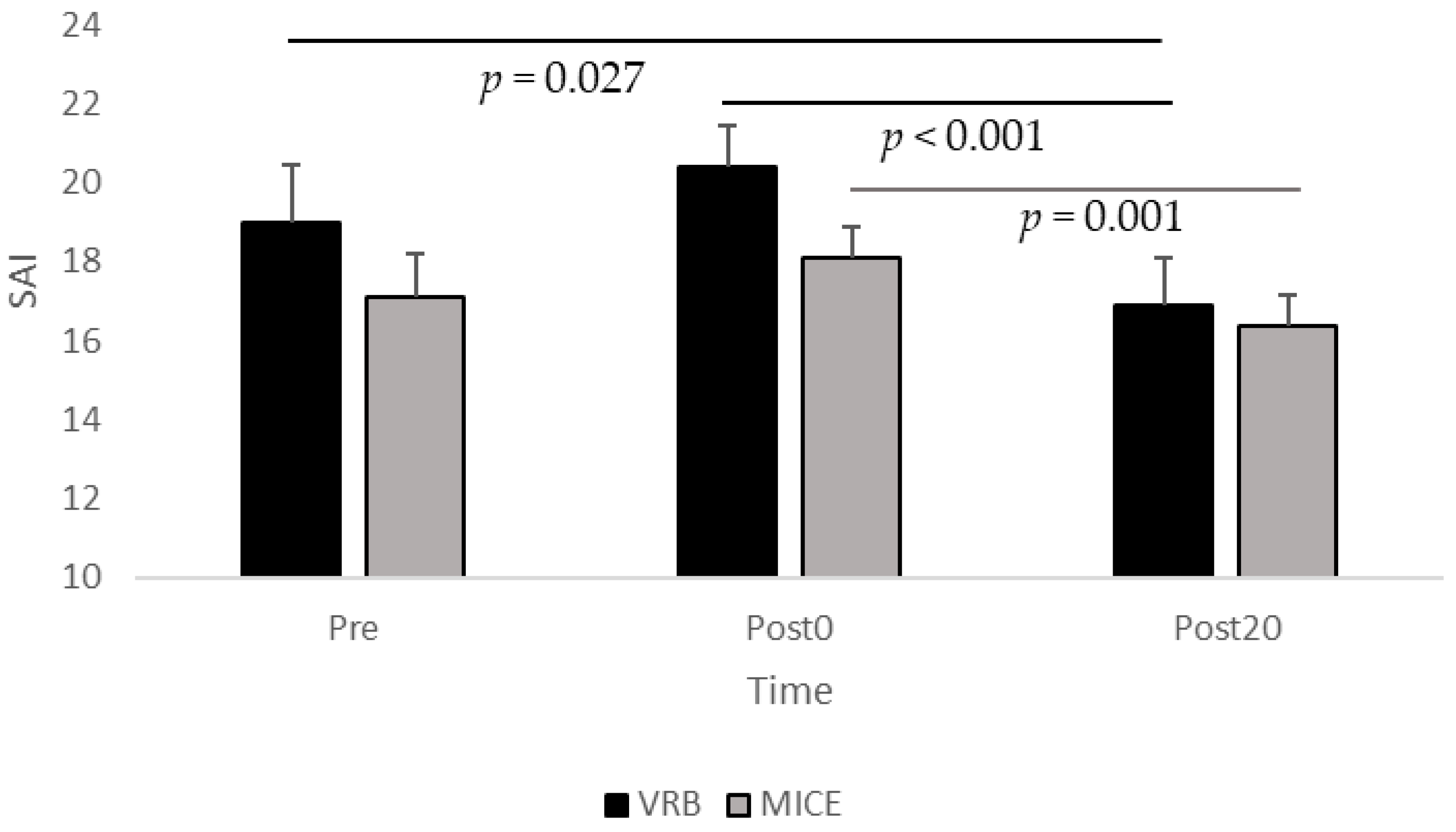
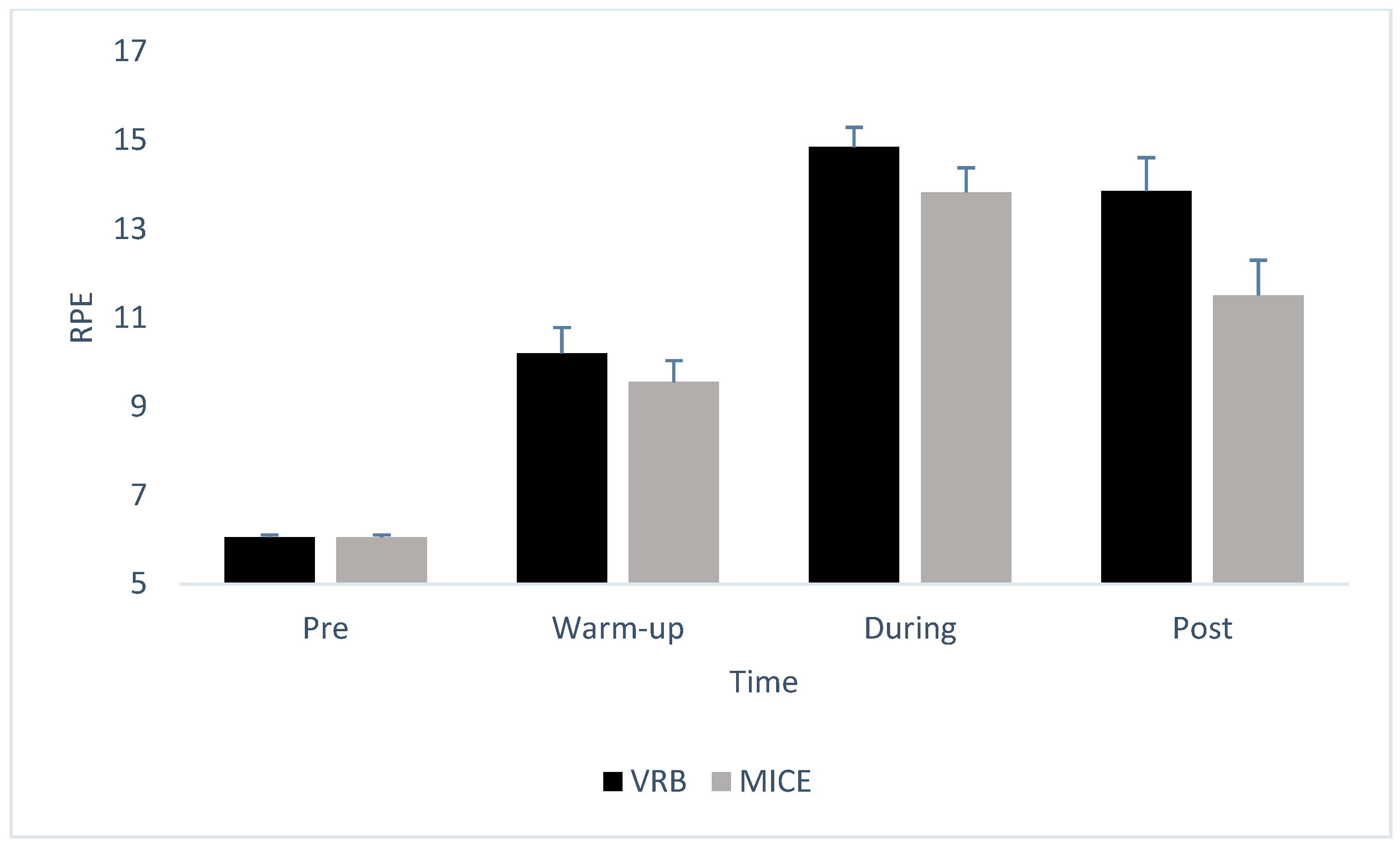
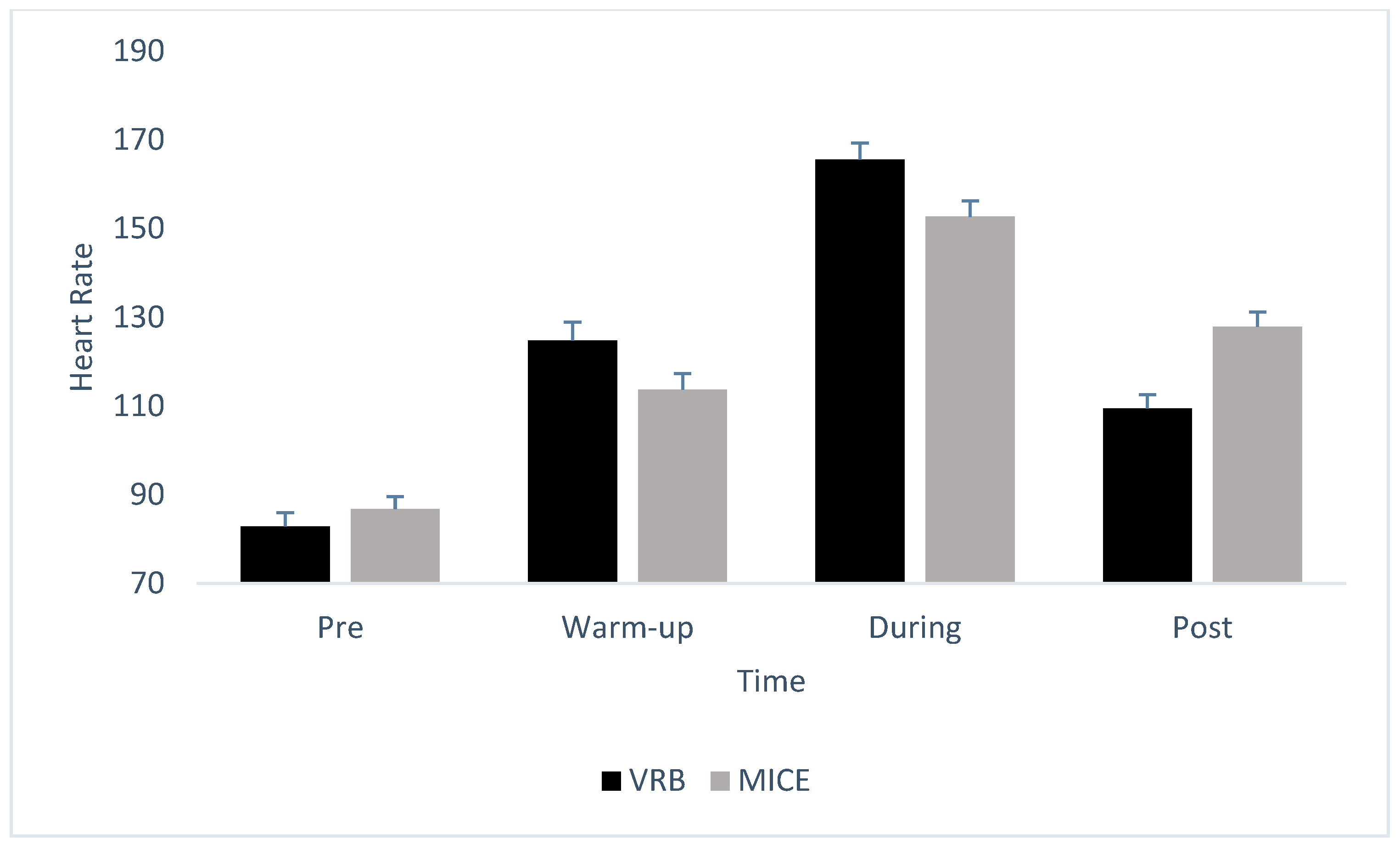
The purpose of the present study was to compare acute psychological responses to a bout of virtual reality boxing (VRB) and moderate-intensity continuous treadmill exercise (MICE). Importantly, psychological responses were evaluated following comparable 20 min active exercise bouts embedded within standardized 30 min sessions. Affective states and state anxiety were assessed immediately prior to exercise, immediately following exercise, and 20 min into recovery. Overall, both exercise modalities produced significant acute changes in affective state; however, distinct differences emerged during the recovery period. Specifically, energy remained elevated, and tiredness remained reduced at Post20 following VRB only, and state anxiety was significantly reduced at Post20 in VRB but not MICE. These findings suggest that while immediate psychological responses to exercise may be broadly similar across modalities, VRB may confer additional psychological benefits that persist beyond the immediate post-exercise period. Notably, both heart rate and perceived exertion were higher during VRB compared with MICE, indicating that the exercise conditions were not physiologically equivalent. This difference represents an important consideration when interpreting psychological outcomes, as exercise intensity is known to influence affective responses. However, affective valence typically becomes less favorable as intensity increases beyond moderate domains. Therefore, the more sustained psychological benefits observed following VRB occurred despite greater physiological demand.
Direct comparisons between VR-based exercise and traditional exercise examining acute affective responses remain limited. In particular, relatively few studies have employed validated affective measures such as the AD-ACL, and even fewer have examined anxiety responses across multiple post-exercise time points.
Chen et al. (
2009) compared a VR-based cycling session with a non-VR cycling session in rehabilitation patients and reported greater calmness and lower tension in the VR condition immediately post-exercise, along with longer exercise duration, suggesting enhanced engagement. Similarly,
Plante et al. (
2003) compared moderate-intensity cycling with and without an interactive VR component and found increases in energy and relaxation and reductions in tiredness and tension following both exercise conditions. Notably, the effect of VR on tiredness was no longer significant after accounting for enjoyment, suggesting that affective responses may be partially influenced by how engaging the activity is perceived to be (
Plante et al., 2003). This general pattern aligns with broader evidence indicating that enjoyment and affective experience during exercise are tightly linked and may have downstream relevance for future exercise behavior (
Ekkekakis & Dafermos, 2012;
Rhodes & Kates, 2015).
The present findings align with this prior work in demonstrating immediate post-exercise improvements in affective states following both VR and non-VR exercise. Importantly, the current study extends this literature by demonstrating that differences between exercise modalities may be more apparent during recovery rather than immediately following exercise cessation. While energy and tiredness changed similarly at Post0 for both VRB and MICE, only VRB was associated with sustained elevations in energy and reductions in tiredness at Post20. These lingering effects suggest that VR-based exercise may alter the temporal pattern of affective recovery, a dimension that has received relatively little attention in VR-exercise research relying primarily on the pre-to-post designs (
McDonough et al., 2020;
Mouatt et al., 2020). More broadly, the emphasis on recovery period effect is consistent with current affective models in exercise psychology, which argue that acute affective experiences are dynamic and may evolve across the post-exercise window, not simply at cessation (
Ekkekakis, 2017;
Ekkekakis & Brand, 2019).
It is also important to consider that recovery-period psychological responses may partially reflect physiological processes associated with post-exercise recovery. Because VRB elicited higher perceptual and cardiovascular intensity, differences in autonomic recovery kinetics or post-exercise rebound effects may have contributed to sustained elevations in energy and reductions in tiredness observed during recovery. Exercise intensity is known to influence parasympathetic reactivation and post-exercise affective restoration (
Michael et al., 2018), suggesting that lingering psychological responses may arise from interacting physiological and experiential mechanisms rather than immersion alone. Future studies incorporating direct indices of autonomic recovery, such as heart rate variability, may help clarify the relative contribution of physiological versus perceptual mechanisms underlying recovery period affect.
One plausible explanation for the delayed psychological benefits observed following VRB relates to attentional dissociation. Immersive exercise environments may shift attention away from internal sensations of exertion toward externally engaging stimuli, a process that has been associated with more favorable affective responses during and following exercise (
Hutchinson & Tenenbaum, 2007;
Kim & Biocca, 2018;
Lind et al., 2009). In the present study, the continuous perceptual–motor demands of VRB, including striking, blocking, and evasive movements, required sustained goal-directed engagement that may have limited post-exercise focus on somatic discomfort or fatigue. Because attentional focus was not directly assessed, this interpretation should be considered reasoned speculation rather than a confirmed mechanism. Nevertheless, the observed pattern of sustained energy and reduced tiredness during recovery despite higher perceived and physiological workload is consistent with dissociative attentional profiles described in prior exercise psychology and immersive VR research (
Born et al., 2019;
Hutchinson & Tenenbaum, 2007;
Kim & Biocca, 2018;
Lind et al., 2009). Importantly, multiple psychological processes, including attentional engagement, enjoyment, immersion, and novelty-related effects, may jointly contribute to these responses. Future studies incorporating direct measures of attentional focus, immersion, or cognitive engagement are needed to determine whether attentional mechanisms mediate recovery period affective responses following VR exercise, particularly as interest grows in VR-based approaches to enhancing exercise engagement (
Greene & Rougeau, 2024;
McDonough et al., 2020;
Mouatt et al., 2020).
In the present study, calmness decreased immediately following both exercise conditions and returned toward baseline by Post20, indicating that this affective dimension may be more sensitive to the immediate cessation of physical activity rather than the specific exercise modality. In contrast, tension demonstrated a transient increase immediately following VRB but not MICE. Although this response may partially reflect heightened physiological activation, characteristics unique to the VR environment may also have contributed. The VRB task required continuous responses to rapidly approaching visual stimuli, including striking, blocking, and evasive movements, which may introduce elements of time pressure, performance demand, or perceived competition. Such reactive perceptual–motor demands may temporarily elevate psychophysiological arousal immediately following exercise. Importantly, tension returned to baseline levels within 20 min of recovery alongside improvements in other affective dimensions, suggesting that this response likely reflects short-lived activation rather than a negative psychological outcome (
Thayer & McNally, 1992;
Ekkekakis, 2017). Future work examining perceived stress, cognitive load, or competitive appraisal during immersive exercise may help clarify the mechanisms underlying transient tension responses in VR-based activity.
State anxiety did not change immediately following either exercise condition, which aligns with evidence indicating that anxiolytic effects of acute exercise are not always observed immediately post-exercise, particularly in healthy samples with relatively low baseline anxiety (
Petruzzello et al., 1991;
Raglin & Wilson, 1996).
Shaw and Lubetzky (
2021) reported reductions in anxiety following both VR-based and non-VR physical activity in adolescents, with no differences between conditions. State anxiety in the present study followed a similar pattern, notably a lack of immediate post-exercise changes. However, state anxiety was significantly reduced at Post20 following VRB only. This delayed reduction suggests that VR-based exercise may influence anxiety through mechanisms that unfold during recovery rather than during exercise itself, paralleling the pattern observed for energy and tiredness. However, given the modest sample size, the observed reduction in state anxiety should be interpreted cautiously and replicated in larger samples to confirm the stability of this effect. Although speculative, one possibility is that immersive VR may reduce post-exercise cognitive perseveration or threat appraisal during early recovery, thereby facilitating a delayed anxiolytic effect (
Petruzzello et al., 1991;
Spielberger, 1983). This time-sensitive pattern supports the inclusion of recovery assessments when evaluating psychological responses to exercise, particularly when the outcome of interest is anxiety.
A notable strength of the present study is the inclusion of a 20 min post-exercise assessment, which allowed for the detection of lingering psychological effects that would have been missed using a traditional pre-to-post design. Many prior VR exercise studies have limited outcome assessments to immediately post-exercise, potentially underestimating modality-specific effects (
McDonough et al., 2020;
Mouatt et al., 2020). In the current study, the most meaningful differences between VRB and MICE emerged at Post20 and were supported by moderate-to-large effect sizes for affective outcomes. Extending follow-up assessments further (for example, 60 min post-exercise, later the same day, or next-day recall of affect) may clarify the duration and applied relevance of these lingering effects, particularly given evidence that the emotional experience an individual recalls can shape future exercise decisions (
Ekkekakis & Dafermos, 2012;
Rhodes & Kates, 2015).
A primary limitation of the present study is that exercise intensity differed between conditions, with VRB eliciting higher heart rate and perceived exertion than MICE. Although both sessions were designed to fall within moderate intensity ranges, perfect matching was not achieved. Because exercise intensity can influence affective responses, future studies should consider tighter physiological matching or self-selected intensity paradigms to isolate modality-specific effects. However, a substantial body of work suggests that affective valence often becomes less positive as intensity increases, particularly when exercise exceeds ventilatory or lactate thresholds (
Ekkekakis, 2003,
2017). As such, the more favorable recovery period affective responses observed following VRB are unlikely to be explained solely by greater intensity. Still, future studies should consider more explicit intensity matching or, alternatively, examine self-selected intensity paradigms to better reflect how VR exercise is typically performed in naturalistic settings. Further, although auditory stimulation was standardized across conditions by providing music during treadmill exercise at volume levels comparable to the VRB environment, differences in multisensory immersion inherent to virtual reality could not be fully controlled and may have contributed to experiential differences between modalities.
An additional limitation concerns potential novelty effects associated with virtual reality exercise. Prior familiarity with VR or exergaming was not formally assessed, and although participants completed a standardized instructional tutorial to ensure task familiarity, variability in prior exposure may have influenced affective responses independent of the exercise stimulus itself. The immersive and potentially unfamiliar nature of VR may temporarily enhance engagement, enjoyment, or attentional distraction, which could partially contribute to the psychological benefits observed following VRB. Notably, the primary differences between conditions emerged during the recovery period rather than immediately post-exercise, suggesting that the observed effects may extend beyond initial novelty-related engagement alone. Future research should quantify prior VR experience and examine whether these affective responses persist across repeated exposures to determine whether observed benefits reflect sustained modality-specific effects or short-term novelty responses. Additionally, the sample consisted primarily of healthy, recreationally active, college-aged adults, which may limit generalizability to older, sedentary, or clinical populations. Whether similar or potentially greater psychological benefits would emerge in populations with higher baseline distress remains an important direction for future investigation.