

Psychological Interventions for Women with Polycystic Ovary Syndrome (PCOS): A Systematic Review and Meta-Analysis of Randomised and Non-Randomised Controlled Trials

 ,
,  ,
,  ,
,  , and
, and 
Abstract
1. Introduction
2. Materials and Methods
2.1. Eligibility Criteria
2.2. Search Strategy
2.3. Screening
2.4. Data Extraction
2.5. Risk of Bias Assessment
2.6. Strategy for Data Synthesis
3. Results
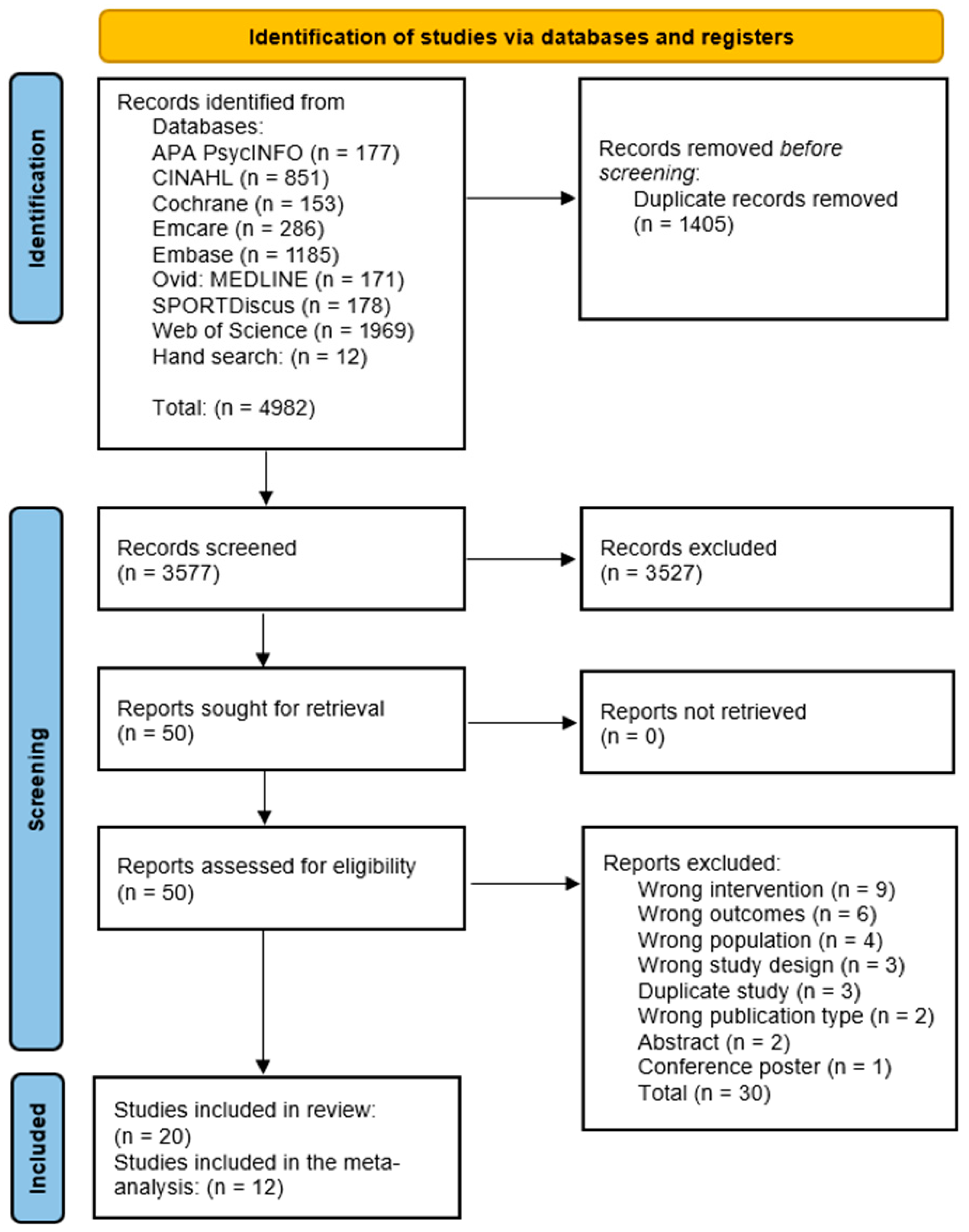
3.1. Study Selection
3.2. Study Characteristics
3.3. Participant Characteristics
3.4. Intervention and Comparison Details
3.5. Characteristics of the Outcome Measures

| Study (Design) | N Randomised/Analysed | Intervention Duration (Assessment Points) | Participant Characteristics (PCOS Diagnostic Criteria) | Intervention | Comparator(s) | Outcome Measures |
|---|---|---|---|---|---|---|
| Abdollahi et al. (2018) (RCT) | INT: 37/37 CON: 37/37 | 8 wk (BL, 12 wk) | INT Age: 28.44 ± 4.24 y CON Age: 27.44 ± 4.6 y (Gynaecologist confirmed) | Type: CBT Quantity: 8 Frequency: 1 × wk Length: 45–60 min | Routine care | BDI-II, PCOSQ, FIS |
| Amirshahi et al. (2024a) (RCT) | INT: 15/15 INT two: 15/15 CON: 15/15 | INT one: (BL, 11 wk) INT two: (BL, 18 wk) BOTH: 12 wk post-intervention | 40% 25–35 y 60% 36–45 y (Referred to fertility clinic) | Type: EFT Quantity: 11 Frequency: 1 × wk Length: 2 h | Type: CBT Quantity: 18 Frequency: 1 × wk Length: 2 h CON: Routine care | FSFI, HPLP, BIQ, BAI, Depression Inventory-SF |
| Bafghi et al. (2024) (RCT) | INT: 32/30 CON: 34/30 | 4 wk (BL, 4 wk) | INT Age: 27.63 ± 6.82 y CON Age: 26.43 ± 5.43 y (Rotterdam) | Type: MBAT Quantity: 8 Frequency: 2 × wk Length: 90–120 min | Waitlist control | MBSRQ |
| Baghbani et al. (2024) (RCT) | INT: 10/10 CON: 9/9 | (BL, 12 wk post-intervention) | INT one Age: 28.6 ± 3.71 y INT two Age: 32.11 ± 5.9 y (Rotterdam) | Type: counselling with MBCT Quantity: 8 Frequency: 1 × wk Length: 90 min | Type: Dry cupping Quantity: 12 Frequency: b wk during non-menstruation days for 8 wk Length: >20 min | FertiQol |
| Cooney et al. (2018) (RCT) | INT: 20/7 CON: 13/8 | 16 wk (BL, 8 wk, 16 wk) | INT Age: 29 (25–33) y CON Age: 32 (27–36) y (NIH) | Type: LS counselling & CBT Quantity: 16 LS & 8 CBT Frequency: 1 × wk Length: 30 min | Type: LS counselling Quantity: 16 LS Frequency: 1 × wk Length: 30 min | PCOSQ, CES-D, STAI-S, TSST PSS |
| Dema et al. (2023) (RCT) | INT: 21/21 CON: 21/21 | 8 wk (BL, 8 wk, 6 m) | Age: 40.1 ± 7.3 y (Rotterdam) | Type: MBSR Quantity: 8 Frequency: 1 × wk Length: 2 h | Wait-list | BAI, BDI-II, PSS, SF-36 (RAND version), FFMQ |
| Dilek et al. (2022) (RCT) | INT: 35/34 CON: 35/33 | 6 m (BL, 3 m, 6 m) | Age: 20.79 ± 1.43 y (Rotterdam) | Type: individual counselling program based on TM Quantity: n/r Frequency: n/r Length: n/r | No intervention except monthly health check, general health recommendations related to nutrition and exercise | SBCF, TADFC, IPAQ |
| Hamzehgardeshi et al. (2024) (RCT) | INT: 30/30 CON: 30/30 | 5 wk (BL, 5 wk, 13 wk) | INT Age: 30.97 ± 4.18 y CON Age: 28.67 ± 5.30 y (Rotterdam) | Type: WhatsApp MI Quantity: 5 Frequency: 1 × wk Length: 1 h | Routine care | HPLP-II, M-PCOSQ |
| Javanbakht et al. (2023) (RCT) | INT: 30/30 CON: 30/30 | 8 wk (BL, 8 wk, 12 wk) | INT Age: 26.77 ± 4.76 y CON Age: 27.60 ± 4.84 y (Rotterdam) | Type: Online telehealth MBI Quantity: 8 Frequency: 1 × wk Length: 120 min | Type: face-to-face counselling Quantity: 8 Frequency: 1 × wk Length: 120 min | PCOSQ |
| Majidzadeh et al. (2023) (RCT) | INT: 42/42 CON: 42/42 | 8 wk (BL, 8 wk) | INT Age: 30.3 ± 5.5 y CON Age: 32.0 ± 4.8 y (Gynaecologist & medical records) | Type: CBT Quantity: 8 Frequency: 1 × wk Length: 60–90 min | Routine care | STAI-S, BDI-II, and PCOSQ |
| Moeller et al. (2019) (RCT) | INT: 19/14 CON: 18/14 | 6 m (BL, 6 m) | INT Age: 34 (23–38) y CON Age: 27 (22–30) y (Rotterdam) | Type: MI Quantity: 12 Frequency: b wk Length: unspecified | Routine care | WHO-5, MDI, PCOSQ, SF-36 |
| Moradi et al. (2020) (RCT) | INT: 26/22 CON: 26/23 | 8 wk (BL, 8 wk, 12 wk) | 18–45 y actual age of participants not reported (Rotterdam) | Type: ACT Quantity: 8 Frequency: 1 × wk Length: 90 min | Routine care | BICI, RSE |
| Oberg et al. (2020) (RCT) | INT: 34/30 CON: 34/27 | 16 wk (BL, 16 wk, 12 m *) | INT Age: 31.0 ± 5.1 y CON Age: 29.9 ± 5.7 y (Rotterdam) | Type: Group Behaviour modification, 1-2-1 coaching Quantity: 16 group and 4 individuals Frequency: Group 1 × wk, 1-2-1 1 × mth Length: Unspecified | Wait-list | PGWBI, SSP |
| Ranasinghe et al. (2023) (NRCT) | INT: 20/17 CON: 22/17 | 10 weeks (BL, 6 wk, 14 wk) | INT Age: 29.0 ± 5.0 y CON Age: 28.72 ± 6.04 y (Rotterdam) | Type: Group peer support Quantity: 10 Frequency: 1 × wk Length: 90 min | Placebo intervention (10 health articles) | CES-D, M-PCOSQ, Brief-COPE |
| Salajegheh et al. (2023) (NRCT) | INT: 30/27 CON: 30/30 | 8 weeks (BL, 8 wk, 12 wk) | INT Age: 32.25 ± 4.67 y CON Age: 31.4 ± 4.37 y (Rotterdam) | Type: MBSR Quantity: 8 Frequency: bi-wk Length: 90 min | Routine care | Researcher-created PCOS questionnaire |
| Stefanaki et al. (2015) (RCT) | INT: 23/15 CON: 15/15 | 8 wk (BL, 8 wk) | INT Age: 23.4 ± 4.62 y CON Age: 28.3 ± 7.20 y (Rotterdam) | Type: MSM audio compact CD & follow-up call Quantity: 8 Frequency: 1 × wk Length: 30 min | Routine care | DASS-21, PCOSQ, PSS-14, DLGLF |
| M. X. C. Yin et al. (2021) (RCT) | INT: 9/9 CON: 9/9 | 6 wk (BL, 6 weeks, 3 m PV) | INT Age: 29.22 ± 2.33 y CON Age: 28.11 ± 3.44 y (Rotterdam) | Type: Group I-BMS Quantity: 6 Frequency: 1 × wk Length: 3 h | No intervention except one health education information session | BAI, BDI-II, PCOSQ |
| ZareMobini et al. (2022) (RCT) | INT: 33/33 CON: 33/33 | 1 wk (BL, 4 wk, 3 m) | INT Age: 29.15 ± 6.94 y CON Age: 30.15 + 6.48 y (Rotterdam) | Type: LS modification using 5A’s model Quantity: 4 Frequency: 4 × 1 wk Length: 45–60 min | No intervention except 2 × nutritional and physical activity recommendations | SCL-90-R |
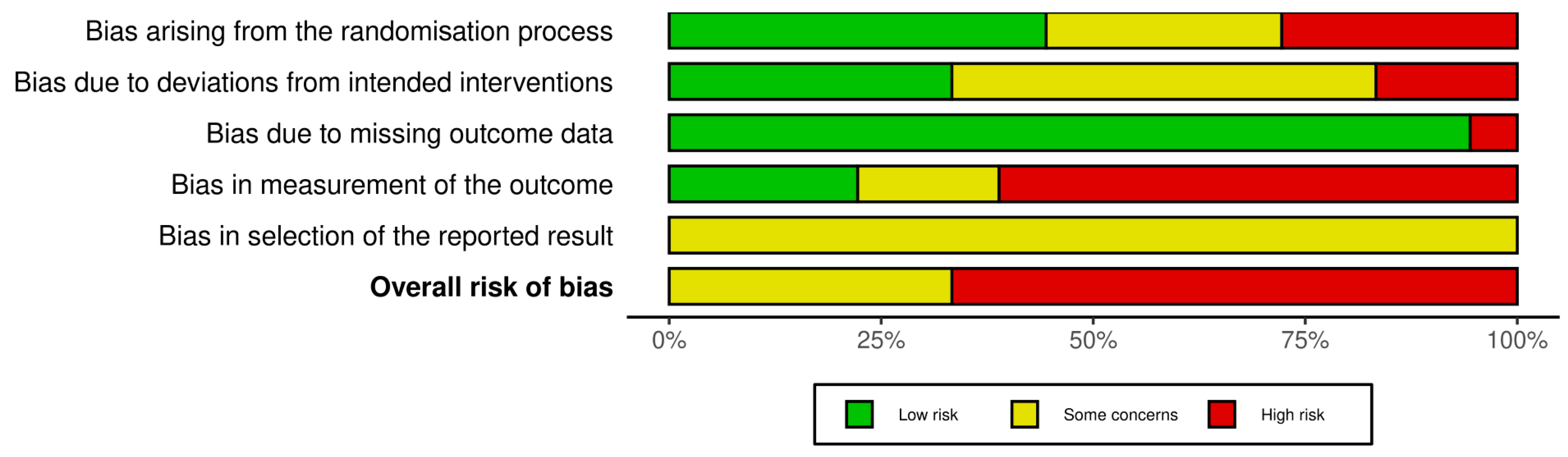
3.6. Risk of Bias in Studies
3.7. Meta-Analysis Results
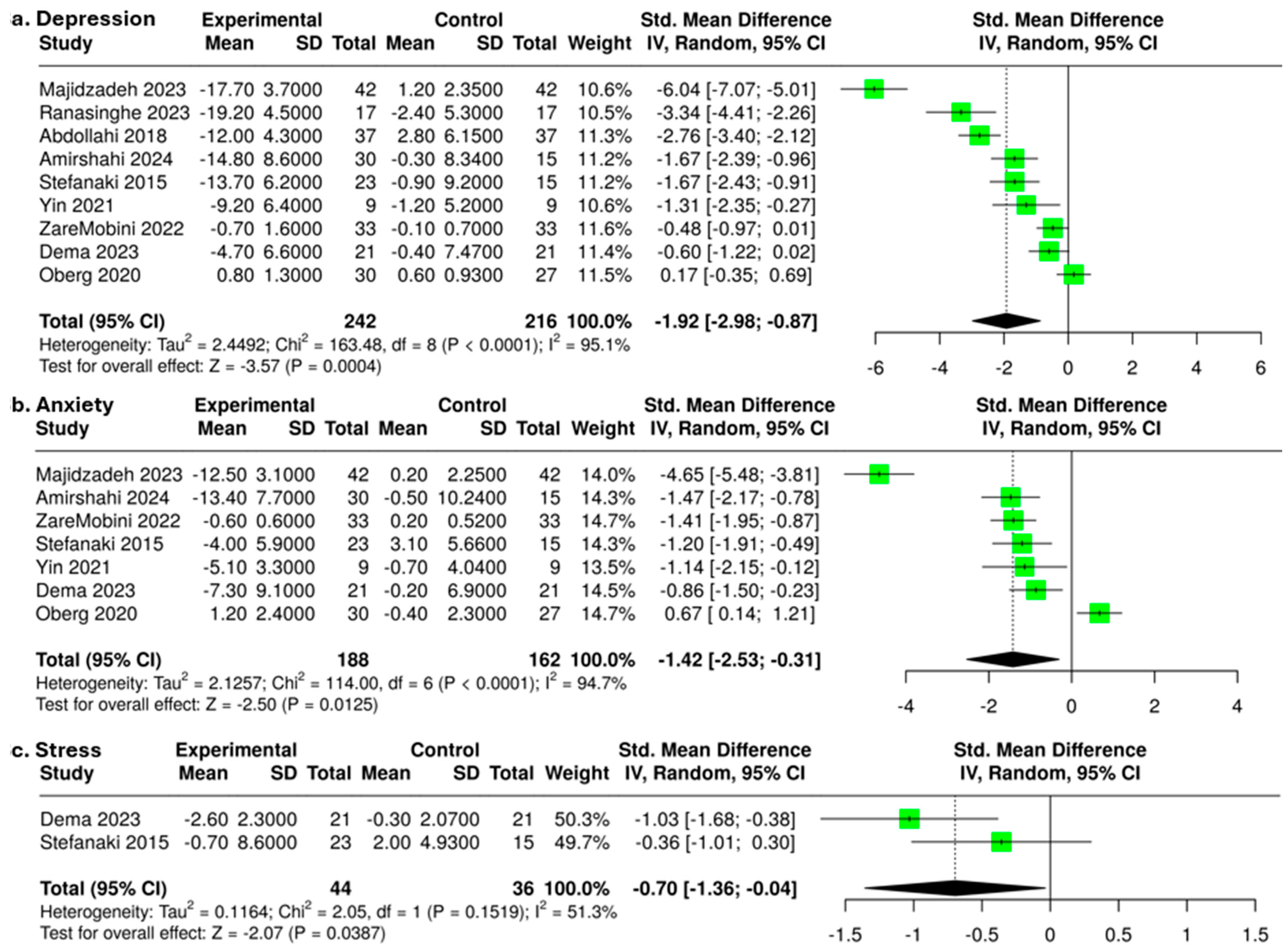
3.7.1. Depression
3.7.2. Anxiety
3.7.3. Stress
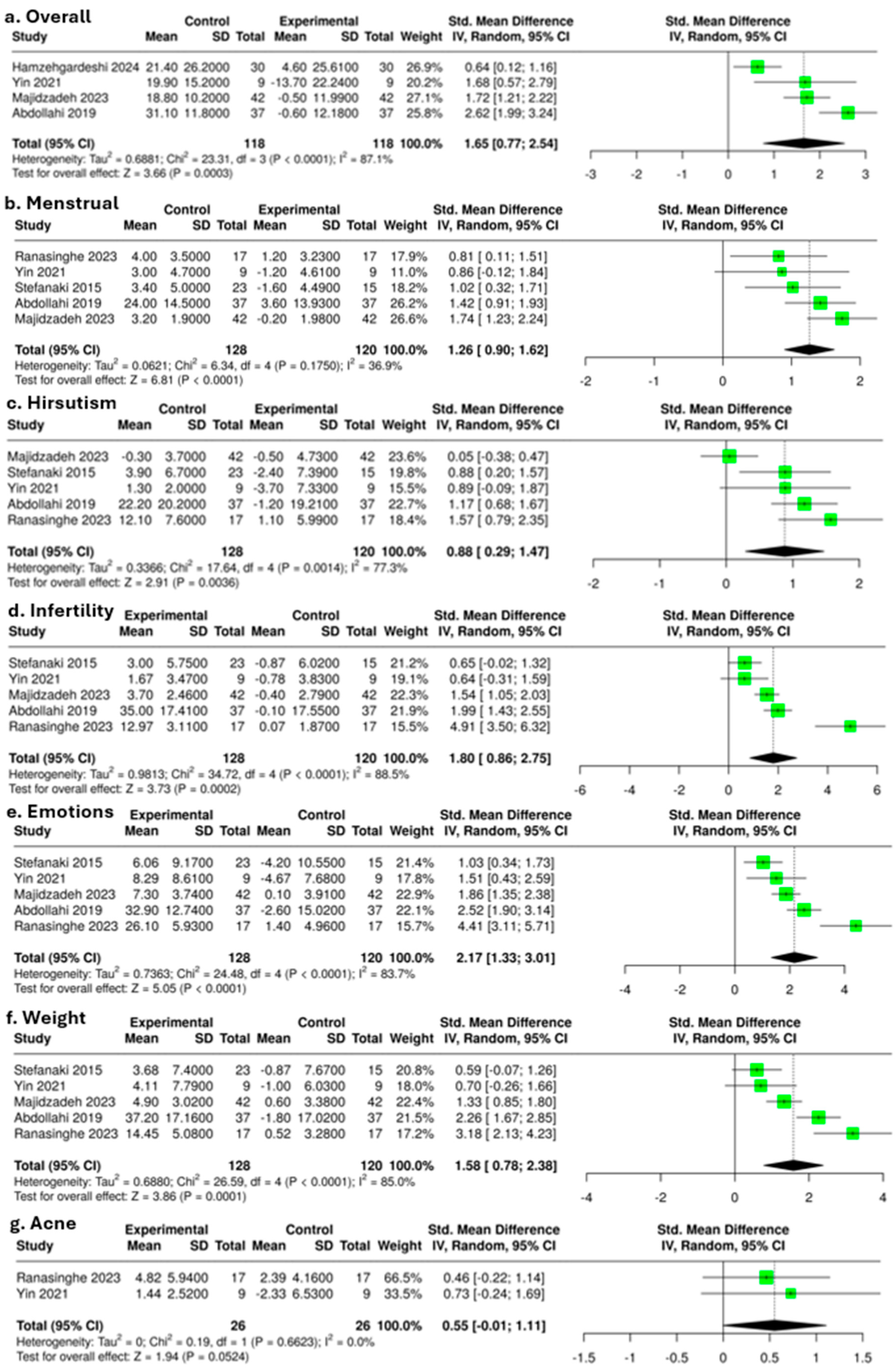
3.7.4. PCOS-Specific Quality of Life
3.7.5. General Health
3.7.6. Body Image
3.7.7. Additional Outcomes
4. Discussion
4.1. Key Findings
4.2. Overall Completeness and Applicability of the Evidence
4.3. Limitations of the Present Systematic Review
5. Conclusions
Supplementary Materials
Author Contributions
Funding
Institutional Review Board Statement
Informed Consent Statement
Data Availability Statement
Acknowledgments
Conflicts of Interest
References
- Abdollahi, L., Mirghafourvand, M., Babapour Kheyradin, J., & Mohammadi, M. (2018). The effect of cognitive behavioral therapy on depression and obesity in women with polycystic ovarian syndrome: A randomized controlled clinical trial. Iranian Red Crescent Medical Journal, 20(3), e62735. [Google Scholar] [CrossRef]
- Abdollahi, L., Mirghafourvand, M., Babapour Kheyradin, J., & Mohammadi, M. (2019). Effectiveness of cognitive-behavioral therapy (CBT) in improving the quality of life and psychological fatigue in women with polycystic ovarian syndrome: A randomized controlled clinical trial. Journal of Psychosomatic Obstetrics and Gynecology, 40(4), 283–293. [Google Scholar] [CrossRef] [PubMed]
- Alur-Gupta, S., Chemerinski, A., Liu, C., Lipson, J., Allison, K., Sammel, M. D., & Dokras, A. (2019). Body-image distress is increased in women with polycystic ovary syndrome and mediates depression and anxiety. Fertility and Sterility, 112(5), 930–938.e1. [Google Scholar] [CrossRef] [PubMed]
- Amirshahi, M., Saremi, A. A., Nouri, R., Karbalaee, M. H., & Hosseini-Sadat, R. (2024a). Comparing the effectiveness of emotion-focused and cognitive-behavioral therapies on body image, anxiety, and depression in women with PCOS. Journal of Education and Health Promotion, 13(1), 230. [Google Scholar] [CrossRef] [PubMed]
- Amirshahi, M., Saremi, A. A., Nouri, R., Karbalaei, M. H., & Hosseini-Sadat, R. (2024b). Comparing the effectiveness of emotionally focused therapy and cognitive-behavioral therapy on sexual function and health-promoting behaviors in women with PCOS. International Journal of Behavioral Sciences, 18(1), 29–36. [Google Scholar] [CrossRef]
- Andreou, E., Alexopoulos, E. C., Lionis, C., Varvogli, L., Gnardellis, C., Chrousos, G. P., & Darviri, C. (2011). Perceived stress scale: Reliability and validity study in greece. International Journal of Environmental Research and Public Health, 8(8), 3287–3298. [Google Scholar] [CrossRef]
- Asdaq, S. M. B., Jomah, S., Hasan, R., Al-Baroudi, D., Alharbi, M., Alsubaie, S., Buhamad, M. H., Alyahya, B., & Al-Yamani, M. J. (2020). Impact of polycystic ovary syndrome on eating behavior, depression and health related quality of life: A cross-sectional study in Riyadh. Saudi Journal of Biological Sciences, 27(12), 3342–3347. [Google Scholar] [CrossRef]
- Azziz, R. (2014). Polycystic ovary syndrome: What’s in a name? The Journal of Clinical Endocrinology & Metabolism, 99(4), 1142–1145. [Google Scholar] [CrossRef]
- Azziz, R., Carmina, E., Dewailly, D., Diamanti-Kandarakis, E., Escobar-Morreale, H. F., Futterweit, W., Janssen, O. E., Legro, R. S., Norman, R. J., Taylor, A. E., Witchel, S. F., & Task Force on the Phenotype of the Polycystic Ovary Syndrome of The Androgen Excess and PCOS Society. (2009). The Androgen Excess and PCOS Society criteria for the polycystic ovary syndrome: The complete task force report. Fertility and Sterility, 91(2), 456–488. [Google Scholar] [CrossRef]
- Bafghi, Z. R., Ahmadi, A., Mirzaee, F., & Ghazanfarpour, M. (2024). The effect of mindfulness-based art therapy (MBAT) on the body image of women with polycystic ovary syndrome (PCOS): A randomized controlled trial. BMC Psychiatry, 24(1), 611. [Google Scholar] [CrossRef]
- Baghbani, F., Alidousti, k., Parvizi, M. M., Ahmadi, A., Alamdarloo, S. M., Jaladat, A. M., & Atarzadeh, F. (2024). Efficacy of dry cupping versus counselling with mindfulness-based cognitive therapy approach on fertility quality of life and conception success in infertile women due to polycystic ovary syndrome: A pilot randomized clinical trial. International Journal of Community Based Nursing and Midwifery, 12(1), 57–69. [Google Scholar] [CrossRef] [PubMed]
- Blay, S. L., Aguiar, J., & Passos, I. C. (2016). Polycystic ovary syndrome and mental disorders: A systematic review and exploratory meta-analysis. Neuropsychiatric Disease and Treatment, 12, 2895–2903. [Google Scholar] [CrossRef] [PubMed]
- Brutocao, C., Zaiem, F., Alsawas, M., Morrow, A. S., Murad, M. H., & Javed, A. (2018). Psychiatric disorders in women with polycystic ovary syndrome: A systematic review and meta-analysis. Endocrine, 62(2), 318–325. [Google Scholar] [CrossRef] [PubMed]
- Buchanan, A., Roddy, M., & Badr, H. (2021). Patient-reported outcomes of non-pharmacological interventions for endometrial cancer survivors: A systematic review. Journal of Cancer Survivorship, 15(4), 526–535. [Google Scholar] [CrossRef]
- Button, K. S., Kounali, D., Thomas, L., Wiles, N. J., Peters, T. J., Welton, N. J., Ades, A. E., & Lewis, G. (2015). Minimal clinically important difference on the Beck Depression Inventory-II according to the patient’s perspective. Psychological Medicine, 45(15), 3269–3279. [Google Scholar] [CrossRef]
- Cohen, S., Kamarck, T., & Mermelstein, R. (1983). A global measure of perceived stress. Journal of Health and Social Behavior, 24(4), 385. [Google Scholar] [CrossRef]
- Cooney, L. G., Lee, I., Sammel, M. D., & Dokras, A. (2017). High prevalence of moderate and severe depressive and anxiety symptoms in polycystic ovary syndrome: A systematic review and meta-analysis. Human Reproduction, 32(5), 1075–1091. [Google Scholar] [CrossRef]
- Cooney, L. G., Milman, L. W., Hantsoo, L., Kornfield, S., Sammel, M. D., Allison, K. C., Epperson, C. N., & Dokras, A. (2018). Cognitive-behavioral therapy improves weight loss and quality of life in women with polycystic ovary syndrome: A pilot randomized clinical trial. Fertility and Sterility, 110(1), 161–171.e1. [Google Scholar] [CrossRef]
- Cowan, S., Lim, S., Alycia, C., Pirotta, S., Thomson, R., Gibson-Helm, M., Blackmore, R., Naderpoor, N., Bennett, C., Ee, C., Rao, V., Mousa, A., Alesi, S., & Moran, L. (2023). Lifestyle management in polycystic ovary syndrome–beyond diet and physical activity. BMC Endocrine Disorders, 23(1), 14. [Google Scholar] [CrossRef]
- Cronin, L., Guyatt, G., Griffith, L., Wong, E., Azziz, R., Futterweit, W., Cook, D., & Dunaif, A. (1998). Development of a health-related quality-of-life questionnaire (PCOSQ) for women with polycystic ovary syndrome (PCOS). The Journal of Clinical Endocrinology and Metabolism, 83(6), 1976–1987. [Google Scholar] [CrossRef]
- Cuijpers, P., Cristea, I. A., Karyotaki, E., Reijnders, M., & Huibers, M. J. H. (2016). How effective are cognitive behavior therapies for major depression and anxiety disorders? A meta-analytic update of the evidence. World Psychiatry, 15(3), 245–258. [Google Scholar] [CrossRef] [PubMed]
- Davitadze, M., Malhotra, K., Khalil, H., Hebbar, M., Tay, C. T., Mousa, A., PCOS SEva Team, Teede, H., Brennan, L., Stener-Victorin, E., & Kempegowda, P. (2023). Body image concerns in women with polycystic ovary syndrome: A systematic review and meta-analysis. European Journal of Endocrinology, 189(2), R1–R9. [Google Scholar] [CrossRef] [PubMed]
- Deeks, J. J., Higgins, J. P., Altman, D. G., & on behalf of the Cochrane Statistical Methods Group. (2019). Analysing data and undertaking meta-analyses. In J. P. T. Higgins, J. Thomas, J. Chandler, M. Cumpston, T. Li, M. J. Page, & V. A. Welch (Eds.), Cochrane handbook for systematic reviews of interventions (1st ed., pp. 241–284). Wiley. [Google Scholar]
- De Frène, V., Verhofstadt, L., Lammertyn, J., Stuyver, I., Buysse, A., & De Sutter, P. (2015). Quality of life and body mass index in overweight adult women with polycystic ovary syndrome during a lifestyle modification program. Journal of Obstetric, Gynecologic & Neonatal Nursing, 44(5), 587–599. [Google Scholar] [CrossRef]
- Dema, H., Videtic Paska, A., Kouter, K., Katrasnik, M., Jensterle, M., Janez, A., Oblak, A., Skodlar, B., & Bon, J. (2023). Effects of mindfulness-based therapy on clinical symptoms and DNA methylation in patients with polycystic ovary syndrome and high metabolic risk. Current Issues in Molecular Biology, 45(4), 2717–2737. [Google Scholar] [CrossRef]
- DerSimonian, R., & Laird, N. (1986). Meta-analysis in clinical trials. Controlled Clinical Trials, 7(3), 177–188. [Google Scholar] [CrossRef]
- Dhakal, K., Chen, C., Wang, P., Mboineki, J. F., & Adhikari, B. (2024). Existing psychological supportive care interventions for cervical cancer patients: A systematic review and meta-analysis. BMC Public Health, 24(1), 1419. [Google Scholar] [CrossRef]
- Dilek, O., Senay, U. A., & Fatih, C. (2022). Impact of the individual counseling program for polycystic ovarya syndrome management among university students: A prospective randomized controlled trial. Nigerian Journal of Clinical Practice, 25(6), 809–816. [Google Scholar] [CrossRef]
- Ding, T., Baio, G., Hardiman, P. J., Petersen, I., & Sammon, C. (2016). Diagnosis and management of polycystic ovary syndrome in the UK (2004–2014): A retrospective cohort study. BMJ Open, 6(7), e012461. [Google Scholar] [CrossRef]
- Dokras, A., Clifton, S., Futterweit, W., & Wild, R. (2011). Increased risk for abnormal depression scores in women with polycystic ovary syndrome: A systematic review and meta-analysis. Obstetrics & Gynecology, 117(1), 145–152. [Google Scholar] [CrossRef]
- Fitzpatrick, S. L., Wischenka, D., Appelhans, B. M., Pbert, L., Wang, M., Wilson, D. K., Pagoto, S. L., & Society of Behavioral, M. (2016). An evidence-based guide for obesity treatment in primary care. The American Journal of Medicine, 129(1), 115.e1–115.e7. [Google Scholar] [CrossRef]
- Gibson-Helm, M., Teede, H., Dunaif, A., & Dokras, A. (2016). Delayed diagnosis and a lack of information associated with dissatisfaction in women with polycystic ovary syndrome. The Journal of Clinical Endocrinology & Metabolism, 102(2), 604–612. [Google Scholar] [CrossRef]
- Goyal, M., Singh, S., Sibinga, E. M. S., Gould, N. F., Rowland-Seymour, A., Sharma, R., Berger, Z., Sleicher, D., Maron, D. D., Shihab, H. M., Ranasinghe, P. D., Linn, S., Saha, S., Bass, E. B., & Haythornthwaite, J. A. (2014). Meditation programs for psychological stress and well-being: A systematic review and meta-analysis. JAMA Internal Medicine, 174(3), 357. [Google Scholar] [CrossRef] [PubMed]
- Guyatt, G., Oxman, A. D., Akl, E. A., Kunz, R., Vist, G., Brozek, J., Norris, S., Falck-Ytter, Y., Glasziou, P., DeBeer, H., Jaeschke, R., Rind, D., Meerpohl, J., Dahm, P., & Schunemann, H. J. (2011). GRADE guidelines: 1. Introduction-GRADE evidence profiles and summary of findings tables. Journal of Clinical Epidemiology, 64(4), 383–394. [Google Scholar] [CrossRef] [PubMed]
- Haase, I., Winkeler, M., & Imgart, H. (2022). Ascertaining minimal clinically meaningful changes in symptoms of depression rated by the 15-item Centre for Epidemiologic Studies Depression Scale. Journal of Evaluation in Clinical Practice, 28(3), 500–506. [Google Scholar] [CrossRef] [PubMed]
- Hamzehgardeshi, Z., Elyasi, F., Moosazadeh, M., Ahmadi, I., Jahanfar, S., Ahmadian, M., & Ansari, F. (2024). The effect of social network based motivational interviewing on health behaviors among infertile women with polycystic ovary syndrome: A randomized controlled trial. Scientific Reports, 14(1), 12049. [Google Scholar] [CrossRef]
- Haqq, L., McFarlane, J., Dieberg, G., & Smart, N. (2015). The effect of lifestyle intervention on body composition, glycemic control, and cardiorespiratory fitness in polycystic ovarian syndrome: A systematic review and meta-analysis. International Journal of Sport Nutrition and Exercise Metabolism, 25(6), 533–540. [Google Scholar] [CrossRef]
- Higgins, J. P. T., Thomas, J., Chandler, J., Cumpston, M., Li, T., Page, M. J., & Welch, V. A. (2023). Cochrane handbook for systematic reviews of interventions version 6.4 (updated August 2023). Cochrane. Available online: www.training.cochrane.org/handbook (accessed on 25 July 2025).
- Hofmann, K., Decrinis, C., Bitterlich, N., Tropschuh, K., Stute, P., & Bachmann, A. (2025). Body image and mental health in women with polycystic ovary syndrome—A cross-sectional study. Archives of Gynecology and Obstetrics, 312(1), 177–190. [Google Scholar] [CrossRef]
- Hoyos, L. R., Putra, M., Armstrong, A. A., Cheng, C. Y., Riestenberg, C. K., Schooler, T. A., & Dumesic, D. A. (2020). Measures of patient dissatisfaction with health care in polycystic ovary syndrome: Retrospective analysis. Journal of Medical Internet Research, 22(4), e16541. [Google Scholar] [CrossRef]
- Jaeschke, R., Singer, J., & Guyatt, G. H. (1989). Measurement of health status. Controlled Clinical Trials, 10(4), 407–415. [Google Scholar] [CrossRef]
- Jassim, G. A., Whitford, D. L., Hickey, A., & Carter, B. (2015). Psychological interventions for women with non-metastatic breast cancer. Cochrane Database of Systematic Reviews, (5), CD008729. [Google Scholar] [CrossRef]
- Javanbakht, M., Farajkhoda, T., Ghadiri Anari, A., & Zareei Mahmoodabadi, H. (2023). Online telehealth of mind-body interventions versus face-to-face counseling and the health-related quality of life in women with polycystic ovary syndrome: A randomized clinical trial. Journal of Midwifery and Reproductive Health, 12(1). [Google Scholar] [CrossRef]
- Jiskoot, G., Dietz de Loos, A., Beerthuizen, A., Timman, R., Busschbach, J., & Laven, J. (2020). Long-term effects of a three-component lifestyle intervention on emotional well-being in women with polycystic ovary syndrome (PCOS): A secondary analysis of a randomized controlled trial. PLoS ONE, 15(6), e0233876. [Google Scholar] [CrossRef] [PubMed]
- Jiskoot, G., van der Kooi, A.-L., Busschbach, J., Laven, J., & Beerthuizen, A. (2022). Cognitive behavioural therapy for depression in women with PCOS: Systematic review and meta-analysis. Reproductive BioMedicine Online, 45(3), 599–607. [Google Scholar] [CrossRef] [PubMed]
- Karjula, S., Morin-Papunen, L., Franks, S., Auvinen, J., Järvelin, M.-R., Tapanainen, J. S., Jokelainen, J., Miettunen, J., & Piltonen, T. T. (2020). Population-based data at ages 31 and 46 show decreased HRQoL and life satisfaction in women with PCOS symptoms. The Journal of Clinical Endocrinology & Metabolism, 105(6), 1814–1826. [Google Scholar] [CrossRef]
- Kazemi, M., Kim, J. Y., Wan, C., Xiong, J. D., Michalak, J., Xavier, I. B., Ganga, K., Tay, C. T., Grieger, J. A., Parry, S. A., Moran, L. J., & Lujan, M. E. (2022). Comparison of dietary and physical activity behaviors in women with and without polycystic ovary syndrome: A systematic review and meta-analysis of 39 471 women. Human Reproduction Update, 28(6), 910–955, (Erratum in 2023, Human Reproduction Update, 29(1), 155). [Google Scholar] [CrossRef]
- Kite, C., Lahart, I. M., Afzal, I., Broom, D. R., Randeva, H., Kyrou, I., & Brown, J. E. (2019). Exercise, or exercise and diet for the management of polycystic ovary syndrome: A systematic review and meta-analysis. Systematic Reviews, 8(1), 51. [Google Scholar] [CrossRef]
- Kite, C., Lahart, I. M., Randeva, H. S., Kyrou, I., & Brown, J. E. P. (2024). The influence of polycystic ovary syndrome (PCOS) and other related factors upon health-related quality of life in women of reproductive age: A case-control study. Women’s Reproductive Health, 11(3), 644–666. [Google Scholar] [CrossRef]
- Kite, C., Parkes, E., Taylor, S. R., Davies, R. W., Lagojda, L., Brown, J. E., Broom, D. R., Kyrou, I., & Randeva, H. S. (2022). Time to load up–resistance training can improve the health of women with polycystic ovary syndrome (PCOS): A scoping review. Medical Sciences, 10(4), 53. [Google Scholar] [CrossRef]
- Kubzansky, L. D., Kim, E. S., Boehm, J. K., Davidson, R. J., Huffman, J. C., Loucks, E. B., Lyubomirsky, S., Picard, R. W., Schueller, S. M., Trudel-Fitzgerald, C., VanderWeele, T. J., Warran, K., Yeager, D. S., Yeh, C. S., & Moskowitz, J. T. (2023). Interventions to modify psychological well-being: Progress, promises, and an agenda for future research. Affective Science, 4(1), 174–184. [Google Scholar] [CrossRef]
- Lau, G. M., Elghobashy, M., Thanki, M., Ibegbulam, S., Latthe, P., Gillett, C. D. T., O’Reilly, M. W., Arlt, W., Lindenmeyer, A., & Kempegowda, P. (2022). A systematic review of lived experiences of people with polycystic ovary syndrome highlights the need for holistic care and co-creation of educational resources. Frontiers in Endocrinology, 13, 1064937. [Google Scholar] [CrossRef]
- Lim, C. E. D., Ng, R. W. C., Cheng, N. C. L., Zhang, G. S., & Chen, H. (2019). Acupuncture for polycystic ovarian syndrome. Cochrane Database of Systematic Reviews, 7(7), CD007689. [Google Scholar] [CrossRef] [PubMed]
- Lim, S. S., Hutchison, S. K., Van Ryswyk, E., Norman, R. J., Teede, H. J., & Moran, L. J. (2019). Lifestyle changes in women with polycystic ovary syndrome. Cochrane Database of Systematic Reviews, 2019(3), CD007506. [Google Scholar] [CrossRef] [PubMed]
- Liu, C., Zhang, L., Zheng, W., Liang, X., Zhang, L., Tian, Z., & Li, G. (2021). Lifestyle intervention for overweight/obese pregnant women with polycystic ovarian syndrome: Lessons and challenges. Obesity Facts, 14(4), 405–414, (Erratum in 2022, Obesity Facts, 15(1), 104). [Google Scholar] [CrossRef] [PubMed]
- Lovibond, S. H., & Lovibond, P. F. (1995a). Depression anxiety and stress scales (DASS-42). APA PsycTests. [Google Scholar] [CrossRef]
- Lovibond, S. H., & Lovibond, P. F. (1995b). The structure of negative emotional states: Comparison of the Depression Anxiety Stress Scales (DASS) with the beck depression and anxiety inventories. Behaviour Research and Therapy, 33(3), 335–343. [Google Scholar] [CrossRef]
- Magill, N., Knight, R., McCrone, P., Ismail, K., & Landau, S. (2019). A scoping review of the problems and solutions associated with contamination in trials of complex interventions in mental health. BMC Medical Research Methodology, 19(1), 4. [Google Scholar] [CrossRef]
- Majidzadeh, S., Mirghafourvand, M., Farvareshi, M., & Yavarikia, P. (2023). The effect of cognitive behavioral therapy on depression and anxiety of women with polycystic ovary syndrome: A randomized controlled trial. BMC Psychiatry, 23(1), 332. [Google Scholar] [CrossRef]
- Mani, H., Chudasama, Y., Hadjiconstantinou, M., Bodicoat, D. H., Edwardson, C., Levy, M. J., Gray, L. J., Barnett, J., Daly, H., Howlett, T. A., Khunti, K., & Davies, M. J. (2018). Structured education programme for women with polycystic ovary syndrome: A randomised controlled trial. Endocrine Connections, 7(1), 26–35. [Google Scholar] [CrossRef]
- Mavropoulos, J. C., Yancy, W. S., Hepburn, J., & Westman, E. C. (2005). The effects of a low-carbohydrate, ketogenic diet on the polycystic ovary syndrome: A pilot study. Nutrition & Metabolism, 2(1), 35. [Google Scholar] [CrossRef]
- McGlothlin, A. E., & Lewis, R. J. (2014). Minimal clinically important difference: Defining what really matters to patients. JAMA, 312(13), 1342. [Google Scholar] [CrossRef]
- Moeller, L. V., Lindhardt, C. L., Andersen, M. S., Glintborg, D., & Ravn, P. (2019). Motivational interviewing in obese women with polycystic ovary syndrome—A pilot study. Gynecological Endocrinology, 35(1), 76–80. [Google Scholar] [CrossRef]
- Moradi, F., Ghadiri-Anari, A., Dehghani, A., Reza Vaziri, S., & Enjezab, B. (2020). The effectiveness of counseling based on acceptance and commitment therapy on body image and self-esteem in polycystic ovary syndrome: An RCT. International Journal of Reproductive BioMedicine, 18(4), 243–252, (Erratum in 2021, International Journal of Reproductive BioMedicine, 18(12), 1087). [Google Scholar] [CrossRef] [PubMed]
- Mouelhi, Y., Jouve, E., Castelli, C., & Gentile, S. (2020). How is the minimal clinically important difference established in health-related quality of life instruments? Review of anchors and methods. Health and Quality of Life Outcomes, 18(1), 136. [Google Scholar] [CrossRef] [PubMed]
- Naderpoor, N., Shorakae, S., De Courten, B., Misso, M. L., Moran, L. J., & Teede, H. J. (2015). Metformin and lifestyle modification in polycystic ovary syndrome: Systematic review and meta-analysis. Human Reproduction Update, 21(5), 560–574, (Erratum in 2016, Human Reproduction Update, 22(3), 408–409). [Google Scholar] [CrossRef] [PubMed]
- Nicklas, L., Albiston, M., Dunbar, M., Gillies, A., Hislop, J., Moffat, H., & Thomson, J. (2022). A systematic review of economic analyses of psychological interventions and therapies in health-related settings. BMC Health Services Research, 22(1), 1131. [Google Scholar] [CrossRef]
- Nidhi, R., Padmalatha, V., Nagarathna, R., & Amritanshu, R. (2013). Effect of yoga program on quality of life in adolescent polycystic ovarian syndrome: A randomized control trial. Applied Research in Quality of Life, 8(3), 373–383. [Google Scholar] [CrossRef]
- Oberg, E., Lundell, C., Blomberg, L., Gidlof, S. B., Egnell, P. T., & Hirschberg, A. L. (2020). Psychological well-being and personality in relation to weight loss following behavioral modification intervention in obese women with polycystic ovary syndrome: A randomized controlled trial. European Journal of Endocrinology, 183(1), 1–11. [Google Scholar] [CrossRef]
- Ouzzani, M., Hammady, H., Fedorowicz, Z., & Elmagarmid, A. (2016). Rayyan—A web and mobile app for systematic reviews. Systematic Reviews, 5(1), 210. [Google Scholar] [CrossRef]
- Page, M. J., McKenzie, J. E., Bossuyt, P. M., Boutron, I., Hoffmann, T. C., Mulrow, C. D., Shamseer, L., Tetzlaff, J. M., Akl, E. A., Brennan, S. E., Chou, R., Glanville, J., Grimshaw, J. M., Hróbjartsson, A., Lalu, M. M., Li, T., Loder, E. W., Mayo-Wilson, E., McDonald, S., … Moher, D. (2021). The PRISMA 2020 statement: An updated guideline for reporting systematic reviews. BMJ, 372, n71. [Google Scholar] [CrossRef]
- Patten, R. K., Pascoe, M. C., Moreno-Asso, A., Boyle, R. A., Stepto, N. K., & Parker, A. G. (2021). Effectiveness of exercise interventions on mental health and health-related quality of life in women with polycystic ovary syndrome: A systematic review. BMC Public Health, 21(1), 2310. [Google Scholar] [CrossRef]
- Pehlivan, M. J., Sherman, K. A., Wuthrich, V., Gandhi, E., Zagic, D., Kopp, E., & Perica, V. (2024). The effectiveness of psychological interventions for reducing poor body image in endometriosis, PCOS and other gynaecological conditions: A systematic review and meta-analysis. Health Psychology Review, 18(2), 341–368. [Google Scholar] [CrossRef]
- Phimphasone-Brady, P., Palmer, B., Vela, A., Johnson, R. L., Harnke, B., Hoffecker, L., Coons, H. L., & Epperson, C. N. (2022). Psychosocial interventions for women with polycystic ovary syndrome: A systematic review of randomized controlled trials. F&S Reviews, 3(1), 42–56. [Google Scholar] [CrossRef]
- Raja-Khan, N., Agito, K., Shah, J., Stetter, C. M., Gustafson, T. S., Socolow, H., Kunselman, A. R., Reibel, D. K., & Legro, R. S. (2018, March 17–20). Mindfulness-based stress reduction decreases glucose and increases emotional quality of life in women with polycystic ovary syndrome [Conference abstract]. Endocrine Reviews Conference: 100th Annual Meeting of the Endocrine Society, ENDO 2018, Chicago, IL, USA. [Google Scholar]
- Ranasinghe, B. A., Balasuriya, A., Wijeyaratne, C. N., & Fernando, N. (2023). The impact of peer-led support groups on health-related quality of life, coping skills and depressive symptomatology for women with PCOS. Psychology, Health & Medicine, 28(3), 564–573. [Google Scholar] [CrossRef]
- Ronk, F. R., Korman, J. R., Hooke, G. R., & Page, A. C. (2013). Assessing clinical significance of treatment outcomes using the DASS-21. Psychological Assessment, 25(4), 1103–1110. [Google Scholar] [CrossRef] [PubMed]
- Rotterdam ESHRE/ASRM-Sponsored PCOS Consensus Workshop Group. (2004). Revised 2003 consensus on diagnostic criteria and long-term health risks related to polycystic ovary syndrome (PCOS). Human Reproduction, 19(1), 41–47. [Google Scholar] [CrossRef]
- Salajegheh, Z., Ahmadi, A., Shahrahmani, H., Jahani, Y., Alidousti, K., Nasiri Amiri, F., & Salari, Z. (2023). Mindfulness-based stress reduction (MBSR) effects on the worries of women with polycystic ovary syndrome (PCOS). BMC Psychiatry, 23(1), 185. [Google Scholar] [CrossRef] [PubMed]
- Salari, N., Nankali, A., Ghanbari, A., Jafarpour, S., Ghasemi, H., Dokaneheifard, S., & Mohammadi, M. (2024). Global prevalence of polycystic ovary syndrome in women worldwide: A comprehensive systematic review and meta-analysis. Archives of Gynecology and Obstetrics, 310(3), 1303–1314. [Google Scholar] [CrossRef] [PubMed]
- Samami, E., Shahhosseini, Z., Khani, S., & Elyasi, F. (2023). Pain-focused psychological interventions in women with endometriosis: A systematic review. Neuropsychopharmacology Reports, 43(3), 310–319. [Google Scholar] [CrossRef]
- Sánchez-Ferrer, M. L., Adoamnei, E., Prieto-Sánchez, M. T., Mendiola, J., Corbalán-Biyang, S., Moñino-García, M., Palomar-Rodríguez, J. A., & Torres-Cantero, A. M. (2020). Health-related quality of life in women with polycystic ovary syndrome attending to a tertiary hospital in Southeastern Spain: A case-control study. Health and Quality of Life Outcomes, 18(1), 232. [Google Scholar] [CrossRef]
- Schunemann, H. J., Neumann, I., Hultcrantz, M., Brignardello-Petersen, R., Zeng, L., Murad, M. H., Izcovich, A., Morgano, G. P., Baldeh, T., Santesso, N., Cuello, C. G., Mbuagbaw, L., Guyatt, G., Wiercioch, W., Piggott, T., De Beer, H., Vinceti, M., Mathioudakis, A. G., Mayer, M. G., … Group, G. W. (2022). GRADE guidance 35: Update on rating imprecision for assessing contextualized certainty of evidence and making decisions. Journal of Clinical Epidemiology, 150, 225–242. [Google Scholar] [CrossRef]
- Shields, G. S., Spahr, C. M., & Slavich, G. M. (2020). Psychosocial interventions and immune system function: A systematic review and meta-analysis of randomized clinical trials. JAMA Psychiatry, 77(10), 1031. [Google Scholar] [CrossRef]
- Song, Y., Wang, H., Zhu, Z., & Huang, H. (2021). Effects of metformin and exercise in polycystic ovary syndrome: Systematic review and meta-analysis. Hormone and Metabolic Research, 53(11), 738–745. [Google Scholar] [CrossRef] [PubMed]
- Sopna, S. C., Beulah Jebakani, D., Jayavani, R. L., & Sabita, P. (2023). Effectiveness of circuit interval training and physiotherapy health education on anthropometric measurements and quality of life among obese women with polycystic ovary syndrome—A randomised controlled trial. International Journal of Reproduction, Contraception, Obstetrics and Gynecology, 12(5), 1405–1413. [Google Scholar] [CrossRef]
- Soria-Reyes, L. M., Cerezo, M. V., Alarcón, R., & Blanca, M. J. (2023). Psychometric properties of the perceived stress scale (PSS-10) with breast cancer patients. Stress and Health, 39(1), 115–124. [Google Scholar] [CrossRef] [PubMed]
- Stefanaki, C., Bacopoulou, F., Livadas, S., Kandaraki, A., Karachalios, A., Chrousos, G. P., & Diamanti-Kandarakis, E. (2015). Impact of a mindfulness stress management program on stress, anxiety, depression and quality of life in women with polycystic ovary syndrome: A randomized controlled trial. Stress, 18(1), 57–66. [Google Scholar] [CrossRef]
- Sterne, J. A. C., Savović, J., Page, M. J., Elbers, R. G., Blencowe, N. S., Boutron, I., Cates, C. J., Cheng, H.-Y., Corbett, M. S., Eldridge, S. M., Emberson, J. R., Hernán, M. A., Hopewell, S., Hróbjartsson, A., Junqueira, D. R., Jüni, P., Kirkham, J. J., Lasserson, T., Li, T., … Higgins, J. P. T. (2019). RoB 2: A revised tool for assessing risk of bias in randomised trials. BMJ, 366, l4898. [Google Scholar] [CrossRef]
- Tang, R., Yang, J., Yu, Y., & Fang, Y. (2022). The effects of cognitive behavioral therapy in women with polycystic ovary syndrome: A meta-analysis. Frontiers in Psychology, 13, 796594. [Google Scholar] [CrossRef]
- Teede, H. J., Tay, C. T., Laven, J. J. E., Dokras, A., Moran, L. J., Piltonen, T. T., Costello, M. F., Boivin, J., Redman, L. M., Boyle, J. A., Norman, R. J., Mousa, A., Joham, A. E., Network, T. I. P., Arlt, W., Azziz, R., Balen, A., Bedson, L., Berry, L., … Tan, K. (2023). Recommendations from the 2023 international evidence-based guideline for the assessment and management of polycystic ovary syndrome. European Journal of Endocrinology, 189(2), G43–G64. [Google Scholar] [CrossRef]
- Wang, Y., Ni, Z., & Li, K. (2021). The prevalence of anxiety and depression of different severity in women with polycystic ovary syndrome: A meta-analysis. Gynecological Endocrinology, 37(12), 1072–1078. [Google Scholar] [CrossRef]
- Williams, S., Sheffield, D., & Knibb, R. C. (2015). ‘Everything’s from the inside out with PCOS’: Exploring women’s experiences of living with polycystic ovary syndrome and co-morbidities through skype™ interviews. Health Psychology Open, 2(2), 2055102915603051. [Google Scholar] [CrossRef]
- Xie, M., Yang, Y., & Zhang, J. (2024). The effects of behavioral intervention on anthropometric, clinical, and biochemical parameters in patients with polycystic ovary syndrome: A systematic review and meta-analysis. Frontiers in Endocrinology, 15, 1297841. [Google Scholar] [CrossRef]
- Yin, M. X. C., Du, L. B., Zou, X. N., Fung, Y. L., Sun, Y. Y., Chan, C. H. Y., & Chan, C. L. W. (2021). Can psychosocial intervention suppress testosterone and triglycerides among women with polycystic ovary syndrome? A feasibility trial. Frontiers in Psychology, 12, 690539. [Google Scholar] [CrossRef] [PubMed]
- Yin, X., Ji, Y., Chan, C. L. W., & Chan, C. H. Y. (2021). The mental health of women with polycystic ovary syndrome: A systematic review and meta-analysis. Archives of Women’s Mental Health, 24(1), 11–27. [Google Scholar] [CrossRef]
- Yohannes, A. M., Dryden, S., & Hanania, N. A. (2019). Validity and responsiveness of the depression anxiety stress scales-21 (DASS-21) in COPD. Chest, 155(6), 1166–1177. [Google Scholar] [CrossRef] [PubMed]
- ZareMobini, F., Farajzadegan, Z., Kazemi, A., & Salehi, M. (2022). Effect of using 5a’s model for lifestyle counseling on psychological symptoms in women with polycystic ovary syndrome: A randomized field trial. Scientific Reports, 12(1), 21847. [Google Scholar] [CrossRef] [PubMed]
- Zawadski, J. K., & Dunaif, A. (1992). Diagnostic criteria for polycystic ovary syndrome; towards a rational approach. In A. Dunaif, J. R. Givens, & F. Haseltine (Eds.), Polycystic ovary syndrome (pp. 377–384). Blackwell Scientific. [Google Scholar]
- Zhao, K., Nie, L., Ye, X., & Hu, X. (2024). Effects of mind-body interventions on polycystic ovary syndrome: A comprehensive meta-analysis. Journal of Ovarian Research, 17(1), 154. [Google Scholar] [CrossRef]


| Inclusion | |
|---|---|
| Population | Studies that included women with a mean age between 18 and 45 and with a formal diagnosis of PCOS based on the National Institute of Health (NIH) (Zawadski & Dunaif, 1992), the Rotterdam ESHRE/ASRM-Sponsored PCOS Consensus Workshop Group (2004), or the AE-PCOS diagnostic Criteria (Azziz et al., 2009). We also included studies where PCOS diagnosis had been verified by a general practitioner or specialist clinician. |
| Intervention | Psychological intervention. |
| Comparators | Control group (e.g., waitlist, care as usual (CAU) or studies which included another intervention in addition to control, e.g., exercise, diet). |
| Outcomes | Studies that used validated scales to measure aspects of general health, psychological well-being and/or quality of life pre and/or post treatment. Outcomes included depression, anxiety, stress, general health, health-related quality of life, and PCOS specific quality of life. |
| Study design | Randomised controlled trials or non-randomised controlled trials. |
| Exclusion | |
| Population | Males, adolescent females, post-menopausal women, women without PCOS, women without a formal diagnosis of PCOS, mixed groups of women with and without PCOS. |
| Intervention | Non psychological intervention. |
| Comparators | Studies that do not compare studies using psychological interventions (e.g., exercise, diet, and holistic interventions). |
| Outcomes | Non validated scales, outcomes that do not measure psychological well-being or quality of life. |
| Study design | Case studies, cross-sectional studies, and secondary research (i.e., systematic/narrative reviews or editorials). |
| Outcomes (Change from Baseline) | SMD (95% CI) | Number of Participants (Studies) | Certainty of the Evidence (GRADE) | Comments |
|---|---|---|---|---|
| Depression | −1.92 (−2.98 to −0.87) | 458 (9 trials) | ⨁⨁◯◯ Low a,b | Compared to control, psychological interventions may improve depression but there is some uncertainty about the true effect. |
| Anxiety | −1.42 (−2.53 to −0.31) | 350 (7 trials) | ⨁⨁◯◯ Low a,b | Compared to control, psychological interventions may improve anxiety but there is some uncertainty about the true effect. |
| Stress | −0.70 (−1.36 to −0.04) | 80 (2 trials) | ⨁◯◯◯ Very low a,c,d | Compared to control, psychological interventions may improve stress, but we are very uncertain about the true effect. |
| PCOSQ Overall | 1.65 (0.77 to 2.54) | 236 (4 trials) | ⨁⨁◯◯ Low a,b | Compared to control, psychological interventions may improve PCOS-specific quality of life, but there is some uncertainty about the true effect. |
| General Health | 0.90 (0.10 to 1.71) | 99 (2 trials) | ⨁◯◯◯ Very low a,b,c,d | Compared to control, psychological interventions may improve general health, but we are very uncertain about the true effect. |
| Body Image | 1.42 (0.31 to 2.53) | 165 (3 trials) | ⨁◯◯◯ Very low a,b,d | Compared to control, psychological interventions may improve body image, but we are very uncertain about the true effect. |
| Key: SMD: standardised mean difference; CI: confidence interval; PCOSQ: polycystic ovary syndrome questionnaire | ||||
| GRADE Working Group grades of evidence High certainty: We are very confident that the true effect lies close to that of the estimate of the effect. Moderate certainty: We are moderately confident in the effect estimate, the true effect is likely to be close to the estimate of the effect, but there is a possibility that it is substantially different. Low certainty: Our confidence in the effect estimate is limited, the true effect may be substantially different from the estimate of the effect. Very low certainty: We have very little confidence in the effect estimate, the true effect is likely to be substantially different from the estimate of effect. | ||||
| Explanations: a Downgraded once: all trials judged to have an overall unclear/high risk of bias. b Downgraded once: substantial to considerable degree of between-study heterogeneity. c Downgraded once: despite statistical significance, null/negligible effect and appreciable benefit included in the 95% CIs. d Downgraded once: small number of studies and small sample size. | ||||
Disclaimer/Publisher’s Note: The statements, opinions and data contained in all publications are solely those of the individual author(s) and contributor(s) and not of MDPI and/or the editor(s). MDPI and/or the editor(s) disclaim responsibility for any injury to people or property resulting from any ideas, methods, instructions or products referred to in the content. |
© 2026 by the authors. Licensee MDPI, Basel, Switzerland. This article is an open access article distributed under the terms and conditions of the Creative Commons Attribution (CC BY) license.
Share and Cite
Adshead, C.; Sheffield, D.; Fido, D.; Lagojda, L.; Kyrou, I.; Randeva, H.S.; Williams, S.; Kite, C. Psychological Interventions for Women with Polycystic Ovary Syndrome (PCOS): A Systematic Review and Meta-Analysis of Randomised and Non-Randomised Controlled Trials. Psychol. Int. 2026, 8, 15. https://doi.org/10.3390/psycholint8010015
Adshead C, Sheffield D, Fido D, Lagojda L, Kyrou I, Randeva HS, Williams S, Kite C. Psychological Interventions for Women with Polycystic Ovary Syndrome (PCOS): A Systematic Review and Meta-Analysis of Randomised and Non-Randomised Controlled Trials. Psychology International. 2026; 8(1):15. https://doi.org/10.3390/psycholint8010015
Chicago/Turabian StyleAdshead, Claire, David Sheffield, Dean Fido, Lukasz Lagojda, Ioannis Kyrou, Harpal S. Randeva, Sophie Williams, and Chris Kite. 2026. "Psychological Interventions for Women with Polycystic Ovary Syndrome (PCOS): A Systematic Review and Meta-Analysis of Randomised and Non-Randomised Controlled Trials" Psychology International 8, no. 1: 15. https://doi.org/10.3390/psycholint8010015
APA StyleAdshead, C., Sheffield, D., Fido, D., Lagojda, L., Kyrou, I., Randeva, H. S., Williams, S., & Kite, C. (2026). Psychological Interventions for Women with Polycystic Ovary Syndrome (PCOS): A Systematic Review and Meta-Analysis of Randomised and Non-Randomised Controlled Trials. Psychology International, 8(1), 15. https://doi.org/10.3390/psycholint8010015