
Article

Chlamydia trachomatis Infections in a Gynecological Hospital in Athens, Greece: A Three-Year Retrospective Study
by
Stefanos Charpantidis
1,2,*,
Natalia Zacharopoulou
1,
Ioannis Daniil
3,*,
Sofia Xydia
4,
Aggeliki Mpouskou
4,
Kalliopi Theodoridou
2,
Georgia Vrioni
2 and
Chrysoula Verra
1,4
1
Department of Microbiology, “Elena Venizelou” Maternity Hospital, 11521 Athens, Greece
2
Department of Microbiology, Medical School, National and Kapodistrian University of Athens, 11527 Athens, Greece
3
Department of Microbiology, “Tzaneio” Hospital of Piraeus, 18536 Piraeus, Greece
4
Hospital Infections Committee, “Elena Venizelou” Maternity Hospital, 11521 Athens, Greece
*
Authors to whom correspondence should be addressed.
Acta Microbiol. Hell. 2026, 71(1), 5; https://doi.org/10.3390/amh71010005
Submission received: 31 October 2025 / Revised: 28 January 2026 / Accepted: 2 February 2026 / Published: 19 February 2026

Abstract

Chlamydia is the most common sexually transmitted infection (STI) worldwide. In 2020, the global prevalence was estimated to be 4.0% among women and 2.5% among men aged 15 to 49 years. In more than 80% of cases, the infection is asymptomatic, thereby increasing the risk of subsequent infections. Complications in women can include chronic pain, pelvic inflammatory disease, and an increased risk of ectopic pregnancies. Chlamydia trachomatis (CT) infections can be diagnosed using several techniques, including cell culture, immunofluorescence, enzyme immunoassays, and polymerase chain reaction (PCR). PCR is regarded as the gold standard for screening and detection of CT. We conducted a three-year retrospective study from January 2022 to December 2024, collecting 4241 cervicovaginal swab samples from outpatient gynecology patients. The overall prevalence of CT in our study was 2.02%. An increase in CT detection during the study period was observed: from 24 cases (1.7%) in 2022 to 30 cases (2%; p = 0.64) in 2023 and 32 cases (2.35%; p = 0.26) in 2024. The highest proportion of cases was observed in the 20–24 and 25–34 age groups. Notably, 7 out of 10 cases were asymptomatic. Risk factors for chlamydial infections include behavioral factors, such as having multiple sexual partners and engaging in risky sexual practices, as well as social and lifestyle influences.

1. Introduction

Chlamydia is the most common sexually transmitted infection (STI) [1]. According to the World Health Organization (WHO), 128.5 million infections caused by Chlamydia trachomatis (CT) were reported in adults aged 15–49 in 2020 [2]. The global prevalence that year was estimated to be 4.0% for women and 2.5% for men in this age group [3,4]. CT can be present in the mouth, penis, vagina, or anus [5]. In over 80% of cases, the infection is asymptomatic, which increases the risk of further infections [6]. If untreated, chlamydia can cause long-term complications such as chronic pain, pelvic inflammatory disease, an increased risk of ectopic pregnancies, neonatal damage from vertical transmission (e.g., conjunctivitis and pneumonia), and infertility in women [7]. In men, CT can lead to various complications, including urethritis, epididymitis, prostatitis, proctitis, and reactive arthritis [8]. Additionally, several studies have reported the possibility of co-infection with other microorganisms, such as human papillomavirus (HPV), Mycoplasma genitalium, and Neisseria gonorrhoeae [3].
Chlamydia species are Gram-negative, aerobic, obligate intracellular pathogens. They are unable to synthesize ATP and must instead use the energy resources of their host cells. Because of this dependency, Chlamydia was once classified as a virus [9]. Among the three species of chlamydia, C. trachomatis and C. pneumoniae are recognized as human pathogens [10].
CT is represented by several serovars, which are distinguished by the characteristics of their major membrane proteins [11]. The main agents responsible for trachoma are serovars A, B, and C. Serovars D to K can infect ocular, genital, and rectal epithelial cells. Serotypes L1 to L3 are associated with lymphogranuloma venereum, a sexually transmitted infection, mainly found in tropical regions [12,13].
CT infections can be diagnosed using several techniques, including cell culture, immunofluorescence, enzyme immunoassays, and polymerase chain reaction (PCR). PCR, the most sensitive test for detecting CT, is also the most accurate [14]. Compared to traditional diagnostic techniques, PCR offers greater sensitivity and specificity, and its accuracy provides confidence in the reliability of test results [15]. It also provides faster results and can be used on various samples, including urethral, cervical, rectal, urine, and oropharyngeal specimens [16].

2. Materials and Methods

We conducted a 3-year retrospective study from January 2022 to December 2024. Women who presented as outpatients at the gynecology clinic of the General Maternal Hospital “Helena Venizelou” in Athens, Greece, were screened for Sexual Transmitted Infections (STIs). Vaginal and cervicovaginal swabs were collected from them to perform vaginal culture and molecular detection of Chlamydia trachomatis. Samples were collected from an equal number of women.
Cervicovaginal samples were collected from all women by using the Xpert Swab Specimen Collection Kit (Cepheid, Sunnyvale, CA, USA). All swabs were transferred into the transport reagent and stored at a temperature range of 2–5 °C in the microbiology laboratory until their analysis (24–48 h).
Chlamydia trachomatis was detected by real-time PCR (GeneXpert CT/NG; Cepheid, USA) according to the manufacturer’s instructions. The Xpert CT/NG test, performed on the GeneXpert® Instrument Systems, is a qualitative in vitro real-time PCR test for the automated detection and differentiation of genomic DNA from Chlamydia trachomatis and/or Neisseria gonorrheae to aid in the diagnosis of chlamydial and gonorrhea disease in the urogenital tract and extragenital sites (pharynx and rectum). This assay is the first point-of-care genetic test to amplify a specific chromosomal target (CT1) for CT detection and to detect two different targets for NG (NG2 and NG4) [17].
This real-time PCR system provides a fully automated solution for nucleic acid analysis. It is designed to detect specific nucleic acids and give results directly from the samples. The outcomes were documented as either positive or negative for chlamydia, positive or negative for gonorrhea, or indeterminate. An indeterminate result indicates that the reading was invalid, an error occurred, or no result was obtained. The results were interpolated by the GeneXpert Instrument System from measured fluorescent signals and embedded calculation algorithms. In cases of invalidity, errors, or no results, tests were repeated (Table 1) [18].
All women with positive results for Chlamydia trachomatis were asked to fill in a short survey about demographic data, relationship status, symptoms, past or active STIs, sexual practices, and the number of their sexual partners.
The results were analyzed statistically using the Chi-square test in Microsoft Excel (Office 365), with a significance level of p < 0.01. The issue of multiple comparisons was considered, but no adjustment was necessary.

3. Results

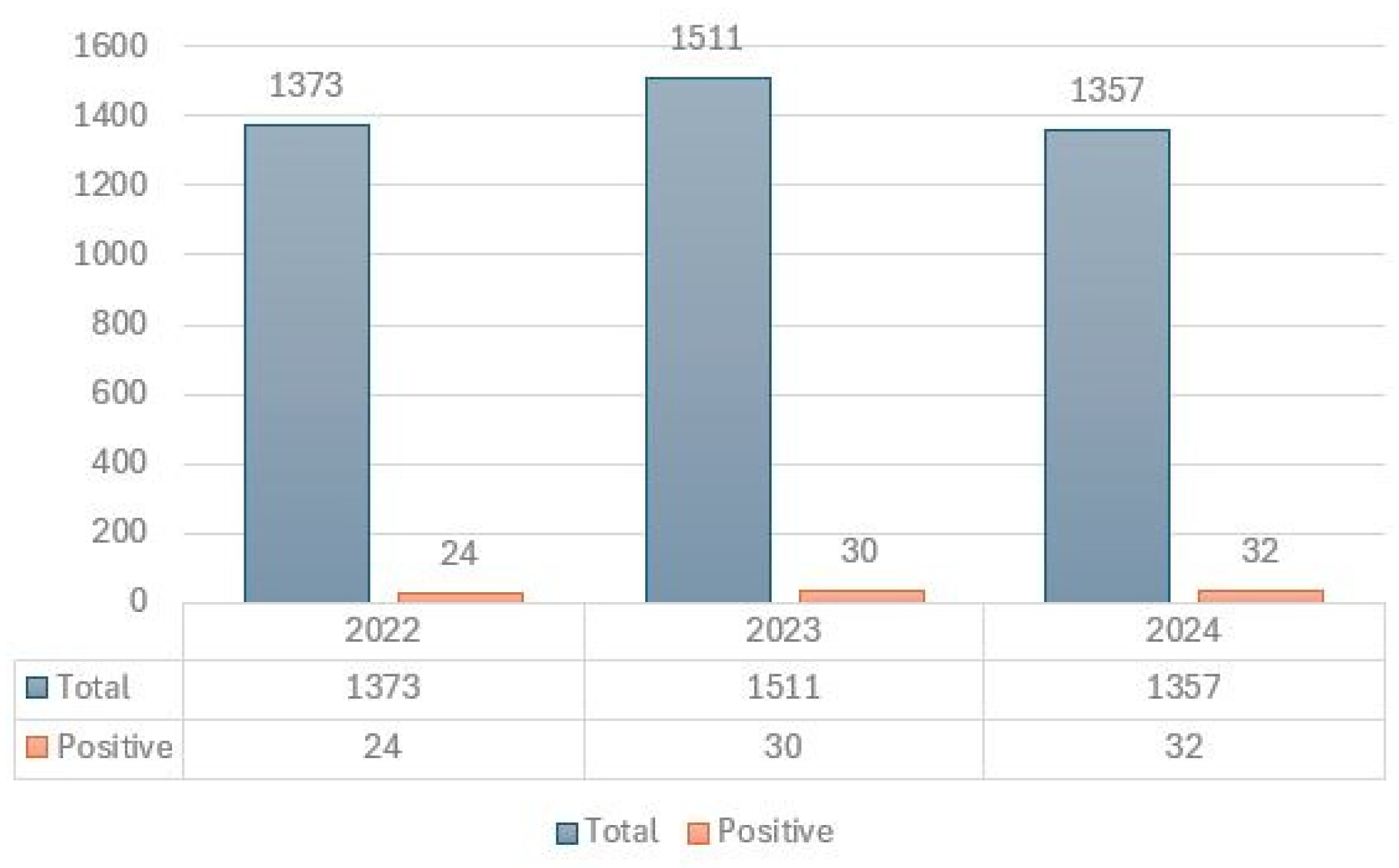
From 2022 to 2024, a total of 4241 cervicovaginal swab samples (from an equal number of women) were collected from outpatient gynecology patients. In total, 86 (2.02%) patients were positive for Chlamydia trachomatis. Over these years, the number of cases of infection with Chlamydia trachomatis increased, although not statistically significantly, from 24 cases (1.7%) in 2022 to 30 cases (2%; p = 0.64) in 2023 and 32 cases (2.35%; p = 0.26) in 2024 (Table 2) (Graph 1).
Graph 1. Frequency of C. trachomatis infections over the years.
Amh 71 00005 gr001
50 (58.1%) patients were from Greece and 36 (41.9%) from abroad. The age at diagnosis ranged from 13 to 66 years (mean age, 29.6 years). The most significant proportion of cases reported was among the 20–24 and 25–34 age groups, accounting for 55.8%. Next was the 15–19-year age group, accounting for 15.1% (Table 3).
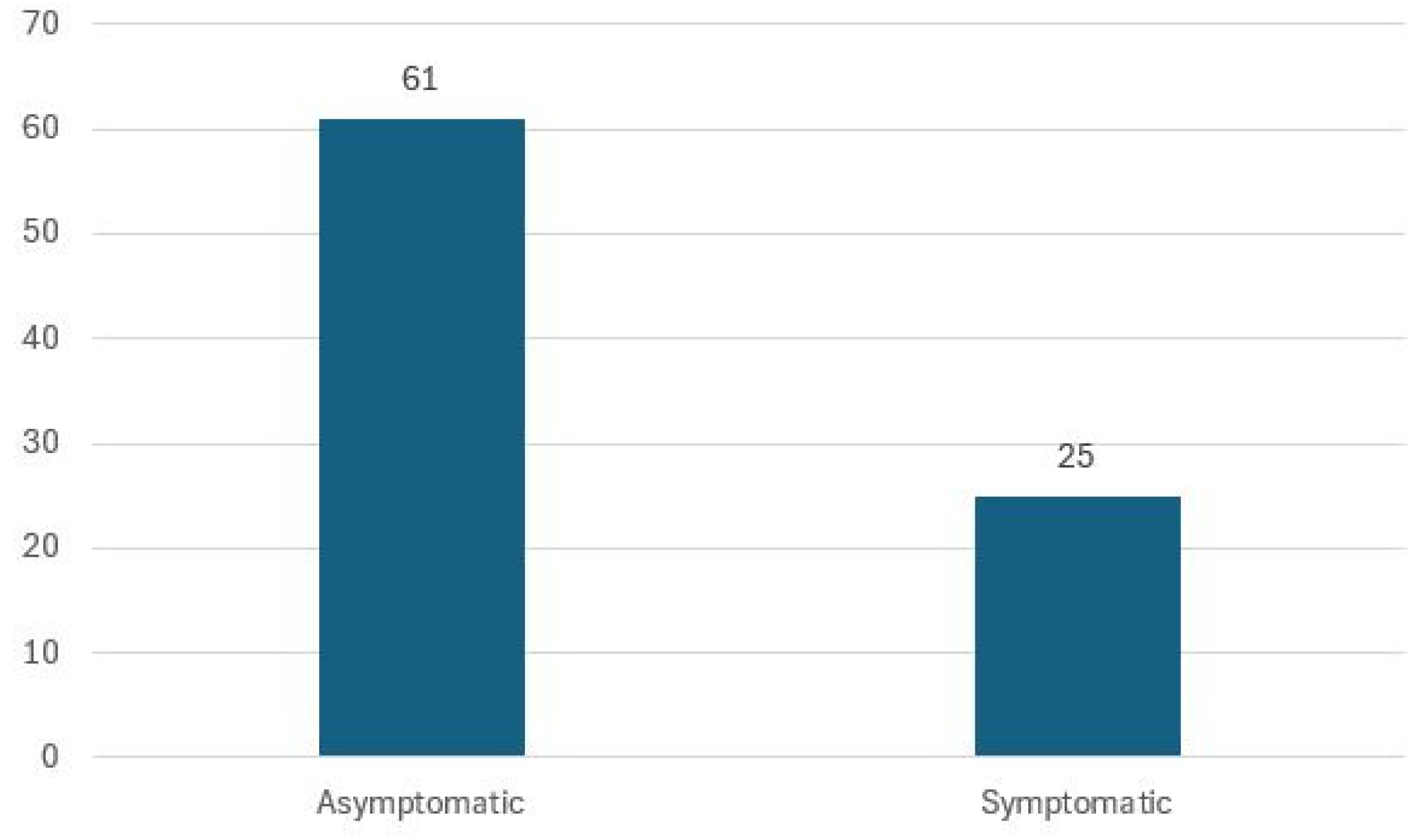
All cases originated from the hospital’s gynecology department. 61 (70.9%) positive patients revealed that they were asymptomatic regarding Chlamydia infection (Graph 2). As for the number of sexual partners, in the last 6 months before diagnosis, 10 patients (11.6%) had no sexual partners, 58 patients (67.5%) had one sexual partner, and 18 patients (20.9%) had two or more.
Graph 2. Symptomatic and asymptomatic patients infected with C. trachomatis.
Amh 71 00005 gr002
Out of 84 patients, 34 (40.7%) returned to the hospital for follow-up after their medication. Among them, 29 tested negative upon retesting, 3 had a second positive test but later tested negative, and 2 remained positive without undergoing further tests.

4. Discussion

Chlamydia is a sexually transmitted infection caused by the bacterium Chlamydia trachomatis. This infection is often asymptomatic in women. When symptoms do occur, they can include cervicitis, salpingitis, endometritis, and pelvic inflammatory disease. Chlamydia can significantly affect a woman’s fertility and may lead to ectopic pregnancy. Additionally, the infection can be transmitted from mother to child during labor.
According to studies, Chlamydia trachomatis is considered a curable disease with a large population infection rate. Chlamydia trachomatis, with more than 105.7 × 10⁶ new cases/year and more than 100.4 × 10⁶ infected adults, needs special attention [19,20]. The prevalence of Chlamydia trachomatis infection varies across different regions of the world. In the United States, it is the most commonly reported sexually transmitted infection [21]. According to the Centers for Disease Control and Prevention (CDC), the infection rate among women is higher than that among men, particularly among younger individuals aged 15–24 years [4]. In Australia, higher rates of infection are seen among younger people, prompting the government to implement extensive screening programs to help control the spread of this infection [22].
In Europe, according to the 2023 annual epidemiological report by the European Center for Disease Prevention and Control [23], the crude notification rate was 70.4 cases per 100,000 population. According to this report, countries like Denmark, Finland, Norway and Sweden have higher rates of Chlamydia infections than others like Bulgaria, Romania, Cyprus and Greece. Possible reasons for these differences may include extensive screening programs, such as those in Sweden, Denmark, and the UK, as well as robust surveillance systems. Some countries, such as the UK (NHS), have implemented self-tests for not only Chlamydia detection but also for other STDs.
In Greece, the National Public Health Organization (NPHO) collects data on sexually transmitted infections (STIs) and produces annual epidemiological reports. The most recent reports regarding Chlamydia trachomatis are from 2022 [24] and 2023 [25]. According to these findings, the incidence rates were 0.62 per 100,000 population in 2022 and 0.91 per 100,000 population in 2023. The highest rate recorded in Greece was in 2014, at 1.40 per 100,000 population. Since 2015, the incidence has been declining, reaching its lowest point in 2021 [25] at 0.45 per 100,000 population. However, there has been an increase in the rates in 2022 and 2023, as confirmed by our research, with percentages rising from 1.7% to 2.35%. The overall prevalence of Chlamydia trachomatis detection in the 3-year period of our study was 2.02% [26,27].
The first study in Greece on the detection of Chlamydia trachomatis and the first prevalence study using a nucleic acid amplification test were conducted in 2005. Moreover, the prevalence among female patients was 3.5% [28].
In our study, 7 of 10 cases were asymptomatic. This aligns with other reports, confirming that most Chlamydia trachomatis infections among the female population are asymptomatic [29,30]. The reason why most women have no symptoms can be low-level inflammation, non-specific symptoms in general, the immune response of the host or anatomical reasons [31]. In a Spanish study by Cancio-Suárez et al., the prevalence among asymptomatic women was 3.96% [32]. Studies like this and based on our results, emphasize the need for screening protocols for Chlamydia trachomatis, especially for high-risk populations and sexually active women.
One risk factor for chlamydial infection is having multiple sexual partners. This increases the risk of exposure; often, the infection is asymptomatic, making sexual behavior a critical factor.
A critical interpretation is required for the so-called “one-partner paradox,” whereby the majority of chlamydial infections were reported among women declaring a single recent sexual partner. This finding should not be interpreted as contradicting the established association between Chlamydia trachomatis infection and multiple sexual partners. Methodological and behavioral factors contribute to this observation. A key aspect of this phenomenon is the underreporting of sexual partners, particularly in self-reported data due to social desirability bias. Additionally, Chlamydial infections are often asymptomatic, meaning they can persist undetected for extended periods. This may result in a disconnect between the time of infection acquisition and the number of reported partners [33].
Age is an important factor in the acquisition of Chlamydia. The ECDC emphasizes that individuals aged 20 to 34 are at a higher risk for Chlamydia trachomatis infections, as this group shows the highest prevalence rates [23]. In Greece, NPHO reported that the highest prevalence of the condition in women occurs within the age range of 15 to 34 [24,25]. In our study, the majority of Chlamydia trachomatis-positive cases occurred in the same age groups. This condition can occur for various reasons. Biological factors include cervical ectopy in young females and an immature immune response. Behavioral factors involve having multiple sexual partners or inconsistent use of condoms. Additionally, social and lifestyle influences, shaped by dating culture and technology, can also play a role [34,35,36].
Diagnostic procedures for detecting CT infections include both direct and indirect methods. For localized infections, direct pathogen detection assays are typically used, including cultures, antigen tests (such as enzyme immunoassays (EIA), direct fluorescent antibody tests (DFA) and immunochromatographic rapid diagnostic tests (RDTs), as well as nucleic acid hybridization and amplification tests. Serology is not suitable for diagnosing acute infections of the lower genital tract because the antibody response is detectable only weeks to months later and is often less pronounced [14,16].
According to the EU’s case definition, a Chlamydial infection must be classified as confirmed if the diagnosis is documented using at least one of the following methods: cell culture, DFA, or PCR. In our study, all tests were performed using real-time PCR. Compared to the gold standard technique (PCR), these tests are less sensitive and less specific. NAATs are the most sensitive techniques available. Their specificity is comparable to that of cell culture, making them the gold standard for detecting Chlamydia trachomatis [37].
In Greece, the most frequent tests used were RDTs. Most RDTs are immunochromatographic assays based on lateral-flow technology that detect chlamydia LPS antigens in genital swabs or urine samples. Antigen-based rapid diagnostic tests are not recommended for testing Chlamydia trachomatis in asymptomatic and symptomatic patients [38]. None of the Greek faculties are conducting cell culture for the detection or confirmation of Chlamydial infection. In 2023, in Greece, 279 Chlamydial cases were reported, but only 212 (76%) of them were confirmed by PCR or DFA [25].
This study has several limitations. It was monocentric and conducted exclusively on women who presented as outpatients at the gynecology clinic of a General Maternal Hospital, regardless of whether they had symptoms of STDs or not. This study design minimizes the population diversity and may introduce specific biases (e.g., one-partner paradox). Data on clinical follow-up were unavailable, precluding assessment of treatment outcomes, recurrence, or reinfection rates. As a consequence, this study cannot distinguish new exposures from persistent infections. Larger, multicenter studies are required to reduce bias and understand the dynamics of the infection. Further investigation is needed, particularly concerning previous and current sexual activity, whether there was a pregnancy or not, as well as the causative for those who required hospitalization [39].
The results of the present study can be utilized to reduce the cases of C. trachomatis infection. Prevention strategies may include routine screening, especially for high-risk populations, to detect early infections and prevent complications. Consistent condom use, sexual health education, and guidance from doctors for more frequent check-ups can be other prevention strategies for new infections. The critical infected population remains the asymptomatic pool, and its reduction remains crucial.
The NPHO operates a surveillance system in Greece for infections caused by C. trachomatis. All data are collected and submitted to ECDC to evaluate the effectiveness of public health interventions and prevention strategies across all regions. These systems enable continuous monitoring of C. trachomatis’s impact, facilitating the evaluation of screening programs and other prevention efforts [40].

Author Contributions

Conceptualization, S.C. and I.D.; methodology, S.C.; software, S.C.; validation, S.C., I.D. and C.V.; formal analysis, I.D.; investigation, S.C.; resources, G.V.; data curation, I.D., S.X. and A.M.; writing—original draft preparation, S.C., N.Z., I.D., K.T., G.V. and C.V.; writing—review and editing, S.C., N.Z., I.D., K.T., G.V. and C.V.; visualization, S.C.; supervision, S.C., I.D., K.T., G.V. and C.V.; project administration, S.C. and C.V.; funding acquisition, G.V. All authors have read and agreed to the published version of the manuscript.

Funding

This study received no external funding.

Institutional Review Board Statement

The study was conducted in accordance with the Declaration of Helsinki, and the protocol received approval from the Scientific Board of the Maternal Hospital “Helena Venizelou” (Theme 14) on 29 January 2025. Attached are the board’s approval.

Informed Consent Statement

Formal patient consent was not required for this study because it was a retrospective analysis using anonymized routine clinical data. No identifiable personal information was collected, and all data originated from examinations performed as part of standard medical care. The study involved no patient contact, no intervention, and no procedures beyond those routinely carried out in clinical practice.

Data Availability Statement

Data available on request.

Conflicts of Interest

The authors declare no conflicts of interest.

References

  1. Mylonas, I. Female genital Chlamydia trachomatis infection: Where are we heading? Arch. Gynecol. Obstet. 2012, 285, 1271–1285. [Google Scholar] [CrossRef]
  2. World Health Organization. Chlamydia. WHO. 2024. Available online: https://www.who.int/news-room/fact-sheets/detail/chlamydia (accessed on 10 October 2025).
  3. Rodrigues, R.; Sousa, C.; Vale, N. Chlamydia trachomatis as a Current Health Problem: Challenges and Opportunities. Diagnostics 2022, 12, 1795. [Google Scholar] [CrossRef]
  4. Workowski, K.A.; Bachmann, L.H.; Chan, P.A.; Johnston, C.M.; Muzny, C.A.; Park, I.; Reno, H.; Zenilman, J.M.; Bolan, G.A. Sexually Transmitted Infections Treatment Guidelines, 2021. MMWR Recomm. Rep. 2021, 70, 1–187. [Google Scholar] [CrossRef]
  5. Mosmann, J.P.; Zayas, S.; Kiguen, A.X.; Venezuela, R.F.; Rosato, O.; Cuffini, C.G. Human papillomavirus and Chlamydia trachomatis in oral and genital mucosa of women with normal and abnormal cervical cytology. BMC Infect. Dis. 2021, 21, 422. [Google Scholar] [CrossRef]
  6. Hocking, J.S.; Geisler, W.M.; Kong, F.Y.S. Update on the Epidemiology, Screening, and Management of Chlamydia trachomatis Infection. Infect. Dis. Clin. N. Am. 2023, 37, 267–288. [Google Scholar] [CrossRef]
  7. Darville, T. Pelvic Inflammatory Disease Due to Neisseria gonorrhoeae and Chlamydia trachomatis: Immune Evasion Mechanisms and Pathogenic Disease Pathways. J. Infect. Dis. 2021, 224, S39–S46. [Google Scholar] [CrossRef]
  8. Evers, Y.J.; Dukers-Muijrers, N.H.T.M.; van Liere, G.A.F.S.; van Bergen, J.; Kuizenga-Wessel, S.; Hoebe, C.J.P.A. Pharyngeal Chlamydia trachomatis in Men Who Have Sex with Men (MSM) in The Netherlands: A Large Retrospective Cohort Study. Clin. Infect. Dis. 2022, 74, 1480–1484. [Google Scholar] [CrossRef]
  9. Thapa, J.; Yoshiiri, G.; Ito, K.; Okubo, T.; Nakamura, S.; Furuta, Y.; Higashi, H.; Yamaguchi, H. Chlamydia trachomatis Requires Functional Host-Cell Mitochondria and NADPH Oxidase 4/p38MAPK Signaling for Growth in Normoxia. Front. Cell. Infect. Microbiol. 2022, 12, 902492. [Google Scholar] [CrossRef]
  10. Gautam, J.; Krawiec, C. Chlamydia Pneumonia. In StatPearls; StatPearls Publishing: Treasure Island, FL, USA, 2025. [Google Scholar]
  11. Hepler, R.W.; Nahas, D.D.; Lucas, B.; Kaufhold, R.; Flynn, J.A.; Galli, J.D.; Swoyer, R.; Wagner, J.M.; Espeseth, A.S.; Joyce, J.G.; et al. Spectroscopic analysis of chlamydial major outer membrane protein in support of structure elucidation. Protein Sci. 2018, 27, 1923–1941. [Google Scholar] [CrossRef]
  12. Jury, B.; Fleming, C.; Huston, W.M.; Luu, L.D.W. Molecular pathogenesis of Chlamydia trachomatis. Front. Cell. Infect. Microbiol. 2023, 13, 1281823. [Google Scholar] [CrossRef]
  13. Manavi, K. A review on infection with Chlamydia trachomatis. Best Pract. Res. Clin. Obstet. Gynaecol. 2006, 20, 941–951. [Google Scholar] [CrossRef]
  14. Meyer, T. Diagnostic Procedures to Detect Chlamydia trachomatis Infections. Microorganisms 2016, 4, 25. [Google Scholar] [CrossRef] [PubMed]
  15. López, M.Á.C.; Porteros, H.T.; De La Iglesia Salgado, A.; Medel, J.V.; Borrero, I.G. Advantages of Syndromic Diagnostics: Detection of the Pathogens Causing Urethritis/Cervicitis with the STI CNM Real-Time PCR Kit from Vitro S.A. Pol. J. Microbiol. 2024, 73, 529–534. [Google Scholar] [CrossRef] [PubMed]
  16. Rodrigues, R.; Silva, A.R.; Sousa, C.; Vale, N. Addressing Challenges in Chlamydia trachomatis Detection: A Comparative Review of Diagnostic Methods. Medicina 2024, 60, 1236. [Google Scholar] [CrossRef]
  17. Tabrizi, S.N.; Unemo, M.; Golparian, D.; Twin, J.; Limnios, A.E.; Lahra, M.; Guy, R. Analytical Evaluation of GeneXpert CT/NG, the First Genetic Point-of-Care Assay for Simultaneous Detection of Neisseria gonorrhoeae and Chlamydia trachomatis. J. Clin. Microbiol. 2013, 51, 1945–1947. [Google Scholar] [CrossRef]
  18. Available online: https://web-support.cepheid.com/Package%20Insert%20Files/Xpert%20CTNG/Xpert%20CTNG%20US%20ENGLISH%20IFU%20303-0941%20Rev%20%20A.pdf (accessed on 28 October 2025).
  19. Wilson, J.S.; Honey, E.; Templeton, A.; Paavonen, J.; Mårdh, P.-A.; Stary, A.; Stray-Pedersen, B.; EU Biomed Concerted Action Group. A systematic review of the prevalence of Chlamydia trachomatis among European women. Hum. Reprod. Update 2002, 8, 385–394. [Google Scholar] [CrossRef] [PubMed][Green Version]
  20. Salari, N.; Olfat, N.; Ghasemi, H.; Larti, M.; Beiromvand, M.; Mohammadi, M. The global prevalence of Chlamydia trachomatis genital infection in pregnant women: A meta-analysis. Arch. Gynecol. Obstet. 2025, 311, 529–542. [Google Scholar] [CrossRef]
  21. Simons, J.L.; McKenzie, J.S.; Wright, N.C.; Sheikh, S.A.; Subramaniam, A.; Tita, A.T.N.; Dionne-Odom, J. Chlamydia Prevalence by Age and Correlates of Infection Among Pregnant Women. Sex. Transm. Dis. 2021, 48, 37–41. [Google Scholar] [CrossRef]
  22. Hocking, J.S.; Willis, J.; Tabrizi, S.; Fairley, C.K.; Garland, S.M.; Hellard, M. A chlamydia prevalence survey of young women living in Melbourne. Victoria Sex. Health 2006, 3, 235–240. [Google Scholar] [CrossRef]
  23. European Center for Disease Prevention and Control—Chlamydia—Annual Epidemiological Report for 2023. Available online: https://www.ecdc.europa.eu/en/publications-data/chlamydia-annual-epidemiological-report-2023 (accessed on 18 October 2025).
  24. Available online: https://www.eody.gov.gr/images/nosimata/metadotika//epid_epit_smn_2022.pdf (accessed on 18 October 2025).
  25. Available online: https://www.eody.gov.gr/images/nosimata/metadotika//smn_dedomena_2023.pdf (accessed on 18 October 2025).
  26. Gassowski, M.; Poethko-Müller, C.; Schlaud, M.; Sailer, A.; Dehmel, K.; Bremer, V.; Dudareva, S.; Jansen, K.; Chlamydia trachomatis laboratory sentinel team. Prevalence of Chlamydia trachomatis in the general population in Germany—A triangulation of data from two population-based health surveys and a laboratory sentinel system. BMC Public Health 2022, 22, 1107. [Google Scholar] [CrossRef]
  27. Espies, N.; Fernandez, J.; Justribo, E.; Aramburu, J.; Bernet, A.; Marquez, A.; Godoy, P.; Yuguero Torres, O. Results of a Community-Based Screening Program for Chlamydia trachomatis Genital Infection in Young People Aged 18-25 Years. Cureus 2023, 5, e46916. [Google Scholar] [CrossRef]
  28. Levidiotou, S.; Vrioni, G.; Papadogeorgaki, H.; Avdeliodi, K.; Kada, H.; Kaparos, G.; Kouskouni, E.; Fragouli, E.; Legakis, N.J. Chlamydia trachomatis infections in Greece: First prevalence study using nucleic acid amplification tests. Eur. J. Clin. Microbiol. Infect. Dis. 2005, 24, 207–213. [Google Scholar] [CrossRef]
  29. Fernández-Benítez, C.; Mejuto-López, P.; Otero-Guerra, L.; Margolles-Martins, M.J.; Suárez-Leiva, P.; Vazquez, F.; Chlamydial Primary Care Group. Prevalence of genital Chlamydia trachomatis infection among young men and women in Spain. BMC Infect Dis. 2013, 22, 388. [Google Scholar]
  30. Huai, P.; Li, F.; Chu, T.; Liu, D.; Liu, J.; Zhang, F. Prevalence of genital Chlamydia trachomatis infection in the general population: A meta-analysis. BMC Infect. Dis. 2020, 20, 589. [Google Scholar] [CrossRef]
  31. Yao, H.; Li, C.; Tian, F.; Liu, X.; Yang, S.; Xiao, Q.; Jin, Y.; Huang, S.; Zhao, P.; Ma, W.; et al. Evaluation of Chlamydia trachomatis screening from the perspective of health economics: A systematic review. Front. Public Health 2023, 11, 1212890. [Google Scholar] [CrossRef]
  32. Rosas Cancio-Suárez, M.; Martín-Jiménez, E.; Rodríguez-Domínguez, M.; García Da Silva, A.M.; Fernández-Félix, B.M.; Romero-Hernández, B.; Cárdenas-Isasi, M.J.; Moreno, S.; Serrano-Villar, S.; Sánchez-Conde, M. Chlamydia trachomatis Prevalence in Asymptomatic Women in Madrid: Study Findings and Their Association with Risk Factors and Mental Health. Biomedicines 2024, 12, 1999. [Google Scholar] [CrossRef] [PubMed]
  33. Okunlola, D.A.; Alawode, O.A.; Opara, C.V.; Ajayi, A.I. Sexual behaviors and self-reported sexually transmitted infections (STIs) among male and female youths in Nigeria. BMC Infect. Dis. 2025, 25, 1515. [Google Scholar] [CrossRef] [PubMed]
  34. Lee, V.; Tobin, J.M.; Foley, E. Relationship of cervical ectopy to chlamydia infection in young women. J. Fam. Plan. Reprod. Health Care 2006, 32, 104–106. [Google Scholar] [CrossRef]
  35. Gravningen, K.; Furberg, A.S.; Simonsen, G.S.; Wilsgaard, T. Early sexual behaviour and Chlamydia trachomatis infection—A population based cross-sectional study on gender differences among adolescents in Norway. BMC Infect. Dis. 2012, 12, 319. [Google Scholar] [CrossRef]
  36. Muzny, C.A.; Harbison, H.S.; Austin, E.L.; Schwebke, J.R.; Van Der Pol, B.; Hook, E.W., 3rd. Sexually Transmitted Infection Risk among Women Is Not Fully Explained by Partner Numbers. South. Med. J. 2017, 110, 161–167. [Google Scholar] [CrossRef]
  37. Centers for Disease Control and Prevention. Recommendations for the laboratory-based detection of Chlamydia trachomatis and Neisseria gonorrhoeae—2014. MMWR Recomm. Rep. 2014, 63, 1–19. [Google Scholar]
  38. Nuñez-Forero, L.; Moyano-Ariza, L.; Gaitán-Duarte, H.; Ángel-Müller, E.; Ruiz-Parra, A.; González, P.; Rodríguez, A.; Tolosa, J.E. Diagnostic accuracy of rapid tests for sexually transmitted infections in symptomatic women. Sex. Transm. Infect. 2016, 92, 24–28. [Google Scholar] [CrossRef]
  39. White, J.A.; Dukers-Muijrers, N.H.; Hoebe, C.J.; Kenyon, C.R.; Dc Ross, J.; Unemo, M. 2025 European guideline on the management of Chlamydia trachomatis infections. Int. J. STD AIDS 2025, 36, 434–449. [Google Scholar] [CrossRef]
  40. Best Epidemiologist Near Me|Book Online Doctor Appointment. Available online: https://drgalen.org/speciality/epidemiologist (accessed on 28 January 2026).

Table 1. Xpert CT/NG Results and Interpretations.
ResultInterpretation
CT DETECTED;
NG DETECTED
CT target and NG target DNA sequences are detected.
CT NOT DETECTED;
NG DETECTED
CT target DNA sequence is not detected; NG target DNA sequences are detected.
CT DETECTED;
NG NOT DETECTED
CT target DNA sequence is detected; NG target DNA sequences are not detected.
CT NOT DETECTED;
NG NOT DETECTED
Neither CT nor NG target DNA sequences are detected.
INVALIDPresence or absence of CT and NG target DNA cannot be determined. Use the instructions in the Retest Procedure section to repeat the test.
ERRORPresence or absence of CT and NG target DNA cannot be determined. Use the instructions in the Retest Procedure section to repeat the test.
NO RESULTPresence or absence of CT and NG target DNA cannot be determined. Use the instructions in the Retest Procedure section to repeat the test. Insufficient data was collected to produce a test result (for example, the operator stopped a test that was in progress).
Table 2. Frequency of C. trachomatis infections over the years.
YearnPositive (+)Frequencyp
20221373241.7%
20231511302%0.64
20241357322.35%0.26
Total4241862.02%
Table 3. Chlamydia cases by age group.
Age GroupnFrequency
0–1411.2%
15–191315.1%
20–242427.9%
25–342427.9%
35–441213.9%
45–6467%
65+33.5%
Unknown33.5%
Disclaimer/Publisher’s Note: The statements, opinions and data contained in all publications are solely those of the individual author(s) and contributor(s) and not of MDPI and/or the editor(s). MDPI and/or the editor(s) disclaim responsibility for any injury to people or property resulting from any ideas, methods, instructions or products referred to in the content.