
Article

Evaluating the Effects of Full-Fat Yogurt Consumption on Circulating Inflammatory Biomarkers and Ex Vivo Peripheral Blood Mononuclear Cell Inflammatory Responses in a Randomized-Controlled Crossover Trial

by
Victoria M. Taormina
1,
Simonne Eisenhardt
1,
Matthew P. Gilbert
2,
C. Lawrence Kien
2,3,
Matthew E. Poynter
2 and
Jana Kraft
1,2,4,*
1
Department of Animal and Veterinary Sciences, University of Vermont, Burlington, VT 05405, USA
2
Department of Medicine, University of Vermont, Burlington, VT 05405, USA
3
Department of Pediatrics, University of Vermont, Burlington, VT 05405, USA
4
Department of Nutrition and Food Sciences, University of Vermont, Burlington, VT 05405, USA
*
Author to whom correspondence should be addressed.
Lipidology 2026, 3(1), 4; https://doi.org/10.3390/lipidology3010004
Submission received: 27 August 2025 / Revised: 10 October 2025 / Accepted: 6 January 2026 / Published: 15 January 2026
(This article belongs to the Special Issue Lipid Metabolism and Inflammation-Related Diseases)

Abstract

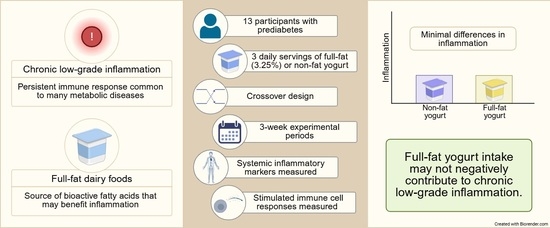
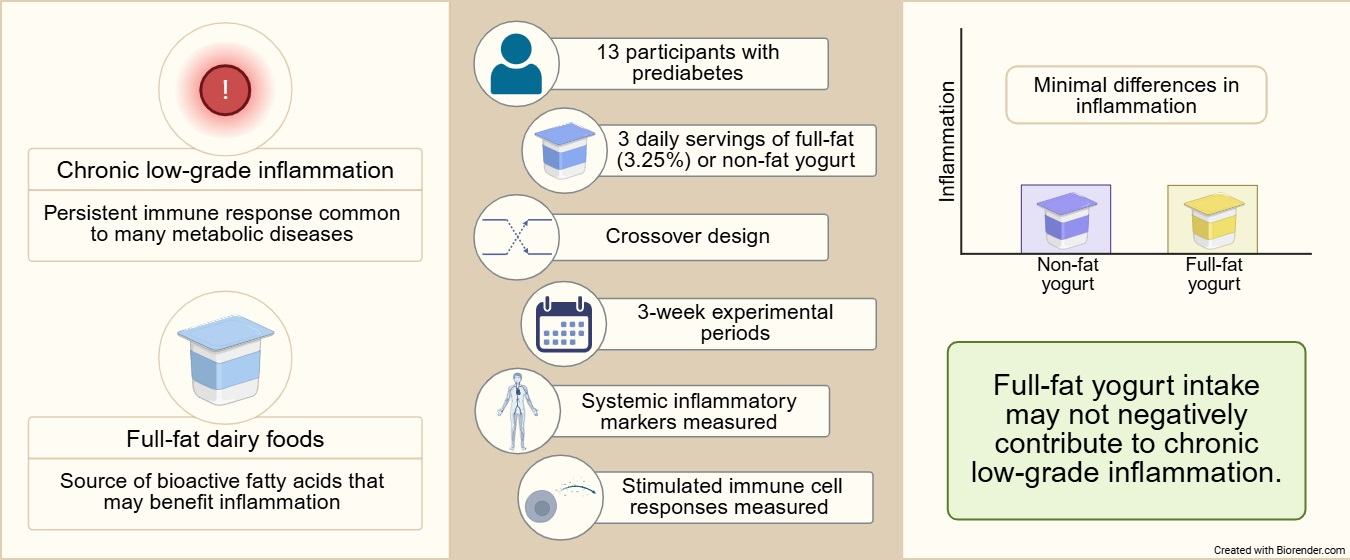
Chronic, low-grade inflammation is a characteristic of metabolic diseases like type 2 diabetes. Despite recommendations to select low- or non-fat dairy foods over full-fat dairy foods for metabolic health, recent research suggests potential anti-inflammatory benefits of dairy fat consumption. We aimed to compare the systemic inflammatory tone (i.e., circulating inflammatory biomarker concentrations and ex vivo peripheral blood mononuclear cell inflammatory responses) of individuals with prediabetes after consuming diets with full-fat (3.25%) or non-fat yogurt. We hypothesized that short-term consumption of three daily full-fat yogurt servings beneficially affects inflammatory tone. Thirteen participants aged 45–75 years completed an eight-week randomized, double-masked, controlled crossover study. The two, three-week experimental diets comprised three daily servings of full-fat or non-fat yogurt and were each preceded by a one-week run-in diet. Following each diet, circulating inflammatory biomarkers and cytokine concentrations in the supernatants of peripheral blood mononuclear cells under control or lipopolysaccharide-stimulated conditions were measured. Compared with non-fat yogurt intake, circulating immature granulocyte concentrations were lower following full-fat yogurt intake, but there were no other differences in leukocyte concentrations. Circulating concentrations of cytokines or other inflammatory markers did not differ by diet. Cell supernatant interleukin-1β concentrations were lower following the full-fat yogurt diet under unstimulated conditions but were not different between diets under stimulated conditions. There were no differences by diet in supernatant concentrations of other cytokines under unstimulated or stimulated conditions. Together, minimal differences in inflammatory tone were observed following the short-term consumption of three daily servings of full-fat or non-fat yogurt in individuals with prediabetes.

Graphical Abstract

1. Introduction

Chronic low-grade inflammation, characterized by elevated concentrations of systemic inflammatory markers such as cytokines [1], is a hallmark of many cardiometabolic diseases, such as type 2 diabetes (T2D) [2]. While inflammation is a necessary defense mechanism against infection, sustained inflammation can lead to chronic disease development [3]. Greater circulating concentrations of pro-inflammatory markers have been observed in individuals with prediabetes [4,5,6] and are positively associated with T2D risk factors and cumulative risk [7,8,9]. In 2021, the International Diabetes Federation reported a total of 537 million diabetes cases, with over 90% of those individuals afflicted with T2D [10]. T2D prevalence is expected to increase substantially by 2050 [11]; thus, devising strategies for reducing both inflammation and disease risk is essential for maintaining and improving public health.
Inflammatory tone can be modified by dietary interventions, specifically changes in fat quality i.e., the fatty acid (FA) composition of foods or the diet [12]. Preclinical research demonstrates pro-inflammatory effects of saturated FAs, namely palmitic and lauric acid [13,14,15,16]. Due to the fact that dairy fat is a rich source of saturated FAs [17], global dietary guidance has long advised the consumption of low- or non-fat dairy foods in place of full-fat dairy foods to promote metabolic health [18,19]. However, dairy fat, composed of over 400 FAs and FA derivatives [20], is highly complex; thus the health effects of full-fat dairy foods reflect those of the full array of dairy FAs, not just specific FAs. Many individual FAs in full-fat dairy foods, such as odd- and branched-chain FAs [21,22], exhibit beneficial effects associated with inflammation reduction in preclinical and clinical settings [23]. Yet, little is known regarding the nature and extent to which the consumption of the dairy-fat matrix, i.e., the complex construction of different FA and fat classes, may affect inflammation.
Two cross-sectional studies evaluating the effect of dairy product intake on inflammatory outcomes indicate inverse relationships with full-fat dairy intake [24,25]. The findings reported by Shi et al. [25] also highlight the importance of the dairy-food and dairy-fat matrices in cardiometabolic health outcomes, as full-fat cheese intake was associated with lower C-reactive protein (CRP) and interleukin (IL)-6 concentrations, while butter intake was not associated with either marker. There is also increasing interest in the potential anti-inflammatory effects of fermented dairy foods specifically, including yogurt [26]. Yuan et al. [27] recently reported an inverse association between total yogurt (no fat content specified) intake and IL-6 concentrations, but no association with CRP, tumor-necrosis factor-α (TNF-α), or monocyte chemoattractant protein-1 (MCP-1) in the Framingham Offspring Study. Randomized-controlled trials are needed to further explore the effects of dairy fat, as well as specific full-fat dairy food, intake on inflammation. Notably, few randomized-controlled trials have been conducted to date that focus on full-fat yogurt [28].
While the primary goal of this study focused on glycemic responses [29], the goal of this secondary analysis of our randomized, crossover controlled-feeding trial was to evaluate the effect of dairy fat in the yogurt matrix on inflammatory tone in individuals with prediabetes. We hypothesized that, compared with non-fat yogurt (NFY) consumption, short-term consumption of full-fat yogurt (FFY) lowers plasma concentrations of inflammatory biomarkers. Specifically, the objectives were to examine, in the fasted state, plasma concentrations of inflammatory biomarkers as well as their production by peripheral blood mononuclear cells (PBMCs).

2. Materials and Methods

2.1. Trial Registration and Participants

This trial was approved by the University of Vermont Institutional Review Board and informed consent was obtained from all individuals prior to participation. This study was conducted at the Clinical Research Center (CRC) at the University of Vermont Medical Center (UVMMC) in Burlington, Vermont. Participant inclusion and exclusion criteria have previously been described [29] and are listed on ClinicalTrials.gov (NCT03577119). Briefly, the primary study criteria were that participants (i) were 45–75 years of age, (ii) had a body mass index of 20–45 kg/m2, (iii) had a fasting blood glucose concentration of 100–125 mg/dL or a hemoglobin A1C of 5.7–6.4% (i.e., had prediabetes [30]), and (iv) were free of other chronic diseases apt to affect inflammatory tone.

2.2. Study Design and Diets

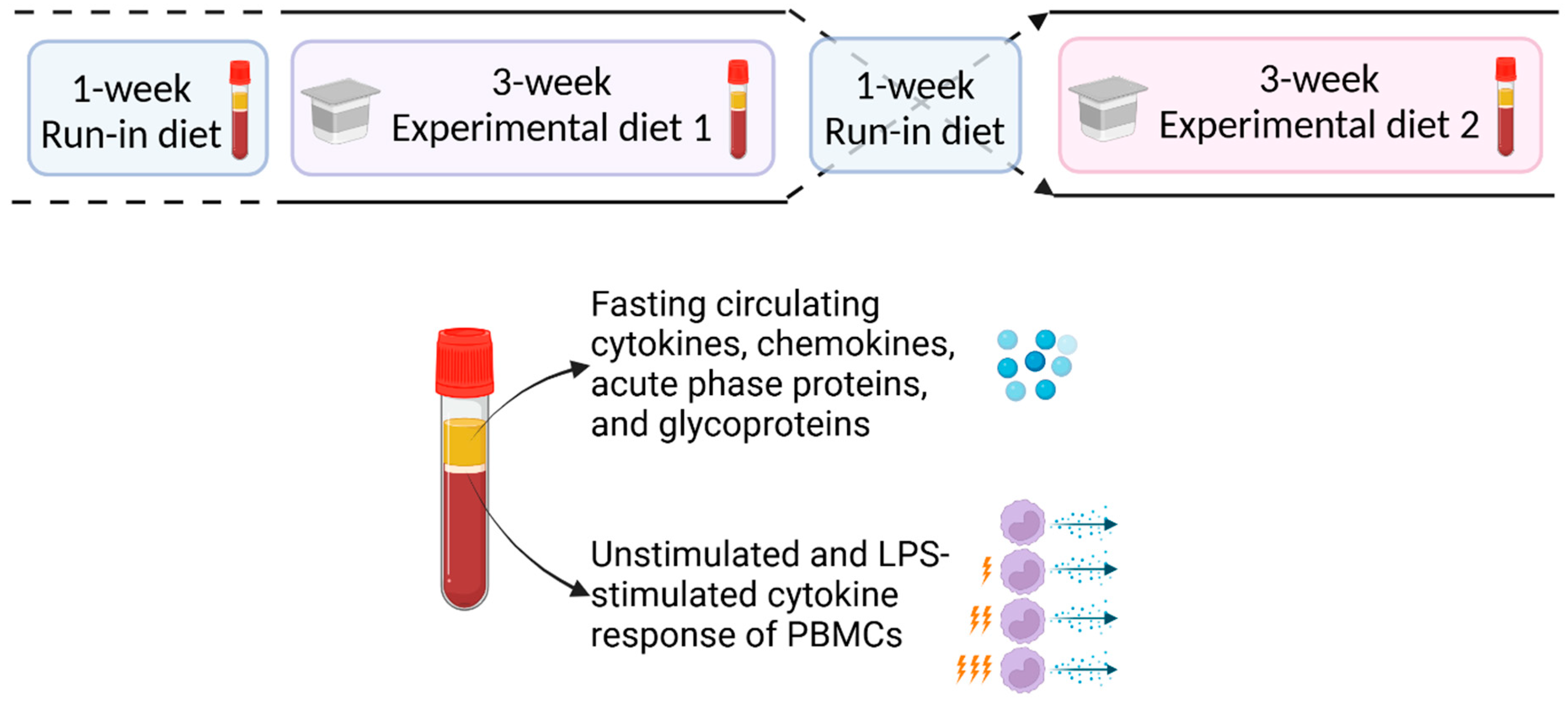
This randomized, double-masked, two-period, crossover, controlled dietary intervention trial had two 3-week experimental diet periods and a 1-week run-in period prior to each experimental diet period (a total of 8 weeks) [29]. The experimental diets included three daily servings (170 g per 2000 kcal) of FFY or NFY, donated by Stonyfield Farm Incorporated (Londonderry, NH, USA), as a proof-of-concept design, allowing the study of a consistent and physiologically relevant dose of dairy fat within the yogurt matrix, a current evidence gap. The FA composition of the yogurt has previously been reported [29]. The run-in diets did not include yogurt or any source of dairy fat. Table 1 details the carbohydrate, protein, and fat contents of the three diets. The run-in diet was designed to reflect the typical U.S. American diet, and the experimental diets were based on the Dietary Approaches to Stop Hypertension (DASH) diet [31].
Except for the FFY, all foods on the diets only contained trace fat quantities; thus, fat was added in the form of custom fat blends created by the CRC. The fat blends, separately created for both the run-in and experimental diets, comprised plant fats and non-ruminant-animal fats to ensure there were no additional dairy-specific FAs (e.g., odd- and branched-chain FA) present in the diet, beyond that supplied by the FFY. The fat blend for the experimental diets was added in near identical amounts so that the difference in fat content between the two experimental diets (30% versus 38%) was solely due to the fat content of the FFY. This also allowed for the same fat matrix to be present in both experimental diets, except for the dairy fat.
All food and beverages, except water, were provided by the CRC to meet participant energy needs for weight maintenance, calculated by the research dietitian. No additional foods or beverages, beyond water, were allowed on any of the diets. As previously described [29], participant calorie needs were determined from a dual-energy x-ray absorptiometry scan (GE Lunar Prodigy Encore densitometer, Madison, WI, USA; GE Lunar Prodigy version 16.0), a diet assessment using the Automated Self-Administered 24-h Dietary Recall (ASA24®, National Cancer Institute), and self-reported physical activity level, age, and sex. For participants with a body mass index greater than 35 kg/m2, results from an indirect calorimetry measurement (Viasys Vmax 29, SensorMedics Corp., Yorba Linda, CA, USA) were also used to further inform calculations. Dietary compliance was assessed by daily compliance logs, inspection of all food containers, and analysis of plasma total FA composition via gas-liquid chromatography [29].

2.3. Clinical Procedures and Data Collection

Differences by diet in inflammatory tone were assessed via measurements of circulating blood inflammatory biomarkers as well as the production of cytokines from ex vivo-stimulated PBMCs (Figure 1). These outcome measures were assessed at the end of the first run-in period (days 7/8 of study) and each experimental diet period (days 28/29 and 56/57 of study).
On days 7, 28, and 56, following a 12-h fast, whole blood was collected in K2 EDTA BD Vacutainer® tubes (Becton Dickinson, Franklin Lakes, NJ, USA). The blood was centrifuged (1694× g, 10 min, 4 °C) and plasma was aliquoted and frozen at −80 °C until measurement of glycoprotein acetyls (GlycA) by Nightingale Health (Helsinki, Finland). On days 8, 29, and 57, whole blood was collected in a K2 EDTA BD Vacutainer®, an SST BD Vacutainer®, and two K3 EDTA Vacutainers (Medtronic, Minneapolis, MN, USA) after a 12-h fast. The K2 EDTA BD Vacutainer® and SST BD Vacutainer® were sent to the UVMMC Laboratory for the measurement of leukocyte concentrations (complete blood count with differential; Sysmex XN-9000; Lincolnshire, IL, USA) and CRP concentrations (high-sensitivity colorimetric immunoassay; Ortho Vitros 5600, Raritan, NJ, USA), respectively. The two K3 EDTA Vacutainers were centrifuged at 1200× g for 10 min, then the plasma was aliquoted and frozen at −80 °C until analysis. Plasma IL-1β, IL-6, IL-8, IL-10, and TNF-α concentrations were analyzed using the Milliplex Human Cytokine/Chemokine/Growth Factor Panel A—Immunology Multiplex Assay (EMD Millipore, Darmstadt, Germany). Fasting neutrophil gelatinase-associated lipocalin (NGAL)/lipocalin-2 and plasminogen activator inhibitor-1 (PAI-1) concentrations were measured using the Milliplex MAP Human Adipokine Magnetic Bead Panel 1—Endocrine Multiplex Assay (EMD Millipore), and fasting MCP-1 concentrations were measured using the Milliplex Human Metabolic Hormone Panel V3 (EMD Millipore). All kits were used according to manufacturer instructions. The rationale for these markers is based on a combination of previous research from our group [15,16], scientific society guidance [32], and context of the dietary intervention (i.e., biomarkers associated with activation of the NLRP-3 inflammasome were measured due to the effect of saturated fatty acids on this important inflammatory mediator [12]). From the remaining blood collected in the two K3 EDTA Vacutainers, PBMCs were isolated using Lymphocyte Separation Medium (MP Biomedicals, Solon, OH, USA) in SepMate PBMC Isolation Tubes (StemCell Technologies, Vancouver, BC, Canada). The PBMCs were washed with Dulbecco’s phosphate-buffered saline and resuspended in complete media [Roswell Park Memorial Institute (RPMI) 1640 medium (Gibco, ThermoFisher Scientific, Waltham, MA, USA) supplemented with 10% fetal bovine serum (Corning, Glendale, AZ, USA), 1% L-glutamine (Invitrogen, ThermoFisher Scientific), and 0.5% Penicillin-Streptomycin solution (Invitrogen, ThermoFisher Scientific)]. Using a 24-well format (USA Scientific, Ocala, FL, USA), PBMCs were plated at 106 cells/mL under control conditions (i.e., complete media alone) or in the presence of 1, 10, or 100 ng/mL lipopolysaccharide (LPS; ultrapure from E. coli 0111:B4; InvivoGen, San Diego, CA, USA) diluted in complete media. Unstimulated responses represent baseline levels of inflammatory mediator production, which can both reflect and be the cause of inflammation in vivo, whereas the stimulated responses demonstrate the ability, or lack thereof, to mount an effective inflammatory defense, representing immune health and resilience. The PBMCs were incubated with their respective treatment for 24 h in a CO2-buffered incubator at 5% CO2 and 37 °C, then cell supernatants were collected and frozen at −80 °C until analysis. The concentrations of IL-1β, IL-6, IL-8, IL-10, and TNF-α in the cell supernatants were measured with the Milliplex Human Cytokine/Chemokine/Growth Factor Panel A—Immunology Multiplex Assay (EMD Millipore) by the manufacturer’s protocol.

2.4. Statistical Analysis

Data are expressed as non-transformed means ± SEM. The linear mixed model procedure in SAS (Version 9.4, SAS Institute Inc., Cary, NC, USA) was used with day, diet, and sex as fixed effects, as well as day and diet as repeated measures. Day was included in the model to evaluate sequence effect. To analyze the cytokine concentrations in the PBMC supernatants under stimulated conditions, LPS concentration was also used as a fixed effect and repeated measure. The diet by sex interaction effect was assessed using a separate model in which the interaction term was the only fixed effect. Values from the run-in period were used as covariates.
Normality of variables was assessed using the univariate procedure in SAS and data were transformed to reach normality or improve model fit statistics, as determined by a smaller absolute value of the −2 log likelihood, Akaike Information Criterion (original and corrected), and Schwarz’s Bayesian Information Criterion statistics. Variables were transformed as follows: (i) natural log: monocytes, eosinophils, basophils, CRP, MCP-1, NGAL, PAI-1, GlycA, (ii) square root: total leukocytes, plasma IL-1β, (iii) boxcox: immature granulocytes, fasting TNF-α, unstimulated PBMC supernatant IL-6, unstimulated PBMC supernatant IL-8, stimulated PBMC supernatant IL-8, stimulated PBMC supernatant IL-10, and (iv) reciprocal: unstimulated PBMC supernatant IL-1β, stimulated PBMC supernatant IL-1β, stimulated PBMC supernatant IL-6, unstimulated PBMC supernatant IL-10, unstimulated PBMC supernatant TNF-α, stimulated PBMC supernatant TNF-α. Significance was determined at p ≤ 0.01 and trends were determined at p ≤ 0.05. Due to the fact that these analyses were underpowered [29], a stricter p-value was used to decrease the risk of a type 1 error.

3. Results

3.1. Participant Characteristics at Screening

A total of 13 participants completed this study, including 7 female and 6 male participants; the full CONSORT diagram has previously been reported [29]. Fasting circulating concentrations of leukocytes at screening were within normal ranges (Table 2).

3.2. Fasting Circulating Leukocyte Concentrations

In response to the FFY diet, the concentration of immature granulocytes was lower (0.01 K/cmm versus 0.02 K/cmm following the NFY diet; p = 0.01; Table 3; Supplemental Table S1). There were no differences by diet observed in concentrations of total leukocytes, lymphocytes, monocytes, neutrophils, eosinophils, or basophils.

3.3. Fasting Circulating Cytokines

There were no differences by diet in the fasting plasma concentrations of IL-1β, IL-6, IL-8, IL-10, or TNF-α (Table 4; Supplemental Table S2).

3.4. Fasting Circulating Inflammatory Proteins

Concentrations of MCP-1, CRP, PAI-1, and NGAL/lipocalin-2 did not differ by diet (Table 5; Supplemental Table S3). GlycA concentrations trended lower following the FFY diet, compared with the NFY diet (0.63 mmol/L compared to 0.66 mmol/L, respectively; p = 0.02). However, GlycA concentrations also trended lower following the first experimental diet (i.e., on day 29, irrespective of yogurt type), compared with the second experimental diet (i.e., on day 57).

3.5. Cytokine Concentrations in PBMC Supernatants

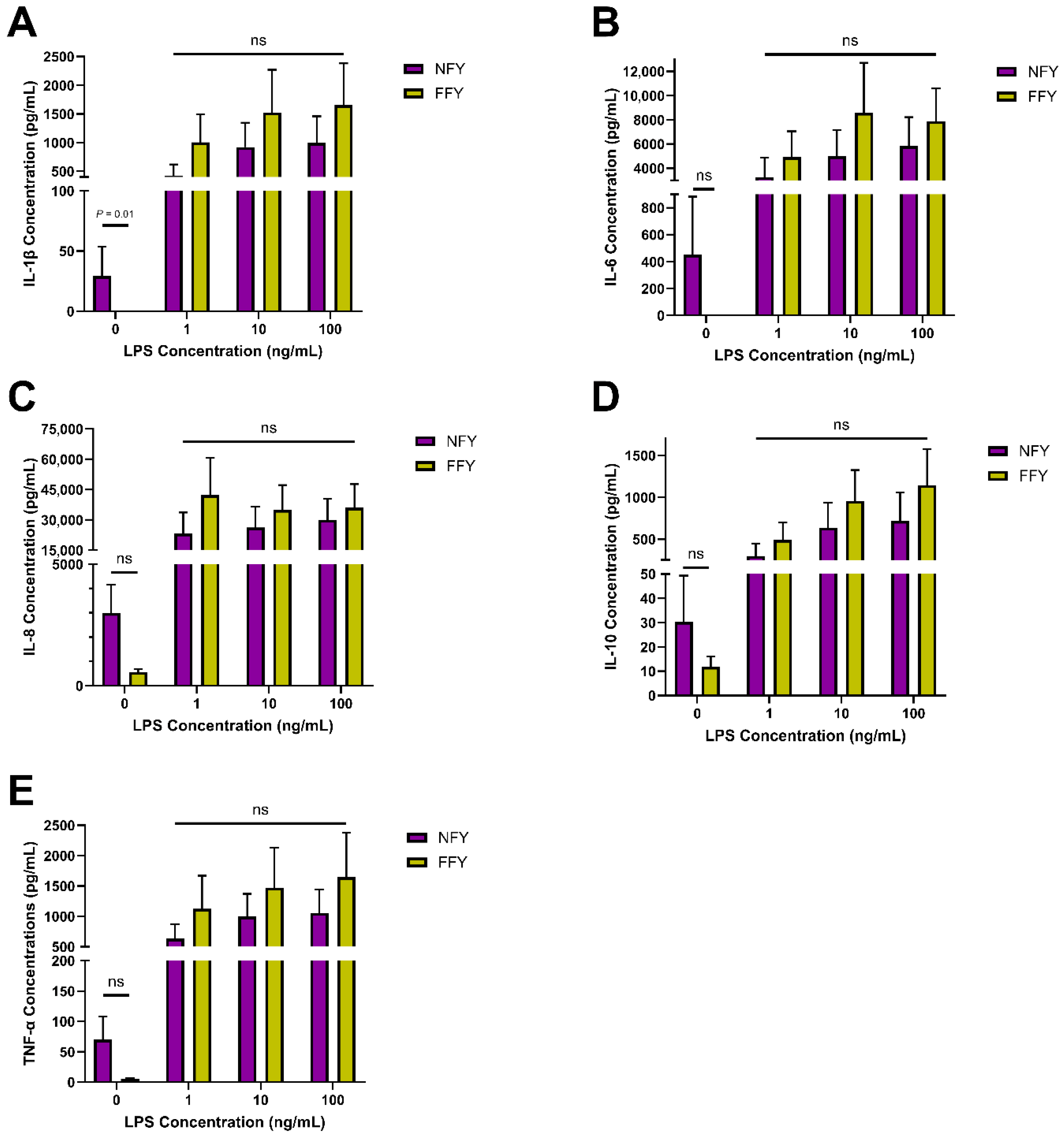
Under unstimulated conditions (i.e., 0 ng/mL LPS), the concentration of IL-1β in PBMC supernatants was lower in response to the FFY diet compared with the NFY diet (0.1 pg/mL compared with 24 pg/mL, respectively; p < 0.01; Figure 2; Supplemental Table S4). However, there were no diet-induced differences in IL-1β concentrations at 1, 10, or 100 ng/mL LPS stimulation. Further, there were no differences between diets in the supernatant concentrations of IL-6, IL-8, IL-10, or TNF-α under neither the unstimulated nor stimulated conditions.

4. Discussion

The ubiquity of chronic low-grade inflammation in metabolic diseases characterizes it as a global public health problem [2]. Full-fat dairy foods, as rich sources of saturated FAs [17], have been proposed to have pro-inflammatory effects, however, research to date indicates a lack of detrimental effects from dairy fat moieties, FA classes, and FAs [23] and full-fat dairy food consumption on inflammatory tone [24,25]. Yet, the effects of dairy fat per se on inflammation remain largely understudied, particularly in a randomized controlled setting. Thus, the secondary aim for our randomized, crossover controlled-feeding trial in individuals with prediabetes was to examine differences in concentrations of inflammatory markers in fasting blood and the supernatants of PBMCs following consumption of a diet with either FFY or NFY. We observed minimal differences in inflammatory tone following consumption of the FFY diet compared with the NFY diet. The concentration of immature granulocytes was lower in response to the FFY diet, compared with the NFY diet. No differences between diets were observed in circulating inflammatory markers as well as most inflammatory markers produced by PBMCs. In unstimulated PBMCs, IL-1β concentrations in cell supernatants were lower in response to the FFY diet, but this pattern was not observed under LPS-stimulated conditions.
In unstimulated PBMCs, IL-1β production was greater following the NFY diet, compared with the FFY diet, despite no differences by diet being observed for circulating IL-1β concentrations. The clinical relevance of this result remains unclear, though mediating roles of IL-1β have been implicated in the development and progression of T2D [33]. A similar finding was reported by Gupta et al. [34] who observed that there were no differences in serum cytokine concentrations across individuals with different levels of glycemic control, despite increases in cytokine mRNA in leukocytes. The measurement of circulating cytokine concentrations can be an imperfect tool and may not be fully representative of bioactive cytokine concentrations [35,36], thus pairing this approach with PBMC cytokine production analyses offers further insights into differences in inflammatory tone. Additional considerations include the fact that the PBMC fraction only includes lymphocytes, monocytes, natural killer cells, and dendritic cells, but excludes many other cell types that contribute to the immune response. For example, granulocytes (i.e., neutrophils, eosinophils, and basophils) can also produce IL-1β [37,38]. We did not observe differences in granulocyte concentrations with the exception of immature granulocytes. Greater concentrations of immature granulocytes have classically been associated with infection [39], but have more recently been associated with sterile (i.e., non-infectious) stressors, such as stroke risk [40] and diagnosis of pulmonary embolisms [41]. Thus, a lower concentration of immature granulocytes following the FFY diet may indicate a benefit to the inflammatory tone. The production of immature granulocytes through granulopoiesis has been suggested to be stimulated by IL-1β [42], which may indicate greater IL-1β activity in vivo. Our results did not reveal changes by diet in the concentrations of other cell types (i.e., cells that are not PBMCs), however, the activity of these other cell types was not assessed here. Thus, if the IL-1β production capacity of these other cell types increased in response to the FFY diet, this may have resulted in the apparent lack of differences by diet in plasma IL-1β concentrations. We also acknowledge that leukocytes in peripheral blood are not the only source of circulating cytokines. Macrophages that have infiltrated the adipose tissue in response to hyperplasia in obesity are a prominent source of circulating cytokines [43,44,45]. However, we did not observe differences in MCP-1 concentrations, which would have potentially indicated increased monocyte migration into inflamed adipose tissue [46]. Further, there were no differences in the concentrations of the adipokines NGAL/lipocalin-2 or PAI-1, which would have also indicated adipose tissue inflammation [47,48]. Together, our results largely suggest minimal effects of short-term (i.e., 3 weeks) FFY intake on inflammatory tone, yet additional research could yield further insights. Current available evidence demonstrates that dairy intake, including dairy with full fat content, may not elicit negative effects on inflammatory tone. Turner et al. [49] observed no differences in inflammatory biomarker concentrations following a diet high in low-fat dairy products compared to a low-dairy control. In contrast, two trials reported a more beneficial inflammatory tone resulting from incorporating low-fat dairy products in the diet, when compared with a carbohydrate-rich control [50,51]. Further, previous RCTs have not demonstrated differences in inflammatory tone following the consumption of diets with varying amounts of dairy fat. Mitri et al. [52] and Schmidt et al. [53] found no differences in CRP or IL-6 concentrations following consumption of a diet comprised of high-fat dairy foods compared with low-fat dairy foods in individuals with T2D or metabolic syndrome. Similarly, Benatar et al. [54] did not observe differences in CRP concentrations in healthy individuals after an increase in high-fat dairy consumption compared with individuals who maintained or decreased their dairy intake. However, RCTs have also demonstrated differences in inflammatory responses from the consumption of different dairy products, highlighting the need to examine individual dairy products in addition to dairy as a food group [55,56]. Raziani et al. [57] did not observe differences in CRP concentrations following the consumption of regular-fat (25–32%) compared with reduced-fat (13–16%) cheese in individuals at risk for metabolic syndrome. Our results align with previous findings which potentially suggest that intake of full-fat dairy foods may not elicit detrimental effects on inflammatory tone, despite their SFA content.
Evaluating the effects of dairy fat on inflammation with a matrix approach (i.e., comparing FFY with NFY) is a strength of our trial. This is due to the increasing interest in and recognition of the dairy-fat matrix, which describes the unique composition and construction of the fat moieties, FA classes, and FAs in each dairy food [28]. Additionally, utilizing cytokine concentrations in the supernatants of unstimulated and LPS-stimulated PBMCs to characterize the effects of dairy fat intake provides unique insight beyond circulating inflammatory markers. Still, the results presented here must be interpreted with caution. The largest limitation of the current study is the small sample size, primarily resulting from direct and indirect challenges of the COVID-19 pandemic, which impacts the generalizability of these findings [29]. This includes consequences from facility closures and hesitant attitudes of potential participants to voluntarily spend time in a medical center and potentially increase exposure to the virus. Additionally, there was substantial variation in the data, and many values, particularly for IL-1β concentrations, fell below the detection limit, despite the use of a high-sensitivity multiplex assay system. As a result, the ability to fully characterize the inflammatory profile was limited. In addition to the small sample size, our participant cohort comprised individuals with a range of ages and body mass indices [29]. These differences likely resulted in diverse baseline inflammatory tones, which may explain some of the variation in inflammatory response. The crossover design of this study, and the statistical model that utilized a covariate, were strengths in accounting for individual variation. In contrast, a larger participant sample may have led to less inter-individual variation. Extending the duration of the dietary intervention in future studies may build upon these findings and further clarify differences in the inflammatory responses to FFY and NFY consumption.

5. Conclusions

Despite the presence of chronic low-grade inflammation across many metabolic diseases, dietary mitigation strategies utilizing dairy fat intake remain understudied. Our findings indicate minimal effects of short-term FFY consumption on inflammation in individuals with prediabetes. While our results do not support our hypothesis, they contribute to the greater literature base as inflammatory biomarkers are not commonly analyzed in RCTs evaluating dairy fat intake and metabolic health. Broadly, our findings suggest that dairy fat intake may not negatively contribute to chronic low-grade inflammation, but could potentially benefit the inflammatory tone, despite the saturated FA content of full-fat dairy foods. Future research can complement and expand our current understanding of the role of full-fat dairy foods in the modulation of inflammatory tone. These research directions include implementing longer intervention periods, enrolling a larger participant cohort, and conducting studies under free-living (i.e., less controlled) dietary conditions to better reflect real-world eating patterns. Further, it would be important to compare the effects of incorporating multiple types of full-fat dairy foods (e.g., milk, yogurt, and cheese) within the diet. A dose-response analysis of both total dairy intake and dairy fat intake would contribute to a more detailed understanding of the relationship between full-fat dairy consumption and inflammatory outcomes. Finally, mechanistic insights remain to be elucidated and investigating additional aspects of the immune response, such as granulocyte responses, would contribute a broader insight into immune modulation.

Supplementary Materials

The following supporting information can be downloaded at https://www.mdpi.com/article/10.3390/lipidology3010004/s1, Table S1: Fasting leukocyte concentrations in individuals with prediabetes after three weeks of consuming diets with either NFY or FFY, stratified by sex; Table S2: Fasting circulating cytokine concentrations in individuals with prediabetes after three weeks of consuming diets with either NFY or FFY, stratified by sex; Table S3: Fasting concentrations of pro-inflammatory biomarkers in individuals with prediabetes after three weeks of consuming diets with either NFY or FFY, stratified by sex; Table S4: Concentrations of cytokines in cell supernatants of unstimulated and lipopolysaccharide-stimulated peripheral blood mononuclear cells from individuals with prediabetes after three weeks of consuming diets with either NFY or FFY, stratified by sex.

Author Contributions

Conceptualization, C.L.K., M.E.P. and J.K.; Methodology, V.M.T., S.E., M.P.G., M.E.P. and J.K.; Software, V.M.T.; Validation, J.K.; Formal Analysis, V.M.T.; Investigation, V.M.T., S.E., M.E.P. and J.K.; Resources, M.P.G. and J.K.; Data Curation, V.M.T., S.E. and J.K.; Writing—Original Draft Preparation, V.M.T.; Writing—Review & Editing, V.M.T., S.E., M.P.G., C.L.K., M.E.P. and J.K.; Visualization, V.M.T.; Supervision, C.L.K., M.E.P. and J.K.; Project Administration, J.K.; Funding Acquisition, C.L.K., M.E.P. and J.K. All authors have read and agreed to the published version of the manuscript.

Funding

This work is supported by the Agriculture and Food Research Initiative, project award no. 2022-67011-36572, from the U.S. Department of Agriculture’s National Institute of Food and Agriculture, as well as the National Dairy Council, the Vermont Dairy Promotion Board, and the University of Vermont Food Systems Research Center. This study was conducted independently by the research team, and all analyses, interpretations, and conclusions are based solely on the data, without influence from the funding sources.

Institutional Review Board Statement

This study was conducted in accordance with the Declaration of Helsinki, and approved by the Institutional Review Board of the University of Vermont (18-0295; 21 February 2018).

Informed Consent Statement

Informed consent was obtained from all subjects involved in this study.

Data Availability Statement

The data presented in this study are available on reasonable request from the corresponding author.

Acknowledgments

Many thanks to Janice Y. Bunn, Peter W. Callas, Derek M. Devine, and Michael J. DeSarno for statistical assistance. In addition, we would like to thank Hao (Hallie) Shi, Dana E. Bourne and Allison L. Unger for their roles in participant recruitment and study procedures as well as the staff at the UVMMC CRC for their efforts in facilitating the trial. Finally, we are grateful to our participants for their selfless decision to support science.

Conflicts of Interest

C.L.K., M.E.P., and J.K. have received support from the National Dairy Council and J.K. reports a professional relationship with the Hass Avocado Board. The funding sponsors had no role in the design of this study; the collection, analysis, or interpretation of data; the writing of the manuscript, and the decision to publish the results.

Abbreviations

The following abbreviations are used in this manuscript:
CRCClinical Research Center
CRPC-reactive protein
DASHDietary Approaches to Stop Hypertension
FAFatty acid
FFYFull-fat yogurt
GlycAGlycoprotein acetyls
ILInterleukin
LPSLipopolysaccharide
MCP-1Monocyte chemoattractant protein-1
NGALNeutrophil gelatinase-associated lipocalin
NFYNon-fat yogurt
PBMCPeripheral blood mononuclear cells
PAI-1Plasminogen activator inhibitor-1
RPMIRoswell Park Memorial Institute
T2DType 2 diabetes
TNF-αTumor necrosis factor-α
UVMMCUniversity of Vermont Medical Center

References

  1. Furman, D.; Campisi, J.; Verdin, E.; Carrera-Bastos, P.; Targ, S.; Franceschi, C.; Ferrucci, L.; Gilroy, D.W.; Fasano, A.; Miller, G.W.; et al. Chronic inflammation in the etiology of disease across the life span. Nat. Med. 2019, 25, 1822–1832. [Google Scholar] [CrossRef]
  2. Donath, M.Y.; Meier, D.T.; Böni-Schnetzler, M. Inflammation in the Pathophysiology and Therapy of Cardiometabolic Disease. Endocr. Rev. 2019, 40, 1080–1091. [Google Scholar] [CrossRef] [PubMed]
  3. Tsoupras, A.; Lordan, R.; Zabetakis, I. Inflammation, not Cholesterol, Is a Cause of Chronic Disease. Nutrients 2018, 10, 604. [Google Scholar] [CrossRef]
  4. Grossmann, V.; Schmitt, V.H.; Zeller, T.; Panova-Noeva, M.; Schulz, A.; Laubert-Reh, D.; Juenger, C.; Schnabel, R.B.; Abt, T.G.J.; Laskowski, R.; et al. Profile of the Immune and Inflammatory Response in Individuals with Prediabetes and Type 2 Diabetes. Diabetes Care 2015, 38, 1356–1364. [Google Scholar] [CrossRef]
  5. Lucas, R.; Parikh, S.J.; Sridhar, S.; Guo, D.-H.; Bhagatwala, J.; Dong, Y.; Caldwell, R.; Mellor, A.; Caldwell, W.; Zhu, H.; et al. Cytokine profiling of young overweight and obese female African American adults with prediabetes. Cytokine 2013, 64, 310–315. [Google Scholar] [CrossRef] [PubMed]
  6. Maschirow, L.; Khalaf, K.; Al-Aubaidy, H.A.; Jelinek, H.F. Inflammation, coagulation, endothelial dysfunction and oxidative stress in prediabetes—Biomarkers as a possible tool for early disease detection for rural screening. Clin. Biochem. 2015, 48, 581–585. [Google Scholar] [CrossRef]
  7. Freeman, D.J.; Norrie, J.; Caslake, M.J.; Gaw, A.; Ford, I.; Lowe, G.D.O.; O’Reilly, D.S.J.; Packard, C.J.; Sattar, N. C-Reactive Protein is an Independent Predictor of Risk for the Development of Diabetes in the West of Scotland Coronary Prevention Study. Diabetes 2002, 51, 1596–1600. [Google Scholar] [CrossRef]
  8. Pradhan, A.D. C-Reactive Protein, Interleukin 6, and Risk of Developing Type 2 Diabetes Mellitus. JAMA 2001, 286, 327. [Google Scholar] [CrossRef]
  9. Spranger, J.; Kroke, A.; Mohlig, M.; Hoffmann, K.; Bergmann, M.M.; Ristow, M.; Boeing, H.; Pfeiffer, A.F.H. Inflammatory Cytokines and the Risk to Develop Type 2 Diabetes. Diabetes 2003, 52, 812–817. [Google Scholar] [CrossRef]
  10. International Diabetes Federation. IDF Diabetes Atlas; International Diabetes Federation: Brussels, Belgium, 2021. [Google Scholar]
  11. Ong, K.L.; Stafford, L.K.; McLaughlin, S.A.; Boyko, E.J.; Vollset, S.E.; Smith, A.E.; Dalton, B.E.; Duprey, J.; Cruz, J.A.; Hagins, H.; et al. Global, regional, and national burden of diabetes from 1990 to 2021, with projections of prevalence to 2050: A systematic analysis for the Global Burden of Disease Study 2021. Lancet 2023, 402, 203–234. [Google Scholar] [CrossRef] [PubMed]
  12. Minihane, A.M.; Vinoy, S.; Russell, W.R.; Baka, A.; Roche, H.M.; Tuohy, K.M.; Teeling, J.L.; Blaak, E.E.; Fenech, M.; Vauzour, D.; et al. Low-grade inflammation, diet composition and health: Current research evidence and its translation. Br. J. Nutr. 2015, 114, 999–1012. [Google Scholar] [CrossRef]
  13. Hwang, D.H.; Kim, J.-A.; Lee, J.Y. Mechanisms for the activation of Toll-like receptor 2/4 by saturated fatty acids and inhibition by docosahexaenoic acid. Eur. J. Pharmacol. 2016, 785, 24–35. [Google Scholar] [CrossRef]
  14. Korbecki, J.; Bajdak-Rusinek, K. The effect of palmitic acid on inflammatory response in macrophages: An overview of molecular mechanisms. Inflamm. Res. 2019, 68, 915–932. [Google Scholar] [CrossRef]
  15. Dumas, J.A.; Bunn, J.Y.; Nickerson, J.; Crain, K.I.; Ebenstein, D.B.; Tarleton, E.K.; Makarewicz, J.; Poynter, M.E.; Kien, C.L. Dietary saturated fat and monounsaturated fat have reversible effects on brain function and the secretion of pro-inflammatory cytokines in young women. Metabolism 2016, 65, 1582–1588. [Google Scholar] [CrossRef] [PubMed]
  16. Kien, C.L.; Bunn, J.Y.; Fukagawa, N.K.; Anathy, V.; Matthews, D.E.; Crain, K.I.; Ebenstein, D.B.; Tarleton, E.K.; Pratley, R.E.; Poynter, M.E. Lipidomic evidence that lowering the typical dietary palmitate to oleate ratio in humans decreases the leukocyte production of proinflammatory cytokines and muscle expression of redox-sensitive genes. J. Nutr. Biochem. 2015, 26, 1599–1606. [Google Scholar] [CrossRef]
  17. Padley, F.; Gunstone, F.; Harwood, J. Occurrence and characterisation of oils and fats. In The Lipid Handbook, 3rd ed.; Gunstone, F.D., Harwood, J.L., Eds.; CRC Press: Boca-Raton, FL, USA, 2007; pp. 37–141. [Google Scholar]
  18. Unger, A.L.; Torres-Gonzalez, M.; Kraft, J. Dairy fat consumption and the risk of metabolic syndrome: An examination of the saturated fatty acids in dairy. Nutrients 2019, 11, 2200. [Google Scholar] [CrossRef] [PubMed]
  19. Astrup, A.; Bertram, H.C.; Bonjour, J.-P.; De Groot, L.C.; De Oliveira Otto, M.C.; Feeney, E.L.; Garg, M.L.; Givens, I.; Kok, F.J.; Krauss, R.M.; et al. WHO draft guidelines on dietary saturated and trans fatty acids: Time for a new approach? BMJ 2019, 366, l4137. [Google Scholar] [CrossRef]
  20. Jensen, R.G. The Composition of Bovine Milk Lipids: January 1995 to December 2000. J. Dairy Sci. 2002, 85, 295–350. [Google Scholar] [CrossRef] [PubMed]
  21. Taormina, V.M.; Unger, A.L.; Schiksnis, M.R.; Torres-Gonzalez, M.; Kraft, J. Branched-chain fatty acids—An underexplored class of dairy-derived fatty acids. Nutrients 2020, 12, 2875. [Google Scholar] [CrossRef]
  22. Venn-Watson, S.; Lumpkin, R.; Dennis, E.A. Efficacy of dietary odd-chain saturated fatty acid pentadecanoic acid parallels broad associated health benefits in humans: Could it be essential? Sci. Rep. 2020, 10, 8161. [Google Scholar] [CrossRef]
  23. Torres-Gonzalez, M.; Rice Bradley, B.H. Whole-milk dairy foods: Biological mechanisms underlying beneficial effects on risk markers for cardiometabolic health. Adv. Nutr. 2023, 14, 1523–1537. [Google Scholar] [CrossRef] [PubMed]
  24. Panagiotakos, D.B.; Pitsavos, C.H.; Zampelas, A.D.; Chrysohoou, C.A.; Stefanadis, C.I. Dairy Products Consumption Is Associated with Decreased Levels of Inflammatory Markers Related to Cardiovascular Disease in Apparently Healthy Adults: The ATTICA Study. J. Am. Coll. Nutr. 2010, 29, 357–364. [Google Scholar] [CrossRef]
  25. Shi, N.; Olivo-Marston, S.; Jin, Q.; Aroke, D.; Joseph, J.J.; Clinton, S.K.; Manson, J.E.; Rexrode, K.M.; Mossavar-Rahmani, Y.; Fels Tinker, L.; et al. Associations of dairy intake with circulating biomarkers of inflammation, insulin response, and dyslipidemia among postmenopausal women. J. Acad. Nutr. Diet. 2021, 121, 1984–2002. [Google Scholar] [CrossRef] [PubMed]
  26. Lordan, R.; Tsoupras, A.; Mitra, B.; Zabetakis, I. Dairy Fats and Cardiovascular Disease: Do We Really Need to Be Concerned? Foods 2018, 7, 29. [Google Scholar] [CrossRef] [PubMed]
  27. Yuan, M.; Singer, M.R.; Moore, L.L. Yogurt Consumption Is Associated with Lower Levels of Chronic Inflammation in the Framingham Offspring Study. Nutrients 2021, 13, 506. [Google Scholar] [CrossRef]
  28. Taormina, V.M.; Unger, A.L.; Kraft, J. Full-fat dairy products and cardiometabolic health outcomes: Does the dairy-fat matrix matter? Front. Nutr. 2024, 11, 1386257. [Google Scholar] [CrossRef]
  29. Taormina, V.M.; Eisenhardt, S.; Gilbert, M.P.; Poynter, M.E.; Kien, C.L.; Kraft, J. Full-fat versus non-fat yogurt consumption improves glucose homeostasis and metabolic hormone regulation in individuals with prediabetes: A randomized-controlled trial. Nutr. Res. 2025, 136, 39–52. [Google Scholar] [CrossRef]
  30. ElSayed, N.A.; Aleppo, G.; Bannuru, R.R.; Bruemmer, D.; Collins, B.S.; Ekhlaspour, L.; Gaglia, J.L.; Hilliard, M.E.; Johnson, E.L.; Khunti, K.; et al. 2. Diagnosis and classification of diabetes: Standards of care in diabetes—2024. Diabetes Care 2024, 47, S20–S42. [Google Scholar] [CrossRef]
  31. National Institutes of Health National Heart Lung and Blood Institute. DASH Eating Plan. Available online: https://www.nhlbi.nih.gov/education/dash-eating-plan (accessed on 4 August 2024).
  32. Grundy, S.M.; Cleeman, J.I.; Daniels, S.R.; Donato, K.A.; Eckel, R.H.; Franklin, B.A.; Gordon, D.J.; Krauss, R.M.; Savage, P.J.; Smith, S.C.; et al. Diagnosis and Management of the Metabolic Syndrome. Circulation 2005, 112, 2735–2752. [Google Scholar] [CrossRef]
  33. Donath, M.Y.; Schumann, D.M.; Faulenbach, M.; Ellingsgaard, H.; Perren, A.; Ehses, J.A. Islet Inflammation in Type 2 Diabetes. Diabetes Care 2008, 31, S161–S164. [Google Scholar] [CrossRef]
  34. Gupta, S.; Maratha, A.; Siednienko, J.; Natarajan, A.; Gajanayake, T.; Hoashi, S.; Miggin, S. Analysis of inflammatory cytokine and TLR expression levels in Type 2 Diabetes with complications. Sci. Rep. 2017, 7, 7633. [Google Scholar] [CrossRef]
  35. Aziz, N. Measurement of Circulating Cytokines and Immune-Activation Markers by Multiplex Technology in the Clinical Setting: What Are We Really Measuring? Forum Immunopathol. Dis. Ther. 2015, 6, 19–22. [Google Scholar] [CrossRef]
  36. Liu, C.; Chu, D.; Kalantar-Zadeh, K.; George, J.; Young, H.A.; Liu, G. Cytokines: From Clinical Significance to Quantification. Adv. Sci. 2021, 8, 2004433. [Google Scholar] [CrossRef]
  37. Esnault, S.; Kelly, E.A.B.; Nettenstrom, L.M.; Cook, E.B.; Seroogy, C.M.; Jarjour, N.N. Human eosinophils release IL-1ß and increase expression of IL-17A in activated CD4+ T lymphocytes. Clin. Exp. Allergy 2012, 42, 1756–1764. [Google Scholar] [CrossRef] [PubMed]
  38. Mantovani, A.; Cassatella, M.A.; Costantini, C.; Jaillon, S. Neutrophils in the activation and regulation of innate and adaptive immunity. Nat. Rev. Immunol. 2011, 11, 519–531. [Google Scholar] [CrossRef] [PubMed]
  39. Georgakopoulou, V.; Makrodimitri, S.; Triantafyllou, M.; Samara, S.; Voutsinas, P.; Anastasopoulou, A.; Papageorgiou, C.; Spandidos, D.; Gkoufa, A.; Papalexis, P.; et al. Immature granulocytes: Innovative biomarker for SARS-CoV-2 infection. Mol. Med. Rep. 2022, 26, 217. [Google Scholar] [CrossRef]
  40. Korkut, M.; Selvi, F.; Bedel, C. Echocardiographic epicardial fat thickness and immature granulocyte are novel inflammatory predictors of acute ischemic stroke: A prospective study. Sao Paulo Med. J. 2022, 140, 384–389. [Google Scholar] [CrossRef]
  41. Karakurt, G.; Guven, O.; Aynaci, E.; Kerget, B.; Senkardesler, G.; Duger, M. Evaluation of Hemogram Parameters in the Diagnosis of Pulmonary Embolism: Immature Granulocytes and Other New Tips. Clin. Appl. Thromb. Hemost. 2024, 30, 10760296241227212. [Google Scholar] [CrossRef]
  42. Lai, C.; Baumann, H. Interleukin-1 beta induces production of granulocyte colony-stimulating factor in human hepatoma cells. Blood 1996, 87, 4143–4148. [Google Scholar] [CrossRef]
  43. Alkhouri, N.; Gornicka, A.; Berk, M.P.; Thapaliya, S.; Dixon, L.J.; Kashyap, S.; Schauer, P.R.; Feldstein, A.E. Adipocyte Apoptosis, a Link between Obesity, Insulin Resistance, and Hepatic Steatosis. J. Biol. Chem. 2010, 285, 3428–3438. [Google Scholar] [CrossRef] [PubMed]
  44. Cinti, S.; Mitchell, G.; Barbatelli, G.; Murano, I.; Ceresi, E.; Faloia, E.; Wang, S.; Fortier, M.; Greenberg, A.S.; Obin, M.S. Adipocyte death defines macrophage localization and function in adipose tissue of obese mice and humans. J. Lipid Res. 2005, 46, 2347–2355. [Google Scholar] [CrossRef]
  45. Prasad, M.; Chen, E.W.; Toh, S.-A.; Gascoigne, N.R.J. Autoimmune responses and inflammation in type 2 diabetes. J. Leukoc. Biol. 2020, 107, 739–748. [Google Scholar] [CrossRef]
  46. Panee, J. Monocyte Chemoattractant Protein 1 (MCP-1) in obesity and diabetes. Cytokine 2012, 60, 1–12. [Google Scholar] [CrossRef] [PubMed]
  47. Abella, V.; Scotece, M.; Conde, J.; Gómez, R.; Lois, A.; Pino, J.; Gómez-Reino, J.J.; Lago, F.; Mobasheri, A.; Gualillo, O. The potential of lipocalin-2/NGAL as biomarker for inflammatory and metabolic diseases. Biomarkers 2015, 20, 565–571. [Google Scholar] [CrossRef] [PubMed]
  48. Cesari, M.; Pahor, M.; Incalzi, R.A. Plasminogen Activator Inhibitor-1 (PAI-1): A Key Factor Linking Fibrinolysis and Age-Related Subclinical and Clinical Conditions. Cardiovasc. Ther. 2010, 28, e72–e91. [Google Scholar] [CrossRef] [PubMed]
  49. Turner, K.; Keogh, J.; Meikle, P.; Clifton, P. Changes in Lipids and Inflammatory Markers after Consuming Diets High in Red Meat or Dairy for Four Weeks. Nutrients 2017, 9, 886. [Google Scholar] [CrossRef]
  50. Van Meijl, L.E.C.; Mensink, R.P. Effects of low-fat dairy consumption on markers of low-grade systemic inflammation and endothelial function in overweight and obese subjects: An intervention study. Br. J. Nutr. 2010, 104, 1523–1527. [Google Scholar] [CrossRef]
  51. Dugan, C.E.; Aguilar, D.; Park, Y.-K.; Lee, J.-Y.; Fernandez, M.L. Dairy Consumption Lowers Systemic Inflammation and Liver Enzymes in Typically Low-Dairy Consumers with Clinical Characteristics of Metabolic Syndrome. J. Am. Coll. Nutr. 2016, 35, 255–261. [Google Scholar] [CrossRef]
  52. Mitri, J.; Tomah, S.; Mottalib, A.; Salsberg, V.; Ashrafzadeh, S.; Pober, D.M.; Eldib, A.H.; Tasabehji, M.W.; Hamdy, O. Effect of dairy consumption and its fat content on glycemic control and cardiovascular disease risk factors in patients with type 2 diabetes: A randomized controlled study. Am. J. Clin. Nutr. 2020, 112, 293–302. [Google Scholar] [CrossRef]
  53. Schmidt, K.A.; Cromer, G.; Burhans, M.S.; Kuzma, J.N.; Hagman, D.K.; Fernando, I.; Murray, M.; Utzschneider, K.M.; Holte, S.; Kraft, J.; et al. The impact of diets rich in low-fat or full-fat dairy on glucose tolerance and its determinants: A randomized controlled trial. Am. J. Clin. Nutr. 2021, 113, 534–547. [Google Scholar] [CrossRef]
  54. Benatar, J.R.; Jones, E.; White, H.; Stewart, R.A. A randomized trial evaluating the effects of change in dairy food consumption on cardio-metabolic risk factors. Eur. J. Prev. Cardiol. 2014, 21, 1376–1386. [Google Scholar] [CrossRef] [PubMed]
  55. Rundblad, A.; Holven, K.B.; Øyri, L.K.L.; Hansson, P.; Ivan, I.H.; Gjevestad, G.O.; Thoresen, M.; Ulven, S.M. Intake of Fermented Dairy Products Induces a Less Pro-Inflammatory Postprandial Peripheral Blood Mononuclear Cell Gene Expression Response than Non-Fermented Dairy Products: A Randomized Controlled Cross-Over Trial. Mol. Nutr. Food Res. 2020, 64, 2000319. [Google Scholar] [CrossRef] [PubMed]
  56. Burton, K.J.; Rosikiewicz, M.; Pimentel, G.; Bütikofer, U.; Von Ah, U.; Voirol, M.-J.; Croxatto, A.; Aeby, S.; Drai, J.; McTernan, P.G.; et al. Probiotic yogurt and acidified milk similarly reduce postprandial inflammation and both alter the gut microbiota of healthy, young men. Br. J. Nutr. 2017, 117, 1312–1322. [Google Scholar] [CrossRef]
  57. Raziani, F.; Tholstrup, T.; Kristensen, M.D.; Svanegaard, M.L.; Ritz, C.; Astrup, A.; Raben, A. High intake of regular-fat cheese compared with reduced-fat cheese does not affect LDL cholesterol or risk markers of the metabolic syndrome: A randomized controlled trial. Am. J. Clin. Nutr. 2016, 104, 973–981. [Google Scholar] [CrossRef] [PubMed]
Figure 1. Diagram of study procedures. The two-treatment crossover trial comprised two, three-week experimental diets which contained yogurt, each preceded by a one-week run-in diet that did not contain yogurt. Blood samples were taken at the end of the first run-in diet and at the end of each experimental diet. From these blood samples, (i) concentrations of circulating cytokines, chemokines, acute-phase proteins, and glycoproteins at fasting were measured, and (ii) peripheral blood mononuclear cells (PBMCs) were isolated, and the cytokine response was measured under unstimulated and lipopolysaccharide (LPS)-stimulated (represented by lightning bolts) conditions. Created with BioRender.com.
Lipidology 03 00004 g001
Figure 2. Concentrations of interleukin (IL)-1β Panel (A), IL-6 Panel (B), IL-8 Panel (C), IL-10 Panel (D), and tumor necrosis factor (TNF)-α Panel (E) in cell supernatants of unstimulated and lipopolysaccharide-stimulated peripheral blood mononuclear cells from individuals with prediabetes following the consumption of a diet with non-fat yogurt (NFY) or full-fat yogurt (FFY) for three weeks. Linear mixed models were used with day, diet, and sex as fixed effects and day and diet as repeated measures; differences by diet in unstimulated and stimulated cytokine production were analyzed separately. Significance was determined at p ≤ 0.01. The term ‘ns’ denotes that there was no significant difference by diet. Samples above or below the limit of detection were extrapolated if values were within 70–130% of the standard value. Samples below the limit of detection that did not meet the extrapolation threshold with fluorescence readings of negative or zero values and were imputed as zeros and samples with positive fluorescence readings were imputed as the lower limit of detection.
Lipidology 03 00004 g002
Table 1. Composition of diets [29].
Component (% of Total Kilocalories per Day)
DietCarbohydratesProteinFat
Run-in diet451540
Non-fat yogurt diet551530
Full-fat yogurt diet471538
Table 2. Fasting leukocyte absolute concentrations at screening (n = 13).
Sex
AllFemaleMale
ParameterUnitMean SEMMean SEMMean SEM
Total leukocytesK/cmm5.71±0.476.54±0.694.74±0.36
LymphocytesK/cmm1.89±0.211.98±0.351.79±0.21
MonocytesK/cmm0.49±0.030.54±0.050.43±0.02
EosinophilsK/cmm0.19±0.030.17±0.030.22±0.04
BasophilsK/cmm0.04±0.010.04±0.010.03±0.01
NeutrophilsK/cmm3.08±0.343.78±0.462.27±0.27
Immature granulocytesK/cmm0.02±0.000.02±0.000.01±0.00
Table 3. Fasting leukocyte concentrations in individuals with prediabetes after three weeks of consuming diets with either NFY or FFY (n = 13).
Diet
NFYFFYp 1
ParameterUnitMean SEMMean SEMDietSexDayDiet × Sex
Total leukocytesK/cmm5.86±0.415.58±0.400.070.460.770.32
LymphocytesK/cmm1.83±0.171.75±0.170.280.510.220.96
MonocytesK/cmm0.48±0.030.49±0.040.910.870.270.04
EosinophilsK/cmm0.18±0.030.16±0.020.650.030.100.12
BasophilsK/cmm0.04±0.010.04±0.000.160.380.370.26
NeutrophilsK/cmm3.31±0.313.13±0.270.150.250.430.34
Immature granulocytesK/cmm0.02±0.000.01±0.000.010.090.990.47
FFY, full-fat yogurt; NFY, non-fat yogurt. 1 Significance determined at p ≤ 0.01.
Table 4. Fasting cytokine concentrations in individuals with prediabetes after three weeks of consuming diets with either NFY or FFY (n = 13).
Diet
NFYFFYp 1
ParameterUnitMean SEMMean SEMDietSexDayDiet × Sex
IL-1β 2,3pg/mL1.8±0.91.5±0.80.440.700.090.81
IL-6 2pg/mL1.3±0.221.3±0.240.740.810.400.95
IL-8pg/mL1.5±0.121.5±0.100.700.340.310.97
IL-10 2pg/mL4.6±0.64.3±0.60.130.620.030.64
TNF-αpg/mL30±6.627±4.60.700.610.160.73
FFY, full-fat yogurt; IL, interleukin; NFY, non-fat yogurt; TNF, tumor necrosis factor. 1 Significance determined at p ≤ 0.01. 2 Samples above or below the limit of detection were extrapolated if values were within 70–130% of the standard value. 3 Twenty samples were below the limit of detection and did not meet the extrapolation threshold. All fluorescence readings were negative or zero values and, therefore, were imputed as zeros.
Table 5. Fasting concentrations of pro-inflammatory markers in individuals with prediabetes after three weeks of consuming diets with either NFY or FFY (n = 13).
Diet
NFYFFYp 1
ParameterUnitMean SEMMean SEMDietSexDayDiet × Sex
CRPmg/L2.87±0.982.98±1.170.630.510.390.14
MCP-1pg/mL157±8.2157±100.710.790.150.31
NGAL/lipocalin-2ng/mL132±9.2129±9.10.410.290.140.16
PAI-1ng/mL26±3.125±3.00.340.330.280.90
GlycAmmol/L0.66±0.020.63±0.020.020.970.050.42
CRP, C-reactive protein; FFY, full-fat yogurt; GlycA, glycoprotein acetyls; MCP-1, monocyte chemoattractant protein-1; NFY, non-fat yogurt; NGAL, neutrophil gelatinase-associated lipocalin; PAI-1, plasminogen activator inhibitor-1. 1 Significance determined at p ≤ 0.01.
Disclaimer/Publisher’s Note: The statements, opinions and data contained in all publications are solely those of the individual author(s) and contributor(s) and not of MDPI and/or the editor(s). MDPI and/or the editor(s) disclaim responsibility for any injury to people or property resulting from any ideas, methods, instructions or products referred to in the content.