Review

Non-Invasive Ventilatory Support in Postoperative Respiratory Failure: A Phenotype-Driven Approach to Risk Stratification and Modality Selection


1
College of Medicine, Drexel University College of Medicine, West Reading, PA 19610, USA
2
Allegheny Health Network, Pittsburgh, PA 15212, USA
*
Author to whom correspondence should be addressed.
Complications 2026, 3(2), 8; https://doi.org/10.3390/complications3020008

Submission received: 22 January 2026 / Revised: 21 February 2026 / Accepted: 27 March 2026 / Published: 3 April 2026

Abstract

Postoperative respiratory failure (PRF) remains a pervasive clinical challenge that substantially contributes to perioperative morbidity, mortality, and prolonged ICU stay. Although conventional oxygen therapy is often sufficient, a significant subset of high-risk patients requires escalation to advanced non-invasive support to avoid reintubation and invasive mechanical ventilation. Evidence from recent randomized trials, including the 2025 RENOVATE and Goret et al. studies, indicates that both non-invasive ventilation (NIV) and high-flow nasal oxygen (HFNO) reduce postoperative pulmonary complications and reintubation in selected high-risk populations. While NIV is preferred for hypercapnic ventilatory failure and is commonly used in selected high-risk cardiac surgery patients, HFNO offers comparable outcomes in pure hypoxemic failure with the added benefits of superior patient tolerance and a lower incidence of interface-related complications. Effective PRF management necessitates an individualized, physiology-based approach. By implementing a phenotype-driven algorithm that aligns device mechanics with the dominant pathophysiology, such as atelectasis versus pump failure, clinicians can optimize patient outcomes while minimizing the specific risks associated with delayed intubation.

1. Introduction

Postoperative respiratory failure (PRF) is a frequent and serious complication of major surgery, leading to increased mortality, prolonged intensive care unit (ICU) length of stay, and higher rates of healthcare-associated infections. Because invasive mechanical ventilation (IMV) carries additional risks, including ventilator-associated pneumonia (VAP), delirium, and neuromuscular weakness, there is increasing interest in non-invasive ventilatory support strategies for at-risk surgical patients.
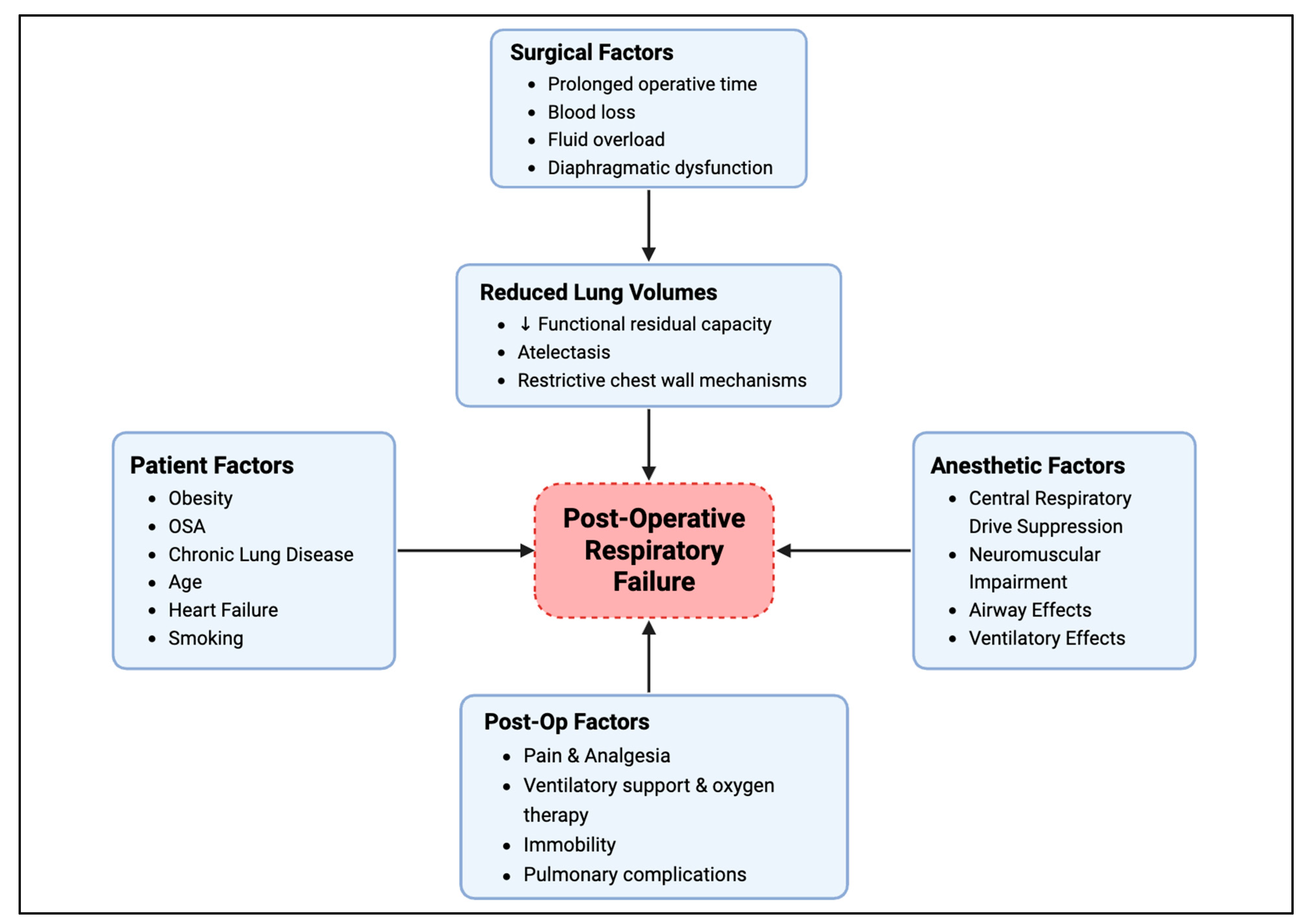
PRF results from a convergence of anesthetic effects, surgical insult, and patient comorbidities that narrow the margin of respiratory safety [1]. General anesthesia promotes atelectasis and diaphragmatic dysfunction, whereas postoperative pain, fluid shifts, and supine positioning further limit ventilation and impair secretion clearance. These factors are amplified in patients with obesity, obstructive sleep apnea (OSA), chronic lung disease, or advanced age, in whom the baseline pulmonary reserve is reduced and even minor perturbations can precipitate respiratory failure [2,3,4].
Reintubation and IMV are often lifesaving when PRF occurs but impose substantial short- and long-term costs. IMV exposes patients to ventilator-associated pneumonia (VAP), ventilator-induced lung injury, hemodynamic instability, delirium, and ICU-acquired neuromuscular weakness and may contribute to persistent cognitive and functional impairment after discharge [5,6,7,8,9]. These risks have led to increased interest in strategies that can avoid reintubation in high-risk surgical patients.
Non-invasive respiratory support modalities, including high-flow nasal oxygen (HFNO), continuous positive pressure ventilation (CPAP), and non-invasive ventilation (NIV), are increasingly used in the perioperative period to prevent or treat early PRF by improving oxygenation, recruiting atelectatic lung, and reducing work of breathing [10]. However, the optimal timing, patient selection, and choice among these modalities remain uncertain across different surgical populations, with conflicting trial data and heterogeneous outcomes. This review summarizes the current evidence on HFNO and NIV in the postoperative setting and proposes a phenotype-driven, mechanism-informed approach to non-invasive respiratory support that aligns the modality with the dominant pathophysiologic derangement.

2. Methods

A narrative review (rather than a systematic review) of the medical literature was conducted to evaluate the efficacy, safety, and physiologic rationale for non-invasive respiratory support in the postoperative setting. We performed a targeted search of the PubMed/MEDLINE, EMBASE, and Cochrane Library databases for studies published from database inception through January 2025. The search strategy utilized a combination of Medical Subject Headings (MeSH) and free-text terms, including “non-invasive ventilation,” “NIV,” “non-invasive positive pressure ventilation,” “NIPPV,” “high-flow nasal cannula,” “HFNC,” “high-flow nasal oxygen,” “HFNO,” “postoperative respiratory failure,” “post-extubation,” “reintubation,” “hypoxemic respiratory failure,” and “hypercapnic respiratory failure.”
We prioritized high-quality evidence from randomized controlled trials (RCTs), systematic reviews, and meta-analyses involving adult surgical populations. Special emphasis was placed on recent landmark trials most relevant to perioperative respiratory support published between 2023 and 2025 to ensure that the review reflects the most current clinical data. Two independent reviewers (RS and DP) screened the titles and abstracts for relevance to the adult surgical population. Disagreements regarding study inclusion were resolved through consensus and consultation with a third senior author.
Studies were selected based on methodological rigor, relevance to perioperative pathophysiology, and applicability to clinical management. We excluded studies focusing primarily on pediatric populations or those involving home mechanical ventilation for chronic stable disease, unless relevant to the acute perioperative period. Owing to the narrative design of this review, a formal quantitative meta-analysis or systematic grading of evidence quality (GRADE) was not performed. Instead, we aimed to provide a critical synthesis of heterogeneous data to inform clinical decision-making. Therefore, this article is based on clinical synthesis rather than a standardized statistical appraisal. However, we acknowledge the inherent risk of selection bias compared with a formal systematic review because the search was targeted toward high-impact landmark trials rather than an exhaustive inclusion of every available study. The proposed phenotype-driven framework reflects an interpretive synthesis of evidence to date. While grounded in physiologic rationale, other clinicians may weigh the importance of specific parameters differently.

3. Physiology and Mechanisms of Postoperative Respiratory Failure

PRF represents the final common pathway of multiple perioperative physiologic derangements that impair ventilation, gas exchange, and respiratory muscle performance (Table 1) [11]. These abnormalities are caused by the combined effects of general anesthesia, surgical trauma, patient positioning, postoperative pain, sedation, and pre-existing cardiopulmonary disease.
General anesthesia rapidly alters pulmonary physiology, with functional residual capacity (FRC) decreasing by approximately 15–20% following induction. This reduction is driven by diaphragmatic and intercostal muscle relaxation, loss of chest wall tone, and supine positioning [12,13]. Decreased lung volume promotes early airway closure in dependent lung regions, particularly in patients with obesity or underlying lung disease [14]. In parallel, impaired surfactant function increases alveolar instability, while sedative-hypnotic agents depress central respiratory drive and blunt protective airway reflexes. Residual neuromuscular blockade may persist into the immediate post-extubation period, resulting in inadequate tidal volumes and ineffective cough. Together, these factors increase susceptibility to hypoventilation, aspiration, and early postoperative hypoxemia [15].
Surgical trauma further increases respiratory dysfunction because upper abdominal and thoracic procedures produce reflex inhibition of diaphragmatic activity through phrenic nerve pathways, leading to pronounced diaphragmatic weakness and paradoxical breathing patterns that may persist for 24–72 h following surgery [16]. In addition, postoperative pain induces splinting and reduced inspiratory effort, which limits lung expansion and impairs secretion mobilization, thereby synergistically worsening dependent lung collapse and perpetuating hypoxemia [17].
Atelectasis is the most common pulmonary abnormality after surgery, affecting up to 75–90% of patients receiving general anesthesia [3]. Collapse of dependent lung zones produces intrapulmonary shunt and severe ventilation-perfusion mismatch, leading to refractory hypoxemia. Furthermore, fluid shifts and intraoperative transfusions may lead to postoperative pulmonary edema that worsens oxygenation and diffusion impairment [18].
In select patients, particularly those with chronic obstructive pulmonary disease (COPD), obesity hypoventilation syndrome (OHS), or neuromuscular weakness, hypercapnia rather than hypoxemia may dominate PRF [19,20]. In these patients, increased dead space ventilation, reduced tidal volumes, and respiratory muscle fatigue contribute to CO2 retention.
Postoperative impairment of cough strength, mucociliary function, and airway reflexes further compromises protection during a period of increased risk of aspiration [21,22]. Sedation and reduced inspiratory flow limit effective secretion clearance, which promotes mucus plugging, atelectasis, and secondary infection [23]. Deficits in humidification further impair secretion mobilization and increase the work of breathing [24].
Pre-existing patient characteristics also influence risk; increased chest wall elastance and reduced FRC promote airway collapse at end-expiration in patients with obesity. Perioperative airway instability is heightened in those with OSA, and sensitivity to sedatives further increases the risk of ventilatory compromise [25]. Advancing age also reduces physiologic reserve through a decline in respiratory muscle strength and poor pulmonary elastic recoil [26].
Collectively, these mechanisms form two dominant physiologic phenotypes of postoperative respiratory failure. These include a predominantly hypoxemic form driven by atelectasis, shunt, and pulmonary edema and a predominantly ventilatory form driven by respiratory muscle weakness and chronic ventilatory pump disease [6,27]. This distinction provides mechanistic justification for selecting specific non-invasive respiratory support strategies, such as lung recruitment-focused modalities for hypoxemic failure and ventilatory unloading-focused modalities for hypercapnic failure, while HFNO serves as an intermediate therapy in appropriately selected patients [28].

4. Physiology of Non-Invasive Respiratory Support Modalities

Non-invasive respiratory support modalities improve gas exchange and reduce respiratory muscle workload through distinct yet overlapping physiologic mechanisms (Table 2) [29]. Although CPAP, BiPAP, and HFNO are often clinically grouped together, they exert fundamentally different effects on lung volumes, airway pressures, and ventilatory mechanics [30]. Understanding these differences is essential for matching individual modalities to the dominant physiologic derangements that characterize PRF.
CPAP delivers a constant distending pressure throughout the respiratory cycle, thereby increasing transpulmonary pressure and maintaining alveolar patency at end-expiration [6,31]. CPAP increases FRC and reduces intrapulmonary shunt by preventing end-expiratory alveolar collapse, leading to improved oxygenation [32]. This mechanism directly counteracts the atelectasis-predominant physiology that characterizes most postoperative hypoxemic respiratory failure [2]. In addition to its effects on lung recruitment, CPAP stabilizes collapsible upper airways and reduces LV preload and afterload. These features make it particularly effective in patients with OSA, obesity-related airway collapse, and cardiogenic pulmonary edema [33]. However, because CPAP does not augment tidal volume or directly support ventilation, it provides limited benefit in isolated hypercapnic respiratory failure [28].
BiPAP builds upon the recruitment benefits of CPAP by providing pressure support during inspiration. BiPAP increases tidal volume, improves alveolar ventilation, and enhances carbon dioxide clearance while simultaneously maintaining lung recruitment by delivering a higher inspiratory pressure (IPAP) relative to expiratory pressure (EPAP) [6,28]. This dual effect allows BiPAP to correct hypoxemia and unload fatigued respiratory muscles. In the postoperative setting, BiPAP is therefore best suited for patients with hypercapnic respiratory failure, mixed hypoxemic-hypercapnic phenotypes, opioid-induced hypoventilation, or underlying ventilatory pump disease such as chronic obstructive pulmonary disease (COPD) or OHS [34]. BiPAP mitigates respiratory muscle fatigue by reducing inspiratory effort and work of breathing at a time when postsurgical pain, sedation, and diaphragmatic dysfunction already compromise ventilatory mechanics [35].
These principles are extended by volume-targeted modes, such as average volume-assured pressure support (AVAPS). Unlike fixed-level pressure support, AVAPS dynamically modulates inspiratory pressure to maintain a preset target tidal volume, thereby stabilizing minute ventilation and offering a more consistent control of hypercapnia. A recent review by Misseri and colleagues describes the expanding range of perioperative noninvasive respiratory support modalities and highlights growing interest in individualized application based on patient characteristics and surgical context, while emphasizing the heterogeneity and limited postoperative outcome data across available studies [36]. Importantly, this review does not provide modality-specific recommendations and does not synthesize postoperative efficacy data for volume-targeted modes. While there is a physiologic rationale for AVAPS, the supporting evidence is largely extrapolated from chronic and acute hypercapnic syndromes, and postoperative-specific data remain limited [37,38].
HFNO improves respiratory physiology through a distinct set of mechanisms that do not primarily rely on applied airway pressure. By delivering heated, humidified oxygen at flow rates that meet or exceed a patient’s inspiratory demand, HFNO minimizes entrainment of room air and provides a stable and predictable fraction of inspired oxygen. Continuous high-flow delivery washes out nasopharyngeal dead space, reducing carbon dioxide rebreathing and improving ventilatory efficiency. HFNO also generates a modest, flow-dependent positive end-expiratory pressure effect at higher flow rates. This pressure is typically lower than that achieved with CPAP but still contributes to partial alveolar recruitment and end-expiratory lung volume stabilization [6,39,40]. Active humidification is a defining feature of HFNO and plays a central role in maintaining mucociliary function, secretion thinning, and cough effectiveness. By reducing inspiratory resistance, decreasing respiratory rate, and alleviating dyspnea, HFNO consistently lowers the work of breathing and improves subjective comfort. These properties make HFNO particularly well suited for patients with predominantly hypoxemic respiratory failure, especially when mask-based interfaces are poorly tolerated [39,41].
Despite these advantages, HFNO provides minimal direct ventilatory assistance and therefore offers limited efficacy in the presence of significant hypercapnia [42,43]. In contrast to BiPAP, HFNO does not significantly augment tidal volume or unload respiratory muscles to the same degree. This distinction explains why HFNO performs comparably to NIV in many postoperative patients with hypoxemia, yet it may be inferior when ventilatory pump failure predominates [30,43].
Interface tolerance and patient-device interaction also substantially influence the effectiveness of all non-invasive modalities in the real world. NIV interfaces may cause discomfort, claustrophobia, pressure injury, air leaks, gastric insufflation, and impaired secretion clearance, all of which contribute to premature discontinuation. In contrast, HFNO allows uninterrupted speaking, eating, coughing, and expectoration with fewer interface-related complications and markedly superior patient comfort [39,44]. These practical differences explain why HFNO often demonstrates comparable clinical outcomes to NIV in randomized trials despite providing weaker mechanical ventilatory support.
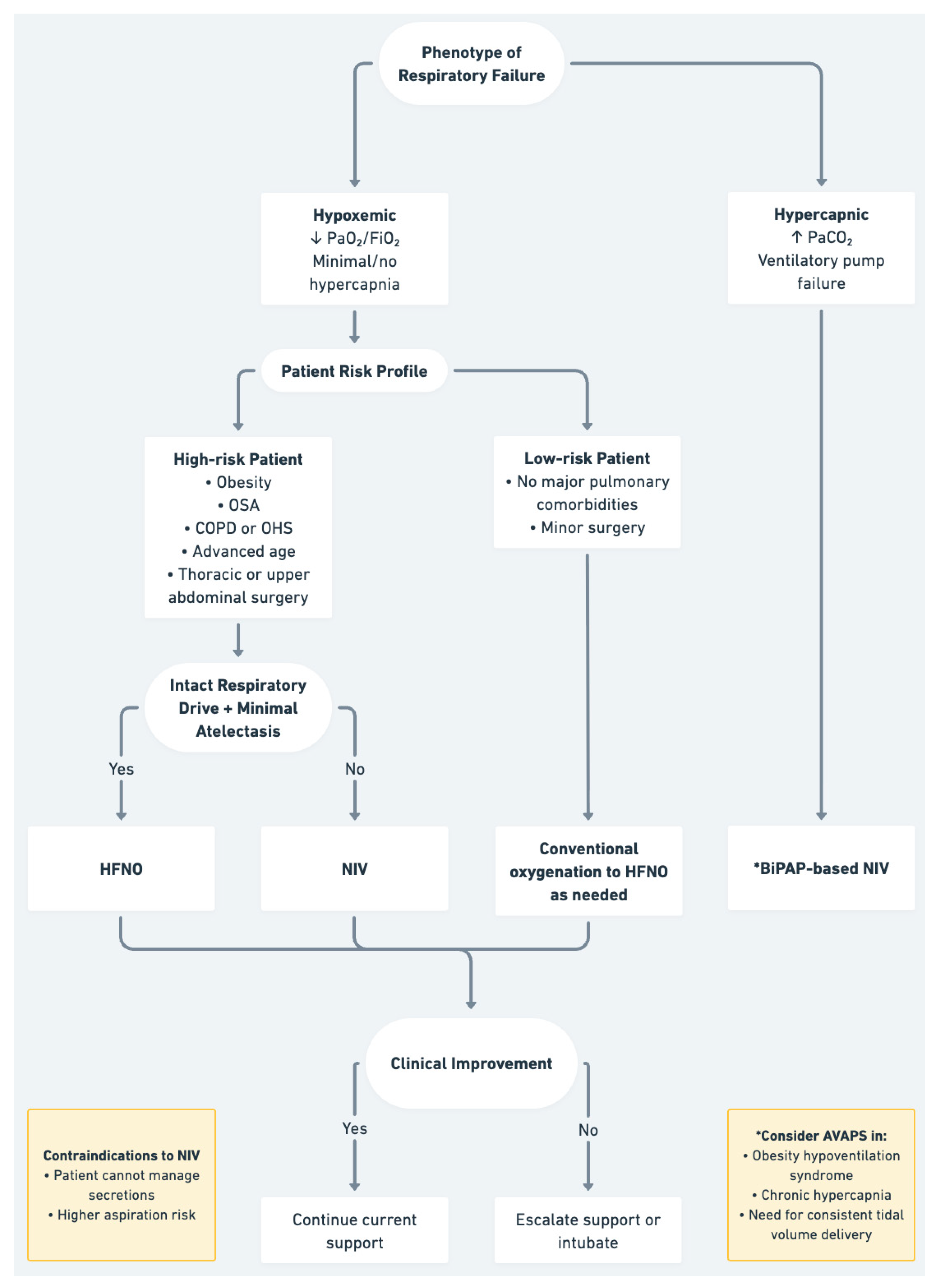
The physiologic effects of non-invasive respiratory support are best understood through a phenotype-based framework. PRF driven by atelectasis, shunt, and diffusion impairment favors modalities such as CPAP or NIV that provide sustained lung recruitment. Phenotypes dominated by hypercapnia and ventilatory pump failure favor BiPAP-based NIV. HFNO occupies an intermediate position as a highly tolerable oxygenation-focused therapy for patients with hypoxemia without significant ventilatory failure. This physiology-driven approach provides a mechanistic foundation for the rational, individualized selection of non-invasive respiratory support in the postoperative setting [6,28,39,41].

5. Non-Invasive Ventilation

NIV plays a central role in the management of postoperative respiratory failure, particularly when respiratory mechanics and gas exchange are significantly impaired. Among non-invasive strategies, NIV has the strongest evidence in the postoperative setting, with distinct roles for CPAP-dominant lung recruitment in hypoxemic failure and BiPAP-based ventilatory support in hypercapnic respiratory failure (Table 3) [5]. Evidence is strongest for NIV in high-risk patients, where it reduces reintubation rates, infectious complications, and ICU length of stay compared with conventional oxygen therapy [9,29].
The evidence for NIV in the postoperative setting supports its therapeutic use for established hypoxemic respiratory failure, particularly in high-risk patients following abdominal surgery [5,35]. Compared with conventional oxygen therapy (COT), therapeutic NIV significantly reduces the rates of reintubation and hospital-acquired pneumonia, with favorable effects on ICU length of stay and mortality [5,35]. These benefits are most consistently observed in patients with a high predicted risk of extubation failure, supporting NIV as a cornerstone rescue modality in this population.
In contrast, the prophylactic use of NIV or CPAP immediately following surgery has produced mixed results. Multiple, large randomized trials, such as the PRISM trial, have failed to demonstrate consistent reductions in postoperative pulmonary complications or acute respiratory failure in upper abdominal or thoracic surgery, largely due to poor patient tolerance, mask discomfort, and variable adherence [49,51]. Prophylactic NIV and CPAP reduce atelectasis and postoperative pulmonary complications in cardiac surgery populations, yet they have not consistently reduced reintubation rates or short-term mortality. In a randomized study of patients undergoing CABG with mammary artery harvesting, both CPAP and bilevel NIV attenuated restrictive lung dysfunction severity and improved vital capacity, FEV1, and arterial oxygenation by the second postoperative day. These findings support the physiologic efficacy of prophylactic NIV in high-risk cardiac surgical patients, even though consistent reductions in reintubation and mortality have not been demonstrated [45]. In summary, the current evidence does not support the routine application of prophylactic NIV with its clinical benefit confined to selected high-risk cardiac surgical cohorts [50,52]. Accordingly, prophylactic NIV should not be applied routinely after surgery and should be reserved for carefully selected high-risk patients, with close attention to tolerance and early failure.
NIV, including BiPAP, remains the preferred non-invasive modality for patients with acute hypercapnic respiratory failure [29,41]. This includes patients with underlying COPD, OHS, and opioid-induced hypoventilation, in whom ventilatory unloading is physiologically essential. In contrast, current data does not support the routine prophylactic use of NIV or CPAP in unselected postoperative populations [49,51,52].
Practical limitations continue to constrain the preventive efficacy of NIV. Mask intolerance, claustrophobia, interface leaks, secretion burden, and poor adherence frequently limit the use in real-world settings [49,51]. Although emerging technologies, such as AVAPS and helmet-based NIV, may improve ventilation comfort and stability, postoperative-specific data for these approaches remain limited [53]. Several negative trials suggest that any prophylactic benefit is limited to carefully selected high-risk populations; yet, many studies exclude patients with poor tolerance, the group most relevant to real-world practice. The heterogeneity of intervention strategies and reliance on short-term outcomes further complicates interpretation. Future trials using standardized risk stratification and physiologic phenotyping are needed to clarify which surgical patients benefit from prophylactic NIV.

6. High-Flow Nasal Oxygen

HFNO has emerged as a widely used alternative to NIV in the postoperative setting, particularly for surgical patients with predominantly hypoxemic respiratory failure who are unable to tolerate mask-based support. In contrast to NIV, data supporting HFNO are more heterogeneous and appear to depend on patient selection, timing of initiation, and the underlying physiologic phenotype [6,7]. Its increasing adoption reflects a balance between physiologic benefit, ease of application, and superior patient tolerance. Over the past decade, studies have evaluated HFNO as both post-extubation support and early therapy for PRF in high-risk surgical patients.
In a meta-analysis of 10 studies and a separate systematic review of 11 randomized controlled trials, HFNO significantly reduced the postoperative reintubation rate and the rate of respiratory support escalation when compared with COT [54,55]. These benefits are more pronounced in patients with elevated perioperative pulmonary risk, including those with obesity, OSA, underlying cardiopulmonary disease, and those undergoing major thoracic or upper abdominal surgery [55]. In these patients, HFNO appears to mitigate oxygenation failure caused by atelectasis and reduced FRC, while offering superior comfort and adherence relative to other therapies.
Despite its role in reducing respiratory deterioration and the escalation of care, HFNO has not consistently demonstrated improvements in mortality or hospital length of stay in surgical populations [55,56,57]. These limitations underscore the importance of patient selection and reinforce that HFNO should be viewed as a targeted intervention within a phenotype-driven, risk-based strategy for postoperative respiratory support, rather than a universal default therapy.

7. Comparison of NIV and HFNO

The effectiveness of NIV and HFNO in PRF has been evaluated with a focus on high-risk surgical populations and patients with established postoperative respiratory failure. Both modalities are used to prevent reintubation and support gas exchange following surgery, with optimal selection guided by the dominant physiologic phenotype, surgical context, and patient tolerance.
A meta-analysis of nine randomized controlled trials, including 1865 patients at high risk for or with established postoperative respiratory failure, demonstrated that both NIV and HFNO significantly reduced intubation rates and ICU-acquired infections compared with standard oxygen therapy [58]. Although NIV was associated with reduced mortality, HFNO did not demonstrate statistically significant mortality benefits. Importantly, direct comparison between HFNO and NIV revealed no significant differences in intubation, mortality, or other major clinical outcomes, suggesting comparable short-term effectiveness in selected postoperative patients [58]. Subgroup analyses highlight the importance of the surgical context. Among patients undergoing cardiothoracic surgery, both NIV and HFNO were associated with lower rates of reintubation compared with standard oxygen therapy, whereas reductions in intubation were observed only with NIV following abdominal surgery [40].
A multicenter randomized study conducted exclusively in patients undergoing cardiothoracic surgery also showed similar outcomes of HFNO compared to NIV. In this trial, outcomes using HFNO were like those using BiPAP for the prevention or treatment of post-extubation respiratory failure, reintubation, and ICU mortality. Notably, HFNO was associated with fewer interface-related complications, including significantly lower rates of skin breakdown, highlighting its superior postoperative tolerability [42].
More recently, the 2025 RENOVATE study demonstrated that HFNO is non-inferior to NIV for preventing reintubation or death within 7 days among non-immunocompromised patients with hypoxemic respiratory failure, including a substantial postoperative subgroup. In this large, multicenter randomized trial, HFNO achieved similar rates of short-term clinical stability compared with NIV, reinforcing prior evidence that when appropriately selected, both modalities provide effective post-extubation respiratory support. Collectively, RENOVATE supports a phenotype-driven approach to postoperative respiratory support, in which HFNO and NIV are viewed as complementary rather than hierarchical strategies.
Patient tolerance represents one of the most important clinical distinctions between these modalities. HFNO is consistently better tolerated, allowing patients to speak, eat, and clear their secretions while experiencing fewer interface-related complications [41]. NIV can be less well tolerated due to mask discomfort and claustrophobia; however, it remains the preferred modality for acute hypercapnic respiratory failure, including COPD exacerbations and cardiogenic pulmonary edema [39]. While much of the foundational evidence supporting NIV in these syndromes compares it with low-flow oxygen, emerging data suggest that HFNO may serve as a reasonable alternative when NIV is not tolerated in carefully selected patients [46].
In summary, both HFNO and NIV are effective non-invasive respiratory support strategies in patients with postoperative respiratory failure. HFNO offers comparable efficacy to NIV in many patients with hypoxemia, superior comfort, and particular benefit in high-risk surgical populations [41,46,55,56,57,59,60]. NIV remains the preferred modality for hypercapnic respiratory failure and cardiogenic pulmonary edema, while HFNO serves as a highly effective alternative when NIV is not tolerated or contraindicated [39,56]. Patient-specific risk factors, the underlying physiological phenotype of respiratory failure, surgical context, and individual tolerance should guide modality selection (Figure 1).

8. Patient Selection, Timing, and Practical Implementation

The effective use of non-invasive respiratory support in the postoperative setting requires careful alignment of patient phenotype, timing of initiation, and practical bedside considerations. The heterogeneity of PRF necessitates a selective, physiology-driven approach rather than a uniform protocol applied across surgical populations [28].
The dominant mechanism of respiratory failure should guide patient selection (Figure 2). Patients with atelectasis-predominant hypoxemic respiratory failure, particularly following thoracic or upper abdominal surgery, often derive the greatest benefit from modalities such as CPAP or NIV that provide sustained lung recruitment [2,35]. In contrast, patients with predominant ventilatory pump failure, including those with COPD, OHS, or opioid-induced hypoventilation, require ventilatory unloading with BiPAP-based NIV [61]. HFNO is particularly well suited for patients with pure hypoxemia, preserved ventilatory drive, and intolerance to mask-based interfaces, including patients with obesity and those with OSA without significant hypercapnia [41].
Risk stratification should incorporate both patient-specific vulnerability, such as advanced age, obesity, OSA, chronic lung disease, and cardiac dysfunction, and procedure-specific risk, including thoracic surgery, upper abdominal surgery, prolonged operative time, and high intraoperative fluid burden [62]. Patients at the highest risk of extubation failure derive the clearest benefit from early ventilatory support with NIV rather than oxygen-based strategies alone [63].
The timing of non-invasive respiratory support is a critical determinant of its success. Therapeutic NIV has the strongest evidence when applied early during established postoperative hypoxemic or hypercapnic respiratory failure, before progression to severe respiratory distress and multi-organ dysfunction. Delayed initiation, particularly after a period of prolonged work of breathing, often results in higher failure and reintubation rates [64].
The role of prophylactic NIV or CPAP immediately following extubation remains controversial and appears to be limited to carefully selected high-risk populations, particularly in patients undergoing cardiac surgery [52]. Current evidence does not support broad prophylactic use across unselected surgical cohorts and is frequently limited by poor tolerance and adherence [51,65].
In high-risk surgical patients, HFNO is commonly initiated immediately following extubation as a preventive strategy and may also be started early as a first-line therapy for mild to moderate hypoxemic respiratory failure [56]. Early initiation appears to be most beneficial when respiratory failure is driven primarily by atelectasis and V/Q mismatch rather than ventilatory pump failure [66].
Successful implementation requires close bedside monitoring, particularly during the first 6–12 h after initiation. Key indicators of success include improved oxygenation, reduced respiratory rate, decreased work of breathing, improved comfort, and stabilization of gas exchange [67]. Failure to achieve an early physiologic improvement should prompt reassessment and escalation of support rather than prolonged trials of ineffective therapy [68].
Interface selection and comfort are central to sustained success. NIV failure frequently results from mask intolerance, air leaks, impaired secretion clearance, and patient-ventilator dyssynchrony [69]. HFNO offers distinct advantages in comfort, communication, nutrition, and secretion clearance, which often translates into improved adherence in real-world practice [41].
Clear institutional protocols for early failure recognition, escalation thresholds, and timely reintubation are essential for preventing delayed airway control, which is consistently associated with worse outcomes. Non-invasive support should be viewed as a dynamic intervention requiring continuous reassessment rather than a static endpoint [6].

9. Future Directions and Unanswered Questions

Several critical knowledge gaps remain in the optimal application of non-invasive respiratory support for postoperative respiratory failure despite substantial advances.
First, the precise phenotyping of respiratory failure remains underdeveloped in clinical trials [70]. Most studies rely on broad clinical definitions of hypoxemia and respiratory distress rather than physiologic characterization based on lung mechanics, recruitability, dead space, or diaphragmatic function. Future trials incorporating bedside ultrasound, esophageal manometry, and electrical impedance tomography may allow more precise matching of modalities to the dominant pathophysiology [28].
Second, the role of prophylactic non-invasive support remains incompletely defined [52]. Select high-risk cardiac surgical populations appear to benefit, yet broader application has yielded inconsistent results. Trials using standardized risk models and predefined tolerance thresholds are needed to clarify whether a subgroup of non-cardiac surgical patients benefits from preventive NIV or CPAP.
Third, although HFNO has demonstrated widespread clinical utility, its optimal flow settings, duration of therapy, and escalation or de-escalation criteria remain empiric [6,39]. Additionally, the role of HFNO in hypercapnic PRF requires further clarification, particularly in patients with mixed ventilatory and oxygenation abnormalities.
Fourth, emerging technologies, such as helmet-based NIV, volume-targeted modes such as AVAPS, and hybrid NIV-HFNO strategies, require rigorous evaluation in postoperative populations [71]. These approaches hold theoretical promise for improving comfort while preserving ventilatory unloading, but they remain insufficiently studied.
Finally, there is a critical need for implementation science to address real-world barriers in institutional practice, including staffing, patient tolerance, and protocol adherence. The integration of standardized postoperative respiratory support pathways into enhanced recovery after surgery (ERAS) programs represents a promising area for future investigation [52,72].

10. Conclusions

PRF remains a common and clinically significant complication of major surgery, arising from complex interactions among anesthesia-induced physiologic changes, surgical trauma, diaphragmatic dysfunction, atelectasis, impaired secretion clearance, and patient-specific vulnerabilities [1]. Non-invasive respiratory support has emerged as a cornerstone in both the prevention and early management of this syndrome.
Non-invasive ventilation provides the strongest evidence for therapeutic benefit in established postoperative respiratory failure, particularly among high-risk hypoxemic patients and those with hypercapnic ventilatory failure. HFNO has emerged as a highly effective and well-tolerated alternative for selected hypoxemic patients, offering comparable outcomes to NIV in many clinical scenarios with superior comfort and ease of use. Direct comparisons consistently demonstrate that neither modality is universally superior; rather, optimal outcomes depend on the careful matching of device mechanics to the dominant pathophysiology [5,55,73].
A physiology-based, risk-stratified approach, guided by early recognition, appropriate timing, and vigilant monitoring, offers the best opportunity to reduce reintubation, complications, and ICU burden while improving patient-centered outcomes. Future research should focus on refining phenotypic targeting, optimizing preventive strategies, and integrating non-invasive respiratory support into standardized perioperative pathways. Through such advances, non-invasive support can be further transformed from a rescue strategy into a proactive, precision-based component of postoperative respiratory care [28,74].

Author Contributions

Conceptualization, R.S., D.P. and P.T.; methodology, R.S., D.P., R.G. and P.T.; validation, R.S., D.P., R.G. and P.T.; investigation, R.S. and D.P.; resources, R.S., D.P., R.G. and P.T.; data curation, R.S., D.P., R.G. and P.T.; writing—original draft preparation, R.S., D.P. and P.T.; writing—review and editing, R.S., D.P., R.G. and P.T.; visualization, R.S., D.P., R.G. and P.T.; supervision, P.T.; project administration, R.S. and P.T. All authors have read and agreed to the published version of the manuscript.

Funding

This research received no external funding.

Institutional Review Board Statement

Not applicable.

Informed Consent Statement

Not applicable.

Data Availability Statement

No new data were created or analyzed in this study.

Conflicts of Interest

The authors declare no conflict of interest.

References

  1. Gupta, H.; Gupta, P.K.; Fang, X.; Miller, W.J.; Cemaj, S.; Forse, R.A.; Morrow, L.E. Development and Validation of a Risk Calculator Predicting Postoperative Respiratory Failure. Chest 2011, 140, 1207–1215. [Google Scholar] [CrossRef]
  2. Lagier, D.; Zeng, C.; Fernandez-Bustamante, A.; Vidal Melo, M.F. Perioperative Pulmonary Atelectasis: Part II. Clinical Implications. Anesthesiology 2022, 136, 206–236. [Google Scholar] [CrossRef]
  3. Miskovic, A.; Lumb, A.B. Postoperative Pulmonary Complications. Br. J. Anaesth. 2017, 118, 317–334. [Google Scholar] [CrossRef] [PubMed]
  4. Liu, F.; Wen, Q.; Yang, Y.; Chen, J.; Jin, G.; Yu, L.; He, J. Diaphragmatic Dysfunction Is Associated with Postoperative Pulmonary Complications in the Aged Patients Underwent Radical Resection of Esophageal Cancer: A Prospective Observational Study. J. Thorac. Dis. 2024, 16, 3623–3635. [Google Scholar] [CrossRef]
  5. Pettenuzzo, T.; Boscolo, A.; Pistollato, E.; Pretto, C.; Giacon, T.A.; Frasson, S.; Carbotti, F.M.; Medici, F.; Pettenon, G.; Carofiglio, G.; et al. Effects of Non-Invasive Respiratory Support in Post-Operative Patients: A Systematic Review and Network Meta-Analysis. Crit. Care 2024, 28, 152. [Google Scholar] [CrossRef]
  6. Munshi, L.; Mancebo, J.; Brochard, L.J. Noninvasive Respiratory Support for Adults with Acute Respiratory Failure. N. Engl. J. Med. 2022, 387, 1688–1698. [Google Scholar] [CrossRef]
  7. Chiumello, D.; Chevallard, G.; Gregoretti, C. Non-Invasive Ventilation in Postoperative Patients: A Systematic Review. Intensive Care Med. 2011, 37, 918–929. [Google Scholar] [CrossRef]
  8. Landoni, G.; Likhvantsev, V.; Kuzovlev, A.; Cabrini, L. Perioperative Noninvasive Ventilation After Adult or Pediatric Surgery: A Comprehensive Review. J. Cardiothorac. Vasc. Anesth. 2022, 36, 785–793. [Google Scholar] [CrossRef] [PubMed]
  9. Einav, S.; Lakbar, I.; Leone, M. Non-Invasive Respiratory Support for Management of the Perioperative Patient: A Narrative Review. Adv. Ther. 2021, 38, 1746–1756. [Google Scholar] [CrossRef] [PubMed]
  10. Boscolo, A.; Pettenuzzo, T.; Sella, N.; Zatta, M.; Salvagno, M.; Tassone, M.; Pretto, C.; Peralta, A.; Muraro, L.; Zarantonello, F.; et al. Noninvasive Respiratory Support after Extubation: A Systematic Review and Network Meta-Analysis. Eur. Respir. Rev. 2023, 32, 220196. [Google Scholar] [CrossRef] [PubMed]
  11. Sasaki, N.; Meyer, M.J.; Eikermann, M. Postoperative Respiratory Muscle Dysfunction: Pathophysiology and Preventive Strategies. Anesthesiology 2013, 118, 961–978. [Google Scholar] [CrossRef]
  12. Spens, H.J.; Drummond, G.B.; Wraith, P.K. Changes in Chest Wall Compartment Volumes on Induction of Anaesthesia with Eltanolone, Propofol and Thiopentone. Br. J. Anaesth. 1996, 76, 369–373. [Google Scholar] [CrossRef]
  13. Lumb, A.B.; Nunn, J.F. Respiratory Function and Ribcage Contribution to Ventilation in Body Positions Commonly Used during Anesthesia. Anesth. Analg. 1991, 73, 422–426. [Google Scholar] [CrossRef]
  14. Pépin, J.L.; Timsit, J.F.; Tamisier, R.; Borel, J.C.; Lévy, P.; Jaber, S. Prevention and Care of Respiratory Failure in Obese Patients. Lancet Respir. Med. 2016, 4, 407–418. [Google Scholar] [CrossRef]
  15. Fuchs-Buder, T.; Nemes, R.; Schmartz, D. Residual Neuromuscular Blockade: Management and Impact on Postoperative Pulmonary Outcome. Curr. Opin. Anaesthesiol. 2016, 29, 662–667. [Google Scholar] [CrossRef] [PubMed]
  16. Chae, W.-S.; Choi, S.; Sugiyama, D.; Richerson, G.B.; Brennan, T.J.; Kang, S. Effect of Thoracic Epidural Anesthesia in a Rat Model of Phrenic Motor Inhibition after Upper Abdominal Surgery. Anesthesiology 2018, 129, 791–807. [Google Scholar] [CrossRef] [PubMed]
  17. Vassilakopoulos, T.; Mastora, Z.; Katsaounou, P.; Doukas, G.; Klimopoulos, S.; Roussos, C.; Zakynthinos, S. Contribution of Pain to Inspiratory Muscle Dysfunction after Upper Abdominal Surgery: A Randomized Controlled Trial. Am. J. Respir. Crit. Care Med. 2000, 161, 1372–1375. [Google Scholar] [CrossRef]
  18. Jordan, S.; Mitchell, J.A.; Quinlan, G.J.; Goldstraw, P.; Evans, T.W. The Pathogenesis of Lung Injury Following Pulmonary Resection. Eur. Respir. J. 2000, 15, 790–799. [Google Scholar] [CrossRef]
  19. Misuri, G.; Lanini, B.; Gigliotti, F.; Iandelli, I.; Pizzi, A.; Bertolini, M.G.; Scano, G. Mechanism of CO2 Retention in Patients with Neuromuscular Disease. Chest 2000, 117, 447–453. [Google Scholar] [CrossRef] [PubMed]
  20. Kaw, R.; Bhateja, P.; Paz, Y.; Mar, H.; Hernandez, A.V.; Ramaswamy, A.; Deshpande, A.; Aboussouan, L.S. Postoperative Complications in Patients with Unrecognized Obesity Hypoventilation Syndrome Undergoing Elective Noncardiac Surgery. Chest 2016, 149, 84–91. [Google Scholar] [CrossRef]
  21. Colucci, D.B.B.; Fiore, J.F.; Paisani, D.M.; Risso, T.T.; Colucci, M.; Chiavegato, L.D.; Faresin, S.M. Cough Impairment and Risk of Postoperative Pulmonary Complications After Open Upper Abdominal Surgery. Respir. Care 2015, 60, 673–678. [Google Scholar] [CrossRef] [PubMed]
  22. Tanaka, A.; Isono, S.; Ishikawa, T.; Nishino, T. Laryngeal Reflex before and after Placement of Airway Interventions: Endotracheal Tube and Laryngeal Mask AirwayTM. Anesthesiology 2005, 102, 20–25. [Google Scholar] [CrossRef]
  23. Gipsman, A.I.; Lapinel, N.C.; Mayer, O.H. Airway Clearance in Patients with Neuromuscular Disease. Paediatr. Respir. Rev. 2023, 47, 33–40. [Google Scholar] [CrossRef]
  24. Lellouche, F.; Maggiore, S.M.; Deye, N.; Taillé, S.; Pigeot, J.; Harf, A.; Brochard, L. Effect of the Humidification Device on the Work of Breathing during Noninvasive Ventilation. Intensive Care Med. 2002, 28, 1582–1589. [Google Scholar] [CrossRef]
  25. Cozowicz, C.; Memtsoudis, S.G. Perioperative Management of the Patient with Obstructive Sleep Apnea: A Narrative Review. Anesth. Analg. 2021, 132, 1231–1243. [Google Scholar] [CrossRef]
  26. Sharma, G.; Goodwin, J. Effect of Aging on Respiratory System Physiology and Immunology. Clin. Interv. Aging 2006, 1, 253–260. [Google Scholar] [CrossRef] [PubMed]
  27. Lagina, M.; Valley, T.S. Diagnosis and Management of Acute Respiratory Failure. Crit. Care Clin. 2024, 40, 235–253. [Google Scholar] [CrossRef]
  28. Rezoagli, E.; Nova, A.; Carteaux, G.; Giani, M.; Grieco, D.L.; Pettenuzzo, T.; Lucchini, A.; Navalesi, P.; Antonelli, M.; Foti, G.; et al. A Clinical Guide to Non-Invasive Respiratory Support in Acute Respiratory Failure: Ventilation Settings, Technical Optimization and Clinical Indications. Crit. Care Lond. Engl. 2025, 29, 496. [Google Scholar] [CrossRef]
  29. Frat, J.-P.; Grieco, D.L.; De Jong, A.; Gibbs, K.; Carteaux, G.; Roca, O.; Lemiale, V.; Piquilloud, L.; Rittayamai, N.; Pisani, L.; et al. Noninvasive Respiratory Supports in ICU. Intensive Care Med. 2025, 51, 1476–1489. [Google Scholar] [CrossRef]
  30. Menga, L.S.; Balzani, E.; Gelormini, C.; Mastropietro, C.; Volpe, N.; Del Signore, R.; Mondello, M.; Cardu, A.; Delle Cese, L.; Rosà, T.; et al. Physiological Effects of Noninvasive Respiratory Support Strategies in Adults with Acute Hypoxemic Respiratory Failure: A Systematic Review and Network Meta-Analysis. Crit. Care Lond. Engl. 2025, 29, 456. [Google Scholar] [CrossRef] [PubMed]
  31. Wang, K.; Liang, Z.-Y.; Wang, X.-L.; Li, Y.; Lu, Y.-R.; Liu, J.-F.; Li, J.-H.; Xu, L.-M.; Chen, G.-Q.; Chang, P.; et al. Continuous Positive Airway Pressure Improves Respiratory Mechanics and Efficiency of Neural Drive in Stable COPD: An Exploratory Study. J. Thorac. Dis. 2020, 12, 626–638. [Google Scholar] [CrossRef]
  32. Sehlin, M.; Winsö, O.; Wadell, K.; Öhberg, F. Inspiratory Capacity as an Indirect Measure of Immediate Effects of Positive Expiratory Pressure and CPAP Breathing on Functional Residual Capacity in Healthy Subjects. Respir. Care 2015, 60, 1486–1494. [Google Scholar] [CrossRef] [PubMed]
  33. Pengo, M.F.; Bonafini, S.; Fava, C.; Steier, J. Cardiorespiratory Interaction with Continuous Positive Airway Pressure. J. Thorac. Dis. 2018, 10, S57–S70. [Google Scholar] [CrossRef] [PubMed]
  34. MacIntyre, N.R. Physiologic Effects of Noninvasive Ventilation. Respir. Care 2019, 64, 617–628. [Google Scholar] [CrossRef]
  35. Jaber, S.; Lescot, T.; Futier, E.; Paugam-Burtz, C.; Seguin, P.; Ferrandiere, M.; Lasocki, S.; Mimoz, O.; Hengy, B.; Sannini, A.; et al. Effect of Noninvasive Ventilation on Tracheal Reintubation Among Patients with Hypoxemic Respiratory Failure Following Abdominal Surgery: A Randomized Clinical Trial. JAMA 2016, 315, 1345. [Google Scholar] [CrossRef] [PubMed]
  36. Misseri, G.; Frassanito, L.; Simonte, R.; Rosà, T.; Grieco, D.L.; Piersanti, A.; De Robertis, E.; Gregoretti, C. Personalized Noninvasive Respiratory Support in the Perioperative Setting: State of the Art and Future Perspectives. J. Pers. Med. 2023, 14, 56. [Google Scholar] [CrossRef]
  37. Shaughnessy, G.F.; Gay, P.C.; Olson, E.J.; Morgenthaler, T.I. Noninvasive Volume-Assured Pressure Support for Chronic Respiratory Failure: A Review. Curr. Opin. Pulm. Med. 2019, 25, 570–577. [Google Scholar] [CrossRef]
  38. Selim, B.; Ramar, K. Advanced Positive Airway Pressure Modes: Adaptive Servo Ventilation and Volume Assured Pressure Support. Expert. Rev. Med. Devices 2016, 13, 839–851. [Google Scholar] [CrossRef]
  39. Baldomero, A.K.; Melzer, A.C.; Greer, N.; Majeski, B.N.; MacDonald, R.; Linskens, E.J.; Wilt, T.J. Effectiveness and Harms of High-Flow Nasal Oxygen for Acute Respiratory Failure: An Evidence Report for a Clinical Guideline from the American College of Physicians. Ann. Intern. Med. 2021, 174, 952–966. [Google Scholar] [CrossRef]
  40. Spoletini, G.; Alotaibi, M.; Blasi, F.; Hill, N.S. Heated Humidified High-Flow Nasal Oxygen in Adults: Mechanisms of Action and Clinical Implications. Chest 2015, 148, 253–261. [Google Scholar] [CrossRef]
  41. RENOVATE Investigators and the BRICNet Authors; Francio, F.; Weigert, R.M.; Mattei, E.D.B.; Grion, C.M.C.; Festti, J.; Mezzaroba, A.L.; Serpa Neto, A.; Timenetsky, K.T.; Nogueira, A.M.S.O.; et al. High-Flow Nasal Oxygen vs Noninvasive Ventilation in Patients with Acute Respiratory Failure: The RENOVATE Randomized Clinical Trial. JAMA 2025, 333, 875. [Google Scholar] [CrossRef]
  42. Ovtcharenko, N.; Ho, E.; Alhazzani, W.; Cortegiani, A.; Ergan, B.; Scala, R.; Sotgiu, G.; Chaudhuri, D.; Oczkowski, S.; Lewis, K. High-Flow Nasal Cannula versus Non-Invasive Ventilation for Acute Hypercapnic Respiratory Failure in Adults: A Systematic Review and Meta-Analysis of Randomized Trials. Crit. Care Lond. Engl. 2022, 26, 348. [Google Scholar] [CrossRef]
  43. Pintaudi, G.; Cutuli, S.L.; Rosà, T.; Michi, T.; Cardu, A.; Bongiovanni, F.; Antonelli, M.; Grieco, D.L. High-Flow Nasal Oxygen in Patients with Acute Hypercapnic Respiratory Failure: A Narrative Review of the Physiological Rationale and Clinical Evidence. J. Clin. Med. 2024, 13, 6350. [Google Scholar] [CrossRef]
  44. Lewis, S.R.; Baker, P.E.; Parker, R.; Smith, A.F. High-Flow Nasal Cannulae for Respiratory Support in Adult Intensive Care Patients. Cochrane Database Syst. Rev. 2021, 3, CD010172. [Google Scholar] [CrossRef] [PubMed]
  45. Matte, P.; Jacquet, L.; Van Dyck, M.; Goenen, M. Effects of Conventional Physiotherapy, Continuous Positive Airway Pressure and Non-Invasive Ventilatory Support with Bilevel Positive Airway Pressure after Coronary Artery Bypass Grafting. Acta Anaesthesiol. Scand. 2000, 44, 75–81. [Google Scholar] [CrossRef] [PubMed]
  46. Stéphan, F.; Barrucand, B.; Petit, P.; Rézaiguia-Delclaux, S.; Médard, A.; Delannoy, B.; Cosserant, B.; Flicoteaux, G.; Imbert, A.; Pilorge, C.; et al. High-Flow Nasal Oxygen vs Noninvasive Positive Airway Pressure in Hypo Xemic Patients After Cardiothoracic Surgery: A Randomized Clinical Tri Al. JAMA 2015, 313, 2331. [Google Scholar] [CrossRef]
  47. Futier, E.; Paugam-Burtz, C.; Godet, T.; Khoy-Ear, L.; Rozencwajg, S.; Delay, J.M.; Verzilli, D.; Dupuis, J.; Chanques, G.; Bazin, J.E.; et al. Effect of early postextubation high-flow nasal cannula vs. conventional oxygen therapy on hypoxaemia in patients after major abdominal surgery: A French multicentre randomised controlled trial (OPERA). Intensive Care Med. 2016, 42, 1888–1898. [Google Scholar] [CrossRef]
  48. Yu, Y.; Qian, X.; Liu, C.; Zhu, C. Effect of High-Flow Nasal Cannula versus Conventional Oxygen Therapy for Patients with Thoracoscopic Lobectomy after Extubation. Can. Respir. J. 2017, 2017, 7894631. [Google Scholar] [CrossRef]
  49. Abrard, S.; Rineau, E.; Seegers, V.; Lebrec, N.; Sargentini, C.; Jeanneteau, A.; Longeau, E.; Caron, S.; Callahan, J.-C.; Chudeau, N.; et al. Postoperative Prophylactic Intermittent Noninvasive Ventilation versus Usual Postoperative Care for Patients at High Risk of Pulmonary Complications: A Multicentre Randomised Trial. Br. J. Anaesth. 2023, 130, e160–e168. [Google Scholar] [CrossRef]
  50. Goret, M.; Pluchon, K.; Le Mao, R.; Badra, A.; Oilleau, J.-F.; Morvan, Y.; Beaumont, M.; Desanglois, G.; Guegan, M.; Barnier, A.; et al. Impact of Noninvasive Ventilation Before and After Cardiac Surgery for Preventing Cardiac and Pulmonary Complications. CHEST 2025, 167, 1727–1736. [Google Scholar] [CrossRef]
  51. Lockstone, J.; Denehy, L.; Truong, D.; Whish-Wilson, G.A.; Boden, I.; Abo, S.; Parry, S.M. Prophylactic Postoperative Noninvasive Ventilation in Adults Undergoing Upper Abdominal Surgery: A Systematic Review and Meta-Analysis. Crit. Care Med. 2022, 50, 1522–1532. [Google Scholar] [CrossRef]
  52. Zhou, X.; Pan, J.; Wang, H.; Xu, Z.; Zhao, L.; Chen, B. Prophylactic Noninvasive Respiratory Support in the Immediate Postoperative Period after Cardiac Surgery—A Systematic Review and Network Meta-Analysis. BMC Pulm. Med. 2023, 23, 233. [Google Scholar] [CrossRef]
  53. Pitre, T.; Zeraatkar, D.; Kachkovski, G.V.; Leung, G.; Shligold, E.; Dowhanik, S.; Angriman, F.; Ferreyro, B.L.; Scales, D.C.; Rochwerg, B. Noninvasive Oxygenation Strategies in Adult Patients with Acute Hypoxemic Respiratory Failure. CHEST 2023, 164, 913–928. [Google Scholar] [CrossRef]
  54. Lu, Z.; Chang, W.; Meng, S.-S.; Zhang, X.; Xie, J.; Xu, J.-Y.; Qiu, H.; Yang, Y.; Guo, F. Effect of High-Flow Nasal Cannula Oxygen Therapy Compared with Conventional Oxygen Therapy in Postoperative Patients: A Systematic Review and Meta-Analysis. BMJ Open 2019, 9, e027523. [Google Scholar] [CrossRef]
  55. Chaudhuri, D.; Granton, D.; Wang, D.X.; Burns, K.E.A.; Helviz, Y.; Einav, S.; Trivedi, V.; Mauri, T.; Ricard, J.-D.; Mancebo, J.; et al. High-Flow Nasal Cannula in the Immediate Postoperative Period. Chest 2020, 158, 1934–1946. [Google Scholar] [CrossRef]
  56. Granton, D.; Chaudhuri, D.; Wang, D.; Einav, S.; Helviz, Y.; Mauri, T.; Mancebo, J.; Frat, J.-P.; Jog, S.; Hernandez, G.; et al. High-Flow Nasal Cannula Compared with Conventional Oxygen Therapy or Noninvasive Ventilation Immediately Postextubation: A Systematic Review and Meta-Analysis. Crit. Care Med. 2020, 48, e1129–e1136. [Google Scholar] [CrossRef]
  57. Xiang, G.; Wu, Q.; Xie, L.; Song, J.; Wu, X.; Hao, S.; Zhong, M.; Li, S. High Flow Nasal Cannula versus Conventional Oxygen Therapy in Postoperative Patients at High Risk for Pulmonary Complications: A Systematic Review and Meta-analysis. Int. J. Clin. Pract. 2021, 75, e13828. [Google Scholar] [CrossRef]
  58. Zayed, Y.; Kheiri, B.; Barbarawi, M.; Rashdan, L.; Gakhal, I.; Ismail, E.; Kerbage, J.; Rizk, F.; Shafi, S.; Bala, A.; et al. Effect of Oxygenation Modalities among Patients with Postoperative Respiratory Failure: A Pairwise and Network Meta-Analysis of Randomized Controlled Trials. J. Intensive Care 2020, 8, 51. [Google Scholar] [CrossRef] [PubMed]
  59. Hernández, G.; Vaquero, C.; Colinas, L.; Cuena, R.; González, P.; Canabal, A.; Sanchez, S.; Rodriguez, M.L.; Villasclaras, A.; Fernández, R. Effect of Postextubation High-Flow Nasal Cannula vs Noninvasive Ventilation on Reintubation and Postextubation Respiratory Failure in High-Risk Patients: A Randomized Clinical Trial. JAMA 2016, 316, 1565. [Google Scholar] [CrossRef] [PubMed]
  60. Al Nufaiei, Z.F.; Al Zhranei, R.M. High-Flow Nasal Cannula Oxygen Therapy versus Non-Invasive Ventilation in Patients at Very High Risk for Extubating Failure: A Systematic Review of Randomized Controlled Trials. PLoS ONE 2024, 19, e0299693. [Google Scholar] [CrossRef] [PubMed]
  61. Köhnlein, T.; Windisch, W.; Köhler, D.; Drabik, A.; Geiseler, J.; Hartl, S.; Karg, O.; Laier-Groeneveld, G.; Nava, S.; Schönhofer, B.; et al. Non-Invasive Positive Pressure Ventilation for the Treatment of Severe Stable Chronic Obstructive Pulmonary Disease: A Prospective, Multicentre, Randomised, Controlled Clinical Trial. Lancet Respir. Med. 2014, 2, 698–705. [Google Scholar] [CrossRef]
  62. Stocking, J.C.; Drake, C.; Aldrich, J.M.; Ong, M.K.; Amin, A.; Marmor, R.A.; Godat, L.; Cannesson, M.; Gropper, M.A.; Romano, P.S.; et al. Risk Factors Associated with Early Postoperative Respiratory Failure: A Matched Case-Control Study. J. Surg. Res. 2021, 261, 310–319. [Google Scholar] [CrossRef]
  63. Fernando, S.M.; Tran, A.; Sadeghirad, B.; Burns, K.E.A.; Fan, E.; Brodie, D.; Munshi, L.; Goligher, E.C.; Cook, D.J.; Fowler, R.A.; et al. Noninvasive Respiratory Support Following Extubation in Critically Ill Adults: A Systematic Review and Network Meta-Analysis. Intensive Care Med. 2022, 48, 137–147. [Google Scholar] [CrossRef] [PubMed]
  64. Cabrini, L.; Landoni, G.; Oriani, A.; Plumari, V.P.; Nobile, L.; Greco, M.; Pasin, L.; Beretta, L.; Zangrillo, A. Noninvasive Ventilation and Survival in Acute Care Settings: A Comprehensive Systematic Review and Metaanalysis of Randomized Controlled Trials. Crit. Care Med. 2015, 43, 880–888. [Google Scholar] [CrossRef]
  65. PRISM trial group Postoperative Continuous Positive Airway Pressure to Prevent Pneumonia, Re-Intubation, and Death after Major Abdominal Surgery (PRISM): A Multicentre, Open-Label, Randomised, Phase 3 Trial. Lancet Respir. Med. 2021, 9, 1221–1230. [CrossRef]
  66. Mauri, T.; Turrini, C.; Eronia, N.; Grasselli, G.; Volta, C.A.; Bellani, G.; Pesenti, A. Physiologic Effects of High-Flow Nasal Cannula in Acute Hypoxemic Respiratory Failure. Am. J. Respir. Crit. Care Med. 2017, 195, 1207–1215. [Google Scholar] [CrossRef] [PubMed]
  67. Ricard, J.-D.; Roca, O.; Lemiale, V.; Corley, A.; Braunlich, J.; Jones, P.; Kang, B.J.; Lellouche, F.; Nava, S.; Rittayamai, N.; et al. Use of Nasal High Flow Oxygen during Acute Respiratory Failure. Intensive Care Med. 2020, 46, 2238–2247. [Google Scholar] [CrossRef] [PubMed]
  68. Nishikimi, M.; Nishida, K.; Shindo, Y.; Shoaib, M.; Kasugai, D.; Yasuda, Y.; Higashi, M.; Numaguchi, A.; Yamamoto, T.; Matsui, S.; et al. Failure of Non-Invasive Respiratory Support after 6 Hours from Initiation Is Associated with ICU Mortality. PLoS ONE 2021, 16, e0251030. [Google Scholar] [CrossRef]
  69. Bourke, S.C.; Piraino, T.; Pisani, L.; Brochard, L.; Elliott, M.W. Beyond the Guidelines for Non-Invasive Ventilation in Acute Respiratory Failure: Implications for Practice. Lancet Respir. Med. 2018, 6, 935–947. [Google Scholar] [CrossRef]
  70. Battaglini, D.; Schultz, M.J.; Puentes, G.A.C.; Marini, J.J.; Rocco, P.R.M. Imaging and Pulmonary Function Techniques in ARDS Diagnosis and Management: Current Insights and Challenges. Crit. Care Lond. Engl. 2025, 29, 282. [Google Scholar] [CrossRef]
  71. Chaudhuri, D.; Jinah, R.; Burns, K.E.A.; Angriman, F.; Ferreyro, B.L.; Munshi, L.; Goligher, E.; Scales, D.; Cook, D.J.; Mauri, T.; et al. Helmet Noninvasive Ventilation Compared to Facemask Noninvasive Ventilation and High-Flow Nasal Cannula in Acute Respiratory Failure: A Systematic Review and Meta-Analysis. Eur. Respir. J. 2022, 59, 2101269. [Google Scholar] [CrossRef]
  72. Van Haren, R.M.; Mehran, R.J.; Mena, G.E.; Correa, A.M.; Antonoff, M.B.; Baker, C.M.; Woodard, T.C.; Hofstetter, W.L.; Roth, J.A.; Sepesi, B.; et al. Enhanced Recovery Decreases Pulmonary and Cardiac Complications After Thoracotomy for Lung Cancer. Ann. Thorac. Surg. 2018, 106, 272–279. [Google Scholar] [CrossRef] [PubMed]
  73. Faria, D.A.S.; da Silva, E.M.K.; Atallah, Á.N.; Vital, F.M.R. Noninvasive Positive Pressure Ventilation for Acute Respiratory Failure Following Upper Abdominal Surgery. Cochrane Database Syst. Rev. 2015, 2015, CD009134. [Google Scholar] [CrossRef] [PubMed]
  74. Cutuli, S.L.; Grieco, D.L.; Michi, T.; Cesarano, M.; Rosà, T.; Pintaudi, G.; Menga, L.S.; Ruggiero, E.; Giammatteo, V.; Bello, G.; et al. Personalized Respiratory Support in ARDS: A Physiology-to-Bedside Review. J. Clin. Med. 2023, 12, 4176. [Google Scholar] [CrossRef] [PubMed]
Figure 1. Pathophysiologic Drivers of Postoperative Respiratory Failure. The development of PRF is a synergistic process involving patient-specific vulnerabilities, the physiologic impact of general anesthesia, and the mechanical consequences of surgical trauma. These factors interact to produce the dominant clinical phenotypes of hypoxemic and hypercapnic failure.
Complications 03 00008 g001
Figure 2. Proposed Physiology-Based Workflow for the Management of Postoperative Respiratory Failure. This algorithmic approach utilizes clinical phenotyping to align non-invasive respiratory support with the dominant underlying pathophysiology.
Complications 03 00008 g002
Table 1. Pathophysiologic Mechanisms of Postoperative Respiratory Failure and Optimal Non-Invasive Respiratory Support Modality. Abbreviations: BiPAP, bilevel positive airway pressure; CO2, carbon dioxide; COPD, chronic obstructive pulmonary disease; CPAP, continuous positive airway pressure; FiO2, fraction of inspired oxygen; FRC, functional residual capacity; HFNO, high-flow nasal oxygen; NIV, non-invasive ventilation; OHS, obesity hypoventilation syndrome; OSA, obstructive sleep apnea; PaCO2, partial pressure of arterial carbon dioxide; V/Q, ventilation–perfusion.
Dominant
Mechanism
Physiologic DerangementClinical FeaturesPreferred
Modality
Rationale
Atelectasis & shunt↓ FRC, alveolar collapse, V/Q mismatchHypoxemia, basal
opacities, low lung
volumes
CPAP or BiPAPProvides sustained
transpulmonary pressure and lung recruitment
Upper airway
collapse
(OSA, obesity)
Pharyngeal instability,
expiratory collapse
Desaturations, snoring,
post-extubation
obstruction
CPAPStents airway and stabilizes end-expiratory patency
Pure hypercapnic
ventilatory failure
↓ Tidal volume, ↑ dead space, respiratory muscle fatigueElevated PaCO2,
acidosis,
somnolence, altered mental status
BiPAP/NIVAugments ventilation and
unloads respiratory muscles
Mixed hypoxemic + hypercapnic failureCombined shunt +
ventilatory pump failure
COPD, OHS,
opioid-induced
hypoventilation
BiPAP/NIVSimultaneously improves
oxygenation and ventilation
Pure hypoxemic
respiratory failure
Impaired oxygen diffusion without hypercapniaTachypnea, low PaO2,
preserved CO2
HFNO or CPAPImproves FiO2 delivery and partial recruitment
Secretion burden &
impaired clearance
Dehydrated mucus,
ineffective cough
Atelectasis, rhonchi, mucus pluggingHFNOHumidification improves
secretion mobilization
Cardiogenic
pulmonary edema
↑ Hydrostatic pressure,
alveolar flooding
Crackles, rapid
desaturation
CPAP or
BiPAP
Reduces preload/afterload and recruits alveoli
Table 2. Physiologic Effects of Non-Invasive Respiratory Support Modalities. Abbreviations: AVAPS, average volume-assured pressure support; BiPAP, bilevel positive airway pressure; CO2, carbon dioxide; CPAP, continuous positive airway pressure; EPAP, expiratory positive airway pressure; FiO2, fraction of inspired oxygen; FRC, functional residual capacity; HFNO, high-flow nasal oxygen; MV, minute ventilation; NIV, non-invasive ventilation; OSA, obstructive sleep apnea; PEEP, positive end-expiratory pressure; RF, respiratory failure; RR, respiratory rate. * Evidence in postoperative populations is limited; use is extrapolated from non-surgical hypercapnic settings.
ModalityPrimary
Mechanism
Effect on
Oxygenation
Effect on
Ventilation
Effect on
Work of
Breathing
Best Clinical PhenotypeKey
Limitations
CPAPSustained positive end-expiratory pressure↑ FRC,
↑ alveolar
recruitment,
↓ shunt
Minimal effect on CO2 clearance↓ work via
improved
compliance
Hypoxemic respiratory failure, OSA, cardiogenic pulmonary edemaNo direct
ventilatory
support
BiPAPEPAP + inspiratory pressure support↑ Oxygenation secondary to
recruitment
↑ Tidal volume, ↑ CO2 clearanceSignificant unloading of respiratory
muscles
Hypercapnic respiratory
failure, mixed phenotypes, opioid-induced
hypoventilation
Mask
intolerance, air leaks
AVAPS *Auto-adjusting
pressure to target tidal volume
↑ Oxygenation secondary to
recruitment
Aims to stabilize MV and
attenuate
hypercapnia
Potential for
ventilatory
unloading
Variable hypercapnic states, fluctuating
mechanics
Limited
postoperative data; requires specialized equipment.
HFNOHigh-flow
humidified oxygen, dead space washout
↑ FiO2 stability, mild PEEP effectMinimal CO2
clearance via dead space washout only
↓ RR, ↓ dyspnea,
↓ inspiratory
resistance
Hypoxemic RF without
ventilatory failure, poor NIV tolerance
Limited
ventilatory
support
Conventional
Oxygen
Passive oxygen ↑ FiO2 onlyNo effectNo unloadingMild hypoxemiaNo recruitment or ventilation support
Table 3. Summary of key randomized controlled trials evaluating non-invasive respiratory support in postoperative and high-risk patients. Abbreviations: BiPAP, bilevel positive airway pressure; CABG, coronary artery bypass graft; COT, conventional oxygen therapy; CPAP, continuous positive airway pressure; HFNO, high-flow nasal oxygen; IS, incentive spirometry; NIV, non-invasive ventilation; RCT, randomized controlled trial.
Study/YearStudy DesignPopulationInterventionControlResults
Matte et al., 2000 [45]RCT96 CABG patientsNIV (CPAP or BiPAP)Incentive
spirometry (IS)
CPAP/BiPAP improved pulmonary function vs IS alone
Stéphan et al., 2015 [46]Multicenter, open-label RCT220 postoperative patientsHFNONIV (BiPAP)No difference in treatment failure; HFNO better tolerated
Futier et al., 2016 [47]Multicenter RCT220 major abdominal
surgery patients
HFNOConventional
oxygen
therapy (COT)
No difference in post-
extubation hypoxemia
Jaber et al., 2016 [35]Multicenter RCT293 postoperative
patients with
hypoxemic
respiratory failure
NIV (BiPAP)COTNIV significantly reduced reintubation rates
Yu et al., 2017 [48]RCT108 patients undergoing thoracoscopic lobectomyHFNOCOTHFNO significantly improved oxygenation at
1 h
Abrard et al., 2023 [49]Multicenter, open-label RCT253 high-risk
postoperative
patients
Prophylactic face-mask NIV (BiPAP)Usual
postoperative care
No difference in acute
respiratory failure
Goret et al., 2025 [50]Prospective, single-center RCT216 high-risk
postoperative
patients
NIV (BiPAP) 5 days pre- and post-surgeryUsual careNIV reduced
cardiorespiratory failure
RENOVATE, 2025 [41]Multicenter RCT1766 hospitalized adults with acute
respiratory failure
HFNOFace-mask NIV (BiPAP)HFNO non-inferior to NIV
Disclaimer/Publisher’s Note: The statements, opinions and data contained in all publications are solely those of the individual author(s) and contributor(s) and not of MDPI and/or the editor(s). MDPI and/or the editor(s) disclaim responsibility for any injury to people or property resulting from any ideas, methods, instructions or products referred to in the content.