
Article

Does Incision Type Impact Culture Positivity in Implant-Based Reconstruction Complications for Breast Cancer and Breast Cancer Prophylaxis?

1
Department of General Surgery, Kaiser Permanente Los Angeles Medical Center, 4867 W Sunset Blvd., Los Angeles, CA 90027, USA
2
Department of Plastic and Reconstructive Surgery, Southern California Permanente Medical Group, 6041 Cadillac Ave., Los Angeles, CA 90034, USA
3
Department of Plastic and Reconstructive Surgery, City of Hope, 1500 East Duarte Road, Duarte, CA 91010, USA
*
Author to whom correspondence should be addressed.
Complications 2026, 3(1), 7; https://doi.org/10.3390/complications3010007

Submission received: 29 October 2025 / Revised: 8 January 2026 / Accepted: 22 February 2026 / Published: 3 March 2026

Abstract

Background: Implant-based reconstruction (IBR) is the most common method of breast reconstruction after mastectomy. Prior studies have demonstrated that complications rates vary with incision type. We evaluated whether incision type affected culture positivity in IBR complications. Methods: A retrospective cohort study was performed of all patients undergoing mastectomy for cancer or cancer prophylaxis with IBR from 2012 to 2023. Abstracted data included patient characteristics, oncologic treatment history, mastectomy and reconstruction characteristics, culture positivity, infectious organism, and antibiotic treatment history. Results: A total of 6901 patients underwent post-mastectomy implant-based reconstruction, 183 (2.7%) patients had unplanned operative intervention for IBR complications, and 80/183 (43.7%) had culture-positive IBR infections. Culture-negative and culture-positive groups were similar in patient characteristics and oncologic treatment history. There was no difference in mastectomy incision types. The most common organisms were methicillin-sensitive Staphylococcus aureus, Pseudomonas aeruginosa, and coagulase-negative Staphylococcus. More patients in the culture-positive group were treated with antibiotics (81.2% vs. 51.5%, p = 0.0005). Antibiotic therapy duration was longer in the culture-negative group (8.52 vs. 5.78 days, p = 0.039). Among different incision types, there was no significant difference in duration of antibiotic therapy. Conclusions: No association between mastectomy incision type and culture-positive infections was observed among IBR complications in this study. Antibiotics may sterilize cultures, but operative intervention is still often required for IBR infections.

1. Introduction

Implant-based reconstruction (IBR) is the most common method of breast reconstruction after mastectomy, accounting for approximately 80 percent of breast reconstructions performed in the United States [1]. Patients who receive implants after mastectomy for cancer or cancer prophylaxis have significantly more complications than those who have implants for cosmetic reasons [2]. Despite improvements in surgical technique and breast implant materials, IBR complications and challenges persist. IBR complications include implant exposure, infection, skin necrosis, hematoma, seroma, or wound dehiscence. When these IBR complications threaten implant viability or result in capsular contracture causing pain or distortion, or if implant rupture occurs, re-operation may be required [3,4,5]. IBR complications can also lead to readmissions, IBR failure, and delays in cancer treatment [4,6,7,8].
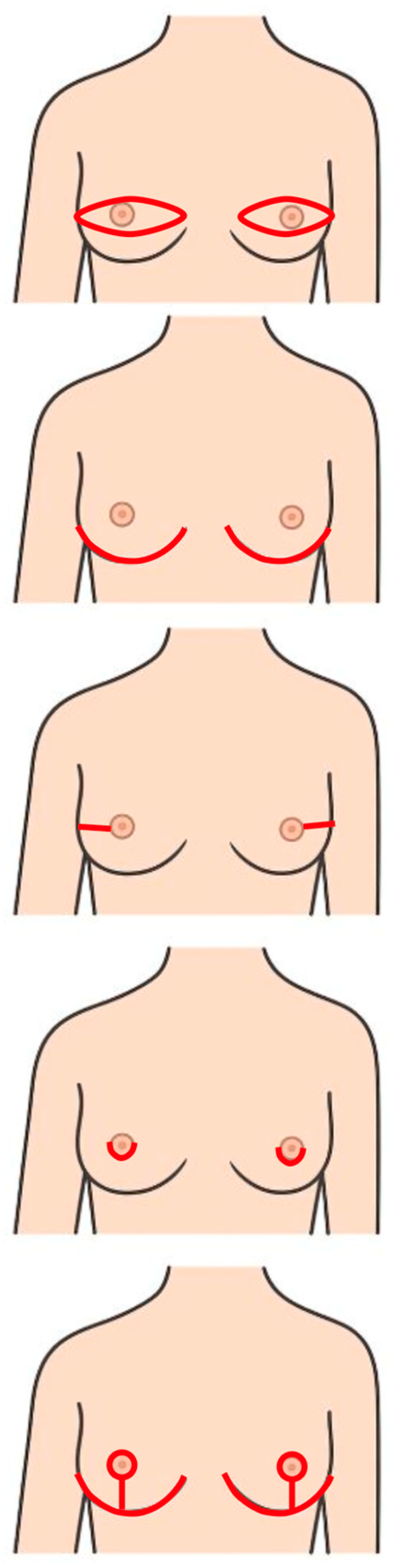
Mastectomies with implant-based reconstruction can be achieved via multiple different incisions including periareolar, lateral, inframammary, and Wise patterns (Figure 1). When non-nipple-sparing mastectomies are performed, the most common incision is via an ellipse around the nipple. Among mastectomy incision types, prior studies have demonstrated that periareolar incisions and nipple-sparing mastectomies are associated with higher rates of complications and surgical site infection (SSI) [9,10,11,12,13,14]. Inframammary fold incisions have been associated with lower risk of infection and overall complications [9,11,15,16]. However, prior studies have not clearly defined implant infection based on culture results, instead based on non-specific clinical signs and symptoms. Consequently, associations between specific mastectomy incision types and objectively defined IBR infections remain unclear.
The aim of this retrospective study was to determine whether incision type affected culture positivity in the setting of implant-based reconstruction complications. Patient characteristics, operative characteristics, and oncologic treatment factors were also analyzed. Our hypothesis was that mastectomies performed through a periareolar incision would be associated with higher rates of culture-positive IBR complications.

2. Materials and Methods

This was an IRB-approved, retrospective review of all patients undergoing mastectomy for cancer or cancer prophylaxis with IBR from January 2012 to January 2023 within the Kaiser Permanente Southern California hospital system. Patients were identified using CPT/ICD10 codes.
Inclusion criteria were as follows: age 18 or older; mastectomy for cancer or cancer prophylaxis; implant-based reconstruction; and reconstruction complication requiring re-operation. IBR complications included infection, skin necrosis, hematoma, seroma, implant exposure, or wound dehiscence without implant exposure. Exclusion criteria were as follows: non-breast primary malignancy; flap reconstruction; and reconstruction complications managed without re-operation. Patients with incomplete data were excluded from analysis.
Abstracted data included patient characteristics (age, BMI, diabetes), oncologic treatment history (chemotherapy, radiation), mastectomy characteristics (incision type, nipple sparing or non-nipple-sparing, type of threatened IBR), presence of infection, culture positivity, infectious organism, and antibiotic treatment history. Implant infection was defined by positive culture taken at the time of operative intervention for IBR infection. Patients were followed for 12 months postoperatively to include late-onset complications and infections, defined as any infection occurring later than 6 months after index reconstruction. Of note, all patients in their index mastectomy and reconstruction had antibiotic prophylaxis using cefazolin (14–20 mg/kg), vancomycin or clindamycin (if beta-lactam allergy) administered prior to incision. There was no standardized regional protocol across surgeons and hospitals guiding management of IBR complications or infection. Patients with IBR complications concerning for infection were treated empirically with broad-spectrum antibiotics based on surgeons’ clinical judgement. Antibiotic regimens were narrowed based on isolated pathogens, antibiotic sensitivity, and local resistance antibiograms. Patients with systemic symptoms secondary to infection were admitted and treated with intravenous antibiotics.
Decisions for operative management for IBR infection were based on surgeons’ clinical judgment, failure to clear infection with antibiotics alone, systemic infection and symptoms requiring operative source control. Statistical analysis was performed employing mean, standard deviation, median, Kruskal–Wallis tests, and Chi-Square tests using Microsoft Excel and IBM SPSS Statistics software version 29.0.

3. Results

3.1. Culture-Positive vs. Culture-Negative IBR Complications

A total of 6901 patients underwent post-mastectomy implant-based reconstruction; 183 (2.7%) patients had unplanned operative intervention for IBR complications. The majority of patients (166/183, 90.7%) who underwent operative interventions for IBR complications required implant removal without further reconstruction; remaining patients (17/183, 9.3%) were able to undergo implant salvage or exchange.
In total, 80/183 (43.7%) had culture-positive IBR infections. The median time from index reconstruction to re-operation for IBR complication was 4.1 months. Between culture-positive and culture-negative groups, there were no significant differences in patient demographics or characteristics, including age at index reconstruction, BMI, and diabetes. Between groups, there was no difference in oncologic treatment history, including neoadjuvant chemotherapy or adjuvant radiation prior to operation for threatened IBR. Between the culture-positive and culture-negative group, there was no difference in mastectomy incision types, proportions of NSM, implant or expander use. In both groups, the majority of patients who had IBR complications ultimately underwent implant removal (Table 1).

3.2. Cultured Organisms in Culture-Positive IBR Complications

Among patients with monomicrobial infections, the most common organisms were methicillin-sensitive Staphylococcus aureus, Pseudomonas aeruginosa, and coagulase-negative Staphylococcus. Additional monomicrobial organisms included methicillin-resistant Staphylococcus aureus, Actinomyces neuii, Bacteroides fragilis, Candida, Escherichia coli, Enterobacter cloacae, Finegoldia magna, Group B Streptococcus, Klebsiella, Proteus mirabilis, Streptococcus mitis, Streptococcus viridans, and Serratia marcescens. Only a small proportion (10%) had polymicrobial infections (Table 2).
Among different incision types, Pseudomonas aeruginosa was isolated from cultures across all incision types (Table 3).

3.3. Antibiotic Use for IBR Complications

The majority of patients in both groups were treated with antibiotics. More patients in the culture-positive group were treated with antibiotics (81.2% vs. 51.5%, p = 0.0005) (Table 4). Antibiotic therapy duration was longer in the culture-negative group (8.52 vs. 5.78 days, p = 0.039). Among different incision types, there was no significant difference in duration of antibiotic therapy (Table 5).

4. Discussion

This study found no significant evidence that mastectomy incision type impacts culture-positive infections in IBR complications. Among culture-positive cases, MSSA and Pseudomonas were the most common organisms. Although antibiotics may sterilize cultures, operative intervention is still often required.
The most common IBR complications include skin or flap necrosis, seromas, implant rupture, hematoma, and reconstruction failure [17]. Risk factors include patient comorbidities such as diabetes or obesity, mastectomy for malignancy, prior radiotherapy, and post-operative infection [4,18,19]. Infection is widely recognized as a major risk factor for IBR failure [20,21]. Most frequently involved pathogens include S. epidermidis, S. aureus and P. aeruginosa [22,23,24]. Antibiotics can reduce the rate of operative intervention in mild infections [25]. However, they are usually insufficient in preventing re-operation. Severe or prolonged infections often require operative source control, and antibiotics are ineffective against bacterial biofilms [26,27,28]. Furthermore, the sequelae of infections such as skin or flap necrosis, implant exposure, or implant rupture still require operative intervention and often result in IBR failure.
Inadequate vascular supply is a significant risk factor in breast reconstruction complications [29]. Poor tissue perfusion impacts mastectomy skin flap viability and wound healing after reconstruction. Prior studies have reported higher complication rates with Wise pattern and periareolar incisions, perhaps due to how these incision types may compromise vascularity to the remaining tissue after mastectomy. The Wise pattern is not only technically challenging for closure, but its intersecting lines may also compromise vascularity. Similarly, periareolar incisions disrupt vascular supply to the NAC, which increases the risk of NAC necrosis and dehiscence. Consequently, development of necrotic tissue and open wounds provide a permissive environment for infection. Periareolar incisions also involve the nipple ducts, which harbor native bacterial flora. The combination of disrupted vascular supply and the high-risk environment it creates for infection increases risk of infection-associated IBR complications requiring re-operation [9,30,31,32].
If a Wise pattern or periareolar incision is required or in any other situation where vascularity is questionable, surgeons may consider adjuncts such as Indocyanin Green Angiography to evaluate for areas of poor perfusion. Compromised areas may be resected to reduce risk of complications such as dehiscence, necrosis, and infection, thus reducing risk of loss of reconstruction [33,34].
Mastectomy flap thickness can also impact IBR outcomes [35,36,37]. While thin flaps risk ischemia and necrosis, thick flaps may leave behind excessive residual breast tissue and face perfusion challenges in their deeper layers. However, accurate measurement of flap thickness requires specialized imaging techniques such as contrast-enhanced spectral mammography, which may not be widely accessible. Furthermore, the breast subcutaneous layers are variable between patients, and pre-operative subcutaneous tissue thickness may impact outcomes similarly to mastectomy flap thickness. Further studies are needed to better understand the impact of mastectomy flap thickness on IBR outcomes.
Prior studies have reported higher complication rates associated with longer operative duration. Longer procedures are associated with increased rates of operative complications such infection, wound dehiscence, hematoma, and seroma as well as medical complications, including longer length of stay [38,39,40]. Longer operative time may increase complication rates due to prolonged anesthesia exposure, tissue desiccation, bacterial contamination, and the physiological stress of extended surgery [39,41,42]. However, the association between operative time and complication rate may also be due to case complexity, which inherently increases operative morbidity. Factors that may increase operative complexity include larger breast volume, bilateral mastectomy, and axillary lymph node dissection. Thus, surgical efficiency and technique optimization must be prioritized to reduce complication burden.
Although infection is frequently cited as a major risk factor for IBR complications requiring re-operation, there is no clear definition of IBR infection [43]. While few studies define implant infection based on culture results, majority of studies categorize IBR infections based on non-specific findings. These include clinical signs and symptoms such as erythema, induration, pain, fever, leukocytosis, or drainage. However, these features may also be attributed to other non-infectious IBR complications.
To objectively distinguish IBR complications associated with infection, our study delineated culture-positive complications. With this distinction, there was no association between specific incision type and culture-positive infection. The ellipse pattern was the most common across both culture-positive and culture-negative groups, likely reflecting its overall common use in mastectomies, rather than innate risk for infection. Notably, higher-risk incision types such as periareolar and Wise-type patterns were not over-represented into the culture-positive group.
Consistent with prior studies, MSSA was the most frequently isolated pathogen, and Pseudomonas was observed across all incision types. Most patients in both groups received antibiotic therapy, but the majority ultimately experienced implant failure requiring implant removal. This may indicate that IBR complications requiring operative intervention are at high risk of implant failure, regardless of culture positivity. It also highlights the limited efficacy of antibiotic therapy alone in preventing re-operation or in implant salvage.
Prior studies have reported that salvage of IBR infections is possible with IV antibiotics and early operative intervention [27,44,45,46]. To increase chances of salvage, empiric antibiotic regimens should cover common organisms such as coagulase-negative staphylococci, Staphylococcus aureus, Pseudomonas aeruginosa, and Serratia marcescens [47,48]. However, despite appropriate antibiotic coverage and longer duration of antibiotic treatment, IBR complications may still require operative intervention and may result in loss. Despite clinical clearance of infection, IBR complications may still require operative intervention for management of the sequelae of infection, such as capsular contracture or wound dehiscence. Factors that may increase this risk include initial infection with specific organisms such as Gram-negative organisms, severity of initial infection, wound complications concurrent with initial infection, patient comorbidities, and oncologic treatment history [22,49,50].
Biofilms also present a difficult challenge in management of infection-associated IBR complications. Bacteria within the biofilm exist within a protected state and are significantly less susceptible to antibiotics [51]. With this physical and chemical barrier to treatment, IBR infections with biofilms prove difficult to treat with antibiotics alone, despite appropriate coverage based on culture isolates [52,53]. Consequently, as is the case with other infected surgical implants, implant infections ultimately require surgical removal for cure, consistent with the observations of our study.
Infection and wound complications are the most significant predictors of IBR failure [26,50,54]. Risk of IBR failure is augmented by patient factors such as history of radiation therapy, smoking, obesity, and patient age [39,55,56,57]. Furthermore, reconstructive factors such as higher specimen weight, larger implant volume, and sub-glandular implant position have been associated with implant failure. In this study, a high rate of implant failure was observed in both culture-positive and culture-negative groups. It is likely that the majority of patients with IBR complications had already undergone trials of non-operative management, and operative intervention was ultimately required for definitive management. Consequently, IBR complications requiring operative intervention were likely in more severe states, resulting in implant failure. Surgeons should take into consideration these predictors and balance timing of operative intervention to mitigate risk of implant loss.
In the global field of breast surgery and reconstruction, many studies have evaluated factors impacting IBR outcomes, including capsular contracture, long-term safety, breast implant-associated anaplastic large-cell lymphoma, as well as reconstructive techniques, including incision types. Of incision types, periareolar and IMF incisions have grown in popularity [58,59,60]. In contrast, ellipse incision was the most common type in this study, and we observed no difference in culture-positive IBR complication rates between incision types. As more mastectomies are performed with periareolar and IMF incisions, future studies may specifically evaluate IBR outcomes in that population of patients. Future studies may also evaluate trends in incidence of IBR complications as more periareolar and IMF incisions are used for mastectomy.
The findings of this suggest that mastectomy incision type does not significantly influence the risk of culture-positive infection in IBR complications. Incision pattern selection should therefore prioritize tumor location, native breast anatomy, reconstructive goals, and oncologic treatment plans, rather than potential infection risk. There is a high risk of implant failure with culture-positive infections and when severe IBR complications require operative intervention. Patient selection, surgical techniques to preserve vascularity and flap thickness, and infection prevention protocols remain key strategies to reduce IBR complications.
This study is limited by its retrospective design and potential for selection bias. However, the use of a large, multi-institutional dataset and involvement of surgeons across multiple subspecialties (general surgery, surgical oncology, and plastic surgery) enhances generalizability and reduces confounding. The use of a shared electronic medical system across multiple types of encounters and partnered hospitals allowed for comprehensive chart review and likely mitigated information loss. Selection bias was minimized by using objective criteria for defined outcomes. Information bias was minimized by evaluating objective metrics and outcomes well-documented in the electronic medical record.
We acknowledge that this study was also impacted by power limitations. Although this study did not include multivariate logistic regression analysis due to small sample sizes, future studies evaluating a larger population of IBR complications may include this type of analysis for more robust adjustment for potential confounders. For less common incision types such as lateral, periareolar, or Wise-type incisions, we acknowledge that this study may be underpowered to evaluate specific associations between these incision types and infection-associated IBR complications. As more mastectomies are performed using these incision types, IBR complications associated with less common incision types may be a potential area of interest in future studies.
With a larger population, future studies may also be able to evaluate other reconstructive variables and differences in surgical techniques such as incision size, implant handling, implant pocket position, and pocket irrigation to better understand their impact on IBR complication rates. Prior studies have also demonstrated that axillary lymph node dissection and adjuvant radiation for advanced disease are associated with breast implant complications. Future studies may evaluate the impact of breast cancer stage and extent of axillary surgery on breast implant complications and infections.
Operative time was not within the scope of this study, and this variable was not originally abstracted. Future studies with this cohort of patients may retrospectively evaluate operative time to evaluate the association between operative time and culture-positive IBR infection. Furthermore, native breast volume, unilateral or bilateral mastectomy, and extent of axillary surgery were not within the scope of this study. These variables may also be retrospectively abstracted to evaluate the association between increased operative complexity and culture-positive IBR infection in this cohort of patients.
Flap thickness was not within the scope of study. Specialized imaging techniques such as Indocyanin Green Angiography and contrast-enhanced spectral mammography are not widely accessible, and subcutaneous tissue thickness is not routinely measured prior to mastectomy. For future studies, retrospective review of pre-operative imaging for this cohort may be performed to abstract data on pre-mastectomy tissue thickness to evaluate its association with IBR complications.

5. Conclusions

Multiple factors contribute to IBR complications, but in our cohort, there was no evidence that mastectomy incision type impacts the rate of culture-positive infections. Antibiotics alone are inadequate to resolve infections or their sequelae, frequently resulting in re-operation and IBR failure.

Author Contributions

Conceptualization, K.I., M.W.C., A.L.C. and A.M.L.; methodology, K.I., M.W.C., A.L.C. and A.M.L.; software, K.I.; validation, K.I., M.W.C., A.L.C. and A.M.L.; formal analysis, K.I.; investigation, K.I. and A.M.L.; resources, A.M.L.; data curation, K.I., S.Y. and Y.J.; writing—original draft preparation, K.I.; writing—review and editing, K.I., S.Y., M.W.C., A.L.C. and A.M.L.; visualization, A.M.L.; supervision, A.M.L.; project administration, A.M.L.; funding acquisition, none. All authors have read and agreed to the published version of the manuscript.

Funding

This research received no external funding.

Institutional Review Board Statement

The study was conducted according to the guidelines of the Declaration of Helsinki and approved by the Institutional Review Board of Kaiser Permanente Los Angeles Medical Center (protocol code 13615, approved 7 July 2023).

Informed Consent Statement

Patient consent was waived due to the retrospective chart review nature of this study.

Data Availability Statement

The raw data supporting the conclusions of this article will be made available by the authors on request.

Conflicts of Interest

Michael W. Chu was employed by the company Southern California Permanente Medical Group. All authors declare that the research was conducted in the absence of any commercial or financial relationships that could be construed as a potential conflict of interest.

Abbreviations

The following abbreviations are used in this manuscript:
IBRImplant-based reconstruction
SSISurgical site infection
BMIBody mass index
NSMNipple-sparing mastectomy
IMFInframammary fold
POPer oral
IVIntravenous

References

  1. American Society of Plastic Surgeons® Endorsed Partner. 2023. Available online: https://www.plasticsurgery.org/documents/news/statistics/2023/plastic-surgery-statistics-report-2023.pdf (accessed on 10 March 2024).
  2. Hanson, S.E.; Lei, X.; Roubaud, M.S.; DeSnyder, S.M.; Caudle, A.S.; Shaitelman, S.F.; Hoffman, K.E.; Smith, G.L.; Jagsi, R.; Peterson, S.K.; et al. Long-term Quality of Life in Patients with Breast Cancer After Breast Conservation vs. Mastectomy and Reconstruction. JAMA Surg. 2022, 157, e220631. [Google Scholar] [CrossRef]
  3. Gabriel, S.E.; Woods, J.E.; O’Fallon, W.M.; Beard, C.M.; Kurland, L.T.; Melton, L.J., 3rd. Complications leading to surgery after breast implantation. N. Engl. J. Med. 1997, 336, 677–682. [Google Scholar] [CrossRef]
  4. Jimenez, R.B.; Packowski, K.; Horick, N.; Rosado, N.; Chinta, S.; Koh, D.J.; Sobti, N.; Specht, M.C.; Liao, E.C. The Timing of Acute and Late Complications Following Mastectomy and Implant-based Reconstruction. Ann. Surg. 2023, 278, e203–e208. [Google Scholar] [CrossRef] [PubMed]
  5. Pool, S.M.W.; Wolthuizen, R.; Mouës-Vink, C.M. Silicone breast prostheses: A cohort study of complaints, complications, and explantations between 2003 and 2015. J. Plast. Reconstr. Aesthet. Surg. 2018, 71, 1563–1569. [Google Scholar] [CrossRef]
  6. Matar, D.Y.; Wu, M.; Haug, V.; Orgill, D.P.; Panayi, A.C. Surgical complications in immediate and delayed breast reconstruction: A systematic review and meta-analysis. J. Plast. Reconstr. Aesthet. Surg. 2022, 75, 4085–4095. [Google Scholar] [CrossRef] [PubMed]
  7. Jeon, F.H.K.; Varghese, J.; Griffin, M.; Butler, P.E.; Ghosh, D.; Mosahebi, A. Systematic review of methodologies used to assess mastectomy flap viability. BJS Open 2018, 2, 175–184. [Google Scholar] [CrossRef]
  8. Xue, A.S.; Kania, K.E.; Brown, R.H.; Bullocks, J.M.; Hollier, L.H., Jr.; Izaddoost, S.A. Salvage of Infected Prosthetic Breast Reconstructions. Semin. Plast. Surg. 2016, 30, 55–59. [Google Scholar] [CrossRef] [PubMed]
  9. Park, S.; Yoon, C.; Bae, S.J.; Cha, C.; Kim, D.; Lee, J.; Ahn, S.G.; Roh, T.S.; Kim, Y.S.; Jeong, J. Comparison of complications according to incision types in nipple-sparing mastectomy and immediate reconstruction. Breast 2020, 53, 85–91. [Google Scholar] [CrossRef]
  10. Valente, D.S.; Pannucci, C.J.; King, T.W.; Gutowski, K.A.; Gusenoff, J.A.; Rodby, K.A.; Zanella, R.K.; Friji, M.T.; Day, K.M.; Kaye, A.E. Incision Location Predicts 30-Day Major Adverse Events after Cosmetic Breast Augmentation: An Analysis of the Tracking Outcomes and Operations for Plastic Surgeons Database. Plast. Reconstr. Surg. 2021, 148, 1014–1019. [Google Scholar] [CrossRef]
  11. Daar, D.A.; Abdou, S.A.; Rosario, L.; Rifkin, W.J.; Santos, P.J.; Wirth, G.A.; Lane, K.T. Is There a Preferred Incision Location for Nipple-Sparing Mastectomy? A Systematic Review and Meta-Analysis. Plast. Reconstr. Surg. 2019, 143, 906e–919e. [Google Scholar] [CrossRef]
  12. Bartsich, S.; Ascherman, J.A.; Whittier, S.; Yao, C.A.; Rohde, C. The breast: A clean-contaminated surgical site. Aesthet. Surg. J. 2011, 31, 802–806. [Google Scholar] [CrossRef]
  13. Olsen, M.A.; Nickel, K.B.; Margenthaler, J.A.; Myckatyn, T.M.; Warren, D.K. Nipple-Sparing Mastectomy and Infection Risk after Immediate Breast Reconstruction. J. Am. Coll. Surg. 2025, 241, 254–260. [Google Scholar] [CrossRef] [PubMed]
  14. Wang, M.; Huang, J.; Chagpar, A.B. Is nipple sparing mastectomy associated with increased complications, readmission and length of stay compared to skin sparing mastectomy? Am. J. Surg. 2020, 219, 1030–1035. [Google Scholar] [CrossRef] [PubMed]
  15. Frey, J.D.; Salibian, A.A.; Levine, J.P.; Karp, N.S.; Choi, M. Incision Choices in Nipple-Sparing Mastectomy: A Comparative Analysis of Outcomes and Evolution of a Clinical Algorithm. Plast. Reconstr. Surg. 2018, 142, 826e–835e. [Google Scholar] [CrossRef]
  16. Kim, J.H.; Chun, Y.S.; Park, H.K.; Kim, S.E.; Kim, Y.W.; Cheon, Y.W. Inframammary Fold Incision Can Reduce Skin Flap Necrosis in Immediate Breast Reconstruction With Implant and Conjoined Fascial Flap. Ann. Plast. Surg. 2020, 85, 488–494. [Google Scholar] [CrossRef]
  17. Lieffering, A.S.; Hommes, J.E.; Ramerman, L.; Rakhorst, H.A.; Mureau, M.A.; Verheij, R.A.; Van der Hulst, R.R. Prevalence of Local Postoperative Complications and Breast Implant Illness in Women With Breast Implants. JAMA Netw. Open. 2022, 5, e2236519. [Google Scholar] [CrossRef]
  18. Liu, Q.; Aggarwal, A.; Wu, M.; Darwish, O.A.; Baldino, K.; Haug, V.; Agha, R.A.; Orgill, D.P.; Panayi, A.C. Impact of diabetes on outcomes in breast reconstruction: A systematic review and meta-analysis. J. Plast. Reconstr. Aesthet. Surg. 2022, 75, 1793–1804. [Google Scholar] [CrossRef]
  19. Blok, Y.L.; van Lierop, E.; Plat, V.D.; Corion, L.U.M.; Verduijn, P.S.; Krekel, N.M.A. Implant Loss and Associated Risk Factors following Implant-based Breast Reconstructions. Plast. Reconstr. Surg. Glob. Open 2021, 9, e3708. [Google Scholar] [CrossRef]
  20. Sinha, I.; Pusic, A.L.; Wilkins, E.G.; Hamill, J.B.; Chen, X.; Kim, H.M.; Guldbrandsen, G.; Chun, Y.S. Late Surgical-Site Infection in Immediate Implant-Based Breast Reconstruction. Plast. Reconstr. Surg. 2017, 139, 20–28. [Google Scholar] [CrossRef]
  21. Barr, S.P.; Topps, A.R.; Barnes, N.L.P.; Henderson, J.; Hignett, S.; Teasdale, R.L.; McKenna, A.; Harvey, J.R.; Kirwan, C.C.; Collaborative, N.B.S.R. Infection prevention in breast implant surgery—A review of the surgical evidence, guidelines and a checklist. Eur. J. Surg. Oncol. 2016, 42, 591–603. [Google Scholar] [CrossRef] [PubMed]
  22. Ozturk, C.; Ozturk, C.N.; Platek, M.; Soucise, A.; Laub, P.; Morin, N.; Lohman, R.; Moon, W. Management of Expander- and Implant-Associated Infections in Breast Reconstruction. Aesthetic. Plast. Surg. 2020, 44, 2075–2082. [Google Scholar] [CrossRef]
  23. Ozturk, C.N.; Ozturk, C.; Soucise, A.; Platek, M.; Ahsan, N.; Lohman, R.; Moon, W.; Djohan, R. Expander/Implant Removal After Breast Reconstruction: Analysis of Risk Factors and Timeline. Aesthetic Plast. Surg. 2018, 42, 64–72. [Google Scholar] [CrossRef]
  24. Cohen, J.B.; Carroll, C.; Tenenbaum, M.M.; Myckatyn, T.M. Breast Implant-Associated Infections: The Role of the National Surgical Quality Improvement Program and the Local Microbiome. Plast. Reconstr. Surg. 2015, 136, 921–929. [Google Scholar] [CrossRef]
  25. Kanapathy, M.; Faderani, R.; Arumugam, V.; Haque, S.; Mosahebi, A. Management of periprosthetic breast infection: A systematic review and meta-analysis. J. Plast. Reconstr. Aesthet. Surg. 2021, 74, 2831–2845. [Google Scholar] [CrossRef]
  26. Im, K.; Huang, S.Y.; Jiangliu, Y.; Yoshinaga, S.; Bai, A.; Chu, M.W.; Carre, A.L.; Leung, A.M. Factors Affecting Implant Salvage in Patients with Complications After Post-Mastectomy Implant-Based Reconstruction. J. Clin. Med. 2025, 14, 2682. [Google Scholar] [CrossRef]
  27. Franchelli, S.; Pesce, M.; Baldelli, I.; Marchese, A.; Santi, P.; De Maria, A. Analysis of clinical management of infected breast implants and of factors associated to successful breast pocket salvage in infections occurring after breast reconstruction. Int. J. Infect. Dis. 2018, 71, 67–72. [Google Scholar] [CrossRef] [PubMed]
  28. Gahm, J.; Ljung Konstantinidou, A.; Lagergren, J.; Sandelin, K.; Glimåker, M.; Johansson, H.; Wickman, M.; de Boniface, J.; Frisell, J. Effectiveness of Single vs Multiple Doses of Prophylactic Intravenous Antibiotics in Implant-Based Breast Reconstruction: A Randomized Clinical Trial. JAMA Netw. Open 2022, 5, e2231583. [Google Scholar] [CrossRef]
  29. Frey, J.D.; Salibian, A.A.; Choi, M.; Karp, N.S. The Importance of Tissue Perfusion in Reconstructive Breast Surgery. Plast. Reconstr. Surg. 2019, 144, 21S–29S. [Google Scholar] [CrossRef]
  30. Escandón, J.M.; Butterfield, J.A.; Christiano, J.G.; Gooch, J.C.; Olzinski, A.T.; Prieto, P.A.; Skinner, K.A.; Langstein, H.N.; Manrique, O.J. Wise Pattern versus Transverse Pattern Mastectomy in Two-Stage Implant-Based Breast Reconstruction: A Propensity Score-Matched Analysis. Plast. Reconstr. Surg. 2023, 152, 69S–80S. [Google Scholar] [CrossRef] [PubMed]
  31. Gunn, J.; Dortch, J.; TerKonda, S.; Schilling, K.; Li, Z.; Diehl, N.; Gibson, T.; Bagaria, S.; Perdikis, G.; McLaughlin, S. Comparing morbidity rates between wise pattern and standard horizontal elliptical mastectomy incisions in patients undergoing immediate breast reconstruction. Breast J. 2019, 25, 20–25. [Google Scholar] [CrossRef] [PubMed]
  32. Moon, Y.J.; Chung, J.H.; Lee, H.C.; Jung, S.P.; Yoon, E.S. Microbiologic Profile of Nipple Swab Culture and its Association With Postoperative Complications in Prosthetic Breast Reconstruction. Aesthet. Surg. J. 2024, 44, 706–714. [Google Scholar] [CrossRef]
  33. Duggal, C.S.; Madni, T.; Losken, A. An outcome analysis of intraoperative angiography for postmastectomy breast reconstruction. Aesthet. Surg. J. 2014, 34, 61–65. [Google Scholar] [CrossRef]
  34. Lauritzen, E.; Damsgaard, T.E. Use of Indocyanine Green Angiography decreases the risk of complications in autologous- and implant-based breast reconstruction: A systematic review and meta-analysis. J. Plast. Reconstr. Aesthet. Surg. 2021, 74, 1703–1717. [Google Scholar] [CrossRef] [PubMed]
  35. Kaciulyte, J.; Sordi, S.; Luridiana, G.; Marcasciano, M.; Lo Torto, F.; Cavalieri, E.; Codolini, L.; Cuomo, R.; Rozen, W.M.; Seth, I.; et al. Size Does Matter: Mastectomy Flap Thickness as an Independent Decisional Factor for the Peri-Prosthetic Device Choice in Prepectoral Breast Reconstruction. J. Clin. Med. 2024, 13, 7459. [Google Scholar] [CrossRef] [PubMed]
  36. Garutti, L.; Fasoli, V.; Cozzi, S.; Corno, M.; Tellarini, A.; Paganini, F.; Bascialla, E.; Tamborini, F.; Rovera, F.; Zerbinati, N.; et al. Mastectomy Flap or Subcutaneous Breast Thickness: What Is the Relevant Factor in Mastectomy Flap Necrosis? A Cohort Study on Preoperative Subcutaneous Breast Thickness Assessed by Mammography. Ann. Plast. Surg. 2025, 94, 417–421. [Google Scholar] [CrossRef]
  37. Robertson, S.A.; Rusby, J.E.; Cutress, R.I. Determinants of optimal mastectomy skin flap thickness. Br. J. Surg. 2014, 101, 899–911. [Google Scholar] [CrossRef]
  38. Allan, J.; Goltsman, D.; Moradi, P.; Ascherman, J.A. The effect of operative time on complication profile and length of hospital stay in autologous and implant-based breast reconstruction patients: An analysis of the 2007-2012 ACS-NSQIP database. J. Plast. Reconstr. Aesthet. Surg. 2020, 73, 1292–1298. [Google Scholar] [CrossRef]
  39. Kooijman, M.M.L.; Woerdeman, L.A.E.; van Duijnhoven, F.H.; Scholten, A.N.; van Bommel, A.C.M.; Breugem, C.C. Short-term complications of immediate implant-based breast reconstruction: Risk factor analyses and a novel cumulative risk algorithm. J. Plast. Reconstr. Aesthet. Surg. 2025, 111, 134–144. [Google Scholar] [CrossRef] [PubMed]
  40. Jonczyk, M.M.; Jean, J.; Graham, R.; Chatterjee, A. Trending Towards Safer Breast Cancer Surgeries? Examining Acute Complication Rates from A 13-Year NSQIP Analysis. Cancers 2019, 11, 253. [Google Scholar] [CrossRef]
  41. Potter, S.; Conroy, E.J.; Cutress, R.I.; Williamson, P.R.; Whisker, L.; Thrush, S.; Skillman, J.; Barnes, N.L.; Mylvaganam, S.; Teasdale, E.; et al. Short-term safety outcomes of mastectomy and immediate implant-based breast reconstruction with and without mesh (iBRA): A multicentre, prospective cohort study. Lancet Oncol. 2019, 20, 254–266. [Google Scholar] [CrossRef]
  42. Nguyen, T.J.; Costa, M.A.; Vidar, E.N.; Shahabi, A.; Peric, M.; Hernandez, A.M.; Chan, L.S.; Sener, S.F.; Wong, A.K. Effect of immediate reconstruction on postmastectomy surgical site infection. Ann. Surg. 2012, 256, 326–333. [Google Scholar] [CrossRef] [PubMed]
  43. Azouz, V.; Mirhaidari, S.; Wagner, D.S. Defining Infection in Breast Reconstruction: A Literature Review. Ann. Plast. Surg. 2018, 80, 587–591. [Google Scholar] [CrossRef]
  44. Sarfati, I.; Millochau, J.; Meredith, I.; Leroy, O.; Parra, R.V.; Romano, G.; Nos, C.; Clough, K.B. Salvaging the infected breast implant: Results of a retrospective series of 80 consecutive cases. J. Plast. Reconstr. Aesthet. Surg. 2020, 73, 2232–2238. [Google Scholar] [CrossRef]
  45. Nelson, J.A.; Vingan, P.S.; Graziano, F.D.; Mandelbaum, M.; Rochlin, D.; Boe, L.A.; Gutierrez, J.; Matros, E.; Mehrara, B.J.; Coriddi, M.R. Management of the Infected Tissue Expander. Plast. Reconstr. Surg. 2025, 155, 961e–973e. [Google Scholar] [CrossRef] [PubMed]
  46. Kim, D.K.; Dugue, D.; Perez, M.T.; Powell, S.D.; Alas, H.; Ascherman, J.A.; Rohde, C.H. Tissue Expander Salvage After Postoperative Infection Depending on Plane of Placement in Breast Reconstruction. Plast. Reconstr. Surg. 2025, 157, 148e–157e. [Google Scholar] [CrossRef]
  47. Weichman, K.E.; Levine, S.M.; Wilson, S.C.; Choi, M.; Karp, N.S. Antibiotic selection for the treatment of infectious complications of implant-based breast reconstruction. Ann. Plast. Surg. 2013, 71, 140–143. [Google Scholar] [CrossRef]
  48. Chidester, J.R.; Danci, I.; Lewis, P.; Biskup, N.; Kim, H.; Gupta, S. Antibiogram for Periprosthetic Infections: A Tool for Better Informed Selection of Empiric Antibiotics for Surgical Site Infections. Ann. Plast. Surg. 2016, 76, S158–S161. [Google Scholar] [CrossRef]
  49. Ha, J.H.; Ahn, S.; Kim, H.K.; Lee, H.B.; Moon, H.G.; Han, W.; Hong, K.Y.; Chang, H.; Lee, G.K.; Choi, J.; et al. Dynamic insights into infection risk over time in two-stage implant-based breast reconstruction: A retrospective cohort study. Int. J. Surg. 2024, 110, 3433–3439. [Google Scholar] [CrossRef] [PubMed]
  50. Yin, Z.; Wang, H.; Liu, Y.; Wang, Y.; Chang, E.I.; Yin, J. Single-Institution Algorithm for Prevention and Management of Complications in Direct-to-Implant Breast Reconstruction. Plast. Reconstr. Surg. 2022, 150, 48S–60S. [Google Scholar] [CrossRef]
  51. Di Domenico, E.G.; Oliva, A.; Guembe, M. The Current Knowledge on the Pathogenesis of Tissue and Medical Device-Related Biofilm Infections. Microorganisms 2022, 10, 1259. [Google Scholar] [CrossRef]
  52. Wi, Y.M.; Patel, R. Understanding Biofilms and Novel Approaches to the Diagnosis, Prevention, and Treatment of Medical Device-Associated Infections. Infect. Dis. Clin. North Am. 2018, 32, 915–929. [Google Scholar] [CrossRef]
  53. Perez, A.; Baumann, D.P.; Viola, G.M. Reconstructive breast implant-related infections: Prevention, diagnosis, treatment, and pearls of wisdom. J. Infect. 2024, 89, 106197. [Google Scholar] [CrossRef] [PubMed]
  54. Chen, J.J.; von Eyben, R.; Gutkin, P.M.; Hawley, E.; Dirbas, F.M.; Lee, G.K.; Horst, K.C. Development of a Classification Tree to Predict Implant-Based Reconstruction Failure with or without Postmastectomy Radiation Therapy for Breast Cancer. Ann. Surg. Oncol. 2021, 28, 1669–1679. [Google Scholar] [CrossRef]
  55. Frisell, A.; Lagergren, J.; Halle, M.; de Boniface, J. Risk factors for implant failure following revision surgery in breast cancer patients with a previous immediate implant-based breast reconstruction. Breast Cancer Res. Treat. 2020, 184, 977–984. [Google Scholar] [CrossRef]
  56. McCarthy, C.M.; Mehrara, B.J.; Riedel, E.; Davidge, K.; Hinson, A.; Disa, J.J.; Cordeiro, P.G.; Pusic, A.L. Predicting complications following expander/implant breast reconstruction: An outcomes analysis based on preoperative clinical risk. Plast. Reconstr. Surg. 2008, 121, 1886–1892. [Google Scholar] [CrossRef]
  57. Lee, J.A.; Lee, H.S.; Jeon, S.; Kim, D.; Lee, Y.J.; Bae, S.Y.; Park, W.C.; Yoon, C.I.; Choi, J. Risk Factors and Incidence of Reoperation in Direct-to-Implant Breast Reconstruction Surgery Among Patients with Breast Cancer. Ann. Surg. Oncol. 2026, 33, 2002–2012. [Google Scholar] [CrossRef]
  58. Zhang, H.; Jia, L.; Guo, R.; Xiong, J.; Jiang, H. A bibliometric and visualized study on global trends of breast augmentation complications, 2011–2021. Gland Surg. 2023, 12, 354–365. [Google Scholar] [CrossRef] [PubMed]
  59. Ri, C.; Yu, J.; Mao, J.; Zhao, M. Trends in Breast Augmentation Research: A Bibliometric Analysis. Aesthetic. Plast. Surg. 2022, 46, 2691–2711. [Google Scholar] [CrossRef] [PubMed]
  60. Zhang, H.; Gao, Y.; Ying, J.; Yu, H.; Guo, R.; Xiong, J.; Jiang, H. Bibliometric analysis of global research on breast reconstruction after mastectomy for breast cancer from 2011 to 2021. J. Cosmet. Dermatol. 2023, 22, 2071–2082. [Google Scholar] [CrossRef]
Figure 1. Mastectomy incision types (from top to bottom): ellipse, inframammary fold, lateral, periareolar, Wise pattern.
Complications 03 00007 g001
Table 1. Culture-positive and culture-negative IBR complication groups. Patient demographics, oncologic treatment history, and reconstruction characteristics.
Culture-Positive IBR Complication
(N = 80)
Culture-Negative IBR Complication
(N = 103)
p-Value
Age at index operation (years)
Mean (SD)55.36 (11.54)55.9 (10.43)0.63 1
Median (range)54.48 (31.17–81.89)55.1 (32.28–75.97)
BMI 0.62 1
Mean (SD)28.72 (5.76)29.31 (6.21)
Median (range)27.36 (19.19–41.67)28.90 (16.32–45.7)
Diabetes10 (12.5%)12 (11.65%)0.86 2
Prior radiation22 (27.5%)38 (36.89%)0.18 2
Prior chemotherapy32 (40%)49 (47.57%)0.31 2
Incision types 0.56 2
Ellipse64 (80%)74 (71.84%)
IMF6 (7.5%)13 (12.62%)
Lateral5 (6.25%)9 (8.74%)
Periareolar5 (6.25%)5 (4.85%)
Wise02 (1.94%)
NSM13 (16.3%)25 (24.2%)0.18 2
Implant type threatened 0.47 2
Tissue expander67 (83.8%)82 (79.6%)
Direct to implant13 (16.2%)21 (20.4%)
Implant removal77 (96.2%)89 (86.4%)
1 Kruskal–Wallis, 2 Chi-Square.
Table 2. Cultured organisms in culture-positive IBR complications.
Infectious OrganismN (%)
Methicillin-sensitive Staphylococcus aureus19/80 (23.8)
Pseudomonas aeruginosa18/80 (22.5)
Coagulase-negative Staphylococcus14/80 (17.5)
Other monomicrobial22/80 (27.5)
Polymicrobial8/80 (10)
Table 3. Cultured organisms by mastectomy incision type.
OrganismEllipse (N)IMF (N)Lateral (N)Periareolar (N)
Actinomyces neuii1000
Bacteroides fragilis1000
Candida0100
Coagulase-negative Staphylococcus13011
Enterobacter cloacae0011
Escherichia coli2000
Finegoldia magna1000
Group B Streptococcus0100
Klebsiella1000
MRSA3010
MSSA18000
Proteus mirabilis3100
Pseudomonas aeruginosa12321
Serratia marcescens1000
Streptococcus mitis1000
Streptococcus viridans1000
Polymicrobial6002
Table 4. Antibiotic administration routes and duration in culture-positive and culture-negative IBR complications.
Culture-Positive IBR Complication
(N = 80)
Culture-Negative IBR Complication
(N = 103)
p-Value
Administration route 0.0005 1
PO59 (73.8%)49 (47.6%)
IV4 (5%)3 (2.9%)
PO and IV2 (2.5%)1 (1.0%)
None15 (18.8%)50 (48.5%)
Administration duration (days) 0.039 2
Mean (SD)5.78 (5.22)8.52 (8.35)
Median (range)4 (1–26)7 (1–49)
1 Chi-Square, 2 Kruskal–Wallis.
Table 5. Antibiotic administration routes and duration mastectomy incision type.
Ellipse
N = 138
IMF
N = 19
Lateral
N = 14
Periareolar N = 10p-Value
Administration route
PO831582 (10 days)
IV4120
PO and IV1011 (3 days)
None50337
Administration duration (days) 0.77 1
Mean (SD)6.85 (6.32)9.5 (12.3)8.36 (7.51)
Median (range)5.5 (1–30)6 (1–49)7 (1–25)
1 Kruskal–Wallis.
Disclaimer/Publisher’s Note: The statements, opinions and data contained in all publications are solely those of the individual author(s) and contributor(s) and not of MDPI and/or the editor(s). MDPI and/or the editor(s) disclaim responsibility for any injury to people or property resulting from any ideas, methods, instructions or products referred to in the content.