Systematic Review

Adult Learners’ Participation in Higher Education: A Systematic Review of Determinants and Barriers (2000–2025)

Department of Education, Kookmin University, 77 Jeongneung-ro, Seongbuk-gu, Seoul 02707, Republic of Korea
*
Author to whom correspondence should be addressed.
Trends High. Educ. 2026, 5(1), 19; https://doi.org/10.3390/higheredu5010019
Submission received: 4 January 2026 / Revised: 31 January 2026 / Accepted: 6 February 2026 / Published: 11 February 2026

Abstract

In the past 25 years, the demographic shift in higher education toward adult learners has necessitated a comprehensive understanding of their participation patterns. This study aims to synthesize publication trends, methodological characteristics, empirical factors, and the evolution of theoretical frameworks that influence their participation. Following PRISMA 2020 guidelines, a systematic review was conducted on 74 peer-reviewed articles indexed in the Web of Science and Scopus between 2000 and October 2025. Data were analyzed across three time periods (2000–2009, 2010–2019, and 2020–2025) using a hybrid deductive–inductive analytical approach. The results indicated a marked surge in research output after 2020, with a peak of 10 studies in 2023. While quantitative designs and offline modalities were initially predominant, a clear trend existed toward qualitative approaches and technology-mediated learning in recent years. Intrinsic motivation was the most consistent determinant (77.0%), while work–study conflict persisted as a major barrier (21.6%). Notably, institutional determinants and structural frameworks gained prominence after 2020, reflecting a shift from individual-centered to institutionally responsive models in higher education. These findings indicate that adult learners’ participation is shaped by the dynamic interaction of personal motivations, situational constraints, and increasingly salient institutional conditions, reflecting broader transformations in higher education delivery since 2020. Accordingly, advancing adult participation requires multi-level approaches that integrate learner agency with supportive institutional designs and policy frameworks, rather than relying solely on individual motivation.

1. Introduction

Over the past two decades, higher education systems worldwide have undergone profound demographic and structural changes. Beyond the traditional student population, learners entering higher education at later stages of adulthood have become an increasingly significant segment of postsecondary enrollment. In the United States, nearly 40% of undergraduate students are aged 25 years or older, and this demographic witnessed a remarkable surge in enrollment (19.7%) in 2024 [1]. This shift is evident globally. In South Korea, non-traditional learners have become a crucial demographic, accounting for approximately 25% of all new entrants in junior colleges—a trend that partially offsets the decline in the traditional school-age population [2]. Furthermore, data from the OECD [3] confirm that late entrants aged 25 years and older now comprise an average of 20% of all first-time entrants to tertiary education across OECD countries. Driven by rapid technological shifts and labor market volatility, these trends position adult learners’ participation in higher education as a core mechanism for enhancing human capital and social inclusion [4].
As higher education increasingly extends beyond traditional populations, elucidating the reasons underlying adult learners’ entry to, persistence in, or withdrawal from education has become a core scholarly and policy concern. Early qualitative research highlighted adult undergraduates’ negotiated identity, participation, and belonging within university contexts [5]. Subsequent studies extended this inquiry by examining adult learners’ classroom experiences, motives for participation, and institutional needs [6], as well as by conceptualizing non-traditional students as a heterogeneous population within mass higher education systems [7]. Adult learners typically navigate multiple and overlapping responsibilities—including employment, caregiving, and financial obligations—which renders their participation more complex, fragile, and context-dependent compared with traditional-aged learners [8,9]. Consequently, the research on adult motivation has emerged as an increasingly vital field for elucidating the evolving role of higher education.
Despite this increased attention, the literature remains diverse in terms of conceptual and methodological approaches, and existing studies exhibit considerable variation in theoretical orientation and mainly focus on specific subgroups such as working professionals or first-generation learners [10]. Although individual studies provide valuable insights, the field in general lacks a comprehensive synthesis that maps the evolution of research over time, particularly from the early 2010s onward—when research activity markedly increased [11]. As a result, a macro-level understanding of the development of the field, the most influential theoretical perspectives, and factors that have been consistently considered to influence adult learners’ participation in higher education remains lacking despite the volume of research accumulated across the past 25 years.
Furthermore, the COVID-19 pandemic and the subsequent acceleration of digital learning have altered the conditions under which adult learners participate in higher education. The expansion of online, blended, and hybrid formats of learning has diversified opportunities available to adult learners and the motivational and situational barriers they encounter [12]. While foundational adult learning models—such as Houle’s motivational typology [13], Cross’s Chain-of-Response model [14], and Boshier’s congruence model [15]—continue to inform scholarly understanding of adult learners’ participation in higher education, these frameworks were mainly developed within contexts characterized by face-to-face instruction and relatively stable career trajectories. In contrast, contemporary adult learners increasingly engage with higher education in technology-mediated and institutionally complex ecosystems, which demand new forms of digital competence, learning agency, and institutional responsiveness [16,17]. These shifts underscore the need to re-examine the theoretical explanations underlying adult learners’ participation in the context of digital transformation following the COVID-19 pandemic. Accordingly, although Houle’s motivational typology and Cross’s Chain-of-Response model originated in classical adult education contexts rather than contemporary higher education systems, they are employed in this review as heuristic starting points rather than comprehensive explanatory frameworks. Specifically, they provide an analytical scaffold for distinguishing individual, situational, and institutional dimensions of participation, thereby enabling systematic comparison across diverse higher education studies.
In studies examining participation beyond the traditional undergraduate population, a range of terms has been used, including adult learners, mature students, and non-traditional students. In adult education research, the term adult learners has historically been associated primarily with non-formal, continuing, or workplace learning contexts. However, within higher education research, the term has increasingly been employed to describe learners enrolled in degree-granting programs whose participation is shaped by adult life-course positions, such as employment, caregiving responsibilities, and prior educational trajectories. Reflecting this evolving usage, the present review adopts adult learners as an umbrella term to encompass mature-age and non-traditional students in higher education. This conceptual choice emphasizes not only chronological age but also the shared structural, situational, and institutional conditions that distinguish these learners from traditional-age undergraduates. Adopting this term enables a coherent synthesis of diverse empirical and theoretical contributions while acknowledging the heterogeneity of the population under study. Accordingly, this review treats “adult learners” as an analytical umbrella term situated within higher education research, rather than as a category derived from adult education alone.
To address these research gaps, the study synthesizes peer-reviewed articles indexed in the Web of Science and Scopus between 2000 and October 2025. By analyzing publication trends, thematic concentrations, and methodological characteristics, it intends to provide a comprehensive mapping of the evolution of the research on adult learners’ participation in higher education in terms of scope and orientation. Building on foundational perspectives in adult learning and participation [13,14], the study further examines the use of diverse theoretical resources—including motivational, social–cognitive, and identity-oriented perspectives [5,18,19,20]—to explain adult learners’ participation. Instead of categorizing individual theories, this study analytically reconstructs these theoretical influences according to their dominant explanatory focus, thereby elucidating continuity and change in scholars’ conceptualization of the interaction among personal, situational, and institutional determinants over time.
Guided by these objectives, this study addresses the following research questions:
  • RQ1. What are the global trends and methodological characteristics of research on adult learners’ participation and motivation in higher education from 2000 to October 2025?
  • RQ2. Which theoretical frameworks and empirical factors (including personal, situational, and institutional) have been associated with adult learners’ participation, and how have they evolved over time?

2. Methods

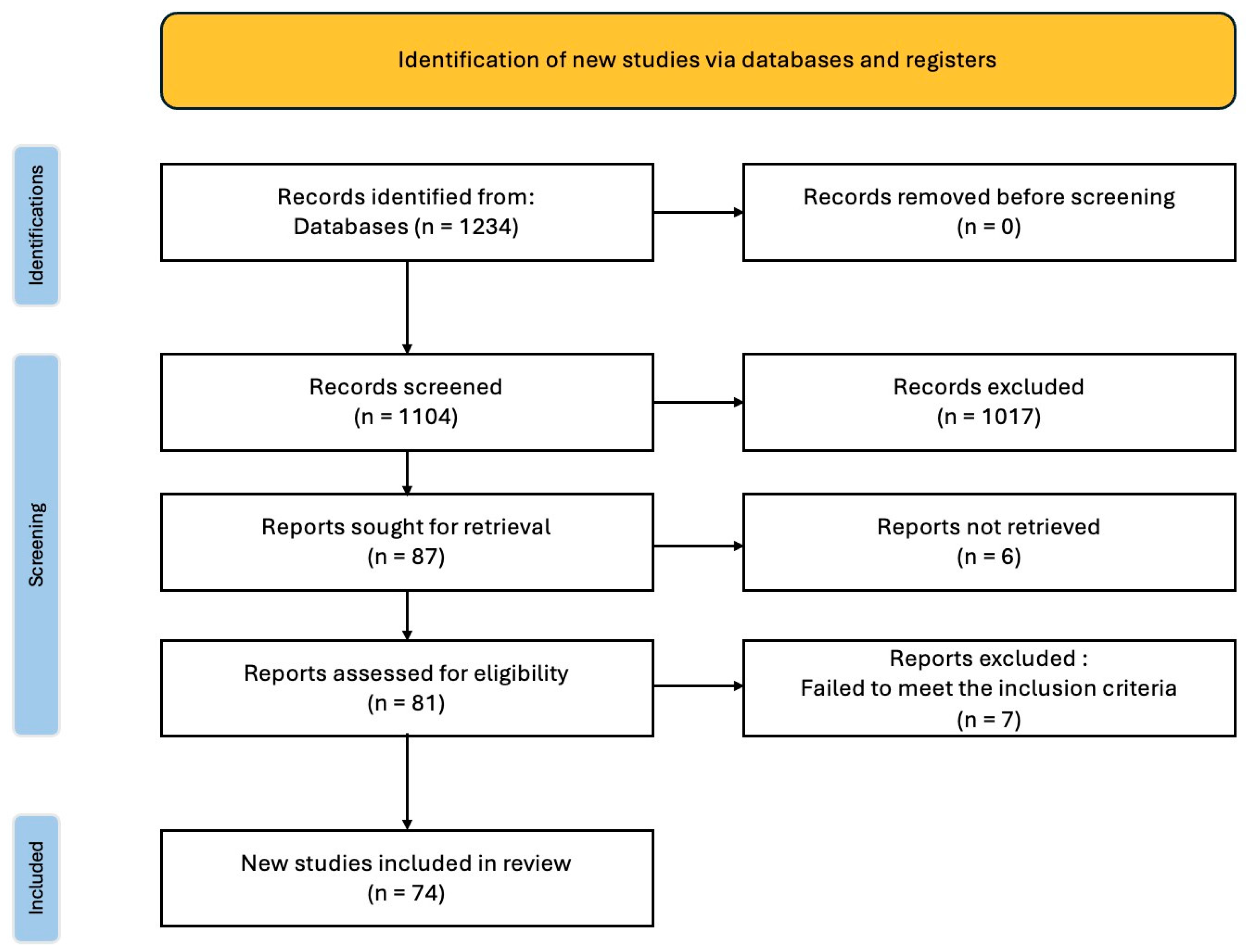
This paper presents a systematic review of peer-reviewed articles examining adult learners’ participation in and motivation for higher education published between 2000 and October 2025. The review was conducted in accordance with the PRISMA 2020 reporting guidelines. The review protocol was not registered. A PRISMA 2020-compliant flow diagram, generated using the PRISMA2020 R package and Shiny application, was used to transparently document the processes of study identification, screening, eligibility assessment, and final inclusion [21].

2.1. Search Strategy and Study Selection

A literature search was initially conducted using the Scopus and Web of Science databases on 1 October 2025, selected for their broad coverage of international journals in education and the social sciences. The initial search employed combinations of the keywords adult, learning, higher education, participation, and motivation, and was limited to studies published in English. Searches were conducted using keyword combinations applied to titles, abstracts, and keywords, and were restricted to peer-reviewed journal articles published between 2000 and October 2025. This search yielded 1013 records. Based on a preliminary scan of the retrieved records, the initial search was considered insufficient to fully capture the breadth of the relevant literature. Accordingly, the search strategy was refined by expanding the keyword combinations to include engagement and retention, and a final, comprehensive search was conducted on 10 November 2025. The refined search, again limited to English-language publications, yielded 1234 records. No additional databases, trial registers, gray literature sources, or reference list searches were conducted.
After omitting 127 duplicate records, a total of 1106 unique records remained. Prior to title and abstract screening, three non-English records were excluded, which resulted in 1104 records screened at the title and abstract levels. At this stage, 1017 records were excluded due to insufficient relevance to adult learners’ participation in or motivation for higher education. Consequently, 87 articles were retained for assessment of full-text eligibility.
Full-text screening was conducted on 87 articles. The first reviewer independently assessed the full texts and compiled lists of included and excluded studies, along with documented reasons for exclusion. The second reviewer subsequently examined all inclusion and exclusion decisions and their underlying rationales. In cases of differing judgments, the two reviewers discussed the articles to reach a consensus. No unresolved disagreements occurred during this process.
Articles were included if they reported empirical studies of adult or mature learners enrolled in higher education degree programs, examined participation in or motivation for higher education (including related constructs such as engagement, retention, persistence, dropout, and enrollment factors), were published in peer-reviewed English-language journals, and fell within the 2000–October 2025 publication period. For the purposes of this review, adult learners were operationally defined as individuals aged 25 years or older, or learners explicitly identified in the original studies as adult, mature, non-traditional, or returning students enrolled in degree-granting higher education programs. When explicit age thresholds were not reported, inclusion decisions relied on authors’ descriptions of learner characteristics such as delayed entry, part-time enrollment, concurrent employment, or caregiving responsibilities.
Based on these eligibility criteria, articles were excluded if they focused on informal learning, workplace training, or K–12 education; lacked empirical data; or fell outside the specified date range. At this stage, six articles were excluded due to unavailable full texts, and seven were excluded for failing to meet the inclusion criteria, including studies that focused exclusively on traditional-age undergraduates (under 25 years old) without an explicit emphasis on adult learners. Consequently, 74 studies were included in the final systematic review. Figure 1 presents the PRISMA flow diagram. No formal risk of bias assessment was conducted, as the primary purpose of this review was to map research trends and methodological characteristics rather than to evaluate intervention effectiveness.

2.2. Analytical Approaches for Research Questions

The 74 selected studies were subjected to full-text data extraction and analysis using a structured, Excel-based coding sheet. For Research Question 1, the researchers extracted data on year of publication; target learner population; research design; contributing continents and countries; and learning and data collection modalities (i.e., online, face-to-face, or blended). These data were analyzed using frequency counts and percentage distributions to identify global and temporal patterns in the literature.
To address Research Question 2, this study used a hybrid deductive–inductive analytical approach [22] to examine the empirical factors that influence adult learners’ participation in higher education and theoretical frameworks used to explain these factors, including their evolution over time. As a deductive point of departure, analysis was grounded in foundational adult learning and participation theories, particularly Houle’s typology of adult learners [13] and Cross’s Chain-of-Response model [14], which conceptualized participation at the individual, situational, and institutional levels of explanation.
Guided by this framework, full texts were systematically coded in two complementary ways. First, the empirical factors reported to influence participation were identified and coded as determinants or barriers and classified as personal, social/family, situational (life/work), and institutional dimensions. Second, each study was coded according to its dominant explanatory focus, thus capturing the theoretical framework underpinning its analysis. Through this process, the study developed analytically reconstructed framework categories, including individual-level; identity- and engagement-oriented; life course/situational; institutional/structural; and lifelong learning or employability-oriented perspectives. Instead of classifying studies by specific theory labels, analysis focused on the dominant explanatory logic of each study, thereby enabling a consistent comparison across diverse empirical contexts.
For both research questions, analyses were organized according to three analytical periods (i.e., 2000–2009, 2010–2019, and 2020–2025) to examine temporal changes. This periodization reflects major shifts in higher education contexts, including the predominance of face-to-face learning during the early 2000s, the expansion of online and blended learning formats during the 2010s, and the accelerated digital transformation that followed the COVID-19 pandemic. Frequency counts and percentage distributions were used to synthesize patterns in research contexts, empirical factors, and theoretical explanations across periods. Table 1 summarizes the definitions of the analysis criteria, and Appendix A provides the detailed coding scheme. Both researchers independently reviewed and coded all 74 studies using a shared coding framework. Coding was conducted iteratively, with frequent calibration discussions to refine category definitions and ensure consistent application across studies. Because the coding process emphasized consensus-based interpretation of complex and heterogeneous study designs, formal inter-rater reliability statistics (e.g., Cohen’s kappa or percent agreement) were not calculated. Instead, discrepancies were resolved through systematic discussion until full agreement was reached for all coded categories prior to analysis. To illustrate the coding process, when a study described adult learners’ difficulties in balancing full-time employment with evening or weekend coursework, the researchers jointly coded this as a situational barrier, specifically a work–study conflict. Similarly, studies reporting learners’ interest in learning, enjoyment of academic activities, or personal fulfillment were coded as personal determinants, most commonly intrinsic motivation. This example illustrates how empirical descriptions were systematically translated into analytical categories through consensus-based interpretation.
No formal quality appraisal (e.g., MMAT, CASP, or Newcastle–Ottawa Scale) was conducted for the included studies. This decision was made because the primary aim of the present review was to map research trends, empirical emphases, and theoretical frameworks related to adult learners’ participation in higher education, rather than to evaluate intervention effectiveness or estimate effect sizes. Accordingly, all included studies were treated as sources of thematic and conceptual evidence rather than as units of comparative methodological quality.

3. Results

3.1. Research Question 1: Research Trends and Methodological Characteristics of the Selected Articles

3.1.1. Temporal Distribution

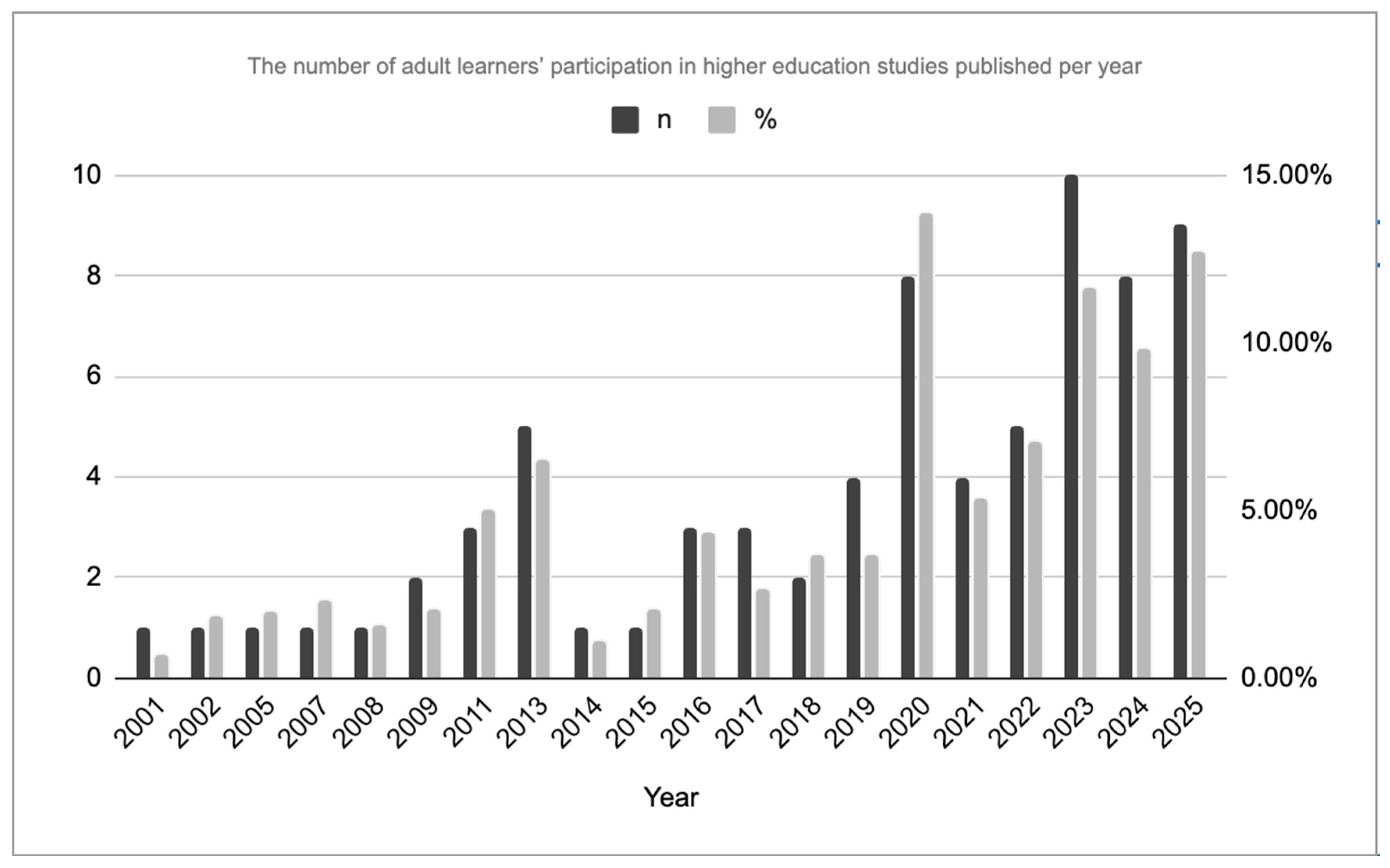
The temporal distribution of the selected studies (N = 74) exhibited a notable increase in research output after 2020. Before the mid-2010s, the number of publications was sporadic, typically one to three per year. In contrast, this number markedly increased from 2020 onward, reaching a peak in 2023 (n = 10) and remaining high in 2024 and 2025 (n = 9 each). This pattern indicated an increased scholarly focus on adult learners’ participation in higher education in recent years (Figure 2).

3.1.2. Target Learner Population

Table 2 presents the distribution of target learner populations across the three time periods. Studies most frequently focused on adult learners in higher education (general), accounting for 31.1% of the total sample (n = 23). From 2000 to 2009, research was limited (n = 7) and primarily concentrated on general adult learners (42.9%); less attention was given to other subgroups; and no studies examined postgraduate or working adult learners. From 2010 to 2019 (n = 22), the range of target populations expanded, with increased attention given to mature/non-traditional undergraduates and working adult learners (22.7% each), along with the initial inclusion of postgraduate adult learners (9.1%). The 2020–2025 period displayed a substantial increase in research volume (n = 45) and sustained diversification, including a continued focus on general adult learners (35.6%) and consistent representation of mature undergraduates, working adults, older learners, and postgraduate adult learners (each approximately 11–18%).
Taken together, these findings underscored an evident temporal shift from a generalized focus on adult learners toward increasingly differentiated learner populations.

3.1.3. Research Design

Table 3 summarizes the research designs used during the three time periods. Quantitative designs were most frequently used (33, 44.6%), followed by qualitative (25, 33.8%) and mixed-method approaches (16, 21.6%). Quantitative studies consistently dominated across the periods, which accounted for approximately 43–46% of the literature per period. In contrast, the proportion of qualitative studies increased over time—from 28.6% in 2000–2009 to 40.0% in 2020–2025. Mixed-method designs were most prevalent from 2010 to 2019 (31.8%) but declined in relative proportion after 2020 (15.6%). Taken together, the findings indicated a consistent reliance on quantitative research designs along with a gradual increase in qualitative approaches in recent years.

3.1.4. Contributing Continents and Countries

Table 4 summarizes the geographic distribution of the selected studies across continents and countries. Driven primarily by the United States (18.9%), North America accounted for the largest proportion of studies, followed by Europe, with contributions distributed across multiple countries, most notably the United Kingdom (10.8%). Asia also represented a substantial proportion of the literature, particularly in 2020–2025, with China emerging as a major contributor.
Across periods, the study noted an evident pattern of geographic diversification. Articles published in 2000–2009 were concentrated in a small number of countries, primarily North America, Europe, and Oceania. For 2010–2019, geographic coverage broadened moderately, with increased contributions from European and Asian countries. The 2020–2025 period yielded the greatest diversification, marked by a notable increase in studies from Asia and the emergence of contributions from Africa and South America, along with continued representation from Europe and North America.
These findings highlighted a progressive expansion of geographic representation over time, although the literature remains dominated by studies from the United States and Western Europe.

3.1.5. Learning and Data Collection Modalities

Table 5 summarizes the academic program modalities examined across the three time periods. Offline (face-to-face) programs were most frequently examined (27, 36.5%), followed by blended programs (22, 29.7%) and online programs (13, 17.6%). Temporal shifts are evident. In 2000–2009, research predominantly focused on offline programs (57.1%), with limited attention to blended and online formats. From 2010 to 2019, blended programs became the primary focus (50.0%), while attention to offline programs declined (27.3%). In the 2020–2025 period, research attention further diversified, with increased focus on online programs (22.2%) along with a renewed emphasis on offline formats (37.8%), while blended programs remained a substantial component (20.0%).
In summary, these findings indicate growing diversification in academic program modalities, with increased scholarly attention given to online and blended formats along with continued interest in face-to-face programs.

3.1.6. Definitions of Adult Learners in the Included Studies

Across the included studies, adult, non-traditional, or mature learners were operationalized using divergent operational logics with varying emphasis on age, learner status, and life-course characteristics (see Table 6). Age-based definitions, most commonly identifying adult learners as individuals aged 25 years or older, were used in 28.4% of studies. In 27.0% of studies, adult learners were defined predominantly through life-course or participation characteristics, including delayed entry into higher education, part-time enrollment, concurrent employment, or caregiving responsibilities. Status-labeled definitions relying exclusively on terms such as adult, mature, non-traditional, or returning students without explicit operational definition were used in only 4.1% of studies. Accounting for 40.5% of studies, composite definitions combining two or more criteria were most common. Overall, this pattern indicates a field-wide reliance on multi-criteria and context-sensitive definitions rather than a single standardized approach.

3.2. Research Question 2: Empirical Factors and Theoretical Frameworks

3.2.1. Empirical Determinants and Barriers

Table 7 and Table 8 summarize the empirical determinants and barriers that influence adult learners’ participation in higher education.
Across the review period, personal determinants emerged as the most frequently reported facilitators of adult learners’ participation in higher education. In particular, intrinsic motivation—including interest in learning, personal fulfillment, and intellectual stimulation—was the most consistently identified determinant and appeared in more than three quarters of the reviewed studies. Although intrinsic motivation has been previously prominent during the early 2000s, its prevalence further increased in studies published after 2020, which indicated sustained scholarly attention to adults’ internal drivers of participation. Extrinsic or career-related motivation, such as professional advancement, employability, and credential attainment, was also reported across the three time periods, reflecting the persistent relevance of labor market considerations in the decision of adults to participate.
Determinants related to learning agency and self-regulation, including self-directed learning, persistence, and time-management strategies, were evident across the periods but became more visible from the 2010s onward. Within the social/family domain, family motivation and support functioned as important facilitators across periods. In particular, emotional encouragement, practical support (e.g., childcare), and reciprocal motivation were increasingly emphasized in recent studies. Institutional determinants exhibited the most evident temporal shift. While early studies rarely highlighted institutional enablers, research published after 2020 increasingly emphasized flexible learning provision—including online, blended, hybrid, and part-time formats—as a key facilitator, with academic and support services appearing less frequently but primarily in the most recent period.
In contrast, situational barriers related to adults’ life and work contexts were consistently reported across the periods. Work–study conflict emerged as the most frequently identified barrier, which reflected persistent challenges in balancing between employment and academic demands. Time constraints and financial pressures—including tuition costs, living expenses, and income loss—were also reported throughout the review periods, which underscored long-standing economic constraints, frequently implicitly associated with broad institutional and policy arrangements.
Within the institutional domain, barriers related to inflexibility and limited support were more common in 2000–2009 and 2010–2019, while technology- and access-related barriers notably increased after 2020. These barriers included challenges in the use of digital platforms, Internet connectivity, and decreased interaction or social isolation in online learning environments. Personal (dispositional) barriers, such as low levels of self-confidence and fear of failure, appeared less frequently than did situational or institutional barriers; nevertheless, they were present across the periods.
These results reveal a clear temporal pattern in the empirical factors that influence adult learners’ participation. The determinants shifted gradually from an emphasis on individual motivation to increased attention to institutional enablers, specifically flexible learning provision, after the post-2020 period. By contrast, barriers exhibited greater continuity, with situational constraints persisting across periods and institutional barriers evolving primarily through the emergence of technology- and access-related challenges in digitally mediated learning contexts.

3.2.2. Theoretical Frameworks

Table 9 summarizes the theoretical frameworks used to explain adult learners’ participation in higher education across the three periods. The findings indicate that the literature does not converge on a single theoretical tradition; instead, it reflects distinct explanatory emphases that have shifted over time.
During the 2000–2009 period, studies predominantly used individual-level frameworks—interpreting participation primarily from the perspectives of personal motivation, readiness, and self-directed learning. Table 9 depicts that these frameworks accounted for the largest proportion of studies published during this period, indicating a strong emphasis on individual agency in early explanations of adult learners’ participation.
In the 2010–2019 period, the use of identity- and engagement-oriented frameworks and life course or situational perspectives markedly increased. Studies increasingly emphasized adult learners’ negotiated identity, sense of belonging, and engagement experience, along with the influence of work, family responsibility, and other life circumstances, thereby reflecting a broader explanatory focus on relational and situational contexts.
In the 2020–2025 period, institutional and structural frameworks became increasingly prominent (Table 9). Research published after 2020 more frequently conceptualized participation as a structurally mediated process, influenced by institutional flexibility, access to online and hybrid learning environments, and organizational support mechanisms. A small but notable subset of studies also adopted lifelong learning and employability-oriented frameworks, associating adult learners’ participation with broad labor market and policy contexts.
These findings reveal a progressive shift in theoretical explanations of adult learners’ participation—from predominantly individual-centered models to frameworks that foreground identity, situational constraint, and, recently, institutional and structural contexts. This temporal pattern aligns with the empirical trends observed in terms of determinants and barriers and reflects broad transformations in higher education contexts.

4. Discussion

This systematic review synthesized the evolution of research on adult learners’ participation in higher education over the past 25 years, with particular attention to empirical determinants, barriers, and theoretical frameworks. Across the reviewed studies, definitions of adult learners were not applied consistently. As demonstrated by the coexistence of age-based, life-course or participation-based, status-labeled, and composite operationalization reported in the results, this definitional heterogeneity limits direct comparability across studies and suggests that the synthesized findings reflect shared participation conditions rather than a homogeneous population. Accordingly, the results should be interpreted as indicative of dominant patterns and trajectories in the literature, rather than uniform effects across clearly bounded learner groups. By integrating empirical factors with their theoretical interpretations, this study advances the understanding of both the conditions shaping adult learners’ participation and the evolution of the research landscape over time.
Although the final corpus consisted of only 74 studies over a 25-year period, this volume is comparable to prior systematic reviews addressing adult participation and lifelong learning, which similarly report relatively modest annual publication rates (e.g., Boeren [11]). Rather than indicating a narrow or incomplete coverage of the field, the size of the corpus reflects the specificity of the present review’s focus on participation in degree-granting higher education, as well as the application of strict inclusion criteria. In this sense, the review should be understood as offering a focused synthesis of a distinct subfield within adult and higher education research, rather than an exhaustive account of all research on adult learning more broadly.

4.1. Long-Standing Personal Determinants and Persistent Situational Barriers

One of the most consistent findings across the three time periods is the persistent prominence of personal determinants, particularly intrinsic motivation. Adult learners’ participation was repeatedly associated with internal drivers such as interest in learning, personal fulfillment, and self-directed goals. This pattern closely aligns with classical adult learning theory, which emphasizes adults’ self-direction and internal goal orientation, as articulated by Houle [13] and Knowles et al. [42]. The persistence of intrinsic motivation across the periods implies that individual agency remains an important component of adult learners’ participation in higher education despite structural and technological changes.
In contrast to the relative stability of personal determinants, situational barriers—particularly work–study conflict, time constraint, and financial pressure—also exhibited a strong continuity over time. These barriers reflect the complex life and work contexts in which adult learners are embedded and correspond to the situational constraints identified in Cross’s [14] participation framework. The findings indicate that, while the delivery modes for higher education have diversified, these fundamental constraints have remained prominent, which underscores the limitations of strategies for expanding participation, which solely focus on access or modality without addressing the broad life contexts of adults.

4.2. Increasing Emphasis on Institutional Determinants

While personal motivation remained central, the review identified a notable increase in institutional determinants, particularly after 2020. Flexible learning provision—such as online, blended, and part-time formats—emerged as an increasingly prominent facilitator of adult learners’ participation. This shift is likely attributable to structural changes in higher education triggered by the COVID-19 pandemic, which accelerated the adoption of digitally mediated delivery formats and foregrounded institutional responsibilities related to digital infrastructure, instructional design, and learner support. As a result, participation was increasingly conceptualized not solely as an outcome of individual motivation but as a function of institutional flexibility and organizational capacity to accommodate adult learners’ life circumstances, consistent with broader policy discourse emphasizing access and flexibility in mass higher education systems (OECD [3]).
At the same time, the review revealed a paradoxical pattern: alongside the growing emphasis on institutional enablers, studies increasingly reported institutional barriers, particularly technology-related challenges and experiences of isolation in online learning environments. These findings align with recent scholarship on online pedagogy, which underscores the critical role of instructional design, social interaction, and sustained institutional support in fostering persistence among adult learners (e.g., Martin et al. [43]). Consistent with emerging research on online dropout [17], the results indicate that institutional flexibility functions as a necessary but insufficient condition for adult learners’ participation unless accompanied by robust and ongoing support structures.

4.3. Shifts in Theoretical Explanations of Adult Learners’ Participation

The observed increase in qualitative research over time may reflect a broader epistemological shift in higher education research. As adult learners came to be understood as heterogeneous and contextually situated actors, researchers increasingly adopted qualitative approaches to capture lived experiences, identity negotiation, and meaning-making processes that are not easily reducible to standardized survey measures.
Beyond mapping empirical patterns, this review reveals a clear temporal evolution in theoretical explanations of adult learners’ participation, characterized by a cumulative expansion of explanatory perspectives rather than the displacement of earlier models. Early studies (2000–2009) predominantly employed individual-level frameworks, conceptualizing participation primarily as a function of motivation, readiness, and self-directed learning. While these approaches provided valuable insight into learner agency, they tended to underemphasize contextual and institutional influences.
From the 2010s onward, the literature increasingly incorporated identity- and engagement-oriented frameworks, reflecting a growing recognition of adult learners as situated actors who negotiate belonging, legitimacy, and participation within higher education contexts. This shift aligns with research on adult learner identity and engagement (e.g., Kasworm [5]) and with later engagement models emphasizing the relational interface between learners and institutions (e.g., Kahu & Nelson [44]).
In the most recent period (2020–2025), institutional and structural frameworks gained further prominence, paralleling the empirical rise of institutional determinants. Participation was increasingly conceptualized as a structurally mediated process shaped by institutional policies, digital infrastructures, and broader lifelong learning agendas. The emergence of lifelong learning and employability-oriented frameworks further situates adult learners’ participation within labor market and policy contexts, consistent with international perspectives advanced by UNESCO [45] and the OECD [3].

4.4. Integrating Empirical Factors and Theoretical Frameworks

The findings indicate a co-evolution of empirical focus and theoretical interpretation in the literature on adult learners’ participation in higher education. While intrinsic motivation and situational constraints have remained persistent features, theoretical explanations have progressively expanded from predominantly individual-centered models toward more integrative frameworks that foreground identity, institutional responsibility, and structural conditions. Rather than displacing earlier motivational theories, recent scholarship appears to extend them by embedding learner agency within digitally mediated, organizational, and policy environments. This theoretical reorientation reflects both empirical changes in higher education delivery and evolving epistemological commitments within the field.
This integrative perspective carries important implications for research and practice. For researchers, it underscores the value of multi-level theoretical approaches that bridge individual agency with institutional and structural contexts. For policymakers and higher education institutions, it highlights the need to move beyond access-oriented reforms and to address persistent situational barriers alongside the design of flexible, supportive learning environments that respond to adult learners’ complex life circumstances.

5. Conclusions

This review demonstrates that adult learners’ participation in higher education is influenced by the dynamic interaction among long-standing personal motivations, persistent situational constraints, and increasingly salient institutional conditions, within a research landscape that has expanded markedly and has diversified methodologically since 2020. While intrinsic motivation has remained a stable driver of participation over time, theoretical and empirical attention has progressively shifted toward contextual and structural explanations, particularly in studies published after 2020. This evolution reflects broad transformations in delivery modes in higher education, including digitalization, expanded access, and elevated institutional responsibility for adult learners’ engagement. These results imply that advancing adult learners’ participation in higher education requires approaches that extend beyond individual motivation to address multi-level conditions—integrating learner agency with supportive institutional designs and policy frameworks. By systematically mapping empirical factors and theoretical explanations over time, this review provides a consolidated foundation for future research and practice aimed to support diverse adult learners within the increasingly complex landscape of higher education.
Despite its comprehensive scope, this review has limitations. First, while the study focused on international peer-reviewed articles in major databases, it may have only partially captured region-specific gray literature or non-English publications. Second, the potentially rapid evolution of digital tools after 2025 warrants further longitudinal investigation. Future research should prioritize intersectional analyses of the interaction of demographic variables—such as age, gender, and socioeconomic status—with newly identified institutional determinants to refine the current understanding on equitable access in higher education. Third, this review has limitations related to its search strategy and inclusion criteria. Although the search terms were expanded beyond the initial combinations, it is possible that some relevant studies were not captured, particularly those focusing on non-traditional, mature, or post-traditional students without explicitly using the terms adult or participation. This limitation reflects the broader lack of terminological consistency in the field rather than an oversight unique to the present review. Consequently, the findings should be interpreted as representative of dominant research patterns within the defined scope rather than as an exhaustive mapping of all literature related to adult or non-traditional learners in higher education. Finally, sensitivity analyses comparing high-quality studies with the full set of included articles were not conducted. Given the substantial heterogeneity in research designs, methods, and reporting practices, applying uniform quality thresholds would have required arbitrary decisions. Future reviews focusing on specific outcomes or interventions may benefit from conducting formal quality appraisals and sensitivity analyses to assess the robustness of synthesized findings.

Author Contributions

Conceptualization, J.-H.P.; methodology, M.N.S.; primary analysis, J.-H.P. and M.N.S.; investigation, J.-H.P. and M.N.S.; writing—original draft preparation, J.-H.P.; writing—review and editing, J.-H.P. and M.N.S.; visualization, M.N.S.; supervision, J.-H.P. All authors have read and agreed to the published version of the manuscript.

Funding

This research received no external funding.

Institutional Review Board Statement

Not applicable.

Informed Consent Statement

Not applicable.

Data Availability Statement

No new data were created or analyzed in this study. Data sharing is not applicable to this article.

Acknowledgments

The authors used ChatGPT-5 to improve the grammatical structure and English phrasing of this manuscript. The authors reviewed and edited the generated content and take full responsibility for the final version of the paper.

Conflicts of Interest

The authors declare no conflicts of interest.

Appendix A

Table A1. Integrated codebook for empirical factors and theoretical frameworks.
Analytical DomainCategoryDimension/FrameworkElements (Indicators)
Empirical factorsDeterminantsPersonalIntrinsic motivation; extrinsic/career motivation; learning agency and self-regulation; positive learner self-concept; and personal goals and aspirations
Social/familyEmotional support from family, practical/logistical support (e.g., childcare), family-based motivation or role-model effects, peer support, and sense of belonging
Situational (life/work)Supportive work conditions; alignment between work and study; life-stage compatibility
InstitutionalFlexible learning provision (online/blended/part-time); flexible scheduling and pacing; academic and support services; recognition of prior learning; and accessible information and guidance
Empirical factorsBarriersPersonal (dispositional)Low self-confidence, fear of failure, academic anxiety, negative prior educational experiences, and perceived lack of preparedness
Social/familyCaregiving responsibilities, conflicting family expectations, limited social support, and competing domestic roles
Situational (life/work)Work–study conflict, time constraints, financial constraints (tuition, living costs, income loss), and health-related issues or fatigue
InstitutionalInstitutional inflexibility, insufficient academic or administrative support, limited interaction or isolation (especially online), and technology and access problems
Theoretical frameworks Individual-levelMotivation, self-directed learning, readiness to learn, and individual agency
Identity- and engagement-orientedAdult learner identity, sense of belonging, engagement, and relational experiences
Life course/situationalWork–family balance, role conflict, life transitions, and timing of participation
Institutional/structuralInstitutional flexibility; access; organizational support; structural barriers and enablers; and digital delivery systems
Lifelong learning/employability-orientedLifelong learning policy, employability, reskilling/upskilling, and labor market demands

References

  1. National Student Clearinghouse Research Center. Stay Informed: Fall 2024 Enrollment Update; NSCRC: Herndon, VA, USA, 2024. [Google Scholar]
  2. KEDI (Korean Educational Development Institute). Briefing on Higher Education Statistics: Analysis of Enrollment Trends of Non-Traditional Learners; KEDI: Jincheon, Republic of Korea, 2024. [Google Scholar]
  3. OECD. Education at a Glance 2023: OECD Indicators; OECD Publishing: Paris, France, 2023. [Google Scholar]
  4. Boeren, E. Lifelong Learning Participation in a Changing Policy Context: An Interdisciplinary Theory; Palgrave Macmillan: London, UK, 2016. [Google Scholar]
  5. Kasworm, C.E. Adult learners in a research university. Adult Educ. Q. 2010, 60, 143–160. [Google Scholar] [CrossRef]
  6. Panacci, A.G. Adult students in higher education: Classroom experiences and needs. Coll. Q. 2015, 18, 31. [Google Scholar]
  7. Soares, L.; Gagliardi, J.S.; Nellum, C.J. The Post-Traditional Learners Manifesto Revisited; American Council on Education: Washington, DC, USA, 2017. [Google Scholar]
  8. Quimby, J.L.; O’Brien, K.M. Predictors of well-being among nontraditional female students. J. Couns. Dev. 2006, 84, 451–460. [Google Scholar] [CrossRef]
  9. Stone, C.; O’Shea, S. Older, online and first. Australas. J. Educ. Technol. 2019, 35, 57–69. [Google Scholar] [CrossRef]
  10. Kim, A.; Collins, M.; Hagedorn, M.C.; Williamson, J.; Chapman, C. Adult Education Participation in 2004–05 (NCES 2006-077); National Center for Education Statistics: Washington, DC, USA, 2006.
  11. Boeren, E. Understanding adult lifelong learning participation as a layered problem. Stud. Contin. Educ. 2017, 39, 161–175. [Google Scholar] [CrossRef]
  12. Allen, I.E.; Seaman, J. Digital Learning Compass: Distance Education Enrollment Report 2017; Babson Survey Research Group, 2017. Available online: https://files.eric.ed.gov/fulltext/ED580868.pdf (accessed on 15 December 2025).
  13. Houle, C.O. The Inquiring Mind: A Study of the Adult Who Continues to Learn; University of Wisconsin Press: Madison, WI, USA, 1961. [Google Scholar]
  14. Cross, K.P. Adults as Learners: Increasing Participation and Facilitating Learning; Jossey-Bass: San Francisco, CA, USA, 1981. [Google Scholar]
  15. Boshier, R. Educational participation and dropout: A theoretical model. Adult Educ. 1973, 23, 255–282. [Google Scholar] [CrossRef]
  16. Eri, R.; Gudimetla, P.; Star, S.; Rowlands, J.; Girgla, A.; To, L.; Li, F.; Sochea, N.; Bindal, U. Digital resilience in higher education in response to COVID-19. J. Univ. Teach. Learn. Pract. 2021, 18, 7. [Google Scholar]
  17. Park, J.-H.; Choi, H.J. Adult learner dropout in online education in the post-pandemic era. Encyclopedia 2025, 5, 214. [Google Scholar] [CrossRef]
  18. Eccles, J.S.; Wigfield, A. From expectancy–value theory to situated expectancy–value theory: A developmental, social cognitive, and sociocultural perspective on motivation. Educ. Psychol. 2020, 61, 101859. [Google Scholar] [CrossRef]
  19. Deci, E.L.; Ryan, R.M. The “what” and “why” of goal pursuits: Human needs and the self-determination of behavior. Psychol. Inq. 2000, 11, 227–268. [Google Scholar] [CrossRef]
  20. Bandura, A. Self-Efficacy: The Exercise of Control; W.H. Freeman: New York, NY, USA, 1997. [Google Scholar]
  21. Haddaway, N.R.; Page, M.J.; Pritchard, C.C.; McGuinness, L.A. PRISMA2020: An R package and Shiny app for producing PRISMA 2020-compliant flow diagrams, with interactivity for optimised digital transparency and Open Synthesis. Campbell Syst. Rev. 2022, 18, e1230. [Google Scholar] [CrossRef]
  22. Fereday, J.; Muir-Cochrane, E. Demonstrating rigor using thematic analysis. Int. J. Qual. Methods 2006, 5, 80–92. [Google Scholar] [CrossRef]
  23. Park, J.; Choi, H.J. Factors influencing adult learners’ decision to drop out or persist in online learning. Educ. Technol. Soc. 2009, 12, 207–217. [Google Scholar]
  24. Novotný, P.; Brücknerová, K.; Juhaňák, L.; Rozvadská, K. Driven to Be a Non-Traditional Student: Measurement of the Academic Motivation Scale with Adult Learners after Their Transition to University. Stud. Paedagog. 2019, 24, 109–135. [Google Scholar] [CrossRef]
  25. Wang, Y.; Teo, P.-C.; Ho, T.C.F.; Hee, O.C. Adult Learners’ Online Distance Learning Experience in Postgraduate Business Programme: A Qualitative Study in a Public University in Malaysia. Asia Pac. Bus. Rev. 2025, 31, 593–617. [Google Scholar]
  26. Schuetze, H.G.; Slowey, M. Participation and Exclusion: A Comparative Analysis of Non-Traditional Students and Lifelong Learners in Higher Education. High. Educ. 2002, 44, 309–327. [Google Scholar] [CrossRef]
  27. Aittola, H.; Ursin, J. Finnish Adult Students’ Perspectives on Short-Cycle Study Programmes: Motives and Evaluations. High. Educ. Res. Dev. 2019, 38, 205–218. [Google Scholar] [CrossRef]
  28. Elliott, G. Widening Higher Education Participation in Rural Communities in England: An Anchor Institution Model. Int. Rev. Educ. 2018, 64, 65–84. [Google Scholar] [CrossRef]
  29. Nguyen, L.A.P.; Nguyen, T.H.B. A Study on the Motivations, Advantages, and Barriers of Adult Learners of English: A Case of Female Students in Vietnam. J. Inst. Res. South East Asia 2024, 22, 392–411. [Google Scholar]
  30. Kinser, K.; Deitchman, J. Tenacious Persisters: Returning Adult Students in Higher Education. J. Coll. Stud. Retent. Res. Theory Pract. 2007, 9, 75–94. [Google Scholar] [CrossRef]
  31. Fragoso, A.; Gonçalves, T.; Ribeiro, C.M.; Monteiro, R.; Quintas, H.; Bago, J.; Fonseca, H.M.; Santos, L. The Transition of Mature Students to Higher Education: Challenging Traditional Concepts? Stud. Educ. Adults 2013, 45, 67–81. [Google Scholar] [CrossRef]
  32. Sagna, S.; Vaccaro, A. “I Didn’t Just Do It for Myself”: Exploring the Roles of Family in Adult Learner Persistence. J. Contin. High. Educ. 2023, 71, 168–182. [Google Scholar] [CrossRef]
  33. Blieck, Y.; Kauwenberghs, K.; Zhu, C.; Struyven, K.; Pynoo, B.; DePryck, K. Investigating the Relationship between Success Factors and Student Participation in Online and Blended Learning in Adult Education. J. Comput. Assist. Learn. 2019, 35, 476–490. [Google Scholar] [CrossRef]
  34. Wyatt, L.G. Nontraditional Student Engagement: Increasing Adult Student Success and Retention. J. Contin. High. Educ. 2011, 59, 10–20. [Google Scholar] [CrossRef]
  35. Park, K.; Bang, Y. Motivational Determinants and Achievements on Digital Learning Tool Proficiency among University Adult Learners. Int. J. Learn. Teach. Educ. Res. 2025, 24, 755–771. [Google Scholar] [CrossRef]
  36. Dæhlen, M.; Ure, O.B. Low-Skilled Adults in Formal Continuing Education: Does Their Motivation Differ from Other Learners? Int. J. Lifelong Educ. 2009, 28, 661–674. [Google Scholar] [CrossRef]
  37. Chen, L.-K.; Wang, S.T. Seniors’ Demographic Correlates for Motivations to Enroll in Degree-Conferring Programs in Universities. Educ. Gerontol. 2016, 42, 431–442. [Google Scholar] [CrossRef]
  38. Saar, E.; Täht, K.; Roosalu, T. Institutional Barriers for Adults’ Participation in Higher Education in Thirteen European Countries. High. Educ. 2014, 68, 691–710. [Google Scholar] [CrossRef]
  39. Bowl, M. Experiencing the Barriers: Non-Traditional Students Entering Higher Education. Res. Pap. Educ. 2001, 16, 141–160. [Google Scholar] [CrossRef]
  40. Mohd Nor, N.M. Understanding Older Adult Learners in Distance Education: The Case of Universiti Sains Malaysia. Turk. Online J. Distance Educ. 2011, 12, 229–240. [Google Scholar]
  41. Papé, N.; Mahmud, I.; Hasan, R.; Uddin, N. Learning Needs Including Preferences and Digital Technologies: A Study of Mature Students in Higher Education in England. Int. J. Interact. Mob. Technol. 2025, 19, 7–19. [Google Scholar] [CrossRef]
  42. Knowles, M.S.; Holton, E.F.; Swanson, R.A. The Adult Learner, 8th ed.; Routledge: New York, NY, USA, 2014. [Google Scholar]
  43. Martin, F.; Xie, K.; Bolliger, D.U. Engaging learners in online learning. Distance Educ. 2022, 43, 204–222. [Google Scholar]
  44. Kahu, E.R.; Nelson, K. Student Engagement in the Educational Interface: Understanding the Mechanisms of Student Success. High. Educ. Res. Dev. 2018, 37, 58–71. [Google Scholar] [CrossRef]
  45. UNESCO. Reimagining Our Futures Together: A New Social Contract for Education; UNESCO Publishing: Paris, France, 2021. [Google Scholar]
Figure 1. PRISMA flow diagram of the article selection process.
Higheredu 05 00019 g001
Figure 2. Number of studies published per year.
Higheredu 05 00019 g002
Table 1. Definitions of analysis criteria.
CategoryAnalysis CriteriaDefinition
Research statusTemporal distribution of publicationsNumber of studies published each year between 2000 and October, 2025, grouped into three time periods (i.e., 2000–2009, 2010–2019, and 2020–2025).
Target learner populationsThe primary adult learner group examined, categorized as adult learners in higher education (general), mature/non-traditional undergraduates, adult postgraduate learners, working adult learners/professionals, older adult learners (50+), or mixed adult learner populations.
Research designDominant methodological approach employed, categorized as quantitative, qualitative, or mixed methods.
Contributing continents and countriesCountries and continents associated with each study based on authors’ institutional affiliations; multiple country contributions were recorded when applicable.
Learning modalityInstructional context examined, categorized as online, face-to-face (offline), or blended, based on explicit methodological or contextual descriptions.
Empirical factors and theoretical frameworksEmpirical determinantsFactors reported to facilitate adult learners’ participation in higher education, coded at the study level and classified into personal, social/family, situational (life/work), and institutional dimensions.
Empirical barriersFactors reported to constrain adult learners’ participation in higher education, coded at the study level and classified into personal (dispositional), social/family, situational (life/work), and institutional dimensions.
Dominant explanatory focusThe primary theoretical orientation used to explain adult learners’ participation, categorized as individual-level; identity- and engagement-oriented; life course/situational; institutional/structural; or lifelong learning/employability-oriented frameworks.
Table 2. Distribution of target learner population across time periods.
Target Learner Population2000–2009
n (%)
2010–2019
n (%)
2020–2025
n (%)
Total
n (%)
Adult learners in higher education (general)3 (42.9)4 (18.2)16 (35.6)23 (31.1)
Postgraduate adult learners0 (0.0)2 (9.1)5 (11.1)7 (9.5)
Mature/non-traditional undergraduate students1 (14.3)5 (22.7)8 (17.8)14 (18.9)
Mixed adult learner populations2 (28.6)3 (13.6)5 (11.1)10 (13.5)
Older adult learners (50+/senior learners)1 (14.3)3 (13.6)6 (13.3)10 (13.5)
Working adult learners/professionals0 (0.0)5 (22.7)5 (11.1)10 (13.5)
Total7 (100.0)22 (100.0)45 (100.0)74 (100.0)
Table 3. Distribution of research design across time periods.
Research Design2000–2009
n (%)
2010–2019
n (%)
2020–2025
n (%)
Total
n (%)
Mixed methods2 (28.6)7 (31.8)7 (15.6)16 (21.6)
Qualitative2 (28.6)5 (22.7)18 (40.0)25 (33.8)
Quantitative3 (42.9)10 (45.5)20 (44.4)33 (44.6)
Total7 (100.0)22 (100.0)45 (100.0)74 (100.0)
Table 4. The geographic distribution across continents and countries.
ContinentsCountries2000–2009
n (%)
2010–2019
n (%)
2020–2025
n (%)
Total
n (%)
AfricaEgypt0 (0.0)0 (0.0)1 (2.2)1 (1.4)
Ghana0 (0.0)2 (9.1)0 (0.0)2 (2.7)
Tanzania0 (0.0)0 (0.0)1 (2.2)1 (1.4)
AsiaChina0 (0.0)0 (0.0)6 (13.3)6 (8.1)
India0 (0.0)0 (0.0)1 (2.2)1 (1.4)
Lebanon0 (0.0)0 (0.0)2 (4.4)2 (2.7)
Malaysia0 (0.0)3 (13.6)2 (4.4)5 (6.8)
Singapore0 (0.0)0 (0.0)1 (2.2)1 (1.4)
South Korea0 (0.0)1 (4.5)2 (4.4)3 (4.1)
Taiwan1 (14.3)1 (4.5)0 (0.0)2 (2.7)
Vietnam0 (0.0)0 (0.0)2 (4.4)2 (2.7)
EuropeBelgium0 (0.0)1 (4.5)0 (0.0)1 (1.4)
Czech Republic0 (0.0)1 (4.5)0 (0.0)1 (1.4)
Europe0 (0.0)2 (9.1)0 (0.0)2 (2.7)
Finland0 (0.0)1 (4.5)0 (0.0)1 (1.4)
Greece0 (0.0)1 (4.5)1 (2.2)2 (2.7)
Ireland0 (0.0)1 (4.5)0 (0.0)1 (1.4)
Netherlands0 (0.0)0 (0.0)1 (2.2)1 (1.4)
Norway1 (14.3)0 (0.0)0 (0.0)1 (1.4)
Portugal0 (0.0)1 (4.5)0 (0.0)1 (1.4)
Spain0 (0.0)0 (0.0)1 (2.2)1 (1.4)
Sweden0 (0.0)1 (4.5)0 (0.0)1 (1.4)
Switzerland0 (0.0)0 (0.0)1 (2.2)1 (1.4)
Turkey0 (0.0)1 (4.5)1 (2.2)2 (2.7)
Ukraine0 (0.0)0 (0.0)2 (4.4)2 (2.7)
United Kingdom1 (14.3)1 (4.5)6 (13.3)8 (10.8)
GlobalGlobal1 (14.3)0 (0.0)1 (2.2)2 (2.7)
North AmericaUnited States2 (28.6)4 (18.2)8 (17.8)14 (18.9)
OceaniaAustralia1 (14.3)0 (0.0)3 (6.7)4 (5.4)
South AmericaChile0 (0.0)0 (0.0)1 (2.2)1 (1.4)
Not statedNot stated0 (0.0)0 (0.0)1 (2.2)1 (1.4)
Total7 (100.0)22 (100.0)45 (100.0)74 (100.0)
Table 5. Modality of academic programs.
Learning Modalities2000–2009
n (%)
2010–2019
n (%)
2020–2025
n (%)
Total
n (%)
Offline4 (57.1)6 (27.3)17 (37.8)27 (36.5)
Online1 (14.3)2 (9.1)10 (22.2)13 (17.6)
Blended2 (28.6)11 (50.0)9 (20.0)22 (29.7)
Not stated0 (0.0)3 (13.6)9 (20.0)12 (16.2)
Total7 (100.0)22 (100.0)45 (100.0)74 (100.0)
Table 6. Definitions of adult learners across time periods.
CategoryDefinition Logic2000–2009
n (%)
2010–2019
n (%)
2020–2025
n (%)
Total
n (%)
Age-BasedAdult learners are defined using an explicit chronological age threshold (typically 25 years or older), regardless of additional learner characteristics.1 (14.3)6 (27.3)14 (31.1)21 (28.4)
Life-Course/ParticipationAdult learners are defined based on authors’ descriptions of learner characteristics indicating non-traditional educational trajectories, such as delayed entry into higher education, part-time enrollment, concurrent employment, or caregiving responsibilities.2 (28.6)6 (27.3)12 (26.7)20 (27.0)
Status-LabeledAdult learners are defined using explicit labels such as adult, mature, non-traditional, or returning students, without a specified age threshold.1 (14.3)(0.0)2 (4.4)3 (4.1)
CompositeAdult learners are defined using a combination of two or more criteria, including age thresholds, status labels, and/or life-course or participation characteristics.3 (42.9)10 (45.5)17 (37.8)30 (40.5)
Total7 (100.0)22 (100.0)45 (100.0)74 (100.0)
Table 7. Determinants influencing adult learners’ participation in higher education according to period.
CategoryDeterminants2000–2009
n (%)
2010–2019
n (%)
2020–2025
n (%)
Total
n (%)
Representative Studies
PersonalIntrinsic motivation9 (12.16)22 (29.73)26 (35.14)57 (77.03)Park & Choi [23], Novotný et al. [24], and Wang et al. [25]
Extrinsic/career motivation4 (5.41)7 (9.46)6 (8.11)17 (22.97)Schuetze & Slowey [26], Aittola & Ursin [27], and Wang et al. [25]
Learning agency/self-regulation3 (4.05)5 (6.76)4 (5.41)12 (16.22)Park & Choi [23], Elliott [28], and Nguyen & Nguyen [29]
Social/familyFamily motivation/support5 (6.76)6 (8.11)7 (9.46)18 (24.32)Kinser & Deitchman [30], Fragoso et al. [31], and Sagna & Vaccaro [32]
InstitutionalFlexible learning provision (online/blended/part-time)2 (2.70)7 (9.46)12 (16.22)21 (28.38)Park & Choi [23], Blieck et al. [33], and Wang et al. [25]
Academic and support services1 (1.35)1 (1.35)2 (2.70)4 (5.41)Wyatt [34], Park & Bang [35], and Nguyen & Nguyen [29]
Table 8. Barriers influencing adult learners’ participation in higher education by periods.
CategoryEmpirical Barrier2000–2009
n (%)
2010–2019
n (%)
2020–2025
n (%)
Total
n (%)
Representative Studies
Situational (Life/Work)Work–study conflict3 (4.05)7 (9.46)6 (8.11)16 (21.62)Dæhlen & Ure [36], Chen & Wang [37], and Nguyen & Nguyen [29]
Time constraints1 (1.35)2 (2.70)3 (4.05)6 (8.11)Aittola & Ursin [27], Nguyen & Nguyen [29], and Sagna & Vaccaro [32]
Financial constraints (situational)2 (2.70)3 (4.05)3 (4.05)8 (10.81)Schuetze & Slowey [26], Saar et al. [38], and Sagna & Vaccaro [32]
InstitutionalInstitutional inflexibility1 (1.35)1 (1.35)0 (0.00)2 (2.67)Bowl [39] and Mohd Nor [40]
Low interaction/isolation1 (1.35)0 (0.00)2 (2.70)3 (4.00)Wyatt [34], Sagna & Vaccaro [32], and Nguyen & Nguyen [29]
Technology and access problems4 (5.41)5 (6.76)8 (10.81)17 (22.97)Bowl [39], Wyatt [34], and Papé et al. [41]
Personal (dispositional)Low self-confidence/fear of failure1 (1.35)1 (1.35)1 (1.35)3 (4.00)Park & Choi [23], Mohd Nor [40], and Sagna & Vaccaro [32]
Table 9. Theoretical frameworks used to explain adult learners’ participation in higher education by period (2000–2025).
Theoretical Framework (Dominant Explanatory Focus)2000–2009
n (%)
2010–2019
n (%)
2020–2025
n (%)
Total
n (%)
Representative Studies
Individual-level frameworks (e.g., motivation and self-directed learning)8 (10.81)9 (12.16)6 (8.11)23 (31.08)Park & Choi [23], Elliott [28], and Wang et al. [25]
Identity and engagement frameworks2 (2.70)7 (9.46)4 (5.41)13 (17.57)Kasworm [5], Fragoso et al. [31], and Sagna & Vaccaro [32]
Life course/situational frameworks6 (8.11)9 (12.16)5 (6.76)20 (27.03)Schuetze & Slowey [26], Dæhlen & Ure [36], and Nguyen & Nguyen [29]
Institutional/structural frameworks1 (1.35)5 (6.76)8 (10.81)14 (18.92)Bowl [39], Blieck et al. [33], and Papé et al. [41]
Lifelong learning/employability frameworks0 (0.00)3 (4.05)1 (1.35)4 (5.41)Schuetze & Slowey [26], Aittola & Ursin [27], and Wang et al. [25]
Disclaimer/Publisher’s Note: The statements, opinions and data contained in all publications are solely those of the individual author(s) and contributor(s) and not of MDPI and/or the editor(s). MDPI and/or the editor(s) disclaim responsibility for any injury to people or property resulting from any ideas, methods, instructions or products referred to in the content.