
Pharmacological Reactivation of PP2A by SET/CIP2A Inhibition Attenuates Triple Negative Breast Cancer Progression

 , , ,
, , ,
Abstract
1. Introduction
2. Results
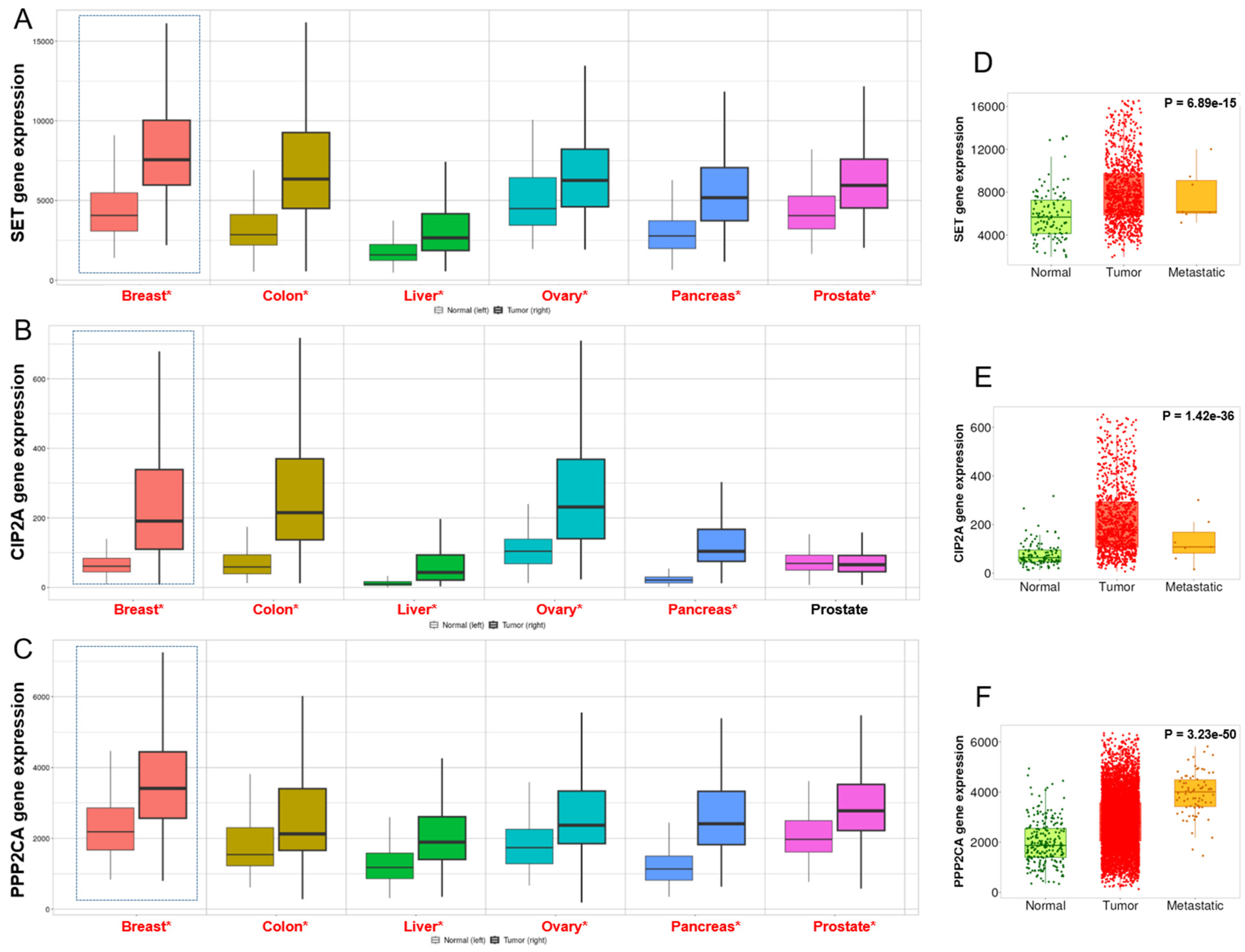
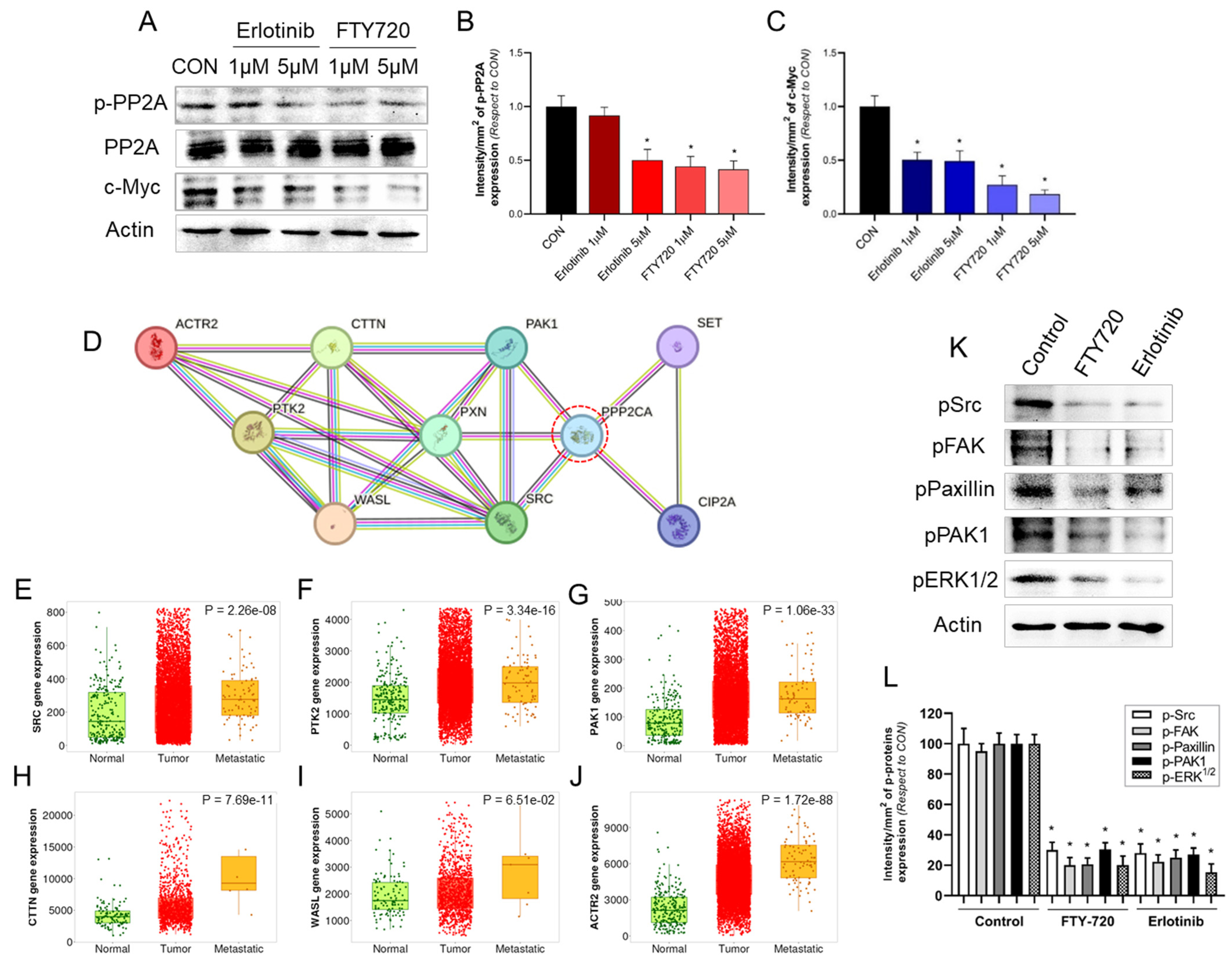
2.1. Gene Expression Analysis of Genes Involved in Tumor Progression
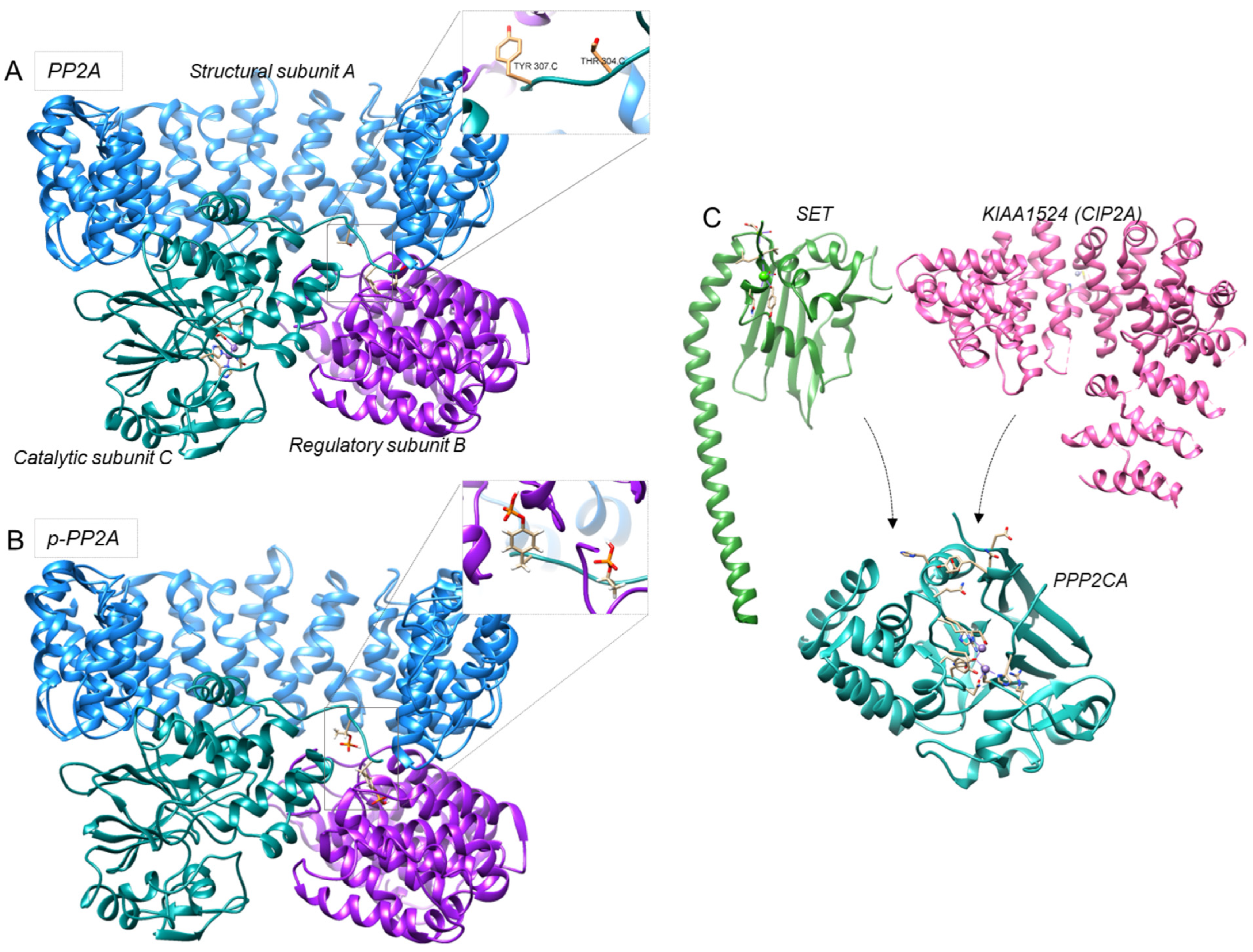
2.2. Identification of Phosphorylated Residues Associated with Loss of PP2A Function
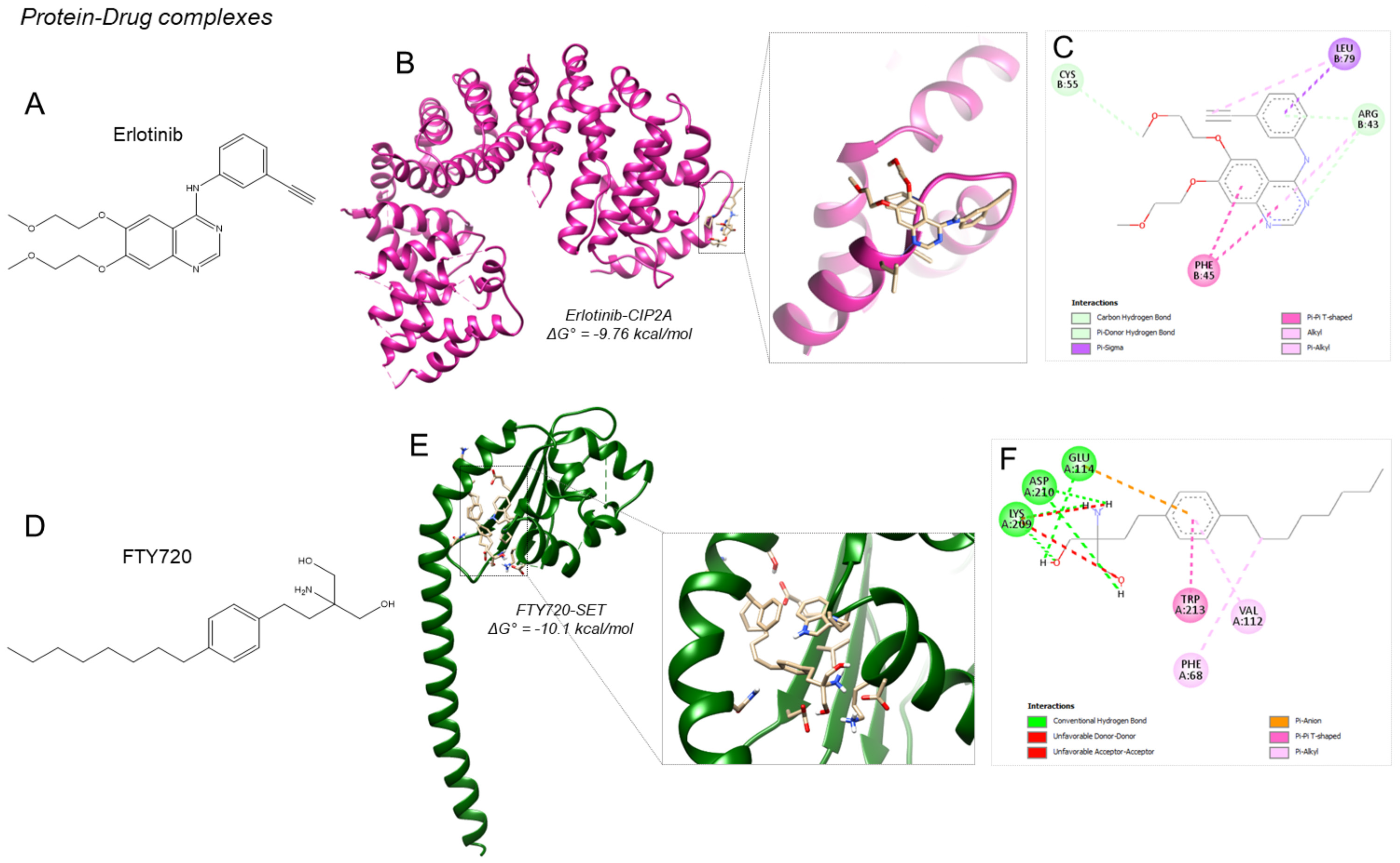
2.3. Binding Mode Analysis of Chemical Probes Targeting PP2A Inhibitory Proteins
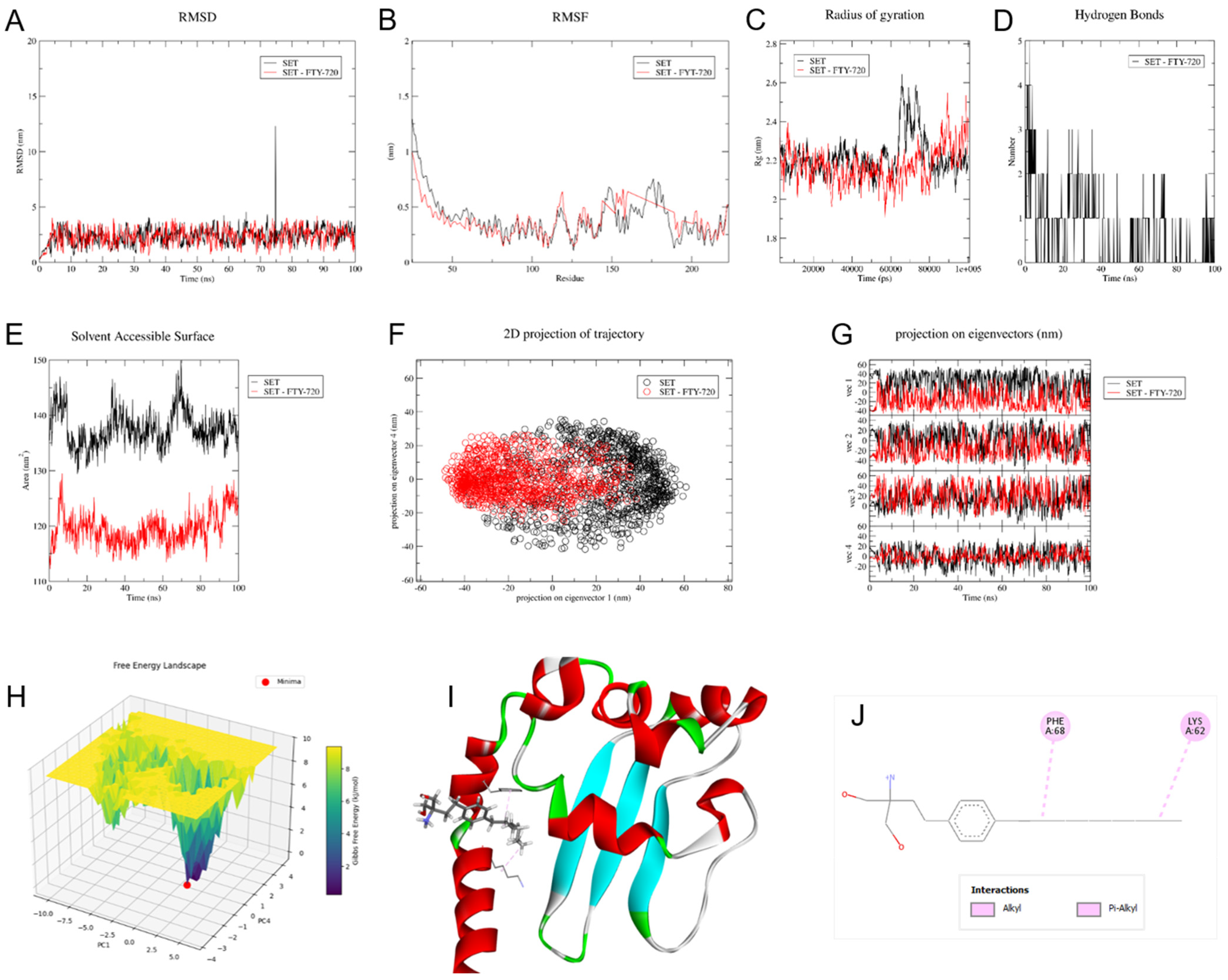
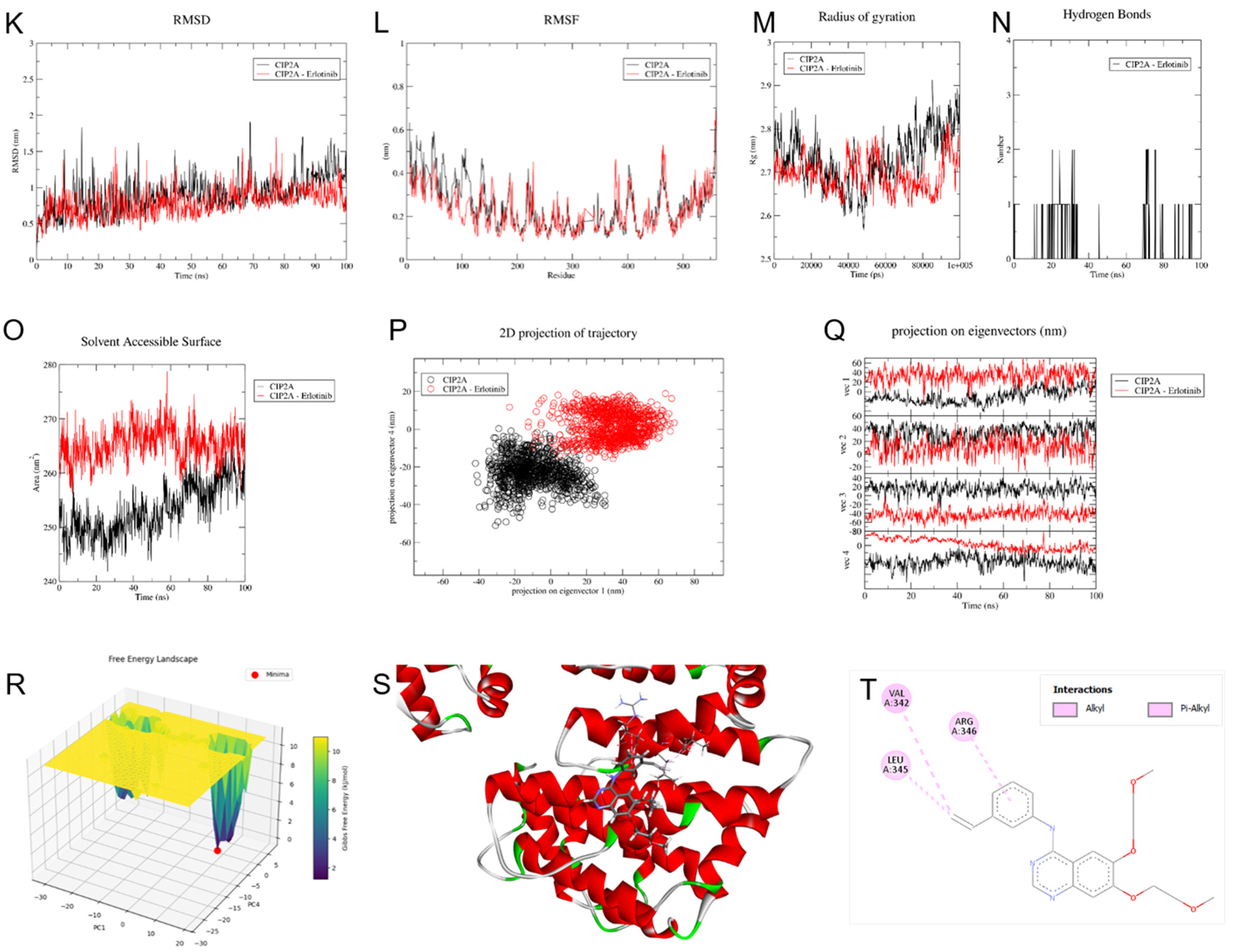
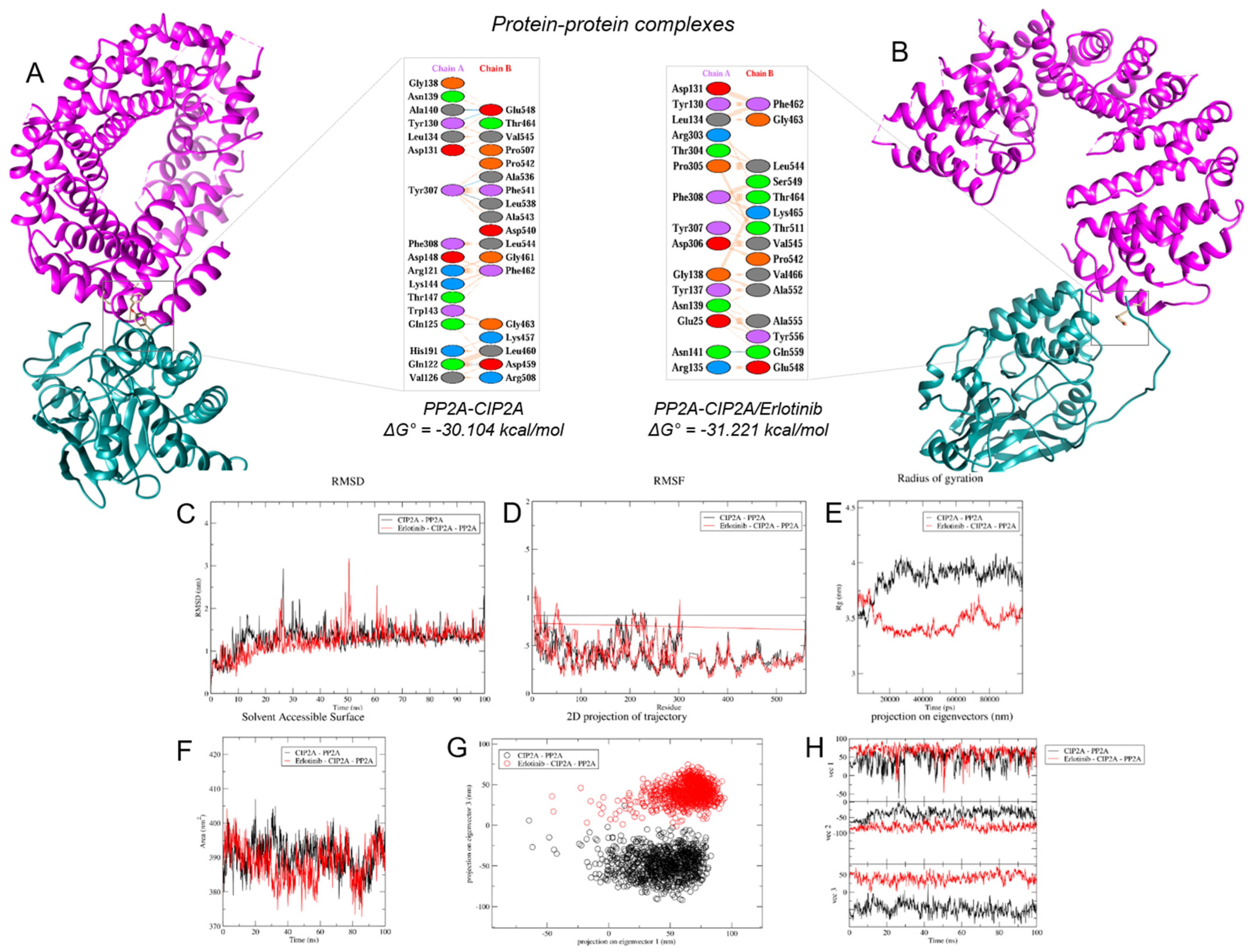
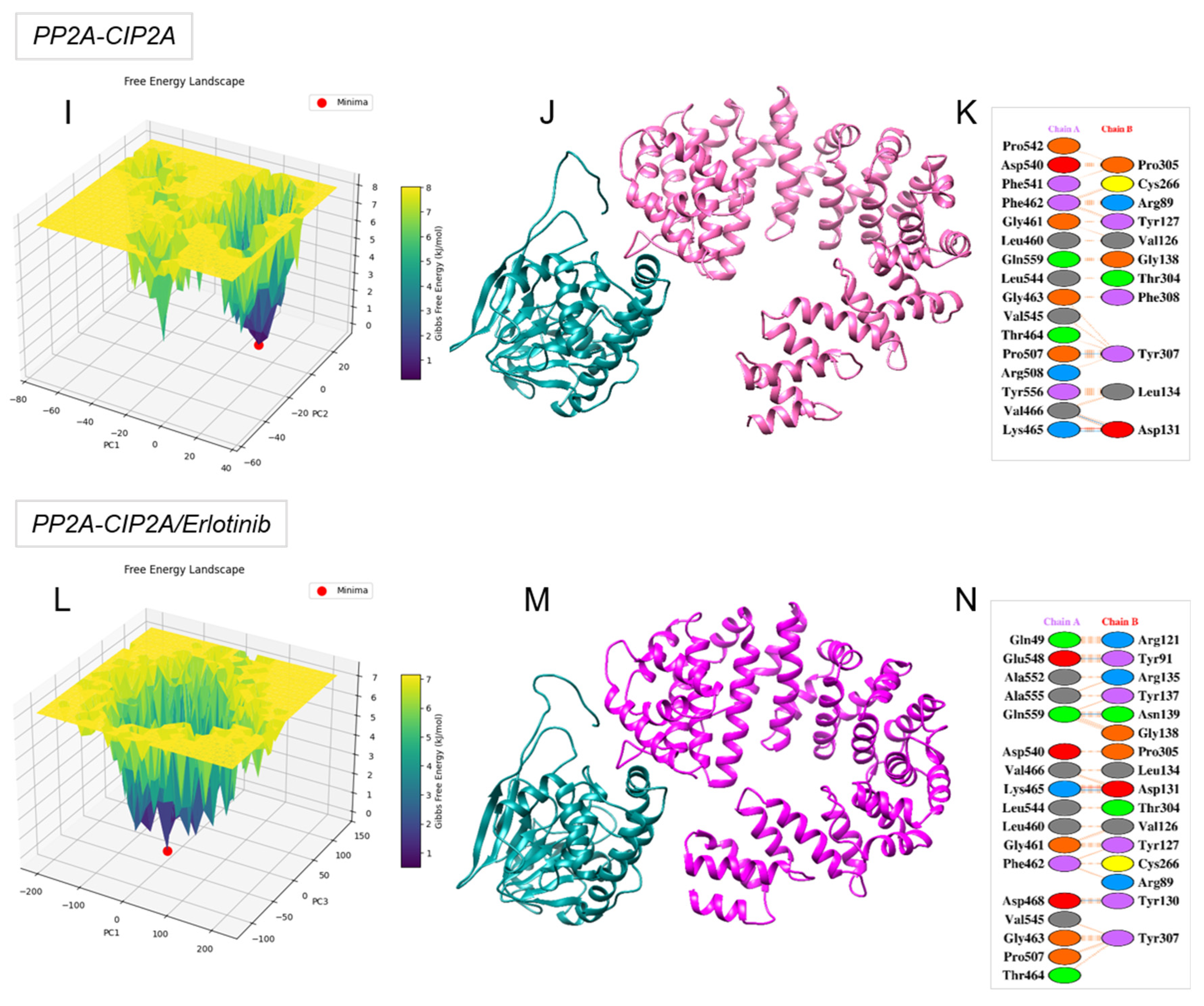
2.4. Molecular Dynamics Studies of the FTY-720–SET and Erlotinib—CIP2A Complex
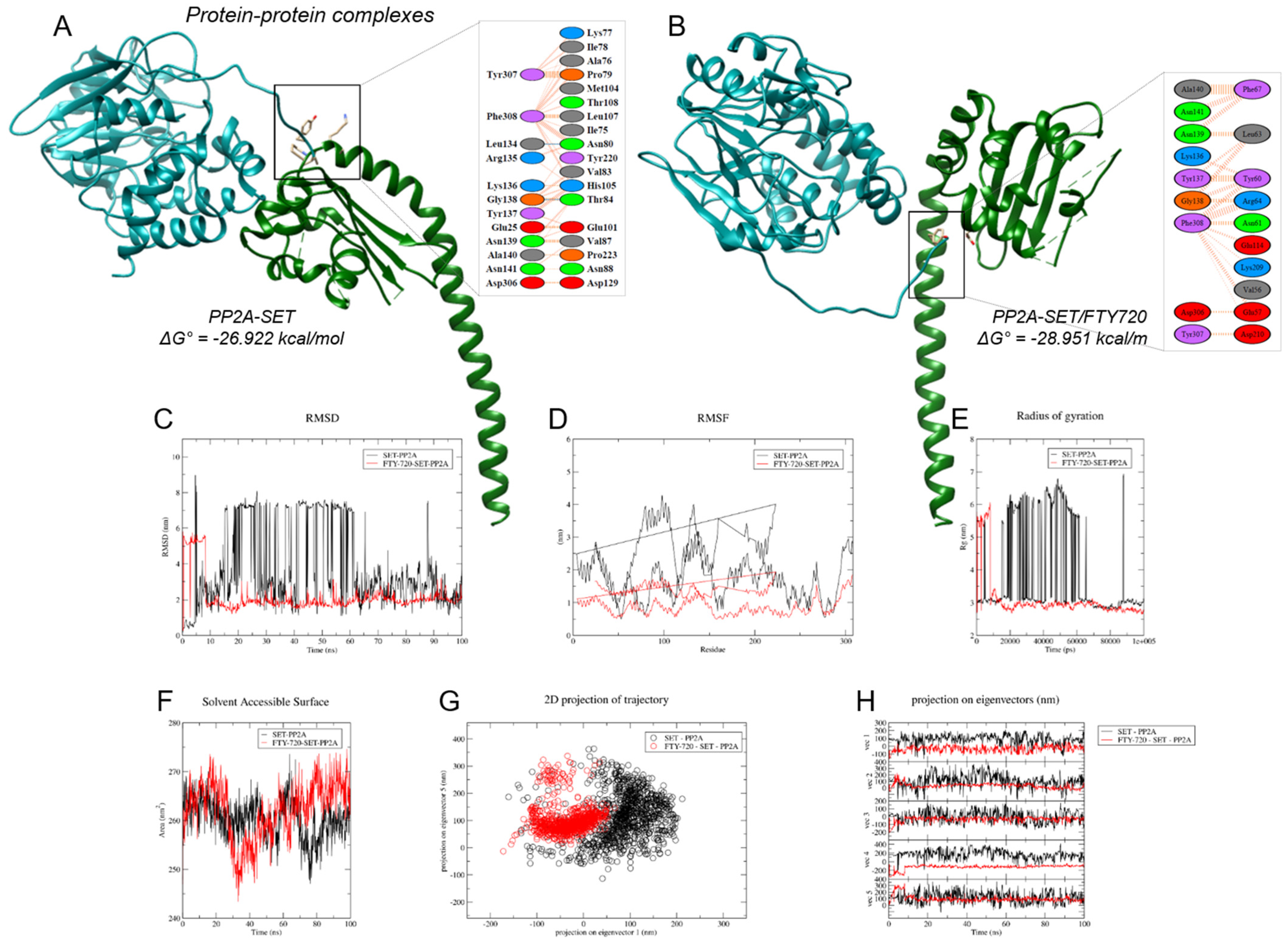
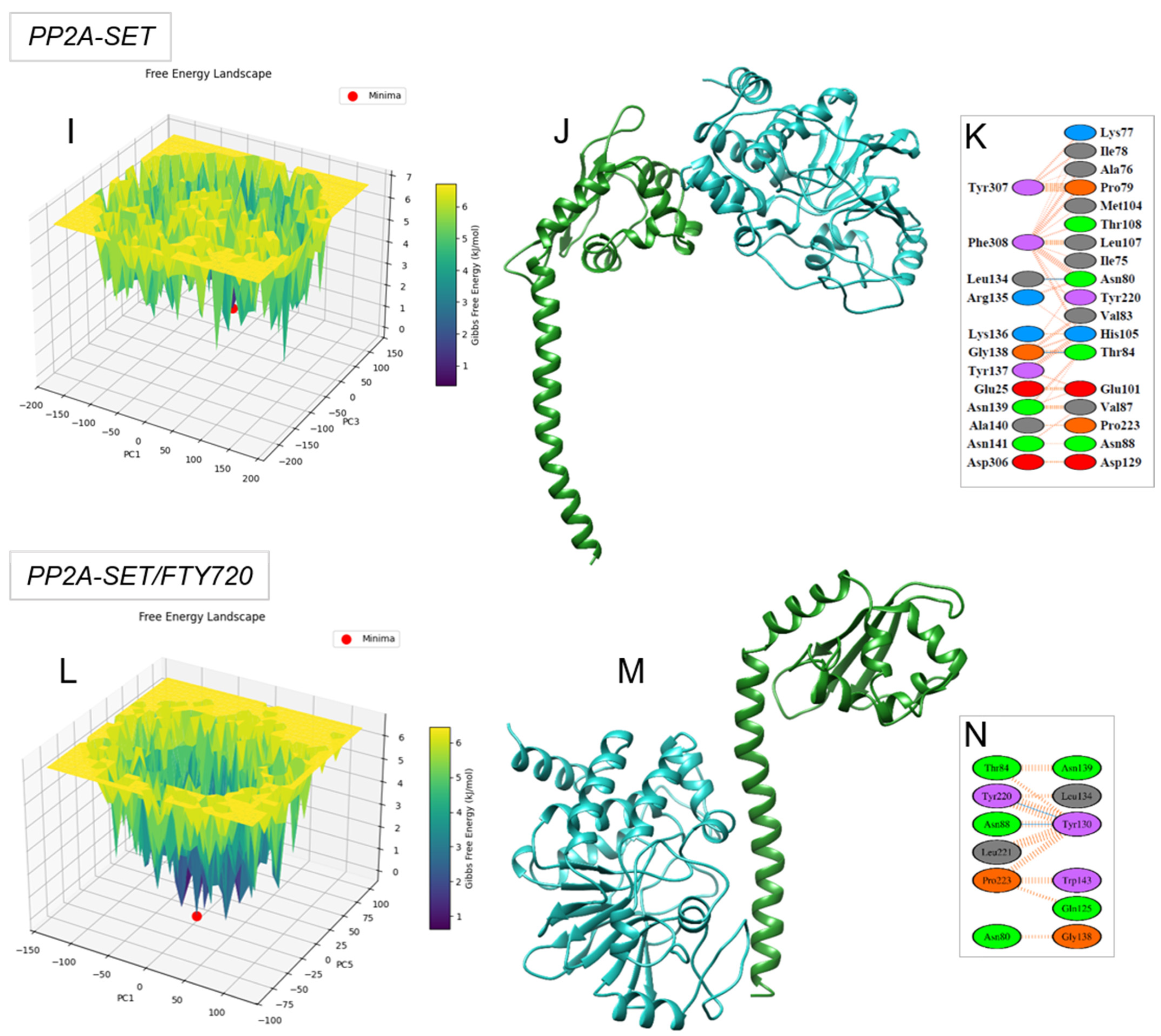
2.5. Protein–Protein Interaction Analysis of PP2A Inhibitory Proteins in the Presence and Absence of Chemical Inhibitors
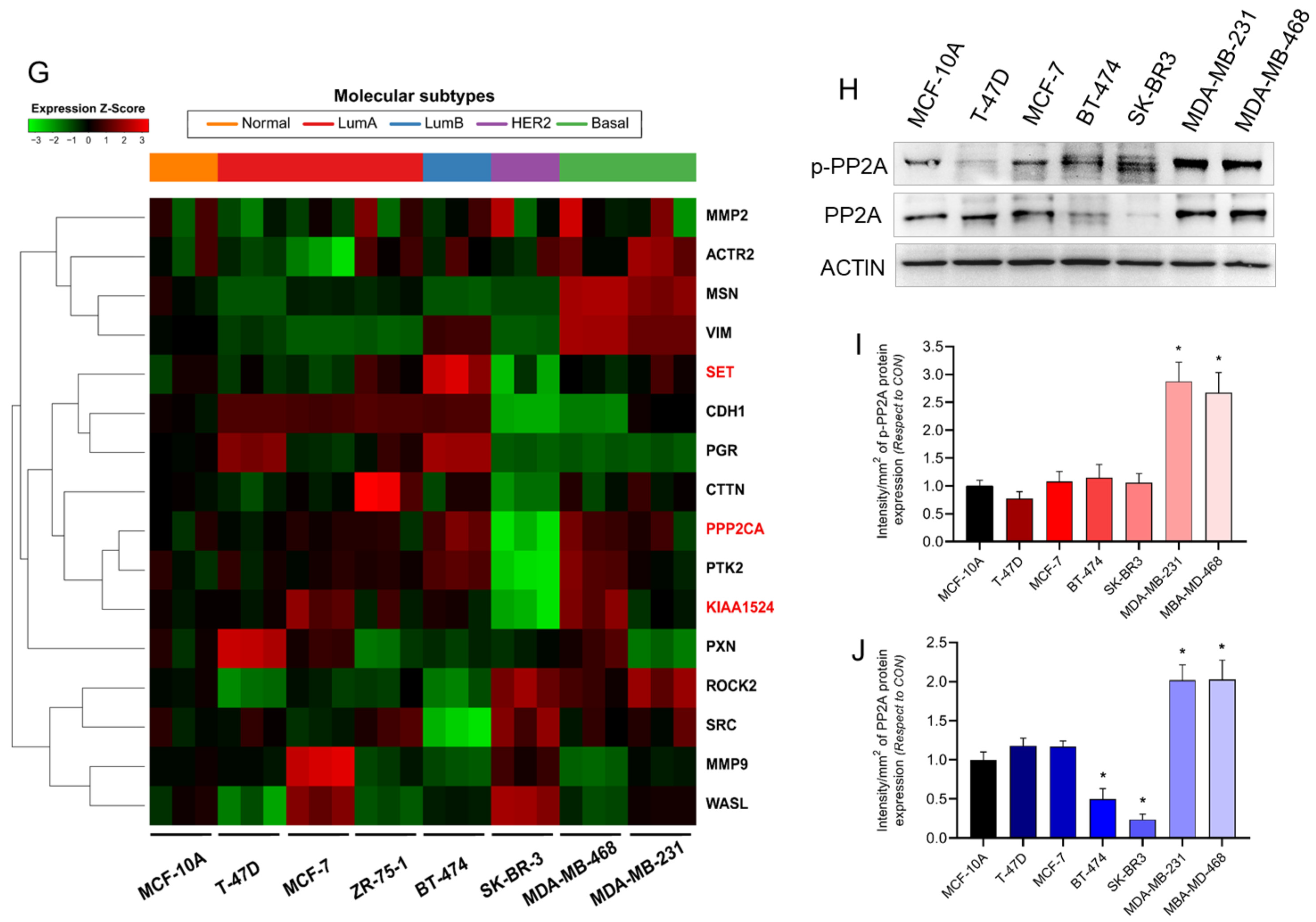
2.6. The Restoration of Phosphatase Activity and Its Impact on Key Proteins Involved in BC Cell Motility
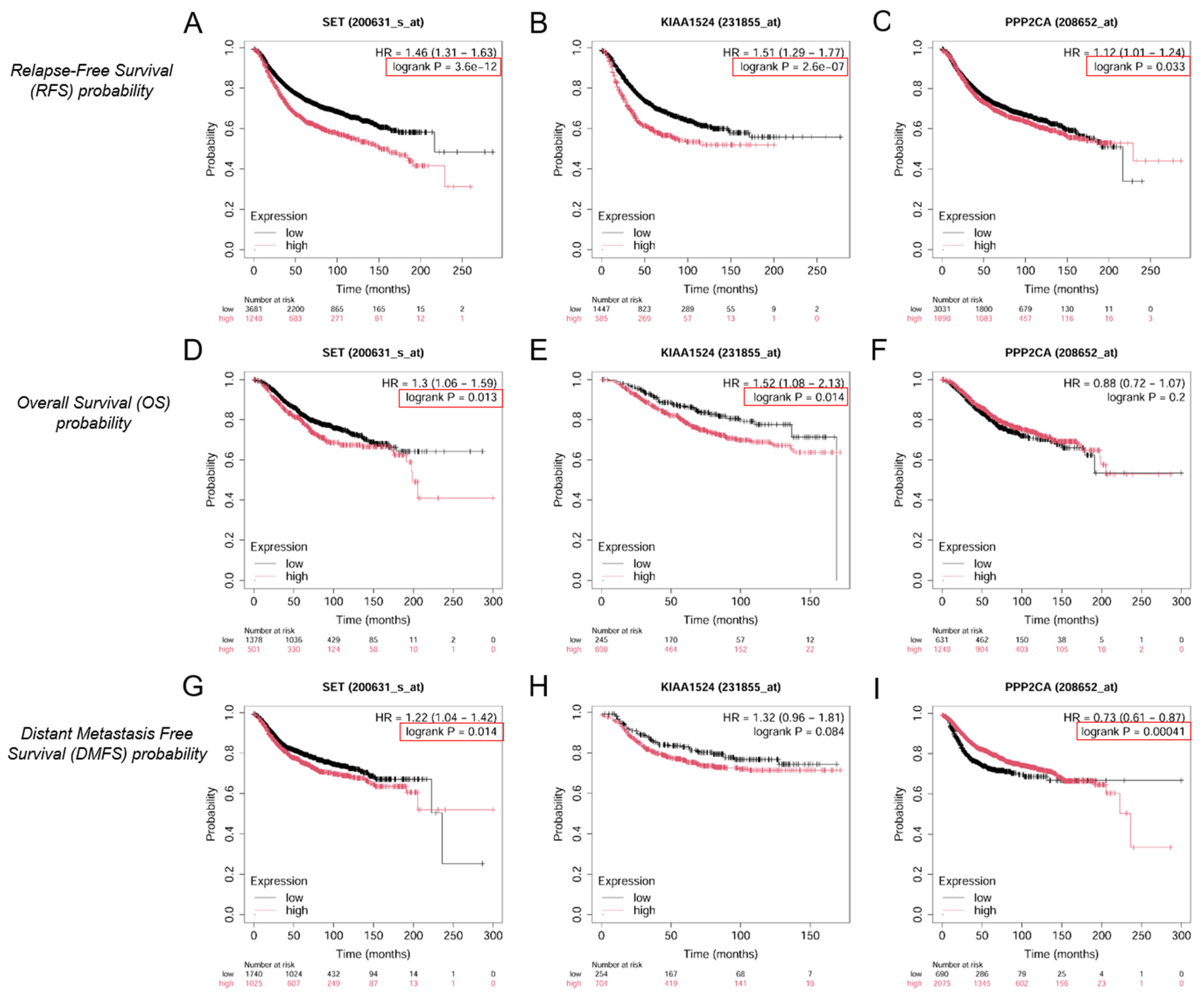
2.7. Expression Levels of SET, KIAA1524, and PPP2CA as Predictive Markers of Recurrence and Metastasis
3. Discussion
4. Materials and Methods
4.1. Bioinformatics Analysis
4.2. Differential Gene Expression Analysis in Different Breast Cancer Subtypes
4.3. Molecular Modeling
4.4. Cell Culture and Treatments
4.5. Immunoblotting
5. Conclusions
Author Contributions
Funding
Institutional Review Board Statement
Informed Consent Statement
Data Availability Statement
Acknowledgments
Conflicts of Interest
Abbreviations
| ACTR2 | Actin Related Protein 2 |
| AKT | Protein Kinase B |
| Arp2/3 | Actin-Related Protein 2/3 Complex |
| BC | Breast Cancer |
| CIP2A | Cancerous Inhibitor of PP2A |
| CTTN | Cortactin |
| DMFS | Distant Metastasis-Free Survival |
| ER | Estrogen Receptor |
| ERK1/2 | Extracellular Signal-Regulated Kinases 1/2 |
| FAK/PTK2 | Focal Adhesion Kinase/Protein Tyrosine Kinase 2 |
| FEL | Free Energy Landscape |
| FTY-720 | Fingolimod |
| GEO | Gene Expression Omnibus |
| GROMACS | GROningen MAchine for Chemical Simulations |
| H-bond | Hydrogen Bond |
| HER2 | Human Epidermal Growth Factor Receptor 2 |
| KIAA1524 | Gene encoding CIP2A |
| MD | Molecular Dynamics |
| NPT | Constant Number of Particles, Pressure, and Temperature Ensemble |
| NVT | Constant Number of Particles, Volume, and Temperature Ensemble |
| OS | Overall Survival |
| PAK1 | p21-Activated Kinase 1 |
| PCA | Principal Component Analysis |
| PDB | Protein Data Bank |
| PPP2CA/PPP2AC | Protein Phosphatase 2 Catalytic Subunit Alpha |
| PP2A | Protein Phosphatase 2A |
| PR | Progesterone Receptor |
| p-PP2ATyr307 | Phosphorylated PP2A at Tyrosine 307 |
| RFS | Recurrence-Free Survival |
| Rg | Radius of Gyration |
| RMSD | Root Mean Square Deviation |
| RMSF | Root Mean Square Fluctuation |
| RNA-seq | RNA Sequencing |
| SASA | Solvent-Accessible Surface Area |
| SET | SET Nuclear Proto-Oncogene |
| SETBP1 | SET Binding Protein 1 |
| Src/SRC | Proto-Oncogene Tyrosine-Protein Kinase Src |
| TNBC | Triple-Negative Breast Cancer |
| WASL/WASP | Wiskott–Aldrich Syndrome Protein Like/Wiskott–Aldrich Syndrome Protein |
References
- Anderson, B.O.; Ilbawi, A.M.; Fidarova, E.; Weiderpass, E.; Stevens, L.; Abdel-Wahab, M.; Mikkelsen, B. The Global Breast Cancer Initiative: A strategic collaboration to strengthen health care for non-communicable diseases. Lancet Oncol. 2021, 22, 578–581. [Google Scholar] [CrossRef]
- Chang-Qing, Y.; Jie, L.; Shi-Qi, Z.; Kun, Z.; Zi-Qian, G.; Ran, X.; Hui-Meng, L.; Ren-Bin, Z.; Gang, Z.; Da-Chuan, Y.; et al. Recent treatment progress of triple negative breast cancer. Prog. Biophys. Mol. Biol. 2020, 151, 40–53. [Google Scholar] [CrossRef]
- Brautigan, D.L.; Farrington, C.; Narla, G. Targeting protein phosphatase PP2A for cancer therapy: Development of allosteric pharmaceutical agents. Clin. Sci. 2021, 135, 1545–1556. [Google Scholar] [CrossRef]
- Qi, Y.; Li, L.; Wei, Y.; Ma, F. PP2A as a potential therapeutic target for breast cancer: Current insights and future perspectives. Biomed. Pharmacother. 2024, 173, 116398. [Google Scholar] [CrossRef]
- Basu, S. PP2A in the regulation of cell motility and invasion. Curr. Protein Pept. Sci. 2011, 12, 3–11. [Google Scholar] [CrossRef] [PubMed]
- Wlodarchak, N.; Xing, Y. PP2A as a master regulator of the cell cycle. Crit. Rev. Biochem. Mol. Biol. 2016, 51, 162–184. [Google Scholar] [CrossRef]
- Farrington, C.C.; Yuan, E.; Mazhar, S.; Izadmehr, S.; Hurst, L.; Allen-Petersen, B.L.; Janghorban, M.; Chung, E.; Wolczanski, G.; Galsky, M.; et al. Protein phosphatase 2A activation as a therapeutic strategy for managing MYC-driven cancers. J. Biol. Chem. 2020, 295, 757–770. [Google Scholar] [CrossRef]
- Mazhar, S.; Taylor, S.E.; Sangodkar, J.; Narla, G. Targeting PP2A in cancer: Combination therapies. Biochim. Biophys. Acta Mol. Cell Res. 2019, 1866, 51–63. [Google Scholar] [CrossRef] [PubMed]
- Shortrede, J.E.; Uzair, I.D.; Neira, F.J.; Flamini, M.I.; Sanchez, A.M. Paxillin, a novel controller in the signaling of estrogen to FAK/N-WASP/Arp2/3 complex in breast cancer cells. Mol. Cell. Endocrinol. 2016, 430, 56–67. [Google Scholar] [CrossRef] [PubMed]
- Perrotti, D.; Neviani, P. Protein phosphatase 2A: A target for anticancer therapy. Lancet Oncol. 2013, 14, e229–e238. [Google Scholar] [CrossRef]
- Cho, U.S.; Xu, W. Crystal structure of a protein phosphatase 2A heterotrimeric holoenzyme. Nature 2007, 445, 53–57. [Google Scholar] [CrossRef]
- Fujiki, H.; Sueoka, E.; Watanabe, T.; Komori, A.; Suganuma, M. Cancer progression by the okadaic acid class of tumor promoters and endogenous protein inhibitors of PP2A, SET and CIP2A. J. Cancer Res. Clin. Oncol. 2023, 149, 9425–9433. [Google Scholar] [CrossRef] [PubMed]
- Kiely, M.; Kiely, P.A. PP2A: The Wolf in Sheep’s Clothing? Cancers 2015, 7, 648–669. [Google Scholar] [CrossRef]
- Puustinen, P.; Jaattela, M. KIAA1524/CIP2A promotes cancer growth by coordinating the activities of MTORC1 and MYC. Autophagy 2014, 10, 1352–1354. [Google Scholar] [CrossRef]
- White, C.; Alshaker, H.; Cooper, C.; Winkler, M.; Pchejetski, D. The emerging role of FTY720 (Fingolimod) in cancer treatment. Oncotarget 2016, 7, 23106–23127. [Google Scholar] [CrossRef] [PubMed]
- Chen, K.F.; Pao, K.C.; Su, J.C.; Chou, Y.C.; Liu, C.Y.; Chen, H.J.; Huang, J.W.; Kim, I.; Shiau, C.W. Development of erlotinib derivatives as CIP2A-ablating agents independent of EGFR activity. Bioorg. Med. Chem. 2012, 20, 6144–6153. [Google Scholar] [CrossRef]
- Yu, H.C.; Hung, M.H.; Chen, Y.L.; Chu, P.Y.; Wang, C.Y.; Chao, T.T.; Liu, C.Y.; Shiau, C.W.; Chen, K.F. Erlotinib derivative inhibits hepatocellular carcinoma by targeting CIP2A to reactivate protein phosphatase 2A. Cell Death Dis. 2014, 5, e1359. [Google Scholar] [CrossRef]
- Chen, P.M.; Chu, P.Y.; Tung, S.L.; Liu, C.Y.; Tsai, Y.F.; Lin, Y.S.; Wang, W.L.; Wang, Y.L.; Lien, P.J.; Chao, T.C.; et al. Overexpression of phosphoprotein phosphatase 2A predicts worse prognosis in patients with breast cancer: A 15-year follow-up. Hum. Pathol. 2017, 66, 93–100. [Google Scholar] [CrossRef] [PubMed]
- Merisaari, J.; Denisova, O.V.; Doroszko, M.; Le Joncour, V.; Johansson, P.; Leenders, W.P.J.; Kastrinsky, D.B.; Zaware, N.; Narla, G.; Laakkonen, P.; et al. Monotherapy efficacy of blood-brain barrier permeable small molecule reactivators of protein phosphatase 2A in glioblastoma. Brain Commun. 2020, 2, fcaa002. [Google Scholar] [CrossRef]
- Fujiki, H.; Sueoka, E.; Watanabe, T.; Suganuma, M. The concept of the okadaic acid class of tumor promoters is revived in endogenous protein inhibitors of protein phosphatase 2A, SET and CIP2A, in human cancers. J. Cancer Res. Clin. Oncol. 2018, 144, 2339–2349. [Google Scholar] [CrossRef]
- Mondaca, J.M.; Uzair, I.D.; Castro Guijarro, A.C.; Flamini, M.I.; Sanchez, A.M. Molecular Basis of LH Action on Breast Cancer Cell Migration and Invasion via Kinase and Scaffold Proteins. Front. Cell Dev. Biol. 2020, 8, 630147. [Google Scholar] [CrossRef] [PubMed]
- Kauko, O.; Imanishi, S.Y.; Kulesskiy, E.; Yetukuri, L.; Laajala, T.D.; Sharma, M.; Pavic, K.; Aakula, A.; Rupp, C.; Jumppanen, M.; et al. Phosphoproteome and drug-response effects mediated by the three protein phosphatase 2A inhibitor proteins CIP2A, SET, and PME-1. J. Biol. Chem. 2020, 295, 4194–4211. [Google Scholar] [CrossRef]
- Zonta, F.; Pagano, M.A.; Trentin, L.; Tibaldi, E.; Frezzato, F.; Trimarco, V.; Facco, M.; Zagotto, G.; Pavan, V.; Ribaudo, G.; et al. Lyn sustains oncogenic signaling in chronic lymphocytic leukemia by strengthening SET-mediated inhibition of PP2A. Blood 2015, 125, 3747–3755. [Google Scholar] [CrossRef]
- Janghorban, M.; Farrell, A.S.; Allen-Petersen, B.L.; Pelz, C.; Daniel, C.J.; Oddo, J.; Langer, E.M.; Christensen, D.J.; Sears, R.C. Targeting c-MYC by antagonizing PP2A inhibitors in breast cancer. Proc. Natl. Acad. Sci. USA 2014, 111, 9157–9162. [Google Scholar] [CrossRef]
- Kauko, O.; Westermarck, J. Non-genomic mechanisms of protein phosphatase 2A (PP2A) regulation in cancer. Int. J. Biochem. Cell Biol. 2018, 96, 157–164. [Google Scholar] [CrossRef]
- Rincon, R.; Cristobal, I.; Zazo, S.; Arpi, O.; Menendez, S.; Manso, R.; Lluch, A.; Eroles, P.; Rovira, A.; Albanell, J.; et al. PP2A inhibition determines poor outcome and doxorubicin resistance in early breast cancer and its activation shows promising therapeutic effects. Oncotarget 2015, 6, 4299–4314. [Google Scholar] [CrossRef]
- Liu, C.Y.; Huang, T.T.; Chen, Y.T.; Chen, J.L.; Chu, P.Y.; Huang, C.T.; Wang, W.L.; Lau, K.Y.; Dai, M.S.; Shiau, C.W.; et al. Targeting SET to restore PP2A activity disrupts an oncogenic CIP2A-feedforward loop and impairs triple negative breast cancer progression. eBioMedicine 2019, 40, 263–275. [Google Scholar] [CrossRef]
- Tozuka, K.; Wongsirisin, P.; Nagai, S.E.; Kobayashi, Y.; Kanno, M.; Kubo, K.; Takai, K.; Inoue, K.; Matsumoto, H.; Shimizu, Y.; et al. Deregulation of protein phosphatase 2A inhibitor SET is associated with malignant progression in breast cancer. Sci. Rep. 2021, 11, 14238. [Google Scholar] [CrossRef]
- Johnson, H.; Narayan, S.; Sharma, A.K. Altering phosphorylation in cancer through PP2A modifiers. Cancer Cell Int. 2024, 24, 11. [Google Scholar] [CrossRef] [PubMed]
- Seshacharyulu, P.; Pandey, P.; Datta, K.; Batra, S.K. Phosphatase: PP2A structural importance, regulation and its aberrant expression in cancer. Cancer Lett. 2013, 335, 9–18. [Google Scholar] [CrossRef]
- Westermarck, J.; Neel, B.G. Piecing Together a Broken Tumor Suppressor Phosphatase for Cancer Therapy. Cell 2020, 181, 514–517. [Google Scholar] [CrossRef]
- Khanna, A.; Pimanda, J.E. Clinical significance of cancerous inhibitor of protein phosphatase 2A in human cancers. Int. J. Cancer 2016, 138, 525–532. [Google Scholar] [CrossRef] [PubMed]
- Kumbar, M.; Patil, S.A.; Toragalmath, S.S.; Kinnal, S.M.; Shettar, A.; Hosakeri, J.H. Anticancer activity studies of novel metal complexes of ligands derived from polycyclic aromatic compound via greener route. J. Organomet. Chem. 2020, 914, 121219. [Google Scholar] [CrossRef]
- Lanzarotti, E.; Defelipe, L.A.; Marti, M.A.; Turjanski, A.G. Aromatic clusters in protein-protein and protein-drug complexes. J. Cheminform. 2020, 12, 30. [Google Scholar] [CrossRef] [PubMed]
- Wang, S.; Hanna, D.; Sugamori, K.S.; Grant, D.M. Primary aromatic amines and cancer: Novel mechanistic insights using 4-aminobiphenyl as a model carcinogen. Pharmacol. Ther. 2019, 200, 179–189. [Google Scholar] [CrossRef]
- Makiabadi, B.; Zakarianezhad, M.; Zeydabadi, E. The role of hydrogen bonds on the stability of anticancer drug compounds TG/uracil, TG/5-fluorouracil and TG/gimeracil. Struct. Chem. 2023, 34, 755–767. [Google Scholar] [CrossRef]
- Wen, Y.; Ding, D.; Luo, M.Q.; Peng, X.Q.; Wang, E.Y.; Wu, Y.H.; Zhou, S.H.; Guo, J. Rationally Designed Highly Potent NKT Cell Agonists with Different Cytokine Selectivity through Hydrogen-Bond Interaction. J. Med. Chem. 2024, 67, 12819–12834. [Google Scholar] [CrossRef] [PubMed]
- Wu, Y.; Chen, S.; Zhu, J. Hydrogen-Bond-Driven Core-Crosslinked Supramolecular Micelles with pH/Thermal/Glutathione-Responsive Drug Release toward Enhanced Cancer Therapy. Chem. Mater. 2023, 35, 7655–7670. [Google Scholar] [CrossRef]
- De Palma, R.M.; Parnham, S.R.; Li, Y.; Oaks, J.J.; Peterson, Y.K.; Szulc, Z.M.; Roth, B.M.; Xing, Y.; Ogretmen, B. The NMR-based characterization of the FTY720-SET complex reveals an alternative mechanism for the attenuation of the inhibitory SET-PP2A interaction. FASEB J. 2019, 33, 7647–7666. [Google Scholar] [CrossRef]
- Yu, H.C.; Chen, H.J.; Chang, Y.L.; Liu, C.Y.; Shiau, C.W.; Cheng, A.L.; Chen, K.F. Inhibition of CIP2A determines erlotinib-induced apoptosis in hepatocellular carcinoma. Biochem. Pharmacol. 2013, 85, 356–366. [Google Scholar] [CrossRef]
- Niemela, M.; Kauko, O.; Sihto, H.; Mpindi, J.P.; Nicorici, D.; Pernila, P.; Kallioniemi, O.P.; Joensuu, H.; Hautaniemi, S.; Westermarck, J. CIP2A signature reveals the MYC dependency of CIP2A-regulated phenotypes and its clinical association with breast cancer subtypes. Oncogene 2012, 31, 4266–4278. [Google Scholar] [CrossRef]
- McLean, G.W.; Carragher, N.O.; Avizienyte, E.; Evans, J.; Brunton, V.G.; Frame, M.C. The role of focal-adhesion kinase in cancer—A new therapeutic opportunity. Nat. Rev. Cancer 2005, 5, 505–515. [Google Scholar] [CrossRef]
- Mondaca, J.M.; Guijarro, A.C.C.; Flamini, M.I.; Sanchez, A.M. Heregulin-induced cell migration is prevented by trastuzumab and trastuzumab-emtansine in HER2+ breast cancer. Breast Cancer Res. Treat. 2021, 186, 363–377. [Google Scholar] [CrossRef]
- Sanchez, A.M.; Flamini, M.I.; Baldacci, C.; Goglia, L.; Genazzani, A.R.; Simoncini, T. Estrogen receptor-alpha promotes breast cancer cell motility and invasion via focal adhesion kinase and N-WASP. Mol. Endocrinol. 2010, 24, 2114–2125. [Google Scholar] [CrossRef]
- Come, C.; Laine, A.; Chanrion, M.; Edgren, H.; Mattila, E.; Liu, X.; Jonkers, J.; Ivaska, J.; Isola, J.; Darbon, J.M.; et al. CIP2A is associated with human breast cancer aggressivity. Clin. Cancer Res. Off. J. Am. Assoc. Cancer Res. 2009, 15, 5092–5100. [Google Scholar] [CrossRef]
- Luque, M.; Cristobal, I.; Sanz-Alvarez, M.; Santos, A.; Zazo, S.; Eroles, P.; Arpi, O.; Rovira, A.; Albanell, J.; Madoz-Gurpide, J.; et al. CIP2A as a Key Regulator for AKT Phosphorylation Has Partial Impact Determining Clinical Outcome in Breast Cancer. J. Clin. Med. 2022, 11, 1610. [Google Scholar] [CrossRef] [PubMed]
- Xing, M.L.; Lu, Y.F.; Wang, D.F.; Zou, X.Y.; Zhang, S.X.; Yun, Z. Clinical significance of sCIP2A levels in breast cancer. Eur. Rev. Med. Pharmacol. Sci. 2016, 20, 82–91. [Google Scholar] [PubMed]
- Tang, M.; Shen, J.F.; Li, P.; Zhou, L.N.; Zeng, P.; Cui, X.X.; Chen, M.B.; Tian, Y. Prognostic significance of CIP2A expression in solid tumors: A meta-analysis. PLoS ONE 2018, 13, e0199675. [Google Scholar] [CrossRef]
- Davis, S.; Meltzer, P.S. GEOquery: A bridge between the Gene Expression Omnibus (GEO) and BioConductor. Bioinformatics 2007, 23, 1846–1847. [Google Scholar] [CrossRef] [PubMed]
- Johnson, W.E.; Li, C.; Rabinovic, A. Adjusting batch effects in microarray expression data using empirical Bayes methods. Biostatistics 2007, 8, 118–127. [Google Scholar] [CrossRef]
- Leek, J.T.; Johnson, W.E.; Parker, H.S.; Jaffe, A.E.; Storey, J.D. The sva package for removing batch effects and other unwanted variation in high-throughput experiments. Bioinformatics 2012, 28, 882–883. [Google Scholar] [CrossRef]
- Bartha, A.; Gyorffy, B. TNMplot.com: A Web Tool for the Comparison of Gene Expression in Normal, Tumor and Metastatic Tissues. Int. J. Mol. Sci. 2021, 22, 2622. [Google Scholar] [CrossRef]
- Jo, S.; Kim, T.; Iyer, V.G.; Im, W. CHARMM-GUI: A web-based graphical user interface for CHARMM. J. Comput. Chem. 2008, 29, 1859–1865. [Google Scholar] [CrossRef]
- Jimenez-Garcia, B.; Pons, C.; Fernandez-Recio, J. pyDockWEB: A web server for rigid-body protein-protein docking using electrostatics and desolvation scoring. Bioinformatics 2013, 29, 1698–1699. [Google Scholar] [CrossRef]
- Laskowski, R.A.; Jablonska, J.; Pravda, L.; Varekova, R.S.; Thornton, J.M. PDBsum: Structural summaries of PDB entries. Protein Sci. 2018, 27, 129–134. [Google Scholar] [CrossRef]
- Sargsyan, K.; Grauffel, C.; Lim, C. How Molecular Size Impacts RMSD Applications in Molecular Dynamics Simulations. J. Chem. Theory Comput. 2017, 13, 1518–1524. [Google Scholar] [CrossRef]
- Dong, Y.W.; Liao, M.L.; Meng, X.L.; Somero, G.N. Structural flexibility and protein adaptation to temperature: Molecular dynamics analysis of malate dehydrogenases of marine molluscs. Proc. Natl. Acad. Sci. USA 2018, 115, 1274–1279. [Google Scholar] [CrossRef]
- Battisti, A.; Ciasca, G.; Grottesi, A.; Tenenbaum, A. Thermal compaction of the intrinsically disordered protein tau: Entropic, structural, and hydrophobic factors. Phys. Chem. Chem. Phys. PCCP 2017, 19, 8435–8446. [Google Scholar] [CrossRef]
- Chen, H.; Panagiotopoulos, A.Z. Molecular Modeling of Surfactant Micellization Using Solvent-Accessible Surface Area. Langmuir 2019, 35, 2443–2450. [Google Scholar] [CrossRef]
- Post, M.; Wolf, S.; Stock, G. Principal component analysis of nonequilibrium molecular dynamics simulations. J. Chem. Phys. 2019, 150, 204110. [Google Scholar] [CrossRef]
- Al-Khafaji, K.; Taskin Tok, T. Molecular dynamics simulation, free energy landscape and binding free energy computations in exploration the anti-invasive activity of amygdalin against metastasis. Comput. Methods Programs Biomed. 2020, 195, 105660. [Google Scholar] [CrossRef]
- Barraza, G.A.; Castro-Guijarro, A.C.; de la Fuente Hoffmann, V.; Bolivar Avila, S.J.; Flamini, M.I.; Sanchez, A.M. Drug repositioning for rosacea disease: Biological TARGET identification, molecular docking, pharmacophore mapping, and molecular dynamics analysis. Comput. Biol. Med. 2024, 181, 108988. [Google Scholar] [CrossRef]



| Value | CIP2A | SET |
|---|---|---|
| Size X | 40 | 50 |
| Size Y | 40 | 52 |
| Size Z | 40 | 40 |
| Center X | 52.155 | −14.62 |
| Center Y | 32.303 | −8.34 |
| Center Z | 17.44 | 53.775 |
Disclaimer/Publisher’s Note: The statements, opinions and data contained in all publications are solely those of the individual author(s) and contributor(s) and not of MDPI and/or the editor(s). MDPI and/or the editor(s) disclaim responsibility for any injury to people or property resulting from any ideas, methods, instructions or products referred to in the content. |
© 2026 by the authors. Licensee MDPI, Basel, Switzerland. This article is an open access article distributed under the terms and conditions of the Creative Commons Attribution (CC BY) license.
Share and Cite
Barraza, G.A.; Mondaca, J.M.; Fernandez Muñoz, J.M.; Vinante, B.M.; Flamini, M.I.; Sanchez, A.M. Pharmacological Reactivation of PP2A by SET/CIP2A Inhibition Attenuates Triple Negative Breast Cancer Progression. Kinases Phosphatases 2026, 4, 12. https://doi.org/10.3390/kinasesphosphatases4020012
Barraza GA, Mondaca JM, Fernandez Muñoz JM, Vinante BM, Flamini MI, Sanchez AM. Pharmacological Reactivation of PP2A by SET/CIP2A Inhibition Attenuates Triple Negative Breast Cancer Progression. Kinases and Phosphatases. 2026; 4(2):12. https://doi.org/10.3390/kinasesphosphatases4020012
Chicago/Turabian StyleBarraza, Gustavo Adolfo, Joselina Magali Mondaca, Juan Manuel Fernandez Muñoz, Bruno Mariano Vinante, Marina Inés Flamini, and Angel Matias Sanchez. 2026. "Pharmacological Reactivation of PP2A by SET/CIP2A Inhibition Attenuates Triple Negative Breast Cancer Progression" Kinases and Phosphatases 4, no. 2: 12. https://doi.org/10.3390/kinasesphosphatases4020012
APA StyleBarraza, G. A., Mondaca, J. M., Fernandez Muñoz, J. M., Vinante, B. M., Flamini, M. I., & Sanchez, A. M. (2026). Pharmacological Reactivation of PP2A by SET/CIP2A Inhibition Attenuates Triple Negative Breast Cancer Progression. Kinases and Phosphatases, 4(2), 12. https://doi.org/10.3390/kinasesphosphatases4020012