
Review

Basic Molecular and Genetic Pathways Underlying Intracranial Aneurysm Formation in the Era of Molecular and Targeted Therapies: A 10-Year Review

1
College of Human Medicine, Michigan State University, Grand Rapids, MI 49503, USA
2
College of Osteopathic Medicine, Michigan State University, East Lansing, MI 48824, USA
3
College of Medicine, Central Michigan University, Mount Pleasant, MI 48859, USA
4
Department of Neurosurgery, University of Michigan, Ann Arbor, MI 48109, USA
5
Department of Neurosurgery, University of Florida, Gainesville, FL 32611, USA
6
Department of Neurosurgery, Jamaica Hospital Medical Center, Richmond Hill, NY 11418, USA
*
Authors to whom correspondence should be addressed.
J. Vasc. Dis. 2026, 5(2), 15; https://doi.org/10.3390/jvd5020015
Submission received: 11 February 2026 / Revised: 10 March 2026 / Accepted: 18 March 2026 / Published: 24 March 2026

Abstract

Introduction: Intracranial aneurysms (IAs) are focal dilatations of cerebral arteries that carry a significant risk of rupture and subarachnoid hemorrhage (aSAH). Advances in basic science have improved understanding of vascular wall biology, hemodynamic stress, inflammation, and genetic contribution to aneurysm rupture. Rapid progress in neurovascular therapeutics highlights the need to evaluate emerging molecular and pharmacologic strategies targeting IAs. Methodology: This narrative review synthesizes evidence from 2015 to 2025 on the cellular, molecular, and biomechanical mechanisms underlying IA pathophysiology. A structured search of PubMed, Scopus, and Embase identified studies examining molecular pathways, genetic determinants, and therapeutic approaches. Discussion: Aneurysm initiation involves endothelial responses to abnormal shear stress, activating NF-κB, MAPK, and calcium-dependent pathways that promote inflammation, smooth-muscle cell apoptosis, and extracellular matrix degradation. Pharmacologic candidates including MCP-1 antagonists, PPARγ agonists, and IL-6/STAT3 inhibitors reduce inflammatory remodeling, while doxycycline and cathepsin inhibitors preserve matrix integrity. Emerging strategies like microRNA modulation, tyrosine-kinase inhibition, and gene-based delivery offer potential for localized, durable stabilization with minimal systemic toxicity. Conclusions: Integrating surgical and biologic therapies may shift IA management from reactive repair to rupture prevention.

1. Introduction

Intracranial aneurysms (IAs) represent a major cerebrovascular pathology characterized by focal dilations of intracranial arteries, most commonly arising at branch points along the circle of Willis [1,2]. Although frequently asymptomatic, their rupture leads to aneurysmal subarachnoid hemorrhage (aSAH), a devastating event with high rates of morbidity and mortality [1,2].
Over the past decades, research has shifted from a purely structural understanding of aneurysms to a broader appreciation of the biological, hemodynamic, and genetic factors that govern their initiation, progression, and rupture. Hemodynamic stresses, inflammatory signaling, extracellular matrix remodeling, and immune cell infiltration all converge to weaken the vessel wall [3,4,5]. In parallel, advances in genetic and epigenetic research have identified inherited and somatic mutations that predispose individuals to aneurysm formation, as well as molecular pathways that may serve as potential therapeutic targets [1,6,7]. Despite this progress, the precise mechanisms underlying aneurysm pathophysiology remain incompletely understood, and current treatments remain limited to surgical and endovascular interventions, both of which carry procedural risks [8,9].
Given the substantial clinical burden of aneurysmal subarachnoid hemorrhage and the limitations of existing therapies, a comprehensive review of recent advances in aneurysm biology is warranted. This review synthesizes evidence from basic science and translational research to highlight the interplay between vascular wall biology, hemodynamic forces, inflammatory mediators, and genetic predispositions in IA formation and rupture. By integrating these findings, we aim to clarify disease mechanisms, identify potential biomarkers, and outline emerging therapeutic strategies that may ultimately transform the management of intracranial aneurysms [1,10,11].

2. Methodology

This study is a narrative review conducted through comprehensive search of PubMed, Scopus, and Embase to identify studies published between January 2015 and October 2025 that evaluated the pathophysiology and genetic components of IA formation. Eligibility criteria included studies published in the English language, translational articles focusing on sequences of aneurysm formation, and potential non-interventional therapies as well as animal studies. Studies were ineligible if they were published before 2015 or were case reports and conference abstracts. Keywords included “intracranial aneurysm”, “aneurysm”, “inflammation”, “aneurysm genetics”, “risk factors”, “atherosclerosis”, “hemodynamics”, “wall shear stress”, “pathophysiology”, “signaling cascade”, “cytokines”, “extracellular matrix”, “subarachnoid hemorrhage”, and “berry aneurysms”. A total of 128 records were identified. After exclusions, 40 studies met the eligibility criteria and were added to the final review, with 33 key studies listed in Table 1. Further manual search and review of the references of the included papers was performed to identify eligible articles to supplement this review.

3. Discussion

3.1. Core Pathophysiology Evolution

An intracranial aneurysm (IA) is a localized bulging or dilation of a cerebral artery [36]. Structurally, IAs are classified into two main types: saccular and fusiform [36]. Intracranial arteries are composed of distinct layers. The innermost endothelial cell (EC) lining rests on a basal lamina rich in matrix proteins [3]. Beneath this lies the internal elastic lamina (IEL), which provides elasticity [3,33]. The medial layer follows, containing smooth muscle cells (SMCs), collagen, and additional elastic laminae [4,37]. The outermost adventitia begins at the edge of the media and is made up of fibroblasts and collagen fibers [3,12]. The wavy, tortuous arrangement of collagen within the media and adventitia allows controlled distension while protecting against overstretching [3].
Aneurysm formation begins with degradation of the elastic laminae, shifting the structural load onto collagen fibers [3,38]. Because collagen is far less extensible than elastin, the vessel loses its normal capacity to expand, and the wall becomes mechanically weakened [3,38]. Further enlargement of the aneurysm, sometimes to several times the diameter of the parent vessel, requires remodeling of collagen [3]. If adaptive remodeling with new matrix synthesis occurs, the aneurysm can enlarge [3]. However, if proteolytic degradation predominates without compensatory collagen remodeling, the vessel wall remains fragile, often rupturing as a thin, blister-like lesion rather than growing substantially [3,21].
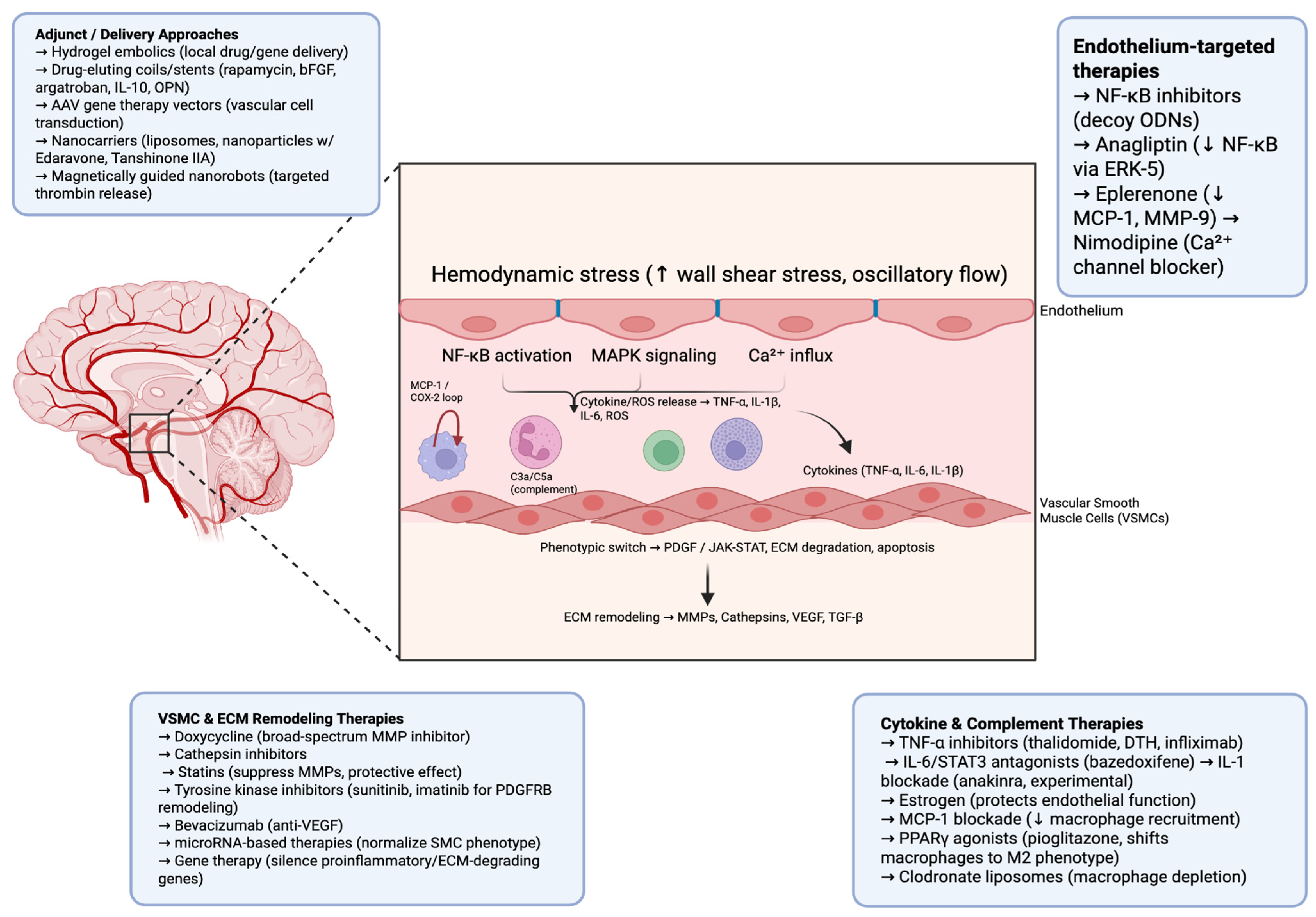
The underlying disease process is driven by the interaction of hemodynamic stress, inflammation, and extracellular matrix (ECM) remodeling. Changes in wall shear stress (WSS) are detected by endothelial mechanoreceptors such as ion channels, integrins, and G protein coupled receptors [3,4,21]. Abnormal WSS activates signaling cascades—including NF-κB, MAPK, and calcium-dependent pathways—that increase production of proinflammatory mediators such as TNF-α, IL-1β, IL-6, COX-2, prostaglandin E2, and reactive oxygen species (ROS) [6,37] (See Figure 1). This contributes to endothelial dysfunction and apoptosis.
Endothelial injury permits inflammatory cell infiltration into the vessel wall [37]. These cells further release cytokines, adhesion molecules, immunoglobulins, and ROS, amplifying inflammation [3,38]. NF-κB activation in ECs and vascular smooth muscle cells (VSMCs) promotes proinflammation and remodeling, while matrix metalloproteinases (MMPs) accelerate ECM degradation [4,5,37]. ECM remodeling is driven in part by proteolytic enzymes (MMPs and cathepsins) that degrade elastin and collagen and favors progressive wall weakening [4,5,37]. Elevated cytokines such as TNF-α and IL-6 exacerbate wall degeneration by promoting VSMC apoptosis and MMP expression, whereas IL-10 exerts protective, anti-inflammatory effect [37,38]. Endothelial dysfunction under pathologic shear stress promotes a pro-inflammatory, pro-thrombotic phenotype (ex, reduced nitric oxide (NO) bioavailability and increased leukocyte adhesion signaling), which helps sustain leukocyte recruitment and inflammation. Simultaneously, VSMCs can undergo a phenotypic switch from a contractile to a synthetic inflammatory state characterized by reduced contractile gene expression and increased cytokine and protease expression that weakens the aneurysm wall [37,38]. Moreover, oxidative stress is increasingly implicated as an upstream amplifier of aneurysm inflammation, with reactive oxygen species promoting endothelial dysfunction and further protease activity within the aneurysm wall [37,38].
Compensatory mechanisms attempt to preserve wall integrity, including NO production, which provides cytoprotection and suppresses NF-κB signaling, as well as myointimal hyperplasia that helps seal wall defects [3]. Ultimately, when destructive pathways outweigh these protective responses, the arterial wall becomes compromised, predisposing to aneurysm progression and rupture.

3.2. Roles of Cells, Cytokines, and Growth Factors

3.2.1. Role of Macrophages

Macrophages play a central role in the pathophysiology of IAs. Once activated, macrophages perpetuate a cycle of inflammation within the aneurysm wall19. Prostaglandin E2 (PGE2), produced via cyclooxygenase-2 (COX2) activity, activates NF-κB in neighboring macrophages [3]. This leads to increased expression of both COX2 and MCP-1 (chemokine that recruits monocytes to inflammation), creating an autocrine feedback loop that attracts additional macrophages to the lesion [3,5,38]. This process, combined with protease release, continuously stimulates SMCs and contributes to aneurysm wall expansion [39].
For an IA to remain stable, its wall must adapt to elevated hemodynamic stress. Normally, chronic mechanical loading triggers SMC proliferation and collagen deposition, reinforcing the vessel wall [36,38]. Macrophages are the first responders to injury and help regulate the immune cascade [40]. Evidence from macrophage-depleted mouse models shows a marked reduction in IA formation, highlighting their importance in disease initiation [38].
Macrophages and neutrophils release IL-1, which suppresses collagen synthesis at both transcriptional and post-transcriptional levels [3,38]. This reduction in collagen weakens the wall and promotes aneurysm formation and growth. Increased infiltration of macrophages, T-cells, and other leukocytes is strongly linked to rupture risk, though the initial inflammatory trigger remains uncertain [33,37].
While inflammatory infiltration is not necessarily the earliest event in IA development, macrophages appear later in the process and secrete cytokines and growth factors that influence SMC and fibroblast survival and phenotype [3]. Studies using NOS knockout mice suggest that disruption of nitric oxide signaling increases macrophage infiltration, likely through upregulated MCP-1 expression, thereby predisposing to aneurysm development [3].
Mechanical stretch of the arterial wall may also drive MCP-1 expression in adventitial fibroblasts, promoting macrophage migration [38]. Regions exposed to high WSS combined with wall stretch show particularly elevated macrophage accumulation, suggesting a hemodynamic trigger for IA initiation [4,37].
Macrophages are the predominant immune cells within IA walls, and their presence is observed in both unruptured and ruptured aneurysms, though the density is significantly higher in ruptured lesions [33]. This indicates that vascular inflammation plays a critical role in rupture pathogenesis. Animal studies support this, showing early macrophage infiltration during IA induction with numbers increasing as aneurysms enlarge and progress [36].

3.2.2. Role of the Complement System

Although the exact contribution of the complement system to IA pathogenesis is not completely understood, evidence suggests it plays a significant proinflammatory role [38]. Complement activation products such as C3a and C5a act as strong chemoattractants, drawing inflammatory cells to the aneurysm wall [33]. These anaphylatoxins also stimulate activation and degranulation of endothelial cells, mast cells, and macrophages, which collectively enhance smooth muscle cell contraction and increase vascular permeability [33,39]. In IAs, complement activation appears to occur primarily through the classical pathway, thus amplifying the local inflammatory cascade and contributing to wall weakening [33].

3.2.3. Role of Lymphocytes

Substantial lymphocyte infiltration has been observed in the aneurysm wall during the early stages of both formation and rupture, though it remains unclear whether their presence represents a specific pathogenic mechanism or simply a response to tissue injury [5,33]. Both B-cell activity and humoral immunity have been implicated, supported by findings of IgG, IgM, and oxidized lipid specific antibody deposition within the IA wall [38]. T-lymphocyte numbers have been correlated with aneurysm rupture, suggesting that cellular immunity contributes to disease severity [39]. Activated lymphocytes, along with macrophages and monocytes, produce cytokines such as IL-6, which may promote vascular inflammation and structural weakening [5]. Experimental models indicate that blocking IL-1, IL-6, or MCP-1 reduces IA rupture rates, reinforcing the idea that lymphocyte-derived cytokines are key drivers of aneurysm progression [5]. TNF-α further amplifies this inflammatory response by upregulating pro-inflammatory mediators, including IL-1α, IL-1β, and IL-6, creating a cytokine-rich environment that promotes aneurysm instability [5,37]. Cigarette smoke exposure induces a pro-inflammatory, matrix-remodeling phenotype in a NOX-dependent manner, promoting vascular injury and aneurysm formation [30,40,41]. TNF-α levels are elevated in IA walls, and its inhibition has been shown to reduce aneurysm formation and rupture in experimental models [5].

3.2.4. Role of Vascular Smooth Muscle Cells

VSMCs are essential for maintaining arterial wall integrity through ECM production. After endothelial injury, VSMCs migrate to the intima, proliferate, and contribute to myointimal hyperplasia [37]. They then shift from a contractile to a proinflammatory phenotype, downregulating contractile genes and upregulating matrix-remodeling and inflammatory mediators such as MMPs, MCP-1, and VCAM-1 [3,38]. PDGF receptor β signaling via the JAK-STAT pathway drives this phenotypic switch, promoting VSMC proliferation and secretion of cytokines [40]. Ultimately, chronic inflammation and Fas-mediated apoptosis reduce ECM production, weaken the vessel wall, and promote aneurysm formation/rupture [38,40].

3.2.5. Role of Mast Cells

Mast cells release cytokines and activate MMPs, promoting extracellular matrix degradation and wall weakening [38,39]. Experimental rat models of IAs have shown a significant increase in mast cell numbers within aneurysm walls, supporting their role in aneurysm progression [38,39].

3.2.6. Role of Growth Factors

Growth factors contribute to IA development by driving SMC proliferation and sustaining inflammation. PDGF, bFGF, and TGF-α/β are present in IA walls and promote vascular remodeling [33]. VEGF is particularly important, acting as a chemoattractant, increasing endothelial permeability, and triggering leukocyte infiltration [33]. Its dysregulated release amplifies its own receptor signaling, leading to extracellular matrix degradation via MMPs and cathepsins, activation of the coagulation and complement cascades, and impaired endothelial repair [39]. VEGF can also activate SMCs through COX-2 and NF-κB signaling, further promoting wall weakening [37].

3.3. Hemodynamic Forces and Aneurysm Initiation

Hemodynamics play a central role in IA initiation, with WSS and its spatial gradient (WSSG) serving as key biomechanical triggers [3,4]. WSS represents the tangential frictional force of blood flow on the vessel wall, and WSSG reflects its rate of change along the vessel [3,4]. High WSS and positive WSSG are consistently associated with aneurysm initiation, particularly at bifurcation apices, curved segments, and other high-flow regions [3]. Animal studies show that these conditions lead to IEL disruption, SMC layer degeneration, and initiation of wall remodeling [3]. Endothelial cells exposed to sustained high WSS overexpress nitric oxide, lowering vascular tone and inducing SMC apoptosis, thereby weakening the wall [4,38,39]. These findings support the “high-stress theory,” in which focal endothelial injury caused by elevated WSS serves as the first step in IA formation [4].

Hemodynamics: Aneurysm Progression and Rupture

The role of WSS in IA growth and rupture however is more complex and remains debated. Some studies report that ruptured aneurysms have higher maximum WSS, whereas others find lower WSS in ruptured lesions, especially in regions with atherosclerotic or hyperplastic wall changes [4]. Current models describe two destructive pathways. The mural cell-mediated pathway is driven by high WSS and positive WSSG, causing endothelial turnover, MMP release, and media thinning, often linked to small, bleb-type ruptures [4]. The inflammatory cell-mediated pathway arises from low WSS and high oscillatory shear index, triggering inflammation, immune infiltration, thrombus formation, and growth of large, atherosclerotic aneurysms [4]. Overall, it appears that the combined effect of abnormal hemodynamic stresses sustains signaling cascades that degrade the extracellular matrix, thin the arterial wall, and ultimately predispose the aneurysm to rupture.

3.4. Genetic Background and Implications in IA Formation

The AHA/ASA guidelines recommend targeted screening for individuals with inherited disorders such as autosomal dominant polycystic kidney disease (ADPKD), vascular Ehlers–Danlos syndrome, Loey–Dietz syndrome, Marfan syndrome, microcephalic osteodysplastic primordial dwarfism, and neurofibromatosis type I [1,36]. Other syndromes, including pseudoxanthoma elasticum, hereditary hemorrhagic telangiectasia, and multiple endocrine neoplasia type I, are also linked to increased IA prevalence [32]. Genome-wide association studies (GWAS) have identified 17 risk loci associated with IAs, with many overlapping with atherosclerosis, hypertension, and other aneurysmal traits, indicating a shared genetic architecture [1,2,15,21]. Some loci even carry opposing risk alleles, underscoring the complexity of these pathways [42].
Recent research highlights the importance of somatic, non-germline variants in IA pathogenesis. Mutations in PPIL4, EDIL3, RNF213, and ANKRD17 genes involved in angiogenesis and vascular wall formation have been identified, though their functional impact is still under investigation [16,42]. Studies found that PPIL4 variants led to increased hemorrhages and impaired Wnt signaling, as well as issues with cerebrovascular integrity [42]. RNF213 variants, which were found to play a part in vascular wall construction, were also associated with IA susceptibility [7,42]. MicroRNAs and epigenetic regulators also appear to influence vascular SMC phenotype switching suggesting potential roles as both biomarkers and therapeutic targets [32].
Other research studies found that CDKN2 variants on chromosome 9p21, along with SOX17 and EDNRA, is one of the highest genetic risk factors for intracranial aneurysm [31]. CDKN2 is involved with cyclin-dependent kinase (CDK) inhibitors and vessel wall remodeling, and IA tissue examination revealed down-regulation of both CDKN2 and SOX17 [2,31]. CDKN2B-AS1 (ANRIL) mutations in specific were found to increase risk of IA, along with increased risk in other vascular diseases such as coronary artery disease and abdominal aortic aneurysm [23]. Studies also found that genes such as FGD6 and BCAR1 potentially increase the risk for IA [1]. FGD6, along with SOX17, is key for endothelial signaling, while BCAR1 may help with sensing vascular mechanical stress [1]. In addition, studies found IA-associated single-nucleotide polymorphisms (SNPs) clusters in regions that regulate arterial endothelial and mural cells [1]. Somatic mutations affecting NF-κB signaling, including PDGFRB, also increase IA risk, with increased activity of both ERK and NF-κB signaling [6].
Several studies also found that gene mutations and variants increased IA risk for specific populations, regions, and families. One study found that the highest number of incidence of aneurysmal subarachnoid hemorrhages were reported in Japan and Finland, and the kallikrein gene cluster on 19q13, which plays a part in blood coagulation, fibrinolysis, inflammation, and cardiovascular function, was linked to Finnish and Japanese families [26]. Studies found increased IA risk with chromosome 7p22.1 in Finnish populations, 14q23 in Japanese populations, and 1p36 and Xp22 in Dutch populations [26]. Multiple collagen genes were also found to carry risk alleles in specific ethnic cohorts, including COL1A2 in Japanese patients, COL3A1 in Chinese patients, and COL4A1 in Dutch patients [24,26].
RNF213, which as mentioned earlier had to do with vascular wall construction, was found to increase risk in Chinese patients. Several gene variants, such as CDKN2B-AS1, HDAC9, and RP1 were also found to increase IA risk in Chinese populations [23]. Family-based studies also implicated other genes involved in collagen maturation or cell-adhesion biology, such as FHIT, CCDC80, PLOD3, NTM, and CHST14 [12]. FHIT and CCDC80 were found with increased risk of IA and hypertension in French Canadian populations [12]. PLOD3, NTM, and CHST14 were found with increased risk of familial IA in Korean populations [12].
Many loci linked to IA exhibited not only regional clustering but also familial clustering. Familial cases of IA were found to rupture earlier, sometimes even decades sooner, compared to earlier generations, which indicates that IA has a heritable component [12]. Patients with familial IA were found to have more aneurysms in the middle cerebral artery, and ELN gene variants were associated with reduced elastin transcript levels that weaken vessel walls [12]. Family members with loss-of-function mutations in ANGPTL6, which is a pro-angiogenic factor, were found with increased IA formation, especially if they also had hypertension [12].
Intracranial aneurysms are very much driven by genetics, with disease incidence explained by variants in endothelial and smooth muscle signaling, mutations in genes controlling extracellular matrix integrity or inflammatory control, and population and region-specific alleles explaining geographic differences. These factors help provide opportunities for not only novel biomarkers and therapeutic targets, but also highlight shared pathways with other cerebrovascular disorders.

Gene Therapy and Targeted Molecular Treatments

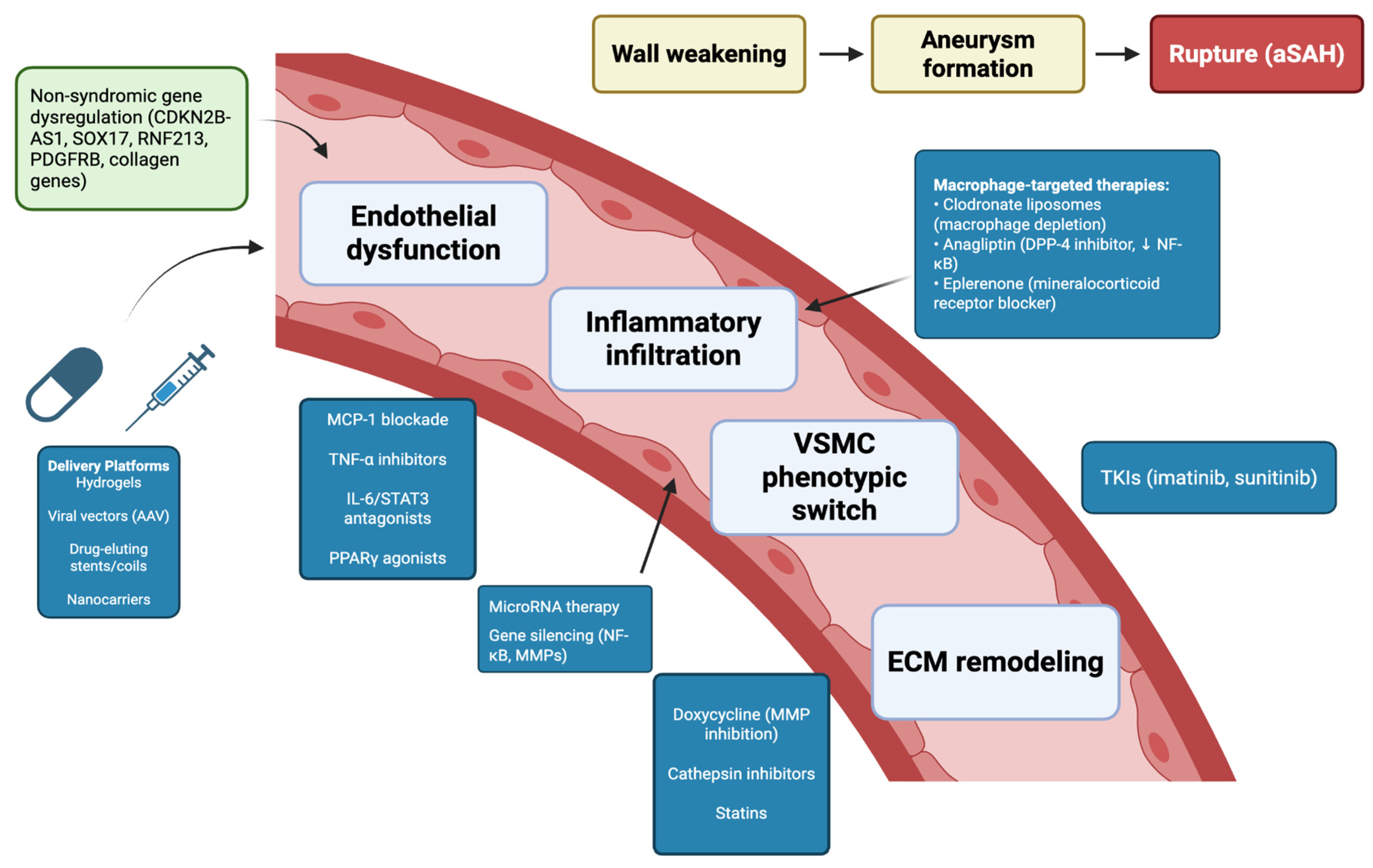
Gene-based and molecular therapies represent a promising frontier for IA management (See Figure 2). Mutations in SVI and PPIL4 have been reported exclusively in intracranial saccular aneurysms (ISAs), whereas PDGFRB variants are primarily associated with intracranial fusiform aneurysms (IFAs) [42]. Because PDGFRB overactivation drives aberrant vascular remodeling, its pathway presents a potential therapeutic target. Tyrosine kinase inhibitors (TKIs), such as sunitinib and imatinib, have shown success in treating PDGFRB-related myofibromas and could theoretically stabilize IFAs by inhibiting excessive receptor signaling [42]. However, no large clinical series have yet reported TKI use in aneurysm patients, and systemic side effects (such as skin toxicity, edema, nausea, hypothyroidism, and gastrointestinal symptoms) pose a challenge to long-term treatment [42].
Future gene therapy approaches may focus on silencing pro-inflammatory or matrix-degrading genes (ex: MMPs), delivering microRNA-based therapeutics to normalize SMC function, or directly modulating tyrosine kinase activity in affected vascular segments [32]. Although still experimental, these strategies offer the potential to move IA treatment beyond purely mechanical interventions and toward biologically targeted therapies.
Other studies also found that monocytes, macrophages, and the pathways they affect may be a potential therapeutic avenue, since they have an influence on aneurysm formation and progression through effects on local inflammation [28,36]. Pathway analysis only reinforced these findings, where monocyte/macrophage populations were associated with activation of HIF-1 and NF-κB signaling cascades, which were already associated with vascular inflammation and remodeling [36]. Therapies aimed at modulating these immune-related signals, such as inhibitors of NF-κB activation or agents effect hypoxia-inducible responses, could complement gene or microRNA based strategies [28,36]. Monocyte/macrophage activity specifically may have therapeutic modulation [28]. Monocyte chemotactic protein-1 (MCP-1) blockade can lead to reduced macrophage recruitment, and along with direct macrophage depletion, animal studies found reduction in aneurysm formation and rupture [30,32]. Using pioglitazone to increase activation of PPARγ was also found to decrease proportion of pro-inflammatory M1 macrophages, which led to decreased rates of aneurysm ruptures [28]. Similarly, when macrophages were selectively eliminated using clodronate liposomes, aneurysm rupture rates decreased [28]. Some molecular pathway specific interventions include anagliptin, which is a dipeptidyl peptidase-4 inhibitor and inhibits aneurysm enlargement through prevention of macrophage infiltration and reduced NF-κB signaling through ERK-5 activation [6,28,43]. Another intervention is eplerenone, a mineralocorticoid receptor blocker, which, in rat models, decreased aneurysm development by decreasing: MCP-1 levels, MMP-9 expression, and CD68-positive macrophage infiltration [28].

3.5. Current and Emerging Treatments

The standard of care for IA management remains surgical clipping or endovascular coil embolization, aimed at isolating the aneurysm sac from circulation [5,8]. However, adjunctive pharmacologic approaches are being explored to slow aneurysm progression, formation, and rupture (See Table 2). Anti-inflammatory agents, such as TNF-α inhibitors (thalidomide, DTH), doxycycline (a broad-spectrum MMP inhibitor), and EP2 antagonists, have demonstrated benefit in preclinical studies [5]. Other promising agents include bazedoxifene, which inhibits IL-6/STAT3 signaling, and estrogen, which maintains endothelial function and prevents aneurysm growth [5]. Strategies that inhibit MMPs or cathepsins, block NF-κB transcriptional activity (ex: with decoy oligodeoxynucleotides), or reduce MCP-1 expression (ex: nifedipine) have all been shown to preserve extracellular matrix integrity and slow aneurysm growth in animal models [28,43]. Experimental adjuncts such as endothelial progenitor cell transfusion and radiofrequency ablation following coiling have also been shown to improve aneurysm healing and reduce recurrence rates [20].

3.5.1. Drug and Gene Delivery Approaches

Because systemic drug administration is limited by the blood–brain barrier and toxicity, local delivery strategies are under active investigation. Innovative approaches such as immiscible phase trapping can confine therapeutic agents directly to the aneurysm dome [22]. Gene transfer using adeno-associated viruses (AAVs) has successfully transduced vascular cells in murine aneurysm tissue, raising the possibility of delivering transgenes that suppress inflammation, inhibit MMPs, or promote endothelial repair [22].
Endovascular devices and injectable hydrogel embolic agents provide a substrate for targeted drug release within the aneurysm sac [9,18,29]. While complete and safe filling remains technically challenging and requires further investigation, endovascular coiling in itself has continued to evolve and is now the clinical standard for many aneurysms [8]. Now with modern detachable coils and flow-diversion devices, multifunctional implants can be placed that both mechanically occlude intracranial aneurysms and biologically modulate the surrounding vascular environment [8]. Hydrogel technologies are another promising intervention. While liquid, photopolymerizable polyethylene-glycol-based hydrogels can be injected to fill the aneurysm sac and then solidify in situ [29]. Some studies found that hydrogel may even fill the sac more completely than traditional coils, with evidence that hydrogel is capable of withstanding pulsatile intracranial flow over long periods [18]. Other studies found that hybrid hydrogel coated platinum coils had low retreatment rates for aneurysms, outperforming standard coiling [9].
Further investigations of endovascular devices led to studies turning coils and flow-diverting stents into drug-eluting platforms. Platinum coils or Pipeline stents coated with biodegradable polymers such as PLGA can steadily release agents like rapamycin, a potent mTOR inhibitor that promotes vessel healing and limits restenosis [13]. These innovations in endovascular techniques with integration of bioactive agents not only mechanically isolate the aneurysm from the brain circulation but also with gradual release of anti-inflammatory biomarkers, growth factors and matrix-stabilizing agents will help to address inflammatory, degeneration and degradation processes underlying formation, evolution and rupture of the intracranial aneurysms [13]. Coils can also be modified to incorporate osteopontin (OPN) and interleukin-10 (IL-10) into a PLGA carrier, which can then stimulate tissue ingrowth and reduce the high recurrence rates seen with standard coiling [5]. Stents can also instead be coated with gelatin hydrogels containing basic fibroblast growth factor (bFGF) and PLGA microspheres loaded with argatroban, which encourage connective tissue formation while limiting in-stent thrombus [29].
Other studies looked at circular RNAs (circRNAs) which regulate the behavior and inflammation of vascular smooth muscle cells, and have potential as biomarkers and therapeutic targets [44]. Further literature found that small molecule inhibitors, such as statins, corticosteroids, cytokine antagonists, and MMP blockers, are useful in their ability to stabilize the extracellular matrix and prevent aneurysm wall weakening [10,25]. By using hydrogels or other delivery agents, these compounds can be encapsulated and sent right to their target, allowing use for high local concentrations without damaging healthy tissue [10].
One promising intervention is the use of nanotechnology [11]. One study found that magnetically guided nanorobots constructed using phase-change coated magnetite particles can navigate blood vessels under dynamic magnetic fields, accumulate within aneurysms, and release encapsulated thrombin right in the aneurysm sac [36]. Then, localized heating can trigger the coating to melt, which allows rapid, targeted occlusion without needing stent grafts or microcatheter shaping [11]. Another study found that nanocarriers, like liposomes and polymeric nanoparticles, can carry agents like Edaravone, a free radical scavenger that neutralizes reactive oxygen species (ROS), or Tanshinone IIA, a compound found in Chinese medicinal plants that can reduce inflammation and oxidative stress [32]. Using these nanocarriers both limits off-target exposure while still allowing for neuroprotective and anti-inflammatory effects [11,32]. More investigation is required, but nano-engineered approaches provide an opportunity for more personalized, image-guided treatment options for intracranial aneurysms.
Although still experimental, these local drug and gene delivery systems represent a promising future direction for biologically targeted aneurysm stabilization and prevention of rupture.

3.5.2. Next Generation Biologic Innovations and Potential of Bioactive Drugs

Recent advances in regenerative biology have drawn inspiration from animal models with extraordinary reparative capabilities. Amphibians such as the Axolotl possess a remarkably rich genome and an exceptional ability to regenerate complex tissues and organs, serving as a valuable model for developing biologic strategies to restore and replace damaged human tissues—an emerging frontier in molecular and cerebrovascular therapeutics [45]. In addition, recent advances in modern regenerative medicine have shown promising results by incorporating tissue regenerative capacity of certain animals like deer, rabbit, bat, and spiny mouse and translation of these animal studies into human research to regenerate multiple tissues and restore organs or limbs and their functions [46,47].
Building on these insights, the evolution of stem cell therapy represents another promising avenue for the prevention of intracranial aneurysm formation and rupture, as well as for mitigating both the acute and chronic sequelae of subarachnoid hemorrhage (SAH). Preclinical and translational studies have demonstrated that human mesenchymal stem cells (MSCs) can confer neuroprotective effects, reducing SAH-related morbidity and potentially preventing aneurysm rupture [48].
Although still in the experimental phase, various sources of MSCs—including autologous, allogeneic, and xenogeneic cells derived from dental pulp, placenta, fetal tissues, peripheral blood, adipose tissue, umbilical cord, and the traditional bone marrow source—have been explored for their therapeutic potential [46]. However, significant challenges remain regarding their availability, clinical translation, transplantation logistics, immunogenicity, tumorigenic risk, and inter-donor heterogeneity. Continued investigation into these biologic therapies is expected to shape the next generation of cerebrovascular disease management [46].

3.5.3. Ongoing Clinical Trials

Several ongoing clinical trials are evaluating strategies to reduce complications associated with intracranial aneurysm treatment and to improve management. One multicenter randomized controlled trial is investigating whether guided antiplatelet therapy can reduce ischemic complications in patients undergoing endovascular stenting treatment for unruptured intracranial aneurysms (NCT05825391, Yang) [49]. Although dual antiplatelet therapy is currently standard for patients receiving intracranial stents, variability in patient response to antiplatelet medications can increase the risk of thrombotic events. This trial evaluates whether adjusting antiplatelet therapy based on platelet function testing improves outcomes (Yang) [49]. Other ongoing studies are examining the role of aspirin therapy in aneurysm management. One randomized trial in several European countries is evaluating whether low dose aspirin combined with intensive blood pressure control (target systolic blood pressure < 120 mmHg) can reduce aneurysm growth in patients with unruptured intracranial aneurysms (EU Clinical Trials [50]). In contrast, another study is investigating short term peri-procedural aspirin administration in patients undergoing endovascular coiling of unruptured aneurysms to determine whether it reduces the risk of ischemic stroke (EU Clinical Trials ) [50]. Together, these studies reflect a growing focus on optimizing medical management strategies to improve outcomes for patients with intracranial aneurysms.

4. Conclusions

Intracranial aneurysm formation and rupture result from the convergence of hemodynamic stress, inflammation, extracellular matrix degradation, and genetic susceptibility. Recent advances have shifted the understanding of this pathology from a purely structural disorder to a dynamic, cell-mediated process driven by endothelial dysfunction, macrophage activation, and vascular smooth muscle remodeling.
These insights have catalyzed the emergence of biologically targeted therapies that complement or potentially replace traditional surgical and endovascular approaches. Experimental interventions, including the inhibition of NF-κB and STAT3 signaling, suppression of MMP-driven wall degradation, and modulation of PDGFRB and tyrosine kinase activity, show promise in reducing aneurysm growth and rupture. Novel delivery systems using nanotechnology, hydrogels, and viral vectors further enhance site-specific therapeutic precision while minimizing systemic toxicity.
Similarly, regenerative strategies such as stem cell and bioengineered tissue therapies—supported by insights from highly regenerative species like the axolotl—represent a new horizon for biologic restoration of cerebrovascular integrity.
Looking forward, integrating molecular diagnostics, genetic risk profiling, and AI-assisted modeling may enable precision prevention of aneurysm formation and rupture. Continued interdisciplinary research across vascular biology, molecular genetics, and biomedical engineering will be crucial to transform these emerging therapies from bench to bedside.

Author Contributions

Conceptualization, M.P., M.K. and B.L.-W.; methodology, M.P., M.K., B.L.-W. and D.B.; investigation, D.B., H.F. and M.A.; writing—original draft preparation, D.B., H.F. and M.A.; writing—review and editing, D.B., H.F., M.A., M.P., M.K. and B.L.-W.; visualization, D.B. and H.F.; supervision, M.P., M.K. and B.L.-W. All authors have read and agreed to the published version of the manuscript.

Funding

This research received no external funding.

Institutional Review Board Statement

Not applicable.

Informed Consent Statement

Not applicable.

Data Availability Statement

No new data were created or analyzed in this study. Data sharing is not applicable.

Conflicts of Interest

The authors declare no conflicts of interest.

References

  1. Bakker, M.K.; Ruigrok, Y.M. Genetics of Intracranial Aneurysms. Stroke 2021, 52, 3004–3012. [Google Scholar] [CrossRef]
  2. Zhou, S.; Dion, P.A.; Rouleau, G.A. Genetics of Intracranial Aneurysms. Stroke 2018, 49, 780–787. [Google Scholar] [CrossRef] [PubMed]
  3. Frösen, J.; Cebral, J.; Robertson, A.M.; Aoki, T. Flow-induced, inflammation-mediated arterial wall remodeling in the formation and progression of intracranial aneurysms. Neurosurg. Focus 2019, 47, E21. [Google Scholar] [CrossRef]
  4. Soldozy, S.; Norat, P.; Elsarrag, M.; Chatrath, A.; Costello, J.S.; Sokolowski, J.D.; Tvrdik, P.; Kalani, M.Y.S.; Park, M.S. The biophysical role of hemodynamics in the pathogenesis of cerebral aneurysm formation and rupture. Neurosurg. Focus 2019, 47, E11. [Google Scholar] [CrossRef]
  5. Chen, C.; Tang, F.; Zhu, M.; Wang, C.; Zhou, H.; Zhang, C.; Feng, Y. Role of inflammatory mediators in intracranial aneurysms: A review. Clin. Neurol. Neurosurg. 2024, 242, 108329. [Google Scholar] [CrossRef]
  6. Shima, Y.; Sasagawa, S.; Ota, N.; Oyama, R.; Tanaka, M.; Kubota-Sakashita, M.; Kawakami, H.; Kobayashi, M.; Takubo, N.; Ozeki, A.N.; et al. Increased PDGFRB and NF-κB signaling caused by highly prevalent somatic mutations in intracranial aneurysms. Sci. Transl. Med. 2023, 15, eabq7721. [Google Scholar] [CrossRef]
  7. Li, Y.; Liu, J.; Hu, C.; Luo, C.; Zhou, J.; Li, B.; Liao, X.; Liu, S.; Yuan, D.; Jiang, W.; et al. Association of rare RNF213 variants and intracranial aneurysm risk in a Chinese population. Ann. Transl. Med. 2022, 10, 1336. [Google Scholar] [CrossRef]
  8. Reddy, A.; Masoud, H.E. Endovascular and Medical Management of Unruptured Intracranial Aneurysms. Semin. Neurol. 2023, 43, 480–492. [Google Scholar] [CrossRef]
  9. Nickele, C.; Oravec, C.S.; Morris, S.D.; Hoit, D.; Elijovich, L.; Arthur, A.S. Long-Term Follow-up of Aneurysms Treated with Hydrogel-Coated Coils Shows Progressive Thrombosis and Improvement in Raymond–Roy Classification. Oper. Neurosurg. 2022, 22, 239–243. [Google Scholar] [CrossRef] [PubMed]
  10. Balkrishna, A.; Mishra, S.; Rana, M.; Rajput, S.K.; Pathak, S.; Liu, K.; Dhanasekaran, M.; Arya, V.; Singh, S. Small molecule inhibitors target multiple neuropathological signaling to exert novel neuroprotection in intracranial aneurysms. Front. Pharmacol. 2024, 15, 1469211. [Google Scholar] [CrossRef] [PubMed]
  11. Wang, J.; Zhou, Q.; Dong, Q.; Shen, J.; Hao, J.; Li, D.; Xu, T.; Cai, X.; Bai, W.; Ying, T.; et al. Nanoarchitectonic Engineering of Thermal-Responsive Magnetic Nanorobot Collectives for Intracranial Aneurysm Therapy. Small 2024, 20, 2400408. [Google Scholar] [CrossRef]
  12. Abulizi, A.; Su, R.; Wu, P.; Cheng, X.; Aisha, M.; Wang, Z. Genetic Insights into the Enigma of Family Intracranial Aneurysms. World Neurosurg. 2025, 193, 135–140. [Google Scholar] [CrossRef]
  13. Arai, D.; Ishii, A.; Ikeda, H.; Abekura, Y.; Nishi, H.; Miyamoto, S.; Tabata, Y. Development of a stent capable of the controlled release of basic fibroblast growth factor and argatroban to treat cerebral aneurysms: In vitro experiment and evaluation in a rabbit aneurysm model. J. Biomed. Mater. Res. B Appl. Biomater. 2019, 107, 2185–2194. [Google Scholar] [CrossRef]
  14. Aoki, T.; Frȍsen, J.; Fukuda, M.; Bando, K.; Shioi, G.; Tsuji, K.; Ollikainen, E.; Nozaki, K.; Laakkonen, J.; Narumiya, S. Prostaglandin E2–EP2–NF-κB signaling in macrophages as a potential therapeutic target for intracranial aneurysms. Sci. Signal. 2017, 10, eaah6037. [Google Scholar] [CrossRef]
  15. Bakker, M.K.; van der Spek, R.A.A.; van Rheenen, W.; Morel, S.; Morel, S.; Hostettler, I.C.; Alg, V.S.; van Eijk, K.R.; Koido, M.; Akiyama, M.; et al. Genome-wide association study of intracranial aneurysms identifies 17 risk loci and genetic overlap with clinical risk factors. Nat. Genet. 2020, 52, 1303–1313. [Google Scholar] [CrossRef] [PubMed]
  16. Barak, T.; Ristori, E.; Ercan-Sencicek, A.G.; Miyagishima, D.F.; Nelson-Williams, C.; Dong, W.; Jin, S.C.; Prendergast, A.; Armero, W.; Henegariu, O.; et al. PPIL4 is essential for brain angiogenesis and implicated in intracranial aneurysms in humans. Nat. Med. 2021, 27, 2165–2175. [Google Scholar] [CrossRef]
  17. Chen, J.; Yang, L.; Chen, Y.; Zhang, G.; Fan, Z. Controlled release of osteopontin and interleukin-10 from modified endovascular coil promote cerebral aneurysm healing. J. Neurol. Sci. 2016, 360, 13–17. [Google Scholar] [CrossRef]
  18. Fazal, Z.H.; Hosaka, K.; Manfredsson, F.P.; Hoh, B.L. Introducing a Novel Method of Intravascular Adeno-associated Virus-mediated Gene Delivery. Virol. Hyderabad 2018, 2, 105. [Google Scholar]
  19. Gareev, I.; Shumadalova, A.; Ilyasova, T.; Beilerli, A.; Shi, H. Circular RNAs in intracranial aneurysms: Emerging roles in pathogenesis, diagnosis and therapeutic intervention. Non-Coding RNA Res. 2024, 9, 211–220. [Google Scholar] [CrossRef]
  20. Grüter, B.E.; von Faber-Castell, F.; Marbacher, S. Lumen-oriented versus wall-oriented treatment strategies for intracranial aneurysms—A systematic review of suggested therapeutic concepts. J. Cereb. Blood Flow Metab. 2022, 42, 1568–1578. [Google Scholar] [CrossRef] [PubMed]
  21. Karhunen, V.; Bakker, M.K.; Ruigrok, Y.M.; Gill, D.; Larsson, S.C. Modifiable Risk Factors for Intracranial Aneurysm and Aneurysmal Subarachnoid Hemorrhage: A Mendelian Randomization Study. J. Am. Heart Assoc. 2021, 10, e022277. [Google Scholar] [CrossRef]
  22. Khoury, M.; Mekler, T.; Epshtein, M.; Kreinin, Y.; Korneyev, D.; Abezgauz, L.; Anagnostakou, V.; Ramon, G.Z.; Sznitman, J.; Gounis, M.; et al. Isolation and focal treatment of brain aneurysms using interfacial fluid trapping. Sci. Adv. 2024, 10, eadp4579. [Google Scholar] [CrossRef]
  23. Li, B.; Hu, C.; Liu, J.; Liao, X.; Xun, J.; Xiao, M.; Yan, J. Associations among Genetic Variants and Intracranial Aneurysm in a Chinese Population. Yonsei Med. J. 2019, 60, 651–658. [Google Scholar] [CrossRef]
  24. Meng, Q.; Hao, Q.; Zhao, C. The association between collagen gene polymorphisms and intracranial aneurysms: A meta-analysis. Neurosurg. Rev. 2019, 42, 243–253. [Google Scholar] [CrossRef]
  25. Miyamoto, T.; Kung, D.K.; Kitazato, K.T.; Yagi, K.; Shimada, K.; Tada, Y.; Korai, M.; Kurashiki, Y.; Kinouchi, T.; Kanematsu, Y.; et al. Site-specific elevation of interleukin-1β and matrix metalloproteinase-9 in the Willis circle by hemodynamic changes is associated with rupture in a novel rat cerebral aneurysm model. J. Cereb. Blood Flow. Metab. 2017, 37, 2795–2805. [Google Scholar] [CrossRef] [PubMed]
  26. Mohan, D.; Munteanu, V.; Coman, T.; Ciurea, A.V. Genetic factors involves in intracranial aneurysms—Actualities. J. Med. Life 2015, 8, 336–341. [Google Scholar]
  27. Molenberg, R.; Aalbers, M.W.; Appelman, A.P.; Uyttenboogaart, M.; van Dijk, J.M.C. Intracranial aneurysm wall enhancement as an indicator of instability: A systematic review and meta-analysis. Eur. J. Neurol. 2021, 28, 3837–3848. [Google Scholar] [CrossRef] [PubMed]
  28. Muhammad, S.; Chaudhry, S.R.; Dobreva, G.; Lawton, M.T.; Niemelä, M.; Hänggi, D. Vascular Macrophages as Therapeutic Targets to Treat Intracranial Aneurysms. Front. Immunol. 2021, 12, 630381. [Google Scholar] [CrossRef]
  29. Poupart, O.; Conti, R.; Schmocker, A.; Pancaldi, L.; Moser, C.; Nuss, K.M.; Sakar, M.S.; Dobrocky, T.; Grützmacher, H.; Mosimann, P.J.; et al. Pulsatile Flow-Induced Fatigue-Resistant Photopolymerizable Hydrogels for the Treatment of Intracranial Aneurysms. Front. Bioeng. Biotechnol. 2021, 8, 619858. [Google Scholar] [CrossRef] [PubMed]
  30. Starke, R.M.; Thompson, J.W.; Ali, M.S.; Pascale, C.L.; Lege, A.M.; Ding, D.; Chalouhi, N.; Hasan, D.M.; Jabbour, P.; Owens, G.K.; et al. Cigarette Smoke Initiates Oxidative Stress-Induced Cellular Phenotypic Modulation Leading to Cerebral Aneurysm Pathogenesis. Arterioscler. Thromb. Vasc. Biol. 2018, 38, 610–621. [Google Scholar] [CrossRef]
  31. Theodotou, C.; Snelling, B.; Sur, S.; Haussen, D.; Peterson, E.; Elhammady, M. Genetic associations of intracranial aneurysm formation and sub-arachnoid hemorrhage. Asian J. Neurosurg. 2017, 12, 374–381. [Google Scholar] [CrossRef]
  32. Toader, C.; Eva, L.; Bratu, B.-G.; Covache-Busuioc, R.-A.; Costin, H.P.; Dumitrascu, D.-I.; Glavan, L.-A.; Corlatescu, A.D.; Ciurea, A.V. Intracranial Aneurysms and Genetics: An Extensive Overview of Genomic Variations, Underlying Molecular Dynamics, Inflammatory Indicators, and Forward-Looking Insights. Brain Sci. 2023, 13, 1454. [Google Scholar] [CrossRef]
  33. Tulamo, R.; Frösen, J.; Hernesniemi, J.; Niemelä, M. Inflammatory changes in the aneurysm wall: A review. J. NeuroInterv. Surg. 2018, 10, i58–i67. [Google Scholar] [CrossRef]
  34. Wu, X.-B.; Luo, B.; Guo, X.; Liu, C.-C.; Liu, Y.-A.; Ye, J.-S.; Fan, S.-Y.; Li, Q.-J.; Wang, S.-W. Aneurysm Wall Enhancement and Systemic Inflammation Jointly Contribute to Cognitive Dysfunction in Untreated Unruptured Intracranial Aneurysm Patients. J. Inflamm. Res. 2025, 18, 9045–9053. [Google Scholar] [CrossRef]
  35. Xu, Y.; Guo, P.; Wang, G.; Sun, X.; Wang, C.; Li, H.; Cui, Z.; Zhang, P.; Feng, Y. Integrated analysis of single-cell sequencing and machine learning identifies a signature based on monocyte/macrophage hub genes to analyze the intracranial aneurysm associated immune microenvironment. Front. Immunol. 2024, 15, 1397475. [Google Scholar] [CrossRef]
  36. Xu, Z.; Rui, Y.-N.; Hagan, J.P.; Kim, D.H. Intracranial Aneurysms: Pathology, Genetics, and Molecular Mechanisms. NeuroMolecular Med. 2019, 21, 325–343. [Google Scholar] [CrossRef] [PubMed]
  37. Huang, Z.; Ling, C. Pathophysiological Mechanisms for Intracranial Aneurysms. World Neurosurg. 2025, 201, 124273. [Google Scholar] [CrossRef] [PubMed]
  38. Signorelli, F.; Sela, S.; Gesualdo, L.; Chevrel, S.; Tollet, F.; Pailler-Mattei, C.; Tacconi, L.; Turjman, F.; Vacca, A.; Schul, D.B. Hemodynamic Stress, Inflammation, and Intracranial Aneurysm Development and Rupture: A Systematic Review. World Neurosurg. 2018, 115, 234–244. [Google Scholar] [CrossRef]
  39. Kataoka, H. Molecular Mechanisms of the Formation and Progression of Intracranial Aneurysms. Neurol. Med. Chir. 2015, 55, 214–229. [Google Scholar] [CrossRef]
  40. Toth, G.; Cerejo, R. Intracranial aneurysms: Review of current science and management. Vasc. Med. 2018, 23, 276–288. [Google Scholar] [CrossRef] [PubMed]
  41. Adkar, S.S.; Lynch, J.; Choi, R.B.; Roychowdhury, T.; Judy, R.L.; Paruchuri, K.; Go, D.-C.; Bamezai, S.; Cabot, J.; Sorondo, S.; et al. Dissecting the Genetic Architecture of Intracranial Aneurysms. Circ. Genom. Precis. Med. 2025, 18, e004626. [Google Scholar] [CrossRef] [PubMed]
  42. McAvoy, M.; Ratner, B.; Ferreira, M.J.; Levitt, M.R. Gene therapy for intracranial aneurysms: Systemic review. J. NeuroInterv. Surg. 2025, 17, 859–863. [Google Scholar] [CrossRef]
  43. Khan, D.; Cornelius, J.F.; Muhammad, S. The Role of NF-κB in Intracranial Aneurysm Pathogenesis: A Systematic Review. Int. J. Mol. Sci. 2023, 24, 14218. [Google Scholar] [CrossRef]
  44. Thompson, J.W.; Suon, J.; Knott, M.V.; Corsaletti, G.; Hamad, N.; Hanna, J.; Rodrigues, P.B.; Sanikommu, S.; Hernandez-Cuervo, H.; Haniff, R.; et al. Coil and flow diverting stents as drug delivery platforms for cerebral aneurysm treatment. bioRxiv 2025. [Google Scholar] [CrossRef]
  45. Nowoshilow, S.; Schloissnig, S.; Fei, J.F.; Dahl, A.; Pang, A.W.C.; Pippel, M.; Winkler, S.; Hastie, A.R.; Young, G.; Roscito, J.G.; et al. The axolotl genome and the evolution of key tissue formation regulators. Nature 2018, 554, 50–55. [Google Scholar] [CrossRef]
  46. Liao, K.; Babal, Y.K.; Lewandowski, S.A. Mammalian Models of Adult Tissue Regeneration. Annu. Rev. Anim. Biosci. 2026, 14, 297–317. [Google Scholar] [CrossRef] [PubMed]
  47. Li, C. Deer antler renewal gives insights into mammalian epimorphic regeneration. Cell Regen. 2023, 12, 26. [Google Scholar] [CrossRef] [PubMed]
  48. Kuwabara, A.; Liu, J.; Kamio, Y.; Liu, A.; Lawton, M.T.; Lee, J.-W.; Hashimoto, T. Protective Effect of Mesenchymal Stem Cells Against the Development of Intracranial Aneurysm Rupture in Mice. Neurosurgery 2017, 81, 1021–1028. [Google Scholar] [CrossRef]
  49. ClinicalTrials.gov. Guided Versus Standard Antiplatelet Therapy in Intracranial Aneurysm Intervention with Stents. ClinicalTrials.gov Identifier: NCT05825391. Updated April 2023. Available online: https://clinicaltrials.gov/study/NCT05825391 (accessed on 9 March 2026).
  50. ClinicalTrials.eu. Ongoing Clinical Trials for Intracranial Aneurysm; ClinicalTrials.eu: London, UK, 2025. Available online: https://clinicaltrials.eu/disease/intracranial-aneurysm/intracranial-aneurysm-trials-in-disease/ (accessed on 9 March 2026).
Figure 1. Molecular and cellular cascades in intracranial aneurysm formation. Schematic illustration of the endothelial, inflammatory, and vascular smooth muscle mechanisms contributing to aneurysm initiation and progression. Hemodynamic stress (increased wall shear stress and oscillatory flow) activates endothelial signaling pathways, including NF-κB, MAPK, and Ca2+ influx, leading to the release of pro-inflammatory cytokines (TNF-α, IL-1β, IL-6) and reactive oxygen species (ROS). These mediators recruit macrophages, neutrophils, T lymphocytes, and mast cells, which amplify inflammation through the MCP-1/COX-2 loop and complement activation (C3a/C5a). Cytokine-driven signaling in vascular smooth muscle cells (VSMCs) induces a phenotypic switch, regulated by PDGF/JAK-STAT pathways, that promotes apoptosis, extracellular matrix (ECM) degradation, and loss of the contractile phenotype. Apoptosis of VSMCs and other mural cells reduces repair capacity and has been linked to hypocellular, degenerative aneurysm wall phenotypes associated with instability. Progressive ECM remodeling, mediated by MMPs, cathepsins, VEGF, and TGF-β, weakens the vessel wall, leading to aneurysm formation and potential rupture. Therapeutic targets (highlighted in callouts) include endothelium-directed, cytokine/complement, and VSMC/ECM remodeling pathways, along with emerging adjunct drug-delivery systems.
Jvd 05 00015 g001
Figure 2. Targeted molecular and genetic therapies for intracranial aneurysms. Integrated schematic summarizing current and investigational targeted therapeutic approaches aimed at interrupting the molecular cascades leading to aneurysm formation and rupture. Non-syndromic gene dysregulation (CDKN2B-AS1, SOX17, RNF213, PDGFRB, and collagen genes) and hemodynamic stress contribute to endothelial dysfunction, initiating inflammation, VSMC phenotypic switching, and ECM degradation. Therapeutic strategies (blue boxes) include anti-inflammatory agents (MCP-1 blockade, TNF-α inhibitors, IL-6/STAT3 antagonists, PPARγ agonists), macrophage-targeted interventions (clodronate liposomes, anagliptin, eplerenone), VSMC gene/epigenetic modulation (microRNA therapy, NF-κB/MMP gene silencing), and ECM stabilization (doxycycline, cathepsin inhibitors, statins). Growth factor signaling inhibitors such as tyrosine kinase inhibitors (TKIs; imatinib, sunitinib) target PDGF/TGF-β-mediated remodeling. Delivery platforms, including hydrogels, viral vectors (AAV), drug-eluting coils/stents, and nanocarriers, provide localized drug or gene delivery. The downstream outcomes, wall weakening, aneurysm formation, and rupture (aSAH), are depicted in yellow/red boxes on the right.
Jvd 05 00015 g002
Table 1. Summary of Key Studies on Intracranial Aneurysms (2015–2025).
TitleAuthor (Year)Study TypeNumber of Cases/SubjectsKey Outcome/Findings
Genetic insights into the Enigma of Family Intracranial AneurysmsAbulizi A et al. (2025) [12]Review/Genetic AnalysisLiterature review (no fixed sample size)Familial IAs show higher rupture risk, earlier rupture age, and increased risk in first-degree relatives.
Development of a stent capable of controlled release of bFGF and argatroban to treat cerebral aneurysmsArai et al. (2019) [13]Animal ModelRabbit modelbFGF/PLGA stent effectively reduced aneurysm growth in vitro and in vivo.
Prostaglandin E2–EP2–NF-κB signaling in macrophages as a therapeutic targetAoki et al. (2017) [14]Animal ModelRatsEP2 antagonist reduced macrophage infiltration and aneurysm formation.
Genetics of Intracranial AneurysmsBakker MK et al. (2021) [1]Review10,754 IA casesIdentified key loci (SOX17, CDKN2B-AS1, CNNM2, RBBP8) confirming genetic susceptibility.
GWAS identifying 17 risk loci and genetic overlap with clinical risk factorsBakker MK et al. (2020) [15]GWAS Meta-analysis10,754 cases; 306,882 controls17 IA risk loci found; 6 previously known, 11 novel.
Small molecule inhibitors target neuropathological signaling in IAsBalkrishna et al. (2024) [10]Reviewn/aSMIs protect brain tissue by modulating pathophysiological pathways.
PPIL4 is essential for brain angiogenesis and implicated in IAsBarak T et al. (2021) [16]Human Genetic + Functional4 families + 476 casesPPIL4 mutations linked to IA via angiogenesis disruption.
Controlled release of osteopontin and interleukin-10 from modified coilsChen et al. (2016) [17]Animal Model68 ratsOPN and IL-10 coated coils promoted aneurysm healing and reduced recurrence.
Novel intravascular AAV-mediated gene deliveryFazal et al. (2018) [18]Clinical Study4 AAV serotypesAAVs efficiently transduced vascular cells with therapeutic genes.
Circular RNAs in IAs: roles in pathogenesis and diagnosisGareev I et al. (2024) [19]Reviewn/acirc_0007990 identified as a biomarker for wall instability and rupture risk.
Lumen- vs. Wall-Oriented Treatment Strategies for IAsGruter et al. (2021) [20]Systematic Review641 studiesEstrogen shown to prevent aneurysm induction and progression.
Modifiable risk factors for IA and aSAH (Mendelian randomization)Karhunen V et al. (2021) [21]Mendelian Randomization6252 IA; 4196 aSAHSmoking, insomnia, and HTN are major genetic risk factors.
Isolation and focal treatment using interfacial fluid trappingKhoury et al. (2024) [22]Clinical Studyn/aIMP fluid trapping technique isolates aneurysms for localized therapy.
Genetic variants and IA in Chinese populationLi B et al. (2019) [23]Case–Control230 patientsCDKN2B-AS1, RP1, HDAC9 variants significantly associated with IA risk.
RNF213 variants and IA risk in Chinese populationLi Y et al. (2022) [7]Case–Control174 patientsRNF213 variants linked with increased IA risk.
Gene therapy for IAs: Systematic reviewMcAvoy et al. (2024) [16]Reviewn/aPDGFRB mutations activate ERK/NF-κB; targetable via TK inhibitors.
Collagen gene polymorphisms and IA risk (meta-analysis)Meng Q et al. (2017) [24]Meta-analysis13,709 patientsCollagen-gene variants significantly increase IA susceptibility.
IL-1β and MMP-9 elevation in Willis circle by hemodynamic stressMiyamoto et al. (2016) [25]Animal Modeln/aLocal IL-1β and MMP-9 elevation linked to rupture risk.
Genetic factors in IAs—ActualitiesMohan D et al. (2015) [26]ReviewMultiple studiesChromosome 8q/9p variants increase IA risk; familial IAs often multiple and larger.
IA Wall Enhancement as Indicator of Instability (Meta-analysis)Molenberg et al. (2021) [27]Systematic Review/Metan/aWall enhancement on MRI correlates with instability; absence indicates stability.
Vascular macrophages as therapeutic targets for IAsMuhammad S et al. (2021) [28]Review/Translational66 human samples + animal dataM1 macrophage dominance; targeting reduces aneurysm growth.
Long-term follow-up with hydrogel-coated coilsNickele C et al. (2022) [9]Retrospective Cohort145 patientsHydrogel coils improve thrombosis and reduce rupture vs. bare platinum.
Photopolymerizable Hydrogels for IA TreatmentPoupart et al. (2021) [29]In vivo Studyn/aHydrogels resist fatigue and adapt to in vivo conditions.
Endovascular and Medical Management of Unruptured IAsReddy A et al. (2023) [8]Clinical Reviewn/aEndovascular therapy reduces mortality and complications.
PDGFRB and NF-κB Signaling in IA Somatic MutationsShima Y et al. (2023) [6]Genetic/Translational65 IA tissuesSomatic PDGFRB/NF-κB mutations drive aneurysm pathogenesis.
Cigarette Smoke-Induced Oxidative Stress and CA PathogenesisStarke et al. (2019) [30]Animal Modeln/aCSE triggers oxidative VSMC changes leading to aneurysm formation.
Genetic Associations of IA Formation and SAHTheodotou C et al. (2017) [31]Review19,997 cases9p21/CDKN2, EDNRA, SOX17 mutations increase IA risk.
Cerebral Aneurysm: Filling the Gap Between Pathophysiology and NanocarriersToader C et al. (2024) [32]Reviewn/aCSF proteomic signatures and nanocarriers offer diagnostic and therapeutic potential.
Inflammatory Changes in the Aneurysm WallTulamo et al. (2018) [33]Reviewn/aMacrophage phagocytic activity and Annexin V imaging proposed as future tools.
Thermal-Responsive Magnetic Nanorobot Therapy for IAsWang et al. (2024) [11]Clinical Studyn/aNanorobots deliver thrombin for stent-free endovascular IA therapy.
Aneurysm Wall Enhancement and Systemic Inflammation Linked to Cognitive DysfunctionWu et al. (2025) [34]Prospective Study120 patientsWall enhancement and inflammation correlate with cognitive decline in unruptured IAs.
Single-cell analysis identifying monocyte/macrophage gene signaturesXu Y et al. (2024) [35]Computational/Translational61 IA + 21 controlsLGMN, FN1, SRGN, CXCL16 identified as hub genes in IA immune microenvironment.
Genetics of Intracranial Aneurysms—Updated ReviewZhou S et al. (2018) [2]Review5891 cases + 14,181 controlsCommon and rare loci (CDKN2B-AS1, SOX17, EDNRA, RNF213) linked to IA risk.
Abbreviations: IA = intracranial aneurysm; aSAH = aneurysmal subarachnoid hemorrhage; GWAS = genome-wide association study; NF-κB = nuclear factor kappa-B; PDGFRB = platelet-derived growth factor receptor beta; bFGF = basic fibroblast growth factor; AAV = adeno-associated virus; SMI = small-molecule inhibitor.
Table 2. Summation of Key Therapeutic Interventions for Intracranial Aneurysms.
Therapeutic InterventionAdvantagesDisadvantages
Tyrosine kinase inhibitorsStabilize IFAs, treat PDGFRB-related myofibromasNo large clinical series yet on TKI use; systemic side effects prevent long term use
TNF-α inhibitorsDecreases inflammatory responsePotential for infection, drug induced lupus like reaction
SERM, bazedoxifeneDecreases inflammatory responseMuscle spasms, gastrointestinal upset
PioglitazoneDecreases aneurysm rupture rateFluid retention, upper respiratory infection hypoglycemia
AnagliptinPrevents aneurysm enlargementHypoglycemia, gastrointestinal upset
EplerenoneDecrease aneurysm developmentHyperkalemia, hypotension, gynecomastia
EstrogenMaintains endothelial function Long term use carries potential for endometrial cancer, breast cancer, and embolism especially if not combined with progestin
nifedipinePreserve extracellular matrix integrity Hypotension, peripheral edema, may worsen angina
DoxycyclineInhibit MMPsGastrointestinal upset; rare intracranial hypertension
Prostaglandin EP2 antagonistsDecreases inflammationLong term use may interfere with cognition in animal studies
Adeno-associated viruses (AAVs)Deliver transgenes that suppress inflammationLittle research on localized delivery targeting internal vasculature
Injection hydrogel embolic agentsHydrogel may fill the aneurysm more completely than traditional coils; withstands pulsatile flow; low retreatment ratesRequires further testing to assess clinical safety and long-term efficiency
Endovascular devicesAid in delivering medications in treatment of cerebral aneurysmsComplete and safe filling remains technically challenging
Small molecule inhibitors, such as statins, corticosteroids, cytokine antagonists, and MMP blockersReduce aneurysm wall enhancement and inflammationMay increase re-rupture risk post-rupture; may have higher rates of hyperglycemia and infection
NanorobotsRelease encapsulated thrombin right in the aneurysm sacMinimal research, further investigation required
Human mesenchymal stem cellsConfer neuroprotective effectsRisk for formation of iatrogenic tumor and growth of pre-existing tumor growth
Disclaimer/Publisher’s Note: The statements, opinions and data contained in all publications are solely those of the individual author(s) and contributor(s) and not of MDPI and/or the editor(s). MDPI and/or the editor(s) disclaim responsibility for any injury to people or property resulting from any ideas, methods, instructions or products referred to in the content.