Article

Clinical and Medication-Related Factors Associated with Adverse Renal Outcomes in Advanced Chronic Kidney Disease Patients Treated with Empagliflozin: A Real-World Study in Thailand


by
Ittaprach Yimsuk
1,
Artitaya Vongsaroj
2,
Pikanet Suebchompoo
1,
Adisorn Attarungrod
1,
Alisa Yamba
1 and
Taniya Paiboonvong
3,*
1
Department of Pharmacy Practice, College of Pharmacy, Rangsit University, Mueang Pathum Thani 12000, Thailand
2
Department of Pharmacy, Nopparat Rajathanee Hospital, Bangkok 10230, Thailand
3
Faculty of Pharmacy, Pathumthani University, Mueang Pathum Thani 12000, Thailand
*
Author to whom correspondence should be addressed.
Pharmacoepidemiology 2026, 5(3), 35; https://doi.org/10.3390/pharma5030035
Submission received: 9 August 2026 / Revised: 13 September 2026 / Accepted: 15 September 2026 / Published: 17 September 2026

Abstract

Background: Sodium-glucose cotransporter-2 (SGLT2) inhibitors have been shown to reduce the rate of chronic kidney disease (CKD) progression and provide cardioprotective benefits beyond glycemic control. However, evidence regarding their effects on kidney disease progression in advanced CKD patients remains limited. Objectives: To determine the proportion of patients who developed adverse renal outcomes (AROs) and identify factors associated with AROs among patients with advanced CKD following SGLT2 inhibitor initiation. Methods: This retrospective cohort study was conducted in a tertiary-care hospital in Thailand. Patients with advanced CKD who initiated SGLT2 inhibitor therapy between 1 January 2021 and 31 March 2025 were included. Descriptive statistics were used to summarize the data. Factors associated with AROs were evaluated using Cox proportional hazards regression analysis. Results: A total of 132 patients were included for analysis. All patients received empagliflozin. Most patients were aged ≥60 years (77.27%), and 53.79% were female. During the follow-up period, 24.2% of patients experienced AROs. Multivariable analysis identified CKD stage 5 (aHR = 4.02, 95% CI: 1.92–8.44, p < 0.001) and concomitant use of low-dose aspirin (aHR = 2.35, 95% CI: 1.05–5.26, p = 0.038) as factors independently associated with an increased risk of AROs. Conclusions: Approximately one-quarter of patients with advanced CKD experienced an ARO, following empagliflozin initiation. CKD stage 5 and concomitant low-dose aspirin use were independently associated with AROs. Patients with these characteristics may warrant closer monitoring of renal function, particularly in those with more advanced disease during empagliflozin therapy.

1. Introduction

Chronic kidney disease (CKD) is a major global health problem associated with increased risks of end-stage renal disease (ESRD), cardiovascular events, and mortality, with a particularly high burden in low- and middle-income countries, including Thailand [1,2]. Unawareness of the risk and presence of CKD among the Thai population remains high. Therefore, early detection of CKD patients and appropriate treatment to slow progression of the disease are crucial, particularly in stage 3 or stage 4 CKD [3]. According to the KDIGO 2024 CKD Guideline, CKD management has evolved toward a comprehensive, risk-based approach that emphasizes both renal and cardiovascular protection. Although renin–angiotensin–aldosterone system (RAAS) inhibitors remain the mainstay of treatment, a considerable residual risk of disease progression persists, particularly in patients with advanced CKD. In response, the guideline recommends the use of sodium-glucose cotransporter-2 (SGLT2) inhibitors as an adjunctive therapy to further reduce kidney disease progression and cardiovascular risk [4].
SGLT2 inhibitors, a class of antihyperglycemic agents, are also recommended by the American Diabetes Association (ADA) for patients with Type 2 diabetes mellitus (T2DM) because of their glycemic, cardiovascular, and renal benefits [5]. Consistent with these recommendations, a recent systematic review and meta-analysis further confirmed that SGLT2 inhibitor therapy significantly reduces the risk of kidney disease progression and other AROs in patients with T2DM and CKD [6]. Based on evidence, the indications for SGLT2 inhibitors have subsequently expanded to include patients with CKD regardless of T2DM status. Large-scale randomized controlled trials have consistently demonstrated that dapagliflozin, canagliflozin, and empagliflozin slow CKD progression and improve cardiovascular outcomes across diverse CKD populations, irrespective of diabetes status [7,8,9,10,11,12]. Additionally, previous real-world studies in Thai patients have demonstrated renoprotective benefits associated with SGLT2 inhibitor therapy, including a lower risk of major adverse kidney events, supporting their use in routine clinical practice [13,14,15].
Initiation of SGLT2 inhibitors is commonly associated with an early decline in estimated glomerular filtration rate (eGFR), reflecting hemodynamic changes rather than intrinsic kidney injury. This initial dip is generally transient and vary among patients; however, continued treatment has been reported to provide sustained renoprotective effects [16,17]. Although this initial dip is generally transient, the variability in renal response remains a clinical concern. Recent studies have reported favorable cardiovascular and renal outcomes with SGLT2 inhibitors in patients with CKD stages 4 and 5 [18], and a reduced risk of renal failure in patients with CKD stage 5 with T2DM [19]. Nevertheless, evidence regarding AROs following SGLT2 inhibitor initiation in this population remains limited. Therefore, this study aimed to determine the proportion of patients who developed adverse renal outcomes (AROs) and identify factors associated with AROs among patients with advanced CKD following SGLT2 inhibitor initiation. Adverse events (AEs) were also observed for additional safety information.

2. Materials and Methods

2.1. Study Design and Participants

This was a retrospective cohort study conducted at Nopparat Rajathanee Hospital, a tertiary-care hospital in Thailand. Data were retrieved from electronic medical records from patients with advanced CKD stages 4–5 who initiated SGLT2 inhibitor therapy between 1 January 2021 and 31 March 2025. Patients were followed for up to 365 days after treatment initiation.
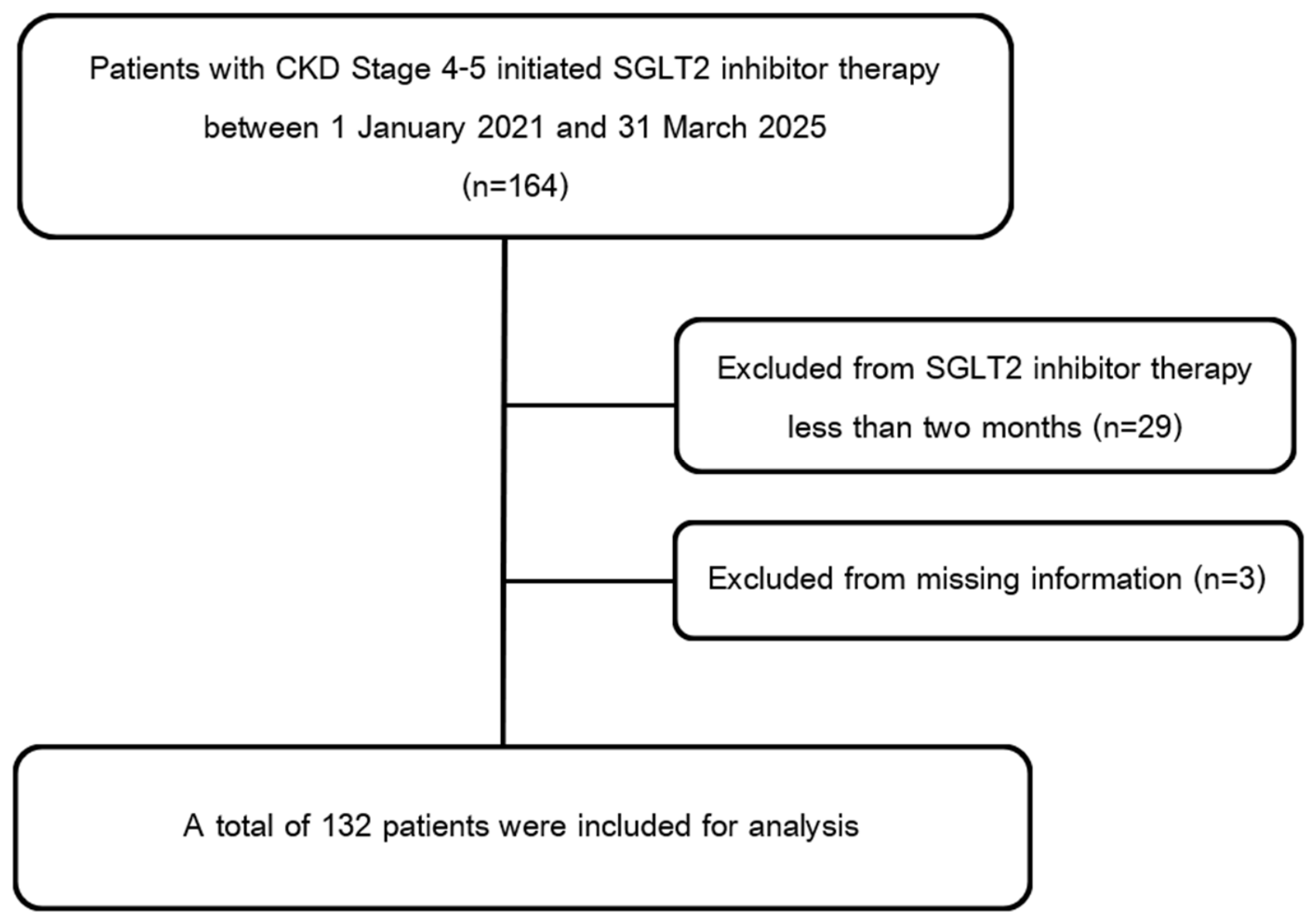
Patients were included if they met the following criteria: (1) aged 18 years or older; (2) diagnosed with CKD stages 4–5 with an eGFR < 30 mL/min/1.73 m2; (3) not undergoing renal replacement therapy (RRT) at baseline; and (4) received continuous SGLT2 inhibitor therapy for at least two months to allow assessment of AROs associated with continued exposure rather than transient early changes in eGFR after treatment initiation. Patients were excluded if they had incomplete medical records or insufficient data to assess renal outcomes, a history of malignancy, an immunocompromised condition or active use of immunosuppressive agents, advanced hepatic impairment. The flowchart of cohort selection is presented in Figure 1.

2.2. Outcome Measures

The primary outcome was the composite ARO, defined as the occurrence of any one of the following components: (1) a sustained ≥40% decline in eGFR from baseline for at least 3 months or (2) a sustained eGFR of <10 mL/min/1.73 m2 for at least 3 months or (3) initiation of RRT maintained for at least 2 months. The first occurrence was considered the event for a composite outcome. Each patient was counted only once, even if multiple criteria were met, but could be included in more than one individual component category.
Secondary outcomes included the mean change in eGFR and time to the first occurrence of a composite ARO following empagliflozin initiation.
Safety outcomes included AEs documented in the medical records.

2.3. Data Collection and Analysis

We collected patient data from the electronic medical records database of the hospital. To ensure data accuracy, all data collectors underwent standardized training prior to data extraction. Baseline renal characteristics and clinically relevant factors potentially associated with renal outcomes were collected, including CKD stage, baseline eGFR, and concomitant medications relevant to renal function. Albuminuria was not assessed in any patient and therefore could not be included in the analysis. Continuous variables are presented as means with standard deviations (SD) for normally distributed data, or as medians with interquartile ranges (IQR) for non-normally distributed data. Categorical variables are expressed as frequencies and percentages. The sample size was initially estimated based on a participant-to-variable ratio of 15:1, resulting in a minimum required cohort of 120 patients. The evaluated factors consisted of patient demographics (age and gender), CKD stage, comorbidities (T2DM, hypertension, and major adverse cardiovascular events (MACE-3), defined as a composite of cardiovascular death, non-fatal myocardial infarction, and non-fatal stroke), and concomitant medication use (statins, angiotensin-converting enzyme inhibitors (ACEIs), angiotensin-II receptor blockers (ARBs), and low-dose aspirin).
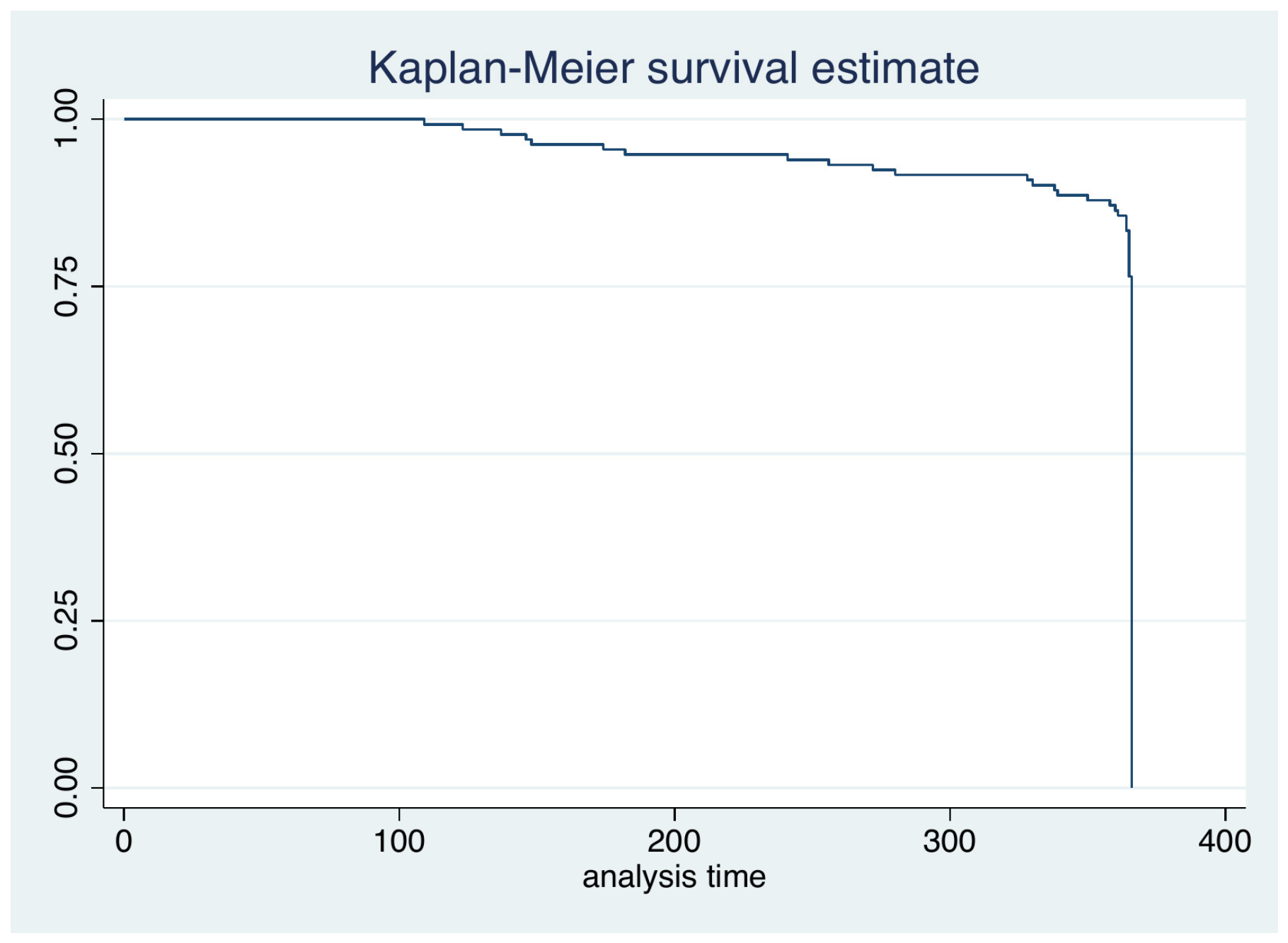
Univariable and multivariable Cox proportional hazard regression analyses were conducted to identify independent factors associated with AROs. Variables with a p-value < 0.10 in the univariable analysis were used as a statistical screening criterion for candidate variables; however, clinically relevant variables (T2DM and MACE-3), were included in the multivariable regression model. The results are reported as hazard ratios (HRs) with 95% confidence intervals (CIs). A p-value of <0.05 was considered statistically significant. To verify the validity of the Cox proportional hazard regression model, the proportional hazards assumption was assessed using Schoenfeld residuals. Statistical tests were performed to ensure that the residuals were independent of time. Multicollinearity was assessed using variance inflation factors (VIFs), with VIF > 5 indicating significant multicollinearity. Time to the first occurrence of the composite ARO was analyzed and visualized using the Kaplan–Meier curve. All statistical analyses were performed using IBM® SPSS Statistics version 27.0.

3. Results

3.1. Baseline Characteristics

A total of 132 patients were included in the analysis. Empagliflozin was prescribed to all patients. The median age was 69.5 years (IQR, 57.5–77.8). Female accounted for a slightly higher proportion (53.79%) compared to males. More than half of the patients had a body mass index (BMI) of ≥25 kg/m2 (51.50%). Most patients had CKD stage 4 (86.40%), at the initiation of empagliflozin therapy while the remaining patients had CKD stage 5 (13.60%). Comorbidities were highly prevalent among the study population. Nearly all patients had hypertension (96.97%), and T2DM (82.58%). Additionally, 31.06% of the patients had a history of MACE-3. Regarding concomitant medications, statins were the most frequently prescribed (81.82%), followed by ACEIs or ARBs (40.91%). Low-dose aspirin was used concomitantly in 38.64% of the patients. The baseline demographic and clinical characteristics of the participants are summarized in Table 1.

3.2. Adverse Renal Outcomes and Adverse Events

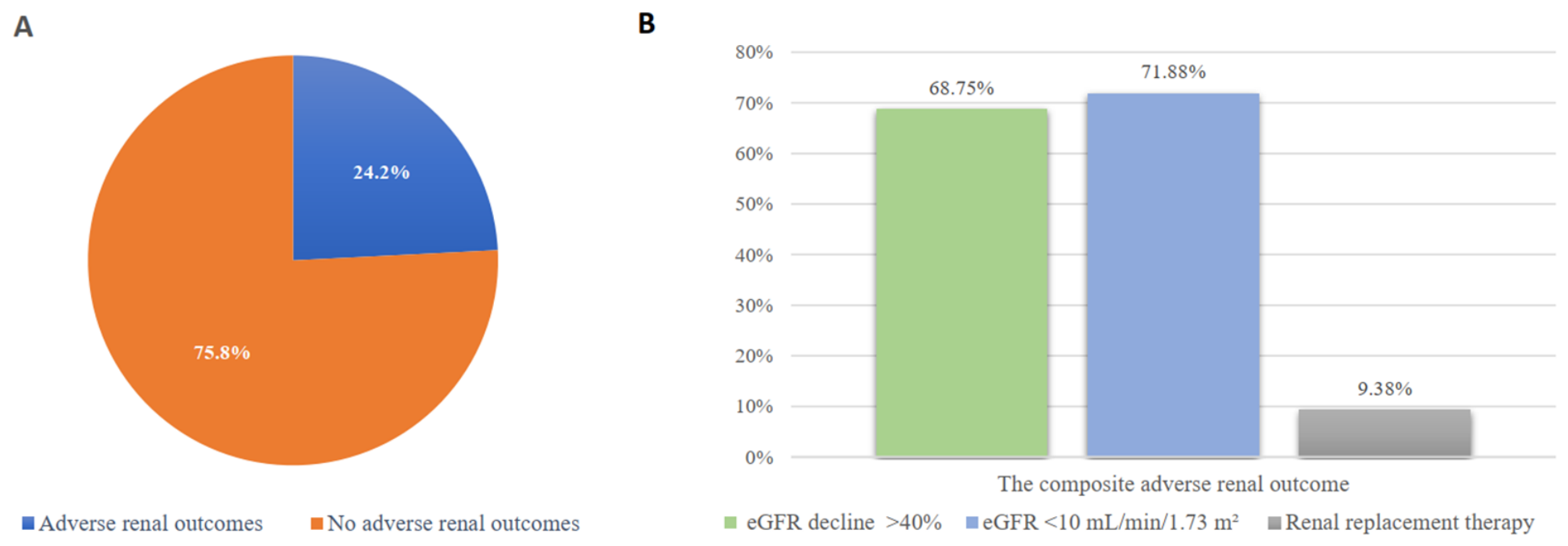
Among the 132 patients, 32 (24.20%) experienced an ARO, whereas 100 patients were censored without experiencing an ARO during the 365-day follow-up period. The total follow-up time was 127 person-years. The incidence rate of AROs was 25.20 events per 100 person-years. The mean eGFR decreased from 21.84 mL/min/1.73 m2 at the baseline to 17.29 mL/min/1.73 m2. This represents an absolute decline of 4.35 mL/min/1.73 m2, accounting for a 20.1% reduction. Among patients with AROs, a sustained ≥40% decline in eGFR from baseline occurred in 22/32 patients (68.75%) and 23/32 patients (71.88%) developed an eGFR < 10 mL/min/1.73 m2. Of these, 15/32 patients (46.88%) met both criteria, indicating an overlap between the two components. Only 3/32 patients (9.38%) subsequently required RRT, and met all components of the composite ARO.
Regarding CKD stage, AROs were frequently observed among patients with CKD stage 5 (10/18, 55.56%); all met the eGFR < 10 mL/min/1.73 m2 criterion, 4/10 (40.00%) had an eGFR decline of ≥40% from baseline, and none required RRT. The baseline eGFR and frequencies of individual components of the composite ARO are presented in Table 2.
The proportions of patients with and without AROs, and individual components of the composite ARO are shown in Figure 2A and Figure 2B, respectively. The Kaplan–Meier curve for time to AROs is shown in Figure 3. Concerning safety outcomes, the number of AEs documented in the medical records was notably low as hypotension (1.52%) and urinary tract infections (UTIs) (1.52%). There were no reported cases of genital infections or hypoglycemia.

3.3. Factors Associated with Adverse Renal Outcomes

The proportional hazards assumption was assessed using Schoenfeld residuals and showed no violation for any of the variables (all p-values > 0.05). Therefore, the Cox proportional hazards regression model was deemed appropriate.
Univariable Cox proportional hazards regression analysis identified CKD stage 5 and concomitant use of low-dose aspirin as significant factors associated with an increased risk of AROs. Specifically, patients with CKD stage 5 had a nearly four-fold higher risk of AROs compared to the reference group (HR = 3.94, 95% CI: 1.89–8.18, p < 0.001). Similarly, concomitant use of low-dose aspirin was associated with a more than two-fold higher risk of AROs (HR = 2.18, 95% CI: 1.08–4.39, p = 0.029).
Conversely, no statistically significant associations were observed for demographic characteristics (age ≥ 60 years and sex), underlying comorbidities (T2DM, hypertension, and MACE-3), or concomitant medications, including ACEIs/ARBs and statins (Table 3).
To further evaluate the independent factors of AROs, a multivariable Cox proportional hazards regression analysis was performed to adjust for potential confounding variables. All VIF values were less than 5, indicating no multicollinearity among variables. The results showed that advanced CKD stage and concomitant use of low-dose aspirin remained independently associated with AROs. Specifically, patients with CKD stage 5 had a significantly higher risk of AROs than those with CKD stage 4 (aHR = 4.02, 95% CI: 1.92–8.44, p < 0.001). Similarly, concomitant use of low-dose aspirin was independently associated with an increased risk of AROs (aHR = 2.35, 95% CI: 1.05–5.26, p = 0.038) (Table 4).

4. Discussion

To our knowledge, this is the first study to specifically investigate AROs among Thai patients with advanced CKD (eGFR < 30 mL/min/1.73 m2), including CKD stages 4 and 5, who initiated empagliflozin. The study also aimed to identify factors associated with AROs. We found that approximately one-quarter of patients experienced an ARO. The higher frequency of AROs observed in patients with CKD stage 5 should be interpreted in the context of their advanced underlying renal disease and may be partly explained by their lower baseline eGFR and proximity to the eGFR < 10 mL/min/1.73 m2 threshold. None of the ARO components assessed in this study is specific to CKD stage 5, as these outcomes may occur with natural disease progression or fluctuations in renal function. Multivariable analysis showed that CKD stage 5 was independently associated with an approximately four-fold higher hazard than CKD stage 4. This finding suggests that baseline CKD severity remains an important determinant of AROs despite the renoprotective effects of empagliflozin. This association is consistent with a secondary analysis of the EMPA-KIDNEY trial, which demonstrated that the magnitude of empagliflozin’s renoprotective effect varied according to baseline eGFR and albuminuria levels [20].
Additionally, exposure to low-dose aspirin was also significantly associated with AROs. This finding is in line with a study by Lu et al., which reported that long-term low-dose aspirin use was associated with an increased risk of rapid kidney function decline among patients with CKD [21]. Although NSAIDs have been associated with nephrotoxicity through inhibition of renal prostaglandin synthesis, evidence regarding low-dose aspirin and CKD progression remains inconclusive. In contrast, findings from the Chronic Renal Insufficiency Cohort (CRIC) study did not demonstrate a significant association between low-dose aspirin use and kidney failure [22]. The observed association in our study may be partially explained by confounding factors, as patients receiving aspirin are more likely to have underlying cardiovascular disease and advanced vascular pathology, which are recognized risk factors for renal function decline. Therefore, low-dose aspirin use may reflect higher cardiovascular and renal risks rather than a direct causal effect on AROs.
Regarding the renoprotective effects of ACEIs/ARBs, concomitant use was not associated with an increased risk of renal decline. This finding is compatible with a previous real-world study, which reported renoprotective effects in patients with CKD stages 3–5 receiving ACEIs/ARBs combined with SGLT2 inhibitor therapy [23]. Likewise, concomitant statin use was also found no significant association. Although previous meta-analyses have suggested that statins may exert renoprotective effects by reducing albuminuria, proteinuria, and slowing the decline in renal function, their impact on slowing CKD progression or preventing AROs remains unclear [24,25]. In addition to AROs, the safety profile was also observed. Only a small number of AEs were documented during follow-up. The incidence of UTIs was slightly lower than that reported in previous studies of SGLT2 inhibitors [13,15,26,27]. However, we identified AEs through retrospective medical record review, which may have led to underreporting.
The present study provides additional real-world evidence regarding AROs following empagliflozin initiation in patients with advanced CKD. In addition, the factors associated with AROs may also help clinicians recognize patients who warrant close monitoring following treatment initiation. Nevertheless, several limitations should be acknowledged. First, the retrospective single-center design may affect the generalizability of the findings. Second, the relatively small number of outcome events may have limited the precision of the adjusted estimates, and the findings should therefore be interpreted cautiously. Third, residual confounding from unmeasured factors, such as albuminuria, disease severity, medication adherence, and lifestyle-related factors cannot be excluded. Fourth, this study had a single-arm, observational design without a control cohort of unexposed patients with similar clinical characteristics. Therefore, a causal relationship between empagliflozin and the observed AROs cannot be definitively established. Fifth, the requirement for at least 2 months of continuous empagliflozin treatment may have introduced selection bias by excluding patients who discontinued treatment early. Finally, the retrospective medical-record review may result in the underreporting of AEs. Despite these limitations, the findings provide relevant information on AROs in Thai patients with advanced CKD in real-world clinical practice. Future prospective, multicenter studies with standardized outcome assessments are warranted to validate these findings.

5. Conclusions

Approximately one-quarter of patients with advanced CKD experienced an ARO following empagliflozin initiation. CKD stage 5 and concomitant low-dose aspirin use were independently associated with an increased risk of AROs. These findings underscore the importance of close monitoring of renal function, particularly in those with more advanced disease during empagliflozin therapy.

Author Contributions

Conceptualization, I.Y., A.V. and T.P.; methodology, I.Y. and A.V.; validation, I.Y. and T.P.; formal analysis, I.Y., P.S., A.A. and A.Y.; investigation, I.Y., P.S., A.A. and A.Y.; resources, A.V.; data curation, I.Y.; writing—original draft preparation, I.Y. and T.P.; writing—review and editing, T.P.; visualization, I.Y. and T.P.; supervision, I.Y. and A.V.; project administration, I.Y. All authors have read and agreed to the published version of the manuscript.

Funding

This research received no external funding.

Institutional Review Board Statement

The study was approved by the Institutional Review Board of the Ethics Committee of Nopparat Rajathanee Hospital (REF: 4/2569), approval date: 19 January 2026.

Informed Consent Statement

Patient consent was waived due to the retrospective study.

Data Availability Statement

The data presented in this study are available on request from the corresponding author.

Acknowledgments

We gratefully acknowledge the support of the pharmacy staff at Nopparat Rajathanee Hospital. We also thank Sararat Suwanna and Chayanat Pongsathabordee for their encouragement and support throughout this study.

Conflicts of Interest

The authors declare no conflicts of interest.

Abbreviations

The following abbreviations are used in this manuscript:
SGLT-2Sodium-glucose cotransporter-2
CKDChronic kidney disease
AROsAdverse renal outcomes
AEsAdverse events
eGFREstimated glomerular filtration rate
ACEIsAngiotensin-converting enzyme inhibitors
ARBsAngiotensin-II receptor blockers
MACEMajor adverse cardiovascular event
T2DM Type 2 diabetes mellitus

References

  1. Jha, V.; Al-Ghamdi, S.M.G.; Li, G.; Wu, M.S.; Stafylas, P.; Retat, L.; Card-Gowers, J.; Barone, S.; Cabrera, C.; Garcia Sanchez, J.J. Global economic burden associated with chronic kidney disease: A pragmatic review of medical costs for the Inside CKD Research Programme. Adv. Ther. 2023, 40, 4405–4420. [Google Scholar] [CrossRef] [Scilit] [PubMed]
  2. GBD Chronic Kidney Disease Collaboration. Global, regional, and national burden of chronic kidney disease, 1990–2017: A systematic analysis. Lancet 2020, 395, 709–733. [Google Scholar] [CrossRef] [Scilit] [PubMed]
  3. Cha’on, U.; Tippayawat, P.; Sae-Ung, N.; Pinlaor, P.; Sirithanaphol, W.; Theeranut, A.; Tungsanga, K.; Chowchuen, P.; Sharma, A.; Boonlakron, S.; et al. High prevalence of chronic kidney disease and its related risk factors in rural areas of Northeast Thailand. Sci. Rep. 2022, 12, 18188. [Google Scholar] [CrossRef] [Scilit] [PubMed]
  4. Kidney Disease: Improving Global Outcomes (KDIGO) CKD Work Group. KDIGO 2024 Clinical Practice Guideline for the Evaluation and Management of Chronic Kidney Disease. Kidney Int. 2024, 105, S117–S314. [Google Scholar] [CrossRef] [Scilit] [PubMed]
  5. American Diabetes Association Professional Practice Committee. 9. Pharmacologic Approaches to Glycemic Treatment: Standards of Care in Diabetes—2026. Diabetes Care 2026, 49, S183–S215. [Google Scholar] [CrossRef] [Scilit] [PubMed]
  6. Su, Y.; Wang, W.; Li, H. The impact of SGLT2 inhibitors on renal outcomes in patients with type 2 diabetes and chronic kidney disease: Systematic review and meta-analysis. Front. Endocrinol. 2026, 17, 1785822. [Google Scholar] [CrossRef] [Scilit] [PubMed]
  7. Madero, M.; Chertow, G.M.; Mark, P.B. SGLT2 Inhibitor Use in Chronic Kidney Disease: Supporting Cardiovascular, Kidney, and Metabolic Health. Kidney Med. 2024, 6, 100851. [Google Scholar] [CrossRef] [Scilit] [PubMed]
  8. Perkovic, V.; Jardine, M.J.; Neal, B.; Bompoint, S.; Heerspink, H.J.L.; Charytan, D.M.; Edwards, R.; Agarwal, R.; Bakris, G.; Bull, S.; et al. Canagliflozin and Renal Outcomes in Type 2 Diabetes and Nephropathy. N. Engl. J. Med. 2019, 380, 2295–2306. [Google Scholar] [CrossRef] [Scilit] [PubMed]
  9. Heerspink, H.J.L.; Stefánsson, B.V.; Correa-Rotter, R.; Chertow, G.M.; Greene, T.; Hou, F.F.; Mann, J.F.E.; McMurray, J.J.V.; Lindberg, M.; Rossing, P.; et al. Dapagliflozin in Patients with Chronic Kidney Disease. N. Engl. J. Med. 2020, 383, 1436–1446. [Google Scholar] [CrossRef] [Scilit] [PubMed]
  10. Chertow, G.M.; Vart, P.; Jongs, N.; Toto, R.D.; Gorriz, J.L.; Hou, F.F.; McMurray, J.J.V.; Correa-Rotter, R.; Rossing, P.; Sjöström, C.D.; et al. Effects of Dapagliflozin in Stage 4 Chronic Kidney Disease. J. Am. Soc. Nephrol. 2021, 32, 2352–2361. [Google Scholar] [CrossRef] [Scilit] [PubMed]
  11. Herrington, W.G.; Staplin, N.; Wanner, C.; Green, J.B.; Hauske, S.J.; Emberson, J.; Preiss, D.; Judge, P.; Mayne, K.J.; Ng, S.Y.A.; et al. Empagliflozin in patients with chronic kidney disease. N. Engl. J. Med. 2023, 388, 117–127. [Google Scholar] [CrossRef] [Scilit] [PubMed]
  12. EMPA-KIDNEY Collaborative Group. Long-term effects of empagliflozin in patients with chronic kidney disease. N. Engl. J. Med. 2025, 392, 777–787. [Google Scholar] [CrossRef] [Scilit] [PubMed]
  13. Hunsuwan, S.; Boongird, S.; Ingsathit, A.; Ponthongmak, W.; Unwanatham, N.; McKay, G.J.; Attia, J.; Thakkinstian, A. Real-world effectiveness and safety of sodium-glucose co-transporter 2 inhibitors in chronic kidney disease. Sci. Rep. 2025, 15, 1667. [Google Scholar] [CrossRef] [Scilit] [PubMed]
  14. Chanawong, A.; Uitrakul, S.; Incomenoy, S.; Poonchuay, N. Renoprotective Effect of Thai Patients with Type 2 Diabetes Mellitus Treated with SGLT-2 Inhibitors versus DPP-4 Inhibitors: A Real-World Observational Study. Adv. Pharmacol. Pharm. Sci. 2023, 2023, 5581417. [Google Scholar] [CrossRef] [Scilit] [PubMed]
  15. Sriphrapradang, C.; Thewjitcharoen, Y.; Buranapin, S.; Sawanyawisuth, K.; Yenseung, N.; Ubonchareon, W.; Limpijankit, L.; Himathongkam, T. Effectiveness and safety of sodium-glucose co-transporter-2 inhibitors in Thai adults with type 2 diabetes mellitus: A real-world study. Curr. Med. Res. Opin. 2020, 36, 1601–1610. [Google Scholar] [CrossRef] [Scilit] [PubMed]
  16. Shimizu, A.; Tsuboi, N.; Sasaki, T.; Haruhara, K.; Matsumoto, K.; Ueda, H.; Yokote, S.; Okabe, M.; Hatanaka, S.; Ikeda, M.; et al. Glomerular Hypertrophy and Initial Dip in Estimated Glomerular Filtration Rate Following Dapagliflozin Administration. Kidney Int. Rep. 2024, 9, 2282–2285. [Google Scholar] [CrossRef] [Scilit] [PubMed]
  17. Duo, Y.; Gao, J.; Yuan, T.; Zhao, W. Effect of Sodium-Glucose Cotransporter 2 Inhibitors on the Rate of Decline in Kidney Function: A Systematic Review and Meta-Analysis. J. Diabetes 2023, 15, 58–70. [Google Scholar] [CrossRef] [Scilit] [PubMed]
  18. Chen, T.H.; Wang, T.H.; Tsai, M.L.; Lin, M.S.; Tsai, T.H.; Chou, T.S.; Tseng, C.J.; Dai, J.W.; Cheng, C.W.; Yang, N.I.; et al. Cardiovascular and renal outcomes between sodium-glucose cotransporter 2 inhibitors and dipeptidyl peptidase 4 inhibitors in patients with chronic kidney disease stages 4 and 5: A population-based study. Diabetes Res. Clin. Pract. 2025, 224, 112205. [Google Scholar] [CrossRef] [Scilit] [PubMed]
  19. Huang, B.; Yen, C.L.; Wu, C.Y.; Tsai, C.Y.; Chen, J.J.; Hsiao, C.C.; Chen, Y.C.; Hsieh, I.C.; Yang, H.Y. SGLT2 inhibitors reduce the risk of renal failure in CKD stage 5 patients with Type 2 DM. Sci. Rep. 2025, 15, 5872. [Google Scholar] [CrossRef] [Scilit] [PubMed]
  20. EMPA-KIDNEY Collaborative Group. Effects of empagliflozin on progression of chronic kidney disease: A prespecified secondary analysis from the empa-kidney trial. Lancet Diabetes Endocrinol. 2024, 12, 39–50. [Google Scholar] [CrossRef] [Scilit] [PubMed]
  21. Lu, J.L.; Shrestha, P.; Streja, E.; Kalantar-Zadeh, K.; Kovesdy, C.P. Association of long-term aspirin use with kidney disease progression. Front. Med. 2023, 10, 1283385. [Google Scholar] [CrossRef] [Scilit] [PubMed]
  22. Taliercio, J.J.; Nakhoul, G.; Mehdi, A.; Yang, W.; Sha, D.; Schold, J.D.; Kasner, S.; Weir, M.; Hassanein, M.; Navaneethan, S.D.; et al. Aspirin for Primary and Secondary Prevention of Mortality, Cardiovascular Disease, and Kidney Failure in the Chronic Renal Insufficiency Cohort (CRIC) Study. Kidney Med. 2022, 4, 100547. [Google Scholar] [CrossRef] [Scilit] [PubMed]
  23. Shao, Y.J.; Chen, W.T.; Yu, S.M.; Tsou, L.L.; Hsu, Y.H.; Wu, M.S.; Kao, Y.H.; Chou, C.L.; Hsiao, P.J. Investigation of cardiorenal outcomes and incidence of genitourinary tract infection after combined SGLT2 inhibitor and ACEI/ARB use in patients with chronic kidney disease stages 3–5: A real-world retrospective cohort study in Taiwan. Int. J. Med. Sci. 2024, 21, 2109–2118. [Google Scholar] [CrossRef] [Scilit] [PubMed]
  24. Zhao, L.; Li, S.; Gao, Y. Efficacy of statins on renal function in patients with chronic kidney disease: A systematic review and meta-analysis. Ren. Fail. 2021, 43, 718–728. [Google Scholar] [CrossRef] [Scilit] [PubMed]
  25. Vedamurthy, D.; Sagheer, U.; Tyagi, M.; Maki, K.C.; Kalra, D.K. Meta-Analysis of the Impact of Statins on Change in Renal Function in Patients with Moderate or Severe Chronic Kidney Disease. J. Clin. Lipidol. 2025, 19, 1575–1585. [Google Scholar] [CrossRef] [Scilit] [PubMed]
  26. Srimaya, P.; Warong, T.; Kingdang, S.; Pradubkham, T.; Phimarn, W. Prevalence Rate of Adverse Drug Reactions from Sodium-Glucose Cotransporter-2 Inhibitors: A Retrospective Cohort Study. Pharmacoepidemiology 2026, 5, 2. [Google Scholar] [CrossRef] [Scilit]
  27. Yoosuf, B.T.; Muhammed Favas, K.T.; Spoorthy, D.P.; Saini, A.; Garg, P.; Medenica, S.; Dutta, P.; Bansal, D. Risk of Genitourinary Tract Infections with SGLT-2 Inhibitors in Type 2 Diabetes Mellitus: A Meta-Analysis of Randomised Controlled Trials and Disproportionality Analysis Using FAERS. Endocrine 2025, 90, 439–452. [Google Scholar] [CrossRef] [Scilit] [PubMed]
Figure 1. Flow diagram of study cohort selection.
Pharmacoepidemiology 05 00035 g001
Figure 2. (A) The proportions of patients with and without adverse renal outcomes (n = 132). (B) Individual components of the composite adverse renal outcome (n = 32). Patients could meet more than one outcome component.
Pharmacoepidemiology 05 00035 g002
Figure 3. Kaplan–Meier curve for time to adverse renal outcomes.
Pharmacoepidemiology 05 00035 g003
Table 1. Baseline demographic and clinical characteristics of the participants (n = 132).
CharacteristicsParticipants (%)
Age in years, median (IQR)69.5 (57.50,77.75)
      18–5930 (22.73)
      ≥60102 (77.27)
Female71 (53.79)
BMI ≥ 25 kg/m268 (51.50)
Stage of CKD
      Stage 4114 (86.40)
      Stage 518 (13.60)
eGFR (mL/min/1.73 m2)21.84 ± 5.23
Comorbidity
      Hypertension 128 (96.97)
      T2DM 109 (82.58)
      MACE-341 (31.06)
Concomitant medication use
      Statins108 (81.82)
      ACEIs/ARBs54 (40.91)
      Low-dose aspirin51 (38.64)
BMI: body mass index, CKD: chronic kidney disease, eGFR: estimated glomerular filtration rate, T2DM: Type 2 diabetes mellitus, MACE-3: major adverse cardiovascular events, ACEIs: angiotensin-converting enzyme inhibitors, ARBs: angiotensin-II receptor blockers.
Table 2. Baseline eGFR and frequencies of individual components of the composite adverse renal outcome according to CKD stage.
CharacteristicsCKD Stage 4 (n = 114)CKD Stage 5 (n = 18)
eGFR, mL/min/1.73 m2, mean ± SD23.02 ± 4.09 13.91 ± 0.10
The composite ARO22 (19.30%)10 (55.56%)
     ≥40% decline in eGFR18 (81.81%)4 (40.00%)
     eGFR < 10 mL/min/1.73 m213 (59.09%)10 (100.00%)
     Renal replacement therapy3 (13.63%)0 (0.00%)
Table 3. Univariable analysis of factors associated with adverse renal outcomes.
VariableHR (95% CI)p-Value
Age ≥ 60 1.29 (0.62–2.68)0.494
Male0.56 (0.27–1.16)0.117
CKD Stage 53.94 (1.89–8.18)<0.001 *
T2DM 2.09 (0.64–6.86)0.224
Hypertension0.85 (0.12–6.21)0.871
MACE-31.20 (0.58–2.49)0.627
Low-dose aspirin2.18 (1.08–4.39)0.029 *
ACEIs/ARBs1.25 (0.62–2.50)0.534
Statins 1.54 (0.54–4.38)0.422
CKD: chronic kidney disease, T2DM: Type 2 diabetes mellitus, MACE-3: major adverse cardiovascular events, ACEIs: angiotensin-converting enzyme inhibitors, ARBs: angiotensin-II receptor blockers. * p < 0.05 was considered statistically significant.
Table 4. Multivariable analysis of factors associated with adverse renal outcomes.
VariableaHR (95% CI)p-Value
CKD Stage 54.02 (1.92–8.44)<0.001 *
Low-dose aspirin2.35 (1.05–5.26)0.038 *
T2DM1.62 (0.48–5.48)0.437
MACE-31.29 (0.55–3.02)0.554
CKD: chronic kidney disease, T2DM: Type 2 diabetes mellitus, MACE-3: major adverse cardiovascular events. * p < 0.05 was considered statistically significant.
Disclaimer/Publisher’s Note: The statements, opinions and data contained in all publications are solely those of the individual author(s) and contributor(s) and not of MDPI and/or the editor(s). MDPI and/or the editor(s) disclaim responsibility for any injury to people or property resulting from any ideas, methods, instructions or products referred to in the content.