

Article

Occurrence of Gnomoniopsis smithogilvyi in Chestnut Under Different Management Systems in Northeastern Portugal


1
CIMO, LA SusTEC, Instituto Politécnico de Bragança, Campus de Santa Apolónia, 5300-253 Bragança, Portugal
2
Escola Superior Agrária de Santarém, Instituto Politécnico de Santarém, Quinta do Galinheiro—S. Pedro, 2001-904 Santarém, Portugal
3
Centro de Investigação em Qualidade de Vida (CIEQV), Instituto Politécnico de Santarém, Complexo Andaluz, Apartado 279, 2001-904 Santarém, Portugal
*
Author to whom correspondence should be addressed.
Appl. Biosci. 2026, 5(3), 56; https://doi.org/10.3390/applbiosci5030056
Submission received: 12 May 2026 / Revised: 19 June 2026 / Accepted: 26 June 2026 / Published: 2 July 2026

Abstract

Chestnut brown rot caused by Gnomoniopsis smithogilvyi represents an increasing threat to Castanea sativa production, although its endophytic behaviour and response to pre-harvest management strategies under field conditions remain poorly understood. This study evaluated the occurrence of G. smithogilvyi in different chestnut tissues and assessed the effects of targeted field treatments on pathogen colonisation and fruit quality in commercial orchards located in north-eastern Portugal. Field trials included applications of a biological fungicide (Problad®), an inorganic micronutrient fertilizer (Fungicrops Bio®), a sulfur-micronutrient fertilizer (KSC Mix®), and a potassium-phosphonate chemical fungicide (Fosetyl-Al®), alongside untreated control orchards. Samples of leaves, branches, burrs, and nuts were subjected to microbiological and molecular analyses, while fruit external quality parameters were also assessed. G. smithogilvyi was detected in all analysed organs, confirming its widespread endophytic occurrence. Treatment effects were more pronounced in reproductive tissues, with Problad® and Fosetyl-Al® significantly reducing pathogen incidence in burrs and nuts compared with the control. KSC Mix® promoted fruit development but did not significantly reduce fungal incidence. Treated orchards generally showed improved fruit quality and lower insect infestation. Phylogenetic analysis confirmed the identity of all isolates as G. smithogilvyi. Overall, the results highlight the complexity of managing chestnut brown rot and support the need for integrated and sustainable disease management strategies.

1. Introduction

In Portugal, chestnut production from the European chestnut tree (Castanea sativa Mill.) is of considerable economic and social importance, particularly in the Trás-os-Montes region, which accounts for approximately 75% of national production [1]. Beyond its economic relevance, this agroforestry system plays a key role in sustaining rural livelihoods, preserving traditional landscapes, and maintaining ecosystem services and biodiversity in mountain regions [2].
In recent years, chestnut brown rot has emerged as a major phytosanitary threat to chestnut production in Europe and other prominent chestnut-growing regions worldwide, representing a critical challenge to global Castanea sativa cultivation [3]. This disease is caused by the Ascomycete fungus Gnomoniopsis smithogilvyi L.A. Shuttlew., E.C.Y. Liew & D.I. Guest (syn. Gnomoniopsis castaneae Tamietti) [4] belonging to the family Gnomoniaceae, order Diaporthales. Although historically overlooked, the pathogen has experienced a rapid global expansion, severely affecting nut quality and causing significant economic damage across three continents, including Europe, Oceania, and North America [3,5,6]. The global impact of G. smithogilvyi extends beyond post-harvest nut rot; it is also recognized as an aggressive agent capable of causing bark cankers, twig blights, and leaf necrosis under varying environmental conditions, further disrupting the sustainability and health of modern chestnut planting systems [3,7,8,9,10,11,12,13].
G. smithogilvyi exhibits a complex life cycle and can adopt different lifestyles within the chestnut ecosystem. The fungus has frequently been isolated from asymptomatic flowers, leaves, and shoots, where it behaves as an endophyte, coexisting with the host without causing visible symptoms [8,10]. In contrast, it can act as a pathogen in fruits, causing brown rot, or as a saprophyte on dead tissues such as dry shoots and burrs [8,10,14]. Despite recent advances, the full biological cycle of the pathogen is not yet fully understood, and the mechanisms driving the transition from endophytic to pathogenic phases remain largely unknown [8,10,14].
Primary infections occur during spring and early summer, coinciding with the chestnut flowering period, when ascospores released from the fungus’s sexual structures infect floral tissues [9]. Subsequently, local dissemination may occur through conidia produced in asexual structures, contributing to secondary infections in flowers, leaves, and shoots, particularly under favorable environmental conditions such as high humidity and moderate temperatures [9,14,15]. The fungus can remain latent during fruit development, with symptoms frequently becoming apparent only after harvest or during storage [8,14,15]. This latent behaviour complicates disease detection and management, emphasising the need to understand early colonisation processes within host tissues.
Currently, G. smithogilvyi has a broad geographic distribution and has been reported in various chestnut-producing countries across Europe, America, Asia, and Oceania [16]. The increased incidence of the disease in recent decades has been associated with factors such as climate change, increased inoculum pressure, and interactions with other pests, notably the chestnut gall wasp (Dryocosmus kuriphilus Yasumatsu) [17,18]. These factors highlight the multifactorial nature of the disease and the limitations of single-target control strategies.
Presently available control strategies mainly focus on post-harvest measures, such as hydrothermal treatments of the fruits, which can significantly reduce pathogen presence [19]. However, these interventions do not prevent primary infection in the field, as they act only on the inoculum present in the fruit after harvest [19]. Consequently, there is a critical need to develop integrated, pre-harvest management strategies aimed at limiting pathogen establishment during the vegetative cycle.
Pre-harvest fungicide applications have been considered a promising approach to limit rot incidence in various fruit crops [20,21,22]. In the case of chestnut brown rot, some studies have reported encouraging results with systemic triazole fungicides, such as tebuconazole, which significantly reduced disease incidence. However, the withdrawal of this compound from the European market has prompted the search for more sustainable alternatives, including biofungicides and other low-impact plant protection strategies [12,23,24]. Among these, the polypeptide oligomer derived from Lupinus albus (known as BLAD, the active ingredient in Problad®) has emerged as a promising biopesticide due to its potent multi-site antifungal activity under agricultural conditions, showing high efficacy without inducing resistance mechanisms [25]. Nevertheless, the effectiveness of these alternatives under field conditions, particularly regarding the pathogen’s endophytic phase, remains poorly documented.
Despite recent progress, knowledge of the endophytic dynamics of G. smithogilvyi under field conditions remains limited, particularly regarding the influence of different plant protection strategies on fungal colonization in chestnut tissues. In this context, the present study aims to (i) quantitatively assess the incidence of G. smithogilvyi in different chestnut organs, (ii) assess the impact of differing plant protection strategies on its endophytic colonization, and (iii) determine how these treatments influence final fruit quality and insect interaction. To address these objectives, three production systems were compared: (1) a traditional system without fungicide application; (2) foliar application of fungicides (Fosetyl-aluminium®, bio fungicide Problad®); and (3) foliar application of inorganic micronutrient fertilisers that activate natural resistance (Fungicrops Bio® and KSC Mix®). By integrating field data and microbiological analyses, this study seeks to advance current understanding of the ecological behaviour of G. smithogilvyi and to support the development of more effective and sustainable disease management strategies.

2. Materials and Methods

2.1. Study Areas

The present study was conducted between June and November 2024 in chestnut groves (C. sativa) of the ‘Longal’ cultivar, located in Candedo and Sobreiró (Vinhais municipality) and Santa Comba de Rossas (Sta Comb. Rossas) from Bragança municipality, in northeastern Portugal. Sampling was performed on mature, asymptomatic trees with comparable canopy structure and vigor. To minimize environmental variability, orchards were selected based on similar altitude, sun exposure, soil conditions, and management history.
The chestnut orchards were located in Sobreiró (41°50′4.722″ N, 7°03′48.186″ W), in Candedo, where two experimental areas were established for the Problad® (41°50′33.1″ N 7°06′45.7″ W) and Fosetyl-Al® (41°50′27.0″ N 7°07′16.0″ W), and in Santa Comb. Rossas, municipality of Bragança, where three experimental areas were established for the Fungicrops Bio® (41°39′40.4″ N, 6°50′53.6″ W), KSC Mix® (41°39′19.4″ N, 6°50′53.2″ W), and Problad® (41°39′15.2″ N, 6°50′57.3″ W) treatments. The chestnut orchards in Sobreiró and Candedo covered approximately 1 ha and consisted of trees approximately 20 years old, whereas the orchards in Sta Comb. Rossas occupied approximately 3 ha and were composed of trees approximately 30 years old. The treated orchards in Candedo and Sta Comb. Rossas are approximately 30 km apart.
All orchards were composed of the cultivar Longal, planted at a spacing of 10 m × 10 m. The ‘Longal’ cultivar is the most prominent and traditionally cultivated chestnut variety in northeastern Portugal, highly valued for the exceptional organoleptic and technological qualities of its nuts, which are widely destined for both the fresh market and the industrial processing sector [26]. Agronomically, it is a late-maturing cultivar, with harvest typically occurring between late October and mid-November, making its long vegetative cycle and fruit development period particularly vulnerable to late-season phytosanitary pressures. Furthermore, ‘Longal’ is known to exhibit significant susceptibility to chestnut brown rot [6,27] under field conditions, making it an ideal target cultivar to evaluate the efficacy of different pre-harvest plant protection strategies. Soil management was based on the maintenance of natural vegetation cover, and all stands were managed under rainfed conditions, which are representative of the traditional production system in the region.

2.2. Experimental Design and Field Treatments

Foliar treatments were administered during the reproductive period of the chestnut trees using four distinct commercial formulations: a hydro-sulphur micronutrient fertiliser (KSC Mix®, TIMAC Agro, Orcoyen, Spain), a biological fungicide (Problad®, Certis Belchim, Cantanhede, Portugal), an inorganic micronutrient fertiliser (Fungicrops Bio®) and a chemical fungicide (Fosetyl-Al®, Bayer CropScience, Leverkusen, Germany) (Supplementary Table S1). The selection of these products aimed to evaluate an integrated approach combining conventional chemical defense, inorganic micronutrient enforcement, and innovative biological alternatives. Fosetyl-Al® was selected for its systemic activity and ability to induce host defenses. For the biological control, Problad® was chosen based on its active ingredient, the Blad-containing oligomer (BCO), which possesses potent, multi-site antifungal efficacy under field conditions without inducing resistance mechanisms [25]. To complement these strategies, KSC Mix® and Fungicrops Bio® were integrated to optimize overall tree physiological vigor and reinforce the developing cupule. Treatments were compared across different field locations, including both treated and untreated (control) orchards. Due to practical constraints, treatments could not be randomly assigned; however, application procedures and sampling methods were standardised across sites to minimise variability and ensure comparability of results. KSC Mix® was applied in Sta Comb. Rossas on 3 June, 18 June and 2 Jully. Problad® was applied in Sta Comb. Rossas on 1 June, 15 June and 29 June, and in Candedo on 20 June, 1 July and 15 July. Fungicrops Bio® was applied in Sta Comb. Rossas on 28 May, 12 June and 26 June, and in Candedo on 20 June, 1 July and 15 July. Fosetyl-Al® was applied in Candedo on June 5 and June 20. Sobreiró orchards received no treatment and were used as the control. All the products were applied by foliar spraying at the recommended doses. The spray applications were timed to target the critical phenological windows of chestnut susceptibility to G. smithogilvyi infection, ranging from two to three applications depending on the product’s technical guidelines. The first application (BBCH 61–65) protected open flowers during full anthesis. The second application (BBCH 67–71) targeted the end of flowering and ament senescence, a high-risk period when decaying floral tissues accumulate in the canopy. The third application (BBCH 71–75), where applicable, was timed during early fruit set and rapid burr expansion to protect the developing juvenile tissues from late field infections. Applications were performed using a tractor-mounted sprayer equipped with a spray gun. Trees were sprayed individually until uniform coverage of leaves, flowers and developing burrs was achieved. Applications were carried out under suitable weather conditions to avoid spray drift and runoff. Table 1 describes the treatments used in the study, including product, localization, application dates, phenological development stages at each application date, doses and recommended label range.
The field trials were established across two distinct, homogeneous commercial orchards (Sta Comb. Rossas, Municipally of Bragança and Candedo) to evaluate the treatments under representative local conditions. Within each orchard (1–3 ha) location, a dedicated, uniform stand composed of ten trees was allocated per treatment framework. This single-stand setup per treatment within each site was operationally required to ensure precise application of the specific foliar products and to strictly prevent cross-contamination caused by chemical spray drift. To ensure biological independence, individual mature trees within each stand were treated as the primary experimental units, and a rigorous multi-organ sampling methodology was applied to capture intra-plot variability.
Five trees were randomly selected from the ten trees for sampling. From each tree, three branches containing leaves and burrs were randomly collected. In the laboratory, samples were separated into leaves, branches, burrs, and chestnuts, and chestnuts were manually extracted from burrs.

2.3. Assessment of External Fruit Quality

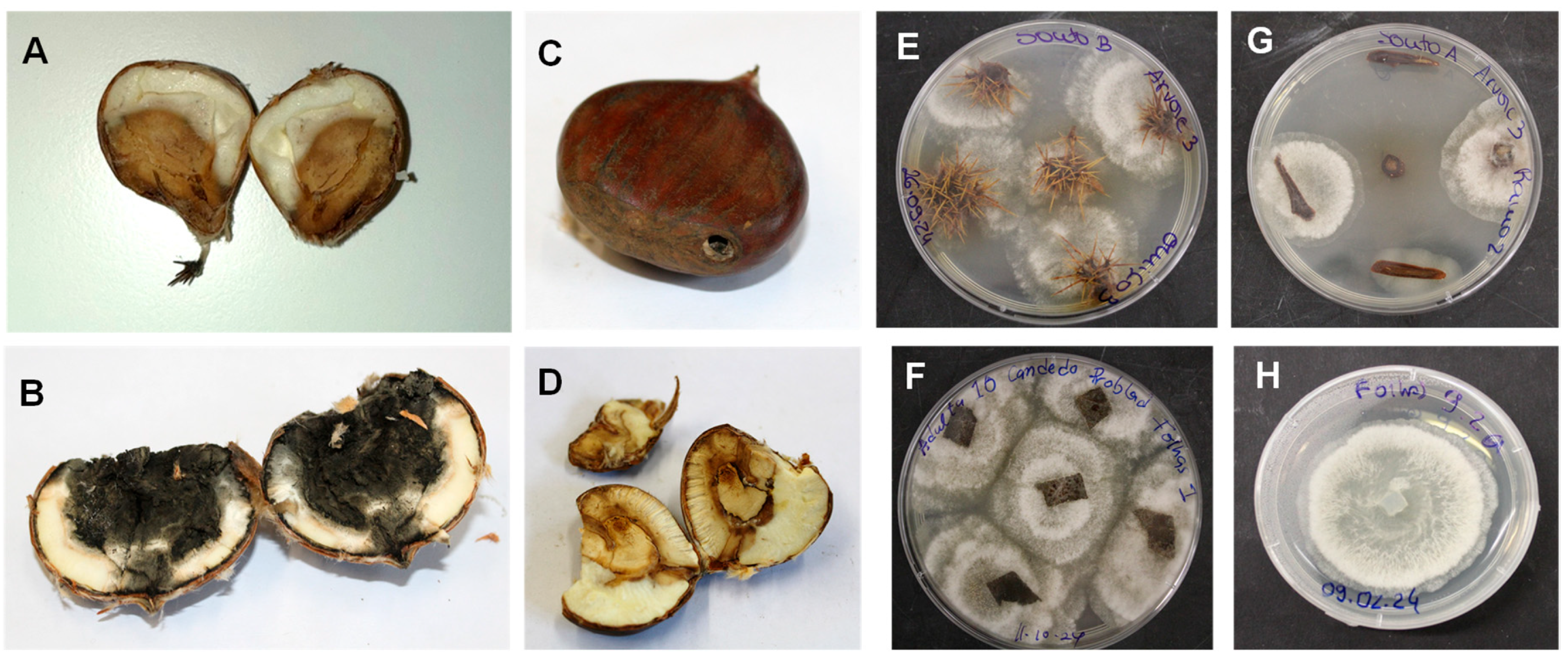
Five burrs per tree were collected, and all enclosed chestnuts were evaluated for external quality. Quality assessment included fruit development (mature vs. aborted), surface integrity, presence of mechanical damage, and signs of pest or pathogen attack. Chestnuts showing visible defects—such as discolouration, cracks, softening, entrance or exit holes for insects, or external fungal growth (Figure 1) were recorded accordingly. To standardise subsequent analyses, five chestnuts per tree were randomly selected from the pool of assessed fruits and used for microbiological evaluation.

2.4. Fungal Isolation and Microbiological Assessment of Plant Tissues

All previously separated biological material was prepared for microbiological evaluation, under aseptic conditions. From each plant organ, five subsamples were collected from different tissue regions to account for within-organ variability. Each piece was submerged in 70% alcohol for three minutes and dried on absorbent paper. Then, the samples were placed in Petri dishes containing PDA medium (Potato Dextrose Agar, 39 g/L) to allow mycelial growth. The plates were incubated in a “Memmert IN55” incubator (Memmert GmbH + Co. KG, Schwabach, Germany) at 25 ± 2 °C for seven days in the dark. Single fungal colonies exhibiting morphological characteristics consistent with G. smithogilvyi (white to gray mycelium with concentric circles and wool on the PDA) were subsequently transferred to fresh PDA plates to obtain pure isolates for further identification (Figure 1).

2.5. Molecular Identification of G. smithogilvyi

To ensure a balanced representation across geographic origin, fungicide exposure, and plant tissue, twelve isolates were selected for molecular identification. The isolates were obtained from different host tissues (burrs, chestnuts, leaves, and branches) and from trees under distinct treatment regimens (Problad®, Fungicrops Bio®, Fosetyl-Al®, and KSC Mix®). Covering isolates from each location (Candedo, Sta Comb. Rossas and Sobreiró). Identification of purified isolates was initially assessed based on morphological characteristics and subsequently confirmed by molecular methods. Genomic DNA was extracted using the REDExtract-N-Amp™ Plant PCR Kit (Sigma-Aldrich, St. Louis, MO, USA) following the manufacturer’s instructions, and the internal transcribed spacer (ITS) region was amplified with the universal primers ITS1 and ITS4 [29]. The PCR products were sent to Stabvida Laboratories (Stabvida Laboratories, Caparica, Portugal) for sequencing, and the resulting sequences were aligned with the NCBI Gene Bank database (http://www.ncbi.nlm.nih.gov/ accessed on 29 October 2025) using the BLAST (version 2.17.0). Species-level identification was confirmed based on a high sequence identity (≥99%) and query coverage of 100% with official Gnomoniopsis smithogilvyi reference sequences available in the database. Although sequencing was performed across the different experimental combinations, only five isolates yielded high-quality sequences that strictly met the database’s sequence length and quality thresholds. Consequently, these five validated sequences were successfully deposited in GenBank and assigned the accession numbers (PX317122, PX317123, PX317124, PX317125, PX317126), while the remaining seven isolates were excluded from deposition due to insufficient sequence quality or length.

2.6. Phylogenetic Reconstruction Using ITS Sequences

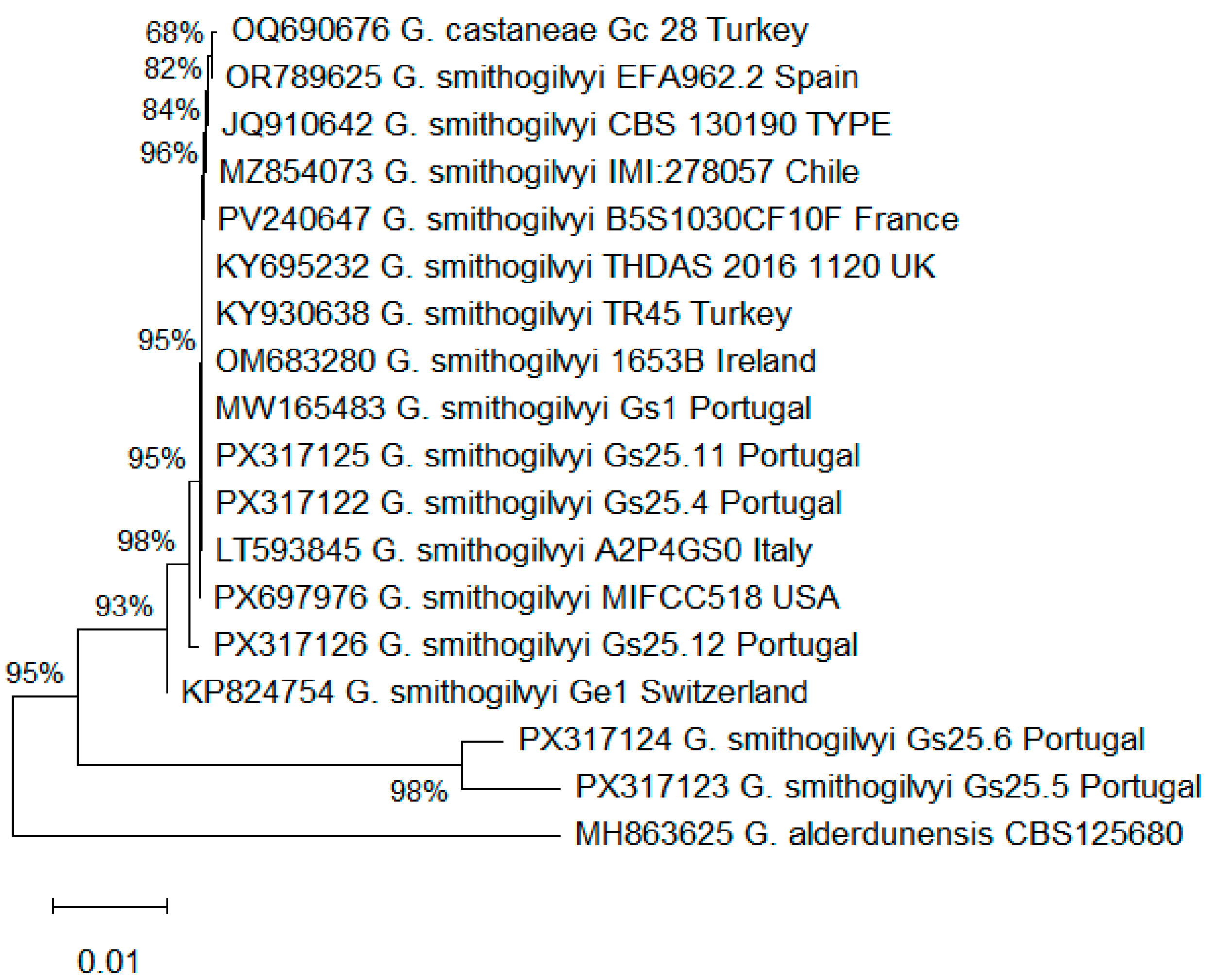
Phylogenetic analysis of G. smithogilvyi populations was inferred using the Neighbour-Joining method [30]. The analysis included 18 ITS nucleotide sequences representing geographically diverse populations and was conducted in MEGA12 [31] using up to 4 parallel computing threads for computational efficiency. Evolutionary distances were computed using the Maximum Composite Likelihood method [32] and are expressed as the number of base substitutions per site. The tree is supported by bootstrap values, which represent the percentage of replicate trees in which the associated taxa clustered together across 1000 bootstrap replicates, and are shown at the internal nodes [33]. The proportion of sites containing at least one unambiguous base in at least one sequence for each descendant clade is indicated adjacent to the internal nodes. The tree is drawn to scale, with branch lengths expressed in the same units as the evolutionary distances used for phylogenetic inference.

2.7. Statistical Analysis

Statistical analysis was performed to evaluate the effects of the different plant protection treatments on the incidence and endophytic colonization of G. smithogilvyi across the various chestnut tissues, as well as on fruit quality parameters. Data normality and homogeneity of variances were assessed using the Shapiro–Wilk and Levene’s tests, respectively. When these parametric assumptions were met, differences among treatment groups were analyzed using one-way analysis of variance (ANOVA), followed by Tukey’s HSD post hoc test for pairwise comparisons. In cases where the assumptions were not satisfied, the non-parametric Kruskal–Wallis test was applied. When significant differences were detected, post hoc multiple comparison tests were performed to identify pairwise differences among treatments. Results are presented as mean values accompanied by measures of variability. Statistical significance was determined at a threshold of p < 0.05.

3. Results

3.1. External Fruit Quality

The results of the external evaluation of chestnuts are presented in Table 2 as percentages. A total of 662 chestnuts were analysed. Generally, marked differences in fruit quality parameters were observed among treatments, with clear treatment- and location-dependent effects.
The highest proportion of fully developed chestnuts was recorded in Sta Comb. Rossas under the KSC Mix® treatment (70%), whereas the lowest proportion was observed in the untreated control orchard in Sobreiró (21%). Conversely, aborted fruit was most frequent under the Problad® treatment in Candedo (72%), indicating strong spatial variability in reproductive success across treatments. Statistical analyses revealed significant differences in fruit development, particularly for Fungicrops Bio® and Fosetyl-Al® in Candedo (p < 0.05). However, these effects were not uniform across locations, suggesting a relevant interaction between treatment and environmental conditions.
Regarding tissue integrity, only 1% of chestnuts under Problad® in Candedo showed discolouration, indicating minimal visible tissue degradation under this treatment. All treatments exhibited some level of rot symptoms, whereas no rot was recorded in the control. In contrast, the control showed the highest incidence of mechanical damage (30%) and insect infestation (44%), suggesting a trade-off between biotic and abiotic damage depending on management intensity.
Infestation levels differed significantly between treatments and control (p < 0.05), with most treatments reducing insect damage. Overall, treated systems showed improved external quality compared with the control, although responses varied by treatment type and orchard location. When all quality parameters were considered together, treatments that reduced fungal incidence generally showed lower insect infestation and better fruit development, although this trend was not consistent across all cases.

3.2. Microbiological Assessment

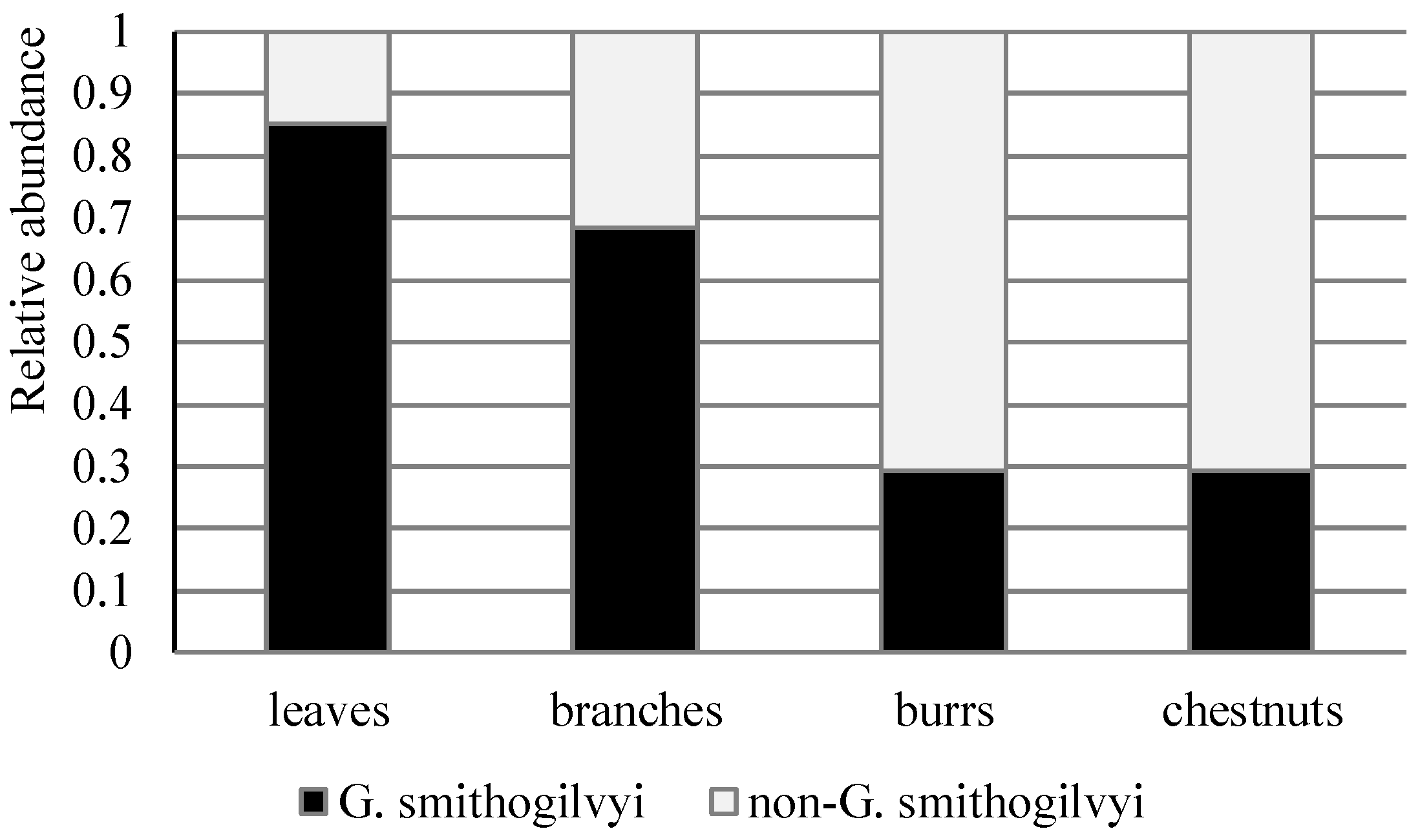
In this study, a total of 3083 fungal isolates were recovered across all surveyed stands: 260 from Sobreiró, 1382 from Sta Comb. Rossas, and 1441 from Candedo. Among the total isolates, 1646 were identified as G. smithogilvyi, while 1437 were classified as non-G. smithogilvyi (Table 3). G. smithogilvyi was detected in all analyzed organs, confirming its endophytic occurrence within chestnut trees. Among organs, leaves exhibited the highest overall incidence of the pathogen (85.2% of isolations), whereas non-G. smithogilvyi isolates were more prevalent in chestnuts and burrs (70.6%) (Figure 2).
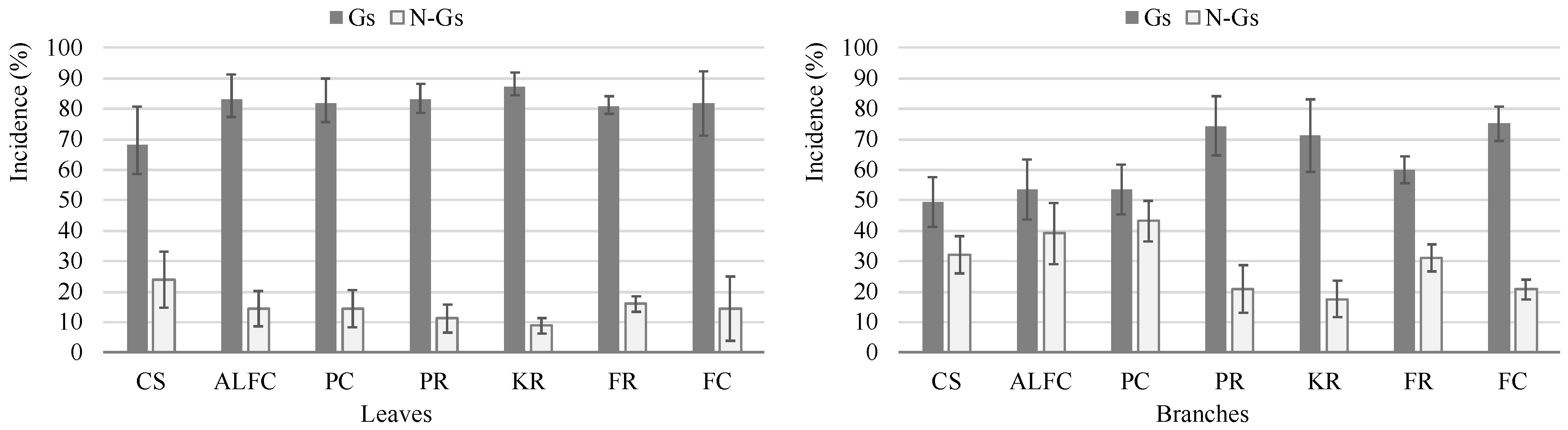
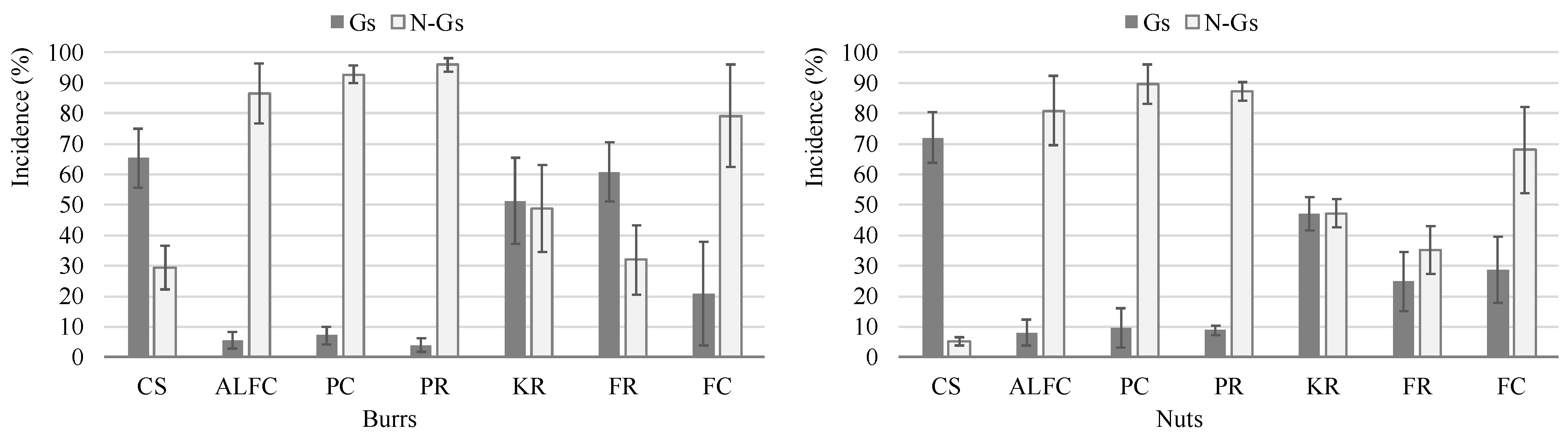
Figure 3 illustrates the impact of the various treatments applied to the chestnut trees. No significant differences among treatments were detected in leaves and branches (p > 0.05). In contrast, reproductive organs (burrs and chestnuts) showed clearer treatment effects, indicating that management practices primarily influence pathogen dynamics in sink tissues rather than vegetative organs.
In the control treatment, G. smithogilvyi incidence remained consistently high across all organs. However, most treatments reduced pathogen incidence in burrs and chestnuts, with Problad® and Fosetyl-Al® showing the strongest effects. Significant reductions in burr infection were observed under Problad® (both locations) and Fosetyl-Al® (Candedo), compared with the control (p < 0.05). For chestnuts, all treatments except KSC Mix® in Sta Comb. Rossas differed significantly from the control. These results indicate that chemical and biological treatments may partially suppress pathogen establishment in reproductive tissues, although complete control was not achieved.
A clear organ-dependent response was observed, with reproductive tissues being more responsive to treatment than vegetative tissues. Importantly, a consistent negative association was observed between G. smithogilvyi incidence and the occurrence of other, unidentified fungal taxa. This pattern suggests a potential shift in fungal community structure following pathogen reduction, possibly driven by competitive interactions or niche replacement mechanisms. Overall, reductions in G. smithogilvyi were associated with increased detection of other fungi, indicating that pathogen suppression may lead to microbiome reassembly rather than total fungal reduction.

3.3. Phylogenetic Analysis

A total of 14 ITS sequences of G. smithogilvyi from diverse geographic origins, along with five isolates from our study, were retrieved from GenBank and analyzed, using Gnomoniopsis alderdunensis as the outgroup. The isolates from this study clustered closely with reference sequences, including the type strain, confirming high genetic similarity. After pairwise deletion of ambiguous sites, the final dataset included 494 positions. The optimal tree (sum of branch lengths = 0.108) is shown in Figure 4.

4. Discussion

The results of this study demonstrated that the control strategies applied in chestnut significantly influence fruit development, external quality, and the incidence of G. smithogilvyi, supporting previous findings that highlight the increasing importance of this pathogen in chestnut production systems [8,10,11]. As an emerging pathogen, G. smithogilvyi is associated with chestnut rot, which has a direct impact on the quality and commercial value of the chestnut [6,34].
Regarding fruit quality, the high percentage of fully developed chestnuts observed under the KSC Mix® treatment in Sta Comb. Rossas suggests that reducing biotic stress or enhancing plant physiological performance may positively affect fruit filling. Similar relationships between plant health and fruit development have been reported in chestnut and other perennial crops [8,15]. However, the high proportion of aborted fruits observed under the Problad® treatment in Candedo suggests that treatment efficacy may be strongly influenced by local environmental conditions. Early infections by G. smithogilvyi, particularly during flowering, have been shown to impair fruit development and induce fruit abortion [35], providing a plausible explanation for the variability observed in this study.
The absence of visible symptoms in some treatments, despite pathogen presence, is consistent with the latent behaviour of G. smithogilvyi. This fungus is known to persist asymptomatically in host tissues and only express symptoms during later stages of fruit development or post-harvest [11]. This latent phase complicates disease assessment and highlights the limitations of relying solely on visual inspection for disease evaluation.
The detection of G. smithogilvyi in all analysed organs confirms its widespread endophytic occurrence and supports previous studies describing this species as a ubiquitous coloniser of chestnut tissues [8,11]. Its presence across both vegetative and reproductive organs highlights the complexity of its life cycle and suggests that these tissues may function as reservoirs, contributing to the persistence and spread of infection within orchards.
In the present study, treatment effects were more pronounced in reproductive tissues (burrs and chestnuts) than in vegetative organs (leaves and branches). This organ-dependent response is consistent with the epidemiology of the pathogen, as reproductive tissues are more directly involved in disease expression and are more susceptible to infection during critical developmental stages [9]. The observed reductions in pathogen incidence under Problad® and Fosetyl-Al® treatments are in line with previous studies demonstrating that both chemical and biological agents can limit pathogen development, although they rarely achieve complete control [12,23,35,36,37].
The enhanced efficacy of Problad® and Fosetyl-Al® in reproductive organs compared to vegetative tissues may be linked to their distinct modes of action and systemic properties. Fosetyl-Al® is a well-known systemic fungicide that directly inhibits pathogen growth while simultaneously stimulating host defense mechanisms through plant elicitation [38]. Because it translocates both basipetally and acropetally via xylem and phloem vessels [39], it moves efficiently into rapidly developing sink tissues, such as expanding burrs and maturing chestnuts, protecting them during critical infection windows. On the other hand, Problad®, a biological fungicide containing the BLAD polypeptide derived from L. albus sprouts, acts by binding to fungal chitin, causing structural disruption of the pathogen’s cell wall and membrane integrity [25]. Since reproductive structures undergo intense metabolic activity and carbohydrate accumulation during fruit filling, they function as strong metabolic sinks. These tissues likely accumulate translocated systemic compounds or benefit more intensely from targeted biochemical protection against spore germination during vulnerable flowering and post-flowering stages, which are recognized as critical infection periods for G. smithogilvyi [15].
Despite these reductions, none of the treatments completely suppressed G. smithogilvyi, confirming that its control remains challenging. This partial effectiveness is likely due to the endophytic nature of the pathogen, which allows it to persist within host tissues and evade surface-applied treatments [11]. These findings reinforce the need for integrated disease management strategies that combine multiple approaches rather than relying on single interventions.
The KSC Mix® treatment, while promoting fruit development, did not significantly reduce pathogen incidence. This suggests that improved plant vigour does not necessarily confer increased resistance to infection, a phenomenon previously described in plant-pathogen interactions where growth and defence processes are regulated independently [40,41]. In contrast to the targeted antimicrobial pathways of the chemical and biological treatments, the distinct performance of KSC Mix® highlights a physiology-driven response. KSC Mix® is a specialized nutrient complex designed to enhance overall nutritional status, enzymatic activity, and metabolic efficiency during critical crop stages [42]. The application of this micronutrient complex likely optimized the physiological performance and vigor of the chestnut trees, enhancing host tolerance against biotic stress. However, this improved physiological state did not correlate with a reduction in G. smithogilvyi incidence. This discrepancy supports the independent regulation of growth and defense processes in perennial crops. It suggests that while enhanced plant nutrition effectively supports overall tree vigor through tolerance mechanisms, it does not directly trigger the specific downstream fungicidal or elicitation pathways required to suppress well-established endophytic colonization within host tissues [43].
A particularly relevant finding of this study is the observed increase in the incidence of non-G. smithogilvyi fungi in treatments where G. smithogilvyi was reduced. This pattern suggests a shift in fungal community structure, potentially driven by competitive interactions or niche replacement. Similar dynamics have been described in plant microbiomes, where suppression of a dominant pathogen can lead to the proliferation of other microbial taxa [44]. From an ecological perspective, this competitive release highlights that G. smithogilvyi exerts a strong selective pressure or dominance over the internal niche of chestnut tissues [45]. When this dominance is disrupted by targeted treatments like Problad® or Fosetyl-Al®, the vacant ecological niche is rapidly colonized by co-existing microflora. This community shift represents a dual-edged sword in disease management: while it may allow beneficial antagonistic endophytes to multiply and establish natural biological barriers [19], it also poses a risk of secondary, opportunistic pathogens occupying the space, which could potentially induce post-harvest decay or other physiological disorders in the chestnuts [46]. This highlights the critical importance of considering the broader microbial community and multi-trophic interactions when evaluating long-term disease management strategies.
Overall, the results indicate that the control of G. smithogilvyi is complex and context-dependent, influenced by treatment type, plant organ, and environmental conditions. The partial effectiveness of the tested strategies emphasises the need for integrated approaches combining chemical, biological, and cultural practices to improve disease control while maintaining sustainability.
Phylogenetic analysis of ITS sequences placed all isolates from this study within the G. smithogilvyi clade alongside reference strains from diverse geographic origins, including Portugal, Italy, Ireland, Turkey, France, the UK, Chile, Switzerland, and the USA, consistent with the broad geographic distribution previously reported for this species [6,47]. This broad clustering suggests the isolates are genetically consistent with globally reported representatives of G. smithogilvyi, reinforcing species-level identification [47]. Two isolates (Gs25.4 and Gs25.12) were grouped within the main G. smithogilvyi cluster supported by strong bootstrap values (95–98%), indicating robust phylogenetic placement. High bootstrap support provides confidence that these isolates belong within the species and are not closely allied to other taxa, in agreement with previously used phylogenetic approaches for G. smithogilvyi identification [6]. The isolates Gs25.5 and Gs25.6 formed a distinct subclade, supported by 98% bootstrap support, indicating close relatedness between them. This may suggest intraspecific variation, a shared local lineage, or possibly a common infection source. However, despite this internal differentiation, they remain nested within the broader G. smithogilvyi group. Similar intraspecific variability among isolates has been reported in comparative genomic and population-level studies of G. smithogilvyi [6,48]. The tree also shows separation of the GS25 isolates from the outgroup, G. alderdunensis, confirming that the Portuguese isolates are distinct from related species and reducing ambiguity in identification. The short branch lengths (scale 0.01) suggest relatively low sequence divergence among isolates, which is consistent with conservation in ribosomal markers and common in species-level phylogenies of fungal pathogens [47]. The presence of Portuguese isolates distributed across multiple subclades may indicate genetic diversity within local populations of G. smithogilvyi. Such variation has been reported in plant-associated fungal pathogens and may reflect adaptation, population structure, or host-associated differentiation [6,48]. Additional loci, such as tef1-α and tub2, or multilocus sequence analysis, would be useful for further investigation, as single-locus phylogenies may underestimate intraspecific diversity [47]. Overall, the phylogenetic evidence confirms all isolates from this study belongs to G. smithogilvyi, while also indicating minor intraspecific variation among Portuguese isolates, consistent with previous reports [6,48].
Future research should focus on improving the understanding of the epidemiology and endophytic behaviour of G. smithogilvyi within chestnut production systems. In particular, further studies are needed to clarify the mechanisms underlying latent infection and the transition from asymptomatic colonization to pathogenic expression in chestnut fruits. The application of molecular approaches, including quantitative PCR (qPCR), metabarcoding, and metagenomic analyses, could provide earlier and more accurate detection of the pathogen while enabling a deeper characterization of fungal community dynamics in different chestnut tissues. Additionally, evaluating disease progression throughout the production cycle and during post-harvest storage would help establish relationships between pathogen incidence, symptom development, and fruit quality. The increased occurrence of other fungal taxa following reductions in G. smithogilvyi also highlights the need to investigate microbial interactions within the chestnut microbiome and their potential implications for disease suppression or niche replacement. Finally, long-term multi-site field trials under contrasting environmental conditions will be essential to validate sustainable integrated management strategies combining biological, chemical, and cultural approaches adapted to commercial chestnut production systems.
Despite the valuable insights obtained, some methodological and operational constraints in this study should be acknowledged. Although a high number of G. smithogilvyi isolates were successfully recovered through culture-dependent methods, processing every single isolate for molecular analysis was restricted by high-throughput sequencing costs. Furthermore, due to concurrent large-scale projects running in parallel within the research facilities, a strict selection of isolates had to be enforced. Operational bottlenecks, including low-quality DNA yields or technical sequencing failures in a subset of samples, further limited the final number of successfully sequenced representatives. In addition to these laboratory constraints, the field trials were conducted within a specific geographic region and timeframe, meaning that environmental fluctuations across different years could influence treatment stability and pathogen pressure. While single-locus (ITS) analysis proved robust for species-level confirmation of these representative isolates, future long-term multi-site trials combined with high-throughput sequencing (metabarcoding) or quantitative PCR (qPCR) would be ideal to bypass these constraints and provide a more comprehensive screen of the whole fungal community.

5. Conclusions

This study indicates that G. smithogilvyi is widely distributed as an endophyte in both vegetative and reproductive tissues of C. sativa, confirming its complex ecological behaviour within chestnut orchards. The pathogen was detected in all analysed organs, although treatment effects were more evident in reproductive tissues, particularly burrs and chestnuts, which are directly associated with expression of disease and fruit quality losses.
Among the evaluated treatments, Problad® and Fosetyl-Al® showed the greatest capacity to reduce pathogen incidence in reproductive tissues, whereas KSC Mix® mainly promoted fruit development without significantly limiting fungal colonization. Nevertheless, under the conditions of this study, none of the tested strategies completely suppressed G. smithogilvyi, reinforcing the inherent challenges of managing an endophytic pathogen capable of persisting asymptomatically within host tissues. The observed increase in other fungal taxa following pathogen reduction further suggests that disease management strategies may alter fungal community composition, emphasizing the importance of considering microbiome dynamics in chestnut disease management.
Phylogenetic analyses confirmed the identity of the isolates as G. smithogilvyi and revealed low but detectable intraspecific variability among Portuguese isolates, consistent with reports from other chestnut-producing regions. Overall, these preliminary findings suggest that the management of chestnut brown rot is strongly influenced by treatment type and host organ. Given that this is an initial comprehensive evaluation of pre-harvest treatments for this pathogen, these results support the need for further integrated and sustainable management strategies combining biological, chemical, and cultural approaches to optimize disease control while maintaining orchard health.

Supplementary Materials

The following supporting information can be downloaded at: https://www.mdpi.com/article/10.3390/applbiosci5030056/s1, Table S1. Composition of products, active ingredient, their mode of action.

Author Contributions

Conceptualization, E.G.; methodology, E.G. and V.C.; formal analysis, S.R.; investigation, R.P., T.Y., A.T. and S.R.; writing—original draft preparation, S.R. and T.Y.; writing—review and editing, E.G. and V.C.; supervision, E.G. All authors have read and agreed to the published version of the manuscript.

Funding

This work is supported by “Fundo Europeu de Desenvolvimento Regional (FEDER), Programa Regional do Norte 2021–2027 (NORTE2030)” as part of the project Ref. “NORTE2030-FEDER-02698200—SANCAST”.

Institutional Review Board Statement

Not applicable.

Informed Consent Statement

Not applicable.

Data Availability Statement

The data that support the findings of this study are available from the corresponding author, upon reasonable request.

Acknowledgments

During the preparation of this manuscript, the authors used ChatGPT-5 (OpenAI) to improve language clarity and readability. The authors reviewed and edited all content and take full responsibility for the final manuscript.

Conflicts of Interest

The authors declare no conflicts of interest.

Abbreviations

The following abbreviations are used in this manuscript:
Sta Comb. RossasSanta Comba de Rossas
FCCandedo–Fungicrops Bio®
FRSta Comb. Rossas–Fungicrops Bio®
PCCandedo–Problad®
PRSta Comb. Rossas-Problad®
KRSta Comb. Rossas–KSC Mix®
FACCandedo–Fosetyl-Al®
CSSobreiró untreated control

References

  1. Instituto Nacional de Estatística (INE). Estatísticas Agrícolas 2024; Instituto Nacional de Estatística: Lisboa, Portugal, 2025. [Google Scholar]
  2. Bounous, G.; Marinoni, D.T. Chestnut: Botany, Horticulture, and Utilization. Hortic. Rev. (Am. Soc. Hortic. Sci.) 2010, 31, 291–347. [Google Scholar] [CrossRef]
  3. Dobry, E.; Campbell, M. Gnomoniopsis castaneae: An Emerging Plant Pathogen and Global Threat to Chestnut Systems. Plant Pathol. 2023, 72, 218–231. [Google Scholar] [CrossRef]
  4. Vettraino, A.M.; Luchi, N.; Rizzo, D.; Pepori, A.L.; Pecori, F.; Santini, A. Rapid Diagnostics for Gnomoniopsis smithogilvyi (Syn. Gnomoniopsis castaneae) in Chestnut Nuts: New Challenges by Using LAMP and Real-Time PCR Methods. AMB Express 2021, 11, 105. [Google Scholar] [CrossRef] [PubMed]
  5. Coelho, V.; Gouveia, E. Gnomoniopsis smithogilvyi, the Causal Agent of Chestnut Brown Rot Reported from Portugal. New Dis. Rep. 2021, 43, e12007. [Google Scholar] [CrossRef]
  6. Possamai, G.; Dallemole-Giaretta, R.; Gomes-Laranjo, J.; Sampaio, A.; Rodrigues, P. Chestnut Brown Rot and Gnomoniopsis smithogilvyi: Characterization of the Causal Agent in Portugal. J. Fungi 2023, 9, 401. [Google Scholar] [CrossRef] [PubMed]
  7. Seddaiu, S.; Cerboneschi, A.; Sechi, C.; Mello, A. Gnomoniopsis castaneae Associated with Dryocosmus Kuriphilus Galls in Chestnut Stands in Sardinia (Italy). IForest 2017, 10, 440–445. [Google Scholar] [CrossRef]
  8. Visentin, I.; Gentile, S.; Valentino, D.; Gonthier, P.; Cardinale, F. Gnomoniopsis Castanea Sp. Nov. (Gnomoniaceae, Diaporthales) as the Causal Agent of Nut Rot in Sweet Chestnut. J. Plant Pathol. 2012, 96, 411–419. [Google Scholar] [CrossRef]
  9. Shuttleworth, L.A.; Guest, D.I. The Infection Process of Chestnut Rot, an Important Disease Caused by Gnomoniopsis smithogilvyi (Gnomoniaceae, Diaporthales) in Oceania and Europe. Australas. Plant Pathol. 2017, 46, 397–405. [Google Scholar] [CrossRef]
  10. Lione, G.; Danti, R.; Fernandez-Conradi, P.; Ferreira-Cardoso, J.V.; Lefort, F.; Marques, G.; Meyer, J.B.; Prospero, S.; Radócz, L.; Robin, C.; et al. The Emerging Pathogen of Chestnut Gnomoniopsis castaneae: The Challenge Posed by a Versatile Fungus. Eur. J. Plant Pathol. 2019, 153, 671–685. [Google Scholar] [CrossRef]
  11. Dennert, F.G.; Broggini, G.A.L.; Gessler, C.; Storari, M. Gnomoniopsis Castanea Is the Main Agent of Chestnut Nut Rot in Switzerland. Phytopathol. Mediterr. 2015, 54, 199–211. [Google Scholar] [CrossRef]
  12. Gomes, A.; Sampaio, A.; Rodrigues, P.; Laranjo, J.G. Tratamentos Em Campo Com Fungicidas e Solução Nutritiva Em Castanheiros: Incidência de Podridões e de Gnomoniopsis smithogilvyi Na Castanha Pós-Colheita. Rev. Ciênc. Agrár. 2023, 46, 54–64. [Google Scholar] [CrossRef]
  13. Crous, P.W.; Summerell, B.A.; Shivas, R.G.; Burgess, T.I.; Decock, C.A.; Dreyer, L.L.; Granke, L.L.; Guest, D.I.; Hardy, G.E.S.T.J.; Hausbeck, M.K.; et al. Fungal Planet Description Sheets: 107–127. Persoonia-Mol. Phylogeny Evol. Fungi 2012, 28, 138–182. [Google Scholar] [CrossRef] [PubMed]
  14. Maresi, G.; Oliveira Longa, C.M.; Turchetti, T. Brown Rot on Nuts of Castanea sativa Mill: An Emerging Disease and Its Causal Agent. IForest 2013, 6, 294. [Google Scholar] [CrossRef]
  15. Lione, G.; Giordano, L.; Sillo, F.; Gonthier, P. Testing and Modelling the Effects of Climate on the Incidence of the Emergent Nut Rot Agent of Chestnut Gnomoniopsis Castanea. Plant Pathol. 2015, 64, 852–863. [Google Scholar] [CrossRef]
  16. Gnomoniopsis smithogilvyi (GNMPCA) [World Distribution]|EPPO Global Database. Available online: https://gd.eppo.int/taxon/GNMPCA/distribution (accessed on 13 June 2025).
  17. Robin, C.; Marchand, M. Diseases of Chestnut Trees. In Forest Microbiology: Volume 2: Forest Tree Health; Academic Press: New York, NY, USA, 2022; Volume 2, pp. 311–323. [Google Scholar] [CrossRef]
  18. Prospero, S.; Forster, B. Chestnut Gall Wasp (Dryocosmus Kuriphilus) Infestations: New Opportunities for the Chestnut Blight Fungus Cryphonectria Parasitica? New Dis. Rep. 2011, 23, 35. [Google Scholar] [CrossRef]
  19. Morales-Rodriguez, C.; Bastianelli, G.; Caccia, R.; Bedini, G.; Massantini, R.; Moscetti, R.; Thomidis, T.; Vannini, A. Impact of ‘Brown Rot’ Caused by Gnomoniopsis Castanea on Chestnut Fruits during the Post-Harvest Process: Critical Phases and Proposed Solutions. J. Sci. Food Agric. 2022, 102, 680–687. [Google Scholar] [CrossRef] [PubMed]
  20. Senhor, R.F.; de Carvalho, J.N.; Souza, P.A.D.; Neto, R.C.A.; Pinto, A.C. Eficiência de Diferentes Fungicidas No Controle de Alternaria Alternata,Agente Causal Da Podridão Pós-Colheita Em Frutos de Meloeiro. Rev. Caatinga 2009, 22, 14–19. Available online: https://periodicos.ufersa.edu.br/index.php/caatinga/article/view/669 (accessed on 18 June 2026).
  21. Moreira, L.M.; May-de Mio, L.L. Controle Da Podridão Parda Do Pessegueiro Com Fungicidas e Fosfitos Avaliados Em Pré e Pós-Colheita. Ciênc. E Agrotecnologia 2009, 33, 405–411. [Google Scholar] [CrossRef][Green Version]
  22. Leles, N.R.; Genta, W.; Marques, V.V.; Tessmann, D.J.; Roberto, S.R. Manejo Da Podridão Da Uva Madura Em Videira ‘Niagara Rosada. Semin. Cienc. Agrar. 2022, 43, 2189–2204. [Google Scholar] [CrossRef]
  23. Silva-Campos, M.; Islam, M.T.; Cahill, D.M. Fungicide Control of Gnomoniopsis smithogilvyi, Causal Agent of Chestnut Rot in Australia. Australas. Plant Pathol. 2022, 51, 483–494. [Google Scholar] [CrossRef]
  24. Bastianelli, G.; Morales-Rodríguez, C.; Caccia, R.; Turco, S.; Rossini, L.; Mazzaglia, A.; Thomidis, T.; Vannini, A. Use of Phosphonate Salts to Control Chestnut ‘Brown Rot’ by Gnomoniopsis castaneae in Fruit Orchards of Castanea sativa. Agronomy 2022, 12, 2434. [Google Scholar] [CrossRef]
  25. Monteiro, S.; Carreira, A.; Freitas, R.; Pinheiro, A.M.; Ferreira, R.B. A Nontoxic Polypeptide Oligomer with a Fungicide Potency under Agricultural Conditions Which Is Equal or Greater than That of Their Chemical Counterparts. PLoS ONE 2015, 10, e0122095. [Google Scholar] [CrossRef] [PubMed][Green Version]
  26. Costa, R.; Ribeiro, C.; Valdiviesso, T.; Afonso, S.; Borges, O.; Soeiro de Carvalho, J.; Augusto Costa, H.; Assunção, A.; Fonseca, L.; Augusta, C.; et al. Variedades de Castanha Das Regiões Centro e Norte de Portugal; INRB: Lisbon, Portugal, 2008. [Google Scholar]
  27. Coelho, V.; Tomás, A.V.; Yussif, T.S.; Gouveia, E. Assessing Endophytic Phase of Gnomoniopsis smithogilvyi and Aerial Spores in Two Chestnut Groves of Trás-Os-Montes and Application of Cuprous Oxide on Plant Debris (Leaves and Burrs) to Reduce Disease Inoculum. Rev. Cienc. Agrar. 2026, 49, 31–43. Available online: https://www.researchgate.net/publication/404689354_Assessing_endophytic_phase_of_Gnomoniopsis_smithogilvyi_and_aerial_spores_in_two_chestnut_groves_of_Tras-os-Montes_and_application_of_cuprous_oxide_on_plant_debris_leaves_and_burrs_to_reduce_disease_i (accessed on 18 June 2026).
  28. Larue, C.; Barreneche, T.; Petit, R.J. Efficient Monitoring of Phenology in Chestnuts. Sci. Hortic. 2021, 281, 109958. [Google Scholar] [CrossRef]
  29. White, T.J.; Bruns, T.; Lee, S.; Taylor, J. Amplification and Direct Sequencing of Fungal Ribosomal RNA Genes for Phylogenetics. In PCR Protocols; Elsevier: Amsterdam, The Netherlands, 1990; pp. 315–322. Available online: https://www.researchgate.net/publication/262687766_Amplification_and_Direct_Sequencing_of_Fungal_Ribosomal_RNA_Genes_for_Phylogenetics (accessed on 18 June 2026).
  30. Saitou, N.; Nei, M. The Neighbor-Joining Method: A New Method for Reconstructing Phylogenetic Trees. Mol. Biol. Evol. 1987, 4, 406–425. [Google Scholar] [CrossRef] [PubMed]
  31. Kumar, S.; Stecher, G.; Suleski, M.; Sanderford, M.; Sharma, S.; Tamura, K. MEGA12: Molecular Evolutionary Genetic Analysis Version 12 for Adaptive and Green Computing. Mol. Biol. Evol. 2024, 41, msae263. [Google Scholar] [CrossRef] [PubMed]
  32. Tamura, K.; Nei, M.; Kumar, S. Prospects for Inferring Very Large Phylogenies by Using the Neighbor-Joining Method. Proc. Natl. Acad. Sci. USA 2004, 101, 11030–11035. [Google Scholar] [CrossRef] [PubMed]
  33. Felsenstein, J. Confidence Limits on Phylogenies: An Approach Using the Bootstrap. Evolution 1985, 39, 783–791. [Google Scholar] [CrossRef] [PubMed]
  34. Lema, F.; Baptista, P.; Oliveira, C.; Ramalhosa, E. Brown Rot Caused by Gnomoniopsis smithogilvyi (Syn. Gnomoniopsis castaneae) at the Level of the Chestnut Tree (Castanea sativa Mill.). Appl. Sci. 2023, 13, 3969. [Google Scholar] [CrossRef]
  35. Bastianelli, G.; Mandujano, M.; Grove, A.; Lizotte, E.L.; Neugebauer, K.; Miles, T.D. In Vitro Evaluation of Chemical and Biologically-Based Fungicides against Gnomoniopsis smithogilvyi the Causal Agent of Chestnut Brown Rot. In Plant Disease; American Phytopathological Society: Saint Paul, MN, USA, 2025. [Google Scholar] [CrossRef] [PubMed]
  36. Álvarez, M.; Agostini, I.; Silva, S.; Dallemole-Giaretta, R.; Sulyok, M.; Sampaio, A.; Rodrigues, P. Mycotoxins and Other Secondary Metabolites Are Produced by Gnomoniopsis smithogilvyi When Confronted with Biological and Chemical Control Agents. Agriculture 2023, 13, 1166. [Google Scholar] [CrossRef]
  37. Álvarez, M.; Agostini, I.; Sampaio, A.; Román, Á.; Delgado, J.; Rodrigues, P. Unravelling the Effect of Control Agents on Gnomoniopsis smithogilvyi on a Chestnut-Based Medium by Proteomics. Pest Manag. Sci. 2024, 80, 1895–1903. [Google Scholar] [CrossRef] [PubMed]
  38. Guest, D.; Grant, B. The Complex Action of Phosphonates as Antifungal Agents. Biol. Rev. 1991, 66, 159–187. [Google Scholar] [CrossRef]
  39. Cohen, Y.; Coffey, M.D. Systemic Fungicides and the Control of Oomycetes. Annu. Rev. Phytopathol. 1986, 24, 311–338. [Google Scholar] [CrossRef]
  40. Dordas, C. Role of Nutrients in Controlling Plant Diseases in Sustainable Agriculture. A Review. Agron. Sustain. Dev. 2008, 28, 33–46. [Google Scholar] [CrossRef]
  41. Walters, D.R.; Ratsep, J.; Havis, N.D. Controlling Crop Diseases Using Induced Resistance: Challenges for the Future. J. Exp. Bot. 2013, 64, 1263–1280. [Google Scholar] [CrossRef] [PubMed]
  42. Marschner, P. Marschner’s Mineral Nutrition of Higher Plants; Elsevier: Amsterdam, The Netherlands, 2012. [Google Scholar]
  43. Walters, D.R.; Bingham, I.J. Influence of Nutrition on Disease Development Caused by Fungal Pathogens: Implications for Plant Disease Control. Ann. Appl. Biol. 2007, 151, 307–324. [Google Scholar] [CrossRef]
  44. Brader, G.; Compant, S.; Vescio, K.; Mitter, B.; Trognitz, F.; Ma, L.J.; Sessitsch, A. Ecology and Genomic Insights into Plant-Pathogenic and Plant-Nonpathogenic Endophytes. Annu. Rev. Phytopathol. 2017, 55, 61–83. [Google Scholar] [CrossRef] [PubMed]
  45. Vannier, N.; Agler, M.; Hacquard, S. Microbiota-Mediated Disease Resistance in Plants. PLoS Pathog. 2019, 15, e1007740. [Google Scholar] [CrossRef] [PubMed]
  46. Karlsson, I.; Friberg, H.; Steinberg, C.; Persson, P. Fungicide Effects on Fungal Community Composition in the Wheat Phyllosphere. PLoS ONE 2014, 9, e111786. [Google Scholar] [CrossRef] [PubMed]
  47. Shuttleworth, L.A. The Biology and Management of Chestnut Rot in Southeastern Australia; University of Sydney: Sydney, Australia, 2011. [Google Scholar]
  48. Turco, S.; Mazzaglia, A.; Drais, M.I.; Bastianelli, G.; Gonthier, P.; Vannini, A.; Morales-Rodríguez, C. Hybrid de Novo Genome Assembly and Comparative Genomics of Three Different Isolates of Gnomoniopsis castaneae. Sci. Rep. 2023, 13, 3356. [Google Scholar] [CrossRef] [PubMed]
Figure 1. Visual indicators of quality defects in chestnut fruits and subsequent in vitro microbiological isolation steps. (A) Fruit showing internal symptoms of brown rot caused by Gnomoniopsis smithogilvyi; (B) Severe internal decay and extensive black mycelial colonization resulting from advanced pathogen attack; (C) Fruit exhibiting a characteristic exit hole from insect pests; (D) Sectioned fruits displaying galleries associated with insect development. Mycelial growth of Gnomoniopsis smithogilvyi emerging from plated chestnut burr (E), leaves (F) and branches (G). (H) Pure isolate colony of Gnomoniopsis smithogilvyi after incubation on Potato Dextrose Agar (PDA).
Applbiosci 05 00056 g001
Figure 2. Relative abundance of Gnomoniopsis smithogilvyi and other fungal isolates (non-G. smithogilvyi) across different Castanea sativa organs (leaves, branches, burrs, and chestnuts). Relative abundance represents the percentage of isolations assigned to each fungal group out of the total number of fungi recovered within each specific plant organ.
Applbiosci 05 00056 g002
Figure 3. Incidence of Gnomoniopsis smithogilvyi (Gs) and non-Gnomoniopsis smithogilvyi (nGs) in different chestnut organs (leaves, branches, burrs and nuts) under different treatments. Bars represent standard error. Treatment codes correspond to: Candedo–Fungicrops Bio® (FC), Sta Comb. Rossas–Fungicrops Bio® (FR), Candedo–Problad® (PC), Sta Comb. Rossas–Problad® (PR), Sta Comb. Rossas–KSC Mix® (KR), Candedo–Fosetyl-Al® (FAC), and Sobreiró untreated control (CS).
Applbiosci 05 00056 g003aApplbiosci 05 00056 g003b
Figure 4. Phylogenetic tree for Gnomoniopsis smithogilvyi isolates (ITS region).
Applbiosci 05 00056 g004
Table 1. Description of the treatments applied in Sta Comb. Rossas (Bragança) and Candedo (Vinhais). Applied products, application sites, phenological stage of the chestnut tree at the time of application, doses applied and recommended label range.
ProductLocalizationApplication
Dates
Phenological Growth Stages *Applied DosesRecommended Label Range
KSC Mix®Sta C. Rossas3 JuneBBCH 65–674.0 Kg/ha2.0–5.0 kg/ha
18 JuneBBCH 69–71
2 JulyBBCH 73–75
Problad®Sta C. Rossas1 JuneBBCH 65–673.2 L/ha1.3–3.2 L/ha
15 JuneBBCH 67–69
29 JuneBBCH 71–73
Candedo20 JuneBBCH 69–713.2 L/ha1.3–3.2 L/ha
1 JulyBBCH 73–75
15 JulyBBCH 75
Fungicrops Bio®Sta C. Rossas28 MayBBCH 61–63400 L/ha300–500 L/ha (water vol.)
12 JuneBBCH 67
26 JuneBBCH 71–73
Candedo20 JuneBBCH 69–71400 L/ha300–500 L/ha (water vol.)
1 JulyBBCH 73–75
15 JulyBBCH 75
Fosetyl Al®Candedo5 JuneBBCH 652.0 Kg/ha2.0–3.0 kg/ha
20 JuneBBCH 69–71
* Phenological development stages at each application date followed the standardized scales proposed by [28].
Table 2. External quality of the nuts in the different treatments of the field trial, expressed as %.
TreatmentsMature NutsAborted NutsDiscolored NutsRot SymptomsMechanical DamageInsect Infestations
FC45 a,b55 a,b012 a,b7 a,b5 a,b,c
FR41 a,b59 a,b032 a,b5 a,b2 a,b,c
PC28 b72 a,b117 a,b3 a,b2 a,b
PR54 a,b46 a,b017 a,b0 a2 a
KR70 a30 b024 b13 b19 b,c
FAC31 b69 a,b010 a,b3 a,b2 a,b
CS21 b79 a00 a30 a,b44 c
Treatment codes correspond to: Candedo–Fungicrops Bio® (FC), Sta Comb. Rossas–Fungicrops Bio® (FR), Candedo–Problad® (PC), Sta Comb. Rossas–Problad® (PR), Sta Comb. Rossas–KSC Mix® (KR), Candedo–Fosetyl-Al® (FAC), and Sobreiró untreated control (CS). Percentages that are followed by the same letters in the same column are not statistically different according to Tukey’s HSD post hoc test (α = 0.05).
Table 3. Total number of Gnomoniopsis smithogilvyi and non-Gnomoniopsis smithogilvyi isolates obtained from leaves, branches, burrs, and nuts in the different treatments (n = 5 repetitions per tree/organ (yielding 25 plated fragments per tree) and a maximum potential of 125 fragments available for fungal isolation per organ/treatment matrix).
TreatmentsSpeciesLeavesBranchesBurrsChestnutsTotal
FCG. smithogilvyi102942636258
non-G. smithogilvyi18269985228
PCG. smithogilvyi10267913191
non-G. smithogilvyi1854116112300
FACG. smithogilvyi10467710188
non-G. smithogilvyi1849108101276
PRG. smithogilvyi10493511213
non-G. smithogilvyi1426120109269
FRG. smithogilvyi101757631283
non-G. smithogilvyi20394044143
KRG. smithogilvyi109896459321
non-G. smithogilvyi11226159153
CSG. smithogilvyi52374954192
non-G. smithogilvyi182422468
Total of treatmentsG. smithogilvyi6745222362141646
non-G. smithogilvyi1172405665141437
Treatment codes correspond to: Candedo–Fungicrops Bio® (FC), Sta Comb. Rossas–Fungicrops Bio® (FR), Candedo–Problad® (PC), Sta Comb. Rossas–Problad® (PR), Sta Comb. Rossas–KSC Mix® (KR), Candedo–Fosetyl-Al® (FAC), and Sobreiró untreated control (CS).
Disclaimer/Publisher’s Note: The statements, opinions and data contained in all publications are solely those of the individual author(s) and contributor(s) and not of MDPI and/or the editor(s). MDPI and/or the editor(s) disclaim responsibility for any injury to people or property resulting from any ideas, methods, instructions or products referred to in the content.