Article

Meta-Analyses and Meta-Regression Analyses Revealed That Crimean–Congo Hemorrhagic Fever Disease Associates with Coagulopathy Independently of Thrombocytopenia


1
Independent Researcher, Chula Vista, CA 91910, USA
2
Department of Physiology, Pharmacology and Chemistry, College of Veterinary Medicine, Al-Qasim Green University, Al Qasim 51013, Iraq
3
Al Noor Pediatric Hospital, Ministry of Health, Hilla 51001, Iraq
4
Independent Researcher, Diwaniyah 58001, Iraq
5
Department of Immunology and Microbiology, The Scripps Research Institute, La Jolla, CA 92037, USA
*
Author to whom correspondence should be addressed.
Zoonotic Dis. 2026, 6(1), 7; https://doi.org/10.3390/zoonoticdis6010007

Submission received: 3 December 2025 / Revised: 13 February 2026 / Accepted: 24 February 2026 / Published: 26 February 2026

Simple Summary

Crimean–Congo Hemorrhagic Fever (CCHF) causes high mortality through hemorrhage, but whether this reflects thrombocytopenia alone or combined coagulopathy remains unclear. We conducted meta-analyses of studies into each of the coagulation parameters (PT, aPTT, INR, fibrinogen, D-dimer, protein C and protein S, antithrombin) from survivors vs non-survivors. Fatal cases showed combined thrombocytopenia and coagulopathy (elevated PT/aPTT/INR, reduced fibrinogen/antithrombin) and liver damage (elevated AST/ALT). Protein C and protein S were unaffected, suggesting complex mechanisms beyond simple consumption or hepatic failure. These findings indicate coagulopathy contributes independently of thrombocytopenia to CCHF hemorrhage, supporting combined platelet and coagulation factor replacement therapy.

Abstract

Crimean–Congo Hemorrhagic Fever (CCHF) disease, caused by the CCHF virus (CCHFV), poses a significant fatality risk whose underlying pathological mechanisms, including the contribution of coagulation factors, imbalances and platelet abnormalities, remain poorly understood. Here we present a meta-analysis and meta-regression analysis using clinical data from coagulation assays and platelet parameters as predictive disease indices with the goal of uncovering pathognomonic factors and to pave a way for the development of effective therapeutic approaches. Methods: We systematically analyzed published studies reporting coagulation assays and platelet indices in patients with confirmed CCHF. Data from 1779 patients across the published studies were analyzed to assess associations between laboratory parameters and the fatality risk, while evaluating heterogeneity and prognostic significance. Results: Fatal outcomes were strongly associated with elevated liver enzymes (AST: 1116.71 ± 1454.08 IU/mL; ALT: 446.56 ± 457.41 IU/mL) and prolonged clotting times (PT: 19.53 ± 6.57 s; aPTT: 64.02 ± 23.13 s; INR: 1.53 ± 0.56). D-dimer levels did not significantly predict fatality. Thrombocytopenia and coagulopathy emerged as independent risk factors for adverse outcomes. Notably, protein C and protein S levels did not differ between survivors and non-survivors, suggesting that the coagulopathy is not purely consumptive or a result of impaired hepatic synthesis. In contrast, mildly reduced antithrombin levels (83.65 ± 19.90) were weighted toward increased mortality.

1. Introduction

CCHF patients exhibit clinical signs of both bleeding and coagulation defects, suggesting an overlap between platelet disorder and coagulopathies such as purpura, epistaxis, heavy menstrual cycle, hemarthrosis, melena, vaginal bleeding, gingival bleeding, hematemesis, and hematochezia among others. CCHF progresses in three phases: pre-hemorrhagic (fever, myalgia, nausea; 1–7 days), hemorrhagic (petechiae, epistaxis, GI bleeding; 20–30% fatality), and convalescent (recovery or multiorgan failure; overall CFR 10–70%). Standard treatment includes ribavirin (controversial efficacy) and supportive care (fluids, transfusions) [1,2]. These clinical hemorrhages suggest coagulopathy beyond thrombocytopenia.
Beyond thrombocytopenia and conventional coagulation test abnormalities, severe CCHF shares key pathophysiological features with other viral hemorrhagic fevers, including a dysregulated inflammatory response with high levels of proinflammatory cytokines and chemokines, endothelial activation, and microvascular injury. Multiple studies have reported elevated concentrations of cytokines such as interleukins, tumor necrosis factor, and chemokines including MCP-1 in patients with severe CCHF [3,4,5,6,7], particularly those with fatal outcomes, supporting a model in which a dysregulated systemic inflammatory and acute-phase response contribute to vascular leakage, organ dysfunction, and DIC-like coagulopathy. In this context, abnormalities in platelets, PT/aPTT/INR, fibrinogen, and natural anticoagulants may represent downstream readouts of a broader host response rather than isolated defects in the coagulation cascade.
CCHFV (genus Orthonairovirus, family Nairoviridae), the causative agent of CCHF, is an enveloped virus with a tri-segmented (L, M, and S segments) negative strand RNA genome [8,9,10,11,12] and causes severe and fatal illness in humans, with fatality rates that can reach more than 70% [13]. The L segment encodes the virus RNA-directed RNA polymerase (RdRp, L protein), which is responsible for directing transcription and replication of the viral genome. The L protein contains an ovarian tumor-like protease (OTU) domain that has deISGylating and deubiquitylating functions, which have been shown to counteract the host’s innate immune response [14,15]. The M segment encodes the virus glycoprotein precursor (GPC) that is processed by host proteases to produce a GP160/85 domain that is further processed to a mucin-like domain (MLD), GP38, the Gn and Gc glycoproteins and the medium non-structural protein (NSm) [16]. The S gene encodes the nucleoprotein (NP) in one reading frame and the small non-structural protein (NSs) in an opposite-sense open reading frame [17]. CCHF is classified into six genotypes. Types I, II and III are dominant in Africa, type IV is found in Asia, while types V and VI are associated with Europe [18]. The inclusion of CCHF in the WHO R&D Blueprint priority list underscores the urgent need for the development of therapeutics against CCHF [19]. CCHFV enters host cells via clathrin-mediated endocytosis, a process that involves the binding of the CCHFV glycoprotein Gc to the low-density lipoprotein receptor (LDLR), which serves as a main CCHFV entry receptor in mammalian cells [20,21], while DC-SIGN facilitates this entry process [22], and with both cholesterol and endosomal low pH playing essential roles [23,24]. Also, CCHFV has a broad cell tropism [25,26].
Humans can be infected by CCHFV via direct tick bites, exposure to animal products (e.g., in slaughterhouses), and sexual contact [27,28], but nosocomial infections have also been reported [29]. The Ixodidae family and specifically Hyalomminae subfamily is the most reported tick to transmit CCHFV [30], but other genera of ticks can also carry the virus [31]. As temperatures rise and rainfall patterns shift, the habitat of ticks is expanding [32,33,34,35,36,37,38], allowing the hyalomma vector to live and reproduce in geographic regions that were previously outside the range of environments tolerated by the tick [38,39,40,41]. This expansion has led to an increase in the number of CCHFV cases in regions where the disease was previously rare or absent and an expansion of CCHF disease’s endemic regions.
Hemorrhagic manifestations are prominent clinical features in severe CCHF and are significantly associated with fatal outcomes, although death usually results from a combination of shock, microcirculatory failure, and multiorgan dysfunction rather than from isolated exsanguinating blood loss [42,43], but the underlying mechanisms remain controversial [44,45,46,47,48,49,50,51,52,53]. Reduced platelet counts in CCHF have been reported, but it remains controversial whether bleeding associated with CCHF solely reflects thrombocytopenia [13,44,51,52,53,54,55,56,57,58]. This study addresses specific coagulation knowledge gaps through meta-analysis. Here, we present the results of a meta-analysis and meta-regression analyses of hematology laboratory parameters related to coagulation and bleeding in CCHF patients. These parameters included platelet counts, the prothrombin time (PT) and international normalized ratio (INR) as a surrogate for extrinsic factors II, V, VII, and X; the activated partial thromboplastin time (aPTT) as a surrogate for intrinsic factors XII, XI, IX, and VIII; protein C and protein S as a surrogate for natural anticoagulant pathways; D-dimer as a surrogate for the fibrinolytic pathway; and antithrombin and fibrinogen as a surrogate of thrombin formation. Since the liver is the main site for the synthesis of many coagulation factors, we also investigated liver cellular pathology using alanine transferase (ALT) and aspartate transferase (AST) levels as a surrogate for liver damage. We used survivability versus fatality as a parameter to track these laboratory findings. Here, we present the results of a meta-analysis and meta-regression analyses of hematology laboratory parameters related to coagulation and bleeding in CCHF patients. These parameters included platelet counts, prothrombin time (PT), activated partial thromboplastin time (aPTT), international normalized ratio (INR), protein C and protein S, D-dimer, antithrombin, fibrinogen, and liver enzymes (ALT/AST). Survivability versus fatality was used as the outcome parameter to track associations between these laboratory findings and clinical outcomes. In this work, we focus on hematology and coagulation parameters to determine whether thrombocytopenia and coagulopathy are independently associated with mortality in CCHF, and to what extent they may contribute to poor outcomes beyond serving as non-specific markers of severe systemic illness.

2. Materials and Methods

2.1. Literature Search

Search engine and duration: Literature searches were conducted using the PubMed database between January 2022 and May 2023. Studies published before this period were also eligible, provided they were indexed in PubMed up to May 2023. PICO criteria: Population: CCHF patients (see inclusion criteria); Exposure: coagulation laboratory parameters (platelets, PT, aPTT, INR, ALT, AST, fibrinogen, D-dimer, antithrombin, protein C, and protein S); Comparator: survivors vs. fatal cases; Outcome: coagulation abnormalities predicting survivability. Search strategy: The following terms were used: “Crimean–Congo Hemorrhagic Fever” or “CCHF” combined with one of the following keywords: prognostic, predictors, mortality, fatal, survivors, or score. In addition, clinical laboratory parameters were included in the search using the following terms: platelets, PT (prothrombin time), aPTT (activated partial thromboplastin time), INR (international normalized ratio), ALT (alanine aminotransferase), AST (aspartate aminotransferase), fibrinogen, D-dimer, antithrombin, protein C, and protein S. Study selection process: In the initial screening phase, review articles, systematic reviews, non-related literature, and studies not meeting basic inclusion criteria were excluded. Subsequent eligibility assessment excluded studies that did not report any of the specified laboratory parameters, lacked standard deviations (or convertible dispersion measures), or did not distinguish outcomes by survivability. Final inclusion: Studies were included if they reported mean values with corresponding standard deviations (or dispersion measures convertible to standard deviations) for at least one of the specified laboratory parameters and provided data was stratified by survivors versus non-survivors. No additional exclusions were applied based on age group, study design (beyond the initial screening), or other clinical characteristics.

2.2. Data Collection and Analysis

A total number of studies of k = 18 for platelets [4,13,44,51,52,53,57,59,60,61,62,63,64,65,66,67,68,69], 12 for PT [4,44,52,53,57,60,61,62,64,65,66,67], 12 for aPTT [4,44,52,53,57,59,60,61,65,66,67,69], 9 for INR [4,44,52,57,61,63,64,65,69], 5 for D-dimer [44,51,53,57,61], 7 for fibrinogen [44,51,53,57,60,66], 12 for each of AST [4,51,52,53,57,59,60,63,65,66,67,69] and ALT parameters [4,51,52,53,57,59,60,63,65,66,67,69], and 2 for antithrombin, protein C and protein S [44,57] were included in the analysis (Figure S1). Data were transferred into an Excel file and R studio was used to conduct analyses using the following packages: meta, tidyverse, plyr, Matrix, devtools, readxl, meta, ggplot2, ggrepel, plotly, viridis, dplyr. Some of these packages were used to understand the visualization but were not used directly in this paper. Tables and plots were saved as images for final usage. The analysis was carried out using the standardized mean difference as the outcome measure. A random-effects model was applied to the data. The heterogeneity amount (i.e., τ 2 , which stands for Tau2, and is the estimated between-study variance in a random-effects meta-analysis; it represents the variance of the true effect sizes across studies, θi = θ + ui, ui ~ N (0, τ 2 ), where θ = average true effect, ui = random deviation for study I2, and τ2 = variance of those deviations) was estimated using the DerSimonian–Laird estimator [70]. In addition to the estimate of τ 2 , the Q -test for heterogeneity [71] and the I 2 ((inconsistency, a measure of heterogeneity that is dependent on the Q -test and df, where I2 = 100% × ( Q − df)/ Q ), where Q is Cochran’s χ2 statistic and df = k − 1 (k = number of studies)) statistic [72] are reported. If heterogeneity is detected (i.e., τ ^ 2 > 0 , independent of the Q -test result), the true outcomes’ prediction interval is also provided [73]. Studentized residuals and Cook’s distances are utilized to investigate whether studies can be identified to be outliers and/or influential in the context of the model [74]. Studies with a studentized residual with values larger than the 100 × 1 0.05 / 2 × k th percentile of a standard normal distribution are categorized as potential outliers (i.e., utilizing a Bonferroni correction with two-sided α = 0.05 for k studies included in the meta-analysis). Studies with a Cook’s distance that exceeds the median plus six times the interquartile range of the Cook’s distances are considered to be influential. The rank correlation test [75] and the regression test [76], using the standard error of the observed outcomes as the predictor, are used to check for funnel plot asymmetry. The analysis was carried out using R (version 4.3.2) [77] and the metafor package (version 4.4.0) [78].
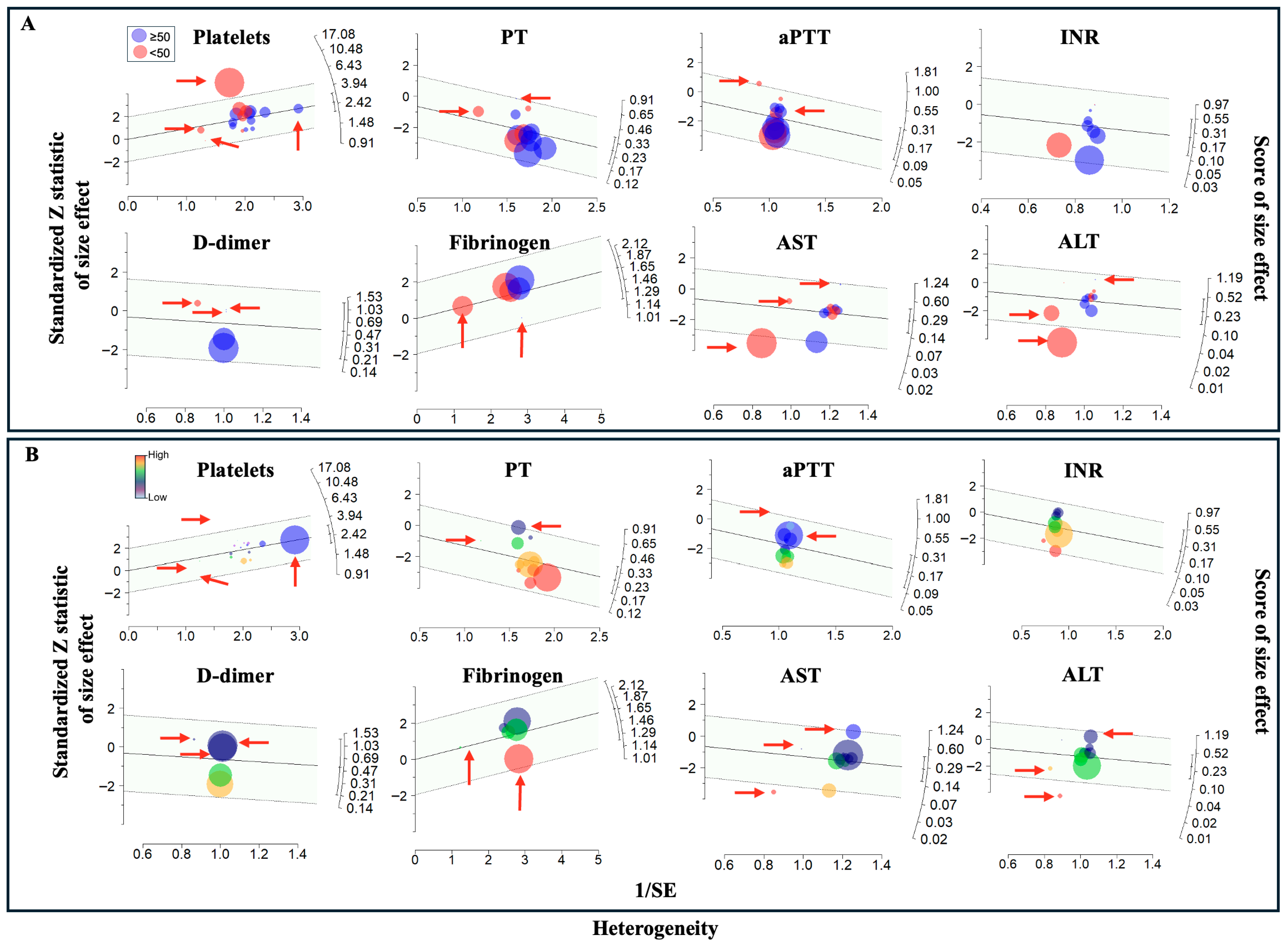
Radial (Galbraith) plots were constructed to visualize individual study influence and identify outliers contributing to heterogeneity. Each study is plotted with the x-coordinate representing the standardized mean difference divided by its standard error, and the y-coordinate representing the inverse of the standard error (1/SE). Studies clustering near the central regression line (within ±2 standard deviations, shown as dashed lines) exert minimal influence on the pooled estimate. Points falling outside this range indicate potential outliers or influential studies, whose removal can be tested for their impact on the overall results [78,79,80].

3. Results

3.1. Laboratory Factors Associated with Survival in CCHF Patients

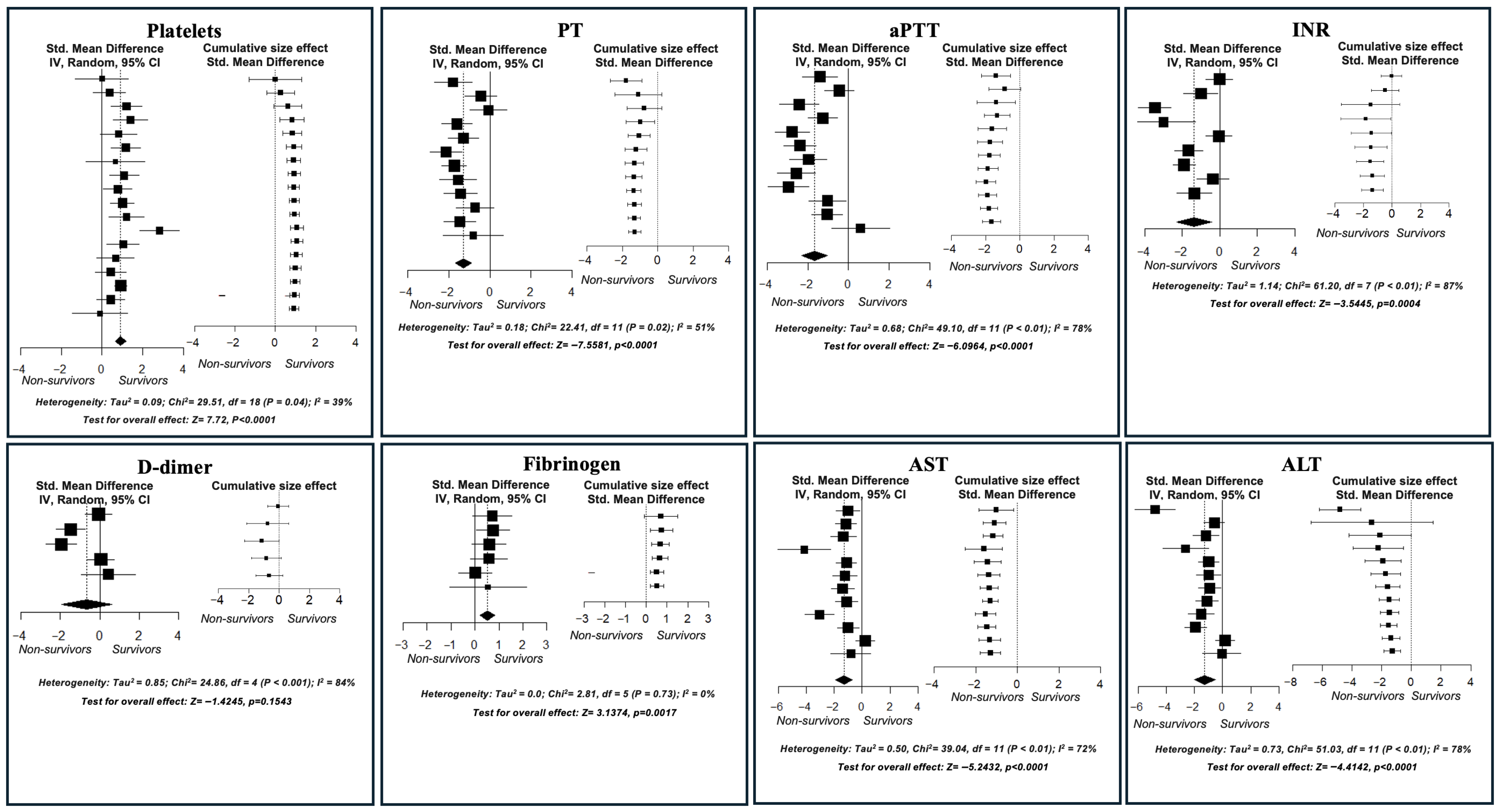
To observe whether there is a significant correlation between laboratory parameters and the risk of mortality, we conducted a meta-analysis using the standardized mean difference between two groups, CCHF survivors and non-survivors. We investigated the platelet count, PT, aPTT, INR, D-dimer, fibrinogen, AST and ALT; we found that all parameters showed significant correlation, where a high platelet count (z = 7.7300, p < 0.0001) and fibrinogen levels (z = 3.1374, p = 0.0017) favored the survivors group, while high values of PT (z = −7.5581, p < 0.0001), aPTT (z = −6.0964, p < 0.0001), INR (z = −3.7529, p = 0.0002), AST (z = −5.2432, p < 0.0001) and ALT (z = −4.4142, p < 0.0001) weighted toward the non-survivors group, with the exception of D-dimer, which did not show significant difference (z = −1.4245, p = 0.1543). However, with the exception of fibrinogen ( τ 2 = 0, I2 = 0), the meta-analyses exhibited heterogeneity. Nevertheless, the outcomes of our studies align in the same direction as the estimated average outcome (Figure 1 and Figure S3). To examine outlier influences, a studentized residual revealed that none of the studies had a value larger than their t-distribution, so there was no indication of outliers in this model with the following parameters: PT (±2.8653), aPTT (±2.8653), INR (±2.7729), D-dimer (±2.5758), and fibrinogen (±2.6383). However, one study (Gul et al. 2015) [59] had a value > ±2.9913 for the platelet count, one study (Parlak et al. 2015) [4] had a value > ±2.8376 for AST and one study (Ali et al. 2007) [60] had a value > ±2.8376 for ALT. According to the Cook’s distances, an influential analysis method developed to detect studies that significantly affect the analysis parameter upon their removal from the analysis group [81], none of the studies could be considered overly influential with the exception of the following studies (with their respective laboratory parameters): Demirci et al., 2023 (fibrinogen) [51]; Parlak et al., 2015 (AST) [4]; and Ali et al., 2007 (ALT) [60]. In addition, we performed a cumulative meta-analysis to observe the size effect chronologically, which validated the size difference between the two groups observed with the meta-analysis. Notably, antithrombin levels were available in only two studies [44,57] (n = 2, I2 = 0%) and showed significantly reduced values in non-survivors (83.65 ± 19.90% activity, z = −2.14, p = 0.032). Similarly, protein C and protein S were reported in two studies [44,57] (n = 2, I2 = 0% for both) and showed no significant differences between survivors and non-survivors (Figure S2). Due to the limited number of studies, these results are presented as hypothesis-generating rather than definitive findings.

3.2. Impact of Individual Studies on the Total Size Effect

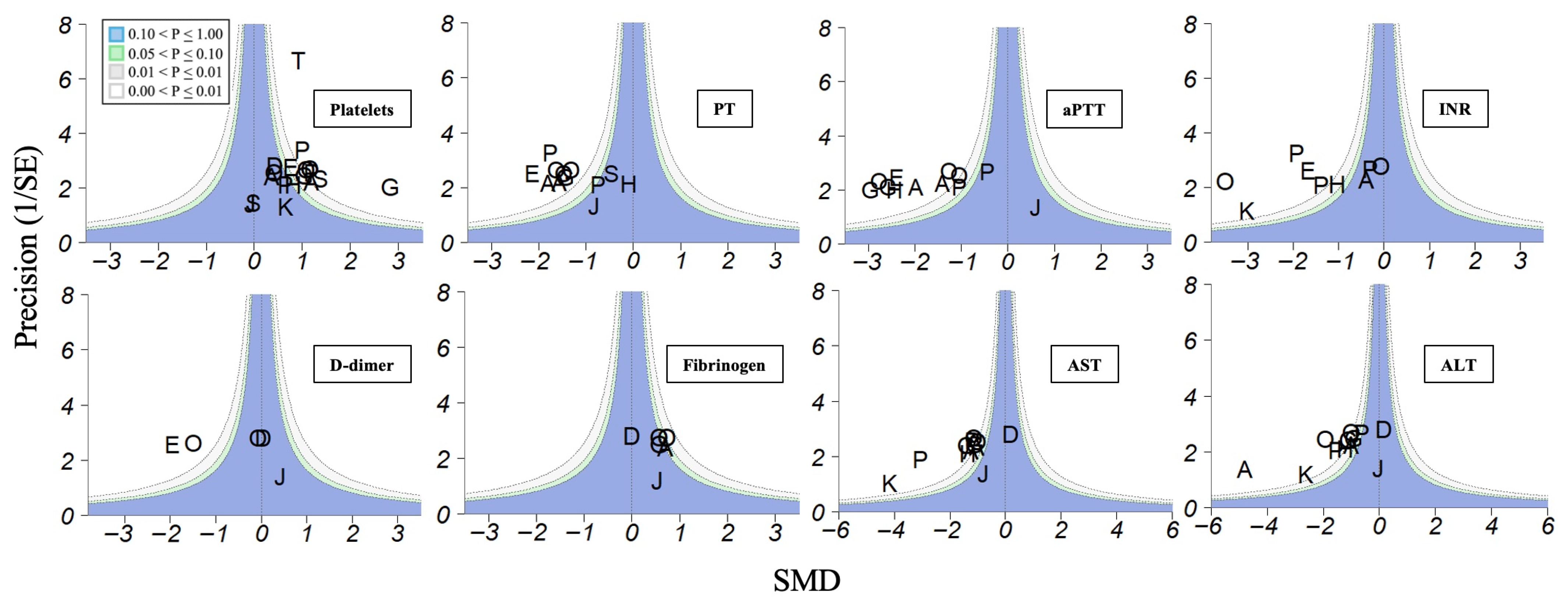
To understand how the significance of the individual studies affected the total size effect and the distribution around the mean, and to examine symmetry bias, we used a contour funnel plot. Neither the rank correlation, a test for publication bias [75], nor the regression test [82] indicated any funnel plot asymmetry for all meta-analyses, for the platelet count ( p = 0.6540 and p = 0.5512, respectively), PT ( p = 0.2496 and p = 0.2115), aPTT ( p = 0.4590 and p = 0.3907), INR ( p = 0.3585 and p = 0. 1927), D-dimer ( p = 0.2333 and p = 0.4410), fibrinogen ( p = 1.0000 and p = 0.8227), and ALT ( p = 0.0311 and p = 0.0092), except for AST ( p = 0.0030) where the regression test indicated a funnel plot asymmetry ( p = 0.0256) (Figure 2 and Figure S4). This validates that the size effect is not related to bias in most of the parameters.

3.3. Subgrouping and Meta-Regression Analyses Based on Sample Size

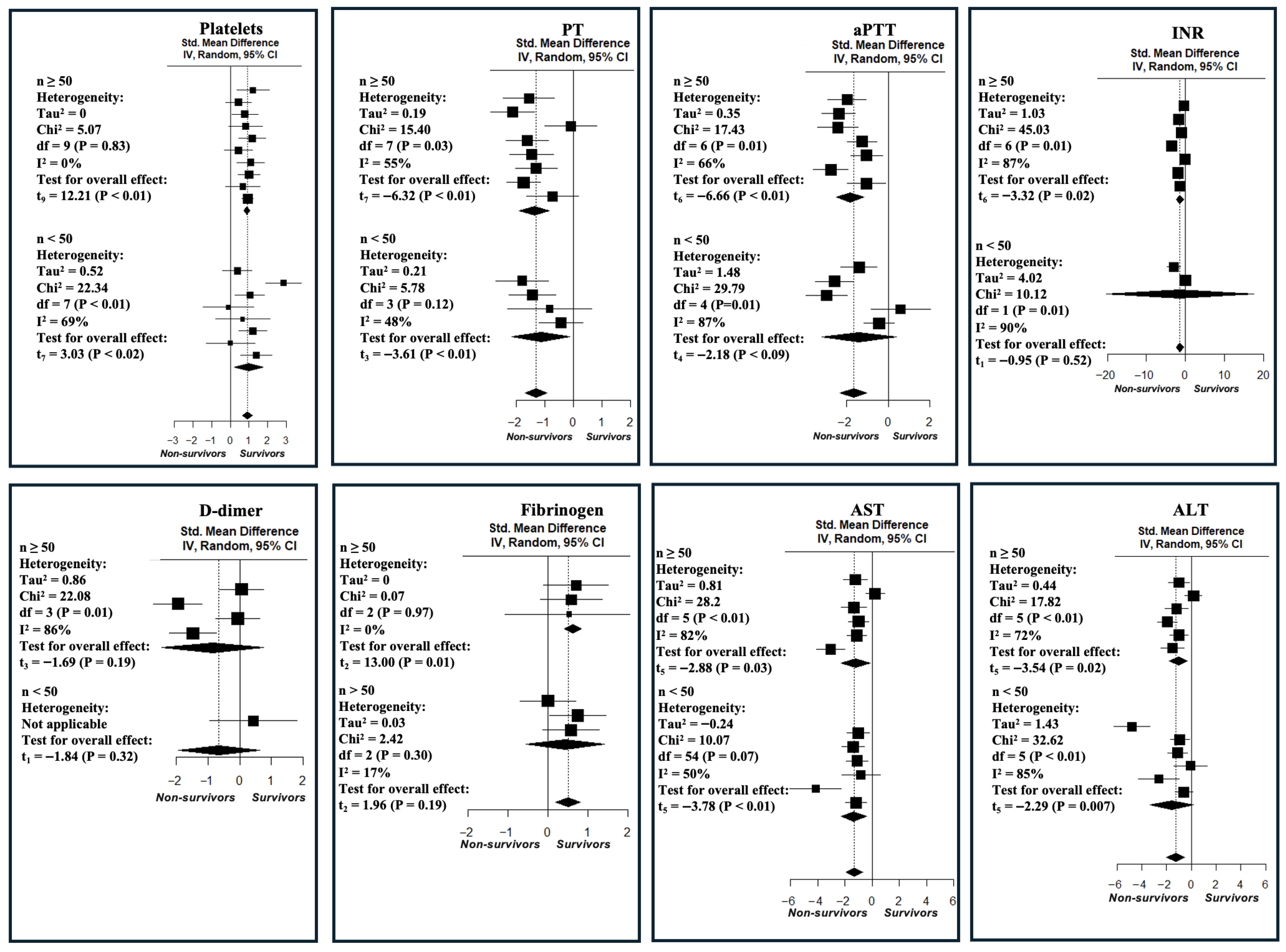
To investigate the heterogeneity of the meta-analyses, we used sample size as a factor to subgroup studies, with 50 as the cutoff number. This resolved the heterogeneity in the platelet count, where studies with a sample size above 50 were homogenous ( τ 2 and I2 are 0) with a test of total effect of 12.21 ( p < 0.01), while the heterogeneity still existed in studies with a sample size less than 50 (see Figure 3). This approach did not resolve the heterogeneity for the rest of the parameters. aPTT carried the least heterogeneity (n > 50) at 66%; the heterogeneity of aPTT did not affect the total size effect. On the other hand, one study in the PT meta-regression showed no significance (Hatipoglu et al.) [52]; however, another study, by Ekiz et al. [61], while affirming the total effect, reinforced heterogeneity due to its large size effect. For INR, the total size effect is significant, but the heterogeneity is indicated by the I2 value of 87%. AST heterogeneity was caused mostly by one study (Demirci et al.) [51], pulling the effect toward no significance, while another study, Parlak et al. [4], affirmed the significance of the size effect but created a heterogenous effect. ALT heterogeneity stems from one study (Demirci et al.) [51], which weighted the effect toward no significance. Subgrouping did not affect fibrinogen, nor the D-dimer; the former remains minimally heterogenous while the latter retains heterogeneity (Figure 3).

3.4. Impact of Individual Studies on the Meta-Regression Analysis

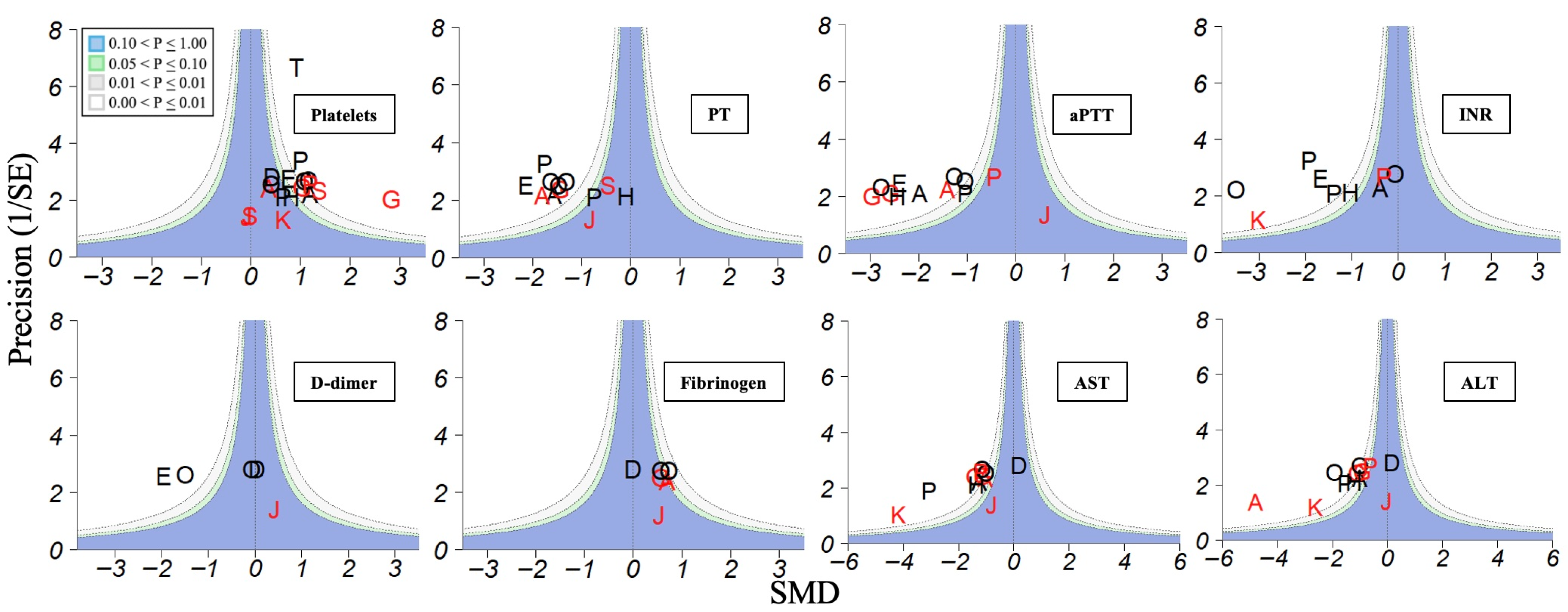
After filtering out studies with a sample size <50, we investigated both rank correlation and regression tests of the meta-regression. Studies were depicted on a funnel plot (Figure 4) and neither the rank correlation nor the regression test indicated any funnel plot asymmetry, around the SMD for all parameters, for the platelet count (1.0000 and p = 0.6588, respectively), PT ( p = 0.1789 and p = 0.0549), aPTT ( p = 0.7726 and p = 0.4581), INR ( p = 1.0000 and p = 0.8573), fibrinogen ( p = 1.0000 and p = 0.1783), AST ( p = 0.0167 and p = 0.0006) and ALT (p = 0.2722 and p = 0.1924), except for D-dimer where the regression test indicated a funnel plot asymmetry ( p < 0.0001) but not the rank correlation test ( p = 0.0833). This affirms that the size effect is not related to bias due to funnel plot asymmetry except for D-dimer.

3.5. Assessment of Heterogeneity and Total Size Effect Using Modified Radial (Galbraith) Plot

To validate our findings and examine both the size effect and sample size effect of each study on the total effect in this meta-analysis and meta-regression analysis, we devised a modified radial (Galbraith) plot to depict meta-analyses and meta-regression analyses to observe how single studies changed the gravity of the total size effect (Figure 5A). We observed a similar effect of Gul et al. 2015 [59] as an outlier, due to its large size effect, in platelet meta-regression; however, its effect is rather confirmatory. Both AST and ALT meta-regression analyses revealed outliers, Parlak et al. 2015 [4] and Ali et al. 2007 [60] respectively. Reversing the depiction, where the size of the circle is a representation of the sample size and the color is a depiction of the size effect (Figure 5B), permitted us to detect studies influencing the total effect that were visibly undetectable in Figure 5A (e.g., two studies negatively contributed to the total effect but did not affect heterogeneity in the platelet meta-regression analysis). No other parameters showed outliers beyond ±2SD regression bounds.

3.6. Normalized Size Effect of Individual Studies

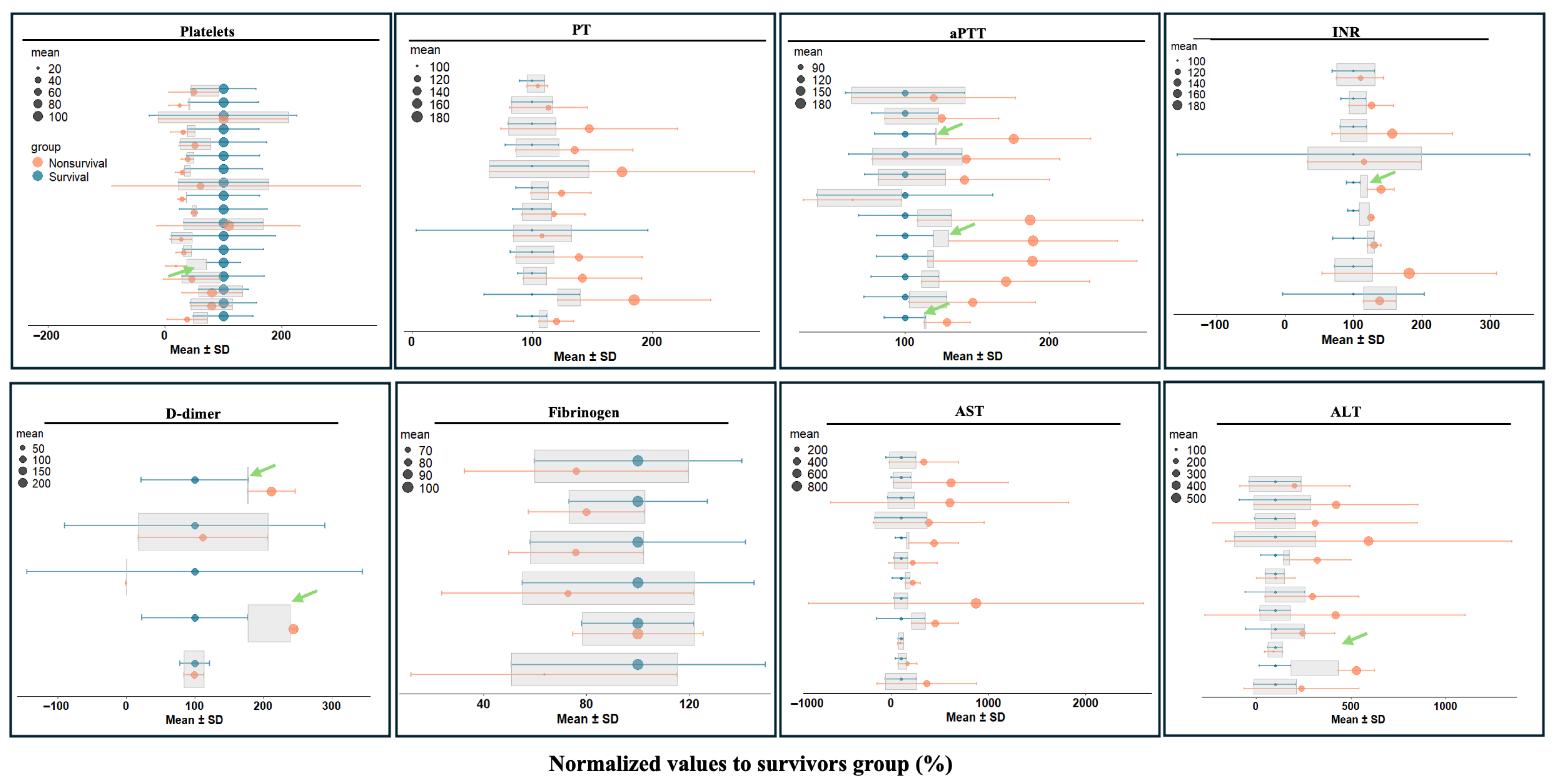
To observe whether individual normalized cutoff values can be used as prognostic factors, normalized values of the parameters with their standard deviations were plotted for each study. We observed that all parameters lack clear cutoff values to be useful as prognostic factors due to the overlapping standard deviations of the survivors and non-survivors (Figure 6). This indicates that these parameters may not be utilized alone as predictors of CCHF fatality.

4. Discussion

The mechanisms underlying hemorrhagic manifestations and fatal outcomes in CCHFV infection remain controversial and are likely multifactorial, involving complex interactions between viral replication, host inflammatory responses, endothelial injury, and hemostatic imbalance. Here, we utilized meta-analyses and meta-regression analyses to investigate the role of the coagulation pathway in CCHF and found that elevated values of PT, aPTT, and INR support that both the extrinsic and intrinsic coagulation pathways play a role in hemorrhage associated with fatal cases of CCHF. This is supported by some reports documenting prolongation of either PT or aPTT but not both in fatal cases of CCHF, whereas fibrinogen was affected in all fatal cases. The nature of the coagulopathy remains to be determined. Overall, our meta-analyses and meta-regression analyses are consistent with the criteria of diffuse intravascular coagulation (DIC). Elevated AST and ALT indicate that liver damage might contribute to the dysregulation of coagulation factor synthesis levels in these patients. However, protein C, protein S and antithrombin (n = 2 studies) [44,57] showed differential patterns: protein C and protein S were unaffected while antithrombin was mildly reduced (83.65 ± 19.90% activity). These findings preclude definitive conclusions about hepatic synthetic capacity versus consumption, as coagulation factors have distinct half-lives (protein C: ~6–8h; antithrombin: ~2–3 days) and may be differentially affected by acute liver injury [83]. However, the much-shorter half-life of protein C versus antithrombin may suggest that impaired liver synthesis is an unlikely explanation for the decrease in antithrombin but not protein C. Notably, reduced antithrombin levels in non-survivors were consistently observed across the two available studies (I2 = 0%). While this finding suggests potential consumptive coagulopathy or DIC-like mechanisms in severe CCHF, the limited number of contributing studies (n = 2) necessitates cautious interpretation. These results should be regarded as hypothesis-generating, meriting validation in larger prospective cohorts to confirm their prognostic utility and underlying pathophysiological relevance. Taken together with the prior work on cytokine and chemokine profiles in severe CCHF, these data are consistent with a scenario in which systemic inflammation and acute-phase mediator release drive endothelial activation and microvascular dysfunction [3,4,5,6,7], thereby precipitating consumption or dysregulation of coagulation factors and platelets. Our meta-analysis therefore does not argue for a primary, isolated ‘coagulation disease’, but instead supports coagulopathy as one important component of a broader, inflammation-driven pathophysiology that includes shock, multiorgan failure, and hemorrhagic manifestations. The available information was insufficient to delve deeper into the nature of the coagulopathy, as a more detailed analysis of individual coagulation factor levels and fibrinolytic factors is lacking to date. Also, our results did not exclude that direct cell host–viral interactions could contribute to alterations in coagulation. Two key questions remain to be addressed: (1) whether the specific consumption of coagulation factors ensues during infection among fatal cases of CCHF, and/or (2) whether the coagulopathy is associated with the release of viral proteins and progeny and/or ensues the induction of cellular and/or endothelial damage.
Our study has inherent limitations due to extensive clinical and methodological variability across the source studies, including: (1) the timing of sample collection relative to disease onset (admission vs. peak illness), (2) sample handling protocols affecting coagulation parameters, (3) laboratory equipment specifications (different coagulometers, reagent sensitivities), (4) concomitant therapies (ribavirin, FFP), (5) patient comorbidities, and (6) viral strain differences. These sources of variation were explicitly addressed through: (1) Random-effects models using DerSimonian–Laird estimation, which provide conservative pooled estimates accounting for between-study heterogeneity (τ2 reported for all analyses). (2) A comprehensive heterogeneity assessment: Q-test, I2 (0–87% across parameters), and prediction intervals for all significant findings. (3) Galbraith (radial) plots identifying influential outliers (Gul 2015 (platelets) [59], Parlak et al., 2015 (AST) [4]; and Ali et al., 2007 (ALT) [60]), with sensitivity analyses confirming result stability upon exclusion. (4) Subgroup analyses by sample size (n < 50 vs. n ≥ 50), which resolved platelet heterogeneity completely (τ2 = 0, I2 = 0% in larger studies). (5) No small-study effects (contour-enhanced funnel plots symmetrical except AST/D-dimer, confirmed by rank correlation and Egger’s regression). Effect directions remained remarkably consistent across studies (favoring survivors or non-survivors, never the opposite), supporting the robustness of pooled estimates despite extensive clinical heterogeneity. Human genetic variation might play a role and add another layer in enhancing the overlapping of margin of errors; for instance, MCP-1 was shown to worsen during the course of the disease [5].
Another limitation of our work is that we systematically interrogated only conventional hematology and coagulation parameters, without the ability to jointly meta-analyze cytokine profiles, endothelial activation markers, or detailed hemodynamic data. As such, our findings should be interpreted as evidence that coagulation and platelet abnormalities are robust correlates of severity and mortality within CCHF, rather than as proof that these are the primary initiating events in pathogenesis; they likely arise in the context of a broader cytokine- and endothelium-driven process that culminates in DIC-like coagulopathy and shock.
Our analysis supports that, in addition to thrombocytopenia, coagulopathy and liver damage play a role in CCHF-associated hemorrhage. However, we cannot rule out that the interaction of viral proteins with coagulation factors, intra- or extracellularly, also contributes to CCHF hemorrhage. The current evidence does not allow us to identify which altered factor is the main driver of hemorrhage and whether the coagulopathy observed in CCHF cases represents a host-adaptative response to infection, or whether it is specific to CCHFV pathology. For supportive therapy, platelets, fresh frozen plasma and fibrinogen should be considered to rectify the irregularities in hemostasis in CCHF. In cases of necrosis without major high-risk bleeding, low-dose heparin may be considered. It has been shown that corticosteroids are preventive in CCHF [84], and corticosteroids enhance coagulation factors and fibrinogen production [85,86,87]. Collectively, these pieces of evidence validate our meta-analyses that both platelets and coagulation factors play role in hemorrhage induced by CCHF disease, and exposes the urgent need for more specific research in this area.

5. Conclusions

CCHF-related mortality is linked to combined thrombocytopenia and a distinct coagulopathy. The correction of thrombocytopenia alone may be insufficient to prevent hemorrhage; targeted therapeutic approaches addressing both platelet deficits and dysregulated coagulation are likely required to improve patient outcomes.

Supplementary Materials

The following supporting information can be downloaded at: https://www.mdpi.com/article/10.3390/zoonoticdis6010007/s1, Figure S1: Flow chart of study selection for the systematic review and meta-analysis, showing the number of records identified, screened, excluded, and included at each stage; Figure S2: Effect of CCHF on anticoagulant proteins C, S, and antithrombin III. The figure includes forest plots showing study-specific and pooled effect estimates, alongside contour-enhanced funnel plots for each protein to assess potential asymmetry and publication bias. Data were analyzed using R (meta and metafor packages). Figure S3: Funnel plot showing the distribution of studies to assess potential asymmetry indicative of publication bias. Data were analyzed using R (meta and metafor packages); Figure S4: Funnel plot showing the distribution of studies with sample size > 50 to assess potential asymmetry indicative of publication bias. Data were analyzed using R (meta and metafor packages).

Author Contributions

Conceptualization, R.K., J.C.d.l.T. and H.W.; Formal analysis, R.K., R.S.U. and H.W.; Investigation, R.K., R.S.U. and H.W.; Methodology, R.K. and H.W.; Project administration, R.K. and H.W.; Software, H.W.; Validation, R.K., R.S.U. and H.W.; Visualization, H.W.; Writing—original draft, R.K. and H.W.; Writing—review and editing, R.K., R.S.U., S.S.K., A.J., E.W., S.R.W., L.O.M., J.C.d.l.T. and H.W.; Supervision, H.W. All authors have read and agreed to the published version of the manuscript.

Funding

This research received no external funding.

Institutional Review Board Statement

Not applicable.

Informed Consent Statement

Not applicable.

Data Availability Statement

The original contributions presented in this study are included in the article/Supplementary Material. Further inquiries can be directed to the corresponding author.

Conflicts of Interest

The authors declare that there are no conflicts of interest.

References

  1. Ergönül, Ö. Crimean-Congo Haemorrhagic Fever. Lancet Infect. Dis. 2006, 6, 203–214. [Google Scholar] [CrossRef]
  2. Shayan, S.; Bokaean, M.; Shahrivar, M.R.; Chinikar, S. Crimean-Congo Hemorrhagic Fever. Lab. Med. 2015, 46, 180–189. [Google Scholar] [CrossRef]
  3. Papa, A.; Tsergouli, K.; Çağlayık, D.Y.; Bino, S.; Como, N.; Uyar, Y.; Korukluoglu, G. Cytokines as Biomarkers of Crimean-Congo Hemorrhagic Fever. J. Med. Virol. 2016, 88, 21–27. [Google Scholar] [CrossRef]
  4. Parlak, E.; Ertürk, A.; Çağ, Y.; Sebin, E.; Gümüşdere, M. The Effect of Inflammatory Cytokines and the Level of Vitamin D on Prognosis in Crimean-Congo Hemorrhagic Fever. Int. J. Clin. Exp. Med. 2015, 8, 18302–18310. [Google Scholar]
  5. Bagci, B.; Bagci, G.; Buyuktuna, S.A.; Elaldi, N. Association of MCP-1 Promotor Polymorphism with Disease Severity of Crimean-Congo Hemorrhagic Fever. J. Med. Virol. 2020, 92, 2976–2982. [Google Scholar] [CrossRef]
  6. Ergönül, Ö.; Şeref, C.; Eren, Ş.; Çelikbaş, A.; Baykam, N.; Dokuzoğuz, B.; Gönen, M.; Can, F. Cytokine Response in Crimean-Congo Hemorrhagic Fever Virus Infection. J. Med. Virol. 2017, 89, 1707–1713. [Google Scholar] [CrossRef]
  7. Pirincal, A.; Cetin, N.S.G.; Sumbul, B.; Daskaya, H.; Durdu, B.; Doymaz, M.Z. A Non-Fatal Crimean-Congo Hemorrhagic Fever Virus Infection; The Balanced Cytokine Responses on the Outcome of the Clinical Disease. Diagn. Microbiol. Infect. Dis. 2026, 114, 117145. [Google Scholar] [CrossRef] [PubMed]
  8. Marriott, A.C.; Nuttall, P.A. Large RNA Segment of Dugbe Nairovirus Encodes the Putative RNA Polymerase. J. Gen. Virol. 1996, 77, 1775–1780. [Google Scholar] [CrossRef] [PubMed]
  9. Elliott, R.M. Emerging Viruses: The Bunyaviridae. Mol. Med. 1997, 3, 572–577. [Google Scholar] [CrossRef]
  10. Elliott, R.M. Nucleotide Sequence Analysis of the Small (S) RNA Segment of Bunyamwera Virus, the Prototype of the Family Bunyaviridae. J. Gen. Virol. 1989, 70, 1281–1285. [Google Scholar] [CrossRef] [PubMed]
  11. Kohl, A.; Dunn, E.F.; Lowen, A.C.; Elliott, R.M. Complementarity, Sequence and Structural Elements within the 3′ and 5′ Non-Coding Regions of the Bunyamwera Orthobunyavirus S Segment Determine Promoter Strength. J. Gen. Virol. 2004, 85, 3269–3278. [Google Scholar] [CrossRef] [PubMed]
  12. Lowen, A.C.; Noonan, C.; McLees, A.; Elliott, R.M. Efficient Bunyavirus Rescue from Cloned cDNA. Virology 2004, 330, 493–500. [Google Scholar] [CrossRef] [PubMed][Green Version]
  13. Schwarz, T.F.; Nsanze, H.; Ameen, A.M. Clinical Features of Crimean-Congo Haemorrhagic Fever in the United Arab Emirates. Infection 1997, 25, 364–367. [Google Scholar] [CrossRef]
  14. Scholte, F.E.M.; Zivcec, M.; Dzimianski, J.V.; Deaton, M.K.; Spengler, J.R.; Welch, S.R.; Nichol, S.T.; Pegan, S.D.; Spiropoulou, C.F.; Bergeron, É. Crimean-Congo Hemorrhagic Fever Virus Suppresses Innate Immune Responses via a Ubiquitin and ISG15 Specific Protease. Cell Rep. 2017, 20, 2396–2407. [Google Scholar] [CrossRef]
  15. Capodagli, G.C.; McKercher, M.A.; Baker, E.A.; Masters, E.M.; Brunzelle, J.S.; Pegan, S.D. Structural Analysis of a Viral Ovarian Tumor Domain Protease from the Crimean-Congo Hemorrhagic Fever Virus in Complex with Covalently Bonded Ubiquitin. J. Virol. 2011, 85, 3621–3630. [Google Scholar] [CrossRef]
  16. Sanchez, A.J.; Vincent, M.J.; Erickson, B.R.; Nichol, S.T. Crimean-Congo Hemorrhagic Fever Virus Glycoprotein Precursor Is Cleaved by Furin-like and SKI-1 Proteases to Generate a Novel 38-Kilodalton Glycoprotein. J. Virol. 2006, 80, 514–525. [Google Scholar] [CrossRef]
  17. Barnwal, B.; Karlberg, H.; Mirazimi, A.; Tan, Y.-J. The Non-Structural Protein of Crimean-Congo Hemorrhagic Fever Virus Disrupts the Mitochondrial Membrane Potential and Induces Apoptosis. J. Biol. Chem. 2016, 291, 582–592. [Google Scholar] [CrossRef]
  18. Deyde, V.M.; Khristova, M.L.; Rollin, P.E.; Ksiazek, T.G.; Nichol, S.T. Crimean-Congo Hemorrhagic Fever Virus Genomics and Global Diversity. J. Virol. 2006, 80, 8834–8842. [Google Scholar] [CrossRef]
  19. Prioritizing Diseases for Research and Development in Emergency Contexts. Available online: https://www.who.int/activities/prioritizing-diseases-for-research-and-development-in-emergency-contexts (accessed on 14 May 2023).
  20. Xu, Z.-S.; Du, W.-T.; Wang, S.-Y.; Wang, M.-Y.; Yang, Y.-N.; Li, Y.-H.; Li, Z.-Q.; Zhao, L.-X.; Yang, Y.; Luo, W.-W.; et al. LDLR Is an Entry Receptor for Crimean-Congo Hemorrhagic Fever Virus. Cell Res. 2024, 34, 140–150. [Google Scholar] [CrossRef]
  21. Monteil, V.M.; Wright, S.C.; Dyczynski, M.; Kellner, M.J.; Appelberg, S.; Platzer, S.W.; Ibrahim, A.; Kwon, H.; Pittarokoilis, I.; Mirandola, M.; et al. Crimean–Congo Haemorrhagic Fever Virus Uses LDLR to Bind and Enter Host Cells. Nat. Microbiol. 2024, 9, 1499–1512. [Google Scholar] [CrossRef] [PubMed]
  22. Suda, Y.; Fukushi, S.; Tani, H.; Murakami, S.; Saijo, M.; Horimoto, T.; Shimojima, M. Analysis of the Entry Mechanism of Crimean-Congo Hemorrhagic Fever Virus, Using a Vesicular Stomatitis Virus Pseudotyping System. Arch. Virol. 2016, 161, 1447–1454. [Google Scholar] [CrossRef]
  23. Garrison, A.R.; Radoshitzky, S.R.; Kota, K.P.; Pegoraro, G.; Ruthel, G.; Kuhn, J.H.; Altamura, L.A.; Kwilas, S.A.; Bavari, S.; Haucke, V.; et al. Crimean-Congo Hemorrhagic Fever Virus Utilizes a Clathrin-and Early Endosome-Dependent Entry Pathway. Virology 2013, 444, 45–54. [Google Scholar] [CrossRef] [PubMed]
  24. Simon, M.; Johansson, C.; Mirazimi, A. Crimean-Congo Hemorrhagic Fever Virus Entry and Replication Is Clathrin-, pH-and Cholesterol-Dependent. J. Gen. Virol. 2009, 90, 210–215. [Google Scholar] [CrossRef] [PubMed]
  25. Dai, S.; Wu, Q.; Wu, X.; Peng, C.; Liu, J.; Tang, S.; Zhang, T.; Deng, F.; Shen, S. Differential Cell Line Susceptibility to Crimean-Congo Hemorrhagic Fever Virus. Front. Cell. Infect. Microbiol. 2021, 11, 648077. [Google Scholar] [CrossRef]
  26. Connolly-Andersen, A.-M.; Douagi, I.; Kraus, A.A.; Mirazimi, A. Crimean Congo Hemorrhagic Fever Virus Infects Human Monocyte-Derived Dendritic Cells. Virology 2009, 390, 157–162. [Google Scholar] [CrossRef]
  27. Pshenichnaya, N.Y.; Sydenko, I.S.; Klinovaya, E.P.; Romanova, E.B.; Zhuravlev, A.S. Possible Sexual Transmission of Crimean-Congo Hemorrhagic Fever. Int. J. Infect. Dis. 2016, 45, 109–111. [Google Scholar] [CrossRef] [PubMed]
  28. Ergonul, O.; Battal, I. Potential Sexual Transmission of Crimean-Congo Hemorrhagic Fever Infection. Jpn. J. Infect. Dis. 2014, 67, 137–138. [Google Scholar] [CrossRef]
  29. Tsergouli, K.; Karampatakis, T.; Haidich, A.-B.; Metallidis, S.; Papa, A. Nosocomial Infections Caused by Crimean–Congo Haemorrhagic Fever Virus. J. Hosp. Infect. 2020, 105, 43–52. [Google Scholar] [CrossRef]
  30. Spengler, J.R.; Estrada-Peña, A. Host Preferences Support the Prominent Role of Hyalomma Ticks in the Ecology of Crimean-Congo Hemorrhagic Fever. PLoS Negl. Trop. Dis. 2018, 12, e0006248. [Google Scholar] [CrossRef]
  31. Telmadarraiy, Z.; Chinikar, S.; Vatandoost, H.; Faghihi, F.; Hosseini-Chegeni, A. Vectors of Crimean Congo Hemorrhagic Fever Virus in Iran. J. Arthropod Borne Dis. 2015, 9, 137–147. [Google Scholar]
  32. Rocklöv, J.; Dubrow, R. Climate Change: An Enduring Challenge for Vector-Borne Disease Prevention and Control. Nat. Immunol. 2020, 21, 479–483. [Google Scholar] [CrossRef]
  33. Ostfeld, R.S.; Brunner, J.L. Climate Change and Ixodes Tick-Borne Diseases of Humans. Philos. Trans. R. Soc. Lond. B Biol. Sci. 2015, 370, 20140051. [Google Scholar] [CrossRef]
  34. Chitimia-Dobler, L.; Schaper, S.; Rieß, R.; Bitterwolf, K.; Frangoulidis, D.; Bestehorn, M.; Springer, A.; Oehme, R.; Drehmann, M.; Lindau, A.; et al. Imported Hyalomma Ticks in Germany in 2018. Parasites Vectors 2019, 12, 134. [Google Scholar] [CrossRef]
  35. Carrera-Faja, L.; Cardells, J.; Pailler-García, L.; Lizana, V.; Alfaro-Deval, G.; Espunyes, J.; Napp, S.; Cabezón, O. Evidence of Prolonged Crimean-Congo Hemorrhagic Fever Virus Endemicity by Retrospective Serosurvey, Eastern Spain. Emerg. Infect. Dis. 2022, 28, 1031–1034. [Google Scholar] [CrossRef]
  36. Nili, S.; Khanjani, N.; Jahani, Y.; Bakhtiari, B. The Effect of Climate Variables on the Incidence of Crimean Congo Hemorrhagic Fever (CCHF) in Zahedan, Iran. BMC Public Health 2020, 20, 1893. [Google Scholar] [CrossRef]
  37. Bah, M.T.; Grosbois, V.; Stachurski, F.; Muñoz, F.; Duhayon, M.; Rakotoarivony, I.; Appelgren, A.; Calloix, C.; Noguera, L.; Mouillaud, T.; et al. The Crimean-Congo Haemorrhagic Fever Tick Vector Hyalomma marginatum in the South of France: Modelling Its Distribution and Determination of Factors Influencing Its Establishment in a Newly Invaded Area. Transbound. Emerg. Dis. 2022, 69, e2351–e2365. [Google Scholar] [CrossRef]
  38. Grandi, G.; Chitimia-Dobler, L.; Choklikitumnuey, P.; Strube, C.; Springer, A.; Albihn, A.; Jaenson, T.G.T.; Omazic, A. First Records of Adult Hyalomma marginatum and H. rufipes Ticks (Acari: Ixodidae) in Sweden. Ticks Tick-Borne Dis. 2020, 11, 101403. [Google Scholar] [CrossRef]
  39. Norman, F.F.; Arce, O.A.; Díaz-Menéndez, M.; Belhassen-García, M.; González-Sanz, M. Changes in the Epidemiology of Crimean-Congo Hemorrhagic Fever: Impact of Travel and a One Health Approach in the European Region. Travel Med. Infect. Dis. 2025, 64, 102806. [Google Scholar] [CrossRef]
  40. Palomar, A.M.; Portillo, A.; Mazuelas, D.; Roncero, L.; Arizaga, J.; Crespo, A.; Gutiérrez, Ó.; Márquez, F.J.; Cuadrado, J.F.; Eiros, J.M.; et al. Molecular Analysis of Crimean-Congo Hemorrhagic Fever Virus and Rickettsia in Hyalomma marginatum Ticks Removed from Patients (Spain) and Birds (Spain and Morocco), 2009–2015. Ticks Tick-Borne Dis. 2016, 7, 983–987. [Google Scholar] [CrossRef]
  41. Tsapko, N.V.; Volynkina, A.S.; Evchenko, A.Y.; Lisitskaya, Y.V.; Shaposhnikova, L.I. Detection of Crimean-Congo Hemorrhagic Fever Virus in Ticks Collected from South Russia. Ticks Tick-Borne Dis. 2022, 13, 101890. [Google Scholar] [CrossRef]
  42. Pshenichnaya, N.Y.; Leblebicioglu, H.; Bozkurt, I.; Sannikova, I.V.; Abuova, G.N.; Zhuravlev, A.S.; Barut, S.; Shermetova, M.B.; Fletcher, T.E. Crimean-Congo Hemorrhagic Fever in Pregnancy: A Systematic Review and Case Series from Russia, Kazakhstan and Turkey. Int. J. Infect. Dis. 2017, 58, 58–64. [Google Scholar] [CrossRef]
  43. Kleib, A.S.; Salihy, S.M.; Ghaber, S.M.; Sidiel, B.W.; Sidiya, K.C.; Bettar, E.S. Crimean-Congo Hemorrhagic Fever with Acute Subdural Hematoma, Mauritania, 2012. Emerg. Infect. Dis. 2016, 22, 1305–1306. [Google Scholar] [CrossRef]
  44. Onguru, P.; Dagdas, S.; Bodur, H.; Yilmaz, M.; Akinci, E.; Eren, S.; Ozet, G. Coagulopathy Parameters in Patients with Crimean-Congo Hemorrhagic Fever and Its Relation with Mortality. J. Clin. Lab. Anal. 2010, 24, 163–166. [Google Scholar] [CrossRef]
  45. Zivcec, M.; Safronetz, D.; Scott, D.; Robertson, S.; Ebihara, H.; Feldmann, H. Lethal Crimean-Congo Hemorrhagic Fever Virus Infection in Interferon α/β Receptor Knockout Mice Is Associated with High Viral Loads, Proinflammatory Responses, and Coagulopathy. J. Infect. Dis. 2013, 207, 1909–1921. [Google Scholar] [CrossRef]
  46. Fletcher, T.E.; Leblebicioglu, H.; Bozkurt, I.; Sunbul, M.; Bilek, H.; Asik, Z.; Barut, S.; Gunes, F.; Gemici, U.; Hewson, R.; et al. Rotational Thromboelastometry alongside Conventional Coagulation Testing in Patients with Crimean–Congo Haemorrhagic Fever: An Observational Cohort Study. Lancet Infect. Dis. 2019, 19, 862–871. [Google Scholar] [CrossRef]
  47. Duygu, F.; Sari, T.; Gunal, O.; Barut, S.; Atay, A.; Aytekin, F. Cutaneous Findings of Crimean-Congo Hemorrhagic Fever: A Study of 269 Cases. Jpn. J. Infect. Dis. 2018, 71, 408–412. [Google Scholar] [CrossRef]
  48. Erenler, A.K.; Kulaksiz, F.; Ülger, H.; Çapraz, M.; Tomak, L.; Baydin, A. Predictors of Crimean-Congo Hemorrhagic Fever in the Emergency Department. Eur. Rev. Med. Pharmacol. Sci. 2015, 19, 3811–3816. [Google Scholar]
  49. Ergonul, O.; Celikbas, A.; Baykam, N.; Eren, S.; Dokuzoguz, B. Analysis of Risk-Factors among Patients with Crimean-Congo Haemorrhagic Fever Virus Infection: Severity Criteria Revisited. Clin. Microbiol. Infect. 2006, 12, 551–554. [Google Scholar] [CrossRef]
  50. Bower, H.; Karsany, M.E.; Alzain, M.; Gannon, B.; Mohamed, R.; Mahmoud, I.; Eldegail, M.; Taha, R.; Osman, A.; Mohamednour, S.; et al. Detection of Crimean-Congo Haemorrhagic Fever Cases in a Severe Undifferentiated Febrile Illness Outbreak in the Federal Republic of Sudan: A Retrospective Epidemiological and Diagnostic Cohort Study. PLoS Negl. Trop. Dis. 2019, 13, e0007571. [Google Scholar] [CrossRef]
  51. Demirci, B.; Coskun, A. The Effect of Fetuin-A and Other Laboratory Paremeters on Prognosis and Mortality in Crimean-Congo Hemorrhagic Fever. Iran. J. Public Health 2023, 52, 97–105. [Google Scholar] [CrossRef]
  52. Hatipoglu, C.A.; Bulut, C.; Yetkin, M.A.; Ertem, G.T.; Erdinc, F.S.; Kilic, E.K.; Sari, T.; Kinikli, S.; Oral, B.; Demiroz, A.P. Evaluation of Clinical and Laboratory Predictors of Fatality in Patients with Crimean-Congo Haemorrhagic Fever in a Tertiary Care Hospital in Turkey. Scand. J. Infect. Dis. 2010, 42, 516–521. [Google Scholar] [CrossRef]
  53. Lorenzo Juanes, H.M.; Carbonell, C.; Sendra, B.F.; López-Bernus, A.; Bahamonde, A.; Orfao, A.; Lista, C.V.; Ledesma, M.S.; Negredo, A.I.; Rodríguez-Alonso, B.; et al. Crimean-Congo Hemorrhagic Fever, Spain, 2013–2021. Emerg. Infect. Dis. 2023, 29, 252–259. [Google Scholar] [CrossRef]
  54. de la Calle-Prieto, F.; Martín-Quirós, A.; Trigo, E.; Mora-Rillo, M.; Arsuaga, M.; Díaz-Menéndez, M.; Arribas, J.R. Therapeutic Management of Crimean-Congo Haemorrhagic Fever. Enferm. Infecc. Y Microbiol. Clin. (Engl. Ed.) 2018, 36, 517–522. [Google Scholar] [CrossRef]
  55. Duygu, F.; Sari, T.; Celik, H. Effects of Platelet Function on the Haemorrhagic Manifestations and Mortality in Crimean-Congo Haemorrhagic Fever. Infez. Med. 2018, 26, 341–346. [Google Scholar] [PubMed]
  56. Kouhpayeh, H. A Systematic Review of Treatment Strategies Including Future Novel Therapies in Crimean-Congo Hemorrhagic Fever. Int. J. Infect. 2021, 8, e113427. [Google Scholar] [CrossRef]
  57. Ozturk, B.; Tutuncu, E.; Kuscu, F.; Gurbuz, Y.; Sencan, I.; Tuzun, H. Evaluation of Factors Predictive of the Prognosis in Crimean-Congo Hemorrhagic Fever: New Suggestions. Int. J. Infect. Dis. 2012, 16, e89–e93. [Google Scholar] [CrossRef] [PubMed]
  58. Tasdelen Fisgin, N.; Fisgin, T.; Tanyel, E.; Doganci, L.; Tulek, N.; Guler, N.; Duru, F. Crimean-Congo Hemorrhagic Fever: Five Patients with Hemophagocytic Syndrome. Am. J. Hematol. 2008, 83, 73–76. [Google Scholar] [CrossRef]
  59. Gul, S.; Ozturk, D.B.; Kisa, U.; Kacmaz, B.; Yesilyurt, M. Procalcitonin Level and Its Predictive Effect on Mortality in Crimean-Congo Hemorrhagic Fever Patients. Jpn. J. Infect. Dis. 2015, 68, 511–513. [Google Scholar] [CrossRef][Green Version]
  60. Ali, N.; Chotani, R.A.; Anwar, M.; Nadeem, M.; Karamat, K.A.; Tariq, W.U.Z. A Crimean-Congo Haemorrhagic Fever Outbreak in Northern Balochistan. J. Coll. Physicians Surg. Pak. 2007, 17, 477–481. [Google Scholar] [PubMed]
  61. Ekiz, F.; Gürbüz, Y.; Basar, Ö.; Aytekin, G.; Ekiz, Ö.; Sentürk, Ç.Ş.; Aktas, B.; Yılmaz, B.; Altınbaş, A.; Çoban, Ş.; et al. Mean Platelet Volume in the Diagnosis and Prognosis of Crimean-Congo Hemorrhagic Fever. Clin. Appl. Thromb. Hemost. 2013, 19, 441–444. [Google Scholar] [CrossRef]
  62. Sharifi-Mood, B.; Mardani, M.; Keshtkar-Jahromi, M.; Rahnavardi, M.; Hatami, H.; Metanat, M. Clinical and Epidemiologic Features of Crimean-Congo Hemorrhagic Fever Among Children and Adolescents from Southeastern Iran. Pediatr. Infect. Dis. J. 2008, 27, 561. [Google Scholar] [CrossRef]
  63. Kubar, A.; Haciomeroglu, M.; Ozkul, A.; Bagriacik, U.; Akinci, E.; Sener, K.; Bodur, H. Prompt Administration of Crimean-Congo Hemorrhagic Fever (CCHF) Virus Hyperimmunoglobulin in Patients Diagnosed with CCHF and Viral Load Monitorization by Reverse Transcriptase-PCR. Jpn. J. Infect. Dis. 2011, 64, 439–443. [Google Scholar] [CrossRef] [PubMed]
  64. Pancar, G.S.; Duygu, F.; Kalkan, G. The Prognostic Role of the New Entity Butterfly-like Facial Rash and Cutaneous Findings in Patients with Crimean Congo Haemorrhagic Fever. J. Eur. Acad. Dermatol. Venereol. 2014, 28, 604–608. [Google Scholar] [CrossRef]
  65. Aksoy, O.; Parlak, E.; Parlak, M.; Aksoy, H. Serum β-Defensin-2 Levels and Their Relationship with the Clinical Course and Prognosis in Patients with Crimean-Congo Hemorrhagic Fever. Med. Princ. Pract. 2015, 25, 163–168. [Google Scholar] [CrossRef]
  66. Gurbuz, Y.; Ozturk, B.; Tutuncu, E.E.; Sencan, I.; Cicek Senturk, G.; Altay, F.A. Evaluation of Prognostic Values of Tissue Plasminogen Activator and Plasminogen Activator Inhibitor-1 in Crimean-Congo Hemorrhagic Fever Patients. Jundishapur J. Microbiol. 2015, 8, e26514. [Google Scholar] [CrossRef]
  67. Osquee, H.O.; Taghizadeh, S.; Haghdoost, M.; Pourjafar, H.; Ansari, F. New Insight for the Prognosis of CCHF: Clinical, Laboratory and Sonography Findings. Curr. Med. Imaging 2020, 16, 1125–1130. [Google Scholar] [CrossRef] [PubMed]
  68. Tekin, Y.K.; Engin, A. An Evaluation of the Different Serum Markers Associated with Mortality in Crimean–Congo Hemorrhagic Fever. Rambam Maimonides Med. J. 2020, 11, e0032. [Google Scholar] [CrossRef] [PubMed]
  69. Onguru, P.; Akgul, E.O.; Akıncı, E.; Yaman, H.; Kurt, Y.G.; Erbay, A.; Bayazıt, F.N.; Bodur, H.; Erbil, K.; Acıkel, C.H.; et al. High Serum Levels of Neopterin in Patients with Crimean–Congo Hemorrhagic Fever and Its Relation with Mortality. J. Infect. 2008, 56, 366–370. [Google Scholar] [CrossRef]
  70. DerSimonian, R.; Laird, N. Meta-Analysis in Clinical Trials. Control. Clin. Trials 1986, 7, 177–188. [Google Scholar] [CrossRef]
  71. Cochran, W.G. The Combination of Estimates from Different Experiments. Biometrics 1954, 10, 101–129. [Google Scholar] [CrossRef]
  72. Higgins, J.P.T.; Thompson, S.G. Quantifying Heterogeneity in a Meta-Analysis. Stat. Med. 2002, 21, 1539–1558. [Google Scholar] [CrossRef]
  73. Riley, R.D.; Higgins, J.P.T.; Deeks, J.J. Interpretation of Random Effects Meta-Analyses. BMJ 2011, 342, d549. [Google Scholar] [CrossRef]
  74. Viechtbauer, W.; Cheung, M.W.-L. Outlier and Influence Diagnostics for Meta-Analysis. Res. Synth. Methods 2010, 1, 112–125. [Google Scholar] [CrossRef] [PubMed]
  75. Begg, C.B.; Mazumdar, M. Operating Characteristics of a Rank Correlation Test for Publication Bias. Biometrics 1994, 50, 1088–1101. [Google Scholar] [CrossRef]
  76. Sterne, J.A.C.; Egger, M. Regression Methods to Detect Publication and Other Bias in Meta-Analysis. In Publication Bias in Meta-Analysis: Prevention, Assessment and Adjustments; John Wiley & Sons, Inc.: Hoboken, NJ, USA, 2006; pp. 99–110. ISBN 978-0-470-87014-3. [Google Scholar]
  77. R: The R Project for Statistical Computing. Available online: https://www.r-project.org/ (accessed on 6 April 2024).
  78. Viechtbauer, W. Conducting Meta-Analyses in R with the Metafor Package. J. Stat. Softw. 2010, 36, 1–48. [Google Scholar] [CrossRef]
  79. Galbraith, R.F. Graphical Display of Estimates Having Differing Standard Errors. Technometrics 1988, 30, 271–281. [Google Scholar] [CrossRef]
  80. Galbraith, R.F. Some Applications of Radial Plots. J. Am. Stat. Assoc. 1994, 89, 1232–1242. [Google Scholar] [CrossRef]
  81. Cook, R.D. Detection of Influential Observation in Linear Regression. Technometrics 1977, 19, 15–18. [Google Scholar] [CrossRef]
  82. Egger, M.; Smith, G.D.; Schneider, M.; Minder, C. Bias in Meta-Analysis Detected by a Simple, Graphical Test. BMJ 1997, 315, 629–634. [Google Scholar] [CrossRef]
  83. Chan, T.K.; Chan, V. Antithrombin III, the Major Modulator of Intravascular Coagulation, Is Synthesized by Human Endothelial Cells. Thromb. Haemost. 1981, 46, 504–506. [Google Scholar] [CrossRef]
  84. Sharifi-Mood, B.; Alavi-Naini, R.; Metanat, M.; Mohammadi, M.; Shakeri, A.; Amjadi, A. Efficacy of High-Dose Methylprednisolone in Patients with Crimean-Congo Haemorrhagic Fever and Severe Thrombocytopenia. Trop. Dr. 2013, 43, 49–53. [Google Scholar] [CrossRef] [PubMed]
  85. Ueda, N.; Kawaguchi, S.; Niinomi, Y.; Nonoda, T.; Matsumoto, J.; Ohnishi, M.; Yasaki, T. Effect of Corticosteroids on Coagulation Factors in Children with Nephrotic Syndrome. Pediatr. Nephrol. 1987, 1, 286–289. [Google Scholar] [CrossRef] [PubMed]
  86. Ozsoylu, S.; Strauss, H.S.; Diamond, L.K. Effects of Corticosteroids on Coagulation of the Blood. Nature 1962, 195, 1214–1215. [Google Scholar] [CrossRef]
  87. Pofi, R.; Caratti, G.; Ray, D.W.; Tomlinson, J.W. Treating the Side Effects of Exogenous Glucocorticoids; Can We Separate the Good from the Bad? Endocr. Rev. 2023, 44, 975–1011. [Google Scholar] [CrossRef] [PubMed]
Figure 1. Forest plots showing the observed outcomes and random-effects model estimates. The left panel presents individual studies ordered chronologically, with the oldest study at the top and the most recent study at the bottom. Squares indicate study-specific estimates (with size proportional to sample size), and horizontal lines denote 95% confidence intervals (CIs). The diamond represents the pooled effect size across all studies. The right panel illustrates the cumulative effect estimates over time, also sorted by year of publication. CI indicates confidence interval; df, degrees of freedom; IV, interval variable; PT, prothrombin time; aPTT, activated partial thromboplastin time; INR, international normalized ratio; AST, aspartate aminotransferase; ALT, alanine aminotransferase. Data were extracted and subjected to meta-analysis using RevMan model in R (meta and metafor packages).
Zoonoticdis 06 00007 g001
Figure 2. Contour-enhanced funnel plot illustrating the relationship between sampling variance and effect size, with shading indicating levels of statistical significance. The plot was used to assess potential asymmetry suggestive of publication bias. Individual studies are labeled on the plot using the first letter of the first author’s surname (letters repeated where initials overlap). Shaded regions indicate statistical significance contours (p < 0.1, 0.05, 0.01). A rank correlation test was performed to evaluate the association between effect size and its variance. SMD, standardized mean difference; PT, prothrombin time; aPTT, activated partial thromboplastin time; INR, international normalized ratio; AST, aspartate aminotransferase; ALT, alanine aminotransferase. Data were analyzed using R (meta and metafor packages).
Zoonoticdis 06 00007 g002
Figure 3. Forest plot showing the observed outcomes and random-effects model estimates based on subgroup analyses using a sample size cutoff of 50. Squares represent study-specific estimates (with size proportional to sample size), horizontal lines denote 95% confidence intervals (CIs), and diamonds indicate pooled subgroup effects. CI indicates confidence interval; df, degrees of freedom; T, test for overall effect; IV, interval variable; PT, prothrombin time; aPTT, activated partial thromboplastin time; INR, international normalized ratio; AST, aspartate aminotransferase; ALT, alanine aminotransferase. Data were analyzed using R (meta and metafor packages).
Zoonoticdis 06 00007 g003
Figure 4. Contour-enhanced funnel plot used to assess asymmetry in sampling variance relative to effect size, with contours indicating levels of statistical significance. Individual studies are labeled on the plot using the first letter of the first author’s surname (letters repeated where initials overlap). Black color letters are studies where the n, sample size, (control group) ≥ 50; red color for n < 50. Shaded regions indicate statistical significance contours (p < 0.1, 0.05, 0.01). A rank correlation test was performed to evaluate the association between effect size and variance. SMD, standardized mean difference; PT, prothrombin time; aPTT, activated partial thromboplastin time; INR, international normalized ratio; AST, aspartate aminotransferase; ALT, alanine aminotransferase. Data were analyzed using R (meta and metafor packages).
Zoonoticdis 06 00007 g004
Figure 5. Radial (Galbraith) graphs of effect sizes for laboratory parameters. (A) radial (Galbraith) plot displays individual study-level effect estimates for the parameters’ differences, modeled using a random-effects DerSimonian–Laird (DL) approach. Standardized mean differences (yi) were calculated using Hedges’ method and plotted on a radial scale with exponentiation applied for interpretability. Point sizes are scaled proportionally to the absolute value of each study’s effect estimate using the formula: Point Size = (|yi| × 10)/max(|yi|), larger absolute effect sizes appear as larger circles. Point color reflects total sample size (c) to visualize potential small-study effects: studies with c < 50 are plotted in semi-transparent red, and studies with c ≥ 50 are plotted in semi-transparent blue. This plot allows for assessment of the distribution of effect sizes, heterogeneity, and potential asymmetry in accordance with PRISMA and Cochrane reporting guidelines. (B) This radial (Galbraith) plot displays the same study SMD estimates with a focus on study influence and magnitude. The model and radial transformation are identical to Figure (A). Point sizes are scaled proportionally to the study contribution metric (c) using the formula: Point size = (|c| × 10)/max(|c|). Studies with greater influence appear as larger circles. Point color encodes effect size magnitude using a continuous gradient ranging from red to purple. Darker hues indicate larger deviations from the null. This visualization emphasizes influential studies and provides a graphical assessment of heterogeneity, effect distribution, and directional clustering, consistent with PRISMA- and Cochrane-recommended meta-analysis visualizations. The x-axis is 1/SE, y-axis is Zi = θ ^ i/SEi. PT, prothrombin time; aPTT, activated partial thromboplastin time; INR, international normalized ratio; AST, aspartate aminotransferase; ALT, alanine aminotransferase. Data were analyzed using R (meta and metafor packages). The red arrows indicate observed changes between the (A,B) for the same studies.
Zoonoticdis 06 00007 g005
Figure 6. Mean differences between survivors and non-survivors. Values are normalized to the mean of the survivor group. Error bars indicate variability, and green arrows highlight studies in which error bars do not overlap. Mean ± standard deviation (SD) values for survival and non-survival groups across included studies. Horizontal error bars represent SD, and gray shaded rectangles indicate the regions of overlap between groups. The majority of studies exhibit overlapping SDs, with only a few showing distinct separation, illustrating high inter-study variability and highlighting the difficulty in defining robust cutoff values for these outcomes. PT, prothrombin time; aPTT, activated partial thromboplastin time; INR, international normalized ratio; AST, aspartate aminotransferase; ALT, alanine aminotransferase. Data were analyzed using R (meta and metafor packages). Green arrows indicate significant differences in between groups without overlap in standard deviations.
Zoonoticdis 06 00007 g006
Disclaimer/Publisher’s Note: The statements, opinions and data contained in all publications are solely those of the individual author(s) and contributor(s) and not of MDPI and/or the editor(s). MDPI and/or the editor(s) disclaim responsibility for any injury to people or property resulting from any ideas, methods, instructions or products referred to in the content.