


Simple Summary
This systematic review synthesizes research on rodent control strategies aimed at reducing zoonotic diseases, with a specific focus on studies conducted in Africa. The review is based on the literature from PubMed, Web of Science, ResearchGate, and Google Scholar. It explores approaches to managing rodent-borne infections by controlling rodent populations, which pose significant threats to agriculture and public health. The findings highlight gaps in current control measures and emphasize the potential for adopting ecologically based management strategies. These insights may also inform rodent control efforts in other regions seeking to mitigate zoonotic disease risks.
Abstract
Background: Africa is a continent with diverse climates, landscapes, rainfall patterns, and vegetation types, all of which significantly influence its mammalian fauna, particularly small mammals. Rodents, which are highly diverse across the continent, serve as reservoirs for various zoonotic pathogens. Frequent human–rodent interactions heighten the risk of zoonotic disease transmission, posing a serious public health concern. Methods: This study conducted a comprehensive review of rodent control methods and their effectiveness in mitigating zoonotic diseases in Africa. Literature searches were performed using PubMed, Web of Science, ResearchGate, and Google Scholar. Additionally, one study was manually identified from the reference lists of the retrieved papers. Results: Thirteen relevant studies were identified, including seven field-based studies, five model evaluations, and one review. The distribution of studies varied by country, with the highest numbers conducted in Guinea (n = 3) and Nigeria (n = 3), followed by Sierra Leone (n = 2), Uganda (n = 2), Morocco (n = 1), Tanzania (n = 1), and Madagascar (n = 1). Two primary rodent control methods, kill traps and rodenticides, were used, targeting multimammate rats (Mastomys natalensis) and black/roof rats (Rattus rattus), the species most frequently encountered in human settings. Conclusion: Most studies examined short-term rodent management strategies, which proved insufficient in significantly reducing zoonotic disease prevalence. These findings highlight the need for Africa to adopt more sustainable, ecologically based rodent control approaches to effectively curb zoonotic risks in the long term.
1. Introduction
Rodents are widespread mammals that thrive in various habitats, from agricultural landscapes to urban areas [1]. In Africa, the high population density of certain species presents significant challenges, affecting both agricultural productivity and public health [2,3]. As reservoirs and carriers of numerous zoonotic pathogens, rodents contribute to the transmission of infectious diseases from animals to humans [4]. These diseases pose severe public health risks, particularly in regions with limited healthcare resources [5]. With ongoing urbanization, population growth, and agricultural expansion across Africa, implementing effective rodent management strategies is essential to mitigate these risks [6,7].
The link between rodents and zoonotic disease outbreaks is especially pronounced in rural African communities [8]. Rodents often inhabit areas near human settlements, where readily available food and shelter support their breeding [9,10]. Their interactions with humans, whether through direct contact or contamination of food and water, heighten the risk of disease transmission [11]. Additionally, rodents harbor ectoparasites such as fleas, which serve as vectors for bacterial and viral pathogens of serious human diseases [12]. In several African regions, viral infections causing hemorrhagic fevers are transmitted from rodents to humans. For instance, Lassa fever, carried by the multimammate rat (Mastomys natalensis), remains a major public health concern in West Africa [13,14]. The World Health Organization (WHO) reports that Lassa fever cases can reach thousands annually, emphasizing the need for targeted control measures [13]. Similarly, bubonic plague, caused by Yersinia pestis, is primarily transmitted by fleas from rodents to humans and remains endemic in Madagascar and the Democratic Republic of the Congo (DRC) [15]. Other rodent-borne diseases, such as leptospirosis, have an annual incidence rate of 95.5 per 100,000 people in Africa and are prevalent in all tropical climate countries.
Managing rodent populations to reduce zoonotic disease transmission remains a significant challenge in rural African communities. While various control approaches including biological, mechanical, and chemical methods are available, their effectiveness varies [2]. Sustainable rodent management in Africa requires strategies tailored to the region’s unique environmental and socio-economic conditions. This includes understanding the biology and ecology of target rodent species, fostering active community participation, and ensuring the affordability and accessibility of control measures [2]. In recent years, increasing attention has been given to ecologically based rodent management (EBRM) as a sustainable approach to mitigating both crop losses and zoonotic disease risks worldwide, particularly in Africa [2,16].
Education and community involvement are crucial to effective rodent management programs [17]. Raising awareness about the health risks associated with rodents and the importance of preventive strategies empowers communities to take proactive measures against infestations [18]. Simple practices such as maintaining cleanliness, storing food properly, and reducing clutter can significantly lower the likelihood of rodent infestations [19]. Furthermore, involving local communities in rodent monitoring and management fosters a sense of ownership and accountability, leading to more effective and sustainable outcomes [20].
Collaboration among public health officials, agricultural specialists, and local communities is essential for developing successful rodent control initiatives [21]. Governments and NGOs must provide training and resources to help communities implement effective control measures [22]. Additionally, research on rodent ecology and behavior in various African landscapes where rodents pose significant agricultural and public health challenges can guide targeted interventions with higher chances of success [2,23]. Understanding seasonal fluctuations in rodent populations can aid in predicting zoonotic disease outbreaks and implementing timely preventive measures [24].
Investing in rodent control has significant economic implications, particularly for resource-limited communities [25]. Rodent infestations cause substantial agricultural losses, threatening food security and livelihoods [26]. Farmers face severe crop damage and grain storage issues due to rodents, disrupting the food supply chain. Reducing rodent populations and the diseases they spread enhances agricultural productivity and public health [27]. Therefore, rodent management should be considered not only a public health necessity but also an economic priority. While reducing crop damage is a primary goal, it is equally important to assess the impact of control measures on zoonotic disease transmission, ensuring they do not inadvertently increase infection risks [28].
This review aims to analyze rodent management practices in Africa to improve the prevention and control of rodent-related zoonotic diseases. The findings will help evaluate the effectiveness of available strategies for communities at risk of rodent-borne infections.
2. Materials and Methods
2.1. Search Strategy
A comprehensive literature review was conducted in January 2024 to identify studies on the management, control, and reduction of zoonotic diseases linked to rodents in Africa. Relevant information was obtained using search terms that encompassed various aspects of rodent management, zoonotic diseases, and African countries. Boolean operators (“OR” and “AND”), truncation (*), and wildcard (?) were used to refine search terms and generate precise search engine queries: (‘Rodent*’ AND ‘zoonotic*’ AND ‘disease*’ AND ‘management’ OR ‘control’ OR ‘reducing*’ OR ‘measure*’ OR ‘intervention?’) AND (‘Africa*’ OR ‘West Africa’ OR ‘East Africa’ OR ‘Sub-Saharan Africa’ OR ‘Middle Africa’ OR ‘Nigeria’ OR ‘Ethiopia’ OR ‘Congo*’ OR ‘Egypt’ OR ‘Tanzania’ OR ‘South Africa’ OR ‘Kenya’ OR ‘Sudan’ OR ‘Uganda’ OR ‘Algeria’ OR ‘Morocco’ OR ‘Angola’ OR ‘Mozambique’ OR ‘Ghana’ OR ‘Madagascar’ OR ‘Cameroon’ OR ‘Côte d’Ivoire’ OR ‘Niger’ OR ‘Namibia’ OR ‘Mali’ OR ‘Malawi’ OR ‘Zambia’ OR ‘Burkina Faso’ OR ‘Somalia’ OR ‘Senegal’ OR ‘Zimbabwe’ OR ‘Guinea’ OR ‘Chad’ OR ‘Benin’ OR ‘Rwanda’ OR ‘Burundi’ OR ‘Tunisia’ OR ‘South Sudan’ OR ‘Togo’ OR ‘Sierra Leone’ OR ‘Libya’ OR ‘Liberia’ OR ‘Central African Republic’ OR ‘Mauritania’ OR ‘Gambia’ OR ‘Gabon’ OR ‘Eritrea’ OR ‘Botswana’ OR ‘Lesotho’ OR ‘Guinea-Bissau’ OR ‘Equatorial Guinea’ OR ‘Eswatini’ OR ‘Comoros’ OR ‘Mauritius’ OR ‘Djibouti’ OR ‘Cabo Verde’ OR ‘Sao Tome & Principe?’ OR ‘Seychelles’) AND (‘viruses’ OR ‘bacteria’ OR ‘fungi’ OR ‘helminths’ OR ‘protozoa’ OR ‘rat bite fever’ OR ‘tularemia’ OR ‘hantavirus’ OR ‘lymphocytic choriomeningitis virus’ OR ‘arenavirus’ OR ‘leptospirosis*’ OR ‘salmonellosis*’ OR ‘yersiniosis*’ OR ‘E. coli’ OR ‘campylobacterosis’ OR ‘giardiasis’ OR ‘Lyme disease’ OR ‘Lassa fever’). This search term was pasted in PubMed, Web of science, Research Gate, and Google scholar to retrieve books, published articles, theses, case reports, and conference presentations.
2.2. Selection of Relevant Studies
A comprehensive collection of studies was gathered from various sources, including PubMed, Web of Science, ResearchGate, and Google Scholar. These studies were managed using Mendeley citation manager (version 2.122.1). To ensure relevance to the study objectives, an initial screening based on the title, geographical location, and abstract was conducted independently by two reviewers. Differences between the two independent screenings were solved through a confrontation between these two reviewers and with inputs and approval from the other two, independently. Full-text assessments were then performed following the same scheme, to evaluate their significance according to predefined inclusion and exclusion criteria.
2.3. Eligibility Criteria (Inclusion and Exclusion)
Duplicate studies were removed from the retrieved collection. The inclusion criteria required that studies be published materials (articles, books, theses, case reports, or conference presentations) containing primary data or citing data relevant to rodents—specifically, rodent management and rodent-borne diseases or causative agents. Additionally, only studies conducted in Africa and written in English (or available in an English version) were included. Excluded were theses, case reports, and conference presentations if they were later published in articles identifiable through the search terms used.
3. Results
3.1. Studies Retrieved from Search Engines
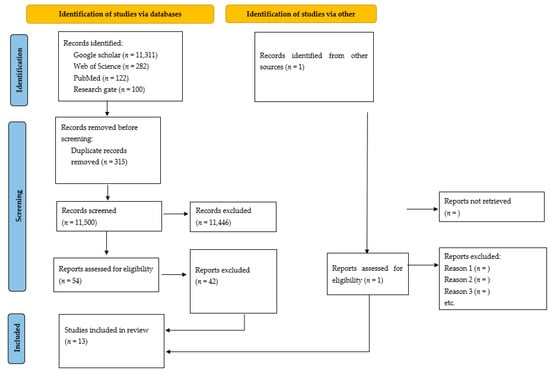
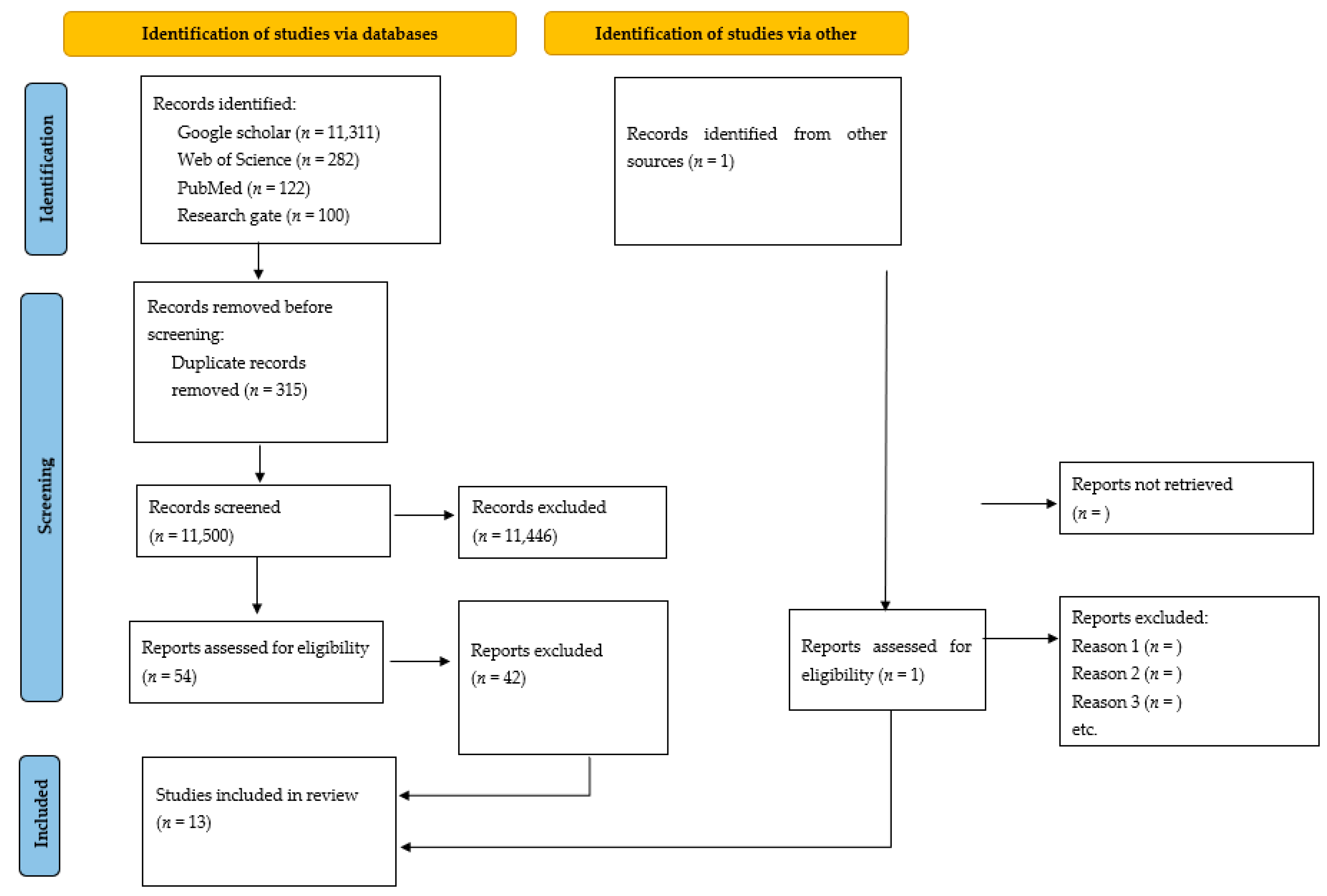
An initial search yielded 11,815 documents across four databases, which were compiled using the Mendeley citation manager. The distribution of retrieved studies was as follows: 11,311 from Google Scholar, 282 from Web of Science, 122 from PubMed, and 100 from ResearchGate. Additionally, one article was manually added from the reference lists of retrieved papers.
After duplicate removal in Mendeley, 315 articles were excluded, leaving 11,500 for further screening. The preliminary screening process considered article titles, abstracts, and study locations, focusing exclusively on studies conducted in Africa. As a result, 11,446 articles were excluded for not meeting the inclusion criteria. Most exclusions were due to the absence of a rodent management component, despite the studies addressing rodent zoonosis in Africa. Others focused on management practices related to domestic animals or were conducted outside Africa. Some articles were retrieved because terms like “Africa”, “rodents”, and “management” appeared in introductions, discussions, or reference lists but were not central to the study.
Following full-text screening, 54 articles remained, of which 42 were excluded due to a broad management scope that did not specify a particular country. Some excluded articles also discussed the One Health approach to zoonotic disease management. Ultimately, 12 published articles from database searches and one manually retrieved article were included in the final review.
Figure 1 outlines the study selection process. A summary of the 13 final studies, including details on research titles, publication years, geographical locations, targeted diseases, and study types, is provided in Table S1.
Figure 1.
PRISMA flow diagram illustrating the selection process for articles included in the review on management measures for addressing rodent-borne zoonoses in Africa.
3.2. Rodent Management Studies to Reduce Disease Risk in Africa
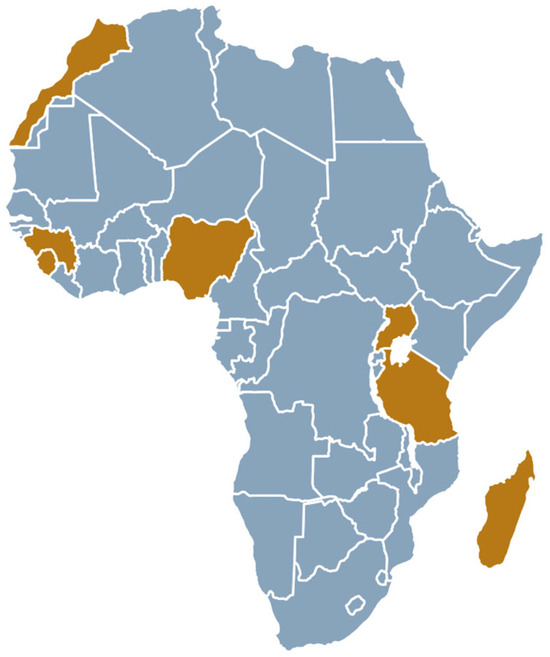
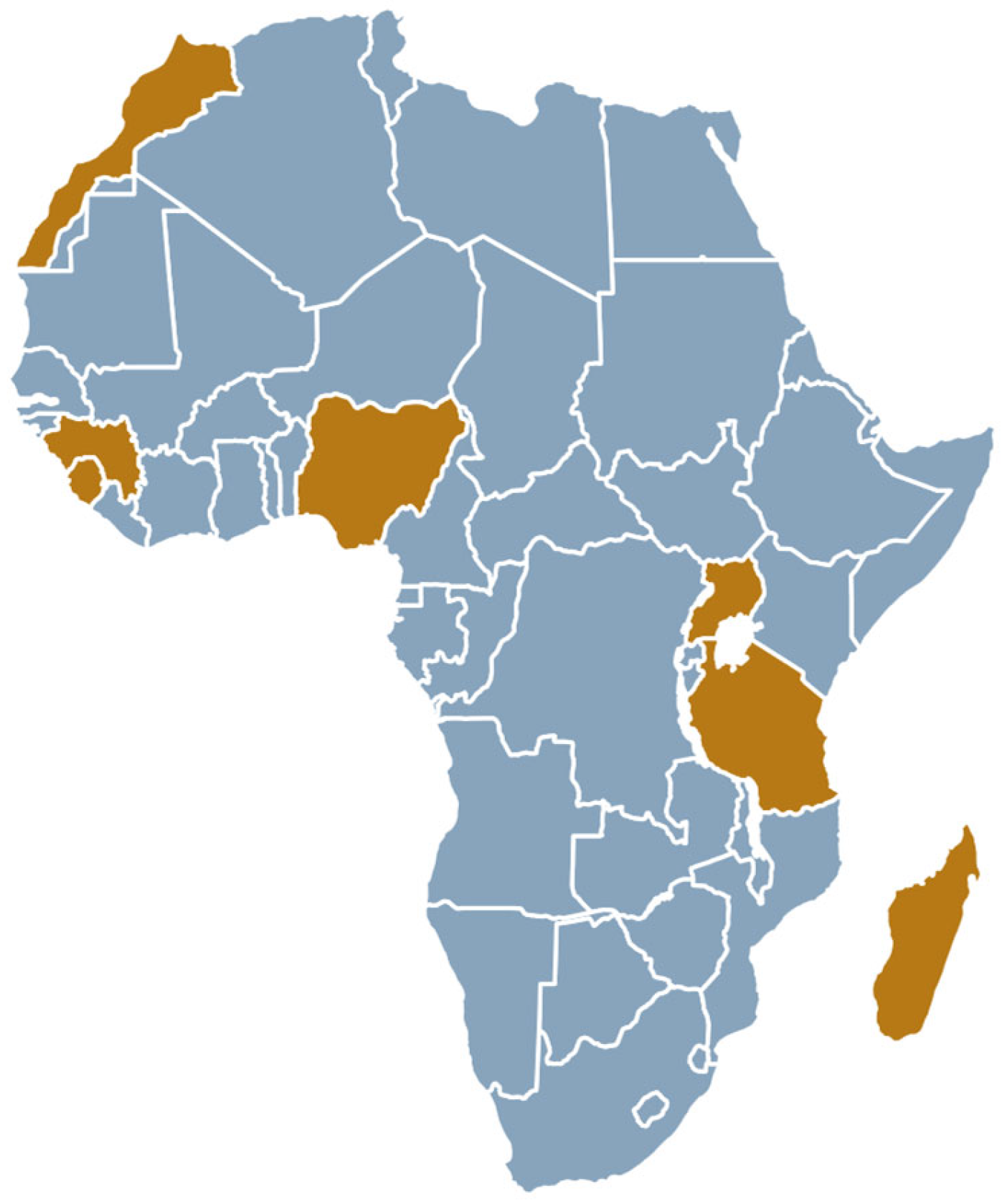
Africa consists of 54 countries grouped into five regions: Northern, Southern, Eastern, Western, and Central/Middle Africa. Studies on rodent management to mitigate zoonotic disease risks have been conducted in seven countries (Figure 2), with the following distribution: Guinea (n = 3), Nigeria (n = 3), Sierra Leone (n = 2), Uganda (n = 2), Morocco (n = 1), Tanzania (n = 1), and Madagascar (n = 1).
Figure 2.
The geographical locations of seven African countries (highlighted in brown) where rodent management studies were conducted to reduce disease burden (this map was prepared using Simple maps: https://simplemaps.com/custom/world/ipehxEP6, accessed on: 23 October 2024).
Most studies focused on controlling Lassa fever (n = 6) and were conducted in Guinea (n = 3), Nigeria (n = 1), Sierra Leone (n = 1), and a joint study covering both Guinea and Sierra Leone (n = 1). Efforts to reduce rodent populations to control plague (n = 3) took place in Uganda (n = 2) and Madagascar (n = 1). A study in Morocco (n = 1) targeted rodent control to mitigate Leishmaniasis. Additionally, Nigeria recorded studies on monkeypox (n = 1) and rat-bite fever (n = 1), while Tanzania reported one case of Leptospirosis.
3.3. Nature of Identified Studies
A total of 13 studies focused on various diseases. Seven studies were based on actual field data collection, including research on plague (n = 3), Lassa fever (n = 3), and Leishmaniasis (n = 1). Five studies involved model evaluations on Lassa fever (n = 2), monkeypox (n = 1), rat-bite fever (n = 1), and Leptospirosis (n = 1). Additionally, one study was a review of Lassa fever cases.
3.4. Rodent Management Practices for Disease Risk Reduction (Field Data Studies)
Seven studies based on field data collection identified two primary rodent management strategies: kill traps (n = 1) and rodenticides (n = 3). Two studies (n = 2) combined both methods, while one study (n = 1) used insecticide-laced bait to target rodent hosts and their fleas. Among studies utilizing kill traps, one study in a plague-endemic region of Madagascar distributed three snap traps (ABS plastic and steel, 14L × 7.5W × 6.5H cm) per household. Trapping was conducted indoors for five consecutive nights every four weeks from May to September 2019 [29]. Another study in Upper Guinea, an area endemic to Lassa fever, deployed Mini-Rex snap traps (Bell Laboratories Inc., Murray Hill, NJ, USA) in residences for three months [30]. A third study in the plague-endemic West Nile region of Uganda used multiple trap types over six days [31]. Studies involving rodenticides were conducted in Morocco from 2010 to 2012 using strychnine-poisoned wheat bait placed in rodent burrows [32]. In Upper Guinea, research was carried out from April 2014 to December 2018 using anticoagulant rodenticides (AR), specifically Bromadiolone and Difenacoum [30]. Similar studies were conducted in Guinea utilizing the same anticoagulants [33,34]. Additional studies took place in Madagascar, where chlorophacinone was used at a concentration of 0.05% [29], and in Uganda, where host-targeted rodent bait incorporating the insecticide imidacloprid was employed for flea control [35].
3.5. Targeted Rodent Species and Effectiveness of Management Practices in Reducing Disease
The rodent species targeted in these management studies included Mastomys natalensis (multimammate rats), Rattus rattus (black/roof rats), Mus musculus (house mice), and Meriones shawi (sand rats). Mastomys natalensis was specifically targeted for Lassa fever control (n = 3), while R. rattus control aimed to prevent plague (n = 2). Mus musculus and Meriones shawi were studied in relation to plague (n = 1) and Leishmaniasis (n = 1), respectively. All management studies (n = 6) reported that rodenticides and kill traps effectively reduced rodent populations in the study areas. However, four studies indicated that these methods failed to achieve long-term control, as rodent populations rebounded within a year of treatment. The remaining two studies did not evaluate long-term effects.
The study on Leishmaniasis (n = 1) found that rodent management reduced the incidence rate to 9 cases per 100,000 inhabitants in areas where interventions were conducted. In contrast, areas without rodent management saw an increase in cases from 54 to 84. Two studies on plague in Madagascar and Uganda (n = 2) demonstrated that rodent management effectively reduced flea abundance but provided limited information on plague prevalence. Studies on Lassa fever yielded conflicting results. One study found that chemical control modestly reduced Lassa virus infection rates, with a 5% annual decrease in seroprevalence. However, intensive trapping unexpectedly led to a significant increase in infection rates, rising from 28% before trapping to 67% afterward. Another study reported that rodenticide use failed to reduce Lassa virus spillover due to a population rebound caused by breeding compensation. Conversely, a third study found a complete decrease in Lassa fever prevalence following rodent management interventions.
4. Discussion
This review investigated rodent control methods implemented in Africa to mitigate rodent-borne zoonoses. It provides an overview of African countries where control measures have been applied, identifies targeted rodent species, and evaluates the effectiveness of these interventions in reducing zoonotic diseases.
A thorough review of the published literature reveals that rodents are significant carriers of various zoonoses, posing substantial health risks to humans. However, there is a limited number of studies on rodent control in Africa focused specifically on zoonotic diseases, and these studies are unevenly distributed across the continent. Rodents are known to carry and serve as reservoirs for over 64 diseases that affect humans globally, with more than 20 zoonotic diseases documented in Africa [36,37]. The scarcity and uneven distribution of research may stem from the greater emphasis on controlling two major diseases: Lassa fever in West Africa and plague in Eastern Africa, including Madagascar. Additionally, the economic challenges posed by rodent populations, particularly crop destruction, often lead to more resources being allocated to farm-based rodent management rather than disease control.
While numerous studies have documented rodent abundance and zoonoses in various African regions, the management of these issues remains under-addressed. The presence of rodents and the prevalence of zoonoses have been studied in countries such as South Africa [38], Zimbabwe [8], Benin [39], Senegal [40], Mali [41], and Kenya [42], among others. It appears that disease outbreaks have influenced the focus of research in certain countries, with studies concentrated on diseases like Leishmaniasis in Morocco [43], plague in Madagascar [44] and Uganda [31], and Lassa fever in West Africa [45]. This geographical focus introduces a bias, as outbreaks have also occurred in other regions, including plague in Tanzania and Zambia and Lassa fever in Ghana [46,47,48]. Our findings suggest that the public health impact of plague, Lassa fever, and Leishmaniasis varies across different regions, with significant implications in countries such as Madagascar, Uganda, Guinea, Sierra Leone, and Morocco.
Rodent management practices such as kill traps and rodenticides have been in use for many years [49], but they have notable limitations. Rodenticides, while effective, may harm non-target species, pose risks to human health, and potentially lead to resistance in rodent populations [50,51,52]. For instance, second-generation anticoagulants like Bromadiolone and Difenacoum, used in some studies, have been found to have some negative effects, but their benefits for rodent control and disease mitigation outweigh the risks [53,54,55]. Kill traps, on the other hand, may fail to effectively control rodent populations, as animals might learn to avoid them. Despite these drawbacks, some studies have shown that these methods can be effective in managing rodent populations [56,57].
Four out of six studies reviewed indicated that both kill traps and rodenticides reduce rodent populations in the short term. However, these methods do not provide a sustainable solution, as rodent populations tend to recover rapidly after the interventions. For these strategies to be effective in Africa, continuous and sustainable access to bait or traps is essential, but financial constraints in many African regions make this unfeasible [2]. Additionally, both strategies have weaknesses: trapping may be effective in homesteads but is less so in fields where rodent populations can be harder to control [58]. Furthermore, rodent populations may become neophobic or develop trap shyness, reducing the effectiveness of trapping. Similarly, rodenticides may lead to bait shyness, tolerance, or resistance, undermining their long-term effectiveness as a control method.
The shortcomings in rodent management have led to undesirable outcomes in controlling rodent-associated zoonoses. Among six studies reviewed, only two reported a reduction in rodent populations linked to a decrease in Lassa fever incidence through the use of kill traps, and in Leishmaniasis through rodenticides [32,33]. However, four other studies, including two on plague and two on Lassa fever, presented opposing findings, showing a negative association between the use of kill traps or rodenticides and the reduction of either plague or Lassa fever [29]. This suggests that alternative, ecologically based rodent management (EBRM) strategies, which are more sustainable, should be considered.
This review identifies R. rattus and M. natalensis as the primary rodent species serving as reservoirs for various zoonotic diseases. Other species, including M. musculus and M. shawi, are also implicated. Their role as disease reservoirs may be linked to their proximity to human habitats, such as homes, peridomestic areas, and agricultural fields, where interactions with humans are frequent [59]. Additionally, some species, like M. natalensis, experience seasonal population surges that contribute to significant agricultural damage. This species is widely distributed across sub-Saharan Africa and is most abundant in crop fields, where it commonly interacts with people, increasing the risk of zoonotic disease transmission [6,60].
5. Conclusions and Recommendations
This review highlights the need for more comprehensive rodent management studies in Africa, as the current research is limited and mostly focused on mitigating agricultural damage caused by rodents [2,23,56]. A thorough understanding of the epidemiology and the relationship between rodents and zoonotic diseases is crucial to improve management strategies. The review identifies kill traps and rodenticides as the primary techniques used in the studies examined. However, there is a need to explore alternative strategies, particularly ecologically based rodent management (EBRM) methods such as biological control, habitat manipulation, and the use of repellents and barriers, to better address zoonoses. Furthermore, raising awareness among health and agriculture officials, as well as communities, about the control and prevention of zoonoses is critical for effective disease management.
Supplementary Materials
The following supporting information can be downloaded at: https://www.mdpi.com/article/10.3390/zoonoticdis6010004/s1, Table S1: A summary of 13 studies detailing the title of the research, year of publication, geographical location, targeted diseases, and type of study.
Author Contributions
Conceptualization, M.S. and A.S.K.; methodology, M.S.; software, M.S. validation, M.S. and R.H.M.; formal analysis, M.S.; investigation, M.S.; resources, M.S; data curation, M.S. and S.K.M.; writing—original draft preparation, M.S.; writing—review and editing, A.S.K. and R.H.M.; visualization, A.S.K. and R.H.M. All authors have read and agreed to the published version of the manuscript.
Funding
This study was funded by the African Centre of Excellence for Innovative Rodents Pest Management and Biosensor Technology (ACE IRPM & BTD), grant No. 5799/TZ, which is based in the Institute of Pest Management, SUA Morogoro, Tanzania.
Institutional Review Board Statement
This study was conducted in accordance with the Declaration of Helsinki and received approval from the Directorate of Postgraduate Studies, Research, Technology, Transfer, and Consultancy at Sokoine University of Agriculture (SUA/DPRTC/PFC/D/2021/0002/04).
Informed Consent Statement
Not applicable.
Data Availability Statement
The data presented in this study are available on request from the corresponding author of the Institute of Pest Management (IPM) on request due to ongoing study.
Acknowledgments
We acknowledge the funders and the Sokoine University of Agriculture (SUA) for providing the necessary infrastructure to complete this study.
Conflicts of Interest
The authors declare no conflicts of interest.
References
- Banda, A.; Gandiwa, E.; Muposhi, V.K.; Muboko, N. Ecological interactions, local people awareness and practices on rodent-borne diseases in Africa: A review. Acta Trop. 2023, 238, 106743. [Google Scholar] [CrossRef] [Scilit]
- Makundi, R.H.; Massawe, A.W. Ecologically based rodent management in Africa: Potential and challenges. Wildl. Res. 2011, 38, 588–595. [Google Scholar] [CrossRef] [Scilit]
- Constant, N.L.; Swanepoel, L.H.; Williams, S.T.; Soarimalala, V.; Goodman, S.M.; Massawe, A.T.; Mulungu, L.S.; Makundi, R.H.; Mdangi, M.E.; Taylor, P.J.; et al. Comparative assessment on rodent impacts and cultural perceptions of ecologically based rodent management in 3 Afro-Malagasy farming regions. Integr. Zool. 2020, 15, 578–594. [Google Scholar] [CrossRef] [Scilit] [PubMed]
- Issae, A.; Chengula, A.; Kicheleri, R.; Kasanga, C.; Katakweba, A. Knowledge, attitude, and preventive practices toward rodent-borne diseases in Ngorongoro district, Tanzania. J. Public Health Afr. 2023, 14, 2385. [Google Scholar] [CrossRef] [Scilit] [PubMed]
- Mwalimu, C.D.; Mgode, G.; Sabuni, C.; Msigwa, F.; Mghamba, J.; Nyanga, A.; Mohamed, A.; Kwesi, E.; Nagu, N.; Kishimba, R.; et al. Preliminary investigation and intervention of the suspected plague outbreak in Madunga, Babati District-Tanzania. Acta Trop. 2022, 233, 106566. [Google Scholar] [CrossRef] [Scilit]
- Welegerima, K.; Meheretu, Y.; Haileselassie, T.H.; Gebre, B.; Kidane, D.; Massawe, A.W.; Mbije, N.E.; Makundi, R.H. Abundance and microhabitat use of rodent species in crop fields and bushland in Ethiopia. J. Vertebr. Biol. 2020, 69, 20054-1. [Google Scholar] [CrossRef] [Scilit]
- Fiedler, L.A. Rodent problems in Africa. In Rodent Pest Management; CRC Press: Boca Raton, FL, USA, 2018; pp. 35–65. [Google Scholar]
- Grobbelaar, A.A.; Jardine, J.; Burt, F.J.; Shepherd, A.J.; Shepherd, S.P.; Leman, P.A.; Kemp, A.; Braack, L.E.; Weyer, J.; Paweska, J.T.; et al. Mammarenaviruses of Rodents, South Africa and Zimbabwe. Emerg. Infect. Dis. 2021, 27, 12. [Google Scholar] [CrossRef] [Scilit]
- Niang, C.T.; Kane, M.; Niang, Y.; Sarr, N.; March, L.; Tatard, C.; Artige, E.; Diagne, C.; Moron, V.; Mauffrey, J.F.; et al. Socio-environmental changes and rodent populations in lowland agroecosystems of the lower delta of the River Senegal, West Africa: Results of observations over a decade, 2008–2019. J. Vertebr. Biol. 2022, 71, 22015. [Google Scholar] [CrossRef] [Scilit]
- Massawe, A.W.; Mulungu, L.S.; Makundi, R.H.; Dlamini, N.; Eiseb, S.J.; Kirsten, F.; Mahlaba, T.A.; Malebane, P.; Von Maltitz, E.; Monadjem, A.; et al. Spatial and temporal population dynamics of rodents in three geographically different regions in Africa: Implication for ecologically-based rodent management. Afr. Zool. 2011, 46, 393–405. [Google Scholar]
- Mgode, G.F.; Machang’u, R.S.; Mhamphi, G.G.; Katakweba, A.; Mulungu, L.S.; Durnez, L.; Leirs, H.; Hartskeerl, R.A.; Belmain, S.R. Leptospira serovars for diagnosis of leptospirosis in humans and animals in Africa: Common Leptospira isolates and reservoir hosts. PLoS Neglected Trop. Dis. 2015, 9, e0004251. [Google Scholar] [CrossRef] [Scilit]
- Makundi, R.H.; Massawe, A.W.; Borremans, B.; Laudisoit, A.; Katakweba, A. We are connected: Flea–host association networks in the plague outbreak focus in the Rift Valley, northern Tanzania. Wildl. Res. 2015, 42, 196–206. [Google Scholar] [CrossRef] [Scilit]
- Grace, J.U.A.; Egoh, I.J.; Udensi, N. Epidemiological trends of Lassa fever in Nigeria from 2015–2021: A review. Ther. Adv. Infect. Dis. 2021, 8, 20499361211058252. [Google Scholar] [CrossRef] [Scilit] [PubMed]
- Ogbu, O.; Ajuluchukwu, E.; Uneke, C.J. Lassa fever in West African sub-region: An overview. J. Vector Borne Dis. 2007, 44, 1. [Google Scholar]
- Africa CDC Launches a Continental Blueprint to Combat Endemic and Neglected Tropical Diseases—Africa CDC. Available online: https://africacdc.org/news-item/africa-cdc-launches-a-continental-blueprint-to-combat-endemic-and-neglected-tropical-diseases/ (accessed on 7 December 2024).
- Singleton, G.R.; Hinds, L.A.; Makundi, R.; Belmain, S.R. Rodent biology and ecologically based rodent management (EBRM)—25 years of progress through promoting multidisciplinary research. Integr. Zool. 2024, 19, 2–7. [Google Scholar] [CrossRef] [Scilit]
- Stuart, A.M.; Kong, P.; Then, R.; Flor, R.J.; Sathya, K. Tailor-made solutions to tackle rodent pests of rice through community-based management approaches in Cambodia. Crop Prot. 2020, 135, 104717. [Google Scholar] [CrossRef] [Scilit]
- Tomass, Z.; Shibru, S.; Yonas, M.; Leirs, H. Farmers’ perspectives of rodent damage and rodent management in smallholder maize cropping systems of Southern Ethiopia. Crop Prot. 2020, 136, 105232. [Google Scholar] [CrossRef] [Scilit]
- Mariadoss, A.; Alice, J.; Chakraborty, A. Rodent damages and approaches for their management. Innov. Farm 2020, 5, 54–59. [Google Scholar]
- Flor, R.J.B.; Singleton, G.R. Can media campaign messages influence change towards ecologically based rodent management? Wildl. Res. 2011, 38, 579–587. [Google Scholar] [CrossRef] [Scilit]
- Tripathi, R.S. Integrated management of rodent pests. In Integrated Pest Management; Academic Press: Cambridge, MA, USA, 2014; pp. 419–459. [Google Scholar]
- Palis, F.G.; Singleton, G.; Sumalde, Z.; Hossain, M. Social and cultural dimensions of rodent pest management. Integr. Zool. 2007, 2, 174–183. [Google Scholar] [CrossRef] [Scilit]
- Singleton, G.R.; Jacob, J.; Krebs, C.J. Integrated management to reduce rodent damage to lowland rice crops in Indonesia. Agric. Ecosyst. Environ. 2005, 107, 75–82. [Google Scholar] [CrossRef] [Scilit]
- Holt, J.; Davis, S.; Leirs, H. A model of leptospirosis infection in an African rodent to determine risk to humans: Seasonal fluctuations and the impact of rodent control. Acta Trop. 2006, 99, 218–225. [Google Scholar] [CrossRef] [Scilit] [PubMed]
- Valone, T.J.; Schutzenhofer, M.R. Reduced rodent biodiversity destabilizes plant populations. Ecology 2007, 88, 26–31. [Google Scholar] [CrossRef] [Scilit] [PubMed]
- Holmes, N.D.; Griffiths, R.; Pott, M.; Alifano, A.; Will, D.; Wegmann, A.S.; Russell, J.C. Factors associated with rodent eradication failure. Biol. Conserv. 2015, 185, 8–16. [Google Scholar] [CrossRef] [Scilit]
- Meerburg, B.G.; Brom, F.W.; Kijlstra, A. The ethics of rodent control. Pest Manag. Sci. Former. Pestic. Sci. 2008, 64, 1205–1211. [Google Scholar] [CrossRef] [Scilit]
- Taylor, P.J.; Downs, S.; Monadjem, A.; Eiseb, S.J.; Mulungu, L.S.; Massawe, A.W.; Themb’a, A.M.; Kirsten, F.; Von Maltitz, E.; Malebane, P.; et al. Experimental treatment-control studies of ecologically based rodent management in Africa: Balancing conservation and pest management. Wildl. Res. 2012, 39, 51–61. [Google Scholar] [CrossRef] [Scilit]
- Rahelinirina, S.; Scobie, K.; Ramasindrazana, B.; Andrianaivoarimanana, V.; Rasoamalala, F.; Randriantseheno, L.N.; Rakotoniaina, J.S.; Gorge, O.; Lambin, X.; Valade, E.; et al. Rodent control to fight plague: Field assessment of methods based on rat density reduction. Integr. Zool. 2021, 16, 868–885. [Google Scholar] [CrossRef] [Scilit]
- Mariën, J.; Sage, M.; Bangura, U.; Lamé, A.; Koropogui, M.; Rieger, T.; Soropogui, B.; Douno, M.; Magassouba, N.F.; Fichet-Calvet, E. Rodent control strategies and Lassa virus: Some unexpected effects in Guinea, West Africa. Emerg. Microbes Infect. 2024, 13, 2341141. [Google Scholar] [CrossRef] [Scilit]
- Eisen, R.J.; Atiku, L.A.; Boegler, K.A.; Mpanga, J.T.; Enscore, R.E.; MacMillan, K.; Gage, K.L. An evaluation of removal trapping to control rodents inside homes in a plague-endemic region of rural northwestern Uganda. Vector-Borne Zoonotic Dis. 2018, 18, 458–463. [Google Scholar] [CrossRef] [Scilit]
- Bennis, I.; De Brouwere, V.; Ameur, B.; El Idrissi Laamrani, A.; Chichaoui, S.; Hamid, S.; Boelaert, M. Control of cutaneous leishmaniasis caused by Leishmania major in south-eastern Morocco. Trop. Med. Int. Health 2015, 20, 1297–1305. [Google Scholar] [CrossRef] [Scilit]
- Mariën, J.; Borremans, B.; Kourouma, F.; Baforday, J.; Rieger, T.; Günther, S.; Magassouba, N.F.; Leirs, H.; Fichet-Calvet, E. Evaluation of rodent control to fight Lassa fever based on field data and mathematical modelling. Emerg. Microbes Infect. 2019, 8, 640–649. [Google Scholar] [CrossRef] [Scilit]
- Mari Saez, A.; Cherif Haidara, M.; Camara, A.; Kourouma, F.; Sage, M.; Magassouba, N.F.; Fichet-Calvet, E. Rodent control to fight Lassa fever: Evaluation and lessons learned from a 4-year study in Upper Guinea. PLoS Neglected Trop. Dis. 2018, 12, e0006829. [Google Scholar] [CrossRef] [Scilit]
- Borchert, J.N.; Enscore, R.E.; Eisen, R.J.; Atiku, L.A.; Owor, N.; Acayo, S.; Babi, N.; Montenieri, J.A.; Gage, K.L. Evaluation of rodent bait containing imidacloprid for the control of fleas on commensal rodents in a plague-endemic region of northwest Uganda. J. Med. Entomol. 2010, 47, 842–850. [Google Scholar] [CrossRef]
- Prakash, I. (Ed.) Rodent Pest Management; CRC Press: Boca Raton, FL, USA, 1988; pp. 321–329. [Google Scholar]
- Gratz, N. The burden of rodent-borne diseases in Africa south of the Sahara. Belg. J. Zool. 1997, 127, 71–84. [Google Scholar]
- Taylor, P.J.; Arntzen, L.; Hayter, M.; Iles, M.; Frean, J.; Belmain, S. Understanding and managing sanitary risks due to rodent zoonoses in an African city: Beyond the Boston Model. Integr. Zool. 2008, 3, 38–50. [Google Scholar] [CrossRef] [Scilit]
- Dossou, H.J.; Le Guyader, M.; Gauthier, P.; Badou, S.; Etougbetche, J.; Houemenou, G.; Djelouadji, Z.; Dobigny, G. Fine-scale prevalence and genetic diversity of urban small mammal-borne pathogenic Leptospira in Africa: A spatiotemporal survey within Cotonou, Benin. Zoonoses Public Health 2022, 69, 643–654. [Google Scholar] [CrossRef] [Scilit]
- Demoncheaux, J.P.; Medkour, H.; Louni, M.; Laugier, L.; Pasqualini, C.; Fenollar, F.; Davoust, B.; Mediannikov, O. Detection of potential zoonotic Bartonella species in African giant rats (Cricetomys gambianus) and fleas from an urban area in Senegal. Microorganisms 2022, 10, 489. [Google Scholar] [CrossRef] [Scilit] [PubMed]
- Koné, A.K.; Diatta, G.; Niare, D.S.; Atteynine, S.A.; Coulibaly, M.; Diarra, A.Z.; Sagara, I.; Djimdé, A.; Doumbo, O.; Thera, M.A. Variation in Relative Abundance of Small Mammal species Caught in Two Different Ecosystems And Implicated in the Spread of Emerging Pathogens, in Mali. Appl. Sci. 2023, 14, 9384. [Google Scholar] [CrossRef] [Scilit]
- Ogola, J.G.; Alburkat, H.; Masika, M.; Korhonen, E.; Uusitalo, R.; Nyaga, P.; Anzala, O.; Vapalahti, O.; Sironen, T.; Forbes, K.M. Seroevidence of zoonotic viruses in rodents and humans in Kibera informal settlement, Nairobi, Kenya. Vector-Borne Zoonotic Dis. 2021, 21, 973–978. [Google Scholar] [CrossRef] [Scilit]
- El Idrissi Saik, I.; Benlabsir, C.; Fellah, H.; Lemrani, M.; Riyad, M. Transmission patterns of Leishmania tropica around the Mediterranean basin: Could Morocco be impacted by a zoonotic spillover? PLoS Negl. Trop. Dis. 2022, 16, e0010009. [Google Scholar] [CrossRef] [Scilit]
- Rabaan, A.A.; Al-Ahmed, S.H.; Alsuliman, S.A.; Aldrazi, F.A.; Alfouzan, W.A.; Haque, S. The rise of pneumonic plague in Madagascar: Current plague outbreak breaks usual seasonal mould. J. Med. Microbiol. 2019, 68, 292–302. [Google Scholar] [CrossRef] [Scilit]
- Yessinou, R.E.; Waladjo, A.R.K.; Noudeke, N.; Dramou, I.; Adinsi, J.; Dougnon, V.T.; Sangnidjo, E.Y.; Osse, R.; Dansou, A.; Farougou, S. Dynamic and epidemiology of Lassa fever infection in west Africa’s population from 1969 to 2019. Hosts Viruses 2020, 7, 129–146. [Google Scholar] [CrossRef] [Scilit]
- Ziwa, M.H.; Matee, M.I.; Hang’ombe, B.M.; Lyamuya, E.F.; Kilonzo, B.S. Plague in Tanzania: An overview. Tanzan. J. Health Res. 2013, 15. [Google Scholar] [CrossRef] [Scilit]
- Sinyangwe, M.L. Uptake of Prevention and Control Measures of Plague: A Post-Plague Outbreaks Case-Study of Sinda District, Zambia. Ph.D. Dissertation, The University of Zambia, Lusaka, Zambia, 2017. [Google Scholar]
- Kenu, E.; Kaburi, B.B.; Asiedu-Bekoe, F.; Afari, E.A. Outbreak Investigations of Viral Hemorrhagic Fevers: The Response Methods to a Suspected Lassa Fever Case in Ghana, 2018; SAGE Publications Ltd.: Thousand Oaks, CA, USA, 2020. [Google Scholar]
- Witmer, G. The Changing Role of Rodenticides and Their Alternatives in the Management of Commensal Rodents; U.S. Department of Agriculture: Washington, DC, USA, 2019. [Google Scholar]
- Brakes, C.R.; Smith, R.H. Exposure of non-target small mammals to rodenticides: Short-term effects, recovery and implications for secondary poisoning. J. Appl. Ecol. 2005, 42, 118–128. [Google Scholar] [CrossRef] [Scilit]
- Singleton, G.R.; Brown, P.R.; Jacob, J.; Aplin, K.P.; Sudarmaji. Unwanted and unintended effects of culling: A case for ecologically-based rodent management. Integr. Zool. 2007, 2, 247–259. [Google Scholar] [CrossRef] [Scilit] [PubMed]
- Smith, R.H.; Shore, R.F. Environmental impacts of rodenticides. In Rodent Pests and Their Control; CABI: Wallingford, UK, 2015; pp. 330–345. [Google Scholar]
- Damin-Pernik, M.; Espana, B.; Lefebvre, S.; Fourel, I.; Caruel, H.; Benoit, E.; Lattard, V. Management of rodent populations by anticoagulant rodenticides: Toward third-generation anticoagulant rodenticides. Drug Metab. Dispos. 2017, 45, 160–165. [Google Scholar] [CrossRef] [Scilit]
- Vandenbroucke, V.; Bousquet-mélou, A.; De Backer, P.; Croubels, S. Pharmacokinetics of eight anticoagulant rodenticides in mice after single oral administration. J. Vet. Pharmacol. Ther. 2008, 31, 437–445. [Google Scholar] [CrossRef] [Scilit]
- Rowe, F.P.; Plant, C.J.; Bradfield, A. Trials of the anticoagulant rodenticides bromadiolone and difenacoum against the house mouse (Mus musculus L.). Epidemiol. Infect. 1981, 87, 171–177. [Google Scholar] [CrossRef] [Scilit]
- Belmain, S.R.; Meyer, A.N.; Timbrine, R.; Penicela, L. Managing rodent pests in households and food stores through intensive trapping. ACIAR Monogr. Ser. 2003, 96, 440–445. [Google Scholar]
- Theuerkauf, J.; Rouys, S.; Jourdan, H.; Gula, R. Efficiency of a new reverse-bait trigger snap trap for invasive rats and a new standardised abundance index. In Annales Zoologici Fennici; Finnish Zoological and Botanical Publishing Board: Helsinki, Finland, 2011; Volume 48, pp. 308–318. [Google Scholar]
- Stryjek, R.; Kalinowski, A.; Parsons, M.H. Unbiased sampling for rodents and other small mammals: How to overcome neophobia through use of an electronic-triggered live trap—A preliminary test. Front. Ecol. Evol. 2019, 7, 11. [Google Scholar] [CrossRef] [Scilit]
- Selemani, M.; Makundi, R.H.; Massawe, A.W.; Katakweba, A.S. Serological Survey of Leptospira spp. in Livestock and Rodents from Different Settlements in the Kilombero Wetland, Tanzania. Pathogens 2024, 13, 1059. [Google Scholar] [CrossRef] [Scilit]
- Mulungu, L.S.; Themb’alilahlwa, A.M.; Massawe, A.W.; Kennis, J.; Crauwels, D.; Eiseb, S.; Monadjem, A.; Makundi, R.H.; Katakweba, A.A.; Leirs, H.; et al. Dietary differences of the multimammate mouse, Mastomys natalensis (Smith, 1834), across different habitats and seasons in Tanzania and Swaziland. Wildl. Res. 2011, 38, 7–646. [Google Scholar] [CrossRef] [Scilit]
Disclaimer/Publisher’s Note: The statements, opinions and data contained in all publications are solely those of the individual author(s) and contributor(s) and not of MDPI and/or the editor(s). MDPI and/or the editor(s) disclaim responsibility for any injury to people or property resulting from any ideas, methods, instructions or products referred to in the content. |
© 2025 by the authors. Licensee MDPI, Basel, Switzerland. This article is an open access article distributed under the terms and conditions of the Creative Commons Attribution (CC BY) license (https://creativecommons.org/licenses/by/4.0/).