Systematic Review

Clinical Features and Epidemiology of Mpox in Saudi Arabia Post-2022 Re-Emergence: A Systematic Review of Case Reports and Series


by
Ethar Alsulami
1,
Roudin H. Alhasawi
2,
Abdulaziz F. Samandar
1,*,
Omnia A. Sulimani
1,
Safia H. Alansari
1,
Shahad A. Alshehri
3,
Reem A. Alshehri
4,
Saud A. Al-luhaypi
1 and
Mazin M. Aljabri
5
1
Faculty of Medicine, Umm Al-Qura University, Makkah 21955, Saudi Arabia
2
Al-Noor Specialist Hospital, Makkah 24241, Saudi Arabia
3
Faculty of Medicine, University of Jeddah, Jeddah 23218, Saudi Arabia
4
Faculty of Medicine, Taif University, Taif 26571, Saudi Arabia
5
Department of Dermatology, Hera General Hospital, Makkah 24227, Saudi Arabia
*
Author to whom correspondence should be addressed.
Zoonotic Dis. 2026, 6(1), 3; https://doi.org/10.3390/zoonoticdis6010003

Submission received: 1 December 2025 / Revised: 7 January 2026 / Accepted: 23 January 2026 / Published: 28 January 2026

Simple Summary

Mpox has re-emerged globally since 2022, including in Saudi Arabia, but detailed summaries of reported cases in the country remain limited. This study was conducted to describe the clinical features, patterns of transmission, and epidemiological characteristics of Mpox cases reported in Saudi Arabia after the 2022 re-emergence. By systematically reviewing published case reports and case series, we aimed to provide a clearer picture of how Mpox has presented and spread within the local context. Our findings highlight common symptoms, possible exposure routes, and important gaps in reporting, including incomplete exposure histories. This work may help clinicians recognize Mpox earlier, support public health authorities in improving surveillance and contact tracing, and guide future research and preparedness efforts in Saudi Arabia and similar settings.

Abstract

Background: With the worldwide resurgence of Mpox in 2022, understanding its regional features is important. This systematic review aimed to provide an overview of the epidemiology, risk factors, clinical features, and outcomes of Mpox in Saudi Arabia to fill the knowledge gaps in this area. Methods: Following the guidelines of the Preferred Reporting Items for Systematic Reviews and Meta-Analyses, a systematic search was performed on PubMed, MEDLINE (via Ovid), Scopus and Wiley Online Library for case reports and series published on Mpox in Saudi Arabia after 2022. Results: Analysis included eight studies comprising a total of 410 patients with confirmatory data. The cohort was predominantly male (91%), with a mean age of 32.8 years. Extramarital sexual contact was the most frequently identified risk factor (28.8%), whereas most patients (63.4%) had unknown or denied exposure routes. The most common clinical manifestations were fever (97.1%) and rash (96.8%). Dermatological findings were usually pleomorphic. These included umbilicated pustules, crusted papules, and vesiculopustular lesions. Although management was primarily supportive, rare complications, such as keratitis and neurological deficits, were observed. Conclusions: In Saudi Arabia, Mpox primarily affects young adult males, particularly individuals with high-risk sexual behaviors. Much of this transmission remains undetermined, and better contact tracing and focused public health efforts are urgently required.

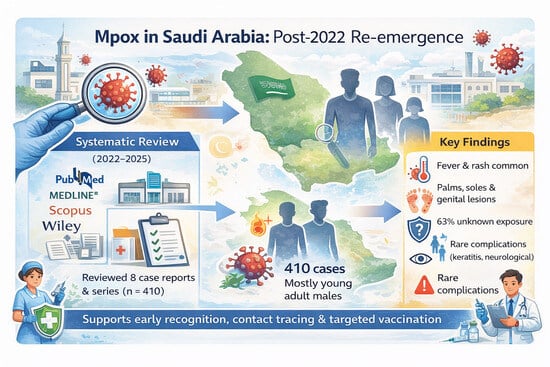
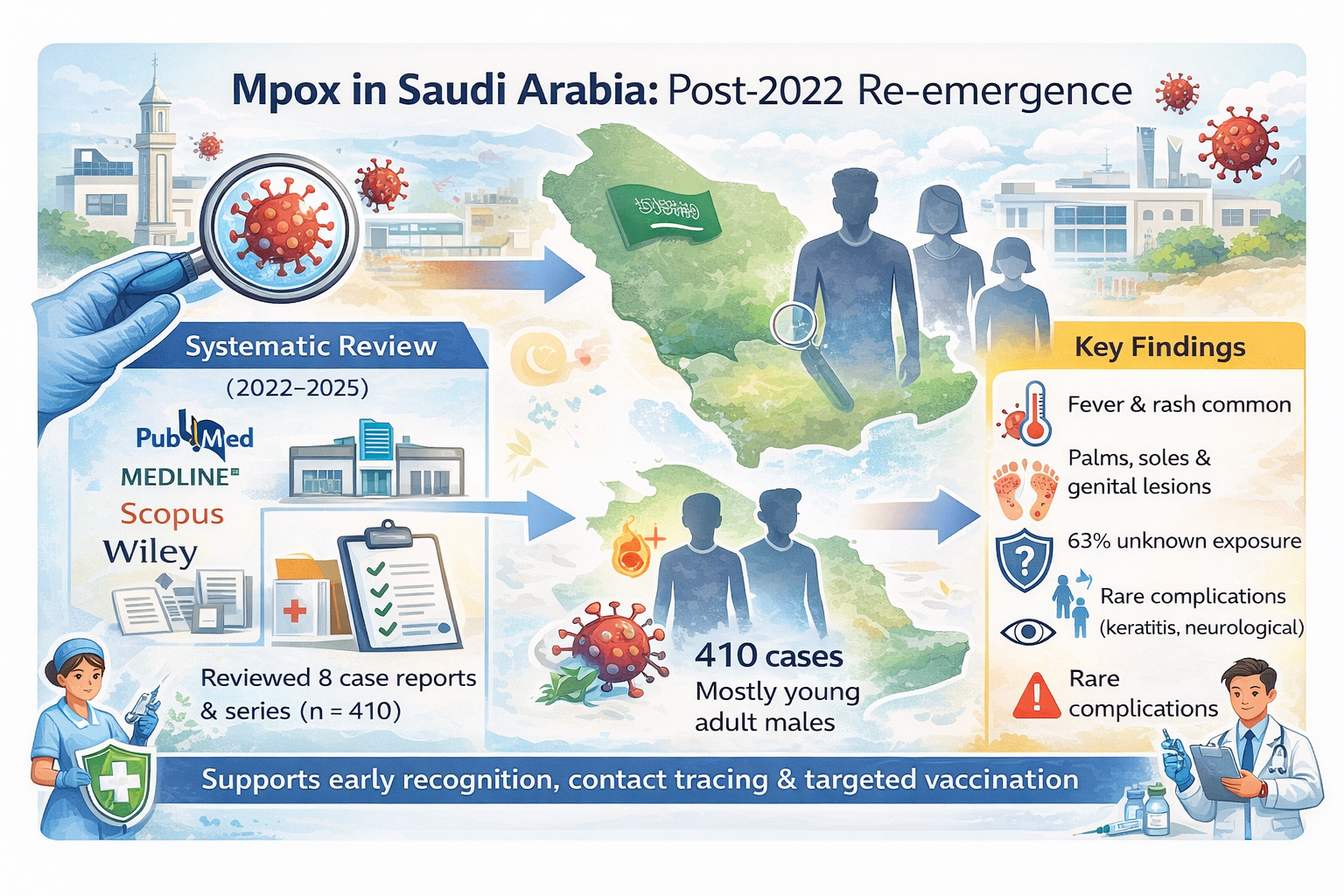
Graphical Abstract

1. Introduction

Mpox, previously, referred to as monkeypox, is a re-emerging viral disease caused by the monkeypox virus (MPXV) [1]. The first human case of Mpox was reported in 1970 in the Democratic Republic of Congo following the first identification of the virus in captive monkeys in 1958. Since then, sporadic cases and outbreaks have been documented throughout Central and West Africa, confirming the endemic nature of this disease. In May 2022, a significant epidemiological shift occurred with a multicountry outbreak in Europe and the Americas, notably without links to endemic regions [1].
Since 2022, there have been >140,000 confirmed Mpox cases worldwide, with Saudi Arabia recording its first laboratory-confirmed case on 14 July 2022 [2,3]. Considering this unprecedented global proliferation, the World Health Organization (WHO) declared two Public Health Emergencies of International Concern (PHEICs). The first PHEIC was issued in July 2022 and was subsequently lifted in May 2023. However, owing to the emergence of a new strain of Mpox characterized by increased transmissibility, a second PHEIC was proclaimed in August 2024 and remains active [4].
Mpox is a zoonotic disease that can be transmitted from animals to humans, primarily through interactions with infected species, such as rodents and primates. Human infection may occur through direct contact with bodily fluids, lesions, or consumption of bushmeat. Additionally, the disease can propagate between individuals via skin lesions and respiratory droplets in prolonged proximity or through contaminated objects. Recent epidemiological data indicate that sexual transmission is a significant mode of spread, particularly among men who have sex with men (MSM) [1]. The identified risk factors include intimate physical contact, travel to endemic regions, occupational exposure, and immunocompromised hosts [1,5].
The current literature indicates several deficiencies in our understanding of Mpox transmission dynamics and associated risk factors. Numerous studies have highlighted inadequate disclosure concerning exposure histories and ambiguities regarding specific transmission pathways, including possible asymptomatic spread and nonsexual modes of transmission [6,7,8,9]. Stigmatization and underreporting obstruct precise contact tracing and accurate case documentation [7,9]. Most investigations focus on young male patients while providing limited insights into other demographic groups, such as females [6,7,8]. Furthermore, coinfections and treatment methodologies, including antiviral efficacy, remain inadequately addressed [7,8,9,10]. The absence of longitudinal follow-up studies further restricts our understanding of post-infection consequences [6,7,8,9,10].
This systematic review aimed to fill these gaps by consolidating existing data on the epidemiology, risk factors, clinical presentations, and outcomes of Mpox in Saudi Arabia.

2. Materials and Methods

2.1. Literature Search

A comprehensive literature search was conducted in accordance with the Preferred Reporting Items for Systematic Reviews and Meta-Analyses (PRISMA) guidelines, and the review was registered in PROSPERO (Registration ID: CRD42024622926). The aim was to identify peer-reviewed case reports and case series describing Mpox infection in Saudi Arabia following its re-emergence in 2022. The final search was completed on 1 July 2025, covering publications from 1 January 2022 to 1 July 2025.
The literature search was conducted in PubMed, MEDLINE (accessed via the Ovid platform), and Scopus, and was supplemented by searching the Wiley Online Library platform. Wiley Online Library was included to capture potentially relevant case reports and case series indexed on the platform that may not be retrieved consistently across bibliographic databases. Although PubMed includes MEDLINE-indexed records, MEDLINE was searched separately via the Ovid platform to allow more sensitive retrieval using structured controlled vocabulary and advanced search functionality. Differences in the number of records retrieved across databases reflect variations in indexing coverage, search algorithms, and platform-specific filters. In particular, Ovid MEDLINE enables broader retrieval compared with PubMed, while Scopus applies stricter indexing and document-type criteria, which may result in fewer retrieved records, especially for case reports and case series. Database-specific search strategies were developed using a combination of relevant keywords and controlled vocabulary, where applicable. The core search terms included variations in the disease name and geographic location, combined with study design terms. The complete electronic search strategies for all sources are provided below to ensure transparency and reproducibility.
The full search strategies were as follows:
PubMed:
((“Mpox”[Title/Abstract] OR “monkeypox”[Title/Abstract] OR “Monkeypox virus”[Title/Abstract] OR “orthopoxvirus”[Title/Abstract] OR “monkeypox”[MeSH Terms] OR “Orthopoxvirus”[MeSH Terms]) AND (“Saudi Arabia”[Title/Abstract] OR “KSA”[Title/Abstract] OR “Kingdom of Saudi Arabia”[Title/Abstract] OR “Riyadh”[Title/Abstract] OR “Jeddah”[Title/Abstract] OR “Makkah”[Title/Abstract]) AND (“case report”[Publication Type] OR “case reports”[Title/Abstract] OR “case series”[Title/Abstract] OR “cases”[Title/Abstract]))
MEDLINE (via Ovid):
(mpox OR monkeypox OR orthopoxvirus OR “monkeypox virus”) AND (“Saudi Arabia” OR KSA OR “Kingdom of Saudi Arabia” OR Riyadh OR Jeddah OR Makkah) AND (“case report” OR “case series” OR cases)
Wiley Online Library:
(“mpox” OR “monkeypox”) AND (“Saudi Arabia” OR KSA OR “Kingdom of Saudi Arabia”) AND (“case report” OR “case series”)
Scopus:
TITLE-ABS-KEY (mpox OR monkeypox OR “monkeypox virus” OR orthopoxvirus) AND TITLE-ABS-KEY (“Saudi Arabia” OR KSA OR “Kingdom of Saudi Arabia” OR Riyadh OR Jeddah OR Makkah) AND TITLE-ABS-KEY (“case report” OR “case series” OR cases)
Across all databases, searches were limited to human studies, English-language publications, and the specified date range. Reference lists of all eligible articles were manually screened to identify additional relevant studies.
Grey literature, including Ministry of Health announcements and World Health Organization situation reports, was reviewed to contextualize national and global epidemiological trends; however, such sources were not included in the qualitative synthesis because this review focused exclusively on peer-reviewed clinical case reports and case series with extractable patient-level data. Preprints were screened during the initial scoping phase but were excluded from the final review due to the lack of peer review and variable reporting quality.
The search was restricted to English-language publications because most indexed medical journals publish in English and detailed clinical data extraction and methodological appraisal were required. Nevertheless, this restriction may have resulted in the omission of relevant Arabic-language reports or local grey literature.

2.2. Study Selection

Inclusion and Exclusion Criteria:
Studies were selected based on predefined inclusion and exclusion criteria. Eligible studies included peer-reviewed clinical case reports and case series reporting laboratory-confirmed Mpox infection conducted in Saudi Arabia and published in the English language after the 2022 re-emergence of Mpox. No restrictions were imposed on participants with respect to age, sex, ethnicity, or native language.
Studies were excluded if they were non-human or laboratory-based, duplicate publications, or non–peer-reviewed articles. Review articles, editorials, commentaries, conference abstracts, and studies lacking extractable clinical or epidemiological data were also excluded.
During the review process, all titles, abstracts, and full texts were carefully screened in accordance with these criteria to ensure relevance and methodological consistency.

2.3. Screening and Data Extraction

All retrieved records were imported into the Rayyan software [11] for initial screening. The records were screened by title and abstract (745 records per team) by two independent teams, each with two reviewers. To remain blinded, the reviewers within each team were unable to observe the screening decisions of the other team. A third reviewer helped guide the process and resolve any conflicts. After removing duplicates, we were left with 29 records that could be considered for full-text evaluation. All of these were managed using Microsoft Excel for the eligibility evaluation. Full-text screening was conducted by a different group with two independent reviewers. Each reviewer screened the full texts in a blinded manner using pre-made screening sheets and applied the inclusion and exclusion criteria. The specific rationale for exclusion was recorded for the studies that were not included in the review. The reasons for exclusion of full-text articles at this stage (n = 21) are summarized in the PRISMA flow diagram. Reviewer disagreements were handled through discussions, resulting in unbiased, consistent results. Data extraction was independently performed by two reviewers per subject using a well-organized Microsoft Excel spreadsheet. The extracted variables included study title, first author, year of publication, number of cases, age, sex, nationality, clinical features (e.g., symptoms and rash sites), diagnostic and therapeutic methods, risk factors, management strategies, clinical outcomes, recovery time, and isolation practices (extent and type of isolation). Both the reviewers cross-verified the data for accuracy and completeness.
To minimize the risk of double counting, we assessed potential overlap across included case reports and case series by comparing study setting (hospital/region), recruitment period, and key patient descriptors (age/sex, clinical features, and timing of presentation). When overlap between larger surveillance-based series and single-center series could not be definitively excluded, we avoided aggregating patient counts across studies and reported findings descriptively to prevent inflation of the total number of cases.

2.4. Assessment of Methodologic Quality

The authors evaluated the quality of the included case reports and case series and assessed the risk of bias using the methodological quality and synthesis of case series and case reports tools [12]. Two reviewers independently assessed the risk of bias. The methodological quality and synthesis assessment tool was based on eight components that fall under four domains: selection, ascertainment, causation, and reporting [12].

2.5. Data Synthesis and Analysis

Data from the included studies were summarized and organized into structured tables to describe patient demographics, risk factors, and clinical characteristics of confirmed Mpox cases in Saudi Arabia between 2023 and 2025. Categorical variables, including sex, nationality, risk factors, HIV status, and clinical symptoms, were summarized using frequencies and percentages, while continuous variables such as age were described using the mean and range. All counts and percentages are presented as descriptive summaries based on aggregated patient-level data and were not weighted by study sample size or intended to represent pooled estimates. Owing to heterogeneity in study designs, reporting methods, and measured outcomes, quantitative meta-analysis was not feasible. Therefore, the findings were synthesized narratively in accordance with the Synthesis Without Meta-analysis (SWiM) reporting guideline [13]. Allowing for a transparent and structured presentation of results. All data tabulation and descriptive analyses were performed using Microsoft Excel (version 16.0) [14]. And the results are reported in line with an adapted version of the PRISMA guidelines to support clear and comprehensive reporting [15].

3. Results

3.1. Literature Findings

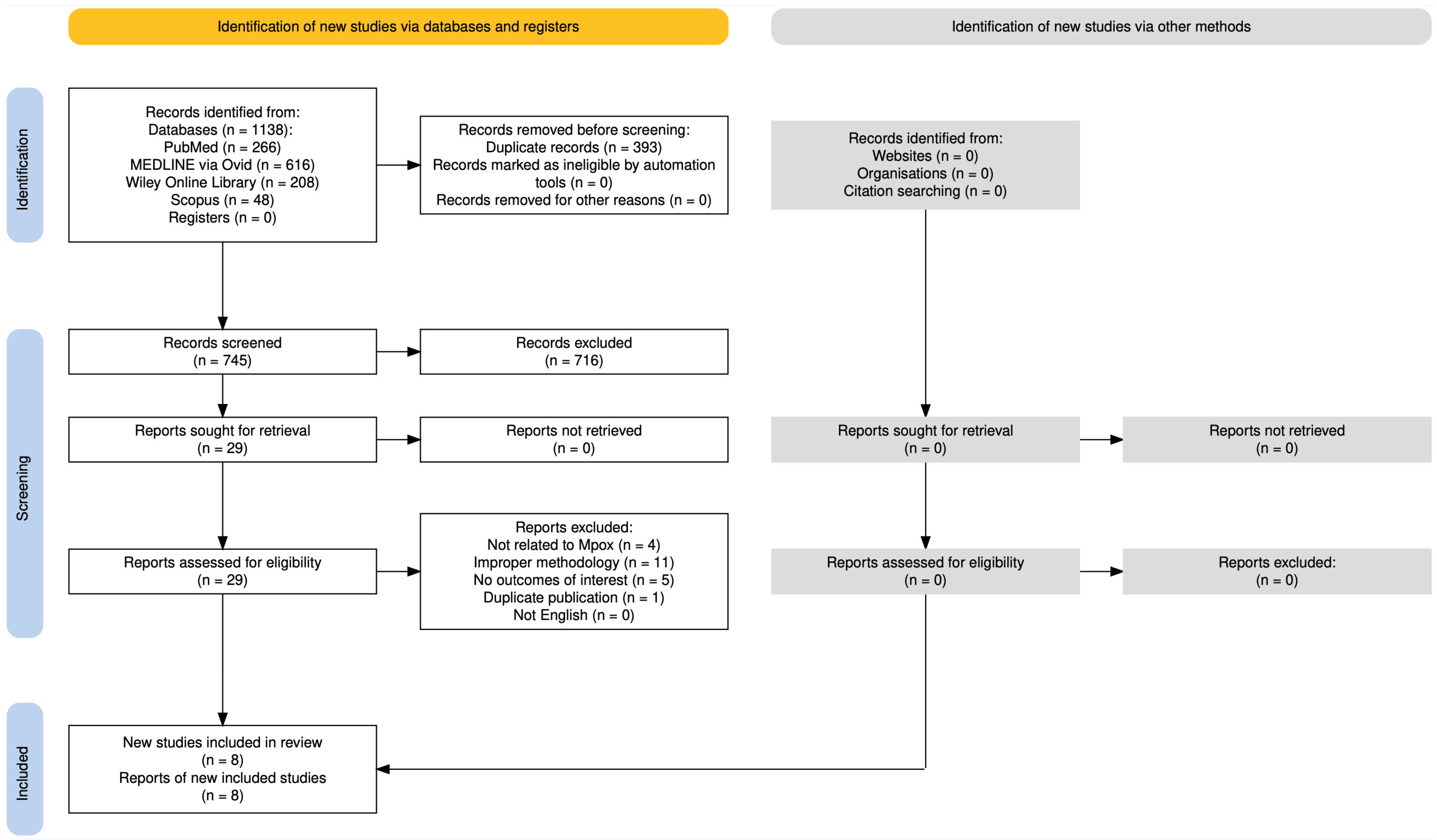
The initial database search identified 1138 records: 266 from PubMed, 616 from MEDLINE (via Ovid), 48 from Scopus and 208 records from Wiley Online Library. After removing the duplicates, 745 unique records were retained for screening. After screening titles and abstracts, 716 records that did not meet the inclusion criteria were excluded, leaving 29 articles for full-text review. Following a detailed assessment, 21 full-text articles were excluded for the following reasons: not related to monkeypox (n = 4), use of improper methodology (n = 11), absence of outcomes of interest (n = 5), and duplication (n = 1). No studies were excluded owing to language or inaccessible full texts. Eight studies met the eligibility criteria and were included in the qualitative analyses. All included studies were observational in nature and comprised six case reports [6,7,8,9,16,17] and two case series [8,18] published after the re-emergence of monkeypox in Saudi Arabia in 2022. None of the studies met the criteria for quantitative synthesis; therefore, a meta-analysis was not performed. Figure 1 shows the PRISMA flowchart.

3.2. Characteristics of the Included Studies

Eight studies were included in this systematic review and meta-analysis, including six case reports [6,7,8,9,16,17] and two case series [8,18]. The Eastern and Central regions were the primary sources of studies, which were conducted between 2023 and 2025 and covered 410 confirmed cases of Mpox infection. The analysis of sex in the studies indicated that there were more male than female patients, as up to 91% of the patients were men, whereas other publications indicated mixed cohorts consisting of males and females. The mean age of the patients ranged from 20 to 41 years. Table 1 summarizes the characteristics of the included studies.

3.3. Demographics and Risk Factors

Patient demographics across the 410 confirmed Mpox cases revealed a clear male predominance (91% [n = 373] vs. 9% [n = 37]). The mean age was 32.8 (range, 20–41) years, indicating that the disease primarily affects young and middle-aged adults. Regarding nationality, 49% (n = 194) were Arabs, 39.5% (n = 157) were Asians, 10% (n = 40) were nonnational Arabs, and 1.5% (n = 6) were Africans.
Risk factor analysis revealed that the most frequently identified exposure was extramarital sexual contact (28.8% [n = 119]). Other exposures included marital sexual contact (1.4% [n = 6]), travel (2% [n = 9]), massage center visits (0.7% [n = 3]), crowded places (1.7% [n = 7]), and skin-to-skin contact (0.5% [n = 2]). A large proportion (63.4% [n = 262]) either denied having known risk factors or had unknown exposure. Human immunodeficiency virus (HIV) positivity was found in 1% (n = 4) of patients [8,10], and only two patients (0.5%) had syphilis infection [7,8]. Table 2 summarizes the demographics and risk factors.
These findings underscore the predominance of Mpox among young adult males in Saudi Arabia, with a notable proportion reporting high-risk sexual behaviors. The clinical presentation was largely consistent with the classic Mpox features, although the high percentage of unknown risk factors highlights the need for improved case interviews and contact tracing strategies in the region.

3.4. Clinical Features

The incubation period, defined as the interval from exposure to Mpox risk factors to symptom onset, ranged from 3 days to 1 week. Fever was the most frequently observed prodromal symptom preceding the development of skin rashes. Pruritus occurred alongside fever in several studies [7,10], whereas other studies documented cases in which fever appeared concurrently with a rash [17,18]. The most frequently reported symptoms were fever (97.1% [n = 398]), rash (96.8% [n = 397]), and headache (79% [n = 323]). Other reported symptoms included lymphadenopathy, observed in 8.8% of the patients [n = 36], affecting various regions, such as the cervical, submandibular, occipital, axillary, and inguinal lymph nodes. Fatigue (6.3% [n = 26]), myalgia (5.8% [n = 24]), and back pain (5.6% [n = 23]) were also reported. The less common symptoms were itching (4.1% [n = 17]), sore throat and cough (2% [n = 8]), and conjunctivitis (0.5% [n = 2]). Notably, there were other rare manifestations, such as keratitis (0.5% [n = 2]) [18]. which was managed conservatively with topical therapy and supportive ophthalmologic care, with no reported long-term visual impairment. and rare neurological deficits, such as facial paralysis, difficulty swallowing, or complete paraplegia (0.2% [n = 1]) [17].
Rash distribution most frequently involved the palms and soles (74% [n = 302]), followed by the genitals (55.8% [n = 229]), face (52.2% [n = 214]), and mouth/oral cavity (39.2% [n = 161]). Other sites included the conjunctiva (17.3% [n = 71]), abdomen (3.7% [n = 15]), extremities (4.1% [n = 17]), chest (2.4% [n = 10]), neck (1% [n = 4]), back (0.7% [n = 3]), dorsum of the hands (0.7% [n = 3]), and scalp (0.2% [n = 1]). Patients typically present with multiple umbilicated pustules, crusted papules, vesiculopustular lesions, and maculopapular rashes. In several cases, the lesions began as genital ulcers or papules and evolved into vesicles and pustules, sometimes forming crusts at later stages. Some patients showed monomorphic lesions (all at the same stage), whereas others presented with pleomorphic rashes and lesions at different stages of evolution occurring simultaneously. Table 3 summarizes the clinical features reported in the included articles.

3.5. Diagnostic Procedures

In Saudi Arabia, Mpox diagnosis is achieved through integrated clinical evaluation and laboratory confirmation, as described in the reviewed studies. Patients typically present with characteristic skin lesions, often beginning in the genital or oral regions, accompanied by fever and lymphadenopathy, particularly travelers or those with known exposure. Lesion samples are obtained using dry swabs and examined using real-time polymerase chain reaction (PCR) at the National Public Health Laboratory of the Ministry of Health in Riyadh. In addition, Assiri et al. (2023) reported that seven patients were identified with MPXV clade IIb, whereas Assiri et al. (2024) reported 381 additional cases of the same clade [8,9]. These findings suggest that most patients, predominantly those associated with the 2022 re-emergence and outbreak in Saudi Arabia, were infected with clade IIb. In two patients presenting with keratitis, swabs were obtained from both the corneal and conjunctival surfaces to confirm Mpox infection [18]. All confirmed cases were documented in the Health Electronic Surveillance Network, and contact tracing was performed. No secondary cases were reported in the reviewed studies.

3.6. Management and Isolation Period

Once a case is confirmed, the management protocol mandates immediate hospitalization and isolation in designated rooms, typically under infection control or negative-pressure conditions. Isolation typically ranges from 10 days to 3 weeks, depending on clinical resolution and lesion healing. Treatment is primarily supportive, as most reported cases do not require systemic antiviral therapy or intensive care. Supportive measures include wound care, emollients for pruritic areas, and antipyretics or analgesics to control fever and pain. In one patient with pruritic lesions, topical mometasone was administered as adjunctive therapy [16]. Patients with coexisting sexually transmitted infections (STIs), such as syphilis, receive appropriate antibiotics, including ceftriaxone and azithromycin [7]. A patient who developed neurological manifestations was treated with intravenous immunoglobulin and corticosteroids [17]. The female patient who developed keratitis received both topical and intravenous cidofovir [18]. The patients were closely monitored throughout hospitalization, with daily assessments of rash progression and vital signs. Most patients recovered completely without complications. Finally, 284 high-risk contacts received post-exposure vaccination with the smallpox/Mpox vaccine (JYNNEOS), administered in two doses 1 month apart [8]. This highlights the critical role of the Ministry of Health in Saudi Arabia in outbreak surveillance, early detection, and prevention of re-emerging infectious diseases.

3.7. Methodological Quality and Risk of Bias

The methodological quality of the included studies (six case reports and two case series) was assessed using the methodological quality and synthesis assessment tool for case reports and case series [12]. Overall, quality varied across studies. For the Selection domain (Q1–Q2), only three studies [8,9,10] met both criteria, whereas the remaining studies failed to meet Q1 because of inadequate case selection clarity. In the Ascertainment domain (Q3), all studies demonstrated adequate ascertainment of exposure and outcomes. Within the Causality domain (Q4–Q6), most studies (n = 7) established a clear temporal relationship between exposure and outcomes (Q4 = yes). However, none addressed alternative causes satisfactorily (Q5 = no across all studies). Only two studies [6,10] fulfilled Q6 by demonstrating a challenge–dechallenge–rechallenge or dose–response effect. For the Reporting domain (Q7–Q8), all studies clearly described patient characteristics, clinical presentation, and outcomes (Q7 and Q8 mostly “yes”), except one study [16], which did not meet Q7 owing to incomplete reporting of follow-up details. Overall, the methodological assessment revealed that although most of the included studies provided adequate ascertainment and reporting, limitations were observed in case selection clarity and causality assessment, particularly in considering alternative explanations and demonstrating causality strength. These limitations suggest a moderate to high risk of bias across the included studies. Table 4 summarizes the methodological quality assessment of the included case reports and case series.

4. Discussion

Over the last 50 years, monkeypox outbreaks have occurred in several African nations; however, this is the first time that the disease has rapidly spread across multiple continents, infecting a significant global population [19]. By 2022, the human MPXV had quickly disseminated to regions outside its endemic zones, reaching developed countries in Europe, the United States, Australia, Asia, and the Middle East [19,20,21]. Although confirmed cases of MPX have been recorded in the Middle East, their frequency remains considerably lower than those in Europe and the Americas. From January 2022 to June 2025, 153,961 cases were reported worldwide by the WHO, with only 911 emerging from Middle Eastern countries [22].
This systematic review aimed to investigate the recent outbreak of monkeypox viral infection in Saudi Arabia, focusing on demographic, clinical, and epidemiological characteristics. A total of 410 confirmed cases of Mpox infection were identified, and most patients, particularly those linked to the 2022 outbreak, were found to be infected with clade IIb. Most studies were conducted in the Eastern and Central regions. Approximately half of the patients were of Saudi nationality. The average age of the patients was 32.8 (range, 20–41) years, suggesting that the disease mainly affects young to middle-aged adults. A notable majority of the patients (91%) were males. Although extramarital sexual contact was the most frequently reported exposure (28.8%), a substantial proportion of cases (63.4%) reported unknown or denied exposure routes. This limits firm conclusions regarding dominant transmission pathways. Underreporting of sexual history may be influenced by social desirability bias and stigma, particularly within conservative sociocultural contexts, potentially leading to incomplete disclosure of high-risk behaviors [21,23]. Therefore, reported exposure patterns should be interpreted with caution and may not fully represent the true transmission dynamics of Mpox in Saudi Arabia.
To further contextualize these findings, it is important to consider national surveillance data. Publicly available reports from the World Health Organization indicate that the total number of laboratory-confirmed Mpox cases reported in Saudi Arabia during the post-2022 outbreak exceeds the number of cases described in published case reports and case series. This discrepancy highlights that the published literature represents only a subset of all reported infections and is more likely to capture clinically notable or severe cases. Accordingly, the findings of this review should be interpreted as complementary to national surveillance data rather than as a comprehensive representation of the overall disease burden in Saudi Arabia [2].
Demographic data from past outbreaks indicated a noticeable shift in the average age of patients with Mpox over time. The median age of patients with monkeypox infection in Africa increased from 4 and 5 years in the 1970s and the 1980s, respectively, to 10 and 21 years in the 2000s and the 2010s, respectively [24,25]. Du et al. reported that the median age of Mpox cases in 2022 was significantly higher than that of cases identified before 2022 (35.52 years vs. 18.38 years, respectively) [26]. Additionally, Hatami et al. reported that the average age of patients with Mpox during the 2022 outbreak was 29.9 years [24]. Kandeel et al. found that individuals in their 30 s were the most affected [27]. This was consistent with our findings. This upward trend in patient age seems to be associated with reduced immunity to smallpox following the cessation of smallpox vaccinations in the 1980s [22,24,26] as the vaccine used to immunize against smallpox may also provide protection against the Mpox virus. Receiving a smallpox vaccination can provoke a response to the Mpox virus and may help prevent infection by up to 85% [28,29].
Our findings showed a predominance of male patients, which is consistent with earlier studies. This trend may be reflected in the sociocultural and occupational factors observed in past outbreaks in endemic areas, where men had greater exposure to animal reservoirs through hunting. A similar pattern was observed in the current outbreak, in which young men appeared to be disproportionately affected, accounting for 96% of the affected cases [26,30]. The occurrence of Mpox among men during the current outbreak is associated with traits of men who engage in high-risk sexual behavior, specifically through intimate sexual contact among MSM [28,31]. A study of 211 men diagnosed with Mpox found that 99% reported sexual or intimate contact with other men, with only one case involving bisexual contact [31,32,33]. Additionally, recent pooled analyses revealed that nearly all cases reported post-2022 had a history of human contact, particularly sexual interactions, with MSM constituting 93.5% of the cases [26]. This demographic also showed a prevalence of coinfections, including HIV, syphilis, and various other STIs [17,34]. In contrast, data from the Eastern Mediterranean Region (EMR) reported markedly lower rates of concurrent infections, with HIV and STIs present in only 15% and 1.5% of cases, respectively, compared with global estimates of 41% and 29%, respectively [26,34]. Collectively, these findings suggest a marked epidemiological shift with sexual activity emerging as a key transmission route. This is further supported by virological studies, as Mpox virus DNA was detected in seminal fluid samples from 29 of 32 patients in a study by Thornhill et al. [34], and in the archival testicular tissue of crab-eating macaques, providing biological plausibility for sexual transmission [30]. Islam is the predominant religion in most Middle Eastern nations, and the relatively low number of Mpox cases reported in the region may be partly attributable to sociocultural and religious factors. Same-sex sexual activity is prohibited in many of these countries, potentially limiting the spread of infections through this high-risk route [35]. Furthermore, our findings are consistent with the existing literature, indicating that the most reported source of exposure in our study was extramarital sexual contact, which represented 28.8% of cases. We found that HIV positivity was present in four cases [8,10], and only two patients had syphilis [7,8].
Most studies appropriately focus on young male patients, as this group represents the demographic most affected by the current Mpox outbreak. Nevertheless, evidence describing infection in other population groups in Saudi Arabia remains relatively limited. In particular, data on women and immunocompromised individuals are scarce, highlighting the need for future studies to determine whether clinical presentation, complications, and risk profiles differ across these underrepresented groups.
In a clinical setting, patients infected with Mpox virus typically begin to show initial symptoms that last approximately 3 days. Following the onset of fever and lymphadenopathy, cutaneous manifestations initially appear on the face and head and subsequently spread to other body regions. The rash characteristically evolves from papules to vesicles and pustules before progressing to crust formation, which eventually heals, but may leave residual scarring [36]. In this study, the most frequently reported symptoms were fever (97.1%) and rash (96.8%). These findings are consistent with those of a large multi-country investigation conducted across 16 nations during the outbreak, which reported rashes in 95% of patients and fever in 62% [34]. Nonetheless, atypical clinical presentations have been reported in the 2022 outbreak, including absent or minimal prodromal symptoms and isolated lesions confined to the genital or anal regions [23,26,34,37,38]. Moreover, the anatomical distribution of skin lesions in this multicountry outbreak differs from that observed in earlier human Mpox outbreaks (1980–2022), with the predominant sites shifting from the face and extremities to the anogenital region [18,30,34,37]. In most cases, the location of the lesions further supports the likelihood of transmission through sexual intercourse [18,23,33]. Hermez et al. analyzed Mpox case reports submitted to the WHO between May 2022 and December 2023 and found that genital lesions were less frequently observed in the EMR population (39%) than in 73% of the global population [39]. In our study, rashes were most frequently observed on the palms and soles, affecting 74% of participants, followed by the genitals (55.8%) and the face (52.2%). In contrast, Hatami et al. reported a lower prevalence of palm (15.4%) and sole (10.6%) involvement in post-2022 studies compared with earlier outbreaks [24]. Lymphadenopathy is a hallmark of MPXV infection that facilitates its differentiation from smallpox and chickenpox [26,30]. In the present study, lymphadenopathy was observed in only 8.8% of the patients, affecting multiple regions, including the cervical, submandibular, occipital, axillary, and inguinal lymph nodes. This contrasts sharply with post-2022 outbreak data, in which Hatami et al. reported lymphadenopathy in 55.5% of the cases [26]. Notably, inguinal lymphadenopathy was more frequently observed during the current outbreak [30,33,34]. However, earlier outbreaks in endemic regions predominantly involved the submandibular, cervical, and axillary lymph nodes [26,30].
Complications associated with MPXV infections include neurological manifestations, bronchopneumonia, and sepsis. MPXV can invade the central nervous system through the olfactory epithelium or circulating monocytes and macrophages, leading to neurological sequelae, such as seizures, transverse myelitis, confusion, and encephalitis [40]. Here, we document a single case of monkeypox-associated encephalomyelitis [41]. Consistent with the existing literature, the ongoing outbreak has been characterized by a limited number of fatal cases and few reports of neurological complications, such as encephalitis [20,41,42,43]. Ocular involvement is a relatively rare yet clinically significant complication of Mpox. The reported manifestations include conjunctival vesicles, anterior uveitis, keratitis, and corneal ulceration, which may progress to corneal scarring and, in severe cases, vision loss [26,40]. Ocular complications during the current clade IIb Mpox outbreak from 2022 to 2024 seem to be less common and less severe compared with those observed in earlier outbreaks, with approximately 1% of cases experiencing ocular involvement in this outbreak, in contrast to 9–23% reported in prior outbreaks in endemic regions [26,44,45,46]. Conjunctivitis is the most frequently reported, uncomplicated ocular manifestation of Mpox [26]. Abdelaal et al. [45]. documented conjunctivitis in 1% of cases during the current outbreak, compared with 17% in earlier outbreaks, a finding consistent with our observation of 0.5% prevalence. Notably, we identified two cases of keratitis, whereas Abdelaal et al. [45]. reported keratitis exclusively in earlier outbreaks.
From a public health standpoint, our findings emphasize the need for focused contact tracing and timely post-exposure vaccination to reduce further transmission of Mpox in Saudi Arabia. National control efforts, including systematic contact tracing and the use of the smallpox/Mpox vaccine (JYNNEOS) for individuals at high risk, have been important components of the outbreak response [2,8]. However, sociocultural factors, particularly stigma and sensitivity around sexual health, may affect the accuracy of exposure reporting and delay presentation to healthcare services, which can compromise surveillance efforts [2,34]. Addressing these challenges through culturally sensitive communication, confidential case investigations, and improved public awareness may help enhance disclosure, strengthen surveillance, and support more effective outbreak control.
This systematic review has several limitations that should be considered when interpreting the findings. First, the literature search was limited to four major databases and English-language publications, which may have resulted in the omission of relevant Arabic-language studies or locally published grey literature. Second, the evidence included in this review was mainly derived from case reports and case series, which are inherently subject to publication bias, as unusual or more severe cases are more likely to be reported; this also limits the generalizability of the findings to the wider population in Saudi Arabia. In addition, variability in the methodological quality of the included studies may affect the strength of the conclusions. Finally, incomplete reporting of exposure history, sexual behavior, HIV status, and other sexually transmitted infections in several studies limited a more detailed understanding of transmission patterns.

5. Conclusions

This study aimed to address the knowledge gaps in Mpox transmission, demographics, and outcomes in Saudi Arabia post-2022. The disease primarily affects young adult males, often via high-risk sexual exposure, presenting with fever and rashes; rare complications include keratitis and neurological deficits. The diagnosis relied on PCR; management is supportive, and post-exposure vaccination highlights preventive efforts.

Author Contributions

R.H.A. and E.A.; methodology, A.F.S.; software, A.F.S.; validation, O.A.S., S.H.A. and R.A.A.; formal analysis, A.F.S.; investigation, E.A.; resources, O.A.S.; data curation, R.H.A.; writing—original draft preparation, S.A.A.; writing—review and editing, E.A. and M.M.A.; visualization, S.A.A.-l. and R.A.A.; supervision, M.M.A.; project administration, M.M.A. All authors have read and agreed to the published version of the manuscript.

Funding

No funding was received for this study.

Institutional Review Board Statement

Not applicable.

Informed Consent Statement

Not applicable.

Data Availability Statement

On request from corresponding author.

Conflicts of Interest

The authors declare no conflicts of interest.

Abbreviations

The following abbreviations are used in this manuscript:
EMREastern Mediterranean Region
HIVHuman Immunodeficiency Virus
MPXVMonkeypox Virus
MSMMen who have Sex with Men
MpoxMonkeypox
PCRPolymerase Chain Reaction
PHEICPublic Health Emergency of International Concern
PRISMAPreferred Reporting Items for Systematic Reviews and Meta-Analyses
STDsSexually Transmitted Diseases
STIsSexually Transmitted Infections
WHOWorld Health Organization

References

  1. World Health Organization. Mpox (Monkeypox) Fact Sheet. Published on 26 August 2024. Available online: https://www.who.int/news-room/fact-sheets/detail/mpox (accessed on 9 July 2025).
  2. World Health Organization. Mpox: Multi-Country External Situation Report no. 53. Published on 29 May 2025. Available online: https://cdn.who.int/media/docs/default-source/documents/emergencies/multi-country-outbreak-of-mpox--external-situation-report--53.pdf (accessed on 9 July 2025).
  3. Hershan, A.A. Virology, epidemiology, transmissions, diagnostic tests, prophylaxis and treatments of human mpox: Saudi Arabia perspective. Front. Cell Infect. Microbiol. 2025, 15, 1530900. [Google Scholar] [CrossRef] [PubMed]
  4. World Health Organization. Mpox Q&A: What You Need to Know About Mpox. Published on 3 April 2025. Available online: https://www.who.int/europe/news-room/questions-and-answers/item/mpox-q-a--what-you-need-to-know-about-mpox (accessed on 9 July 2025).
  5. Bunge, E.M.; Hoet, B.; Chen, L.; Lienert, F.; Weidenthaler, H.; Baer, L.R.; Steffen, R.; Chen, L.; McCallum, H.; Speare, R.; et al. The changing epidemiology of human monkeypox—A potential threat? A systematic review. PLoS Negl. Trop. Dis. 2022, 16, e0010141. [Google Scholar] [CrossRef] [PubMed]
  6. AlBahrani, S.; AlGarzai, R.; Aljunaid, T.O.; Al-Tawfiq, J.A. A case report of mpox in a male traveler. New Microbes New Infect. 2023, 53, 101132. [Google Scholar] [CrossRef] [PubMed]
  7. Alsaeed, A.; AlKhalaf, A.; Al Matar, F.; AlRamadan, S.; Al Muhaif, A.; Marzooq, Z.; Alaali, Z. Unveiling mpox: A rare case of sexual transmission in Saudi Arabia. Cureus 2023, 15, e47785. [Google Scholar] [CrossRef]
  8. Assiri, A.M.; Alserehi, H.; Abuhasan, M.Y.; Khalil, E.A.A.; Al-Thunayan, M.H.; Alshehri, M.S.; Alrossais, A.A.; Abudahish, A.S.; Alsahafi, A.J.; Al-Tawfiq, J.A. Epidemiology, clinical presentation, and outcome of mpox: A study of 381 cases in Saudi Arabia. IJID Reg. 2024, 11, 100358. [Google Scholar] [CrossRef]
  9. Assiri, A.M.; Al-Tawfiq, J.A.; Jokhdar, H.A.; Algwizani, A.R.; Albarraq, A.M.; Alanazi, K.H.; Alamri, A.H.; Almo-hammadi, E.L.; Abuhasan, M.Y.; Alserehi, H.A.; et al. Clinical features and outcome of human Mpox (Monkeypox) in Saudi Arabia: An observational study of travel-related cases. J. Infect. Public Health 2023, 16, 341–345. [Google Scholar] [CrossRef]
  10. Dar, N.G.; Alfaraj, S.H.; Alboqmy, K.N.; Amer, H.; Khanum, N.; Alshakrah, F.; Abdallah, H.; Kumar, D.; Alzarzour, S.H.; Alzahrani, N.A.; et al. Locally acquired mpox outbreak in Riyadh, Saudi Arabia: Clinical presentation, risk factors and preventive measures. J. Travel Med. 2023, 30, taad150. [Google Scholar] [CrossRef]
  11. Ouzzani, M.; Hammady, H.; Fedorowicz, Z.; Elmagarmid, A. Rayyan—A web and mobile app for systematic reviews. Syst. Rev. 2016, 5, 210. [Google Scholar] [CrossRef]
  12. Murad, M.H.; Sultan, S.; Haffar, S.; Bazerbachi, F. Methodological quality and synthesis of case series and case reports. BMJ Evid. Based Med. 2018, 23, 60–63. [Google Scholar] [CrossRef]
  13. Campbell, M.; McKenzie, J.E.; Sowden, A.; Katikireddi, S.V.; Brennan, S.E.; Ellis, S.; Hartmann-Boyce, J.; Ryan, R.; Shepperd, S.; Thomas, J.; et al. Synthesis without meta-analysis (SWiM) in systematic reviews: Reporting guideline. BMJ 2020, 368, l6890. [Google Scholar] [CrossRef]
  14. Microsoft Corporation. Microsoft Excel [Computer Program], Version 2207; Microsoft Corporation: Redmond, WA, USA, 2022.
  15. Moher, D.; Liberati, A.; Tetzlaff, J.; Altman, D.G.; PRISMA Group. Preferred reporting items for systematic re-views and meta-analyses: The PRISMA statement. BMJ 2009, 339, b2535. [Google Scholar] [CrossRef] [PubMed]
  16. Alanazi, S.M.; Altuwaijri, A.M.; Alharthi, R.M.; Alfalah, M. Monkeypox presenting as an isolated genital rash: A case report. Dermatol. Rep. 2025, 17, 10241. [Google Scholar] [CrossRef] [PubMed]
  17. Hammad, Q.; Alalshaikh, Z.M.; Zeidan, Z.A.; Islam, S.; Haya, A. Unusual neurological complications in a patient with monkeypox: A case report. Cureus 2024, 16, e58479. [Google Scholar] [CrossRef] [PubMed]
  18. Aljawi, A.; Alwazae, M.; Babgi, R.; Khan, A.M.; Alshabeeb, R.; Alamry, M. Monkeypox-related keratitis: Case series. Case Rep. Ophthalmol. 2025, 16, 430–438. [Google Scholar] [CrossRef]
  19. Meo, S.A.; Alsomali, A.H.; Almushawah, A.A.; Meo, A.S. Epidemiological trends of human monkeypox in Europe. J. Trop. Med. 2022, 2022, 4042962. [Google Scholar] [CrossRef]
  20. Marín-Medina, D.S.; Castilla-Gómez, L.; Poveda, M.; Ortiz, L.; Ariza-Serrano, L.M.; Schlesinger-Piedrahita, A.; Torres-Zafra, J.; Tapias-Agamez, M.; Osorio-Lombana, J.P.; Arias-León, G.; et al. Encephalomyelitis in a patient with monkeypox: An unusual complication. J. Neurovirol. 2023, 29, 237–240. [Google Scholar] [CrossRef]
  21. Liu, B.M.; Rakhmanina, N.Y.; Yang, Z.; Bukrinsky, M.I. Mpox (monkeypox) virus and its co-infection with HIV, sexually transmitted infections, or bacterial superinfections: Double whammy or a new prime cul-prit? Viruses 2024, 16, 784. [Google Scholar] [CrossRef]
  22. DeWitt, M.E.; Polk, C.; Williamson, J.; Shetty, A.K.; Passaretti, C.L.; McNeil, C.J.; Fairman, R.T.; Sampson, M.M.; Dalton, C.; Sanders, J.W. Global monkeypox case hospitalisation rates: A rapid systematic review and meta-analysis. EClinicalMedicine 2022, 54, 101710. [Google Scholar] [CrossRef]
  23. Ortiz-Saavedra, B.; Montes-Madariaga, E.S.; Cabanillas-Ramirez, C.; Alva, N.; Ricardo-Martínez, A.; León-Figueroa, D.A.; Barboza, J.J.; Mohanty, A.; Padhi, B.K.; Sah, R. Epidemiologic Situation of HIV and Monkeypox Coinfection: A Systematic Review. Vaccines 2023, 11, 246. [Google Scholar] [CrossRef]
  24. Hatami, H.; Jamshidi, P.; Arbabi, M.; Safavi-Naini, S.A.A.; Farokh, P.; Izadi-Jorshari, G.; Mohammadzadeh, B.; Nasiri, M.J.; Zandi, M.; Nayebzade, A.; et al. Demographic, Epidemiologic, and Clinical Characteristics of Human Monkeypox Disease Pre- and Post-2022 Outbreaks: A Systematic Review and Meta-Analysis. Biomedicines 2023, 11, 957. [Google Scholar] [CrossRef]
  25. World Health Organization. Global Mpox Trends. Published on 12 September 2024. Available online: https://worldhealthorg.shinyapps.io/mpx_global/ (accessed on 19 September 2025).
  26. Du, M.; Sun, H.; Zhang, S.; Yuan, J.; Yan, W.; Liu, Q.; Qin, C.; Liu, M.; Liu, J. Global Epidemiological Features of Human Monkeypox Cases and Their Associations With Social-Economic Level and International Travel Arrivals: A Systematic Review and Ecological Study. Int. J. Public Health 2023, 68, 1605426. [Google Scholar] [CrossRef]
  27. Kandeel, M. Meta-Analysis of Demographic Disparities in Monkeypox Infections among Diverse Populations. New Microbiol. 2024, 46, 322–331. [Google Scholar] [PubMed]
  28. Srivastava, S.; Kumar, S.; Jain, S.; Mohanty, A.; Thapa, N.; Poudel, P.; Bhusal, K.; Al-qaim, Z.H.; Barboza, J.J.; Padhi, B.K.; et al. The Global Monkeypox (Mpox) Outbreak: A Comprehensive Review. Vaccines 2023, 11, 1093. [Google Scholar] [CrossRef] [PubMed]
  29. Fine, P.E.; Jezek, Z.; Grab, B.; Dixon, H. The transmission potential of monkeypox virus in human populations. Int. J. Epidemiol. 1988, 17, 643–650. [Google Scholar] [CrossRef] [PubMed]
  30. Alakunle, E.; Kolawole, D.; Diaz-Cánova, D.; Alele, F.; Adegboye, O.A.; Moens, U.; Okeke, M.I. A comprehensive review of monkeypox virus and mpox characteristics. Front. Cell Infect. Microbiol. 2024, 14, 1360586. [Google Scholar] [CrossRef]
  31. Simanjorang, C.; Karima, U.Q.; Wangsawinangun, R.Z.R.; Ariantini, A.D.; Fitri, A.E.R. Risk factors of monkeypox outbreak in Indonesia: A case–control study. Public Health Indones. 2025, 11, 19–31. [Google Scholar] [CrossRef]
  32. Vusirikala, A.; Charles, H.; Balasegaram, S.; Macdonald, N.; Kumar, D.; Barker-Burnside, C.; Cumiskey, K.; Dickinson, M.; Watson, M.; Olufon, O.; et al. Epidemiology of Early Monkeypox Virus Transmission in Sexual Networks of Gay and Bisexual Men, England, 2022. Emerg. Infect. Dis. 2022, 28, 2082–2086. [Google Scholar] [CrossRef]
  33. Angelo, K.M.; Smith, T.; Camprubí-Ferrer, D.; Balerdi-Sarasola, L.; Diaz-Menendez, M.; Garcia-Bustos, J.; Arsuaga, M.; Gutiérrez, C.; Arce-Garcia, C.; Llamas-Velasco, M.; et al. Epidemiological and clinical characteristics of patients with monkeypox in the GeoSentinel Network: A cross-sectional study. Lancet Infect. Dis. 2023, 23, 196–206. [Google Scholar] [CrossRef]
  34. Thornhill, J.P.; Barkati, S.; Walmsley, S.; Rockstroh, J.; Antinori, A.; Harrison, L.B.; Palich, R.; Nori, A.; Reeves, I.; Habibi, M.S.; et al. Monkeypox virus infection in humans across 16 countries—April–June 2022. N. Engl. J. Med. 2022, 387, 679–691. [Google Scholar] [CrossRef]
  35. Ahmed, S.K.; Omar, R.M.; Hussein, S.H.; Ali, B.M.; Ahmed, A.M.; Hussein, A.M.; El-Shahat, A.A.; Hammad, A.M.; Mohamed, S.A.; Younis, E.M.; et al. Middle East preparedness for monkeypox: A call for action. Int. J. Surg. 2022, 106, 106948. [Google Scholar] [CrossRef]
  36. Lu, J.; Xing, H.; Wang, C.; Zhang, L.; Li, X.; Zhao, Y.; Chen, H.; Liu, Q.; Zhou, Y.; Wang, J.; et al. Mpox pathogenesis, prevention, and treatment. Signal Transduct. Target Ther. 2023, 8, 458. [Google Scholar] [CrossRef]
  37. Sharma, A.; Prasad, H.; Kaeley, N.; Bondalapati, A.; Edara, L.; Kumar, Y.A. Monkeypox epidemiology, clinical presentation, and transmission: A systematic review. Int. J. Emerg. Med. 2023, 16, 20. [Google Scholar] [CrossRef] [PubMed]
  38. Garg, A.; Thapliyal, K.; Singh, V.P. Monkeypox, a re-emerging infection: A narrative review. J. Indian Acad. Clin. Med. 2022, 23, 125–130. [Google Scholar]
  39. Hermez, J.G.; El Helou, R.; Sawaya, T.; Sader, G.; Jamil, M.S.; Alaama, A.S.; Rizk, N.A. mergence of mpox in the Eastern Mediterranean Region: Data assessment and implications for a public health response. J. Infect. Public Health 2024, 17, 102565. [Google Scholar] [CrossRef] [PubMed]
  40. Sun, Y.; Nie, W.; Tian, D.; Ye, Q. Human monkeypox virus: Epidemiologic review and research progress in diagnosis and treatment. J. Clin. Virol. 2024, 171, 105662. [Google Scholar] [CrossRef]
  41. Orviz, E.; Negredo, A.; Ayerdi, O.; Vázquez, A.; Muñoz-Gomez, A.; Monzón, S.; Clavo, P.; Zaballos, A.; Vera, M.; Sánchez, P. Monkeypox outbreak in Madrid (Spain): Clinical and virological aspects. J. Infect. 2022, 85, 412–417. [Google Scholar] [CrossRef]
  42. Badenoch, J.B.; Conti, I.; Rengasamy, E.R.; Watson, C.J.; Butler, M.; Hussain, Z.; Carter, B.; Rooney, A.G.; Zandi, M.S.; Lewis, G. Neurological and psychiatric presentations associated with human monkeypox virus infection: A systematic review and meta-analysis. EClinicalMedicine 2022, 52, 101644. [Google Scholar] [CrossRef]
  43. Pastula, D.M.; Copeland, M.J.; Hannan, M.C.; Rapaka, S.; Kitani, T.; Kleiner, E.; Showler, A.; Yuen, C.; Ferriman, E.M.; House, J.; et al. Two Cases of Monkeypox-Associated Encephalomyelitis—Colorado and the District of Columbia, July–August 2022. MMWR Morb. Mortal. Wkly Rep. 2022, 71, 1212–1215. [Google Scholar] [CrossRef]
  44. Begley, J.; Kaftan, T.; Song, H.; Fashina, T.; Hartley, C.D.; Nguyen, N.; Crozier, I.; Mwanza, J.C.; Yeh, S. Ocular Complications of Mpox: Evolving Understanding and Future Directions. Int. Ophthalmol. Clin. 2024, 64, 15–22. [Google Scholar] [CrossRef]
  45. Abdelaal, A.; Reda, A.; Hassan, A.R.; Mashaal, A.; Serhan, H.A.; Katamesh, B.E.; Abdelazeem, B.; Mohanty, A.; Padhi, B.K.; Rodriguez-Morales, A.J.; et al. Monkeypox-Associated Manifestations and Complications Involving the Eye: A Systematic Review and Meta-Analysis of Previous and Current Outbreaks. Asia Pac. J. Ophthalmol. 2023, 12, 326–337. [Google Scholar] [CrossRef]
  46. Rayati Damavandi, A.; Semnani, F.; Hassanpour, K. A Review of Monkeypox Ocular Manifestations and Complications: Insights for the 2022 Outbreak. Ophthalmol. Ther. 2023, 12, 55–69. [Google Scholar] [CrossRef]
Figure 1. The PRISMA flowchart.
Zoonoticdis 06 00003 g001
Table 1. Characteristics of included studies.
AuthorYearRegionStudy Design
AlBahrani et al. [6]2023EasternCase report
Alsaeed et al. [7]2023EasternCase report
Dar et al. [10]2023CentralCase report
Assiri et al. [9]2023CentralCase report
Assiri et al. [8]2024CentralCase series
Hammad et al. [17]2024CentralCase report
Alanazi et al. [16]2025CentralCase report
Aljawi et al. [18]2025CentralCase series
Regions of the Kingdom of Saudi Arabia.
Table 2. Patient demographic and risk factors.
N%
Sex
Male37391%
Female379%
Age, Mean (Range)32.8 (20–41)
Nationality
Arab (Identified Nationality)19449%
Asian15739.5%
Arab (Nationality not Identified)4010%
African61.5%
Risk factors
Sexual contact (extramarital)11928.8%
Sexual contact (marital)61.4%
Travel92%
Massage centers30.7%
Crowded places71.7%
Skin-to-skin contact20.5%
Denied or unknown26263.4%
HIV status (positive)41%
Syphilis20.5%
N = sample size, HIV = human immunodeficiency virus, Percentages are calculated using the total number of confirmed cases with available data (N = 410), unless otherwise specified. ‘Arab (identified nationality)’ refers to individuals of Arab ethnicity whose specific nationality was documented in the original reports. ‘Arab (nationality not identified)’ refers to individuals of Arab ethnicity for whom a specific nationality was not reported or could not be confirmed in the source studies.
Table 3. Clinical features of 410 patients with confirmed monkeypox in Saudi Arabia between 2023 and 2025.
N%
Symptoms
Fever39897.1%
Rash39796.8%
Headache32379%
Lymphadenopathy368.8%
Fatigue266.3%
Myalgia245.8%
Back pain235.6%
Itching174.1%
Sore throat and cough82%
Conjunctivitis20.5%
Keratitis20.5%
Neurological manifestations:10.2%
Rash location
Palm and soles30274%
Genitals22955.8%
Face21452.2%
Mouth and oral cavity16139.2%
Conjunctiva7117.3%
Abdomen153.7%
Extremities174.1%
Chest102.4%
Neck41%
Back30.7%
Dorsum of the hand30.7%
Scalp10.2%
N = sample size. Percentages are calculated using pooled patient-level data (N = 410) with available information for each variable; missing data were excluded from individual calculations. Confidence intervals were not calculated due to the descriptive nature of data derived from case reports and case series. Neurological manifestations: Includes facial paralysis, dysphagia, and complete paraplegia.
Table 4. Methodological quality and synthesis assessment tool for case reports and case series.
Domain for Evaluating the Methodological Quality of Case Reports and Case Series
SelectionAscertainmentCausalityReporting
Leading Explanatory Questions
ReferenceQ. 1Q. 2Q. 3Q. 4Q. 5Q. 6Q. 7Q. 8
AlBahrani et al. (2023) [6]NoYesYesYesNoNoYesYes
Alsaeed et al. (2023) [7]NoYesYesNANANAYesYes
Dar et al. (2023) [10]YesYesYesYesNoNoYesYes
Assiri et al. (2023) [9]YesYesYesYesNoNoYesYes
Assiri et al. (2024) [8]YesNoYesYesNoNoYesYes
Hammad et al. (2024) [17]NoYesYesYesNoNoYesYes
Alanazi et al. (2025) [16]NoYesYesYesNoNoNoYes
Aljawi et al. (2025) [18]NoYesYesNoNoNoYesYes
Selection: (Q. 1). Does the patient(s) represent(s) the whole experience of the investigator (center), or is the selection method unclear to the extent that other patients with similar presentations may not have been reported?
Ascertainment: (Q. 2). Was the exposure adequately ascertained? (Q. 3). Was the outcome adequately ascertained?
Causality: (Q. 4). Were other alternative causes that may explain the observation ruled out? (Q. 5). Was there a challenge/rechallenge phenomenon? (Q. 6). Was there a dose–response effect? (Q. 7). Was follow-up long enough for outcomes to occur?
Reporting: (Q. 8) Is the case(s) described with sufficient details to allow other investigators to replicate the research or to allow practitioners to make inferences related to their own practice?
Disclaimer/Publisher’s Note: The statements, opinions and data contained in all publications are solely those of the individual author(s) and contributor(s) and not of MDPI and/or the editor(s). MDPI and/or the editor(s) disclaim responsibility for any injury to people or property resulting from any ideas, methods, instructions or products referred to in the content.