1. Introduction
Viral zoonoses are infectious diseases caused by viruses that naturally live in animals and can be transmitted to humans. They represent a significant and complex global health threat. Understanding the dynamics of these diseases is crucial for developing effective control strategies. Several interrelated factors have led to the emergence of viral zoonoses [
1]. The One Health Initiative has identified the need to understand bacterial and viral zoonoses among the diseases prioritized in workshops held in various countries [
2]. The overall risk factors for human disease emergence are complex, with helminths being the parasites most strongly associated with human zoonoses, followed by viruses, protozoa, bacteria, and fungi [
3].
Emergent and re-emergent viral zoonoses are multivariate and are influenced by environmental changes, human demographics and behavior, and, of course, viral factors themselves [
4]. The establishment of viral zoonoses is associated with increased human transmission in their ecological and evolutionary contexts [
5]. Such factors include viral isolates from non-human primates, the human respiratory tract, and the CNS, which further influence the virus’s transmissibility [
6]. For instance, mathematical modelling has been used to study viral zoonoses in wildlife to provide a framework for understanding and predicting their dynamics. However, most zoonotic viruses are RNA viruses, which are more prone to zoonotic transmission than DNA viruses [
7]. Genomic size and host range contribute to the estimation of a zoonotic virus’s potential to emerge and persist in transmission. Therefore, it is increasingly important to understand the potential of a zoonotic virus circulating among wildlife hosts, exemplified by Ebola and SARS-CoV-2 [
8,
9]. The potential of zoonotic influenza viruses to adapt to humans and acquire human-to-human transmissibility is a reminder of their ability to cause pandemics [
10]. Zoonotic viruses arise in animal populations through mutation and reassortment, giving rise to new strains capable of causing human infections [
11].
The way these pathogens jump to humans matters. Direct spillover highlights the importance of frontline surveillance in communities with high wildlife exposure, whereas indirect spillover underscores the need to monitor intermediate hosts that serve as amplification points. Integrating genomic signals from both pathways allows risk models to move beyond description to actionable early-warning systems [
12].
Finally, information on viral zoonoses is multifaceted, ranging from reservoirs to risk factors for emergence, transmissibility, and zoonotic virus characteristics. The findings of this study are important for the prevention and control of such zoonotic diseases. Major zoonotic viruses have caused devastating pandemics due to their animal origins and their ability to transmit to humans. The recent outbreaks of SARS, MERS, Ebola, Zika, and COVID-19 are stark reminders of this constant threat. Most of these depend on complex interactions among factors, such as human activity, environmental changes, and viruses’ intrinsic ability to mutate and adapt, enabling them to emerge and transmit successfully [
13,
14,
15]. Effectively tackling these diseases requires understanding this complex interplay. This requires interdisciplinary collaboration between virology, ecology, epidemiology, veterinary medicine, and public health to develop proactive strategies. Only with a comprehensive, integrated approach can we hope to prevent future outbreaks [
16,
17].
Table 1 identifies the strengths, weaknesses, opportunities, and threats of zoonotic disease research. This SWOT analysis can help policymakers make informed decisions and develop effective strategies to mitigate the risks associated with these diseases, as well as to prioritize resources to address current challenges and prevent potential threats.
In this review, we specifically aimed to analyze the genomic determinants of zoonotic viral adaptation, ecological and anthropogenic drivers of spillover, and ethical considerations in prevention strategies. This focus ensures that the review is positioned as a rigorous and scholarly contribution rather than a descriptive overview.
2. Methodology
To frame this review, we adopted a structured narrative approach. We searched PubMed, Scopus, and Web of Science for articles published between January 2010 and March 2025. Search terms included ‘zoonotic viruses,’ ‘viral spillover,’ ‘comparative genomics,’ ‘host adaptation,’ and ‘One Health.’ PubMed, Scopus, and Web of Science for literature published between January 2010 and March 2025. Our search terms included ‘zoonotic viruses,’ ‘viral spillover,’ ‘comparative genomics,’ ‘host adaptation,’ and ‘One Health.
We included peer-reviewed research articles, systematic reviews, and authoritative reports from international health agencies in our analysis. The exclusion criteria were non-peer-reviewed opinion pieces, case reports without genomic or epidemiological analysis, and articles published in languages other than English. In our selection process, we prioritized these sources while generally excluding non-peer-reviewed opinion pieces, case reports that lacked genomic or epidemiological analysis, and articles not published in English.
While the primary focus was on studies from 2010 onwards to ensure currency, seminal earlier works were also included, as they provided essential conceptual or historical context. Although we concentrated on literature from 2010 onwards to keep the review current, we also drew on foundational earlier works where they provided necessary historical or conceptual grounding.
Studies were evaluated for relevance to three domains: (1) genomic determinants of host switching and viral adaptation, (2) ecological and anthropogenic drivers of spillover, and (3) ethical implications of the interventions. We then synthesized the findings thematically, aiming to map out the current state of knowledge, point to ongoing controversies, and identify key questions that remain unanswered. This methodology ensures a transparent, reproducible, and scholarly foundation for this review.
2.1. Advantages and Disadvantages
Studying viral zoonoses is crucial for human and animal health, but the work is not without its own hurdles and ethical dilemmas [
18]. One clear benefit is the potential to predict and control new threats to prevent catastrophic pandemics. Furthermore, research on zoonotic diseases may provide a broader window into the dynamics between the host and pathogen, thereby contributing to general knowledge of virology [
19]. At the same time, we must consider the disadvantages and complexities inherent in this work. Research in this area often requires close contact with wildlife and domestic animals, increasing the likelihood of zoonotic pathogen spillover to researchers [
20]. There is an ethical clash between conservation and disease management because interventions to limit zoonotic spillover may require actions such as culling or altering natural habitats. Balancing public health and ecological preservation remains an ongoing challenge. Taken together, viral zoonoses are a central area of study in virology, public health, and ecology, posing significant challenges to global health security while also offering great opportunities for scientific advances and pandemic prevention [
21,
22].
In this review, we explore these subtle issues, touching on definitions, historical context, and epidemic examples, with a particular focus on spillover and cross-species transmission. We hold a balanced perspective, weighing the pros and cons of any intervention while considering the potential impacts on both ecosystems and human health. A more complete understanding of spillover events and cross-species transmission is needed to understand the origins of novel zoonotic diseases and to formulate strategies to prevent and control them. Hence, we believe the benefits of this research ultimately outweigh the potential downsides. This research is indispensable for protecting human health from the growing threat of emerging infectious diseases [
23]. Understanding the mechanisms underlying spillover and cross-species transmission will enable us to develop interventions that limit the risk of new outbreaks and generate new vaccines and treatment options for zoonotic diseases [
24,
25].
2.2. Viral Zoonoses Feature Important Points That Experts Focus on in Their Evaluations
The basic idea is to identify viral genetic traits and host factors that shape the virulence, transmissibility, and zoonotic potential of viruses, thereby predicting such events and preventing them. The thinking here is straightforward: if we can identify the viral genetic traits and host factors that shape virulence, transmissibility, and zoonotic potential, we have a better chance of predicting and preventing these events. Special focus has also been given to the host genetic component in determining the success of viral zoonoses, because viral variants compatible with humans must preexist in animal reservoirs from which they are zoonotically derived [
26]. For example, the furin-like cleavage site in the SARS-CoV-2 spike glycoprotein is critical for both viral entry and pathogenesis, as supported by several studies [
27]. Therefore, its presence is of great importance and is a significant marker associated with specific viral features, potentially providing determinants of interspecies transmission. This finding is significant because the presence of such a site can serve as a key marker, potentially offering clues about a virus’s capacity for interspecies transmission.
This type of viral diversity shows that continuous surveillance and viral discovery in animals and humans are equally important, as part of the One Health approach, which concerns the linkages among human, animal, and environmental health in the context of understanding zoonotic diseases. This diversity underscores why continuous surveillance and viral discovery in both animals and humans are so critical. It is all part of the One Health approach, which recognizes the interconnectedness of human, animal, and environmental health. Studies on wild mammals in Mexico have documented that the nation is a vital host for various zoonotic viruses. Knowing which viruses are directly transmitted from wildlife would be critical to preventing their spread into human populations [
28,
29]. Ecological drivers such as deforestation, wildlife trade, and climate change have been widely recognized as factors that increase spillover risk. Deforestation reduces natural habitats, forcing closer contact between humans and wildlife. Wildlife trade amplifies cross-species encounters, while climate change alters vector distributions and disease ranges. These processes are not independent but interact with genomic determinants of viral adaptation. For example, land-use change has been linked to the emergence of Nipah virus in Malaysia, where agricultural expansion increased bat–pig–human contact and facilitated viral amplification [
30,
31]. Similarly, wildlife trade networks have accelerated the spread of avian influenza subtypes, creating opportunities for recombination in live animal markets. Climate-driven changes in mosquito habitats have also been shown to influence Rift Valley fever outbreaks, with viral strains adapting to new ecological niches. These cases illustrate how ecological disruptions act as enabling conditions for genomic shifts that drive zoonotic emergence [
32,
33]. What these cases show is how ecological disruptions can create the enabling conditions for the very genomic shifts that drive zoonotic emergence.
Furthermore, climatic conditions influence the distribution of animal reservoirs and vectors, as well as their behavior, driving the emergence of zoonoses. It is also clear that climate influences the distribution of animal reservoirs and vectors, as well as their behavior, which in turn drives the emergence of zoonoses. Future research should focus on how climate variability alters the dynamics of viral zoonosis and on possible mitigation strategies [
33,
34]. A comprehensive view of viral zoonosis, therefore, needs to integrate the viral and host factors that enable cross-species transmission, recognize the role of host genetics, and emphasize the need for continual surveillance in both animals and humans, all while accounting for the profound impact of environmental change (as shown in
Table 2). Addressing these aspects is how we, as a scientific community, can begin to fill the gaps in our understanding and mitigate the risks associated with viral zoonoses [
35].
3. Mechanisms of Viral Spillover
3.1. Direct and Indirect Spillover Pathways
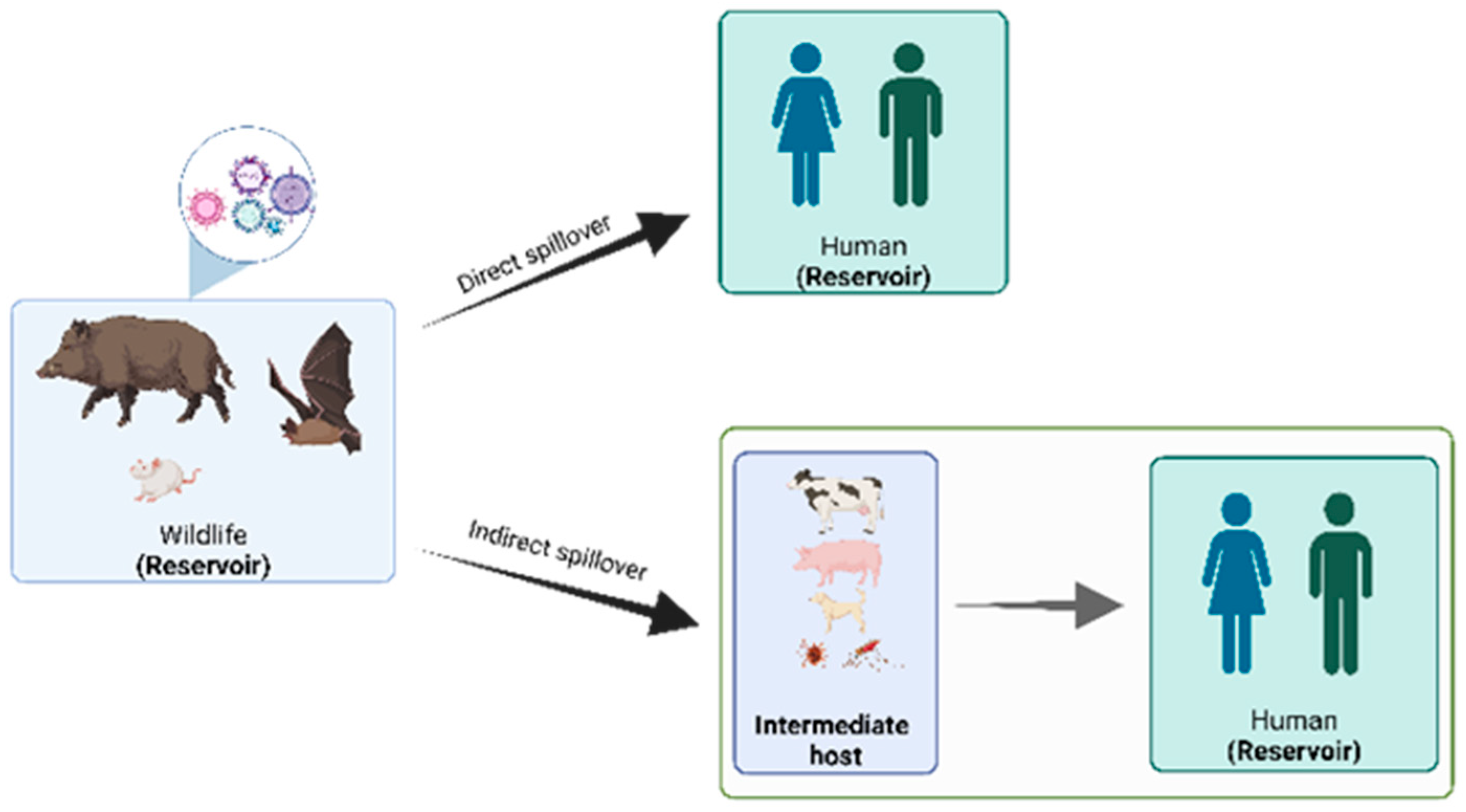
Pinpointing the mechanisms of spillover is fundamental to reducing risk. The spillover of viruses can be either direct or indirect, as shown in
Figure 1; it may occur directly during interhost transmission, depending on the genetic, ecological, and anthropogenic factors that govern the transfer of the virus from an infected animal to a human [
36], and the route it takes is governed by a mix of genetic, ecological, and anthropogenic factors that control the virus’s jump from an animal to a human.
Therefore, viral spillovers proceed directly from animal-to-human contact through bites, scratches, or contact with body fluids when the animal is infected; for instance, the transmission of viruses through dog bites. Direct spillover refers to the transfer of a virus from an infected animal to an unexposed host [
37]. With direct spillover, the virus moves straight from an animal to a person. Direct spillovers can occur through various natural and human activities, including hunting, butchering, or eating contaminated animals.
In contrast, indirect spillovers involve an intermediate host before transitioning to humans. One example is the Zika virus, which spreads through the bites of infected Aedes mosquitoes. Indirect spillovers result from complex interaction networks. In most cases, an intermediary host is required, in which the virus must adapt before infecting humans. Indirect spillover, on the other hand, is more circuitous. Here, the virus first passes through an intermediate host. This is where things get complex, as the virus often needs to adapt to this new animal before it can make the jump to humans. The Zika virus is a classic example, spreading to people through the bite of an infected Aedes mosquito.
3.2. Genetic Determinants of Spillover
Getting a better handle on the dynamics of these direct and indirect spillovers is what will ultimately lead to better interventions. Viral spillover does not occur randomly; several factors modulate it. The probability of transmission from animals to humans is not a random event; it is shaped by a combination of factors that influence the odds of a virus making the jump from an animal to a human [
38]. These factors are broadly categorized as genetic, ecological, and anthropogenic. Genetic changes within the virus itself are often a primary driver of spillover. Viruses, especially RNA viruses, such as influenza and coronaviruses, have high mutation frequencies. Mutations can alter viral proteins, enabling the virus to infect new hosts [
39]. Other cases include recombination between the genetic material of different viruses, which often yields new strains that may modify the host preference. Genetic plasticity is characteristic of most zoonotic viruses.
3.3. Ecological Drivers of Spillover
Environmental ecology is increasingly recognized as a key determinant of viral spillover [
40]. Host ecology, including population density, behavior, and migratory patterns, strongly influences the likelihood of exposure between humans and infected animals. Habitat disruption from activities such as deforestation, urbanization, and climatic instability may bring humans into closer contact with wildlife, which elevates the likelihood of viral spillover. Understanding the ecological drivers of these potential reservoir species is therefore essential to predicting and preventing zoonotic outbreaks.
3.4. Anthropogenic Drivers of Spillover
Human actions significantly increase the likelihood of viral spillover [
40,
41]. Urbanization extends human habitats into once-wild areas, fostering interactions between humans and wildlife. Both legal and illegal wildlife trade create pathways for viruses to cross species barriers. Wildlife markets, where an assemblage of species is brought together in close proximity, can provide a perfect environment for the rapid amplification and dissemination of viruses.
3.5. Case Studies of Historical Spillovers
Preventing zoonotic diseases requires mitigating anthropogenic drivers. To concretize the various aspects of viral spillover, we provide extended descriptions of several historical zoonotic events in this section [
42]. To illustrate these aspects, we describe several historical zoonotic events. Pathoecological analyses of these cases examine the pathways viruses use to cross species boundaries, along with the genetic, ecological, and anthropogenic factors involved. Examples include the emergence of Ebola from fruit bats, transmission of avian influenza from poultry to humans, and the more recent COVID-19 pandemic, which likely originated from a reservoir of wildlife.
Spillover events are complex processes driven by genetic, ecological, and anthropogenic forces; understanding their mechanisms is essential for detecting, preventing, and managing zoonotic outbreaks [
43]. The case studies discussed here provide concrete examples of these dynamics and offer insights for future research and public health strategies. Reducing spillover risk involves a multitude of factors [
44]. Knowledge from such studies can inform interventions and enhance community preparedness. Thus, research on viral spillover is critical for safeguarding human health against emerging infectious diseases.
A thorough understanding of spillover mechanisms allows for targeted interventions to reduce outbreak likelihood [
45]. For instance, conserving wildlife habitats can limit human–wildlife contact. Similarly, regulating wildlife trade ensures safer handling and transportation. Additionally, developing and deploying effective vaccines against zoonotic viruses is a crucial strategy [
46,
47]. These efforts, while challenging, are indispensable for protecting public health.
Understanding viral transmission mechanisms between hosts is fundamental. Research over the past thirty years has highlighted key factors [
35], including viral characteristics and host factors that influence viral fitness, transmissibility, and zoonotic potential. Successful transmission often depends on viral fitness in a new host, which is shaped by factors like viral load, shedding duration, and viral stability.
This knowledge is crucial for predicting human-to-human transmissions. Examples include HIV-1 and rhinoviruses [
48,
49]. Viral genetic variation is a key factor in transmissibility and adaptation. RNA viruses such as influenza enter a host with a complex mutant distribution, commonly referred to as viral quasi-species. Therefore, the prediction of host tropism shifts and disease emergence is largely dependent on viral genetic diversity [
50]. Transmission pathways include direct and indirect contact, as well as spreading via respiratory droplets, blood, and body fluids. Elucidation of these pathways is essential for designing effective therapeutics and preventive measures [
48,
51].
3.6. Preventive and Mitigation Strategies
Consequently, a more in-depth understanding of the mechanisms underlying viral transmission will help explain the dynamics of viral zoonoses and the emergence of infectious diseases. Knowledge of viral fitness, genetic variation, and transmission routes is therefore factored into and formulated by researchers to advance strategies for predicting, preventing, and controlling potential public health threats posed by viral infections [
43].
4. Host Range and Transmission Dynamics
The capacity of these viruses to adapt to new hosts is essential for cross-species zoonoses. The subsequent chapter details the intricacies of the viral host range, with a particular focus on transmission dynamics and rates governing these processes [
52]. Tropism refers to a virus’s predisposition to infect specific host tissues or cells. This occurs through genetic changes, mainly via events such as point mutations and recombination, to enable infection of new hosts [
52,
53].
Viral tropism is the ability of a virus to infect specific cell types and depends on the presence of specialized receptors on the cell surface [
54]. For example, a virus might amass synonymous changes to prepare for host-receptor interaction, even at the cost of viral replication, if it is more important for spreading to new hosts. As a case in point, HIV has evolved to infect human hosts by interacting with the human T-cell surface receptor, CCR5. By taking advantage of this receptor, the virus gains access to human T-cells and eventually kills them, thereby causing AIDS. Such an adaptation is a multistep process, with difficulties arising from the host’s immune defense [
50]. Different viruses have a narrow or broad host range, some of which are highly specific, infecting only a few host species. Predictions of virus spread to humans would therefore require knowledge of the molecular mechanisms underlying viral tropism and adaptation [
55].
Therefore, studies are required to clarify how a zoonotic virus invades, replicates within, and escapes from new host cells, which is fundamental for understanding the dynamics of transmission. This cycle of attachment, internalization, and release of genetic material. Inside the cell, the virus can replicate its genetic material and produce new viral particles [
56,
57]. In addition, the viral replication process by which a virus manufactures new copies usually involves viral enzymes that use host cell machinery to synthesize new viral proteins and nucleic acids [
58].
Viral shedding refers to the release of a virus from an infected cell. This process occurs via various mechanisms, including cell lysis, exocytosis, and apoptosis [
59]. Once a virus successfully enters a new host, it faces the challenge of multiplying and hijacking the host cell’s biology. Viral entry involves attachment to host cell receptors, internalization, and release of viral genetic material into the host cell. Therefore, replication within the host cell permits the production of new viral particles that may be released into the environment and likely cause infection in another host [
60]. The efficiency of these processes is highly variable and is predicted to be mediated by factors such as the virus’s genetic compatibility with the host, the host’s immune response, and the presence of co-infections [
61]. Such analyses help evaluate the potential for persistent transmission to new host species. Understanding the host range and transmission dynamics of zoonotic viruses is therefore key to developing appropriate prevention and control strategies. A clear understanding of how viruses infiltrate, replicate, and are shed within new hosts, as shown in
Table 3, is essential.
5. Immunological Barriers and Evasion
5.1. Innate and Adaptive Immune Responses
When a new virus infects a host, it activates the immune system to mount a defense. This involves both the innate and adaptive immune systems [
62]. Recognition of PAMPs commonly found in a variety of pathogens initiates a rapid, but non-specific, innate immune response against infections, which constitutes the first line of defense [
63]. In contrast, the adaptive immune response is much more specific and highly selective than the innate immune response, which is activated only by foreign antigens. Antigens are unique molecules present on the surface of pathogens and thus form the basis of adaptive immunity [
64]. The adaptive immune response is a long-term response to pathogens. This is due to the formation of memory cells, which respond quickly to secondary infections by the same pathogen [
65].
5.2. Genomic Surveillance and Immunological Relevance
These adaptive shifts underscore why genomic surveillance must be prioritized for viruses with high mutation rates. For example, identifying mutations in receptor-binding domains is not only descriptive but has practical significance for predicting increased transmissibility. This interpretation links molecular change directly to public health decision-making [
66,
67].
5.3. Viral Immune Evasion Strategies
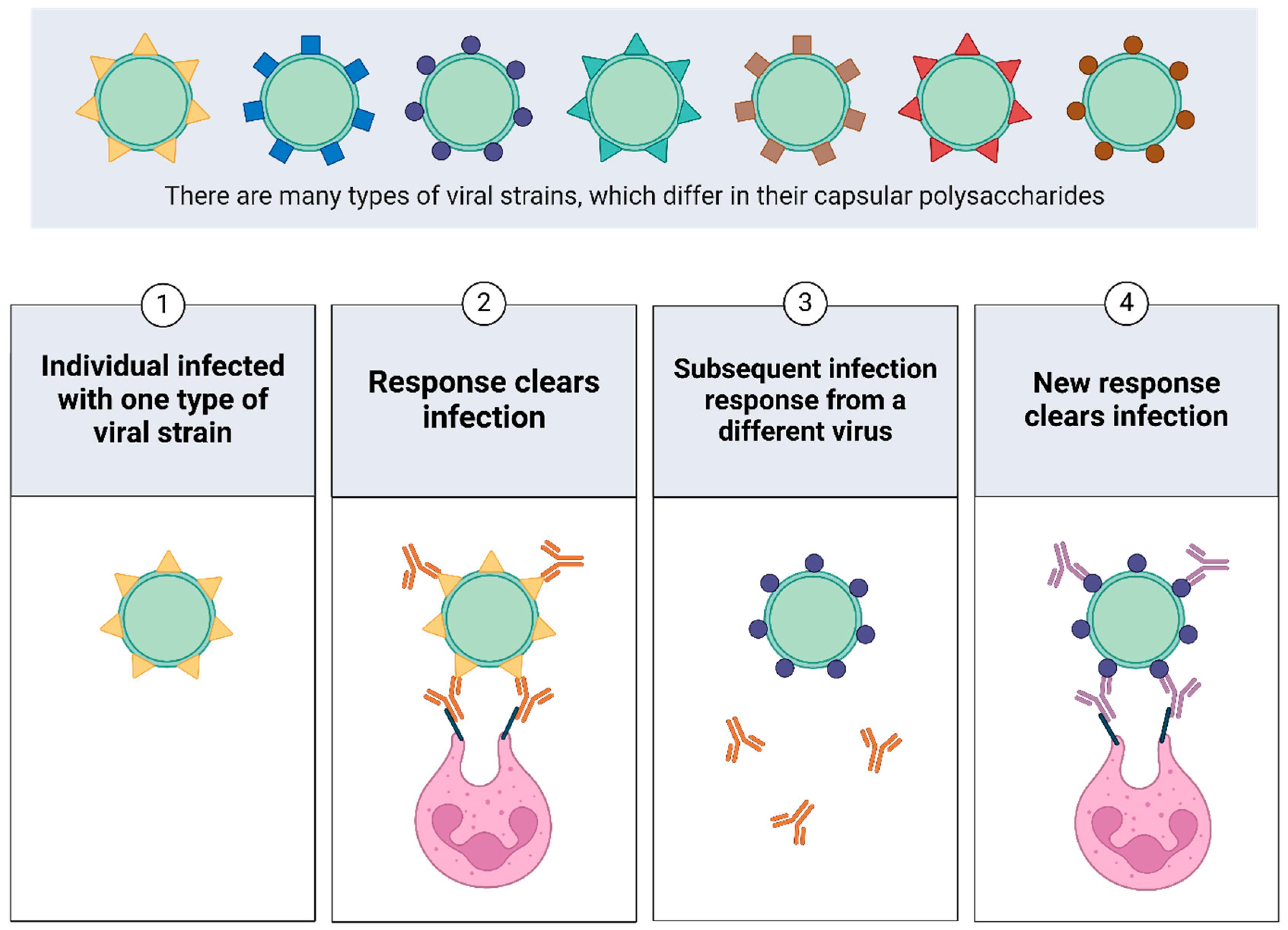
In the immune system, viruses engage in dynamic conflicts against their hosts. This section reviews the host’s immune response against emerging viruses, the different ways viruses evade host immunity, and the main parameters of immunogenetic susceptibility and resistance in the host system [
68]. The dynamics of the immune response to viral infection, as noted previously, is a key area of active research and is critical for formulating measures against emerging infectious diseases and virology. This, in turn, affects the design of antiviral treatments and vaccine development [
69]. The immune response to viral infection involves a dynamic interplay between the host and the invader (
Figure 2). This critically dynamic interplay shapes the outcomes of infectious diseases and guides the pursuit of effective interventions in the complex landscape of virology [
62].
5.4. Host Immunogenetics and Susceptibility
A critical factor in susceptibility or resistance to a viral infection is the host’s immunogenetics, which encompasses the genetic factors relevant to the immune system. Genetic polymorphisms in immune-related genes influence responses to viral challenges. More specifically, genes encoding cytokines or MHC molecules harbor polymorphisms which determine an individual’s immune response to a specific virus [
70].
This results in a mosaic of immunogenetics in human populations, leading to divergent outcomes during a viral zoonotic event. Therefore, some individuals present an inherent genetic resistance, while others are predisposed to developing severe disease. A better understanding of these genetic elements is needed to identify disparate populations and provide appropriate guidance for vaccination [
71].
The dynamic and complex interactions between host immune responses, viral immune evasion strategies, and host immunogenetics determine the outcome of zoonotic viral infections. Viruses have devised multiple strategies to evade immune responses. This continual evasion places persistent selective pressure on the host immune system. Understanding such interactions is justified by the development of new methods that are more effective in preventing and treating viral infections [
72]. Despite the challenging and sophisticated research on immunological barriers and means of circumvention, this information remains pivotal to the development of effective strategies to prevent and reverse viral infections. This precise understanding of the intimate interactions of the host immune system could provide a platform for host-targeted therapeutics/antiviral drugs [
73].
5.5. Vaccination and Immunotherapy
Increasing vaccine efficacy by developing vaccines that target multiple antigens from the infecting virus remains a focus of research. Multi-epitope targeting is a strategic approach that poses a greater challenge for the virus to evade the host immune response, as shown in
Table 4. The fundamental strategy for increasing the efficacy of antiviral drugs is to develop agents that act at multiple stages of the viral replication cycle. This reduces the virus’s capacity to become drug-resistant [
74,
75]. Finally, governments, in collaboration with stakeholders and public participation, must establish educational programs to educate the public on the importance of vaccination and other protective strategies against viral infections. The public plays a key role in the informed effort against the effects of zoonosis.
6. Genomic Insights into Zoonotic Potential
6.1. Unlocking the Mysteries of Viral Zoonoses Through Comparative Genomics
In studies of viral zoonoses, comparative genomics of viral genomes and their reservoir hosts has proven highly effective. We use comparative genomics to elucidate the genetic determinants underlying host shifts and adaptations, as well as the evolutionary mechanisms that underpin the zoonotic potential of viruses.
6.2. Comparative Genomics of Zoonotic Viruses and Their Reservoirs
This comparative genomic approach analyzes the entire genetic material of zoonotic viruses and their natural hosts to identify genetic signatures that enable viral spillover. For example, entire viral genomes have been sequenced and studied from population samples of different host species to identify genetic alterations responsible for transmission to other species [
76]. Comparative genomic studies have highlighted conserved regions within the viral genome that enable the virus to adapt to its host. These studies help predict the zoonotic potential of related viruses and areas where high-risk spillover events may occur. Comparative genomics seeks to understand similarities and differences across species by comparing their genomes to establish evolutionary relationships and identify genetic elements that may affect certain traits [
77]. For example, prior work on Ebola virus strains showed that the most virulent strains in humans harbored mutations in genes encoding proteins frequently used for entry and replication [
78].
Recent high-throughput sequencing studies of coronaviruses and influenza viruses have revealed recurrent mutation hotspots in receptor-binding domains. These mutations alter binding efficiency and host range, highlighting key mechanisms of adaptation. Comparative analyses further show that recombination between divergent strains accelerates cross-species transmission potential. Such insights not only describe but also identify specific genomic signals that must be monitored in real time for early warning systems [
79].
6.3. Genetic Determinants of Host Switching and Adaptation
Host switching and adaptation are complex processes that depend on genetic changes in the virus. Mutations in viral genes encoding surface proteins, such as the spike protein in coronaviruses, can alter host receptor recognition and tropism, allowing the virus to infect new species. Recombination can also result in hybrid viruses with a unique host range [
50,
80]. Understanding the genetic determinants that underlie host-switching and adaptation is central to assessing the risk of zoonotic outbreaks, providing insight into a virus’s ability to infect humans or other species and guiding surveillance efforts and proactive preparedness measures [
81,
82].
These processes reveal convergence across viral families. For example, receptor-binding adaptations in coronaviruses and influenza can follow parallel routes, suggesting predictable evolutionary strategies. Recognizing these convergences enables us to prioritize specific genomic signatures for surveillance, moving beyond descriptive mutation lists [
83].
Machine learning-based tools are now applied to genomic datasets to predict which mutations are most likely to increase zoonotic potential. These computational models integrate structural biology with sequence evolution, enabling the prioritization of variants with higher risk. Embedding these approaches in global databases creates operational pathways for cross-border genomic surveillance [
83,
84].
Recent genomic analyses of SARS-CoV-2 variants demonstrated that mutations in the receptor-binding domain of the spike protein altered affinity for the ACE2 receptor, increasing transmissibility and reshaping pandemic dynamics [
85,
86]. Similar findings in avian influenza A viruses showed that reassortment events affecting hemagglutinin and neuraminidase genes can generate strains with enhanced zoonotic potential. Comparative genomics thus provides a predictive framework for identifying viral lineages capable of crossing species barriers and informs surveillance strategies that prioritize high-risk mutations [
87].
6.4. Host Switching and Adaptation
Host switching refers to a change in a virus’s host range, in which it establishes infection in a new host species. In contrast, adaptation refers to the evolution of a virus that optimizes its fitness and transmission in a new host species [
88]. More specifically, many genetic features are involved in host switching and adaptation, such as mutations in genes encoding proteins that enable viral entry and replication, allowing the virus to bind to new receptors and replicate in other cell types [
89,
90]. During gene acquisition, viruses can acquire new genes that confer traits to themselves or their hosts. This includes infection of new host species and evasion of the host immune system [
91]. There are also differences in their gene expression; viruses modulate gene expression. They use different environmental signals to adapt to other host species and to various stages of the infection cycle [
92]. Comparative genomics in viral zoonosis research provides insights into the basic mechanisms underlying these pathogens.
This provides clues for possible pathways for early detection and targeted prevention strategies. Comparative genomics reveals how specific adaptive pathways are favored under ecological constraints. For instance, host-switching events often converge on similar receptor-binding adaptations across unrelated viral families, suggesting predictable evolutionary routes. Recognizing these convergences allows risk models to focus on specific genetic signatures rather than broad descriptive categories [
93].
Recent work has shown that zoonotic RNA viruses often exist as quasi-species, meaning they replicate as diverse populations of closely related variants within a host. This intra-host diversity enables rapid adaptation to selective pressures, such as immune responses or therapeutic interventions. Identifying these quasi-species dynamics is critical because minor variants often seed successful cross-species transmissions [
94,
95].
6.5. Evolutionary Dynamics of Zoonotic Viruses
The evolutionary history of zoonotic viruses is shaped by adaptation, divergence, and spillover. Sequencing viral genomes in the context of evolutionary dynamics has enabled scientists to reconstruct the origins of zoonotic viruses and trace the hosts they infect [
92]. Among broad genomic studies on zoonoses, phylogenetic analyses are another tool that reveals relationships with their natural counterparts. Such investigations have revealed the roots of outbreaks and shed light on the enduring evolutionary strategies of zoonotic viruses. A critical analysis of these strategies shows both opportunities and limits. While phylogenomic tracing has improved the resolution of outbreak origins, analytical gaps remain in linking sequence data to ecological drivers. Future work must bridge this divide by integrating genomic signals with host ecology, land-use patterns, and trade networks.
In summary, genomics has revolutionized our understanding of viral zoonoses by illuminating the genetic details of host switching, adaptation, and evolution [
96]. Comparative genomics will therefore be highly informative about potential hotspots of zoonotic spillover, genetic determinants of host switching, and evolutionary drivers of new zoonotic threats. These results could be valuable for preparedness, surveillance, and risk-mitigation strategies [
97].
Recombination hotspots in coronaviruses and influenza viruses have been mapped with increasing precision, revealing loci where genetic exchange accelerates adaptation to new hosts. In parallel, advances in phylogenomic tools now allow near real-time reconstruction of outbreak origins and transmission chains. For example, platforms that integrate whole-genome data with ecological and epidemiological metadata can pinpoint animal reservoirs and high-risk spillover interfaces with greater resolution than traditional phylogenetics [
83,
95].
6.6. Evolutionary Dynamics and Influencing Factors: Navigating the Genomic Seas
Viruses exhibit efficient adaptive strategies to new host environments through mutations and recombination. Zoonotic viruses constantly evolve within the reservoir host, a process that continues when crossing a species barrier [
97]. A myriad of factors influence their evolutionary processes, broadly categorized into selection pressure by the host’s immune system, genetic drift, and recombination.
The host immune system exerts intense selective pressure on zoonotic viruses, driving the emergence of strains that evade immune responses. This is a clear example of the ongoing evolutionary race between the host and the pathogen of interest [
98,
99]. Genetic drift also plays a considerable role. As a stochastic process, it causes alterations in allele frequencies across viral populations. For most zoonotic viruses, population sizes especially given the large population sizes, random events strongly affect their genetic diversity [
100]. Finally, zoonotic viruses undergo recombination. This central recombination mechanism generates new viral sequences often with novel traits unattainable through mutation alone. This facilitates continuous reshuffling of viral genomes [
83]. The interplay of these evolutionary forces shapes the trajectory of zoonotic viruses. A comprehensive understanding of these evolutionary processes is necessary to develop appropriate disease management and prevention [
101].
Recent genomic studies have expanded our understanding of zoonotic potential. For instance, analyses of SARS-CoV-2 variants demonstrated that mutations in the spike protein enhanced affinity for the human ACE2 receptor, increasing transmissibility and shaping pandemic dynamics [
18,
86,
102]. Similarly, surveillance of avian influenza A viruses has shown how reassortment events can produce strains with higher pandemic potential, underscoring the role of genetic plasticity in spillover [
30,
31]. These findings highlight how comparative genomics and predictive modeling are now indispensable tools for anticipating zoonotic threats.
7. Applications for Genomic Insights
7.1. Utilizing Advanced Technologies for Zoonotic Insights
The fast-growing, genomic cutting-edge technologies, such as next-generation sequencing, have revolutionized our understanding of zoonotic diseases. This provides new insight into the delicate relationship between the forces of evolution and transmission that characterize zoonotic diseases [
103]. The development of robust, state-of-the-art disease surveillance systems is important for advancing genomic knowledge. Accordingly, monitoring the genetic drift of these viruses could help identify new threats and develop early warning systems for potential outbreaks, thereby preventing the insidious rise in infectious diseases [
104].
Another primary targeted application of the knowledge gained from this information is the development of urgently needed vaccines and antiviral therapeutics. These studies have focused on explicit genetic determinants closely linked to host switching and adaptation, from which we may be able to design vaccines and antiviral drugs that are more effective against a broad range of zoonotic viruses. This precision-guided approach enriches the armament against ever-adapting viral adversaries [
105]. Public education is the last and most important factor in the symphony of prevention, creating more awareness about the existence of zoonotic diseases and knowledge of safety measures, avoiding wild animals, and cooking wild animals properly, as shown in
Table 5; hence, it is a different major defense force among people in the community [
105].
7.2. Defense Strategies for Predicting and Preventing Zoonotic Events
The prevention of infectious diseases is not possible without the prediction and prevention of zoonotic events. This section has discussed major elements of strategies and methodologies for forecasting and preventing zoonotic events, primarily through surveillance and early warning systems or through a holistic approach, such as One Health [
106]. Prediction and prevention of zoonotic transmission are central to combating emerging infectious diseases. This section provides an in-depth analysis of leading strategies, emphasizing surveillance mechanisms, early warning protocols, and the integrative One Health framework [
97].
7.3. Viral Monitoring Strategies
Surveillance, the sentinel at the ramparts, alerts us to our forts. Surveillance is the cornerstone for forecasting and prevention. Comprehensive monitoring of viruses in wildlife reservoirs may serve as a source of zoonotic infections. Human surveillance focuses on closely linked reports, mainly on cases of uncommon diseases and clusters of unknown etiology [
29,
107]. Modern methodologies have primarily relied on the polymerase chain reaction (PCR) and next-generation sequencing, revolutionizing molecular processes in viral surveillance. This method quickly identifies and characterizes viruses from animals to humans. Therefore, continuous monitoring provides an early indication of the potential spillover events. Surveillance remains vital for estimating and preventing these zoonotic diseases and for continuous tracking of populations for disease presence [
108,
109].
Conversely, wildlife viral surveillance focuses on zoonotic viruses in animal populations. This has been conducted by collecting and analyzing various biological samples from wildlife, including blood, saliva, and feces [
97]. Viral surveillance from humans through biological specimens such as blood, urine, and respiratory samples can detect zoonotic viruses that spill over into humans [
110]. Expecting and proactively preventing such zoonotic events are crucial for combating EIDs. These means of surveillance have advanced modern technologies, paving the way for rapid detection and prompt responses to protect wildlife and human populations from the risks of zoonotic diseases [
97].
7.4. Predictive Modeling and Early Warning for Zoonotic Diseases
Establishing early warning systems has become the tool of choice for timely interventions to avoid potential zoonotic events. Early warning systems use predictive models to estimate the likelihood of a prospective zoonotic event, based on surveillance data. Models require information about host populations, ecological changes, and viral genetics to predict the possibility of spillover events [
104,
111]. These systems are designed to identify high-risk interfaces and their drivers.
The dynamically changing environment means that machine learning and artificial intelligence combine to enhance predictive models with greater accuracy in real time, enabling risk assessment. For example, it is possible to monitor the increased prevalence of zoonotic viruses in wildlife and the human population, thereby identifying high-risk geographical areas [
112].
7.5. One Health Approach
The One Health approach fundamentally recognizes that human, animal, and environmental health are interconnected; it involves interdisciplinary collaborations across disciplines, such as virologists, epidemiologists, ecologists, and veterinarians [
113]. As the One Health approach is multidisciplinary, many scientists and policymakers are seeking to understand the drivers of changes in zoonotic disease incidence. The Rift Valley fever outbreaks in East Africa highlighted the value of joint human–animal surveillance programs that linked veterinary services with public health laboratories. Similarly, H5N1 avian influenza control in Southeast Asia demonstrated how coordinated animal culling, trade restrictions, and environmental monitoring can reduce spillover risk when sectors work together [
114,
115].
This encompasses how changes in land use and climate affect the spread of zoonotic pathogens driven by these environmental changes. This approach advocates not only health but also conservation and sustainability [
116]. Zoonosis control calls for surveillance and prevention strategies that support early warning systems and integrate human, animal, and environmental health approaches. Such programs should be designed to prevent spillover before it occurs, identify early warning signs, and act with targeted preventive measures to protect public health and ecosystems [
97].
This has been proven to be of utmost importance for predicting and preventing zoonotic events. It can identify potential risk-based intervention opportunities by integrating data from the human, animal, and environmental health sectors to advance practical, effective prevention and control approaches [
117]. Undoubtedly, predicting and preventing zoonotic events are uphill tasks. However, significant progress can be made with surveillance techniques, advanced warning systems, predictive models, and the One Health approach [
118]. The high-yield areas of future research include developing improved methodologies for surveillance and developing early warning and prediction models [
119]. Recent technologies involving artificial intelligence and machine learning have the potential to revolutionize the capabilities of different stakeholders in zoonotic event prediction and discrimination [
120]. These technologies can integrate diverse data streams to identify patterns that would otherwise remain obscured.
8. Case Studies of Notable Zoonotic Outbreaks
8.1. Ebola Virus Disease: Spillover from Bats to Humans
Ebola virus disease (EVD) is an example of the consequences of zoonotic spillover events. The virus originated in bats, which transmit the infection to humans through direct or indirect contact with an infected bat or its bodily fluids. The West African outbreak of 2014–2016 epitomized this destructive capability, prompting international efforts to improve surveillance and healthcare infrastructure, as well as the development of more effective vaccines. Indeed, the number of cases (>28,000), resulting in more than 11,000 deaths, strongly supports the need for improved disease control measures in the African region [
121,
122]. The high fatality rate and rapid spread during this outbreak highlighted the critical need for robust global health security systems.
8.2. Avian Influenza: Transmission from Birds to Humans
Avian influenza has crossed the species barrier and is a global concern. It is caused by avian influenza A viruses, such as H5N1 and H7N9. The main transmission route is through close contact with infected birds or contaminated environments [
123]. Although human-to-human spread remains limited, the potential for this virus to adapt and improve transmissibility in the future is a significant threat. This pandemic potential drives ongoing research and preparedness efforts. Vigilant farm surveillance, early detection, and rapid response are essential to prevent poultry outbreaks. The H5N1 outbreak in 2003 sparked public concern, leading to the development of vaccines and antivirals. The virus has persisted in avian populations ever since and thus remains a potential threat [
124].
8.3. COVID-19: Emergence of SARS-CoV-2 and Its Global Impact
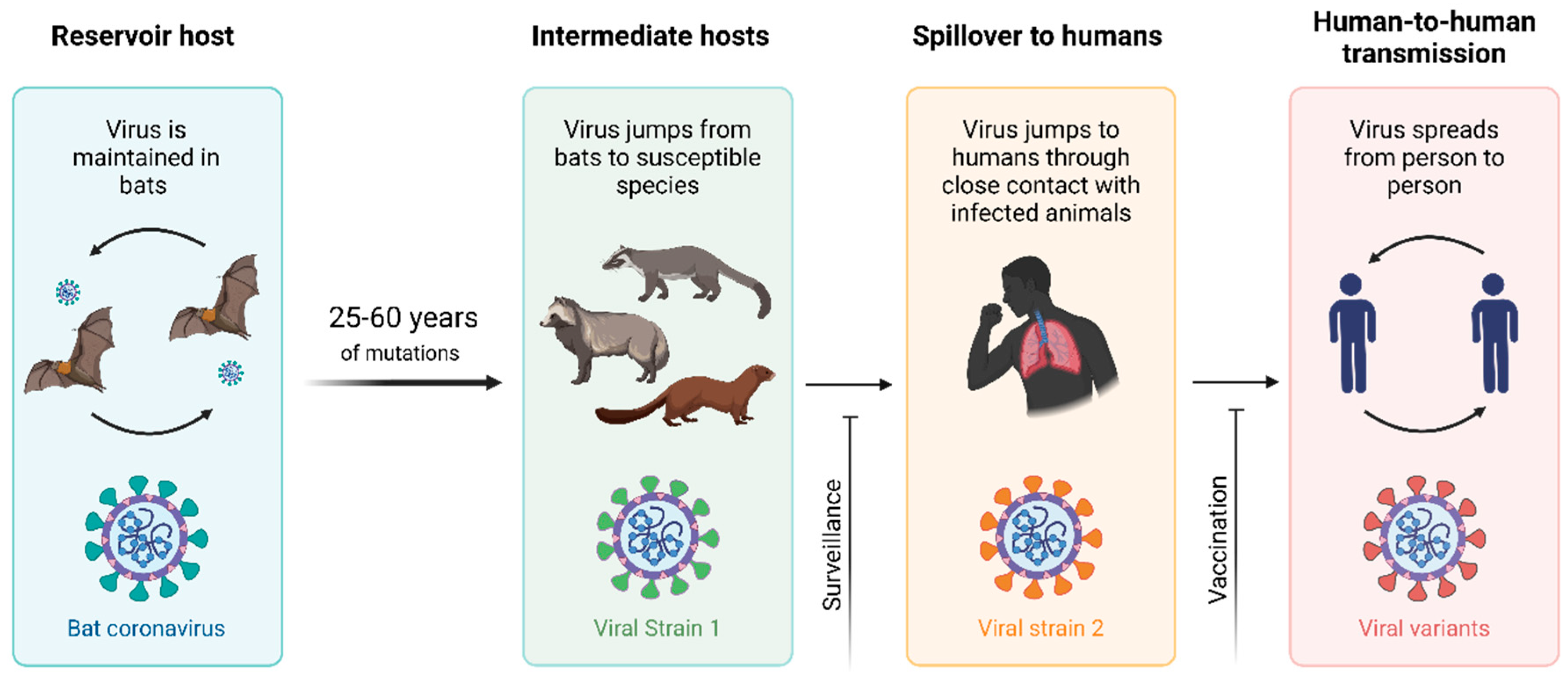
SARS-CoV-2, the coronavirus, has turned the world on its head through the COVID-19 pandemic within months of its emergence. Thought to have initially emerged in wildlife, with bats and potentially pangolins as intermediate hosts, the virus has spread in the human population (
Figure 3), quickly becoming a global public health concern and prompting vaccine development. Its rapid global spread underscored the profound threat of zoonotic pathogens with high transmissibility. The pandemic has exposed health systems’ fragilities, fissures in economic inequality, and the extent to which the world has been interdependent [
125,
126,
127]. Genomic characterization of SARS-CoV-2 has deepened our understanding of the virus’s evolutionary and adaptive processes in humans, thereby highlighting the urgent need for international collaboration in data sharing and preparedness for the management of emerging infectious disease outbreaks [
128].
A comparative analysis of Ebola, avian influenza, and COVID-19 outbreaks highlights divergent pathways of zoonotic emergence. Ebola represents direct wildlife-to-human spillover with limited sustained transmission, while avian influenza shows partial adaptation without efficient human-to-human spread. COVID-19, in contrast, demonstrates complete adaptation with rapid global dissemination. These differences reveal that surveillance and interventions must be tailored to the specific genomic and ecological drivers of each virus [
129]. Ebola underscores the limits of containment when health systems are weak, avian influenza illustrates the persistent risk of reassortment, and COVID-19 shows how rapid viral evolution combined with global connectivity can trigger a pandemic. This comparative perspective turns familiar outbreaks into evidence for differentiated strategies, such as prioritizing real-time genomic monitoring for high-mutation RNA viruses and ecological interventions for viruses with constrained adaptation [
130].
These case studies also highlight ongoing controversies. Some scholars argue that genomic surveillance alone provides sufficient early warning, while others contend that ecological interventions at the animal–human interface are equally critical. The debate reflects a lack of consensus on whether investment should prioritize laboratory genomics or broader ecological and social prevention measures [
131].
These are poignant reminders of the multifaceted dynamics. The need for surveillance and early detection, as well as a strategic response, has been shown to prevent and reduce the impact of upcoming zoonotic events. COVID-19 was, in many senses, a lesson that the world should invest in as a policy in scientific research to potentially design new vaccines and treatments in the future [
132]. The pandemic served as a stark catalyst, proving that sustained investment in scientific research is non-negotiable for developing future countermeasures.
Therefore, the strategic deployment of resources in zoonotic studies is critical, as a better understanding of their origins and transmission can lead to more effective control and prevention measures, as shown in
Table 6. A more robust One Health approach is imperative for diminishing the risk of the next zoonotic outbreak [
133]. Finally, public education regarding the dangers of these diseases and the steps that can be taken to prevent them is important. This concerted effort underscores the strong need for collaborative efforts to safeguard global health and well-being [
134].
9. Interventions and Mitigation Strategies
9.1. Vaccination as a Preventive Measure
Prophylaxis and vaccination are fundamental pillars for the prevention and, when possible, the control of zoonoses. The forward deployment of vaccines to target new zoonotic pathogens represents an optimal strategy for preventing infectious diseases. These vaccines induce protective immune responses that limit disease severity and transmission [
135,
136,
137].
Although vaccines are available for a few zoonotic diseases, such as rabies, yellow fever, Japanese encephalitis, and hepatitis A, one must remember that many other diseases do not have vaccines readily available. The massive worldwide push to develop and use COVID-19 vaccines exemplifies the power of emerging technologies, including mRNA vaccines. The success of mRNA platforms demonstrates a promising path for rapid vaccine development against future emerging threats. High-priority groups should receive vaccination first, with the necessary goal of building immunity within the population [
138,
139].
9.2. Antiviral Treatments: Targeted Solutions for Viral Infections
Antiviral drugs have a crucial role in treating zoonotic outbreaks. These drugs are usually specific and target selected proteins or processes responsible for the viral replication cycle that leads to illness. Moreover, drug repurposing during the early stages of an outbreak can provide a rapid alternative to established medications for these cases, as seen during the early phases of the COVID-19 pandemic [
138,
140,
141]. This approach can buy critical time until more specific therapeutics are developed. Similarly, research on novel antiviral treatments targeting the specific properties of zoonotic viruses is underway. Such therapeutic measures may drastically reduce mortality rates and the overall burden of zoonotic diseases [
142,
143].
9.3. Quarantine and Containment Measures
Quarantine and containment remain central strategies for constraining the spread of zoonoses during outbreaks. Containment initiatives usually involve contact tracing, isolating patients diagnosed with the disease, implementing travel restrictions, and enforcing social distancing, among other public health measures. These measures are designed to break chains of transmission [
144,
145].
They depend on early identification, swift responses, and active community participation. Past outbreaks, such as the 2014 Ebola epidemic and the COVID-19 pandemic, underscore the pivotal role of quarantine and containment measures. However, their success is closely linked to a robust healthcare infrastructure, public health readiness, and transparent communication [
146]. A comprehensive defense against zoonotic threats will probably require a holistic approach, including vaccination, antiviral treatment, and efficient quarantine and containment measures, which might lower the disease burden, curtail transmission, and safeguard public health. Appropriately applying these strategies at the right time, along with promoting further research to improve the effectiveness of the approaches, remains paramount in the fight against this emerging zoonotic disease [
147].
10. Ethical and Societal Implications
The upsurge in zoonotic diseases poses challenging ethical issues at the confluence of concerns for human health, conservation imperatives, and animal welfare. An integral part of biodiversity conservation is accounting for animal welfare and the health risks animals pose to humans through close contact. The One Health approach, urging nations to fully grasp the interconnections among health, animals, and ecosystems, has become an essential tool for navigating these complex trade-offs [
106,
113,
118]. This framework helps balance the need to protect human populations with the ethical obligation to preserve biodiversity and ensure animal welfare.
10.1. Ethical Considerations in a One-Health Approach
During the 2014–2016 Ebola outbreak in West Africa, bushmeat bans reduced spillover risk but raised ethical dilemmas by threatening food security and cultural traditions. Similarly, during the COVID-19 vaccine rollout, inequities between high- and low-income countries highlighted societal challenges to health justice. These cases demonstrate why ethical principles cannot remain abstract but must be applied to specific policy decisions [
148]. The One-Health approach integrates human, animal, and environmental health and raises several ethical considerations that need to be addressed when facing a zoonotic spillover, these include, but are not limited to:
Arriving at a proper balance between these competing priorities means that ethical considerations must be taken into account.
Minimizing Harm to Wildlife: Practicing conservation so that minimal harm is done to wildlife while considering the possible consequences of the interventions on the ecosystem and the health of animal populations.
Safeguarding Ecosystems and ensuring environmental welfare: Ecosystems must be preserved through conservation efforts because of their intrinsic value and the integrity of species interactions.
Ensuring the Welfare of Local Communities: Ethical principles require attention to the welfare of local communities, including indigenous communities. Engagement with these community stakeholders goes a long way toward a policy that ideally meets ethical standards.
Interdisciplinary collaborations among the various fields and disciplines (Human medicine, veterinary medicine, microbiology, wildlife biology, etc.) are required, as well as addressing ethical challenges to ensure respect for each field and effective communication and transparency, as shown in
Table 7.
10.2. Impact of the Interventions on Multiple Stakeholders
Ethical challenges often arise from potential conflicts between interventions and their impacts on stakeholders. For example, although quarantine and containment measures can effectively halt zoonotic transmission, adverse effects on wildlife conservation and animal welfare must be carefully considered. Measures like culling can control disease but raise significant ethical dilemmas. Decision-makers must assess the impact of these interventions on all stakeholders [
149].
10.3. Cultural Practices and Zoonotic Risks
Cultural practices and behaviors significantly influence the risk of zoonotic spillover. Activities such as hunting bushmeat, participating in the wildlife trade, and relying on traditional medicine can bring humans into close contact with potential reservoirs of zoonotic pathogens. Cultural rituals involving wildlife consumption may pose risks, especially in regions where zoonotic diseases are prevalent [
150,
151].
10.4. Cultural Sensitivity and Community Engagement
The response to these challenges must be approached through cultural sensitivity and active community engagement. The key considerations include the following:
Reinforce Cultural Diversity: Any comprehensive strategy to reduce zoonotic risks should respect and honor cultural diversity, affirming the value of traditional practices.
Active Community Engagement: Active interaction with communities and their involvement in aspects related to the public helps ensure mutual understanding and safer practices are in place. Localized public health education campaigns work well when tailored to local communication channels and, hence, serve as a good tool for raising awareness of zoonoses within cultural norms.
10.5. Lessons Learned and Recommendations for the Future
Zoonotic diseases represent a significant threat to global health. This led to a clarion call for transdisciplinary collaboration among professionals in human, animal, and environmental health. Surveillance and data sharing for prioritized zoonotic diseases, improved laboratory testing, and other joint capacity-building in the human and animal health sectors aim to establish robust mechanisms for detecting and responding effectively to emerging health threats, thereby increasing global health security [
152].
Zoonotic diseases threaten humans and animals [
153]. However, recent epidemics have negatively affected the economy on a large scale. The Member States of ECOWAS adopted a list of seven priority zoonotic diseases in the region, namely Anthrax, Rabies, Ebola, and other viral hemorrhagic fevers (VHFs), zoonotic influenzas, zoonotic tuberculosis, Trypanosomiasis, and Yellow fever [
154].
The increasingly interconnected human–animal interface has led to an alarming and unprecedented rise in zoonotic infections. In Uganda, a multisectoral health zoonotic disease prioritization workshop platform identified the following seven zoonoses in 2017 as priority zoonotic diseases: anthrax, zoonotic influenza, viral hemorrhagic fevers, brucellosis, trypanosomiasis, and plague [
155]. The practical lesson from recent outbreaks is that success depends not only on transdisciplinary collaboration but on how quickly genomic evidence is integrated into decision-making. Data-sharing platforms such as GISAID have shown that open genomic surveillance can directly inform containment, an approach that should be extended to neglected zoonoses [
156]. This integration is critical for transitioning from reactive responses to proactive, intelligence-driven prevention.
10.6. Education and Communication
Education and communication are essential components of zoonotic disease prevention and control. Culturally sensitive and transparent public health education strategies are vital for building informed communities that can embrace behaviors that promote safety. Effective communication and education have been emphasized in lessons from past outbreaks, such as those caused by Nipah, Ebola, and COVID-19. This could be achieved by developing public information strategies on the incidence of zoonotic diseases and their mitigation, through coordinated actions by the government, international organizations, research institutions, and community stakeholders [
157,
158]. Separately, promoting sustainable land use is a critical preventive measure, as it limits human encroachment into undisturbed habitats and thereby reduces spillover opportunities. Another critical component of a proactive approach to zoonotic disease prevention is investing in pandemic preparedness, which includes developing medical countermeasures, improving healthcare infrastructure, and conducting simulations [
159].
10.7. Emerging Ethical Challenges
Zoonotic outbreaks have significant ethical and societal implications and therefore require an integrated, multisectoral response that strategically balances the priorities of human health, conservation, and animal welfare. Effective control of zoonotic outbreaks is possible only with an approach that involves appropriate multidisciplinary expertise, forensic pathologists, and experts, and the communication of findings to enable timely diagnosis, detection, and emergency response [
160].
The emerging threat of zoonotic orthopoxvirus infections is one example of the need for international coordination to prevent outbreaks from escalating into epidemics [
161]. Identifying priority zoonoses through a One Health approach, as in Jordan’s experience, guides political decisions on these threats to health and other involved sector stakeholders [
153]. Therefore, it is necessary to understand the characteristics of zoonotic disease outbreaks and quantify the relationships between drivers of outbreaks and their severity to inform well-crafted surveillance and prevention strategies. A One Health approach must be collaboratively employed for zoonotic pathogens with epidemic potential, as demonstrated with the Middle East respiratory syndrome coronavirus [
162].
The COVID-19 pandemic is a poignant reminder that the devastating impacts of a zoonotic disease demand preemptive, coordinated efforts. To be effective, control efforts in Africa and beyond must be grounded in the One Health approach to prevent and detect outbreaks early. There should be enhanced coordination and collaboration mechanisms, grounded in the One Health approach, to effectively control zoonotic diseases in Africa, with negligible economic and health impacts from outbreaks. Improving inter-organizational collaboration for wildlife disease surveillance enhances the capacity to quickly detect and respond to zoonotic disease outbreaks in countries such as Sri Lanka [
163]. Similarly, rapid detection and response to zoonotic threats would significantly facilitate the operationalization of One Health in India, thereby minimizing their effects [
164].
In summary, global zoonotic research networks are essential for understanding the interactions of people, animals, and ecosystems in managing and controlling zoonotic disease risks and outbreaks. The economic impacts of zoonosis outbreaks underscore the importance of One Health in fighting zoonoses and ensuring food safety. Robust, collaborative surveillance systems are critical for providing early warning of zoonotic infections, enabling effective disease response and control. Robust, collaborative surveillance systems are critical for providing early warning of zoonotic infections, enabling effective disease response and control [
165].
10.8. Lessons from the COVID-19 Pandemic
Zoonoses should be anticipated and preempted to ensure the effectiveness of approaches to emerging infectious diseases. Lessons from COVID-19 should, in this regard, draw significant attention to greater investment in research and development to better understand zoonotic diseases and develop customized prevention and control strategies. The One Health approach is highly relevant in this respect [
166].
Such information needs to be integrated into these domains to detect possible zoonotic transmission risks. The One Health approach demands interdisciplinary collaboration among human healthcare providers, veterinarians, and environmental scientists, and the optimization of integrated surveillance systems to detect zoonotic diseases early in wildlife and human populations. Further, interventions must be designed to be cost-effective, efficient, and equitable for all populations.
Culturally sensitive community involvement programs that are cost-effective in encouraging hand hygiene will yield safer practices and reduce the threats of zoonotic transmission. Together, they will improve our readiness and response to zoonotic threats, thereby maintaining public health safety across multiple fronts [
106]. Finally, combating zoonotic diseases requires a multi-pronged approach that includes research, partnerships, fairness, and community involvement. Implementing these recommendations, together with the One Health perspective, will strengthen the prevention and control of zoonoses for public and ecological well-being.
11. Conclusions
Zoonotic viruses represent one of the most persistent threats to global health security because their genomic plasticity allows them to adapt under ecological and anthropogenic pressures. The comparative evidence reviewed here demonstrates that spillover risk is not random but shaped by predictable genomic determinants such as mutation hotspots, recombination events, and quasi-species dynamics. These processes interact with ecological drivers, including land-use change, wildlife trade, and climate disruption, creating conditions that favor viral adaptation and cross-species transmission.
From a governance perspective, the COVID-19 pandemic underscored both the strengths and weaknesses of global genomic surveillance. While platforms such as GISAID enabled rapid tracking of variants, neglected zoonoses in resource-limited regions remain underrepresented in genomic datasets. This imbalance limits accurate global risk assessment and highlights a key area for international cooperation.
Future progress requires integrating genomic data into actionable One Health strategies. This includes linking sequence monitoring with ecological surveillance, embedding machine learning tools for early warning, and addressing inequities in data access and public health infrastructure. Research should also prioritize underexplored zoonoses beyond coronaviruses and influenza, as these pathogens pose significant but less visible risks.
In summary, the relevance of genomics lies not in descriptive cataloguing of viral changes but in how these insights reshape preparedness. By situating genomic evidence within ecological and societal contexts, we can move from reactive responses toward proactive systems capable of anticipating zoonotic emergence.
Despite progress, important knowledge gaps remain. Climate-driven changes in reservoir and vector distribution are insufficiently integrated into zoonotic models. Antimicrobial resistance, though often considered separately, is emerging as a compounding factor in zoonotic outbreaks. Research on neglected pathogens, such as Rift Valley fever and Lassa fever, also lags behind that of influenza and coronaviruses, leaving high-risk regions underrepresented in global data.
12. Future Research Directions and Critical Gaps
While progress has been made, significant gaps remain. Climate-driven shifts in reservoir and vector distribution are underexplored in the context of zoonotic risk. Integrating climate models with genomic surveillance could improve predictive power. Ethical dilemmas also persist, particularly when interventions require wildlife population management or restrictions on cultural practices involving animal use. Another critical gap is the uneven distribution of genomic and surveillance resources, which leaves high-risk regions underrepresented. Addressing these issues requires coordinated global investment, interdisciplinary collaboration, and the development of cost-effective approaches tailored to resource-limited settings.
Unresolved questions persist. How can ethical wildlife interventions be balanced with urgent public health measures when spillover risk is high? What are the most effective models for integrating human, animal, and environmental data across diverse settings? These remain open issues requiring interdisciplinary dialogue and policy innovation.
A critical issue is the disparity between well-studied pathogens, such as influenza and coronaviruses, and neglected zoonoses, such as Rift Valley fever and Lassa fever, which pose equally severe risks in endemic regions. Research has been unevenly distributed, with high-income countries benefiting from genomic surveillance while low-resource regions remain data-poor. This gap hampers accurate global risk assessment. Addressing this imbalance should be a priority for international agencies. Another underexplored area is the potential role of antimicrobial resistance as a compounding factor in zoonotic outbreaks, which warrants systematic study.



 ,
,