Article

Analysis for Nodulation and Nitrogen Metabolism Genes in the Genome of Bradyrhizobium japonicum Strains Isolated in the Lower Volga Region

by
Aleksandr S. Sidorin
1,2,
Julia A. Balabanova
1,3,
Gennady L. Burygin
1,3,4 and
Oksana V. Tkachenko
1,*
1
Department of Plant Breeding, Selection, and Genetics, Institute of Genetics and Agronomy, Saratov State University of Genetics, Biotechnology and Engineering Named After N.I. Vavilov, Saratov 410012, Russia
2
Russian Research Anti-Plague Institute “Microbe”, Saratov 410005, Russia
3
Institute of Biochemistry and Physiology of Plants and Microorganisms, Saratov Scientific Centre of the Russian Academy of Sciences, Saratov 410049, Russia
4
Department of Organic and Bioorganic Chemistry, Institute of Chemistry, Saratov State University, Saratov 410012, Russia
*
Author to whom correspondence should be addressed.
Bacteria 2026, 5(3), 36; https://doi.org/10.3390/bacteria5030036
Submission received: 8 May 2026 / Revised: 6 June 2026 / Accepted: 24 June 2026 / Published: 1 July 2026

Abstract

Seven indigenous strains of Bradyrhizobium japonicum subsp. saratovii isolated from soybean nodules (Glycine max (L.) Merr.) grown in the arid Lower Volga region of Russia were investigated. A complete set of the major symbiotic genes was detected in all strains. Single synonymous nucleotide substitutions were identified in nifH and nifD, whereas a missense mutation, Ser149Phe, was found in the nifK gene of strain II-2. Homology modelling showed that this substitution did not cause any noticeable rearrangement of the overall structure of the nitrogenase β-subunit, although it was located near the conserved Cys152 residue. The nodB and nodC genes were completely conserved; the nodC sequence corresponded to symbiovar glycinearum. Structural disruptions in the nap operon were detected in strains II-2 and III-2, which was consistent with the absence of nitrate-reducing activity. Comparison of the genomic data with the inoculation results showed that the most effective strain, II-2, combined strong growth-promoting and yield-enhancing effects with the presence of a complete set of symbiotic genes and disruption of napA. These findings indicate that the integration of genomic analysis with phenotypic assessment improves the accuracy of selecting promising indigenous Bradyrhizobium strains for soybean inoculation.

1. Introduction

Leguminous plants are of considerable economic importance for agricultural production because of the high protein and oil content of their seeds [1]. This is achieved, in part, through the establishment of mutualistic interactions between macro- and microsymbionts, represented by plants and nodule bacteria, respectively. This symbiosis is a mutually beneficial association in which plants receive an additional source of nitrogen, as well as other physiologically active compounds that influence plant growth and yield [2].
The formation of effective nodules on plant roots requires bacteria to possess a specific set of symbiotic genes (sym-genes). These genes are commonly divided into three main groups: nod-genes, which are responsible for the synthesis of lipochitooligosaccharide Nod-factors, signalling molecules recognized by plants that trigger the development of symbiotic tissues leading to nodule formation; nif-genes, which encode and regulate the synthesis of nitrogenase, the enzyme that reduces molecular nitrogen to ammonia; and fix-genes, which determine the electron supply to nitrogenase within nodules [3].
The establishment of legume–rhizobium symbiosis is initiated by a molecular dialogue between the host plant and compatible rhizobia. Under nitrogen limitation, legume roots synthesize and release flavonoids and other signalling compounds that are perceived by rhizobial NodD regulators and activate nod-gene expression, resulting in the production of host-specific Nod factors [4]. These signals induce early plant responses, including root hair deformation, cortical cell divisions, and nodule organogenesis. However, nodule formation alone is not sufficient for the establishment of an effective symbiosis. Rhizobia must also enter root tissues, most commonly through infection threads or, in some legumes, through intercellular/crack-entry mechanisms, colonize developing nodules, and differentiate into nitrogen-fixing bacteroids [5,6]. Thus, the efficiency of symbiosis depends not only on the presence of bacterial symbiotic genes but also on coordinated plant–microbe signalling, infection, nodule colonization, and subsequent nitrogen fixation.
In addition to sym-genes directly involved in molecular nitrogen fixation, particular attention should be given to gene groups controlling nitrogen metabolism. In microorganisms, the denitrification of nitrogen compounds from nitrate to molecular nitrogen is regulated by several groups of genes: Nar/Nap, encoding nitrate reductases; NirS/NirK, encoding nitrite reductases; cNor/qNor, encoding nitric oxide reductases; and Nos, encoding nitrous oxide reductase [7]. When using nodule bacteria as inoculants to stimulate plant growth, priority should be given to microorganisms that lack the ability to denitrify nitrogen compounds, in order to prevent unintended losses of plant-available nitrogen forms from the soil.
In the Lower Volga region of Russia, soybean is an introduced crop; therefore, without artificial inoculation with nodule bacterial strains, the efficiency of biological nitrogen fixation in the atmosphere–plant–soil system may be reduced or even absent. Commercial biopreparations based on nodule bacteria are most commonly used to address this issue. However, various soil and climatic factors, the native soil microbiome, and cultivar specificity may alter the efficiency of root inoculation with such biopreparations [8]. In agricultural soils, the establishment of legume–rhizobium symbiosis occurs within a complex microbial community rather than in isolation. Resident soil microorganisms may influence inoculation efficiency through competition with introduced rhizobial strains for rhizosphere colonization, infection sites, and nodule occupancy, as well as through indirect effects on plant physiology and nutrient availability [9,10]. These interactions may either facilitate symbiosis establishment or reduce the performance of inoculant strains, especially when resident rhizobia are better adapted to local soil conditions but less efficient in nitrogen fixation. Therefore, the selection of indigenous strains adapted to regional soil and climatic conditions may increase the probability of successful symbiosis establishment and stable inoculation effects under field conditions.
It should be noted that the Lower Volga region is located in the southeastern part of European Russia and is characterized by a continental climate with insufficient moisture and substantial seasonal and diurnal fluctuations in air and soil temperatures. These conditions may have a critical impact on non-adapted inoculant strains of non-local origin. Therefore, the isolation of effective indigenous nodule bacterial strains directly from the soils where the crops are intended to be cultivated should be regarded as the most preferable approach [11].
Previously, we studied the phenotypic and genomic characteristics, as well as the inoculation efficiency, of seven strains of Bradyrhizobium japonicum subsp. saratovii isolated in the Lower Volga region [12]. The aim of the present study was to investigate the occurrence and diversity of key genes involved in nodulation and nitrogen metabolism in the genomes of indigenous bacterial strains isolated from soybean nodules in the Lower Volga region and to compare these data with the inoculation efficiency of the strains.

2. Materials and Methods

2.1. Bacterial Strains and Microbiological Characterization

The objects of the study were seven strains of B. japonicum subsp. saratovii (I-1, I-2, I-4, I-5, II-2, III-1, III-2) isolated from soybean nodules (Glycine max (L.) Merr.) variety Natalie (Saratov region, Russia; 51.126105146540645, 45.999733721150704). The genomic and phenotypic characteristics of the strains were described in our previous work [12]. The strains deposited in the Collection of Rhizosphere Microorganisms of the Institute of Biochemistry and Physiology of Plants and Microorganisms, Russian Academy of Sciences (IBPPM 730, IBPPM 731, IBPPM 732, IBPPM 733, IBPPM 764, IBPPM 735, IBPPM 736). The whole genome sequences were deposited in the NCBI International Genetic Database (NCBI acronyms: GmNp1m1, GmNp1m2, GmNp1m4, GmNp1m5, GmNp2m2, GmNp3m1, GmNp3m2; NCBI BioProject accession: PRJNA1253145, PRJNA1253146, PRJNA1253149, PRJNA1253150, PRJNA1258613, PRJNA1258614, PRJNA1258615).
Bacteria were grown on YMA mannitol medium of the following composition (g/L): yeast extract—0.5; K2HPO4—0.2; MgSO4 × 7H2O—0.2; mannitol—7.0; agar-agar—15 (pH 7.0–7.2). To assess the nitrate-reducing capacity, bacteria were grown in YMA broth with the addition of 0.1% potassium nitrate (KNO3) for 4 days, and after incubation, 0.1 mL of Griess acetic acid reagent was added. The assay was performed as a qualitative screening test under routine aerobic cultivation conditions, without strict control of oxygen availability. Therefore, the result was interpreted as the presence or absence of nitrate-reducing activity under the applied conditions rather than as a quantitative measure of the complete denitrification pathway.

2.2. Methodology of Vegetation and Field Experiments

The ability of the strains to form functional nodules and their effectiveness in relation to soybean cv. Natali were evaluated in vegetation and field experiments. The vegetation experiment was conducted in a greenhouse using sterile sand as the substrate. Seeds were sterilized with diacid, rinsed, and inoculated with bacterial strain suspensions for 2 h; in the control treatment, seeds were soaked in sterile water. The plants were grown for 30 days with irrigation using distilled water and fertilization with nitrogen-free Knop’s solution ((g/L): K2HPO4—0.25; MgSO4 × 7H2O—1; KCl—0.125; FeSO4 × 7H2O—0.0125), after which morphometric traits were assessed. The vegetation experiment was performed in five biological replicates.
The field experiment was carried out at the experimental field of Vavilov University, Saratov, Russia, on an irrigated plot with dark chestnut soil during 2024–2025. Before sowing, seeds were treated with bacterial suspensions at a concentration of 1 × 10⁸ cells/mL at a rate of 200 mL per 3 kg of seeds; the control seeds were treated with sterile water. The accounting plot area was 0.5 m2, and the experiment was performed in triplicate. The values presented in the figures and Table S1 represent the mean data averaged over the two years. Differences among treatments were assessed by one-way ANOVA followed by Duncan’s multiple range test at p < 0.05 using Statistica v.10. Data are presented as mean ± standard deviation. Different letters indicate statistically significant differences among treatments; treatments sharing the same letter do not differ significantly.

2.3. Comparative Gene Analysis

Gene search and alignment were performed using MEGA 7 [13]. Sequences of the B. japonicum 5038 strain were used as references for the search of sym-genes, since B. japonicum is considered the main and most effective microsymbiont of soybean. Reference gene sequences were obtained from the NCBI international genetic database.
The following genes were selected as candidate genes for the preliminary assessment of symbiotic potential due to their high conservation: nifH (gene ID: 64067074), nifD (gene ID: 64067050), and nifK (gene ID: 64067051), which encode nitrogenase proteins, and nodB (gene ID: 64067257) and nodC (gene ID: 64067258), which are involved in the formation of Nod factors [14]. A schematic representation of the nap operon was generated using Mauve v.2.4.0 [15].

2.4. Comparison of Spatial Structure of Proteins

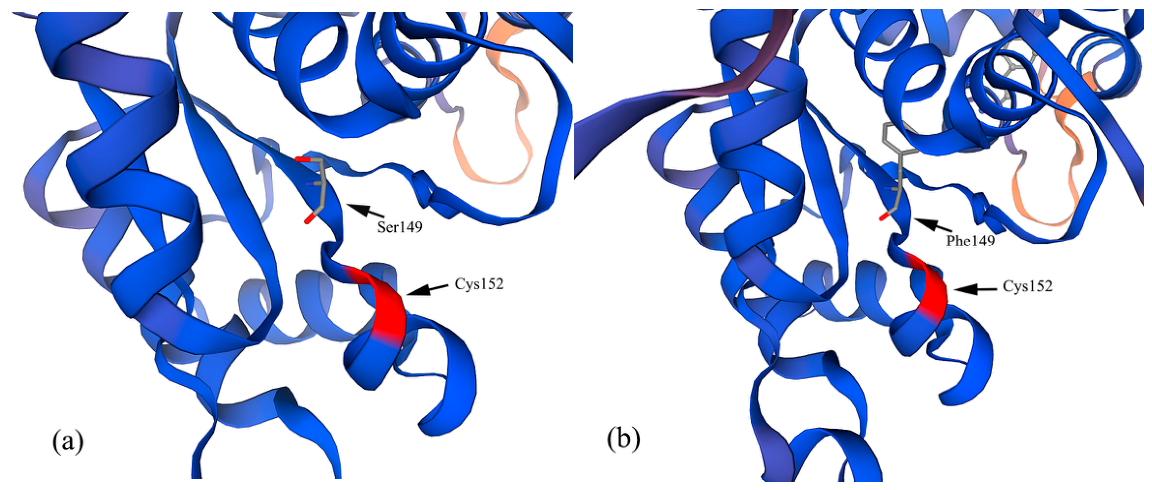
Homology modelling of the NifK protein of strain II-2 was performed using the SWISS-MODEL Interactive Workspace [16]. For the analysis, models were constructed for the wild-type variant, represented by the reference strain B. japonicum 5038, and the mutant variant, represented by strain II-2. These variants differed in the amino acid residue at position 149, Ser149 and Phe149, respectively.
The experimental structure of the β-subunit of the nitrogenase MoFe protein, 5KOH chain B, was used as the template. Model quality was assessed using the following parameters: GMQE, 0.95; QMEAN, 0.89; QSQE, 0.86; sequence identity, 69.08%; and resolution, 1.8 Å. The wild-type and mutant variants were compared in terms of their overall spatial organization and the local environment of residue 149 near the conserved Cys152 residue.

2.5. Determination of Total Protein in Bacterial Cultures

Bacterial cultures of strains of B. japonicum subsp. saratovii I-1, I-2, I-4, I-5, II-2, III-1, and III-2 were grown on liquid mannitol medium of the following composition (g/L): yeast extract—0.5; K2HPO4—0.2; MgSO4 × 7H2O—0.2; mannitol—7.0 (pH 7.0–7.2) at 120 rpm and 30 °C. After 1 and 6 days of cultivation, the samples were analyzed for total protein content using the Bradford method [17]. The quantitative protein content was determined using a calibration curve based on an aqueous solution of bovine serum albumin. Results were presented as mean ± standard deviation. For variants with cultivation for 6 days, differences in means were assessed by one-way ANOVA followed by Duncan’s multiple range test at p < 0.05 using Statistica v.10.

3. Results

3.1. Evaluation of Inoculation Efficiency in Pot and Field Experiments

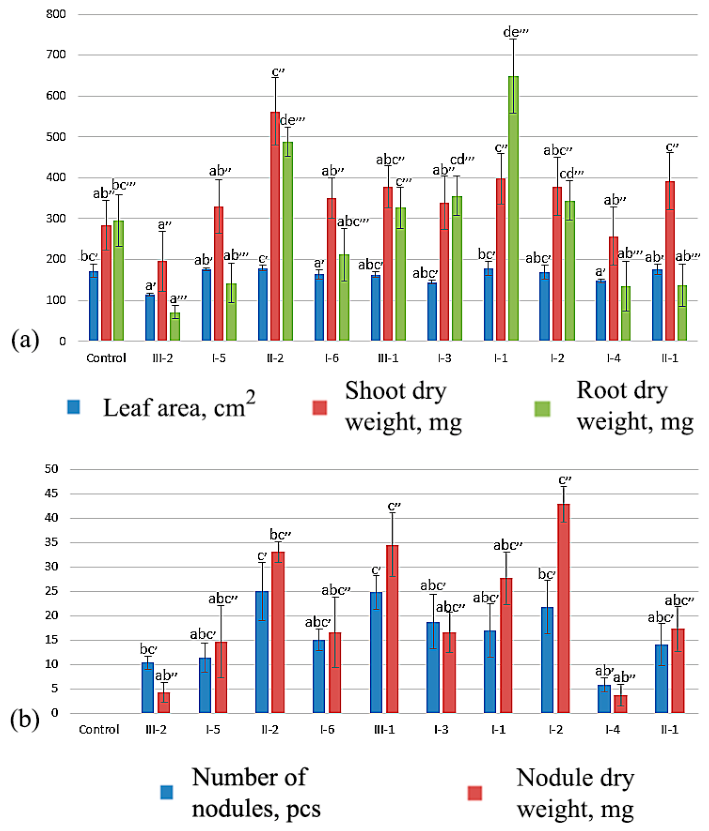
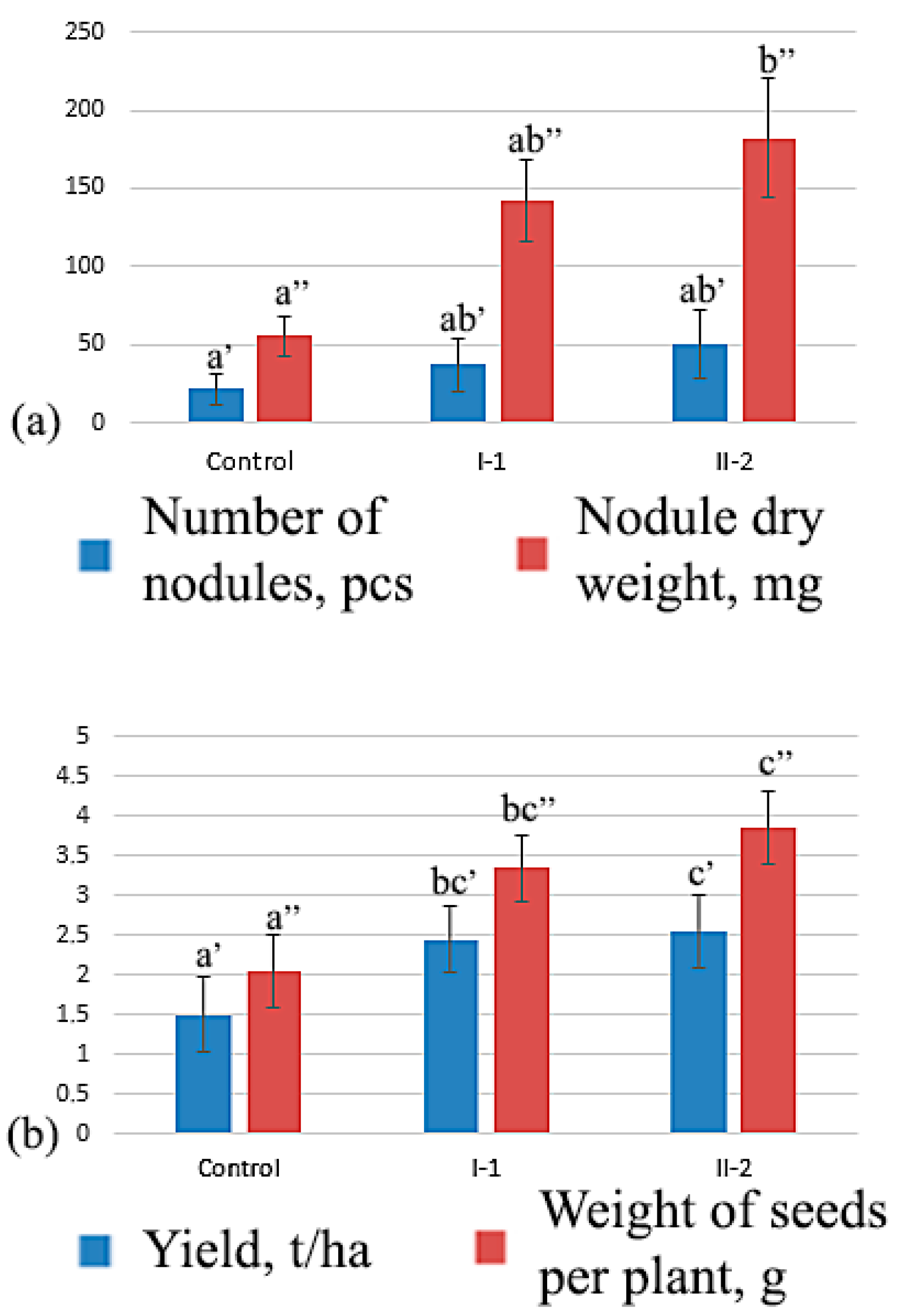
Inoculation of aseptic soybean seeds with seven pure cultures of B. japonicum subsp. saratovii resulted in the formation of nodules on the roots, whereas no nodules were formed in the control treatment. In the cross-section, all nodules were deep scarlet in colour, indicating the presence of leghemoglobin in the nodule tissues. Morphometric analysis revealed strain-specific effects, expressed as variability in growth-promoting and symbiotic parameters, including leaf surface area, plant biomass (Figure 1a), nodulation parameters (Figure 1b and Figure 2a), and yield components (Figure 2b). Two strains, I-1 and II-2, were identified as having the strongest growth-promoting effect on soybean plants.

3.2. Analysis of Key Genes for Nif- and Nod-Factors

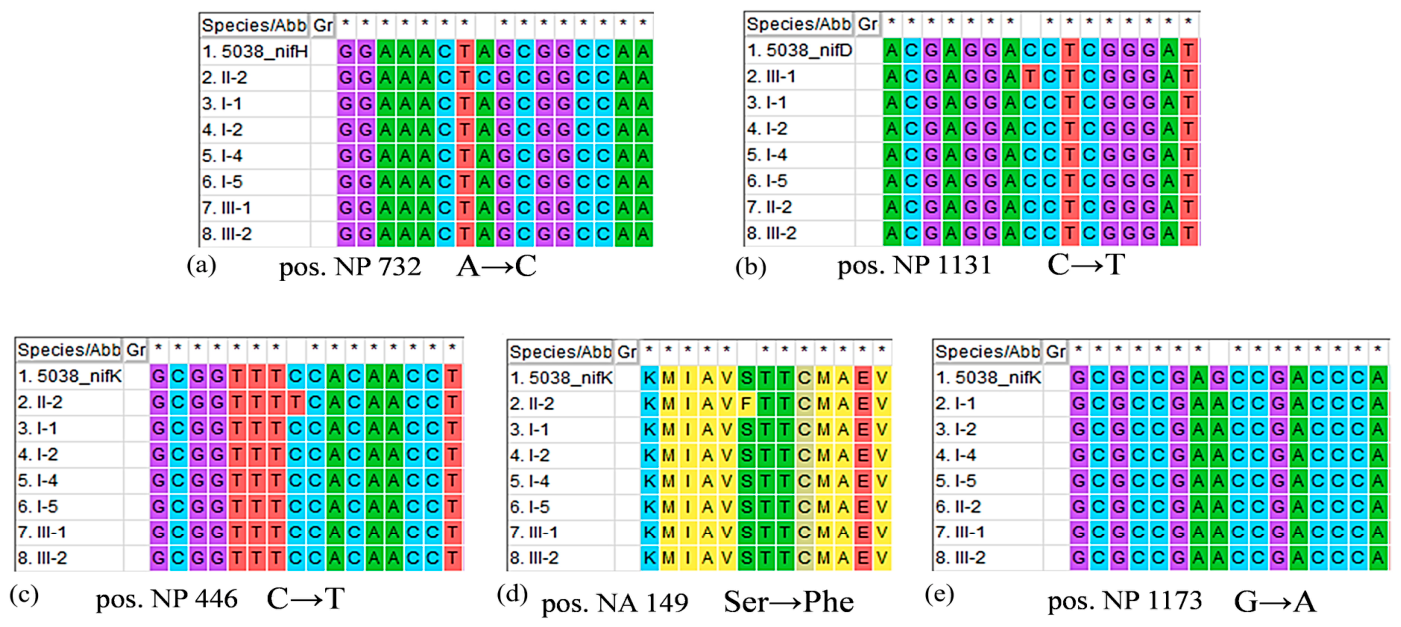
All three genes of the nitrogenase complex (nifH, nifD, nifK) were detected in the studied strains. At the same time, single-nucleotide polymorphism (SNP) sites were identified in the gene sequences (Figure 3). In the nifH gene of strain II-2, a synonymous nucleotide substitution A → C was detected at position 732 (Figure 3a). In the nifD gene, one synonymous substitution C → T was identified in strain III-1 at position 1131 (Figure 3b). The nifK gene encodes the β-subunit of the nitrogenase FeMo protein. In this gene, strain II-2 carried a missense mutation at position 446, resulting in an amino acid substitution from serine to phenylalanine (Figure 3c,d). In addition, all seven strains, I-1, I-2, I-4, I-5, II-2, III-1, and III-2, had a synonymous substitution G → A at position 1173 (Figure 3e).
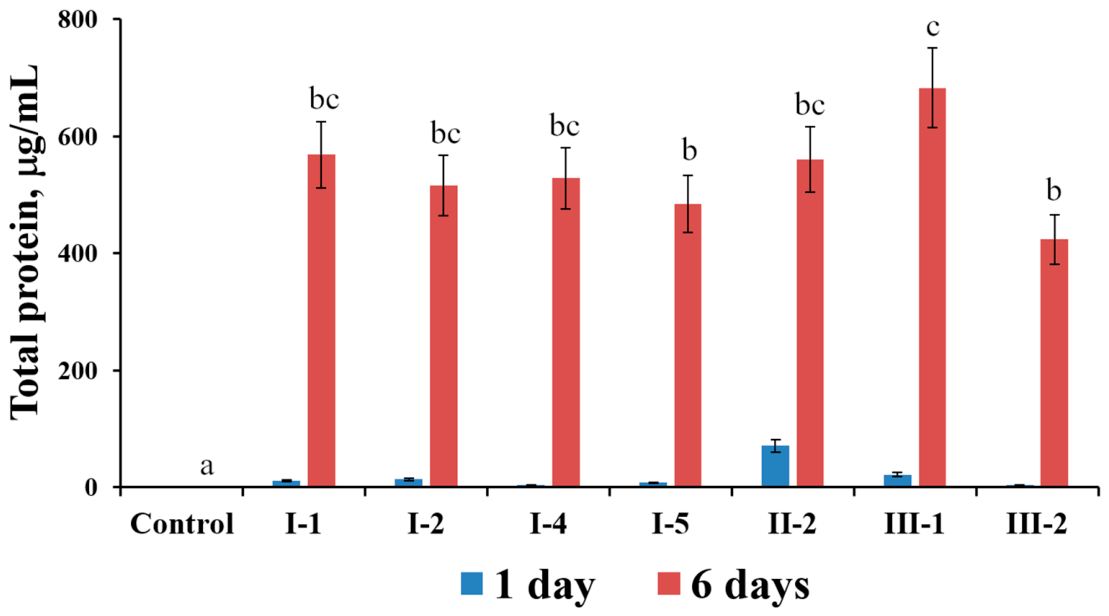
Homology modelling showed that the Ser149Phe substitution in the NifK protein did not lead to any noticeable change in the overall spatial structure of the nitrogenase β-subunit (Figure 4). However, the mutation was located near the conserved Cys152 residue, which is associated with a functionally important region of the protein; therefore, a possible local effect on the microenvironment of this site cannot be excluded. Nevertheless, no clear signs of global destabilization of the model were detected. A liquid culture experiment showed that total protein content significantly increased in all strains between the first and sixth days (Figure 5). Thus, the Ser149Phe substitution in the nitrogenase structure did not affect its activity.
The presence of nitrogenase complex genes in the strains does not necessarily guarantee the ability to form nodules. However, all the studied strains carried the nodB and nodC genes, and no mutational changes were detected in these genes in any of the strains.
Since strains within the same genus or species may differ in host-plant specificity, the nodC gene of the studied strains was analyzed to determine the symbiovar according to the guidelines for describing rhizobial symbiovars [18]. According to these guidelines, B. japonicum, as well as Bradyrhizobium barranii, Bradyrhizobium diazoefficiens, and Bradyrhizobium ottawaense, belong to symbiovar glycinearum. Comparative analysis of the nodC gene sequence of our strains with reference strains of these species revealed 100% identity with B. japonicum 5038, B. barranii subsp. barranii 144S4, B. diazoefficiens USDA 110, and B. ottawaense OO99. This result suggests that all our strains belong to symbiovar glycinearum.

3.3. Analysis of Nitrate-Reducing Genes

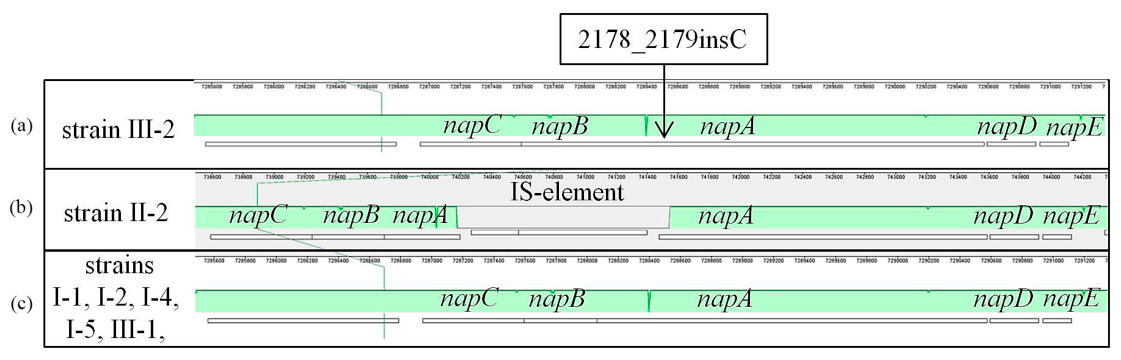
At the next stage, we assessed the genes responsible for nitrate-reducing ability. Periplasmic nitrate reductase, Nap, catalyzes the conversion of nitrate to nitrite in prokaryotes [19]. In Alphaproteobacteria, the Nap nitrate reductase synthesis system consists of five genes organized in the napEDABC operon. Figure 6 shows a schematic representation of the nap operon in the strains investigated in this study.
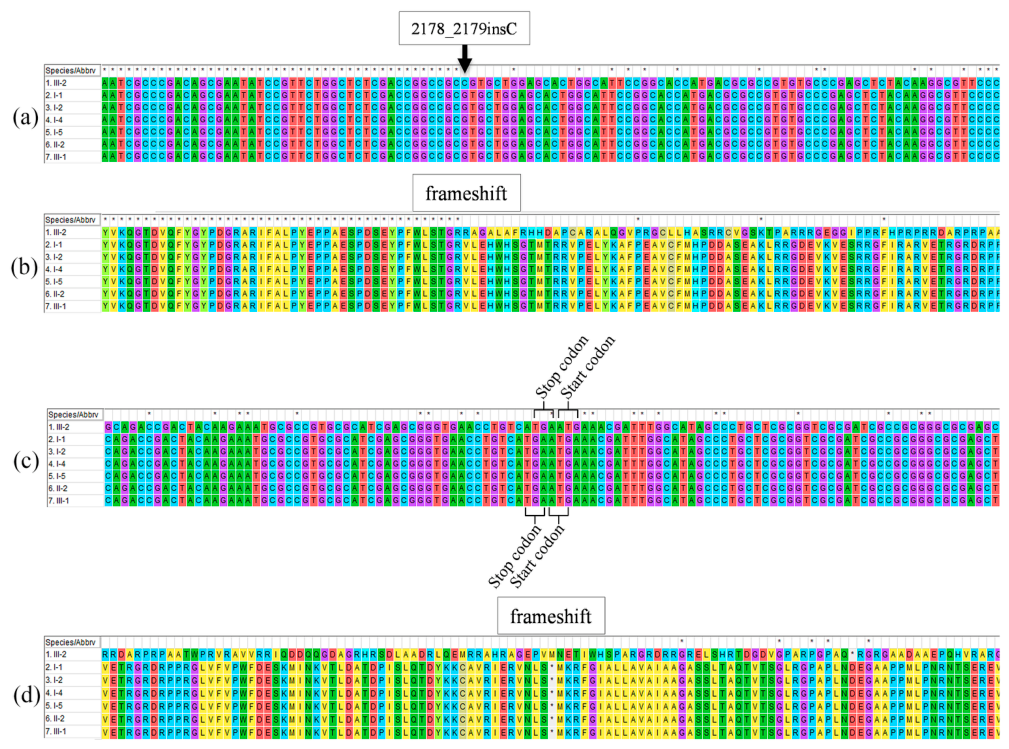
Among the studied bacteria, strains I-1, I-2, and I-5 exhibited nitrate-reducing activity and possessed a complete nap operon (Figure 6c). Strain II-2 did not exhibit nitrate-reducing activity and contained an insertion of a mobile IS3 element in the napA gene, which encodes nitrate reductase (Figure 6b). Strain III-2 also did not reduce nitrates; its napA gene contained a single cytosine insertion at position 2179, 2178_2179insC, which caused a frameshift (Figure 6a). As a result, the napA gene in this strain lacks a stop codon, and two genes, napA and napB, are likely read as a single sequence (Figure 7). Two other strains, I-4 and III-1, contained all five genes of the nap-operon but did not show the ability to reduce nitrates (Figure 6c).

4. Discussion

The studied strains of B. japonicum subsp. saratovii were found to differ in their growth-promoting activity and in the efficiency of soybean symbiotic apparatus formation in both the pot experiment (Figure 1) and the field experiment (Figure 2). Under pot experiment conditions, the most pronounced effects were observed for strains II-2, I-1, III-1, and I-2, whereas under field conditions, strain II-2 provided the greatest increase in seed weight per plant and yield. Therefore, further analysis was focused on comparing the observed differences in inoculation efficiency with the characteristics of key genes involved in nodulation and nitrogen metabolism.
The results of gene analysis showed that the studied indigenous soybean nodule bacterial strains from the Lower Volga region are characterized by a combination of high conservation of key sym-genes and limited variability in individual loci associated with both nitrogen fixation and nitrate respiration. The nifH, nifD, nifK, nodB, and nodC genes were detected in all analyzed strains, whereas differences between isolates were mainly limited to single SNPs in nif-genes and structural disruptions in napA in some strains. This pattern is consistent with current views on the genomic organization of rhizobia: genes critically important for establishing symbiosis with the host are usually subject to strong purifying selection, whereas other components of nitrogen metabolism may show greater variability or depend on the ecological specialization of the strain [20,21]. The results of the present study on the presence and variability of nif-, nod-, and nap- loci confirm this model for the studied indigenous soybean isolates.
The presence of a complete set of nifH, nifD, and nifK in all strains indicates conservation of the basic genetic machinery required for the synthesis of the nitrogenase complex. These genes are known to encode structural components of nitrogenase and are among the most conserved and functionally important determinants of symbiotic nitrogen fixation. At the same time, the presence of these genes alone cannot be regarded as a sufficient indicator of high strain efficiency, since the phenotypic outcome depends not only on the presence of the locus but also on its regulation, electron supply, oxygen conditions within the nodule, and the overall compatibility of the microsymbiont with the host plant [21]. In this context, it is particularly noteworthy that the nif-genes in the analyzed sample were generally highly conserved: most of the identified substitutions were synonymous, which is consistent with purifying selection acting on genes associated with a key symbiotic function. Single SNPs were detected in nifH and nifD, as well as one nonsynonymous substitution in nifK in strain II-2; however, the overall pattern of polymorphism indicates moderate microevolutionary divergence rather than deep functional differentiation among the strains.
In contrast to most synonymous substitutions identified in this study, the missense mutation detected in the nifK gene of strain II-2, resulting in the Ser149Phe substitution in the β-subunit of the nitrogenase MoFe-protein, may have potential structural significance because nifK encodes one of the key proteins of the nitrogenase complex. The nitrogenase MoFe-protein is known to function as a heterotetrameric complex, and electron transfer within this complex occurs through the P-cluster, which acts as an intermediate centre between the Fe-protein and the FeMo-cofactor of the catalytic site. Therefore, any amino acid substitutions located near regions involved in the coordination or structural stabilization of the P-cluster are of particular interest in terms of their possible effects on enzyme function [22,23,24].
The structural significance of the mutation considered here is primarily determined by its localization. Based on amino acid sequence analysis and homology modelling, the Ser149Phe substitution was found to be located in close proximity to the conserved Cys152 residue of the NifK β-subunit. For classical Mo-nitrogenase, conserved cysteine residues of the β-subunit, including the residue corresponding to Cys153 in the Azotobacter vinelandii protein, have been shown to be associated with the P-cluster and to participate in the organization of a functionally important region of the MoFe protein [25,26]. Therefore, the localization of the Ser149Phe substitution near such a cysteine residue makes it potentially significant, even though Ser149 itself is not among the known direct ligands of the metal cluster.
Serine is a small polar residue, whereas phenylalanine is a bulky hydrophobic aromatic residue. Such substitutions may affect local protein packing, alter interaction patterns, and modify the microenvironment of neighbouring functionally important amino acids. At the same time, homology modelling showed that the Ser149Phe mutation was not accompanied by any noticeable rearrangement of the overall spatial structure of the corresponding NifK region (Figure 4). Comparison of the wild-type (Figure 4a) and mutant (Figure 4b) models showed that the difference was mainly limited to an increase in the volume of the side chain at residue 149, whereas no pronounced changes in the protein backbone or major steric clashes in the region adjacent to Cys152 were detected. This suggests that the mutation does not cause substantial destabilization of the nitrogenase β-subunit and is likely to exert, at most, a local effect on the microenvironment of this region. Methodologically, this conclusion appears justified, since both models were constructed using the same experimental nitrogenase template and the homology modelling approach, which is widely used to assess the possible structural significance of amino acid substitutions [16]. In an experiment measuring total protein in cultures of all the studied strains (Figure 5), we did not find any difference for strain II-2 associated with the unique amino acid composition of its nitrogenase.
The obtained results are of particular interest in the context of the growth-promoting effect of strain II-2 on plants. Despite the presence of a missense substitution in nifK, this strain demonstrated one of the most pronounced growth-promoting and symbiotic effects in the pot experiment and was the most effective strain under field conditions in terms of seed weight per plant and yield. This observation is important because it indicates that the Ser149Phe substitution itself is not associated with an obvious decrease in the symbiotic efficiency of the strain. Therefore, it should not be regarded as an intrinsically destructive mutation but rather as a molecular feature of the strain that may potentially affect subtle aspects of the structural organization of NifK. These results are consistent with current views that individual amino acid substitutions in proteins of the symbiotic apparatus do not always lead to altered phenotypic effects and should be interpreted only in the context of structural data and experimental evidence of strain activity.
In contrast to the nif genes, the nodB and nodC genes were completely conserved in all studied strains. This result is biologically justified, since nod-genes are involved in the synthesis and modification of Nod factors, which determine the early stages of host plant recognition and initiation of nodule morphogenesis. In modern rhizobial systematics, nodC is considered one of the most informative markers for determining symbiovars, as it reflects not so much the general phylogeny of bacteria as their specialization toward a particular host [18]. In this regard, the complete identity of the nodC sequences of the studied isolates with reference strains of symbiovar glycinearum appears reliable: it indicates that, regardless of taxonomic differences between strains, their symbiotic apparatus retains common host specificity toward soybean. This is consistent with the fact that the studied strains formed nodules on soybean roots. Therefore, the conservation of nodB and nodC in this case apparently explains the general ability to nodulate but not the differences in the efficiency of the established symbiosis.
The combination of high nodC conservation with genomic heterogeneity among the studied strains also allows the hypothesis of horizontal transfer of sym-genes to be discussed with greater confidence. Several recent studies emphasize that rhizobial nodulation and nitrogen fixation genes are often located within symbiotic islands, plasmids, or other mobile genetic elements and, therefore, can be transferred between different bacterial genomic lineages [18,20]. For an introduced crop such as soybean in the Lower Volga region, this mechanism is particularly plausible: bacteria adapted to local soil and climatic conditions may have acquired sym-loci enabling them to effectively colonize soybean roots. The high identity of nodC and the conservation of other key sym-genes observed in this study, against the background of existing interstrain differences, may therefore be considered indirect evidence supporting horizontal gene transfer.
Structural variability was detected in the nap-operon and may be associated with the observed phenotype. Strains I-1, I-2, and I-5 possessed a complete napEDABC operon, which coincided with the presence of nitrate-reducing activity. In contrast, strains II-2 and III-2, which did not reduce nitrates, carried disruptions in napA: an insertion of a mobile IS3 element in the former case (Figure 3b) and a single-cytosine insertion causing a frameshift in the latter case (Figure 3a and Figure 4). Such an association between structural damage to napA and the negative phenotype appears well justified. It has previously been shown for B. japonicum that the napEDABC cluster encodes periplasmic nitrate reductase, while napA encodes the catalytic subunit of the enzyme; mutational disruptions in this locus lead to the loss of nitrate respiration ability [27]. Therefore, the changes identified in the present study may be regarded not as random features but as likely functionally significant disruptions of nitrogen metabolism.
In strain III-2, the frameshift in napA was accompanied by low plant growth parameters and weak development of the symbiotic apparatus, suggesting a possible relationship between the metabolic limitations of the strain and its low agronomic efficiency. At the same time, strain II-2, which also carried a napA disruption resulting in the absence of nitrate-reducing activity, had the most pronounced positive effect on plant growth in both pot and field experiments. The results obtained for strains I-4 and III-1 show that the relationship between the state of the nap operon and the nitrate-reducing phenotype is not strictly linear. Despite the presence of a complete napEDABC operon, these strains did not show the ability to reduce nitrates. This does not contradict current understanding of nitrate-reducing activity in Bradyrhizobium, since this phenotype depends not only on nap-genes but also on other components of the pathway, including nir, nor, and nos, as well as regulatory genes controlling their expression in response to oxygen availability and other environmental conditions [28]. Therefore, in these strains, the negative phenotype may be associated either with changes in other genes of the denitrification cascade or with regulatory features that are not detectable by simple structural analysis of the nap-operon.
It should also be emphasized that the microbiological assay used in this study was qualitative and was not designed to quantify nitrate or nitrite concentrations, N2O production, or the activity of the complete denitrification pathway. Oxygen availability was not strictly controlled during the assay, which may influence the expression of nitrate reduction and denitrification genes. However, all strains were tested under the same experimental conditions, allowing for a comparative assessment of their qualitative nitrate reduction phenotype within the framework of this screening assay. Therefore, the absence of a positive reaction in strains I-4 and III-1 should be interpreted only as the absence of detectable nitrate-reducing activity under the applied experimental conditions.
It is noteworthy that the development of the symbiotic apparatus does not guarantee a proportional increase in productivity. For example, strain III-1 formed one of the highest numbers of nodules and a high nodule mass in the pot experiment, whereas strain II-2 was the most effective under field conditions. Similarly, strain I-2 did not produce the maximum number of nodules but was characterized by the greatest dry nodule mass, which may indicate the formation of larger and physiologically mature symbiotic structures. This suggests that strain evaluation should not be limited to a single nodulation parameter. For the practical selection of inoculants, not only the number of nodules but also their functional activity and effect on yield are of greater importance. In other words, the conservation of sym-genes determines the possibility of symbiosis formation as such, whereas differences in actual efficiency are shaped at a more complex physiological and genetic level.
From a practical point of view, genomic analysis combined with inoculation trials makes it possible to move from merely confirming the presence of sym-genes to a preliminary in silico and in planta assessment of strain potential (Table S1). The most effective strain under field conditions, II-2, retains a complete set of major symbiotic genes, demonstrates pronounced growth-promoting and yield-enhancing effects, and at the same time exhibits specific features of nitrogen metabolism, including the absence of nitrate-reducing activity due to disruption of napA. From an agroecological perspective, this may be a favourable trait, since denitrification is associated with losses of available nitrogen and the formation of gaseous nitrogen compounds. However, the results of this study do not prove that the loss of napA function itself increases yield; rather, they show that the absence of nitrate-reducing activity does not prevent high inoculation efficiency. Taken together, these findings make strain II-2 an interesting object for further research from both fundamental and applied perspectives.


5. Conclusions

This study showed that indigenous strains of Bradyrhizobium japonicum subsp. saratovii isolated from soybean nodules in the Lower Volga region retain a set of key genes involved in nodulation and nitrogen fixation, namely nifH, nifD, nifK, nodB, and nodC, but differ in individual SNPs within nif loci and in the structure of the nap operon. The nodB and nodC genes were completely conserved in all studied strains, which is consistent with their common ability to nodulate and their affiliation with symbiovar glycinearum. A missense mutation, Ser149Phe, was identified in nifK of strain II-2; homology modelling showed that this substitution was not accompanied by any noticeable rearrangement of the overall structure of the nitrogenase β-subunit and is likely not grossly destructive. The most pronounced variability was detected in the nap-operon: disruptions of napA in strains II-2 and III-2 were consistent with the absence of nitrate-reducing activity, whereas in strains I-4 and III-1, the negative nitrate reduction phenotype, despite the presence of a complete nap operon, may be associated with regulatory factors or with other components of the nitrogen metabolism pathway. Comparison of genomic features with inoculation data showed that the conservation of sym-genes explains the general ability of the studied strains to form nodules but does not fully determine differences in their efficiency. The most promising strain, II-2, combines a strong growth-promoting and yield-enhancing effect with the presence of a complete set of major sym-genes and the absence of nitrate-reducing activity due to disruption of napA. Thus, the results of this study demonstrate that an integrated approach combining the analysis of genes involved in nodulation and nitrogen metabolism with the assessment of inoculation efficiency allows for the selection of promising indigenous Bradyrhizobium strains for the development of effective soybean inoculants under the conditions of the Lower Volga region.

Supplementary Materials

The following supporting information can be downloaded at: https://www.mdpi.com/article/10.3390/bacteria5030036/s1, Table S1: Comparison of genetic features of Bradyrhizobium japonicum subsp. saratovii strains with symbiotic and growth-promoting effects.

Author Contributions

Conceptualization, A.S.S., G.L.B. and O.V.T.; methodology, A.S.S. and G.L.B.; software, A.S.S.; validation, A.S.S., G.L.B. and O.V.T.; formal analysis, A.S.S., J.A.B. and O.V.T.; investigation, A.S.S. and G.L.B.; resources, G.L.B., O.V.T.; data curation, A.S.S., G.L.B., O.V.T.; writing—original draft preparation, A.S.S.; writing—review and editing, A.S.S., G.L.B. and O.V.T.; visualization, A.S.S. and J.A.B.; supervision, G.L.B. and O.V.T.; project administration, G.L.B. and O.V.T. All authors have read and agreed to the published version of the manuscript.

Funding

The research was carried out within the state assignment of the Ministry of Science and Higher Education of the Russian Federation (project No. 1025120800043-6-4.1.6).

Institutional Review Board Statement

Not applicable.

Informed Consent Statement

Not applicable.

Data Availability Statement

Data are contained within the article and its Supplementary Materials. Additional data supporting the findings of this study are available from the corresponding author upon reasonable request.

Conflicts of Interest

The authors declare no conflicts of interest.

References

  1. Jacob, C.; Carrasco, B.; Schwember, A.R. Advances in breeding and biotechnology of legume crops. Plant Cell Tissue Organ Cult. 2016, 127, 561–584. [Google Scholar] [CrossRef]
  2. Chernov, T.I.; Semenov, M.V. Management of soil microbial communities: Opportunities and prospects (a review). Eurasian Soil Sci. 2021, 54, 1888–1902. [Google Scholar] [CrossRef]
  3. Glyan’ko, A.K. Signaling systems of rhizobia (Rhizobiaceae) and leguminous plants (Fabaceae) upon the formation of a legume-Rhizobium symbiosis (review). Appl. Biochem. Microbiol. 2015, 51, 494–504. [Google Scholar] [CrossRef]
  4. Dong, W.; Song, Y. The significance of flavonoids in the process of biological nitrogen fixation. Int. J. Mol. Sci. 2020, 21, 5926. [Google Scholar] [CrossRef] [PubMed]
  5. Quilbé, J.; Montiel, J.; Arrighi, J.F.; Stougaard, J. Molecular mechanisms of intercellular rhizobial infection: Novel findings of an ancient process. Front. Plant Sci. 2022, 13, 922982. [Google Scholar] [CrossRef] [PubMed]
  6. Zhang, X.; Wu, J.; Kong, Z. Cellular basis of legume–rhizobium symbiosis. Plant Commun. 2024, 5, 101045. [Google Scholar] [CrossRef] [PubMed]
  7. Zumft, W.G. Cell biology and molecular basis of denitrification. Microbiol. Mol. Biol. Rev. 1997, 61, 533–616. [Google Scholar] [CrossRef] [PubMed]
  8. Mullo Panoluisa, F.E.; Romanova, E.V.; Salazar Flores, C.A. Effect of inoculation with microbiological preparations on morphological characteristics and yield of vegetable soybean. Veg. Crops Russ. 2024, 4, 99–104. [Google Scholar] [CrossRef]
  9. Mendoza-Suárez, M.; Andersen, S.U.; Poole, P.S.; Sánchez-Cañizares, C. Competition, nodule occupancy, and persistence of inoculant strains: Key factors in the Rhizobium-legume symbioses. Front. Plant Sci. 2021, 12, 690567. [Google Scholar] [CrossRef] [PubMed]
  10. Granada Agudelo, M.; Ruiz, B.; Capela, D.; Remigi, P. The role of microbial interactions on rhizobial fitness. Front. Plant Sci. 2023, 14, 1277262. [Google Scholar] [CrossRef] [PubMed]
  11. Thilakarathna, M.S.; Raizada, M.N. A meta-analysis of the effectiveness of diverse rhizobia inoculants on soybean traits under field conditions. Soil Biol. Biochem. 2017, 105, 177–196. [Google Scholar] [CrossRef]
  12. Sidorin, A.S.; Burygin, G.L.; Fedorov, A.V.; Katyshev, A.D.; Krasnov, Y.M.; Tkachenko, O.V. Bacterial strains from soybean nodules in the Lower Volga region belong to a new subspecies Bradyrhizobium japonicum subsp. saratovii subsp. nov. Microorganisms 2026, 14, 684. [Google Scholar] [CrossRef] [PubMed]
  13. Kumar, S.; Stecher, G.; Tamura, K. MEGA7: Molecular Evolutionary Genetics Analysis version 7.0 for Bigger Datasets. Mol. Biol. Evol. 2016, 33, 1870–1874. [Google Scholar] [CrossRef] [PubMed]
  14. Akimova, E.S.; Gumenko, R.S.; Vershinina, Z.R.; Baymiev, A.K.; Baymiev, A.K. Genetic markers for search of rhizobia based on symbiotic genes. Microbiology 2017, 86, 640–646. [Google Scholar] [CrossRef]
  15. Darling, A.C.; Mau, B.; Blattner, F.R.; Perna, N.T. Mauve: Multiple alignment of conserved genomic sequence with rearrangements. Genome Res. 2004, 14, 1394–1403. [Google Scholar] [CrossRef] [PubMed]
  16. Waterhouse, A.; Bertoni, M.; Bienert, S.; Studer, G.; Tauriello, G.; Gumienny, R.; Heer, F.T.; de Beer, T.A.P.; Rempfer, C.; Bordoli, L.; et al. SWISS-MODEL: Homology modelling of protein structures and complexes. Nucleic Acids Res. 2018, 46, W296–W303. [Google Scholar] [CrossRef] [PubMed]
  17. Bradford, M.M. A rapid and sensitive method for the quantitation of microgram quantities of protein utilizing the principle of protein-dye binding. Anal. Biochem. 1976, 72, 248–254. [Google Scholar] [CrossRef] [PubMed]
  18. Martinez-Romero, E.; Peix, A.; Hungria, M.; Mousavi, S.A.; Martinez-Romero, J.; Young, P. Guidelines for the description of rhizobial symbiovars. Int. J. Syst. Evol. Microbiol. 2024, 74, 006373. [Google Scholar] [CrossRef] [PubMed]
  19. Sparacino-Watkins, C.; Stolz, J.F.; Basu, P. Nitrate and periplasmic nitrate reductases. Chem. Soc. Rev. 2014, 43, 676–706. [Google Scholar] [CrossRef] [PubMed]
  20. Andrews, M.; De Meyer, S.; James, E.K.; Stępkowski, T.; Hodge, S.; Simon, M.F.; Young, J.P.W. Horizontal transfer of symbiosis genes within and between rhizobial genera: Occurrence and importance. Genes 2018, 9, 321. [Google Scholar] [CrossRef] [PubMed]
  21. Epstein, B.; Tiffin, P. Comparative genomics reveals high rates of horizontal transfer and strong purifying selection on rhizobial symbiosis genes. Proc. Biol. Sci. 2021, 288, 20201804. [Google Scholar] [CrossRef] [PubMed]
  22. Kim, J.; Rees, D.C. Structural models for the metal centers in the nitrogenase molybdenum-iron protein. Science 1992, 257, 1677–1682. [Google Scholar] [CrossRef] [PubMed]
  23. Warmack, R.A.; Rees, D.C. Nitrogenase beyond the resting state: A structural perspective. Molecules 2023, 28, 7952. [Google Scholar] [CrossRef] [PubMed]
  24. Einsle, O.; Rees, D.C. Structural enzymology of nitrogenase enzymes. Chem. Rev. 2020, 120, 4969–5004. [Google Scholar] [CrossRef] [PubMed]
  25. May, H.D.; Dean, D.R.; Newton, W.E. Altered nitrogenase MoFe proteins from Azotobacter vinelandii. Analysis of MoFe proteins having amino acid substitutions for the conserved cysteine residues within the beta-subunit. Biochem. J. 1991, 277, 457–464. [Google Scholar] [CrossRef] [PubMed]
  26. Liu, G.H.; Yang, S.; Han, S.; Xie, C.J.; Liu, X.; Rensing, C.; Zhou, S.G. Nitrogen fixation and transcriptome of a new diazotrophic Geomonas from paddy soils. mBio 2023, 14, e02150-23. [Google Scholar] [CrossRef] [PubMed]
  27. Delgado, M.J.; Bonnard, N.; Tresierra-Ayala, A.; Bedmar, E.J.; Müller, P. The Bradyrhizobium japonicum napEDABC genes encoding the periplasmic nitrate reductase are essential for nitrate respiration. Microbiology 2003, 149, 3395–3403. [Google Scholar] [CrossRef] [PubMed]
  28. Bedmar, E.J.; Robles, E.F.; Delgado, M.J. The complete denitrification pathway of the symbiotic, nitrogen-fixing bacterium Bradyrhizobium japonicum. Biochem. Soc. Trans. 2005, 33, 141–144. [Google Scholar] [CrossRef] [PubMed]
Figure 1. The influence of B. japonicum subsp. saratovii strains on morphometric traits of soybean plants in a pot experiment: (a) Growth-promoting indicators of plants (′—leaf area, ″—shoot dry weight, ′′′—root dry weight); (b) Symbiotic efficiency indicators (′—number, ″—nodule dry weight). Data are presented as mean ± standard deviation. Different letters indicate statistically significant differences among treatments according to one-way ANOVA followed by Duncan’s multiple range test at p < 0.05.
Bacteria 05 00036 g001
Figure 2. The influence of B. japonicum subsp. saratovii strains on morphometric traits of soybean plants in a field experiment: (a) The effect of inoculation with bacterial strains on seed weight per plant (′—number, ″—nodule dry weight); (b) The effect of inoculation with bacterial strains on soybean yield (′—yield, ″—weight of seeds per plant). Data are presented as mean ± standard deviation. Different letters indicate statistically significant differences among treatments according to one-way ANOVA followed by Duncan’s multiple range test at p < 0.05.
Bacteria 05 00036 g002
Figure 3. Graphic representation of single nucleotide polymorphisms: (a) A → C nucleotide substitution at position 732 in the nifH gene in strain II-2; (b) C → T nucleotide substitution at position 1131 in the nifD gene in strain III-1; (c) C → T nucleotide substitution at position 446 in the nifK gene in strain II-2; (d) Ser → Phe amino acid substitution at position 149 in the nifK gene in strain II-2; (e) G → A nucleotide substitution at position 1173 in strains I-1, I-2, I-4, I-5, II-2, III-1, III-2. An asterisk (*) indicates that the nucleotides in a given alignment column are identical for all sequences analyzed.
Bacteria 05 00036 g003
Figure 4. Comparison of a local region of the NifK protein in B. japonicum strain 5038 (a) and the mutant variant Ser149Phe in B. japonicum subsp. saratovii II-2 (b). The substitution results in an increase in the side chain volume of residue 149 but is not accompanied by a noticeable change in the overall spatial organization of the region near the conserved residue Cys152.
Bacteria 05 00036 g004
Figure 5. Results of measurment of total protein in bacterial cultures of strains B. japonicum subsp. saratovii I-1, I-2, I-4, I-5, II-2, III-1, and III-2 after 1 and 6 days of incubation. Data are presented as mean ± standard deviation. Different letters indicate statistically significant differences according to one-way ANOVA followed by Duncan’s multiple range test at p < 0.05.
Bacteria 05 00036 g005
Figure 6. Schematic representation of the Nap operon in the studied strains: (a) Strain III-2 has an insertion in the napA gene 2178_2179insC, which leads to a reading frameshift; (b) Strain II-2 has an insertion of the mobile IS3 element in the napA gene; (c) Five strains have a complete Nap operon.
Bacteria 05 00036 g006
Figure 7. Schematic representation of the reading frameshift at position 2178_2179insC in the napA gene in strain III-2: (a) The nucleotide position (2178) of the insertion is indicated; (b) The change in the amino acid sequence resulting from the insertion of one nucleotide; (c) The reading frameshift of adjacent genes; (d) Disappearance of the stop codon of the napA gene and the start codon of the napB gene. An asterisk (*) indicates that the nucleotides in a given alignment column are identical for all sequences analyzed.
Bacteria 05 00036 g007
Disclaimer/Publisher’s Note: The statements, opinions and data contained in all publications are solely those of the individual author(s) and contributor(s) and not of MDPI and/or the editor(s). MDPI and/or the editor(s) disclaim responsibility for any injury to people or property resulting from any ideas, methods, instructions or products referred to in the content.