Review

Shiga Toxin-Producing Escherichia coli in Poultry: Virulence, Antimicrobial Resistance, and Zoonotic Implications


Department of Poultry Science, Auburn University, Auburn, AL 36849, USA
*
Authors to whom correspondence should be addressed.
Bacteria 2026, 5(2), 31; https://doi.org/10.3390/bacteria5020031
Submission received: 14 April 2026 / Revised: 14 May 2026 / Accepted: 27 May 2026 / Published: 1 June 2026

Abstract

Shiga toxin-producing Escherichia coli (STEC) is a major zoonotic foodborne pathogen associated with severe human illnesses, including hemorrhagic colitis and hemolytic uremic syndrome. While ruminants are traditionally recognized as the primary reservoirs, increasing evidence suggests that poultry production systems may also contribute to the dissemination of pathogenic and antimicrobial-resistant E. coli through the food chain. However, the extent of this contribution and its relevance to human infection remain incompletely understood. This review provides a critical synthesis of the virulence mechanisms, epidemiology, and antimicrobial resistance (AMR) of E. coli, with particular emphasis on STEC in poultry production systems. Key virulence determinants, including Shiga toxins (Stx1 and Stx2), the locus of enterocyte effacement, and plasmid-encoded factors, are discussed in relation to their roles in host colonization and disease progression. Transmission pathways within poultry production and processing environments are examined, highlighting critical points of contamination from farm to consumer. The increasing prevalence of multidrug-resistant and extended-spectrum β-lactamase-producing E. coli in poultry underscores significant public health concerns. However, variability in epidemiological data and limitations in current surveillance systems complicate the interpretation of transmission dynamics. Current and emerging control strategies, including biosecurity measures, alternative antimicrobial interventions, and processing hygiene, are evaluated alongside their practical limitations under commercial conditions. Overall, this review identifies key knowledge gaps and emphasizes the need for integrated, evidence-based approaches within a One Health framework to better define zoonotic risks and develop sustainable control strategies.

1. Introduction

E. coli is a highly diverse bacterial species that inhabits the gastrointestinal tract of humans and animals and plays an important role in the intestinal microbial community. Although most strains are harmless commensals that contribute to normal gut physiology, certain lineages have acquired virulence determinants that enable them to cause a wide range of intestinal and extraintestinal diseases [1]. Pathogenic E. coli strains are generally categorized into intestinal pathogenic E. coli (IPEC) and extraintestinal pathogenic E. coli (ExPEC) based on their disease manifestations and infection sites [2,3]. These groups comprise multiple pathotypes possessing diverse virulence factors that enable colonization of host tissues, evasion of immune defenses, and disease development in both humans and animals.
Among the various pathogenic groups, Shiga toxin-producing E. coli (STEC) has emerged as a significant zoonotic pathogen associated with foodborne outbreaks worldwide. A subset of STEC strains, referred to as enterohemorrhagic E. coli (EHEC), is particularly associated with severe human illnesses such as hemorrhagic colitis and hemolytic uremic syndrome (HUS) [4,5,6]. STEC infections can cause a range of clinical manifestations [5,7]. The pathogenicity of STEC is primarily attributed to the production of Shiga toxins (Stx1 and Stx2), along with other virulence determinants such as the locus of enterocyte effacement (LEE), plasmid-encoded factors, adhesins, and secreted effector proteins that disrupt host cellular processes [8,9]. These virulence traits allow STEC strains to attach to intestinal epithelial cells, alter cytoskeletal structures, and trigger inflammatory responses that contribute to disease severity.
Traditionally, ruminants, particularly cattle, have been recognized as the primary reservoirs of STEC. However, increasing attention has been directed toward the potential role of other food-producing animals in the ecology and transmission of pathogenic E. coli [10]. Poultry production systems, in particular, have attracted considerable attention due to the rapid expansion of global poultry consumption and the increasing scale of intensive poultry farming. Poultry meat is currently one of the most widely consumed animal protein sources worldwide, and its production continues to grow due to its affordability, accessibility, and high nutritional value [11,12]. With this expansion, concerns have also increased regarding microbial contamination of poultry products and the potential for zoonotic transmission of pathogenic bacteria through the food chain [13].
Poultry production environments can serve as reservoirs for diverse microbial populations, including pathogenic E. coli strains that may colonize the intestinal tract of birds or persist in litter, feed, water, and environmental surfaces [14]. These bacteria may spread within flocks and contaminate carcasses during slaughter and processing operations, particularly during defeathering, evisceration, and chilling [15]. Consequently, poultry meat and poultry products may act as vehicles for the transmission of pathogenic E. coli strains to humans, especially when cross-contamination occurs during food handling or when meat is improperly cooked [11,16]. Although avian pathogenic E. coli (APEC) is primarily associated with colibacillosis in poultry, increasing evidence indicates that certain APEC strains share virulence factors, plasmids, and AMR determinants with human ExPEC strains, highlighting potential zoonotic links [17].
Another growing concern related to E. coli in poultry production is the emergence and dissemination of AMR. Antimicrobials have been widely used in food animal production for therapeutic, prophylactic, and growth-promoting purposes, which has contributed to the selection of resistant bacterial strains in animal production systems [18]. Resistant E. coli strains originating in poultry environments may spread through multiple pathways, including direct contact with animals, environmental contamination, and consumption of contaminated meat products [19,20]. The increasing detection of multidrug-resistant E. coli isolates in poultry production systems, therefore, represents an important public health concern and highlights the interconnected nature of human, animal, and environmental health. These challenges have led to growing recognition of the importance of a One Health approach in addressing foodborne pathogens and AMR. The One Health concept emphasizes the integration of human, animal, and environmental health disciplines to better understand the transmission dynamics of pathogens and develop effective strategies for disease prevention and control [21]. Understanding the epidemiology, virulence mechanisms, and AMR patterns of E. coli associated with poultry production is therefore essential for improving food safety and mitigating zoonotic risks.
This review aims to provide a comprehensive overview of E. coli associated with poultry production, with particular emphasis on Shiga toxin-producing strains. It summarizes the major virulence mechanisms, epidemiological trends, and AMR patterns reported in poultry-associated E. coli. Furthermore, the review discusses potential transmission pathways within the poultry production chain and highlights emerging prevention and control strategies within a One Health framework aimed at reducing public health risks associated with pathogenic E. coli. This article is presented as a narrative review based on a broad evaluation of the literature and was neither designed nor reported as a systematic review or meta-analysis in accordance with PRISMA 2020 guidelines. This narrative review was developed through literature searches conducted using PubMed, Scopus, Web of Science, and Google Scholar, with an emphasis on contemporary literature related to STEC, poultry production, AMR, and One Health concepts.

2. Pathotypes and Virulence Mechanisms of STEC

E. coli is a genetically diverse bacterial species comprising both commensal and pathogenic strains that differ substantially in their genomic composition, virulence potential, and ecological niches. IPEC strains, also referred to as diarrheagenic E. coli (DEC), include major pathotypes such as diffusely adhering E. coli (DAEC), enteropathogenic E. coli (EPEC), enteroinvasive E. coli (EIEC), enterotoxigenic E. coli (ETEC), enteroaggregative E. coli (EAggEC), and Shiga toxin-producing E. coli (STEC), also known as enterohemorrhagic E. coli (EHEC) [22]. These pathotypes differ in their virulence factors, host interactions, and disease outcomes.
Among these, STEC has emerged as one of the most important zoonotic pathogens due to its association with severe human illness and its ability to be transmitted through the food chain. STEC infections are characterized by a wide spectrum of clinical outcomes, ranging from mild diarrhea to hemorrhagic colitis and HUS, a life-threatening condition involving acute renal failure, thrombocytopenia, and hemolytic anemia [5,23]. The pathogenicity of STEC is multifactorial and involves a combination of toxin production, adhesion mechanisms, and host immune modulation.
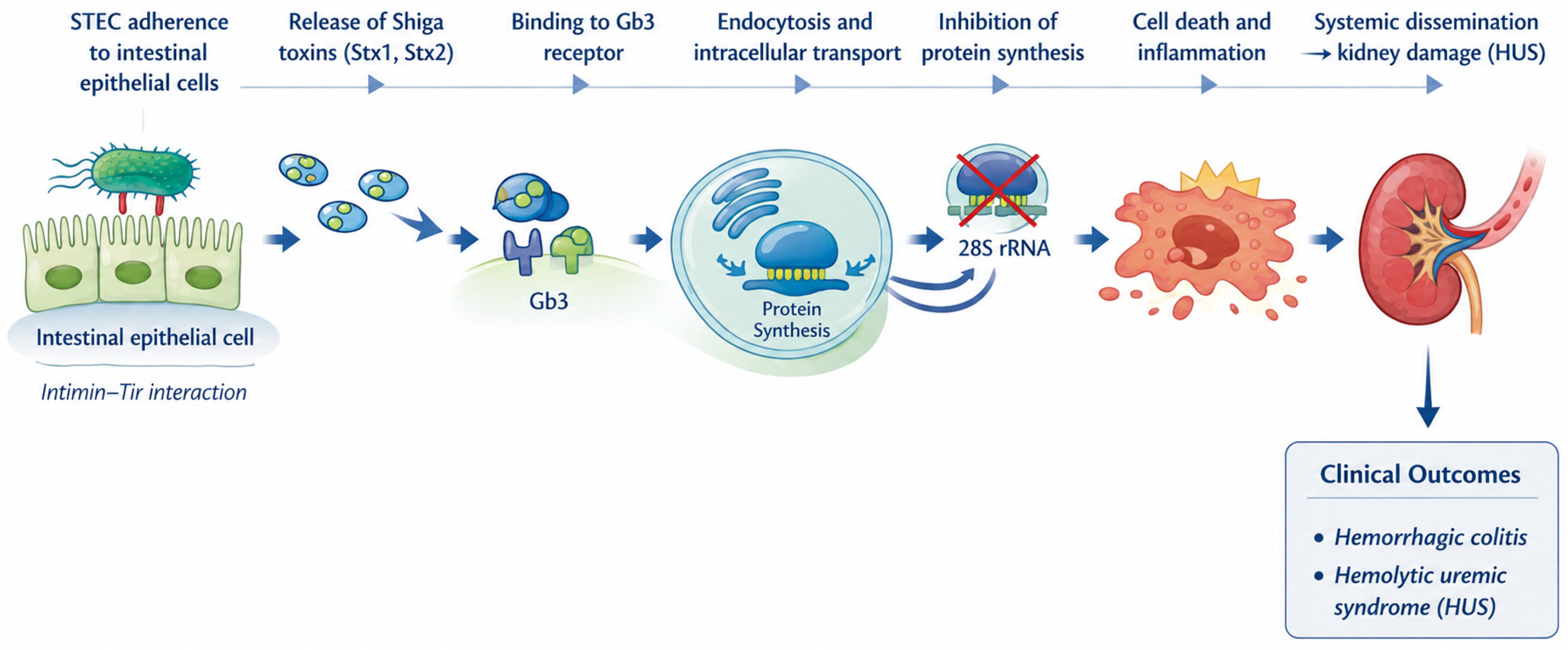
The hallmark virulence determinant of STEC is the production of Shiga toxins (Stx1 and Stx2), which are encoded by lysogenic bacteriophages integrated into the bacterial genome [24,25]. These toxins belong to the AB5 toxin family, consisting of a catalytically active A subunit and a pentameric B subunit responsible for receptor binding. The B subunit binds to the globotriaosylceramide (Gb3) receptor on host endothelial cells, particularly in the intestine and kidneys, facilitating toxin internalization [9]. Once inside the host cell, the A subunit exerts its cytotoxic effect by depurinating 28S rRNA, thereby inhibiting protein synthesis and leading to cell death. This mechanism underlies the vascular damage and inflammatory responses observed in severe STEC infections, particularly in the kidneys during HUS development [5].
In addition to Shiga toxins, the locus of enterocyte effacement (LEE) plays a central role in STEC pathogenesis. The LEE is a pathogenicity island that encodes a type III secretion system (T3SS) and a suite of effector proteins responsible for mediating intimate attachment to host intestinal epithelial cells [26]. Through the T3SS, STEC injects effector proteins such as Tir (translocated intimin receptor) into host cells. The bacterial outer membrane protein intimin subsequently binds to Tir, establishing a tight attachment between the bacterium and the host cell. This interaction leads to the formation of attaching and effacing (A/E) lesions characterized by microvilli destruction, cytoskeletal rearrangement, and pedestal formation beneath adherent bacteria [8,27].
Beyond the LEE and Stx toxins, plasmid-encoded virulence factors contribute significantly to STEC pathogenicity. The pO157 plasmid, commonly found in STEC strains, encodes several factors, including enterohemolysin (ehxA), serine protease autotransporters (SPATEs), and adhesins that enhance bacterial colonization and persistence [28]. Enterohemolysin has been associated with cytotoxic effects and may facilitate iron acquisition, while SPATE proteins contribute to host tissue damage and immune evasion. Additional virulence factors, such as long polar fimbriae (lpf), autoagglutinating adhesins (Saa), and subtilase cytotoxin (subAB), further enhance the ability of STEC to colonize host tissues and modulate host responses [4,29].
Advances in genomic and metagenomic technologies have revealed that E. coli virulence is highly dynamic and driven by horizontal gene transfer, recombination, and acquisition of mobile genetic elements such as plasmids, bacteriophages, and transposons [30]. This genetic plasticity enables the emergence of hybrid strains that combine virulence traits from multiple pathotypes, thereby increasing their adaptability and pathogenic potential. For example, hybrid STEC/EAEC strains have been implicated in large-scale outbreaks, highlighting the evolving nature of E. coli pathogenicity [31].
In poultry production systems, APEC, an ExPEC pathotype, is of particular importance due to its role in colibacillosis, one of the most common bacterial diseases affecting commercial poultry worldwide. Colibacillosis is associated with a wide range of clinical manifestations, including airsacculitis, pericarditis, perihepatitis, cellulitis, salpingitis, septicemia, and increased mortality, leading to substantial economic losses through reduced productivity, carcass condemnation, and increased treatment costs [32]. The disease frequently occurs as both localized infections and systemic outbreaks, particularly under conditions of environmental stress, poor biosecurity, or concurrent infections that compromise host immunity [33]. Notably, APEC strains share genetic similarities with human ExPEC strains, including overlapping virulence genes and plasmids, suggesting potential zoonotic links [34]. The coexistence of APEC and STEC-related virulence determinants within poultry-associated E. coli populations raises concerns regarding the emergence of strains with enhanced pathogenic potential and public health relevance. Collectively, the virulence of E. coli is determined by a complex interplay of toxins, adhesins, secretion systems, and mobile genetic elements that facilitate host colonization, immune evasion, and tissue damage. Understanding these mechanisms is critical; however, their relative contribution to host specificity, disease severity, and zoonotic transmission in poultry-associated strains remains incompletely resolved. An overview of the mechanism of action of Shiga toxin in host cells is presented in Figure 1.

3. Epidemiology and Transmission in Poultry Production Systems

The epidemiology of E. coli in poultry production systems is shaped by a complex interplay of environmental, management, microbial, and host-related factors that collectively influence bacterial persistence, transmission, and zoonotic potential. Although ruminants are widely recognized as the primary reservoirs of STEC, increasing evidence suggests that poultry production environments can also contribute to the maintenance and dissemination of pathogenic and antimicrobial-resistant E. coli strains within the food chain [16,35]. The expanding scale of global poultry production and consumption further amplifies the importance of understanding these epidemiological dynamics.
E. coli is a ubiquitous organism in poultry production systems and is commonly found in the gastrointestinal tract of birds, as well as in environmental components such as litter, dust, water, and feed [14]. Colonization of broiler chickens often occurs early in life, with chicks acquiring E. coli from hatchery environments, contaminated equipment, or vertical transmission routes [36]. Once introduced into a flock, E. coli can spread rapidly through fecal–oral transmission, facilitated by high stocking densities and close contact between birds. Environmental persistence is further supported by the ability of E. coli to survive in organic matter and resist desiccation under certain conditions, enabling long-term contamination of poultry houses [37]. Multiple sources contribute to the introduction and circulation of E. coli within poultry systems. Contaminated feed and water are recognized as major entry points, particularly in production settings with inadequate sanitation or biosecurity measures [38]. In addition, vectors such as rodents, insects, wild birds, and farm personnel can facilitate the introduction and spread of bacteria across flocks and facilities [39]. Airborne dissemination of E. coli through dust particles has also been reported, highlighting the potential for transmission beyond immediate contact pathways [14]. These diverse transmission routes underscore the complexity of controlling bacterial spread within intensive poultry production systems.
Processing stages represent critical control points in the epidemiology of E. coli contamination. During slaughter and processing, bacteria present in the gastrointestinal tract or on the skin and feathers of birds can be transferred to carcasses through mechanical and environmental routes. Defeathering, evisceration, and chilling have been consistently identified as high-risk steps for cross-contamination [15,40]. Equipment surfaces, processing water, and contact between carcasses can facilitate the redistribution of bacteria, leading to increased contamination levels even when initial bacterial loads are low. Studies have demonstrated that improper evisceration can result in leakage of intestinal contents, significantly increasing the risk of carcass contamination with pathogenic E. coli [41].
Surveillance studies have highlighted the widespread occurrence of E. coli in poultry meat and retail products, including strains carrying virulence and AMR determinants. For example, investigations conducted in different geographic regions have reported high prevalence rates of E. coli contamination in poultry products, with a significant proportion of isolates exhibiting multidrug resistance [42,43]. For example, studies conducted in poultry production systems have reported extremely high prevalence rates of E. coli colonization, with one investigation in Nigeria identifying E. coli in 99.4% of cloacal swab samples and multidrug resistance in approximately 45% of confirmed isolates [44]. The same study also detected virulence-associated genes, including eae and stx, in resistant poultry-associated isolates, highlighting the potential public health relevance of pathogenic and antimicrobial-resistant E. coli circulating within poultry production environments. In addition, molecular studies have identified extended-spectrum β-lactamase (ESBL)-producing E. coli and other clinically relevant resistance phenotypes in poultry-derived isolates, raising concerns regarding their potential impact on human health [45]. Although O157:H7 STEC has occasionally been detected in poultry, non-O157 STEC serogroups and poultry-associated isolates carrying virulence genes such as stx1, stx2, and eae appear to be more commonly reported in poultry production environments [46]. These findings further emphasize the potential role of poultry as a secondary reservoir of pathogenic and antimicrobial-resistant E. coli within the food chain.
The epidemiology of STEC in poultry is less well defined compared to ruminant systems, where cattle serve as the primary reservoir. However, studies have reported the detection of STEC-associated virulence genes, including stx1, stx2, and eae, in E. coli isolates from poultry and poultry products [35]. The increasing use of molecular diagnostic tools, such as polymerase chain reaction (PCR) and whole genome sequencing (WGS), has improved the detection of non-O157 STEC serotypes, which are now recognized as important contributors to human infections [47]. These findings suggest that poultry may serve as a secondary or incidental reservoir of STEC, with potential implications for food safety and zoonotic transmission.
Several STEC serotypes associated with human illness, including both O157:H7 and non-O157 serogroups such as O26, O45, O103, O111, O121, and O145, have been detected in poultry flocks, retail poultry meat, and poultry processing environments [48,49]. However, reported prevalence rates vary considerably among studies due to differences in geographic regions, production systems, sampling strategies, and detection methodologies. Importantly, not all poultry-associated STEC isolates possess the full complement of virulence determinants required for severe human disease, and the relative contribution of poultry-derived STEC to human infections remains incompletely understood. Nevertheless, the detection of strains carrying key virulence genes, including stx1, stx2, and eae, highlights the potential public health relevance of poultry-associated STEC within the food chain. Collectively, current evidence suggests that poultry may serve as a secondary or incidental reservoir of STEC, emphasizing the need for improved surveillance, molecular characterization, and risk assessment studies to better define the zoonotic significance of these isolates. An overview of major STEC serotypes, virulence determinants, and their potential public health relevance in poultry-associated isolates is presented in Table 1.
Transmission of pathogenic E. coli from poultry to humans can occur through multiple pathways. The most common route is the consumption of contaminated poultry meat, particularly when products are undercooked or when cross-contamination occurs during food preparation [11,16]. Handling of raw poultry products in domestic kitchens can facilitate the transfer of bacteria to ready-to-eat foods, surfaces, and utensils, thereby increasing the risk of infection. In addition, occupational exposure among farm workers and processing plant employees represents another potential route of transmission through direct contact with live birds, fecal material, contaminated litter, processing equipment, aerosols, and carcass fluids generated during slaughter and processing operations [19]. Inadequate hygiene practices, repeated environmental exposure, and handling of contaminated materials may increase the risk of colonization or dissemination of pathogenic and antimicrobial-resistant E. coli among workers. A study conducted among broiler poultry farm workers in Zambia reported AMR E. coli prevalence of 67.2%, with 29.3% of isolates exhibiting multidrug resistance and 3.4% identified as extended-spectrum β-lactamase producers harboring the CTX-M gene [50]. These findings highlight the potential One Health implications of antimicrobial-resistant E. coli transmission at the human–animal interface.
Environmental dissemination also plays a significant role in the epidemiology of E. coli. Poultry litter, manure, and wastewater can act as reservoirs of pathogenic and antimicrobial-resistant bacteria, which may be released into soil, water systems, and surrounding environments [51]. This environmental spread contributes to the broader circulation of resistance genes and pathogens within the One Health continuum, linking animal production systems to human and environmental health.
Genomic studies have provided further insights into the epidemiology of E. coli by revealing genetic similarities between isolates from poultry, humans, and the environment. WGS has demonstrated shared resistance genes, virulence factors, and plasmids across isolates from different sources, supporting the hypothesis of interspecies transmission and highlighting the importance of integrated surveillance approaches [30].

4. AMR and One Health Implications

The emergence and global dissemination of AMR in E. coli associated with poultry production systems pose a major challenge to both animal and public health. E. coli is widely recognized as a key indicator organism for monitoring AMR due to its ubiquitous presence, genetic adaptability, and capacity to acquire and disseminate resistance determinants [52,53]. In poultry production, the extensive use of antimicrobials for therapeutic, prophylactic, and, in some regions, growth-promoting purposes has created strong selective pressure that favors the persistence and spread of resistant bacterial populations [18,54].
Resistance in E. coli arises through a variety of molecular mechanisms, including enzymatic degradation of antibiotics, modification of antibiotic targets, reduced membrane permeability, and active efflux of antimicrobial compounds [55,56]. These mechanisms are often encoded by genes located on mobile genetic elements such as plasmids, transposons, and integrons, which facilitate horizontal gene transfer between bacterial populations [57]. This genetic mobility enables rapid dissemination of resistance traits not only within E. coli populations but also across different bacterial species inhabiting the same ecological niche.
One of the most concerning resistance phenotypes in poultry-associated E. coli is the production of extended-spectrum β-lactamases (ESBLs), which confer resistance to third-generation cephalosporins, a class of critically important antibiotics for human medicine [45]. ESBL genes, such as bla_CTX-M, bla_TEM, and bla_SHV, are frequently carried on plasmids that may also harbor additional resistance determinants, resulting in multidrug-resistant (MDR) phenotypes. The presence of ESBL-producing E. coli in poultry meat and production environments has been reported globally, indicating widespread dissemination and raising concerns regarding their potential transmission to humans through the food chain [43].
Another critical development in recent years is the emergence of colistin resistance mediated by mobilized colistin resistance (mcr) genes, particularly mcr-1. Colistin is considered a last-resort antibiotic for treating infections caused by multidrug-resistant Gram-negative bacteria, and the detection of mcr genes in E. coli from poultry has raised significant alarm [58]. These genes are often located on transferable plasmids, facilitating their spread across bacterial populations and geographic regions. The coexistence of mcr genes with other resistance determinants further complicates treatment options and highlights the potential for the emergence of pan-resistant strains.
In addition to β-lactam and colistin resistance, E. coli isolates from poultry frequently exhibit resistance to multiple antibiotic classes, including tetracyclines, fluoroquinolones, aminoglycosides, and sulfonamides [42,43]. Resistance to fluoroquinolones, which are widely used in both human and veterinary medicine, is often mediated by mutations in the quinolone resistance-determining regions (QRDR) of target enzymes such as DNA gyrase and topoisomerase IV, as well as by plasmid-mediated quinolone resistance genes (PMQR) [59]. Similarly, tetracycline resistance is commonly associated with efflux pump genes (e.g., tetA, tetB), while aminoglycoside resistance is often mediated by modifying enzymes that inactivate the antibiotic molecule [60].
The persistence and spread of antimicrobial-resistant E. coli in poultry production systems are influenced by multiple factors, including antimicrobial usage patterns, farm management practices, biosecurity measures, and environmental conditions. In intensive production systems, the use of antimicrobials at subtherapeutic levels can promote the selection of resistant bacteria, which may persist in the gut microbiota and be shed into the environment through feces [61]. Poultry litter and manure, which are often reused or applied as fertilizer, can serve as reservoirs of resistance genes and facilitate their dissemination into soil and water systems [51].
The public health implications of poultry-associated STEC remain an important concern within the One Health framework. Although poultry is not traditionally considered a primary reservoir of STEC, the detection of STEC strains in broiler flocks, poultry meat, and processing environments highlights the potential risk of foodborne exposure and zoonotic transmission to humans. Contamination of poultry products during slaughter, processing, and food handling may contribute to cross-contamination and subsequent human infection, particularly when poultry meat is improperly cooked or handled. In addition, the emergence of poultry-associated STEC isolates carrying AMR determinants may further complicate treatment outcomes in severe clinical cases. These concerns emphasize the importance of continued surveillance, molecular characterization, and improved control strategies aimed at reducing the public health risks associated with poultry-associated STEC.
Transmission of antimicrobial-resistant E. coli from poultry to humans can occur through several pathways. Direct contact with live birds or contaminated environments represents an occupational risk for farm workers and processing plant employees [19]. More importantly, the consumption of contaminated poultry meat is considered a major route of exposure, particularly when proper cooking and food handling practices are not followed. Cross-contamination in domestic kitchens can further facilitate the transfer of resistant bacteria to other foods and surfaces, increasing the risk of human colonization and infection [20].
Recent advances in WGS and metagenomic technologies have improved the ability to monitor the emergence, persistence, and dissemination of antimicrobial-resistant E. coli across poultry production systems. These approaches enable high-resolution tracking of resistance determinants, mobile genetic elements, and clonal relationships among isolates from animal, human, food, and environmental sources, thereby strengthening integrated AMR surveillance within a One Health framework [30,45]. Such tools may improve early detection of emerging resistance threats and support the development of targeted intervention and antimicrobial stewardship strategies.
The One Health approach provides a comprehensive framework for addressing AMR by integrating human, animal, and environmental perspectives. This approach recognizes that antimicrobial use and resistance in one sector can influence outcomes in others, necessitating coordinated efforts across disciplines [21,62]. Surveillance systems that integrate data from veterinary, clinical, and environmental sources are essential for tracking resistance trends and identifying critical control points.
Efforts to mitigate AMR in poultry production should focus on reducing unnecessary antimicrobial use, improving biosecurity and hygiene practices, and promoting alternative disease control strategies. Antimicrobial stewardship programs, which emphasize responsible use of antibiotics, are critical for limiting the selection of resistant strains. In addition, the development and implementation of alternatives such as probiotics, prebiotics, bacteriophages, and phytogenic compounds offer promising approaches for reducing reliance on conventional antimicrobials.
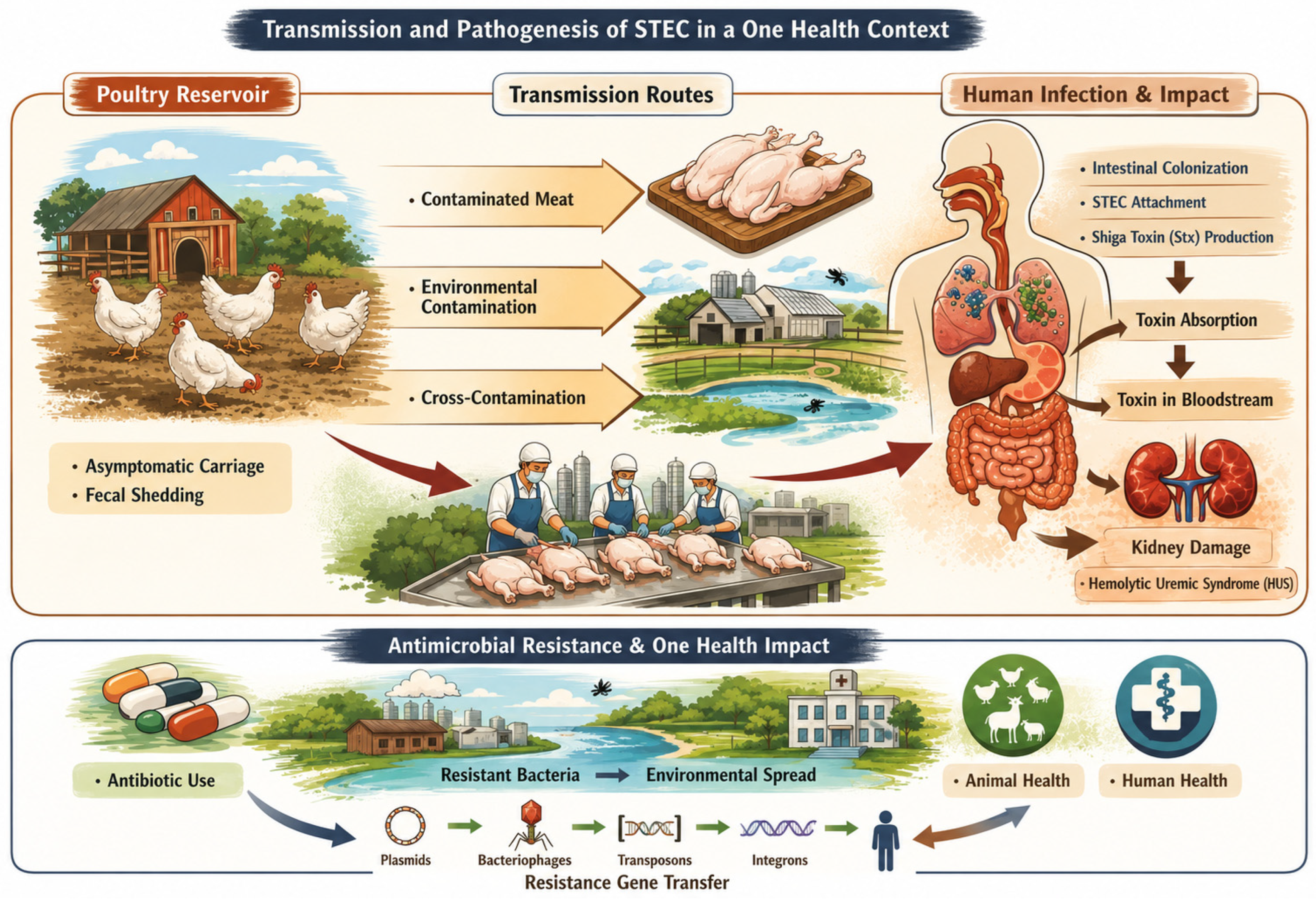
Overall, AMR in E. coli associated with poultry production represents a complex and evolving challenge with significant implications for public health. Addressing this issue requires a multidisciplinary approach that integrates advances in molecular biology, epidemiology, and farm management to develop sustainable strategies for controlling resistance and protecting both animal and human health. However, important uncertainties remain regarding the relative contribution of poultry production systems to the global burden of antimicrobial-resistant infections in humans. An overview of STEC transmission, pathogenesis, and AMR in poultry production in a One Health context is provided in Figure 2.

5. Prevention and Control Strategies

Effective prevention and control of E. coli in poultry production systems requires a comprehensive, multi-level approach that addresses bacterial colonization at the farm level, limits contamination during processing, and reduces transmission along the food chain. Given the increasing concern regarding pathogenic and antimicrobial-resistant E. coli, including STEC, control strategies must integrate microbiological, environmental, and management-based interventions within a One Health framework.
At the farm level, biosecurity remains one of the most critical components for preventing the introduction and spread of E. coli within poultry flocks. Strict control of farm access, sanitation of equipment, and implementation of all-in/all-out production systems can significantly reduce pathogen transmission [63]. Effective litter management is particularly important, as poultry litter can serve as a reservoir for E. coli and other enteric pathogens. Regular litter replacement, proper moisture control, and adequate ventilation can limit bacterial survival and proliferation. In addition, ensuring the microbiological quality of feed and water is essential, as contaminated feed ingredients and drinking systems have been identified as major sources of pathogen introduction [38].
Nutritional strategies also play an important role in controlling E. coli colonization in poultry. The use of feed additives such as probiotics, prebiotics, organic acids, and phytogenic compounds has gained considerable attention as alternatives to antibiotic growth promoters. Probiotics can enhance gut health by promoting beneficial microbial populations and competitively excluding pathogenic bacteria, while prebiotics serve as substrates that support the growth of beneficial microbiota [64]. Organic acids, including formic and lactic acids, can reduce gut pH and inhibit the growth of pathogenic bacteria, whereas phytogenic compounds such as essential oils have demonstrated antimicrobial and anti-inflammatory properties [65]. These strategies contribute to improved gut integrity and reduced bacterial shedding, thereby lowering the risk of environmental contamination.
Vaccination represents another promising approach; however, its effectiveness remains constrained by the genetic diversity and antigenic variability of E. coli strains. Although vaccines targeting APEC are currently available and used in commercial poultry production systems, particularly in intensive broiler and layer operations, their effectiveness varies depending on strain diversity, antigenic variation, and differences in circulating field isolates [17]. Advances in vaccine development, including subunit vaccines and recombinant technologies, are being explored to enhance protective efficacy and broaden coverage against diverse E. coli strains. While specific vaccines targeting STEC in poultry are not yet widely implemented, the development of such strategies may contribute to reducing zoonotic risk in the future.
Bacteriophage therapy has emerged as an innovative and targeted approach for controlling bacterial pathogens in food animal production. Bacteriophages are viruses that specifically infect and lyse bacterial cells, offering a highly specific method for reducing pathogen populations without disrupting beneficial microbiota [66]. Studies have demonstrated the potential of bacteriophage applications to reduce E. coli colonization in poultry and to decrease bacterial loads on carcasses during processing. However, challenges related to phage stability, host specificity, and regulatory approval need to be addressed before widespread adoption.
Improving hygiene and sanitation during processing is equally critical for controlling E. coli contamination in poultry products. Slaughter and processing operations, particularly defeathering, evisceration, and chilling, represent key points where cross-contamination can occur [15]. Implementation of hazard analysis and critical control point (HACCP) systems, along with strict sanitation protocols for equipment and processing environments, can significantly reduce bacterial contamination. The use of antimicrobial interventions, such as organic acid rinses, chlorine-based disinfectants, and peracetic acid treatments, has been widely adopted to reduce microbial loads on poultry carcasses [40]. Although many of these interventions have primarily been evaluated against general bacterial contamination and indicator organisms, several studies have also demonstrated reductions in pathogenic E. coli and STEC-associated contamination under processing conditions. However, the effectiveness of these interventions may vary depending on treatment concentration, exposure time, processing environment, and the characteristics of the target strains [67,68].
Emerging post-harvest technologies offer additional opportunities for controlling E. coli in poultry products. These include antimicrobial packaging systems, bacteriocins, and cold plasma treatments, which have shown potential in reducing bacterial contamination and extending shelf life [69]. In addition, advances in nanotechnology-based antimicrobial coatings and encapsulated delivery systems used in poultry production and food processing applications are being explored to improve the stability, controlled release, and antimicrobial efficacy of bioactive compounds.
Environmental management is another critical component of control strategies. Poultry manure and wastewater can serve as reservoirs of pathogenic and antimicrobial-resistant bacteria, which may be disseminated into the environment if not properly managed [51]. Treatment methods such as composting and anaerobic digestion are commonly applied to poultry manure and litter, whereas chemical disinfection and wastewater treatment approaches are primarily used for contaminated processing water and liquid waste streams. These interventions can reduce bacterial loads and limit the environmental dissemination of antimicrobial-resistant bacteria and resistance genes. Proper handling and disposal of waste materials are essential to minimize environmental contamination and reduce the risk of transmission to other animals and humans.
From a public health perspective, consumer education and food handling practices play an important role in reducing the risk of infection. Proper cooking of poultry meat, avoidance of cross-contamination in kitchens, and adherence to hygiene practices can significantly reduce exposure to pathogenic E. coli [11]. Public awareness campaigns and food safety guidelines are, therefore, essential components of comprehensive control strategies.
The integration of these interventions within a One Health framework is essential for achieving sustainable control of E. coli in poultry production systems. Coordinated efforts involving veterinarians, microbiologists, food safety authorities, and public health professionals are required to address the complex interactions between animal, human, and environmental health. Advances in molecular surveillance, including WGS and metagenomics, provide valuable tools for monitoring pathogen dynamics and evaluating the effectiveness of control measures [30]. Overall, effective control of E. coli in poultry production requires a multi-hurdle approach that combines farm-level interventions, processing hygiene, environmental management, and consumer education. Continued research and innovation are needed to develop more targeted and sustainable strategies, particularly in the context of reducing AMR and minimizing zoonotic risks.

6. Knowledge Gaps and Future Research Directions

Despite significant advances in understanding the virulence mechanisms, epidemiology, and AMR of E. coli in poultry production systems, several important knowledge gaps remain. One of the major limitations is the incomplete understanding of the role of poultry as a reservoir of STEC and its contribution to human infections. Although STEC-associated virulence genes, including stx and eae, have been detected in poultry isolates, not all strains possess the full pathogenic potential required to cause severe human disease. Furthermore, variability in prevalence reports across studies may reflect differences in sampling strategies, diagnostic methodologies, geographic regions, and production systems rather than true epidemiological variation. These uncertainties complicate risk assessment and highlight the need for standardized surveillance frameworks and longitudinal farm-to-fork studies capable of clarifying transmission dynamics, host specificity, and public health relevance.
Although advances in WGS, metagenomics, and related genomic technologies have substantially improved characterization of poultry-associated E. coli, important uncertainties remain regarding how specific virulence and resistance profiles translate into pathogenicity, host adaptation, environmental persistence, and zoonotic risk. Future research should focus on integrating genomic, transcriptomic, and phenotypic approaches to better understand the ecological behavior of poultry-associated STEC, hybrid pathotypes, and antimicrobial-resistant strains. Additional studies are also needed to clarify the role of the poultry microbiome, environmental reservoirs, and horizontal gene transfer in the evolution and dissemination of virulence and resistance determinants.
The continued emergence of AMR further emphasizes the need for integrated One Health surveillance systems that combine veterinary, medical, food safety, and environmental data. Harmonized surveillance approaches, standardized methodologies, and improved data sharing across sectors will be essential for tracking pathogen movement and resistance dissemination across the food production continuum. In parallel, further research is required to evaluate the effectiveness of antimicrobial stewardship programs and to better understand the ecological drivers contributing to resistance persistence in poultry production environments.
Alternative intervention strategies, including probiotics, prebiotics, phytogenic compounds, bacteriophages, vaccination approaches, and microbiome modulation strategies, have shown promising results under experimental conditions; however, their long-term efficacy, scalability, economic feasibility, and regulatory acceptance under commercial production systems remain insufficiently validated. Future studies should focus on optimizing these interventions and integrating them into multi-hurdle control programs that combine farm management, processing hygiene, environmental control, and surveillance measures.
Technological innovations such as rapid diagnostic platforms, biosensors, artificial intelligence-assisted monitoring systems, and precision surveillance tools may further improve pathogen detection and food safety management in poultry production systems. Combined with advances in genomic epidemiology and coordinated One Health strategies, these approaches may contribute to the development of more effective and sustainable control measures for STEC and antimicrobial-resistant E. coli.
In summary, future research should integrate molecular, ecological, epidemiological, and technological approaches to define better the role of poultry in the epidemiology of STEC and antimicrobial-resistant E. coli. Addressing these gaps will be essential for improving food safety, reducing zoonotic risks, and developing evidence-based intervention strategies within sustainable poultry production systems.

7. Conclusions

E. coli remains a highly adaptable and diverse bacterial species with significant implications for both animal and human health. Although many strains exist as commensals, pathogenic variants, particularly STEC, pose a substantial risk due to their virulence potential and association with severe human disease. While ruminants are traditionally recognized as primary reservoirs, increasing evidence suggests that poultry production systems may contribute to the dissemination of pathogenic and antimicrobial-resistant E. coli along the food chain.
Despite substantial advances in understanding virulence mechanisms, epidemiology, and AMR, important uncertainties remain regarding the role of poultry as a reservoir of STEC and the extent of zoonotic transmission to humans. Variability in surveillance data, methodological differences across studies, and the widespread distribution of resistance genes across multiple reservoirs complicate the interpretation of current evidence. These limitations highlight the need for standardized, integrated approaches to better define transmission dynamics and public health relevance.
Effective control of E. coli in poultry production requires a comprehensive, multi-hurdle strategy that integrates farm-level biosecurity, alternative antimicrobial approaches, improved processing hygiene, and environmental management. Future efforts should prioritize integrated surveillance systems, genomic tracking of transmission pathways, and evaluation of intervention strategies across the production continuum. Advancing these efforts within a One Health framework will be essential for developing sustainable, evidence-based strategies to reduce AMR and mitigate foodborne disease risks associated with poultry production systems.

Author Contributions

A.F. solely conceived the study, conducted the literature review, analyzed and synthesized the findings, and wrote the initial draft. M.N. reviewed and edited the manuscript. All authors have read and agreed to the published version of the manuscript.

Funding

This research received no external funding.

Institutional Review Board Statement

Not applicable.

Informed Consent Statement

Not applicable.

Data Availability Statement

No new data were created or analyzed in this study.

Acknowledgments

The authors gratefully acknowledge the graduate course FDSC 7970 (Molecular Pathogenesis of Foodborne Pathogens), taught by Shabarinath Srikumar at Auburn University, which provided the initial motivation for preparing this review manuscript. Artificial intelligence-assisted software was used only for preliminary conceptual figure generation. All scientific content, interpretation, editing, and final manuscript preparation were critically reviewed and approved by the authors.

Conflicts of Interest

The authors have no competing interests to declare relevant to the content of this article.

References

  1. Sarowska, J.; Futoma-Koloch, B.; Jama-Kmiecik, A.; Frej-Madrzak, M.; Ksiazczyk, M.; Bugla-Ploskonska, G.; Choroszy-Krol, I. Virulence Factors, Prevalence and Potential Transmission of Extraintestinal Pathogenic Escherichia coli Isolated from Different Sources: Recent Reports. Gut Pathog. 2019, 11, 10. [Google Scholar] [CrossRef]
  2. Bélanger, L.; Garenaux, A.; Harel, J.; Boulianne, M.; Nadeau, E.; Dozois, C.M. Escherichia coli from Animal Reservoirs as a Potential Source of Human Extraintestinal Pathogenic E. coli. FEMS Immunol. Med. Microbiol. 2011, 62, 1–10. [Google Scholar] [CrossRef] [PubMed]
  3. Bélanger, A.; Sarker, P.K.; Bureau, D.P.; Chouinard, Y.; Vandenberg, G.W. Apparent Digestibility of Macronutrients and Fatty Acids from Microalgae (Schizochytrium sp.) Fed to Rainbow Trout (Oncorhynchus Mykiss): A Potential Candidate for Fish Oil Substitution. Anim. Open Access J. 2021, 11, 456. [Google Scholar] [CrossRef]
  4. Croxen, M.A.; Law, R.J.; Scholz, R.; Keeney, K.M.; Wlodarska, M.; Finlay, B.B. Recent Advances in Understanding Enteric Pathogenic Escherichia coli. Clin. Microbiol. Rev. 2013, 26, 822–880. [Google Scholar] [CrossRef]
  5. Melton-Celsa, A.R. Shiga Toxin (Stx) Classification, Structure, and Function. Microbiol. Spectr. 2014, 2, 10–1128. [Google Scholar] [CrossRef]
  6. Fatima, A.; Ali, S.; Raut, R. Comparative Analysis of Virulence Genes and Antimicrobial Resistance in Escherichia coli from Poultry Meat and Poultry Farm Environments in Pakistan. DNA 2025, 5, 42. [Google Scholar] [CrossRef]
  7. Mueller, M.; Rausch-Phung, E.A.; Tainter, C.R. Escherichia coli Infection. In StatPearls; StatPearls Publishing: Treasure Island, FL, USA, 2025. [Google Scholar]
  8. Bielaszewska, M.; Aldick, T.; Bauwens, A.; Karch, H. Hemolysin of Enterohemorrhagic Escherichia coli: Structure, Transport, Biological Activity and Putative Role in Virulence. Int. J. Med. Microbiol. 2014, 304, 521–529. [Google Scholar] [CrossRef]
  9. Stevens, M.P.; Frankel, G.M. The Locus of Enterocyte Effacement and Associated Virulence Factors of Enterohemorrhagic Escherichia coli. Microbiol. Spectr. 2014, 2, 97–130. [Google Scholar] [CrossRef] [PubMed]
  10. Nguyen, T.T.T.; Shahin, K.; Allan, B.; Sarfraz, M.; Wheler, C.; Gerdts, V.; Köster, W.; Dar, A. Enhancement of Protective Efficacy of Innate Immunostimulant Based Formulations against Yolk Sac Infection in Young Chicks. Poult. Sci. 2022, 101, 102119. [Google Scholar] [CrossRef]
  11. Bhaisare, D.B.; Thyagarajan, D.; Churchil, R.R.; Punniamurthy, N. Bacterial Pathogens in Chicken Meat. Int. J. Life Sci. Res. 2014, 2, 1–7. [Google Scholar]
  12. Kralik, G.; Kralik, Z.; Grčević, M.; Hanžek, D. Quality of Chicken Meat. In Animal Husbandry and Nutrition; IntechOpen: London, UK, 2018; p. 63. Available online: https://www.intechopen.com/chapters/58486 (accessed on 23 December 2025).
  13. Manyi-Loh, C.E.; Lues, R. A South African Perspective on the Microbiological and Chemical Quality of Meat: Plausible Public Health Implications. Microorganisms 2023, 11, 2484. [Google Scholar] [CrossRef]
  14. Wu, B.; Duan, H.; Qi, Q.; Cai, Y.; Zhong, Z.; Chai, T. Identifying Virulence Factor Genes in E. Coli in Animal Houses and Their Transmission to Outside Environments. J. Aerosol Sci. 2018, 117, 189–199. [Google Scholar] [CrossRef]
  15. Boubendir, S.; Arsenault, J.; Quessy, S.; Thibodeau, A.; Fravalo, P.; Thériault, W.P.; Fournaise, S.; Gaucher, M.-L. Salmonella Contamination of Broiler Chicken Carcasses at Critical Steps of the Slaughter Process and in the Environment of Two Slaughter Plants: Prevalence, Genetic Profiles, and Association with the Final Carcass Status. J. Food Prot. 2021, 84, 321–332. [Google Scholar] [CrossRef]
  16. Saraiva, M.d.M.S.; Lim, K.; do Monte, D.F.M.; Givisiez, P.E.N.; Alves, L.B.R.; de Freitas Neto, O.C.; Kariuki, S.; Júnior, A.B.; de Oliveira, C.J.B.; Gebreyes, W.A. Antimicrobial Resistance in the Globalized Food Chain: A One Health Perspective Applied to the Poultry Industry. Braz. J. Microbiol. 2021, 53, 465–486. [Google Scholar] [CrossRef] [PubMed]
  17. Mellata, M. Human and Avian Extraintestinal Pathogenic Escherichia coli: Infections, Zoonotic Risks, and Antibiotic Resistance Trends. Foodborne Pathog. Dis. 2013, 10, 916–932. [Google Scholar] [CrossRef] [PubMed]
  18. Van Boeckel, T.P.; Pires, J.; Silvester, R.; Zhao, C.; Song, J.; Criscuolo, N.G.; Gilbert, M.; Bonhoeffer, S.; Laxminarayan, R. Global Trends in Antimicrobial Resistance in Animals in Low- and Middle-Income Countries. Science 2019, 365, eaaw1944. [Google Scholar] [CrossRef]
  19. Bhushan, C.; Khurana, A.; Sinha, R.; Nagaraju, M. Antibiotic Resistance in Poultry Environment: Spread of Resistance from Poultry Farm to Agricultural Field. Cent. Sci. Environ. 2017, 36. Available online: https://cdn.cseindia.org/userfiles/report-antibiotic-resistance-poultry-environment.pdf (accessed on 23 December 2025).
  20. Aslam, B.; Khurshid, M.; Arshad, M.I.; Muzammil, S.; Rasool, M.; Yasmeen, N.; Shah, T.; Chaudhry, T.H.; Rasool, M.H.; Shahid, A.; et al. Antibiotic Resistance: One Health One World Outlook. Front. Cell. Infect. Microbiol. 2021, 11, 771510. [Google Scholar] [CrossRef]
  21. Dunislawska, A.; Pietrzak, E.; Bełdowska, A.; Siwek, M. Health in Poultry- Immunity and Microbiome with Regard to a Concept of One Health. Phys. Sci. Rev. 2024, 9, 477–495. [Google Scholar] [CrossRef]
  22. Ramos, S.; Silva, V.; Dapkevicius, M.d.L.E.; Caniça, M.; Tejedor-Junco, M.T.; Igrejas, G.; Poeta, P. Escherichia coli as Commensal and Pathogenic Bacteria among Food-Producing Animals: Health Implications of Extended Spectrum β-Lactamase (ESBL) Production. Animals 2020, 10, 2239. [Google Scholar] [CrossRef]
  23. Lee, K.-S.; Park, J.-Y.; Jeong, Y.-J.; Lee, M.-S. The Fatal Role of Enterohaemorrhagic Escherichia coli Shiga Toxin-Associated Extracellular Vesicles in Host Cells. J. Microbiol. 2023, 61, 715–727. [Google Scholar] [CrossRef] [PubMed]
  24. Melton-Celsa, A.; Mohawk, K.; Teel, L.; O’Brien, A. Pathogenesis of Shiga-Toxin Producing Escherichia coli. In Ricin and Shiga Toxins; Mantis, N., Ed.; Current Topics in Microbiology and Immunology; Springer: Berlin/Heidelberg, Germany, 2011; Volume 357, pp. 67–103. ISBN 978-3-642-27469-5. [Google Scholar]
  25. Yang, X.; Bai, X.; Zhang, J.; Sun, H.; Fu, S.; Fan, R.; He, X.; Scheutz, F.; Matussek, A.; Xiong, Y. Escherichia coli Strains Producing a Novel Shiga Toxin 2 Subtype Circulate in China. Int. J. Med. Microbiol. 2020, 310, 151377. [Google Scholar] [CrossRef]
  26. Nguyen, Y.; Sperandio, V. Enterohemorrhagic E. coli (EHEC) Pathogenesis. Front. Cell. Infect. Microbiol. 2012, 2, 90. [Google Scholar] [CrossRef] [PubMed]
  27. Pinaud, L.; Sansonetti, P.J.; Phalipon, A. Host Cell Targeting by Enteropathogenic Bacteria T3SS Effectors. Trends Microbiol. 2018, 26, 266–283. [Google Scholar] [CrossRef]
  28. Sokolovic, M.; Šimpraga, B.; Amšel-Zelenika, T.; Berendika, M.; Krstulović, F. Prevalence and Characterization of Shiga Toxin Producing Escherichia coli Isolated from Animal Feed in Croatia. Microorganisms 2022, 10, 1839. [Google Scholar] [CrossRef] [PubMed]
  29. Tsutsuki, H.; Zhang, T.; Yahiro, K.; Ono, K.; Fujiwara, Y.; Iyoda, S.; Wei, F.-Y.; Monde, K.; Seto, K.; Ohnishi, M.; et al. Subtilase Cytotoxin from Shiga-Toxigenic Escherichia coli Impairs the Inflammasome and Exacerbates Enteropathogenic Bacterial Infection. iScience 2022, 25, 104050. [Google Scholar] [CrossRef]
  30. Woyda, R.; Oladeinde, A.; Abdo, Z. Chicken Production and Human Clinical Escherichia coli Isolates Differ in Their Carriage of Antimicrobial Resistance and Virulence Factors. Appl. Environ. Microbiol. 2023, 89, e01167-22. [Google Scholar] [CrossRef]
  31. Gati, N.S.; Middendorf-Bauchart, B.; Bletz, S.; Dobrindt, U.; Mellmann, A. Origin and Evolution of Hybrid Shiga Toxin-Producing and Uropathogenic Escherichia coli Strains of Sequence Type 141. J. Clin. Microbiol. 2019, 58, e01309-19. [Google Scholar] [CrossRef]
  32. Saeed, M.A.; Asif, H.; Ehtisham-ul-Haque, S.; Khan, A.U.; Rehman, A.U.; Rehman, A.; Rafique, M.K.; Ahmed, I.; Qamar, M.F.; Tomaso, H.; et al. Detection and Risk Factor Analysis of Avian Colibacillosis Associated with Colistin-Resistant Escherichia coli and Klebsiella Pneumoniae. Front. Vet. Sci. 2025, 12, 1612542. [Google Scholar] [CrossRef]
  33. Kamal, O.; Kneuper, H.; Cogan, T.; Woodward, M.J. Avian Pathogenic Escherichia Coli: Advances in Pathogenesis, Diagnosis, and Control. Vet. Sci. 2025, 13, 19. [Google Scholar] [CrossRef]
  34. Logue, C.M.; Wannemuehler, Y.; Nicholson, B.A.; Doetkott, C.; Barbieri, N.L.; Nolan, L.K. Comparative Analysis of Phylogenetic Assignment of Human and Avian ExPEC and Fecal Commensal Escherichia coli Using the (Previous and Revised) Clermont Phylogenetic Typing Methods and Its Impact on Avian Pathogenic Escherichia coli (APEC) Classification. Front. Microbiol. 2017, 8, 283. [Google Scholar] [CrossRef]
  35. Nguyen, M.N.; Hoang, H.T.T.; Xavier, B.B.; Lammens, C.; Le, H.T.; Hoang, N.T.B.; Nguyen, S.T.; Pham, N.T.; Goossens, H.; Dang, A.D.; et al. Prospective One Health Genetic Surveillance in Vietnam Identifies Distinct blaCTX-M-Harbouring Escherichia coli in Food-Chain and Human-Derived Samples. Clin. Microbiol. Infect. 2021, 27, 1515.e1–1515.e8. [Google Scholar] [CrossRef]
  36. Kemmett, K.; Williams, N.J.; Chaloner, G.; Humphrey, S.; Wigley, P.; Humphrey, T. The Contribution of Systemic Escherichia coli Infection to the Early Mortalities of Commercial Broiler Chickens. Avian Pathol. 2014, 43, 37–42. [Google Scholar] [CrossRef] [PubMed]
  37. Sarnino, N.; Basak, S.; Collineau, L.; Merle, R. Pathways of Escherichia coli Transfer from Animal Manure: Risks and Mitigation in Agriculture. Front. Public Health 2025, 13, 1568621. [Google Scholar] [CrossRef] [PubMed]
  38. Miskiewicz, A.; Kowalczyk, P.; Oraibi, S.M.; Cybulska, K.; Misiewicz, A. Bird Feathers as Potential Sources of Pathogenic Microorganisms: A New Look at Old Diseases. Antonie Van Leeuwenhoek 2018, 111, 1493–1507. [Google Scholar] [CrossRef] [PubMed]
  39. Coyne, L.; Arief, R.; Benigno, C.; Giang, V.N.; Huong, L.Q.; Jeamsripong, S.; Kalpravidh, W.; McGrane, J.; Padungtod, P.; Patrick, I.; et al. Characterizing Antimicrobial Use in the Livestock Sector in Three South East Asian Countries (Indonesia, Thailand, and Vietnam). Antibiotics 2019, 8, 33. [Google Scholar] [CrossRef]
  40. Ghasemian, S.O.; Fardaei, A.; Gharib Mombeni, E. Effects of Different Slaughterhouse Water Chiller Temperatures on the Microbial Quality of Poultry Carcasses. J. Zoonotic Dis. 2024, 8, 566–572. [Google Scholar]
  41. Projahn, M.; Pacholewicz, E.; Becker, E.; Correia-Carreira, G.; Bandick, N.; Kaesbohrer, A. Reviewing Interventions against Enterobacteriaceae in Broiler Processing: Using Old Techniques for Meeting the New Challenges of ESBL E. coli? BioMed Res. Int. 2018, 2018, 7309346. [Google Scholar] [CrossRef]
  42. Mak, P.H.W.; Rehman, M.A.; Kiarie, E.G.; Topp, E.; Diarra, M.S. Production Systems and Important Antimicrobial Resistant-Pathogenic Bacteria in Poultry: A Review. J. Anim. Sci. Biotechnol. 2022, 13, 148. [Google Scholar] [CrossRef]
  43. Conceição, S.; Queiroga, M.C.; Laranjo, M. Antimicrobial Resistance in Bacteria from Meat and Meat Products: A One Health Perspective. Microorganisms 2023, 11, 2581. [Google Scholar] [CrossRef]
  44. Agusi, E.R.; Kabantiyok, D.; Mkpuma, N.; Atai, R.B.; Okongwu-Ejike, C.; Bakare, E.L.; Budaye, J.; Sule, K.G.; Rindaps, R.J.; James, G.K.; et al. Prevalence of Multidrug-Resistant Escherichia coli Isolates and Virulence Gene Expression in Poultry Farms in Jos, Nigeria. Front. Microbiol. 2024, 15, 1298582. [Google Scholar] [CrossRef]
  45. Lazarus, B.; Paterson, D.L.; Mollinger, J.L.; Rogers, B.A. Do Human Extraintestinal Escherichia coli Infections Resistant to Expanded-Spectrum Cephalosporins Originate from Food-Producing Animals? A Systematic Review. Clin. Infect. Dis. 2015, 60, 439–452. [Google Scholar] [CrossRef]
  46. Zeinali, T.; Arefinejad, A.; Kabiri-rad, H.; Khodadadi, M. Detection of Virulence Genes (Stx, Eae and ehxA) and Serogroup in Escherichia coli Isolates Collected from Chicken in East of Iran. Food Humanit. 2025, 5, 100833. [Google Scholar] [CrossRef]
  47. European Centre for Disease Prevention and Control. Shiga Toxin-Producing Escherichia coli (STEC) Infection—Annual Epidemiological Report for 2019. In ECDC. Annual Epidemiological Report for 2019; ECDC: Stockholm, Sweden, 2021; Available online: https://www.ecdc.europa.eu/en/publications-data/shiga-toxin-producing-escherichia-coli-stec-infection-annual-epidemiological (accessed on 23 December 2025).
  48. Alharbi, M.G.; Al-Hindi, R.R.; Esmael, A.; Alotibi, I.A.; Azhari, S.A.; Alseghayer, M.S.; Teklemariam, A.D. The “Big Six”: Hidden Emerging Foodborne Bacterial Pathogens. Trop. Med. Infect. Dis. 2022, 7, 356. [Google Scholar] [CrossRef]
  49. UKHSA Shiga Toxin-Producing Escherichia coli (STEC) Data: 2024—UK Health Security Agency (UKHSA). Available online: https://www.gov.uk/government/publications/escherichia-coli-e-coli-o157-annual-totals/shiga-toxin-producing-escherichia-coli-stec-data-2024 (accessed on 13 May 2026).
  50. Mwansa, M.; Mukuma, M.; Mulilo, E.; Kwenda, G.; Mainda, G.; Yamba, K.; Bumbangi, F.N.; Muligisa-Muonga, E.; Phiri, N.; Silwamba, I.; et al. Determination of Antimicrobial Resistance Patterns of Escherichia coli Isolates from Farm Workers in Broiler Poultry Production and Assessment of Antibiotic Resistance Awareness Levels among Poultry Farmers in Lusaka, Zambia. Front. Public Health 2023, 10, 998860. [Google Scholar] [CrossRef]
  51. Vidic, J.; Manzano, M.; Raj, V.S.; Pandey, R.P.; Chang, C.-M. Comparative Meta-Analysis of Antimicrobial Resistance from Different Food Sources along with One Health Approach in Italy and Thailand. One Health 2023, 16, 100477. [Google Scholar]
  52. Martinez, J.L. General Principles of Antibiotic Resistance in Bacteria. Drug Discov. Today Technol. 2014, 11, 33–39. [Google Scholar] [CrossRef]
  53. Mathers, A.J.; Peirano, G.; Pitout, J.D.D. The Role of Epidemic Resistance Plasmids and International High-Risk Clones in the Spread of Multidrug-Resistant Enterobacteriaceae. Clin. Microbiol. Rev. 2015, 28, 565–591. [Google Scholar] [CrossRef] [PubMed]
  54. WHO. Antimicrobial Resistance. Available online: https://www.who.int/news-room/fact-sheets/detail/antimicrobial-resistance (accessed on 24 December 2025).
  55. Ho, C.S.; Wong, C.T.H.; Aung, T.T.; Lakshminarayanan, R.; Mehta, J.S.; Rauz, S.; McNally, A.; Kintses, B.; Peacock, S.J.; de la Fuente-Nunez, C.; et al. Antimicrobial Resistance: A Concise Update. Lancet Microbe 2025, 6, 100947. [Google Scholar] [CrossRef] [PubMed]
  56. Nazir, A.; Nazir, A.; Zuhair, V.; Aman, S.; Sadiq, S.U.R.; Hasan, A.H.; Tariq, M.; Rehman, L.U.; Mustapha, M.J.; Bulimbe, D.B. The Global Challenge of Antimicrobial Resistance: Mechanisms, Case Studies, and Mitigation Approaches. Health Sci. Rep. 2025, 8, e71077. [Google Scholar] [CrossRef] [PubMed]
  57. Tokuda, M.; Shintani, M. Microbial Evolution through Horizontal Gene Transfer by Mobile Genetic Elements. Microb. Biotechnol. 2024, 17, e14408. [Google Scholar] [CrossRef]
  58. Mondal, A.H.; Khare, K.; Saxena, P.; Debnath, P.; Mukhopadhyay, K.; Yadav, D. A Review on Colistin Resistance: An Antibiotic of Last Resort. Microorganisms 2024, 12, 772. [Google Scholar] [CrossRef]
  59. Kherroubi, L.; Bacon, J.; Rahman, K.M. Navigating Fluoroquinolone Resistance in Gram-Negative Bacteria: A Comprehensive Evaluation. JAC—Antimicrob. Resist. 2024, 6, dlae127. [Google Scholar] [CrossRef] [PubMed]
  60. Beheshti, M.; Ardebili, A.; Beheshti, F.; Lari, A.R.; Siyadatpanah, A.; Pournajaf, A.; Gautam, D.; Dolma, K.G.; Nissapatorn, V. Tetracycline Resistance Mediated by Tet Efflux Pumps in Clinical Isolates of Acinetobacter Baumannii. Rev. Inst. Med. Trop. São Paulo 2020, 62, e88. [Google Scholar] [CrossRef]
  61. Marshall, B.M.; Levy, S.B. Food Animals and Antimicrobials: Impacts on Human Health. Clin. Microbiol. Rev. 2011, 24, 718–733. [Google Scholar] [CrossRef]
  62. WHO. Integrated Surveillance of Antimicrobial Resistance in Foodborne Bacteria: Application of a One Health Approach: Guidance from the WHO Advisory Group on Integrated Surveillanec of Antimicrobial Resistance (AGISAR). Available online: https://www.who.int/publications/i/item/9789241512411 (accessed on 23 December 2025).
  63. Kovács, L.; Domaföldi, G.; Bertram, P.-C.; Farkas, M.; Könyves, L.P. Biosecurity Implications, Transmission Routes and Modes of Economically Important Diseases in Domestic Fowl and Turkey. Vet. Sci. 2025, 12, 391. [Google Scholar] [CrossRef]
  64. Naeem, M.; Bourassa, D. Probiotics in Poultry: Unlocking Productivity Through Microbiome Modulation and Gut Health. Microorganisms 2025, 13, 257. [Google Scholar] [CrossRef]
  65. Naeem, M.; Bourassa, D. Optimizing Poultry Nutrition to Combat Salmonella: Insights from the Literature. Microorganisms 2024, 12, 2612. [Google Scholar] [CrossRef] [PubMed]
  66. Faruk, O.; Jewel, Z.A.; Bairagi, S.; Rasheduzzaman, M.; Bagchi, H.; Tuha, A.S.M.; Hossain, I.; Bala, A.; Ali, S. Phage Treatment of Multidrug-Resistant Bacterial Infections in Humans, Animals, and Plants: The Current Status and Future Prospects. Infect. Med. 2025, 4, 100168. [Google Scholar] [CrossRef]
  67. Ramirez-Hernandez, A.; Brashears, M.M.; Sanchez-Plata, M.X. Efficacy of Lactic Acid, Lactic Acid–Acetic Acid Blends, and Peracetic Acid to Reduce Salmonella on Chicken Parts under Simulated Commercial Processing Conditions. J. Food Prot. 2018, 81, 17–24. [Google Scholar] [CrossRef] [PubMed]
  68. Rincon, A.; Kumar, S.; Ritz, C.W.; Jackson, J.S.; Jackson, C.R.; Frye, J.G.; Hinton, A.; Singh, M.; Cosby, D.E.; Cox, N.A.; et al. Antimicrobial Interventions to Reduce Salmonella and Campylobacter Populations and Improve Shelf Life of Quail Carcasses. Poult. Sci. 2020, 99, 5977–5982. [Google Scholar] [CrossRef] [PubMed]
  69. Zhuang, H.; Rothrock, M.J.; Lawrence, K.C.; Gamble, G.R.; Bowker, B.C. Effects of In-Package Cold Plasma Treatment on Poultry Breast Meat Packaged in High CO2 Atmosphere. Poult. Sci. 2024, 103, 104085. [Google Scholar] [CrossRef] [PubMed]
Figure 1. Mechanism of action of STEC in the host cells. STEC adheres to intestinal epithelial cells and releases Shiga toxins (Stx1 and Stx2), which bind to globotriaosylceramide (Gb3) receptors on host cells. Following endocytosis and intracellular trafficking, the toxin inhibits protein synthesis by inactivating ribosomal RNA, leading to cell death and inflammation. Systemic dissemination of the toxin can result in endothelial damage and the development of hemolytic uremic syndrome (HUS).
Bacteria 05 00031 g001
Figure 2. Overview of STEC transmission, pathogenesis, and AMR in poultry production in a One Health context. Poultry serve as asymptomatic reservoirs of STEC, facilitating environmental contamination and human transmission via contaminated meat, processing, and cross-contamination. In humans, STEC colonizes the intestine, produces Shiga toxins, and may cause systemic complications such as hemolytic uremic syndrome (HUS). Antimicrobial use in poultry selects for resistant E. coli, which can disseminate across animal, environmental, and human interfaces, emphasizing the importance of a One Health framework.
Bacteria 05 00031 g002
Table 1. Reported STEC serotypes, virulence determinants, and public health relevance in poultry-associated isolates.
STEC Serotype/SerogroupPoultry-Associated SourceCommon Virulence Determinants ReportedPotential Public Health RelevanceRepresentative References
O157:H7Broiler chickens, poultry meat, processing environmentsstx1, stx2, eae, ehxAAssociated with hemorrhagic colitis and hemolytic uremic syndrome (HUS); considered one of the most clinically significant STEC serotypes[35,47]
O26Retail poultry meat and poultry fecesstx1, stx2, eaeFrequently associated with non-O157 STEC infections and foodborne outbreaks in humans[47]
O45Poultry meat and environmental samplesstx1, eaeEmerging non-O157 STEC serogroup linked to gastrointestinal illness[47]
O103Poultry-associated environmental isolatesstx1, eaeCommonly associated with diarrheal disease and sporadic human infections[47]
O111Poultry processing environmentsstx1, stx2, eaeAssociated with severe human disease outbreaks and HUS cases[47]
O121Poultry meat samplesstx2, eaeRecognized as an important non-O157 STEC linked to foodborne illness[47]
O145Poultry-associated isolatesstx2, eae, ehxAAssociated with severe STEC infections and outbreak potential[47]
Non-typeable STEC isolatesPoultry litter, feces, retail meatstx1 and/or stx2; variable eae presencePotential zoonotic relevance remains incompletely understood due to variability in virulence profiles[30,35]
Disclaimer/Publisher’s Note: The statements, opinions and data contained in all publications are solely those of the individual author(s) and contributor(s) and not of MDPI and/or the editor(s). MDPI and/or the editor(s) disclaim responsibility for any injury to people or property resulting from any ideas, methods, instructions or products referred to in the content.