
Article

The Protective Role of Sodium Nitroprusside in Alleviating Salt Stress During Germination and Seedling Establishment of Thai Eggplant

by
Siwakorn Ponkham
and
Kanogwan Seraypheap
*
Center of Excellence in Environment and Plant Physiology, Department of Botany, Faculty of Science, Chulalongkorn University, Bangkok 10330, Thailand
*
Author to whom correspondence should be addressed.
Submission received: 28 October 2025 / Revised: 9 December 2025 / Accepted: 4 January 2026 / Published: 7 January 2026

Abstract

Thai eggplant (Solanum melongena L. cv. Chao Phraya), a widely cultivated vegetable with increasing global demand, is highly susceptible to salinity stress, which can severely impair seed germination and early seedling development. This study investigated the effects of sodium nitroprusside (SNP), a nitric oxide (NO) donor, on seed germination and seedling growth under salt stress conditions. Seeds were pre-treated with SNP at concentrations of 0, 0.05, 0.1, and 0.2 mM for 24 h and subsequently germinated under saline conditions with NaCl solutions (0, 100, and 200 mM). SNP pre-treatment, particularly at 0.05 and 0.1 mM, significantly improved germination percentage and germination rate in seeds exposed to 200 mM NaCl compared to untreated controls. Increased NaCl concentrations induced oxidative stress in seedlings, as evidenced by elevated hydrogen peroxide (H2O2) accumulation, which in turn caused lipid peroxidation, reflected by higher malondialdehyde (MDA) levels. Salt stress significantly increased ascorbate peroxidase (APX) activity, whereas catalase (CAT) activity showed no significant change across treatments. Correlation analysis revealed that APX activity was positively correlated with oxidative stress markers (H2O2) and delayed germination (T50/MGT), whereas CAT activity showed no significant correlation with these parameters. In contrast, elevated APX activity was strongly and negatively correlated with overall seedling growth and vigor (SVI/GI), indicating that the underlying stress condition had a detrimental effect on plant performance. Overall, SNP pre-treatment, particularly at 0.05 and 0.1 mM, significantly enhanced salt tolerance by promoting germination (increasing GP and reducing T50/MGT) and improving seedling growth (SL and RL). This protective effect is associated with improved redox regulation and partial mitigation of oxidative damage, as reflected by changes in H2O2, MDA, and APX; however, excessive SNP concentrations may exert phytotoxic effects, highlighting the importance of optimal dosing.

1. Introduction

In most agricultural areas, climate change and unstable weather patterns have created unsuitable conditions for plant growth and production. Among various abiotic stresses, soil salinity stands out as a persistent and significant agricultural problem, arising from both natural processes and unsustainable human activities [1]. While salinity can occur naturally, its prevalence has been significantly accelerated by improper agricultural management, which leads to the accumulation of soluble salts in soil and groundwater [2,3]. This issue is particularly acute in coastal regions, where irrigation water from sources like underground aquifers is often contaminated by saltwater intrusion. Ultimately, the combination of utilizing saline irrigation water with inadequate soil drainage is a primary driver of this land degradation, leading to a progressive buildup of salt in the topsoil [2].
Salt stress severely affects plant growth and development by limiting water uptake and inducing ionic toxicity within plant cells [4]. These effects are particularly detrimental during the critical stages of seed germination and early seedling growth, a challenge frequently encountered in many vegetable crops [5,6,7,8]. Eggplant (Solanum melongena L.), a major vegetable crop worldwide, is moderately sensitive to soil salinity [9], which leads to physiological drought, nutrient imbalance and ion toxicity resulting from salt accumulation [10].
Salt-affected soil creates a hostile environment for young plants by inducing both osmotic stress, which limits water uptake by the roots, and ionic toxicity, caused by the excessive accumulation of sodium (Na+) and chloride (Cl) ions [11]. These combined stresses interfere with vital metabolic and cellular functions, resulting in delayed or inhibited seed germination, restricted root and shoot development, and reduced photosynthetic efficiency. It has been shown that the overproduction of reactive oxygen species (ROS) during salt stress causes oxidative damage to vital cellular components [4,12]. This period of development is exceptionally sensitive, and failure to establish healthy seedlings can severely limit plant populations and ultimately reduce crop yields. Therefore, developing strategies to mitigate salinity stress during these initial stages is essential for protecting seedlings and enhancing their metabolic capacity to ensure productive and sustainable agriculture.
Sodium nitroprusside (SNP), a nitric oxide (NO) donor, is a reactive nitrogen species. Its well-known role in plant signaling and its association with plant growth and development processes are now recognized. NO has been confirmed as a signaling molecule in biotic and abiotic stress responses [13,14]. SNP can alleviate the injury of germinated seeds under stress conditions such as salinity, water deficit, heat, and heavy metals [15]. It has been reported that NO can trigger the activity of antioxidant enzymes, which can detoxify the reactive oxygen species (ROS) that occur during seedling growth under stress conditions [16]. Exogenous NO treatment was found to protect plant cells from oxidative stress caused by various stresses by detoxifying superoxide (O2•−) to H2O2 and O2 [17]. The activities of H2O2-scavenging enzymes, including ascorbate peroxidase (APX) and catalase (CAT), were also increased, resulting in a lower accumulation of H2O2 in root mitochondria under stress conditions. Likewise, several studies have reported that SNP pre-soaking increased non-enzymatic contents and activities of various antioxidant enzymes, improving membrane integrity under stress conditions [18,19]. These studies suggest that enhanced enzymatic and metabolic activities that induced stress tolerance in germinated seeds grown under various stress conditions are likely promoted via NO signaling.
Although the protective role of NO in mitigating salt stress in eggplant (Solanum melongena L.) seedlings has been reported, showing that NO supplied as SNP acts as a signaling molecule to alleviate stress by significantly reducing lipid peroxidation (MDA), upregulating antioxidant enzyme activities (CAT and SOD) [20], and improving photosynthetic performance [21], the effects of SNP on seed germination and the earliest stages of seedling establishment under salt stress remain largely unexplored. Based on the protective role of SNP in mitigating stress-induced damage in plants, it was hypothesized that SNP application could enhance the tolerance of Thai eggplant to salt stress by activating multiple stress-responsive pathways, including the antioxidant defense system. Therefore, this study aimed to evaluate the effects of SNP pre-treatment on seed germination and seedling growth of Thai eggplant under salt stress conditions. The optimal concentration of SNP to increase aged seed viability, vigor and stress tolerance of seedlings was determined. The findings of our research could be applied to alleviate the problem of eggplant seed germination under salt stress conditions.

2. Materials and Methods

2.1. Plant Materials and Treatment

Thai eggplant (Solanum melongena L. cv. Chao Phraya) seeds were obtained from Kamlai Tong Agriculture Co. Ltd., Bangkok, Thailand, and stored at 4 °C in the dark prior to use. Seeds were soaked in different concentrations of SNP (0, 0.05, 0.1, and 0.2 mM) for 24 h in the dark at 25 °C. The 24 h pre-treatment duration was selected based on preliminary trials and previous reports demonstrating effective NO uptake during this period without inducing phytotoxicity. After soaking, seeds were rinsed three times with distilled water and evenly placed in Petri dishes lined with filter paper saturated with NaCl solutions at 0, 100, and 200 mM. The dishes were incubated at 25 ± 1 °C, which is considered the optimal temperature for eggplant seed germination, under 80–90% relative humidity with a 12 h light/12 h dark photoperiod. The experiment was arranged in a completely randomized design (CRD) with five replicates per treatment, and each replicate consisted of 50 seeds.

2.2. Germination Characteristics

Germination was recorded daily for ten days. Seeds were considered germinated when the radicle length exceeded 2 mm [22]. Germination percentage was calculated on the tenth day.
Time to 50% of germination (T50) was calculated according to Seguí et al. [20] with some modifications:
T50 = ti + [(N/2 − Ni)/(Nj − Ni) × (tj − ti)]
where T50 = the time required for 50% of the total seeds to germinate, ti = the last observation time before 50% of the seeds germinate, tj = the first observation time after 50% of the seeds germinate, Ni = number of seeds at time ti, Nj = number of seeds at time tj, and N = total number of seeds used in the experiment.
Mean germination time (MGT), an index of the average germination speed, was calculated according to the equation of Ellis and Roberts [21]:
MGT = Σ (ni × di)/N
where ni represents the number of seeds germinating on day di, and N is the final count of germinated seeds at the termination of the test.
The coefficient of velocity of germination (CVG) is calculated based on the number of seeds that germinate each day over the course of a germination trial. The formula is [22]:
CVG = (∑ Ni/∑ (Ni × Ti)) × 100
where Ni is the number of seeds that germinated on day i, and Ti is the number of days from the start of the experiment to day i.
The seedling vigor index (SVI) was calculated following the method of Abdul-Baki and Anderson [23] using formulas:
SVI = Germination percentage × (mean shoot length + mean root length)
The germination index (GI) was calculated to evaluate the rate and uniformity of germination. The index was computed using the following formula [24]:
GI = ∑ (Ni/Ti)
where Ni is the number of seeds that germinated on day i, and T1 is the corresponding day I number from the start of the test.

2.3. Seedling Growth Measurement

Growth of the seedlings was analyzed in terms of the following morphological parameters: fresh weight (FW) of radicles and plumules and length of radicles and plumules. Shoot and root lengths of Thai eggplant seedlings were measured on a millimeter scale at the end of day 10. The fresh weights of separated shoots and roots under each condition were measured.

2.4. Determination of Hydrogen Peroxide (H2O2) Content

H2O2 content was determined following a modified method of Junglee [25]. Entire Thai eggplant seedlings (0.2 g) were ground in liquid nitrogen. Then, 1 mL of homogenization solution containing 50 mM potassium phosphate buffer (pH 7.0), 0.1% (w/v) trichloroacetic acid (TCA), and 1 M potassium iodide was added. The mixture was centrifuged at 12,000× g for 20 min at 4 °C, and the resulting supernatant was transferred to a UV microplate. Samples were incubated in the dark for 20 min, after which absorbance was recorded at 350 nm. H2O2 content was determined using a standard H2O2 calibration curve and expressed as µmol·g−1.

2.5. Measurement of Malondialdehyde (MDA) Content

MDA content was analyzed following a modified method of Ummarat [26]. Entire seedlings were ground in liquid nitrogen, then vortexed with 1 mL of 5% (w/v) TCA. The mixture was centrifuged at 12,000× g for 20 min at 4 °C. Then, 0.5 mL of the supernatant was transferred to a new microcentrifuge tube and vortexed with 0.5 mL of 15% TCA containing 0.5% (w/v) thiobarbituric acid. After mixing thoroughly, the solution was heated at 95 °C for 30 min. The reaction was terminated by placing the tube in an ice bath, followed by centrifugation at 12,000× g for 10 min. Absorbance readings were taken at 532 nm and 600 nm. The MDA concentration was determined using the equation:
MDA content (nmol g−1 fresh weight) = 16.1 × (OD532 − OD600)/W
where W is the fresh weight.

2.6. Catalase (CAT) and Ascorbate Peroxidase (APX) Activities

CAT and APX activities were analyzed using modified methods of Song and Yu [27,28]. Plant samples (0.2 g) were ground in a pestle with liquid nitrogen, then homogenized in an extraction buffer comprising 50 mM potassium phosphate buffer (pH 7.0) and 1% (w/v) polyvinylpyrrolidone (PVP). The homogenate was centrifuged at 12,000× g for 20 min at 4 °C.
CAT activities were analyzed using reaction mixture of 50 mM potassium phosphate buffer (pH 7.0), 5 mM H2O2, and the supernatant. CAT activities were measured using the molar extinction coefficient at 240 (43.6 mM−1 cm−1).
APX activity was assayed in a reaction mixture containing 50 mM potassium phosphate buffer (pH 7.0), 10 mM EDTA, 20 mM ascorbic acid, 5 mM H2O2, and the enzyme extract. The decrease in absorbance was recorded at 290 nm using a molar extinction coefficient of 2.8 mM−1 cm−1. Both enzyme activities were expressed as units per milligram of protein (U mg−1).

2.7. Statistical Analysis

The data was subjected to statistical analysis using one-way ANOVA. Mean separation among treatments was performed using Duncan’s multiple range test at a significance level of p < 0.05. All statistical analyses were conducted using R software Version 2025.09.1+401 (2025.09.1+401) with the ‘agricolae’ package. Principal component analysis (PCA) was performed using the ‘prcomp’ function from the ‘stats’ package, and the results were visualized using the ‘factoextra’ package. A heatmap with hierarchical clustering was generated using the ‘pheatmap’ package. The Pearson correlation matrix was calculated and visualized as a correlogram using the ‘corrplot’ package. All data manipulation and preparation were carried out using the ‘tidyverse’ suite of packages.

3. Results

3.1. Effect of SNP on Thai Eggplant Seed Germination Under Salt Stress

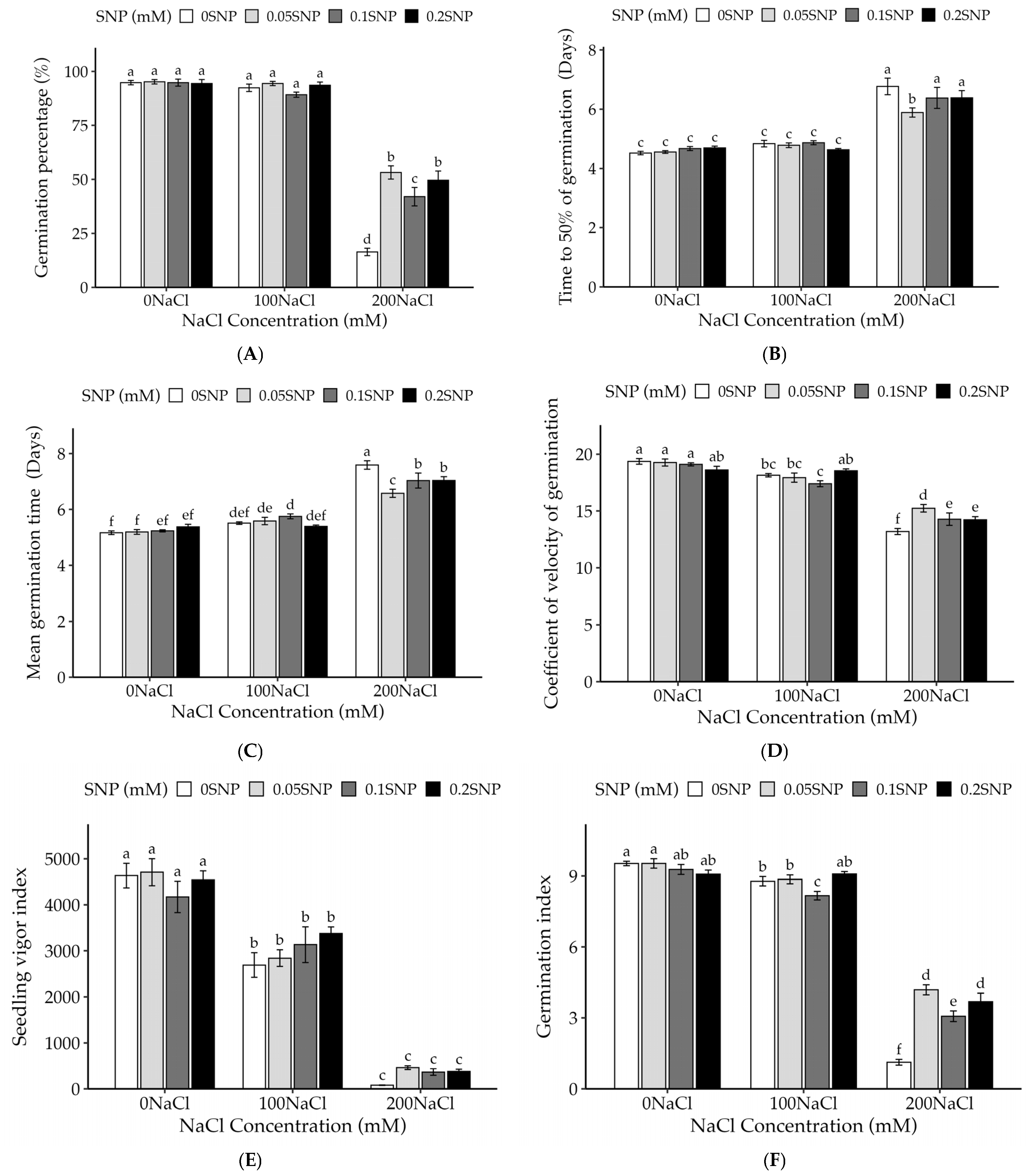
The results showed that high salt stress (200 mM NaCl) significantly reduced the germination percentage of Thai eggplant seeds compared to control and moderate salt (100 mM NaCl) treatments (Figure 1A). The application of 0.05 mM SNP increased the germination percentage of eggplant seeds under the high salt stress condition (200 mM NaCl). The 0.2 mM SNP treatment improved germination less effectively than the lower concentrations.
Salt stress significantly delayed the eggplant seed germination, as shown in Figure 1B. In the absence of salt, T50 increased with 0.1 and 0.2 mM SNP treatments. However, under high (200 mM NaCl) salt stress, SNP application significantly shortened this delay.
Similarly, salt stress increased the mean germination time (MGT), with the longest time recorded at 200 mM NaCl (Figure 1C). Under this high salt condition, the application of SNP, particularly at 0.05 and 0.1 mM, significantly reduced the MGT. Conversely, the coefficient of velocity of germination (CVG) was significantly reduced by increasing salinity levels (Figure 1D). SNP pre-treatment was found to improve the CVG under both 100 and 200 mM NaCl stress, indicating a faster germination speed.
The germination index (GI) and seedling vigor index (SVI) were also evaluated to determine the overall success of germination and seedling establishment. Both indices were severely reduced by salt stress, with the lowest values observed at 200 mM NaCl (Figure 1E,F). However, the application of SNP effectively mitigated this negative impact. Under high salt stress, pre-treatment with 0.05 and 0.1 mM SNP resulted in a significant increase in both GI and SVI compared to the salt-stressed control.

3.2. Effect of SNP on Growth of Salt-Stressed Thai Eggplant Seedlings

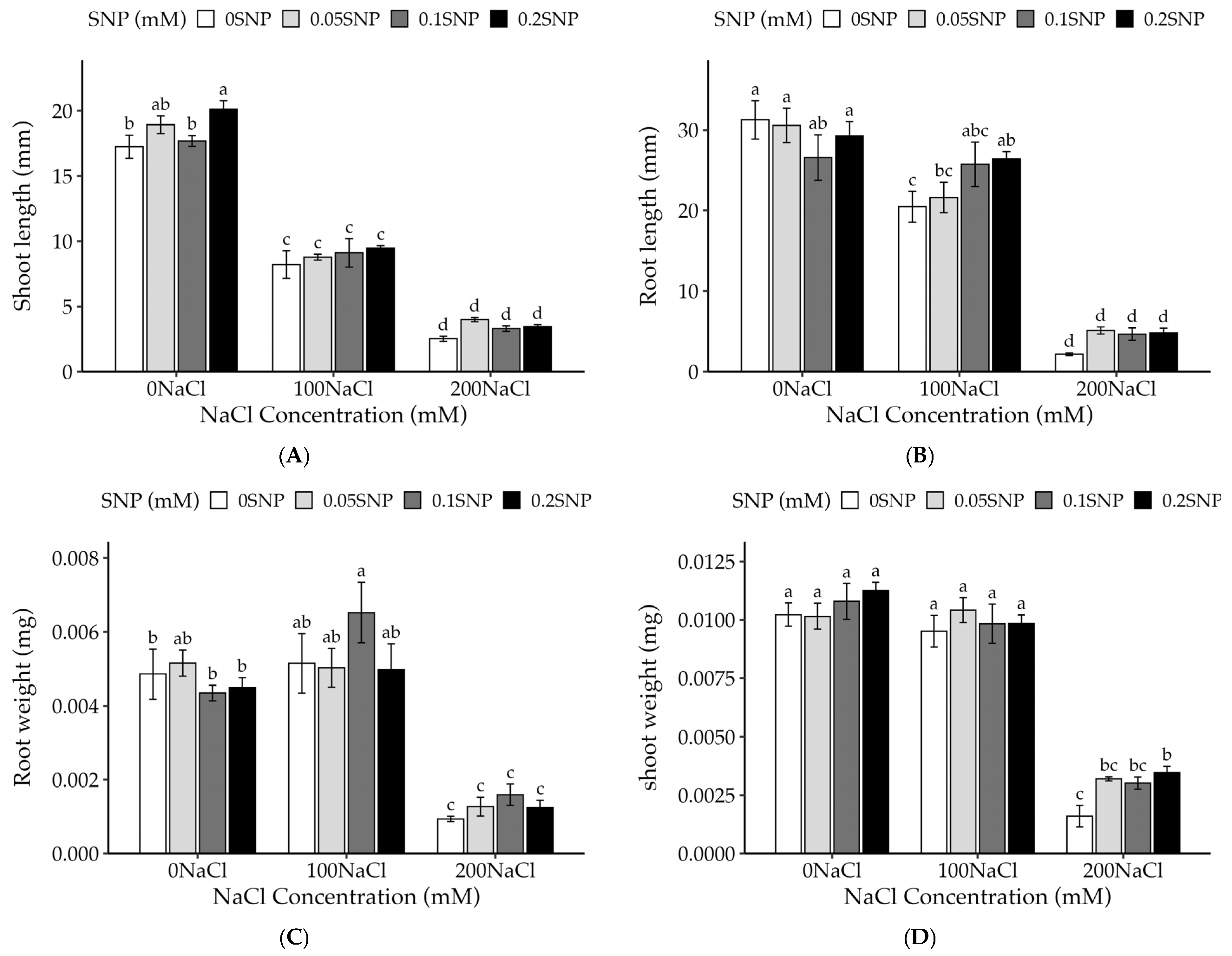
As demonstrated in Figure 2, salt stress severely stunted eggplant seedling growth. Shoot lengths were significantly reduced in both 100 and 200 mM NaCl treatments. SNP promoted shoot elongation under stress. At 100 mM NaCl, 0.1 and 0.2 mM SNP increased shoot length from about 8 mm to over 10 mm. The SNP effect was more pronounced under high stress (200 mM NaCl), where SNP application increased shoot length by 50–100% compared to the stressed control (Figure 2A).
Root length of eggplant seedlings was also significantly inhibited by salt stress. The mitigating effect of SNP on root length was less pronounced than on shoot length. However, at 200 mM NaCl, where roots were barely growing, the SNP treatments showed a small but visible increase in length compared to the control (Figure 2B).
Eggplant shoot biomass showed a similar negative trend as shoot and root length under salt stress conditions. SNP significantly enhances biomass accumulation under salt stress conditions. At 200 mM NaCl, 0.05 mM SNP treatment increases shoot weight by 100% (Figure 2C).
Similarly, eggplant root biomass was extremely sensitive to high salt stress conditions (200 mM NaCl). It was observed that SNP treatment consistently exhibited a positive effect. At 100 mM NaCl, 0.05 mM SNP increased root weight. At the highest stress level (200 mM NaCl), SNP treatments resulted in slightly higher root weight than the stressed control, indicating a partial rescue of root biomass (Figure 2D).

3.3. Effect of SNP on Malondialdehyde (MDA) Content in Salt-Stressed Thai Eggplant Seedlings

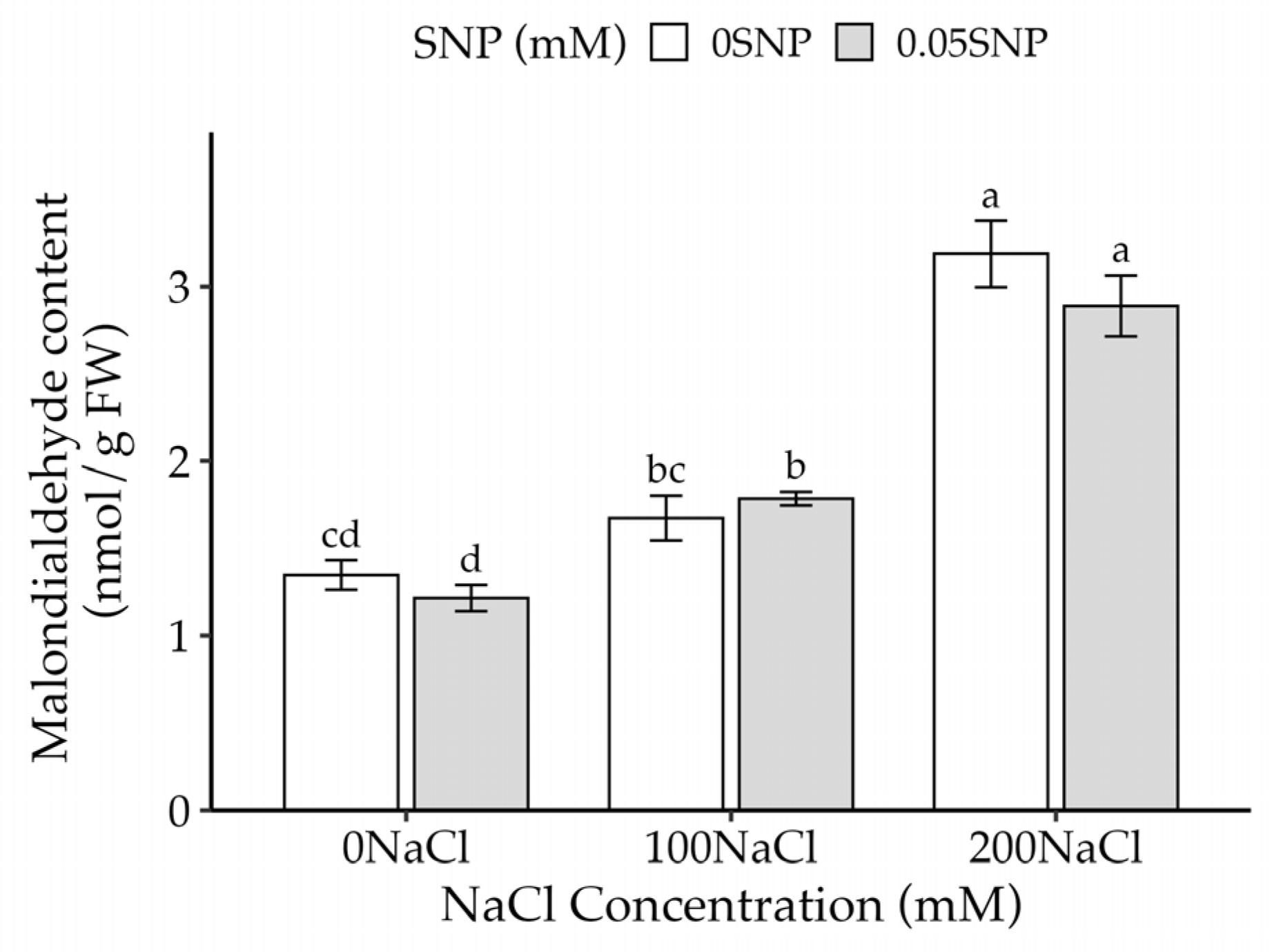
The content of MDA, a key biomarker for oxidative damage to cell membranes (lipid peroxidation), is presented in Figure 3. MDA content increased in Thai eggplant seedlings germinated under 100 and 200 mM NaCl treatments. Compared with control treatment, 0.05 SNP application had no significant effect on MDA content, although it showed a slight reduction in the MDA level.

3.4. Effect of SNP on Hydrogen Peroxide (H2O2) Content in Salt-Stressed Thai Eggplant Seedlings

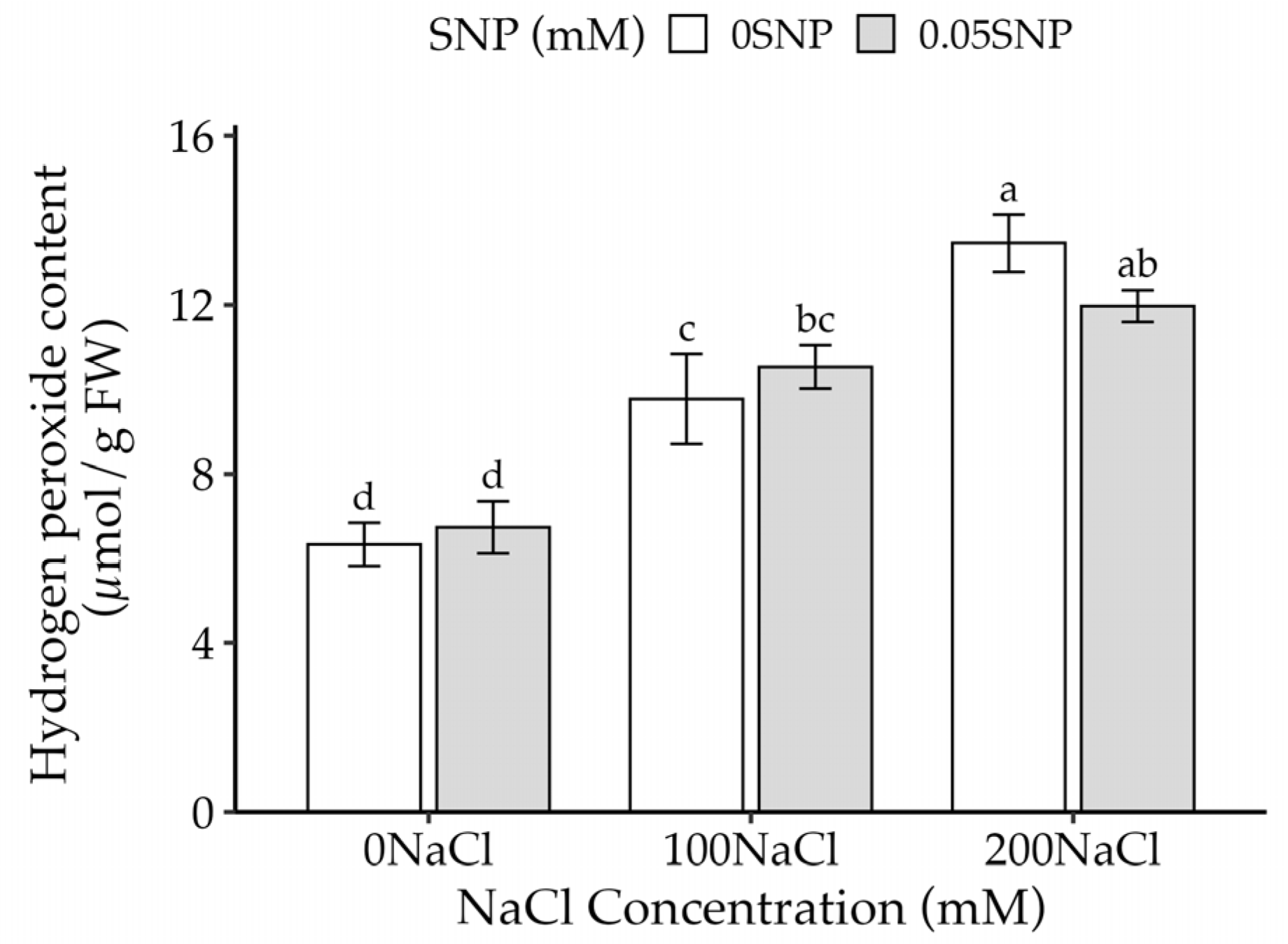
Salt stress resulted in a marked increase in the accumulation of toxic reactive oxygen species (ROS), H2O2, indicating induced oxidative stress in Thai eggplant seedlings (Figure 4). The application of SNP under salt-stressed conditions tended to reduce H2O2 accumulation, but no significant difference among treatments was found.

3.5. Effect of SNP on CAT and APX Activities in Salt-Stressed Thai Eggplant Seedling

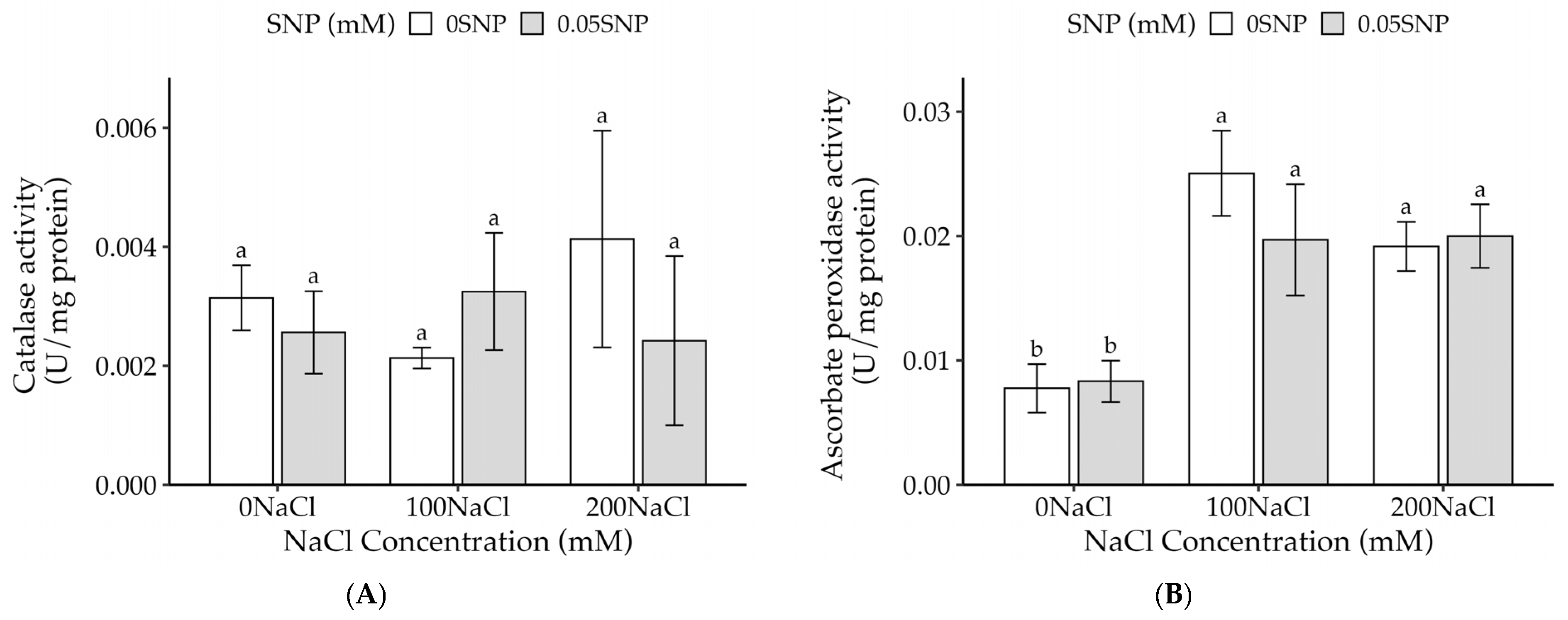
CAT activity showed no significant differences among treatments across all NaCl concentrations and SNP levels (Figure 5A). Although CAT activity exhibited a slight decrease under moderate salt stress (100 mM NaCl) and a slight increase under high salt stress (200 mM NaCl) in seedlings without SNP treatment, these changes were not statistically significant. Similarly, SNP application did not significantly modify CAT activity at any salinity level.
As shown in Figure 5B, APX activity markedly increased under moderate salt stress but did not further increase at the higher salt level. NaCl stress significantly elevated APX activity, with the most pronounced increase observed without SNP treatment. However, no statistically significant difference was found between SNP-treated and untreated seeds under high salt stress conditions.

3.6. Multivariate Analysis

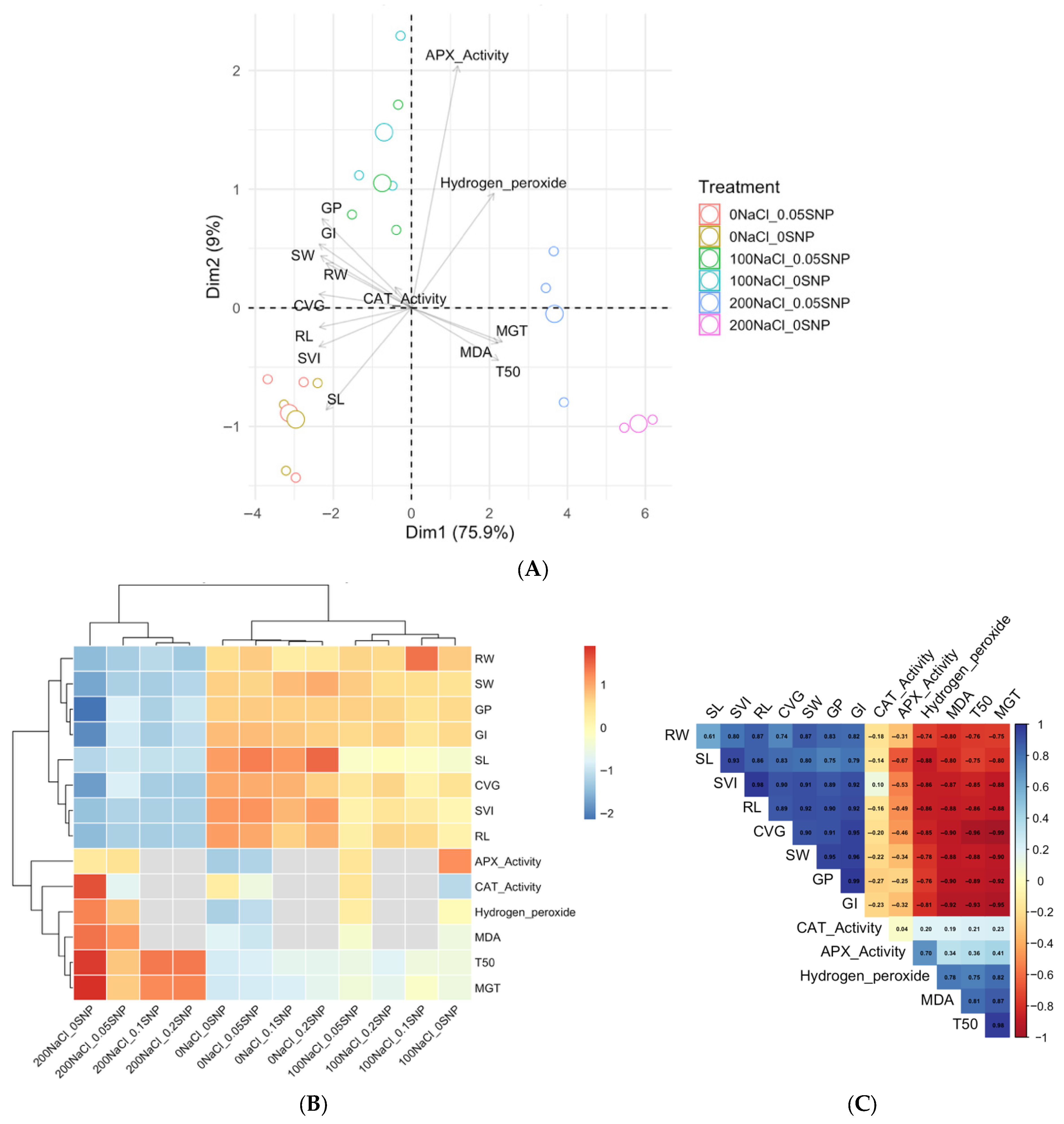
To better understand the overall response patterns, a multivariate analysis was conducted using principal component analysis (PCA). The PCA revealed a clear separation among treatments based on physiological and biochemical parameters (Figure 6A). The first principal component (Dim1) accounted for 75.9% of the total variation, while the second principal component (Dim2) explained 9.0%.
A distinct separation between treatments was observed according to salt levels. Non-saline treatments (0 mM NaCl) were clustered on the left side of the plot, whereas salt-stressed treatments (100 and 200 mM NaCl) were positioned on the right. This distribution indicated that salt stress was the primary factor influencing seedling responses. The arrows in the biplot represent the measured parameters. Growth-related traits such as germination percentage (GP), SVI, and shoot length (SL) were oriented toward the non-saline treatments, while stress-related markers such as MDA and H2O2 were associated with the salt-stress treatments.
Vectors representing CAT and APX activities were directed toward SNP-treated samples, suggesting a positive relationship between SNP treatment and enhanced antioxidant enzyme activity. Overall, the PCA demonstrated that 0.05 mM SNP effectively alleviated salt-induced stress by enhancing antioxidant defense and maintaining germination vigor in Thai eggplant seeds.
A heatmap was generated to further examine the variation in each parameter across treatments (Figure 6B). The heatmap displays the mean values of all twelve treatments, where red represents higher values, and blue represents lower values. Two main clusters of parameters were identified. The first cluster comprised growth-related parameters such as GP, SVI, and SL. These parameters exhibited high (red) values in the non-saline treatments and low (blue) values in the salt-stressed treatments.
The second cluster included stress-related markers, MDA and H2O2, as well as antioxidant enzyme activities (CAT and APX). This group displayed an opposite trend, with higher (red) values in the high-salinity treatments. The heatmap also revealed the beneficial effect of SNP application. Under 200 mM NaCl stress, the intensity of red coloration for MDA decreased when SNP was applied, indicating reduced lipid peroxidation and oxidative damage.
Finally, the relationships among all measured parameters were examined using a correlation plot (Figure 6C). Strong positive correlations were observed among growth-related parameters. For example, SVI showed a significant positive correlation with SL, indicating that these traits increased concurrently under favorable conditions. In contrast, negative correlations were detected between growth parameters and stress markers. A particularly strong negative correlation was found between SVI and MDA (r = −0.87, p < 0.001), suggesting that higher lipid peroxidation levels were associated with reduced seedling vigor.

4. Discussion

Our study demonstrates that SNP significantly enhanced seed germination and early seedling growth of Thai eggplant under salt stress. High salinity (200 mM NaCl) imposed severe physiological constraints, delaying germination and inhibiting seedling development. However, exogenous application of SNP effectively mitigated these detrimental effects, particularly during the early growth stages. These results highlight the potential of SNPs as an NO donor to improve salt tolerance and promote seedling establishment in Thai eggplant cultivated under saline conditions.
Salt-induced delays in germination, as indicated by time to 50% germination (T50), are likely due to the seed’s limited capacity to initiate defense responses and establish osmotic balance. The application of SNP, especially at 0.05 mM, improved germination rates and significantly reduced T50 under high salt stress. This suggests a priming effect, where NO enhances the seed’s ability to mobilize resources and activates stress-responsive mechanisms more rapidly. These results are consistent with previous reports showing that NO promotes osmotic adjustment and stimulates antioxidant defenses during seed germination [29].
The negative effect of salinity was also shown by a higher MGT and a lower CVG. A higher MGT indicates a slower and less efficient germination process. Under high salt stress, the application of SNP reduced MGT and enhanced CVG, demonstrating that SNP promoted faster and more uniform germination. Such improvement in germination dynamics is critical for successful crop establishment under adverse environmental conditions [5].
Furthermore, both the GI and SVI were markedly reduced under high salinity, reflecting the overall inhibitory effects of salt stress on germination and early seedling growth. Pre-treatment with SNP significantly improved both GI and SVI under saline conditions. This enhancement suggests that NO signaling contributes to strengthening seedling performance and improving tolerance to stressful environments [13].
Seedling growth data further supports the protective role of SNP under salt stress. Salt stress severely inhibited shoot and root elongation as well as biomass accumulation. The application of SNP, particularly at 0.05–0.1 mM, partially alleviated these inhibitory effects and restored growth performance. The improvement in shoot length was more pronounced than that in root length, especially under 200 mM NaCl, suggesting that shoots may benefit more from NO-mediated hormonal regulation and antioxidant protection. NO has been reported to modulate auxin signaling, which directly promotes shoot cell elongation [30]. Although the effect of SNP on root growth was relatively modest, the observed increase in root biomass is noteworthy, as NO may enhance ion selectivity and water uptake efficiency even under high-salinity conditions [31].
A recent study in tomato seedlings further supports our findings, demonstrating that NO plays a central role in enhancing salt tolerance by regulating endogenous S-nitrosylation [32]. Under severe salinity (150 mM NaCl), a nitric oxide donor (GSNO) application effectively restored seedling growth, whereas the NO scavenger cPTIO abolished these protective effects, confirming the NO-dependent mechanism. At the physiological level, NO enhanced salt tolerance by promoting osmotic adjustment through the accumulation of key osmolytes, including proline, soluble sugars, and glycine betaine. A similar osmoprotective mechanism likely contributes to the improved germination and seedling vigor observed in Thai eggplant following SNP pre-treatment.
Salt stress triggers overproduction of ROS, including H2O2, which damages cellular components. This was evident by the significant increase in H2O2 levels and lipid peroxidation (measured by MDA) under salt treatments. SNP treatment markedly reduced H2O2 accumulation under both moderate and high salt stress, indicating enhanced ROS scavenging capacity. Although MDA content was only slightly reduced by SNP, the trend suggests a protective role of NO in limiting membrane damage.
Under severe salt stress, as indicated by elevated H2O2 and MDA levels, APX activity initially increased, reflecting the plant’s attempt to detoxify excess ROS. This pattern is consistent with findings in cotton seedlings, where enhanced antioxidant enzyme activity was associated with a reinforced oxidative stress response [33]. However, this response reached a saturation point at 200 mM NaCl, suggesting that the antioxidant enzyme system could no longer effectively scavenge reactive oxygen species. The application of SNP did not significantly enhance APX activity under high salt stress, indicating limited enzymatic responsiveness at severe stress levels. Similarly, CAT activity showed variable fluctuations in both SNP-treated and untreated seedlings, implying that non-enzymatic antioxidant mechanisms may have contributed to ROS regulation when enzymatic defenses were insufficient. This is further supported by a drought-stress study reporting that APX activity was not significantly affected by GSNO foliar spray treatments in Lolium perenne, despite pronounced changes in the cellular redox status, suggesting that NO-related treatments do not uniformly regulate all antioxidant enzymes under severe stress conditions [34].
The multivariate analysis provided an integrated view of how salinity and SNP influenced Thai eggplant seedlings. PCA revealed that the treatments were primarily separated according to NaCl concentration, indicating that salt stress was the dominant factor shaping the overall physiological and biochemical responses. This finding is consistent with previous reports showing that high salinity imposes osmotic stress and ion toxicity, which together limit plant growth and development [4].
However, the results also indicate a protective role of SNP against salt-induced oxidative stress. The heatmap analysis revealed that, although salinity increased MDA accumulation, SNP application mitigated this rise. Because MDA is a well-established marker of membrane lipid peroxidation, its reduction under SNP treatment suggests that NO helped preserve cell membrane integrity. Maintaining membrane stability is a crucial mechanism for enhancing stress tolerance in plants [35]. This observation aligns with previous reports demonstrating that NO released from SNP can alleviate oxidative damage and improve cellular protection under various abiotic stresses [13].
The correlation matrix further elucidates the potential mechanisms underlying the protective effects of sodium nitroprusside (SNP). A strong negative correlation was observed between the activities of antioxidant enzymes and MDA content. This inverse relationship indicates that higher antioxidant enzyme activity is associated with lower levels of oxidative damage. Since SNP-treated seedlings exhibited reduced lipid peroxidation and improved growth performance, it is likely that SNP enhanced the plant’s intrinsic antioxidant defense capacity. These findings support the hypothesis that NO donors such as SNP activate antioxidant enzymes to scavenge ROS, thereby mitigating oxidative stress and protecting plants from salt-induced cellular injury [16,17].

5. Conclusions

This study demonstrates that SNP, as an exogenous NO donor, enhances the tolerance of Thai eggplant to salt stress primarily during germination and early seedling establishment. Elevated NaCl concentrations induced oxidative stress, leading to increased ROS accumulation and membrane lipid peroxidation. SNP treatment partially alleviated these effects by moderating oxidative damage and stabilizing redox homeostasis, as reflected by changes in H2O2, MDA, and APX. Although the magnitude of biochemical changes was moderate at this early developmental stage, correlation analysis confirmed a close association between oxidative stress intensity, antioxidant enzyme activation, and impaired germination dynamics. These findings support the regulatory role of NO in early stress acclimation; however, deeper molecular and signaling mechanisms require further investigation in future studies.

Author Contributions

Conceptualization, S.P. and K.S.; methodology, S.P.; software, S.P.; validation, K.S.; formal analysis, K.S.; investigation, S.P.; resources, S.P.; data curation, S.P.; writing—original draft preparation, S.P.; writing—review and editing, K.S.; visualization, S.P. and K.S.; supervision, K.S.; project administration, K.S.; funding acquisition, S.P. and K.S. All authors have read and agreed to the published version of the manuscript.

Funding

The author was a recipient of a Science Achievement Scholarship of Thailand (SAST). This research was funded by the 90th Anniversary of Chulalongkorn University Fund (Ratchadaphiseksomphot Endowment Fund: grant number GCUGR1125651032D).

Data Availability Statement

This manuscript fully encompasses the original contributions and findings generated from this research. Any subsequent inquiries should be addressed to the corresponding author.

Conflicts of Interest

The authors declare no conflicts of interest.

Abbreviations

The following abbreviations are used in this manuscript:
SNPsodium nitroprusside
NOnitric oxide
mMmillimolar
MDAmalondialdehyde
CATcatalase
APXascorbate peroxidase
ROSreactive oxygen species
T50time to 50% of germination
MGTmean germination time
CVGcoefficient of velocity of germination
SVIseedling vigor index
GIgermination index
FWfresh weight
TCAtrichloroacetic acid
Mmolar
PCAprincipal component analysis

References

  1. Antoniou, C.; Xenofontos, R.; Chatzimichail, G.; Christou, A.; Kashfi, K.; Fotopoulos, V. Exploring the potential of nitric oxide and hydrogen sulfide (NOSH)-releasing synthetic compounds as novel priming agents against drought stress in medicago sativa plants. Biomolecules 2020, 10, 120. [Google Scholar] [CrossRef] [PubMed]
  2. Parihar, P.; Singh, S.; Singh, R.; Singh, V.P.; Prasad, S.M. Effect of salinity stress on plants and its tolerance strategies: A review. Environ. Sci. Pollut. Res. 2015, 22, 4056–4075. [Google Scholar] [CrossRef] [PubMed]
  3. Qadir, M.; Noble, A.D.; Schubert, S.; Thomas, R.J.; Arslan, A. Sodicity-induced land degradation and its sustainable management: Problems and prospects. Land Degrad. Dev. 2006, 17, 661–676. [Google Scholar] [CrossRef]
  4. Munns, R.; Tester, M. Mechanisms of salinity tolerance. Annu. Rev. Plant Biol. 2008, 59, 651–681. [Google Scholar] [CrossRef]
  5. Ibrahim, E.A. Seed priming to alleviate salinity stress in germinating seeds. J. Plant Physiol. 2016, 192, 38–46. [Google Scholar] [CrossRef]
  6. Kubala, S.; Garnczarska, M.; Wojtyla, Ł.; Clippe, A.; Kosmala, A.; Żmieńko, A.; Lutts, S.; Quinet, M. Deciphering priming-induced improvement of rapeseed (Brassica napus L.) germination through an integrated transcriptomic and proteomic approach. Plant Sci. 2015, 231, 94–113. [Google Scholar] [CrossRef]
  7. Manai, J.; Gouia, H.; Corpas, F.J. Redox and nitric oxide homeostasis are affected in tomato (Solanum lycopersicum) roots under salinity-induced oxidative stress. J. Plant Physiol. 2014, 171, 1028–1035. [Google Scholar] [CrossRef]
  8. Matthees, H.L.; Thom, M.D.; Gesch, R.W.; Forcella, F. Salinity tolerance of germinating alternative oilseeds. Ind. Crops Prod. 2018, 113, 358–367. [Google Scholar] [CrossRef]
  9. Brenes, M.; Solana, A.; Boscaiu, M.; Fita, A.; Vicente, O.; Calatayud, Á.; Prohens, J.; Plazas, M. Physiological and biochemical responses to salt stress in cultivated eggplant (Solanum melongena L.) and in S. insanum L., a close wild relative. Agronomy 2020, 10, 651. [Google Scholar] [CrossRef]
  10. Hannachi, S.; Van Labeke, M.-C. Salt stress affects germination, seedling growth and physiological responses differentially in eggplant cultivars (Solanum melongena L.). Sci. Hortic. 2018, 228, 56–65. [Google Scholar] [CrossRef]
  11. Munns, R. Genes and salt tolerance: Bringing them together. New Phytol. 2005, 167, 645–663. [Google Scholar] [CrossRef] [PubMed]
  12. Mittler, R. Oxidative stress, antioxidants and stress tolerance. Trends Plant Sci. 2002, 7, 405–410. [Google Scholar] [CrossRef] [PubMed]
  13. Domingos, P.; Prado, A.M.; Wong, A.; Gehring, C.; Feijo, J.A. Nitric Oxide: A Multitasked Signaling Gas in Plants. Mol. Plant 2015, 8, 506–520. [Google Scholar] [CrossRef] [PubMed]
  14. Verma, N.; Tiwari, S.; Singh, V.P.; Prasad, S.M. Nitric oxide in plants: An ancient molecule with new tasks. Plant Growth Regul. 2020, 90, 1–13. [Google Scholar] [CrossRef]
  15. Ren, Y.; Wang, W.; He, J.; Zhang, L.; Wei, Y.; Yang, M. Nitric oxide alleviates salt stress in seed germination and early seedling growth of pakchoi (Brassica chinensis L.) by enhancing physiological and biochemical parameters. Ecotoxicol. Environ. Saf. 2020, 187, 109785. [Google Scholar] [CrossRef]
  16. Mao, C.; Zhu, Y.; Cheng, H.; Yan, H.; Zhao, L.; Tang, J.; Ma, X.; Mao, P. Nitric oxide regulates seedling growth and mitochondrial responses in aged oat seeds. Int. J. Mol. Sci. 2018, 19, 1052. [Google Scholar] [CrossRef]
  17. Shi, Q.; Ding, F.; Wang, X.; Wei, M. Exogenous nitric oxide protect cucumber roots against oxidative stress induced by salt stress. Plant Physiol. Biochem. 2007, 45, 542–550. [Google Scholar] [CrossRef]
  18. Amooaghaie, R. The effect of hydro and osmopriming on alfalfa seed germination and antioxidant defenses under salt stress. Afr. J. Biotechnol. 2011, 10, 6269–6275. [Google Scholar] [CrossRef]
  19. Sun, H.; Li, L.; Wang, X.; Wu, S.; Wang, X. Ascorbate-glutathione cycle of mitochondria in osmoprimed soybean cotyledons in response to imbibitional chilling injury. J. Plant Physiol. 2011, 168, 226–232. [Google Scholar] [CrossRef]
  20. Seguí, N.; Jiménez, M.A.; Cursach, J. Local conditions effects on seed germination of Hypericum balearicum L. in response to temperature. Flora 2021, 282, 151896. [Google Scholar] [CrossRef]
  21. Ellis, R.H.; Roberts, E.H. Improved equations for the prediction of seed longevity. Ann. Bot. 1980, 45, 13–30. [Google Scholar] [CrossRef]
  22. Jones, K.W.; Sanders, D.C. The influence of soaking pepper seed in water or potassium salt solutions on germination at three temperatures. J. Seed Technol. 1987, 11, 97–120. [Google Scholar]
  23. Abdul-Baki, A.A.; Anderson, J.D. Vigor determination in soybean seed by multiple criteria. Crop Sci. 1973, 13, 630–633. [Google Scholar] [CrossRef]
  24. Kader, M. A comparison of seed germination calculation formulae and the associated interpretation of resulting data. J. Proc. R. Soc. N. S. W. 2005, 138, 65–75. [Google Scholar] [CrossRef]
  25. Junglee, S.; Urban, L.; Sallanon, H.; Lopez, F. Optimized assay for hydrogen peroxide determination in plant tissue using potassium Iodide. Am. J. Anal. Chem. 2014, 5, 730–736. [Google Scholar] [CrossRef]
  26. Ummarat, N.; Matsumoto, T.K.; Wall, M.M.; Seraypheap, K. Changes in antioxidants and fruit quality in hot water-treated ‘Hom Thong’ banana fruit during storage. Sci. Hortic. 2011, 130, 801–807. [Google Scholar] [CrossRef]
  27. Song, L.-L.; Liu, H.; You, Y.-L.; Sun, J.; Yi, C.; Li, Y.-B.; Jiang, Y.-M.; Wu, J.-S. Quality deterioration of cut carnation flowers involves in antioxidant systems and energy status. Sci. Hortic. 2014, 170, 45–52. [Google Scholar] [CrossRef]
  28. Yu, C.; Zhou, F.; Wang, R.; Ran, Z.; Tan, W.; Jiang, L.; Cui, S.; Xie, Z.; Xiao, Y.; Zhou, Y.; et al. B2, an abscisic acid mimic, improves salinity tolerance in winter wheat seedlings via improving activity of antioxidant enzymes. Front. Plant Sci. 2022, 13, 916287. [Google Scholar] [CrossRef]
  29. El-Shazoly, R.M.; Hamed, H.M.A.; El-Sayed, M.M. Individual or successiveseed priming with nitric oxide and calcium toward enhancing salt tolerance of wheat crop through early ROS detoxification and activation of antioxidant defense. BMC Plant Biol. 2024, 24, 730. [Google Scholar] [CrossRef]
  30. Sánchez-Vicente, I.; Lechón, T.; Fernández-Marcos, M.; Sanz, L.; Lorenzo, O. Nitric oxide alters the pattern of auxin maxima and PIN-FORMED1 during shoot development. Front. Plant Sci. 2021, 12, 630792. [Google Scholar] [CrossRef]
  31. Zelinová, V.; Demecsová, L.; Liptáková, Ľ.; Valentovičová, K.; Tamás, L. Extracellular nitric oxide sustains root surface redox activity and growth under sudden flooding-induced hypoxic conditions in barley root tips. Planta 2023, 259, 3. [Google Scholar] [CrossRef]
  32. Wang, C.; Wei, L.; Zhang, J.; Hu, D.; Gao, R.; Liu, Y.; Feng, L.; Gong, W.; Liao, W. Nitric oxide enhances salt tolerance in tomato seedlings by regulating endogenous S-nitrosylation levels. J. Plant Growth Regul. 2023, 42, 275–293. [Google Scholar] [CrossRef]
  33. Guaraldo, M.M.d.S.; Pereira, T.M.; dos Santos, H.O.; de Oliveira, T.L.; Pereira, W.V.S.; Von Pinho, E.V.d.R. Priming with sodium nitroprusside and hydrogen peroxide increases cotton seed tolerance to salinity and water deficit during seed germination and seedling development. Environ. Exp. Bot. 2023, 209, 105294. [Google Scholar] [CrossRef]
  34. Rigui, A.P.; Carvalho, V.; Wendt dos Santos, A.L.; Morvan-Bertrand, A.; Prud’homme, M.-P.; Machado de Carvalho, M.A.; Gaspar, M. Fructan and antioxidant metabolisms in plants of Lolium perenne under drought are modulated by exogenous nitric oxide. Plant Physiol. Biochem. 2019, 145, 205–215. [Google Scholar] [CrossRef]
  35. Amooaghaie, R.; Nikzad, K. The role of nitric oxide in priming-induced low-temperature tolerance in two genotypes of tomato. Seed Sci. Res. 2013, 23, 123–131. [Google Scholar] [CrossRef]
Figure 1. Effects of exogenous SNP at different concentrations on germination percentage (%) (A), time to 50% germination (T50, days) (B), mean germination time (MGT, days) (C), coefficient of velocity of germination (CVG) (D), seedling vigor index (SVI) (E), and germination index (GI) (F) of Thai eggplant seeds under 0, 100, and 200 mM NaCl stress. Significant differences among treatments were determined by Duncan’s multiple range test at p < 0.05 and are indicated by different letters above the bars.
Seeds 05 00004 g001
Figure 2. Effects of exogenous SNP at different concentrations on shoot length (A), root length (B), shoot weight (C), and root weight (D) of Thai eggplant seedlings under 0, 100, and 200 mM NaCl stress. Data are presented as mean ± standard error (SE) (n = 5). Significant differences among treatments were determined by Duncan’s multiple range test at p < 0.05 and are indicated by different letters above the bars.
Seeds 05 00004 g002
Figure 3. Effects of exogenous 0.05 mM SNP on MDA content (nmol g−1 fresh weight) of Thai eggplant seedlings under 0, 100, and 200 mM NaCl stress. Data are presented as mean ± standard error (n = 3). Significant differences among treatments were determined by Duncan’s multiple range test at p < 0.05 and are indicated by different letters above the bars.
Seeds 05 00004 g003
Figure 4. Effects of exogenous 0.05 mM SNP on H2O2 content (µmol g−1 fresh weight) of Thai eggplant seedlings under 0, 100, and 200 mM NaCl stress. Data are presented as mean ± standard error (n = 3). Significant differences among treatments were determined by Duncan’s multiple range test at p < 0.05 and are indicated by different letters above the bars.
Seeds 05 00004 g004
Figure 5. Effects of exogenous 0.05 mM SNP on catalase (CAT) (A) and ascorbate peroxidase (APX) (B) activities (unit mg−1 protein) of Thai eggplant seedlings under 0, 100, and 200 mM NaCl stress. Data are presented as mean ± standard error (SE) (n = 3). Significant differences among treatments were determined by Duncan’s multiple range test at p < 0.05 and are indicated by different letters above the bars.
Seeds 05 00004 g005
Figure 6. Multivariate analysis of physiological and biochemical responses of Thai eggplant seed and seedlings to NaCl stress and SNP application. (A) Principal component analysis (PCA) biplot of all 14 measured parameters. Points represent individual replicates, colored by treatment. Ellipses indicate the 95% confidence interval for each treatment group. Arrows represent the loading vectors of the variables. (B) Heatmap of standardized mean values (z-scores) for each parameter across all treatments. Hierarchical clustering was performed for both treatments (columns) and parameters (rows). Blue and red colors indicate lower and higher values, respectively. (C) Correlogram of Pearson correlation coefficients among all measured parameters. The color and size of the circles represent the direction and strength of the correlation (blue for positive, red for negative).
Seeds 05 00004 g006
Disclaimer/Publisher’s Note: The statements, opinions and data contained in all publications are solely those of the individual author(s) and contributor(s) and not of MDPI and/or the editor(s). MDPI and/or the editor(s) disclaim responsibility for any injury to people or property resulting from any ideas, methods, instructions or products referred to in the content.