Review

Diet Protocols and Weight Management Products: An Evidence-Based Narrative Review

by
Antonio Peracchia
,
Cecilia Rustichelli
and
Rossella Avallone
*
Department of Life Sciences, University of Modena and Reggio Emilia, 41125 Modena, Italy
*
Author to whom correspondence should be addressed.
Dietetics 2026, 5(2), 26; https://doi.org/10.3390/dietetics5020026
Submission received: 10 February 2026 / Revised: 10 March 2026 / Accepted: 24 April 2026 / Published: 1 May 2026

Abstract

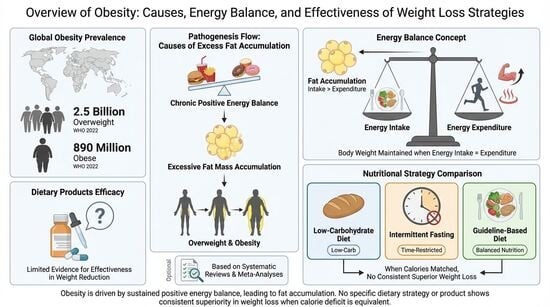
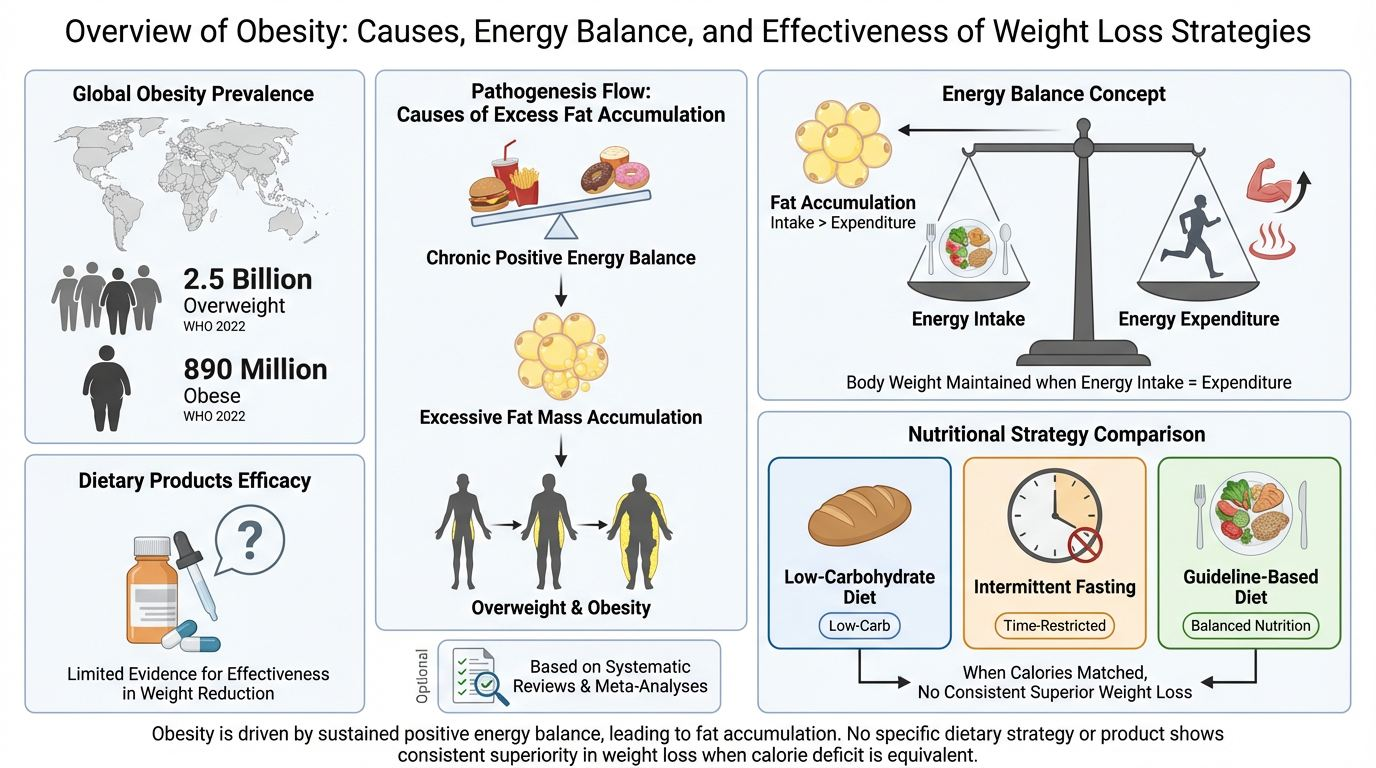
Obesity is currently recognized as a chronic and multifactorial disease. According to epidemiological data released by the World Health Organization in 2022, more than 2.5 billion adults were overweight and more than 890 million were affected by obesity. The aim of this narrative review is to clarify what leads to overweight and obesity, to explain the concept of energy balance, to address the limited effectiveness of dietary products marketed for weight reduction, to examine commonly promoted nutritional strategies for weight loss and to challenge claims of their superiority. The most recent, robust, and high-quality evidence available on the topic was selected, with particular emphasis on systematic reviews and meta-analyses. Overweight and obesity are characterized by an excessive accumulation of fat mass. At the basis of excessive adipose tissue accumulation lies a persistent positive energy balance. Energy balance is generally considered a central physiological determinant of body weight regulation. Approaches that do not explicitly incorporate this principle may be associated with variable or unsustained outcomes. Available evidence suggests that, when an equivalent caloric deficit is achieved, differences in the timing of energy intake or in dietary patterns—such as intermittent fasting or low-carbohydrate diets—are not consistently associated with greater weight loss compared with other guideline-based dietary strategies. Some supplements supporting weight loss, in selected cases, may offer marginal support; however, based on the current state of scientific knowledge, no product represents an effective shortcut for weight loss.

Graphical Abstract

1. Introduction

Obesity is recognized as a chronic, multifactorial disease characterized by an excessive accumulation of body fat and associated with significant metabolic and cardiovascular consequences. According to global epidemiological data reported by the World Health Organization (WHO) in 2022 [1], approximately 2.5 billion adults aged 18 years and older were overweight, including more than 890 million living with obesity. These figures underscore obesity as a major condition threatening public health worldwide.
Within the scientific community, the prevailing framework explaining the development of overweight and obesity is the Energy Balance Model (EBM). According to this model, overweight and obesity result from a positive energy balance, where energy intake chronically exceeds energy expenditure. WHO also emphasizes that the fundamental cause of excessive fat accumulation leading to overweight and obesity is an imbalance between calories consumed and calories expended, with a net surplus toward energy intake [1].
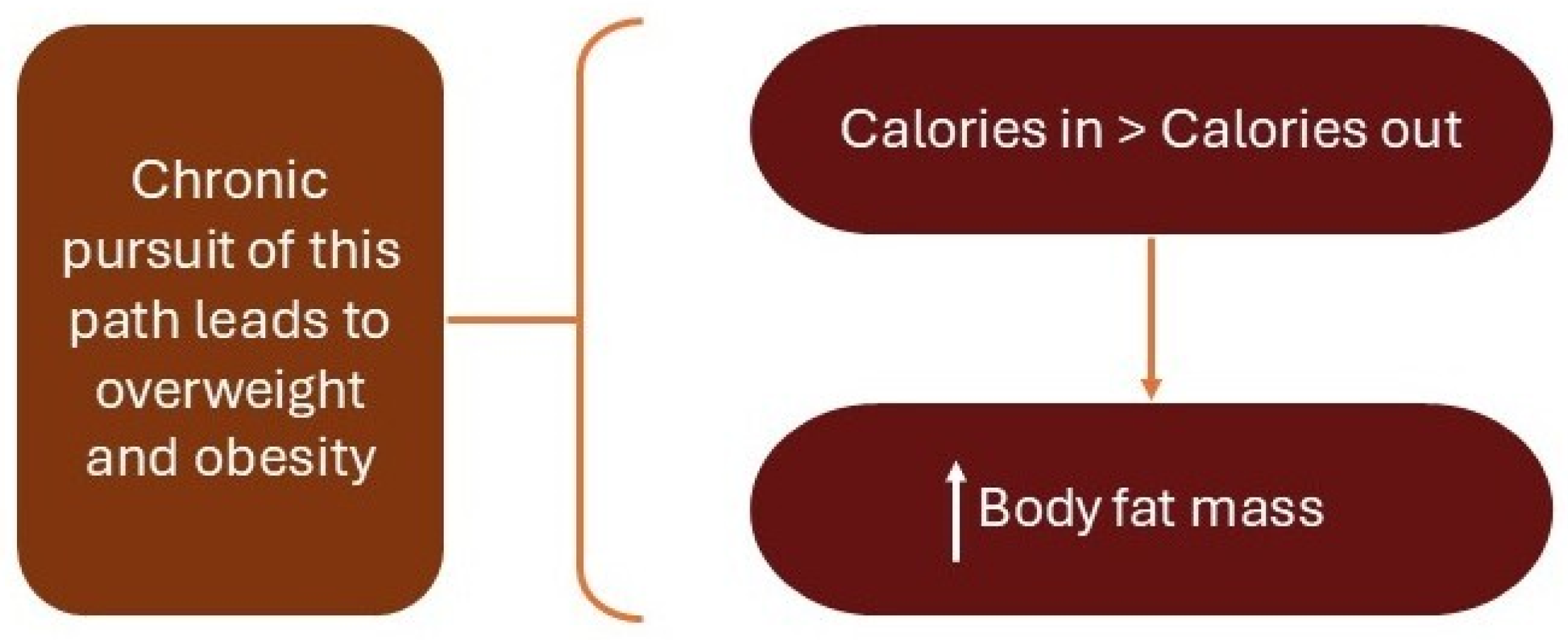
Historically, the EBM has been challenged by an alternative hypothesis, the Carbohydrate–Insulin Model (CIM). According to this model, obesity results primarily from an excessive intake of carbohydrates, particularly those with a high glycemic index, which stimulate increased insulin secretion. This condition is thought to create a perceived energy deficit at the systemic level, leading to increased appetite, decreased energy expenditure (due to both a reduction in basal metabolic rate and spontaneous physical activity), and the establishment of a vicious cycle that progressively promotes fat accumulation, eventually resulting in overweight and obesity. However, the CIM is not supported by consistent scientific evidence. Fluctuations in insulin and glucose levels, as well as individual physiological parameters considered in isolation, do not explain the increase in fat mass, as they fail to account for the complexity and continuous dynamism of the processes regulating energy homeostasis in the human body [1,2,3,4,5,6,7]. The accumulation of fat mass is fundamentally driven by an imbalance between energy intake and energy expenditure, resulting in a positive energy balance [1,2,6,7], which, when sustained over time, leads to excessive adipose tissue accumulation and the development of overweight and obesity (Figure 1).
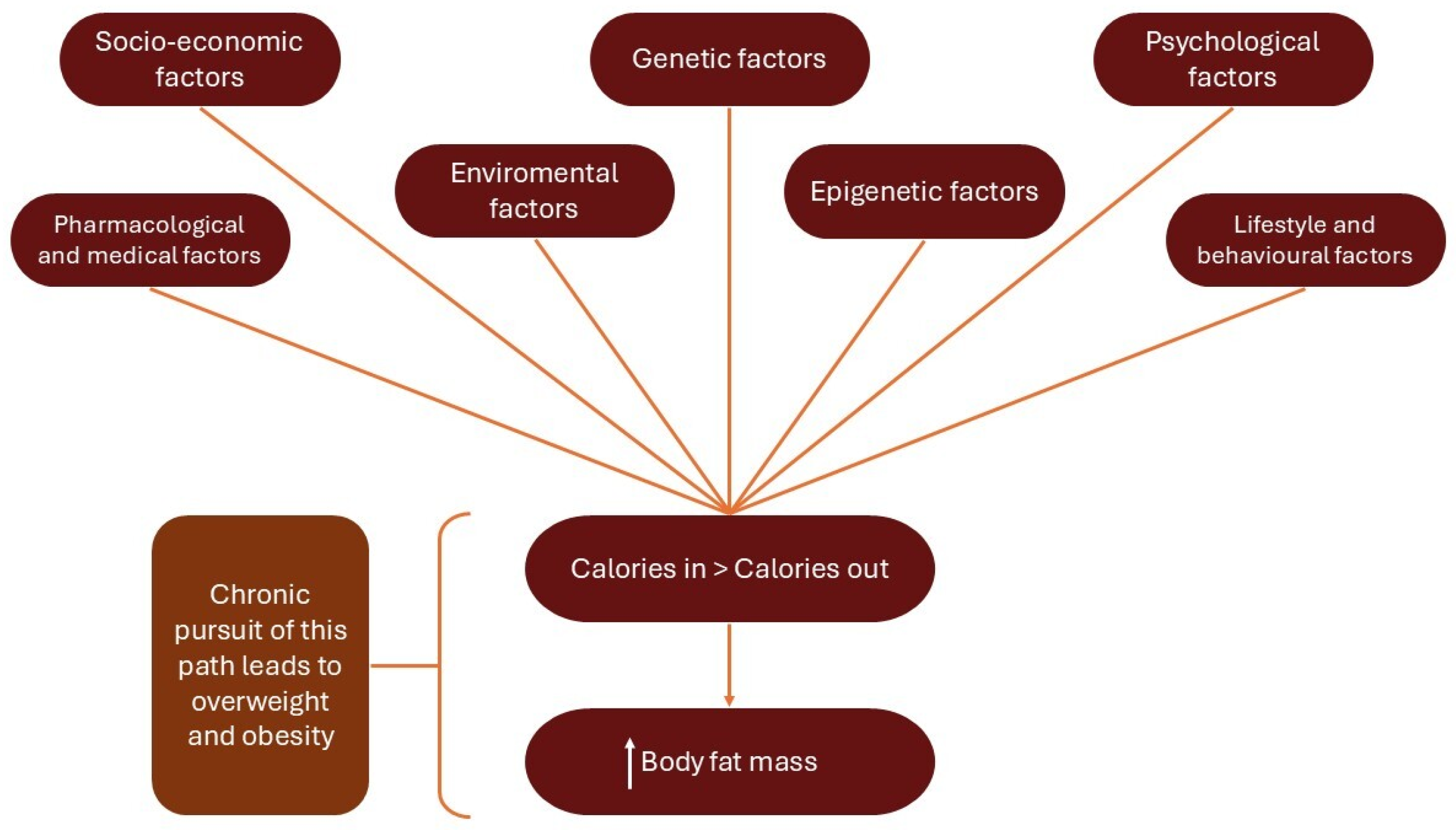
Although excess caloric intake is the driver of fat mass accumulation, obesity is a multifactorial disease influenced by various factors [8,9,10,11,12,13] (Figure 2) that contribute to the development of a positive energy balance.
Energy balance represents the fundamental principle underlying the processes of mass loss or gain, determining whether the body will mobilize its energy reserves or accumulate new adipose tissue. Creating an energy deficit leads to weight loss, whereas an energy surplus—regardless of the type or quality of macronutrients—results in weight gain [2].
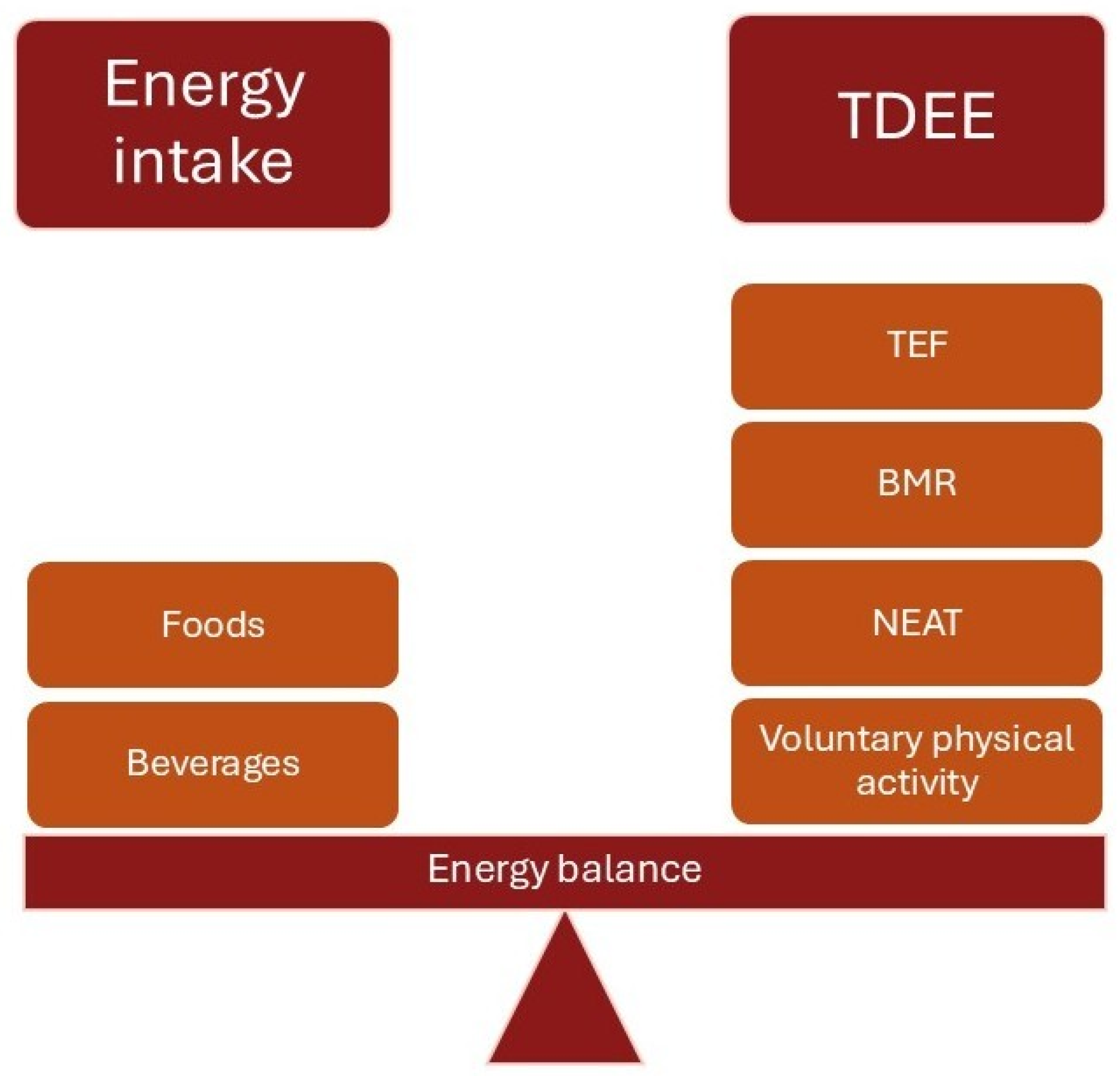
Energy balance is characterized by several determinants [6] (Figure 3):
  • Energy intake represents the amount of energy consumed through foods and beverages.
  • Total daily energy expenditure (TDEE) represents the total amount of energy the body expends each day and is itself composed of several components:
    ○
    The thermic effect of food (TEF) is the increase in energy expenditure that occurs after food intake. For typical dietary compositions, the thermic effect of food is estimated to account for approximately 10% of total energy intake [7]. Specifically, the TEF of individual macronutrients is approximately 0–3% for fat, 5–10% for carbohydrates, and 20–30% for protein [2].
    ○
    Basal metabolic rate (BMR) represents the amount of energy an individual expends while at rest and in a fasted state [7].
    ○
    Non-exercise activity thermogenesis (NEAT) consists of all spontaneous movements performed throughout the day [7].
    ○
    Voluntary physical activity refers to the exercise an individual intentionally performs, whether aerobic or anaerobic [7].
To determine whether an individual is in energy balance, surplus, or deficit, it is necessary to compare daily intake with total daily energy expenditure [6].
It is essential to recognize that TDEE is not static: it can vary over time in response to diet and changes in body composition, making energy balance a complex and dynamic system [14]. Indeed, when an energy deficit is created to induce weight loss:
  • There is a reduction in BMR resulting from the loss of both fat mass and skeletal muscle mass (SMM). Since both compartments are metabolically active, their loss leads to a decrease in basal metabolic rate. The assumption that all the weight loss is attributable exclusively to fat mass is inaccurate, as a portion—albeit smaller—of SMM is also mobilized and utilized for energy to compensate for the deficit [15]. However, the practical impact of this change is relatively small: 1 kg of skeletal muscle mass expends approximately 13–20 kcal per day at rest [16,17,18], whereas 1 kg of fat mass expends about 4–5 kcal per day [16,17,18].
  • There is a reduction in TEF due to the decrease in macronutrient intake. Consequently, for every 100 kcal reduction in energy intake, TDEE decreases by roughly 10 kcal. This value is an average estimate and may vary depending on the macronutrient composition of the diet [2].
  • The process of adaptive thermogenesis is activated. This is a physiological adaptation of moderate magnitude that can be effectively managed within a well-designed and closely monitored dietary plan. Its presence should not be overlooked, but neither should it be overstated: it is a factor to consider, yet it does not, in itself, constitute a determining cause of failure in weight management [19].
In the context of caloric restriction, the long-standing assumption that losing 1 kg of adipose tissue corresponds to an energy deficit of 7000 kcal is no longer considered fully accurate [2]. Because this relationship, although still used as a practical reference in clinical settings, does not account for the complex physiological dynamics that accompany the establishment of an energy deficit (as previously described). However, in clinical practice, this approximation remains generally acceptable and useful for guiding dietary planning. The physiological adaptations described above, while real, have a relatively modest impact, especially within the context of a well-structured and closely monitored nutritional program.
The aims of this narrative review are to examine commonly promoted nutritional strategies for weight loss and to evaluate claims of their superiority compared with other dietary approaches under conditions of equivalent caloric deficit, given that weight loss appears comparable when energy restriction is similar [2]. A further objective is to consider the evidence regarding the effectiveness of dietary products marketed for weight reduction.

2. Materials and Methods

This narrative review was conducted using a structured approach to identify and select relevant literature. The objective was to retrieve the most recent and methodologically robust human evidence addressing dietary strategies for weight loss and related outcomes. Studies conducted in adults or adolescents were considered eligible, with particular emphasis placed on systematic reviews, meta-analyses, and randomized controlled trials. Animal and in vitro studies were excluded. No restrictions were applied regarding publication date, and studies published up to 2025 were considered.
Literature searches were performed in PubMed/MEDLINE, Scopus, and Web of Science using combinations of predefined keywords, including “obesity,” “energy balance,” “intermittent energy restriction,” “continuous energy restriction,” “meal timing,” “weight loss,” “low-carbohydrate diets,” “low-fat diets,” and “dietary products for weight reduction.”
Study selection was conducted in two stages. Titles and abstracts were initially screened for relevance, followed by full-text assessment against predefined eligibility criteria. The methodological quality of included studies was appraised qualitatively, with attention to study design, potential sources of bias, sample size, duration of follow-up, and consistency of findings across studies.
As a narrative review, this work does not represent a formal systematic review or meta-analysis; therefore, the selection and synthesis of evidence were not performed according to a predefined protocol.

3. Weight-Loss Diet Strategies: Evaluating the Evidence

While numerous dietary theories have been proposed, energy balance is widely recognized as a fundamental physiological concept, whereby weight loss is associated with a caloric deficit and weight gain with an energy surplus [2,6,7]. Within the wide range of contemporary dietary approaches, it is relevant to note that modifications in macronutrient composition, food selection, or dietary patterns are generally understood to influence body weight through their effects on energy balance. Accordingly, weight management interventions are typically interpreted within this physiological framework [2,6,7], and approaches that do not explicitly address energy balance may be associated with variable outcomes or limited effectiveness.

3.1. The Role of Caloric Timing in Weight Management

In recent years, so-called chronodiets have gained popularity, claiming that the timing of meals can significantly influence weight loss independently of overall energy balance. These approaches suggest, for example, that consuming most calories in the morning rather than in the evening may promote greater energy expenditure or reduce fat accumulation, attributing a dominant role to circadian factors in weight regulation. However, what ultimately determines the accumulation or loss of adipose tissue is the balance between energy intake and energy expenditure, rather than the time of day at which energy is consumed. Even when hormonal or metabolic variations related to meal timing are observed, their final effect on body weight remains subordinate to total energy intake relative to energy expenditure [2,6,7]. Current evidence suggests that focusing on meal timing in isolation from total energy intake may not fully capture the complexity of body-weight regulation. Although chronodiet approaches have been proposed as potentially beneficial in certain contexts, much of the supporting evidence is derived from observational studies or early-stage trials, limiting the generalizability of findings. Available data indicate that while the timing of food intake may influence metabolic regulation, circadian alignment, and dietary adherence in selected populations, sustainable weight outcomes are most consistently associated with dietary patterns that align with established principles of energy physiology. Accordingly, clinical interpretation of chrononutrition strategies should consider meal timing as a complementary factor within an overall framework in which energy balance remains a primary determinant of weight change [2,6,7].
In support of this perspective, and as further corroborating evidence, several studies [20,21,22] have investigated the effects of the temporal distribution of caloric intake on energy balance and body weight regulation.
The study by Fong et al. [20] is a systematic review with meta-analysis aimed at investigating the relationship between evening energy intake and body weight in adults, as well as evaluating the effectiveness of reducing evening energy intake in promoting weight loss. The review included ten observational studies and eight clinical trials, of which four and five, respectively, were incorporated into the meta-analyses. The meta-analysis of 4 observational studies showed that the body mass index (BMI) of individuals with lower evening energy intake was, on average, 0.39 kg/m2 lower than those with higher evening energy intake. However, because the confidence interval included zero and the p value did not reach the conventional threshold for statistical significance (p < 0.05), the observed difference was not statistically significant. The meta-analysis of 5 clinical trials showed a mean difference of −0.89 kg in body weight in favor of the reduced-dinner intervention; however, this result was not statistically significant, as the confidence interval included zero and the p value exceeded the conventional threshold of 0.05. This analysis showed no difference in weight change between small- and large-dinner groups; however, it was limited by significant heterogeneity, and many trials were judged to have an unknown or high risk of bias, which weakens the robustness of the conclusions. At present, based on this study, there is insufficient scientific evidence to recommend reducing evening caloric intake as a universally valid strategy for weight loss.
The study by Young et al. [21] is a systematic review with meta-analysis that builds upon the evidence previously reported by Fong et al. [20]. It includes 9 randomized controlled trials to more rigorously investigate the effects of early energy distribution on body weight and metabolic parameters in adults. The meta-analysis showed a significantly greater weight loss in the early-loaded groups; however, exclusion of a single study rendered the result no longer statistically significant. In addition, the meta-analysis reported very high heterogeneity, indicating substantial variability among the included studies. In summary, although the review suggests a potential advantage of early energy distribution for weight loss and certain metabolic parameters, the reliability of these findings is limited by high heterogeneity among studies and small sample sizes. However, a particularly interesting aspect emerging from this review concerns appetite regulation. In two studies, participants following an early energy distribution reported greater satiety and reduced preoccupation with food, particularly with energy-dense foods. Although the evidence is limited, these findings suggest that the observed benefits—while modest in terms of body weight—may be mediated by improved hunger control, representing an indirect but clinically relevant advantage in the management of an energy deficit.
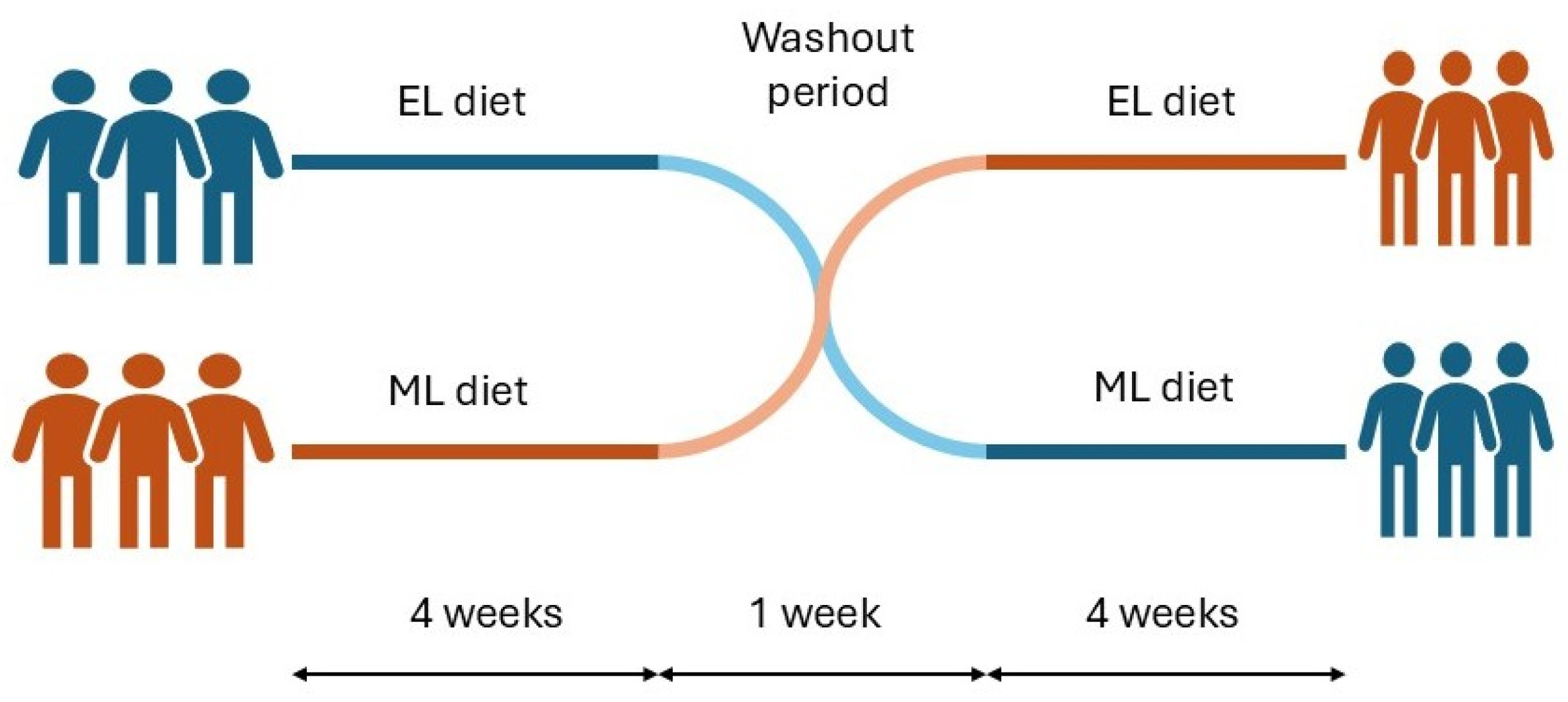
The study by Ruddick-Collins et al. [22] was designed as a randomized controlled crossover clinical trial. The aim of the study was to assess whether the temporal distribution of caloric intake, with the same total energy content, can influence weight loss. A total of 31 adult participants (BMI 27–42 kg/m2), aged between 20 and 79 years, were recruited. Each participant followed, in randomized order, two 4-week dietary intervention periods: a hypocaloric diet with a morning-loaded caloric distribution (ML) and a hypocaloric diet with an evening-loaded caloric distribution (EL). Randomization determined the order in which each participant received the two dietary regimens, which were separated by a 7-day washout period during which an energy-neutral maintenance diet was provided. Throughout all study phases (baseline, intervention, and washout), participants received all meals prepackaged by the research team, with controlled composition and caloric content (Figure 4). The ML and EL diets were isoenergetic, providing the same total daily caloric intake, but differed in the temporal distribution of energy intake.
Both hypocaloric dietary regimens, ML and EL, resulted in significant and comparable weight loss at the end of the respective 4-week intervention periods, with no significant differences between the two groups. Similarly, parallel improvements in BMI, body circumferences, and fat mass were observed in both conditions, with no statistically significant differences between the regimens. Participants in the ML group reported lower average daily hunger, reduced desire to eat, greater satiety, and less preoccupation with food. Visual analog scales (VAS) indicated a more pronounced appetite-suppressing effect under the ML regimen throughout the day. This effect was accompanied by greater postprandial ghrelin suppression and increased release of satiety-related gut hormones. The larger breakfast in the ML regimen resulted in significantly slower gastric emptying compared with the lighter breakfast in the EL regimen; this may contribute to greater perceived satiety and a reduced likelihood of subsequent overeating. Both diets have similarly improved glycemic parameters, with no significant differences between ML and EL. Likewise, both regimens produced comparable reductions in total cholesterol, low-density lipoprotein (LDL) cholesterol, and triglycerides, with no significant differential effects attributable to meal timing. No significant differences were observed between ML and EL in daily step count, physical activity–related energy expenditure, or sleep duration. The results clearly indicate that, when energy intake and macronutrient composition are matched, the distribution of calories throughout the day does not influence total energy expenditure or its individual components. This suggests that the benefits observed in other studies adopting an ML approach are not attributable to metabolic adaptations, but are more likely related to behavioral factors, such as improved appetite control. The ML diet was associated with greater appetite suppression compared with the EL diet, at both the subjective and physiological (hormonal) levels. This effect is likely driven by the combination of a larger morning meal, slower gastric emptying, and increased release of satiety-related gut hormones. Such appetite suppression may, in free-living conditions, promote a spontaneous reduction in subsequent caloric intake, thereby improving adherence to hypocaloric dietary regimens. In summary, this study demonstrates that, under conditions of controlled energy intake, the temporal distribution of calories between morning and evening does not directly affect energy expenditure or weight loss in healthy individuals with obesity. However, a substantial breakfast (ML) may represent a useful strategy to improve appetite control throughout the day, enhancing satiety and reducing the likelihood of overeating, particularly in free-living settings or during long-term dietary interventions.
In conclusion, the available evidence suggests that the time of day at which calories are consumed is not, by itself, a primary determinant of weight loss. Overall energy balance appears to remain a central factor, with weight reduction occurring when energy intake is lower than energy expenditure, independent of specific meal-timing patterns. When comparable energy deficits are achieved, differences in the timing of caloric intake do not consistently translate into differences in weight loss outcomes. However, the distribution of calories across the day may indirectly influence the effectiveness of dietary interventions, particularly through behavioral and physiological factors such as appetite regulation, satiety, and adherence.

3.2. Intermittent Fasting

Intermittent fasting (IF) is a dietary approach based on the alternation between periods of fasting and time windows during which food intake is allowed. Despite its growing popularity, IF is often characterized in the literature as a dietary approach focused on the temporal distribution of meals rather than on specific food choices. Accordingly, IF interventions typically emphasize eating windows, with limited prescriptive guidance regarding dietary composition. In the following sections, findings from Lister et al. [23] and Schroor et al. [24] are discussed, suggesting that intermittent energy restriction (IER) does not appear to confer clear advantages over continuous energy restriction (CER) when similar levels of caloric restriction are achieved.
The randomized controlled clinical trial conducted by Lister et al. [23] aimed to compare the effectiveness of two hypocaloric dietary strategies for weight loss: intermittent energy restriction (IER) and continuous energy restriction (CER). A total of 141 adolescents aged between 13 and 17 years with obesity were enrolled. Detailed and individualized meal plans were provided to meet the nutritional requirements, food preferences, and lifestyle of each participant. Participants were not blinded to the assigned intervention, meaning they were aware of the type of diet they received. The diets were administered by study dietitians who had received appropriate training. The dietary program implemented in the study was structured into three consecutive phases:
  • Phase 1: During the first 4 weeks, all participants followed a very low energy diet (VLED) providing approximately 800 kcal/day.
  • Phase 2: Starting from week 5, participants were randomly assigned to one of two dietary groups:
    ○
    IER group: three days per week with an energy intake of approximately 600–700 kcal/day, alternating with four days of healthy, unrestricted eating based on the Australian Dietary Guidelines.
    ○
    CER group: a daily calorie-restricted diet, adjusted for age: 1430–1670 kcal/day for participants aged 13–14 years, and 1670–1900 kcal/day for those aged 15–17 years.
  • Phase 3: Phase 3 began at week 17. The assigned dietary approach (IER or CER) was maintained unless participants reached their target weight, defined as either a personalized target weight or a BMI of 25 (with the personal target weight not permitted to fall below a BMI of 25). Participants who achieved their target were transitioned to a weight maintenance plan, and at the end of the program, they received guidance for ongoing support and discussed strategies for maintaining the achieved weight.
After 52 weeks of intervention, both the intermittent and continuous energy restriction groups exhibited significant weight loss, with no meaningful differences between the two approaches. With respect to body composition, a comparable reduction in fat mass index was observed in both groups, which was maintained from the intermediate assessment (week 16) through the end of the study. In contrast, the fat-free mass index remained relatively stable, suggesting that weight loss occurred predominantly at the expense of fat mass, with preservation of lean mass. Overall, these findings indicate that both dietary strategies (IER and CER) represent valid therapeutic options within an intensive weight management program, offering flexibility in selecting the dietary regimen best suited to individual preferences and lifestyle. Throughout the study, an overall improvement in several metabolic parameters was observed in both intervention groups. Specifically, blood pressure, total cholesterol, triglycerides, and fasting insulin levels decreased over time, with no significant differences between the two groups (IER and CER) at any time point. High-density lipoprotein (HDL) cholesterol, LDL cholesterol, and fasting glucose levels also remained similar between groups and stable over time. Regarding insulin resistance, both groups showed improvement at 16 weeks, with a reduction in the number of adolescents affected. However, this improvement was maintained through the end of the study only in CER group. Finally, the prevalence of dyslipidemia (abnormal blood lipid levels) remained stable from baseline to the end of the study, while an improvement in liver function parameters was observed, reflected by a reduction in abnormal liver test results, with no differences between the two dietary groups. In conclusion, both groups showed significant reductions in body weight and in several cardiometabolic parameters compared with baseline. No significant differences in efficacy were observed between the two dietary approaches. The only exception was insulin resistance, which remained reduced at week 52 only in the CER group. Overall, the number of participants who discontinued the intervention was higher in the IER group, in many cases due to difficulties in sustaining this dietary pattern over time. A 31% dropout rate and the loss of group differences by week 52 are consistent with prior adolescent obesity studies.
The systematic review and meta-analysis of randomized controlled trials conducted by Schroor et al. [24] aimed to compare the effects of IER protocols and CER diets on anthropometric outcomes and cardiometabolic risk markers in healthy adults. The meta-analysis included 28 randomized controlled trials (RCTs). Energy intake between intervention groups within individual studies was comparable in 17 trials, lower in the IER group in 5 trials, and not reported in 6 trials. When the results of the IER diets were combined, changes in body weight, fat mass, BMI, glucose, insulin, homeostasis model assessment of insulin resistance (HOMA-IR), serum lipid and lipoprotein concentrations, and blood pressure were comparable to those observed with CER. Overall, IER diets, when considered collectively, did not result in superior improvements in anthropometric outcomes or cardiometabolic risk markers compared with CER diets. Nonetheless, the available evidence does not indicate that IER confers superior anthropometric or cardiometabolic benefits compared with CER when total energy intake is considered. Adherence appears to be a central determinant of outcomes in IER interventions. While short-term weight loss may be comparable to or slightly greater than CER when adherence is high, long-term effects are generally similar, underscoring the importance of sustained behavioral support for maintaining benefits.
In conclusion, the current body of evidence suggests that IF, across its different protocols, is unlikely to produce clinically meaningful weight loss in the absence of an overall caloric deficit. Its potential utility appears to lie primarily in its capacity to structure eating patterns in a way that may facilitate spontaneous energy restriction in some individuals. When caloric intake and dietary composition are comparable, the available evidence does not consistently demonstrate a distinct metabolic advantage associated with IF compared with continuous energy restriction.
An important aspect to consider when interpreting these findings is dietary adherence, which represents a key determinant of the long-term effectiveness of any dietary intervention. Several randomized controlled trials and meta-analyses have reported comparable adherence rates between intermittent fasting and continuous energy-restriction approaches, although dropout rates tend to increase with longer intervention durations, as is common in weight-loss studies. These findings suggest that IF may be acceptable and manageable for some individuals, particularly when the structured timing of meals simplifies dietary routines or aligns with personal preferences and lifestyle patterns.
However, the long-term sustainability of IF remains an important consideration. Many available trials are relatively short in duration, often ranging from several weeks to a few months, which limits conclusions regarding the persistence of weight loss and adherence over longer periods. In real-world settings, the effectiveness of dietary interventions depends not only on their physiological effects but also on their behavioral feasibility and long-term acceptability.
Within this context, IF may represent a feasible dietary strategy for selected individuals, particularly when it supports adherence or facilitates the maintenance of an overall caloric deficit. Nevertheless, under conditions of equivalent energy restriction, current evidence does not indicate clear advantages of IF over continuous energy restriction with respect to weight loss, body composition, or cardiometabolic outcomes. Therefore, IF should be considered one of several possible dietary approaches that may be incorporated into individualized weight-management strategies rather than a universally superior method.
From a clinical perspective, these findings suggest that the effectiveness of intermittent fasting should be evaluated not only in terms of short-term metabolic responses but also with respect to long-term adherence and weight-maintenance outcomes. In real-world settings, dietary strategies that are easier for individuals to follow consistently are more likely to support sustained energy balance and durable weight control. Consequently, intermittent fasting may represent a useful option within personalized nutrition approaches, particularly for individuals who find time-restricted eating patterns easier to maintain than continuous daily energy restriction.

3.3. Low-Carbohydrate Diets

Low-carbohydrate diets are frequently discussed as a potentially advantageous approach for weight loss, often based on the hypothesis that substantial carbohydrate restriction may promote metabolic conditions favoring fat oxidation. However, when evaluated within controlled research settings, the evidence supporting a clear advantage over other dietary approaches remains limited. Numerous studies have demonstrated that, when energy intake is matched, weight loss achieved with a low-carbohydrate diet is not superior to that observed with other dietary regimens, assuming that the same energy deficit is maintained [2,4,5,7]. In the following sections, available evidence is reviewed to assess whether low-carbohydrate diets are associated with increases in diet-induced thermogenesis or superior weight-loss outcomes compared with other dietary approaches.
Altering macronutrient ratios within a dietary protocol leads to changes in diet-induced thermogenesis, as each macronutrient has a specific thermic effect. Proteins exhibit the highest thermic effect of food, with an estimated value between 20% and 30% of the energy content. Carbohydrates have an intermediate value, approximately 5–10%, while fats display the lowest effect, generally ranging between 0% and 3% [2]. Therefore, when caloric intake is matched, a diet higher in protein and carbohydrates will generate greater energy expenditure through diet-induced thermogenesis compared with a high-fat diet. When comparing two isocaloric and isoproteic diets, a low-fat diet (low fat and high carbohydrate content) will tend to produce greater diet-induced thermogenesis than a low-carbohydrate diet (low carbohydrate and high fat content), due to the relatively higher thermogenic contribution of carbohydrates compared with fats. Variation in protein intake across different dietary protocols remains the most influential factor affecting changes in diet-induced thermogenesis. However, although statistically significant, these differences may have a modest clinical impact on long-term energy balance. In conclusion, low-carbohydrate diets do not lead to an increase in diet-induced thermogenesis compared with low-fat diets when the two diets are isoenergetic and isoproteic.
A substantial part of the popularity and presumed effectiveness of low-carbohydrate diets originates from the CIM. In the 1970s, Atkins hypothesized that a severe restriction of carbohydrates would confer a significant metabolic advantage, allowing the consumption of large amounts of fat without substantial weight gain. Since then, a multitude of scientific publications and popular articles have conflated the general cause of obesity with the alleged metabolic advantage associated with low carbohydrate intake [2]. Using data derived from animal models, Ludwig and Friedman proposed that a high carbohydrate intake induces an internal state of “hunger” through chronic stimulation of insulin secretion, inhibition of lipolysis and fatty acid release, and promotion of fat accumulation within adipocytes. This phenomenon would lead to a form of “cellular starvation” in metabolically active tissues such as muscle, heart, and liver, thereby generating sensations of hunger and hyperphagia. When combined with metabolic adaptations in energy expenditure, this condition would ultimately result in obesity. The carbohydrate–insulin hypothesis suggests that lower carbohydrate intake reduces insulin levels, thereby promoting lipolysis and fat oxidation and potentially conferring a metabolic advantage for weight loss [2]. Howell and Kones [2] report no clear evidence of a metabolic advantage for low-carbohydrate diets, despite theoretical predictions of increased fat loss and energy expenditure with carbohydrate restriction. Weight gain or loss is not primarily determined by the proportion of carbohydrates and fats in the diet, but rather by the total number of calories consumed [2]. The interpretation that low-carbohydrate diets exert a direct metabolic effect on weight loss independent of energy balance remains difficult to reconcile with current understanding of energy physiology. In support of this, Hall and Guo [7] conducted a meta-analysis on the effects of the carbohydrate-to-fat ratio on daily energy expenditure and body fat balance, including only controlled studies in which all foods were provided to participants in order to minimize dietary non-adherence. A total of 32 studies were included, comprising 563 participants, with carbohydrate intake ranging from 1% to 83% and fat intake from 4% to 84% of total energy intake, while protein content was kept constant. The results indicate a weighted mean difference of +26 kcal/day in energy expenditure in favor of low-fat diets (p < 0.0001). With respect to changes in body fat, the mean fat loss was 16 g/day greater in low-fat diets (p < 0.0001). Although these findings run counter to the predictions of the carbohydrate–insulin model, the effect sizes are too small to be physiologically meaningful. From a practical standpoint, differences in energy expenditure and body fat change between isocaloric, isoproteic diets with varying carbohydrate-to-fat ratios are negligible. The original Atkins diet, which restricted carbohydrates but not calories, promised its followers a “hypercaloric way to stay lean forever” through increased energy expenditure. Experimental evidence does not support such a metabolic advantage.
In conclusion, while the carbohydrate–insulin model hypothesizes that low-carbohydrate, high-fat diets may increase energy expenditure via reduced insulin secretion, current evidence does not provide consistent support for this proposed metabolic advantage.
According to the systematic review conducted by Naudé et al. [4], low-carbohydrate diets do not appear to demonstrate consistent superiority for weight loss compared with other dietary approaches. This systematic review included randomized controlled trials conducted in overweight or obese adults, with or without type 2 diabetes mellitus, comparing low-carbohydrate weight-loss diets with balanced-carbohydrate diets. Low-carbohydrate diets were defined as dietary regimens providing more than 50 g and up to 150 g of carbohydrates per day, or corresponding to less than 45% of total energy intake. In some cases, diets were classified as very low-carbohydrate, characterized by an intake of 50 g of carbohydrates per day or less, or less than 10% of total energy intake. Eligible studies were required to include an active weight-loss phase with a minimum duration of two weeks, with or without explicit instructions for caloric restriction. The effectiveness of the interventions was evaluated separately in participants with and without type 2 diabetes mellitus, and for interventions consisting of a weight-loss phase alone or a weight-loss phase followed by a maintenance phase. Outcomes were analyzed both in the short term (from 3 to less than 12 months) and in the long term (12 months or longer), and the certainty of the evidence was assessed using the grading of recommendations, assessment, development and evaluation (GRADE) approach. Studies evaluating only acute postprandial responses (e.g., postprandial changes in glycemia) rather than long-term physiological responses to dietary interventions were excluded. In total, 58 studies were included. The primary outcomes assessed were twofold: change in body weight, expressed in kilograms relative to baseline, and the proportion of participants in each group who achieved a weight loss of at least 5% from baseline. These outcomes were evaluated in both the short term (from 3 months to less than 12 months) and the long term (12 months or longer). Secondary clinical outcomes included changes in BMI and the percentage of participants achieving a reduction in BMI of at least 5% from baseline. These outcomes were also assessed in both the short and long term. Additional clinical outcomes, considered only in the long term (i.e., with a follow-up of at least 12 months), included parameters relevant to cardiovascular and metabolic health: changes in systolic and diastolic blood pressure, all-cause and cardiovascular mortality, the occurrence of non-fatal cardiovascular events (such as myocardial infarction and stroke), and the incidence of type 2 diabetes mellitus, as reported by the authors of the included studies. Finally, the review also considered a range of laboratory outcomes, again limited to the long term (with a follow-up of at least 12 months), including changes in glycated hemoglobin and key lipid parameters: LDL cholesterol, HDL cholesterol, non-HDL cholesterol, total cholesterol, and serum triglycerides. These markers allow for a more comprehensive evaluation of the metabolic impact of diets under investigation beyond weight loss alone. Separate meta-analyses were conducted for each prespecified outcome, stratified according to the four main comparisons:
  • Comparison 1: Low-carbohydrate weight-loss diets versus balanced-carbohydrate diets in overweight and obese individuals without type 2 diabetes, considering only active weight-loss phase. The results indicate that, in overweight or obese individuals without type 2 diabetes, low-carbohydrate weight-loss diets do not provide clinically meaningful advantages over balanced-carbohydrate diets, either in terms of weight loss or improvements in major cardiovascular and lipid parameters. In the short term (3–8.5 months) and long term (≥12 months), low-carbohydrate diets showed slightly greater weight loss compared with balanced diets; however, these differences, although statistically significant, were modest in magnitude and clinically negligible, likely attributable largely to glycogen depletion and associated water loss rather than to a true reduction in fat mass. With regard to blood pressure, no significant differences were observed between the two dietary approaches for either diastolic or systolic blood pressure. In both cases, confidence intervals included zero, rendering the results not statistically significant, and the magnitude of the differences was clinically trivial. Regarding plasma lipids, LDL cholesterol showed no relevant differences, with a statistically non-significant result. Total cholesterol also remained essentially unchanged between groups and was not statistically significant. HDL cholesterol showed a small statistically significant increase in the low-carbohydrate groups; however, the magnitude of this change was very limited and clinically irrelevant. Triglycerides were reduced to a greater extent in the low-carbohydrate groups compared with balanced diets, with a statistically significant result that nonetheless lacked clinical relevance. In conclusion, available evidence suggests that low-carbohydrate diets do not appear to confer clinically meaningful advantages over balanced-carbohydrate diets in overweight and obese individuals without type 2 diabetes in terms of body weight, blood pressure, or lipid profile.
  • Comparison 2: Low-carbohydrate weight-loss diets versus balanced-carbohydrate weight-loss diets in overweight and obese individuals without type 2 diabetes, considering a weight-loss phase followed by a weight-maintenance phase). No statistically or clinically significant differences emerged with respect to long-term (≥12 months) body weight change. Regarding the effects on blood pressure (diastolic and systolic), the only available evidence derives from a single small study. Although the reported mean differences appear to suggest a potential reduction in blood pressure in the low-carbohydrate group, both results are accompanied by extremely wide confidence intervals that include zero and are therefore not statistically significant. Similarly, for lipid parameters (LDL, HDL, total cholesterol, and triglycerides), the findings indicate minimal mean differences between the two dietary interventions, with no statistically significant effects and mean differences close to zero. In conclusion, in individuals without type 2 diabetes mellitus, low-carbohydrate weight-loss diets followed by a weight-maintenance phase do not appear to provide clinically or statistically significant advantages over balanced diets in the long term with respect to body weight, blood pressure, or lipid profile.
  • Comparison 3: Low-carbohydrate weight-loss diets versus balanced-carbohydrate diets in overweight and obese individuals with type 2 diabetes, weight-loss phase only. In the context of weight management and cardiometabolic risk, the results suggest that low-carbohydrate weight-loss diets do not provide clinically meaningful advantages over balanced-carbohydrate diets, either in the short or long term. A statistically significant mean difference in weight reduction favoring low-carbohydrate diets is observed at 3–12 months; nevertheless, this difference, while statistically detectable, does not appear to be clinically relevant. It is important to consider that part of the weight loss associated with low-carbohydrate diets is likely attributable to glycogen depletion and the consequent loss of body water rather than to a true reduction in fat mass, further limiting the practical relevance of this finding. Similarly, no significant differences emerge between the two dietary approaches with respect to blood pressure outcomes. Changes in diastolic blood pressure are not statistically significant, and the magnitude of the effects is too small to suggest any clinically meaningful cardiovascular benefit. Comparable results are observed for glycemic control: changes in HbA1c at 12 months do not reach statistical significance and, more importantly, do not meet the minimum threshold for clinical relevance. Differences in plasma lipid parameters are also largely negligible. LDL and HDL cholesterol show minimal and inconsistent changes, while a modest statistically significant difference is observed for total cholesterol that does not reach clinical significance. Finally, with regard to triglycerides, low-carbohydrate diets tend to show more favorable trends compared with balanced diets; however, the substantial intra- and inter-study variability limits the ability to draw robust conclusions. In summary, the available evidence does not support the systematic adoption of low-carbohydrate diets as a superior strategy compared with balanced diets in overweight or obese individuals with type 2 diabetes, either in terms of weight loss or improvements in glycemic control and cardiovascular risk parameters.
  • Comparison 4: Hypocaloric low-carbohydrate diets versus hypocaloric balanced-carbohydrate diets in overweight and obese participants with type 2 diabetes considering the weight-loss phase followed by a weight-maintenance phase. The results comparing hypocaloric low-carbohydrate diets with hypocaloric balanced-carbohydrate diets, both followed by a weight-maintenance phase, do not show clinically or statistically significant differences in overweight or obese individuals with type 2 diabetes. With regard to body weight change, both in the short term (within 12 months) and the long term (beyond 12 months), differences between the two approaches are minimal and lack clinical significance. The mean difference observed at six months is not statistically significant and falls well within the margin of imprecision, suggesting a null or negligible effect. Similarly, for glycemic parameters, changes in glycated hemoglobin at one or two years do not reach thresholds of either clinical or statistical relevance. With regard to blood pressure, uncertainty is even more pronounced. The certainty of the evidence is very low, and the estimates are highly imprecise, to the extent that no reliable conclusions can be drawn regarding the effects of low-carbohydrate diets on diastolic or systolic blood pressure. Data on blood lipids (LDL, HDL, triglycerides, and total cholesterol) do not indicate superior benefits of the low-carbohydrate model compared with the balanced-carbohydrate approach. Overall, these results do not support any clinically relevant benefit of the low-carbohydrate approach compared with the balanced-carbohydrate approach in overweight and obese participants with type 2 diabetes.
In conclusion, the Cochrane systematic review by Naudé et al. [4] indicates that low-carbohydrate diets do not appear to offer clinically meaningful advantages over balanced diets in overweight or obese individuals, with or without type 2 diabetes. Reported differences in body weight, glycemic control, blood pressure, and lipid profile are generally small and frequently not statistically significant. Moreover, when a weight-maintenance phase is included, the overall effectiveness of low-carbohydrate diets seems broadly comparable to that of balanced dietary approaches, without consistent evidence of superiority.

4. Dietary Products as Adjuvants to Weight Loss

Weight-loss supplements are often associated with elevated expectations regarding their effectiveness. However, current evidence indicates that no product alone can induce clinically meaningful weight reduction, as the establishment of a sustained caloric deficit remains a fundamental requirement for reducing body mass [2,6,7]. However, in some cases, certain products may provide marginal support by facilitating the establishment of a caloric deficit.

4.1. Absorption Inhibitors

These substances aim to reduce the absorption of fats and sugars. Although the magnitude of caloric reduction is generally modest, this mechanism may contribute to the establishment of an energy deficit. Among the most representative agents are chitosan and phaseolamin.
Chitosan is a cationic polymer partially deacetylated from N-acetylglucosamine. Its action at the intestinal level allows a reduction in lipid absorption, promoting a lower caloric intake and consequently reducing total daily energy intake. Bessell et al. [25] analyzed ten randomized controlled clinical trials, which were subsequently included in a meta-analysis. The meta-analysis identified a statistically significant, but not clinically relevant, difference in body weight in favor of chitosan compared with placebo, with considerable variability in the magnitude of the observed effects. Although an effect of chitosan in limiting the absorption of fatty acids and cholesterol was observed, it is essential to emphasize that this effect has limited clinical relevance. Overall, current scientific evidence indicates that chitosan has an extremely marginal role as an adjuvant in weight loss.
Phaseolamin selectively inhibits the pancreatic enzyme α-amylase, preventing the breakdown of starch into simple sugars. As a result, ingested complex carbohydrates are absorbed to a lesser extent, reducing caloric intake from starch and potentially aiding the achievement of a caloric deficit. Batsis et al. [26] identified seven randomized controlled clinical trials on this compound; however, none met the criteria for a low risk of bias. Three studies showed no statistically significant differences compared with placebo, while three others reported a statistically significant weight loss compared with placebo that was not clinically relevant. Overall, the scientific evidence indicates an extremely marginal effect of phaseolamin as an adjuvant in weight loss.
The adoption of strategies that deliberately aim to reduce nutrient absorption contradicts the core concept of nutrition education, namely making healthy eating habits an integral and conscious part of one’s lifestyle. If an individual knowingly consumes food, they should not attempt to neutralize its absorption afterward. Instead, dietary choices should be made with awareness, understanding what is consumed and why, and integrating these choices into a plan consistent with their goals. Viewing products such as chitosan and phaseolamin as a kind of “shortcut” that allows overeating under the assumption that the nutrients will not be absorbed is not only conceptually flawed, given the modest real-world impact demonstrated by such interventions, but also educationally misleading. Ultimately, such an approach not only fails to address the problem but also reflects a profound misunderstanding of what it truly means to live according to principles of healthy eating, distancing individuals from the development of lasting habits that are genuinely beneficial to health.

4.2. Substances Facilitating the Achievement of Satiety

Substances that facilitate the achievement of satiety may represent potential strategic support in weight-loss programs, as they can contribute to improving adherence to a hypocaloric dietary protocol. By enhancing satiety, it becomes easier to maintain a caloric deficit. The most representative compounds of this class will be analyzed below.

4.2.1. Gel-Forming Soluble Fibers

Soluble fibers can be subdivided into functional subcategories based on their ability to form viscous gels (gel-forming) within the gastrointestinal tract and their fermentability by the gut microbiota. Gel-forming soluble fibers can modulate nutrient digestion and absorption through a predominantly physical mechanism [27,28]. Once ingested with an adequate amount of fluids, they hydrate within the gastrointestinal tract, forming a highly viscous gel. This gel interacts with gastric and intestinal contents, increasing satiety and reducing the absorption of lipids and carbohydrates. [27,28,29]. The most representative gel-forming fibers as adjuvants in weight loss will be analyzed below:
  • Psyllium: obtained from the husks of Plantago ovata seeds, it is a soluble fiber that forms a viscous gel when hydrated and is neither digested nor fermented. In the stomach, upon hydration, it swells to form a gel and exerts a modest satiating effect. In the small intestine, the psyllium gel increases chyme viscosity, slowing the digestion and absorption of nutrients [30], therefore acting as an absorption inhibitor. The three meta-analyses conducted by Gibb et al. [30] on six studies demonstrated statistically significant reductions in body weight, body mass index, and waist circumference in the intervention group supplemented with psyllium compared with placebo. The average weight loss observed across the six clinical trials was approximately 0.44 kg per month. If this rate were maintained, it would correspond to a projected weight loss of about 5.3 kg over 12 months, equivalent to 6.1% of initial body weight. This value falls within the range of weight reduction considered clinically relevant. However, this projection should be interpreted with caution, as weight loss rarely continues in a linear manner beyond the first few months. Overall, the data appear to support a marginal role for psyllium as an adjuvant in weight loss.
  • Glucomannan: a highly viscous polysaccharide composed of D-mannose and D-glucose, fermentable and gel-forming, extracted from the tuber of Amorphophallus konjac. Bessell et al. [25] examined 7 randomized controlled clinical trials. In the related meta-analysis, a statistically, but not clinically, significant difference in weight compared to placebo was found, accompanied by substantial heterogeneity among studies. Overall, the data appear to support a marginal role for glucomannan as an adjuvant in weight loss.
  • Guar gum: it is a galactomannan polysaccharide composed of mannose and galactose residues, fermentable and gel-forming. Javad Alaeian et al. [31] conducted a meta-analysis including 10 studies to evaluate the effectiveness of guar gum supplementation on body weight reduction. The overall results did not show a statistically significant reduction in body weight in participants who received the supplement compared with those treated with placebo. Overall, the data do not support a role for guar gum as an adjuvant in weight loss.
  • Beta-glucans: they are fibers found abundantly, particularly in cereals such as oats and barley, fermentable and gel-forming. They are composed of D-glucose monomers linked by β-glycosidic bonds of the 1,3, 1,4, or 1,6 type. Eleven randomized controlled trials were included in a meta-analysis conducted by Rahmani et al. [32] to evaluate the effect of beta-glucan supplementation on weight loss. The results showed a statistically significant reduction in body weight in participants who consumed beta-glucans compared with controls, although the effect was clinically modest. Overall, the data appear to support a marginal role for beta-glucans as adjuvants in weight loss.
Gel-forming soluble fibers may represent a useful ally within dietary strategies aimed at reducing body weight. Owing to their ability to slow gastric emptying and reduce nutrient absorption, they promote a more sustained postprandial sensation of satiety, thereby helping to spontaneously limit caloric intake. This effect may be particularly advantageous within nutritional programs based on a controlled energy deficit, as it can facilitate adherence to the dietary plan and reduce the risk of hypercaloric compensations by lowering the perception of hunger. However, although they may improve dietary compliance and the sustainability of the intervention, the magnitude of weight loss ultimately depends on the caloric deficit achieved, and these fibers play only a marginal role as adjuvants.

4.2.2. Inulin and Inulin-Type Fructans (ITFs)

The family of inulin-type fructans (ITFs) includes all linear fructose polymers with β(2 → 1) linkages, such as native inulin and fructo-oligosaccharides (FOS) [33]. They are soluble, fermentable fibers that do not form gels [27]. Prebiotics such as inulin and FOS act as substrates for the gut microbiota, which in turn produces short-chain fatty acids such as acetate, propionate, and butyrate. These short-chain fatty acids can interact with receptors expressed on enteroendocrine cells and promote the secretion of gut hormones such as glucagon-like peptide-1 (GLP-1) and peptide YY (PYY), thereby increasing the sensation of satiety [34,35].
The meta-analysis of 29 clinical trials conducted by Reimer et al. [35] showed that supplementation with inulin and chicory-derived fructo-oligosaccharides is associated with a reduction in body weight compared with placebo. However, the magnitude of this reduction is small and, although statistically significant, cannot be considered clinically relevant. In addition, the results exhibit high variability across studies, which reduces the reliability of the findings. Overall, the data appear to support a marginal role for inulin and FOS as adjuvants in weight loss.

4.3. Iodine Supplementation for Weight Loss

Iodine is essential for the synthesis of thyroid hormones triiodothyronine (T3) and thyroxine (T4), which regulate basal metabolism and key processes including energy expenditure, thermogenesis, and macronutrient metabolism. Iodine deficiency impairs thyroid hormone production, leading to iodine deficiency disorders such as goiter and hypothyroidism, with severity depending on the degree and timing of deficiency. Conversely, chronic excessive iodine intake may also disrupt thyroid function. Overall, maintaining adequate—yet not excessive—iodine intake is crucial for thyroid homeostasis [36,37].
It is important to distinguish between mild iodine insufficiency and severe iodine deficiency. The meta-analysis conducted by Dineva et al. [38] examined 37 studies, including 10 randomized controlled trials, involving pregnant women with mild-to-moderate iodine deficiency. The results showed that iodine supplementation did not produce significant changes in maternal or neonatal TSH or free T4 levels compared with controls. However, the same meta-analysis identified beneficial effects on other parameters: in several RCTs, iodine supplementation reduced maternal thyroglobulin levels, indicating an improvement in iodine status, and in three RCTs it prevented or attenuated the increase in thyroid volume typically observed during pregnancy under iodine-deficient conditions. These findings suggest that, in situations of moderate deficiency, thyroid function, at least in terms of circulating thyroid hormone levels, often remains compensated and does not undergo marked changes with supplementation. The lack of significant changes in TSH and free T4 following iodine supplementation in cases of mild-to-moderate deficiency indicates that these individuals were likely already able to maintain thyroid hormone concentrations within the normal range through a compensatory increase in TSH. Iodine supplementation therefore reduced further thyroid stress, as reflected by lower thyroglobulin levels and reduced thyroid hyperplasia, but did not increase metabolic rate, since thyroid hormone levels did not rise beyond normal values.
In cases of severe iodine deficiency, the thyroid gland may develop overt hypothyroidism. In such situations, iodine supplementation allows the restoration of normal thyroid hormone production and a reduction in goiter size. Since thyroid hormones directly regulate basal metabolic rate, the recovery of their synthesis also results in normalization of basal metabolism [37].
In euthyroid individuals (with normal thyroid function and adequate iodine status), the thyroid feedback system prevents arbitrary increases in hormone synthesis. In practice, increasing iodine intake beyond recommended requirements does not automatically lead to greater T3/T4 production, owing to the thyroid’s homeostatic mechanisms. The thyroid gland possesses autoregulatory processes that maintain hormone levels within physiological ranges. While the synthesis of normal amounts of thyroid hormones requires an adequate dietary iodine intake, excessive iodine intake can inhibit thyroid function, either through inhibition of iodide organification (the Wolff–Chaikoff effect) or through inhibition of thyroglobulin proteolysis, resulting in reduced hormone secretion. Consequently, an acute iodine load does not increase hormone production; rather, it triggers a brake on hormone biosynthesis. Moreover, excess unincorporated iodine is simply excreted in the urine and does not contribute to additional thyroid hormone production [37].
In conclusion, in healthy adults who are already adequately supplied with iodine, additional supplementation provides no benefit for thyroid function or basal metabolic rate. The thyroid does not increase hormone production beyond physiological needs simply because more iodine is available. When dietary iodine intake is sufficient, T3 and T4 synthesis is already optimal; therefore, no increase in metabolic rate is observed. In cases of mild to moderate iodine deficiency, the thyroid is generally able to compensate by maintaining normal thyroid hormone levels through an increase in TSH, and consequently iodine supplementation does not lead to an increase in basal metabolic rate. By contrast, in severe iodine deficiency, T3 and T4 production is markedly reduced, resulting in hypothyroidism and a decrease in basal metabolism. In such cases, iodine supplementation is generally effective in restoring impaired thyroid function and allows normalization of basal metabolic rate. Overall, except in the presence of severe iodine deficiency, iodine supplementation does not increase basal metabolic rate and therefore cannot be considered a valid strategy for weight loss.

4.4. Thermogenics

Thermogenics are substances capable of increasing basal metabolic rate. This increase may contribute to weight loss by facilitating the achievement of a negative energy balance: a greater energy expenditure, with the same caloric intake, promotes the creation of a caloric deficit. However, the increase in daily energy expenditure associated with thermogenic agents is modest and clinically limited when considered in isolation. For this reason, such substances should be used exclusively as adjuvant associated with a dietary program based on a well-planned energy deficit.

4.4.1. Epigallocatechin Gallate (EGCG)

Epigallocatechin gallate (EGCG) is the main catechin found in green tea and has been extensively studied for its potentially favorable effects on metabolism and body composition. One proposed mechanism of action is the inhibition of catechol-O-methyltransferase (COMT) [39,40], the enzyme responsible for degrading adrenaline and noradrenaline. By inhibiting COMT, EGCG prolongs the activity of these catecholamines, enhancing β3-adrenergic receptor stimulation in brown adipose tissue (BAT) and in white adipose tissue (WAT) prone to browning. This activation promotes thermogenesis, induces the formation of beige adipocytes, and increases intracellular cyclic AMP (cAMP) and uncoupling protein 1 (UCP-1) expression, ultimately supporting a higher basal metabolic rate [41].
The meta-analysis conducted by Kapoor et al. [42], including five trials derived from four randomized controlled studies, evaluated the effect of EGCG supplementation on basal metabolic rate compared with placebo. The results showed a statistically significant mean increase in energy expenditure of approximately 38 kcal per day in the EGCG-treated groups compared with placebo. However, despite statistical significance, the observed effect appears clinically modest. An increase of about 38 kcal per day represents a change in basal metabolic rate that is too small to exert a meaningful impact on overall energy balance. Overall, the available data support only a limited role for epigallocatechin gallate as an adjunct in weight loss.

4.4.2. Resveratrol

Resveratrol (3,5,4′-trihydroxystilbene) is a natural polyphenol. Following activation by resveratrol, adenosine monophosphate-activated protein kinase (AMPK) phosphorylates and activates sirtuin 1 (SIRT1), a nicotinamide adenine dinucleotide (NAD+)-dependent deacetylase. Activated SIRT1, in turn, exerts its enzymatic activity by deacetylating and activating peroxisome proliferator-activated receptor γ coactivator 1α gene (PPARGC1A), a master regulator of mitochondrial biogenesis and UCP1 expression. Subsequently, activated PPARGC1A promotes UCP1 transcription, leading to the induction of thermogenesis in adipose tissue. In addition, resveratrol increases the concentration of bile acids, including lithocholic acid, which activates the Takeda G protein-coupled receptor 5 (TGR5). Activation of TGR5 stimulates adenylate cyclase (AC), resulting in increased intracellular cAMP levels. This activates protein kinase A (PKA), which phosphorylates and activates type II iodothyronine deiodinase (DIO2). Activated DIO2 further enhances PPARGC1A expression, thereby promoting UCP1 transcription and facilitating thermogenesis and energy dissipation in brown adipose tissue [43].
The study by Tabrizi et al. [44] is a systematic review and meta-analysis including 36 randomized controlled clinical trials. The results showed that resveratrol supplementation led to a statistically significant reduction in body weight, with a standardized mean difference (SMD) of −0.17 compared with placebo. Similarly, a statistically significant reduction in fat mass was observed, with an SMD of −0.32. These values can be interpreted using the commonly adopted thresholds for effect size originally proposed by Jacob Cohen, according to which an SMD of approximately 0.2 is considered a small effect, 0.5 a moderate effect, and 0.8 a large effect. Based on these criteria, resveratrol had a negligible effect on body weight (SMD = −0.17), whereas its effect on fat mass (SMD = −0.32) was small, approaching the lower threshold of a moderate effect. Although statistically significant, the observed SMDs indicate effects of small magnitude. According to commonly used benchmarks for standardized effect sizes, these values suggest minimal practical impact. Overall, the available evidence supports only a limited role for resveratrol as an adjuvant in weight loss.

4.4.3. Conjugated Linoleic Acid (CLA)

Conjugated linoleic acid (CLA) is a mixture of isomers of linoleic acid containing conjugated double bonds. The different isomeric forms of CLA include c9,t11-CLA and t10,c12-CLA. CLA activates thermogenesis in BAT and promotes the browning of WAT. This effect is mediated by activation of the CD36–AMPK pathway, leading to increased expression of UCP1 and peroxisome proliferator-activated receptor γ coactivator 1α (PGC1α). Ultimately, this results in an increase in basal metabolic rate through activation of thermogenesis in BAT and the browning of WAT [45].
The study by Asbaghi et al. [46] is a meta-analysis that evaluated the effect of CLA supplementation compared with placebo. By combining 83 effect sizes comparing CLA supplementation with placebo, a statistically significant reduction in body weight associated with CLA was observed, amounting to −0.34 kg. However, it should be emphasized that, despite statistical significance, the magnitude of weight loss is extremely modest and of limited clinical relevance. A meta-analysis of 49 effect sizes showed a significant reduction in fat mass following CLA intervention, corresponding to −0.46 kg. Nevertheless, substantial heterogeneity among studies was detected, and the reduction in fat mass was observed exclusively in subgroups of studies with low and moderate methodological quality. Despite the statistically significant effect, the fat mass reduction induced by CLA supplementation appears to be of limited clinical significance [46]. Overall, the available evidence supports only a limited role for CLA as an adjunct in weight loss.

5. Conclusions

From a physiological perspective, the accumulation of adipose tissue is fundamentally driven by a persistent imbalance between energy intake and energy expenditure, resulting in a sustained positive energy balance. When maintained over time, this condition promotes the progressive accumulation of fat mass and the development of overweight and obesity. Conversely, weight loss requires the establishment of an energy deficit, defined as a condition in which energy expenditure exceeds energy intake. This principle applies regardless of dietary macronutrient composition, the timing of food intake, or the specific dietary strategy employed. In other words, weight gain cannot occur in the absence of a caloric surplus, just as a reduction in body mass cannot be achieved without a sustained energy deficit.
However, the interpretation of the available evidence should consider several important contextual factors. Although controlled trials often report comparable weight-loss outcomes across different dietary strategies when caloric intake is matched, real-world effectiveness is strongly influenced by dietary adherence, which represents one of the most important determinants of long-term weight management. Individual preferences, cultural context, lifestyle factors, and psychological determinants can substantially influence the sustainability of a given dietary pattern.
In addition, interindividual variability and potential subgroup effects should be acknowledged. Differences in metabolic characteristics, health status, and behavioral responses may influence how individuals respond to specific dietary interventions. Consequently, although no dietary strategy consistently demonstrates a clear metabolic advantage under isocaloric conditions, certain approaches may be more suitable for specific individuals depending on their preferences, clinical profile, and likelihood of long-term adherence.
It is also important to distinguish between short-term metabolic outcomes observed under controlled experimental conditions and long-term behavioral sustainability in real-world settings. Dietary interventions that produce similar short-term weight-loss results in clinical trials may differ substantially in their long-term feasibility and adherence outside controlled environments. For this reason, effective obesity management should prioritize sustainable dietary patterns that individuals can realistically maintain over time.
Within a well-structured dietary plan, the use of dietary supplements is generally not necessary to achieve weight loss. In some circumstances, specific products may provide limited adjunctive support, but their role should not be overstated. Based on the current state of scientific evidence, no dietary product can independently represent an effective shortcut to weight loss.
Overall, the available evidence suggests that no single dietary strategy should be considered universally superior for weight loss. Instead, clinical practice should emphasize individualized dietary approaches that create an appropriate energy deficit while supporting long-term adherence, nutritional adequacy, and lifestyle compatibility. Such an approach may improve the sustainability of dietary interventions and ultimately enhance long-term weight management outcomes.
From a clinical perspective, these findings support the importance of personalized dietary counseling in obesity management. Healthcare professionals should prioritize dietary strategies that are nutritionally balanced, culturally acceptable, and compatible with the patient’s lifestyle, as these factors are critical for promoting long-term adherence and sustainable weight control. Future research should continue to investigate how individual variability, behavioral determinants, and environmental factors influence the long-term effectiveness of dietary interventions in real-world settings.

Author Contributions

Conceptualization, A.P., C.R. and R.A.; methodology, A.P. and R.A.; validation, A.P., C.R. and R.A.; formal analysis, A.P., C.R. and R.A.; investigation, A.P., C.R. and R.A.; resources, A.P. and R.A.; data curation, A.P., C.R. and R.A.; writing—original draft preparation, A.P., C.R. and R.A.; writing—review and editing, A.P., C.R. and R.A.; visualization, A.P., C.R. and R.A.; supervision, C.R. and R.A.; project administration, A.P., C.R. and R.A. All authors have read and agreed to the published version of the manuscript.

Funding

This research received no external funding.

Data Availability Statement

No new data were created or analyzed in this study. Data sharing is not applicable to this article.

Conflicts of Interest

The authors declare no conflicts of interest.

Abbreviations

The following abbreviations are used in this manuscript:
WHOWorld Health Organization
EBMEnergy Balance Model
TDEETotal daily energy expenditure
TEFThermic Effect of Food
CIMCarbohydrate–Insulin Model
BMRBasal metabolic rate
NEATNon-Exercise Activity Thermogenesis
SMMSkeletal Muscle Mass
BMIBody Mass Index
MLMorning-Loaded caloric distribution
ELEvening-Loaded caloric distribution
IFIntermittent Fasting
IERIntermittent Energy Restriction
CERContinuous Energy Restriction
VLEDVery Low Energy Diet
RCTsRandomized Controlled Trials
HOMA-IRHomeostasis Model Assessment of Insulin Resistance
VASVisual Analog Scales
GRADEGrading of Recommendations, Assessment, Development and Evaluation
ITFSInulin-Type Fructans
FOSFructo-Oligosaccharides
LDLLow-Density Lipoprotein
HDLHigh-Density Lipoprotein
GLP-1Glucagon-Like Peptide-1
PYYPeptide YY
T3Triiodothyronine
T4Thyroxine
TSHThyroid-Stimulating Hormone
EGCGEpigallocatechin Gallate
COMTCatechol-O-Methyltransferase
BATBrown Adipose Tissue
WATWhite Adipose Tissue
UCP-1Uncoupling Protein 1
cAMPCyclic Adenosine Monophosphate
AMPKAdenosine Monophosphate-activated Protein Kinase
SIRT1Sirtuin 1
NAD+Nicotinamide Adenine Dinucleotide
PPARGC1APeroxisome Proliferator-Activated Receptor γ Coactivator 1α Gene
TGR5Takeda G protein–coupled Receptor 5
ACAdenylate Cyclase
PKAProtein Kinase A
DIO2Type II Iodothyronine Deiodinase
SMDStandardized Mean Difference
PGC1αPeroxisome Proliferator-Activated Receptor γ Coactivator 1α

References

  1. World Health Organization. Obesity and Overweight: Key Facts; World Health Organization: Geneva, Switzerland, 2025; Available online: https://www.who.int/news-room/fact-sheets/detail/obesity-and-overweight (accessed on 9 November 2025).
  2. Howell, S.; Kones, R. “Calories in, calories out” and macronutrient intake: The hope, hype, and science of calories. Am. J. Physiol.-Endocrinol. Metab. 2017, 313, E608–E612. [Google Scholar] [CrossRef] [Scilit]
  3. Hall, K.D.; Farooqi, I.S.; Friedman, J.M.; Klein, S.; Loos, R.J.; Mangelsdorf, D.J.; O’rAhilly, S.; Ravussin, E.; Redman, L.M.; Ryan, D.H.; et al. The energy balance model of obesity: Beyond calories in, calories out. Am. J. Clin. Nutr. 2022, 115, 1243–1254. [Google Scholar] [CrossRef] [Scilit] [PubMed]
  4. Naude, C.E.; Brand, A.; Schoonees, A.; Nguyen, K.A.; Chaplin, M.; Volmink, J. Low-Carbohydrate Versus Balanced-Carbohydrate Diets for Reducing Weight and Cardiovascular Risk; Cochrane Database of Systematic Reviews; Cochrane Public Health Group, Cochrane Heart Group, Eds.; John Wiley & Sons, Ltd.: Hoboken, NJ, USA, 2022; Available online: http://doi.wiley.com/10.1002/14651858.CD013334.pub2 (accessed on 29 April 2025).
  5. Gardner, C.D.; Trepanowski, J.F.; Del Gobbo, L.C.; Hauser, M.E.; Rigdon, J.; Ioannidis, J.P.A.; Desai, M.; King, A.C. Effect of Low-Fat vs Low-Carbohydrate Diet on 12-Month Weight Loss in Overweight Adults and the Association with Genotype Pattern or Insulin Secretion: The DIETFITS Randomized Clinical Trial. JAMA 2018, 319, 667–679. [Google Scholar] [CrossRef] [Scilit] [PubMed]
  6. Esquivel, M.K. Energy Balance Dynamics: Exercise, Appetite, Diet, and Weight Control. Am. J. Lifestyle Med. 2021, 15, 220–223. [Google Scholar] [CrossRef] [Scilit] [PubMed]
  7. Hall, K.D.; Guo, J. Obesity Energetics: Body Weight Regulation and the Effects of Diet Composition. Gastroenterology 2017, 152, 1718–1727.e3. [Google Scholar] [CrossRef] [Scilit] [PubMed]
  8. Safaei, M.; Sundararajan, E.A.; Driss, M.; Boulila, W.; Shapi’i, A. A systematic literature review on obesity: Understanding the causes & consequences of obesity and reviewing various machine learning approaches used to predict obesity. Comput. Biol. Med. 2021, 136, 104754. [Google Scholar] [CrossRef] [Scilit]
  9. Mahmoud, A.M. An Overview of Epigenetics in Obesity: The Role of Lifestyle and Therapeutic Interventions. Int. J. Mol. Sci. 2022, 23, 1341. [Google Scholar] [CrossRef] [Scilit]
  10. Masood, B.; Moorthy, M. Causes of obesity: A review. Clin. Med. 2023, 23, 284–291. [Google Scholar] [CrossRef] [Scilit]
  11. Pineda, E.; Stockton, J.; Scholes, S.; Lassale, C.; Mindell, J.S. Food environment and obesity: A systematic review and meta-analysis. BMJ Nutr. Prev. Health 2024, 7, 204–211. [Google Scholar] [CrossRef] [Scilit]
  12. Lin, X.; Li, H. Obesity: Epidemiology, Pathophysiology, and Therapeutics. Front. Endocrinol. 2021, 12, 706978. [Google Scholar] [CrossRef] [Scilit]
  13. Anekwe, C.V.; Jarrell, A.R.; Townsend, M.J.; Gaudier, G.I.; Hiserodt, J.M.; Stanford, F.C. Socioeconomics of Obesity. Curr. Obes. Rep. 2020, 9, 272–279. [Google Scholar] [CrossRef] [Scilit] [PubMed]
  14. Lean, M.E.J.; Astrup, A.; Roberts, S.B. Making progress on the global crisis of obesity and weight management. BMJ 2018, 361, k2538. [Google Scholar] [CrossRef] [Scilit] [PubMed]
  15. McCarthy, D.; Berg, A. Weight Loss Strategies and the Risk of Skeletal Muscle Mass Loss. Nutrients 2021, 13, 2473. [Google Scholar] [CrossRef] [Scilit]
  16. Heymsfield, S.B.; Thomas, D.M.; Bosy-Westphal, A.; Müller, M.J. The anatomy of resting energy expenditure: Body composition mechanisms. Eur. J. Clin. Nutr. 2019, 73, 166–171. [Google Scholar] [CrossRef] [Scilit]
  17. Wang, Z.; Heshka, S.; Zhang, K.; Boozer, C.N.; Heymsfield, S.B. Resting Energy Expenditure: Systematic Organization and Critique of Prediction Methods. Obes. Res. 2001, 9, 331–336. [Google Scholar] [CrossRef] [Scilit]
  18. Heymsfield, S.B.; Smith, B.; Dahle, J.; Kennedy, S.; Fearnbach, N.; Thomas, D.M.; Bosy-Westphal, A.; Müller, M.J. Resting Energy Expenditure: From Cellular to Whole-Body Level, a Mechanistic Historical Perspective. Obesity 2021, 29, 500–511. [Google Scholar] [CrossRef] [Scilit]
  19. Nunes, C.L.; Casanova, N.; Francisco, R.; Bosy-Westphal, A.; Hopkins, M.; Sardinha, L.B.; Silva, M. Does adaptive thermogenesis occur after weight loss in adults? A systematic review. Br. J. Nutr. 2022, 127, 451–469. [Google Scholar] [CrossRef] [Scilit]
  20. Fong, M.; Caterson, I.D.; Madigan, C.D. Are large dinners associated with excess weight, and does eating a smaller dinner achieve greater weight loss? A systematic review and meta-analysis. Br. J. Nutr. 2017, 118, 616–628. [Google Scholar] [CrossRef] [Scilit]
  21. Young, I.E.; Poobalan, A.; Steinbeck, K.; O’Connor, H.T.; Parker, H.M. Distribution of energy intake across the day and weight loss: A systematic review and meta-analysis. Obes. Rev. 2023, 24, e13537. [Google Scholar] [CrossRef] [Scilit]
  22. Ruddick-Collins, L.C.; Morgan, P.J.; Fyfe, C.L.; Filipe, J.A.N.; Horgan, G.W.; Westerterp, K.R.; Johnston, J.D.; Johnstone, A.M. Timing of daily calorie loading affects appetite and hunger responses without changes in energy metabolism in healthy subjects with obesity. Cell Metab. 2022, 34, 1472–1485.e6. [Google Scholar] [CrossRef] [Scilit] [PubMed]
  23. Lister, N.B.; Baur, L.A.; House, E.T.; Alexander, S.; Brown, J.; Collins, C.E.; Cowell, C.T.; Day, K.; Garnett, S.P.; Gow, M.L.; et al. Intermittent Energy Restriction for Adolescents with Obesity: The Fast Track to Health Randomized Clinical Trial. JAMA Pediatr. 2024, 178, 1006–1016. [Google Scholar] [CrossRef] [Scilit]
  24. Schroor, M.M.; Joris, P.J.; Plat, J.; Mensink, R.P. Effects of Intermittent Energy Restriction Compared with Those of Continuous Energy Restriction on Body Composition and Cardiometabolic Risk Markers—A Systematic Review and Meta-Analysis of Randomized Controlled Trials in Adults. Adv. Nutr. 2024, 15, 100130. [Google Scholar] [CrossRef] [Scilit]
  25. Bessell, E.; Maunder, A.; Lauche, R.; Adams, J.; Sainsbury, A.; Fuller, N.R. Efficacy of dietary supplements containing isolated organic compounds for weight loss: A systematic review and meta-analysis of randomised placebo-controlled trials. Int. J. Obes. 2021, 45, 1631–1643. [Google Scholar] [CrossRef] [Scilit]
  26. Batsis, J.A.; Apolzan, J.W.; Bagley, P.J.; Blunt, H.B.; Divan, V.; Gill, S.; Golden, A.; Gundumraj, S.; Heymsfield, S.B.; Kahan, S.; et al. A Systematic Review of Dietary Supplements and Alternative Therapies for Weight Loss. Obesity 2021, 29, 1102–1113. [Google Scholar] [CrossRef] [Scilit]
  27. McRorie, J.W. Evidence-Based Approach to Fiber Supplements and Clinically Meaningful Health Benefits, Part 1: What to Look for and How to Recommend an Effective Fiber Therapy. Nutr. Today 2015, 50, 82–89. [Google Scholar] [CrossRef] [Scilit]
  28. Feng, Y.; Jin, Q.; Liu, X.; Lin, T.; Johnson, A.; Huang, H. Advances in Understanding Dietary Fiber: Classification, Structural Characterization, Modification, and Gut Microbiome Interactions. Compr. Rev. Food Sci. Food Saf. 2025, 24, e70092. [Google Scholar] [CrossRef] [Scilit]
  29. Soliman, G.A. Dietary Fiber, Atherosclerosis, and Cardiovascular Disease. Nutrients 2019, 11, 1155. [Google Scholar] [CrossRef] [Scilit] [PubMed]
  30. Gibb, R.D.; Sloan, K.J.; McRorie, J.W. Psyllium is a natural nonfermented gel-forming fiber that is effective for weight loss: A comprehensive review and meta-analysis. J. Am. Assoc. Nurse Pract. 2023, 35, 468–476. [Google Scholar] [CrossRef] [Scilit] [PubMed]
  31. Javad Alaeian, M.; Pourreza, S.; Yousefi, M.; Golalipour, E.; Setayesh, L.; Zeinali Khosroshahi, M.; Bagheri, R.; Ashtary-Larky, D.; Wong, A.; Zamani, M.; et al. The effects of guar gum supplementation on glycemic control, body mass and blood pressure in adults: A GRADE-assessed systematic review and meta-analysis of randomized clinical trials. Diabetes Res. Clin. Pract. 2023, 199, 110604. [Google Scholar] [CrossRef] [Scilit]
  32. Rahmani, J.; Miri, A.; Černevičiūtė, R.; Thompson, J.; De Souza, N.N.; Sultana, R.; Varkaneh, H.K.; Mousavi, S.M.; Hekmatdoost, A. Effects of cereal beta-glucan consumption on body weight, body mass index, waist circumference and total energy intake: A meta-analysis of randomized controlled trials. Complement. Ther. Med. 2019, 43, 131–139. [Google Scholar] [CrossRef] [Scilit] [PubMed]
  33. Watanabe, M.; Risi, R.; Masi, D.; Caputi, A.; Balena, A.; Rossini, G.; Tuccinardi, D.; Mariani, S.; Basciani, S.; Manfrini, S.; et al. Current Evidence to Propose Different Food Supplements for Weight Loss: A Comprehensive Review. Nutrients 2020, 12, 2873. [Google Scholar] [CrossRef] [Scilit] [PubMed]
  34. Wachamo, S.; Gaultier, A. The emerging role of microbiota derived SCFAs in neurodegenerative disorders. Brain Behav. Immun. Health 2025, 46, 101012. [Google Scholar] [CrossRef] [Scilit]
  35. Reimer, R.A.; Theis, S.; Zanzer, Y.C. The effects of chicory inulin-type fructans supplementation on weight management outcomes: Systematic review, meta-analysis, and meta-regression of randomized controlled trials. Am. J. Clin. Nutr. 2024, 120, 1245–1258. [Google Scholar] [CrossRef] [Scilit] [PubMed]
  36. EFSA Panel on Dietetic Products, Nutrition and Allergies (NDA). Scientific Opinion on Dietary Reference Values for iodine. EFSA J. 2014, 12, 3660. [CrossRef] [Scilit]
  37. Linus Pauling Institute, Micronutrient Information Center, Oregon State University. Iodine. Available online: https://lpi.oregonstate.edu/mic/minerals/iodine (accessed on 10 January 2026).
  38. Dineva, M.; Fishpool, H.; Rayman, M.P.; Mendis, J.; Bath, S.C. Systematic review and meta-analysis of the effects of iodine supplementation on thyroid function and child neurodevelopment in mildly-to-moderately iodine-deficient pregnant women. Am. J. Clin. Nutr. 2020, 112, 389–412. [Google Scholar] [CrossRef] [Scilit]
  39. Lu, H.; Meng, X.; Yang, C.S. Enzymology of Methylation of Tea Catechins and Inhibition of Catechol-O-methyltransferase by (−)-Epigallocatechin Gallate. Drug Metab. Dispos. 2003, 31, 572–579. [Google Scholar] [CrossRef] [Scilit]
  40. Rovaldi, E.; Di Donato, V.; Paolino, G.; Bruno, M.; Medei, A.; Nisticò, S.P.; Pellacani, G.; Kiss, N.; Azzella, G.; Banvolgyi, A.; et al. Epigallocatechin-Gallate (EGCG): An Essential Molecule for Human Health and Well-Being. Int. J. Mol. Sci. 2025, 26, 9253. [Google Scholar] [CrossRef] [Scilit] [PubMed]
  41. Machado, S.A.; Pasquarelli-do-Nascimento, G.; Da Silva, D.S.; Farias, G.R.; De Oliveira Santos, I.; Baptista, L.B.; Magalhães, K.G. Browning of the white adipose tissue regulation: New insights into nutritional and metabolic relevance in health and diseases. Nutr. Metab. 2022, 19, 61. [Google Scholar] [CrossRef] [Scilit]
  42. Kapoor, M.P.; Sugita, M.; Fukuzawa, Y.; Okubo, T. Physiological effects of epigallocatechin-3-gallate (EGCG) on energy expenditure for prospective fat oxidation in humans: A systematic review and meta-analysis. J. Nutr. Biochem. 2017, 43, 1–10. [Google Scholar] [CrossRef] [Scilit]
  43. Shin, J.; Lee, Y.; Ju, S.H.; Jung, Y.J.; Sim, D.; Lee, S.J. Unveiling the Potential of Natural Compounds: A Comprehensive Review on Adipose Thermogenesis Modulation. Int. J. Mol. Sci. 2024, 25, 4915. [Google Scholar] [CrossRef] [Scilit]
  44. Tabrizi, R.; Tamtaji, O.R.; Lankarani, K.B.; Akbari, M.; Dadgostar, E.; Dabbaghmanesh, M.H.; Kolahdooz, F.; Shamshirian, A.; Momen-Heravi, M.; Asemi, Z. The effects of resveratrol intake on weight loss: A systematic review and meta-analysis of randomized controlled trials. Crit. Rev. Food Sci. Nutr. 2020, 60, 375–390. [Google Scholar] [CrossRef] [Scilit]
  45. Zhang, F.; Fu, Y.; Wang, J.; Li, F.; Lang, L.; Zhu, X.; Wang, L.; Gao, P.; Shu, G.; Zhu, C.; et al. Conjugated linoleic acid (CLA) reduces HFD-induced obesity by enhancing BAT thermogenesis and iWAT browning via the CD36–AMPK pathway. Cell Biochem. Funct. 2024, 42, e3937. [Google Scholar] [CrossRef] [Scilit]
  46. Asbaghi, O.; Shimi, G.; Hosseini Oskouie, F.; Naseri, K.; Bagheri, R.; Ashtary-Larky, D.; Nordvall, M.; Rastgoo, S.; Zamani, M.; Wong, A. The effects of conjugated linoleic acid supplementation on anthropometrics and body composition indices in adults: A systematic review and dose–response meta-analysis. Br. J. Nutr. 2024, 131, 406–428. [Google Scholar] [CrossRef] [Scilit]
Figure 1. Mechanism underlying the development of obesity (↑: enhancement).
Dietetics 05 00026 g001
Figure 2. Factors that contribute to the development of a positive energy balance (↑: enhancement).
Dietetics 05 00026 g002
Figure 3. The determinants of energy balance; TDEE (Total daily energy expenditure), TEF (thermic effect of food), BMR (Basal metabolic rate), NEAT (Non-exercise activity thermogenesis).
Dietetics 05 00026 g003
Figure 4. Clinical trial by Ruddick et al. [22]. ML (morning-loaded), EL (evening-loaded).
Dietetics 05 00026 g004
Disclaimer/Publisher’s Note: The statements, opinions and data contained in all publications are solely those of the individual author(s) and contributor(s) and not of MDPI and/or the editor(s). MDPI and/or the editor(s) disclaim responsibility for any injury to people or property resulting from any ideas, methods, instructions or products referred to in the content.