Skip to Content
Medical Sciences ForumMedical Sciences Forum
  • Proceeding Paper
  • Open Access

27 February 2026

Non-Invasive Management of Disc Displacement with Reduction and Myalgia in a Young Adult: A Case Report †

and
1
Prosthodontic Department, University Dental Clinic, Dibra Street, AL 1005 Tirana, Albania
2
Prosthodontic Department, Faculty of Dental Medicine, University of Medicine, Dibra Street, AL 1005 Tirana, Albania
*
Author to whom correspondence should be addressed.
Presented at the 1st International Online Conference on Prosthesis, 10–12 December 2025; Available online: https://sciforum.net/event/IOCPr2025.

Abstract

Introduction: Disc displacement with reduction (DDwR) and myalgia are among the most common temporomandibular disorders, frequently affecting young adults. While conservative therapy is considered the first-line approach, the evidence on long-term outcomes is still limited. Case Presentation: A 22-year-old female had a 7-month history of left-sided TMJ clicking, deviation to the left during opening, and 2 months of bilateral masticatory pain, which was worsened by mastication. During clinical examination, reproducible left TMJ clicking and tenderness of the masseter and temporal muscles were observed. Based on DC/TMD Axis 1, DDwR with myalgia diagnosis was made. Intervention and Results: A full maxillary stabilization splint was constructed and delivered together with patient education, dietary adjustments, and guided mandibular exercises. At baseline, pain intensity was VAS 6/10 with a maximum unassisted mouth opening of 41 mm and reproducible joint clicking. After 2 weeks, the patient reported a decrease in pain, VAS 2/10, mouth opening was 44 mm, and joint sounds were absent. After 1 year, the patient was asymptomatic (VAS 0/10) with stable function, preserved mouth opening, and completion of daily activities without limitations. Clinical Relevance and Conclusions: This case shows that multi-directional non-invasive therapy can result in complete and long-term remission of DDwR with myalgia. It emphasizes the need for careful diagnosis, through standardized instruments such as DC/TMD, and the need for personalized treatment to ensure durable clinical success.

1. Introduction

Temporomandibular disorders (TMDs) can significantly interfere with daily life, affecting jaw function as well as emotional well-being, routine activities, and overall quality of life [1]. The prevalence in the general population has been calculated approximately at 10–15%, with the highest values in young adults, with a higher prevalence observed 2–4 times more often among females compared to men [2,3]. Temporomandibular disorders are understood as the result of an interaction between physical, psychological, and behavioral factors. In this framework, treatment should be focused on conservative options, such as education, physiotherapy, cognitive-behavioral therapy, and oral appliances [4,5]. Surgical interventions are rarely needed and reserved for special cases [6]. Diagnostic standardization has been an advancement in TMD research and clinical practice. The transition from the Research Diagnostic Criteria for TMD (RDC/TMD) [7] to the Diagnostic Criteria for TMD (DC/TMD) has resulted in improved reliability and diagnostic accuracy [8,9]. The DC/TMD consists of: Axis I, which classifies TMDs based on the symptom questionnaire and clinical examination protocol, and Axis II, which assesses pain-related disability, functional limitations, and psychosocial factors.
Epidemiological studies applying DC/TMD criteria identify disc displacement with reduction (DDwR) and myalgia among the most prevalent temporomandibular disorders [10,11]. Disc displacement with reduction is most commonly characterized by anterior displacement of the articular disc, while medial, lateral, or posterior displacements are uncommon [12]. DDwR may or may not be accompanied by pain; nevertheless, studies conducted to date indicate that it generally follows a benign clinical course [13].
According to the Diagnostic Criteria for Temporomandibular Disorders (DC/TMD), myalgia is classified under Axis I pain-related temporomandibular disorders and represents pain originating from the masticatory muscles.
Based on pain characteristics and distribution, DC/TMD further subdivides myalgia into three groups: local myalgia, myofascial pain with spreading, and myofascial pain with referral [8]. Eliassen et al. concluded that both self-exercise programmes and occlusal splints may be effective in managing TMD-related myalgia [14]. Beyond clinical signs and symptoms, TMDs can impact oral health-related quality of life (OHRQoL), affecting eating, speaking, sleep, and psychosocial well-being [15]. This case report presents the conservative management and long-term follow-up of a young adult diagnosed with disc displacement with reduction and myalgia according to the DC/TMD criteria.

2. Case Presentation

A 22-year-old female was referred with complaints of left temporomandibular joint clicking and bilateral masticatory muscle pain. The patient reported that joint clicking had been present for approximately seven months and was consistently present in mouth opening and closing. The patient reported masticatory muscle pain two months before. She described the pain as dull, aching, and bilateral, predominantly affecting the masseter region. The intensity of pain was rated as 6/10 on a visual analogue scale (VAS). The pain worsened when chewing, speaking, and during prolonged jaw activity. The patient denied any history of maxillofacial trauma, systemic inflammatory disease, or previous treatment for temporomandibular disorders. She did not report any episodes of jaw locking nor frequent headaches, otologic symptoms, or neuropathic pain. Although no conscious parafunctional habits were identified, she acknowledged increased jaw tension during periods of academic stress.
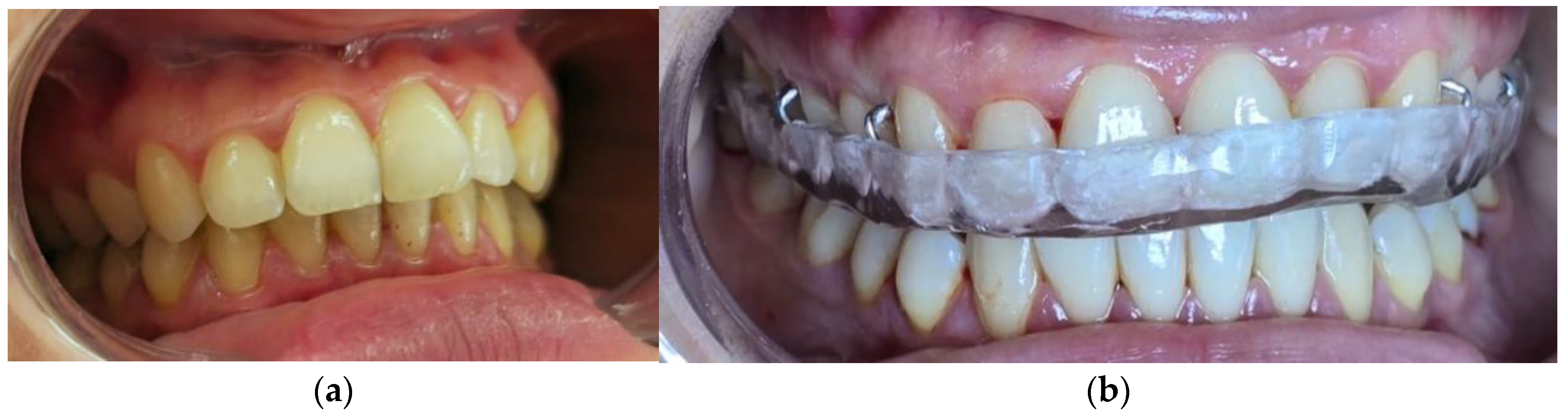
In the extra-oral examination, the following were observed: facial symmetry with no visible swelling or erythema. On palpation, the bilateral masseter and anterior temporalis muscles were painful, and palpation elicited the patient’s familiar pain. No cervical muscle tenderness was noted. The maximum unassisted mouth opening was 41 mm. During opening, mandibular deviation toward the left side was observed, which corrected near maximum opening. A reproducible clicking sound was detected in the left TMJ during both opening and closing movements. Lateral and protrusive movements were within normal limits and pain-free. During the intraoral examination (Figure 1a), Angle Class I molar relationship, with a 4 mm overbite and a 2 mm overjet were observed.
Figure 1. (a) Intraoral Image; (b) Stabilization maxillary splint.
Based on the Diagnostic Criteria for Temporomandibular Disorders (DC/TMD) Axis I protocol, the patient fulfilled the criteria for disc displacement with reduction in the left TMJ and bilateral myalgia of the masticatory muscles. Muscle pain was classified as localized myalgia, as palpation reproduced the patient’s familiar pain without referral beyond the palpated muscle boundaries. Additionally, DC/TMD Axis II instruments were administered at baseline. Pain-related disability was assessed using the Graded Chronic Pain Scale version 2.0 (GCPS v2.0), which indicated the presence of moderate pain intensity with low pain-related disability, as the patient reported minimal interference with daily activities. Jaw function was evaluated through the Jaw Functional Limitation Scale–20 (JFLS-20), which revealed mild functional limitation, mainly during activities such as chewing and prolonged jaw activity, while functions related to speech, facial expression, and social interaction were not significantly affected. The Oral Behaviors Checklist indicated a low frequency of waking-state oral behaviors, with occasional stress-related jaw tension. No significant sleep-related parafunctional activities were reported. Psychological screening was evaluated through the Patient Health Questionnaire-9 (PHQ-9) and the Generalized Anxiety Disorder-7 (GAD-7), which showed scores below thresholds for clinically significant depressive or anxiety symptoms. On the PHQ-15, the patient reported very few physical complaints, limited to mild tiredness and some difficulty sleeping, with no significant somatic symptoms. Overall, DC/TMD Axis II findings indicated moderate pain intensity with preserved functional capacity, mild jaw functional limitation, absence of clinically relevant psychological distress, and minimal behavioral risk factors, supporting a favorable prognosis and the appropriateness of conservative management.

Treatment

A conservative, non-invasive, multimodal treatment approach was implemented in accordance with current clinical recommendations for the management of disc displacement with reduction and myalgia. A maxillary hard acrylic stabilization splint (Figure 1b) was fabricated and adjusted in order to provide uniform bilateral occlusal contacts in centric relation. Centric relation was clinically determined by using a bilateral manual mandibular manipulation technique. The obtained mandibular position was confirmed through repeated guided closures. The patient was instructed to wear the splint during night, approximately 6–8 h per night, and during the day only during periods of increased symptoms or jaw tension. An initial adjustment was carried out at the time of splint delivery. Articulating paper was used during light and moderate clenching to identify and correct any uneven contacts, ensuring stable, bilateral occlusal contacts in centric relation without premature contacts or interferences. During lateral and protrusive movements, occlusion was checked with articulating paper to verify canine-guided disclusion during lateral excursions and anterior guidance during protrusive movements, ensuring posterior disclusion. The splint was also evaluated for stability, retention, and patient comfort, as well as for the absence of mucosal irritation or pressure areas. The patient was recalled 7 days after delivery of the stabilization splint. At this appointment, occlusal contacts were reassessed, and minor adjustments were performed. Follow-up visits were scheduled at 2 weeks, 3 months, and 12 months.
The patient was informed regarding the diagnosis of disc displacement with reduction and myalgia. The patient was counseled regarding the avoidance of parafunctional behaviors such as clenching, excessive gum chewing, prolonged mouth opening, and hard, chewy, and sticky foods. She was also instructed to avoid jaw clenching during stress and to maintain a relaxed jaw posture. A soft diet was recommended during the initial phase of treatment to minimize mechanical loading of the TMJ and masticatory muscles. A mandibular exercise program was also prescribed, including controlled mouth opening, relaxation exercises, and coordination movements. Exercises were demonstrated, with instructions for daily home practice.
At the two-week follow-up visit, pain intensity had decreased from 6/10 to 2/10, and muscle tenderness on palpation was markedly reduced. The patient reported that joint clicking occurred less frequently and with lower intensity. In this visit, no occlusal modifications of the stabilization splint were required.
After three months, the patient reported a lack of muscle pain and absence of joint sounds, which were confirmed clinically. At this stage, the patient was instructed to gradually discontinue the splint use. At one-year follow-up, the patient was asymptomatic. Maximum mouth opening was increased to 44 mm, mandibular movements were smooth and symmetrical, and no joint sounds were detectable or referred from the patient. Functional activities were performed without pain or limitation.

3. Discussion

Disc displacement with reduction is widely recognized as a temporomandibular disorder with a generally benign and self-limiting clinical course, particularly in young adults. In this context, the present case highlights the role of conservative management, based on DC/TMD criteria and clinical monitoring, in achieving stable outcomes in a patient with DDwR associated with myalgia. The findings underscore the clinical relevance of accurate diagnosis, patient-centered education, and reversible therapeutic strategies. In line with this evidence, contemporary clinical guidelines and systematic reviews strongly advocate conservative, reversible management as first-line treatment for most TMD presentations. Education, self-management strategies, therapeutic exercises, and stabilization splints are recommended. Irreversible occlusal or surgical interventions are reserved for rare, selected cases in order to minimize risks [16,17].
DDwR is highly prevalent in adolescents and young adults and is frequently detected in asymptomatic individuals, suggesting that disc displacement per se does not necessarily represent a pathological condition that requires treatment [18,19].
Longitudinal clinical studies have demonstrated that anterior DDwR may remain stable or may have adaptive changes over time, without progression [20]. Therefore, contemporary management emphasizes symptom control rather than disc recapture as a therapeutic endpoint.
In the present case, myalgia represented the primary pain component, which is consistent with evidence showing that muscle-related TMDs are the most common source of pain in mixed TMD presentations [21]. The reduction in pain as a result of conservative therapy supports the concept that muscle overuse, hyperactivity, and altered motor control play a central role in symptom generation, particularly in young individuals exposed to psychosocial stressors [22]. DC/TMD Axis II assessment in this case identified low pain-related disability and the absence of clinically significant depressive or anxiety symptoms, while stress-related jaw tension was reported during periods of academic workload, supporting a mild psychosocial contribution without pathological psychological distress.
Stabilization splints may contribute to symptom improvement in temporomandibular disorders, particularly in muscle-related presentations, potentially by facilitating neuromuscular relaxation and a more balanced distribution of occlusal forces [23]. However, given the debated mechanisms of action and the generally favorable natural course of disc displacement with reduction, the observed clinical improvement should be interpreted within a broader conservative management framework.
Consistent with this view, systematic reviews report that stabilization splints can be associated with reductions in TMD-related pain, especially in muscle-related TMD, when applied as part of a multimodal conservative approach that includes patient education and behavioral strategies [24,25,26,27,28]. However, there is a lack of evidence regarding the long-term effect of conservative strategies. Patient education and reassurance were integral components of the treatment strategy. Studies demonstrate that education regarding the benign nature and prognosis of DDwR reduces pain-related anxiety and improves treatment adherence [29]. Behavioral counseling, which aims at the reduction of parafunctional activities and jaw overuse, is particularly relevant in patients with myalgia, where muscle loading is a key perpetuating factor [30]. Exercise-based therapies can help improve jaw function and relieve pain by promoting better motor control and also by reducing excessive muscle co-contraction [31].
Current evidence indicates that stabilization splints are effective in relieving symptoms as part of conservative management for temporomandibular disorders, particularly in muscle-related and mixed presentations; however, high-quality randomized trials suggest that their clinical effects are often comparable to those achieved with education, exercises, and counseling alone [32,33,34]. Gupta et al. [35] reported improvements in electromyographic activity and muscle symmetry following centric stabilization splint therapy over 3 months, suggesting favorable neuromuscular adaptation, although the small sample size and absence of a control group limit the strength of the conclusions.
In a systematic review of randomized controlled trials, Ahmed et al. [36] found that stabilization splints achieved clinical outcomes largely comparable to other conservative treatment modalities. In a pilot randomized trial, combined stabilization splint and low-level laser therapy resulted in greater short-term pain reduction and higher patient satisfaction than either therapy alone, while functional improvements were comparable across groups [37]. Magnetic Resonance is the gold standard, but it should be reserved for selected cases in which the diagnosis is uncertain, symptoms are atypical, or degenerative joint disease is suspected [38]. The one-year follow-up observed in this case reinforces evidence from prospective studies indicating that multimodal conservative management yields stable long-term outcomes [39,40,41]. This case supports that a biopsychosocial, symptom-oriented approach represents adequate practice for managing combined intra-articular and muscle-related TMDs in young adults.

4. Conclusions

This case supports the role of standardized DC/TMD-based diagnosis and individualized conservative management as essential components in the successful treatment of temporomandibular disorders. The favorable long-term outcome observed reinforces that non-invasive, symptom-oriented therapy can effectively manage disc displacement with reduction associated with myalgia in young adults.

Author Contributions

Conceptualization, N.H. and V.M.; methodology, N.H.; validation, N.H. and V.M.; formal analysis, N.H.; investigation, N.H.; resources, N.H.; data curation, N.H.; writing—original draft preparation, N.H.; writing—review and editing, N.H. and V.M.; visualization, N.H.; supervision. All authors have read and agreed to the published version of the manuscript.

Funding

This research received no external funding.

Institutional Review Board Statement

This study was conducted as part of a larger PhD research project. The research protocol received formal approval from the Ethical Committee of the University of Medicine, Tirana (Decision No. 8, dated 22 February 2024).

Data Availability Statement

The original contributions presented in this study are included in the article.

Conflicts of Interest

The authors declare no conflicts of interest.

Abbreviations

The following abbreviations are used in this manuscript:
DDwRDisc Displacement with Reduction
TMDTemporomandibular Disorder
TMJTemporomandibular Joint
DC/TMDDiagnostic Criteria for Temporomandibular Disorders
RDC/TMDResearch Diagnostic Criteria for Temporomandibular Disorders
VASVisual Analogue Scale
OHRQoLOral Health-Related Quality of Life

References

  1. Yap, A.U.; Zheng, Y.; Liu, T.; Li, Y.; Wo, P.K.; Du, S.; Xiong, X. Impact of comorbid depression and anxiety on temporomandibular disorders–related pain, sleep, function, behaviors, and quality of life. Sci. Rep. 2025, 15, 35620. [Google Scholar] [CrossRef]
  2. Slade, G.D.; Ohrbach, R.; Greenspan, J.D.; Fillingim, R.B.; Bair, E.; Sanders, A.E.; Dubner, R.; Diatchenko, L.; Meloto, C.B.; Smith, S.; et al. Painful Temporomandibular Disorder: Decade of Discovery from OPPERA Studies. J. Dent. Res. 2016, 95, 1084–1092. [Google Scholar] [CrossRef] [PubMed] [PubMed Central]
  3. Fillingim, R.B.; Slade, G.D.; Greenspan, J.D.; Dubner, R.; Maixner, W.; Bair, E.; Ohrbach, R. Long-term changes in biopsychosocial characteristics related to temporomandibular disorder: Findings from the OPPERA study. Pain 2018, 159, 2403–2413. [Google Scholar] [CrossRef] [PubMed] [PubMed Central]
  4. Gatchel, R.J.; Peng, Y.B.; Peters, M.L.; Fuchs, P.N.; Turk, D.C. The biopsychosocial approach to chronic pain. Psychol. Bull. 2007, 133, 581–624. [Google Scholar] [CrossRef]
  5. Manfredini, D.; Häggman-Henrikson, B.; Al Jaghsi, A.; Baad-Hansen, L.; Beecroft, E.; Bijelic, T.; Bracci, A.; Brinkmann, L.; Bucci, R.; Colonna, A.; et al. Temporomandibular disorders: INfORM/IADR key points for good clinical practice based on standard of care. Cranio 2025, 43, 1–5. [Google Scholar] [CrossRef]
  6. Mauro, G.; Verdecchia, A.; Suárez-Fernández, C.; Nocini, R.; Mauro, E.; Zerman, N. Temporomandibular disorders management—What’s new? A scoping review. Dent. J. 2024, 12, 157. [Google Scholar] [CrossRef] [PubMed]
  7. Dworkin, S.F.; LeResche, L. Research diagnostic criteria for temporomandibular disorders: Review, criteria, examinations and specifications, critique. J. Craniomandib. Disord. 1992, 6, 301–355. [Google Scholar] [PubMed]
  8. Schiffman, E.; Ohrbach, R.; Truelove, E.; Look, J.; Anderson, G.; Goulet, J.-P.; List, T.; Svensson, P.; Gonzalez, Y.; Lobbezoo, F.; et al. Diagnostic Criteria for Temporomandibular Disorders (DC/TMD) for clinical and research applications: Recommendations of the International RDC/TMD Consortium Network* and Orofacial Pain Special Interest Group†. J. Oral Facial Pain Headache 2014, 28, 6–27. [Google Scholar] [CrossRef]
  9. Schiffman, E.; Ohrbach, R. Executive summary of the Diagnostic Criteria for Temporomandibular Disorders for clinical and research applications. J. Am. Dent. Assoc. 2016, 147, 438–445. [Google Scholar] [CrossRef] [PubMed] [PubMed Central]
  10. Alqutaibi, A.Y.; Alhammadi, M.S.; Hamadallah, H.H.; Altarjami, A.A.; Malosh, O.T.; Aloufi, A.M.; Alkahtani, L.M.; Alharbi, F.S.; Halboub, E.; Almashraqi, A.A. Global prevalence of temporomandibular disorders: A systematic review and meta-analysis. J. Oral Facial Pain Headache 2025, 39, 48–65. [Google Scholar] [CrossRef]
  11. Valesan, L.F.; Da-Cas, C.D.; Réus, J.C.; Denardin, A.C.S.; Garanhani, R.R.; Bonotto, D.; Januzzi, E.; de Souza, B.D.M. Prevalence of temporomandibular joint disorders: A systematic review and meta-analysis. Clin. Oral Investig. 2021, 25, 441–453. [Google Scholar] [CrossRef]
  12. Kumar, R.; Pallagatti, S.; Sheikh, S.; Mittal, A.; Gupta, D.; Gupta, S. Correlation between clinical findings of temporomandibular disorders and MRI characteristics of disc displacement. Open Dent. J. 2015, 9, 273–281. [Google Scholar] [CrossRef] [PubMed]
  13. Sato, S.; Goto, S.; Nasu, F.; Motegi, K. Natural course of disc displacement with reduction of the temporomandibular joint: Changes in clinical signs and symptoms. J. Oral Maxillofac. Surg. 2003, 61, 32–34. [Google Scholar] [CrossRef] [PubMed]
  14. Eliassen, M.; Hjortsjö, C.; Olsen-Bergem, H.; Bjørnland, T. Self-exercise programmes and occlusal splints in the treatment of TMD-related myalgia—Evidence-based medicine? J. Oral Rehabil. 2019, 46, 1088–1094. [Google Scholar] [CrossRef]
  15. Reissmann, D.R.; John, M.T.; Schierz, O.; Wassell, R.W. Functional and psychosocial impact related to specific temporomandibular disorder diagnoses. J. Dent. 2007, 35, 643–650. [Google Scholar] [CrossRef] [PubMed]
  16. List, T.; Axelsson, S. Management of TMD: Evidence from systematic reviews and meta-analyses. J. Oral Rehabil. 2010, 37, 430–451. [Google Scholar] [CrossRef] [PubMed]
  17. Hu, Y.; Yang, C.; Xie, Q. Changes in disc status in the reducing and nonreducing anterior disc displacement of temporomandibular joint: A longitudinal retrospective study. Sci. Rep. 2016, 6, 34253. [Google Scholar] [CrossRef]
  18. Poluha, R.L.; Canales, G.T.; Costa, Y.M.; Grossmann, E.; Bonjardim, L.R.; Conti, P.C.R. Temporomandibular joint disc displacement with reduction: A review of mechanisms and clinical presentation. J. Appl. Oral Sci. Rev. 2019, 27, e20180433. [Google Scholar] [CrossRef]
  19. Tonin, R.H.; Iwaki Filho, L.; Grossmann, E.; Lazarin, R.O.; Pinto, G.N.S.; Previdelli, I.T.S.; Iwaki, L.C.V. Correlation between age, gender, and the number of diagnoses of temporomandibular disorders through magnetic resonance imaging: A retrospective observational study. Cranio 2020, 38, 34–42. [Google Scholar] [CrossRef]
  20. Ohrbach, R.; Dworkin, S.F. The evolution of TMD diagnosis: Past, present, future. J. Dent. Res. 2016, 95, 1093–1101. [Google Scholar] [CrossRef]
  21. Kapos, F.P.; Exposto, F.G.; Oyarzo, J.F.; Durham, J. Temporomandibular disorders: A review of current concepts in aetiology, diagnosis and management. Oral Surg. 2020, 13, 321–334. [Google Scholar] [CrossRef]
  22. Fillingim, R.B.; Slade, G.D.; Greenspan, J.D.; Knott, C.; Diatchenko, L.; Dubner, R.; Bair, E.; Baraian, C.; Mack, N.; Slade, G.D.; et al. Psychosocial factors associated with development of TMD. J. Pain 2013, 14, T75–T90. [Google Scholar] [CrossRef]
  23. Kurita, H.; Ikeda, K.; Kurashina, K. Evaluation of the effect of a stabilization splint on occlusal force in patients with masticatory muscle disorders. J. Oral Rehabil. 2000, 27, 79–82. [Google Scholar] [CrossRef]
  24. Albagieh, H.; AlWazzan, A.K.; Alhelal, F.A.; Alem, M.F.; Albaiz, A.M.; Aloraini, T.K.; Alselmi, M.K. Effectiveness of Occlusal Splints in the Management of Temporomandibular Disorders: Comparisons of Treatment Approaches and Digital Versus Conventional Fabrication Techniques. Cureus 2025, 17, e77451. [Google Scholar] [CrossRef]
  25. Zhang, C.; Wu, J.Y.; Deng, D.L.; He, B.Y.; Tao, Y.; Niu, Y.M.; Deng, M.H. Efficacy of splint therapy for the management of temporomandibular disorders: A meta-analysis. Oncotarget 2016, 7, 84043–84053. [Google Scholar] [CrossRef]
  26. Kuzmanovic Pficer, J.; Dodic, S.; Lazic, V.; Trajkovic, G.; Milic, N.; Milicic, B. Occlusal stabilization splint for patients with temporomandibular disorders: Meta-analysis of short- and long-term effects. PLoS ONE 2017, 12, e0171296. [Google Scholar] [CrossRef] [PubMed]
  27. Noguchi, T.; Kashiwagi, K.; Fukuda, K. The effectiveness of stabilization appliance therapy among patients with myalgia. Clin. Exp. Dent. Res. 2020, 6, 244–253. [Google Scholar] [CrossRef] [PubMed]
  28. Dao, T.T.; Lavigne, G.J. Oral splints: The crutches for temporomandibular disorders and bruxism? Crit. Rev. Oral Biol. Med. 1998, 9, 345–361. [Google Scholar] [CrossRef] [PubMed]
  29. Greene, C.S. Managing the care of patients with temporomandibular disorders. J. Am. Dent. Assoc. 2010, 141, 1086–1088. [Google Scholar] [CrossRef]
  30. Michelotti, A.; Cioffi, I.; Festa, P.; Scala, G.; Farella, M. Oral parafunctions as risk factors for diagnostic subgroups of TMD. J. Oral Rehabil. 2010, 37, 157–162. [Google Scholar] [CrossRef]
  31. Armijo-Olivo, S.; Pitance, L.; Singh, V.; Neto, F.; Thie, N.; Michelotti, A. Effectiveness of manual therapy and therapeutic exercise for TMD. Phys. Ther. 2016, 96, 9–25. [Google Scholar] [CrossRef]
  32. Qvintus, V.; Suominen, A.L.; Huttunen, J.; Raustia, A.; Ylöstalo, P.; Sipilä, K. Efficacy of stabilisation splint treatment on facial pain: 1-year follow-up. J. Oral Rehabil. 2015, 42, 439–446. [Google Scholar] [CrossRef]
  33. Niemelä, K.; Korpela, M.; Raustia, A.; Ylöstalo, P.; Sipilä, K. Efficacy of stabilisation splint treatment on temporomandibular disorders. J. Oral Rehabil. 2012, 39, 799–804. [Google Scholar] [CrossRef]
  34. Kokkola, O.; Suominen, A.L.; Qvintus, V.; Myllykangas, R.; Lahti, S.; Tolvanen, M.; Sipilä, K. Efficacy of stabilisation splint treatment on oral health-related quality of life: A randomised controlled one-year follow-up trial. J. Oral Rehabil. 2018, 45, 355–362. [Google Scholar] [CrossRef]
  35. Gupta, A.K.; Gupta, R.; Tiwari, B.; Verma, K. Effect of a centric stabilization splint on masticatory muscles in patients with temporomandibular disorders: An electromyographic study. J. Indian Prosthodont. Soc. 2024, 24, 76–81. [Google Scholar] [CrossRef] [PubMed]
  36. Ahmed, S.; Khan, M.; Ahmed, J.; Saleem, S.; Shareef, H. Stabilisation splint versus other conservative therapies for the treatment of temporomandibular disorders: A systematic review. J. Coll. Physicians Surg. Pak. 2024, 34, 822–827. [Google Scholar] [CrossRef] [PubMed]
  37. Afshari, Z.; Kookhi, N.A.; Shamali, M.; Monfared, M.S.; Tavakolizadeh, S. The effectiveness of multimodality treatment including stabilization splint and low-level laser therapies on managing temporomandibular disorders: A pilot randomized controlled trial. Clin. Exp. Dent. Res. 2025, 11, e70038. [Google Scholar] [CrossRef] [PubMed]
  38. Ahmad, M.; Hollender, L.; Anderson, Q.; Kartha, K.; Ohrbach, R.; Truelove, E.L.; John, M.T.; Schiffman, E.L. Research diagnostic criteria for TMD: Imaging criteria. Oral Surg. Oral Med. Oral Pathol. Oral Radiol. Endod. 2009, 107, 844–860. [Google Scholar] [CrossRef]
  39. Vrbanović, E.; Alajbeg, I.Z. Long-term effectiveness of occlusal splint therapy compared to placebo in patients with chronic temporomandibular disorders. Acta Stomatol. Croat. 2019, 53, 195–206. [Google Scholar] [CrossRef]
  40. Gatchel, R.J.; Stowell, A.W.; Wildenstein, L.; Riggs, R.; Ellis, E. Efficacy of an early intervention for patients with acute TMD-related pain. J. Am. Dent. Assoc. 2006, 137, 339–347. [Google Scholar] [CrossRef]
  41. Yamaguchi, Y.; Ooi, K.; Yuasa, H.; Nishiyama, A.; Matsuka, Y.; Abe, T.; Matsuda, S.; Watanabe, Y.; Suzuki, Y.; Kashiwagi, M.; et al. Efficacy of initial conservative treatment options for temporomandibular disorders: A network meta-analysis of randomized clinical trials. J. Prosthodont. Res. 2025, 69, 173–180. [Google Scholar] [CrossRef] [PubMed]
Disclaimer/Publisher’s Note: The statements, opinions and data contained in all publications are solely those of the individual author(s) and contributor(s) and not of MDPI and/or the editor(s). MDPI and/or the editor(s) disclaim responsibility for any injury to people or property resulting from any ideas, methods, instructions or products referred to in the content.

Article Metrics

Citations

Article Access Statistics

Multiple requests from the same IP address are counted as one view.