
Recycled Pavement Materials and Urban Microclimate: Albedo and Thermal Capacity Effects on Heat Island Mitigation



Abstract
1. Introduction
1.1. Problem Statement
1.2. Aspects of Material Engineering for Pavement Surfaces
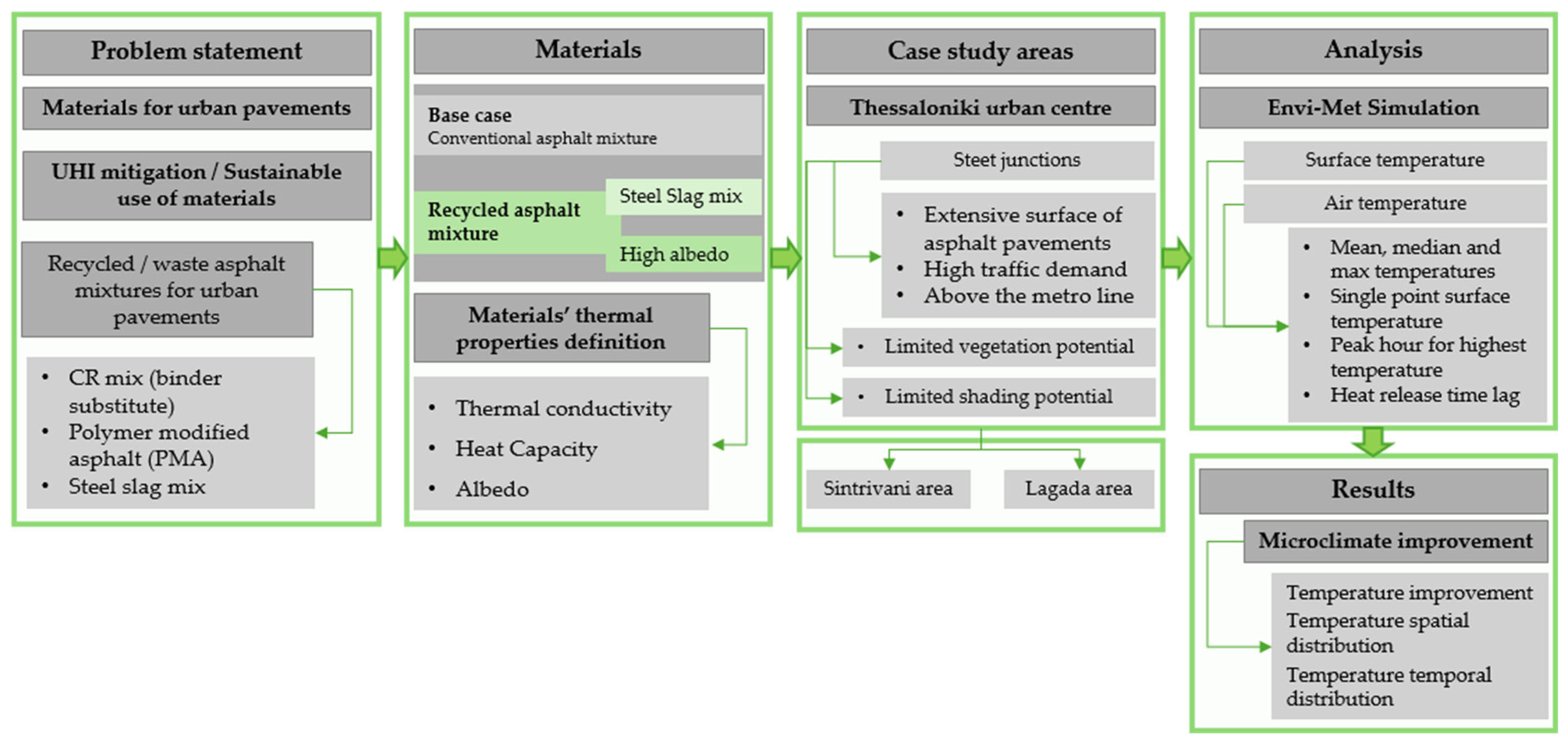
1.3. Aim and Objectives
- To define typical pavement structures met in urban streets and assume typical material composition for the mixture of the surface layer;
- To quantify the effect of replacing conventional pavement materials on the microclimatic conditions of the city. To this end, the temperature change caused by the replacement of conventional mixtures with recycled or waste materials in different layouts of the cities’ street network configurations has been calculated.
2. Materials and Methods
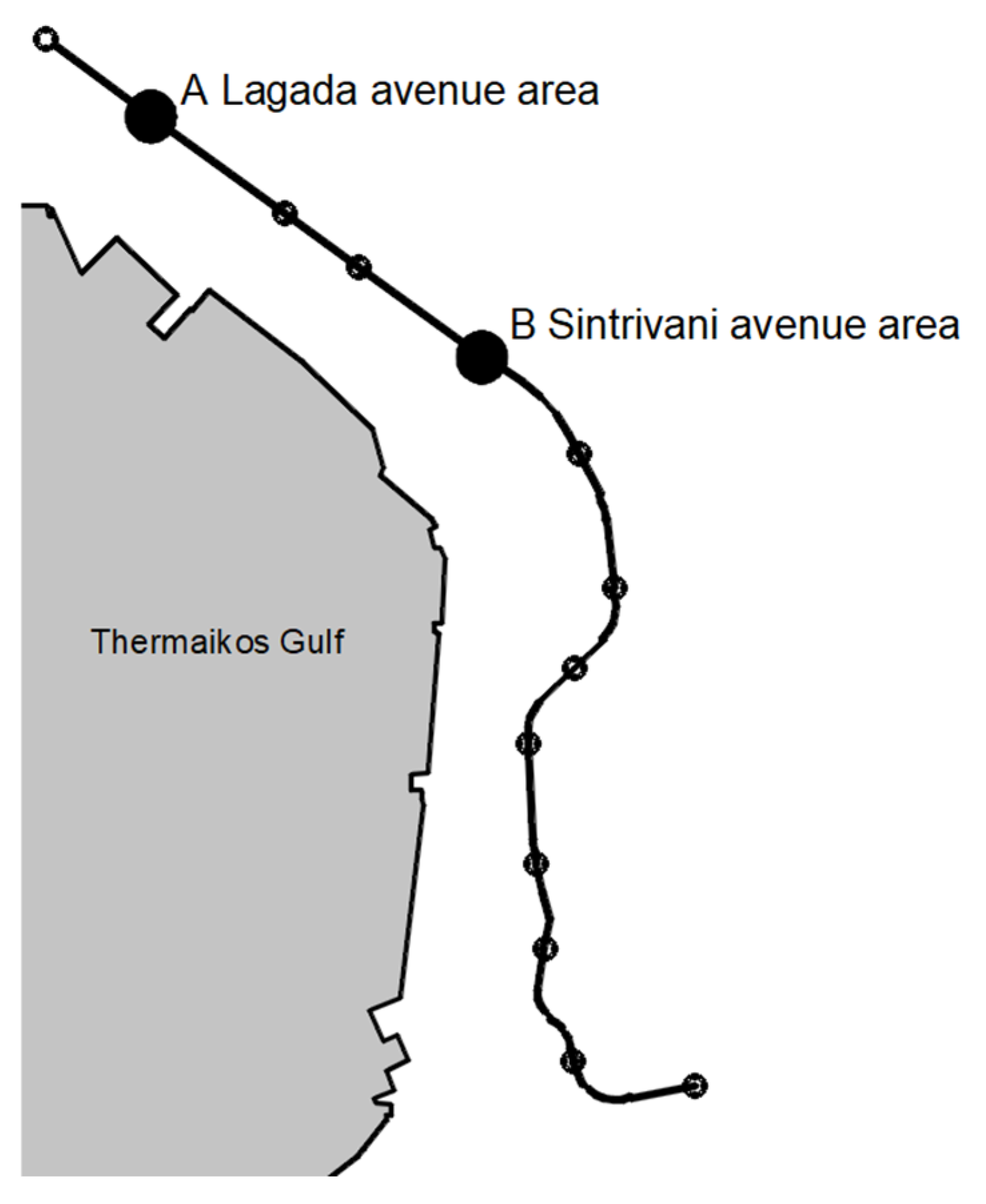
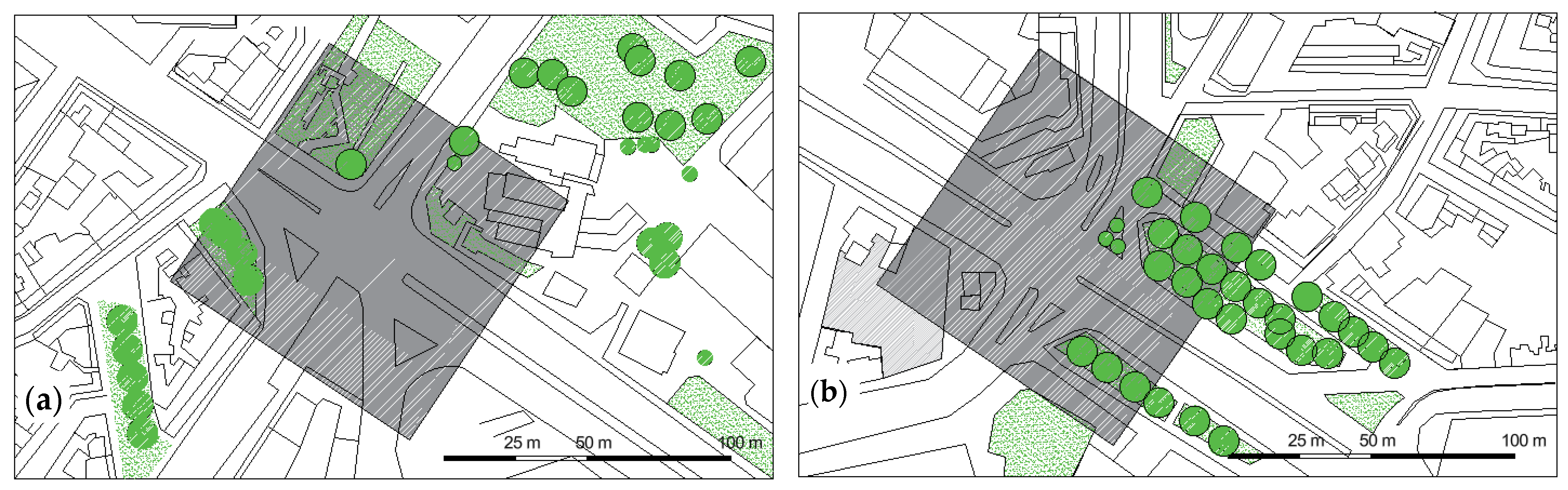
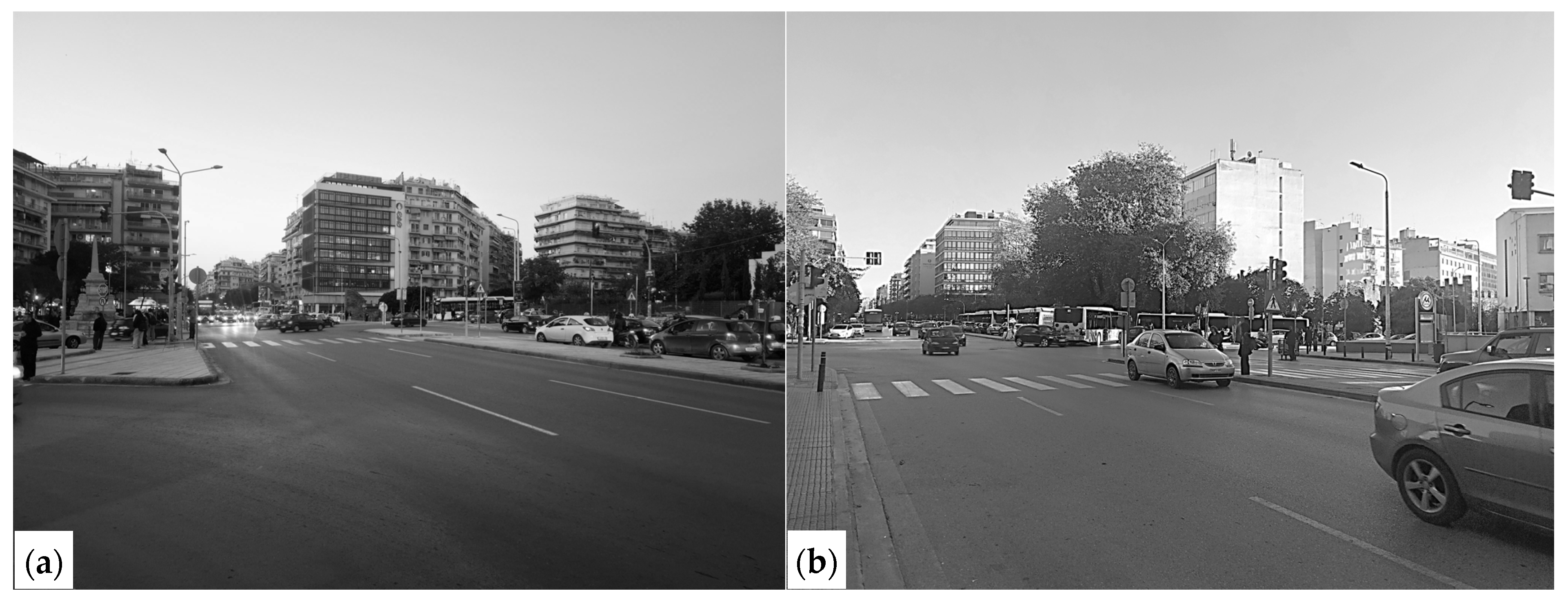
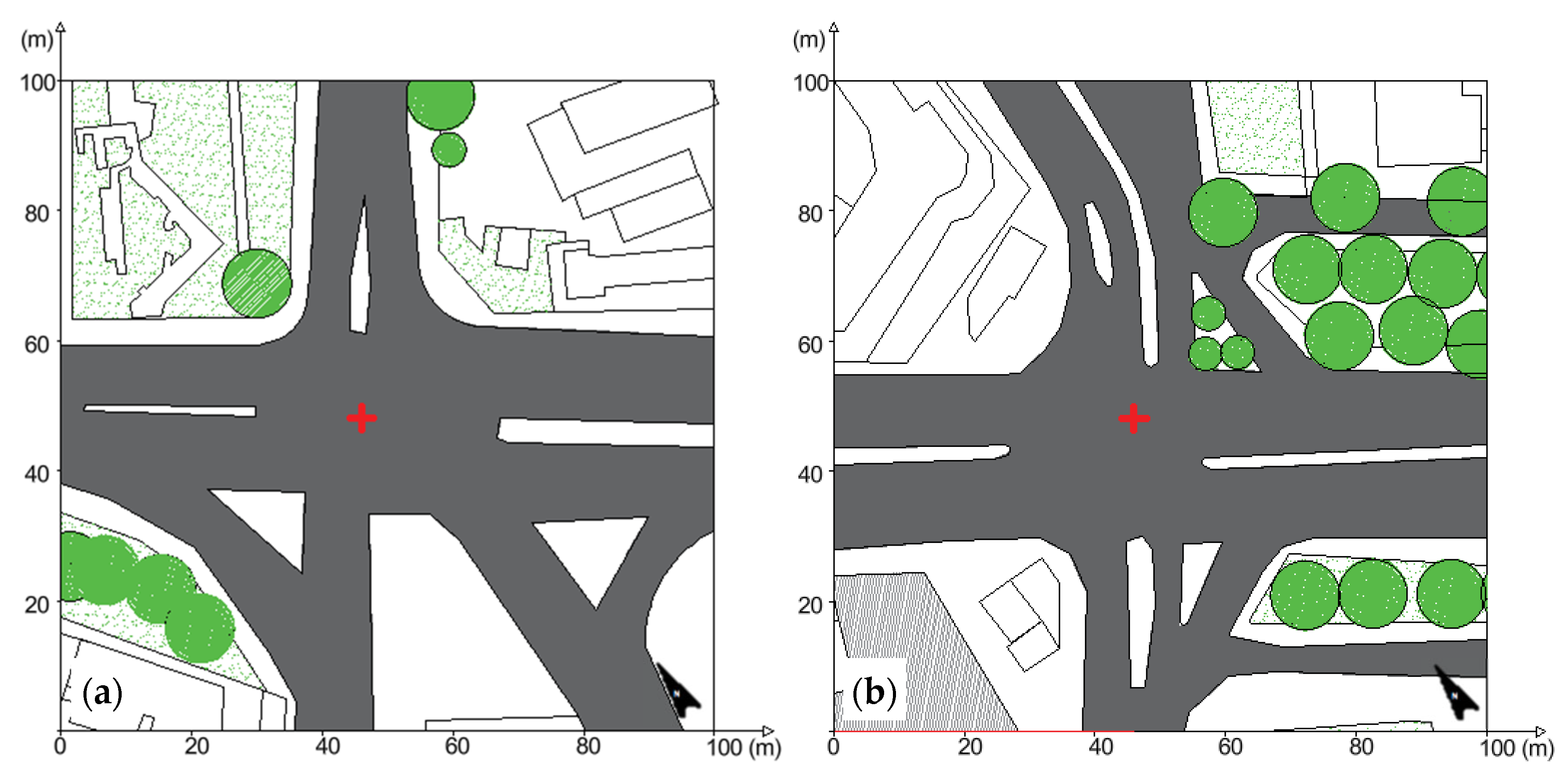
2.1. Case Study Area
2.2. Material Data Collection
- The surface albedo is a measure of the amount of solar radiation reflected by an object compared to the total solar radiation it receives on its surface, with values ranging from 0 to 1, where 1 indicates total reflection;
- Thermal conductivity is the rate of heat transfer through a unit area of a material per unit temperature gradient under steady-state conditions. It represents the amount of heat conducted per unit time across a unit area for a unit of temperature difference across a unit of thickness and is expressed in W·m−1·K−1 [61];
- The volumetric heat capacity describes the ability of a given volume of a substance to store internal energy while undergoing a given temperature change, but without undergoing a phase change. The volumetric heat capacity (ρ × Cp) is considered an important parameter with which to assess the energy storage material. The volumetric heat capacity is the product of density ρ and specific heat capacity Cp [62].
2.2.1. Assessment of the Asphalt Mixture’s Thermal Properties

| Material | Asphalt Binder (Bitumen) | CR Binder Substitute | Plastic-Based Binder Substitute 1 | Steel Slag Aggregate Substitute | Limestone Aggregate |
|---|---|---|---|---|---|
| Thermal conductivity, λ (W/m·K), | 0.15–0.17 [65], 0.17, 0.362 ± 0.0003 [66] | 0.243 2 [67], 0.275 ± 0.0005 3 [66], 0.418 4 [67] | 0.331, 0.414, 0.502 [67] | 0.90–1.70 [68] | 1.30–3.00 [3] 1.4, 1.7, 2.3 [69], 2.92 [65], 2.8 [70] |
| Heat capacity (J/Kg·K) | 1158 [65], 2093 [61], 1670 ± 0.0007 [66] | 1757 [67], 1591 ± 0.0003 [66], 1443 [67] | 2092–2301 [67] | 732 [68], 810 [71] | 790–930 [3], 921 [67], 908, |
| Density (Kg/m3) | 1020–1060 [72] | 1340 [67], 322.6 [73] | 920, 935, 950 [67] | 2230, 3100 [61], 3980 [71] | 1650–2500 [67] 2000, 2200, 2600 [69] |
| Properties of Each Mix | Conventional Hot Mix Asphalt (HMA) New | Conventional Hot Mix Asphalt (HMA) Aged | CR Mix (Binder Substitute) | Polymer Modified Asphalt (PMA) | Steel Slag Mix (30% Aggregate Substitute) | Pigment Coating |
|---|---|---|---|---|---|---|
| Surface albedo | 0.04–0.06 [74], 0.05 [75] | 0.09–0.18 [74], 0.14 [76], 0.15 [75], 0.120 [61] | 0.08 [76] | 0.12 [76] | 0.0674 [77], 0.089 [78], | Beige: 0.45 [79], Off-white: 0.55 [80], yellow: 0.62 [79], 0.44 [80], Green: 0.43 [79], 0.27 [80] |
2.2.2. Definition of Material Use
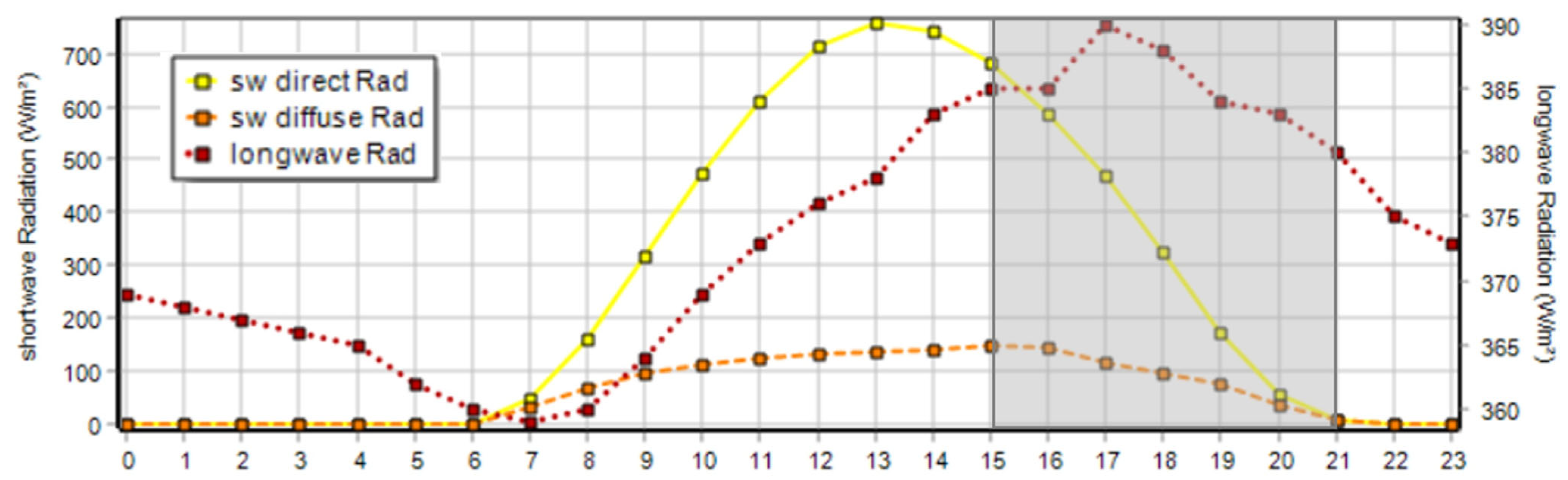
2.3. Simulation Data and Processing
- i.
- Base case: Conventional asphalt pavements (existing situation).
- ii.
- Sustainable street scenario: replacement of asphalt pavements with recycled solid waste materials (steel slag).
3. Results
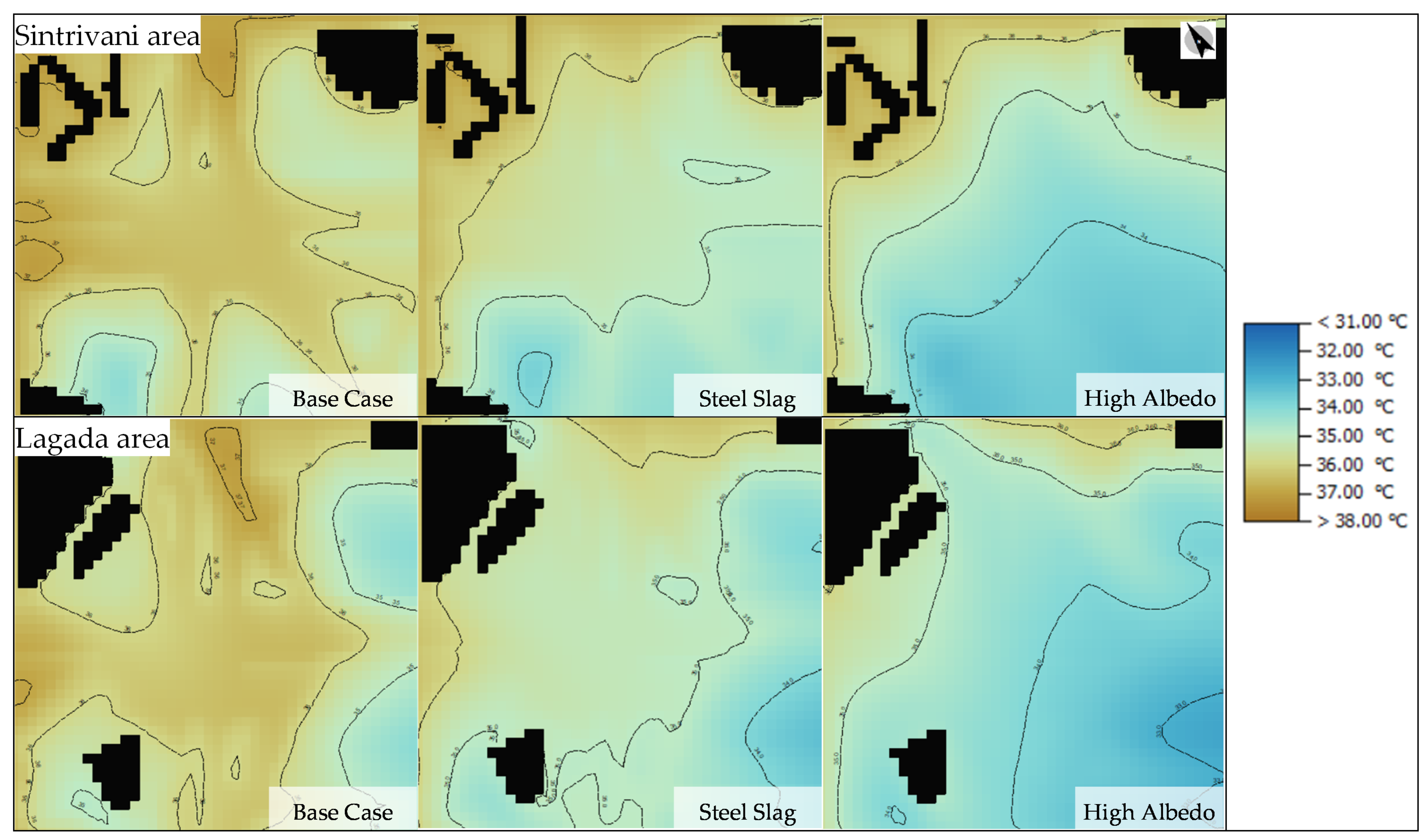
3.1. Surface Temperature
Assessment of Model Variability and Uncertainty in the Interpretation of Results
- Boundary conditions and input data, such as meteorological parameters (solar radiation, wind speed, and humidity);
- Material property assumptions, e.g., emissivity, albedo, and thermal conductivity, which may not perfectly reflect real-world conditions.
- Spatial resolution, where coarse grid cells can smooth out local variations, underestimating temperature extremes.
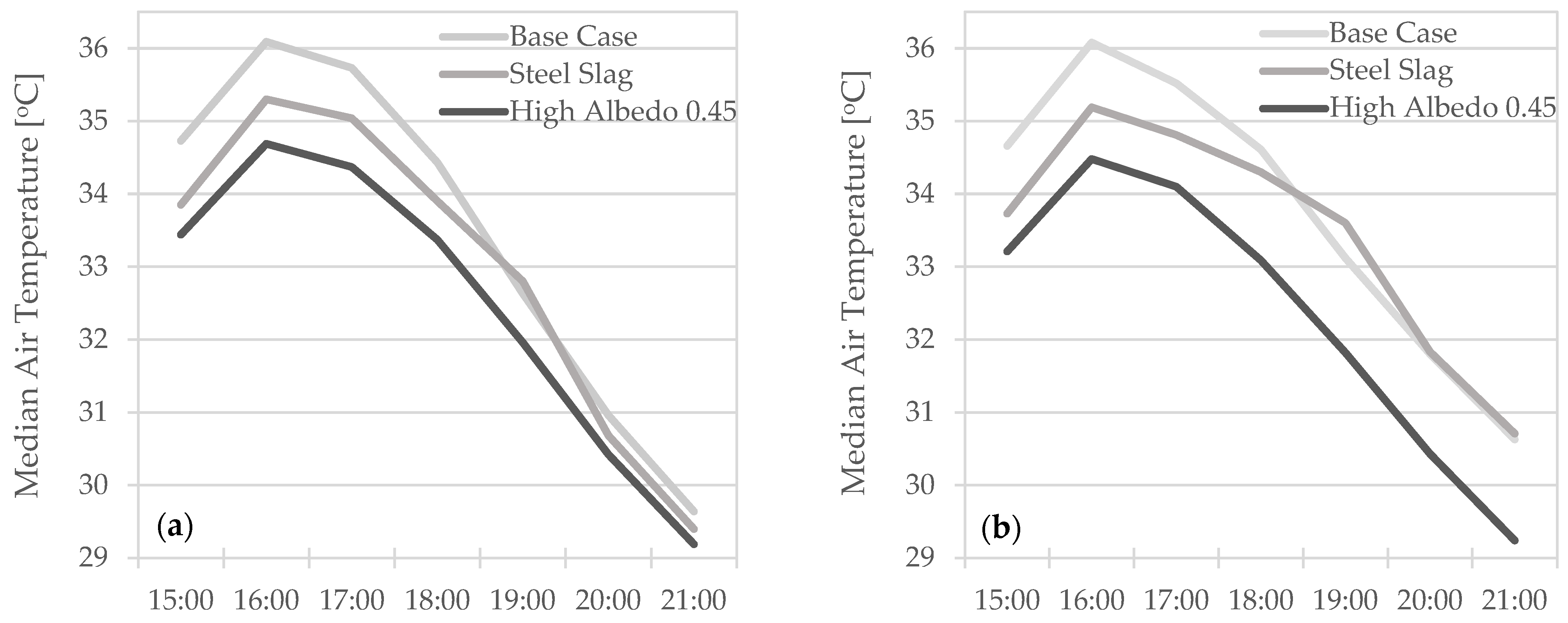
3.2. Air Temperature
4. Discussion
5. Conclusions
Author Contributions
Funding
Data Availability Statement
Conflicts of Interest
Abbreviations
| UHI | Urban heat island |
| EEST | Eastern European Summer Time |
| PP | Polypropylene |
| PE | Polyethylene |
| PVC | Polyvinyl chloride |
| PET | Polyethylene terephthalate |
| WMA | Warm asphalt mixture |
| RAP | Reclaimed asphalt pavement |
| CR | Crumb rubber |
References
- Tsirigoti, D. Urban Geometry and Sustainability: The Effect of Green Interventions on the Urban Microclimate of Greek Cities. EuroMediterr. J. Environ. Integr. 2025, 10, 4355–4367. [Google Scholar] [CrossRef]
- Huang, Y.; Bird, R.N.; Heidrich, O. A Review of the Use of Recycled Solid Waste Materials in Asphalt Pavements. Resour. Conserv. Recycl. 2007, 52, 58–73. [Google Scholar] [CrossRef]
- El-Badawy, S.M.; Gabr, A.R.; El-Hakim, R.T.A. Recycled Materials and By-Products for Pavement Construction. In Handbook of Ecomaterials; Springer: Berlin/Heidelberg, Germany, 2019; Chapter 3; pp. 2177–2198. [Google Scholar] [CrossRef]
- Bizarro, D.E.G.; Steinmann, Z.; Nieuwenhuijse, I.; Keijzer, E.; Hauck, M. Potential Carbon Footprint Reduction for Reclaimed Asphalt Pavement Innovations: LCA Methodology, Best Available Technology, and Near-Future Reduction Potential. Sustainability 2021, 13, 1382. [Google Scholar] [CrossRef]
- Apaza, F.R.A.; Vázquez, V.F.; Paje, S.E.; Saiz, L.; Gulisano, F.; Gallego, J. The Potential Effect of Crumb Rubber on the Maximum Sound Absorption Performance of Asphalt Mixtures. Constr. Build. Mater. 2023, 389, 131789. [Google Scholar] [CrossRef]
- Stathopoulou, M.; Cartalis, C.; Keramitsoglou, I. Mapping Micro-Urban Heat Islands Using NOAA/AVHRR Images and CORINE Land Cover: An Application to Coastal Cities of Greece. Int. J. Remote Sens. 2004, 25, 2301–2316. [Google Scholar] [CrossRef]
- Papagiannakis, A.; Vitopoulou, A.; Yiannakou, A. Transit-Oriented Development in the Southern European City of Thessaloniki Introducing Urban Railway: Typology and Implementation Issues. Eur. Plan. Stud. 2021, 29, 117–141. [Google Scholar] [CrossRef]
- Abdel-Jaber, M.; Al-shamayleh, R.A.; Ibrahim, R.; Alkhrissat, T.; Alqatamin, A. Mechanical Properties Evaluation of Asphalt Mixtures with Variable Contents of Reclaimed Asphalt Pavement (RAP). Results Eng. 2022, 14, 100463. [Google Scholar] [CrossRef]
- Fedrigo, W.; Heller, L.F.; Brito, L.A.T.; Núñez, W.P. Fatigue of Cold Recycled Cement-Treated Pavement Layers: Experimental and Modeling Study. Sustainability 2023, 15, 7816. [Google Scholar] [CrossRef]
- Piao, Z.; Mikhailenko, P.; Kakar, M.R.; Bueno, M.; Hellweg, S.; Poulikakos, L.D. Urban Mining for Asphalt Pavements: A Review. J. Clean. Prod. 2021, 280, 124916. [Google Scholar] [CrossRef]
- Gkyrtis, K.; Pomoni, M. An Overview of the Recyclability of Alternative Materials for Building Surface Courses at Pavement Structures. Buildings 2024, 14, 1571. [Google Scholar] [CrossRef]
- Jamshidi, A.; White, G. Evaluation of Performance and Challenges of Use of Waste Materials in Pavement Construction: A Critical Review. Appl. Sci. 2019, 10, 226. [Google Scholar] [CrossRef]
- Zhao, Z.; Xiao, F.; Amirkhanian, S. Recent Applications of Waste Solid Materials in Pavement Engineering. Waste Manag. 2020, 108, 78–105. [Google Scholar] [CrossRef]
- Xu, X.; Leng, Z.; Lan, J.; Wang, W.; Yu, J.; Bai, Y.; Sreeram, A.; Hu, J. Sustainable Practice in Pavement Engineering through Value-Added Collective Recycling of Waste Plastic and Waste Tyre Rubber. Engineering 2021, 7, 857–867. [Google Scholar] [CrossRef]
- 41% of Plastic Packaging Waste Recycled in 2022—News Articles—Eurostat. Available online: https://ec.europa.eu/eurostat/web/products-eurostat-news/w/ddn-20241024-3 (accessed on 16 August 2025).
- Bernardo, M.; Forehead, H.; De Carvalho Vallin, I.; Gonçalves-Dias, S.L.F. Management of Household Plastic Waste in Wollongong, Australia: The Role of Selective Waste Collection Systems. Sustainability 2023, 15, 1726. [Google Scholar] [CrossRef]
- Mashaan, N. Engineering Characterisation of Wearing Course Materials Modified with Waste Plastic. Recycling 2022, 7, 61. [Google Scholar] [CrossRef]
- Giri, J.P.; Panda, M.; Sahoo, U.C. Performance of Bituminous Mixes Containing Treated Recycled Concrete Aggregates and Modified by Waste Polyethylene. J. Mater. Civ. Eng. 2018, 30, 04018184. [Google Scholar] [CrossRef]
- Moghadas Nejad, F.; Arabani, M.; Hamedi, G.H.; Azarhoosh, A.R. Influence of Using Polymeric Aggregate Treatment on Moisture Damage in Hot Mix Asphalt. Constr. Build. Mater. 2013, 47, 1523–1527. [Google Scholar] [CrossRef]
- Usman, N.; Masirin, M.I.M.; Ahmad, K.A.; Ali, A.S.B. Application of Recycled Polyethylene Terephthalate Fiber in Asphaltic Mix for Fatigue Life Improvement. In Proceedings of the 1st Global Civil Engineering Conference, GCEC 2017, Kuala Lumpur, Malaysia, 25–28 July 2017; Lecture Notes in Civil Engineering; Springer: Berlin/Heidelberg, Germany, 2019; Volume 9, pp. 1401–1413. [Google Scholar] [CrossRef]
- Köfteci, S. Effect of HDPE Based Wastes on the Performance of Modified Asphalt Mixtures. Procedia Eng. 2016, 161, 1268–1274. [Google Scholar] [CrossRef]
- Nouali, M.; Derriche, Z.; Ghorbel, E.; Chuanqiang, L. Plastic Bag Waste Modified Bitumen a Possible Solution to the Algerian Road Pavements. Road Mater. Pavement Des. 2020, 21, 1713–1725. [Google Scholar] [CrossRef]
- Bressi, S.; Fiorentini, N.; Huang, J.; Losa, M. Crumb Rubber Modifier in Road Asphalt Pavements: State of the Art and Statistics. Coatings 2019, 9, 384. [Google Scholar] [CrossRef]
- Venudharan, V.; Biligiri, K.P.; Sousa, J.B.; Way, G.B. Asphalt-Rubber Gap-Graded Mixture Design Practices: A State-of-the-Art Research Review and Future Perspective. Road Mater. Pavement Des. 2017, 18, 730–752. [Google Scholar] [CrossRef]
- Kedarisetty, S.; Biligiri, K.P.; Sousa, J.B. Advanced Rheological Characterization of Reacted and Activated Rubber (RAR) Modified Asphalt Binders. Constr. Build. Mater. 2016, 122, 12–22. [Google Scholar] [CrossRef]
- European Tire & Rubber Manufacturer’s Association (ETRMA). The ETRMA Statistics Report; European Tire & Rubber Manufacturer’s Association: Saint-Josse-ten-Noode, Belgium, 2019; Available online: https://www.etrma.org/wp-content/uploads/2019/10/20191114-Statistics-booklet-2019-Final-for-web.pdf (accessed on 24 December 2025).
- Cong, P.; Xun, P.; Xing, M.; Chen, S. Investigation of Asphalt Binder Containing Various Crumb Rubbers and Asphalts. Constr. Build. Mater. 2013, 40, 632–641. [Google Scholar] [CrossRef]
- Kim, S.; Lee, S.J.; Yun, Y.-B.; Kim, K.W. The Use of CRM-Modified Asphalt Mixtures in Korea: Evaluation of High and Ambient Temperature Performance. Constr. Build. Mater. 2014, 67, 244–248. [Google Scholar] [CrossRef]
- Qiu, X.; Chen, L.; Xue, L. Effect of Crumb Rubber Modifier on Pavement Performance of Wearing Course Asphalt Mixture. Adv. Mat. Res. 2011, 168–170, 1145–1148. [Google Scholar] [CrossRef]
- Navarro, F.M.; Gámez, M.C.R. Influence of Crumb Rubber on the Indirect Tensile Strength and Stiffness Modulus of Hot Bituminous Mixes. J. Mater. Civ. Eng. 2011, 24, 715–724. [Google Scholar] [CrossRef]
- Kök, B.V.; Çolak, H. Laboratory Comparison of the Crumb-Rubber and SBS Modified Bitumen and Hot Mix Asphalt. Constr. Build. Mater. 2011, 25, 3204–3212. [Google Scholar] [CrossRef]
- Moreno-Navarro, F.; Sol-Sánchez, M.; Rubio-Gámez, M.C.; Segarra-Martínez, M. The Use of Additives for the Improvement of the Mechanical Behavior of High Modulus Asphalt Mixes. Constr. Build. Mater. 2014, 70, 65–70. [Google Scholar] [CrossRef]
- Wang, H.; Liu, X.; Erkens, S.; Skarpas, A. Experimental Characterization of Storage Stability of Crumb Rubber Modified Bitumen with Warm-Mix Additives. Constr. Build. Mater. 2020, 249, 118840. [Google Scholar] [CrossRef]
- Vigneswaran, S.; Yun, J.; Jeong, K.D.; Lee, M.S.; Lee, S.J. Effect of Crumb Rubber Modifier Particle Size on Storage Stability of Rubberized Binders. Sustainability 2023, 15, 13568. [Google Scholar] [CrossRef]
- Eskandarsefat, S.; Sangiorgi, C.; Dondi, G.; Lamperti, R. Recycling Asphalt Pavement and Tire Rubber: A Full Laboratory and Field Scale Study. Constr. Build. Mater. 2018, 176, 283–294. [Google Scholar] [CrossRef]
- Pomoni, M.; Plati, C.; Kane, M.; Loizos, A. Polishing Behaviour of Asphalt Surface Course Containing Recycled Materials. Int. J. Transp. Sci. Technol. 2022, 11, 711–725. [Google Scholar] [CrossRef]
- Gkyrtis, K.; Pomoni, M. Use of Historical Road Incident Data for the Assessment of Road Redesign Potential. Designs 2024, 8, 88. [Google Scholar] [CrossRef]
- Jamshidi, A.; Kurumisawa, K.; Nawa, T.; Igarashi, T. Performance of Pavements Incorporating Waste Glass: The Current State of the Art. Renew. Sustain. Energy Rev. 2016, 64, 211–236. [Google Scholar] [CrossRef]
- Khmiri, A.; Chaabouni, M.; Samet, B. Chemical Behaviour of Ground Waste Glass When Used as Partial Cement Replacement in Mortars. Constr. Build. Mater. 2013, 44, 74–80. [Google Scholar] [CrossRef]
- Su, N.; Chen, J.S. Engineering Properties of Asphalt Concrete Made with Recycled Glass. Resour. Conserv. Recycl. 2002, 35, 259–274. [Google Scholar] [CrossRef]
- Gedik, A. An Exploration into the Utilization of Recycled Waste Glass as a Surrogate Powder to Crushed Stone Dust in Asphalt Pavement Construction. Constr. Build. Mater. 2021, 300, 123980. [Google Scholar] [CrossRef]
- The European Steel Association. Position Paper on the Status of Ferrous Slag Complying with the Waste Framework Directive (Articles 5/6) and the REACH Regulation; The European Steel Association: Duisburg, Germany, 2012. [Google Scholar]
- Oluwasola, E.A.; Hainin, M.R.; Aziz, M.M.A. Comparative Evaluation of Dense-Graded and Gap-Graded Asphalt Mix Incorporating Electric Arc Furnace Steel Slag and Copper Mine Tailings. J. Clean. Prod. 2016, 122, 315–325. [Google Scholar] [CrossRef]
- Pattanaik, M.L.; Choudhary, R.; Kumar, B.; Kumar, A. Mechanical Properties of Open Graded Friction Course Mixtures with Different Contents of Electric Arc Furnace Steel Slag as an Alternative Aggregate from Steel Industries. Road Mater. Pavement Des. 2021, 22, 268–292. [Google Scholar] [CrossRef]
- Pasetto, M.; Baldo, N. Fatigue Behavior Characterization of Bituminous Mixtures Made with Reclaimed Asphalt Pavement and Steel Slag. Procedia Soc. Behav. Sci. 2012, 53, 297–306. [Google Scholar] [CrossRef]
- Martinho, F.C.G.; Picado-Santos, L.G.; Capitão, S.D. Influence of Recycled Concrete and Steel Slag Aggregates on Warm-Mix Asphalt Properties. Constr. Build. Mater. 2018, 185, 684–696. [Google Scholar] [CrossRef]
- Autelitano, F.; Giuliani, F. Optimization of Electric Arc Furnace Aggregates Replacement in Dense-Graded Asphalt Wearing Courses. Int. J. Pavement Res. Technol. 2021, 14, 309–317. [Google Scholar] [CrossRef]
- Kehagia, F. Skid Resistance Performance of Asphalt Wearing Courses with Electric Arc Furnace Slag Aggregates. Waste Manag. Res. 2009, 27, 288–294. [Google Scholar] [CrossRef]
- Skaf, M.; Manso, J.M.; Aragón, Á.; Fuente-Alonso, J.A.; Ortega-López, V. EAF Slag in Asphalt Mixes: A Brief Review of Its Possible Re-Use. Resour. Conserv. Recycl. 2017, 120, 176–185. [Google Scholar] [CrossRef]
- Asi, I.M.; Qasrawi, H.Y.; Shalabi, F.I. Use of Steel Slag Aggregate in Asphalt Concrete Mixes. Can. J. Civ. Eng. 2007, 34, 902–911. [Google Scholar] [CrossRef]
- Kavussi, A.; Qazizadeh, M.J. Fatigue Characterization of Asphalt Mixes Containing Electric Arc Furnace (EAF) Steel Slag Subjected to Long Term Aging. Constr. Build. Mater. 2014, 72, 158–166. [Google Scholar] [CrossRef]
- Shiha, M.; El-Badawy, S.; Gabr, A. Modeling and Performance Evaluation of Asphalt Mixtures and Aggregate Bases Containing Steel Slag. Constr. Build. Mater. 2020, 248, 118710. [Google Scholar] [CrossRef]
- Gkyrtis, K.; Kokkalis, A. Toward the Inclusion of Waste Materials at Road Upper Layers: Integrative Exploration of Critical Aspects. Future Transp. 2025, 5, 67. [Google Scholar] [CrossRef]
- Yu, D.; Luo, J.; Lang, H.; Hua, F.; Yang, Y.; Xie, M. Study on the Micro-Surfacing Properties of SBR Modified Asphalt Emulsion with Reclaimed Asphalt Pavement. Materials 2025, 18, 802. [Google Scholar] [CrossRef]
- Moura, C.F.N.; Oliveira, J.R.M.; Silva, H.M.R.D.; Palha, C.A.O.F.; Sangiorgi, C. Development and Application of a Microsurfacing Mix Design Method to Assess the Influence of the Emulsion Type. Appl. Sci. 2023, 13, 7925. [Google Scholar] [CrossRef]
- Shamsaei, M.; Carter, A.; Vaillancourt, M. Using Construction and Demolition Waste Materials to Develop Chip Seals for Pavements. Infrastructures 2023, 8, 95. [Google Scholar] [CrossRef]
- Bao, J.; Adcock, J.; Li, S.; Jiang, Y. Enhancing Quality Control of Chip Seal Construction through Machine Learning-Based Analysis of Surface Macrotexture Metrics. Lubricants 2023, 11, 409. [Google Scholar] [CrossRef]
- Zhou, Y.; Peng, Z.; Wang, J.; Wei, J.; Liu, H.; Wang, D.; Li, J. A Review on Adhesion Behavior of Chip Seal Pavement and Aggregate. J. Traffic Transp. Eng. 2024, 11, 441–466. [Google Scholar] [CrossRef]
- Del Serrone, G.; Peluso, P.; Moretti, L. Photovoltaic Road Pavements as a Strategy for Low-Carbon Urban Infrastructures. Heliyon 2023, 9, 19977. [Google Scholar] [CrossRef]
- Climate.OneBuilding.Org Database. Available online: https://climate.onebuilding.org/WMO_Region_6_Europe/GRC_Greece/index.html (accessed on 25 July 2025).
- Kim, S.K.; Lee, K.H. Evaluation of Heat Transfer Properties of Asphalt Mixtures. KSCE J. Civ. Eng. 2025, 29, 100138. [Google Scholar] [CrossRef]
- Grirate, H.; Agalit, H.; Zari, N.; Elmchaouri, A.; Molina, S.; Couturier, R. Experimental and Numerical Investigation of Potential Filler Materials for Thermal Oil Thermocline Storage. Sol. Energy 2016, 131, 260–274. [Google Scholar] [CrossRef]
- Copeland, A. Reclaimed Asphalt Pavement in Asphalt Mixtures: State of the Practice; United States. Federal Highway Administration. Office of Research, Development, and Technology. 2011. Available online: https://rosap.ntl.bts.gov/view/dot/40918 (accessed on 24 December 2025).
- Laloui, L.; Rotta Loria, A.F. Heat and Mass Transfers in the Context of Energy Geostructures. In Analysis and Design of Energy Geostructures; Academic Press: New York, NY, USA, 2020; Chapter 3; pp. 69–135. [Google Scholar] [CrossRef]
- Pan, P.; Wu, S.; Xiao, Y.; Wang, P.; Liu, X. Influence of Graphite on the Thermal Characteristics and Anti-Ageing Properties of Asphalt Binder. Constr. Build. Mater. 2014, 68, 220–226. [Google Scholar] [CrossRef]
- Chen, M.; Zheng, J.; Li, F.; Wu, S.; Lin, J.; Wan, L. Thermal Performances of Asphalt Mixtures Using Recycled Tyre Rubber as Mineral Filler. Road Mater. Pavement Des. 2015, 16, 379–391. [Google Scholar] [CrossRef]
- Thermtest Instruments: Material Properties Database. Available online: https://thermtest.com/ (accessed on 22 July 2025).
- Benavides, D.; Rangel, R.L.; Franci, A.; Aponte, D. Effect of Steel Slag on Compaction Times of Asphalt Mixtures Based on Prediction of Cooling Curves. Constr. Build. Mater. 2024, 421, 135550. [Google Scholar] [CrossRef]
- Technical Guidelines of the Technical Chamber of Greece: Thermophysical Properties of Building Elements and Energy Performance of Buildings Assessment According to the Regulation of Energy Performance of Buildings (KENAK). Available online: https://www.kenak.gr/files/TOTEE_20701-2_2017.pdf (accessed on 22 July 2025).
- Andújar Márquez, J.; Martínez Bohórquez, M.; Gómez Melgar, S. Ground Thermal Diffusivity Calculation by Direct Soil Temperature Measurement. Application to Very Low Enthalpy Geothermal Energy Systems. Sensors 2016, 16, 306. [Google Scholar] [CrossRef]
- Top Steelmaker Tests Thermal Energy Storage in Slag Byproduct to Cut CO2—SolarPACES. Available online: https://www.solarpaces.org/steelmaker-arcelor-mittal-testing-thermal-energy-storage-slag-cut-carbon/ (accessed on 28 July 2025).
- Hetemoğlu, Y.O.; Çubuk, M.K.; Gürü, M. Improvement in Performance Characteristics of Bitumen and Bituminous Mixtures by Means of Polyvinyl Acetate. Constr. Mater. 2025, 5, 9. [Google Scholar] [CrossRef]
- Song, L.; Zhang, G.; Xie, H.; Gao, J. Laboratory Study on CR/SBS Modified Asphalt: Preparation and Performance Characterization. J. Renew. Mater. 2022, 10, 1659–1674. [Google Scholar] [CrossRef]
- Alleman, J.; Heitzman, M. Quantifying Pavement Albedo Final Report; Iowa State University: Ames, IA, USA, 2019. [Google Scholar]
- Hendel, M. Cool Pavements. In Eco-Efficient Pavement Construction Materials; Woodhead Publishing: Cambridge, UK, 2020; pp. 97–125. [Google Scholar] [CrossRef]
- Li, H.; Harvey, J.; Kendall, A. Field Measurement of Albedo for Different Land Cover Materials and Effects on Thermal Performance. Build. Environ. 2013, 59, 536–546. [Google Scholar] [CrossRef]
- Ridha Oleiwi Aletba, S.; Abdul Hassan, N.; Aminudin, E.; Putra Jaya, R.; Athma Mohd Shukry, N.; Mashros, N.; Aziz, M.M.A.; Nor, H. Thermal Performance of Waste Materials as Aggregate Replacement in Asphalt Pavement. IOP Conf. Ser. Earth Environ. Sci. 2019, 220, 012011. [Google Scholar] [CrossRef]
- Goracci, G.; Saeed, E.; Ogundiran, M.B.; Aymonier, C.; Dolado, J.S. Sustainable Urban Heat Island Mitigation with Carbonated Aggregate-Based Cement Composites. Procedia Struct. Integr. 2025, 67, 30–38. [Google Scholar] [CrossRef]
- Xie, N.; Li, H.; Abdelhady, A.; Harvey, J. Laboratorial Investigation on Optical and Thermal Properties of Cool Pavement Nano-Coatings for Urban Heat Island Mitigation. Build. Environ. 2019, 147, 231–240. [Google Scholar] [CrossRef]
- Synnefa, A.; Karlessi, T.; Gaitani, N.; Santamouris, M.; Assimakopoulos, D.N.; Papakatsikas, C. Experimental Testing of Cool Colored Thin Layer Asphalt and Estimation of Its Potential to Improve the Urban Microclimate. Build. Environ. 2011, 46, 38–44. [Google Scholar] [CrossRef]
- Materials and Objects Library [A Holistic Microclimate Model]. Available online: https://envi-met.info/doku.php?id=apps:dbmanager:start#materials_and_objects_library (accessed on 29 July 2025).
- Jiao, W.; Sha, A.; Liu, Z.; Li, W.; Jiang, W.; Qin, W.; Hu, Y. Study on Thermal Properties of Steel Slag Asphalt Concrete for Snow-Melting Pavement. J. Clean. Prod. 2020, 277, 123574. [Google Scholar] [CrossRef]
- Shu, Z.; Wu, J.; Li, S.; Zhang, B.; Yang, J. Road Performance, Thermal Conductivity, and Temperature Distribution of Steel Slag Rubber Asphalt Surface Layer. J. Renew. Mater. 2021, 9, 365–380. [Google Scholar] [CrossRef]
- Cao, Y.; Sha, A.; Liu, Z.; Zhang, F.; Li, J.; Liu, H. Thermal Conductivity Evaluation and Road Performance Test of Steel Slag Asphalt Mixture. Sustainability 2022, 14, 7288. [Google Scholar] [CrossRef]
- Santamouris, M.; Xirafi, F.; Gaitani, N.; Spanou, A.; Saliari, M.; Vassilakopoulou, K. Improving the Microclimate in a Dense Urban Area Using Experimental and Theoretical Techniques—The Case of Marousi, Athens. Int. J. Vent. 2012, 11, 1–16. [Google Scholar] [CrossRef]
- Kappou, S.; Souliotis, M.; Papaefthimiou, S.; Panaras, G.; Paravantis, J.A.; Michalena, E.; Hills, J.M.; Vouros, A.P.; Dimenou, K.; Mihalakakou, G. Cool Pavements: State of the Art and New Technologies. Sustainability 2022, 14, 5159. [Google Scholar] [CrossRef]
- Sylliris, N.; Papagiannakis, A.; Vartholomaios, A. Improving the Climate Resilience of Urban Road Networks: A Simulation of Microclimate and Air Quality Interventions in a Typology of Streets in Thessaloniki Historic Centre. Land 2023, 12, 414. [Google Scholar] [CrossRef]
- Croce, S.; D’Agnolo, E.; Caini, M.; Paparella, R. The Use of Cool Pavements for the Regeneration of Industrial Districts. Sustainability 2021, 13, 6322. [Google Scholar] [CrossRef]
- Liu, H.Y.; Skandalos, N.; Braslina, L.; Kapsalis, V.; Karamanis, D. Integrating Solar Energy and Nature-Based Solutions for Climate-Neutral Urban Environments. Solar 2023, 3, 382–415. [Google Scholar] [CrossRef]
- Jahanbakhsh, H.; Karimi, M.M.; Naseri, H.; Nejad, F.M. Sustainable Asphalt Concrete Containing High Reclaimed Asphalt Pavements and Recycling Agents: Performance Assessment, Cost Analysis, and Environmental Impact. J. Clean. Prod. 2020, 244, 118837. [Google Scholar] [CrossRef]
- Chen, Z.; Xing, C.; Yuan, D.; Peng, H.; Jiang, W. Analysis of Cooling Performance and Environmental Benefit of Asphalt Pavement Materials Using Light-Colored Aggregates. Constr. Build. Mater. 2025, 458, 139498. [Google Scholar] [CrossRef]






| Composition (% by Mass of the Mix) | Conventional Hot Mix Asphalt (HMA) | RAP Mix (Aggregate Substitute) | CR Mix (Binder Substitute) | Plastic-Based Mix (Binder Substitute) | Steel Slag Mix (Aggregate Substitute) | RAP-CR Mix |
|---|---|---|---|---|---|---|
| Virgin binder (%) | 5 | 4 | 4 | 4 | 5 | 3 |
| Virgin aggregate (%) | 90 | 61 | 90 | 90 | 60 | 61 |
| Waste substitute for binder (%) | - | - | 1 | 1 | - | 1 |
| Waste substitute for aggregate (%) | - | 30 | - | - | 30 | 30 |
| Air voids (%) | 5 | 5 | 5 | 5 | 5 | 5 |
| Properties of Each Mix | Conventional Hot Mix Asphalt (HMA) | CR Mix (Binder Substitute) | Plastic-Based Mix (Binder Substitute) | Steel Slag Mix (30% Aggregate Substitute) |
|---|---|---|---|---|
| Thermal conductivity (W/m·K) | 1.82 1 [61], 1.487 ± 0.0008 [66], 1.16 [81] | 1.441 ± 0.0008 [66] | 0.68, 1.15 1 [61] | 1.98 [82], 2.21 [83], 1.67 [84], 1.3821 |
| Volumetric heat capacity (MJ/m3·K) | 2.156, 1.98 [61], 2.214 [81] | 2.157, 2.201 ± 0.0006 2 [67] | 2.16, 1.67 [61] | 2.432 |
| Properties of the Composition of the Mix | Conventional Hot Mix Asphalt (HMA) | Steel Slag Mix (30% Aggregate Substitute) |
|---|---|---|
| Thermal conductivity (W/m·K) | 1.487 | 1.980 |
| Volumetric heat capacity (MJ/m3·K) | 2.156 | 2.432 |
| Surface albedo | 0.040 | 0.067, 0.45, 0.62 |
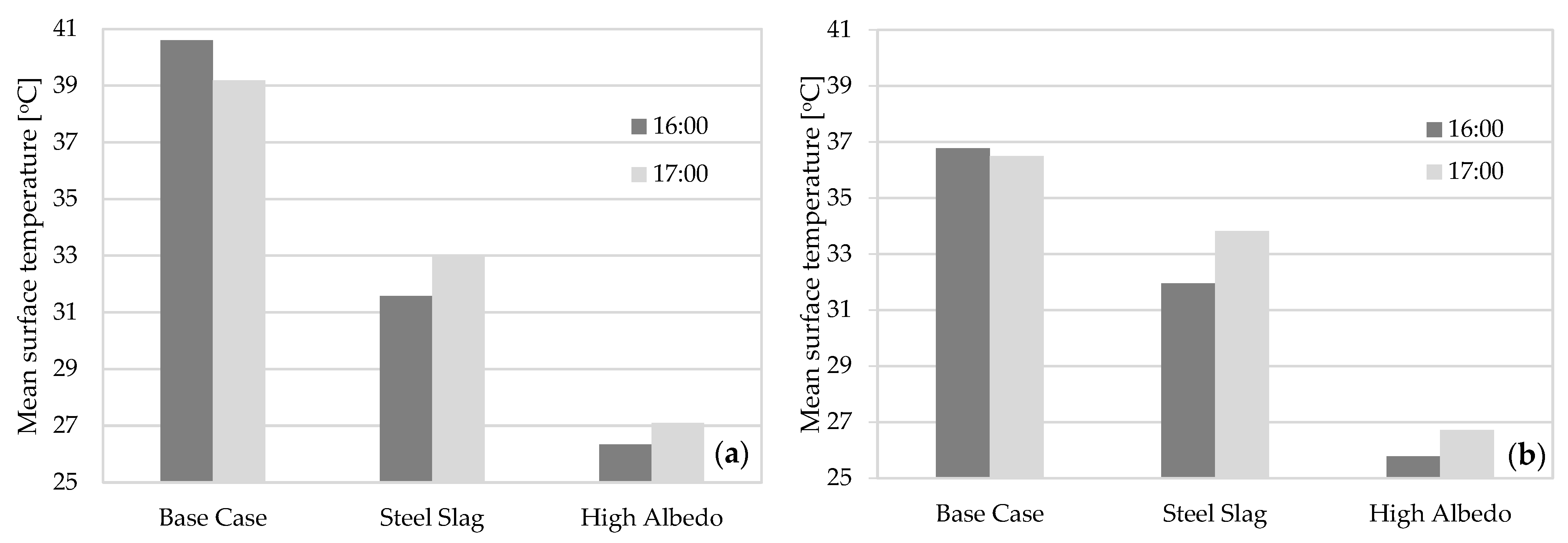
| Sintrivani | Base Case 16:00 | Base Case 17:00 | Steel Slag 16:00 | Steel Slag 17:00 | High Albedo 16:00 | High Albedo 17:00 |
|---|---|---|---|---|---|---|
| mean | 40.60 | 39.18 | 31.58 | 33.04 | 26.34 | 27.10 |
| median | 41.57 | 40.56 | 34.96 | 35.27 | 26.25 | 27.28 |
| st. deviation | 3.32 | 3.64 | 5.52 | 3.45 | 0.96 | 1.18 |
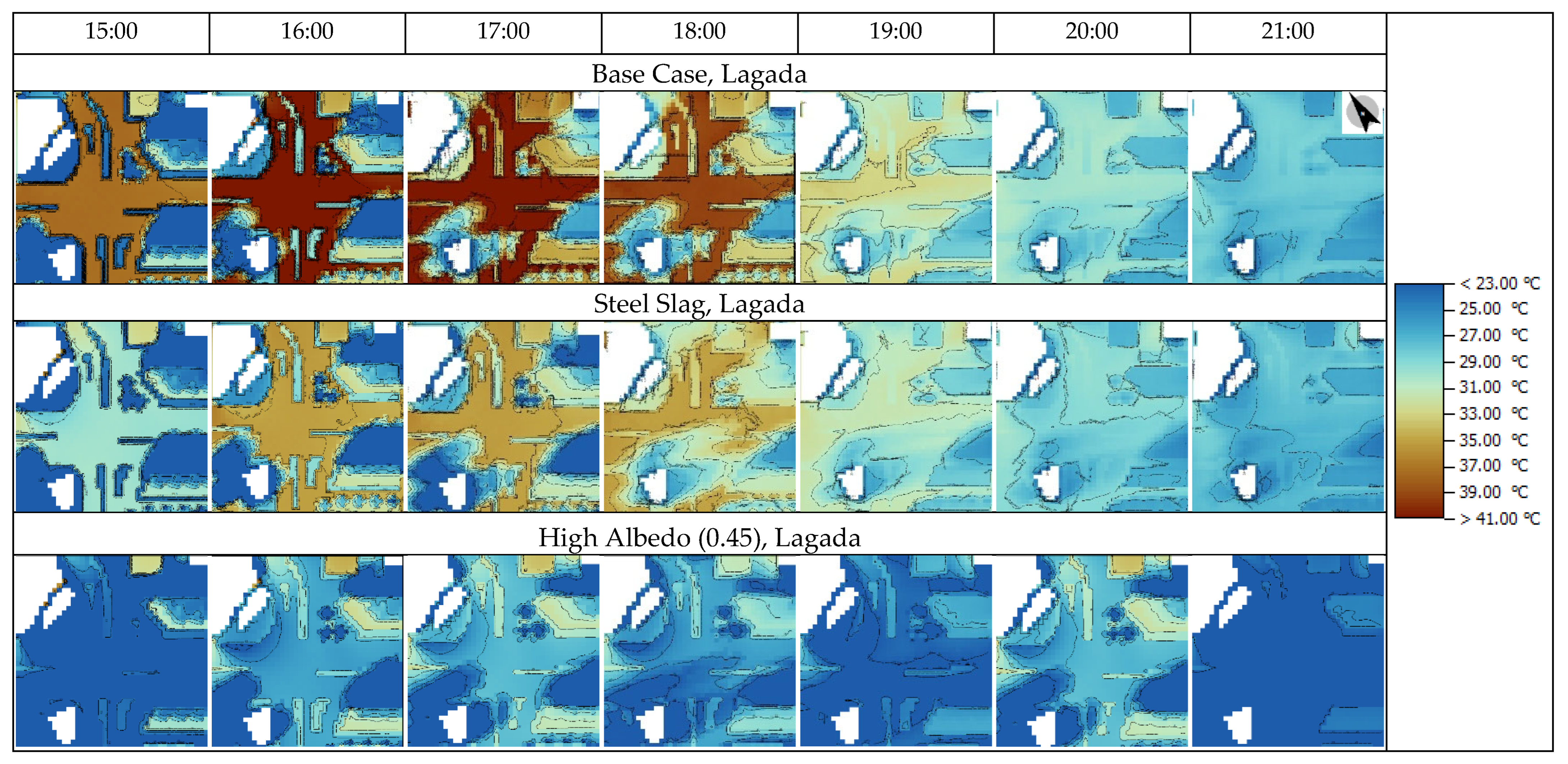
| Lagada | Base Case 16:00 | Base Case 17:00 | Steel Slag 16:00 | Steel Slag 17:00 | High Albedo 16:00 | High Albedo 17:00 |
|---|---|---|---|---|---|---|
| mean | 36.77 | 36.50 | 31.95 | 33.82 | 25.78 | 26.72 |
| median | 41.04 | 39.00 | 35.12 | 35.54 | 26.34 | 27.39 |
| st. deviation | 8.00 | 4.22 | 6.97 | 3.38 | 5.64 | 4.92 |
Disclaimer/Publisher’s Note: The statements, opinions and data contained in all publications are solely those of the individual author(s) and contributor(s) and not of MDPI and/or the editor(s). MDPI and/or the editor(s) disclaim responsibility for any injury to people or property resulting from any ideas, methods, instructions or products referred to in the content. |
© 2026 by the authors. Licensee MDPI, Basel, Switzerland. This article is an open access article distributed under the terms and conditions of the Creative Commons Attribution (CC BY) license.
Share and Cite
Tsirigoti, D.; Gkyrtis, K. Recycled Pavement Materials and Urban Microclimate: Albedo and Thermal Capacity Effects on Heat Island Mitigation. Solar 2026, 6, 5. https://doi.org/10.3390/solar6010005
Tsirigoti D, Gkyrtis K. Recycled Pavement Materials and Urban Microclimate: Albedo and Thermal Capacity Effects on Heat Island Mitigation. Solar. 2026; 6(1):5. https://doi.org/10.3390/solar6010005
Chicago/Turabian StyleTsirigoti, Dimitra, and Konstantinos Gkyrtis. 2026. "Recycled Pavement Materials and Urban Microclimate: Albedo and Thermal Capacity Effects on Heat Island Mitigation" Solar 6, no. 1: 5. https://doi.org/10.3390/solar6010005
APA StyleTsirigoti, D., & Gkyrtis, K. (2026). Recycled Pavement Materials and Urban Microclimate: Albedo and Thermal Capacity Effects on Heat Island Mitigation. Solar, 6(1), 5. https://doi.org/10.3390/solar6010005