1. Introduction
In temperate and boreal forest streams, leaf litter from the bankside vegetation is the primary source of reduced carbon and essential nutrients that powers the aquatic ecosystem [
1,
2,
3]. Leaf litter falling into a stream decomposes according to a complex process involving physical forces (leaching, fragmentation), microbial metabolism (particularly by aquatic fungi), and consumption by litter-feeding invertebrates (shredders) [
4,
5,
6]. In addition to direct consumption, shredders accelerate mass loss from decomposing litter by tearing off fragments of the decomposing leaf and thereby reducing particle size (see reviews in [
7,
8]).
The primary sources of nutrition for leaf-shredding invertebrates appears to be both the leaf tissue itself and the micro-organisms, chiefly fungi, growing on it [
7,
8,
9]. The microbes improve the palatability and nutritional quality of the leaf tissue by increasing the nitrogen content and partially breaking down fibrous tissues [
10]. In feeding experiments, most shredders show clear preferences for leaf litter “conditioned” by several weeks of tissue softening and fungal colonization over freshly fallen litter [
11,
12,
13,
14], although there are exceptions [
15]. Shredders tend to prefer leaf litter from some tree species, especially
Alnus spp., over others [
16,
17,
18,
19]. Experiments with the limnephilid caddisflies
Hesperophylax sp. and
Psychoglypha sp. showed that larvae fed selectively on fungi-colonized patches within individual leaves, and preferences varied according to fungal species and colonization time [
20].
Pycnopsyche guttifer, the limnephilid caddisfly studied in the current work, showed consistent preferences for birch leaves colonized by some species of fungi over others [
21]. On the other hand, larvae of
Pynopsyche gentilis showed little selectivity among fungal species on oak leaves, although they always preferred colonized leaves [
9].
In streams and shallow rivers of northern Nova Scotia, Canada, Porter and Taylor [
22] reported a recent increase in densities of the large, leaf-shredding caddisfly
Pycnopsyche guttifer which greatly accelerated mass loss from decaying leaf litter in spring. Mass loss in the presence of
P. guttifer followed an approximately linear pattern equivalent to 3.0–5.4% d
−1, which continued until the litter sample was entirely consumed. The appearance of
P. guttifer in large numbers suggests a shift in leaf litter processing from microbially mediated to shredder dominated in these water courses.
Given the profound effect of
P. guttifer on mass loss rates, the feeding preferences of this insect may be pivotal to how long various types of leaf litter persist in the stream, which in turn affects the total supply of litter at a time of the year when organic material may be in short supply [
23,
24]. In autumn, especially after leaf fall, most leaf litter probably accumulates in mixed-species packs. In spring, when litter is scarce, larvae would likely encounter individual leaves unburied by spates or blown in from the forest floor.
Porter and Taylor [
22] noted that
P. guttifer larvae rarely colonized red oak leaf litter, of which the decomposition rate was largely unaffected, but readily colonized red maple and speckled alder leaves. In experiments with larvae confined in litter bags, the consumption rate on alder leaves (9–11% wk
−1 for two larvae) was noticeably greater than that on maple leaves (5–7% wk
−1). It appears, therefore, that
P. guttifer larvae, congruent with other shredders, prefer some litter types over others. These preferences are presumably expressed in movements of larvae on the stream bottom in search of litter patches, coupled with decisions of whether to remain on a newly discovered patch or move on to another.
Hence, the possibility that
P. guttifer prefers to feed on particular litter types raises two related questions. First, how do larvae find widely dispersed patches of food on the stream bottom? Second, how do the larvae decide whether, and how long, to remain on a given food patch before moving on to seek another? Neither visual nor olfactory cues appear to be used to find food. In the field, marked larvae rarely found patches of conditioned leaf litter when placed 30 cm downstream or upstream from them, although the leaves were readily colonized by unmarked, resident larvae [
22]. In laboratory experiments, larvae appeared to move about randomly until they encountered a litter patch. Gustatory cues after feeding had begun then determined whether the larva left a patch or remained to continue feeding [
25].
The second question is more complex. A larva that arrives at a potential food patch such as a decaying leaf and samples the material must then decide whether to remain on that patch or seek out another, potentially better patch. The simplest decision would be to remain on the patch if sampling suggests the material is palatable and nutrient content is sufficient to sustain growth, and abandon the patch if they are not. In choice experiments, a binary decision should lead to similar densities of larvae on any litter type which sustains growth (e.g., maple and alder) regardless of any qualitative differences between them. Poor quality litter such as oak should be quickly deserted.
Optimal foraging theory suggests larvae should remain on an acceptable patch of litter until the benefits of remaining no longer outweigh the cost of finding a new patch [
26]. If patches vary widely in nutritive value, however, staying on the first patch which provides a minimum level of nutrition may not be the optimal strategy. Natural selection may favour larvae that abandon patches before they are exhausted to seek out a new and potentially better patch. In a temporally changing landscape in which litter patches appear and disappear and change quality over time, a “restless” larva may be better adapted than one that stays on the first acceptable patch. Further, if larvae do abandon acceptable patches, fidelity to a given patch should be greater when its nutritional value is greater, because the chance of finding a new, better patch is lower. In choice experiments, this behaviour would lead to larvae being distributed across samples of varying nutritional quality, with the greatest number remaining on the nutritionally best litter.
The project reported here provides information relevant to both these questions. Field experiments presented P. guttifer larvae with leaf litter from a range of riparian tree species to see if they distinguished among them. Complementary laboratory experiments determined whether individual larvae were more or less likely to abandon litter of different types.
2. Materials and Methods
2.1. Pycnopsyche Guttifer Walker
Pycnopsyche guttifer is the most common and wide-ranging species in the genus
Pycnopsyche [
27], which comprises 15 species of large (up to 3 cm long), detritus-feeding caddisflies. The larvae are common in slow water and the pools of cool, deciduous-woodland streams and rivers of eastern North America. Analyses of gut contents suggest that
P. guttifer larvae consume leaf litter almost exclusively [
28]. As with many leaf-shredding insects, the life cycle of
Pycnopsyche appears to be synchronized with the annual pattern of litter fall. Eggs hatch in September or October when leaves fall from bankside trees, providing a food source for the early-instar larvae [
29]. Early instars build portable cases of leaf discs or bark and twigs, but final-instar larvae (those observed here) make cases of wood, sometimes with rock fragments [
27]. The case provides protection against predators and enhances water flow over the gills as the larvae move about in search of patches of detritus [
30].
P. guttifer builds characteristic cases with protruding twigs oriented longitudinally [
31], possibly as rudders. In summer, final-instar
Pycnopsyche larvae enter aestivation for several weeks before pupation [
32]. Adults emerge between July and October, depending on species and location [
27].
2.2. Study Sites
Northern mainland Nova Scotia is drained by a network of small streams feeding into a set of short rivers which run in parallel drainages into the sea. The rivers run through a rural landscape dominated by short-rotation, boreal transition forest (northern hardwoods, pine, spruce) interrupted by hayfields, clear-cuts and country residences. There are few large settlements. River systems are gently sloped (1–4%) through most of their lengths and usually bear a closed-canopy riparian zone of largely deciduous trees. The region has a modified continental climate, with long, snowy winters and short, cool summers; annual precipitation is about 1300 mm [
33].
Field experiments were done in the South River, a typical broad, shallow, regional river. The South River at Cummings Mills Cross Road (45°28′14″ N, 61°56′23″ W) averages 15.0 ± 1.4 m wide (
n = 3) and is only partially shaded by a riparian forest of white ash (
Fraxinus americana L.) and red maple (
Acer rubrum L.). Most of the site is a run, with water 15–30 cm deep flowing over a substratum of cobble and rock. Typical of streams of this region, water in the South River is very soft, well oxygenated, and circumneutral to mildly acidic (
Table 1). Nutrient concentrations are always low [
34].
Polson’s Brook (45°27′00” N, 61°54′37” W), a tributary of the South River, is described in [
22]. Polson’s Brook flows through upland mixed forest with some speckled alder (
Alnus incana (L.) Moench) along the banks. The channel is 5–6 m wide at the study site; substratum is a mix of cobble, gravel and sand, with a few larger rocks. Polson’s Brook was used as an additional source of
Pycnopsyche for laboratory experiments.
Discharge is relatively stable in Polson’s Brook, but rises quickly in the South River following rainstorms. Water temperatures (
Table 1) are similar at both sites in spring.
Pycnopsyche guttifer is common at both sites in spring.
2.3. Field Experiments
The field experiments tested the hypothesis that the number of
Pycnopsyche larvae colonizing samples of conditioned litter after a fixed amount of time would differ among litter types, with the larvae showing consistent preferences for some litter types over others. Freshly fallen leaf litter of speckled alder, red maple, trembling aspen (
Populous tremuloides Michx.) and red oak (
Quercus rubra L.) were collected at leaf fall (late October) in previous years and stored air-dried. We chose these four species because they are common components of regional forest that differ in chemical composition, decomposition rate, and attractiveness to shredders. Leaf litter from N-fixing alder is very high in nitrogen [
35] and is generally preferred by shredders, as noted earlier [
16,
17,
18,
19] and in our own work [
22,
36]. Oak leaf litter, at the other extreme, is noted for its tough structure and very slow decomposition rates [
36,
37,
38] and did not attract
Pycnopsyche in earlier work [
22]. Litter of red maple and trembling aspen lie between these two extremes; the relatively low N content and slow decomposition rate of aspen litter [
39] were expected to make it less attractive to
Pycnopsyche than maple litter.
In Experiment 1, we weighed 12 samples of the four litter types, each weighing 2.00–2.03 g, to the nearest 0.001 g, remoistened them in a humid environment for 48 h to reduce brittleness, and then enclosed them in flat, numbered, 13 × 25 cm, mesh bags with a mesh size of 9 mm. Beginning 1 May 2021, the bags were suspended above the substratum in a small stream lacking shredders and allowed to condition for four weeks.
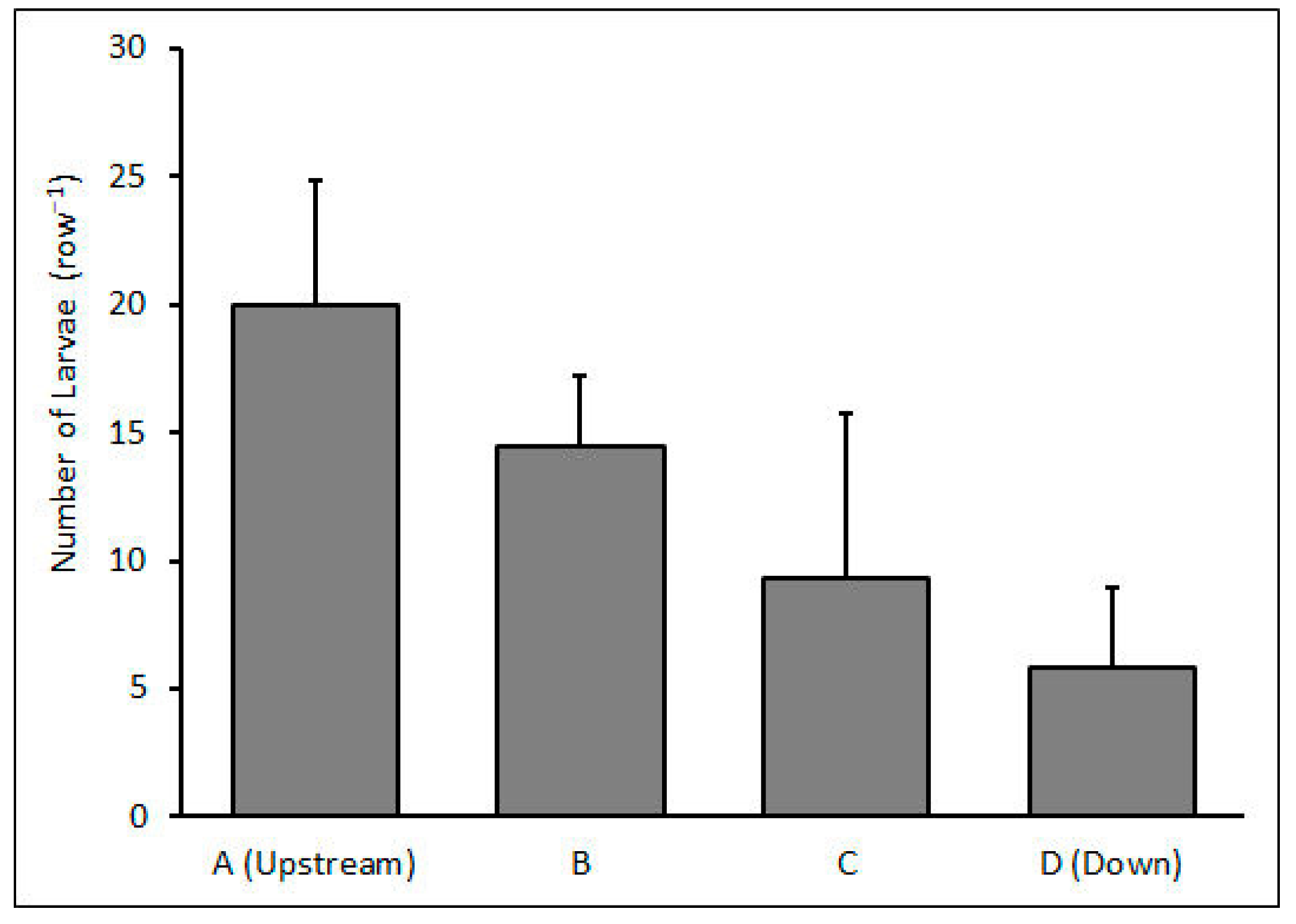
On 31 May, four bags of each type were laid across the stream bed in a 4 × 4 matrix in which one bag of each type occurred in each row. The arrangement of each row was drawn at random from the pool of 24 possible arrangements, without repeating. Bags were placed 50 cm apart in rows 2 m apart, with the intention that larvae could easily discover litter bags in the same row but were less likely to find other rows. Each bag was secured with a rock on the front edge. After 24 h, we carefully lifted each bag while sliding a small net underneath to catch any larvae that dropped off. Most larvae were on the underside of the bags. We counted the number of
Pycnopsyche larvae on each bag, then returned them to the stream bed. Previous research showed that colonization is finished in 24 h [
22]. We checked the bags for other conspicuous caddisfly shredders such as
Oecetis or
Lepidostoma, but found none. Then we returned the bags to the river and repeated the experiment in a different location within the wide riverbed. We ran the experiment six times in total (for a total of 24 replicates of each litter type), replacing the litter bags after the third run.
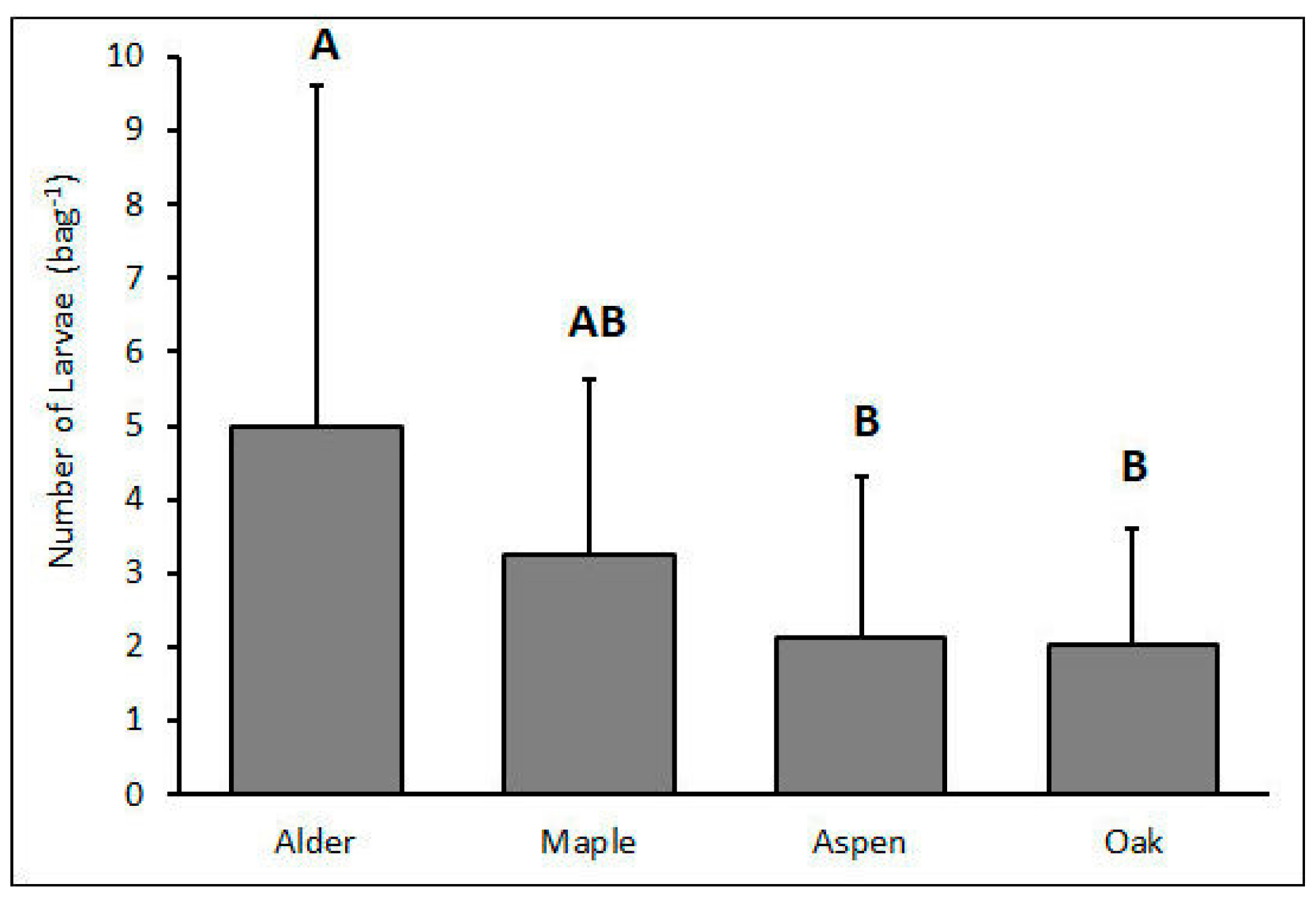
Preliminary data analysis revealed an unexpected effect of row position on the count of Pycnopsyche larvae. Consequently, data (log-transformed for normality) were analyzed using a factorial ANOVA, blocking on Row, with Day as the replication variable. Tukey’s test was used to distinguish among individual litter types.
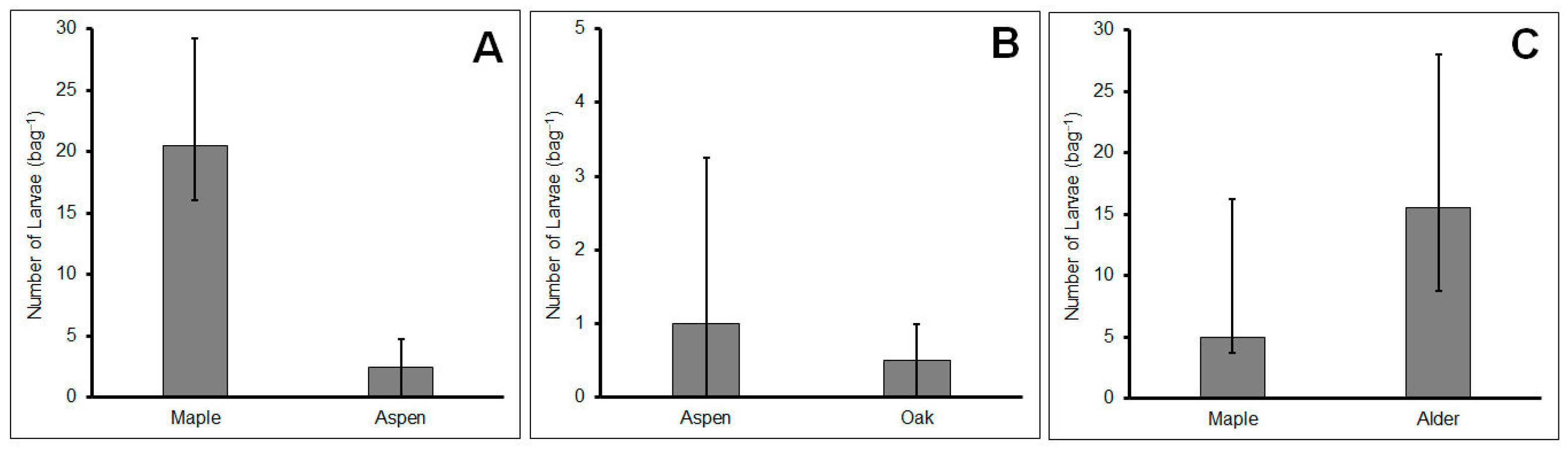
Experiment 2 was designed to differentiate feeding preferences between pairs of litter types. Litter bags prepared as in the first experiment were conditioned for three weeks in May 2022. On 24 May, six bags of two litter types each were placed on the substratum of South River, 50 cm apart, in an alternating pattern, creating a row of 12 bags. A second row was laid 1 m downstream from the first row, with the bags alternating in the opposite sequence. After 24 h, the number of Pycnopsyche larvae colonizing the bags were counted as in the first experiment. The bags were then replaced on the substratum in a different order, with the same overall pattern, in a new location a few metres away. This experiment was repeated twice for Aspen vs. Maple (24 replicates total), twice for Aspen vs. Oak and three times for Alder vs. Maple (36 replicates). Statistical analysis of log-transformed data followed the same approach as in the first experiment. All statistical analysis used Statistix® v. 10.
2.4. Laboratory Experiments
Laboratory experiments were designed to test the second hypothesis, that Pycnopsyche larvae actively move from one food patch to another, sometimes deserting patches of litter even when they still provide food. In this scenario, the probability of leaving any given litter patch in a given time frame is inversely proportional to the quality of the food, which in turn should correlate with preferences shown in the field. Therefore, the larvae should abandon oak leaves almost immediately and alder rarely, with aspen and maple between the extremes.
Laboratory experiments used a 100 L recirculating indoor stream, consisting of a 60 L arena (63 cm × 126 cm) underlain by dark aquarium gravel, and a 40 L reservoir. A pump recirculated water at 4.3 L/min from the reservoir to the far end of the arena, where a diffuser distributed the inflow, maintaining a uniform depth of 8 cm and a water velocity of 0.9 cm/s. Water drained back into the reservoir over a wide lip. The system was filled with water from nearby Brierly Brook, which is chemically similar to that from upper South River. Brook water was added as needed to compensate for evaporation, and 20 L was replaced every 3 d.
Water temperature in the indoor stream was maintained slightly below ambient (2023: 16.3 ± 2.2 °C, 2024: 17.3 ± 1.3 °C) with a chiller (Polyscience) which cooled the water in the reservoir to 15 °C. Except when measurements were being taken, the larvae were kept under dim light [
40] provided by a 15 W incandescent lamp located 60 cm above the arena. The lamp produced a light intensity of 11 lux at the water surface, equivalent to light intensity ~20 min after sunset in June.
Most Pycnopsyche larvae used in these experiments were captured from the South River at Cummins Mills Crossing, the same location used for the field experiments. Late-season larvae came from Polson’s Brook. Larvae were transported to the laboratory (30 min) in buckets with some river water and sticks of wood for habitat. They were allowed to acclimate to the arena for 24 h under dim light, without food.
Laboratory experiments used the same four litter types as in the field experiments: speckled alder, red maple, trembling aspen and red oak. For each litter type, twelve coarse-mesh bags, each containing 3 g of air-dried litter were suspended in a small stream to condition for 3 wk as in the field experiments. Conditioned litter bags were stored in stream water at 4 °C until used.
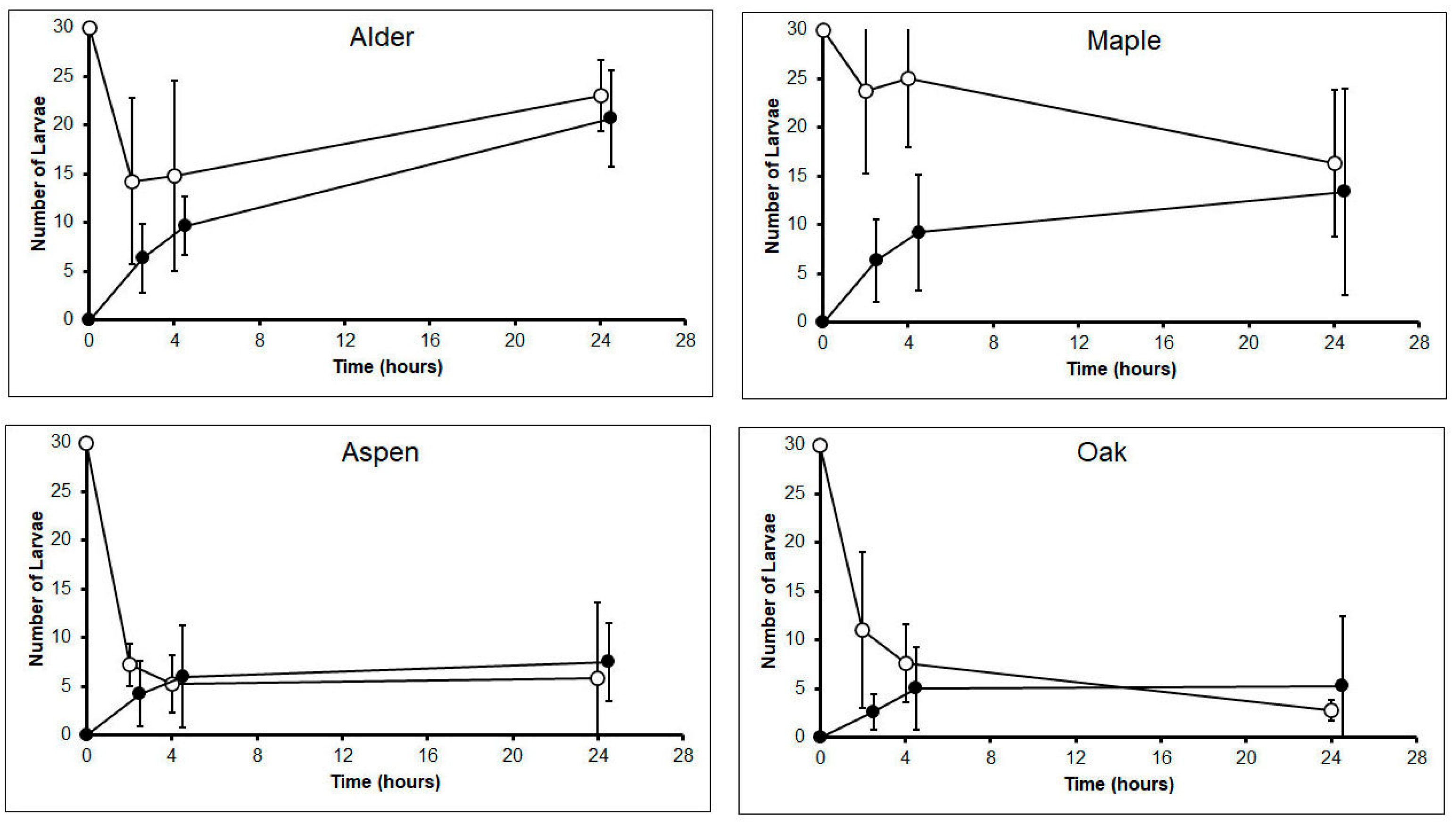
Experiment 3, in May–June 2023, followed the movement of larvae from a Source litter type, on which the larvae were initially placed, to a Sink litter type place 50 cm upstream. First, all the 40–60 larvae in the arena were moved to a tray filled with stream water. Three litter bags of the Source litter type were placed in line across the arena, 12 cm from the downstream end, such that they spanned the entire width of the arena. Bags were held in place with three 8.5 cm terra cotta dishes (drainage trays for houseplants) placed at each end. Litter bags containing the Sink litter type were placed in the same orientation 50 cm farther toward the inflow end of the arena, but out of the range of surface turbulence caused by the diffuser. Larvae on the downstream Source litter could potentially sense olfactory cues from the Sink litter.
Thirty actively moving larvae were selected from the tray and placed on the Source litter bags, ten on each bag. After 2, 4, and 24 h, I counted the number of larvae attached to each litter bag, including those attached on the underside, with minimal disturbance. Larvae on the substratum under the bags were not included in the count. Numbers for all three litter bags of each type were combined. Observations captured the number of larvae remaining on the Source litter in the first few hours, and the distribution of larvae among the two litter types and the matrix after 24 h. The experiment was repeated with different combinations of Source and Sink litters, in random order, until all 12 possible combinations were exhausted.
Larvae not used for a given run were maintained in the reservoir with conditioned litter as food. At the end of each run, all larvae were returned to the arena for another 24 h of gut clearing before the next run began. Actively moving larvae for the next run were again chosen from the pool of 40–60 animals. After two or three runs all larvae were replaced by a new set captured from the South River or Polson’s Brook. Litter bags were replaced after three runs.
Laboratory experiments were possible only during a brief window in May–June, after the spring freshet but before the larvae entered summer aestivation [
32]. In 2024, we repeated tests with four litter combinations which were completed close to the end of the season in 2023 or had provided ambiguous results. This continuation used the same methods as in the previous year. Analysis used combined data from both years.
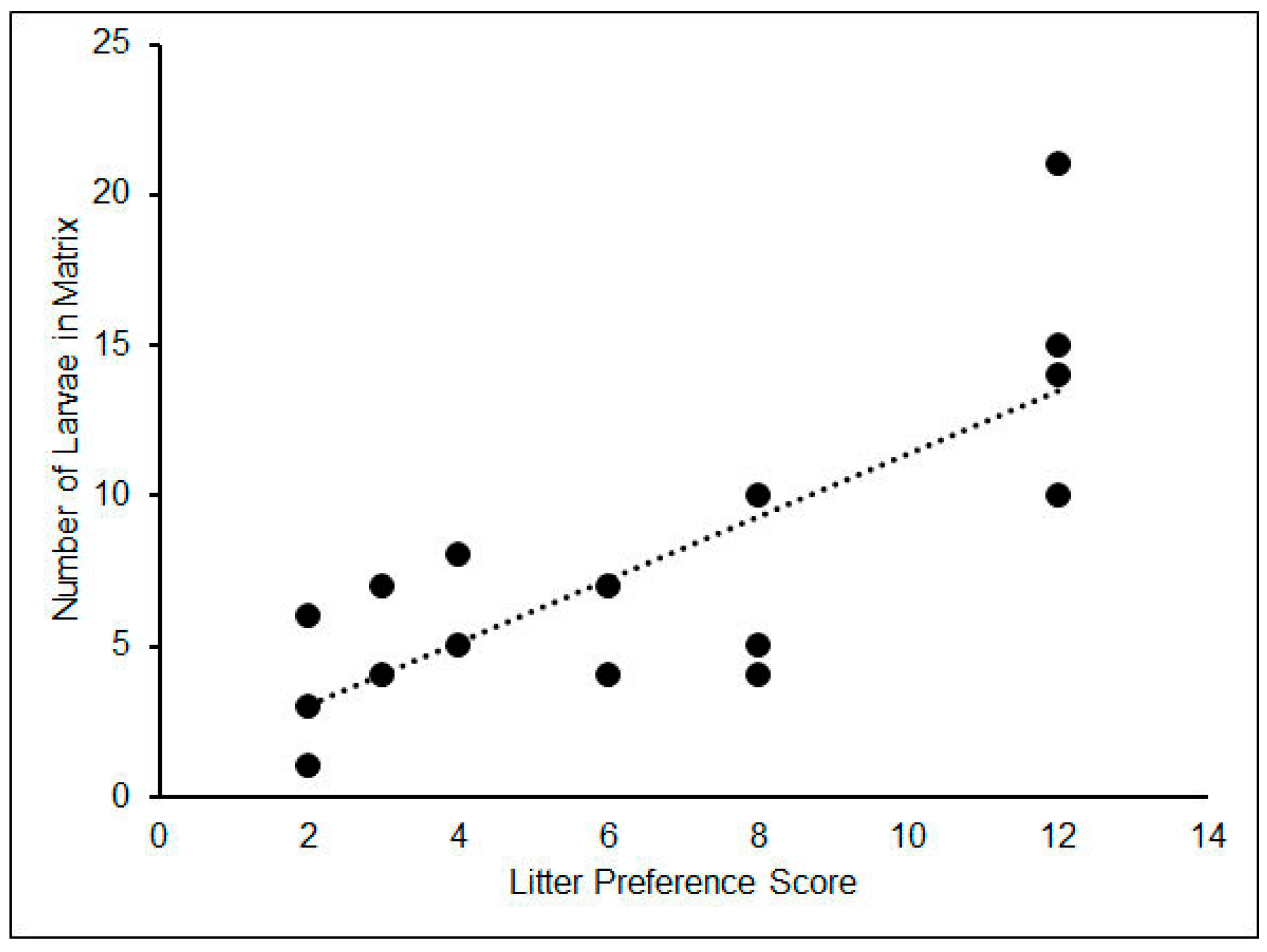
To test whether larvae showed a preference for different litter types or tended to move more in one direction (upstream or downstream) I used the final densities on all litter types after 24 h in all runs as replicates in a factorial ANOVA on litter type and location (Source downstream or Sink upstream). If larvae choose to leave a litter of low food quality, then the number in the matrix after 24 h (time for completion of colonization in the field) should be correlated with the quality of the food, as indicated by preferences in the field. To test this possibility, I assigned each of the litter types a rank indicator of quality from 1 (alder, most preferred) to 4 (oak, least preferred). I then computed indices of food preference in any given run by adding or multiplying the ranks of the two litter types provided. I computed linear regressions of number of larvae remaining in the matrix against food preference indices.
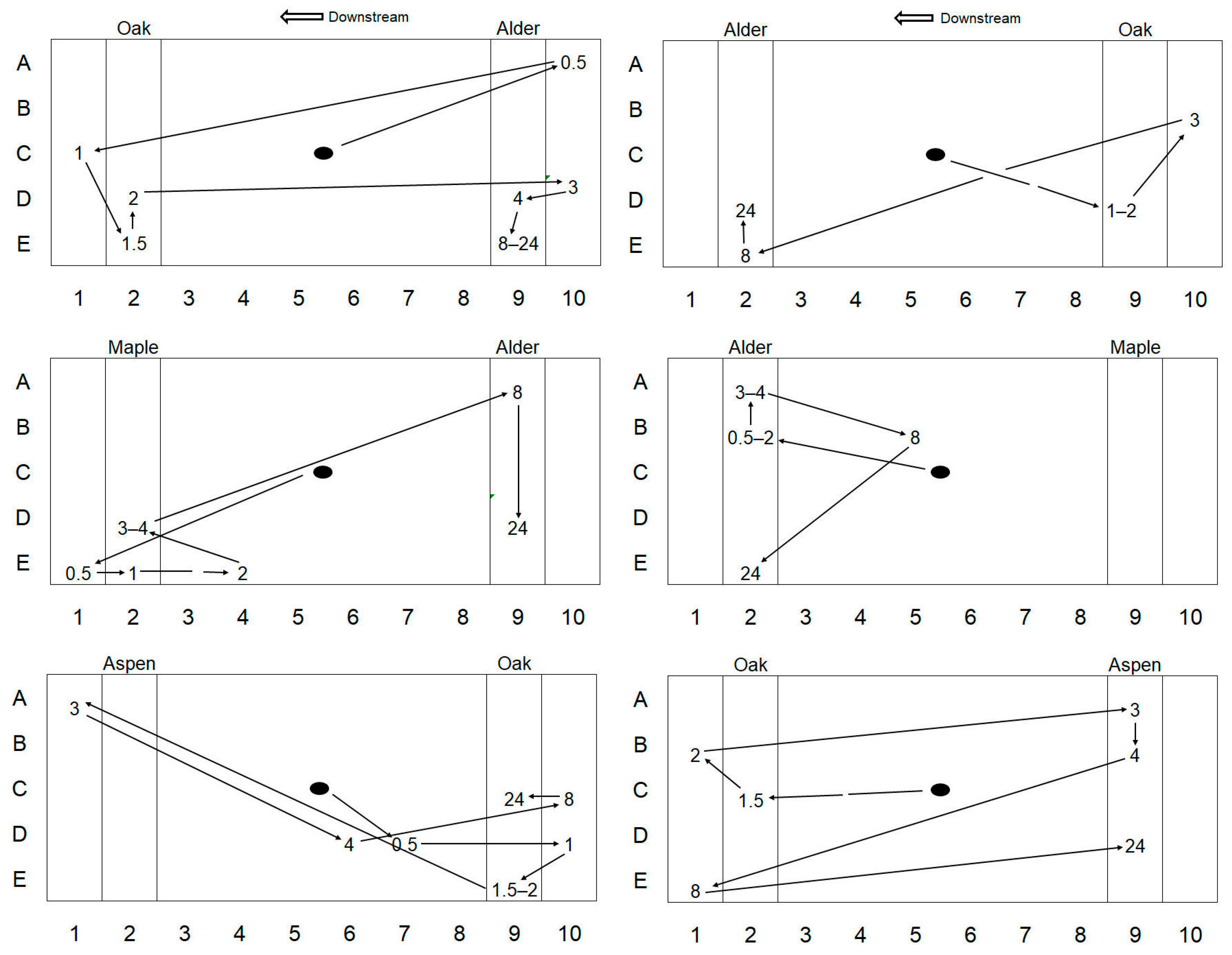
Experiment 4 (2025) followed movement of individual, marked larvae to see (1) whether they moved directionally while searching and (2) whether they stayed on or deserted leaf litter once they had discovered it. The arena was subdivided into a 5 × 10 matrix of 12.6 cm squares, marked along the perimeter of the basin. Litter bags containing conditioned litter was placed across the channel as in the previous experiment, occupying columns 2 (downstream) and 9 (upstream). Five or six large, active larvae were marked with coloured thread tied around the case or with a single drop of fast-drying nail polish. After marking, larvae were returned to the holding tray with the others until they began to move again. Then, the marked larvae were placed in the centre of the arena, a few centimetres apart, equidistant from the two litter types.
At intervals of 0.5, 1, 1.5, 2, 3, 4, 8 and 24 h, the cell in the matrix occupied by each larva was recorded. Observations were concentrated in the first few hours to detect random or directional initial movement and because larvae were expected to move less once they began to feed. (The larvae were indiscernible in video images.) The experiment was repeated six times, in random order, using a pair of dissimilar litter types (alder, oak), a pair of similar, favoured litter types (alder, maple) and a pair of disfavoured litter types (oak, aspen). Each combination was repeated with the upstream–downstream positions of the litter bags reversed. Marked larvae were used only once. A new pool of larvae were drawn from the South River or Polson’s Brook after every second run.
To test whether larvae move directionally in the arena, I defined cells in columns 1–4 as “downstream” and 7–10 as “upstream”. I then counted the number of times in each of the six runs that a larva was observed in these columns at 0.5 h and 1 h from the beginning. Larvae could occupy any cell in the arena within an hour. Larvae that remained in columns 5–6 were not included. I used a chi-square test to see whether the distribution of larvae in quadrants of the arena departed from random. I then repeated the calculation for lateral movement, comparing rows A–B against rows D–E.
Movement patterns revealed by the cell locations of the larvae were examined to see whether the larva stayed on or abandoned litter of each kind once they had discovered it. I noted whether larvae moved from one litter type to another, how many were on each litter type, or in the matrix, after 24 h, and how many observations found larvae in the matrix. Because larvae could not always be found, the number of total observations varied from one run to another.
4. Discussion
Densities of
P. guttifer on litter bags in the first field experiment here, with four litter types, were comparable with those observed in earlier work. A survey of regional rivers [
22] reported a median density of 3.5 animals/bag for maple litter and 8.5 animals/bag for alder litter, while a time-series experiment with alder litter produced ~ five animals/bag after 24 h. Densities in the two-species choice experiment the following year were substantially greater, however (
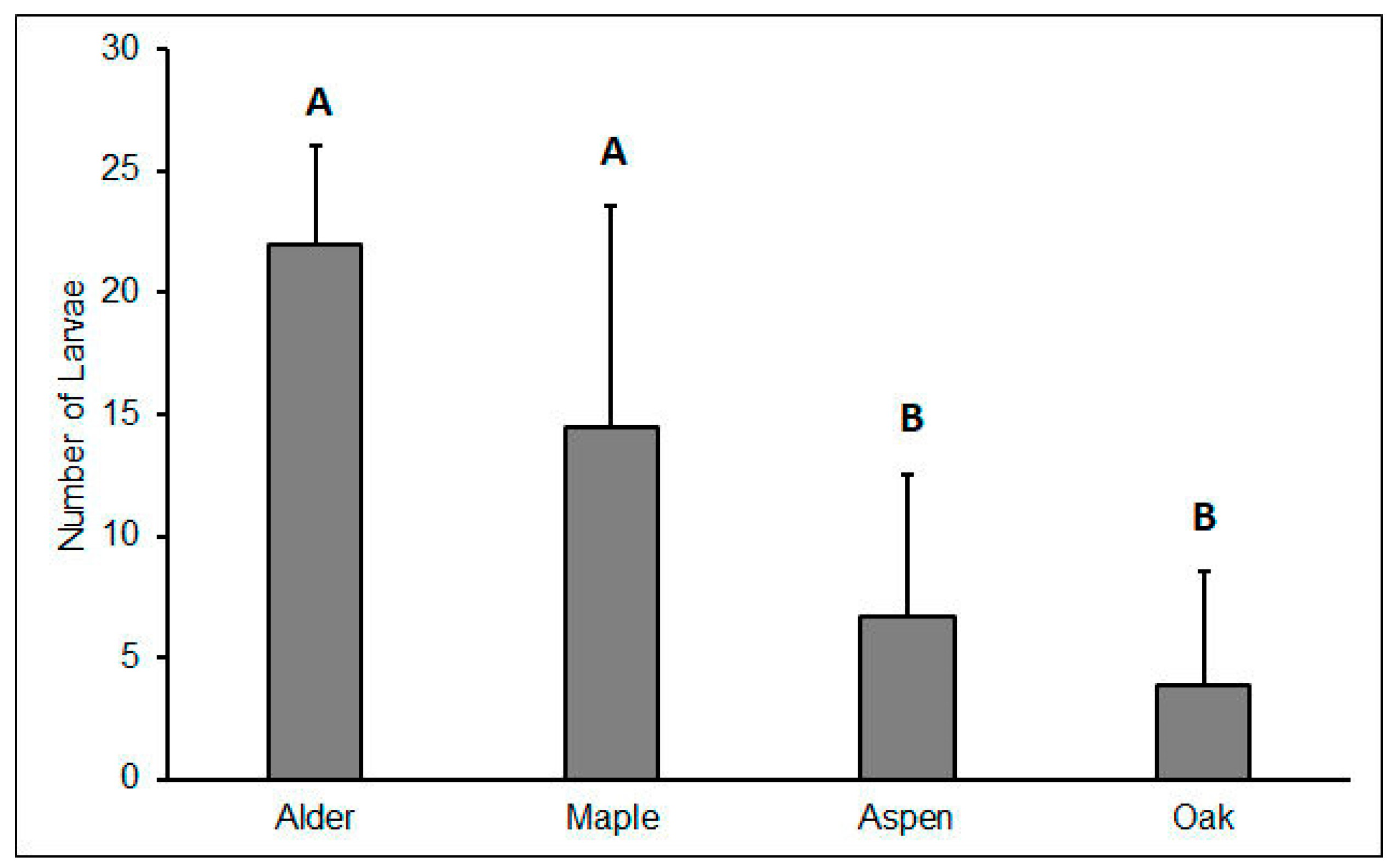
Figure 3). The latter densities are well above the threshold where dramatic acceleration of decomposition rates appear.
As expected, the field experiments demonstrated that
P. guttifer has definite preferences among food sources, after an equal duration of conditioning, in the order alder > maple > aspen > oak. This order matches the presumptive order of food quality based on nutritional content and overall decomposition rates for these four litter types [
34,
35,
36,
37,
38,
39]. Our results also correspond with previous work in which a strong preference for
Alnus spp. has been almost universally observed [
16,
17,
18,
19,
36,
41].
Significantly, however, the variation within litter types was very high, often sufficient to obscure differences among them. Some bags of alder litter, in particular, always attracted substantially more larvae than others in the same set. This preference remained regardless of where the “popular” bags were placed in the 4 × 4 matrix. Presumably these bags contained litter on which fungal populations were more abundant or softening of tissue was more advanced. Replacing the litter bags with fresh ones at intervals during the experiment reduced the bias induced by popular bags, but their presence illustrates that feeding preferences are dictated by characteristics of a particular patch of food, not only the general litter type.
The field experiments also demonstrated a strong and unexpected directional movement of the larvae. Far more larvae colonized the most upstream bags in the matrix, suggesting that larvae found the bags predominantly by moving downstream. This finding contradicts both our laboratory results and the findings of Motyka et al. [
25], all of which show non-directional movement of larvae. The discrepancy probably arises from the high water velocity in the South River (
Table 1) where the field experiments were performed, compared with the slow movement (0.01 m/s) in the laboratory. For a relatively large, unflattened larvae such as
Pycnopsyche, moving downstream by crawling or rolling with the current would probably be energetically favourable to moving against the current upstream. Lancaster et al. [
42] observed that larvae of the limnephilid caddisfly
Potamophylax latipennis also moved predominantly downstream, especially in strong currents. However, Cummins [
32] observed that
P. guttifer moved predominantly upstream in laboratory flumes with a current velocity of only 0.03 m/s, close to the mean water velocity Cummins observed in the field. This observation, in turn, highlights that the congregations of
Pycnopsyche observed in the South River here and in earlier work [
22] are anomalous in that the species is typically found in slow backwaters and pools where organic matter collects [
27,
32]. In its more typical habitat, random searching would be expected. Furthermore, the preference to colonize litter from upstream again demonstrates that the larvae do not use olfaction to find food patches.
The attraction of maple leaf litter to Pycnopsyche larvae appears to depend on the other food sources around it. Far more larvae colonized maple when the nearby choice was aspen litter, rather than alder litter. Yet, the total counts of animals on both litter types in the two comparisons were not very different. This pattern suggests that, while some larvae encountered maple litter directly, others may have discovered the aspen litter but abandoned it to continue searching, eventually finding the nearby maple litter. In contrast, when alder and maple were paired, some animals appear to have left the maple litter to colonize the nearby alder. This migration occurred despite the fact that maple is a preferred litter type in other contexts, and attracted most larvae when aspen was nearby.
These observations support two hypotheses. The first is that the larvae can sense the presence of alder litter, or of a highly preferred food source in general, and move toward it. It is unclear, however, how the information would be received. Olfaction would be the most likely candidate, but that would not work from upstream, in which direction most colonization occurred, or laterally. Larvae in the laboratory did not distinguish between food sources upstream or downstream. It is unlikely that the larvae can see litter at a distance in the complex environment of a stream bottom, or recognize what it is, from a distance, inside a mesh bag.
The second, more likely hypothesis, is that larvae periodically abandon food patches in search of better ones, even when the current food choice is acceptable. If larvae remained on the first patch of acceptable food, then densities on alder and maple should be equal, and the density on maple should be independent of the litter types around it.
Laboratory experiments support results from the field, with some variation related to the artificial habitat. In the field, larvae placed on bags containing conditioned litter in flowing water stayed there for at least the next hour [
22]. In the laboratory, however, most larvae deserted the litter bags they had been placed on within an hour, regardless of the litter type, perhaps as an escape response after being handled. Some larvae then returned to the litter over the following day of observations. Nevertheless, over the duration of the experiment, larvae demonstrated the same order of preference among litter types as in the South River, although again variability between bags obscured the general trend. Moreover, the various litter types attracted the same numbers of larvae whether placed as a downstream, Source litter or an upstream Sink.
Significantly, the number of larvae on any litter type after 24 h were always less than the total in the arena. Some larvae were always in the matrix, fewer when alder was available, and more as the subjective food quality declined. In tests with aspen and oak, larvae spent almost half the time in the matrix. It seems unlikely that the larvae, which tended to move actively, would have failed to discover food sources in the comparatively small arena within 24 h. It appears, therefore, that some larvae deserted food sources once they had found them. That the number of larvae in the matrix after 24 h could be predicted with coarse accuracy from a simple, ad hoc index of food preference strongly suggests that the tendency of larvae to desert a food patch depends inversely on the perceived quality of the food source.
Finally, Experiment 4 confirms, first, that larvae move about actively, but choose directions randomly. Larvae frequently traversed the length of the arena more than once in 24 h, once three times, and may have done so more often in the long periods between later observations. Yet, an analysis of early positions could not detect any sign that larvae preferentially crawled downstream or upstream, or in either lateral direction. It appears then, that as Motyka et al. [
25] observed, larvae randomly search for food patches and upon arrival use gustatory cues to judge the quality of the litter.
This experiment also confirms that larvae frequently abandon litter patches once they have found them. The fidelity to any given litter type depends on its apparent nutritional quality, but even alder is sometimes abandoned. Hence, when paired with an oak litter, a low-preference source, alder tends to accumulate all the larvae over time. When paired with maple, however, more equal attraction combined with random searching leads to larvae sorting between the two litter types. In the third situation, with two, low-preference litter types, more larvae were observed in the matrix on most occasions, as the larvae readily abandoned poor food in search of something better.
The major limitation of this research is that the P. guttifer larvae may not behave identically in a river as in a highly artificial laboratory arena. Indeed, the observation that larvae tend to move off litter bags in the laboratory but stay on them in the field (perhaps because of water current) illustrates that the field situation is not perfectly emulated in the laboratory. Also, larvae in the arena may have used litter bags as shelter and habitat in the otherwise featureless matrix, although the frequency with which they deserted aspen and oak suggests that food was the main attraction. Nevertheless, general patterns of behaviour were congruent between field and laboratory, especially the order of preference of the four litter types tested. Because the work was done with late-instar larvae, some animals may have stopped feeding while experiments were underway. Repetition of some runs in Experiment 3 were intended to address this possibility. Unfortunately, the highly seasonal nature of discharge in regional rivers means that larvae cannot be procured nor can field experiments proceed until the rivers are low enough to be safe. Feeding habits of P. guttifer over the entire larval period have not been explicated.
Summarily, these experiments support the “restless larvae” hypothesis which suggests that larvae of Pycnopsyche guttifer, and perhaps other litter-feeding stream insects, periodically move away from litter patches in search of new ones, even when the food patch they are on is not exhausted. Preferred litter types, presumably more nutritious or palatable, appear to retain the larvae longer than less attractive alternatives. A larva that deserts a food patch occasionally (high-quality litter) or frequently (low-quality litter) in search of a better food source may optimize its energy intake. Whether these findings apply to Pycnopsyche in other regions, to other leaf-shredding caddisflies, or indeed to any litter-feeding stream invertebrate, are important questions for future research.