
Article

Bioaccumulation and Health Risk Assessment of Some Metals in Common Carp—A Lake Perspective
1
Department of Animal Science, College of Agricultural Engineering Sciences, University of Sulaimani, Sulaymaniyah 46001, Kurdistan Region, Iraq
2
Department of Medical Laboratory Science, Halabja Technical College, Sulaimani Polytechnic University, Halabja 46018, Kurdistan Region, Iraq
3
Horticulture Department, College of Agricultural Engineering Sciences, University of Sulaimani, Sulaymaniyah 46001, Kurdistan Region, Iraq
4
College of Veterinary Medicine, University of Sulaimani, Sulaymaniyah 46001, Kurdistan Region, Iraq
5
Chemistry and Forensics Department, School of Science and Technology, Nottingham Trent University, Nottingham NG1 4FQ, UK
*
Author to whom correspondence should be addressed.
Hydrobiology 2026, 5(3), 21; https://doi.org/10.3390/hydrobiology5030021
Submission received: 4 May 2026 / Revised: 18 June 2026 / Accepted: 23 June 2026 / Published: 1 July 2026

Abstract

Freshwater ecosystems are increasingly exposed to metal contamination arising from natural and anthropogenic activities, potentially affecting fish physiology and ecosystem health. However, limited information is available regarding metal accumulation and associated biological responses in fish populations from Dukan Lake, northern Iraq. Therefore, this study investigated metal concentrations in water and tissues of common carp (Cyprinus carpio) and evaluated their relationships with selected fish health indicators. Water and fish samples were collected monthly from Dukan Lake, and a total of 60 fish were classified into three length groups (20–29 cm, 30–39 cm, and 40–49 cm). Metal concentrations in water, liver, and gonad tissues were analyzed using ICP-OES, while condition factor (CF), gonadosomatic index (GSI), and hepatosomatic index (HSI) were used to assess fish physiological condition. Sodium (Na), magnesium (Mg), potassium (K), iron (Fe), zinc (Zn), and barium (Ba) were detected in both water and fish tissues, with concentrations in water ranging from 50 to 7069 μg/L. In contrast, chromium (Cr), manganese (Mn), nickel (Ni), selenium (Se), silver (Ag), cadmium (Cd), antimony (Sb), lead (Pb), copper (Cu), and arsenic (As) were below detection limits. Biometric analysis revealed significant differences (p < 0.05) in the gonadosomatic index (GSI) among fish length groups, indicating size-dependent reproductive development. However, no significant relationship was observed between fish length and either the CF or HSI, suggesting relatively stable somatic condition or liver status across size classes. Correlation analysis showed no significant associations between water metal concentrations and CF or GSI. A significant positive correlation was identified between Zn concentration and HSI in the 30–39 cm length group, indicating a possible link between Zn exposure and hepatic physiological response. The findings indicate that essential elements dominate the metal profile in Dukan Lake, with limited evidence of toxic metal contamination. No major adverse effects on the general condition of the fish were observed. These results contribute to understanding metal bioaccumulation patterns and their implications for fish health in freshwater ecosystems.

1. Introduction

Metals are naturally occurring elements that enter aquatic ecosystems through both natural processes and anthropogenic activities [1,2]. Essential elements such as sodium (Na), magnesium (Mg), potassium (K), iron (Fe), and zinc (Zn) are required for normal biological functions; however, excessive concentrations may disrupt physiological and biochemical processes in aquatic organisms. In contrast, non-essential metals such as cadmium (Cd), lead (Pb), arsenic (As), and chromium (Cr) may exert toxic effects even at relatively low concentrations due to their persistence, bioaccumulation potential, and ability to induce oxidative stress, enzymatic dysfunction, and tissue damage in fish and other aquatic organisms [3]. Major sources of metal contamination in freshwater ecosystems include agricultural runoff, domestic wastewater discharge, industrial effluents, mining activities, and natural geological weathering processes [4]. In the Dukan Lake region, increasing agricultural activity, urban expansion, tourism, and watershed runoff may contribute to changes in water quality and metal distribution within the aquatic environment [5]. Previous studies conducted in Iraqi freshwater systems have reported variable levels of metal accumulation in water, sediments, and fish tissues, indicating growing environmental concern regarding metal pollution and its ecological consequences. However, information regarding metal accumulation and associated physiological responses in fish populations from Dukan Lake remains limited [6].
Several studies from Iraqi aquatic ecosystems, including the Tigris River, Darbandikhan Lake, and Little Zab River, have documented the occurrence of metals in water and fish tissues, with evidence of bioaccumulation in liver, gill, and muscle tissues of freshwater fish species [7,8]. These studies suggest that environmental contamination may vary depending on hydrological conditions, surrounding land use, and anthropogenic pressure [8]. Nevertheless, comprehensive assessments linking metal exposure to fish physiological health indicators in Dukan Lake remain scarce.
Dukan Lake was selected because it is one of the largest freshwater reservoirs in the Kurdistan Region and serves as an important source of fisheries production, irrigation water, recreation, and domestic water supply. Increasing agricultural and human activities in the surrounding watershed raise concerns regarding contaminant inputs and potential ecological impacts [9]. However, increasing anthropogenic activities, including agricultural runoff, domestic discharges, and recreational activities, may introduce metal contaminants into aquatic environments [8].
The common carp (Cyprinus carpio) is a widely distributed freshwater fish species that occupies an important ecological role in benthic food webs. Due to its bottom-feeding behavior, tolerance to environmental variation, and capacity to accumulate contaminants, it is frequently used as a bioindicator species in ecotoxicological studies [10,11].
The bioaccumulation of heavy metals in fish poses significant concerns due to its implications for both ecosystem health and human consumption [12]. The degree of metal uptake and accumulation in fish is influenced by various environmental factors, including water temperature, pH, hardness, salinity, and the concentration and bioavailability of metals within the aquatic system [13]. Once accumulated, heavy metals can elicit a range of physiological and biochemical alterations, including disruptions in enzymatic activity, histological damage, and impairment of detoxification processes [14].
Among fish organs, the liver holds significant importance in the metabolism of metals, serving as a primary site for uptake, storage, and detoxification [15,16]. It fulfills a protective function by sequestering metals and regulating their distribution within the organism [17]. Variations in liver size relative to body weight are typically evaluated through the hepatosomatic index (HSI), which acts as an indicator of metabolic activity and physiological stress [18].
Furthermore, heavy metals can adversely impact fish reproduction by disrupting gonadal development and function. The accumulation of toxic elements in reproductive tissues has been correlated with diminished gamete quality, impaired fertilization success, and reduced offspring survival rates [19,20]. Chronic exposure to metals, such as chromium (Cr), has been demonstrated to significantly decrease spawning success and negatively influence reproductive parameters, including the gonadosomatic index (GSI), fecundity, and the abundance of mature gametes [21,22].
Assessing the impact of heavy metals on fish health requires integrating contaminant data with biological indices. The condition factor (CF) is widely used as an indicator of fish health, reflecting overall well-being through length–weight relationships. Deviations in CF may signify environmental stress, including exposure to pollutants [23]. Furthermore, CF is subject to variation due to seasonal changes and food availability [24,25,26]. The gonadosomatic index (GSI), defined as the ratio of gonad weight to body weight, is commonly employed to evaluate reproductive status and seasonal breeding patterns [27,28]. However, both CF and GSI are influenced by a multitude of environmental and physiological factors, encompassing pollution, seasonal fluctuations, and nutritional conditions [29].
Despite the ecological importance of Dukan Lake, limited information is available regarding metal accumulation and its potential physiological effects on resident fish populations. Therefore, the present study aimed to (i) determine the concentrations of selected metals in water and tissues of wild common carp (Cyprinus carpio) from Dukan Lake and (ii) evaluate relationships between metal exposure and fish health indicators, including condition factor (CF), gonadosomatic index (GSI), and hepatosomatic index (HSI), to better understand potential ecological impacts in this freshwater ecosystem. The detected metal concentrations suggest limited contamination in Dukan Lake during the sampling period; however, further studies, including analyses of edible muscle tissue and a comprehensive human health risk assessment, are recommended.

2. Materials and Methods

2.1. Study Area

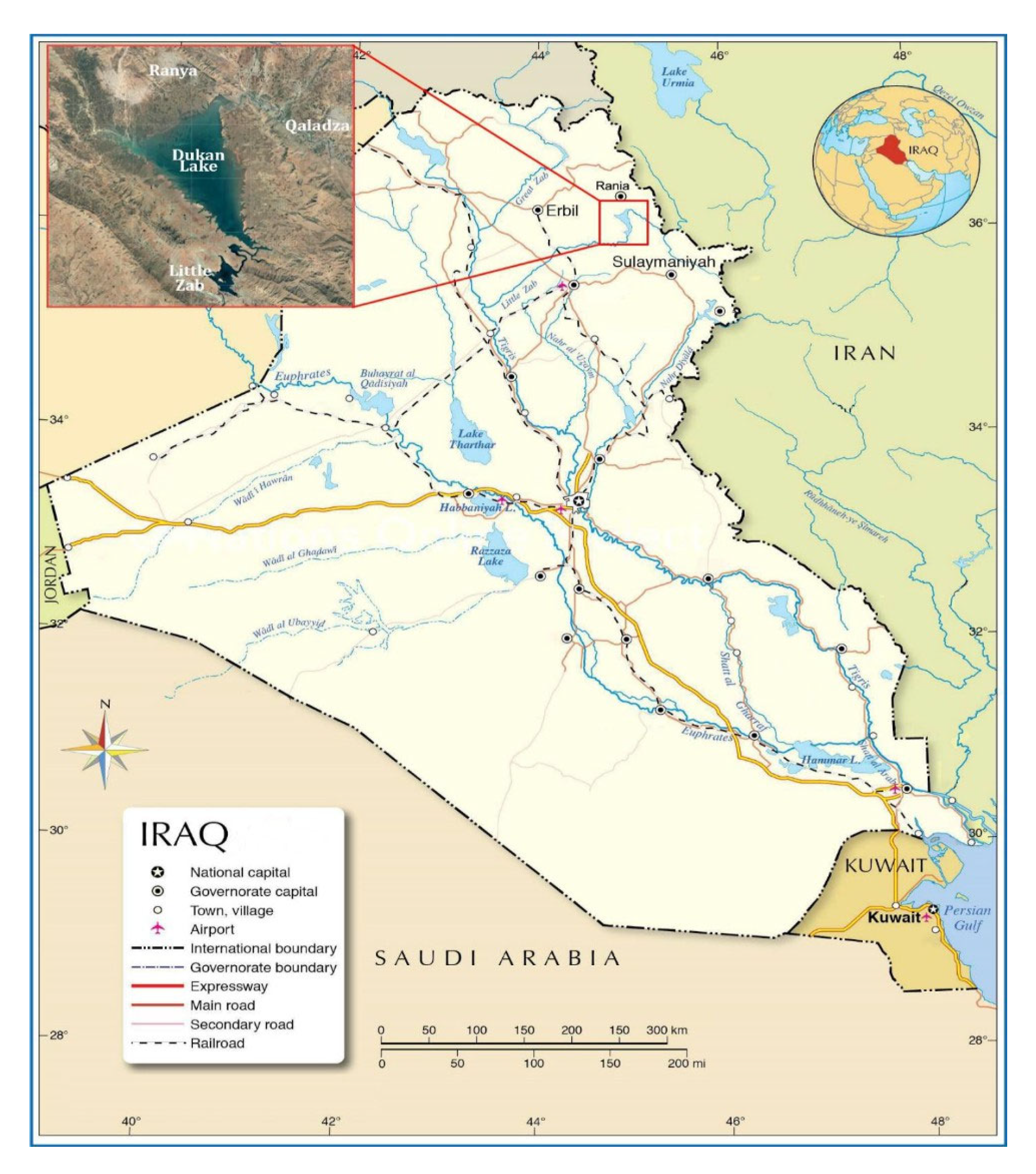
The lake is close to Ranya District (8.5 km) and to the west-north of Sulaymaniyah Governorate (84 km) at 36°08′ N 44°55′ E, Kurdistan region, northern Iraq (Figure 1). It is a reservoir on the Little Zap River, with a volume of 6.8 billion cubic meters and a surface area of about 270 km2 at the high level and 48 km2 at the low level. The drainage area covers about 11,690 km2, of which 1080 km2 is located within the Qala–Diza and Raniya plains [30].

2.2. Materials

Nitric acid (HNO3) (30%), multi-element standard solution 1 for ICP (TraceCERT®, in 2% nitric acid), polyethylene (PE) plastic bottle, and filter paper (Whatman® Quantitative-Grade 5, diameter: 9 cm, pore size: 11 µm) were purchased from Fisher Scientific (Dubai, United Arab Emirates). Deionized water (resistivity 18.2 Mohm × cm, TOC less than 1 μg/L) was purified by ELGAVeolia LabWater (High Wycombe, UK).

2.3. Sample Collection

Fish and water samples were collected monthly during three sampling campaigns conducted in February, June, and October 2024 from Dukan Lake throughout the study period. Sampling was conducted midway through each month to minimize temporal inconsistencies among sampling events. A monthly sampling strategy was selected to capture potential seasonal and temporal variations in metal concentrations, fish physiological condition, and reproductive development. This approach enabled evaluation of possible fluctuations associated with environmental changes, biological activity, and pollutant dynamics within the lake ecosystem.
Fish samples were collected based on a predefined monthly schedule in Dukan Lake. Sampling was scheduled for one sample per month. Water samples were collected at a depth of 30 cm. Polyethylene bottles (1 L) were used, and the bottles were pre-rinsed three times with distilled water. The water samples were transported to the laboratory in cooler boxes. The water samples were preserved in 2% (v/v) (HNO3) until used to prevent the precipitation of metals [31]. The samples were stored in a refrigerator (5 °C) until further analysis.
Fish samples were collected using gill nets operated by local fishermen; a total of 60 fish were collected. Fish samples were stored in airtight plastic bags immediately after sampling and then transferred to the laboratory using an ice box on the same day. To minimize the difference in metal accumulation, the total fish length was between 20 cm and 49 cm. The lengths and fresh weights of fish samples were recorded upon arrival at the laboratory. Fish specimens were grouped into three size classes based on length: small (20–29 cm), medium (30–39 cm), and large (40–49 cm).

2.4. Sample Processing

Water samples were filtered using Whatman Grade 5 qualitative filter paper. Then, 9 mL of water was added to a Falcon tube, followed by 1 mL of HNO3 (2%, v/v), and the mixture was agitated for 1 h on the table shaker. The samples were analyzed using inductively coupled plasma–optical emission spectrometry (ICP-OES).
All fish were euthanized at the conclusion of the experimental period and anesthetized using clove powder [32]. The fish specimens were dissected to separate organs (gonads and the entire liver) according to the Food and Agriculture Organization of the United Nations [33] and stored at −20 °C until used. For extracting heavy metals from fish tissues, approximately 1 g of liver tissue and 1 g of gonadal tissue from each fish were processed separately for metal analysis. The tissues were not pooled prior to digestion, and the fish organs were dried at 105 °C in crucible tubes in an oven (Memmert drying oven UM 200–800, MEMMERT company, 91126 Schwabach, Germany) until a constant weight was achieved. Afterward, the dried organs were burned at 550 °C in crucible tubes in a muffle furnace (Elite Thermal Systems BCF12/45, Elite Company, Schwabach, UK). The samples were cooled down in a desiccator; the weight was recorded on a four-point sensitive balance. The ash samples were placed in test tubes and then treated with 10 mL of concentrated HNO3 (69%). The solutions were digested for 2 h in a dark fume hood, then stirred slowly to accelerate the digestion. After that, the solutions were diluted to 50 mL with deionized water and then filtered through Whatman Grade 5 qualitative filter paper. The extracts were agitated for 1 h on the table shaker and analyzed by ICP-OES.

2.5. Biological Parameters

Fish samples were euthanized for analysis, and the abdominal cavity was opened to remove the gonads and liver. The organs were weighed. GSI, HSI indices, and CF were calculated using the formula of [34].
H S I = L i v e r   W . F i s h   W . × 100
G S I = G o n a d s   W . F i s h   W . × 100
C F = F i s h   W . ( F i s h   L ) 3 × 100
Here, CF is the condition factor, HSI is the hepatosomatic index, and GSI is the gonadosomatic index.

2.6. Heavy Metals Analysis

An ICP-OES (Spectro Acros) multi-element system was used to analyze heavy metal concentrations using external standard stock solutions. The samples were analyzed by the method reported before, with some modifications [35]. The external standard solutions were prepared from multi-element standard solution 1 for ICP (TraceCERT®, in 2% nitric acid) in the 1–100 μg/L range. The calibration curves for all heavy metals were obtained by plotting measured standard peak areas against corresponding standard concentrations. Linear regression was performed for each curve. HNO3 (2%) was used in all standard solutions and samples to minimize interferences and matrix effects. The limit of detection (LOD) and limit of quantification (LOQ) of the method were calculated using 7 injections of a 25 μg/L standard solution. LOD and LOQ were calculated as 3 and 10 times the standard deviations of the peak areas, respectively, and then divided by the slope of the calibration curves. Method linearity was evaluated by analyzing other standard solutions outside the calibration curves, for example, 500, 1000, and 5000 μg/L. Samples were diluted when their concentrations after analysis fell outside of the method linearity range. An analytical standard solution of (25 mg/L) was analyzed with every 20 injections to check the instrumental response and drift of ICP-OES, and a blank sample was analyzed with every 20 injections to check cross-contamination during analysis. The details of the analytical method are listed in Table 1.

2.7. Statistical Methods

Several methods were used to determine whether the concentration of heavy metals was significantly different between the fish length groups. When significant differences (p < 0.05) were found, the Duncan test [36] was used to calculate the group means. To display the relationships among the parameters, a Pearson correlation (r) matrix was constructed. All measurements are reported as mean ± standard deviation, based on 3 replicates. The statistical analysis was done with XLSTAT Pro 7.5. Calculations were performed using Microsoft Excel (Microsoft Corp., Redmond, WA, USA).

3. Results

3.1. Heavy Metal Concentrations in Water

Fish specimens were classified into three length groups: Group 1 (20–29 cm) (Table S1), Group 2 (30–39 cm) (Table S2), and Group 3 (40–49 cm) (Table S3). To provide an overview of the findings and facilitate interpretation of the results, a summary of all observed trends, statistical comparisons, and significant relationships among these groups is presented in Table S4. The table highlights the observed variations among length groups and summarizes the statistically significant findings identified throughout the study.
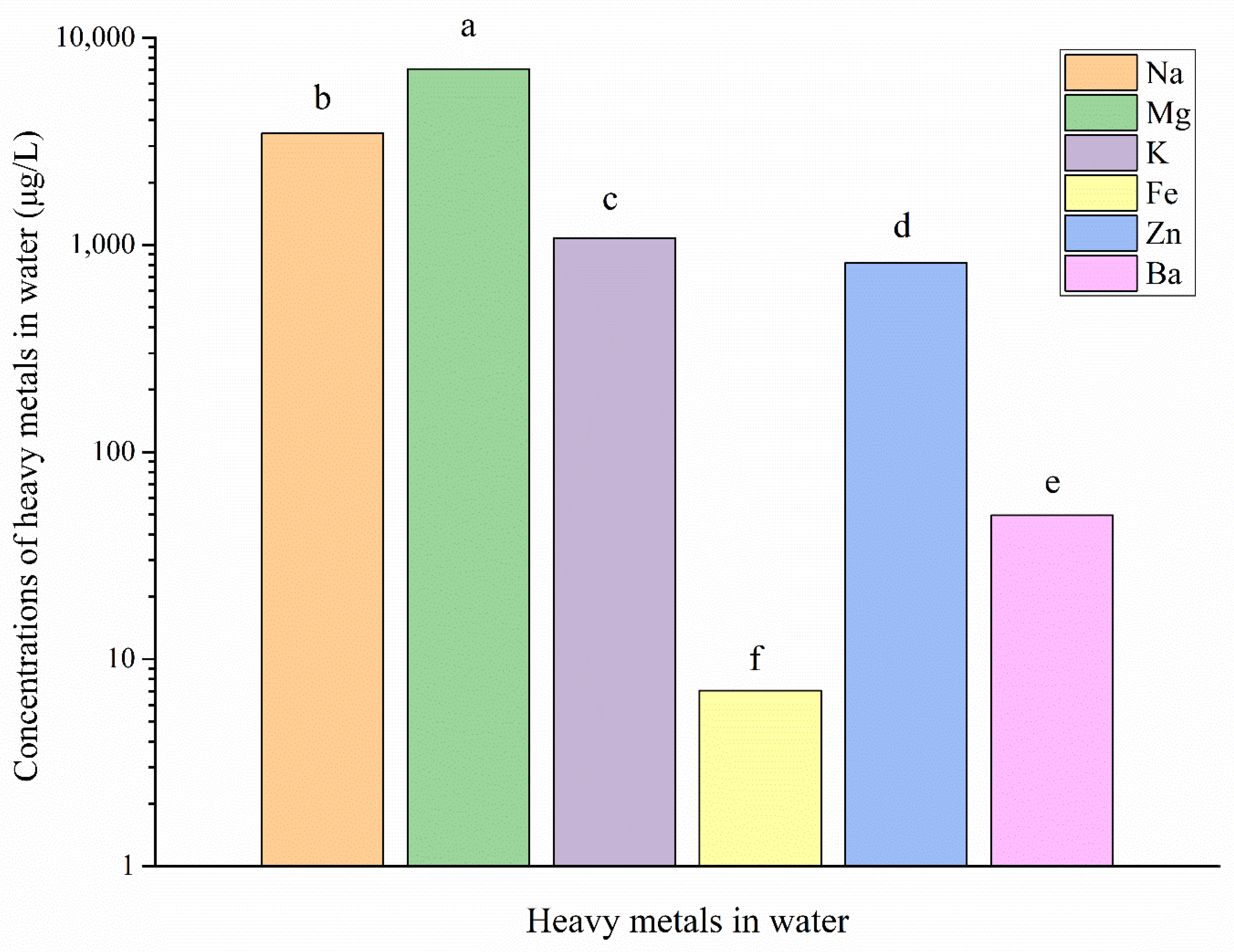
Common carp and water samples were collected from Dukan Lake and analyzed for heavy metal concentrations. The concentrations of heavy metals in water samples are summarized in Figure 2. Six out of sixteen metals were detected in water, while the others fell below the limit of detection. Magnesium (Mg) exhibited the highest concentration (7069 μg/L), followed by sodium (Na; 3449 μg/L) and potassium (K; 1077 μg/L). Zinc (Zn) and barium (Ba) were detected at intermediate levels (818.8 μg/L and 49.5 μg/L, respectively), whereas iron (Fe) showed the lowest concentration (7.04 μg/L). Cr, manganese (Mn), nickel (Ni), selenium (Se), silver (Ag), cadmium (Cd), antimony (Sb), lead (Pb), copper (Cu), and arsenic (As) were below detection limits in water samples.

3.2. Heavy Metal Accumulation in the Liver

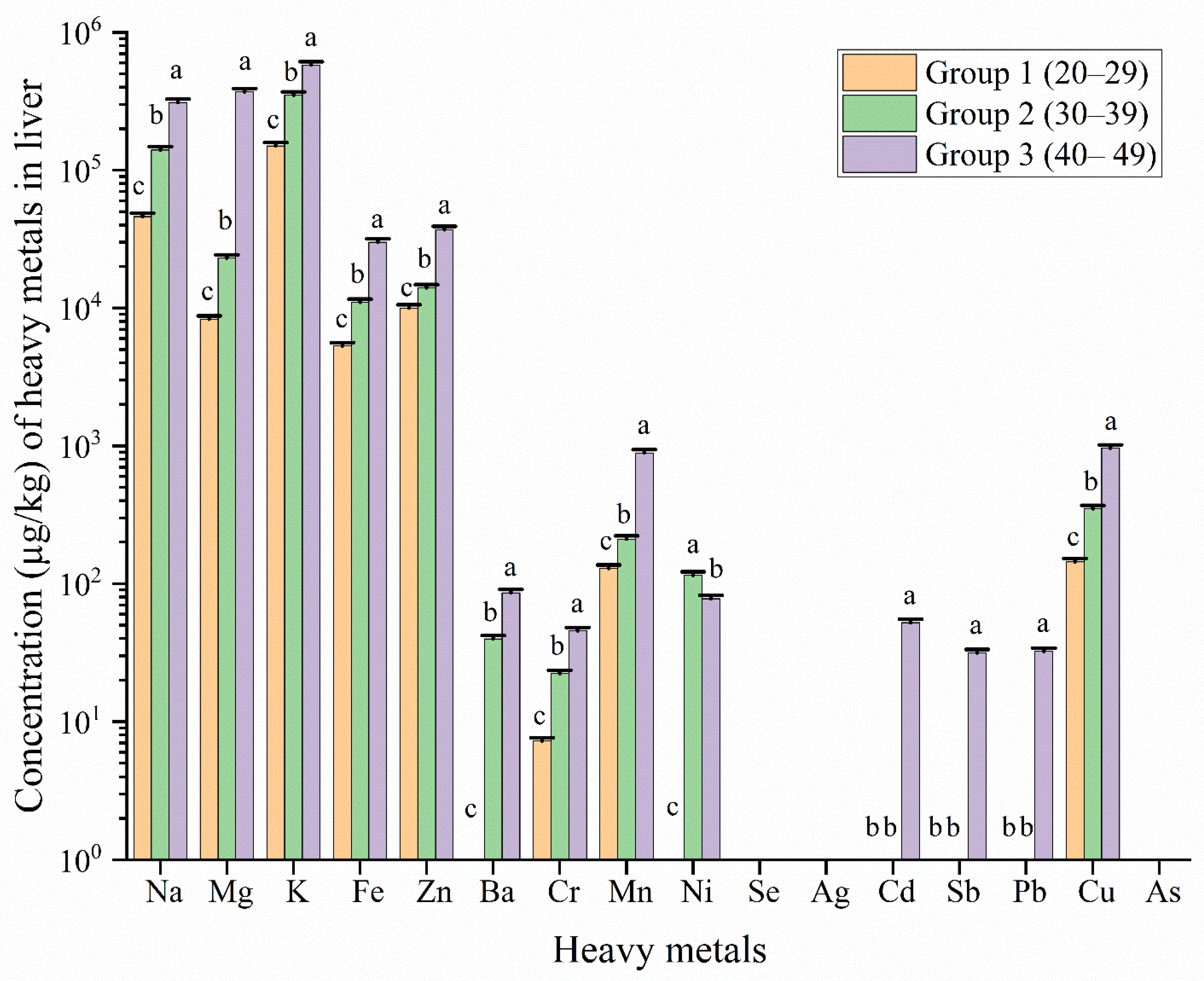
Mean concentrations of heavy metals in liver tissue (μg/g dry weight ± SD) are shown in Figure 3. K exhibited the highest accumulation across all length groups, followed by Na and Mg. Zn and Fe were detected at moderate concentrations, while Ba, Cr, Mn, Ni, Cd, Sb, Pb, and Cu were present at comparatively lower levels. Metal accumulation generally increased with fish size, with Group 3 (40–49 cm) exhibiting higher concentrations for several elements, particularly Na, Mg, K, Mn, and Cu. Se, Ag, and As were below detection limits in liver samples.

3.3. Heavy Metal Accumulation in Gonad

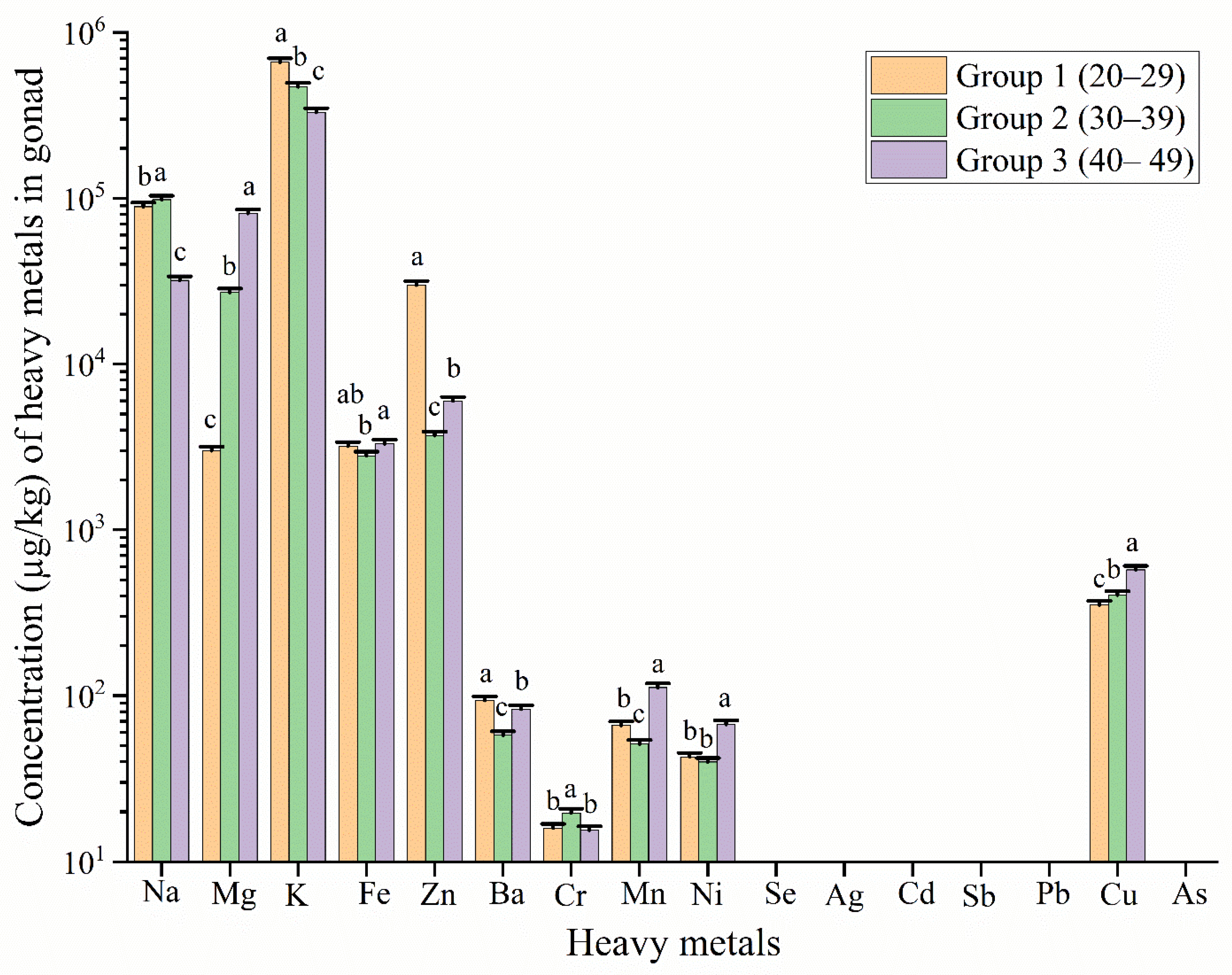
Heavy metal concentrations in gonad tissue (μg/g dry weight ± SD) are presented in Figure 4. Similar to the liver, K, Na, and Mg were the dominant elements across all length groups. Zinc showed relatively higher concentrations in Group 1 (20–29 cm) compared to larger fish. Copper concentrations increased with fish size, peaking in Group 3 (40–49 cm). Ba, Cr, Mn, and Ni were detected at lower concentrations. The concentrations of Se, Ag, Cd, Sb, and As were below detection limits in gonad tissue.

3.4. Biometric Indices

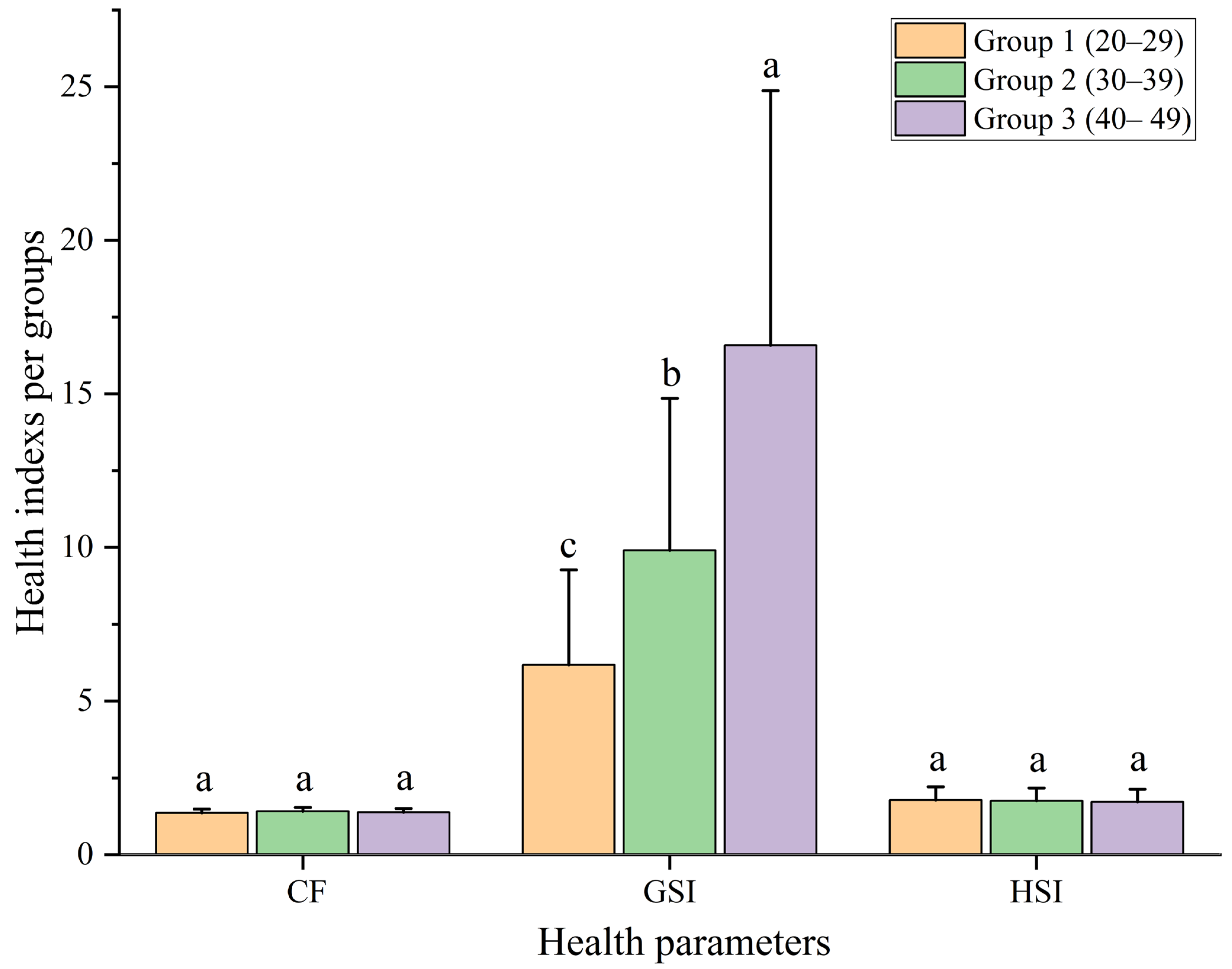
The biometric indices for the three length groups are summarized in Figure 5. The condition factor (CF) values were 1.36, 1.41, and 1.38 for Groups 1, 2, and 3, respectively (SD = 0.09), with no significant differences among groups (p > 0.05). The gonadosomatic index (GSI) increased progressively with fish size, with mean values of 6.18 (Group 1), 9.90 (Group 2), and 16.58 (Group 3) (SD = 0.50). Differences among length groups were statistically significant (p < 0.05). The hepatosomatic index (HSI) showed minimal variation among groups, with mean values of 1.78, 1.75, and 1.72 for Groups 1, 2, and 3, respectively (SD = 0.24), and no statistically significant differences were observed (p > 0.05).

3.5. Correlation Between Water Metal Concentrations and Biometric Indices

Pearson’s correlation analysis (XLSTAT) was performed to evaluate the relationships between heavy metal concentrations in water and biometric indices.

3.5.1. Condition Factor (CF)

Correlation coefficients between CF and water metal concentrations were generally weak across all length groups (|r| < 0.60). In Group 3, Fe showed the highest positive correlation (r = 0.564), while Na and Mg exhibited weak negative associations. However, none of the correlations were statistically significant (p > 0.05), as clarified in Table 2.

3.5.2. Gonadosomatic Index (GSI)

The correlation coefficient between the heavy metal concentrations in the water samples and the GSI was not significant, as presented in Table 3. In Group 2, Zn showed a moderate negative correlation (r = −0.601). However, this relationship was not statistically significant (p > 0.05). No statistically significant correlations were detected between water metal concentrations and GSI.

3.5.3. Hepatosomatic Index (HSI)

The correlation between the HSI and heavy metal concentrations (Na, Mg, K, Fe, Zn, and Ba) in the water is summarized in Table 4. Correlation analysis revealed varying relationships between HSI and water metals across size groups. A strong positive and statistically significant correlation was observed between Zn concentration and HSI in Group 2 (30–39 cm) (r = 0.761, p < 0.05). No other significant correlations were observed between water metal concentrations and HSI.

4. Discussion

The predominance of Na, Mg, and K in water samples likely reflects the natural geological composition of the Dukan Lake watershed rather than anthropogenic contamination [37,38]. The surrounding carbonate-rich geological formations and mineral weathering processes may contribute substantially to the elevated concentrations of these elements. In contrast, the absence of detectable concentrations of Cd, Pb, and As suggests relatively limited industrial contamination in the study area during the sampling period [7,39].
The relatively stable CF and HSI values across fish size groups suggest that the detected metal concentrations were insufficient to induce severe physiological stress in the studied population [40,41]. This may indicate that the current environmental condition of Dukan Lake remains capable of supporting normal metabolic and reproductive functions in common carp [42].
Although toxic metals were largely absent, continued environmental monitoring remains important because freshwater ecosystems are sensitive to increasing anthropogenic pressure, including agricultural intensification, tourism activities, and urban expansion around the lake basin [3,43]. Even low-level chronic exposure to metals may alter trophic interactions, reproductive success, and long-term ecosystem stability [44].

4.1. Heavy Metal Occurrence in Water

The dominance of Mg, Na, and K in Dukan Lake water reflects their natural geochemical origin and their classification as major ions commonly found in freshwater systems. These elements are typically derived from the weathering of surrounding geological formations and are generally not considered toxic at environmentally relevant concentrations [45].
The low Fe level relative to other major elements further supports a highly oxygenated, healthy water column. Under the well-aerated conditions typical of Dukan Lake’s active hydrodynamic mixing, dissolved ferrous iron undergoes oxidative precipitation, forming insoluble ferric oxides that rapidly settle into the benthic sediment layer [45].
The complete absence of detectable concentrations of highly toxic, non-essential heavy metals (Cd, Pb, As, and Cr) indicates that Dukan Lake has not yet suffered acute industrial degradation. This contrasts sharply with heavily contaminated industrial freshwater bodies, where Cr routinely exceeds safe environmental thresholds due to petrochemical runoff [46], or sections of the Tigris and Euphrates rivers where industrial effluents trigger high ambient Pb and Cd loads [47,48]. However, detection limits should be considered when interpreting “below detection” results, as chronic low-level exposure may still occur [49]. The authors of [50] reported that the Zn concentration in carp was 477 µg/kg wet weight, which is higher than that found in our study.

4.2. Tissue-Specific Bioaccumulation Patterns

Liver tissues accumulated higher concentrations of Na, Mg, K, Mn, and Cu compared with gonadal tissues (Figure 3 and Figure 4), reflecting the central role of the liver in metal metabolism, detoxification, and storage [13]. The elevated hepatic accumulation observed in this study likely indicates active physiological regulation of essential elements rather than severe toxic exposure, particularly because highly toxic metals such as Cd, Pb, and As were below detection limits.
The distinct compartmentalization of metals between tissues, where the liver accumulated significantly higher concentrations of Na, Mg, K, Mn, and Cu than the gonads, highlights the targeted physiological role of hepatic tissue in teleost fish. The fish liver functions as the primary metabolic crossroads for element storage, active regulation, and detoxification via metallothionein binding [13]. Because toxic xenobiotic metals (Cd, Pb, and As) were absent, the elevated hepatic concentrations of Zn and Cu recorded here represent homeostatic maintenance rather than a toxicological defense response. Fish actively homeostatize Zn in the liver because it serves as a critical cofactor for structural proteins, DNA polymerases, antioxidant enzymes, and protein synthesis [51]. This metabolic drive explains why heavy metal accumulation in fish livers typically expands significantly over time and exposure duration [52], and this is aligned with our findings. Therefore, elevated hepatic Zn concentrations may reflect physiological regulation rather than toxic overload.
The authors of [47,48] found high concentrations of some heavy metals, such as Pb, Fe, and Cd, in both water samples (>0.03 for both metals) and different organs, including kidneys, gills, livers, and muscles of the selected fish. In contrast, the gonad generally showed lower metal concentrations. Reproductive tissues are often protected through selective metal regulation to safeguard gamete integrity [13]. However, the presence of low but detectable levels of essential trace metals, Cu and Zn, in gonadal tissue suggests that these metals are still transferred, potentially influencing reproductive processes.

4.3. Size-Dependent Bioaccumulation

The clear size-dependent bioaccumulation pathway observed in this study, where Group 3 fish (40–49 cm) exhibited the highest concentrations of hepatic metals, particularly Na, Mg, K, Mn, and Cu (Figure 3), can be attributed to a combination of cumulative exposure duration, shifting feeding habits, and trophic positioning. As wild common carp (Cyprinus carpio) grow, their dietary intake intensifies, and their benthic foraging behavior deepens [52]. Larger individuals root more deeply in the bottom sediments, thereby increasing their direct ingestion of sediment-associated particulates and contaminated benthic macroinvertebrates [53]. These findings indicate that fish size may influence metal storage capacity and metabolic regulation in common carp populations from Dukan Lake. Larger fish often experience longer exposure periods, allowing gradual accumulation of both essential and non-essential metals. Interestingly, Zn concentrations in gonadal tissue were relatively higher in smaller fish (20–29 cm), suggesting potential ontogenetic variation in metal regulation.

4.4. Biometric Indices and Metal Relationships

Physical and chemical alterations in the environment cause stress in aquatic organisms, leading to metabolic, physiologic, biochemical, and behavioral changes that may negatively affect growth, development, and reproduction [54]. Ref. [55] reported that CF, HSI, and GSI were significantly decreased in arsenic-exposed fish; however, in the current study, As concentration was not detected in either liver or gonad tissue.
In this study, the stability of CF values across all length groups confirms that the ambient metal concentrations within Dukan Lake are well below the threshold required to induce severe physical stress or impair growth efficiency. Unlike populations of Abramis brama and C. carpio in highly industrialized European or regional rivers, which show sharp negative correlations between body condition and tissue metal (Cd, Cu, Pb, and Zn) burdens [56,57], the wild carp population in Dukan Lake exhibits a stable nutritional and physiological status. Further, ref. [58] reported a negative correlation between CF and Cr levels in Carassius carassius.
Similarly, the progressive, linear increase in GSI with fish length tracks normal, uninhibited gonadal maturation and reproductive investment [59]. This lack of statistical correlation between water chemistry and GSI confirms that the lake’s current chemical profile does not impede spawning success, which contrasts sharply with other regional studies where high exposure to heavy metals like Pb and Cr caused direct gonadal degradation [57,60,61] and significantly depressed GSI values [62,63]. Interestingly, a previous study [34] demonstrated that the correlations between GSI and heavy metals (Pb, Zn, and Cr) were highly significant. Variation in the analytical system, study location, environmental conditions, and specimens was the main reason for the variation among the studies.
The most compelling physiological interaction discovered in our data is the strong positive correlation between ambient water Zn concentrations and the HSI observed specifically within the medium-sized (30–39 cm) cohort (r = 0.761, p < 0.05). While extensive heavy metal exposure typically triggers severe structural liver damage [54] and subsequent organ shrinkage (lowering HSI) [64,65], a sub-lethal, moderate availability of an essential element like Zn stimulates hepatic hyper-functioning [66,67,68].
Because Zn is the primary element triggering the production of metallothioneins and antioxidant enzymes to mitigate cellular oxidation, the liver increases its metabolic tissue mass to process the ambient element influx [51]. Elevated hepatic activity in response to Zn availability may contribute to increased liver mass, thereby explaining the positive association between Zn and HSI. However, excessive Zn accumulation may also induce oxidative stress and cellular alterations if the regulatory capacity is exceeded [13].

4.5. Ecotoxicological Perspective

Although essential metals such as Zn and Fe are necessary for metabolic function, excessive intake may disrupt physiological processes if concentrations exceed recommended limits [51]. However, based on the present findings, metal concentrations appear within ranges typically observed in freshwater fish from non-industrially contaminated systems [13]. The absence of detectable Cd, Pb, and As is particularly important from a public health standpoint, as these metals are commonly associated with chronic toxicity, nephrotoxicity, and carcinogenicity [69].

5. Conclusions

Heavy metals were analyzed in water and in organs of common carp (liver and gonad) collected from Dukan Lake, Kurdistan region, northern Iraq (n = 3). This study is the first to investigate heavy metals and correlate their concentrations with fish health in Dukan Lake. The water and fish samples were acid-digested to extract heavy metals, and the extracts were subsequently analyzed by ICP-OES. For some of the detected heavy metals in both water and fish organs, a strong correlation was observed, indicating that water was a source of these metals and their bioaccumulation in the fish organs. Fortunately, the concentrations of heavy metals in both water and fish organs were below the recommended thresholds; thus, the water and fish can be consumed continuously. However, the concentration levels we found warrant attention and suggest either preventing further contamination of the water and fish or a plan for future water purification.

Supplementary Materials

The following supporting information can be downloaded at: https://www.mdpi.com/article/10.3390/hydrobiology5030021/s1, Table S1: Fish samples collected in Group 1 (20–29 cm length class); Table S2: samples collected in Group 2 (30–39 cm length class); Table S3: Fish samples collected in Group 3 (40–49 cm length class); Table S4: Summary of key findings related to metal occurrence, bioaccumulation patterns, and biological responses in common carp from Dukan Lake.

Author Contributions

Software, data curation, writing—original draft preparation, S.R.H.; methodology, formal analysis, B.R.H.; software, validation, writing—review and editing, D.J.S.; data curation, writing—review and editing, H.H.; project administration, resources, writing—original draft preparation, N.M.A.; funding acquisition, writing—review and editing, S.A.B. All authors have read and agreed to the published version of the manuscript.

Funding

This research received no external funding.

Institutional Review Board Statement

The study received approval from the Ethics Committee of the College of Veterinary Medicine, University of Sulaimani, Sulaymaniyah, Kurdistan Region, Iraq. Approval number: VMUS.EC Doc 8–2025/in January 2025.

Data Availability Statement

The datasets generated during and/or analyzed during the current study are available from the corresponding author upon reasonable request.

Acknowledgments

We wish to thank the chemistry department staff at the University of Garmian for their assistance with ICP-OES analyses and for facilitating access to their laboratories for this study and Aras Muhammad for field assistance in collecting water and fish samples.

Conflicts of Interest

The authors declare no conflicts of interest.

Abbreviations

The following abbreviations are used in this manuscript:
GSIGonadosomatic index
CFCondition factor
HSIHepatosomatic index

References

  1. Islam, M.S.; Ahmed, M.K.; Habibullah-Al-Mamun, M.; Masunaga, S. Assessment of trace metals in fish species of urban rivers in Bangladesh and health implications. Environ. Toxicol. Pharmacol. 2015, 39, 347–357. [Google Scholar] [CrossRef] [PubMed]
  2. Talabani, S.K.; Abid, S.A.; Abdulrahman, N.M.; Halshoy, H.S.H.; Karim, S.H. Inoculation of wheat with Azospirillum sp. bacteria and study of their germinated portions effects on common carp performance and health aspects. Adv. Life Sci. 2023, 10, 464–471. [Google Scholar] [CrossRef]
  3. Reid, A.J.; Carlson, A.K.; Creed, I.F.; Eliason, E.J.; Gell, P.A.; Johnson, P.T.J.; Kidd, K.A.; MacCormack, T.J.; Olden, J.D.; Ormerod, S.J.; et al. Emerging threats and persistent conservation challenges for freshwater biodiversity. Biol. Rev. 2019, 94, 849–873. [Google Scholar] [PubMed]
  4. Mustafa, S.A. Histopathology and heavy metal bioaccumulation in some tissues of Luciobarbus xanthopterus collected from Tigris River of Baghdad, Iraq. Egypt. J. Aquat. Res. 2020, 46, 123–129. [Google Scholar] [CrossRef]
  5. Hama, S.R. Detection Some Heavy Metals in Water, Sediment and Some Organs of Common Carp (Cyprinus carpio L.) and Their Relation to Some Biological Aspects in Ranya Lakelet. Master’s Thesis, Tikrit University, Tikrit, Iraq, 2015. [Google Scholar]
  6. Abdulla, S.; Jamil, D.; Hama Aziz, K. Investigation in heavy metal contents of drinking water and fish from Darbandikhan and Dokan Lakes in Sulaimaniyah Province—Iraqi Kurdistan Region. In IOP Conference Series: Earth and Environmental Science; IOP Publishing: Bristol, UK, 2020; Volume 612, p. 012023. [Google Scholar]
  7. Hama, S.R.; Abdurahman, N.M.; Saeed, H.M.M.; Halshoy, H.; Braim, S.A. Occurrence and seasonal variations of heavy metal (loid)s in lake case: Effects of climate and water source perspectives. J. Freshw. Ecol. 2025, 40, 2577099. [Google Scholar] [CrossRef]
  8. Hama-Aziz, Z.; Abdulrahman, C.; Ahmed, S.; Abdulrahman, A.; Abubakr, D.; Hasan, C. Evaluation of Water Quality in Dukan Lake in the Kurdistan Region of Iraq Using the Water Quality Index. Environ. Ecosyst. Sci. 2025, 9, 36–40. [Google Scholar] [CrossRef]
  9. Shareef, A.; Karpuzcu, M. Water Resources Management in Kurdistan Region-Iraq The Case Of Dukan Lake. Polytech. J. 2018, 8, 76–101. [Google Scholar]
  10. Barange, M. Fishery and Aquaculture Statistics; Food and Agriculture Organization of the United Nations: Rome, Italy, 2018; p. 82. [Google Scholar]
  11. Hama, S.R.; Abdulrahman, N.M.; HamaRashid, P.K.; Halshoy, H.; Sleman, H.D.; Othman, M.N.; Abdulla, H.I.; Mustafa, R.I.; HamaSalih, H.A.; Braim, S.A. Physiological and health responses of common carp to dietary licorice leaf powder. Eur. Zool. J. 2026, 93, 298–312. [Google Scholar] [CrossRef]
  12. Rashid, R.F.; Abdulaqadir, S.Z.; Hassan, R.R.; Hassan, A.O. Heavy metals in some tissues and organs of Common Carp (Cyprinus carpio L., 1758).fish species in relation to body size, age, sex and seasons from Taqtaq Region of Little Zab River, Northern Iraq. Int. J. For. Anim. Fish. Res. 2021, 5, 16–22. [Google Scholar] [CrossRef]
  13. Jezierska, B.; Witeska, M. The metal uptake and accumulation in fish living in polluted waters. In Soil and Water Pollution Monitoring, Protection and Remediation; Springer: Berlin/Heidelberg, Germany, 2006. [Google Scholar]
  14. Javed, M.; Usmani, N. Assessment of heavy metal (Cu, Ni, Fe, Co, Mn, Cr, Zn) pollution in effluent dominated rivulet water and their effect on glycogen metabolism and histology of Mastacembelus armatus. SpringerPlus 2013, 2, 390. [Google Scholar] [CrossRef] [PubMed]
  15. Heath, A.G. Water Pollution and Fish Physiology; CRC Press: Boca Raton, FL, USA, 2018. [Google Scholar]
  16. Javed, M.; Usmani, N. An overview of the adverse effects of heavy metal contamination on fish health. Proc. Natl. Acad. Sci. India Sect. B Biol. Sci. 2019, 89, 389–403. [Google Scholar]
  17. Ángeles Esteban, M. An overview of the immunological defenses in fish skin. Int. Sch. Res. Not. 2012, 2012, 853470. [Google Scholar] [CrossRef]
  18. Mahboob, S.; Sheri, A. Relationships among gonad weight, liver weight and body weight of major, common and some Chinese carps under composite culture system with special reference to pond fertilization. Asian-Australas. J. Anim. Sci. 2002, 15, 740–744. [Google Scholar] [CrossRef]
  19. Taslima, K.; Al-Emran, M.; Rahman, M.S.; Hasan, J.; Ferdous, Z.; Rohani, M.F.; Shahjahan, M. Impacts of heavy metals on early development, growth and reproduction of fish–A review. Toxicol. Rep. 2022, 9, 858–868. [Google Scholar] [PubMed]
  20. Li, Z.-H.; Li, P.; Dzyuba, B.; Randak, T. Influence of environmental related concentrations of heavy metals on motility parameters and antioxidant responses in sturgeon sperm. Chem.-Biol. Interact. 2010, 188, 473–477. [Google Scholar] [CrossRef] [PubMed]
  21. Ni, X.; Shen, Y. Transgenerational effects of hexavalent chromium on marine medaka (Oryzias melastigma) reveal complex transgenerational adaptation in offspring. Biomolecules 2021, 11, 138. [Google Scholar] [CrossRef] [PubMed]
  22. Chen, H.; Cao, J.; Li, L.; Wu, X.; Bi, R.; Klerks, P.L.; Xie, L. Maternal transfer and reproductive effects of Cr(VI) in Japanese medaka (Oryzias latipes) under acute and chronic exposures. Aquat. Toxicol. 2016, 171, 59–68. [Google Scholar] [CrossRef] [PubMed]
  23. Ozmen, M.; Güngördü, A.; Kucukbay, F.Z.; Güler, R.E. Monitoring the effects of water pollution on Cyprinus carpio in Karakaya Dam Lake, Turkey. Ecotoxicology 2006, 15, 157–169. [Google Scholar] [PubMed]
  24. Lennox, R.J.; Crook, D.A.; Moyle, P.B.; Struthers, D.P.; Cooke, S.J. Toward a better understanding of freshwater fish responses to an increasingly drought-stricken world. Rev. Fish Biol. Fish. 2019, 29, 71–92. [Google Scholar] [CrossRef]
  25. Ahmed, A.S.; Sultana, S.; Habib, A.; Ullah, H.; Musa, N.; Hossain, M.B.; Rahman, M.M.; Sarker, M.S.I. Bioaccumulation of heavy metals in some commercially important fishes from a tropical river estuary suggests higher potential health risk in children than adults. PLoS ONE 2019, 14, e0219336. [Google Scholar] [CrossRef] [PubMed]
  26. Nepal, V.; Fabrizio, M.C.; Brill, R.W. Effects of food limitation on growth, body condition and metabolic rates of non-native blue catfish. Conserv. Physiol. 2021, 9, coaa129. [Google Scholar] [CrossRef] [PubMed]
  27. Shaikh, A.; Prakash, S. Biochemical composition and gonadosomatic index of three major carps in Hatnoor reservoir, Maharashtra, India. J. Ecobiotechnol. 2011, 3, 1–4. [Google Scholar]
  28. Pawar, M.B.; Sa, Q.; Shankar, T.R. Studies on the fecundity (F), gonadosomatic index (GSI) of Cyprinus carpio (Common carp) due to administration of hormonal doses PGE, Ovaprim and Ovatide at FSPC, Aurangabad, Maharashtra, India. Int. J. Fish Aquat. Stud. 2020, 8, 39–41. [Google Scholar] [CrossRef]
  29. Burgos-Aceves, M.A.; Lionetti, L.; Faggio, C. Multidisciplinary haematology as prognostic device in environmental and xenobiotic stress-induced response in fish. Sci. Total Environ. 2019, 670, 1170–1183. [Google Scholar] [CrossRef] [PubMed]
  30. Bunic, D. Dokan Dam Project; Manuscript Available at the Ministry of Irrigation; Government of Iraq: Baghdad, Iraq, 1955. [Google Scholar]
  31. Eaton, A.D.; Franson, M.A.H.; Association, A.P.H.; Association, A.W.W.; Federation, W.E. Standard Methods for the Examination of Water and Wastewater; American Public Health Association: Washington, DC, USA, 2005. [Google Scholar]
  32. López-Cánovas, A.E.; Cabas, I.; Chaves-Pozo, E.; Ros-Chumillas, M.; Navarro-Segura, L.; López-Gómez, A.; Fernandes, J.M.O.; Galindo-Villegas, J.; García-Ayala, A. Nanoencapsulated Clove Oil Applied as an Anesthetic at Slaughtering Decreases Stress, Extends the Freshness, and Lengthens Shelf Life of Cultured Fish. Foods 2020, 9, 1750. [Google Scholar] [CrossRef] [PubMed]
  33. Nauen, C.E. Compilation of Legal Limits for Hazardous Substances in Fish and Fishery Products; FAO Fisheries Circular (FAO): Rome, Italy, 1983. [Google Scholar]
  34. Hama, S.; Abdulrahman, N.; Wahab, N. Correlation between heavy metals in water and some health parameters. Int. J. Plant Anim. Environ. Sci. 2015, 5, 257–260. [Google Scholar]
  35. Saleh, M.Q.; Hamad, Z.A.; Hama, J.R. Assessment of some heavy metals in crude oil workers from Kurdistan Region, northern Iraq. Environ. Monit. Assess. 2021, 193, 49. [Google Scholar] [CrossRef] [PubMed]
  36. Duncan, D.B. Multiple range and multiple F tests. biometrics 1955, 11, 1–42. [Google Scholar] [CrossRef]
  37. Al-Kakey, O.; Othman, A.A.; Al-Mukhtar, M.; Dunger, V. Proposing Optimal Locations for Runoff Harvesting and Water Management Structures in the Hami Qeshan Watershed, Iraq. ISPRS Int. J. Geo-Inf. 2023, 12, 312. [Google Scholar] [CrossRef]
  38. Hamaamin, Y.A.; Abdullah, J.B. Temporal Variation of Drinking Water Quality Parameters for Sulaimani City, Kurdistan Region, Iraq. UHD J. Sci. Technol. 2020, 4, 99–106. [Google Scholar] [CrossRef]
  39. Alewy Almashhadany, D.; Khalid, H.S.; Ali, H.S. Determination of heavy metals and selenium contents in fish meat sold at Erbil City, Kurdistan Region, Iraq. Ital. J. Food Saf. 2020, 9, 8753. [Google Scholar] [CrossRef] [PubMed]
  40. van der Oost, R.; Beyer, J.; Vermeulen, N.P. Fish bioaccumulation and biomarkers in environmental risk assessment: A review. Environ. Toxicol. Pharmacol. 2003, 13, 57–149. [Google Scholar] [CrossRef] [PubMed]
  41. Dekić, R.; Savić, N.; Manojlović, M.; Golub, D.; Pavlicevic, J. Condition factor and organosomatic indices of rainbow trout (Onchorhynchus mykiss, Wal.) from different brood stock. Biotechnol. Anim. Husb. 2016, 32, 229–237. [Google Scholar] [CrossRef]
  42. Othman, C.; Arif, E.; Khidhir, Z. Bioaccumulation of Heavy Metals and Their Resistance Genes in E. coli Isolated from Carp Fish Cultured in Dukan Lake. Tikrit J. Agric. Sci. 2023. [Google Scholar]
  43. Albert, J.S.; Destouni, G.; Duke-Sylvester, S.M.; Magurran, A.E.; Oberdorff, T.; Reis, R.E.; Winemiller, K.O.; Ripple, W.J. Scientists’ warning to humanity on the freshwater biodiversity crisis. Ambio 2021, 50, 85–94. [Google Scholar] [PubMed]
  44. Fleeger, J.W.; Carman, K.R.; Nisbet, R.M. Indirect effects of contaminants in aquatic ecosystems. Sci. Total Environ. 2003, 317, 207–233. [Google Scholar] [CrossRef] [PubMed]
  45. Kar, D.; Sur, P.; Mandai, S.; Saha, T.; Kole, R. Assessment of heavy metal pollution in surface water. Int. J. Environ. Sci. Technol. 2008, 5, 119–124. [Google Scholar]
  46. Sheikhzadeh, H.; Hamidian, A.H. Bioaccumulation of heavy metals in fish species of Iran: A review. Environ. Geochem. Health 2021, 43, 3749–3869. [Google Scholar] [CrossRef] [PubMed]
  47. Mustafa, S.; Al-Rudainy, A.; Al-Samawi, S. Histopathology and level of bioaccumulation of some heavy metals in fish, Carasobarbus luteus and Cyprinus carpio tissues caught from Tigris river, Baghdad. Iraqi J. Agric. Sci. 2020, 51, 698–704. [Google Scholar]
  48. Salman, J.M.; Kaizal, A.F.; Kot, P. Evaluation of some heavy metals, their fate and transportation in water, sediment, and some biota within Al-Musayyib River, Babylon Governorate, Iraq. Baghdad Sci. J. 2023, 20, 0436. [Google Scholar] [CrossRef]
  49. USEPA. Guidance for Assessing Chemical Contaminant Data for Use in Fish Advisories, 3rd ed.; Environmental Protection Agency: Washington, DC, USA, 2000; Volume 2. [Google Scholar]
  50. Zafarzadeh, A.; Bay, A.; Fakhri, Y.; Keramati, H.; Hosseini Pouya, R. Heavy metal (Pb, Cu, Zn, and Cd) concentrations in the water and muscle of common carp (Cyprinus carpio) fish and associated non-carcinogenic risk assessment: Alagol wetland in the Golestan, Iran. Toxin Rev. 2018, 37, 154–160. [Google Scholar]
  51. Kambe, T.; Tsuji, T.; Hashimoto, A.; Itsumura, N. The Physiological, Biochemical, and Molecular Roles of Zinc Transporters in Zinc Homeostasis and Metabolism. Physiol. Rev. 2015, 95, 749–784. [Google Scholar] [CrossRef] [PubMed]
  52. Ali, D.N.; Abdulrahman, N.M.; Rahim, B.R. Bioaccumulation of some heavy metals in some organs of common carp (Cyprinus carpio) fish captured from Darbandikhan Lake Sirwan and Tanjaro river. Basrah J. Vet. Res. 2022, 21, 97–112. [Google Scholar] [CrossRef]
  53. Wang, W.-X.; Rainbow, P.S. Comparative approaches to understand metal bioaccumulation in aquatic animals. Comp. Biochem. Physiol. Part C Toxicol. Pharmacol. 2008, 148, 315–323. [Google Scholar] [CrossRef]
  54. Eastwood, S.; Couture, P. Seasonal variations in condition and liver metal concentrations of yellow perch (Perca flavescens) from a metal-contaminated environment. Aquat. Toxicol. 2002, 58, 43–56. [Google Scholar] [CrossRef] [PubMed]
  55. Verma, A.K.; Prakash, S. Impact of arsenic on haematology, condition factor, hepatosomatic and gastrosomatic index of a fresh water cat fish, Mystus vittatus. Int. J. Biol. Sci. 2019, 10, 49–54. [Google Scholar]
  56. Farkas, A.; Salánki, J.; Specziár, A. Age- and size-specific patterns of heavy metals in the organs of freshwater fish Abramis brama L. populating a low-contaminated site. Water Res. 2003, 37, 959–964. [Google Scholar] [PubMed]
  57. Hosseini Alhashemi, A.; Karbassi, A.; Hassanzadeh Kiabi, B.; Monavari, S.M.; Sekhavatjou, M.S. Bioaccumulation of trace elements in different tissues of three commonly available fish species regarding their gender, gonadosomatic index, and condition factor in a wetland ecosystem. Environ. Monit. Assess. 2012, 184, 1865–1878. [Google Scholar] [PubMed]
  58. Uysal, K.; Emre, Y.; Köse, E. The determination of heavy metal accumulation ratios in muscle, skin and gills of some migratory fish species by inductively coupled plasma-optical emission spectrometry (ICP-OES) in Beymelek Lagoon (Antalya/Turkey). Microchem. J. 2008, 90, 67–70. [Google Scholar]
  59. Magnuson, J.J. Fish and Fisheries Ecology. Ecol. Appl. 1991, 1, 13–26. [Google Scholar] [CrossRef] [PubMed]
  60. Tilton, S.C.; Foran, C.M.; Benson, W.H. Effects of cadmium on the reproductive axis of Japanese medaka (Oryzias latipes). Comp. Biochem. Physiol. Part C Toxicol. Pharmacol. 2003, 136, 265–276. [Google Scholar] [CrossRef]
  61. Łuszczek-Trojnar, E.; Drąg-Kozak, E.; Szczerbik, P.; Socha, M.; Popek, W. Effect of long-term dietary lead exposure on some maturation and reproductive parameters of a female Prussian carp (Carassius gibelio B.). Environ. Sci. Pollut. Res. 2014, 21, 2465–2478. [Google Scholar]
  62. Pieterse, G.M. Histopathological Changes in the Testis of Oreochromis Mossambicus (Cichlidae) as a Biomarker of Heavy Metal Pollution; University of Johannesburg: Johannesburg, South Africa, 2008. [Google Scholar]
  63. James, R.; Sampath, K.; Jothilakshmi, S.; Vasudhevan, I.; Thangarathinam, R.J.E. Effects of copper toxicity on growth, reproduction and metal accumulation in chosen ornamental fishes. Ecohydrol. Hydrobiol. 2008, 8, 89–97. [Google Scholar] [CrossRef]
  64. Bervoets, L.; Van Campenhout, K.; Reynders, H.; Knapen, D.; Covaci, A.; Blust, R. Bioaccumulation of micropollutants and biomarker responses in caged carp (Cyprinus carpio). Ecotoxicol. Environ. Saf. 2009, 72, 720–728. [Google Scholar] [CrossRef] [PubMed]
  65. AM Shokr, E. Effect of copper on hematological, biochemical changes and reproductive hormones of the Nile tilapia Oreochromis niloticus. J. Aquat. Biol. Fish. 2020, 24, 1–18. [Google Scholar] [CrossRef]
  66. El-Serafy, S.S.; Zowail, M.E.; Abdel-Hameid, N.-A.H.; Awwad, M.H.; Omar, E.H. Effect of dietborne Cu and Cd on body indices of Nile tilapia (Oreochromis niloticus) with emphasis on protein pattern. Turk. J. Fish. Aquat. Sci. 2013, 13. [Google Scholar] [CrossRef] [PubMed]
  67. Azevedo, J.; Serafim, A.; Company, R.; Braga, E.; Favaro, D.; Bebianno, M. Biomarkers of exposure to metal contamination and lipid peroxidation in the benthic fish Cathorops spixii from two estuaries in South America, Brazil. Ecotoxicology 2009, 18, 1001–1010. [Google Scholar] [CrossRef] [PubMed]
  68. Abdel-Hameid, N.-A.H. Effect of starving and feeding on some haematological and physiological responses of the Nile catfish, Clarias gariepinus exposed to copper at extreme seasons. Fish Physiol. Biochem. 2011, 37, 875–884. [Google Scholar] [CrossRef] [PubMed]
  69. WHO. WHO Model List of Essential Medicines, 17th ed.; World Health Organization: Geneva, Switzerland, 2011. [Google Scholar]
Figure 1. The map and location of the Dukan Lake study area. The lake is in the northwestern part of Sulaymaniyah Governorate (84 km) at 36°08′ N 44°55′ E, Kurdistan region, northern Iraq.
Hydrobiology 05 00021 g001
Figure 2. Mean concentrations (μg/L) of heavy metals in water samples collected in Dukan Lake, Kurdistan region, northern Iraq. Bars represent the average value ± the standard deviation (n = 3). Different letters indicate a statistical difference from one-way ANOVA followed by post hoc analysis at a 95% confidence interval. The Y-axis is on a logarithmic scale.
Hydrobiology 05 00021 g002
Figure 3. Mean concentration (μg/kg) of heavy metals in liver samples of common carp collected in Dukan Lake, Kurdistan region, northern Iraq. Bars represent average value ± standard deviation (n = 3). Different letters indicate a statistical difference from one-way ANOVA followed by post hoc analysis at a 95% confidence interval. The Y-axis is on a logarithmic scale. Fish were classified into three length groups: Group 1 (20–29 cm; orange bars), Group 2 (30–39 cm; green bars), and Group 3 (40–49 cm; grey bars).
Hydrobiology 05 00021 g003
Figure 4. Mean concentration (μg/kg) of heavy metals in gonad samples of common carp collected in Dukan Lake, Kurdistan region, northern Iraq. Bars represent average value ± standard deviation (n = 3). Different letters indicate a statistical difference from one-way ANOVA followed by post hoc analysis at a 95% confidence interval. The Y-axis is on a logarithmic scale. Fish were classified into three length groups: Group 1 (20–29 cm; orange bars), Group 2 (30–39 cm; green bars), and Group 3 (40–49 cm; grey bars).
Hydrobiology 05 00021 g004
Figure 5. Health parameters: CF, GSI, and HSI of the common carp groups in Dukan Lake, Kurdistan region, northern Iraq. Bars represent average value ± standard deviation (n = 3). Different letters indicate a statistical difference from one-way ANOVA followed by post hoc analysis at a 95% confidence interval. Fish were classified into three length groups: Group 1 (20–29 cm; orange bars), Group 2 (30–39 cm; green bars), and Group 3 (40–49 cm; grey bars).
Hydrobiology 05 00021 g005
Table 1. Analytical parameters of the method used for analyzing heavy metals in this study.
MetalsCorrelation Coefficient (R)Sensitivity (Slope)Fish TissueWaterWavelength (nm)
LOD (μg/kg)LOQ (μg/kg)LOQLOD
Na0.996y = 37x1.95.62.57.1589
Mg0.993y = 11x5.8166.418.285
K0.998y = 23x7.1202.65.3766
Cr0.999y = 21x0.72.00.93.1357
Mn0.999y = 86x2.16.01.22.9279
Fe0.997y = 102x1.23.52.66.1248
Ni0.995y = 56x1.74.91.23.9232
Zn0.992y = 32x1.64.73.27.0213
Se0.999y = 40x0.72.20.94.1196
Ag0.993y = 41x1.44.10.73.2328
Cd0.997y = 74x0.51.51.25.1228
Sb0.997y = 63x1.85.31.25.3217
Ba0.994y = 10x1.02.95.89.1455
Pb0.991y = 24x1.54.33.28.7217
Cu0.991y = 51x5.415.31.84.7324
As0.997y = 41x1.85.11.53.2193
Table 2. Pearson correlation coefficients between water metal (μg/L) concentrations and condition factor (CF) in three length groups of common carp (Cyprinus carpio) collected from Dukan Lake.
Heavy MetalsGroup 1 (20–29)Group 2 (30–39)Group 3 (40–49)SD
Na−0.0080.175−0.1070.33
Mg−0.0050.154−0.1030.11
K−0.0430.191−0.0650.25
Fe−0.259−0.1680.5640.45
Zn−0.0480.1110.3450.04
Ba−0.195−0.2190.1630.10
Correlation is significant at the 0.05 level (2-tailed). SD: standard deviation.
Table 3. Pearson correlation coefficients between water metal (μg/L) concentrations and gonadosomatic index (GSI) in three length groups of common carp (Cyprinus carpio) collected from Dukan Lake.
Heavy MetalsGroup 1 (20–29)Group 2 (30–39)Group 3 (40–49)SD
Na0.2620.110−0.1660.33
Mg0.2900.090−0.1980.11
K0.2520.131−0.1480.25
Fe0.1980.0630.1480.45
Zn0.244−0.6010.0800.04
Ba−0.422−0.093−0.3030.10
Correlation is significant at the 0.05 level (2-tailed). SD: standard deviation.
Table 4. Pearson correlation coefficients between water metal (μg/L) concentrations and hepatosomatic index (HSI) in three length groups of common carp (Cyprinus carpio) collected from Dukan Lake.
Heavy MetalsGroup 1 (20–29)Group 2 (30–39)Group 3 (40–49)SD
Na0.3510.415−0.4370.33
Mg0.3370.418−0.4410.11
K0.3650.423−0.4110.25
Fe−0.225−0.1730.5320.45
Zn−0.2750.761 *−0.2530.04
Ba−0.143−0.3340.5070.1
Correlation is significant at the 0.05 level (2-tailed). SD: standard deviation.
Disclaimer/Publisher’s Note: The statements, opinions and data contained in all publications are solely those of the individual author(s) and contributor(s) and not of MDPI and/or the editor(s). MDPI and/or the editor(s) disclaim responsibility for any injury to people or property resulting from any ideas, methods, instructions or products referred to in the content.