4.1. Intellectual Foundations of ADHD Pharmacogenetics from the Most Cited Articles
Table 6 summarizes the most cited articles in pharmacogenetic research on ADHD. The top-ranked study by Pliszka et al. has accumulated 1409 citations, reflecting its status as a seminal contribution that continues to inform clinical and pharmacogenetic approaches to ADHD management. Wolraich et al. stand out with the highest citation rate per year (132.86), underscoring the rapid uptake and influence of their work. Other key studies, such as those by Greenhill et al. and Bouchard et al., show sustained relevance over time, while normalized citation indicators confirm their enduring impact beyond the initial years of publication. The list also highlights the multidisciplinary character of the field. Diamond and Shaw contributed developmental and neurobiological perspectives, Cortese examined comorbidities and risk factors, while Prehn-Kristensen provided a translational approach with notable annual impact (25 citations per year). This variety reflects how pharmacogenetics in ADHD draws on clinical, pharmacological, neurodevelopmental, and translational research traditions.
The analysis of the ten most cited articles (
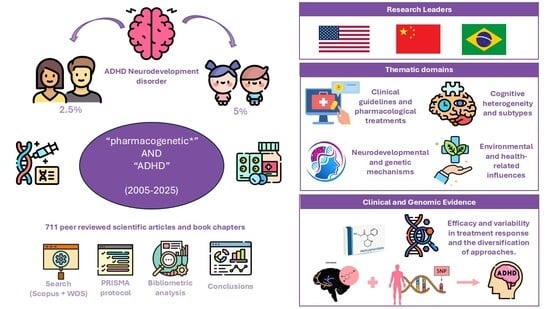
Table 6) highlights the seminal contributions that have shaped pharmacogenetic research in ADHD, which converge into four major thematic domains: (i) clinical guidelines and pharmacological treatments; (ii) cognitive heterogeneity and subtypes; (iii) neurodevelopmental and genetic mechanisms; (iv) environmental and health-related influences.
The first domain is anchored in clinical guidelines and therapeutic evidence. The practice parameter by Pliszka et al. [
47] and the updated recommendations of the American Academy of Pediatrics by Wolraich et al. [
10] are among the most highly cited contributions, providing standardized frameworks for the diagnosis and treatment of ADHD. Both documents are among the most highly cited works in the dataset, reflecting their strong influence on the clinical and conceptual framing of ADHD treatment within pharmacogenetic literature. These guidelines also integrate safety considerations, including cardiovascular risk and growth monitoring, reflecting the field’s growing attention to long-term outcomes. Complementary clinical trials by Greenhill et al. [
48] in preschool children and Spencer et al. [
51] in adults demonstrated the efficacy and tolerability of methylphenidate across the lifespan. Importantly, both trials confirmed that treatment response depends critically on dosage optimization and careful monitoring of adverse events, reinforcing the principle of individualized pharmacotherapy.
A second influential domain relates to cognitive heterogeneity, where ADHD is conceptualized as a multidimensional syndrome rather than a unitary disorder. Diamond [
50] proposed that the inattentive subtype is distinguished by deficits in working memory and hypoarousal, in contrast to the impulsivity-driven deficits of the combined subtype. This conceptual distinction has had a lasting impact on the field, encouraging a more nuanced clinical characterization of ADHD. Similarly, MacDonald et al. [
52] introduced the concept of intra-individual variability in performance as a potential cognitive marker of ADHD, showing that attentional fluctuations reflect unstable dopaminergic regulation in prefrontal networks. The recognition of such cognitive signatures supports the development of endophenotypes that may ultimately bridge genetic vulnerability and clinical manifestation, opening opportunities for more personalized diagnostic and therapeutic approaches.
The third domain highlights the neurodevelopmental and genetic underpinnings of ADHD, particularly through neuroimaging-genetic integration. Shaw et al. [
54] demonstrated that children carrying the DRD4-7R allele exhibit thinner cortical structures in prefrontal and parietal regions, but with delayed normalization during adolescence. These findings reinforced the “developmental delay” hypothesis of ADHD and suggested that specific genotypes may influence not only risk but also long-term prognosis. More broadly, this line of work underscores that ADHD should be understood as a dynamic disorder of brain maturation, where neurobiological differences are most pronounced in childhood and tend to diminish over time.
Finally, the fourth domain encompasses environmental and systemic health-related influences. Bouchard et al. [
49] provided epidemiological evidence linking pesticide exposure to increased ADHD risk, raising concerns about modifiable environmental contributors. Cortese et al. [
53] documented a robust association between ADHD and obesity, later confirmed by meta-analyses, suggesting shared mechanisms of impulsivity, reward dysfunction, and metabolic dysregulation. Prehn-Kristensen et al. [
55] introduced the novel perspective of gut–brain interactions, identifying alterations in microbial composition in children with ADHD. Thus, ADHD is increasingly conceptualized as a brain-based disorder and as a condition influenced by systemic and environmental factors, which broadens the scope of pharmacogenetic research to include public health and lifestyle dimensions.
In summary, the most influential studies show that impact in ADHD pharmacogenetics stems from novelty, clinical relevance, and translational value rather than sheer volume. Clinical guidelines and trials shape practice, cognitive and neurodevelopmental research refine theoretical models, and environmental studies expand the etiological perspective. Together, these patterns illustrate how citation impact in ADHD pharmacogenetics is driven by clinical relevance, conceptual innovation, and translational framing within the literature.
4.2. Keywords Analysis
The keyword analysis offers information about the thematic structure of pharmacogenetic research in ADHD and its evolution over the last two decades. By examining the most recurrent terms and their interconnections, it is possible to identify the central topics that have guided research and the conceptual bridges between clinical and genetic dimensions of the field.
Table 7 summarizes the most frequently occurring keywords from 2005 to 2025. Population-related descriptors such as
male (408 occurrences),
female (358), and
child (302) are highly prevalent, indicating that research has primarily been conducted in pediatric cohorts, with a marked interest in sex-related differences. The frequent appearance of
adolescent and
humans further reflects the predominance of developmental and human subject studies over animal models. Diagnostic terms such as
attention deficit disorder (379),
attention deficit disorder with hyperactivity (375), and
ADHD (269) highlight the central role of clinical categorization in structuring research questions. The presence of
major clinical study (248) and
controlled study (297) also points to a strong emphasis on clinical trials and observational human studies, underscoring the translational orientation of the field.
From a therapeutic perspective, methylphenidate (225 occurrences) and atomoxetine (77) stand out as the most prominent pharmacological agents. This reflects the continued reliance on methylphenidate as the gold-standard stimulant for ADHD treatment, while atomoxetine represents the most extensively studied non-stimulant alternative. Additional pharmacological descriptors such as central nervous system stimulants (103) and central stimulant agent (85) further consolidate the pharmacogenetic emphasis on treatment efficacy and variability of response.
At the molecular level, highly recurrent terms such as genetics (225), genotype (180), single nucleotide polymorphism (112), allele (88), and dopamine transporter (85) reveal the importance of genetic association studies. The emphasis on polymorphisms in dopamine-related genes reflects a persistent interest in the catecholaminergic system, given its central role in ADHD pathophysiology and stimulant drug mechanisms. The prominence of comorbidity (76) also suggests that many pharmacogenetic studies integrate broader psychiatric or medical contexts, examining ADHD alongside conditions such as anxiety, mood disorders, or obesity.
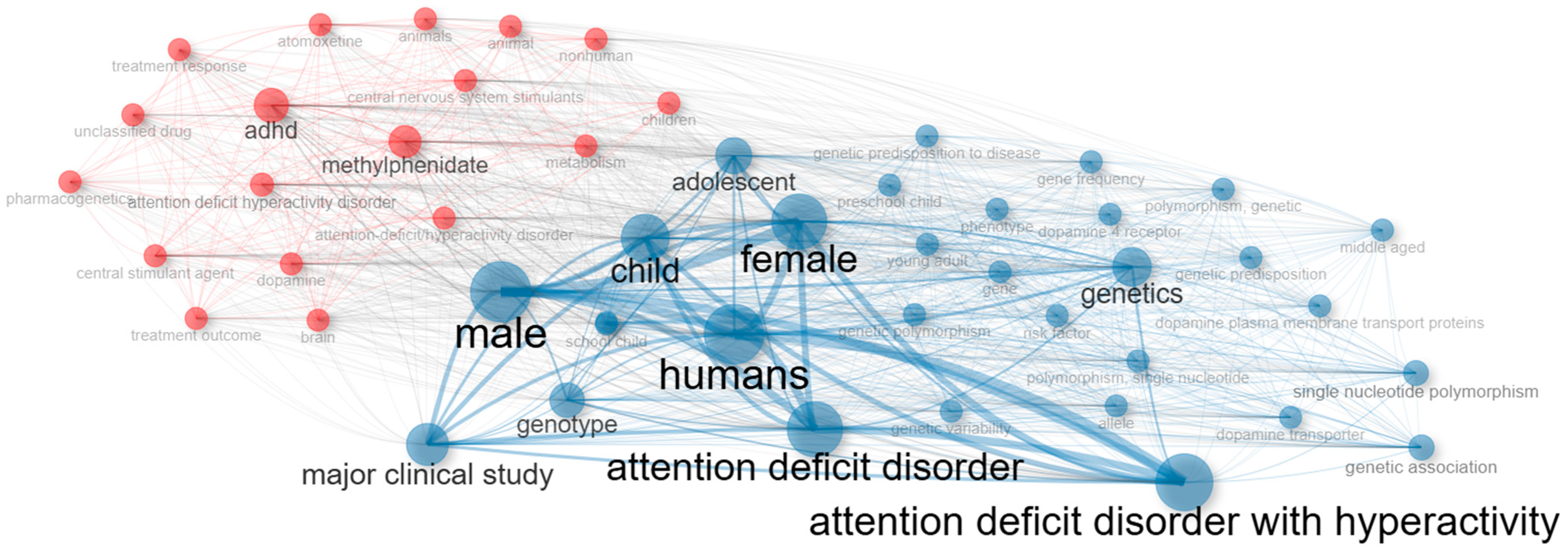
Figure 8 visualizes the co-occurrence network and clearly reveals the existence of two major clusters. The red cluster groups terms associated with the clinical–therapeutic dimension, such as
ADHD,
methylphenidate,
stimulants, and
drug therapy, often linked to descriptors of study populations (
child,
male,
female). This cluster represents the translational clinical research domain, where pharmacological treatments are evaluated in relation to demographic variables and diagnostic categories. In contrast, the blue cluster captures the genetic–molecular dimension, dominated by terms such as
genetics,
genotype,
single nucleotide polymorphism, and
dopamine receptor. These keywords reflect the candidate gene approach that has historically dominated ADHD pharmacogenetics, with a strong emphasis on dopaminergic mechanisms. The nodes at the interface, including
child,
humans, and
disorder, play a bridging role, suggesting that clinical samples are frequently used to explore genetic variability, thereby connecting therapeutic outcomes with underlying molecular mechanisms.
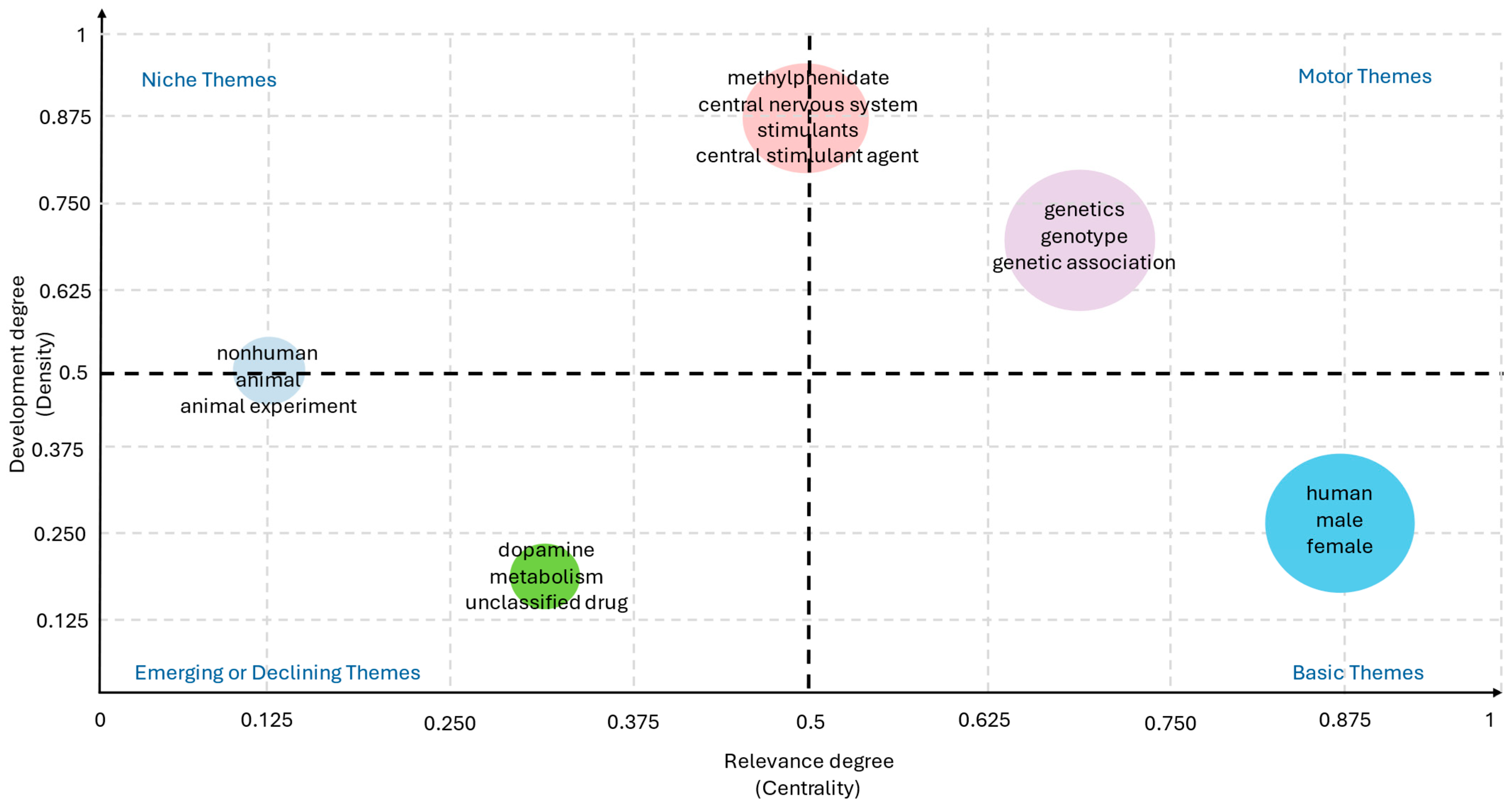
Figure 9 highlights the relative weight and interconnections of the most relevant keywords. In bibliometric co-occurrence mapping, each node represents a keyword, with its size reflecting the frequency of occurrence, while the thickness of the edges indicates the strength of co-occurrence between pairs of terms. Beyond frequency, the positioning of terms in the thematic map allows their classification according to two dimensions: centrality, or the degree to which a theme connects with other themes, and density, or the internal cohesion of a theme cluster.
Motor themes, located in the upper-right quadrant of the map, are characterized by high centrality (≈0.65–0.75) and high density (≈0.60–0.70), indicating that they are well developed and strongly connected to the rest of the network. In ADHD pharmacogenetics, terms such as
ADHD,
methylphenidate, and
genetics clearly function as motor themes, consolidating the conceptual backbone of the field. Indeed, the majority of pharmacogenetic studies to date have focused on the genetic underpinnings of ADHD and the clinical response to methylphenidate, underscoring the pivotal role of these terms in structuring the literature [
56].
By contrast, basic or transversal themes, located in the lower-right quadrant, exhibit very high centrality (≈0.85–0.90) but low density (≈0.20–0.30). These themes are widely used across studies but do not form specialized research niches. Demographic descriptors such as
male,
female, and
child fall into this category, ranking among the most frequent keywords in ADHD-related publication. Their prevalence reflects the fact that ADHD pharmacogenetic research is predominantly conducted in pediatric populations, where sex-based differences and developmental trajectories are critical variables in study design [
57,
58]. Moreover, the recurrent use of these terms underscores the enduring emphasis on early-life manifestations of ADHD and the need to expand analyses toward longitudinal and lifespan perspectives. Incorporating broader demographic diversity—including adult cohorts, cross-cultural populations, and sex-specific pharmacogenetic pathways—could enhance the translational relevance of future studies, particularly considering growing evidence that age, sex, and developmental stage may modulate both genetic associations and drug efficacy [
59,
60].
Niche themes, positioned in the upper-left quadrant, are defined by high density (≈0.50–0.85) and low to moderate centrality (≈0.10–0.50). These themes represent well-developed research areas with strong internal cohesion but limited integration into the broader literature. In this field,
dopamine transporter and
single nucleotide polymorphism exemplify niche themes, reflecting focused investigations on specific molecular targets. The prominence of the dopamine transporter (DAT1/SLC6A3) reflects its central role in the neurobiology of ADHD, as variations in this gene have been consistently associated with differences in dopamine reuptake efficiency and, consequently, with variability in stimulant response [
61,
62,
63]. Similarly, studies centered on single nucleotide polymorphisms (SNPs) have provided valuable insights into the genetic architecture underlying ADHD pharmacogenetics, identifying specific variants in dopaminergic, serotonergic, and noradrenergic pathways that may predict treatment outcomes [
64,
65,
66,
67]. However, the classification of these topics as niche themes indicates that, while internally cohesive and methodologically robust, such lines of research remain relatively isolated from the broader clinical and translational discourse of the field. This partial disconnection suggests that molecular findings have not yet been fully integrated into clinical practice or multidisciplinary models, limiting their impact on the development of personalized therapeutic strategies.
Finally, emerging or declining themes, located in the lower-left quadrant, are characterized by low centrality (≈0.30–0.40) and low density (≈0.10–0.20). Terms such as
atomoxetine and
comorbidity illustrate this category. Their peripheral position suggests either the early stages of development—topics that may gain relevance in the near future—or declining prominence due to a shift in research focus. In the case of atomoxetine, the relatively limited number of pharmacogenetic studies compared with methylphenidate reflects its secondary role in clinical practice, despite its importance as a non-stimulant alternative targeting the noradrenergic system [
68]. Research investigating genetic predictors of atomoxetine response, including polymorphisms in CYP2D6 and other metabolic pathways, has shown promising but heterogeneous results, which may explain its current marginalization in the thematic map [
69,
70]. Similarly, comorbidity—a highly relevant clinical dimension given the frequent overlap of ADHD with disorders such as anxiety, depression, and substance use—remains underexplored from a pharmacogenetic perspective [
71,
72].
In conclusion, the keyword analysis reflects a research field that has reached a degree of conceptual consolidation while still leaving ample room for future development. The strong interplay between clinical and genetic dimensions highlights the translational orientation of ADHD pharmacogenetics, yet the presence of peripheral and underdeveloped themes suggests that important questions remain open. Moving forward, the field is likely to benefit from expanding beyond its current focus to embrace more diverse pharmacological targets, broader genomic and multi-omics approaches, and greater consideration of developmental, demographic, and comorbidity factors. Such directions would deepen the understanding of ADHD’s biological underpinnings while simultaneously accelerating the transition toward precision medicine frameworks, where genetic insights are fully integrated into individualized treatment strategies.
4.3. Methodological and Clinical Challenges
Despite notable progress, pharmacogenetic research in ADHD continues to face significant methodological and clinical challenges that limit the translation of findings into routine practice. A major barrier lies in the predominance of small and heterogeneous samples, which restricts statistical power and complicates the replication of results across independent cohorts. Given the multifactorial etiology of ADHD, single-gene association studies often yield inconsistent findings, underscoring the need for larger, multi-center investigations and the adoption of genome-wide or multi-omics approaches that can capture the polygenic and dynamic nature of the disorder [
73,
74].
Clinical heterogeneity also poses a considerable challenge. ADHD encompasses diverse presentations that vary by age, sex, developmental trajectory, and comorbidities, all of which may modulate genetic associations and treatment responses. Current pharmacogenetic studies remain heavily focused on pediatric populations, with limited inclusion of adolescents, adults, and elderly patients, thereby narrowing the scope of representation within the published literature [
75]. Furthermore, comorbid conditions—such as anxiety, mood disorders, and substance use—are often underrepresented, despite their potential to influence both pharmacodynamics and pharmacokinetics [
76]. Addressing these gaps requires more inclusive study designs that reflect the complexity of real-world clinical practice.
Another limitation concerns the lack of standardized phenotyping and outcome measures. Variability in diagnostic criteria, cognitive assessments, and treatment endpoints hampers comparability across studies and slows the accumulation of robust evidence. Harmonization of protocols, along with the integration of neuroimaging, cognitive, and biomarker-based endpoints, could help refine the identification of pharmacogenetic predictors and strengthen their interpretability and comparability across studies [
77].
Finally, there are translational hurdles to overcome. Although several candidate polymorphisms and pathways are recurrent in the literature, bibliometric mapping shows limited progression toward widespread guideline integration. Bridging this gap will require not only methodological improvements but also stronger collaborations between clinicians, geneticists, and bioinformaticians. Such interdisciplinary approaches are crucial for moving beyond proof-of-concept studies toward precision medicine frameworks where pharmacogenetic insights are systematically incorporated into individualized treatment strategies.