
Article

Chemical Profile of Bacopa procumbens and Its Antinociceptive Effect

by
Viena M. Cuevas-Mancilla
1,
Pedro A. López
1,
Higinio López-Sánchez
1,
Ada M. Ríos-Cortés
2,
Abel Gil-Muñoz
1,
Rosa M. Montiel-Ruiz
3,* and
Manasés González-Cortazar
3,*
1
Colegio de Postgraduados Campus Puebla, San Pedro Cholula 72760, Mexico
2
Centro de Investigación en Biotecnología Aplicada, Instituto Politécnico Nacional (IPN-CIBA), Tlaxcala 90700, Mexico
3
Centro de Investigación Biomédica del Sur, Instituto Mexicano del Seguro Social Xochitepec, Morelos 62790, Mexico
*
Authors to whom correspondence should be addressed.
Future Pharmacol. 2026, 6(1), 16; https://doi.org/10.3390/futurepharmacol6010016
Submission received: 14 January 2026 / Revised: 4 March 2026 / Accepted: 11 March 2026 / Published: 17 March 2026
(This article belongs to the Special Issue Recent Advances in the Discovery of Anti-Inflammatory Compounds)

Abstract

Background: Bacopa procumbens is a plant species with medicinal properties. Although several of these properties have already been validated, its use for treating pain remains untested. Objective: the objective was therefore to test the antinociceptive effect of two extracts (n-hexane and hydroalcoholic) and two fractions (aqueous and organic) from the most active extract, as well as to determine the chemical profile of Bacopa procumbens. Methods: analgesic activity was determined by antinociceptive activity using the formalin model in mice. Compounds were identified by high-performance liquid chromatography and gas chromatography coupled with mass spectrometry. Compared to the vehicle treatment (3% Tween 20), licking time was 22.8 s and 141.6 s lower when treated with the hexane extract (200 mg/kg); 43.4 s and 152.5 s with the hydroalcoholic extract (200 mg/kg); 27.2 s and 169 s with the organic fraction; and 5.4 s and 32 s difference with the positive control, in phases 1 and 2, respectively. Phytochemical analysis of the hexane extract allowed us to identify 2-pentadecanone, 6,10,14-trimetil- (11.70%), 6,10,14-trimethyl-, dibutyl phthalate (34.71%), and hexane-dioic acid bis(2-ethylhexyl) ester (45.15%). Conclusions: We identified arbutin (1), 5-(p-hydroxybenzoyl) shikimic acid (2), and procumgastrodin A (3) in the BpFo fraction. In conclusion, we demonstrated that the BpH extract and the BpFo fraction have anti-nociceptive properties that may be associated with compounds 2 and 3.

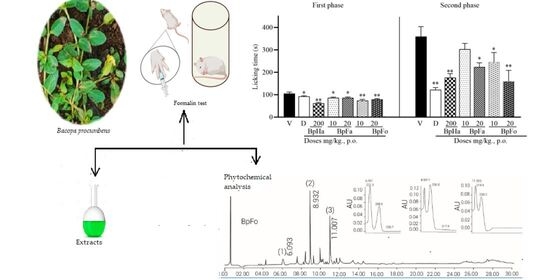
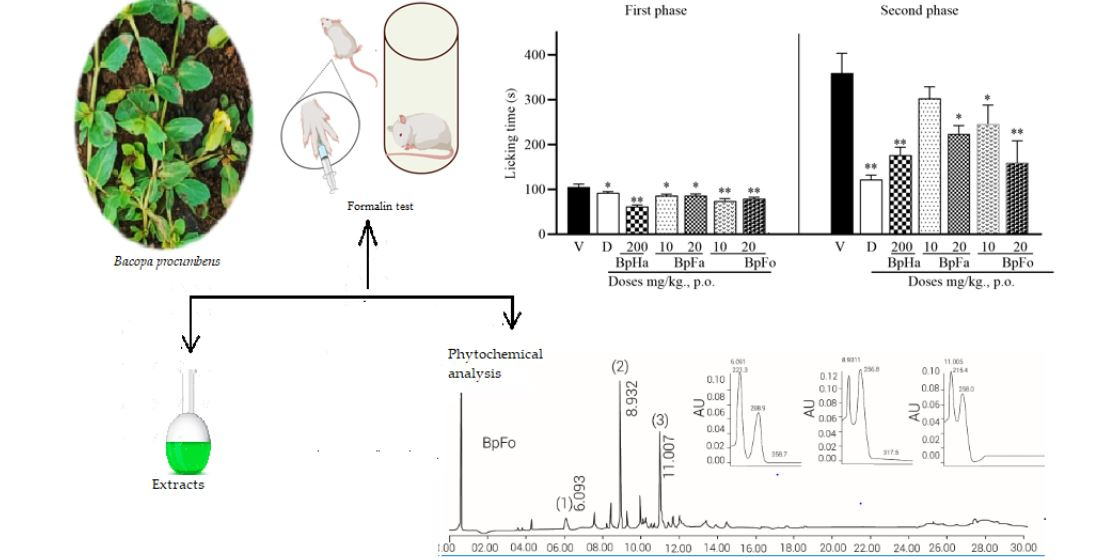
Graphical Abstract

1. Introduction

Pain is one of the main reasons for seeking medical attention in primary care [1], along with musculoskeletal and respiratory problems [2]. It is estimated that at least 60% of the population has experienced pain at some point in their lives [3]. Given its high prevalence and the fact that it can significantly impact the quality of life of those affected [4], experts widely regard pain as a global health problem [5,6].
Non-steroidal anti-inflammatory drugs (NSAIDs) and opioids are the most used pharmacological treatments for pain. However, analgesics have side effects. NSAIDs are associated with renal complications [7]; for instance, diclofenac is potentially nephrotoxic [8]. Similarly, despite their high analgesic potency, opioids are linked to dependence and withdrawal syndromes [9]. Traditional medicine serves as a viable source of plant extracts with analgesic properties [10]. To ensure the efficacy of medicinal plants, it is necessary to scientifically validate these traditional uses [11]. One approach to determining the analgesic properties of plant extracts is using animal models [12]. Since pain has been defined as an unpleasant sensory and emotional experience associated with actual or potential tissue damage [13], this term is more appropriate for humans, while “nociception” is more appropriate for animals [14]. Therefore, antinociceptive tests are used in animals to evaluate different types of pain. One such test is the formalin test, which evaluates the response to neurogenic and inflammatory pain generated by chemical tissue injury [15]. Analgesic properties validated using this test have led to the characterization of active secondary metabolites with analgesic and anti-inflammatory potential [16].
Although there has been an increase in the number of studies aimed at scientifically demonstrating the medicinal properties of different plants [17], only a small fraction of the plant species used in traditional medicine have been tested [18,19]. These include Gentiana lutea Linn [20], Harpagophytum procumbens [21], Stachytarpheta cayennensis [22], and Bacopa monnieri [23]. One of many species used in traditional Mexican medicine to treat pain is Bacopa procumbens. The genus Bacopa belongs to the family Scrophulariaceae and contains approximately 60 species, of which B. monnieri is the most widely distributed in subtropical areas around the world [24]. It is a thin, creeping herb that grows in both terrestrial and aquatic conditions [25]. This species is the most widely used in traditional medicine [26]. Numerous secondary metabolites of this species, such as flavonoids, bacoside A, and phenolic compounds, have been shown to have various medicinal properties [27,28].
Previous studies have demonstrated that B. monnieri has several medicinal effects, including memory-enhancing, stress-relieving, sedative, and antiepileptic effects. Furthermore, B. monnieri is the only species of this genus for which antinociceptive and analgesic properties have been demonstrated. Antinociceptive properties of the ethanolic extract were first reported in 1997, and phytochemicals such as bacosides and tannins were identified as possibly responsible for this effect [29]. Subsequently, antinociceptive effects were reported in the hexane extract [30] and analgesic properties in the aqueous extract [31,32]. It was also reported that the hydroalcoholic extract inhibits nociception and has an analgesic effect [33]. Similarly, it was confirmed that the ethanolic extract possesses antinociceptive activities, possibly related to the presence of secondary metabolites such as tannins and phenolic compounds [23].
Another species of the genus, B. procumbens, is used in Mexico as a healing agent [34] or to relieve or soothe pain [35] and has been the subject of recent study. Several of its medicinal properties have been validated to date, including the promotion of re-epithelialization by the aqueous extract [36,37]; antimicrobial activity by hydroalcoholic extract and its fractions, attributed to procumgastrodins [38]; hair growth-stimulating properties in bioactive fractions [39]; and antimicrobial properties in the ethyl acetate fraction [40].
Other uses of B. procumbens in Mexican traditional medicine have not yet been studied. For example, in Tabasco it is used to treat physical fatigue; in Veracruz as an antimalarial and anti-anemic agent; in Guanajuato as an ophthalmic solution; and in Nayarit to treat skin blemishes [41]. In Hidalgo, it has been reported to be used to heal wounds [34], reduce inflammation and fever, and relieve or soothe toothaches, kidney pain, and stomachaches [35]. This last use could be associated with analgesic or antinociceptive properties. The medicinal properties of the hydroalcoholic extract and its organic fraction demonstrated to date do not include analgesic or antinociceptive properties [36,38]. Thus, there are no studies testing the analgesic or antinociceptive properties of the hydroalcoholic or hexane extract, or of the aqueous or organic fractions of B. procumbens.
Secondary metabolites have been identified in aqueous and hydroalcoholic extracts of B. procumbens. In 2005, two new phenolic glycosides called phenolic glycosides were reported for the first time in the n-butanol fraction, along with seven known compounds, including arbutin and linarin [42]. Three compounds were identified in the aqueous fraction: D-glucose, sucrose, and mannitol, while sitosterol and lupeol were detected in the chloroform fraction. Homovanillyl, naringenin-C, paeoniflorin, and floret acid, among others, have also been reported [37]. In addition, phenolic compounds, procumgastrodins A, B, and C [38], and 5-(p-hydroxybenzoyl) shikimic acid [40] have been discovered in the hydroalcoholic extract and its organic fraction. These metabolites are associated with antimicrobial properties. However, there are no scientific studies demonstrating which phenolic secondary metabolites are candidates for the antinociceptive effect.
Therefore, the objective of this research was to determine which type of extract (hydroalcoholic or hexane) and which type of fraction (aqueous or organic) of B. procumbens has the greatest antinociceptive effect (if any) and to identify which major metabolites are the candidates for that effect. Knowledge of the antinociceptive properties of B. procumbens and the candidate metabolites of this effect could form the basis for further research aimed at describing more properties or new analgesic agents. In addition, it will allow for more appropriate use of the species, which will contribute both to improving alternatives for treating pain-related symptoms and to better conservation of the species.

2. Materials and Methods

2.1. Vegetal Material

We collected small mother plants of Bacopa procumbens (Mill.) to use for propagation in the community of Huasca de Ocampo, Hidalgo, Mexico (20°13′9.85″ N, 98°33′30.35″ W). One specimen was identified and archived at the herbarium of the Benemérita Universidad Autónoma de Puebla with the number 8513/AMRC2. The plants were propagated asexually by cuttings in the greenhouse of the Center for Applied Biotechnology Research at the National Polytechnic Institute in Tepetitla de Lardizábal, Tlaxcala, Mexico. Natural light was used in the greenhouse with a photoperiod of approximately 12 h of light and 12 h of darkness. The plants were grown in a substrate composed of local soil, peat moss, agrolite, and perlite and watered daily with drinking-quality water. In 2024, we collected the aerial parts (flowers, leaves, and stems) of the plant from individuals propagated in the greenhouse for use in the experiments.

2.2. Obtaining Extracts

The fresh plant material (100 g) was dried in a dark room at 32 °C for five days and then ground in a mortar. The dry, ground material obtained (50 g, <4 μm) was macerated with 350 mL of n-hexane for 24 h. The liquid extract was filtered through filter paper (Whatman 4, Buckinghamshire, UK), and the solvent was removed by distillation under reduced pressure in a Heidolph®-G3 rotary evaporator (Heidolph, Schwabach, Germany) at 40 °C at 90 RPM. This process was repeated three times to obtain the hexane extract (BpH, 1.69 g). The plant material was dried at room temperature in a fume hood, then 300 mL of a water:ethanol solution (60:40) was added and it was left to stand for 24 h. The liquid extract was filtered (Whatman 4) and the solvent was reduced by distillation under reduced pressure in a rotary evaporator at 50 °C at 90 RPM. This process was carried out in duplicate. It was then dried by freeze-drying (LyoMicron, Barcelona, Spain) to obtain the hydroalcoholic extract (BpHa, 3.6 g), the extract obtained had a viscous consistency.
The hydroalcoholic extract was dissolved in 100 mL of water and 150 mL of ethyl acetate was added. This process was carried out in triplicate to obtain two fractions that were separated using a funnel (250 mL Pyrex, Corning, New York, NY, USA) to obtain the aqueous fraction (BpFa) and the organic fraction (BpFo). The solvent was reduced under reduced pressure in a rotary evaporator at 50 °C at 90 RPM. The organic fraction (0.46 g) was obtained, which had a viscous consistency, and the aqueous fraction (3 g) which had a liquid consistency. The extracts and fractions were stored under refrigeration at 4 °C for further studies.

2.3. Laboratory Animals

The experiments were conducted on 50 male CF1 strain mice with an average weight of 28–30 g, purchased from the company Productora Nacional de Biológicos Veterinarios (PRONABIVE), endorsed by Servicio Nacional de Sanidad, Inocuidad y Calidad Agroalimentaria (SENASICA). These animals were kept in the animal facility of the Southern Biomedical Research Center (CIBIS-IMSS), under environmental conditions established by Mexican law (NOM-062-ZOO-1999). The temperature of the animal facility was maintained at 24 ± 2 °C, with a relative humidity of 30–40% and 12 h/12 h light (300 lumens)/dark cycles. The mice had free access to water and standard Lab-Diet pellets. The mice were quarantined for 5 to 7 days to allow them to adapt to their new environment and subsequent use. The animals were euthanized immediately after the experiment was completed using a CO2 chamber.
The study was conducted in accordance with Mexican law (NOM-062-ZOO-1999) and CIBIS-IMSS regulations for the care and use of laboratory animals. The entire protocol was approved by the CIBIS-IMSS Internal Committee for the Care and Use of Laboratory Animals (approval number R-CICUAL-2025-02).

2.3.1. Drugs and Reagents

The following were used in the formalin test: formaldehyde, Tween 20, and diclofenac, which were purchased from Sigma-Aldrich (Toluca, Mexico).

2.3.2. Experimental Design

To determine the antinociceptive effect of the compounds, we performed the formalin test in mice, using 10 groups (n = 5) assigned to the groups as follows: negative control (Tween-20 at 3%), positive control (diclofenac 30 mg/kg, i.p.), BpH (100 mg/kg, p.o.), BpH (200 mg/kg, p.o.), BpHa (100 mg/kg, p.o.), BpHa (200 mg/kg, p.o.), BpFa (10 mg/kg, p.o.), BpFa (20 mg/kg, p.o.), BpFo (10 mg/kg, p.o.) and BpFo (20 mg/kg, p.o.). The animals were administered the corresponding treatment 30 min before the formalin injection.

2.3.3. Formalin Test

Each mouse was placed in an open transparent acrylic cylinder (20 cm in diameter × 30 cm in height) with side mirrors, which served as an observation chamber. The animals were administered the corresponding treatment thirty minutes before the formalin injection and returned to the chamber to acclimatize. After the acclimatization period, 20 μL of a 2.5% formalin solution was administered subcutaneously to the dorsal part of the right hind paw using a 30 G needle. The mouse was placed back in the observation chamber and the licking time of the affected paw was recorded for 40 min. The nociceptive response in mice is biphasic: the first phase (from 0 to 5 min after the stimulus) results from the direct stimulation of the nociceptors, has a rapid onset and high intensity, while the second phase has been recorded with optimal onset times starting at 15 min [43], ending at 40 min [44]. The 40-min observation period thus encompassed both phases, and we quantified licking time separately for these two phases (hereafter, phase 1 for minutes 0–5 and Phase 2 for minutes 15–40). A significantly lower licking time in any treatment relative to the negative control was interpreted as antinociception.

2.4. Gas Chromatography–Mass Spectrometry (GC-MSD)

We used a gas chromatograph (Agilent 7890B, Santa Clara, CA, USA) coupled to a triple quadrupole mass selective detector (Agilent 7000D, Santa Clara, CA, USA) with data acquisition via a Mass Hunter Workstation (version 12.1, Agilent Technologies, Santa Clara, CA, USA) operating in electron ionization (EI) mode. We used a 30 m long × 250 μm × 0.25 μm thick HP-5 MS column coated with 5% diphenyl methylsiloxane. Helium (99.9%) was the carrier gas with a constant flow rate of 1 mL min−1. The injector temperature was 300 °C, and the transfer line temperature was 310 °C. The oven temperature was held at 50 °C for 1 min and then increased to 300 °C, where it was held for 1 min. Finally, the temperature was increased by 10 °C per min until reaching 310 °C and was maintained at this temperature for 20 min. The resulting spectrograms were obtained as a function of retention time (RT) in min and relative absorbance (100%). The run time for each sample was 49.78 min. Interpretation of the mass spectra was performed by computerized comparison with spectral mass spectra in the National Institute of Standards and Technology (NIST) database, version 14.0 [45].

2.5. High-Performance Liquid Chromatography (HPLC) Analysis and Triple Quadrupole Mass Spectrometer

HPLC chromatograms were obtained using an HPLC separation module (2695, Waters Corp., Milford, MA, USA) coupled with a photodiode array detector (2996, Waters Corp., Milford, MA, USA). We used a Discovery C18 column with dimensions of 4.6 mm × 250 mm (internal diameter) and a Licrosphere 100 RP-l8 column of 250 × 4 mm with a particle size of 5 (504971, Sigma-Aldrich, Saint Louis, MO, USA). We used a binary mobile phase system, which consisted of (A) an aqueous solution (AT0110-07, Tecsiquim, Toluca de Lerdo, Mexico) acidified with 0.5% trifluoroacetic acid (TFA) (302031, Sigma-Aldrich, Saint Louis, MO, USA) and (B) acetonitrile (AT0090-7, Tecsiquim, Toluca de Lerdo, Mexico). The method used for chemical separation was as follows: 100% A, 0–2 min; 95% A, 2 min; 85% A, 4 min; 70% A, 8–20 min; 50% A, 21–23 min; and returning to 0% A in 26–27 min and 100% A, 28–30 min. During the analysis, the flow rate was maintained at 5 mL/min and the injection volume of the samples was 10 µL. The photodiode array detector (PDA) monitored the absorbance in a wavelength range of 190 to 600 nm; the standards, the hydroalcoholic extract, the aqueous fraction, and the organic fraction were analyzed at 260 nm and 340 nm.
The photodiode array detector (PDA) monitored the absorbance in a wavelength range of 190–600 nm, and the standards, hydroalcoholic extract, aqueous fraction, and organic fraction were analyzed at 260 and 340 nm.
Triple quadrupole mass spectrometer (Waters Corporation, Milford, MA, USA) equipped with an electrospray ionization (ESI, Zspray) source (Waters Corporation, Milford, MA, USA) heated at 150 °C. Argon was used as a collision gas at a flow rate of 0.10 mL/min (Thermo Fisher Scientific, Bremen, Germany).

2.6. Statistical Analysis

Values are presented as mean ± standard error of the mean (SEM). Groups were compared using one-way analysis of variance (ANOVA) and Dunnett’s post hoc test. p-values less than 0.05 (* p < 0.05; ** p < 0.01) were considered significant. GraphPad Prism 8 software was used for statistical analysis (GraphPad Software Inc., San Diego, CA, USA).

3. Results

3.1. Yield of the Extract, Aqueous Fraction and Organic Fraction

Maceration of 50 g of dry matter from the aerial parts of B. procumbens yielded 3.38% (1.69 g) of hexane extract (BpH) and 7.2% (3.6 g) of hydroalcoholic extract (BpHa). Bipartition of BpHa provided 83.33% (3 g) of the aqueous fraction (BpHFa) and 13% (0.46 g) of the ethyl acetate fraction (BpFo).

3.2. Antinociceptive Effect

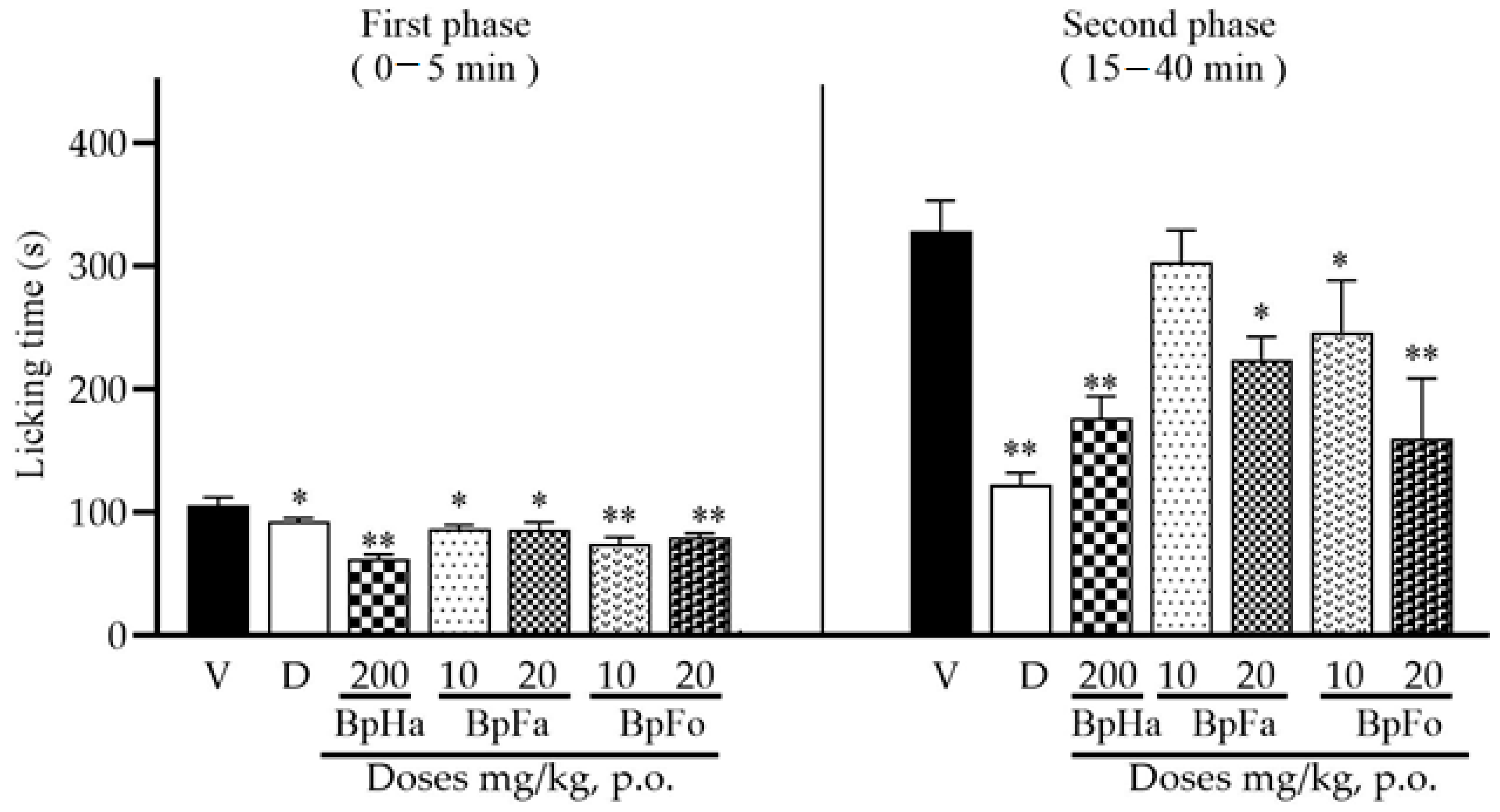
Figure 1 shows the results of the antinociceptive effect of B. procumbens extracts compared to the vehicle (Tween 20, 3%) during nociception phases 1 and 2. The hydroalcoholic extract had a greater effect, showing a dose-dependent response, evidenced by a significant reduction in licking time compared to the negative control during both phases. The hydroalcoholic extract had its strongest antinociceptive effect at the highest concentration (200 mg/kg p.o.), with 43.4 (41.4%) seconds and 152.5 (46%) seconds lower licking time in phases 1 and 2, respectively, compared to the negative control group (104.8 s and 328 s, respectively). The results indicate that the hydroalcoholic extract has a dose-dependent antinociceptive effect and that it was the only extract that had antinociceptive properties in both phases.
Figure 2 shows the antinociceptive effect of the hydroalcoholic extract and its two fractions compared to the vehicle (Tween 20 at 3%) in phases 1 and 2. Between the two fractions, the organic fraction had the stronger antinociceptive effect, which was dose-dependent in both phases. In phase 1, the organic fraction (10 mg/kg p.o.) had 27.2 s (25.9%) less licking time than the negative control, while in phase 2, the organic fraction (20 mg/kg p.o.) had 159 (51.5%) seconds less licking time than the negative control.

3.3. Gas Chromatography Coupled to Mass Spectrometry (GC-MS)

Table 1 presents the chemical composition of the n-hexane extract. It contains chemical groups of alcohols, hydrocarbons, ketones, phthalates, and, in higher concentrations, esters. 2-Pentadecanone was identified at 11.70%, 6,10,14-trimethyl-, dibutyl phthalate at 34.71%, and hexanedioic acid bis(2-ethylhexyl) ester at 45.15%. The antinociceptive effect of the hexane extract may be due to the compounds 2-pentadecanone, 6,10,14-trimethyl-, dibutyl phthalate, hexanedioic acid, and bis(2-ethylhexyl) ester.

3.4. High-Performance Liquid Chromatography (HPLC)

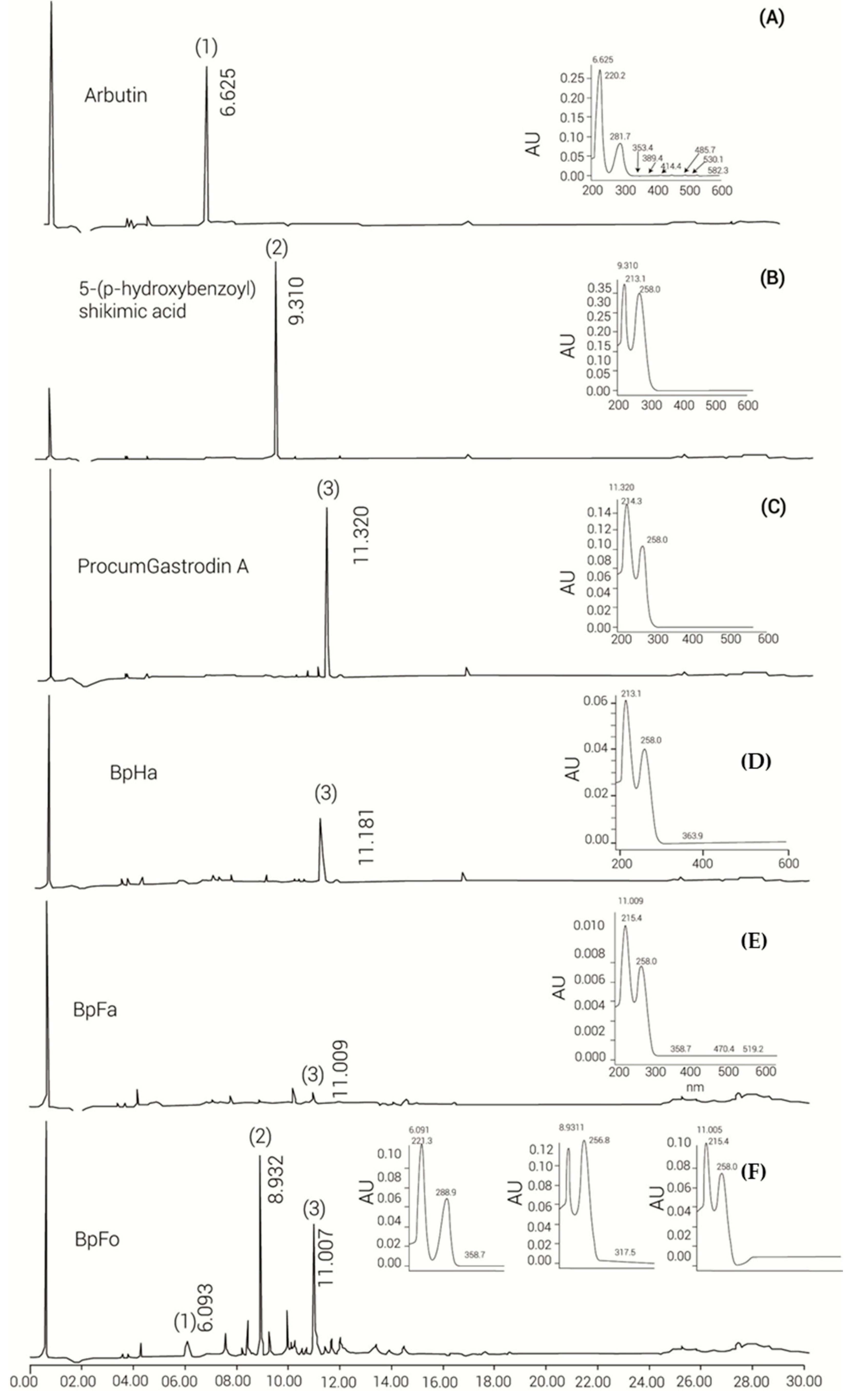
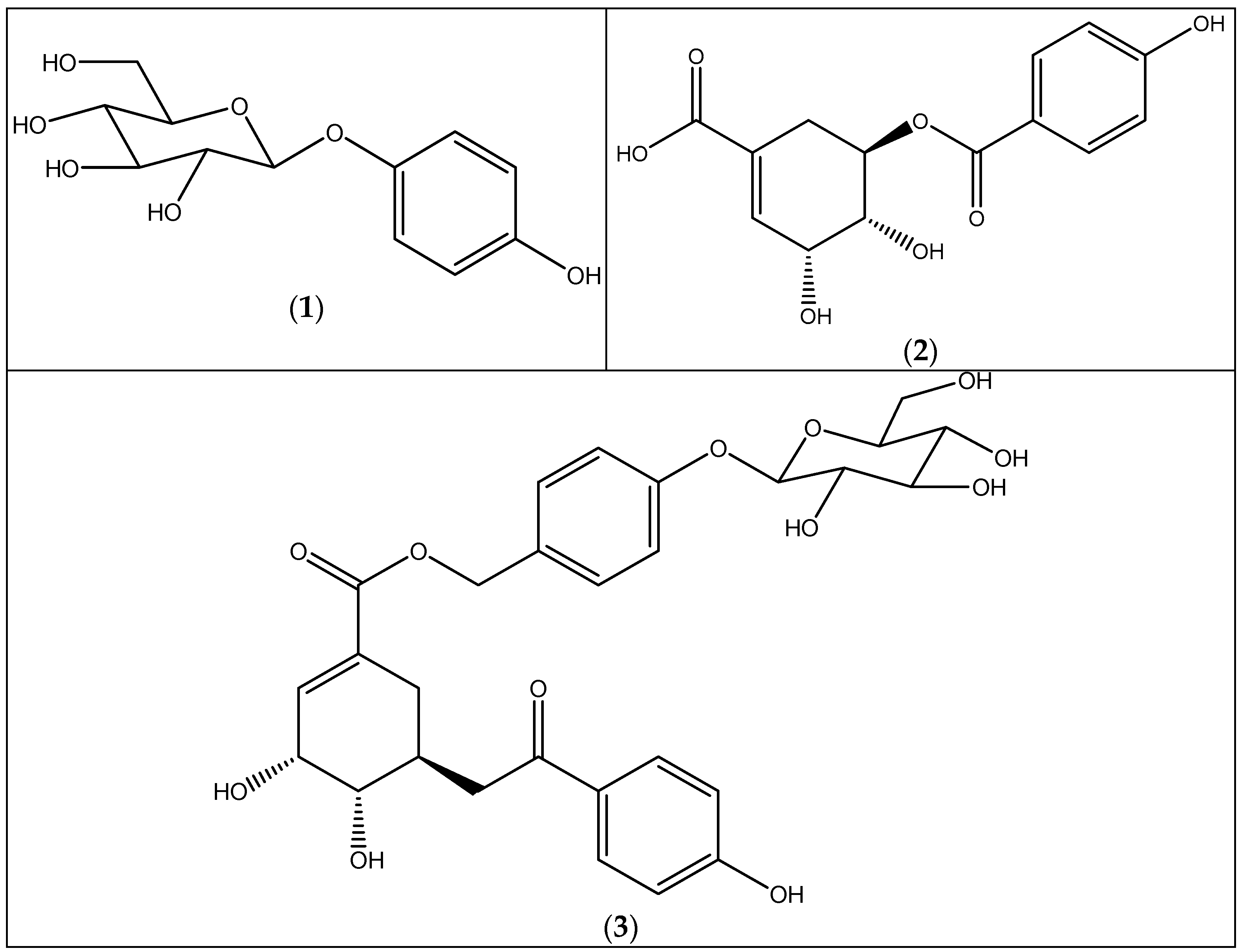
Figure 3 shows the HPLC chromatograms obtained from the hydroalcoholic extract (BpHa), the aqueous fraction (BpFa), and the organic fraction (BpFo) at 260 nm. The major compounds are found in the medium polarity region at 6–12 min. Procumgastrodin A (3) was identified in all three treatments, while 5-(p-hidroxibenzoil) shikímic acid (2) and arbutin (1) were found only in the organic fraction. The concentration of compound 3 in BpHa is 90.52 μg/gram of extract, in aqueous fraction 3 it is 21.42 μg/g of extract, and in BpFo compound 1 is 32.70, 2 is 63.72 and 3 is 159.83 μg/g of extract. In the positive ion ESI-MS for the hydroalcoholic extract, quasimolecular peaks were observed at m/z 295 [M + Na + H]+ and 273 [M + H]+ for the molecular formula C12H16O7 (m/z = 272.08) for arbutin (1). Similarly for compound 2, ions were observed at m/z 295 [M + H]+ for molecular formula C14H14O7 (294.25) and for compound 3, the ions observed were m/z 585 [M + Na]+ and 562 [M]+ for molecular formula C27H30O13 (562.16). See Figures S1–S3. In the organic fraction, arbutin (1), 5-(p-hydroxybenzoyl) shikimic acid (2), and procumgastrodin A (3) were identified as the major components and potential candidates for the antinociceptive effect. In the negative ion ESI-MS for the organic fraction (BpFo), quasimolecular peaks were observed at m/z 271 [M − H] for the molecular formula C12H16O7 (m/z = 272.08) for arbutin. For compound 2, ions were observed at m/z 293 [M − H] for molecular formula C14H14O7 (294.25) and for compound 3, the ions observed were m/z 561 [M − H] for molecular formula C27H30O13 (562.16). See Figures S4–S6. Their chemical structures are shown in Figure 4.

4. Discussion

According to the results obtained in this research, our findings show that the hydroalcoholic extract has a stronger antinociceptive effect than the hexane extract and that that effect is dose-dependent. It is also the only extract that has antinociceptive properties in both phases of the formalin model. When considering the fractions of this extract, the organic fraction has a greater antinociceptive effect than the aqueous fraction in both phases of the formalin model. The major compounds present in that fraction, and therefore possible candidates for its antinociceptive effect, are arbutin, 5-(p-hydroxybenzoyl) shikimic acid, and procumgastrodin A.
Analgesic properties have been identified in extracts or fractions of medicinal plants [10]. Hydroalcoholic extracts from species such as Borago officinalis [46] and Dalbergia ecastophyllum [47] have been reported to have an antinociceptive effect that reduces acute inflammatory pain. In the species B. monnieri, both nonpolar and polar extracts (i.e., hexane [30] and hydroalcoholic [33]) have been shown to help reduce acute pain symptoms. The findings of our research coincide with theory, since both the hexane and hydroalcoholic extracts showed antinociceptive properties, but only the hydroalcoholic extract showed an effect in both phases, this effect being dose-dependent.
The effect of the hydroalcoholic extract of B. procumbens was stronger in the second phase of the formalin model. This effect was similar to that of diclofenac, which both in the current study and in previous reports in the literature [47], had an antinociceptive effect only in the second phase of the formalin model. The second phase is associated with inflammatory pain processes through the release of serotonin, histamine [48], bradykinin, and prostaglandins from the injured tissue [45,49]. The stronger effect of the hydroalcoholic extract compared to the hexane extract may be that it contained higher concentrations of phenolic compounds and flavonoids [50], while the hexane extract had higher concentrations of nonpolar compounds such as terpenoids [51]. The hydroalcoholic extract of B. procumbens has an antinociceptive effect in both phases, showing that it reduces both neurogenic pain and inflammatory pain.
Antinociceptive properties have been demonstrated in different types of fractions, both aqueous and organic. In aqueous fractions, antinociceptive properties have been reported in species such as Cucumis ficifolius [52]. In other species, ethyl acetate fractions have been shown to have stronger antinociceptive properties than the aqueous fraction, as is the case in Agrimonia eupatoria [53], Combretum fragrans F. [54], and Siolmatra brasiliensis Bail [55], among others. Our findings coincide with the latter since, of the two fractions, it was the organic fraction (ethyl acetate) that had the stronger antinociceptive effect during both phases in the formalin model.
The variation in effect among fractions is because complete extracts from a medicinal plant contain many secondary metabolites and compounds. For the initial separation of these compounds, fractions or bipartitions are used to identify fractions with greater activity which are subsequently isolated and purified to obtain active secondary metabolites [56]. Our results suggest that the metabolites involved in the antinociceptive effect are likely to be mainly flavonoids or phenolic acids, as they are usually extracted with semi-polar solvents such as ethyl acetate [57].
In the tested model, the nociceptive response in the formalin test allows the evaluation of an animal’s behavior in response to continuous moderate pain generated by injured tissue [15]. This method produces a biphasic nociceptive response to the injection of formalin into the mouse’s paw [58]. In the early phase, formalin activates afferent nerves, which in turn activate local neurogenic systems (such as peptide release); this causes edema and plasma extravasation [59]. This causes neurogenic pain, which lasts up to five minutes after the formalin injection, due to direct activation of the nociceptors. Fifteen minutes after the formalin injection, the late phase occurs, which is associated with inflammatory pain [58] due to the release of different pain-mediating substances [45]. Based on the results of this study, we can deduce that the candidate metabolites of the antinociceptive effect are mainly found in the organic fraction. Although we did not evaluate the mechanism of action, it is already known that the effect in both phases suggests that there is an antinociceptive effect on neurogenic pain and inflammatory pain. Such an effect could be mediated by different mechanisms of central action (phase 1) and peripheral action (phase 2) involving effects on cholinergic pathways and stimulation of GABA receptors, with the peripheral antinociceptive mechanism inhibiting the synthesis and release of arachidonic acid, phospholipase, or nitric oxide [60].
Our results demonstrate that the secondary metabolites contained in the organic fraction of the hydroalcoholic extract of B. procumbens have stronger antinociceptive properties than those in the aqueous fraction. Therefore, considering that the first phase involves direct chemical stimulation of nociceptors, with central action, and that the second phase depends on peripheral inflammation, we demonstrate that the organic fraction has anti-nociceptive properties that reduce nociceptive pain and inflammatory pain.
Even though the n-hexane extract was not very effective as an antinociceptive, it contains ketones and esters, which have been shown to have antinociceptive properties in other medicinal species. For example, in Mentha spicata, an antinociceptive effect was attributed to carvone, a ketone-type compound [61], while in Choisya ternata, the effect was attributed to isopropyl N-methylanthranilate (ternantranine), which is an ester [62]. We therefore propose that the main compounds present in the hexane extract of Bacopa procumbens, which are 2-pentadecanone and bis(2-ethylhexyl) hexanedioic acid, could exert some antinociceptive effect. Although there are currently no studies reporting antinociceptive properties for the compound 2-pentadecanone, there are studies reporting such properties for the compound bis(2-ethylhexyl) [63].
The antinociceptive properties of species such as Agrimonia eupatoria L. [54] and Sideritis ozturki [64] have been attributed to phenolic compounds. Various studies have shown that phenolic compounds are found in bioactive ethyl acetate fractions, as is the case with Agrimonia eupatoria [53], Anacardium occidentale L. [65], and Amaranthus spinosus [66]. Our findings are consistent with those, since the organic fraction (ethyl acetate) had the strongest antinociceptive effect and was identified as containing 5-(p-hydroxybenzoyl) shikimic acid and procumgastrodin A as the major components. These secondary metabolites are derived from phenolic acids.
The concentration of phenolic compounds varies depending on the plant as well as the solvent used, as the latter influences the extraction yield. Solvents such as water, acetone, ethyl acetate, alcohols, and mixtures thereof can increase the concentrations of phenolic compounds depending on their solubility [67]. In this study, pro-cumgastrodin A was identified in the hydroalcoholic extract, in accordance with previous reports [37]. After bipartitioning the extract, procumgastrodin A was detected in the aqueous fraction, but at a much lower concentration. This finding is due to the polarity of the compounds and the fact that the aqueous fraction contains mainly carbohydrates, such as glucose and sucrose [42]. Arbutin was identified in the organic fraction, in lower concentrations. This compound was only found in this fraction but not in the original extract, possibly because it was present at low concentrations, which is consistent with previous reports [37,42]. Procumgastrodin A is present in higher concentrations. 5-(p-hydroxybenzoyl) shikimic acid was recently identified in the organic fraction [37]; however, despite being present in higher concentrations, it could not be identified in the hydroalcoholic extract. This could be because it was obscured by a higher concentration of carbohydrates in this extract. Phenolic compounds have been reported among the secondary metabolites with analgesic properties [23]; therefore, procumgastrodin A and 5-(p-hydroxybenzoyl) shikimic acid are candidates for antinociceptive effects.
One limitation of this study with Bacopa procumbens is that the model only applies to acute pain and does not allow for differentiation between mechanisms of action. We therefore recommended that future research use different models of analgesia to elucidate these mechanisms with greater precision.
Over the years, there have been numerous studies of plant species with analgesic properties. Research into the antinociceptive properties of the Bacopa genus began 25 years ago. Initially, research focused on identifying bioactive extracts. This helped to suggest some of the mechanisms behind this effect, ruling out opioid pathways and highlighting different pathways, such as COX2 blockade. Another contribution of previous work has been the identification of saponin-derived compounds, bacosides, as responsible for the antinociceptive effect. Although the genus includes 59 species, only B. monnieri had been confirmed to have antinociceptive properties. Thanks to our research, it is now known that B. procumbens also has antinociceptive properties and that the secondary metabolites most likely associated with the antinociceptive effect are phenolic in nature and are specific to this species.
This study provides valuable knowledge in the fields of phytochemistry and pharmacology, thus contributing to the identification of new analgesics. In addition to their technical relevance, these findings reaffirm and support traditional knowledge of medicinal plants. Therefore, in addition to contributing to scientific knowledge about alternatives for pain treatment, the research validates and supports the traditional use of B. procumbens in different pain-related conditions.

5. Conclusions

This study is the first scientific evidence of the antinociceptive effect in Bacopa procumbens. We demonstrated that the hydroalcoholic extract and its organic and aqueous fractions possess antinociceptive properties in both phases of the formalin model, with a greater effect in the organic fraction. The candidate secondary metabolites responsible for the antinociceptive effect are likely procumgastrodin A and 5-(p-hydroxybenzoyl) shikimic acid. Future research should focus on isolating these candidate compounds and evaluating their antinociceptive activity.

Supplementary Materials

The following supporting information can be downloaded at: https://www.mdpi.com/article/10.3390/futurepharmacol6010016/s1, Figure S1. Mass spectrum of the hydroalcoholic extract (BpHa) of Bacopa procumbens; Figure S2. Mass spectrum (expansion 240–300) of the hydroalcoholic extract (BpHa) of Bacopa procumbens; Figure S3. Mass spectrum (expansion 540–600) of the hydroalcoholic extract (BpHa) of Bacopa procumbens; Figure S4. Mass spectrum of the organic fraction (BpFo) of Bacopa procumbens; Figure S5. Mass spectrum (expansion 260–300) of the organic fraction (BpFo) of Bacopa procumbens; Figure S6. Mass spectrum (expansion 550–600) of the organic fraction (BpFo) of Bacopa procumbens.

Author Contributions

Conceptualization, P.A.L., V.M.C.-M. and M.G.-C.; methodology, M.G.-C. and R.M.M.-R.; software, M.G.-C. and R.M.M.-R.; validation, H.L.-S., A.G.-M. and A.M.R.-C.; formal analysis, R.M.M.-R. and V.M.C.-M.; investigation, H.L.-S. and A.G.-M.; resources, A.M.R.-C. and P.A.L.; data curation, A.G.-M., M.G.-C. and R.M.M.-R.; writing: writing, P.A.L. and V.M.C.-M.; writing: review and editing, M.G.-C., H.L.-S. and R.M.M.-R.; visualization, V.M.C.-M.; supervision, M.G.-C.; project administration, P.A.L.; funding acquisition, M.G.-C. and P.A.L. All authors have read and agreed to the published version of the manuscript.

Funding

This research received financial support from project CONV_RGAA_2025_55 from the Dirección de Investigación del Colegio de Postgraduados.

Institutional Review Board Statement

In the municipality of Xochitepec, Morelos, at 8:50 A.M. on 10 February 2025, in compliance with the provisions of the CICUAL-CIBIS working meeting, and in accordance with NOM-062-ZOO-1999 and the internal regulations for the use and care of laboratory animals-CIBIS, the project “Evaluation of the analgesic properties and identification of the bioactive extract of Bacopa procumbens (Mill) Small” was approved and assigned the folio number R-CICUAL-2025-02.

Informed Consent Statement

Not applicable.

Data Availability Statement

The original contributions presented in this study are included in the article/Supplementary Material. Further inquiries can be directed to the corresponding author.

Acknowledgments

We thank the Colegio de Postgraduados and the Centro de Investigaciones Biomédicas del Sur for their support in providing their facilities for this research, and the Centro de Investigación en Biotecnología Aplicada of the Instituto Politécnico Nacional for the use of the facilities at the Center for Research in Applied Biotechnology. We also thank the Consejo Nacional de Humanidades, Ciencias y Tecnologías for their support of student CVU number 782366. Finally, we thank Maribel Osorio García and Paulina Hernández Hernández for their technical support in this work.

Conflicts of Interest

The authors have no conflicts of interest to declare.

Abbreviations

The following abbreviations are used in this manuscript:
AINEsNon-steroidal anti-inflammatory analgesics
ANOVAAnalysis of variance
BpBacopa procumbens
BpFaBacopa procumbens aqueous fraction
BpFoBacopa procumbens organic fraction
BpHBacopa procumbens hexane
BpHaBacopa procumbens hydroalcoholic
GC–MSGas chromatography–mass spectrometry
CO2Carbon dioxide
DDiclofenac
SEMStandard error of the mean
gGrams
HPLCHigh-performance liquid chromatography
i.p.Intraperitoneal
p.o.Oral route
PDAPhotodiode Array Detector
PRONABIVENational producer of veterinary biologicals
RPMRevolutions per minute
VVehicle

References

  1. Mäntyselkä, P.; Kumpusalo, E.; Ahonen, R.; Kumpusalo, A.; Kauhanen, J.; Viinamäki, H.; Halonen, P.; Takala, J. Pain as a reason to visit the doctor: A study in Finnish primary health care. Pain 2001, 89, 175–180. [Google Scholar] [CrossRef]
  2. Rosendal, M.; Carlsen, A.H.; Rask, M.T.; Moth, G. Symptoms as the main problem in primary care: A cross-sectional study of frequency and characteristics. Scand. J. Prim. Health Care 2015, 33, 91–99. [Google Scholar] [CrossRef]
  3. Camargo, D.M.; Jiménez, J.B.; Archila, E.; Villamizar, M.S. El dolor: Una perspectiva epidemiológica. Salud UIS 2004, 36, 2–13. [Google Scholar]
  4. García-Andreu, J. Manejo básico del dolor agudo y crónico. Anest. México 2017, 29, 77–85. [Google Scholar]
  5. Brennan, F.; Cousins, M.J. El alivio del dolor como un derecho humano. Rev. Soc. Española Dolor 2005, 12, 17–23. [Google Scholar]
  6. Kovačević, I.; Pavić, J.; Filipović, B.; Vulinec, Š.O.; Ilić, B.; Petek, D. Integrated approach to chronic pain the role of psychoso-cial factors and multidisciplinary treatment: A narrative review. Int. J. Environ. Res. Public Health 2024, 21, 1135. [Google Scholar] [CrossRef] [PubMed]
  7. Conaghan, P.G. A turbulent decade for NSAIDs: Update on current concepts of classification, epidemiology, comparative ef-ficacy, and toxicity. Rheumatol. Int. 2012, 321, 1491–1502. [Google Scholar] [CrossRef]
  8. Störmer, J.; Gwinner, W.; Derlin, K.; Immenschuh, S.; Rong, S.; Jang, M.S.; Shushakova, N.; Haller, H.; Gueler, F.; Greite, R. A single oral dose of diclofenac causes transition of experimental subclinical acute kidney injury to chronic kidney disease. Biomedicines 2022, 10, 1198. [Google Scholar] [CrossRef] [PubMed]
  9. Acuña, J.P. Riesgo de adicción a analgésicos opioides en el tratamiento de dolor crónico no oncológico. Rev. Médica Clínica 2019, 30, 466–479. [Google Scholar] [CrossRef]
  10. Silva-Correa, C.R.; Campos-Reyna, J.L.; Villarreal-La Torre, V.E.; Calderón-Peña, A.A.; Blas, M.V.G.; Aspajo-Villalaz, C.L.; Cruzado-Razco, J.L.; Sagástegui-Guarniz, W.A.; Guerrero-Espino, L.M.; Hilario-Vargas, J. Potential activity of medicinal plants as pain modulators: A review. Pharmacogn. J. 2021, 13, 248–263. [Google Scholar] [CrossRef]
  11. Peña, A.; Paco, O. Medicina alternativa: Intento de análisis. An. Fac. Med. UNMSM 2007, 68, 87–96. [Google Scholar] [CrossRef]
  12. Olesen, A.E.; Andresen, T.; Staahl, C.; Drewes, A.M. Human experimental pain models for assessing the therapeutic effica-cy of analgesic drugs. Pharmacol. Rev. 2012, 64, 722–779. [Google Scholar] [CrossRef]
  13. Raja, S.; Carr, D.B.; Cohen, M.; Finnerup, N.B.; Flor, H.; Gibson, S.; Keefe, F.J.; Mogil, J.S.; Ringkamp, M.; Sluka, K.A.; et al. The revised International Association for the Study of Pain definition of pain: Concepts, challenges, and compromises. Pain 2020, 161, 1976–1982. [Google Scholar] [CrossRef] [PubMed]
  14. Kaliyaperumal, S.; Wilson, K.; Aeffner, F.; Dean, C. Animal models of peripheral pain: Biology review and application for drug discovery. Toxicol. Pathol. 2020, 48, 202–219. [Google Scholar] [CrossRef] [PubMed]
  15. Dubuisson, D.; Dennis, S.G. The formalin test: A quantitative study of the analgesic effects of morphine, meperidine, and brain stem stimulation in rats and cats. Pain 1977, 4, 161–174. [Google Scholar] [CrossRef]
  16. Sengupta, R.; Sheorey, S.D.; Hinge, M.A. Analgesic and anti-inflammatory plants: An updated review. Int. J. Pharm. Sci. Rev. Res. 2012, 12, 114–119. [Google Scholar]
  17. Khan, M.S.A.; Ahmad, I. Herbal medicine: Current trends and future prospects. In New Look to Phytomedicine; Academic Press: Cambridge, MA, USA, 2019; pp. 3–13. [Google Scholar] [CrossRef]
  18. Taylor, J.L.S.; Rabe, T.; McGaw, L.J.; Jäger, A.K.; Van Staden, J. Towards the scientific validation of traditional medicinal plants. Plant Growth Regul. 2001, 34, 23–37. [Google Scholar] [CrossRef]
  19. Yuan, H.; Ma, Q.; Ye, L.; Piao, G. The traditional medicine and modern medicine from natural products. Molecules 2016, 21, 559. [Google Scholar] [CrossRef]
  20. Prakash, O.; Singh, R.; Kumar, S.; Srivastava, S.; Ved, A. Gentiana lutea Linn. (yellow gentian): A comprehensive review. JAHM 2017, 3, 175–181. [Google Scholar] [CrossRef]
  21. Lim, D.W.; Kim, J.G.; Han, D.; Kim, Y.T. Analgesic effect of Harpagophytum procumbens on postoperative and neuropathic pain in rats. Molecules 2014, 19, 1060–1068. [Google Scholar] [CrossRef]
  22. Jaman, A.U.; Akhter, S.; Shahriar, S.; Hawlader, M.B.; Islam, M.; Rashid, M.A. Evaluation of analgesic, antioxidant, cytotoxic and thrombolytic potential of Stachytarpheta cayennensis (Rich.) Vahl leaves. Bangladesh Pharm. J. 2023, 26, 45–50. [Google Scholar] [CrossRef]
  23. Hossain, H.; Howlader, M.S.I.; Dey, S.K.; Hira, A.; Ahmed, A. Evaluation of analgesic, antidiarrhoeal and cytotoxic activities of ethanolic extract of Bacopa monnieri (L). Br. J. Pharm. Res. 2012, 2, 188–196. [Google Scholar] [CrossRef]
  24. Rajani, M. Bacopa monnieri, a nootropic drug. In Bioactive Molecules and Medicinal Plants; Ramawat, K.G., Merillon, J.M., Eds.; Springer: Berlin, Germany, 2008; pp. 175–195. [Google Scholar]
  25. Sudhakaran, M.V. Botanical Pharmacognosy of Bacopa monnieri (Linn.) Pennell. Pharmacogn. J. 2020, 12, 1559–1572. [Google Scholar] [CrossRef]
  26. Fatima, U.; Roy, S.; Ahmad, S.; Ali, S.; Elkady, W.M.; Khan, I.; Alsaffar, R.M.; Adnan, M.; Islam, A.; Hassan, M.I. Pharmacological attributes of Bacopa monnieri extract: Current updates and clinical manifestation. Front. Nutr. 2022, 9, 972379. [Google Scholar] [CrossRef]
  27. Deepak, M.; Sangli, G.K.; Arun, P.C.; Amit, A. Quantitative determination of the major saponin mixture bacoside A in Bacopa monnieri by HPLC. Phytochem. Anal. Int. J. Plant Chem. Biochem. Tech. 2005, 16, 24–29. [Google Scholar] [CrossRef] [PubMed]
  28. Parveen, R.; Shamsi, T.N.; Kumar, H.; Fatima, S. Phytochemical analysis and in vitro biological characterization of aqueous and methanolic extract of Bacopa monnieri. Int. J. Pharm. Pharm. Sci. 2016, 8, 90–96. [Google Scholar] [CrossRef]
  29. Vohora, S.B.; Khanna, T.; Athar, M.; Bahar Ahmed, B.A. Analgesic activity of bacosine, a new triterpene isolated from Bacopa monnieri. Fitoter 1997, 68, 361–365. [Google Scholar]
  30. Subhan, F.; Abbas, M.; Rauf, K.; Arfan, M.; Sewell, R.D.; Ali, G. The role of opioidergic mechanism in the activity of Bacopa monnieri extract against tonic and acute phasic pain modalities. Pharmacologyonline 2010, 31, 903–914. [Google Scholar]
  31. Sahoo, P.K.; Pradhan, D.; Behera, P. Neuroprotective effect of Bacopa monnieri leaf extract targeted at adenosine receptor in diabetic neuropathic pain. J. Pharm. Res. 2010, 3, 1806–1809. [Google Scholar]
  32. Bhaskar, M.; Jagtap, A.G. Exploring the possible mechanisms of action behind the antinociceptive activity of Bacopa monniera. Int. J. Ayurveda Res. 2011, 2, 2–7. [Google Scholar] [CrossRef] [PubMed]
  33. Abbas, M.; Subhan, F.; Rauf, K.; Mohani, S.N.U.H. The involvement of non opioidergic mechanism in the antinociceptive and antilocomotive activity of Bacopa monnieri. Iran. J. Pharmacol. Ther. 2012, 11, 15–19. [Google Scholar]
  34. Molina-Mendoza, J.L.; Galván-Villanueva, R.; Patiño-Siciliano, A.; FernándezNava, R. Medicinal plants and preliminary flo-ristic list from the municipality of Huasca de Ocampo, Hidalgo, México. Polibotanica 2012, 34, 259–291. [Google Scholar]
  35. Ríos-Cortés, A.M.; Ocampo-Fletes, I.; Díaz-Ruiz, R.; González-Cortázar, M.; Rosas-Morales, M.; López, P.A. Conocimientos tradicionales sobre Bacopa procumbens (Mill.) Small en Huasca, Hidalgo, México. Estudios Sociales. Rev. Aliment. Con-Temporánea Desarro. Reg. 2023, 33. [Google Scholar] [CrossRef]
  36. Martínez-Cuazitl, A.; Gómez-García, M.D.C.; Sánchez-Monroy, V.; San-Martin, M.E.; Solís, M.G.; Flores, O.M.; Pé-rez-Ishiwara, D.G. Changes in expression of molecular effectors induced by aqueous extract of “metatera” plant in excisional in vivo model. Planta Medica 2014, 80, P2B70. [Google Scholar] [CrossRef]
  37. Martínez-Cuazitl, A.; Gómez-García, M.D.C.; Hidalgo-Alegria, O.; Mendel, F.O.; Núñez-Gastélum, J.A.; Martínez, E.S.M.; Rí-os-Cortés, A.M.; García-Solis, M.; Pérez-Ishiwara, D.G. Characterization of polyphenolic compounds from Bacopa procumbens and their effects on wound-healing process. Molecules 2022, 27, 6521. [Google Scholar] [CrossRef]
  38. González-Cortázar, M.; López-Gayou, V.; Tortoriello, J.; Domínguez-Mendoza, B.E.; Ríos-Cortes, A.M.; Delgado-Macuil, R.; Hernández-Beteta, E.E.; Blé-González, E.A.; Zamilpa, A. Antimicrobial gastrodin derivatives isolated from Bacopa procumbens. Phytochem. Lett. 2019, 31, 33–38. [Google Scholar] [CrossRef]
  39. Pérez-Mora, S.; Ocampo-López, J.; Gómez-García, M.D.C.; Pérez-Ishiwara, D.G. BFNB enhances hair growth in C57BL/6 mice through the induction of EGF and FGF7 factors and the PI3K-AKT-β-catenin pathway. Int. J. Mol. Sci. 2023, 24, 12110. [Google Scholar] [CrossRef]
  40. Vargas-Anaya, E.; Zamilpa, A.; González-Cortazar, M.; Domínguez-Mendoza, B.E.; Pérez-García, M.D.; Morales, M.R.; Rí-os-Cortés, A.M.; López-Gayou, V. Novel p-Hydroxybenzoic acid derivative isolated from Bacopa procumbens and its antibac-terial activity. Antibiotics 2025, 14, 591. [Google Scholar] [CrossRef]
  41. Universidad Nacional Autónoma de México. Bacopa procumbens. Medicina Tradicional Mexicana, Ciudad de México, México. 2009. Fecha de Consulta 12/07/2025. Available online: http://www.medicinatradicionalmexicana.unam.mx/apmtm/termino.php?l=3&t=bacopa-procumbens (accessed on 15 December 2025).
  42. Pathak, A.; Kulshreshtha, D.K.; Maurya, R. Chemical constituents of Bacopa procumbens. Nat. Prod. Res. 2005, 19, 131–136. [Google Scholar] [CrossRef] [PubMed]
  43. Sufka, K.J.; Watson, G.S.; Nothdurft, R.E.; Mogil, J.S. Scoring the mouse formalin test: Validation study. Eur. J. Pain 1998, 2, 351–358. [Google Scholar] [CrossRef] [PubMed]
  44. Hunskaar, S.; Hole, K. The formalin test in mice: Dissociation between inflammatory and non-inflammatory pain. Pain 1987, 30, 103–114. [Google Scholar] [CrossRef]
  45. Benavides-Aguilar, M.V.; de Jesús Torres-Acosta, J.F.; González-Cortazar, M.; Sánchez, J.E.; Téllez-Téllez, M.; Pineda-Alegría, J.A.; Carreño-Campos, C.; Aguilar-Marcelino, L. Bio-Guided Mycochemical Analysis of Organic Extracts Derived from Spent Substrate of Pleurotus djamor Against Haemonchus contortus. Waste Biomass Valorization 2025, 1–13. [Google Scholar] [CrossRef]
  46. Shahraki, M.R.; Ahmadimoghadm, M.; Shahraki, A.R. The antinociceptive effects of hydroalcoholic extract of Borago officinalis flower in male rats using formalin test. Basic Clin. Neurosci. 2015, 6, 285–290. [Google Scholar]
  47. Mannan, M.A.; Khatun, A.; Khan, M.F.H. Antinociceptive effect of methanol extract of Dalbergia sissoo leaves in mice. Complement. Altern. Med. 2017, 17, 72. [Google Scholar] [CrossRef]
  48. Adibkia, K.; Nayebi, A.M.; Barzegar-Jalali, M.; Hosseinzadeh, S.; Ghanbarzadeh, S.; Shiva, A. Comparison of the analgesic effect of diclofenac Sodium-Eudragit® RS100 solid dispersion and nanoparticles using formalin test in the rats. Adv. Pharm. Bull. 2015, 5, 77. [Google Scholar] [CrossRef]
  49. Bannon, A.W.; Malmberg, A.B. Models of nociception: Hot-plate, tail-flick, and formalin tests in rodents. Curr. Protoc. Neurosci. 2007, 41, 8.9.1–8.9.16. [Google Scholar] [CrossRef] [PubMed]
  50. Bouattour, E.; Fakhfakh, J.; Frikha Dammak, D.; Jabou, K.; Damak, M.; Jarraya, R.M. Hexane extract of Echinops spinosissimus Turra subsp. spinosus from tunisia: A potential source of acetylated sterols–investigation of its biological activities. Chem. Biodivers. 2016, 13, 1674–1684. [Google Scholar] [CrossRef] [PubMed]
  51. El Gamouz, S.; Bouzekri, O.; Elidrissi, M.; Amechrouq, A.; Choukrad, M.B. A comparative study of phytochemical profile of different solvents’ effects on total phenolic content and antioxidant activities of various parts of Halimium halimifolium. J. Chem. 2022, 2022, 3847716. [Google Scholar] [CrossRef]
  52. Demsie, D.G.; Yimer, E.M.; Berhe, A.H.; Altaye, B.M.; Berhe, D.F. Anti-nociceptive and anti-inflammatory activities of crude root extract and solvent fractions of Cucumis ficifolius in mice model. J. Pain Res. 2019, 12, 399–409. [Google Scholar] [CrossRef]
  53. Santos, T.N.; Costa, G.; Ferreira, J.P.; Liberal, J.; Francisco, V.; Paranhos, A.; Cruz, M.T.; Castelo-Branco, M.; Figueiredo, I.V.; Batista, M.T. Antioxidant, antiinflammatory, and analgesic activities of Agrimonia eupatoria L. Infusio. Evid.-Based Complement. Altern. Med. 2017, 2017, 8309894. [Google Scholar] [CrossRef]
  54. Mbiantcha, M.; Almas, J.; Dawe, A.; Faheem, A.; Sidra, Z. Analgesic, anti-inflammatory and anticancer activities of Combre-tin A and Combretin B isolated from Combretum fragrans F. HOFFM (Combretaceae) leaves. Inflammopharmacology 2017, 26, 1429–1440. [Google Scholar] [CrossRef]
  55. Giorno, T.B.S.; Dos Santos, C.H.C.; De Carvalho, M.G.; Da Silva, V.C.; De Sousa, P.T.; Fernandes, P.D. Study on the antino-ciceptive activity and mechanism of action of isolated saponins from Siolmatra brasiliensis (Cogn.) Baill. Molecules 2019, 24, 4584. [Google Scholar] [CrossRef] [PubMed]
  56. Salam, A.M.; Lyles, J.T.; Quave, C.L. Methods in the extraction and chemical analysis of medicinal plants. In Methods and Techniques in Ethnobiology and Ethnoecology; Springer: New York, NY, USA, 2018; pp. 257–283. [Google Scholar] [CrossRef]
  57. Alsuwayt, B. Evaluation of antioxidant, anti-inflammatory, and analgesic potentials of combined polyphenol-rich fractions from Ziziphus mauritiana and Ziziphus spina-christi leaves through modulation of inflammatory and oxidative stress markers in Sprague Dawley rats model. Inflammopharmacology 2025, 33, 509–5523. [Google Scholar] [CrossRef]
  58. Tjolsen, A.; Berge, O.G.; Hunskaar, S.; Rosland, J.H.; Hole, K. The formalin test: An evaluation of the method. Pain 1992, 51, 5–17. [Google Scholar] [CrossRef]
  59. Hong, Y.; Abbott, F.V. Peripheral opioid modulation of pain and inflammation in the formalin test. Eur. J. Phar-Macology 1995, 277, 21–28. [Google Scholar] [CrossRef]
  60. Yousofvand, N.; Moloodi, B. An overview of the effect of medicinal herbs on pain. Phytother. Res. 2023, 37, 1057–1081. [Google Scholar] [CrossRef]
  61. Gonçalves, J.C.R.; de Sousa Oliveira, F.; Benedito, R.B.; de Sousa, D.P.; de Almeida, R.N.; de Araújo, D.A.M. Antinociceptive activity of (−)-carvone: Evidence of association with decreased peripheral nerve excitability. Biol. Pharm. Bulle-Tin 2008, 31, 1017–1020. [Google Scholar] [CrossRef]
  62. Pinheiro, M.M.G.; Radulović, N.S.; Miltojević, A.B.; Boylan, F.; Fernandes, P.D. Antinociceptive esters of N-methylanthranilic acid: Mechanism of action in heat-mediated pain. Eur. J. Pharmacol. 2014, 727, 106–114. [Google Scholar] [CrossRef] [PubMed]
  63. Naseer, M.; Adil, M. Chemical profiling and biological activities of Echeveria runyonii Rose ex. Pak. J. Bot 2026, 58, 1. [Google Scholar] [CrossRef]
  64. Küpeli, E.; Şahin, F.P.; Çalış, İ.; Yeşilada, E.; Ezer, N. Phenolic compounds of Sideritis ozturkii and their in vivo an-ti-inflammatory and antinociceptive activities. J. Ethnopharmacol. 2007, 112, 356–360. [Google Scholar] [CrossRef]
  65. Vilar, M.S.D.A.; De Souza, G.L.; Vilar, D.D.A.; Leite, J.A.; Raffin, F.N.; Barbosa-Filho, J.M.; Nogueira, F.H.A.; Rodrigues-Mascarenhas, S.; Moura, T.F.A.D.L. Assessment of phenolic compounds and anti-inflammatory activity of ethyl acetate phase of Anacardium occidentale L. bark. Molecules 2016, 21, 1087. [Google Scholar] [CrossRef] [PubMed]
  66. Rjeibi, I.; Ben Saad, A.; Sdayria, J.; Feriani, A.; Ncib, S.; Allagui, M.S.; Hfaiedh, N.; Souid, S. HPLC–DAD identification of polyphenols from ethyl acetate extract of Amaranthus spinosus leaves and determination of their antioxidant and antinociceptive effects. Inflammopharmacology 2019, 27, 975–984. [Google Scholar] [CrossRef] [PubMed]
  67. Agbangnan, P.C.; Tachon, D.C.; Dangou, J.; Chrostowska, A.; Fouquet, E.; Sohounhloue, D.C.K. Optimization of the extrac-tion of sorghum’s polyphenols for industrial production by membrane processes. Res. J. Recent Sci. 2012, 1, 1–2502. [Google Scholar]
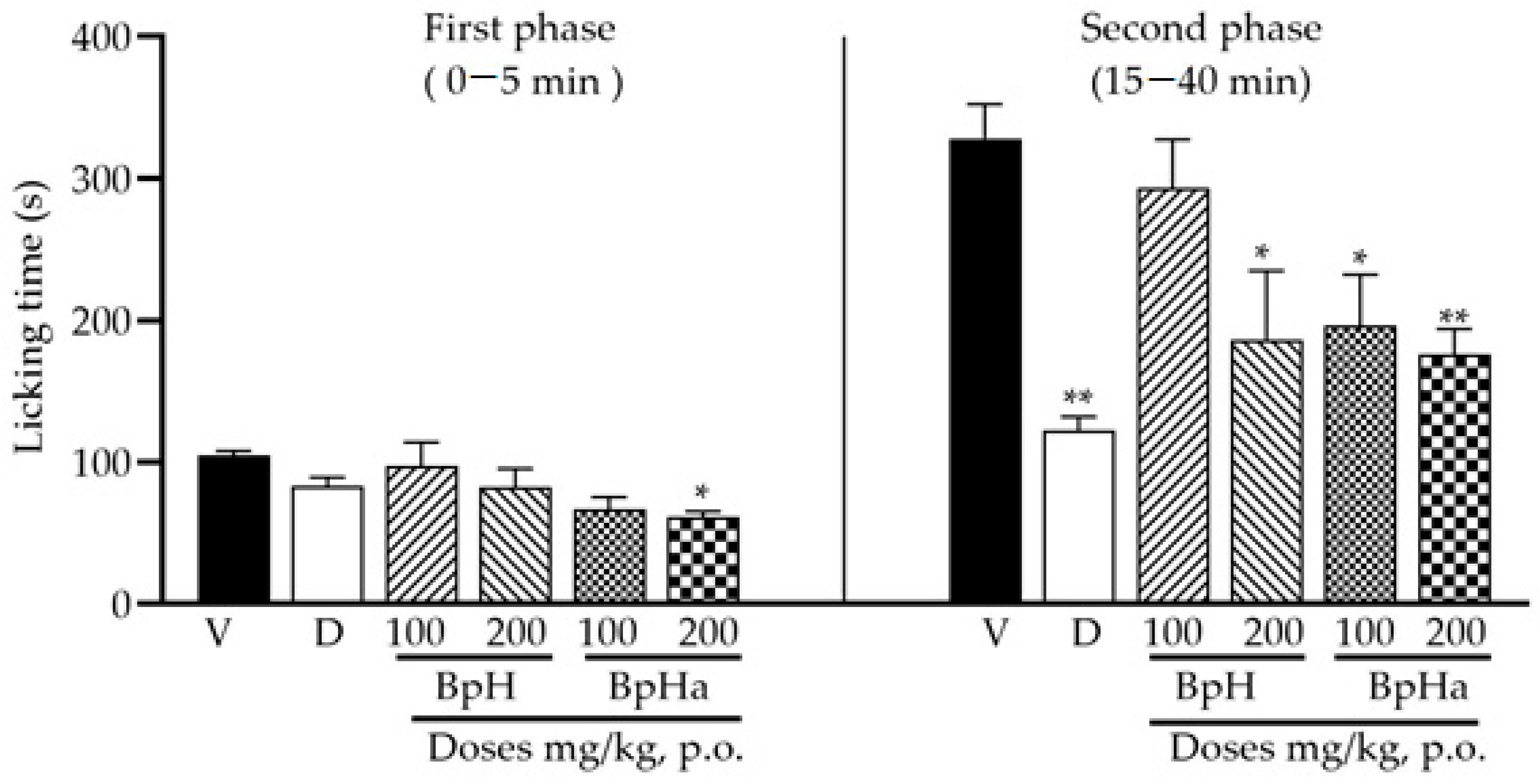
Figure 1. Antinociceptive effect of B. procumbens extracts in both phases of the formalin test. Vehicle (V), diclofenac (D), hexane extract (BpH), and hydroalcoholic extract (BpHa) of B. procumbens. Data are expressed as the mean (n = 5) ± SEM (standard error of the mean). Asterisks indicate significant differences (* p < 0.05, ** p < 0.01) compared to the vehicle group in a Dunnett test.
Futurepharmacol 06 00016 g001
Figure 2. Antinociceptive effect of fractions derived from the hydroalcoholic extract in both phases of the formalin test. Vehicle (V), diclofenac (D), hydroalcoholic extract (BpHa), aqueous fraction (BpFa) and organic fraction (BpFo) of B. procumbens. Data are expressed as the mean (n = 5) ± SEM. Asterisks indicate significant differences (* p < 0.05 and ** p < 0.01) compared to the vehicle group (Tween 20, 3%) in a Dunnett test.
Futurepharmacol 06 00016 g002
Figure 3. HPLC chromatograms at 260 standards: (A) arbutin (1), (B) 5-(p-hydroxybenzoyl) shikimic acid (2), (C) procumgastrodin A (3) and B. procumbens extract (D) hydroalcoholic (BpHa), (E) aqueous fraction (BpFa) and (F) organic fraction (BpFo).
Futurepharmacol 06 00016 g003
Figure 4. Chemical structures identified in B. procumbens: arbutin (1), 5-(p-hydroxybenzoyl)shikimic acid (2) and procumgastrodin A (3).
Futurepharmacol 06 00016 g004
Table 1. Gas chromatography coupled to mass spectrometry (GC-MS) of the n-hexane extract.
PeakRetention Time (min)Area (%)Compound NameMolecular Weight (g/mol)Chemical Group
113.460.682-Hexyl-1-decanol 242.44Alcohols
218.19911.702-Pentadecanona, 6,10,14-trimetil-268.47Ketones
318.9433.451-Dodecanol, 3,7,11-trimetil-228.41Alcohols
419.39734.71Dibutyl phthalate278.34Phthalates
519.8941.211,54-Dibromotetrapentacontano917.2Hydrocarbons
620.4840.32Fen-1,4-diol, 2,3-dimetil-5-trifluorometil-206.16Hydrocarbons
720.7060.24Tetrapentacontane, 1,54-dibromo917.2Hydrocarbons
822.2171.39Heptacosano380.7Hydrocarbons
923.1245.15Hexanedioic acid, bis(2-ethylhexyl) ester370.56Esters
1032.531.17Octasiloxane, 1,1,3,3,5,5,7,7,9,9,11,11,13,13,15,15-hexadecamethyl577.2Siloxane
Disclaimer/Publisher’s Note: The statements, opinions and data contained in all publications are solely those of the individual author(s) and contributor(s) and not of MDPI and/or the editor(s). MDPI and/or the editor(s) disclaim responsibility for any injury to people or property resulting from any ideas, methods, instructions or products referred to in the content.