1. Introduction
Over the past two decades, the trajectory to illicit fentanyl abuse has transformed the overdose landscape [
1,
2]. As fentanyl has saturated the drug supply, users have increasingly encountered combinations with other drugs (‘polydrug’ abuse) either intentionally, to modify euphoria or produce a recognizable “signature”, or unintentionally through contamination and diversion [
3]. This evolution has brought unique treatment challenges [
4]. A recent communication (November 2025) states: “At present, there is an unmet need for a specific reversal agent for xylazine and medetomidine toxicity in humans” [
5]. Several reports and reviews have covered the increasing incidence of the problem, the characteristic tissue trauma (viz., skin ulcers, muscle necrosis, and bone exposure and loss), and the treatment challenges [
6,
7,
8,
9,
10,
11,
12,
13,
14]. The present review differs from these by concentrating on a cause of lethality, namely respiratory depression [
10,
15]. This includes recognition of the potentiating effect of xylazine on fentanyl lethality and the incomplete reversal of respiratory depression by administration of the usually life-saving opioid receptor antagonist naloxone (e.g., Narcan
®), and introduces the potential novel future pharmacologic intervention that targets a peripheral site, the carotid bodies, resulting in an ‘agnostic’ ventilatory reversal agent.
Xylazine, a veterinary α
2-adrenoceptor (α
2AR) agonist, has become well-established in fentanyl products (as “tranq” and other street names) and is associated with profound sedation, naloxone-insensitive bradycardia, necrotizing skin lesions, and complex overdose presentations [
1,
16,
17]. More recently, another α
2AR agonist, medetomidine, an α
2AR agonist whose dextro-enantiomer dexmedetomidine (from which most clinical data derive) is approved as a human intensive care unit (ICU) sedative, has been detected in seized fentanyl products and postmortem toxicology [
18,
19,
20]. Medetomidine and dexmedetomidine have a substantially greater α
2AR-selectivity relative to xylazine conferring even higher risk in uncontrolled exposure settings [
21,
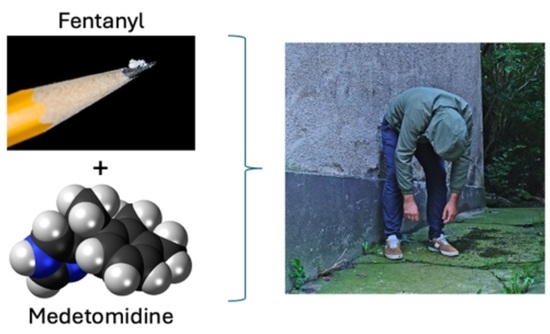
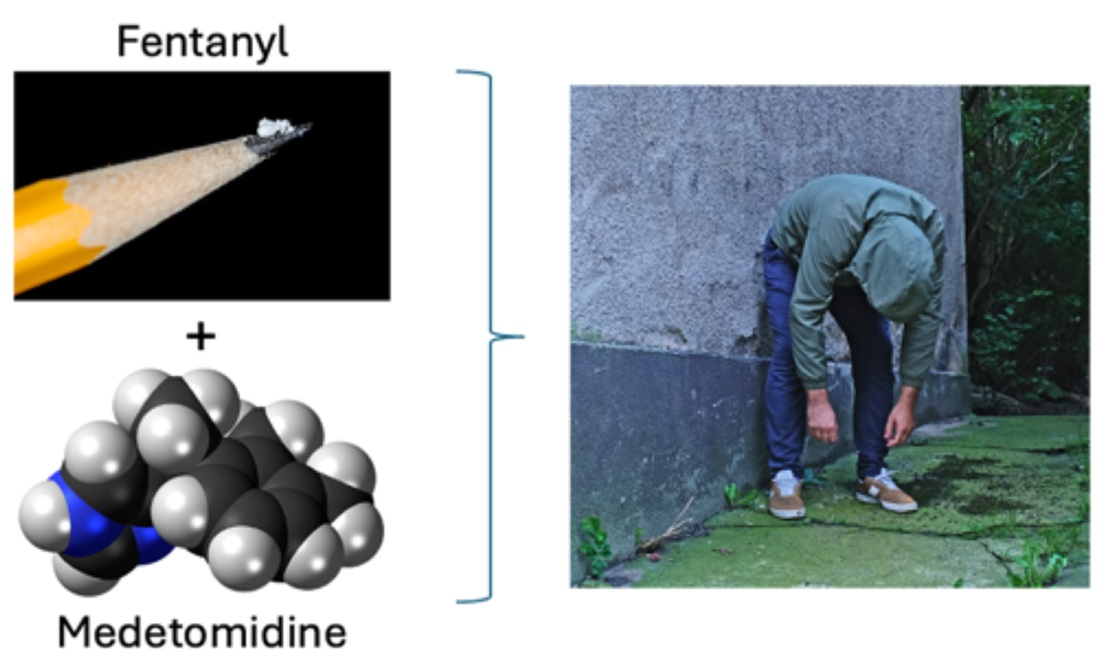
22]. From a pharmacologic standpoint, the combination of a high-efficacy μ-opioid receptor (MOR) agonist such as fentanyl with a high-potency α
2AR agonist such as medetomidine presents an especially concerning interaction profile (
Figure 1) [
15].
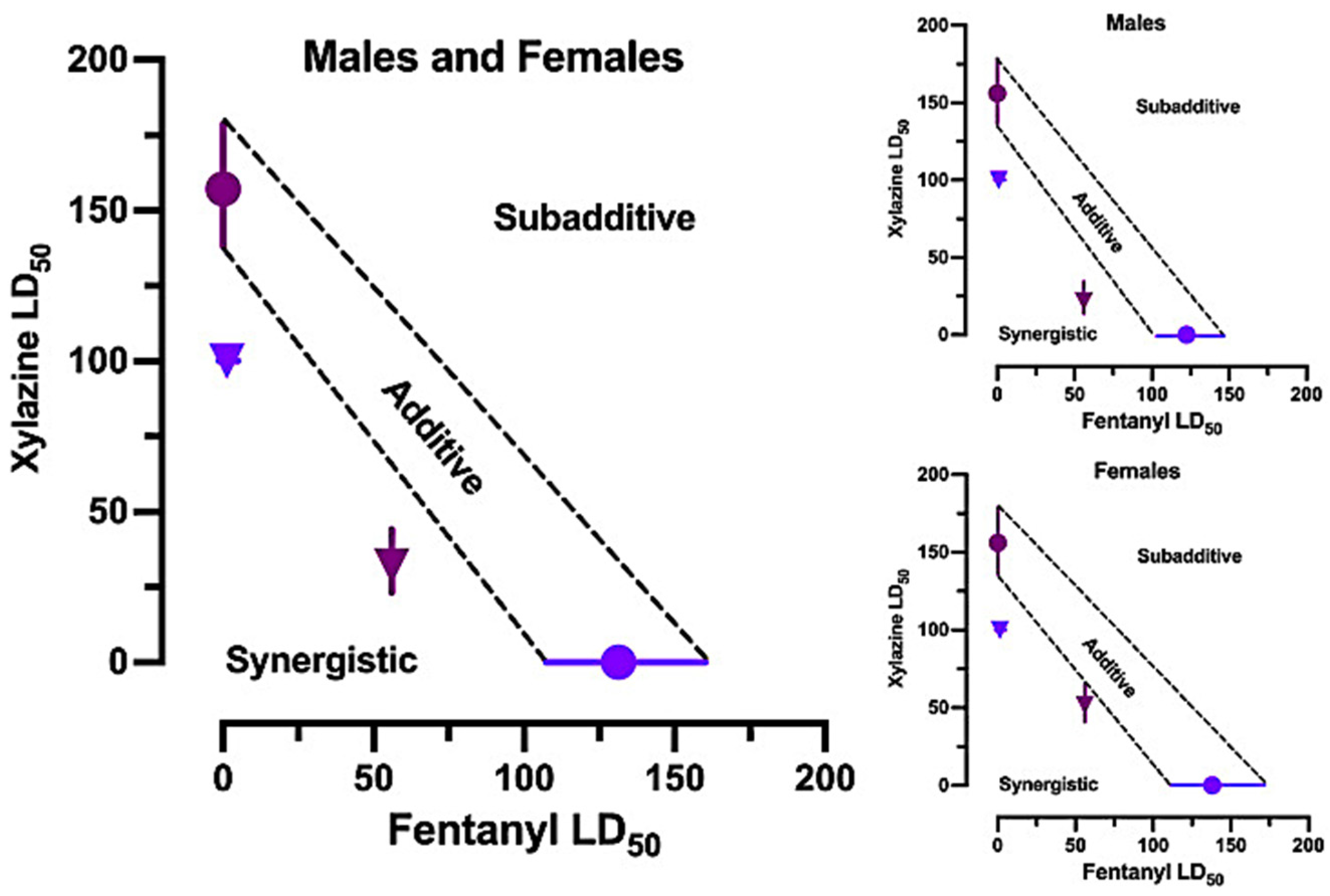
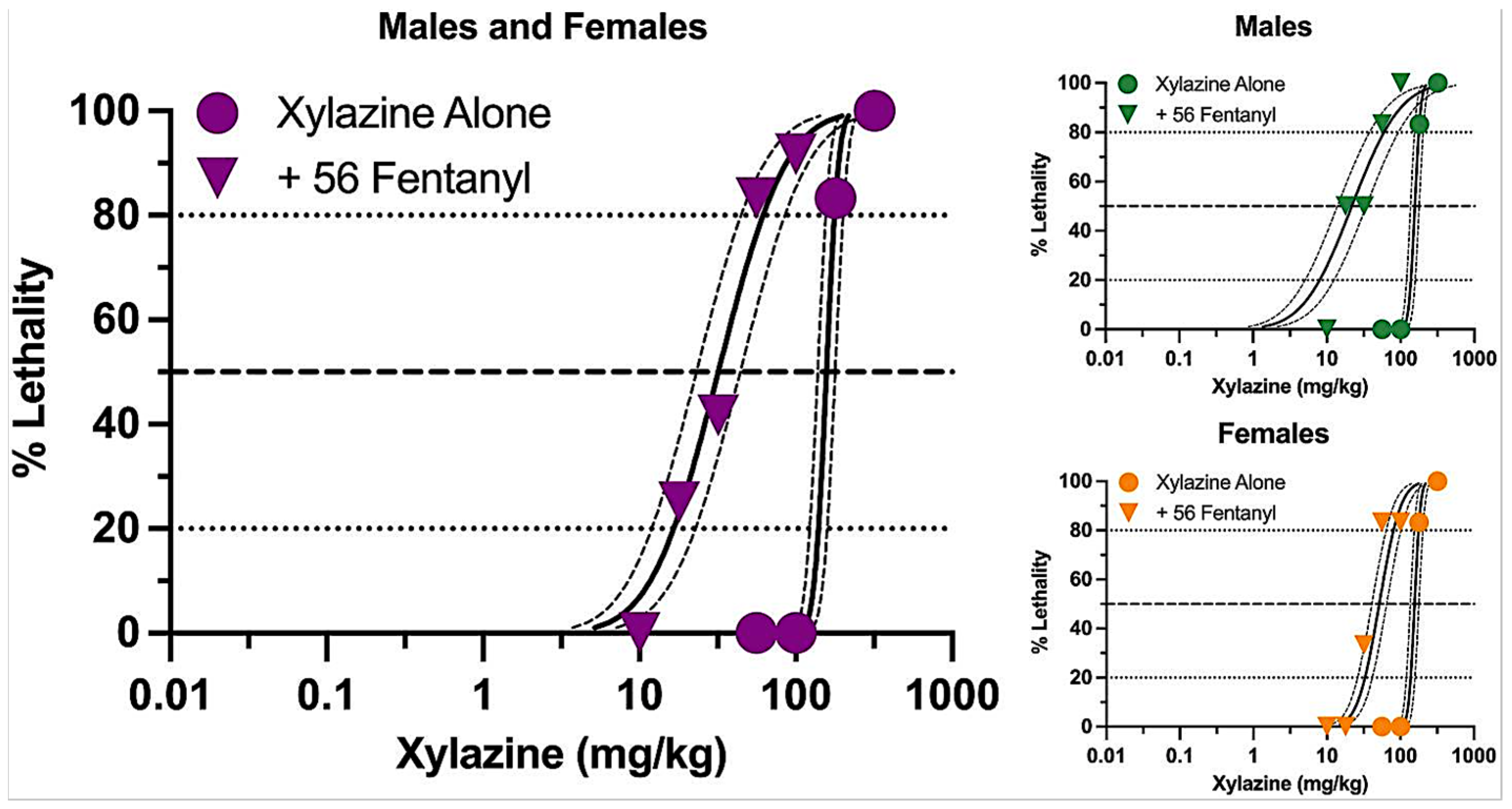
Both MOR and α
2AR agonists depress respiration and autonomic function. Moreover, convergent evidence suggests their effects may be synergistic, not merely additive in animals (albeit we are unaware of rigorous analysis in humans) [
10,
15]. Due to this, the combination therefore presents greater treatment challenges (
Figure 2) [
23].
Despite warnings of synergistic exacerbation of risk for overdose mortality, medetomidine remains absent from most clinical toxicology screens and is poorly understood in the context of illicit drug markets. This review synthesizes current knowledge across five domains: (1) the pharmacology of fentanyl and medetomidine; (2) mechanistic interactions between MOR and α2-adrenergic systems; (3) emerging forensic and clinical evidence of co-exposure; (4) clinical management challenges and response frameworks; and (5) public-health, surveillance, and policy implications together with key research priorities. The objective is to provide a safety-oriented, non-instructional synthesis for clinicians, toxicologists, epidemiologists, medical examiners, and policymakers confronting this emerging threat. Additionally, we summarize the mechanism and profile of the novel polysubstance reversal agent ENA-001 that is currently in development.
2. Emerging Forensic and Clinical Evidence of Co-Exposure
Signals of medetomidine’s infiltration into the illicit drug supply have come from forensic laboratories, border-control agencies, and investigative public-health surveillance. Canada Border Services Agency (CBSA) reports have identified medetomidine in powders, counterfeit tablets, and drug paraphernalia co-mixed or contaminated with fentanyl or its analogs, often in nanogram-to-milligram amounts [
22]. These detections have occurred in geographically diverse seizures, suggesting upstream incorporation at mixing or production sites rather than isolated contamination events. This pattern closely parallels the early trajectory of xylazine’s emergence in fentanyl markets, which initially appeared as sporadic forensic curiosities before rapidly scaling into a widespread adulterant associated with severe overdose morbidity [
10,
23].
Subsequent forensic casework [
20,
24], has confirmed medetomidine co-occurrence with fentanyl and fluoro-fentanyl in multiple jurisdictions, indicating detection in both seized-samples and postmortem toxicology [
25]. Such convergence between supply-side and demand-side data is characteristic of an adulterant transitioning from experimental use to early market establishment. A central challenge in defining the scale of medetomidine penetration is that routine toxicology screening panels have not included α
2AR agonists, particularly for veterinary sedatives such as medetomidine or xylazine [
24]. Detection requires specialized LC-MS/MS or high-resolution mass spectrometry, calibration with appropriate standards, and validation for biological matrices. These capabilities are not yet widely implemented outside forensic laboratories. As with xylazine, the early detection of medetomidine should be interpreted as a warning signal rather than an isolated occurrence.
Growing evidence from postmortem toxicology reports demonstrates increasing detection of medetomidine in decedents with fentanyl-related overdoses, often with fentanyl analogs and other sedatives such as benzodiazepines or ethanol [
26]. Interpretive challenges include the absence of established toxic or fatal concentration thresholds for (dex)medetomidine in humans; the near-universal presence of multiple CNS depressants; and temporal discordance between MOR and α
2AR agonist effect profiles [
22]. Even when fentanyl is partially reversed (e.g., by administration of the MOR antagonist naloxone) or redistributed, medetomidine can continue to produce deep sedation, bradycardia, and hypotension, complicating the correlation of blood concentrations with physiologic state at the time of death. Nonetheless, reported cases often show a consistent clinical–forensic phenotype: profound, prolonged unresponsiveness; marked bradycardia and hypotension when pre-mortem data exist; minimal or partial response to naloxone; and evidence of extended drug effects such as fixed lividity or rigor at discovery [
27]. These features closely match mechanistic predictions derived from combined MOR and α
2AR activation [
28].
Frontline responders, including paramedics, law enforcement, and community harm-reduction workers have independently described distinctive patterns in suspected fentanyl–medetomidine overdoses. Victims are frequently found in sleep-like positions with minimal signs of struggle or terminal agitation, show little or no arousal after multiple otherwise adequate doses of naloxone, and often display signs of prolonged drug effects at discovery. Clinically, emergency departments report a constellation of findings consistent with α
2AR-mediated autonomic effects superimposed on fentanyl-induced respiratory depression [
29]. Profound bradycardia, severe hypotension that is often refractory to fluid resuscitation, hypothermia, persistent coma or deep sedation despite MOR antagonism, and prolonged ventilatory support exceeding that for fentanyl alone have been reported [
30]. These features mirror high-dose dexmedetomidine effects in ICU research and veterinary medetomidine toxicology models and underscore the importance of non-opioid sedative contributions to the overdose phenotype. Crucially, failure to awaken with naloxone does not exclude opioid involvement. Rather, this response reflects the non-opioid component of intoxication, consistent with overlapping suppressive actions of MOR and α
2AR receptor activation on respiratory and autonomic circuits [
31].
3. Fentanyl: Mechanism of Action, Pharmacokinetics, and Respiratory Depression
Fentanyl is a synthetic phenylpiperidine high-efficacy MOR agonist with parenteral analgesic potency roughly 50–100 fold that of morphine and an octanol–water partition coefficient approaching 800. This profile enables extremely rapid penetration of the blood–brain barrier and early CNS effect-site engagement [
32].
Fentanyl displays a steep concentration–effect curve for analgesia, sedation, and respiratory depression, which is a consequence of its high intrinsic MOR efficacy and rapid tissue distribution [
33]. MOR are G protein-coupled receptors (GPCR) expressed widely at functionally important brainstem respiratory-control networks, including the ventrolateral medulla pre-Bötzinger complex, pontine parabrachial/Kölliker-Fuse complex, and medullary sensory-integrative nuclei such as the nucleus of the solitary tract, with additional modulatory effects mediated via supramedullary structures such as the periaqueductal gray. MOR are also present in peripheral chemosensory and visceral afferent pathways, including carotid-body and vagal afferents [
34,
35,
36]. Upon MOR activation, adenylyl cyclase inhibition decreases intracellular cAMP, G-protein-gated inward-rectifying K
+ channels open, and presynaptic N- and P/Q-type Ca
2+ channels are inhibited, collectively hyperpolarizing neurons and reducing neurotransmitter release within respiratory networks [
34,
37]. In the pre-Bötzinger complex, these processes shorten inspiratory burst duration, destabilize rhythmogenesis, and ultimately produce hypoventilation and apnea as effect-site concentrations rise [
34]. MOR actions in the periphery further contribute to respiratory depression. MORs on carotid-body glomus cells and petrosal afferents reduce hypoxia-induced neurotransmission and blunt the hypoxic ventilatory response, and MORs on vagal and glossopharyngeal afferents projecting to the NTS modulate baroreflex and cardiopulmonary inputs [
35,
38]. Peripherally restricted antagonists can partially reverse these effects, illustrating that MOR-induced respiratory depression arises from convergent central and peripheral MOR populations [
35].
The physicochemical and pharmacokinetic (PK) profiles of fentanyl exacerbates these risks. Fentanyl is rapidly absorbed after intravenous, intranasal, or inhalational use and has a large apparent volume of distribution (3–8 L/kg). Fentanyl undergoes hepatic CYP3A4 metabolism to inactive metabolites such as norfentanyl [
39,
40]. High lipophilicity leads to early redistribution from the brain to peripheral compartments, sometimes producing a misleading initial improvement while effect-site concentrations remain sufficient to cause recurrent respiratory depression [
41]. With continuous infusions, fentanyl’s context-sensitive half-life increases substantially as tissue reservoirs sequentially saturate, prolonging toxicity in overdose [
22].
Clinically, fentanyl-induced respiratory depression follows a characteristic progression: diminished tidal volume and respiratory rate, irregular breathing patterns, loss of ventilatory responsiveness to CO
2 and hypoxia, and eventual apnea [
34,
37,
42]. PK-PD (pharmacodynamic) modeling shows that fentanyl shifts the CO
2–ventilation response curve downward and rightward, decreasing chemosensitivity rather than simply altering the set point [
43,
44]. Even in opioid-tolerant individuals, apnea threshold concentrations may occur only slightly above analgesic ranges. Several features narrow the therapeutic window, including rapid CNS penetration which results in peak respiratory depression within minutes, leaving little time for detection and intervention. In addition, high intrinsic MOR efficacy means that low receptor occupancy yields near-maximal depression of respiratory drive; and at higher doses, fentanyl can produce truncal and chest-wall rigidity that further impedes ventilation even if naloxone is administered [
42]. Molecular pharmacology studies suggest that fentanyl may act as a β-arrestin–biased agonist, promoting respiratory depression, although the extent to which this explains fentanyl’s disproportionate respiratory toxicity remains debated [
45].
4. Medetomidine and Related α2AR Agonists
Medetomidine is an imidazole-derived α
2AR agonist, and like xylazine, is used in veterinary sedation [
46]. It is a racemic mixture; its dextro-enantiomer, dexmedetomidine, is approved for procedural and ICU sedation in humans [
47,
48]. Binding studies demonstrate high α
2AR selectivity with α
2:α
1 selectivity ratios near 1620:1. This is several-fold higher than xylazine or clonidine, giving rise to an α
2AR-selective pharmacologic profile [
21,
42] α
2AR exist in α
2A, α
2B, and α
2C subtypes, each having distinct regional expression. The α
2A subtype is concentrated in the locus coeruleus (LC) of the brainstem, where activation hyperpolarizes noradrenergic neurons by inhibiting presynaptic Ca
2+ channels and activates GIRK channels, effectively reducing tonic norepinephrine release [
49].
Suppression of LC output produces the characteristic ‘cooperative sedation’ of dexmedetomidine, a state mimicking non-REM sleep in electroencephalographic dynamics, yet it is readily reversible with minimal stimulation [
10,
49]. Presynaptic α
2AR in the dorsal horn, spinal cord, and peripheral sympathetic terminals reduce norepinephrine release, suppress nociceptive transmission, and blunt sympathetic reflexes [
47,
49]. Intracellular signaling resembles that of other Gi/o-coupled receptors and produces sedation, analgesia, sympatholysis, and diminished autonomic responsiveness to physiological stress [
49].
Respiratory effects of medetomidine and dexmedetomidine are often described as modest under controlled conditions. Unlike MOR agonists, these agents typically preserve resting ventilation while reducing ventilatory responsiveness to CO
2 and hypoxia, largely by dampening arousal-related noradrenergic drive [
50]. However, α
2AR agonists clearly potentiate opioid-induced respiratory depression in human and animal studies, primarily by withdrawing excitatory neuromodulatory input that ordinarily counters MOR-mediated suppression of respiratory rhythm. Medetomidine’s cardiovascular profile is more striking. Rapid activation of peripheral α
2B receptors induces vasoconstriction and transient hypertension, followed by sustained central α
2A-mediated sympatholysis, bradycardia, and marked reductions in cardiac output [
21,
22,
42,
51]. In both veterinary and human clinical settings, heart rates below 40 beats per minute and substantial decreases in cardiac index are common at moderate sedative doses of α
2AR drugs [
52].
Pharmacokinetically, medetomidine distributes rapidly, exhibits high plasma protein binding, and is extensively metabolized hepatically via glucuronidation and CYP-mediated oxidation to inactive metabolites [
53]. Dexmedetomidine displays considerable interindividual variability in clearance (particularly in critically ill patients with hepatic dysfunction, hypoperfusion, or systemic inflammation), leading to prolonged sedation and autonomic suppression at a given infusion rate [
54]. The similar lipophilicity and metabolic pathways of medetomidine imply that, in overdose, effect-site concentrations may persist for many hours, exceeding that of fentanyl after redistribution or naloxone administration, and thus maintaining bradycardia, hypotension, and deep sedation well beyond the opioid window. Compared with xylazine, medetomidine is more potent, more α
2-selective, and has fewer off-target receptor interactions [
21,
42]. In controlled environments, these properties allow precise titration. In illicit drug supplies, however, they imply that even small, unmeasured quantities can produce disproportionately strong sedative, autonomic, and respiratory effects in unmonitored individuals. The pharmacologic “refinement” of medetomidine therefore becomes a liability in unregulated fentanyl markets.
5. Mechanistic Interactions Between MOR and α2AR Systems
Fentanyl and medetomidine converge on neural circuits governing respiratory rhythm, arousal, and autonomic control, producing synergistic (greater than additive) CNS and cardiorespiratory depression. Fentanyl acts on MORs located within the pre-Bötzinger complex, parabrachial/Kölliker-Fuse nuclei, and related brainstem centers to suppress respiratory rhythmogenesis and attenuate chemoreflex responses to hypoxia and hypercapnia [
34,
35,
37]. Medetomidine acts primarily through α
2AR in the LC and other pontine nuclei, markedly reducing noradrenergic excitatory output that ordinarily sustains wakefulness, cortical activation, and behavioral drive to breathe under metabolic stress [
49,
52]. Together, they create a multi-site collapse of arousal–respiration coupling in which automatic respiratory rhythm slows or ceases, compensatory breathing efforts diminish, and airway-protective reflexes such as swallow and cough are blunted, increasing aspiration risk.
The carotid body, a key sensor in the hypoxic ventilatory response, is also affected by both drug classes. Opioids suppress carotid-body function by activating MORs on glomus cells and petrosal afferents, reducing hypoxia-induced neurotransmission and depressing afferent signaling [
35,
38]. α
2AR agonists independently alter chemosensory neurotransmission and sympathetic outflow, with experimental studies demonstrating blunted hypoxic and hypercapnic ventilatory responses, particularly when α
2 agonists are combined with CNS depressants [
55,
56]. When fentanyl and medetomidine are co-ingested, the gain of the entire chemoreflex feedback system is markedly diminished: reduced carotid-body input fails to adequately stimulate respiratory centers, and central α
2-mediated suppression of arousal eliminates behavioral compensatory mechanisms. The result is “silent” hypoxemia, in which oxygen saturation declines precipitously without dyspnea, agitation, or increased respiratory effort. Autonomic consequences of co-exposure are similarly profound. Medetomidine-induced bradycardia, hypotension, and decreased cardiac output further interact adversely with fentanyl’s suppression of sympathetic tone and respiratory drive [
47,
50,
51]. As ventilation slows and CO
2 accumulates, the resulting acidosis worsens myocardial excitability and increases susceptibility to arrhythmias [
16]. Severe sinus bradycardia or atrioventricular block may reduce perfusion of vital organs, including the brain, when oxygen delivery is already impaired by hypoventilation. Oxygen delivery is thus compromised centrally—via ventilatory failure and alveolar hypoventilation—and peripherally via reduced cardiac output, hypotension, and impaired microcirculatory perfusion. This combination magnifies mortality risk even when fentanyl dose alone might not be expected to cause fatal apnea.
A critical feature of fentanyl + medetomidine co-exposure is the temporal mismatch between drug effect profiles. The rapid redistribution and reversibility of fentanyl with naloxone often produces early partial recovery, yet medetomidine’s longer effect-site persistence continues to drive sedation, bradycardia, and hypotension [
57,
58]. In animal models, medetomidine sedation and autonomic suppression can persist for extended durations due to slow metabolic clearance and ongoing central sympatholysis [
22]. Forensic case series suggest that similar persistence also occurs in humans [
22]. Clinical improvement following naloxone administration therefore does not indicate physiologic safety; patients may remain in a prolonged state of autonomic instability, impaired thermoregulation, and reduced ventilatory responsiveness for hours, necessitating extended observation and intensive supportive care.
6. Clinical Management of Overdose and Toxicity
Naloxone remains the primary therapeutic intervention for MOR agonist overdose. It is a competitive antagonist at MORs, displacing fentanyl and related opioids and reversing MOR-mediated effects on respiratory rhythm generation, airway tone, and chemoreflex responsiveness [
59]. Its rapid onset and high receptor affinity enable timely reversal of opioid-induced respiratory depression, though escalating or repeated doses may be necessary in the setting of potent or long-acting synthetic opioids such as fentanyl [
31,
57]. However, naloxone does not have potent affinity for α
2AR and therefore does not reverse medetomidine-induced sedation, bradycardia, hypotension, or thermoregulatory suppression [
60,
61].
In mixed fentanyl + medetomidine toxicity [
62], naloxone may partially restore respiratory drive by relieving MOR-mediated inhibition of the pre-Bötzinger complex and other brainstem nuclei and improving upper-airway patency, but persistent CNS depression due to α
2AR activation in the LC continues to blunt arousal and volitional breathing. Bradycardia and hypotension often remain unchanged, arising from central sympatholysis and peripheral vasomotor suppression independent of opioid pathways. Partial or absent awakening after adequate naloxone administration should therefore not be interpreted as naloxone “failure,” but rather as evidence of a non-opioid sedative component. Severe medetomidine-induced bradycardia and hypotension may further impair distribution of naloxone to central compartments, delaying reversal.
Although α
2AR antagonists such as atipamezole and yohimbine are effective reversal agents in veterinary medicine, their use in humans is unsupported by regulatory approval [
10]. Concerns about rebound hypertension, catecholamine surge, arrhythmogenesis, and precipitated agitation render the α
2AR antagonists challenging for emergency use. At present, supportive care including (but not limited to) airway management and ventilation, cardiovascular stabilization, temperature support, and prolonged observation remains the only evidence-based strategy for medetomidine-associated toxicity in humans [
10].
In summary, suspected fentanyl + medetomidine toxicity is best conceptualized as a mixed depressant syndrome characterized by deep coma with minimal responsiveness, severe respiratory depression ranging from hypoventilation to apnea, bradycardia and hypotension, often more pronounced than in fentanyl-only overdose, prolonged sedation despite naloxone, and hypothermia with cool, pale extremities. Diagnosis is primarily syndromic; confirmatory toxicology, when available, is delayed and often retrospective. Thus, a high level of suspicion is needed in regions where medetomidine has been detected in the supply or where fentanyl + xylazine polysubstance use has already emerged.
7. Reversal Agents for Medetomidine: Insights from Veterinary and Complementary Medicine
Medetomidine toxicity presents a unique challenge in overdose in the United States, because no α
2AR antagonist is currently approved for clinical use; the α
2AR antagonist yohimbine is approved for medical human use and is a marketed drug in several EU countries. In veterinary medicine, atipamezole is a well-established, highly selective α
2AR antagonist used to reverse medetomidine and related α
2AR agonists rapidly and reliably [
21,
42]. Atipamezole competitively blocks α
2A and α
2B receptors, restoring noradrenergic transmission within the LC, reversing sedation and analgesia, and normalizing sympathetic tone. When administered to animals, it produces rapid recovery from medetomidine anesthesia, often within minutes, accompanied by improved cardiovascular output and restored motor function [
21,
42].
Additional α
2AR antagonists include yohimbine and tolazoline, older agents that have broader, less selective adrenergic activity [
63]. Yohimbine blocks α
2AR, but also antagonizes serotonin, dopamine, and cholinergic pathways, leading to a less predictable reversal profile and a higher incidence of adverse reactions [
64]. Tolazoline, a mixed α
1/α
2 antagonist, has been used in large-animal sedation reversal, but carries substantial risk of eliciting hypotension, tachycardia, and arrhythmias [
65]. Despite their clear efficacy in veterinary settings, none of these agents are approved, validated, or recommended for human overdose management. In particular, several concerns inhibit their use [
66,
67]:
Safety risks are incompletely characterized in humans. Atipamezole has been administered in only small early-phase human studies, with insufficient data to establish safe dosing or to predict cardiovascular complications in compromised patients.
Rebound sympathetic surge. Rapid α2AR antagonism may precipitate severe hypertension, tachyarrhythmias, behavioral agitation, or catecholamine-driven myocardial stress, especially in the setting of concurrent fentanyl-induced hypoxia or acidosis.
Polysubstance exposure complicates antagonism by naloxone. In mixed fentanyl + medetomidine toxicity, abrupt restoration of sympathetic tone may worsen myocardial oxygen mismatch or precipitate arrhythmias, while failing to reverse opioid-induced respiratory depression.
Regulatory pathways are undeveloped. No α2AR antagonist has undergone the toxicology, dosing, or pharmacovigilance studies required for United States FDA authorization.
For these reasons, supportive care remains the only evidence-based clinical strategy for medetomidine-associated toxicity in humans. Management is primarily airway- and ventilation-focused, with early escalation to assist ventilation when hypoventilation, hypoxemia, or diminished airway reflexes are present. Hemodynamic support may include intravenous fluids for relative hypovolemia and vasodilation, and vasopressors for persistent hypotension. Atropine may be considered for clinically significant, symptomatic bradycardia attributable to α2-agonist–mediated sympatholysis, although response may be incomplete and pacing or vasopressor support may be required in refractory cases. Additional measures include active warming for hypothermia and prolonged observation to accommodate medetomidine’s relatively long context-sensitive and effect-site persistence and the risk of recurrent sedation and cardiovascular depression. Nevertheless, veterinary experience with atipamezole offers important insights. It underscores that medetomidine’s pharmacology is fully reversible at the receptor level, suggesting that with adequate research, an α2AR antagonist with the right characteristics might one day serve as a targeted therapeutic adjunct to naloxone. Controlled human studies would be needed to evaluate safety, define dosing parameters, and identify risks of precipitating excessive sympathetic activation. Given the growing prevalence of α2 agonists in illicit opioid markets, investigation into human-suitable α2AR antagonists may represent an important future research opportunity.
8. Evolving Clinical Management in the Era of Polysubstance Overdose
Contemporary emergency management of “opioid” overdose has undergone a fundamental shift as the drug supply has transitioned from predominantly single-agent opioid exposures to complex, unpredictable polysubstance intoxications. Historically, suspected opioid overdose was managed with prompt naloxone administration with the expectation of rapid awakening and restoration of spontaneous ventilation. This approach frequently resulted in abrupt precipitated withdrawal, agitation, and emesis, but was generally effective in reversing respiratory depression when opioids were the sole toxicologic driver. Over time, clinical practice evolved toward titrated naloxone microdosing, with the explicit goal of restoring adequate respiratory drive, rather than full consciousness. This approach minimizes withdrawal, agitation, and aspiration risk while preserving airway reflexes.
The emergence of IMF and ultra-potent synthetic opioids, including the fentanyl analogs such as carfentanil, sufentanil, 3-methylfentanyl, etc., substantially alters this paradigm. IMF and ultra-potent synthetic opioids exhibit high MOR affinity and efficacy, frequently necessitating repeated naloxone dosing or continuous naloxone infusions to maintain ventilation. As a result, overdose management increasingly requires intensive monitoring, intravenous access, and escalation to naloxone drips, which in most health systems mandates admission to an intensive care unit. In parallel, clinicians have observed that many patients no longer respond predictably to naloxone alone, even when opioid exposure is strongly suspected based on miosis, abuse-related paraphernalia, self-reporting, or witness accounts.
The negative consequences of this shift to polysubstance abuse has been further amplified by the infiltration of non-opioid α2AR sedatives such as xylazine and medetomidine. In these mixed exposures, naloxone may partially restore MOR-mediated respiratory drive, yet fail to reverse the profound sedation, altered mental status, and autonomic instability driven by α2AR activation. First responders increasingly encounter victims who remain deeply unresponsive, bradycardic, and hypotensive despite otherwise adequate naloxone dosing, creating a narrow and time-critical window for decision-making. When patients exhibit prolonged apnea, inadequate airway protection, or persistent coma, emergency physicians frequently proceed to early endotracheal intubation to secure the airway and assume full ventilatory control, rather than relying on repeated naloxone escalation with uncertain benefit.
These realities have major implications for resource utilization and systems of care. Continuous naloxone infusions, vasopressor support for α2AR-mediated hypotension, and mechanical ventilation each require ICU-level resources. The need to initiate norepinephrine or other vasopressors to counter medetomidine-associated sympatholysis further increases the complexity and risk profile of care, as these agents necessitate reliable vascular access and continuous titration to avoid ischemic complications. Importantly, these observations underscore a critical limitation of naloxone-centric overdose paradigms. While naloxone remains life-saving for MOR–mediated respiratory depression, it is no longer sufficient as a stand-alone intervention in many contemporary overdoses. Polysubstance exposures involving α2AR agonists create clinical states in which respiratory failure, autonomic collapse, and loss of airway reflexes persist independently of opioid receptor antagonism. The growing frequency of such presentations challenges longstanding assumptions that “the opioid component is what kills” and highlights the need for expanded pharmacologic, supportive, and regulatory policy that acknowledge the evolving toxicologic landscape.
9. Public Health, Surveillance, Policy, and Research Priorities
The introduction of medetomidine into fentanyl drug markets reflects a new stage in the polysubstance overdose crisis, characterized by highly potent non-opioid sedatives that exacerbate opioid toxicity via diverse receptor mechanisms [
3]. From a public-health perspective, medetomidine’s ability to potentiate respiratory and autonomic depression is deeply concerning. Mechanistically, α
2AR-mediated suppression of the LC reduces arousal and negates compensatory respiratory drive, while fentanyl, through MOR activation, depresses respiratory rhythm generation and chemoreflex sensitivity [
68]. This synergy markedly increases the challenges and lethality of overdose. Clinically, patients exposed to fentanyl–medetomidine combinations may present with deep coma, profound bradycardia, hypotension, hypothermia, and persistent unresponsiveness even after naloxone administration, a clinical phenotype that differs from typical fentanyl mono-intoxication and is prone to misinterpretation as “naloxone-resistant fentanyl” rather than mixed-mechanism toxicity.
Surveillance systems face corresponding challenges. Because medetomidine is neither widely monitored nor routinely screened, forensic and clinical laboratories often lack the capacity to detect its presence, resulting in under-recognition of its spread and misclassification of mixed overdoses as opioid-only events [
10,
57]. Early detection of emerging adulterants requires harmonized laboratory protocols, validated LC-MS/MS or high-resolution mass spectrometry methods, and systematic coding standards for documenting α
2AR agonist exposures in both clinical and postmortem settings. The absence of such frameworks has historically delayed recognition of harmful adulterants, as seen in the gap between early xylazine detections and widespread epidemiologic awareness [
69]. A modernized overdose surveillance infrastructure linking EMS data, emergency department encounters, toxicology results, and medical examiner case files would enable earlier detection of emerging patterns and more rapid public-health responses. Policy responses must balance the legitimate veterinary use of medetomidine with the need to prevent diversion [
70]. For example, overly aggressive scheduling risks driving clandestine synthesis of novel α
2AR agonists with unknown toxicology, echoing the experience with successive generations of synthetic opioids. Policymakers could instead prioritize enhanced inventory controls for veterinary distributors, mandatory reporting of unusual ordering patterns, and strengthen collaboration between veterinary oversight bodies, public-health agencies, and law-enforcement partners.
Harm-reduction strategies will be critical. Community-based organizations should be supported in disseminating accurate, non-stigmatizing information about medetomidine’s risks, emphasizing that naloxone remains a consideration in any suspected overdose, even when it does not fully restore consciousness, and that persistent unresponsiveness may indicate the presence of sedatives such as medetomidine rather than the absence of an opioid component [
71]. Drug-checking services equipped with appropriate analytic methods would offer a frontline tool for identifying medetomidine in circulating drug supplies and relaying these findings to people who use drugs, first responders, and clinicians; they also generate valuable real-time data for surveillance [
72].
Research priorities span mechanistic, clinical, and public-health domains. Mechanistic studies are needed to delineate how MOR–α
2A interactions affect respiratory rhythmogenesis, chemoreflex pathways, autonomic circuits, and arousal networks [
73]. PK and PD characterization of medetomidine in humans outside carefully controlled ICU settings remains a major gap. Although dexmedetomidine provides a useful reference, medetomidine’s α
2AR-selectivity, stereochemistry, and patterns of illicit exposure require independent investigation. Clinical registry studies are needed to document real-world presentations, treatment responses, and outcomes, supporting early detection of geographic spread and the development of prognostic tools. Further research should explore the feasibility of α
2AR antagonist reversal strategies in controlled settings, recognizing that current agents such as atipamezole are not available (and possibly not acceptable) for clinical use [
21]. Finally, public-health intervention research is necessary to assess how drug-checking alerts, risk messaging, and modifications of EMS and ED protocols influence overdose risk and outcomes.
10. Potential Future Therapeutics
The only currently approved respiratory depression reversal agents in the United States are MOR antagonists, which are limited by the inability to reverse respiratory depression caused by non-opioid sedatives or polysubstance drug combinations. The only other receptor-targeted treatment option is the use of an α
2AR antagonist, the shortcomings of which are discussed above (including lack of regulatory approval for human use in the United States). The authors are aware of only one agent that qualifies as a potential future therapeutic, namely ENA-001. ENA-001 (formerly GAL-021) represents a fundamentally different approach [
74]. ENA-001 targets peripheral chemoreceptor modulation and respiratory drive via the inhibition of large-conductance calcium-activated potassium (BK) channels located peripherally (in glomus cells of the carotid bodies). Preclinical and early clinical data [
75] suggest that ENA-001 may restore respiratory function independent of the causative agent, thereby establishing it as an ‘agnostic’ respiratory depression reversal agent. In rats, ENA-001 has been demonstrated to reverse the respiratory depressant effects on pCO
2 and pO
2 of the combination of fentanyl + xylazine [
76], suggesting a role for it as a potential future therapeutic for treating polysubstance overdose—used either alone or in combination with naloxone.
11. Summary
The infiltration of medetomidine—and other α
2AR agonists possibly on the horizon—into fentanyl-dominated drug markets requires a coordinated response integrating clinical toxicology, laboratory surveillance, harm reduction, veterinary regulatory oversight, and mechanistic research. Similar to xylazine, medetomidine is a non-opioid CNS depressant capable of reshaping the clinical and epidemiologic landscape of overdose [
77]. Without proactive action, it may become entrenched in the supply, further increasing overdose severity and complicating emergency responses. Comprehensive monitoring, evidence-based policy, and cross-sector collaboration are needed. Ultimately, ‘agnostic’ reversal therapeutics that are effective independent of the composition of the overdose mixture, such as the BK-channel antagonist ENA-001, might ameliorate some of the complexities of treating fentanyl + medetomidine and other poly-drug overdoses.
Author Contributions
All authors were extensively involved in the discussion of the topic, and the outline, writing, and review of the final manuscript. R.B.R. supplied pharmacology and drug-discovery expertise, E.V. and M.K. provided the in-the-trenches experience of an emergency-room physician, J.V.P.J. was the overarching medical guide, and K.C. assisted in the medical writing and editing. All authors have read and agreed to the published version of the manuscript.
Funding
This research received no external funding.
Institutional Review Board Statement
Not applicable.
Informed Consent Statement
Not applicable.
Data Availability Statement
No new data were created or analyzed in this study. Data sharing is not applicable to this article.
Acknowledgments
During the preparation of this manuscript, the GenAI tool ChatGPT v5.2 (Open AI, San Francisco, CA, USA) was used for the purposes of assisting with identifying and summarizing literature sources and content organization. The author reviewed and edited the output, and takes full responsibility for the content of this publication.
Conflicts of Interest
The authors have direct (RBR, JVR Jr: cofounders, and MK: employee) or indirect (EV and KC: consultants) association with Enalare Therapeutics (ENA-001), however, except for medical writing and editing assistance to K2D2 Consulting, the authors declare that this study received no funding or other financial remuneration from Enalare Therapeutics, NEMA Research, or any other organization and that no organization was involved in the study design, collection, analysis, interpretation of data, the writing of this article, or the decision to submit it for publication.
References
- Ciccarone, D. The rise of illicit fentanyls, stimulants and the fourth wave of the opioid overdose crisis. Curr. Opin. Psychiatry 2021, 34, 344–350. [Google Scholar] [CrossRef]
- O’Donnell, J.; Tanz, L.J.; Gladden, R.M.; Davis, N.L.; Bitting, J. Trends in and characteristics of drug overdose deaths involving illicitly manufactured fentanyls—United States, 2019–2020. MMWR Morb. Mortal. Wkly Rep. 2021, 70, 1740–1746. [Google Scholar] [CrossRef]
- Park, J.N.; Schneider, K.E.; Fowler, D.; Sherman, S.G.; Mojtabai, R.; Nestadt, P.S. Polysubstance overdose deaths in the fentanyl era: A latent class analysis. J. Addict. Med. 2022, 16, 49–55. [Google Scholar] [CrossRef]
- Butelman, E.R.; Huang, Y.; Shastry, S.; Manini, A.F.; Goldstein, R.Z.; Alia-Klein, N. Polydrug overdose mortality caused by synthetic opioids and stimulants: Current sex- and age-specific trajectories in United States national data for 2018–2024. Neuropsychopharmacology 2025, 1–9. [Google Scholar] [CrossRef]
- Mullins, M.E.; Seger, D.L. Urgent need for reversal agents for xylazine and other imidazolines in illicit fentanyl. Am. J. Emerg. Med. 2025, 97, 129–130. [Google Scholar] [CrossRef]
- Gupta, R.; Holtgrave, D.R.; Ashburn, M.A. Xylazine—Medical and public health imperatives. N. Engl. J. Med. 2023, 388, 2209–2212. [Google Scholar] [CrossRef]
- Malayala, S.V.; Papudesi, B.N.; Bobb, R.; Wimbush, A. Xylazine-induced skin ulcers in a person who injects drugs in Philadelphia, Pennsylvania, USA. Cureus 2022, 14, e28160. [Google Scholar] [CrossRef] [PubMed]
- Reyes, J.C.; Negron, J.L.; Colon, H.M.; Padilla, A.M.; Millan, M.Y.; Matos, T.D.; Robles, R.R. The emerging of xylazine as a new drug of abuse and its health consequences among drug users in Puerto Rico. J. Urban. Health 2012, 89, 519–526. [Google Scholar] [CrossRef] [PubMed]
- Friedman, J.; Hansen, H.; Gone, J.P. Deaths of despair and Indigenous data genocide. Lancet 2023, 401, 874–876. [Google Scholar] [CrossRef] [PubMed]
- Acosta-Mares, P.; Violante-Soria, V.; Browne, T., Jr.; Cruz, S.L. Xylazine potentiates the lethal but not the rewarding effects of fentanyl in mice. Drug Alcohol. Depend. 2023, 253, 110993. [Google Scholar] [CrossRef]
- Wong, S.C.; Curtis, J.A.; Wingert, W.E. Concurrent detection of heroin, fentanyl, and xylazine in seven drug-related deaths reported from the Philadelphia Medical Examiner’s Office. J. Forensic Sci. 2008, 53, 495–498. [Google Scholar] [CrossRef]
- Love, J.S.; Levine, M.; Aldy, K.; Brent, J.; Krotulski, A.J.; Logan, B.K.; Vargas-Torres, C.; Walton, S.E.; Amaducci, A.; Calello, D.; et al. Opioid overdoses involving xylazine in emergency department patients: A multicenter study. Clin. Toxicol. 2023, 61, 173–180. [Google Scholar] [CrossRef] [PubMed]
- Soderquist, M.; Delgado, G.; Abdelfattah, H.; Thoder, J.; Solarz, M. Necrotic upper-extremity infections in people who inject drugs: A case series. J. Hand Surg. Am. 2024, 49, 459–464. [Google Scholar] [CrossRef]
- Tosti, R.; Hozack, B.A.; Tulipan, J.E.; Criner-Woozley, K.T.; Ilyas, A.M. Xylazine-associated wounds of the upper extremity: Evaluation and algorithmic surgical strategy. J. Hand Surg. Glob. Online 2024, 6, 605–609. [Google Scholar] [CrossRef]
- Demery, C.; Moore, S.C.; Levitt, E.S.; Anand, J.P.; Traynor, J.R. Xylazine exacerbates fentanyl-induced respiratory depression and bradycardia. J. Pharmacol. Exp. Ther. 2025, 392, 103616. [Google Scholar] [CrossRef]
- Friedman, J.; Montero, F.; Bourgois, P.; Wahbi, R.; Dye, D.; Goodman-Meza, D.; Shover, C. Xylazine spreads across the US: A growing component of the increasingly synthetic and polysubstance overdose crisis. Drug Alcohol. Depend. 2022, 233, 109380. [Google Scholar] [CrossRef] [PubMed]
- Kacinko, S.L.; Mohr, A.L.A.; Logan, B.K.; Barbieri, E.J. Xylazine: Pharmacology review and prevalence and drug combinations in forensic toxicology casework. J. Anal. Toxicol. 2022, 46, 911–917. [Google Scholar] [CrossRef] [PubMed]
- Sibley, A.L.; Bedard, M.L.; Tobias, S.; Chidgey, B.A.; Phillips, I.G.; Bell, A.; Dasgupta, N. Emergence of medetomidine in the unregulated drug supply and its association with hallucinogenic effects. Drug Alcohol. Rev. 2025, 44, 1896–1906. [Google Scholar] [CrossRef]
- Huo, S.; Perrone, J. The shifting landscape of a fentanyl adulterant: Moving from xylazine to medetomidine. J. Addict. Med. 2025. [Google Scholar] [CrossRef]
- Vohra, V.; Levitas, M.P.; Thomas, C.S.; Jones, P. Qualitative medetomidine detection in ante- and post-mortem samples via toxicology surveillance testing, Michigan 2024–2025. Forensic Sci Int 2026, 378, 112711. [Google Scholar] [CrossRef]
- Virtanen, R.; Savola, J.M.; Saano, V.; Nyman, L. Characterization of the selectivity, specificity and potency of medetomidine as an alpha 2-adrenoceptor agonist. Eur. J. Pharmacol. 1988, 150, 9–14. [Google Scholar] [CrossRef]
- Weerink, M.A.S.; Struys, M.; Hannivoort, L.N.; Barends, C.R.M.; Absalom, A.R.; Colin, P. Clinical pharmacokinetics and pharmacodynamics of dexmedetomidine. Clin. Pharmacokinet. 2017, 56, 893–913. [Google Scholar] [CrossRef]
- Smith, M.A.; Biancorosso, S.L.; Camp, J.D.; Hailu, S.H.; Johansen, A.N.; Morris, M.H.; Carlson, H.N. “Tranq-dope” overdose and mortality: Lethality induced by fentanyl and xylazine. Front. Pharmacol. 2023, 14, 1280289. [Google Scholar] [CrossRef] [PubMed]
- Walton, S.E.; Stang, B.N.; Kacinko, S.; Papsun, D.M.; Logan, B.K.; Krotulski, A.J. Medetomidine quantitation and enantiomer differentiation in biological specimens collected after fatal and non-fatal opioid overdoses. J. Anal. Toxicol. 2025, 49, 551–558. [Google Scholar] [CrossRef]
- Truver, M.T.; Chronister, C.W.; Kinsey, A.M.; Hoyer, J.L.; Goldberger, B.A. Toxicological analysis of fluorofentanyl isomers in postmortem blood. J. Anal. Toxicol. 2022, 46, 835–843. [Google Scholar] [CrossRef]
- Ballotari, M.; Truver, M.T.; Dhoble, L.R.; Kinsey, A.M.; Hoyer, J.L.; Chronister, C.W.; Goldberger, B.A. A postmortem case report involving fentanyl, desalkylgidazepam, and bromazolam. J. Anal. Toxicol. 2024, 48, 636–640. [Google Scholar] [CrossRef] [PubMed]
- Durney, P.; Kahoud, J.L.; Warrick-Stone, T.; Montesi, M.; Carter, M.; Butt, S.; Mencia, A.M.; Omoregie, L.; Shah, M.; Bloomfield, M.; et al. Biochemical identification and clinical description of medetomidine exposure in people who use fentanyl in Philadelphia, PA. Int. J. Mol. Sci. 2025, 26, 6715. [Google Scholar] [CrossRef] [PubMed]
- Vilardaga, J.P.; Nikolaev, V.O.; Lorenz, K.; Ferrandon, S.; Zhuang, Z.; Lohse, M.J. Conformational cross-talk between alpha2A-adrenergic and mu-opioid receptors controls cell signaling. Nat. Chem. Biol. 2008, 4, 126–131. [Google Scholar] [CrossRef]
- Sandhu, K.S.; Kumar, S.; Garg, K.; Aggarwal, K.; Tiwwary, M.; Perry, G.; Bansal, V.; Jain, R. The xylazine-fentanyl nexus: A public health emergency. SAGE Open Med. 2025, 13, 20503121251348068. [Google Scholar] [CrossRef]
- Ruiz-Colón, K.; Chavez-Arias, C.; Díaz-Alcalá, J.E.; Martnez, M.A. Xylazine intoxication in humans and its importance as an emerging adulterant in abused drugs: A comprehensive review of the literature. Forensic Sci. Int. 2014, 240, 1–8. [Google Scholar] [CrossRef]
- Dahan, A.; Franko, T.S.; Carroll, J.W.; Craig, D.S.; Crow, C.; Galinkin, J.L.; Garrity, J.C.; Peterson, J.; Rausch, D.B. Fact vs. fiction: Naloxone in the treatment of opioid-induced respiratory depression in the current era of synthetic opioids. Front. Public. Health 2024, 12, 1346109. [Google Scholar] [CrossRef]
- Henthorn, T.K.; Liu, Y.; Mahapatro, M.; Ng, K.Y. Active transport of fentanyl by the blood-brain barrier. J. Pharmacol. Exp. Ther. 1999, 289, 1084–1089. [Google Scholar] [CrossRef] [PubMed]
- Bird, H.E.; Huhn, A.S.; Dunn, K.E. Fentanyl absorption, distribution, metabolism, and excretion: Narrative review and clinical significance related to illicitly manufactured fentanyl. J. Addict. Med. 2023, 17, 503–508. [Google Scholar] [CrossRef] [PubMed]
- Pattinson, K.T. Opioids and the control of respiration. Br. J. Anaesth. 2008, 100, 747–758. [Google Scholar] [CrossRef] [PubMed]
- Dahan, A.; Aarts, L.; Smith, T.W. Incidence, reversal, and prevention of opioid-induced respiratory depression. Anesthesiology 2010, 112, 226–238. [Google Scholar] [CrossRef]
- Ricker, E.M.; Pye, R.L.; Barr, B.L.; Wyatt, C.N. Selective mu and kappa opioid agonists inhibit voltage-gated Ca2+ entry in isolated neonatal rat carotid body type i cells. Adv. Exp. Med. Biol. 2015, 860, 49–54. [Google Scholar] [CrossRef]
- Algera, M.H.; Kamp, J.; van der Schrier, R.; van Velzen, M.; Niesters, M.; Aarts, L.; Dahan, A.; Olofsen, E. Opioid-induced respiratory depression in humans: A review of pharmacokinetic-pharmacodynamic modelling of reversal. Br. J. Anaesth. 2019, 122, e168–e179. [Google Scholar] [CrossRef] [PubMed]
- Ortega-Sáenz, P.; López-Barneo, J. Physiology of the carotid body: From molecules to disease. Annu. Rev. Physiol. 2020, 82, 127–149. [Google Scholar] [CrossRef]
- Volkow, N.D.; Jones, E.B.; Einstein, E.B.; Wargo, E.M. Prevention and treatment of opioid misuse and addiction: A Review. JAMA Psychiatry 2019, 76, 208–216. [Google Scholar] [CrossRef]
- Feierman, D.E.; Lasker, J.M. Metabolism of fentanyl, a synthetic opioid analgesic, by human liver microsomes. Role of CYP3A4. Drug Metab. Dispos. 1996, 24, 932–939. [Google Scholar] [CrossRef]
- Hug, C.C., Jr.; Murphy, M.R. Tissue redistribution of fentanyl and termination of its effects in rats. Anesthesiology 1981, 55, 369–375. [Google Scholar] [CrossRef] [PubMed]
- Savola, J.M.; Ruskoaho, H.; Puurunen, J.; Salonen, J.S.; Karki, N.T. Evidence for medetomidine as a selective and potent agonist at alpha 2-adrenoreceptors. J. Auton. Pharmacol. 1986, 6, 275–284. [Google Scholar] [CrossRef]
- Kamibayashi, T.; Maze, M. Clinical uses of alpha2-adrenergic agonists. Anesthesiology 2000, 93, 1345–1349. [Google Scholar] [CrossRef]
- Nelson, L.E.; Lu, J.; Guo, T.; Saper, C.B.; Franks, N.P.; Maze, M. The alpha2-adrenoceptor agonist dexmedetomidine converges on an endogenous sleep-promoting pathway to exert its sedative effects. Anesthesiology 2003, 98, 428–436. [Google Scholar] [CrossRef]
- Gillis, A.; Gondin, A.B.; Kliewer, A.; Sanchez, J.; Lim, H.D.; Alamein, C.; Manandhar, P.; Santiago, M.; Fritzwanker, S.; Schmiedel, F.; et al. Low intrinsic efficacy for G protein activation can explain the improved side effect profiles of new opioid agonists. Sci. Signal 2020, 13, eaaz3140. [Google Scholar] [CrossRef]
- Cullen, L.K. Medetomidine sedation in dogs and cats: A review of its pharmacology, antagonism and dose. Br. Vet. J. 1996, 152, 519–535. [Google Scholar] [CrossRef]
- Paris, A.; Tonner, P.H. Dexmedetomidine in anaesthesia. Curr. Opin. Anaesthesiol. 2005, 18, 412–418. [Google Scholar] [CrossRef]
- Maze, M.; Scarfini, C.; Cavaliere, F. New agents for sedation in the intensive care unit. Crit. Care Clin. 2001, 17, 881–897. [Google Scholar] [CrossRef] [PubMed]
- Starke, K. Presynaptic autoreceptors in the third decade: Focus on alpha2-adrenoceptors. J. Neurochem. 2001, 78, 685–693. [Google Scholar] [CrossRef]
- Venn, R.M.; Hell, J.; Grounds, R.M. Respiratory effects of dexmedetomidine in the surgical patient requiring intensive care. Crit. Care 2000, 4, 302–308. [Google Scholar] [CrossRef] [PubMed]
- Ebert, T.J.; Hall, J.E.; Barney, J.A.; Uhrich, T.D.; Colinco, M.D. The effects of increasing plasma concentrations of dexmedetomidine in humans. Anesthesiology 2000, 93, 382–394. [Google Scholar] [CrossRef] [PubMed]
- Giovannitti, J.A., Jr.; Thoms, S.M.; Crawford, J.J. Alpha-2 adrenergic receptor agonists: A review of current clinical applications. Anesth. Prog. 2015, 62, 31–39. [Google Scholar] [CrossRef] [PubMed]
- Duhamel, M.C.; Troncy, E.; Beaudry, F. Metabolic stability and determination of cytochrome P450 isoenzymes’ contribution to the metabolism of medetomidine in dog liver microsomes. Biomed. Chromatogr. 2010, 24, 868–877. [Google Scholar] [CrossRef]
- Hsu, Y.W.; Cortinez, L.I.; Robertson, K.M.; Keifer, J.C.; Sum-Ping, S.T.; Moretti, E.W.; Young, C.C.; Wright, D.R.; Macleod, D.B.; Somma, J. Dexmedetomidine pharmacodynamics: Part I: Crossover comparison of the respiratory effects of dexmedetomidine and remifentanil in healthy volunteers. Anesthesiology 2004, 101, 1066–1076. [Google Scholar] [CrossRef] [PubMed]
- Kou, Y.R.; Ernsberger, P.; Cragg, P.A.; Cherniack, N.S.; Prabhakar, N.R. Role of alpha 2-adrenergic receptors in the carotid body response to isocapnic hypoxia. Respir. Physiol. 1991, 83, 353–364. [Google Scholar] [CrossRef]
- Lam, S.W.; Alexander, E. Dexmedetomidine use in critical care. AACN Adv. Crit. Care 2008, 19, 113–120. [Google Scholar]
- Moss, R.B.; Carlo, D.J. Higher doses of naloxone are needed in the synthetic opioid era. Subst. Abus. Treat. Prev. Policy 2019, 14, 6. [Google Scholar] [CrossRef]
- Salonen, J.S. Pharmacokinetics of medetomidine. Acta Vet. Scand. Suppl. 1989, 85, 49–54. [Google Scholar]
- Saari, T.I.; Strang, J.; Dale, O. Clinical pharmacokinetics and pharmacodynamics of naloxone. Clin. Pharmacokinet. 2024, 63, 397–422. [Google Scholar] [CrossRef]
- Höcker, J.; Bohm, R.; Meybohm, P.; Gruenewald, M.; Renner, J.; Ohnesorge, H.; Scholz, J.; Bein, B. Interaction of morphine but not fentanyl with cerebral alpha2-adrenoceptors in alpha2-adrenoceptor knockout mice. J. Pharm. Pharmacol. 2009, 61, 901–910. [Google Scholar] [CrossRef]
- Hocker, J.; Weber, B.; Tonner, P.H.; Scholz, J.; Brand, P.A.; Ohnesorge, H.; Bein, B. Meperidine, remifentanil and tramadol but not sufentanil interact with alpha(2)-adrenoceptors in alpha(2A)-, alpha(2B)- and alpha(2C)-adrenoceptor knock out mice brain. Eur. J. Pharmacol. 2008, 582, 70–77. [Google Scholar] [CrossRef]
- Nayani, Z.; Reese, T.; Armstrong, A.; Walker, A.; Tani, F.; Fitzgerald, R. Medetomidine-associated opioid overdoses in Chicago, Illinois: A Report of 3 Cases. J. Addict. Med. 2025, 19, 497–500. [Google Scholar] [CrossRef]
- Sinclair, M.D. A review of the physiological effects of alpha2-agonists related to the clinical use of medetomidine in small animal practice. Can. Vet. J. 2003, 44, 885–897. [Google Scholar]
- Nowacka, A.; Sniegocka, M.; Sniegocki, M.; Ziolkowska, E.; Bozilow, D.; Smuczynski, W. Multifaced nature of yohimbine—A promising therapeutic potential or a risk? Int. J. Mol. Sci. 2024, 25, 12856. [Google Scholar] [CrossRef]
- Casbeer, H.C.; Knych, H.K. Pharmacokinetics and pharmacodynamic effects of tolazoline following intravenous administration to horses. Vet. J. 2013, 196, 504–509. [Google Scholar] [CrossRef]
- Pertovaara, A.; Haapalinna, A.; Sirvio, J.; Virtanen, R. Pharmacological properties, central nervous system effects, and potential therapeutic applications of atipamezole, a selective alpha2-adrenoceptor antagonist. CNS Drug Rev. 2005, 11, 273–288. [Google Scholar] [CrossRef] [PubMed]
- Karhuvaara, S.; Kallio, A.; Scheinin, M.; Anttila, M.; Salonen, J.S.; Scheinin, H. Pharmacological effects and pharmacokinetics of atipamezole, a novel alpha 2-adrenoceptor antagonist--a randomized, double-blind cross-over study in healthy male volunteers. Br. J. Clin. Pharmacol. 1990, 30, 97–106. [Google Scholar] [CrossRef] [PubMed]
- Ramirez, J.M.; Burgraff, N.J.; Wei, A.D.; Baertsch, N.A.; Varga, A.G.; Baghdoyan, H.A.; Lydic, R.; Morris, K.F.; Bolser, D.C.; Levitt, E.S. Neuronal mechanisms underlying opioid-induced respiratory depression: Our current understanding. J. Neurophysiol. 2021, 125, 1899–1919. [Google Scholar] [CrossRef] [PubMed]
- Edinoff, A.N.; Sall, S.; Upshaw, W.C.; Spillers, N.J.; Vincik, L.Y.; De Witt, A.S.; Murnane, K.S.; Kaye, A.M.; Kaye, A.D. Xylazine: A drug adulterant of clinical concern. Curr. Pain. Headache Rep. 2024, 28, 417–426. [Google Scholar] [CrossRef]
- Zhu, D.T.; Palamar, J.J. Responding to medetomidine: Clinical and public health needs. Lancet Reg. Health Am. 2025, 44, 101053. [Google Scholar] [CrossRef]
- Wenger, L.D.; Doe-Simkins, M.; Wheeler, E.; Ongais, L.; Morris, T.; Bluthenthal, R.N.; Kral, A.H.; Lambdin, B.H. Best practices for community-based overdose education and naloxone distribution programs: Results from using the Delphi approach. Harm Reduct. J. 2022, 19, 55. [Google Scholar] [CrossRef]
- Maghsoudi, N.; Tanguay, J.; Scarfone, K.; Rammohan, I.; Ziegler, C.; Werb, D.; Scheim, A.I. Drug checking services for people who use drugs: A systematic review. Addiction 2022, 117, 532–544. [Google Scholar] [CrossRef]
- Baertsch, N.A.; Bush, N.E.; Burgraff, N.J.; Ramirez, J.M. Dual mechanisms of opioid-induced respiratory depression in the inspiratory rhythm-generating network. Elife 2021, 10, e67523. [Google Scholar] [CrossRef]
- Golder, F.J.; Dax, S.; Baby, S.M.; Gruber, R.; Hoshi, T.; Ideo, C.; Kennedy, A.; Peng, S.; Puskovic, V.; Ritchie, D.; et al. Identification and characterization of GAL-021 as a novel breathing control modulator. Anesthesiology 2015, 123, 1093–1104. [Google Scholar] [CrossRef] [PubMed]
- Pergolizzi, J., Jr.; Miller, T.L.; Mathews, J.; Raffa, R.B.; Colucci, R.; Diana, F.J.; Gould, E. A single ascending-dose study of the safety, tolerability, pharmacokinetics, and pharmacodynamics of the novel respiratory stimulant ENA-001. Cureus 2024, 16, e55057. [Google Scholar] [CrossRef] [PubMed]
- Miller, T.L.; Mathews, J.; Dungan, G.C.; Pergolizzi, J.V.; Raffa, R.B. ENA-001 reverses xylazine/fentanyl combination-induced respiratory depression in rats: A qualitative pilot study. Cureus 2024, 16, e74826. [Google Scholar] [CrossRef]
- Nham, A.; Le, J.N.; Thomas, S.A.; Gressick, K.; Ussery, E.N.; Ko, J.Y.; Gladden, R.M.; Mikosz, C.A.; Schier, J.G.; Vivolo-Kantor, A.; et al. Overdoses involving medetomidine mixed with opioids—Chicago, Illinois, May 2024. MMWR Morb. Mortal. Wkly Rep. 2025, 74, 258–265. [Google Scholar] [CrossRef] [PubMed]
| Disclaimer/Publisher’s Note: The statements, opinions and data contained in all publications are solely those of the individual author(s) and contributor(s) and not of MDPI and/or the editor(s). MDPI and/or the editor(s) disclaim responsibility for any injury to people or property resulting from any ideas, methods, instructions or products referred to in the content. |




 ,
,