Article

Monitoring of Nutrient Removal in Swine Effluents Using Sequential Reactors with Oxygen Control

by
Sedolfo Carrasquero-Ferrer
1,*,
Gabriel Vaca-Suárez
1,
Grace Viteri-Guzmán
1 and
Gilberto Colina-Andrade
2
1
Dirección de Innovación y Vinculación, Universidad Tecnológica Empresarial de Guayaquil, Guayaquil 090507, Ecuador
2
Laboratorio de Materiales, Universidad Católica de Santa María (UCSM), Urb. San José, San José S/n, Yanahuara, Arequipa 04000, Peru
*
Author to whom correspondence should be addressed.
Oxygen 2025, 5(4), 21; https://doi.org/10.3390/oxygen5040021
Submission received: 10 September 2025 / Revised: 13 October 2025 / Accepted: 14 October 2025 / Published: 16 October 2025

Abstract

Swine effluents require effective treatment due to their high pollutant load, particularly nitrogen and phosphorus, which can cause eutrophication of water bodies. This study focused on monitoring nutrient removal in a sequential biological reactor through online measurements of parameters such as dissolved oxygen (DO), pH, oxidation-reduction potential (ORP), and total alkalinity during the treatment of effluents from a pig slaughterhouse. A laboratory-scale reactor was used, operated with timer switches in an anaerobic–aerobic–anoxic sequence, a sludge retention time (SRT) of 25 days, and an operational cycle time of 16 h. The reactor demonstrated notable efficiency in contaminant removal, with an average organic matter removal of 87.1% measured as chemical oxygen demand (COD) and 95.5% as biochemical oxygen demand (BOD). Regarding nitrogen and phosphorus removal, a 69.4% reduction in total nitrogen (TN) and a 53.2% reduction in total phosphorus (TP) were observed. The pH, ORP, and DO profiles showed a clear correlation with the nutrient removal processes, allowing optimization of the phase durations in the reactor to enhance treatment efficiency.

1. Introduction

Swine effluents consist of a mixture of urine, feces, wash water, and undigested food residues, and are therefore classified as one of the agricultural wastewaters with the highest concentration of pollutants [1,2,3,4]. They are characterized by high concentrations of chemical oxygen demand (COD), ranging from 5000 to 15,000 mg/L, total nitrogen (TN) from 800 to 1300 mg/L, total phosphorus (TP) from 100 to 250 mg/L, and pathogenic microorganisms [5].
In particular, this type of effluent contains high levels of ammoniacal nitrogen, which makes it difficult for most microorganisms and plants to survive. Moreover, its excessive discharge can cause eutrophication in the surrounding environment, making it necessary to apply treatment processes that enable the simultaneous removal of both nitrogen and phosphorus to comply with increasingly stringent regulations on point sources of such effluents [6].
Conventional wastewater treatment methods, including flocculation, anaerobic digestion [7,8], and combined anaerobic–aerobic oxidation ponds, have traditionally been applied for managing livestock effluents. However, these approaches frequently show limited effectiveness in removing nitrogen, phosphorus, and residual organic matter, which still require further treatment and proper recovery.
The presence of slowly biodegradable compounds and ammoniacal nitrogen makes its treatment particularly challenging compared with other types of industrial liquid wastes such as those from food processing or beverage industries. Unlike these effluents, which often have a more stable composition and lower nitrogen load, swine wastewater requires combined biological and operational strategies to achieve efficient nutrient removal.
In swine wastewater treatment, biological nitrogen removal is generally achieved through a two-step process involving autotrophic nitrification under aerobic conditions and heterotrophic denitrification under anoxic conditions. Nitrification proceeds via the oxidation of ammonium (N-NH4+) to nitrite (N-NO2) by ammonia-oxidizing bacteria (AOB), followed by the conversion of nitrite to nitrate (N-NO3) by nitrite-oxidizing bacteria (NOB). In contrast, denitrification involves the stepwise reduction of nitrate to nitrogen gas (N2), primarily facilitated by heterotrophic bacteria [9]. The success of this process relies heavily on maintaining an adequate alternation between aerobic and anoxic phases, as well as ensuring an influent BOD-to-nitrogen (BOD: N) ratio greater than 3.
These redox transitions can be implemented spatially, using separate treatment zones with internal recirculation [10]—or temporally by applying intermittent aeration within a single-tank configuration. The latter is exemplified by sequential batch reactors (SBR), which have proven to be a versatile and cost-effective solution for treating high-strength agricultural wastewater [11,12,13,14].
Sequential batch reactors (SBR) have demonstrated versatility and high performance in both laboratory-scale and full-scale treatment of a wide range of industrial effluents. These include slaughterhouses and meat processing facilities [8,13], as well as wastewater from textile industries [12], tanneries [15], seafood processing, and organic food production [16].
Considering the high concentrations of COD and ammoniacal nitrogen, along with the relatively low carbon-to-nitrogen (C/N) ratio in these effluents, the use of the conventional nitrification-denitrification (CND) process is recommended. This approach reduces aeration time and lowers both the carbon source requirement and overall treatment costs [17]. However, these processes must be supported by real-time monitoring of operational parameters [12]. Therefore, developing treatment systems that integrate oxygen control within sequential batch reactors (SBRs) offers a novel and effective pathway to improve performance and sustainability in swine effluent management.
Real-time control strategies have been successfully applied to the CND process in sequential reactors using parameters such as dissolved oxygen (DO), pH, oxidation-reduction potential (ORP), and total alkalinity, to detect and regulate the anoxic and aerobic phases. These strategies also help address the variable quality of wastewater and enhance nitrogen removal efficiency [18].
The selection of a sequencing batch reactor (SBR) combined with oxygen control was based on its operational flexibility and proven efficiency in treating high-strength wastewaters. Unlike conventional continuous-flow systems, SBRs allow temporal separation of anaerobic, aerobic, and anoxic phases within a single tank, enabling precise control of redox conditions essential for nitrogen and phosphorus removal. Furthermore, integrating real-time oxygen and oxidation–reduction potential (ORP) monitoring enhances process automation, minimizes aeration energy consumption, and allows rapid adjustment of phase duration according to influent variability. This hybrid approach represents an innovative strategy that improves treatment stability, nutrient removal performance, and sustainability in agro-industrial effluent management.
The objective of this study was to monitor nutrient removal in a sequential biological reactor through online measurements of dissolved oxygen, pH, oxidation-reduction potential, and total alkalinity during the treatment of swine effluents.

2. Materials and Methods

This study was conducted using effluents from a facility dedicated to pig slaughter, located in the western area of the Maracaibo municipality, Zulia state, Venezuela. The characterization of the effluent was conducted in accordance with the procedures outlined in the Standard Methods for the Examination of Water and Wastewater [19]. The COD and BOD concentrations in the untreated wastewater were 6275 ± 1989 mg/L and 2320 ± 950 mg/L, respectively. Corresponding NH4+–N concentrations were 148 ± 39 mg/L in the raw wastewater (Table 1).
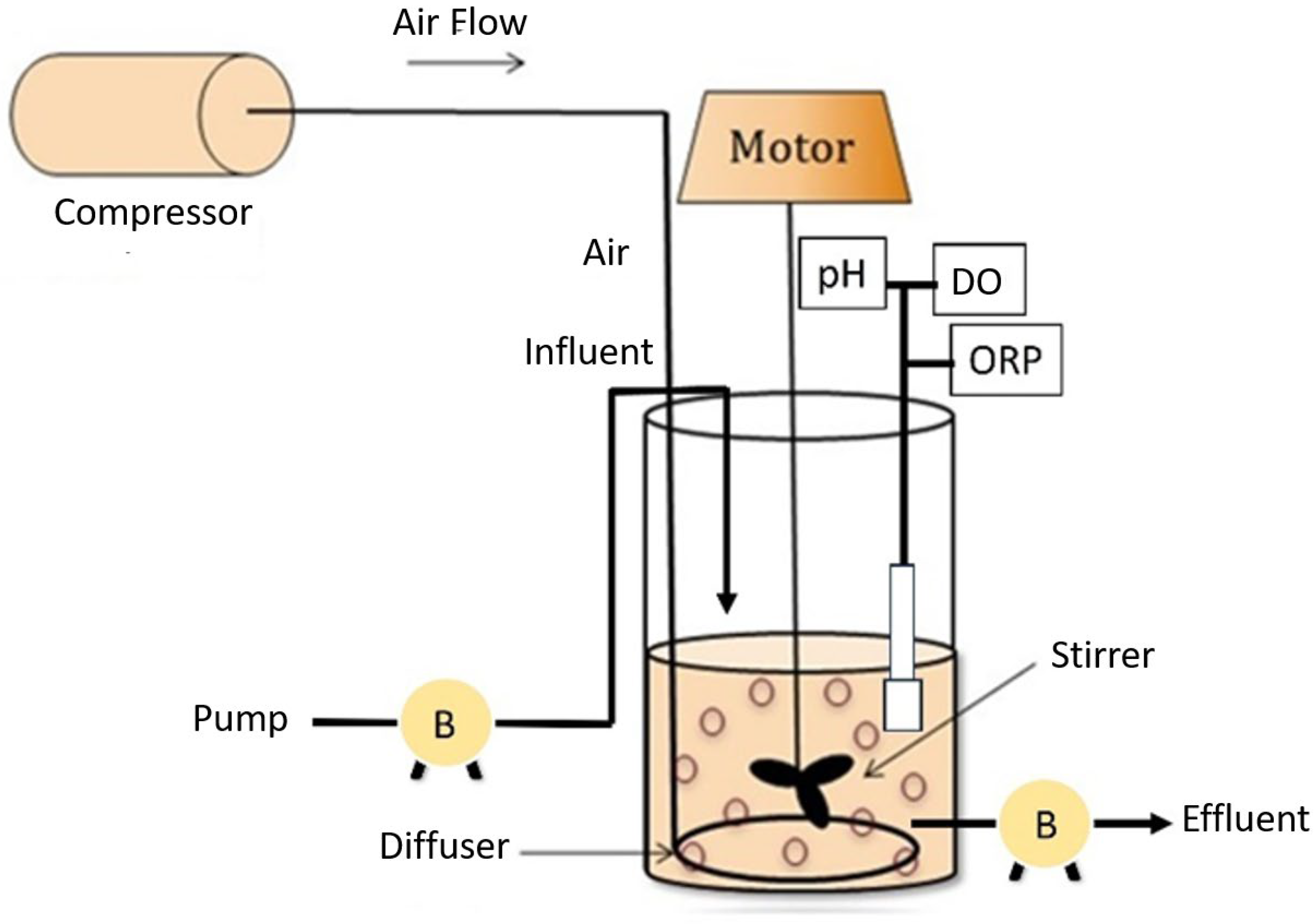
For the treatment application, a laboratory-scale sequential biological reactor (Figure 1) was used. The reactor was made of glass, with a diameter of 14.5 cm and a height of 26.0 cm, and a total volume of 4 L. Filling and discharging of the reactor were performed using peristaltic pumps (Easy Load II, Masterflex L/S, Cole Parmer, Chicago, IL, USA). Aeration was provided through a compressor (Elite 801, Hagen Inc., Beijing, China), which supplied an airflow of 2500 cm3/min via a fine-bubble diffuser located at the bottom of the reactor. The reactor contents were mixed using a stirrer, with a speed maintained between 100 and 150 rpm using a variable transformer (Powerstat 3PN116C, Superior Electric Co., Nueva York, NY, USA). The reactor temperature ranged between 25.1 and 25.6 °C.
The reactor operated under an anaerobic/aerobic/anoxic sequence, with the phases controlled by programmable timers (Table 2). The reactor was inoculated with biomass obtained from an aerobic reactor that treated pig slaughterhouse wastewater. The concentrations of mixed liquor suspended solids (MLSS) and mixed liquor volatile suspended solids (MLVSS) in the seed sludge were 3.55 and 2.70 g/L, respectively [20]. Effluent samples were taken at the beginning, during, and at the end of the treatment process over a sixty-day operational period. Physicochemical analyses were performed in duplicate, following the procedures established in the Standard Methods for the Examination of Water and Wastewater [19].
Profiles were established to correlate the concentrations of COD, TKN, NH4+-N, NO2-N, NO3-N, and PO43−-P with pH (Oakton 510, Chicago, IL, USA), oxidation-reduction potential (ORP, Sper Scientific 850088, Scottsdale, AR, USA), DO (Thermo Orion 862A, Beverly, MA, USA), and total alkalinity. The oxygen, pH, and ORP probes were calibrated according to the procedures described in the Standard Methods for the Examination of Water and Wastewater [19], ensuring measurement reliability before each experimental run.
Continuous monitoring of pH, DO, and ORP was carried out using multi-parameter sensors connected to a data acquisition unit, recording values every 5 min, consistent with previous SBR studies on nutrient removal [13]. Physicochemical samples for COD, TN, and TP were collected hourly at representative points of the reaction cycle (influent, mid-aerobic, and effluent) to correlate nutrient dynamics with redox variations.
The sampling point was located in the central zone of the mixed liquor to ensure homogeneous representation of the reactor contents. All samples were preserved at 4 °C and analyzed within 24 h following APHA guidelines [19]. Each operational condition was replicated three times, and mean values with standard deviations were reported to ensure statistical consistency.
The experimental data were analyzed using descriptive statistics to evaluate central tendency and dispersion in the monitored parameters throughout the operational phases. All measurements were performed in triplicate, and the results are presented as mean ± standard deviation. Data processing and graphical representations were performed using Microsoft Excel 2021 and IBM SPSS Statistics 26.0 software.

3. Results and Discussion

The SBR operated under controlled anaerobic–aerobic–anoxic conditions exhibited a consistent and robust performance throughout the monitoring period. The system effectively reduced the organic and nutrient load of swine slaughterhouse effluents, demonstrating the potential of oxygen-controlled biological treatment for high-strength agro-industrial wastewater. The overall results confirm that the reactor achieved stable removal of organic matter and nutrients, maintaining process resilience despite fluctuations in influent composition.
The operational profiles of dissolved oxygen (DO), oxidation–reduction potential (ORP), and pH showed a direct correlation with the main metabolic pathways associated with carbon oxidation, nitrification, denitrification, and phosphorus transformation. The integration of these online parameters provided valuable insights into the sequence and efficiency of biological reactions occurring during each operational phase, enabling a precise interpretation of redox transitions and their impact on contaminant removal.
Distinct inflection points—such as the ammonium valley and nitrate knee—were clearly identified in the ORP and DO profiles. These served as real-time indicators of nitrification and denitrification endpoints, allowing the optimization of aerobic and anoxic reaction durations without compromising treatment performance. This adaptive control approach enhances the operational efficiency of SBR systems and provides a foundation for intelligent phase management in decentralized treatment configurations.
The microbial community exhibited rapid adaptation to the complex substrate matrix, achieving balanced metabolic activity and high process stability. The dynamic equilibrium observed between heterotrophic and autotrophic populations reflected an efficient alternation between aerobic oxidation and anoxic reduction processes. Such resilience demonstrates the capacity of the system to sustain long-term operation under varying hydraulic and organic loading conditions, while ensuring compliance with biological nutrient removal principles.
Overall, these findings validate the applicability of sequencing batch reactors with oxygen control as a scalable and sustainable solution for treating nutrient-rich agro-industrial effluents. The integration of real-time monitoring parameters with phase optimization strategies represents a significant advancement in the development of intelligent bioreactors for environmental biotechnology and circular wastewater management.

3.1. Sequential Batch Reactor Operation

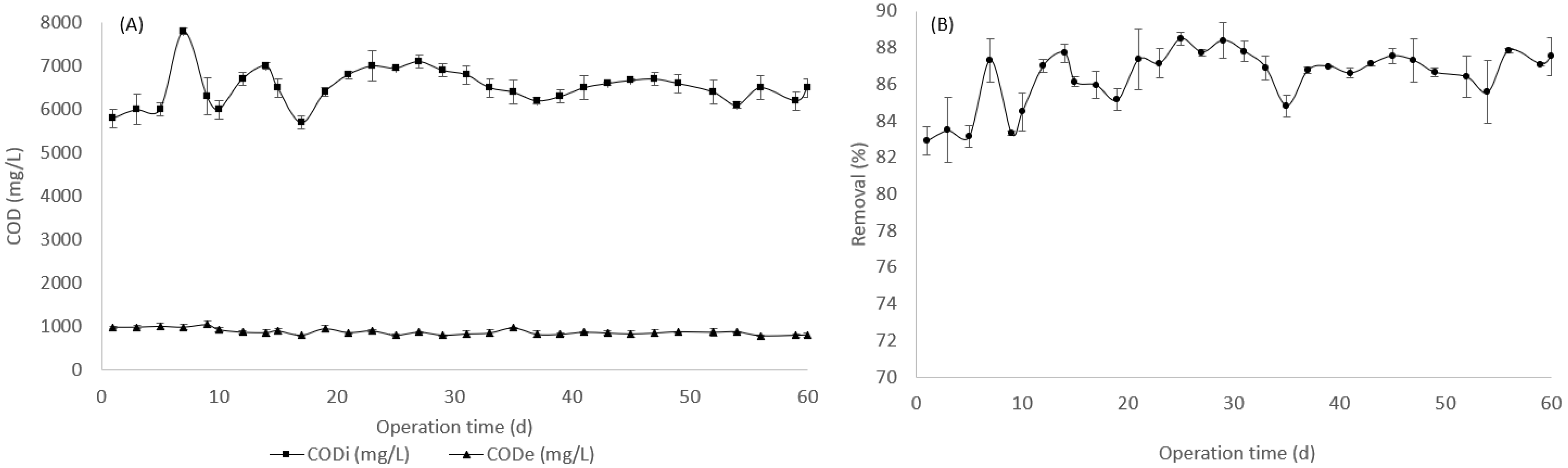
The SBR treating swine slaughterhouse effluents was operated continuously for 60 days. The system was evaluated for its capacity to remove high organic loads characteristic of industrial agro-wastewater. Figure 2 illustrates the temporal evolution of chemical oxygen demand (COD) concentrations at both the influent (CODi) and effluent (CODe), as well as the corresponding removal efficiency.
During the evaluation period, the reactor achieved an average COD removal efficiency of 87.1%, demonstrating robust and stable reactor performance throughout the monitoring phase. The removal efficiencies observed in this study are comparable to those reported by Al-Obaidi and Al-Sulaiman [21], as well as Alattabi et al. [22], who achieved COD removal rates of 86% and 93%, respectively, using sequencing batch reactors (SBRs) for wastewater treatment. Furthermore, the results obtained here exceed those documented by Rifi et al. [23], who evaluated the performance of an aerobic–anoxic SBR treating a mixture of industrial and municipal wastewater, and reported comparatively lower contaminant removal efficiencies.
These results indicate that the microbial consortia adapted rapidly to the wastewater substrate, establishing a resilient metabolic activity that maintained high organic removal rates even under variable influent conditions. The relatively narrow variation in effluent COD concentrations suggests a well-regulated operational regime, characterized by adequate phase sequencing, effective aeration control, and a suitable sludge age.
Despite fluctuations in influent COD concentrations—ranging from 5500 to 8000 mg/L—the effluent COD consistently remained low, averaging between 800 and 1050 mg/L. However, these levels still exceeded the discharge thresholds set for receiving water bodies [24]. The persistent presence of residual COD is likely due to the accumulation of inert or slowly biodegradable organic compounds, including trace antibiotics that are not effectively removed by conventional biological processes. In swine farming, tetracyclines and macrolides, such as tylosin, are commonly administered; yet, less than 50% of these are metabolized by pigs and their microbiota. Consequently, the majority are excreted in an active form or as metabolites, resulting in wastewater rich in organic pollutants and residual antibiotics. These compounds, often detected at concentrations between 250 and 300 mg/kg of live weight, are poorly biodegradable due to their synergistic interactions and structural stability [25,26,27,28].
Moreover, the sustained high removal efficiency during the early operational stages evidences the reactor’s capacity to maintain process stability without extended start-up times, which is critical in full-scale applications. The findings are consistent with prior reports on SBR configurations optimized for nutrient-rich effluents, supporting the applicability of this technology in decentralized treatment schemes for agro-industrial discharges [4,13].
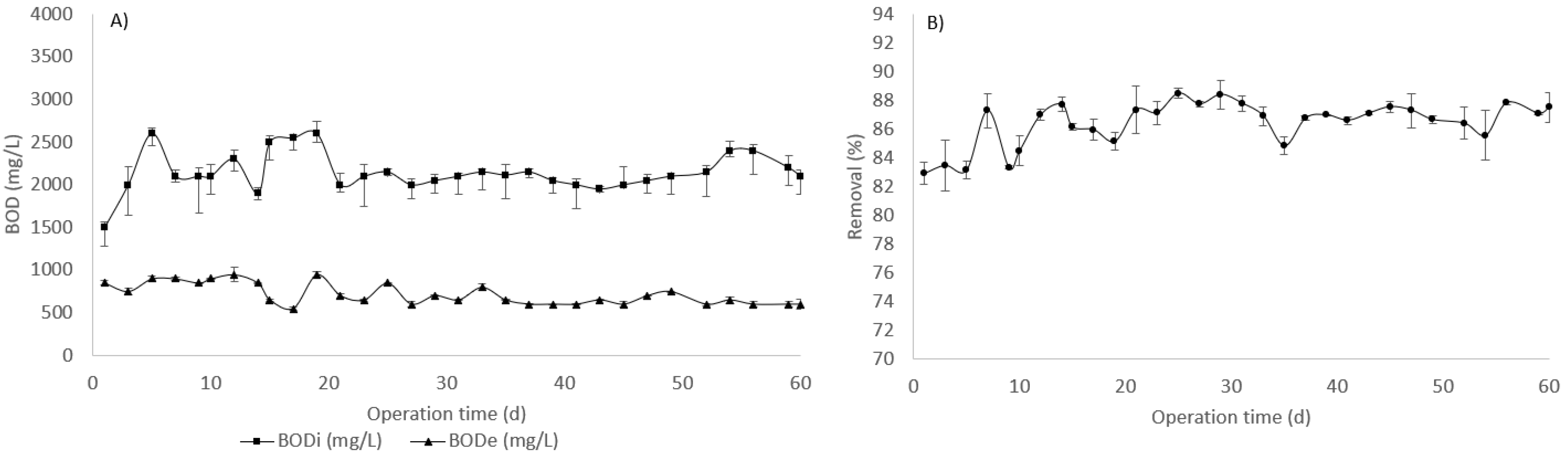
Figure 3 illustrates the temporal profile of biochemical oxygen demand (BOD) in the influent (BODi) and effluent (BODe), along with the corresponding removal efficiency. The influent BOD levels ranged between 1500 and 2800 mg/L, reflecting the high concentration of readily biodegradable organic matter typical of this type of effluent. Despite influent variability, the reactor maintained low BODe values between 700 and 950 mg/L, achieving an average BOD removal efficiency of approximately 95.5%. Wang et al. [29] state that the high BOD removal efficiencies can be attributed to the efficient utilization of carbonaceous substrates by heterotrophic microorganisms, following hydrolysis and fermentation processes under anaerobic conditions, and subsequently through aerobic oxidation and anoxic denitrification.
This high and stable performance suggests optimal microbial activity under the applied anaerobic–aerobic–anoxic sequence, enabling efficient utilization of carbonaceous substrates by heterotrophic bacteria. The biological processes within the reactor likely followed a well-defined sequence: initial hydrolysis and acidogenesis under anaerobic conditions, followed by aerobic oxidation of volatile fatty acids (VFAs) and soluble organics, and final polishing under anoxic conditions where denitrification may have contributed indirectly to organic matter stabilization through electron acceptance mechanisms [13].
Comparatively, as shown in Figure 2, the reactor also exhibited effective chemical oxygen demand (COD) removal, averaging 87.1%, despite the broader variation in influent COD concentrations (5500–8000 mg/L). The discrepancy between BOD and COD values, both in influent and effluent streams, underscores the presence of slowly biodegradable or refractory organics in the wastewater matrix. These compounds contributed to the residual COD observed, which was not fully mineralized under the current operational regime. It highlights the importance of coupling biological oxidation with potential post-treatment strategies (e.g., coagulation or advanced oxidation) to comply with stringent discharge standards.
The consistent BOD removal confirms that the core metabolic pathways of the microbial consortia remained active and balanced throughout the operation. Additionally, the low effluent BOD concentration reflects an adequate sludge retention time (SRT) and aeration control, which prevented biomass washout and ensured oxygen availability during the aerobic phase.
Together, these results validate the reactor’s capability to handle complex agro-industrial wastewaters with high organic load, ensuring both environmental protection and compliance with effluent regulations. The combined analysis of COD and BOD dynamics provides a comprehensive understanding of the chemical and biological mechanisms governing the removal of organic matter in SBR systems.
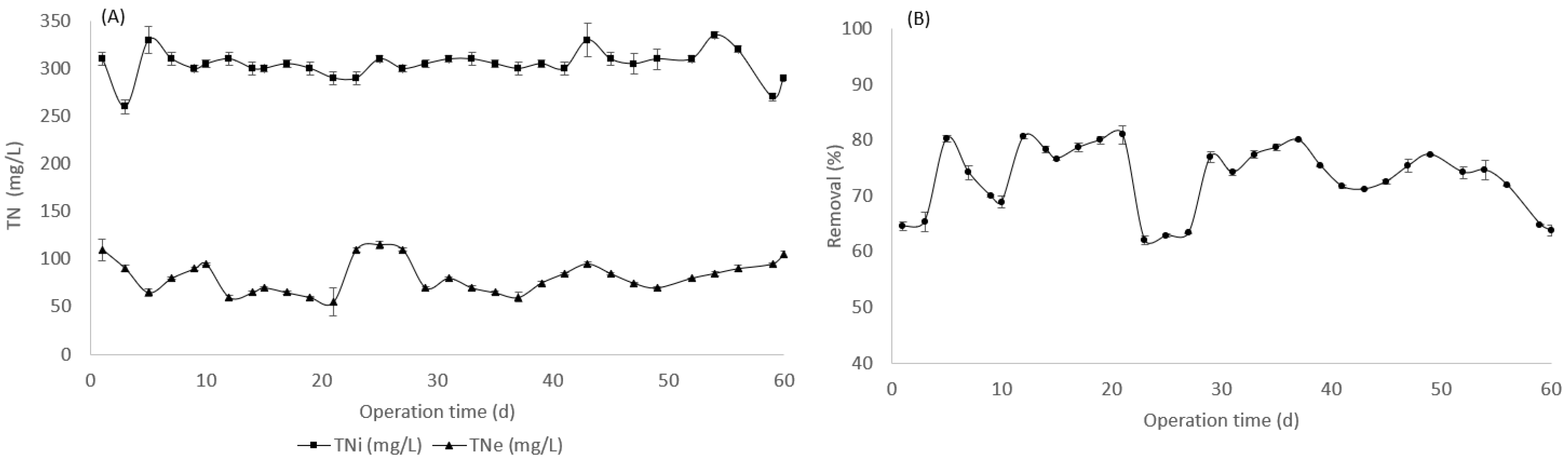
Figure 4 illustrates the temporal profile of total nitrogen (TN) concentrations in the influent (TNi) and effluent (TNe), as well as the corresponding removal efficiency achieved by the sequential batch reactor (SBR) during the 60-day operational period. Influent TN concentrations remained relatively stable, ranging between 290 and 330 mg/L, indicating a consistently high nitrogen load from swine slaughterhouse effluents. In contrast, effluent TN levels ranged from 80 to 130 mg/L, with an average removal efficiency of 69.4%, and peak values nearing 73% during the latter half of the monitoring period.
The nitrogen removal process was attributed to the sequential activity of ammonia-oxidizing bacteria (AOB) and nitrite-oxidizing bacteria (NOB) under aerobic conditions, followed by heterotrophic denitrifiers in the anoxic phase, which utilize residual organic carbon as an electron donor to complete denitrification. This performance demonstrates the effectiveness of the applied operational regime—comprising anaerobic, aerobic, and anoxic phases—in facilitating biological nitrification and denitrification. During the aerobic phase, ammonium is oxidized by nitrifying bacteria (Nitrosomonas, Nitrobacter) to nitrite and then to nitrate. Subsequently, in the anoxic phase, nitrate is biologically reduced to nitrogen gas (N2) by heterotrophic denitrifiers, using the residual organic carbon as an electron donor [30].
When compared to COD and BOD removal efficiencies (Figure 2 and Figure 3), the TN removal rate is slightly lower, which is expected due to the increased biochemical complexity and sensitivity of nitrogen pathways. Efficient nitrogen removal is highly dependent on critical operational parameters, including dissolved oxygen (DO), oxidation-reduction potential (ORP), pH, and the carbon-to-nitrogen (C/N) ratio. In this context, precise control of aeration duration and sludge retention time (SRT) was fundamental to ensure optimal microbial performance.
The slight fluctuations observed in removal efficiency may be attributed to variations in the influent C/N ratio and potential imbalances between the nitrification and denitrification stages. Nevertheless, the system maintained operational stability, confirming its resilience to fluctuating wastewater characteristics and its ability to achieve consistent nitrogen removal without significant accumulation of intermediates such as nitrite [31].
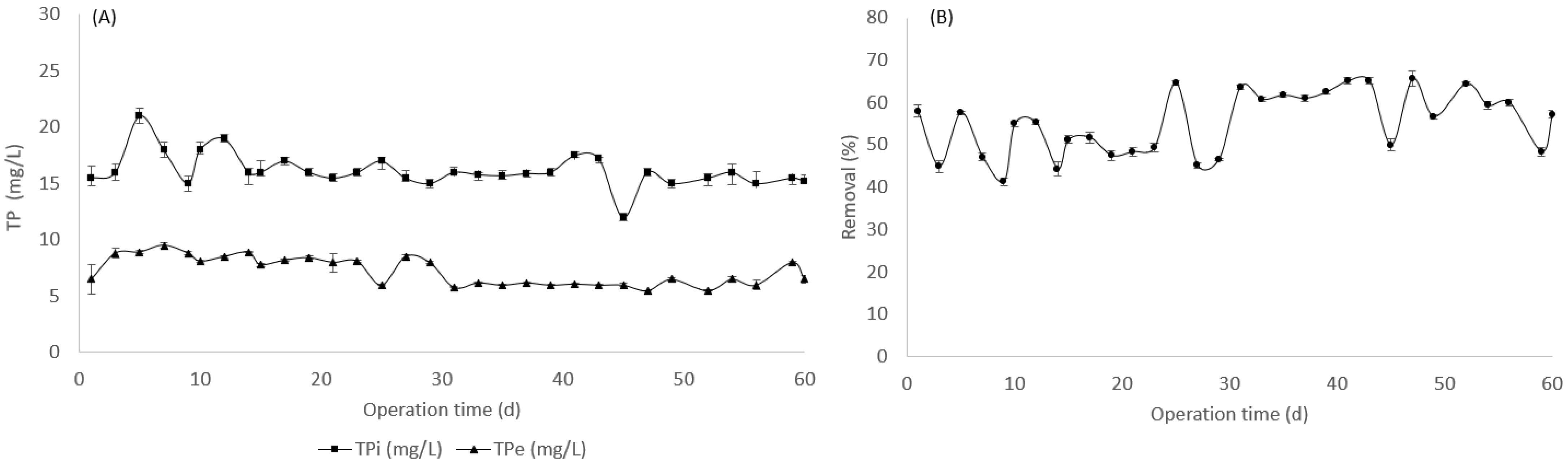
Figure 5 presents the temporal evolution of total phosphorus (TP) concentrations in the influent (TPi) and effluent (TPe), along with the corresponding removal efficiency over a 60-day operational period. Influent TP concentrations ranged between 16 and 22 mg/L, while effluent levels were consistently maintained between 6 and 9 mg/L. The system achieved a mean phosphorus removal efficiency of approximately 53.2%, with minor fluctuations during the second half of the operational period.
The phosphorus removal performance in the SBR system can be attributed to the activity of polyphosphate-accumulating organisms (PAOs), which store phosphorus intracellularly as polyphosphate granules under alternating anaerobic and aerobic conditions. During the anaerobic phase, PAOs release orthophosphate into the liquid medium while taking up volatile fatty acids (VFAs). Subsequently, in the aerobic phase, they assimilate phosphate from the bulk liquid and store it as intracellular polyphosphate. This mechanism underlies enhanced biological phosphorus removal (EBPR), a widely studied and applied strategy in biological nutrient removal systems [32].
The moderate removal efficiency observed in this study may be associated with factors such as the influent carbon-to-phosphorus (C/P) ratio, the availability of VFAs, and the potential competition between PAOs and glycogen-accumulating organisms (GAOs), which can dominate when environmental conditions are not favorable for EBPR [33]. Operational factors such as redox stability, sludge age, and aerobic retention time have been shown to influence the long-term performance of EBPR systems [34].
Moreover, the sustained high removal efficiency during the early operational stages evidences the reactor’s capacity to maintain process stability without extended start-up times, which is critical in full-scale applications. The findings are consistent with prior reports on SBR configurations optimized for nutrient-rich effluents, and support the applicability of this technology in decentralized treatment schemes for agro-industrial discharges.
Moderate phosphorus removal efficiency can be explained by competition between PAOs and glycogen-accumulating organisms (GAOs). This occurs when operational conditions—such as carbon-to-phosphorus (C/P) ratio, VFA availability, pH stability, or redox potential—do not fully favor PAO dominance. High GAO activity results in VFA uptake without corresponding phosphorus removal, thereby reducing both anaerobic phosphate release and aerobic uptake amplitudes.
The behavior of COD, orthophosphates, and different nitrogen species throughout the 16-h operational cycle was analyzed in relation to variables such as pH, ORP, dissolved oxygen (DO), and total alkalinity, which are commonly used as indicators of biological nutrient removal processes.

3.2. pH, Dissolved Oxygen, and ORP Profiles and Their Relationship with Nutrient Removal

The dynamic profiles of dissolved oxygen (DO), oxidation–reduction potential (ORP), and pH reflected the redox transitions characteristic of the sequencing batch reactor operation. During the aerobic stage, the increase in DO and ORP values corresponded to active oxidation of ammoniacal nitrogen and organic matter, whereas the anoxic and anaerobic phases exhibited pronounced decreases in redox potential, indicating the onset of denitrification and phosphate release, respectively. Statistical analyses confirmed these relationships, showing that in the aerobic phase, DO and ORP were significantly and positively correlated with nitrification progress, while intra-phase pH decreased consistently with ammonium depletion (p < 0.05). In the anoxic phase, the denitrification rate exhibited negative correlations with ORP and DO, accompanied by a concurrent increase in pH consistent with alkalinity recovery (p < 0.05).
In the anaerobic phase, phosphate release was inversely related to ORP, where higher negative ORP values were associated with greater phosphorus release (p < 0.01). These interrelationships demonstrate that DO and ORP serve as robust indicators of biological activity and nutrient transformation, while pH variations provide complementary insights into alkalinity balance and buffering capacity during each operational phase. Collectively, these correlations underscore the value of integrating real-time monitoring parameters for optimizing phase duration, enhancing reactor stability, and improving overall treatment performance.

3.2.1. ORP Profile

ORP proved to be the most sensitive indicator of redox transitions, closely mirroring the biochemical shifts between oxidative and reductive environments. Positive ORP values characterized aerobic conditions with active nitrification, while negative readings denoted anoxic stages dominated by denitrifying activity. The identification of inflection points—commonly known as the nitrate knee and ammonium valley—allowed for precise phase control and real-time tracking of nutrient removal endpoints. The decreasing ORP during the denitrification stage coincided with alkalinity release, confirming the stoichiometric linkage between nitrate reduction and proton consumption.
Although pH variations were less pronounced due to the buffering capacity of the wastewater, subtle increases during denitrification and decreases during nitrification aligned with the expected consumption and generation of hydrogen ions. The minimal amplitude of pH oscillations reflected high bicarbonate alkalinity, which stabilized the system against acidification and supported sustained biological performance. Thus, while pH alone was not a reliable standalone control parameter, its combined evaluation with DO and ORP provided a robust framework for interpreting the biochemical status of the reactor.
Overall, the integration of DO, ORP, and pH profiles demonstrated clear interdependencies with nutrient dynamics. DO governed the oxidation potential necessary for nitrification; ORP provided real-time insight into redox regime shifts; and pH stabilized the microenvironment required for balanced microbial metabolism. These findings underscore that oxygen and redox management are critical for achieving complete nitrogen removal in SBR systems treating high-strength agro-industrial effluents, and that ORP and alkalinity can serve as practical on-line control indicators for process optimization
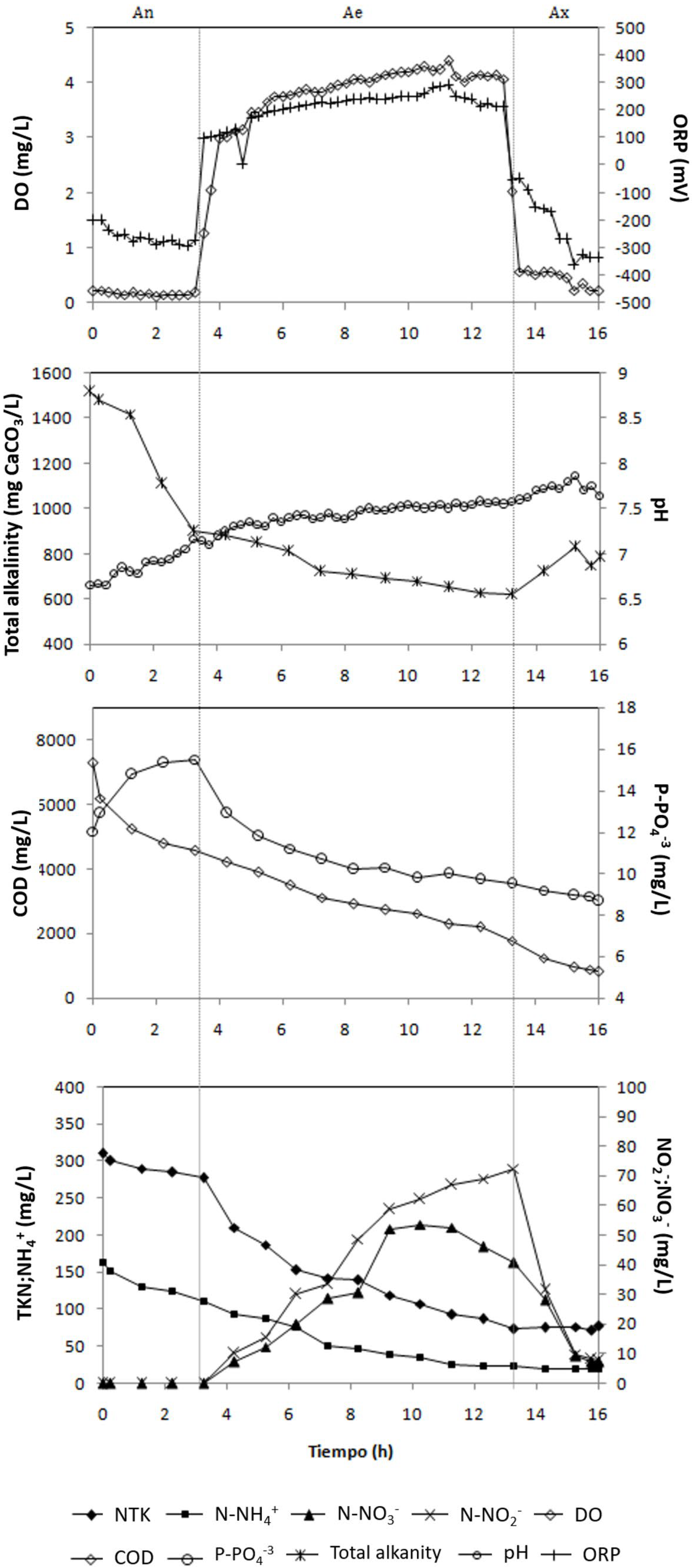
The phases of each operational cycle were clearly identified based on the ORP and DO profiles, as reported by other researchers such as James and Vijayanandan [35]. During aerobic phases, DO levels exceeded 2 mg/L and ORP values remained positive (Figure 6). Under anaerobic conditions, ORP values dropped below –200 mV. Upon aeration, ORP increased sharply to positive values, remaining elevated throughout the aerobic phase and reaching a maximum of +290 mV—within the range of +100 to +300 mV as reported by Marin et al. [36]. This increase in ORP was directly associated with the rise in DO concentration.
In the anaerobic stage, the ORP profile exhibited two distinct phases: a sharp decline during the first hour, followed by a gradual reduction that continued until the end of the anaerobic phase. This pattern coincides with the findings of Youwei et al. [37], who also observed a significant drop in ORP during the first hour of the anaerobic period. This decline coincided with the release of orthophosphate into the bulk liquid, which continued throughout the anaerobic phase. Moreover, the extent of phosphate release increased proportionally with the magnitude of ORP reduction, revealing a linear relationship between these variables. This correlation is expressed in Equation (1):
∆P-PO43− = –0.0226 ∆ORP + 0.3983; R2 = 0.946
Therefore, the ORP profile provides valuable insight into the dynamics of phosphate release during the anaerobic phase. Carrasquero et al. [38] reported that the more negative the ORP values, the higher the phosphate release rates observed in biological systems. Conversely, under aerobic conditions, ORP values became positive, and higher values were associated with increased phosphate uptake rates.
A clear linear relationship was observed between the decrease in oxidation–reduction potential (ORP) during the anaerobic phase and phosphate release, indicating that more negative ORP values correspond to greater phosphate liberation. This trend confirms the predominance of polyphosphate-accumulating organism (PAO) metabolism under reducing conditions and the subsequent enhancement of phosphate uptake during the aerobic phase. The redox shift thus acts as a key driver in the metabolic alternation of PAOs, enabling efficient phosphorus transformation through the coupled anaerobic release–aerobic uptake mechanism characteristic of enhanced biological phosphorus removal (EBPR) systems.
From a microbial and operational standpoint, PAO dominance occurs when adequate volatile fatty acid (VFA) availability, strongly negative anaerobic ORP, and sufficient aerobic duration favor polyphosphate accumulation and high phosphorus uptake. Conversely, competition from glycogen-accumulating organisms (GAOs) under suboptimal C/P ratios, unstable redox conditions, or excessive sludge retention times (SRTs) can reduce both phosphate release and subsequent uptake efficiency. Therefore, maintaining an optimal operational balance—ensuring adequate VFAs, establishing sufficiently negative ORP during the anaerobic phase, positive ORP during the aerobic phase, and controlling SRT—is essential to sustain PAO activity, limit GAO proliferation, and maximize phosphorus removal performance in oxygen-controlled SBR systems.
The evolution of TKN, NH4+-N, NO2-N, and NO3-N concentrations was correlated with the ORP profile to track the progression of nitrification and denitrification processes within the reactor. A decrease in ammonium nitrogen was observed during the aerobic phase, corresponding with the oxidation to nitrites and nitrates and accompanied by an increase in ORP [39]. This increase in ORP was also associated with a decrease in total alkalinity.
Throughout the aerobic phase, the ORP profile showed a progressive increase, reaching a maximum of +290 mV at 11.25 h into the operational cycle. At this point, the highest DO concentration (4.4 mg/L) was recorded, along with a residual ammonium concentration of 25 mg/L, corresponding to a nitrification efficiency of 84.7%. Beyond this point, both ammonium nitrogen and ORP values remained relatively stable for the next two hours, until the end of the aeration phase.
Nitrogen profile data indicated that, after this peak, the electron flow for nitrate production decreased to a near-minimum, resulting in a stable nitrate concentration for the remainder of the aerobic period. The identification of this maximum ORP point provides a reliable indication that further oxidation of NH4+-N was unlikely to occur, suggesting that ORP can serve as a useful online control parameter for monitoring nitrification progress.
During the anoxic phase, ORP decreased progressively to –364 mV. Once nitrate was depleted, a distinct inflection in the ORP profile was observed—commonly referred to as the nitrate knee, which marks the end of denitrification [40,41]. This point was identified in the fifteenth hour of the operational cycle. Additionally, at the nitrate knee, the previously increasing trend in alkalinity was interrupted, indicating the completion of the denitrification process.

3.2.2. pH Profile

The pH values recorded during the operational cycle ranged from 6.65 to 7.64, exhibiting a steady upward trend. These values approach the optimal pH range for heterotrophic bacterial growth, reported to be between 7.2 and 8.2 by Wang et al. [42], thereby supporting favorable conditions for microbial activity and organic matter degradation. During the anaerobic phase, pH rose from 6.65 to 7.16. In this phase, two key processes related to biological phosphorus removal influence the pH: the uptake of volatile fatty acids (VFAs) by polyphosphate-accumulating organisms (PAOs) and glycogen-accumulating organisms (GAOs), which tends to increase pH, and the release of phosphorus by PAOs, which generates protons and causes a pH decrease. The shape of the pH profile depends on which process dominates the balance between VFA uptake and orthophosphate release. When PAOs are predominant, a decrease in pH is typically observed, as these organisms take up VFAs from the wastewater while releasing orthophosphates into the medium.
In contrast, when GAOs dominate, the pH tends to increase, since these organisms also consume VFAs but do not release phosphate [43]. As the pH variation during the anaerobic phase depends on the relative abundance of PAOs and GAOs, the pH profile can be used as an online monitoring tool to infer the dominant microbial population [44]. In this study, it can be inferred that GAOs were the predominant group during the anaerobic phase, which may explain the relatively low phosphorus removal efficiency (54.5%) observed, in comparison to values reported in other studies.
During the aerobic phase, pH values ranged from 7.16 to 7.57. These values fall within the optimal range for nitrifying bacteria growth (7.5–8.6). The pH profile during the nitrification–denitrification process typically presents two characteristic inflection points: the ammonium valley and the nitrate knee.
Under aerobic conditions, the reduction in alkalinity associated with nitrification leads to a drop in pH, reaching a minimum that corresponds to the end of nitrification. After this point—the ammonium valley—the pH partially recovers due to the transfer of dissolved CO2 to the gas phase [45]. Although this specific point was not detected in the pH profile, it was clearly observed in the ORP profile.
Under anoxic conditions and in the presence of biodegradable organic matter, denitrification is associated with an increase in pH until a turning point is reached—known as the nitrate knee [46]. According to Carrasquero et al. [47] one of the reasons effluent alkalinity may rise is due to denitrification, a process that releases alkalinity and compensates for the acidity consumed during nitrification. After 85 min into the anoxic phase, a breakpoint was identified in the alkalinity trend, signaling the completion of denitrification. This inflection corresponded with a decrease in total alkalinity from 820 to 620 mg/L. Similarly, during the settling phase, pH dropped from 7.75 to 7.64, likely due to CO2 accumulation resulting from microbial respiration using the residual dissolved oxygen.

3.2.3. OD Profile

Dissolved oxygen exhibited a direct association with nitrification dynamics, where increased aeration enhanced ammonium oxidation and nitrate accumulation. The ascending DO trend during the aerobic phase paralleled the depletion of organic matter and ammoniacal nitrogen, indicating that oxygen supply was the main driver of chemolithotrophic nitrification processes. Conversely, during anoxic phases, DO values below 0.5 mg/L favored denitrification, reflected by a sharp decline in nitrate concentration and a corresponding increase in total alkalinity.
The OD concentration in the reactor remained below 0.21 mg/L during the anaerobic phases. In the aerobic phase, DO levels ranged between 1.30 and 4.35 mg/L. Dosta et al. [48] reported similarly high DO concentrations (DO ≥ 4 mg/L) in a sequential batch reactor treating swine wastewater.
During the filling phase, DO concentrations remained between 0 and 0.22 mg/L. At the onset of aeration, DO increased from 0.20 to 1.30 mg/L, and progressively rose to approximately 3 mg/L after the first hour of aeration. This progressive increase in DO during the aerobic phase was attributed to the declining bacterial respiratory activity as substrate availability decreased, as also evidenced by the COD profile.
It can be inferred that during the filling and anaerobic phases, readily biodegradable organic matter was adsorbed onto the active surfaces of the biomass, initiating anaerobic decomposition processes characterized by complex microbial metabolic interactions. In the subsequent aerobic phase, the total COD was gradually reduced, likely due to the consumption of slowly biodegradable organic matter. This fraction is composed of high molecular weight compounds that must first be hydrolyzed by extracellular enzymes secreted by microorganisms and transformed into low molecular weight soluble compounds, which are more easily assimilated by microbial cells.
The average DO concentration during the aerobic phase (3.8 mg/L) was high enough to limit the occurrence of simultaneous nitrification-denitrification (SND), a process that is inhibited at DO levels exceeding 2.5 mg/L [49]. This stage involves processes such as assimilation, oxidation, and endogenous respiration, all of which require a slower and more progressive utilization of the residual organic matter originating from the earlier anaerobic phase. These elevated oxygen concentrations favored the activity of autotrophic nitrifying bacteria, which thrive at high DO levels, over heterotrophic nitrifiers, which tend to dominate at low DO concentrations below 0.5 mg/L and can grow faster under oxygen-limited conditions.
The maximum DO concentration recorded coincided with the highest nitrite concentration and the lowest NH4+-N value in the aerobic phase profile. This DO breakpoint (also known as the ammonium valley) marks the completion of the nitrification process [50]. It was observed at 11.25 h and matched the inflection point identified in the ORP profile.
During the aerobic phase, the gradual increase in DO was inversely related to the TKN and NH4+-N curves, suggesting that chemolithotrophic bacteria efficiently carried out the oxidative assimilation mechanisms, converting organic nitrogen to free ammonium and subsequently oxidizing it to nitrite and nitrate.
In the anoxic phase, DO concentration dropped from 2.0 to 0.6 mg/L within the first 15 min, due to the cessation of air supply. It continued decreasing to 0.35 mg/L as the phase progressed. During the settling phase, DO levels declined further, from 0.35 to 0.21 mg/L.
The results demonstrated a strong correlation between phosphorus and nitrogen removal processes and the online measurements of pH, ORP, and DO. Real-time monitoring of these parameters enables immediate corrective actions in response to deviations in biological nutrient removal behavior [51].
The profiles of contaminants and control variables clearly indicated the breakpoints corresponding to the ammonium valley and nitrate knee. One of the main applications of detecting these points lies in the implementation of real-time control strategies, allowing for adaptive phase duration optimization in SBR systems based on the contaminant concentrations of each operational cycle.

3.3. Optimization of the Reaction Phase Duration

Based on the identification of key inflection points—namely the nitrate knee and the ammonium valley—in the DO, ORP, and pH profiles, a theoretical approximation was conducted to estimate the minimum required duration of the reaction phases for treating swine slaughterhouse effluents. According to the theoretical mass balance, the total reaction phase was optimized to 13 h (780 min), representing a 13.3% reduction in comparison to the initial cycle duration (Table 3).
The aerobic and anoxic phases were successfully optimized, as the critical breakpoints reported in the literature were clearly detected. However, the anaerobic phase could not be optimized due to the absence of a detectable breakpoint in the ORP profile associated with the end of orthophosphate release.
It is important to emphasize that the optimized times represent the minimum duration each phase must be maintained in the SBR to ensure maximum nitrogen and phosphorus removal under the observed operational conditions.

4. Conclusions

The results demonstrate that the sequencing batch reactor (SBR) operated effectively under controlled anaerobic–aerobic–anoxic conditions, achieving high contaminant removal rates. The system recorded an average reduction of 87.1% in chemical oxygen demand (COD) and 95.5% in biochemical oxygen demand (BOD), along with reductions of 69.4% in total nitrogen (TN) and 53.2% in total phosphorus (TP). These findings confirm the reactor’s capability to efficiently remove organic matter and nutrients from high-strength swine slaughterhouse effluents while maintaining process stability throughout the 60-day operational period.
The study also established clear relationships between pH, oxidation–reduction potential (ORP), and dissolved oxygen (DO) profiles and nutrient removal dynamics, enabling the optimization of reactor phases to enhance treatment efficiency. Key inflection points identified in the ORP and DO profiles—such as the ammonium valley and nitrate knee—marked the onset and completion of nitrification and denitrification processes, allowing operational adjustments that improved performance and reduced total cycle time. These results highlight the potential of integrating real-time monitoring and oxygen-based control as an intelligent strategy for optimizing biological nutrient removal processes.
From a broader perspective, this study contributes to the advancement of modern wastewater treatment strategies that combine biological process automation, redox-based monitoring, and sustainable operation. The integration of DO and ORP as control parameters not only improves treatment performance but also supports energy-efficient aeration management and adaptive phase regulation, which are critical elements for the sustainable operation of agro-industrial wastewater systems.
Despite its success at the laboratory scale, the study presents certain limitations associated with controlled influent conditions and reduced hydraulic variability compared to full-scale applications. Future research should focus on scaling up the system, validating long-term stability under variable organic and hydraulic loads, and exploring the integration of hybrid or advanced oxidation processes to address refractory organic compounds and residual antibiotics typical of swine effluents. The incorporation of machine learning–based predictive control systems is also recommended to further enhance automation, energy optimization, and operational resilience.
In conclusion, this research confirms the feasibility and robustness of oxygen-controlled SBRs for nutrient-rich wastewater treatment and establishes a foundation for the development of intelligent, data-driven, and sustainable reactor control frameworks. The approach represents a significant contribution to environmental biotechnology and supports the transition toward circular and resource-efficient wastewater management in the agro-industrial sector.

Author Contributions

S.C.-F.: conceptualization, data curation, formal analysis, funding acquisition, writing—review and editing; G.V.-S.: statistical analysis; G.C.-A.: methodology; G.V.-G.: project administration. All authors have read and agreed to the published version of the manuscript.

Funding

This study was supported by the Universidad Tecnológica Empresarial de Guayaquil (UTEG) in the project PROY-2025-01—Biotechnological synergy in industrial wastewater treatment through hybrid models for contaminant removal.

Institutional Review Board Statement

Not applicable.

Informed Consent Statement

Not applicable.

Data Availability Statement

The original contributions presented in this study are included in the article.

Conflicts of Interest

The authors declare no conflicts of interest.

Abbreviations

The following abbreviations are used in this manuscript:
AOBAmmonia-oxidizing bacteria
BODBiochemical oxygen demand
CNDConventional nitrification-denitrification
CODChemical oxygen demand
DODissolved oxygen
EBPREnhanced biological phosphorus removal
GAOsGlycogen-accumulating organisms
MLSSMixed liquor suspended solids
MLVSSMixed liquor volatile suspended solids
NOBNitrite-oxidizing bacteria
ORPOxidation-Reduction Potential
PAOsPolyphosphate-accumulating organisms
pHHydrogen potential
SBRSequential batch reactor
SRTSludge retention time
TKNTotal Kjeldahl nitrogen
TNTotal nitrogen
TPTotal phosphorous
VFAVolatile fatty acids

References

  1. Chen, X.; Zhang, Q.; Zhu, Y.; Zhao, T. Response of wastewater treatment performance, microbial composition and functional genes to different C/N ratios and carrier types in MBBR inoculated with heterotrophic nitrification-aerobic denitrification bacteria. Bioresour. Technol. 2021, 336, 125339. [Google Scholar] [CrossRef]
  2. López-Serna, R.; García, D.; Bolado, S.; Jiménez, J.J.; Lai, F.Y.; Golovko, O.; Muñoz, R. Photobioreactors based on microalgae-bacteria and purple phototrophic bacteria consortia: A promising technology to reduce the load of veterinary drugs from piggery wastewater. Sci. Total Environ. 2019, 692, 259–266. [Google Scholar] [CrossRef] [PubMed]
  3. Zhang, D.; Teng, Q.; Zhang, D.; Jilani, G.; Ken, W.; Yang, Z.; Alam, T.; Ikram, M.; Iqbal, Z. Performance and microbial community dynamics in anaerobic continuously stirred tank reactor and sequencing batch reactor (CSTR-SBR) coupled with magnesium-ammonium-phosphate (MAP)-precipitation for treating swine wastewater. Bioresour. Technol. 2021, 320, 124336. [Google Scholar] [CrossRef] [PubMed]
  4. Cheng, D.L.; Ngo, H.H.; Guo, W.S.; Chang, S.W.; Nguyen, D.D.; Kumar, S.M. Microalgae biomass from swine wastewater and its conversion to bioenergy. Bioresour. Technol. 2019, 275, 109–122. [Google Scholar] [CrossRef]
  5. Ben, W.; Qiang, Z.; Pan, X.; Chen, M. Removal of veterinary antibiotics from sequencing batch reactor (SBR) pretreated swine wastewater by Fenton’s reagent. Water Res. 2009, 43, 4392–4402. [Google Scholar] [CrossRef] [PubMed]
  6. Cheng, H.; Narindri, B.; Chu, H.; Whang, L.M. Recent advancement on biological technologies and strategies for resource recovery from swine wastewater. Bioresour. Technol. 2020, 303, 122861. [Google Scholar] [CrossRef]
  7. Byung-Gon, J. Performance of Upflow Anaerobic Sludge Blanket (UASB) Reactor Depending on Reactor Configuration and Sludge Bed Fluidization. J. Environ. Health Sci. 2006, 32, 179–185. [Google Scholar] [CrossRef]
  8. Aziz, A.; Basheer, F.; Sengar, A.; Ullah, I.; Khan, S.; Farooqi, I. Biological wastewater treatment (anaerobic-aerobic) technologies for safe discharge of treated slaughterhouse and meat processing wastewater. Sci. Total Environ. 2019, 686, 681–708. [Google Scholar] [CrossRef]
  9. Vázquez, C.M.L.; Méndez, G.B.; García, H.A.; Carrillo, F.J. Tratamiento biológico de aguas residuales: Principios, modelación y diseño. Water Intell. Online 2017, 16. ISBN electronic 978-1-78040-914-6. [Google Scholar] [CrossRef]
  10. Vanotti, M.B.; Szogi, A.A.; Millner, P.D.; Loughrin, J.H. Development of a second-generation environmentally superior technology for treatment of swine manure in the USA. Bioresour. Technol. 2009, 100, 5406–5416. [Google Scholar] [CrossRef]
  11. Chen, M.; Kim, J.; Yang, M.; Wang, Y.; Kishida, N.; Kawamura, K.; Sudo, R. Foaming control by automatic carbon source adjustment using an ORP profile in sequencing batch reactors for enhanced nitrogen removal in swine wastewater treatment. Bioprocess Biosyst. Eng. 2009, 33, 355–362. [Google Scholar] [CrossRef]
  12. Carrasquero, S.; Núñez, D.; Piñango, L.; González, G. Eficiencia de un tratamiento aeróbico para la remoción de origen textil usando reactores biológicos. Rev. Gest. Socioambiental 2024, 18, e05506. [Google Scholar] [CrossRef]
  13. Carrasquero, S.; Díaz, A. Tratamiento de efluentes de la matanza de cerdos por remoción de nitrógeno y fósforo usando reactores biológicos secuenciales. Tecnol. Cienc. Agua 2025, 16, 37–87. [Google Scholar] [CrossRef]
  14. Carrasquero-Ferrer, S.; Pino-Rodríguez, J.; Díaz-Montiel, A. Sequencing Batch Reactor: A Sustainable Wastewater Treatment Option for the Canned Vegetable Industry. Sustainability 2025, 17, 818. [Google Scholar] [CrossRef]
  15. Zhao, X.; Jin, X.K.; Guo, W.; Zhang, C.; Shan, Y.L.; Du, M.X.; Tillotson, M.R.; Yang, H.; Liao, X.W.; Li, Y.P. China’s urban methane emissions from municipal wastewater treatment plant. Earth’s Future 2019, 7, 480–490. [Google Scholar] [CrossRef]
  16. Rasheed, A.; Dionisi, D. Experimental Study on the Biotreatability of Wastewaters from Food Processing Industries in Aerobic Sequencing Batch Reactors. Niger. Res. J. Eng. Environ. Sci. 2020, 5, 15–28. Available online: http://rjees.com/abstract/experimental-study-on-the-biotreatability-of-wastewaters-from-food-processing-industries-in-aerobic-sequencing-batch-reactors (accessed on 3 July 2025).
  17. Sui, Q.; Liu, C.; Zhang, J.; Dong, H.; Zhu, Z.; Wang, Y. Response of nitrite accumulation and microbial community to free ammonia and dissolved oxygen treatment of high ammonium wastewater. Appl. Microbiol. Biotechnol. 2016, 100, 4177–4187. [Google Scholar] [CrossRef] [PubMed]
  18. Sui, Q.; Jiang, C.; Yu, D.; Chen, M.; Zhang, J.; Wang, Y.; Wei, Y. Performance of a sequencing-batch membrane bioreactor (SMBR) with an automatic control strategy treating high-strength swine wastewater. J. Hazard. Mater. 2018, 342, 210–219. [Google Scholar] [CrossRef] [PubMed]
  19. American Public Health Association (APHA); American Water Works Association (AWWA); Water Environment Federation (WEF). Standard Methods for the Examination of Water and Wastewater, 24th ed.; American Public Health Association Press: Washington, DC, USA, 2022; pp. 1–1516. [Google Scholar]
  20. Cai, Y.; Yang, H.; Liu, J.; Zuo, D.; Deng, L. Sequencing batch reactor (SBR) and anoxic and oxic process (A/O) display opposite performance for pollutant removal in treating digested effluent of swine wastewater with low and high COD/N ratios. J. Clean. Prod. 2022, 372, 133643. [Google Scholar] [CrossRef]
  21. Al-Obaidi, B.H.K.; Al-Sulaiman, A.M. Assessment of municipal wastewater treatment using sequencing batch reactor under real operation conditions. J. Eng. Sci. Technol. 2021, 16, 1019–1029. [Google Scholar]
  22. Alattabi, A.W.; Harris, C.B.; Alkhaddar, R.M.; Ortoneda-Pedrola, M.; Alzeyadi, A.T. An investigation into the effect of MLSS on the effluent quality and sludge settleability in an aerobic-anoxic sequencing batch reactor (AASBR). J. Water Process Eng. 2017, 30, 100479. [Google Scholar] [CrossRef]
  23. Rifi, S.K.; Aguelmous, A.; Fels, L.E.; Hafidi, M.; Souabi, S. Effectiveness assessment of olive mill wastewater treatment by combined process: Natural flotation and anaerobic-aerobic biodegradation. Water Environ. J. 2021, 35, 986–997. [Google Scholar] [CrossRef]
  24. Decree 883. Normas Para la Clasificación y el Control de la Calidad de los Cuerpos de Agua y Vertidos o Efluentes Líquidos. 1995. Available online: https://www.fao.org/faolex/results/details/es/c/LEX-FAOC174040/ (accessed on 12 April 2024).
  25. Reynoso-Varela, A.; Alcántara-Hernández, R.J.; Calderón, K.; Durán, U.; Serrano-Palacios, D. Microbial community shifts and metabolic potential of biomass from hybrid reactor by acute exposure to antibiotics present in swine wastewater. J. Water Process Eng. 2025, 73, 107667. [Google Scholar] [CrossRef]
  26. Kümmerer, K. The presence of pharmaceuticals in the environment due to human use—present knowledge and future challenges. J. Environ. Manag. 2009, 90, 2354–2366. [Google Scholar] [CrossRef]
  27. Van Cuong, N.; Nhung, N.T.; Nghia, N.H.; Hoa, N.T.M.; Trung, N.V.; Thwaites, G.; Carrique-Mas, J. Antimicrobial Consumption in Medicated Feeds in Vietnamese Pig and Poultry Production. EcoHealth 2016, 13, 490–498. [Google Scholar] [CrossRef]
  28. Cheng, D.; Ngo, H.; Guo, W.; Chang, S.; Nguyen, D.; Kumar, S.M.; Du, B.; Wei, Q.; Wei, D. Problematic effects of antibiotics on anaerobic treatment of swine wastewater. Bioresour. Technol. 2018, 263, 642–653. [Google Scholar] [CrossRef]
  29. Wang, C.; Chu, Z.; Gu, W. Assessing the role of public attention in China’s wastewater treatment: A spatial perspective. Technol. Forecast. Soc. Change 2021, 171, 120984. [Google Scholar] [CrossRef]
  30. Song, J.; Dong, X.; Yang, W.; Xing, J.; Wang, X. Environmental co-benefits of energy recovery from wastewater of typical industrial sectors from life cycle perspective: Regional potentials in China. Energy Convers. Manag. 2023, 293, 117450. [Google Scholar] [CrossRef]
  31. Zhao, Y.; Huang, J.; Zhao, H.; Yang, H. Microbial community and N removal of aerobic granular sludge at high COD and N loading rates. Bioresour. Technol. 2013, 143, 439–446. [Google Scholar] [CrossRef]
  32. Zhang, J.; Xu, Z.; Chu, W.; Ma, L.; He, H.; Jin, W.; Fang, C. Optimizing the placement of medical wastewater outlets in sewer systems to reduce chemical consumption at wastewater treatment plants. Water Res. 2024, 264, 122205. [Google Scholar] [CrossRef]
  33. Zhao, P.; Li, L.; Song, X.; Wang, M.; Zhang, Z.; Li, Y.; Zhao, Y.; Li, B.L. Enhancing the efficiency of coagulation method for sewage treatment by adding sludge. PLoS ONE 2025, 20, e0321286. [Google Scholar] [CrossRef] [PubMed]
  34. Metcalf, E.; Tchobanoglous, G.; Stensel, H.D.; Tsuchihashi, R.; Burton, F.L.; Abu-Orf, M.; Bowden, G.; Pfrang, W. Wastewater Engineering: Treatment and Resource Recovery, 5th ed.; McGraw-Hill: New York, NY, USA, 2014. [Google Scholar]
  35. James, S.; Vijayanandan, A. Anoxic-Aerobic-Anoxic sequencing batch reactor for enhanced nitrogen removal. Bioresour. Technol. 2022, 363, 127892. [Google Scholar] [CrossRef] [PubMed]
  36. Marín, I.; Goñi, P.; Lasheras, A.; Ormad, M. Efficiency of a Spanish wastewater treatment plant for removal potentially pathogens: Characterization of bacteria and protozoa along water and sludge treatment lines. Ecol. Eng. 2014, 74, 28–32. [Google Scholar] [CrossRef]
  37. Youwei, C.; Shuying, W.; Jing, L. On-line monitoring for phosphorus removal process and bacterial community in sequencing batch reactor. Chin. J. Chem. Eng. 2009, 17, 484–492. [Google Scholar] [CrossRef]
  38. Carrasquero, S.; Rincón, N.; Díaz, A.; Pire, M. Monitoreo de la remoción biológica de nitrógeno en efluentes de tenerías usando un reactor por carga secuencial. Ing. Investig. Tecnol. 2014, 15, 287–298. [Google Scholar] [CrossRef]
  39. Xi, H.; Zhou, X.; Arslan, M.; Luo, Z.; Wei, J.; Wu, Z.; El-Din, M.G. Heterotrophic nitrification and aerobic denitrification process: Promising but a long way to go in the wastewater treatment. Sci. Total Environ. 2021, 805, 150212. [Google Scholar] [CrossRef]
  40. Qureshi, A.; Lo, V.; Ping, L.; Mavinic, D. Real-time treatment of dairy manure: Implications of oxidation reduction potential regimes to nutrient management strategies. Bioresour. Technol. 2009, 99, 1169–1176. [Google Scholar] [CrossRef]
  41. Yan, J.; Hu, Y. Comparison of partial nitrification to nitrite for ammonium-rich organic wastewater in sequencing batch reactors and continuous stirred-tank reactor at laboratory-scale. Water Sci. Technol. 2009, 60, 2861–2868. [Google Scholar] [CrossRef]
  42. Wang, M.; Chen, Y. Generation and characterization of DOM in wastewater treatment processes. Chemosphere 2018, 201, 96–109. [Google Scholar] [CrossRef]
  43. Spagni, A.; Lavagnolo, C.; Scarpa, C.; Vendrame, P.; Rizzo, A.; Lucarrini, L. Nitrogen Removal Optimization in a Sequencing Batch Reactor Treating Sanitary Landfill Leachate. J. Environ. Sci. Health 2007, 42, 757–765. [Google Scholar] [CrossRef]
  44. Luccarini, L.; Porra, E.; Spagni, A.; Ratini, P.; Grilli, S.; Longhi, S.; Bortone, G. Soft sensors for control of nitrogen and phosphorus removal from wastewaters by neural networks. Water Sci. Technol. 2002, 45, 101–107. [Google Scholar] [CrossRef]
  45. Tsang, Y.; Hua, F.; Chua, H.; Sin, S.; Wang, Y. Optimization of biological treatment of paper mill effluent in a sequencing batch reactor. Biochem. Eng. J. 2007, 34, 193–199. [Google Scholar] [CrossRef]
  46. Casellas, M.; Dagot, C.; Baudu, M. Set up and assessment of a control strategy in a SBR in order to enhance nitrogen and phosphorus removal. Process Biochem. 2006, 41, 1994–2001. [Google Scholar] [CrossRef]
  47. Carrasquero Ferrer, S.J.; Marquina Gelvez, D.C.; Soto López, J.G.; Viloria Rincón, S.; Pire Sierra, M.C.; Díaz Montiel, A.R. Remoción de nutrientes en aguas residuales de un matadero de reses usando un reactor biológico secuencial. Cienc. Ing. Neogranadina 2015, 25, 43–60. [Google Scholar] [CrossRef]
  48. Dosta, J.; Rovira, J.; Galí, A.; Macé, S.; Mata-Álvarez, J. Integration of a coagulation/flocculation step in a biological sequencing batch reactor for COD and nitrogen removal of supernatant of anaerobically digested piggery wastewater. Bioresour. Technol. 2008, 99, 5722–5730. [Google Scholar] [CrossRef]
  49. Luo, J.; Zhang, Q.; Wu, L.; Feng, Q.; Fang, F.; Xue, Z.; Li, C.; Cao, J. Improving anaerobic fermentation of waste activated sludge using iron activated persulfate treatment. Bioresour. Technol. 2018, 268, 68–76. [Google Scholar] [CrossRef] [PubMed]
  50. Li, J.; Healy, M.; Zhan, X.; Rodgers, M. Nutrient Removal from slaughterhouse wastewater in an intermittently aerated sequencing batch reactor. Bioresour. Technol. 2008, 99, 7644–7650. [Google Scholar] [CrossRef] [PubMed]
  51. Pire, M.; Cegarra, D.; Carrasquero, S.; Angulo, N.; Díaz, A. Nitrogen and COD removal from tannery wastewater using biological and physicochemical treatments. Rev. Fac. Ing. Univ. Antioq. 2015, 80, 63–73. [Google Scholar]
Figure 1. Schematic Diagram of the Sequential Biological Reactor Used.
Oxygen 05 00021 g001
Figure 2. Temporal variation of influent COD (CODi), effluent COD (CODe) (A), and COD removal efficiency (B) during 60 days of reactor operation.
Oxygen 05 00021 g002
Figure 3. Temporal variation of influent BOD (BODi), effluent BOD (BODe) (A), and BOD removal (B) efficiency during 60 days of reactor operation.
Oxygen 05 00021 g003
Figure 4. Temporal variation of influent TN (TNi), effluent TN (TNe) (A), and TN removal efficiency (B) during 60 days of reactor operation.
Oxygen 05 00021 g004
Figure 5. Temporal variation of influent TP (TPi), effluent TP (TPe) (A), and TP removal efficiency (B) during 60 days of reactor operation.
Oxygen 05 00021 g005
Figure 6. Profile of COD, P-PO43−, TKN, NH4+-N, NO3-N, NO2-N Concentrations and Online Measurements of pH, DO, and ORP During a 16-Hour Cycle in the Treatment of Swine Effluents Using an SBR.
Oxygen 05 00021 g006
Table 1. Characteristics of influent wastewater.
ParameterValue ± SD
Chemical Oxygen Demand (COD)6275 ± 1989 mg/L
Biochemical Oxygen Demand (BOD)2320 ± 950 mg/L
Total Nitrogen (TN)360 ± 60 mg/L
Ammoniacal Nitrogen (NH4+–N)148 ± 39 mg/L
Total Phosphorous (TP)17 ± 8 mg/L
SD: Standard Deviation.
Table 2. Operational Conditions of the Sequential Biological Reactor.
ParameterCondition
Hydraulic Retention Time (HRT)22.9 h
Operational Cycle Time (OCT)16 h
Sludge Retention Time (SRT)25 days
Total Volume (Vt)4 L
Working Volume (Vw)2 L
Volume of Industrial Effluent in Reactor1.4 L
Volume of Adapted Biomass in Reactor0.6 L
Aeration StrategyConventional Nitrification–Denitrification
Filling TypeStatic
Filling Time0.25 h
Settling Time0.50 h
Discharge Time0.25 h
Reaction Time15 h
Reaction PhasesAnaerobic (3 h) + Aerobic (10 h) + Anoxic (2 h)
Table 3. Optimized duration of aerobic and anoxic phases during the SBR reaction stage.
PhaseAerobicAnoxicOptimized Reaction Time% Optimized Time
CurrentOptimized 1CurrentOptimized 1
Duration (min)60049512010512013.3
Note: The indicated ranges for the optimized times are due to variations among the inflection points of pH, ORP, and DO. 1 Minimum phase duration.
Disclaimer/Publisher’s Note: The statements, opinions and data contained in all publications are solely those of the individual author(s) and contributor(s) and not of MDPI and/or the editor(s). MDPI and/or the editor(s) disclaim responsibility for any injury to people or property resulting from any ideas, methods, instructions or products referred to in the content.