Article

Tourist Environmental Awareness and Conservation Engagement in a Caribbean Marine Protected Island System: Evidence from Cozumel, Mexico


by
Nadia T. Rubio-Cisneros
1,2,*,
Alejandro Escalera-Briceño
3,
Igor I. Rubio-Cisneros
2,4,5,
Leslie S. González-Rodríguez
1,
José Ignacio González-Rojas
1,*,
Gabriel Ruiz-Ayma
1,2 and
Antonio Guzmán-Velasco
1
1
Universidad Autónoma de Nuevo León, Facultad de Ciencias Biológicas, Laboratorio de Biología de la Conservación y Desarrollo Sostenible, San Nicolás de los Garza 66455, Nuevo León, Mexico
2
Mar Sustentable, Ciencia y Conservación, Monterrey 64170, Nuevo León, Mexico
3
División de Ciencias Multidisciplinarias Cozumel, Universidad Autónoma del Estado de Quintana Roo, San Miguel de Cozumel 77600, Quintana Roo, Mexico
4
Tecnológico de Monterrey, Escuela de Ingeniería y Ciencias, Monterrey 64700, Nuevo León, Mexico
5
Biblioteca Universitaria Raúl Rangel Frías, Centro de Estudios Parlamentarios, Universidad Autónoma de Nuevo León, Monterrey 64290, Nuevo León, Mexico
*
Authors to whom correspondence should be addressed.
Coasts 2026, 6(3), 36; https://doi.org/10.3390/coasts6030036
Submission received: 8 June 2026 / Revised: 23 July 2026 / Accepted: 2 August 2026 / Published: 17 August 2026

Abstract

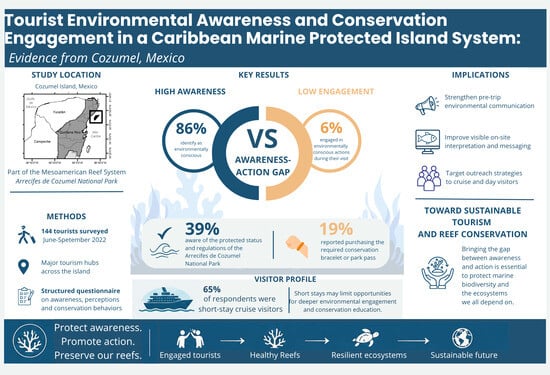
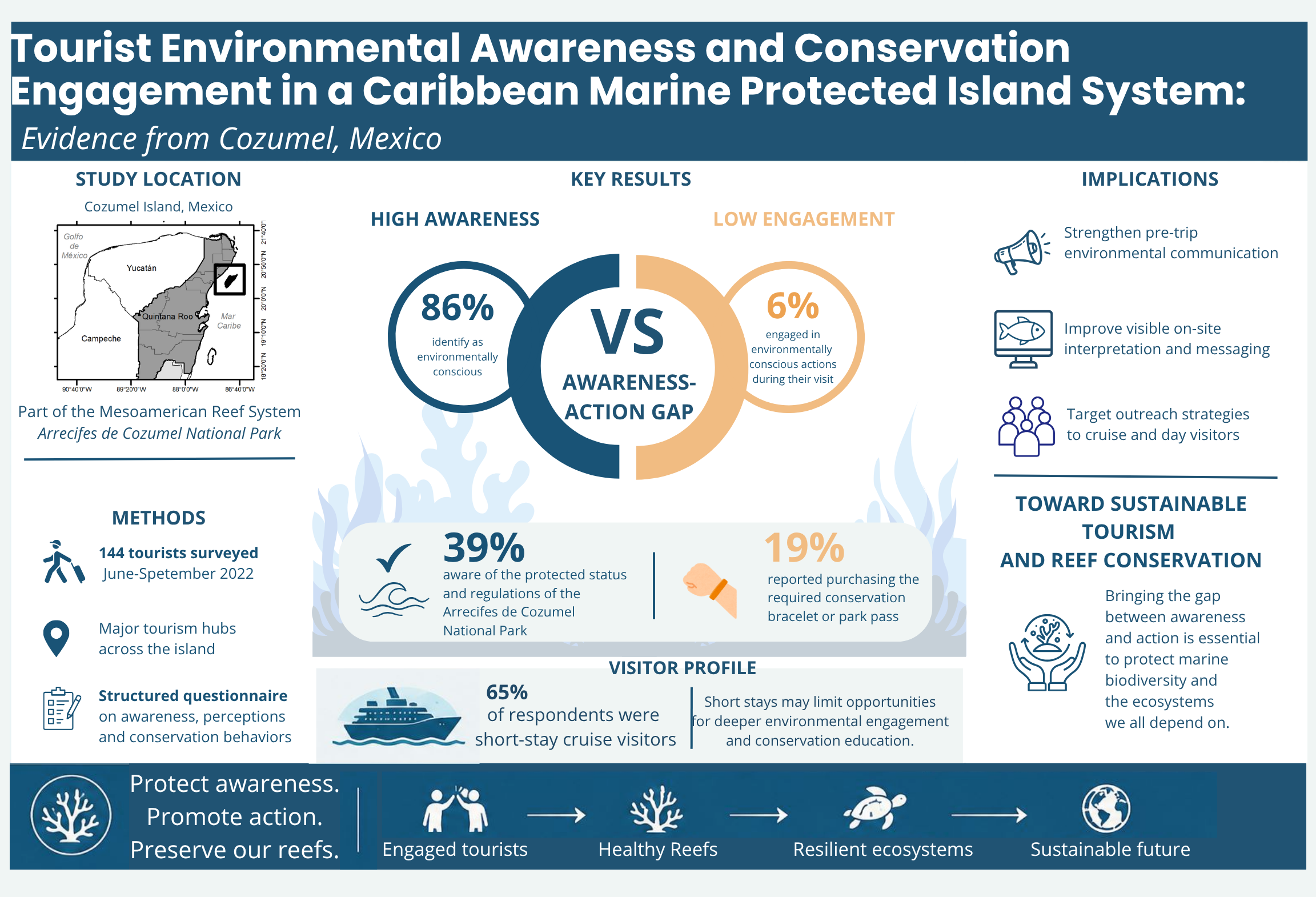
Tourism is a major driver of economic growth in tropical island destinations but also places increasing pressure on fragile marine ecosystems. This study examined tourists’ environmental awareness, perceptions, and conservation-related behaviors on Cozumel Island, part of the Mesoamerican Reef System and home to multiple protected areas, including the Arrecifes de Cozumel National Park. Between June and September 2022, surveys were conducted with 144 tourists at major tourism hubs across the island. Although 86% of respondents identified themselves as environmentally conscious, awareness of local environmental impacts associated with tourism remained limited, and only 6% reported engaging in environmentally conscious actions during their visit. Awareness of the protected status and regulations of the Arrecifes de Cozumel National Park was also low (39%), and only 19% reported purchasing the required conservation bracelet or park pass. Short-stay cruise visitors represented 65% of respondents, potentially limiting opportunities for deeper environmental engagement and conservation education. These findings highlight the need for stronger pre-trip environmental communication, visible on-site interpretation, and targeted outreach strategies to support sustainable tourism and coral reef conservation in the Mexican Caribbean.

Graphical Abstract

1. Introduction

Tropical islands host unique ecological, biological, and physical environments—including mangroves, coral reefs, sandy beaches, and seagrasses—that provide essential coastal ecosystem services. These services include biodiversity conservation, fisheries support, clean water provision, and recreational opportunities, all of which have historically supported human well-being and local livelihoods [1]. The availability—or loss—of these ecological benefits directly influences local, regional, and international economies, particularly in highly visited coastal destinations such as those of the Caribbean Sea [2]. The coastal development model centered on intensive “sun and sand” tourism has expanded worldwide alongside increasing urbanization, population growth, and environmental pressures in coastal regions [3]. These dynamics increasingly threaten littoral landscapes and contribute to ecosystem degradation [4]. The resulting loss of ecosystem functions and services can generate economic decline and rising local unemployment [5]. Such challenges are especially severe on islands, where natural resources and physical space are more limited than in continental coastal regions [6]. Mexico ranked among the world’s leading tourism destinations in 2024, receiving 45 million international tourists, a number that increased to 47.8 million in 2025 [7]. Tourism represents a major component of the national economy, contributing 8.7% of Mexico’s Gross Domestic Product (GDP) before the COVID-19 pandemic in 2019 [8]. Although this contribution declined to 7.1% in 2021, it recovered to 8.5% by 2022 [9].
Mexico’s global tourism prominence is closely linked to its megabiodiversity, particularly in destinations of the Mexican Caribbean such as Cancún and the Riviera Maya in Quintana Roo. These destinations have concentrated on mass tourism over the past four decades [10]. In 2022, Quintana Roo generated 45.2% of Mexico’s tourism revenue (USD $12.6 billion of a national total of $28 billion), and in 2023 the region received 21 million tourists and more than 6.3 million cruise passengers [7]. Cozumel Island (hereafter CI), a major destination in the Mexican Caribbean, has experienced sustained tourism and population growth. Tourism development on the island began in the 1950s as a community-managed activity that shaped its early visitor economy [11]. From the 1980s onward, the island increasingly shifted toward cruise tourism, positioning CI as one of the principal cruise destinations in Mexico and the wider Caribbean [12]. In 2024, the island received 256,646 overnight visitors staying in hotels and other accommodations, while cruise arrivals—including passengers and crew—totaled 4,598,918 [13]. Despite the economic benefits generated by tourism, rapid development has intensified environmental challenges on CI, including solid-waste accumulation and broader ecosystem degradation associated with poorly planned coastal growth [12,14]. Ecotourism can also generate negative ecological and social impacts when not guided by appropriate regulations and sustainability practices [15]. For example, unsupervised wildlife interactions, including those involving sea turtles, have been identified as problematic in the region [16].
CI’s coral reefs, which form part of the Mesoamerican Reef System, face increasing pressures from tourism-related activities, coral diseases, bleaching events, and other local anthropogenic stressors [17]. The island also receives one of the highest numbers of cruise ships globally, posing additional risks to marine ecosystem health [18]. Climate change further compounds these local pressures. Rising sea surface temperatures have contributed to widespread coral bleaching and the emergence of stony coral tissue loss disease (SCTLD), while climate-driven disturbances such as marine heatwaves and increasingly intense hurricanes are projected to reduce reef structural complexity and ecosystem resilience in the coming decades [19,20].
Together, these global and local stressors underscore the urgency of promoting pro-environmental behavior among the millions of visitors to Cozumel’s marine protected areas. Another pressing environmental concern is the contamination of local underground aquifers—CI’s primary source of drinking water—with dissolved solids and fecal coliforms [21]. Against this backdrop, the large number of tourists visiting CI provides a unique opportunity to evaluate visitors’ environmental awareness, perceptions of tourism-related impacts, and willingness to engage in conservation actions [22]. Accordingly, this study examines tourists’ knowledge and perceptions of tourism-related environmental impacts, together with their current conservation behaviors, their willingness to adopt additional environmentally responsible actions, and the barriers that may limit such engagement. These insights into socio-environmental perceptions can help inform future conservation and environmental education strategies in highly visited island destinations. Furthermore, this study enables comparisons with previous research conducted in Caribbean and Mesoamerican Island systems, including Bocas del Toro, Panama [23], and Holbox Island, Mexico [24].
The remainder of this paper describes the study area and methodology, presents the survey findings, discusses the findings in the context of conservation and sustainable tourism, and concludes with management recommendations, study limitations, and future research directions.

2. Materials and Methods

2.1. Study Area

Cozumel Island (CI), located on the western side of the Yucatán Channel and approximately 17.5 km off the Yucatán Peninsula, covers an area of about 478 km2 and has a population of 88,626 inhabitants [25,26] (Figure 1). Roughly 75% of its territory is covered by medium semi-deciduous forest, interspersed with mangrove communities in flood-prone areas and along the coastline [27]. Tourism-driven development on CI and in the broader region has resulted in urban planning characterized by high population concentration. Currently, 99% of CI’s population resides in the port city of San Miguel, which has an annual growth rate of 7.1%. The expansion of the service sector has fueled migration, increasing demand for urban land for tourism and recreation. As a result, the island’s urban footprint is expanding by approximately 38 hectares per year [28]. The Cozumel Municipal Development Plan identifies several worsening tourism-related problems, including increased internal mobility particularly due to the rise in cruise visitors and growth in car rentals which has contributed to the occupation and degradation of previously undisturbed natural areas [29]. In addition to shifting tourist consumption habits and rising development pressures, these trends have led to increased plastic pollution and freshwater contamination, including documented bacteriological contamination of coastal groundwater wells along the hotel zone [21]. More broadly, the Yucatán Peninsula, including CI, faces challenges such as gentrification and land-use change, exacerbated by weak natural resource management and insufficient planning policies [29].

2.2. Study Design

This study employed a cross-sectional, descriptive survey design to examine tourists’ environmental awareness, perceptions, and self-reported conservation behaviors on Cozumel Island (CI), Mexico. Cross-sectional surveys are widely used in tourism research within marine protected areas because they provide an efficient means of assessing visitors’ knowledge, attitudes, and behaviors during a defined period [30]. The research was conducted in two complementary phases. First, exploratory open-ended interviews were undertaken with key local stakeholders to obtain contextual information on tourism-related environmental issues and to support questionnaire adaptation. This preliminary qualitative phase ensured that the survey instrument reflected locally relevant environmental concerns and tourism dynamics. Second, a standardized questionnaire was administered to tourists visiting CI to assess their environmental knowledge, perceptions, and conservation engagement. This sequential approach, in which qualitative contextualization informed the development of a quantitative survey, has been successfully applied in sustainable tourism research to strengthen the contextual relevance and validity of visitor perception studies [31,32]. Together, these phases integrated local contextual understanding with quantitative survey data to provide a baseline assessment of tourists’ perspectives on environmental conservation in one of the Caribbean’s most visited marine protected island systems.

2.3. Exploratory Phase and Questionnaire Development

The study began with an exploratory qualitative phase consisting of open-ended interviews with key community members, including native residents, authorities from Arrecifes de Cozumel National Park, tourism stakeholders, conservation practitioners, and elder fishers. These interviews were conducted to obtain contextual information on local social and environmental issues associated with tourism and to better understand how different stakeholder groups perceive the island’s natural environment. These interviews were conducted exclusively to provide contextual information and guide questionnaire adaptation; they were not intended for formal qualitative analysis and were therefore not included in the study dataset or subsequent statistical analyses.
In addition, the research team has been actively conducting marine conservation research on Cozumel Island since 2019, providing extensive familiarity with the island’s tourism dynamics, environmental challenges, and conservation priorities. Information gathered during this exploratory phase, together with the research team’s long-term experience on the island, was used to adapt a questionnaire previously developed by Dorsett and Rubio [23] and Rubio-Cisneros et al. [24] for studies conducted in Bocas del Toro, Panama, and Holbox Island, Mexico. The questionnaire was modified to reflect Cozumel’s specific tourism dynamics and socio-environmental context while maintaining the overall structure of the original instrument to facilitate comparisons among Caribbean destinations.
The final questionnaire included questions assessing tourists’ environmental knowledge, perceptions of tourism-related environmental impacts, self-reported environmental behaviors during their visit (e.g., use of reef-safe sunscreen), and willingness to support conservation initiatives on the island (Supplementary Materials).

2.4. Tourist Surveys, Sampling Strategy, and Ethical Considerations

The questionnaire was administered to tourists visiting Cozumel Island between 15 June and 20 September 2022. Surveys were conducted at the island’s principal tourist locations, including Puerta Maya Pier and Punta Langosta Pier (where cruise ships dock), the ferry terminal connecting Cozumel with Playa del Carmen, and Parque Benito Juárez, the island’s main public square (Figure 1). These locations were selected because they receive a high volume of visitors and provided access to tourists with different travel modalities, including both cruise ship passengers and overnight visitors.
Participants were recruited using a convenience sampling approach, whereby individuals who self-identified as tourists and agreed to participate were invited to complete the questionnaire [33,34]. Convenience sampling was considered appropriate because tourists represent a highly mobile population with limited availability for participation, making probability-based sampling impractical in high-traffic tourism settings [33,34,35]. Only adults (≥18 years of age) were eligible to participate. A total of 144 questionnaires were completed, providing a baseline dataset for describing tourists’ environmental awareness, perceptions, and self-reported conservation behaviors on Cozumel Island. Although this sample size is modest, it is consistent with comparable cross-sectional survey studies conducted in Caribbean island MPAs [23,24] and captures a meaningful cross-section of the island’s high-season visitor population. It is also important to note that self-reported pro-environmental behavior in tourism contexts is susceptible to social desirability bias, and the use of unprompted questioning formats—as employed in this study—tends to generate more conservative estimates than prompted survey items [36]. Sampling at multiple high-traffic locations increased the likelihood of capturing a broad range of visitor profiles, travel experiences, and environmental perspectives during the study period. However, the predominance of cruise passengers (65% day visitors) and the summer sampling window should be considered when interpreting the representativeness of the findings across different seasons and tourist segments.
Before participating, all respondents received a brief explanation of the study objectives and provided verbal informed consent. Verbal consent was documented by the interviewer on a standardized data collection form (checkbox and interviewer initials) approved by the ethics committee. Participation was voluntary and anonymous, and no personally identifiable or sensitive information was collected.
Ethics approval for this study was obtained from the Comité de Ética en Investigación of the Instituto Estatal de Cancerología de Colima, a committee registered with Mexico’s National Bioethics Commission (CONBIOÉTICA registration number 06-CEI-001-20200721). This committee was selected as the CONBIOÉTICA-registered ethics review board with the closest institutional affiliation available to the research team at the time of study approval. The study protocol was approved under approval code CEICANCL10062022-COPESTU-13 on 10 June 2022, with approval valid through 10 June 2023. Survey implementation followed ethical guidelines for minimal-risk social research and was consistent with procedures employed in previous studies conducted in Bocas del Toro [23] and Holbox Island [24] as well as principles of transparency in tourism survey research [37].

2.5. Data Analysis and Visualization

Survey responses were compiled into a database using Microsoft Excel (Microsoft Corporation, Redmond, WA, USA). Each record included respondent demographic information, place of origin, and responses to all questionnaire items. Prior to analysis, the complete dataset (n = 144) was reviewed for completeness, duplicate entries, missing values, and inconsistencies, following established guidelines for survey data quality control [38]. Categorical responses were standardized to ensure consistency across the database.
Because the primary objective of the study was to characterize tourists’ environmental awareness, perceptions, and self-reported conservation behaviors, the analyses focused on descriptive statistics rather than inferential hypothesis testing. Descriptive statistics are the most commonly employed analytical approach in tourism research and are well suited to exploratory studies aiming to characterize patterns in a study population [38,39]. Frequencies and percentages were calculated for categorical variables, while measures of central tendency, including the mean and median, and dispersion, including the standard deviation, were used for continuous variables where appropriate.
To verify data quality and analytical consistency, key calculations were independently replicated using Python 3 in Jupyter Notebook through Google Colab 2025. This parallel analysis served as a quality-control procedure by confirming the consistency of the descriptive statistics obtained from the Excel database. The use of independent replication for data validation is recommended as a means of reducing transcription and calculation errors in survey research [38]. Graphical summaries, including bar charts, pie charts, and grouped categorical plots, were generated in Python using the pandas, Matplotlib (3.10.0), and seaborn (0.13.2) libraries to facilitate the visualization of tourists’ environmental knowledge, perceptions, and conservation behaviors.

3. Results

3.1. Tourist Demographics, Origins, and Travel Characteristics

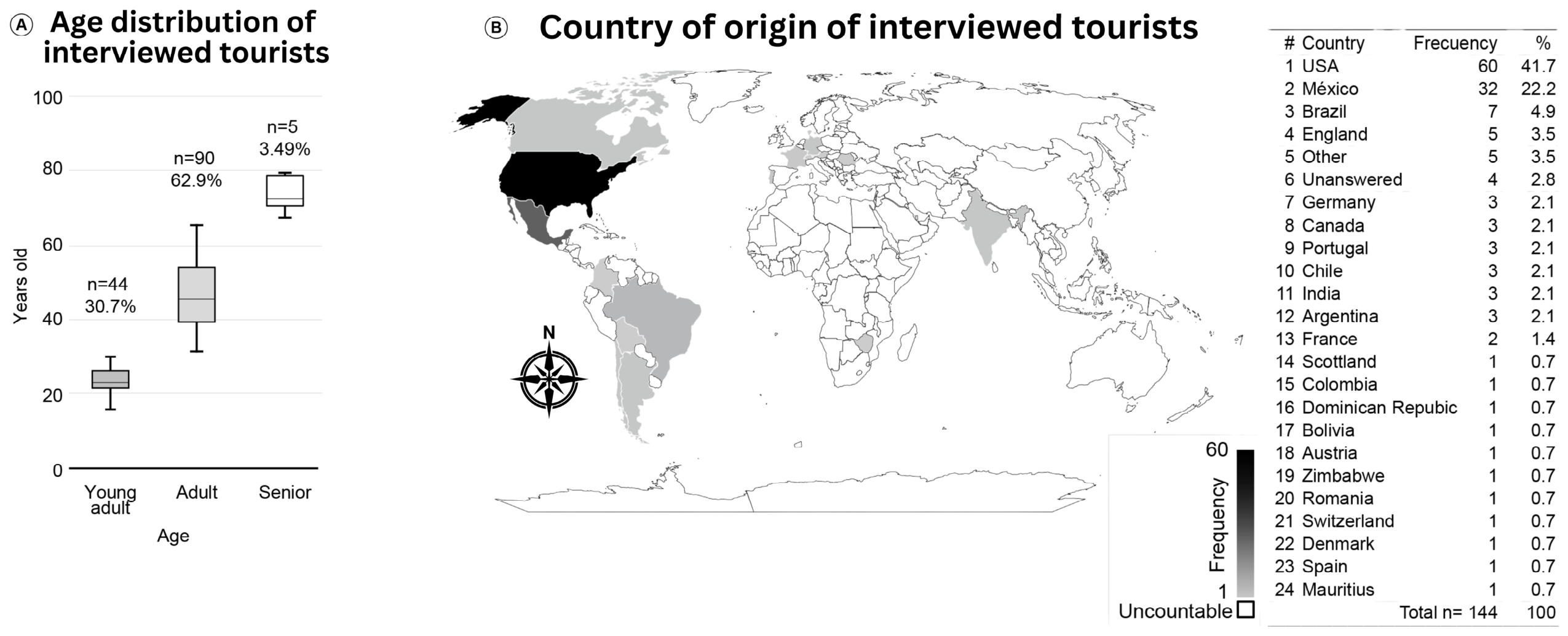
A total of 144 tourists participated in the survey. Among respondents who reported their gender, men (n = 59) slightly outnumbered women (n = 53), while 32 participants chose not to disclose this information. Adults constituted the largest age group, followed by young adults, whereas relatively few respondents were classified as seniors (Figure 2A).
Survey participants represented a broad international profile, originating from 24 countries (Figure 2B). The largest proportion of respondents came from the United States, followed by Mexico, while the remaining participants represented 22 additional countries in smaller numbers.
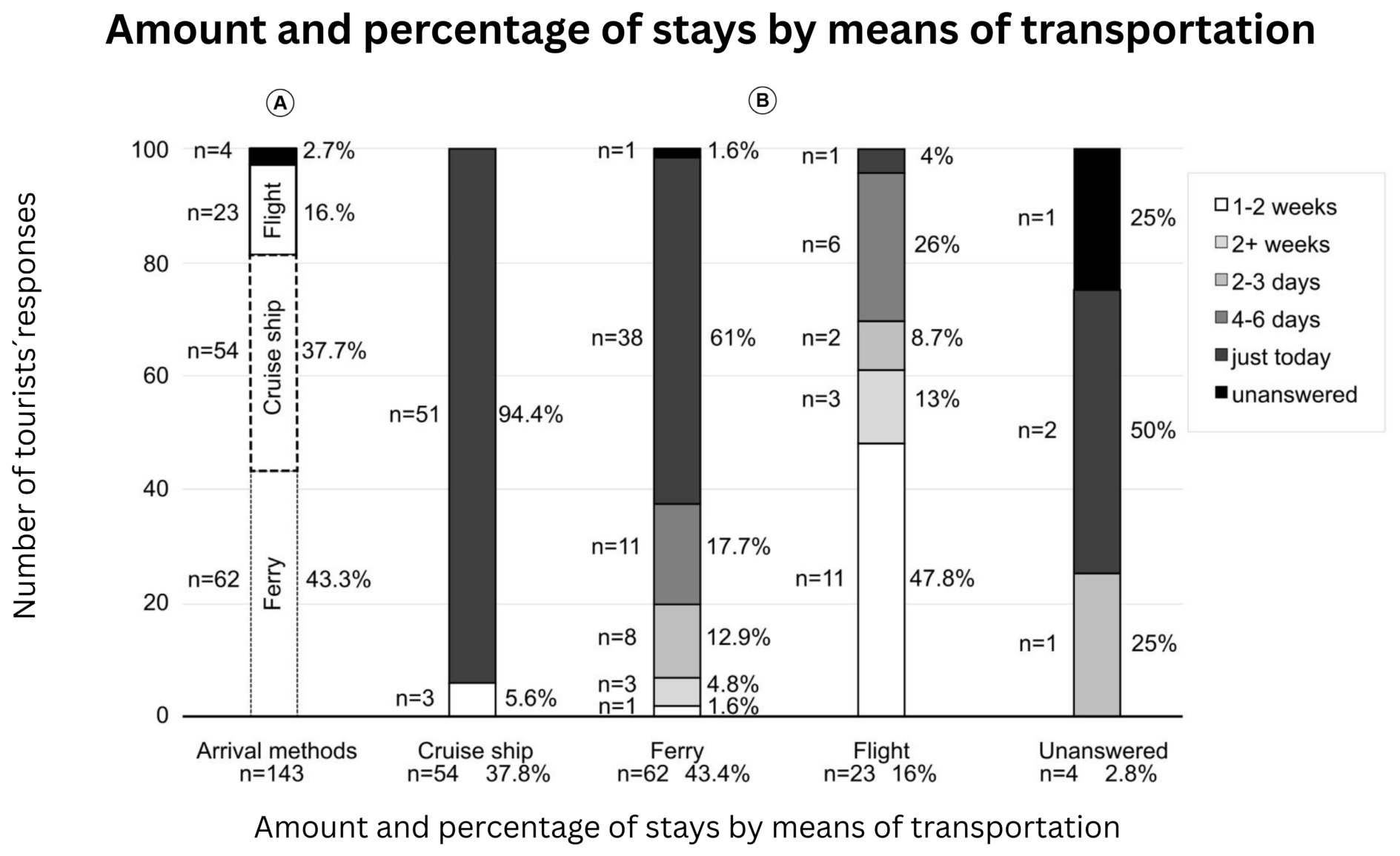
Travel characteristics reflected Cozumel’s diverse tourism market (Figure 3). Most respondents arrived either by ferry or cruise ship, with fewer traveling by air. Length of stay varied according to the mode of arrival: cruise ship passengers were predominantly day visitors, whereas tourists arriving by ferry or airplane generally remained on the island for longer periods. Overall, nearly two-thirds of respondents visited Cozumel for only one day, and almost two-thirds were visiting the island for the first time. Among repeat visitors, most reported having visited only once previously.

3.2. Tourist Activities and Perceptions of Environmental Impacts

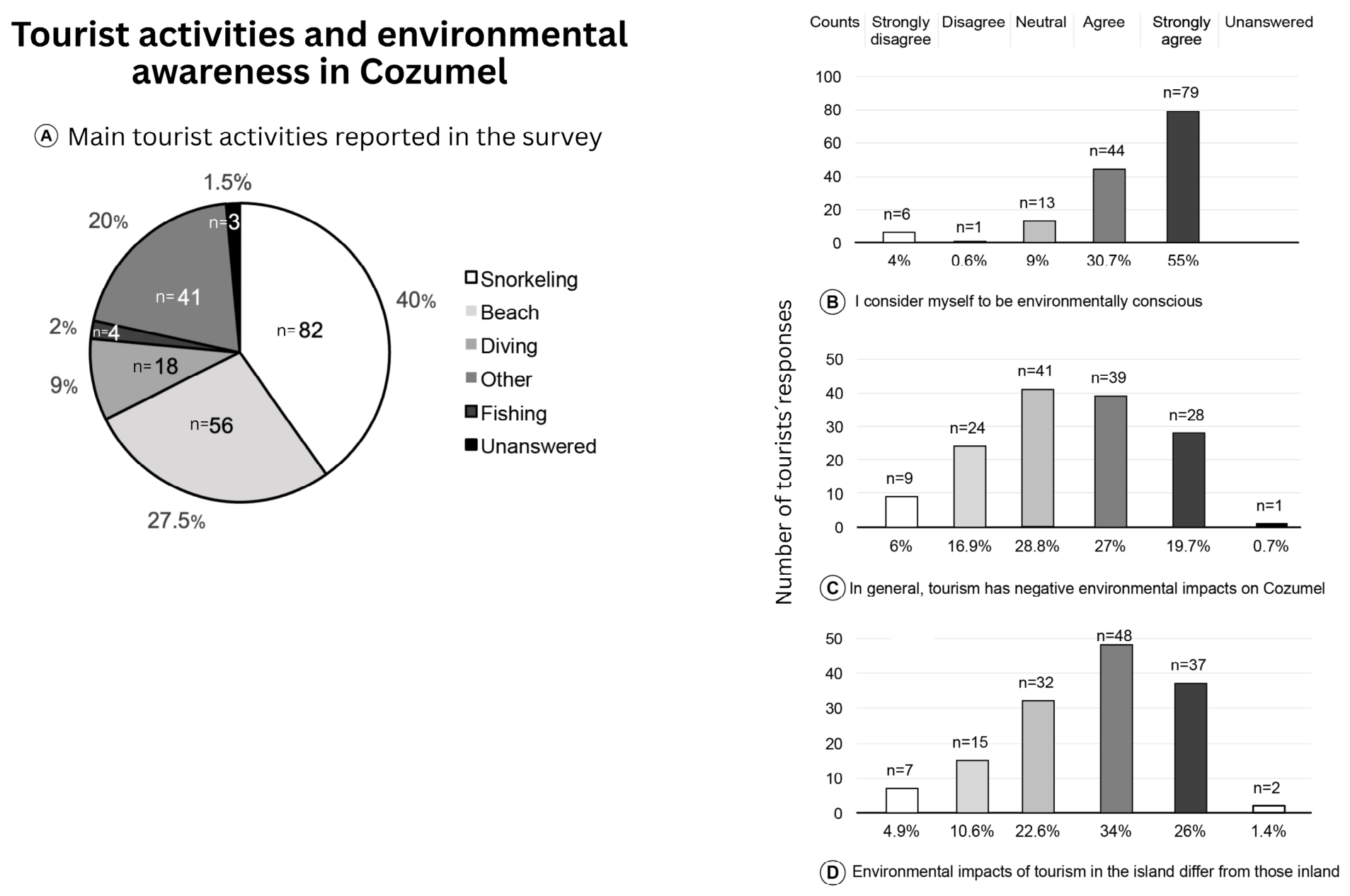
Snorkeling was the most frequently reported activity among surveyed tourists, followed by beach visits and other recreational activities, such as dining, shopping, or swimming with dolphins, whereas scuba diving represented a smaller proportion of responses (Figure 4A). Most respondents considered themselves to be environmentally conscious, with approximately 86% agreeing or strongly agreeing with this statement (Figure 4B). In contrast, recognition of tourism’s environmental impacts on Cozumel was less pronounced. Although nearly half of the respondents agreed or strongly agreed that tourism negatively affects the island’s environment, almost one-third expressed a neutral opinion, indicating greater uncertainty regarding the environmental consequences of tourism (Figure 4C). These responses suggest that self-perceived environmental consciousness was not always accompanied by a similar level of recognition of tourism’s environmental impacts on the island.
When asked whether the environmental impacts of tourism differ between island and mainland destinations, most respondents agreed or strongly agreed that island environments experience distinct environmental challenges (Figure 4D). Among those who elaborated on their responses (n = 17), five recurring themes emerged: (1) waste and pollution, (2) coral and habitat degradation, (3) island fragility and limited carrying capacity, (4) ethics and individual behavior, and (5) governance and environmental responsibility (Table 1). Within this subset of respondents, the open-ended comments primarily associated island destinations with greater ecological vulnerability, limited environmental capacity, and the need for responsible environmental management.

3.3. Environmental Awareness and Behavior Before and During the Visit

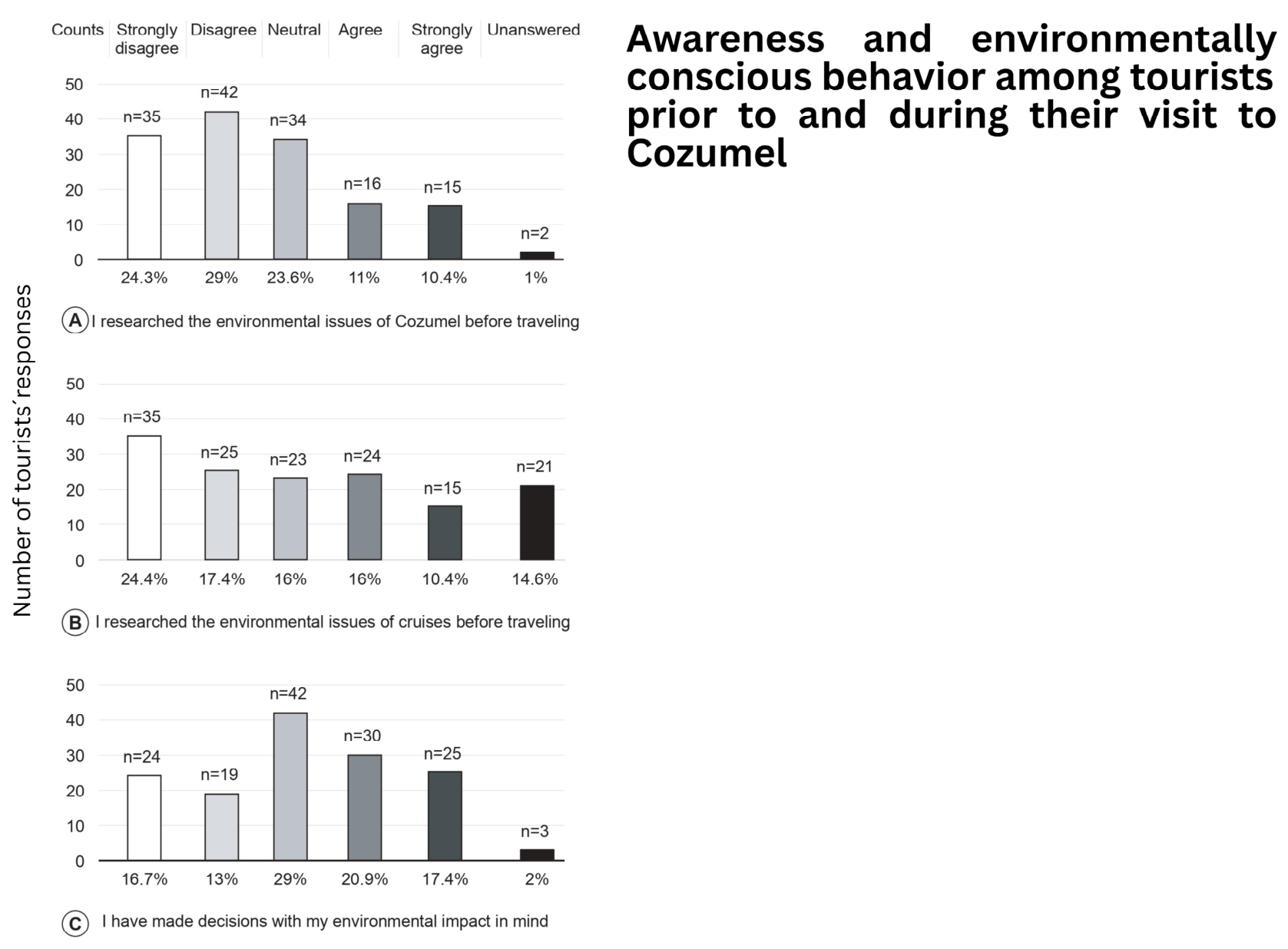
Most respondents reported conducting little or no research on Cozumel’s environmental issues before their visit (Figure 5A). A similar pattern was observed regarding the environmental impacts associated with cruise tourism, with relatively few tourists indicating that they had sought information on this topic before traveling (Figure 5B). Environmental considerations appeared to play a relatively limited role in respondents’ reported travel decision-making. While some respondents indicated that environmental impacts influenced their choices of destinations, activities, products, or services, the largest proportion expressed a neutral opinion or disagreed that environmental concerns had guided their decisions (Figure 5C). Consistent with these findings, only eight respondents (6%) reported undertaking specific environmentally conscious actions during their stay. These actions included collecting sargassum from beaches, supporting locally owned businesses, and recycling waste. The remaining respondents either did not report any specific environmental actions or did not answer the open-ended question.

3.4. Knowledge and Engagement with the Arrecifes De Cozumel National Park

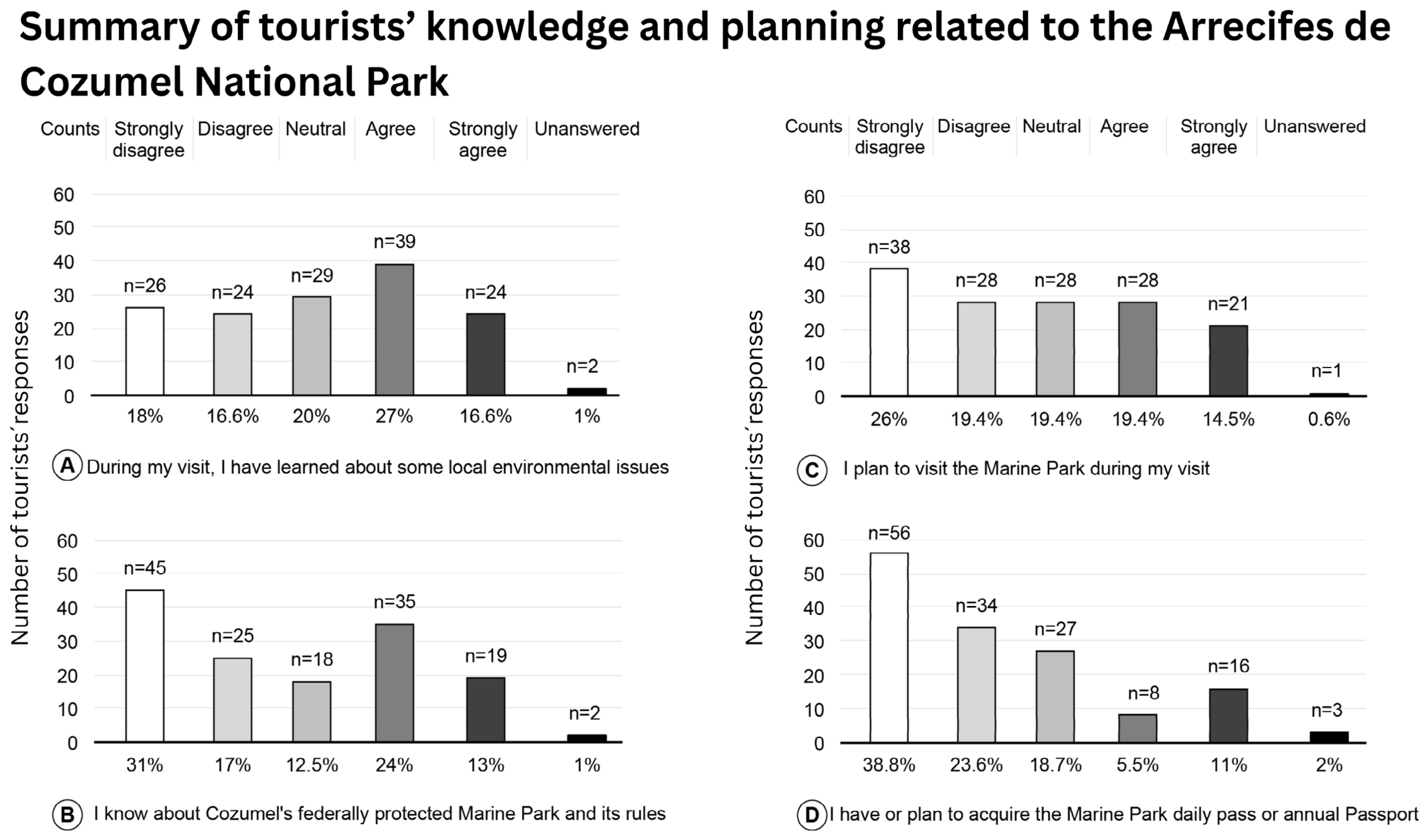
Although many respondents indicated that they learned about local environmental issues during their visit, awareness of the Arrecifes de Cozumel National Park (ACNP) itself remained limited (Figure 6). Most tourists reported being unfamiliar with the park’s federal protected status and associated regulations, while fewer than half indicated that they had gained environmental knowledge during their visit (Figure 6A,B). Engagement with the Marine Protected Area was similarly low. Only about one-third of respondents planned to visit the ACNP during their stay, and relatively few reported having acquired—or intending to acquire—the required daily bracelet or annual park pass (Figure 6C,D).
Among the open-ended responses, only six participants (4%) spontaneously mentioned becoming aware of environmental issues specifically related to the ACNP. Those who did cited tour guides, dive operators, and online sources as their primary sources of information. Notably, one respondent reported being unaware that they had visited the Marine Park. Overall, these findings suggest that acquiring general environmental information during the visit was not necessarily accompanied by greater awareness of the Marine Protected Area itself, its conservation objectives, or the regulations established to protect it.

3.5. Tourist Perceptions of Reef Impacts and Willingness to Contribute

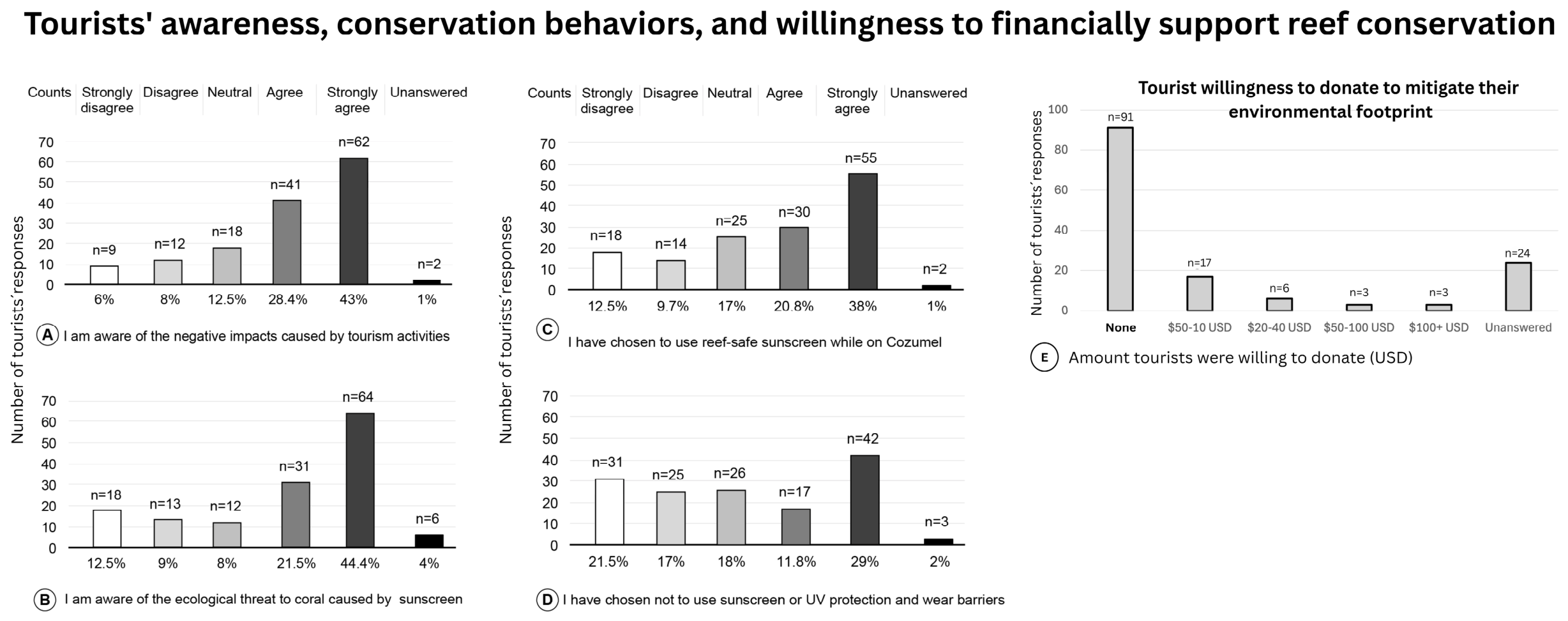
Most respondents recognized that tourism negatively affects coral reef ecosystems and acknowledged the ecological risks associated with the use of non-reef-safe sunscreen (Figure 7A,B). Likewise, a majority reported adopting environmentally responsible practices during their visit, including the use of reef-safe sunscreen and, for some respondents, avoiding sunscreen altogether in favor of physical sun protection such as protective clothing (Figure 7C,D). Despite these generally positive environmental attitudes and self-reported behaviors, willingness to financially contribute to conservation was comparatively low. Nearly two-thirds of respondents indicated that they were not willing to donate to offset the environmental footprint of their visit (Figure 7E). Among those willing to contribute, most selected relatively modest donation amounts.
Participants who opposed making a financial contribution commonly stated that mitigating tourism-related environmental impacts should be the responsibility of government agencies or that supporting local businesses already represented an adequate contribution. In contrast, respondents who supported voluntary donations emphasized the importance of financing conservation initiatives and environmental education, particularly programs targeting children and young people. Overall, these findings suggest a difference between respondents’ recognition of environmental issues and their reported willingness to provide direct financial support for conservation.

4. Discussion

4.1. Tourist Demographics, Origins, and Travel Characteristics

The demographic profile of surveyed tourists reflects Cozumel Island’s role as one of the Caribbean’s leading international marine tourism destinations. Visitors were predominantly adults, with international tourists—particularly from the United States—representing the largest proportion of respondents. These patterns are consistent with official tourism statistics for Quintana Roo, where visitors from the United States constitute the principal inbound market [7], and with studies from other Caribbean island destinations where proximity to North America, maritime accessibility, and opportunities for marine recreation, particularly snorkeling and scuba diving, strongly influence visitation patterns [40,41].
The predominance of first-time visitors and short-duration stays, largely associated with cruise tourism, has important implications for environmental communication and conservation. Because nearly two-thirds of respondents were visiting Cozumel for the first time, first impressions and early exposure to environmental information may play a particularly important role in shaping tourists’ awareness and conservation behaviors during their stay. Likewise, the high proportion of day visitors limits opportunities for deeper engagement with local environmental challenges, protected area regulations, and conservation initiatives.
These findings are particularly relevant in destinations such as Cozumel, where marine ecosystems are both the primary tourism attraction and the foundation of the local economy. Cruise-driven tourism has been shown to concentrate visitor expenditures within cruise-industry supply chains rather than local businesses while increasing pressure on fragile coastal ecosystems, public infrastructure, and waste-management systems [42,43,44,45,46,47,48]. Consequently, providing accessible environmental information at key visitor entry points—such as cruise terminals, ferry terminals, and tourism service providers—may offer an important opportunity to increase environmental awareness among visitors who have limited time on the island.

4.2. Tourist Activities and Perceptions of Environmental Impacts

Snorkeling, beach visits, and other low-barrier recreational activities requiring minimal training, equipment, or cost were the most common activities among surveyed tourists in Cozumel Island. Similar patterns have been reported in other coastal destinations where marine recreation is easily accessible [49,50]. Although 86% of respondents identified themselves as environmentally conscious, fewer recognized the environmental impacts associated with tourism activities, with 29% expressing neutral views regarding tourism-related impacts. These findings suggest that self-perceived environmental awareness does not necessarily translate into recognition of personal or tourism-related environmental impacts. Similar patterns have been documented in Holbox Island, Bocas del Toro, and Belize’s reef tourism sector [23,24,44].
Open-ended responses highlighted concerns related to reef degradation, waste accumulation, island fragility, and environmental governance, reflecting broader socio-ecological challenges reported across the Mesoamerican Reef System [17,51]. Respondents who elaborated on these issues frequently mentioned trash and plastic pollution on beaches, consistent with recent studies documenting plastic accumulation on Cozumel beaches [52]. Similar waste-management challenges linked to tourism growth and limited infrastructure have also been reported in other Caribbean island destinations, including Holbox, Belize, and Roatán [24,44,53]. Together, these responses and the existing literature suggest that some of Cozumel’s environmental pressures are consistent with broader regional patterns associated with tourism expansion and limited waste-management capacity. Within the subset of respondents who provided open-ended comments, island destinations were commonly associated with ecological vulnerability, limited environmental capacity, and dependence on marine resources. Islands often have limited freshwater resources, reduced waste-assimilation capacity, and greater dependence on marine-based economies than continental coastal regions [54,55]. This perception of ecological fragility may provide a useful starting point for future environmental education and conservation outreach initiatives.

4.3. Environmental Awareness and Behavior Before and During the Visit

Only a minority of surveyed tourists reported researching environmental issues before traveling to Cozumel Island, and very few described undertaking specific environmentally conscious actions during their visit. Within this sample, self-reported environmental awareness was not consistently accompanied by proactive environmental preparation or behavior before and during travel. Similar patterns have been documented in other island destinations, where visitors frequently express support for environmental protection while demonstrating limited preparation or adoption of sustainable practices before arrival [56,57].
Several factors may contribute to this disconnect. In Cozumel, some respondents appeared to perceive environmental responsibility as resting primarily with government agencies, tourism operators, or local communities rather than with individual visitors [58,59]. Similar gaps in environmental awareness and personal responsibility have been reported in destinations such as the Galápagos Islands, Fiji, and the Maldives, where limited knowledge of local environmental challenges and conservation regulations can reduce visitor engagement in conservation-oriented behaviors [60,61].
The limited environmental preparation observed in this study also highlights the importance of the trip-planning stage as an opportunity for conservation communication. Previous research in marine and terrestrial protected areas has shown that targeted pre-trip information delivered through tour operators, booking platforms, and travel websites can improve compliance with conservation guidelines and encourage lower-impact recreational behaviors [62,63]. For destinations such as Cozumel, where many visitors arrive for only a single day, effective environmental communication before arrival may be particularly important. Providing concise environmental briefings through cruise companies, ferry operators, tourism service providers, and online booking platforms could help increase awareness of local environmental issues and encourage more responsible visitor behaviors before tourists reach the island. Together with the low awareness of the Arrecifes de Cozumel National Park documented in this study, these findings suggest that environmental communication should begin well before visitors arrive at the destination, rather than relying exclusively on interpretation provided once tourists are already on the island.

4.4. Knowledge and Engagement with the Arrecifes De Cozumel National Park

This survey revealed limited awareness of the protected status and regulations of the Arrecifes de Cozumel National Park (ACNP), with 61% of respondents reporting no prior knowledge of the park or its regulations. Similar patterns have been documented among visitors to marine protected areas (MPAs), where awareness of conservation rules often remains low unless supported by effective interpretation programs, visible signage, or regulated entry systems [63]. Studies from Belize and Bonaire have shown that environmental interpretation, combined with well-communicated conservation fee systems, can improve visitor awareness, compliance with protected-area regulations, and overall support for conservation initiatives [63].
In Cozumel, the ACNP has implemented environmental education programs for tourism service providers aimed at promoting best practices and increasing visitor awareness [49]. However, our findings suggest that this information is not consistently reaching visitors, indicating a gap between environmental education efforts directed at tourism operators and the information ultimately received by tourists. This communication gap is particularly important in a destination where many visitors are first-time tourists and remain on the island for only a single day, limiting opportunities for repeated exposure to conservation messages.
Only 17% of respondents reported having acquired or intending to acquire the daily bracelet or annual pass associated with park access, highlighting opportunities to strengthen communication regarding park regulations and conservation contributions. Previous studies have shown that visitor interpretation, community participation, transparent conservation financing, and effective enforcement can increase compliance with protected-area regulations while strengthening public support for conservation [64,65,66,67]. Carrying-capacity assessments also remain important tools for balancing tourism use with ecosystem conservation in heavily visited coastal destinations [65]. Furthermore, visitors are generally more willing to contribute financially to conservation when the purpose and environmental benefits of these contributions are clearly communicated [68]. Together, these findings suggest that integrating conservation messaging into visitor entry points, tourism services, and species-focused outreach programs could substantially improve awareness of the ACNP, strengthen compliance with park regulations, and foster greater engagement with marine conservation in Cozumel [69].

4.5. Tourist Perceptions of Reef Impacts and Willingness to Contribute

Most surveyed tourists acknowledged the negative effects of tourism on coral reefs and recognized the environmental risks associated with non-reef-safe sunscreen, with 72% indicating a willingness to use reef-safe alternatives. This finding is encouraging, as sunscreen compounds such as oxybenzone and octinoxate have been associated with coral bleaching, reduced coral resilience, and coral mortality [70,71]. Studies from destinations such as Hawai‘i and Palau have shown that environmental education campaigns, combined with regulatory measures, can successfully promote the adoption of reef-safe sunscreen products and reduce harmful impacts on coral reef ecosystems [72,73]. In Cozumel, local initiatives such as Coral Hero and Healthy Reefs for Healthy People have also contributed to increasing public awareness of the environmental impacts associated with conventional sunscreen use. However, sunscreen discharge across Quintana Roo remains substantial, suggesting that product substitution alone is unlikely to fully mitigate ecotoxicological pressures on reef ecosystems [74].
Despite this relatively high level of environmental awareness, nearly two-thirds of respondents were unwilling to contribute financially to offset their environmental footprint, frequently citing government responsibility or the belief that their tourism expenditures already supported conservation. This contrast suggests that recognizing environmental problems does not necessarily translate into a willingness to provide direct financial support for conservation initiatives. Similar studies in the Philippines and Costa Rica have shown that visitor willingness to contribute increases when conservation fees are transparently linked to clearly defined environmental projects and measurable local conservation outcomes [75,76,77].
These findings highlight the importance of coupling environmental education with transparent conservation financing mechanisms that clearly demonstrate how visitor contributions support reef protection. Well-communicated conservation fee systems, voluntary environmental contributions, and regular reporting of conservation outcomes—similar to approaches implemented in Bonaire National Marine Park—may help strengthen visitor trust, increase willingness to contribute financially, and provide sustainable funding for reef conservation while maintaining affordability for tourists.

5. Conclusions

This study demonstrates that, despite tourists generally perceiving themselves as environmentally conscious, important gaps remain between environmental awareness, knowledge, and conservation-oriented behaviors among visitors to Cozumel Island. Although many respondents recognized the ecological importance of the island and its coral reef ecosystems, relatively few sought environmental information before their visit, were familiar with the Arrecifes de Cozumel National Park and its regulations, or reported adopting specific environmentally responsible actions during their stay. These findings highlight the need to strengthen environmental communication throughout the visitor experience, particularly before arrival and at key tourism entry points.
Given Cozumel’s international importance as both a marine tourism destination and a protected area within the Mesoamerican Reef System, improving visitor engagement should be considered an integral component of conservation management. Based on the findings of this study and evidence from other protected-area destinations, strategies such as targeted pre-trip communication, effective on-site interpretation, stronger collaboration with tourism operators, and transparent conservation financing may help increase visitor awareness, encourage more responsible behaviors, and strengthen public support for marine conservation.
Although this study provides valuable baseline information on tourists’ environmental awareness and conservation engagement in Cozumel, its findings should be interpreted considering several limitations. These include the use of convenience sampling, the relatively modest sample size, the predominance of short-stay visitors, and data collection conducted during a single fieldwork period. Consequently, the findings should not be interpreted as statistically representative of all tourists visiting Cozumel across different seasons or travel segments. Future research should evaluate the effectiveness of environmental education and interpretation programs, examine seasonal and long-term changes in visitor perceptions and reported behaviors, and assess how targeted communication strategies influence conservation engagement and support for marine protected areas.

Supplementary Materials

The following supporting information can be downloaded at: https://www.mdpi.com/article/10.3390/coasts6030036/s1.

Author Contributions

Conceptualization, N.T.R.-C., I.I.R.-C. and A.E.-B.; methodology, N.T.R.-C., I.I.R.-C. and J.I.G.-R.; software, I.I.R.-C.; formal analysis, I.I.R.-C., N.T.R.-C. and L.S.G.-R.; investigation, N.T.R.-C., A.E.-B., I.I.R.-C. and G.R.-A.; resources, J.I.G.-R. and A.G.-V.; data curation, L.S.G.-R. and G.R.-A.; writing—original draft preparation, N.T.R.-C., A.E.-B. and I.I.R.-C.; writing—review and editing, A.E.-B., I.I.R.-C., L.S.G.-R., J.I.G.-R., G.R.-A. and A.G.-V.; visualization, L.S.G.-R., J.I.G.-R., G.R.-A. and A.G.-V.; project administration, N.T.R.-C. and A.G.-V.; funding acquisition, N.T.R.-C. All authors have read and agreed to the published version of the manuscript.

Funding

Fieldwork for this study was funded by The Rufford Foundation through a grant awarded to Dr. Nadia T. Rubio-Cisneros Reference Number 32149-B. Additional institutional support was provided by Mexico’s Sistema Nacional de Investigadores (SNI).

Institutional Review Board Statement

The study was conducted in accordance with the Declaration of Helsinki and approved by the Comité de Ética en Investigación of the Instituto Estatal de Cancerología de Colima, registered with Mexico’s National Bioethics Commission (CONBIOÉTICA registration number 06-CEI-001-20200721) under approval code CEICANCL10062022-COPESTU-13 on 10 June 2022.

Informed Consent Statement

Informed consent was obtained verbally from all subjects involved in the study prior to participation. All surveys were anonymous, and no personally identifiable or sensitive information was collected.

Data Availability Statement

All data supporting the findings of this study will be made publicly available in an open-access online repository hosted by the Universidad Autónoma de Nuevo León upon acceptance of the manuscript. A permanent repository link will be inserted at the time of final submission.

Acknowledgments

We thank Emily Elizabeth Penrose-Thompson for her field assistance during her Master’s in Development Practice at Emory University in 2023. We also acknowledge the contributions of Félix Vázquez Pech and Luis Pech, then students at the Universidad Autónoma de Yucatán, for their valuable assistance with the collection of tourist survey data. We thank Alfredo Beltrán Flores Jefe del departamento del Parque Nacional Arrecifes de Cozumel. The authors appreciate the support from Jakub Bartnik, who developed the statistical approach in Jupyter Notebooks from Google Colab. We are grateful to the graduate students from the Environmental Sociology course in the Master’s Program in Wildlife Conservation and Sustainability at the Facultad de Ciencias Biológicas, Universidad Autónoma de Nuevo León, for their support with preliminary data visualization: Mayte Méndez Lozano, Oziel Omar Mena Torres, Fernanda López Valenzuela, and Perla Jazbeth Chuc Martínez. The graphical abstract was developed by the authors using AI-assisted image generation and design tools to support the initial visual conceptualization and preparation of graphical elements. The figure was subsequently edited, customized, and assembled by the authors using Canva. All scientific content, data, interpretation, text, and final design decisions were reviewed and verified by the authors, who take full responsibility for the final graphical abstract.

Conflicts of Interest

The authors declare no conflicts of interest. The funders had no role in the design of the study; in the collection, analyses, or interpretation of data; in the writing of the manuscript; or in the decision to publish the results.

Abbreviations

The following abbreviations are used in this manuscript:
CICozumel Island
GDPGross Domestic Product
MPAMarine Protected Area
MPAsMarine Protected Areas
SEDETURSecretaría de Turismo
SITURQSistema Integral de Información Turística del Estado de Quintana Roo
INEGIInstituto Nacional de Estadística y Geografía
SNISistema Nacional de Investigadores
CONEBIOÉTICAComisión Nacional de Bioética
USDUnited States Dollar

References

  1. Barbier, E.B.; Hacker, S.D.; Kennedy, C.; Koch, E.W.; Stier, A.C.; Silliman, B.R. The value of estuarine and coastal ecosystem services. Ecol. Monogr. 2011, 81, 169–193. [Google Scholar] [CrossRef] [Scilit]
  2. Zittis, G.; Zoumides, C.; Zemah-Shamir, S.; Tase, M.; Zotos, S.; Demirel, N.; Christoforidi, I.; Dindaroğlu, T.; Albayrak, T.; Ayhan, C.K.; et al. Insular ecosystem services in peril: A systematic review on the impacts of climate change and other drivers. Clim. Change 2025, 178, 127. [Google Scholar] [CrossRef] [Scilit]
  3. Escalera-Briceño, A.; Palafox-Muñoz, A.; Ángeles-Villa, M. Tourism and the metabolic rift: Capital accumulation in the Global South. Tur. Soc. 2022, 31, 141–160. [Google Scholar] [CrossRef] [Scilit]
  4. Escalera-Briceño, A. Without sand, there is no tourist center: Dynamics of capitalism in the Mexican Caribbean. Ateliê Geográfico 2023, 17, 6–23. [Google Scholar] [CrossRef] [Scilit]
  5. Biagi, B.; Duran, H.E.; Pulina, M. Is tourism specialisation a trap for economic growth? The case of the Italian regions. Curr. Issues Tour. 2026, 29, 226–253. [Google Scholar] [CrossRef] [Scilit]
  6. Pathak, A.; van Beynen, P.E.; Akiwumi, F.A.; Lindeman, K.C. Impacts of climate change on the tourism sector of a small island developing state: A case study for the Bahamas. Environ. Dev. 2021, 37, 100556. [Google Scholar] [CrossRef] [Scilit] [PubMed]
  7. Secretaría de Turismo del Estado de Quintana Roo (SEDETUR). Quintana Roo: How Are We Doing in Tourism? January 2022–January 2023; Government of Mexico: Mexico City, Mexico, 2023; Available online: https://sedeturqroo.gob.mx/ARCHIVOS/como_vamos_202301.pdf (accessed on 14 May 2026).
  8. Instituto Nacional de Estadística y Geografía (INEGI). Census of Population and Housing 2020: Quintana Roo Results; INEGI: Aguascalientes, Mexico, 2020; Available online: https://www.inegi.org.mx/contenidos/programas/ccpv/2020/doc/cpv2020_pres_res_qroo.pdf (accessed on 14 May 2026).
  9. Instituto Nacional de Estadística y Geografía (INEGI). Tourism Satellite Account of Mexico (CSTM), 2022; Press Release No. 817/23; INEGI: Aguascalientes, Mexico, 2023; Available online: https://www.inegi.org.mx/contenidos/saladeprensa/boletines/2023/CSTM/CSTM2022.pdf (accessed on 14 May 2026).
  10. Murray, G. Constructing paradise: The impacts of big tourism in the Mexican coastal zone. Coast. Manag. 2007, 35, 339–355. [Google Scholar] [CrossRef] [Scilit]
  11. Escalera-Briceño, A.; Ángeles-Villa, M. La estructura social de acumulación en el Caribe mexicano. El caso de la zona norte de Quintana Roo. Aposta Rev. Cienc. Soc. 2020, 87, 86–105. [Google Scholar]
  12. Palafox-Muñoz, A.; Rubí-González, F. The challenges of cruise tourism in Cozumel, Mexico. Études Caribéennes 2020, 46–47. [Google Scholar] [CrossRef] [Scilit]
  13. Sistema Integral de Información Turística del Estado de Quintana Roo (SITURQ). Tourism Indicators of Quintana Roo; Government of the State of Quintana Roo: Chetumal, Mexico, 2025; Available online: https://siturq.gob.mx/indicadores-turisticos (accessed on 14 May 2026).
  14. Azam, M.; Alam, M.M.; Haroon Hafeez, M. Effect of tourism on environmental pollution: Further evidence from Malaysia, Singapore, and Thailand. J. Clean. Prod. 2018, 190, 330–338. [Google Scholar] [CrossRef] [Scilit]
  15. Martínez-Díaz, F.J.; Gutiérrez-Castro, A.I.; Escalera-Briceño, A.; Lara, E.N. Transition toward tourism: Dissecting sustainability trends in rural coastal regions of southeastern Mexico—The cases of Isla Aguada and Sabancuy, Campeche. El Periplo Sustentable 2021, 41, 471–503. [Google Scholar]
  16. Segrado-Pavón, R.G. Tourists’ use limits with turtles in Cozumel. Environ. Chall. 2023, 10, 100669. [Google Scholar] [CrossRef] [Scilit]
  17. Rioja-Nieto, R.; Álvarez-Filip, L. Coral reef systems of the Mexican Caribbean: Status, recent trends and conservation. Mar. Pollut. Bull. 2019, 140, 616–625. [Google Scholar] [CrossRef] [Scilit] [PubMed]
  18. Palafox-Muñoz, A.; Vilchis-Onofre, A.A. The dark side of cruises in Cozumel. Études Caribéennes 2019, 44. [Google Scholar] [CrossRef] [Scilit]
  19. Bozec, Y.-M.; Alvarez-Filip, L.; Mumby, P.J. The dynamics of architectural complexity on coral reefs under climate change. Glob. Change Biol. 2015, 21, 223–235. [Google Scholar] [CrossRef] [Scilit] [PubMed]
  20. Estrada-Saldívar, N.; Quiroga-García, B.A.; Pérez-Cervantes, E.; Rivera-Garibay, O.O.; Alvarez-Filip, L. Effects of the stony coral tissue loss disease outbreak on coral communities and the benthic composition of Cozumel reefs. Front. Mar. Sci. 2021, 8, 632777. [Google Scholar] [CrossRef] [Scilit]
  21. Contreras-Tax, A.F.; Frausto-Martínez, O.; Uhu-Yam, W.D. Groundwater quality in a karst zone of Cozumel Island, Quintana Roo, Mexico. Trop. Subtrop. Agroecosyst. 2021, 24, 17. [Google Scholar] [CrossRef] [Scilit]
  22. López-Contreras, C.; Collantes-Chávez-Costa, A.L.; Segrado-Pavón, R.G. The visual quality of Cozumel’s beach landscapes evaluated through the eyes of the observer. Tur. Patrim. 2022, 19, 5. [Google Scholar] [CrossRef] [Scilit]
  23. Dorsett, C.; Rubio-Cisneros, N.T. Many tourists, few fishes: Using tourists’ and locals’ knowledge to assess seafood consumption in the vulnerable waters of the Bocas del Toro Archipelago, Panama. Tour. Manag. 2019, 74, 290–296. [Google Scholar] [CrossRef] [Scilit]
  24. Rubio-Cisneros, N.T.; Montero-Muñoz, J.L.; Rubio-Cisneros, I.I.; Morales-Ojeda, S.; Pech, M.; Ruiz-Ayma, G.; Rueda-Flores, M.; Baker, R.; Jiménez, A.; Fuentes, K.; et al. Tourists’ perceptions of Caribbean islands facing environmental threats before the COVID-19 health crisis: Holbox Island and the Archipelago of Bocas del Toro. PLoS ONE 2022, 17, e0262014. [Google Scholar] [CrossRef] [Scilit] [PubMed]
  25. Instituto Nacional de Estadística y Geografía (INEGI). Tourism Satellite Account of Mexico, 2019; Press Release No. 328/20; INEGI: Aguascalientes, Mexico, 2020; Available online: https://www.datatur.sectur.gob.mx/documentos%20compartidos/cstm_2019_inegi.pdf (accessed on 14 May 2026).
  26. Valenzuela-Galván, D.; Cuarón, A.D.; Martínez-Morales, M.A.; Vázquez, L.-B.; Vázquez-Domínguez, E. First records of margay on Cozumel Island: A conservation paradox. Anim. Conserv. 2022, 25, 93–96. [Google Scholar] [CrossRef] [Scilit]
  27. Periódico Oficial del Gobierno del Estado de Quintana Roo (POGEQR). Decree on the Ecological Land Use Planning of Cozumel Island and Its Marine Influence Area; Government of the State of Quintana Roo: Chetumal, Mexico, 2002; Available online: http://www.semarnat.gob.mx/queessemarnat/ordenamientoecologico/ (accessed on 14 May 2026).
  28. Honorable Ayuntamiento de Cozumel (HAC). Municipal Development Plan of Cozumel 2005–2008 (PDMC); Government of the Municipality of Cozumel: San Miguel de Cozumel, Mexico, 2005. Available online: http://www.ordenjuridico.gob.mx/Estatal/QUINTANA%20ROO/Municipios/ (accessed on 14 May 2026).
  29. Segrado, R.; Palafox-Muñoz, A.; Arroyo, L. Measuring the tourism carrying capacity of Cozumel. El Periplo Sustentable 2008, 13, 33–61. 30. [Google Scholar]
  30. Petrosillo, I.; Zurlini, G.; Corliano, M.E.; Zaccarelli, N.; Dadamo, M. Tourist perception of recreational environment and management in a marine protected area. Landsc. Urban Plan. 2007, 79, 29–37. [Google Scholar] [CrossRef] [Scilit]
  31. Mason, P.; Augustyn, M.; Seakhoa-King, A. Exploratory study in tourism: Designing an initial, qualitative phase of sequenced, mixed methods research. Int. J. Tour. Res. 2010, 12, 432–448. [Google Scholar] [CrossRef] [Scilit]
  32. Molina-Azorín, J.F.; Font, X. Mixed methods in sustainable tourism research: An analysis of prevalence, designs and application in JOST (2005–2014). J. Sustain. Tour. 2015, 24, 549–573. [Google Scholar] [CrossRef] [Scilit]
  33. Given, L.M. Convenience sample. In The SAGE Encyclopedia of Qualitative Research Methods; Given, L.M., Ed.; SAGE Publications: Thousand Oaks, CA, USA, 2008; Volume 1, pp. 124–125. [Google Scholar] [CrossRef] [Scilit]
  34. Etikan, I.; Musa, S.A.; Alkassim, R.S. Comparison of convenience sampling and purposive sampling. Am. J. Theor. Appl. Stat. 2016, 5, 1–4. [Google Scholar] [CrossRef] [Scilit]
  35. Dolnicar, S. Survey research in tourism: A perspective paper. Tour. Rev. 2019, 75, 20–23. [Google Scholar] [CrossRef] [Scilit]
  36. Dolnicar, S. Measuring environmentally sustainable tourist behaviour. Ann. Tour. Res. 2016, 59, 30–44. [Google Scholar] [CrossRef] [Scilit]
  37. Lovelock, B.; Jellum, C.; Thompson-Carr, A. On the ethics of tourism research. J. Travel Res. 2017, 56, 703–714. [Google Scholar] [CrossRef] [Scilit]
  38. Kelley, K.; Clark, B.; Brown, V.; Sitzia, J. Good practice in the conduct and reporting of survey research. Int. J. Qual. Health Care 2003, 15, 261–266. [Google Scholar] [CrossRef] [Scilit] [PubMed]
  39. Reid, L.J.; Andereck, K.L. Statistical analyses use in tourism research. J. Travel Res. 1989, 28, 21–24. [Google Scholar] [CrossRef] [Scilit]
  40. Segrado-Pavón, R.G.; Arroyo-Arcos, L.; Amador-Soriano, K.; Farmer, F. Motivational factors for tourists who choose Cozumel, Mexico, as a holiday destination in low seasons. El Periplo Sustentable 2017, 32, 00007. 1–28. [Google Scholar]
  41. Secretaría de Turismo (SECTUR). Ranking de la Organización Mundial del Turismo (OMT); DATATUR, Government of Mexico: Mexico City, Mexico, 2024. Available online: https://datatur.sectur.gob.mx/SitePages/omt.aspx?utm_source=chatgpt.com (accessed on 1 August 2026).
  42. Brida, J.G.; Zapata, S. Cruise tourism: Economic, socio-cultural and environmental impacts. Int. J. Leis. Tour. Mark. 2010, 1, 205–226. [Google Scholar] [CrossRef] [Scilit]
  43. Dwyer, L.; Forsyth, P. Economic significance of cruise tourism. Ann. Tour. Res. 1998, 25, 393–415. [Google Scholar] [CrossRef] [Scilit]
  44. Diedrich, A. Cruise ship tourism in Belize: The implications of developing cruise ship tourism in an ecotourism destination. Ocean Coast. Manag. 2010, 53, 234–244. [Google Scholar] [CrossRef] [Scilit]
  45. McElroy, J.L.; de Albuquerque, K. Caribbean small island tourism styles and sustainable strategies. Environ. Manag. 2002, 30, 615–632. [Google Scholar]
  46. Johnson, D. Environmentally sustainable cruise tourism: A reality check. Mar. Policy 2002, 26, 261–270. [Google Scholar] [CrossRef] [Scilit]
  47. Hall, C.M. Trends in ocean and coastal tourism: The end of the last frontier? Ocean Coast. Manag. 2001, 44, 601–618. [Google Scholar] [CrossRef] [Scilit]
  48. Klein, R.A. Responsible cruise tourism: Issues of cruise tourism and sustainability. J. Hosp. Tour. Manag. 2011, 18, 107–116. [Google Scholar] [CrossRef] [Scilit]
  49. Mota, L.; Frausto, O. Environmental education for tourism providers and volunteers in marine protected areas: The case of the Cozumel Reef National Park (PNAC). Rev. Tur. Desenvolv. 2015, 24, 135–145. [Google Scholar]
  50. Wearing, S.; McDonald, M.; Ponting, J. Nature-Based Tourism and Environmental Learning: Impacts and Opportunities; Routledge: London, UK, 2020. [Google Scholar]
  51. United Nations Environment Programme (UNEP). Status of Coral Reefs of the World: 2020; UNEP: Nairobi, Kenya, 2021. [Google Scholar]
  52. Mansilla-García, A.V.; Cuarón, A.D.; Vázquez, L.-B. Characterizing plastic pollution on beaches of Cozumel Island, Mexico: Abundance, distribution, and influencing factors. Rev. Cienc. Mar. Costeras 2024, 16, 51–69. [Google Scholar] [CrossRef] [Scilit]
  53. Burke, L.; Reytar, K.; Spalding, M.; Perry, A. Reefs at Risk Revisited; World Resources Institute: Washington, DC, USA, 2011. [Google Scholar]
  54. Kelman, I.; West, J.J. Climate change and small island developing states: A critical review. Ecol. Environ. Anthropol. 2009, 5, 1–16. [Google Scholar]
  55. Pelling, M.; Uitto, J.I. Small island developing states: Natural disaster vulnerability and global change. Environ. Hazards 2001, 3, 49–62. [Google Scholar] [CrossRef] [Scilit]
  56. Ballantyne, R.; Packer, J.; Hughes, K. Tourists’ support for conservation messages and sustainable management practices in wildlife tourism experiences. Tour. Manag. 2009, 30, 658–664. [Google Scholar] [CrossRef] [Scilit]
  57. Miller, M.L.; Auyong, J.; Hadley, N.P. Coastal and marine tourism: Opportunities and sustainability. In Ocean Yearbook 32; Brill: Leiden, The Netherlands, 2018; pp. 263–299. [Google Scholar]
  58. Weiler, B.; Ham, S. Tour guide training: A model for sustainable capacity building in developing countries. J. Sustain. Tour. 2002, 10, 52–69. [Google Scholar] [CrossRef] [Scilit]
  59. Higham, J.E.S.; Cohen, S.A.; Peeters, P.; Gössling, S. Psychological and behavioural approaches to understanding and governing sustainable mobility. J. Sustain. Tour. 2013, 21, 949–967. [Google Scholar] [CrossRef] [Scilit]
  60. Epler, B. Tourism, the Economy, Population Growth, and Conservation in the Galápagos; Charles Darwin Foundation: Puerto Ayora, Ecuador, 2007. [Google Scholar]
  61. Becken, S. How tourists and tourism experts perceive climate change and carbon-offsetting schemes. J. Sustain. Tour. 2004, 12, 332–345. [Google Scholar] [CrossRef] [Scilit]
  62. Marion, J.L.; Reid, S.E. Minimising visitor impacts to protected areas: The efficacy of low impact education programmes. J. Sustain. Tour. 2007, 15, 5–27. [Google Scholar] [CrossRef] [Scilit]
  63. Hughes, M.; Packer, J.; Ballantyne, R. Using post-visit action resources to support environmental learning from wildlife tourism experiences. Environ. Educ. Res. 2011, 17, 307–328. [Google Scholar] [CrossRef] [Scilit]
  64. Thur, S.M. User fees as sustainable financing mechanisms for marine protected areas: An application to the Bonaire National Marine Park. Mar. Policy 2010, 34, 63–69. [Google Scholar] [CrossRef] [Scilit]
  65. Calvo-Uyarra, M.C.; Gill, J.A.; Côté, I.M. Charging for nature: Marine Park fees and management from a user perspective. Ambio 2010, 39, 515–523. [Google Scholar] [CrossRef] [Scilit] [PubMed]
  66. Méndez-Medina, C.; Schmook, B.; Basurto, X.; Fulton, S.; Espinoza-Tenorio, A. Achieving coordination of decentralized fisheries governance through collaborative arrangements: A case study of the Sian Ka’an Biosphere Reserve in Mexico. Mar. Policy 2020, 117, 103939. [Google Scholar] [CrossRef] [Scilit]
  67. UNESCO World Heritage Centre. Community Management of Natural World Heritage Sites in Mexico; UNESCO: Paris, France, 2010; Available online: https://whc.unesco.org/en/activities/614/ (accessed on 14 May 2026).
  68. Segrado Pavón, R.G.; González Baca, C.A.; Arroyo Arcos, L.; Quiroga García, B.A. Capacidad de carga turística y aprovechamiento sustentable de áreas naturales protegidas. CIENCIA Ergo-Sum 2017, 24, 164–172. [Google Scholar] [CrossRef] [Scilit]
  69. Benítez Moreno, J.A.; Cedeño Vázquez, J.R.; Castelblanco Martínez, D.N. Community engagement and human perception in crocodile conservation: Preliminary steps in Sian Ka’an Biosphere Reserve. Front. Conserv. Sci. 2024, 5, 1297960. [Google Scholar] [CrossRef] [Scilit]
  70. Downs, C.A.; Kramarsky-Winter, E.; Segal, R.; Fauth, J.; Knutson, S.; Bronstein, O.; Ciner, F.R.; Jeger, R.; Lichtenfeld, Y.; Woodley, C.M.; et al. Toxicopathological effects of the sunscreen UV filter oxybenzone (benzophenone-3) on coral planulae and cultured primary cells and its environmental contamination in Hawaii and the U.S. Virgin Islands. Arch. Environ. Contam. Toxicol. 2016, 70, 265–288. [Google Scholar] [CrossRef] [Scilit] [PubMed]
  71. Montero-Cordero, A. El protector solar: ¿un nuevo enemigo? Rev. Biol. Trop. 2019. [Google Scholar] [CrossRef] [Scilit]
  72. Danovaro, R.; Bongiorni, L.; Corinaldesi, C.; Giovannelli, D.; Damiani, E.; Astolfi, P.; Greci, L.; Pusceddu, A. Sunscreens cause coral bleaching by promoting viral infections. Environ. Health Perspect. 2008, 116, 441–447. [Google Scholar] [CrossRef] [Scilit] [PubMed]
  73. Mitchelmore, C.L.; He, K.; Gonsior, M.; Hain, E.; Heyes, A.; Clark, C.; Younger, R.; Schmitt-Kopplin, P. Occurrence and distribution of UV-filters and other anthropogenic contaminants in coastal surface water, sediment, and coral tissues from Hawaii. Sci. Total Environ. 2019, 670, 398–410. [Google Scholar] [CrossRef] [Scilit] [PubMed]
  74. Casas-Beltrán, D.A.; Febles-Moreno, K.; Hernández-Yac, E.; Córdova-Ávalos, V.; Suárez-Morales, E.; Rodríguez-Martínez, R.E.; Lenczewski, M. Impact of tourist behavior on the discharge of sunscreen contamination in aquatic parks, sinkholes, and beaches of the Mexican Caribbean. Appl. Sci. 2021, 11, 6882. [Google Scholar] [CrossRef] [Scilit]
  75. Ruiz-González, J.L.; Aguirre-Calderón, O.A.; Jiménez-Pérez, J.; Treviño-Garza, E.J.; Alanís-Rodríguez, E. Pago por servicios ambientales: Esquemas y experiencias de éxito. e-CUCBA 2022, 19, 33–44. [Google Scholar] [CrossRef] [Scilit]
  76. Anguita, P.M.; Rivera, S.; Argueta, N.C. The green passport as a payment-for-ecosystem-service system in the Mesoamerican Biological Corridor [El pasaporte verde como sistema de pago por servicios ecosistémicos en el Corredor Biológico Mesoamericano]. Recur. Nat. Ambiente 2010, 62, 74–80. [Google Scholar]
  77. Peters, H.; Hawkins, J.P. Access to marine parks: A comparative study in willingness to pay. Ocean Coast. Manag. 2009, 52, 219–228. [Google Scholar] [CrossRef] [Scilit]
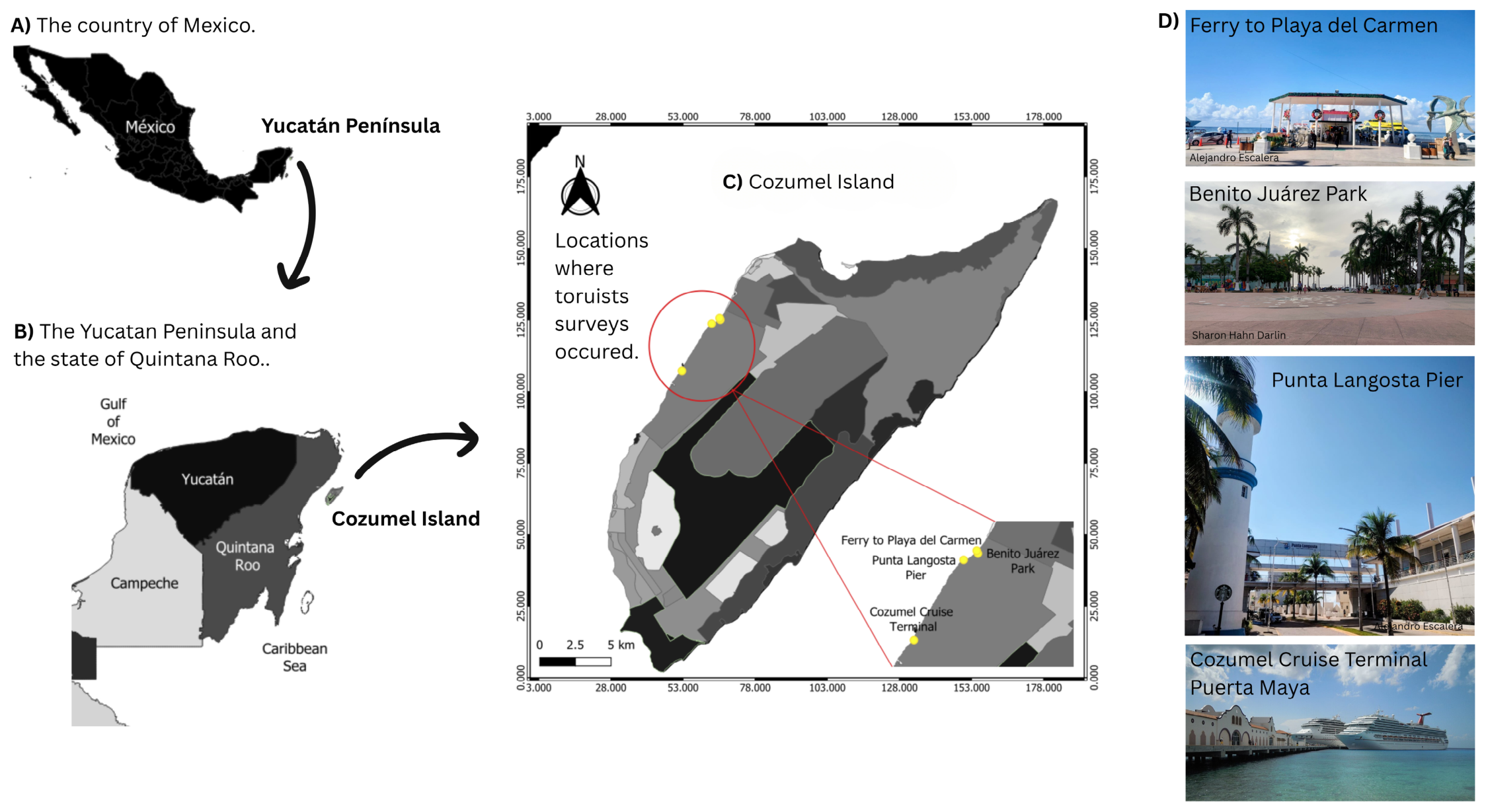
Figure 1. Study area: Mexico, the Yucatán Peninsula, and Cozumel Island. (A) Location of Mexico. (B) The Yucatán Peninsula showing the state of Quintana Roo and the location of Cozumel Island. (C) Cozumel Island indicating the sites where tourist surveys were conducted: Benito Juárez Park, Punta Langosta Pier, the Ferry Terminal to Playa del Carmen, and the Cozumel Cruise Terminal. A scale bar and geographic coordinates are included. (D) Representative photographs of the survey sites. These photographs are provided for illustrative purposes only and are not georeferenced. Photo credits: Benito Juárez Park, Sharon Hahn Darlin (https://flickr.com/photos/41980486@N07/51203167790 accessed on 10 September 2025); Puerta Maya, Creative Commons Attribution–ShareAlike 3.0 Unported; Punta Langosta Pier and Ferry Terminal to Playa del Carmen, photographs by Alejandro Escalera.
Coasts 06 00036 g001
Figure 2. Demographic profile of surveyed tourists (n = 144). (A) Age distribution categorized by life stage: young adult (n = 44; 30.7%), adult (n = 90; 62.9%), and senior (n = 5; 3.5%). (B) Country of origin of respondents. Most were from the United States (n = 60; 41.7%) and Mexico (n= 32; 22.2%), followed by Brazil (n = 7; 4.9%), England (n = 5; 3.5%), and other countries in smaller proportions. In total, 24 countries were represented.
Coasts 06 00036 g002
Figure 3. Tourist transportation to Cozumel and associated length of stay (n = 144). (A) Frequency of arrival by cruise ship, ferry, or flight. The ferry (43%) and cruise ships (37.5%) were the most common transportation modes. (B) Duration of stay by transportation method. Most cruise ship passengers stayed only for the day (94.4%), while ferry and flight arrivals showed more variation, including longer stays (e.g., 1–2 weeks).
Coasts 06 00036 g003
Figure 4. Tourist activities and environmental awareness in Cozumel (n = 144). (A) Main activities reported by tourists, with snorkeling (57%) and beach visits (39%) being the most frequent. (B) Self-perceived environmental consciousness, with 55% strongly agreeing and 31% agreeing. (C) Perception of negative environmental impacts of tourism on the island. (D) Agreement that tourism impacts differ between island and mainland destinations, with most respondents expressing agreement or strong agreement.
Coasts 06 00036 g004
Figure 5. Awareness and environmentally conscious behavior among tourists prior to and during their visit to Cozumel (n = 144). (A) Most respondents reported not researching Cozumel’s environmental issues before their trip, with 53% disagreeing or strongly disagreeing. (B) Similarly, 42% did not research the environmental impacts of cruises prior to traveling. (C) When asked whether they made decisions with environmental impact in mind (e.g., choice of activities, products, or services), only 38% agreed or strongly agreed, while 30% disagreed or strongly disagreed.
Coasts 06 00036 g005
Figure 6. Summary of tourists’ knowledge and planning related to the Cozumel National Marine Park (n = 144). (A) Responses to whether tourists learned about environmental issues during their visit to Cozumel. (B) Awareness of the park’s federal protection status and regulations. (C) Proportion of tourists who planned to visit the Marine Park. (D) Proportion of tourists who had or planned to acquire the daily access bracelet or an annual park pass.
Coasts 06 00036 g006
Figure 7. Tourists’ awareness, conservation behaviors, and willingness to financially support reef conservation (n = 144). Panels show views on coral reef damage (A), sunscreen-related threats (BD), and willingness to donate to offset ecological footprint (E). Percentages are based on number of respondents per question.
Coasts 06 00036 g007
Table 1. Thematic summary of tourist responses (n = 17) regarding environmental impacts of tourism on islands versus mainland destinations. Tourists were asked whether the environmental impacts of tourism differ between island and mainland destinations, and if so, to provide examples. Responses were coded into emergent themes, with illustrative quotes provided for each category.
ThemeDescriptionIllustrative Quotes from Tourists
Waste and PollutionConcerns about trash, chemical pollutants, and limited waste management“More crowded, more trash, less resources.”
“Oversized vessels/too many people/too much bio chemicals.”
“Trash, sunscreen, wastewater.”
Coral and Habitat DegradationDirect impacts on marine ecosystems such as reefs and coastal habitats“Use of reef/coral destruction.”
“Often habitats are secluded, damage takes longer or [is] harder to recover.”
Island Fragility and Limited CapacityRecognition of island vulnerability due to small size, infrastructure, and exposure to climate change“The ecosystem on islands tends to be more fragile.”
“Rising sea levels impact an island more than mainland.”
“Only so much space… weaker infrastructure due to being an island.”
Ethics and Individual BehaviorThe role of tourists’ behavior and ethical decision-making“Depends on the people.”
“Checked if the whale shark snorkeling was ethical.”
Governance and ResponsibilityPerceived need for stronger environmental regulations and education“If there are any negative impacts, government should regulate.”
“Education and awareness about recycling.”
Disclaimer/Publisher’s Note: The statements, opinions and data contained in all publications are solely those of the individual author(s) and contributor(s) and not of MDPI and/or the editor(s). MDPI and/or the editor(s) disclaim responsibility for any injury to people or property resulting from any ideas, methods, instructions or products referred to in the content.