Article

Nutritional Value and Bioactive Lipid Constituents in Seeds of Phaseolus Bean Cultivated in Bulgaria


1
Department of Chemical Technology, Faculty of Chemistry, University of Plovdiv “Paisii Hilendarski”, 24 Tzar Asen Str., 4000 Plovdiv, Bulgaria
2
Institute of Plant Genetic Resources, Agricultural Academy, 2 Drughba Str., 4122 Sadovo, Bulgaria
*
Authors to whom correspondence should be addressed.
AppliedChem 2026, 6(1), 4; https://doi.org/10.3390/appliedchem6010004
Submission received: 22 October 2025 / Revised: 19 November 2025 / Accepted: 25 December 2025 / Published: 4 January 2026

Abstract

Seeds from four landraces of dry beans (Phaseolus vulgaris L. and Phaseolus coccineus L.) from the National Collection of Bulgaria were analyzed for their chemical and lipid composition. The chemical analysis revealed that protein ranged from 24.4% to 31.5%, carbohydrates from 53.1% to 56.1%, fat from 0.9% to 1.4%, fiber from 2.6% to 2.8%, and ash from 3.9% to 4.7%, indicating their high nutritional and caloric value. The seed oils contained significant levels of bioactive compounds, including tocopherols (3483–3809 mg/kg), carotenoids (1664–2049 mg/kg), and phospholipids (24.6–62.2%), which contribute to their health-promoting properties. In the Phaseolus vulgaris accessions, the oil was primarily composed of linolenic (n-3) and linoleic acids (n-6), followed by palmitic and oleic acids, whereas in the Phaseolus coccineus accession, linoleic acid (n-6) predominated, followed by linolenic (n-3) acid. β-Sitosterol was the major sterol, followed by stigmasterol, while the tocopherol fraction was mainly composed of γ-tocopherol (88.2–95.0%), with δ-tocopherol as a secondary component. Phosphatidylcholine was the predominant phospholipid, accounting for 33.1–51.7%. These findings underscore the potential of Bulgarian bean landraces as functional ingredients in health-oriented food products due to their balanced nutritional profile and presence of bioactive lipids.

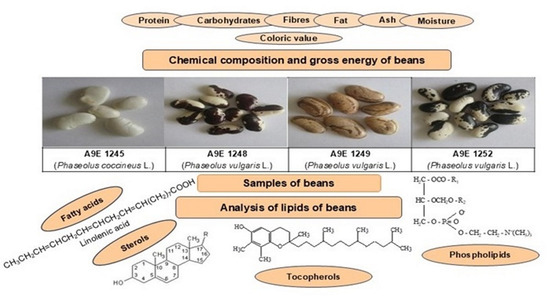
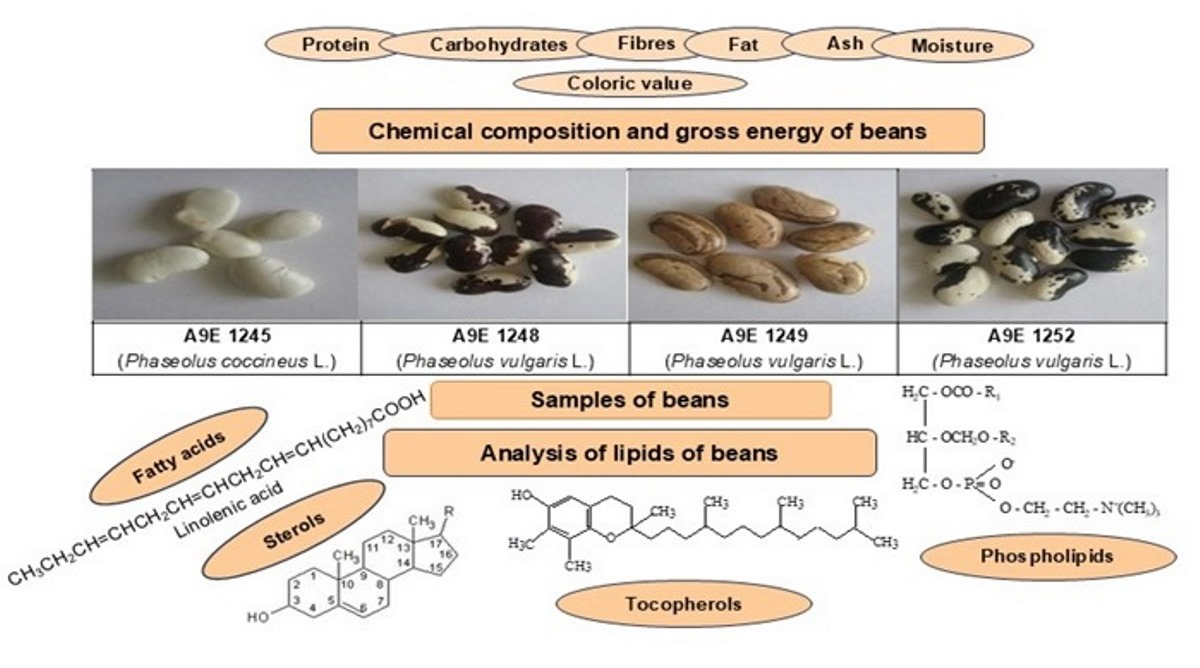
Graphical Abstract

1. Introduction

The common bean (Phaseolus ssp.) is a member of the Fabaceae family, genus Phaseolus. The common bean is cultivated predominantly as a source of food for human consumption, and the most used species is Phaseolus vulgaris L. [1]. The beans originated in Mexico, Central America, and the Northern part of South America, and until the end of the 16th century, this crop was distributed in Europe and European colonies in Africa [2]. According to the Food and Agricultural Organization (FAO), the world production of dry bean in 2023 was 28,505,529 tons, from an estimated harvested area of approximately 37,750,753 hectares (yield production 755.1 kg/ha) [3]. Phaseolus bean is a traditional crop for the Bulgarian nation, as the grain production in 2017 was 2502 tons from a harvested area approximately of 2749 hectares (production 910 kg/ha) [3]. The biggest production of dry bean is located in the northeastern part of the country, where the climate is characterized by the most favorable conditions. The common bean is distributed all over the country, with diverse local populations and old varieties. They differed from each other by plant habit; color of the flower; color, shape, and size of the seeds; as well as different agro-biological and agronomical traits [4,5]. The most distributed species is Phaseolus vulgaris L., while the Phaseolus coccineus L. species occupies less territory, predominantly in the mountain area because of the favorable climatic conditions, particularly the higher relative humidity and low daily temperatures [6]. The National collection of Phaseolus ssp. is conserved ex situ in a gene bank at the Institute of Plant Genetic Resources (IPGR), consisting of about 2200 accessions [7]. Phaseolus grains have a significant nutritional value and health properties [8,9,10,11,12,13,14,15,16,17,18,19,20]. With forthcoming global climate changes characterized by drought, heat, and changing season durations, qualitative and quantitative changes in the chemical composition and nutritional value of legume crops are expected. Biochemical analysis of grains obtained under dry conditions showed significant differences in protein and fat content, resulting in differences in its nutritional value and its energy value [13]. Extensive biochemical analyses of Phaseolus vulgaris and the related species have demonstrated considerable variability in their macronutrient and micronutrient profiles, largely attributable to both environmental conditions and genetic diversity. Protein content has been reported within a broad range of 18.84–36.28% [8,11,13,15,16,17,21,22,23], underscoring the role of beans as a significant source of plant-derived protein. Researchers in Romania found that the free amino acid content varied between 0.56 and 1.29 g per 100 g of dry matter [23]. In Nigeria, sixteen amino acids were identified in different local Phaseolus vulgaris varieties grown in the northern region [17]. Amino acid profiling has revealed the presence of essential amino acids, with lysine being especially abundant, both in protein fractions and in whole seeds—the content of lysine in protein is 4.6–6.0% and in seeds it is 1.3–2.25% [24,25,26,27].
Carbohydrates represent the predominant macronutrient, accounting for approximately 47.02–66.0% of dry seed weight [11,13,15,17,22], while lipid content remains comparatively low (0.53–3.0%) [11,16,17,22], with isolated cases of elevated values in certain accessions (15.3% and 9.90–13.97%) [9,13]. Starch and fiber are the principal components of carbohydrates. Researchers from the Canary Islands reported that the starch content in beans ranges from 34.5% to 42.6% [21], while fiber levels show substantial variation, spanning from 2.79% to 30.9% [8,13,15,16,21,22]. These components contribute significantly to the dietary and functional value of the crop.
The mineral composition of beans further enhances their nutritional importance, with notable concentrations of phosphorus, potassium, calcium, magnesium, iron, zinc, copper, and manganese. Researchers from various countries have reported that the mineral content in beans ranges from 2.0% to 5.61% [11,13,15,16,17,21,22]. The potassium content is particularly remarkable, reaching values as high as 2324 mg per 100 g of dry matter [17].
Reported results from Bulgarian researchers on Phaseolus seeds provided by the IPGR National Collection also demonstrated the high nutritional value of the seeds, based on their protein content (23.42–30.23%), crude fiber (1.28–5.09%), and mineral substances (1.51–4.99%) [24,25,26,27].
The moisture content of common bean accessions grown in Brazil was found to range from 11.42% to 12.93% [11], while that of common beans (Phaseolus vulgaris) from the Canary Islands ranged from 6.05% to 7.24% [21].
Beyond these primary nutrients, the beans are also characterized by a diverse array of phytochemicals, including alkaloids, anthocyanins (45.0 mg/100 g), catechin (61.0 mg/100 g), flavonoids, phytic acid (3.0 mg/100 g), quercetin (31.0 mg/100 g), saponins (56.0 mg/100 g), tannins, terpenoids, etc.. These bioactive compounds not only contribute to the nutritional profile but also possess functional properties relevant to traditional medicine and human health [8].
Comparative investigations across diverse geographical regions—including West Africa [8], Brazil [11], Nigeria [17], the Canary Islands [21], Kenya [22] and Romania [23]—demonstrate the extent to which local environmental conditions and varietal differences influence the chemical composition of beans. Despite these regional and varietal distinctions, the overarching conclusion remains consistent, as follows: beans, particularly Phaseolus vulgaris, are a crop of high nutritional and functional value. Their balanced composition of proteins, carbohydrates, fibers, minerals, and phytochemicals positions them as an important food source for humans as well as feed for livestock in many parts of the world. These legumes serve as a major source of protein for vegetarians and low- to middle-income groups throughout the world.
The lipid fraction of plant-based foods is a potential source of bioactive components such as essential fatty acids, phytosterols, tocopherols and phospholipids, which are important for the prevention and protection of human health. Polyunsaturated fatty acids (n-6 and n-3) have numerous beneficial effects on cardiovascular disease, including improved blood lipid profile and anti-arrhythmic effects [28]. Phytosterols have a wide spectrum of biological effects, including anti-inflammatory, anti-oxidative, and anticarcinogenic activities, but their cholesterol-lowering capacity has been the most extensively researched aspect [29]. Tocopherols (vitamin E) are fat-soluble antioxidants that function as scavengers of lipid peroxyl radicals and play a putative role in the prevention of Alzheimer’s disease and cancer [30]. Extensive studies on the lipid composition (physicochemical characteristics, fatty acid, sterol, and tocopherol profiles) of seeds from two different bean samples (Ph. vulgaris) were conducted by a team of researchers from Ireland [18]. The oil content in the seeds of the studied varieties ranged from 0.9 to 1.2%, with unsaturated fatty acids (linoleic, linolenic, and oleic acids) predominating in the triacylglycerol composition. Data on the sterol composition of lipids isolated from the seeds of the studied bean varieties show that the main component is β-sitosterol, followed by stigmasterol and campesterol. The analyzed oils contain the main classes of tocopherols (α-, β-, and γ-tocopherols), with β + γ tocopherols being dominant. Twenty-five domesticated accessions of the common beans (Ph. vulgaris), including thirteen from the Americas and twelve from Europe, were investigated by Italian researchers. They determined that the lipid content ranged from 1.8 to 3.1 g per 100 g of dry seeds, while the total tocopherol content varied between 47.0 and 134 mg per 100 g of lipids. The oils contained both γ-tocopherol (43.3–127.2 mg/100 g of lipids) and δ-tocopherol (3.7–13.6 mg/100 g of lipids), with the γ/δ-tocopherol ratio ranging from 7.7 to 19.8 [31]. Data on the physicochemical properties and fatty acid composition of oils extracted from the seeds of six samples of common bean (Ph. vulgaris) grown in South Africa show acid values ranging from 11.0 to 19.2 mg KOH/g, iodine values from 80.5 to 92.3 g I2/100 g, degrees of unsaturation between 76.64 and 84.24%, free sterol content of 2.8–3.0%, and phospholipid content from 16.8 to 20.3% [14]. The fatty acid composition of oils from various bean species cultivated in America reveals a high content of polyunsaturated fatty acids (65.8–79.4%), with glyceride oils exhibiting high iodine values (174–177 g I2/100 g), elevated tocopherol content (2.670–3.970 ppm), and high acid values (15.4 mg KOH/g) [20].
The common bean is a traditional crop in Bulgaria, and local materials have reported high phenotypic and genotypic diversity. There is information about the chemical composition of Bulgarian accessions’ bean seeds but not for the species in the present study. As far as the authors are aware, such research on the lipid composition (fatty acid composition of triacylglycerols; content of essential fatty acids; and content and composition of sterols, tocopherols, and phospholipids) of the seeds of the P. vulgaris cultivars grown in Bulgaria has not been reported. The immense interest in biologically active compounds such as omega fatty acids, sterols, tocopherols, and phospholipids encouraged the authors to conduct these studies to ascertain the lipid profiles of the seeds of the P. vulgaris and P. coccineus cultivars grown in Bulgaria, which are an important food source for the people in our country. Consequently, the aim of the present study is to investigate the chemical composition of seeds from three bean samples of the species Phaseolus vulgaris L. and one sample of the species Phaseolus coccineus L., as well as to characterize the isolated lipids in terms of their fatty acid profile and content of biologically active compounds (essential fatty acids, tocopherols, sterols, and phospholipids). Hence, this work determines the nutritional value of dry bean, especially as a potential source of bioactive components. A more in-depth study of the nutritional and biological value of unstudied bean samples will allow for the assessment of their potential for application as a component in functional foods and pharmaceutical products.

2. Materials and Methods

2.1. Plant Material

The seeds of four accessions of Phaseolus vulgaris L. (A9E1248, A9E1249, and A9E1252) and Phaseolus coccineus L. (A9E1245) were obtained from the IPGR, Sadovo, Bulgaria, 2023 (Figure 1). Samples were of local origin, the three (A9E1245, A9E1248, A9E1249) coming from the Velingrad region and A9E1252 from the Troyan region. The accessions differed in terms of the morphological characteristics of the plants as well as the morphology of the flowers and seeds. All samples were taken from plants with climbing or indeterminate growth habits. Primordial leaves of accession A9E1245 are heart-shaped with dark green color, and the other three accessions have a light green color and are elongated at the top. The flowers of accession A9E1245 are white, and those of the other accessions bright purple.
Prior to use for analysis, the bean seeds were air-dried for 72 h at 25 °C. The accessions A9E1248, A9E1249, A9E1252, and A9E1245 had seed moisture contents of 10.9 ± 0.5%, 11.6 ± 0.1%, 10.9 ± 0.5%, and 10.6 ± 0.1%, respectively.

2.2. Chemical Composition of Seeds

Crude protein was calculated from the nitrogen content using the Kjeldahl method with a conversion factor of 6.25 [32]. Insoluble fiber and ash content were measured using the gravimetric procedure described in AOAC (2016) [29]. Moisture content was determined according to AOAC (2016) [33]. Available carbohydrate content (based on dry weight) was calculated using the following formula: 100 − [protein + lipids + moisture + ash + insoluble fiber] (g/100 g of seeds) [34]. Caloric value was calculated using the following formula: CV = C × 17 (4) + M × 38 (9) + P × 17 (4) (kJ [kcal]/100 g), where C = carbohydrate content (%); M = fat content (%); P = protein content (%); and the energy equivalents are as follows: carbohydrates = 17 kJ (4 kcal), fat = 38 kJ (9 kcal), protein = 17 kJ (4 kcal) [34].

2.3. Isolation of Glyceride Oil and Determination of Oil Content

Seed samples (100 g) were air-dried, ground to a fine powder, and subjected to oil extraction with n-hexane using a Soxhlet apparatus for 8 h. The solvent was partially removed with a rotary vacuum evaporator, and the residue was transferred into pre-weighed glass vessels. The remaining solvent was evaporated under a stream of nitrogen to constant weight, and the oil content was determined gravimetrically [35].

2.4. Analysis of Fatty Acids

The fatty acid composition of the oils was determined by gas chromatography (GC) following acid-catalyzed transesterification with 2% H2SO4 in absolute methanol (CH3OH) on a boiling water bath [36]. The resulting fatty acid methyl esters (FAMEs) were analyzed using an HP 5890 Series II gas chromatograph (Hewlett Packard GmbH, Austria) equipped with a 30 m × 0.25 mm capillary EC-Wax column and a flame ionization detector. The column temperature program was as follows: initial temperature 130 °C (held for 4 min), increased at 15 °C/min to 240 °C (held for 5 min). Injector and detector temperatures were maintained at 250 °C. Hydrogen was used as the carrier gas at a flow rate of 0.8 mL/min, with a split ratio of 1:50. Fatty acids were identified by comparing retention times with those of a standard mixture of FAMEs analyzed under identical GC conditions [37]. The standard mixture was obtained from Sigma-Aldrich Chemical Co. (St. Louis, MO, USA), with a purity of ≥98%. All solvents and reagents were of analytical grade, purchased from Merck (Darmstadt, Germany) and used without further purification. Results were expressed as the percentage by mass of individual fatty acids in the glyceride oils. The iodine value (g I2/100 g fat) was calculated based on the fatty acid composition [38].

2.5. Analysis of Sterols

Unsaponifiable matter was obtained by saponifying glyceride oil, followed by extraction with hexane [39]. The sterol fraction of the unsaponifiables was isolated using thin-layer chromatography on silica gel 60 G in mobile phase diethyl ether: hexane (1:1, v/v). Qualitative and quantitative analyses of the sterol fraction were performed with an HP 5890 series II gas chromatograph (Hewlett Packard GmbH, Vienna, Austria ), equipped with a 25 m × 0.25 mm DB-5 capillary column and a flame ionization detector. The temperature program was as follows: an initial temperature of 90 °C (held for 2 min), ramped to 290 °C at 15 °C/min, then increased to 310 °C at 4 °C/min, and held for 10 min. The detector and injector temperatures were set at 320 °C and 300 °C, respectively. Hydrogen (H2) served as the carrier gas, with a split ratio of 1:50. Data acquisition and processing were carried out using Data Apex Clarity™ software (version 2.4.1.93/2005). Sterol identification was confirmed by comparing the retention times with those of a standard mixture containing cholesterol (stabilized, purity 95%, Acros Organics, Morris Plains, NJ, USA), stigmasterol (purity 95%, Sigma-Aldrich, St. Louis, MO, USA), and β-sitosterol (with ca 10% campesterol, ca 75% β-sitosterol, Acros Organics, Morris Plains, NJ, USA) [40].

2.6. Analysis of Tocopherols

The total content and individual composition of tocopherols were determined directly in the oil by high-performance liquid chromatography using a Merck–Hitachi instrument (Merck, Darmstadt, Germany) equipped with a 250 mm × 4 mm Nucleosil Si 50-5 column (Merck, Darmstadt, Germany), a fluorescence detector Merck–Hitachi F-1050, and a high-pressure pump L-6000A. The operating conditions were as follows: a mobile phase consisting of n-hexane and dioxane (96:4, v/v), flow rate of 1.0 mL/min, excitation wavelength at 295 nm, and emission wavelength at 330 nm [41]. A total of 20 μL 2% solution of oil in hexane was injected. Individual tocopherols were identified by comparing the retention times with those of authentic standards (α-, β-, γ-, and δ-tocopherols) (Figure S4). Reference tocopherol homologues with a purity ≥ 98% were obtained from Merck (Darmstadt, Germany). The tocopherol content in seed oils was quantified by comparing the peak areas of the sample with those of standard solutions of known concentrations. The tocopherol content of the sample was expressed in milligrams per kilogram (mg/kg).

2.7. Analysis of Phospholipids

A separate portion (100 g) of air-dried seeds was subjected to Folch extraction [42]. Phospholipid classes were separated using two-dimensional thin-layer chromatography (TLC). In the first direction, plates were developed with chloroform:methanol:ammonia (65:25:5, v/v), and in the second direction with chloroform:acetone:methanol:acetic acid:water (50:20:10:10:5, v/v). Identification was achieved by comparing the Rf values with those of authentic commercial standards subjected to TLC under identical conditions. Quantification was carried out spectrophotometrically by measuring phosphorus content at 700 nm [43,44].

2.8. Statistical Analyses

All the analyses were performed in triplicates. The results were expressed as the mean ± standard deviation (SD). Data were analyzed using one-way ANOVA followed by Duncan’s test for multiple comparisons (p < 0.05).

3. Results and Discussion

3.1. Chemical Composition of Seeds from Four Bean Accessions

The main compounds of the chemical composition of bean seeds (protein, carbohydrates, fat, insoluble fibers, and mineral content) are presented in Table 1.
The protein content in the examined bean samples ranges from 24.4% (A9E1245) to 31.5% (A9E1252), and the results we obtained correspond with the literature data from other authors regarding the protein content of bean seeds, which falls within the range from 18.06% to 36.28% [8,11,13,16,17,19,21,22,23,45]. Similar results for crude protein content (25.60–28.92%) were obtained from studies of various garden bean samples from the collection of the IPGR, Sadovo [25,26]. Comparative analyses of bean samples (Ph. vulgaris) carried out by researchers from Romania, Brazil, and Spain revealed similar ranges of seed protein content, as follows: 21.2–26.4% [21], 18.84–26.69% [23] and 20.3–27.9% [46].
The seeds of the examined bean samples have a high carbohydrate content—ranging from 50.1% (A9E1252) to 56.1% (A9E1245)—which are within the range reported by various researchers (49.0–62.9%) [8,9,11,13,17]. Higher carbohydrate levels were observed in three common bean varieties from Kenya (62.7–67.3%) [22], as well as in the chemical composition data of twelve common bean samples analyzed by Los et al. (58.8–77.4%) [46]. The fiber content in the seeds of the examined bean samples ranged from 2.6% (A9E1249 and A9E1252) to 2.8% (A9E1245 and A9E1248), which is close to the values reported in the literature for various bean cultivars—from 2.81% to 3.6% [9,13,17]. Studies on the chemical composition of different Ph. vulgaris samples cultivated in West Africa, Italy, North America, and Bulgaria revealed higher fiber contents, ranging from 3.16% to 32.8% [8,17,22,24,25,26,45,46].
The seeds of the analyzed bean samples exhibited low lipid content as follows: 0.9% (A9E1249), 1.0% (A9E1248 and A9E1252), and 1.4% (A9E1245). These results are consistent with data reported for bean samples cultivated in Northern Nigeria, which ranged from 1.02% to 1.22% [17]. Similar lipid contents were found in studies on the chemical composition of various bean types, with values ranging from 0.53% to 3.10% [11,16,17,22,31,45,46]. However, there are also reports of significantly higher fat content (9.90–13.97% to 15.3%) in Ph. vulgaris seeds grown in Mexico and Nigeria [9,13].
The mineral content in the seeds of the analyzed bean accessions ranged from 3.9% (A9E1249 and A9E1252) to 4.7% (A9E1245). These values correspond with data on crude ash content in garden bean seeds studied at the IPGR, Sadovo, (3.82–4.99%) [25], as well as with the literature values for total mineral content in Ph. vulgaris seeds, which ranged from 2.97% to 5.70% [9,11,13,16,21,22,45,46].
The energy value of the examined samples ranged from 1411.2 kJ/100 g (A9E1249) to 1425.2 kJ/100 g (A9E1252), which is lower than the reported energy values for imported Ph. vulgaris seeds (1547.0–1797.7 kJ/100 g) [9,13,17] but close to that of Bulgarian bean samples (1426.7 kJ/100 g). Compared to soybeans (1895.5 kJ/100 g), beans have a lower energy value, though it is similar to that of lentils and cereal grains such as wheat (1397.5 kJ/100 g), rice (1493.7 kJ/100 g), and sorghum (1435.1 kJ/100 g) [47].

3.2. Lipid Composition

Data on the content of biologically active substances (sterols, tocopherols, carotenoids, and phospholipids) in glyceride oils and in the seeds of the four bean accessions are provided in Table 2.
The amount of unsaponifiable matter in the studied bean seed oils ranged from 7.5% (A9E1245) to 12.0% (A9E1249), exceeding the values reported for Malagasy legume seed oils (1.09–3.67%) [12] and Ph. vulgaris cultivars grown in Southern Africa (4.9–5.7%) [14]. The results are in good agreement with the amount generally reported in crude vegetable oils, according to the Codex Alimentarius (≤9.0–28.0%) [48]. Sterol content in the oils varied between 2.5% (A9E1252) and 3.9% (A9E1248), while their concentration in the seeds was significantly lower—between 0.03% and 0.04%. The quantities of sterols in the oils are consistent with findings from studies on legume cultivars Ph. vulgaris, grown in Southern Africa (2.8–3.0%) [14], but they are notably higher than the sterol content typically found in crude vegetable oils (400–22,100 mg/kg or 0.04–2.21%) [48].
The tocopherol (vitamin E) content in the lipids was remarkably high, ranging from 3483 to 3809 mg/kg. These values are comparable to those reported for soybean and corn oils (3370 and 3720 mg/kg, respectively) [43,44]. In contrast, Murube et al. [31] reported significantly lower tocopherol concentrations (47.0–134 mg/100 g lipids) in lipids extracted from seeds of 25 American and European common bean varieties. The tocopherol content in the studied bean seeds ranged from 34.3 to 48.7 mg/kg, which is close to the values reported by Ryan et al. (38.0–54.0 mg/kg) [18].
The bean seed oils also contained carotenoids (primarily β-carotene) in concentrations ranging from 1664 mg/kg (A9E1248 and A9E1249) to 2049 mg/kg (A9E1252), which aligns with the typical range for unbleached vegetable oils (500–2500 mg/kg).
The highest phospholipid content was observed in the oils and seeds of accessions A9E1252 and A9E1249 of Ph. vulgaris, with 23.1% and 19.1% in lipids, and 0.23% and 0.17% in seeds, respectively. In comparison, the phospholipid content in the oils of samples A9E1245 and A9E1248 was 11.5% and 11.9%, and in the seeds, it was 0.16% and 0.12%. These values are consistent with those reported by Mabaleha et al. (16.8–20.3%) [14]. The total phospholipid content is higher than that found in vegetable oils, where it typically ranges between 1.0% and 1.5% [49,50]. However, it is well established that the seeds of leguminous plants (such as soybean, bean, lentil, pea, etc.) contain significantly higher amounts of phosphatidylcholine (lecithin). The studied bean seeds have a low oil content (0.9–1.4%) but are rich in biologically active compounds (tocopherols, carotenoids, and phospholipids), which is why the consumption of dry beans is associated with reduced risk of various chronic and degenerative diseases such as cancer, obesity, diabetes, and cardiovascular diseases, leading to a reduction in the levels of bad cholesterol and triglycerides in the body [51]. This sparked scientific interest in exploring the lipid composition of seed oils derived from cereal and legume crops.

3.2.1. Fatty Acid Composition

Table 3 shows the fatty acid composition of the glyceride oils from the seeds of the studied bean accessions.
In the seed oils of the three bean accessions (Ph. vulgaris), linolenic acid predominates, ranging from 40.2% (A9E1252) to 47.2% (A9E1248), followed by linoleic acid, which varies from 15.8% (A9E1248) to 26.2% (A9E1249). These are followed by palmitic acid (14.5% in A9E 1249 to 24.1% in A9E1252) and oleic acid (9.7% in A9E1249 to 16.5% in A9E1248). In the fatty acid profile of sample A9E1245 (Ph. coccineus), linoleic acid predominates (41.4%), followed by linolenic (26.3%), palmitic (14.6%), and oleic acid (9.2%) (Figure S1). The oils of the studied bean species also contain the positional isomer of oleic acid—vaccenic acid, which is present in amounts of 1.2–1.8% in the three Phaseolus vulgaris samples, and 4.5% in the seeds of sample A9E1245 (Ph. coccineus).
The fatty acid composition of the oils from the analyzed bean seeds is consistent with data reported by other authors studying oils from various bean cultivars, where the major fatty acids include the following: linolenic acid (36.47–48.81%), linoleic acid (20.96–36.10%), palmitic acid (10.7–19.23%), and oleic acid (5.2–11.97%) [14,20,52].
The sample A9E1245 (Ph. coccineus) shows similar values to the fatty acid profiles of five Malagasy legume seed oils [12] and scarlet runner bean [10], in which linoleic acid is the main component (29.5–46.4%). Ryan et al. [18] also report that the seed oils of yellow and white beans are dominated by linoleic acid (42.43% and 26.04%), linolenic acid (18.34% and 45.69%), palmitic acid (23.68% and 14.20%), and stearic acid (10.35% and 11.97%). David et al. [53] established that linoleic acid (n-6) was the main constituent for the lipid fractions separated from the common beans harvested from the northeast and southwest of Romania (43.4% and 35.23%, respectively), and higher relative concentrations were obtained for the α-linolenic acid (n-3) (13.13% and 15.72%, respectively).
The amount of unsaturated fatty acids exceeds 70.0%. The oils from the three samples of Ph. vulgaris contain between 73.0% and 83.7% unsaturated fatty acids, while the oil from sample A9E1245 of Ph. coccineus contains 82.0% unsaturated fatty acids. In both studied species, the content of polyunsaturated fatty acids (57.8–71.7%) is higher than that of monounsaturated fatty acids (12.0–18.6%). The main polyunsaturated fatty acids are linolenic and linoleic acids, while oleic acid (9.2–16.5%) is the predominant monounsaturated fatty acid.
Our results are consistent with the literature data on the fatty acid composition of six South African bean varieties, where the quantity of unsaturated fatty acids ranges from 79.67% to 84.24% [14]. The content of saturated fatty acids is relatively low—between 16.3% and 27.0%. The primary saturated fatty acid is palmitic acid (14.5–24.1%), followed by stearic acid (1.2–2.6%). A higher level of saturated fatty acids was observed in the oil seeds of sample A9E1252 (27.0%).
Essential fatty acids are fats the body cannot make, and they must be obtained from food, primarily omega-3 (α-linolenic acid) and omega-6 (linoleic acid). They are vital for cell membrane structure, producing hormones and other bioactive lipid mediators. A balanced intake is crucial for health, with deficiency leading to various health problems.
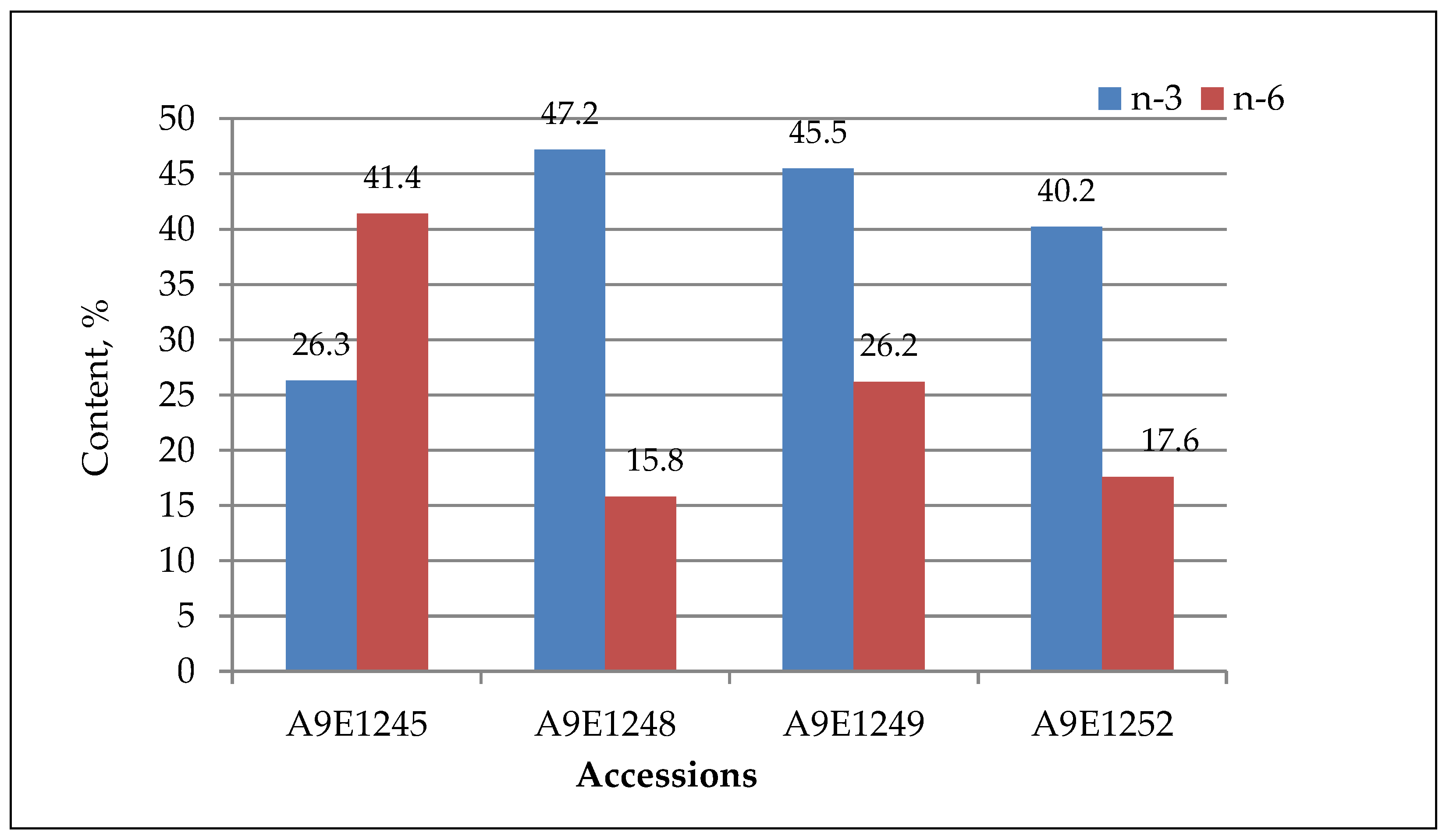
The lipids of the studied bean seeds are rich in essential fatty acids (Figure 2).
A high content of the essential linolenic acid (n-3) was found in accessions of the species Ph. vulgaris (47.2% in A9E1248, 45.5% in A9E1249, and 40.2% in A9E1252), whereas according to the literature data, its content in traditional vegetable oils ranges from 0.0% to 18.0% [18,48]. The seed oil from sample A9E1245 (Ph. coccineus) is rich in linoleic acid (n-6) (41.4%) and similar in composition to sesame, soybean, and sunflower oils [48]. This indicates that bean seeds are a good source of the essential linolenic (n-3) and linoleic (n-6) fatty acids, which are extremely important in the formation of cell membranes, especially in nervous tissue. The presence of omega-3 FA, especially α-linolenic acid, at high concentrations provides an n-3:n-6 ratio of 0.64 for accession A9E1245 and significantly higher for samples A9E1248, A9E1252, and A9E1249—2.99, 2.28, and 1.74, respectively. It is well known that a value over 0.2 provides omega-3-based lipid fractions with healthy properties for both cardiovascular and neuronal systems [54]. Notably, this ratio is two to almost ten times higher in some lipid fractions of common beans, suggesting that such fatty acids from these vegetables may have significant health implications. David et al. [53] established values of the n-3/n-6 ratio for the lipid fractions separated from the common beans harvested from the northeast and southwest of Romania—0.32 and 0.51, respectively, which are many times lower than those obtained in our study. The ideal dietary n-3 to n-6 ratio ranges from approximately 1:1 to 4:1, and the values obtained for the n-3:n-6 ratio in the lipids of the studied bean species are close to this range. This ratio contributes to the healthy properties of these studies’ vegetable samples.
The iodine value is a measure of the unsaturation of oil. The iodine number of the studied oils was very high, i.e., 153 gI2/100 g (A9E1252), 155 gI2/100 g (A9E1245), 173 gI2/100 g (A9E1248), and 181 gI2/100 g (A9E1249), probably because of the high content of polyunsaturated linolenic and linoleic acids. The iodine values obtained in our study are higher than those reported for glyceride oils extracted from bean seeds (Ph. vulgaris) cultivated in Northern Nigeria (118–120 g I2/100 g) [17], but they are comparable to the values observed in oils from four bean species analyzed in America (174–177 g I2/100 g) [20]. The oils of the studied bean seeds had higher iodine values than soybean oil (130 gI2/100 g), which shows the high unsaturation of oils from beans and thus lowers their oxidative stability. The iodine number for bean oils is rather similar to the iodine value for sunflower (125–144 gI2/100 g) and linseed oils (170–204 gI2/100 g) [48], suggesting the high unsaturation of the test oils and that they are less stable and more susceptible to oxidation.

3.2.2. Sterol Composition

The main components of sterols were β-sitosterol (from 49.3% in A9E1248 to 59.1% in A9E1245) and stigmasterol (from 31.8% in A9E1245 to 36.9% in A9E1248) (Table 4 and Figure S2).
The sterol composition of the bean seed oils analyzed in this study is consistent with data reported by other authors [12] on the sterol profile of lipids isolated from Malagasy legume seed oils, where β-sitosterol is the predominant component (39.8–79.6%), followed by stigmasterol (41.7%). In our samples, a higher content of stigmasterol was observed (31.8–36.9%), whereas in other vegetable oils, the amount of stigmasterol typically does not exceed 19.1% [48]. The campesterol content ranged from 3.5% (A9E1245) to 6.2% (A9E1249), which is lower than the levels found in crude vegetable oils (6.4–38.6%) [48]. The Δ5-avenasterol content (1.6–4.4%) in three of the Ph. vulgaris accessions is comparable to its content in sterols of soybean oil (1.9–3.7%). Cholesterol levels in the lipids of the bean seeds were minimal—ranging from 0.2% (A9E1245) to 0.3% (A9E1248, A9E1249, and A9E1252). According to the literature data, cholesterol content in the sterol fraction of vegetable oils varies from trace amounts up to 6.7% [48].

3.2.3. Tocopherol Composition

In the studied oils, major classes of tocopherols (α-, γ-, and δ-tocopherols) were detected (Table 5).
The predominant component in all analyzed oils is γ-tocopherol, ranging from 88.2% to 95.0% (Figure S3). α-Tocopherol is present in trace amounts (0.5–1.5%), while δ-tocopherol content ranges from 3.0% to 3.8%. Among the unsaturated tocopherol derivatives, β-tocotrienol was detected in sample A9E1245 (1.0%), and γ-tocotrienol was found in concentrations ranging from 1.2% (A9E1245) to 7.2% (A9E1252). These results are consistent with the literature data on the tocopherol profile of oils extracted from seeds of four bean species cultivated in North America, where γ-tocopherol is the dominant form (90.0–96.0%), followed by δ- and α-tocopherol (4.0–10.0%) [20]. Murube et al. [31] also reported the presence of γ-tocopherol (43.3–127.2 mg/100 g lipids) and δ-tocopherol (3.7–13.6 mg/100 g lipids) in lipids extracted from 25 American and European common bean samples. The individual tocopherol composition of the oils from the studied bean seeds closely resembles that of soybean, corn, and sesame oils, which are rich in γ-tocopherol. In contrast, it differs significantly from the tocopherol profile of most vegetable oils—such as sunflower and safflower—where α-tocopherol predominates (89–2468 mg/kg) [48].

3.2.4. Phospholipid Composition of Lipids

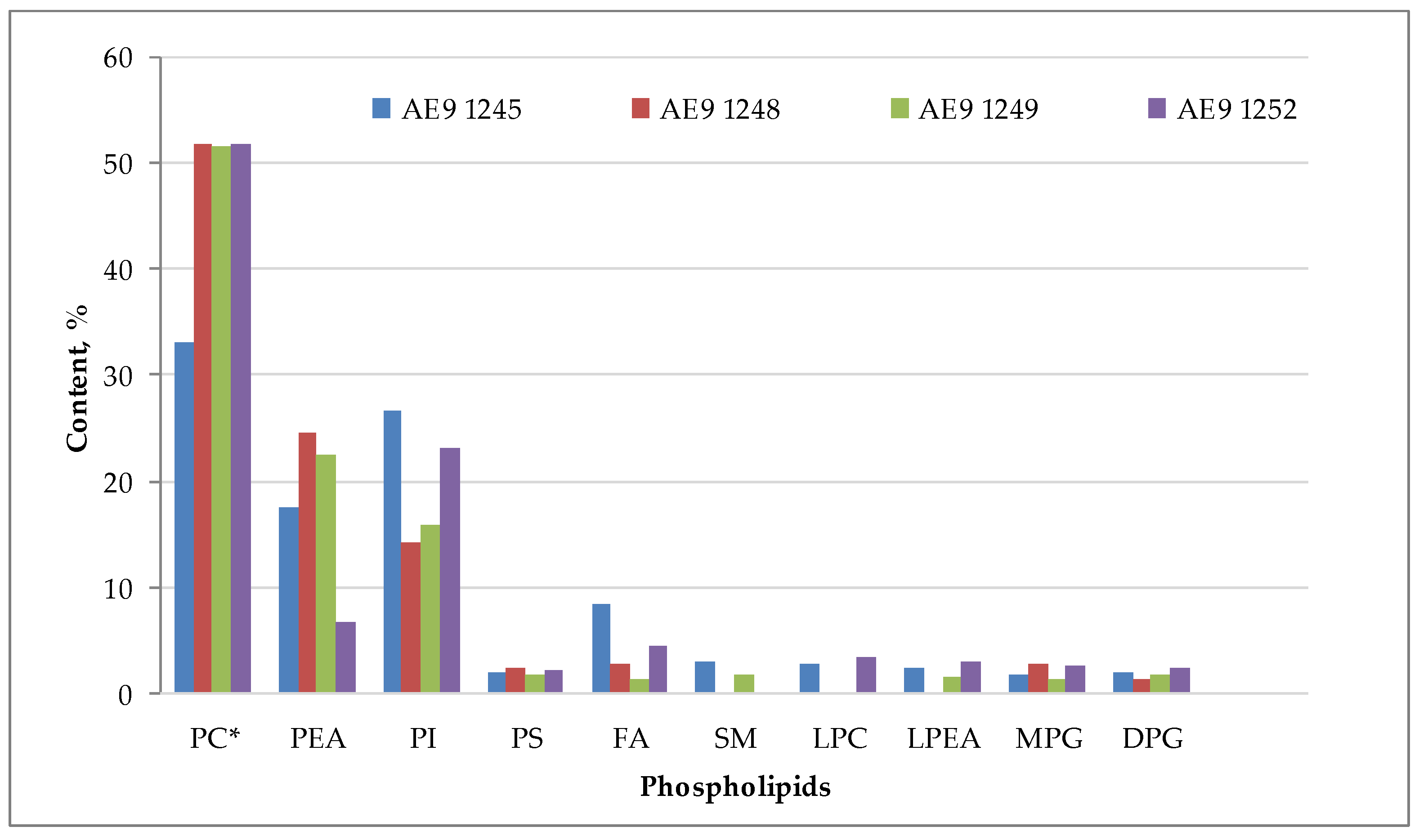
In the phospholipid fraction of oils from seeds of different bean samples, all major classes of phospholipids were identified (Figure 3), particularly phosphatidylcholine, phosphatidylinositol, and phosphatidylethanolamine.
The highest content of phosphatidylcholine (51.5–51.7%) was found in the lipids of the three bean samples from the species Ph. vulgaris. A lower phosphatidylcholine content (33.1%) was observed in the seeds of sample A9E1245 (Ph. coccineus), compensated by a higher content of phosphatidylinositol (26.6%). Phosphatidylethanolamine was present in greater amounts in the lipids of accessions A9E1248 and A9E1249 (24.6% and 22.6%, respectively), while in sample A9E1252 it was 6.8%. A higher content of phosphatidylinositol was also noted in sample A9E1252 (23.1%). Phosphatidylserine in the lipids of all studied samples ranged between 1.8 and 2.4%, and sphingomyelin was detected only in samples A9E1245 and A9E1249. The lipids of the seeds from sample A9E1245 (Ph. coccineus) showed a higher content of phosphatidic acids (8.5%), while monophosphatidylglycerol and diphosphatidylglycerol were present in all phospholipid fractions in amounts ranging from 1.4 to 2.6%. The data indicate that the phospholipids in the seeds of the different bean samples have a similar qualitative and quantitative composition. Bean seeds, like the grains of other legumes (soybeans, lentils, peas, cowpeas, etc.), contain a high amount of phosphatidylcholine (lecithin)—35.0–46.0% of the total phospholipid content.

4. Conclusions

The seeds from various bean accessions of the species Phaseolus vulgaris L. and Phaseolus coccineus L. harvested from Bulgaria have a similar chemical composition—proteins (24.4–31.5%), carbohydrates (53.1–56.1%), fats (0.9–1.4%), fiber (2.6–2.8%), and mineral substances (3.9–4.7%). Bean seeds are high in protein and carbohydrate content, with low fat levels, which determines their high nutritional and caloric value (1411.2–1425.2 kJ/100 g). The studied bean seeds have a high content of biologically active substances—tocopherols (3554–3809 mg/kg), carotenoids (1664–2049 mg/kg), and phospholipids (11.5–23.1%). Among the lipid-soluble components identified, β-sitosterol, γ-tocopherol, phosphatidylcholine, phosphatidylethanolamine, and phosphatidylinositol were the predominant constituents. This study reports, for the first time, the individual sterol, tocopherol, and phospholipid composition of Bulgarian bean seed oil. In the fatty acid composition of the seeds from the three Phaseolus vulgaris accessions, linolenic acid (40.2–47.2%) and linoleic acid (15.7–26.2%) predominate, followed by palmitic acid (14.5–24.1%) and oleic acid (9.7–16.5%). In contrast, the composition of accession A9E1245 (Phaseolus coccineus) is dominated by linoleic acid (41.4%), followed by linolenic (26.3%), palmitic (14.6%), and oleic acid (9.2%). Bean seeds are a good source of the essential fatty acids, linolenic (n-3) and linoleic (n-6), with the Phaseolus vulgaris samples containing higher levels of n-3 acids. The obtained n-3:n-6 ratio values suggest the favorable nutritional and health-promoting properties of the bean samples analyzed in this study. The presence of biologically active components as essential fatty acids, tocopherols, phospholipids, and phytosterols in significant amounts in lipids from the studied bean accessions suggests that the beans have high nutritional value and could be considered as potential health foods, paving the way for further research for their potential applications in the food, nutraceutical, and pharmaceutical industries.

Supplementary Materials

The following supporting information can be downloaded at: https://www.mdpi.com/article/10.3390/appliedchem6010004/s1, Figure S1: Chromatograms of the fatty acid composition of the glyceride oil from bean samples; Figure S2: Chromatograms of the sterol composition of the glyceride oil from bean samples; Figure S3: Chromatograms of the tocopherol composition of the glyceride oil from bean samples; Figure S4: Standard mixture of tocopherols.

Author Contributions

Conceptualization, T.S.; methodology, G.A.; validation, G.A.; formal analysis, G.A. and T.S.; investigation, G.A. and T.S.; resources, T.S. and P.C.; data curation, G.A.; writing—original draft preparation, T.S. and G.A.; writing—review and editing, T.S., G.A., and P.C.; visualization, T.S. and G.A.; supervision, T.S.; project administration, T.S.; funding acquisition, T.S. All authors have read and agreed to the published version of the manuscript.

Funding

This research was supported by the Bulgarian Scientific Research Fund under Contract No. KΠ-06-H56/13 from 19 November 2021. The topic of the scientific research national project is “Bioactive compounds of legume and medicinal plants-properties and potentials for use under changing climatic conditions”.

Institutional Review Board Statement

Not applicable.

Informed Consent Statement

Not applicable.

Data Availability Statement

The original contributions presented in this study are included in the article/Supplementary Material. Further inquiries can be directed to the corresponding author(s).

Conflicts of Interest

The authors declare no conflicts of interest.

Abbreviations

The following abbreviations are used in this manuscript:
FAOFood and Agriculture Organization
IPGRInstitute of Plant Genetic Resources
GCGas chromatography
TLCThin-layer chromatography
SFASaturated fatty acids
UFAUnsaturated fatty acids
MUFAMonounsaturated fatty acids
PUFAPolyunsaturated fatty acids
n-6Omega-6 fatty acids
n-3Omega-3 fatty acids
PCPhosphatidylcholine
PEAPhosphatidylethanolamine
PIPhosphatidylinositol
PSPhosphatidylserine
PAPhosphatidic acids
SMSphingomyelin
LPCLysophosphatidylcholine
LPEALysophosphatidylethanolamine
MPGMonophosphatidylglycerol
DPGDiphosphatidylglycerol

References

  1. Alcázar-Valle, M.; Lugo-Cervantes, E.; Mojica, L.; Morales-Hernández, N.; Reyes-Ramírez, H.; Enríquez-Vara, J.N.; García-Morales, S. Bioactive Compounds, Antioxidant Activity, and Antinutritional Content of Legumes: A Comparison between Four Phaseolus Species. Molecules 2020, 25, 3528. [Google Scholar] [CrossRef] [PubMed]
  2. Bitocchi, E.; Nanni, L.; Bellucci, E.; Rossi, M.; Giardini, A.; Zeuli, P.S.; Logozzo, G.; Stougaard, J.; McClean, P.; Attene, G.; et al. Mesoamerican Origin of the Common Bean (Phaseolus vulgaris L.) Is Revealed by Sequence Data. Proc. Natl. Acad. Sci. USA 2012, 109, E788–E796. [Google Scholar] [CrossRef] [PubMed]
  3. Food and Agriculture Organization of the United Nations (FAO). Production: Crops and Livestock Products; Food and Agriculture Organization of the United Nations (FAO): Rome, Italy, 2023; Available online: http://www.fao.org/faostat/en/#data (accessed on 1 October 2025).
  4. Mauceri, A.; Romeo, M.; Bacchi, M.; Preiti, G. Pheno-morphological, agronomic and genetic diversity in a common bean core collection from Calabria (Italy). Ital. J. Agron. 2025, 20, 100038. [Google Scholar] [CrossRef]
  5. Stoilova, T.; Petrova, S.; Simova-Stoilova, L. Assessment of Morphological Diversity, Yield Components, and Seed Bio-chemical Composition in Common Bean (Phaseolus vulgaris L.) Landraces. Agriculture 2025, 15, 1856. [Google Scholar] [CrossRef]
  6. Romero-Astudillo, M.J.; Tapia, C.; Giménez de Azcárate, J.; Montalvo, D. Diversity of Common Bean (Phaseolus vulgaris L.) and Runner Bean (Phaseolus coccineus L.) Landraces in Rural Communities in the Andes Highlands of Cotacachi—Ecuado. Agronomy 2024, 14, 1666. [Google Scholar] [CrossRef]
  7. Desheva, G.; Valchinova, E.; Deshev, M. Ex-situ Conservation of PGR in the National Seed Genebank of Bulgaria—Past, Present and Future. Bulg. J. Crop Sci. 2022, 59, 3–8. Available online: https://agriacad.eu/ojs/index.php/bjcs/article/view/1832/1703 (accessed on 3 October 2025).
  8. Ocho-Anin Atchibri, A.L.; Kouakou, T.H.; Brou, K.D.; Kouadio, Y.J.; Gnakri, D. Evaluation of Bioactive Components in Seeds of Phaseolus vulgaris L. (Fabaceae) Cultivated in Côte d’Ivoire. J. Appl. Biosci. 2010, 31, 1928–1934. Available online: https://api.semanticscholar.org/CorpusID:54035833 (accessed on 6 October 2025).
  9. Audi, S.S.; Aremu, M.O. Effect of Processing on Chemical Composition of Red Kidney Bean (Phaseolus vulgaris L.) Flour. Pak. J. Nutr. 2011, 10, 1069–1075. [Google Scholar] [CrossRef]
  10. Ekpenyong, T.E.; Borchers, R.L. The Fatty Acid Compositions of the Oils of the Winged Bean (Psophocarpus tetragonolobus L.) Seeds. J. Am. Oil Chem. Soc. 1980, 57, 147–149. [Google Scholar] [CrossRef]
  11. da Silva Fialho, L.; Guimarães, V.M.; de Barros, E.G.; Moreira, M.A.; dos Santos Dias, L.A.; de Almeida Oliveira, M.G.; Jose, I.C.; de Rezende, S.T. Biochemical Composition and Indigestible Oligosaccharides in Phaseolus vulgaris L. Seeds. Plant Foods Hum. Nutr. 2006, 61, 83–85. [Google Scholar] [CrossRef]
  12. Gaydou, E.M.; Bianchini, J.R.; Ratovohery, J.V. Triterpene Alcohols, Methylsterols, Sterols, and Fatty Acids in Five Malagasy Legume Seed Oils. J. Agric. Food Chem. 1983, 31, 833–836. [Google Scholar] [CrossRef]
  13. Gonzalez, R.; Llano, J.; Medina, L.A.; Castellanos, A.E. Chemical Composition in Seeds of Phaseolus vulgaris L., Phaseolus acutifolius and Vigna unguiculata Grown Under Water Stress Conditions. Annu. Rep. Bean Improv. Coop. 1992, 35, 169–170. Available online: https://www.researchgate.net/publication/364184773 (accessed on 2 October 2025).
  14. Mabaleha, M.B.; Yeboah, S.O. Characterization and Compositional Studies of the Oils from Some Legume Cultivars Phaseolus vulgaris, Grown in Southern Africa. J. Am. Oil Chem. Soc. 2004, 81, 361–364. [Google Scholar] [CrossRef]
  15. Maiti, R.K.; Adriana-Nunez Gonzalez, G.Z.Z.; Wesche-Ebeling, P.; Moreno-Limon, S.L. Some Recent Contributions in Seed Structure and Chemical Composition of Bean (Phaseolus vulgaris L.). Agric. Rev. 2001, 22, 61–64. [Google Scholar]
  16. Mesquita, F.R.; Corrêa, A.D.; Abreu, C.M.P.D.; Lima, R.A.Z.; Abreu, A.D.F.B. Bean (Phaseolus vulgaris L.) Lines: Chemical Composition and Protein Digestibility. Ciência Agrotecnologia 2007, 31, 1114–1121. [Google Scholar] [CrossRef]
  17. Onwuliri, V.A.; Obu, J.A. Lipids and Other Constituents of Vigna unguiculata and Phaseolus vulgaris Grown in Northern Nigeria. Food Chem. 2002, 78, 1–7. [Google Scholar] [CrossRef]
  18. Ryan, E.; Galvin, K.; O’Connor, T.P.; Maguire, A.R.; O’Brien, N.M. Phytosterol, Squalene, Tocopherol Content and Fatty Acid Profile of Selected Seeds, Grains and Legumes. Plant Foods Hum. Nutr. 2007, 62, 85–91. [Google Scholar] [CrossRef]
  19. Sahasrabudhe, M.R.; Quinn, J.R.; Paton, D.; Youngs, C.G.; Skura, B.J. Chemical Composition of White Bean (Phaseolus vulgaris L.) and Functional Characteristics of Its Air-Classified Protein and Starch Fractions. J. Food Sci. 1981, 46, 1079–1081. [Google Scholar] [CrossRef]
  20. Sutivisedsak, N.; Moser, B.R.; Sharma, B.K.; Evangelista, R.L.; Cheng, H.N.; Lesch, W.C.; Tangsrud, R.R.; Biswas, A. Physical Properties and Fatty Acid Profiles of Oils from Black, Kidney, Great Northern and Pinto Beans. J. Am. Oil Chem. Soc. 2011, 88, 193–200. [Google Scholar] [CrossRef]
  21. Ivars Pineda, M.; Rodríguez Galdón, B.; Paiz Álvarez, N.; Afonso Morales, D.; Ríos Mesa, D.; Díaz Romero, C.; Rodríguez Rodríguez, E.M. Physico-Chemical and Nutritional Characterization of Phaseolus vulgaris L. Germplasm. Legume Res. 2023, 46, 273–280. [Google Scholar] [CrossRef]
  22. Anino, C.; Onyango, A.N.; Imathiu, S.; Maina, J.; Onyangore, F. Chemical Composition of the Seed and ‘Milk’ of Three Common Bean (Phaseolus vulgaris L.) Varieties. J. Food Meas. Charact. 2019, 13, 1242–1249. [Google Scholar] [CrossRef]
  23. Poroch-Seriţan, M.; Greculeac, P.M.; Dobrincu, D.S.; Jarcău, M.; Matei, A.L.; Chicaroș, T. Chemical and Physical Characterization of Common Bean (Phaseolus vulgaris L.) Landraces by North–North-Western Extremity of Romania. Food Environ. Saf. 2023, 22, 79–88. [Google Scholar] [CrossRef]
  24. Sabeva, M.; Stoilova, T. Biochemical Evaluation of Some Models Introduced Garden Beans (Phaseolus vulgaris) and Vigna (Vigna unguiculata L.). In Proceedings of the Jubilee Scientific Session—50 Years Union of Scientists in Bulgaria, Plovdiv, Bulgaria, 20 November 1998; Volume 1, pp. 123–125. [Google Scholar]
  25. Stoilova, T.; Sabeva, M. Chemical Composition of Green Legumes’ Seeds—Beans and Cowpea. Sci. Pap. Univ. Plovdiv “Paisii Hilendarski”, Chem. 2008, 36, 119–126. Available online: http://files.argon.uni-plovdiv.bg/NT/NT36_2008.pdf (accessed on 26 September 2025).
  26. Sabeva, M.; Stoilova, T. Biochemical Characterization of Local and Introduced Models Bean (Phaseolus vulgaris) and Vigna (Vigna unguiculata L.). In Proceedings of the 7th Scientific Conference with International Participation “Ecology and Health”, Plovdiv, Bulgaria, 10 April 2008; pp. 159–165. [Google Scholar]
  27. Sabeva, M.; Stoilova, T. Chemical Composition of Phaseolus vulgaris L. and Ph. coccineus L. Seeds in Local Germplasm from Troyan Region. J. Mt. Agric. Balk. 2010, 13, 1146–1155. Available online: https://www.researchgate.net/publication/273772424 (accessed on 20 September 2025).
  28. Covaciu, A.; Benedek, T.; Bobescu, E.; Rus, H.; Benza, V.; Marceanu, L.G.; Grigorescu, S.; Strempel, C.G. Polyunsaturated Fatty Acids Improved Long Term Prognosis by Reducing Oxidative Stress, Inflammation, and Endothelial Dysfunction in Acute Coronary Syndromes. Mar. Drugs 2025, 23, 154. [Google Scholar] [CrossRef]
  29. Zhang, Y.; Zhang, Q.; Wang, X.; Jia, Y.; Niu, Q.; Ding, S.; Li, W. Effects of phytosterol-rich foods on lipid profile and inflammatory markers in patients with hyperlipidemia: A systematic review and meta-analysis. Front. Pharmacol. 2025, 16, 1619922. [Google Scholar] [CrossRef]
  30. Pelczarski, M.; Wolaniuk, S.; Zaborska, M.; Sadowski, J.; Sztangreciak-Lehun, A.; Bułdak, R.J. The role of α-tocopherol in the prevention and treatment of Alzheimer’s disease. Mol. Cell. Biochem. 2025, 480, 3385–3398. [Google Scholar] [CrossRef]
  31. Murube, E.; Beleggia, R.; Pacetti, D.; Nartea, A.; Frascarelli, G.; Lanzavecchia, G.; Bellucci, E.; Nanni, L.; Gioia, T.; Marciello, U.; et al. Characterization of Nutritional Quality Traits of a Common Bean Germplasm Collection. Foods 2021, 10, 1572. [Google Scholar] [CrossRef]
  32. AOAC International. Official Methods of Analysis of AOAC International, 16th ed.; AOAC International: Gaithersburg, MD, USA, 1996; Method 945.18-B, “Kjeldahl’s Method for Protein Determination in Cereals and Feed”. [Google Scholar]
  33. AOAC International. Official Methods of Analysis, 20th ed.; AOAC International: Washington, DC, USA, 2016. [Google Scholar]
  34. Food and Agriculture Organization (FAO). Food Energy—Methods of Analysis and Conversion Factors; Report of a Technical Workshop; FAO Food and Nutrition Paper 77; FAO: Rome, Italy, 2003. [Google Scholar]
  35. ISO 659; Oilseeds—Determination of Oil Content (Reference Method). International Organization for Standardization (ISO): Geneva, Switzerland, 2014.
  36. ISO 12966-2; Animal and Vegetable Fats and Oils—Gas Chromatography of Fatty Acid Methyl Esters—Part 2: Preparation of Methyl Esters of Fatty Acids. International Organization for Standardization (ISO): Geneva, Switzerland, 2017.
  37. ISO 12966-1; Animal and Vegetable Fats and Oils—Gas Chromatography of Fatty Acid Methyl Esters—Part 1: Guidelines on Modern Gas Chromatography. International Organization for Standardization (ISO): Geneva, Switzerland, 2014.
  38. American Oil Chemists’ Society (AOCS). Official Methods and Recommended Practices of the American Oil Chemists’ Society, 5th ed.; AOCS Press: Champaign, IL, USA, 1999; Method Cd 1c-8, “Calculated Iodine Value”. [Google Scholar]
  39. ISO 18609; Animal and Vegetable Fats and Oils—Determination of Unsaponifiable Matter—Method Using Hexane Extraction. International Organization for Standardization (ISO): Geneva, Switzerland, 2000.
  40. ISO 12228-1; Animal and Vegetable Fats and Oils—Determination of Individual and Total Sterols Contents—Part 1: Gas Chromatographic Method. International Organization for Standardization (ISO): Geneva, Switzerland, 2014.
  41. ISO 9936; Animal and Vegetable Fats and Oils—Determination of Tocopherol and Tocotrienol Contents by High-Performance Liquid Chromatography. International Organization for Standardization (ISO): Geneva, Switzerland, 2016.
  42. Folch, J.; Lees, M.; Sloane-Stanley, G.H. A Simple Method for Isolation and Purification of Total Lipids from Animal Tissues. J. Biol. Chem. 1957, 226, 498–509. [Google Scholar] [CrossRef]
  43. ISO 10540-1; Animal and Vegetable Fats and Oils—Determination of Phosphorus Content—Part 1: Colorimetric Method. International Organization for Standardization (ISO): Geneva, Switzerland, 2014.
  44. Antova, G.; Stoilova, T.; Ivanova, M. Proximate and lipid composition of cowpea (Vigna unguiculata L.) cultivated in Bulgaria. J. Food Compos. Anal. 2014, 33, 146–152. [Google Scholar] [CrossRef]
  45. Sauceda, A.L.U.; Ponce–Fernandez, N.E.; Gregorio–Lopez, P.; Rosas–Dominguez, G. Chemical Composition of Different Formulations of Bean (Phaseolus vulgaris L.) Sarazo Consumed in Sinaloa. J. Appl. Biotechnol. Bioeng. 2019, 6, 232–234. [Google Scholar] [CrossRef]
  46. Los, F.G.B.; Zielinski, A.A.F.; Wojeicchowski, J.P.; Nogueira, A.; Demiate, I.M. Beans (Phaseolus vulgaris L.): Whole Seeds with Complex Chemical Composition. Curr. Opin. Food Sci. 2018, 19, 63–71. [Google Scholar] [CrossRef]
  47. Statistics Division, Food and Agriculture Organization of the United Nations. Food Balance Sheets, A Handbook; Annex I, Food Composition Tables; Food and Agriculture Organization of the United Nations: Rome, Italy, 2001; Available online: https://www.fao.org/4/x9892e/X9892e05.htm (accessed on 30 September 2025).
  48. CXS210–1999; Codex Alimentarius, International Food Standards. Standard for Named Vegetable Oils. Food and Agriculture Organization of the United Nations and World Health Organization. Codex Alimentarius Commission: Rome, Italy, 1999; Adopted in 1999, Revised in 2001, 2003, 2009, 2017, 2019. Amended in 2005, 2011, 2013, 2015, 2019, 2021, 2022, 2023. Available online: https://www.fao.org/fao-who-codexalimentarius/sh-proxy/tr/?lnk=1&url=https%253A%252F%252Fworkspace.fao.org%252Fsites%252Fcodex%252FStandards%252FCXS%2B210-1999%252FCXS_210e.pdf (accessed on 15 September 2025).
  49. Popov, A.; Ilinov, P. Chemistry of Lipids; Science and Art: Sofia, Bulgaria, 1986. [Google Scholar]
  50. O’Brien, D.R.; Farr, W.E.; Wan, P.J. Introduction to Fats and Oils Technology, 2nd ed.; AOCS Press: Champaign, IL, USA, 2000. [Google Scholar]
  51. Anderson, J.W.; Smith, B.M.; Washnock, C.S. Cardiovascular and renal benefits of dry bean and soybean intake. Am. J. Clin. Nutr. 1999, 70, 464S–474S. [Google Scholar] [CrossRef]
  52. Rodríguez Madrera, R.; Campa Negrillo, A.; Ferreira Fernández, J.J. Fatty Acids in Dry Beans (Phaseolus vulgaris L.): A Contribution to Their Analysis and the Characterization of a Diversity Panel. Foods 2024, 13, 2023. [Google Scholar] [CrossRef]
  53. David, I.; Orboi, M.D.; Simandi, M.D.; Chirilă, C.A.; Megyesi, C.I.; Rădulescu, L.; Drăghia, L.P.; Lukinich-Gruia, A.T.; Muntean, C.; Hădărugă, D.I.; et al. Fatty acid profile of Romanian’s common bean (Phaseolus vulgaris L.) lipid fractions and their complexation ability by β-cyclodextrin. PLoS ONE 2019, 14, E0225474. [Google Scholar] [CrossRef]
  54. Rubio-Rodríguez, N.; Beltrán, S.; Jaime, I.; de Diego, S.M.; Sanz, M.T.; Carballido, J.R. Production of omega-3 polyunsaturated fatty acid concentrates: A review. Innov. Food Sci. Emerg. Technol. 2010, 11, 1–12. [Google Scholar] [CrossRef]
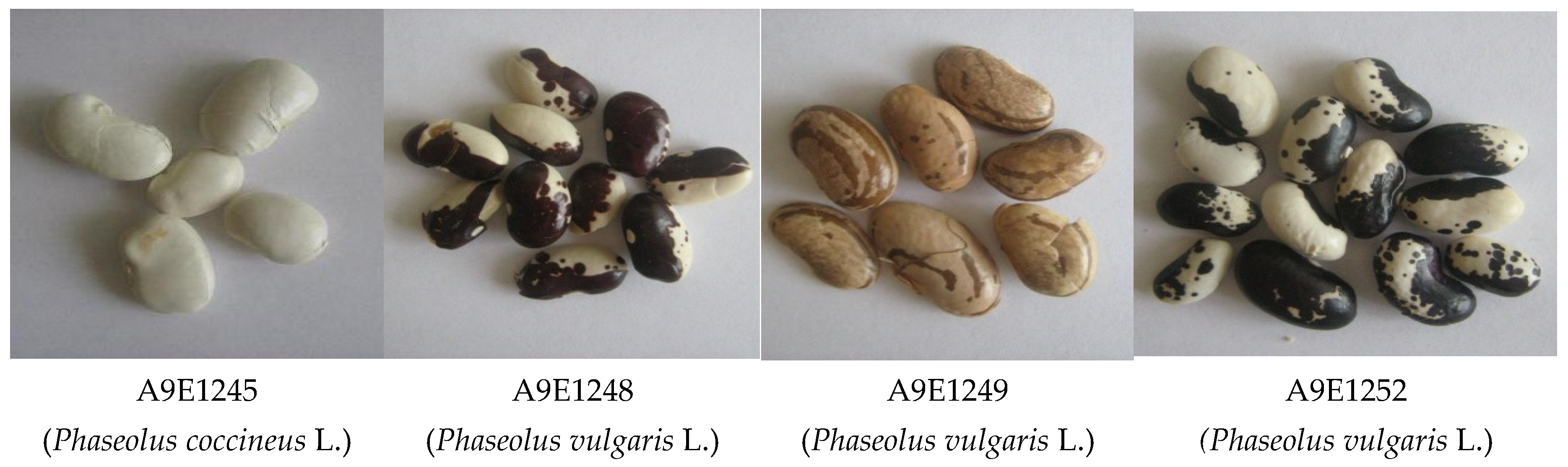
Figure 1. Photo examples of seeds of the examined bean accessions.
Appliedchem 06 00004 g001
Figure 2. Content of n-3 and n-6 fatty acids in oils from bean seeds.
Appliedchem 06 00004 g002
Figure 3. Individual composition of the phospholipid fraction of the studied accessions of beans. *-PC—Phosphatidylcholine; PEA—Phosphatidylethanolamine; PI—Phosphatidylinositol; PS—Phosphatidylserine; PA—Phosphatidic Acids; SM—Sphingomyelin; LPC—Lysophosphatidylcholine; LPEA—Lysophosphatidylethanolamine; MPG—Monophosphatidylglycerol; and DPG—Diphosphatidylglycerol.
Appliedchem 06 00004 g003
Table 1. Chemical composition of the studied bean seeds.
CompoundsAccessions of Beans
Phaseolus coccineusPhaseolus vulgaris
A9E1245A9E1248A9E1249A9E1252
Protein, %24.4 ± 0.1 a28.0 ± 0.1 b26.6 ± 0.1 c31.5 ± 0.1 d
Available carbohydrate, %56.1 ± 0.7 a53.1 ± 1.1 b54.4 ± 0.5 b50.1 ± 1.1 c
Insoluble fibers, %2.8 ± 0.2 a2.8 ± 0.3 a2.6 ± 0.1 a2.6 ± 0.3 a
Fat, %1.4 ± 0.2 a1.0 ± 0.1 b0.9 ± 0.1 b1.0 ± 0.1 b
Ash, %4.7 ± 0.1 a4.2 ± 0.1 b3.9 ± 0.1 c3.9 ± 0.1 c
Caloric value, kJ/100 g
(kcal/100 g)
1421.7 ± 21.2 a
(334.5 ± 5)
1416.7 ± 24.2 a (333.3 ± 10.6)1411.2 ± 14 a
(332.0 ± 3.2)
1425.2 ± 24.2 a
(335.3 ± 5.6)
All analyses were conducted in triplicate (n = 3), and the results are presented as the mean ± standard deviation (SD). Different letters in the row denote significant differences among examined samples (p < 0.05).
Table 2. Biologically active substances in the oil and seeds of the studied beans.
CompoundsAccessions of Beans
Phaseolus coccineusPhaseolus vulgaris
A9E1245A9E1248A9E1249A9E1252
1. Unsaponifiables
  -in oil, %7.5 ± 0.3 a9.3 ± 0.2 b12.0 ± 0.8 c9.8 ± 0.3 b
  -in seeds, %0.11 ± 0.02 a0.09 ± 0.01 a0.11 ± 0.03 a0.09 ± 0.01 a
2. Sterols
  -in unsaponifiables, %39.0 ± 0.1 a41.5 ± 2.5 a31.2 ± 3.0 b23.8 ± 2.5 c
  -in oil, %3.0 ± 0.1 a3.9 ± 0.2 b3.7 ± 0.3 b2.5 ± 0.6 a
  -in seeds, %0.04 ± 0.01 a0.04 ± 0.01 a0.03 ± 0.01 a0.03 ± 0.01 a
3. Tocopherols
  -in oil, mg/kg3483 ± 25 a3615 ± 50 b3809 ± 20 c3554 ± 60 a
  -in seeds, mg/kg48.7 ± 10.0 a36.2 ± 6.0 b34.3 ± 6.0 b35.5 ± 6.0 b
4. Carotenoids
  -in oil, mg/kg1997 ± 50 a1664 ± 35 b1664 ± 30 b2049 ± 35 a
  -in seeds, mg/kg27.9 ± 7.0 a16.6 ± 3.0 b14.9 ± 3.0 b20.5 ± 4.0 a, b
5. Phospholipids
  -in oil, %11.5 ± 1.5 a11.9 ± 1.0 a19.1 ± 2.0 b23.1 ± 0.7 c
  -in seeds, %0.16 ± 0.04 a0.12 ± 0.02 a0.17 ± 0.04 a, b0.23 ± 0.03 b
All analyses were conducted in triplicate (n = 3), and the results are presented as the mean ± standard deviation (SD). Different letters in the row denote significant differences among examined samples (p < 0.05).
Table 3. Fatty acid composition of oils from the seeds of beans.
Fatty Acids, %Accessions of Beans
Phaseolus coccineusPhaseolus vulgaris
A9E1245A9E1248A9E1249A9E1252
Myristic (C14:0)0.4 ± 0.1 a0.3 ± 0.0 a0.3 ± 0.1 a0.5 ± 0.1 a
Myristoleic (C14:1)0.3 ± 0.1 a0.6 ± 0.2 a, b0.6 ± 0.1 a, b0.8 ± 0.3 b
Pentadecanoic (C15:0)0.2 ± 0.0 a0.1 ± 0.0 b0.1 ± 0.0 b0.1 ± 0.0 b
Palmitic (C16:0)14.6 ± 0.2 a16.1 ± 0.1 b14.5 ± 0.2 a24.1 ± 0.3 c
Palmitoleic (C16:1)0.3 ± 0.1 a0.3 ± 0.0 a0.4 ± 0.1 a0.7 ± 0.1 b
Margaric (C17:0)0.2 ± 0.0 a0.2 ± 0.0 a0.2 ± 0.0 a0.3 ± 0.1 a
Stearic (C18:0)2.6 ± 0.1 a1.6 ± 0.2 b1.2 ± 0.1 c2.0 ± 0.3 b
Oleic (9-C18:1)9.2 ± 0.2 a16.5 ± 0.3 b9.7 ± 0.4 a11.9 ± 0.5 c
Vaccenic (11-C18:1)4.5 ± 0.2 a1.2 ± 0.1 b1.3 ± 0.1 b1.8 ± 0.3 c
Linoleic (C18:2)41.4 ± 0.5 a15.8 ± 0.3 b26.2 ± 0.2 c17.6 ± 0.5 d
Linolenic (C18:3)26.3 ± 0.3 a47.2 ± 0.2 b45.5 ± 0.5 c40.2 ± 0.2 d
Arachidic (C20:0)- *0.1 ± 0.0--
SFA18.0 ± 0.4 a18.4 ± 0.3 a16.3 ± 0.4 b27.0 ± 0.7 c
UFA82.0 ± 1.4 a81.6 ± 1.1 a83.7 ± 1.4 a73.0 ± 1.9 b
MUFA14.3 ± 0.6 a18.6 ± 0.6 b12.0 ± 0.7 c15.2 ± 1.2 a
PUFA67.7 ± 0.8 a63.0 ± 0.5 b71.7 ± 0.7 c57.8 ± 0.7 d
Iodine value, g I2/100 g155 ± 2 a173 ± 1 b181 ± 2 c153 ± 2 a
All analyses were conducted in triplicate (n = 3), and the results are presented as the mean ± standard deviation (SD); *—not detected; SFA—saturated fatty acids; UFA—unsaturated fatty acids; MUFA—monounsaturated fatty acids; and PUFA—polyunsaturated fatty acids. Different letters in the row denote significant differences among examined samples (p < 0.05).
Table 4. Individual sterol composition of oils from the studied beans.
Sterols, %Accessions of Beans
Phaseolus coccineusPhaseolus vulgaris
A9E1245A9E1248A9E1249A9E1252
Cholesterol0.2 ± 0.0 a0.3 ± 0.1 a0.3 ± 0.1 a0.3 ± 0.1 a
Brassicasterol 1.5 ± 0.1 a2.4 ± 0.2 b1.9 ± 0.1 c2.0 ± 0.2 c
Campesterol3.5 ± 0.2 a5.8 ± 0.3 b6.2 ± 0.3 b5.1 ± 0.1 c
Stigmasterol31.8 ± 0.3 a36.9 ± 0.2 b34.0 ± 0.4 c35.3 ± 0.3 d
Δ7-Campesterol2.4 ± 0.1 a2.3 ± 0.1 a, b2.0 ± 0.2 a, b2.1 ± 0.1 b
β-Sitosterol59.1 ± 0.2 a47.3 ± 0.3 b51.2 ± 0.3 c52.0 ± 0.4 d
Δ5-Avenasterol0.8 ± 0.1 a4.4 ± 0.2 b2.8 ± 0.1 c1.6 ± 0.2 d
Δ7-Stigmasterol0.5 ± 0.1 a0.4 ± 0.0 a1.2 ± 0.2 b1.3 ± 0.1 b
Δ7-Avenasterol0.2 ± 0.1 a, b0.2 ± 0.0 a0.4 ± 0.1 b0.3 ± 0.1 a, b
All analyses were conducted in triplicate (n = 3), and the results are presented as the mean ± standard deviation (SD). Different letters in the row denote significant differences among examined samples (p < 0.05).
Table 5. Individual tocopherol composition of oils of the studied beans.
Tocopherols, %Accessions of Beans
Phaseolus coccineusPhaseolus vulgaris
A9E1245A9E1248A9E1249A9E1252
α-tocopherol1.0 ± 0.2 a0.8 ± 0.1 a0.5 ± 0.1 b1.5 ± 0.2 c
β-tocotrienol1.0 ± 0.1- *--
γ-tocopherol93.1 ± 0.1 a91.0 ± 0.4 b95.0 ± 0.2 c88.2 ± 0.3 d
γ-tocotrienol1.2 ± 0.1 a4.4 ± 0.2 b1.5 ± 0.3 a7.2 ± 0.5 c
δ-tocopherol3.7 ± 0.2 a3.8 ± 0.1 a3.0 ± 0.2 b3.1 ± 0.1 b
All analyses were conducted in triplicate (n = 3), and the results are presented as the mean ± standard deviation (SD); *—not detected. Different letters in the row denote significant differences among examined samples (p < 0.05).
Disclaimer/Publisher’s Note: The statements, opinions and data contained in all publications are solely those of the individual author(s) and contributor(s) and not of MDPI and/or the editor(s). MDPI and/or the editor(s) disclaim responsibility for any injury to people or property resulting from any ideas, methods, instructions or products referred to in the content.