


Abstract
Harm reduction drug checking utilizing paper spray mass spectrometry (PS-MS) has been the focus of ongoing research since 2017 and has seen many refinements. The presented work is the result of this research and has led to the public-facing PS-MS use for on-site drug checking in Victoria, BC. Included are the improved methods and approaches required to develop and implement PS-MS as an on-site drug checking technology. Critical details regarding appropriate direct mass spectrometry tune and calibration suites required to avoid isobaric interferences, calibration details, quality control strategies, detailed MS scan approaches to implement rapid drug tests, as well as future work considerations are presented. The PS-MS method presented currently directly quantifies 107 targeted drugs in a two-minute measurement, and can be easily adapted to include additional new targets that appear in the unregulated drug supply that are detected by either low or high resolution PS-MS. The presented methodologies provide a framework to assist those interested in implementing PS-MS to reduce harms from the toxic drug supply, but will have value for those developing rapid, quantitative drug testing for other applications.
1. Introduction
The unregulated drug supply is highly variable, with new and potent substances appearing, often in trace amounts, necessitating the availability of sensitive and accurate drug checking technologies [1,2,3,4,5,6]. Governments and health agencies in Canada and elsewhere are implementing a variety of strategies to mitigate societal, economic, and personal harms from unregulated drug use [7,8,9]. Drug checking has gained considerable interest and demonstrated efficacy, with the aim of providing a service for people who use drugs (PWUD) to submit drug samples for chemical analysis, delivering accurate composition and concentration information about the substance they intend to use [10,11]. Immunoassay test strips and optical measurement methods such as Fourier transform infrared spectroscopy (FT-IR) and Raman spectroscopy are examples of techniques currently being utilized for on-site harm reduction drug checking [12,13,14,15,16]. Test strips can detect the presence of fentanyl or related analogues (or other drugs), but cannot identify the specific analogues present or provide quantitative information [17]. Methods such as FT-IR and Raman spectroscopy provide more information regarding the composition of a sample, but have inherently higher detection limits, limiting their ability to detect trace levels of highly potent drugs such as opioids [17]. Other methods used globally include ion mobility spectrometry, thin layer chromatography, gas chromatography mass spectrometry (GC-MS), and liquid chromatography mass spectrometry (LC-MS) [12,18]. Laboratory-based methods such as GC-MS and LC-MS achieve adequate sensitivity and selectivity, but often require complex sample preparation or derivatization and long run times, making them unsuitable for out-of-lab settings such as a harm reduction site where rapid results are desired [18]. A public health emergency was declared in British Columbia in 2016 because of unprecedented overdoses stemming from the toxic, unregulated drug supply [19]. Following this, there was an impetus to improve harm reduction drug checking approaches. A list of desirable characteristics for any drug checking method is presented in Table 1. With these considerations in mind, and our substantial experience with mobilizing mass spectrometry for ‘out-of-the-lab’ situations [20,21,22,23,24,25], we began evaluating potential mass spectrometry strategies for rapid, on-site drug checking.
Table 1.
Summary of desirable characteristics for a harm reduction drug checking technology.
There have been many transformational moments in the field of mass spectrometry, but the advent of ambient ionization methods has been revolutionary [26,27]. Ambient ionization mass spectrometry (AIMS) allows for samples to be measured in their native form with little to no sample preparation. Paper spray mass spectrometry (PS-MS), first described in 2010 [28], is one example of an AIMS technique that has been demonstrated for direct measurement of a number of sample types, including illicit and pharmaceutical drugs, biofluids, and explosives, among others [29,30,31,32,33,34]. In PS-MS, typically a small aliquot of liquid sample (<10 μL) is deposited onto a pointed paper strip, with minimal (or no) sample preparation. After drying, a solvent and high voltage (ca 3–4 kV) are then applied to the paper, promoting the formation of gas-phase ions from the paper point in a process similar to electrospray ionization (ESI) [35]. These ions are subsequently measured by a mass spectrometer, generally using tandem and/or high-resolution mass spectrometry to identify, resolve, and quantify analytes. PS-MS possesses a number of ideal characteristics listed in Table 1, including trace quantitation, rapid measurement times (<2 min), and no sample-to-sample carryover since a new paper strip is used for each sample. The simplicity of PS-MS makes it particularly suitable for use in non-laboratory situations, where non-expert personnel can perform routine measurements with fast sample turnaround times [1].
In our first pilot investigation, we demonstrated the potential of utilizing PS-MS for on-site harm reduction drug checking at a safe injection site in the Downtown Eastside of Vancouver, BC, a location frequently noted as ‘ground zero’ for the opioid overdose crisis in Canada [36]. This pilot work with PS-MS for drug checking has been significantly refined in the ensuing years, with several generations of method improvements, and is the impetus for this manuscript. PS-MS has become an important analytical method for drug checking in the province of British Columbia through ongoing collaborations with Substance in Victoria, BC, Canada, a public-facing drug checking service with whom we have worked to employ the PS-MS methodologies presented in this manuscript, making well over 30,000 individual drug checking measurements for PWUD [1,37]. This manuscript presents the recent progress and method developments required for PS-MS to be used as a regular, on-site drug checking method. Considerations for future modifications to the method and sample workflow to further simplify and reduce cost are also discussed.
2. Materials and Methods
2.1. Solvents and Reference Materials
LC-MS grade methanol, acetonitrile, and formic acid were purchased from Fisher Scientific (Ottawa, ON, Canada). Deionized water was prepared using a water purification system (18.4 MΩ·cm Facility Scale Reverse Osmosis/Ion Exchange Water Purification System; Applied Membranes Inc., Vista, CA, USA). Ultra-high purity argon and nitrogen were purchased from Linde Gas (Nanaimo, BC, Canada). Certified reference materials (CRMs) of the target drugs and isotopically labelled internal standards were purchased from either Cerilliant Corporation (Round Rock, TX, USA) or Cayman Chemical (Ann Arbor, MI, USA). Target drugs and internal standards used for the presented study are detailed in the Supplementary Materials, in addition to detailed information regarding optimized tune and calibration suite mixtures that avoid isotopic and isobaric interferences.
2.2. Tune Mixtures, Calibration Standards, and Sample Preparation
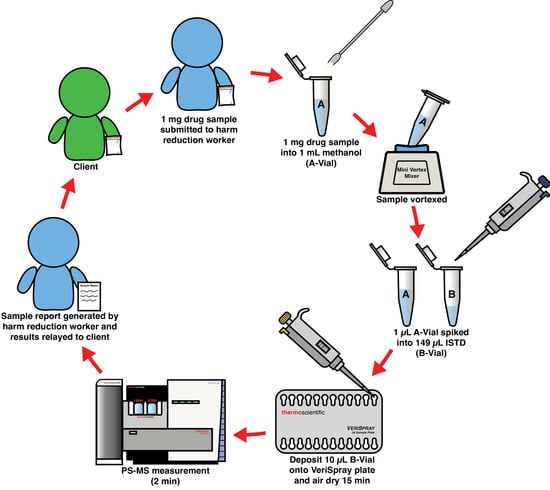
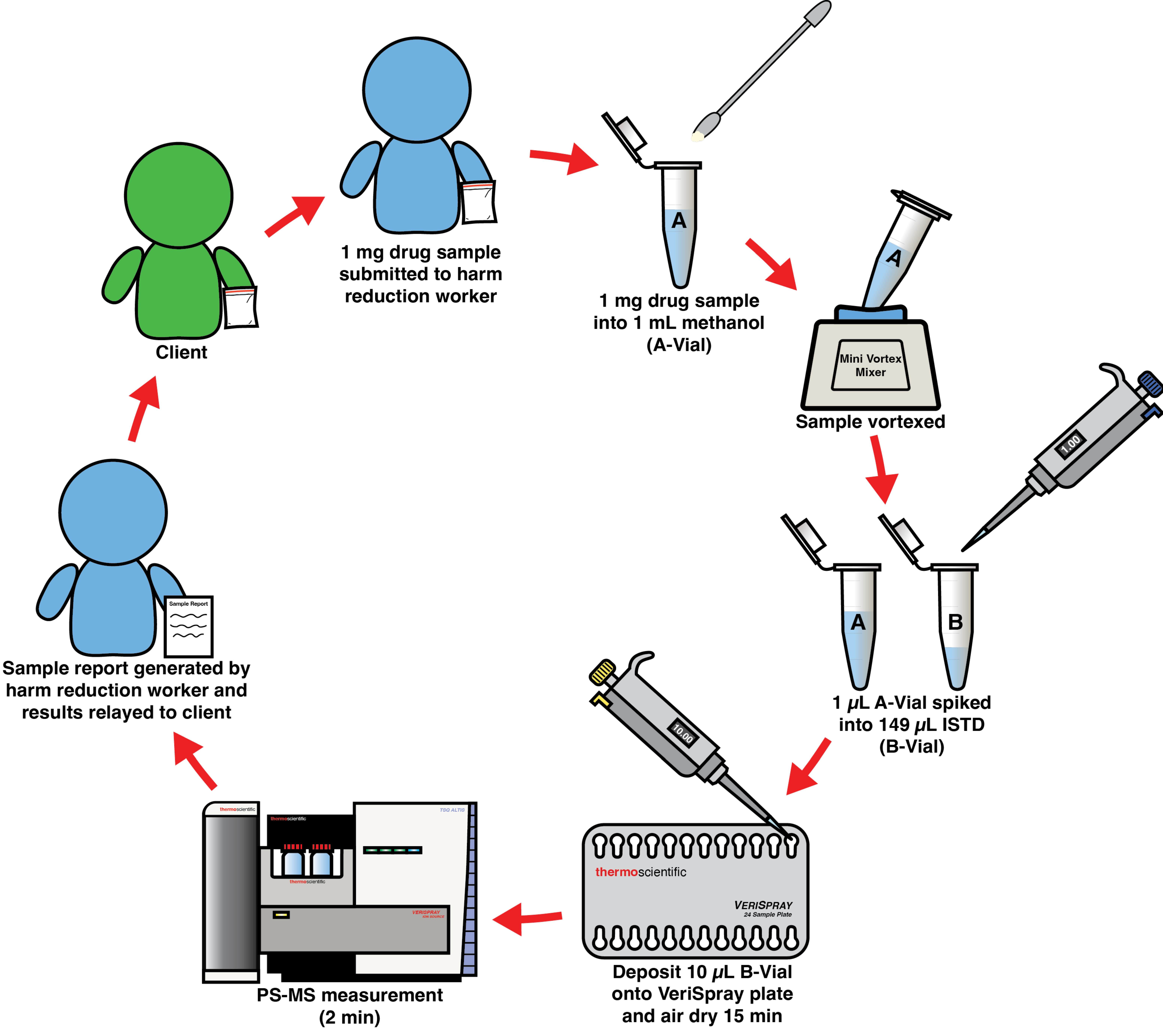
Tune mixtures, calibration standards, and quality control samples were prepared volumetrically with mechanical pipettes (Finnpipette F2, Thermo Fisher Scientific, San Jose, CA, USA) in methanol using certified reference materials. Tune mixtures were prepared with each target drug at 200 ng/mL (unless otherwise specified), with compositions chosen such that no two target analytes with the same m/z (or interfering isotopic m/z values) were included in the same mixture (Supplementary Materials, Table S1). Calibration standards were prepared at 6 levels (2.8, 11, 46, 183, 731, and 2920 ng/mL) via volumetric serial dilution, including labelled internal standards at 100 ng/mL in each. Blank methanolic samples containing only internal standards were used to estimate detection limits and establish reporting cut-off limits. To perform a quantitative drug sample measurement by PS-MS, ca 1 mg of powdered drug sample (weighed to 5 decimal places, Radwag AS 60/220.R2 PLUS Analytical Balance, Radom, Poland) is dissolved in 1 mL of methanol in a 2 mL snap-top tube (Eppendorf™ Safe-Lock Tube, Eppendorf Inc., Mississauga, ON, Canada) to create a 1 mg/mL solution of total drug (A-Vial solution, Figure 1). A 1 µL aliquot of this A-Vial solution is then spiked into 149 µL of a methanolic internal standard (ISTD) mixture (18 internal standards at 100 ng/mL each, Table S2) in a second tube (B-Vial solution, Figure 1) for quantitative PS-MS measurement. To track instrument performance, a quality control (QC) sample was used that contains three target analytes (Fentanyl, MDMA, and cocaine) prepared at 600, 900, and 1200 ng/mL, respectively, in methanol, with the respective ISTDs for each analyte included at 100 ng/mL. Commercially available PS-MS sample plates containing 24 individual paper sample strips (VeriSpray™ Sample Plates, Thermo Fisher Scientific) were used as provided by the vendor for all measurements. Calibration standards, B-Vial solutions, and QC samples were manually deposited on the PS-MS strips (10 µL) with a mechanical pipette and air dried for ca 15 min prior to PS-MS analysis. Figure 1 presents a graphical summary of the workflow used for on-site drug checking (vide infra Section 3.4).
Figure 1.
Sample preparation workflow for drug checking by PS-MS.
2.3. Mass Spectrometry
A triple quadrupole mass spectrometer (TSQ Fortis™, Thermo Fisher Scientific) equipped with a paper spray ion source (VeriSpray™ Paper Spray Ionization Source, Thermo Fisher Scientific) was used to develop and implement the presented methods. However, the method is easily translatable to other instrument models capable of performing PS-MS. A PS-MS drug checking method similar to the one described here has also been developed on the TSQ Altis™ triple quadrupole mass spectrometer (Thermo Fisher Scientific). Currently, there are no other commercially available alternative paper spray ionization sources. However, an open-access 3D-printed paper spray source has been developed [38]. The mass spectrometer was operated with two different scan modes for each sample measurement: multiple reaction monitoring (MRM) mode for 1 min, followed by full scan from 50 to 600 m/z for 0.8 min, resulting in a total PS-MS measurement time of 2 min per sample (Table S3). Direct infusion of 200 ng/mL methanolic tune mixtures (Table S1) with electrospray ionization was used to optimize MRM parameters. For PS-MS analyses, positive ion mode was utilized with a spray voltage of +3.8 kV. The PS-MS sample rewet and spray solvents used for all samples were 90/9.9/0.1 (% v/v/v) acetonitrile, water, and formic acid. Details for sample rewet and spray solvent deposition volumes are given in Table S5. MRM transitions and instrument parameters are also provided in the Supplementary Materials (Tables S3–S7). PS-MS parameters were optimized individually for each target compound and internal standard prior to deciding upon globally used, fixed values. Values for these parameters were chosen such that analytical performance was not significantly compromised for any of the target drugs or internal standards.
3. Results and Discussion
3.1. Drug Target Tuning and MS/MS Optimization
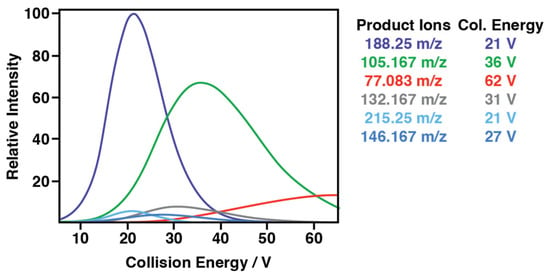
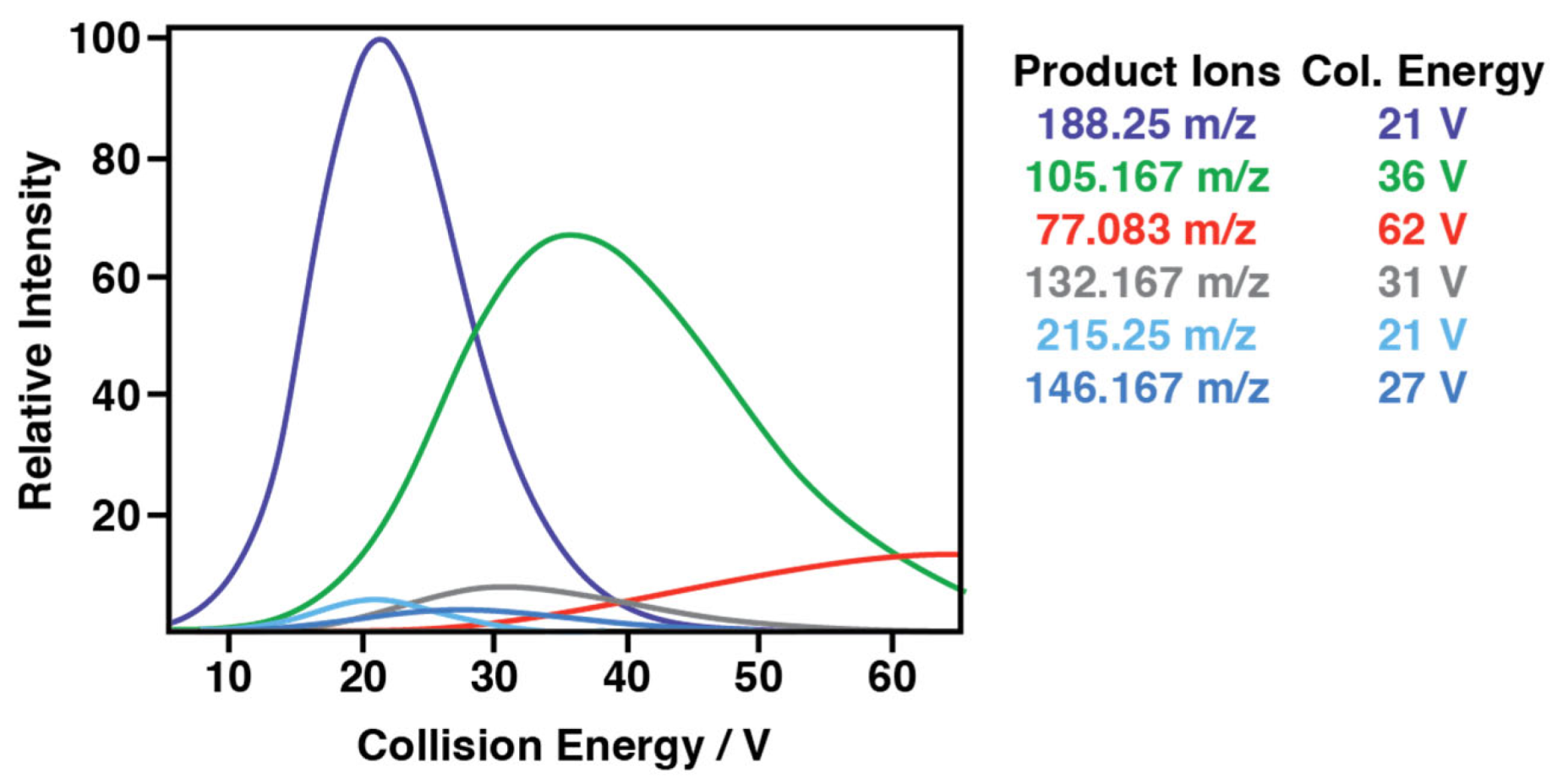
Quantitative drug checking relies upon the use of optimized tandem mass spectrometry (MS/MS) conditions, established for both drug targets and associated internal standards. This is accomplished by preparing ng/mL range analytical standards of each target and ISTD in methanol and obtaining collision-induced dissociation (CID) breakdown curves. MS/MS tuning optimizations can be performed using paper spray as an ion source, but because paper spray and electrospray ionization produce essentially the same [M + H]+ precursor ions, MS/MS optimizations for PS-MS can be performed using ESI. Using ESI with direct infusion allows longer optimization run times than possible with PS-MS, which typically generates ions for shorter periods (ca 3–5 min) due to the fact that limited analyte and solvent are available on the paper strips. CID breakdown curves were obtained using methanolic tune mixtures infused at 5 µL/min directly to the ESI ion source. Figure 2 presents typical breakdown curves obtained for the fragmentation of fentanyl. Typically, MRM transitions displaying the greatest signal intensity are included in the measurement scan. For fentanyl, the fragment ions chosen are m/z 188.25, 105.167, and 77.083, with m/z 188.25 used for quantitation and the other two for confirmation. Optimum collision energies for best MS/MS performance are exhibited as maxima for each fragment ion.
Figure 2.
MS/MS breakdown curves obtained for a 200 ng/mL methanolic standard of fentanyl obtained using ESI.
Breakdown curves can be obtained individually for each drug target, but for time efficiency, this was conducted using cocktail standards containing multiple target drugs. The components of these cocktail standards were carefully chosen so that there are no two drugs in each standard mix with the same molecular weight or with isobaric m/z interferences from 13C or halogenated isotopic ions. Once MRM transitions were optimized for all targets and ISTDs, a comprehensive list of all transitions was compiled and further evaluated to identify and remove any unanticipated isobaric or interfering transitions. It should be noted that as new drugs appearing in the unregulated supply are identified (i.e., from full scan data), provided analytical standards are available, they can be optimized as described above and added to the existing quantitative drug checking method. Table S1 provides the cocktail tune mixture compositions used for MRM optimization. Table S7 presents optimum MRM conditions obtained in positive ion mode for all target drugs and internal standards, including the internal standard pairings utilized for quantitative measurements (vide infra Section 3.2). In the developed methods, three MRM transitions were utilized for target drugs and two for internal standards. The first transition (usually the most intense/prominent product ion) was used for quantitation, whereas the second and third transitions provided additional identity confirmation (i.e., qualifiers) when required. When drug target and internal standard MRM optimization is complete, the system is ready for quantitative calibration.
3.2. Quantitative PS-MS Calibration
To generate quantitative calibrations for the drug targets, 10 µL aliquots of the calibration standards at each level were analyzed by PS-MS in quadruplicate, utilizing the vendor-provided quantitation software (TraceFinder™ 5.1, Clinical Version, Thermo Fisher Scientific). Typically, one suite of calibration standards containing all desired target analytes would be prepared. However, due to the large number of target compounds (107) included in the method, there is a possibility for ionization suppression effects at the high end of the calibration suite when all compounds are combined in one suite. Such suppression effects are not a concern for actual drug samples, since it is highly unlikely that a single drug sample would contain all 107 targets. To solve this, the entire suite was calibrated using several calibration standard cocktail mixes (Table S7). Calibration suite compositions were organized largely based on drug class. When complete, the data from all the calibrations were combined into a single calibration file associated with a master instrument control method, allowing for the simultaneous, quantitative measurement of all target drugs in the suite. Table S6 presents the global PS-MS system operating conditions, and Table S5 details the MRM scan conditions for the entire suite of drugs and associated internal standards. For drug testing by PS-MS, the quantitative measurement for the entire suite requires just one minute. However, to potentially detect untargeted drug components that may also be present in a sample, a full scan method (0.8 min) is acquired directly after the quantitative MS/MS measurements.
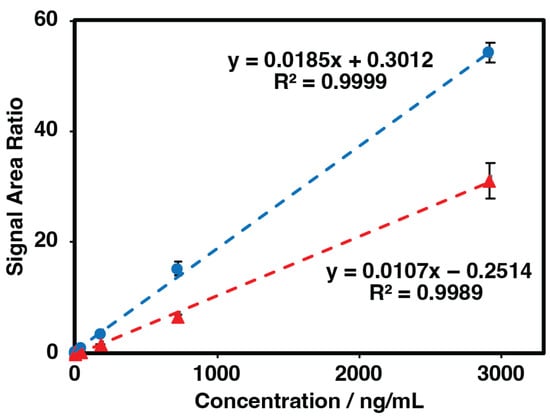
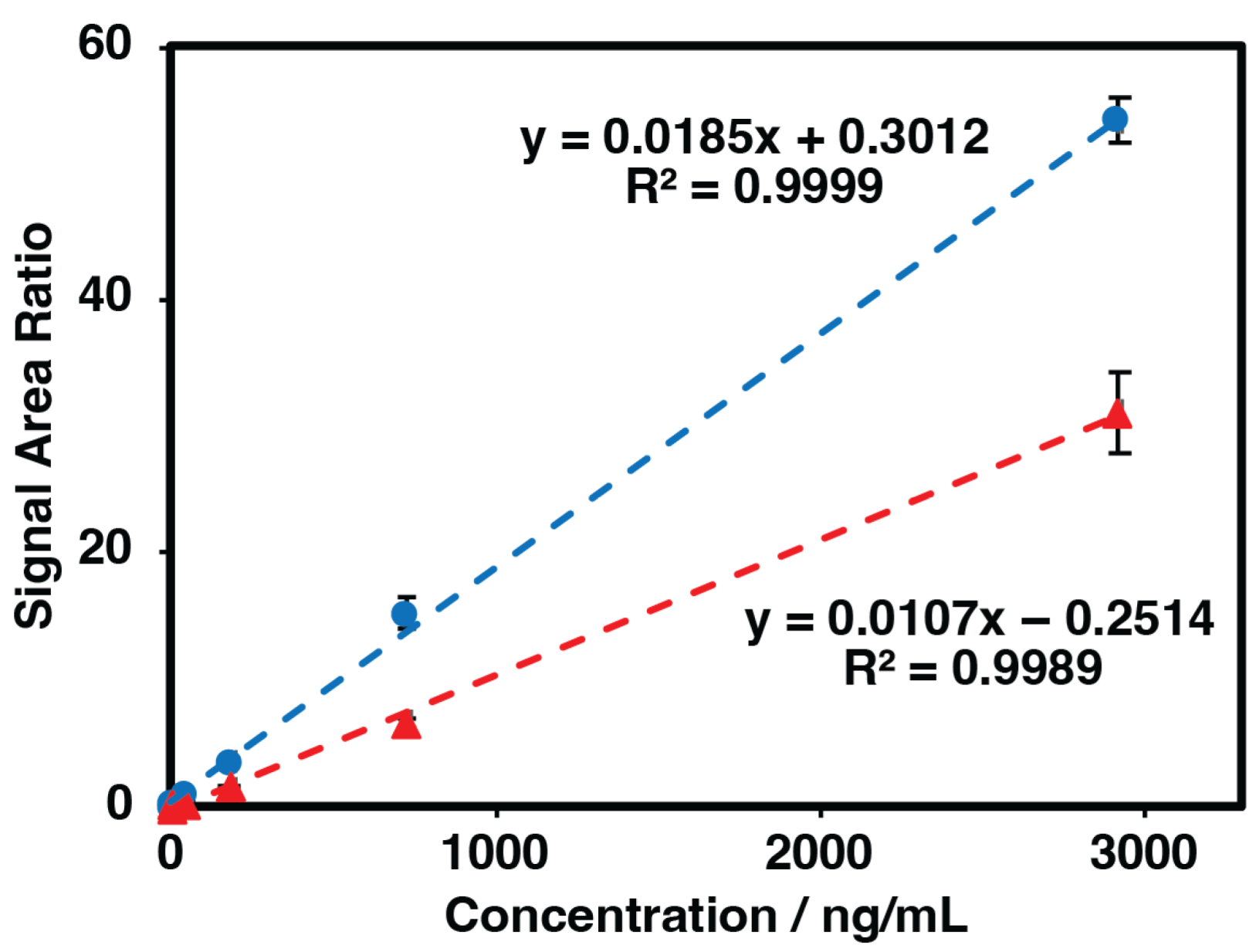
Calibration curves obtained for all target analytes demonstrated acceptable linearity over three orders of magnitude, with 99% achieving R2 > 0.9 or better (Table S9). Reporting cutoff limits were established by examining calibration and blank sample data for each target analyte and range from 0.05 to 0.5% w/w in the original solid drug sample (i.e., 3 to 30 ng/mL in the B-Vial), depending on the analyte (Table S8). Example calibration curves for fentanyl and temazepam are shown in Figure 3. The analytical performance of drug targets in different classes were observed to behave differently with PS-MS. For example, fentanyl analogues ionize well, exhibit good calibration linearity, and have low detection limits, whereas benzodiazepine analogues can have reduced relative sensitivity and narrower linear calibration ranges. In the rare instance when a target compound exhibits non-ideal analytical performance (R2 < 0.9, % bias > ±20%, or % CV > 20%), sample results should be interpreted cautiously. When designing the calibration range for harm reduction drug checking, the community’s needs should be taken into consideration. For example, the desire for trace detection of potent drugs such as fentanyl requires the method to be sensitive at low % w/w concentrations, whereas purity analysis of ‘single component’ drugs such as MDMA, cocaine, methamphetamine, or ketamine requires either calibration to 100% w/w or a flexible sample preparation workflow that allows for additional sample dilution. When the PS-MS method was initially developed for routine on-site drug checking, calibration standards were prepared at 10 concentration levels spanning a wide range of 1–6000 ng/mL, which would correspond to 0.02–100% w/w in the original solid drug sample. However, calibration curves for several of the drug targets displayed ‘roll-over’ towards the high end of the calibration range. To avoid this, the number of calibration levels has since been reduced to six non-zero levels and one blank standard, with the highest calibration standard set to ca 3000 ng/mL. This new upper concentration limit for the calibration range means that each component in a sample can only be accurately quantified to a maximum concentration of 50% w/w in the original solid drug sample. If quantitation above 50% is desired or required, the sample must be further diluted prior to measurement by PS-MS. For harm reduction drug checking, this was deemed acceptable, since highly potent drugs (such as opioids) found in the unregulated drug supply are generally not present at >50%.
Figure 3.
Calibration curves for fentanyl (blue circles) and temazepam (red triangles) from 1 to 3000 ng/mL with 100 ng/mL internal standard (average of n = 4 replicates for each concentration level, 1/x weighting). The signal area ratios are the signal areas for fentanyl and temazepam divided by the signal areas for their respective internal standards (fentanyl-d5 and temazepam-d5). Error bars represent ± standard deviation.
The quantitative results generated for use in drug checking were refined further by utilizing the vendor software (TraceFinder™ 5.1, Clinical Version, Thermo Fisher Scientific) to report the concentration of the diluted sample in ng/mL as a mass percentage composition for the original solid drug sample being tested (% w/w). As well, using data for blank sample measurements, lower cut-off reporting limits were also established to filter the reporting output (Table S9), such that only drug targets detected above a minimum threshold are listed, rather than reporting a long list of ‘no detects’ for a given drug sample being checked. Cut-off values were estimated as three standard deviations above the mean blank signals.
3.3. Internal Standards
Typically, in mass spectrometry, isotopically labelled internal standards for each target analyte are utilized for quantitation. This is especially important for analytical methods that involve chromatographic resolution steps (i.e., LC-MS), since the ISTD and target analyte typically co-elute and are ionized during the same retention time window, allowing the ISTD to account for any matrix effects and variations that occur during measurements. In PS-MS, the absence of chromatographic resolution means that all analytes and ISTDs are essentially ionized simultaneously, allowing for the effective use of surrogate ISTDs [39]. While reference internal standards can be obtained and used for each drug target, these are expensive, isotopically labelled (2H or 13C) drug analogues. In early work, we utilized a full suite of labelled internal standards for direct PS-MS quantitation [36]. By reprocessing data in this early work utilizing a reduced suite of surrogate internal standards, we determined that acceptable analytical results could still be obtained, significantly reducing analytical costs. Optimal surrogate internal standards for each target analyte in the presented method were chosen based upon factors including chemical structure, drug class, and overall PS-MS analytical performance. For example, all fentanyl analogues use either fentanyl-d5 or carfentanil-d5 as the ISTD for quantitation, whereas all benzodiazepines are quantified utilizing either alprazolam-d5, flubromazolam-d4, or temazepam-d5. Utilizing surrogate ISTDs and reducing the number of ISTDs from 107 to 18 in the presented methodology significantly reduces the cost per measurement. Given that each labelled ISTD costs a roughly estimated ~CAD 200, this is a roughly 6X reduction in consumable costs. For the presented methods, the cocktail mixture of 18 labelled ISTDs was prepared at 100 ng/mL each in HPLC-grade methanol and used for all drug sample measurements. A comprehensive list of all ISTDs used is given in Table S2, and the specific target analyte/internal standard selections used for quantitation are given in Table S7.
3.4. Sample Preparation and Measurement
Sample preparation workflows for on-site drug checking should remain as simple and cost-effective as possible (Figure 1). In previous work, we demonstrated that no significant matrix effects are observed for PS-MS using a simulated drug sample consisting of an over-the-counter tablet slurry spiked with illicit drug standards [29]. In the current method, a quantitative 1.0 mg/mL total drug solution is prepared in methanol using an analytical balance to weigh the sample before dilution. Although not currently performed in the presented workflow, if semi-quantitative results are acceptable, the 1 mg powder drug sample can be qualitatively estimated using a micro spatula instead of weighing to further simplify this step [36]. A 1 μL aliquot of this solution (A-Vial solution) is then diluted into a methanolic ISTD mixture for PS-MS analysis (B-Vial solution) to bring target drug concentrations into the PS-MS analytical measurement range. Pipetting small volumes can introduce error in the measurements, and although not implemented in the current methodology, increasing the A-Vial transfer volume to 2 μL would reduce variability as well as increase signal intensities for trace analytes, improving sensitivity. However, this larger volume would further reduce the upper limit of quantitation from 3000 to 1500 ng/mL (i.e., from 50 to 25% w/w target drug in the original solid drug sample). With the current PS-MS system, individual PS-MS sample plates allow for up to 24 sample loadings, and can be introduced individually to the PS-MS source via a manual loading platform, or by utilizing a robotic plate loader capable of accommodating up to ten plates (240 samples/run). Using either approach, samples can be measured one at a time or in batches, depending upon the demand for testing and/or sample backlog at the site.
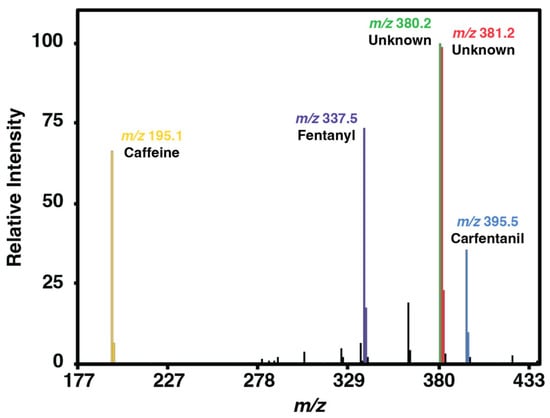
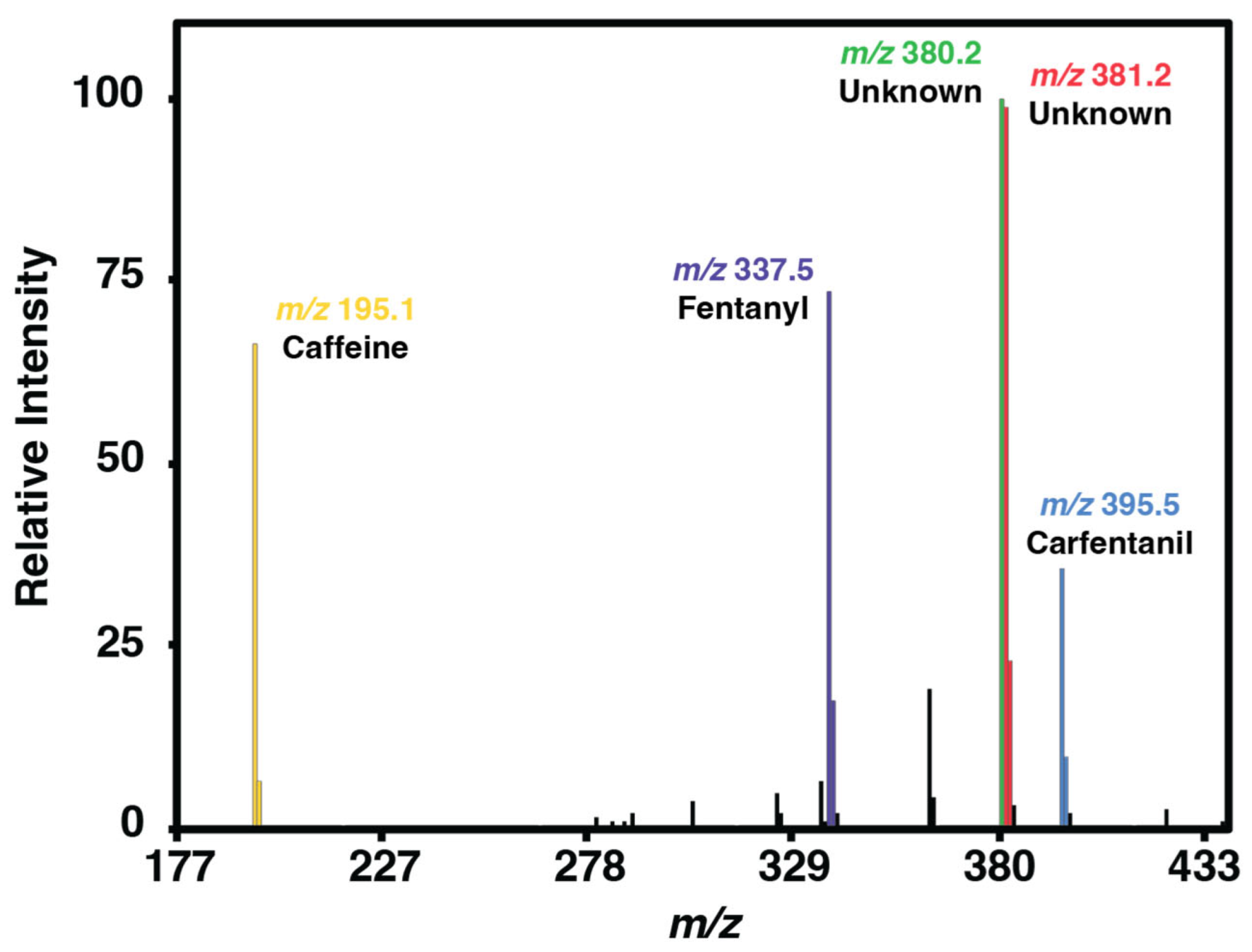
The MRM measurement scan allows for targeted drug concentration reporting based on the mass percentage of target drug(s) in the original solid drug sample submitted for testing. In addition, utilizing full scan MS data collected in the same test has been successfully used to detect ‘new/novel’ substances that are not included in the targeted measurements. This is especially useful when a sample yields a no-detect for all drug targets in the method. When unidentified m/z signals are observed in the full scan mass spectrum, follow-up measurements with both MS/MS at unit resolution (frequently using the more concentrated A-Vial solution) and high-resolution PS-MS (performed off-site) were used to facilitate the identification and ultimately incorporation of new quantitative drug target measurements in the method. As an example, in 2021–2022, drug checking results for carfentanil positive samples frequently exhibited two ‘unknown’ m/z values in the full scan mass spectra (Figure 4) [40]. Further investigation using MS/MS and high-resolution accurate mass spectrometry (HRAM) confirmed their identity as synthetic intermediates from the production of carfentanil. Although initially suspected as being a localized phenomenon, retrospective analysis of HRAM drug checking data obtained by collaborators in Toronto, Canada (>4000 kms away) also verified their presence. Further, in silico µ-opioid receptor binding studies suggest these intermediates likely behave as opioids as well, and may explain why carfentanil samples are particularly potent, and possibly why they were not further purified during their illicit manufacture [40]. At present, there are no available analytical standards for these carfentanil synthetic intermediates, but in a similar case, the detection of novel benzodiazepines such as desalkylglidazepam in full scan PS-MS data has been used to identify and add this as a new target drug to the quantitative PS-MS method [41].
Figure 4.
PS-MS full scan data of an A-Vial sample where two carfentanil synthetic precursors were identified.
3.5. Quality Control and Routine/Preventive Maintenance
Checking large numbers of (high-concentration) drug samples can lead to eventual fouling of the mass spectrometer ion transfer tube and inlet ion optics. Thus, it is important to implement routine cleaning procedures and maintenance schedules. In addition, regular cleaning of the instrument and data system computer air cooling inlets and filters is recommended, especially in ‘out-of-laboratory’ situations, which are typically dustier than laboratory conditions. The ion transfer tube (ITT) is typically exchanged with a clean tube (ca every 50 samples) to prevent any signal deterioration from sample matrix material accumulating on its entrance, based on the current drug concentrations and the common excipients present in the local drug supply. Untargeted analysis frequently requires measurements of the undiluted A-Vial sample, which can foul the ion transfer tube at a much higher rate because of the significantly higher drug and excipient levels present. The eventual inlet ion optics and skimmer cone cleaning necessary when performance deterioration occurs (vide infra) requires a mass spectrometer shutdown (single day) to conduct this procedure in accordance with vendor specifications.
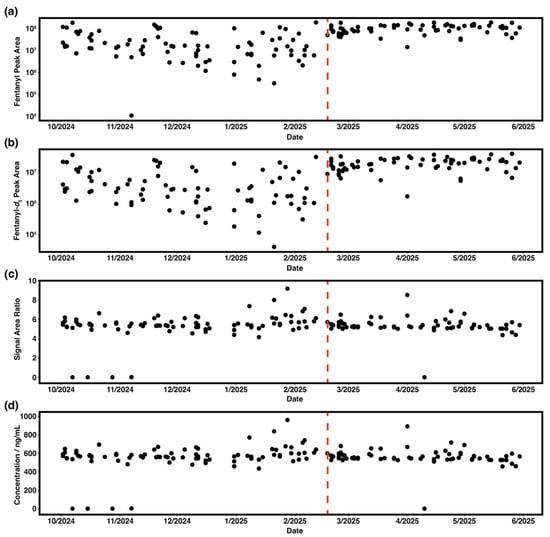
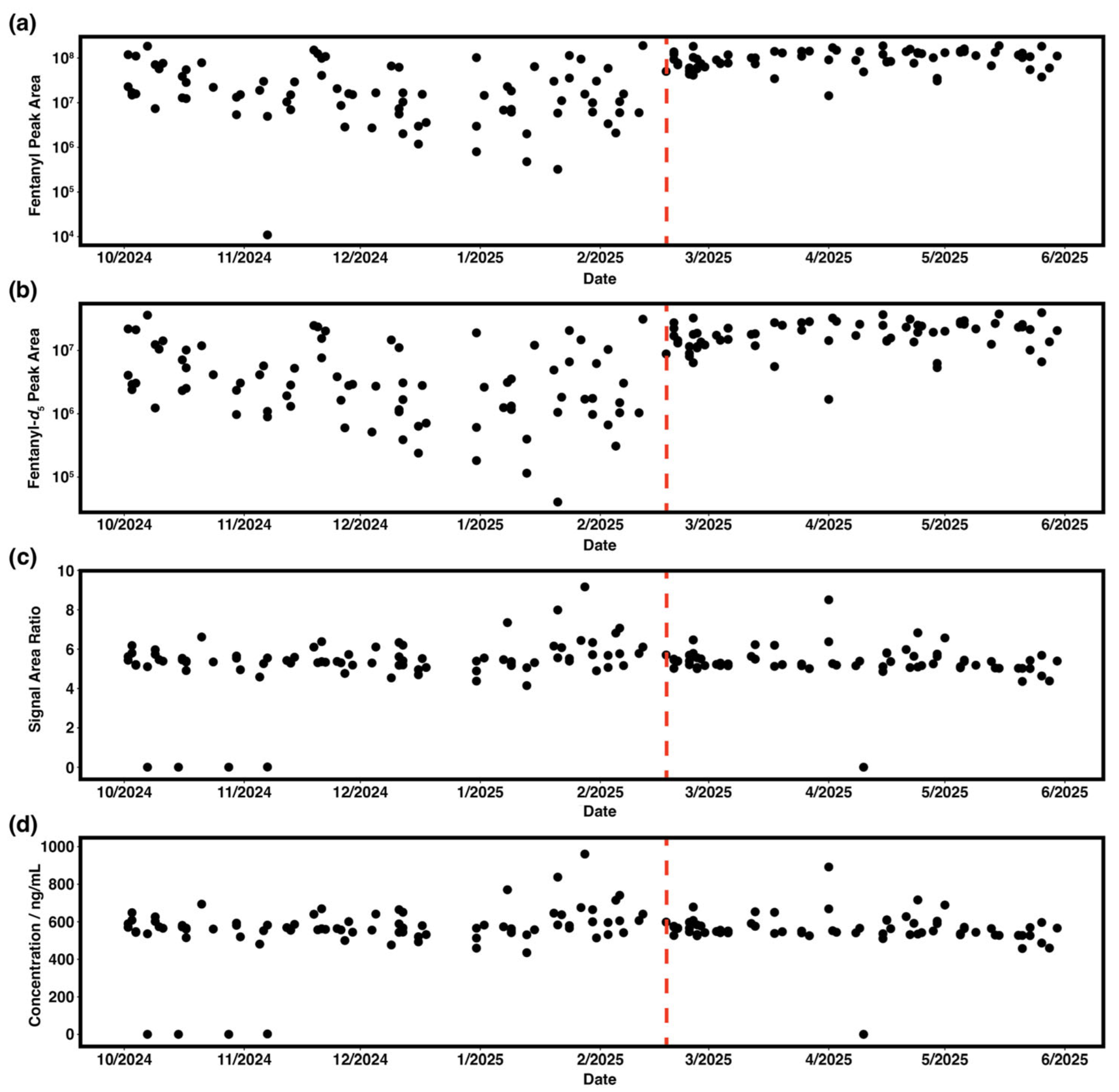
To ensure optimum system performance, both daily and over extended periods, a quality control (QC) sample is analyzed once on every PS-MS sample plate (2–3 sample plates are typically measured each day; therefore, the QC sample performance is evaluated 2–3 times per day). When degraded performance begins to occur (i.e., reduced ion signal intensities and/or higher %CVs are observed), this triggers routine/preventative maintenance procedures. Figure 5 presents actual data from on-site drug checking illustrating a scenario where the QC sample performance was deteriorating. The signal areas for fentanyl in the quality control sample became erratic in December 2024 and continued to decline in performance through to January of 2025 (Figure 5a,b). However, the signal area ratio for fentanyl/fentanyl-d5 in the QC sample (i.e., representative of quantitative performance) exhibited only minor variations during this period (Figure 5c,d), indicating that the internal standard is still compensating well for fentanyl signal area variations. Still, this observation triggered cleaning of the mass spectrometer inlet ion optics and skimmer cone, restoring the expected signal areas for both fentanyl and the fentanyl-d5 internal standard.
Figure 5.
Quality control sample data for fentanyl that demonstrates the need for routine maintenance of the PS-MS system. Data shown includes (a) fentanyl peak areas, (b) fentanyl-d5 peak areas, (c) signal area ratios (fentanyl peak area/fentanyl-d5 peak area), and (d) fentanyl calculated amounts before and after inlet ion optics and skimmer cone cleaning (red dashed line) of the mass spectrometer are shown.
3.6. Representative Drug Checking Results
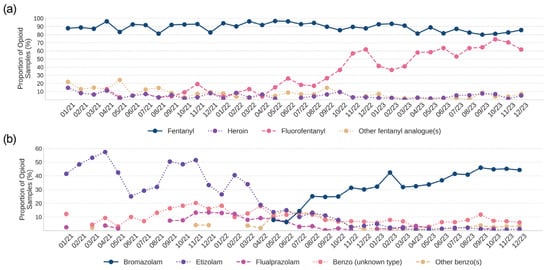
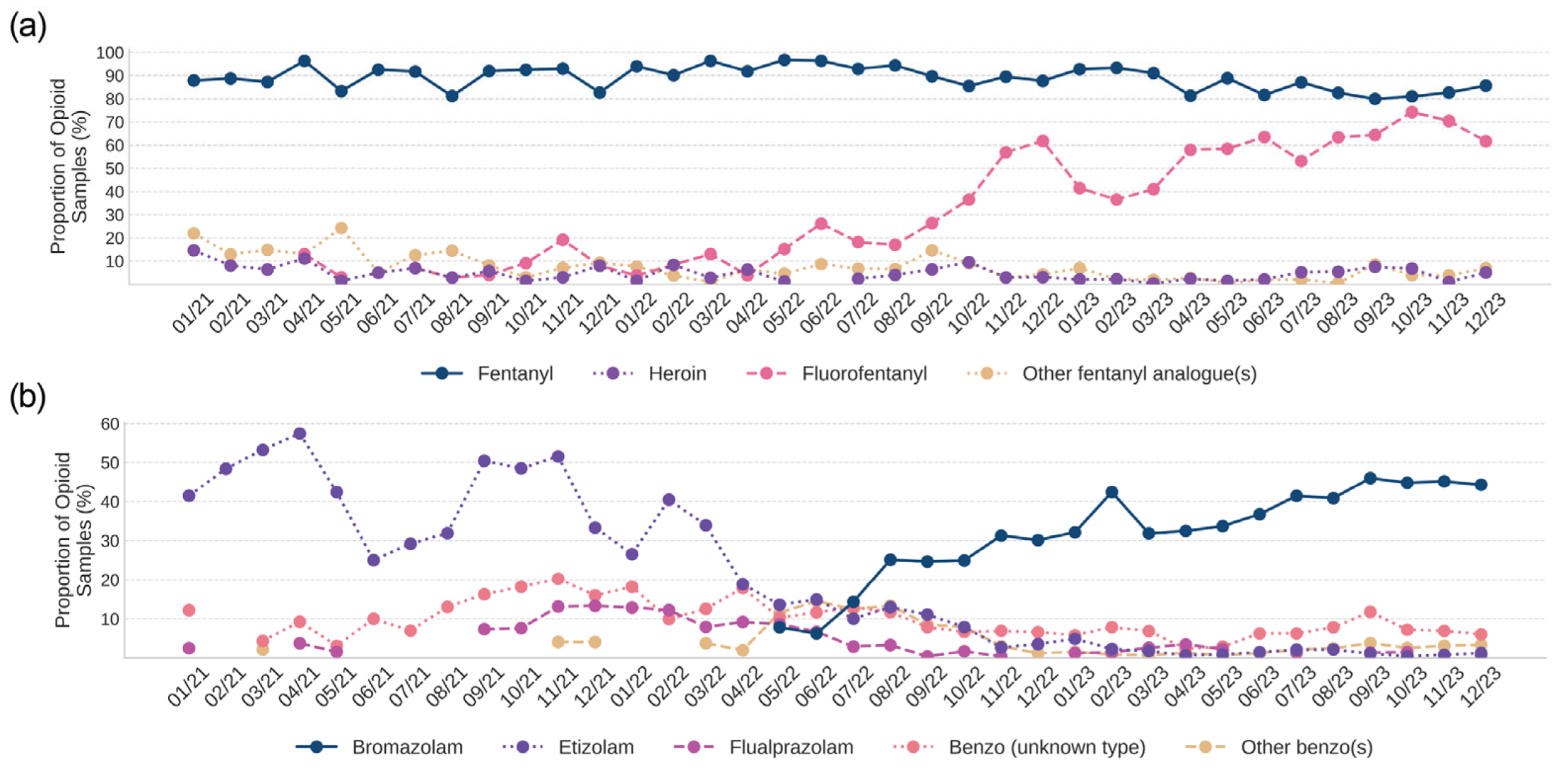
Since the deployment of on-site PS-MS drug checking in October 2021, over 30,000 drug samples submitted by PWUD have been analyzed by PS-MS. Data from samples submitted by anonymous service users recorded over time allows for monitoring of trends in the illicit supply. Aggregate data from samples collected between January 2021 and December 2023 is presented in Figure 6 [1]. Here, the prevalence of select fentanyl and benzodiazepine analogues in opioid samples is visualized. The data illustrate trends in emerging fentanyl and benzodiazepine analogues, illustrating that they are appearing in the supply more frequently over time. For example, an increase in the prevalence of fluorofentanyl over time is observed, whereas fentanyl remains relatively constant (Figure 6a). Figure 6b shows that benzodiazepines are consistently present in opioid samples. The specific analogues present, however, do change over time. From 2021 to 2023, the presence of etizolam in opioid samples decreased; meanwhile, bromazolam prevalence increased. These observations are a good example of the high variability in the unregulated drug supply, where novel drug compounds frequently enter and disappear from the supply.
Figure 6.
Prevalence of select (a) opioids and (b) benzodiazepines detected in opioid samples from January 2021 to December 2023. Adapted from Ref. [1].
All drug samples measured by PS-MS are also tested on-site using FT-IR and fentanyl and benzodiazepine immunoassay test strips. This allows for method comparisons and confirmation that sample results are legitimate. Test results for a subset of 20 drug samples are given in Table S10. PS-MS sample results frequently agree with both the test strip and FT-IR sample results. However, trace-level components that are missed by FT-IR can still be detected by PS-MS.
3.7. Future Work
To this day, adjustments and refinements to the method are still being explored and implemented to further improve simplicity and reduce the cost of PS-MS for harm reduction drug checking. Pre- or post-deposited ISTDs could be utilized to help achieve both of these goals [39]. Here, large batches of PS-MS paper strips could be pre-loaded with internal standard solution, rather than diluting the concentrated A-Vial solution in ISTD. Alternatively, samples could be collected and loaded onto sample plates in a remote setting, then sent to a central site where ISTD could be deposited on the plates pre-loaded with the samples. Both of these strategies would significantly reduce the volume of ISTDs required, thereby reducing the cost of analysis (i.e., 2–10 μL of ISTD instead of 150 μL per drug sample). The use of a robotic sample preparation and liquid handling system would also be warranted in high-throughput testing environments to increase consistency as well as reduce drug testing technician ‘burn-out’. The routine implementation of data-dependent acquisition (DDA) or data-independent acquisition (DIA) in the method, as well as machine learning approaches [41], would improve the detection of compounds not included in the targeted method, and is being explored. Such adjustments would aid in providing a simple, cost-effective drug checking method capable of identifying and quantifying active compounds and cutting agents present in the illicit drug supply.
4. Conclusions
This manuscript provides in-depth details regarding the method development, day-to-day operation, and maintenance of a PS-MS system for on-site harm reduction drug checking. This includes MS method tuning and optimization, method calibration, sample measurements, quality control, and routine preventative maintenance. A number of improvements and adjustments have been made over the years to facilitate PS-MS use as an on-site drug checking technology. This includes the use of surrogate internal standards, improved dilution schemes, and improved calibration models. Such modifications have helped to improve the affordability and practicality of PS-MS as a drug checking tool. To date, we have measured over 30,000 individual drug samples using PS-MS, quantifying 107 target drugs in each sample. It should be noted that the persons who submit a drug sample for testing should be informed that their sample may contain illicit substances other than the 107 included in the target list. Strategies to further improve the simplicity and reduce the cost of PS-MS for drug checking can still be implemented. This may include pre- or post-deposited ISTDs, modified sample dilution schemes, as well as incorporating DDA or DIA scan functions and or machine learning methods to detect and identify new drugs appearing in the highly variable unregulated drug supply.
Supplementary Materials
The following Supplementary Materials can be downloaded at: https://www.mdpi.com/article/10.3390/appliedchem5040036/s1. Personal protective equipment, sample handling/disposal, and practical considerations; Table S1: Tune Mix compositions for MS/MS optimizations using direct infusion electrospray ionization; Table S2: Internal standard suite composition; Table S3: Mass spectrometer scan mode operations for each sample measurement; Table S4: Electrospray ion source parameters; Table S5: PS-MS solvent dispense parameters; Table S6: Global PS-MS operating parameters; Table S7: Tandem mass spectrometry scan parameters; Table S8: Calibration suite compositions; Table S9: Calibration data for target drugs. Table S10: Comparison of test strip, FT-IR, and PS-MS drug sample results.
Author Contributions
Conceptualization, C.G.G., T.M.Z. and L.R.A.; data collection, T.M.Z., L.R.A. and C.K.; methodology, T.M.Z., L.R.A. and C.G.G.; analysis and interpretation, T.M.Z., L.R.A., C.K. and C.G.G.; writing, T.M.Z. and C.G.G.; editing, T.M.Z., L.R.A., C.K., D.K.H., B.W. and C.G.G.; funding acquisition, B.W., D.K.H. and C.G.G. All authors have read and agreed to the published version of the manuscript.
Funding
This research was funded by a Natural Science and Engineering Research Council (NSERC) Discovery Grant (RGPIN-2021-02981) and a New Frontiers in Research Fund (NFRFE-2022-00886). Additional support and contributions were made by the Vancouver Foundation (F0120-5607), BC Ministry of Health, and the Island Health Authority. Infrastructure funding was provided by the BC Ministry of Health and the Canadian Foundation for Innovation: John R. Evans Leaders Fund & British Columbia Knowledge Development Fund (CFI 40274).
Institutional Review Board Statement
Not applicable.
Informed Consent Statement
Not applicable.
Data Availability Statement
The original contributions presented in this study are included in the article/Supplementary Materials. Further inquiries can be directed to the corresponding author.
Acknowledgments
The authors gratefully acknowledge Thermo Fisher Scientific for providing the instruments used in this study and for ongoing technical support, and thank both the University of Victoria and Vancouver Island University for their support of our research. We thank the community members for making this work possible through the donation of their drug samples.
Conflicts of Interest
The authors declare no conflicts of interest.
Abbreviations
The following abbreviations are used in this manuscript:
| PWUD | People who use drugs |
| FT-IR | Fourier transform infrared spectroscopy |
| AIMS | Ambient ionization mass spectrometry |
| PS-MS | Paper spray mass spectrometry |
| ESI | Electrospray ionization |
| LC-MS | Liquid chromatography mass spectrometry |
| CRM | Certified reference material |
| ISTD | Internal standard |
| QC | Quality control |
| MRM | Multiple reaction monitoring |
| MS/MS | Tandem mass spectrometry |
| CID | Collision-induced dissociation |
| HRAM | High-resolution accurate mass |
| ITT | Ion transfer tube |
| DDA | Data-dependent acquisition |
| DIA | Data-independent acquisition |
References
- Gonzalez-Nieto, P.; Wallace, B.; Kielty, C.; Gruntman, K.; Robinson, D.; Staff, S.; Lira, J.A.S.; Gill, C.; Hore, D. Not just fentanyl: Understanding the complexities of the unregulated opioid supply through results from a drug checking service in British Columbia, Canada. Int. J. Drug Policy 2025, 138, 104751. [Google Scholar] [CrossRef] [Scilit] [PubMed]
- Kleinman, R.A. Fentanyl, carfentanil and other fentanyl analogues in Canada’s illicit opioid supply: A cross-sectional study. Drug Alcohol. Depend. Rep. 2024, 12, 100240. [Google Scholar] [CrossRef] [Scilit]
- Caprari, C.; Ferri, E.; Rossetti, P.; Gregori, A.; Citti, C.; Cannazza, G. The emergence of nitazenes: A new chapter in the synthetic opioid crisis. Arch. Toxicol. 2025, 99, 3877–3896. [Google Scholar] [CrossRef] [Scilit] [PubMed]
- Friedman, J.; Montero, F.; Bourgois, P.; Wahbi, R.; Dye, D.; Goodman-Meza, D.; Shover, C. Xylazine spreads across the US: A growing component of the increasingly synthetic and polysubstance overdose crisis. Drug Alcohol. Depend. 2022, 233, 109380. [Google Scholar] [CrossRef] [Scilit] [PubMed]
- Laing, M.K.; Ti, L.; Marmel, A.; Tobias, S.; Shapiro, A.M.; Laing, R.; Lysyshyn, M.; Socías, M.E. An outbreak of novel psychoactive substance benzodiazepines in the unregulated drug supply: Preliminary results from a community drug checking program using point-of-care and confirmatory methods. Int. J. Drug Policy 2021, 93, 103169. [Google Scholar] [CrossRef] [Scilit]
- Tobias, S.; Grant, C.J.; Laing, R.; Arredondo, J.; Lysyshyn, M.; Buxton, J.; Tupper, K.W.; Wood, E.; Ti, L. Time-Series Analysis of Fentanyl Concentration in the Unregulated Opioid Drug Supply in a Canadian Setting. Am. J. Epidemiol. 2022, 191, 241–247. [Google Scholar] [CrossRef] [Scilit] [PubMed]
- Milaney, K.; Passi, J.; Zaretsky, L.; Liu, T.; O’gorman, C.M.; Hill, L.; Dutton, D. Drug use, homelessness and health: Responding to the opioid overdose crisis with housing and harm reduction services. Harm Reduct. J. 2021, 18, 92. [Google Scholar] [CrossRef] [Scilit]
- Nadelmann, E.; LaSalle, L. Two steps forward, one step back: Current harm reduction policy and politics in the United States. Harm Reduct. J. 2017, 14, 37. [Google Scholar] [CrossRef] [Scilit] [PubMed]
- Strike, C.; Watson, T.M. Losing the uphill battle? Emergent harm reduction interventions and barriers during the opioid overdose crisis in Canada. Int. J. Drug Policy 2019, 71, 178–182. [Google Scholar] [CrossRef] [Scilit]
- Barratt, M.J.; Measham, F. What is drug checking, anyway? Drugs Habits Soc. Policy 2022, 23, 176–187. [Google Scholar] [CrossRef] [Scilit]
- Maghsoudi, N.; Tanguay, J.; Scarfone, K.; Rammohan, I.; Ziegler, C.; Werb, D.; Scheim, A.I. Drug checking services for people who use drugs: A systematic review. Addiction 2022, 117, 532–544. [Google Scholar] [CrossRef] [Scilit] [PubMed]
- Park, J.N.; Tardif, J.; Thompson, E.; Rosen, J.G.; Lira, J.A.S.; Green, T.C. A survey of North American drug checking services operating in 2022. Int. J. Drug Policy 2023, 121, 104206. [Google Scholar] [CrossRef] [Scilit]
- Crepeault, H.; Socias, M.E.; Tobias, S.; Lysyshyn, M.; Custance, A.; Shapiro, A.; Ti, L. Examining fentanyl and its analogues in the unregulated drug supply of British Columbia, Canada using drug checking technologies. Drug Alcohol. Rev. 2023, 42, 538–543. [Google Scholar] [CrossRef] [Scilit]
- Kennedy, M.C.; Dong, H.; Tobias, S.; Buxton, J.A.; Lysyshyn, M.; Tupper, K.W.; Ti, L. Fentanyl Concentration in Drug Checking Samples and Risk of Overdose Death in Vancouver, Canada. Am. J. Prev. Med. 2024, 66, 10–17. [Google Scholar] [CrossRef] [Scilit]
- Kutscher, E.; Barber Grossi, M.; Lapolla, F.; Lee, J.D. Fentanyl Test Strips for Harm Reduction: A Scoping Review. J. Addict. Med. 2024, 18, 373–380. [Google Scholar] [CrossRef] [Scilit]
- Martens, R.R.; Gozdzialski, L.; Newman, E.; Gill, C.; Wallace, B.; Hore, D.K. Optimized machine learning approaches to combine surface-enhanced Raman scattering and infrared data for trace detection of xylazine in illicit opioids. Analyst 2025, 150, 700–711. [Google Scholar] [CrossRef] [Scilit]
- Grace Rose, C.; Kulbokas, V.; Carkovic, E.; Lee, T.A.; Pickard, A.S. Contextual factors affecting the implementation of drug checking for harm reduction: A scoping literature review from a North American perspective. Harm Reduct. J. 2023, 20, 124. [Google Scholar] [CrossRef] [Scilit]
- Giulini, F.; Keenan, E.; Killeen, N.; Ivers, J.H. A Systematized Review of Drug-checking and Related Considerations for Implementation as A Harm Reduction Intervention. J. Psychoact. Drugs 2023, 55, 85–93. [Google Scholar] [CrossRef] [Scilit]
- Government of British Columbia. 2016. Available online: https://news.gov.bc.ca/releases/2016hlth0026-000568 (accessed on 20 September 2025).
- Martinsen, M.R.; Davey, N.G.; Bell, R.J.; Krogh, E.T.; Gill, C.G.; Mikkelsen, Ø.; Schmid, R. A field portable membrane introduction mass spectrometer with in-line standard infusion and sample heat exchanger for real-time monitoring of volatile organic compounds in aqueous samples. Environ. Chem. Ecotoxicol. 2020, 2, 168–174. [Google Scholar] [CrossRef] [Scilit]
- Davey, N.G.; Bell, R.J.; Gill, C.G.; Krogh, E.T. Mapping the geospatial distribution of atmospheric BTEX compounds using portable mass spectrometry and adaptive whole air sampling. Atmos. Pollut. Res. 2020, 11, 545–553. [Google Scholar] [CrossRef] [Scilit]
- Richards, L.C.; Davey, N.G.; Gill, C.G.; Krogh, E.T. Discrimination and geo-spatial mapping of atmospheric VOC sources using full scan direct mass spectral data collected from a moving vehicle. Environ. Sci. Process Impacts 2020, 22, 173–186. [Google Scholar] [CrossRef] [Scilit] [PubMed]
- Bell, R.J.; Davey, N.G.; Martinsen, M.; Collin-Hansen, C.; Krogh, E.T.; Gill, C.G. A field-portable membrane introduction mass spectrometer for real-time quantitation and spatial mapping of atmospheric and aqueous contaminants. J. Am. Soc. Mass. Spectrom. 2015, 26, 212–223. [Google Scholar] [CrossRef] [Scilit]
- Davey, N.G.; Fitzpatrick, C.T.E.; Etzkorn, J.M.; Martinsen, M.; Crampton, R.S.; Onstad, G.D.; Larson, T.V.; Yost, M.G.; Krogh, E.T.; Gilroy, M.; et al. Measurement of spatial and temporal variation in volatile hazardous air pollutants in Tacoma, Washington, using a mobile membrane introduction mass spectrometry (MIMS) system. J. Environ. Sci. Health Part A Toxic/Hazard. Subst. Environ. Eng. 2014, 49, 1199–1208. [Google Scholar] [CrossRef] [Scilit]
- Etzkorn, J.M.; Davey, N.G.; Thompson, A.J.; Creba, A.S.; LeBlanc, C.W.; Simpson, C.D.; Krogh, E.T.; Gill, C.G. The use of MIMS-MS-MS in field locations as an on-line quantitative environmental monitoring technique for trace contaminants in air and water. J. Chromatogr. Sci. 2009, 47, 57–66. [Google Scholar] [CrossRef] [Scilit] [PubMed]
- Feider, C.L.; Krieger, A.; Dehoog, R.J.; Eberlin, L.S. Ambient Ionization Mass Spectrometry: Recent Developments and Applications. Anal. Chem. 2019, 91, 4266–4290. [Google Scholar] [CrossRef] [Scilit]
- McBride, E.M.; Mach, P.M.; Dhummakupt, E.S.; Dowling, S.; Carmany, D.O.; Demond, P.S.; Rizzo, G.; Manicke, N.E.; Glaros, T. Paper spray ionization: Applications and perspectives. TrAC Trends Anal. Chem. 2019, 118, 722–730. [Google Scholar] [CrossRef] [Scilit]
- Liu, J.; Wang, H.; Manicke, N.E.; Lin, J.-M.; Cooks, R.G.; Ouyang, Z. Development, Characterization, and Application of Paper Spray Ionization. Anal. Chem. 2010, 82, 2463–2471. [Google Scholar] [CrossRef] [Scilit]
- Vandergrift, G.W.; Gill, C.G. Paper spray mass spectrometry: A new drug checking tool for harm reduction in the opioid overdose crisis. J. Mass. Spectrom. 2019, 54, 729–737. [Google Scholar] [CrossRef] [Scilit]
- Su, Y.; Ma, X.; Ouyang, Z. Rapid screening of multi-class antimicrobial residues in food of animal origin by paper spray mass spectrometry. Int. J. Mass. Spectrom. 2018, 434, 233–239. [Google Scholar] [CrossRef] [Scilit]
- Linhares, A.L.F.D.A.; Yonamine, M. Analysis of biofluids by paper spray-MS in forensic toxicology. Bioanalysis 2020, 12, 1087–1102. [Google Scholar] [CrossRef] [Scilit]
- Vandergrift, G.W.; Hessels, A.J.; Palaty, J.; Krogh, E.T.; Gill, C.G. Paper spray mass spectrometry for the direct, semi-quantitative measurement of fentanyl and norfentanyl in complex matrices. Clin. Biochem. 2018, 54, 106–111. [Google Scholar] [CrossRef] [Scilit]
- Yannell, K.E.; Kesely, K.R.; Chien, H.D.; Kissinger, C.B.; Cooks, R.G. Comparison of paper spray mass spectrometry analysis of dried blood spots from devices used for in-field collection of clinical samples. Anal. Bioanal. Chem. 2017, 409, 121–131. [Google Scholar] [CrossRef] [Scilit]
- Costa, C.; van Es, E.M.; Sears, P.; Bunch, J.; Palitsin, V.; Mosegaard, K.; Bailey, M.J. Exploring Rapid, Sensitive and Reliable Detection of Trace Explosives Using Paper Spray Mass Spectrometry (PS-MS). Propellants Explos. Pyrotech. 2019, 44, 1021–1027. [Google Scholar] [CrossRef] [Scilit]
- Espy, R.D.; Muliadi, A.R.; Ouyang, Z.; Cooks, R.G. Spray mechanism in paper spray ionization. Int. J. Mass. Spectrom. 2012, 325–327, 167–171. [Google Scholar] [CrossRef] [Scilit]
- Borden, S.A.; Saatchi, A.; Vandergrift, G.W.; Palaty, J.; Lysyshyn, M.; Gill, C.G. A new quantitative drug checking technology for harm reduction: Pilot study in Vancouver, Canada using paper spray mass spectrometry. Drug Alcohol. Rev. 2021, 41, 410–418. [Google Scholar] [CrossRef] [Scilit] [PubMed]
- Wallace, B.; Shkolnikov, I.; Kielty, C.; Robinson, D.; Gozdzialski, L.; Jai, J.; Margolese, A.; Gonzalez-Nieto, P.; Saatchi, A.; Abruzzi, L.; et al. Is fentanyl in everything? Examining the unexpected occurrence of illicit opioids in British Columbia’s drug supply. Harm Reduct. J. 2025, 22, 28. [Google Scholar] [CrossRef] [Scilit] [PubMed]
- García-Rojas, N.S.; Guillén-Alonso, H.; MacKay, S.; Torres-Calzada, C.; Soto-Rodriguez, L.D.; Winkler, R.; Wishart, D.S. The Open SprayBot: A high-throughput paper spray mass spectrometry platform for disease screening. HardwareX 2024, 19, e00551. [Google Scholar] [CrossRef] [Scilit]
- Abruzzi, L.R.; Laxton, J.C.; Zarkovic, T.M.; Gill, C.G. Internal Standard Utilization Strategies for Quantitative Paper Spray Mass Spectrometry. J. Am. Soc. Mass. Spectrom. 2025, 36, 1167–1174. [Google Scholar] [CrossRef] [Scilit] [PubMed]
- Borden, S.A.; Mercer, S.R.; Saatchi, A.; Wong, E.; Stefan, C.M.; Wiebe, H.; Hore, D.K.; Wallace, B.; Gill, C.G. Carfentanil structural analogs found in street drugs by paper spray mass spectrometry and their characterization by high-resolution mass spectrometry. Drug Test. Anal. 2023, 15, 484–494. [Google Scholar] [CrossRef] [Scilit]
- Miskulin, A.; Wallace, B.; Gill, C.; Hore, D. A strategy for the detection of benzodiazepine drugs using low-resolution paper-spray mass spectrometry for harm reduction drug checking. Drug Test. Anal. 2024, 16, 1085–1093. [Google Scholar] [CrossRef] [Scilit]

Disclaimer/Publisher’s Note: The statements, opinions and data contained in all publications are solely those of the individual author(s) and contributor(s) and not of MDPI and/or the editor(s). MDPI and/or the editor(s) disclaim responsibility for any injury to people or property resulting from any ideas, methods, instructions or products referred to in the content. |
© 2025 by the authors. Licensee MDPI, Basel, Switzerland. This article is an open access article distributed under the terms and conditions of the Creative Commons Attribution (CC BY) license (https://creativecommons.org/licenses/by/4.0/).