Article

Association Between Exposure to “Clean Nigeria, Use the Toilet” Social and Behaviour Change Communication Campaign and Public Knowledge, Attitude and Open Defecation Practice in Ebonyi State, Nigeria


by
Charity Amaka Ben-Enukora
1,*,
Daniel T. Ezegwu
2,
Catherine Anthony-Mekwunye
2,
Emmanuel Zelinjo Ekhato
3,
Clare Adenike Onasanya
4,
Evelyn Chinwe Obi
5,
Gloria Nneka Ono
5,
Ifeanyi Ebenezer Onyike
6,
Ogochukwu Cynthia Obibuike
7 and
Agwu Agwu Ejem
8
1
Department of Mass Communication, Federal University, Oye-Ekiti PMB 373, Ekiti State, Nigeria
2
Department of Mass Communication, University of Delta, Agbor PMB 2090, Delta State, Nigeria
3
Department of Mass Communication, Delta State Polytechnic, Ogwashi-Uku PMB 1030, Delta State, Nigeria
4
Department of Mass Communication, Wellspring University, Benin City 300252, Edo State, Nigeria
5
Department of Mass Communication, Nnamdi Azikiwe University, Awka PMB 5025, Anambra State, Nigeria
6
Department of Broadcasting, Federal University, Oye-Ekiti PMB 373, Ekiti State, Nigeria
7
Department of Public Relations, Imo State University, Owerri PMB 2000, Imo State, Nigeria
8
Department of Journalism and Media Studies, Federal University, Oye-Ekiti PMB 373, Ekiti State, Nigeria
*
Author to whom correspondence should be addressed.
Hygiene 2026, 6(2), 37; https://doi.org/10.3390/hygiene6020037 (registering DOI)
Submission received: 19 April 2026 / Revised: 7 June 2026 / Accepted: 9 June 2026 / Published: 14 June 2026
(This article belongs to the Section Environmental Health)

Abstract

Background: Open defecation (OD) has remained a threat to the attainment of SDG 6 (sanitation and hygiene). This study measured the level of exposure to the “Clean Nigeria, Use the Toilet” campaign against open defecation, determined the level of public knowledge about open defecation-related harms and diseases, ascertained the public attitude towards open defecation, and established the prevailing defecation practices and the perceived barriers to toilet usage in Ebonyi state, the most prevalent OD state in Nigeria. Methods: The study employed a survey design, using a structured questionnaire for data collection. The multi-stage sampling technique was employed in selecting the respondents from two randomly selected Local Government Areas (LGAs) in the state. Analysis was conducted using 384 valid responses. Results: The results were presented in simple percentage frequency tables and interpreted through the descriptive method, while the Chi-Square test was used to analyse the formulated hypotheses, using the decision rule of p < 0.05. The findings show a high level of awareness of the campaign against open defecation, through the radio and community engagements by environmental activists/NGOs, even though regular access to such information was limited. The results also showed inadequate knowledge of the public health implications of open defecation, whereas good knowledge of environmental consequences was reported. The study found favourable attitudes toward OD practice and persistent open defecation, and major barriers to toilet usage include the high cost of toilet construction, lack of access to toilet facilities, poor sanitation and management of available toilets, and perceived risks of contracting infection from public toilets. However, the Chi-Square values showed that the SBCC campaign was significantly associated with knowledge, attitude, and practice (p < 0.05). Conclusions: The study concluded that localised, culturally relevant and socio-demographically targeted communication interventions, grassroot advocacy, community watch, and neighbourhood taskforce on open defecation, in addition to the provision of aids for the construction of modern toilets with water facilities, are required to combat open defecation in Ebonyi and related contexts in Nigeria.

1. Introduction

The main thrust of Social and Behaviour Change Communication (SBCC) is to change unacceptable human behaviours by engaging communities, individuals, and organisations in attitudinal change campaigns aimed at stimulating appropriate and acceptable behaviours in society. One such negative behaviour that requires SBCC intervention is the open defecation (OD) practice. Open defecation is a prevailing social menace in many nations across the globe, particularly in low-income nations in Asia and Africa. It is linked to transmission of diarrheal diseases such as cholera and dysentery, Typhoid, Intestinal Worm Infections, Schistosomiasis, Trachoma, Hepatitis A, Polio, etc., as well as antimicrobial resistance and environmental pollution [1]. Despite the obvious consequences of open defecation on the environment, such as air and water pollution [2], and human health [1], the dangerous practice has remained a huge threat to sustainable development as over 1.5 billion people across the globe still do not have basic toilet facilities, and about 419 million still defecate in open spaces like street gutters, bushes or into open water bodies [1]. More so, 9 out of 10 people who defecate in the open live in rural areas [3], and nearly half of them live in sub-Saharan African countries, including Nigeria. Hence, access and usage of toilet facilities are crucial for the attainment of Sustainable Development Goals (SDGs).
Consequently, the United Nations SDG 6.2 aims to “achieve access to adequate and equitable sanitation and hygiene for all and end open defecation, paying special attention to the needs of women and girls, and those in vulnerable situations by 2030” [4]. Since the realisation of this goal would determine the accomplishment of Goals 3, 4, 5, 6, and 11, the United Nations had targeted to eliminate open defecation by 2025. In line with this project, the World Toilet Organisation, a non-profit organisation founded by Singapore Jack Sim on 19 November 2001, has continued to draw global attention to the crisis [5]. Also, the United Nations celebrates World Toilet Day on November 19 annually, to promote awareness and encourage a positive attitude and behaviour towards toilet usage [5,6]. Unfortunately, this targeted year has ended with anti-social behaviour not completely eradicated in Nigeria. The persistence of OD practice has attracted the attention of social workers, health personnel, and health communication experts, as well as government and non-governmental agencies.
Nigeria occupies the top-most position in open defecation, ranking number one among countries exhibiting the unhygienic practice across the world on 2 October 2019 [7,8], surpassing India, which previously held the position. The current national open defecation survey reports that a greater percentage of Nigerians use shared and unhygienic toilet facilities, and “One in four Nigerians”, about 47 million people (representing 23% of Nigeria’s population), still defecate openly in bushes, gutters, sidewalks, motor parks, recreation parks, rivers and streets, amongst other open places [9], with consequences ranging from economic loss of about 1.3% (N455 billion) of GDP annually, public health epidemics and rising death tolls resulting from diarrheal diseases, low productivity, increased risk of insecurity and violence against women and children who practice OD, amongst others [10].
The physical environment, among other factors, drives human behaviour, such as open defecation. The anti-social behaviour thrives in rural and agrarian communities with vast farmlands, bushes, forests, and uncompleted and abandoned buildings. Also, rural dwellers who spend most of their time in farmlands will naturally engage in open defecation, thereby making OD eradication extremely difficult. Again, the practice is tied to other factors, including traditional beliefs, values, poverty, age, education, occupation, availability and affordability of facilities, formal policies, etc. [3,11,12,13,14]. Moreover, ignorance about the environmental and public health consequences of open defecation practice contributes to the persistent practice [15].
To meet the 2025 United Nations’ target for OD eradication, therefore, various studies advocated multidimensional approaches, requiring a combination of subsidised toilet infrastructure and behaviour change through sustained communication campaigns [15,16]. In alignment with the global efforts, President Muhammadu Buhari declared a state of emergency in the Water, Sanitation, and Hygiene (WASH) sector and issued a National Action Plan entitled “Clean Nigeria: Use the Toilet” Social and Behaviour Change Communication (SBCC) campaign in November 2018. These policy documents kick-started Nigeria’s road map to open defecation-free status. The “Clean Nigeria: Use the Toilet” campaign aimed at mobilising individual and community efforts to end open defecation and improve sanitation practices by 2025. To ensure continuity, the President also issued Executive Order 009 on 20 November 2019, titled “The Open Defecation-Free (ODF) Nigeria by 2025 and Other Related Matters Order” [17]. There was also a National Roadmap developed by the Federal Ministry of Water Resources and a National Secretariat called “Clean Nigeria Campaign Secretariat” with the mandate to ensure that all public places, including schools, hotels, fuel stations, places of worship, markets, hospitals, and offices have accessible toilet facilities within their premises [3]. Following these concerted efforts, Nigeria allegedly delivered about 100,000 toilets annually [18], even though 20 million toilets were targeted every year from 2019 to 2025 [19].
The interventions have yielded positive results as 148 out of 774 LGAs have been certified open defecation-free [20]. Thus, ODF status has only been achieved in 19.1% of the country’s LGAs, and the sustainability of the ODF status still remains a huge challenge, as some level of open defecation is still practiced in states officially declared as ODF. This highlights a huge gap between policy intentions and grassroots realities, forcing policymakers to push the national blueprint deadline from 2025 to 2030. Therefore, development partners such as WaterAid, UNICEF, the World Bank, the African Development Bank, and other development partners, civil society organisations, the media, and the private sector continue to provide support to the Federal Ministry of Water Resources (FMWR) [9,18] in the construction of toilet facilities and the campaign for social change. To achieve the campaign objectives, WaterAid [10] stressed the need for a strong political commitment in leadership at all levels through increased budgetary allocation to WASH programmes, especially for rural areas, increased support from the media for the dissemination of behaviour change messages and increased coverage of human interest stories on sanitation, and increased collaboration amongst development and civil society organisations as well as private sector engagement in the WASH sector—through business investment and corporate citizenship/corporate social responsibility and sanitation and hygiene awareness creation through branding and promotion.
Nigeria has made reasonable progress towards improving sanitation through its “Clean Nigeria: Use the Toilet” campaign. At the state level, Jigawa state has achieved ODF status in all its 27 LGAs, which makes Jigawa the first ODF state in Nigeria. Also, some states have achieved ODF in some of their LGAs [21], whereas Ebonyi state ranked number one in open defecation practice with no ODF LGA [9]. To complement the Federal Government’s policies and campaign against open defecation, Ebonyi state government launched “Clean Ebonyi State, Use the Toilet” on 25 November 2020 [22]. The SBCC campaign, executed in the past four years, focused on erroneous beliefs that drive open defecation practice and advocacy for the construction and use of modern toilet facilities. For the innovation (toilet construction and usage in this instance) to be adopted, behaviour change communication must underscore its specific qualities, such as relative advantage over the old practice, compatibility with societal values, complexity, triability (people can actually try out the behaviour), and observability (people can observe the benefits of the new ideas from early adopters in the community) [23].
Social and Behaviour Change Communication (SBCC) campaigns can effectively improve beliefs and practices of toilet usage, as well as shift perceptions of what others find acceptable about open defecation [24]. Past studies conducted in Ebonyi state have examined the perceived impact of OD practice on the environment and public health [25], and the impact of social workers’ involvement in community-led sanitation on OD practice [26]. However, there is limited literature regarding the association between exposure to the “Clean Nigeria, Use the Toilet” Social and Behaviour Change Communication (SBCC) campaign and open defecation practice in the state. Hence, this study sought to fill the knowledge gap. Therefore, the study was guided by five specific objectives which include: 1. measure the level of exposure to the “Clean Nigeria, Use the Toilet” SBCC campaign against open defecation among residents of Ebonyi state; 2. examine public knowledge of open defecation-related health risks and environmental pollution; 3. assess public attitude towards open defecation; 4. determine the current defecation practices after the campaign; and 5. identify the perceived barriers to toilet usage among residents in Ebonyi state, Nigeria.

Study Hypotheses

H1. 
There is no significant association between exposure to the “Clean Nigeria, Use the Toilet” SBCC campaign and knowledge of open defecation-related health risks and environmental pollution in Ebonyi state.
H2. 
There is no significant association between exposure to the “Clean Nigeria, Use the Toilet” SBCC campaign and the attitude towards open defecation in Ebonyi state.
H3. 
There is no significant association between exposure to the “Clean Nigeria, Use the Toilet” SBCC campaign and current defecation practices among Ebonyi residents.

2. Materials and Methods

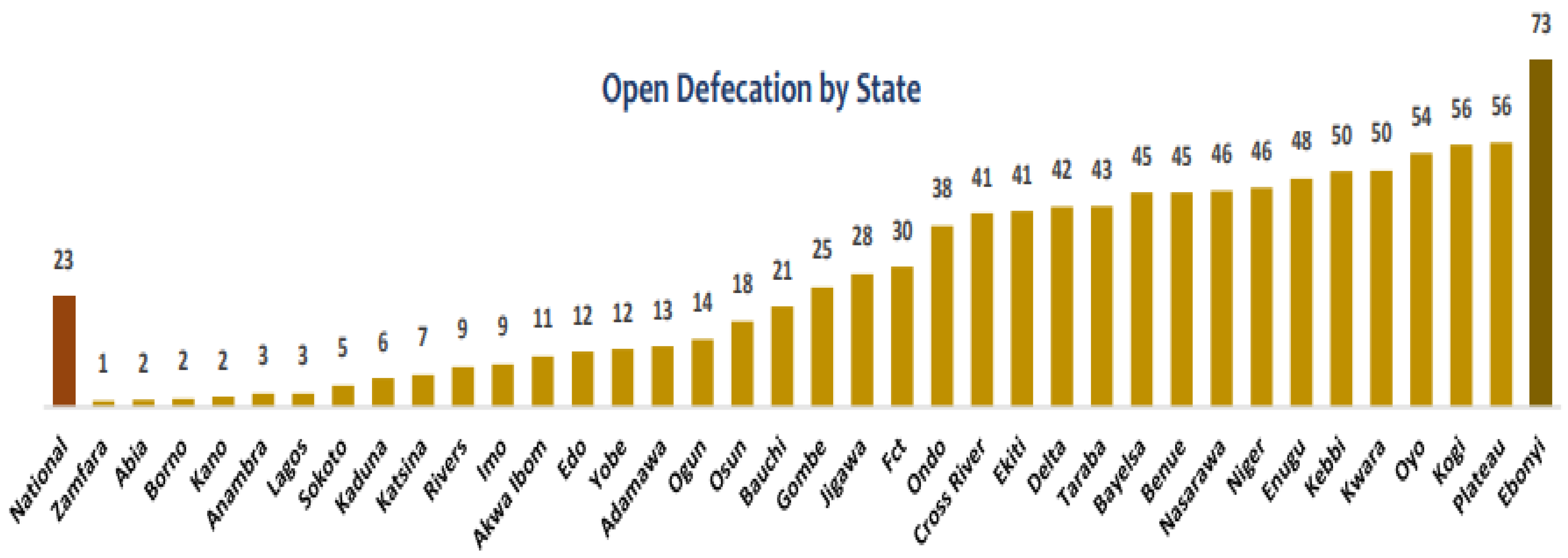
This study employed a cross-sectional survey of residents in Ebonyi state, ranked number one in open defecation practice in Nigeria, as shown in Figure 1.
The state, located in Southeast Nigeria, has a population of 3,242,500 according to the 2022 estimated population by City Population, 2022, and is made up of 13 LGAs.
The state has implemented stringent measures such as the passage of laws, arrests, prosecution, and financial penalty for those who were caught defecating in the open and house owners (landlords) for refusal to install toilet facilities in their houses [28]. The government has also engaged in the construction of toilets to curb open defecation in the state [29]. The state, in a bid to achieve open defecation-free status, launched “Clean Ebonyi, Use the Toilet Campaign” on 25 November 2020 [28]. The campaign was executed for more than three years in traditional media as well as interpersonal communication channels. This justifies the need for an evaluation study.
The Qualtrics online sample size calculator was used to determine the sample size for the study. A sample of 385 was arrived at using a 95% confidence level, 5% margin of error, and 50% population proportion. However, the sample was increased to 400 to ensure equitable distribution between the selected LGAs.
Ethical approval for this study was obtained from the Ethical and Legal Committee (ELRC) of Federal University, Oye-Ekiti, with approval number: ELRC/MC/2024/002. Participation in this study was voluntary, and oral consent was obtained from all nominees who expressed willingness to partake in the study. Also, information obtained in the course of this study remained confidential and was used only for the purpose of this publication.
Data for this study were collected through a self-designed questionnaire comprising six sections, including items on demographics, level of exposure to the communication campaign, knowledge of the health and environmental consequences of open defecation, attitude, practice, and perceived barriers to toilet usage. While demographic variables and exposure were measured with multiple-choice questions, Likert scale questions were employed for the other variables. All items in the questionnaire are included in the data analysis (see Supplementary File).
A pilot study was conducted on 40 respondents (10% of the sample size). The respondents were selected from Afikpo South LGA, which was not part of the study location, to ensure that the pilot test participants were not included in the final study. Cronbach Alpha reliability tests were conducted for each construct, and the coefficients of the exposure (0.883), knowledge (0.886), attitude towards (0.969), and current defecation practice (0.984) imply that the instrument had a high level of statistical reliability.
The multi-stage sampling procedure was used in selecting two LGAs, communities, streets, and households from which the eligible respondents were selected. At the state level, simple random sampling was employed to select Ebonyi and Afikpo-North LGAs. Then, one community was selected from each randomly selected LGA at the second stage. At the third stage, one clan from each community was selected, and systematic sampling was used to select households using a sampling frame. Lastly, the researchers approached selected households and explained the study objectives to available adult/s in the household. Most households with two or more adult members were asked to nominate one respondent to be interviewed. Nomination criteria included adult members of the household, high media consumption, ability to read and write, and willingness to participate. Then, we explained to the nominees their rights as respondents while assuring them that their names and any other identifier traceable to them would not be related to their community leaders and the local authorities. Then, consent was obtained from the nominees before the questionnaire was administered right in their households.
However, the researchers assisted the majority of the respondents in reading and recording the answers due to their low literacy level, whereas those with higher educational backgrounds were allowed to read and fill in their responses themselves. The assisted method may introduce some elements of psychological biases, as the respondents may resort to reporting socially acceptable behaviour to please the researcher. Also, the interviewer’s facial expression and variation in tones when reading the questions could be perceived as cues to expected responses. While the researchers remained neutral and avoided giving the participants cues to expected responses, elements of bias cannot be ruled out entirely.
Fifteen respondents withdrew from the study after giving their consent, and one copy of the questionnaire was returned with incomplete responses. Hence, 16 copies of the questionnaire were certified invalid and not useful for the analysis. Then, the Statistical Package for the Social Sciences (SPSS), version 23 was used to arrange the 384 valid responses to ensure accuracy and facilitate presentation in simple percentage and frequency tables, while the descriptive method was used for interpretation of results. The study hypotheses were analysed using the Chi-Square statistical tool to draw inferences.

3. Results

3.1. Respondents Demographic Characteristics

The distribution of the respondents’ demographic characteristics in Table 1 shows that the most participants in this study are male, adults between 26 and 33 years, married, Christians, and farmers with basic primary education. As such, the researchers interpreted the questionnaire items for the respondents to aid understanding and appropriate response, and assisted in filling in the responses to ensure accuracy.

3.2. Level of Exposure to “Clean Nigeria, Use the Toilet” SBCC Campaign Against Open Defecation in Ebonyi State

The data in Table 2 depict a high (78.9%) level of awareness of the campaign against open defecation in Ebonyi state, but many had inconsistent access to the campaign messages, indicating the maximum reach of communication strategies but a lack of consistency and regular engagement by the audience. Environmental activists/NGO are the major sources of information, followed by community leaders, suggesting validation of the campaign by local authorities. Radio broadcast is the major information channel, signifying its universal acceptance for social change campaigns, especially in rural areas dominated by semi-literate and non-literate populations. Furthermore, high community engagement/town hall meetings reported in this study indicate the interventionists’ efforts in changing social norms and encouraging local ownership of the interventions.

3.3. Knowledge of the Health and Environmental Implications of Open Defecation

Table 3 depicts good knowledge (>60%) of the health risk of open defecation, more than 50% disagreed with the statement that open defecation does not cause any health problems, and almost 60% affirmed that it can cause disease outbreaks. Slightly above 50% agreed that open defecation can cause cholera, and <50% think that open defecation can cause dysentery. These results imply that most respondents believe that OD practice causes health problems, even though their knowledge about OD practice as a major driver of diarrheal diseases is inadequate. Remarkably, another control question used to examine consistency in knowledge showed that 34.6% were uncertain and about 20% erroneously agreed that OD practice can cause malaria, indicating an epidemiological misunderstanding of malaria’s vector-borne transmission, which is not connected to OD practice. These data imply that respondents’ knowledge of the public health implications of open defecation is inaccurate. Thus, the majority of the participants lack adequate knowledge of the specific diseases that OD practice can trigger in their communities.
However, respondents expressed a good knowledge (>70%) of open defecation as a source of pollution to clean air, land, and water. The data revealed a shift from the previous findings reporting poor knowledge of the environmental implications of open defecation. Therefore, the knowledge disparity implies that communities in Ebonyi may maintain a clean environment to avert the odour of faeces, yet they continue to experience high rates of diarrheal epidemics due to the lack of connection between open defecation and outbreak of diarrheal diseases such as cholera and dysentery.
The synthesis of demographic factors and knowledge showed that education, age, and occupation shaped the respondents’ knowledge. Most respondents (54.1%) in this study constitute young adults below 25 years, who are often exposed to generic hygiene talks, thereby lacking adequate knowledge about vector-borne and faecally transmitted diseases. While respondents with secondary and tertiary education drive the positive responses regarding the health and environmental implications of OD practice, respondents with lower educational backgrounds constitute 27.8% of those who explicitly affirm that open defecation does not cause any health problem, alongside 9.1% who remain uncertain, implying that basic information about faecal transmission of diseases via OD practice has not penetrated the lower educational strata. Again, farmers and market traders who constitute the greater percentage (41.7%) of the study population disclosed high levels of sensory nuisance of open defecation. This group is highly exposed to environments (agricultural fields and dense open markets) where open defecation is highly visible, and the stench of faeces is often perceived. Thus, their knowledge is limited to sensory environmental pollution while they remain largely unaware of the public health risks. This explains why 53.9% and 42.5% failed to link open defecation with dysentery and cholera, respectively. Therefore, communication efforts could be targeted specifically at these population subgroups.

3.4. Attitude Towards Open Defecation Practice

Data in Table 4 suggest that most communities in the study area still have favourable attitudes toward OD practice. Less than 50% think that open defecation is a serious problem, and >60% affirm that there are more important matters than open defecation, indicating that cultural normalisation and rationalisation of OD eradication as a trivial issue that requires less attention. The significant informal occupation of the respondents spurred the percentage of agreement to the statement “there are more important matters than open defecation.” Informal workers operate under extreme financial constraints; basic necessities like food security, agricultural inputs, and business survival extensively reduce concerns for long-term sanitation issues. Likewise, approximately 50% affirmed that defecating in open places when travelling/during an emergency is better than using a public toilet. Public toilets in many cities in Nigeria are commercial ventures that operate based on pay-per-use, which may not be affordable to unemployed and low-income earners, who constitute the majority in this study. In addition, the construction of public toilets will not solve the problem of OD practice if the target population deliberately avoids them due to poor hygiene standards. Again, most participants perceive that greater risks could result from the use of public toilets compared to OD practice. Therefore, driving policy for the maintenance of standard hygiene in public toilets should be incorporated in the campaign.
Less than one-quarter affirmed that open defecation affects everyone and can affect them personally. The result suggests a poor understanding of the microbial transmission paths, which could trigger dismissal of shared responsibility and self-policing against perpetrators. Furthermore, more than 70% think they do not have the ability and power to engage in consistent toilet usage at all times, suggesting poor individual control for consistent toilet usage, which could be traced to lower educational attainment (primary and no formal school), and informal occupation among the participants.
Moreover, more than 60% have never educated people about the implications of open defecation, indicating the absence of community-driven or grassroots advocacy. It suffices to say that the Clean Nigeria, Use the Toilet campaign has remained trapped in the top-down structure. Without grassroots advocacy, OD perpetrators will remain comfortable with the habit.

3.5. Current Defecation Practices Among Ebonyi Residents

The data in Table 5 show that slightly above 60% of the respondents have defecated in bushes, gutters, streams, or uncompleted buildings in the last two months, and slightly above 70% have seen people in their communities defecate in open places and/or throw faeces inside bushes or the streets. There is a clear connection between respondents’ occupation and the persistence of OD practice. For farmers and traders who operate daily in open fields and busy informal markets, the absolute lack of toilets and clean toilet facilities leaves them with no other choice than to defecate in nearby bushes. Students also engage in open defecation due to unclean toilets in schools. Again, the small percentage who do not defecate in the open corresponds closely with the percentage of participants with tertiary education (19.8%) and public/civil servants (14.6%). While less educated, unemployed, and low-income participants who constitute the majority of the sample may not afford a safe, modern pour-flush or pit latrine, which requires financial investments, educated and higher-income participants often have stable incomes and better housing with safe toilets. Therefore, communication interventions without aids for toilet construction may not yield the desired impacts.
Furthermore, approximately 50% affirmed that their family members have done the same. When compared with the respondents’ marital status, it was observed that more than half of the respondents were married and managing families. Family members will be forced to use the surrounding environment where there is no toilet facility in the household, thus normalising the act. However, the remarkably lower rate of admission of family practice (49.7%) compared to community practice (>70%) suggests underreporting and collective denial of family practice. The participants may have reported the negative behaviours within the wider community rather than acknowledging that their households engage in the same practices, due to fear of local authorities arresting, prosecuting, or demanding financial penalties against their families.

3.6. Perceived Barriers to Toilet Usage Among Ebonyi Residents

The data in Table 6 show that most participants (>60%) in this study do not perceive open defecation practices as pleasurable and more hygienic. However, the high cost of toilet construction, lack of access to toilet facilities, and poor sanitation and management of available toilet facilities are perceived as the major barriers to toilet usage in the state.
Specifically, 63.6% of the perceived high cost of toilet construction is linked to the low educational attainment, informal occupation, and low-income margin of most participants in this study. More than half of the respondents fall within the mobile populations (traders, farmers, and students) who spend the greater part of the day outside their homes, justifying the perception that lack of access to toilets drives open defecation. Most respondents affirmed that infections can be easily contracted through the use of public toilets. Given that 49.0% of the sample are female, fear of infectious diseases is valid, as lack of running water and clean facilities amplifies the risk of contamination of Urinary Tract Infections among women, due to their anatomical vulnerability. This could trigger the avoidance of public toilets and perpetuate OD practices.

3.7. Hypotheses Results

Decision rule: p < 0.05
H1. 
There is no significant association between exposure to the “Clean Nigeria, Use the Toilet” SBCC campaign and residents’ knowledge of health and environmental consequences of open defecation in Ebonyi state.
The significance value (0.000) in Table 7 is below 0.05, indicating that exposure to the “Clean Nigeria, Use the Toilet” SBCC campaign has a statistically significant association with knowledge of open defecation-related health and environmental consequences among residents in Ebonyi state. Thus, the null hypothesis was rejected.
H2. 
There is no significant association between exposure to the “Clean Nigeria, Use the Toilet” SBCC campaign and residents’ attitude towards open defecation in Ebonyi state.
The significance value (0.001) of the Chi-Square result in Table 8 is below 0.05. This implies that the exposure to the “Clean Nigeria, Use the Toilet” SBCC campaign is significantly associated with attitude towards open defecation. Thus, the null hypothesis was rejected.
H3. 
There is no significant association between exposure to the “Clean Nigeria, Use the Toilet” SBCC campaign and current defecation practices among Ebonyi residents.
The significance value (0.000) of the Chi-Square result in Table 9 is below 0.05. This implies that exposure to the Clean Nigeria, Use the Toilet” SBCC campaign is significantly associated with the current defecation practices among Ebonyi residents. Thus, the null hypothesis was also rejected.

4. Discussion

This study examined the association between the “Clean Nigeria, Use the Toilet” Social and Behaviour Change Communication campaign and knowledge, attitude, and open defecation practice in Ebonyi state, Nigeria, using a structured questionnaire. The findings show adequate awareness of the campaign against open defecation through the radio and community engagements by environmental activists/NGOs, even though the residents had irregular access to such information. This result supports previous findings that there are high levels of awareness of anti-open defecation campaigns in selected states in Nigeria [30,31,32]. However, the result refutes the claim that exposure to similar open defecation communication interventions was low in the Indian state of Gujarat [33]. The disparity may be driven by context, communication strategies, private–public partnerships, and political mobilisations. Nigeria has unexpectedly occupied the top-most position in open defecation and has given priority to the issue to avert a public health crisis, which may be difficult to manage with the available limited resources.
The results showed disparity in knowledge of open defecation-related public health and environmental consequences. While knowledge of public health consequences of OD practice was inaccurate, adequate knowledge of environmental consequences was observed. The knowledge gap suggests that communities may resort to maintaining a clean environment to avert the odour of faeces, but continue to experience high rates of diarrheal epidemics due to the lack of knowledge connecting open defecation and outbreaks of diseases such as cholera. The synthesis of demographic factors and knowledge showed that education, age, and occupation shaped the respondents’ knowledge. The study confirms the previous reports that there is inadequate knowledge of public health consequences of OD in various states in Nigeria [34,35]. While poor knowledge of public health consequences is still thriving in Nigeria, the study found a high level of knowledge of environmental consequences of open defecation, aligning with a previous finding that reported adequate knowledge of environmental consequences [25].
Further, the hypothesis result suggests that exposure to the campaign has a significant association with the residents’ knowledge of open defecation-related health and environmental risks at p < 0.05. However, knowledge alone may be insufficient to eliminate open defecation where cultural, social, and psychological barriers persist.
In addition, a favourable attitude towards open defecation still prevails in the study areas despite the campaign. This implies normalisation of poor hygiene habits and psychological barriers to the campaign’s success. OD eradication tends to be trivialised, and greater risks are associated with defecation in public toilets. Also, poor understanding of the microbial transmission paths and poor individual control for consistent toilet usage were expressed by the participants, which may continue to trigger diarrheal disease outbreaks in the state. The significantly lower educational attainment and informal occupation of the respondents contribute to the favourable attitude towards open defecation. However, the result of the hypothesis shows that exposure to the campaign has a significant association with the respondents’ attitudes toward open defecation at p > 0.05. The result confirms Fadeyi and Omipidan’s [36] conclusion that the anti-open defecation campaign in Osun state resulted in a change in attitude and behaviour.
More so, data on the current defecation practice show that OD practice continues unabated despite the communication efforts and toilet constructions. The data show a high level of admission of individual and community-level practice, whereas admission of family practice was remarkably low, suggesting underreporting of family practice, probably due to fear of being arrested, prosecuted, or fined by local authorities. Thus, communication messages may need to emphasise communal surveillance and social sanction for open defecation practice at the individual, family, and community levels. While this study did not engage in observation of available toilet facilities in the study area, a past study conducted in the same state had reported a high level (81.6%) of pit latrines without slabs, and hanging latrines [37], which could trigger toilet avoidance. Untidy and shared toilets have also been reported as a key driver of open defecation in other contexts [38].
The result confirms Okon and Ikpi’s [32] report that a quarter of the respondents still defecate in the open, and 89.7% would defecate in the open if they had an urgent need to defecate and there was no toilet around. The finding validates Chase et al.’s claim [39] that latrine uptake was slightly higher (0.55%) in rural Cambodian communities during behaviour change communication intervention, which was an insignificant outcome. Similarly, the finding supports Okon and Ikpi’s [32] report that OD practice may persist after the outcome of a communication intervention showed that 89.7% would defecate in the open if they had an urgent need to defecate and there was no toilet around, even though the campaign influenced toilet ownership by most households.
However, the hypothesis result showed a significant association between the campaign and toilet usage among the residents at p > 0.05. This result implies that exposure to the campaign against open defecation has a significant association with a change in behaviour. Again, the result aligns with Fadeyi and Omipidan [36], who observed that the “Ilerioluwa Development Initiative” (IDI), an advocacy campaign against open defecation in Osun state, stimulated a stronger appetite and desire for a higher quality of life, which led to a change in attitude and behaviour, and improved quality of life among residents. It also aligns with the report that there is a statistically significant change in open defecation practice across all treatment households after an anti-open defecation campaign in India. However, the finding deviates from Schmidt et al.’s [33] report of a low impact in post-intervention toilet usage in 94 Indian villages.
Another major finding of this study is the perceived high cost of toilet construction, lack of access to toilet facilities, and poor sanitation and management of available ones as the major barriers to toilet usage in the state. The findings suggest that open defecation has persisted not due to pleasure but psychological constraints, such as avoidance of public toilets, resulting from perceived risks. The finding contradicts Bhatt et al.’s claim [40] that Nepalis who practice open defecation by choice perceive it as a medium for socialising, and an enjoyable outdoor activity that complies with spiritual and religious norms. It suffices to say that people who practice open defecation in the study area seem to do so by compulsion. Psychological factors drive open defecation, especially where toilets are shared [41,42].
Therefore, multidimensional communication efforts could be targeted specifically at various population subgroups since psychological and socio-demographic factors combine to drive OD practice in the state.

5. Conclusions

Open defecation remains a major public health and environmental challenge in Nigeria, particularly in Ebonyi state (the state with the highest open defecation). This study examined the association between exposure to the “Clean Nigeria, Use the Toilet” Social and Behaviour Change Communication (SBCC) campaign and open defecation practice in Ebonyi state, Nigeria. Specific objectives included determining the level of exposure to the “Clean Nigeria, Use the Toilet” SBCC campaign against open defecation, knowledge of open defecation-related health risks and environmental implications, attitude towards OD practice, the current defecation practices after the campaign, and the perceived barriers to toilet usage among the residents.
The study established a high level of awareness about the “Clean Nigeria, Use the Toilet” campaign against open defecation in Ebonyi state. Environmental activists/NGO served as the major source of information, followed by community leaders, suggesting validation of the campaign by local authorities, and radio broadcast was the major information channel. While there is lack of adequate knowledge of the specific diseases that OD practice can trigger in their communities, adequate knowledge of environmental consequences was observed. Based on that, it can be asserted that communities may focus on environmental cleanliness while neglecting the public health dimension of open defecation, resulting in persistent outbreaks of diarrhoeal disease in the state.
The persistent favourable attitudes toward open defecation signify the normalisation of poor hygiene habits and psychological barriers that may continue to trigger diarrheal disease outbreaks in the state. Therefore, the researchers conclude that individual and community-level OD practice persists in vulnerable communities, and that communication messages emphasising communal surveillance and social sanction for open defecation practice at individual, family, and community levels should be employed.
More so, open defecation-free status may not be achieved if strategic multidimensional interventions are not implemented. This is based on the finding that the high cost of toilet construction, lack of access to toilet facilities, poor sanitation and management of available facilities, and perceived risk of contracting infection from public toilets are the major barriers to toilet usage in the state.
Lastly, this study established that exposure to the “Clean Nigeria, Use the Toilet” Social and Behaviour Change Communication campaign is significantly associated with knowledge, attitude, and open defecation practice in Ebonyi state, reinforcing the fact that targeted behaviour change communication is vital for eliminating open defecation practice. Hence, localised, culturally relevant and socio-demographically targeted communication interventions, grassroot advocacy, community watch, and neighbourhood task force on open defecation, in addition to the provision of aids for the construction of modern toilets with water facilities, are required to combat open defecation in Ebonyi and related contexts in Nigeria.

Supplementary Materials

The following supporting information can be downloaded at: https://www.mdpi.com/article/10.3390/hygiene6020037/s1, Supplementary File: This study examines the association between exposure to the “Clean Nigeria; Use the Toilet”, Behavior Change Communication Campaign and knowledge, attitude and Open Defecation Practice in Ebonyi State. Participation in this study is voluntary.

Author Contributions

Conceptualisation, C.A.B.-E. and C.A.-M.; methodology, D.T.E., C.A.B.-E. and E.Z.E.; software, I.E.O.; formal analysis C.A.B.-E. and A.A.E.; investigation, C.A.B.-E., D.T.E., C.A.-M., O.C.O. and E.Z.E.; software, I.E.O.; validation, C.A.O., E.C.O., G.N.O. and E.Z.E.; resources, C.A.B.-E., C.A.O. and I.E.O.; data curation, A.A.E. and D.T.E.; writing—original draft preparation, C.A.B.-E.; writing—review and editing, I.E.O. anV; visualisation, A.A.E.; supervision, E.C.O. and C.A.-M.; project administration, G.N.O., D.T.E. and C.A.-M. All authors have read and agreed to the published version of the manuscript.

Funding

This research received no external funding.

Institutional Review Board Statement

The study was conducted in accordance with the Declaration of Helsinki, and approved by the Ethical and Legal Committee (ELRC) of Federal University, Oye-Ekiti, (ELRC/MC/2024/002) on 10 February 2024.

Informed Consent Statement

Informed consent was obtained from all subjects involved in the study.

Data Availability Statement

The original contributions presented in this study are included in the article/Supplementary Material. Further inquiries can be directed to the corresponding author.

Conflicts of Interest

The authors declare no conflicts of interest.

Abbreviations

The following abbreviations are used in this manuscript:
ODOpen Defecation
ODFOpen Defecation-Free

References

  1. World Health Organization. Sanitation. 2023. Available online: https://www.who.int/news-room/fact-sheets/detail/sanitation#:~:text=In%202022%2C%2057%25%20of%20the,as%20private%20toilets%20or%20latrines (accessed on 11 June 2024).
  2. Ngwu, U.I. The practice of open defecation in rural communities in Nigeria: A call for social and behaviour change communication intervention. Int. J. Commun. Res. 2017, 7, 201–206. [Google Scholar]
  3. Bwakan, N.A. Assessment of SBCC Campaign against Open Defecation Practice and Bogoro L.G.A. Open Defecation Free Status. NTAtvc J. Commun. 2021, 5, 118–126. [Google Scholar]
  4. United Nations. Sustainable Development GOALS—17 Goals to Transform Our World. 2016. Available online: https://www.un.org/en/exhibits/page/sdgs-17-goals-transform-world (accessed on 15 July 2024).
  5. World Toilet Organisation. What Is UN World Toilet Day? 2021. Available online: https://www.worldtoilet.org/ (accessed on 22 July 2024).
  6. United Nations. World Toilet Day, 19 November. Available online: https://www.un.org/en/observances/toilet-day (accessed on 11 June 2024).
  7. Punch Newspaper. Open Defecation: Nigeria Ranks No. 1 in the World—Minister. 2019. Available online: https://punchng.com/open-defecation-nigeria-ranks-no-1-in-the-world-minister/ (accessed on 22 January 2024).
  8. Obinna, C. Open Defecation: Doubts over Nigeria’s Attainment of 2025 Target—Experts. Vanguard Newspaper, 25 October 2023. Available online: https://www.vanguardngr.com/2023/10/open-defecation-doubts-over-nigerias-attainment-of-2025-target-experts/ (accessed on 22 May 2024).
  9. National Bureau of Statistics; Federal Ministry of Water Resources. Water, Sanitation and Hygiene—National Outcome Routine Mapping (WASH-NORM) Survey 2018. Available online: https://www.nigerianstat.gov.ng/elibrary/read/950 (accessed on 15 July 2024).
  10. WaterAid. Clean Nigeria Campaign. Available online: https://www.wateraid.org/ng/get-involved/clean-nigeria-campaign (accessed on 11 July 2024).
  11. Coffey, D.; Gupta, A.; Hathi, P.; Spears, D.; Srivastav, N.; Vyas, S. Understanding open defecation in rural India Untouchability, pollution, and latrine pits. In Economic & Political Weekly, Special Issue on Rural Affairs; F-35114-INC-2; IGC: London, UK, 2016; Available online: https://www.theigc.org/sites/default/files/2017/07/coffey-et-al-2016-working-paper.pdf (accessed on 18 June 2024).
  12. Ahon, F. Only 78 LGs in Nigeria Free of Open Defecation—Opara. Vanguard, 24 May 2022. Available online: https://www.vanguardngr.com/2022/05/only-78-lgs-in-nigeria-free-of-open-defecation-opara/#google_vignette (accessed on 17 June 2024).
  13. Belay, D.G.; Asratie, M.H.; Aragaw, F.M.; Tsega, N.T.; Endalew, M.; Gashaw, M. Open defecation practice and its determinants among households in sub-Saharan Africa: Pooled prevalence and multilevel analysis of 33 sub-Saharan Africa countries demographic and health survey. Trop. Med. Health 2022, 50, 28. [Google Scholar] [CrossRef]
  14. Fagunwa, O.F.; Mthiyane, T.; Fagunwa, A.; Olayemi, K.I.; Alozie, A.; Onyeaka, H.; Akinsemolu, A.; Ojo, A. Priority regions for eliminating open defecation in Africa: Implications for antimicrobial resistance. Environ. Dev. Sustain. 2023, 27, 2675–2699. [Google Scholar] [CrossRef]
  15. Nwokolo, P.N.; Nwokolo, M.A. Employing the Social Media and the Mobile Phones (GSM) in the Campaign against Open Defecation in South-East Nigeria. Glob. J. Health Sci. 2021, 13, 38–48. [Google Scholar] [CrossRef]
  16. Humňalová, H.; Ficek, F. Sanitation strategies for reducing open defecation in rural areas of India and Ethiopia. AUC Geogr. 2023, 58, 51–63. [Google Scholar] [CrossRef]
  17. Sanusi, B.O.; Olanihun, S.Z.; Daniel, H.A.; Alake, T.J. Coverage of Open Defecation in Select Nigerian Newspapers. Sapientia Glob. J. Arts Humanit. Dev. Stud. 2022, 5, 61–71. [Google Scholar]
  18. Adepoju, A. Why Nigeria’s campaign to end open defecation is failing. Devex, 13 August 2019. Available online: https://www.devex.com/news/why-nigeria-s-campaign-to-end-open-defecation-is-failing-95448 (accessed on 22 June 2024).
  19. Falaju, J. Nigeria Needs 20m Toilets to Achieve ODF Target by 2025. Guardian Newspaper, 7 July 2023. Available online: https://guardian.ng/news/nigeria-needs-20m-toilets-to-achieve-odf-target-by-2025/ (accessed on 2 August 2024).
  20. Ochojila, A. Open Defecation: FG Shifts Target to 2030, Strengthens Collaboration with Youths. The Guardian Nigeria, 16 January 2025. Available online: https://guardian.ng/features/health/open-defecation-fg-shifts-target-to-2030-strengthens-collaboration-with-youths/ (accessed on 17 June 2024).
  21. Ewepu, G. We Are Conquering Open Defecation, 2 LGAs Added—FG. Vanguard Newspaper, 30 July 2023. Available online: https://www.vanguardngr.com/2023/07/we-are-conquering-open-defecation-2-lgas-added-fg/ (accessed on 15 July 2024).
  22. 365Daily News (30 December 2020). 2021: Ebonyi Embarks on Intensive Campaign to End Open Defecation. Available online: https://365daily.com.ng/2020/12/30/2021-ebonyi-embarks-on-intensive-campaign-to-end-open-defecation/ (accessed on 22 July 2024).
  23. Roger, E.M. Diffusion of Innovations, 5th ed.; Free Press: New York, NY, USA, 2003; p. 23. [Google Scholar]
  24. Gauri, V.; Rahman, T.; Sen, I.K. Shifting Social Norms to Reduce Open Defecation in Rural India. Behav. Public Policy 2023, 7, 266–290. [Google Scholar] [CrossRef]
  25. Egbu, A.U.; Nwaugo, V.C.; Nwaugo, V.O. Open Defecation: Environmental and Public Health Implications in Abakaliki and Afikpo, Ebonyi State, Nigeria. J. Environ. Manag. Saf. 2025, 16, 12. [Google Scholar] [CrossRef]
  26. Agha, A.I.; Osuu, C.; Onali, C.E.; Adewoyin, Y. Rethinking community led total sanitation for eradicating open defecation in rural Ebonyi State Communities, Nigeria: Practice considerations for social work practitioners and educators. J. Water Sanit. Hyg. Dev. 2024, 14, 188–198. [Google Scholar] [CrossRef]
  27. Federal Ministry of Water Resources (FMWR); Government of Nigeria; National Bureau of Statistics (NBS); UNICEF. Water, Sanitation and Hygiene: National Outcome Routine Mapping (WASHNORM) 2021: A Report of Findings; UNICEF: Abuja, Nigeria, 2022. Available online: https://www.unicef.org/nigeria/reports/water-sanitation-and-hygiene-national-outcome-routine-mapping-report-2021 (accessed on 12 July 2024).
  28. Eze, J. Ebonyi Prosecutes 138 Residents for Open Defecation. Premium Times, 7 February 2016. Available online: https://www.premiumtimesng.com/regional/ssouth-east/198128-ebonyi-prosecutes-138-residents-open-defecation.html?tztc=1 (accessed on 17 August 2024).
  29. Punch. Open Defecation: Ebonyi Rep Builds 30 Toilet. Punch Newspaper, 6 November 2022. Available online: https://punchng.com/open-defecation-ebonyi-rep-builds-30-toilets/#:~:text=The%20member%20representing%20Afikpo%20North%2FSouth%20Federal%20Constituency%20of,wards%20of%20the%20constituency%20to%20tackle%20open%20defecation (accessed on 18 July 2024).
  30. Adinlewa, T.; Olubodede, E.O. Influence of Anti-Open Defecation Campaigns on the Residents of Owo Local Government Area, Ondo State. In Proceedings of the International Conference on Emerging Technology and Interdisciplinary Sciences (ICETIS 2021), virtual, 4 December 2021; pp. 107–115. [Google Scholar]
  31. Alom, K.; Ogah, I.A.; Dogo, S. Public Awareness and Knowledge of Approaches on the Campaign against Open Defecation in Benue State. Media Commun. Curr. 2020, 4, 129–148. [Google Scholar]
  32. Okon, P.E.; Ikpi, M.O. Effectiveness of Communication Campaigns in the Sustenance of Open Defection-Free Society: A Study of Ugep Community in Cross River State. Int. J. Commun. Interdiscip. J. Commun. Stud. 2019, 24, 93–104. [Google Scholar]
  33. Schmidt, W.-P.; Chauhan, K.; Bhavsar, P.; Yasobant, S.; Patwardhan, V.; Aunger, R.; Saxena, D.; Val Curtis, V. Cluster-randomised trial to test the effect of a behaviour change intervention on toilet use in rural India: Results and methodological considerations. BMC Public Health 2020, 20, 1389. [Google Scholar] [CrossRef] [PubMed]
  34. SarkinGobir, Y.; SarkinGobir, S. Open Defecation, a Threat to Public Health and Sustainable Development Goals: A Case Study of Gwadabawa Local Government, Sokoto State, Nigeria. Int. J. Med. Biosci. 2017, 1, 28–37. [Google Scholar]
  35. Jubril, I. The Effect of Open Defecation Practice in Saki Town, Nigeria. Bachelor’s Thesis, LAB University of Applied Sciences, Raseborg, Finland, 2022. Available online: https://www.theseus.fi/bitstream/handle/10024/787982/Jubril_Ismael.pdf?sequence=2 (accessed on 11 June 2024).
  36. Fadeyi, I.O.; Omipidan, I.A. Development Communication as a tool for Advocacy: A study of the Stop Open Defecation Advocacy, Sensitization and Enlistment Programme in Osun State. Sapientia Glob. J. Arts Humanit. Dev. Stud. (SGOJAHDS) 2023, 6, 293–299. [Google Scholar]
  37. Onyeabor, E.N.; Umeh, G.N. Access to Improved Toilet Facilities Among Predominantly Farming Communities in Izzi Local Government Area of Ebonyi State, Nigeria. J. Environ. Earth Sci. 2019, 9, 101–109. [Google Scholar]
  38. Abdullahi, M.A.; Sarkingobir, Y.; Yabo, A.G. Open Defecation Practices in Rural Areas Threat Public Health: An Assessment of Selected Area in Sokoto, Nigeria. J. Int. Environ. Appl. Sci. 2023, 18, 40–47. [Google Scholar]
  39. Chase, C.; Ziulu, V.; Lall, P.; Kov, P.; Smets, S.; Chan, V.; Lun, Y. Addressing the behavioural constraints to latrine uptake: Effectiveness of a behaviour-change campaign in rural Cambodia. Waterlines 2015, 34, 365–378. [Google Scholar] [CrossRef]
  40. Bhatt, N.; Budhathoki, S.S.; Lucero-Prisno, D.E.I.; Shrestha, G.; Bhattachan, M.; Thapa, J.; Sunny, A.K.; Upadhyaya, P.; Ghimire, A.; Pokharel, P.K. What motivates open defecation? A qualitative study from a rural setting in Nepal. PLoS ONE 2019, 14, e0219246. [Google Scholar] [CrossRef]
  41. Olapeju, O. Assessment of the psychological dimension to open defecation in Ogun State. Environ. Technol. Sci. J. 2022, 12, 160–170. [Google Scholar] [CrossRef]
  42. Ntaro, M.; Owokuhaisa, J.; Isunju, J.B.; Mulogo, E.; Ssempebwa, J.C. Contextual and psychological factors influencing open defecation free status: An exploratory qualitative study in rural South Western Uganda. BMC Public Health 2022, 22, 414. [Google Scholar] [CrossRef]
Figure 1. Open defecation practice according to states in Nigeria, with vertical lines showing the percentage of OD per state. Source: Federal Ministry of Water Resources (FMWR), Government of Nigeria, National Bureau of Statistics (NBS), and UNICEF [27].
Hygiene 06 00037 g001
Table 1. Distribution of the respondents’ demographic variables.
CategoryVariablesFrequencyPercentage %
GenderMale19651.0
Female18849.0
Total384100.0
AgeLess than 18205.2
18–256015.6
26–3310427.1
34–419524.7
42–506015.6
51 and above4511.7
Total384100.0
Marital statusSingle18147.1
Married19550.8
Prefer not to say82.1
Total384100.0
Educational
Background
No Formal Education328.3
Primary/Basic Education14838.5
Secondary Education12833.3
Tertiary Education7619.8
Total384100.0
OccupationStudent6416.7
Public/Civil Servant5614.6
Unemployed4812.5
Artisan5614.6
Trader7319.0
Farmers8722.7
Total384100.0
Religion Christian37296.9
Islam92.3
African Traditional
Religion
30.8
Total384100.0
Table 2. Distribution of the respondents’ exposure to “Clean Nigeria, Use the Toilet” campaign against open defecation in Ebonyi state.
QuestionsResponsesFrequencyPercentage %
Have you heard about “Use the Toilet” campaign?Yes30378.9
No5714.8
Not sure246.3
Total384100.0
How often do you hear about
“Use the Toilet” campaign?
Not applicable8121.1
Everyday194.9
Twice or more in a week4411.5
Occasionally13234.4
Can’t Say10828.1
Total384100.0
What is your major source of information about “Use the Toilet” campaign against open defecation?Not applicable8121.1
Friends/family236.0
Government agencies369.4
Environmental activists/NGO19250.0
Community leaders4010.4
Religious leaders123.1
Total384100.0
What channels provided you with the highest information about “Use the Toilet” campaign open defecation?Not applicable7519.5
Television7218.8
Radio9424.5
Social media194.9
Billboards82.1
Posters328.3
Community engagement/
town hall meetings
8421.9
Total384100.0
Table 3. Distribution of the respondents’ knowledge of health and environment consequences of open defecation.
QuestionsResponsesFrequencyPercentage %
Open defecation is harmful to human healthStrongly Disagree4210.9
Disagree4511.7
Uncertain359.1
Agree10627.6
Strongly Agree15640.6
Total384100.0
Open defecation can cause disease outbreakStrongly Disagree4411.5
Disagree7118.5
Uncertain3910.2
Agree10527.3
Strongly Agree12532.6
Total384100.0
Open defecation can cause
cholera
Strongly Disagree328.3
Disagree5915.4
Uncertain7218.8
Agree11529.9
Strongly Agree10627.6
Total384100.0
Open defecation can cause
dysentery
Strongly Disagree4010.4
Disagree8622.4
Uncertain8121.1
Agree10226.6
Strongly Agree7519.5
Total384100.0
Open defecation can cause malariaStrongly Disagree7820.3
Disagree9825.5
Uncertain13334.6
Agree5013.0
Strongly Agree256.5
Total384100.0
Open defecation does not cause any health problemStrongly Disagree11730.5
Disagree10627.6
Uncertain5414.1
Agree5514.3
Strongly Agree5213.5
Total384100.0
Open defecation is a source of pollution to clean air, land and waterStrongly Disagree297.6
Disagree4010.4
Uncertain246.3
Agree10928.4
Strongly Agree18247.4
Total384100.0
Table 4. Distribution of the respondents’ attitude towards open defecation.
QuestionsResponsesFrequencyPercentage %
Open defecation is not a serious problemStrongly Disagree9424.5
Disagree8121.1
Uncertain8421.9
Agree10226.6
Strongly Agree236.0
Total384100.0
Defecating in open places when travelling/during an emergency is better than using a public toiletStrongly Disagree379.6
Disagree10527.3
Uncertain4010.4
Agree12833.3
Strongly Agree7419.3
Total384100.0
Open defecation affects everyone and can affect you, personallyStrongly Disagree6115.9
Disagree9524.7
Uncertain8522.1
Agree7319.0
Strongly Agree7018.2
Total384100.0
There are more important matters than open defecationStrongly Disagree328.3
Disagree6717.4
Uncertain4411.5
Agree13936.2
Strongly Agree10226.6
Total384100.0
I have the ability and power to engage in consistent toilet usageStrongly Disagree17445.3
Disagree11529.9
Uncertain5815.1
Agree318.1
Strongly Agree61.6
Total384100.0
I educate people about the implications of open defecationStrongly Disagree6918.0
Disagree19550.8
Uncertain379.6
Agree5414.1
Strongly Agree297.6
Total384100.0
Table 5. Distribution of the respondents’ current defecation practice.
QuestionsResponsesFrequencyPercentage %
I defecated in bushes, gutters,
streams or uncompleted buildings in the last two months
Strongly Disagree4511.7
Disagree5313.8
Uncertain369.4
Agree8923.2
Strongly Agree16141.9
Total384100.0
My family members defecate in the open places, bushes, gutter streams or uncompleted buildingsStrongly Disagree6516.9
Disagree7519.5
Uncertain5313.8
Agree11028.6
Strongly Agree8121.1
Total384100.0
I have seen people defecate in open place and/or throw faeces
inside bush or the streets
Strongly Disagree379.6
Disagree266.8
Uncertain328.3
Agree17445.3
Strongly Agree11529.9
Total384100.0
Table 6. Distribution of the respondents’ perceived barriers to toilet usage.
QuestionsResponsesFrequencyPercentage %
Defecating in other places such as bush is more pleasurableStrongly Disagree14036.5
Disagree10527.3
Uncertain133.4
Agree8020.8
Strongly Agree4612.0
Total384100.0
Open defecation is more hygienic than defecating in the toiletStrongly Disagree17445.3
Disagree5614.6
Uncertain123.1
Agree9224.0
Strongly Agree5013.0
Total384100.0
Infection can be easily contracted through the use of public toiletStrongly Disagree4411.5
Disagree7218.8
Uncertain82.1
Agree22759.1
Strongly Agree338.6
Total384100.0
Lack of access to toilet facility
promotes open defecation
Strongly Disagree287.3
Disagree287.3
Uncertain00
Agree17244.8
Strongly Agree15640.6
Total384100.0
High cost of building toilets
and maintenance make people to defecate in bushes
Strongly Disagree287.3
Disagree6817.7
Uncertain4411.5
Agree18046.9
Strongly Agree6416.7
Total384100.0
Table 7. Chi-Square tests showing association between exposure to the “Clean Nigeria, Use the Toilet” campaign and knowledge of health and environmental consequences of open defecation.
ValuedfAsymptotic Significance (2-Sided)
Pearson Chi-Square133.298 a480.000
Likelihood Ratio109.086480.000
Linear-by-Linear Association43.51710.000
N of Valid Cases384
a a3 cells (20.0%) have expected count less than 5. The minimum expected count is 3.25.
Table 8. Chi-Square tests showing association between exposure to the “Clean Nigeria, Use the Toilet” SBCC campaign on respondents’ attitude towards open defecation.
Valuedf Asymptotic Significance (2-Sided)
Pearson Chi-Square95.227 a580.001
Likelihood Ratio94.816580.002
Linear-by-Linear Association0.95510.328
N of Valid Cases384
a a2 cells (13.3%) have expected count less than 5. The minimum expected count is 1.44.
Table 9. Chi-Square tests showing association between exposure to the “Clean Nigeria, Use the Toilet” SBCC campaign and current defecation practices.
ValuedfAsymptotic Significance (2-Sided)
Pearson Chi-Square109.413 a200.000
Likelihood Ratio101.151200.000
Linear-by-Linear Association2.21410.137
N of Valid Cases384
a a3 cells (20.0%) have expected count less than 5. The minimum expected count is 2.25.
Disclaimer/Publisher’s Note: The statements, opinions and data contained in all publications are solely those of the individual author(s) and contributor(s) and not of MDPI and/or the editor(s). MDPI and/or the editor(s) disclaim responsibility for any injury to people or property resulting from any ideas, methods, instructions or products referred to in the content.