
Review

Natural Photosensitizers for Light-Driven Microbial Control: Mechanistic Insights and Applications in Food Systems

Department of Biological & Environmental Sciences, Walter Sisulu University, Mthatha 5117, South Africa
*
Author to whom correspondence should be addressed.
Hygiene 2026, 6(2), 36; https://doi.org/10.3390/hygiene6020036
Submission received: 29 March 2026 / Revised: 27 May 2026 / Accepted: 6 June 2026 / Published: 12 June 2026
(This article belongs to the Section Food Hygiene and Safety)

Abstract

The increasing demand for safe, minimally processed, and sustainable food preservation strategies has intensified interest in light-activated antimicrobial systems derived from natural sources. This review examines the application of plant-derived photoactive compounds as functional agents that generate reactive species upon illumination, thereby facilitating effective microbial inactivation. Emphasis is placed on the diversity of phytochemicals exhibiting light-responsive properties, their mechanisms of action, and the factors influencing their efficacy, including physicochemical characteristics, environmental conditions, and formulation strategies. The review further discusses the role of delivery systems in improving the stability, solubility, and bioavailability of these photoactive compounds, as well as the influence of food matrix complexity on treatment performance. Applications across a range of food systems, including fresh produce, animal-derived products, and food packaging materials, are evaluated to demonstrate their practical relevance in food preservation. In addition, current challenges are critically highlighted, including variability in plant extract composition, limited understanding of photosensitiser behaviour within complex food matrices, restricted light penetration, and challenges associated with standardisation and scalability. This work provides an overview of emerging natural photoactive systems and their potential to advance safer and environmentally sustainable food preservation technologies.

1. Introduction

Food safety remains a critical global challenge, driven by persistent contamination of food products with pathogenic microorganisms, including bacteria, fungi, and viruses [1]. Conventional preservation methods, such as thermal processing, refrigeration, chemical preservatives, and irradiation, have been widely used to mitigate microbial contamination and extend shelf life. However, these approaches present several limitations, including deterioration of nutritional and sensory qualities, the emergence of microbial resistance, and increasing consumer demand for minimally processed, additive-free foods [2,3].
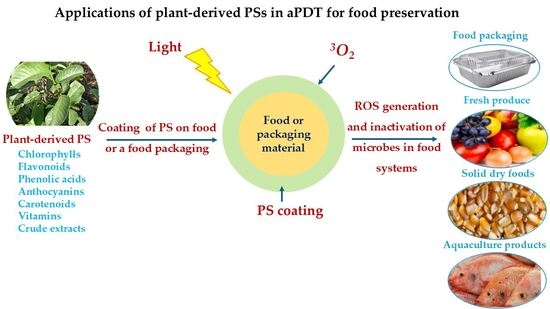
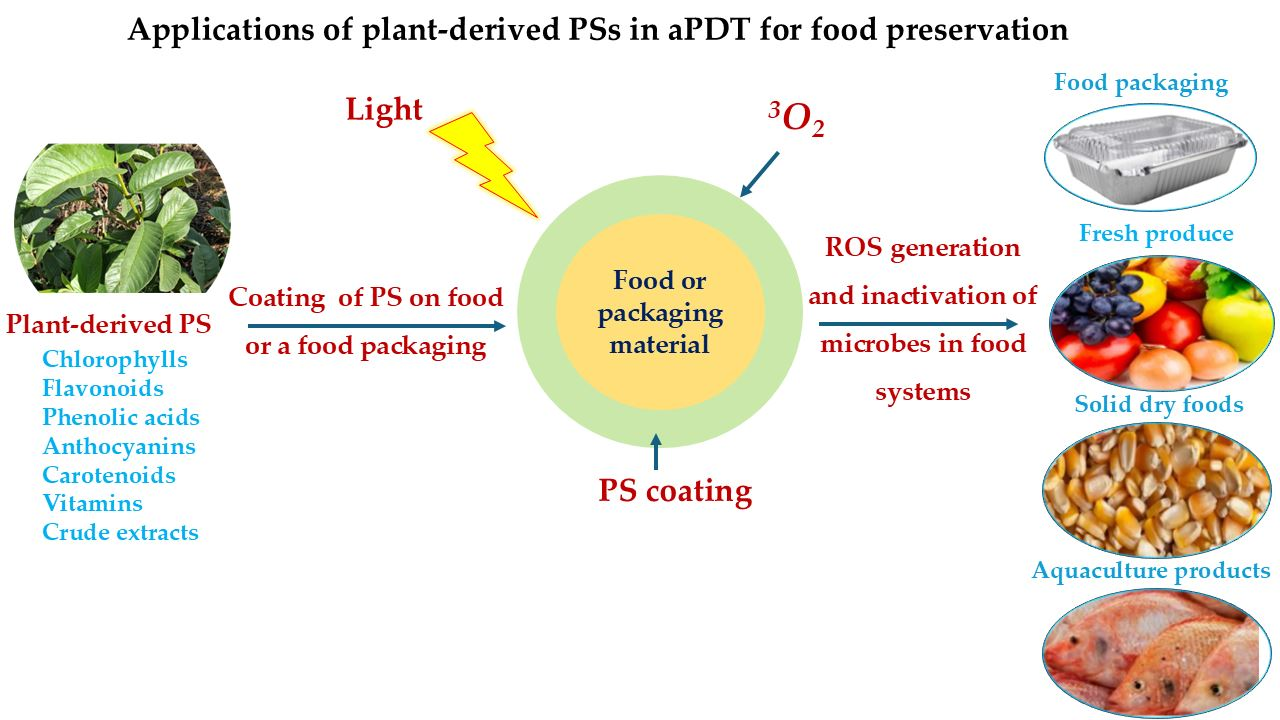
In response to these challenges, there is growing interest in alternative preservation strategies that are effective, sustainable, and compatible with clean-label trends. Among these, antimicrobial photodynamic therapy (aPDT) has emerged as a promising non-thermal technology for microbial control in food systems [4]. aPDT relies on the activation of a photosensitizer (PS) by light of an appropriate wavelength in the presence of molecular oxygen, leading to the generation of reactive oxygen species (ROS) [5,6] that can inactivate a broad spectrum of microorganisms. Figure 1 shows the three common components of aPDT.
Plant-derived extracts have attracted significant attention as natural PSs due to their rich composition of photoactive phytochemicals, including chlorophylls, flavonoids, phenolic acids, anthocyanins, and carotenoids [7,8]. These compounds possess intrinsic light-harvesting properties and can generate ROS upon illumination, thereby exerting antimicrobial effects. Notably, many of these compounds are already widely utilised in the food industry as natural colourants, flavouring agents, and functional ingredients [9]. For example, chlorophylls (green pigments), carotenoids (yellow–orange pigments), and anthocyanins (red–purple pigments) are commonly incorporated into food products to enhance visual appeal while also contributing nutritional and health-promoting benefits [10].
Beyond their technological applications, plants are well recognised for their medicinal value and diverse bioactive properties, including antioxidant, anti-inflammatory, antimicrobial, and anticancer activities [11]. These multifunctional properties make plant-derived compounds particularly attractive for food preservation, as they can simultaneously improve safety, quality, and health benefits. Importantly, the chemical diversity of plant secondary metabolites remains largely underexplored, and it is highly likely that numerous additional compounds with potent photosensitising capabilities are yet to be discovered [12,13]. This highlights the vast and untapped potential of medicinal plants as a source of novel, efficient, and multifunctional PSs for food applications.
The use of plant-based PSs offers several advantages, including biodegradability, low toxicity, cost-effectiveness, and alignment with consumer preferences for natural products. Consequently, plant extract-mediated aPDT represents a promising and sustainable strategy for enhancing food safety and preservation while maintaining product quality and environmental compatibility. This review, therefore, provides a comprehensive evaluation of natural photoactive compounds as emerging tools for light-driven microbial control, focusing on their underlying mechanisms, functional performance in complex systems, formulation strategies, and practical applications in modern preservation technologies.

2. Principles of Antimicrobial Photodynamic Therapy

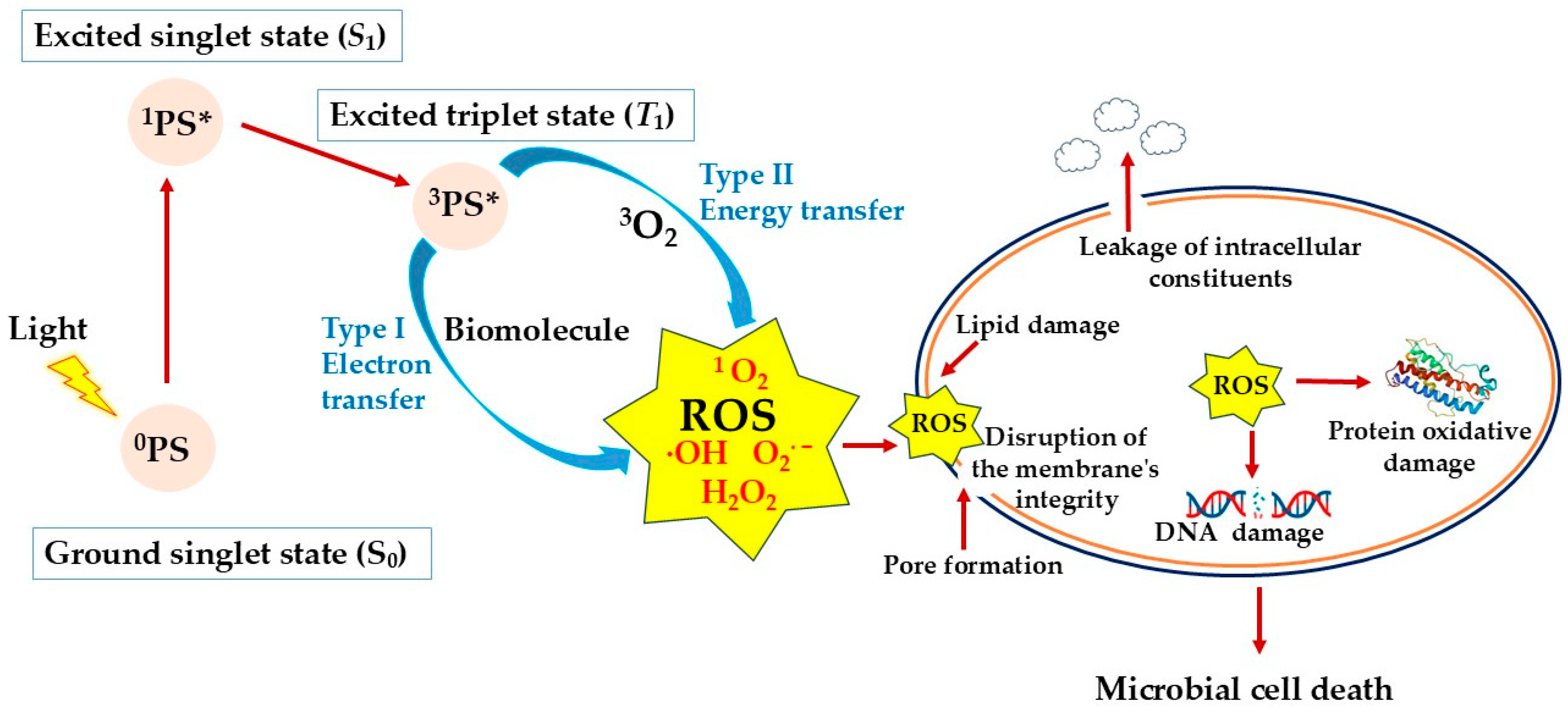
aPDT is a light-activated antimicrobial approach that relies on the synergistic interaction of three essential components: a PS, light of an appropriate wavelength, and molecular oxygen [14]. Upon irradiation, the PS absorbs photons and is promoted from its ground singlet state (S0) to an excited singlet state (S1), followed by intersystem crossing to a relatively long-lived triplet state (T1). This excited triplet state is pivotal, as it initiates photochemical reactions that culminate in the generation of ROS, the primary mediators of microbial inactivation [15,16], as illustrated in Figure 2.
ROS production in aPDT proceeds via two principal pathways, often concurrent. In the Type I mechanism, the excited PS undergoes electron or hydrogen transfer reactions with surrounding biomolecules, yielding radical species such as superoxide anions (O2), hydrogen peroxide (H2O2), and hydroxyl radicals (•OH) [6]. In contrast, the Type II mechanism involves direct energy transfer from the excited triplet PS to ground-state molecular oxygen, producing singlet oxygen (1O2), a highly reactive and cytotoxic species [19]. The relative contribution of these pathways is governed by multiple factors, including oxygen availability, PS chemical structure, local substrate composition, and irradiation conditions [20]. Importantly, this mechanistic duality confers functional adaptability, enabling aPDT to maintain antimicrobial efficacy under variable microenvironmental conditions, including hypoxia or limited light penetration.
Experimental studies demonstrate that plant-derived PSs can operate through Type I, Type II, or combined mechanisms depending on their physicochemical properties and environmental conditions. For instance, Senna-based photosensitising extracts exhibit pronounced Type I activity, in which hydroxyl radical generation correlates with the effective inactivation of bacterial and fungal pathogens [21]. Similarly, Green propolis and quercetin demonstrate significant antimicrobial activity even in the presence of singlet oxygen quenchers, confirming the dominant role of radical-mediated (Type I) pathways; however, the decrease in the aPDT efficacy of Passiflora cincinnata extract upon singlet oxygen quenching highlights contributions from Type II mechanisms [22]. Several plant-derived PSs demonstrate mechanistic plasticity; for example, extracts from Chamaecyparis obtusa and Moringa oleifera initially favour singlet oxygen production but transition toward hydroxyl radical generation with prolonged irradiation, reflecting dynamic shifts between Type II and Type I processes [23].
The generated ROS from these plant-derived PSs induce non-specific, multi-target oxidative damage to microbial cells [24]. The cytoplasmic membrane is a primary and early target, where ROS-mediated lipid peroxidation disrupts membrane integrity, increases permeability, and leads to leakage of intracellular constituents. Ultrastructural analyses provide compelling evidence for this mechanism; transmission electron microscopy studies of Escherichia coli subjected to aPDT reveal membrane disintegration, pore formation, and extensive cytoplasmic leakage [23]. At the same time, oxidative damage to membrane-associated proteins compromises essential cellular processes, including nutrient transport and energy metabolism, thereby accelerating cell death [15,22].
Beyond membrane disruption, ROS diffuse into the intracellular environment, where they oxidatively modify critical macromolecules [25]. Nucleic acids undergo strand breaks, base oxidation, and cross-linking, impairing replication and transcription, while proteins undergo oxidative modification of amino acid residues, leading to enzyme inactivation and metabolic dysfunction. The cumulative and irreversible nature of this multi-target oxidative damage ultimately leads to microbial cell death [23,26]. In biofilms, ROS degrade the extracellular polymeric substance matrix, increasing structural porosity and facilitating deeper penetration of both PSs and oxygen [27,28]. This increases the vulnerability of embedded microbial cells. For instance, 3–4 log reductions in multispecies biofilms treated with plant-derived PSs have been reported [27]. In fungal cells, ROS induce mitochondrial dysfunction and severe oxidative stress, while in viruses, they disrupt lipid envelopes and damage capsid proteins, thereby impairing infectivity. A representative example is riboflavin-mediated aPDT against Rhizopus stolonifer, where ROS generation leads to significant mitochondrial damage and effective fungal inactivation. Under optimised conditions, this approach achieves up to a 4.6 log reduction in resistant strains and complete inhibition of mycelial growth, while preserving key quality attributes of treated food products, including colour, firmness, antioxidant capacity, and lycopene content, with minimal storage-related weight loss [29].
Plant-derived PSs enable highly efficient, broad-spectrum antimicrobial activity through ROS-driven, multi-target oxidative mechanisms involving both Type I and Type II pathways. Their ability to disrupt cellular membranes, inactivate intracellular biomolecules, and degrade biofilm matrices, combined with their natural origin, biocompatibility, and suitability for food applications [8], positions them as promising, sustainable alternatives for advanced antimicrobial interventions and food preservation technologies.

3. Plant-Derived PSs Used in Food Preservation

Plant-derived PSs are increasingly recognised as sustainable and effective agents for aPDT in food preservation due to their natural origin, low toxicity, and broad-spectrum antimicrobial activity [30,31]. Derived from edible plants, medicinal herbs, and agro-industrial by-products, these compounds span diverse chemical classes, including chlorophylls, carotenoids, curcuminoids, anthraquinones, flavonoids, alkaloids, and vitamins [8,32]. Their absorption within the visible spectrum enables activation using low-cost light-emitting diodes (LEDs), supporting scalability in food systems. The performance of these PSs is governed by interconnected factors, including optical properties, ROS generation capacity (commonly represented by the singlet oxygen quantum yield, ΦΔ), PS concentration, formulation strategy, and environmental conditions, such as the food matrix and oxygen availability [4,33]. Table 1 summarises representative plant-derived PSs used in food-related applications, highlighting their physicochemical properties, irradiation conditions, and antimicrobial efficacy.
Table 1 highlights the chemical diversity and functional versatility of plant-derived PSs, demonstrating that photodynamic efficacy arises from a complex interplay between molecular structure, optical properties, formulation strategies, and the surrounding application environment.
A key factor influencing aPDT performance is the spectral compatibility between the PS absorption maximum (λ_max) and the irradiation wavelength. Chlorophyll-based systems (λ_max ≈ 660–665 nm), for instance, exhibit strong antimicrobial activity upon activation with red LEDs, leading to notable reductions in E. coli and S. aureus [34,35]. In contrast, betalain-rich extracts from B. vulgaris show limited activity under 640 nm irradiation due to poor spectral overlap with their absorption range (480–540 nm), highlighting spectral mismatch as an often-overlooked limitation [42].
Although Table 1 reports only ΦΔ as a key photophysical parameter, increasing evidence indicates that reactive radical species, such as superoxide anions (O2) and hydroxyl radicals (•OH), play a significant role, particularly in complex food matrices where singlet oxygen is rapidly quenched. For instance, aloe-emodin, with a relatively high ΦΔ (~0.57), achieves substantial microbial inactivation, including >5 log10 reductions in P. aeruginosa [46,47]. Conversely, bixin from B. orellana, despite its very low ΦΔ (0.0006), demonstrates effective antimicrobial activity against C. acnes through a predominantly Type I mechanism involving radical species [40]. Moreover, studies have shown that ROS-generating pathways may shift dynamically, with singlet oxygen dominating the initial irradiation stages and radical-mediated processes becoming more prominent over time, as observed in plant extracts such as C. obtusa and M. oleifera [23]. Similarly, yam-derived pigments from Dioscorea opposita have been reported to generate both Type I and Type II ROS under blue light irradiation, enabling broad-spectrum antimicrobial activity while preserving food quality [52]. These findings highlight the importance of considering both ROS pathways in the design and optimisation of aPDT systems.
Light dosage is another critical parameter influencing aPDT efficacy, integrating both light intensity (irradiance) and exposure time (fluence). As reflected in Table 1, effective antimicrobial outcomes are achieved across a wide range of light doses, from low fluences (e.g., 0.92 J cm−2 for riboflavin systems) to higher doses exceeding 80 J cm−2 for carotenoid-based systems [40,50]. Generally, increasing the light dose enhances PS excitation and ROS generation, thereby improving microbial inactivation. However, this relationship is not strictly linear. Excessive light exposure can induce photobleaching of the PS, reducing its activity over time and increasing the risk of undesirable changes in food quality, such as pigment degradation or lipid oxidation [53]. Additionally, high irradiance may lead to oxygen depletion in the local environment, limiting ROS generation despite continued illumination [54]. Conversely, insufficient light dose results in suboptimal PS activation and reduced antimicrobial efficacy. The interplay between light dose, PS concentration, and oxygen availability therefore defines an optimal operational window. For example, curcumin-mediated inactivation of S. enteritidis required prolonged illumination (15–45 min) to achieve complete inhibition at lower temperatures, whereas efficacy was reduced at 37 °C despite similar irradiation conditions [39]. These findings highlight the need to carefully optimise light parameters alongside PS properties for each specific food application.
The effectiveness of plant-derived PSs is strongly influenced by concentration, as reflected in the wide range of effective doses reported in Table 1, spanning from micromolar levels for purified compounds such as riboflavin and curcumin to milligram-per-millilitre concentrations for crude plant extracts [37,38,39,40,41,42]. While dose–response relationships are generally observed, increasing PS concentration does not necessarily translate into enhanced antimicrobial efficacy. This deviation is attributed to aggregation-induced quenching, a phenomenon particularly pronounced in hydrophobic PSs such as curcumin, chlorophylls, and carotenoids. At elevated concentrations, these molecules tend to self-associate via π–π stacking and hydrophobic interactions, forming non-photoactive aggregates. This aggregation reduces the population and lifetime of excited singlet and triplet states, thereby limiting the efficiency of intersystem crossing and subsequent ROS generation [55]. As a result, ROS production is diminished, compromising antimicrobial performance. This behaviour is illustrated in curcumin-based systems, where increasing concentration beyond an optimal threshold does not yield proportional improvements in microbial inactivation and may even reduce efficacy. For instance, when the light dose was fixed at 1.944 J cm−2, increasing the curcumin concentration from 2.5 µM to 10 µM resulted in a significant increase in S. aureus reduction (from 2.4 log CFU mL−1 to 5.3 log CFU mL−1). However, when the concentration was further increased to 20 µM, the antimicrobial efficacy did not increase further [56]. Furthermore, aggregation can exacerbate inner-filter effects, in which excessive light absorption at higher concentrations limits light penetration and reduces uniform PS activation within the sample [57]. Optimisation of PS concentration is therefore necessary to achieve maximum antimicrobial efficacy while minimising potential impacts on food quality. The effective concentration range can vary depending on the type of plant extract, the target microorganism, and the food matrix.
In addition to concentration effects, environmental factors such as temperature further modulate PS performance. For instance, curcumin-mediated aPDT against S. enteritidis was less effective at 37 °C than at 4 °C or 25 °C [39]. This reduction in efficacy may be attributed to temperature-dependent changes in PS stability, aggregation behaviour, and ROS lifetime. Higher temperatures can accelerate non-radiative decay processes and promote molecular collisions that quench excited states or reactive species, thereby reducing photodynamic efficiency [58]. Moreover, temperature may influence membrane fluidity in microbial cells, potentially altering PS uptake and susceptibility.
Another important consideration in food-related aPDT is selectivity. Although ROS are highly effective antimicrobial agents, excessive ROS generation may also damage food components and mammalian cells [59]. However, the short lifetime and limited diffusion distance of singlet oxygen and related ROS generally localise oxidative reactions to the vicinity of the activated PS, thereby reducing unintended damage to surrounding tissues and food matrices [60,61]. Furthermore, several plant-derived PSs, including curcumin and riboflavin, are already classified as Generally Recognised as Safe (GRAS) compounds and are widely used in food systems. Nevertheless, excessive ROS production may induce lipid peroxidation, pigment degradation, and protein oxidation, potentially compromising sensory and nutritional quality [62,63]. Comprehensive toxicological assessments, including cytotoxicity, genotoxicity, allergenicity, and long-term dietary exposure studies, therefore remain necessary before large-scale industrial implementation.
Formulation strategies play a pivotal role in overcoming photophysical and physicochemical limitations of plant-derived PSs, thereby significantly enhancing their performance in aPDT. Nanostructured delivery systems are particularly effective in improving solubility, stability, dispersibility, and bioavailability, key factors that directly influence ROS generation and antimicrobial efficacy [64]. This is especially critical for hydrophobic PSs such as chlorophylls and curcumin, which otherwise suffer from poor aqueous solubility and aggregation-induced quenching. Encapsulation within nanocarriers not only improves solubility but also stabilises the PS against photodegradation and facilitates controlled release. For example, chlorophyll encapsulated in polystyrene nanoparticles exhibits enhanced singlet oxygen generation and improved antibacterial activity against E. coli, demonstrating how nanoscale confinement can preserve photophysical functionality and increase ROS yield [34]. Similarly, incorporation of chlorophyll-rich extracts into Pluronic® F127 micelles enhances dispersion in aqueous environments and enables effective in vitro and in vivo antimicrobial applications, including the reduction in microbial populations on bovine teat surfaces [35]. These amphiphilic micellar systems also reduce aggregation and improve light accessibility to the PS molecules. Advanced biological delivery systems further extend the applicability of plant-derived PSs. Exosome-mediated delivery of berberine, for instance, significantly enhances penetration into P. gingivalis biofilms, overcoming diffusion barriers and resulting in marked reductions in biofilm biomass [44]. This highlights the importance of carrier-mediated targeting in addressing one of the major limitations of aPDT, inefficient PS penetration into structured microbial communities.
In food packaging applications, formulation strategies enable the integration of PSs into functional materials. Riboflavin incorporated into chitosan-based films exemplifies this approach, in which the PS is immobilised within a biodegradable polymer matrix that not only facilitates light-activated antimicrobial activity against P. fluorescens (achieving up to 97% reduction) but also provides intrinsic oxygen-barrier properties [50]. Such multifunctional systems combine active (photodynamic) and passive (barrier) preservation mechanisms, offering a synergistic approach to extending food shelf life. Beyond these examples, formulation also enables modulation of PS photophysical behaviour, including improved intersystem crossing efficiency, reduced aggregation, and prolonged excited-state lifetimes [65]. It can also enhance compatibility with complex food matrices by protecting PSs from quenching interactions with lipids, proteins, and antioxidants [66]. Importantly, the choice of carrier system, whether polymeric nanoparticles, micelles, liposomes, or biopolymer films, must be informed by food safety, biodegradability, and regulatory compliance.
Plant-derived PSs demonstrate broad-spectrum antimicrobial activity, effectively targeting Gram-positive and Gram-negative bacteria, fungi, and viruses. As shown in Table 1, significant inactivation has been reported against key foodborne and clinically relevant pathogens, including S. aureus, E. coli, S. enteritidis, C. albicans, and human coronavirus HCoV-OC43 [38,39,43]. This wide applicability is attributed to the non-specific oxidative damage induced by ROS, which can disrupt multiple cellular targets such as membranes, proteins, and nucleic acids, thereby reducing the likelihood of resistance development [26]. Despite this broad efficacy, susceptibility varies across microbial groups. Gram-positive bacteria are more sensitive to aPDT due to their simple cell wall structure, which allows easier penetration of PS molecules and ROS. In contrast, Gram-negative bacteria possess an additional outer membrane composed of lipopolysaccharides, which acts as a permeability barrier, limiting PS uptake and reducing photodynamic efficiency [67]. Consequently, higher PS concentrations, increased light doses, or advanced delivery systems, such as nano-formulations or membrane-disrupting agents, are required to achieve comparable inactivation levels in Gram-negative species. Fungal cells, with their more complex cell wall architecture, and viruses, depending on envelope structure, also exhibit variable susceptibility, further showing the importance of tailoring aPDT conditions to specific targets [68]. Importantly, antimicrobial efficacy is influenced by the surrounding matrix, which governs PS distribution, light penetration, and oxygen availability. For instance, riboflavin-mediated aPDT achieved reductions of up to 6.2 log CFU/g on leaf surfaces, whereas significantly lower reductions were observed in broth systems [48]. This contrast highlights the role of surface exposure in facilitating efficient light absorption and oxygen diffusion, while reducing ROS quenching. In liquid or complex food matrices, components such as proteins, lipids, and natural antioxidants can absorb light, scavenge ROS, or bind PS molecules, thereby diminishing photodynamic activity. Additionally, structural factors such as turbidity and thickness can limit light penetration, leading to uneven treatment [4]. These findings highlight the need to evaluate PS performance under realistic food conditions rather than relying solely on simplified in vitro systems. Future studies should prioritise matrix-specific optimisation, including adjustments in PS formulation, light delivery, and processing parameters, to ensure consistent and effective antimicrobial outcomes across diverse food products.
Although natural PSs exhibit promising antimicrobial activity, many have limited stability under practical food-processing conditions. Compounds such as curcumin, chlorophylls, and anthocyanins are prone to photobleaching, thermal degradation, oxidation, and pH-related structural changes, all of which can reduce ROS generation during storage and repeated light exposure [69,70]. Components of the food matrix, including lipids, proteins, and metal ions, may further accelerate PS degradation. To address these limitations, encapsulation in nanoemulsions, liposomes, polymeric nanoparticles, or biopolymer films has been widely explored to improve PS stability, reduce aggregation, and prolong photoactivity [71,72]. Future studies should focus on evaluating PS stability under realistic food-processing and storage conditions to support industrial application.
Despite recent advances, several critical research gaps remain in the study of plant-derived PSs for food applications. The mechanistic understanding of ROS generation in complex food matrices remains insufficient. Future research should focus on standardised methodologies, mechanistic studies, and predictive models that link photophysics with food matrix properties. Development of food-grade, biodegradable delivery systems, alongside pilot-scale validation in real food systems, is essential. Additionally, Table 1 reflects only a small fraction of plant-derived PSs, suggesting that many novel compounds with enhanced properties and broader applications remain undiscovered.

4. Applications of Plant-Derived aPDT in Food Preservation

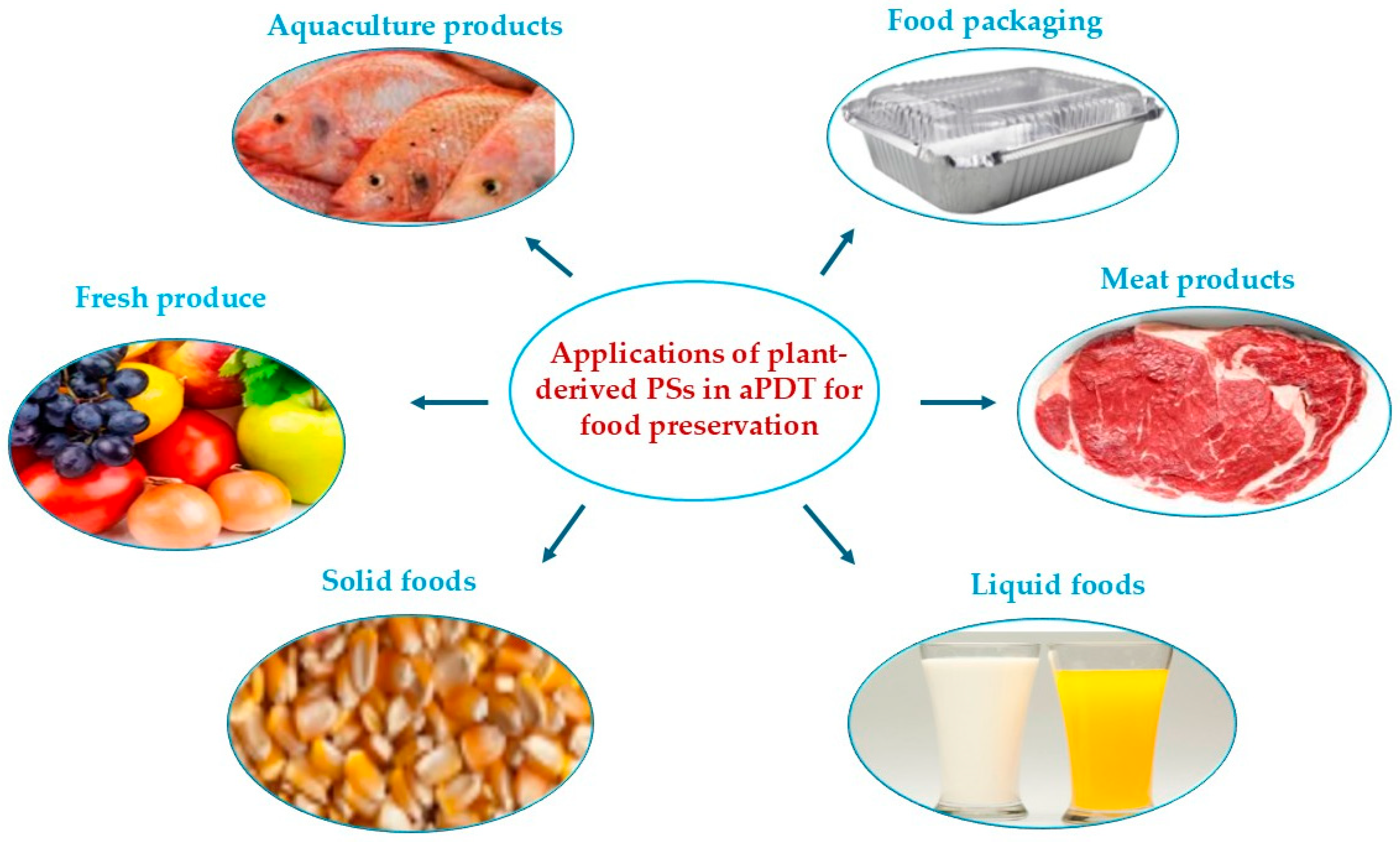
Plant-derived aPDT has emerged as a promising non-thermal, green technology for enhancing food safety and extending shelf life. It aligns with current demands for clean-label, environmentally friendly, and residue-free food preservation strategies [73]. Importantly, its versatility allows for integration into various food systems, including liquids, solid foods, and packaging materials [74] as illustrated in Figure 3.
However, its efficacy depends on several factors, including the type of food matrix, PS concentration, light penetration, and the presence of natural antioxidants that may quench ROS. Table 2 shows how plant-derived PSs are used in aPDT to enhance microbial safety across a range of food products, while also highlighting the different modes of application.
Table 2 demonstrates the broad applicability and versatility of plant-derived PSs in aPDT for food preservation. Among these, curcumin is the most extensively studied PS, due to its strong ability to generate ROS under blue light irradiation, as well as its natural origin and favourable safety profile. Curcumin exhibits potent antimicrobial activity against a wide spectrum of microorganisms, including Gram-positive bacteria such as S. aureus, Gram-negative bacteria such as V. parahaemolyticus and P. fluorescens, and fungal pathogens such as Fusarium graminearum [56,77,79]. Its successful application across diverse food matrices, including juices, milk, fresh produce, meat, seafood, and cereals (Table 2), demonstrates its high adaptability and practical relevance in food systems.
Mechanistically, curcumin-mediated aPDT induces oxidative stress via singlet oxygen and superoxide radicals, disrupting microbial membranes, increasing permeability, causing leakage of intracellular components, and inactivating enzymes. However, its performance is highly matrix dependent. In carrot juice, carotenoids quench ROS, reducing antimicrobial activity [56]. In milk, high optical density and light scattering decrease microbial reduction, even with thin-layer illumination or agitation [75]. In maize, curcumin exhibits concentration-dependent effects: optimal doses (≥100 μM) achieve complete inhibition of F. graminearum and mycotoxin suppression, while sub-lethal doses may induce hormesis [77]. It can also cause undesirable colour changes at higher concentrations, affecting consumer acceptance [75]. These observations suggest that while curcumin is effective in vitro, its industrial application requires careful optimisation of PS concentration, light dose, and exposure conditions, as well as consideration of matrix-specific interferences; thus, further research is still required to evaluate the practical applicability of curcumin-mediated aPDT in real food systems.
Beyond curcumin, other plant-derived PS, such as riboflavin, aloe-emodin, and carvacrol, further highlight the versatility of aPDT. These compounds exhibit strong antimicrobial activity against both foodborne pathogens and spoilage organisms, including R. stolonifer [29,39,47,48]. Aloe-emodin, for instance, demonstrates strong photodynamic activity, with absorption in the 400–500 nm range (λ_max ≈ 430 nm) and a high singlet oxygen quantum yield (0.57). It exhibits significant antibacterial activity against S. aureus (MIC = 1 μg/mL) and effectively reduces microbial contamination in apple juice without compromising quality parameters such as colour, pH, and total phenolic content [47]. However, its reduced effectiveness in juice compared with PBS is attributed to light scattering by suspended solids and sugar-facilitated bacterial repair [47,85]. These limitations show the need for strategies that overcome matrix-specific constraints in turbid or nutrient-rich liquids. Potential approaches may include combining aPDT with sonodynamic therapy, which uses ultrasonic waves to enhance PS penetration and ROS diffusion; incorporating PSs into nanocarriers for improved delivery; co-applying enzymatic clarifiers to reduce turbidity; or developing synergistic PS combinations to counteract microbial repair mechanisms. Nevertheless, further research should determine whether these approaches can reliably enhance aPDT efficacy in complex food matrices. Establishing their effectiveness could improve the scalability and industrial applicability of aPDT while maintaining product quality and microbial safety.
Riboflavin emerges as a promising PS for surface decontamination and active packaging applications. It generates ROS under UV or visible light, enabling effective control of bacteria such as E. coli and L. innocua, as well as fungi like R. stolonifer [29,48]. When incorporated into chitosan-based films, it exhibits a dual-function mechanism: (i) photodynamic microbial inactivation via ROS generation at the food surface, and (ii) reduced oxygen permeability due to the barrier properties of chitosan, thereby limiting oxidative spoilage and aerobic microbial growth. These films have demonstrated up to 97% reduction in P. fluorescens and remain effective under cold-chain and retail lighting conditions, making them highly applicable for real-world food preservation [50].
In addition, riboflavin-based coatings have been shown to improve the shelf life and sensory quality of pork by reducing microbial load, total volatile basic nitrogen (TVB-N), pH changes, and colour deviation, while maintaining desirable texture [83]. Similarly, in fresh tomatoes, riboflavin-mediated aPDT effectively inhibited R. stolonifer, resulting in significant reductions in fungal growth while preserving key quality attributes, including firmness, antioxidant activity, and lycopene content [29]. These findings demonstrate the suitability of riboflavin systems for both fresh produce and animal-derived products. PS incorporated into packaging materials offers scalable industrial solutions while minimising matrix limitations inherent in bulk liquids.
Another important advancement in this field is the development of synergistic aPDT systems designed to overcome the inherent limitations of single-PS approaches, including limited PS penetration, restricted ROS diffusion, aggregation-induced quenching, and reduced antimicrobial efficacy within complex food matrices [86]. These integrated approaches enhance antimicrobial performance through complementary physicochemical, oxidative, and structural mechanisms that collectively increase microbial susceptibility to photodynamic damage. A major synergistic mechanism involves membrane permeabilisation. Hydrophobic phytochemicals such as eugenol, disrupt microbial membrane integrity, increase membrane fluidity, and facilitate intracellular accumulation of PS molecules, thereby enhancing ROS access to intracellular targets [87]. This mechanism has been demonstrated in curcumin-mediated aPDT systems combined with eugenol applied to vacuum-packed bacon, where enhanced membrane disruption resulted in greater microbial inactivation compared with curcumin-mediated aPDT treatment alone [78]. Membrane-active compounds may additionally compromise biofilm architecture, thereby improving oxygen and PS diffusion into deeper microbial layers and enhancing overall photodynamic efficacy. Another important synergistic approach is the concurrent generation of ROS and reactive nitrogen species (RNS). In curcumin–L-arginine systems, L-arginine functions as a precursor for nitric oxide-derived radicals, resulting in combined oxidative–nitrosative stress [79]. The simultaneous production of ROS and RNS amplifies damage to microbial membranes, proteins, nucleic acids, and metabolic enzymes beyond that achievable through ROS alone [88]. This dual-action mechanism achieved >8 log reductions in Vibrio parahaemolyticus in shrimp while preserving key quality attributes, including lipid stability, protein integrity, and colour [79]. Physical enhancement strategies also contribute to synergistic activity. For example, the integration of aPDT with sonodynamic therapy improves PS penetration, oxygen transport, and ROS diffusion through ultrasound-induced cavitation effects [85]. By mechanically disrupting microbial membranes and extracellular biofilm matrices, this integration promotes deeper diffusion of active species. Consequently, it enhances microbial susceptibility to photodynamic oxidation, providing an effective antimicrobial approach in opaque matrices where light attenuation typically hinders treatment. Nanocarrier-assisted delivery systems further enhance synergistic performance by improving PS solubility, stability, dispersibility, and localisation at microbial surfaces. Encapsulation within nanoparticles, liposomes, micelles, or biopolymer matrices reduces aggregation-induced quenching, prolongs excited-state lifetimes, and enhances ROS delivery efficiency [34,35,64]. Similarly, combining aPDT with slightly basic electrolyzed water provides oxidative amplification through reactive chlorine species and alkaline-induced membrane destabilisation, thereby enhancing riboflavin-mediated microbial inactivation on tuna fillets [84]. These examples show that future plant-derived aPDT systems might rely on multifunctional and integrated preservation platforms rather than single-agent approaches. Systematic optimisation of synergistic PS combinations and complementary treatment methods may improve antimicrobial efficacy, reduce treatment intensity requirements, and expand the practical applicability of aPDT across diverse food matrices.
Across all applications, the mode of PS delivery plays a critical role in determining efficacy. Liquid foods typically rely on mixing to ensure uniform distribution [47], whereas solid foods require surface treatments such as soaking, coating, or spraying [29,83,84]. More advanced approaches involve the incorporation of PS into biopolymer matrices (e.g., chitosan films), enabling controlled and sustained antimicrobial activity, particularly in packaging systems [50]. This shift toward integrated delivery systems reflects the growing emphasis on scalability and industrial applicability.
Although purified compounds such as curcumin and riboflavin have been widely studied (Table 2) [39,47,79,80,81,82,83,84], the application of crude plant extracts in real food systems remains relatively underexplored. This represents a significant research gap, as extracts contain complex mixtures of bioactive compounds that may enhance or interfere with photodynamic activity.
Plant-derived PSs offer a versatile, sustainable, and effective strategy for controlling foodborne pathogens and spoilage organisms. Their natural origin, broad-spectrum activity, and compatibility with advanced delivery methods, such as thin-layer illumination, agitation, or incorporation into active packaging, enhance their applicability in food preservation. However, challenges related to light penetration, matrix effects, and standardisation remain, especially in opaque or nutrient-rich foods. Continued research on nanocarrier systems, encapsulation technologies, synergistic PS combinations, and optimised delivery strategies is essential to improve stability, bioavailability, and antimicrobial efficacy. Addressing these gaps will be key to translating plant-derived aPDT into scalable, reliable, and industrially feasible food safety interventions that maintain product quality.

5. Conclusions and Future Perspectives

5.1. Conclusions

Natural photoactive compounds offer a promising, environmentally sustainable approach to enhancing microbial safety in food systems through light-driven oxidative mechanisms. Their broad-spectrum activity, low toxicity, and compatibility with clean-label requirements position them as strong candidates for next-generation preservation strategies.
Advances in formulation technologies and material integration have significantly improved their functional performance, enabling applications across diverse food matrices and packaging systems. However, challenges related to matrix interactions, light delivery, compositional variability, and scalability must still be addressed to enable widespread adoption.
The continued development of innovative delivery systems, optimised processing conditions, and standardised protocols will be crucial to maximising their potential. With sustained research and technological progress, light-activated natural compounds can transition from experimental concepts to practical, industry-ready solutions that support safe, high-quality, and sustainable food production.

5.2. Future Perspectives

Future research should prioritise the translation of plant-derived aPDT from laboratory-scale studies to practical industrial applications. Although substantial progress has been made in understanding the antimicrobial potential of natural PSs, several critical challenges remain unresolved.
One of the most important priorities is standardisation. The chemical composition of plant extracts can vary considerably depending on plant species, geographical origin, cultivation conditions, extraction methods, and storage conditions. This variability affects PS concentration, ROS generation efficiency, and antimicrobial performance, limiting reproducibility across studies. Future work should therefore focus on comprehensive phytochemical characterisation, identification of active photoresponsive compounds, and the establishment of standardised extraction, formulation, and irradiation protocols to improve consistency and comparability.
Scale-up validation under realistic processing conditions is also required. Most current studies remain limited to simplified laboratory systems, whereas commercial food products present additional challenges related to matrix complexity, turbidity, oxygen availability, and restricted light penetration. Pilot-scale studies in real food systems are necessary to evaluate treatment uniformity, processing efficiency, storage stability, energy requirements, and compatibility with existing industrial operations. In particular, optimisation of light delivery systems for opaque and heterogeneous foods remains a major technological challenge.
Regulatory approval and safety assessment represent additional barriers to commercial implementation. Although several plant-derived compounds, including curcumin and riboflavin, are already approved for food use, comprehensive toxicological evaluation of formulated PS systems, nanocarriers, and repeated light exposure conditions remains necessary. Future studies should therefore address cytotoxicity, long-term dietary exposure, potential oxidative effects on food components, and consumer acceptance to support regulatory approval and industrial adoption.
Addressing these challenges through interdisciplinary collaboration among food scientists, photochemists, materials scientists, and process engineers will be essential for the development of reliable, scalable, and commercially viable plant-derived aPDT technologies for food preservation.

Author Contributions

E.D.: literature search and manuscript writing; G.E.O.: Reviewing the manuscript. All authors have read and agreed to the published version of the manuscript.

Funding

This research received no external funding.

Institutional Review Board Statement

Not applicable.

Informed Consent Statement

Not applicable.

Data Availability Statement

New data was not generated for this study.

Conflicts of Interest

The authors declare no conflicts of interest.

References

  1. Pearson, A.J.; Mukherjee, K.; Fattori, V.; Lipp, M. Opportunities and Challenges for Global Food Safety in Advancing Circular Policies and Practices in Agrifood Systems. npj Sci. Food 2024, 8, 60. [Google Scholar] [CrossRef] [PubMed]
  2. Agagündüz, D.; Ayakdas, G.; Katırcıoglu, B.; Ozogul, F. Sustainable Food Technology a Comprehensive Approach to Nutrient Retention, Food Quality, and Safety. Sustain. Food Technol. 2025, 3, 1284–1308. [Google Scholar] [CrossRef]
  3. Ariyamuthu, R.; Albert, V.R.; Je, S. An Overview of Food Preservation Using Conventional and Modern Methods. J. Food Nutr. Sci. 2022, 10, 70–79. [Google Scholar] [CrossRef]
  4. Sheng, L.; Li, X.; Wang, L. Photodynamic Inactivation in Food Systems: A Review of Its Application, Mechanisms, and Future Perspective. Trends Food Sci. Technol. 2022, 124, 167–181. [Google Scholar] [CrossRef]
  5. Henderson, B.W.; Dougherty, T. How Does Photodynamic Therapy Work? Photochem. Photobiol. 1992, 55, 145–157. [Google Scholar] [CrossRef]
  6. Dube, E.; Okuthe, G.E. Nanocurcumin and Curcumin-Loaded Nanoparticles in Antimicrobial Photodynamic Therapy: Mechanisms and Emerging Applications. Micro 2025, 5, 39. [Google Scholar] [CrossRef]
  7. Ghulam, B.; Mukhtar, K.; Ahmed, W.; Faisal, M.; Modassar, M.; Nawaz, A.; Kieliszek, M.; Bhat, Z.F.; Muhammad, R. Natural Pigments: Anthocyanins, Carotenoids, Chlorophylls, and Betalains as Colorants in Food Products. Food Biosci. 2023, 52, 102403. [Google Scholar] [CrossRef]
  8. Dube, E. Plant-Derived Photosensitizers in Antimicrobial Photodynamic Therapy: Mechanisms, Advances, and Emerging Applications. Photochem 2026, 6, 17. [Google Scholar] [CrossRef]
  9. Masyita, A.; Hardinasinta, G.; Astuti, A.D.; Nur, I.; Nisha, A.; Nainu, F.; Kuraishi, T. Natural Pigments: Innovative Extraction Technologies and Their Potential Application in Health and Food Industries. Front. Pharmacol. 2025, 15, 1507108. [Google Scholar] [CrossRef] [PubMed]
  10. Zhang, Z.; Chen, J.; Huang, X.; Muhammad, R.; Li, B. Natural Pigments in the Food Industry: Enhancing Stability, Nutritional Benefits, and Gut Microbiome Health. Food Chem. 2024, 460, 140514. [Google Scholar] [CrossRef]
  11. El-saadony, M.T.; Saad, A.M.; Mohammed, D.M.; Korma, S.A.; Alshahrani, M.Y.; Ahmed, A.E.; Ibrahim, E.H.; Salem, H.M.; Alkafaas, S.S.; Saif, A.M.; et al. Medicinal Plants: Bioactive Compounds, Biological Activities, Combating Multidrug-Resistant Microorganisms, and Human Health Benefits—A Comprehensive Review. Front. Immunol. 2025, 16, 1491777. [Google Scholar] [CrossRef] [PubMed]
  12. da Silva, J.F.P.; da Silva, T.R.L.P.; de Santana, A.L.F.; Gomes-Copeland, K.K.P.; Gomes, J.V.D.; Estrada-semprun, O.E.; Fonseca-bazzo, Y.M.; Magalhães, P.O.; Silveira, D. The Underexplored Chemical Diversity and Biological Potential of Amaryllidaceae from Cerrado. Discov. Plants 2025, 2, 240. [Google Scholar] [CrossRef]
  13. Dixon, R.A.; Dickinson, A.J. A Century of Studying Plant Secondary Metabolism—From “What?” to “Where, How, and Why?”. Plant Physiol. 2024, 195, 48–66. [Google Scholar] [CrossRef]
  14. Wainwright, M. Photodynamic Antimicrobial Chemotherapy (PACT). J. Antimicrob. Chemother. 1998, 42, 13–28. [Google Scholar] [CrossRef]
  15. Zhao, L.; Zhou, Y.; Yue, W.; Duan, D.; Liu, R.; Yang, L. Photodynamic Inactivation Using Natural Pigments: Dual-ROS Mechanisms, Delivery Strategies, and Applications in Food Preservation. LWT 2025, 235, 118617. [Google Scholar] [CrossRef]
  16. Hamblin, M.R.; Hasan, T. Photodynamic Therapy: A New Antimicrobial Approach to Infectious Disease? Photochem. Photobiol. Sci. 2004, 3, 436–450. [Google Scholar] [CrossRef] [PubMed]
  17. Kolarikova, M.; Dilenko, H.; Barton, K.; Lucie, T.; Malina, L.; Kolarova, H.; Bajgar, R. Photodynamic Therapy: Innovative Approaches for Antibacterial and Anticancer Treatments. Med. Res. Rev. 2023, 43, 717–774. [Google Scholar] [CrossRef] [PubMed]
  18. Wainwright, M.; Maisch, T.; Nonell, S.; Plaetzer, K.; Almeida, A.; Tegos, G.P.; Hamblin, M.R. Photoantimicrobials—Are We Afraid of the Light? Lancet Infect. Dis. 2017, 17, e49–e55. [Google Scholar] [CrossRef]
  19. Xiao, L.; Zheng, S.; Lin, Z.; Zhang, C.; Zhang, H.; Chen, J.; Wang, L. Singlet Oxygen in Food: A Review on Its Formation, Oxidative Damages, Quenchers, and Applications in Preservation. Antioxidants 2025, 14, 865. [Google Scholar] [CrossRef]
  20. Gonçalves, P.L.C. Photophysical Properties and Therapeutic Use of Natural Photosensitizers. J. Photochem. Photobiol. 2021, 7, 100052. [Google Scholar] [CrossRef]
  21. de Oliveira, A.B.; Ferrisse, T.M.; de Annunzio, S.R.; Franca, M.G.A.; Silva, M.G.d.V.; Cavalheiro, A.J.; Fontana, C.R.; Brighenti, F.L. In Vitro Evaluation of Photodynamic Activity of Plant Extracts from Senna Species against Microorganisms of Medical and Dental Interest. Pharmaceutics 2023, 15, 181. [Google Scholar] [CrossRef]
  22. Pereira, C.C.S.; Novaes, A.K.S.; Silva, J.C.R.; Muniz, I.P.R.; Lima, P.M.; Oliveira, M.E.S.; Gonc, C.V.; Rodrigues, I.V.S.; Lopes, A.J.; Jesus, F.B.; et al. Characterization of the Oxidative Profile, Damage Pathways, and Synergism of Photosensitizers in Antimicrobial Photodynamic Therapy against Methicillin-Resistant Staphylococcus Aureus. ACS Omega 2026, 11, 995–1011. [Google Scholar] [CrossRef]
  23. Sarker, M.A.R.; Ahn, Y.-H. Green Phytoextracts as Natural Photosensitizers in LED-Based Photodynamic Disinfection of Multidrug-Resistant Bacteria in Wastewater Effluent. Chemosphere 2022, 297, 134157. [Google Scholar] [CrossRef]
  24. Wang, X.; Wang, L.; Fekrazad, R.; Zhang, L.; Jiang, X.; He, G.; Wen, X. Polyphenolic Natural Products as Photosensitizers for Antimicrobial Photodynamic Therapy: Recent Advances and Future Prospects. Front. Immunol. 2023, 14, 1275859. [Google Scholar] [CrossRef]
  25. Hu, X.; Huang, Y.; Wang, Y.; Wang, X.; Hamblin, M.R. Antimicrobial Photodynamic Therapy to Control Clinically Relevant Biofilm Infections. Front. Microbiol. 2018, 9, 1299. [Google Scholar] [CrossRef] [PubMed]
  26. Juan, C.A.; de la Lastra, J.M.P.; Plou, F.J.; Pérez-Lebeña, E. The Chemistry of Reactive Oxygen Species (ROS) Revisited: Outlining Their Role in Biological Macromolecules (DNA, Lipids and Proteins) and Induced Pathologies. Int. J. Mol. Sci. 2021, 22, 4642. [Google Scholar] [CrossRef]
  27. Ardakani, A.S.; Benedicenti, S.; Solimei, L.; Shahabi, S.; Afrasiabi, S. Reduction of Multispecies Biofilms on an Acrylic Denture Base Model by Antimicrobial Photodynamic Therapy Mediated by Natural Photosensitizers. Pharmaceuticals 2024, 17, 1232. [Google Scholar] [CrossRef]
  28. Pourhajibagher, M.; Bahrami, R.; Bazarjani, F.; Bahador, A. Anti-Multispecies Microbial Biofilms and Anti-Inflammatory Effects of Antimicrobial Photo-Sonodynamic Therapy Based on Acrylic Resin Containing Nano-Resveratrol. Photodiagn. Photodyn. Ther. 2023, 43, 103669. [Google Scholar] [CrossRef] [PubMed]
  29. Ki, W.; Choi, W.; Zhou, W.; Yuk, H. Antifungal Effect of Riboflavin Combined with 405 Nm Light-Emitting Diode Illumination on Rhizopus Stolonifer and Application for Tomato Preservation. Postharvest Biol. Technol. 2026, 231, 113886. [Google Scholar] [CrossRef]
  30. Kubrak, T.P.; Kołodziej, P.; Sawicki, J.; Mazur, A.; Koziorowska, K.; Aebisher, D. Some Natural Photosensitizers and Their Medicinal Properties for Use in Photodynamic Therapy. Molecules 2022, 27, 1192. [Google Scholar] [CrossRef] [PubMed]
  31. Hochma, E.; Yarmolinsky, L.; Khalfin, B.; Nisnevitch, M.; Ben-shabat, S.; Nakonechny, F. Antimicrobial Effect of Phytochemicals from Edible Plants. Processes 2021, 9, 2089. [Google Scholar] [CrossRef]
  32. Majiya, H. Food-Grade Dye Extracts/Photosensitisers from Non-Staple Plants: Prospects for Eco-Friendly Low-Cost Food Disinfection and Topical Biomedical Applications. In Dye Chemistry—Exploring Colour from Nature to Lab; Kumar, B., Ed.; IntechOpen: London, UK, 2024. [Google Scholar]
  33. Cossu, M.; Ledda, L.; Cossu, A. Emerging Trends in the Photodynamic Inactivation (PDI) Applied to the Food Decontamination. Food Res. Int. 2021, 144, 110358. [Google Scholar] [CrossRef]
  34. Ludacka, P.; Kubat, P.; Bosakova, Z.; Mosinger, J. Antibacterial Nanoparticles with Natural Photosensitizers Extracted from Spinach Leaveš. ACS Omega 2022, 7, 1505–1513. [Google Scholar] [CrossRef]
  35. Combuca, R.; Souza, S.; De Morais, P.; Cristina, B.; Adriane, L.; Pinto, D.M.; Rando, S.; Cesar, P.; Pereira, D.S.; Soares, M.; et al. Natural Photosensitizer-Loaded in Micellar Copolymer to Prevent Bovine Mastitis: A New Post-Dipping Protocol on Milking. Photodiagn. Photodyn. Ther. 2023, 42, 103337. [Google Scholar] [CrossRef]
  36. Meccatti, V.M.; Moura, L.D.S.; Pinto, J.G.; Ferreira-Strixino, J.; Hasna, A.A.; Figueiredo-Godoi, M.A.; Junqueira, J.C.; Marcucci, M.C.; Ramos, L.D.P.; Carvalho, A.C.T.; et al. Curcuma longa L. Extract and Photodynamic Therapy Are Effective against Candida Spp. and Do Not Show Toxicity In Vivo. Int. J. Dent. 2022, 2022, 5837864. [Google Scholar] [CrossRef]
  37. Dang, Y.; Yang, R.; Jia, T.; Liu, C.; Geng, S. Curcumin-Mediated Antimicrobial Photodynamic Therapy for Inactivating Mycobacterium Abscessus: A Promising Approach for Non-Tuberculous Mycobacterial Skin Infections. Lasers Med. Sci. 2025, 40, 9. [Google Scholar] [CrossRef]
  38. Enwemeka, C.S.; Bumah, V.V.; Castel, J.C.; Suess, S.L. Pulsed Blue Light, Saliva and Curcumin Significantly Inactivate Human Coronavirus. J. Photochem. Photobiol. B Biol. 2022, 227, 112378. [Google Scholar] [CrossRef] [PubMed]
  39. Keyvan, E.; Donmez, S.; Kahraman, H.A.; Tutun, H.; Calişkan, Z.; Rugji, J.; Keyvan, N.; Şen, E.; Gumus, H. Novel Photodynamic Inactivation Strategy for Salmonella enteritidis PT4 on Eggshells: Exploiting the Antimicrobial Potential of Curcumin and Carvacrol. Vet. Med. Sci. 2025, 11, e70135. [Google Scholar] [CrossRef] [PubMed]
  40. Pereira, F.; de Annunzio, R.S.; Lopes, T.d.A.; de Oliveira, K.T.; Cilli, E.M.; Barbugli, P.A.; Fontana, C.R. Efficacy of the Combination of P5 Peptide and Photodynamic Therapy Mediated by Bixin and Chlorin-E6 against Cutibacterium Acnes Biofilm. Photodiagn. Photodyn. Ther. 2022, 40, 103104. [Google Scholar] [CrossRef] [PubMed]
  41. Gonçalves, M.L.L.; da Mota, A.C.C.; Deana, A.M.; Cavalcante, L.A.d.S.; Horliana, A.C.R.T.; Pavani, C.; Motta, L.J.; Fernandes, K.P.S.; Mesquita-Ferrari, R.A.; Da Silva, D.F.T.; et al. Antimicrobial Photodynamic Therapy with Bixa Orellana Extract and Blue LED in the Reduction of Halitosis—A Randomized, Controlled Clinical Trial. Photodiagn. Photodyn. Ther. 2020, 30, 101751. [Google Scholar] [CrossRef]
  42. Saba, S.S.; Ghivari, S.; Pujar, M.; Maggavi, U. Antibacterial Efficacy of Herbal Extracts as Photosensitizers in Photodynamic Root Canal Disinfection. J. Conserv. Dent. Endod. 2025, 28, 420–425. [Google Scholar] [CrossRef]
  43. Khattab, A.Y.; Awad, N.E.; Fadeel, D.A.; Fadel, M. In Vitro Antimicrobial Photodynamic Activity of Tecoma Stans Yellow Flowers Extract Loaded in Nano-Emulsion. Bull. Pharm. Sci. Assiut Univ. 2025, 48, 175–186. [Google Scholar] [CrossRef]
  44. Pourhajibagher, M.; Bahado, A. Berberine-Loaded Human Dental Pulp Stem Cells Exosomes Potentiate Antimicrobial Photodynamic Therapy against Porphyromonas Gingivalis Biofilms. Photodiagn. Photodyn. Ther. 2026, 58, 105430. [Google Scholar] [CrossRef]
  45. Safai, M.S.; Khorsandi, K.; Falsafi, S. Effect of Berberine and Blue LED Irradiation on Combating Biofilm of Pseudomonas Aeruginosa and Staphylococcus Aureus. Curr. Microbiol. 2022, 79, 366. [Google Scholar] [CrossRef]
  46. Xie, Y.; Li, J.; Liu, C.; Zhang, X.; Zhang, X.; Wang, Q.; Zhang, L.; Yang, S. Antimicrobial Efficacy of Aloe-Emodin Mediated Photodynamic Therapy against Antibiotic-Resistant Pseudomonas Aeruginosa in Vitro. Biochem. Biophys. Res. Commun. 2024, 690, 149285. [Google Scholar] [CrossRef]
  47. Wu, J.; Pang, Y.; Liu, D.; Sun, J.; Bai, W. Photodynamic Inactivation of Staphylococcus Aureus Using Aloe-Emodin as Photosensitizer. Food Res. Int. 2024, 178, 113959. [Google Scholar] [CrossRef] [PubMed]
  48. Rinpan, R.; Panudta, V.; Phongkhedkham, R.; Janpitu, S.; Phongthai, S.; Klangpetch, W.; Khumsap, T. Effect of Riboflavin and Blue Light-Emitting Diode Irradiation on Microbial Inactivation and the Physicochemical Properties of Betel Leaves. Processes 2025, 13, 3130. [Google Scholar] [CrossRef]
  49. Afrasiabi, S.; Chiniforush, N. Antibacterial Potential of Riboflavin Mediated Blue Diode Laser Photodynamic Inactivation against Enterococcus Faecalis: A Laboratory Investigation. Photodiagn. Photodyn. Ther. 2023, 41, 103291. [Google Scholar] [CrossRef] [PubMed]
  50. Genovese, J.; Martins, D.M.; Silvetti, T.; Brasca, M.; Fracassetti, D.; Borgonovo, G.; Mazzini, S.; Limbo, S. Development of Photo-Active Chitosan-Based Films with Riboflavin for Enhanced Antimicrobial Food Packaging Applications. Molecules 2025, 30, 4166. [Google Scholar] [CrossRef]
  51. Priyadarshini, M.; Kanishka, S.; Thamaraiselvi, P.; Murugesan, S.; Vidhya, S.; Nayak, S.; Roopan, S.M.; Raj, N.A.N. Green Synthesis of Hypericin from Hypericum Perforatum (St. John’s Wort) for Photodynamic Antibacterial Treatment against Staphylococcus aureus and Escherichia coli. Nat. Prod. Res. 2025, 1–8. [Google Scholar] [CrossRef]
  52. Zhao, L.; Zhao, Q.; Shang, G.; Jiang, W.; Shen, Q.; Ke, J.; Ma, Y.; Zhanga, L.; Biana, H. Natural Yam Pigment as a Dual-Type ROS Photosensitizer: Mechanism, Biosafety, and Application in Fresh-Cut Produce. J. Sci. Food Agric. 2025, 105, 8706–8716. [Google Scholar] [CrossRef]
  53. Tasso, T.T.; Schlothauer, J.C.; Junqueira, H.C.; Matias, T.A.; Araki, K.; Antonio, F.C.T.; Mello, P.H.; Baptista, M.S. Photobleaching Efficiency Parallels the Enhancement of Membrane Damage for Porphyrazine Photosensitizers Photobleaching Efficiency Parallels the Enhancement of Membrane Damage for Porphyrazine Photosensitizers. J. Am. Chem. Soc. 2019, 141, 15547–15556. [Google Scholar] [CrossRef]
  54. Przygoda, M.; Bartusik-Aebisher, D.; Dynarowicz, K.; Cieslar, G.; Kawczyk-Krupka, A.; Aebisher, D. Cellular Mechanisms of Singlet Oxygen in Photodynamic Therapy. Int. J. Mol. Sci. 2023, 24, 16890. [Google Scholar] [CrossRef]
  55. Szewczyk, G.; Mokrzynski, K. Concentration-Dependent Photoproduction of Singlet Oxygen by Common Photosensitizers. Molecules 2025, 30, 1130. [Google Scholar] [CrossRef] [PubMed]
  56. Yuan, Y.; Liu, Q.; Huang, Y.; Qi, M.; Yan, H.; Li, W.; Zhuang, H. Antibacterial Efficacy and Mechanisms of Curcumin-Based Photodynamic Treatment against Staphylococcus Aureus and Its Application in Juices. Molecules 2022, 27, 7136. [Google Scholar] [CrossRef]
  57. Le, T.D.; Phasupan, P.; Nguyen, L.T. Antimicrobial Photodynamic Efficacy of Selected Natural Photosensitizers against Food Pathogens: Impacts and Interrelationship of Process Parameters. Photodiagn. Photodyn. Ther. 2020, 32, 102024. [Google Scholar] [CrossRef]
  58. Yue, Y.; Li, B.; Wang, D.; Wu, C.; Li, Z.; Liu, B. Optimizing Photosensitizers with Type I and Type II ROS Generation Through Modulating Triplet Lifetime and Intersystem Crossing Efficiency. Adv. Funct. Mater. 2025, 35, 2414542. [Google Scholar] [CrossRef]
  59. Qin, Y.; Qian, C.; Li, W.; Wang, Q.; Sheng, Q.; Chen, Z.; Zhang, W.; Li, W.; Ge, G.; Yan, Z.; et al. Oxidative Stress: Molecular Mechanisms, Diseases, and Therapeutic Targets. MedComm 2026, 7, e70600. [Google Scholar] [CrossRef]
  60. Cui, S.; Guo, X.; Wang, S.; Wei, Z.; Huang, D.; Zhang, X.; Zhu, T.C.; Huang, Z. Singlet Oxygen in Photodynamic Therapy. Pharmaceuticals 2024, 17, 1274. [Google Scholar] [CrossRef] [PubMed]
  61. Jomova, K.; Raptova, R.; Alomar, S.Y.; Alwasel, S.H.; Nepovimova, E.; Kuca, K.; Valko, M. Reactive Oxygen Species, Toxicity, Oxidative Stress, and Antioxidants: Chronic Diseases and Aging; Springer: Berlin/Heidelberg, Germany, 2023; Volume 97. [Google Scholar]
  62. Dragoev, S.G. Lipid Peroxidation in Muscle Foods: Impact on Quality, Safety and Human Health. Foods 2024, 13, 797. [Google Scholar] [CrossRef]
  63. Meitha, K.; Pramesti, Y.; Suhandono, S. Reactive Oxygen Species and Antioxidants in Postharvest Vegetables and Fruits. Int. J. Food Sci. 2020, 2020, 8817778. [Google Scholar] [CrossRef]
  64. Nkune, N.W.; Abrahamse, H. Novel Nanoplatforms for Antimicrobial Photodynamic Inactivation of Bacterial Biofilm Infections. Photodiagn. Photodyn. Ther. 2025, 56, 105297. [Google Scholar] [CrossRef]
  65. Dong, J.; Tang, J.; Li, X.; Zeng, Y.; Su, X.; He, Y.; Liu, X. Latest Developments in Photosensitizers: Improving Stability, Specificity and Responsiveness. Future Med. Chem. 2025, 17, 1297–1314. [Google Scholar] [CrossRef]
  66. Kumar, A.; Pal, P.; Pandey, B.; Goksen, G.; Sahoo, U.K.; Lorenzo, J.M.; Sarangi, P.K. Food Chemistry: X Development of “Smart Foods” for Health by Nanoencapsulation: Novel Technologies and Challenges. Food Chem. X 2023, 20, 100910. [Google Scholar] [CrossRef]
  67. Delcanale, P.; Abbruzzetti, S.; Viappiani, C. Photodynamic Treatment of Pathogens. Riv. Nuovo C. 2022, 45, 407–459. [Google Scholar] [CrossRef]
  68. Delarampour, A.; Khashyar, F.; Bazargani, A.; Shirazi, P.S.; Mohagheghzadeh, N.; Moradi, F. Beyond Traditional Therapies: A Narrative Overview of Antimicrobial Photodynamic Therapy in Combating Bacterial and Viral Infections. Arch. Microbiol. 2026, 208, 11. [Google Scholar] [CrossRef]
  69. Lu, B.; Zhao, Y. Photooxidation of Phytochemicals in Food and Control: A Review. Ann. N. Y. Acad. Sci. 2017, 1398, 72–82. [Google Scholar] [CrossRef]
  70. Negi, A. Natural Dyes and Pigments: Sustainable Applications and Future Scope. Sustain. Chem. 2025, 6, 23. [Google Scholar] [CrossRef]
  71. Zabot, G.L.; Rodrigues, F.S.; Ody, L.P.; Vin, M.; Herrera, E.; Palacin, H.; Javier, S.C.; Best, I.; Olivera-montenegro, L. Encapsulation of Bioactive Compounds for Food and Agricultural Applications. Polymers 2022, 14, 4194. [Google Scholar] [CrossRef]
  72. Jurić, S.; Jurić, M.; Król-kilińska, Ż.; Vlahoviček-kahlina, K.; Vinceković, M.; Dragović-uzelac, V.; Donsì, F. Sources, Stability, Encapsulation and Application of Natural Pigments in Foods. Food Rev. Int. 2022, 38, 1735–1790. [Google Scholar] [CrossRef]
  73. Damyeh, M.S.; Mereddy, R.; Netzel, M.E.; Sultanbawa, Y. An Insight into Curcumin-Based Photosensitization as a Promising and Green Food Preservation Technology. Compr. Rev. Food Sci. Food Saf. 2020, 19, 1727–1759. [Google Scholar] [CrossRef]
  74. Dube, E. Nanoformulated Curcumin for Food Preservation: A Natural Antimicrobial in Active and Smart Packaging Systems. Appl. Biosci. 2025, 4, 46. [Google Scholar] [CrossRef]
  75. Saraiva, B.B.; Sestito, J.M.B.; Bezerra, R.A.D.; de Oliveira, G.L.M.; da Silva Júnior, R.C.; Machado, R.R.B.; Nakamura, C.V.; Alfieri, A.A.; dos Santos Pozza, M.S. Reduction of Staphylococcus Aureus in Vitro and in Milk by Photodynamic Inactivation Using Riboflavin and Curcumin as Photosensitizers: Cell Damage and Effects on Product Quality. J. Photochem. Photobiol. A Chem. 2024, 446, 115120. [Google Scholar] [CrossRef]
  76. Shen, Y.F.; Ma, W.P.; Ma, R.H.; Thakur, K.; Ni, Z.J.; Wang, W.; Wei, Z.J. Curcumin-Mediated Photodynamic Treatment Enhances Storage Quality of Fresh Wolfberries via Antioxidant System Modulation. Foods 2025, 14, 2843. [Google Scholar] [CrossRef]
  77. Dong, S.; Chen, L.; Li, S.; Feng, K.; Liu, G.; Dong, H.; Xu, G.; Ou, H.; Liu, Y.; Zhao, Y.; et al. Antifungal Activity of Curcumin-Mediated Photodynamic Inactivation against Fusarium graminearum on Maize. Grain Oil Sci. Technol. 2025, 8, 21–31. [Google Scholar] [CrossRef]
  78. Yao, Y.; Zhang, W.; Tan, L.; Li, H.; Li, Y.; Xu, B. A Lipophilicity-Based Strategy: Curcumin-Mediated Photodynamic Inactivation Combined with Eugenol for Enhanced Bacon Preservation. Food Res. Int. 2026, 229, 118439. [Google Scholar] [CrossRef]
  79. Wang, J.J.; He, T.; Chen, L.; Xu, G.; Dong, S.; Zhao, Y.; Zheng, H.; Liu, Y.; Zeng, Q. Antibacterial Efficiency of the Curcumin-Mediated Photodynamic Inactivation Coupled with L-Arginine against Vibrio Parahaemolyticus and Its Application on Shrimp. Int. J. Food Microbiol. 2024, 411, 110539. [Google Scholar] [CrossRef] [PubMed]
  80. Zheng, S.; Yan, H.; Deng, P.; Zhu, J.; Lu, H. Enhancement of Curcumin-Mediated Photodynamic Inactivation against Pseudomonas fluorescens on Fish Fillets Combined with ε-Polylysine Hydrochloride. LWT-Food Sci. Technol. 2025, 217, 117344. [Google Scholar] [CrossRef]
  81. Yang, H.; Wang, M.; Ma, X.; Wang, X.; Duan, M.; Lu, Y.; Zhang, N.; Zhang, C.; Shan, Z.; Shi, C. Utilizing Curcumin-Mediated Blue Light Photodynamic Inactivation for Vibrio vulnificus Control and Quality Preservation of Cynoglossus semilaevis. Food Res. Int. 2025, 214, 116648. [Google Scholar] [CrossRef]
  82. Lu, H.; Zheng, S.; Fang, J.; Zhu, J. Photodynamic Inactivation of Spoilers Pseudomonas lundensis and Brochothrix thermosphacta by Food-Grade Curcumin and Its Application on Ground Beef. Innov. Food Sci. Emerg. Technol. 2023, 87, 103410. [Google Scholar] [CrossRef]
  83. Pei, J.; Zhu, S.; Liu, Y.; Song, Y.; Xue, F.; Xiong, X.; Li, C. Photodynamic Effect of Riboflavin on Chitosan Coatings and the Application in Pork Preservation. Molecules 2022, 27, 1355. [Google Scholar] [CrossRef]
  84. Jing, J.; He, T.; Li, H.; Dong, H.; Liu, Y.; Zeng, Q.; Zhao, Y. Enhancement of Riboflavin-Mediated Photodynamic Inactivation against Salmonella on Tuna Fillets Coupled with Slightly Basic Electrolyzed Water. Food Control 2024, 162, 110441. [Google Scholar] [CrossRef]
  85. Lin, S.; Zhang, J.; Stekel, D.; Shi, Y.; Yang, H.; Gao, J.; Tan, B.K.; Hu, J. The Food Matrix Properties Influence the Antibacterial Effectiveness of Photodynamic and Sonodynamic Treatments. Innov. Food Sci. Emerg. Technol. 2024, 93, 103630. [Google Scholar] [CrossRef]
  86. Hu, X.; Zhang, H.; Wang, Y.; Shiu, B.-C.; Lin, J.-H.; Zhang, S.; Lou, C.-W.; Li, T.-T. Synergistic Antibacterial Strategy Based on Photodynamic Therapy: Progress and Perspectives. Chem. Eng. J. 2022, 450, 138129. [Google Scholar] [CrossRef]
  87. Valdez-Lara, A.G.; Jaramillo-Granada, Á.M.; Ortega-Zambrano, D.; García-Marquez, E.; García-Fajardo, J.A.; Mercado-Uribe, H.; Ruiz-Suárez, J.C. Disruption of Biological Membranes by Hydrophobic Molecules: A Way to Inhibit Bacterial Growth. Front. Microbiol. 2022, 15, 1478519. [Google Scholar] [CrossRef] [PubMed]
  88. Khan, M.; Ali, S.; Nazar, T.; Al, I.; Saqib, S.; Ullah, F.; Ayaz, A.; Zaman, W. The Key Roles of ROS and RNS as a Signaling Molecule in Plant—Microbe Interactions. Antioxidants 2023, 12, 268. [Google Scholar] [CrossRef]
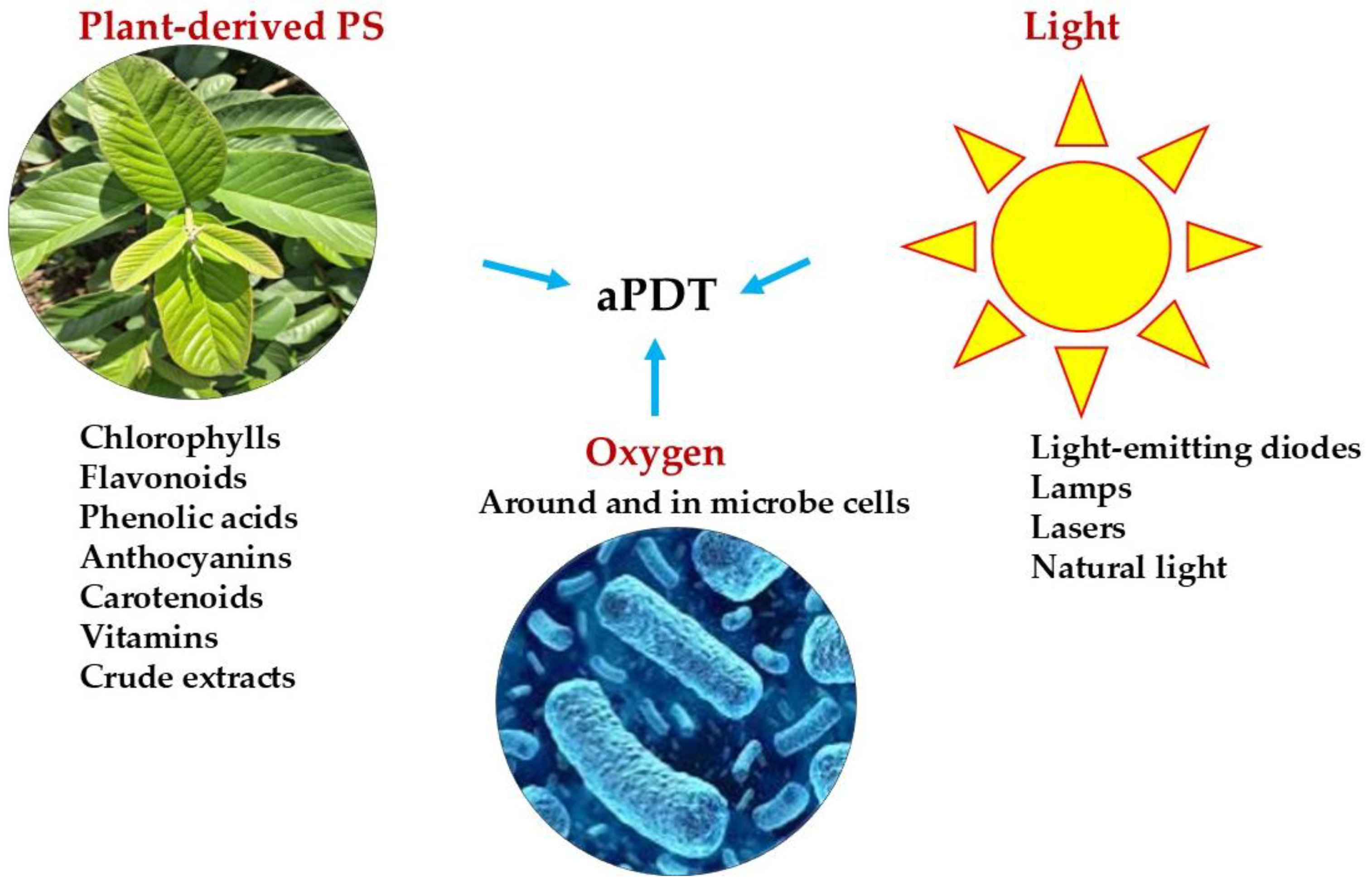
Figure 1. Key components of plant-derived aPDT: PS, light, and oxygen.
Hygiene 06 00036 g001
Figure 2. Mechanism of ROS generation and its antimicrobial effects leading to microbial cell death. Created based on information from [14,15,16,17,18].
Hygiene 06 00036 g002
Figure 3. Illustration of the application of plant-derived PSs in aPDT for food systems.
Hygiene 06 00036 g003
Table 1. Plant-derived PSs used in aPDT for food preservation.
Plant SourcePigment/ExtractAbsorption Peak (nm)ConcentrationLight Source/DoseΦΔaPDT EffectRef.
Spinacia oleraceaChlorophyll extract encapsulated in polystyrene NPs66410−5 mol L−136 W red LED 0.64Significant reduction in E. coli viability[34]
Tetragonia tetragonoides (New Zealand spinach)Chlorophyll-rich extract in Pluronic® F127 micelles (Ludwigshafen am Rhein, Germany)66527.2 mg mL−1Red LED; in vitro 6.12 J cm−2; in vivo 0.102 J cm−2In vitro, the treatment was effective against Staphylococcus aureus (MIC 6.8 mg mL−1). In vivo, it significantly reduced coliform and Staphylococcus populations on cow teat surfaces compared to an iodine-based control treatment.[35]
Curcuma longaGlycolic extract418100 mg mL−1Blue LED, 25 J cm−2 (110 mW cm−2)No absorption in 450 nm region[36]
Curcuma longaCurcumin418100 mg mL−1Blue LED, 25 J cm−2 (110 mW cm−2)-Complete inactivation of Mycobacterium abscessus; strong activity against Candida albicans and C. tropicalis (~5-log reduction)[36]
Curcuma longa L.Curcumin400–430100 µMXenon lamp, 48 J cm−2Complete inactivation of Mycobacterium abscessus[37]
Curcuma longa L.Curcumin42510 µMPulsed blue light, 21.6 J cm−2 (12 mW cm−2)Inactivation of HCoV-OC43[38]
Curcuma longa L.Curcumin405325 µg mL−1LEDs, 49 mW cm−2 for 15–45 minComplete inhibition of Salmonella enteritidis (temperature-dependent efficacy)[39]
Bixa orellanaBixin46025–100 µg mL−1Blue LED, 28.3–80 J cm−2 (55–154.98 mW cm−2)0.0006Bactericidal against Cutibacterium acnes in both planktonic and biofilm phases[40]
Bixa orellanaB. orellana extract46020% w/v6.37 J cm−2Rapid reduction in halitosis[41]
Beta vulgarisB. vulgaris extract480–5400.5 mg mL−1640 nm laser, 240 mW cm−2 for 120 sReduced mean bacterial load to 114.75 CFU mL−1; limited efficacy due to mismatch with 640 nm laser[42]
Tecoma stansCrude flower extract400–4508 mg mL−190–100 mW cm−2Significant eradication of S. aureus and C. albicans[43]
Berberis vulgarisBerberine loaded into human dental pulp stem cell-derived exosomes344–42231.2 µg mL−1405 nm laser, 25.8 J cm−2 (0.43 W cm−2, 60 s)Reduced Porphyromonas gingivalis biofilm biomass[44]
Berberis vulgarisBerberine46550–500 µg mL−1Blue LED, 34 mW cm−2 for 15 minStrong antibacterial activity; biofilm destruction at higher doses[45]
Aloe veraAloe-emodin430100 µM80 mW cm−2 (48–192 J cm−2)4.17–5.22 log reduction in P. aeruginosa; complete inactivation of MDR strains at 192 J cm−2[46]
Aloe veraAloe-emodin4301 µg mL−1Blue LED, 40 mW cm−20.57Significant inhibition of S. aureus[47]
Green leafy vegetablesRiboflavin (Vitamin B2)445–470125 µMBlue LED, 11.72 J cm−2 (30 min)5.3 log reduction (E. coli), 6.2 log (Listeria innocua)[48]
Green leafy vegetablesRiboflavin4506.25–100 µMBlue diode laser, 12–30 J cm−2Dose-dependent reduction in Enterococcus faecalis[49]
Green leafy vegetablesRiboflavin45060 mg L−1Blue LED, 0.92 J cm−2Antimicrobial activity against Pseudomonas fluorescens[50]
Hypericum perforatumHypericin50 µLFull-spectrum light, 14.02 J cm−2Active against S. aureus and E. coli[51]
Lamiaceae spp.Carvacrol405125 µg mL−1LED, 49 mW cm−2 for 15–45 minComplete inhibition of Salmonella enteritidis[39]
Table 2. Plant-derived PS applied in aPDT for Food Preservation.
PSTarget MicroorganismsFood Preservation ApplicationMethod of Applying PS for Food PreservationRef.
Aloe-emodinS. aureusFreshly squeezed apple juiceMixing[47]
CurcuminS. aureusLiquid foods, namely mango and pineapple juices, however, it was not effective against carrot juiceMixing[56]
S. aureusSkimmed milkMixing[75]
-Wolfberry fruitCoating[76]
Fusarium graminearumMaizeCoating[77]
Leuconostoc mesenteroides and Carnobacterium maltaromaticumBaconApplied directly to the bacon surface prior to aPDT treatment and subsequent chilled vacuum packaging[78]
Vibrio parahaemolyticusShrimpThe shrimp were soaked in a suspension containing curcumin.[79]
P. fluorescensFish filletsFish fillets were soaked curcumin solution[80]
V. vulnificusFillets of Cynoglossus semilaevisFish fillets were spotted with curcumin solution[81]
P. lundensis and Brochothrix thermosphactaBeefGround beef was mixed with curcumin[82]
S. enteritidis PT4Decontamination of eggshellsSpread to cover the egg surface[39]
RiboflavinE. coli and L. innocuaBetel leavesFresh betel leaves were submerged in the riboflavin solution resulting in uniform surface coating[48]
P. fluorescensActive antimicrobial food packaging filmsRiboflavin was incorporated into a chitosan-based biopolymer matrix to develop active, light-activated antimicrobial packaging films[50]
S. aureus and E. coliPorkPork soaked in the Riboflavin coating for 30 s[83]
R. stoloniferTomatoTomatoes were submerged in a riboflavin solution, resulting in uniform surface coating[29]
S. aureusMilkMixing[75]
S. typhimurium and S. enteritidisTuna filletsRiboflavin was spread onto the surface of the fillets[84]
CarvacrolS. enteritidisDecontamination of eggshellsSpread to cover the egg surface[39]
Disclaimer/Publisher’s Note: The statements, opinions and data contained in all publications are solely those of the individual author(s) and contributor(s) and not of MDPI and/or the editor(s). MDPI and/or the editor(s) disclaim responsibility for any injury to people or property resulting from any ideas, methods, instructions or products referred to in the content.