
Communication

Pelagic Sargassum Inundation in the Central Atlantic Cabo Verde Archipelago
by
Thierry Tonon
1,*,
Artemisa Gonçalves
2,
Joelma Silva Gomes
2,
Diana Semedo
2,
Lindsay C. Stringer
3,
Leonardo D. Gomez
1 and
Edita Magileviciute
2
1
Centre for Novel Agricultural Products, Department of Biology, University of York, York YO10 5DD, UK
2
ECOCV Associação Cabo-Verdiana de Ecoturismo, Rua da Vila dos Espargos, Palmarejo, Praia 7600, Cape Verde
3
Department of Environment and Geography, York Environmental Sustainability Institute, University of York, Heslington, York YO10 5NG, UK
*
Author to whom correspondence should be addressed.
Phycology 2026, 6(3), 78; https://doi.org/10.3390/phycology6030078

Submission received: 29 May 2026 / Revised: 29 June 2026 / Accepted: 10 July 2026 / Published: 16 July 2026

Abstract

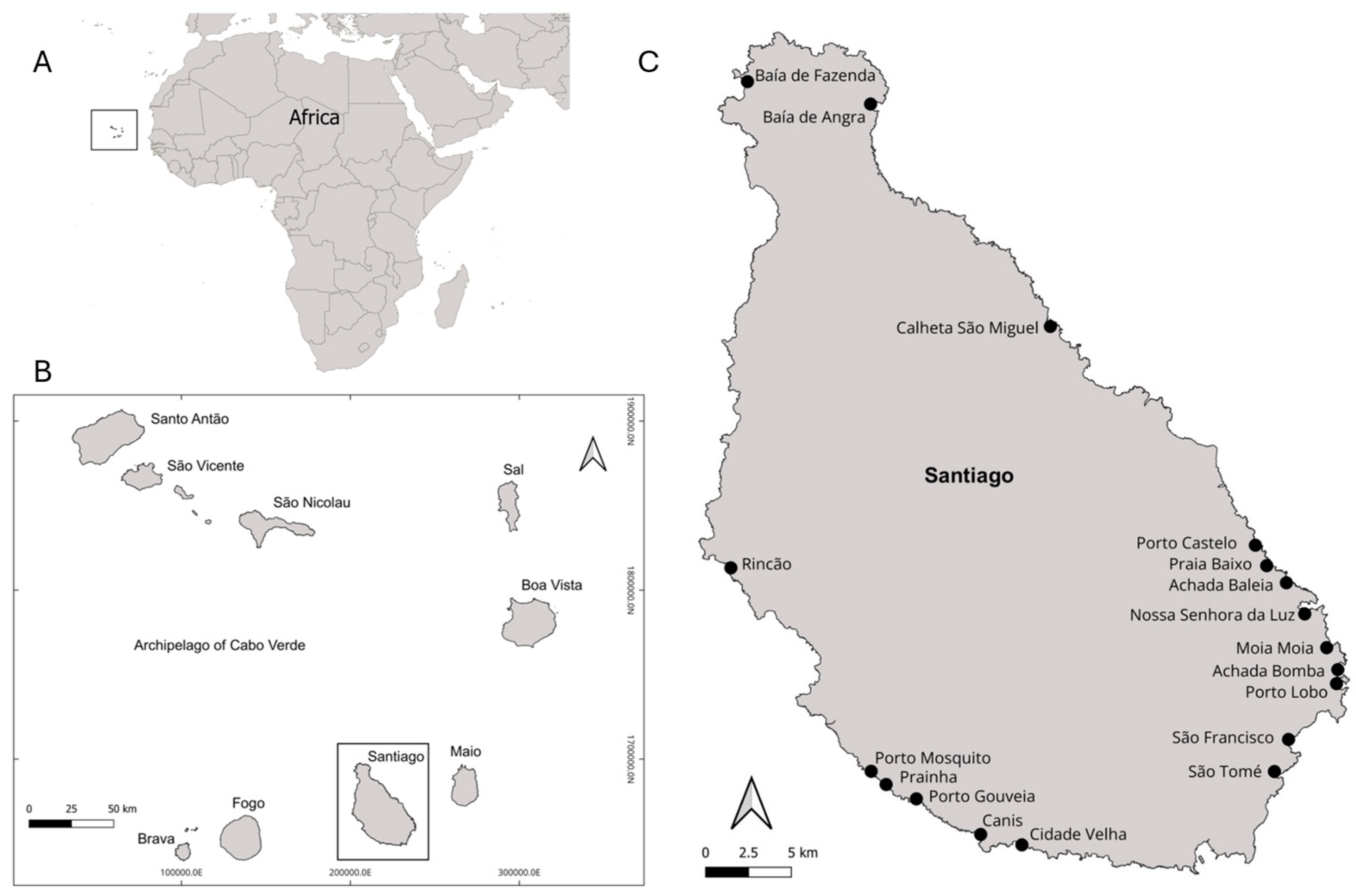
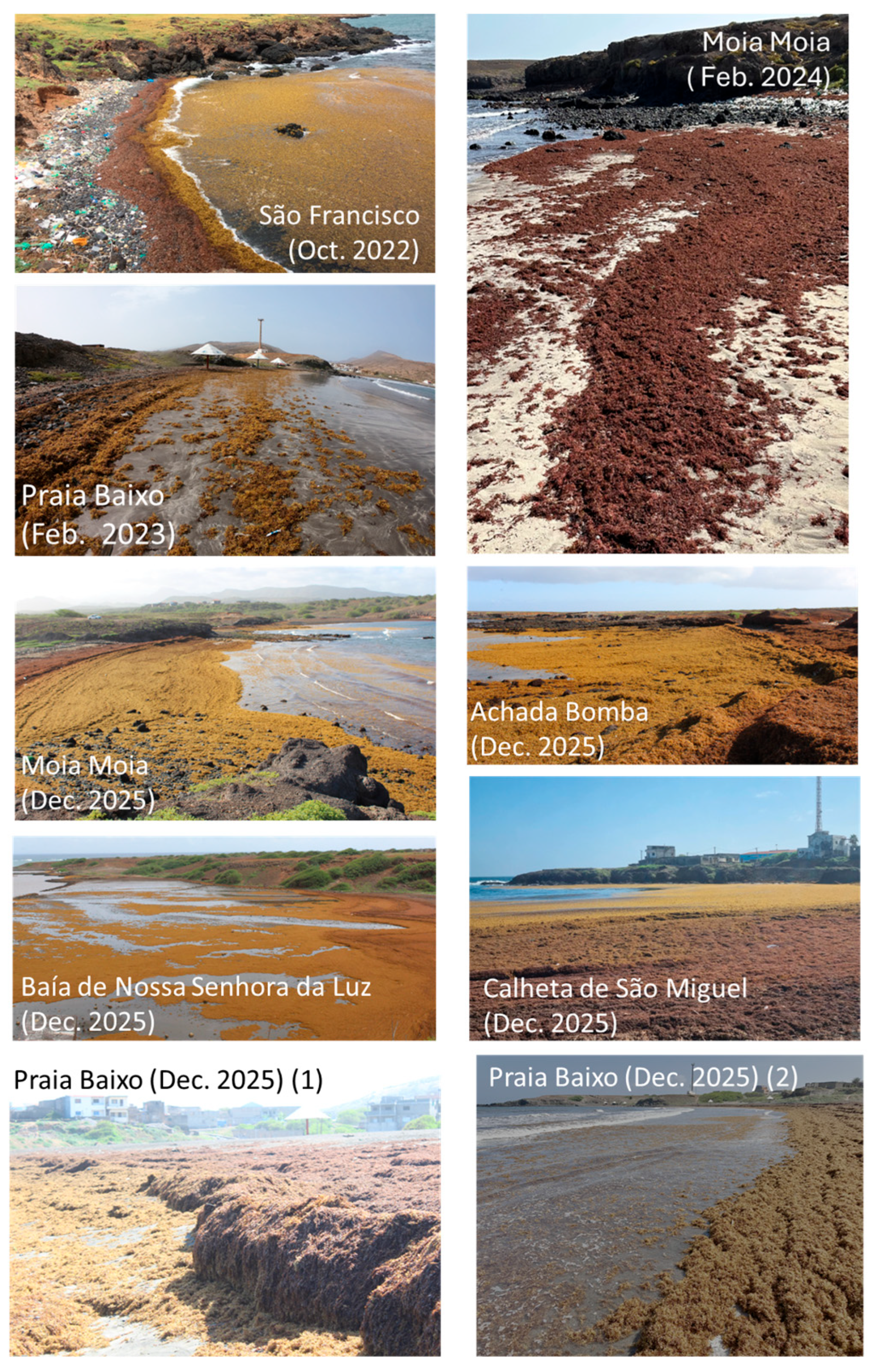
Since 2011, Caribbean and West African countries have experienced the deposit of millions of tonnes of the pelagic brown seaweed sargassum. While these algal blooms are well documented in the Caribbean, less information is available on the occurrence, monitoring and composition of sargassum biomass in West Africa. Cabo Verde (CV), one of the volcanic archipelagos of the Macaronesia region, has experienced sargassum beaching events since 2022, with 2025 being the worst year so far. In this study, high quantities of biomass that were beached in December 2025 (>100 tonnes) were determined in two locations in Santiago—CV’s largest island. Additionally, samples taken in 2024 were analysed to explore the potential valorisation of pelagic sargassum in CV. Elemental composition, amino acid profiling and calculation of NPK ratio suggested that this biomass could be processed for applications towards sustainable agriculture, providing benefits for local development. However, processes would have to include low cost and efficient pre-treatment(s) to manage the content of toxic elements (arsenic, cadmium, and lead). The development of sargassum-derived products for soil amelioration and improvement of crop production could contribute to strengthening communities and empowering local women’s groups, who play key roles in Cabo Verdean agriculture and rural economy.
Keywords: algal blooms; monitoring; biomass quantification; elemental composition; amino acids; NPK ratio; valorisation algal blooms; monitoring; biomass quantification; elemental composition; amino acids; NPK ratio; valorisation