

Microalgae-Derived Bioactive Compounds for Liver Health: Mechanisms, Therapeutic Potential, and Translational Challenges



Abstract
1. Introduction
1.1. Microalgae in Functional Foods and Drug Development
1.2. Global Burden of Liver Diseases
1.3. Objective and Structure of This Review
2. Microalgae-Derived Bioactive Compounds for Liver Protection
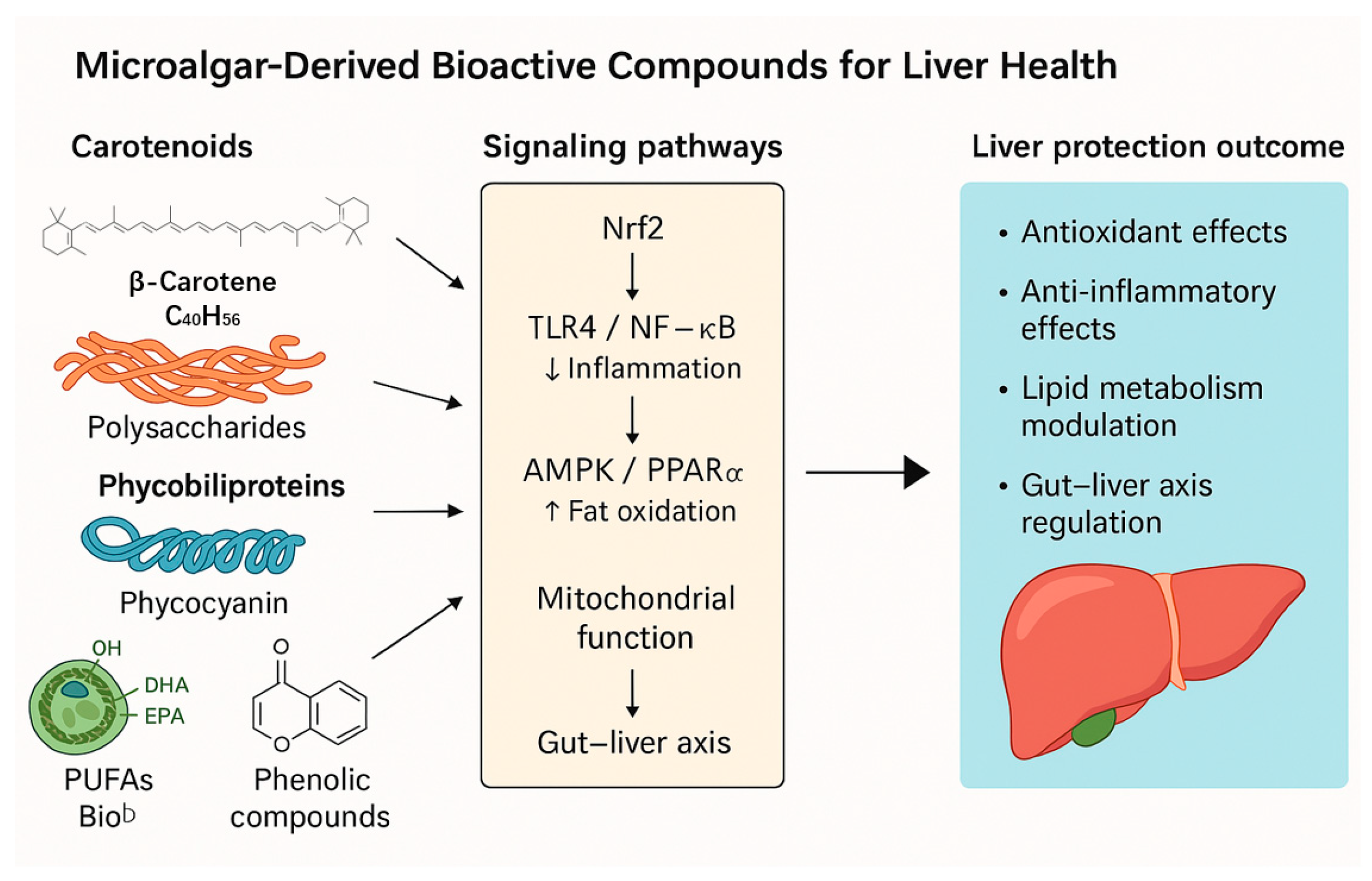
2.1. Carotenoids (Astaxanthin, β-Carotene, Lutein, Fucoxanthin)
2.2. Polysaccharides (Paramylon, Fucoidan, Laminarin)
2.3. Phycobiliproteins (Phycocyanin)
- 1.
- Direct scavenging of reactive oxygen species and enhancement of endogenous antioxidant defenses (SOD, CAT, GSH);
- 2.
- The suppression of NF-κB-mediated inflammatory signaling;
- 3.
- The attenuation of hepatocyte apoptosis and preservation of mitochondrial integrity;
- 4.
2.4. PUFAs (DHA, EPA)
2.5. Phenolic Compounds (Polyphenols, Phlorotannins)
- 1.
- Direct ROS scavenging and metal chelation to reduce lipid peroxidation;
- 2.
- The activation of endogenous antioxidant systems such as Nrf2/HO-1;
- 3.
- The inhibition of NF-κB and TLR-mediated inflammatory signaling;
- 4.
3. Mechanistic Modules Underpinning Hepatoprotection by Microalgae
3.1. Antioxidative Defense, Mitochondrial Protection, and Redox Signaling
3.2. Anti-Inflammatory and Immunomodulatory Actions
3.3. Reprogramming of Lipid Metabolism and Insulin Sensitivity
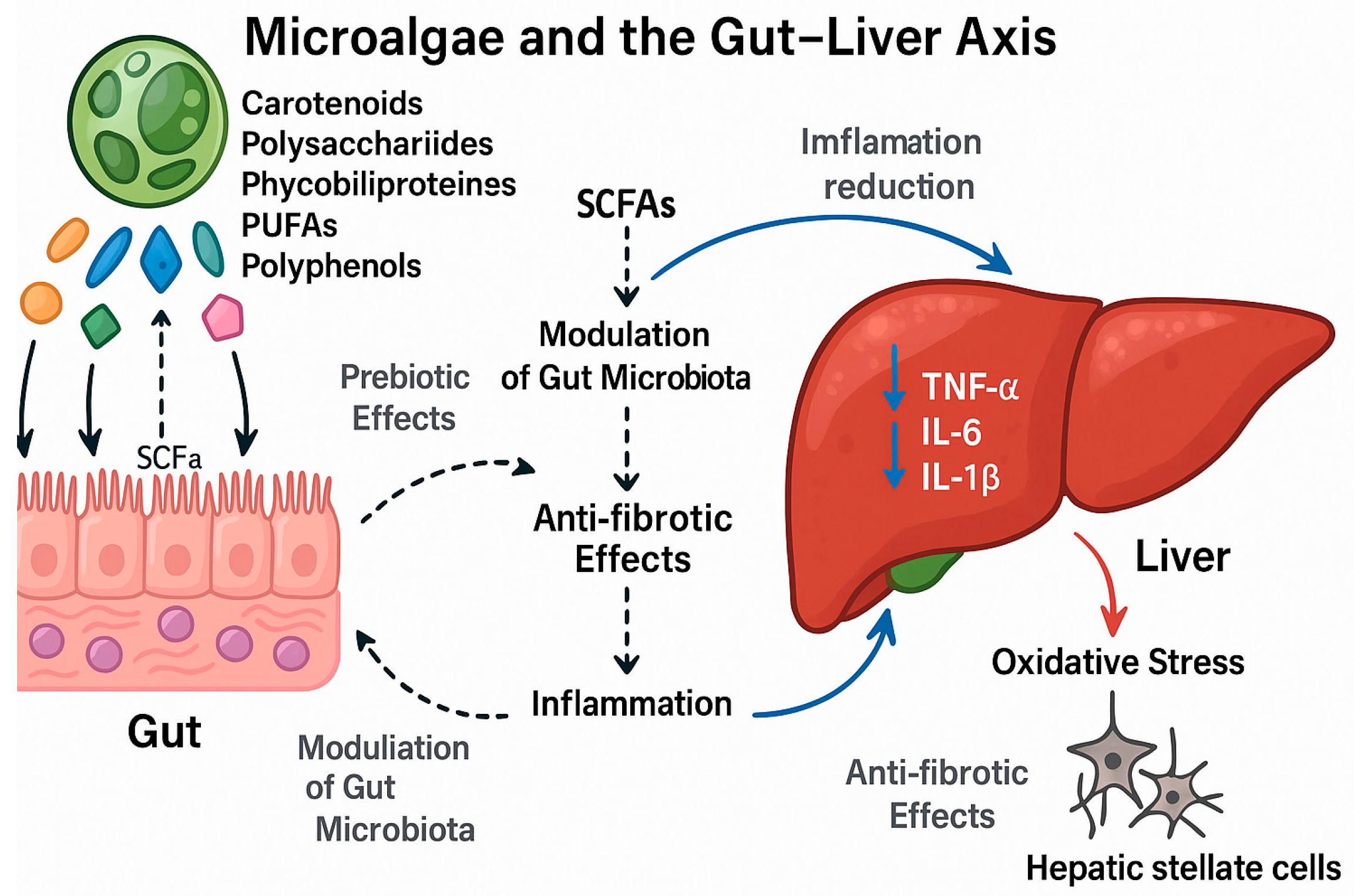
3.4. Modulation of the Gut–Liver Axis
- Prebiotic Action & Microbiota Modulation: Upon ingestion, these compounds act as prebiotics, promoting the growth of beneficial gut bacteria (e.g., Lactobacillus) and increasing the production of short-chain fatty acids (SCFAs) like acetate, propionate, and butyrate.
- Intestinal Barrier Strengthening: SCFAs and certain microalgal compounds (e.g., paramylon) help strengthen the intestinal barrier by promoting the expression of tight junction proteins (e.g., ZO-1, occludin), thereby reducing intestinal permeability and preventing the translocation of harmful microbial products, such as lipopolysaccharide (LPS), into the portal circulation.
- Attenuation of Liver Inflammation: Reduced gut-derived endotoxins (e.g., LPS) lead to decreased activation of Kupffer cells (liver macrophages) via the TLR4/NF-κB signaling pathway. This results in lower production of pro-inflammatory cytokines (↓TNF-α, ↓IL-6, ↓IL-1β) in the liver.
- Anti-fibrotic Effects: The consequent reduction in hepatic inflammation and direct actions of bioactives (e.g., astaxanthin, fucoidan) inhibit the activation and proliferation of hepatic stellate cells (HSCs), the primary drivers of liver fibrosis. This leads to decreased deposition of extracellular matrix (ECM) proteins, such as collagen.
3.5. Anti-Fibrotic Mechanisms and Tumor-Preventive Signals
3.6. Integrated Stress and Cell Death Programs: ER Stress/UPR, Ferroptosis, and Inflammasome Activation
4. Standardization, Quality, Safety, and Translational Bottlenecks
4.1. Variability in Composition and the Need for Standardization
4.2. Bioavailability, Formulation, and Pharmacokinetic Considerations
4.3. Safety, Toxicology, and Quality Assurance
4.4. Regulatory and Clinical Translation Gaps
4.5. Data-Driven Discovery: Multi-Omics, AI/ML, and Prioritization Pipelines
4.6. Manufacturing Scale-Up and Sustainability
5. Future Directions and Emerging Trends
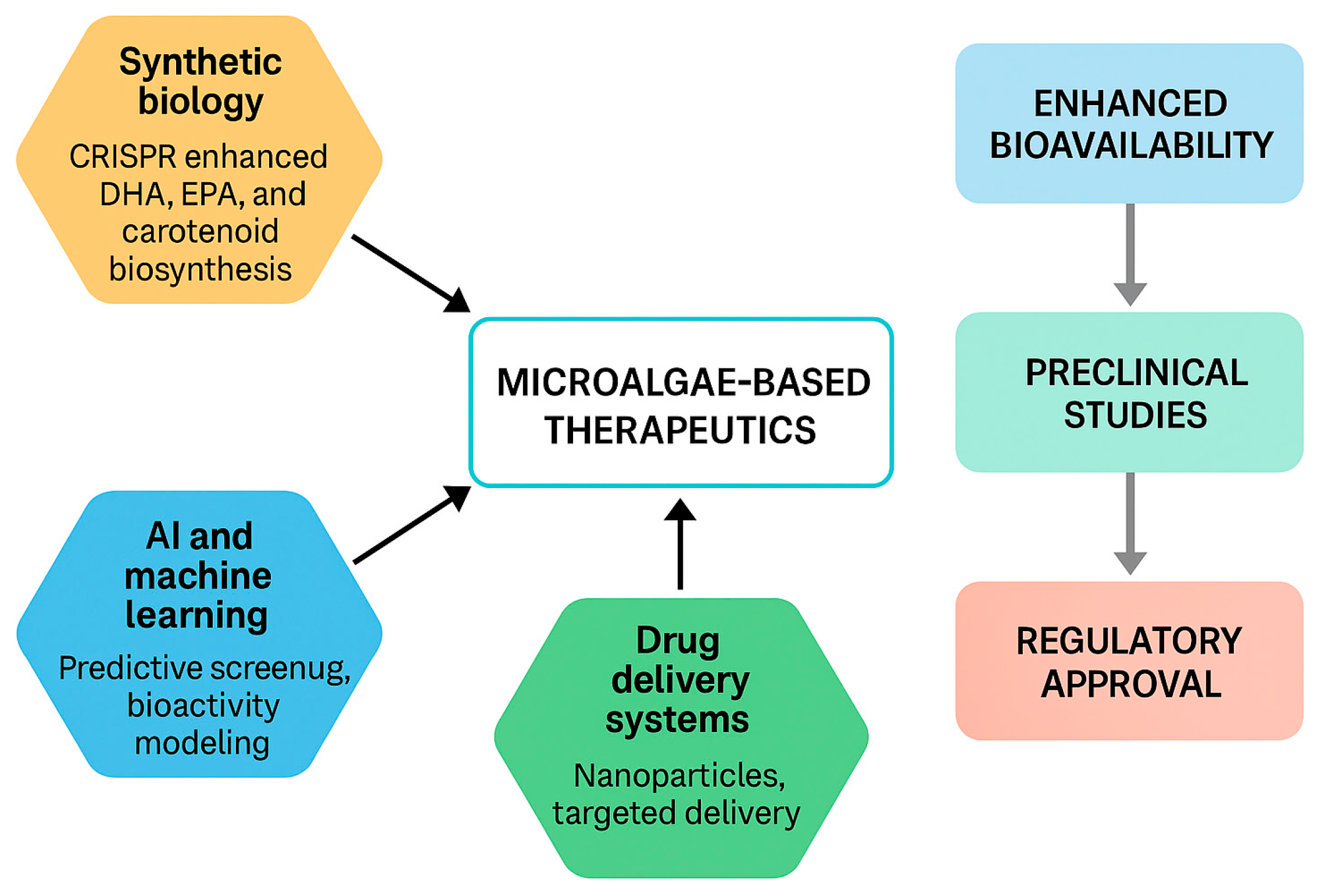
5.1. Synthetic Biology for Strain Improvement
5.2. AI and Machine Learning in Bioactive Discovery
5.3. Potential Synergistic Combinations of Microalgal Bioactives
5.4. Formulation and Delivery-Oriented Design
5.5. Microbiome-Mediated Hepatic Effects
5.6. Environmental Toxin Protection
6. Conclusions
Author Contributions
Funding
Data Availability Statement
Conflicts of Interest
Abbreviations
| ACC | acetyl-CoA carboxylase |
| ACSL4 | acyl-CoA synthetase long-chain family member 4 |
| AI | artificial intelligence |
| AIFM2 (FSP1) | apoptosis-inducing factor mitochondria-associated 2 (ferroptosis suppressor protein 1) |
| ALD | alcoholic liver disease |
| ALT | alanine aminotransferase |
| AMPK | AMP-activated protein kinase |
| APAP | acetaminophen (paracetamol) |
| AST | aspartate aminotransferase |
| BA | bile acid |
| CAT | catalase |
| CCl4 | carbon tetrachloride |
| CHOP (DDIT3) | C/EBP homologous protein |
| CoQ10 | coenzyme Q10 (ubiquinone-10) |
| C-PC | C-phycocyanin |
| CYP7A1 | cholesterol 7α-hydroxylase |
| DAMPs | damage-associated molecular patterns |
| D-GalN | D-galactosamine |
| DHA | docosahexaenoic acid |
| DILI | drug-induced liver injury |
| EPA | eicosapentaenoic acid |
| ER | endoplasmic reticulum |
| FAS | fatty acid synthase |
| FFA | free fatty acid |
| FGF15/19 | fibroblast growth factor 15/19 |
| FGFR4 | fibroblast growth factor receptor 4 |
| FSP1 (AIFM2) | ferroptosis suppressor protein 1 |
| FXR (NR1H4) | farnesoid X receptor |
| GBD | Global Burden of Disease |
| GLP | Good Laboratory Practice |
| GOS | galactooligosaccharide |
| GPX4 | glutathione peroxidase 4 |
| GSH | reduced glutathione |
| GSH-Px (GPx) | glutathione peroxidase |
| HACCP | Hazard Analysis and Critical Control Points |
| HCC | hepatocellular carcinoma |
| HFD | high-fat diet |
| HO-1 | heme oxygenase-1 |
| HSC | hepatic stellate cell |
| IRE1α (ERN1) | inositol-requiring enzyme 1 alpha |
| IRI | ischemia–reperfusion injury |
| ISO | International Organization for Standardization |
| Keap1 | Kelch-like ECH-associated protein 1 |
| KLB (β-Klotho) | beta-Klotho |
| LPS | lipopolysaccharide |
| LX-2 | human hepatic stellate cell line LX-2 |
| MAPK | mitogen-activated protein kinase |
| MDA | malondialdehyde |
| ML | machine learning |
| MMP | matrix metalloproteinase |
| MW | molecular weight |
| NAFLD | non-alcoholic fatty liver disease |
| NASH | non-alcoholic steatohepatitis |
| NF-κB | nuclear factor kappa B |
| NLRP3 | NOD-, LRR- and pyrin domain-containing protein 3 |
| Nrf2 (NFE2L2) | nuclear factor erythroid 2-related factor 2 |
| PARK2 (Parkin) | E3 ubiquitin ligase Parkin |
| PINK1 | PTEN-induced putative kinase 1 |
| PPARα | peroxisome proliferator-activated receptor alpha |
| PUFA | polyunsaturated fatty acid |
| QC | quality control |
| RCT | randomized controlled trial |
| ROS | reactive oxygen species |
| SCFAs | short-chain fatty acids |
| SIRT1 | sirtuin 1 |
| SOD | superoxide dismutase |
| SREBP-1c | sterol regulatory element-binding protein-1c |
| TAA | thioacetamide |
| TGF-β1 | transforming growth factor beta 1 |
| TGR5 (GPBAR1) | G protein-coupled bile acid receptor 1 |
| TLR4 | Toll-like receptor 4 |
| UPR | unfolded protein response |
References
- Ampofo, J.; Abbey, L. Microalgae: Bioactive Composition, Health Benefits, Safety and Prospects as Potential High-Value Ingredients for the Functional Food Industry. Foods 2022, 11, 1744. [Google Scholar] [CrossRef] [Scilit]
- Caporgno, M.P.; Mathys, A. Trends in Microalgae Incorporation Into Innovative Food Products with Potential Health Benefits. Front. Nutr. 2018, 5, 58. [Google Scholar] [CrossRef] [Scilit]
- Chénais, B. Algae and Microalgae and Their Bioactive Molecules for Human Health. Molecules 2021, 26, 1185. [Google Scholar] [CrossRef] [Scilit]
- Helmy, M.; Elhalis, H.; Liu, Y.; Chow, Y.; Selvarajoo, K. Perspective: Multiomics and Machine Learning Help Unleash the Alternative Food Potential of Microalgae. Adv. Nutr. 2023, 14, 1–11. [Google Scholar] [CrossRef] [Scilit]
- U.S. Food and Drug Administration. GRAS Notice No. 732: Docosahexaenoic Acid Oil Produced in Schizochytrium sp. 6 April 2018. Available online: https://hfpappexternal.fda.gov/scripts/fdcc/index.cfm?set=GRASNotices&id=732&sort=GRN_No&order=DESC&startrow=1&type=basic&search=732 (accessed on 7 November 2025).
- U.S. Food and Drug Administration. GRAS Notice No. 1156: Algal Oil (≥35% Docosahexaenoic Acid) from Schizochytrium sp. FJRK-SCH3. 8 February 2024. Available online: https://hfpappexternal.fda.gov/scripts/fdcc/index.cfm?set=GRASNotices&id=1156 (accessed on 7 November 2025).
- U.S. Food and Drug Administration. GRAS Notice No. 1185: Algal Oil (≥35% Docosahexaenoic Acid) from Schizochytrium sp. FJRK-SCH3. 14 March 2025. Available online: https://hfpappexternal.fda.gov/scripts/fdcc/index.cfm?set=GRASNotices&id=1185&sort=GRN_No&order=DESC&startrow=1&type=basic&search=1185 (accessed on 7 November 2025).
- U.S. Food and Drug Administration. GRAS Notice No. 1236: Algal Oil (≥40% Docosahexaenoic Acid) from Aurantiochytrium Limacinum H Sc-01. 10 June 2025. Available online: https://hfpappexternal.fda.gov/scripts/fdcc/index.cfm?set=GRASNotices&id=1236 (accessed on 7 November 2025).
- EFSA Panel on Dietetic Products, Nutrition and Allergies (NDA). Allergies, Scientific Opinion on the extension of use for DHA and EPA-rich algal oil from Schizochytrium sp. as a Novel Food ingredient. EFSA J. 2014, 12, 3843. [Google Scholar] [CrossRef] [Scilit]
- Nakada, T.; Ota, S. What is the correct name for the type of Haematococcus Flot. (Volvocales, Chlorophyceae)? Taxon 2016, 65, 343–348. [Google Scholar] [CrossRef] [Scilit]
- EFSA Panel on Nutrition, Novel Foods and Food Allergens (NDA); Turck, D.; Bohn, T.; Castenmiller, J.; De Henauw, S.; Hirsch-Ernst, K.I.; Maciuk, A.; Mangelsdorf, I.; McArdle, H.J.; Naska, A.; et al. Safety of a change in specifications of the novel food oleoresin from Haematococcus pluvialis containing astaxanthin pursuant to Regulation (EU) 2015/2283. EFSA J. 2023, 21, e08338. [Google Scholar] [CrossRef] [Scilit] [PubMed]
- EFSA Panel on Nutrition, Novel Foods and Food Allergens (NDA); Turck, D.; Castenmiller, J.; de Henauw, S.; Hirsch-Ernst, K.I.; Kearney, J.; Maciuk, A.; Mangelsdorf, I.; McArdle, H.J.; Naska, A.; et al. Safety of astaxanthin for its use as a novel food in food supplements. EFSA J. 2020, 18, e05993. [Google Scholar] [CrossRef] [Scilit] [PubMed]
- U.S. Government Publishing Office. 21 CFR 73.530—Spirulina Extract. 21 August 2015. Available online: https://www.ecfr.gov/current/title-21/chapter-I/subchapter-A/part-73/subpart-A/section-73.530 (accessed on 7 November 2025).
- U.S. Government Publishing Office. 21 CFR Part 73—Listing of Color Additives Exempt from Certification. 22 March 1977. Available online: https://www.ecfr.gov/current/title-21/chapter-I/subchapter-A/part-73 (accessed on 7 November 2025).
- Euglena Co., Ltd. Euglena for the Body That Focuses on Awakening the Body from the Ground up Proposes a New Approach to Health Habits. 16 March 2020. Available online: https://www.euglena.jp/en/news/20200316-2/ (accessed on 7 November 2025).
- Qu, J.; Zhu, T.; Du, X.; Zhang, Y.; Tian, J.; Xia, Y.; Ke, X.; Fu, S.; Fan, B. Safety evaluation of Nannochloropsis gaditana oil as a novel food. Regul. Toxicol. Pharmacol. 2025, 162, 105901. [Google Scholar] [CrossRef] [Scilit] [PubMed]
- Dai, J.; He, J.; Chen, Z.; Qin, H.; Du, M.; Lei, A.; Zhao, L.; Wang, J. Euglena gracilis Promotes Lactobacillus Growth and Antioxidants Accumulation as a Potential Next-Generation Prebiotic. Front. Nutr. 2022, 9, 864565. [Google Scholar] [CrossRef] [Scilit]
- Aoe, S.; Yamanaka, C.; Koketsu, K.; Nishioka, M.; Onaka, N.; Nishida, N.; Takahashi, M. Effects of paramylon extracted from Euglena gracilis EOD-1 on parameters related to metabolic syndrome in diet-induced obese mice. Nutrients 2019, 11, 1674. [Google Scholar] [CrossRef] [Scilit] [PubMed]
- Nakashima, A.; Sugimoto, R.; Suzuki, K.; Shirakata, Y.; Hashiguchi, T.; Yoshida, C.; Nakano, Y. Anti-fibrotic activity of Euglena gracilis and paramylon in a mouse model of non-alcoholic steatohepatitis. Food Sci. Nutr. 2019, 7, 139–147. [Google Scholar] [CrossRef] [Scilit]
- Panja, S.; Chaudhuri, D.; Ghate, N.B.; Mandal, N. Phytochemical profile of a microalgae Euglena tuba and its hepatoprotective effect against iron-induced liver damage in Swiss albino mice. J. Appl. Microbiol. 2014, 117, 1773–1786. [Google Scholar] [CrossRef] [Scilit]
- Sugiyama, A.; Suzuki, K.; Mitra, S.; Arashida, R.; Yoshida, E.; Nakano, R.; Yabuta, Y.; Takeuchi, T. Hepatoprotective effects of paramylon, a beta-1, 3-D-glucan isolated from Euglena gracilis Z, on acute liver injury induced by carbon tetrachloride in rats. J. Vet. Med. Sci. 2009, 71, 885–890. [Google Scholar] [CrossRef] [Scilit]
- Bae, M.; Lee, Y.; Park, Y.K.; Shin, D.G.; Joshi, P.; Hong, S.H.; Alder, N.; Koo, S.I.; Lee, J.Y. Astaxanthin attenuates the increase in mitochondrial respiration during the activation of hepatic stellate cells. J. Nutr. Biochem. 2019, 71, 82–89. [Google Scholar] [CrossRef] [Scilit]
- Zhang, X.Q.; Hou, Y.C.; Li, J.A.; Wang, J.F. The Role of Astaxanthin on Chronic Diseases. Crystals 2021, 11, 505. [Google Scholar] [CrossRef] [Scilit]
- Martínez, R.; García-Beltrán, A.; Kapravelou, G.; Mesas, C.; Cabeza, L.; Perazzoli, G.; Guarnizo, P.; Rodríguez-López, A.; Andrés Vallejo, R.; Galisteo, M.; et al. In Vivo Nutritional Assessment of the Microalga Nannochloropsis gaditana and Evaluation of the Antioxidant and Antiproliferative Capacity of Its Functional Extracts. Mar. Drugs 2022, 20, 318. [Google Scholar] [CrossRef] [Scilit] [PubMed]
- Mayer, C.; Côme, M.; Blanckaert, V.; Chini Zittelli, G.; Faraloni, C.; Nazih, H.; Ouguerram, K.; Mimouni, V.; Chénais, B. Effect of Carotenoids from Phaeodactylum tricornutum on Palmitate-Treated HepG2 Cells. Molecules 2020, 25, 2845. [Google Scholar] [CrossRef] [Scilit]
- Hu, S.Q.; Bae, M.; Park, Y.K.; Lee, J.Y. n-3 PUFAs inhibit TGFβ1-induced profibrogenic gene expression by ameliorating the repression of PPARγ in hepatic stellate cells. J. Nutr. Biochem. 2020, 85, 108452. [Google Scholar] [CrossRef] [Scilit]
- Younossi, Z.M.; Koenig, A.B.; Abdelatif, D.; Fazel, Y.; Henry, L.; Wymer, M. Global epidemiology of nonalcoholic fatty liver disease-Meta-analytic assessment of prevalence, incidence, and outcomes. Hepatology 2016, 64, 73–84. [Google Scholar] [CrossRef] [Scilit] [PubMed]
- Younossi, Z.M.; Golabi, P.; Paik, J.M.; Henry, A.; Van Dongen, C.; Henry, L. The global epidemiology of nonalcoholic fatty liver disease (NAFLD) and nonalcoholic steatohepatitis (NASH): A systematic review. Hepatology 2023, 77, 1335–1347. [Google Scholar] [CrossRef] [Scilit]
- Sung, H.; Ferlay, J.; Siegel, R.L.; Laversanne, M.; Soerjomataram, I.; Jemal, A.; Bray, F. Global Cancer Statistics 2020: GLOBOCAN Estimates of Incidence and Mortality Worldwide for 36 Cancers in 185 Countries. CA A Cancer J. Clin. 2021, 71, 209–249. [Google Scholar] [CrossRef] [Scilit]
- Sepanlou, S.G.; Safiri, S.; Bisignano, C.; Ikuta, K.S.; Merat, S.; Saberifiroozi, M.; Poustchi, H.; Tsoi, D.; Colombara, D.V.; Abdoli, A.; et al. The global, regional, and national burden of cirrhosis by cause in 195 countries and territories, 1990–2017: A systematic analysis for the Global Burden of Disease Study 2017. Lancet Gastroenterol. Hepatol. 2020, 5, 245–266. [Google Scholar] [CrossRef] [Scilit] [PubMed]
- U.S. Food and Drug Administration. FDA Approves First Treatment for Patients with Liver Scarring Due to Fatty Liver Disease. 14 March 2024. Available online: https://www.fda.gov/news-events/press-announcements/fda-approves-first-treatment-patients-liver-scarring-due-fatty-liver-disease (accessed on 7 November 2025).
- El-Baz, F.K.; Salama, A.; Salama, R.A.A. Therapeutic Effect of Dunaliella salina Microalgae on Thioacetamide- (TAA-) Induced Hepatic Liver Fibrosis in Rats: Role of TGF-β and MMP9. BioMed Res. Int. 2019, 2019, 7028314. [Google Scholar] [CrossRef] [Scilit]
- El-Baz, F.K.; Salama, A.A.A.; Hussein, R.A. Dunaliella salina microalgae oppose thioacetamide-induced hepatic fibrosis in rats. Toxicol. Rep. 2020, 7, 36–45. [Google Scholar] [CrossRef] [Scilit] [PubMed]
- El-Sayed, A.E.B.; Aboulthana, W.M.; El-Feky, A.M.; Ibrahim, N.E.; Seif, M.M. Bio and phyto-chemical effect of Amphora coffeaeformis extract against hepatic injury induced by paracetamol in rats. Mol. Biol. Rep. 2018, 45, 2007–2023. [Google Scholar] [CrossRef] [Scilit]
- Li, J.J.; Guo, C.Y.; Wu, J.Y. Fucoidan: Biological Activity in Liver Diseases. Am. J. Chin. Med. 2020, 48, 1617–1632. [Google Scholar] [CrossRef] [Scilit]
- Li, X.J.; Ye, Q.F. Fucoidan reduces inflammatory response in a rat model of hepatic ischemia-reperfusion injury. Can. J. Physiol. Pharmacol. 2015, 93, 999–1005. [Google Scholar] [CrossRef] [Scilit]
- Liu, Q.; Li, W.J.; Qin, S. Therapeutic effect of phycocyanin on acute liver oxidative damage caused by X-ray. Biomed. Pharmacother. 2020, 130, 110553. [Google Scholar] [CrossRef] [Scilit]
- Salah, A.F.; El-Sayed, A. Prospective Protective Effects of Arthrospira platensis Against Acetaminophen Induced Hepato-Renal Toxicity in Rats. Int. J. Morphol. 2023, 41, 975–984. [Google Scholar] [CrossRef] [Scilit]
- González-Arceo, M.; Gómez-Zorita, S.; Aguirre, L.; Portillo, M.P. Effect of Microalgae and Macroalgae Extracts on Non-Alcoholic Fatty Liver Disease. Nutrients 2021, 13, 2017. [Google Scholar] [CrossRef] [Scilit]
- Zhao, H.C.; Liu, S.; Zhao, H.; Liu, Y.; Xue, M.L.; Zhang, H.Q.; Qiu, X.; Sun, Z.Y.; Liang, H. Protective effects of fucoidan against ethanol-induced liver injury through maintaining mitochondrial function and mitophagy balance in rats. Food Funct. 2021, 12, 3842–3854. [Google Scholar] [CrossRef] [Scilit]
- Bae, M.; Kim, M.B.; Kang, H.; Park, Y.K.; Lee, J.Y. Comparison of Carotenoids for Their Antifibrogenic Effects in Hepatic Stellate Cells. Lipids 2019, 54, 401–410. [Google Scholar] [CrossRef] [Scilit]
- Bae, M.; Kim, M.B.; Lee, J.Y. Fucoxanthin Attenuates the Reprogramming of Energy Metabolism during the Activation of Hepatic Stellate Cells. Nutrients 2022, 14, 1902. [Google Scholar] [CrossRef] [Scilit] [PubMed]
- Ben Ammar, R.; Abu Zahra, H.; Abu Zahra, A.M.; Alfwuaires, M.; Alamer, S.A.; Metwally, A.M.; Althnaian, T.A.; Al-Ramadan, S.Y. Protective Effect of Fucoxanthin on Zearalenone-Induced Hepatic Damage through Nrf2 Mediated by PI3K/AKT Signaling. Mar. Drugs 2023, 21, 391. [Google Scholar] [CrossRef] [Scilit] [PubMed]
- Li, Y.; Kim, M.B.; Park, Y.K.; Lee, J.Y. Fucoxanthin metabolites exert anti-fibrogenic and antioxidant effects in hepatic stellate cells. J. Agric. Food Res. 2021, 6, 100245. [Google Scholar] [CrossRef] [Scilit]
- Ye, J.N.; Zheng, J.W.; Tian, X.X.; Xu, B.G.; Yuan, F.L.; Wang, B.; Yang, Z.S.; Huang, F.F. Fucoxanthin Attenuates Free Fatty Acid-Induced Nonalcoholic Fatty Liver Disease by Regulating Lipid Metabolism/Oxidative Stress/Inflammation via the AMPK/Nrf2/TLR4 Signaling Pathway. Mar. Drugs 2022, 20, 225. [Google Scholar] [CrossRef] [Scilit] [PubMed]
- Ieiri, H.; Kameda, N.; Naito, J.; Kawano, T.; Nishida, N.; Takahashi, M.; Katakura, Y. Paramylon extracted from Euglena gracilis EOD-1 augmented the expression of SIRT1. Cytotechnology 2021, 73, 755–759. [Google Scholar] [CrossRef] [Scilit]
- Abdel-Daim, M.M.; Abushouk, A.I.; Bahbah, E.I.; Bungau, S.G.; Alyousif, M.S.; Aleya, L.; Alkahtani, S. Fucoidan protects against subacute diazinon-induced oxidative damage in cardiac, hepatic, and renal tissues. Environ. Sci. Pollut. Res. 2020, 27, 11554–11564. [Google Scholar] [CrossRef] [Scilit] [PubMed]
- Mahgoub, H.A.; El-Adl, M.A.M.; Martyniuk, C.J. Fucoidan ameliorates acute and sub-chronic in vivo toxicity of the fungicide cholorothalonil in Oreochromis niloticus (Nile tilapia). Comp. Biochem. Physiol. C-Toxicol. Pharmacol. 2021, 245, 109035. [Google Scholar] [CrossRef] [Scilit]
- Raghavendran, H.R.B.; Sathivel, A.; Rekha, S. 12—Gastric and hepatic protective effects of algal components. In Functional Ingredients from Algae for Foods and Nutraceuticals; Domínguez, H., Ed.; Woodhead Publishing: Sawston, UK, 2013; pp. 416–452. [Google Scholar]
- Deng, Z.Z.; Wang, J.; Wu, N.; Geng, L.H.; Zhang, Q.B.; Yue, Y. Co-activating the AMPK signaling axis by low molecular weight fucoidan LF2 and fucoxanthin improves the HFD-induced metabolic syndrome in mice. J. Funct. Foods 2022, 94, 105119. [Google Scholar] [CrossRef] [Scilit]
- Wen, Y.; Zhou, Y.; Tian, L.; He, Y. Ethanol extracts of Isochrysis zhanjiangensis alleviate acute alcoholic liver injury and modulate intestinal bacteria dysbiosis in mice. J. Sci. Food Agric. 2024, 104, 4354–4362. [Google Scholar] [CrossRef] [Scilit]
- Ning, H.; Li, R.; Zhou, T. Machine learning for microalgae detection and utilization. Front. Mar. Sci. 2022, 9, 947394. [Google Scholar] [CrossRef] [Scilit]
- Madrigal-Santillán, E.; Madrigal-Bujaidar, E.; Álvarez-González, I.; Sumaya-Martínez, M.T.; Gutiérrez-Salinas, J.; Bautista, M.; Morales-González, Á.; García-Luna y González-Rubio, M.; Aguilar-Faisal, J.L.; Morales-González, J.A. Review of natural products with hepatoprotective effects. World J. Gastroenterol. 2014, 20, 14787–14804. [Google Scholar] [CrossRef] [Scilit] [PubMed]
- Imamoglu, E. Artificial Intelligence and/or Machine Learning Algorithms in Microalgae Bioprocesses. Bioengineering 2024, 11, 1143. [Google Scholar] [CrossRef] [Scilit] [PubMed]
- Vanitha, A.; Murthy, K.N.; Kumar, V.; Sakthivelu, G.; Veigas, J.M.; Saibaba, P.; Ravishankar, G.A. Effect of the carotenoid-producing alga, Dunaliella bardawil, on CCl4-induced toxicity in rats. Int. J. Toxicol. 2007, 26, 159–167. [Google Scholar] [CrossRef] [Scilit]
- Murthy, K.N.; Rajesha, J.; Swamy, M.M.; Ravishankar, G.A. Comparative evaluation of hepatoprotective activity of carotenoids of microalgae. J. Med. Food 2005, 8, 523–528. [Google Scholar] [CrossRef] [Scilit]
- Nagao, K.; Inoue, N.; Tsuge, K.; Oikawa, A.; Kayashima, T.; Yanagita, T. Dried and Fermented Powders of Edible Algae (Neopyropia yezoensis) Attenuate Hepatic Steatosis in Obese Mice. Molecules 2022, 27, 2640. [Google Scholar] [CrossRef] [Scilit] [PubMed]
- Chekanov, K. Diversity and Distribution of Carotenogenic Algae in Europe: A Review. Mar. Drugs 2023, 21, 108. [Google Scholar] [CrossRef] [Scilit]
- Fernández-Sevilla, J.M.; Acién Fernández, F.G.; Molina Grima, E. Biotechnological production of lutein and its applications. Appl. Microbiol. Biotechnol. 2010, 86, 27–40. [Google Scholar] [CrossRef] [Scilit]
- Shi, X.-M.; Liu, H.-J.; Zhang, X.-W.; Chen, F. Production of biomass and lutein by Chlorella protothecoides at various glucose concentrations in heterotrophic cultures. Process Biochem. 1999, 34, 341–347. [Google Scholar] [CrossRef] [Scilit]
- Chen, Q.C.; Liu, M.; Zhang, P.Y.; Fan, S.J.; Huang, J.L.; Yu, S.Y.; Zhang, C.H.; Li, H.J. Fucoidan and galactooligosaccharides ameliorate high-fat diet-induced dyslipidemia in rats by modulating the gut microbiota and bile acid metabolism. Nutrition 2019, 65, 50–59. [Google Scholar] [CrossRef] [Scilit]
- Xie, Y.; Li, J.; Qin, H.; Wang, Q.; Chen, Z.; Liu, C.; Zheng, L.; Wang, J. Paramylon from Euglena gracilis Prevents Lipopolysaccharide-Induced Acute Liver Injury. Front. Immunol. 2021, 12, 797096. [Google Scholar] [CrossRef] [Scilit]
- Aoe, S.; Yamanaka, C.; Mio, K. Microarray analysis of paramylon, isolated from Euglena gracilis EOD-1, and its effects on lipid metabolism in the ileum and liver in diet-induced obese mice. Nutrients 2021, 13, 3406. [Google Scholar] [CrossRef] [Scilit]
- Kusmic, C.; Barsanti, L.; Di Lascio, N.; Faita, F.; Evangelista, V.; Gualtieri, P. Anti-fibrotic effect of paramylon nanofibers from the WZSL mutant of Euglena gracilis on liver damage induced by CCl4 in mice. J. Funct. Foods 2018, 46, 538–545. [Google Scholar] [CrossRef] [Scilit]
- Nagayama, Y.; Isoo, N.; Nakashima, A.; Suzuki, K.; Yamano, M.; Nariyama, T.; Yagame, M.; Matsui, K. Renoprotective effects of paramylon, a β-1, 3-D-Glucan isolated from Euglena gracilis Z in a rodent model of chronic kidney disease. PLoS ONE 2020, 15, e0237086. [Google Scholar] [CrossRef] [Scilit] [PubMed]
- Aysin, N.; Mert, H.; Mert, N.; Irak, K. The effect of fucoidan on the changes of some biochemical parameters and protein electrophoresis in hepatotoxicity induced by carbontetrachloride in rats. Indian J. Anim. Res. 2018, 52, 538–542. [Google Scholar] [CrossRef] [Scilit]
- Dimitrova-Shumkovska, J.; Krstanoski, L.; Veenman, L. Potential Beneficial Actions of Fucoidan in Brain and Liver Injury, Disease, and Intoxication-Potential Implication of Sirtuins. Mar. Drugs 2020, 18, 242. [Google Scholar] [CrossRef] [Scilit] [PubMed]
- Guo, T.Y.; Zhu, L.F.; Zhou, Y.P.; Han, S.; Cao, Y.Y.; Hu, Z.M.; Luo, Y.; Bao, L.Y.; Wu, X.X.; Qin, D.D.; et al. Laminarin ameliorates alcohol-induced liver damage and its molecular mechanism in mice. J. Food Biochem. 2022, 46, e14500. [Google Scholar] [CrossRef] [Scilit]
- Schmidt, M.; Haas, W.; Crosas, B.; Santamaria, P.G.; Gygi, S.P.; Walz, T.; Finley, D. The HEAT repeat protein Blm10 regulates the yeast proteasome by capping the core particle. Nat. Struct. Mol. Biol. 2005, 12, 294–303. [Google Scholar] [CrossRef] [Scilit]
- Pak, W.; Takayama, F.; Mine, M.; Nakamoto, K.; Kodo, Y.; Mankura, M.; Egashira, T.; Kawasaki, H.; Mori, A. Anti-oxidative and anti-inflammatory effects of spirulina on rat model of non-alcoholic steatohepatitis. J. Clin. Biochem. Nutr. 2012, 51, 227–234. [Google Scholar] [CrossRef] [Scilit]
- Fadel, N.A.; Aziz, M.M.; Shafey, G.M.; Rashed, R.R.; Gheita, H.A. Spirulina as a promising agent in rheumatoid arthritis with no observed hepatic injury. Egypt. Rheumatol. 2024, 46, 38–42. [Google Scholar] [CrossRef] [Scilit]
- Gammoudi, S.; Athmouni, K.; Nasri, A.; Diwani, N.; Grati, I.; Belhaj, D.; Bouaziz-Ketata, H.; Fki, L.; El Feki, A.; Ayadi, H. Optimization, isolation, characterization and hepatoprotective effect of a novel pigment-protein complex (phycocyanin) producing microalga: Phormidium versicolorNCC-466 using response surface methodology. Int. J. Biol. Macromol. 2019, 137, 647–656. [Google Scholar] [CrossRef] [Scilit] [PubMed]
- Kepekçi, R.A.; Polat, S.; Çelik, A.; Bayat, N.; Saygideger, S.D. Protective effect of Spirulina platensis enriched in phenolic compounds against hepatotoxicity induced by CCl4. Food Chem. 2013, 141, 1972–1979. [Google Scholar] [CrossRef] [Scilit]
- Bhattacharyya, S.; Mehta, P. The hepatoprotective potential of Spirulina and vitamin C supplemention in cisplatin toxicity. Food Funct. 2012, 3, 164–169. [Google Scholar] [CrossRef] [Scilit] [PubMed]
- Bin-Jumah, M.N.; Al-Huqail, A.A.; Abdelnaeim, N.; Kamel, M.; Fouda, M.M.A.; Abulmeaty, M.M.A.; Saadeldin, I.M.; Abdel-Daim, M.M. Potential protective effects of Spirulina platensis on liver, kidney, and brain acrylamide toxicity in rats. Environ. Sci. Pollut. Res. 2021, 28, 26653–26663. [Google Scholar] [CrossRef] [Scilit]
- Ismail, M.F.; Ali, D.A.; Fernando, A.; Abdraboh, M.E.; Gaur, R.L.; Ibrahim, W.M.; Raj, M.H.; Ouhtit, A. Chemoprevention of rat liver toxicity and carcinogenesis by Spirulina. Int. J. Biol. Sci. 2009, 5, 377–387. [Google Scholar] [CrossRef] [Scilit]
- Ku, C.S.; Yang, Y.; Park, Y.; Lee, J. Health benefits of blue-green algae: Prevention of cardiovascular disease and nonalcoholic fatty liver disease. J. Med. Food 2013, 16, 103–111. [Google Scholar] [CrossRef] [Scilit] [PubMed]
- Kim, D.Y.; Park, H.J.; Eom, J.I.; Han, C.H.; Pan, C.H.; Lee, J.K. Ethanol Extract of the Microalga Phaeodactylum tricornutum Shows Hepatoprotective Effects against Acetaminophen-Induced Acute Liver Injury in Mice. Int. J. Mol. Sci. 2024, 25, 6247. [Google Scholar] [CrossRef] [Scilit]
- Shanab, S.M.M.; Hafez, R.M.; Fouad, A.S. A review on algae and plants as potential source of arachidonic acid. J. Adv. Res. 2018, 11, 3–13. [Google Scholar] [CrossRef] [Scilit]
- Shang, T.T.; Liu, L.; Zhou, J.; Zhang, M.Z.; Hu, Q.L.; Fang, M.; Wu, Y.N.; Yao, P.; Gong, Z.Y. Protective effects of various ratios of DHA/EPA supplementation on high-fat diet-induced liver damage in mice. Lipids Health Dis. 2017, 16, 65. [Google Scholar] [CrossRef] [Scilit] [PubMed]
- Lin, K.Y.; Yang, H.Y.; Yang, S.C.; Chen, Y.L.; Watanabe, Y.; Chen, J.R. Caulerpa lentillifera improves ethanol-induced liver injury and modulates the gut microbiota in rats. Curr. Res. Food Sci. 2023, 7, 100546. [Google Scholar] [CrossRef] [Scilit] [PubMed]
- Fernandes, R.; Campos, J.; Serra, M.; Fidalgo, J.; Almeida, H.; Casas, A.; Toubarro, D.; Barros, A.I.R.N.A. Exploring the Benefits of Phycocyanin: From Spirulina Cultivation to Its Widespread Applications. Pharmaceuticals 2023, 16, 592. [Google Scholar] [CrossRef] [Scilit] [PubMed]
- Ambati, R.R.; Phang, S.-M.; Ravi, S.; Aswathanarayana, R.G. Astaxanthin: Sources, Extraction, Stability, Biological Activities and Its Commercial Applications—A Review. Mar. Drugs 2014, 12, 128–152. [Google Scholar] [CrossRef] [Scilit]
- Altinok-Yipel, F.; Tekeli, I.O.; Ozsoy, S.Y.; Guvenc, M.; Sayin, S.; Yipel, M. Investigation of hepatoprotective effect of some algae species on carbon tetrachloride-induced liver injury in rats. Arch. Physiol. Biochem. 2020, 126, 463–467. [Google Scholar] [CrossRef] [Scilit]
- Li, T.T.; Liu, Y.Y.; Wan, X.Z.; Huang, Z.R.; Liu, B.; Zhao, C. Regulatory Efficacy of the Polyunsaturated Fatty Acids from Microalgae Spirulina platensis on Lipid Metabolism and Gut Microbiota in High-Fat Diet Rats. Int. J. Mol. Sci. 2018, 19, 3075. [Google Scholar] [CrossRef] [Scilit]
- Nainu, F.; Frediansyah, A.; Mamada, S.S.; Permana, A.D.; Salampe, M.; Chandran, D.; Bin Emran, T.; Simal-Gandara, J. Natural products targeting inflammation-related metabolic disorders: A comprehensive review. Heliyon 2023, 9, e16919. [Google Scholar] [CrossRef] [Scilit]
- Patel, A.K.; Singhania, R.R.; Awasthi, M.K.; Varjani, S.; Bhatia, S.K.; Tsai, M.L.; Hsieh, S.L.; Chen, C.W.; Dong, C.D. Emerging prospects of macro- and microalgae as prebiotic. Microb. Cell Factories 2021, 20, 112. [Google Scholar] [CrossRef] [Scilit]
- Qiu, Y.; Gao, X.; Chen, R.; Lu, S.; Wan, X.; Farag, M.A.; Zhao, C. Metabolomics and biochemical insights on the regulation of aging-related diabetes by a low-molecular-weight polysaccharide from green microalga Chlorella pyrenoidosa. Food Chem. X 2022, 14, 100316. [Google Scholar] [CrossRef] [Scilit]
- Rao, A.R.; Sarada, R.; Shylaja, M.D.; Ravishankar, G.A. Evaluation of hepatoprotective and antioxidant activity of astaxanthin and astaxanthin esters from microalga-Haematococcus pluvialis. J. Food Sci. Technol. 2015, 52, 6703–6710. [Google Scholar] [CrossRef] [Scilit]
- Kang, K.H.; Qian, Z.J.; Ryu, B.; Karadeniz, F.; Kim, D.; Kim, S.K. Hepatic Fibrosis Inhibitory Effect of Peptides Isolated from Navicula incerta on TGF-β1 Induced Activation of LX-2 Human Hepatic Stellate Cells. Prev. Nutr. Food Sci. 2013, 18, 124–132. [Google Scholar] [CrossRef] [Scilit] [PubMed]
- Song, M.J.; Malhi, H. The unfolded protein response and hepatic lipid metabolism in non alcoholic fatty liver disease. Pharmacol. Ther. 2019, 203, 107401. [Google Scholar] [CrossRef] [Scilit] [PubMed]
- Ajoolabady, A.; Kaplowitz, N.; Lebeaupin, C.; Kroemer, G.; Kaufman, R.J.; Malhi, H.; Ren, J. Endoplasmic reticulum stress in liver diseases. Hepatology 2023, 77, 619–639. [Google Scholar] [CrossRef] [Scilit] [PubMed]
- Zhang, J.; Guo, J.; Yang, N.; Huang, Y.; Hu, T.; Rao, C. Endoplasmic reticulum stress-mediated cell death in liver injury. Cell Death Dis. 2022, 13, 1051. [Google Scholar] [CrossRef] [Scilit]
- Chen, J.; Li, X.; Ge, C.; Min, J.; Wang, F. The multifaceted role of ferroptosis in liver disease. Cell Death Differ. 2022, 29, 467–480. [Google Scholar] [CrossRef] [Scilit]
- Wu, Z.; Zhu, Y.; Liu, W.; Balasubramanian, B.; Xu, X.; Yao, J.; Lei, X. Ferroptosis in Liver Disease: Natural Active Compounds and Therapeutic Implications. Antioxidants 2024, 13, 352. [Google Scholar] [CrossRef] [Scilit]
- Tang, R.; Luo, J.; Zhu, X.; Miao, P.; Tang, H.; Jian, Y.; Ruan, S.; Ling, F.; Tang, M. Recent progress in the effect of ferroptosis of HSCs on the development of liver fibrosis. Front. Mol. Biosci. 2023, 10, 1258870. [Google Scholar] [CrossRef] [Scilit]
- Ragheb, E.M.; Aljehany, B.M. Evaluation of the Ameliorative Effects of Spirulina in PropylthiouracilInduced Hyperlipidaemia, Liver and Kidney Toxicity in Rats. J. Pharm. Res. Int. 2020, 32, 21–31. [Google Scholar] [CrossRef] [Scilit]
- Silva, A.; Vidal-Novoa, A.; Batista-González, A.E.; Pinto, J.R.; Mancini, D.A.P.; Reina-Urquijo, W.; Mancini, J. In vivo and in vitro antioxidant activity and hepatoprotective properties of polyphenols from Halimeda opuntia (Linnaeus) Lamouroux. Redox Rep. 2012, 17, 47–53. [Google Scholar] [CrossRef] [Scilit]
- Yu, L.; Hong, W.; Lu, S.; Li, Y.; Guan, Y.; Weng, X.; Feng, Z. The NLRP3 Inflammasome in Non-Alcoholic Fatty Liver Disease and Steatohepatitis: Therapeutic Targets and Treatment. Front. Pharmacol. 2022, 13, 780496. [Google Scholar] [CrossRef] [Scilit]
- Taru, V.; Szabo, G.; Mehal, W.; Reiberger, T. Inflammasomes in chronic liver disease: Hepatic injury, fibrosis progression and systemic inflammation. J. Hepatol. 2024, 81, 895–910. [Google Scholar] [CrossRef] [Scilit]
- Katafuchi, T.; Makishima, M. Molecular Basis of Bile Acid-FXR-FGF15/19 Signaling Axis. Int. J. Mol. Sci. 2022, 23, 6046. [Google Scholar] [CrossRef] [Scilit]
- Kim, Y.-C.; Seok, S.; Zhang, Y.; Ma, J.; Kong, B.; Guo, G.; Kemper, B.; Kemper, J.K. Intestinal FGF15/19 physiologically repress hepatic lipogenesis in the late fed-state by activating SHP and DNMT3A. Nat. Commun. 2020, 11, 5969. [Google Scholar] [CrossRef] [Scilit]
- Li, Y.; Wang, L.; Yi, Q.; Luo, L.; Xiong, Y. Regulation of bile acids and their receptor FXR in metabolic diseases. Front. Nutr. 2024, 11, 1447878. [Google Scholar] [CrossRef] [Scilit]
- Shi, Y.; Su, W.; Zhang, L.; Shi, C.; Zhou, J.; Wang, P.; Wang, H.; Shi, X.; Wei, S.; Wang, Q.; et al. TGR5 Regulates Macrophage Inflammation in Nonalcoholic Steatohepatitis by Modulating NLRP3 Inflammasome Activation. Front. Immunol. 2021, 11, 609060. [Google Scholar] [CrossRef] [Scilit] [PubMed]
- Ji, S.; Liu, Q.; Zhang, S.; Chen, Q.; Wang, C.; Zhang, W.; Xiao, C.; Li, Y.; Nian, C.; Li, J.; et al. FGF15 Activates Hippo Signaling to Suppress Bile Acid Metabolism and Liver Tumorigenesis. Dev. Cell 2019, 48, 460–474.e9. [Google Scholar] [CrossRef] [Scilit] [PubMed]
- Mullowney, M.W.; Duncan, K.R.; Elsayed, S.S.; Garg, N.; van der Hooft, J.J.J.; Martin, N.I.; Meijer, D.; Terlouw, B.R.; Biermann, F.; Blin, K.; et al. Artificial intelligence for natural product drug discovery. Nat. Rev. Drug Discov. 2023, 22, 895–916. [Google Scholar] [CrossRef] [Scilit] [PubMed]
- Sahayasheela, V.J.; Lankadasari, M.B.; Dan, V.M.; Dastager, S.G.; Pandian, G.N.; Sugiyama, H. Artificial intelligence in microbial natural product drug discovery: Current and emerging role. Nat. Prod. Rep. 2022, 39, 2215–2230. [Google Scholar] [CrossRef] [Scilit]



| Class | Representative Sources/Species | Principal Actives | Mechanisms of Action | Targeted Liver Pathologies | Representative Refs |
|---|---|---|---|---|---|
| Carotenoids | Haematococcus lacustris; Phaeodactylum tricornutum; Dunaliella salina; Chlorella | Astaxanthin; Fucoxanthin; β-carotene; Lutein | ROS scavenging; Nrf2/HO-1 ↑; NF-κB ↓; mitochondrial protection; direct anti-fibrotic effects in HSCs | NAFLD/NASH; toxicant- and diet-induced injury; fibrosis | [22,23,32,33,34,42,43,44,45,55,56,57] |
| Polysaccharides (paramylon) | Euglena gracilis | β-1,3-D-glucan (paramylon) | SIRT1 ↑; anti-inflammatory; antioxidant; MMP/α-SMA/collagen ↓; prebiotic effects | Acute liver injury; NASH/fibrosis | [18,19,21,46,62,63,64,65] |
| Polysaccharides (fucoidan) | Brown algae (e.g., Sargassum/Laminaria/Fucus) | Fucoidan (sulfated fucan) | Nrf2/HO-1 ↑; glutathione ↑; NF-κB/TLR4 ↓; mitochondrial quality control/mitophagy balance; synergy with fucoxanthin | ALD; ischemia–reperfusion; xenobiotic injury; metabolic syndrome | [35,36,40,47,48,50,61,66,67] |
| Phycobiliproteins | Arthrospira; Phormidium | C-phycocyanin; phycocyanin-rich biomass | ROS ↓; SOD/CAT/GSH ↑; NF-κB ↓; anti-apoptotic; mitochondrial protection | CCl4; cisplatin; irradiation; NASH; acetaminophen; acrylamide | [37,38,70,71,72,73,74,75,76,77,78] |
| n-3 PUFAs | Nannochloropsis; Phaeodactylum tricornutum | EPA; DHA | PPARα/AMPK ↑; SREBP-1c/ACC/FAS ↓; β-oxidation ↑; anti-fibrotic in HSCs | NAFLD/HFD; fibrosis | [24,25,26,80] |
| Phenolic/phlorotannin-rich extracts | Amphora coffeaeformis; Isochrysis zhangjiangensis; Arthrospira phenolic-enriched; Caulerpa lentillifera | Polyphenols; phlorotannins | Antioxidant; Nrf2/HO-1 ↑; NF-κB ↓; gut–liver axis modulation | Paracetamol injury; CCl4; alcoholic injury; NAFLD-like phenotypes | [34,51,73,81] |
| Compound/Preparation | Source/Species | Model (Species/Cell) | Major Outcomes (Concise) | Refs |
|---|---|---|---|---|
| Astaxanthin | Haematococcus lacustris | Hepatic stellate cells (activation models, in vitro) | Decreased mitochondrial hyper-respiration; α-SMA/collagen ↓; anti-fibrotic signals | [22,23] |
| Fucoxanthin | Phaeodactylum tricornutum/microalgal carotenoid preps | HSCs; palmitate/FFA NAFLD cell models; mouse diet-induced settings | PI3K/AKT–Nrf2 & AMPK/Nrf2/TLR4 engagement; HSC activation ↓; improved metabolic readouts | [42,43,44,45,57] |
| Dunaliella salina biomass/extracts | Dunaliella salina | TAA-induced hepatic fibrosis (rat) | ↓TGF-β/α-SMA/collagen; histology improved; serum transaminases ↓ | [32,33] |
| Dunaliella salina extract | Dunaliella salina | CCl4-induced hepatic injury (rat) | Serum enzymes and oxidative stress improved | [55] |
| Paramylon | Euglena gracilis | CCl4 acute injury (rat); LPS-induced acute injury (mouse); NASH models | SIRT1 ↑; oxidative stress & inflammation ↓; collagen/α-SMA ↓ (incl. nanofibers) | [19,21,46,62,64] |
| Fucoidan | Brown algae | Alcohol-induced liver injury (rat); hepatic ischemia–reperfusion (rat) | Glutathione/mitophagy balance restored; Nrf2/HO-1 ↑; inflammation ↓; collagen deposition ↓ | [35,36,40] |
| Laminarin | Brown algae | Alcohol-induced liver injury (mouse) | Oxidative stress & inflammatory infiltration ↓; hepatic antioxidant enzymes restored | [68] |
| Phycocyanin (purified) | Spirulina/Arthrospira; Phormidium | Irradiation-induced hepatic oxidative injury (mouse) | ALT/AST ↓; ROS/lipid peroxidation ↓; apoptosis ↓; mitochondrial protection | [37,72] |
| Arthrospira biomass ± vitamin C | Arthrospira platensis | Cisplatin toxicity (rat); acetaminophen toxicity (rat); acrylamide toxicity (rat) | Oxidative and inflammatory injury ↓; biochemical & histological protection | [38,74,75] |
| Microalgal PUFAs (EPA/DHA) | Nannochloropsis; Phaeodactylum tricornutum | HFD/NAFLD models; HSCs (TGF-β1) | PPARα/AMPK ↑; lipogenesis ↓; steatosis & fibrosis markers ↓; DHA/EPA ratio effects | [24,25,26,80] |
| Phenolic-rich extracts | Isochrysis zhangjiangensis; Arthrospira phenolic-enriched | Alcohol-induced liver injury + gut dysbiosis (mouse); CCl4 acute injury (rat) | ALT/AST & oxidative stress ↓; intestinal microbiota remodeled; hepatic antioxidant status ↑ | [51,73] |
| Challenge | Why It Limits Translation | Actionable Strategies | Representative Refs |
|---|---|---|---|
| Material variability & lack of specifications | Species/strain and process strongly affect composition; hampers reproducibility and dose–response comparability | Define identity–potency fingerprints; strain banking; controlled cultivation; batch specs | [1,2,3,24,25,56,57] |
| Limited bioavailability/suboptimal delivery | Lipophilic carotenoids oxidize; proteins sensitive; polysaccharides MW */sulfation vary | Lipid vehicles/emulsions; purification grades; controlled depolymerization; micro/nano-encapsulation; co-formulations | [1,2,24,25,56,57] |
| Safety & contaminants | Risk of cyanotoxins/heavy metals; matrix-dependent safety profiles | Rigorous source control; contaminant testing; define upper intake levels; GLP * toxicology | [37,38,57,74,76,77,98] |
| Sparse human data & heterogeneous endpoints | Preclinical evidence strong but clinical-grade RCTs scarce; endpoints not standardized | Composition-defined materials; liver-specific endpoints (ALT/AST *, imaging, fibrosis markers); well-powered RCTs | [24,37,57] |
| Regulatory fragmentation | Divergent rules for foods/supplements/therapeutics | Harmonize labeling/claims; HACCP/ISO * alignment; clear ingredient monographs | [1,2,3] |
| Scale-up & sustainability | Quality drift at scale; resource footprint | Closed/controlled cultivation; process analytics; sustainability metrics | [2,4] |
| Mechanism anchoring and biomarkers | Heterogeneous mechanisms; limited translational biomarkers | Integrate ER * stress/UPR *, ferroptosis, inflammasome, BA-FXR * modules; include mechanistic readouts | [91,92,93,94,95,96,99,100,101,102,103,104,105] |
| Microbiome variability & gut–liver crosstalk | Inter-individual variation complicates reproducibility | Synbiotic designs; bile acid/microbiota monitoring; responder stratification | [61,86,87,88] |
| Data-driven discovery & QC * analytics | Complex chemical space; long optimization cycles | Multi-omics + AI/ML * for lead prioritization and process control; online analytics | [4,52,54,106,107] |
| Combination products/co-formulations | Single actives may underperform in complex disease | Rational combos (e.g., fucoxanthin + low-MW * fucoidan; ±PUFA *); report composition & specs | [24,45,50,57] |
Disclaimer/Publisher’s Note: The statements, opinions and data contained in all publications are solely those of the individual author(s) and contributor(s) and not of MDPI and/or the editor(s). MDPI and/or the editor(s) disclaim responsibility for any injury to people or property resulting from any ideas, methods, instructions or products referred to in the content. |
© 2026 by the authors. Licensee MDPI, Basel, Switzerland. This article is an open access article distributed under the terms and conditions of the Creative Commons Attribution (CC BY) license.
Share and Cite
Sun, W.; Du, M.; Shen, G.; Lai, D.; Wang, J. Microalgae-Derived Bioactive Compounds for Liver Health: Mechanisms, Therapeutic Potential, and Translational Challenges. Phycology 2026, 6, 9. https://doi.org/10.3390/phycology6010009
Sun W, Du M, Shen G, Lai D, Wang J. Microalgae-Derived Bioactive Compounds for Liver Health: Mechanisms, Therapeutic Potential, and Translational Challenges. Phycology. 2026; 6(1):9. https://doi.org/10.3390/phycology6010009
Chicago/Turabian StyleSun, Wentao, Ming Du, Guoming Shen, Dongming Lai, and Jiangxin Wang. 2026. "Microalgae-Derived Bioactive Compounds for Liver Health: Mechanisms, Therapeutic Potential, and Translational Challenges" Phycology 6, no. 1: 9. https://doi.org/10.3390/phycology6010009
APA StyleSun, W., Du, M., Shen, G., Lai, D., & Wang, J. (2026). Microalgae-Derived Bioactive Compounds for Liver Health: Mechanisms, Therapeutic Potential, and Translational Challenges. Phycology, 6(1), 9. https://doi.org/10.3390/phycology6010009