Systematic Review

Impact of Microalgae Supplementation on Milk Production Parameters: A Meta-Analysis

by
Junior Isaac Celestin Poaty Ditengou
1,2,
Byungho Chae
1,
Wansun Song
1,
Inhyeok Cheon
1 and
Nag-Jin Choi
1,*
1
Department of Animal Science, Jeonbuk National University, Jeonju 54896, Republic of Korea
2
Department of Animal Sciences, Laval University, Québec, QC G1V 0A6, Canada
*
Author to whom correspondence should be addressed.
Ruminants 2026, 6(1), 7; https://doi.org/10.3390/ruminants6010007
Submission received: 3 December 2025 / Revised: 19 January 2026 / Accepted: 21 January 2026 / Published: 25 January 2026

Simple Summary

Microalgae have been widely used as a feed additive in dairy cow nutrition to enhance milk quality and support the health of both animals and humans. However, conflicting results in the scientific literature suggest that factors such as the type of microalgae may influence their effectiveness. This study aimed to summarize the overall impact of microalgae on milk production and to explore whether cow performance and milk composition are affected by other variables. Our analysis showed a significant increase in milk yield and certain beneficial fatty acids associated with microalgae supplementation. In particular, the Aurantiochytrium limacinum strain of microalgae produced the most favorable outcomes. This study provides integrative evidence on the potential of microalgae as a sustainable feed ingredient in dairy cow nutrition, helping to clarify contrasting findings and identify key factors through sub-group analyses. These findings are valuable for researchers, farmers, and industry professionals working toward improved dairy nutrition and environmentally responsible farming.

Abstract

Numerous studies have suggested controversial findings regarding the impact of microalgae on dairy cows’ production parameters. This meta-analysis aimed to investigate the overall effects of microalgae on dairy cows’ performance and milk fatty acids and to highlight variation factors inducing opposite findings in the impact of microalgae on dairy cow nutrition. Following the PRISMA guidelines, articles examining the influence of microalgae on dairy cows’ performance and milk fatty acids were searched through Google Scholar, Web of Science, Science Direct, and Scopus. As a result, 10 articles were selected and categorized into 18 experiments for inclusion in our meta-analysis. The results suggested significant increasing effects (p < 0.05) of microalgae on milk yield and rumenic acid, while decreasing effects (p < 0.05) were observed in caproic acid, caprylic acid, capric acid, lauric acid, pentadecanoic acid, and myristic acid. The sub-group analysis suggested that the Aurantiochytrium limacinum microalgae strain showed more consistent effects compared with other evaluated strains. Thus, the present meta-analysis makes a valuable contribution to comprehending the beneficial effect of microalgae in dairy cow nutrition and the factors that may influence the impact of this sustainable feed additive on milk production and quality.

1. Introduction

Dairy cow milk and its derived products have always played an important role in human nutrition and health. Indeed, they are rich in energy and provide significant amounts of protein and trace elements such as vitamins B, calcium, magnesium, selenium, and riboflavin, which contribute importantly to the nutritional quality of the human diet [1]. Despite these benefits, consumers are increasingly demanding more natural and healthier dairy products. Thus, the research to produce functional foods in the dairy industry led to the modification of the cow diet through various feed supplements including microalgae [2].
Microalgae, often described as highly productive organisms, can be defined as primitive aquatic microorganisms multiplying by simple division once or twice per day [3], with the ability to absorb solar energy and carbon dioxide (CO2) and transform them into useful nutrients by photosynthesis [4]. Its cultivation has recently expanded, and it is now being utilized as an alternative animal feed due to its environmental and economic benefits [5]. Microalgae are also rich in essential and beneficial polyunsaturated fatty acids (PUFAs), including docosahexaenoic acid (DHA) and eicosapentaenoic acid (EPA), which are typically found in lower concentrations in ruminant feeds [6]. Thus, several studies reported that the incorporation of microalgae in dairy cows’ diets could significantly increase the PUFA concentration in milk [7,8]. Moreover, current findings suggested that microalgae could improve PUFA levels while simultaneously decreasing the saturated fatty acids (SFAs) [9,10]. However, their chemical composition varies depending on growth conditions, species, and genus of the algae [6]. These previous variables might influence the impact of microalgae in dairy cow nutrition. Indeed, the inclusion of microalgae in dairy cows’ diets suggested controversial impacts on parameters such as milk yield, milk lactose, fat-corrected milk (FCM), and some milk fatty acids. For instance, the findings of Hostens et al. [11] highlighted an increasing effect on milk yield (kg) induced by the inclusion of 204 g of microalgae, whereas Weartherly [12]’s outcomes suggested that up to 600 g of microalgae had no significant effect on dairy cow milk production. Moreover, microalgae supplementation significantly decreased milk lactose concentration and had no significant effect on monounsaturated fatty acids in one study [13], whereas Moate et al. [14] reported a significant increase in milk lactose accompanied by a significant reduction in monounsaturated fatty acids. These inconsistencies highlight the need for a quantitative synthesis of the available evidence to obtain additional knowledge regarding the impact of microalgae in dairy nutrition. To be more explicit, the controversial results observed in the literature trigger a need to summarize the available articles on this topic to find the average effect of microalgae on dairy cows’ parameters of interest and emphasize the influence of certain variables on their impact. The meta-analysis, a statistical instrument useful to combine findings from relevant pieces of research, might be the right tool to reach these targets. Indeed, it could give a more precise and reliable estimation of any treatments than individual experiments, based on a larger sample size and the accounting of heterogeneity between studies [15]. Several meta-analyses have investigated the impact of microalgae supplementation in small ruminants [4,16,17]. In dairy cows, a recent systematic review evaluated the effects of a single microalgae species (Schizochytrium sp.) on milk yield, milk composition, and fatty acid profile [18]. However, this review did not provide a quantitative synthesis of outcomes nor account for the growing diversity of microalgae species and strains currently used in dairy nutrition. To the best of our knowledge, no meta-analysis has yet assessed the effects of microalgae supplementation on dairy cow production while explicitly considering multiple microalgae strains as a source of between-study variation and evaluating a broad range of production and milk composition responses. It was hypothesized that microalgae would emphasize positive effects on milk yield, composition and fatty acid profiles but that variables such as microalgae strains could influence these impacts. Therefore, the present meta-analysis aimed to evaluate the average effect of diverse microalgae strains on dairy cows’ milk performance, composition, and milk fatty acid profile. In addition, the influence of heterogeneity factors was explored in the effect sizes of the parameters of interest through sub-group analyses.

2. Materials and Methods

2.1. Conception of the Research Question, Literature Search, and Article Screening

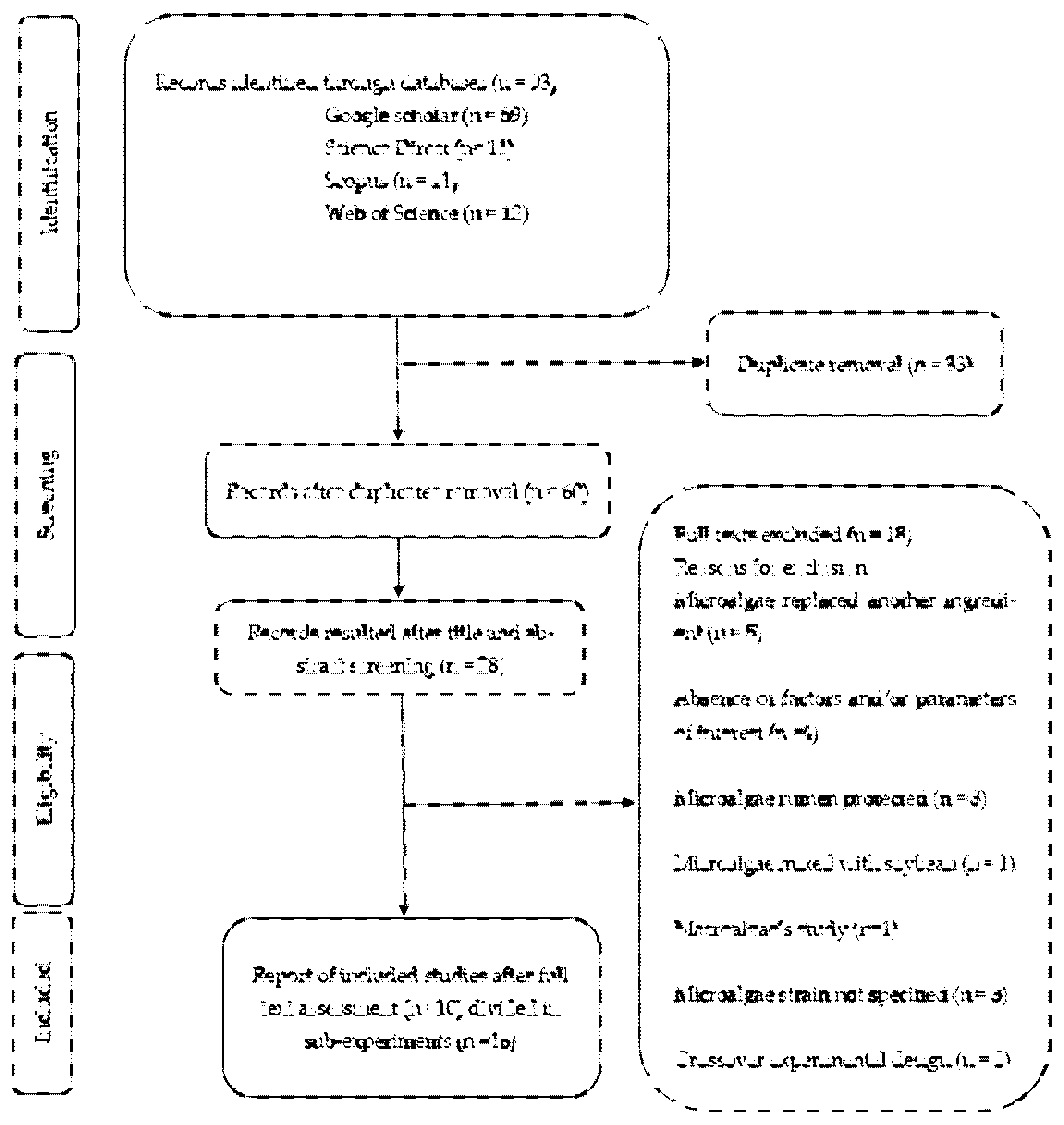
Before conducting the literature search and study screening, the following research question was developed: whether dietary microalgae supplementation affects milk production and milk fatty acid composition in dairy cows compared with a basal diet. Afterward, the search strategy of pertinent papers was defined using the Population, Interventions, Comparators, and Outcomes (PICO) elements as described by Schmid et al. [19]. In the present systematic review, the PICO elements were established as follows: Population (Dairy cows), Intervention (different supplemented levels of microalgae to basal diet), Comparators (Basal diet), Outcomes (Milk performance parameters, milk fatty acids). Then, a systematic search for articles was conducted following the Preferred Reporting Items for Systematic Reviews and Meta-Analysis (PRISMA) updated guideline [20] statement in Web of Science (retrieved on 29 October 2024), Scopus (retrieved on 29 October 2024), ScienceDirect (retrieved on 29 October 2024), and Google Scholar (retrieved on 29 October 2024 as a complementary source to identify the gray literature and studies not indexed in traditional databases) online databases to investigate the overall effect of microalgae and the factors influencing this feed additive in dairy cow nutrition. The articles were searched using the keywords “Dairy cows” and “Dietary microalgae” and automatically collected with the support of Zotero software version 7.0. These keywords were used to increase the probability of identifying articles of interest because certain studies assessed eligible parameters without explicitly mentioning them in the title and abstract. All identified records were managed using Zotero software. Then duplicate articles were removed, and the remaining studies screened, at first, using the title and abstract. The last step was the full-text screening in which papers were evaluated according to the inclusion and exclusion criteria, as detailed in Figure 1.

2.2. Inclusion and Exclusion Criteria

The criteria for inclusion of a study in this meta-analysis are as follows: (1) In vivo study in English. (2) Examining the effect of dietary microalgae inclusion levels as treatment variable. (3) Comparing the effects of one or more microalgae inclusion levels to basal diet. (4) Using dairy cow as the experimental animal model. (5) Reporting at least one response related to dairy cows’ production parameters, along with the respective variance (standard deviation (SD) or standard error (SE)). (6) Mentioning the microalgae and dairy cow strains. On the other hand, review articles, studies using macroalgae, studies where microalgae diet was not compared to a basal diet, experiments involving animals other than dairy cows, not specifying the microalgae and dairy cow strains, and using crossover experimental design were excluded from consideration. The crossover design was excluded due to concerns regarding carryover effects and incompatibility with the effect size structure required for our meta-analytical model.

2.3. Data Extraction

At the end of the selection process, two main sets of data were extracted from relevant articles by two independent reviewers. These data were saved and organized in an electronic form designed in Microsoft Excel (Microsoft Corp., Redmond, WA, USA). The characteristics and design features of studies encompassed the (1) author, (2) year of publication, (3) dairy cow strain, (4) animal number, (5) Day in Milk (DIM), (6) microalgae supplementation period, (7) microalgae strains. The extracted outcomes included dry matter intake (DMI), milk yield, milk fat, milk protein, milk lactose, fat-corrected milk (FCM), and milk fatty acids. The mean and standard deviation (or standard error) of every outcome of interest were extracted from each article included in the meta-analysis for the microalgae treatments and control groups. In papers that included several microalgae dose supplements, each diet with a dose of microalgae in comparison to the control diet was considered a distinct study.

2.4. Assessment of Risk of Bias

The risk of bias of the eligible articles was assessed by two independent reviewers via the Systematic Review Center for Laboratory Animal Experimentation (SYRCLE)’s RoB tool [21]. The evaluation process consisted of scrutiny across ten different categorical domains of bias: selection bias (domains 1–3), performance bias (domains 4 and 5), detection bias (domains 6 and 7), attrition bias (domain 8), reporting bias (domain 9), and other potential biases (domain 10) [21]. Each domain was arranged as column, while the annotations “Yes” indicating a low risk of bias, “No” indicating a high risk of bias, or “Unclear” indicating an uncertain risk of bias were the three lines of an Excel table. The disagreements occurring in the assessment process of the papers were settled through discussions between the two researchers. At the end of the full assessment, the proportions of high, low, or unclear risk of biases in each domain were estimated in percentage values.

2.5. Analysis of Data

The statistical analyses of our study were performed using R software (version 4.1.0, R Development Core Team, 2021), with the meta and metafor packages. All hypothesis tests were conducted at a 5% significance level. The mean values of the experimental units (control and treatment) were recorded as continuous outcome data, saved in a comma-separated values (CSV) file, and analyzed using R software. Distinct meta-analyses were conducted for each parameter of interest in dairy cow nutrition. The fluctuation in the effects of microalgae on production parameters was evaluated using standardized mean difference (SMD) analysis. Hedges’ g was used to estimate the effect size for each experimental unit by comparing diets with or without microalgae inclusion levels for each outcome variable. A random effect model was applied, as heterogeneity is commonly present at multiple levels in pooled analysis [22]. Cochran’s Q test was used to assess statistical heterogeneity, with I2 statistic indicating the proportion of variability in effect sizes not related to sampling error [22]. To investigate if the microalgae strain could be a source of heterogeneity, a sub-group analysis was performed. Also, publication bias was assessed to confirm the robustness of the findings and evaluate the risk of bias across studies. Funnel plots were used for visual inspection, and Egger’s linear regression test provided a quantitative assessment of publication bias. However, during the Egger’s linear regression test, the parameters that did not reach the minimum of study (n = 10) for publication bias assessment were removed from the present meta-analysis.

3. Results

3.1. Dataset

The PRISMA flow diagram (Figure 1) presents the different steps of the search strategy used to obtain the final studies included in our meta-analysis. At first, 93 articles were identified in online databases (Google Scholar: 59; Web of Science: 12; Science Direct: 11; Scopus) and automatically imported into Zotero software. During the screening, 33 papers were removed as duplicate studies, and 32 ineligible articles were deleted through title and abstract filtering. Therefore, 28 studies underwent the process of final eligibility assessment by full-text examination. The full-text filtering resulted in 18 articles excluded for specific reasons and 10 articles included in our meta-analysis. These articles were divided into 18 sub-experiments because some of them contained multiple inclusion levels of microalgae. A sub-experiment was considered as the combination of the control diet with an inclusion level of microalgae. The dataset and experimental specifics of the ten studies used in this meta-analysis are shown in Table 1. The strains of the dairy cows used in those articles were essentially Holstein, Holstein–Friesian, and Chinese–Holstein, while the microalgae inclusion in the diet varied from 40 to 600 g.

3.2. Assessment of Risk of Bias

The risk of bias assessment for the ten studies included in this meta-analysis is summarized as follows: For sequence generation (Domain 1), 50% of the studies showed an unclear risk of bias, while the remaining 50% demonstrated a low risk. Baseline characteristics (Domain 2) indicated a low risk of bias across all studies (100%). With respect to allocation concealment (Domain 3), 90% of the studies were rated as having an unclear risk, whereas 10% showed a high risk of bias. For random housing (Domain 4), 10%, 20%, and 70% of the studies exhibited high, unclear, and low risks of bias, respectively. In performance bias due to lack of blinding (Domain 5), 20% of the studies were rated as high risk and 80% as unclear risk. Regarding random outcome assessment (Domain 6), 90% of the studies demonstrated a low risk of bias, while 10% were rated as unclear. For outcome assessor blinding (Domain 7), 10% of studies had high risk, 70% unclear risk, and 20% low risk. Both incomplete outcome data (Domain 8) and selective outcome reporting (Domain 9) showed low risk of bias for all included studies (100%). Finally, for other sources of bias (Domain 10), 20% of the studies exhibited a high risk of bias, while 80% showed a low risk. Overall, across all domains, the ten included studies demonstrated 61% low, 32% unclear, and 7% high risks of bias.

3.3. Publication Bias and Trim and Fill Procedure

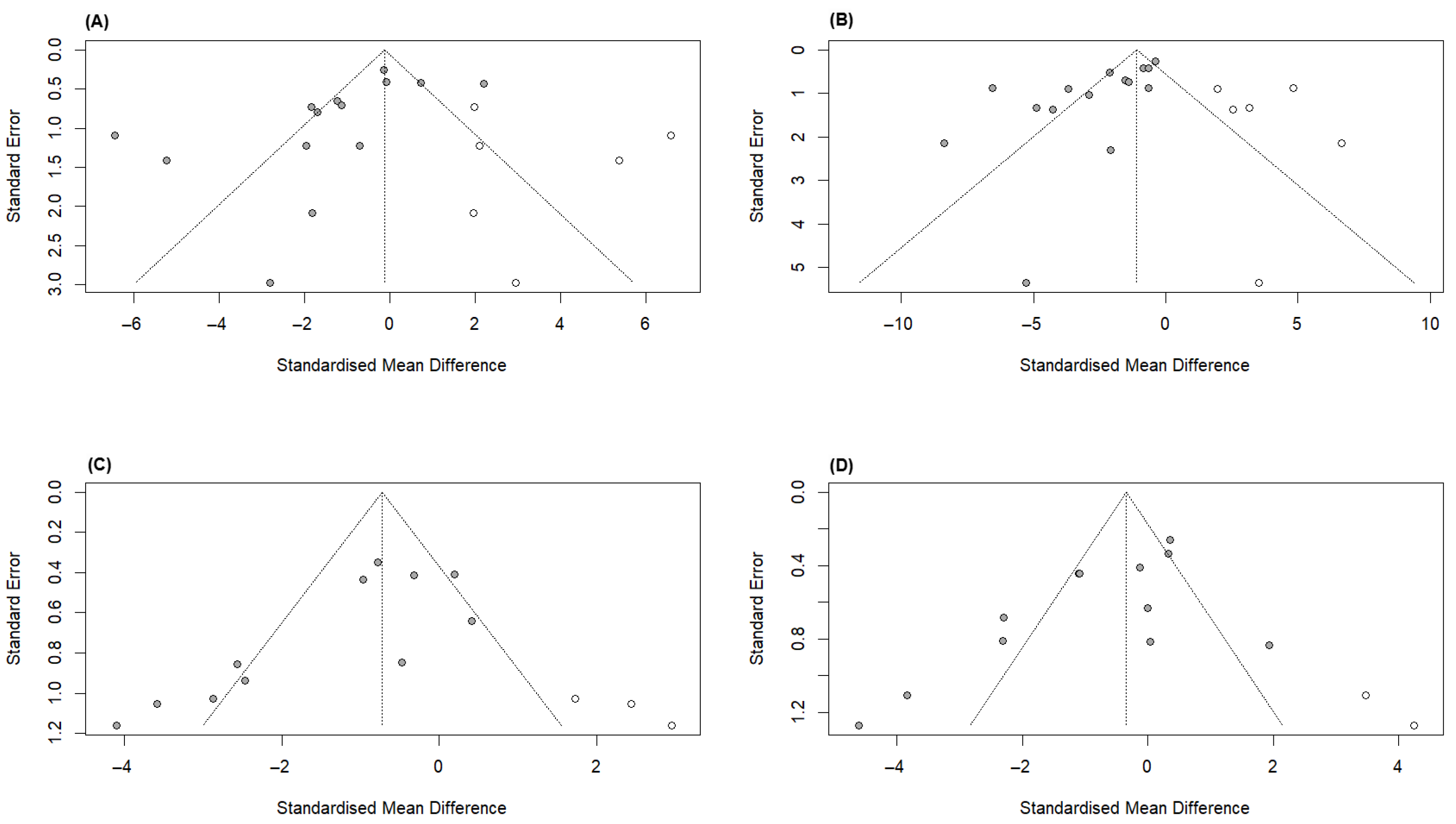
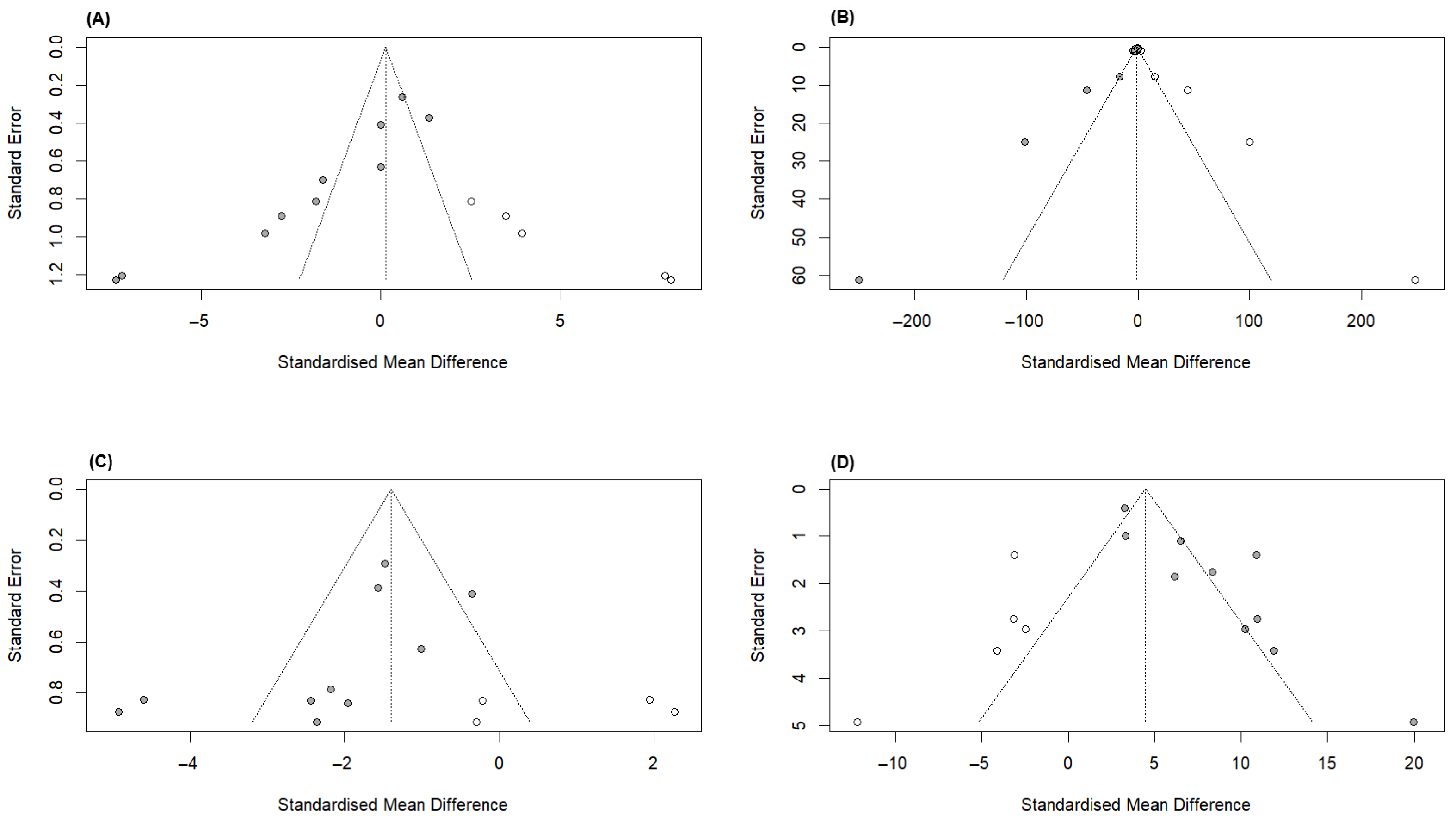
The dairy cow parameters investigated in the present meta-analysis were assessed for publication bias. The Funnel plots (Figure 2 and Figure 3) revealed important publication bias for DMI, milk fat, milk protein, milk lactose, and some fatty acids in milk (pentadecanoic acid, heptadecanoic acid, oleic acid, rumenic acid) as evidenced by the clustering of gray data points on the right or left sides. On the other hand, the funnel plots (not visualized) of other dairy cows’ parameters (milk yield, butyric acid, caproic acid, caprylic acid, capric acid, lauric acid, myristic acid, myristeloic acid, palmitic acid, stearic acid, arachidic acid) were overall symmetric. The outcomes from Egger’s linear regression test (Table 2) corroborated these outputs, suggesting significant bias only for the parameters with asymmetric funnel plots. The white data points on funnel plots (Figure 2 and Figure 3) represent virtual studies added by the trim-and-fill procedure to correct the publication bias previously mentioned. The results of this procedure presented in Table 3, suggest negative effect sizes for DMI (SMD = −0.1267, I2 = 87.8%, p = 0.8482), milk fat (SMD = −1.0943, I2 = 87.5%, p = 0.1492), milk protein (SMD = −0.3416, I2 = 83.4%, p = 0.5310), milk lactose (SMD = −0.7269, I2 = 78.9%, p = 0.1704), pentadecanoic acid (SMD = −1.3997, I2 = 82.4%, p = 0.0042), and oleic acid (SMD = −1.1304, I2 = 89.8%, p = 0.9224), whereas heptadecanoic acid (SMD = 0.1272, I2 = 93.9%, p = 0.9064) and rumenic acid (SMD = 4.4811, I2 = 88.4%, p = 0.0155) showed positive effect sizes. Overall, the adjusted results suggest that microalgae supplementation had no significant effect (p > 0.05) on DMI, milk fat, milk protein, milk lactose, oleic acid, and heptadecanoic acid. Conversely, the inclusion of microalgae in dairy cows’ diet significantly increased rumenic acid while it reduced (p < 0.05) pentadecanoic acid content in milk.

3.4. Effect of Microalgae on Dairy Cow’s Parmeters Without Publication Bias

Table 4 shows the impact of microalgae on milk performance parameter (milk yield) and milk fatty acids (butyric acid, caproic acid, caprylic acid, capric acid, lauric acid, myristic acid, myristoleic acid, palmitic acid, stearic acid) that were not affected by publication bias. The results suggested significant increasing effects (p < 0.05) of microalgae on milk yield (SMD = 0.6642, 95% CI: 0.1304 to 1.1980, p = 0.0147), while decreasing effects (p < 0.05) were observed in caproic acid (SMD = −1.5009, 95% CI: −2.4731 to −0.5287, p = 0.0025), caprylic acid (SMD = −1.4781, 95% CI: −2.1694 to −0.7869, p < 0.0001), capric acid (SMD = −2.0582, 95% CI: −3.4513 to −0.6650, p = 0.0038), myristic acid (SMD = −0.7723, 95% CI: −1.4413 to −0.1033, p = 0.0237), and lauric acid (SMD = −2.0738, 95% CI: −3.1607 to −0.9869, p = 0.0002). On the other hand, dietary microalgae had no significant impacts (p > 0.05) on butyric acid (SMD = −0.2123, 95% CI: −0.8077 to 0.3832, p = 0.4848), myristoleic acid (SMD = 0.0814, 95% CI: −1.0822 to 1.2449, p = 0.8910), palmitic acid (SMD = 0.4761, 95% CI: −1.4560 to 2.4081, p = 0.6291), or stearic acid (SMD = −2.5225, 95% CI: −5.0681 to 0.0231, p = 0.0521).

3.5. Sub-Group Analysis According to the Microalgae Strains

The dairy cows’ parameters without publication bias but significant levels of heterogeneity (I2 > 50%) were sub-group analyzed according to the microalgae (Table 5) to investigate if that variable might explain the high heterogeneities observed.
The sub-group analysis according to the microalgae strains revealed that the microalgae groups (Aurantiochytrium limacinum, Schizochytrium sp.) had similar impacts (p > 0.05) on milk yield, butyric acid, caproic acid, capric acid, caprylic acid, palmitic acid, myristic acid, and stearic acid. However, there was a tendency of significant difference (p = 0.093) between the impacts of Aurantiochytrium limacinum and Schizochytrium sp. on capric acid, with the first microalgae inducing a decreasing effect and the second one leading to an increasing effect. In the same way, the impact of the microalgae groups on myristic acid tended to be different (p = 0.0788), Aurantiochytrium limacinum reducing its level in milk, whereas Schizochytrium sp. increased it. On the other hand, the effects of microalgae strains were significantly different (p < 0.05) on lauric acid and myristoleic acid. Indeed, the decreasing effect of Aurantiochytrium limacinum on lauric acid was more important compared to Schizochytrium sp. showing a lower reducing impact. In contrast, the significant difference (p < 0.05) between the two microalgae on myristoleic acid was emphasized by the fact that Aurantiochytrium limacinum increased its concentration in milk while Schizochytrium sp. decreased it. In addition, this sub-group analysis showed that the heterogeneity level was considerably reduced (I2 < 50%) in some microalgae groups of several parameters investigated (milk yield, butyric acid, caproic acid, capric acid, caprylic acid, palmitic acid, myristic acid, and stearic acid). However, every parameter sub-group analyzed had at least one microalgae group remaining with significant heterogeneity (I2 > 50%).

4. Discussion

The present meta-analysis indicates that microalgae supplementation can improve milk production and the concentrations of certain milk fatty acids in dairy cows. While these findings are consistent with some published studies, they differ from or even contradict others reporting on similar parameters. The following discussion therefore aims to provide a clearer understanding of the factors underlying these contrasting responses to dietary algae in dairy cow nutrition.

4.1. Assessment of Risk of Bias

The results of our evaluation of the risk of bias revealed that the ten articles included in our study had 61% low, 32% unclear, and 7% high bias risks. The high percentage (61%) of studies with low risk of bias coupled with only 7% high bias risk suggests that this meta-analysis might be reliable and might be explained by the recent publication of the included studies (all published after 2010). On the other hand, the fact that 32% of the studies used in our meta-analysis had unclear risk of bias could be due to the unfamiliarity of animal experimentation reporting by assessing standards such as blinding, allocation concealment, sequence, and inadequate randomization. These criteria were the ones that significantly increased the level of uncertainty around the presence of bias in the included articles. This argument is consistent with Nuamah et al. [28], Macleod et al. [29], and Kilkenny et al. [30], who asserted that most of the individual research does not report blinding, allocation concealment, sequence generation, and randomization in animal experiments. To further support our results, Poaty Ditengou et al. [31] also found similar unclear risk of bias in a meta-analysis partially due to the same reason. Nevertheless, the present meta-analysis remains credible and qualitative thanks to the 61% low risk of bias and only 7% high risk of bias.

4.2. Publication Bias

Publication biases are found in a meta-analysis or systematic review when the reel effect of a treatment is significantly modified because of the selective publication of studies based on their characteristics or outcomes [32]. This bias among the published articles can potentially change the results of meta-analyses. In our study, DMI, milk fat, milk protein, milk lactose, pentadecanoic acid, heptadecanoic acid, oleic acid, and rumenic acid were the parameters distorted by publication bias. The trim and fill procedures were used to adjust the overall effect of those parameters by deleting studies contributing to asymmetrical funnel plots, thereby minimizing their impact on global estimates and virtually adding missing studies based on bias-adjusted overall estimates [33].
Therefore, the trim and fill procedures in our meta-analysis suggested that microalgae had no significant effect (p > 0.05) on DMI, milk fat, milk protein, milk lactose, heptadecanoic acid, and oleic acid but significantly increased (p < 0.05) rumenic acid, while it reduced (p < 0.05) pentadecanoic acid. These results are different than a previous meta-analysis of microalgae impact in dairy cow nutrition [18] suggesting that microalgae significantly decreased DMI, milk fat content, and heptadecanoic acid. The controversial findings might be explained by the fact that the Orzuna-Orzuna et al. [18] meta-analysis focused on one microalgae strain (Schizochytrium sp.), while our systematic review combined articles with different strains of microalgae (Aurantiochytrium limacinum, Schizochytrium sp., Spirulina). Therefore, the other microalgae strains (Aurantiochytrium limacinum, Schizochytrium sp., Spirulina) might have balanced the decreasing effects of Schizochytrium sp. on DMI, milk fat, and heptadecanoic acid. However, the significant reduction of pentadecanoic acid by dietary microalgae is confirmed by Orzuna-Orzuna et al. [18] findings. In addition, the increasing effects of microalgae on rumenic acid are confirmed by two studies on goats and one study on dairy cows [11,34,35]. Furthermore, the increasing of rumenic acid could be accentuated by the conversion of vaccenic acid to C18:2 cis-9, trans-11 (rumenic acid) by Δ9-desaturase in the mammary gland [36]. The non-significant effect of microalgae on Oleic acid is not supported by two meta-analyses including multiple different microalgae strains in goat nutrition [4,16] showing decreasing impact on the concentration of Oleic acid in milk. These differences in the results might be explained by the various microalgae strains and animal species used in the meta-analyses. The results found by Boukrouh et al. [4] suggest that a significant increase in milk lactose is different than the non-significant impact observed in our study for the same parameter (milk lactose). This controversial result might be explained by the variation in the chemical composition of the microalgae used in these two meta-analyses. Animal species could also be a reason behind the different outcomes, since our study used cows as an animal experiment and the meta-analysis of Boukrouh et al. [4] investigated microalgae impact on goats. Overall, these outcomes suggest that the factors, strains, and species could influence the microalgae effect. Moreover, the combination of several microalgae strains’ impact through meta-analysis suggests possible strain-related differences rather than formal statistical interactions between strains on dairy cows’ performance and milk fatty acids. Therefore, additional studies combining different strains of microalgae should be conducted to better understand eventual interaction phenomena.

4.3. Effect of Microalgae on Dairy Cows’ Parameters Without Publication Bias

The significantly increasing effect of microalgae on milk yield reported in our meta-analysis is supported by several studies [11,16,18]. According to those previous articles, the microalgae content in folic acid, vitamin E, B-complex vitamins (B1, B6, and B12), and essential amino acids such as methionine and lysine could be responsible for the higher milk yield [18].
On a general basis, microalgae have been reported to decrease the saturated fatty acid and increase the unsaturated fatty acids [9,10]. Indeed, microalgae such as Schizochytrium sp. contained a considerable amount of polyunsaturated fatty acids [13]. Among the milk fatty acids not affected by publication bias in this meta-analysis, the effect of microalgae has been investigated on eight saturated fatty acids (butyric acid, caproic acid, caprylic acid, capric acid, lauric acid, myristic acid, palmitic acid, stearic acid) and one unsaturated fatty acid (myristoleic acid). The results showing non-significant impact of microalgae on three (butyric acid, palmitic acid, stearic acid) of the eight saturated fatty acids, and one unsaturated fatty acid (myristoleic acid), could be explained by the use of different microalgae strains with controversial effect sizes in the studies included in our meta-analysis. On the other hand, the decreasing effects induced on five of the eight saturated fatty acids are supported by some previous studies [2,9,10] and confirm the usual impact of microalgae on saturated fatty acids.

4.4. Sub-Group Analysis According to the Microalgae Strains

To our knowledge, there is no meta-analysis or original study comparing the effects of different microalgae species in dairy cow nutrition. However, two meta-analyses [4,16] compared the impact of several microalgae species on small ruminants’ performance and milk fatty acid profile, but the species compared were either different than those in the present meta-analysis or the number of studies per species was hardly comparable. In the present meta-analysis, Aurantiochytrium limacinum and Schizochytrium sp. were the two main microalgae strains compared in their impact on dairy cow performance and milk fatty acids. According to the results, the inclusion of Aurantiochytrium limacinum and Schizochytrium sp. in dairy cows’ diet induced similar effects on milk yield, butyric acid, caproic acid, caprylic acid, palmitic acid, and stearic acid. On the other hand, these microalgae strains tended to have significantly different impacts on two saturated fatty acids (capric acid (p = 0.0930) and myristic acid (p = 0.0788)), with Schizochytrium sp. increasing the concentration of those fatty acids in milk while Aurantiochytrium limacinum reduced their concentration. In addition, the decreasing effect induced by Aurantiochytrium limacinum on lauric acid (saturated fatty acid) was more important (p < 0.05) than the one produced by Schizochytrium sp. Moreover, Schizochytrium sp. and Aurantiochytrium limacinum had significantly different effects on the unique unsaturated fatty acid (myristoleic acid) analyzed in this meta-analysis. The first microalgae increased it, whereas the second one decreased it. These outcomes suggest that Aurantiochytrium limacinum would be more appropriate to use in dairy cows’ nutrition and might have a better chemical composition than Schizochytrium sp. since it seems to reduce more effectively unhealthy saturated fatty acids (lauric acid, capric acid, myristic acid) and increase the content in milk of beneficial fatty acids such as myristoleic acid (monounsaturated fatty acid). However, these results should be taken cautiously since the individual studies of our meta-analysis did not report the chemical composition of the microalgae species. Therefore, additional individual studies analyzing the chemical composition of various microalgae and comparing their impact on dairy cows’ nutrition are warranted to confirm or refute the present findings.

5. Conclusions

The results of this meta-analysis provide consistent evidence that microalgae supplementation offers overall benefits for dairy cow performance and milk quality. In particular, microalgae inclusion increased milk yield and improved the milk fatty acid profile by enhancing beneficial unsaturated fatty acids, such as myristoleic and rumenic acids while reducing certain saturated fatty acids, which may contribute to improved animal health and milk nutritional value. These positive effects were most pronounced when Aurantiochytrium limacinum was included in the diet, highlighting the importance of strain-specific responses to microalgae supplementation. Overall, the present study demonstrates the potential of microalgae as a sustainable and functional feed additive in dairy production. Nevertheless, further research is needed to elucidate the underlying mechanisms and to assess interactions between microalgae supplementation and factors such as basal diet composition, stage of lactation, production system, and environmental conditions.

Author Contributions

Conceptualization, J.I.C.P.D. and W.S.; methodology, J.I.C.P.D.; software, J.I.C.P.D. and W.S.; validation, N.-J.C., B.C. and I.C.; formal analysis, J.I.C.P.D.; investigation, J.I.C.P.D.; resources, N.-J.C. and B.C.; data curation, J.I.C.P.D. and W.S.; writing—original draft preparation, J.I.C.P.D.; writing—review and editing, J.I.C.P.D.; visualization, B.C., N.-J.C., I.C. and W.S.; supervision, N.-J.C. and B.C.; project administration, N.-J.C., W.S. and I.C. All authors have read and agreed to the published version of the manuscript.

Funding

This research received no external funding.

Institutional Review Board Statement

Not applicable.

Informed Consent Statement

Not applicable.

Data Availability Statement

No new data were created or analyzed in this study. Data sharing is not applicable to this article.

Conflicts of Interest

The authors declare no conflicts of interest.

References

  1. Cai, J.; Lovatelli, A.; Aguilar-Manjarrez, J.; Cornish, L.; Dabbadie, L.; Desrochers, A.; Diffey, S.; Garrido Gamarro, E.; Geehan, J.; Hurtado, A.; et al. Seaweeds and microalgae: An overview for unlocking their potential in global aquaculture development. In FAO Fisheries and Aquaculture Circular; FAO: Rome, Italy, 2021. [Google Scholar]
  2. Christaki, E.; Karatzia, M.; Bonos, E.; Florou-Paneri, P.; Karatzias, C. Effect of dietary Spirulina platensis on milk fatty acid profile of dairy cows. Asian J. Anim. Vet. Adv. 2012, 7, 597–604. [Google Scholar] [CrossRef]
  3. Lopez, A.V.; Valle, F.D.J.A.; Anguiano, K.J.N. Microalgae, a potential natural functional food source—A review. Pol. J. Food Nutr. Sci. 2017, 67, 251–263. [Google Scholar] [CrossRef]
  4. Boukrouh, S.; Mnaouer, I.; Mendes de Souza, P.; Hornick, J.L.; Nilahyane, A.; El Amiri, B.; Hirich, A. Microalgae supplementation improves goat milk composition and fatty acid profile: A meta-analysis and meta-regression. Arch. Anim. Breed. 2025, 68, 223–238. [Google Scholar] [CrossRef]
  5. Khan, M.I.; Shin, J.H.; Kim, J.D. The promising future of microalgae: Current status, challenges, and optimization of a sustainable and renewable industry for biofuels, feed, and other products. Microb. Cell Fact. 2018, 17, 36. [Google Scholar] [CrossRef] [PubMed]
  6. Kholif, A.E.; Olafadehan, O.A. Dietary strategies to enrich milk with healthy fatty acids—A review. Ann. Anim. Sci. 2022, 22, 523–536. [Google Scholar] [CrossRef]
  7. Samková, E.; Kalač, P. Rapeseed supplements affect propitiously fatty acid composition of cow milk fat: A meta-analysis. Livest. Sci. 2021, 244, 104382. [Google Scholar] [CrossRef]
  8. APlata-Pérez, G.; Angeles-Hernandez, J.C.; Morales-Almaráz, E.; Del Razo-Rodríguez, O.E.; López-González, F.; Peláez-Acero, A.; Campos-Montiel, R.G.; Vargas-Bello-Pérez, E.; Vieyra-Alberto, R. Oilseed Supplementation Improves Milk Composition and Fatty Acid Profile of Cow Milk: A Meta-Analysis and Meta-Regression. Animals 2022, 12, 1642. [Google Scholar] [CrossRef]
  9. Vanbergue, E.; Peyraud, J.L.; Hurtaud, C. Effects of new n-3 fatty acid sources on milk fatty acid profile and milk fat properties in dairy cows. J. Dairy Res. 2018, 85, 265–272. [Google Scholar] [CrossRef] [PubMed]
  10. Liu, G.; Yu, X.; Li, S.; Shao, W.; Zhang, N. Effects of Dietary Microalgae (Schizochytrium spp.) Supplement on milk Performance, Blood Parameters, and Milk Fatty Acid Composition in dairy Cows. Czech J. Anim. Sci. 2020, 65, 162–171. [Google Scholar] [CrossRef]
  11. Hostens, M.; Fievez, V.; Vlaeminck, B.; De Vliegher, S.; Piepers, S.; Opsomer, G. The effect of marine algae supplementation in the ration of high yielding dairy cows during transition and its effect on metabolic parameters in the serum and follicular fluid around parturition. In Ruminant Physiology; Wageningen Academic: Wageningen, The Netherland, 2009; pp. 712–713. [Google Scholar]
  12. Weatherly, M.E. Algae or Yeast Supplementation for Lactating Dairy Cows. Doctoral Dissertation, University of Kentucky, Lexington, KY, USA, 2015. [Google Scholar]
  13. Marques, J.A.; Del Valle, T.A.; Ghizzi, L.G.; Zilio, E.M.; Gheller, L.S.; Nunes, A.T.; Silva, T.B.; Dias, M.S.D.S.; Grigoletto, N.T.; Koontz, A.F.; et al. Increasing dietary levels of docosahexaenoic acid-rich microalgae: Ruminal fermentation, animal performance, and milk fatty acid profile of mid-lactating dairy cows. J. Dairy Sci. 2019, 102, 5054–5065. [Google Scholar] [CrossRef]
  14. Moate, P.J.; Williams, S.R.O.; Hannah, M.C.; Eckard, R.J.; Auldist, M.J.; Ribaux, B.E.; Jacobs, J.L.; Wales, W.J. Effects of feeding algal meal high in docosahexaenoic acid on feed intake, milk production, and methane emissions in dairy cows. J. Dairy Sci. 2013, 96, 3177–3188. [Google Scholar] [CrossRef] [PubMed]
  15. Higgins, J.P.; Thompson, S.G.; Deeks, J.J.; Altman, D.G. Measuring inconsistency in meta-analyses. Bmj 2003, 327, 557–560. [Google Scholar] [CrossRef]
  16. Orzuna-Orzuna, J.F.; Chay-Canul, A.J.; Lara-Bueno, A. Performance, milk fatty acid profile and oxidative status of lactating small ruminants supplemented with microalgae: A meta-analysis. Small Rumin. Res. 2023, 226, 107031. [Google Scholar] [CrossRef]
  17. Orzuna-Orzuna, J.F.; Hernández-García, P.A.; Chay-Canul, A.J.; Galván, C.D.; Ortíz, P.B.R. Microalgae as a dietary additive for lambs: A meta-analysis on growth performance, meat quality, and meat fatty acid profile. Small Rumin. Res. 2023, 227, 107072. [Google Scholar] [CrossRef]
  18. Orzuna-Orzuna, J.F.; Godina-Rodríguez, J.E.; Garay-Martínez, J.R.; Reséndiz-González, G.; Joaquín-Cancino, S.; Lara-Bueno, A. Milk Yield, Composition, and Fatty Acid Profile in Milk of Dairy Cows Supplemented with Microalgae Schizochytrium sp.: A Meta-Analysis. Agriculture 2024, 14, 1119. [Google Scholar] [CrossRef]
  19. Schmid, C.H.; Stijnen, T.; White, I. (Eds.) Handbook of Meta-Analysis, 1st ed.; CRC Press: New York, NY, USA, 2020. [Google Scholar]
  20. Page, M.J.; McKenzie, J.E.; Bossuyt, P.M.; Boutron, I.; Hoffmann, T.C.; Mulrow, C.D.; Shamseer, L.; Tetzlaff, J.M.; Akl, E.A.; Brennan, S.E.; et al. The PRISMA 2020 statement: An updated guideline for reporting systematic reviews. Bmj 2021, 372, n71. [Google Scholar] [CrossRef] [PubMed]
  21. Hooijmans, C.R.; Rovers, M.M.; De Vries, R.B.; Leenaars, M.; Ritskes-Hoitinga, M.; Langendam, M.W. SYRCLE’s risk of bias tool for animal studies. BMC Med. Res. Methodol. 2014, 14, 43. [Google Scholar] [CrossRef] [PubMed]
  22. Harrer, M.; Cuijpers, P.; Furukawa, T.; Ebert, D. Doing Meta-Analysis with R: A Hands-on Guide, 1st ed.; Chapman and Hall/CRC: New York, NY, USA, 2021; pp. 1–500. [Google Scholar]
  23. Moran, C.A.; Morlacchini, M.; Fusconi, G. Enhancing the DHA content in milk from dairy cows by feeding ALL-G-RICH™. J. Appl. Anim. Nutr. 2017, 5, e11. [Google Scholar] [CrossRef]
  24. Fougère, H.; Delavaud, C.; Bernard, L. Diets supplemented with starch and corn oil, marine algae, or hydrogenated palm oil differentially modulate milk fat secretion and composition in cows and goats: A comparative study. J. Dairy Sci. 2018, 101, 8429–8445. [Google Scholar] [CrossRef]
  25. Moran, C.A.; Morlacchini, M.; Keegan, J.D.; Fusconi, G. The effect of dietary supplementation with Aurantiochytrium limacinum on lactating dairy cows in terms of animal health, productivity and milk composition. J. Anim. Physiol. Anim. Nutr. 2018, 102, 576–590. [Google Scholar] [CrossRef]
  26. Till, B.E.; Huntington, J.A.; Posri, W.; Early, R.; Taylor-Pickard, J.; Sinclair, L.A. Influence of rate of inclusion of microalgae on the sensory characteristics and fatty acid composition of cheese and performance of dairy cows. J. Dairy Sci. 2019, 102, 10934–10946. [Google Scholar] [CrossRef] [PubMed]
  27. Till, B.E.; Huntington, J.A.; Kliem, K.E.; Taylor-Pickard, J.; Sinclair, L.A. Long term dietary supplementation with microalgae increases plasma docosahexaenoic acid in milk and plasma but does not affect plasma 13, 14-dihydro-15-keto PGF2α concentration in dairy cows. J. Dairy Res. 2020, 87, 14–22. [Google Scholar] [CrossRef] [PubMed]
  28. Nuamah, E.; Okon, U.M.; Jeong, E.; Mun, Y.; Cheon, I.; Chae, B.; Odoi, F.N.A.; Kim, D.W.; Choi, N.J. Unlocking Phytate with Phytase: A Meta-Analytic View of Meat-Type Chicken Muscle Growth and Bone Mineralization Potential. Animals 2024, 14, 2090. [Google Scholar] [CrossRef] [PubMed]
  29. Macleod, M.R.; Fisher, M.; O’collins, V.; Sena, E.S.; Dirnagl, U.; Bath, P.M.; Buchan, A.; Van Der Worp, H.B.; Traystman, R.; Minematsu, K.; et al. Good laboratory practice: Preventing introduction of bias at the bench. Stroke 2009, 40, e50–e52. [Google Scholar] [CrossRef]
  30. Kilkenny, C.; Parsons, N.; Kadyszewski, E.; Festing, M.F.; Cuthill, I.C.; Fry, D.; Hutton, J.; Altman, D.G. Survey of the quality of experimental design, statistical analysis and reporting of research using animals. PLoS ONE 2009, 4, e7824. [Google Scholar] [CrossRef] [PubMed]
  31. Poaty Ditengou, J.I.C.; Ahn, S.I.; Cho, S.; Chae, B.; Hirwa, F.; Cheon, I.; Choi, N.J. Factors Influencing the Effects of Triticale on Laying Hens’ Performance: A Meta-Analysis. Appl. Sci. 2024, 14, 5745. [Google Scholar] [CrossRef]
  32. Drucker, A.M.; Fleming, P.; Chan, A.W. Research techniques made simple: Assessing risk of bias in systematic reviews. J. Investig. Dermatol. 2016, 136, e109–e114. [Google Scholar] [CrossRef] [PubMed]
  33. Shi, L.; Lin, L. The trim-and-fill method for publication bias: Practical guidelines and recommendations based on a large database of meta-analyses. Medicine 2019, 98, e15987. [Google Scholar] [CrossRef]
  34. Dewanckele, L.; Vlaeminck, B.; Hernandez-Sanabria, E.; Ruiz-González, A.; Debruyne, S.; Jeyanathan, J.; Fievez, V. Rumen biohydrogenation and microbial community changes upon early life supplementation of 22: 6 n-3 enriched microalgae to goats. Front. Microbiol. 2018, 9, 573. [Google Scholar] [CrossRef]
  35. Tsiplakou, E.; Abdullah, M.A.M.; Skliros, D.; Chatzikonstantinou, M.; Flemetakis, E.; Labrou, N.; Zervas, G. The effect of dietary Chlorella vulgaris supplementation on micro-organism community, enzyme activities and fatty acid profile in the rumen liquid of goats. J. Anim. Physiol. Anim. Nutr. 2017, 101, 275–283. [Google Scholar] [CrossRef]
  36. Póti, P.; Pajor, F.; Bodnár, Á.; Penksza, K.; Köles, P. Effect of micro-alga supplementation on goat and cow milk fatty acid composition. Chil. J. Agric. Res. 2015, 75, 259–263. [Google Scholar] [CrossRef]
Figure 1. Systematic literature search and selection process.
Ruminants 06 00007 g001
Figure 2. Publication bias. (A): DMI (dry matter intake); (B): milk fat; (C): milk lactose; (D): milk protein.
Ruminants 06 00007 g002
Figure 3. Publication bias. (A): heptadecanoic acid; (B): oleic acid; (C): pentadecanoic acid; (D): rumenic acid.
Ruminants 06 00007 g003
Table 1. Studies used in the data set and information for meta-analysis.
Author (Year)Cows’ StrainsCows’ NumbersMicroalgae StrainsMicroalgae Quantity (g)Factors of Analysis 1
Hostens et al. [11]Holstein16Schizochytrium sp.224MY, MF, MP, MFA
Christaki et al. [2]Holstein20Spirulina40MY
Weatherly [12]Holstein8Schizochytrium sp.100, 300, 600DMI, MY, MF, MFA
Moran et al. [23]Holstein_Friesian36Aurantiochytrium limacinum143DMI, MY, MF, MP, ML, FCM, MFA
Fougère et al. [24]Holstein6Schizochytrium sp.310MFA
Marques et al. [13]Holstein24Aurantiochytrium limacinum47, 92, 132DMI, MY, MF, MP, ML, MFA
Moran et al. [25]Holstein-Friesian24Aurantiochytrium limacinum150DMI, MY, MF, MP, ML, FCM, MFA
Till et al. [26]Holstein-Friesian20Aurantiochytrium limacinum50, 100, 150DMI, MY, MF, MP, ML, FCM
Liu et al. [10]Chinese-Holstein36Schizochytrium sp.170, 255DMI, MY, MF, MP, ML, FCM, MFA
Till et al. [27]Holstein-Friesian60Aurantiochytrium limacinum100DMI, MY, MF, MP, MFA
1 DMI: dry matter intake; MY: milk yield; MF: milk fat; MP: milk protein; ML: milk lactose; FCM: fat-corrected milk; MFA: milk fatty acids.
Table 2. Egger’s linear test for assessing publication bias.
ItemsBiasSEt-Value 1df 1p-Value
DMI−2.89441.0988−2.63130.0206
Milk Yield0.25541.08080.24160.8162
Milk Fat−2.77610.7678−3.62140.0028
Milk Protein−3.00071.2502−2.40110.0352
Milk Lactose−3.33601.0590−3.1590.0117
Butyric acid−1.87611.1570−1.57100.1474
Caproic acid−1.92391.2261−1.57100.1477
Caprylic acid−1.65660.9853−1.68100.1236
Capric acid−2.12701.0477−2.03100.0698
Lauric acid−1.70620.9265−1.84100.0953
Myristic acid1.68181.61741.04100.3229
Myristoleic acid3.57982.60091.3890.2020
Pentadecanoic acid−2.83821.2362−2.3090.0473
Palmitic acid2.07492.35480.88100.3989
Heptadecanoic acid−6.38981.0080−6.3490.0001
Stearic acid−3.19841.8059−1.77110.1042
Oleic acid−3.56170.7726−4.61110.0008
Rumenic acid3.38810.68334.9680.0011
Arachidic acid−1.04392.4951−0.42100.6845
1 df: degree of freedom; t-value: relative difference in units of standard error; DMI: dry matter intake.
Table 3. The trimmed and filled effect sizes of microalgae on biased dairy cow performance and milk fatty acids.
Itemsdf 1Random Effect ModelHeterogeneity 2
Effect Sizep-ValueQ (p-Value)I2 (%)τ2
DMI20−0.12670.8482164.50 (<0.0001)87.87.7080
Milk Fat22−1.09430.1492176.42 (<0.0001)87.510.2943
Milk protein14−0.34160.531084.47 (<0.0001)83.43.8651
Milk lactose13−0.72690.170461.59 (<0.0001)78.93.2402
Pentadecanoic acid14−1.39970.004279.63 (<0.0001)82.43.0131
Heptadecanoic acid 15 0.1272 0.9064 247.27 (<0.0001) 93.9 17.9448
Oleic acid17−1.13040.9224166.36 (<0.0001)89.82173.1528
Rumenic acid144.48110.0155120.88 (<0.0001)88.444.5393
1 df: degree of freedom. 2 I2: Higgins statistic; Q: χ2 statistics; τ2: heterogeneity variance of the true effect sizes; DMI: dry matter intake.
Table 4. Effect of microalgae on milk performance and milk fatty acids.
ParametersRandom Effect Model 1 Heterogeneity 2 p-Value
95% CII2 (%)τ2τQ (p-Value)df
SMDLowerUpper
Milk Yield0.66420.13041.198070.40.86790.931657.39 (<0.0001)170.0147
Butyric acid−0.2123−0.80770.383266.50.74130.861032.82 (<0.0001)110.4848
Caproic acid−1.5009−2.4731−0.528779.62.28901.513053.95 (<0.0001)110.0025
Caprylic acid−1.4781−2.1694−0.786968.50.93800.968534.93 (0.0003)11<0.0001
Capric acid−2.0582−3.4513−0.665079.64.95162.225253.94 (<0.0001)110.0038
Lauric acid−2.0738−3.1607−0.986971.82.67931.636938.98 (<0.0001)110.0002
Myristic acid−0.7723−1.4413−0.103378.70.97200.985951.62 (<0.0001)110.0237
Myristoleic acid0.0814−1.08221.244990.43.46101.8604104.09 (<0.0001)100.8910
Palmitic acid0.4761−1.45602.408192.810.93083.3062152.94 (<0.0001)110.6291
Stearic acid−2.5225−5.06810.023194.119.54114.4205201.87 (<0.0001)120.0521
1 SMD: standard mean difference. 2 I2: Higgins statistic; Q: χ2 statistics; τ2: heterogeneity variance of the true effect sizes; τ: standard deviation of the true effect sizes; df: degree of freedom; CI: confidence interval.
Table 5. Effect of microalgae strains on dairy cows’ performance and milk fatty acids.
Variables Random Effect Model 1 Heterogeneity 2 p-Value
95% CII2 (%)τ2ΤQdf
kSMDLowerUpper
Milk yield
Schizochytrium sp.70.2603−0.72251.243259.10.97530.98762.9220.2322
Aurantiochytrium limacinum91.12240.46921.775871.60.65700.8105
Butyric acid
Schizochytrium sp.30.2608−0.40100.922637.10.07740.27821.9610.1618
Aurantiochytrium limacinum9−0.4728−1.25900.313572.41.07481.0367
Caproic acid
Schizochytrium sp.3−0.7383−3.77112.294579.66.25122.50020.3010.5831
Aurantiochytrium limacinum9−1.6446−2.7746−0.514578.72.36191.5369
Capric acid
Schizochytrium sp.30.0260−2.78352.835478.95.04242.24552.8210.0930
Aurantiochytrium limacinum9−2.7395−4.3273−1.151781.74.80222.1914
Caprylic acid
Schizochytrium sp.3−0.1936−3.00532.618172.85.09022.25611.0610.3034
Aurantiochytrium limacinum9−1.7416−2.6267−0.856470.71.27471.1290
Lauric acid
Schizochytrium sp.3−0.9161−1.5203−0.311967.8005.8910.0153
Aurantiochytrium limacinum9−2.7131−4.0332−1.393072.83.09111.7582
Myristic acid
Schizochytrium sp.31.5325−1.51004.575188.75.44522.33353.0910.0788
Aurantiochytrium limacinum9−1.2211−1.6312−0.811026.00.10590.3254
Palmitic acid
Schizochytrium sp.33.7015−2.759510.162593.430.84275.55361.5710.2103
Aurantiochytrium limacinum9−0.5124−1.82130.790689.13.59401.8958
Myristoleic acid
Schizochytrium sp.2−2.6109−3.4172−1.80450.00023.681<0.0001
Aurantiochytrium limacinum90.6661−0.38161.701788.62.12091.4563
Stearic acid
Schizochytrium sp.4−2.4784−11.12056.163794.270.75898.41180.0010.9635
Aurantiochytrium limacinum9−2.6847−4.5076−0.861792.36.61312.5716
1 k: study number; SMD: standard mean difference. 2 I2: Higgins statistic; Q: χ2 statistics; τ2: heterogeneity variance of the true effect sizes; τ: standard deviation of the true effect sizes; df: degree of freedom; CI: confidence interval.
Disclaimer/Publisher’s Note: The statements, opinions and data contained in all publications are solely those of the individual author(s) and contributor(s) and not of MDPI and/or the editor(s). MDPI and/or the editor(s) disclaim responsibility for any injury to people or property resulting from any ideas, methods, instructions or products referred to in the content.