


Abstract
This article examines how everyday architecture can advance spatial justice in post-active conflict cities through ethnographic and participatory design. Drawing on a decade of work by the StreetSpace studio in Belfast (2015–2025), the paper explores how architecture students and community participants co-design spatial strategies that enhance mixed-use mid-density living, inclusive mobility, and street-level accessibility. In a context where car dominance, segregation, and privatisation of public space continue to fragment urban life, the everyday street becomes a testbed for envisioning an equitable and community-centred city. The studio’s methodology is grounded in ethnographic engagement, informed by an embedded anthropologist, and includes stakeholder mapping, walking workshops, and collaborative drawing. These practices reveal lived experiences and shape community-driven briefs for housing, schools, public spaces, and multifunctional infrastructure. Anchored in spatial justice discourse and feminist theory (Jane Jacobs, David Harvey, Roberto Rocco, Phil Hubbard, Leslie Kern, and Caroline Criado Perez), the work positions the everyday as a site of architectural agency and proposes a contemporary vernacular that is socially embedded and climate-resilient. This work unfolds through complex and often contested processes that require sustained, iterative engagement with people and places. Meaningful collaboration is neither linear nor inherently caring; it frequently involves conflict, disagreement, and competing priorities that must be navigated over time. Through long-term relationships with government departments, local authorities, and NGOs, StreetSpace demonstrates how architectural pedagogy can nonetheless contribute to policy formation and more inclusive urban redevelopment by engaging in compromise, critical negotiation, and moments of care alongside friction and resistance. Through a series of collaborations and public events the project has contributed to the transformation of Botanic Avenue, informed studies of the East Belfast Greenways through contributions to Groundswell and participated in embedded public processes in collaboration with PPR, culminating in an exhibition at the MAC in Belfast in 2025.
1. Introduction: Everyday Architecture and Spatial Justice in Belfast
Capturing the lived experience of a place, its rhythms, meanings, and attachments, has long preoccupied architects, geographers, and anthropologists alike. Concepts such as sense of place, place attachment, and genius loci [1,2,3,4], remind us that the built environment is inseparable from the lives and practices that animate it. Yet, despite a rich theoretical understanding of how people form deep relationships with their environments, this knowledge rarely informs the pragmatic realities of planning and architectural production. Urban redevelopment is shaped more by economic imperatives than by social need [5,6,7],. This is especially visible in the ordinary, everyday streets that underpin daily urban life, streets that are often treated as expendable in the face of large-scale renewal or market-driven gentrification.
Recent scholarship has deepened its understanding of everyday urban life through participatory urbanism and ethnographic approaches [8,9,10,11]; however, gaps remain in how this knowledge is translated into architectural practice and pedagogy. Specifically, The Routledge Handbook of Architecture and Anthropology [12], is a comprehensive and influential survey of the intersections between architecture and anthropology, bringing together diverse perspectives on ethnography, material culture, and spatial practice to expand how the built environment is understood and studied. The volume succeeds in legitimising anthropological methods within architectural discourse and offers many insightful case studies, yet it does not develop a clear, sustained narrative on how these methods might engage more directly with spaces of conflict in ways that shape design or pedagogy. Everyday Streets [13], foregrounds lived street conditions and graphic methods of interpretation, while Community Consultation for Quality of Life [14], advocates for meaningful, map-based participation. Studio Properties [15], offers a valuable framework for understanding studio pedagogy but does not directly address participatory engagement with external communities. Collectively, this work establishes an important context for engagement-led design yet offers limited guidance on embedding ethnographic and participatory methods as formative, iterative drivers within the design studio. This article addresses that gap by examining StreetSpace as a research-led pedagogical model that equips students not only to document everyday urban life but to meaningfully transform this knowledge into spatial propositions that are socially responsive, ethically grounded, and operative within real-world constraints. Based in Belfast, a city still negotiating the spatial legacies of conflict and segregation, the StreetSpace project explores how ethnographic and participatory methods can reframe architectural education and practice as acts of listening, care, and meaningful negotiation. Belfast’s cityscape is fragmented, an archipelago of disconnected community territories, shaped by dominant road infrastructure and physical barriers that intensify the overlapping crises of economic precarity, ecological vulnerability, and social polarisation [16,17,18]. Within this context, the everyday street becomes both a site of constraint and of possibility, a space where careful architectural acts can mediate between disconnected communities, ecological necessity, and the lived experience of the city.
The StreetSpace studio began in 2015 to build upon interdisciplinary research that seeks to understand how people adapt to the evolving urban landscapes of post-industrial, post-conflict Europe. Its approach integrates accessible architectural representation with ethnographic inquiry, drawing on Sarah Pink’s work in visual ethnography [19] and the graphic anthropology methods advanced by Ray Lucas [20], Manuel João Ramos [21], and Karina Kuschnir [22]. Through mapping, drawing, and storytelling, students and community participants co-produce knowledge about their local environments. These shared processes reveal layers of experience often overlooked by conventional urban analysis, experiences shaped by class, gender, mobility, and memory, as well as by the material and ecological conditions of the place itself.
Everyday streets, with diverse uses, populations, and lived experience act as a stage for the fragility and resilience of everyday urban life. Such streets are spaces of compromise: they have the potential to accommodate difference, tolerate messiness, and foster informal relationships that resist rigid zoning or mono-functional redevelopment [13]. In a city like Belfast, where spatial divisions are deeply inscribed in the built fabric, the everyday street offers a microcosm of potential reconciliation, an architecture of coexistence that is neither utopian nor nostalgic but practical and negotiated.
By embedding ethnographic engagement into the design studio, StreetSpace challenges architecture students to work through rather than against the constraints of context, embracing the less tangible aspects of place that contribute to its character. StreetSpace, in this sense, takes a feminist approach to design its methods of engagement, representation, and power distribution. It is an inclusive and supportive pedagogical method that equips students with the skills and knowledge to meaningfully engage with community partners post-Masters/education. Projects arising from this method include community-driven briefs for housing, multimodal civic spaces, and adaptive reuse proposals, all responding to local needs identified through direct engagement with residents. These interventions are ambitious in intent: they propose ways of living together that are ecologically responsive, socially inclusive, and materially grounded. The architectural propositions the students develop are motivated by respect for the rich and diverse characteristics that create a place and underpinned by a knowledge of contemporary design and technology, which challenges systemic issues with current urban development methods while proposing a people-centred design agenda.
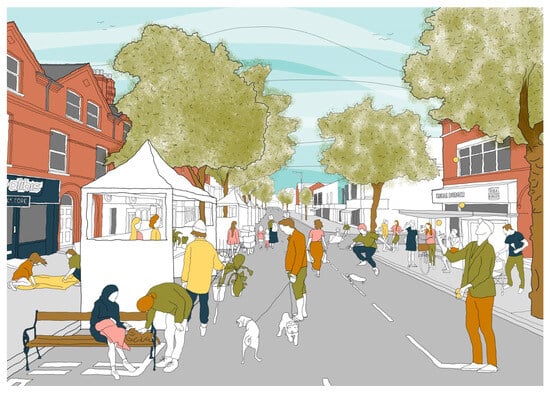
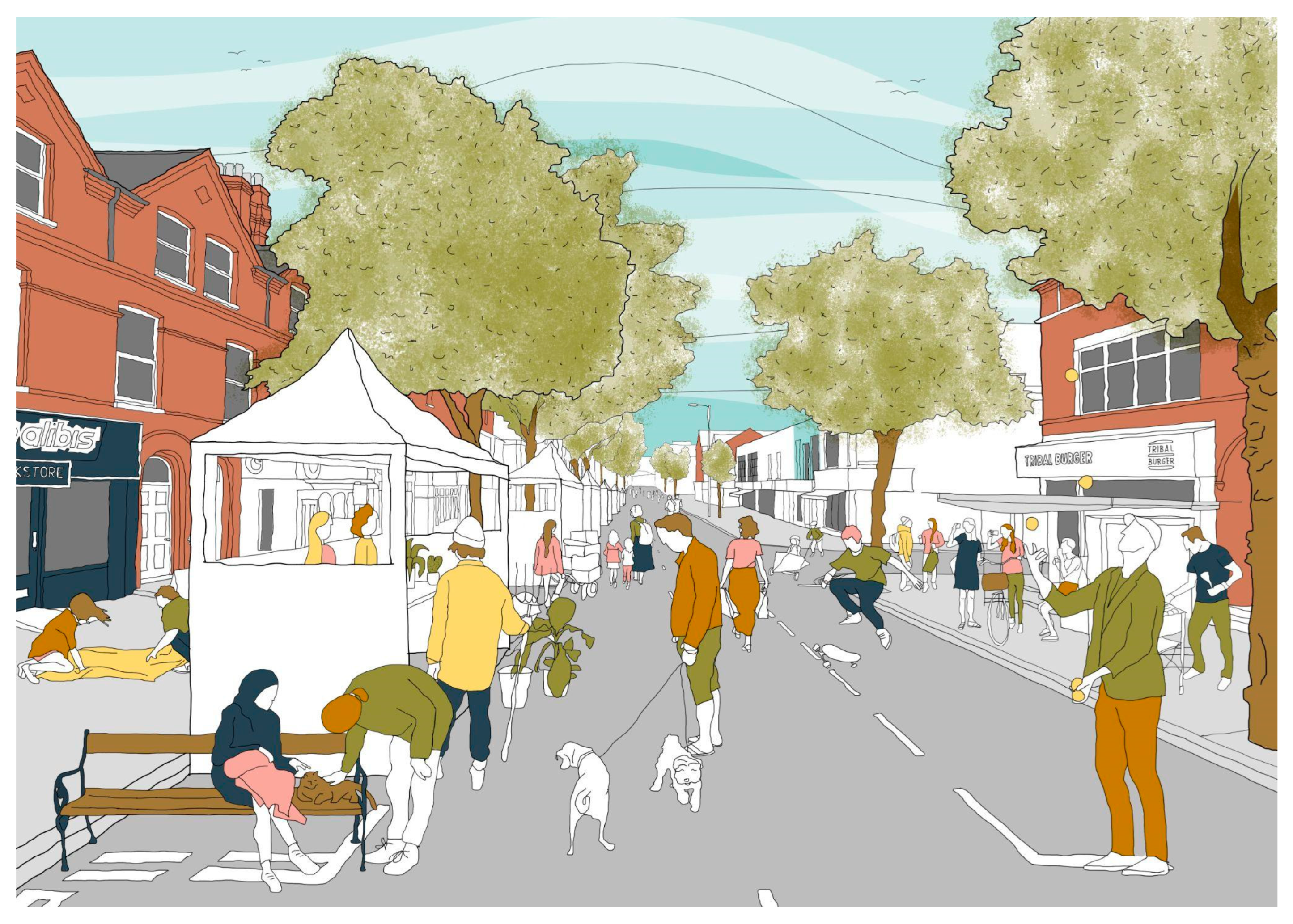
Beyond the pedagogic and design exercise, the studio has continually collaborated with government departments, local authorities, and non-government organisations to ensure that proposals are meaningful, actionable, and informed by professional expertise. This partnership, paired with the links to research funding, makes this studio an advanced pedagogy with a direct impact on policy. Through a long-term continuous engagement process with critical integrated feedback loops, we have seen the studio’s impact on the language and priorities of government officials. Incrementally, StreetSpace slowly influences the transformation of the city with government-led small design interventions and larger-scale strategic policy, as evidenced in the Open Botanic project (Figure 1), where the principles of the studio were aligned with a yearly engagement process leading to an annual community street festival.
Figure 1.
Open Botanic Festival. Aisling Madden, 2024.
The article should be read as both aligned with and extending the intellectual trajectory developed in Everyday Streets [13]. Where that work foregrounds the analytical, representational, and political dimensions of everyday urbanism, this article advances Everyday Architecture as an applied framework that connects ethnographic knowledge to design pedagogy, professional practice, and incremental policy engagement.
The following sections examine how StreetSpace operates as both a research platform and a pedagogical experiment. Through ethnographic mapping, participatory co-design, and situated interventions in neighbourhoods such as the City Centre, Sailortown, the Market, Holyland, Donegall Pass, Sandy Row, the Village, the Mackie’s site, and East Belfast, the studio demonstrates how architecture can emerge from care, collaboration, and constraint. In doing so, it proposes a model of everyday architecture, an architecture that is neither heroic nor purely formal, but grounded in the incremental, collective, and adaptive practices that sustain the life of the city.
2. Theoretical Framework: Everyday Architecture as a Tool for Spatial Justice
This section develops the theoretical foundations that underpin the StreetSpace approach. It situates the idea of everyday architecture and Everyday Streets within wider discourses on spatial justice, everyday urbanism, and the politics of urban design and development. This framework positions the everyday as both a spatial and ethical domain, one where architecture can operate through compromise, adaptation, and care. It teaches students to appreciate their impact on the broader context of their design intervention, beyond the site curtilage. By foregrounding the lived, the ordinary, and the negotiated, the section argues that community engagement and meaningful architectural acts directly informed by the graphic interrogation of forensic data and community conversations have the potential to contest exclusionary urban systems and reimagine justice in post-conflict contexts.
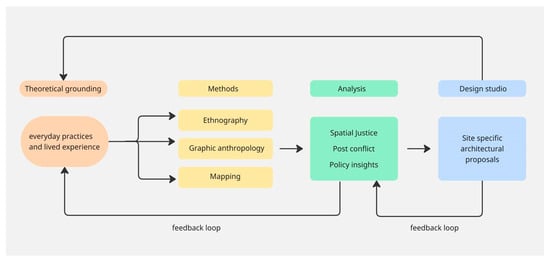
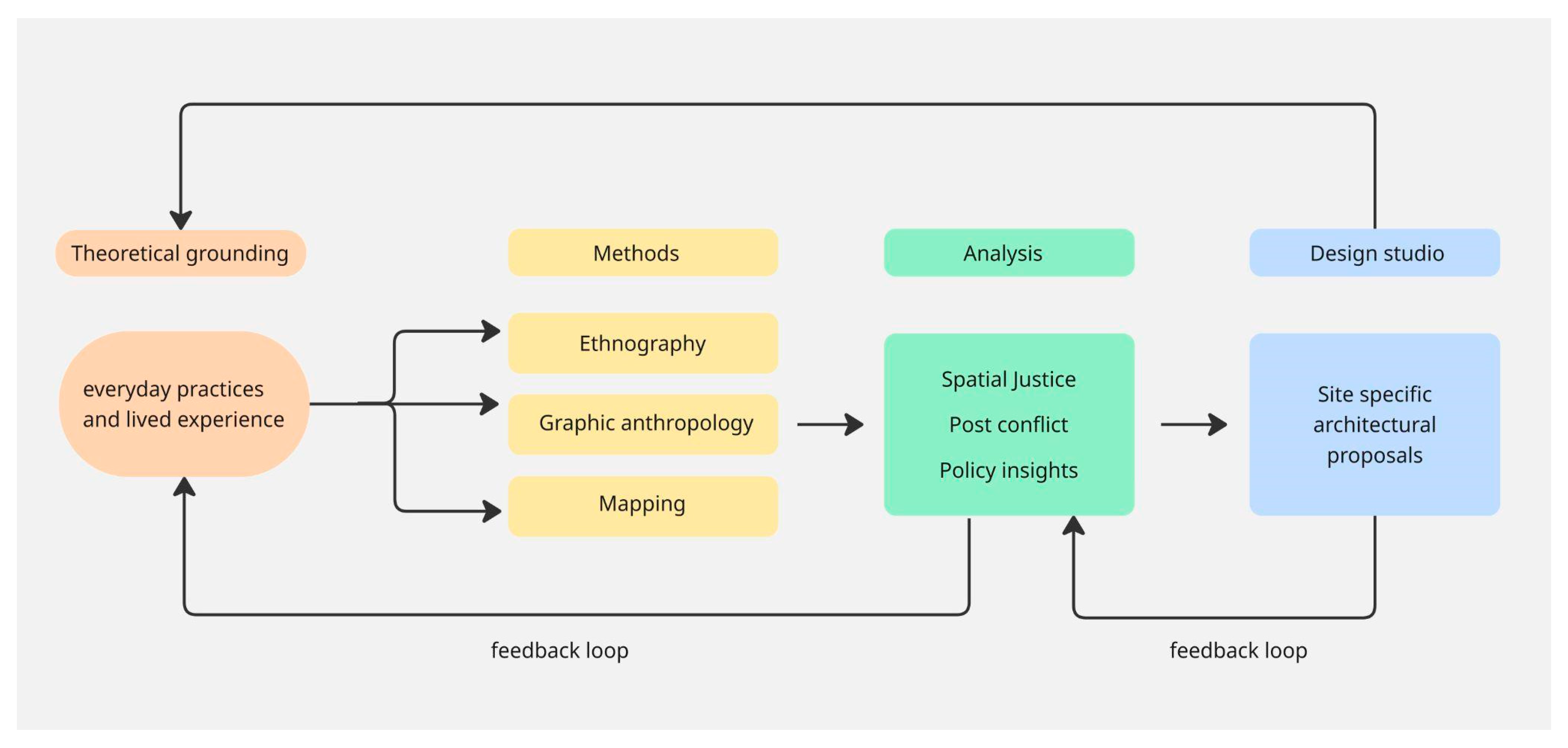
Rather than operating as parallel or loosely associated references, the theoretical concepts mobilised in this study function as an integrated analytical framework that connects urban theory, ethnographic method, and architectural design practice. Theories of everyday practices provide the grounding for ethnographic observation and participatory engagement, concepts of the right to the city and spatial justice establish the normative and evaluative lens through which everyday conditions are interpreted, and post-conflict urban dynamics frame the socio-spatial constraints within which architectural action takes place. Together, these perspectives inform the design studio’s methodological structure, shaping how knowledge is produced, translated into architectural propositions, and assessed in relation to social, spatial, and ecological impact (Figure 2).
Figure 2.
Theory–practice feedback loop.
2.1. Everyday Architecture
Everyday architecture supports the everyday use of typical streets and neighbourhoods, which are rich, diverse, and central to civic life. These places are undervalued by large-scale planning and market-led redevelopment, threatened by increasing car domination and housing financialisation, which can erase the needs and uses of marginalised groups. As such, this is a spatial justice issue that also impacts public health and wellbeing.
Everyday life, the small ordinary things we do all the time, is key to how our cities and buildings work. In Everyday Streets [13], Martire and colleagues say that streets are ‘both the most used and most undervalued of cities’ public spaces’. These streets are not just the planned footpaths and roads. They also include the blocks, the interiors, the hidden depths, and hinterlands, all of which contribute to how a street lives [23]. Drawing on the idea from Michel de Certeau [24] about everyday practices, we can see how people move through, use, adapt, and appropriate spaces in ways that are often overlooked. These small gestures build up meaning; they make a place and often challenge formalised architectural practices.
At the same time, following Henri Lefebvre’s [25] idea of the right to the city, these everyday acts are more than movement: they are claims to inhabit, negotiate, and shape urban space. They show how informality and incremental interventions help produce public space and give the city its energy. And as Jane Jacobs [26] argues, the everyday diversity of streets, people, interactions, and small-scale actions stitches together an urban fabric that is resilient, responsive, and full of life. Everyday Streets have the potential to emphasise inclusion, diversity, and the multiple users and uses of the street of diverse classes, genders, ages, and ethnicities, showing how these shape what a street becomes.
What matters is context: the socio-spatial, climatic, and cultural particularities of each place. Everyday life does not just happen in the designed space; it can produce the space, in dialogue with the material, spatial, and social environment. Thus, architecture and urbanism are not about static, finished objects. Doreen Massey imagines space as ‘never finished, never closed… as a simultaneity of stories-so-far’ ([27], p. 9) a dynamic, ever-evolving landscape. StreetSpace, as such, takes a dynamic approach to understanding the spatial fluctuations and representation of the non-static urban experience. In short, the ordinary stuff of life, walking, sitting, selling, talking, and adapting, accumulates into the fabric of our streets. And our streets, in turn, are shaped by those practices. That is why the StreetSpace studio pays attention to the small, the informal, and the everyday in hopes of understanding how streets and cities really work.
2.2. Spatial Justice
Social and spatial justice are deeply connected to the ways cities are structured, inhabited, and contested. Thinkers such as David Harvey [5,28] and Edward Soja [29] have argued that space is never neutral; it reflects and reproduces social power. Harvey’s notion of the ‘right to the city’ [28], just like Lefebvre’s [25], frames justice as a collective right to shape urban space and access its resources, challenging the capitalist forces that privatise and fragment it. Extending this relational view, Doreen Massey’s concept of power-geometry emphasises how different social groups experience, access, and influence space unevenly, highlighting disparities in mobility and control [30]. Soja develops these ideas through spatial justice as both an analytical framework and a political project, demonstrating how spatial organisation sustains inequality [29]. Feminist urban scholarship further deepens this critique; Nicole Kalms’ She City [31] exposes how urban environments are shaped by masculine norms, producing gendered exclusions and vulnerabilities, and calls for more inclusive, care-centred approaches to city-making. Building on these foundations, Roberto Rocco [32] and Phil Hubbard [33] highlight how spatial arrangements encode hierarchies of race, class, and identity, and how everyday spatial practices, occupation, resistance, or adaptation, can become acts of reclaiming agency. Justice, in this sense, is not only about redistribution but about recognition and participation: who is seen, who is heard, and who gets to belong in the city.
In post-active-conflict urban contexts such as Belfast, these questions become even more pressing. Cities marked by division, whether along sectarian, ethnic, or political lines, often bear physical traces of conflict in their spatial form: walls, buffer zones, segregated neighbourhoods, and uneven access to public services [16,17,34,35,36,37]. These geographies of inequality reinforce social fragmentation, making justice a spatial concern as much as a social concern. As seen in cities like Belfast, Sarajevo, or Nicosia, spatial inequities perpetuate the divides they were meant to contain, shaping how people encounter (or avoid) one another in daily life. The familiar act of dividing space as a result forms part of the urban toolkit used to manage and delineate parts of a place, often with a physically hostile urban architecture. Both within what may be considered a single community, as well as between two different communities, these physical remnants of a controlled and orderly approach to designating boundaries are apparent. Yet, within these constrained conditions, everyday practices, such as small acts of crossing, informal exchanges, and shared uses of public space, can quietly challenge and re-stitch the urban fabric. Following the logic of Everyday Streets [13], propositional projects for meaningful interventions reveal how spatial and social justice are enacted through the inclusive process of co-design based on forensic analysis, enriching the everyday lives of local people and making space for coexistence.
2.3. Bridging the Two
Everyday architecture and spatial justice intersect in the way people inhabit, adapt, and reclaim space through ordinary acts. Drawing on Harvey’s and Soja’s understandings of justice as inherently spatial, and on de Certeau’s and Lefebvre’s attention to everyday practices, we can see that justice is not only achieved through formal design or policy, but through the lived production of space itself. Feminist architectural scholarship highlights how everyday spatial practices reveal deeper inequalities: Nicole Kalms and Jess Berry emphasises how everyday urban environments are shaped by gendered norms that can produce exclusion or constraint, calling for more inclusive and care-centred design [31,38]. Likewise, feminist urbanist Leslie Kern [39] demonstrates how contemporary cities routinely fail women and marginalised groups through everyday spatial practices, such as navigation, mobility, safety, and care, revealing how urban form reproduces gendered and racialised power relations. In parallel, bell hooks’s writings on space, belonging, and domination underscore how lived environments are inseparable from structures of oppression, while also insisting on the political necessity of creating spaces of care, resistance, and radical possibility [40,41]. Together, their work situates feminist and intersectional perspectives as essential to reimagining more just and inclusive urban spaces.
The small, improvised, and context-specific gestures that shape streets and neighbourhoods embody a form of spatial agency that challenges exclusionary structures. In post-active-conflict cities, where spatial inequities often mirror social fractures, these acts of making, sitting, trading, or crossing boundaries become deeply political, asserting a right to inhabit and participate, while redrawing the map of belonging through use. Everyday architecture operationalises spatial justice through the design of briefs and programmes that are collaborative, adaptive, and rooted in care and cater to the needs of people in the city. The everyday architecture produced within the StreetSpace studio is then both a response to and a mechanism for spatial justice: it enacts inclusion, repair, and coexistence not through monumental gestures, but through sustained attention to the small, relational work of daily urban life.
Through its sustained, incremental engagement with key public-sector partners, including the Department for Communities, Belfast City Council, the Northern Ireland Housing Executive, and the Department for Infrastructure, StreetSpace has established the architectural studio as a credible and valued method of working with diverse and often fragmented community groups. These collaborations have been recognised as central to Queen’s University Belfast’s civic mission, enabling ongoing institutional support and funding from the Civic Engagement division. More recently, the studio has been embedded within two major research initiatives: Change Stories, a University of Washington project exploring how everyday narratives of place shape community-led environmental and social change; and Preventing Violence Against Women and Girls in Public Spaces, a Queen’s-led multi-disciplinary cross-sector programme investigating how design, policy and behavioural interventions can remove barriers to safety and participation for women and girls in cities. Together, these integrations create a direct and productive relationship between research, teaching, and social impact, positioning StreetSpace as a model for an architectural studio that is not only a site of professional education but a live testing ground for ecological responsibility and spatial justice in the everyday life of the city.
3. Methodology: Ethnography and Participatory Design as Pedagogical Practice
Data collection within the StreetSpace studio is conducted through a combination of qualitative ethnographic techniques, including semi-structured interviews, accompanied walks, systematic street observation, participatory mapping, and the collection of oral histories. All engagement with participants follows a strict ethical review and approval process aligned with the university’s policies. These materials are recorded through field notes, annotated drawings, photographic documentation, audio recordings (where consent is given), and collectively produced maps. Rather than seeking representativeness through sampling, the methodology prioritises depth, relationality, and contextual specificity, consistent with interpretive and participatory ethnographic research traditions.
3.1. Ethnographic Grounding
StreetSpace studio embeds anthropological and ethnographic methods into architectural teaching so that students begin the design process from a deep understanding of lived experience rather than only abstract form, space, or typologies. This approach resonates with Sarah Pink’s emphasis on sensory, embodied, and participatory ethnography for understanding how people inhabit environments [19] and aligns with Karina Kuschnir’s advocacy for drawing, observation, and ‘thick description’ [42] as democratic tools for public engagement in design [22]. It also reflects Ray Lucas’s concept of graphic anthropology, where sketching, diagramming, and visual notation are used to uncover relational spatial behaviours and socio-material patterns that conventional architectural analysis can overlook [43]. Over several years, a professional anthropologist has worked alongside architectural educators to train students in non-extractive, community-centred, and decolonial research practices, echoing Manuel Ramos’s call for participatory and co-produced knowledge that centres local agency and social justice [44]. This reframes the design studio from a form and material-driven exercise into a people-centred inquiry where students work directly with communities, NGOs, and local authorities to co-produce knowledge and spatial proposals. This close relationship with expert practitioners in the voluntary and statutory sectors reinforces the credibility of the design outcomes and strengthens civic learning. By treating residents as partners rather than data sources or end-users, StreetSpace enacts principles of spatial justice and democratises who participates in shaping the built environment.
Mapping, drawing, and storytelling allow students to document how residents navigate, perceive, and occupy their neighbourhoods. These methods make visible the emotional, social, and sensory dimensions of everyday life that conventional architectural analysis often omits. Together, they translate lived experience into shared knowledge that can meaningfully inform design.
This process does not come without difficulties. With respect to participant recruitment, the studio encountered a number of practical and pedagogical challenges, including the need for additional resources for room hire or reliance on community organisations to provide meeting spaces. Students were required to develop sensitive communication, respectful negotiation, and interpretative skills beyond those typically emphasised in early architectural education or conventional design processes. The temporal limitations of the academic year also restricted opportunities for reflexively revisiting and reinterpreting collected data over time. Furthermore, the studio’s front-loaded research methodology, while not always aligned with traditional design studio models, proved instrumental in guiding students toward more grounded and meaningful design interventions. Finally, the time required for this approach to gain recognition and legitimacy within the architectural studio context, let alone beyond the university, presented an ongoing institutional challenge.
3.2. Participatory Design Process
StreetSpace employs a multi-layered participatory methodology that combines co-design sessions, community workshops, and collaborative brief-making with situated forms of urban inquiry. Mapping and walking workshops are paired with systematic street observation to document how different groups use public space, while narrative mapping and oral-history-based site analysis surface social histories, memories, and contested uses. These insights feed into participatory briefs and codesigned proposals of new and adapted architectural spaces that respond to local residents’ needs, alongside policy briefs developed in dialogue with local authorities so that studio work can meaningfully influence planning and regeneration debates. This approach aligns with wider traditions of participatory urbanism and communicative planning, echoing Susan Fainstein’s call for equitable, justice-oriented planning processes [45] and Flora Samuel’s work on evidence-based, community-embedded design practice [46].
Central to this methodology is a sustained engagement with the ethics of representation and authorship in student-community partnerships. StreetSpace emphasises non-extractive research practices, careful handling of residents’ narratives, and shared authorship of ideas and outputs. This ensures that community contributions are neither appropriated nor simplified and that design proposals emerge through accountable, reciprocal, and respectful collaboration, reflecting broader discourse on collaborative governance, participatory planning, and ethical co-production.
3.3. Pedagogical Innovation
StreetSpace positions architectural education as a testing ground for justice-oriented practice, echoing Jones, Brown, and colleagues’ argument in Studio Properties that the design studio is a living pedagogical environment where new modes of professional culture, ethics, and spatial practice can be rehearsed [15]. Reflecting the pedagogical ‘properties’ they outline: sociality, project cycles, visibility, artefact-making, and situated learning, the studio uses interdisciplinary methods such as ethnography, behavioural observation, narrative mapping, and community engagement to cultivate knowledge grounded in everyday life. Live projects immerse students in real neighbourhoods, working with community partners and local authorities, where the street, rather than the iconic building, becomes the primary scale of inquiry. This emphasis on the ordinary urban fabric allows students to grapple with issues that shape daily experience, including gendered mobility, informal economies, ageing, childcare, safety, and the micro-spatial dynamics of pavements, shopfronts, and alleys. Below are some examples of the use of graphic anthropology in the StreetSpace studio to investigate the memories and needs of a neighbourhood.
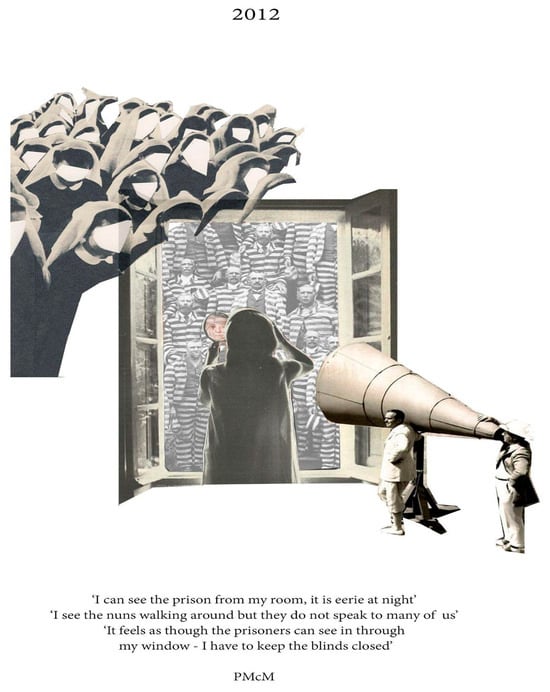
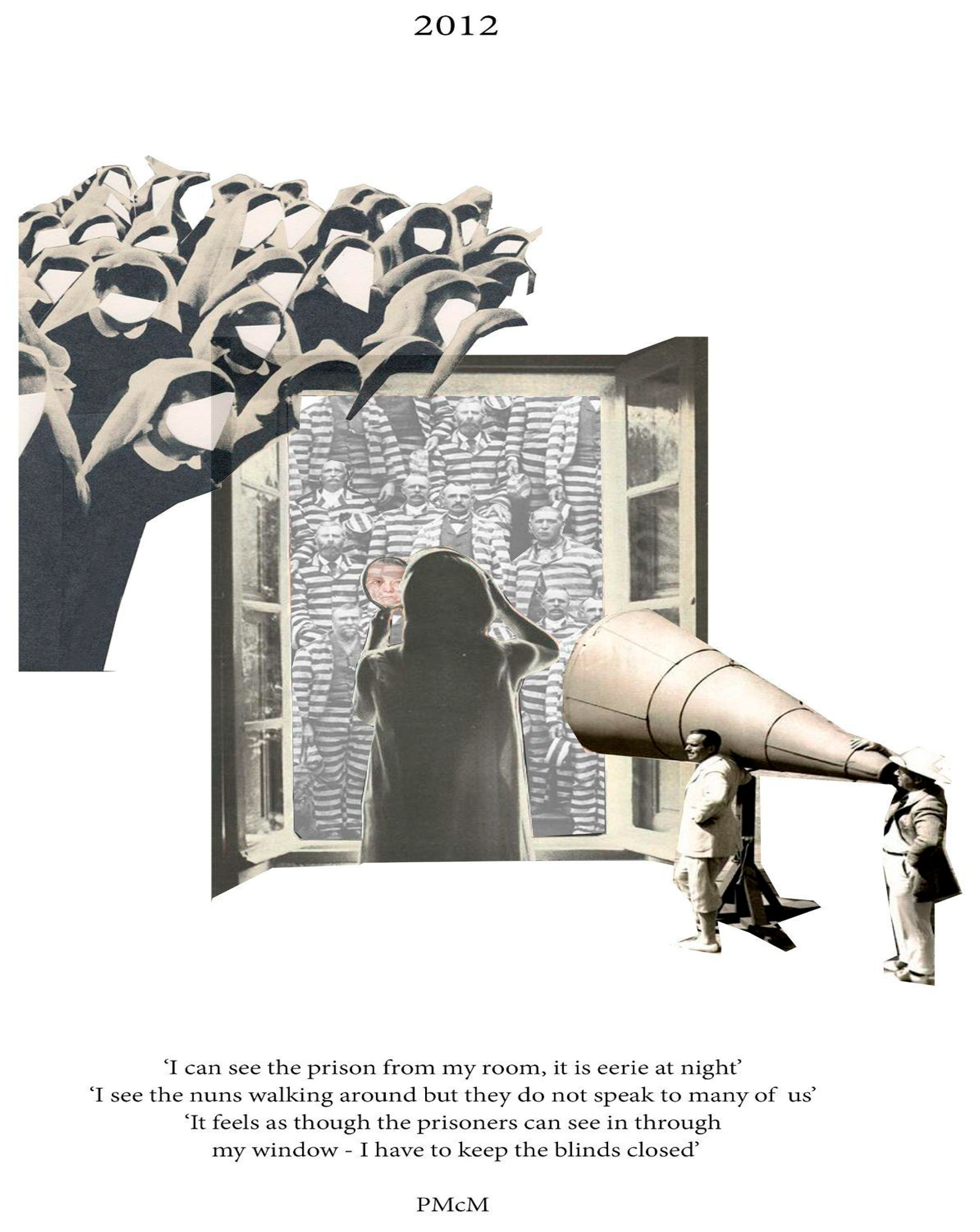
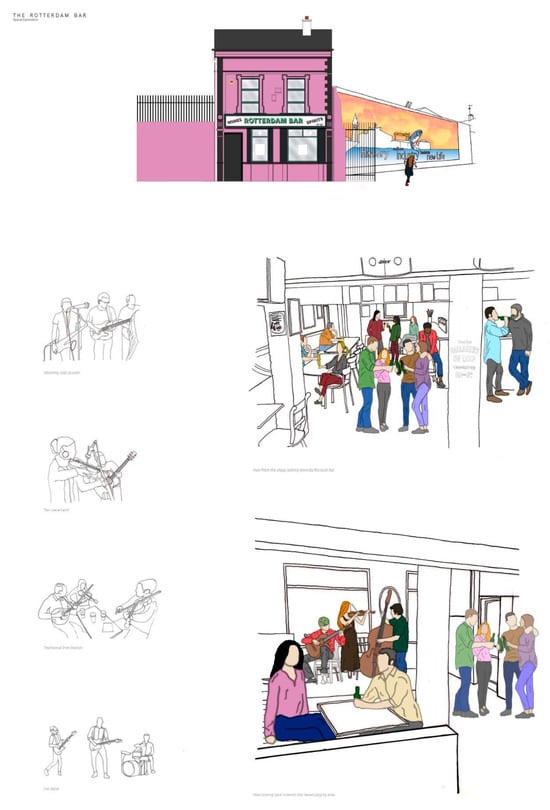
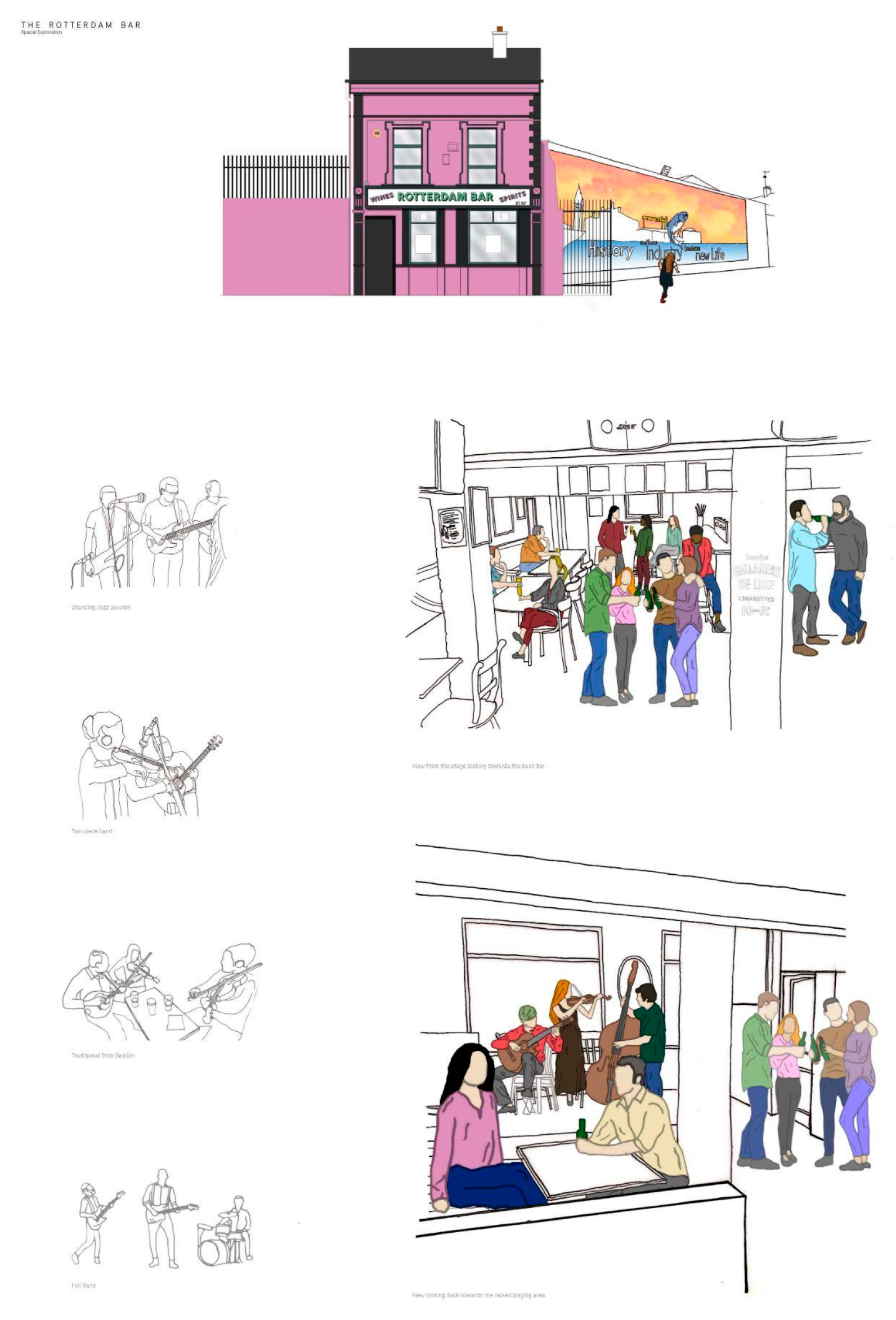
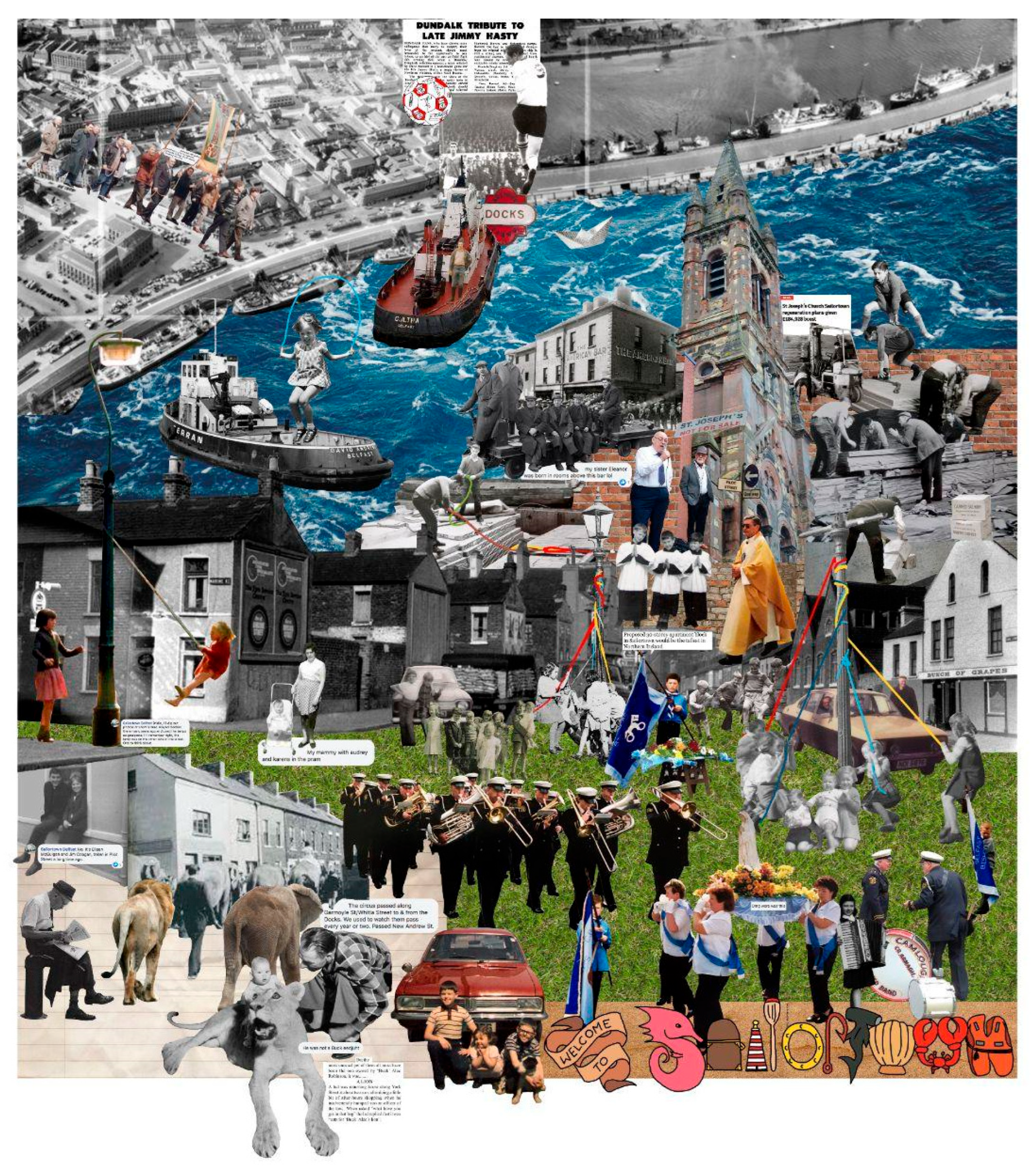
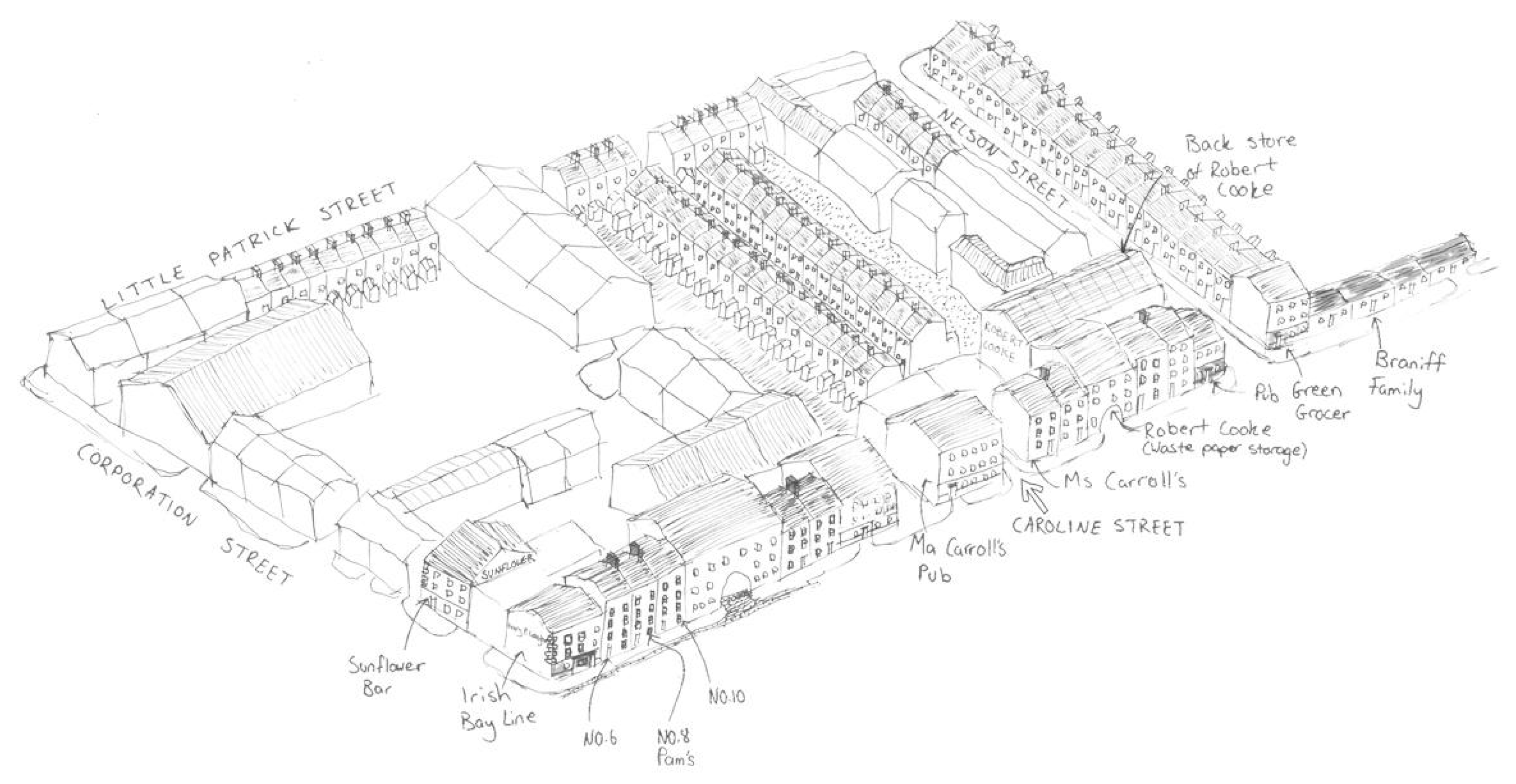
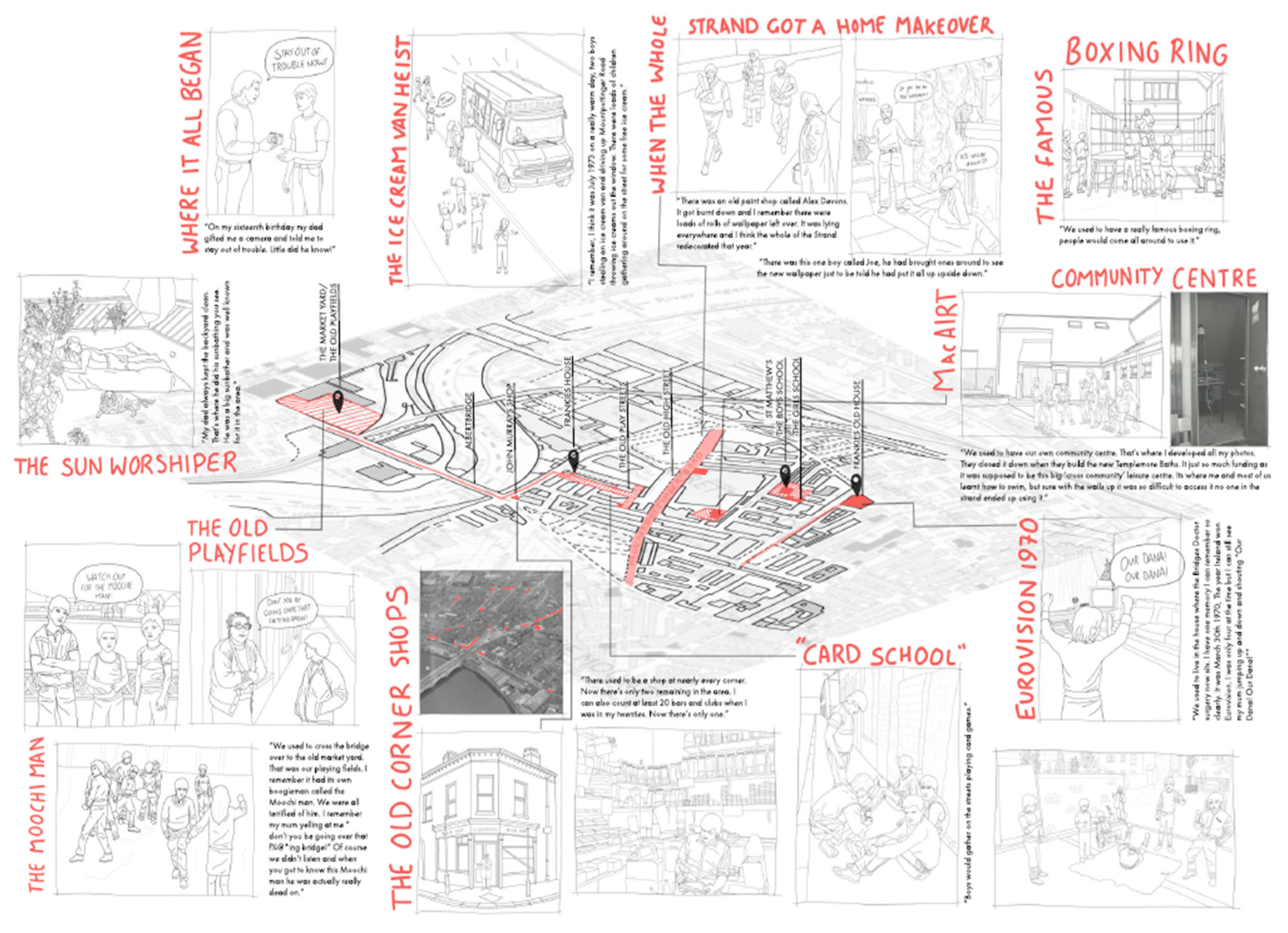
Adam Moore studied the relationship between the hospital and the jail on Clifton Street through the eyes of a woman who had been a patient in the hospital when she was young and could see the prisoners through her window (Figure 3). In Sailortown students embedded themselves in the everyday of the neighbourhood: Ciaran Gormley interviewed pub visitors in Sailortown (Figure 4), while Juliette Moore collated numerous stories of Sailortown on one single collage (Figure 5), and Aisha Holmes mapped the complexities of the city block through stories of local women (Figure 6).
Figure 3.
Adam Moore. Mater Hospital. 2018.
Figure 4.
Ciaran Gormley. Sailortown pubs. 2019.
Figure 5.
Juliette Moore. Sailortown. 2019.
Figure 6.
Aisha Holmes. George’s street Sailortown. 2019.
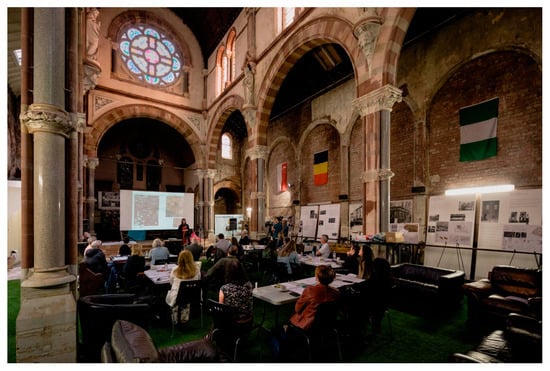
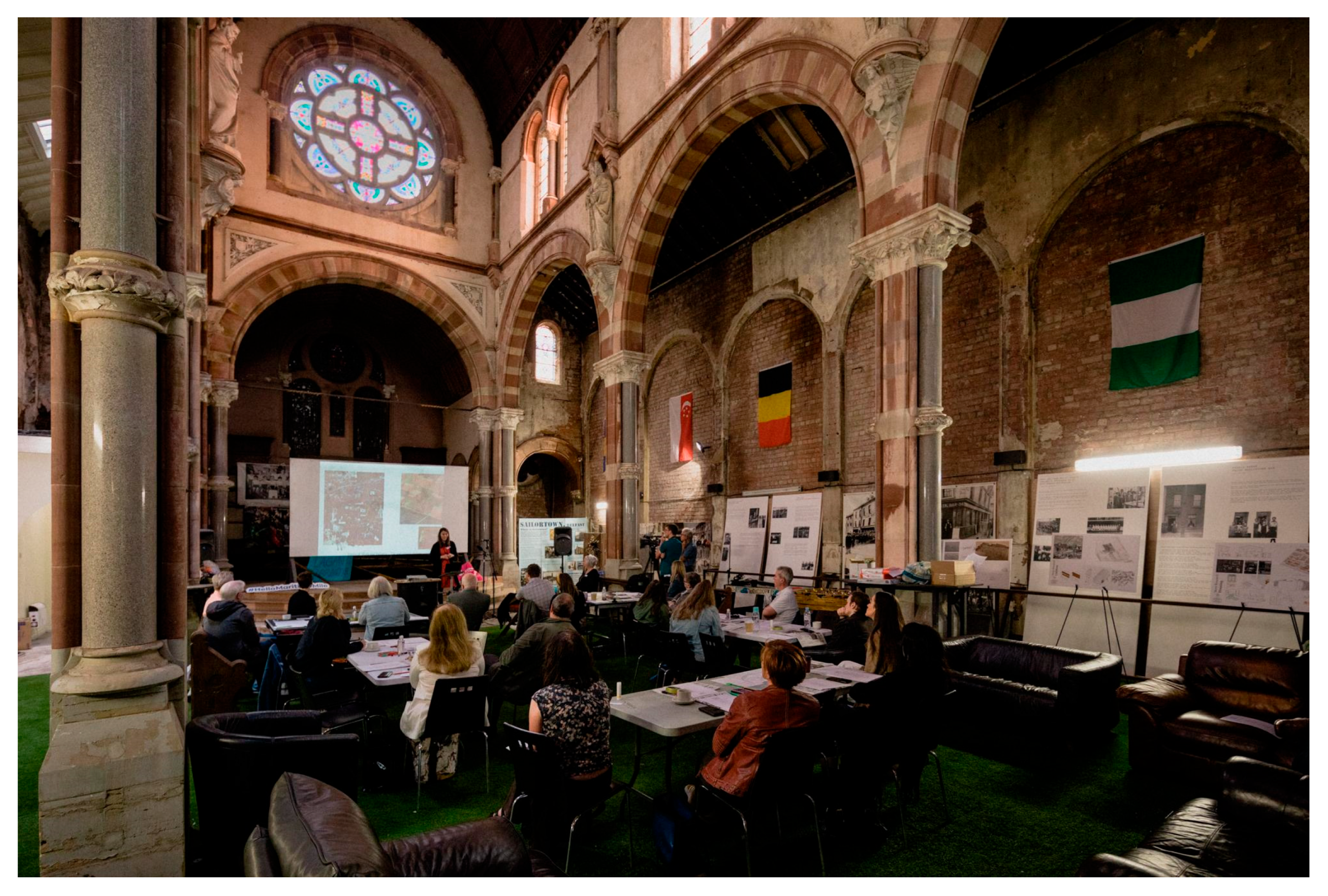
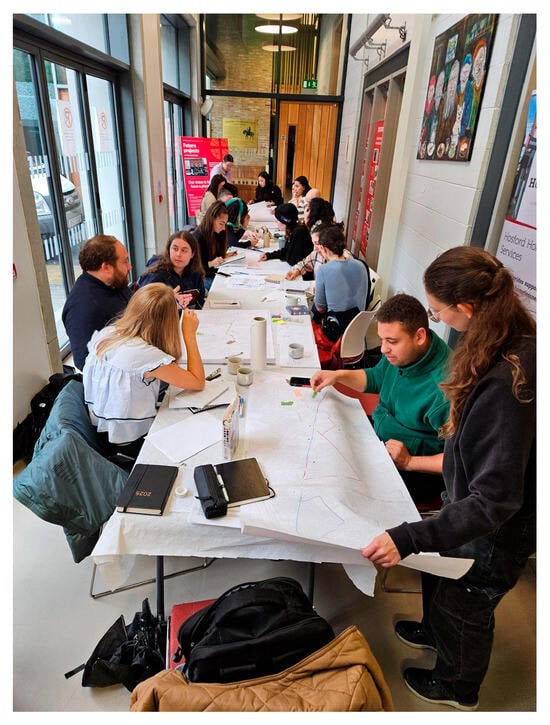
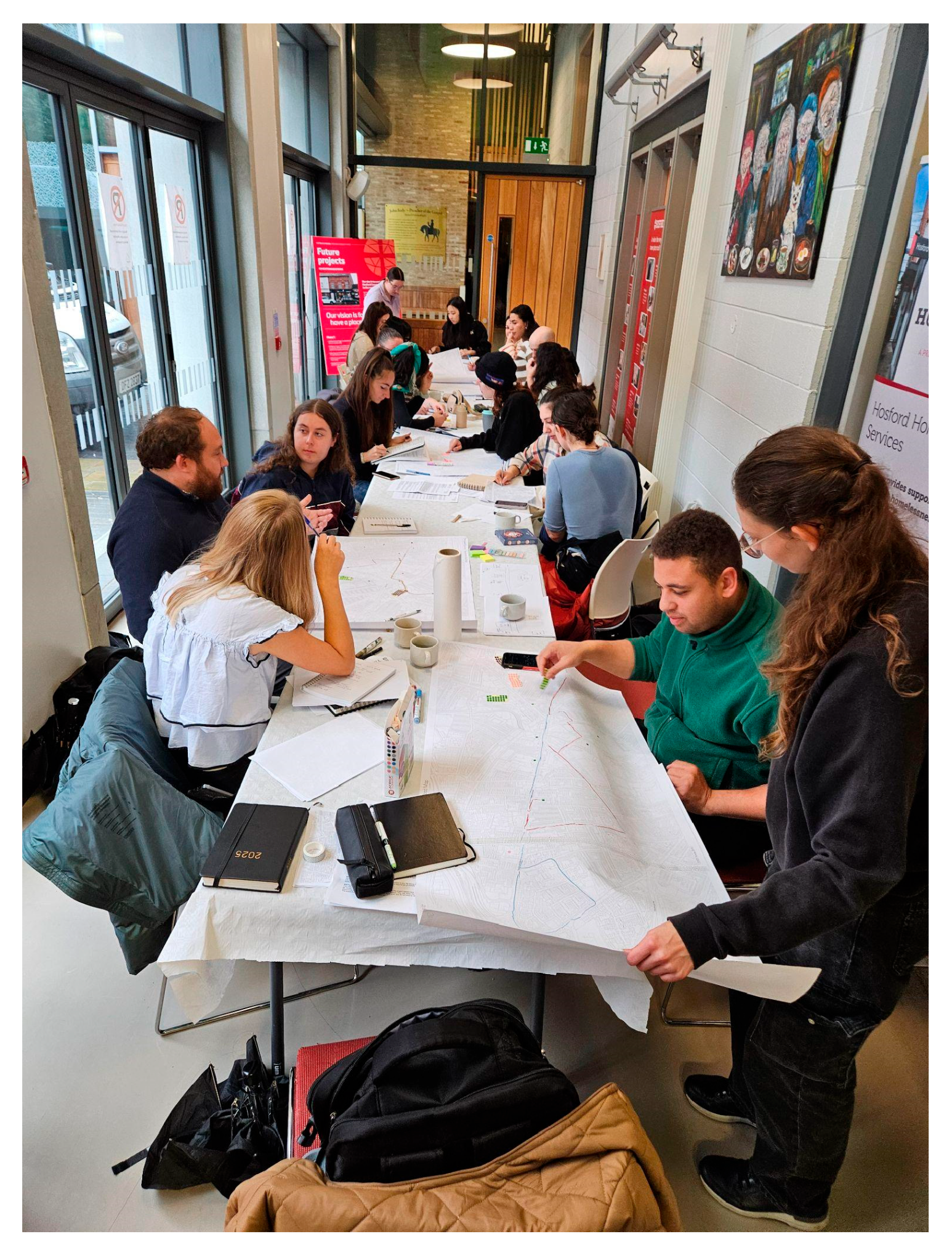
Aligned with the work of Samuel, Farrelly, and colleagues on participatory architectural education, StreetSpace bridges research, pedagogy, and public consultation with participation principles similar to those developed in the Community Consultation for Quality of Life (CCQOL) project. As an essential part of the iterative process of community engagement, each year workshops are developed at different stages of the year in the spaces familiar to communities such as local churches such as St Joseph’s in Sailortown (Figure 7) or local community centres such as Skainos in East Belfast (Figure 8).
Figure 7.
Sailortown Workshop. 2020. Photo: Joe Laverty.
Figure 8.
East Belfast workshop. Skainos. October 2025. Photo: author.
Together, these approaches situate justice, participation, and local knowledge at the centre of architectural formation. By foregrounding housing, regeneration, and mixed-use interventions in existing communities, StreetSpace trains future architects to work sensitively with social histories, identity, and fabric, demonstrating how the studio can operate as a laboratory for equitable urbanism and collaborative architectural agency.
Analysis occurs through an iterative process in which ethnographic materials are interpreted across multiple registers: individual reflection, collective studio discussion, and dialogue with community partners and external practitioners. Insights generated through one method, for example, walking interviews, are cross-checked against others, such as mapping workshops or street observation, enabling triangulation between lived narratives, spatial patterns, and design propositions. Design development functions as an analytical act in itself, testing interpretations through spatial translation and iterative critique. This process ensures that findings emerge from the convergence of multiple forms of evidence rather than from singular or anecdotal accounts.
4. Case Study: StreetSpace Studio, Belfast (2015–2025)
Belfast’s streets reveal the cumulative imprint of political turbulence, infrastructural upheaval, and competing visions of urban progress. They constitute what can be understood as an architecture of compromise: a built landscape shaped by overlapping crises and the negotiations they require. During the 1970s and 1980s, decades that were defined by the Troubles and institutional instability, car-centred planning collided with political conflict to reshape the city at multiple scales [16,18,47]. With democratic planning powers removed from local authorities, community influence weakened dramatically, and decision-making shifted to centralised bodies more concerned with mobility and security than with neighbourhood cohesion [48,49]. As strategic road schemes were driven through the city, working-class districts were cut off from the centre, long-established residential fabrics were severed, and streets that once supported dense, interactive, everyday life were recast as high-speed traffic corridors. The fine-grain spatial tissue that had sustained social life was fractured, leaving neighbourhoods spatially diminished and socially dislocated.
Through the 1980s and 1990s, Belfast’s urban landscape was reshaped once again, this time by commercial forces. Large inward-facing shopping centres, common across the UK and Europe, occupied prominent central sites, covering historic streets and intensifying fragmentation within the city core [50]. Often built on lands cleared of unlisted historic fabric, these developments introduced new forms of spatial enclosure and contributed to an increasingly discontinuous urban grain. Today, commercial and office-led redevelopment continues to unsettle the delicate balance between heritage preservation, socio-spatial equity, and globalised investment. Belfast thus stands as a laboratory in which the polycrisis, political, social, economic, and spatial, finds concrete expression. Each intervention becomes a continuation of unresolved tensions, embedding past fractures into the material future of the city.
Against this complex backdrop, the StreetSpace research and design studio at Queen’s University Belfast has, since 2015, undertaken a sustained exploration of the city’s everyday streets. Working across neighbourhoods such as Sailortown, the Market, Donegall Pass, Holyland, Sandy Row, the Mackie’s site, and East Belfast, the studio situates street-level urbanism as a critical entry point for understanding and transforming Belfast. The selection of the case studies has always been made in collaboration or requested by grassroots and neighbourhood organisations related to each area and by the Department for Communities. More recently, the neighbourhoods have been aligned with the Change Stories and VAWG research projects. These neighbourhoods, varied in history, identity, and socio-spatial conditions, share a common set of challenges: infrastructural division, vacancy and dereliction, housing need, contested heritage, and uneven redevelopment. They are landscapes in which urban failures are lived daily, felt acutely, and negotiated continually by communities.
4.1. Studio Structure: A Yearly Cycle of Engagement and Design
StreetSpace’s pedagogical model operates through an iterative cycle spanning two semesters. The first semester centres on engagement and research. Students conduct walking studies, interviews, mapping workshops, oral histories, and focus groups with a wide range of stakeholders, residents, local businesses, community leaders, youth workers, and policymakers. These methods generate a multilayered understanding of each neighbourhood’s spatial character, inequalities, aspirations, and tensions. In collaboration with groups such as Forward South Partnership, the Department for Communities, Belfast City Council, and local residents’ organisations, these engagements root research in the lived urban realities of Belfast.
The second semester builds on this foundation, translating observations and community priorities into speculative yet grounded architectural proposals. The design process remains iterative and dialogic; students revisit communities for feedback, refine their proposals, and articulate how each intervention supports local needs and cultivates shared benefit. This cyclical process ensures that design work emerges directly from engagement, sustaining a reciprocal relationship between listening and making.
4.2. The Street as a Pedagogical and Civic Arena in Belfast
The StreetSpace project treats Belfast’s streets not merely as physical infrastructure but as socio-political arenas where everyday practices, memories, and power relations are inscribed and contested. The ethnographic and participatory approach emphasises the street as a lived environment, where students learn to mediate between public needs, institutional structures, and design possibilities.
Through these engagements, StreetSpace enacts spatial justice as an active, design-led practice. Students document how inequalities manifest spatially, through blocked connections, derelict sites, unsafe crossings, and uneven service provision, and translate these insights into responsive interventions such as adaptive reuse, inclusive housing, micro-public spaces, and mobility enhancements. By grounding design in community priorities, the studio embodies the right to the city, prioritising social use and collective empowerment over purely capital-driven logics. This synthesis of ethnographic research and urban design positions StreetSpace as a pedagogical model where architecture reveals socio-spatial inequities while contributing directly to their remediation.
4.3. Core Themes: Everyday Streets and Urban Inclusion
Throughout its iterations, StreetSpace has remained committed to understanding the street as an adaptive social infrastructure. By focusing on the overlooked, StreetSpace brings attention to the dynamics that shape urban inclusion: accessibility, cultural visibility, everyday mobility, demographic diversity, and the micro-economies that structure daily life.
Annual investigations have centred on neighbourhoods grappling with development pressures, dereliction, underinvestment, or demographic change. Whether examining Botanic Avenue’s multicultural vibrancy, the Market’s contested regeneration, Sailortown’s maritime heritage, or Donegall Pass’s complex identity landscape, the studio interprets the street as both a spatial configuration and a social process. This approach unveils how redevelopment pressures, infrastructure, vacancy, heritage debates, or population shifts influence everyday spatial justice.
4.4. Modes of Inquiry: Research Through Design
StreetSpace employs a research-through-design methodology in which analysis and speculation mutually inform one another. The studio’s tools combine the following:
- Quantitative mapping, such as pedestrian counts and vacancy surveys.
- Qualitative ethnography, including walking interviews and oral histories.
- Graphic anthropology, using drawing and diagramming to visualise socio-spatial patterns.
- Participatory workshops and co-design sessions with community groups.
- Comparative fieldwork in other cities (Ljubljana, Naples, London, Delft, Porto).
- Reflective dissemination, including interim feedback and final presentation of findings, at times in the form of a meeting, an exhibition, or publication.
This interdisciplinary framework draws on architecture, planning, anthropology, geography, and the arts, enabling multi-perspectival readings of street life.
4.5. Case Studies: Evidence of a Bottom-Up Urbanism
The case studies presented below are not intended as isolated examples, but as a comparative set through which recurring patterns, mechanisms, and tensions in bottom-up urbanism can be examined. While each neighbourhood presents distinct socio-spatial conditions, institutional relationships, and design outputs, all studios operate within a consistent methodological and pedagogical framework. This allows variation across contexts to be read analytically: differences in outcomes are understood as responses to local conditions, while similarities in process, forms of engagement, and types of intervention reveal transferable principles of everyday architecture developed within the studio.
Several projects exemplify the studio’s approach via live, socially embedded pedagogies. In its first two iterations, the StreetSpace studio focused on Belfast City Centre, exploring streets that risk losing their distinctive identities while seeking to recognise their diversity and layered complexity. We developed a collaborative live project bringing MArch students together with MSc Urban Design and Urban Regeneration students under a brief co-developed with the Department for Communities and Belfast City Council. The project aimed to provide alternative methods for planning, developing, and designing mixed-use streets in the city centre. Architecture and planning students analysed North Street and Castle Street to map their present conditions and explore latent potentials.
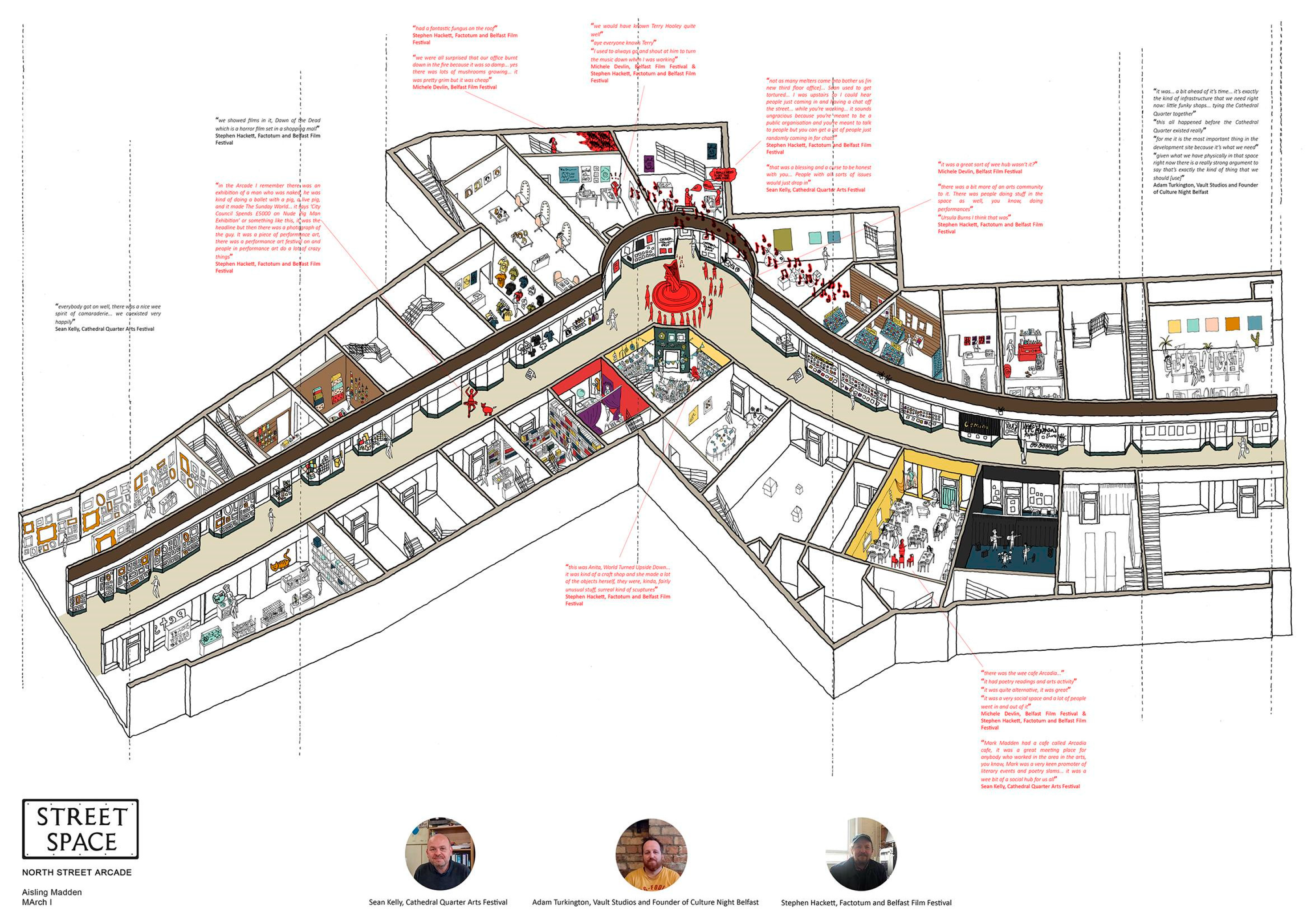
A series of standout proposals was presented in 2018 as part of the Save CQ campaign and subsequently published in the Belfast Telegraph. The campaign is a community-led initiative aimed at safeguarding the built character, heritage buildings, and independent culture of the city’s Cathedral Quarter, mobilising local voices to challenge redevelopment seen as profit-driven and detrimental to street-level vitality [51]. Its core message, “development should be about making places better, creating homes and communities… rather than maximising profit” captures the ethos that underpins the studio’s work. The interventions of Aisling Madden (rehabilitating the North Street Arcade-Figure 9), Lucy Atkinson (re-using a non-listed heritage building for housing), and Amy Service (designing a community cinema) demonstrate how studio briefs can emerge directly from ethnographic work with residents and stakeholders, forging an alternative to top-down demolish-and-rebuild paradigms. This reflects the reframing of the studio environment that Jones and Brown advocate for: ‘studio is a collection of people, in a shared space, performing uncertain and ambiguous activities, using unpredictable, recursive, contingent and looping processes to produce artefacts that cannot be proved correct or even objectively good’ ([51], p. 15), which the StreetSpace model activates through embedded community engagement. This process is a difficult one, especially in contested spaces such as city centre locations, where the pressures of market-led urban regeneration encounter the everyday life of businesses and residents. Within the project, the students need to develop communication skills that will help them navigate the possible backlash of media and the frustrations of a system that perpetuates asymmetries of power in urban development. The project evolved through the years to deal with areas outside the city centres, where resident groups lead the conversations and give a sense of purpose to each student group.
Figure 9.
North Street Arcade—Aisling Madden 2018.
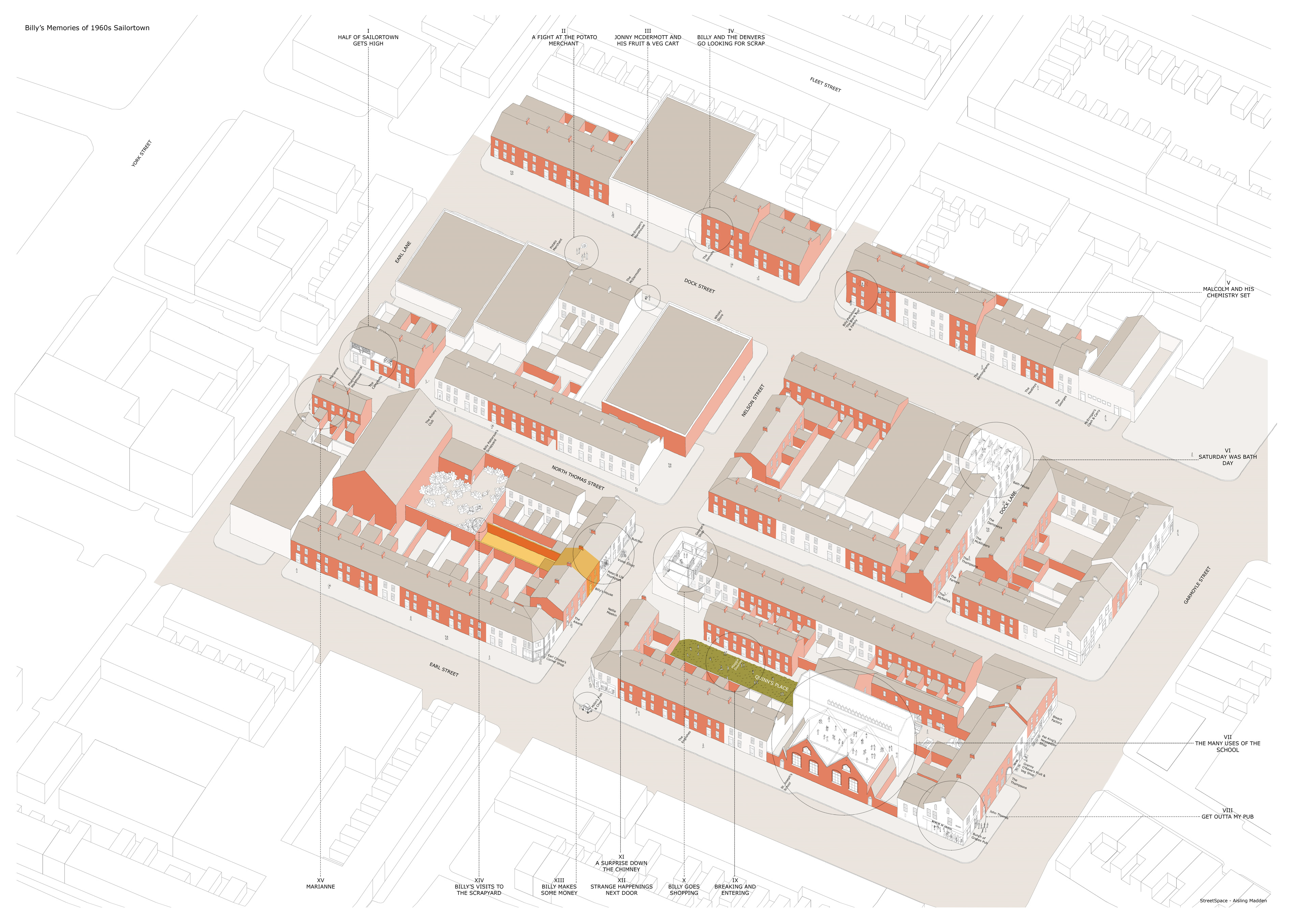
Between 2019 and 2021, the studio turned to Sailortown, engaging with maritime heritage, de-industrialisation, displacement, and local memory. Central to this phase was an explicit acknowledgement of the students’ positionality as researchers and designers, with StreetSpace actively encouraging diverse modes of engagement that resulted in highly individual responses rather than a singular studio aesthetic or conceptual framework. The individual listing and attribution of student work reflects the deeply personal positions each student adopted, shaped by their chosen methods of engagement and emotional investment in the context. Outputs included a newspaper of oral histories and mappings. Community-engagement events helped shape robust and affordable design proposals. Aisling Madden produced a storybook of local narratives that led to a housing project reflecting the joy, hope, and communal distinctiveness of the demolished neighbourhood (Figure 10). Meanwhile, Jonny Yau designed a cycling village to propose a healthier, future-proof neighbourhood; Lorna McCartan designed an innovative primary school; Tiarnan McIlhatton envisaged community baths in the backyards of derelict structures. This teaching-and-learning approach aligns with Samuel, Farrelly, and Purohit’s research, which shows how inclusive, map-based planning consultation can enhance neighbourhood quality of life by offering opportunities to ‘be heard’ and generate social value through the process [14].
Figure 10.
Sailortown blocks—Aisling Madden 2019.
Moreover, the studio’s methodological frame draws on graphic anthropology and visual ethnographic traditions: for instance, Lucas argues that drawing in architecture can open up sensory, temporal, and contextual dimensions of built-form everyday life [43]. Ramos emphasises that drawing and image-making are not just documentation but creative tools for intercultural dialogue [44]. And Pink positions visual and sensory methods as central to ethnographic research, allowing design students to “see” urban life differently [19]. StreetSpace thus blends architectural pedagogy with these enhanced methods of graphic-ethnographic inquiry, enabling students to generate narrative artefacts and participatory visuals as part of their design workflow. Crucially, these outputs are not understood as ends in themselves but as tools that have, in several cases, informed tangible changes within the studied contexts, taken forward by community partners, local councils, and charitable organisations. Across the case studies, the value of the studio lies not only in the student proposals but in the ways these processes have supported dialogue, capacity-building, and alternative visions for neighbourhood futures. Establishing this level of local confidence required time and sustained engagement; it was through the consistency of meaningful studio outputs and the sensitivity of the engagement methods that StreetSpace came to be recognised as a trusted model of support for communities and organisations. This is particularly significant within the context of urban development in Belfast city centre, which is frequently characterised as top-down, commercially driven, and resistant to collaborative modes of practice. In this regard, the studio’s approach resonates with Martire’s analysis of the Cathedral Quarter, which highlights the importance, and fragility, of community-led cultural and spatial initiatives operating alongside, and often in tension with, dominant development agendas [52]. Taken together, these experiences suggest that sustained, reflexive pedagogical practices can contribute to more inclusive and socially responsive architectural and urban futures.
From 2021 to 2022 the studio was commissioned by the Department for Communities to work in ‘the Market’, an inner-city neighbourhood experiencing high deprivation and acute housing need. Addressing dereliction, mixed-use housing, micro-economies and gender-sensitive urbanism, the studio collaborated with the Market Development Association. Outputs included a book of maps, public-space proposals, family-friendly interventions and micro-enterprise hubs. Many students, including Rhys Carson (Figure 11), Anna McCarthy, Gabriela Kaprzyk focused on housing, as this emerged from local workshop priorities. Other identified needs prompted Kayleigh Colgan to design housing that embeds a mosque, and Danny McCorry to design a dance hall reviving culturally cherished practices among residents.
Figure 11.
Housing on Cromac Street—Rhys Carson 2021.
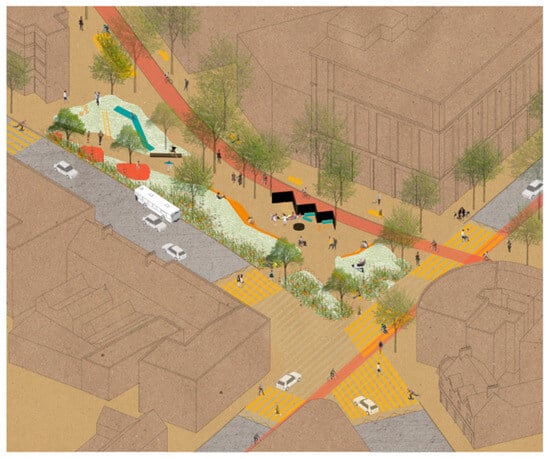
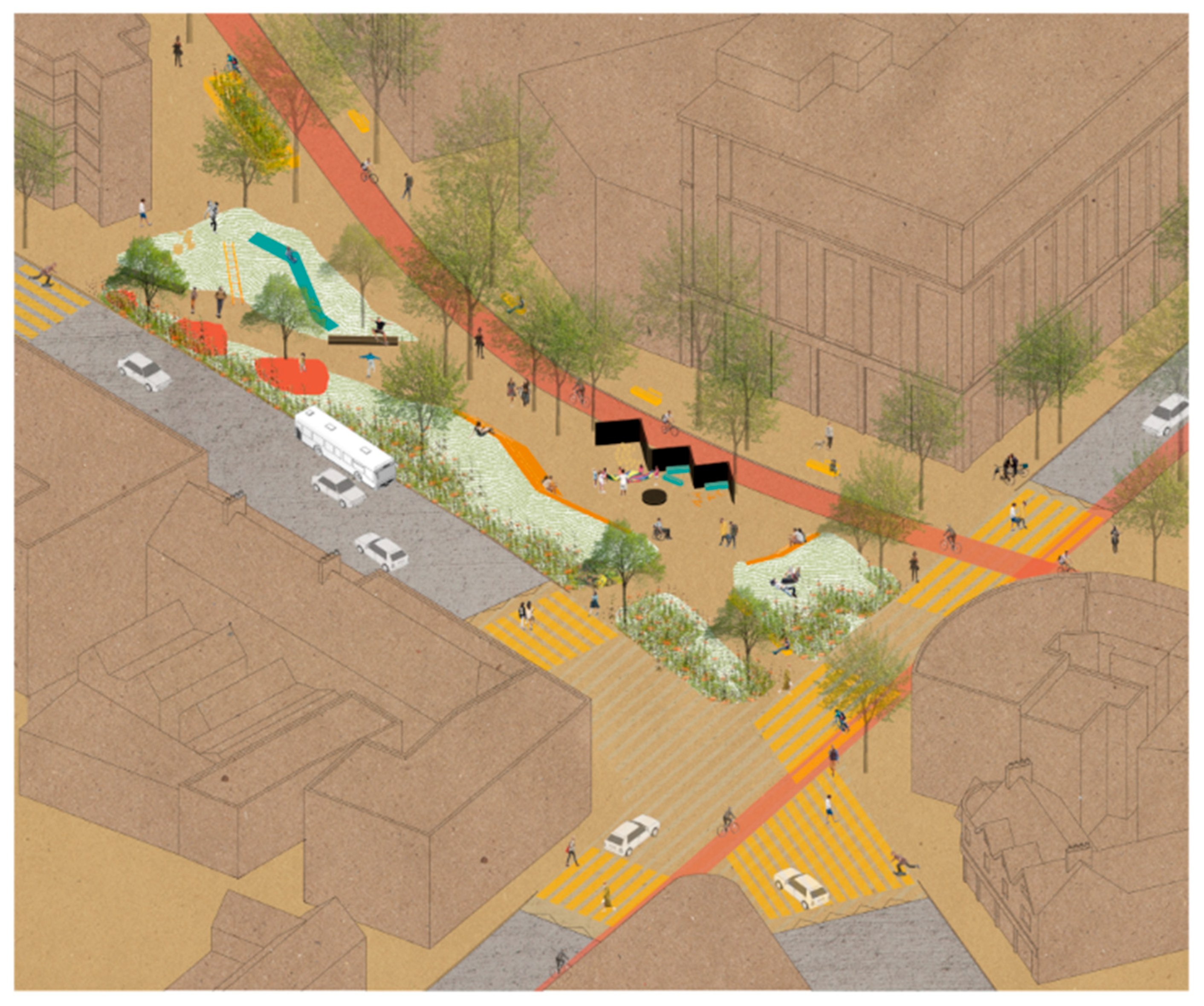
The subsequent two years were spent in the inner-south Belfast neighbourhoods of Holyland, Donegall Pass, Sandy Row, and the Village. The Botanic studio (2022–2023) focused on mobility, vacancy and future mixed-use housing; it built trust with community groups and informed regeneration ideas. The next studio in Sandy Row and the Village built upon Gentle Densities [51] research into medium-density housing and participatory design, a collaborative project with the Department for Communities. Throughout these years, students learned to act as socially responsible architects, delivering context-sensitive visions for inclusive housing and everyday mobility. As an example of real urban impact Louisa Evans designed a homeless-shelter scheme including the re-configuration of the junction at Botanic Avenue and Shaftesbury Square (Figure 12); this proposal is now being discussed by the Department for Infrastructure and has become part of the 2035 Eastern Transport Masterplan. This work also aligned with the Open Botanic festival, a collaboration between Queen’s University and community groups, combining pedestrian counts, surveys, mapping, and public co-design events, culminating in a multicultural street festival and foregrounding active travel, cultural visibility, and re-appropriation of street-space for public life.
Figure 12.
Shaftesbury Square—Louisa Evans.
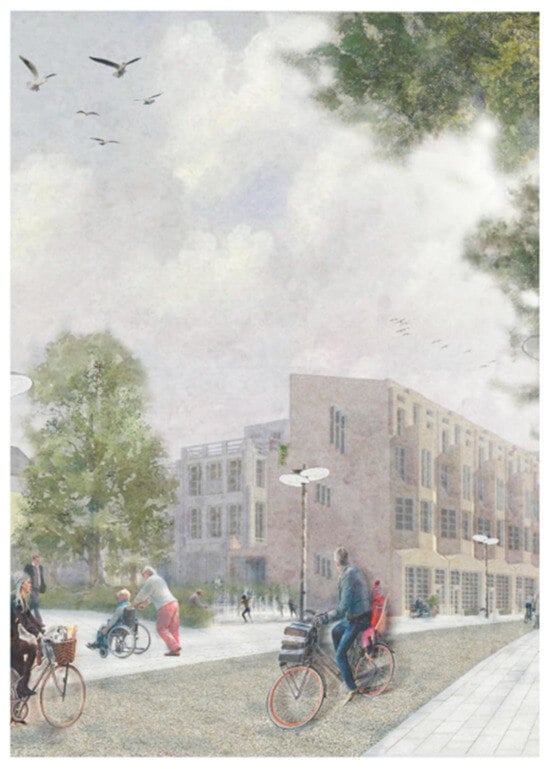
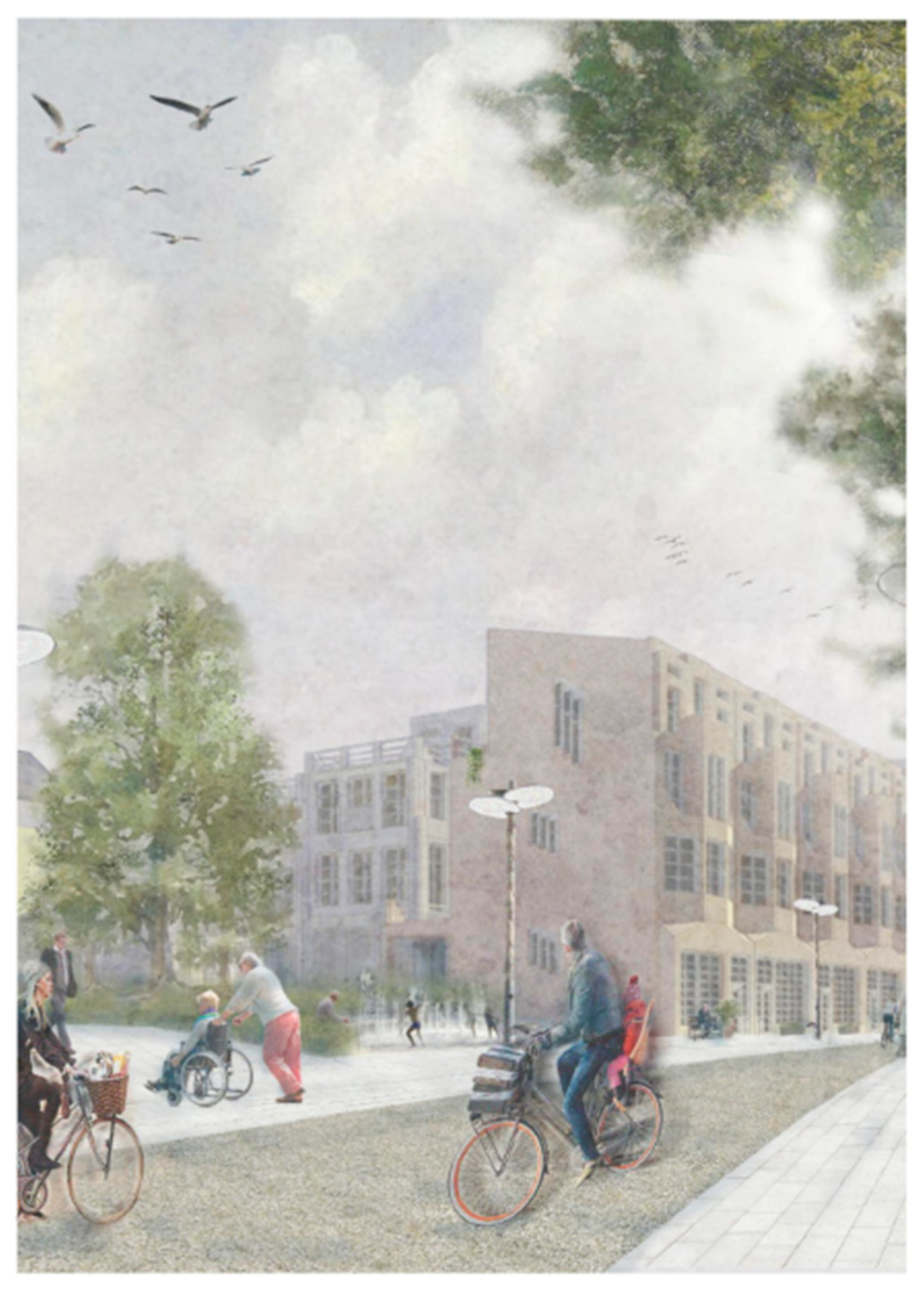
In 2024, Rachel Murphy, was awarded both the Scott Tallon Walker RIAI award for excellence (the highest possible award an architecture student in Ireland can receive), and the RSUA award for the best postgraduate project in Northern Ireland. This was a project that proposed a school as neighbourhood and a neighbourhood as a school, as a response to memories of residents of walks to school (Figure 13). The project ambitiously responded to the needs of residents in the Village and proposed a well informed and well designed masterplan for a long empty site in the area.
Figure 13.
Billy’s Village high street—Rachel Murphy.
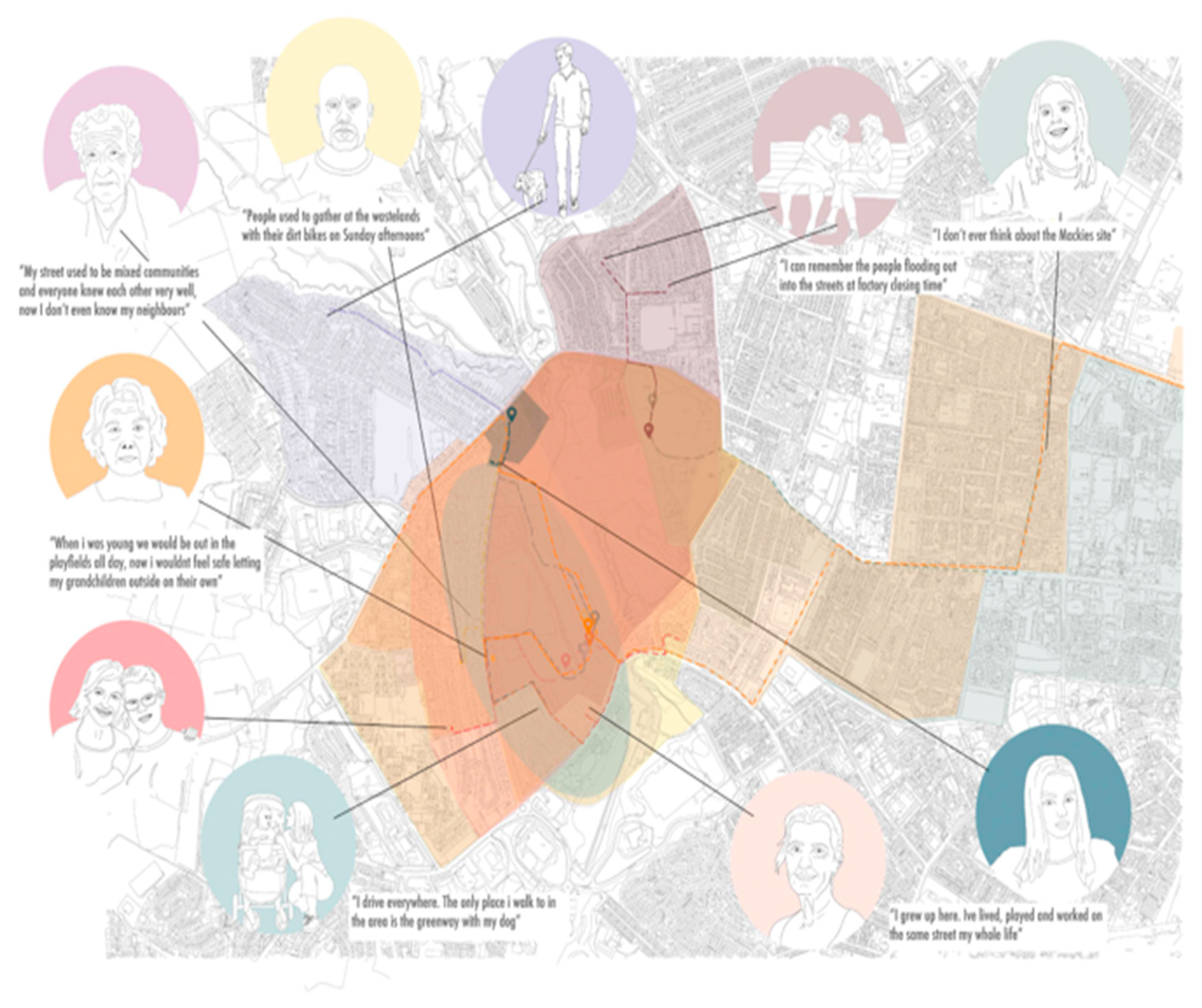
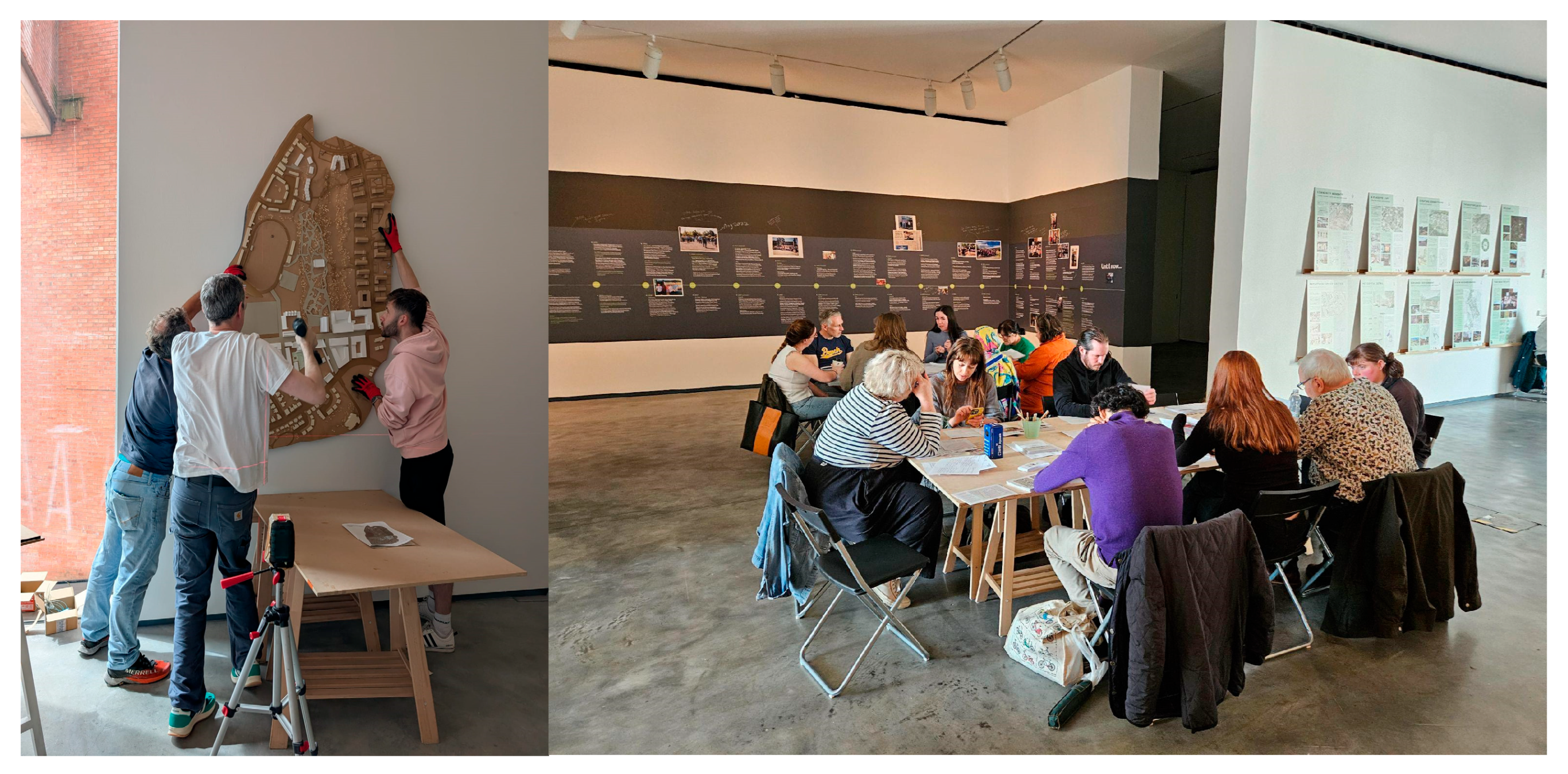
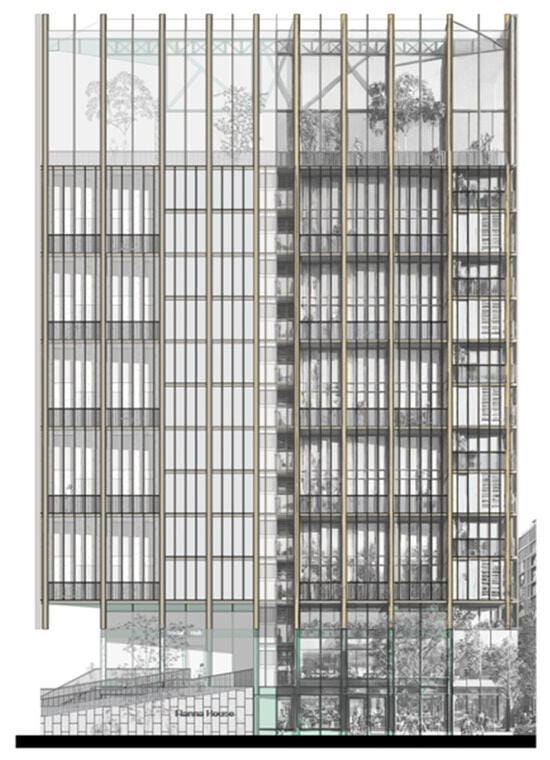
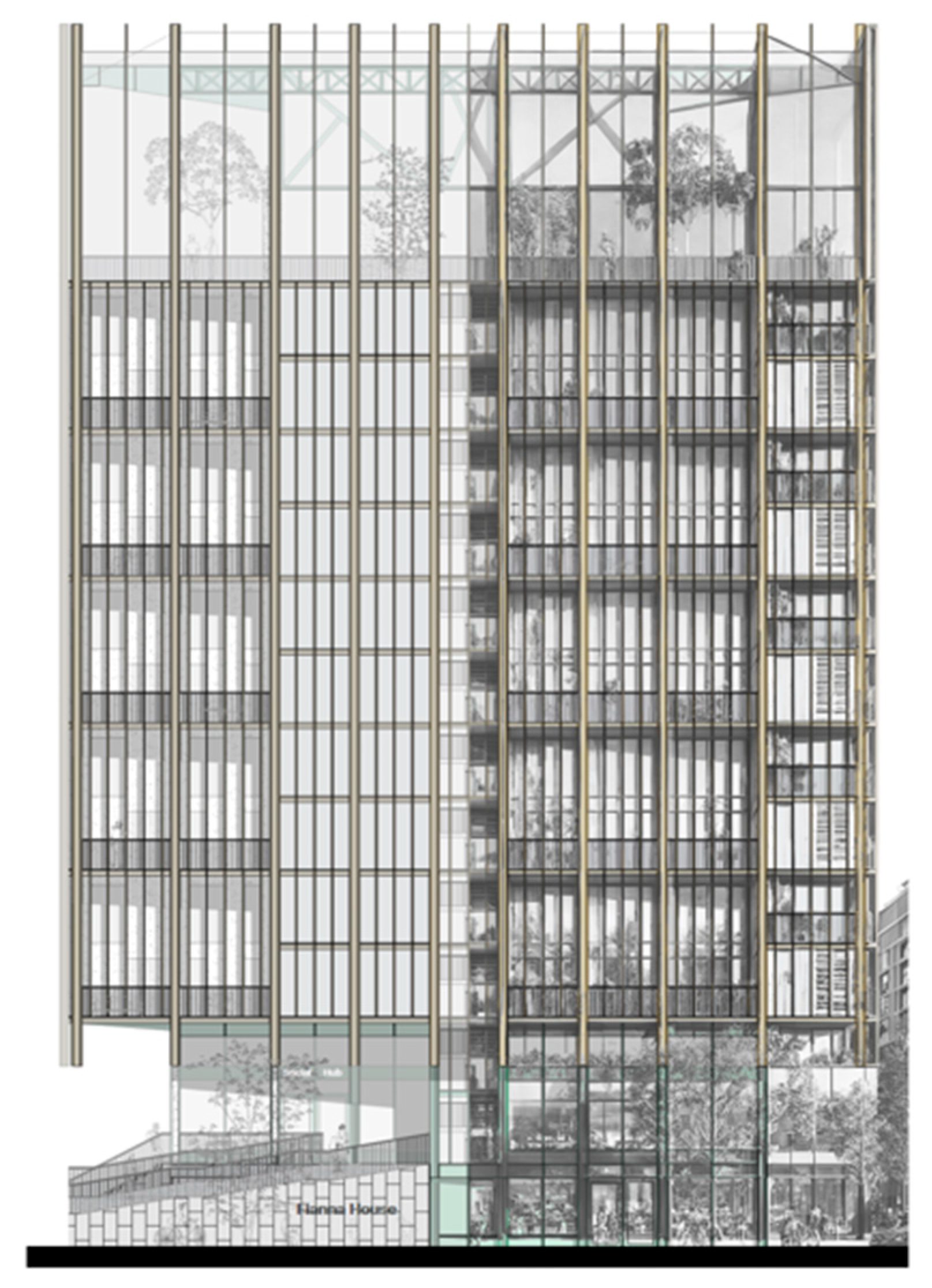
In the last two years the nature of the studio’s funding has shifted, aligning the studio with two large research programmes: Change Stories and the Violence Against Women and Girls (VAWG) in Public Spaces initiative. Change Stories, led by the University of Washington, is an international, multi-city research partnership that uses storytelling to explore how people understand, experience, and respond to urban change; working with residents and stakeholders it surfaces alternative community-driven ‘stories of change’ emphasising sustainability, equity, and inclusion. In 2024-2025 the StreetSpace studio became a case study for Change Stories by collaborating with Participation and the Practice of Rights (PPR), using community-led mapping, storytelling, and visual documentation to highlight housing injustices and everyday experiences of displacement in Belfast (Figure 14). Students co-produced narrative artefacts in contested neighbourhoods and presented these in a public exhibition at the MAC (Figure 15), offering a platform for civic dialogue, policy critique, and advocacy. This time, student Ryan McCraken (Figure 16) was awarded both the RIAI and the RSUA awards, which has led to a continuing conversation to overturn the decision to demolish 1960s high-rise social housing towers, based on his project to expand and revalorise the New Lodge Tower blocks.
Figure 14.
Ethnography of the greenway. Anna Thompson and Matthew McKittrick.
Figure 15.
Exhibition set-up and workshop in the MAC. July–August 2025. Photos: Author 1.
Figure 16.
The New Lodge tower—Ryan McCracken.
The last iteration of the studio, located along the intersectional Newtownards Road in East Belfast and prompted by the Department for Infrastructures’ request for StreetSpace research that interrogates the experiential layers of one of Belfast’s urban neighbourhoods, which had in recent years undergone substantial financial investment yet still remains a place laden with social issues, social fragmentation, and car dominance, alongside collaboration with VAWG research, which explores feminist principles of design aligned with Jos Boys’ gender division of experience [53], Leslie Kern’s attitude to the embodiment of gender exclusion [39], through bell hooks definition of feminism as an inclusive movement that seeks to abolish sexism, sexist exploitation, and oppression to the benefit of all people [41] students from StreetSpace sought to challenge patriarchal systems and gender bias [54] that create a sexist, exclusionary and unsafe urban environment. Interrogating the act of comfort and safety in public space through the experiences of local people, as part of walking and mapping workshops and reflective storytelling, revealed opportunities for multiple-scale improvements and strategic interventions which could contribute to the elimination of VAWG. This pertinent StreetSpace research engages with the recent Northern Ireland Executive’s ‘Ending Violence Against Women and Girls’ seven-year priority framework and builds on insights from QUB and Involve’s Safer Streets: Shared Voices Report [55] on the prevention of VAWG in outdoor public spaces. Anna Thompson’s ethnography shows the stories of one of her participants as a feminist, caring and inclusive perspective to place (Figure 17).
Figure 17.
Ethnography—Anna Thompson.
Read collectively, the case studies demonstrate that the effectiveness of bottom-up urbanism in the StreetSpace context does not lie in the replication of specific design solutions, but in the repeated activation of shared mechanisms: ethnographic grounding, co-produced briefs, strategic architectural interventions, and sustained engagement with civic actors. Across diverse neighbourhoods, the studio consistently generated outcomes that informed policy debate, reframed local narratives, and supported incremental urban change. This cross-case consistency supports the paper’s broader argument that everyday architecture functions as a transferable approach grounded in process rather than form. Potential biases associated with studio-based pedagogy, particularly reliance on the quality or ambition of individual student projects, are mitigated through several structural safeguards. First, all studios follow a consistent methodological framework, ensuring comparability across cohorts and contexts. Second, analysis does not privilege singular ‘best’ projects, but draws on collective outputs, recurring themes, and shared processes observed across studios. Third, ongoing oversight by professional anthropologists, community partners, and public-sector collaborators provides external validation and continuity beyond individual student performance. In this way, findings emerge from patterned processes rather than from exceptional individual contributions.
5. Discussion: Speculative Urban Futures: The Studio as a Site of Civic Transformation
StreetSpace demonstrates how bold, site-specific, and socially relevant design proposals can confront and transform exclusionary planning and mobility practices in Belfast. By engaging directly with the often-overlooked everyday streets that structure social life, movement, and access to opportunity, the studio encourages students to formulate provocative, system-changing visions that challenge accepted planning norms. For example, Louisa Evans’ redesign of the Botanic Avenue–Shaftesbury Square junction is now being actively discussed as part of the Eastern Transport Masterplan, proposing a radical shift toward active travel and social infrastructure. Similarly, Aisling Madden’s reactivation of the North Street Arcade reframes heritage as a platform for civic creativity rather than commercial erasure, in a site that Belfast City Council is now actively working towards vesting from the current private developers. Jonathan Yau’s cycling village for Sailortown envisions a healthier future that breaks with patterns of car-dominated renewal that are now being discussed by the Department for Infrastructure in the context of the active travel plans and the Eastern Transport Plan. These projects deliberately push beyond incremental improvement to articulate alternative urban futures, where mixed-use density, equitable mobility networks, and public-space justice become drivers of social and ecological transformation.
These projects not only position the student as someone who understands the conditions of the built environment in which they will operate in the future but also prepare them to challenge the status quo within live projects in real contexts with real decision makers at the table.
This approach positions the architectural studio as a space of civic imagination and urban risk-taking. By situating speculative design within real political and community contexts, StreetSpace enables architects of the future to test structural interventions, such as neighbourhood-as-school models, community-led housing systems, and re-programming of vacant or privatised land, that directly contest top-down processes of control. These propositions are not merely designs for better architectural spaces; they operate as critical provocations, exposing hidden power relations and setting new agendas for how Belfast’s contested neighbourhoods might evolve. In this sense, StreetSpace functions both as a laboratory and a platform for courageous architectural agency, demonstrating how visionary design, grounded in everyday lived experience, can reshape entrenched systems of mobility, land use, and governance toward everyday spatial justice.
5.1. Social and Ecological Dimensions
A defining feature of StreetSpace is its focus on socio-economically deprived neighbourhoods and ecological responsibility. The studio foregrounds practices of reuse, adaptive intervention, and low-carbon design as not only environmentally necessary but socially meaningful. Students explore how sustainable materials and the reuse of existing buildings can foster both ecological mindfulness and community engagement. This approach reflects an ethic of care, where design is attentive to environmental sustainability while simultaneously addressing social equity.
Material choices in StreetSpace projects convey a deliberate expression of justice: they prioritise local sourcing, affordability, and longevity, challenging the dominance of high-cost, high-impact urban interventions that often exacerbate spatial inequities. By engaging with ecological and social dimensions together, students develop a nuanced understanding of how urban design can simultaneously respond to climate imperatives and the lived experiences of local communities. In this way, material modesty is not merely an aesthetic or budgetary consideration; it becomes a vehicle for ethical, socially responsive urbanism.
5.2. Pedagogical Implications
The pedagogical model of StreetSpace illustrates the transformative potential of architecture education when it foregrounds ethnographic engagement and community partnership. The studio operates on a dual-semester cycle: the first semester dedicated to immersive research and engagement, the second to iterative design development. This rhythm mirrors the ‘project cycle’ property outlined in Studio Properties [15], emphasising deep immersion followed by active making. In this context, students learn by doing, through fieldwork, mapping exercises, pedestrian counts, surveys, workshops, and co-design sessions, while generating tangible artefacts such as drawings, maps, and design proposals. These artefacts are both outputs and instruments of reflection, enabling students to translate observation and engagement into actionable design strategies.
Crucially, StreetSpace emphasises dialogue, social networks, and collective learning. Students work alongside residents, community groups, and local authorities, gaining firsthand insight into the social, political, and material dimensions of urban life. This engagement fosters not only technical design skills but also civic awareness and social responsibility, aligning with the book’s discussion of hidden curricula and critical pedagogy. By situating learning in the everyday streets of Belfast, Botanic Avenue, North Street, Newtownards Road, and other neighbourhoods, the studio cultivates sensitivity to context, atmosphere, and site-specific needs, transforming abstract design principles into lived, socially embedded practice.
5.3. Limitations and Tensions
Despite its successes, StreetSpace is not without limitations. Hypothetical spatial and formal interventions are inherently constrained by institutional, political, and temporal factors. Students operate within fixed academic semesters, and interventions must navigate local regulatory frameworks, funding limitations, and community priorities. These constraints underscore the tension between aspirational design goals and practical implementation realities. Furthermore, while interventions can catalyse awareness and incremental change, they cannot, on their own, resolve structural inequities in urban planning or housing policy. StreetSpace highlights the importance of acknowledging these boundaries, even as students learn to negotiate them creatively. Recognising such constraints reinforces the ethical dimension of design: social impact requires humility, persistence, and collaboration rather than unilateral action.
6. Conclusions
This paper demonstrates that everyday architecture, as developed through the StreetSpace studio in Belfast, provides a compelling approach to advancing spatial justice in cities shaped by conflict and socio-spatial inequality. By grounding architectural education in ethnographic and participatory methods, the studio reframes everyday streets, rather than iconic buildings or isolated plots, as the primary scale at which care, collaboration, and lived experience intersect. Through walking interviews, narrative mapping, collaborative brief-making, and co-designed proposals, residents are positioned as partners and co-authors in shaping their environments. Spatial justice is thereby understood not as an abstract aspiration, but as an incremental practice enacted through shared agency, ambitious but pragmatic interventions, and sustained listening.
StreetSpace illustrates how immersive studio pedagogy can function as a civic laboratory, integrating research, design, and community engagement in real urban contexts. The involvement of an embedded anthropologist and longstanding partnerships with public agencies and grassroots organisations ensure that participation is ethical, meaningful, and policy-legible. In doing so, the studio exemplifies how architectural education can reveal and challenge spatialised power relations while generating context-responsive proposals that address mixed-use living, mobility equity, and public-space inclusion.
While rooted in Belfast, the principles underpinning this work have wider relevance to post-conflict, divided, or crisis-affected cities internationally. Comparative applications could support shared learning on how everyday environments mediate issues of identity, belonging, and ecological vulnerability. Future research should therefore include longitudinal evaluation to understand how student proposals influence policy, public discourse, and the evolving professional practice of graduates.
While the principles of everyday architecture articulated through StreetSpace are transferable, their effective application is contingent upon specific institutional, social, and pedagogical conditions. Institutionally, the model relies on sustained partnerships between universities, public agencies, and community organisations that are willing to engage with experimental, non-standard forms of knowledge production. Socially, it presupposes the presence of organised local actors and a degree of openness to participatory engagement, particularly in contexts marked by historical mistrust or conflict. Pedagogically, it requires a studio structure that allows for extended immersion, interdisciplinary collaboration, and ethical oversight, conditions not always available within time- or market-constrained educational environments. For these reasons, StreetSpace should be understood not as a replicable template, but as an adaptable framework whose methods and values must be recalibrated in relation to local governance structures, cultural norms, and educational capacities.
Streetspace operates as a testbed for examining how methods of engagement and representation can be translated into architectural proposals for application in real-world contexts. Through ongoing reflection and iterative refinement of studio processes, the project seeks to encourage contemporary practice to critically challenge systemic approaches to architectural and urban design. The studio has evolved through each iteration, using accumulated experience to strengthen subsequent engagements. This does not imply a uniform response across neighbourhoods; rather, the capacity to determine context-specific approaches and appropriate modes of engagement has been progressively sharpened through practice.
Overall, StreetSpace shows that architectural education can do more than service professional markets: it can cultivate the civic imagination and relational skills required to navigate urban complexity and the contemporary polycrisis. Everyday architecture, framed as a pedagogy of care, encourages practitioners to work reflexively and collaboratively, acknowledging both the limits of design and its potential to support more equitable, sustainable, and inclusive urban futures. In Belfast and beyond, it is within the contested and ordinary spaces of daily life that spatial justice is either denied or patiently made possible.
Author Contributions
Conceptualization: A.M. (Agustina Martire); Methodology: A.M. (Agustina Martire), A.M. (Aoife McGee), A.M. (Aisling Madden); Fieldwork coordination: A.M. (Agustina Martire), A.M. (Aisling Madden), A.M. (Aoife McGee); Investigation: A.M. (Agustina Martire), A.M. (Aoife McGee), A.M. (Aisling Madden); Writing—original draft preparation: A.M. (Agustina Martire), A.M. (Aoife McGee); Writing—review and editing: A.M. (Agustina Martire), A.M. (Aoife McGee); Supervision: A.M. (Agustina Martire); Project administration: A.M. (Agustina Martire); Funding acquisition: A.M. (Agustina Martire). All authors have read and agreed to the published version of the manuscript.
Funding
This research draws on work supported by 1—R3183NBE/R3311NBE/R3457NBE–StreetSpace Studio–Funder: Department for Communities and Civic Engagement at Queen’s University Belfast 2—R8581NBE Change Stories: Learning from Narratives of Equitable and Sustainable Urban Transformation. Funder: the Robert Wood Johnson Foundation through 3—R1604CPH-Developing system-oriented interventions and policies to prevent violence against women and girls in public spaces–Funder: the Medical Research Council as part of the Preventing Violence Against Women and Girls (VAWG) in Public Spaces programme, and the Northern Ireland Department for Communities.
Institutional Review Board Statement
The study was conducted in accordance with the Declaration of Helsinki, and approved by QUB School of Natural and Built Environment Ethics Committee under QUB’s Policy on the Ethical Approval of Research (protocol code EPS 25_286 and date of approval 1 September 2025). All participants provided informed consent, and data were collected and stored in accordance with QUB’s research governance procedures.
Informed Consent Statement
Informed consent was obtained from all subjects involved in the study.
Data Availability Statement
All shareable data used in the studies cited are on the project’s website www.streetspaceresearch.com (accessed on 15 January 2026).
Acknowledgments
We would like to acknowledge the contribution made by all the participants from the community groups in the neighbourhoods from inner city Belfast, the over 150 students involved in the studios throughout the past 10 years, the partners and government officers, and the academic partners from Belfast and around the world that collectively have made this project possible. We would also like to thank Kayla Rush, Federica Banfi, and Azadeh Sobout for their invaluable support in ethnographic methods and all our colleagues in architecture and planning at Queen’s University who strive to create a collegiate and innovative environment for learning architecture.
Conflicts of Interest
The authors declare no conflicts of interest.
Abbreviations
The following abbreviations are used in this manuscript:
| VAWG | Prevention of Violence Against Women and Girls in Public Spaces |
| PPR | Participation and the Practice of Rights |
| DfI | Department for Infrastructure |
| DfC | Department for Communities |
| NIHE | Northern Ireland Housing Executive |
References
- Relph, E.C. Place and Placelessness; Pion: London, UK, 1976. [Google Scholar]
- Norberg-Schulz, C. Genius Loci: Towards a Phenomenology of Architecture; Rizzoli: New York, NY, USA, 1980. [Google Scholar]
- Hillier, J.; Rooksby, E. (Eds.) Habitus: A Sense of Place, 2nd ed.; Routledge: London, UK, 2005. [Google Scholar]
- Hubbard, P.; Kitchin, R.; Valentine, G. (Eds.) Key Thinkers on Space and Place; Sage: London, UK, 2004. [Google Scholar]
- Harvey, D. Social Justice and the City; Edward Arnold: London, UK, 1973. [Google Scholar]
- Sennett, R. The Uses of Disorder: Personal Identity and City Life; Knopf: New York, NY, USA, 1970. [Google Scholar]
- Sassen, S. The Global City: New York, London, Tokyo; Princeton University Press: Princeton, NJ, USA, 1991. [Google Scholar]
- Flood, N. Drawing on Thick Descriptions in Architectural Pedagogy. Ir. J. Anthropol. 2019, 22, 328–335. [Google Scholar]
- Sanderson, L.; Stone, S. (Eds.) Emerging Practices in Architectural Pedagogy: Accommodating an Uncertain Future; Routledge: London, UK, 2021. [Google Scholar]
- Clossick, J.; Khonsari, T.; Stevens, U. Living labs: Epistemic modelling, temporariness and land value. Build. Cities 2025, 6, 841–861, ISSN 2632-6655. [Google Scholar] [CrossRef] [Scilit]
- Kaijima, M.; Stalder, L.; Iseki, Y.; Ferrari, S.; Ito, T.; Kalpakci, A. (Eds.) Architectural Ethnography; TOTO Publishing: Tokyo, Japan, 2018. [Google Scholar]
- Stender, M.; Bech-Danielsen, C.; Hagen, A.L.; Kobi, M.; Zhou, Y. (Eds.) The Routledge Handbook of Architecture and Anthropology: Contemporary Approaches to a Cross-Disciplinary Field, 1st ed.; Routledge: London, UK, 2025. [Google Scholar] [CrossRef] [Scilit]
- Martire, A.; Hausleitner, B.; Clossick, J. (Eds.) Everyday Streets: Inclusive Approaches to Understanding and Designing Streets; UCL Press: London, UK, 2023. [Google Scholar]
- Purohit, R.; Samuel, F.; Brennan, J.; Farrelly, L.; Golden, S.; McVicar, M. Improving Neighbourhood Quality of Life Through Effective Consultation Processes in the UK. Cities Health 2024, 8, 741–758. [Google Scholar] [CrossRef] [Scilit]
- Jones, D.; Boling, E.; Brown, J.B.; Corazzo, J.; Gray, C.M.; Lotz, N. Studio Properties: A Field Guide to Design Education; Bloomsbury Visual Arts: London, UK, 2025. [Google Scholar]
- Sterrett, K.; Hackett, M.; Hill, D. The Social Consequences of Broken Urban Structures: A Case Study of Belfast. J. Transp. Geogr. 2012, 21, 49–61. [Google Scholar] [CrossRef] [Scilit]
- Coyles, D.; Hamber, B.; Grant, A. Hidden Barriers and Divisive Architecture: The Role of ‘Everyday Space’ in Conflict and Peacebuilding in Belfast. J. Urban Aff. 2021, 45, 1057–1080. [Google Scholar] [CrossRef] [Scilit]
- Martire, A. Walking the Street: No More Motorways for Belfast. Spaces Flows 2017, 8, 35–61. [Google Scholar] [CrossRef] [Scilit]
- Pink, S. Doing Visual Ethnography; Sage: London, UK, 2013. [Google Scholar]
- Lucas, R. The Discipline of Tracing in Architectural Drawing. In The Materiality of Writing; Johannessen, C., van Leeuwen, T., Eds.; Routledge: London, UK, 2017; pp. 116–137. [Google Scholar]
- Azevedo, A.; Ramos, M.J. Drawing Close: On Visual Engagements in Fieldwork, Drawing Workshops and the Anthropological Imagination. Vis. Ethnogr. 2016, 5, 135–160. [Google Scholar]
- Kuschnir, K. Ethnographic Drawing: Eleven Benefits of Using a Sketchbook for Fieldwork. Vis. Ethnogr. 2016, 5. [Google Scholar] [CrossRef] [Scilit]
- Clossick, J. Finding Depth. In Proceedings of the Mediated City Conference, London, UK, 1–3 April 2014. [Google Scholar]
- Certeau, M. The Practice of Everyday Life; University of California Press: Berkeley, CA, USA, 1984. [Google Scholar]
- Lefebvre, H. The Production of Space; Blackwell: Oxford, UK, 1991; (orig. pub. 1974). [Google Scholar]
- Jacobs, J. The Death and Life of Great American Cities; Modern Library: New York, NY, USA, 1993; First publish in 1961. [Google Scholar]
- Massey, D. For Space; Sage: London, UK, 2005. [Google Scholar]
- Harvey, D. Spaces of Global Capitalism: Towards a Theory of Uneven Geographical Development; Verso: London, UK, 2006. [Google Scholar]
- Soja, E.W. Seeking Spatial Justice; University of Minnesota Press: Minneapolis, MN, USA, 2010. [Google Scholar]
- Massey, D. Space, Place and Gender; Polity Press: Cambridge, UK, 1994. [Google Scholar]
- Kalms, N. She City: Designing Out Women’s Inequity in Cities; Bloomsbury Visual Arts: London, UK, 2024; ISBN 978-1-350-15307-3. [Google Scholar]
- Rocco, R.; Silvestre, G. (Eds.) Insurgent Planning Practice; Agenda Publishing: London, UK, 2024. [Google Scholar]
- Hubbard, P. The Battle for the High Street: Retail, Gentrification, Class and Disgust; Palgrave Macmillan: London, UK, 2017. [Google Scholar]
- Murtagh, B. Urban Segregation and Community Initiatives in Northern Ireland. Community Dev. J. 1999, 34, 219–226. [Google Scholar] [CrossRef] [Scilit]
- Cunningham, N.; Gregory, I. Hard to Miss, Easy to Blame? Peacelines, Interfaces and Political Deaths in Belfast During the Troubles. Political Geogr. 2014, 40, 64–78. [Google Scholar] [CrossRef] [Scilit]
- Gaffikin, F.; Morrissey, M. Planning in Divided Cities: Collaborative Shaping of Contested Space; Wiley-Blackwell: Chichester, UK, 2011. [Google Scholar]
- Ellis, G.; McKay, S. City Management Profile: Belfast. Cities 2000, 17, 47–54. [Google Scholar] [CrossRef] [Scilit]
- Kalms, N. Hypersexual City: The Provocation of Soft-Core Urbanism; Routledge: London, UK, 2018. [Google Scholar]
- Kern, L. Feminist City: Claiming Space in a Man-Made World; Verso: London, UK, 2020. [Google Scholar]
- Hooks, B. Ain’t I a Woman? Black Women and Feminism; South End Press: Boston, MA, USA, 1981. [Google Scholar]
- Hooks, B. Feminism Is for Everybody: Passionate Politics; South End Press: Cambridge, MA, USA, 2000. [Google Scholar]
- Geertz, C. Thick Description. In The Interpretation of Cultures; Basic Books: New York, NY, USA, 1973; pp. 3–30. [Google Scholar]
- Lucas, R. Drawing Parallels: Knowledge Production in Axonometric, Isometric and Oblique Drawings; Routledge: London, UK, 2019. [Google Scholar]
- Ramos, M. On Graphic Intent: A Perambulation. In Drawing Heritage(s); CIDEHUS—University of Évora: Évora, Portugal, 2021; pp. 44–52. [Google Scholar]
- Fainstein, S. The Just City; Cornell University Press: Ithaca, NY, USA, 2010. [Google Scholar]
- Samuel, F. Why Architects Matter: Evidencing and Communicating the Value of Architects; Routledge: London, UK, 2018. [Google Scholar]
- Martire, A.; Quigley, M. Ken Sterrett: Insurgent Urbanism in Belfast’s Times of Trouble. In Insurgent Planning Practice; Rocco, R., Silvestre, G., Eds.; Agenda Publishing: Newcastle upon Tyne, UK, 2024. [Google Scholar]
- Hackett, M. Driving the social divide: Planning in Belfast reinforces the city’s segregation. Archit. Rev. Issue 2019, 1462. [Google Scholar]
- Mackel, C. Within 2000m; Irish Architecture Foundation Project 20×20: Dublin, Ireland, 2020. [Google Scholar]
- Littlefield, D. The Agency of Small Things. In Everyday Streets; UCL Press: London, UK, 2023; pp. 17–32. [Google Scholar]
- Martire, A.; Skoura, A. Heritage, Gentrification and Resistance in the Neoliberal City; Hammami, F., Jewesbury, D., Valli, C., Eds.; Berghahn Books: Oxford, UK, 2022; pp. 125–150. [Google Scholar]
- Martire, A. Street Space Studio: Architecture Learns Anthropology. Ir. J. Anthropol. 2020, 22. [Google Scholar]
- Boys, J. Making Space: Women and the Man-Made Environment; “Women and Public Space” in Matrix, Ed.; Pluto Press: London, UK, 1984. [Google Scholar]
- Criado Perez, C. Invisible Women: Exposing Data Bias in a World Designed for Men; Chatto & Windus: London, UK, 2019. [Google Scholar]
- Jones, S.; O’Kane, N.; Garcia, L.; McAlister, S.; Cleland, C.; Bryan, D.; Martire, A.; Hunter, R. Safer Streets, Shared Voices: Insights from Public Workshops on Preventing Violence Against Women and Girls in Outdoor Public Spaces in Belfast; Queen’s University Belfast: Belfast, Ireland, 2025. [Google Scholar]


Disclaimer/Publisher’s Note: The statements, opinions and data contained in all publications are solely those of the individual author(s) and contributor(s) and not of MDPI and/or the editor(s). MDPI and/or the editor(s) disclaim responsibility for any injury to people or property resulting from any ideas, methods, instructions or products referred to in the content. |
© 2026 by the authors. Licensee MDPI, Basel, Switzerland. This article is an open access article distributed under the terms and conditions of the Creative Commons Attribution (CC BY) license.