


Abstract
Microplastics (MPs) have emerged as a growing environmental and food safety concern, with their presence widely reported in aquatic organisms and seafood. However, their occurrence in traditionally processed and fermented fish products remains unexplored. This study provides the first evidence of MP contamination in ethnic fermented fish products of Northeast India, namely Ngari, Hentak, and Shidal. MPs were analyzed for abundance, size distribution, morphology, color, and polymer composition using microscopic examination and Laser Raman Spectroscopy. The average MP abundance was 16.50 ± 5.18 MPs/g in Ngari, 15.73 ± 4.83 MPs/g in Shidal, and 20.50 ± 3.00 MPs/g in Hentak. Fibers and fragments were the dominant morphotypes across all products, with transparent and black particles occurring most frequently. Polymer characterization revealed polyethylene (PE) and polypropylene (PP) as the predominant polymers, followed by polyamide (PA), polyvinyl chloride (PVC), and polystyrene (PS). Size distribution analysis showed that MPs in the 101–300 µm range were most abundant in Ngari and Shidal, whereas smaller MPs (<50 µm) predominated in Hentak. The use of whole fish, including the gastrointestinal tract and gills, primary sites for MP accumulation, along with non-standardized fermentation practices and atmospheric deposition during retail, likely contributes to contamination. These findings highlight an overlooked route of human exposure to MPs through traditional fermented foods and underscore the need for improved processing practices and mitigation strategies to safeguard food safety and sustainability.
1. Introduction
Fermented fish products hold significant cultural, nutritional, and economic value in various regions worldwide, particularly in Northeast India [1]. These products are deeply embedded in the traditional dietary practices of indigenous communities, offering unique flavors, improved preservation, and enhanced digestibility through fermentation. Among the most prominent ethnic fermented fish products in Northeast India are Ngari, Hentak, and Shidal, which serve as staple protein sources and contribute to the regional culinary heritage.
Ngari is a traditional fermented fish product predominantly consumed in Manipur, Northeast India. It is prepared by fermenting sun-dried fish, primarily Puntius spp. (locally known as Phabou in Manipur), in earthen pots without the addition of salt [2,3]. The fermentation process is facilitated by naturally occurring microorganisms, resulting in a soft-textured, pungent product used as a base for many traditional Manipuri dishes. Ngari is not only valued for its distinct umami flavor but also for its contribution to gut health due to the presence of beneficial lactic acid bacteria [4,5].
Hentak, also native to Manipur, is a fermented fish paste typically prepared using a mixture of dried fish, such as Puntius spp. or Esomus spp., and petioles of the Alocasia macrorrhiza plant [2,3,6]. The fermentation process takes approximately one to two weeks, during which microbial activity facilitates the breakdown of proteins and lipids, resulting in the development of a distinct aroma and enhanced flavor profile. Hentak is commonly consumed as a condiment or added to traditional Manipuri dishes [3,6].
Shidal is a salt-free, naturally fermented fish product widely consumed in Tripura and Assam [7]. Shidal is made from whole small fish, such as Puntius spp. or Phasa fish (Setipinna phasa), which undergo anaerobic fermentation in sealed earthenware (locally called matka) [8,9]. The fermentation process can last for several months, leading to the development of a distinctive texture and aroma [10]. Shidal is often used in curries, chutneys, or eaten directly with rice [9].
These traditional fermented fish products are highly valued for their nutritional benefits, including high protein content, essential fatty acids, and probiotic potential [9,11]. However, despite their cultural and nutritional significance, concerns over environmental contaminants, particularly microplastics (MPs), in these foods remain largely unexplored. Additionally, during the processing of these products, whole fish are used without the removal of the gut. Since the gut is the major region where MPs are found in fish [12,13], and considering that the fish used for these products are sourced from freshwater environments, the potential for MP contamination is heightened. Previous studies have already reported the presence of MP in freshwater fish [14,15,16,17], further reinforcing the need to investigate their occurrence in fermented fish products.
MPs are synthetic polymer particles smaller than five millimeters, originating from the degradation of larger plastic materials or directly manufactured as microbeads used in personal care products [18,19]. Due to their pervasive nature, MPs have been detected in various environmental matrices, including marine [12,19] and freshwater ecosystems [20], soil [21], and even the atmosphere [22]. In recent years, mounting evidence has demonstrated the presence of MPs in a wide range of food products, including seafood [23], salt [24], honey [25], and drinking water [26].
The primary pathways for MP contamination in food products include direct exposure to polluted water bodies, atmospheric deposition, and contamination during processing, packaging, and storage [27,28]. Given that fermented fish products undergo prolonged fermentation in traditional earthenware and often involve drying and handling under open-air conditions, the risk of MP contamination in these foods warrants urgent investigation.
While studies on MPs in seafood and marine organisms have gained significant traction [29,30], there remains a paucity of research on MPs in traditionally processed and fermented food products. To date, no scientific studies have documented the presence of MPs in ethnic fermented fish products. This gap in knowledge is concerning, given that MPs have been linked to potential health risks, including oxidative stress, immunotoxicity, neurotoxicity, reproductive toxicity, genotoxicity, endocrine disruption, and others [28,31]. Identifying MPs in these traditional foods is crucial for assessing potential health risks and guiding policy measures to mitigate plastic contamination in indigenous food systems.
The present study aims to provide the first evidence of MP contamination in ethnic fermented fish products of Northeast India, namely Ngari, Hentak, and Shidal. The specific objectives are to quantify MP abundance and characterize their morphotypes, size, color, and polymer composition, while identifying potential contamination pathways associated with traditional processing practices.
Given the widespread occurrence of MPs in aquatic environments and food systems, we hypothesize that fermented fish products contain MPs with variable abundance and characteristics, reflecting differences in raw materials and processing conditions. The presence of MPs in these traditional foods may therefore represent a potential food safety concern, underscoring the need for baseline data to inform future research and mitigation strategies.
2. Materials and Methods
2.1. Sample Collection and Preparation
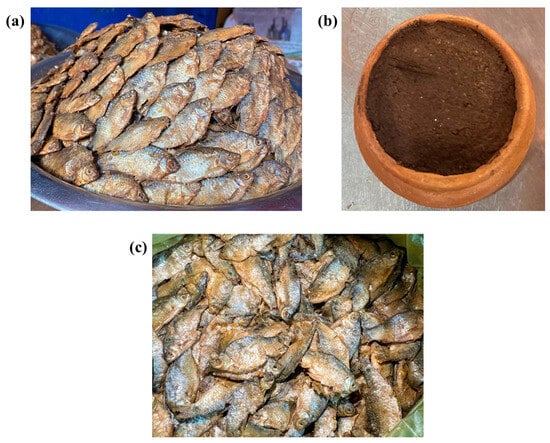
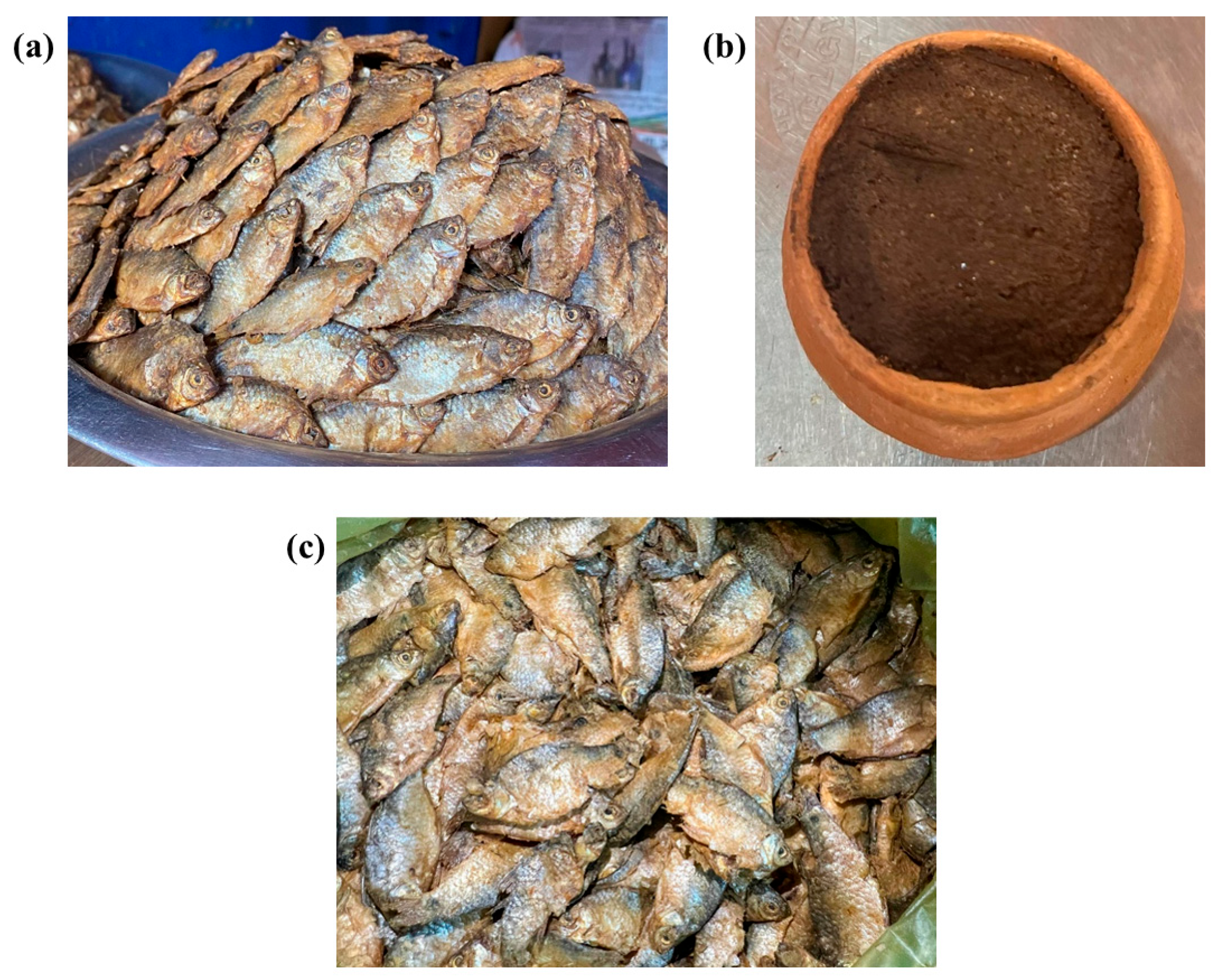
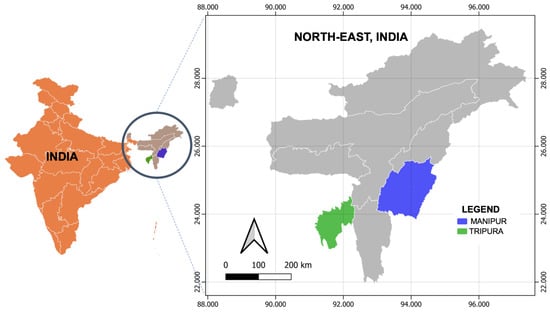
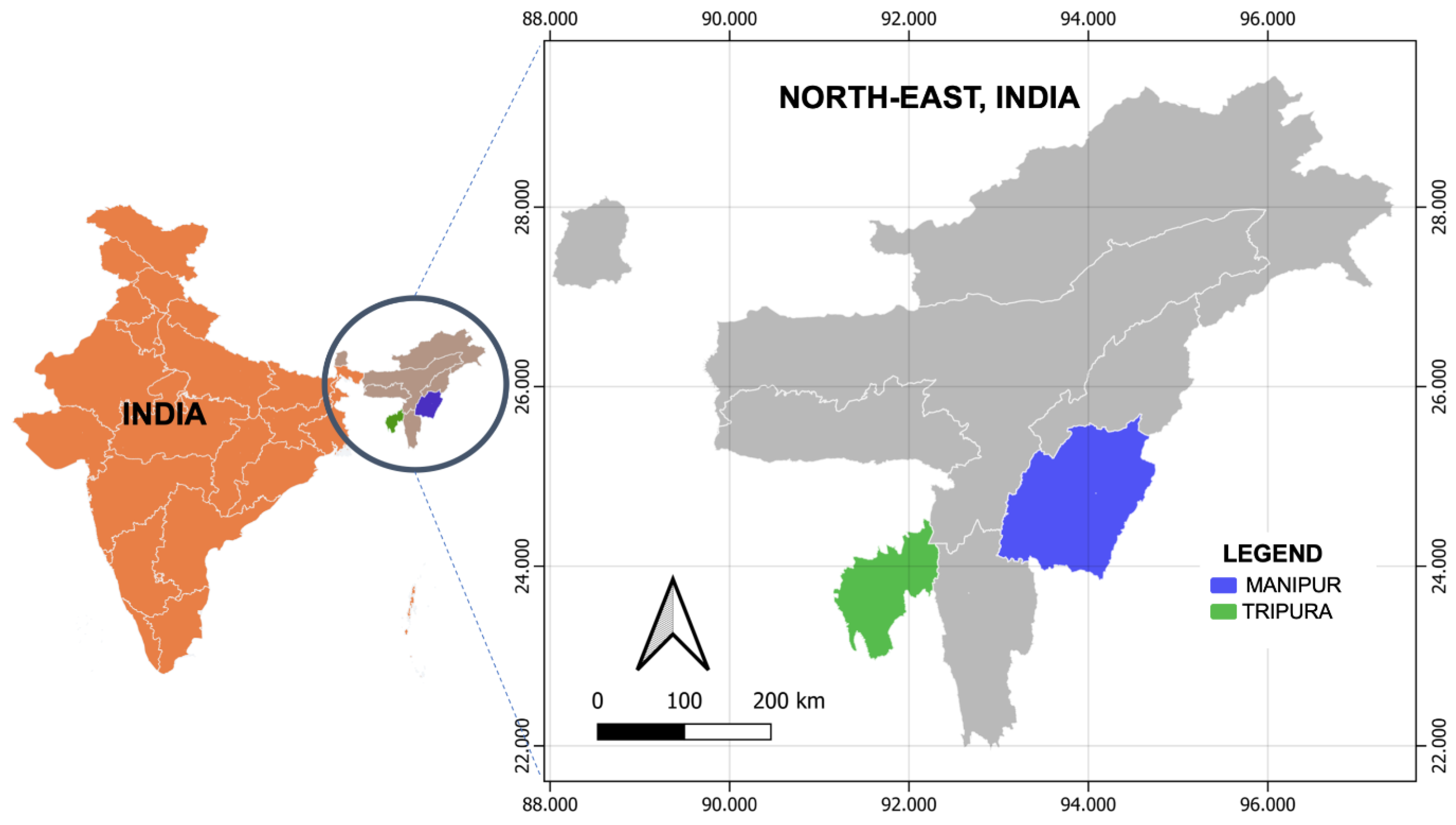
Three traditionally fermented fish products: (i) Ngari, (ii) Hentak, and (iii) Shidal (Figure 1) were collected from different regions of Northeast India (Figure 2). In total, 81 samples were obtained, with three subsamples collected per vendor. The sampling included Ngari from 12 vendors and Hentak from 4 vendors across local markets in Manipur, and Shidal from 11 vendors in various markets in Tripura. The number of samples collected for each product varied due to differences in the availability of these traditional products across local markets. All samples were wrapped in aluminum foil, sealed in airtight zip-lock pouches, and transported to the laboratory of the Fish Processing Technology Department at ICAR–Central Institute of Fisheries Education (CIFE), Mumbai, India. Upon arrival, subsamples (≈100 g each) from each vendor were pooled and homogenized by grinding to generate a composite sample, which was stored in a desiccator until analysis. This composite sampling approach was adopted to obtain a representative average sample per vendor for market-level assessment of MP contamination.
Figure 1.
Images of ethnic fermented fish products of Northeast India used in this study: (a) Ngari, (b) Hentak, and (c) Shidal.
Figure 2.
Map showing the sampling locations of traditional fermented fish products in Northeast India. Ngari and Hentak were sampled from Manipur (indicated in blue), while Shidal was sampled from Tripura (indicated in green).
2.2. Proximate Composition Analysis
The proximate composition of the fermented fish samples, including moisture, protein, lipid, and ash content, was analyzed following the standard protocols outlined by the Association of Official Analytical Chemists (AOAC) [32]. Moisture content was measured using a moisture analyzer (Sartorius, Mumbai, India. Ash content was determined by incineration in a muffle furnace (EXPO HI-TECH, i-therm AL-7941, Mumbai, India) at 550 °C for 6–7 h. Crude protein content was quantified using a Micro-Kjeldahl apparatus (Pelican, Kelplus-Kelvac VA, Mumbai, India), while lipid content was extracted using a Soxhlet apparatus (EXPO HI-TECH, Soxhlet extraction heater mantle type, Mumbai, India) with petroleum ether as the solvent.
2.3. Sample Processing for MPs
The samples were processed following the methodology described by Rukmangada et al. [33], with minor modifications. Briefly, 1 g of the fermented fish sample was digested in concentrated nitric acid (69%) using dried digestion tubes. The digestion process was carried out at 50 °C in a water bath for three days, ensuring complete sample digestion. The digested solution was subsequently diluted with filtered distilled water and filtered under vacuum using a nitrocellulose membrane filter (Axiva cellulose nitrate membrane, pore size: 0.45 µm, diameter: 47 mm). The filters containing MP particles were treated with sonication-assisted density separation using sodium iodide (4.4 M) for 5 min at 50 Hz to detach the MP particles from the filter [34]. The sodium iodide solution was then centrifuged at 500 RCF for 5 min, and the supernatant was filtered again through a 0.45 µm nitrocellulose membrane filter. Finally, the filters were transferred to glass Petri dishes and dried at 40 °C for 3 h before further analysis.
2.4. Observation, Identification, and Characterization of MPs
The dried nitrocellulose membrane filters were observed under a trinocular stereo zoom microscope (Olympus SZX16) to detect the presence of MPs. The MPs were identified and categorized based on their morphological characteristics, including shape (fragments and fibers), color (transparent, black, red, brown, and green), and size ranges (<50 µm, 51–100 µm, 101–300 µm, 301–700 µm, 701–1000 µm, and >1001 µm) [33]. Particles exhibiting sharp, irregular edges and broken structures were classified as fragments, whereas particles with uniform width along their length and without tapering were classified as fibers [35].
2.5. Polymer Type Identification of MPs
A subset (approximately 15%) of the total identified MPs was randomly selected for polymer type identification. Prior to Laser Raman Spectroscopy (LRS) analysis, the selected MPs were transferred from the nitrocellulose membrane filters to glass fiber filters (HiMedia SF115A, diameter: 47 mm, pore size: 1.5 µm) using sonication-assisted density separation, as described in Section 2.3, to avoid spectral interference from the nitrocellulose substrate during polymer identification. Polymer identification was then performed using LRS operating at a 532 nm wavelength, and the acquired spectra were matched and identified using the Open Specy database.
2.6. Contamination Prevention and Quality Control
Strict quality control measures were implemented throughout the study to prevent contamination of MPs from airborne sources and other potential contaminants [33,35,36]. Fermented fish samples were wrapped in aluminum foil, sealed in zip-lock airtight pouches, and stored in a desiccator until analysis. All procedures were conducted in a laboratory with restricted access to minimize contamination. Researchers wore cotton aprons to prevent airborne contamination and the transfer of synthetic fibers from their clothing. Work surfaces were routinely cleaned with alcohol, and hands and forearms were sanitized with alcohol prior to sample handling.
Chemical solutions and distilled water were pre-filtered through a 0.45 µm pore size filter paper to remove particulate contaminants. During sample processing (Section 2.3), procedural blank controls were performed to simulate the entire processing steps without the inclusion of fish tissue samples, ensuring monitoring of potential contamination from laboratory reagents, equipment, or airborne particles. No detectable MPs were observed in the blanks, thereby confirming the procedural integrity. All utensils and equipment were meticulously cleaned with filtered distilled water before and after use to prevent MP contamination.
2.7. Statistical Analysis
Data are expressed as mean ± standard deviation (SD). Homogeneity of variance was confirmed using Levene’s test (p > 0.05), justifying the use of one-way analysis of variance (ANOVA) despite unequal sample sizes. Accordingly, differences in MPs abundance among fermented fish products were analyzed using one-way ANOVA, followed by Duncan’s Multiple Range Test (DMRT) at p < 0.05. Principal Component Analysis (PCA) was employed to explore relationships among different MP characteristics and to reduce data dimensionality while preserving maximum variance [35]. One-way ANOVA, DMRT, and PCA were performed using SPSS software (version 23.0 for Windows). Pearson correlation analysis between MP characteristics and proximate composition parameters was conducted using Origin software (Version 2025).
3. Results and Discussion
3.1. Proximate Composition
Supplementary Table S1 presents the proximate composition of the ethnic fermented fish products analyzed in this study. In Ngari, the moisture content ranged from 32.28% to 36.74%, protein content from 37.65% to 38.93%, lipid content from 15.35% to 17.76%, and ash content from 9.15% to 10.97%. For Hentak, the moisture content varied between 33.08% and 36.94%, protein content between 36.77% and 38.82%, lipid content between 16.32% and 17.53%, and ash content between 9.92% and 10.55%. Similarly, in Shidal, the moisture content ranged from 36.70% to 45.28%, protein content from 35.77% to 39.89%, lipid content from 10.36% to 14.40%, and ash content from 9.28% to 12.08%.
These findings are consistent with previous studies on the same products. Majumdar et al. [2] reported proximate compositions for Ngari and Hentak that closely align with the current observations. They documented moisture contents of 29.72% in Ngari and 35.0% in Hentak, crude protein contents of 42.87% in Ngari and 37.63% in Hentak, and lipid contents of 13.51% in Ngari and 9.91% in Hentak. Devi et al. [37] also reported the proximate composition of Ngari, which included 29.8% moisture, 52.9% protein, 18.2% lipid, and 12.9% ash. Similarly, Keishing and Banu [38] noted 33.5% moisture, 34.1% protein, 13.0% lipid, and 21.1% ash in Ngari samples.
For Shidal, the findings are in agreement with the data reported by Majumdar et al. [8], who recorded moisture, protein, and lipid contents of 38.26%, 36.84%, and 14.30%, respectively, for Punti Shidal, and 43.48%, 36.75%, and 7.85%, respectively, for Phasa Shidal. Gupta et al. [39] also documented 35.65% moisture, 33.95% protein, 11.8% lipid, and 15.43% ash in Shidal samples.
3.2. Abundance of MPs in Fermented Fish Products
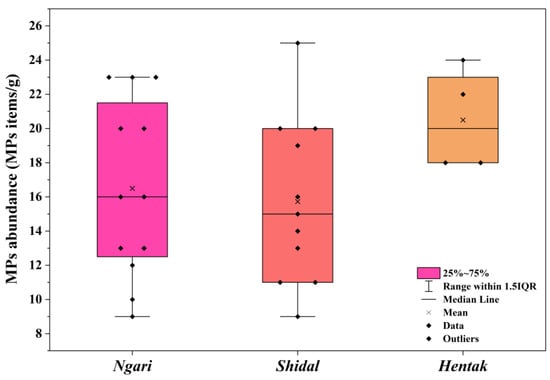
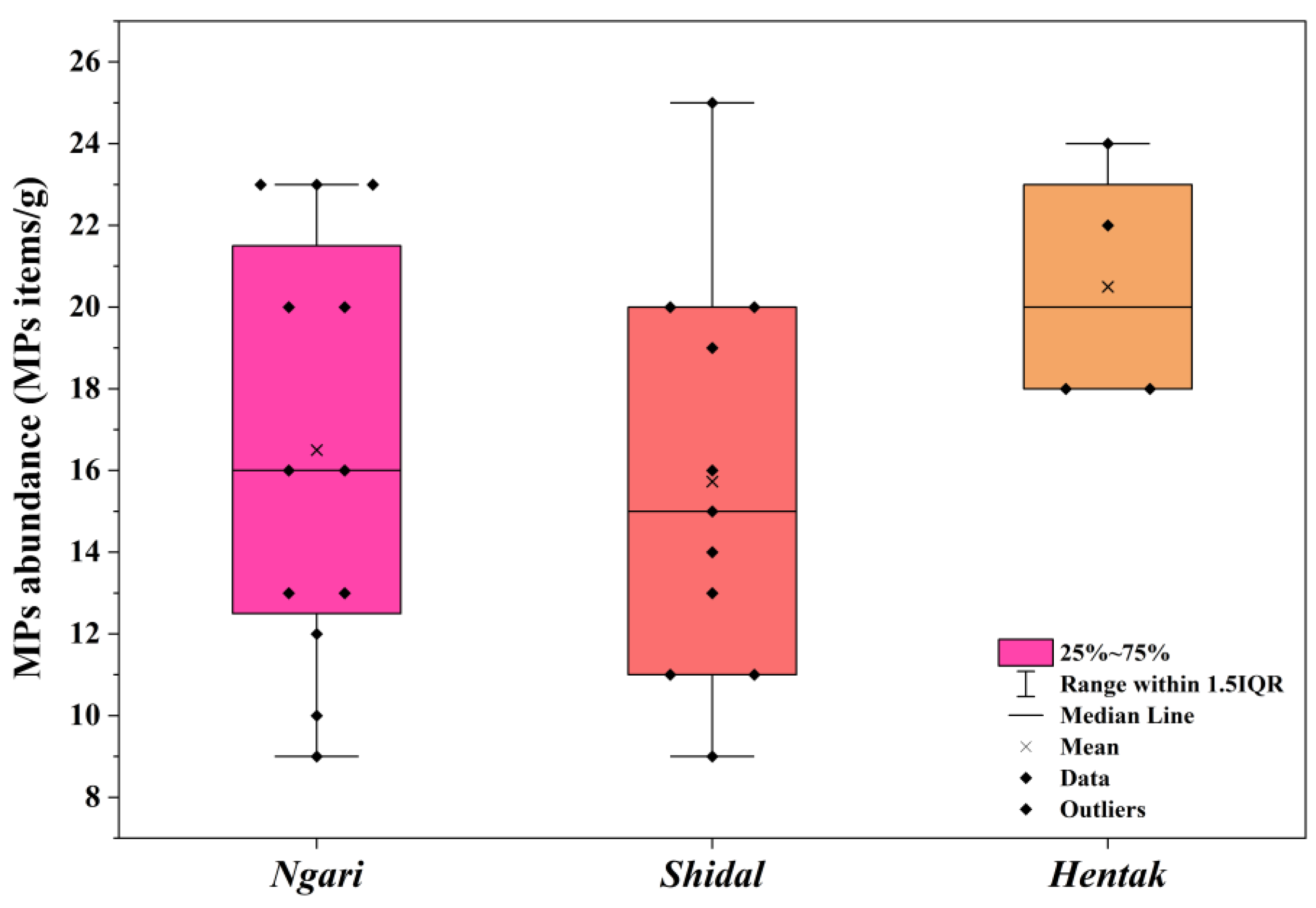
The abundance of MPs in various ethnic fermented fish products from Northeast India is presented in Figure 3. A total of 198 MP particles were identified in Ngari samples, 173 MP particles in Shidal samples, and 82 MP particles in Hentak samples. The average MP abundance was 16.50 ± 5.18 MPs/g in Ngari, 15.73 ± 4.83 MPs/g in Shidal, and 20.50 ± 3.00 MPs/g in Hentak. One-way ANOVA followed by Duncan’s multiple range test showed no significant difference in MPs abundance among Ngari, Shidal, and Hentak (p > 0.05), indicating comparable contamination levels across products despite differences in processing form. However, among the products analyzed, Hentak exhibited the highest average MP abundance despite having the fewest samples. This may be associated with differences in preparation practices, as Hentak is a paste-based product that involves crushing sun-dried fish into powder [2,3], potentially increasing opportunities for secondary contamination. Other factors, including raw material sourcing, packaging methods, or contact with contaminated surfaces during fermentation, may also contribute; however, these aspects were not directly evaluated in the present study and should therefore be regarded as hypotheses rather than confirmed causes.
Figure 3.
Boxplot showing the abundance of microplastics (MPs items/g) in fermented fish samples collected from different locations of NEH regions of India. The plot highlights the median, interquartile range (25–75%), mean, data, and outliers.
In contrast, Ngari and Shidal showed a similar pattern of variability but lower average MP abundance, which may be related to their production methods, as both products are fermented using whole fish without prior conversion into a paste. Overall, the presence of higher MP levels in these fermented fish products may be influenced by multiple factors, including (i) the use of whole fish, with the gastrointestinal tract and gills known to act as major accumulation sites for MPs in aquatic organisms; (ii) potential contamination during traditional processing, which lacks standardized measures to limit plastic exposure; and (iii) atmospheric deposition during retail, as these products are commonly sold in open-air market conditions. Additionally, differences in regional environmental pollution, freshwater sources, and local anthropogenic activities between Manipur and Tripura may also contribute to the observed variability in MP abundance among the products.
As this study represents the first report of MP contamination in fermented fish products, direct comparisons with similar foods are not currently possible; therefore, the observed MP levels are discussed in relation to freshwater fish, marine seafood, and other processed fish products reported in previous studies. The prevalence of MPs in fermented fish appears to be lower compared to seafood, specifically fish from marine environments. For instance, Debbarma et al. [40] reported MP abundances of 21.74 ± 7.47 MPs/g and 22.57 ± 8.51 MPs/g in the gastrointestinal tract and gills, respectively, of croaker fish (Johnius dussumieri) collected from the coastal waters off Mumbai, India. Similarly, Gurjar et al. [41] reported a MP abundance of 28.84 ± 10.13 MPs/g in the gastrointestinal tract of golden anchovy (Coilia dussumieri) from the northeastern coast of the Arabian Sea. In another study, Gurjar et al. [42] observed significantly higher MP concentrations in the gastrointestinal tract of shrimps, with an average abundance of 70.32 ± 34.67 MPs/g of gut material.
In processed fish products, such as salt-cured and sun-dried fish, MP contamination is higher. For example, Rukmangada et al. [33] reported an average MP abundance of 44.54 ± 9.7 MPs/g in marine dried fish products along the Indian West Coast. Similarly, Hasan et al. [43] found high levels of MPs in dried fish from Kuakata, Bangladesh, with 41.33 MPs/g in Bombay duck and 46.00 MPs/g in ribbon fish. Additionally, Palanisamy et al. [44] reported an average MP abundance of 45.99 ± 11.24 MPs/g in salt-cured fish along the Indian East Coast. These findings indicate that while MP contamination in fermented fish is significant, it is comparatively lower than that observed in seafood and more extensively processed fish, such as dried or salt-cured varieties. The comparatively lower MP abundance observed in fermented fish products may be attributed to differences in raw material sources and post-harvest handling conditions. Unlike dried or salt-cured fish, which are typically subjected to prolonged open-air drying and repeated environmental exposure, fermented fish are stored under relatively enclosed and anaerobic conditions that may limit additional atmospheric deposition during processing and storage. Moreover, the freshwater origin and smaller size of the fish used for fermentation, together with limited contact with plastic-intensive processing steps, may further contribute to the lower MP loads reported in these products. Importantly, the present results establish baseline MP abundance levels for ethnic fermented fish products, which have not been previously documented, thereby filling a critical knowledge gap in food-related microplastic research.
Recent studies on freshwater fish from Northeast India provide a useful baseline for interpreting the observed MP levels in fermented fish products [45,46,47]. For example, Bora et al. [46] reported an average MP abundance of 20.08 ± 4.97 MPs/g in the gastrointestinal tract of Puntius sophore collected from Thekera beel wetland, Assam, while Borah et al. [47] documented widespread MP contamination in freshwater fishes from the Ramsar Wetland, Loktak, in Manipur. These values are comparable to the MP abundances observed in the present study, suggesting that a substantial proportion of MPs detected in fermented fish products may originate from the raw fish itself, particularly due to the inclusion of the gastrointestinal tract during fermentation.
The absence of prior studies on MP in fermented fish products underscores the novelty of these findings and highlights the need for future research to establish reference values, assess dietary exposure, and evaluate potential health risks associated with long-term consumption of traditional fermented foods.
A limitation of the present study is the unequal number of samples among the fermented fish products, which reflects differences in their regional availability and market scale. Accordingly, cross-product comparisons should be interpreted with caution, while the results remain robust within each product category. It should also be noted that pooling subsamples into composite samples may mask within-vendor variability; therefore, the results reflect average contamination levels rather than fine-scale heterogeneity among individual subsamples. In addition, detailed information on raw material sourcing, packaging practices, and handling conditions was not collected, which limits definitive attribution of contamination sources. A methodological limitation of this study is that the use of concentrated nitric acid for sample digestion, although necessary to ensure complete removal of organic matter, may partially alter or degrade certain MP polymers, potentially leading to an underrepresentation of acid-sensitive polymer types in the final analysis.
3.3. Characteristics of MPs Based on Size
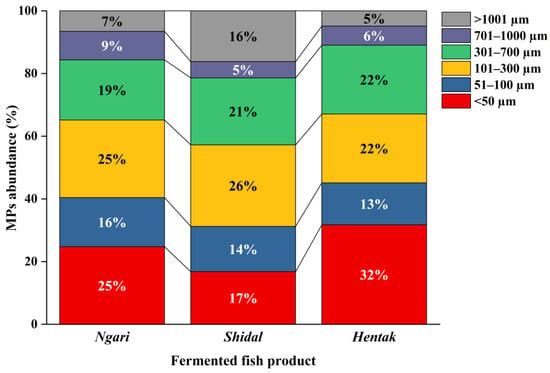
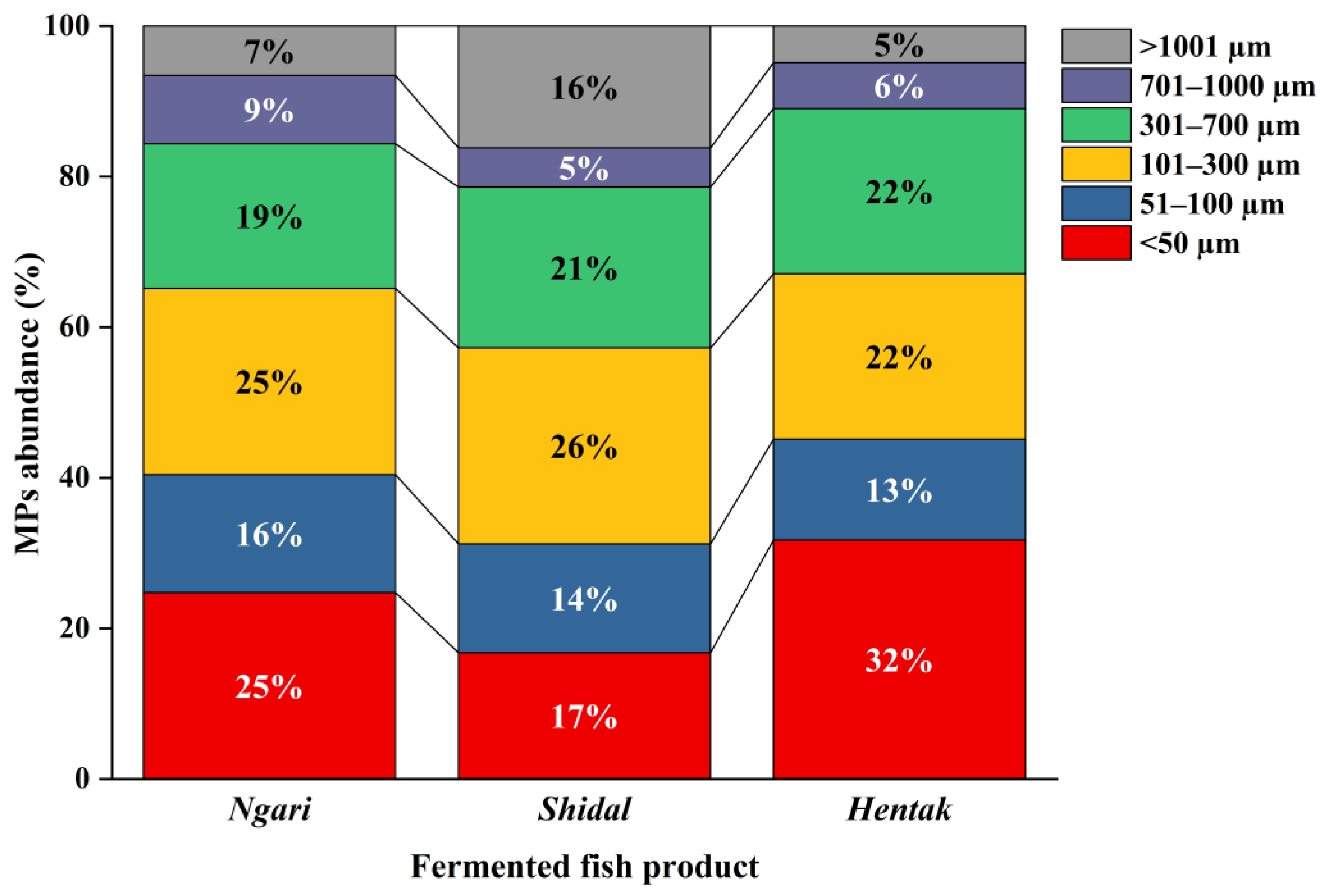
Figure 4 presents the size-wise distribution of MPs in different ethnic fermented fish products. MPs in the 101–300 µm size range were the most abundant in Ngari and Shidal, contributing 25% and 26%, respectively, to the total MP count in these products. In contrast, Hentak displayed a different pattern, with MPs in the <50 µm size range being the most prevalent, accounting for 32% of the total MPs. Notably, Ngari samples also exhibited a significant proportion (25%) of MPs in the <50 µm range, suggesting the presence of both larger and smaller MP fragments in this product.
Figure 4.
Size distribution of MPs in different ethnic fermented fish products of Northeast India.
The predominance of MPs in the 101–300 µm range in Ngari and Shidal may reflect the fragmentation of larger plastic debris during the preparation or handling processes, potentially introduced through contact with processing equipment or packaging materials. In Hentak, the higher abundance of smaller MPs (<50 µm) might be attributed to greater exposure to degraded plastic particles or the use of finely processed raw ingredients. As Hentak is a paste-based product, its preparation involves finely powdering the sun-dried raw materials using a mortar and pestle [3], which could contribute to the prevalence of smaller microplastic fragments. Smaller MPs are often more pervasive in food products due to their ease of incorporation from contaminated sources or handling practices.
Similar trends have been reported in seafood, where MPs in the 100–300 µm range dominate due to the mechanical and chemical fragmentation of larger plastic particles in marine environments [41,42,48]. However, the substantial presence of smaller MPs (<50 µm) in Hentak raises significant concerns. These particles are known to pose a higher risk of biological accumulation and translocation into tissues, which could have implications for food safety and human health.
The observed variations in MP size distribution across these products highlight the influence of different production methods and environmental exposures. These findings emphasize the need for targeted interventions to minimize plastic contamination during the production and packaging of traditional fermented fish products, alongside broader strategies to reduce environmental plastic pollution.
3.4. Characteristics of MPs Based on Shape/Morphotype
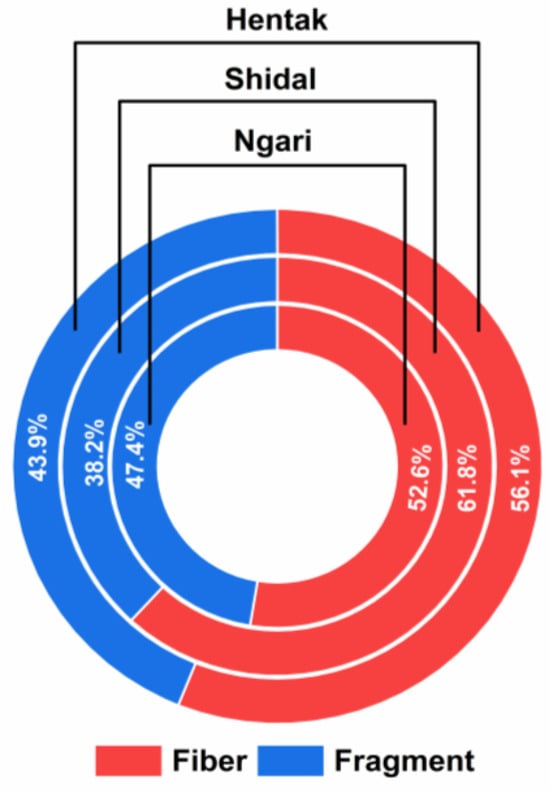
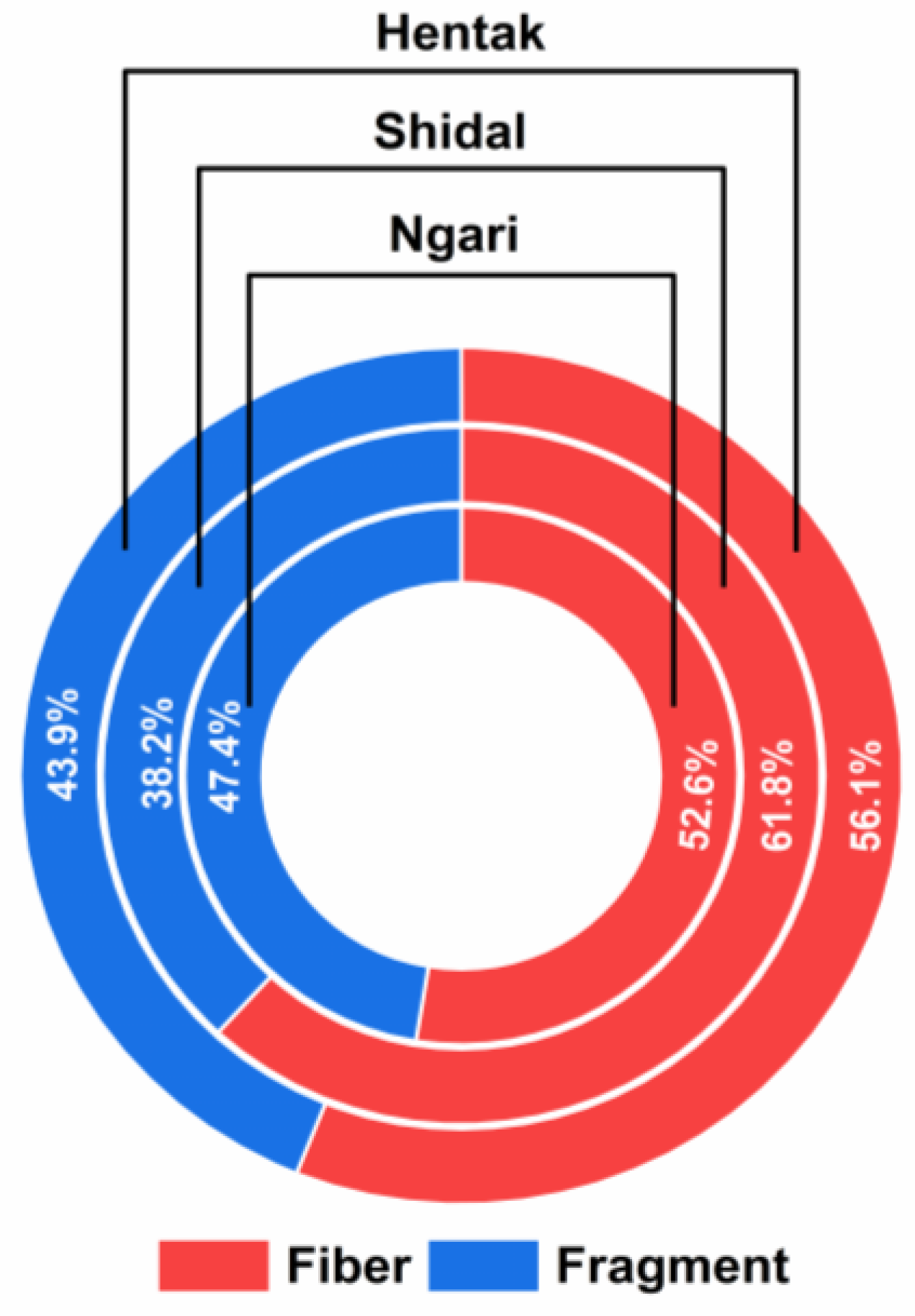
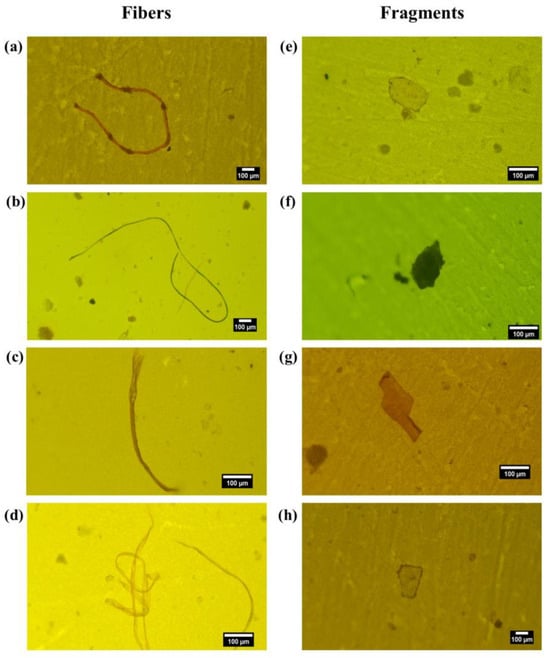
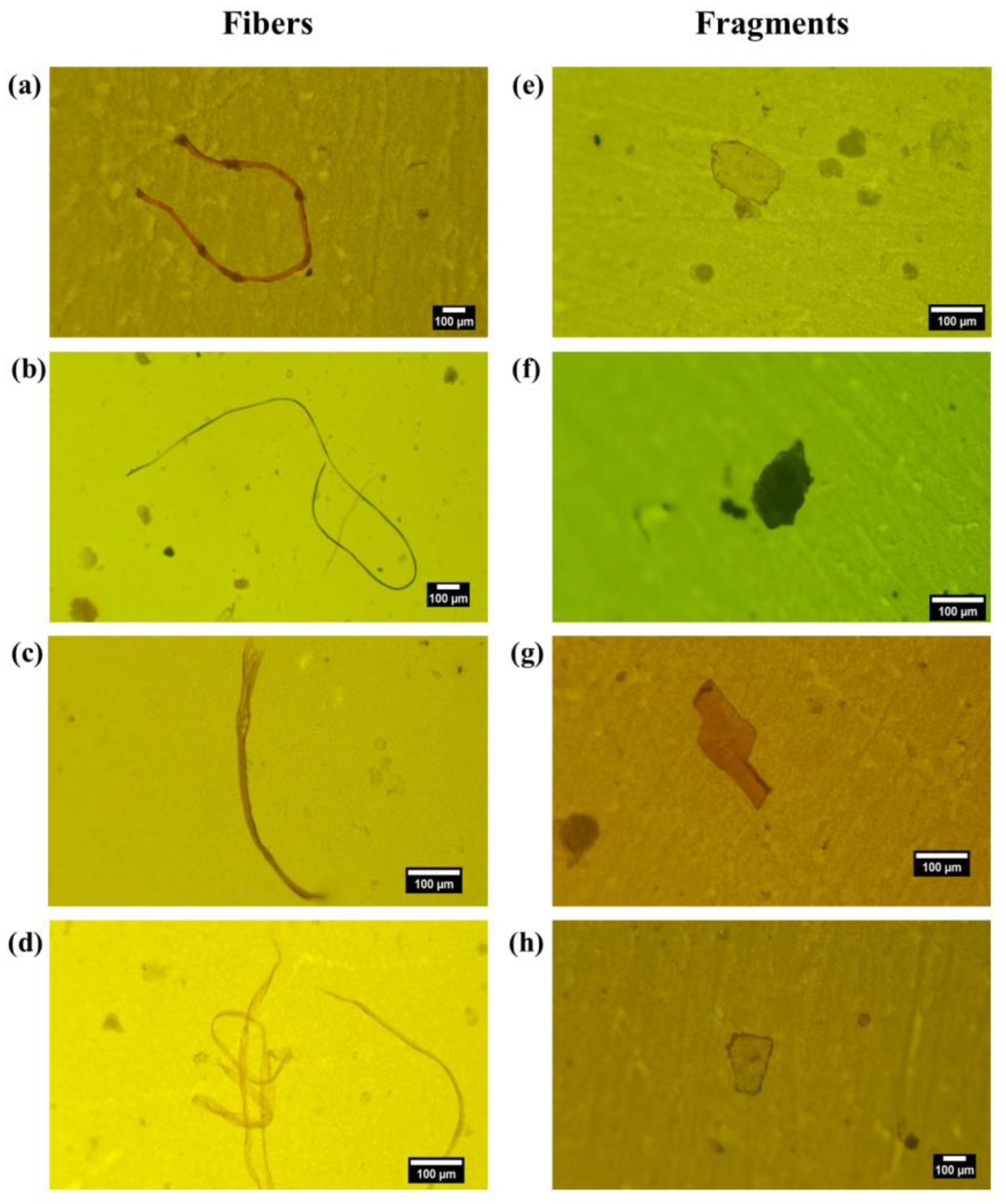
Only two morphotypes of MPs, fibers and fragments, were detected in the analyzed ethnic fermented fish products. The distribution of MP morphotypes across different products, along with their microscopic images, is presented in Figure 5 and Figure 6, respectively. Among the identified morphotypes, fibers were consistently the most prevalent across all samples, accounting for 52.6%, 61.8%, and 56.1% of the total MPs in Ngari, Shidal, and Hentak, respectively. Conversely, fragments comprised 47.4%, 38.2%, and 43.9% of the MPs in these products, respectively.
Figure 5.
Microplastic morphotype characteristics of different ethnic fermented fish products.
Figure 6.
Different morphotypes of MPs observed under the microscope: (a–d) Fibers. (e–h) Fragments.
Previous studies have also indicated predominance of fibers and fragment morphotype MPs in marine fish [41], freshwater fish [46], and processed fish [33,44]. The higher abundance of fibers may reflect their ubiquity in the environment, potentially originating from synthetic textiles [49], fishing nets or ropes [50], which can contaminate the raw materials or processing environments of these products. Synthetic textiles used by workers during fermented fish processing could also be the source of fibers in fermented fish products. In addition, wastewater treatment plants (WWTPs) are recognized as major point sources of microfiber pollution [51,52], as synthetic textile fibers are inefficiently removed during treatment processes and can enter freshwater systems, subsequently contributing to fiber-type MP contamination in fish and fish-based products.
Fragments, on the other hand, originate from the degradation of larger plastic materials through processes such as photodegradation, physical abrasion, and other environmental factors [25]. The presence of fragments in fermented fish suggests additional pathways of MP contamination, including direct ingestion by the fish used as raw material and secondary contamination during processing and marketing. These findings underscore the widespread nature of MP pollution and emphasize the need for further investigation into the sources and pathways contributing to contamination in traditional food products.
From a source-pathway perspective, the predominance of fiber-shaped MPs is more indicative of post-harvest inputs such as atmospheric deposition and handling during traditional processing and open-air retail, where fibers are known to dominate. In contrast, fragment-type MPs are more plausibly linked to primary ingestion by freshwater fish and subsequent transfer to the final product due to the use of whole fish, including the gastrointestinal tract.
3.5. Characteristics of MPs Based on Color
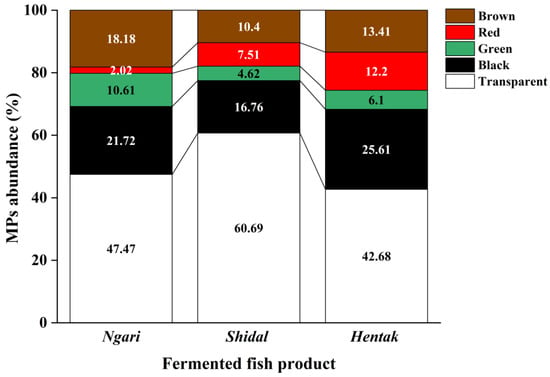
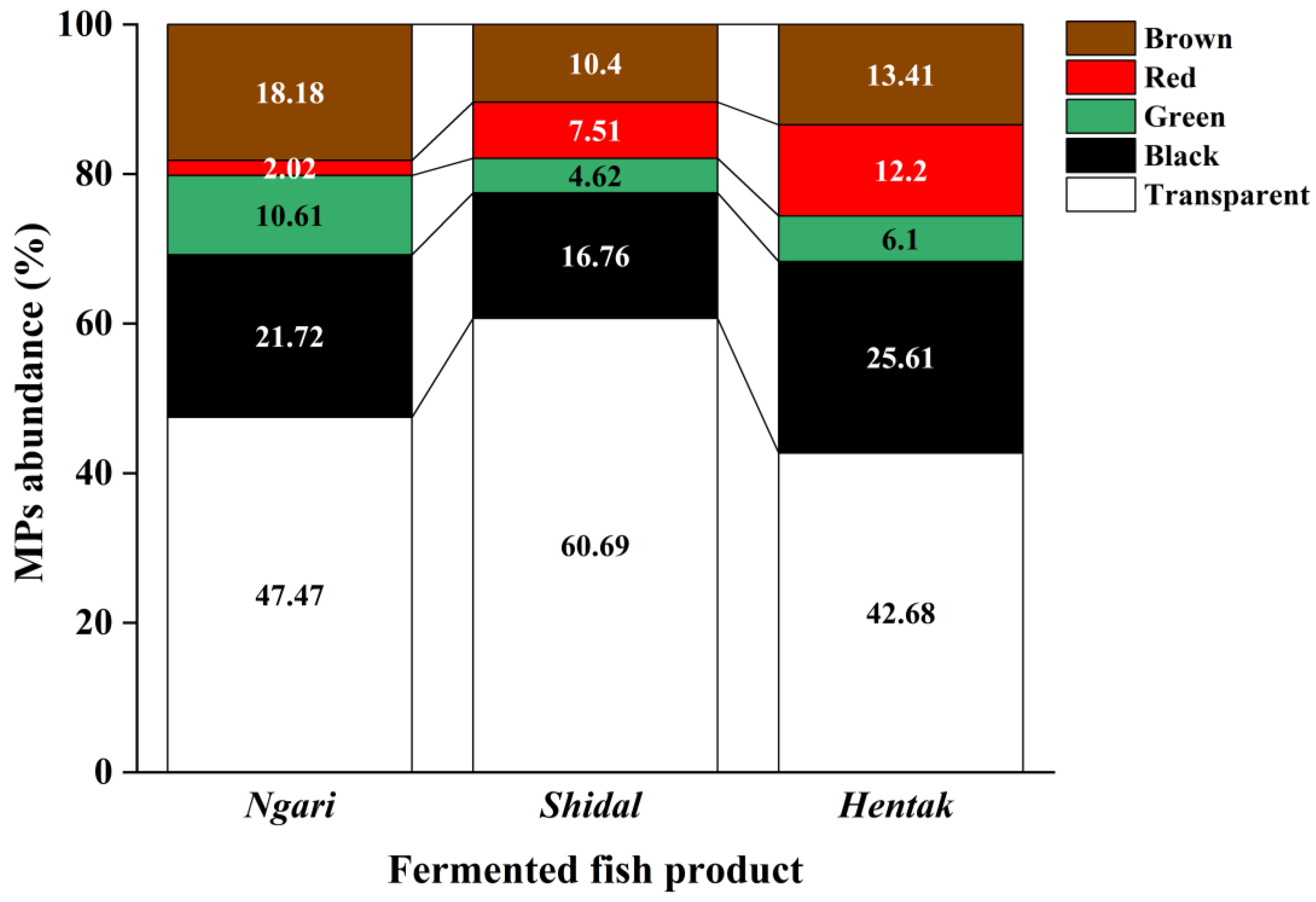
The color-wise distribution of MPs in various ethnic fermented fish products is illustrated in Figure 7. Five distinct MP colors were identified: transparent, black, green, red, and brown. Among these, transparent MPs were the most dominant across all samples. In Ngari, transparent MPs accounted for 47.47% of the total, followed by black (21.72%), brown (18.18%), green (10.61%), and red (2.02%). A similar trend was observed in Shidal, where transparent MPs constituted 60.69%, followed by red (16.76%), brown (10.40%), black (7.51%), and green (4.62%). In Hentak, transparent MPs remained the most abundant at 42.68%, followed by black (25.61%), brown (13.41%), red (12.20%), and green (6.10%).
Figure 7.
Color characteristics of MPs in ethnic fermented fish products.
The predominance of transparent or translucent MPs may indicate widespread environmental exposure to transparent polymeric materials, such as polyethylene films and packaging materials, which degrade into smaller MPs over time [53]. Additionally, the dominance of transparent MPs could be attributed to discoloration resulting from prolonged weathering [54], as well as changes in plastic additives under the influence of physical factors [55]. Transparent and translucent MPs were also reported in high abundance in previous studies on processed fish and freshwater fish species [33,46]. The notable presence of black and brown MPs could be attributed to the weathering or fragmentation of dark-colored plastics like tire particles, fishing nets, ropes, or containers used in fish processing and storage. Red and green MPs, though less abundant, suggest contributions from colored synthetic materials potentially used in food processing equipment or packaging.
The variation in color distribution among products could be influenced by differences in their processing methods, raw material sources, and environmental exposure during production. These findings underscore the complexity of MP contamination in traditional foods and the need for targeted studies to trace the origins of MPs and mitigate their entry into the food chain.
3.6. Polymer Type Identification of MPs
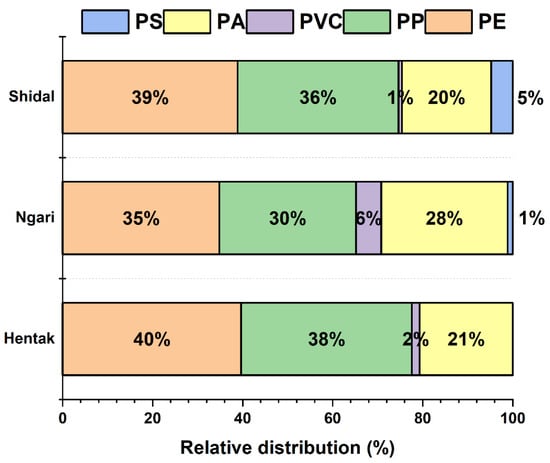
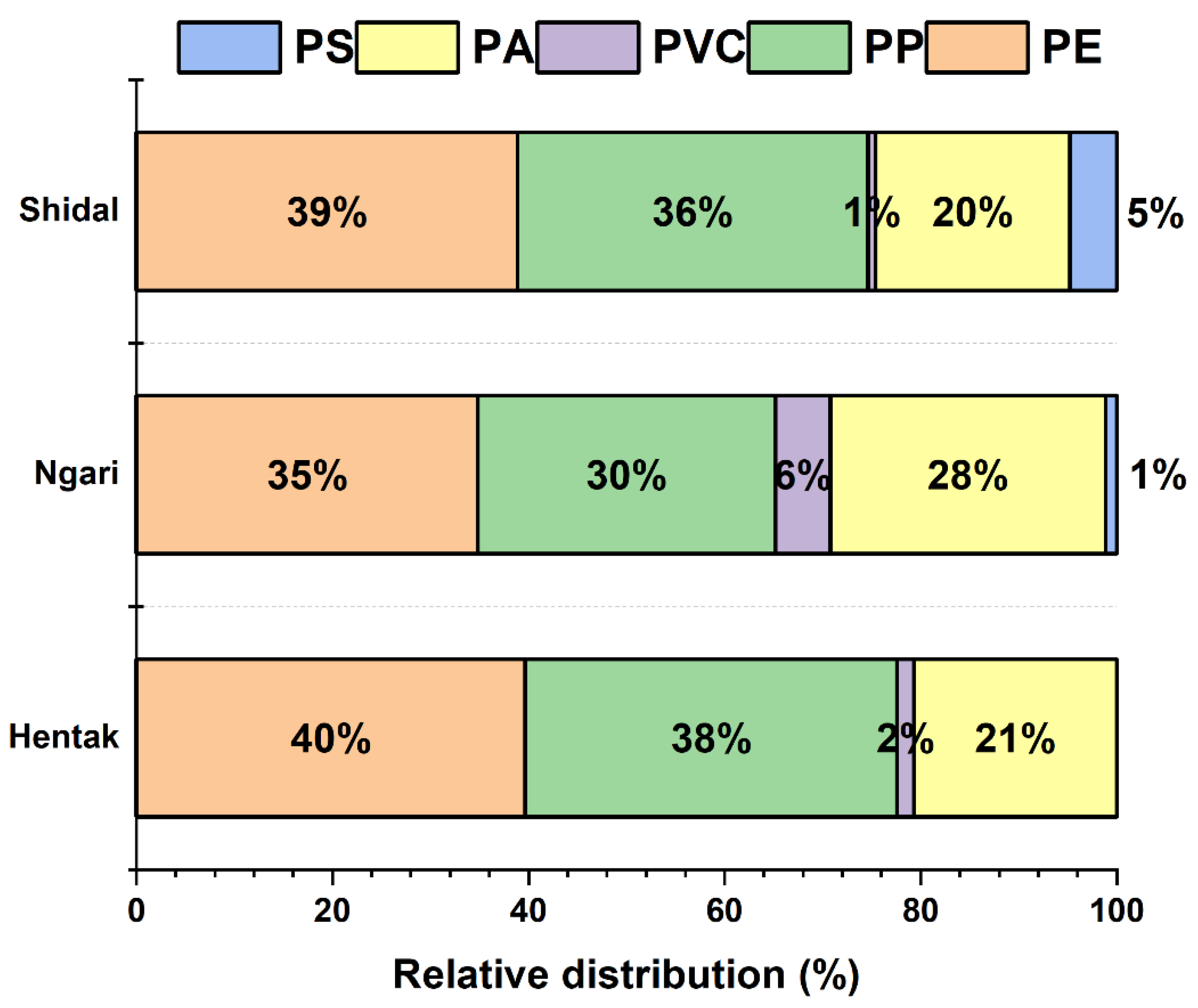
Following the initial characterization of MPs through visual identification under a trinocular stereo zoom microscope, a subset of MPs was randomly selected for polymer type identification using Laser Raman Spectroscopy (LRS). The LRS analysis confirmed the presence of various polymer types in the ethnic fermented fish products, including polystyrene (PS), polyamide (PA), polyvinyl chloride (PVC), polypropylene (PP), and polyethylene (PE) (Figure 8).
Figure 8.
Polymer types of the identified MPs from fermented fish products.
Among the identified polymers, PE was the most prevalent across all three products, accounting for 35%, 39%, and 40% of the total MPs in Ngari, Shidal, and Hentak, respectively. PP was the second most abundant polymer, with proportions of 30%, 36%, and 38% in Ngari, Shidal, and Hentak, respectively. PA was also frequently detected, contributing 28% in Ngari, 20% in Shidal, and 21% in Hentak. PVC was present in lower proportions (6% in Ngari, 1% in Shidal, and 2% in Hentak), while PS was detected only in Ngari (1%) and Shidal (5%).
The dominance of PE and PP among the identified MPs aligns with their widespread use in plastic packaging, food containers, fishing gear, and household products. These polymers are highly persistent in the environment due to their resistance to degradation, making them common pollutants in aquatic and food systems [56,57]. The presence of PA, often associated with synthetic textiles [58] and fishing nets [59], suggests that fiber-based contamination may contribute significantly to MP pollution in these traditional fermented fish products. Although PVC and PS were found in lower concentrations, their detection is noteworthy, as PVC is known for its potential to leach hazardous additives [60], while PS can break down into smaller fragments, increasing its bioavailability and potential toxicity [61].
The variation in polymer composition across different products may be influenced by differences in processing techniques, storage conditions, and environmental exposure. These findings highlight the urgent need for further investigation into the pathways through which MPs enter fermented fish products and the potential risks they pose to human health. Implementing stricter plastic waste management practices and promoting sustainable packaging alternatives could help mitigate MP contamination in traditional food products.
It should be noted that polymer composition was determined for a representative subset of the identified MPs (~15%) due to analytical constraints; therefore, the reported polymer distribution reflects dominant polymer types rather than an exhaustive characterization of all particles present.
3.7. Correlation, Principal Component, and Cluster Analysis
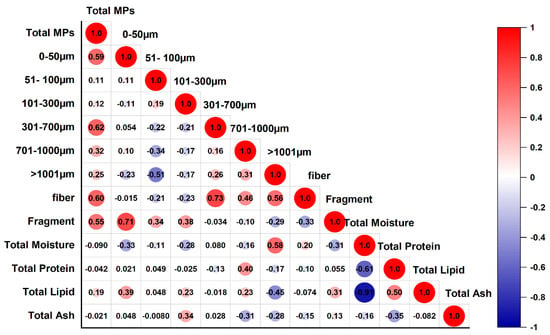
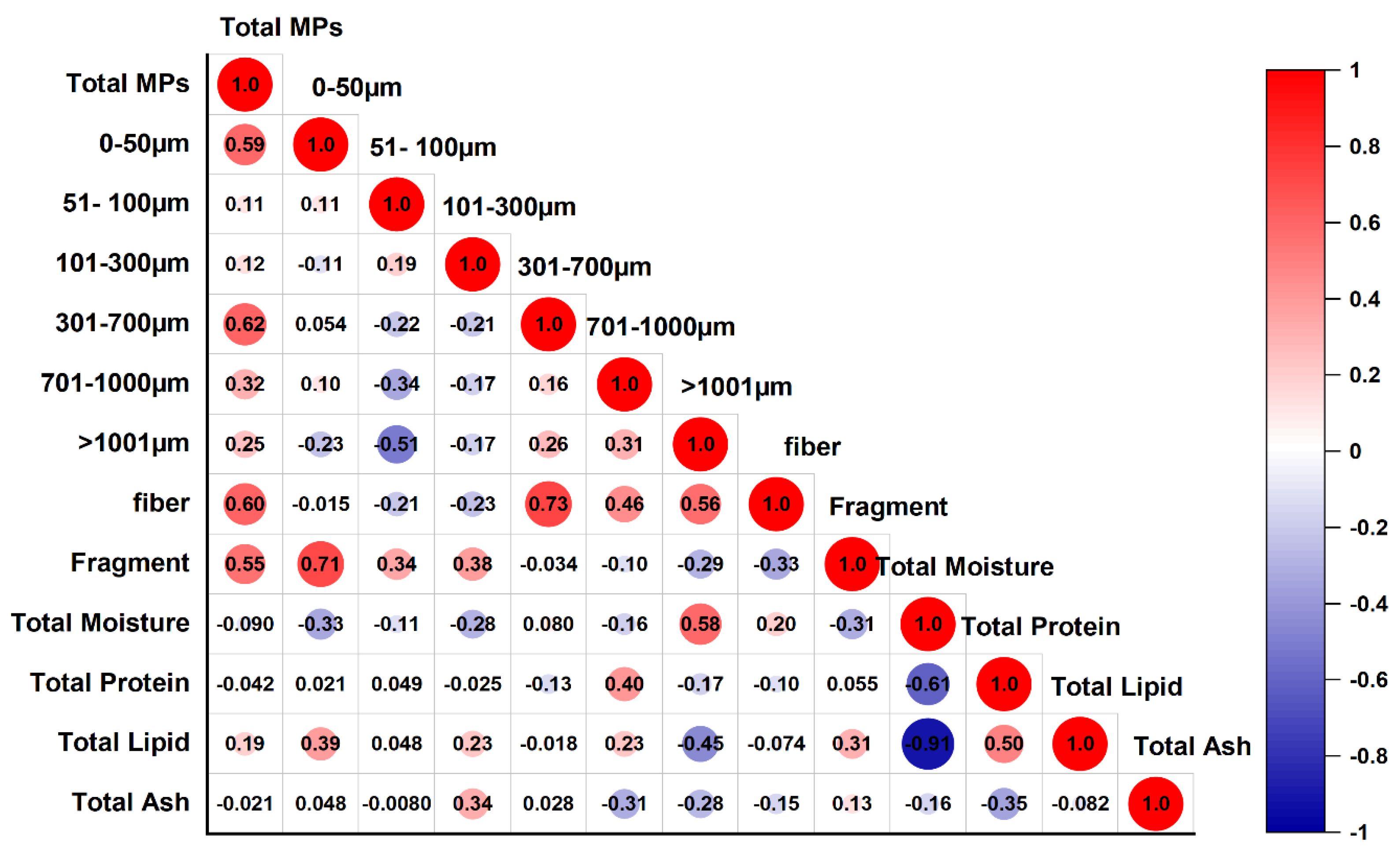
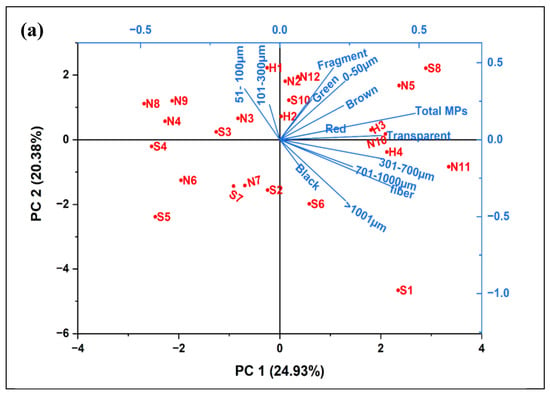
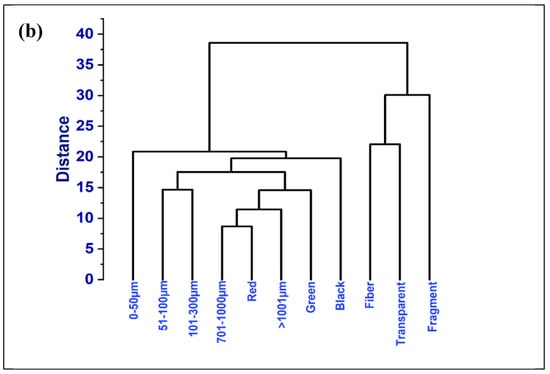
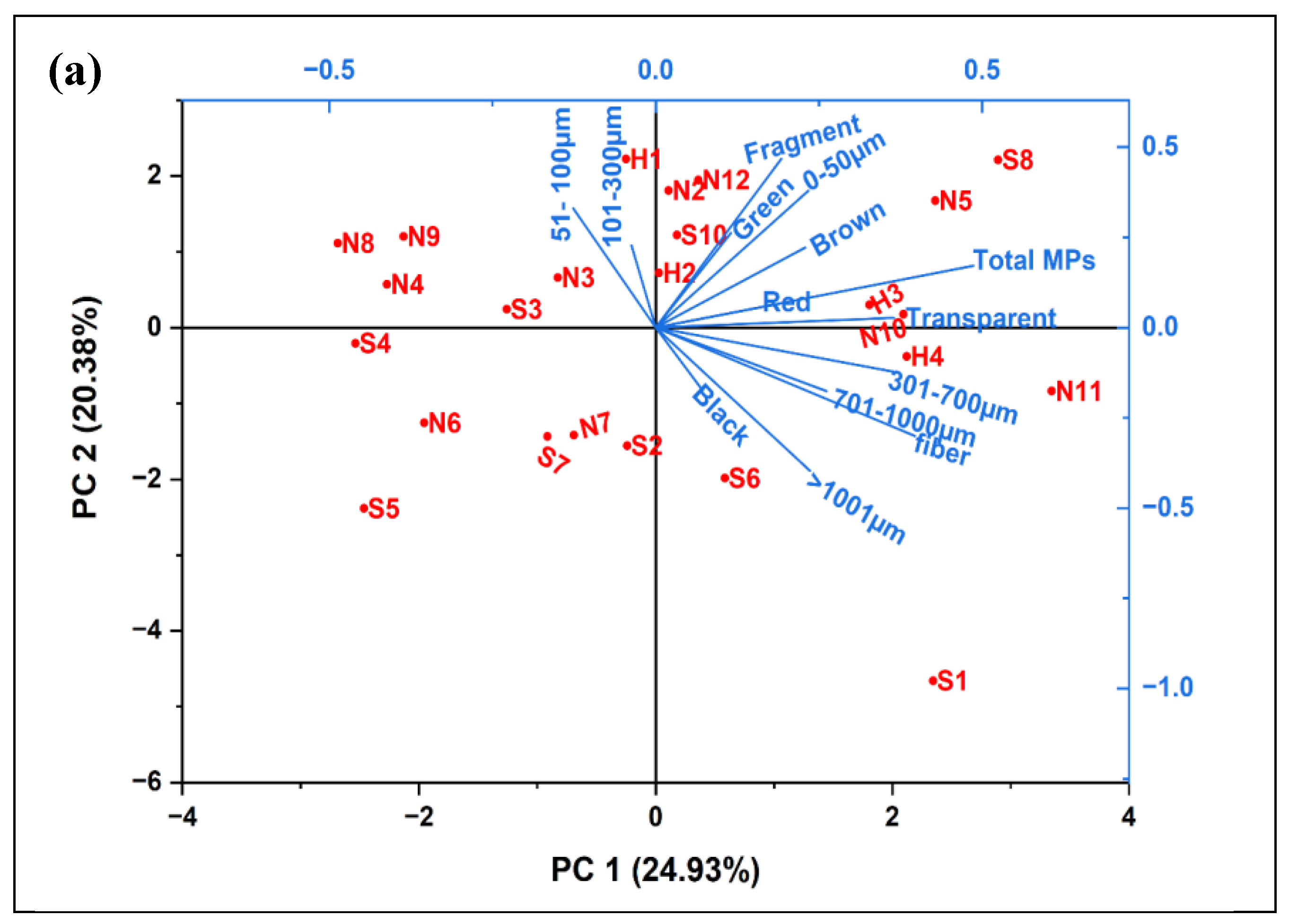
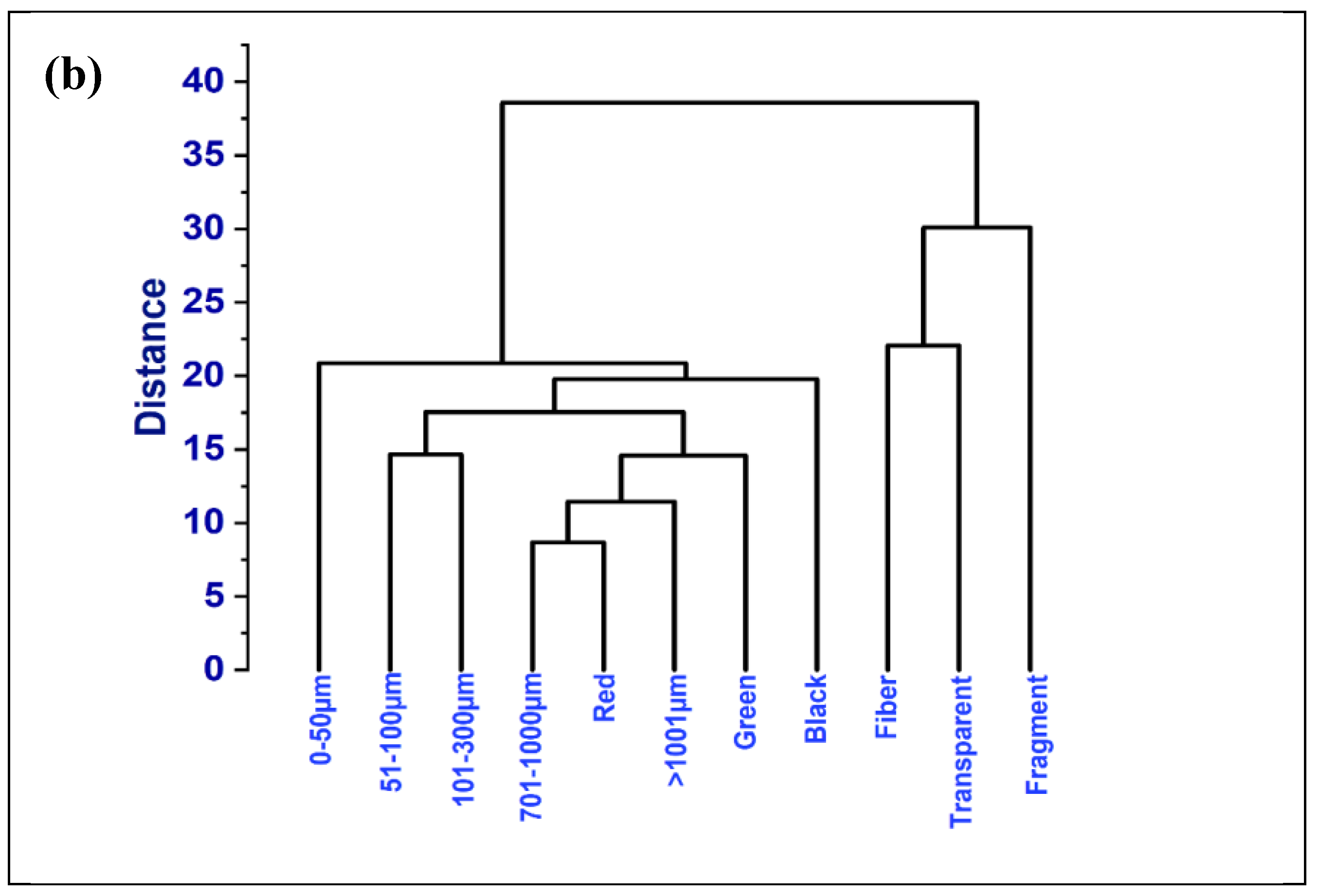
The Pearson correlation between MPs abundance and proximate composition parameters, including protein, lipid, moisture, and ash content, in diverse seafood reveals complex interactions that demand detailed investigation. In the present study, correlation analysis shows a weak positive correlation between total lipid content and MP counts. In contrast, other parameters such as protein, moisture, and ash content exhibited weak negative correlations with the total number of MPs (Figure 9). These findings have a significant contrast to previous research findings, where positive correlations between lipid content and MP numbers have been reported in the literature. These variations may be attributed to several factors, such as the continuous accumulation of MPs throughout multiple stages of the food processing chain, includes potential contamination from MPs-containing ingredients that were incorporated into all three types of fermented food products examined in our investigation, suggesting a more complex contamination pathway than previously understood. To gain deeper insights into these relationships, we employed Principal Component Analysis (Figure 10a), which gives complex interactions between variables [62]. The analysis revealed that the first two principal components accounted for 45.31% of the total variance, with PC1:24.93% and PC2:20.38% of the variation. This statistical approach unveiled several significant patterns in our dataset that deserve attention. Notably, Sample H1 exhibited a distinct positive correlation with MPs in the size range of 101–300 µm, suggesting a significant accumulation of smaller MP particles in this sample. Furthermore, samples H4 and N10 demonstrated strong positive correlations with both the 301–700 µm size range and transparent MPs, indicating a potential relationship between particle size and optical properties in these samples. The Cluster analysis provided additional insights (Figure 10b), revealing that MPs in the larger size range of 701–1000 µm showed a remarkable clustering pattern with red-colored MPs, potentially indicating a source-specific contamination pathway or degradation process. In particular, the majority of fiber-type MPs displayed transparent characteristics, which could have significant implications for understanding their sources.
Figure 9.
Correlation plot showing the relation between MPs characteristics and proximate composition of different ethnic fermented fish products.
Figure 10.
(a) PCA plot showing the relation between different ethnic fermented fish products, (b) Hierarchical clustering dendrogram.
4. Conclusions
This study provides the first systematic evidence of MP contamination in the ethnic fermented fish products Ngari, Hentak, and Shidal of Northeast India. MPs were detected in all samples, with clear variation in abundance, size classes, morphotypes, and polymer composition. Despite these variations, statistical analysis revealed no significant differences in overall MP abundance among Ngari, Shidal, and Hentak (p > 0.05), indicating broadly comparable contamination levels across the fermented fish products studied. The predominance of fibers and fragments, along with the high occurrence of PE, PP, and PA, indicates multiple contamination pathways, including ingestion of MPs by raw fish, atmospheric deposition, and exposure during traditional, non-standardized processing and retail practices. Although MP levels in these products were lower than those reported for dried and salt-cured fish, the presence of smaller MP particles, particularly in the paste-based product (Hentak), raises concern due to their greater potential for ingestion and tissue translocation. Such enhanced translocation of fine MPs may increase systemic exposure, raising concerns regarding long-term food safety, especially under habitual consumption. These findings demonstrate that MP contamination extends beyond marine systems into freshwater-derived, culturally significant fermented foods, highlighting a previously overlooked exposure route for consumers. Addressing this emerging food safety concern requires improved handling practices, minimized plastic contact during fermentation, and strengthened waste management in production environments. Future research should quantify human exposure from repeated consumption of MP-contaminated fermented foods and evaluate potential toxicological impacts. Such efforts are essential for informing risk assessment frameworks and guiding mitigation strategies to ensure the sustainability and safety of traditional food systems. Given the pervasive nature of MPs in the environment, their detection in fermented fish products is not unexpected. Importantly, the MP concentrations observed in this study were lower than those reported for several seafood and other processed fish products. Therefore, while the presence of MPs in ethnic fermented fish products warrants continued monitoring and mitigation efforts, the observed concentrations do not indicate an immediate cause for public panic but rather call for informed risk assessment and improved plastic management practices.
Supplementary Materials
The following supporting information can be downloaded at: https://www.mdpi.com/article/10.3390/microplastics5010051/s1. Table S1: Proximate composition of different ethnic fermented fish products analyzed in this study.
Author Contributions
Conceptualization, S.N. and K.A.M.X.; methodology, S.N., M.M.N., S.V., T.K. and R.D.; software, S.N., M.M.N. and S.B.S.; validation, K.A.M.X., S.K.S. and G.N.; formal analysis, S.K.S. and G.N.; investigation, S.N., M.M.N., S.V., T.K. and R.D.; resources, K.A.M.X. and G.N.; data curation, K.A.M.X. and S.K.S.; writing—original draft preparation, S.N.; writing—review and editing, K.A.M.X., M.M.N., S.B.S. and S.K.S.; visualization, S.K.S. and G.N.; supervision, K.A.M.X. and G.N.; project administration, G.N. All authors have read and agreed to the published version of the manuscript.
Funding
This research received no external funding.
Institutional Review Board Statement
Not applicable.
Informed Consent Statement
Not applicable.
Data Availability Statement
The raw data supporting the conclusions of this article will be made available by the authors on request.
Acknowledgments
The authors express their gratitude to the Directors of ICAR—Central Institute of Fisheries Education, Mumbai, and ICAR—Central Institute of Fisheries Technology, Kochi, for their support and provision of necessary facilities for this research.
Conflicts of Interest
The authors declare no conflicts of interest.
References
- Das, M.; Ojha, A.K.; Sarmah, P.; Gogoi, D.; Dolma, K.G.; Majumdar, T.; Hazarika, S.C.; Modi, D.; Chowdhury, G.; Konwar, C.; et al. Ethnic foods of Northeast India: Insight into the light of food safety. BMC Public Health 2024, 24, 3258. [Google Scholar] [CrossRef] [Scilit]
- Majumdar, R.K.; Bejjanki, S.K.; Roy, D.; Shitole, S.; Saha, A.; Narayan, B. Biochemical and microbial characterization of Ngari and Hentaak-traditional fermented fish products of India. J. Food Sci. Technol. 2015, 52, 8284–8291. [Google Scholar] [CrossRef] [Scilit]
- Kabui, K.K.; Rawson, A.; Athmaselvi, K.A. Selected fermented foods of Manipur, India: Traditional preparation methods, nutritional profile, and health benefits. Food Chem. Adv. 2024, 6, 100864. [Google Scholar] [CrossRef] [Scilit]
- Ngasotter, S.; Waikhom, D.; Mukherjee, S.; Devi, M.S.; Singh, A.S. Diversity of lactic acid bacteria (LAB) in fermented fish products: A review. Int. J. Curr. Microbiol. Appl. Sci. 2020, 9, 2238–2249. [Google Scholar] [CrossRef] [Scilit]
- Ngasotter, S.; Waikhom, D.; Sharma, S.; Meitei, M.M.; Mangang, Y.A.; Irungbam, S.K.; Bhuneshwar; Devi, M.S.; Singh, A.S. Characteristics and mechanism of potential probiotics with special reference to lactic acid bacteria from traditional fermented fish products: A review. J. Exp. Biol. Agric. Sci. 2021, 9, 263–275. [Google Scholar] [CrossRef] [Scilit]
- Thapa, N. Ethnic fermented and preserved fish products of India and Nepal. J. Ethn. Foods 2016, 3, 69–77. [Google Scholar] [CrossRef] [Scilit]
- Muzaddadi, A.U.; Basu, S. Shidal-a traditional fermented fishery product of Northeast India. Indian J. Tradit. Knowl. 2012, 11, 323–328. [Google Scholar]
- Majumdar, R.K.; Roy, D.; Bejjanki, S.; Bhaskar, N. Chemical and microbial properties of shidal, a traditional fermented fish of Northeast India. J. Food Sci. Technol. 2016, 53, 401–410. [Google Scholar] [CrossRef] [Scilit]
- Majumdar, R.K.; Roy, D.; Bejjanki, S.; Bhaskar, N. An overview of some ethnic fermented fish products of the Eastern Himalayan region of India. J. Ethn. Foods 2016, 3, 276–283. [Google Scholar] [CrossRef] [Scilit]
- Ahmed, S.; Dora, K.C.; Sarkar, S.; Chowdhury, S.; Ganguly, S. Quality analysis of shidal-a traditional fermented fish product of Assam, North-East India. Indian J. Fish 2013, 60, 117–123. [Google Scholar]
- Singh, S.S.; De Mandal, S.; Mathipi, V.; Ghatak, S.; Kumar, N.S. Traditional fermented fish harbors bacteria with potent probiotic and anticancer properties. Biocatal. Agric. Biotechnol. 2018, 15, 283–290. [Google Scholar] [CrossRef] [Scilit]
- Wu, J.; Lai, M.; Zhang, Y.; Li, J.; Zhou, H.; Jiang, R.; Zhang, C. Microplastics in the digestive tracts of commercial fish from the marine ranching in east China sea, China. Case Stud. Chem. Environ. Eng. 2020, 2, 100066. [Google Scholar] [CrossRef] [Scilit]
- Pappoe, C.; Palm, L.M.N.D.; Denutsui, D.; Boateng, C.M.; Danso-Abbeam, H.; Serfor-Armah, Y. Occurrence of microplastics in gastrointestinal tract of fish from the Gulf of Guinea, Ghana. Mar. Pollut Bull. 2022, 182, 113955. [Google Scholar] [CrossRef] [Scilit]
- Parker, B.; Andreou, D.; Green, I.D.; Britton, J.R. Microplastics in freshwater fishes: Occurrence, impacts and future perspectives. Fish Fish. 2021, 22, 467–488. [Google Scholar] [CrossRef] [Scilit]
- Parvin, F.; Jannat, S.; Tareq, S.M. Abundance, characteristics and variation of microplastics in different freshwater fish species from Bangladesh. Sci. Total Environ. 2021, 784, 147137. [Google Scholar] [CrossRef] [Scilit] [PubMed]
- Sapkale, D.; Banot, P.; Pandit, S. Qualitative and quantitative analysis of microplastics in the surface waters and freshwater fish from four important lakes in Pune, India. Water Air Soil Pollut. 2024, 235, 474. [Google Scholar] [CrossRef] [Scilit]
- Pandey, N.; Verma, R.; Patnaik, S.; Anbumani, S. Abundance, characteristics, and risk assessment of microplastics in indigenous freshwater fishes of India. Environ. Res. 2023, 218, 115011. [Google Scholar] [CrossRef] [Scilit] [PubMed]
- Sarkar, S.; Diab, H.; Thompson, J. Microplastic pollution: Chemical characterization and impact on wildlife. Int. J. Environ. Res. Public Health 2023, 20, 1745. [Google Scholar] [CrossRef] [Scilit] [PubMed]
- Mukherjee, S.; Ngasotter, S.; Singh, S.K.; Meitei, M.M. Microplastic Pollution in Aquatic Environment: Ecotoxicological Effects and Bioremediation Prospects. In Current Status of Marine Water Microbiology; Soni, R., Suyal, D.C., Morales-Oyervides, L., Fouillaud, M., Eds.; Springer: Singapore, 2023; pp. 297–324. [Google Scholar] [CrossRef] [Scilit]
- Wagner, M.; Scherer, C.; Alvarez-Muñoz, D.; Brennholt, N.; Bourrain, X.; Buchinger, S.; Fries, E.; Grosbois, C.; Klasmeier, J.; Marti, T.; et al. Microplastics in freshwater ecosystems: What we know and what we need to know. Environ Sci. Eur. 2014, 26, 12. [Google Scholar] [CrossRef] [Scilit]
- Yang, L.; Zhang, Y.; Kang, S.; Wang, Z.; Wu, C. Microplastics in soil: A review on methods, occurrence, sources, and potential risk. Sci. Total Environ. 2021, 780, 146546. [Google Scholar] [CrossRef] [Scilit]
- Zhang, Y.; Kang, S.; Allen, S.; Allen, D.; Gao, T.; Sillanpää, M. Atmospheric microplastics: A review on current status and perspectives. Earth-Sci. Rev. 2020, 203, 103118. [Google Scholar] [CrossRef] [Scilit]
- Smith, M.; Love, D.C.; Rochman, C.M.; Neff, R.A. Microplastics in seafood and the implications for human health. Curr. Environ. Health Rep. 2018, 5, 375–386. [Google Scholar] [CrossRef] [Scilit]
- Karami, A.; Golieskardi, A.; Keong Choo, C.; Larat, V.; Galloway, T.S.; Salamatinia, B. The presence of microplastics in commercial salts from different countries. Sci. Rep. 2017, 7, 46173. [Google Scholar] [CrossRef] [Scilit]
- Basaran, B.; Özçifçi, Z.; Kanbur, E.D.; Akçay, H.T.; Gül, S.; Bektaş, Y.; Aytan, Ü. Microplastics in honey from Türkiye: Occurrence, characteristic, human exposure, and risk assessment. J. Food Compos. Anal. 2024, 135, 106646. [Google Scholar] [CrossRef] [Scilit]
- Koelmans, A.A.; Nor, N.H.M.; Hermsen, E.; Kooi, M.; Mintenig, S.M.; De France, J. Microplastics in freshwaters and drinking water: Critical review and assessment of data quality. Water Res. 2019, 155, 410–422. [Google Scholar] [CrossRef] [Scilit] [PubMed]
- Jin, M.; Wang, X.; Ren, T.; Wang, J.; Shan, J. Microplastics contamination in food and beverages: Direct exposure to humans. J. Food Sci. 2021, 86, 2816–2837. [Google Scholar] [CrossRef] [Scilit]
- Giri, S.; Lamichhane, G.; Khadka, D.; Devkota, H.P. Microplastics contamination in food products: Occurrence, analytical techniques and potential impacts on human health. Curr. Res. Biotechnol. 2024, 7, 100190. [Google Scholar] [CrossRef] [Scilit]
- Guzzetti, E.; Sureda, A.; Tejada, S.; Faggio, C. Microplastic in marine organism: Environmental and toxicological effects. Environ. Toxicol. Pharmacol. 2018, 64, 164–171. [Google Scholar] [CrossRef] [Scilit]
- Mallik, A.; Xavier, K.M.; Naidu, B.C.; Nayak, B.B. Ecotoxicological and physiological risks of microplastics on fish and their possible mitigation measures. Sci. Total Environ. 2021, 779, 146433. [Google Scholar] [CrossRef] [Scilit]
- Zhao, B.; Rehati, P.; Yang, Z.; Cai, Z.; Guo, C.; Li, Y. The potential toxicity of microplastics on human health. Sci. Total Environ. 2024, 912, 168946. [Google Scholar] [CrossRef] [Scilit] [PubMed]
- AOAC. Official Methods of Analysis, 13th ed.; Association of Official Analytical Chemists: Gaithersburg, MD, USA, 2005. [Google Scholar]
- Rukmangada, R.; Naidu, B.C.; Nayak, B.B.; Balange, A.; Chouksey, M.K.; Xavier, K.M. Microplastic contamination in salted and sun-dried fish and implications for food security–A study on the effect of location, style and constituents of dried fish on microplastics load. Mar. Pollut. Bull. 2023, 191, 114909. [Google Scholar] [CrossRef] [Scilit]
- Naidu, B.C.; Xavier, K.M.; Shukla, S.P.; Jaiswar, A.K.; Nayak, B.B. Comparative study on the microplastics abundance, characteristics, and possible sources in yellow clams of different demographic regions of the northwest coast of India. J. Hazard. Mater. Lett. 2022, 3, 100051. [Google Scholar] [CrossRef] [Scilit]
- Kesavan, S.; Xavier, K.M.; Nair, M.M.; Gurjar, U.R.; Sukla, S.P.; Jaiswar, A.K.; Bhusan, S.; Azeez, S.A.; Deshmukhe, G. Assessment of secondary microplastics trapped in mangrove ecosystem of a highly populated tropical megacity, India. J. Hazard. Mater. Adv. 2025, 17, 100587. [Google Scholar] [CrossRef] [Scilit]
- Venkatesh, S.; Naidu, B.C.; Palanisamy, S.; Ngasotter, S.; Shaju, S.S.; Porayil, L.; Balange, A.; Nayak, B.B.; Xavier, K.M. Microplastic accumulation dynamics and risk assessment in dried fish processed with sea salt at different salting ratios. J. Hazard. Mater. Adv. 2024, 14, 100415. [Google Scholar] [CrossRef] [Scilit]
- Devi, K.R.; Deka, M.; Jeyaram, K. Bacterial dynamics during yearlong spontaneous fermentation for production of Ngari, a dry fermented fish product of Northeast India. Int. J. Food Microbiol. 2015, 199, 62–71. [Google Scholar] [CrossRef] [Scilit]
- Keishing, S.; Banu, T. Fermented fish (Ngari) of Manipur–preparation technique and its potential as a functional food ingredient. Elixir Food Sci. 2015, 85, 34502–34507. [Google Scholar]
- Gupta, S.; Mohanty, U.; Majumdar, R.K. Isolation and characterization of lactic acid bacteria from traditional fermented fish product Shidal of India with reference to their probiotic potential. LWT 2021, 146, 111641. [Google Scholar] [CrossRef] [Scilit]
- Debbarma, N.; Gurjar, U.R.; Ramteke, K.K.; Shenoy, L.; Nayak, B.B.; Bhushan, S.; Geethalakshmi, V.; Xavier, M. Abundance and characteristics of microplastics in gastrointestinal tracts and gills of croaker fish (Johnius dussumieri) from off Mumbai coastal waters of India. Mar. Pollut. Bull. 2022, 176, 113473. [Google Scholar] [CrossRef] [Scilit] [PubMed]
- Gurjar, U.R.; Xavier, K.M.; Shukla, S.P.; Deshmukhe, G.; Jaiswar, A.K.; Nayak, B.B. Incidence of microplastics in gastrointestinal tract of golden anchovy (Coilia dussumieri) from northeast coast of Arabian Sea: The ecological perspective. Mar. Pollut. Bull. 2021, 169, 112518. [Google Scholar] [CrossRef] [Scilit]
- Gurjar, U.R.; Xavier, M.; Nayak, B.B.; Ramteke, K.; Deshmukhe, G.; Jaiswar, A.K.; Shukla, S.P. Microplastics in shrimps: A study from the trawling grounds of northeastern part of Arabian Sea. Environ. Sci. Pollut. Res. 2021, 28, 48494–48504. [Google Scholar] [CrossRef] [Scilit]
- Hasan, J.; Islam, S.M.; Alam, M.S.; Johnson, D.; Belton, B.; Hossain, M.A.R.; Shahjahan, M. Presence of microplastics in two common dried marine fish species from Bangladesh. Mar. Pollut. Bull. 2022, 176, 113430. [Google Scholar] [CrossRef] [Scilit]
- Palanisamy, S.; Naidu, B.C.; Venkatesh, S.; Porayil, L.; Balange, A.K.; Nayak, B.B.; Shaju, S.; Xavier, M. Microplastic contamination in salt-cured fish and commercial sea salts: An emerging food safety threat in relation to UN Sustainable Development Goals (SDGs). Environ. Sci. Pollut. Res. 2024, 31, 30688–30702. [Google Scholar] [CrossRef] [Scilit]
- Ahmed, M.; Phukan, B.; Talukdar, A.; Ahmed, I.; Sarma, J.; Ali, A.; Gogoi, R.; Borah, K.; Xavier, M. Assessment of microplastic contamination in the gastrointestinal tracts of indigenous fishes from northeastern hill regions of Bhogdoi, a tributary of River Brahmaputra, India. Environ. Sci. Pollut. Res. 2023, 30, 121124–121137. [Google Scholar] [CrossRef] [Scilit] [PubMed]
- Bora, G.; Phukan, B.; Talukdar, A.; Ahmed, I.; Chutia, S.J.; Gogoi, R.; Sarma, J.; Ali, A.; Gowala, T.; Xavier, K.M. Assessment and quantification of microplastic contamination in fishes with different food habits from Beel wetlands. J. Hazard. Mater. Adv. 2025, 17, 100618. [Google Scholar] [CrossRef] [Scilit]
- Borah, P.; Kshiar, N.; Reang, D.; Nath, A.J.; Baruah, K.K. Incidence of microplastic contamination in fishes of the Ramsar Wetland, Loktak–The world’s only floating lake from the Indian Himalayan region. J. Environ. Manag. 2024, 358, 120928. [Google Scholar] [CrossRef] [Scilit]
- Ghosh, G.C.; Akter, S.M.; Islam, R.M.; Habib, A.; Chakraborty, T.K.; Zaman, S.; Kabir, A.E.; Shipin, O.V.; Wahid, M.A. Microplastics contamination in commercial marine fish from the Bay of Bengal. Reg. Stud. Mar. Sci. 2021, 44, 101728. [Google Scholar] [CrossRef] [Scilit]
- Akyildiz, S.H.; Fiore, S.; Bruno, M.; Sezgin, H.; Yalcin-Enis, I.; Yalcin, B.; Bellopede, R. Release of microplastic fibers from synthetic textiles during household washing. Environ. Pollut. 2024, 357, 124455. [Google Scholar] [CrossRef] [Scilit] [PubMed]
- Sharma, D.; Dhanker, R.; Bhawna; Tomar, A.; Raza, S.; Sharma, A. Fishing gears and nets as a source of microplastic. In Microplastic Pollution; Springer Nature: Singapore, 2024; pp. 127–140. [Google Scholar] [CrossRef] [Scilit]
- Haque, M.M.; Kabir, A.T.; Latifi, E.M.; Mahmud, D.S.; Hossain, M.R.; Himu, H.A.; Fatema, U.K.; Tareq, S.M. Microfiber prevalence and removal efficiency of textile effluent treatment plants in Bangladesh. J. Hazard. Mater. Adv. 2024, 14, 100436. [Google Scholar] [CrossRef] [Scilit]
- Ramasamy, R.; Aragaw, T.A.; Balasaraswathi Subramanian, R. Wastewater treatment plant effluent and microfiber pollution: Focus on industry-specific wastewater. Environ. Sci. Pollut. Res. 2022, 29, 51211–51233. [Google Scholar] [CrossRef] [Scilit]
- Vanapalli, K.R.; Dubey, B.K.; Sarmah, A.K.; Bhattacharya, J. Assessment of microplastic pollution in the aquatic ecosystems–An indian perspective. Case Stud. Chem. Environ. Eng. 2021, 3, 100071. [Google Scholar] [CrossRef] [Scilit]
- Vidyasakar, A.; Neelavannan, K.; Krishnakumar, S.; Prabaharan, G.; Priyanka, T.S.A.; Magesh, N.S.; Godson, P.S.; Srinivasalu, S. Macrodebris and microplastic distribution in the beaches of Rameswaram Coral Island, Gulf of Mannar, Southeast coast of India: A first report. Mar. Pollut. Bull. 2018, 137, 610–616. [Google Scholar] [CrossRef] [Scilit]
- Maharana, D.; Saha, M.; Dar, J.Y.; Rathore, C.; Sreepada, R.A.; Xu, X.R.; Koongolla, J.B.; Li, H.X. Assessment of micro and macroplastics along the west coast of India: Abundance, distribution, polymer type and toxicity. Chemosphere 2020, 246, 125708. [Google Scholar] [CrossRef] [Scilit]
- Zhang, X.; Yin, Z.; Xiang, S.; Yan, H.; Tian, H. Degradation of polymer materials in the environment and its impact on the health of experimental animals: A review. Polymers 2024, 16, 2807. [Google Scholar] [CrossRef] [Scilit]
- Ali, N.; Khan, M.H.; Ali, M.; Ahmad, S.; Khan, A.; Nabi, G.; Ali, F.; Bououdina, M.; Kyzas, G.Z. Insight into microplastics in the aquatic ecosystem: Properties, sources, threats and mitigation strategies. Sci. Total Environ. 2024, 913, 169489. [Google Scholar] [CrossRef] [Scilit] [PubMed]
- Sait, S.T.; Sørensen, L.; Kubowicz, S.; Vike-Jonas, K.; Gonzalez, S.V.; Asimakopoulos, A.G.; Booth, A.M. Microplastic fibres from synthetic textiles: Environmental degradation and additive chemical content. Environ. Pollut. 2021, 268, 115745. [Google Scholar] [CrossRef] [Scilit] [PubMed]
- Karadurmuş, U.; Bilgili, L. Environmental impacts of synthetic fishing nets from manufacturing to disposal: A case study of Türkiye in life cycle perspective. Mar. Pollut. Bull. 2024, 198, 115889. [Google Scholar] [CrossRef] [Scilit]
- Kudzin, M.H.; Piwowarska, D.; Festinger, N.; Chruściel, J.J. Risks associated with the presence of polyvinyl chloride in the environment and methods for its disposal and utilization. Materials 2023, 17, 173. [Google Scholar] [CrossRef] [Scilit] [PubMed]
- Siddiqui, S.A.; Singh, S.; Bahmid, N.A.; Shyu, D.J.; Domínguez, R.; Lorenzo, J.M.; Pereira, J.A.; Câmara, J.S. Polystyrene microplastic particles in the food chain: Characteristics and toxicity-A review. Sci. Total Environ. 2023, 892, 164531. [Google Scholar] [CrossRef] [Scilit]
- Luo, Y.; Zhang, X.; Zhang, Z.; Naidu, R.; Fang, C. Dual-principal component analysis of the Raman spectrum matrix to automatically identify and visualize microplastics and nanoplastics. Anal. Chem. 2022, 94, 3150–3157. [Google Scholar] [CrossRef] [Scilit]
Disclaimer/Publisher’s Note: The statements, opinions and data contained in all publications are solely those of the individual author(s) and contributor(s) and not of MDPI and/or the editor(s). MDPI and/or the editor(s) disclaim responsibility for any injury to people or property resulting from any ideas, methods, instructions or products referred to in the content. |
© 2026 by the authors. Licensee MDPI, Basel, Switzerland. This article is an open access article distributed under the terms and conditions of the Creative Commons Attribution (CC BY) license.