1. Introduction
The growing global energy demand, together with the urgent need to mitigate greenhouse gas emissions, has driven a progressive transition toward renewable energy sources [
1]. In this context, biomass has emerged as one of the most promising resources for heat and power generation, since its combustion is considered approximately carbon-neutral when sustainably managed and it is the only renewable source capable of directly replacing solid fossil fuels in existing infrastructure [
2,
3]. At the global scale, biomass contributes more than 10% of primary energy, and this contribution is expected to grow significantly in the coming decades [
4]. In sugar-producing countries such as Cuba, Brazil, India, and South Africa, sugarcane bagasse is the main biomass available for cogeneration in sugar mills, representing an on-site renewable resource generated as a by-product of milling [
5,
6].
However, bagasse typically has a moisture content between 45% and 55%, which significantly reduces its lower heating value (LHV) and, consequently, boiler efficiency [
7,
8]. Mo et al. [
9] empirically showed that each 10% increase in bagasse moisture reduces thermal efficiency by 2–3 percentage points, establishing moisture as the factor with the greatest impact on boiler performance. This intrinsic limitation has motivated the exploration of blending strategies with complementary biomasses of higher energy density.
Among the complementary biomasses,
Dichrostachys cinerea stands out as an invasive species widely distributed in Cuba, affecting approximately 7% of the country’s cultivable land [
10]. Its lower heating value (approximately 19,100 kJ/kg on a dry basis) is significantly higher than that of bagasse, and it has low chlorine and sulfur contents, making it suitable for direct combustion [
11]. Reyes et al. [
10] confirmed, through a comprehensive review of
Dichrostachys cinerea thermochemical conversion processes, that this biomass exhibits properties comparable to or superior to those of established woody species, reinforcing its viability as a sustainable biofuel. Sugarcane agricultural crop residues (ACR), generated during mechanized harvest, constitute a second complementary source with relevant energy potential, although their higher ash content (5–6%) limits their participation in the blend to a maximum of approximately 20% to avoid wear and deposition problems in equipment [
12,
13]. Sagastume Gutiérrez et al. [
14] evaluated the combined potential of bagasse, energy cane, and
Dichrostachys cinerea for low-carbon electricity generation in Cuba, demonstrating that these biomasses can support more than 97% of the electricity generation planned by the Cuban government for 2030.
The combination of these biomasses in appropriate proportions makes it possible to optimize fuel properties, improve combustion stability, and extend cogeneration plant operating periods beyond the harvest season [
15,
16]. However, the performance evaluation of boilers fueled with biomass blends cannot be reduced to a single indicator or analysis method. Traditionally, studies have focused on partial approaches which, although valuable, do not fully capture the complexity of the system. The literature on biomass co-combustion has been oriented predominantly toward binary biomass-coal blends [
17,
18], with little attention to the exclusive combustion of ternary agricultural biomass mixtures, which represents a significant gap in the available knowledge.
Energy analysis based on the first law of thermodynamics has been the most widely used method to evaluate biomass boiler performance. This approach makes it possible to estimate thermal efficiency through the direct method—which relates the useful heat transferred to steam to the energy supplied by the fuel—and through the indirect or loss method, which quantifies the different sources of energy losses according to ASME PTC 4-2008 and EN 12952-15 standards [
19,
20]. Cortes-Rodríguez et al. [
7] conducted an experimental efficiency analysis of six bagasse boilers in sugar mills in the state of São Paulo (Brazil) using the indirect method, identifying fuel moisture as the main cause of energy losses of around 17–18%, with hot flue gas losses as the dominant component. Sosa-Arnao and Nebra [
8] applied first- and second-law analysis to bagasse boilers, obtaining first-law efficiencies of 82–84% for 40–60 bar boilers, and showed that the method based on higher heating value (HHV) more clearly reveals the penalizing effect of moisture on efficiency.
Barroso et al. [
21] developed an optimization model for RETAL-type boilers in Cuba based on the indirect method and a minimum total cost function, showing that operational adjustments—particularly the excess air coefficient and the stoichiometric ratio—can significantly increase efficiency. More recently, Molina et al. [
22] combined indirect evaluation with multiobjective optimization using genetic algorithms for a 34 MW bagasse boiler in Colombia, achieving improvements of up to 0.8% in exergy efficiency (from 27.8% to 29.1%) and a reduction in bagasse consumption of 23 t/day. However, energy analysis alone has fundamental limitations: by relying exclusively on energy quantity, it does not distinguish between forms of energy with different thermodynamic quality, which can lead to an overestimation of the system’s actual performance [
23,
24].
Exergy analysis, grounded in the first and second laws of thermodynamics, complements energy evaluation by considering not only the quantity but also the quality of energy, quantifying the maximum useful work obtainable from a flow relative to an environmental reference state and allowing identification of process irreversibilities [
24,
25]. In biomass boilers, exergy studies have consistently shown that the largest exergy destruction occurs in the combustion process, typically accounting for between 60% and 70% of the total exergy supplied by the fuel [
26,
27]. Compton and Rezaie [
26] reported exergy efficiencies between 24% and 27% for biomass boilers (versus energy efficiencies of 76–85% in the same equipment), highlighting the fundamental gap between both indicators. Costa et al. [
27], in a detailed study of a 50 MW biomass boiler in the Portuguese paper industry, constructed Sankey and Grassmann diagrams that revealed the main improvement opportunity lies in reducing the moisture content of residual biomass, since exergy losses associated with evaporation of water contained in the fuel are thermodynamically significant.
More advanced studies have incorporated the decomposition of exergy destruction into avoidable and unavoidable components, providing more precise information on priority improvement strategies. Tsatsaronis and Park [
28] established the general theoretical framework for this decomposition in thermal systems, while Li et al. [
29] applied it specifically to a real biomass boiler, determining that avoidable destruction is concentrated in the combustion chamber and heat transfer surfaces. Vučković et al. [
30] extended this approach to industrial plants, finding that eliminating approximately 1 MW of avoidable exergy destruction in the steam boiler produces the greatest improvement in overall system efficiency. Together, these studies confirm that, although the energy efficiency of biomass boilers can reach acceptable values (75–90%), exergy efficiency rarely exceeds 30%, evidencing a wide margin for thermodynamic optimization.
Despite the usefulness of static models, they assume steady-state operating conditions that do not adequately reflect the real behavior of industrial boilers. In practice, biomass boilers experience continuous variations in fuel flow, moisture, steam demand, and other operating variables that significantly affect performance [
9,
31]. Dynamic modeling addresses this limitation by solving time-dependent mass and energy balances, allowing evaluation of the system’s transient response to operating disturbances.
Mameri et al. [
32] developed a 0D dynamic model based on the Bond Graph formalism for a 30 kW pellet boiler, successfully representing the transient behavior of the unit and determining that radiation is the dominant heat transfer mechanism in the combustion chamber, accounting for 97.6% of the total thermal transfer. Gómez et al. [
33] presented an Eulerian CFD model for the transient simulation of pellet boilers, validated against experimental data on temperature and emissions, capturing the temporal evolution of bed combustion with spatial resolution. For circulating fluidized-bed boilers, Atsonios et al. [
34] used the APROS platform to develop a validated 1D dynamic model that made it possible to study transient response to load changes, while Wang et al. [
35], using the Modelica language, established a combined static-dynamic model of the dense zone of a 130 t/h biomass boiler, with relative errors below 3.8% with respect to real operational data. Carlon et al. [
36], using TRNSYS for 6 and 12 kW boilers, reported better model-experiment agreement in steady state than in transient operation, underscoring the inherent difficulties in validating dynamic biomass boiler models.
Nevertheless, a transversal limitation of these works is that the dynamic modeling of biomass boilers has been developed separately from static exergy and energy analysis, without integrating the three perspectives into a unified methodological framework. Moreover, none of the cited models has been systematically applied to ternary biomass mixtures with variable composition, which represents a significant methodological gap.
Beyond thermodynamic efficiency, the integrated assessment of biomass-based energy systems requires considering the environmental sustainability of the process as a whole. Emergy analysis, developed by Odum [
37,
38], is a thermodynamically and ecologically grounded accounting framework that quantifies all energy, material, and service flows required to sustain a process, expressing them in a common unit: the solar emjoule (seJ). Unlike conventional energy analysis, which only accounts for energy available in the present moment, emergy evaluates the direct and indirect solar energy historically accumulated to generate a product or service, thereby providing a perspective of the system’s “energy memory” [
39,
40].
Emergy indicators—such as the Emergy Yield Ratio (EYR), the environmental loading ratio (ELR), and the Emergy Sustainability Index (ESI)—allow simultaneous evaluation of the system’s capacity to amplify economic inputs through local resource use, the environmental pressure exerted on the surrounding environment, and the long-term viability of the process [
41,
42]. Brown and Ulgiati [
41] established that ESI values above 5 indicate long-term sustainable systems, while values below 1 suggest high dependence on non-renewable or imported resources. Hovelius and Hansson [
43] conducted one of the first comparative studies applying energy, exergy, and emergy approaches simultaneously to biomass production, showing that each method captures different and complementary dimensions of system performance. More recently, Aghbashlo et al. [
44] developed an integrated emergo-economic method to assess a municipal solid waste digestion plant equipped with a biogas engine, integrating thermodynamic, economic, and sustainability aspects. However, the combined application of emergy analysis with energy, exergy, and dynamic analyses to industrial biomass boilers remains scarcely explored in the literature.
The preceding review shows that energy, exergy, dynamic, and emergy approaches have been applied separately or, at best, in partial combinations (energy-exergy [
8,
26]; energy-emergy [
43]; isolated dynamics [
32,
33,
35,
36]) for the evaluation of biomass systems. No studies were identified that systematically integrate these four perspectives into a unified methodological framework for boilers fueled with ternary biomass blends. This analytical fragmentation limits the holistic understanding of the system, since each approach captures only one dimension of performance: static energy analysis measures the quantity of energy utilized, exergy analysis evaluates thermodynamic quality, dynamic modeling reveals transient behavior, and emergy analysis quantifies environmental sustainability. Only through the integration of these perspectives is it possible to identify synergies, trade-offs, and improvement opportunities that remain hidden under partial approaches. As Maes and Van Passel [
45] noted, exergy alone is insufficient as a sustainability indicator for bioenergy systems; the present work provides direct empirical evidence of this insufficiency by showing that exergy and emergy optima do not coincide for ternary biomass mixtures.
Accordingly, this work proposes an integrated methodological framework for the holistic thermoenergetic evaluation of biomass boilers, coherently combining: (i) a static direct and indirect model for energy efficiency; (ii) an exergy model for assessing conversion quality; (iii) a coupled two-node transient dynamic model for system response to operating variations; and (iv) an emergy model for environmental sustainability assessment. The framework is applied to ternary mixtures of sugarcane bagasse, sugarcane agricultural crop residues (ACR), and Dichrostachys cinerea, three biomasses of strategic relevance for the sugar industry in the Cuban and Caribbean context. Twelve ternary formulations are evaluated in two steam generator technologies (RETAL 45 t/h at 1.9 MPa and VU-40 235 t/h at 6.2 MPa), covering an effective moisture range of 35.5–40.75%. The results not only quantify the efficiency and sustainability of different blend configurations, but also identify optimal operating conditions from a multidimensional perspective that encompasses thermal performance, exergy quality, dynamic stability, and environmental viability.
The scientific contributions of this research are summarized below:
An integrated methodological framework is proposed and numerically verified for internal consistency, coherently combining four analytical models (static energy, exergy, transient dynamics, and emergy) for the integrated, multidimensional evaluation of biomass boilers fueled with ternary mixtures—an approach that, to the authors’ knowledge, has not been previously reported for boilers fired with ternary agricultural biomass blends.
A coupled two-node transient dynamic model is developed that captures the differentiated thermal response of the combustion zone and the water/steam system to moisture perturbations, revealing a technology-dependent thermal damping factor (≈10.9× for the RETAL generator and ≈7.4× for the VU-40) not previously quantified for industrial bagasse boilers, with steam temperature deviations below 3 °C under +5% moisture perturbations.
Through cross-model statistical analysis (linear regression with , OAT sensitivity, and Monte Carlo simulation with ), it is demonstrated that effective mixture moisture is the dominant structural control variable governing thermal efficiency, exergy performance, and dynamic stability simultaneously.
The multidimensional conflict between thermal, exergy, and emergy optima is identified and quantified—with Spearman correlation (, ) between thermal and emergy rankings—providing preliminary statistical indication that thermal efficiency and emergy sustainability rankings are not significantly correlated, suggesting that no single-dimensional optimization criterion is sufficient for robust biomass mixture selection within the evaluated compositional space.
Reference data are provided for the Cuban sugar industry on the performance of 12 ternary bagasse: ACR: Dichrostachys cinerea mixtures in two steam generator technologies, including sensitivities and dynamic deviation slopes, which were not previously available in the literature.
This paper is organized as follows.
Section 1, Introduction, presents the energy, exergy, dynamic, and emergy assessment context for biomass boilers and identifies the methodological gap addressed in this work.
Section 2, Materials and Methods, describes the integrated framework, the ternary biomass mixtures considered, the boiler operating conditions, and the formulation of the four models used in the study.
Section 3, Results, reports the thermal, exergy, dynamic, and emergy performance of the 12 mixtures evaluated in the two steam generators.
Section 4, Discussion, analyzes the main findings in relation to the literature and highlights the multidimensional trade-offs among efficiency, stability, and sustainability. Finally,
Section 5, Conclusions, summarizes the principal contributions, limitations, and implications of the proposed framework.
3. Results
The results were structured to establish a direct relationship between the composition of the ternary bagasse–ACR–Dichrostachys cinerea mixtures and the thermoenergetic response of the two evaluated steam generators. To this end, the analysis was developed sequentially, starting from the global characterization of the selected mixtures and progressing toward quantification of their effect on system performance variables. First, the influence of the mass proportion of each component on the effective fuel moisture content and its lower heating value on a wet basis was examined, as both parameters decisively condition fuel requirements, the magnitude of thermal losses, and generator operating efficiency.
Building on this physicochemical foundation, the behavior of each mixture was comparatively evaluated in the two generation technologies considered, with emphasis on the variation of dominant losses and their impact on indirect thermal efficiency and system exergy response. This approach enabled identification of performance sensitivity to moderate changes in fuel composition while simultaneously delineating the mixture region with greatest improvement potential under technically realistic operating conditions. Consequently, the results are not presented as isolated values, but as part of a causal sequence linking composition, fuel properties, and overall generator performance.
To more faithfully represent plausible biomass energy utilization operating conditions, a ternary mixture matrix was defined, restricted to a technically viable compositional region, avoiding extreme formulations while preserving bagasse as the structurally dominant or quasi-dominant fuel component. This experimental delimitation focused the analysis on industrially relevant combinations where ACR and
Dichrostachys cinerea fractions act as modifiers of effective moisture content and mixture calorific value without denaturing the bagasse-based system character. Accordingly, the present study evaluates ACR fractions of 15–30% to cover both the conventional operational window (≤20%) and a technically feasible extended range (25–30%), thereby enabling a more comprehensive characterization of the compositional space. Mixtures with ACR > 20% are classified as “adjusted ternary” formulations in
Table 4, while those within the conventional range are classified as “conservative ternary”.
Once the study cases were established, the global properties of each mixture were estimated through mass-weighted balances from the base properties of their three components. Accordingly,
Table 5 summarizes the estimated properties of the selected bagasse:ACR:
Dichrostachys cinerea mixtures, constituting the physicochemical input basis for subsequent comparative steam generator evaluation.
Thermoenergetic and exergy evaluation of the mixtures requires fixing beforehand the operating conditions of the steam generators and boundary thermodynamic parameters used in the balances. Accordingly,
Table 6 consolidates in a single matrix the technical and thermodynamic data used in calculations.
From the estimated physicochemical properties of the ternary mixtures and the operating conditions established for both steam generators, their thermal performance was evaluated using the indirect method. Under this approach,
Table 7 summarizes the thermal behavior of the selected mixtures, integrating global fuel moisture content, LHV, and each technology’s response in terms of
and indirect thermal efficiency (
).
The results show a clear monotonic trend: as mixture moisture increases, increases and indirect thermal efficiency decreases in both generators. This behavior indicates that effective fuel moisture acts as the dominant control variable for thermal performance, penalizing available heat utilization and increasing combustion gas losses.
Within the evaluated window, mixture 50:30:20 exhibited the best overall performance, with 81.19% in the RETAL generator, 86.49% in the VU-40, and average efficiency of 83.84%. This is followed by mixtures 50:25:25 and 55:30:15, confirming that the region of greatest thermal interest concentrates in compositions with 50–55% bagasse, 25–30% ACR, and 15–25% Dichrostachys cinerea. In contrast, mixtures with higher bagasse fraction and moisture content, such as 65:15:20, show the lowest efficiency values.
Likewise, the VU-40 generator maintains superior efficiencies to RETAL across all analyzed mixtures, with a systematic difference on the order of 5 percentage points. However, the relative mixture ranking remains consistent across both technologies, demonstrating that fuel composition effects are robust against generator changes.
Table 8 presents the exergy performance of the selected ternary mixtures in both steam generators.
The results show that moisture remains the control variable, but its effect on exergy efficiency is more moderate than on thermal efficiency. As mixture moisture increases, wet-basis LHV decreases, required fuel exergy () increases, and since useful steam exergy () remains constant for each generator, exergy efficiency () decreases slightly. The total range of average exergy efficiency across all 12 mixtures is only 0.04 percentage points (35.96–36.00%), so is effectively invariant with respect to mixture composition within the evaluated window.
3.1. Dynamic Model Results
3.1.1. Transient Response of Node 1 (Combustion Zone)
Furnace temperature (
) is the first variable responding to fuel moisture changes, as the furnace represents direct contact between fuel and energy release process. Response rapidity is determined by the low thermal mass of refractory and gases (
), enabling rapid transfer of energy deficit caused by increased moisture.
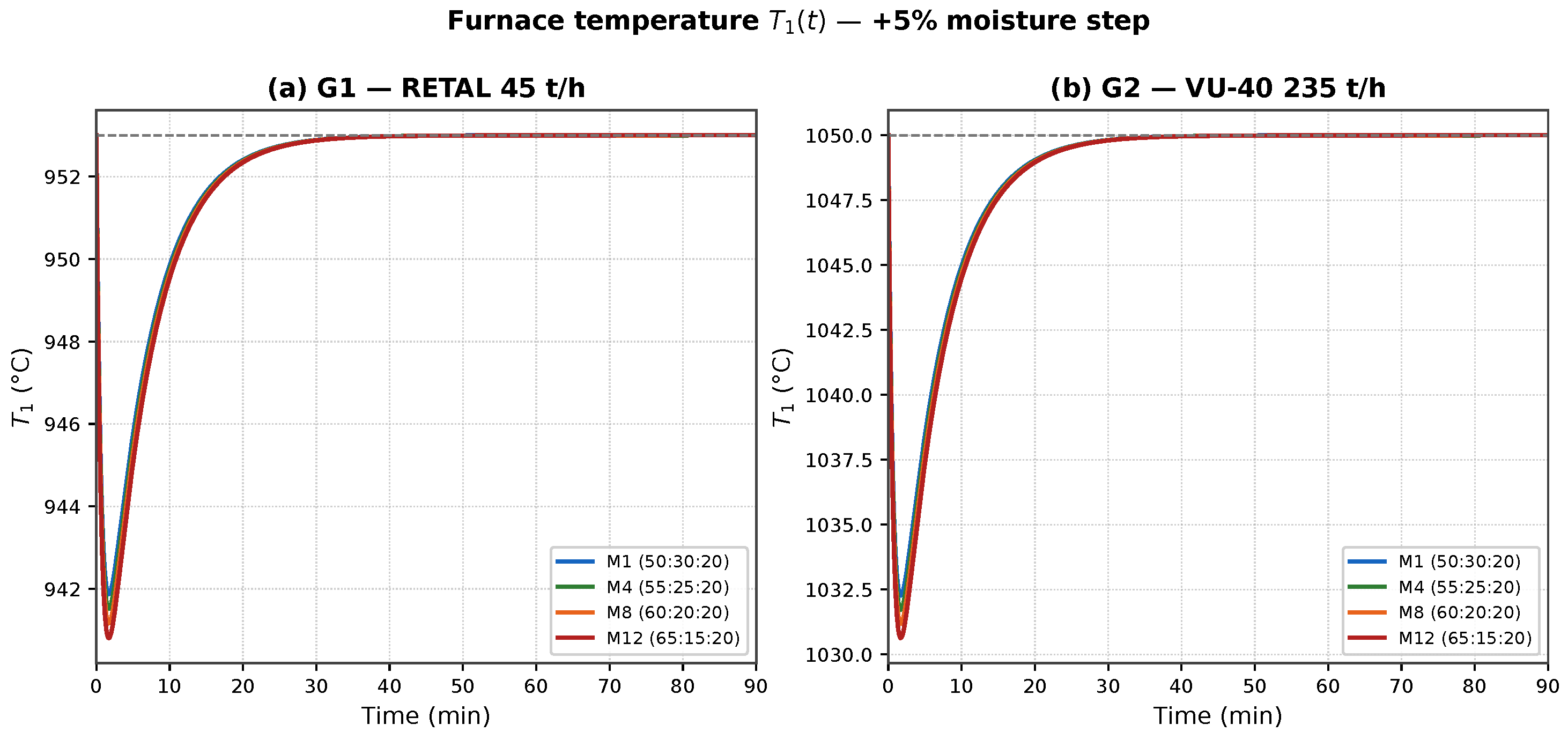
Figure 1 presents the temporal evolution of
for four representative mixtures covering the evaluated compositional range, for both steam generators.
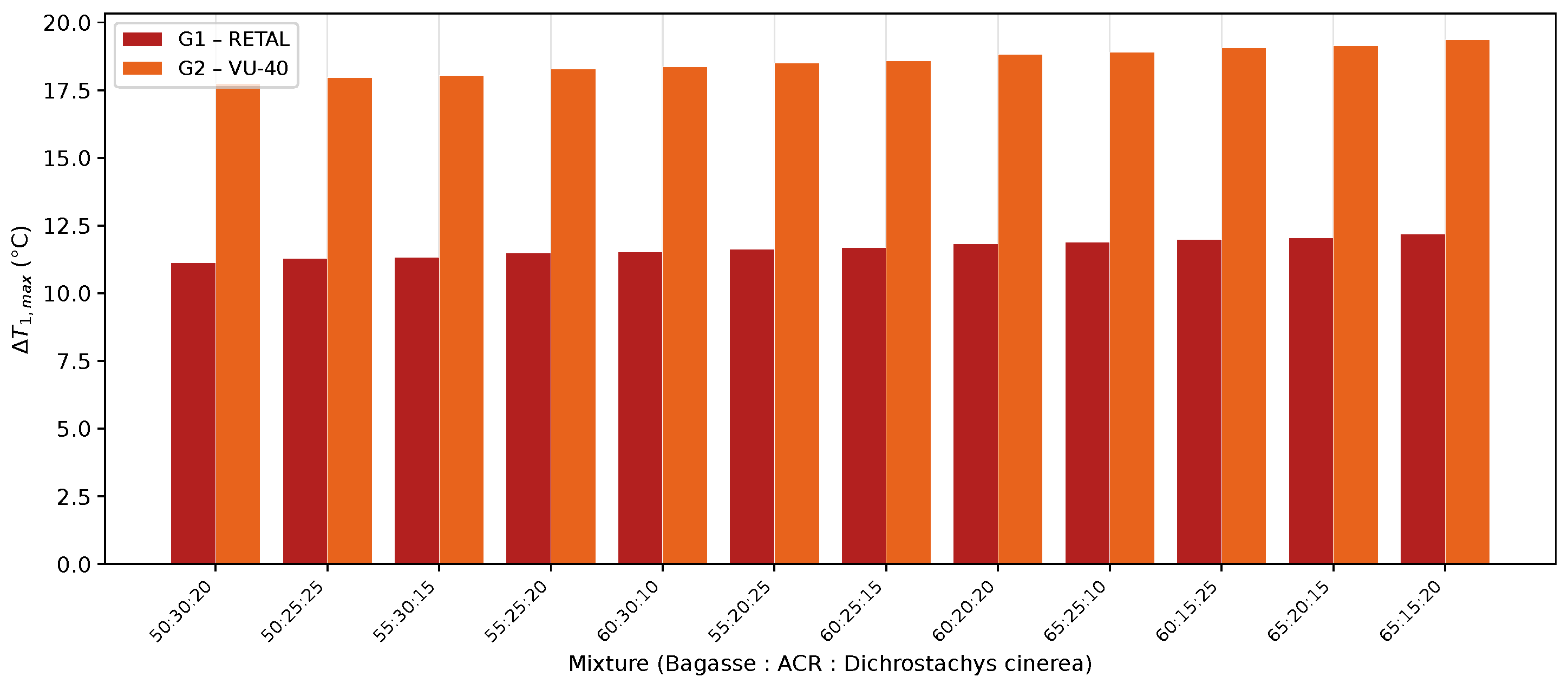
Results reveal furnace temperature drops rapidly during the first 5 min post-perturbation, reaching values between 11.14 °C (M1, G1) and 12.20 °C (M12, G1) in the RETAL generator, and between 17.76 °C (M1, G2) and 19.39 °C (M12, G2) in the VU-40. Greater drop magnitude in G2 is explained by its higher combustion energy to furnace thermal mass ratio (). Mixtures with higher moisture (M8, M12) consistently show greater drops than lower-moisture mixtures (M1, M4), confirming effective ternary mixture moisture as the determining factor of combustion zone perturbation magnitude. Node 1 recovery time is on the order of 15–20 min, governed by fuel flow controller response speed ( min).
3.1.2. Transient Response of Node 2 (Water/Steam System)
Steam temperature (
) constitutes the model’s operationally relevant variable, as it determines steam quality delivered to sugar processing or turbogenerator. Unlike
,
response is mediated by two coupling mechanisms (radiation and convection) and damped by the high thermal mass of the water/steam system.
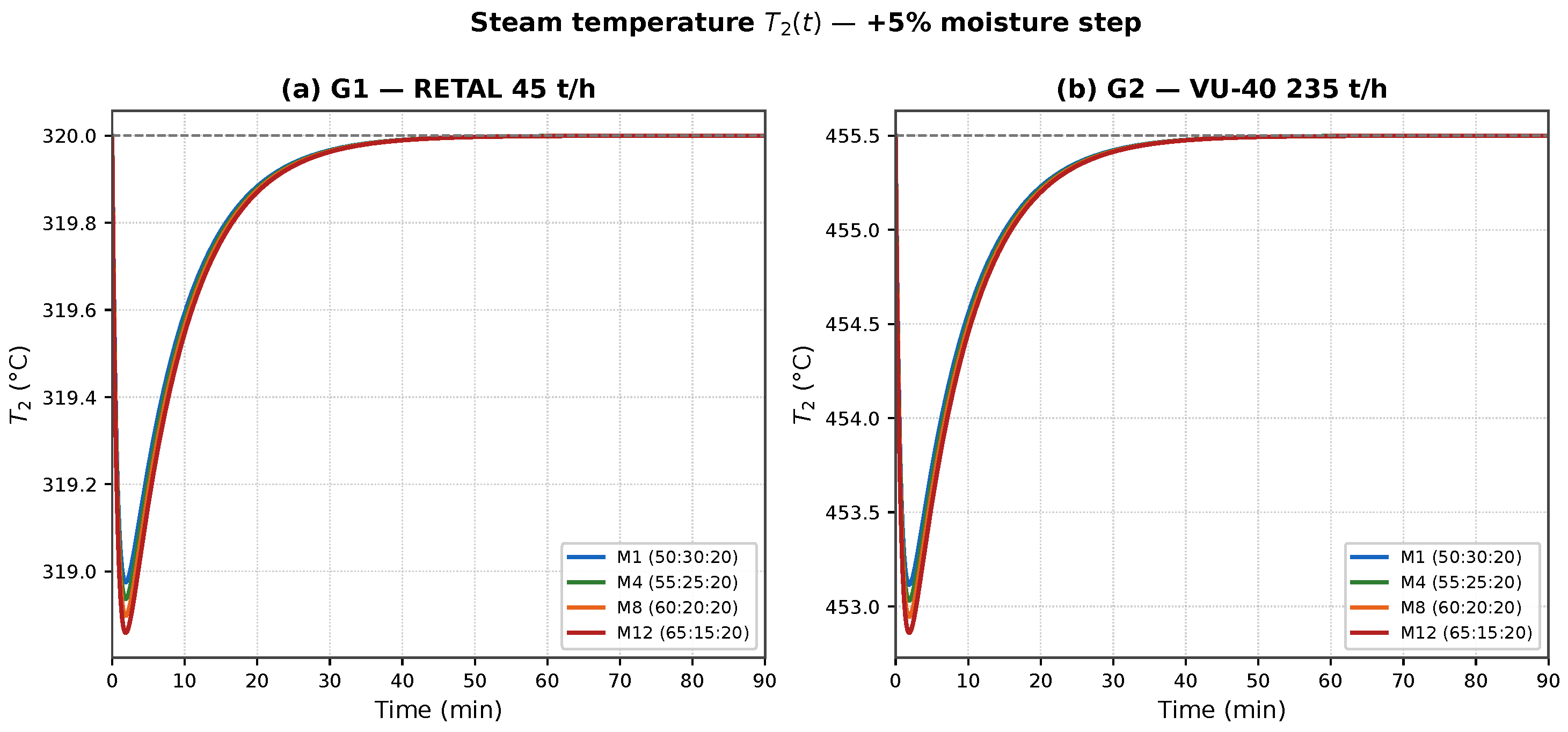
Figure 2 presents
evolution for the same mixtures and generators.
The maximum deviation of steam temperature is significantly lower than the deviation of furnace temperature:
ranges between 1.03 °C (M1, G1) and 1.14 °C (M12, G1) in the RETAL generator, and between 2.39 °C (M1, G2) and 2.65 °C (M12, G2) in the VU-40. The attenuation ratio
clusters by technology, at ≈10.9 for G1 and ≈7.4 for G2, demonstrating that the high thermal mass of the water/steam system acts as an effective thermal filter, absorbing most of the disturbance generated in the combustion zone. The temporal trajectories of
show an initial drop followed by a damped recovery toward the nominal value, behavior consistent with the action of the fuel flow controller and the thermal inertia of Node 2. Consequently, the comparative dynamic stability between mixtures is evaluated using
, since this quantity directly and consistently represents the amplitude of the disturbance transmitted to the steam side under a step change of
in fuel moisture. For the reference mixture M1, the steam-side response was further verified under symmetric
moisture steps and under
steam-load and
excess-air steps (
Supplementary Material, Figures S1–S3). The moisture perturbation recovers toward the nominal value once the fuel-flow controller compensates, whereas the steam-load and excess-air steps settle at a shifted operating point; in all cases the steam temperature deviation remains within a few degrees, confirming the robustness of the inter-node attenuation beyond the moisture perturbation.
3.1.3. Maximum Deviation Comparison Among 12 Mixtures
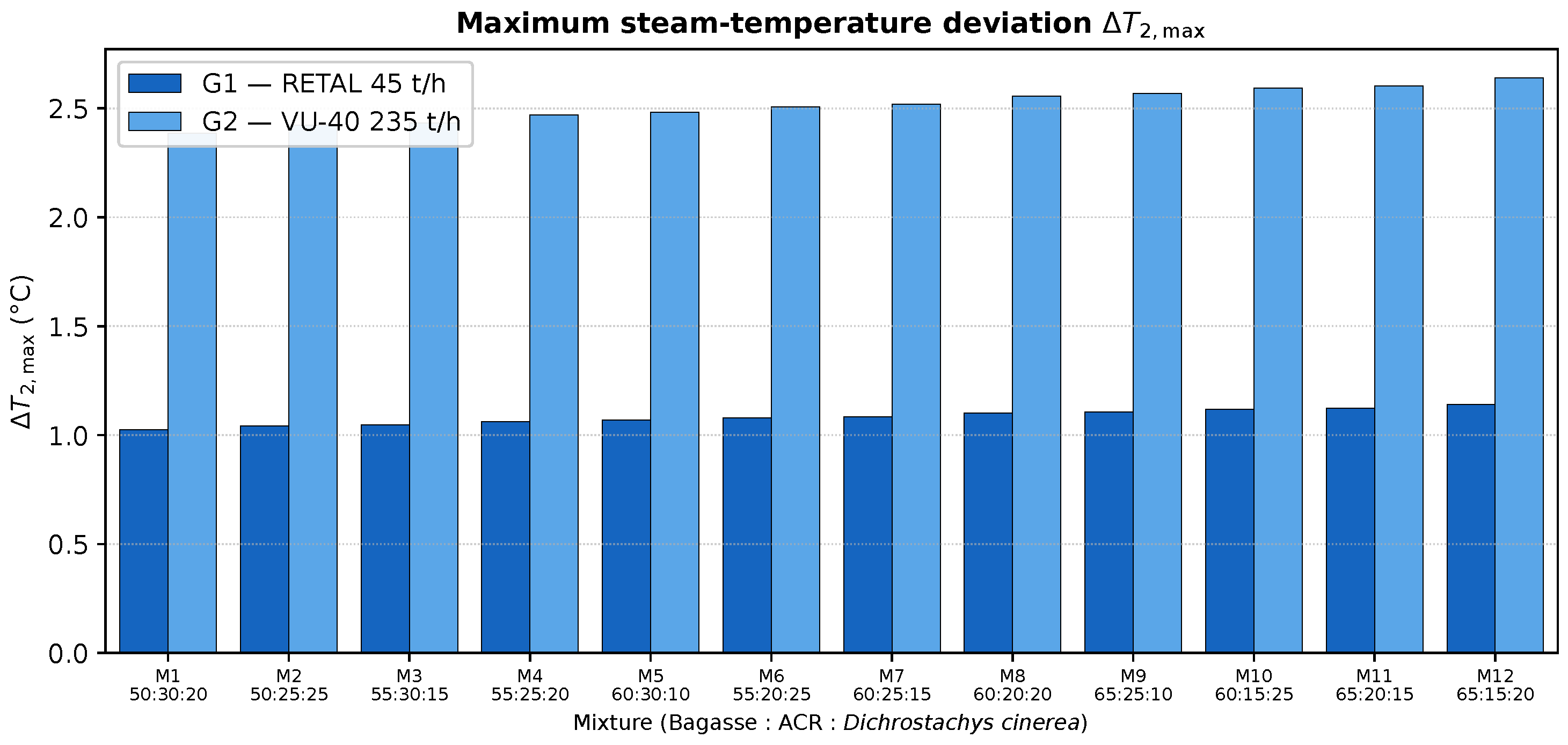
To establish quantitative comparison among all evaluated ternary formulations, maximum temperature deviations at each node for the 12 mixtures and both generators are presented in
Figure 3.
Monotonic increase of with mixture moisture is observed in both generators. G2 presents systematically higher values than G1 (factor ), reflecting greater combustion sensitivity to LHV variations. Difference between lowest-moisture mixture (M1, ) and highest-moisture mixture (M12, ) is 1.06 °C in G1 and 1.63 °C in G2.
Steam deviation (
Figure 4) follows same monotonic trend as furnace but with significantly lower amplitudes and 2.3× technological differentiation factor. All deviations remain below 3 °C, within acceptable operating margin for industrial steam generators. G2 proves more sensitive in both furnace and steam, indicating high-pressure technologies require stricter fuel quality control when operating with ternary biomass mixtures.
3.2. Statistical Analysis of the Dynamic Model
3.2.1. Linear Regression: Maximum Deviation vs. Mixture Moisture
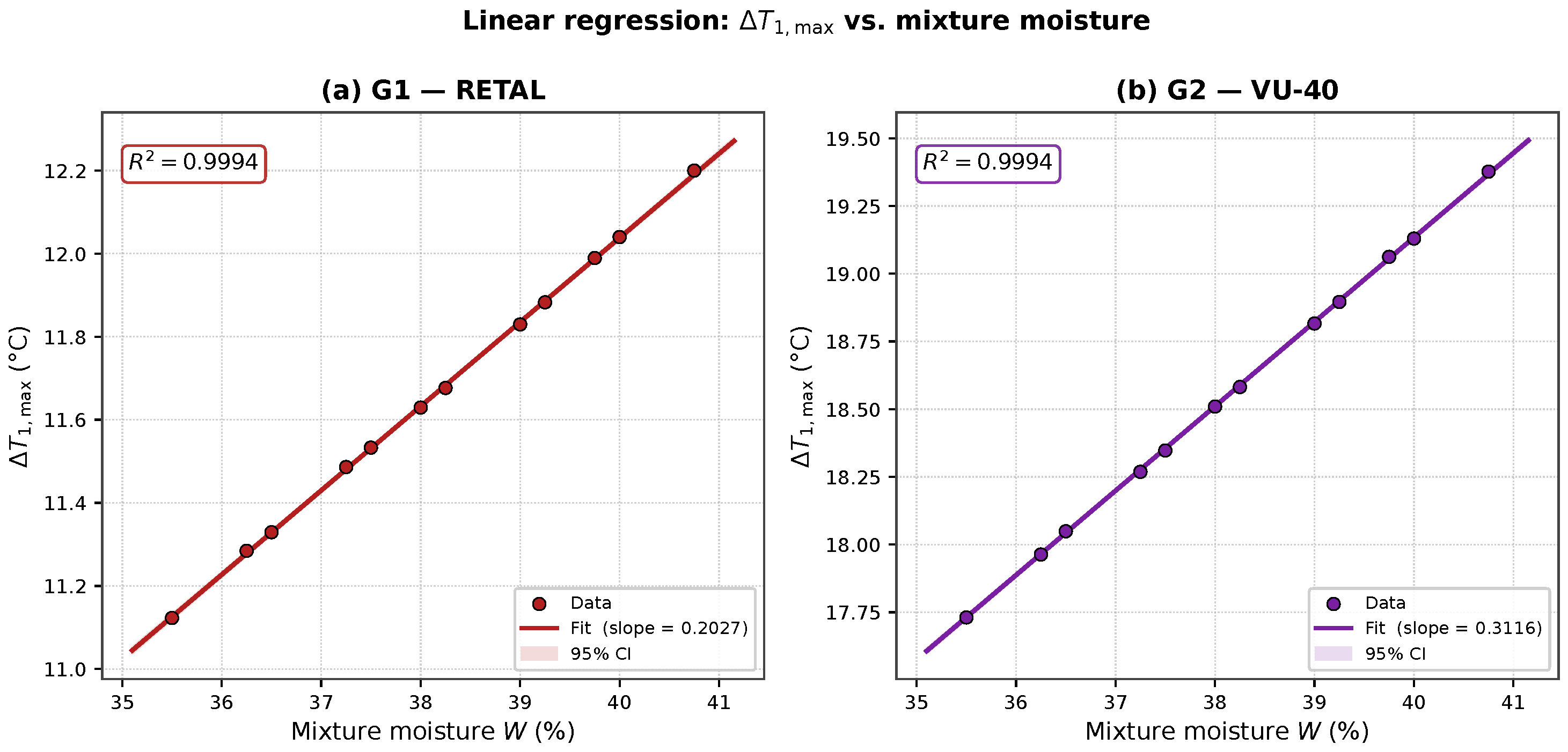
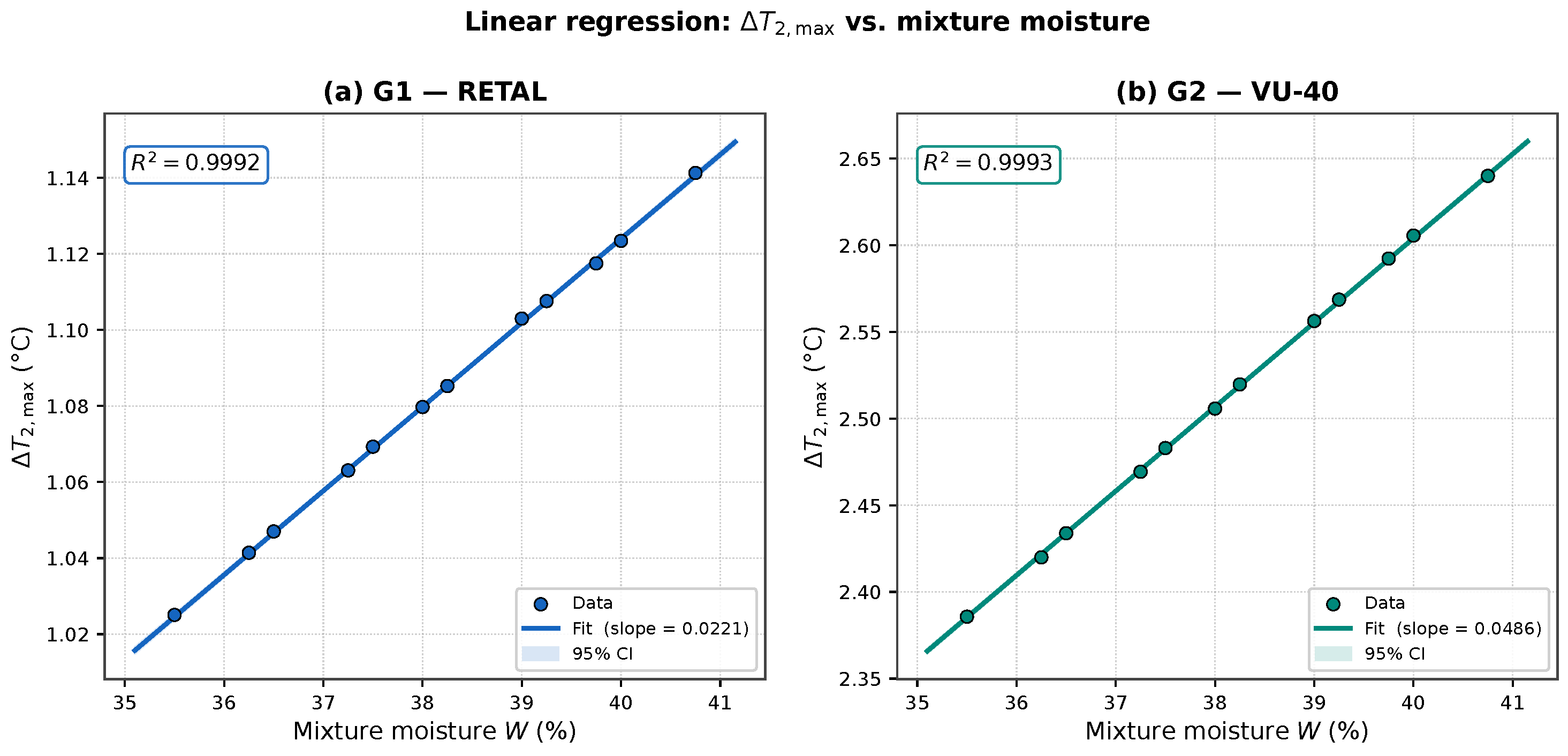
To quantify the functional dependence between mixture moisture and system dynamic response, simple linear regression analysis was performed between
(
Figure 5) and
(
Figure 6) and effective mixture moisture
W.
Obtained coefficients of determination ( for both generators) confirm mixture moisture explains 99.94% of variability within evaluated compositional window. Slope is 0.2027 °C/% for G1 and 0.3116 °C/% for G2, quantifying that each percentage point moisture increase produces additional furnace temperature drop of 0.20 °C (G1) or 0.31 °C (G2). Slope ratio (G2/G1 = 1.54) reflects greater thermal sensitivity of high-pressure generator combustion zone.
Node 2 correlation is equally high ( for G1, for G2), with slopes of 0.0221 °C/% (G1) and 0.0486 °C/% (G2). Node 2 slope ratio (G2/G1 = 2.20) exceeds Node 1 ratio, indicating water/steam mass damping effect is not proportional between technologies: G2, despite greater absolute (142,000 vs. 32,000 kg), exhibits lower ratio, reducing relative perturbation absorption capacity.
3.2.2. OAT Sensitivity Analysis (One-at-a-Time, ±10%)
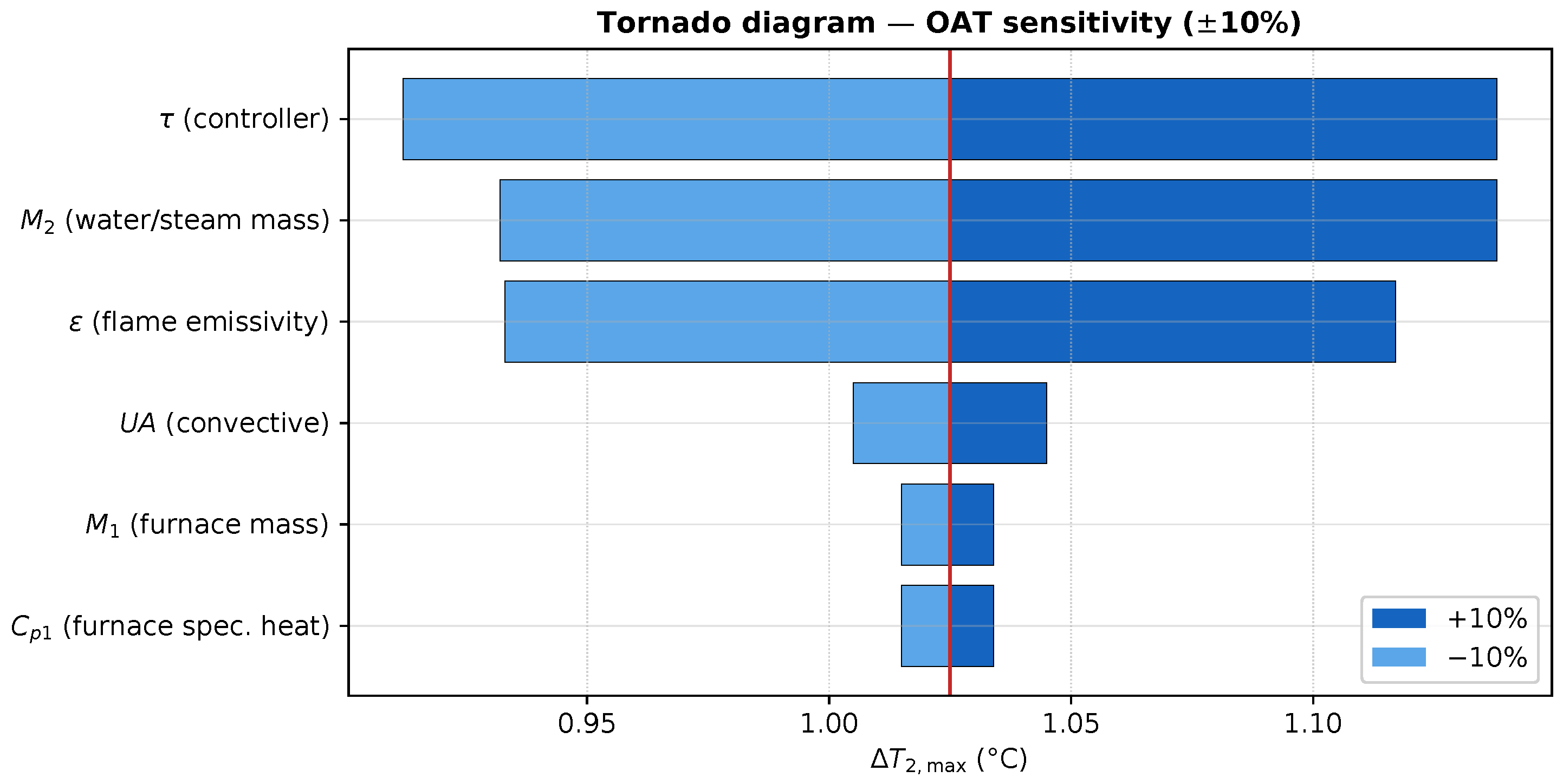
OAT sensitivity analysis evaluates effect of individual
variations in each model parameter on response variable
, holding other parameters constant (
Table 9). This approach identifies parameters exerting greatest influence on model prediction (
Figure 7).
Three most influential parameters are controller time constant (22.1%), water/steam system thermal mass (20.1%), and flame emissivity (17.9%), jointly representing 60.1% of total sensitivity. Conversely, Node 1 exclusive parameters ( and ) contribute only 1.9% each to variability. This result carries significant methodological implication: uncertainty in furnace parameter estimation does not significantly compromise model predictive capacity for the operationally relevant variable ().
3.2.3. Monte Carlo Uncertainty Analysis
While OAT sensitivity evaluates individual parameter effects independently, Monte Carlo simulation with
runs quantifies the combined effect of simultaneous parameter uncertainty (
Table 10). The full dynamic model is executed within each iteration, propagating the uncertainty of the three parameters identified by the OAT screening as the most influential on the steam-side response—the controller time constant (
min, nominal
min), the thermal mass of the water/steam system (
,
about its nominal value), and the flame emissivity (
, nominal
)—all sampled from independent uniform distributions and with ranges grounded in physical criteria and in the literature for industrial biomass combustion (
Figure 8). The damping factor remains robust under this uncertainty, with a median of
(90% CI: 10.0–11.7) for G1 and
(90% CI: 6.8–8.1) for G2 (
Figure S4), consistent with the technology-clustered attenuation (≈10.9 for G1 and ≈7.4 for G2) obtained across the twelve mixtures and confirming that the relative conclusions do not depend on the point values of these parameters.
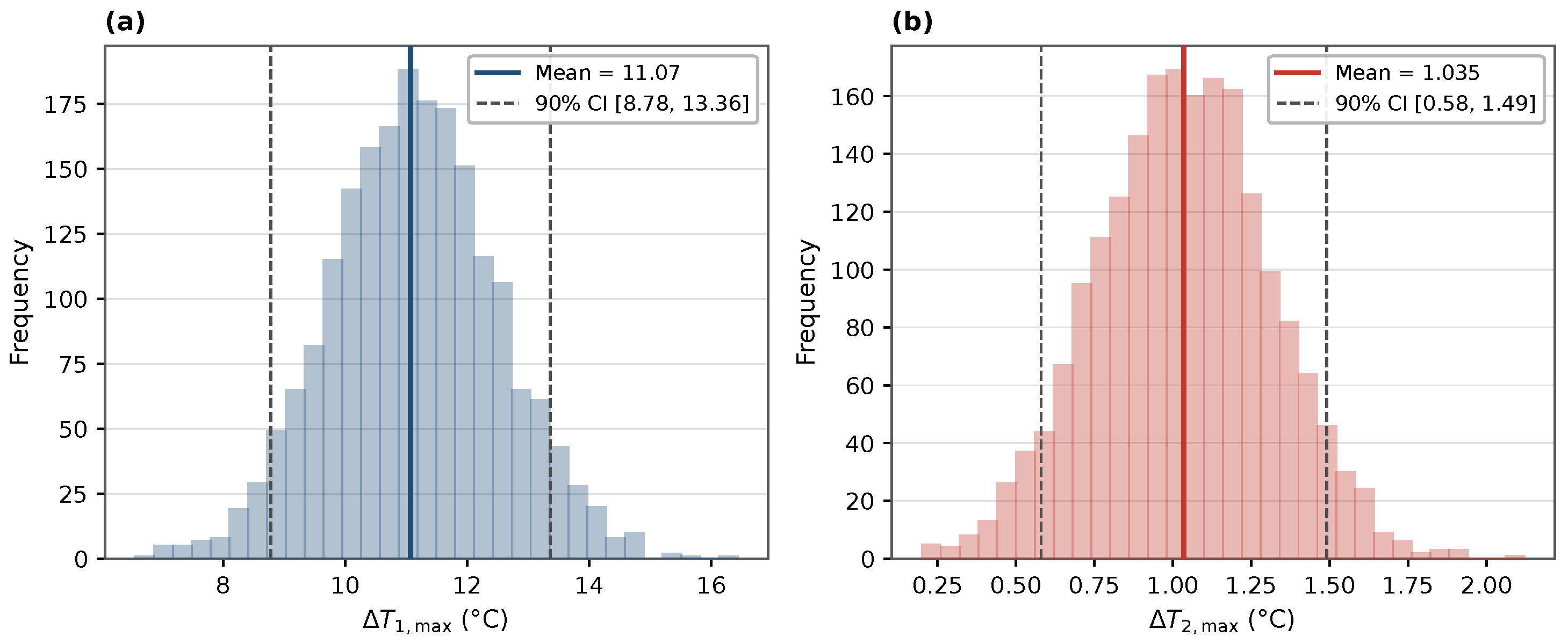
Results show distributes with 90% confidence interval [0.58, 1.49] °C, confirming steam temperature deviation remains below 2 °C even under combined parametric uncertainty conditions.
3.3. Connection of Dynamic Model with Other Integrated Framework Models
The dynamic model does not operate in isolation within the proposed methodological framework. Its outputs directly feed other models, establishing a causal chain linking transient behavior with steady-state performance (Models 1 and 2) and environmental sustainability (Model 4).
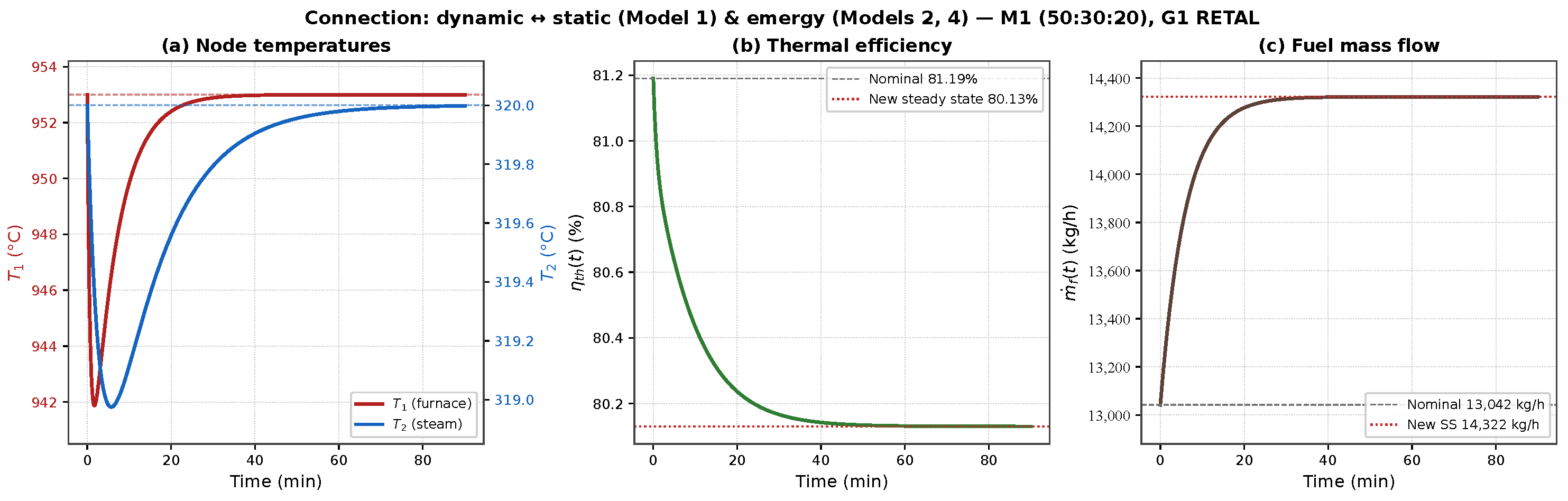
Figure 9 illustrates this connection for representative case M1 (50:30:20) in G1 RETAL generator.
Panel (a) shows both nodes evolution: rapid
drop and damped
response. Panel (b) presents instantaneous thermal efficiency
, dropping during transient from the nominal 81.19% value (
Table 7) and recovering as controller adjusts fuel flow. At steady state (
),
exactly converges to value predicted by static model under perturbed conditions, constituting internal consistency verification. Panel (c) shows fuel flow
, gradually increasing from 13,042 kg/h to 14,322 kg/h (ratio
). This 9.8% fuel consumption increase propagates directly to Model 2 and Model 4.
3.4. Emergy Model
3.4.1. Emergy Calculation Procedure
Emergy evaluation quantifies solar emergy embodied in all matter, energy, and service flows required to sustain the steam generation process, expressing them in a common unit (solar emjoule, seJ). The procedure followed principles established by Odum (1996) [
38] and Brown & Ulgiati (2004) [
39], using transformities reported by Jiménez Borges et al. [
47] for the Cuban sugar context.
For each mixture–generator combination, the calculation follows the sequence: (1) determine the required fuel mass flow from thermal efficiency and mixture LHV; (2) decompose the total flow into bagasse, ACR, and Dichrostachys cinerea mass fractions per mixture composition; (3) annualize all flows multiplying by 3600 h/year (150-day harvest); (4) calculate the emergy of each flow multiplying quantity by the corresponding transformity; (5) classify flows as renewable (R), non-renewable (N), and economic (F = M + S, i.e., purchased materials M and services S); (6) calculate the emergy indicators: , , , .
3.4.2. Flow Classification
Flows were classified as follows. As renewable (R): combustion air, bagasse, ACR (cane harvest residues, annual cycle), and Dichrostachys cinerea (invasive species with regeneration capacity). As non-renewable (N): generator feedwater. As economic flows (F = M + S): as purchased materials (M), bagasse transport costs, ACR collection and transport, Dichrostachys cinerea acquisition, and water cost; as purchased services (S), equipment maintenance and human labor.
3.5. Adopted Transformities
The transformities adopted for the emergy assessment are summarized in
Table 11. These values were taken from Jiménez Borges et al. [
47] and are used to convert the different material, energy, and economic flows into a common emergy basis.
3.6. Emergy Model Results
3.6.1. Emergy Sustainability Index (ESI)
The emergy sustainability index (ESI,
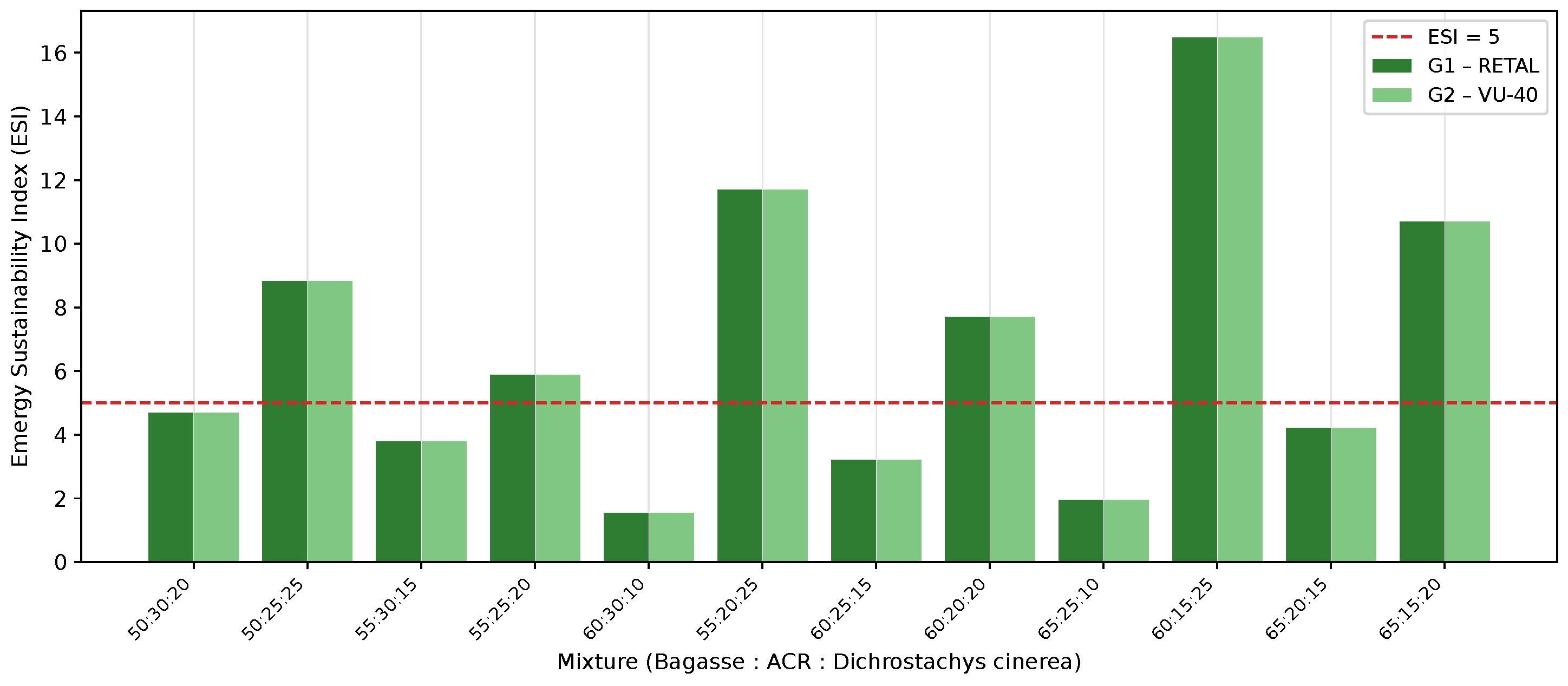
Figure 10) serves as integrating indicator of the emergy model. ESI values
indicate long-term sustainable systems, while values
suggest high dependence on non-renewable or imported resources. The resulting ESI ranking of the twelve mixtures is preserved under a
perturbation of the biomass transformities, propagated through the emergy model by Monte Carlo simulation (
Supplementary Material, Figure S5), indicating that the relative sustainability ordering is not an artifact of the specific transformity values adopted.
Results show marked differentiation between mixtures, with ESI varying from 1.55 (M5, 60:30:10) to 16.49 (M10, 60:15:25). Six mixtures exceed the long-term sustainability threshold (ESI ): M10 (16.49), M6 (11.71), M12 (10.70), M2 (8.84), M8 (7.72), and M4 (5.90). Mixtures with 30% ACR (M1, M3, M5) consistently show lowest ESI values, penalized by high ACR collection and transport cost (7.53 $/kg). Generator differences are negligible (<0.01 in ESI), confirming emergy sustainability depends on fuel composition, not conversion technology.
3.6.2. Renewability Ratio (%R)
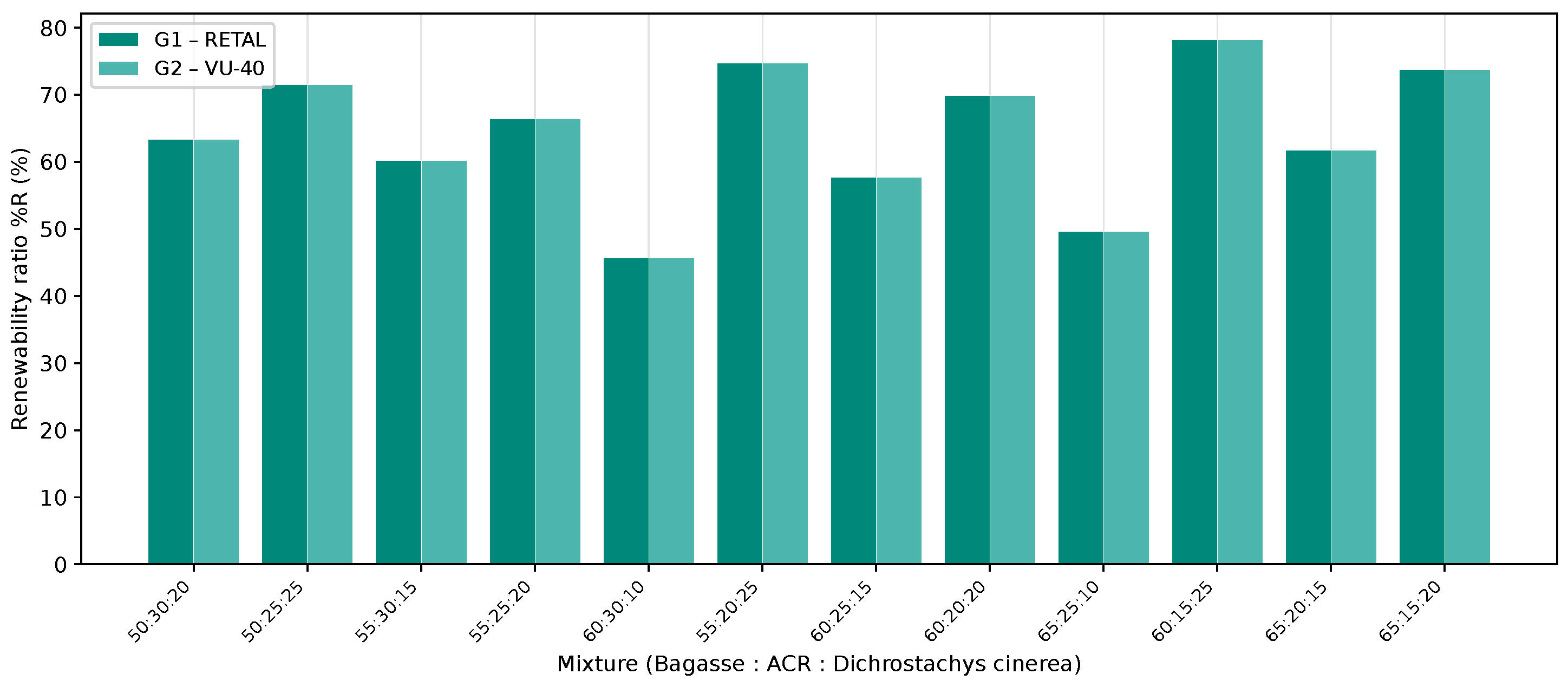
%R (
Figure 11) varies from 45.66% (M5) to 78.22% (M10). Values are consistent with those reported by Jiménez Borges et al. [
47] for binary variants (%R = 23.58–58.04% in RETAL), but higher on average, explained by
Dichrostachys cinerea inclusion as low-cost third renewable component. Mixtures with higher
Dichrostachys cinerea proportion (≥20%) and lower ACR proportion (≤20%) maximize renewability.
3.6.3. Emergy Yield Ratio (EYR)
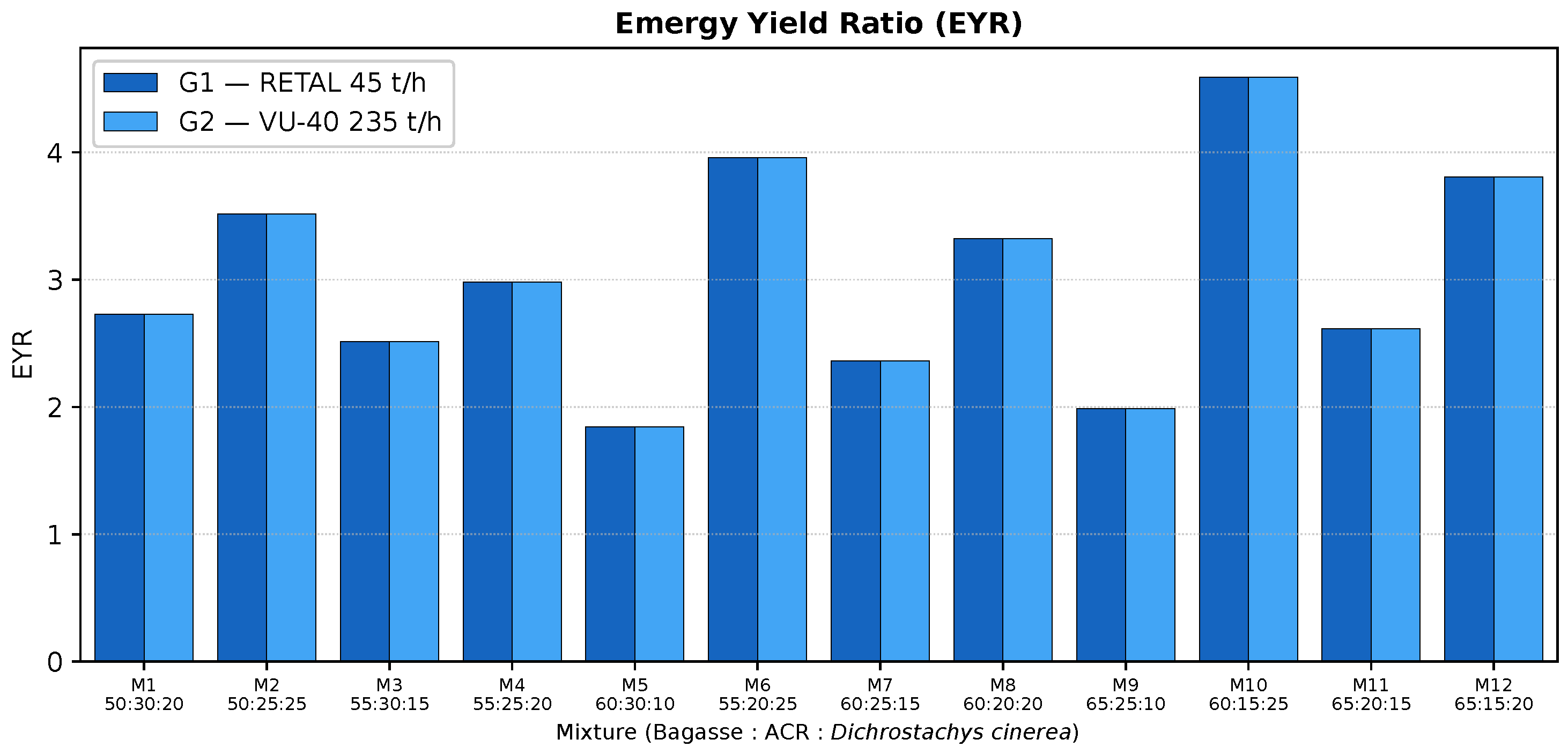
EYR (
Figure 12) varies from 1.84 (M5) to 4.59 (M10). EYR values near 1 (M5 = 1.84, M9 = 1.96) indicate system functions primarily as economic input transformer. Conversely, M10 (EYR = 4.59) and M6 (EYR = 3.96) demonstrate substantial economic resource amplification capacity. The EYR determining variable is F magnitude (economic emergy), dominated by ACR collection cost.
3.6.4. Environmental Loading Ratio (ELR)
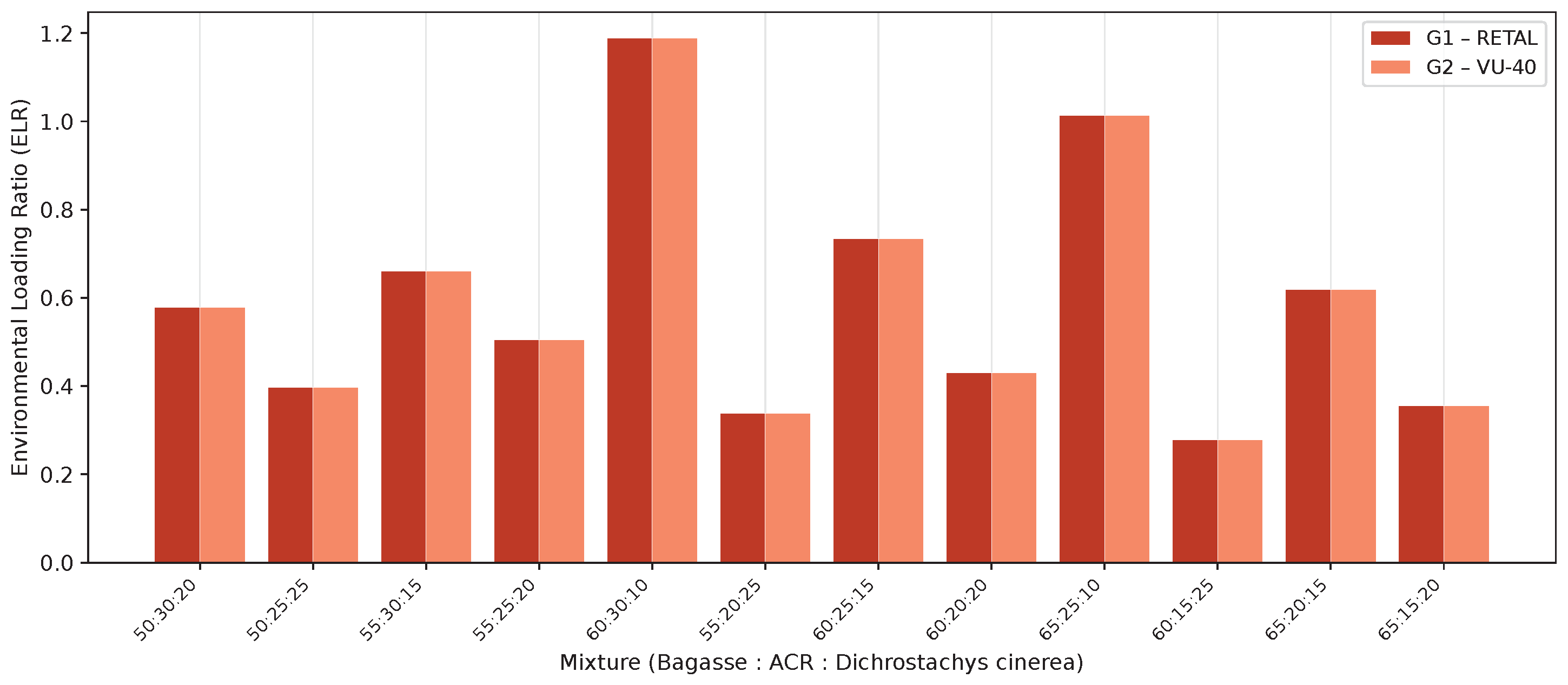
ELR (
Figure 13) varies from 0.28 (M10) to 1.19 (M5). All evaluated mixtures exhibit ELR < 2, classifying the system as low environmental impact per Brown & Ulgiati (2004) [
39] scale. High-ACR mixtures (M5, M9) approach ELR = 1, indicating ACR increase not only penalizes economic efficiency but also deteriorates the process environmental profile.
3.7. Multidimensional Integration: Central Finding
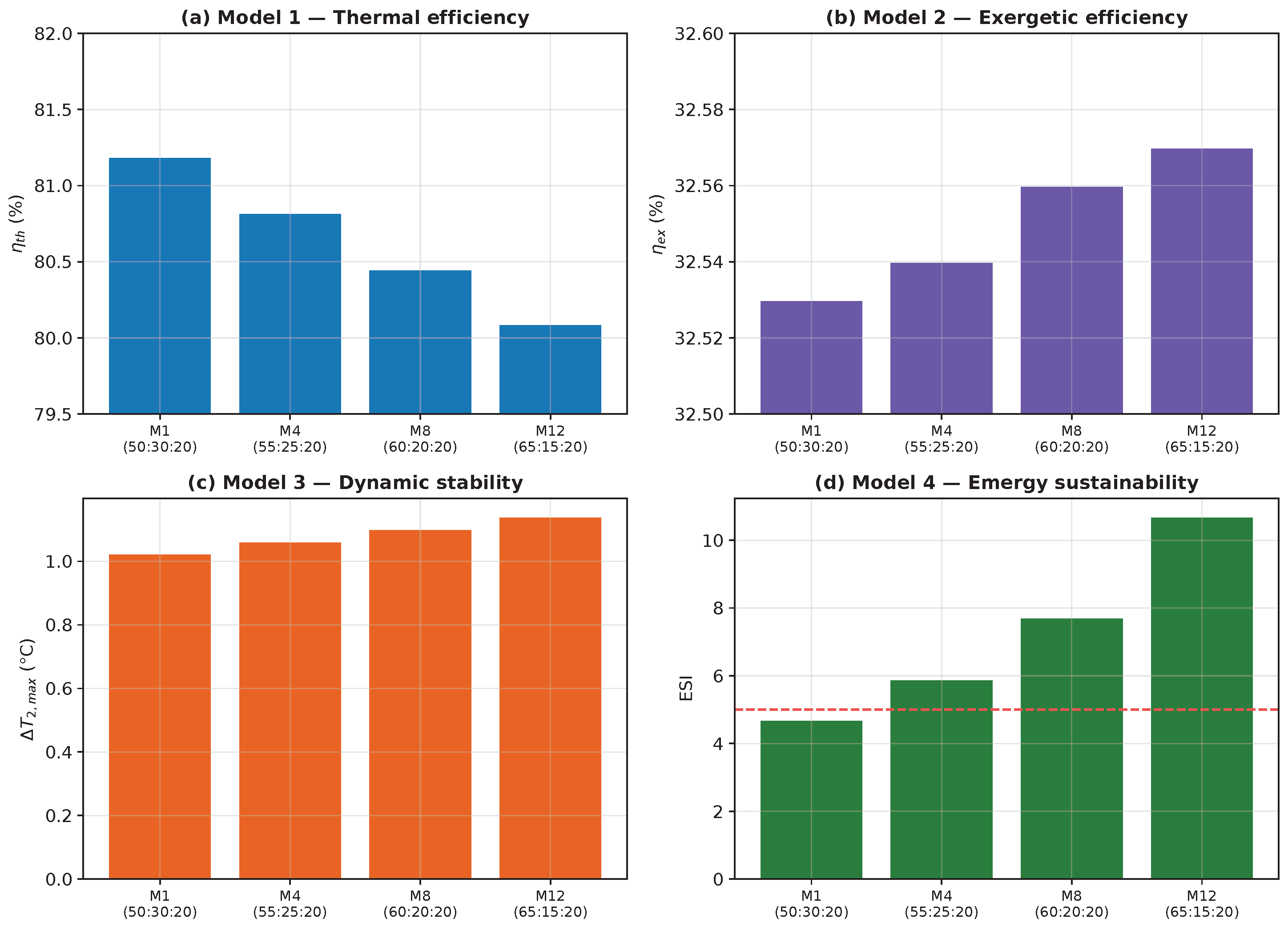
The fundamental purpose of the integrated framework is to evaluate whether the optima identified by each individual model converge toward the same mixture or point to different formulations.
Figure 14 presents direct comparison of four models for four representative mixtures.
Figure 14 conclusively demonstrates that the optima of each dimension do not coincide. In panel (a), thermal efficiency reaches its maximum at M1 (50:30:20;
). In panel (b), exergy efficiency exhibits much smaller variations and reaches its highest value at M12 (65:15:20;
), although the difference relative to M10 is marginal. In panel (c), dynamic stability, inversely assessed through
, is highest in M1. In panel (d), emergy sustainability (ESI) reaches its highest value at M10 (60:15:25;
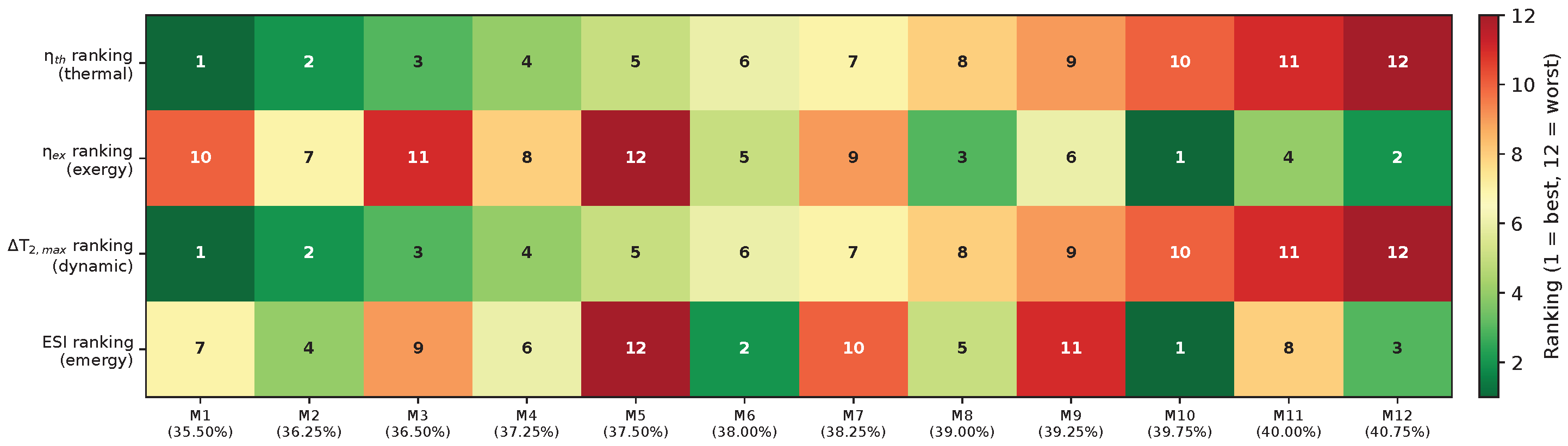
) within the complete set of 12 mixtures; since M10 does not belong to the subset of four mixtures represented in this figure, within that subset the mixture with the highest ESI is M12 (ESI = 10.70). This result confirms that emergy sustainability is governed primarily by system-level resource use and environmental support. The ordinal rankings of the 12 mixtures across the four dimensions are summarized in
Table 12 and visualized as a heat map in
Figure 15.
5. Conclusions
An integrated methodological framework combining static energy, exergy, two-node transient dynamic, and emergy models was developed and applied to twelve ternary mixtures of sugarcane bagasse, agricultural crop residues, and Dichrostachys cinerea in two steam-generator technologies. The framework moves beyond isolated efficiency assessment toward a holistic characterization of biomass boiler performance under technically plausible ternary mixtures.
The effective moisture content of the mixture was identified as the dominant structural control variable, governing simultaneously the wet-basis lower heating value, the specific fuel consumption, the principal thermal loss, the indirect thermal efficiency, and the dynamic stability of the system, with coefficients of determination above 0.99 for the transient deviations. The two-node dynamic model revealed a technology-dependent inter-node thermal damping factor (≈10.9 for the RETAL and ≈7.4 for the VU-40 generator) between the combustion zone and the water/steam system, keeping steam temperature deviations below 3 °C under +5% moisture perturbations, and the sensitivity analysis identified the controller time constant, the thermal mass of the water/steam system, and the flame emissivity as the most influential parameters.
The central finding is that the optima of the four dimensions do not coincide: thermal efficiency and dynamic stability favour low-moisture mixtures (M1), whereas emergy sustainability favours mixtures rich in Dichrostachys cinerea (M10), with thermal and emergy rankings statistically independent. A compromise compositional zone of approximately 50–55% bagasse, 25–30% ACR, and 20–25% Dichrostachys cinerea (mixtures M2 and M4) provides the best simultaneous balance across the four dimensions and is recommended as the default operating window.
While the methodological framework is transferable to other biomass combustion contexts, the numerical results—optimal compositional zones, emergy indicators, and dynamic sensitivity coefficients—are specific to the Cuban sugar-industry conditions, the adopted transformities, and the biomass types evaluated. Future work should address transient validation against plant measurements, the incorporation of drum-pressure dynamics, a spatially resolved exergy decomposition, a life-cycle emissions inventory, and a dedicated techno-economic analysis.



 ,
,